Article

Linking Groundwater Contamination to Microbial Community Shifts Around Rare Earth Tailing Ponds: A Correlational Study Using Microbiological Indices

1
School of Environmental Science and Engineering, Southwest Jiaotong University, Chengdu 611756, China
2
School of Life Science and Technology, Inner Mongolia University of Science and Technology, Baotou 014010, China
*
Author to whom correspondence should be addressed.
Diversity 2026, 18(6), 315; https://doi.org/10.3390/d18060315
Submission received: 29 March 2026 / Revised: 6 May 2026 / Accepted: 19 May 2026 / Published: 25 May 2026
(This article belongs to the Section Microbial Diversity and Culture Collections)

Abstract

Pollutants often exist in tailings and surrounding areas as complex mixtures, and the resulting combined effects make it difficult to identify the primary target pollutants, particularly common inorganic anions. To address this, high-throughput 16S rRNA gene sequencing was used to characterize the microbial community structure in groundwater around rare earth tailing ponds, and multivariate statistical analyses were applied to link community patterns to specific environmental variables. A total of 14 groundwater samples were collected from seven sites (two spatial replicates per site) along a contamination gradient. The results showed distinct differences in microbial community composition between the control site and the tailing-pond-impacted sites. Nitrosomonas was the dominant genus at highly contaminated sites, while halotolerant genera such as Seohaeicola, Pusillimonas, and Oceanibaculum also showed elevated relative abundances. Redundancy analysis (RDA) with forward selection identified the co-occurring elevated concentrations of NH4+ and SO42− (originating from tailing pond leachate) as the environmental variables most strongly associated with microbial community structure (p < 0.05). In contrast, the microbial community at the control site WLJ-5, located farthest from the tailing pond, was markedly different. These findings suggest that shifts in microbial community composition and the prevalence of specific microorganisms may serve as potential bioindicators to assist in identifying the dominant contaminant types in groundwater around rare earth tailing ponds.

1. Introduction

Rare earth elements (REEs) are a group of 17 chemically similar metallic elements that are indispensable in numerous critical industries, including electronics, renewable energy, and defense [1]. The expanding application of REEs results in the generation of substantial waste during the mining, ore dressing, and smelting processes. Rare earth tailing ponds are commonly used to store this waste [2]. These tailings may contain high-grade heavy metals, residual rare earth elements, and high concentrations of acid, which can leach into the surrounding soil and groundwater as a complex mixture of heavy metals and inorganic anions (such as sulfate, chloride, and fluoride), due to insufficient treatment technology and proper linings [3,4].
The environmental impacts of tailing pond seepage are twofold. First, tailing leachate alters the physicochemical properties of groundwater, elevating concentrations of both heavy metals and anions. Second, it restructures the indigenous microbial communities [5,6]. While the toxic effects of heavy metals are well known, the ecological effects of common inorganic anions are often neglected. Our research found that F, Cl, and SO42− cause liver and kidney damage to Sprague–Dawley (SD) rats [7], demonstrating that anion toxicity is a significant yet underappreciated component of tailing pond pollution.
Conventional groundwater quality monitoring relies on chemical analysis, which evaluates individual ions against regulatory thresholds. However, this approach cannot capture the combined effects of complex anion mixtures, nor can it readily identify the dominant stressors when multiple pollutants co-occur [8,9]. This limitation has motivated the search for complementary biological approaches. Microbial communities are attractive candidates for environmental monitoring because they respond rapidly and sensitively to geochemical changes, and shifts in community structure can reflect the integrated effects of multiple chemical stressors [10].
Unlike most previous studies that have focused on heavy metal indicators or single-ion toxicity, the present study specifically addresses the diagnostic challenge posed by complex anion mixtures (SO42−, Cl, F, NO3, NH4+) derived from rare earth tailing pond seepage—a contamination scenario that is widespread yet understudied from a microbiological perspective.
High-throughput sequencing techniques have made it easier to obtain massive microbial community profiles and, more significantly, reliable abundance estimation [10,11]. These new techniques play an important role in the evaluation of microbial communities and their function in a particular ecosystem. Biochemical effect analysis can provide the relevant data necessary for predicting ecological changes caused by man-made emissions [12]. Therefore, it is of great significance to properly analyze the relationship between environmental pollution factors and existing microbial communities in groundwater, selecting specific microorganisms as pollution indicators among tailings ponds.
However, the presence of specific microbial taxa does not necessarily imply their functional activity in biogeochemical cycling. Drawing on evidence that ammonium- and sulfate-rich environments select for ammonia-oxidizing bacteria and sulfate-tolerant heterotrophs, we hypothesized that the relative abundances of specific microbial genera and the overall community composition would be significantly associated with the spatial gradient of NH4+ and SO42− concentrations in groundwater around the tailing pond. Specifically, we expected that (i) sites closer to the tailing pond would harbor distinct microbial communities dominated by nitrifying and halotolerant taxa, and (ii) NH4+ and SO42− would account for a greater proportion of the explained community variation than other measured variables (heavy metals, pH, and salinity alone). We note that the functional roles of these taxa are inferred from their known taxonomic affiliations and published genomic or physiological characterizations, rather than from direct functional measurements in this study. Accordingly, this study aims to: (1) characterize the spatial distribution of microbial community composition in groundwater along a contamination gradient from the tailing pond (independent variable: distance/site; dependent variable: community structure), (2) identify the environmental factors most strongly associated with community variation using redundancy analysis with forward selection (independent variables: measured hydrochemical parameters; dependent variable: OTU-level community matrix), and (3) evaluate whether specific microbial taxa show consistent and statistically significant associations with specific anion contaminants, thereby assessing their potential as taxonomic indicators of complex anion pollution.

2. Materials and Methods

2.1. Study Areas

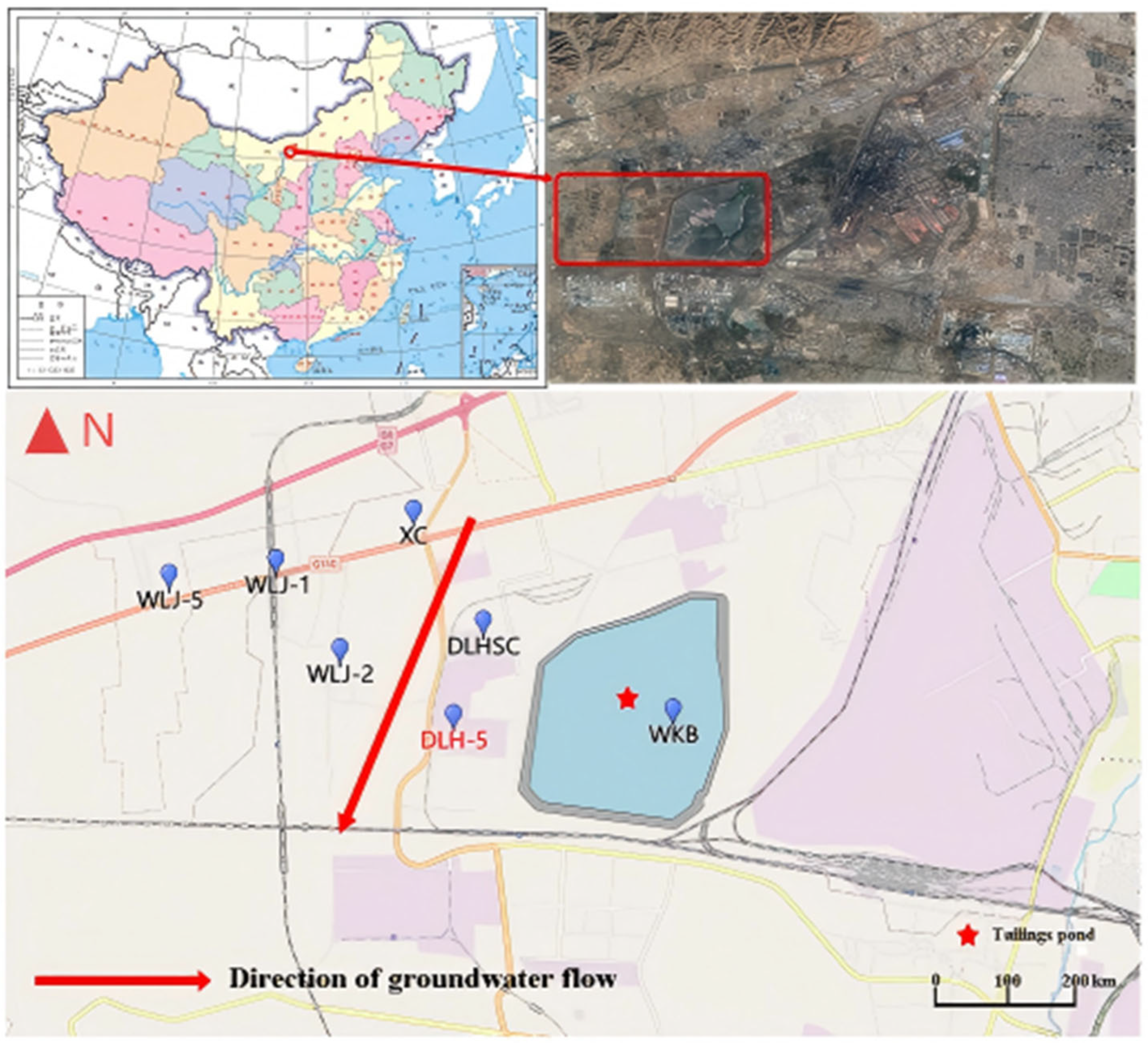
The Baotou region features an inland arid climate characterized by low temperatures and scarce precipitation, with chestnut soil being the predominant soil type. Rare earth (RE) ore extracted from the Bayan Obo mine is transported via railway and pipeline to the Baotou Dressing Plant. After undergoing beneficiation and smelting processes at facilities such as Baotou Steel RE and Baotou Huamei RE, the resulting slurry is stored in the Baotou RE tailings reservoir. Commissioned in 1965, this ground-type reservoir spans 3.2 km from east to west and 3.5 km from south to north, covering a total area of 11 km2, with an effective storage capacity of approximately 68.83 million m3 (Figure 1). The tailings reservoir is situated 250–400 m from the Baolan Railway. It is bordered to the north by the Jiuyuan District Industrial Park, adjacent to National Highway 110 to the south, and neighbors the first ash slag yard of the Baotou Thermal Power Plant to the east. Approximately 2 km to the west lies the suburban Dalahai Village. The surrounding areas support dense population centers and various infrastructures. Downstream of the tailings pond lies extensive agricultural and animal husbandry land, with the main channel of the Yellow River located about 11 km further downstream.

2.2. Collections of Groundwater Samples and Measurement of Water Quality Parameters

In the Baotou rare earth tailing pond area, groundwater samples were collected from sites adjacent to the tailing pond and from distant locations. A map showing the spatial distribution of the sampling sites is provided (Figure 1). All wells were screened in the same shallow aquifer. Among the sampling sites, WLJ-5 was selected as the control reference site because it is located farthest from the tailing pond and its hydrochemical parameters (low SO42−, Cl, NH4+ concentrations; see Table 1) represent the natural background groundwater quality of the region. The distance between the tailings reservoir and the nearest village was less than 1.5 km. At each of the seven sampling sites, two independent groundwater samples (one from each of two separate monitoring wells screened in the same shallow aquifer) were collected (spatial replicates), yielding a total of 14 samples for analysis. The two wells at each site were located within approximately 50 m of each other and were sampled on the same day to provide a replicate assessment of local spatial consistency in both hydrochemistry and microbial community composition. Each sample (approximately 24 L) was obtained by repeatedly rinsing a pre-cleaned plastic drum with the well water, then collecting water from two to three bucket volumes after the drum was fully purged. All samples were transported to the laboratory within 24 h and were processed individually ensuring uniform hydrological conditions (e.g., water table depth, recharge status) across all sites and eliminating seasonal confounding as a source of between-site variation. The pH value of the water sample was tested using a HI 3221 pH meter (Hanna instruments, Woonsocket, RI, USA). An instrument (mic-ii ion chromatograph, Met Rohm, Tokyo, Japan) was used to directly determine the ion content, and an inductively coupled plasma mass spectrometry (ICP-MS, ICAP RQ Thermo Scientific, Waltham, MA, USA) was used to determine the solution’s metal content. Quality assurance and quality control (QA/QC) for chemical analyses were performed following standard protocols. Calibration standards were run before and after each batch of samples. The precision of the analytical methods, evaluated by duplicate analyses of selected groundwater samples, was within acceptable limits (relative standard deviation < 5%). Instrument detection limits were below the lowest reported concentrations for all measured parameters.

2.3. Groundwater Bacterial Community Structure

2.3.1. DNA Genomics Extraction

Microbial cells were concentrated from 1 L of water samples using 0.22 µm filters. Total microbial genomic DNA was extracted from both wastewater samples of the rare earth tailings pond and peripheral groundwater samples using a modified sodium dodecyl sulfate (SDS)-based method, as previously described [14]. The extracted DNA was then purified with the Tiangen DNA Isolation Kit (Tiangen Biotech, Beijing, China). The quality and concentration of the DNA were assessed using a NanoDrop spectrophotometer (ND-1000, NanoDrop Technologies, DE, USA) and confirmed by gel electrophoresis. Purified DNA from each of the two independently processed replicate samples per site was stored at −80 °C for subsequent analysis. No samples were pooled.

2.3.2. Pyrosequencing of Barcoded 16S rRNA Gene Amplicons

The hypervariable regions V1 to V3 of the 16S ribosomal RNA (16S rRNA) genes from both wastewater and groundwater samples with replicates were PCR-amplified using the universal forward primer 27F (5′-AGAGTTTGATCCTGGCTCAG-3′) and the reverse primer 533R (5′-TTACCGCGGCTGCTGGCAC-3′) added with unique barcodes designed with Barcrawl37. A 20-μL reaction contained TransStart Fastpfu DNA Polymerase, 4 μL of 5 × FastPfu Buffer, 2 μL of 2.5 mM dNTPs, 0.4 μL of forward primer (5 μM), 0.4 μL of reverse primer (5 μM), 0.4 μL of FastPfu Polymerase (TransGen Biotech, Beijing, China), and 10 ng of genomic DNA template. PCR was performed on a thermocycler (Roche Molecular Systems, ABI, CA, USA) under the following conditions: 1 cycle of 95 °C for 2 min; 22 cycles of 94 °C for 30 s, 55 °C for 30 s, and 72 °C for 1 min; and 72 °C for 10 min. A negative control (PCR-grade water as template) was included in each amplification batch to monitor potential reagent contamination. No amplifiable product was detected in any negative control. The PCR products were purified using the AxyPrep DNA Agarose Gel DNA Purification Kit (Corning, New York, NY, USA) and quantified with NanoDrop. A mixture of PCR products was prepared by combining 200 ng of the purified 16S amplicons from each sample, and then sequenced on a ROCHE 454 FLX Titanium platform (Roche Diagnostics, Branford, CT, USA). The long read length (~500 bp for the V1–V3 region) provided sufficient taxonomic resolution for genus-level classification, which remains the primary taxonomic depth required in this study. Raw sequence data were re-analyzed with current bioinformatics tools (QIIME v1.9.1, USEARCH v7.0, SILVA release 132; see Section 2.3.3) to ensure that the analytical pipeline meets present-day standards.

2.3.3. Bioinformatic and Statistical Analysis

Raw sequencing data were processed using QIIME (version 1.9.1). Quality filtering included the removal of low-quality sequences (based on average Phred quality score), sequences containing ambiguous bases, and sequences with excessively long homopolymers. Chimeras were identified and removed using the UCHIME algorithm. After quality filtering, high-quality sequences were clustered into Operational Taxonomic Units (OTUs) at 97% sequence similarity using USEARCH (version 7.0). Quality filtering was performed with the default settings of QIIME v1.9.1: reads with an average Phred quality score of <20, containing ambiguous bases, or with homopolymer runs >6 bp were removed. The representative sequence of each OTU was taxonomically assigned against the SILVA ribosomal RNA gene database (release 132) using the Ribosomal Database Project (RDP) classifier with a confidence threshold of 0.8. To minimize bias from unequal sequencing depth, the OTU table was rarefied to the minimum read count observed among all samples prior to alpha and beta diversity calculations. Alpha diversity indices (Chao1 and Shannon) were calculated to characterize community richness and evenness. Community compositional patterns were first explored by principal component analysis (PCA) as an exploratory ordination method. No pre-defined groups were imposed; sample clusters were identified based on their natural ordination distances. The relationships between community structure and environmental variables were then evaluated by redundancy analysis (RDA) with forward selection, and the statistical significance of the RDA model was assessed through permutation tests (999 permutations, significance threshold p < 0.05). All diversity analyses and ordinations were performed in R (version 4.0.3) using the “vegan” package (version 2.5-7). For PCA, the variance explained by each principal component was extracted from the eigenvalue decomposition of the correlation matrix. For RDA, the significance of the overall model, each constrained axis, and each environmental variable retained by forward selection was assessed by permutation tests. A forward selection procedure was used to identify the most parsimonious set of environmental predictors in the RDA. For Spearman correlation analyses involving multiple taxa–environment pairs, p values were adjusted using the Benjamini–Hochberg false discovery rate (FDR) correction to control for multiple testing. The overall pipeline for statistical and visual analysis of community structure and phylogeny was carried out following the frameworks described in [15,16].

3. Results

3.1. Groundwater Quality and Pollutant Concentration

Concentrations of each pollutant were highest at WKB and decreased at sites located farther from the tailing pond, with the lowest values observed at the control site WLJ-5 (Table 1). Groundwater environmental quality standard (Grade III) (National Standard Bureau of PR China, GB3838-2002) [17] was adopted as the evaluation metric (Table 1). The results indicate that the content of anion pollutants was substantially above the national standard. The pH of groundwater across all sampling sites ranged from 7.38 to 8.02. In contrast, the concentrations of arsenic (As) and molybdenum (Mo) in all samples complied with the standard. The pollutant levels in groundwater at the WKB site were significantly elevated compared to the control site (WLJ-5). Specifically, the concentrations of SO42−, Cl, F, NO3, and NH4+ at WKB were approximately 84, 601, 335, 56, and 6316 times higher, respectively, than those at WLJ-5. At other sampling sites, pollutant levels generally fell between those observed at WKB and WLJ-5. Notably, the sites DLHSC and DLH-5 showed concentrations close to those at WKB and also exceeded the environmental quality standard.

3.2. Analysis of Microbial Communities in Groundwater

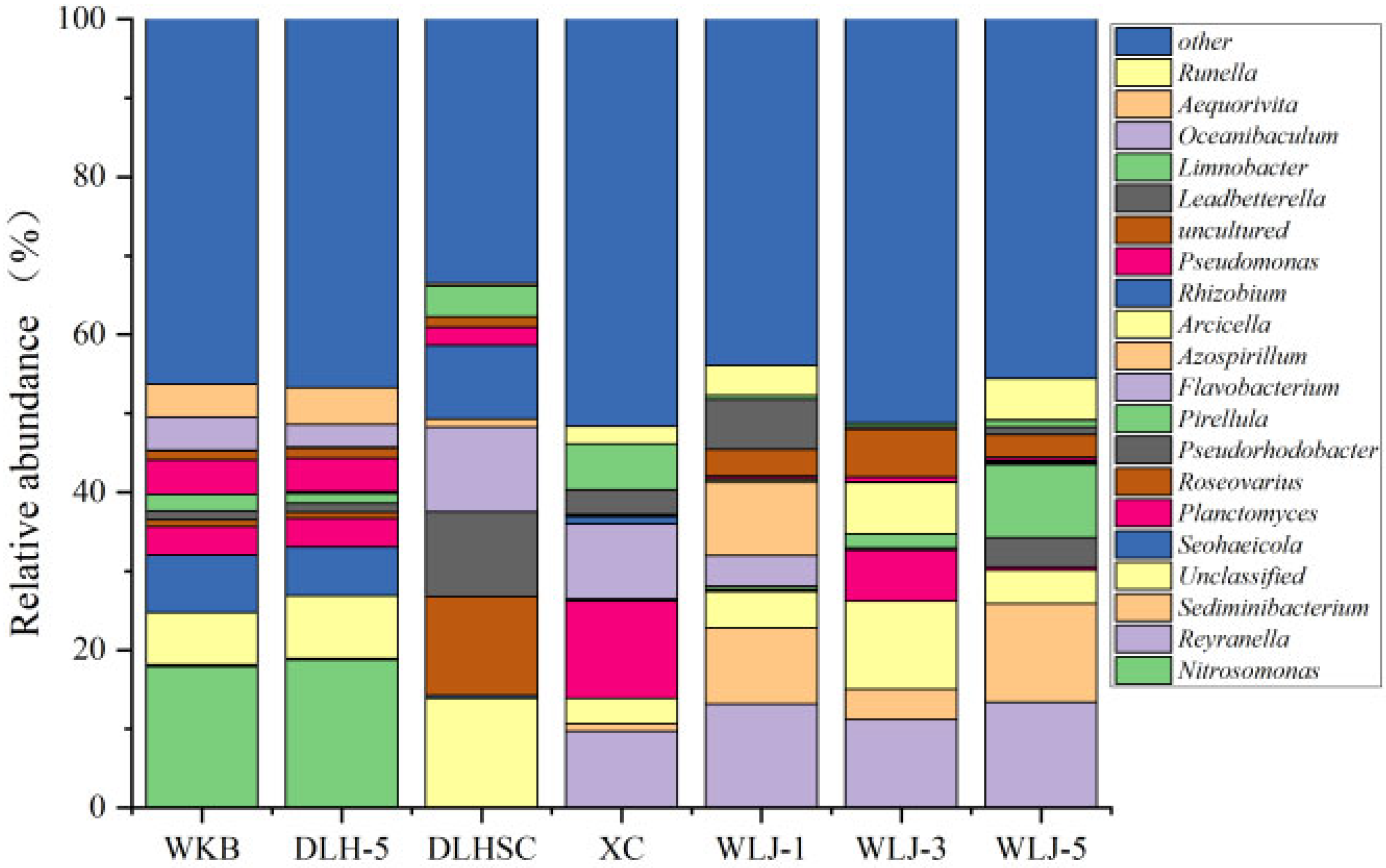
After quality filtering and rarefaction to a uniform sequencing depth, high-quality 16S rRNA gene sequences were obtained for all samples. Compared with the control sample, the microbial community diversity of WKB samples was more diverse, and similar to that of DLH-5, which was extracted in a similar location (Figure 2). Alpha diversity analysis based on OTU data showed that Chao1 richness and Shannon diversity indices were higher at WKB and DLH-5 than at the control site WLJ-5, consistent with the compositional patterns observed in Figure 2. The dominant microbes in the sample area are Nitrosomonas, Aequorivita, Seohaeicola, Pusillimonas, and Oceanibaculum. Reyranella and Sediminibacterium are the main microorganisms found in the groundwater samples WLJ-1, WLJ-3 and WLJ-5, several villages far away from the tailing pond. These microbial genera are commonly found in groundwater and sediments surrounding tailings ponds in the region. Flavobacterium was detected only at sites DLHSC and WLJ-1, and its abundance appeared to decline with increasing distance from the tailings pond, although this observation was not statistically tested. Correspondingly, microbial alpha diversity in groundwater tended to increase with distance from the pond, suggesting a potential spatial pattern rather than a statistically confirmed relationship. This spatial pattern is likely driven by the elevated concentrations of ammonia nitrogen and salinity in the groundwater resulting from leakage of tailings pond wastewater. The microbial community in the WKB groundwater was predominantly composed of ammonia-oxidizing bacteria and halotolerant species, whose functional traits directly reflect the major pollutant types derived from the tailings pond. After quality filtering and chimera removal, an average of approximately 25,000 high-quality sequences per sample was retained from an average of 30,000 raw reads.
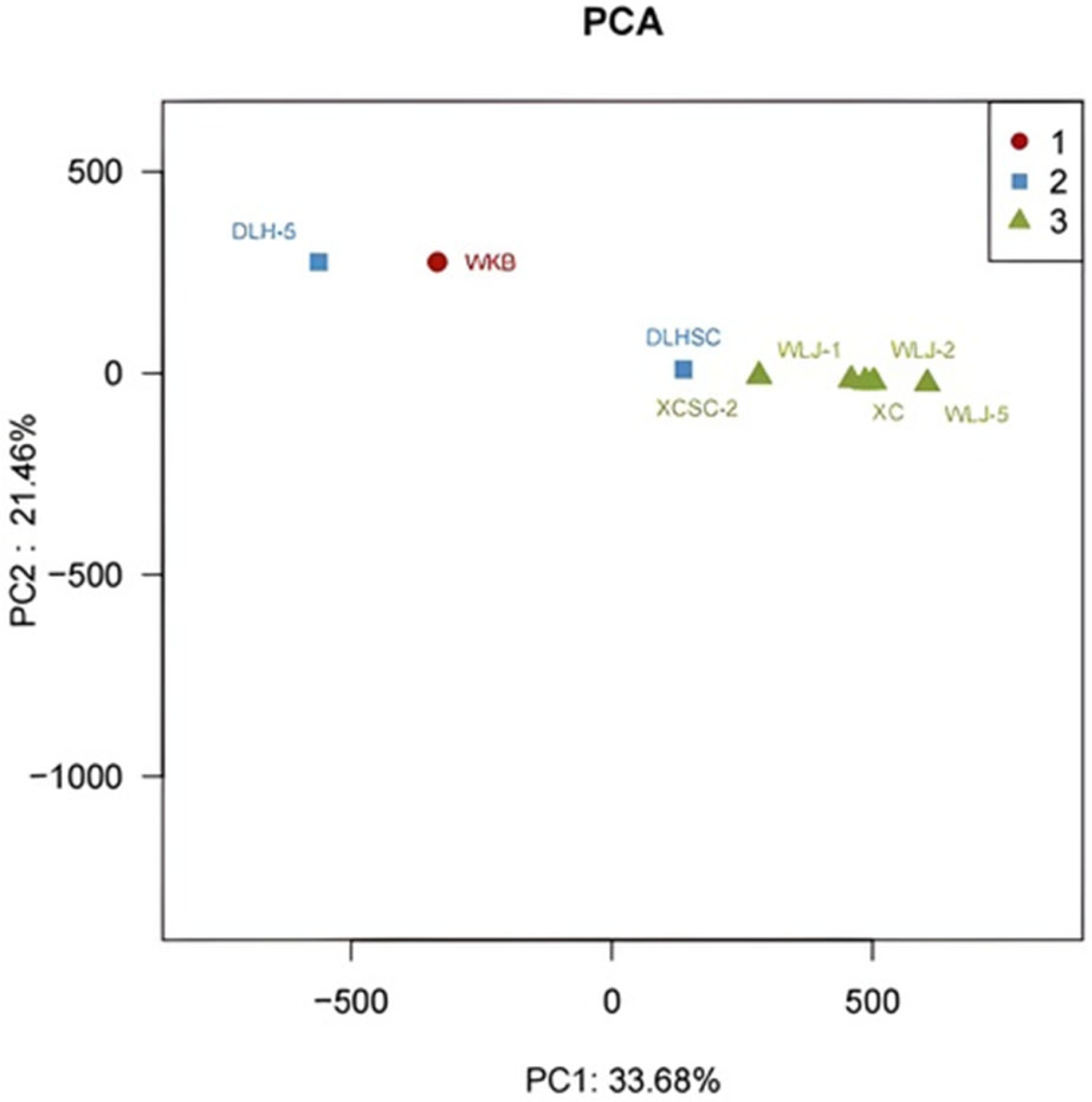
The composition of OTUs at 97% similarity further demonstrates the influence of distance from the tailing ponds on microbial communities. To visualize community differences among sample groups, exploratory principal component analysis (PCA) was performed and the result is presented in a two-dimensional coordinate plot (Figure 3). The first two principal components captured the majority of the variance in community composition, and the ordination revealed a clear spatial grouping of samples. The ecological interpretation of the observed grouping was supported by redundancy analysis (RDA) with forward selection (see Section 3.3). Intuitively, it can be seen that the microbial community of WKB groundwater samples closely resembles that of DLH-5, which are in close proximity to each other. In contrast, the reference site WLJ-5, located farthest from the tailings pond, exhibited the most distinct microbial composition. Overall, the degree of difference in microbial community structure among the sampling sites showed a positive correlation with their spatial distance relative to WKB.
Each point represents the microbial community of one groundwater sample, colored by sampling site. Samples positioned closer together share a more similar community composition. The spatial grouping was statistically validated by redundancy analysis (RDA) with forward selection of environmental variables (see Section 2 and Section 3.3). Although the ordination plot is presented as an exploratory visualization, the separation of the control site WLJ-5 from the impacted sites WKB and DLH-5 is statistically supported by the RDA results (Section 3.3).

3.3. Correlation Analysis of Environmental Factors and Microorganisms

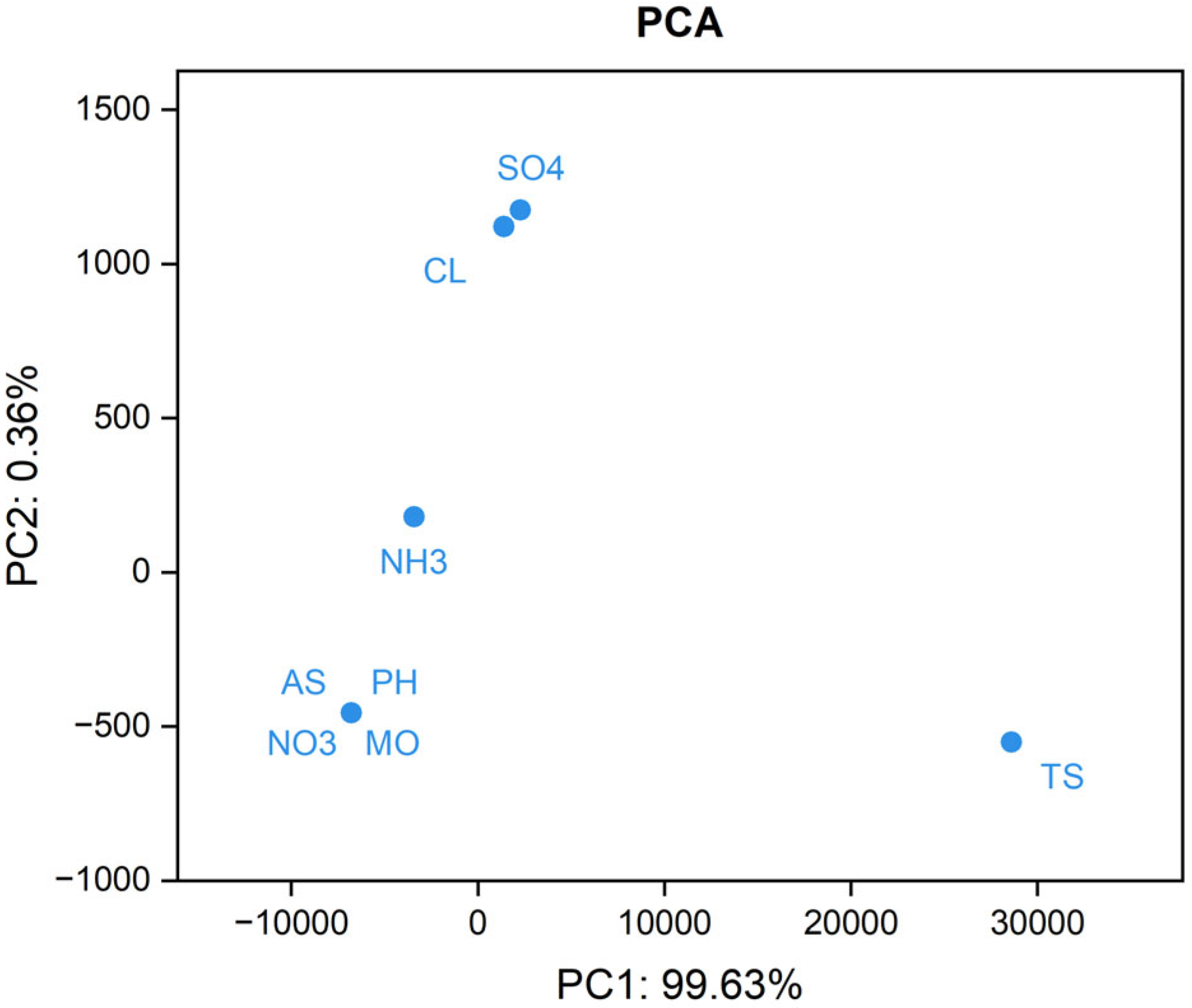
Both environmental factors and microbial community structures are correlated with the distance to WKB. To identify the key environmental drivers, seven hydrochemical variables were initially considered: S O 4 2 and C l , A S , p H , M O , N O 3 and N H 4 + together with total soluble solids (TS) as a measure of total salinity. To avoid redundancy from highly correlated predictors, we first examined the collinearity structure among these variables using principal component analysis (PCA) (Figure 4). Variables that clustered closely in the ordination and showed high pairwise correlations (Spearman’s ρ > 0.7) were considered redundant. From each redundant cluster, the variable most directly linked to tailing pond pollution and exhibiting the largest spatial gradient was retained. In particular, AS, pH, NO3, and Mo clustered together, indicating they shared similar variance patterns. However, because As and Mo concentrations were consistently low and within the national standard at all sites (Table 1), and pH varied only within a narrow range (7.38–8.02), these variables were not considered primary pollution-related drivers. In contrast, S O 4 2 , N H 4 + , displayed large concentration gradients across sites and were strongly associated with the tailing pond source. Based on forward selection and collinearity assessment, S O 4 2 , N H 4 + , and TS were retained as the most parsimonious and statistically meaningful environmental predictors for RDA.
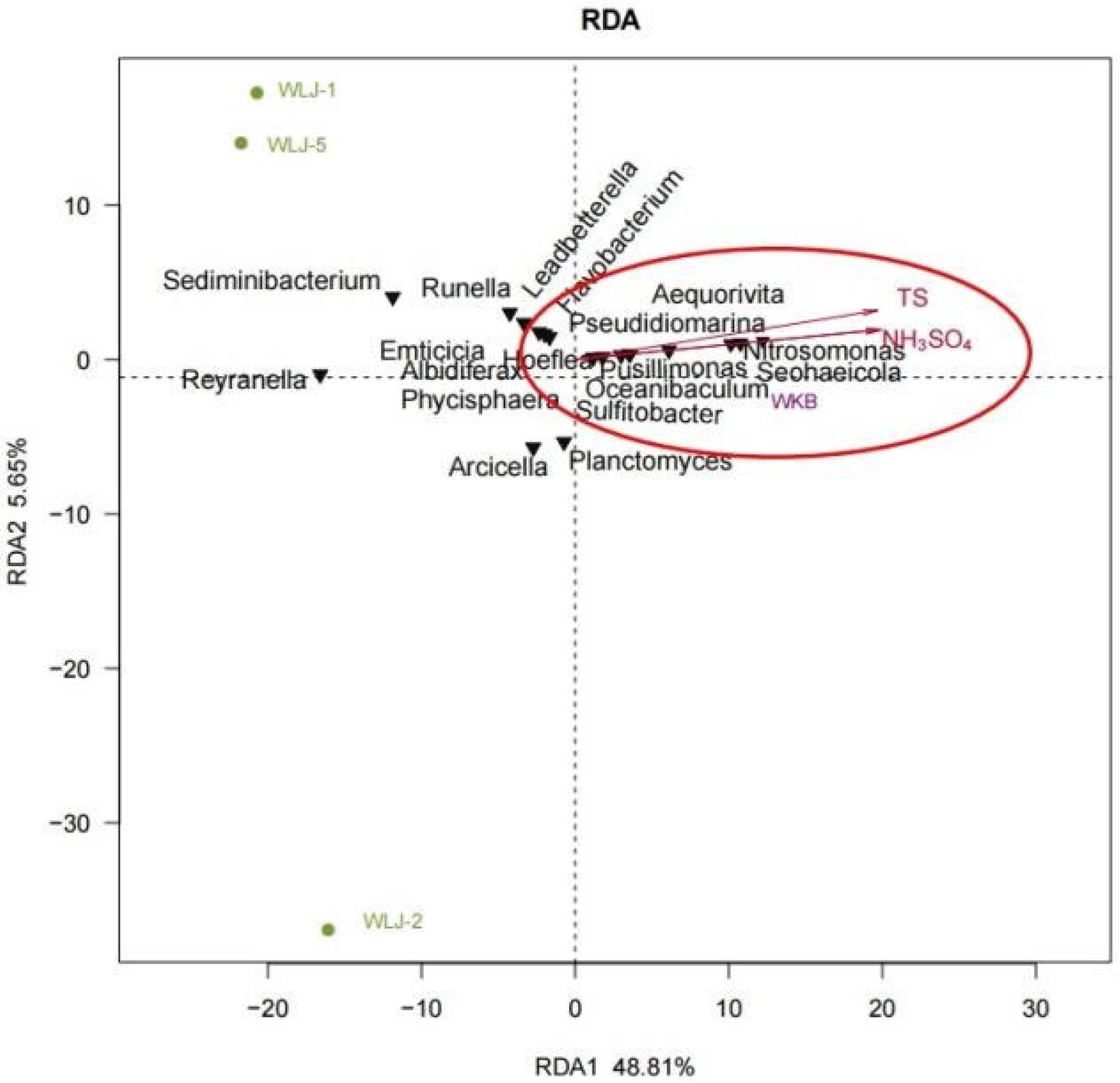
In the WKB samples, the relative abundances of dominant bacterial genera showed strong correlations with measured environmental variables (Figure 5). Specifically, the relative abundance of Nitrosomonas was significantly correlated with NH4+ and SO42− concentrations (p < 0.05, Spearman correlation). Several other microbial groups, including Aequorivita, Pseudidiomarina, Pusillimonas, Seohaeicola, and Oceanibaculum, also showed significant correlations with one or more of the measured environmental factors (Figure 5). Redundancy analysis (RDA) with forward selection identified SO42− and NH4+ as the most parsimonious and statistically significant environmental variables explaining the variation in microbial community structure (p < 0.05, based on 999 permutations). Forward selection retained only these two variables as significant predictors; TS, pH, and other measured parameters did not explain significant additional variance (p > 0.05).
We emphasize that these statistical associations are correlational in nature. While they indicate that shifts in microbial community composition are strongly associated with elevated NH4+ and SO42− concentrations, they do not alone establish a direct causal link between these ions and the abundance of specific taxa. In contrast, no significant correlations were found between the dominant bacterial taxa and the main environmental variables at the reference site WLJ-5.

4. Discussion

With the increasing demand for rare earth elements in society, a massive accumulation of waste has led to a serious deterioration of the water quality of tailing ponds and the surrounding groundwater. The data in this study can also be used to prove that the water quality index of a tailing pond, that is, the specific content of heavy metals in the groundwater around a tailing pond is far lower than the national standard, while the content of F , C l and S O 4 2 in the groundwater is significantly above the accepted standard. Numerous studies have shown that increasing levels of pollutants can have seriously adverse effects such as a decrease in microbial biomass and diversity [18,19,20,21]. However, it is not easy to identify the main pollutants in such a complex anion solution, and few studies have been conducted to attempt to identify them. The novelty of the present work lies in coupling high-throughput 16S rRNA gene profiling with multivariate ordination to link specific microbial taxa (e.g., Nitrosomonas and halotolerant genera) to a defined set of co-occurring anions, rather than to single metals or bulk salinity alone. This approach moves beyond the simple presence/absence of indicator taxa and instead uses community-level ordination patterns statistically validated by RDA to pinpoint the primary chemical stressors. Given that microbial communities serve as indicators of environmental pollution [10], we examined the spatial co-occurrence patterns between dominant taxa and measured chemical parameters. In the WKB sample, where NH4+ and SO42− concentrations were highest (3354 mg/L and 9470 mg/L, respectively), Nitrosomonas reached its maximum relative abundance (Figure 2). Conversely, at the control site WLJ-5 with the lowest ion levels, Nitrosomonas was nearly undetectable. This consistent association suggests that Nitrosomonas possesses a physiological tolerance or metabolic preference for high ammonium-sulfate conditions, and its dominance is likely a direct response to this chemical stressor. Therefore, Nitrosomonas should be viewed primarily as an indicator of elevated ammonium concentrations rather than a general marker of poor water quality. Its presence reflects a specific chemical condition (high NH4+) rather than overall water quality degradation. Genes involved in ammonia oxidation have been previously identified in Nitrosomonas [22], providing a mechanistic basis for its proliferation in ammonium-rich environments. However, the functional interpretation in the present study remains indirect: we infer the potential biogeochemical roles of indicator taxa (e.g., ammonia oxidation by Nitrosomonas, sulfur cycling by Seohaeicola) from the known metabolic traits of these genera in published literature, not from metatranscriptomic, metaproteomic, or culture-based functional assays. The observed community shifts therefore serve as taxonomic indicators that are consistent with hypothesized biogeochemical functions, but direct functional validation is beyond the scope of this study. At the reference site WLJ-5, Reyranella and Sediminibacterium were prevalent. However, caution is needed when interpreting these taxa as water quality indicators, as Sediminibacterium has been frequently detected in polluted freshwater environments in other studies. Their dominance at WLJ-5 may simply reflect the specific environmental conditions at this site rather than serving as a universal proxy for “superior” water quality. However, alternative explanations should be considered. The polluted sites also exhibited elevated total salinity (TS) and slightly different pH compared to the control. Although RDA identified ammonium sulfate as the primary factor shaping community structure (Figure 5), the potential synergistic effects of high osmotic pressure (indicated by TS) on halotolerant genera such as Seohaeicola cannot be entirely excluded. The observed community shift is likely the result of multiple intertwined factors rather than a single ion. We note that the sequence data were generated on the Roche 454 platform, which has since been superseded by higher-throughput short-read technologies. While the targeted V1–V3 region and our re-analysis with updated pipelines ensure data validity, future studies using paired-end Illumina sequencing with ASV-level resolution may provide deeper coverage and allow finer taxonomic discrimination.
These findings are broadly consistent with those from other mining-impacted groundwater systems. For instance, sulfate-reducing and sulfur-oxidizing bacterial communities have been documented in acid mine drainage (AMD) environments worldwide, where SO42− concentrations often exceed several thousand mg/L [16,17]. Similarly, the dominance of ammonia-oxidizing bacteria in ammonium-rich groundwater has been reported in landfill-leachate plumes and organically contaminated aquifers [8]. However, the present study differs from typical AMD investigations in that the pH remained circumneutral (7.38–8.02) and metal concentrations were low—conditions that favor nitrifying rather than acidophilic communities. The co-occurrence of high NH4+ and SO42− with elevated total salinity (TS up to 35,100 mg/L at WKB) also aligns with observations from high-salinity groundwater systems, where halotolerant genera such as Seohaeicola become dominant community members [8]. Taken together, these comparisons suggest that the community patterns we observed are not unique to the Baotou site but reflect general ecological responses to combined ammonium–sulfate–salinity stress that may be applicable to other tailing-impacted aquifers.
Several aspects of the study design merit consideration when interpreting the findings. The sampling strategy employed paired spatial replicates (two wells per site) to assess within-site consistency; the concordance between paired samples supports the reliability of the observed community patterns. The single-campaign design ensured that all sites were compared under uniform seasonal conditions, which is advantageous for isolating spatial pollution gradients. However, temporal dynamics (e.g., wet-dry season fluctuations) were not evaluated, and the number of sampling sites (n = 7), while sufficient for the ordination-based analyses presented here, limits the statistical power for broader generalization. Future studies incorporating multi-season sampling and a larger number of sites would complement these findings and further test the robustness of the indicator taxa identified. In addition, the taxonomic resolution in this study is based on 97% similarity OTU clustering, which was the standard approach at the time of the analysis. Future re-analysis of the raw sequence reads using amplicon sequence variant (ASV) methods (e.g., DADA2) may provide single-nucleotide resolution and allow finer taxonomic discrimination.
In summary, this study demonstrates that microbial community change analysis can serve as and has proven to be a scientifically effective approach for evaluating the influence of contaminated groundwater by tailings ponds. Through correlation analysis with environmental factors, elevated concentrations of NH4+ and SO42− were most strongly associated with shifts in microbial community structure across the studied sites. This statistical association, supported by RDA, suggests that these co-occurring ions are the dominant environmental correlates of microbial community composition, although the observed patterns may also reflect the integrated effects of multiple covarying factors (e.g., total salinity and pH).

5. Conclusions

This study set out to characterize microbial community structure along a contamination gradient in groundwater surrounding a rare earth tailing pond, to identify the key environmental factors shaping these communities, and to evaluate the potential of specific microbial taxa as bioindicators of complex anion pollution. The results demonstrate that microbial community composition differed substantially between the tailing-pond-impacted sites and the control site WLJ-5, with the highly contaminated site WKB harboring a distinct assemblage dominated by Nitrosomonas and halotolerant genera such as Seohaeicola. Redundancy analysis identified the co-occurring elevated concentrations of NH4+ and SO42− as the environmental variables most strongly associated with these community shifts, supporting the study’s central hypothesis.
From a practical perspective, the consistent association between specific indicator taxa and the tailing pond contamination gradient suggests that microbial community profiling, combined with multivariate statistical screening, may offer a complementary tool for identifying the dominant chemical stressors in groundwater where multiple pollutants co-occur—a scenario that is common yet difficult to resolve using chemical monitoring alone. This approach may be particularly relevant for screening anion pollution at other rare earth tailing sites or similar mining-impacted aquifers.
Several limitations must be acknowledged. The findings are based on a single sampling campaign with a modest number of sites (n = 7) and spatial replicates (two wells per site); temporal dynamics and small-scale heterogeneity therefore remain uncharacterized. The functional roles of the proposed indicator taxa are inferred from taxonomic affiliations and published genomic traits, not from direct functional measurements. Consequently, the taxa identified here should be regarded as candidate bioindicators whose diagnostic utility requires validation through independent studies incorporating seasonal monitoring, functional gene quantification, or metatranscriptomic analysis across a wider range of sites.
In conclusion, this work demonstrates that microbial community composition shows structured, statistically verifiable variation along a contamination gradient in a rare earth tailing-impacted groundwater system. The identified associations between specific taxa and anion contaminants provide a foundation for developing microbiology-based screening tools, while recognizing that further validation is essential before these taxa can be applied as routine bioindicators in environmental monitoring.

Author Contributions

T.C.: Writing—original draft, Conceptualization, Software, Formal analysis. Y.W.: Supervision, Data curation, Conceptualization, Methodology. Y.L.: Investigation, Validation, Visualization. M.C.: Writing—review and editing, Resources, Project administration, Funding acquisition. All authors have read and agreed to the published version of the manuscript.

Funding

This research was funded by the Inner Mongolia Natural Science Foundation (2025MS04046) and the Fundamental Research Funds for Inner Mongolia University of Science & Technology (2023XKJX015).

Informed Consent Statement

Not applicable.

Data Availability Statement

The datasets used and analyzed during the current study are available from the corresponding author on reasonable request.

Conflicts of Interest

The authors declare no conflicts of interest.

References

  1. Dushyantha, N.; Batapola, N.; Ilankoon, I.M.S.K.; Rohitha, S.; Premasiri, R.; Abeysinghe, B.; Ratnayake, N.; Dissanayake, K. The story of rare earth elements (REEs): Occurrences, global distribution, genesis, geology, mineralogy and global production. Ore Geol. Rev. 2020, 122, 103521. [Google Scholar] [CrossRef]
  2. Huang, X.; Zhang, G.C.; Pan, A.; Chen, F.Y.; Zheng, C.L. Protecting the environment and public health from rare earth mining. Earth’s Future 2016, 4, 532–535. [Google Scholar] [CrossRef]
  3. Anekwe, I.M.S.; Isa, Y.M. Bioremediation of acid mine drainage contaminated soils using bioattenuation, wastewater and air-injection system. Bioremediat. J. 2023, 27, 363–381. [Google Scholar] [CrossRef]
  4. Cheng, Y.; Zhou, K.; Wang, J.; Cui, S.; Yan, J.; De Maeyer, P.; Van de Voorde, T. Regional metal pollution risk assessment based on a long short-term memory model: A case study of the South Altai Mountain mining area, China. J. Clean. Prod. 2022, 379, 134755. [Google Scholar] [CrossRef]
  5. An, X.L.; Baker, P.; Li, H.; Su, J.Q.; Yu, C.P.; Cai, C. The patterns of bacterial community and relationships between sulfate-reducing bacteria and hydrochemistry in sulfate-polluted groundwater of Baogang rare earth tailings. Environ. Sci. Pollut. Res. 2016, 23, 21766–21779. [Google Scholar] [CrossRef] [PubMed]
  6. Perháová, Z.; Pristas, P.; Trnkova, K.; Prepilkova, V.; Schwarz, M.; Jankech, A.; Kvasnova, S.; Kiskova, J. Dynamics of the Galionella spp. and Leptothrix spp. Communities of Polluted Mine Drainage Water in Slovinky and Markuovce (Slovakia). Geomicrobiol. J. 2022, 39, 597–605. [Google Scholar] [CrossRef]
  7. He, X.Y.; Zheng, C.; Sui, X.; Jing, Q.; Wu, X.; Wang, J.; Si, W.; Zhang, X. Biological damage to Sprague-Dawley rats by excessive anions contaminated groundwater from rare earth metals tailings pond seepage. J. Clean. Prod. 2018, 185, 523–532. [Google Scholar] [CrossRef]
  8. Wang, J.; Zhang, Y.; Ding, Y.; Zhang, Y.; Xu, W.; Zhang, X.; Wang, Y.; Li, D. Adaptive characteristics of indigenous microflora in an organically contaminated high salinity groundwater. Chemosphere 2024, 349, 140951. [Google Scholar] [CrossRef] [PubMed]
  9. Yashir, N.; Sun, Q.; Zhang, X.; Ma, M.; Wang, D.; Feng, Y.; Song, X. Co-occurrence of microplastics, PFASs, antibiotics, and antibiotic resistance genes in groundwater and their composite impacts on indigenous microbial communities: A field study. Sci. Total Environ. 2025, 961, 178373. [Google Scholar] [CrossRef] [PubMed]
  10. Urakawa, H.; Bernhard, A.E. Wetland management using microbial indicators. Ecol. Eng. 2017, 108, 456–476. [Google Scholar] [CrossRef]
  11. Wang, C.; Yang, Y.; Xu, X.; Wang, D.; Shi, X.; Liu, L.; Deng, Y.; Li, L.; Zhang, T. The quest for environmental analytical microbiology: Absolute quantitative microbiome using cellular internal standards. Microbiome 2025, 13, 26. [Google Scholar] [CrossRef] [PubMed]
  12. Bai, J.; Chen, L.; Yang, X.; Deng, Y.; Wan, J.; Zheng, Y.; Song, Y.; Yang, Z.; Xiang, G.; Duan, R. Responses of biomarkers, joint effect and drilosphere bacterial communities to antimony (III and/or V) contamination. Heliyon 2024, 10, e37734. [Google Scholar] [CrossRef] [PubMed]
  13. GB/T 14848-2017; Standard for Groundwater Quality. General Administration of Quality Supervision, Inspection and Quarantine of the People’s Republic of China/Standardization Administration of the People’s Republic of China: Beijing, China, 2017.
  14. Zhou, J.; Bruns, M.A.; Tiedje, J.M. DNA recovery from soils of diverse composition. Appl. Environ. Microbiol. 1996, 62, 316–322. [Google Scholar] [CrossRef] [PubMed]
  15. Štěpka, J.; Němcová, L.; Bystrianský, L.; Branny, P.; Auer Malinská, H.; Gryndler, M. Seasonal changes in soil biofilm microbial communities. Soil Biol. Biochem. 2024, 197, 109542. [Google Scholar] [CrossRef]
  16. Mishra, A.K.; Yadav, P.; Sharma, S.; Maurya, P. Comparison of microbial diversity and community structure in soils managed with organic and chemical fertilization strategies using amplicon sequencing of 16 s and ITS regions. Front. Microbiol. 2025, 15, 1444903. [Google Scholar] [CrossRef] [PubMed]
  17. GB 3838-2002; Environmental Quality Standards for Surface Water. Ministry of Ecology and Environment of the People’s Republic of China/General Administration of Quality Supervision, Inspection and Quarantine of the People’s Republic of China: Beijing, China, 2022.
  18. Azarbad, H.; Niklinska, M.; van Gestel, C.A.M.; van Straalen, N.M.; Roling, W.F.M.; Laskowski, R. Microbial community structure and functioning along metal pollution gradients. Environ. Toxicol. Chem. 2013, 32, 1992–2002. [Google Scholar] [CrossRef] [PubMed]
  19. Brantner, J.S.; Senko, J.M. Response of Soil-Associated Microbial Communities to Intrusion of Coal Mine-Derived Acid Mine Drainage. Environ. Sci. Technol. 2014, 48, 8556–8563. [Google Scholar] [CrossRef] [PubMed]
  20. Liu, J.; He, X.-X.; Lin, X.-R.; Chen, W.-C.; Zhou, Q.-X.; Shu, W.-S.; Huang, L.-N. Ecological effects of combined pollution associated with e-waste recycling on the composition and diversity of soil microbial communities. Environ. Sci. Technol. 2015, 49, 6438–6447. [Google Scholar] [CrossRef] [PubMed]
  21. Chao, Y.; Liu, W.; Chen, Y.; Chen, W.; Zhao, L.; Ding, Q.; Wang, S.; Tang, Y.-T.; Zhang, T.; Qiu, R.-L. Structure, Variation, and Co-occurrence of Soil Microbial Communities in Abandoned Sites of a Rare Earth Elements Mine. Environ. Sci. Technol. 2016, 50, 11481–11490. [Google Scholar] [CrossRef] [PubMed]
  22. Urakawa, H.; Skutas, J.; Lopez, J.V. Draft Genome Sequence of Nitrosomonas sp. Strain APG5, a Betaproteobacterial Ammonia-Oxidizing Bacterium Isolated from Beach Sand. Microbiol. Resour. Announc. 2019, 8, e01573-18. [Google Scholar] [CrossRef] [PubMed]
Figure 1. Location of tailing pond and distribution of sampling sites. Note: Site abbreviations represent specific sampling locations: WKB (tailing pond wastewater), DLH-5 and DLHSC (Dalahai Village sites, shown in red to indicate proximity to the tailing pond and higher contamination levels), WLJ-1, WLJ-2, and WLJ-5 (Wulanji Village sites at increasing distances from the pond, with WLJ-5 serving as the control reference site), and XC (Xichang Village site). The red font for DLH-5 highlights its location closest to the tailing pond among the village sites and its correspondingly elevated pollutant concentrations (see Table 1).
Diversity 18 00315 g001
Figure 2. Horizontal composition of microbial communities in groundwater. Taxa with extremely low abundance (<1%) across all samples were merged into “Others” for visual clarity.
Diversity 18 00315 g002
Figure 3. Exploratory principal component analysis (PCA) of microbial communities from different groundwater sites. (Grouping patterns were validated by RDA with forward selection; see Methods and Section 3.3).
Diversity 18 00315 g003
Figure 4. PCA diagram between environmental variables across groundwater sampling sites. Vectors pointing in similar directions indicate collinear variables. AS, pH, NO3, and Mo formed a cluster distinct from the strong pollution gradient represented by SO42−, NH4+, Cl, and TS. Based on collinearity analysis and the ecological relevance to tailing pond pollution, SO42−, NH4+, and TS were selected for redundancy analysis (RDA).
Diversity 18 00315 g004
Figure 5. Redundancy analysis (RDA) triplot showing the relationships between microbial community composition (black triangles), environmental variables (red arrows), and groundwater sampling sites (colored circles). The angle between a species arrow and an environmental variable arrow indicates their correlation: an acute angle = positive correlation, an obtuse angle = negative correlation, and a right angle = no correlation. The overlapping vectors of NH4+ and SO42− indicate a high degree of collinearity, reflecting their common source from the tailing pond leachate. The proximity of sample points reflects their similarity in both community composition and environmental characteristics.
Diversity 18 00315 g005
Table 1. Groundwater quality parameters at each sampling site.
Site p H S O 4 2 (mg/L) C l (mg/L) F (mg/L) N O 3 (mg/L) N H 4 + (mg/L) A s (mg/L) M o (mg/L) T S (mg/L)
WKB7.66947084201346.533540.00180.025135,100
WLJ-17.38150.513.951.3350.63450.110.000860.003756835
WLJ-27.63141.523.61.0350.6010.1320.000620.0028392
WLJ-58.01511214.60.40.1160.5310.000230.00195329
XC7.9882.522.150.230.02150.1720.000060.0019282.5
DLH-58.022817090.440.0250.6630.000860.003753835
DLHSC7.83324370.270.0220.3850.000620.0028392
III5–9≤250≤250≤1.0≤0.02≤0.2≤0.050.1≤2000
Note: Values are single measurements from each sampling site. Data were obtained from one sampling campaign; therefore, standard deviations are not available. The Class III groundwater quality standard (GB/T 14848-2017) [13] is shown for reference.
Disclaimer/Publisher’s Note: The statements, opinions and data contained in all publications are solely those of the individual author(s) and contributor(s) and not of MDPI and/or the editor(s). MDPI and/or the editor(s) disclaim responsibility for any injury to people or property resulting from any ideas, methods, instructions or products referred to in the content.