Article

Characterization of Marine Fauna Assemblages in the Presence of Upside-Down Jellyfish (Genus Cassiopea) at Jobos Bay National Estuarine Research Reserve (JBNERR), Puerto Rico


by
Juleika Y. Vega Pérez
1,*,
Natalia B. López-Figueroa
2,*,
Sebastian Di Geronimo
2,
Ramón D. Morejón-Arrojo
3 and
Elizabeth W. Stoner
4
1
Department of Biology, University of Puerto Rico at Humacao, Humacao, PR 00791, USA
2
College of Marine Science, University of South Florida, 830 1st St. S, Saint Petersburg, FL 33701, USA
3
Departamento de Zoologia, Instituto de Biociências, Universidade de São Paulo, Rua do Matão, Travessa 14, n. 101, São Paulo 05508-090, SP, Brazil
4
Department of Natural and Applied Sciences, Bentley University, 175 Forest St., Waltham, MA 02452, USA
*
Authors to whom correspondence should be addressed.
Diversity 2026, 18(5), 306; https://doi.org/10.3390/d18050306
Submission received: 31 January 2026 / Revised: 13 May 2026 / Accepted: 15 May 2026 / Published: 19 May 2026
(This article belongs to the Special Issue Ecology and Paleoecology of Atlantic and Caribbean Coral Reefs)

Abstract

Estuaries are highly productive systems that sustain diverse assemblages of fauna. In tropical estuaries such as the Jobos Bay National Estuarine Research Reserve (JBNERR), faunal composition plays a critical role in maintaining ecosystem services. Organisms such as fishes and macroinvertebrates provide essential ecosystem services, including trophic balance, nutrient recycling, bioturbation, and support for local economies. Despite their importance, faunal inventories and their ecological interactions within Jobos Bay NERR remain limited. In this study, we characterized the faunal community present in the estuary, focusing on fishes and macroinvertebrates. Sampling was conducted between October 2022 and April 2024 using bimonthly video transects (five 10 m transects per site) across three sites. Results showed that Cassiopea spp. were the most abundant macroinvertebrate and present at all sites. The faunal composition and Cassiopea abundance exhibited spatial variability, with bony fishes dominating assemblages. PERMANOVA results indicated that while community composition differed significantly among sites, Cassiopea abundance was not a significant driver of these assemblages (p = 0.635). Additionally, burrows were observed at all sites, showing an inverse relationship with Cassiopea abundance. Our findings suggest a potential relationship between the presence of Cassiopea and other fauna in Jobos Bay and highlight the need for a better understanding of the potential effects that high Cassiopea densities may have on the structure of faunal communities.

1. Introduction

Estuaries are among the most productive ecosystems in the world, supporting high population densities of many Invertebrate and fish species [1]. Marine faunal assemblages have an important role in maintaining healthy estuaries, including the services they provide [1,2]. For example, some macroinvertebrates, such as crustaceans, mollusks, cnidarians, and echinoderms, support processes including nutrient recycling and bioturbation, which directly influence carbon sequestration and productivity [1,3,4]. Due to their abundance and diversity, estuarine detritivores may also help recycle organic matter, and grazers like gastropods control phytoplankton or bacteria biofilms [5,6] while influencing nitrification and denitrification activity in the sediment [7]. Additionally, the estuary serves as a nursery, hosting a wide range of migratory and stationary fish species that can not only determine the composition and distribution of other organisms [8], but also contribute to the economy through recreational and commercial fishing, generating an economic benefit for local communities [3,9].
Despite the importance of estuaries and the faunal communities that inhabit them, estuaries are increasingly under threat by anthropogenic activities, including nutrient loading, sedimentation, and rising sea levels from global climate change [10]. As such, it is increasingly important to document estuarine community and ecosystem dynamics to better understand how these critical ecosystems are changing. This is particularly necessary in the Caribbean, where estuarine evaluations remain scarce, despite the growing threat of human activities.
One of them is the Jobos Bay National Estuarine Research Reserve (JBNERR), which is a natural reserve located on the south-central coast of Puerto Rico (17° 56′ N, 66° 13′ W) between the municipalities of Salinas and Guayama. Jobos Bay is the second-largest estuary of Puerto Rico and is classified as a coastal plain estuary, where groundwater inputs are the main source of freshwater [11]. An assessment was conducted in 2011 at Jobos Bay [12], which provided valuable information about the system’s biological resources, including the fish communities present in the bay. However, more than a decade has passed, and subsequent work in the bay does not include faunal characterization data. Since estuarine systems are very dynamic and animals are sensitive to environmental changes, it is important to keep the census updated.
Despite its ecological importance, updated information on the composition and diversity of fauna communities within the reserve remains limited. Therefore, the main objectives of this study were (1) to quantify and identify the marine fauna present at different sites within Jobos Bay and (2) to describe possible interactions that may be occurring between the fauna present using video surveys. The data obtained in this study contribute to a better understanding of the structure of the faunal community in Jobos Bay. In addition, these data will help support future studies, as well as provide relevant information for the management of the reserve.

2. Materials and Methods

2.1. Site Location and Field Sampling

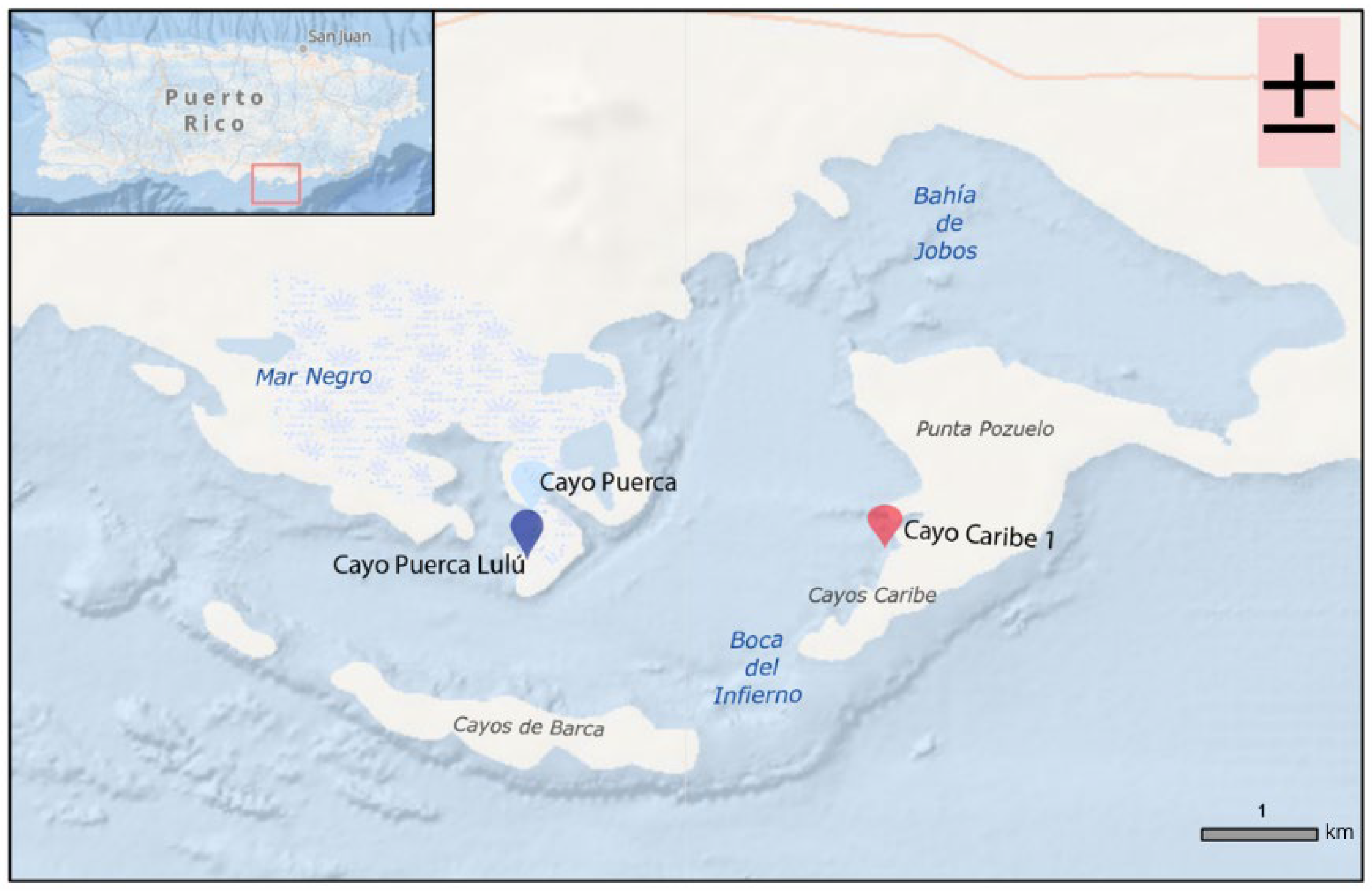
This study took place on the Jobos Bay National Estuarine Research Reserve (JBNERR), where nine sampling events were carried out on board the R/V Pelicano from October 2022 to April 2024 (except for April 2023, which could not be documented) at three locations: Cayo Caribe, Cayo Puerca, and Cayo Puerca Lulú (Figure 1). The three sites had similar traits: surrounded by red mangroves (Rhizophora mangle), low water movement, and similar seagrass species (dominated by Halophila stipulacea) and coverage—approximately 75–80%.

2.2. Environmental Parameters

In situ water parameters, including temperature (°C), salinity, dissolved oxygen (mg/L), and pH, were collected from both the surface and bottom upon arrival at each station using a calibrated multiparameter sonde (YSI©-556 MPS, USA). Sampling time varied throughout the study depending upon season and the weather, including wind direction.

2.3. Faunal Surveys

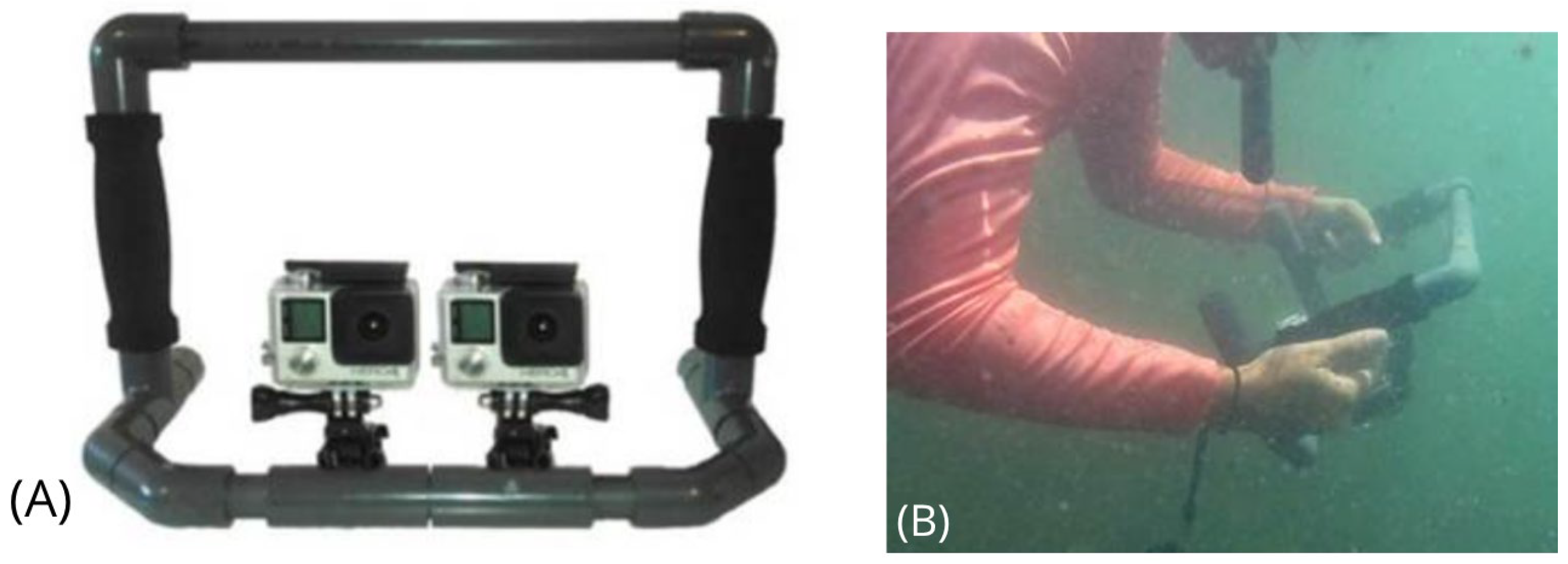
Five fixed 10 m transects were established that ran perpendicularly to the mangroves at each site. Transects were established by placing two 1.5 m PVC pipes at the start and end of each transect, securing the transect tape underwater. Once the transects were in place, we conducted photogrammetric surveys using two GoPro Hero 10 cameras affixed to a dual-camera mount (Figure 2A). This setup surveyed a 2 m swath from 0 m to 10 m of the transect covering an area of 20 m2. The GoPro Hero 10 had the following parameters: resolution: 4k, FPS: 30, lens: wide, HyperSmooth: standard, scheduled capture: off, duration: no limit, hindsight: off, bit rate: standard, zoom 1.0×, shutter: auto, EV comp: 0, white balance: auto, ISO min 100, ISO max 1600, sharpness: medium, color: natural, raw audio: off, wind: auto, SD card: 512 GB. The surveyor snorkeled at the surface from one end of the transect tape to the other (Figure 2B) while holding the camera mount pointed towards the transect and using a flotation device for stability. This procedure was repeated for each transect. Once the sampling was completed, video transects were uploaded to the BIIGLE platform, where they were manually annotated [13].

2.4. Data Analysis

Videos were annotated using the BIIGLE platform [13], an open-source cloud-based platform for image annotation. Species identification was performed using taxonomic guides from Neumann and DeLoach [15] and the WoRMS online marine species registry [16]. Identification of Cassiopea to species level was not possible using morphology alone, as the genus exhibits high phenotypic plasticity that makes visual identification unreliable [17]. Although DNA samples were collected for molecular confirmation, they were lost following power failures caused by hurricanes Milton and Helene in 2024. Individuals were therefore identified to genus level and referred to throughout this study as Cassiopea spp. Fauna quantity, diversity, richness, and evenness analyses were performed using RStudio (Version 4.0.2).
To evaluate whether the spatial association between Cassiopea spp. and faunal burrows differed from random expectation, we applied the probabilistic model of co-occurrence [18], as implemented in the cooccur package [19]. This approach calculates the probability of the observed number of co-occurrences given the individual occurrence frequencies, providing a framework to detect significant attraction or avoidance patterns. This analysis was appropriate for our data, as it accounts for the frequency of occurrence independently of density fluctuations that may be driven by separate environmental factors.
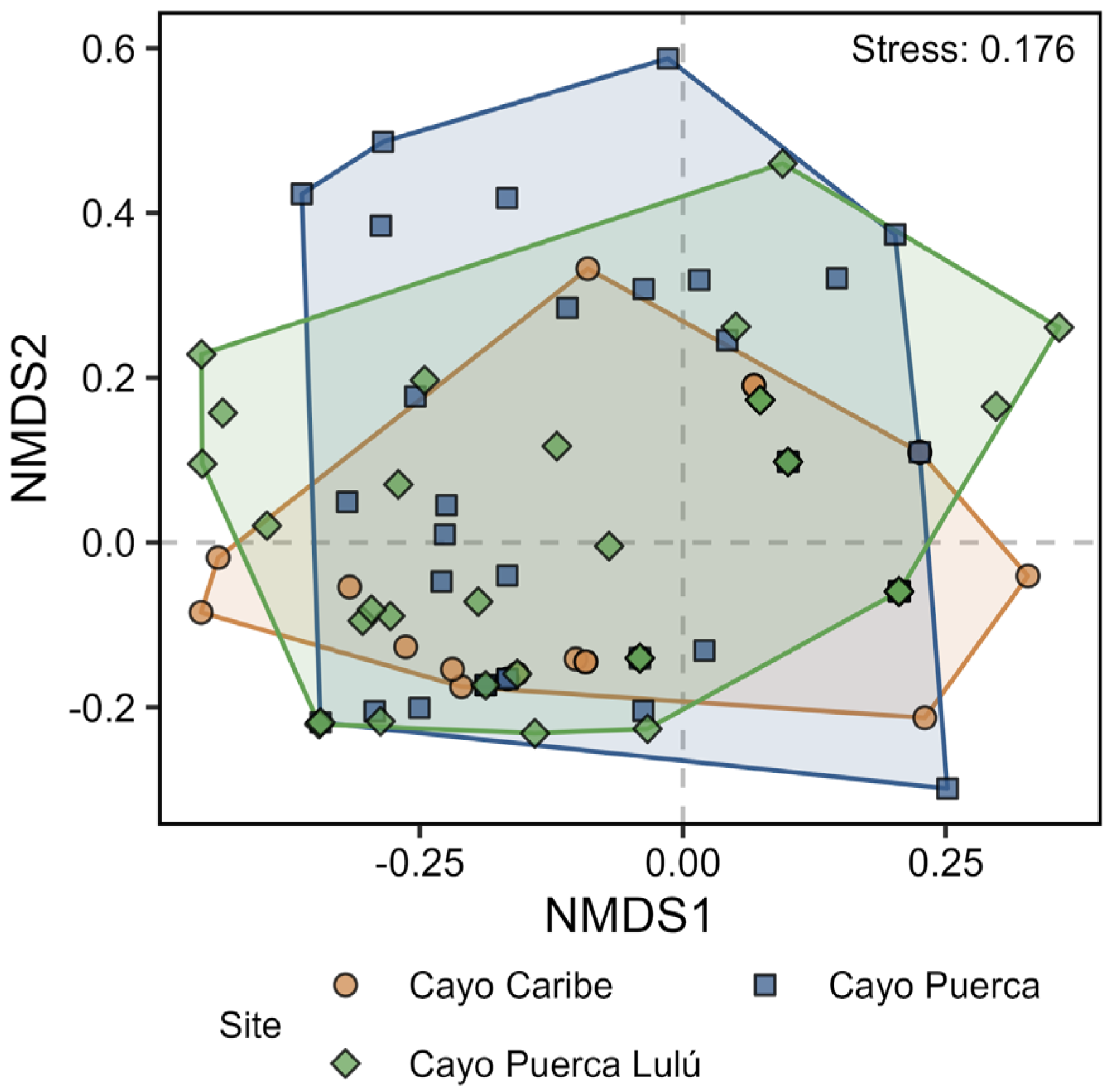
Non-metric multidimensional scaling (nMDS) ordination was performed using Bray–Curtis dissimilarity to visualize faunal community patterns across sites [20,21]. To address zero-inflated samples, a constant value of 0.01 was added to all abundance values before analysis, a standard approach in community ecology [22]. The nMDS was conducted with k = 2 dimensions, 50 random starts, and 100 maximum iterations. Stress values were interpreted following Clarke [23]: <0.05 = excellent, 0.05–0.10 = good, 0.10–0.20 = acceptable. Convex hulls delineated site groupings in ordination space. Compositional differences among sites were tested using permutational multivariate analysis of variance (PERMANOVA) and analysis of similarity (ANOSIM), both based on Bray–Curtis dissimilarity with 999 permutations [23]. To address whether Cassiopea abundance was a primary driver of community structure, an additional PERMANOVA was performed using its abundance as a predictor variable, excluding Cassiopea from the community matrix to avoid circularity. PERMANOVA quantifies the proportion of variance explained by grouping factors (R2), while ANOSIM provides a measure of group separation (R statistic, ranging from 0–1). Statistical significance was assessed at α = 0.05.

3. Results

3.1. Spatial Variability: Environmental Parameters

Sampling times varied during the field expeditions due to differences in environmental conditions and site accessibility. For instance, priority was given in the morning to Cayo Caribe as winds were not as strong and the mangroves partially shaded the transects, which could result in lower temperatures. Water conditions were similar across sites, with temperatures ranging from 28.8 °C to 29.3 °C, yet with a consistent salinity of 35 (Table 1). Dissolved oxygen varied more among sites, with the highest mean at Cayo Puerca (7.8 mg/L ± SE: 0.37) and lowest at Cayo Caribe (5.6 mg/L ± SE: 0.47). Variation within sites was moderate for temperature and salinity, while dissolved oxygen and pH showed greater variability within sites.

3.2. Fauna Spatial and Temporal Abundance

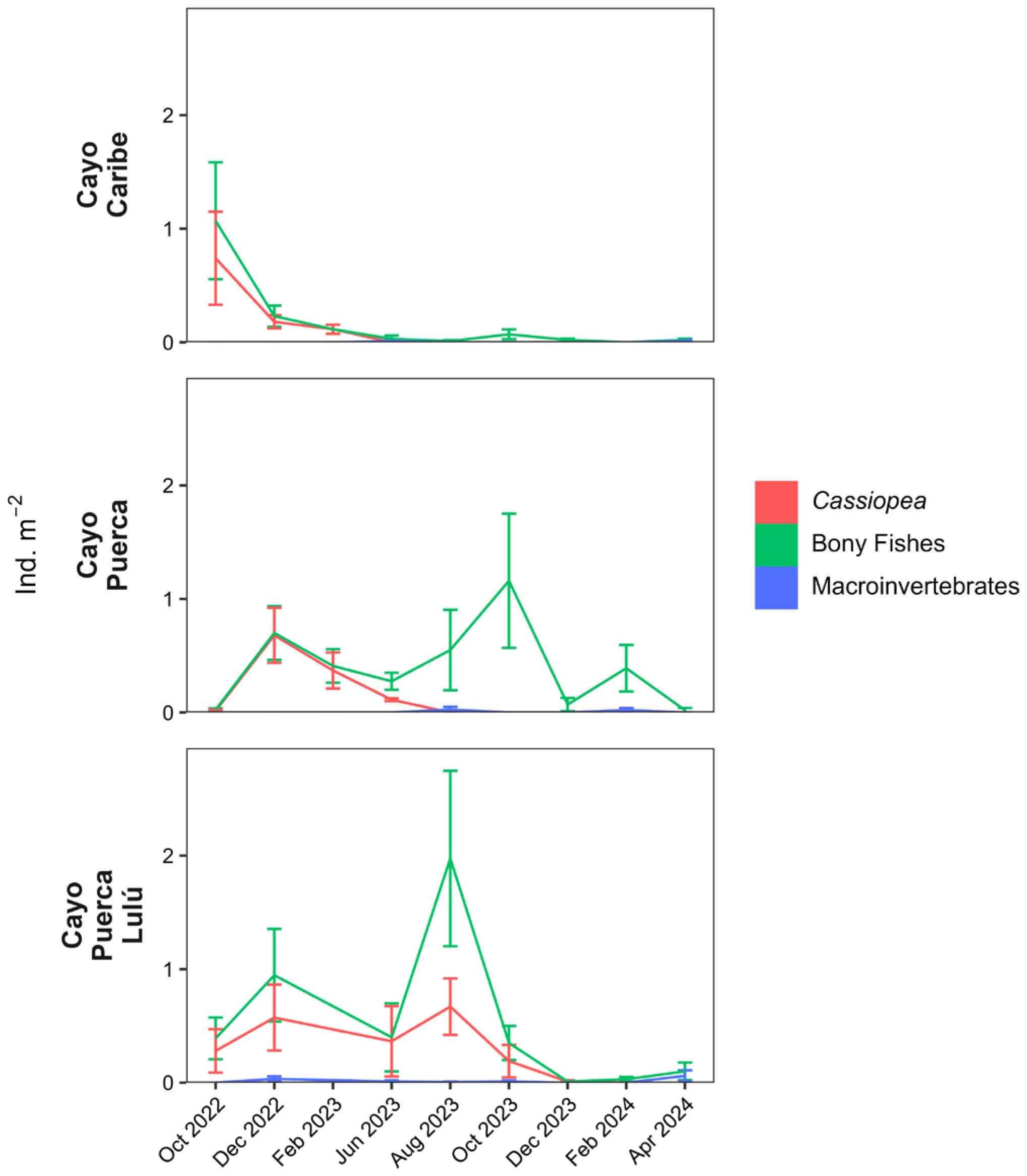
Marine fauna were categorized into two major groups: macroinvertebrates and bony fishes. For macroinvertebrates, we identified four phyla, five classes, and seven species (n = 7), with Cassiopea spp. being the most abundant group (see Supplemental Table S1). For bony fishes, we identified nine families and ten species. Cayo Puerca had the highest total species for bony fishes (n = 10), whereas for macroinvertebrates both Cayo Puerca and Cayo Puerca Lulú had four species identified. Overall, Cayo Caribe had the lowest abundance and species presence during the sampling period, with five bony fishes and three macroinvertebrates. Of macroinvertebrates, upside-down jellies (Genus Cassiopea) were the most abundant within this group and present at all sites. As such, we separated them into an additional category to compare changes in their abundance versus faunal assemblages (Figure 3). The mean abundance (±SE) of Cassiopea and other faunal groups, calculated across space and time, was highly variable (Supplemental Table S1). The most bony fishes were recorded at Cayo Puerca Lulú in August 2023, followed by Cayo Puerca in October 2023 and lastly Cayo Caribe in October 2022.
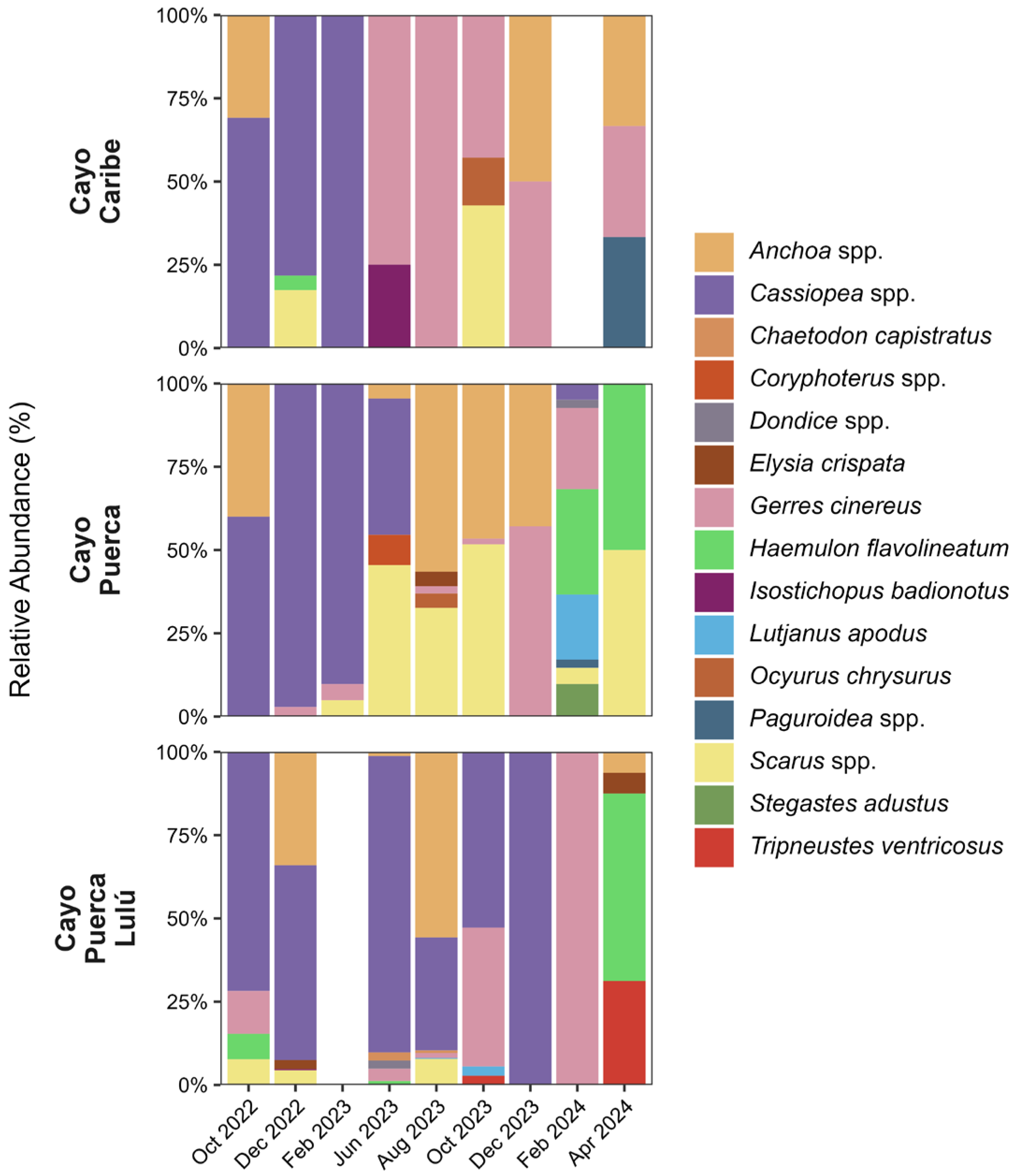
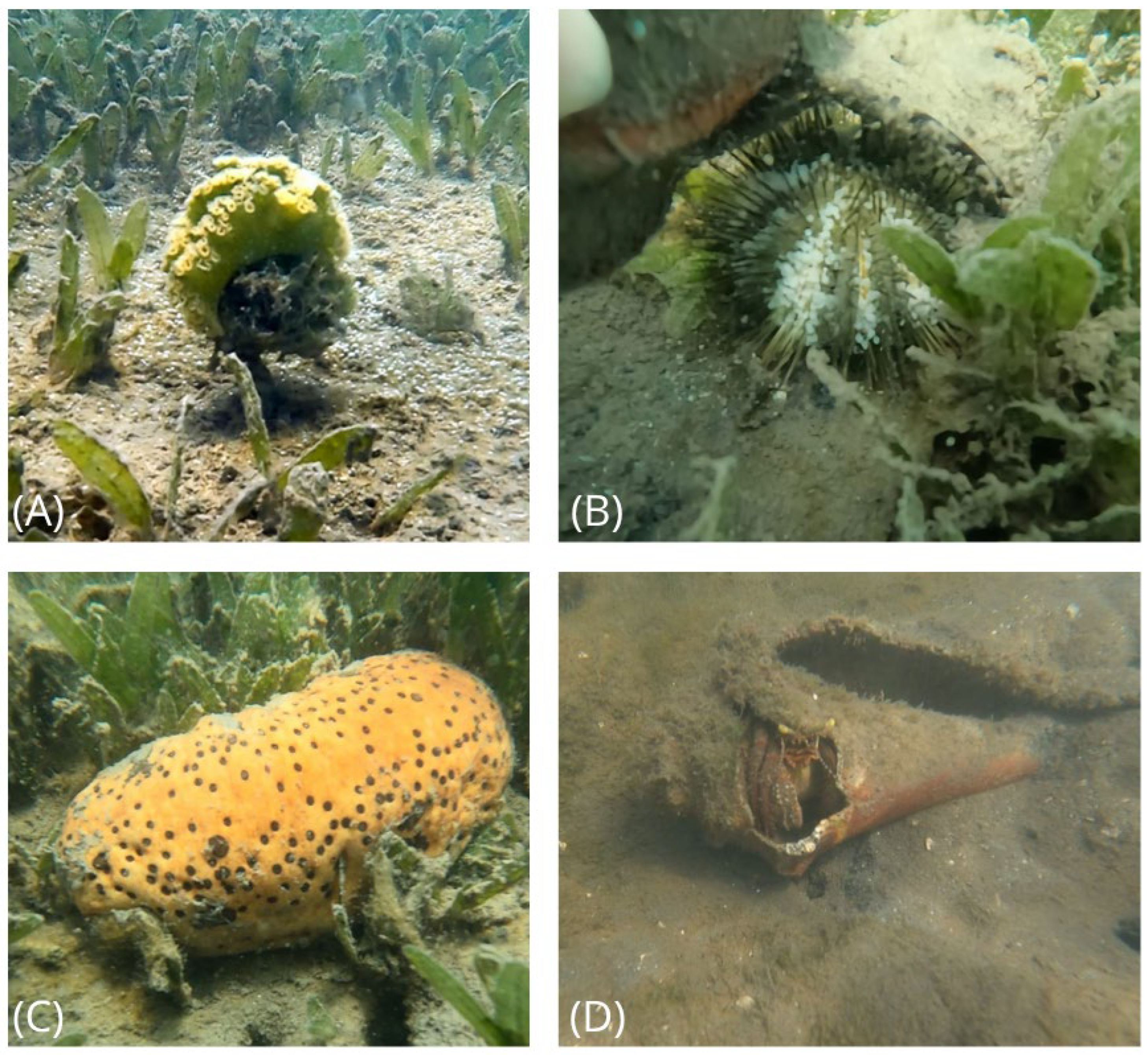
Subsequently, the abundance of bony fishes at Cayo Caribe decreased dramatically over the following months (Figure 3). Peak mean abundance of Cassiopea was less than one individual per square meter (ind. m−2), and were always present at Cayo Puerca Lulú throughout the sampling months. In October 2022 at Cayo Caribe, few bony fishes (1.07 ± 1.15 ind. m−2) and Cassiopea (0.74 ± 0.92 ind. m−2) were recorded. Over the sampling period, bony fish and Cassiopea abundance were dynamic both spatially and temporally in Cayo Caribe. Relative abundance (%) of faunal groups varied across sites and months, revealing strong temporal turnover in community composition (Figure 4). Cassiopea were recorded at all sites during the study period and contributed a large proportion of the assemblage during the early sampling periods, particularly from October 2022 to February 2023. Among the bony fishes, Anchoa spp. (bay anchovy), Gerres cinereus (yellowfin mojarra), and Scarus iseri (striped parrotfish) were the most recurrent across sites. Community composition became more heterogeneous later in the study, with G. cinereus, Anchoa spp., S. iseri, and Haemulon flavolineatum (French grunt) contributing substantially to relative abundance in several months. In contrast, macroinvertebrates showed more restricted spatial and temporal occurrence. For example, Isostichopus badionotus (three-rowed sea cucumber) was observed only at Cayo Caribe in June 2023, whereas Tripneustes ventricosus (white sea urchin) was recorded only at Cayo Puerca Lulú in April 2024. Similarly, Elysia crispata (lettuce sea slug) and Dondice spp. were observed only in Cayo Caribe and Cayo Puerca Lulú, and only during specific sampling months.

3.3. Community Structure

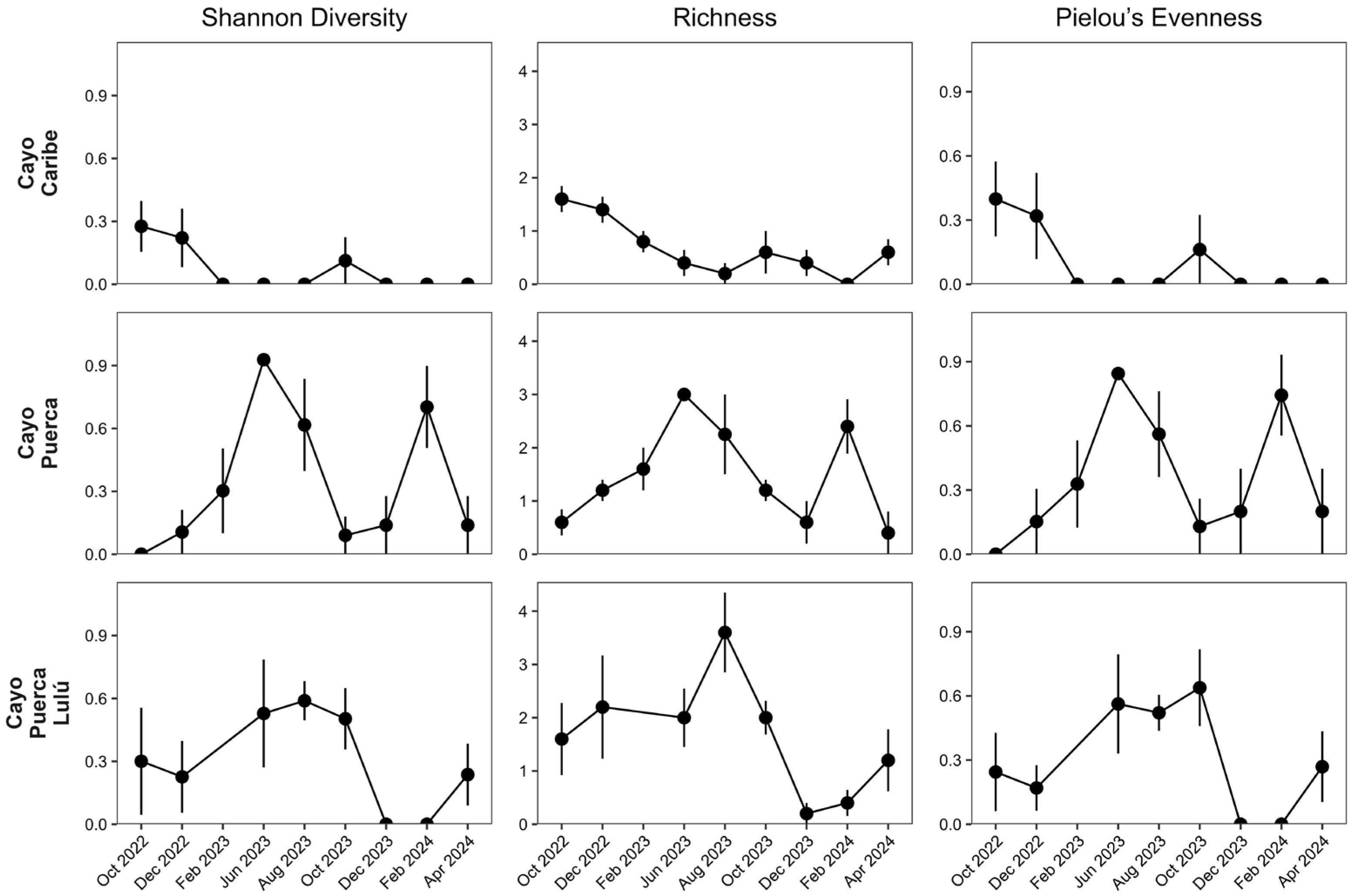
Shannon diversity (H′) and taxonomic richness showed strong spatiotemporal variation across sites and months (Figure 5). Cayo Caribe showed the lowest values of both metrics throughout the study, reaching zero in subsequent sampling months. Conversely, Cayos Puerca and Puerca Lulú showed higher and more variable diversity and taxonomic richness, with peaks in mid-2023. The peak diversity was observed in June 2023 at Cayo Puerca, while the peak richness was observed in August 2023 at Cayo Puerca Lulú. Hence, the patterns presented in Figure 5 indicate strong spatiotemporal fluctuations in diversity and richness over the study period.
Pielou’s evenness varied across sites and sampling periods, indicating changes in how evenly individuals were distributed among taxa. In general, periods with higher Shannon diversity tended to coincide with higher evenness, particularly at Cayo Puerca and Cayo Puerca Lulú, suggesting that increases in diversity were driven not only by the presence of more taxa, but also by a more balanced relative abundance among them. In contrast, low evenness values at Cayo Caribe throughout most of the study indicate strong dominance by one or few taxa, which corresponded with consistently low Shannon diversity despite occasional variation in richness. Richness and evenness did not always follow the same temporal pattern, showing that the number of taxa present alone did not determine diversity. Rather, the relative distribution of abundance among taxa also contributed substantially to community structure.
nMDS ordination successfully represented community dissimilarity in two dimensions (stress = 0.176, Figure 6), indicating an acceptable fit based on stress criteria. Visual inspection revealed an overlap between the sites. Faunal communities differed significantly among sites. PERMANOVA detected significant compositional heterogeneity (pseudo-F2,113 = 2.47, R2 = 0.042, p = 0.01), with site identity explaining 4.2% of total community variance. PERMANOVA models indicated that community composition differed significantly among sites (pseudo-F2,113 = 2.47, R2 = 0.042, p = 0.01), while Cassiopea abundance alone did not significantly explain community structure (pseudo-F1,114 = 0.70, R2 = 0.006, p = 0.63). When both factors were included in a marginal-effect model to control for site-specific differences, site identity remained the only significant predictor (p = 0.006), whereas Cassiopea abundance remained non-significant (p = 0.367). ANOSIM corroborated these findings (R = 0.047, p = 0.004), indicating weak, but statistically significant separation among site assemblages.

3.4. Habitat Structure

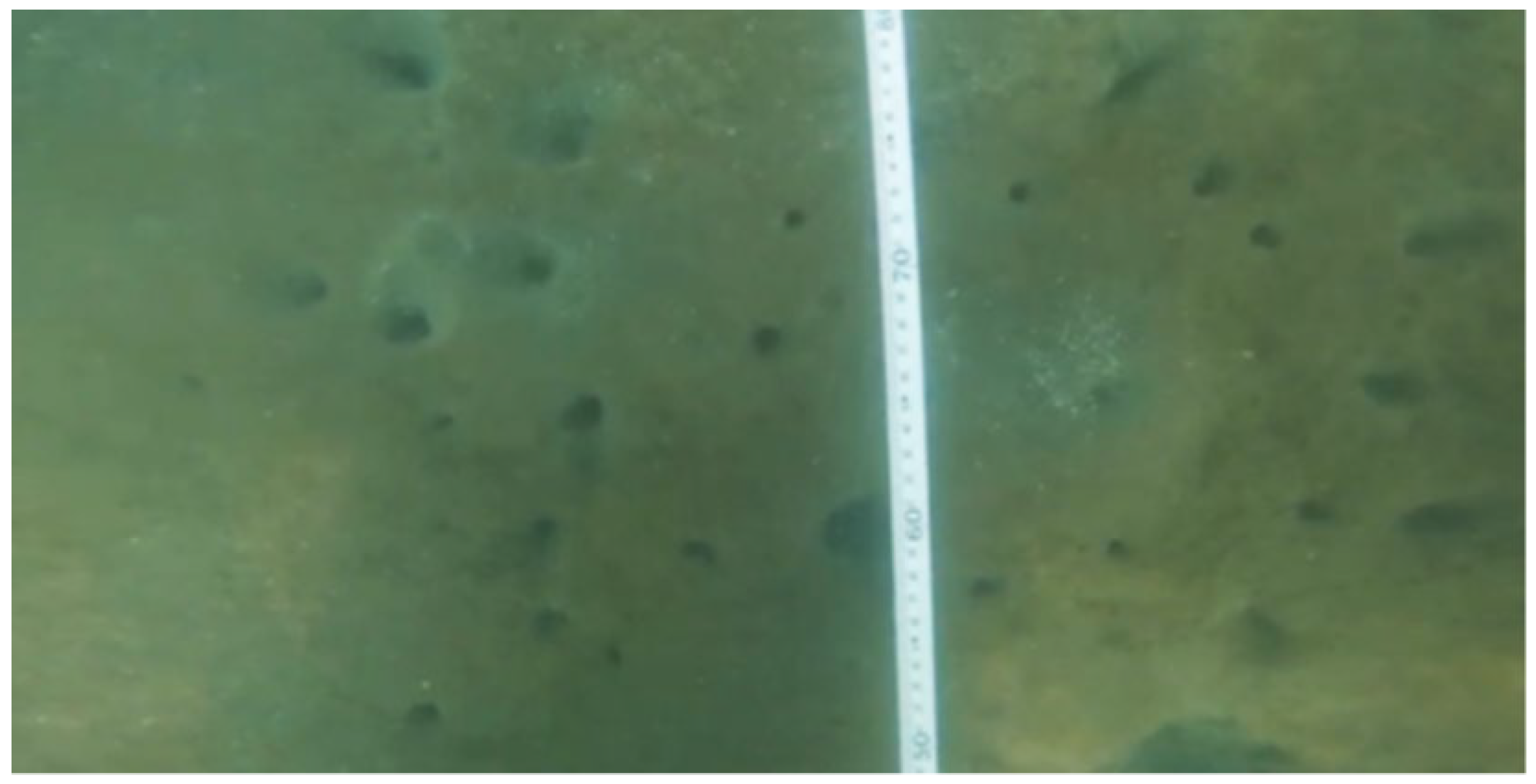
Non-living biological components are commonly recorded during benthic surveys and include remains or biogenic structures associated with organisms [24]. In this study, these components included egg cases, empty shells, and burrows (Supplemental Table S2). Burrows were encountered at all sites in large quantities (Figure 7), and because the burrowers themselves were not recorded, we classified burrow structures as “non-living” (Supplemental Table S2). Burrow density differed across sites. Therefore, we decided to quantify them to evaluate possible interactions between the burrowers and Cassiopea. Burrows were consistently higher in Cayo Caribe, increasing from 24.4 ind. m−2 from the first time of sampling (October 2022) to 217.0 ind. m−2 after the field sampling (April 2024; Figure 7). Conversely, Cayo Puerca Lulú showed moderate burrow densities, and Cayo Puerca had the lowest densities reported (2.3–68.1 ind. m−2).
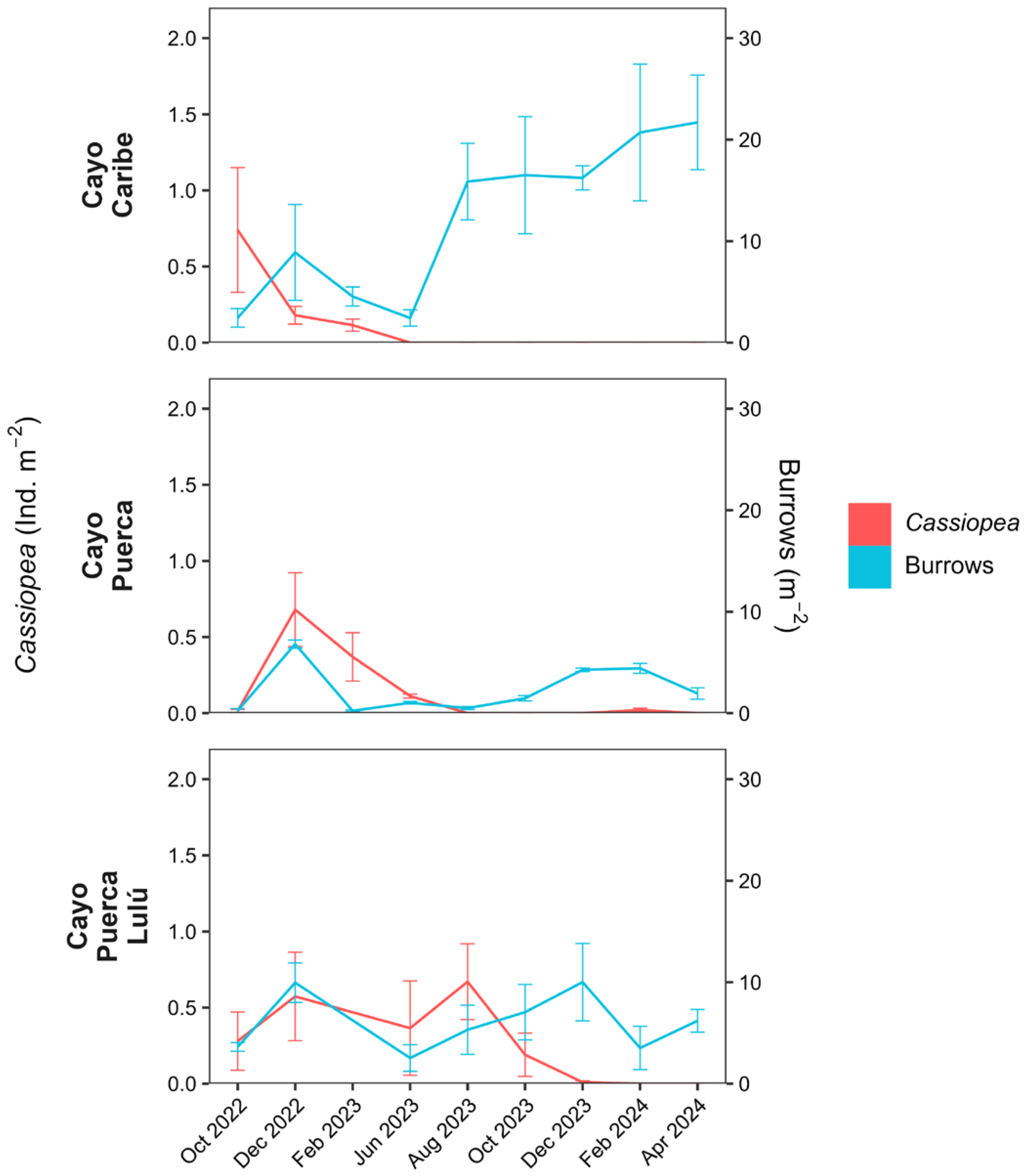
We suspected that Cassiopea and burrow densities exhibited opposite temporal dynamics, and therefore tested their relationship in the data. Cassiopea peaked at the beginning of the sampling period and declined progressively thereafter: at Cayo Caribe, abundance became absent after February 2023; at Cayo Puerca, counts approached zero after June 2023 (<0.2 ind. m−2); and at Cayo Puerca Lulú, densities dropped from 3.0–6.9 to <0.1 ind. m−2 by December 2023. Burrow densities, in contrast, were consistently high and increased over time. At Cayo Caribe, burrow counts exceeded 20 m−2 by April 2024, while at Cayo Puerca. Numbers reached near zero during the peak Cassiopea period (December 2022–February 2023) before recovering (Figure 8). Despite these apparent inverse trends, the probabilistic co-occurrence analysis [18] showed that the association between Cassiopea spp. and faunal burrows was purely random (observed co-occurrences = 58, expected = 59.77, p = 0.869), with no significant patterns of attraction or avoidance detected at the transect scale.

4. Discussion

This study aimed to characterize the composition of faunal assemblages in different sites of the Jobos Bay estuary and to assess potential interactions between local faunal communities. In this context, the observed associations between fauna assemblages not only advance our understanding of estuarine species interactions but also establish an updated baseline for long-term monitoring and management within the reserve.

4.1. Spatiotemporal Patterns and Community Structure

The pronounced spatial and temporal variation in faunal communities documented across the study sites reflects the dynamic in shallow tropical estuaries (Figure 3). Peak bony fish abundance varied both seasonally and spatially, with Cayo Caribe reaching its maximum in October 2022 before declining dramatically. Cayo Puerca Lulú showed maximum fish densities during August 2023 (nearly two individuals/m2), while Cayo Puerca peaked in October 2023 (Figure 3). The observed summer peaks in species richness at both Cayo Puerca and Cayo Puerca Lulú (Figure 3 and Figure 5), contrasting with winter declines, suggest temperature-mediated recruitment patterns consistent with tropical estuarine fish assemblages [25]. However, the dramatic decline at Cayo Caribe following its early peak indicates site-specific factors may override regional seasonal patterns, potentially reflecting differences in habitat quality, predation pressure, or environmental stressors [26].
Cayo Caribe consistently showed low diversity indices and species richness compared to other sites (Figure 5). Cayo Puerca and Cayo Caribe exhibited the greatest exposure to physical disturbance (e.g., wind-driven currents). However, Cayo Puerca is located within the mangrove channels of Mar Negro, which can dissipate the wave energy, whereas Cayo Caribe, located in the lower keys, is more directly influenced by hydrodynamic forces (Figure 1). This suggests that Cayo Caribe may support fewer faunal assemblages due to the hydrodynamics of Jobos Bay.
Although site identity explained a small portion of the total variance (4.2%), it was a more consistent predictor than Cassiopea abundance, which did not significantly influence the overall community composition (R2 = 0.006, p = 0.63). This suggests that while Cassiopea is a dominant component of the marine fauna in this study, its density does not dictate the broader assembly patterns of fish or other invertebrates in Jobos Bay. The low variance explained by both factors indicates that other unmeasured environmental variables or stochastic recruitment processes likely play a larger role in shaping these estuarine assemblages.

4.2. Natural History Observations

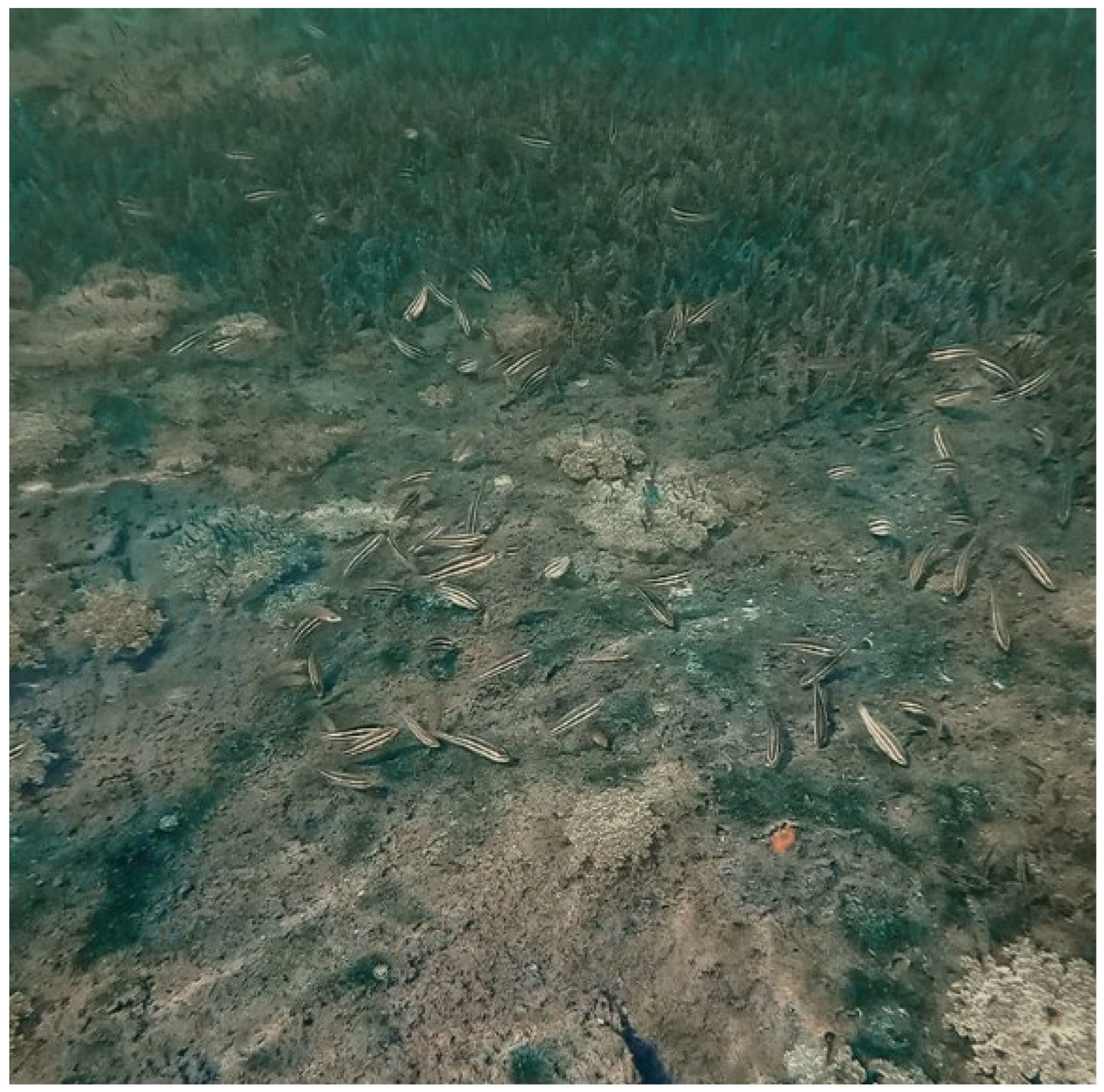
Jobos Bay had several fish species consistently represented across space and time. While the most abundant fish on the surface were Anchoa spp., we documented that the most abundant species recorded on the bottom near Cassiopea were the G. cinereus and the juvenile S. iseri (Figure 4). During the surveys, it was possible to identify that most of the fish were in their adult stage, while S. iseri (Figure 9), and the H. flavolineatum were always observed in their juvenile stage, indicating that the estuary plays a role of nursery habitat for juvenile animals [27,28].
A total of six macroinvertebrate species were identified, with Cassiopea representing the most abundant and consistently observed group across all sampling sites and months (Figure 4 and Figure 10; Supplemental Table S1). The presence of Cassiopea is an important component of the faunal community within the estuarine system. Estuaries like Jobos Bay represent a suitable habitat for these upside-down jellyfish, which are commonly found in shallow tropical and subtropical waters with low movement [29]. Recent studies indicate that under favorable environmental conditions, particularly when natural predation is limited, Cassiopea populations can increase very rapidly. Stoner et al. [30] found that Cassiopea presence in seagrass beds decreased in epifauna densities, as well as a decrease in grazers. Hence, Cassiopea can cause physical changes to the environments they inhabit, which can lead to cascading effects on benthic ecosystem dynamics such as declines in benthic fauna [31].
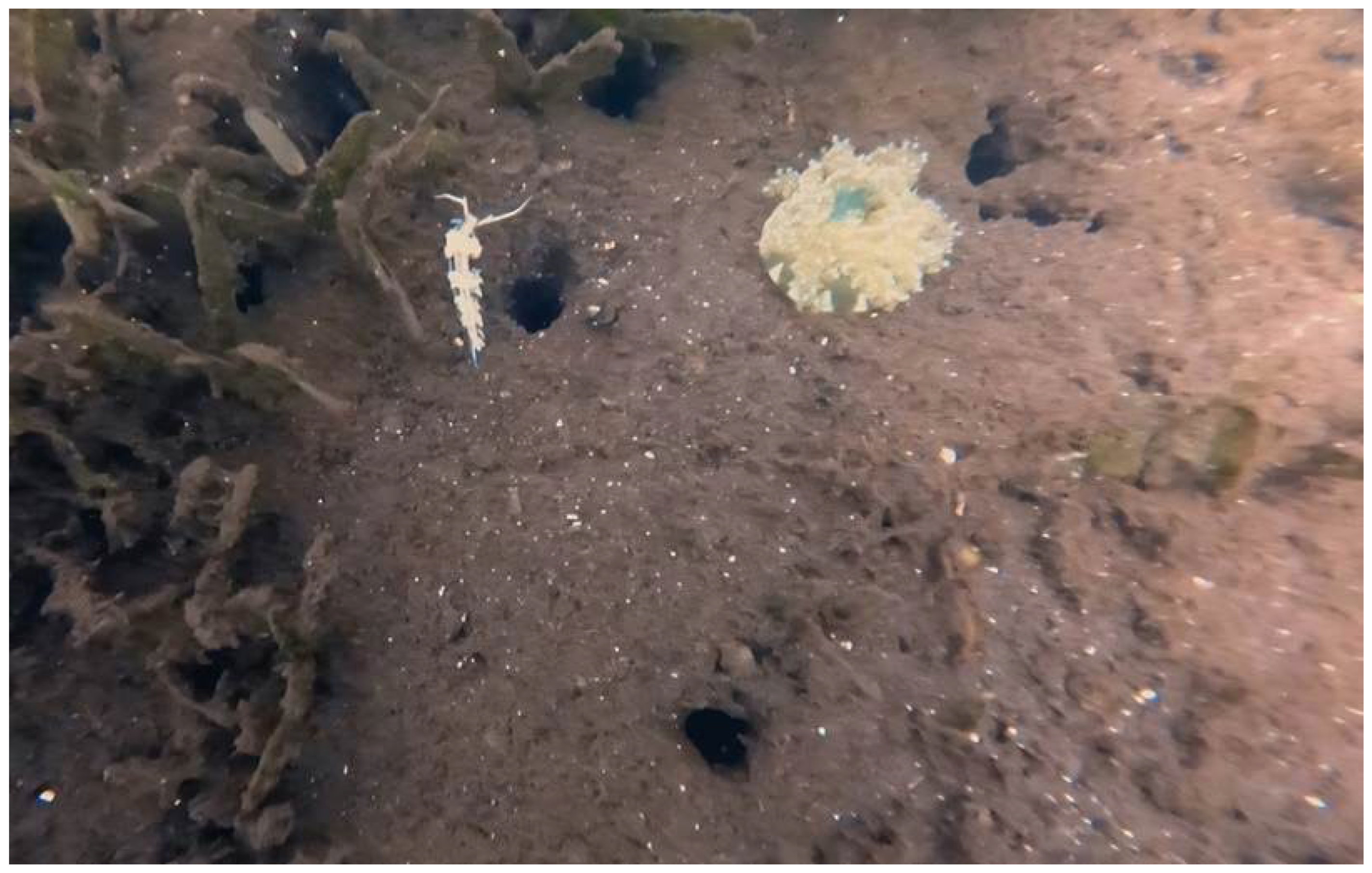
However, Cassiopea do have some predators [32,33,34,35]. One of them is a nudibranch that occurs on the southwest coast of Puerto Rico: Dondice parguerensis, which according to previous studies [32,36] has only been found within Cassiopea, not outside them. The interaction between D. parguerensis and Cassiopea is more consistent with parasitism or a predation–parasitism continuum, as the nudibranch can persist on the host, feed on oral arm tissues, and reproduce without immediately killing the Cassiopea. In this study, we were able to identify a nudibranch from the genus Dondice, but species-level identification was not possible. The Dondice spp. individuals were recorded on seagrass Halophila stipulacea or bare sediment (Figure 11). However, there is evidence that other species of Dondice are not exclusive to these jellyfish, but can consume them, like Dondice arianeae [37]. In addition, this sea slug had not been documented before in Jobos Bay [12,38], updating the inventory of macroinvertebrates in the reserve.

4.3. Potential Interactions

The second objective of this study was to document possible interactions between the fauna present in the estuary. While we have no direct interactions on camera (e.g., predation), we used the photogrammetric survey data to explore potential interactions due to the proximity of certain taxa.

4.3.1. Bony Fish–Cassiopea Interactions

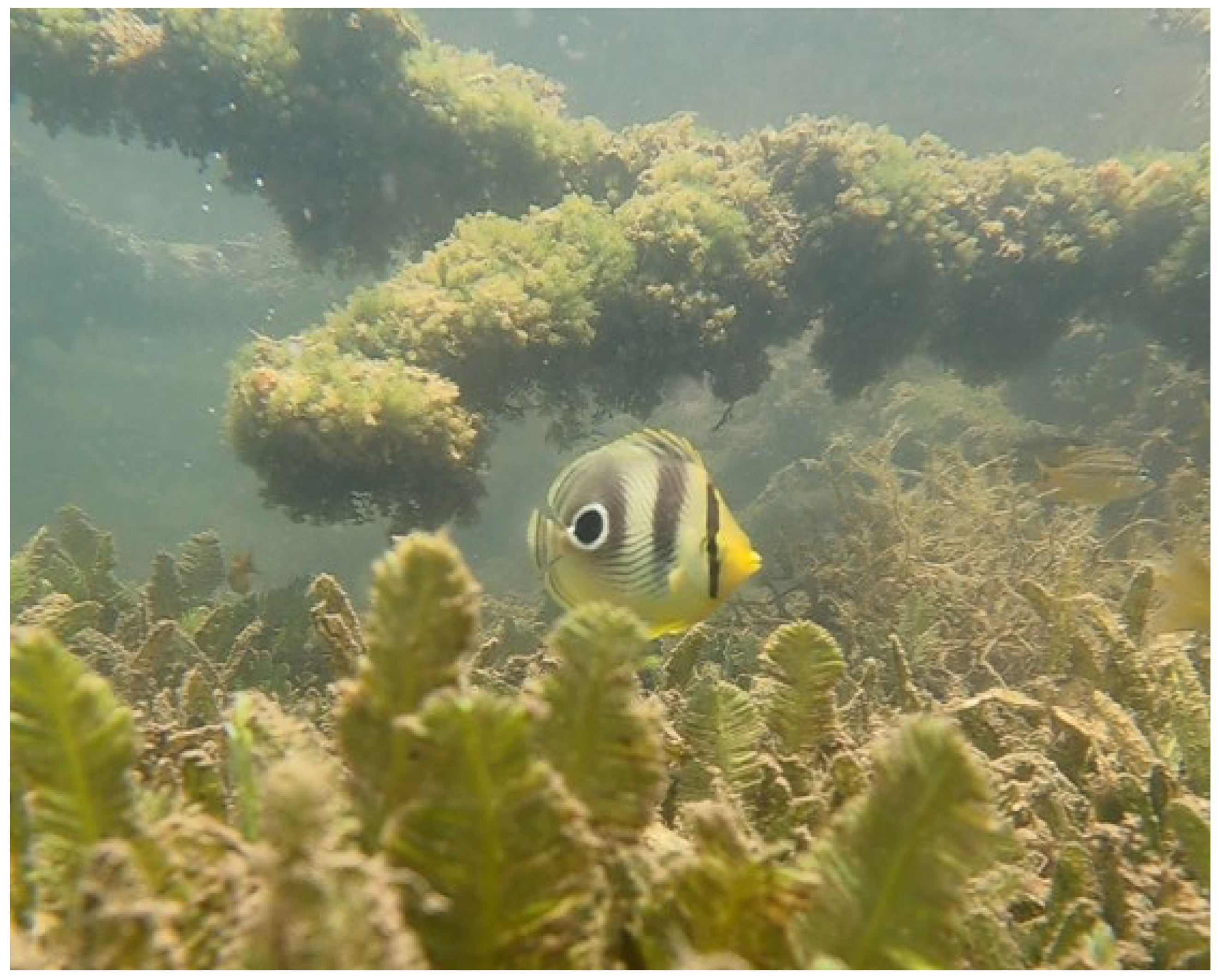
Bony fishes are commonly found in estuarine environments where Cassiopea are abundant, though the literature on their potential interactions remains scarce (see Stoner et al. [30]). One of the fish that attracted attention due to their behavior around Cassiopea was Chaetodon capistratus (four-eyed butterflyfish, Figure 12), which was observed in the field actively biting Cassiopea oral arms. This represents a remarkable example of trophic plasticity in coral-reef fish, which has also been documented in the Bahamas [39]. C. capistratus are typically specialized corallivores with highly specific dietary preferences [40,41], making this apparent medusivory behavior noteworthy. In coral-poor environments, these fishes have been documented expanding their diets to include alternative prey items, including soft corals, hydroids [42,43], and jellyfish like Aurelia aurita [44], Aequorea spp. [45], and Chrysaora lactea [46]. The nutritional quality of Cassiopea tissues, enhanced by their symbiotic zooxanthellae, along with their high abundance and ease of predation may make them an attractive alternative prey for butterflyfish when facing resource limitations [29], leading to opportunistic feeding behavior [46].
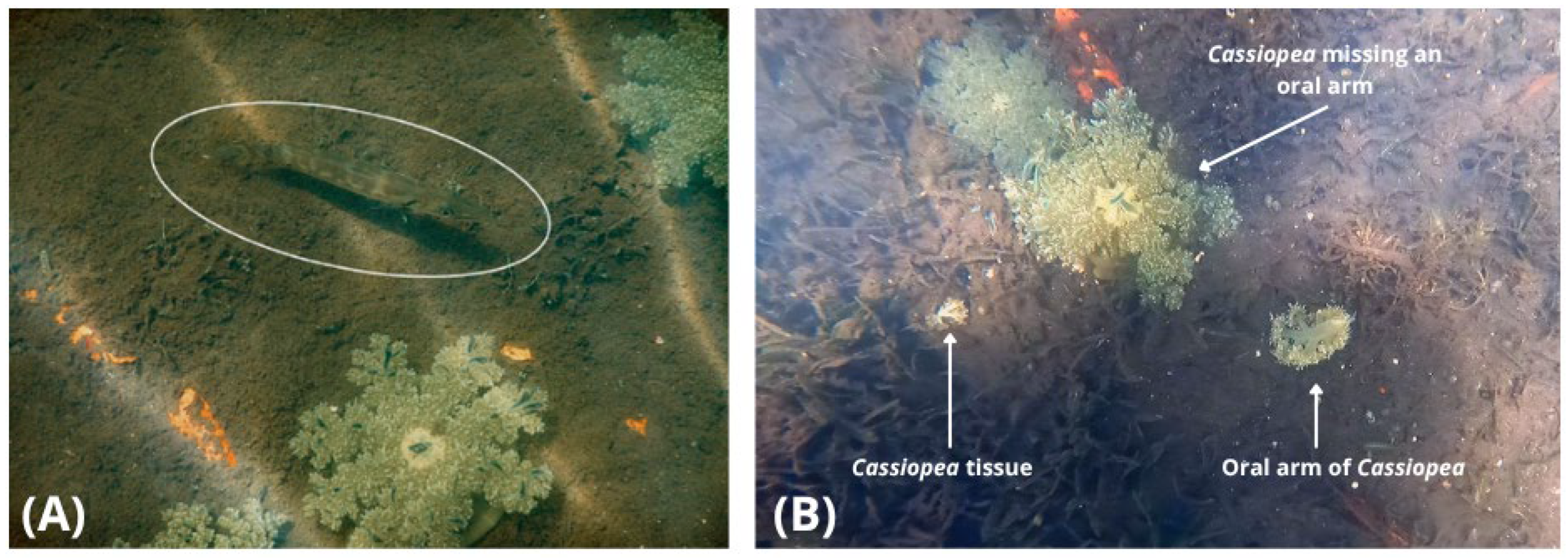
A field observation that stood out in this study was the persistent presence of juvenile Sphyraena barracuda (great barracuda) in proximity to Cassiopea (Figure 13A). Although predation activity was not directly observed or recorded, at sites where S. barracuda were present, Cassiopea exhibited missing complete oral arms and/or pieces of tissue surrounding the benthos, indicating an interesting ecological interaction. The documented tissue damage, including missing oral arms and torn bell margins (Figure 13B), is consistent with the shearing bite mechanics of barracuda [47]. While barracudas are not typically considered medusivores, their high-speed pursuit predation strategy targeting teleost prey around Cassiopea aggregations could result in collateral damage to the jellyfish themselves [48]. Similar observations of barracudas persistently present in areas of Cassiopea blooms have been noted in the Bahamas, Bonaire, and Cuba [authors’ anecdotal remarks]. We suggest that future studies could involve metabarcoding of gut content of S. barracuda to identify if they are consuming the jellies, or deployment of cameras to record the behavior of the barracudas with Cassiopea.

4.3.2. Cassiopea–Burrow Interactions

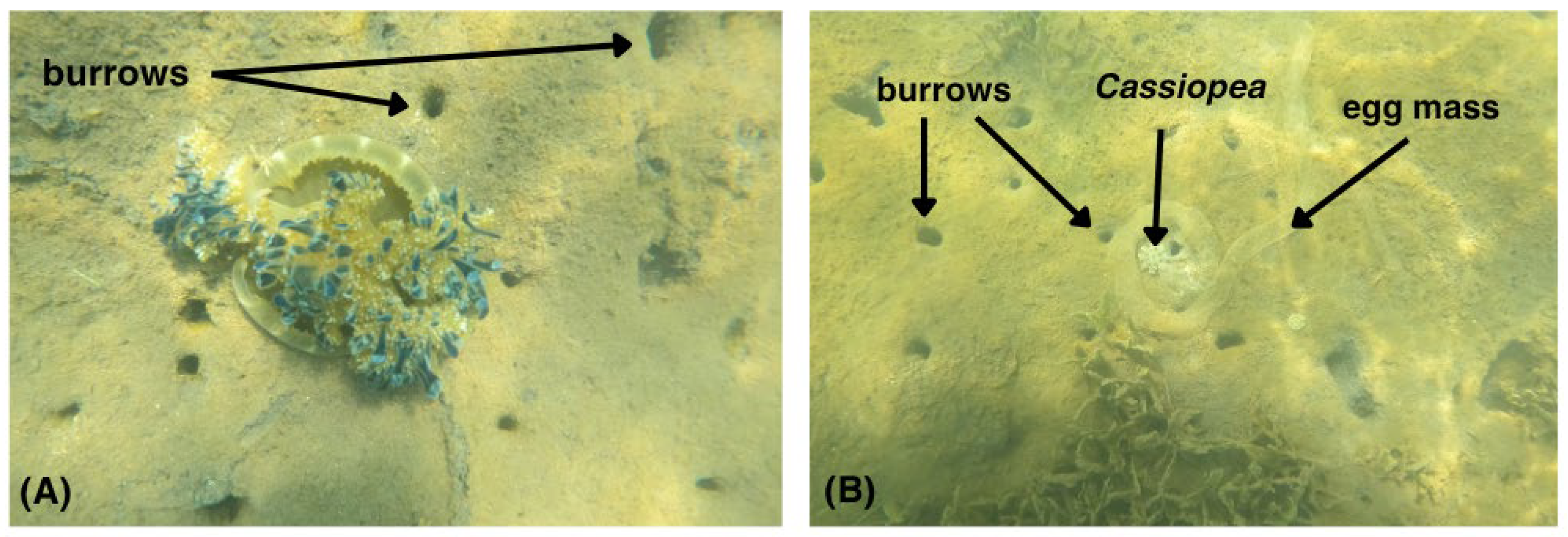
Our temporal observations initially suggested a potential decoupling between Cassiopea density and burrow abundance (Figure 14). However, the probabilistic co-occurrence analysis revealed that the association between these two components is purely random (p = 0.869). This indicates that at the scale of our survey, there is no significant spatial attraction or exclusionary pressure (e.g., competitive exclusion) between the jellyfish and the burrowing macrofauna.
At Cayo Caribe, the decline in Cassiopea from October 2022 to June 2023 coincided with an increase in burrow density, which reached over 20 burrows m−2 by April 2024 (Figure 8). While this could be interpreted as a recovery from competitive pressure, the statistical evidence of random co-occurrence suggests that these shifts are more likely independent responses to separate environmental drivers. For instance, the increase in burrows might be related to seasonal sediment stabilization or organic matter accumulation, while Cassiopea declines are typically driven by temperature and light availability.
Similarly, the inverse patterns observed at Cayo Puerca, where peak Cassiopea abundance coincided with a decline in burrows, do not necessarily reflect a direct threshold effect or physical exclusion. Instead, the random association (p > 0.05) suggests that environmental conditions favoring high Cassiopea recruitment at this site might simultaneously be less optimal for the specific bioturbating fauna present there.
Although Cassiopea settles on the benthos and could theoretically obstruct burrow openings, our findings suggest that this physical presence does not significantly dictate the overall distribution or persistence of burrowing organisms across the study area. The variability observed at Cayo Puerca Lulú, where both groups exhibited parallel trends at certain times, further supports the interpretation that site-specific environmental factors, rather than direct interspecific interactions, drive the observed abundance patterns.

4.4. Study Limitations and Future Research Directions

While this study provides valuable insights into fauna interactions, several limitations should be acknowledged. First, the video transect survey method, while minimally invasive, likely underestimated the abundance of mobile species. Fish, due to their motile behavior, may have affected the count by exhibiting avoidance responses [49,50,51,52]. Bony fish may also have been double-counted by passing more than once in front of the camera. Hence, video transects can provide a permanent record, but camera movement and the presence of equipment can also cause avoidance in mobile species. Method choice should therefore take account of species’ sensitivity to disturbance [53,54]. Turbidity conditions should also be considered during video analysis, since reduced visibility can limit the ability to identify organisms.
Second, the suggestions of causal mechanisms for observed patterns rely primarily on correlative evidence. While the negative correlation between Cassiopea and burrows is robust, experimental manipulation would strengthen causal inferences. Future research should include controlled field experiments, such as jellyfish removal treatments or artificial coverage experiments, to directly test competitive exclusion hypotheses. In addition, methods should also include collection techniques to identify and have accurate counts of burrowing organisms, since organisms such as polychaetes tend to make U-shaped burrows, having two holes for the same individual. However, for this study, each hole was counted as a single organism. This may have resulted in an overestimation.
In addition, future research should include molecular techniques, including DNA barcoding and environmental DNA (eDNA) analysis, to resolve taxonomic ambiguities and provide accurate species identifications [55,56]. Such approaches are particularly important in tropical systems where cryptic species diversity is high and morphological identification is challenging [57].

5. Conclusions

Our findings show characterization of faunal communities in the Jobos Bay NERR, and spatiotemporal dynamics with bony fish Cassiopea and macroinvertebrate communities. The bony fish and macroinvertebrates found add valuable knowledge to the managers of the Jobos Bay National Estuarine Research Reserve (JBNERR). Organisms such as Dondice spp. had not been previously reported in studies or reports for the estuary, which may be a possible predator of Cassiopea [37]. The interactions between Cassiopea and burrowers represent a novel finding for Jobos Bay with broad implications for understanding competitive interactions in the estuary. Observations of Chaetodon capistratus actively making contact with Cassiopea oral arms should be studied in the future, both in terms of behavior and physiology. Future research should focus on experimental validation of competitive mechanisms, long-term monitoring of ecosystems, and development of predictive models for faunal interactions. Understanding and managing potential faunal interactions is critical for predicting ecosystem responses.

Supplementary Materials

The following supporting information can be downloaded at https://www.mdpi.com/article/10.3390/d18050306/s1, Supplemental Table S1: Mean (±SE) of marine fauna density (ind. m−2) recorded per site and month. Supplemental Table S2: Categories of non-living macrofauna components across sites.

Author Contributions

Conceptualization, N.B.L.-F. and E.W.S.; methodology, N.B.L.-F. and J.Y.V.P.; formal analysis, J.Y.V.P. and N.B.L.-F.; investigation, J.Y.V.P. and N.B.L.-F.; figure preparation, S.D.G., R.D.M.-A. and N.B.L.-F.; writing—original draft preparation, J.Y.V.P. and N.B.L.-F.; writing—review and editing, J.Y.V.P., N.B.L.-F., S.D.G., R.D.M.-A. and E.W.S.; supervision, N.B.L.-F. and E.W.S.; project administration, N.B.L.-F.; funding acquisition, N.B.L.-F.; software, J.Y.V.P., S.D.G. and R.D.M.-A.; validation, N.B.L.-F., E.W.S. and R.D.M.-A.; All authors have read and agreed to the published version of the manuscript.

Funding

This project is supported by the Margaret A. Davidson Fellowship program (NOAA grant NA22NOS4200052 and Making Waves: Science Communication and Interdisciplinary Ocean Research Experiences at the USF College of Marine Science (NSF grant OCE-2244285). RDMA was partially supported by CAPES (88887.220206/2025-00).

Institutional Review Board Statement

Not applicable.

Data Availability Statement

The datasets supporting this study are publicly available in Zenodo (“Marine Macrofauna assessment in areas of Cassiopea spp. communities at Jobos Bay NERR, Puerto Rico,” version v1; published 30 January 2026) at https://doi.org/10.5281/zenodo.18423706.

Acknowledgments

The authors thank Michael Schram for his statistics consulting during the early stages of the project. We are grateful for the support of the Making Waves REU, especially Ana Arellano. We would also like to acknowledge Lizmar Luna Pirela, Wigmali Guzmán Echevarría, Luis Ortíz, Mairim Villafañe, Gabriela Rodríguez, Yanira Pérez, Ángel Dieppa, Milton Muñoz Hincapié, and Aitza Pabón for their assistance in the field. Finally, we are grateful for Deborah Parrilla, Patrick Reyes, and Joel Meléndez for providing laboratory space and support.

Conflicts of Interest

The authors declare no conflicts of interest.

References

  1. Bissoli, L.B.; Bernardino, A.F. Benthic macrofaunal structure and secondary production in tropical estuaries on the Eastern Marine Ecoregion of Brazil. PeerJ 2018, 6, e4441. [Google Scholar] [CrossRef]
  2. Laurino, I.R.A.; Serafini, T.Z.; Costa, T.M.; Christofoletti, R.A. The role of estuarine macrofaunal patterns for the management of marine protected areas in a changing world. J. Nat. Conserv. 2021, 63, 126042. [Google Scholar] [CrossRef]
  3. Bhuiyan, M.K.A.; Godoy, O.; González-Ortegon, E.; Billah, M.M.; Rodil, I.F. Salt marsh macrofauna: An overview of functions and services. Mar. Environ. Res. 2025, 205, 106975. [Google Scholar] [CrossRef] [PubMed]
  4. Ajayi, S.; Najjar, R.; Rivest, E.; Woodland, R.; Friedrichs, M.A.M.; St-Laurent, P.; Davis, S. Benthic macrofaunal carbon fluxes and environmental drivers of spatial variability in a large coastal-plain estuary. Biogeosciences 2025, 22, 7769–7795. [Google Scholar] [CrossRef]
  5. Herman, P.M.J.; Middelburg, J.J.; Koppel, J.V.D.; Heip, C.H.R. Ecology of Estuarine Macrobenthos. Adv. Ecol. Res. 1999, 29, 195–240. [Google Scholar]
  6. Cardoso, P.G. Estuaries: Dynamics, Biodiversity, and Impacts. In Life Below Water. Encyclopedia of the UN Sustainable Development Goals; Leal Filho, W., Azul, A.M., Brandli, L., Lange Salvia, A., Wall, T., Eds.; Springer: Cham, Switzerland, 2021. [Google Scholar] [CrossRef]
  7. Stief, P. Stimulation of microbial nitrogen cycling in aquatic ecosystems by benthic macrofauna: Mechanisms and environmental implications. Biogeosciences 2013, 10, 7829–7846. [Google Scholar] [CrossRef]
  8. Sandoval-Huerta, E.R.; Madrigal-Guridi, X.; Escalera-Vázquez, L.H.; Medina-Nava, M.; Domínguez-Domínguez, O. Estructura de la comunidad de peces en cuatro estuarios del Pacífico mexicano central. Rev. Mex. Biodivers. 2014, 85, 1184–1196. [Google Scholar] [CrossRef]
  9. LeGore, S. Bait Fisheries Serving the Marine Recreational Fisheries of Puerto Rico; Department of Natural and Environmental Resources Marine Resources: San Juan, Puerto Rico, 2007; pp. 10–99. Available online: https://www.drna.pr.gov/wp-content/uploads/2015/05/Baitfish-Final-Report-.pdf (accessed on 1 February 2024).
  10. Courrata, A.; Lobryb, J.; Nicolasc, D.; Laffargued, P.; Amarad, R.; Lepagec, M.; Girardinc, M.; Le Papea, O. Anthropogenic disturbance on nursery function of estuarine areas for marine species. Estuar. Coast. Shelf Sci. 2009, 81, 179–190. [Google Scholar] [CrossRef]
  11. Estudios Técnicos Inc. Jobos Bay National Estuarine Research Reserve Management Plan 2017–2022; Departamento de Recursos Naturales y Ambientales de Puerto Rico: San Juan, Puerto Rico, 2017; p. 193. Available online: https://www.drna.pr.gov/wp-content/uploads/2017/08/August-2017_Jobos-Bay-Management-Plan-2.pdf (accessed on 14 May 2026).
  12. Whitall, D.R.; Costa, B.M.; Bauer, L.J.; Dieppa, A.; Hile, S.D. (Eds.) A Baseline Assessment of the Ecological Resources of Jobos Bay, Puerto Rico; NOAA Technical Memorandum NOS NCCOS 133; Department of Commerce, NOAA: Silver Spring, MD, USA, 2011; 188p. Available online: https://repository.library.noaa.gov/view/noaa/669 (accessed on 12 December 2025).
  13. BIIGLE Team. BIIGLE 2.0—Browse and Annotate Underwater Imagery; BIIGLE Team: Bielefeld, Germany, 2019; Available online: https://biigle.de (accessed on 14 May 2026).
  14. Johnson, S.A.K. Untapped Potential of Gorgonian Octocorals for Detecting Environmental Change in Biscayne National Park, Florida, USA; University of South Florida: Tampa, FL, USA, 2019; Available online: https://www.proquest.com/openview/0b60ddec722256151881641f4d4d9022/1?pq-origsite=gscholar&cbl=18750&diss=y (accessed on 9 January 2025).
  15. Humann, P.; DeLoach, N. Reef Fish Identification: Florida, Caribbean, Bahamas; New World Publications: Jacksonville, FL, USA, 2002. [Google Scholar]
  16. WoRMS—World Register of Marine Species. Marinespecies.org. Available online: https://www.marinespecies.org/ (accessed on 27 January 2024).
  17. Anthony, C.J.; Heagy, M.; Bentlage, B. Phenotypic plasticity in Cassiopea ornata (Cnidaria: Scyphozoa: Rhizostomeae) suggests environmentally driven morphology. Zoomorphology 2022, 141, 115–131. [Google Scholar] [CrossRef]
  18. Veech, J.A. A probabilistic model for analysing species co-occurrence. Glob. Ecol. Biogeogr. 2013, 22, 252–260. [Google Scholar] [CrossRef]
  19. Griffith, D.M.; Veech, J.A.; Marsh, C.J. cooccur: Probabilistic Species Co-Occurrence Analysis in R. J. Stat. Softw. Code Snippets 2016, 69, 1–17. [Google Scholar] [CrossRef]
  20. Bray, J.R.; Curtis, J.T. An ordination of the upland forest communities of southern Wisconsin. Ecol. Monogr. 1957, 27, 326–349. [Google Scholar] [CrossRef]
  21. Kruskal, J.B. Nonmetric multidimensional scaling: A numerical method. Psychometrika 1964, 29, 115–129. [Google Scholar] [CrossRef]
  22. Clarke, K.R.; Warwick, R.M. Change in Marine Communities: An Approach to Statistical Analysis and Interpretation; PRIMER-E, Ltd.: Plymouth, UK; Plymouth Marine Laboratory: Plymouth, UK, 2001; Volume 2, pp. 1–168. [Google Scholar]
  23. Clarke, K.R. Non-parametric multivariate analyses of changes in community structure. Aust. J. Ecol. 1993, 18, 117–143. [Google Scholar] [CrossRef]
  24. Di Camillo, C.G.; Luzi, G.; Danial, A.; Di Florio, L.; Calcinai, B.; Lo Brutto, S.; de Oliveira, J.L.S.M.; Fumanti, A.; Cerrano, C. Characterization of intertidal macrofaunal communities of two sandy beaches under different anthropogenic pressures. J. Mar. Sci. Eng. 2022, 10, 1976. [Google Scholar] [CrossRef]
  25. Nagelkerken, I.; Dorenbosch, M.; Verberk, W.C.; de la Moriniere, E.C.; van der Velde, G. Importance of shallow-water biotopes of a Caribbean bay for juvenile coral reef fishes: Patterns in biotope association, community structure and spatial distribution. Mar. Ecol. Prog. Ser. 2000, 202, 175–192. [Google Scholar] [CrossRef]
  26. Bloomfield, A.L.; Gillanders, B.M. Fish and invertebrate assemblages in seagrass, mangrove, saltmarsh, and nonvegetated habitats. Estuaries 2005, 28, 63–77. [Google Scholar] [CrossRef]
  27. Nagelkerken, I.; Roberts, C.V.; Van Der Velde, G.; Dorenbosch, M.; Van Riel, M.C.; De La Moriniere, E.C.; Nienhuis, P.H. How important are mangroves and seagrass beds for coral-reef fish? The nursery hypothesis tested on an island scale. Mar. Ecol. Prog. Ser. 2002, 244, 299–305. [Google Scholar] [CrossRef]
  28. Kraus, R.T.; Secor, D.H. Application of the nursery-role hypothesis to an estuarine fish. Mar. Ecol. Prog. Ser. 2005, 291, 301–305. [Google Scholar] [CrossRef]
  29. Verde, E.A.; McCloskey, L.R. Production, respiration, and photophysiology of the mangrove jellyfish Cassiopea xamachana symbiotic with zooxanthellae: Effect of jellyfish size and season. Mar. Ecol. Prog. Ser. 1998, 168, 147–162. [Google Scholar] [CrossRef]
  30. Stoner, E.W.; Yeager, L.A.; Layman, C.A. Effects of epibenthic jellyfish, Cassiopea spp., on faunal community composition of Bahamian seagrass beds. Caribb. Nat. 2014, 12, 1–10. [Google Scholar]
  31. Zarnoch, C.B.; Hossain, N.; Fusco, E.; Alldred, M.; Hoellein, T.J.; Perdikaris, S. Size and density of upside-down jellyfish, Cassiopea sp., and their impact on benthic fluxes in a Caribbean lagoon. Mar. Environ. Res. 2020, 154, 104845. [Google Scholar] [CrossRef]
  32. Brandon, M.; Cutress, C.E. A new Dondice (Opisthobranchia: Favorinidae), predator of Cassiopea in southwest Puerto Rico. Bull. Mar. Sci. 1985, 1, 139–144. [Google Scholar]
  33. Stoner, E.W.; Layman, C.A. Bristle worms attack: Benthic jellyfish are not trophic dead ends. Front. Ecol. Environ. 2015, 13, 226–227. [Google Scholar] [CrossRef]
  34. Morejón-Arrojo, R.D.; López-Figueroa, N.B.; Hernández-Albernas, J.I.; Rodriguez-Viera, L.; Stoner, E.W. From sand to bell: Novel predation of Scyphozoans by the Giant Caribbean Sea Anemone Condylactis gigantea (Weinland, 1860) from the Western Atlantic. Diversity 2025, 17, 111. [Google Scholar] [CrossRef]
  35. Hoeksema, B.W.; Tuti, Y.; Becking, L.E. Mixed medusivory by the sea anemone Entacmaea medusivora (Anthozoa: Actiniaria) in Kakaban Lake, Indonesia. Mar. Biodivers. 2015, 45, 141–142. [Google Scholar] [CrossRef]
  36. Mariño, J.; Farfán, E.; Caballer, M. Primer registro de Dondice parguerensis (Mollusca: Favorinidae) para Venezuela. Rev. Mex. Biodivers. 2011, 82, 709–712. [Google Scholar] [CrossRef]
  37. García-Méndez, K.; Padula, V.; Valdés, Á. Integrative systematics of the genus Dondice Marcus, 1958 (Gastropoda, Nudibranchia, Myrrhinidae) in the Western Atlantic. Mar. Biodivers. 2022, 52, 42. [Google Scholar] [CrossRef]
  38. Robles, P.O.; González, C.M.; Laboy, E.N.; Capella, J.; Field, R. (Eds.) Jobos Bay Estuarine Profile: A National Estuarine Research Reserve; NOAA: Silver Spring, MD, USA, 2002. Available online: https://coast.noaa.gov/data/docs/nerrs/Handout-Jobos-Bay.pdf (accessed on 2 May 2025).
  39. Iliff, S.M.; Wilczek, E.R.; Harris, R.J.; Bouldin, R.; Stoner, E.W. Evidence of microplastics from benthic jellyfish (Cassiopea xamachana) in Florida estuaries. Mar. Pollut. Bull. 2020, 159, 111521. [Google Scholar] [CrossRef]
  40. Pratchett, M.S.; Graham, N.A.J.; Cole, A.J. Specialist corallivores dominate butterflyfish assemblages in coral-dominated reef habitats. J. Fish Biol. 2013, 82, 1177–1191. [Google Scholar] [CrossRef]
  41. Pratchett, M.S. Feeding preferences and dietary specialization among obligate coral-feeding butterflyfishes. Biol. Butterflyfishes 2014, 140–179. [Google Scholar] [CrossRef]
  42. Roberts, C.M.; Ormond, R.F.G. Butterflyfish social behaviour, with special reference to the incidence of territoriality: A review. Environ. Biol. Fishes 1992, 34, 79–93. [Google Scholar] [CrossRef]
  43. Berumen, M.L.; Pratchett, M.S.; McCormick, M.I. Within-reef differences in diet and body condition of coral-feeding butterflyfishes (Chaetodontidae). Mar. Ecol. Prog. Ser. 2005, 287, 217–227. [Google Scholar] [CrossRef]
  44. Bos, A.R.; Cruz-Rivera, E.; Sanad, A.M. Herbivorous fishes Siganus rivulatus (Siganidae) and Zebrasoma desjardinii (Acanthuridae) feed on Ctenophora and Scyphozoa in the Red Sea. Mar. Biodivers. 2017, 47, 243–246. [Google Scholar] [CrossRef]
  45. Morejón-Arrojo, R.D.; Rodríguez-Viera, L. Opportunistic predation on hydromedusae by the foureye butterflyfish and associated crustaceans. Discov. Ocean. 2024, 1, 19. [Google Scholar] [CrossRef]
  46. Chaves, L.C.T.; Feitosa, J.L.L.; Pereira, P.H.C. First record of predation on jellyfish by butterflyfish on Brazilian rocky reefs. Mar. Biodivers. Rec. 2010, 3, e26. [Google Scholar] [CrossRef]
  47. Grubich, J.R.; Rice, A.N.; Westneat, M.W. Functional morphology of bite mechanics in the great barracuda (Sphyraena barracuda). Zoology 2008, 111, 16–29. [Google Scholar] [CrossRef]
  48. Hammerschlag, N.; Heithaus, M.R.; Serafy, J.E. Influence of predation risk and food supply on nocturnal fish foraging distributions along a mangrove–seagrass ecotone. Mar. Ecol. Prog. Ser. 2010, 414, 223–235. [Google Scholar] [CrossRef]
  49. Schmidt, M.B.; Gassner, H. Influence of scuba divers on the avoidance reaction of a dense vendace (Coregonus albula L.) population monitored by hydroacoustics. Fish. Res. 2006, 82, 131–139. [Google Scholar] [CrossRef]
  50. Patterson, H.M.; Lindsay, M.; Swearer, S.E. Use of sonar transects to improve efficiency and reduce potential bias in visual surveys of reef fishes. Environ. Biol. Fishes 2007, 78, 291–297. [Google Scholar] [CrossRef]
  51. Dickens, L.C.; Goatley, C.H.R.; Tanner, J.K.; Bellwood, D.R. Quantifying relative diver effects in underwater visual censuses. PLoS ONE 2011, 6, e18965. [Google Scholar] [CrossRef] [PubMed]
  52. Lindfield, S.J.; Harvey, E.S.; McIlwain, J.L.; Halford, A.R. Silent fish surveys: Bubble-free diving highlights in accuracies associated with SCUBA-based surveys in heavily fished areas. Methods Ecol. Evol. 2014, 5, 1061–1069. [Google Scholar] [CrossRef]
  53. Emslie, M.J.; Cheal, A.J.; MacNeil, M.A.; Miller, I.R.; Sweatman, H.P.A. Reef fish communities are spooked by scuba surveys and may take hours to recover. PeerJ 2018, 6, e4886. [Google Scholar] [CrossRef]
  54. Bruneel, S.; Ho, L.; Van Echelpoel, W.; Schoeters, A.; Raat, H.; Moens, T.; Bermudez, R.; Luca, S.; Goethals, P. Sampling errors and variability in video transects for assessment of reef fish assemblage structure and diversity. PLoS ONE 2022, 17, e0271043. [Google Scholar] [CrossRef] [PubMed]
  55. Thomsen, P.F.; Willerslev, E. Environmental DNA—An emerging tool in conservation for monitoring past and present biodiversity. Biol. Conserv. 2015, 183, 4–18. [Google Scholar] [CrossRef]
  56. Bohmann, K.; Evans, A.; Gilbert, M.T.P.; Carvalho, G.R.; Creer, S.; Knapp, M.; Yu, D.W.; de Bruyn, M. Environmental DNA for wildlife biology and biodiversity monitoring. Trends Ecol. Evol. 2014, 29, 358–367. [Google Scholar] [CrossRef]
  57. Hebert, P.D.N.; Cywinska, A.; Ball, S.L.; deWaard, J.R. Biological identifications through DNA barcodes. Proc. Biol. Sci. 2003, 270, 313–321. [Google Scholar] [CrossRef] [PubMed]
Figure 1. Sampling locations at Jobos Bay National Estuarine Research Reserve monitored bimonthly from October 2022 to April 2024.
Diversity 18 00306 g001
Figure 2. (A) Custom two-camera GoPro mount for photogrammetric surveys [14], (B) Vega-Pérez, J. conducting a field survey, demonstrating the use of the mount.
Diversity 18 00306 g002
Figure 3. Mean (±SE) abundance of Cassiopea spp. and main macrofaunal groups extracted from the underwater survey footage.
Diversity 18 00306 g003
Figure 4. Relative abundance of bony fishes and macroinvertebrates recorded per site and month.
Diversity 18 00306 g004
Figure 5. Spatiotemporal variation in mean (±SE) Shannon’s diversity, species richness, and Pielou’s evenness measured in video surveys.
Diversity 18 00306 g005
Figure 6. Non-metric multidimensional scaling (nMDS) ordination of faunal community composition across three sampling sites in mangrove habitats. Each point represents a single sampling event (n = 126 total samples: Cayo Caribe = 45, Cayo Puerca = 41, Cayo Puerca Lulú = 40). Ordination is based on the zero-adjusted Bray–Curtis dissimilarity matrix of species abundance data. Colored polygons represent convex hulls enclosing all samples from each site. The two-dimensional nMDS solution achieved convergence with stress = 0.18, indicating an acceptable representation of community structure. Community composition differed significantly among sites (PERMANOVA: R2 = 0.042, F = 2.47, p = 0.01; ANOSIM: R = 0.047, p= 0.004), but was not significantly influenced by Cassiopea abundance (R2 = 0.006, p = 0.63).
Diversity 18 00306 g006
Figure 7. Burrows in the sediment in Cayo Caribe, April 2024.
Diversity 18 00306 g007
Figure 8. Mean (±SE) abundance of Cassiopea and burrows. As Cassiopea abundance decreased, burrows increased over time, suggesting a potential relationship between the two populations in Jobos Bay.
Diversity 18 00306 g008
Figure 9. An aggregation of juvenile Scarus iseri around Cassiopea spp.
Diversity 18 00306 g009
Figure 10. Macroinvertebrates observed in the video surveys. (A) Elysia crispata, (B) Tripneustes ventricosus, (C) Isostichopus badionotus, (D) Pagurus sp.
Diversity 18 00306 g010
Figure 11. Dondice sp. and polychaete burrows adjacent to a juvenile Cassiopea sp.
Diversity 18 00306 g011
Figure 12. Chaetodon capistratus in the study site.
Diversity 18 00306 g012
Figure 13. (A) Juvenile S. barracuda near Cassiopea spp. at Cayo Puerca Lulú. (B) Cassiopea with missing oral arms.
Diversity 18 00306 g013
Figure 14. (A) Adult Cassiopea missing oral arms surrounded by burrows. (B) Polychaete egg mass and burrows surrounding a juvenile Cassiopea sp.
Diversity 18 00306 g014
Table 1. Descriptive statistics of water parameters measured for all sites.
SiteMeanSE
Cayo Caribe
     Temperature28.40.65
     Salinity35.50.50
     Dissolved oxygen (mg/L)5.90.47
     pH8.20.12
Cayo Puerca
     Temperature29.40.65
     Salinity35.50.47
     Dissolved oxygen (mg/L)7.90.37
     pH8.40.11
Cayo Puerca Lulú
     Temperature29.10.61
     Salinity35.70.55
     Dissolved oxygen (mg/L)6.60.24
     pH7.90.22
Disclaimer/Publisher’s Note: The statements, opinions and data contained in all publications are solely those of the individual author(s) and contributor(s) and not of MDPI and/or the editor(s). MDPI and/or the editor(s) disclaim responsibility for any injury to people or property resulting from any ideas, methods, instructions or products referred to in the content.