Review

The Golden Mussel Limnoperna fortunei (Dunker, 1857) Arrived in North America

Marine Science Institute, University of Texas at Austin, 750 Channel View Dr., Port Aransas, TX 78373, USA
Diversity 2026, 18(5), 246; https://doi.org/10.3390/d18050246
Submission received: 13 March 2026 / Revised: 8 April 2026 / Accepted: 13 April 2026 / Published: 23 April 2026
(This article belongs to the Special Issue Diversity in 2026)

Abstract

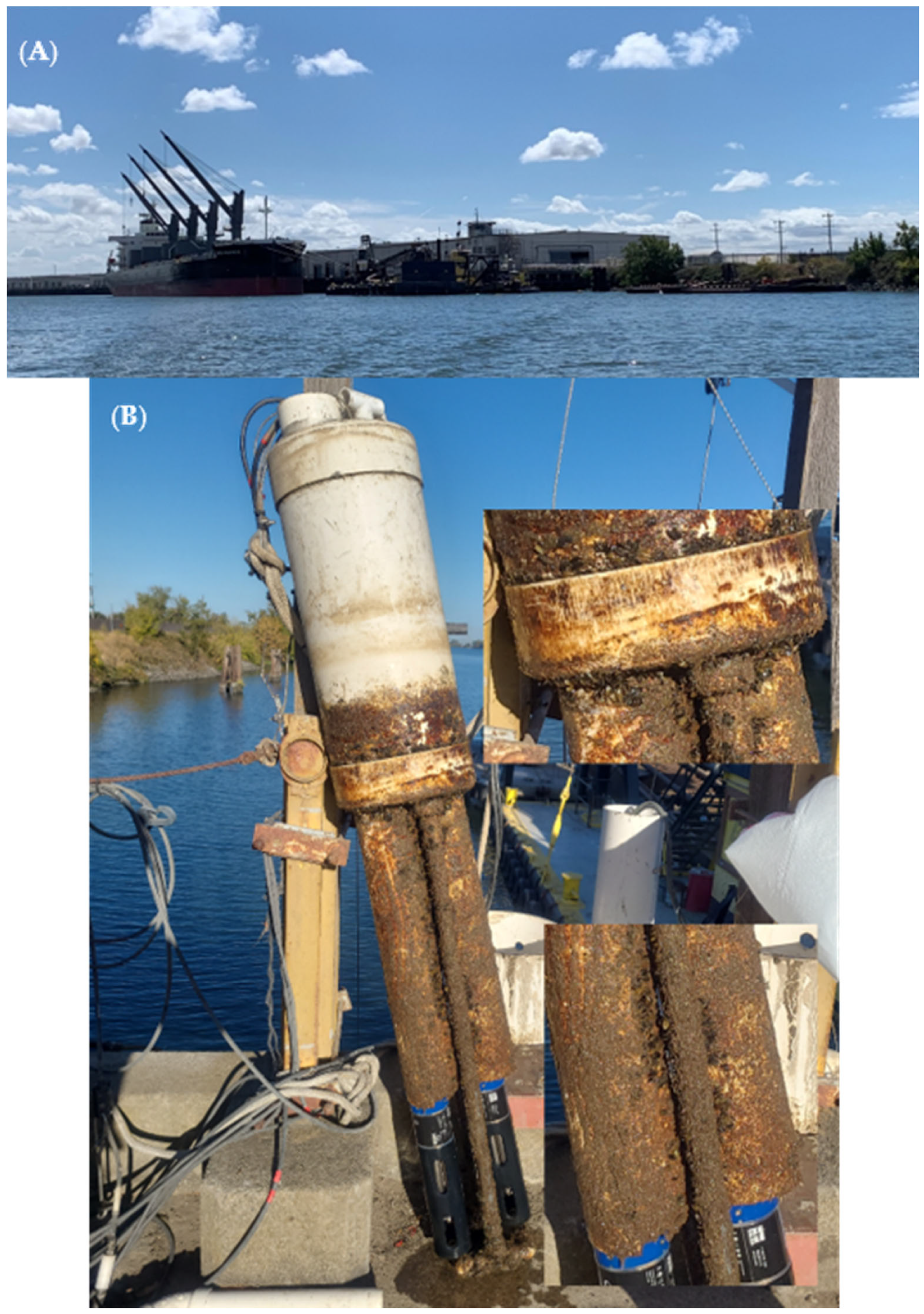
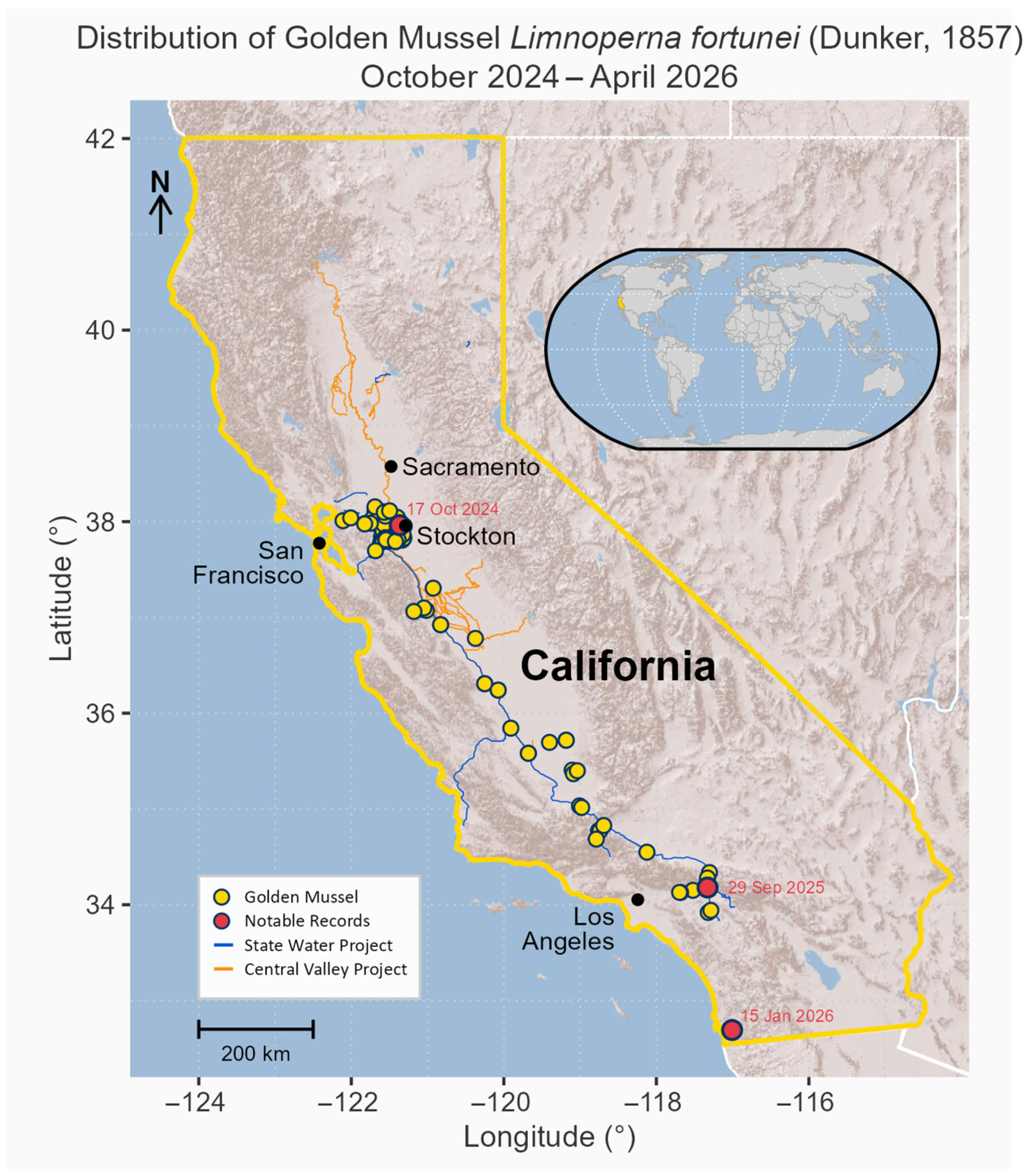
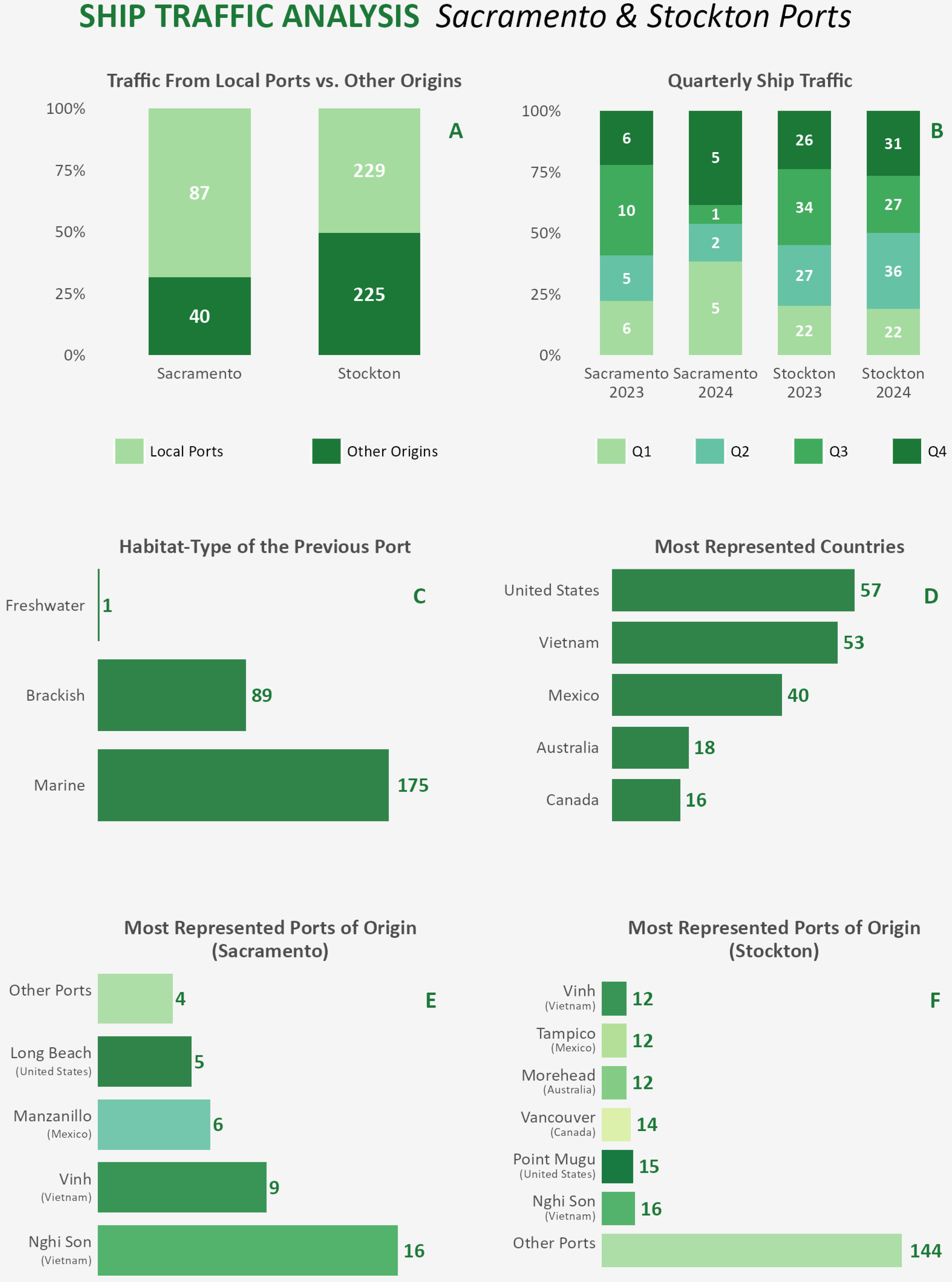
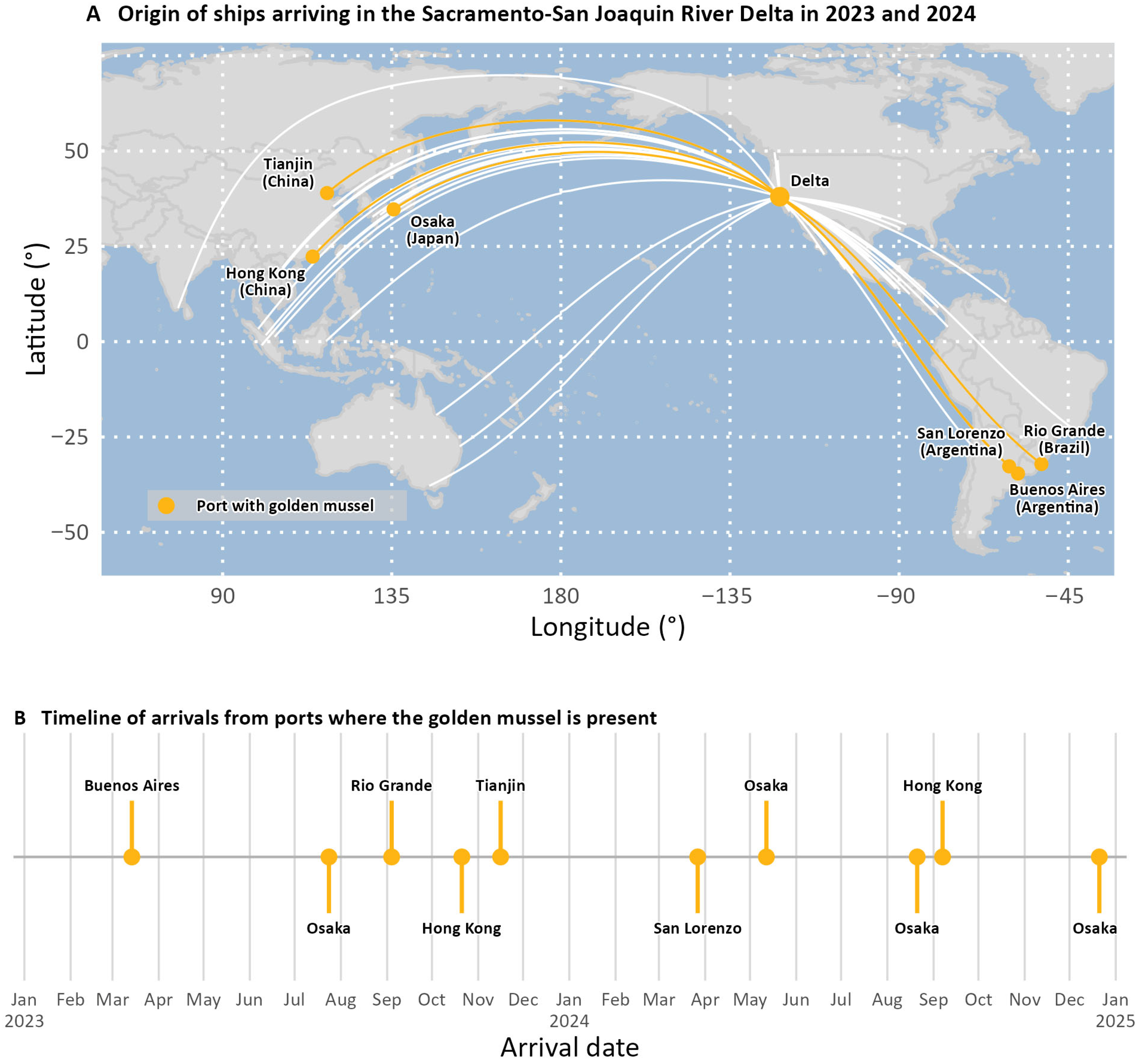
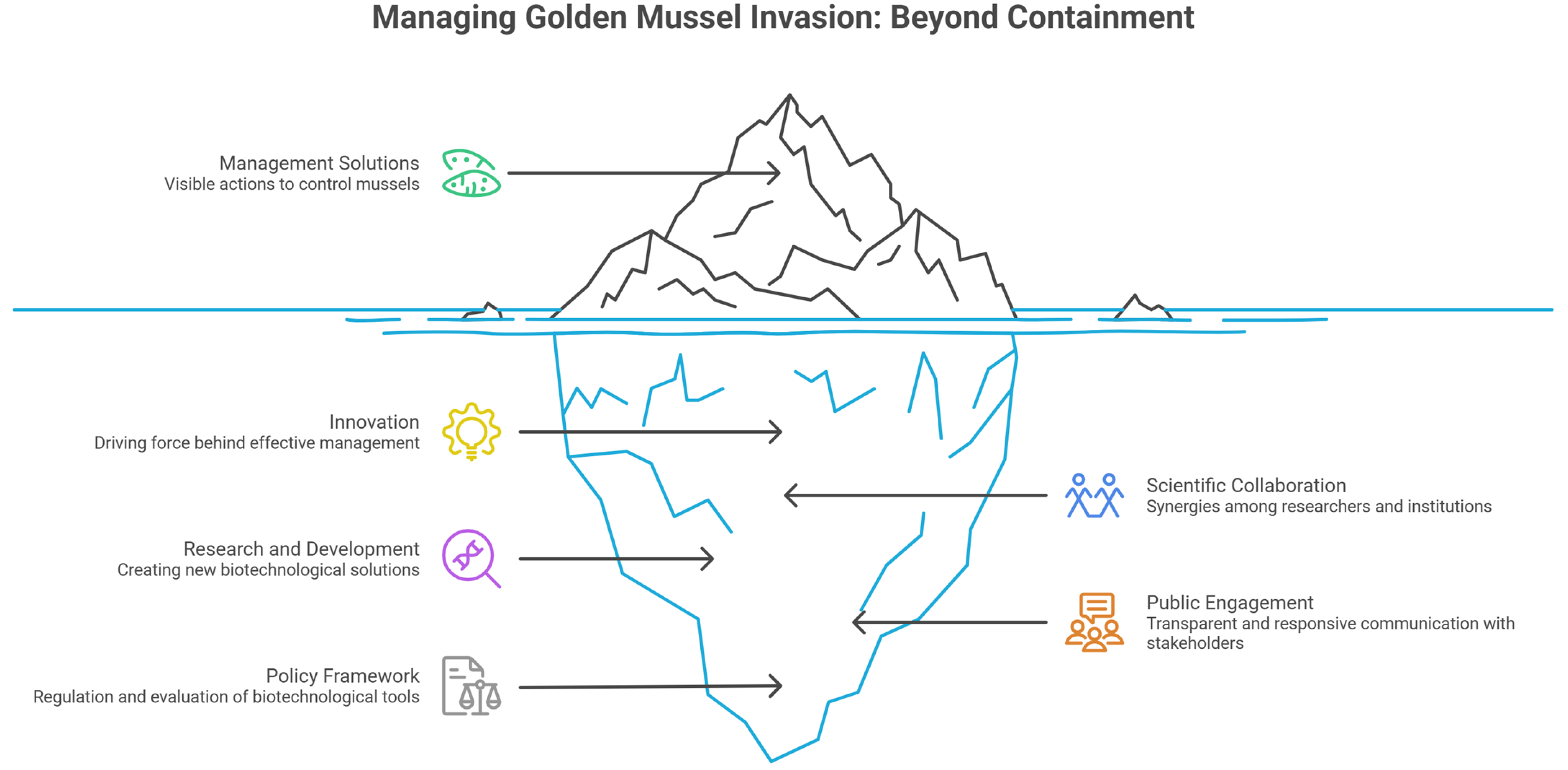
The first golden mussel, Limnoperna fortunei (Dunker, 1857), specimens in North America were discovered on 17 October 2024 at the Port of Stockton on the lower San Joaquin River in California (United States). The golden mussel is native to southern China and is one of the highest-risk aquatic invasive species worldwide. Golden mussels colonize hard surfaces and cause significant biofouling, affecting vital infrastructure such as hydroelectric plants and water delivery systems. It spreads rapidly through hydrological connectivity and human-mediated transport, with water conveyance systems functioning as invasion highways. The Sacramento–San Joaquin River Delta is vital to endangered species and provides water to 30 million people and 790,000 ha of farmland in central and southern California, but faces severe ecological and economic threats from this invasion. The detection of golden mussels was received with concern due to their impact on ecosystems and infrastructure. One year after detection, the invasion front moved 545 km south of the initial detection site (in a straight line) into Silverwood Lake in San Bernardino County near Los Angeles. By April 2026, the invasion front had already advanced 707 km south to the Sweetwater Reservoir in San Diego County (detection date: 15 January 2026). The invasion path coincides with California’s major water delivery systems. Ballast water was the most likely introduction vector, further underscoring the inefficiency of well-intentioned ballast water management policies and the need to implement better ones. This article addresses five objectives: (1) document the introduction and current distribution; (2) highlight key invasive traits to guide management; (3) assess putative impacts in California; (4) review tested management strategies; and (5) propose an innovation-driven framework for golden mussel management.
Keywords: golden mussel; invasion; impact; management; California golden mussel; invasion; impact; management; California