Review

The Golden Mussel Limnoperna fortunei (Dunker, 1857) Arrived in North America

Marine Science Institute, University of Texas at Austin, 750 Channel View Dr., Port Aransas, TX 78373, USA
Diversity 2026, 18(5), 246; https://doi.org/10.3390/d18050246
Submission received: 13 March 2026 / Revised: 8 April 2026 / Accepted: 13 April 2026 / Published: 23 April 2026
(This article belongs to the Special Issue Diversity in 2026)

Abstract

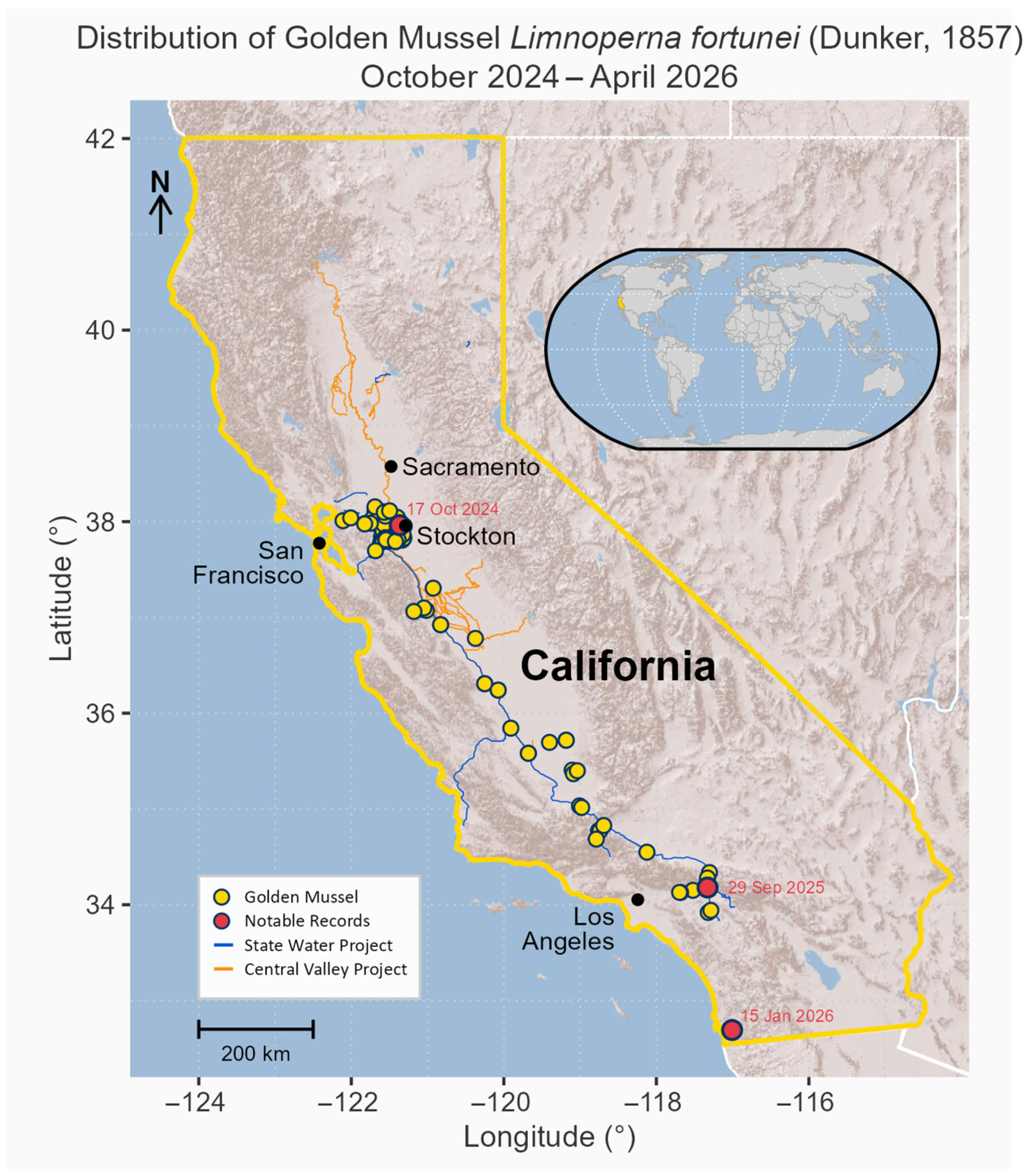
The first golden mussel, Limnoperna fortunei (Dunker, 1857), specimens in North America were discovered on 17 October 2024 at the Port of Stockton on the lower San Joaquin River in California (United States). The golden mussel is native to southern China and is one of the highest-risk aquatic invasive species worldwide. Golden mussels colonize hard surfaces and cause significant biofouling, affecting vital infrastructure such as hydroelectric plants and water delivery systems. It spreads rapidly through hydrological connectivity and human-mediated transport, with water conveyance systems functioning as invasion highways. The Sacramento–San Joaquin River Delta is vital to endangered species and provides water to 30 million people and 790,000 ha of farmland in central and southern California, but faces severe ecological and economic threats from this invasion. The detection of golden mussels was received with concern due to their impact on ecosystems and infrastructure. One year after detection, the invasion front moved 545 km south of the initial detection site (in a straight line) into Silverwood Lake in San Bernardino County near Los Angeles. By April 2026, the invasion front had already advanced 707 km south to the Sweetwater Reservoir in San Diego County (detection date: 15 January 2026). The invasion path coincides with California’s major water delivery systems. Ballast water was the most likely introduction vector, further underscoring the inefficiency of well-intentioned ballast water management policies and the need to implement better ones. This article addresses five objectives: (1) document the introduction and current distribution; (2) highlight key invasive traits to guide management; (3) assess putative impacts in California; (4) review tested management strategies; and (5) propose an innovation-driven framework for golden mussel management.

1. Introduction

Freshwater–brackish water byssate mussels are among the most nuisance aquatic invasive species worldwide, known for reshaping the functioning of invaded ecosystems [1] and feared for their economic impact on numerous industries [2,3]. In North America, the highly invasive zebra mussel Dreissena polymorpha (Pallas, 1771) and quagga mussel Dreissena bugensis (Andrusov, 1897) are of great concern, to the point that strict policies and innovative communication approaches have long been implemented to prevente their spread across the continent [4,5,6,7,8].
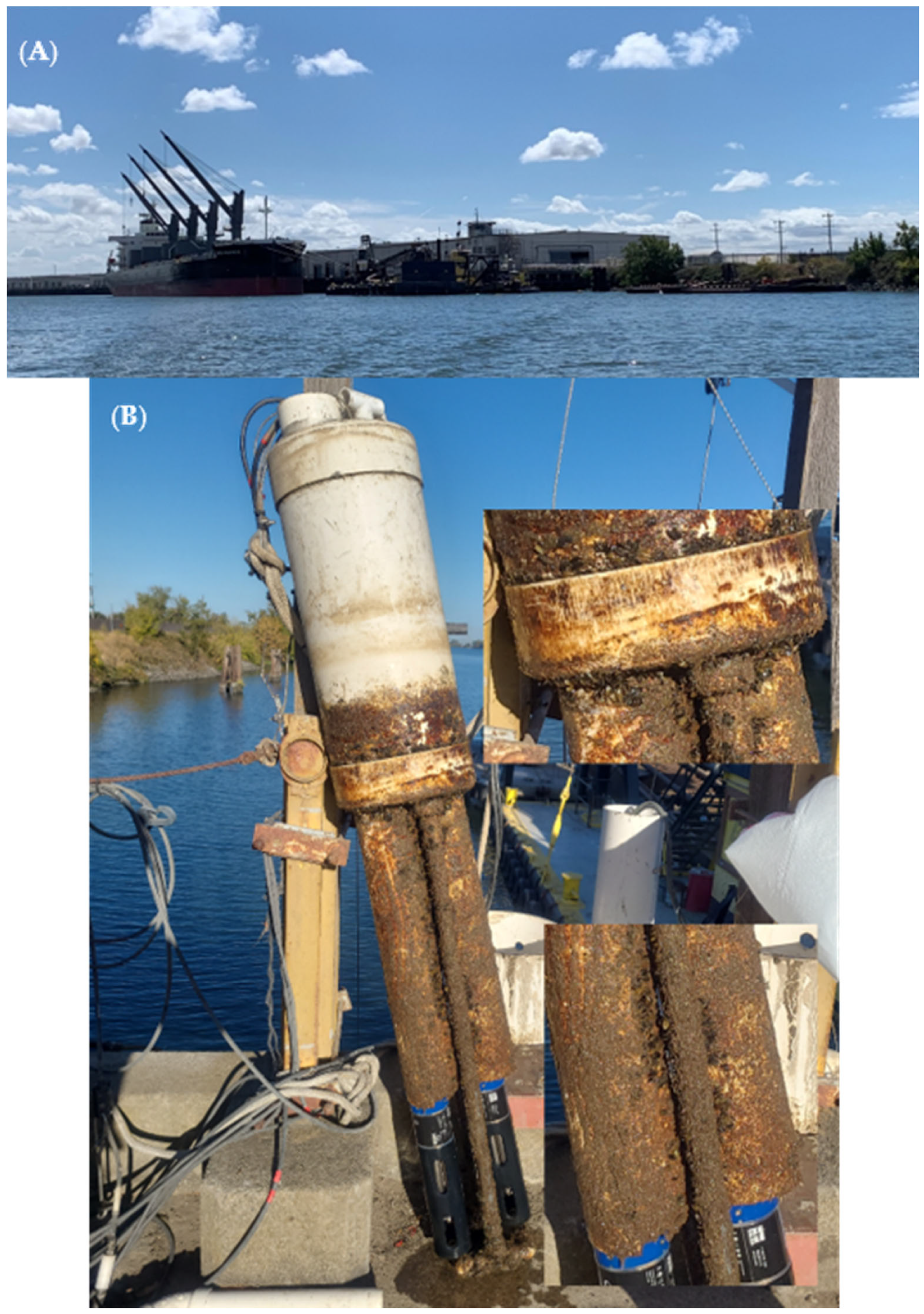
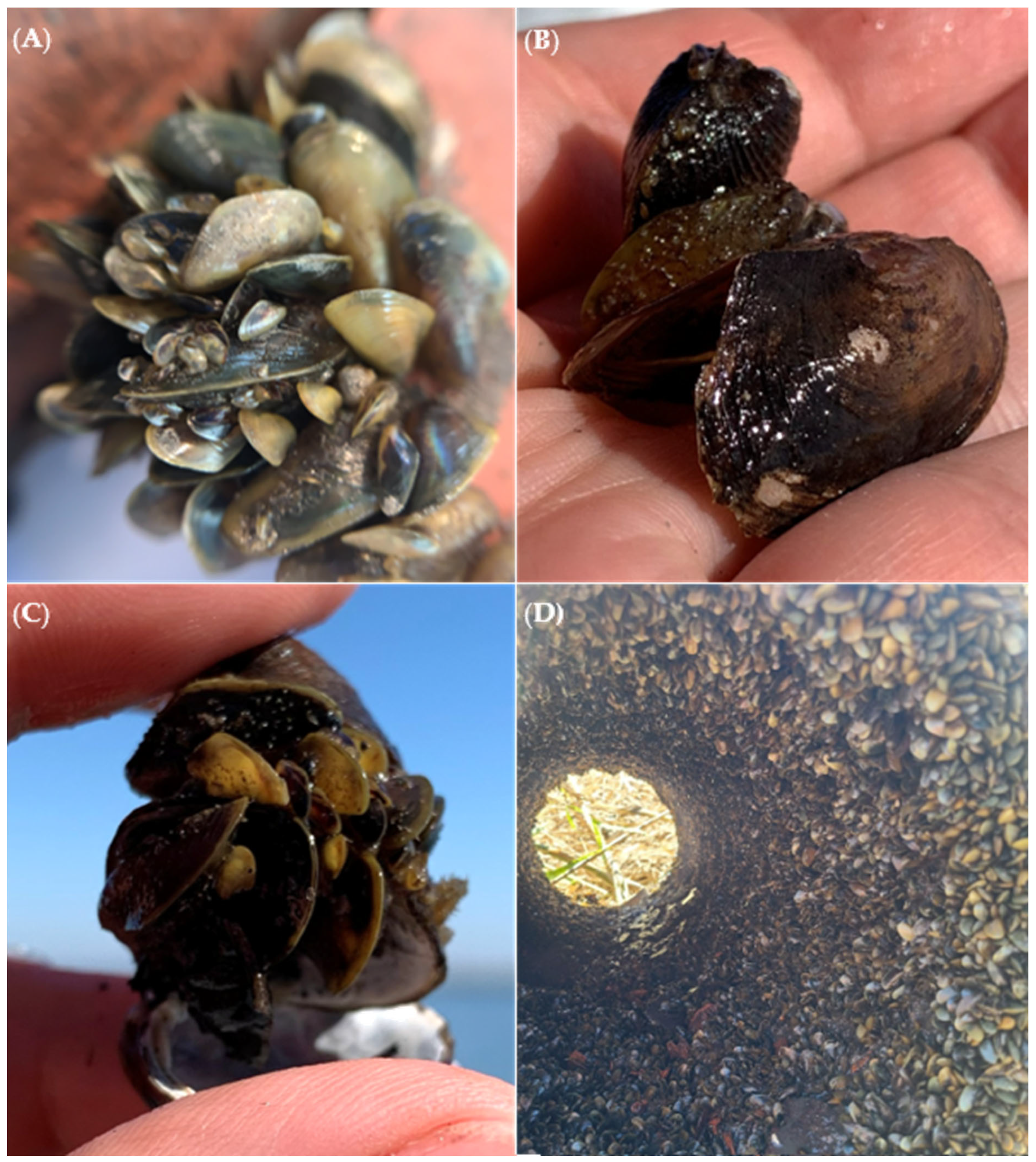
The Sacramento–San Joaquin River Delta (California, USA), hereafter the Delta, is home to many emblematic invasive species that reshape its ecological dynamics and/or generate economic impacts, including Brazilian waterweed, Elodea densa (Planch). Casp., 1857, Asian clam Corbicula fluminea (Müller,1774), Asian date mussel Arcuatula senhousia (Benson, 1842), Manilla clam Ruditapes philippinarum (A. Adams & Reeve, 1850), overbite clam Potamocorbula amurensis (Schrenck, 1861), striped bass Morone saxatilis (Walbaum, 1792), western mosquitofish Gambusia affinis (S. F. Baird & Girard, 1853), red-eared slider Trachemys scripta elegans (Wied-Neuwied, 1839), and nutria Myocastor coypus (Molina, 1782). Concern over the putative introduction of zebra and quagga mussels into the Delta led to the creation of an early detection program in April 2008 which combined zooplankton tows for veligers with eDNA analysis, settlement plates, and bioboxes for juvenile and adult specimens, following the detection of the quagga mussel in the lower Colorado River in 2007 and of zebra mussel at the San Justo reservoir (central California) in 2008 [6]. Fortunately, neither species has ever been detected in the Delta; however, the highly invasive golden mussel Limnoperna fortunei (Dunker, 1857) was found for the first time in North America in the lower San Joaquin River on 17 October 2024, fouling scientific equipment that is routinely maintained (Figure 1).
The golden mussel forms dense aggregates and is a versatile ecosystem engineer. Native to the Pearl River basin in Southern China [9,10]. It has become invasive in other regions of China, east and southeast Asia (Cambodia, Hong Kong, Japan, Republic of Korea, Laos, Taiwan, Thailand, Vietnam) [11,12,13], South America (Argentina, Bolivia, Brazil, Paraguay, Uruguay) [14,15,16], and the Middle East (Iraq) [17]. Its arrival in North America had long seemed likely, as Dr. Anthony Ricciardi of McGill University noted in 1998, given the intensity of shipping traffic between Asia and South America [18]. It has long been regarded as a species of extreme concern because of its greater invasiveness relative to zebra and quagga mussels, especially in acidic, soft, and polluted waters [19].
The Delta is among the most studied aquatic ecosystems worldwide, not only because of its ecological importance but also because it supplies water to almost 30 million people and irrigates 790,000 hectares of farmland through the State Water Project [20] and the Delta-Mendota Canal, which integrates the Central Valley Project [21]. The State Water Project is a multi-purpose water storage and delivery system extending more than 1135 km and comprising dams and reservoirs, 1900 diversion pumps, aqueducts, and irrigation canals that deliver water to Central and Southern California, as well as to hydroelectric power facilities [20]. The Central Valley Project extends for 645 km from Redding in northern California to Bakersfield in the southern Central Valley, with the Delta as the central hub for water conveyance, where water is extracted from the lower San Joaquin River and conveyed south for 188 km via the Delta-Mendota Canal [21]. Delta water is essential to California’s status as the world’s fourth-largest economy, with agriculture alone generating more than $60 billion in direct cash receipts [22,23]. The State Water Project also generates hydroelectric power and helps manage water supply during critical periods of flooding and drought, thereby mitigating some of the deleterious effects of climate change on numerous native and endangered species [20].
The rapid spread of golden mussels within non-native areas is strongly driven by hydrological connectivity in both natural ecosystems and water diversion systems [14,24,25,26]. In the Río de la Plata Basin (South America), boating facilitated the upstream advance of the invasion front at an estimated rate of about 240 km per year during the 1990s [14]. In China, the world’s largest water diversion project, the South-to-North Water Transfer Project, has been described as an invasion highway for the spread of the golden mussel [24,27]. Given the species’ rapid dispersal capacity, there was considerable concern that it could spread from the Delta into water conveyance systems and beyond, throughout California and North America.
Given the golden mussel’s extreme invasiveness, the critical need to protect California’s natural resources and infrastructure, and the urgency of preventing its spread throughout California and North America, this article pursues five main objectives: (1) to document the introduction of the golden mussel in North America and share an updated distribution map; (2) to highlight key invasive traits that can guide scientists and managers in studying and preventing its spread; (3) to assess the potential impacts of the golden mussel in California; (4) to review key strategies tested and implemented in non-native areas to minimize the golden mussels impacts; and (5) to propose an innovation-driven framework for managing the golden mussel invasion.

2. Introduction and Distribution in North America

On 17 October 2024, scientific equipment, used for water quality monitoring at the Port of Stockton (California, United States) by the Continuous Environmental Monitoring Program (California Department of Water Resources), was found encrusted with golden mussel specimens (Figure 1). Several specimens were collected and brought to the laboratory, where they were identified as Limnoperna fortunei (Dunker, 1857) through expert morphological examination. I hypothesize that the introduction of the golden mussel likely occurred in 2023 or earlier, remaining cryptic until the population expansion observed in late 2024.
The California Department of Fish and Wildlife (CDFW), in coordination with other State and Federal agencies, such as the California Department of Water Resources, is leading efforts to document the golden mussel’s distribution in California and inform the public [28] (Supplementary Materials, Figures S1–S3). This effort is essential for devising strategies to prevent species spread, identifying at-risk infrastructure, and allocating resources effectively. To this end, CDFW established a public reporting webpage (https://survey123.arcgis.com/share/716f884fb2b34bd8a905bff392719e12 accessed on 4 March 2026), as well as an email (invasives@wildlife.ca.gov) and phone (+1-866-440-9530) reporting channels. Valid observations require either a photograph submitted for expert confirmation, genetic analyses confirming species identity, or positive eDNA detection. This approach follows established best practices for citizen science projects targeting non-indigenous species [29].
By 17 October 2025, just 365 days after its initial detection in California, the invasion front has advanced more than 545 km south (in a straight line) from the Port of Stockton, reaching Silverwood Lake in San Bernardino County (Figure 2). The California Aqueduct (State Water Project) and Delta-Mendota Canal (Central Valley Project) are now serving as the primary invasion highways for the spread of the golden mussel into southern California (Figure 2). Given the scale of the monitoring required, visual inspection and confirmation alone are insufficient, so an eDNA monitoring program has been implemented in the Delta and other critical areas. eDNA is a cost-effective tool for tracking the species’ establishment and spread across large geographic ranges [27,30,31], with real-time quantitative polymerase chain reaction (PCR) providing superior results over conventional PCR, including a lower detection limit (1 × 10⁻⁷ ng L−1) and higher detection rates for field samples (68.6%) [32].
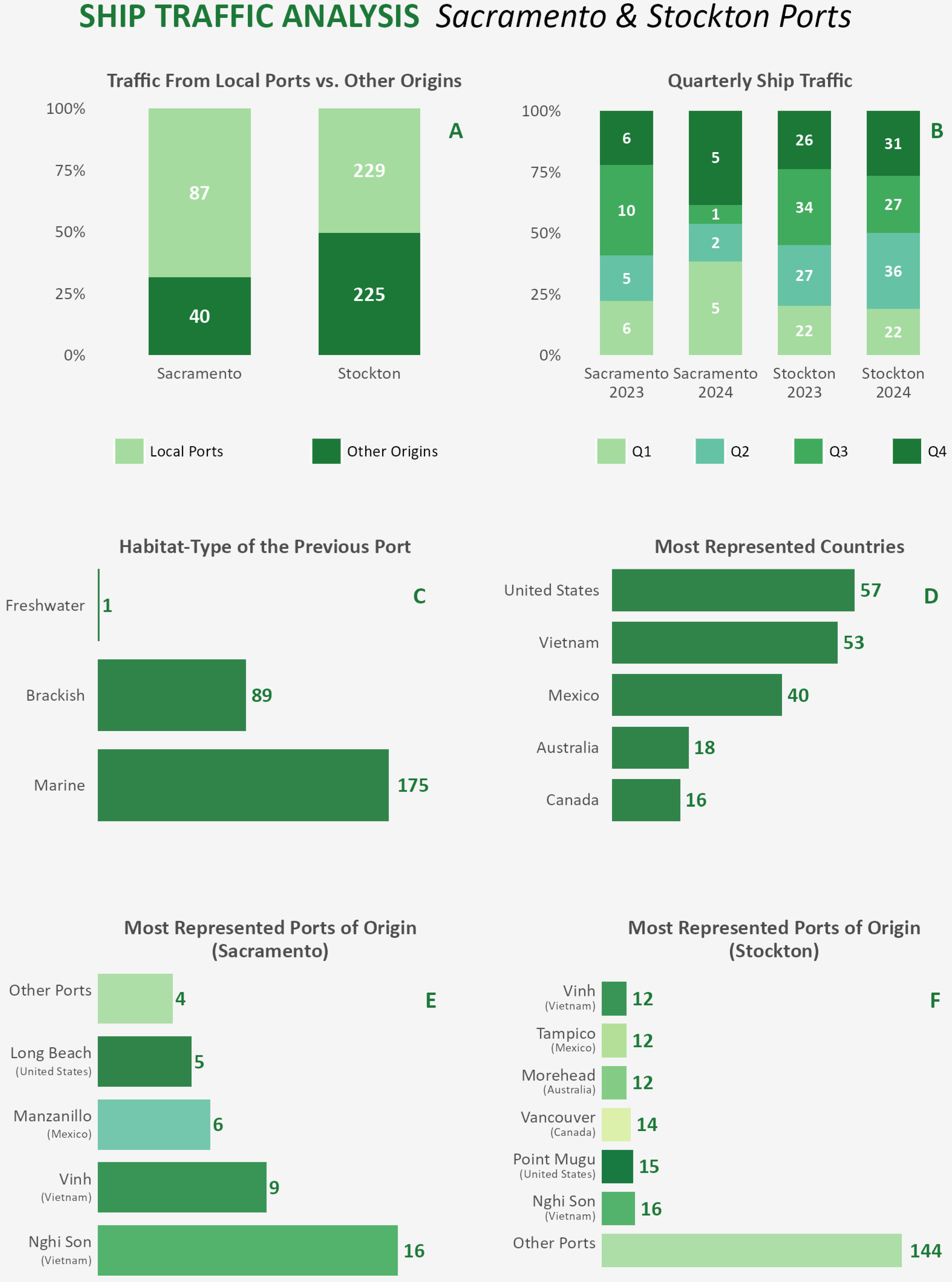
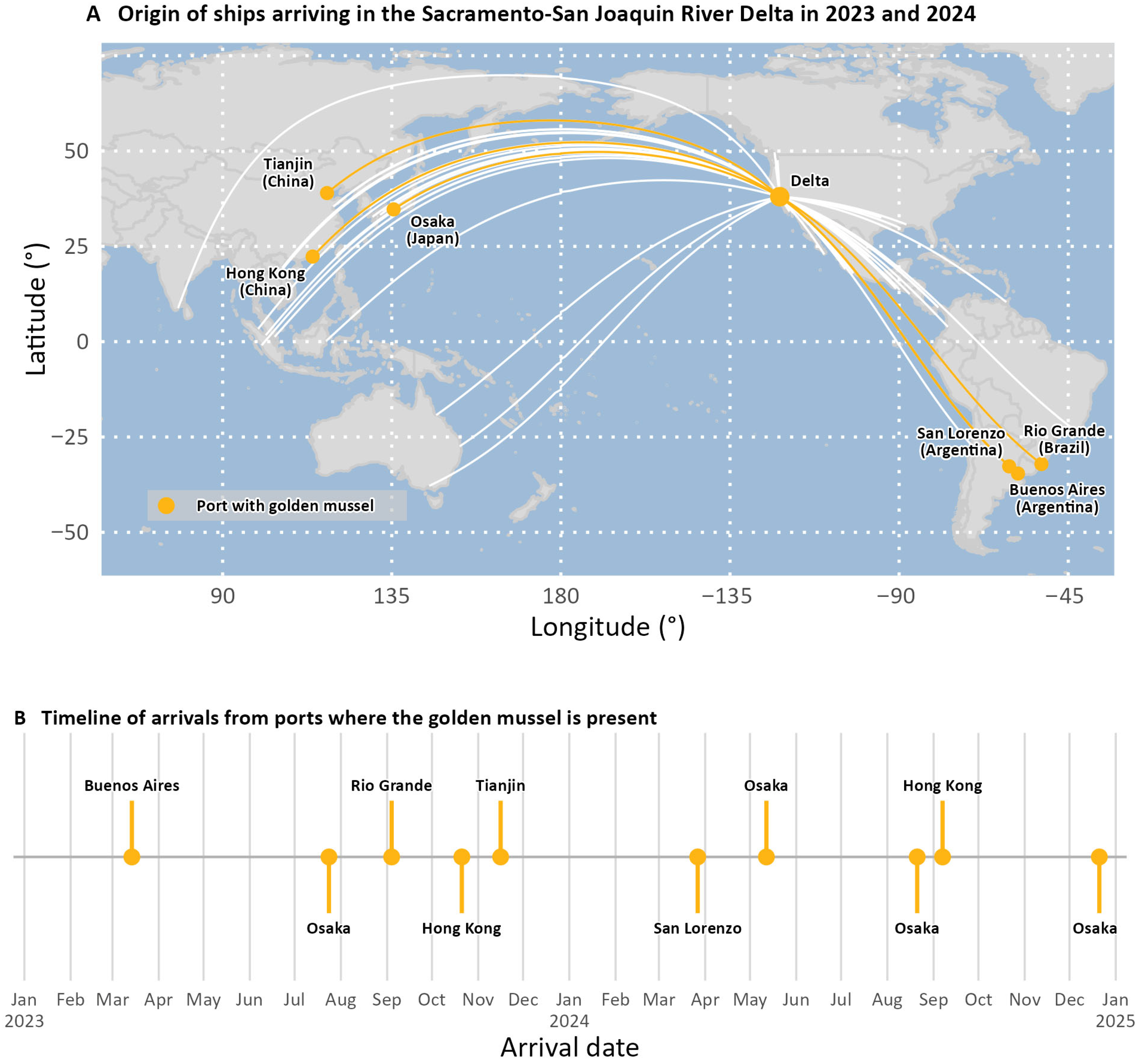
Ballast water has been recognized as the introduction vector of many aquatic species worldwide [33,34,35,36], including the golden mussel in South America [15,37,38]. There is no evidence to rule out ballast water as the introduction vector in North America, particularly since the site of first detection was the Port of Stockton, which receives 78% of ship traffic in the northern Delta (454 ships out of 581 in 2023 and 2024), with the remaining destined to the Port of Sacramento (Figure 3A). Up to 54% of the ships stopped first in the local ports of Alameda, Richmond, Redwood City, and San Francisco (Figure 3A). The ship traffic analyses consider only ships that did not stop in local ports before arriving in the Delta. For the Port of Stockton, the busiest quarters are Q2 and Q3 (23% to 31%), which coincide with the expected reproductive period for the golden mussel in ecosystems identical to the Delta (Figure 3B). Yet, only 34% of ships originated from ports with suitable freshwater or brackish habitats for the golden mussel, and only one ship came from a freshwater port (Figure 3C). The top source countries were the United States (57), Vietnam (53), and Mexico (40) (Figure 3D), with the port of Nghi Son in Vietnam generating the most traffic towards Sacramento (Figure 3E) and Stockton (Figure 3F).
Ship arriving in the Delta in 2023 and 2024 came from 22 countries and 67 ports (Figure 4A); however, only ten ships out of 581 came from ports where the species is present, namely Buenos Aires and San Lorenzo in Argentina [39,40], Hong Kong and Tianjin in China [41], Rio Grande in Brazil [42], and Osaka in Japan [43] (Figure 4B). The apparent low propagule pressure suggests that the golden mussel invasion likely has a single origin, a hypothesis that future studies should test. The Marine Exchange of the San Francisco Bay Region provided the ship traffic data used in these analyses.

3. Key Invasive Traits to Inform Management

Non-indigenous golden mussel populations can experience bidirectional regulation through bottom-up control (e.g., oxygen-depletion events in the Pantanal floodplain in Brazil extirpated golden mussel populations) [44,45] and top-down regulation (e.g., fish predators reduced golden mussel biomass by ~70% and maximum shell length by ~40%) [46] (Supplementary Materials Table S1). However, their many invasive traits and genetic plasticity make significant population suppression unlikely [47]. I propose that golden mussel management in North America can be optimized by accounting for five key invasiveness traits described below, along with aspects of their growth, behavior, and ecological amplitude (Table 1). One trait that gives the golden mussel an advantage over other invasive freshwater mussels is its ability to colonize rivers and lakes with very low calcium concentration, as low as 1 mg L−1, and establish thriving populations across a broad range of calcium concentrations from 1 to 35 mg L−1 [48,49].
First, golden mussels have a broad osmotic regulation capacity and are ionic conformers (under >70 mOsm conditions) [50], enabling them to colonize brackish and freshwater ecosystems and withstand estuarine salinity regime shifts [51,52]. In a controlled experiment, golden mussels showed 100% survival when exposed to a constant salinity of 2 for up to 10 days, but survival decreased to 20% at a constant salinity of 4 for 10 days [51]. However, another experiment demonstrated their remarkable ability to tolerate tidally induced salinity fluctuations [52]. After 30 days, 50% of mussels survived a constant salinity of 10, while ~60% survived fluctuating salinity between 7 and 29 [51,52].
Second, the golden mussel is a highly fecund dioecious species (note: <1% of individuals are hermaphrodites) capable of year-round reproduction at optimal water temperatures in tropical and subtropical regions [53,54,55]. This trait is valuable for biofouling prevention, control, and mitigation strategies. For example, larval densities have reached up to 60,000 larvae m−3 in the Río de la Plata Basin (South America) [38]. In southern Brazil, five main spawning events have been observed year-round [55], while in Japan, reproduction is restricted to 1–2 summer months due to cooler water temperatures [54]. Remarkably, the golden mussel exhibits plasticity in optimal reproductive temperatures: 19–22 °C in southern China, 24–26 °C in northern China, 15–20 °C in Japan, and 17–18 °C in Argentina [53,54,56,57]. In the Delta, preliminary veliger survey data suggest reproduction may be restricted to 6 months (June–November) (Scott Waller, California Department of Water Resources, 2025, pers. comm.).
Table 1. Traits and realized ecological niches of the golden mussel Limnoperna fortunei (Dunker, 1857) relevant to optimizing management strategies for controlling and mitigating the invasion in North America.
TraitDescriptionReferences
Life span
·
2–3 years
[58]
Taxis
·
negative phototaxics
·
positive thigmotaxis
·
negative geotaxis
[59]
Annual growth—size at age
·
K = 1.22
·
length at 1 yo = 21 mm
·
length at 2 yo = 28 mm
·
length at 3 yo = 30 mm
[60]
Annual growth—size at age
·
1 yo = ~10 to >39 mm
·
2 yo = 20–30 mm (eventually >50 mm)
[58]
Ecological amplitude
·
Temperature: 13–29 °C
·
Calcium: 1–33 mg L−1
·
DO: >1.5 mg L−1
·
pH: 4.1–8.7
·
NH + 4: <65 mg L−1
·
Illuminance: 0–55,000 lx
[48,61,62]
Water temperature
·
Survive six days at water temperatures <1 °C, 41 days at <2 °C, and 108 days at <5 °C.
·
Resume filter-feeding at 5.5 °C.
·
50% of mussels were active at temperatures higher than 7.5–8.0 °C
[63]
Oxygen (mortality)
·
100% mortality at 0.12 mg O2 L−1 after 10–12 days at 27 °C, and 21–29 days at 29 °C.
·
Small mussels (<7 mm) are less tolerant to oxygen deprivation at 20 °C than larger specimens (20 mm)
[64]
Third, the golden mussel’s high filtration capacity and feeding plasticity–up to 1849 mL g−1 h−1, among the highest of invasive bivalves—give it a competitive advantage in resource use while reshaping the energy flow through the food web and the quantity allocated in each compartment [65,66,67]. The optimal filtration rate occurs at 20 °C under low-velocity flow conditions, but filter-feeding is still possible at temperatures as low as 2 °C [67]. The Delta offers abundant organic matter sources for the golden mussel, combined with ideal water temperatures (minimum: 8.8 °C, Q1: 11.6–13.3 °C, Q3: 20.4–23.4 °C, maximum: 27.0 °C) [68], making it an ideal nursery and source of propagules for adjoining ecosystems and distant sites via human-mediated dispersal.
Fourth, golden mussels have a high dispersal capability due to their planktonic larval stage, further enhanced by faunal displacement and human facilitation through commercial navigation or recreational boating [38]. They also have prolonged tolerance to starvation (at least 125 days) and desiccation resistance (3 to 11 days at 30 °C and 10 °C, respectively) [69,70], which greatly augments their ability to disperse when attached to a watercraft [71]. These findings underscore the importance of outreach campaigns that promote the “clean, drain, and dry” protocol for watercraft after leaving any body of water.
Fifth, the golden mussel has a broad genetic repertoire resilient to bottleneck effects and capable of colonizing ecosystems with diverse characteristics, with genetic drift in non-native areas still sustaining successful invasive populations. For example, populations from three sub-basins of the Río de la Plata Basin (the Paraná, Paraguay, and Uruguay river basins) exhibited high genetic and morphological diversity, with no signs of a genetic bottleneck, even 10+ years after initial detection [72]. Within the Paraná sub-basin (Brazil), genetic diversity was low among three reservoirs, suggesting high connectivity despite overall high diversity due to a founding population with high genetic diversity [73]. COI and ML genotypes exclusive to South America further indicate local mutations, adaptations, and admixture [74]. Interestingly, genetic diversity within non-native populations in Asia and South America is lower than between continents, suggesting either multiple distinct introductions or strong, stochastic post-introduction selection [75]. These observations underscore the need to continue minimizing new introductions and propagule pressure. Containing the spread and addressing impacts on critical infrastructure is already challenging; additional introductions of genetically distinct individuals with different ecological optima would expand the number of ecosystems at risk, increase costs, and force managers to prioritize some ecosystems/infrastructure over others.
Overall, these five traits highlight the need for management policies that integrate three critical dimensions—ecological, financial, and human—grounded in fundamental science (i.e., monitoring) and multidisciplinary collaborative research. They can help (i) prioritize ecosystems and infrastructure for monitoring and preventing new introductions based on data about optimal conditions for survival, reproduction, and feeding, (ii) establish monitoring grids, and (iii) anticipate how microevolution may alter the golden mussel’s invasiveness in California.

4. The Impacts in California

4.1. An Overarching Framework to Assess Impacts

The arrival and establishment of the golden mussel in North America completes the freshwater mussel triple threat (golden–quagga–zebra), which has set its byssal threads on the continent. One of the first questions the public asked was: “How much will this new invasive species cost us?”. There is no official cost estimate, but managers reported exponential increases in expenses in the first year for monitoring natural and artificial ecosystems, implementing containment programs, and maintaining infrastructure. In Brazil, where golden mussels infested 38% of hydroelectric power plants by 2018 [76], operational costs at a water-pumping facility in the Brazilian Amazon basin increased by 46% after the invasion [77]. A three-day unscheduled shutdown of a hydroelectric power plant to remove golden mussels from one power-generating unit cost 750,000 USD [74].
There is no official estimate for damages or future losses incurred at the State level. However, a California legislator estimated annual financial losses could reach 500 million USD in the Sacramento–San Joaquin Delta region alone [78]. The State of California has allocated 20 million USD to combat the golden mussel invasion through California’s Assembly Bill 149 (AB 149) (the budget trailer bill for Proposition 4—the Safe Drinking Water, Wildfire Prevention, Drought Preparedness, and Clean Air Bond Act of 2024) approved under the 2025–26 budget package. AB 149 marks a strategic shift from monitoring to active suppression, requiring rapid response funding, updating legal definitions to include the golden mussel, mandating revised reservoir management plans, and granting emergency rulemaking authority to state agencies [79].
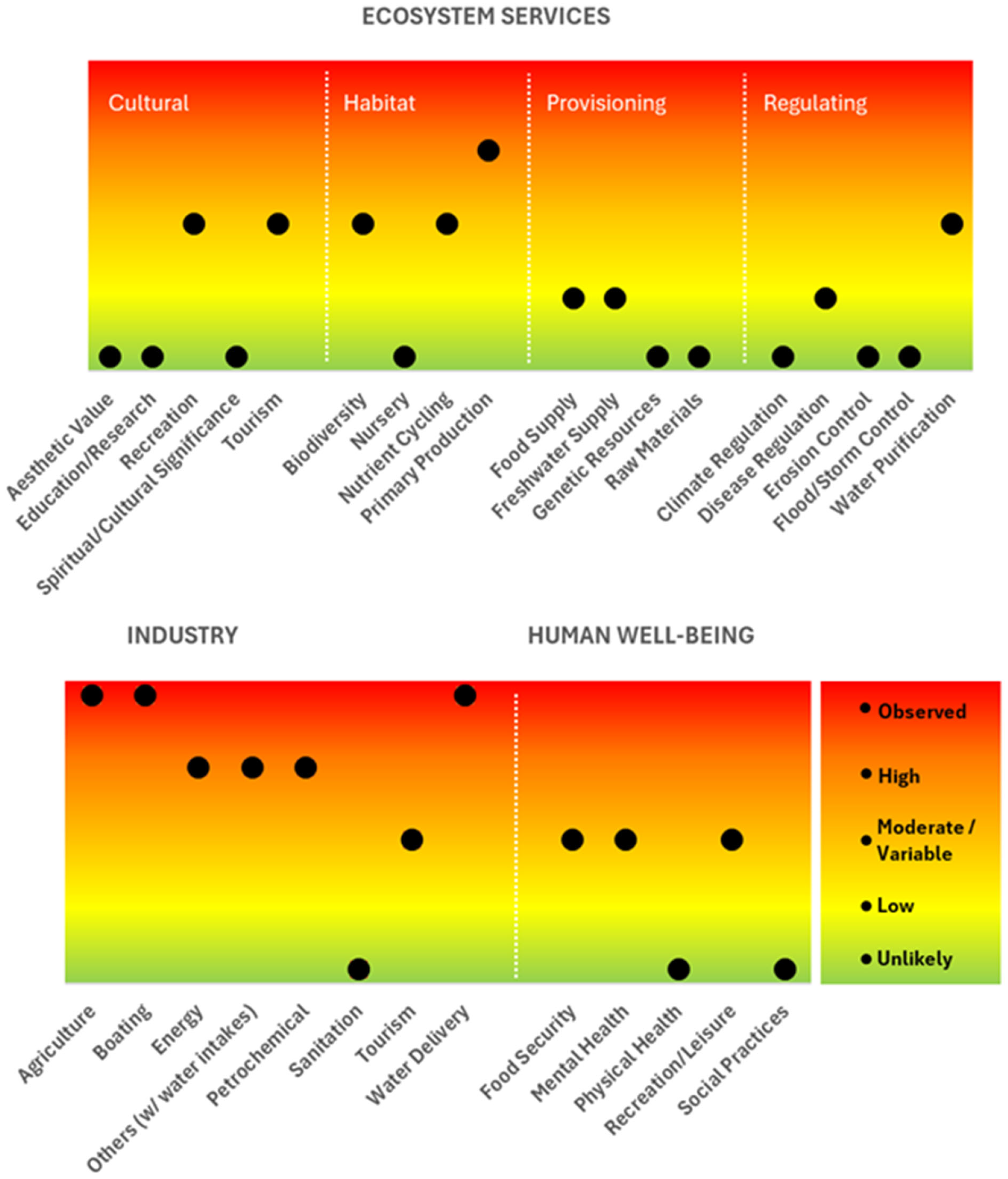
Financial losses from the golden mussel invasion must be assessed across three broad categories: ecosystem services (cultural, habitat, provisioning, and regulating), industry, and human well-being (Figure 5). I adapted a five-point ranking scale [80,81] to evaluate the perceived likelihood of various impact types, providing a flexible framework for conducting in-depth analyses. Its value lies in its accessibility to diverse stakeholders and its ability to prioritize prevention and mitigation actions through clear, distinct rankings.
The highest-impact score, Observed, applies to documented impacts in California (e.g., clogging of farm irrigation intake pipes, biofouling of boats, and biofouling of water delivery infrastructure). The High impact score identifies impacts that are systematically observed in other invaded ecosystems and are likely to be observed in California and North America (e.g., reduced pelagic primary productivity, increased benthic primary productivity, damage to energy and petrochemical infrastructure). The Moderate/Variable score applies to impacts expected to be observed in North America, but the magnitude of impact will be moderate or context-specific (site, duration, seasonality, individual perceptions) (e.g., tourism, recreation, biodiversity, food security, mental health). The Low score indicates limited spatial/temporal impact (e.g., food supply, freshwater supply, disease regulation). Finally, the Unlikely score covers impacts that are unobserved in non-native areas and are likely irrelevant in California and North America (e.g., spiritual/cultural significance, nursery function, genetic resources, supply of raw materials, sanitation, physical health) (Figure 5).
The first approach should be to create relative habitat suitability maps for California’s aquatic ecosystems to prioritize areas that overlap with conservation areas. Data from other invaded areas provide critical information on habitat characteristics, golden mussel abundance, and physiological responses to abiotic conditions [82]. Nonetheless, it is essential to emphasize that the population dynamics differ between natural and water-delivery systems, although both are influenced by the timing of warmer water temperatures and flow conditions (perennial, non-perennial, lotic, lentic) [57]. High altitude lakes should be included in this modeling approach. Laboratory experiments showed golden mussels surviving for 6 days at <1 °C, 41 days at <2 °C, and 108 days at <5 °C, resuming filter-feeding at 5.5 °C, and 50% being active above 7.5–8.0 °C [83]. Golden mussels inhabiting deep, high-elevation lake habitats, away from the frozen surface, may sustain themselves if other suitable conditions are met (e.g., calcium content, food availability). I hypothesize that the golden mussel will expand beyond California, given its tolerance for low water temperatures [84], and thus even colonize high-elevation lakes [83], including the emblematic Lake Tahoe. A risk assessment made for Ontario, Canada, suggests that lakes frozen for at least two months are unsuitable due to physiological constraints, similar to water bodies north of 36° N with heavy winter snow cover [85].
The second approach involves developing models to predict dispersion and invasion dynamics in sensitive ecosystems, incorporating water temperature and food availability across life stages (larvae, settled juveniles, and adults) [86,87,88].
The third approach should test the hypothesis that climate change will facilitate the spread of golden mussels in North America, away from tropical and subtropical areas, as predicted for South America [89]. Presence–absence data acquired in native and non-native areas, along with corresponding abiotic data (e.g., water temperature, salinity/conductivity, calcium ions), were successfully used to generate species distribution models that estimate climate-driven range shifts for aquatic invasive species [83,90].

4.2. A Different Food Web

The golden mussel is an ecosystem engineer poised to reshape the Delta’s pelagic and benthic biogeochemical processes, as well as its food web. It can increase sedimentation rates and modulate benthic biogeochemical processes by introducing higher loads of organic matter and total nitrogen for benthic microorganisms and fauna to use [91]. Despite the higher input of organic matter, different native benthic communities respond differently. The golden mussel may increase biodiversity and biomass as its dense mussel beds—up to 200,000 ind. m−2—increase the ecosystem’s fractal dimension and thus create microhabitats for invertebrates to find food and refuge from predators [92,93,94,95,96,97]. In the Río de la Plata estuary, golden mussels drove invertebrate communities on natural substrates, increasing abundance and diversity of numerous taxa (e.g., Chironomidae, Copepoda, Hirudinea, Hydrachnidia, Oligochaeta, Tanaidacea, Tartigrada) [93,98]. One experiment showed that golden mussels increased the abundance and biomass of invertebrate communities by 27–100% and 43–100%, respectively, by rapidly transferring pelagic organic matter to the benthos via feces and pseudofeces deposition [99].
The golden mussel can also lead to the homogenization of benthic communities [98,100] and low Biological Pollution Index scores [101]. In the Río de la Plata, golden mussels displaced gastropods in the early years after the invasion [102]. Yet, in a neotropical reservoir experiment, the specific richness and biomass of the benthic fauna decreased, and the dominant functional groups shifted from soft-bottom native invertebrates (e.g., Chironomidae, Oligochaeta) to an invasive gastropod (red-rimmed melania Melanoides tuberculata (O. F. Müller, 1774)) [95,103]. The total density of benthic macroinvertebrates, scrapers, dipterans, and gastropods decreased when golden mussel predators were absent, suggesting an adverse effect on the native fauna [103]. Like other invasive mussels, golden mussels’ biofouling on native and invasive freshwater bivalves can impair physiological condition and lead to death by starvation, including conspecifics [14,100] (Figure 6).
The golden mussel efficiently grazes on protistoplankton and restructures this community, with clearance rates being higher at low food concentrations [63]. The golden mussel prefers larger protistoplankton (e.g., Chlorococcales, Chrysophyceae, Desmidiales, Euglenophyceae) instead of Bacillariophyceae or filamentous and colonial cyanobacteria [104,105]. Single-cell cyanobacteria are preferred over colonial or filamentous cyanobacteria, which are expelled in the pseudofeces [104]. Golden mussels ingest both toxic and non-toxic Microcystis, thereby acting as vectors of cyanotoxins to higher trophic levels [104]. They simultaneously promote Microcystis growth by accelerating nutrient remineralization and rejecting colonial forms that predominate during blooms [106,107,108]. Conversely, microcystin-LR is highly toxic to veligers, causing 100% mortality at >20 μg L−1 [108]. In the Delta, higher microcystin-LR concentrations are found at the Port of Stockton—the epicenter of the golden mussel introduction in California—regularly exceeding this threshold between June and October (up to 1000 μg L−1) [109]. However, this antagonistic effect is unlikely to control the golden mussel population ecosystem-wide, or even locally, since golden mussels have an extended reproductive season, are widely distributed, and tides easily replenish the veliger stock if toxins impair local recruitment.
Golden mussels may trigger an invasion meltdown at low trophic levels, as observed with red-rimmed melania in a neotropical reservoir [95], or at higher trophic levels by sustaining the biomass of native and invasive fish in natural ecosystems and reservoirs [110,111,112].
In the Xijiang River (southeast China), golden mussels derive 58–65% of organic matter from particulate sources, 20–28% from plankton, and 10–21% from sediment organic matter by consuming, or selectively consuming, protistoplankton (Chlorophyceae, Cryptophyceae, Dinophyceae), bacteria, and terrestrial organic matter [113]. In the Delta, the invasion will alter the food web composition and dynamics, potentially accelerating pelagic-to-benthic energy transfer via feces and pseudofeces while strengthening links with fringing ecosystems (tidal, terrestrial), as seen with other invasive bivalves [114,115]. Golden mussels can divert the bulk of pelagic primary production to the benthos [116,117], especially in shallow, closed/semi-closed ecosystems. Mechanistically, they increase water clarity by filtering suspended particles, including picoplankton, which promotes the growth of periphyton and metaphyton [116,117]. Golden mussels connect primary producers to native and non-indigenous fish predators across food web groups [45,118]. Numerous fish species prey on non-native golden mussels [119], including native fish larvae consuming veligers [120,121], often as the sole prey or replacing the once more common prey [122]. In the Uruguay River, golden mussels appeared in the digestive tracts of 22 fish species, especially Characiformes, Cichliformes, and Siluriformes [110]. In the Delta, there are only non-native Siluriformes, namely the channel catfish Ictalurus punctatus (Rafinesque, 1818), blue catfish Ictalurus furcatus (Valenciennes, 1840), brown nebulosus Ameiurus nebulosus (Lesueur, 1819), black bullhead Ameiurus melas Rafinesque, 1820, and white catfish Ameiurus catus (Linnaeus, 1758).
Key questions stem from golden mussel’s biological interactions in invaded areas, including the following: “Can the golden mussel effectively control primary productivity in the Stockton channel, where oxygen levels reach critical low levels during summer blooms?”, “Can golden mussel support the growth of invasive catfish species populations in the Delta, which belong to a family known to prey on the golden mussel?”, “Which other native and non-indigenous fish species will take advantage of this new abundant resource?”, “Will native and endangered fish be able to include golden mussel veligers in their diet?”, “Can the golden mussel pave the way for an invasion meltdown in the freshwater section of the Delta?”.

4.3. The Impact on Native Freshwater Bivalves

North American freshwater mussels declined sharply over the past 200 years owing to numerous human impacts, including harvesting, habitat destruction, and degradation [123]. In California, the distribution and conservation status of native freshwater bivalves have been assessed only sparingly, but data from 2008 and 2009 indicate that many native species were extirpated from 53% of the historically surveyed sites [124]. Invasive freshwater mussels have contributed to the decline of native freshwater mussels worldwide [1]; for example, the invasive golden, quagga, and zebra mussels can attach to native mussels, impairing heavily colonized individuals by hindering feeding and breathing, which can lead to death [125,126,127].
The freshwater Delta hosts only four bivalve species: the native California floater, Anodonta californiensis (Lea, 1852), and three invasive species (i.e., Arcuatula senhousia, Corbicula fluminea, Potamocorbula amurensis) [128]. The parasitic interaction between invasive mussels and native freshwater bivalves underscores the need to assess the conservation status of the latter in the Delta and whether conservation actions should be implemented. This recommendation emerges because a state-wide assessment is long overdue, and native diversity is extremely low in California, with only three to four species present: the western pearlshell Margaritifera falcata Gould, 1850, the western ridged mussel Gonidea angulata (Lea, 1838), the California floater, and possibly the Oregon floater Anodonta oregonensis (Lea, 1838).

4.4. Vector of Fish Diseases

The enemy release hypothesis helps explain why invasive species thrive [129,130,131,132]. Overall, it states that invasive species grow faster and become more abundant in non-native areas due to fewer or absent natural enemies. The absence of parasites or a reduced parasitic load allows for optimal growth, while abundance can be maximized in the absence of predators or naïve local predators [129,131]. However, invasive species can carry parasites that may use native species as their intermediate hosts [133]. In Japan, two Digenea species were introduced with golden mussels, causing hemorrhages in the eyes, fins, and skin of fish [134]. Interestingly, the larval stage of Digenea can castrate golden mussels and reduce their population [134]. The Delta is home to many endangered fish, and golden mussel parasites may pose a serious challenge to conservation efforts aimed at their recovery.

5. Key Strategies to Prevent and Minimize Impacts

5.1. Detection and Monitoring

The implementation of a robust detection and monitoring program in the Delta must combine at least rapid assessment surveys, selected sites to assess settlement density [135], and eDNA sampling [136], while automated underwater inspections would primarily be suited for use in hydraulic infrastructure to examine the extent of biofouling [137]. These approaches should be regarded as complementary rather than “either one or another”, since each has distinct strengths and caveats [135,138,139,140,141].
The greatest advantage of rapid assessment surveys is the opportunity to engage the public by promoting an ecosystem-wide (or even state-wide) bioblitz, where people inspect fixed structures (e.g., boats, docks, pontoons, submerged ropes), at nearby lakes, creeks, or rivers, to look for golden mussels and report findings (positive or negative records) to the California Department of Fish and Wildlife (see Section 2 for details). The most significant disadvantage is the inability to implement this approach on a broad scale with only a few experts.
The main advantages of eDNA are the ability to monitor large areas more quickly than with standard biological surveys [140] and to detect species missed by standard surveys [139]. The concentration of golden mussel eDNA in Japanese farm ponds was proportional to the abundance of settled specimens [139]. In China, eDNA concentration correlated with mussel abundance along the world’s longest water diversion project, with temperature and pH modulating the metapopulation size [142]. Although this relationship was established for another population [142], it provides valuable insights into the golden mussel’s invasion status in California. Interestingly, some eDNA detections along the world’s longest aqueduct had their source located up to 1100 km upstream, and only up to 22 km in the side canals [26]. Such observations clearly demonstrate the need for direct or remote visual inspections to confirm eDNA detections, assess the severity of biofouling, and prioritize removal efforts along the State Water Project and Central Valley Project.

5.2. Preventing New Introductions and Secondary Spread

Golden mussels colonized South America via at least five introduction events involving Asian propagules, mainly from China, but also Japan and the Republic of Korea, contributing to widespread distribution [74,75,143]. This South American lesson highlights the importance of preventing new introductions in North America, while underscoring failures in ballast-water management and the need for improvement. Briefly, ballast water management aims to minimize the uptake of organisms and sediment into ballast tanks at the port of origin, exchange ballast water at sea, discharge ballast water into shore reception facilities at the port of destination when needed, and treat ballast water to avoid its release to the environment [144].
Reviewing the status and policies related to non-indigenous species has become common practice [145]. Yet, ballast water management remains vulnerable to failure, and global evidence shows it continues to serve as a pathway for the introduction of invasive species. I recommend implementing stricter ballast water management policies under direct supervision, as the cost of addressing invasions often exceeds the cost of enforcing effective treatment.
I also recommend implementing a warning system for ships leaving the Delta and headed to brackish–freshwater ports along the Pacific Northeast (e.g., Oregon: Portland, Washington: Kalama, Longview, Vancouver; Canada: Vancouver) to prevent secondary spread [146]. In the Great Lakes, a ballast water management exercise proved that prioritizing management based on network centrality effectively prevents or delays the secondary spread of golden mussel [146]. The implementation of high-volume shore-based treatment systems for ballast water is a technical solution that should be available if ships are unable to conduct ballast water treatment offshore [146].
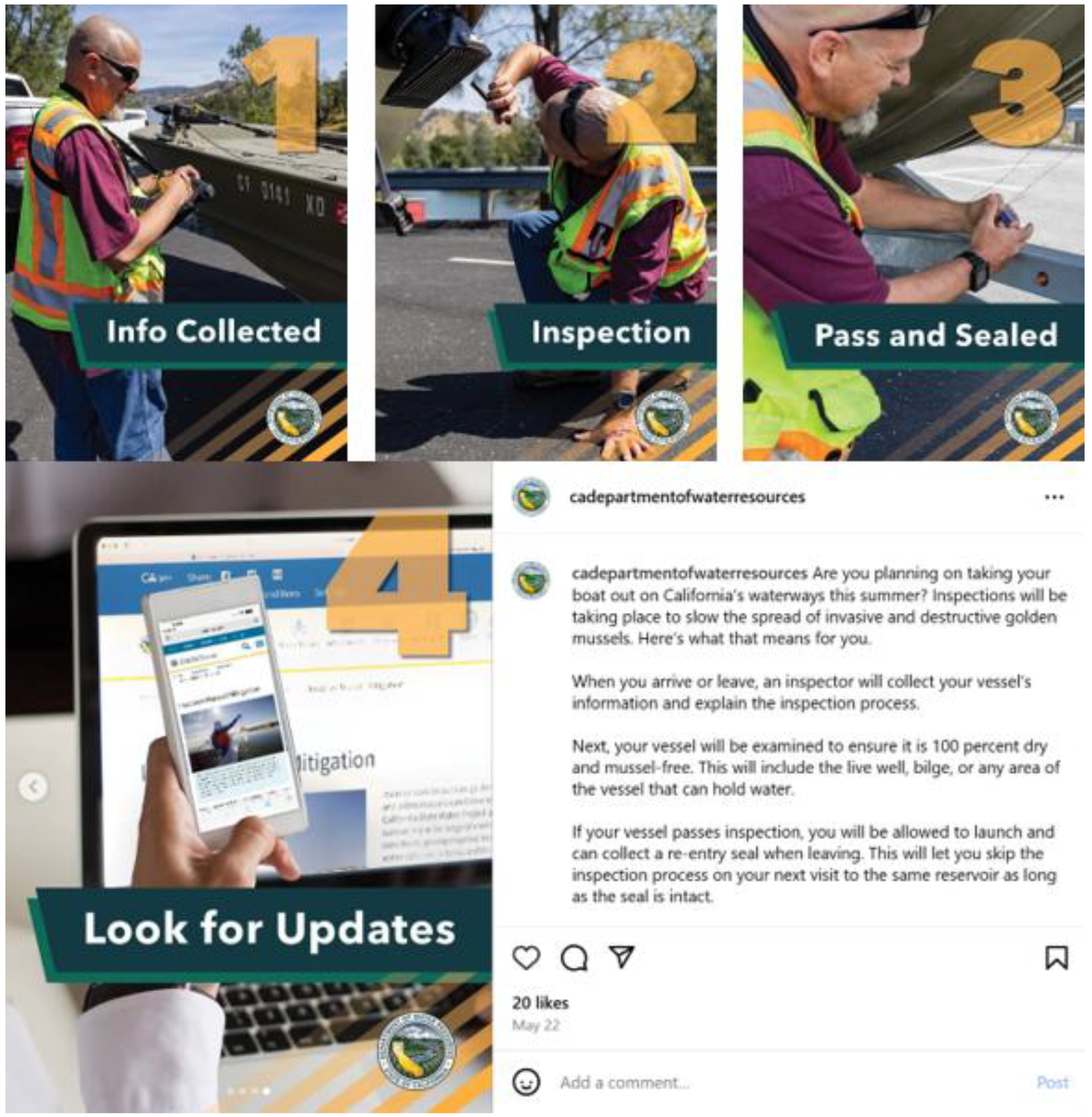
At smaller geographic scales, federal and state policies support Stop the Spread programs to prevent the introduction of invasive mussels into natural ecosystems and reservoirs [147]. These programs operate inspection and decontamination stations to ensure that all watercraft are free of mussels before entering new waterbodies. Following the detection of golden mussels in California, Stop the Spread initiatives were strengthened or implemented, particularly in key natural ecosystems (e.g., Lake Tahoe) and reservoirs critical to the State Water Project and Central Valley Project (e.g., Lake Oroville, Folsom Lake) (Figure 7). Encouragingly, inspection and decontamination stations have been preventing dispersal by detecting mussels attached to boats transported from the Delta.
The implementation of inspection and decontamination sites for watercraft before entering a new waterbody is fundamental to preventing the spread of invasive mussels in North America [148,149,150], including golden mussels [151]. This is critical because the golden mussel can withstand desiccation for 3 to 11 days at 30 °C and 10 °C, respectively [70]. A single boat contaminated with veligers and/or adults can be sufficient to establish a new population. In May 2025, a boat coming from Stockton—ground zero for the golden mussel invasion in North America—arrived at Lake Oroville’s inspection and decontamination site with golden mussels on the hull [151]. Fortunately, on-site decontamination halted the introduction of golden mussels into a vital piece of California’s infrastructure.
Wait times for watercraft inspection and, eventually, decontamination can be long during busy periods, creating a sense of urgency to expedite the process. However, watercrafts are diverse and complex, with numerous nooks and crannies that can elude inspectors. So, dogs are being trained to become golden mussel-sniffing inspectors to help reduce inspection time and avoid missing golden mussels.
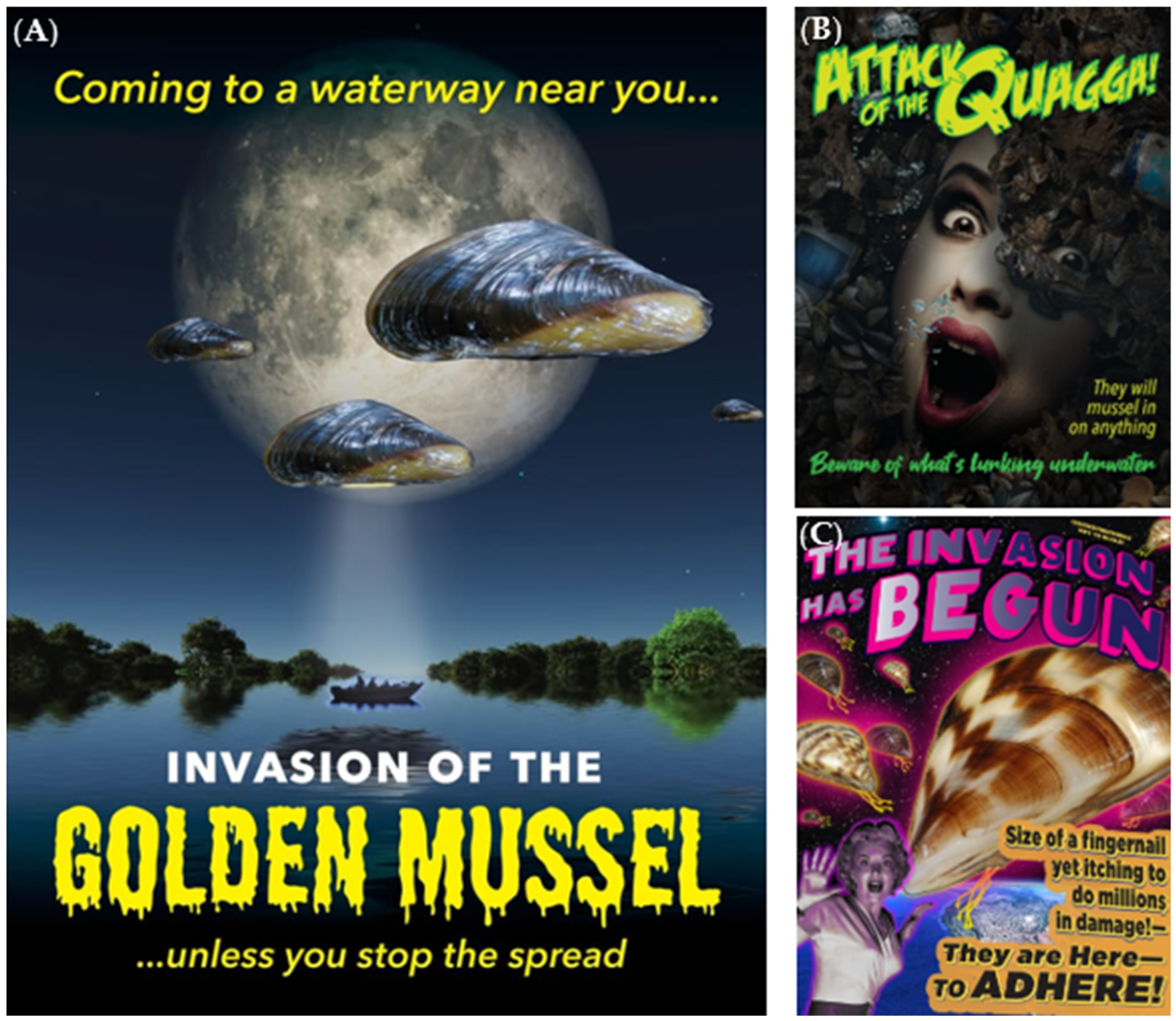
Social media outreach (Figure 8) and news coverage (Figure 9; Supplementary Materials Table S2) have been critical for educating the public and publicizing efforts to prevent the spread of the golden mussel in California. The main outreach efforts occurred when the species was first detected, when new inspection/decontamination sites were established in areas of intense boating, and when introductions were prevented.

5.3. Biofouling Prevention, Control, and Mitigation

The golden mussel causes economic impacts on infrastructure because of biofouling, including aquaculture facilities, boats, irrigation systems, power plants, refineries, reservoirs, water diversion systems, and water treatment plants [152,153]. It can also compromise water quality with bad taste and odor when mussels die [154,155,156,157]. The removal of golden mussels from concrete infrastructure is essential to prevent compromise of the structural integrity and durability of concrete, including riverbank constructions [158,159] and aqueducts [160]. Golden mussel colonies increase the pore size of the cement, enhance water absorption, and increase the carbonation depth, while decreasing the compressive strength [158]. A series of chemical elements increases on the cement surface (e.g., aluminum, iron, and manganese), while calcium decreases due to physiological processes [158].
The implementation of physical strategies to control golden mussels in water delivery systems (e.g., hand removal, desiccation by water drawdown, anoxia induced by benthic mats) is unfeasible due to the scale of the infrastructure. In industrial systems, mechanical cleaning does not have a long-term effect on preventing, controlling, or mitigating impacts, and it is also time-consuming and can damage surfaces [161]. Additionally, all specimens must be removed after scraping, as they can crawl and climb. Younger specimens tend to move more and farther than larger individuals, particularly in darker conditions, and to secrete new byssal threads to reattach to a new substratum [59,162].
Over the years, non-toxic, environmentally friendly approaches have been tested to prevent, control, and mitigate golden mussel biofouling, some of which could be implemented in California and across North America. The golden mussel has five larval stages that can be targeted differently, as each has distinct optima for conductivity, pH, suspended inorganic matter, food size, turbidity, water level, temperature, velocity, and turbulence [57,161,163,164]. So, implementing abiotic filtering in infrastructure can hinder larval survival, reduce biofouling, and lower maintenance costs.
Turbulence-generating materials installed in pipelines boost veliger mortality and prevent biofouling [21,165]. In a Chinese water-diversion project, optimal flow velocity for veliger attachment ranges from 0.3 to 0.9 m s−1 [166], with higher flows reducing larval attachment [167]. In experimental settings, ultrasound pulses compromised the viability of veligers and individuals with immature shells [168]. Ultraviolet radiation treatments (149 mJ cm−2 at 23.0 °C or 103 mJ cm−2 at 25.8 °C) achieved 100% veliger mortality in industrial facilities; the only caveat is that turbid water should be filtered first to optimize treatment efficiency [169].
The operation procedures of pumped-storage power plants can also be optimized to prevent biofouling [170]. In China, long periods of water pumped from a reservoir increased veliger density at the water surface and thus the risk of biofouling, while longer stop periods between pumping operations allowed veligers to settle to the bottom of the reservoir, thereby minimizing biofouling [170].
Golden mussels also avoid attaching to substrates with low surface free energy polar component (e.g., Tefflon, silicone, and glass modified with 3-bromopropyltrimethoxysilane or 3,3,3-(trifluoropropyl)-trimethoxysilane), which is a property absent from most materials used by industries impacted by biofouling [171]. So, the incorporation of protective coatings with low surface energy, as well as other anti-biofouling agents, has been deemed a solution to increase the longevity and efficiency of infrastructures [142,172]. A non-toxic, halogen-free antifouling agent derived from the lecithin byproducts of industrial soybean oil extraction, when applied to coated stainless-steel nets, inhibited the growth of golden mussels in an aquaculture facility [173]. Another non-toxic agent, magnetic ferroferric oxide nanoparticles coated with polyethylene glycol, compromised byssus adhesion by down-regulating foot protein 2 and energy-related metabolic pathways [174]. In fact, the structural mechanisms and molecular bases of byssus formation have been characterized, thereby providing multiple angles for exploring how to compromise adhesion and prevent biofouling [175]. The use of Neem oil—a pesticide often used in organic farming—at a concentration of 500 μL L−1 in industrial facilities can kill golden mussel veligers and adults after 24 and 72 h of exposure, respectively [176]. Ammonia can also prevent biofouling in industrial facilities [177].
When biofouling-preventive measures fail in industrial facilities, chemical treatments can control biofouling, including water deoxygenation, chlorine treatments, and commercial molluscicides; however, their use is not universal due to potential adverse impacts on non-targeted species and environmental persistence. A genius, environmentally friendly solution called biobullets kills juvenile and adult mussels inside pipelines to prevent a growing problem [178]. Biobullets are microscopic capsules of sodium hypochlorite that mussels ingest; the capsule coating dissolves in the digestive tract, releasing a chemical agent that kills the individual [178]. Alternatively, low concentrations of sodium hypochlorite are sufficient to weaken byssus adhesion (number and length) and force detachment from infrastructures; however, the desired effect can take from 3 to 7 days, at concentrations of 5 to 1 mg L−1, respectively [179]. Alternatively, inducing low oxygen concentration in the water systems of industrial facilities can also prevent biofouling—100% mortality at 0.12 mg O2 L−1 after 10–12 days at 27 °C, 21–29 days at 29 °C—with small mussels (7 mm) being less tolerant to oxygen deprivation than larger specimens (20 mm) at 20 °C [64].
Specific measures have been proposed for pumped-storage power plants to control biofouling, corrosion, and pipe clogging. For large-scale water-intake pipes, it is recommended to use environmentally friendly, cost-effective coating materials (e.g., SK-Polyurea, SK-Epoxy YEC) to increase the pipe wall’s corrosion resistance [180]. However, in small-scale facilities, the addition of water-flow control devices that integrate attachment-attracting, settling, and veliger-killing measures should be sufficient to prevent biofouling [180]. Indeed, ecological prevention pools may prevent dispersion and biofouling in water transfer tunnels, as geotextiles (e.g., bamboo fibers) attract veligers. High-turbulence devices installed downstream of prevention pools would kill veligers that have not settled onto the geotextiles [9].
Exposing golden mussels to desiccation and thermal treatments are two methods proposed to decontaminate watercrafts and the water systems of industrial facilities, as they kill both veligers and settled individuals [181,182,183]. However, in industrial facilities, a thermal treatment approach may require installing parallel backup systems to prevent stopping production [182]. When exposed to acute thermal treatments, juveniles/adults die after 1.8–15.3 h at temperatures between 43.6 °C and 50.2 °C, whereas under chronic exposure, 100% mortality occurs at 25.0–644.3 h at 34–36 °C or 0.7–17.5 h at 38/43 °C [183].
Overall, the most significant disadvantages of chemical agents are the need for long exposure times and high concentrations for effective control, the possibility that success rates may vary with abiotic conditions (e.g., temperature, turbidity) [184], and the impact of effluents on ecosystems, which cannot be neglected. Finally, a critical aspect to consider is the removal of dead biomass when addressing biofouling, as it promotes the growth of pathogenic bacteria, the production of toxic compounds, and the release of unpleasant odors, all of which compromise water quality and taste [155].

5.4. Biological and Biotechnological Control

In South America, several generalist fish prey on golden mussel, either on veligers, early settled mussels, or adult specimens [46,103,119,185,186,187,188]. These observations left researchers wondering to what extent such fish can act as an effective biological control of golden mussel density and biomass, thereby limiting their standing stock and impacts. Unfortunately, predator fish could not contain the golden mussel invasion in South America, and the same will not happen in California and North America. Nonetheless, it is important to retain that the morphological traits of such fish species include a mouth apparatus capable of removing mussels from solid substrates, as well as strong teeth (e.g., Anostomidae—piapara Megaleporinus obtusidens Valenciennes, 1847, striped leporinus Leporinus striatus Kner, 1858) and dentition (Loricariidae—Orchid leather neck whiptail Brochiloricaria chauliodon Isbrücker, 1979, cascudo-viola Paraloricaria vetula (Valenciennes, 1835)) to break apart the shells [46,187]. Important to note that there are fish that ingest the whole mussel without crushing it (e.g., Pimelodidae—mandi-pintado Pimelodus absconditus Azpelicueta, 1995, bage branco Pimelodus albicans (Valenciennes, 1840), spotted pim Pimelodus maculatus Lacepède, 1803).
Unlike traditional biological controls, biotechnological approaches offer a promising long-term solution for managing the golden mussel invasion as fundamental and applied research advances. The species’ genome has been fully sequenced, revealing insights into its ecology and invasiveness [47] and enabling the development of biotechnology-based tools to contain, control, or eliminate populations in non-native areas [189,190]. Three key methods are currently under development: (i) post-transcriptional gene silencing (RNA interference, or RNAi), (ii) disseminated neoplasia, and (iii) gene drive technologies.
RNA interference (RNAi) gene silencing begins with the delivery of double-stranded RNA (dsRNA) or short hairpin RNAs (shRNAs) to the target species to block specific gene expression. The method inserts an expression vector into an infectious agent—such as yeast, bacteria, or phytoplankton—that the target organism ingests, silencing genes essential for survival, growth, reproduction, or attachment [190]. Although this approach requires refinement for invasive mussel control, early results are encouraging. It offers several advantages: it can be species-specific and effective in both natural and artificial environments; the infectious agent degrades rapidly in the environment; and it does not require genetic modification of the target species, thereby addressing many ethical, safety, and regulatory concerns [190].
Disseminated neoplasia is a naturally occurring, waterborne, transmissible cancer among same-species bivalves, with rare cross-species transmission cases [191]. The approach involves bioengineering cancer cells from the target species by mutating the p53 gene, a key tumor suppressor, and then releasing them into the environment. Because the cancer is contagious, a single inoculation may cause high mortality within the population, and the cancer cells vanish once the host population is eradicated [190]. This method shares several advantages with RNAi gene silencing: it can be species-specific, effective in both natural and artificial environments, and it does not require genetic modification of the target species [190].
In contrast, gene drive control needs genetic modification of the target species. This method edits a gene of interest to increase its inheritance to offspring, a process known as super-Mendelian inheritance. There are nine key classes of gene drive, with local drive systems such as self-exhausting drive and threshold drive considered most suitable for invasive species, as they target only local populations [192]. Self-exhausting drive is an ideal intervention because it is limited in space and time, and it is often used to assess the ecological effects of other drive systems. Threshold drive, in turn, is designed for small populations, small islands, or populations with minimal gene flow [192]. In the case of standard gene drive, the edited gene can become pervasive within a few generations, potentially spreading into native populations and causing species extinction even when gene flow is minimal [193,194]. Overall, gene drive appears highly promising for eradicating invasive mussel species once all methodological steps are sufficiently refined; yet, before implementation, it is essential to assess and quantify potential unintended consequences [195]. Gene drive raises ethical, safety, regulatory, and diplomatic concerns [194,196,197,198], and its implementation requires “thoughtful, inclusive, and well-informed public discussions” [193]. Five guidelines have been proposed to evaluate gene drive development: (i) benefits must be clear to most citizens; (ii) citizens should be invited to participate in public discussions before implementation projects; (iii) safeguards should be shared in detail before the intervention is carried out; (iv) public concerns must be addressed transparently; and (v) early applications should aim solely to benefit society and not for profit [192].
For an overview of biotechnology-based approaches to controlling invasive mussels, I recommend consulting Hernández Elizárraga et al. [190]. For a comprehensive discussion on gene drive technologies and their caveats, see Esvelt et al. [193], Oye et al. [196], Esvelt [198], Esvelt and Gemmell [195], Min et al. [192], and Noble et al. [194].

6. Innovation-Driven Framework for Golden Mussel Management

6.1. A Versatile Sentinel Species

The golden mussel can serve as a sentinel species in multiple ways. It may reveal the impacts of aquatic pollution and how they change over time by assessing simple length-to-weight ratios [199], detecting microplastics to infer effects on other filter-feeding organisms [200], quantifying pollutant concentrations in tissues [201] or molecular biomarkers [202], and evaluating cytotoxic and genotoxic responses to heavy metals [203], herbicides, and pesticides [204,205,206], as well as microplastics [200].
The golden mussel also interacts with pesticides in ways that vary with the level of contamination. In heavily polluted areas, the commonly used herbicide glyphosate disrupts mussel metabolism and ultimately increases mortality [207,208]. At moderate concentrations, however, ammonium and phosphate levels in the water may increase, either as a consequence of physiological stress or biological degradation [117,209], including through the activity of biofilm bacteria on golden mussels’ shells [210]. Golden mussels may also promote herbicide degradation, resulting in excess phosphorus available to metaphyton, which can form dense mats along shorelines and in eddies after detachment from the substrate [209]. In controlled experiments, golden mussels attenuated the harmful effects of glyphosate on periphyton by dissipating the herbicide [211].
As a sessile species, the golden mussel’s shell can function as an ecosystem chronology biomarker. As the shell grows, chemically inert elements in the water are incorporated into its calcium carbonate matrix [212], and these signatures can later be used to infer fish movements and habitat-specific growth rates [213].

6.2. The Golden Mussel and the Blue Economy

Many edible aquatic invasive species can readily integrate the blue economy, such as the Atlantic blue crab Callinectes sapidus Rathbun, 1896 [214], weakfish Cynoscion regalis (Bloch & Schneider, 1801) [215], and lionfish Pterois spp. Oken, 1817 [216,217], whereas other species are overlooked because of a mismatch with local culinary culture, such as the Black Sea jellyfish Blackfordia virginica Mayer, 1910 [218]. The golden mussel, however, is an invasive and non-edible species, so its integration into the blue economy must be intentional. This will require new business models and legislation in some sectors, whereas others will need to process the golden mussel into products with substantial added value or make major investments to develop and implement the core business model, such as biotechnology-based tools.
The golden mussel can be inserted into other industries. The shells can be used by the agriculture (e.g., soil acidity amelioration) [219,220], poultry (e.g., source of calcium for broiler chickens) [221,222], sanitation (e.g., recovery of phosphorus from wastewater) [223], science (e.g., matrix for liquid chromatography) [224], and environmental industries (e.g., adsorption matrix for pollutants) [225], while the organic matter can be used by the compost [226] and energy industries (e.g., production of biogas) [227].
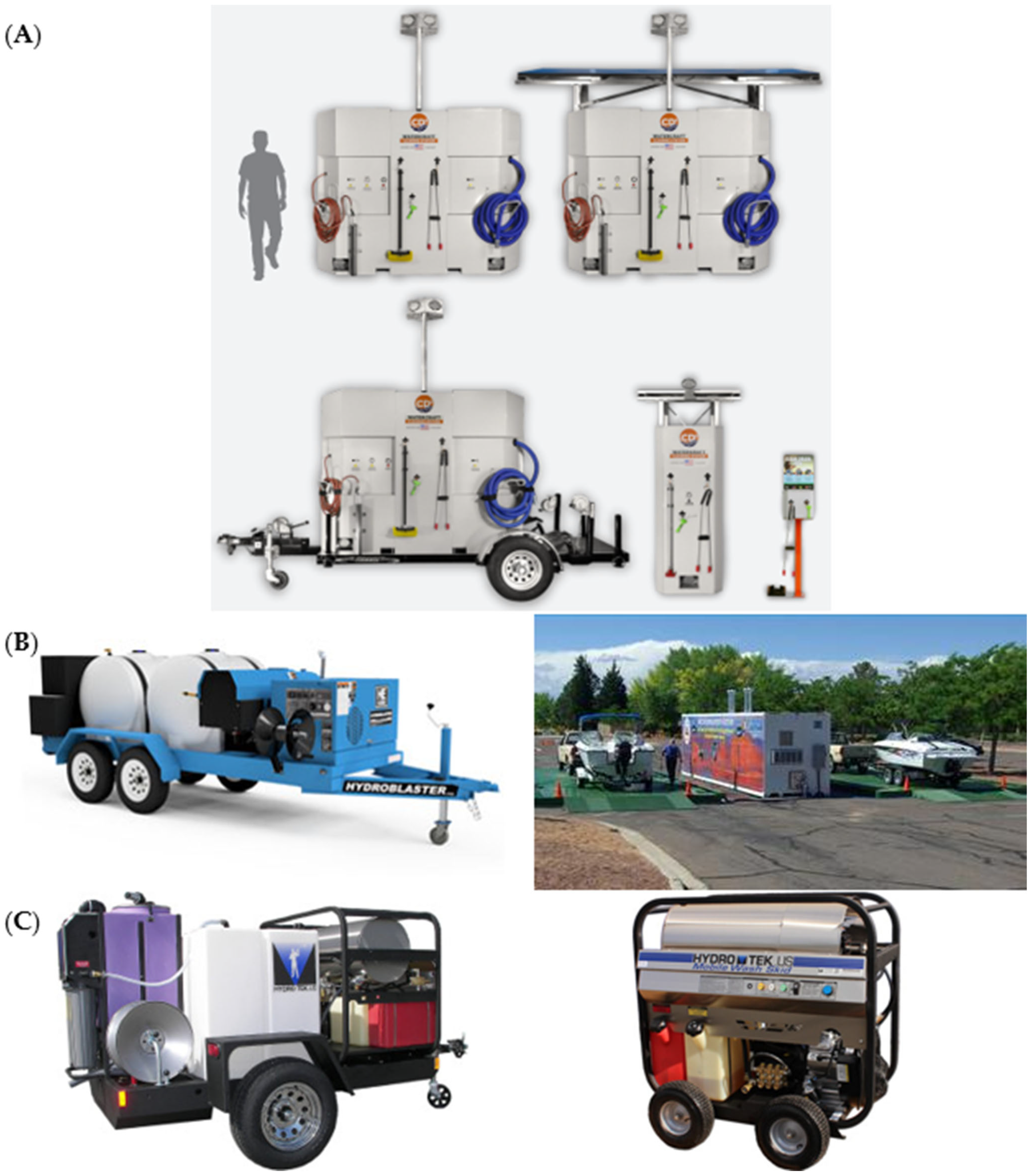
Efforts to reduce the spread of the golden mussel and its impacts, such as biofouling and clogging, involve multiple industries. The coating industry, by developing antifouling paints and coatings, plays a central role in minimizing biofouling and clogging on boats and infrastructure. The machinery industry is also essential for cleaning, repairing, and replacing infrastructure, as well as for producing equipment to decontaminate watercraft (Figure 10).
There are also new business opportunities arising from the golden mussel invasion. The Clean, Drain, and Dry program, designed to prevent or delay the spread of the golden mussel in North America, is too large in scope to be implemented by a single organization. Even the State of California cannot oversee its implementation across all the lakes because of their number and the remoteness of some sites, and the fact that many are on Federal or private lands. One way to implement inspection and decontamination stations more widely is to delegate operations to private entities/businesses. This approach creates jobs and supports existing businesses (e.g., marinas, campgrounds), but still requires clear policies to frame the activity and ensure enforcement.
Promising business opportunities also exist in developing biotechnological solutions for controlling golden mussels (see Section 5.4). Although these approaches offer hope for the future, they require substantial financial investment in research and development and in regulatory compliance, whether through government or private incentives. In 2018, Brazilian researchers estimated that this effort would require more than USD 100 million [228]. Adjusted for inflation and cost of living, this amount corresponds to approximately USD 245 million in Brazil in 2025 and more than USD 520 million when adjusted to the US economy.
The development of efficient, environmentally safe biotechnologies for mussel control, together with industry support, is likely to succeed given the global threat posed by invasive mussel species. For now, the economic burden will continue to fall primarily on the US Federal and California governments, industry, and the people of California.

6.3. Innovation and Policy to Support Management

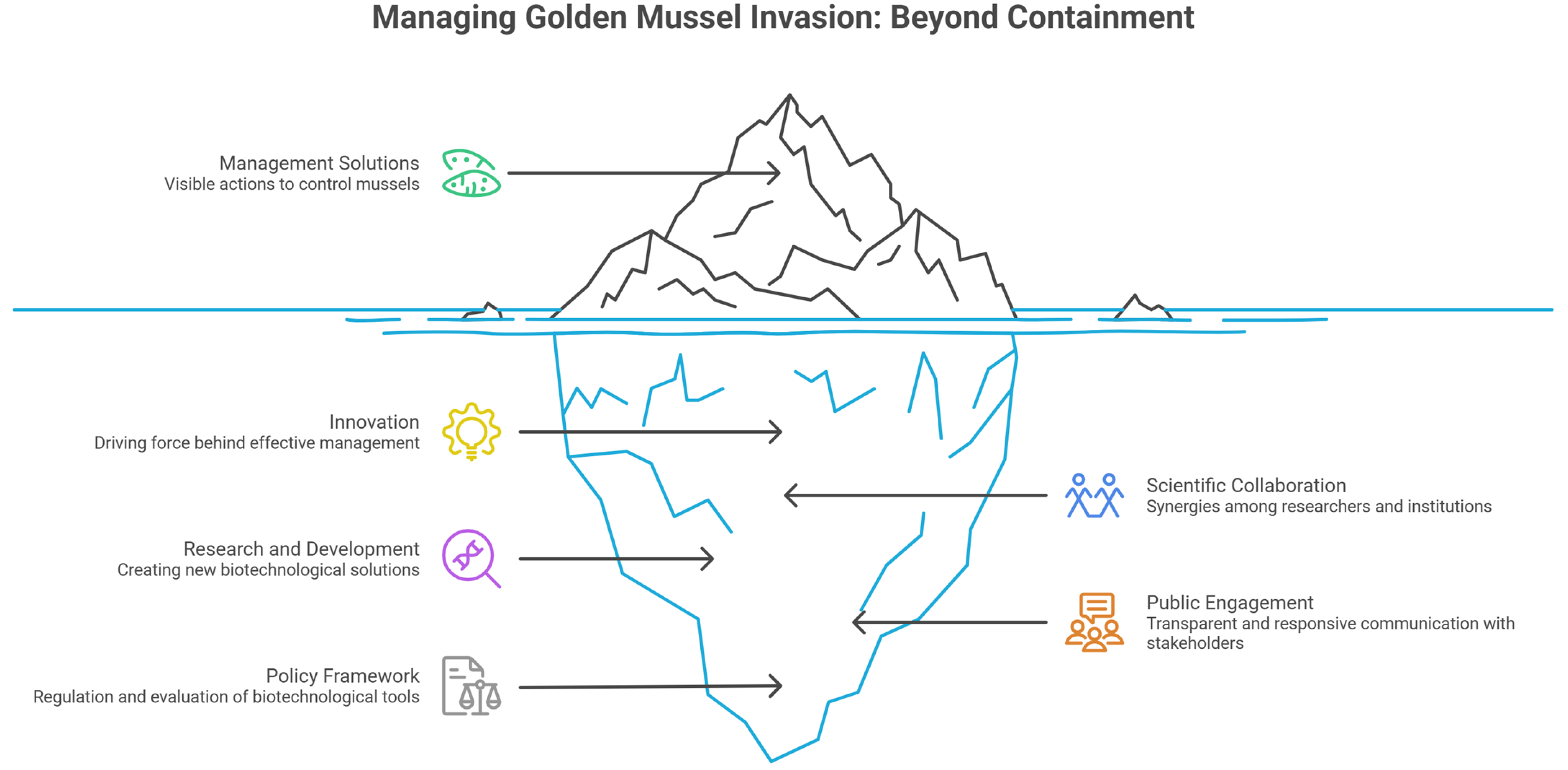
The golden mussel is here to stay in California and, very likely, across North America. There is no credible evidence that its populations will collapse or that the species will remain confined to California; accordingly, management must shift decisively from eradication thinking to long-term containment, prevention of new introductions, and suppression of secondary spread. Critical infrastructure must be equipped with proven technologies to prevent and control biofouling, and it must also be redesigned with redundancy systems that can withstand operational failures before they occur. Equally essential is sustained, transparent, direct, and responsive public engagement, with clear mechanisms for listening to public concerns and providing science-based feedback.
This is exactly why innovation must be placed at the heart of management. We need a framework that actively creates synergies among scientific collaboration, research and development, and public and stakeholder engagement (Figure 11). In my view, the strongest long-term strategy for managing invasive freshwater mussels in North America, beyond preventing their spread, lies in biotechnological innovation—especially gene silencing, gene drive, and disseminated neoplasia. These tools will give invasion managers far better options than today’s, but they will only be useful if we begin now to define how they should be regulated, evaluated, and deployed so that policy is ready the moment a solution becomes viable.

Supplementary Materials

The following supporting information can be downloaded at: https://www.mdpi.com/article/10.3390/d18050246/s1. Figure S1. Information about the golden mussel on the website of the California Department of Fish and Wildlife—https://wildlife.ca.gov/Conservation/Invasives/Species/Golden-Mussel; Figure S2. Information about the golden mussel on the website of the California Department of Water Resources—https://water.ca.gov/mussels; Figure S3. Videos about the golden mussel on the YouTube playlist of the California Department of Water Resources—https://youtube.com/playlist?list=PLeod6x87Tu6cILDddBTgWfoEToVFi8saU&si=LtvER6WDa4i-IpuW; Table S1: Elasmobranchii and Teleostei species preying on the golden mussel Limnoperna fortunei (Dunker, 1857), ranked by Order and Family, and highlighting some of the main observations described in several studies [229]; Table S2: List of news available online and published by news organizations, blogs, podcasts, and state agencies that focused on the introduction and invasion of the golden mussel Limnoperna fortunei (Dunker, 1857) in North America. This table compiles news published until 3 November 2025.

Funding

This research received no external funding.

Data Availability Statement

The original data presented in this article and code are openly available in GitHub at https://github.com/Pedro-Morais-76/Golden_Mussel_North_America.

Conflicts of Interest

The author declares no conflict of interest.

References

  1. Stankovic, S.; Jovic, M. Native and invasive mussels. In Mussels: Ecology, Life Habits and Control; Nova Science Publishers: New York, NY, USA, 2013; pp. 1–35. [Google Scholar]
  2. Boltovskoy, D.; Xu, M.; Nakano, D. Impacts of Limnoperna fortunei on man-made structures and control strategies: General overview. In Limnoperna fortunei: The Ecology, Distribution and Control of a Swiftly Spreading Invasive Fouling Mussel; Boltovskoy, D., Ed.; Springer International Publishing: Cham, Switzerland, 2015; pp. 375–394. [Google Scholar]
  3. Harrison, A.B.; Heinz, S.D.; Slack, W.T. The Costly Impact of Zebra and Quagga Mussels in United States Waterways; United States Army Corps of Engineers: Washington, DC, USA, 2021. [Google Scholar]
  4. Johnson, L.E.; Padilla, D.K. Geographic spread of exotic species: Ecological lessons and opportunities from the invasion of the zebra mussel Dreissena polymorpha. Biol. Conserv. 1996, 78, 23–33. [Google Scholar] [CrossRef]
  5. Strayer, D.L. Twenty years of zebra mussels: Lessons from the mollusk that made headlines. Front. Ecol. Environ. 2009, 7, 135–141. [Google Scholar] [CrossRef]
  6. Brown, E.G., Jr.; Laird, J.; Cowin, M.W. Management of the California State Water Project. In Bulletin 132; Resources DoW, Ed.; Department of Water Resources: Sacramento, CA, USA, 2013; p. 314. [Google Scholar]
  7. Shaw, B.; Campbell, T.; Radler, B.T. Testing emphasis message frames and metaphors on social media to engage boaters to learn about preventing the spread of zebra mussels. Environ. Manag. 2021, 68, 824–834. [Google Scholar] [CrossRef]
  8. Morningstar, C.R.; Kočovský, P.M.; Colvin, M.E.; Counihan, T.D.; Daniel, W.M.; Esselman, P.C.; Richter, C.A.; Sepulveda, A.; Waller, D.L. Zebra and Quagga Mussels in the United States—Dreissenid Mussel Research by the U.S. Geological Survey; U.S. Geological Survey: Reston, VA, USA, 2024.
  9. Xu, M. Distribution and spread of Limnoperna fortunei in China. In Limnoperna fortunei: The Ecology, Distribution and Control of a Swiftly Spreading Invasive Fouling Mussel; Boltovskoy, D., Ed.; Springer International Publishing: Cham, Switzerland, 2015; pp. 313–320. [Google Scholar]
  10. Boltovskoy, D.; Bordet, F.; Leites, V.; Cataldo, D. Multiannual trends (2004–2019) in the abundance of larvae of the invasive mussel Limnoperna fortunei and crustacean zooplankton in a large South American reservoir. Austral Ecol. 2021, 46, 1221–1235. [Google Scholar] [CrossRef]
  11. Ito, K. Colonization and spread of Limnoperna fortunei in Japan. In Limnoperna fortunei: The Ecology, Distribution and Control of a Swiftly Spreading Invasive Fouling Mussel; Boltovskoy, D., Ed.; Springer International Publishing: Cham, Switzerland, 2015; pp. 321–332. [Google Scholar]
  12. Ito, K. Distribution of an invasive alien mussel, Limnoperna fortunei, in the Naka River system, Ibaraki, Japan. Jpn. J. Conserv. Ecol. 2016, 21, 67–76. [Google Scholar]
  13. Ng, T.H.; Jeratthitikul, E.; Sutcharit, C.; Chhuoy, S.; Pin, K.; Pholyotha, A.; Siriwut, W.; Srisonchai, R.; Hogan, Z.S.; Ngor, P.B. Annotated checklist of freshwater molluscs from the largest freshwater lake in Southeast Asia. ZooKeys 2020, 958, 107–141. [Google Scholar] [CrossRef] [PubMed]
  14. Darrigran, G. Potential impact of filter-feeding invaders on temperate inland freshwater environments. Biol. Invasions 2002, 4, 145–156. [Google Scholar] [CrossRef]
  15. Oliveira, M.D.; Campos, M.C.S.; Paolucci, E.M.; Mansur, M.C.D.; Hamilton, S.K. Colonization and spread of Limnoperna fortunei in South America. In Limnoperna fortunei: The Ecology, Distribution and Control of a Swiftly Spreading Invasive Fouling Mussel; Boltovskoy, D., Ed.; Springer International Publishing: Cham, Switzerland, 2015; pp. 333–355. [Google Scholar]
  16. Boltovskoy, D.; Paolucci, E.; MacIsaac, H.J.; Zhan, A.; Xia, Z.; Correa, N. What we know and don’t know about the invasive golden mussel Limnoperna fortunei. Hydrobiologia 2025, 852, 1275–1322. [Google Scholar] [CrossRef]
  17. Al-Khafaji, K.K.; Al-Baghdadi, N.M.; Alwaeli, A.A.A.; Karim, R.M. The occurrence and density of some molluscs species in different areas of Basrah province, southern of Iraq and first record of the invasive golden mussel Limnoperna fortunei (Dunker, 1857). Braz. J. Biol. 2024, 84, e259855. [Google Scholar] [CrossRef]
  18. Ricciardi, A. Global range expansion of the Asian mussel Limnoperna fortunei (Mytilidae): Another fouling threat to freshwater systems. Biofouling 1998, 13, 97–106. [Google Scholar] [CrossRef]
  19. Karatayev, A.Y.; Boltovskoy, D.; Padilla, D.K.; Burlakova, L.E. The invasive bivalves Dreissena polymorpha and Limnoperna fortunei: Parallels, contrasts, potential spread and invasion impacts. J. Shellfish Res. 2007, 26, 205–213. [Google Scholar] [CrossRef]
  20. Newsom, G.; Crowfoot, W.; Nemeth, K.A. Management of the California State Water Project. In Bulletin 132; Resources DoW, Ed.; Department of Water Resources: Sacramento, CA, USA, 2024; p. 316. [Google Scholar]
  21. U.S. Department of the Interior, Bureau of Reclamation. Central Valley Project [Online]. Available online: https://www.usbr.gov/mp/cvp/ (accessed on 23 October 2025).
  22. California Department of Food and Agriculture. California Agricultural Production Statistics. [Online]. Available online: https://www.cdfa.ca.gov/statistics (accessed on 5 September 2025).
  23. Governor of California. California is Now the 4th Largest Economy in the World. [Online]. Available online: https://www.gov.ca.gov/2025/04/23/california-is-now-the-4th-largest-economy-in-the-world/ (accessed on 23 November 2025).
  24. Zhan, A.; Zhang, L.; Xia, Z.; Ni, P.; Xiong, W.; Chen, Y.; Haffner, G.D.; MacIsaac, H.J. Water diversions facilitate spread of non-native species. Biol. Invasions 2015, 17, 3073–3080. [Google Scholar] [CrossRef]
  25. de Amo, V.E.; Ernandes-Silva, J.; Moi, D.A.; Mormul, R.P. Hydrological connectivity drives the propagule pressure of Limnoperna fortunei (Dunker, 1857) in a tropical river–floodplain system. Hydrobiologia 2021, 848, 2043–2053. [Google Scholar] [CrossRef]
  26. Xia, Z.; Gu, J.; Wen, Y.; Cao, X.; Gao, Y.; Li, S.; Haffner, G.D.; MacIsaac, H.J.; Zhan, A. eDNA-based detection reveals invasion risks of a biofouling bivalve in the world’s largest water diversion project. Ecol. Appl. 2024, 34, e2826. [Google Scholar] [CrossRef]
  27. Guo, W.; Li, S.; Zhan, A. eDNA-based early detection illustrates rapid spread of the non-native golden mussel introduced into Beijing via water diversion. Animals 2024, 14, 399. [Google Scholar] [CrossRef]
  28. California Department of Fish and Wildlife. California’s Invaders: Golden Mussel. [Online]. Available online: https://wildlife.ca.gov/Conservation/Invasives/Species/Golden-Mussel (accessed on 12 April 2026).
  29. Encarnação, J.; Teodósio, M.A.; Morais, P. Citizen science and biological invasions: A review. Front. Environ. Sci. 2021, 8, 602980. [Google Scholar] [CrossRef]
  30. de Andrade, P.D.B.; Razzolini, E.; Baggio, R.A. I see golden mussel! They are everywhere! Environmental DNA supports widespread dissemination of Limnoperna fortunei in hydrographic basins in the Paraná state, Brazil. Braz. Arch. Biol. Technol. 2021, 64, e21210149. [Google Scholar] [CrossRef]
  31. Ribolli, J.; Cassol, S.; Silva, S.H.; Zaniboni Filho, E.; Zacchi, F.L.; Mattos, J.J.; Cardoso, G.F.M.; Nuñer, A.P.D.O. Optimized and validated protocol to the detection of the invasive bivalve Limnoperna fortunei from eDNA plankton samples. Acta Limnol. Bras. 2021, 33, e201. [Google Scholar] [CrossRef]
  32. Xia, Z.; Johansson, M.L.; Gao, Y.; Zhang, L.; Haffner, G.D.; MacIsaac, H.J.; Zhan, A. Conventional versus real-time quantitative PCR for rare species detection. Ecol. Evol. 2018, 8, 11799–11807. [Google Scholar] [CrossRef] [PubMed]
  33. Berg, D.J.; Garton, D.W.; MacIsaac, H.J.; Panov, V.E.; Telesh, I.V. Changes in genetic structure of North American Bythotrephes populations following invasion from Lake Ladoga, Russia. Freshw. Biol. 2002, 47, 275–282. [Google Scholar] [CrossRef]
  34. Callaway, R.M.; Miao, S.; Guo, Q. Are trans-Pacific invasions the new wave? Biol. Invasions 2006, 8, 1435–1437. [Google Scholar] [CrossRef][Green Version]
  35. Roman, J. Diluting the founder effect: Cryptic invasions expand a marine invader’s range. Proc. R. Soc. B 2006, 273, 2453–2459. [Google Scholar] [CrossRef]
  36. Morais, P.; Teodósio, M.A. The transatlantic introduction of weakfish Cynoscion regalis (Bloch & Schneider, 1801) (Sciaenidae, Pisces) into Europe. BioInvasions Rec. 2016, 5, 259–265. [Google Scholar] [CrossRef]
  37. Sieracki, J.L.; Bossenbroek, J.M.; Chadderton, W.L. A spatial modeling approach to predicting the secondary spread of invasive species due to ballast water discharge. PLoS ONE 2014, 9, e114217. [Google Scholar] [CrossRef]
  38. Pessotto, M.A.; Nogueira, M.G. More than two decades after the introduction of Limnoperna fortunei (Dunker, 1857) in La Plata Basin. Braz. J. Biol. 2018, 78, 773–784. [Google Scholar] [CrossRef]
  39. Abelando, M.; Bobinac, M.; Fiore, J.C. Assessment of the efficiency of controls to prevent biologic invasions at the San Lorenzo Port, Argentina. Environ. Monit. Assess. 2020, 192, 420. [Google Scholar] [CrossRef] [PubMed]
  40. de Lucía, M.; Darrigran, G.; Gutiérrez Gregoric, D.E. The most problematic freshwater invasive species in South America, Limnoperna fortunei (Dunker, 1857), and its status after 30 years of invasion. Aquat. Sci. 2023, 85, 5. [Google Scholar] [CrossRef]
  41. Xu, M.; Darrigran, G.; Wang, Z.; Zhao, N.; Lin, C.C.; Pan, B. Experimental study on control of Limnoperna fortunei biofouling in water transfer tunnels. J. Hydro-Environ. Res. 2015, 9, 248–258. [Google Scholar] [CrossRef]
  42. Rosa, D.; Assis, P. Limnoperna fortunei no Brasil: Histórico de dispersão, biologia populacional, impactos e controle. In Limnoperna fortunei: Histórico de Dispersão, Biologia Populacional, Impactos e Controle; Carmino Hayashi: Ciências Ambientais: Recursos Hídricos: Ribeirão Preto, SP, Brazil, 2020; pp. 219–235. [Google Scholar]
  43. Otani, M.; Willan, R. Osaka Bay in Japan as a model for investigating the factors controlling temporal and spatial persistence among introduced marine and brackish species in a heavily industrialized harbor. Sess. Org. 2017, 34, 28–37. [Google Scholar] [CrossRef]
  44. Oliveira, M.D.; Hamilton, S.K.; Calheiros, D.F.; Jacobi, C.M. Oxygen depletion events control the invasive golden mussel (Limnoperna fortunei) in a tropical floodplain. Wetlands 2010, 30, 705–716. [Google Scholar] [CrossRef]
  45. Zhang, H.; Rutherford, E.S.; Mason, D.M.; Wittmann, M.E.; Lodge, D.M.; Zhu, X.; Johnson, T.B.; Tucker, A. Modeling potential impacts of three benthic invasive species on the Lake Erie food web. Biol. Invasions 2019, 21, 1697–1719. [Google Scholar] [CrossRef]
  46. González-Bergonzoni, I.; Silva, I.; Teixeira de Mello, F.; D’Anatro, A.; Boccardi, L.; Stebniki, S.; Brugnoli, E.; Tesitore, G.; Vidal, N.; Naya, D.E. Evaluating the role of predatory fish controlling the invasion of the Asian golden mussel Limnoperna fortunei in a subtropical river. J. Appl. Ecol. 2020, 57, 717–728. [Google Scholar] [CrossRef]
  47. Uliano-Silva, M.; Américo, J.A.; Brindeiro, R.; Dondero, F.; Prosdocimi, F.; Rebelo, M.F. The genetics of the golden mussel (Limnoperna fortunei): Are genes related to invasiveness? In Limnoperna fortunei: The Ecology, Distribution and Control of a Swiftly Spreading Invasive Fouling Mussel; Boltovskoy, D., Ed.; Springer International Publishing: Cham, Switzerland, 2015; pp. 67–76. [Google Scholar]
  48. Zhang, S.R.; Lu, X.X.; Higgitt, D.L.; Chen, C.T.A.; Sun, H.G.; Han, J.T. Water chemistry of the Zhujiang (Pearl River): Natural processes and anthropogenic influences. J. Geophys. Res. Earth Surf. 2007, 112, F01011. [Google Scholar] [CrossRef]
  49. Oliveira, M.D.; Hamilton, S.K.; Jacobi, C.M. Forecasting the expansion of the invasive golden mussel Limnoperna fortunei in Brazilian and North American rivers based on its occurrence in the Paraguay River and Pantanal wetland of Brazil. Aquat. Invasions 2010, 5, 59–73. [Google Scholar] [CrossRef]
  50. Deaton, L.E.; Derby, J.G.; Subhedar, N.; Greenberg, M.J. Osmoregulation and salinity tolerance in two species of bivalve mollusc: Limnoperna fortunei and Mytilopsis leucophaeta. J. Exp. Mar. Biol. Ecol. 1989, 133, 67–79. [Google Scholar] [CrossRef]
  51. Angonesi, L.G.; Da Rosa, N.G.; Bemvenuti, C.E. Tolerance to salinities shocks of the invasive mussel Limnoperna fortunei under experimental conditions. Iheringia Ser. Zool. 2008, 98, 66–69. [Google Scholar] [CrossRef]
  52. Sylvester, F.; Cataldo, D.H.; Notaro, C.; Boltovskoy, D. Fluctuating salinity improves survival of the invasive freshwater golden mussel at high salinity: Implications for the introduction of aquatic species through estuarine ports. Biol. Invasions 2013, 15, 1355–1366. [Google Scholar] [CrossRef]
  53. Cataldo, D.H.; Boltovskoy, D. Yearly reproductive activity of Limnoperna fortunei (Bivalvia) as inferred from the occurrence of its larvae in the plankton of the lower Paraná River and the Río de la Plata estuary (Argentina). Aquat. Ecol. 2000, 34, 307–317. [Google Scholar] [CrossRef]
  54. Boltovskoy, D.; Morton, B.; Correa, N.; Cataldo, D.; Damborenea, C.; Penchaszadeh, P.E.; Sylvester, F. Reproductive output and seasonality of Limnoperna fortunei. In Limnoperna fortunei: The Ecology, Distribution and Control of a Swiftly Spreading Invasive Fouling Mussel; Boltovskoy, D., Ed.; Springer International Publishing: Cham, Switzerland, 2015; pp. 77–103. [Google Scholar]
  55. Giglio, M.L.; Dreher Mansur, M.C.; Damborenea, C.; Penchaszadeh, P.E.; Darrigran, G. Reproductive pattern of the aggressive invader Limnoperna fortunei (Bivalvia, Mytilidae) in South America. Invertebr. Reprod. Dev. 2016, 60, 175–184. [Google Scholar] [CrossRef]
  56. Nakano, D.; Kobayashi, T.; Sakaguchi, I. Reproduction and larval developmental stages of the freshwater mussel Limnoperna fortunei at three sites in a temperate reservoir. Invertebr. Reprod. Dev. 2017, 61, 128–135. [Google Scholar] [CrossRef]
  57. Wang, C.; Xu, M.; Zhang, J.; Zhou, X. High-latitude invasion and environmental adaptability of the freshwater mussel Limnoperna fortunei in Beijing, China. Ecol. Appl. 2024, 34, e2887. [Google Scholar] [CrossRef]
  58. Nakano, D.; Kobayashi, T.; Sakaguchi, I. Population dynamics and growth of Limnoperna fortunei. In Limnoperna fortunei: The Ecology, Distribution and Control of a Swiftly Spreading Invasive Fouling Mussel; Boltovskoy, D., Ed.; Springer International Publishing: Cham, Switzerland, 2015; pp. 105–118. [Google Scholar]
  59. Iwasaki, K. Behavior and taxis of young and adult Limnoperna fortunei. In Limnoperna fortunei: The Ecology, Distribution and Control of a Swiftly Spreading Invasive Fouling Mussel; Boltovskoy, D., Ed.; Springer International Publishing: Cham, Switzerland, 2015; pp. 249–260. [Google Scholar]
  60. de Rezende Ayroza, D.M.M.; de Melo, T.J.; Faria-Pereira, L.P.; Petesse, M.L.; Rebelo, M.D.F.; do Carmo, C.F.; Cataldo, D.H. Limnoperna fortunei colonization and macrofouling on net cages in a subtropical reservoir (Brazil). Aquac. Res. 2021, 52, 5472–5482. [Google Scholar] [CrossRef]
  61. Oliveira, M.D.; Calheiros, D.F.; Jacobi, C.M.; Hamilton, S.K. Abiotic factors controlling the establishment and abundance of the invasive golden mussel Limnoperna fortunei. Biol. Invasions 2011, 13, 717–729. [Google Scholar] [CrossRef]
  62. Liu, W.; Xu, M.; Zhang, J.; Zhang, T. Survival and attachment of biofouling freshwater mussel (Limnoperna fortunei) to environmental conditions: Potential implications in its invasion, infection and biofouling control. Limnology 2020, 21, 245–255. [Google Scholar] [CrossRef]
  63. Xia, Z.; Cao, X.; Hoxha, T.; Zhan, A.; Haffner, G.D.; MacIsaac, H.J. Functional response and size-selective clearance of suspended matter by an invasive mussel. Sci. Total Environ. 2020, 711, 134679. [Google Scholar] [CrossRef]
  64. Perepelizin, P.V.; Boltovskoy, D. Control of Limnoperna fortunei fouling by oxygen deprivation. In Limnoperna fortunei: The Ecology, Distribution and Control of a Swiftly Spreading Invasive Fouling Mussel; Boltovskoy, D., Ed.; Springer International Publishing: Cham, Switzerland, 2015; pp. 451–454. [Google Scholar]
  65. Pestana, D.; Ostrensky, A.; Pereira Boeger, W.A.; Pie, M.R. The effect of temperature and body size on filtration rates of Limnoperna fortunei (Bivalvia, Mytilidae) under laboratory conditions. Braz. Arch. Biol. Technol. 2009, 52, 135–144. [Google Scholar] [CrossRef]
  66. Frau, D. Grazing impacts on phytoplankton in South American water ecosystems: A synthesis. Hydrobiologia 2022, 849, 833–860. [Google Scholar] [CrossRef]
  67. Zhang, J.; Xu, M.; Yang, Y. Assessing the effects of environmental factors on filtration rate of golden mussel (Limnoperna fortunei). Ecol. Indic. 2024, 158, 111544. [Google Scholar] [CrossRef]
  68. Battey, M.; Perry, S. Interagency Ecological Program: Discrete water quality monitoring in the Sacramento-San Joaquin Bay-Delta, collected by the Environmental Monitoring Program, 1975–2023. In Environmental Data Initiative, 12th ed.; Resources DoW, Ed.; Environmental Data Initiative: Longmont, CO, USA, 2024. [Google Scholar]
  69. Montalto, L.; Drago, I.E. Tolerance to desiccation of an invasive mussel, Limnoperna fortunei (Dunker, 1857) (Bivalvia, Mytilidae), under experimental conditions. Hydrobiologia 2003, 498, 161–167. [Google Scholar] [CrossRef]
  70. de Andrade, J.T.M.; Cordeiro, N.I.S.; Montresor, L.C.; da Luz, D.M.R.; Viana, E.M.D.F.; Martinez, C.B.; Vidigal, T.H.D.A. Tolerance of Limnoperna fortunei (Dunker, 1857) (Bivalvia: Mytilidae) to aerial exposure at different temperatures. Hydrobiologia 2021, 848, 2993–3001. [Google Scholar] [CrossRef]
  71. Cordeiro, N.I.S.; Andrade, J.T.M.; Montresor, L.C.; Luz, D.M.; Martinez, C.B.; Darrigran, G.; Pinheiro, J.; Vidigal, T.H. Effect of starvation and subsequent feeding on glycogen concentration, behavior and mortality in the golden mussel Limnoperna fortunei (Dunker, 1857) (Bivalvia: Mytilidae). J. Limnol. 2016, 75, 618–625. [Google Scholar] [CrossRef]
  72. Duarte, M.R.; Otegui, A.C.P.; Da Costa Fernandes, F.; Silva, E.P. High levels of genetic and morphological variability in invasive Limnoperna fortunei (Dunker, 1857) populations in South America. Malacologia 2018, 62, 171–186. [Google Scholar] [CrossRef]
  73. Furlan-Murari, P.J.; Ruas, C.D.F.; Ruas, E.A.; Benício, L.M.; Urrea-Rojas, A.M.; Poveda-Parra, A.R.; Murari, E.; Lima, E.C.S.D.; Souza, F.P.D.; Lopera-Barrero, N.M. Structure and genetic variability of golden mussel (Limnoperna fortunei) populations from Brazilian reservoirs. Ecol. Evol. 2019, 9, 2706–2714. [Google Scholar] [CrossRef]
  74. Ludwig, S.; Sari, E.H.R.; Paixão, H.; Montresor, L.C.; Araújo, J.; Brito, C.F.; Darrigran, G.; Pepato, A.R.; Vidigal, T.H.; Martinez, C.B. High connectivity and migration potentiate the invasion of Limnoperna fortunei (Mollusca: Mytilidae) in South America. Hydrobiologia 2021, 848, 499–513. [Google Scholar] [CrossRef]
  75. Ghabooli, S.; Zhan, A.; Sardiña, P.; Paolucci, E.; Sylvester, F.; Perepelizin, P.V.; Briski, E.; Cristescu, M.E.; MacIsaac, H.J. Genetic diversity in introduced golden mussel populations corresponds to vector activity. PLoS ONE 2013, 8, e59328. [Google Scholar] [CrossRef][Green Version]
  76. Figueira, R.; Azevedo, R.Z.S.; Dos Santos, I.P.; Carlos, J.; Silva, R.; Costa, A.R.C.; Pastore, D.H.; Dias, C.M.; Barbosa, C.H.X.B.; Fortunato, H. Hydrodynamics and populational density model of Limnoperna fortunei in the Pereira Barreto artificial channel, Brazil. In Proceedings of the IAHR World Congress; International Association for Hydro-Environment Engineering and Research: Delft, The Netherlands, 2022; pp. 3756–3763. [Google Scholar]
  77. Souza, T.R.C.D.; de Andrade, J.T.M.; Serrano, R.O.P.; Vidigal, T.H.D.A.; Viana, E.M.D.F.; Bastos, A.S.; Martinez, C.B. Energy efficiency analysis of pumping systems impacted by the golden mussel: A case study in the Brazilian Amazon. Energies 2023, 16, 1858. [Google Scholar] [CrossRef]
  78. Jafary, A. San Joaquin County Tackles Golden Mussel Invasion with New Funding. Available online: https://www.kcra.com/article/san-joaquin-county-golden-mussel-task-force/69183673 (accessed on 20 February 2026).
  79. California State Legislature. Assembly Bill 149, 2025–2026 Regular Session. [Online]. Available online: https://legiscan.com/CA/text/AB149/id/3268234 (accessed on 20 February 2026).
  80. Pejchar, L.; Mooney, H. Invasive species, ecosystem services and human well-being. Trends Ecol. Evol. 2009, 24, 497–504. [Google Scholar] [CrossRef] [PubMed]
  81. Uba, K.I.N.; Sienes, R.K.A.; Cabanilla, H.T.; Gacus, P.G.Q.; Flores, M.H.; Gonzales, R.C.; Degoma, J.N.L.; Bucay, D.M. Benefits and burdens: Perceiving the impact of non-indigenous black mussel (Mytella strigata) on ecosystem services and human well-being in Panguil Bay, Philippines. Biol. Invasions 2024, 27, 14. [Google Scholar] [CrossRef]
  82. Paolucci, E.M.; Ron, L.; Thuesen, E.V. Metabolic response to increasing environmental temperature in the invasive mussel Limnoperna fortunei. Austral Ecol. 2022, 47, 818–827. [Google Scholar] [CrossRef]
  83. Xia, Z.; Barker, J.R.; Zhan, A.; Haffner, G.D.; MacIsaac, H.J. Golden mussel (Limnoperna fortunei) survival during winter at the northern invasion front implies a potential high-latitude distribution. Divers. Distrib. 2021, 27, 1422–1434. [Google Scholar] [CrossRef]
  84. Wang, H.; Xia, Z.; Li, S.; MacIsaac, H.J.; Zhan, A. What’s coming eventually comes: A follow-up on an invader’s spread by the world’s largest water diversion in China. Biol. Invasions 2023, 25, 1–5. [Google Scholar] [CrossRef]
  85. Mackie, G.L.; Brinsmead, J.K. A risk assessment of the golden mussel, Limnoperna fortunei (Dunker, 1857) for Ontario, Canada. Manag. Biol. Invasions 2017, 8, 383–402. [Google Scholar] [CrossRef]
  86. Azevedo, R.Z.S.; Barbosa, C.H.X.B.; Santos, I.P.; Silva, J.C.; Pastore, D.H.; Costa, A.R.; Dias, C.M.; Figueira, R.M.; Fortunato, H.F. Numerical solution of a 3D system of transient and nonlinear PDEs arising from larvae-algae-mussels interactions. In Lecture Notes in Computer Science (Including Subseries Lecture Notes in Artificial Intelligence and Lecture Notes in Bioinformatics); Gervasi, O., Murgante, B., Misra, S., Rocha, A.M.A.C., Garau, C., Eds.; Springer Science and Business Media Deutschland GmbH: Cham, Switzerland, 2022; Volume 13350, pp. 684–697. [Google Scholar]
  87. Azevedo, R.Z.S.; Barbosa, C.H.X.B.; Santos, I.P.; Silva, J.C.; Pastore, D.H.; Costa, A.R.; Dias, C.M.; Figueira, R.M.; Fortunato, H.F. A numerical scheme for solving a mathematical model derived from larvae-algae-mussel interactions. In Lecture Notes in Computer Science (Including Subseries Lecture Notes in Artificial Intelligence and Lecture Notes in Bioinformatics); Gervasi, O., Murgante, B., Scorza, F., Rocha, A.M.A.C., Garau, C., Karaca, Y., Torre, C.M., Eds.; Springer Science and Business Media Deutschland GmbH: Cham, Switzerland, 2023; Volume 13935, pp. 163–172. [Google Scholar]
  88. Barbosa, C.H.; Dias, C.M.; Pastore, D.H.; Silva, J.C.; Costa, A.R.; Santos, I.P.; Azevedo, R.Z.; Figueira, R.M.; Fortunato, H.F. Analysis of a mathematical model for golden mussels infestation. Ecol. Model. 2023, 486, 110534. [Google Scholar] [CrossRef]
  89. Petsch, D.K.; Ernandes-Silva, J.; Pinha, G.D. New records of larvae and adults of the invasive golden mussel (Limnoperna fortunei Dunker, 1857) in the Ivaí River (Paraná, Brazil). Rev. Biol. Neotrop. J. Neotrop. Biol. 2021, 18, 31–36. [Google Scholar]
  90. Costa, E.F.S.; Encarnação, J.; Teodósio, M.A.; Morais, P. Aquatic species show asymmetric distribution range shifts in native and non-native areas. Front. Mar. Sci. 2023, 10, 1158206. [Google Scholar] [CrossRef]
  91. Tokumon, R.; Boltovskoy, D.; Cataldo, D. Effects of the invasive freshwater mussel Limnoperna fortunei on sediment properties and accumulation rates. J. Geophys. Res. Biogeosci. 2018, 123, 2002–2017. [Google Scholar] [CrossRef]
  92. Sardiña, P.; Cataldo, D.H.; Boltovskoy, D. The effects of the invasive mussel, Limnoperna fortunei, on associated fauna in South American freshwaters: Importance of physical structure and food supply. Fundam. Appl. Limnol. 2008, 173, 135–144. [Google Scholar] [CrossRef]
  93. Spaccesi, F.G.; Rodrigues Capítulo, A. Benthic communities on hard substrates covered by Limnoperna fortunei Dunker (Bivalvia, Mytilidae) at an estuarine beach (Río de la Plata, Argentina). J. Limnol. 2012, 71, 144–153. [Google Scholar] [CrossRef]
  94. Correa, N.; Sardiña, P.; Perepelizin, P.V.; Boltovsko, D. Limnoperna fortunei colonies: Structure, distribution and dynamics. In Limnoperna fortunei: The Ecology, Distribution and Control of a Swiftly Spreading Invasive Fouling Mussel; Boltovskoy, D., Ed.; Springer International Publishing: Cham, Switzerland, 2015; pp. 119–143. [Google Scholar]
  95. Linares, M.S.; Callisto, M.; Marques, J.C. Invasive bivalves increase benthic communities complexity in neotropical reservoirs. Ecol. Indic. 2017, 75, 279–285. [Google Scholar] [CrossRef]
  96. Duchini, D.; Boltovskoy, D.; Sylvester, F. The invasive freshwater bivalve Limnoperna fortunei in South America: Multiannual changes in its predation and effects on associated benthic invertebrates. Hydrobiologia 2018, 817, 431–446. [Google Scholar] [CrossRef]
  97. Capurro, L.; Pereira, J.; Castro, M.; Ferrer, C.; Fabián, D.; Muniz, P.; Brugnoli, E. Environmental factors determining the distribution of Limnoperna fortunei and its impact on benthic communities in the reservoirs of the Río Negro (Uruguay). Biol. Invasions 2025, 27, 19. [Google Scholar] [CrossRef]
  98. Burlakova, L.E.; Karatayev, A.Y.; Karatayev, V.A. Invasive mussels induce community changes by increasing habitat complexity. Hydrobiologia 2012, 685, 121–134. [Google Scholar] [CrossRef]
  99. Sylvester, F.; Boltovskoy, D.; Cataldo, D. The invasive bivalve Limnoperna fortunei enhances benthic invertebrate densities in South American floodplain rivers. Hydrobiologia 2007, 589, 15–27. [Google Scholar] [CrossRef]
  100. Sylvester, F.; Sardiña, P. Relationships of Limnoperna fortunei with benthic animals. In Limnoperna fortunei: The Ecology, Distribution and Control of a Swiftly Spreading Invasive Fouling Mussel; Boltovskoy, D., Ed.; Springer International Publishing: Cham, Switzerland, 2015; pp. 191–210. [Google Scholar]
  101. Zhang, Y.; Wen, S.-K.; Zhang, Q.-J.; Zhao, Z.-H.; Wang, X.-L.; Duan, X.-J.; Xiang, X.-L.; Cai, Y.-J. Macrozoobenthos community structure and biological evaluation of water quality in littoral zone of middle and lower reaches of Yangtze River. Resour. Environ. Yangtze Basin 2023, 32, 1417–1432. [Google Scholar]
  102. Darrigran, G.; Stella Maris, M.; Gullo, B.; Armendariz, L. Macroinvertebrates associated with Limnoperna fortunei (Dunker, 1857) (Bivalvia, Mytilidae) in Río de la Plata, Argentina. Hydrobiologia 1998, 367, 223–230. [Google Scholar] [CrossRef]
  103. Silva, I.; Naya, D.; Teixeira de Mello, F.; D’Anatro, A.; Tesitore, G.; Clavijo, C.; González-Bergonzoni, I. Fish vs. Aliens: Predatory fish regulate populations of Limnoperna fortunei mitigating impacts on native macroinvertebrate communities. Hydrobiologia 2021, 848, 2281–2301. [Google Scholar] [CrossRef]
  104. Gazulha, V.; Mansur, M.C.D.; Cybis, L.F.; Azevedo, S. Feeding behavior of the invasive bivalve Limnoperna fortunei (Dunker, 1857) under exposure to toxic cyanobacteria Microcystis aeruginosa. Braz. J. Biol. 2012, 72, 41–49. [Google Scholar] [CrossRef]
  105. Silva, F.A.E.; Giani, A. Population dynamic of bloom-forming Microcystis aeruginosa in the presence of the invasive bivalve Limnoperna fortunei. Harmful Algae 2018, 73, 148–156. [Google Scholar] [CrossRef]
  106. Cataldo, D.H.; Vinocur, A.; O’Farrell, I.; Paolucci, E.; Leites, V.; Boltovskoy, D. The introduced bivalve Limnoperna fortunei boosts Microcystis growth in Salto Grande reservoir (Argentina): Evidence from mesocosm experiments. Hydrobiologia 2011, 680, 25–38. [Google Scholar] [CrossRef]
  107. Gazulha, V.; Mansur, M.C.D.; Cybis, L.F.; Azevedo, S. Grazing impacts of the invasive bivalve Limnoperna fortunei (Dunker, 1857) on single-celled, colonial and filamentous cyanobacteria. Braz. J. Biol. 2012, 72, 33–39. [Google Scholar] [CrossRef][Green Version]
  108. Boltovskoy, D.; Correa, N.; Bordet, F.; Leites, V.; Cataldo, D. Toxic Microcystis (cyanobacteria) inhibit recruitment of the bloom-enhancing invasive bivalve Limnoperna fortunei. Freshw. Biol. 2013, 58, 1968–1981. [Google Scholar] [CrossRef]
  109. Preece, E.P.; Otten, T.G.; Cooke, J. Use of multiple sampling techniques for cyanobacteria and cyanotoxin monitoring in the Sacramento-San Joaquin Delta under different hydrologic regimes. Mar. Pollut. Bull. 2024, 205, 116585. [Google Scholar] [CrossRef] [PubMed]
  110. de Ávila-Simas, S.; Reynalte-Tataje, D.A.; Zaniboni-Filho, E. Fish predators of the golden mussel Limnoperna fortunei in different environments in a South American subtropical river. Bol. Inst. Pesca 2019, 45, e484. [Google Scholar] [CrossRef]
  111. Rosa, D.M.; de Sene, A.M.; Moreira, M.Z.; Pompeu, P.S. Non-native prey species supporting fish assemblage biomass in a neotropical reservoir. Biol. Invasions 2021, 23, 2355–2370. [Google Scholar] [CrossRef]
  112. Díaz-Angeriz, D.A.; Loureiro, M.; González-Bergonzoni, I. Diet and trophic niche of common carp Cyprinus carpio in the Lower Santa Lucía River, Uruguay. Pan Am. J. Aquat. Sci. 2022, 17, 152–160. [Google Scholar]
  113. Zhang, R.; Cui, B.; Sun, Z.; Zhou, W.; Ren, P.; Du, Z.; He, N.; Lu, J. Feeding ecology of Limnoperna fortunei in southern China: Insights from stable isotopes and fatty-acid biomarkers. J. Freshw. Ecol. 2017, 32, 761–772. [Google Scholar]
  114. Dias, E.; Morais, P.; Antunes, C.; Hoffman, J.C. Linking terrestrial and benthic estuarine ecosystems: Organic matter sources supporting the high secondary production of a non-indigenous bivalve. Biol. Invasions 2014, 16, 2163–2179. [Google Scholar] [CrossRef]
  115. Dias, E.; Morais, P.; Antunes, C.; Hoffman, J.C. The benthic food web connects the estuarine habitat mosaic to adjacent ecosystems. Food Webs 2023, 35, e00282. [Google Scholar] [CrossRef]
  116. De Stefano, L.G.; Gattás, F.; Vinocur, A.; Cristos, D.; Rojas, D.; Cataldo, D.; Pizarro, H. Comparative impact of two glyphosate-based formulations in interaction with Limnoperna fortunei on freshwater phytoplankton. Ecol. Indic. 2018, 85, 575–584. [Google Scholar] [CrossRef]
  117. Gattás, F.; Espinosa, M.; Babay, P.; Pizarro, H.; Cataldo, D. Invasive species versus pollutants: Potential of Limnoperna fortunei to degrade glyphosate-based commercial formulations. Ecotoxicol. Environ. Saf. 2020, 201, 110794. [Google Scholar] [CrossRef]
  118. Rosa, D.M.; Monteiro, A.B.; Faria, L.D.B.; Pompeu, P.S. The influence of non-native invertebrate species in the food web structure of two neotropical reservoirs. Aquat. Invasions 2023, 18, 277–293. [Google Scholar] [CrossRef]
  119. Godoy, A.C.; Corrêia, A.F.; Rodrigues, R.B.; Boscolo, W.R.; Bittencourt, F.; Nervis, J.A.L.; Feiden, A. Three native species as possible control for Limnoperna fortunei in net cage farming in the Itaipu reservoir. Water Air Soil Pollut. 2018, 229, 241. [Google Scholar]
  120. Paolucci, E.M.; Leites, V.; Cataldo, D.H.; Boltovskoy, D. Veligers of the invasive bivalve Limnoperna fortunei in the diet of indigenous fish larvae in a eutrophic subtropical reservoir. Austral Ecol. 2017, 42, 759–771. [Google Scholar] [CrossRef]
  121. Paolucci, E.M.; Burlakova, L.E.; Yarza, N.; Correa, N.; Boltovskoy, D.; Karatayev, A.Y. Planktonic larvae of the invasive bivalves Dreissena spp. and Limnoperna fortunei: Review of their effects on freshwater communities. Hydrobiologia 2024, 852, 2313–2348. [Google Scholar] [CrossRef]
  122. Paolucci, E.M.; Almada, P.; Cataldo, D.H.; Boltovskoy, D. Native fish larvae take advantage of introduced mussel larvae: Field evidence of feeding preferences on veligers of the introduced freshwater bivalve Limnoperna fortunei. Hydrobiologia 2015, 745, 211–224. [Google Scholar]
  123. Haag, W.R. North American Freshwater Mussels: Natural History, Ecology, and Conservation; Cambridge University Press: Cambridge, UK, 2012. [Google Scholar]
  124. Howard, J.K.; Furnish, J.L.; Box, J.B.; Jepsen, S. The decline of native freshwater mussels (Bivalvia: Unionoida) in California as determined from historical and current surveys. Calif. Fish Game 2015, 101, 8–23. [Google Scholar]
  125. Haag, W.R.; Berg, D.J.; Garton, D.W.; Farris, J.L. Reduced survival and fitness in native bivalves in response to fouling by the introduced zebra mussel (Dreissena polymorpha) in western Lake Erie. Can. J. Fish. Aquat. Sci. 1993, 50, 13–19. [Google Scholar] [CrossRef]
  126. Martel, A.L.; Pathy, D.A.; Madill, J.B.; Renaud, C.B.; Dean, S.L.; Kerr, S.J. Decline and regional extirpation of freshwater mussels (Unionidae) in a small river system invaded by Dreissena polymorpha: The Rideau River, 1993–2000. Can. J. Zool. 2001, 79, 2181–2191. [Google Scholar]
  127. Sousa, R.; Pilotto, F.; Aldridge, D.C. Fouling of European freshwater bivalves (Unionidae) by the invasive zebra mussel (Dreissena polymorpha). Freshw. Biol. 2011, 56, 867–876. [Google Scholar]
  128. Wells, E. Interagency Ecological Program. In Interagency Ecological Program: Benthic Invertebrate Monitoring in the Sacramento-San Joaquin Bay-Delta, Collected by the Environmental Monitoring Program, 1975–2024, 6th ed.; Environmental Data Initiative: Longmont, CO, USA, 2025. [Google Scholar]
  129. Torchin, M.E.; Lafferty, K.D.; Dobson, A.P.; McKenzie, V.J.; Kuris, A.M. Introduced species and their missing parasites. Nature 2003, 421, 628–630. [Google Scholar] [CrossRef] [PubMed]
  130. Colautti, R.I.; Ricciardi, A.; Grigorovich, I.A.; MacIsaac, H.J. Is invasion success explained by the enemy release hypothesis? Ecol. Lett. 2004, 7, 721–733. [Google Scholar] [CrossRef]
  131. Heger, T.; Jeschke, J. Enemy release hypothesis. In CABI Compendium; CABI: Wallingford, UK, 2018; pp. 92–102. [Google Scholar]
  132. Zeng, K.; Schembri, J.; Slavich, E.; Moles, A.T. How strong is enemy release? A systematic compilation across taxa and approaches. Ecology 2026, 107, e70276. [Google Scholar] [CrossRef]
  133. Urabe, M.; Ogawa, K.; Nakatsugawa, T.; Nakai, K.; Tanaka, M.; Wang, G. Morphological description of two bucephalid trematodes collected from freshwater fishes in the Uji River, Kyoto, Japan. Parasitol. Int. 2007, 56, 269–272. [Google Scholar] [CrossRef] [PubMed]
  134. Baba, T.; Urabe, M. Parasites of Limnoperna fortunei. In Limnoperna fortunei: The Ecology, Distribution and Control of a Swiftly Spreading Invasive Fouling Mussel; Boltovskoy, D., Ed.; Springer International Publishing: Cham, Switzerland, 2015; pp. 55–66. [Google Scholar]
  135. Ito, K.; Inoue, A.; Kimura, T. The effect of tube trap structure on sampling efficacy and accuracy for golden mussel, Limnoperna fortunei. Plankton Benthos Res. 2018, 13, 104–115. [Google Scholar] [CrossRef]
  136. Ostrensky, A.; Leite, R.V.V.; da Silva Bertão, A.P.; Stica, P.V.; Horodesky, A.; Mädder Netto, O.S.; Pie, M.R.; Pestana, D.; Zanin, T.L.; Pont, G.D. Assessing the bioinvasion of the golden mussel (Limnoperna fortunei) through different watersheds in South Brazil: A comparison between quali-quantitative microscopic and molecular techniques. Biol. Invasions 2025, 27, 16. [Google Scholar] [CrossRef]
  137. Fang, X.; Li, H.; Zhang, S.; Zhang, J.; Wang, C.; Wang, X.; Ma, Z.; Jia, H. Integration of ROV and vision-based underwater inspection for Limnoperna fortunei in water conveyance structure. Eng. Appl. Artif. Intell. 2023, 124, 106575. [Google Scholar] [CrossRef]
  138. Rohde, S.; Schupp, P.J.; Markert, A.; Wehrmann, A. Only half of the truth: Managing invasive alien species by rapid assessment. Ocean Coast. Manag. 2017, 146, 26–35. [Google Scholar] [CrossRef]
  139. Ito, K.; Shibaike, H. Use of environmental DNA to survey the distribution of the invasive mussel Limnoperna fortunei in farm ponds. Plankton Benthos Res. 2021, 16, 100–108. [Google Scholar] [CrossRef]
  140. Morisette, J.; Burgiel, S.; Brantley, K.; Daniel, W.M.; Darling, J.; Davis, J.; Franklin, T.; Gaddis, K.; Hunter, M.; Lance, R.; et al. Strategic considerations for invasive species managers in the utilization of environmental DNA (eDNA): Steps for incorporating this powerful surveillance tool. Manag. Biol. Invasions 2021, 12, 747–775. [Google Scholar] [CrossRef]
  141. Ferreira, A.L.; Neto, R.L.B.; Marín Ruiz, V.; Rosa, L.; Almeida, M.C.; de Andrade, P.D.B.; Christo, S.W.; Artoni, R.F. Rowing against the tide: The golden mussel (Limnoperna fortunei) leaves DNA footprints along its invasion route in South American rivers. Fishes 2024, 9, 499. [Google Scholar] [CrossRef]
  142. Yan, J.; Zhang, S.; Ma, Z.; Sun, S.; Ma, H.; Chen, X. Development and applicability analysis of protective coatings of Limnoperna fortunei on the surface of water conveyance buildings. J. Hydraul. Eng. 2024, 55, 1–13. [Google Scholar]
  143. Zhan, A.; Perepelizin, P.V.; Ghabooli, S.; Paolucci, E.; Sylvester, F.; Sardiña, P.; Cristescu, M.E.; MacIsaac, H.J. Scale-dependent post-establishment spread and genetic diversity in an invading mollusc in South America. Divers. Distrib. 2012, 18, 1042–1055. [Google Scholar] [CrossRef]
  144. International Maritime Organization (IMO). International Convention for the Control and Management of Ships’ Ballast Water and Sediments (BWM). [Online]. Available online: https://www.imo.org/en/about/conventions/pages/international-convention-for-the-control-and-management-of-ships’-ballast-water-and-sediments-(bwm).aspx (accessed on 5 September 2025).
  145. Faria, L.; Carvalho, B.M.D.; Carneiro, L.; Miiller, N.O.R.; Pedroso, C.R.; Occhi, T.V.T.; Tonella, L.H.; Vitule, J.R.S. Invasive species policy in Brazil: A review and critical analysis. Environ. Conserv. 2023, 50, 67–72. [Google Scholar] [CrossRef]
  146. Kvistad, J.T.; Chadderton, W.L.; Bossenbroek, J.M. Network centrality as a potential method for prioritizing ports for aquatic invasive species surveillance and response in the Laurentian Great Lakes. Manag. Biol. Invasions 2019, 10, 403–427. [Google Scholar] [CrossRef]
  147. Congress of the United States. Stop the Spread of Invasive Mussels Act of 2024. H.R.10234, 118th Congress (2023–2024). [Online]. Available online: https://www.congress.gov/bill/118th-congress/house-bill/10234 (accessed on 17 October 2025).
  148. Haight, R.G.; Kinsley, A.C.; Kao, S.-Y.; Yemshanov, D.; Phelps, N.B. Optimizing the location of watercraft inspection stations to slow the spread of aquatic invasive species. Biol. Invasions 2021, 23, 3907–3919. [Google Scholar] [CrossRef]
  149. Mohit, S.; Johnson, T.B.; Arnott, S.E. Recreational watercraft decontamination: Can current recommendations reduce aquatic invasive species spread? Manag. Biol. Invasions 2021, 12, 148. [Google Scholar] [CrossRef]
  150. Mohit, S.; Johnson, T.B.; Arnott, S.E. Watercraft decontamination practices to reduce the viability of aquatic invasive species implicated in overland transport. Sci. Rep. 2023, 13, 7238. [Google Scholar] [CrossRef]
  151. California Department of Water Resources. Invasive Mussel Mitigation [Online]. Available online: https://water.ca.gov/mussels (accessed on 17 October 2025).
  152. Boltovskoy, D. Traits and impacts of invasive species: Myths and evidences from the perspective of introduced freshwater mussels. Aquat. Ecosyst. Health Manag. 2017, 20, 334–343. [Google Scholar] [CrossRef]
  153. da Costa, J.I.; Martins, M.I.E.; Ayroza, D.M.M.R. Impact of control of the golden mussel on the production costs of tilapia bred in net cages. Bol. Inst. Pesca 2018, 44, 110–115. [Google Scholar]
  154. Magara, Y.; Matsui, Y.; Goto, Y.; Yuasa, A. Invasion of the non-indigenous nuisance mussel, Limnoperna fortunei, into water supply facilities in Japan. J. Water Supply Res. Technol. AQUA 2001, 50, 113–124. [Google Scholar] [CrossRef]
  155. Zhang, J.; Xu, M.; Sun, L.; Reible, D.; Fu, X. Impact of golden mussel (Limnoperna fortunei) colonization on bacterial communities and potential risk to water quality. Ecol. Indic. 2022, 144, 109499. [Google Scholar] [CrossRef]
  156. Zhang, R.; Zhang, Y.; Fei, X.; Hou, Y.; Shi, J.; Li, E.; Chu, W. Limnoperna fortunei as an invasive biofouling bivalve species in freshwater: A review of its occurrence, biological traits, risks, and control strategies. AQUA Water Infrastruct. Ecosyst. Soc. 2022, 71, 1364–1383. [Google Scholar]
  157. Zhang, X.; Li, X.; Fu, J.; Yao, B.; Lian, L.; Hu, Y. Design, simulation and experimental research on an underwater dredging robot. In OCEANS 2024—Singapore; IEEE: Singapore, 2024; pp. 1–7. [Google Scholar]
  158. Yao, G.-Y.; Xu, M.-Z.; An, X.-H. Concrete deterioration caused by freshwater mussel Limnoperna fortunei fouling. Int. Biodeterior. Biodegrad. 2017, 121, 55–65. [Google Scholar] [CrossRef]
  159. Matsui, K.; Fumoto, T.; Kawakami, H. Testing the repellent effects of construction materials on the attachment of the invasive golden mussel, Limnoperna fortunei, in a Japanese urban tidal river. Limnology 2019, 20, 131–136. [Google Scholar] [CrossRef]
  160. Zhang, S.; Yan, J.; Ma, Z.; Zhang, J.; Wang, C.; Wang, X. Study on erosion mechanism of Limnoperna fortunei on concrete in water transmission engineering. J. Hydroelectr. Eng. 2024, 43, 143–152. [Google Scholar]
  161. Liu, Y.; He, X.; Yang, Y.; Bai, X.; Yuan, C. Distribution, tolerance, growth, behaviour and control methods of Limnoperna fortunei (Dunker, 1857) (Bivalvia: Mytilidae): A review. Aquat. Conserv. Mar. Freshw. Ecosyst. 2024, 34, e4217. [Google Scholar] [CrossRef]
  162. Duchini, D.; Boltovskoy, D.; Sylvester, F. Detachment, displacement and reattachment activity in a freshwater byssate mussel (Limnoperna fortunei): The effects of light, temperature and substratum orientation. Biofouling 2015, 31, 599–611. [Google Scholar] [CrossRef]
  163. Ernandes-Silva, J.; Ragonha, F.H.; Rodrigues, L.C.; Mormul, R.P. Freshwater invasibility level depends on the population age structure of the invading mussel species. Biol. Invasions 2016, 18, 1421–1430. [Google Scholar] [CrossRef]
  164. Ernandes-Silva, J.; Moi, D.A.; de Amo, V.E.; Silveira, M.J.; Zanco, B.F.; Mormul, R.P. Factors associated with the population structure of an invasive mollusk in a neotropical floodplain. Aquat. Sci. 2022, 84, 11. [Google Scholar] [CrossRef]
  165. Zhang, C.; Xu, M.; Wang, Z.; Liu, W.; Yu, D. Experimental study on the effect of turbulence in pipelines on the mortality of Limnoperna fortunei veligers. Ecol. Eng. 2017, 109, 101–118. [Google Scholar] [CrossRef]
  166. Zhao, N.; Xu, M.; Blanckaert, K.; Qiao, C.; Zhou, H.; Niu, X. Study of factors influencing the invasion of golden mussels (Limnoperna fortunei) in water transfer projects. Aquat. Ecosyst. Health Manag. 2019, 22, 385–395. [Google Scholar] [CrossRef]
  167. Liu, W.; Xu, M.; Wang, Z.; Yu, D.; Zhou, X. Experimental study of attachment characteristics of golden mussel larvae. Shengtai Xuebao 2017, 37, 2779–2787. [Google Scholar]
  168. Zhou, N.; Zhang, R.-J.; Liu, B.-D.; Cui, B.; Du, Z.-L.; Chen, P.-F.; Zhu, B.-F.; Lin, C.; Dong, H.-T.; Zhou, W.-Y.; et al. Effects of ultrasound on invasive golden mussel Limnoperna fortunei mortality and tissue lesions. Sci. Total Environ. 2021, 761, 144134. [Google Scholar] [CrossRef]
  169. Perepelizin, P.V.; Boltovskoy, D. Effects of 254 nm UV irradiation on the mobility and survival of larvae of the invasive fouling mussel Limnoperna fortunei. Biofouling 2014, 30, 197–202. [Google Scholar] [CrossRef]
  170. Yu, D.; Tang, H.; Xu, M.; Li, W.; Wang, Z.; Ming, C. Influence of daily operation of pumped-storage power plant on density of Limnoperna fortunei veligers. Shuili Fadian Xuebao 2016, 35, 74–79. [Google Scholar]
  171. Ohkawa, K.; Nishida, A.; Honma, R.; Matsui, Y.; Nagaya, K.; Yuasa, A.; Yamamoto, H. Studies on fouling by the freshwater mussel Limnoperna fortunei and the antifouling effects of low energy surfaces. Biofouling 1999, 13, 337–350. [Google Scholar] [CrossRef]
  172. Zhang, H.; Ding, Q.; Zhang, Y.; Lu, G.; Liu, Y.; Tong, Y. Prevention and control of biofouling coatings in Limnoperna fortunei: A review of research progress and strategies. Polymers 2024, 16, 3070. [Google Scholar] [CrossRef] [PubMed]
  173. Braga, E.F.; Monteiro de Rezende Ayroza, D.M.; de Macedo Silva, M.C.; Santiago Nascimento, T.; Gomes Sanches, E.; Carmo, C.F.D.; Pereira, L.P.F.; Albert, A.L.M.; Batista, W.R.; Lopes, R.S.C.; et al. Synthesis of lysoglycerophosphocholines from crude soybean lecithins as sustainable and non-toxic antifouling agents against the golden mussel Limnoperna fortunei. ACS Omega 2022, 7, 45197–45207. [Google Scholar] [CrossRef] [PubMed]
  174. Li, S.; Li, X.; Cheng, J.; Zhan, A. Effectiveness and mechanisms of recoverable magnetic nanoparticles on mitigating golden mussel biofouling. Environ. Sci. Technol. 2021, 55, 2500–2510. [Google Scholar] [CrossRef]
  175. Li, S.; Xia, Z.; Chen, Y.; Gao, Y.; Zhan, A. Byssus structure and protein composition in the highly invasive fouling mussel Limnoperna fortunei. Front. Physiol. 2018, 9, 418. [Google Scholar] [CrossRef]
  176. Pereira, E.R.; Soares, B.M.; Vieira, J.P.; Mai, A.C.G.; Picoloto, R.S.; Muller, E.I.; Flores, E.M.M.; Duarte, F.A. Assessment of inorganic contaminants in golden mussel (Limnoperna fortunei) in Southern Brazil. J. Braz. Chem. Soc. 2012, 23, 846–853. [Google Scholar] [CrossRef]
  177. Montresor, L.C.; Miranda-Filho, K.C.; Paglia, A.; Luz, D.M.R.; Araújo, J.M.; Silva, M.J.D.S.; Gerhard, L.; Martinez, C.B.; Vidigal, T.H.D.A. Short-term toxicity of ammonia, sodium hydroxide and a commercial biocide to golden mussel Limnoperna fortunei (Dunker, 1857). Ecotoxicol. Environ. Saf. 2013, 92, 150–154. [Google Scholar] [CrossRef] [PubMed]
  178. Calazans, S.H.C.; Americo, J.A.; Fernandes, F.D.C.; Aldridge, D.C.; Rebelo, M.D.F. Assessment of toxicity of dissolved and microencapsulated biocides for control of the Golden Mussel Limnoperna fortunei. Mar. Environ. Res. 2013, 91, 104–108. [Google Scholar] [CrossRef]
  179. Li, S.; Chen, Y.; Gao, Y.; Xia, Z.; Zhan, A. Chemical oxidants affect byssus adhesion in the highly invasive fouling mussel Limnoperna fortunei. Sci. Total Environ. 2019, 646, 1367–1375. [Google Scholar] [CrossRef]
  180. Xu, M.; Li, W.; Yu, D.; Qiang, J.; Hu, Z.; Yao, G. Golden mussel biofouling and its prevention in pumped-storage power plants. Shuili Fadian Xuebao 2016, 35, 75–83. [Google Scholar]
  181. Perepelizin, P.V.; Boltovskoy, D. Hot water treatment (chronic upper lethal temperature) mitigates biofouling by the invasive Asian mussel Limnoperna fortunei in industrial installations. Environ. Sci. Technol. 2011, 45, 7868–7873. [Google Scholar] [PubMed]
  182. Montalto, L. Control of Limnoperna fortunei fouling by desiccation. In Limnoperna fortunei: The Ecology, Distribution and Control of a Swiftly Spreading Invasive Fouling Mussel; Boltovskoy, D., Ed.; Springer International Publishing: Cham, Switzerland, 2015; pp. 455–462. [Google Scholar]
  183. Perepelizin, P.V.; Boltovskoy, D. Control of Limnoperna fortunei fouling by thermal treatments. In Limnoperna fortunei: The Ecology, Distribution and Control of a Swiftly Spreading Invasive Fouling Mussel; Boltovskoy, D., Ed.; Springer International Publishing: Cham, Switzerland, 2015; pp. 443–450. [Google Scholar]
  184. Cataldo, D.; Boltovskoy, D.; Hermosa, J.L.; Canzi, C. Toxicity of chlorine and three nonoxidizing molluscicides to the pest mussel Limnoperna fortunei. J. Am. Water Work. Assoc. 2003, 95, 66–78. [Google Scholar] [CrossRef]
  185. Penchaszadeh, P.E.; Darrigran, G.; Angulo, C.; Averbuj, A.; Brögger, M.; Dogliotti, A.; Pírez, N. Predation of the invasive freshwater mussel Limnoperna fortunei (Dunker, 1857) (Mytilidae) by the fish Leporinus obtusidens Valenciennes, 1846 (Anostomidae) in the Río de la Plata, Argentina. J. Shellfish Res. 2000, 19, 229–232. [Google Scholar]
  186. García, M.L.; Protogino, L.C. Invasive freshwater molluscs are consumed by native fishes in South America. J. Appl. Ichthyol. 2005, 21, 34–38. [Google Scholar] [CrossRef]
  187. Rosa, D.D.M.; Gaspar, M.R.d.C.; Silva, F.A.; Pompeu, P.S. Impacts of predation by piapara Megaleporinus obtusidens (Valenciennes, 1837) on the population densities of the invasive golden mussel Limnoperna fortunei (Dunker, 1857). Biol. Control 2019, 129, 158–163. [Google Scholar] [CrossRef]
  188. González-Bergonzoni, I.; Vidal, N.; D’Anatro, A.; Teixeira de Mello, F.; Silva, I.; Naya, D.E. Historical analysis reveals ecological shifts in two omnivorous fish after the invasion of Limnoperna fortunei in the Uruguay River. Biol. Invasions 2023, 25, 1935–1954. [Google Scholar] [CrossRef]
  189. Uliano-Silva, M.; Dondero, F.; Dan Otto, T.; Costa, I.; Lima, N.C.B.; Americo, J.A.; Mazzoni, C.J.; Prosdocimi, F.; Rebelo, M.F. A hybrid-hierarchical genome assembly strategy to sequence the invasive golden mussel, Limnoperna fortunei. GigaScience 2018, 7, gix128. [Google Scholar] [CrossRef]
  190. Hernández Elizárraga, V.H.; Ballantyne, S.; O’Brien, L.G.; Americo, J.A.; Suhr, S.T.; Senut, M.-C.; Minerich, B.; Merkes, C.M.; Edwards, T.M.; Klymus, K.; et al. Toward invasive mussel genetic biocontrol: Approaches, challenges, and perspectives. iScience 2023, 26, 108027. [Google Scholar] [CrossRef]
  191. Iglesias, D.; Sherry, J.; Reinisch, C.; Muttray, A.F.; Baldwin, S.A.; Goff, S.P. Widespread transmission of independent cancer lineages within multiple bivalve species. Nature 2016, 534, 705–709. [Google Scholar] [CrossRef]
  192. Min, J.; Smidler, A.L.; Najjar, D.; Esvelt, K.M. Harnessing gene drive. J. Responsib. Innov. 2018, 5, S40–S65. [Google Scholar] [CrossRef]
  193. Esvelt, K.M.; Smidler, A.L.; Catteruccia, F.; Church, G.M. Concerning RNA-guided gene drives for the alteration of wild populations. eLife 2014, 3, e03401. [Google Scholar] [CrossRef] [PubMed]
  194. Noble, C.; Adlam, B.; Church, G.M.; Esvelt, K.M.; Nowak, M.A. Current CRISPR gene drive systems are likely to be highly invasive in wild populations. eLife 2018, 7, e33423. [Google Scholar] [CrossRef] [PubMed]
  195. Esvelt, K.M.; Gemmell, N.J. Conservation demands safe gene drive. PLoS Biol. 2017, 15, e2003850. [Google Scholar] [CrossRef] [PubMed]
  196. Oye, K.A.; Esvelt, K.; Appleton, E.; Catteruccia, F.; Church, G.; Kuiken, T.; Lightfoot, S.B.Y.; McNamara, J.; Smidler, A.; Collins, J.P. Regulating gene drives. Science 2014, 345, 626–628. [Google Scholar] [CrossRef]
  197. Callaway, E. US defence agencies grapple with gene drives. Nature 2017, 547, 388–389. [Google Scholar] [CrossRef]
  198. Esvelt, K.M. Rules for sculpting ecosystems: Gene drives and responsive science. In Gene Editing, Law, and the Environment; Routledge: New York, NY, USA, 2017; pp. 20–37. [Google Scholar]
  199. Castro, M.; Garreta, C.; Arocena, R. Urban effluents affect the invasive bivalve Limnoperna fortunei (Dunker, 1857) fitness in a large Pampasic river (Río Negro, Uruguay). Environ. Monit. Assess. 2024, 196, 48. [Google Scholar] [CrossRef]
  200. Pazos, R.S.; Spaccesi, F.; Gómez, N. First record of microplastics in the mussel Limnoperna fortunei. Reg. Stud. Mar. Sci. 2020, 38, 101360. [Google Scholar] [CrossRef]
  201. Bálsamo Crespo, E.; Pereyra, P.J.; Silvestro, A.; Hidalgo, K.; Bulus Rossini, G. Acute toxicity of Cd2+, Cr6+, and Ni2+ to the golden mussel Limnoperna fortunei (Dunker, 1857). Bull. Environ. Contam. Toxicol. 2020, 104, 748–754. [Google Scholar] [CrossRef]
  202. Cazenave, J.; Rossi, A.S.; Ale, A.; Montalto, L.; Gutierrez, M.F.; Rojas Molina, F. Does temperature influence on biomarker responses to copper exposure? The invasive bivalve Limnoperna fortunei (Dunker, 1857) as a model. Comp. Biochem. Physiol. C. Toxicol. Pharmacol. 2025, 287, 110059. [Google Scholar] [CrossRef] [PubMed]
  203. Marengoni, N.G.; Klosowski, E.S.; De Oliveira, K.P.; Chambo, A.P.S.; Gonçalves, A.C., Jr. Bioaccumulation of heavy metals and nutrients in the golden mussel of the reservoir of the Itaipu Binational Hydroelectric Power Plant. Quim. Nova 2013, 36, 359–363. [Google Scholar] [CrossRef]
  204. do Amaral, Q.D.F.; Da Rosa, E.; Wronski, J.G.; Zuravski, L.; Querol, M.V.M.; dos Anjos, B.; de Andrade, C.F.F.; Machado, M.M.; de Oliveira, L.F.S. Golden mussel (Limnoperna fortunei) as a bioindicator in aquatic environments contaminated with mercury: Cytotoxic and genotoxic aspects. Sci. Total Environ. 2020, 675, 343–353. [Google Scholar]
  205. El Haj, Y.; Bohn, S.; Souza, M.M. Tolerance of native and invasive bivalves under herbicide and metal contamination: An ex vivo approach. Environ. Sci. Pollut. Res. 2019, 26, 31198–31206. [Google Scholar] [CrossRef]
  206. Sene, A.M.; Rosa, D.M.; Gutierre, S.M.M.; Pompeu, P.S. Freshwater mollusks as proxies for assessing agrochemicals hazards in Volta Grande Reservoir, Brazil. Rev. Ambiente Água 2021, 16, e2681. [Google Scholar] [CrossRef]
  207. Iummato, M.M.; Di Fiori, E.; Sabatini, S.E.; Cacciatore, L.C.; Cochón, A.C.; Ríos de Molina, M.D.C.; Juárez, T.B. Evaluation of biochemical markers in the golden mussel Limnoperna fortunei exposed to glyphosate acid in outdoor microcosms. Ecotoxicol. Environ. Saf. 2013, 95, 123–129. [Google Scholar] [CrossRef] [PubMed]
  208. Miranda, C.E.; Clauser, C.D.; Lozano, V.L.; Cataldo, D.H.; Pizarro, H.N. An invasive mussel is in trouble: How do glyphosate, 2,4-D and its mixture affect Limnoperna fortunei’s survival? Aquat. Toxicol. 2021, 239, 105957. [Google Scholar] [CrossRef] [PubMed]
  209. Lozano, V.L.; Pizarro, H.N. Glyphosate lessons: Is biodegradation of pesticides a harmless process for biodiversity? Environ. Sci. Eur. 2024, 36, 55. [Google Scholar] [CrossRef]
  210. Vargas, R.P.F.; Saad, J.F.; Graziano, M.; Dos Santos Afonso, M.; Izaguirre, I.; Cataldo, D. Bacterial composition of the biofilm on valves of Limnoperna fortunei and its role in glyphosate degradation in water. Aquat. Microb. Ecol. 2019, 83, 83–94. [Google Scholar] [CrossRef]
  211. Iummato, M.M.; Pizarro, H.; Cataldo, D.; Di Fiori, E.; dos Santos Afonso, M.; del Carmen Ríos de Molina, M.; Juárez, Á.B. Effect of glyphosate acid on biochemical markers of periphyton exposed in outdoor mesocosms in the presence and absence of the mussel Limnoperna fortunei. Environ. Toxicol. Chem. 2017, 36, 1775–1784. [Google Scholar] [CrossRef]
  212. Pereyra, P.J.; Rossini, G.B.; Darrigran, G. Toxicity of Neem’s oil, a potential biocide against the invasive mussel Limnoperna fortunei (Dunker, 1857). An. Acad. Bras. Cienc. 2012, 84, 1065–1071. [Google Scholar] [CrossRef] [PubMed]
  213. Avigliano, E.; Pouilly, M.; Clavijo, C.; Pisonero, J.; Méndez, A.; Scarabotti, P.; Caffetti, J.D.; Volpedo, A.V. An invasive bivalve with the potential to reconstruct chronologies of geomarkers in a large South American basin. Environ. Sci. Pollut. Res. 2024, 31, 32060–32071. [Google Scholar] [CrossRef] [PubMed]
  214. Encarnação, J. The New Aquatic Fauna of Southern Portugal and Their Potential as Economic Resources: A Collaborative Merge Between Science and Society. Ph.D. Thesis, University of Algarve, Faro, Portugal, 2024; 194p. [Google Scholar]
  215. Cerveira, I.; Baptista, V.; Teodósio, M.A.; Morais, P. What’s for dinner? Assessing the value of an edible invasive species and outreach actions to promote its consumption. Biol. Invasions 2022, 24, 815–829. [Google Scholar] [CrossRef]
  216. Akins, J.; Ferguson, T. The Lionfish Cookbook: The Caribbean’s New Delicacy; REEF Environmental Education Foundation: Washington, DC, USA, 2010. [Google Scholar]
  217. Wade, J. Colombia eats its way out of a lionfish crisis. The City Paper, 27 February 2016; [Online news outlet].
  218. Cruz, M.; Dias, E.; Custódio, L.; Encarnação, J.; Cruz, J.; Baptista, V.; Teodósio, M.A. Blackfordia virginica in non-native distribution range: A potential food source for humans? Diversity 2024, 16, 729. [Google Scholar] [CrossRef]
  219. Barbosa, M.C.; Sena, K.N.; Maltoni, K.L. Initial growth of Coffea canephora: Simulation of organomineral system and Limnoperna fortunei as soil improvement. Coffee Sci. 2023, 18, e182106. [Google Scholar] [CrossRef]
  220. Boni, T.S.; Maltoni, K.L.; de Souza, L.F.R.; Cassiolato, A.M.R. Can golden mussel shell be an alternative to limestone in soil correction? Pesqui. Agropecu. Trop. 2023, 53, e76123. [Google Scholar] [CrossRef]
  221. Bayerle, D.F.; Nunes, R.V.; Gonçalves, A.C., Jr.; Wachholz, L.; Scherer, C.; Da Silva, I.M.; de Oliveira-Bruxel, T.M.; de Vargas, J.G., Jr. Golden mussel (Limnoperna fortunei) in feed for broiler chicks using tannin as a sequestrant of toxic metals. Semin. Cienc. Agrar. 2017, 38, 843–854. [Google Scholar] [CrossRef]
  222. Wachholz, L.; Andrade, T.S.; Souza, C.; Broch, J.; Cirilo, E.H.; Avila, A.S.; Toniazzo, G.; Kaufmann, C.; Carvalho, P.L.O.; Eyng, C.; et al. Golden mussel shell (Limnoperna fortunei) flour contaminated with cadmium as a calcium source for broiler chickens. S. Afr. J. Anim. Sci. 2023, 53, 445–454. [Google Scholar] [CrossRef]
  223. de Souza, D.A.; de Siqueira, J.C.; Crippa, R.A.; Watanabe, A.L.; Pompeu, P.D.S.; Teodoro, J.C.; Ribeiro, I.C.A.; de Matos, M.P. Valorization of golden mussel shells for sustainable phosphorus recovery in wastewater treatment. Water 2025, 17, 1528. [Google Scholar] [CrossRef]
  224. Cerqueira, M.B.R.; Kupski, L.; Caldas, S.S.; Primel, E.G. Golden mussel shell and water in matrix solid phase dispersion: A suitable combination for the extraction of acetylsalicylic and salicylic acids from sewage sludge. Microchem. J. 2019, 148, 102–107. [Google Scholar] [CrossRef]
  225. Mantovani, D.; Quesada, H.B.; Antônio, R.S.; Cusioli, L.F.; Nishi, L.; Diório, A.; Soares, P.F.; Bergamasco, R.; Vieira, M.F. Adsorption of methylene blue from effluent using golden mussel (Limnoperna fortunei) shell as a low-cost material. Desalin. Water Treat. 2020, 188, 232–238. [Google Scholar] [CrossRef]
  226. Kojima, Y.; Takemura, T.; Tanaka, A. Composting treatment and fertilizer properties of golden mussel (Limnoperna fortunei) mixed with dairy cow manure. Paddy Water Environ. 2024, 22, 361–374. [Google Scholar] [CrossRef]
  227. Wang, R.; Wang, X.; Li, S.; Shen, J.; Wang, J.; Liu, C.; Zheng, Y.; Chen, Y.; Ding, C. Study on the law of harmful gas release from Limnoperna fortunei (Dunker, 1857) during maintenance period of water tunnel based on K-means outlier treatment. Appl. Sci. 2021, 11, 11995. [Google Scholar] [CrossRef]
  228. Rebelo, M.F.; Afonso, L.F.; Americo, J.A.; da Silva, L.; Neto, J.L.; Dondero, F.; Zhang, Q. A sustainable synthetic biology approach for the control of the invasive golden mussel (Limnoperna fortunei). PeerJ Prep. 2018, 6, e27164v3. [Google Scholar]
  229. Isaac, A.; Fernandes, A.; Ganassin, M.J.M.; Hahn, N.S. Three invasive species occurring in the diets of fishes in a neotropical floodplain. Braz. J. Biol. 2014, 74, S16–S22. [Google Scholar] [CrossRef]
Figure 1. The first specimens of the golden mussel Limnoperna fortunei (Dunker, 1857) found in North America were collected at the Port of Stockton, California (United States of America), on 17 October 2024 (A). They were fouling scientific equipment moored to a dock (B). Photograph B was provided by Jay Aldrich (California Department of Water Resources).
Diversity 18 00246 g001
Figure 2. Distribution of the golden mussel Limnoperna fortunei (Dunker, 1857) in California (USA) from October 2024 to April 2026. Gold dots indicate locations where the California Department of Fish and Wildlife confirmed presence. The red dots indicate notable records, namely the first North American record (17 October 2024), the southernmost record registered near the first anniversary of detection (29 September 2025, at the Santa Ana Valley Pipeline in San Bernardino County), and the most recent southern record in the Sweetwater Reservoir, San Diego County (15 January 2026). State Water Project and Central Valley Project canals and aqueducts are also shown. Data was retrieved from wildlife.ca.gov/conservation/invasives/species/golden-mussel on 17 April 2026 [28].
Diversity 18 00246 g002
Figure 3. Ship traffic analyses at the Ports of Sacramento and Stockton (Sacramento–San Joaquin River Delta, CA, USA), 2023–2024. (A) Number of ships arriving at each port and their previous port of call (local ports vs. other origins). (B) Number of ships arriving at each port by quarter. (C) The habitat type of the previous port before arriving in the Delta. (D) Top-5 countries of origin for ships arriving in the Delta. (E,F) Ports of origin contributing >5% of ship traffic to Sacramento (E) and Stockton (F). Panels B-F exclude ships arriving from local ports. Data provided by the Marine Exchange of the San Francisco Bay Region.
Diversity 18 00246 g003
Figure 4. The 581 ships arriving at the Ports of Sacramento and Stockton (California, USA) in 2023–2024 originated from ports in 22 countries. (A) Location of the ports of origin for ships that did not stop at local ports before arriving at the Sacramento–San Joaquin River Delta. The gold lines and circles indicate ports of origin where the golden mussel is established. (B) Arrival dates in the Delta for ships originating from ports known to harbor the golden mussel (Hong Kong and Tianjin in China, Osaka in Japan, Buenos Aires and San Lorenzo in Argentina, and Rio Grande in Brazil). Data provided by the Marine Exchange of the San Francisco Bay Region.
Diversity 18 00246 g004
Figure 5. Author’s evaluation of the perceived impacts of the golden mussel Limnoperna fortunei (Dunker, 1857) on ecosystem services (sub-categories: cultural, habitat, provisioning, regulating), industry, and human well-being in California. Impacts were ranked across five scores—Observed, High, Moderate/Variable, Low, and Unlikely—based on empirical evidence from the first year of invasion. The categories and predictors are informed by the literature [80,81] and the author’s knowledge of the Sacramento–San Joaquin River Delta, California’s aquatic ecosystems, economic context, and social dimensions. Impact scores are inherently subjective and may vary among stakeholders depending on their perspectives, priorities, and experiences; the scores shown here reflect the author’s assessment. Despite this subjectivity, the framework is designed to be easily interpreted by diverse stakeholders and to help identify priority areas for management.
Diversity 18 00246 g005
Figure 6. (A) Cluster of golden mussel Limnoperna fortunei (Dunker, 1857) specimens (0.1 and 2.0 cm) attached to a brick fragment, demonstrating how solid objects can form a golden mussel reef even on bare sediment. (B) Adult golden mussel simultaneously attached to the invasive Asian clam Corbicula fluminea (O. F. Müller, 1774) and endangered California floater Anodonta californiensis (Lea, 1852). (C) Golden mussels clustered on live and dead Asian clam shells. (AC) Many millimetric golden mussel specimens are attached to larger individuals, illustrating how golden mussels can compromise the normal movement of other bivalves, but also other golden mussels, eventually impairing feeding and respiration. (AC) All specimens were collected in the lower San Joaquin River near Stockton, California, on 21 October 2025. (D) A hypercluster of golden mussels fouling an irrigation siphon near Stockton, which had to be replaced because of impaired flow. This photo was taken on 17 September 2025, by Tracie Glaves, near River Point by river marker 39 in the San Joaquin River.
Diversity 18 00246 g006
Figure 7. Social media campaign published on 22 May 2025, highlighting boat inspections and tagging at the onset of summer to prevent golden mussel spread. On 7 June 2025, a video was shared to demonstrate inspection and tagging procedures (https://www.youtube.com/watch?v=yNtdLnO2d_w&list=PLeod6x87Tu6cILDddBTgWfoEToVFi8saU accessed on 4 March 2026). Credit: Instagram account of the California Department of Water Resources.
Diversity 18 00246 g007
Figure 8. Social media campaign launched during the invasive species action week in June of 2025, highlighting key aquatic invasive species, including (A) golden, (B) quagga, and (C) zebra mussels. In the case of these species, the message focused on the need to clean, drain, and dry boats after leaving a waterbody to prevent the spread of invasive species. Here are the messages shared with each image: (A) Golden mussel—“A new invader has entered the chat. And they’re coming to a waterway near you...unless you stop the spread! Help prevent golden mussels by cleaning, draining, & drying your boat between uses.” (B) Quagga mussel—“Beware of what’s lurking beneath your boat—quagga mussels! They attach to your boat and create destruction. Help prevent quagga mussels by cleaning, draining, & drying your boat between uses.” (C) Zebra mussel: “Don’t look now, the invasion has begun in our home state. They’re here to adhere—the zebra mussel. Help prevent zebra mussels by cleaning, draining, & drying your boat between uses.” Credit: Instagram account of the California Department of Water Resources.
Diversity 18 00246 g008
Figure 9. Some of the numerous news broadcasts by the media about the golden mussel Limnoperna fortunei (Dunker, 1857) in California. (A) Action News Now: “The California Department of Fish and Wildlife says that golden mussels, an invasive species, are showing up in Sacramento-San Joaquin Delta, the first detection confirmed in North America.” Aired on 1 November 2024. (B) CBS News Sacramento: “Dogs helping prevent spread of golden mussels to Rancho Seco.” Aired on 30 March 2025. (C) KPIX: “Recreational boating banned at three East Bay reservoirs over golden mussels concerns.” Aired on 9 April 2025. (D) ABC10: “Boaters endured the first day of a new quarantine process aimed at curbing the spread of the golden mussel, an invasive species.” Aired on 14 April 2025. (E) CBS News Sacramento: “After implementing an inspection and quarantine program at Folsom Lake to try to stop the spread of golden mussels, state park officials said the highly invasive aquatic species was found attached to a boat.” Aired on 7 May 2025. (F) KMPH FOX 26 News: “Golden mussels have started to damage the waterways that farmers rely on to get water to their fields.” Aired on 25 November 2025.
Diversity 18 00246 g009
Figure 10. Examples of decontamination stations manufactured by different companies. (A) CD3—cd3systems.com (accessed on 17 October 2025). (B) Hydro Engineering—hydroblaster.com (accessed on 17 October 2025). (C). Hydro Tek—hydrotek.us (accessed on 17 October 2025). The images are presented in alphabetical order by company name, and their inclusion does not imply endorsement by the author or The University of Texas at Austin.
Diversity 18 00246 g010
Figure 11. Proposed management framework for addressing the golden mussel invasion in North America. The image depicts the policy framework, public engagement, research and development, scientific collaboration, and innovation, with innovation a major contributor to managing the golden mussel invasion beyond traditional containment efforts.
Diversity 18 00246 g011
Disclaimer/Publisher’s Note: The statements, opinions and data contained in all publications are solely those of the individual author(s) and contributor(s) and not of MDPI and/or the editor(s). MDPI and/or the editor(s) disclaim responsibility for any injury to people or property resulting from any ideas, methods, instructions or products referred to in the content.