Review

Semi-Natural Dry Grasslands in Decline: A Review of Characteristics, Threats and Conservation Challenges


Department of Grassland and Landscape Planning, University of Life Sciences in Lublin, Akademicka 15, 20-950 Lublin, Poland
*
Author to whom correspondence should be addressed.
Diversity 2026, 18(4), 216; https://doi.org/10.3390/d18040216
Submission received: 2 March 2026 / Revised: 3 April 2026 / Accepted: 6 April 2026 / Published: 8 April 2026

Abstract

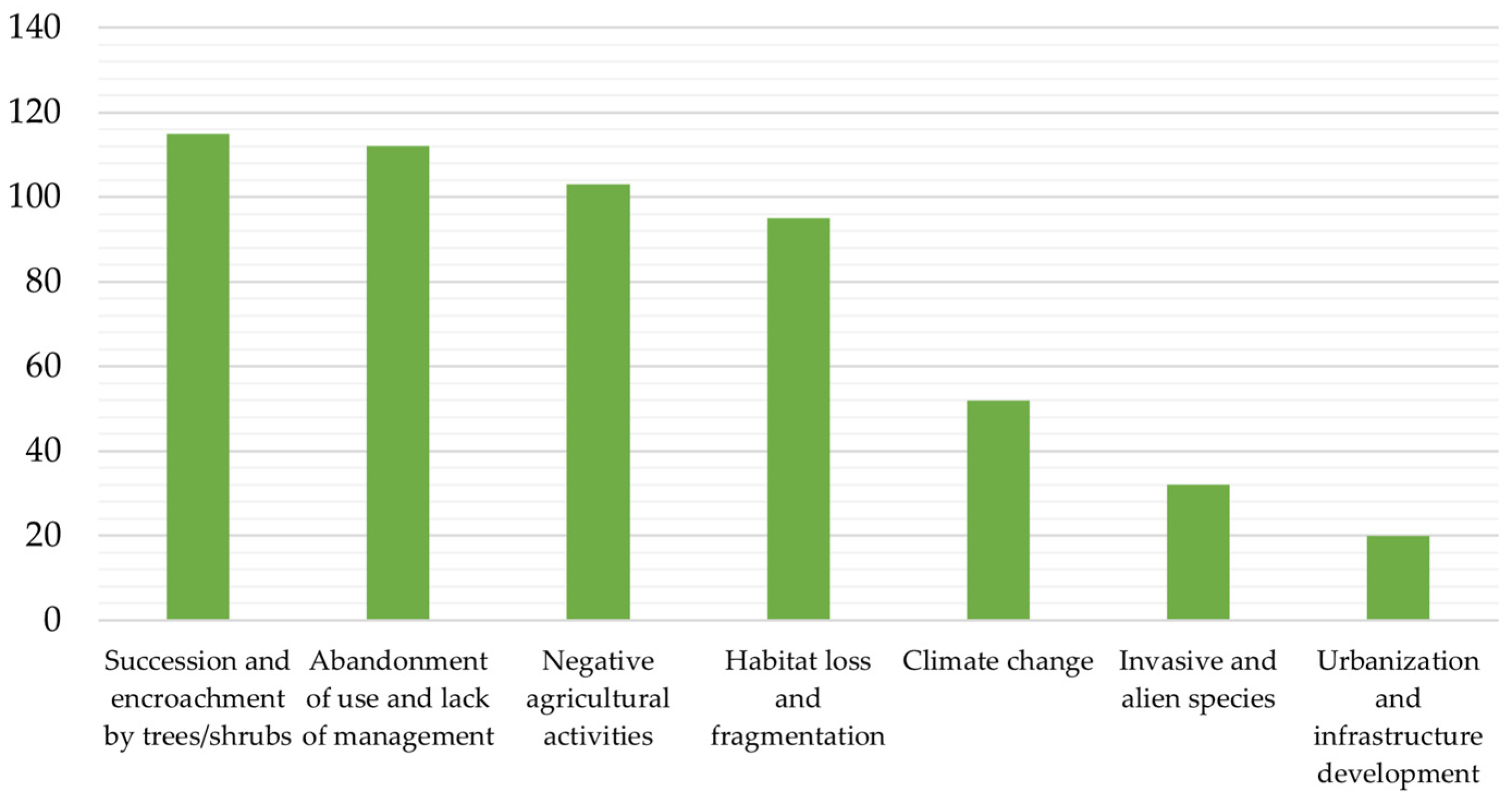
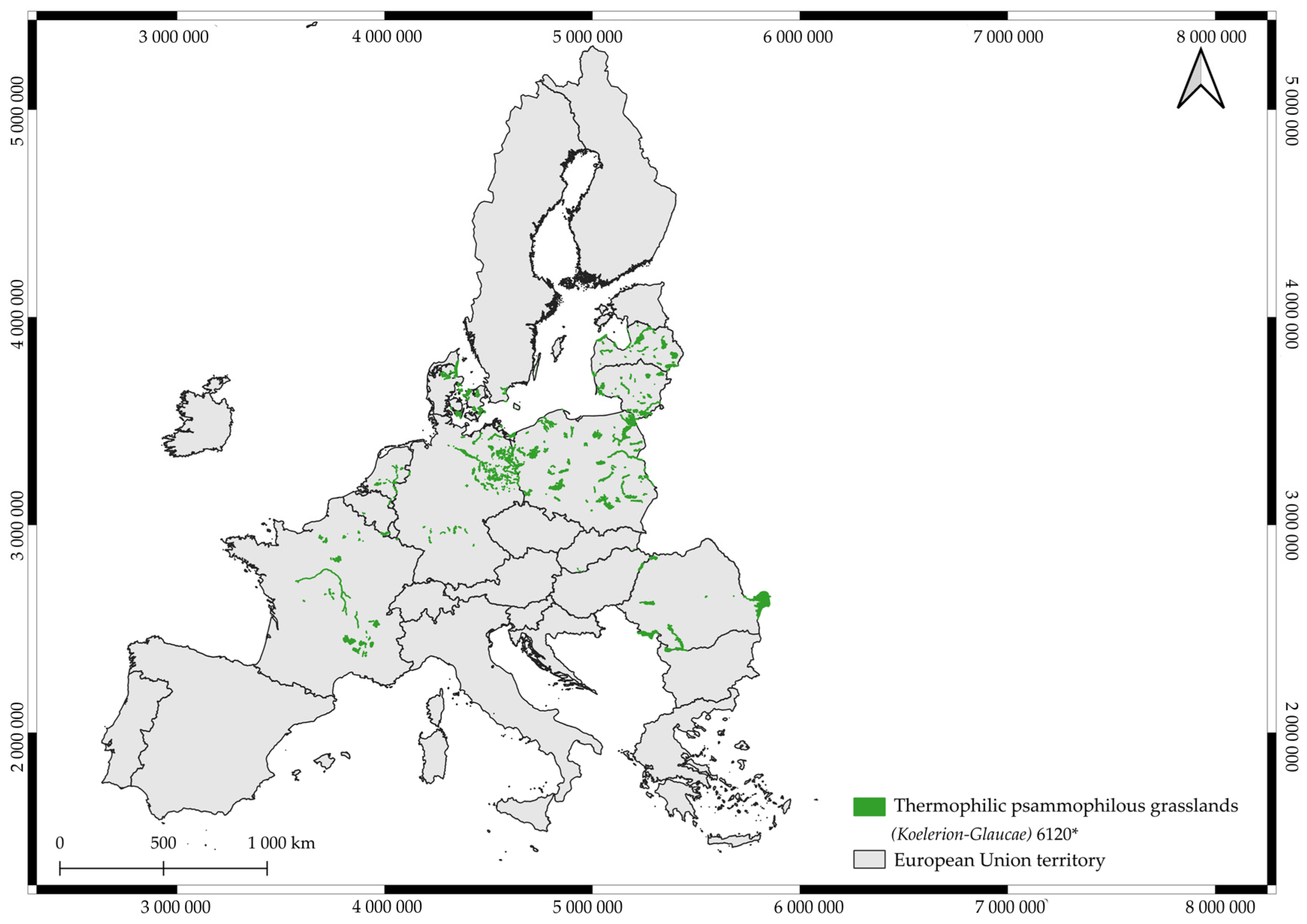
In Europe, the most valuable grasslands are semi-natural ecosystems maintained by long-term extensive human management, particularly pastoralism, and therefore do not represent climax vegetation. According to the Natura 2000 habitat interpretation manual (EUR-28), key habitats include xerothermic grasslands of Festuco-Brometalia (code 6210*) on calcareous soils and sandy grasslands of Koelerion glaucae (code 6120*) on poor substrates. Only 10–15% of their area in the EU has favorable conservation status. The main threat is secondary succession and encroachment (83.94%), caused by abandonment of traditional management (81.75%). Without mowing or grazing, dominant grasses replace rare species, followed by shrubs and trees. Other pressures include intensive agriculture (75.18%), habitat loss and fragmentation (69.34%), climate change (37.96%), invasive species (23.36%) and urbanization (14.60%). Multiple threats often co-occur, so cumulative percentages exceed 100%. The most effective conservation method is restoring or maintaining extensive grazing, particularly with local sheep and goat breeds. Grazing limits succession, increases structural diversity and promotes seed dispersal, creating a mosaic of microhabitats that enhances biodiversity. Effective protection requires landscape-scale actions, limiting urban development, and long-term support for farmers under the Common Agricultural Policy. Increasing public awareness of the ecological and cultural value of these ecosystems is also essential.
Keywords: xerothermic grasslands; sandy grasslands; biodiversity; semi-natural habitats; natura 2000; habitat conservation xerothermic grasslands; sandy grasslands; biodiversity; semi-natural habitats; natura 2000; habitat conservation