Article

Six New Records of Cortinarius and Russula from Northeastern China

1
Key Laboratory of Biodiversity, Institute of Natural Resources and Ecology, Heilongjiang Academy of Sciences, Harbin 150040, China
2
Heilongjiang Huzhong National Nature Reserve, Huzhong 165038, China
*
Authors to whom correspondence should be addressed.
These authors contributed equally to this work.
Diversity 2026, 18(3), 134; https://doi.org/10.3390/d18030134
Submission received: 23 January 2026 / Revised: 23 February 2026 / Accepted: 23 February 2026 / Published: 25 February 2026

Abstract

The genera Cortinarius and Russula are common ectomycorrhizal fungi, serving as excellent indicators of forest ecosystem health and soil conditions. This study conducted a systematic taxonomic investigation of macrofungi in the Huzhong National Nature Reserve of the Greater Khingan Mountains, integrating morphological and molecular phylogenetic analyses. Six new record species for China were identified: Cortinarius acutus, Phlegmacium balteatum, Cortinarius huronensis, Cortinarius lewisii, Cortinarius luteoornatus, and Russula grisescens. The article provides descriptions of their morphological characteristics and distribution, supported by phylogenetic analysis using ITS sequences. These findings expand the known distribution of these taxa to China’s taiga forests, reveal the region’s rich macrofungal diversity, and provide essential data for taxonomic, biogeographic, and forest ecosystem research.

1. Introduction

Macrofungi represent a significant group within the fungal kingdom, whose fruiting bodies are visible to the naked eye and easily collectible, thus garnering considerable attention in ecological and systematic research. This group typically exhibits high species diversity and richness in forest ecosystems and serves as a key component of the biological community structure [1,2]. Macrofungi serve diverse ecological functions, such as driving soil nutrient cycling and enhancing plant resource acquisition, including improved water and mineral uptake [3,4]. Despite the immense diversity of fungal species, there remains a notable deficiency in the global investigation of fungal resources, particularly in developing countries and remote regions, where a substantial number of species have yet to be discovered or formally documented. The Huzhong National Nature Reserve preserves China’s most typical cold-temperate light coniferous forest, the taiga forest, characterized by a pristine and unique ecosystem [5]. However, baseline information on the macrofungal diversity in this unique and ecologically significant region is still scarce, with systematic surveys being urgently needed. This knowledge gap hinders a comprehensive understanding of the area’s biodiversity and biogeographic patterns [6].
Within this context, the genera Cortinarius and Russula are particularly noteworthy as two of the most species-rich and ecologically crucial ectomycorrhizal groups in boreal and temperate forests. The genus Cortinarius Pers. [7,8] belongs taxonomically to the Basidiomycota, Agaricales, and Cortinariaceae. It comprises over 3000 species, making it the most species-rich genus within the order Agaricales. The vast majority of Cortinarius species are ectomycorrhizal fungi, forming mutualistic symbiotic relationships with various higher plants (such as Pinaceae and Betulaceae), and they play a crucial role in maintaining the stability of forest ecosystems, promoting nutrient cycling, and ensuring ecosystem health [9,10]. For a long time, taxonomic research on the genus Cortinarius has been extensively conducted worldwide; however, although a relatively comprehensive taxonomic framework has been established in regions such as Europe and North America [11,12], the species diversity of this genus in many other biogeographical regions remains underexplored, with a substantial number of taxa awaiting discovery and description. Cortinarius subgenus Phlegmacium Fr. Wünsche is a large subgenus within Cortinarius. Its fruiting bodies are typically medium to large in size. Under moist conditions, the pileus surface is distinctly viscid, while the stipe surface remains non-viscid. Pileus coloration is variable, ranging from yellowish-brown to purplish-gray. The stipe is stout, often with a clavate (club-shaped) base. The lamellae are relatively dense, pallid initially, becoming rusty-brown at maturity due to spore deposition. Most species are ectomycorrhizal fungi, forming symbiotic associations with both coniferous and broad-leaved trees. They are commonly found on forest floors during summer and autumn. The traditional classification within this subgenus has been notoriously difficult owing to extensive morphological plasticity. Nevertheless, molecular phylogenetic approaches are now steadily resolving its taxonomic structure. The genus Russula Pers. is another highly species-rich genus within the fungal kingdom, with over 2000 species described to date [13,14]. Taxonomically, it belongs to Basidiomycota, Russulales, and Russulaceae. All species within this genus are obligate ectomycorrhizal fungi, forming close symbiotic relationships with various tree species and playing a critical role in nutrient cycling and maintaining the stability of forest ecosystems. Russula species exhibit a global distribution [15,16], with records spanning from tropical rainforests to cold-temperate coniferous forests. They display particularly high diversity in forests across Asia, Europe, and North America. However, due to the high plasticity of their morphological characteristics and subtle interspecific differences, traditional classification is often prone to considerable inaccuracies. As a result, the fungal resources in many regions remain underexplored and require further discovery through the integration of morphological and molecular data. Given the ecological significance and species diversity of the aforementioned genera, conducting research on the diversity of macrofungi in China—particularly in regions with limited research foundations or where systematic surveys have yet to be carried out—holds considerable potential for the discovery of new species and new records. Such efforts would not only deepen the understanding of the diversity within these taxonomic groups but also provide critical data from East Asia for global studies in fungal taxonomy, phylogenetics, and biogeography.
Therefore, to address the specific gap in knowledge regarding the macrofungal mycobiota of the Huzhong taiga ecosystem, this study was conducted. Based on integrated morphological examination and molecular phylogenetic analysis of specimens collected during a field survey, the primary objectives of this study are to: (1) identify and describe several previously unrecorded macrofungal specimens; (2) confirm and document their status as new records for China; (3) provide detailed morphological descriptions, habitat photographs, and comparative discussions with phylogenetically related or morphologically similar species. This work aims to contribute foundational data for the fungal diversity of this unique region and to provide East Asian taxonomic references for global fungal biogeography.

2. Materials and Methods

2.1. Specimen Collection and Processing

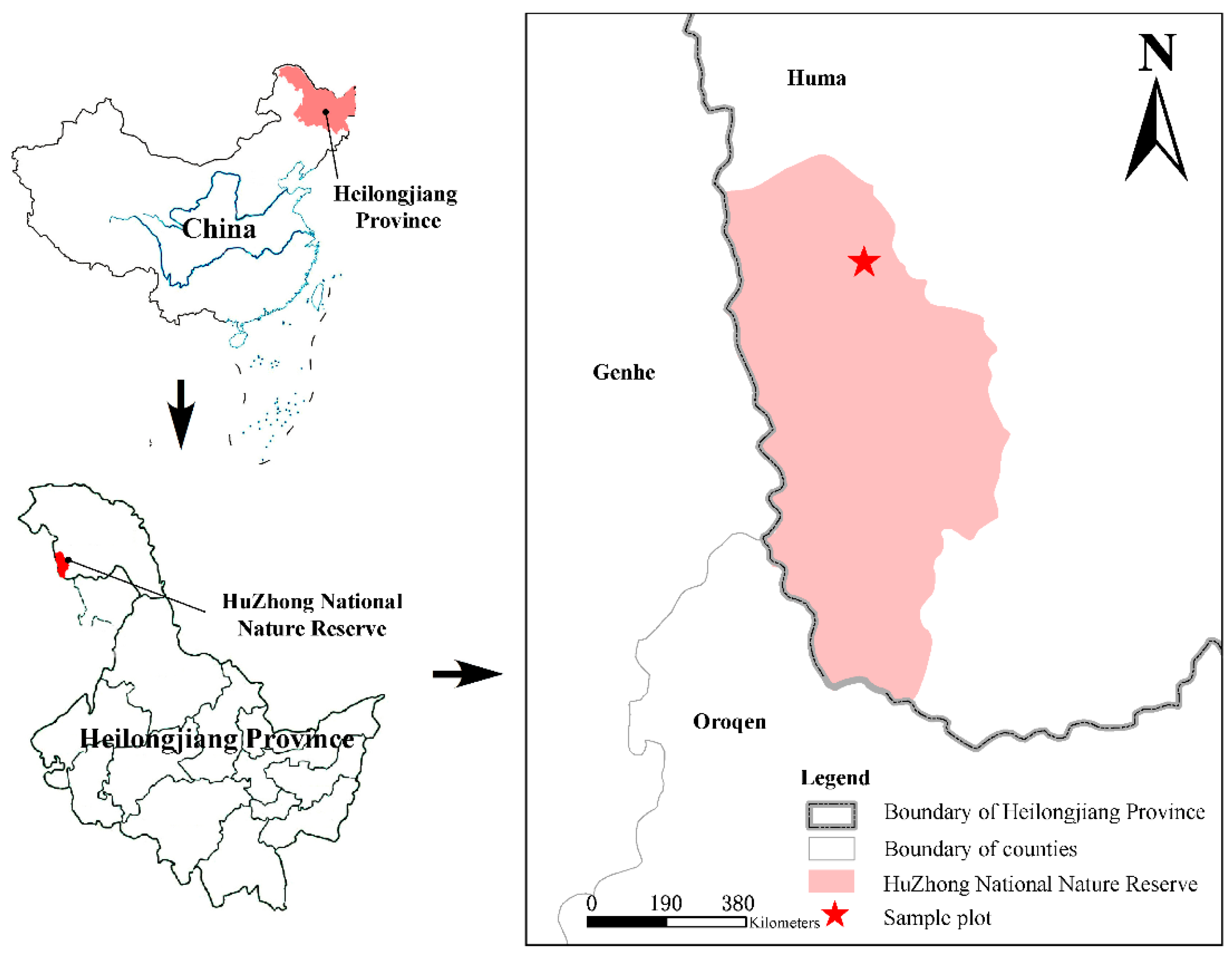
The research specimens were collected in 2022 from within the boundaries of the Heilongjiang Huzhong National Nature Reserve (122°42′14″–123°18′05″ E, 51°17′42″–51°56′31″ N) (Figure 1). The region features a cold-temperate continental monsoon climate, characterized by long, harsh winters and short, cool summers, with an average annual temperature of approximately –4.3 °C. The soil types are diverse, including brown coniferous forest soil, dark brown soil, and meadow soil, among others. The vegetation is rich and predominantly consists of cold-temperate coniferous forests, with key constructive species such as Larix gmelinii and Pinus sylvestris var. mongolica. The collection period spanned from July to October, corresponding to the peak growing season for macrofungi in this region. During collection, photographs of fresh fruiting bodies and their habitats were first taken. After recording the collection data and morphological characteristics, the specimens were placed in collection boxes and transported to the laboratory. For the collected specimens, a two-step drying protocol was implemented: specimens intended for long-term preservation were oven-dried at 60 °C, whereas those designated for molecular analysis were rapidly dried at 40 °C prior to DNA extraction to ensure nucleic acid integrity. All studied specimens were deposited at the Key Laboratory of Biodiversity, Institute of Natural Resources and Ecology, Heilongjiang Academy of Sciences.

2.2. Morphological Identification

Macroscopic identification was preliminarily conducted based on field photographs, macrofungi collection records, and consultation of relevant literature. Microscopic characteristics were observed under an OLYMPUS BX51 microscope (OLYMPUS Corporation, Tokyo, Japan). Using tools such as a single-edge razor blade or forceps, relevant tissue sections were obtained under an OLYMPUS SZX2-FOF stereomicroscope (OLYMPUS Corporation, Tokyo, Japan). The sections were rehydrated and observed using a 5% KOH solution as the mounting medium, with 2% Congo red solution applied when necessary for staining. All microscopic features were observed and photographed at magnifications of 400× or 1000× (ten mature spores were measured for each species). Line drawings of microscopic structures were rendered using the Sketchbook software (8.8.0) on an iPad. Morphological descriptions were prepared with reference to literature relevant to the respective families and genera. The terminology used was primarily based on the specialized terms employed in the Dictionary of the Fungi (10th edition) and the Index Fungorum.

2.3. Molecular Identification

Genomic DNA was extracted from the fruiting bodies using a Solarbio genomic DNA extraction kit (Beijing Solarbio Science & Technology Co., Ltd., Beijing, China). The nuclear ribosomal internal transcribed spacer (ITS) region was subsequently amplified with the universal primers ITS1/ITS4 [17]. The PCR was performed in a total volume of 25 μL, containing 12.5 μL of 2× Taq PCR MasterMix, 0.5 μL each of forward and reverse primers (10 μmol/L), 2 μL of DNA template, and 9.5 μL of sterile double-distilled water. The thermal cycling conditions were as follows: initial denaturation at 94 °C for 4 min, 35 cycles of denaturation at 94 °C for 45 s, annealing at 55 °C for 45 s, and extension at 72 °C for 1 min, followed by a final extension at 72 °C for 10 min. A negative control using sterile double-distilled water instead of a DNA template was included in each PCR run to monitor contamination. Sequencing was performed by Shanghai Sangon Biotech Co., Ltd. (Shanghai, China).
The obtained ITS sequences were approximately 600–780 bp in length. After editing with Chromas software (2.6.6), the sequences exhibited good quality and are suitable for subsequent analyses. Phylogenetic analyses were conducted separately for the genera Cortinarius and Russula. Each dataset comprised ITS sequences obtained in this study and reference sequences downloaded from GenBank, with a total number of 51 and 38 sequences, respectively. Outgroup taxa were selected based on taxonomic affinities. Reference sequences were preferentially derived from type material or authenticated voucher specimens, with their GenBank accession numbers indicated in the text. Based on the ITS sequences, a phylogenetic tree was constructed using a combined strategy of Maximum Likelihood (ML) and Bayesian Inference (BI). First, multiple sequence alignment was performed using the Muscle algorithm in MEGA11 software, and the best-fit nucleotide substitution model was determined by its built-in model selection tool (Table 1) [18,19]. Subsequently, the ML tree was constructed as a reference topology under the selected model parameters, with 1000 bootstrap replicates performed to assess branch support. To further evaluate branch support, this ML tree was imported into MrBayes 3.2.7 as the starting tree for Bayesian analysis. Markov Chain Monte Carlo (MCMC) simulations were run under the same evolutionary model (4 chains, 1,000,000 generations, sampling every 100 generations). Analyses were run until the average standard deviation of split frequencies fell below 0.01 to ensure chain convergence, and effective sample sizes (ESS) for all parameters were checked and found to be greater than 200, indicating adequate sampling. The first 25% of samples were discarded as burn-in, and a consensus tree was generated. Bayesian posterior probabilities were obtained as branch support values [20,21,22,23]. Finally, the tree was adjusted and refined using FigTree v.1.4.4 and Adobe Illustrator CC 2018.

3. Results

3.1. Phylogenetic Analyses

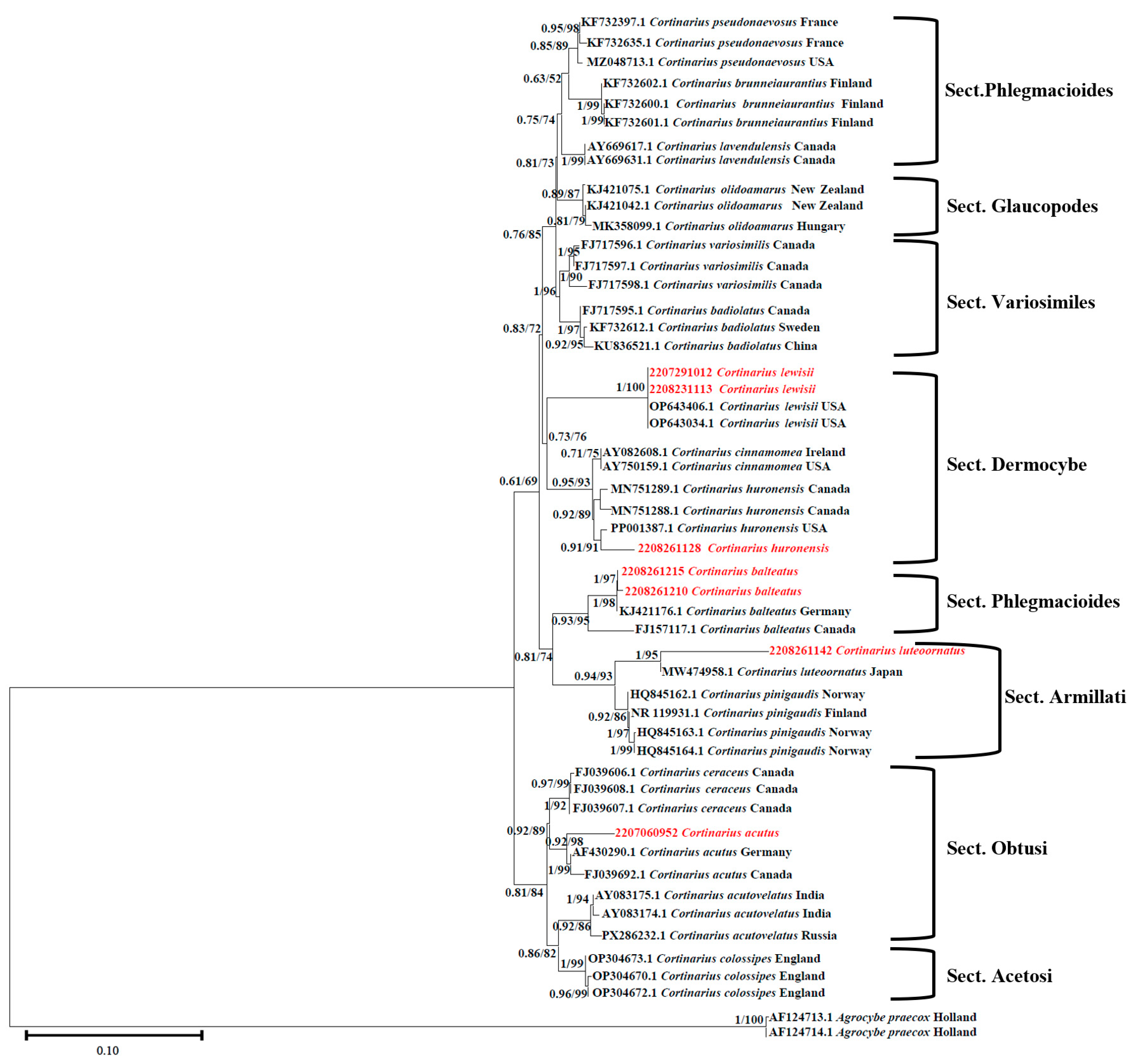
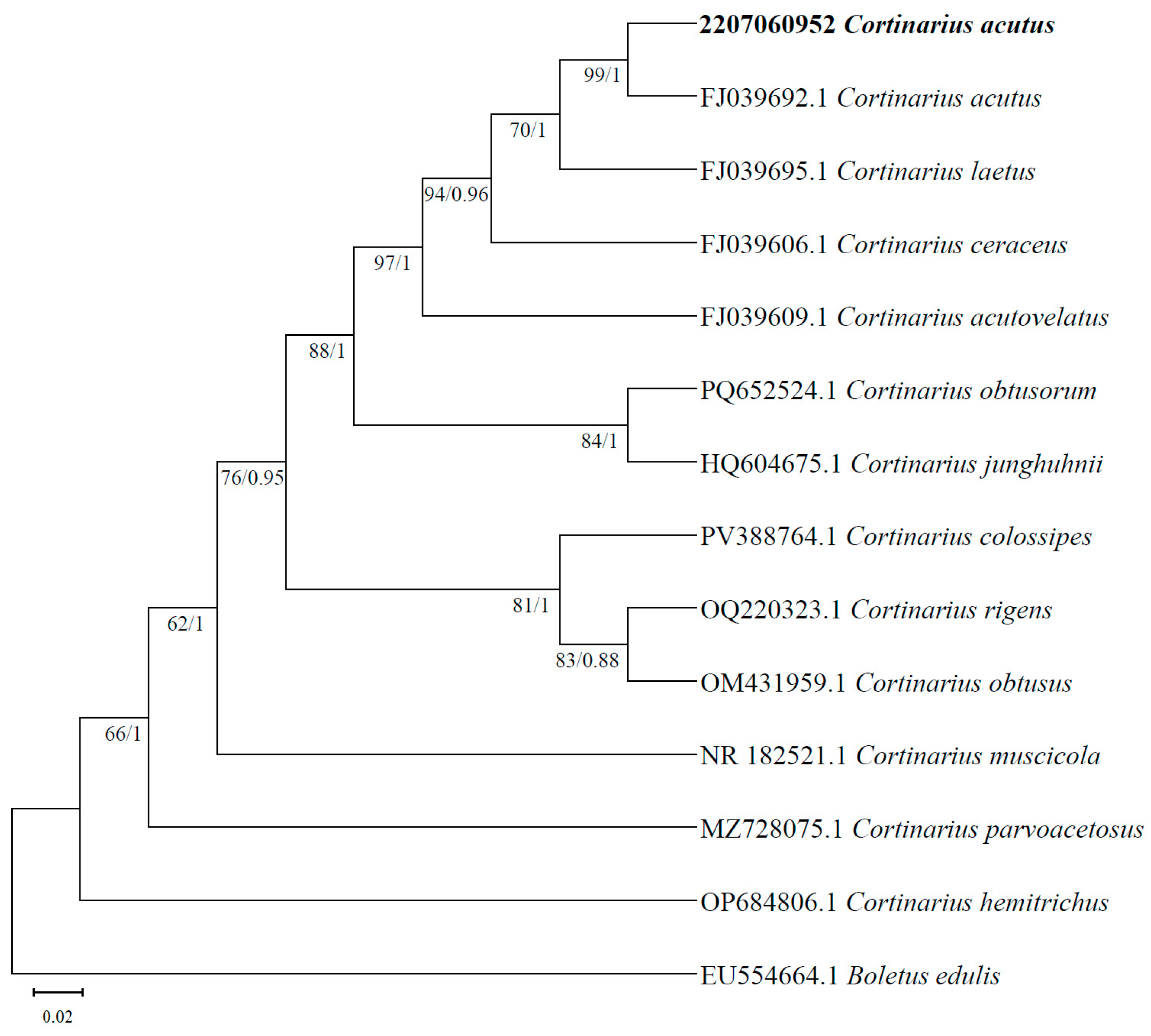
The phylogenetic tree constructed based on ITS sequences (Figure 2) reveals that the genus Cortinarius appears polyphyletic in this study, a finding consistent with recent molecular phylogenetic studies indicating parallel evolution in its traditional morphological classification. Notably, Cortinarius acutus forms a sister-group relationship with strong support (PP = 0.92, BS = 89) with the known species C. ceraceus. Similarly, the close clustering of C. huronensis with C. cinnamomea (PP = 0.95, BS = 93) suggests their shared taxonomic affiliation. However, the low support at certain nodes reflects that the phylogenetic relationships within this group are not yet fully resolved, and further investigation employing multi-locus datasets would be valuable.
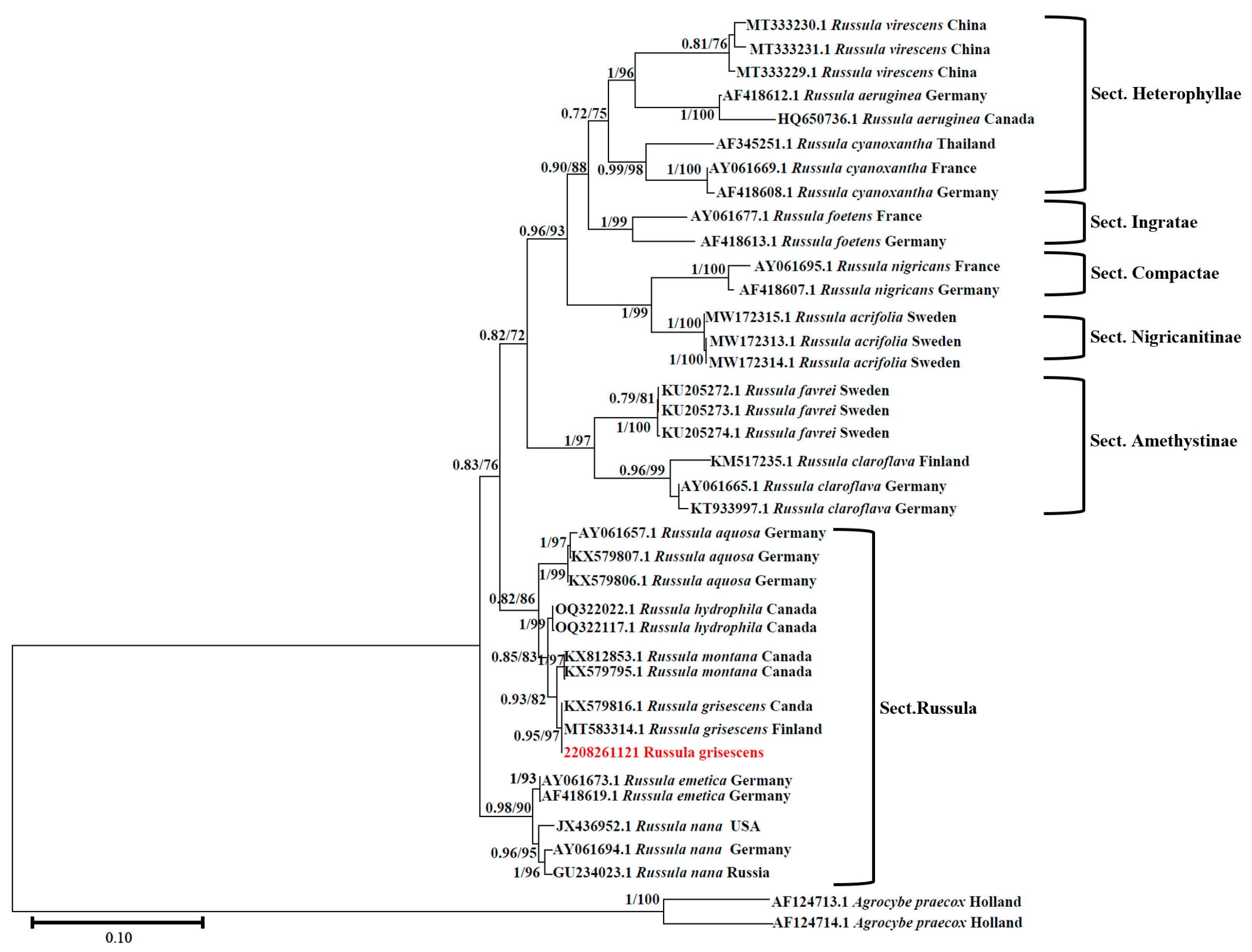
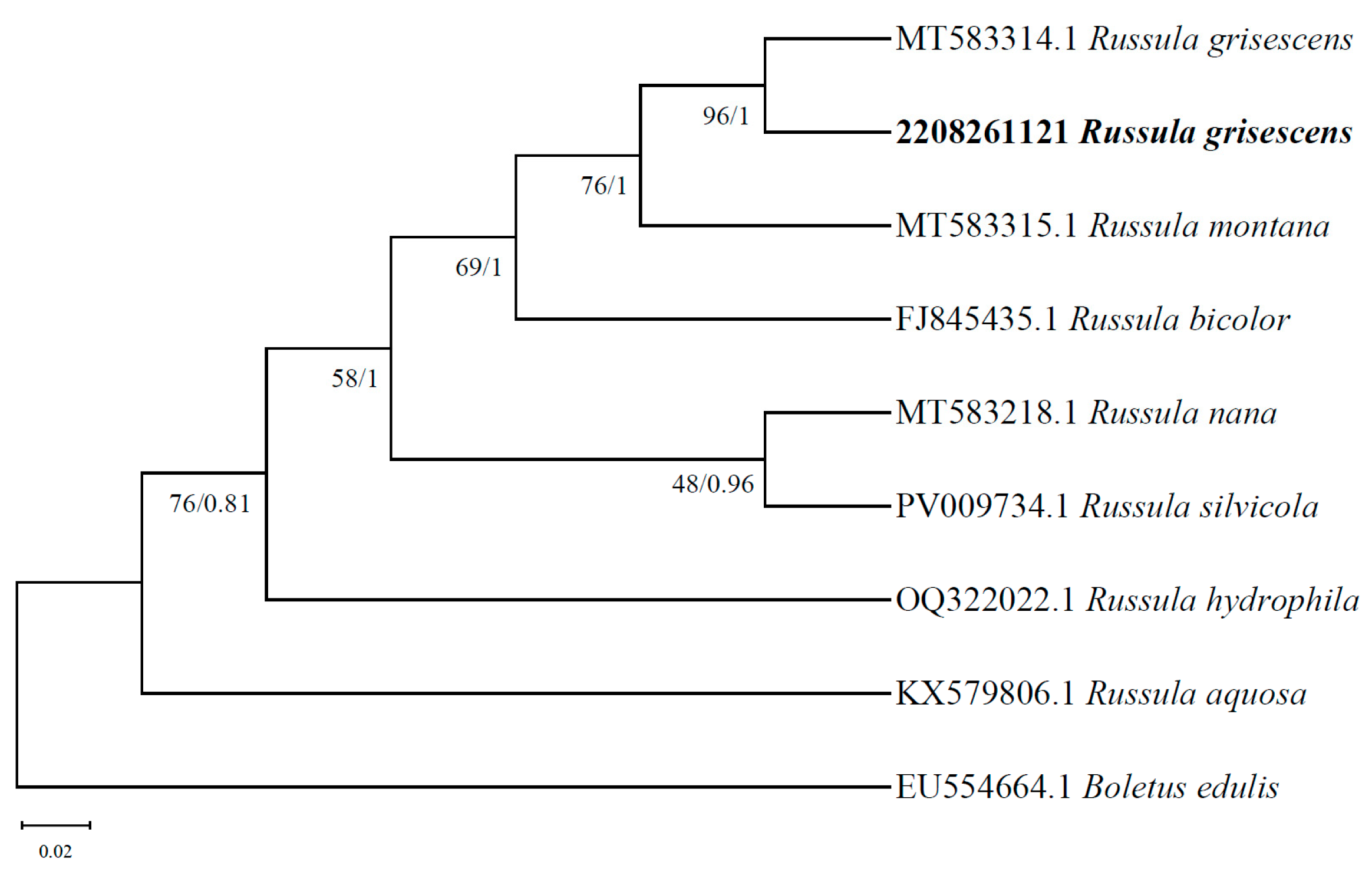
Phylogenetic analysis based on ITS sequences (Figure 3) reveals that Russula grisescens (sequence 2208261121) forms a monophyletic clade with high support values (PP = 0.93, BS = 82) together with the known species R. montana. This clade further clusters, also with high support (PP = 0.85, BS = 83), with the lineage containing R. hydrophila, collectively forming a stable evolutionary group. This clustering pattern clearly indicates a very close phylogenetic relationship between R. grisescens and R. montana.
Figure 2. The phylogeny of Cortinarius by Bayesian inference based on the ITS dataset. (The sample data in this experiment are presented in red font, the same as below).
Diversity 18 00134 g002
Figure 3. The phylogeny of Russula by Bayesian inference based on the ITS dataset.
Diversity 18 00134 g003

3.2. Taxonomy

3.2.1. Cortinarius acutus (Pers.) Fr.

Cortinarius acutus (Pers.) Fr., Elias Magnus Fries et al., Epicrisis systematis mycologici (Upsaliae): 314 (1838). (GenBank: PX492149)
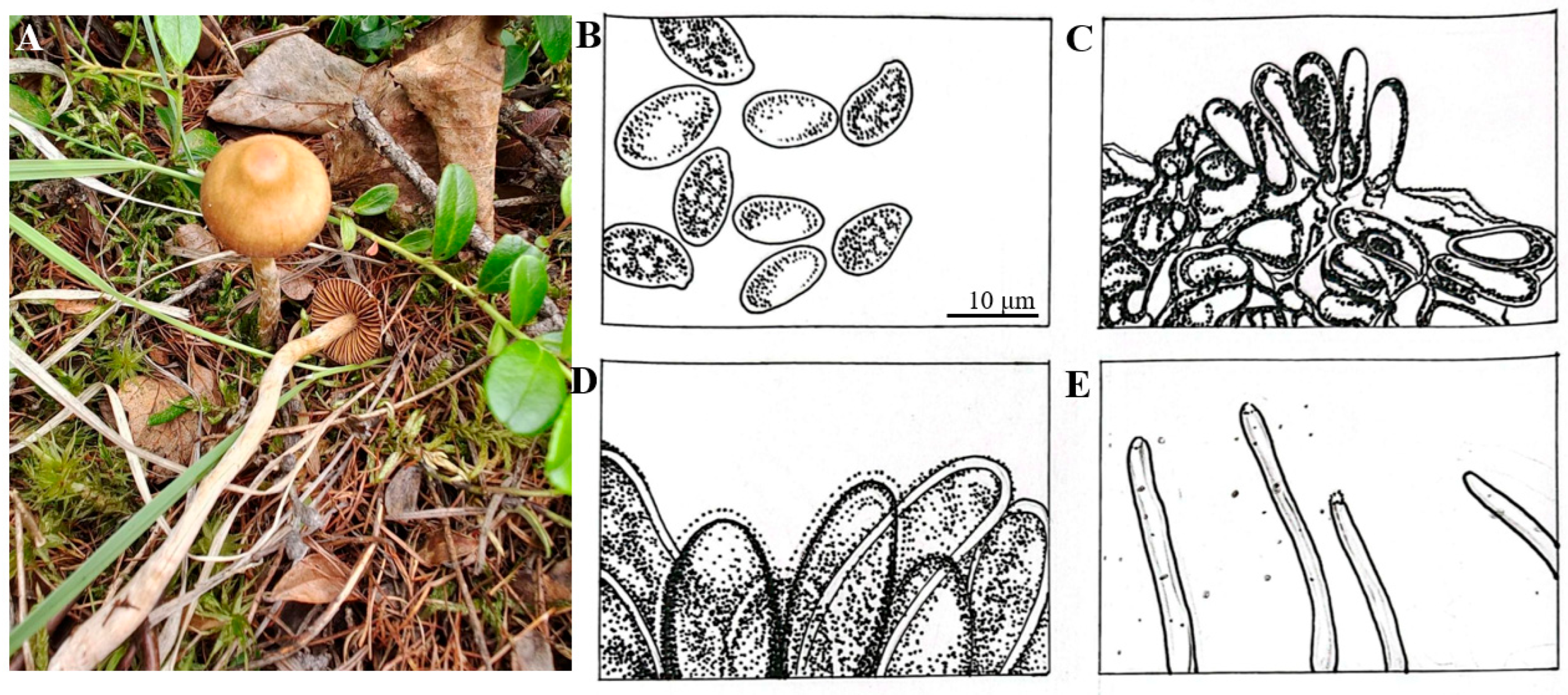
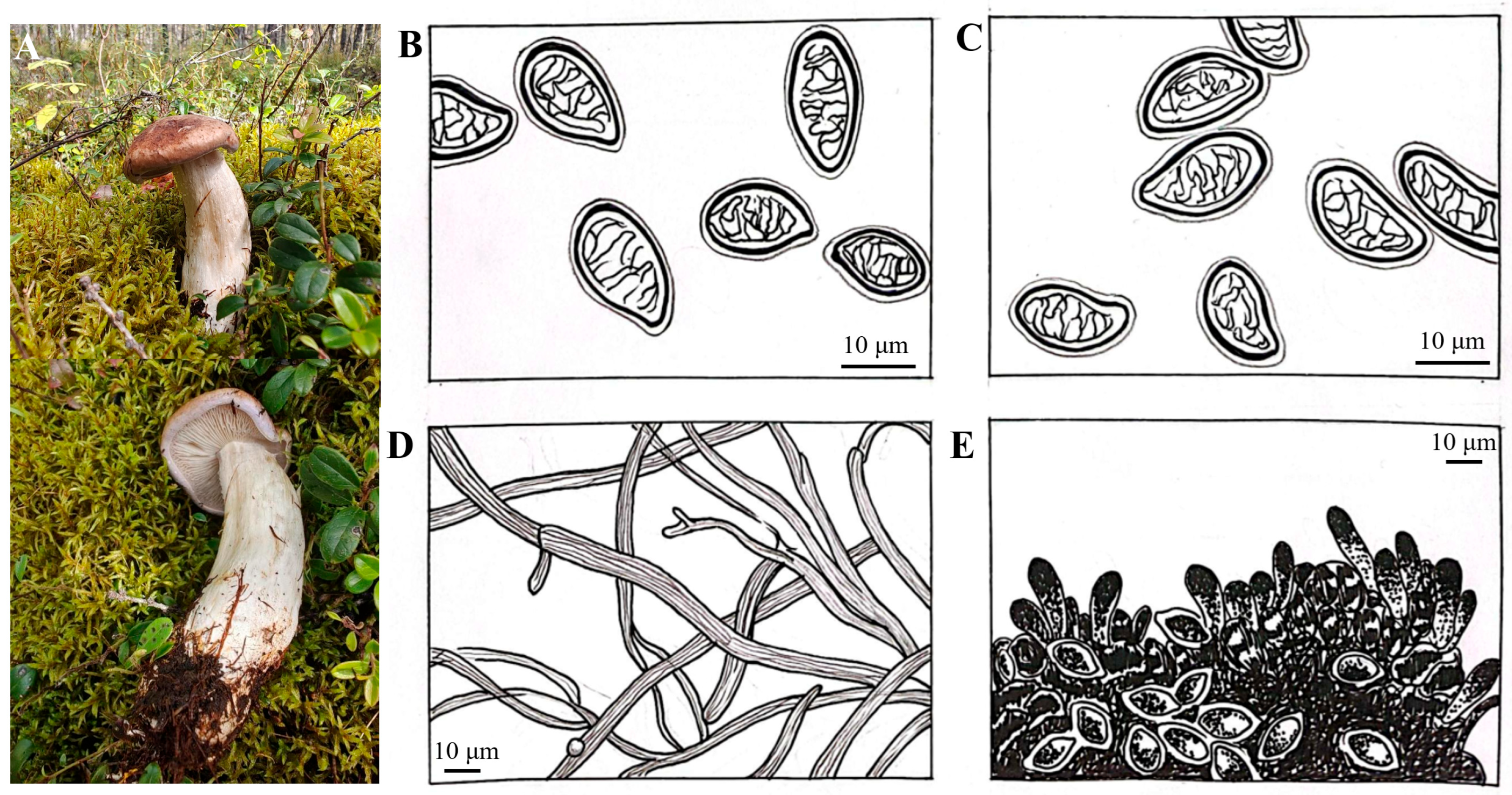
Macroscopic characteristics: Fruiting bodies small. Pileus 1–3 cm in diameter, conical to campanulate, with a prominent, sharply umbonate papilla; surface smooth, strongly hygrophanous, orange-yellow to orange-tawny when moist, fading to ochraceous-white or nearly white upon drying; margin striate. Stipe slender (5–10 × 0.1–0.2 cm), concolorous with the pileus, slightly enlarged at the base and covered with white fibrillose veil remnants. Stipe hollow and brittle. The gills are moderately crowded to distant, pale yellowish to brownish; pallid or pale brown when young, becoming ochraceous-cinnamon with age; edge entire, white, and serrate; attachment adnate, becoming seceding with age; lamellae thin and narrow. Context thin, odor distinctly iodiform, taste mild.
Microscopic characteristics: Basidiospores 7–9 × 4–5 μm, subglobose to ovoid or oblong, with dense and low ornamentation. Cheilocystidia conspicuously projecting, clavate to lanceolate or bulbous, occasionally constricted, arranged in a palisade or clustered manner. Pileipellis thin, hyphae 4–8 μm in diameter, hyaline, intricately interwoven. Clamp connections present.
Ecology: Growing in damp coniferous forests, often among moss or Sphagnum communities.
Type locality: Germany.
Global distribution: Palearctic Realm: Germany, France, United Kingdom, Finland, Denmark, Russia, etc.; Nearctic Realm: United States, Canada.
Studied specimen: Heilongjiang Province, Huzhong National Nature Reserve, 6 July 2022, coll. Libin Yang; Siyuan Liu; Mingliang Gao, 2207060952 (Figure 4 and Figure 5).
Discussion: C. acutus belongs to the genus Cortinarius, sharing its general characteristics such as a rusty brown spore print, the frequent presence of a cortina, and predominantly ectomycorrhizal ecology. The distinguishing features of this species include a prominent umbo at the pileus center and an elongated, slender stipe, with the umbo shape varying across developmental stages. The morphological characteristics of the pileus and stipe of our specimen (2207060952) align closely with the descriptions of the type specimen [24]. Furthermore, phylogenetic analysis based on ITS sequences demonstrated that our sample clusters with the sequence bearing accession number FJ039692, supported by a 99% bootstrap value and a posterior probability of 1, thereby confirming its taxonomic identity.

3.2.2. Phlegmacium balteatum (Fr.) A. Blytt

Phlegmacium balteatum (Fr.) A. Blytt, Skrifter udgivne af Videnskabs-Selskabet i Christiania. Mathematisk-naturvidenskabelig Klasse. (no. 6): 68 (1905) (GenBank: PX492150).
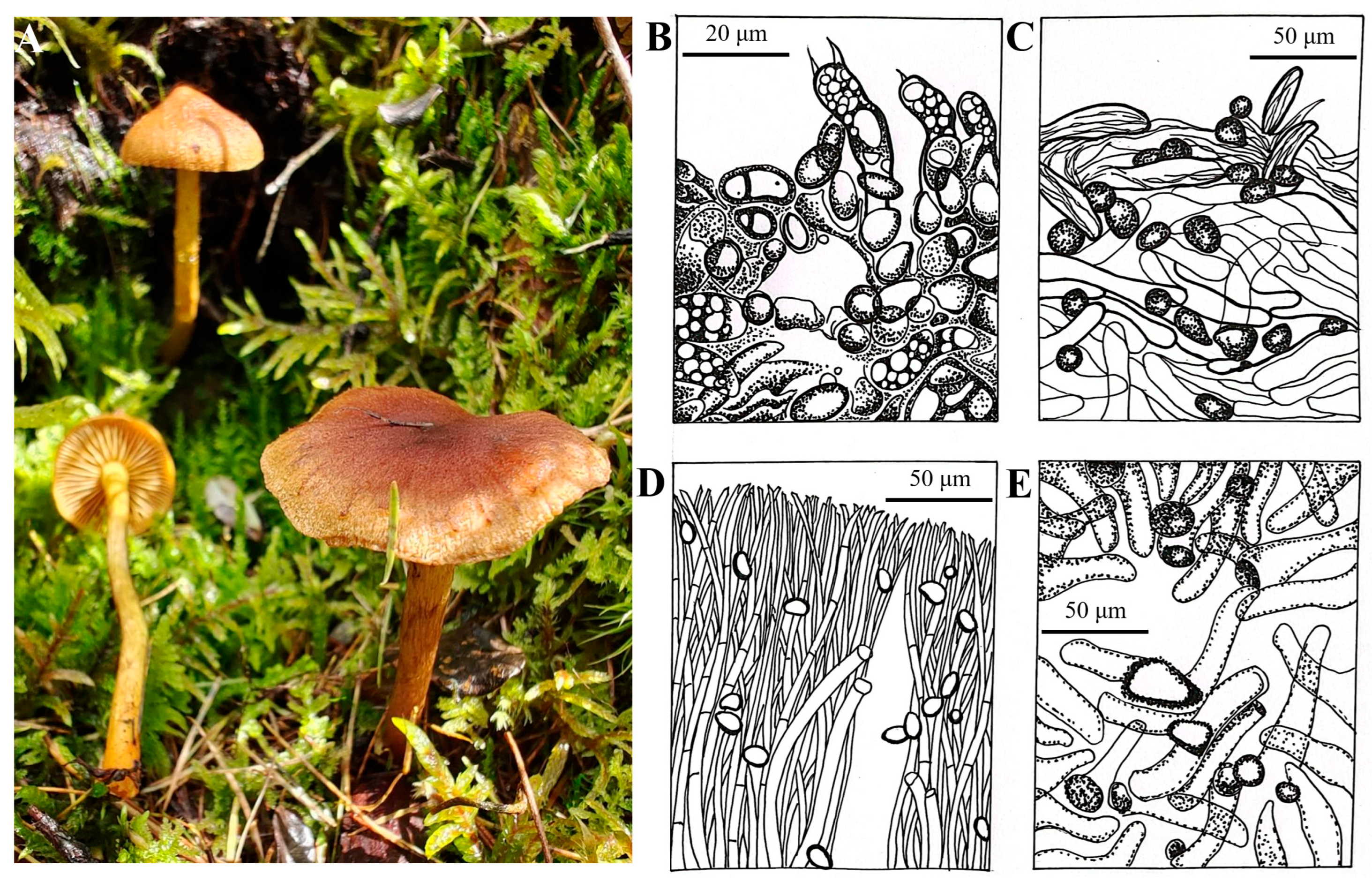
Macroscopic characteristics: Fruiting bodies medium to large-sized. Pileus 6.1–11.6 cm in diameter. Pileus initially hemispherical, becoming planoconvex with maturity; margin lilac. Pileus color highly variable: lilac when young, maturing to yellowish-brown with a lilac margin, or entirely yellowish-brown with a faint lilac tint. Surface dry or viscid depending on age and environmental conditions. Context white, uniformly dense. Lamellae white when young, becoming cream-colored at maturity, and densely arranged. Stipe 9.3–15.5 cm long, 1.6–3.7 cm thick at apex, subbulbous, white, dry. Partial veil evanescent with age. Odor earthy to musty.
Microscopic characteristics: Basidiospores 8.26–9.87 × 5–5.57 μm, elliptical to amygdaliform with a blunt tip. Spore surface finely and densely verruculose, with discrete and inconspicuous ornamentation. The spores are relatively light-colored. Length/width ratio (Q) averaging 1.9. Hyphal tips are yellowish-brown and thin-walled, occasionally bearing granulose incrustations.
Ecology: Growing in Larix forests.
Type locality: Norway.
Global distribution: Palearctic Realm: Norway, Germany, France, United Kingdom, Finland, Sweden, Denmark, Russia, etc.; Nearctic Realm: United States, Canada.
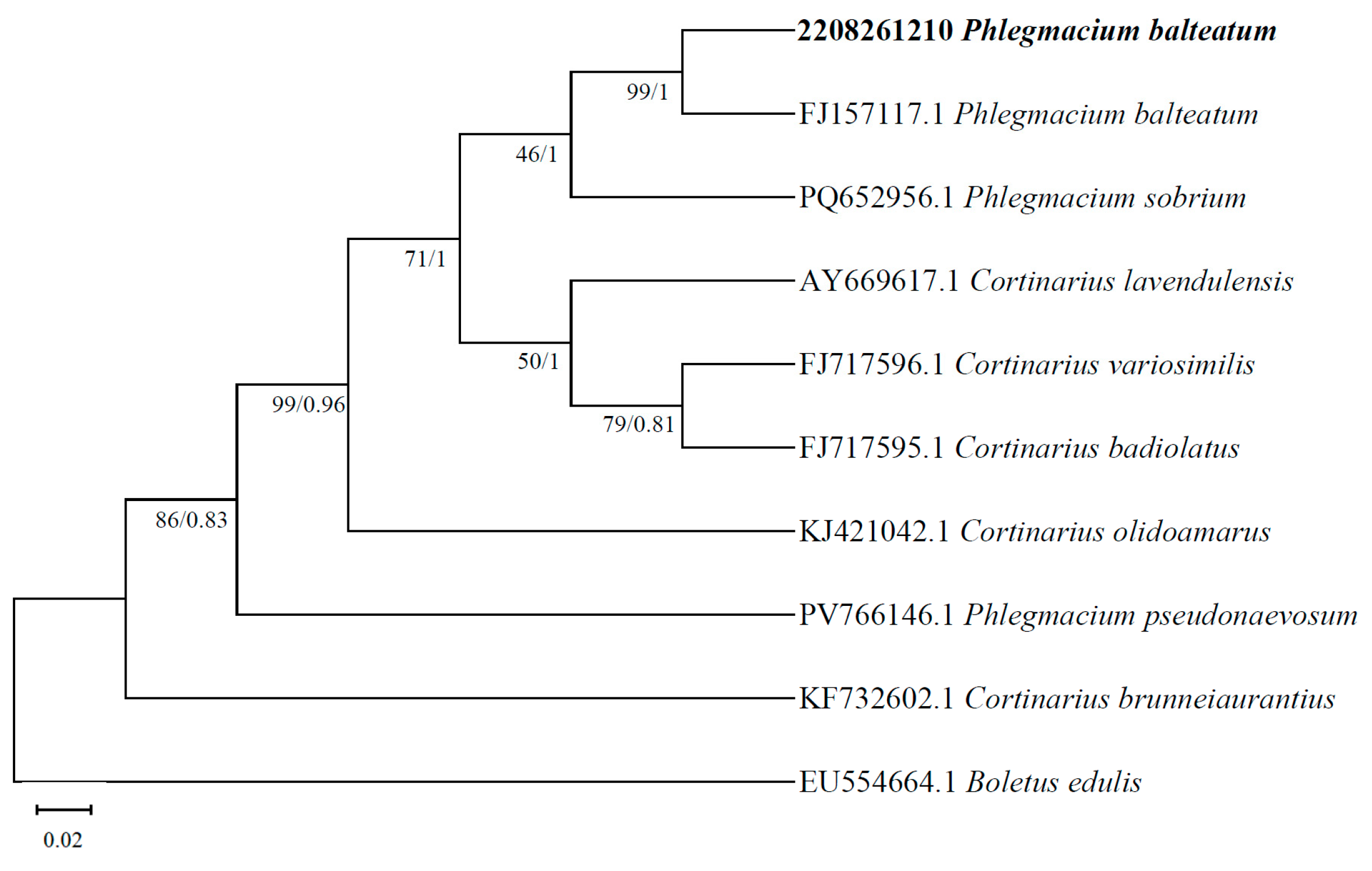
Studied specimen: Heilongjiang Province, Huzhong National Nature Reserve, 26 August 2022, coll. Libin Yang; Zhichao Cheng; Mingliang Gao, 2208261210 (Figure 6 and Figure 7).
Discussion: P. balteatum is currently considered by many mycologists as a subgenus within Cortinarius, namely Cortinarius subgen. Phlegmacium. Fungi belonging to this subgenus typically exhibit the following characteristics: a viscid or glutinous pileus surface that may be smooth or bear additional structures, and a generally dry stipe. Distinguishing features of this species include the frequently viscid pileus, a bulbous to subbulbous stipe base, and its common role as an ectomycorrhizal partner with coniferous trees. Compared with the type specimen, the studied material displays smaller spore dimensions and a narrower size range. However, materials identified by Jacques GANE showed spore measurements reaching (8-)9-11(-12) × (5-)5.5-7(-7.5) μm, along with an elongated stipe compared to the type species [25]. BLAST analysis (https://blast.ncbi.nlm.nih.gov/) of the ITS sequence from our specimen against the NCBI database revealed the highest similarity (99%) with P. balteatum, supported by a posterior probability of 1, further validating the morphological identification results.

3.2.3. Cortinarius huronensis Kauffman

Cortinarius huronensis Kauffman, Annual Report of the New York State Museum. 179: 101 (1915) (GenBank: PX492151).
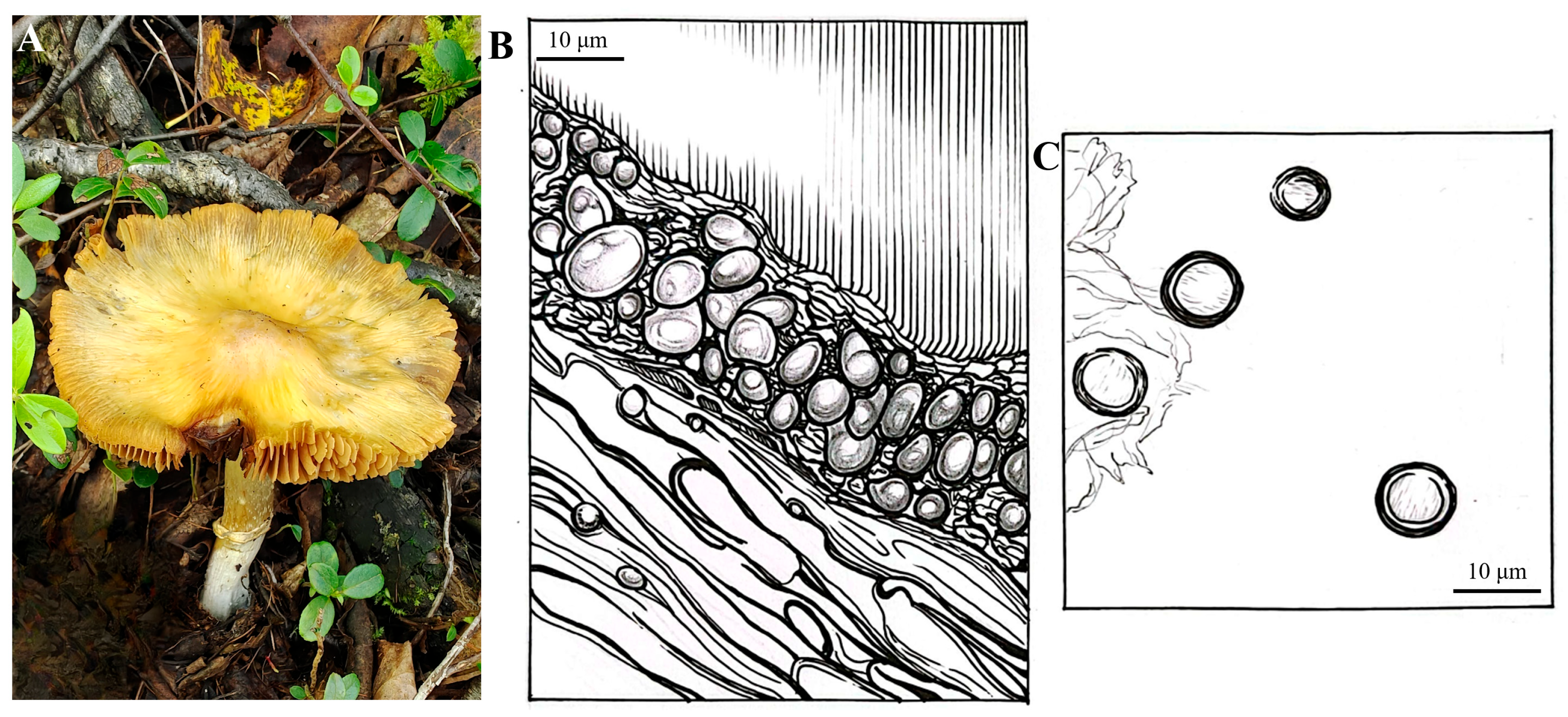
Morphological characteristics: Pileus 1.5–4 cm in diameter, initially convex, then expanding to applanate; with a thin and obscurely striate margin, context color similar to the pileus surface, thin at the margin; margin initially olive to yellowish-olive or dark brown, later becoming brown to pale brown. Context brittle and without distinct odor. The margin is obscurely/faintly/indistinctly striate. Stipe 5–8 cm long, 0.3–0.5 cm in diameter, cylindrical, hollow, ochraceous, pale yellowish-brown to olive, fibrillose. The stipe base is adorned with yellow squamules. Lamellae pale yellow, buff to rusty brown, adnate.
Microscopic characteristics: Basidiospores (7.5–11.0) × (5.0–7.5) μm, ellipsoid to ovoid, slightly to moderately verruculose, yellowish-brown. Basidia 4-spored, clavate. Cystidia sparse. Pileipellis hyphae vary in diameter, often containing intracellular brown pigments.
Ecology: Growing in forests of Betula and Pinus.
Type locality: United States.
Global distribution: Palearctic Realm: Norway, Sweden, Germany, France, Russia, etc.; Nearctic Realm: United States.
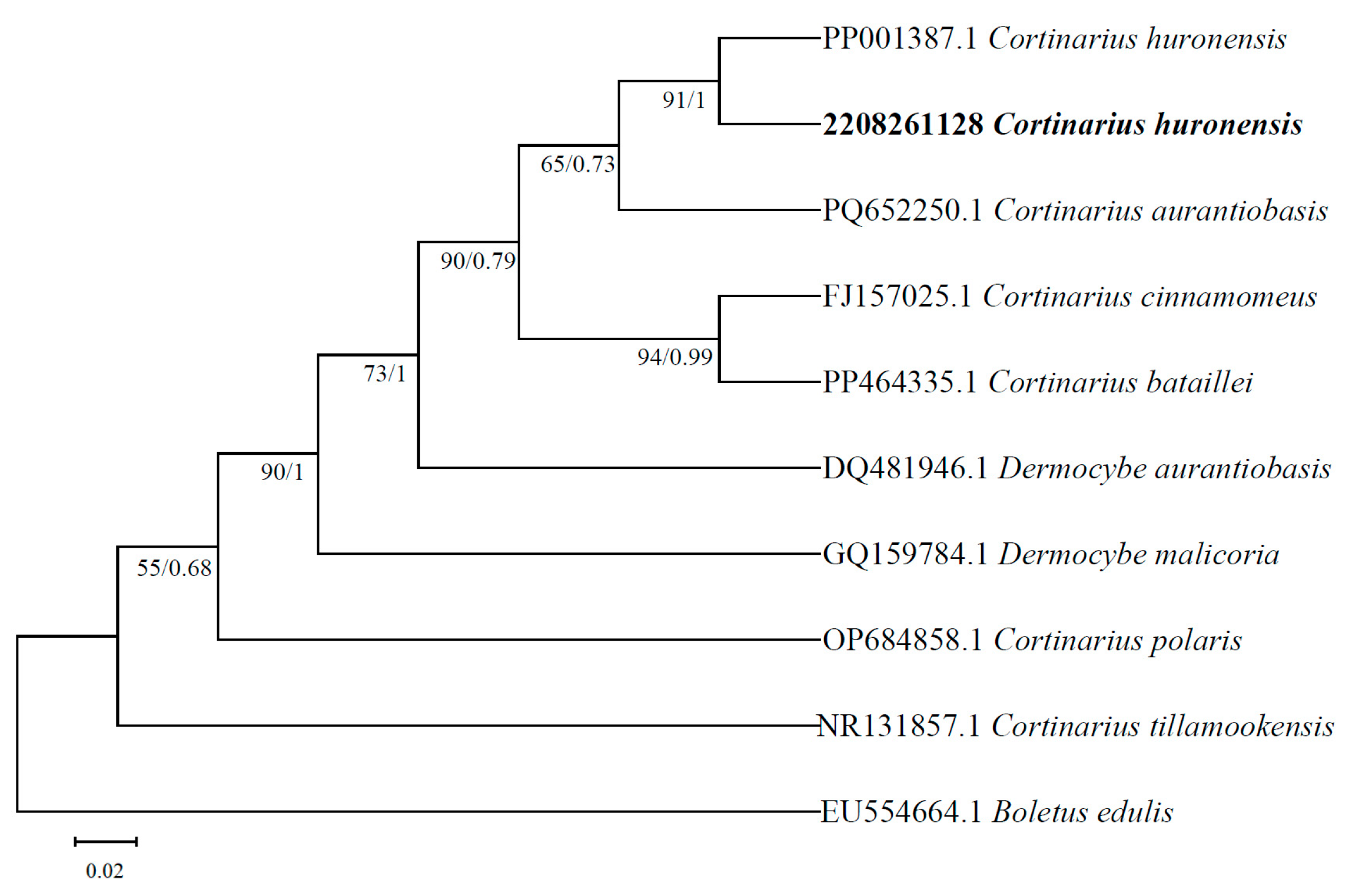
Studied specimen: Heilongjiang Province, Huzhong National Nature Reserve, 26 August 2022, coll. Libin Yang; Xinming Lu; Siyuan Liu, 2208261128 (Figure 8 and Figure 9).
Discussion: C. huronensis belongs to the genus Cortinarius and is a common ectomycorrhizal fungus. The distinctive characteristics of this species include its fibrillose pileus surface, sparse cystidia, and the pileipellis hyphae of varying diameters that often contain intracellular brown pigments. In this study, the pileus diameter of our specimen was slightly smaller than that of the type species described by Melania, while all other morphological characteristics showed high consistency with the descriptions of the type specimen [26]. BLAST analysis (https://blast.ncbi.nlm.nih.gov/) of the ITS sequence from our specimen against the NCBI database demonstrated the highest sequence similarity (91%) with Cortinarius huronensis, supported by a posterior probability of 1. Combined with the morphological identification results, this confirms the species identity as C. huronensis.

3.2.4. Cortinarius lewisii O.K. Mill.

Cortinarius lewisii O.K. Mill., Mycotaxon 47: 462 (1993) (GenBank: PX492152).
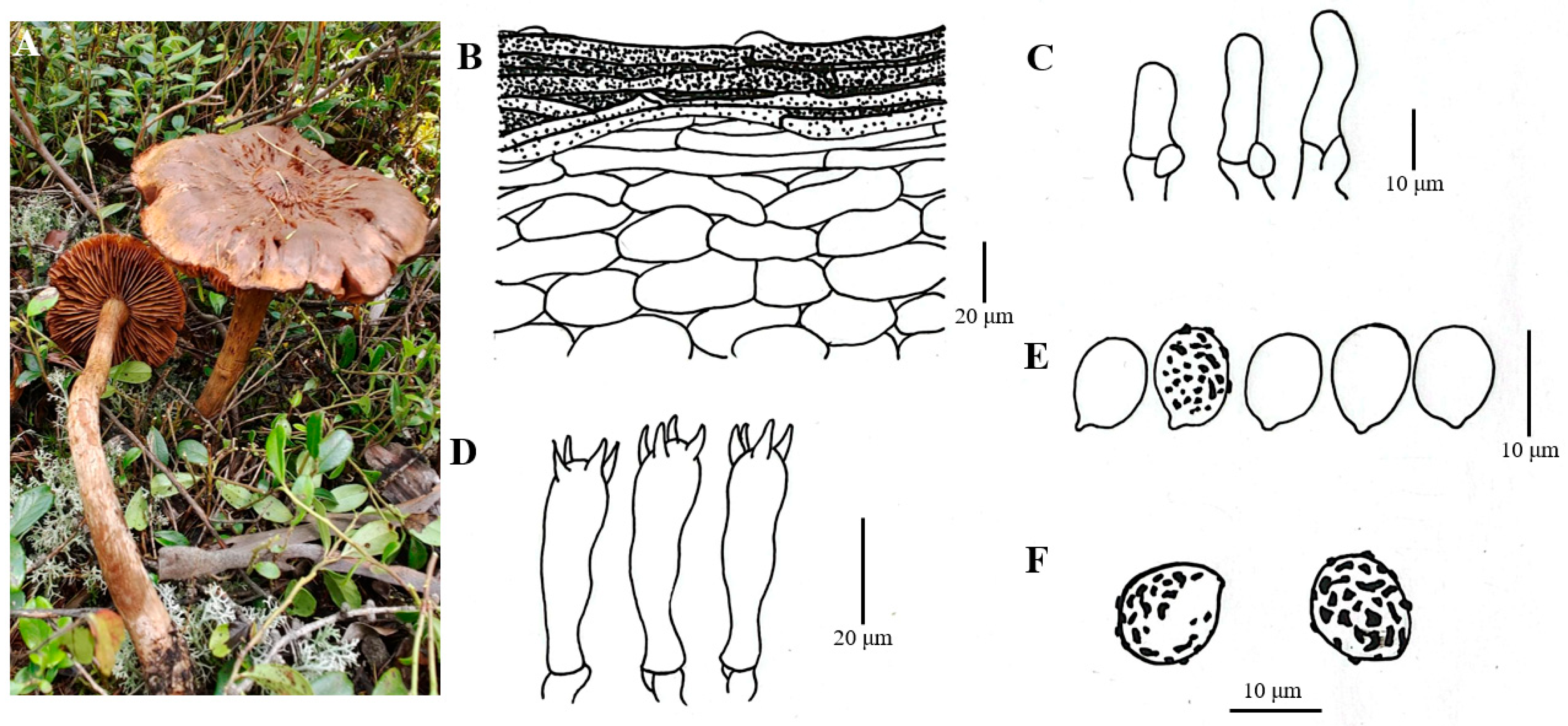
Morphological characteristics: The pileus is typically convex to planoconvex, medium to large, measuring 2.2–7.0 cm in diameter; surface bright orange-yellow with apricot-yellow margin, dry, glabrous or with thin cuticle, more or less covered with concentric, slightly recurved scales; initially uniform in color but darkening with age, appearing pale yellow, yellowish-brown, ochraceous to grayish-red. Lamellae subclose to subdistant, with decurrent teeth, initially yellow or grayish-yellow, later developing rusty or “saw-toothed” coloration, gills crowded and free. Stipe 4–9 cm long, equal or with slightly bulbous base, fleshy-fibrous, dry, pale yellow, golden-yellow, or orange-ochraceous, adorned with grayish-red to reddish-brown fibrillose remnants. A fibrous cortina is often present between the pileus and stipe in juvenile specimens, disappearing with maturation.
Microscopic characteristics: Basidiospores rusty brown, subellipsoid; 8.5–9.0 μm × 6.0–7.0 μm; spore wall thin, with inconspicuous minute ornamentation. Spores are pale yellowish brown; basidia are hyaline, clavate, and 4-spored; pileipellis is composed of perpendicularly oriented hyphae. Ecology: Scattered in birch or pine forests in China’s cold-temperature zone.
Type locality: United States.
Global distribution: United States.
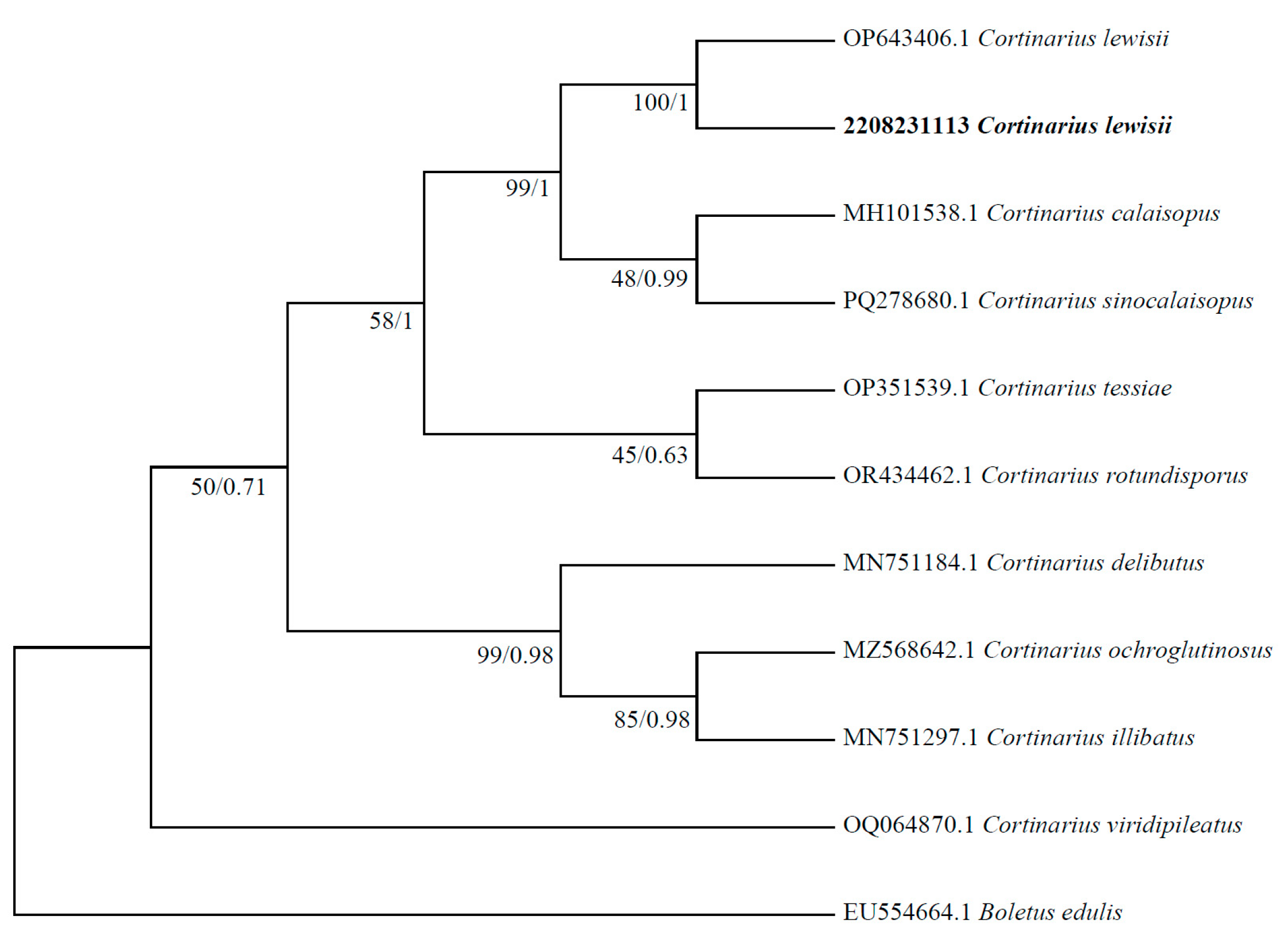
Studied specimen: Heilongjiang Province, Huzhong National Nature Reserve, 23 August 2022, coll. Libin Yang; Yongzhi Liu; Zhichao Cheng, 2208231113. (Figure 10 and Figure 11)
Discussion: C. lewisii belongs to the genus Cortinarius and is a common ectomycorrhizal fungus. The distinguishing characteristics of this species include its orange-yellow pileus surface and the presence of fibrillose remnants on the stipe. In our study, the pileus diameter of the examined material was larger than that of the type specimen described by Miller, and the spore diameter also exceeded the measurements reported for the type species [27]. BLAST analysis (https://blast.ncbi.nlm.nih.gov/) of the ITS sequence from our specimen against the NCBI database showed the highest sequence similarity (100%) with C. lewisii, supported by a posterior probability of 1. Combined with the morphological identification and habitat information of the specimen, this confirms the species identity as C. lewisii.

3.2.5. Cortinarius luteoornatus (M.M. Moser) Bidaud

Cortinarius luteoornatus (M.M. Moser) Bidaud, Moënne-Locc. & Reumaux in Bidaud, Moënne-Loccoz, Reumaux & Henry, Atlas des Cortinaires (Meyzieu) 7: 229 (1995) (GenBank: PX492153).
Macroscopic characteristics: Fruiting bodies medium to large-sized. Pileus 4–6 cm in diameter, yellowish-brown to brown, dark brown at the middle of pileus; pileus surface adorned with small red squamules, smooth to weakly fibrillose.; margin initially bearing reddish-brown to yellowish-brown fibrils, later disappearing; pileus margin incurved when young, becoming expanded with age, broadly umbonate at the disc, darker in color; slightly hygrophanous. Lamellae sinuate to adnate, brown to dark brown, moderately dense to dense, lamellulae of varying lengths, with irregularly serrate edges. Stipe 10.0–11.5 cm long, 0.7–1.0 cm in diameter, cylindrical, bulbous at base (1.7–2.7 cm wide); upper part with persistent orange-red cortina remnants; middle to lower part with incomplete orange-red annular zones; basal mycelium white to pinkish; solid. Context thick, brown to dark brown, without distinctive odor. Taste very mild to absent.
Microscopic characteristics: Basidiospores (9.7–11.6) μm × (5.8–7.1) μm; ellipsoid to elongated ellipsoid; yellowish-brown to brown; moderately to strongly verrucose. Basidia (28–43) μm × (6–10) μm, clavate, bearing four sterigmata. Lamella edge composed of narrowly clavate cells, (17.4–28.1) μm × (4.4–7.7) μm. Pileipellis 4.0–9.7 μm wide, prostrate and interwoven, yellowish-brown to dark brown; suprapellis hyphae with rough or punctate surface; hypoderm composed of subcellular hyphae. Clamp connections present.
Ecology: Gregarious or scattered on the ground in mixed forests of Larix and Betula, pure Larix forests, or Betula forests.
Type locality: France.
Global distribution: Palearctic Realm: France, Germany, United Kingdom, Finland, Denmark, Russia, etc.; Nearctic Realm: United States, Canada.
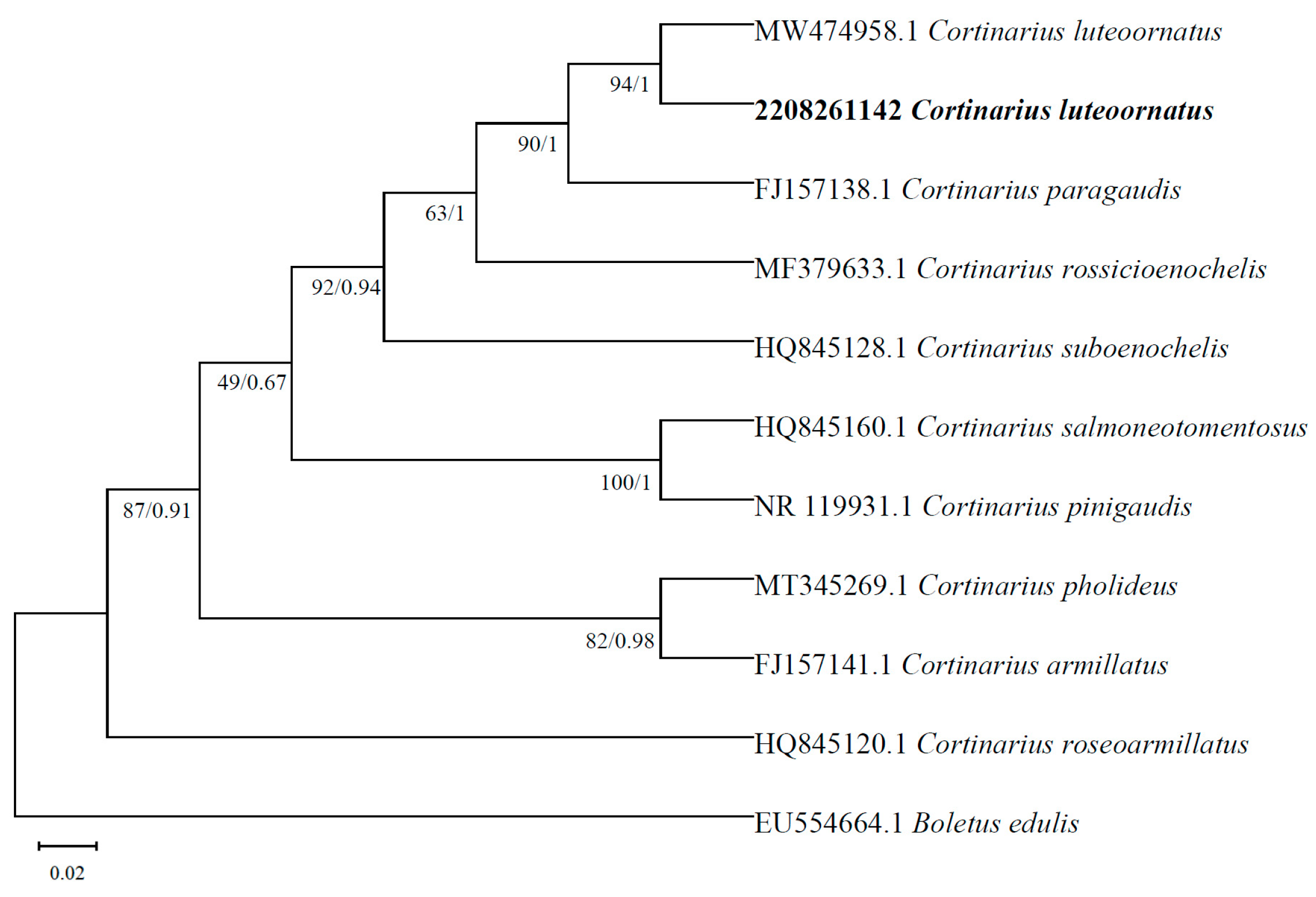
Studied specimen: Heilongjiang Province, Huzhong National Nature Reserve, 26 August 2022, coll. Libin Yang; Zhichao Cheng; Siyuan Liu, 2208261142 (Figure 12 and Figure 13).
Discussion: C. luteoornatus belongs to the genus Cortinarius and is a common ectomycorrhizal fungus. The distinguishing characteristics of this species include a distinct umbo at the pileus center, a distinctly fibrillose surface, and the presence of white to pinkish mycelium at the stipe base. Compared with the type specimen from France, the pileus and stipe of our specimen are slightly smaller (the type specimen [28] exhibits a pileus diameter of 3.5–10 cm and a stipe length of 6–17 cm). However, no significant difference was observed in spore dimensions between our specimen and the type material. BLAST analysis (https://blast.ncbi.nlm.nih.gov/) of the ITS sequence from our specimen against the NCBI database revealed the highest sequence similarity (94%) with C. luteoornatus, supported by a posterior probability of 1. Combined with morphological identification and habitat information, this confirms the species identity as C. luteoornatus.

3.2.6. Russula grisescens Horniček

Russula grisescens Horniček, Česká Mykologie 12(3): 172 (1958) (GenBank: PX492154).
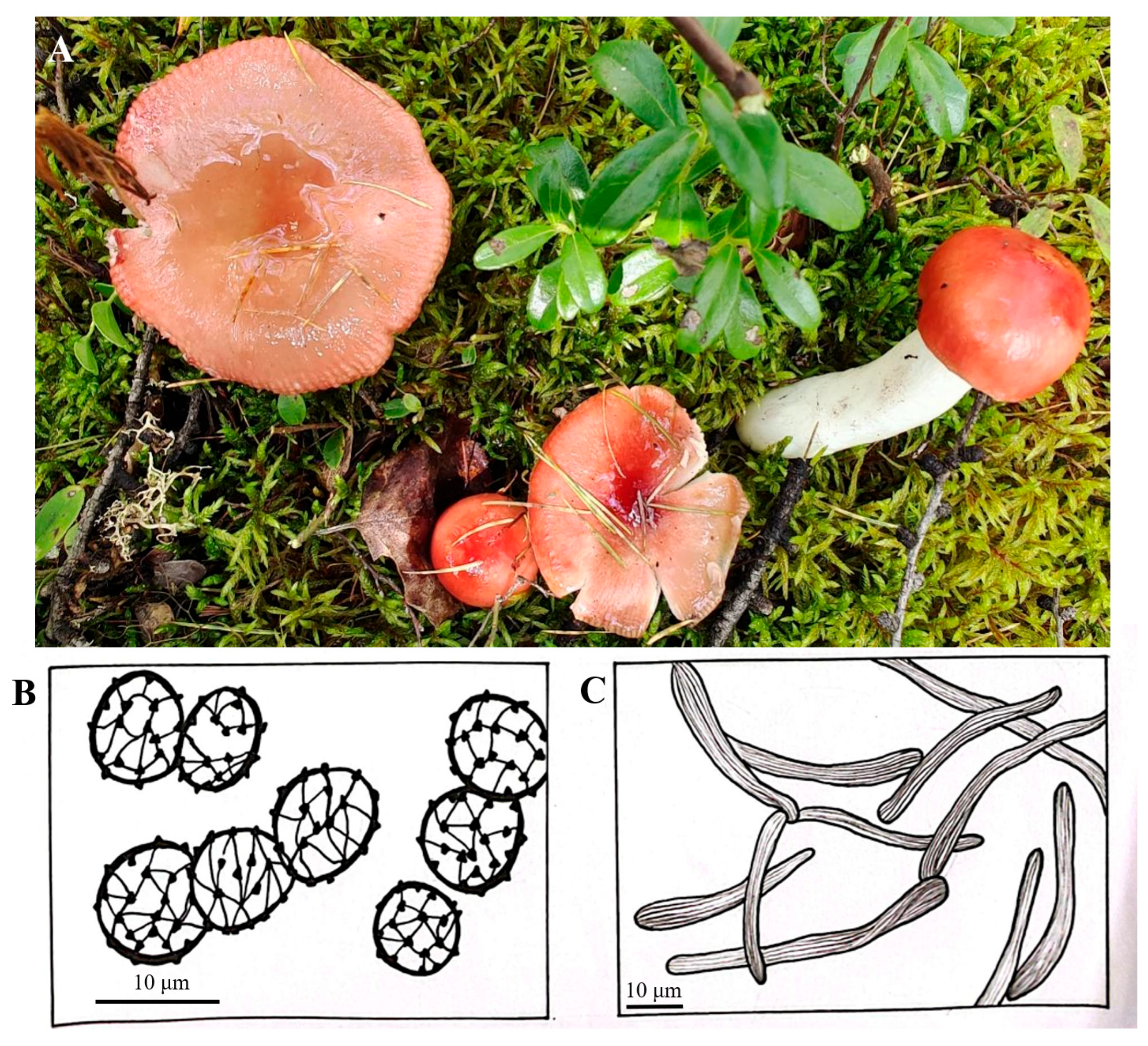
Macroscopic characteristics: Pileus 3.5–7.0 cm in diameter, hemispherical when young, becoming convex to plano-convex with a depressed center; color karminred (carmine red), with marginal areas karminrosa (carmine pink), discoloring at the disc; margin weakly sulcate-ribbed. Gills adnate to sinuate, crowded; white when young, maturing to pale cream-colored; edges even, brittle and easily fragmenting, transvenose. Stipe pure white when young, gradually turning greyish with age; clavate; 3–10 cm long, 0.5–2.0 cm in diameter; the texture is brittle, easy to break. Context brittle; odor not distinctive. Taste moderately to strongly pungent.
Microscopic characteristics: Basidiospores white, faintly yellowish, (7.4–8.6) μm × (5.7–6.8) μm, ellipsoid to subglobose; ornamentation of low obtuse warts (height < 0.5 μm) connected by fine ridges forming a complete reticulum, warts confluent or rarely isolated; Q-value (length/width ratio) = 1.0–1.4. Basidia typically 4-spored, occasionally 1- or 2-spored; basidia hyaline. Cystidia not conspicuous; hyphae thin-walled, often with inflated terminals.
Ecology: Terrestrial in mixed and broadleaf forests.
Type locality: Czechoslovakia
Global distribution: Palearctic Realm: Germany, France, Sweden, United Kingdom, Finland, Denmark, Russia, etc.
Studied specimen: Heilongjiang Province, Huzhong National Nature Reserve, 26 August 2022, coll. Libin Yang; Zhichao Cheng; Siyuan Liu, 2208261121 (Figure 14 and Figure 15).
Discussion: R. grisescens belongs to the genus Russula, which is generally characterized by diverse pileus colors, initially spherical or hemispherical young fruiting bodies, pure white or cream-colored lamellae, often brittle stipes that become hollow with age, and hard, brittle context. Members of this genus are common ectomycorrhizal fungi. The distinguishing features of this species include the distinctive carmine-red coloration of the pileus margin and the characteristic greying of the stipe over time. The spore dimensions of our specimen (7.4–8.6 μm × 5.7–6.8 μm) are slightly smaller than those reported for the type specimen (8–10 μm × 7–8.5 μm), while the pileus and stipe sizes are largely consistent with the type specimen [29]. BLAST analysis (https://blast.ncbi.nlm.nih.gov/) of the ITS sequence from our specimen against the NCBI database revealed the highest sequence similarity (96%) with Russula grisescens, supported by a posterior probability of 1. Combined with morphological identification and habitat information of the specimen, this confirms the species identity as R. grisescens.

4. Discussion

Current taxonomic research on macrofungi primarily relies on an integrated approach combining traditional morphological classification with phylogenetic analysis. The morphological classification system proposed by Romagnesi has gained widespread recognition and application [30]. With the rapid development of molecular biology techniques, the taxonomy of macrofungi has obtained more reliable and precise criteria for identification [31,32]. This is exemplified by recent global and regional taxonomic revisions of species-rich genera such as Cortinarius and Russula, which have increasingly relied on multi-locus molecular data to refine phylogenetic frameworks and stabilize species concepts [33,34,35,36]. This study was conducted in the Huzhong National Nature Reserve, an area that preserves China’s most typical cold-temperate light coniferous forest—the taiga—which represents the southernmost extension of the vast Eurasian taiga belt. Fungal diversity in such ecotonal regions is critical for understanding broader biogeographic patterns.
The six newly recorded species for China discovered in this study all formed well-supported monophyletic clades in the phylogenetic trees (ML bootstrap ≥ 90%, Bayesian posterior probability ≥ 0.98), confirming the reliability of their species identification. Several new records for China discovered in this study extend the known distribution ranges of the corresponding species southward from the Russian Far East to the northernmost part of China. This pattern of southward expansion aligns with and reinforces a growing body of mycogeographic literature documenting the floristic links between the Siberian taiga and the coniferous forests of Northeast China. For instance, similar southward extensions have been noted for certain Cortinarius and Russula in studies from the Russian Far East [37,38,39,40]. All taxa received strong support, with no need for additional morphological reassessment. Meanwhile, the first record of Cortinarius lewisii in Northeast China significantly extends its known range, providing the initial confirmed occurrence in China beyond its previously North American-restricted distribution. This intercontinental disjunction implies two plausible hypotheses: the existence of undiscovered vicariant taxa, or an unrecognized capacity for long-distance dispersal (e.g., via aerial spores or historical co-migration with host plants) [41]. This discovery adds a significant fungal case to the classic East Asian–North American disjunct distribution pattern. Most of these newly recorded species are ectomycorrhizal fungi. Their presence, including taxa like Russula grisescens which is associated with Pinus forests, suggests an ectomycorrhizal fungal community composition that shares key elements with the well-documented taiga forests of Siberia and the Russian Far East, yet may harbor unique aspects due to its ecotonal position.
Although significant progress has been made in the investigation of macrofungal resources in the forest regions of Northeast China, considerable gaps in biodiversity surveys remain due to the vast territory and complex habitats [42,43,44], necessitating more long-term and systematic studies. A primary limitation of this study is the limited number of specimens available, which constrains the assessment of intraspecific morphological variation. Future studies with additional material could undertake a more systematic investigation of their morphological variability. To build upon this foundational work, we propose several specific avenues for future research: (i) Employing multilocus sequencing (e.g., utilizing markers such as RPB2, EF1-α, and LSU) to resolve finer-scale phylogenetic relationships and better assess species boundaries within these groups; (ii) conducting systematic, seasonal surveys across multiple years to document phenological patterns and the full seasonal diversity of the macrofungal community; (iii) initiating functional studies on the ectomycorrhizal associations formed by these newly recorded species, including investigations into host specificity, mycorrhizal morphology, and potential roles in soil nutrient cycling. In the future, with continuous advancements in molecular biology techniques and ongoing investigation efforts, the discovery of more new records for China and even new species is anticipated, which will provide crucial data support for the study of the macrofungal flora in the forest regions of Northeast China and nationwide.

Author Contributions

Conceptualization, L.Y. and Y.L.; methodology, L.Y. and S.L.; software, S.L.; validation, M.G. and X.L.; investigation, S.L., M.G. and X.L.; data curation, Z.C.; writing—original draft preparation, S.L.; writing—review and editing, L.Y. and Y.L.; supervision, M.G.; project administration, M.G.; funding acquisition, L.Y. and Y.L. All authors have read and agreed to the published version of the manuscript.

Funding

This research was funded by the Foundation of the Financial Special Project of Heilongjiang Province (CZKYF2024-1-A008); the National Prohibited Development Zone Transfer Payment Fund Project in Huzhong National Nature Reserve, Heilongjiang Province, 2024 (ZTYX-ZHG-2024056); Survey of Macrofungi and Establishment of Monitoring Plots in Huzhong National Nature Reserve (BYZB-HZ-23119).

Institutional Review Board Statement

Not applicable.

Data Availability Statement

The original contributions presented in this study are included in the article. Further inquiries can be directed to the corresponding authors.

Conflicts of Interest

The authors declare no conflicts of interest.

References

  1. Niego, A.G.T.; Rapior, S.; Thongklang, N.; Raspé, O.; Hyde, K.D.; Mortimer, P. Reviewing the contributions of macrofungi to forest ecosystem processes and services. Fungal Biol. Rev. 2023, 44, 100294. [Google Scholar] [CrossRef]
  2. Deng, X.; Li, M.; Dai, Y.; Zhu, X.; Yan, X.; Wei, Z.; Yuan, Y. The Diversity of Macrofungi in the Forests of Ningxia, Western China. Diversity 2024, 16, 725. [Google Scholar] [CrossRef]
  3. Liu, M.; Wei, Y.; Lian, L.; Wei, B.; Bi, Y.; Liu, N.; Yang, G.; Zhang, Y. Macrofungi promote SOC decomposition and weaken sequestration by modulating soil microbial function in temperate steppe. Sci. Total Env. 2023, 899, 165556. [Google Scholar] [CrossRef] [PubMed]
  4. Liu, D.; Wang, Y.; Zhang, P.; Yu, F.; Perez-Moreno, J. Macrofungi cultivation in shady forest areas significantly increases microbiome diversity, abundance and functional capacity in soil furrows. J. Fungi 2021, 7, 775. [Google Scholar] [CrossRef]
  5. Cheng, Z.; Gao, M.; Pan, H.; Fu, X.; Wei, D.; Lu, X.; Wu, S.; Yang, L. Functional Diversity of Soil Microorganisms in Taiga Forests in the Middle and Late Stages of Restoration after Forest Fires. Forests 2024, 15, 1220. [Google Scholar] [CrossRef]
  6. Wang, W.; Sun, J.; Zhong, Z.; Xiao, L.; Wang, Y.; Wang, H. Relating macrofungal diversity and forest characteristics in boreal forests in China: Conservation effects, inter-forest-type variations, and association decoupling. Ecol. Evo. 2021, 11, 13268–13282. [Google Scholar] [CrossRef] [PubMed]
  7. Soop, K.; Dima, B.; Cooper, J.A.; Park, D.; Oertel, B. A phylogenetic approach to a global supraspecific taxonomy of Cortinarius (Agaricales) with an emphasis on the southern mycota. Persoonia-Mol. Phylogeny Evol. Fungi 2019, 42, 261–290. [Google Scholar] [CrossRef]
  8. Garnica, S.; Weiß, M.; Oertel, B.; Oberwinkler, F. A framework for a phylogenetic classification in the genus Cortinarius (Basidiomycota, Agaricales) derived from morphological and molecular data. Botany 2005, 83, 1457–1477. [Google Scholar] [CrossRef]
  9. Aučina, A.; Rudawska, M.; Leski, T.; Ryliškis, D.; Pietras, M.; Riepšas, E. Ectomycorrhizal fungal communities on seedlings and conspecific trees of Pinus mugo grown on the coastal dunes of the Curonian Spit in Lithuania. Mycorrhiza 2011, 21, 237–245. [Google Scholar] [CrossRef]
  10. Tarvainen, O.; Markkola, A.M.; Str Mmer, R. Diversity of macrofungi and plants in Scots pine forests along an urban pollution gradient. Basic Appl. Ecol. 2003, 4, 547–556. [Google Scholar] [CrossRef]
  11. Brandrud, T.E.; Schmidt-Stohn, G.; Liimatainen, K.; Niskanen, T.; Frøslev, T.G.; Soop, K.; Bojantchev, D.; Kytövuori, I.; Jeppesen, T.S.; Bellù, F. Cortinarius sect. Riederi: Taxonomy and phylogeny of the new section with European and North American distribution. Mycol. Prog. 2018, 17, 1323–1354. [Google Scholar] [CrossRef]
  12. Niskanen, T.; Liimatainen, K.; Kytövuori, I.; Lindström, H.; Dentinger, B.T.; Ammirati, J.F. Cortinarius subgenus Callistei in North America and Europe—Type studies, diversity, and distribution of species. Mycologia 2016, 108, 1018–1027. [Google Scholar] [CrossRef]
  13. Yu, W.; Peng, M.; Wang, J.; Ye, W.; Li, Y.; Zhang, T.; Wang, A.; Zhang, D.; Wang, Z.; Lu, G. Microbial community associated with ectomycorrhizal Russula symbiosis and dominated nature areas in southern China. Fems. Microbiol. Lett. 2021, 368, fnab028. [Google Scholar] [CrossRef] [PubMed]
  14. Tedersoo, L.; Kõljalg, U.; Hallenberg, N.; Larsson, K.H. Fine scale distribution of ectomycorrhizal fungi and roots across substrate layers including coarse woody debris in a mixed forest. New Phytol. 2003, 159, 153–165. [Google Scholar] [CrossRef] [PubMed]
  15. Miller, S.L.; Buyck, B. Molecular phylogeny of the genus Russula in Europe with a comparison of modern infrageneric classifications. Mycol. Res. 2002, 106, 259–276. [Google Scholar] [CrossRef]
  16. Caboň, M.; Eberhardt, U.; Looney, B.; Hampe, F.; Kolařík, M.; Jančovičová, S.; Verbeken, A.; Adamčík, S. New insights in Russula subsect. Rubrinae: Phylogeny and the quest for synapomorphic characters. Mycol. Prog. 2017, 16, 877–892. [Google Scholar] [CrossRef]
  17. Gardes, M.; Bruns, T.D. ITS primers with enhanced specificity for basidiomycetes-application to the identification of mycorrhizae and rusts. Mol. Ecol. 1993, 2, 113–118. [Google Scholar] [CrossRef]
  18. Edgar, R.C. MUSCLE: Multiple sequence alignment with high accuracy and high throughput. Nucleic Acids Res. 2004, 32, 1792–1797. [Google Scholar] [CrossRef]
  19. Koichiro, T.; Glen, S.; Sudhir, K. MEGA11: Molecular Evolutionary Genetics Analysis Version 11. Mol. Bio. Evol. 2021, 7, 3022–3035. [Google Scholar]
  20. Nguyen, L.; Schmidt, H.A.; Von Haeseler, A.; Minh, B.Q. IQ-TREE: A fast and effective stochastic algorithm for estimating maximum-likelihood phylogenies. Mol. Biol. Evol. 2015, 32, 268–274. [Google Scholar] [CrossRef]
  21. Minh, B.Q.; Nguyen, M.A.T.; Von Haeseler, A. Ultrafast approximation for phylogenetic bootstrap. Mol. Biol. Evol. 2013, 30, 1188–1195. [Google Scholar] [CrossRef]
  22. Guindon, S.; Dufayard, J.; Lefort, V.; Anisimova, M.; Hordijk, W.; Gascuel, O. New algorithms and methods to estimate maximum-likelihood phylogenies: Assessing the performance of PhyML 3.0. Syst. Biol. 2010, 59, 307–321. [Google Scholar] [CrossRef] [PubMed]
  23. Ronquist, F.; Teslenko, M.; Van Der Mark, P.; Ayres, D.L.; Darling, A.; Höhna, S.; Larget, B.; Liu, L.; Suchard, M.A.; Huelsenbeck, J.P. MrBayes 3.2: Efficient Bayesian phylogenetic inference and model choice across a large model space. Syst. Biol. 2012, 61, 539–542. [Google Scholar] [CrossRef]
  24. Segedin, B.P.; Pennycook, S.R. A nomenclatural checklist of agarics, boletes, and related secotioid and gasteromycetous fungi recorded from New Zealand. New Zealand J. Bot. 2001, 39, 285–348. [Google Scholar] [CrossRef]
  25. Blytt, A.G. Skrifter Udgivne af Videnskabs-Selskabet i Christiania; Mathematisk-naturvidenskabelig Klasse: Oslo, Norway, 1904; pp. 1–68. [Google Scholar]
  26. Kauffman, C.H. Annual Report of the New York State Museum; New York State Museum: Albany, NY, USA, 1915; pp. 1–101. [Google Scholar]
  27. Jean, B.C. Mycotaxon; Mycotaxon, Ltd.: Ithaca, NY, USA, 1993; pp. 1–462. [Google Scholar]
  28. Bidaud, A.; Moënne-Loccoz, P.; Reumaux, P. Atlas des Cortinaires; Fédération Mycologique Dauphiné-Savoie: Meyzieu, France, 1995; pp. 1–229. [Google Scholar]
  29. Horniček, E. Česká Mykologie; Nakladatelstvi Ceskoslovenske Akademie ved: Praha, Czech Republic, 1958; pp. 1–485. [Google Scholar]
  30. Romagnesi, H. Les Russules d’Europe et d’Afrique du Nord: Essai sur la Valeur Taxinomique et Spécifique des Caractères Morphologiques et Microchimiques des Spores et des Revêtements; Bordas: Paris, France, 1967; pp. 1–626. [Google Scholar]
  31. Undan, J.Q.; Alfonso, D.O.; Dulay, R.M.; De Leon, A.M.; Kalaw, S.P.; Undan, J.R.; Reyes, R.G. Molecular identification and phylogeny of different macrofungi in Mt. Bangkay, Cuyapo, Nueva Ecija, Philippines based on ITS nrDNA region. Adv. Environ. Biol. 2016, 10, 35–43. [Google Scholar]
  32. Psurtseva, N.V.; Kiyashko, A.A.; Senik, S.V.; Pham, T.H.G. Ex Situ Conservation, DNA Barcoding and Enzymatic Potential Evaluation of Macrofungi (Basidiomycota, Ascomycota) from Vietnam. J. Fungi 2025, 11, 34. [Google Scholar] [CrossRef]
  33. Nouhra, E.; Kuhar, F.; Truong, C.; Pastor, N.; Crespo, E.; Mujic, A.; Caiafa, M.V.; Smith, M.E. Thaxterogaster revisited: A phylogenetic and taxonomic overview of sequestrate Cortinarius from Patagonia. Mycologia 2021, 113, 1022–1055. [Google Scholar] [CrossRef]
  34. Gallone, B.; Kuyper, T.W.; Nuytinck, J. The genus Cortinarius should not (yet) be split. IMA Fungus 2024, 15, 24–44. [Google Scholar] [CrossRef]
  35. Zhou, H.; Cheng, G.Q.; Wang, Q.T.; Guo, M.J.; Zhuo, L.; Yan, H.F.; Li, G.J.; Hou, C.L. Morphological characteristics and phylogeny reveal six new species in russula subgenus Russula (Russulaceae, russulales) from Yanshan mountains, North China. J. Fungi 2022, 8, 1283. [Google Scholar] [CrossRef]
  36. Loney, B.P.; Manz, C.; Matheny, P.B.; Adamčík, S. Systematic revision of the Roseinae clade of Russula, with a focus on eastern North American taxa. Mycologia 2022, 114, 270–302. [Google Scholar] [CrossRef]
  37. Vaishlya, O.B.; Kudashova, N.N.; Gashkov, S.I.; Karbysheva, K.S.; Bakhtinskaya, I.A. First list of macromycetes forming ectomycorrhizas in cedar and pine forests of Tomsk region of West Siberia. Int. J. Environ. Stud. 2017, 74, 752–770. [Google Scholar] [CrossRef]
  38. Rebriev, Y.A.; Bulakh, E.M.; Sazanova, N.A.; Shiryaev, A.G. New species of macromycetes for regions of the Russian Far East. 1. Mikol. I Fitopatol. 2020, 54, 278–287. [Google Scholar] [CrossRef]
  39. Miyamoto, Y.; Danilov, A.V.; Bryanin, S.V. The dominance of Suillus species in ectomycorrhizal fungal communities on Larix gmelinii in a post-fire forest in the Rus-sian Far East. Mycorrhiza 2021, 31, 55–66. [Google Scholar] [CrossRef]
  40. Koizumi, T.; Hattori, M.; Nara, K. Ectomycorrhizal fungal communities in al-pine relict forests of Pinus pumila on Mt. Norikura, Japan. Mycorrhiza 2018, 28, 129–145. [Google Scholar] [CrossRef] [PubMed]
  41. Buyck, B.; Antonín, V.; Chakraborty, D.; Baghela, A.; Das, K.; Hofstetter, V. Cantharellus sect. Amethystini in Asia. Mycol. Prog. 2018, 17, 917–924. [Google Scholar] [CrossRef]
  42. Li, Y.; Li, T.; Yang, Z.; Bau, T.; Dai, Y. Overview: Geographical Partition and Distribution of Fungal Resources in China. In Atlas of Chinese Macrofungal Resources: Volume 1: Overview, Macrofungal Ascomycetes, Jelly Fungi and Coral Fungi; Springer: Berlin/Heidelberg, Germany, 2024; pp. 11–47. [Google Scholar]
  43. Cui, Y.; Wu, Y.; Jiang, Y.; Zhu, A.; Wu, F.; Liu, H.; Dai, Y.; Yuan, Y. Diversity of macrofungi in southeast Xizang 1. The wood-decay fungi. Mycology 2025, 16, 635–669. [Google Scholar] [CrossRef] [PubMed]
  44. Wu, F.; Zhou, L.; Yang, Z.; Bau, T.; Li, T.; Dai, Y. Resource diversity of Chinese macrofungi: Edible, medicinal and poisonous species. Fungal Divers. 2019, 98, 1–76. [Google Scholar] [CrossRef]
Figure 1. Study area and plot location.
Diversity 18 00134 g001
Figure 4. C. acutus (A): Basidioma. (B): Spores. (C): Cheilocystides ×400. (D): Cheilocystides ×1000. (E): Pileipellis ×400.
Diversity 18 00134 g004
Figure 5. Phylogenetic tree constructed based on ITS sequences of C. acutus and related species. Branch labels represent bootstrap values > 50% (left) and posterior probabilities > 0.70 (right). The studied specimen is highlighted in bold.
Diversity 18 00134 g005
Figure 6. P. balteatum (A): Basidioma. (B): Spores. (C): Spores. (D): Hyphaes. (E): Cheilocystides.
Diversity 18 00134 g006
Figure 7. Phylogenetic tree constructed based on ITS sequences of P. balteatum and related species. Branch labels represent bootstrap values > 50% (left) and posterior probabilities > 0.70 (right). The studied specimen is highlighted in bold.
Diversity 18 00134 g007
Figure 8. C. huronensis (A): Basidioma. (B): Spores. (C): Pileipellis. (D): Pileal trama. (E): Pileipellis.
Diversity 18 00134 g008
Figure 9. Phylogenetic tree constructed based on ITS sequences of C. huronensis and related species. Branch labels represent bootstrap values > 50% (left) and posterior probabilities > 0.70 (right). The studied specimen is highlighted in bold.
Diversity 18 00134 g009
Figure 10. C. lewisii (A): Basidioma. (B): Pileipellis. (C): Spores.
Diversity 18 00134 g010
Figure 11. Phylogenetic tree constructed based on ITS sequences of C. lewisii and related species. Branch labels represent bootstrap values > 50% (left) and posterior probabilities > 0.70 (right). The studied specimen is highlighted in bold.
Diversity 18 00134 g011
Figure 12. C. luteoornatus (A): Basidioma. (B): Pileipellis. (C): Hyphal tip. (D): Basidia. (E): Spores. (F): Spores.
Diversity 18 00134 g012
Figure 13. Phylogenetic tree constructed based on ITS sequences of C. luteoornatus and related species. Branch labels represent bootstrap values > 50% (left) and posterior probabilities > 0.70 (right). The studied specimen is highlighted in bold.
Diversity 18 00134 g013
Figure 14. R. grisescens (A): Basidioma. (B): Spores. (C): Hyphaes.
Diversity 18 00134 g014
Figure 15. Phylogenetic tree constructed based on ITS sequences of R. grisescens and related species. Branch labels represent bootstrap values > 50% (left) and posterior probabilities > 0.70 (right). The studied specimen is highlighted in bold.
Diversity 18 00134 g015
Table 1. Best-fit models for phylogenetic trees for each species.
NumberSpeciesThe Best-Fit Model of Bayes Tree
1Cortinarius acutusK2+G+I
2Phlegmacium balteatumT92+G
3Cortinarius huronensisK2
4Cortinarius lewisiiK2+G
5Cortinarius luteoornatusK2
6Russula grisescensK2+G
Disclaimer/Publisher’s Note: The statements, opinions and data contained in all publications are solely those of the individual author(s) and contributor(s) and not of MDPI and/or the editor(s). MDPI and/or the editor(s) disclaim responsibility for any injury to people or property resulting from any ideas, methods, instructions or products referred to in the content.