
Various Community Structures of Root-Associated Bacteria, Archaea, and Fungi of Spartina alterniflora


Abstract
1. Introduction
2. Materials and Methods
2.1. Sampling Sites and Sample Collection
2.2. Extraction of Root Exudates
2.3. DNA Extraction, Amplification, and Sequencing
2.4. Sequence Analysis of 16S rRNA and ITS1 Gene Amplicons
2.5. Shotgun Metagenome Sequencing Data Analysis
2.6. Statistical Analysis
3. Results
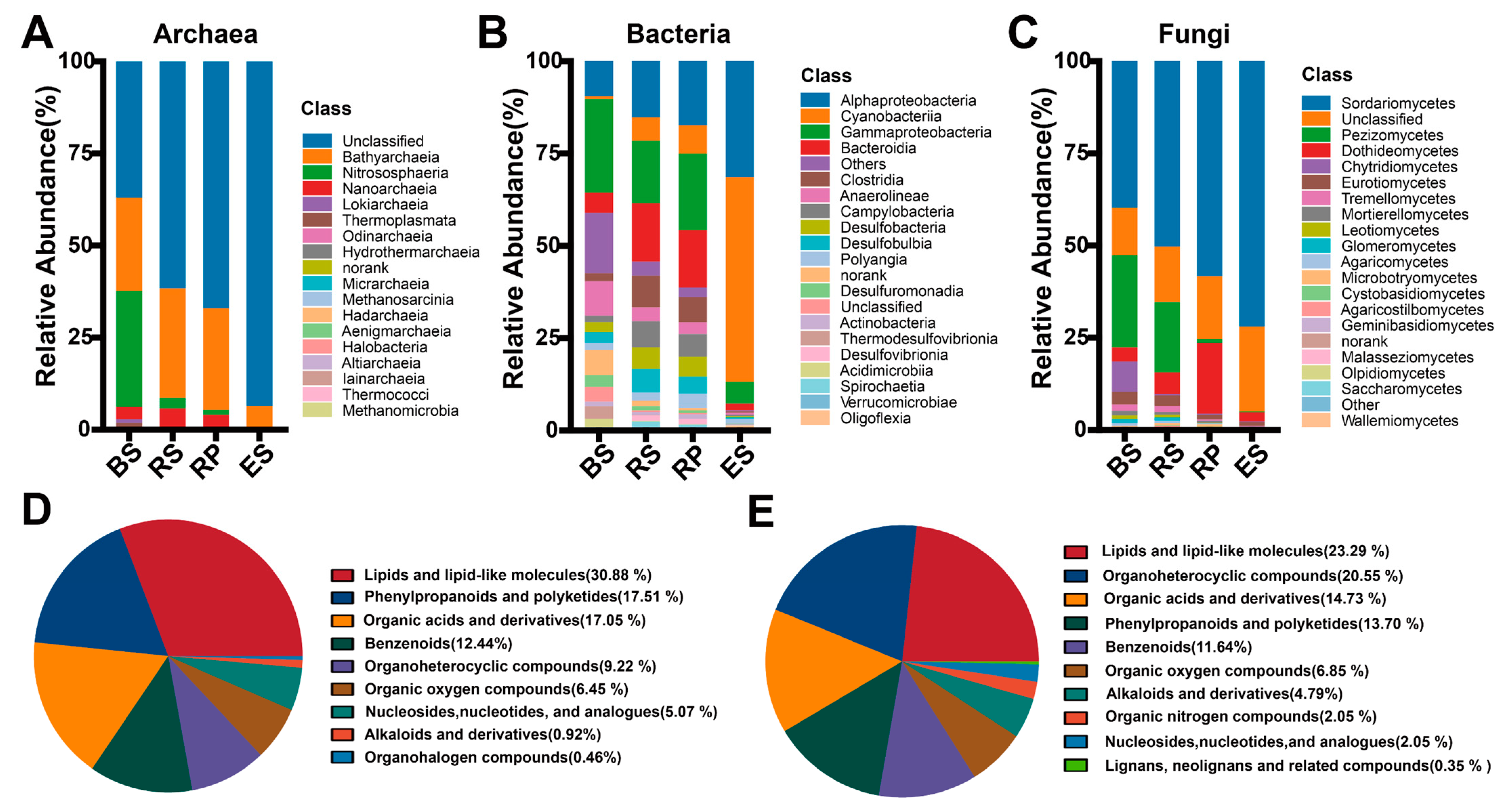
3.1. Compositions of Microbial Communities and Exudates of the Root Compartments of S. alterniflora
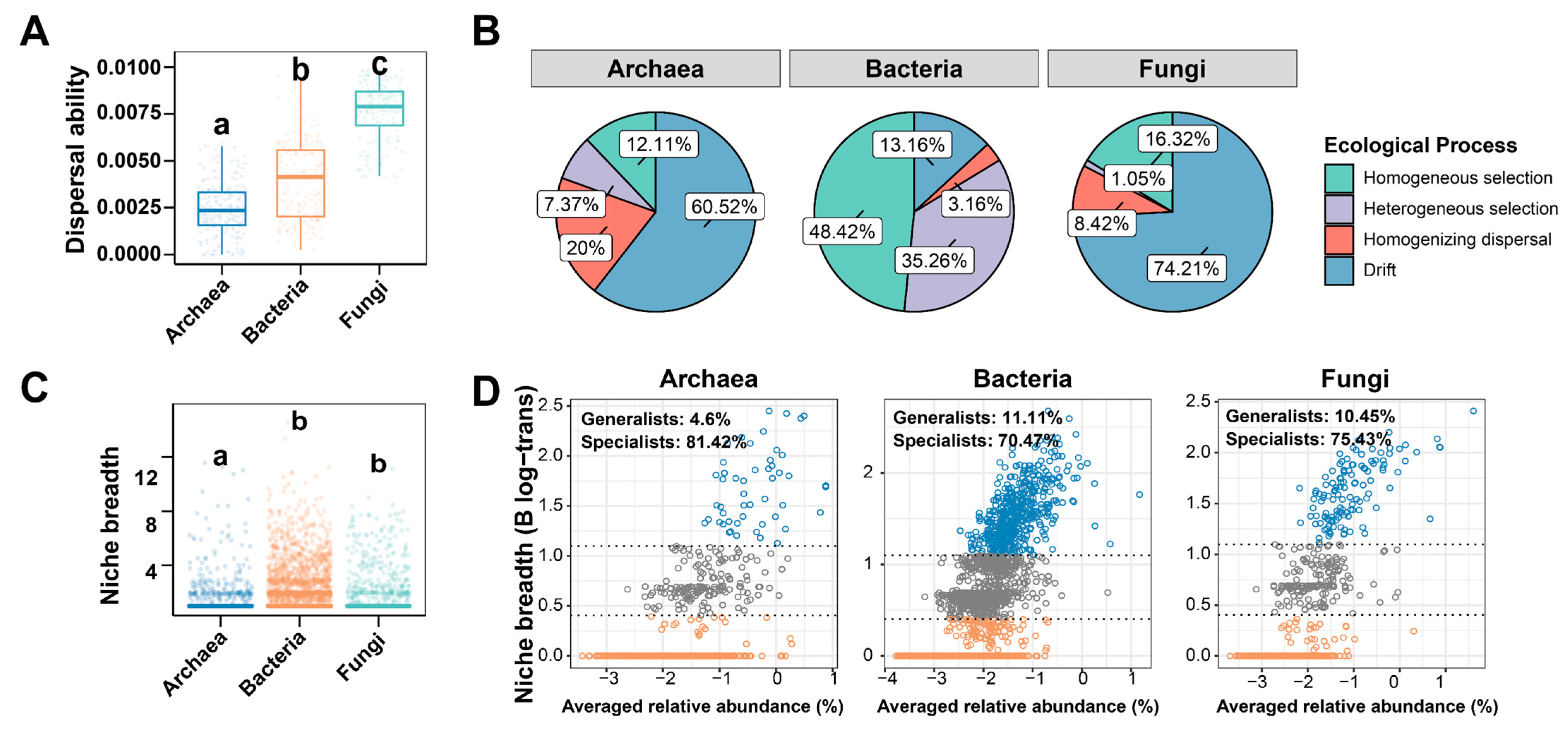
3.2. Analysis of Niche Breadth and Community Assembly Process of Archaeal, Bacterial and Fungal Communities
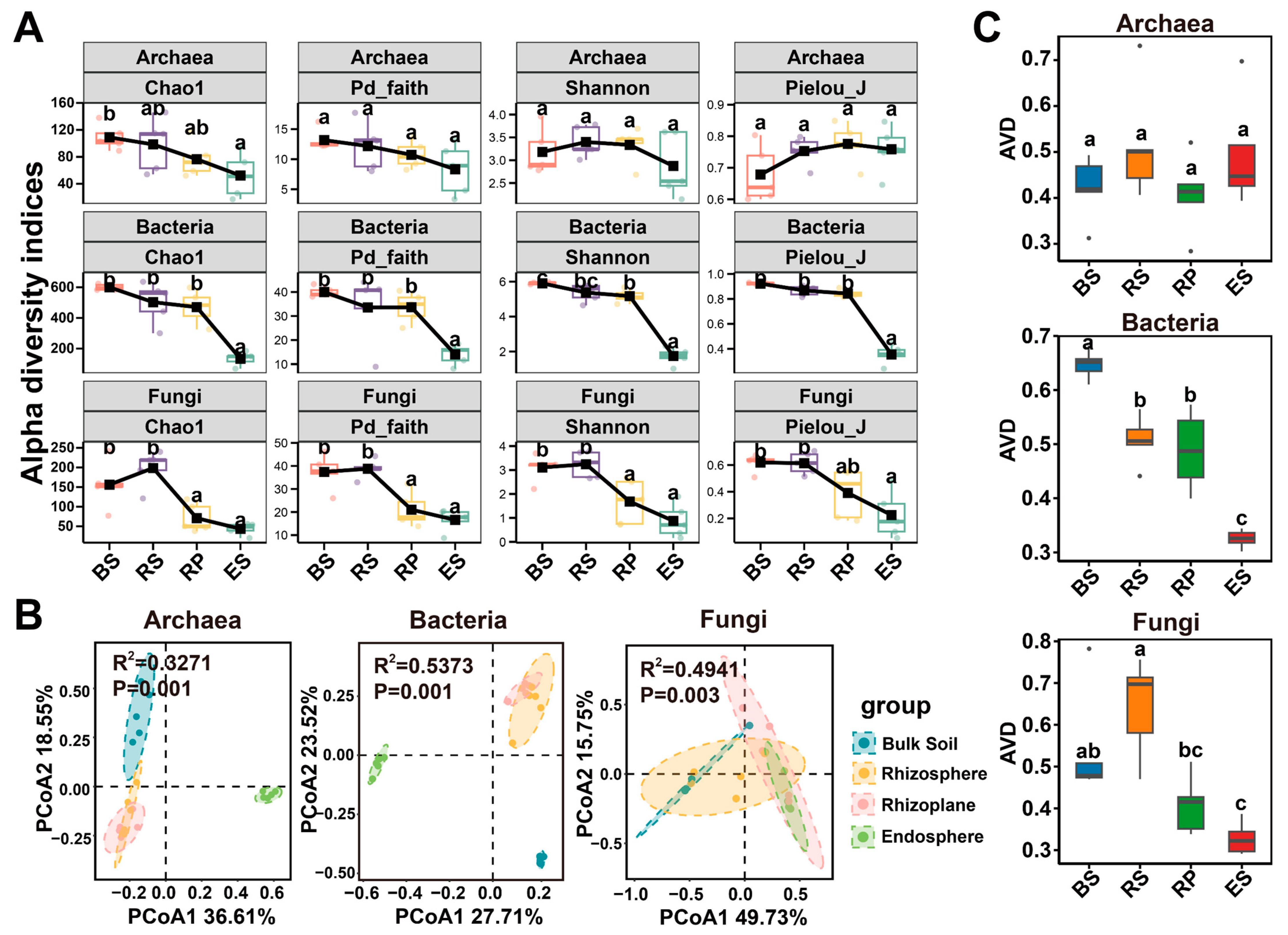
3.3. Diversity of Archaea, Bacterial and Fungal Microbial Communities Among Four S. alterniflora Root Compartments
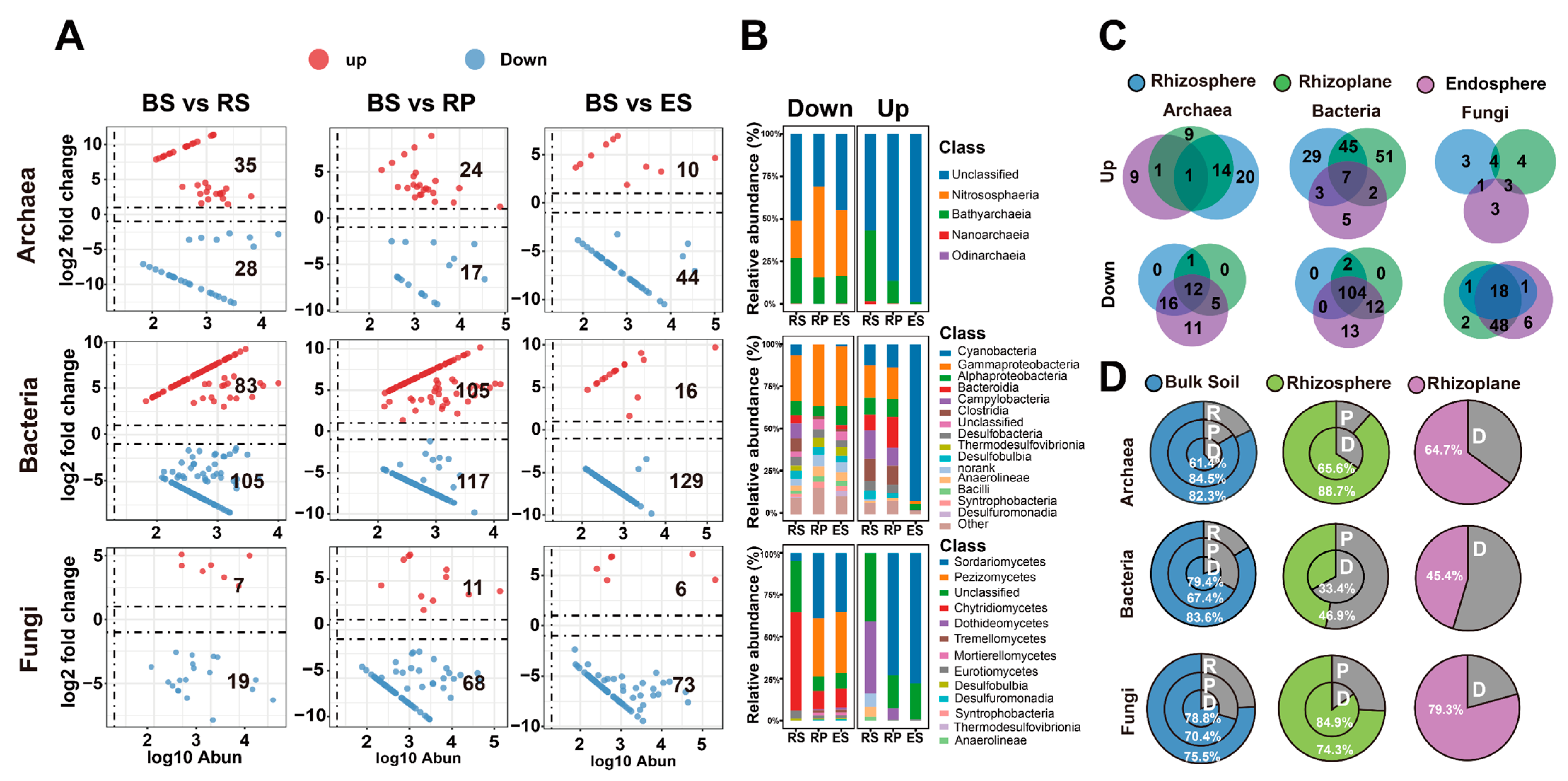
3.4. Increases/Decreases in the Number of Microbial ASVs Among Four S. alterniflora Root Compartments
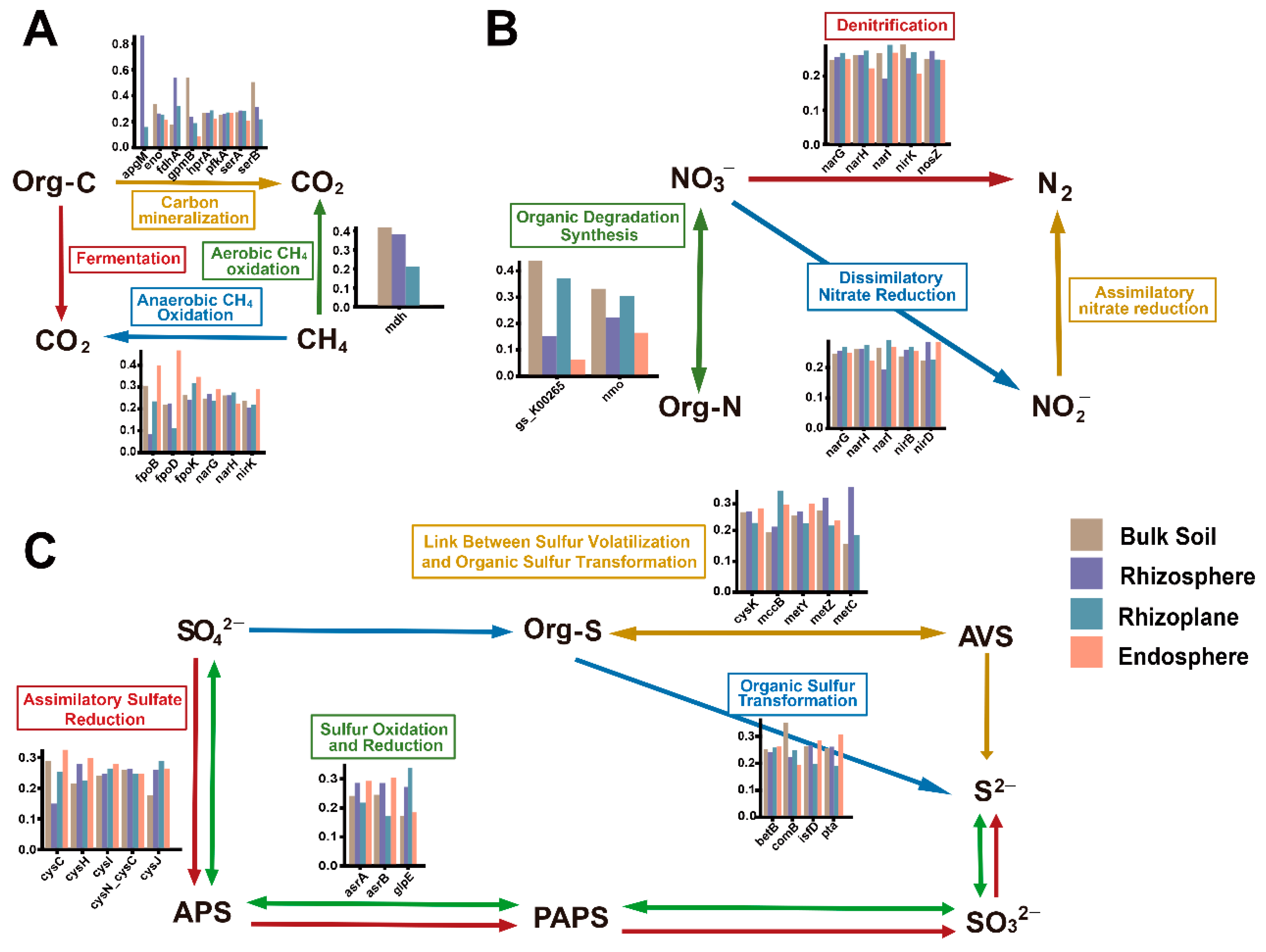
3.5. The Relative Abundances of Function Genes of Root-Associated Microorganisms in the S. alterniflora Root Compartments
4. Discussion
4.1. Environmental Flexibility of the Root-Associated Archaea, Bacteria, and Fungi of S. alterniflora
4.2. The Diversity and Stability of Archaea, Bacteria, and Fungi in Four Root Compartments
4.3. Increased/Decreased Microbial ASVs Among Four S. alterniflora Root Compartments
5. Conclusions
Supplementary Materials
Author Contributions
Funding
Institutional Review Board Statement
Data Availability Statement
Conflicts of Interest
References
- Zheng, X.; Javed, Z.; Liu, B.; Zhong, S.; Cheng, Z.; Rehman, A.; Du, D.; Li, J. Impact of Spartina alterniflora invasion in coastal wetlands of China: Boon or bane? Biology 2023, 12, 1057. [Google Scholar] [CrossRef] [Scilit]
- Zhang, T.; Song, B.; Wang, L.; Li, Y.; Wang, Y.; Yuan, M. Spartina alterniflora invasion reduces soil microbial diversity and weakens soil microbial inter-species relationships in coastal wetlands. Front. Microbiol. 2024, 15, 1422534. [Google Scholar] [CrossRef] [Scilit] [PubMed]
- Meng, W.; Feagin, R.A.; Innocenti, R.A.; Hu, B.; He, M.; Li, H. Invasion and ecological effects of exotic smooth cordgrass Spartina alterniflora in China. Ecol. Eng. 2020, 143, 105670. [Google Scholar] [CrossRef] [Scilit]
- Li, B.; Liao, C.-H.; Zhang, X.-D.; Chen, H.-L.; Wang, Q.; Chen, Z.-Y.; Gan, X.-J.; Wu, J.-H.; Zhao, B.; Ma, Z.-J. Spartina alterniflora invasions in the Yangtze River estuary, China: An overview of current status and ecosystem effects. Ecol. Eng. 2009, 35, 511–520. [Google Scholar] [CrossRef] [Scilit]
- Li, G.L.; Xu, S.X.; Tang, Y.; Wang, Y.J.; Lou, J.B.; Zhang, Q.Y.; Zheng, X.J.; Li, J.; Iqbal, B.; Cheng, P.F.; et al. Invasion altered soil greenhouse gas emissions via affecting labile organic carbon in a coastal wetland. Appl. Soil Ecol. 2024, 203, 105615. [Google Scholar] [CrossRef] [Scilit]
- Ren, G.; Zhao, Y.; Wang, J.; Wu, P.; Ma, Y. Ecological effects analysis of Spartina alterniflora invasion within Yellow River delta using long time series remote sensing imagery. Estuar. Coast. Shelf Sci. 2021, 249, 107111. [Google Scholar] [CrossRef] [Scilit]
- Wang, A.; Chen, J.; Li, D. Impact of Spartina alterniflora on sedimentary environment of coastal wetlands of the Quanzhou Bay. Ocean Eng. 2008, 26, 60–69. [Google Scholar]
- Williams, A.; Sinanaj, B.; Hoysted, G.A. Plant–microbe interactions through a lens: Tales from the mycorrhizosphere. Ann. Bot. 2024, 133, 399–412. [Google Scholar] [CrossRef] [Scilit]
- Zhuang, W.; Yu, X.; Hu, R.; Luo, Z.; Liu, X.; Zheng, X.; Xiao, F.; Peng, Y.; He, Q.; Tian, Y.; et al. Diversity, function and assembly of mangrove root-associated microbial communities at a continuous fine-scale. npj Biofilms Microbiomes 2020, 6, 52. [Google Scholar] [CrossRef] [Scilit]
- Durán, P.; Thiergart, T.; Garrido-Oter, R.; Agler, M.; Kemen, E.; Schulze-Lefert, P.; Hacquard, S. Microbial interkingdom interactions in roots promote Arabidopsis survival. J. Cell 2018, 175, 973–983.e914. [Google Scholar] [CrossRef] [Scilit]
- Mendes, R.; Garbeva, P.; Raaijmakers, J.M. The rhizosphere microbiome: Significance of plant beneficial, plant pathogenic, and human pathogenic microorganisms. FEMS Microbiol. Rev. 2013, 37, 634–663. [Google Scholar] [CrossRef] [Scilit] [PubMed]
- Bei, S.; Zhang, Y.; Li, T.; Christie, P.; Li, X.; Zhang, J.J. Response of the soil microbial community to different fertilizer inputs in a wheat-maize rotation on a calcareous soil. Agric. Ecosyst. Environ. 2018, 260, 58–69. [Google Scholar] [CrossRef] [Scilit]
- Hirsch, P.R.; Mauchline, T.H. The importance of the microbial N cycle in soil for crop plant nutrition. Adv. Appl. Microbiol. 2015, 93, 45–71. [Google Scholar] [PubMed]
- Igiehon, N.O.; Babalola, O.O. Rhizosphere microbiome modulators: Contributions of nitrogen fixing bacteria towards sustainable agriculture. Int. J. Environ. Res. 2018, 15, 574. [Google Scholar] [CrossRef] [Scilit]
- Rolando, J.L.; Kolton, M.; Song, T.; Kostka, J.E. The core root microbiome of Spartina alterniflora is predominated by sulfur-oxidizing and sulfate-reducing bacteria in Georgia salt marshes, USA. Microbiome 2022, 10, 37. [Google Scholar] [CrossRef] [Scilit]
- Liu, H.; Zhang, Y.; Xu, X.; Li, S.; Wu, J.; Li, B.; Nie, M. Root plasticity benefits a global invasive species in eutrophic coastal wetlands. Funct. Ecol. 2024, 38, 165–178. [Google Scholar] [CrossRef] [Scilit]
- Edwards, J.; Johnson, C.; Santos-Medellín, C.; Lurie, E.; Podishetty, N.K.; Bhatnagar, S.; Eisen, J.A.; Sundaresan, V. Structure, variation, and assembly of the root-associated microbiomes of rice. Proc. Natl. Acad. Sci. USA 2015, 112, E911–E920. [Google Scholar] [CrossRef] [Scilit]
- Chan, Y.H. Enhancing the diffusion capabilities of oxygen ions and hydrogen protons in protonic ceramic fuel cells at intermediate temperatures through doping material and ratio adjustments. Model. Simul. Mater. Sci. Eng. 2024, 32, 085021. [Google Scholar] [CrossRef] [Scilit]
- Chiminazzo, M.A.; Bombo, A.B.; Charles-Dominique, T.; Fidelis, A. Correction to: Bark production of generalist and specialist species across savannas and forests in the Cerrado. Ann. Bot. 2023, 131, 613–621. [Google Scholar] [CrossRef] [Scilit]
- Edwards, J.A.; Santos-Medellín, C.M.; Liechty, Z.S.; Nguyen, B.; Lurie, E.; Eason, S.; Phillips, G.; Sundaresan, V. Compositional shifts in root-associated bacterial and archaeal microbiota track the plant life cycle in field-grown rice. PLoS Biol. 2018, 16, e2003862. [Google Scholar] [CrossRef] [Scilit]
- Trivedi, P.; Leach, J.E.; Tringe, S.G.; Sa, T.; Singh, B.K. Plant–microbiome interactions: From community assembly to plant health. Nat. Rev. Microbiol. 2020, 18, 607–621. [Google Scholar] [CrossRef] [Scilit] [PubMed]
- Ling, N.; Wang, T.; Kuzyakov, Y. Rhizosphere bacteriome structure and functions. Nat. Commun. 2022, 13, 836. [Google Scholar] [CrossRef] [Scilit] [PubMed]
- Jung, J.; Kim, J.-S.; Taffner, J.; Berg, G.; Ryu, C.-M. Archaea, tiny helpers of land plants. Comput. Struct. Biotechnol. J. 2020, 18, 2494–2500. [Google Scholar] [CrossRef] [Scilit] [PubMed]
- Wang, K.; Wang, S.; Zhang, X.; Wang, W.; Wang, X.; Kong, F.; Xi, M. The amelioration and improvement effects of modified biochar derived from Spartina alterniflora on coastal wetland soil and Suaeda salsa growth. Environ. Res. 2023, 240, 117426. [Google Scholar] [CrossRef] [Scilit]
- van der Heijden, M.G.; Schlaeppi, K. Root surface as a frontier for plant microbiome research. Proc. Natl. Acad. Sci. USA 2015, 112, 2299–2300. [Google Scholar] [CrossRef] [Scilit]
- Zhang, Y.; Zhan, J.; Ma, C.; Liu, W.; Huang, H.; Yu, H.; Christie, P.; Li, T.; Wu, L. Root-associated bacterial microbiome shaped by root selective effects benefits phytostabilization by Athyrium wardii (Hook.). Ecotoxicol. Environ. Saf. 2024, 269, 115739. [Google Scholar] [CrossRef] [Scilit]
- Xun, W.; Liu, Y.; Li, W.; Ren, Y.; Xiong, W.; Xu, Z.; Zhang, N.; Miao, Y.; Shen, Q.; Zhang, R. Specialized metabolic functions of keystone taxa sustain soil microbiome stability. Microbiome 2021, 9, 35. [Google Scholar] [CrossRef] [Scilit]
- Aqeel, M.; Ran, J.; Hu, W.; Irshad, M.K.; Dong, L.; Akram, M.A.; Eldesoky, G.E.; Aljuwayid, A.M.; Chuah, L.F.; Deng, J.J.C. Plant-soil-microbe interactions in maintaining ecosystem stability and coordinated turnover under changing environmental conditions. Chemosphere 2023, 318, 137924. [Google Scholar] [CrossRef] [Scilit]
- Coyte, K.Z.; Schluter, J.; Foster, K.R.J.S. The ecology of the microbiome: Networks, competition, and stability. Science 2015, 350, 663–666. [Google Scholar] [CrossRef] [Scilit]
- Kuiper, J.J.; Van Altena, C.; De Ruiter, P.C.; Van Gerven, L.P.; Janse, J.H.; Mooij, W.M. Food-web stability signals critical transitions in temperate shallow lakes. Nat. Commun. 2015, 6, 7727. [Google Scholar] [CrossRef] [Scilit]
- Li, W.; Zheng, M.; Wang, C.; Shen, R. Nitrososphaera may be a major driver of nitrification in acidic soils. Soils 2021, 53, 13–20. [Google Scholar]
- Zhao, J.; Huang, L.; Chakrabarti, S.; Cooper, J.; Choi, E.; Ganan, C.; Tolchinsky, B.; Triplett, E.W.; Daroub, S.H.; Martens-Habbena, W. Nitrogen and phosphorous acquisition strategies drive coexistence patterns among archaeal lineages in soil. ISME J. 2023, 17, 1839–1850. [Google Scholar] [CrossRef] [Scilit]
- Dev, T.; Herbert, J. How Plant Root Exudates Shape the Nitrogen Cycle. Trends Plant Sci. 2017, 22, 661–673. [Google Scholar] [CrossRef] [Scilit]
- Nawaz, T.; Saud, S.; Gu, L.; Khan, I.; Fahad, S.; Zhou, R. Cyanobacteria: Harnessing the power of microorganisms for plant growth promotion, stress alleviation, and phytoremediation in the Era of sustainable agriculture. Plant Stress 2024, 11, 100399. [Google Scholar] [CrossRef] [Scilit]
- Cameron, E.S.; Sanchez, S.; Goldman, N.; Blaxter, M.L.; Finn, R.D. Diversity and specificity of molecular functions in cyanobacterial symbionts. Sci. Rep. 2024, 14, 18658. [Google Scholar] [CrossRef] [Scilit]
- Ekwomadu, T.I.; Mwanza, M. Fusarium fungi pathogens, identification, adverse effects, disease management, and global food security: A review of the latest research. Agriculture 2023, 13, 1810. [Google Scholar] [CrossRef] [Scilit]
- Yu, F.-M.; Jayawardena, R.S.; Luangharn, T.; Zeng, X.-Y.; Li, C.-J.-Y.; Bao, S.-X.; Ba, H.; Zhou, D.-Q.; Tang, S.-M.; Hyde, K.D. Species diversity of fungal pathogens on cultivated mushrooms: A case study on morels (Morchella, Pezizales). Fungal Divers. 2024, 125, 157–220. [Google Scholar] [CrossRef] [Scilit]
- van de Vossenberg, B.T.; Warris, S.; Nguyen, H.D.; van Gent-Pelzer, M.P.; Joly, D.L.; van de Geest, H.C.; Bonants, P.J.; Smith, D.S.; Lévesque, C.A.; van der Lee, T.A. Comparative genomics of chytrid fungi reveal insights into the obligate biotrophic and pathogenic lifestyle of Synchytrium endobioticum. Sci. Rep. 2019, 9, 8672. [Google Scholar] [CrossRef] [Scilit] [PubMed]



Disclaimer/Publisher’s Note: The statements, opinions and data contained in all publications are solely those of the individual author(s) and contributor(s) and not of MDPI and/or the editor(s). MDPI and/or the editor(s) disclaim responsibility for any injury to people or property resulting from any ideas, methods, instructions or products referred to in the content. |
© 2026 by the authors. Licensee MDPI, Basel, Switzerland. This article is an open access article distributed under the terms and conditions of the Creative Commons Attribution (CC BY) license.
Share and Cite
Zhao, S.; Zhang, Y.; Tang, C.; Qu, W. Various Community Structures of Root-Associated Bacteria, Archaea, and Fungi of Spartina alterniflora. Diversity 2026, 18, 211. https://doi.org/10.3390/d18040211
Zhao S, Zhang Y, Tang C, Qu W. Various Community Structures of Root-Associated Bacteria, Archaea, and Fungi of Spartina alterniflora. Diversity. 2026; 18(4):211. https://doi.org/10.3390/d18040211
Chicago/Turabian StyleZhao, Shufang, Yixuan Zhang, Chunyu Tang, and Wu Qu. 2026. "Various Community Structures of Root-Associated Bacteria, Archaea, and Fungi of Spartina alterniflora" Diversity 18, no. 4: 211. https://doi.org/10.3390/d18040211
APA StyleZhao, S., Zhang, Y., Tang, C., & Qu, W. (2026). Various Community Structures of Root-Associated Bacteria, Archaea, and Fungi of Spartina alterniflora. Diversity, 18(4), 211. https://doi.org/10.3390/d18040211