1. Introduction
Soil microbial health refers to the overall condition in which the microbial community maintains its diversity, ecological functionality, and capacity for environmental adaptation [
1,
2,
3]. It serves as a key indicator for assessing the stability and productivity of the soil ecosystem. Microorganisms play a crucial role in the biogeochemical cycling of elements such as carbon, nitrogen, and phosphorus, transforming atmospheric carbon dioxide and nitrogen into forms that plants can absorb and utilize [
4,
5]. By decomposing plant and animal residues as well as organic pollutants, microorganisms facilitate the synthesis and breakdown of soil organic matter—a process essential for the development of soil fertility. Studies indicate that microbial activity contributes to the formation of soil aggregates larger than 0.25 mm [
4]. These aggregates function like sponges, retaining water and air while sequestering nutrients. A healthy soil microbial community is characterized by high diversity and stability, enabling it to effectively respond to environmental changes. However, industrial pollutants such as crude oil exert significant and direct toxic effects on soil microorganisms, potentially disrupting community structure and impairing functional capabilities [
6]. The Yellow River Delta represents a significant wetland ecosystem and is China’s key oil production base. The primary sources of pollution include oil leakage incidents during extraction and transportation processes, as well as residual contamination from historically abandoned oil wells. Studies indicate that surface sediments near sealed and abandoned wells are contaminated with polycyclic aromatic hydrocarbons (PAHs), with varying ecological recovery observed across sites closed at different times [
7]. These differences highlight the influence of pollution duration on ecosystem restoration [
8]. The pollution level is relatively severe in concentrated oil extraction areas, such as the Binan Oilfield, whereas it is comparatively mild in the core zones of nature reserves. This spatial distribution highlights the necessity of formulating region-specific ecological risk assessment and remediation strategies. Persistent organic pollutants, particularly polycyclic aromatic hydrocarbons (PAHs) present in crude oil, exhibit “carcinogenic, teratogenic, and mutagenic” properties, posing threats not only to soil ecosystem health but also potentially impacting human health through the food chain [
9]. It is important to note, however, that not all constituents of crude oil uniformly exhibit these toxicological effects, as toxicity varies significantly depending on the specific compound structure, concentration, and environmental bioavailability.
Phytoremediation is an environmentally friendly technique that employs plants and their rhizosphere microbial communities to eliminate soil contaminants [
10,
11]. Previous studies have indicated that microbial diversity in crude oil-contaminated soil typically declines by over 40%, with sensitive microbial groups, such as nitrogen-fixing bacteria, experiencing up to 90% reductions [
12]. The soil microbial community undergoes adaptive structural and functional changes throughout the remediation process, which indicate remediation efficacy and actively influence the overall remediation dynamics [
12,
13,
14]. Microbial remediation, which enhances natural processes, offers several advantages, including low cost, environmental sustainability, in situ treatment, and the absence of secondary pollution [
15,
16]. Research on microbial remediation of crude oil-contaminated soil in the Yellow River Delta holds theoretical and practical significance. Theoretically, this research contributes to a deeper understanding of microbial adaptation mechanisms and community succession patterns under extreme environmental stress. The findings can directly inform regional ecological restoration efforts and provide technical support for balancing petroleum resource development and environmental protection. Specifically, this study delves into the mechanisms by which crude oil pollution impacts soil microorganisms in the Yellow River Delta, as well as the changes in microbial community composition prior to and subsequent to the application of phytoremediation technology. By comprehensively analyzing the ecological responses and remediation potential of microbial communities, this research aims to offer a scientific basis for regional ecological restoration and sustainable development.
2. Materials and Methods
2.1. Sample Collection
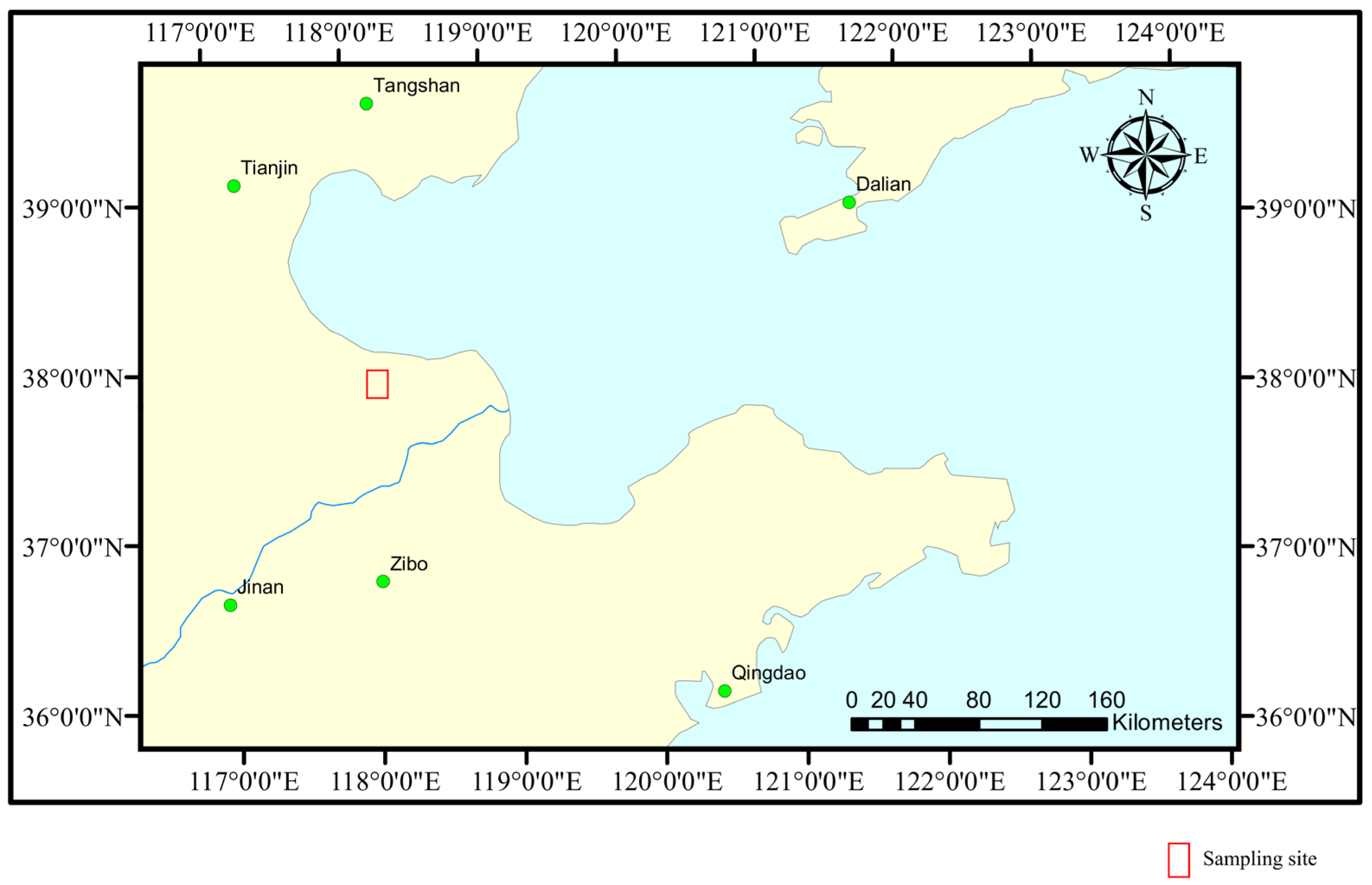
For the purposes of this research, a total of 30 soil samples were systematically collected (
Figure 1). Specifically, 15 samples were collected from a petroleum-contaminated site (Group S, S1–S15) and 15 samples from a phytoremediated site (Group R, R1–R15). At each site, three 10 m × 10 m replicate plots were established. Within each plot, five sampling points were randomly selected, resulting in five independent soil samples per plot. At the bioremediated site, the grass Cynodon dactylon was planted as the primary remediation plant, along with scattered herbaceous species. Both sites share similar pedological conditions, and the soil is classified as coastal saline–alkaline fluvo-aquic soil (Calcaric Fluvisol, FAO classification). The region has a warm–temperate monsoon climate, with a mean annual temperature of 12.6 °C and a mean annual precipitation of 560 mm, which is mainly concentrated in the summer months. The salt content increases with depth and during the dry seasons. Soil physicochemical properties (e.g., pH, electrical conductivity, total organic carbon, total nitrogen, total petroleum hydrocarbons, and polycyclic aromatic hydrocarbons) were not measured in this study. Therefore, direct correlations between microbial community shifts and specific environmental variables could not be established. At both sites, after removing surface litter, bulk soil samples were collected from the upper 0–20 cm layer. To avoid rhizosphere effects and ensure that the samples represent the overall soil microbial community rather than root-associated assemblages, at the remediated site, samples were taken at least 30 cm away from any plant stem. Within each site, a stratified random sampling design was adopted. All samples were collected using sterile spatulas and placed into sterile polyethylene bags.
2.2. DNA Extraction, PCR Amplification, and Sequencing
Total genomic DNA was extracted from 0.5 g of each soil sample using the DNeasy PowerSoil Pro Kit (Qiagen, Hilden, Germany) according to the manufacturer’s protocol [
17]. Cell lysis was enhanced by bead-beating using a FastPrep-24™ 5G instrument (MP Biomedicals, Santa Ana, CA, USA). An extraction blank control was included to monitor potential contamination during the extraction procedure. The V3–V4 hypervariable region of the bacterial 16S rRNA gene was amplified via PCR using the following primers: forward primer 5′-ACTCCTACGGGAGGCAGCA-3′ and reverse primer 5′-GGACTACHVGGGTWTCTAAT-3′ [
18], with Illumina sequencing adapters appended to both ends. PCR amplification was performed in a T100 Thermal Cycler (Bio-Rad, Hercules, CA, USA) under the following conditions: initial denaturation at 95 °C for 3 min, followed by 30 cycles of denaturation at 95 °C for 30 s, annealing at 55 °C for 30 s, and extension at 72 °C for 30 s, with a final extension at 72 °C for 5 min [
19]. Each PCR reaction included negative controls (sterile water instead of DNA template) to verify the absence of contamination. PCR products were purified using magnetic bead-based cleanup kits (Agencourt AMPure XP, Beckman Coulter, Brea, CA, USA), quantified fluorometrically using the Qubit™ dsDNA HS Assay Kit (Invitrogen, Carlsbad, CA, USA), and normalized to equimolar concentrations prior to library construction [
19]. Libraries meeting quality control criteria were sequenced on an Illumina NovaSeq 6000 platform with paired-end 250 bp (PE250) chemistry. No mock community was included in the sequencing run.
2.3. Data Processing and Bioinformatics Analysis
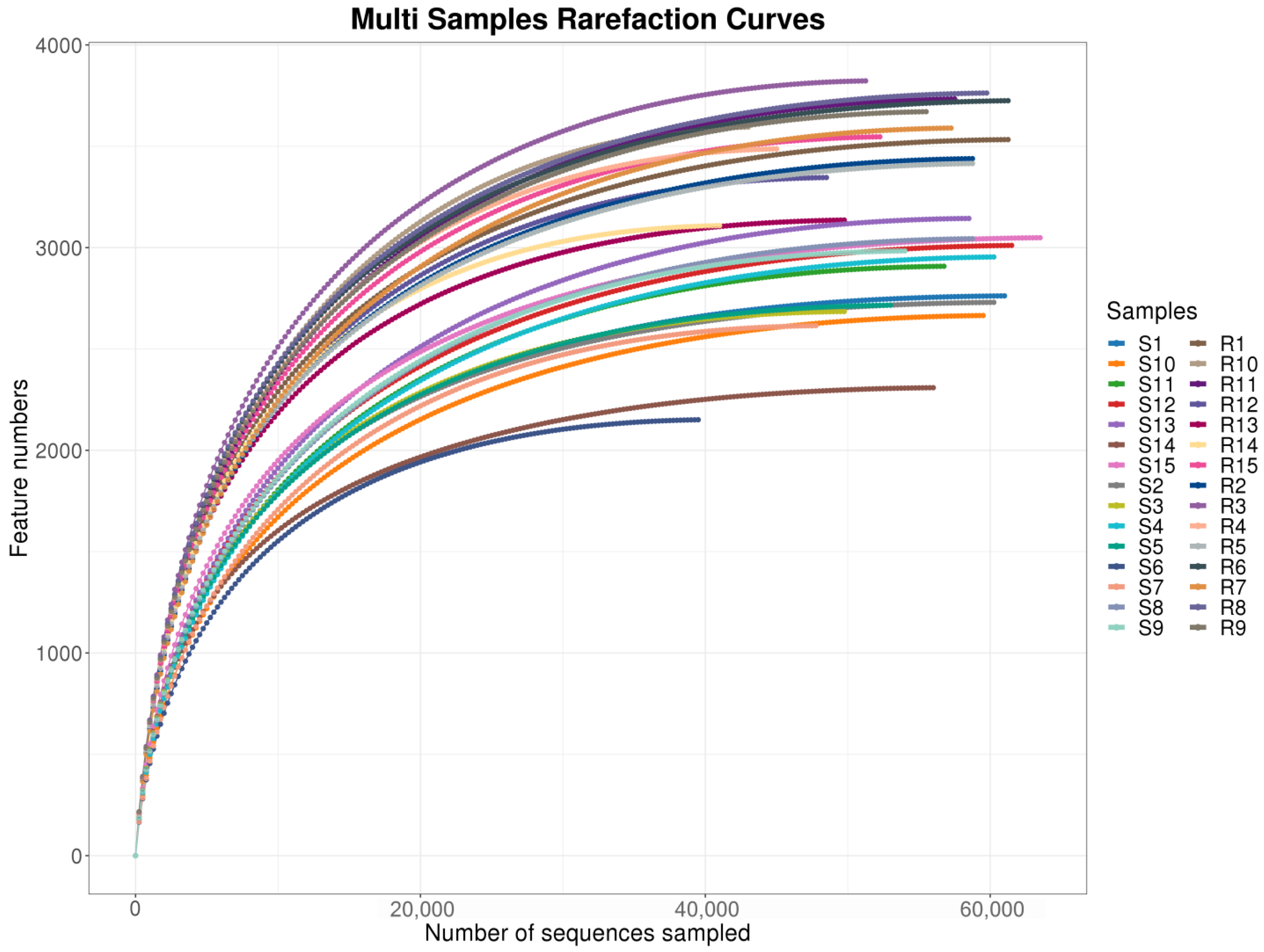
Raw reads were subjected to processing using Trimmomatic v 0.39 for adapter trimming and quality filtering (with a Phred score of ≥20 and a minimum length of ≥150 bp). Subsequently, primers were removed using cutadapt. High-quality sequences were then processed by applying the DADA2 v1.16 (via QIIME2 v2021.4) algorithm. This algorithm was used for error correction, sequence denoising, merging of paired-end reads, and chimera detection and removal, ultimately yielding high-resolution Amplicon Sequence Variants (ASVs). ASVs were employed as operational units in lieu of traditional OTUs because of their enhanced resolution at the single-nucleotide level, which allows for more accurate taxonomic discrimination. Representative ASV sequences were classified across taxonomic ranks, ranging from kingdom to species, using the naïve Bayes classifier implemented in QIIME2. This classifier was trained against the SILVA 138 reference database (release 138). Alpha diversity metrics, such as Chao1 and ACE (which are estimators of species richness), and Shannon and Simpson indices (which are measures of diversity), were calculated based on rarefied data. To address the issue of uneven sequencing depth across samples, all samples were rarefied to 30,000 sequences per sample, which was equivalent to the minimum sequence count observed after quality filtering.
Rarefaction curves and rank-abundance distributions were generated to comprehensively assess the sequencing depth and community evenness. The differences in the composition of microbial communities between groups were precisely evaluated using Bray–Curtis, Jaccard, weighted, and unweighted UniFrac distance matrices. Principal coordinate analysis (PCoA) and non-metric multidimensional scaling (NMDS) were carried out to vividly visualize the intergroup dissimilarities, which were further supplemented by UPGMA hierarchical clustering. The statistical significance of group separation was rigorously tested using PERMANOVA (Adonis test, 999 permutations) and ANOSIM (Analysis of Similarities). LEfSe (Linear Discriminant Analysis Effect Size, v1.0) was applied to accurately identify the taxa that were significantly enriched in either group, with an LDA threshold > 4.0 and a p-value < 0.05. The results were further validated using Metastats and one-way ANOVA with a post hoc Tukey’s HSD test when appropriate. The functional profiles of the microbial communities were inferred using PICRUSt2 v2.4.1 based on ASV phylogeny, which was used to predict the abundances of KEGG orthologs and COG categories. Additionally, FAPROTAX v1.2.4 was employed to predict the potential ecological functions associated with biogeochemical cycling. For functional pathway comparisons between groups, pairwise t-tests were performed among different groups, with a p-value threshold of 0.05.
4. Discussion
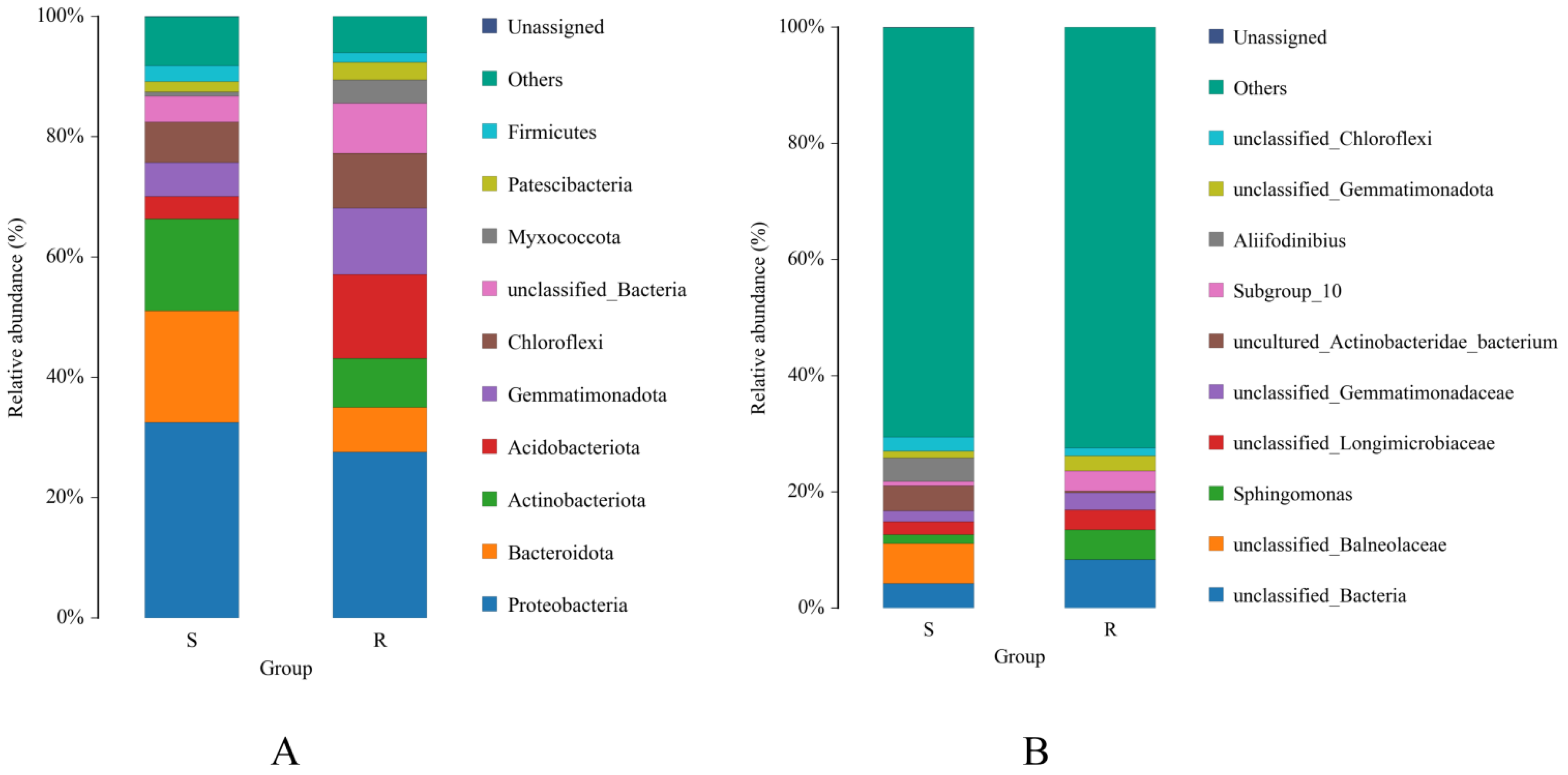
The structural and functional shifts observed in the microbial community, specifically the enrichment of hydrocarbon-degrading taxa in contaminated soils and the recovery of diverse metabolic pathways in remediated soils, suggest that microbial–plant collaborative remediation has the potential to enhance the removal of total petroleum hydrocarbons (TPH) and promote the restoration of soil ecological functions by improving the rhizosphere microenvironment and activating key functional genes. In saline–alkaline environments like the Yellow River Delta, Pseudomonadota, Actinomycetes, and Bacillus become the dominant microbial taxa in contaminated soils, while Acidobacteria show a reduced abundance in severely polluted areas [
10,
20]. Our results firmly corroborated that Pseudomonadota and Actinobacteriota were the predominant phyla across both contaminated and remediated soils. This finding implies that these phyla might encompass stress-tolerant lineages capable of persisting under petroleum hydrocarbon contamination in the Yellow River Delta. At the genus level, Bacillus, a taxon commonly linked to hydrocarbon degradation, displayed comparable abundances between the groups. This suggests its potential function as a generalist degrader in both environments. The present study systematically investigated the structural and functional responses of soil microbial communities to crude oil contamination and subsequent phytoremediation in the Yellow River Delta, a region of significant ecological and economic importance. Through high-throughput sequencing of the 16S rRNA gene and comprehensive bioinformatic analyses, we clearly demonstrated the substantial alterations in microbial diversity, community composition, and functional potential between contaminated (Group S) and remediated (Group R) soils. Our findings not only validate previous studies on microbial adaptation to hydrocarbon stress but also provide novel perspectives on the restoration dynamics of soil ecosystems after bioremediation.
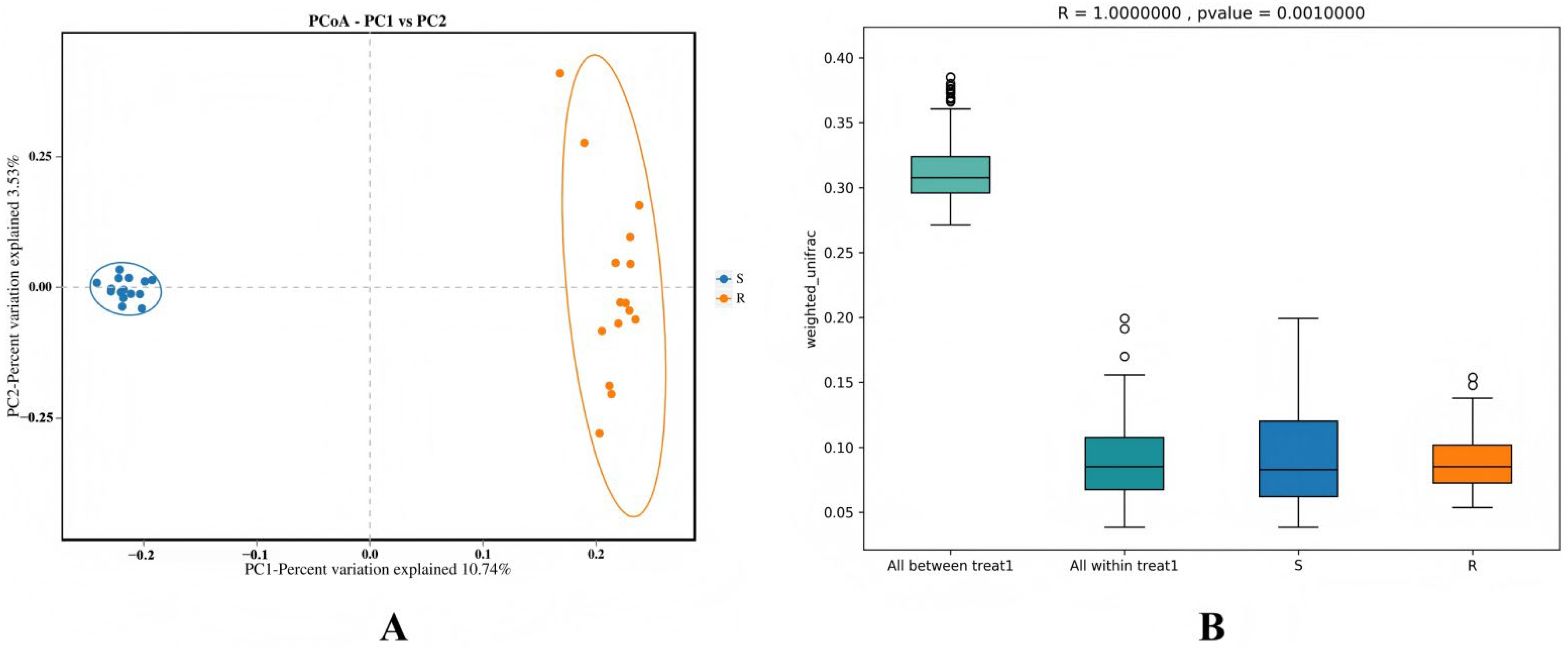
Our results demonstrate that petroleum contamination exerts a strong selective pressure on soil microbial communities, leading to a significant reduction in alpha diversity. This decline is consistent with the well-documented toxicity of petroleum hydrocarbons, which inhibit the growth of sensitive microorganisms while favoring the proliferation of tolerant or hydrocarbonoclastic taxa [
21,
22]. The observed simplification of community structure in Group S reflects environmental filtering, wherein only a subset of microorganisms capable of surviving in contaminated conditions persists. Beta diversity analyses, including PCoA, further confirmed the stark compositional divergence between Groups S and R, underscoring the role of petroleum pollutants as a dominant ecological filter that restructures microbial assemblages [
13,
23]. At the phylum level, contaminated soils were enriched with Chloroflexi, Acidobacteria, and Firmicutes-groups often associated with oligotrophic and stressed environments [
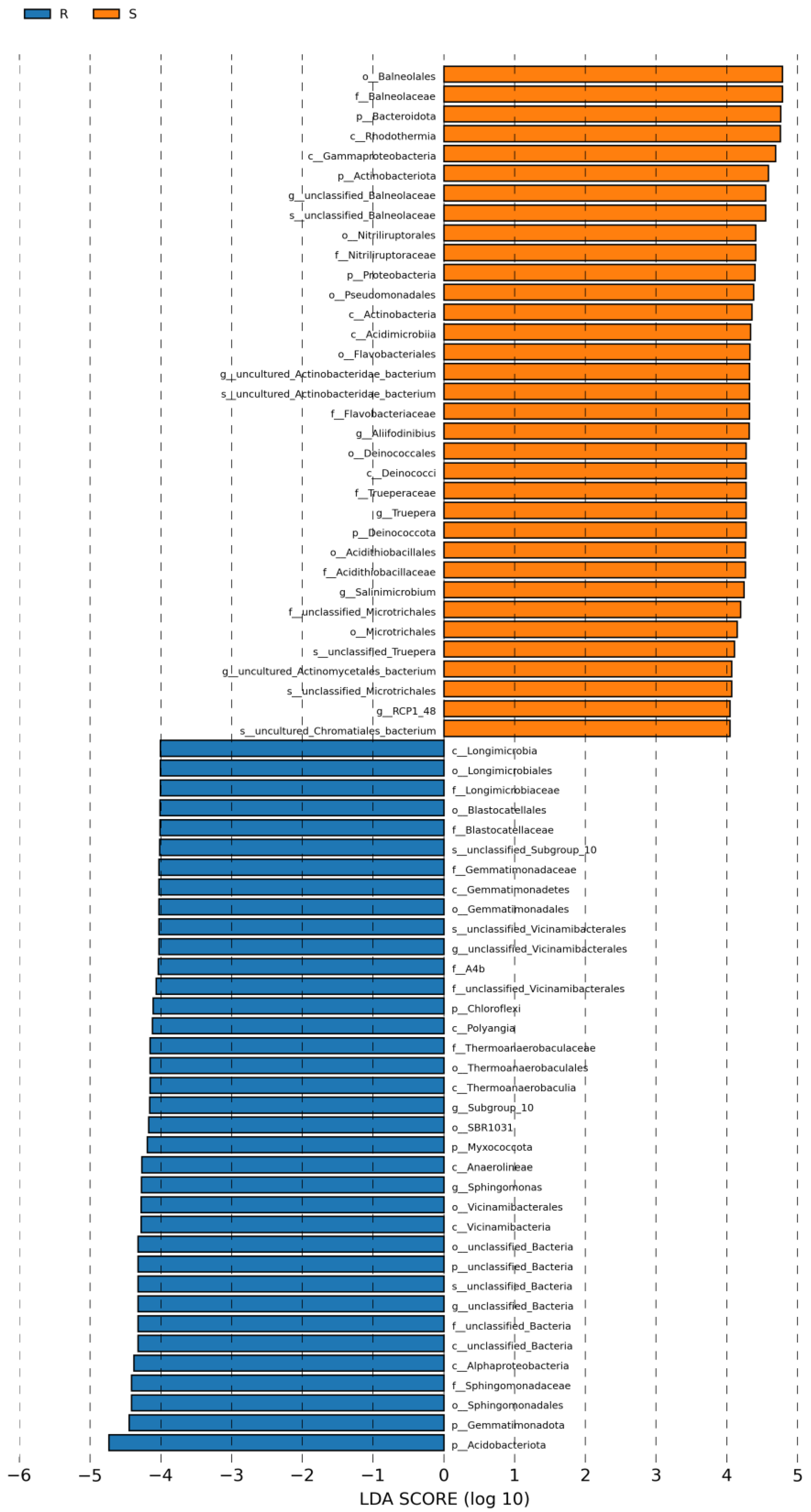
24]. In contrast, remediated soils exhibited a higher relative abundance of Pseudomonadota, Bacteroidota, and Actinobacteriota, which are frequently linked to nutrient-rich conditions and active organic matter degradation. This shift suggests that contamination favors stress-tolerant specialists, while remediation encourages the recovery of metabolically versatile taxa. LEfSe analysis revealed that genera such as Alcanivorax, Marinobacter, and Truepera were significantly enriched in contaminated soils (Group S) (
Figure 7). These taxa are well-documented hydrocarbon degraders [
25,
26], and their co-occurrence suggests the formation of a functional consortium adapted to petroleum contamination. The presence of unclassified lineages within Gammaproteobacteria and Bacteroidota also points to potentially novel degraders that warrant further investigation [
27]. These findings highlight the need for further taxonomic and functional characterization of these cryptic microbial groups.
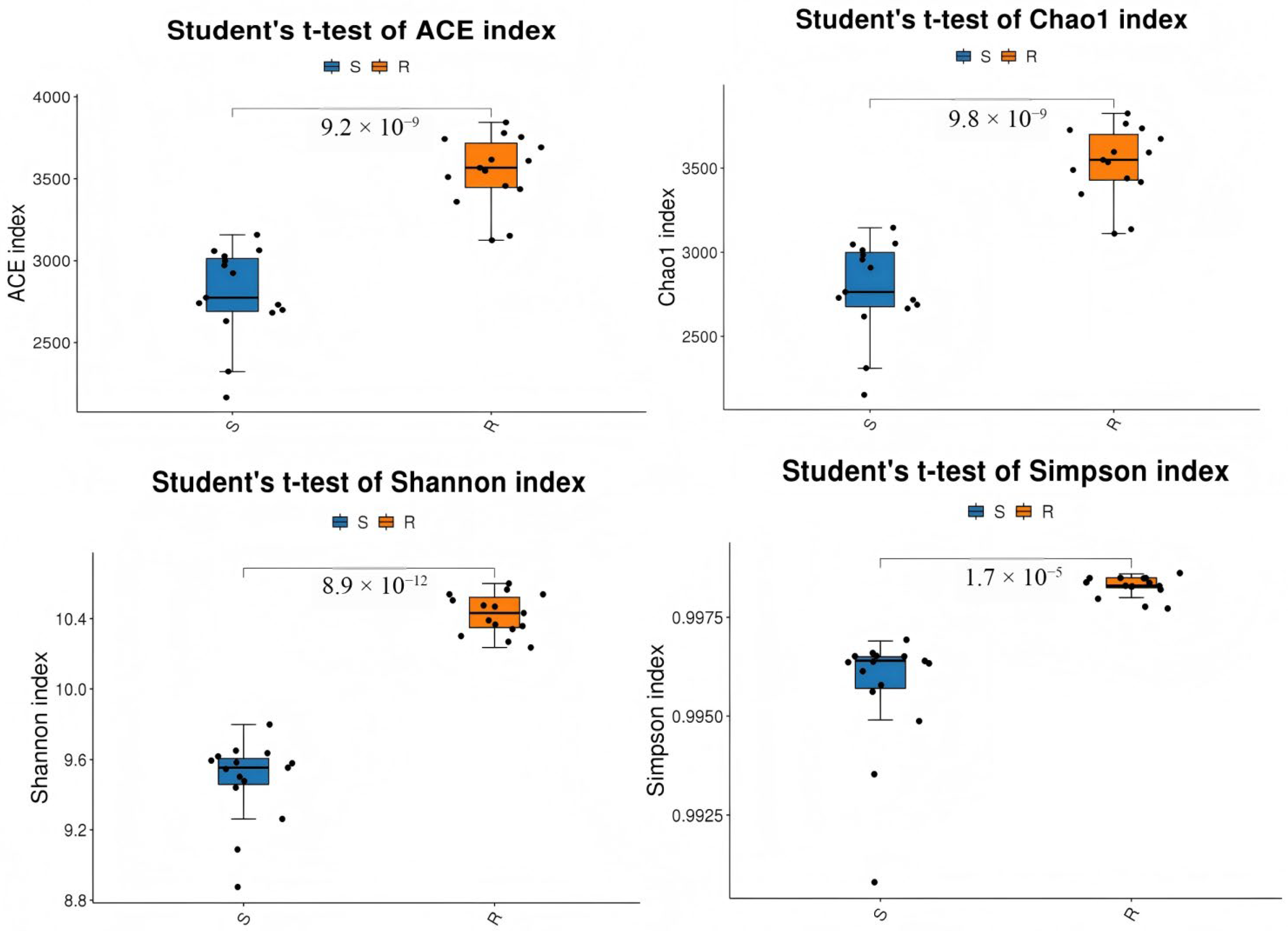
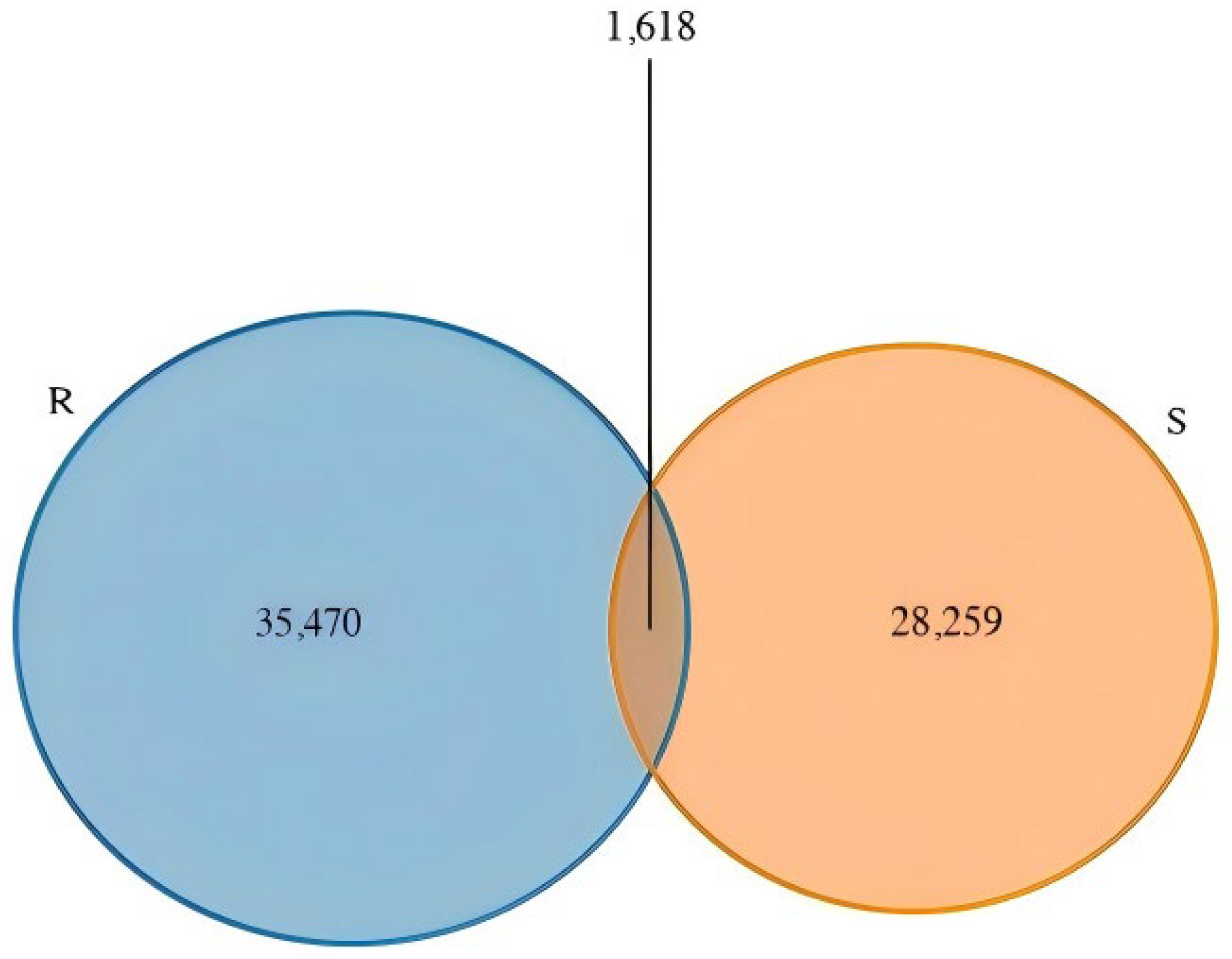
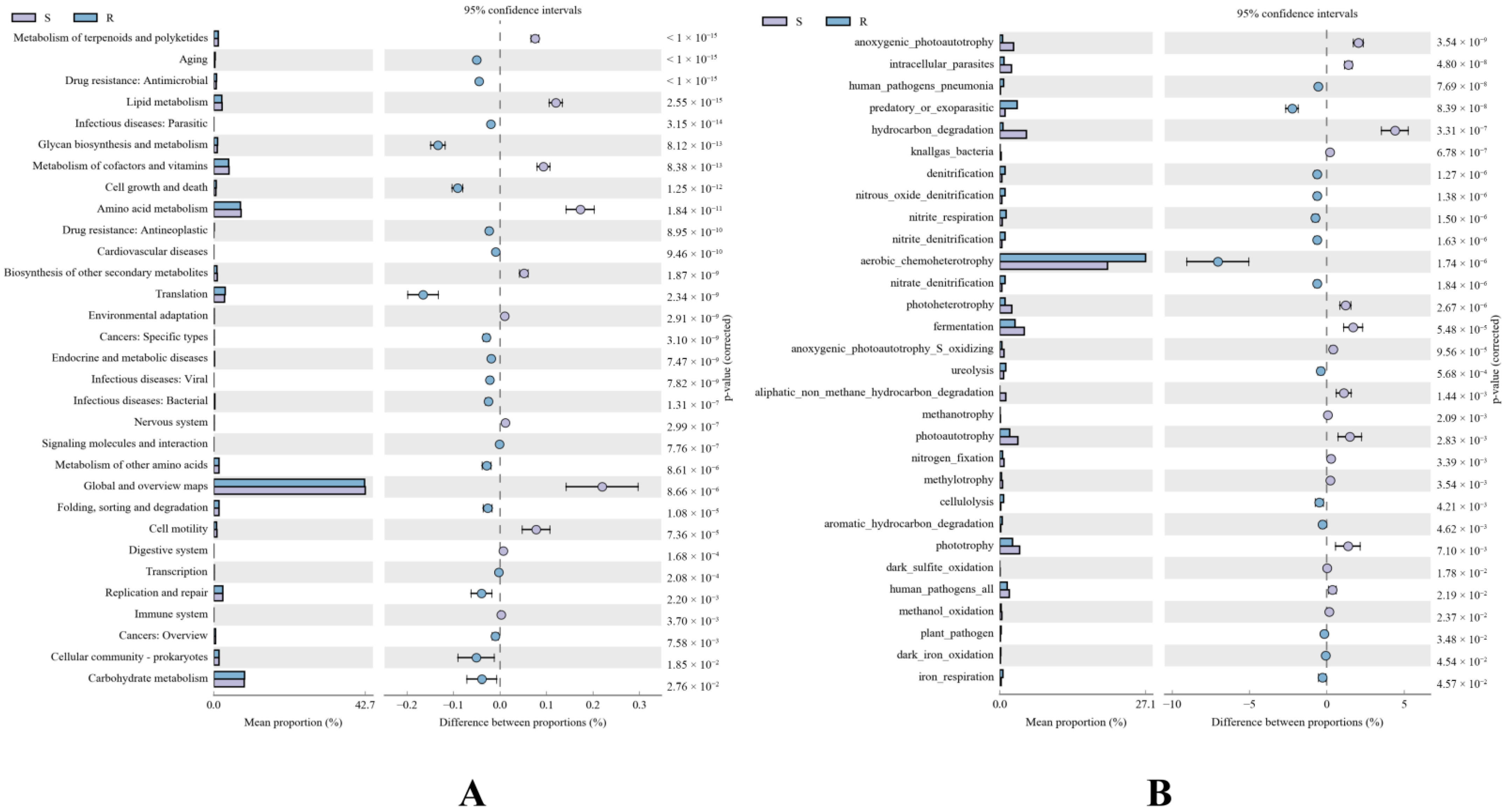
The remediation process resulted in a substantial recovery of microbial diversity and complexity within Group R. The elevated values of the Chao1, ACE, Shannon, and Simpson indices in Group R demonstrate that phytoremediation not only diminished pollutant levels but also reinstated ecological conditions favorable for microbial recolonization and growth. The augmentation of microbial richness and evenness implies a transformation from a specialized, stress-adapted community to a more diverse and functionally redundant one, which is typically linked to enhanced ecosystem stability and resilience. Functional predictions carried out using PICRUSt2 disclosed an evident shift in metabolic potential between the two groups. In Group S, pathways associated with hydrocarbon degradation, xenobiotic metabolism, and stress response were dominant, mirroring a community adapted to survival in a contaminated environment. In contrast, the phytoremediated soils (Group R) displayed significantly greater alpha diversity and a more uniform community structure, indicating a transition from a stress-adapted to a metabolically versatile microbial assemblage. Functional predictions additionally supported this shift, as Group R showed an enrichment in pathways related to core metabolism [
12,
28], while Group S was dominated by xenobiotic degradation and stress-related functions. These alterations suggest a restoration of ecosystem multifunctionality subsequent to remediation.
The microbial community patterns observed in this study are consistent with global trends in petroleum-contaminated soils, yet they also reflect the unique environmental context of the Yellow River Delta. The region’s saline–alkaline soils, seasonal hydrology, and history of oil extraction likely interact to shape the assembly and function of hydrocarbon-degrading microbiota. For instance, the enrichment of halotolerant genera such as
Alifodinibius in Group S (
Figure S1) may be attributed to the combined stress of salinity and hydrocarbon exposure, a feature less common in non-saline contaminated sites [
13]. Similarly, another study found strong correlations between soil physicochemical parameters and microbial community structure, reporting considerable spatial variation in both alpha diversity and taxonomic turnover across contaminated sites under different environmental gradients [
29]. Collectively, these findings imply that the characteristic sedimentary depositional environment, saline–alkaline soil matrix, and dynamic hydrological regime of the Yellow River Delta jointly restrict and regulate the assembly of hydrocarbon-degrading microbiota, thus explaining the region-specific patterns observed in this study. The recovery of microbial diversity in Group R may be partly attributed to rhizosphere effects mediated by Cynodon dactylon, the dominant plant at the remediated site. Root exudates likely provided labile carbon and energy sources, alleviating nutrient limitations and stimulating microbial activity [
12]. This interpretation is consistent with the increased abundance of copiotrophic phyla (e.g., Pseudomonadota, Bacteroidota) in Group R and the enrichment of
Sphingomonas, a genus known for PAH degradation and plant association.
The remarkable successful recovery of microbial diversity and function in Group R strongly underscores the effectiveness of phytoremediation as a sustainable strategy for restoring oil-contaminated soils. The plant-microbe interactions facilitated by phytoremediation presumably improved soil structure, nutrient availability, and microclimate, thus effectively supporting microbial reassembly and functional recovery [
12,
13]. These findings hold significant implications for the design and monitoring of bioremediation projects in the Yellow River Delta and other oil-impacted regions. Moreover, the identification of key hydrocarbon-degrading taxa and their associated functional traits offers a solid basis for developing targeted bioaugmentation strategies. The identification of key hydrocarbon-degrading taxa such as Alcanivorax and Marinobacter in contaminated soils offers a basis for developing targeted bioaugmentation strategies. These organisms could be explored as candidates for enhancing initial oil degradation, while phytoremediation may support long-term ecological restoration. A limitation of this study is the lack of accompanying soil physicochemical data (e.g., TPH concentration, pH, salinity), which would have enabled direct correlation with microbial community shifts. Future studies should integrate geochemical measurements with high-throughput sequencing to establish causal links and validate the ecological recovery processes inferred here.
5. Conclusions
This study conducted a systematic comparison of the differences in soil microbial communities between oil-contaminated and remediated areas in the Yellow River Delta. The key findings are as follows: Oil pollution led to a significant reduction in soil microbial alpha diversity and a profound alteration of the community structure. This resulted in a distinct separation between the microbial communities of the contaminated and remediated sites, which was verified by beta-diversity analyses (PERMANOVA, ANOSIM) and ordination methods. In contaminated soils, specific hydrocarbon-degrading bacterial taxa were enriched, including genera such as Alcanivorax and Marinobacter. These taxa act as crucial biomarkers in response to petroleum contamination. They were identified through LEfSe analysis and validated by Metastats, offering strong evidence for the microbial adaptation to pollution stress. The observed compositional and functional shifts, from a stress-adapted, hydrocarbon-degrading consortium in contaminated soils to a diverse, metabolically versatile community in remediated soils, clarify the profound impacts of petroleum pollution on soil ecosystems from the perspective of microbial ecology. Moreover, they reveal the dynamic changes in microbial communities during the pollution adaptation and remediation processes. These findings offer essential scientific evidence for assessing ecological risks in contaminated soils, screening efficient biodegradation agents, and guiding phytoremediation practices in the Yellow River Delta and similar saline–alkaline wetland ecosystems.