Article

Relationship Between Macroinvertebrate Community Characteristics and Environmental Factors in the Han River Basin

1
Yangtze River Basin Ecological Environment Monitoring and Scientific Research Center, Yangtze River Basin Ecological Environment Supervision and Administration Bureau, Ministry of Ecology and Environment, Wuhan 430010, China
2
School of Chemistry and Environmental Engineering, Wuhan Institute of Technology, Wuhan 430074, China
3
Ankang Environmental Protection Monitoring Station, Ankang 725000, China
*
Authors to whom correspondence should be addressed.
Diversity 2026, 18(3), 158; https://doi.org/10.3390/d18030158
Submission received: 5 February 2026 / Revised: 27 February 2026 / Accepted: 2 March 2026 / Published: 5 March 2026

Abstract

As the largest tributary of the Yangtze River and a core area of the Middle Route of the South-to-North Water Diversion Project, the Han River Basin holds significant ecological importance regarding the impacts of land use and water environment changes on aquatic ecosystems. Existing studies have mostly focused on local reaches of the upper or middle–lower Han River, and systematic investigations into the associations between macroinvertebrate communities and environmental factors at the entire basin scale remain scarce. The niche characteristics and environmental drivers of macroinvertebrate community structure in the Han River Basin, China, were evaluated using a variety of diversity metrics and statistical methods. The results showed that: (1) A total of 91 macroinvertebrate taxa were identified during 2022–2023, with Insecta as the dominant group. Species richness in the upstream reaches increased in 2023, and the degree of differentiation between the upstream and the middle–lower reaches was markedly weaker than that in 2022. (2) Significant interannual differences in macroinvertebrate community structure were detected (PERMANOVA, p < 0.05), and taxa such as Polypedilum sp., Orthocladius sp., and Gammaridae collectively accounted for 35.6% of the dissimilarity among communities. (3) The overall niche breadth of dominant taxa was relatively low, whereas niche overlap decreased significantly in 2023, indicating a community niche pattern characterized by “low competition–high differentiation”. (4) Total phosphorus (TP) and total nitrogen (TN) were the core water environmental factors driving changes in community structure, while forested land was the key land use factor, and their synergistic effects jointly regulated the composition and diversity of macroinvertebrate communities.

1. Introduction

The Han River, a major tributary of the Yangtze River, crosses Shaanxi Province and Hubei Province, China [1,2]. It plays a prominent ecological role, acting as a critical water conservation area and a key component of major national projects including the South-to-North Water Diversion Project [3]. With the advancement of socioeconomic development and the implementation of ecological programs such as the Grain-for-Green Program and natural forest protection, land use patterns in the Han River Basin have undergone significant changes [4]. Meanwhile, human activities such as agricultural non-point source pollution and riparian zone modification have further exerted profound influences on riverine water environmental conditions and ecological processes through pathways including surface runoff transport and pollutant inputs. Numerous studies have demonstrated that multiple environmental stressors, such as land use change and water quality alteration, can significantly affect river health and aquatic biodiversity [5].
Macroinvertebrates are an ecologically important group characterized by their wide distribution, relatively long life cycles and limited mobility, and they are highly sensitive to changes in water quality, hydrodynamic conditions, and substrate characteristics. Consequently, their community structure and functional attributes have been widely used to assess river ecological health [6,7]. In aquatic ecosystems, macroinvertebrates not only serve as a crucial food source for higher-trophic-level organisms such as fish, but also represent key components in the decomposition of organic detritus and the transfer of energy, playing an intermediate and linking role in material cycling and energy flow [8]. Owing to their responsiveness to environmental variation, the structure of macroinvertebrate communities can effectively reflect the long-term trophic status and pollution levels of aquatic environments [9].
The ecological niche is one of the fundamental theories for explaining interspecific coexistence and competition mechanisms in natural communities. Analysis of the ecological niches of dominant macroinvertebrate taxa in rivers can provide insights into interspecific relationships and relative positions within communities, as well as their environmental adaptability and patterns of resource utilization [10]. However, the relationships between macroinvertebrate community structure and environmental factors are highly complex and dynamic. In recent years, although several studies have examined macroinvertebrate community characteristics from perspectives such as water quality conditions or local habitat features [11,12,13,14], investigations at the large river basin scale focusing on the linkages among land use patterns, water environmental factors, and macroinvertebrate communities, as well as the niche characteristics of dominant macroinvertebrate taxa, remain limited.
There are pronounced differences between the upstream and the middle–lower reaches of the Han River Basin in terms of the intensity of human activities, hydrological conditions, and land use structure. In particular, the middle and lower reaches are strongly influenced by cascade hydraulic engineering projects and urbanization, resulting in more complex water environmental and habitat conditions. Under this context, a systematic analysis of macroinvertebrate community structure and niche characteristics in the Han River Basin, and their relationships with land use patterns and water environmental factors, is of great significance. Therefore, taking the Han River Basin as the study area and integrating macroinvertebrate community, water environmental factor, and land use data collected in the spring of 2022 and 2023, this study aimed to: (1) elucidate the spatiotemporal variation in land use and water quality in the Han River Basin; (2) reveal the spatiotemporal distribution patterns of macroinvertebrate community composition and diversity; (3) characterize the niche breadth and overlap of dominant taxa; and (4) explore the synergistic effects of water quality factors and land use types on macroinvertebrate communities. The results of this study can provide a scientific basis for aquatic ecological conservation, land use planning, and ecosystem management in the Han River Basin.

2. Materials and Methods

2.1. Study Area and Sampling Site Layout

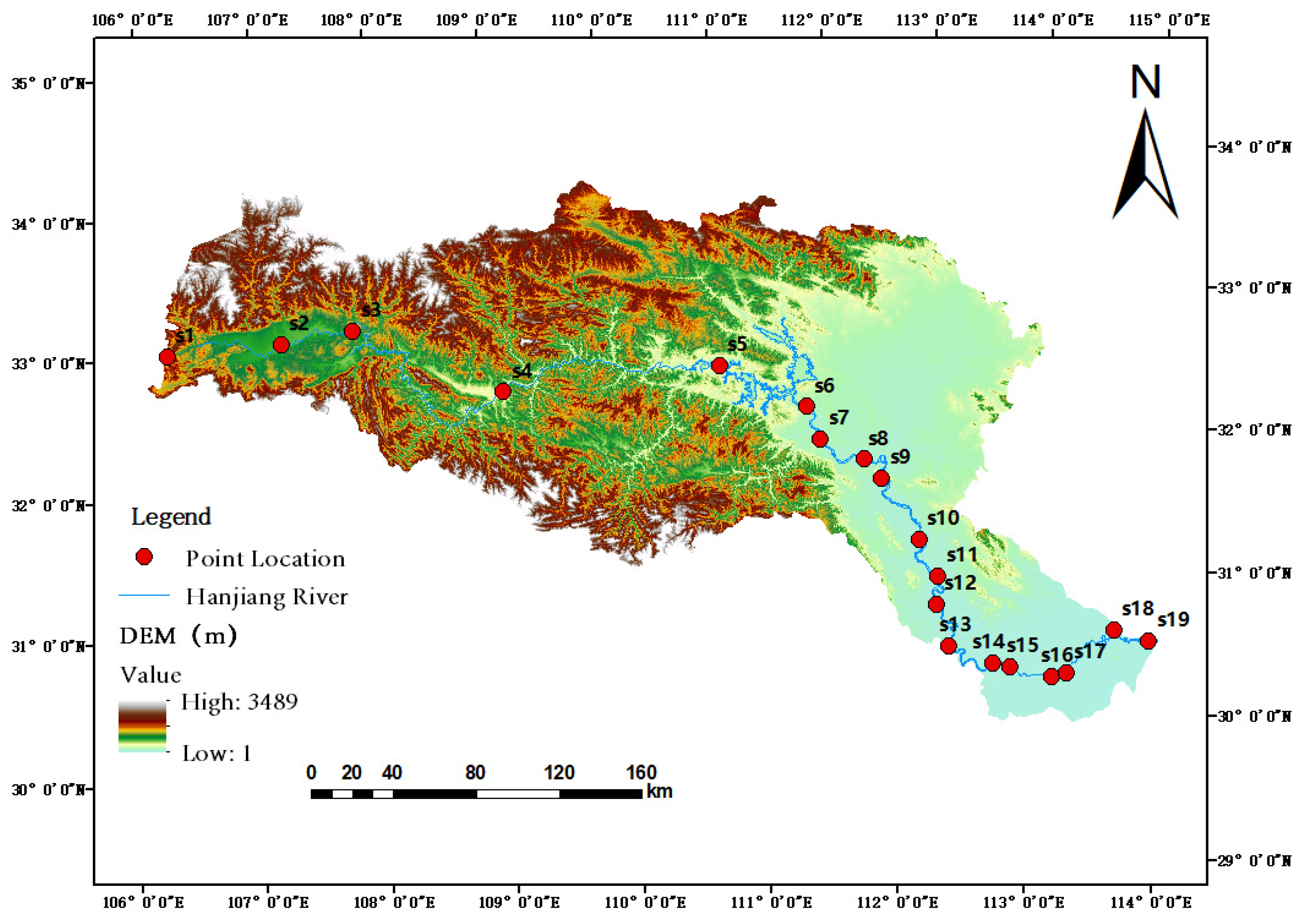
The Han River Basin, as the largest tributary of the Yangtze River, originates from the Qinling Mountains’ Ju River (also known as the Heihe River) in its northern source. Its main stem flows through multiple regions including Hanzhong and Ankang in Shaanxi Province, and Danjiangkou, Xiangfan, and Zhongxiang in Hubei Province, ultimately discharging into the Yangtze River at Wuhan. The river has a total length of 1577 km and a drainage area of 159,000 km2. Using Danjiangkou as the boundary, the upstream section is defined as the river segment above Danjiangkou, while the middle–lower reaches extend from Danjiangkou to the river mouth. The Danjiangkou Reservoir within the basin serves as the water source for the Middle Route of the South-to-North Water Diversion Project, and the middle–lower reaches downstream of the dam are significantly affected by reservoir regulation. In April 2022 and April 2023, a total of 19 sampling sites were established for surveys of macroinvertebrates in the Han River Basin, including 5 sites in the upstream (S1–S5) and 14 sites in the middle–lower reaches (S6–S19) (Figure 1).

2.2. Collection and Processing of Macroinvertebrates

Samples were collected using a 60-mesh D-shaped net with a 250 μm aperture (sampling area 2.5 m2) and then rinsed with a 60-mesh sieve of 250 μm aperture to remove impurities. The samples were sorted in white porcelain trays and preserved in bottles with 75% ethanol. In the laboratory, all individual macroinvertebrates were carefully sorted, identified, and counted, and were classified to the lowest practical taxon based on available morphological references [15,16].

2.3. Water Quality and Land Use Data

Water temperature, pH, and dissolved oxygen (mg/L; DO) at each sampling site were measured in situ using a YSI multiparameter water quality meter (Xylem, Washington, DC, USA), while total nitrogen (mg/L; TN), total phosphorus (mg/L; TP), ammonia nitrogen (mg/L; NH3-N), and chemical oxygen demand (mg/L; COD) were determined following the methods described in reference [17].
Land use data in 2022 and 2023 with a spatial resolution of 30 m were obtained and analyzed for the Han River Basin. The data were derived from the Resource and Environment Science and Data Center, Chinese Academy of Sciences (https://www.resdc.cn/). Based on these data, land use types were classified into five categories: farmland, forested land, grassland, water surface area, and construction land. This classification system reflects the main land cover characteristics of the study area and allows for accurate assessment of land use patterns. Using ArcGIS 10.8, a buffer zone of 1000 m in length and 200 m in width along the upstream direction of the river was created for each sampling site. Through the vector polygon layers of the sampling point buffers, the land use layers were clipped to extract land use information at the river segment scale corresponding to each sampling site. Finally, the proportion of each land use type within the corresponding river segment was calculated.

2.4. Data Processing and Analysis

Diversity indices used to analyze data include taxa richness, Shannon–Wiener index (H′), the Simpson diversity index (D), and Pielou’s evenness index (J). Species with a dominance index Y ≥ 0.02 were defined as dominant species.
Taxa richness (S): Total number of taxa.
Shannon–Wiener index:
H =   i = 1 S   ( n i N ) ln ( n i N )
Simpson diversity index:
D   =   1   i = 1 S   ( n i N ) 2
Pielou’s evenness:
J   =   H ln   S
Dominance index:
Y   =   n i N f i
where ni = number of individuals of the i-th species, N = total individuals of all species, fi = occurrence frequency of the i-th species, and S = total taxa in the community.
Differences in water quality parameters and diversity indices among different groups were analyzed using the Kruskal–Wallis nonparametric test.
Non-metric multidimensional scaling (NMDS) was used to visualize differences in macroinvertebrate community structure among different years, and permutational multivariate analysis of variance was applied to test the significance of interannual differences in community structure. Simultaneously, Similarity Percentage analysis was conducted to identify the major taxa contributing to community differences. Niche width and niche overlap indices of macroinvertebrates were calculated using the spaa package in R 4.5.1, and the results were visualized using the ggplot2 package [18,19,20].
To explore the responses of macroinvertebrate community distribution to environmental factors, canonical correspondence analysis was used to examine the coupling relationships between community structure, water environmental variables, and land use types. Furthermore, the Mantel test was conducted to assess the correlations between macroinvertebrate diversity and both water environmental factors and land use patterns.

3. Results

3.1. Land Use and Water Quality in the Han River Basin

Key water environmental factors at 19 sampling sites in the Han River Basin were monitored and analyzed during the spring of 2022 and 2023. The results (Table 1) indicated that multiple physicochemical parameters differed significantly among river sections (p < 0.05), with chemical oxygen demand (COD) in the middle and lower reaches in 2023 being significantly higher than in the upper reaches. Total nitrogen (TN) in the middle and lower reaches in 2022 was significantly higher than in the middle and lower reaches in 2023.
Land use data within the buffer zones of the 19 sampling sites in the Han River Basin in 2022 and 2023 are shown in Table 1. The main land use types were farmland, forested land, grassland, water surface area, and construction land. From 2022 to 2023, the land use structure in the upper and middle–lower reaches of the Han River Basin remained generally stable, although certain differences and trends were observed. In the upper reaches, Water surface area and farmland were the dominant land use types, with the proportion of Water surface area increasing from 38.92% to 40.28% and the proportion of farmland slightly decreasing; the proportion of forest increased slightly, while construction land decreased. The land use structure in the middle and lower reaches exhibited greater stability, with Water surface area as the predominant land use type, and the proportions of grassland and construction land remaining stable. Overall, land use patterns remained temporally stable within each reach over the two-year period. Specifically, minor adjustments in the upper reaches were mainly reflected in the relative proportions of farmland, forested land, water surface area and construction land, whereas the proportions of land use types in the middle and lower reaches remained largely unchanged.

3.2. Composition of Macroinvertebrate Invertebrate Communities in the Han River Basin

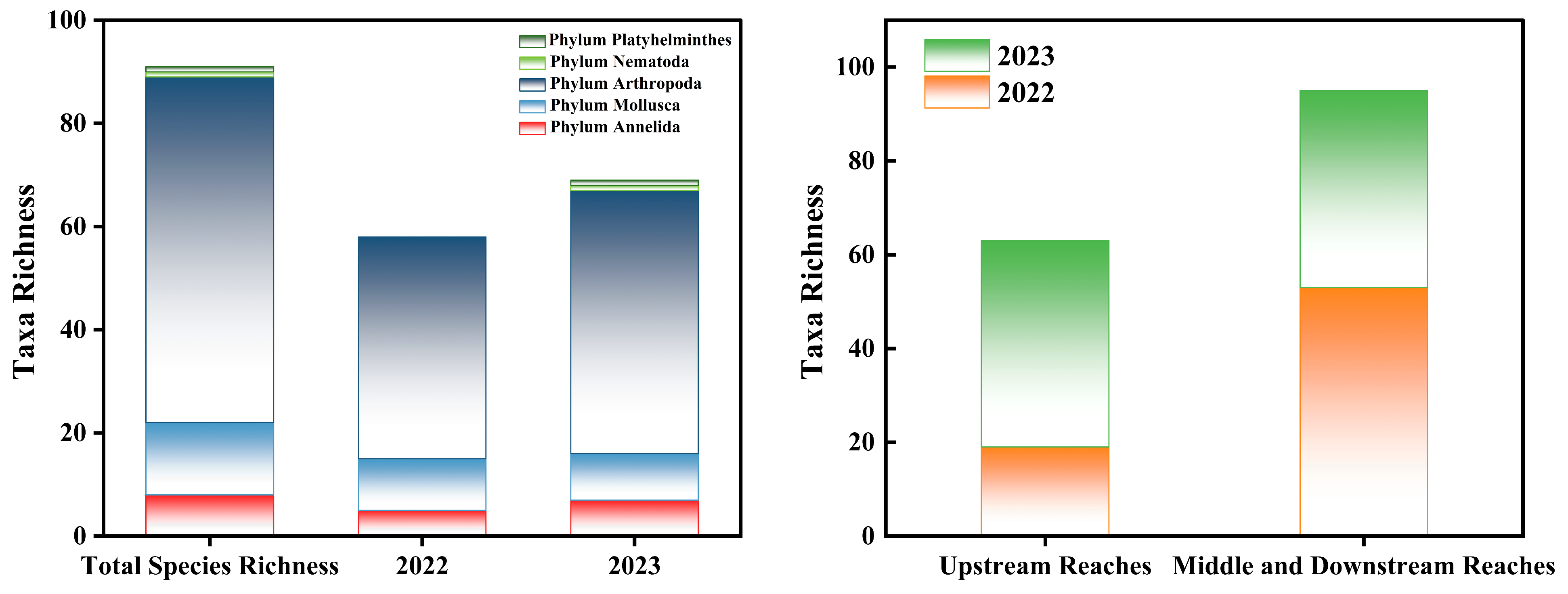
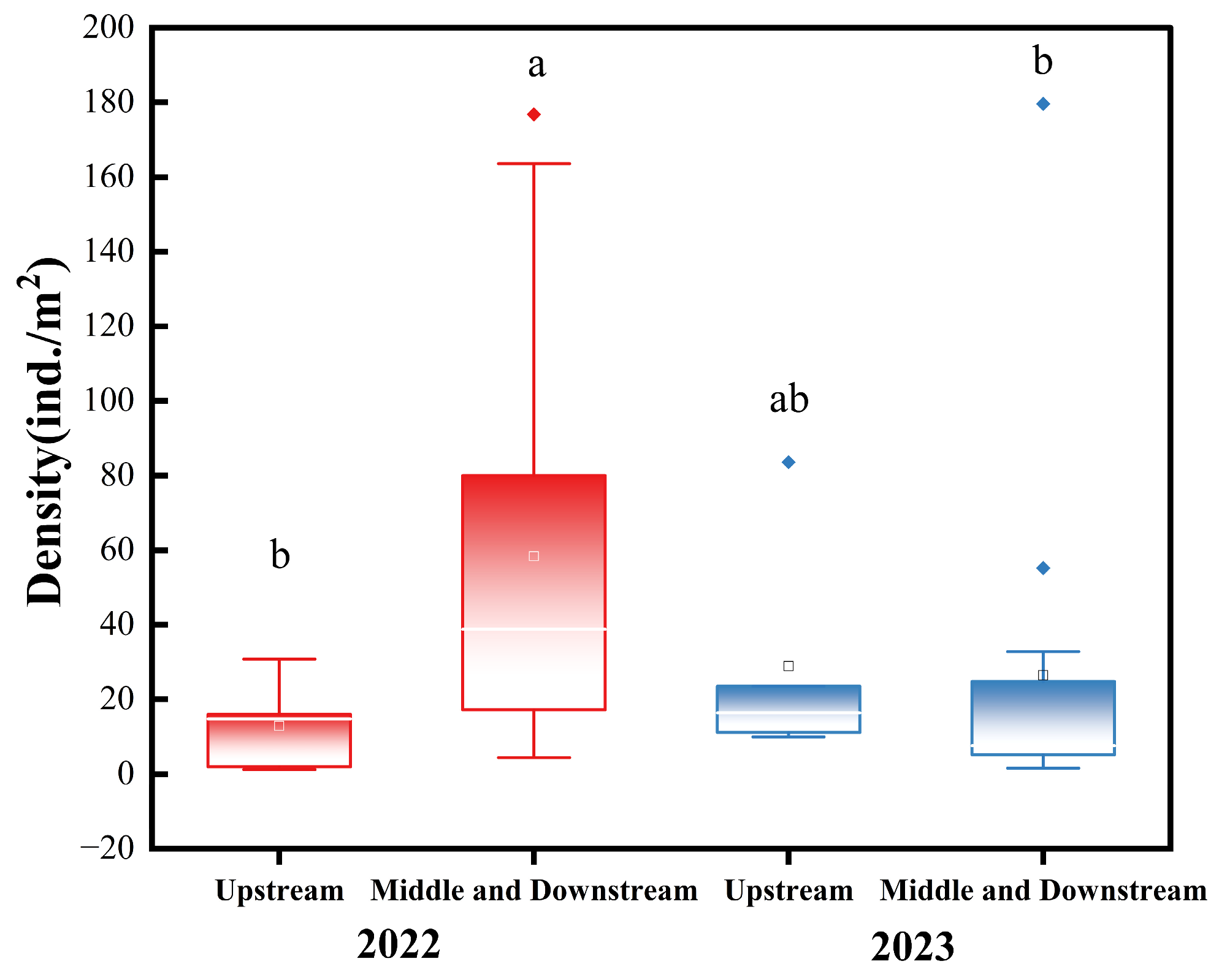
A total of 91 macroinvertebrate taxa were identified in the Han River Basin in 2022 and 2023, belonging to 5 phyla, 10 classes, 25 orders, and 56 families (Figure 2). Among these phyla, Arthropods had the highest number of taxa, with Insecta as the dominant class, accounting for 63.74% of the total species. From a temporal perspective, the total number of macroinvertebrate species in 2023 showed an increasing trend, with higher species richness in spring 2023 compared to spring 2022. Specifically, the number of taxa in the phyla Arthropoda and Annelida in 2022 was lower than in 2023. Notably, the number of macroinvertebrate species in the upper reaches in 2023 increased substantially compared to 2022, showing significant differences. From a spatial perspective, the number of macroinvertebrate species in the middle and lower reaches in 2022 was higher than in the upper reaches, whereas in 2023, the number of macroinvertebrate species in the upper and middle–lower reaches was more similar. In terms of density (Figure 3), the average macroinvertebrate density in the middle and lower reaches in 2022 was markedly higher, showing a significant advantage over the upper reaches during the same period. By 2023, the difference in average macroinvertebrate density between the middle–lower reaches and the upper reaches had diminished, with no statistically significant difference observed between the two regions.
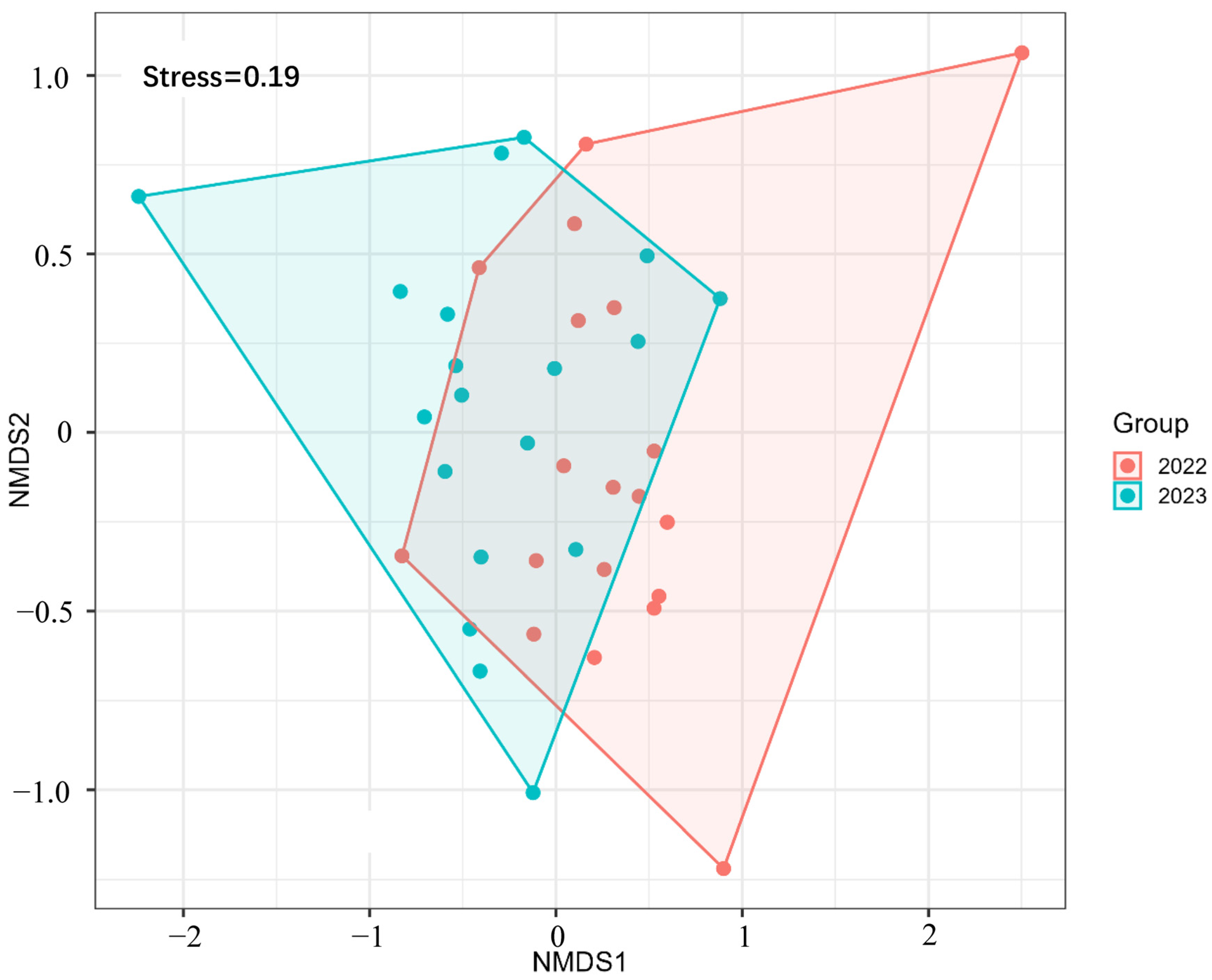
NMDS (stress value = 0.19) based on the species composition of macroinvertebrates at each sampling site (Figure 4), together with PERMANOVA analysis (p = 0.02), indicated that macroinvertebrate community structure in the Han River Basin differed but also had substantial overlap, suggesting the samples had temporal variation. SIMPER analysis identified the species contributing most to these differences as Polypedilum sp., Orthocladius sp., Gammaridae, and Cricotopus sp., which together explained 35.6% of the variation in macroinvertebrate composition and structure.
The dominant macroinvertebrate species in the study sections of the Han River Basin in 2022 and 2023 exhibited marked differences among different river sections and between years. In 2022, the dominant species in the upper reaches were Baetidae (Y = 0.07) and Orthocladius sp. (Y = 0.04). In the middle and lower reaches, both the number and types of dominant species increased markedly, with Chironomidae as the core group, including Polypedilum sp. (Y = 0.18), Stictochironomus sp. (Y = 0.07), Cryptochironomus sp. (Y = 0.03), Orthocladius sp. (Y = 0.03), and Cricotopus sp. (Y = 0.02). This was accompanied by the occurrence of Corophiidae (Y = 0.06). All of these were pollution-tolerant species, reflecting more complex habitat conditions in the middle and lower reaches. The dominance of these pollution-tolerant taxa indicates that the habitat conditions in the middle and lower reaches of the study area were more complex, and the level of pollution was higher compared to the upper reaches. In 2023, the dominant species in the upper reaches were Paranais sp. (Y = 0.08) and Limnoperna sp. (Y = 0.05). In the middle and lower reaches, the dominant species were Gammaridae (Y = 0.15), Cricotopus sp. (Y = 0.05), and Limnodrilus sp. (Y = 0.04). In 2023, the dominant species in the Han River Basin were primarily composed of pollution-tolerant taxa.
Overall, the replacement of dominant species was pronounced across different years and river sections. In the upper reaches, dominant species shifted from relatively clean-indicator taxa to more pollution-tolerant groups, whereas in the middle and lower reaches, Chironomidae and other disturbance-tolerant macroinvertebrate taxa remained dominant over the long term.

3.3. Diversity

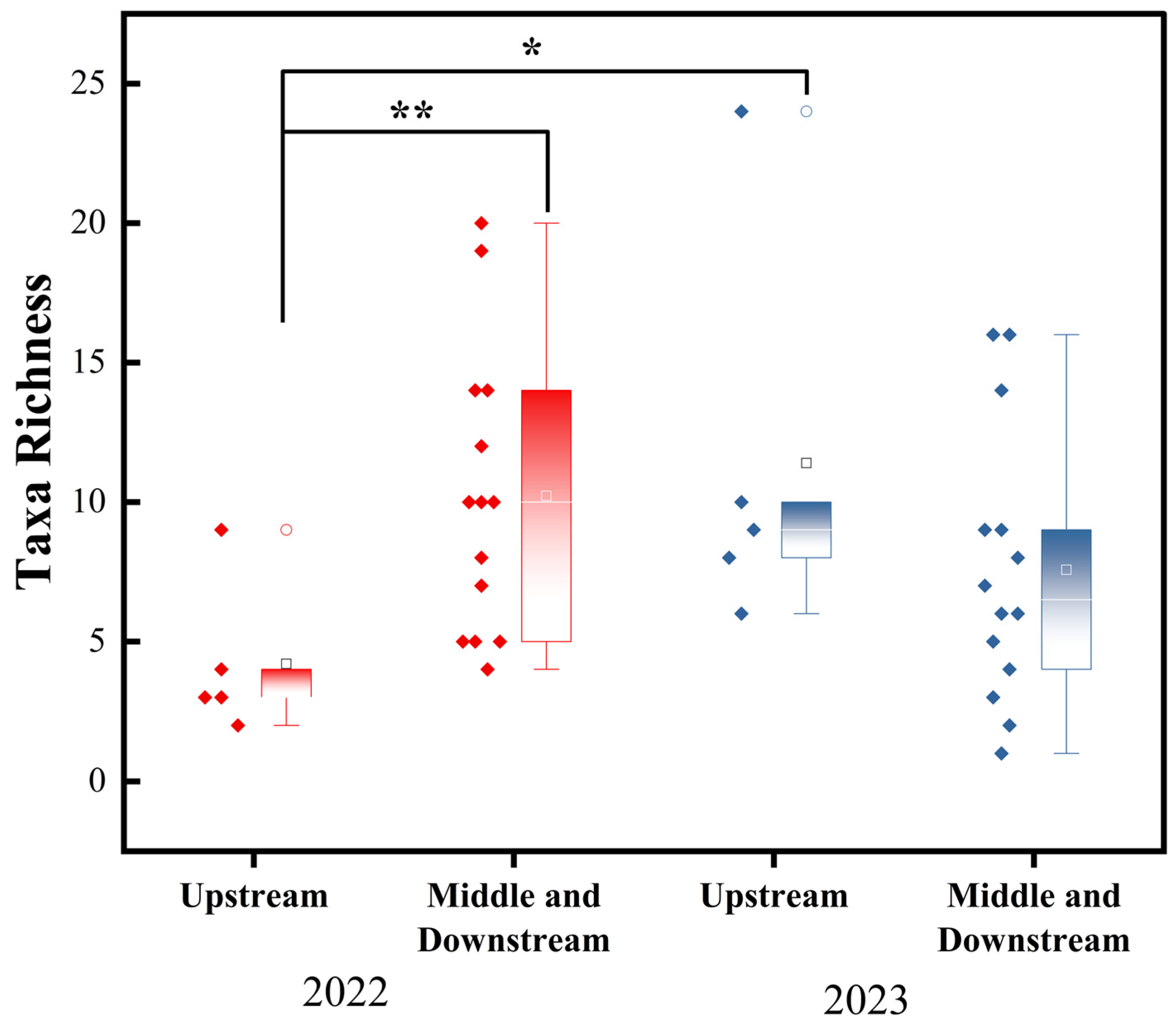
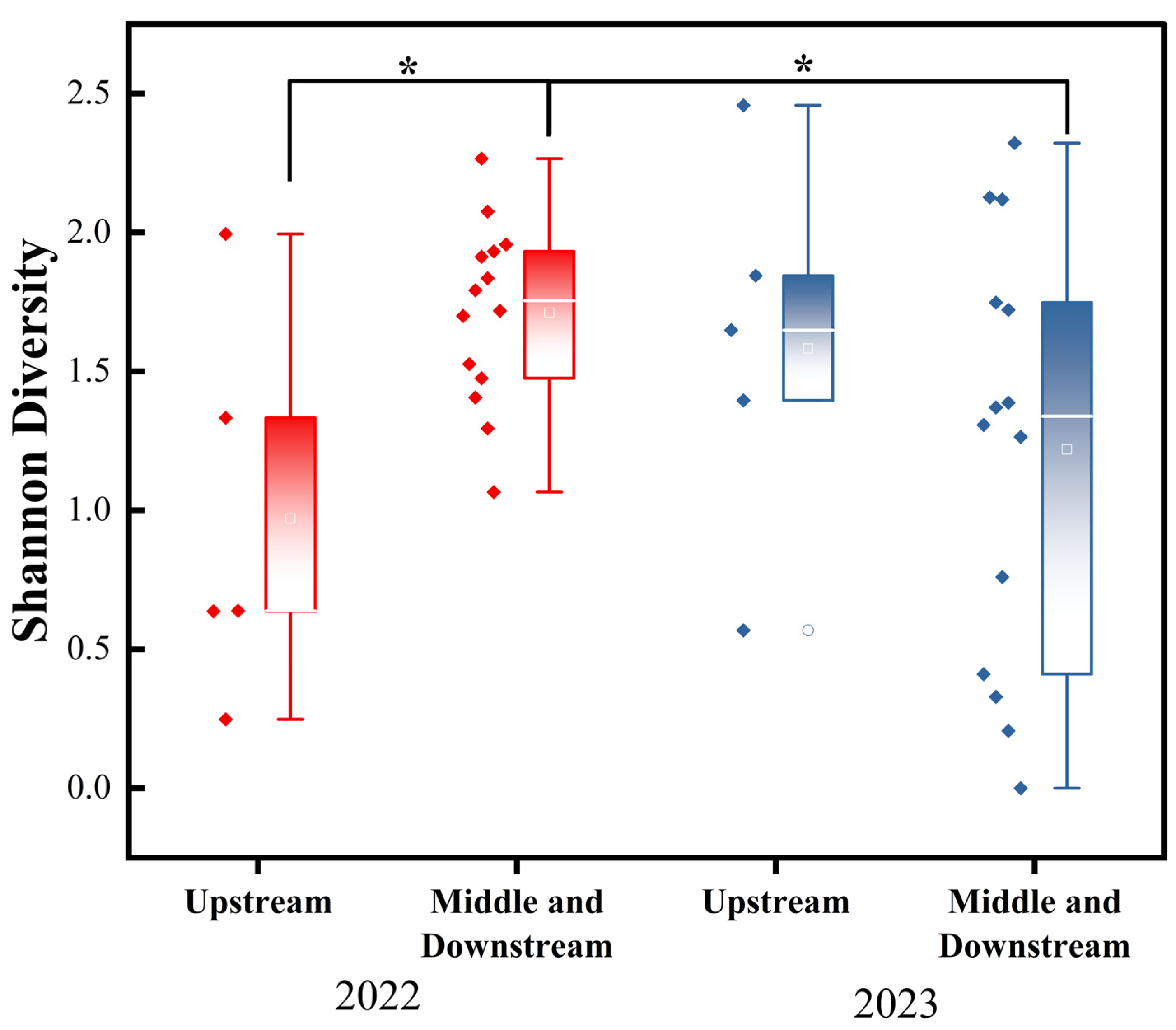
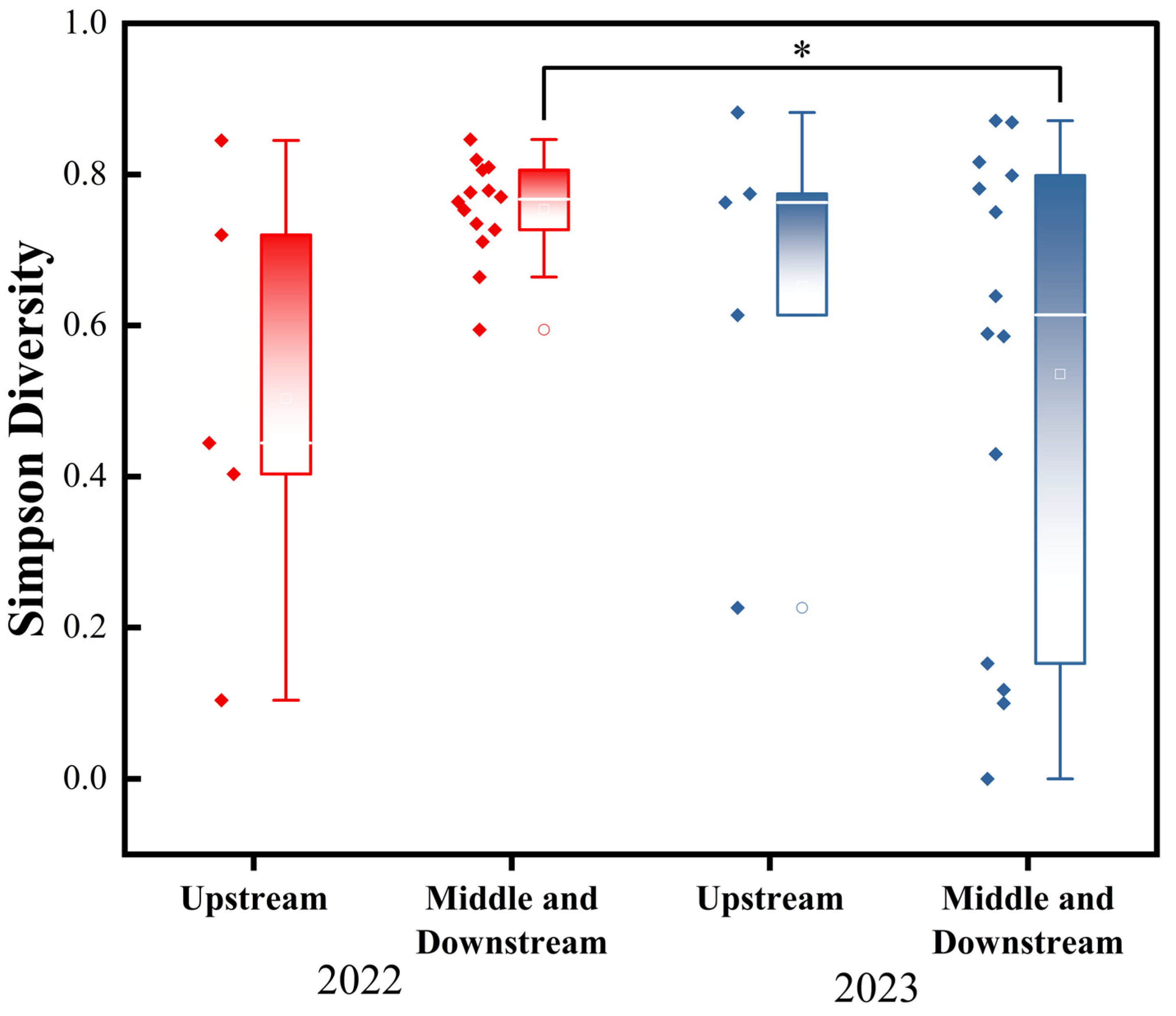
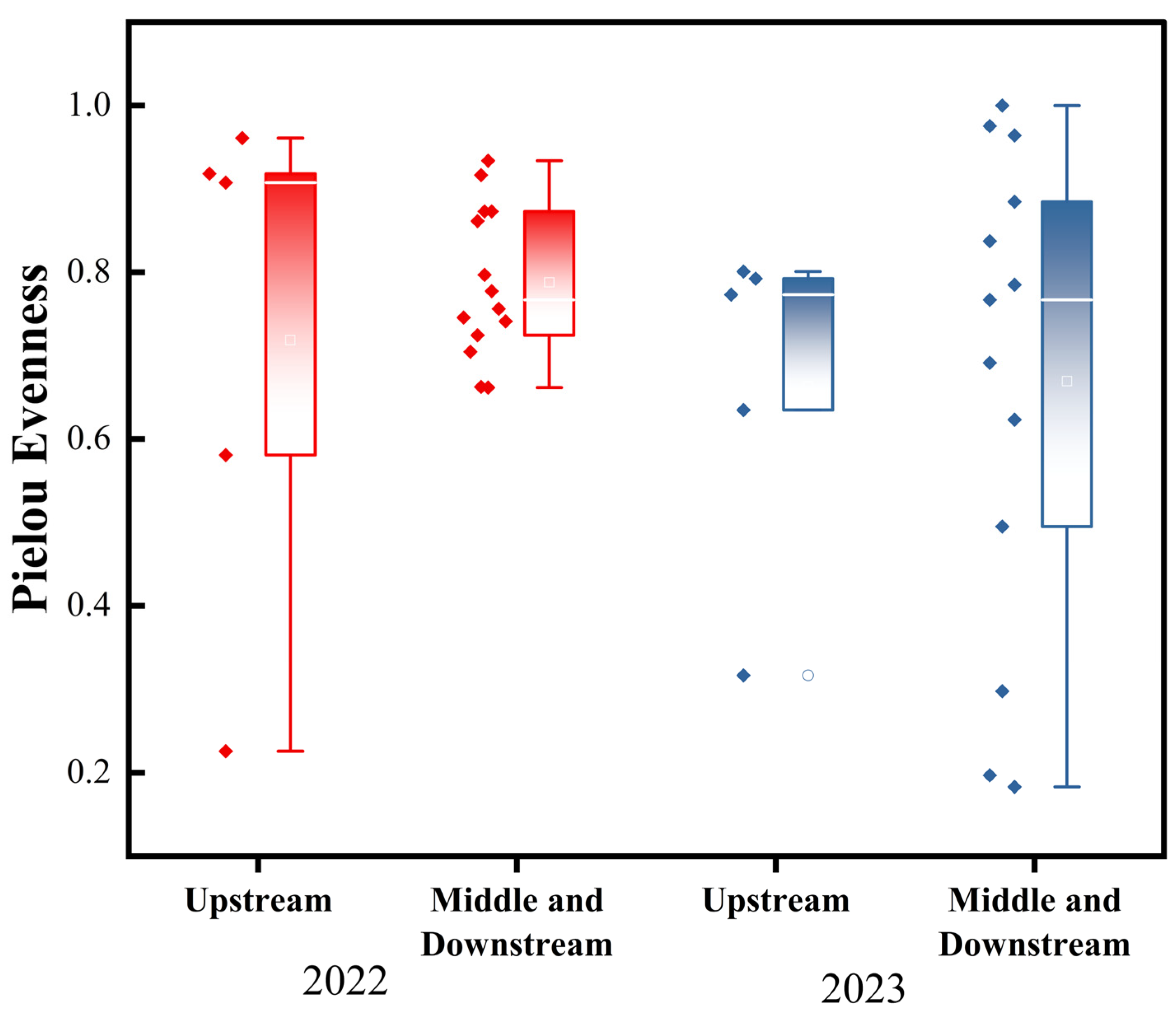
Diversity analysis of the Han River Basin in 2022 and 2023 revealed the following (Figure 5, Figure 6, Figure 7 and Figure 8):
In 2022, macroinvertebrate taxa richness, Shannon diversity, Simpson diversity, and Pielou evenness ranged from 2 to 20 (mean = 9), 0.25 to 2.27 (mean = 1.52), 0.10 to 0.85 (mean = 0.69), and 0.23 to 0.96 (mean = 0.77), respectively. In 2023, species richness, Shannon diversity, Simpson diversity, and Pielou evenness ranged from 1 to 24 (mean = 9), 0 to 2.46 (mean = 1.31), 0 to 0.88 (mean = 0.57), and 0.18 to 1 (mean = 0.67), respectively.
From a temporal perspective, all diversity indices of macroinvertebrates in the Han River Basin in 2023 were generally lower than those in 2022. Specifically, species richness in the upper reaches in 2022 was significantly lower than in 2023, whereas Shannon diversity in the middle and lower reaches in 2022 was significantly higher than in 2023.
From a spatial perspective, in 2023, species richness, Shannon diversity, and Simpson diversity in the upper reaches were higher than in the middle and lower reaches, which was completely opposite to the distributional pattern observed in 2022.

3.4. Ecological Niches of Dominant Taxa

The niche width of dominant species in Han River Basin shows that the niche width values of dominant species in Han River Basin are all at a low level (Table 2). The niche width of dominant species in 2022 varies from 0.56 to 1.88, and there is one species of Chironomus. The niche breadth of dominant species in 2023 ranged from 0.54 to 1.44, and that of Limnodrilus sp. was the widest, while that of Gammaridae was the narrowest.
The niche overlap indices of the dominant macroinvertebrate species in the Han River Basin in 2022 are shown in Table 3. There were 21 pairs of dominant species in 2022, with the niche overlap indices ranging from 0 to 0.7768. Stictochironomus sp. and Corophiidae had the maximum overlap value, indicating a high similarity in resource utilization. In 2022, the pairs of dominant species with a niche overlap value greater than 0.6 accounted for 14.29% of the total pairs; those with a niche overlap value less than 0.3 made up 61.90% of the total pairs; and the pairs with a niche overlap value ranging from 0.3 to 0.6 constituted 23.81% of the total pairs. These results indicated a low degree of niche overlap among the dominant species in the Han River Basin in 2022.
The niche overlap indices of the dominant macroinvertebrate species in the Han River Basin in 2023 are shown in Table 4. There were 6 pairs of dominant species in 2023, with the indices ranging from 0 to 0.28. The pairs of species with a niche overlap value less than 0.3 accounted for 100% of the total pairs, indicating an extremely low degree of niche overlap among the dominant species in the Han River Basin in 2023.
In summary, the degree of niche overlap among the dominant species in the Han River Basin in the spring of 2022–2023 showed a significant decreasing trend, which indicated that the intensity of interspecific resource competition among the dominant species in the Han River Basin weakened year by year, and the community structure developed toward a direction of low competition and high differentiation.

3.5. Relationships Between Macroinvertebrates and Environmental Factors

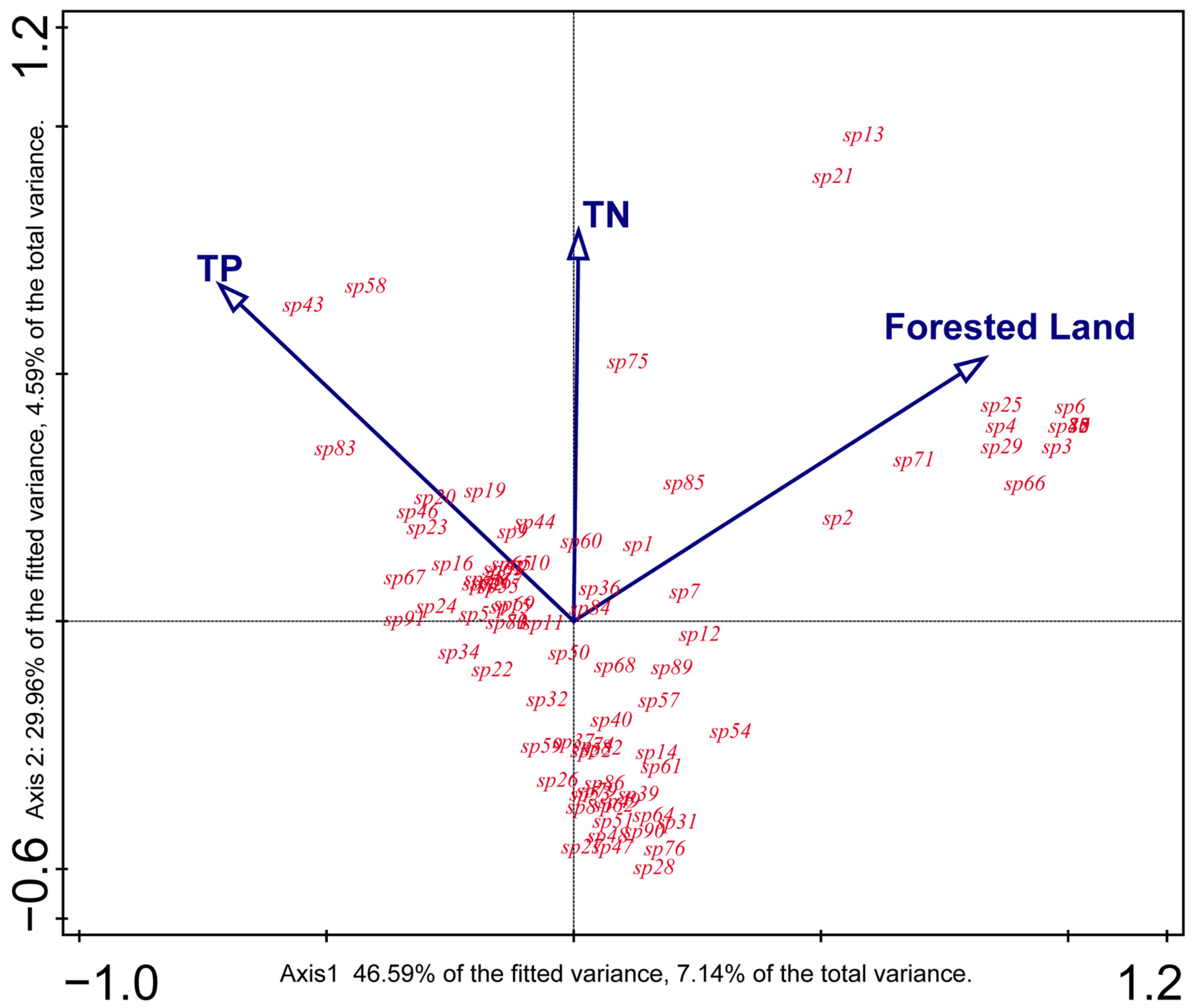
The results of canonical correspondence analysis (CCA) (Figure 9) showed that the core water environmental factors driving the community distribution of macroinvertebrates in the Han River Basin were total phosphorus (TP, p = 0.004) and total nitrogen (TN, p = 0.022), and the core land use factor was forested land (p = 0.004). TP was significantly positively correlated with taxa such as Palaemonidae sp. (Sp83) and Prodiamesa sp. (sp43). TN had a strong positive correlation with the second ordination axis, and taxa including Hydrophilidae sp. (SP75) and Hydopsychidae sp. (sp60) were positively correlated with TN. The area of forested land was positively correlated with the first ordination axis, and clean water taxa such as Ephemerellidae sp. (sp71) and Heptageniidae sp. (sp2).
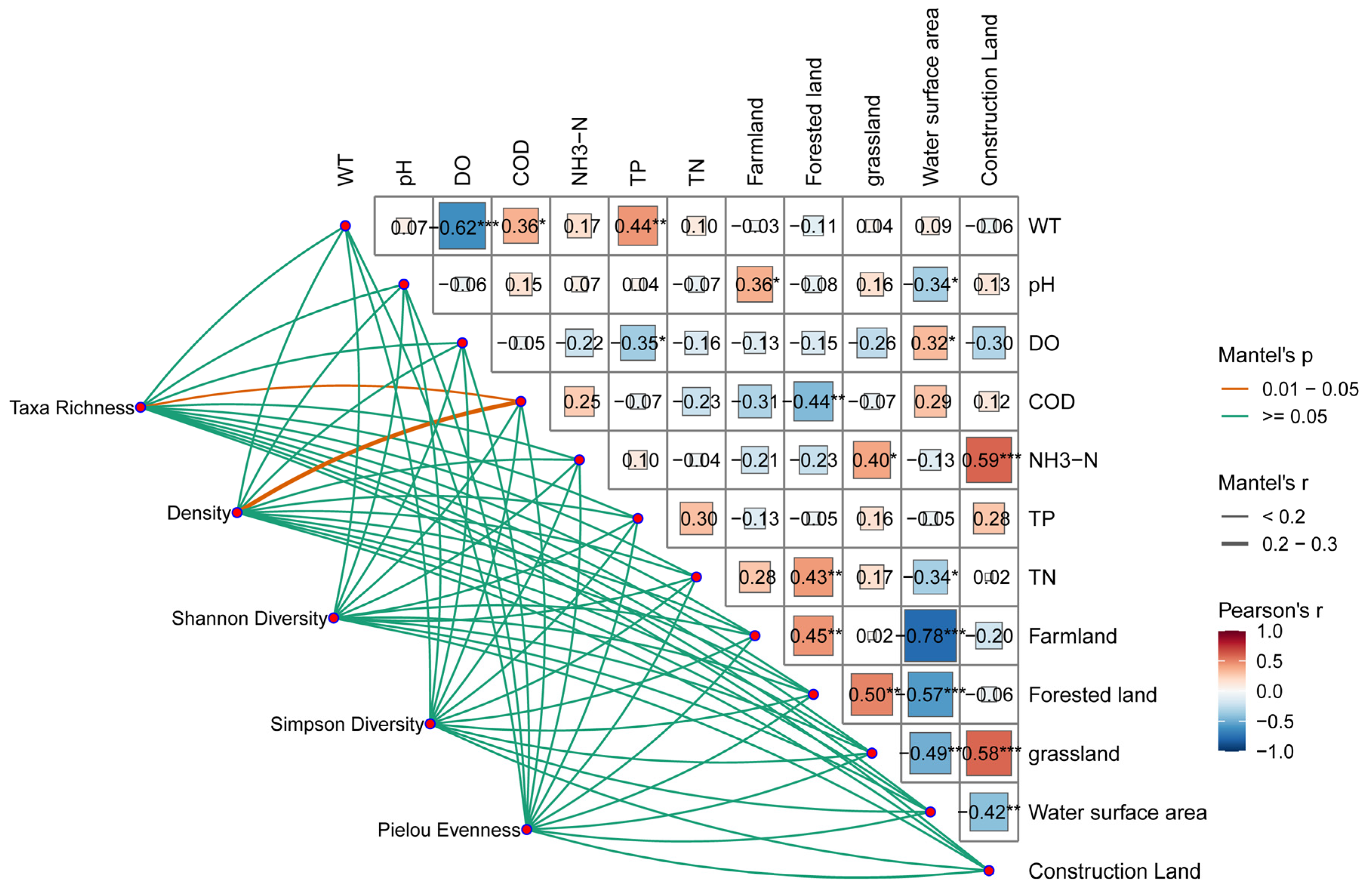
The results of Mantel test analysis on the macroinvertebrate community composition and environmental factors in the Han River Basin (Figure 10) showed that water physicochemical factors were interrelated with land use patterns, and they jointly regulated the diversity characteristics of macroinvertebrate communities through synergistic effects. Pearson correlation analysis revealed that water temperature (WT) was significantly negatively correlated with dissolved oxygen (DO), and DO was also negatively correlated with total phosphorus (TP); chemical oxygen demand (COD) was significantly negatively correlated with forested land, ammonia nitrogen (NH3-N) was significantly positively correlated with construction land, and total nitrogen (TN) was negatively correlated with Water surface area while being positively correlated with forested land area. The correlations among different land use types were also significant: the proportions of cultivated land and forested land were extremely significantly negatively correlated with water area proportion, and the proportion of grassland was significantly positively correlated with construction land proportion. The Mantel test further confirmed that both species richness and population density were significantly associated with COD. In summary, the synergistic changes in water quality factors and land use patterns are the key factors driving the variations in the community composition and structural characteristics of macroinvertebrates in the Han River Basin.

4. Discussion

4.1. Niche Characteristics of Dominant Macroinvertebrate Taxa in the Han River Basin

As an indicator characterizing the diversity of resources used by organisms, niche breadth is of great significance in monitoring community structure and succession, biodiversity, and the interactions between organisms and the environment [21]. Species with a wider niche breadth usually have stronger environmental adaptability and disturbance resistance, whereas species with a narrower niche breadth are more susceptible to the constraints of environmental changes. Previous studies have indicated that the differentiation in niche breadth among dominant macroinvertebrate species mainly stems from the differences in environmental adaptability and dispersal ability among different species [22]. Polypedilum sp. exhibited a relatively high niche breadth. Polypedilum sp. generally has strong environmental tolerance [23], being able to survive under various substrate conditions and different trophic levels, and is often a dominant taxon in eutrophic or human-disturbed water bodies. Its wide niche breadth indicates that this taxon has strong adaptability to changes in resource conditions, which is closely related to its adaptability to the organically polluted habitats in the middle and lower reaches. In contrast, the mayfly family Baetidae had a low niche breadth, suggesting that it has higher selectivity for habitat conditions and usually prefers lotic environments with good water quality and high dissolved oxygen levels. This result is consistent with the ecological understanding that most ephemeropteran taxa are generally recognized as bioindicators of clean water bodies [24].
Among the dominant species in 2023, the oligchaete worm Limnodrilus sp. showed a high niche breadth. As a typical oligochaete with strong pollution tolerance, this taxon can withstand low dissolved oxygen and high levels of organic pollution, and has strong flexibility in resource utilization. It often forms high-density populations in disturbed water bodies, and its niche characteristics reflect its extensive adaptability to adverse environmental conditions. In comparison, Gammaridae had a low niche breadth. Although it has a certain degree of pollution tolerance to some extent, it still has a certain dependence on substrate structure and hydrodynamic conditions. The narrow niche breadth may indicate that it mainly occupies relatively specific habitat types in the Han River Basin, although niche estimates may also be influenced by spatial sampling coverage and analytical resolution.
The niche overlap index can reflect the interspecific competition status and community stability [25]; a high niche overlap usually indicates an increase in potential competition, while a low niche overlap suggests that species achieve coexistence through resource differentiation. The overall degree of niche overlap among dominant species was low in 2022, with only a few species pairs having an overlap value exceeding 0.6, whereas all dominant species pairs in 2023 had a niche overlap value below 0.3, which indicated a high degree of differentiation in resource utilization among dominant species. This result demonstrated that although pollution-tolerant species were dominant in the middle and lower reaches of the Han River Basin, these species did not achieve coexistence through a highly overlapping niche; instead, they may have certain differentiations in food types, microhabitats or temporal utilization patterns, thereby reducing the direct competitive pressure. Such community structural characteristics with low niche overlap are commonly found in ecosystems with high environmental heterogeneity or significant disturbances. Combined with the hydrological conditions and human activity background of the middle and lower reaches of the Han River Basin, the construction and operation of cascade hydropower stations may have intensified the habitat structural heterogeneity at the reach scale by reshaping the fluvial hydrological and physical habitat processes. Previous studies have shown that cascade hydropower stations alter the runoff process [26], hydrodynamic conditions and sediment transport patterns, leading to the spatial characteristics of alternating distribution of “reservoirization–river channelization” in rivers [27], thus forming a variety of microhabitat units. This habitat mosaic effect provides differentiated resource spaces for macroinvertebrates with different ecological requirements, promotes the differentiation of species in the niche dimension, and then reduces the degree of resource overlap among dominant species. Meanwhile, relevant studies have pointed out that compared with undisturbed reaches, the macroinvertebrate community composition in reaches affected by hydropower station operation shows significant differences, and the dominant and common species in the two types of habitats are both dominated by a small number of species that can adapt to their respective hydrodynamic characteristics and substrate environments [28,29]. The above mechanisms jointly indicate that the increased habitat heterogeneity under the background of cascade hydropower stations may be one of the important factors driving the changes in the macroinvertebrate community structure and niche pattern in the middle and lower reaches of the Han River Basin.

4.2. Influence of Environmental Factors on Macroinvertebrate Communities

Environmental factors play a key role in the growth, reproduction and community succession of macroinvertebrates. Therefore, it is of great importance to study the response relationship between macroinvertebrates and the aquatic environment, because they provide powerful information for explaining cumulative effects, and have guiding significance for understanding material cycling, energy flow and information transmission in aquatic ecosystems, as well as for improving ecological protection and watershed restoration strategies [30].
Cities in the middle and lower reaches of the Han River Basin are disturbed by high-intensity human activities with large pollutant discharge, leading to an increase in indicators such as COD and TP. CCA analysis showed that TP and TN had significant explanatory power on the ordination axes. TP and TN have been reported as environmental factors that directly affect the composition, life cycle and distribution of macroinvertebrate communities [31,32], in water bodies with a high eutrophic level, high densities of pollution-tolerant species such as tubificids and chironomid larvae usually occur. Studies have indicated that macroinvertebrate communities can shift to be more monotonous and pollution-tolerant under high concentrations of nitrogen and phosphorus nutrients [33,34].
Forested land plays a crucial role in regulating the community structure of macroinvertebrates. Degradation of riparian vegetation in plain and platform areas, which is mainly driven by the rapid urbanization process. A large amount of farmland and forested land has been converted into construction land [35], resulting in the forested land in the middle and lower reaches of the Han River Basin being significantly less than that in the upper reaches. Forest cover can effectively reduce surface runoff and nutrient input, stabilize the riparian zone structure and improve the dissolved oxygen conditions of water surface area, thus providing suitable habitats for clean water indicator taxa such as ephemeropterans. In contrast, river reaches with low forest cover are more susceptible to agricultural or urban activities, with higher nutrient loads and water disturbance levels, which are unfavorable for the survival of sensitive taxa. Therefore, the area of forested land is positively correlated with taxa such as Ephemerellidae sp. and Heptageniidae sp.
The results of the Mantel test confirmed a significant correlation between water physicochemical factors and land use patterns, which jointly affected the diversity characteristics of macroinvertebrate communities through synergistic changes. Pearson correlation analysis revealed a significant negative correlation between water temperature (WT) and dissolved oxygen (DO), and a negative correlation between DO and total phosphorus (TP), which reflected the impact of aquatic metabolic processes on the oxygen environment under the background of eutrophication. Chemical oxygen demand (COD) was significantly negatively correlated with forested land, and ammonia nitrogen (NH3-N) was positively correlated with the area of construction land, which embodied the important role of land use types in regulating the input of organic pollutants and nitrogen. In addition, total nitrogen (TN) was negatively correlated with water surface area and positively correlated with forested land, indicating that forest cover had a buffering function in regulating nitrogen transport and reducing non-point source pollution. The proportions of cultivated land and forested land were extremely significantly negatively correlated with water area proportion, and grassland was significantly positively correlated with construction land, which further reflected the spatial differentiation of watershed land use structure and its indirect impact on the aquatic environment. Environmental factors also had a significant impact on the community diversity and quantitative characteristics. This study found that both species richness and population density were significantly associated with COD, indicating that the level of organic pollution was an important limiting factor affecting the abundance and diversity of macroinvertebrates. Moderate organic input can provide abundant food resources for some pollution-tolerant taxa and increase local density, while excessively high levels of organic pollution will cause a negative impact on community diversity due to the decrease in dissolved oxygen and habitat degradation.

5. Conclusions

(1)
A total of 91 taxa of macroinvertebrates were identified in the Han River Basin from 2022 to 2023, with Insecta being the dominant group (accounting for 63.74%). In 2023, the total number of species and the number of species in the upper reaches increased significantly, and Turbellaria and Nematoda were newly detected; the difference in the number of macroinvertebrate species between the upper reaches and the middle–lower reaches narrowed significantly compared with 2022.
(2)
The dominant groups in the upper reaches shifted from clean water indicator types to pollution-tolerant types, and pollution-tolerant groups have long been dominant in the middle and lower reaches. The overall niche breadth of dominant species was relatively low but with obvious differentiation. The degree of niche overlap among dominant species decreased significantly from 2022 to 2023, and the community structure exhibited the characteristics of low competition and high differentiation.
(3)
Total phosphorus (TP) and total nitrogen (TN) were the core water environmental factors driving the changes in community structure, and forested land was the key land use factor. Those two nutrients jointly regulated the macroinvertebrate community structure in the Han River Basin through synergistic effects.

Author Contributions

X.H.: Writing—Original Draft, Methodology, Investigation, Formal analysis S.P.: Data Curation, Formal analysis T.L.: Supervision J.Z. (Jiwei Zhang): Investigation, Data curation M.Z.: Visualization X.Z.: Corresponding author, Writing—Review and Editing, Project administration J.Z. (Jing Zhang): Corresponding author, Validation, Writing—Review and Editing. All authors have read and agreed to the published version of the manuscript.

Funding

This research was funded by National Key Research and Development Program of China, grant number 2021YFC3201002.

Institutional Review Board Statement

Not applicable.

Data Availability Statement

The original contributions presented in this study are included in the article. Further inquiries can be directed to the corresponding authors.

Conflicts of Interest

The authors declare no conflict of interest.

References

  1. Yang, S.; Liu, J.; Wang, C.; Zhang, T.; Dong, X.; Liu, Y. Vegetation dynamics influenced by climate change and human activities in the Hanjiang River Basin, central China. Ecol. Indic. 2022, 145, 109586. [Google Scholar] [CrossRef]
  2. Zou, X.; Yang, R.H.; Yang, Z.; Zheng, Z.W.; Shi, F.; Chi, S. Habitat Health Assessment of Typical Tributaries of the Yangtze River. J. Hydroecol. 2021, 42, 29–39. [Google Scholar]
  3. Chen, Z.-J.; Liu, Y.-Q.; Li, Y.-Y.; Lin, L.-A.; Zheng, B.-H.; Ji, M.-F.; Li, B.L.; Han, X.-M. The seasonal patterns, ecological function and assembly processes of Bacterioplankton communities in the Danjiangkou reservoir, China. Front. Microbiol. 2022, 13, 884765. [Google Scholar] [CrossRef]
  4. Wang, H.; Yuan, W.; Chen, W.; Hong, F.; Bai, X.; Guo, W. Response of hydrological regimes to land use change: A case study of the Han River Basin. J. Water Clim. Change 2023, 14, 4708–4728. [Google Scholar] [CrossRef]
  5. Lee, J.-W.; Lee, S.-W.; Park, S.-R. Assessing the effect of environmental factors and land use changes on benthic macroinvertebrate communities in stream ecosystems. Ecol. Inform. 2025, 91, 103404. [Google Scholar] [CrossRef]
  6. Miliša, M.; Stubbington, R.; Datry, T.; Cid, N.; Bonada, N.; Šumanović, M.; Milošević, D. Taxon-specific sensitivities to flow intermittence reveal macroinvertebrates as potential bioindicators of intermittent rivers and streams. Sci. Total Environ. 2022, 804, 150022. [Google Scholar] [CrossRef]
  7. Brooks, A.J.; Bray, J.; Nichols, S.J.; Shenton, M.; Kaserzon, S.; Mac Nally, R.; Kefford, B.J. Sensitivity and specificity of macroinvertebrate responses to gradients of multiple agricultural stressors. Environ. Pollut. 2021, 291, 118092. [Google Scholar] [CrossRef]
  8. Devine, J.A.; Vanni, M.J. Spatial and seasonal variation in nutrient excretion by benthic invertebrates in a eutrophic reservoir. Freshw. Biol. 2002, 47, 1107–1121. [Google Scholar] [CrossRef]
  9. Chi, S.; Zhao, X.; Gao, S.; Zhang, A.; Hu, J.; Li, S.; Hu, J.; Dong, F. The spatial distribution pattern of autumn macroinvertebrates in relation to environmental factors in Danjiangkou Reservoir. Acta Ecol. Sin 2021, 41, 1229–1241. [Google Scholar]
  10. Peng, S.Y.; Li, X.Z.; Wang, H.F.; Zhang, B.L. Niche analysis of dominant species of macrozoobenthic community in the southern Yellow Sea in spring. Acta Ecol. Sin. 2015, 35, 1917–1928. [Google Scholar] [CrossRef]
  11. Liu, Z.; Yu, P.; Chen, M.; Cai, M.; Fan, B.; Lv, W.; Huang, Y.; Li, Y.; Zhao, Y. Macrobenthic community characteristics and ecological health of a constructed intertidal oyster reef in the Yangtze Estuary, China. Mar. Pollut. Bull. 2018, 135, 95–104. [Google Scholar] [CrossRef]
  12. Jones, N.E.; Schmidt, B.J. Influence of tributaries on the longitudinal patterns of benthic invertebrate communities. River Res. Appl. 2018, 34, 165–173. [Google Scholar] [CrossRef]
  13. Zhang, Q.; Yang, T.; Wan, X.; Wang, Y.; Wang, W. Community characteristics of benthic macroinvertebrates and identification of environmental driving factors in rivers in semi-arid areas–A case study of Wei River Basin, China. Ecol. Indic. 2021, 121, 107153. [Google Scholar] [CrossRef]
  14. Kim, M.C.; Kim, J.W.; Lee, T.G.; Kim, J.W.; Cheon, S.P.; Kim, H.G.; Yu, T.S.; Kwak, I.S. Analysis of environmental factors in sediment based on benthic macroinvertebrates in streams, Korea. Entomol. Res. 2023, 53, 618–626. [Google Scholar] [CrossRef]
  15. Zengzeng, Y.U.; Yajing, H.E.; Junyan, W.U.; Yongjing, Z.H.; Yongde, C. Distribution of zoobenthos diversity in the Lake Donghu(Wuhan):Driving factors and historical changes. J. Lake Sci. 2025, 37, 204–214. [Google Scholar] [CrossRef]
  16. Wang, Y.C. A Study on Spatiotemporal Pattern of Species and Functional Diversity of Macroinvertebrates in the Mainstream of Yangtze River. Ph.D. Thesis, Nanjing Agricultural University, Nanjing, China, 2022. [Google Scholar]
  17. The State Environmental Protection Administration. Water and Wastewater Monitoring and Analysis Method Fourth Edition; China Environmental Science Press: Beijing, China, 2002.
  18. Levins, R. Evolution in Changing Environments: Some Theoretical Explorations; Princeton University Press: Princeton, NJ, USA, 1968. [Google Scholar]
  19. Pianka, E.R. The structure of lizard communities. Annu. Rev. Ecol. Syst. 1973, 4, 53–74. [Google Scholar] [CrossRef]
  20. Tang, Y.Z.; Xu, X.W.; Ding, J.K.; Xue, S.Y.; Li, J.Q.; Liu, L.L.; Li, A.; Mao, Y.Z. Dominant species and community characteristics of macrobenthos in the shellfish aquaculture area of xiaoqing river estuary-ecological niche and functional group analysis. Oceanol. Limnol. Sin. 2026, 1–15. [Google Scholar]
  21. Jiang, S.; Fan, W.; Chen, L.; Chen, J.; Li, B. Spatio-temporal distribution of macrobenthos and benthic ecological health status in the Bohai Sea and the northern Yellow Sea, China. Mar. Pollut. Bull. 2023, 196, 115671. [Google Scholar] [CrossRef]
  22. Tang, Y.B.; Liao, Y.B.; Shou, L.; Zeng, J.N.; Gao, A.G.; Chen, Q.Z. Intertidal zone of the Nanji Islands is a niche for dominant species of the macrobenthic community. Acta Ecol. Sin. 2016, 36, 489–498. [Google Scholar] [CrossRef]
  23. Wang, C.R. Community Characteristics and Biotic Integrity Assessment of Benthic Fauna in the Shandong Section of the Yellow River Basin. Ph.D. Thesis, Qufu Normal University, Qufu, China, 2025. [Google Scholar]
  24. El Yaagoubi, S.; Edegbene, A.O.; Errochdi, S.; Harrak, R.; Azmizem, A.; Ovie, T.T.E.; El Alami, M. Assessing the impacts of agricultural practices on ephemeroptera, plecoptera, and trichoptera (EPT) seasonal distribution: A genera-level EPT trait-based study in North Africa’s river ecosystems. Sci. Total Environ. 2025, 987, 179753. [Google Scholar] [CrossRef]
  25. Chen, Y.Y.; Zhang, X.M.; Pei, W.H.; Liu, Y.D.; Hu, C.Y. Niche and interspecific association of dominant macrobenthic species in mussel culture area. J. Fish. Sci. China 2023, 30, 765–774. [Google Scholar]
  26. Pompeu, C.R.; Peñas, F.J.; Goldenberg-Vilar, A.; Alvarez-Cabria, M.; Barquín, J. Assessing the effects of irrigation and hydropower dams on river communities using taxonomic and multiple trait-based approaches. Ecol. Indic. 2022, 145, 109662. [Google Scholar] [CrossRef]
  27. Zhe, L.; Yongbai, C.; Chong, L.; Jinsong, G.; Yan, X.; Lunhui, L. Advances of Eco-environmental Effects and Adaptive Management in River Cascading Devel-opment. Adv. Earth Sci. 2018, 33, 675–686. [Google Scholar]
  28. Beghelli, F.G.d.S.; Santos, A.C.A.d.; Urso-Guimarães, M.V.; Calijuri, M.d.C. Spatial and temporal heterogeneity in a subtropical reservoir and their effects over the benthic macroinvertebrate community. Acta Limnol. Bras. 2014, 26, 306–317. [Google Scholar] [CrossRef][Green Version]
  29. White, D.S. The benthic macroinvertebrates of Kentucky Lake, a mainstem reservoir on the Tennessee River, USA. Trans. Am. Entomol. Soc. 2014, 140, 83–99. [Google Scholar] [CrossRef]
  30. Wang, Y.; Liu, J.-J.; Liu, W.; Feng, Q.; Li, B.-l.; Lu, H.; Wang, S. Spatial variation in macrobenthic assemblages and their relationship with environmental factors in the upstream and midstream regions of the Heihe River Basin, China. Environ. Monit. Assess. 2021, 193, 53. [Google Scholar] [CrossRef]
  31. Cooper, M.J.; Uzarski, D.G.; Burton, T.M. Macroinvertebrate community composition in relation to anthropogenic disturbance, vegetation, and organic sediment depth in four Lake Michigan drowned river-mouth wetlands. Wetlands 2007, 27, 894–903. [Google Scholar] [CrossRef]
  32. De Jonge, M.; Dreesen, F.; De Paepe, J.; Blust, R.; Bervoets, L. Do acid volatile sulfides (AVS) influence the accumulation of sediment-bound metals to benthic invertebrates under natural field conditions? Environ. Sci. Technol. 2009, 43, 4510–4516. [Google Scholar] [CrossRef]
  33. Yang, Y.; Yi, Y.; Zhou, Y.; Wang, X.; Zhang, S.; Yang, Z. Spatio-temporal variations of benthic macroinvertebrates and the driving environmental variables in a shallow lake. Ecol. Indic. 2020, 110, 105948. [Google Scholar] [CrossRef]
  34. Yang, Z.; He, S.; Feng, T.; Lin, Y.; Chen, M.; Li, Q.; Chen, Q. Spatial variation in the community structure and response of benthic macroinvertebrates to multiple environmental factors in mountain rivers. J. Environ. Manag. 2023, 341, 118027. [Google Scholar] [CrossRef] [PubMed]
  35. Xiong, Y.; Zhang, Z.; Fu, M.; Wang, L.; Li, S.; Wei, C.; Wang, L. Analysis of vegetation cover change in the geomorphic zoning of the Han River basin based on sustainable development. Remote Sens. 2023, 15, 4916. [Google Scholar] [CrossRef]
Figure 1. Sampling Sites in the Han River Basin.
Diversity 18 00158 g001
Figure 2. Taxa richness of macroinvertebrates in the Han River Basin.
Diversity 18 00158 g002
Figure 3. Boxplot of macroinvertebrate density in the Han River Basin. Red boxes represent data from 2022 and blue boxes represent data from 2023. Within each year, sampling sites were grouped into upstream, middle and downstream reaches. Box: Represents the interquartile range (IQR, i.e., the 25th to 75th percentiles), with the horizontal line inside the box indicating the median value. Whiskers: Extend to the minimum and maximum values within 1.5 × IQR. Diamond symbols: Denote outliers outside this range. White squares: Indicate mean values. Different letters indicate significant differences (p < 0.05).
Diversity 18 00158 g003
Figure 4. NMDS analysis of macroinvertebrates in the Han River Basin, 2022 and 2023.
Diversity 18 00158 g004
Figure 5. Taxa Richness. Red boxes represent data from 2022 and blue boxes represent data from 2023. Within each year, sampling sites were grouped into upstream, middle and downstream reaches.Box: Interquartile range (IQR), with the horizontal line inside the box indicating the median value. Whiskers: Minimum and maximum values within the range of 1.5 × IQR. Diamond symbols: Overlaid to show the full distribution of all observed values. Open circles: Represent outliers outside the range of 1.5 × IQR. White squares: Indicate mean values.Significant differences between groups are indicated by asterisks (* p < 0.05, ** p < 0.01).
Diversity 18 00158 g005
Figure 6. Shannon diversity. Red boxes represent data from 2022 and blue boxes represent data from 2023. Within each year, sampling sites were grouped into upstream, middle and downstream reaches.Box: Interquartile range (IQR), with the horizontal line inside the box indicating the median value. Whiskers: Minimum and maximum values within the range of 1.5 × IQR. Diamond symbols: Overlaid to show the full distribution of all observed values. Open circles: Represent outliers outside the range of 1.5 × IQR. White squares: Indicate mean values.Significant differences between groups are indicated by asterisks (* p < 0.05).
Diversity 18 00158 g006
Figure 7. Simpson diversity. Red boxes represent data from 2022 and blue boxes represent data from 2023. Within each year, sampling sites were grouped into upstream, middle and downstream reaches.Box: Interquartile range (IQR), with the horizontal line inside the box indicating the median value. Whiskers: Minimum and maximum values within the range of 1.5 × IQR. Diamond symbols: Overlaid to show the full distribution of all observed values. Open circles: Represent outliers outside the range of 1.5 × IQR. White squares: Indicate mean values.Significant differences between groups are indicated by asterisks (* p < 0.05).
Diversity 18 00158 g007
Figure 8. Pielou evenness. Red boxes represent data from 2022 and blue boxes represent data from 2023. Within each year, sampling sites were grouped into upstream, middle and downstream reaches.Box: Interquartile range (IQR), with the horizontal line inside the box indicating the median value. Whiskers: Minimum and maximum values within the range of 1.5 × IQR. Diamond symbols: Overlaid to show the full distribution of all observed values. Open circles: Represent outliers outside the range of 1.5 × IQR. White squares: Indicate mean values.
Diversity 18 00158 g008
Figure 9. Biplot for a Canonical Correspondence Analysis of macroinvertebrates and associated environmental factors.
Diversity 18 00158 g009
Figure 10. Mantel test of macroinvertebrates diversity and environmental factors; *** indicates p < 0.001, ** indicates p < 0.01, * indicates p < 0.05; orange line indicates significant correlation; green line indicates non-significant correlation; WT indicates water temperature.
Diversity 18 00158 g010
Table 1. Water environmental factors (mean ± SD) and land use (%) at sampling sites in the Han River Basin.
20222023Kruskal–Wallis Test
TypeUnitUpper ReachesMiddle and Lower ReachesUpper ReachesMiddle and Lower Reachesp
Water quality parameters    
Temperature°C18.73 ± 2.6517.66 ± 2.8417.7 ± 2.4619.69 ± 2.620.115
pH 8 ± 08.07 ± 0.278 ± 08.03 ± 0.130.865
DOmg/L9.02 ± 1.369.63 ± 0.678.89 ± 1.128.76 ± 0.910.106
CODmg/L8.26 ± 2.368.33 ± 2.954.42 ± 3.3210.33 ± 2.430.015
NH3-Nmg/L0.06 ± 0.040.11 ± 0.120.06 ± 0.050.11 ± 0.100.766
TPmg/L0.04 ± 0.020.04 ± 0.010.05 ± 0.030.03 ± 0.020.167
TNmg/L1.96 ± 0.371.81 ± 0.251.76 ± 0.381.51 ± 0.170.018
Land use types   
Farmland%34.0621.5633.8621.550.733
Forested land%10.76 0.02 11.00 0.00 <0.001
Grassland%0.040.020.040.020.671
Water surface area %38.9264.0240.2864.050.264
Construction land%16.2214.3814.8214.380.929
Table 2. Niche Breadth of Dominant Taxa in the Han River Basin.
Dominant Species20222023
TaxonNiche BreadthOccurrence FrequencyNiche BreadthOccurrence Frequency
% %
Stictochironomus sp.1.6547.37  
Polypedilum sp.1.8857.89  
Gammaridae   0.5426.32
Limnoperna sp.  0.9831.58
Corophiidae 1.2036.84  
Cricotopus sp.1.4242.110.7331.58
Paranais sp.  1.0826.32
Limnodrilus sp.  1.4452.63
Baetidae0.5615.79  
Cryptochironomus sp.1.5136.84  
Orthocladius sp.1.3736.84  
Table 3. Niche Overlap Index of Dominant macroinvertebrate Taxa in the Han River Basin, 2022.
Stictochironomus sp.Polypedilum sp.Corophiidae Cricotopus sp.Baetidae Cryptochironomus sp.Orthocladius sp.
Stictochironomus sp.1.00      
Polypedilum sp.0.661.00     
Corophiidae 0.780.371.00    
Cricotopus sp.0.240.750.061.00   
Baetidae 0.010.010.000.021.00  
Cryptochironomus sp.0.600.500.570.120.031.00 
Orthocladius sp.0.060.020.050.340.070.151.00
Table 4. Niche Overlap of Dominant macroinvertebrates in the Han River Basin, 2023.
Gammaridae Limnoperna sp.Cricotopus sp.Paranais sp.Limnodrilus sp.
Gammaridae1.00    
Limnoperna sp.0.071.00   
Cricotopus sp.0.000.001.00  
Paranais sp.0.000.040.001.00 
Limnodrilus sp.0.280.100.010.011
Disclaimer/Publisher’s Note: The statements, opinions and data contained in all publications are solely those of the individual author(s) and contributor(s) and not of MDPI and/or the editor(s). MDPI and/or the editor(s) disclaim responsibility for any injury to people or property resulting from any ideas, methods, instructions or products referred to in the content.