Abstract
Antioxidant defense systems in fish are highly sensitive to environmental variability and provide valuable indicators of physiological stress in aquatic ecosystems. This study evaluated the combined effects of seasonal variation, morphometric parameters (total length, total weight, and condition factor), sex, and species identity on oxidative stress markers and antioxidant defense responses in Capoeta umbla and Capoeta trutta collected from the Karasu River (Türkiye). Fish were seasonally sampled between April 2023 and March 2024, and malondialdehyde (MDA) levels and the activities of key antioxidant enzymes, including superoxide dismutase (SOD), catalase (CAT), glutathione peroxidase (GPx), and glutathione reductase (GR), were analyzed in edible muscle tissues. Length–weight relationships and Fulton’s condition factor were calculated to describe growth patterns and physiological status. The results indicated that seasonal variation was the primary factor influencing oxidative stress responses and antioxidant defense patterns in both species. Higher oxidative stress levels and increased antioxidant enzyme activities were generally observed during the summer period, reflecting physiological responses to elevated environmental temperatures. Morphometric parameters and species identity showed comparatively weaker associations with antioxidant variability. Overall, the findings highlight the dominant role of seasonal environmental dynamics in regulating oxidative balance in freshwater Capoeta species and support the use of antioxidant biomarkers as effective tools for assessing ecosystem health under changing environmental conditions.
1. Introduction
Fish, like all aerobic organisms, continuously produce reactive oxygen species (ROS) as byproducts of their normal metabolic activities and in response to environmental stressors. When ROS production exceeds cellular antioxidant capacity, oxidative stress occurs, leading to lipid peroxidation, protein oxidation, and cellular dysfunction. To maintain redox homeostasis, fish rely on an antioxidant defense system composed of essential enzymatic components, including superoxide dismutase (SOD), catalase (CAT), glutathione peroxidase (GPx), and glutathione reductase (GR). These enzymes work in a coordinated manner to neutralize ROS and limit oxidative damage in tissues [1,2,3]. The antioxidant defense mechanisms in fish are highly sensitive to environmental variability. Seasonal changes in abiotic conditions, particularly water temperature, oxygen availability, and light intensity, can strongly influence metabolic rate and mitochondrial activity, altering ROS production and antioxidant enzyme activity [4,5]. Numerous studies have shown that high temperatures increase oxidative stress in fish, which in turn often enhances antioxidant responses and lipid peroxidation, as reflected in malondialdehyde (MDA) levels. Consequently, antioxidant biomarkers are widely used as sensitive indicators of physiological stress in aquatic ecosystems [6,7,8].
While the effects of environmental stressors such as temperature fluctuations, pollutants, and hypoxia on the antioxidant systems of fish have been extensively investigated, far less attention has been paid to the potential role of population-level morphometric parameters. Measurements such as total length, total weight, length-to-weight relationships (LWRs), and Fulton’s condition factor (CF) integrate the long-term effects of environmental conditions, feeding success, and energy allocation strategies [9]. These parameters therefore provide indirect but biologically significant information about the physiological state of fish populations. In fisheries biology, LWRs are commonly used to describe growth patterns and to infer isometric or allometric growth strategies, while CF is widely applied as an indicator of individual condition, nutritional status, and overall population health [10,11]. However, these morphometric indicators are rarely evaluated in conjunction with biochemical stress markers. Linking LWR and CF with antioxidant biomarkers offers an opportunity to move beyond descriptive growth assessments and explore how energy allocation and body condition modulate oxidative stress responses under natural environmental variability [12,13,14,15].
From a physiological perspective, a balance between somatic growth, maintenance metabolism, and stress defense is expected under changing environmental conditions. Individuals that expend proportionally more energy on maintenance and antioxidant defense may exhibit altered growth patterns or conditioning factors, particularly during periods of high thermal or metabolic stress. Despite this conceptual importance, empirical evidence linking morphometric traits and antioxidant defense capacity in wild fish populations is limited [10,16,17,18]. The cyprinid species Capoeta umbla and Capoeta trutta are ecologically and commercially important freshwater fish widely distributed in Eastern Anatolia [19,20]. Both species inhabit the same river systems and experience similar seasonal environmental conditions, making them suitable models for evaluating how morphometric parameters and antioxidant systems respond to shared stressors. Comparative assessment of these closely related species also enables evaluation of whether species-specific differences modify the relationship between body condition and oxidative stress.
Therefore, the present study investigates seasonal variation in antioxidant biomarkers (MDA, SOD, CAT, GPx, and GR) in C. umbla and C. trutta collected from the Karasu River (Türkiye), in relation to morphometric parameters (LWR and CF), sex, and species identity. We put forward the following hypotheses:
- (i)
- Seasonal variation is the primary driver of antioxidant biomarker dynamics in both species;
- (ii)
- Morphometric parameters, particularly CF and LWR, are significantly correlated with antioxidant defense capacity, reflecting energy allocation trade-offs;
- (iii)
- The strength of these relationships differs between species despite shared environmental conditions.
2. Materials and Methods
2.1. Study Area and Samplings
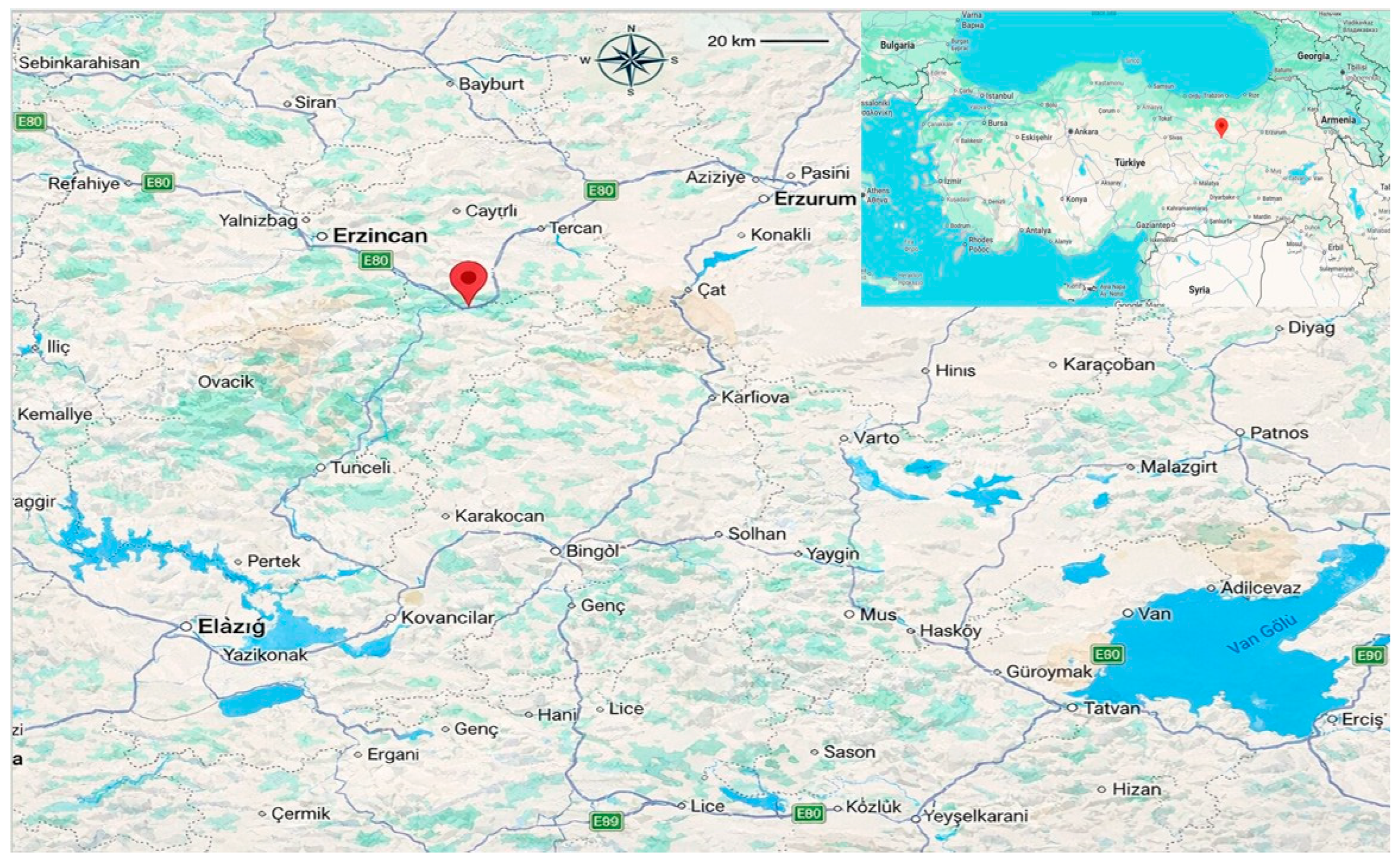
The Karasu River, located in the Eastern Anatolia Region of Türkiye, originates from Dumlu Mountain in Erzurum province and merges with the Murat River near Keban to form the Euphrates River [21]. Fish samples of Capoeta umbla and Capoeta trutta were obtained from commercial fishermen at a designated sampling station (39°33′03.6″ N 40°03′45.5″ E) (Figure 1) along the Karasu River within the borders of Erzincan Province. The fish were purchased dead from a local commercial fish market, where they were obtained as part of routine commercial fishing operations. According to information provided by the vendor, all fish were caught on the same day and stored on ice under standard commercial conditions prior to sale. Following purchase, the samples were immediately transported to the laboratory under cold conditions and processed using identical handling procedures to minimize post-mortem and storage-related variability. Sampling was conducted monthly between April 2023 and March 2024 to represent seasonal variation. Fish were captured using gill nets with three different mesh sizes (16 × 16 mm2, 22 × 22 mm2, and 32 × 32 mm2), following standardized instructions provided to the fishermen. Water temperature was measured in situ at the location during the sampling period, and seasonal mean values were calculated.
Figure 1.
Sampling station.
2.2. Laboratory Studies
Fish samples collected during the sampling period were brought to the laboratory in a container with ice packs, and only sexually mature individuals were included in the antioxidant parameter analyses. After recording length and weight, the fish were separated according to their sex. The sex of each sample was determined by macroscopic examination of the gonads. Total length (TL, cm) was measured with 1 mm accuracy using a fish measuring board equipped with a millimeter-scale ruler. Total weight (TW, g) was determined with a precision balance (Weightlab WL-3002L, Shanghai, China) (accuracy ± 0.01 g; capacity 3000 g). Length and weight measurements were taken for all fish collected in each sampling season. For the evaluation of antioxidant parameters, at least 10 individuals were randomly selected depending on the total number of fish caught in each sampling period. Samples for antioxidant analyses were obtained from the edible muscle tissues. From the anterior body region, muscle tissue pieces of approximately 2.0 × 2.0 × 1.0 cm (1–2 g) were excised using a sterile scalpel. All muscle samples were stored at −80 °C until antioxidant enzyme analyses were performed.
2.3. Length–Weight Relationships (LWRs), Condition Factor (CF), and Sex Ratio
The relationship between total length and total weight was modeled as follows [22]:
where “a” is the interception and “b” is the allometric exponent.
Fulton’s condition factor (CF) was used to assess individual condition, assuming that heavier fish at a given length are in better condition [23,24]:
The sex ratio (female/male) was computed as follows:
where “F” and “M” denote the numbers of females and males, respectively.
2.4. Antioxidant Enzyme Analysis
2.4.1. Homogenate Preparation
The obtained tissues were carefully washed with physiological saline containing 0.9% NaCl to remove potential contaminants and blood residue. The tissues were then cut into small pieces using a scalpel and suspended in 50 mM KH2PO4 buffer (pH = 7.4). Liquid nitrogen was then used to effectively homogenize the tissue samples, releasing the cellular components. The prepared homogenate was centrifuged at 27,000× g for 60 min. After centrifugation, the supernatant was carefully removed using a Pasteur pipette, and the sediment remaining at the bottom was removed. The resulting supernatant fraction was used for determining enzyme activities [16,25,26].
2.4.2. Determination of Lipid Peroxidation and Enzyme Activities
Malondialdehyde (MDA) levels, as an indicator of lipid peroxidation (LPO), were determined in all tissues using the thiobarbituric acid (TBA) method described by Placer et al. [27]. This method is based on the reaction of MDA with TBA to form a colored complex, which is then analyzed spectrophotometrically.
Glutathione reductase (GR) activity was measured at 25 °C using a modified version of the method developed by Carlberg and Mannervik [28]. This method is based on the conversion of oxidized glutathione (GSSG) to its reduced form, GSH, and is assessed by the amount of NADPH consumed during the reaction.
Superoxide dismutase (SOD) activity was analyzed at 20 °C and at a wavelength of 560 nm using the method described by Sun et al. [29]. The basic principle of the method is based on inhibiting the reaction of superoxide anions with reduced nitroblue tetrazolium (NBT).
Catalase (CAT) activity was determined by measuring the decomposition rate of hydrogen peroxide (H2O2) at 20 °C and 240 nm, according to the method reported by Aebi [30].
Glutathione peroxidase (GPx) activity was determined using the method described by Beutler [31]; this analysis was based on spectrophotometric monitoring of the oxidation rate of NADPH at 340 nm.
The total protein content of tissue homogenates was determined prior to biochemical analyses, and all antioxidant enzyme activities (CAT, SOD, GPx, and GR) as well as MDA concentrations were normalized to protein content. Enzyme activities are expressed as units per mg protein (U mg protein−1), and MDA levels are expressed as nmol MDA mg protein−1.
All biochemical assays were performed in technical replicates for each sample, and mean values were used in statistical analyses. Assays were conducted under identical experimental conditions to reduce analytical variability.
2.5. Statistical Analysis
Associations between the examined variables were quantified using Spearman’s rank correlation coefficient for variables that did not meet parametric assumptions. Differences between groups were assessed using the independent-samples Student’s t-test after verifying the assumptions of normality and homogeneity of variances. The distribution of sexes was evaluated using a chi-square (χ2) test to determine whether the observed female–male ratios diverged from expected values. Growth patterns were classified as isometric when b = 3, negatively allometric when b < 3, and positively allometric when b > 3. The significance of deviations from isometry was judged using the corresponding t statistic and the 95% confidence interval (CI) of b [32].
The strength of the association between variables was quantified using the coefficient of determination (R2). The null hypothesis of isometric growth (H0: b = 3) was evaluated using a t-test, based on the test statistic ts = (b − 3)/Sβ, where Sβ denotes the standard error of the estimated slope. Statistical significance was assessed at the α = 0.05 level [33]. These statistical procedures were carried out in the MINITAB 21 software package.
Multivariate statistical analyses were conducted to assess variations in antioxidant biomarker levels using PRIMER-e (version 2017). Bray–Curtis similarity coefficients were calculated for PERMANOVA, whereas Principal Coordinate (PCO) Analysis and hierarchical cluster analysis were performed to evaluate and visualize similarity patterns among samples. Antioxidant enzyme biomarker data for the fish species were examined in relation to season, total length (TL), total weight (TW), condition factor (CF), gender in both C. umbla and C. trutta, and difference between species. For comparative purposes, the dataset was stratified into groups based on whether the values for each factor were above or below their respective near-average thresholds. Factor groups were defined based on mean length and weight values to reflect biological variation within the fish population and to obtain comparable group sizes for statistical analyses [13,34,35].
For C. umbla, the factor groups were defined as follows:
TL: Group 1 (TL1, n = 31): ≥30–36 cm; Group 2 (TL2, n = 23): >36–42 cm;
TW: Group 1 (TW1, n = 19): ≥350–500 g; Group 2 (TW2, n = 22): >500–650 g; Group 3 (TW3, n = 8): >650–850 g;
CF: Group 1 (CF1, n = 24): ≤1.13; Group 2 (CF2, n = 30): >1.13.
For C. trutta, the factor groups were as follows:
TL: Group 1 (TL1, n = 31): ≥28–33 cm; Group 2 (TL2, n = 22): >33–39 cm;
TW: Group 1 (TW1, n = 14): ≥150–360 g; Group 2 (TW2, n = 32): >360–450 g; Group 3 (TW3, n = 14): >450–650 g;
CF: Group 1 (CF1, n = 26): ≤1.11; Group 2 (CF2, n = 34): >1.11.
Antioxidant biomarkers demonstrating the greatest variability among samples were analyzed within these factor groups. Similarity Percentage Analysis (SIMPER), using a cut-off value of 70%, was performed to identify the biomarkers contributing most to within- and between-group similarity. The most important factor group(s) were identified using PERMANOVA-Main test (unrestricted permutation of raw data; Num. permutations: 999) analyses. The effect of groups within the factors was also determined using the PERMANOVA pairwise test (unrestricted permutation of raw data; Num. permutations: 999).
A one-way ANOVA was conducted to evaluate the main effects of season and gender, as well as their interactions for antioxidant biomarkers (p < 0.05). Significant differences among groups were further examined using Tukey’s HSD test in the STATISTICA 14.0 (TIBCO® Statistica, Palo Alto, CA, USA) software package.
3. Results
3.1. Effect of Factor Groups on the Antioxidant Biomarkers of C. umbla and C. trutta
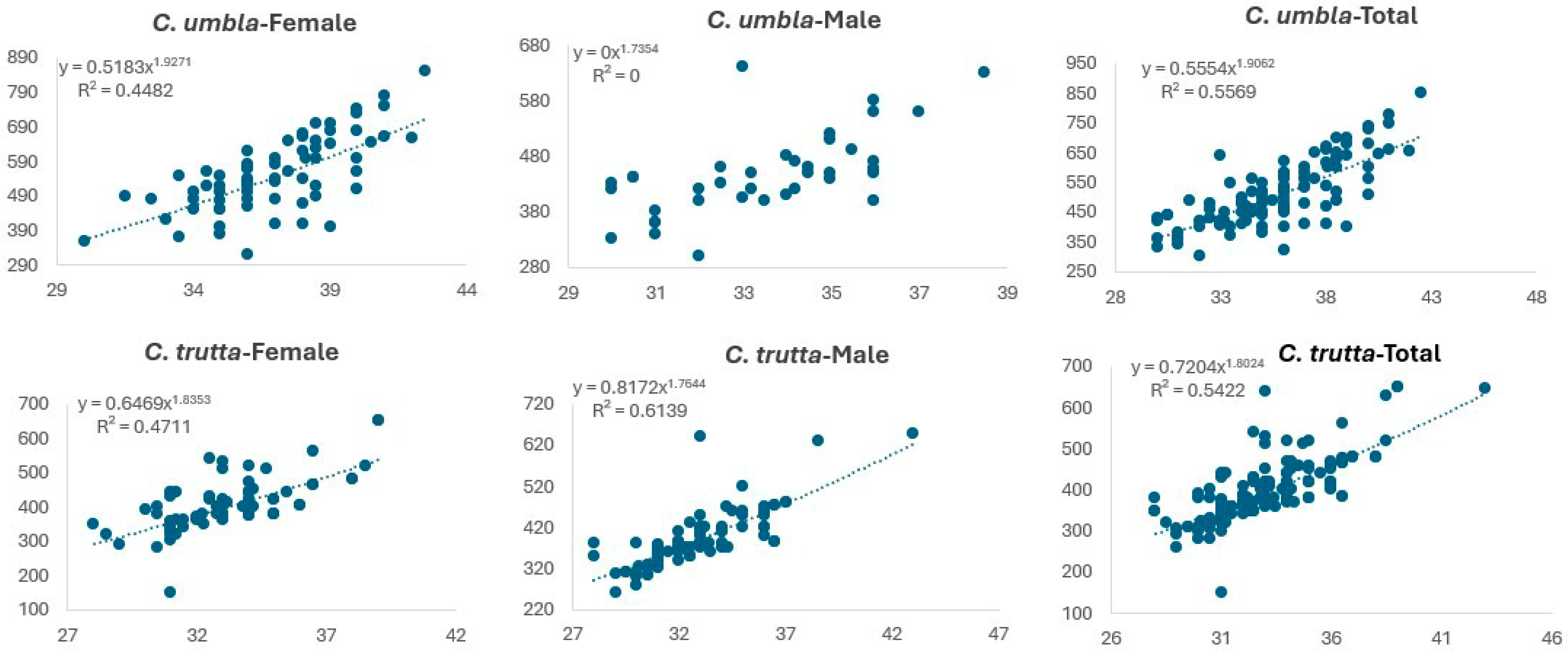
A total of 494 fish samples were collected from the Karasu River during the sampling period. The length–weight relationships (LWRs), condition factor (CF), and growth types for female and male individuals of C. umbla and C. trutta are summarized in Table 1 and illustrated in Figure 2. C. umbla generally exhibited higher average lengths and weights than C. trutta. Both species displayed negative allometric growth (b < 3) throughout the sampling area. In C. umbla, the CF values differed between genders, whereas in C. trutta, the CF was similar for females and males. No statistically significant difference in CF was observed between the two species. Among all groups, males of C. trutta showed the strongest length–weight relationship (highest R2). Seasonal evaluation showed that both species reached their maximum lengths in summer, while C. umbla reached its highest weight in spring and C. trutta in winter. The highest condition factor for both species was observed in spring (Table 2).
Table 1.
Annual averages of the factor groups (LWR and CF) for female and male individuals in C. umbla and C. trutta (p < 0.05).
Figure 2.
Length–weight relationships of C. umbla and C. trutta genders from the Karasu River during the sampling seasons.
Table 2.
Seasonal averages of the factor groups (TL, TW and CF) for female and male individuals in C. umbla and C. trutta (p < 0.05).
Seasonal and sex-related variations were observed in antioxidant biomarkers (MDA, CAT, GR, GPx, and SOD) in both C. umbla and C. trutta (Table 3). Generally, biomarker levels showed significant seasonal fluctuations, while differences between genders were less pronounced.
Table 3.
Levels of the antioxidant biomarkers in different genders of C. umbla and C. trutta edible muscle tissues from the Karasu River during the sampling seasons.
In C. umbla, both MDA levels and enzyme activities (CAT, GPx, SOD) peaked during the summer and were lowest in autumn and winter. Similarly, in C. trutta, summer months exhibited the highest MDA levels and associated enzyme activities, particularly in females. Among all biomarkers, SOD displayed the largest seasonal amplitude in both species. Females of both species tended to show slightly higher enzyme activity than males during summer.
3.2. The Factors with the Greatest Influence on the Changes in Antioxidant Biomarkers of C. umbla and C. trutta
SIMPER and PERMANOVAs were performed to determine the most influential factor(s) regarding the changes in these antioxidant biomarkers in these fish species. The analysis revealed that season was the most influential factor in the changes in the antioxidant biomarkers of both C. umbla (Pseudo-F: 28.25; Pperm: 0.001) and C. trutta (Pseudo-F: 29.88; Pperm: 0.001). When the species effects on changes in the antioxidant biomarkers of C. umbla and C. trutta fish species were examined, it was observed that there was no significant difference between the species (Pseudo-F: 3.16; Pperm: 0.05). The species with the highest similarity was C. umbla, with a similarity rate of 83%, and C. trutta, with a similarity rate of 82%. In both species, the antioxidant biomarker SOD contributed most to this similarity.
The smallest difference among seasons was observed between winter and autumn (Pperm: 0.21; t = 1.25) for C. umbla. The greatest difference was observed between winter and summer (Pperm: 0.001; t = 9.36). The SIMPER results revealed that the season with the highest similarity of antioxidant biomarkers was winter, with a similarity rate of 92%, followed by autumn, with 91%; summer, with 89%; and spring, with 87%. The antioxidant biomarker that contributed most to this similarity was SOD in all the seasons. SOD’s contribution to similarity across seasons was 72% in spring, autumn, and winter, while it decreased slightly to 71% in summer (cut-off for low contributions: 70%). In winter and summer, the seasons with the greatest difference (dissimilarity 30%), and in autumn and winter, where the smallest difference was observed (dissimilarity 8%), the biomarker that contributed most to this difference was SOD (71% and 70%, respectively). After SOD (69%), which had only a 27% difference between autumn and summer (which had the second highest difference), the antioxidant biomarker CAT (18%) ranked second in contributing to the difference.
In the within-species evaluation, seasonal variation was identified as the most influential factor affecting changes in antioxidant biomarkers in C. umbla, followed by the condition factor (Pseudo-F = 4.71; Pperm = 0.03) and total weight (Pseudo-F = 2.49; Pperm = 0.07). However, in C. trutta, the effects of total length (Pseudo-F = 2.45; Pperm = 0.10) and condition factor (Pseudo-F = 2.29; Pperm = 0.12), which followed the most influential seasonal factor, were weaker. Therefore, PCO graphs of the most influential factors in the changes in the antioxidant biomarkers of species are given only for C. umbla.
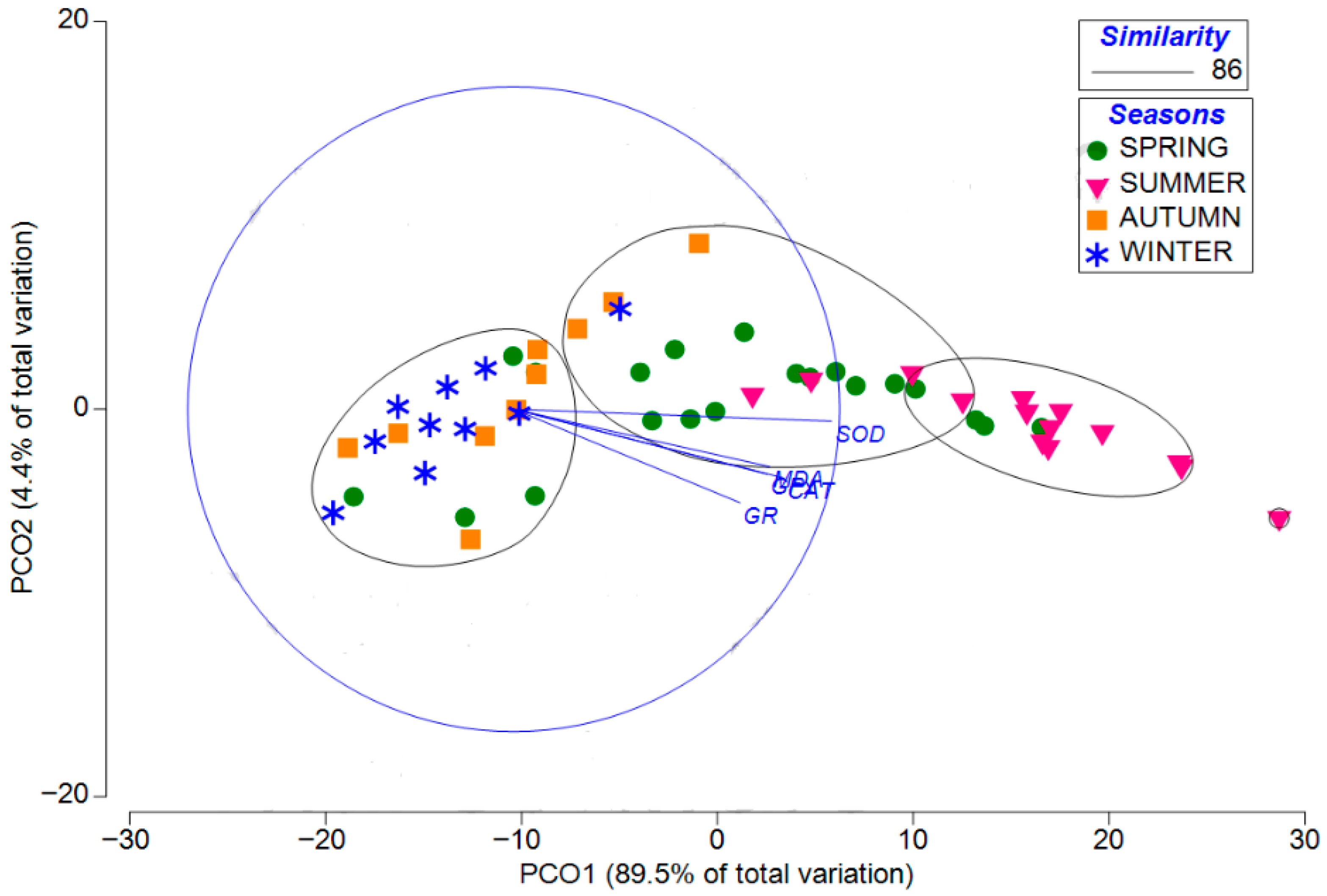
Figure 3 shows a two-dimensional configuration plot of the PCO analysis of a resemblance matrix of antioxidant biomarkers in C. umbla collected from different seasons. Although C. umbla samples obtained in different seasons were representative of each season when using the antioxidant biomarker SOD, spring was more prominent. The seasonal groups appear to be separate but strongly overlapping. Winter and autumn form a strong group, while summer and spring form a weaker group in the same area with a similarity of 86%.
Figure 3.
Two-dimensional configuration plot of a PCO analysis of a resemblance matrix of C. umbla antioxidant biomarkers in different seasons. The lower triangular matrix was created using Bray–Curtis similarity coefficients. Pearson Correlation > 0.65.
PERMANOVAs, conducted to reveal seasonal differences in C. trutta, showed similar results to C. umbla. In C. trutta, the seasons with the greatest differences were winter and summer (Pperm: 0.001; t = 13.99), while the seasons with the smallest differences were spring and autumn (Pperm: 0.019; t = 2.18). The SIMPER results revealed that the season with the highest similarity of antioxidant biomarkers was winter, with a similarity rate of 93%; followed by summer, with 92%; autumn, with 87%; and spring, with 86% for C. trutta. The first and only antioxidant biomarker contributing most to this similarity was SOD, with 72–73%, while in spring, SOD was followed by CAT (15%), with 68% (cut-off for low contributions: 70%). The highest seasonal dissimilarity in antioxidant biomarkers was observed between winter and summer (36%), whereas the lowest dissimilarity occurred between autumn and winter (13%). In both seasonal comparisons, superoxide dismutase (SOD) was the primary contributor to dissimilarity, accounting for 73% of the winter–summer difference and 69% of the autumn–winter difference. In C. trutta, catalase (CAT) constituted the second highest contribution to the autumn–winter dissimilarity (17%), while such a contribution was not detected in C. umbla.
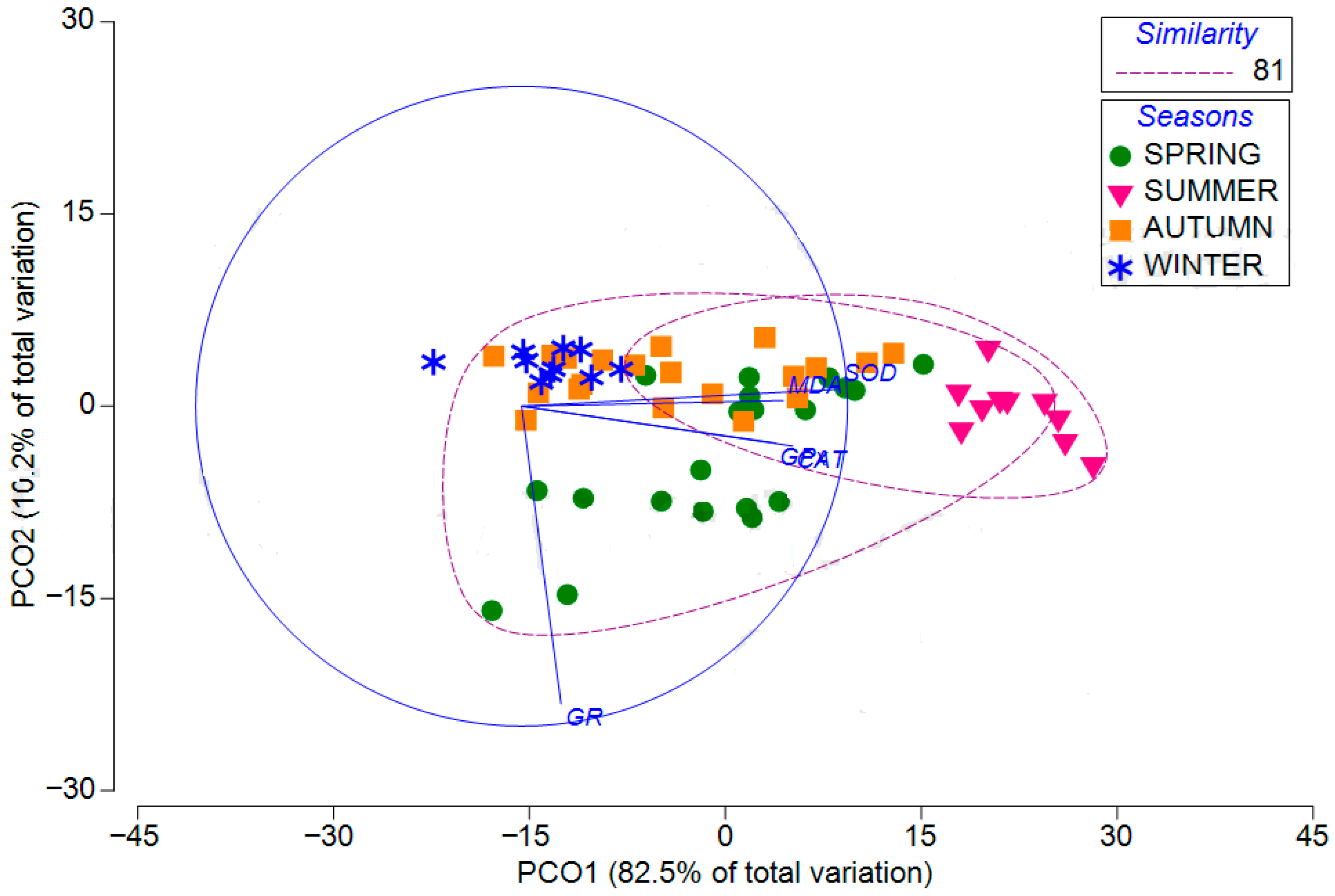
Figure 4 shows a two-dimensional configuration plot of the PCO analysis of a resemblance matrix of antioxidant biomarkers in C. trutta collected from different seasons. PCO analysis of antioxidant biomarkers revealed that seasonal groups were partially separated in the two-dimensional ordination space, with substantial overlap among samples. Summer and winter groups exhibited the highest similarity (81%), whereas the autumn–winter and spring–autumn groups showed lower similarity within the same ordination space. The vectors representing antioxidant biomarkers (SOD, GR, CAT, GPx, and MDA) indicate the direction and relative contribution of each biomarker to the observed variation, with SOD and GR showing the strongest influence on the separation of seasonal groups.
Figure 4.
Two-dimensional configuration plot of a PCO analysis of a resemblance matrix of C. trutta antioxidant biomarkers in different seasons. The lower triangular matrix was created using Bray–Curtis similarity coefficients. Pearson Correlation > 0.65.
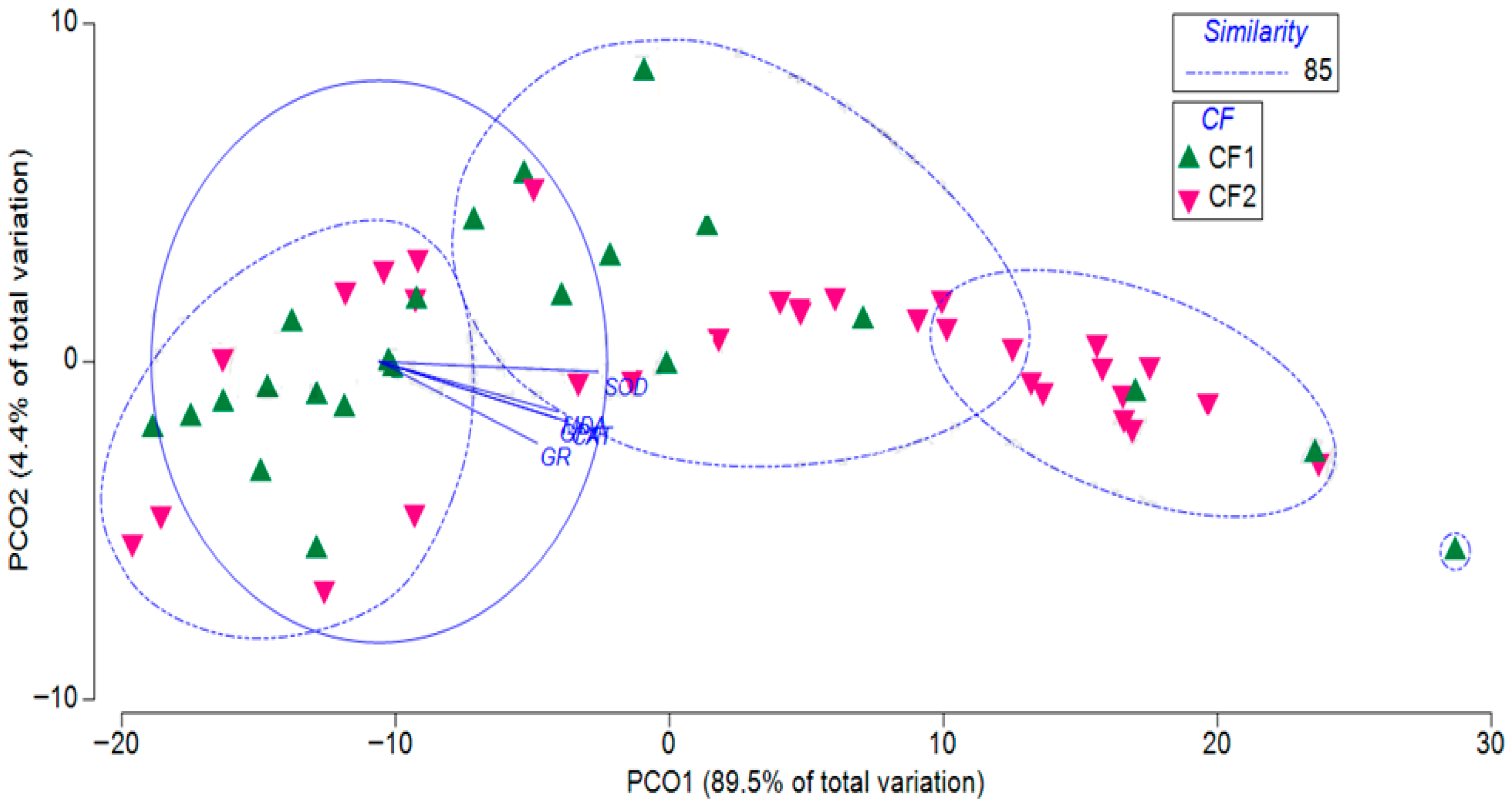
Figure 5 shows the two-dimensional configuration plot of the PCO analysis of the similarity matrix of the effect of antioxidant biomarkers of C. umbla on CF groups (CF1: ≤1.13, CF2: >1.13). The CF1 and CF2 groups showed considerable overlap, with a similarity of 85%. The vectors representing antioxidant biomarkers indicate the direction and relative contribution of each biomarker to the observed variation, with SOD and GR having the strongest influence.
Figure 5.
Two-dimensional configuration plot of a PCO analysis of a resemblance matrix of C. umbla antioxidant biomarkers in different condition factor groups. The lower triangular matrix was created using Bray–Curtis similarity coefficients. Pearson Correlation > 0.75.
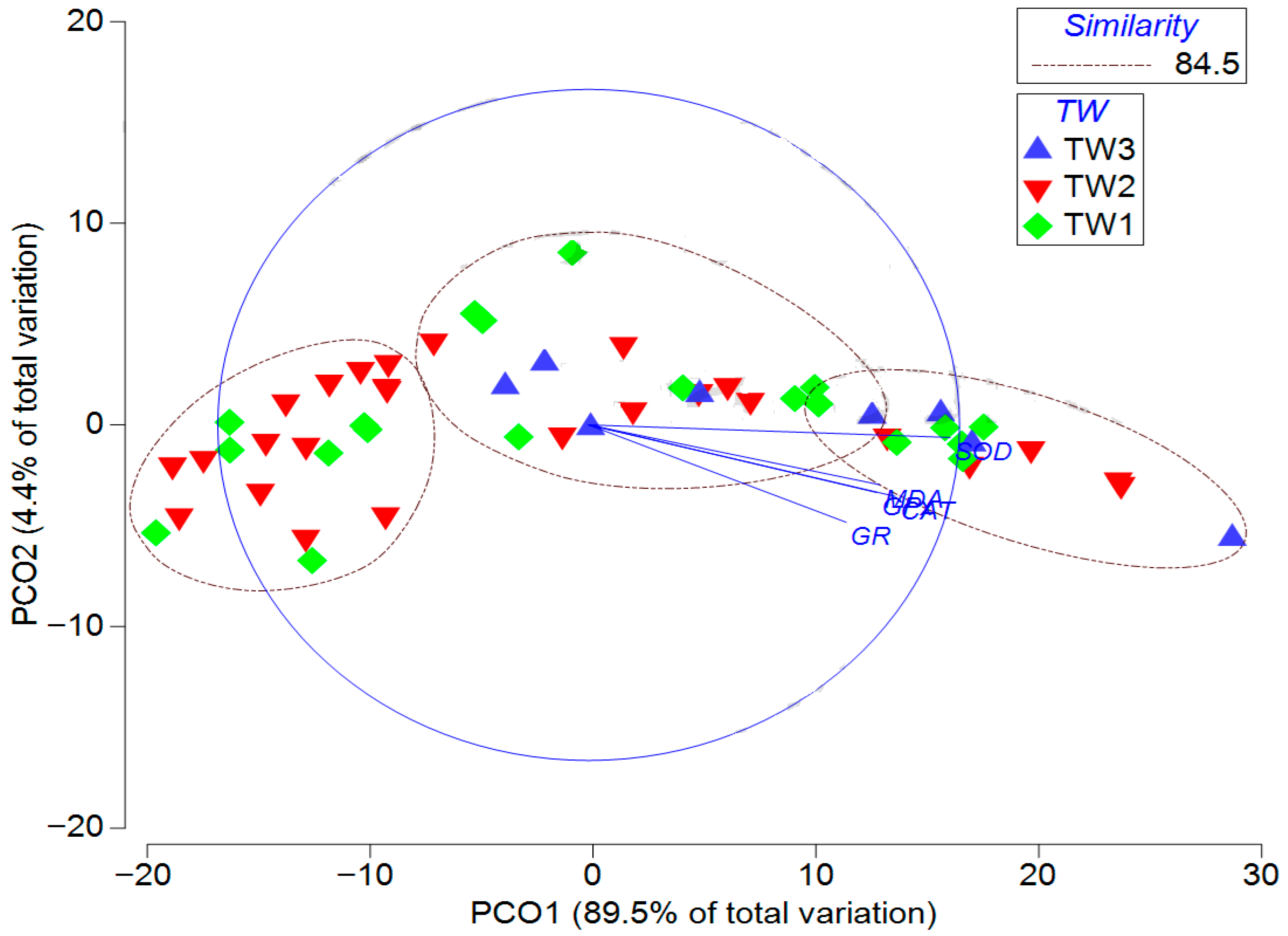
Figure 6 shows a two-dimensional configuration plot of the PCO analysis of the similarity matrix of the effect of antioxidant biomarkers in C. umbla on TW factor groups (TW1: ≥150–360 g; TW2: >360–450 g; TW3: >450–650 g). The TW1, TW2, and TW3 groups exhibited partial overlap, with an overall similarity of 84.5%. The vectors representing antioxidant biomarkers (SOD, GR, CAT, GPx, and MDA) indicate the direction and relative contribution of each biomarker to the observed variation.
Figure 6.
Two-dimensional configuration plot of a PCO analysis of a resemblance matrix of C. umbla antioxidant biomarkers in different total weight groups. The lower triangular matrix was created using Bray–Curtis similarity coefficients. Pearson Correlation > 0.75.
4. Discussion
This study comprehensively investigated the effects of seasonal variations, morphometric parameters (length, weight, condition factor), sex, and species factors on antioxidant biomarkers (MDA, SOD, CAT, GR, and GPx) in the muscle tissue of C. umbla and C. trutta species caught from the Karasu River. The findings reveal that antioxidant defense systems are primarily sensitive to seasonal environmental changes, while morphometric parameters exhibit secondary and species-dependent effects.
PERMANOVA and SIMPER analyses clearly indicated that season was the dominant factor affecting antioxidant biomarkers in both C. umbla and C. trutta. During summer, elevated MDA levels and antioxidant enzyme activities (SOD, CAT, GPx, GR) coincided with maximum lengths in both species, indicating increased oxidative stress without a decline in morphometric traits. Similarly, Wang et al. [36] reported that high-temperature stress increases lipid peroxidation and antioxidant enzyme activities in yellow catfish (Pelteobagrus fulvidraco), highlighting the role of temperature-dependent oxidative stress in fish physiology. Although unfavorable temperatures and hypoxia can reduce growth and survival [36], in our study, the highest summer temperature (8.6 °C) coincided with significant increases in antioxidant biomarkers without any decline in morphometric traits; both C. umbla and C. trutta reached their maximum lengths during this period (36.52 cm and 34.21 cm, respectively). However, CF values dropped to their lowest (1.05), reflecting temperature-related developmental effects. Although C. trutta reached maximum weight in winter and C. umbla in spring, CF values—the key indicator of nutrition and development—dropped to 1.05 during summer and autumn, reflecting the negative impact of high temperatures on fish condition [36]. Although autumn followed summer as the warmest period (6.5 °C), weight values did not show a consistent pattern; C. trutta reached its maximum weight in winter (444.5 g), while C. umbla peaked in spring (564.5 g). These observations highlight the complex effects of prolonged temperature and oxygen stress on fish [36] and suggest that, similar to some black-nosed carp species [37], C. umbla and C. trutta may tolerate heat stress without corresponding increases in antioxidant biomarkers, even as morphometric traits continue to develop.
SOD, the key antioxidant driving seasonal variability in both species, reached high levels in warmer periods as the first line of defense against superoxide radicals. SOD is a crucial enzyme in metabolizing O2, preventing oxidative chain reactions that can cause widespread damage and inhibiting the formation of harmful ROS, including hydrogen peroxide (H2O2), hypochlorite (OCl−), peroxynitrate (ONO2), and hydroxyl radical (HO) [38]. The fact that SOD reaches maximum values in the summer indicates increased superoxide production, followed by activation of enzymes that remove hydrogen peroxide, such as CAT and GPx. This reveals that the antioxidant defense system exhibits a holistic and stepwise response [4,17].
Sex-related differences in antioxidant biomarkers were generally more limited than seasonal differences in both C. umbla and C. trutta. In our study, enzyme activities showed slight variations between males and females, with a tendency for higher activities in females of C. trutta during summer. By analyzing antioxidant biomarkers in male and female individuals, their resistance to the effects of stress factors and their sex-dependent adaptive potentials can be evaluated [39]. Parolini et al. [40] found sex-dependent differences in SOD and CAT activities in the liver of brown trout (Salmo trutta), while Wei et al. [41] reported no sex-related differences in antioxidant enzyme activities in most tissues of Amphioxus (Branchiostoma belcheri tsingtauense), except for gonads. Similarly, Rudneva and Skuratovskaya [39] reported that SOD and peroxidase activities varied between male and female gonads, whereas CAT and GR activities did not show consistent sex-dependent patterns. Overall, the data suggest that seasonal and environmental factors have a stronger effect on antioxidant biomarkers than biological sex.
Morphometric parameters had limited and largely species-specific effects on antioxidant systems. Both species exhibited negative allometric growth (b < 3), suggesting that energy is preferentially allocated to core metabolic and stress-related processes rather than somatic growth under Karasu River conditions (Table 1). This growth pattern suggests that environmental constraints may limit energy allocation to somatic mass. Negative allometry has been commonly reported in natural fish populations, particularly those exposed to environmental stressors or seasonal energy limitations [13,42].
Under such conditions, the preference for energy allocation to core metabolic functions and stress-related physiological processes rather than somatic growth appears to be an adaptive strategy. This inference is consistent with the seasonal strengthening of antioxidant defense mechanisms observed in this study. Similar trade-offs between growth and physiological maintenance, where increased metabolic demands are seen in conjunction with elevated antioxidant enzyme activities, have been documented in various fish species experiencing thermal stress or environmental variability, including yellowfin tuna [43], juvenile Arctic grayfish [44], rainbow trout [45], and Gambusia holbrooki [46,47]. Therefore, the observed negative allometric growth likely reflects a physiological balance between growth and stress adaptation.
While CF and TW significantly contributed to variations in antioxidant biomarkers in C. umbla, these relationships were less pronounced in C. trutta, pointing to species-specific differences in energy allocation and oxidative stress regulation. When the CF values in Table 1 and Table 2 are evaluated together, the highest CF values (1.21) for both species were recorded in spring. CF has long been used in fisheries biology as a reliable indicator of fish health and nutritional status [13]. Furthermore, CF provides valuable information about changes in physiological status and allows comparisons between populations exposed to different feeding regimes, climatic conditions, and environmental pressures [48].
The high CF observed in spring reflects increased feeding activity and efficient energy accumulation, which enhances the physiological condition and supports reproductive investment [15,49,50]. Improved body condition during this period increases energy reserves, reducing physiological stress, due to supporting cellular homeostasis and enhancing the organism’s capacity to cope with environmental stressors [51,52]. Favorable physiological conditions are generally associated with reduced oxidative stress [46]. Consistent with all this, lower MDA levels were observed in both female and male individuals of both species in spring compared to summer (Table 3); this indicates reduced lipid peroxidation and oxidative damage to cell membranes. The stronger association between CF and antioxidant biomarkers in C. umbla suggests that energy reserves in this species more effectively reflect their capacity to mitigate oxidative stress. Overall, the ability of individuals with higher condition factors to exhibit more effective antioxidant defenses supports the close relationship between energy budget and oxidative stress regulation in fish [18,53].
In interspecies comparisons, C. umbla and C. trutta showed no significant differences in antioxidant biomarker profiles, with SIMPER analysis indicating high similarity between species and SOD contributing most to this pattern. This can be attributed to the fact that closely related species share similar ecological niches and are exposed to comparable environmental stressors within the same habitat [54], and C. umbla and C. trutta are also closely related species belonging to the genus Capoeta [55]. Previous studies have shown that phylogenetically related fish species living in the same geographic area generally exhibit overlapping oxidative stress responses when exposed to similar environmental conditions [18,46,53]. Therefore, the observed similarity in antioxidant defense profiles suggests that habitat-specific factors, rather than species-specific traits, play a dominant role in shaping oxidative stress responses in these species.
From an ecological perspective, the strong seasonal signal observed in antioxidant biomarkers highlights their potential benefits as early warning indicators of environmental stress in freshwater ecosystems. Such biomarkers can provide rapid and cost-effective information on the non-lethal physiological responses of fish populations before population-level impacts become apparent. This approach is particularly important for river systems exposed to increased thermal variability under climate change, where routine biomonitoring tools are urgently needed to support adaptive ecosystem management and conservation strategies.
5. Conclusions
This study demonstrates that seasonal variation, particularly temperature-related dynamics, is the primary driver of antioxidant defense responses in Capoeta umbla and Capoeta trutta from the Karasu River (Türkiye). Elevated summer temperatures were associated with increased lipid peroxidation and coordinated activation of antioxidant enzymes, indicating a clear temperature-dependent oxidative challenge in both species. In contrast, morphometric parameters (TL, TW, and CF) exerted secondary and species-specific effects, with condition factors showing a stronger association with antioxidant capacity in C. umbla. The lack of significant interspecific differences in antioxidant biomarker profiles suggests convergent oxidative stress responses among closely related species sharing the same habitat. Overall, these findings highlight the applied value of antioxidant biomarkers as sensitive and practical tools for monitoring seasonal environmental stress in freshwater ecosystems, particularly under increasing temperature variability driven by climate change.
Author Contributions
Conceptualization, N.Ş.Ö. and M.K.; methodology, N.Ş.Ö., F.C. and M.K.; software, T.Ö.S. and N.Ş.Ö.; validation, M.G. and N.D.; formal analysis, N.Ş.Ö. and M.K.; investigation, M.K. and F.C.; resources, T.Ö.S. and M.G.; data curation, N.Ş.Ö. and F.C.; writing—original draft preparation, M.K. and N.Ş.Ö.; writing—review and editing, M.K., N.Ş.Ö., M.G., F.C., C.T., T.Ö.S. and N.D.; visualization, M.K. and N.Ş.Ö.; supervision, T.Ö.S., M.G. and N.D.; project administration, M.K. and N.Ş.Ö. All authors have read and agreed to the published version of the manuscript.
Funding
This study was supported by the Research Fund (BAP-GTHMYO.2025.001) of Bingöl University (Türkiye).
Institutional Review Board Statement
This study did not involve the capture, handling, or experimental manipulation of live animals. All fish specimens were obtained from a licensed commercial fishery. Therefore, according to national and institutional regulations, ethical approval was not required.
Data Availability Statement
The original contributions presented in this study are included in the article. Further inquiries can be directed to the corresponding author.
Conflicts of Interest
The authors declare no conflicts of interest.
References
- Atamanalp, M.; Kokturk, M.; Kırıcı, M.; Ucar, A.; Kırıcı, M.; Parlak, V.; Aydın, A.; Alak, G. Interaction of microplastic presence and oxidative stress in freshwater fish: A regional scale research, East Anatolia of Türkiye (Erzurum, Erzincan, Bingöl). Sustainability 2022, 14, 12009. [Google Scholar] [CrossRef]
- Kırıcı, M.; Sen Özdemir, N.; Caf, F.; Koyun, M. Seasonal changes in antioxidant enzyme activities of Garra rufa (Heckel, 1843) in Göynük Stream (Bingöl, Türkiye). Ege J. Fish. Aquat. Sci. 2023, 40, 174–181. [Google Scholar] [CrossRef]
- Grădinariu, L.; Crețu, M.; Vizireanu, C.; Dediu, L. Oxidative stress biomarkers in fish exposed to environmental concentrations of pharmaceutical pollutants: A review. Biology 2025, 14, 472. [Google Scholar] [CrossRef] [PubMed]
- Corrêa, A.P.N.; Neto, L.N.; de Souza, M.R.D.P.; Silva, N.G.D.; Ratko, J.; Neundorf, A.K.A.; Donatti, L. Antioxidant defenses in the kidneys and heart of the freshwater fish Astyanax lacustric subjected to high (31 °C) and low (15 °C) temperatures. Cell Biochem. Funct. 2025, 43, e70133. [Google Scholar] [CrossRef] [PubMed]
- Kırıcı, M.; Özdemir, N.; Caf, F.; Koyun, M. Seasonal changes in antioxidant defense system indicators in the tissues of Cyprinion macrostomus (Heckel, 1843) caught from Göynük Stream (Bingöl, Türkiye). Ege J. Fish. Aquat. Sci. 2022, 39, 174–181. [Google Scholar] [CrossRef]
- Boltaña, S.; Sanhueza, N.; Aguilar, A.; Gallardo-Escarate, C.; Arriagada, G.; Valdes, J.A.; Soto, D.; Quiñones, R.A. Influences of thermal environment on fish growth. Ecol. Evol. 2017, 7, 6814–6825. [Google Scholar] [CrossRef]
- Abdel-Tawwab, M.; Omar, A.A.; Khalil, R.H.; Selema, T.A.M.A.; Elsamanooudy, S.I.; El-Saftawy, H.A.M.; Sabry, E.A.; Fawzy, R.M.; Abdel-Razek, N. Influences of thermal stress on the growth biometrics, stress indicators, oxidative stress biomarkers, and histopathological alterations in European seabass Dicentrarchus labrax juveniles. Fish Physiol. Biochem. 2025, 51, 70. [Google Scholar] [CrossRef]
- Bhat, I.A.; Rather, M.A.; Ahmad, I.; Mir, I.N.; Bhat, H. Impact of shifting abiotic factors in aquaculture on fish breeding and reproduction: A review. Blue Biotechnol. 2025, 2, 3. [Google Scholar] [CrossRef]
- Filiz, H.; Bilge, G. Length–weight relationships of 24 fish species from the North Aegean Sea, Türkiye. J. Appl. Ichthyol. 2004, 20, 431–432. [Google Scholar] [CrossRef]
- Şen Özdemir, N.; Kırıcı, M.; İspir, Ü.; Koyun, M.; Caf, F. Mean length–weight relationship and condition factor of some cyprinid fishes in Göynük Stream, Murat River, Eastern Türkiye. Mar. Life Sci. 2022, 4, 114–122. [Google Scholar] [CrossRef]
- Deekrachang, C.; Grudpun, C.; Suvarnaraksha, A.; Phomikong, P.; Jutagate, T. Length–weight relationship and condition factor of fishes in two major rivers, the Chao Phraya and Bang Pakong, Thailand. Trop. Life Sci. Res. 2024, 35, 259–275. [Google Scholar] [CrossRef] [PubMed]
- França, F.M.S.; Gubiani, E.A. Length–weight and length–length relationships for freshwater fish species from the lower Araguaia River, Tocantins–Araguaia Basin, Brazil. Neotrop. Ichthyol. 2025, 23, e240046. [Google Scholar] [CrossRef]
- Froese, R. Cube law, condition factor and weight–length relationships: History, meta-analysis and recommendations. J. Appl. Ichthyol. 2006, 22, 241–253. [Google Scholar] [CrossRef]
- Rajput, V.; Dipanshu, G.R. Length–weight relationship and condition factor of freshwater fish from a Himalayan state. Octa J. Biosci. 2019, 7, 74–78. [Google Scholar]
- Kara, A.; Bayhan, B. Length–weight and length–length relationships of the bogue Boops boops (Linnaeus, 1758) in İzmir Bay (Aegean Sea, Türkiye). Belg. J. Zool. 2008, 138, 154–157. [Google Scholar]
- Kırıcı, M.; Turk, C.; Caglayan, C.; Kırıcı, M. Toxic effects of copper sulphate pentahydrate on antioxidant enzyme activities and lipid peroxidation of freshwater fish Capoeta umbla (Heckel, 1843) tissues. Appl. Ecol. Environ. Res. 2017, 15, 1685–1696. [Google Scholar] [CrossRef]
- Pörtner, H.O. Climate variations and the physiological basis of temperature-dependent biogeography: Systemic to molecular hierarchy of thermal tolerance in animals. Comp. Biochem. Physiol. A Mol. Integr. Physiol. 2002, 132, 739–761. [Google Scholar] [CrossRef]
- Lushchak, V.I. Environmentally induced oxidative stress in aquatic animals. Aquat. Toxicol. 2011, 101, 13–30. [Google Scholar] [CrossRef]
- Kırıcı, M.; Kırıcı, M.; Demir, Y.; Beydemir, S.; Atamanalp, M. The effect of Al3+ and Hg2+ on glucose-6-phosphate dehydrogenase from Capoeta umbla kidney. Appl. Ecol. Environ. Res. 2016, 14, 253–264. [Google Scholar] [CrossRef]
- Kırıcı, M.; Tüzün, B.; Kırıcı, M.; Atamanalp, M.; Poustforoosh, A.; Beydemir, Ş.; Taysı, M.R. The impact of some metals, molecular docking and molecular dynamic calculations on glucose-6-phosphate dehydrogenase activity in Capoeta trutta (Heckel, 1843) tissue. J. Mol. Liq. 2024, 399, 124288. [Google Scholar] [CrossRef]
- Sökmen, T.Ö.; Güneş, M.; Kırıcı, M. Determination of heavy metal levels in water, sediment and Capoeta umbla tissues of Karasu River (Erzincan). Turk. J. Agric. Nat. Sci. 2018, 5, 578–588. [Google Scholar]
- Bagenal, T.B.; Tesch, F.W. Age and growth. In Methods for Assessment of Fish in Freshwaters; Bagenal, T.B., Ed.; Wiley-Blackwell: Oxford, UK, 1978; pp. 101–136. [Google Scholar]
- Fulton, T.W. The Sovereignty of the Sea: An Historical Account of the Claims of England to the Dominion of the British Seas and of the Evolution of the Territorial Waters; William Blackwood and Sons: Edinburgh, UK, 1911. [Google Scholar]
- Sheikh, Z.A.; Ahmed, I. Length–weight relationship and condition factor of Schizothorax plagiostomus from River Jhelum, Kashmir Valley. J. Ecophysiol. Occup. Health 2018, 18, 66–72. [Google Scholar] [CrossRef]
- Beutler, E. Red Cell Metabolism: Manual of Biochemical Methods; Academic Press: New York, NY, USA, 1971. [Google Scholar]
- Taysi, M.R.; Kirici, M.; Kirici, M.; Tüzün, B.; Poustforoosh, A. Antioxidant enzyme activities, molecular docking studies, MM-GBSA, and molecular dynamics of chlorpyrifos in freshwater fish Capoeta umbla. J. Biomol. Struct. Dyn. 2024, 42, 163–176. [Google Scholar] [CrossRef] [PubMed]
- Placer, Z.A.; Cushman, L.L.; Johnson, B.C. Estimation of product of lipid peroxidation (malondialdehyde) in biochemical systems. Anal. Biochem. 1966, 16, 359–364. [Google Scholar] [CrossRef]
- Carlberg, I.; Mannervik, B. Purification and characterization of the flavoenzyme glutathione reductase from rat liver. J. Biol. Chem. 1975, 250, 5475–5480. [Google Scholar] [CrossRef]
- Sun, Y.; Oberley, L.W.; Li, Y. A simple method for clinical assay of superoxide dismutase. Clin. Chem. 1988, 34, 497–500. [Google Scholar] [CrossRef]
- Aebi, H. Catalase in vitro. In Methods in Enzymology; Academic Press: New York, NY, USA, 1984; Volume 105, pp. 121–126. [Google Scholar]
- Beutler, E. Red Cell Metabolism: Manual of Biochemical Methods; Grune & Stratton: New York, NY, USA, 1975. [Google Scholar]
- Zar, J.H. Biostatistical Analysis; Prentice Hall: Upper Saddle River, NJ, USA, 2010. [Google Scholar]
- Sokal, R.R.; Rohlf, F.J. Introduction to Biostatistics, 2nd ed.; W.H. Freeman: New York, NY, USA, 1987. [Google Scholar]
- Anderson, R.O.; Neumann, R.M. Length, Weight, and Associated Structural Indices. In Fisheries Techniques, 2nd ed.; Murphy, B.E., Willis, D.W., Eds.; American Fisheries Society: Bethesda, MD, USA, 1996; pp. 283–300. [Google Scholar]
- Şen Özdemir, N.; Koyun, M.; Caf, F.; Kırıcı, M. Factors affecting nutritional quality in terms of the fatty acid composition of Cyprinion macrostomus. Grasas Y Aceites 2023, 74, e508. [Google Scholar] [CrossRef]
- Wang, J.; Li, L.; Zhao, S.; Wang, M.; Li, B.; Guo, H.; Zhang, L. Combined effects of prolonged temperature and hypoxia stress on growth, metabolism, and physiological status of yellow catfish (Pelteobagrus fulvidraco). Aquac. Rep. 2025, 43, 102884. [Google Scholar] [CrossRef]
- Nelson, J.A.; Rieger, K.J.; Gruber, D.; Cutler, M.; Buckner, B.; Oufiero, C.E. Thermal tolerance of cyprinids along an urban–rural gradient: Plasticity, repeatability, and effects of swimming and temperature shock. J. Therm. Biol. 2021, 100, 103047. [Google Scholar] [CrossRef]
- Miller, A.F. Superoxide dismutases: Ancient enzymes and new insights. FEBS Lett. 2012, 586, 585–595. [Google Scholar] [CrossRef]
- Rudneva, I.I.; Skuratovskaya, E.N. Gender peculiarities of blood antioxidant enzyme activity of some Black Sea coastal fish species. J. Ichthyol. 2009, 49, 119–122. [Google Scholar] [CrossRef]
- Parolini, M.; Iacobuzio, R.; De Felice, B.; Bassano, B.; Pennati, R.; Saino, N. Age- and sex-dependent variation in the activity of antioxidant enzymes in the brown trout (Salmo trutta). Fish Physiol. Biochem. 2019, 45, 145–154. [Google Scholar] [CrossRef] [PubMed]
- Wei, R.; Zhang, S.; Wang, C.; Pang, Q. Antioxidant enzyme activities in different genders and tissues of amphioxus Branchiostoma belcheri tsingtauense. Chin. J. Oceanol. Limnol. 2007, 25, 73–77. [Google Scholar] [CrossRef]
- Hussein, A.S.R.; Younes, G.O.; El-Dakdouki, M.H. Impact of environmental conditions on allometric and morphometric traits of fish in Jiyeh, Lebanon: A multivariate analysis. Egypt. J. Aquat. Res. 2025, 51, 546–554. [Google Scholar] [CrossRef]
- Liu, H.; Yang, R.; Fu, Z.; Yu, G.; Li, M.; Dai, S.; Zong, H. Acute thermal stress increased enzyme activity and muscle energy distribution of yellowfin tuna. PLoS ONE 2023, 18, e0289606. [Google Scholar] [CrossRef]
- Carrillo-Longoria, J.A.; Gaylord, G.; Andrews, L.; Powell, M. Effect of temperature on growth, survival, and chronic stress responses of Arctic grayling juveniles. Trans. Am. Fish. Soc. 2024, 153, 3–22. [Google Scholar] [CrossRef]
- Li, Z.; Gao, Q.; Dong, S.; Dong, K.; Xu, Y.; Mei, Y.; Hou, Z. Effects of chronic stress from high stocking density in mariculture: Evaluations of growth performance and lipid metabolism of rainbow trout (Oncorhynchus mykiss). Biology 2024, 13, 263. [Google Scholar] [CrossRef]
- Martínez-Álvarez, R.M.; Morales, A.E.; Sanz, A. Antioxidant defenses in fish: Biotic and abiotic factors. Rev. Fish Biol. Fish. 2005, 15, 75–88. [Google Scholar] [CrossRef]
- Loughland, I.; Seebacher, F. Differences in oxidative status explain variation in thermal acclimation capacity between individual mosquitofish (Gambusia holbrooki). Funct. Ecol. 2020, 34, 1380–1390. [Google Scholar] [CrossRef]
- Lizama, M.D.L.A.P.; Ambrosio, A.M. Condition factor in nine species of fish of the family Characidae in the upper Paraná River floodplain, Brazil. Braz. J. Biol. 2002, 62, 113–124. [Google Scholar] [CrossRef]
- Wootton, R.J. Ecology of Teleost Fishes; Chapman & Hall: London, UK, 2012; 363p. [Google Scholar]
- Spangenberg, D.K.; Fuhrman, A.E.; Larsen, D.A.; Beckman, B.R. A correlation between seasonally changing photoperiod, whole-body lipid, and condition factor in juvenile spring Chinook salmon (Oncorhynchus tshawytscha). PLoS ONE 2023, 18, e0285380. [Google Scholar] [CrossRef]
- Mommsen, T.P.; Vijayan, M.M.; Moon, T.W. Cortisol in teleosts: Dynamics, mechanisms of action, and metabolic regulation. Rev. Fish Biol. Fish. 1999, 9, 211–268. [Google Scholar] [CrossRef]
- Barton, B.A. Stress in fishes: A diversity of responses with particular reference to changes in circulating corticosteroids. Integr. Comp. Biol. 2002, 42, 517–525. [Google Scholar] [CrossRef]
- Costantini, D. Oxidative Stress and Hormesis in Evolutionary Ecology and Physiology; Springer: Berlin, Germany, 2014; 362p. [Google Scholar]
- Wiens, J.J.; Graham, C.H. Niche conservatism: Integrating evolution, ecology, and conservation biology. Annu. Rev. Ecol. Evol. Syst. 2005, 36, 519–539. [Google Scholar] [CrossRef]
- Levin, B.A.; Freyhof, J.; Lajbner, Z.; Perea, S.; Abdoli, A.; Gaffaroğlu, M.; Doadrio, I. Phylogenetic relationships of the algae-scraping cyprinid genus Capoeta (Teleostei: Cyprinidae). Mol. Phylogenet. Evol. 2012, 62, 542–549. [Google Scholar] [CrossRef]
Disclaimer/Publisher’s Note: The statements, opinions and data contained in all publications are solely those of the individual author(s) and contributor(s) and not of MDPI and/or the editor(s). MDPI and/or the editor(s) disclaim responsibility for any injury to people or property resulting from any ideas, methods, instructions or products referred to in the content. |
© 2026 by the authors. Licensee MDPI, Basel, Switzerland. This article is an open access article distributed under the terms and conditions of the Creative Commons Attribution (CC BY) license.