


Abstract
The Cyrtodactylus chauquangensis species group is a large limestone karst radiation of bent-toed geckos with at least 28 nominal species and has a broad distribution range with seven species found in northwestern Thailand, five in south-central China, five in northern Laos and 11 in northern Vietnam. To trace the biogeographic pattern of this group, we reconstruct its phylogenetic relationships and evolutionary history using three mitochondrial genes and four nuclear genes. Our results show that the C. chauquangensis species group is monophyletic, which can be divided into at least seven subclades. In terms of biogeography, the group might have originated from the Northwest Uplands of the Indochina region, including northern Laos and part of northwestern Vietnam, during the early Miocene and subsequently dispersed into northwestern Thailand. It later colonized the northern Annamites, Northeast Lowland, Northeast Uplands, and South-central China. A majority of lineages within this group likely diverged during the Miocene epoch when the East Asian monsoon was developed and increased precipitation in the region. The changing climate might have promoted plant diversity and provided suitable habitats and food resources for members of the C. chauquangensis group. In addition, the elevated rate of precipitation probably accelerated the dissolution of the limestone substrate and profoundly influenced the development of the karst region. The results of our study further highlight the importance of this unique period of time in shaping evolutionary histories of many different taxonomic groups in the region.
1. Introduction
Karst regions (hereafter referred to simply as karsts) can be defined as landscapes and caves that develop on soluble rocks such as carbonates (limestone, dolomite and marble), evaporite rock (anhydrite, gypsum, and halite), and some partially soluble non-carbonates such as quartzite and siliceous sandstones [1,2,3]. Karsts are also recognized as important ecosystems and contain high levels of biodiversity and unique and endemic species both on the land surface and underground [4,5]. For example, around 80% of the total land snail fauna have been found on karsts in Malaysia or one third of the total flora occurs on karsts in Brazil [4,6,7]. Therefore, they have served as ‘natural laboratories’ for ecological, evolutionary, and cultural studies [4].
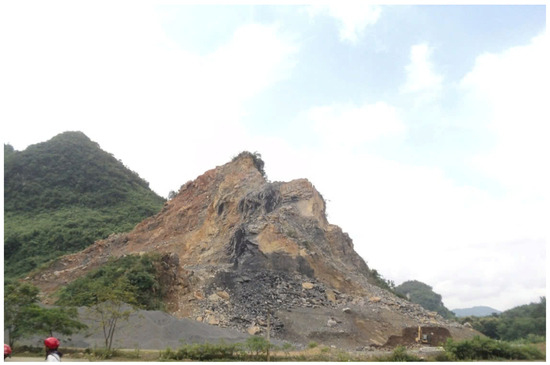
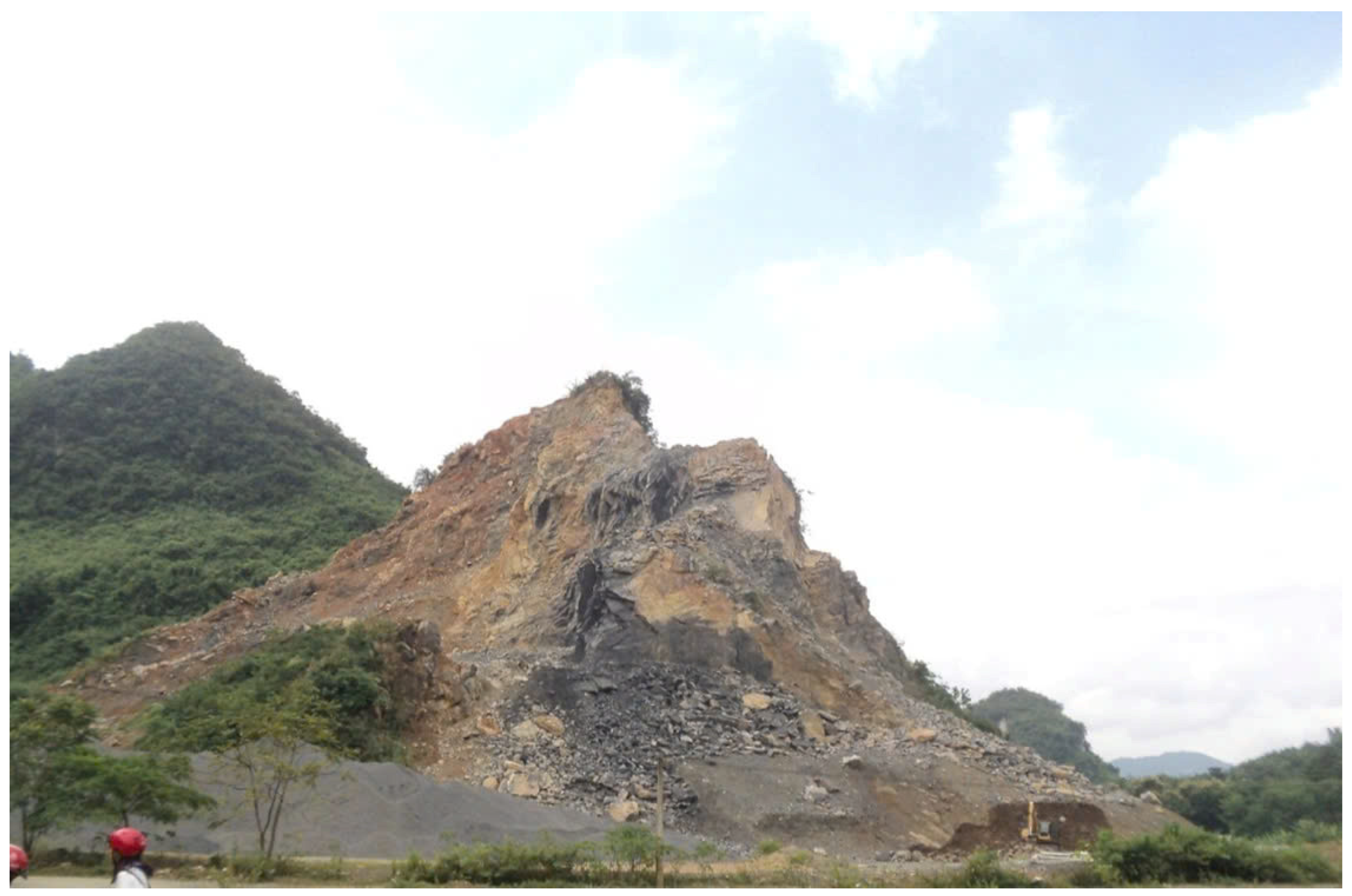
In Southeast Asia (including southern China), karsts cover an area of around 900,000 km2, making it one of the premier karst regions in the world [4,8,9,10]. In particular, the karst ecosystems of China, Laos, and Vietnam are known to support high levels of micro-endemism in plants, e.g., Calocedrus rupestris and the genus Vietorchis endemic to limestone mountains of northern Vietnam [11,12]; primates, e.g., the Francois’ langur (Trachypithecus francoisi), the Delacour’s langur (Trachypithecus delacouri), the Cat Ba langur (Trachypithecus poliocephalus) [13]; and small mammals, e.g., the Laotian Rock Rat (Laonastes aenigmamus) and Paulina’s Limestone Rat (Saxatilomys paulinae) [14,15]. However, karsts are vulnerable to various anthropogenic disturbances, such as logging, commercial exploitation, and shifting cultivation. Many karst outcrops are being quarried for limestone across the region (Figure 1), which poses a serious threat to its unique ‘ark of biodiversity’ [4].
Figure 1.
Mining at a limestone quarry in Vietnam. Photo by A.V. Pham.
The gekkonid genus Cyrtodactylus Gray is by far the most speciose genus of the family Gekkonidae and the second largest reptile genus (after Anolis) [5,16,17,18,19]. It currently comprises 391 nominal species (as of 18 November 2025) [19], with a broad distribution range from South Asia to the Solomon Islands [5,16]. Species in this genus can be found in nine habitat types, ranging from terrestrial to arboreal and from intertidal to swampy, volcanic, and karstic [5,16,17,18]. Among the habitat preferences, karst habitats have been recognized as the second most common habitat preference, only behind the general ecotype, and have served as centers for several important bent-toed gecko radiations [16,17,20]. In addition, the remarkable increase in new species discoveries in the karst habitat in recent years underscores its importance in generating unique biodiversity [16,20,21].
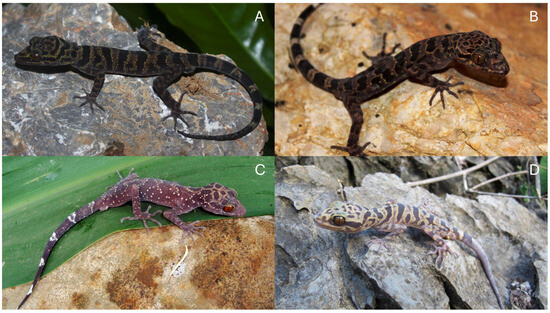
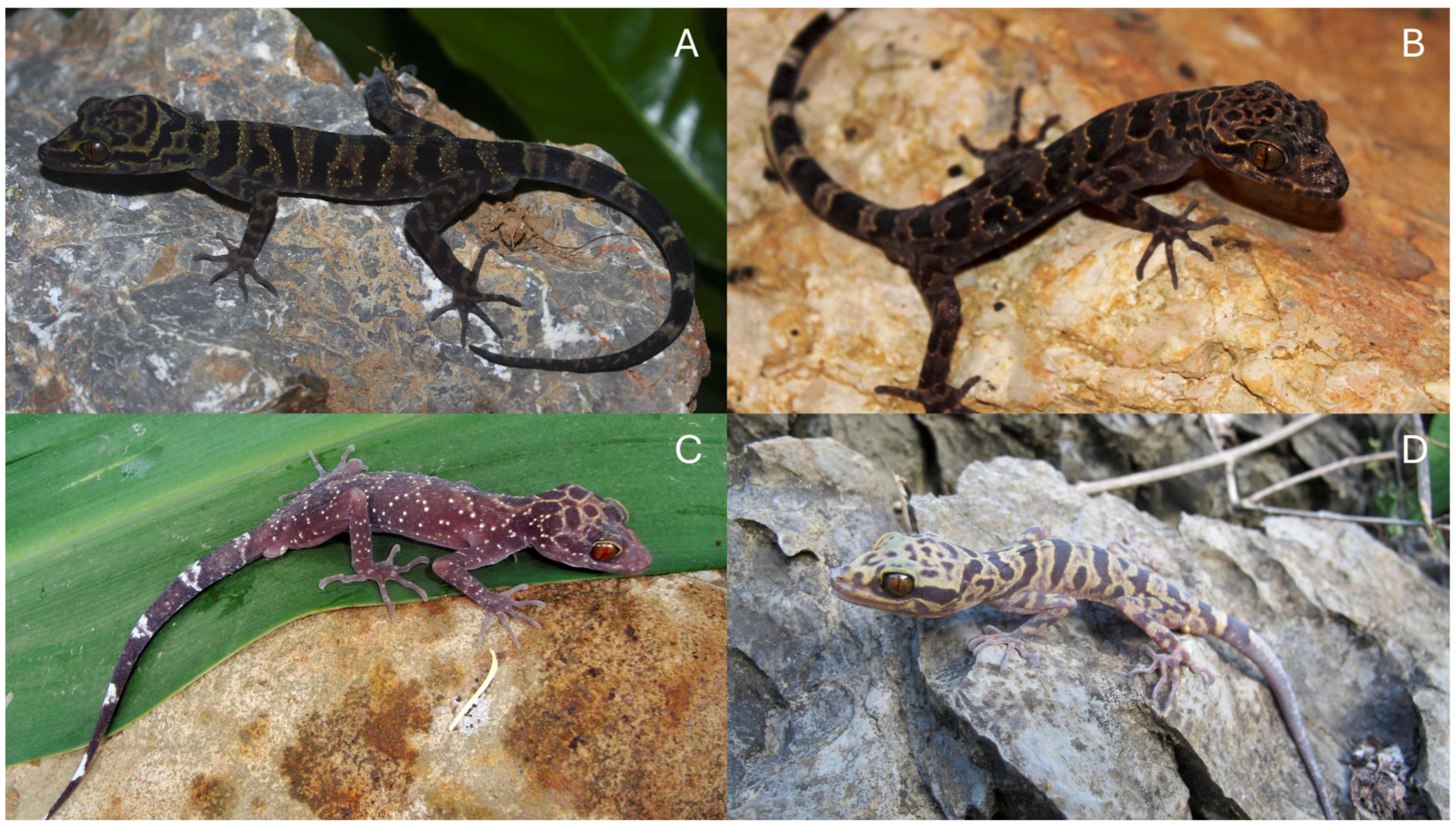
The Cyrtodactylus chauquangensis group is one of the two largest groups within bent-toed geckos, including species endemic to limestone karst [5,16,17,18,20,22]. It is composed of 29 nominal species found in northwestern Thailand (C. auribalteatus, C. dumnuii, C. doisuthep, C. erythrops, C. kunyai, C. phamiensis, C. phukhaensis), south-central China (C. caixitaoi, C. gulinqingensis, C. hekouensis, C. menglianensis, C. nangunhe, C. zhenkangensis), northern Laos (C. houaphanensis, C. ngoiensis, C. spelaeus, C. vilaphongi, C. wayakonei), and northwestern and central Vietnam (C. bichnganae, C. bobrovi, C. cucphuongensis, C. chauquangensis, C. huongsonensis, C. martini, C. puhuensis, C. otai, C. soni, C. sonlaensis, C. taybacensis) (Figure 2) [5,16,22]. Among them, 26 are known only from their type localities [22,23,24,25]. Until recently, as no species of the genus had been recorded from the western side of the Red River in Vietnam, the river was considered the natural barrier of the group. Nonetheless, the discovery of C. luci in Lao Cai Province, Vietnam, on the eastern side of the river has changed that perception [22,26].
Figure 2.
Morphological diversity of the Cyrtodactylus chauquangensis species group. (A): C. huongsonensis (Photo by V.Q. Luu); (B): C. otai (Photo by T.Q. Nguyen), (C): C. wayakonei (Photo by T.Q. Nguyen), (D): C. taybacensis (Photo by A.V. Pham).
To address the previously unresolved issues, this study attempts to elucidate the phylogenetic relationships of all 28 species of the Cyrtodactylus chauquangensis group, except C. nangunhe, and to infer its historical biogeography based on three mitochondrial genes and four nuclear genes. Better understanding of how and when the group originated and dispersed in the region can provide insights into the plausible biogeographic affinities between karst landscapes in Indochina, northwestern Thailand, and south-central China. Although several earlier studies have attempted to reconstruct phylogenetic relationships and estimate divergence times between members of the genus Cyrtodactylus [16,17,18,20,27,28], previous works neither specifically focused on the Cyrtodactylus chauquangensis group nor included all its members. Additionally, the analyses have primarily been restricted to the use of one or two mitochondrial genes (e.g., Grismer et al. [22]).
2. Materials and Methods
2.1. Taxon Sampling and Data Collection
A total of 28 new samples were obtained and used in the study (Table S1, Supplementary Materials). Based on the results of previous phylogenetic analyses of the genus Cyrtodactylus [5,16,17,27], three outgroup taxa, namely C. elok, C. interdigitalis, and C. loriae, were selected. Detailed information on the newly generated sequences in this study and GenBank accession numbers of the existing ones are given in Table S1.
2.2. DNA Extraction, Amplification and Sequencing
The genomic DNA was extracted from leg muscles or tail tissues using DNeasy Blood and Tissue (Hilden, Qiagen, Germany) or the GeneJET Genomic DNA Purification kit (Thermo Fisher Scientific, Litva, Lithuania), following the manufacturer’s instructions. Seven molecular markers, comprising three mitochondrial loci, cytochrome c oxidase subunit I (COI), cytochrome b (cytb), and NADH dehydrogenase subunit 2 (ND2) (including tRNA) and four nuclear loci, Cmos, phosducin (PDC), recombination activating protein 1 (Rag1), ribosomal protein L35 (Rpl35), were used in this study. PCR amplification was performed in a total volume of 21 µL that contained 2 µL template DNA, 2 µL of each primer and 10 µL DreamTaq Mastermix (Thermo Fisher Scientific, Litva, Lithuania) or HotStarTaq Mastermix (Hilden, Qiagen, Germany). Primers used to amplify the loci are listed in Table S2 (Supplementary Materials). The reactions were carried out with an initial denaturation at 95 °C for 15 min with HotStar Taq Mastermix or 5 min with Dream Taq Mastermix, followed by 35 cycles of amplification (denaturation at 95 °C for 30 s, annealing at 48–58 °C for 45 s, and extension at 72 °C for 1 min), with final extension at 72 °C for 10 min. Negative and positive controls were also used in all amplifications and extractions to detect possible contamination. The PCR products were visualized by agarose gel electrophoresis and stored at −4 °C after visualization. The PCR products were purified using GeneJET PCR Purification kit (Thermo Fisher Scientific, Litva, Lithuania), in accordance with the manufacturer’s instructions. Sequences of forward and reverse strands were generated for all taxa using the sequencing service from 1st Base (Seri Kembangan, Malaysia). Raw sequences were edited using Sequencher v5.4.6 (Gene Codes Corporation). Each gene was initially aligned separately using ClustalX v2.1 [29] with default settings for complete alignment.
2.3. Phylogenetic Analyses
The mitochondrial and nuclear datasets (COI + cytb + ND2 + tRNA and Cmos + Rag1 + PDC + Rpl35) were analyzed both separately and simultaneously using Maximum parsimony (MP) as implemented in PAUP v4.0b10 [30], Bayesian inference (BI) as implemented in MrBayes v3.2.7 [31] and Maximum likelihood (ML) as implemented in IQTREE v1.6.12 [32]. For MP analyses, heuristic analyses were conducted with 100 random taxon addition replicates using the tree-bisection and reconnection (TBR) branch-swapping algorithm, with no upper limit set for the maximum number of trees saved. Bootstrap support (BP) was calculated using 1000 pseudo-replicates and 100 random taxon addition replicates. All characters were equally weighted and unordered. For BI, we employed both single-model (one model of molecular evolution used for the entire dataset) and multiple-model (different models used for different data partitions) analyses. Markov chain Monte Carlo (MCMC) algorithms were run for 107 generations with one cold and three heated chains, starting from random trees and samples, one out of every 1000 generations. The burn-in and convergence diagnostics were accessed using Tracer v1.7.1 to confirm Effective Sample Size (ESS) > 200 for all parameters [33]. The cut-off point for the burn-in function was set to 25% of the total number of trees generated. The remaining trees were assumed to be representative of the posterior probability (PP) distribution. For ML analyses, 10,000 ultrafast bootstrap replications (UFB) were run. Models of nucleotide substitution were selected based on the Akaike Information Criterion (AIC) as determined by jModeltest v2.1.10 [34]. All the best models for the three datasets are shown in Table S3 (Supplementary Materials). We regard BP ≥ 70% and UFB ≥ 95% and PP ≥ 0.95 as well-supported [31,35,36] and nodes with UFB and PP values of 90–94% and 0.9–0.94, respectively, as strongly supported.
In addition, the combined mitochondrial and nuclear dataset was partitioned into 21 parts by codon positions (first, second, and third) to be used in the multiple-model BI analysis with the same settings for the Markov chains and generations. The best partition scheme and evolutionary model for each partition were selected using PARTITIONFINDER v2.1.1 (Table S3) [37].
In total, the mitochondrial and nuclear (hereafter referred to as mt-nu) dataset consisted of 221 sequences and 5651 bp (COI, 47 sequences, 701 bp; cytb, 11 sequences, 1142 bp; ND2, 52 sequences, 1414 bp; Cmos, 28 sequences, 387 bp; PDC, 29 sequences, 421 bp; Rag1, 30 sequences, 957 bp; Rpl35, 25 sequences, 267 bp). The mitochondrial (hereafter referred to as mt) dataset included 110 sequences, 3257 bp (COI, 47 sequences, 701 bp; cytb, 11 sequences, 1142 bp; ND2, 52 sequences, 1414 bp), whereas the nuclear (hereafter referred to as nu) dataset included 111 sequences and 2394 bp (Cmos, 27 sequences, 387 bp; PDC, 29 sequences, 421 bp; Rag1, 30 sequences, 957 bp; Rpl35, 25 sequences, 267 bp) (Table S1, Supplementary Materials). In terms of taxon sampling, the nu dataset had the lowest number of operational taxonomic units.
2.4. Divergence Time Estimation
The combined dataset of 33 taxa (one operational taxonomic unit for each described species) was used to estimate the divergence time of the Cyrtodactylus chauquangensis group using a Bayesian MCMC approach as implemented in BEAST v2.7.6 [38,39]. BEAUti was used to set criteria for the analysis, in which the substitution models were unlinked (Table S4, Supplementary Materials), but the molecular clock and trees were linked for each gene partition. A Yule tree prior model was implemented in the analysis, with rate variation across branches assumed to be uncorrelated and lognormally distributed [38]. The dating analysis was run for 200,000,000 generations, with sampling every 1000 generations. After the dataset with the above settings was analyzed in BEAST, the resulting likelihood profile was then examined by the program Tracer v1.7.2 to confirm the ESS > 200 for all parameters. The final tree with calibration estimates was computed using the program TreeAnnotator v2.7.6 as recommended by the program manual.
For the fossil calibration, we followed the strategy adopted by Grismer et al. [17]. One calibration point of approximately 22 million years ago was set to the node representing the first split between members of the C. chauquangensis group [17]. The substitution models applied to the data matrix were determined using jModeltest v2.1.10 (Table S4) [34].
2.5. Biogeographic Analyses
Considering well-recognized areas of endemism and subregions suggested by Bain and Hurley [40], we used the following six areas for members of the Cyrtodactylus chauquangensis group: (A) Northwestern Thailand, (B) South-central China, (C) Northern Annamites (or Northern Truong Son Range), (D) Northeast Lowlands, (E) Northeast Uplands, (F) Northwest Uplands. Each species was assigned to a respective area according to its contemporary distribution range. Biogeographic inferences were reconstructed using both Bayesian binary MCMC analysis (BBM) as implemented in RASP v4.3 with default settings [41] and other models as implemented in BioGeoBEARS [42]. For BBM analysis, a subset of 1000 randomly selected trees from the posterior distribution output of BEAST and a final tree from TreeAnnotator v2.7.4 were used and the maximum number of individual unit areas was set to six. The probability of dispersal between areas was maintained as equal. For the BioGeoBEARS, all biogeographic models, including dispersal-vicariance (DIVA), dispersal-extinction-clado-genesis (DEC), and Bayesian analysis of biogeography when the number of areas is large (BayArea), with and without the jump dispersal parameter (j) were tested using “Compare six models using BioGeoBears” function. Afterwards, the best-fit model for the data was applied to reconstruct the time-calibrated biogeographic hypotheses for the C. chauquangensis group. The maximum number of areas for ancestral distribution was set to six, and the remaining parameters were kept as the default.
3. Results
3.1. Phylogenetic Analysis
For the mt-nu dataset (COI + cytb + ND2 + tRNA and Cmos + Rag1 + PDC + Rpl35), the MP analysis produced a single most parsimonious tree with 4829 steps (consistency index = 0.47, retention index = 0.71). For the mt dataset (COI + cytb + ND2+ tRNA), the MP analysis also generated a single most parsimonious tree with 4624 steps, which was recovered (consistency index = 0.46, retention index = 0.71). MP analysis of the nu matrix (Cmos + Rag1 + PDC + Rpl35) recovered a single most parsimonious tree with 204 steps (consistency index = 0.82, retention index = 0.86) (see Table S3, Supplementary Materials for other parameters of MP analyses).
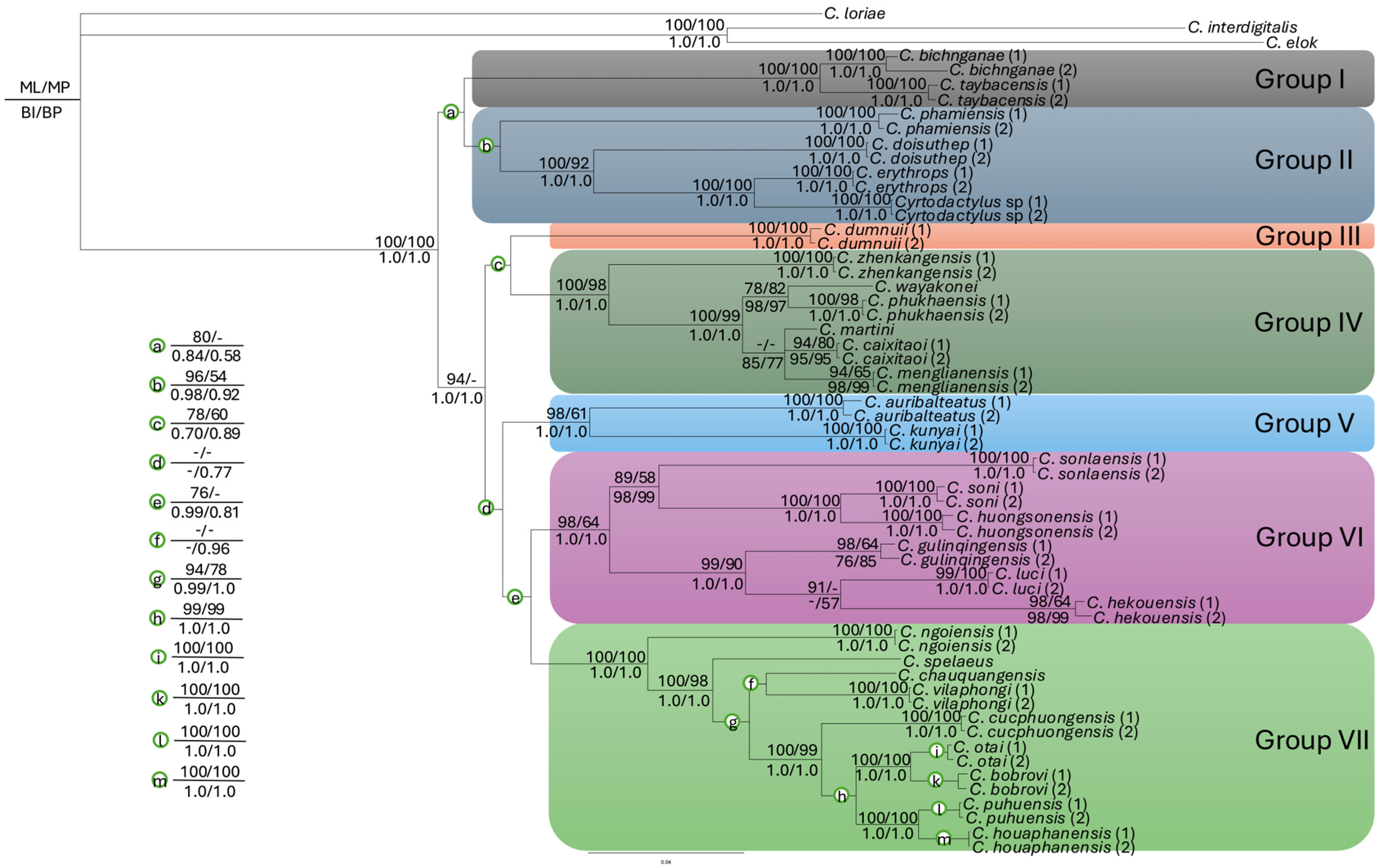
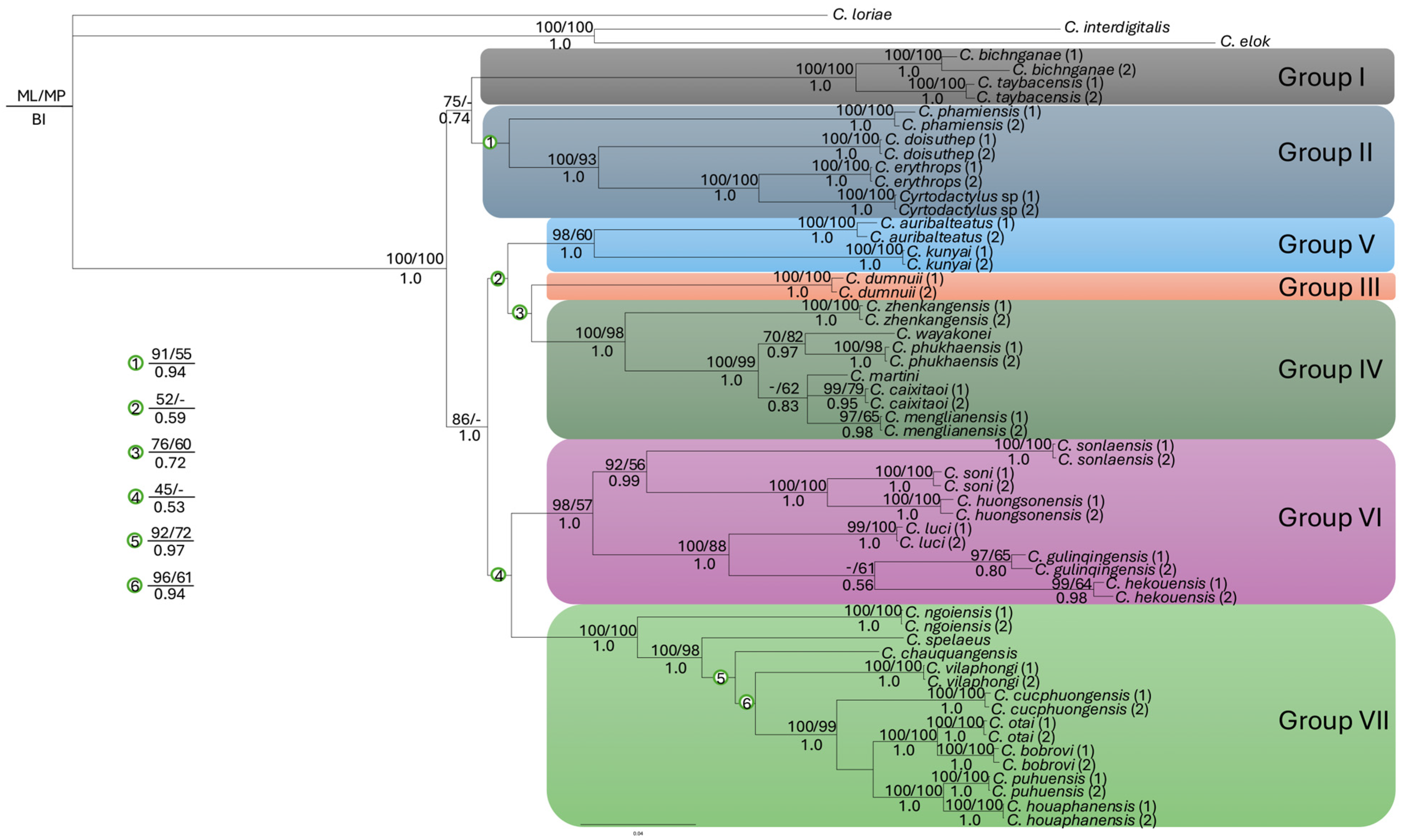
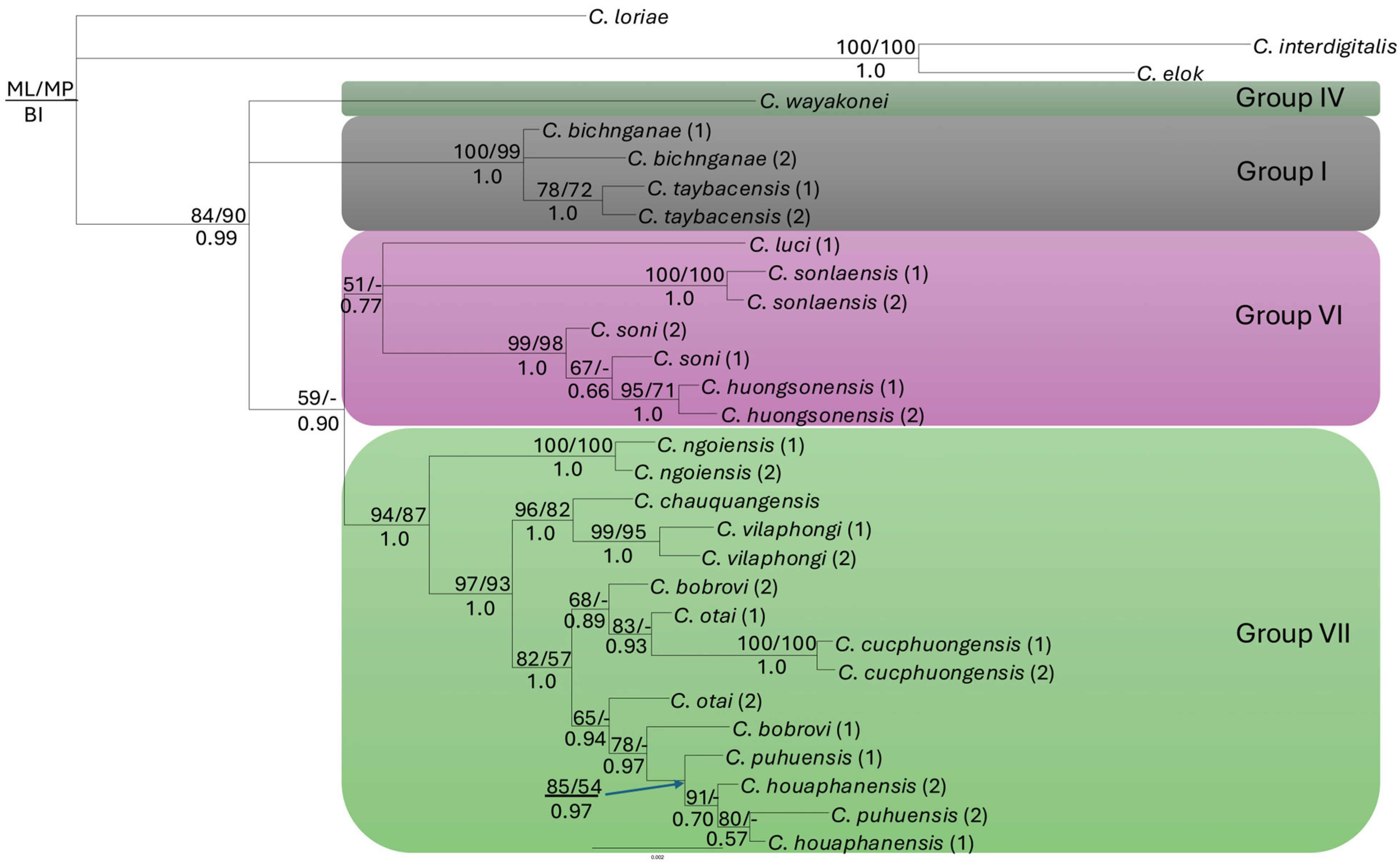
Overall, the ML and MP analyses of each of the mitochondrial, nuclear or mt-nu datasets recovered largely consistent topologies (except for the MP analysis of the nuclear dataset, see Figure S6, Supplementary Materials). All analyses of mt and mt-nu datasets strongly supported the monophyly of the Cyrtodactylus chauquangensis group (PP = 1.0, BP = 100, and UFB = 100 in both datasets). In addition, the monophylies of Group I, Group II, Group IV, Group V, Group VI and Group VII were recovered by all analyses of mt-nu and mt datasets (except for the MP analysis of Group II, Group V and Group VI by both mt-nu and mt datasets and the ML and BI analyses of Group II by mt dataset). Phylogenies generated by the mt-nu dataset were congruent with those produced by the mt dataset and showed some discrepancies, mostly due to unresolved nodes, from those of the nu dataset (Figure 3, Figure 4 and Figure 5 and Figures S1–S6). In comparison, the monophyly of the Cyrtodactylus chauquangensis group was only strongly supported by the MP analysis of the nu dataset (UFB = 84, BP = 99 and PP = 0.9, Figure S6). In contrast, phylogenies inferred by the nu dataset only corroborated the monophyly of Group I in all analyses and Group VII in BI analysis (Figure 3, Figure 4 and Figure 5). Nonetheless, our incomplete nu data set could not provide information for the monophyly of Group II, III or V. The nu phylogenies also did not resolve several interspecific relationships within the Cyrtodactylus chauquangensis group, particularly the relationships of species within and between the species subgroups. For example, the relationships between C. bobrovi, C. cucphuongensis, C. houaphanensis, C. otai, and C. puhuensis in Group VII and between C. huongsonensis, C. luci, C. soni, and C. sonlaensis in Group VI were either unresolved or weakly supported.
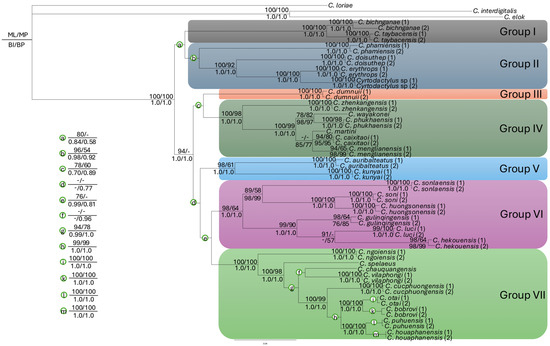
Figure 3.
Bayesian multiple-model phylogram. The phylogeny was recovered using 5651 aligned characters of a concatenated data set based on three mitochondrial loci (COI, cytb, ND2 tRNA) and four nuclear loci (Cmos, PDC, Rag1 and Rpl35). Numbers above and below branches are ML ultrafast bootstrap/MP bootstrap values and Bayesian single-model posterior probabilities/Bayesian multiple-model posterior probabilities, respectively. GenBank accession numbers for samples (1) and (2) of some species can be found in Table S1 (Supplementary Materials).
Figure 4.
Bayesian single-model phylogram. The phylogeny is based on 3257 aligned characters from three mitochondrial genes, COI, cytb, and ND2 tRNA. Numbers above and below branches are ML ultrafast/MP bootstrap values and Bayesian posterior probabilities, respectively. GenBank accession numbers for SAMPLES (1) and (2) of some species can be found in Table S1 (Supplementary Materials).
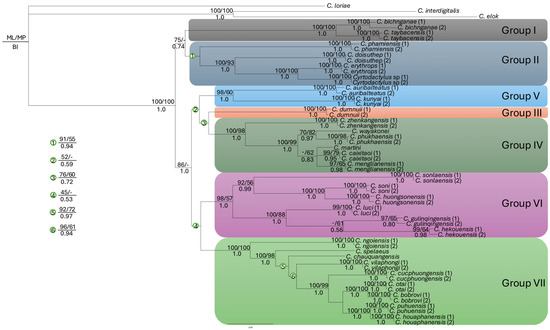
Figure 5.
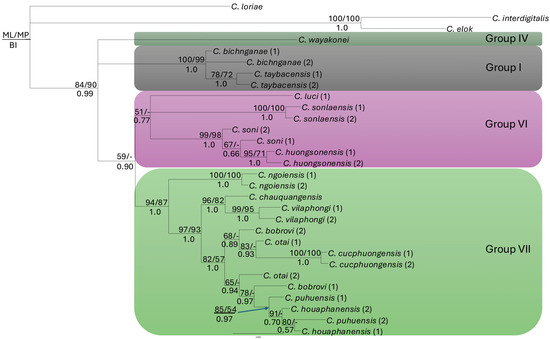
Bayesian single-model phylogram. The phylogeny is based on 2394 aligned characters from four nuclear loci, Cmos, PDC, Rag1, and Rpl35. Numbers above and below branches are ML ultrafast/MP bootstrap values and Bayesian posterior probabilities, respectively. GenBank accession numbers for samples (1) and (2) of some species can be found in Table S1 (Supplementary Materials).
Between the mt and mt-nu datasets, congruent topologies were observed in all nodes (Figure 3 and Figure 4). However, the nodal statistic values were improved in trees based on the mt-nu datasets. For example, the node representing Group II received well-supported values in ML and BI analyses of the mt-nu dataset compared to those resulting from the mt dataset.
The BI, BP, MP, and ML analyses of the mt-nu datasets showed similar tree topologies, albeit with variation within some clades (Figure 3). For example, several nodes were not supported or less supported in the MP analysis, whereas all were corroborated in the other analyses, such as the nodes representing Group III−VII (UFB = 94, BP unsupported, PP = 1.0 and 1.0) or the ones composed of C. auribalteatus and C. kunyai (UFB = 98, BP = 61, PP = 1.0 and 1.0) or the one consisting of C. gulinqingensis, C. hekouensis, C. huongsonensis, C. luci, C. soni and C. sonlaensis (UFB = 98, BP = 64, PP = 1.0 and 1.0). In general, the C. chauquangensis species clustered in seven major subclades with significant statistical values from all analyses, except for Group II, V and VI where the MP analysis recovered weakly supported relationships: Group I (UFB = 100, BP = 100, PP = 1.0 and 1.0), Group II (UFB = 96, BP = 54, PP = 0.98 and 0.92), Group III (UFB = 100, BP = 100, PP = 1.0 and 1.0), Group IV (UFB = 100, BP = 98, PP = 1.0 and 1.0), Group V (UFB = 98, BP = 61, PP = 1.0 and 1.0), Group VI (UFB = 98, BP = 64, PP = 1.0 and 1.0), Group VII (UFB = 100, BP = 100, PP = 1.0 and 1.0).
3.2. Divergence Dating Analysis
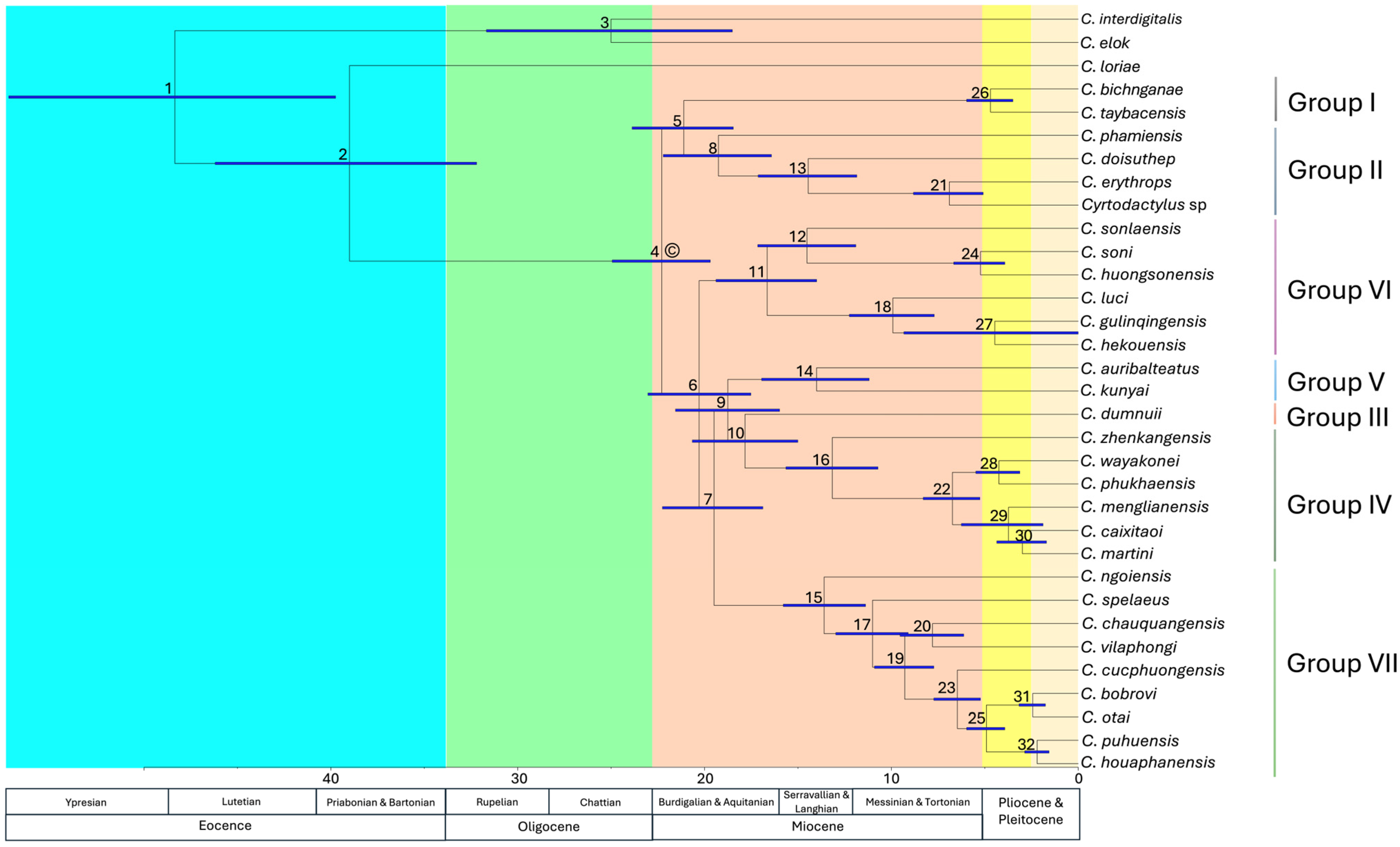
The combined dataset for seven genes consisted of 33 taxa (Figure 6). The results of divergence time estimation showed that a significant number of speciation events of C. chauquangensis took place during the Miocene, except for nine splits in the Pliocene and Pleistocene (Figure 6, Table 1). The diversification of the C. chauquangensis group began ca. 22.29 million years ago (Ma) (95% higher posterior densities (HPD) = 19.69–24.94 Ma as shown in node 4 of Figure 6) in the Miocene and it evolved into two major lineages. The first lineage consisted of Group I and Group II, and the other lineages encompassed the remaining subgroups. In particular, Group I and Group II began to emerge ca. 21.11 Ma (HPD = 18.46–23.88 Ma, node 5) while Group IV and Group III, V, VI, VII were formed ca. 20.29 Ma (HPD = 17.52–23.03 Ma, node 6). Specifically, Group VII and Group III, V, VI diverged ca. 19.49 Ma (HPD = 16.88–22.25 Ma, node 7), whereas the diversification between Group V and Group III−IV took place ca. 18.75 Ma (HPD = 15.98–21.56, node 9). In addition, the most recent speciation event was the separation between C. houaphanensis and C. puhuensis, which occurred in the Pleistocene ca. 2.2 Ma (HPD = 1.56–2.86, node 32). In addition, C. houaphanensis and C. puhuensis, C. bobrovi and C. otai are the other youngest members of the species group, which started to speciate from the early Pleistocene, ca. 2.43 Ma (HPD = 1.75–3.16, node 31) (Figure 6 and Table 1).
Figure 6.
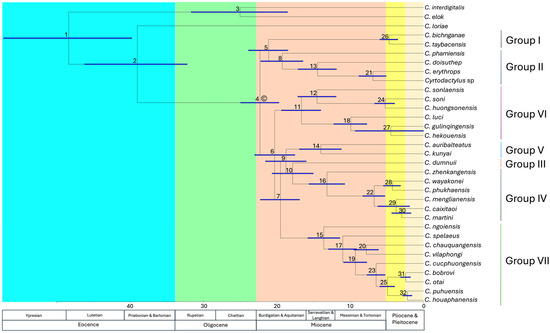
Time calibration using the BEAST. The blue bars show 95% higher posterior densities (HPD). © represents the calibration point.
Table 1.
Time calibration for nodes in the phylogeny. Node numbers defined in Figure 6.
3.3. Historical Biogeographic Patterns
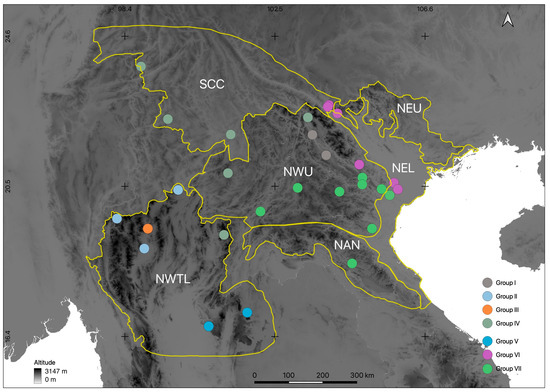
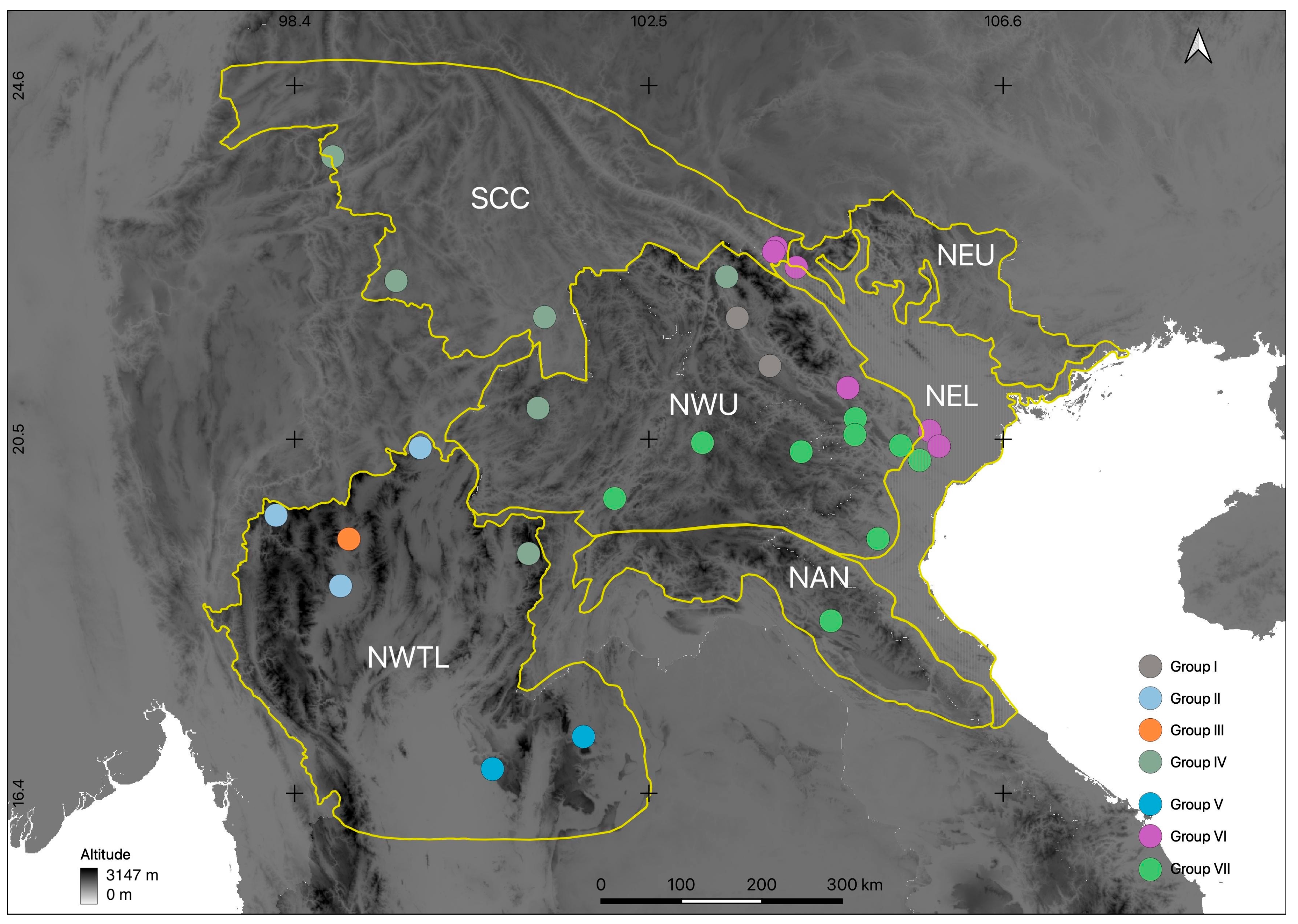
When combined with geographic data and subregions proposed by Bain and Hurley [40], the seven distinct phylogenetic groups were assigned to several areas of endemism. Specifically, while species in Group I, Group II, Group III and Group V were restricted to only one subregion (Northwest Uplands or Northwestern Thailand), members of Group IV, VI and VII occurred in several different subregions. In particular, Group I consisted of two species (C. bichnganae and C. taybacensis) confined to the Northwest Uplands (NWU); Group II, Group III and Group V were composed of four (C. doisuthep, C. erythrops, C. phamiensis and Cyrtodactylus sp), one (C. dumnuii) and two species (C. auribalteatus and C. kunyai), respectively, which occur in Northwestern Thailand (NWTL); Group IV included six species (C. caixitaoi, C. martini, C. menglianensis, C. phukhaensis, C. zhenkangensis, and C. wayakonei) spreading from South-central China to NWU and NWTL; Group VI contained six species (C. gulinqingensis, C. hekouensis, C. huongsonensis, C. luci, C. soni and C. sonlaensis) ranging from South-central China, Northeast Uplands (NEU) to NWU and Northeast Lowlands (NEL); Group VII consisted of nine species occupying NWU, NEL and Northern Annamites (NAN) (Figure 7).
Figure 7.
Distribution of the Cyrtodactylus chauquangensis species group (the altitude data based on GADM database of Global Administrative Areas, 2021).
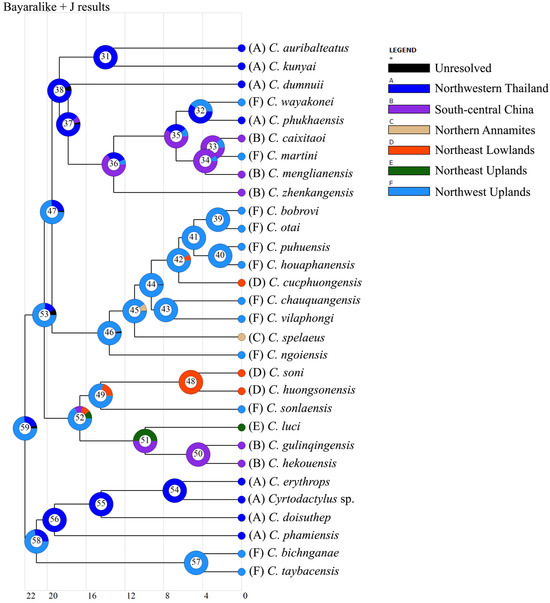
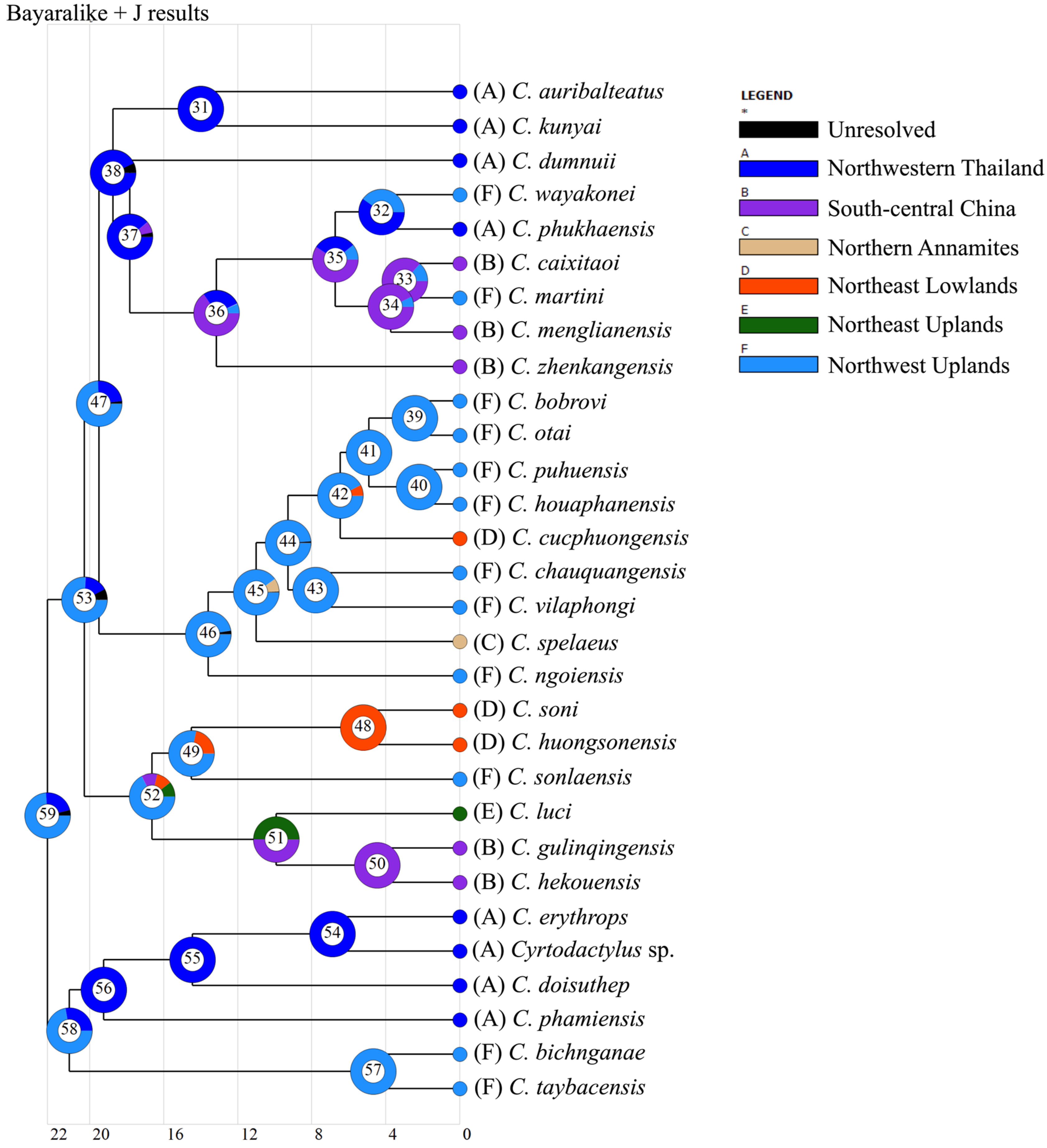
For the BioGeoBEARS analysis, model comparisons revealed that the Bayaralike + J model represents the best-fit biogeographic model to the data and is most likely to infer the correct ancestral range at each node with the highest LnL and the AICc_wt and the lowest AICc (Supplementary Materials Table S5). In general, both ancestral state reconstructions from BBM and Bayaralike + J analyses revealed a similar pattern of the biogeographic history of C. chauquangensis, with slight variations. Here, the results were described based on the Bayarealike + J analysis (Figure 8; Supplementary File S1). The result of the BBM analysis is shown in Supplementary Files S2 and S3.
Figure 8.
Divergence time estimation and ancestral area reconstruction of the Cyrtodactylus chauquangensis species group using the combined dataset. More statistical details can be found in Supplementary File S1.
In the reconstruction of the group’s ancestral geographic range, several areas of endemism contribute differentially with the Northwest Uplands (NWU) receiving the highest probability of 73.96%, followed by North-western Thailand of 22.19%, south-central China of 1.47%, Northeast Lowlands of 1.36%, Northeast Uplands (NEU) of 1.10% and other areas < 1% (Node 59 in Figure 8). The most probable ancestral areas for Group I and Group II were the Northwest Uplands (72.19%) and North-western Thailand (27.81%) (Node 58 in Figure 8). Group III, Group IV, and Group V likely originated from North-western Thailand (93.16%) (Node 38 in Figure 8). The ancestral area with the highest probability for Group VI was Northwest Uplands (67.46%) (Node 53 in Figure 8). Northwest Uplands was also recovered as the most probable ancestral area for Group VII (97.37%) (Node 46 in Figure 8).
4. Discussion
4.1. Phylogenetic Analysis
In this study, we provide an original mt-nu dataset for the Cyrtodactylus chauquangensis group, consisting of seven loci, COI, cytb, ND2, Cmos, PDC, Rag1 and Rpl35. We used the dataset for phylogenetic reconstruction under three different schemes, i.e., nu, mt, and mt-nu datasets. It is noted that our research is the first study to include all Cyrtodactylus chauquangensis species recognized to date. Furthermore, the results of our analyses using the mt-nu dataset indicate that combining the mt-nu loci provides more robust phylogenetic estimation of the group with generally higher nodal statistic values than those derived from analyses using only mitochondrial loci.
The tree topologies generated by our analyses are somewhat similar to those of Grismer et al. [22] based on both codon-partitioned and unpartitioned ND2 gene (plus tRNA), Tran et al. [26] based on one substitution model for ND2 and tRNA, the review study of Ngo et al. [18] based on COI, and Grismer et al. [16] based on three substitution model for ND2, tRNA, and Rag1 + PDC + Maxr5 genes. All the phylogenetic hypotheses supported by this study and most of previous studies show that the C. chauquangensis group is monophyletic. However, the tree topologies inferred by Grismer et al. [16] and Tran et al. [26] recovered nodes of seven groups with lower support values than those corroborated by our study. In particular, nodes representing Group II, Group V and Group VI herein received higher values regardless of the ML and/or BI analyses compared to those in Grismer et al. [16] (Group II: UFB = 96, PP = 0.98 vs. UFB = 89 and PP = 0.6 in Grismer et al. 2024, Group V: PP = 1.0 vs. PP = 0.8 in Grismer et al. [16], Group VI: PP = 1.0 vs. PP = 0.9 in Grismer et al. [16]). In addition, nodes representing Group IV, Group V and Group VI herein received significant support level in the ML and MP analyses compared to those in Tran et al. [26] (Group IV: UFB = 1.0, BP = 98 vs. UFB = 96, BP = 85 in Tran et al. [26], Group V: UFB = 98 vs. UFB = 92 in Tran et al. [26], Group VI: UFB = 98 vs. UFB = 88, in Tran et al. [26]). The improved support level for the deep nodes likely results from the inclusion of additional genes, especially nuclear markers.
A detailed comparison with Grismer et al. [16], Ngo et al. [18] and other previously published trees is difficult because they used only one gene or had incomplete species coverage of the subgroups [16,18,28]. Although our results, along with those reported in Grismer et al. [22] and Tran et al. [26], show that the C. chauquangensis group is monophyletic, the group was rendered paraphyletic in the study of Chomdej et al. [43] based on one substitution model for ND2 and tRNA.
Grismer et al. [16,22] and our analyses illustrate that the group’s diversity is currently underestimated. At least one population from Thailand is shown to be a potential new species in three studies. The extensive karst system in mainland Indochina likely still harbors a high level of hidden diversity in this gecko radiation, as its topographic complexity promotes habitat isolation and heterogeneity. In addition, many remote sites in the region have not been covered in previous studies. Further herpetological surveys in karstic areas of south-central China, northwestern Thailand and northern Indochina will likely discover additional new taxa within the species group.
4.2. Time Calibration and Biogeography
Our time-calibrated molecular results based on three mitochondrial genes and four nuclear genes resemble those reported by Grismer et al. [17] based on one mitochondrial gene in that diversification of almost all major lineages of C. chauquangensis occurred during the Miocene. In addition, both studies consistently show that C. bobrovi, C. houaphanensis, C. otai and C. puhuensis are the youngest members of the group [17]. However, our results of divergence time estimation suggest that in the C. chauquangensis group, the earliest split occurred between Group I + II and the remaining subgroups, whereas Group I diverged from the remaining subgroups at the beginning of the group diversification according to Grismer et al. [17]. In addition, according to our divergence dating results, Group I emerged at ~4.69 Ma, much later than the proposed 8.91 Ma and Group II evolved at around 19.26 Ma, earlier than the date of 11.48 Ma as reported in Grismer et al. [17].
The results of this study indicate that the ancestor of the C. chauquangensis group most probably originated from the Northwest Uplands (NWU) during the Oligocene—Miocene boundary (~23 Ma). Some of its descendants speciated within this area, while others dispersed to North-western Thailand (NWTL), South-central China (SCC), Northern Annamites (NAN), Northeast Lowlands (NEL) and Northeast Uplands (NEU) before they gave rise to other lineages. There are at least two independent dispersals from NWU to NWTL in the early Miocene. In one of the clades, its members colonized SCC in the mid Miocene in the north and then returned to NWU in the Pliocene as illustrated by C. martini (Figure 8). Several isolated dispersal events from NWU to NEU and SCC (C. hekouensis, C. gulinqingensis, and C. luci in the Miocene), to NAN (C. spelaeus in the Miocene), and to NEL (C. cucphuongensis, C. huongsonensis, and C. soni in the late Miocene) occurred in the Miocene. Intriguingly, most recent speciation events took place in the karst landscapes of NWU and SCC (Figure 8). Both of the subregions are characterized by complex karstic topography and extensive river drainages, which might have facilitated a high level of isolation and speciation in the group.
The diversification of C. chauquangensis in the Miocene may have been facilitated by the development of the East Asian monsoon and the accompanying copious precipitation (especially the winter precipitation) around the Oligocene and Miocene boundary [44]. During this period, a transition from broadleaf vegetation to evergreen broadleaf vegetation and increased plant diversity probably provided suitable habitats and food resources for members of the C. chauquangensis group. In addition, precipitation from the East Asian monsoon likely accelerated the dissolution of the limestone substrate and deeply influenced the development of the karst region, which possibly contributed to the expansion and divergence of this group [44,45,46].
5. Conclusions
This study provides generally robust phylogenetic hypotheses of the C. chauquangensis group by combining mitochondrial and nuclear data. The time divergence analysis helps highlight the influence of past climate events in the Miocene, especially the development of the East Asian monsoon, on the habitat turnover across the landscape of Indochina and southern China. The study results add to growing evidence, which suggests the elevated rate of speciation in various taxonomic groups, including mammals and arachnids [47,48,49].
However, our study has some limitations. Although we were able to include all but one recognized species in the analyses, gene coverage is imbalanced with only 11 sequences of the mitochondrial cytb available, the lowest number among all loci analyzed. Moreover, due to the limited number of phylogenetic informative characters within nuclear genes, it remains challenging to resolve some of the deep nodes with high confidence despite the inclusion of four loci in this study. Future research should focus on generating additional nuclear markers to address the outstanding issues. Alternatively, genomic data, e.g., single nucleotide polymorphisms, ultraconserved elements or whole genomes, can help improve the nodal support and produce more rigorous evolutionary relationships for this interesting group of geckos.
Supplementary Materials
The following supporting information can be downloaded at: https://www.mdpi.com/article/10.3390/d18030145/s1. Table S1. Samples used in this study. Table S2. Primers used in this study. Table S3. Best-fit models for all the datasets in MrBayes. Table S4. Best-fit models for each gene in BEAST. Table S5. Model testing for the BioGeoBears analysis with and without found-event speciation (+J). Figure S1. Maximum-likelihood phylogram of the combined nu-mt dataset. Figure S2. Maximum-parsimony cladogram of the combined nu-mt dataset. Figure S3. Maximum-likelihood phylogram of the mt dataset. Figure S4. Maximum-parsimony cladogram of the mt dataset. Figure S5. Maximum-likelihood phylogram of the nu dataset. Figure S6. Maximum-parsimony cladogram of the nu dataset. Supplementary File S1. Detailed output of the BioGeoBears analysis. Supplementary File S2. Divergence time estimation and ancestral area reconstruction of the C. chauquangensis species group using BBM analysis. Supplementary File S3. Detailed output of the BBM analysis.
Author Contributions
H.V.M.N.: data curation (lead), methodology (equal), formal analysis (supporting), writing—original draft (lead), writing—review and editing (lead). N.D.P., A.T.N.H.: methodology (equal), writing—review and editing (supporting). V.Q.L., T.Q.N., C.T.P. and T.Z.: methodology (lead in the field work), resources (equal), writing—review and editing (supporting). M.D.L. and H.T.N.: conceptualization (lead), data curation (lead), formal analysis (lead), methodology (lead), investigation (lead), project administration (M.D.L.—lead, H.T.N.—supporting), funding acquisition (M.D.L.—lead), supervision (lead), validation (supporting), writing—original draft (supporting), writing—review and editing (supporting). All authors have read and agreed to the published version of the manuscript.
Funding
This work was supported by the National Geographic (No. Asia 26-16).
Institutional Review Board Statement
The animal study protocol was approved by the Institutional Review Board of the Center for Environment and Community Assets Development (Approval Code: Asia 26-16; date of approval: 7 December 2016).
Data Availability Statement
All GenBank accession numbers are listed in Table S1 (Supplementary Materials).
Acknowledgments
We thank T.Q. Phan, Q.H. Do, C.V. Hoang, N.H. Nguyen, H.Q. Nguyen for their assistance in the field, A.V. Pham for providing photos, and T.V. Nguyen, H.T. Duong, G.H.T. Cao, T.T. Nguyen, H.M.T. Le for their support in the laboratory. Doctoral research of H.T. Ngo in Germany was funded by the German Academic Exchange Service (DAAD). Comments from three anonymous reviewers and the editor greatly improved the paper.
Conflicts of Interest
The authors declare no conflicts of interest.
References
- Ford, D.; Williams, P.D. Karst Hydrogeology and Geomorphology; John Wiley & Sons: Chichester, UK, 2007; p. 562. [Google Scholar] [CrossRef] [Scilit]
- Lewin, J.; Woodward, J.C. Karst Geomorphology and Environmental Change. In The Physical Geography of the Mediterranean, 1st ed.; Oxford University Press: Oxford, UK, 2009; pp. 287–317. [Google Scholar]
- Goldscheider, N. A holistic approach to groundwater protection and ecosystem services in karst terrains. Carbonates Evaporites 2019, 34, 1241–1249. [Google Scholar] [CrossRef] [Scilit]
- Clements, R.; Sodhi, N.S.; Schilthuizen, M.; Ng, P.K. Limestone Karsts of Southeast Asia: Imperiled Arks of Biodiversity. Bioscience 2006, 56, 733–742. [Google Scholar] [CrossRef] [Scilit]
- Grismer, L.; Wood, P.L., Jr.; Poyarkov, N.A.; Le, M.D.; Karunarathna, S.; Chomdej, S.; Suwannapoom, C.; Qi, S.; Liu, S.; Che, J.; et al. Karstic landscapes generate species diversity in the world’s third largest vertebrate genus Cyrtodactylus Gray, 1827 (Reptilia: Squamata: Gekkonidae). Diversity 2021, 13, 183. [Google Scholar] [CrossRef] [Scilit]
- Nielsen, S.V.; Oliver, P.M. Morphological and genetic evidence for a new karst specialist lizard from New Guinea (Cyrtodactylus: Gekkonidae). R. Soc. Open Sci. 2017, 4, 170781. [Google Scholar] [CrossRef] [Scilit]
- Bystriakova, N.; Alves De Melo, P.H.; Moat, J.; Lughadha, E.N.; Monro, A.K. A Preliminary evaluation of the karst flora of Brazil using collections data. Sci. Rep. 2019, 9, 17037. [Google Scholar] [CrossRef] [Scilit]
- Day, M.; Urich, P. An assessment of protected karst landscapes in Southeast Asia. Cave Karst Sci. 2000, 27, 61–70. [Google Scholar]
- Quah, E. Conservation of Peninsular Malaysia’s Karst Herpetofauna: A review of herpetological discoveries, research trends, and challenges. Raffles Bull. Zool. 2021, 69, 235–252. [Google Scholar] [CrossRef] [Scilit]
- Zhu, H. The karst ecosystem of southern China and its biodiversity. Trop. For. 2007, 35, 44–47. [Google Scholar]
- Averyanov, L.V.; Hiep, N.T.; Loc, P.K. The genus Calocedrus (Cupressaceae) in the Flora of Vietnam. Taiwania 2008, 53, 11–22. [Google Scholar] [CrossRef]
- Samigullin, T.H.; Logacheva, M.D.; Averyanov, L.V.; Zeng, S.J.; Fu, L.F.; Nuraliev, M.S. Phylogenetic position and plastid genome structure of Vietorchis, a mycoheterotrophic genus of Orchidaceae (subtribe Orchidinae) endemic to Vietnam. Front. Plant Sci. 2024, 15, 1393225. [Google Scholar] [CrossRef] [Scilit]
- Nadler, T.F.; Momberg, X.D.; Nguyen; Lormee, N. Vietnam Conservation Status Review 2002. Part 2: Leaf Monkeys; Fauna and Flora International-Vietnam Program and Frankfurt Zoological Society: Hanoi, Vietnam, 2003. [Google Scholar]
- Sterling, E.J.; Hurley, M.M. Vietnam: A Natural History; Yale University Press: New Haven, CT, USA, 2006; p. 334. [Google Scholar]
- Nguyen, D.X.; Nguyen, N.X.; Nguyen, D.D.; Dinh, T.H.; Le, D.T.; Dinh, D.H. Distribution and habitat of the Laotian Rock Rat Laonastes aenigmamus Jenkins, Kilpatrick, Robinson & Timmins, 2005 (Rodentia: Diatomyidae) in Vietnam. Biodivers. Data J. 2014, 2, e4188. [Google Scholar] [CrossRef] [Scilit]
- Lee Grismer, L.; Wood, P.L.; Poyarkov, N.A.; Le, M.D.; Kraus, F.; Agarwal, I.; Oliver, P.M.; Nguyen, S.N.; Nguyen, T.Q.; Karunarathna, S.; et al. Phylogenetic partitioning of the third-largest vertebrate genus in the world, Cyrtodactylus Gray, 1827 (Reptilia; Squamata; Gekkonidae) and its relevance to taxonomy and conservation. Vertebr. Zool. 2021, 71, 101–154. [Google Scholar] [CrossRef] [Scilit]
- Grismer, L.L.; Poyarkov, N.A.; Quah, E.S.; Grismer, J.L.; Wood, P.L., Jr. The biogeography of bent-toed geckos, Cyrtodactylus (Squamata: Gekkonidae). PeerJ 2022, 10, e13153. [Google Scholar] [CrossRef] [Scilit]
- Ngo, H.T.; Do, Q.H.; Pham, C.T.; Luu, V.Q.; Grismer, L.L.; Ziegler, T.; Nguyen, V.T.H.; Nguyen, T.Q.; Le, M.D. How many more species are out there? Current taxonomy substantially underestimates the diversity of bent-toed geckos (Gekkonidae, Cyrtodactylus) in Laos and Vietnam. Zookeys 2022, 1097, 135–152. [Google Scholar] [CrossRef] [Scilit]
- Uetz, P.; Freed, P.; Aguilar, R.; Reyes, F.; Hošek, J. (Eds.) The Reptile Database. 2025; Available online: https://reptile-database.reptarium.cz/ (accessed on 11 September 2025).
- Grismer, L.L.; Wood, P.L., Jr.; Le, M.D.; Quah, E.S.; Grismer, J.L. Evolution of habitat preference in 243 species of Bent-toed geckos (Genus Cyrtodactylus Gray, 1827) with a discussion of karst habitat conservation. Ecol. Evol. 2020, 10, 13717–13730. [Google Scholar] [CrossRef] [Scilit] [PubMed]
- Wood, P.L., Jr.; Grismer, L.L.; Aowphol, A.; Aguilar, C.A.; Cota, M.; Grismer, M.S.; Murdoch, M.L.; Sites, J.W., Jr. Three new karst-dwelling Cnemaspis Strauch, 1887 (Squamata: Gekkonidae) from Peninsular Thailand and the phylogenetic placement of C. punctatonuchalis and C. vandeventeri. PeerJ 2017, 5, e2884. [Google Scholar] [CrossRef] [Scilit] [PubMed]
- Grismer, L.L.; Aowphol, A.; Grismer, J.L.; Aksornneam, A.; Quah, E.S.; Murdoch, M.L.; Gregory, J.J.; Nguyen, E.; Kaatz, A.; Bringsøe, H.; et al. A new species of the Cyrtodactylus chauquangensis group (Squamata, Gekkonidae) from the borderlands of extreme northern Thailand. Zookeys 2024, 1203, 211–238. [Google Scholar] [CrossRef] [Scilit] [PubMed]
- Nguyen, T.Q.; Le, M.D.; Pham, A.V.; Ngo, H.N.; Hoang, C.V.; Pham, C.T.; Ziegler, T. Two new species of Cyrtodactylus (Squamata: Gekkonidae) from the karst forest of Hoa Binh Province, Vietnam. Zootaxa 2015, 3985, 375–390. [Google Scholar] [CrossRef] [Scilit]
- Nguyen, T.Q.; Pham, A.V.; Ziegler, T.; Ngo, H.T.; Le, M.D. A new species of Cyrtodactylus (Squamata: Gekkonidae) and the first record of C. otai from Son La Province, Vietnam. Zootaxa 2017, 4341, 25–40. [Google Scholar] [CrossRef] [Scilit]
- Van Pham, A.; Le, M.D.; Ziegler, T.; Nguyen, T.Q. A new species of Cyrtodactylus (Squamata: Gekkonidae) from northwestern Vietnam. Zootaxa 2019, 4544, 360–380. [Google Scholar] [CrossRef] [Scilit]
- Tran, T.T.; Do, Q.H.; Pham, C.T.; Phan, T.Q.; Ngo, H.T.; Le, M.D.; Ziegler, T.; Nguyen, T.Q. A new species of the Cyrtodactylus chauquangensis species group (Squamata, Gekkonidae) from Lao Cai Province, Vietnam. ZooKeys 2024, 1192, 83–102. [Google Scholar] [CrossRef] [Scilit] [PubMed]
- Wood, P.L., Jr.; Heinicke, M.P.; Jackman, T.R.; Bauer, A.M. Phylogeny of bent-toed geckos (Cyrtodactylus) reveals a west to east pattern of diversification. Mol. Phylogenetics Evol. 2012, 65, 992–1003. [Google Scholar] [CrossRef] [Scilit]
- Brennan, I.G.; Bauer, A.M.; Van Tri, N.; Wang, Y.Y.; Wang, W.Z.; Zhang, Y.P.; Murphy, R.W. Barcoding utility in a mega-diverse, cross-continental genus: Keeping pace with Cyrtodactylus geckos. Sci. Rep. 2017, 7, 5592. [Google Scholar] [CrossRef] [Scilit]
- Larkin, M.A.; Blackshields, G.; Brown, N.P.; Chenna, R.; McGettigan, P.A.; McWilliam, H.; Valentin, F.; Wallace, I.M.; Wilm, A.; Lopez, R.; et al. Clustal W and Clustal X version 2.0. Bioinformatics 2007, 23, 2947–2948. [Google Scholar] [CrossRef] [Scilit]
- Swofford, D.L. PAUP*. Phylogenetic Analysis Using Parsimony (* and Other Methods); Version 4; Sinauer Associates: Sunderland, MA, USA, 2001. [Google Scholar]
- Ronquist, F.; Teslenko, M.; Van Der Mark, P.; Ayres, D.L.; Darling, A.; Höhna, S.; Larget, B.; Liu, L.; Suchard, M.A.; Huelsenbeck, J.P. MrBayes 3.2: Efficient Bayesian phylogenetic inference and model choice across a large model space. Syst. Biol. 2012, 61, 539–542. [Google Scholar] [CrossRef] [Scilit]
- Nguyen, L.T.; Schmidt, H.A.; Von Haeseler, A.; Minh, B.Q. IQ-TREE: A Fast and Effective Stochastic Algorithm for Estimating Maximum-Likelihood Phylogenies. Mol. Biol. Evol. 2015, 32, 268–274. [Google Scholar] [CrossRef] [Scilit]
- Rambaut, A.; Drummond, A.J.; Xie, D.; Baele, G.; Suchard, M.A. Posterior summarization in Bayesian phylogenetics using Tracer 1.7. Syst. Biol. 2018, 67, 901–904. [Google Scholar] [CrossRef] [Scilit]
- Darriba, D.; Taboada, G.L.; Doallo, R.; Posada, D. jmodelTest 2: More models, new heuristics and high-performance computing. Nat. Methods 2012, 9, e772. [Google Scholar] [CrossRef] [Scilit] [PubMed]
- Hillis, D.M.; Bull, J.J. An empirical test of bootstrapping as a method for assessing confidence in phylogenetic analysis. Syst. Biol. 1993, 42, 182–192. [Google Scholar] [CrossRef] [Scilit]
- Minh, B.Q.; Nguyen, M.A.T.; Von Haeseler, A. Ultrafast Approximation for Phylogenetic Bootstrap. Mol. Biol. Evol. 2013, 30, 1188–1195. [Google Scholar] [CrossRef] [Scilit] [PubMed]
- Lanfear, R.; Calcott, B.; Ho, S.Y.; Guindon, S. Partition finder: Combined selection of partitioning schemes and substitution models for phylogenetic analyses. Mol. Biol. Evol. 2012, 29, 1695–1701. [Google Scholar] [CrossRef] [Scilit]
- Drummond, A.J.; Suchard, M.A.; Xie, D.; Rambaut, A. Bayesian phylogenetics with BEAUti and the BEAST 1.7. Mol. Biol. Evol. 2012, 29, 1969–1973. [Google Scholar] [CrossRef] [Scilit] [PubMed]
- Bouckaert, R.; Vaughan, T.G.; Barido-Sottani, J.; Duchêne, S.; Fourment, M.; Gavryushkina, A.; Heled, J.; Jones, G.; Kühnert, D.; De Maio, N.; et al. BEAST 2.5: An advanced software platform for Bayesian evolutionary analysis. PLoS Comput. Biol. 2019, 15, e1006650. [Google Scholar] [CrossRef] [Scilit]
- Bain, R.H.; Hurley, M.M. A biogeographic synthesis of the amphibians and reptiles of Indochina. Bull. Am. Mus. Nat. Hist. 2011, 360, 1–138. [Google Scholar] [CrossRef] [Scilit]
- Yu, Y.; Harris, A.J.; He, X. S-DIVA (Statistical Dispersal-Vicariance Analysis): A tool for inferring biogeographic histories. Mol. Phylogenetics Evol. 2010, 56, 848–850. [Google Scholar] [CrossRef] [Scilit]
- Matzke, N.J. Probabilistic historical biogeography: New models for founder-event speciation, imperfect detection, and fossils allow improved accuracy and model-testing. Front. Biogeogr. 2013, 5, 242–248. [Google Scholar] [CrossRef] [Scilit]
- Chomdej, S.; Pradit, W.; Pawangkhanant, P.; Kuensaen, C.; Phupanbai, A.; Naiduangchan, M.; Piboon, P.; Nganvongpanit, K.; Yuan, Z.; Zhang, Y.; et al. A New Cyrtodactylus species (Reptilia: Gekkonidae) from Nan Province, Northern Thailand. Asian Herpetol. Res. 2022, 13, 96–108. [Google Scholar] [CrossRef]
- Li, X.Q.; Xiang, X.G.; Jabbour, F.; Hagen, O.; Ortiz, R.D.C.; Soltis, P.S.; Soltis, D.E.; Wang, W. Biotic colonization of subtropical East Asian caves through time. Proc. Natl. Acad. Sci. USA 2022, 119, e2207199119. [Google Scholar] [CrossRef] [Scilit]
- Li, S.F.; Valdes, P.J.; Farnsworth, A.; Davies-Barnard, T.; Su, T.; Lunt, D.J.; Spicer, R.A.; Liu, J.; Deng, W.Y.D.; Huang, J.; et al. Orographic evolution of northern Tibet shaped vegetation and plant diversity in eastern Asia. Sci. Adv. 2021, 7, eabc7741. [Google Scholar] [CrossRef] [Scilit]
- Chen, Z.; Zhou, Z.; Guo, Z.M.; Van Do, T.; Sun, H.; Niu, Y. Historical development of karst evergreen broadleaved forest in East Asia has shaped the evolution of a hemiparasitic genus Brandisia (Orobanchaceae). Plant Divers. 2023, 45, 501–512. [Google Scholar] [CrossRef] [Scilit] [PubMed]
- Hassanin, A.; Delsuc, F.; Ropiquet, A.; Hammer, C.; Van Vuuren, B.J.; Matthee, C.; Ruiz-Garcia, M.; Catzeflis, F.; Areskoug, V.; Nguyen, T.T.; et al. Pattern and timing of diversification of Cetartiodactyla (Mammalia, Laurasiatheria), as revealed by a comprehensive analysis of mitochondrial genomes. Comptes Rendus Biol. 2012, 335, 32–50. [Google Scholar] [CrossRef] [Scilit] [PubMed]
- Le, M.; Nguyen, H.M.; Duong, H.T.; Nguyen, T.V.; Dinh, L.D.; Nguyen, N.X.; Nguyen, L.D.; Dinh, T.H.; Nguyen, D.X. Phylogeography of the Laotian Rock Rat (Diatomyidae: Laonastes): Implications for Lazarus taxa. Mammal Study 2015, 40, 109–114. [Google Scholar] [CrossRef] [Scilit]
- Loria, S.F.; Ehrenthal, V.L.; Nguyen, A.D.; Prendini, L. Climate relicts: Asian scorpion family Pseudochactidae survived Miocene aridification in caves of the Annamite Mountains. Insect Syst. Divers. 2022, 6, 3. [Google Scholar] [CrossRef] [Scilit]

Disclaimer/Publisher’s Note: The statements, opinions and data contained in all publications are solely those of the individual author(s) and contributor(s) and not of MDPI and/or the editor(s). MDPI and/or the editor(s) disclaim responsibility for any injury to people or property resulting from any ideas, methods, instructions or products referred to in the content. |
© 2026 by the authors. Licensee MDPI, Basel, Switzerland. This article is an open access article distributed under the terms and conditions of the Creative Commons Attribution (CC BY) license.