Article

Impact of Distinct Management Regimes on Wintering Waterbird Communities in China’s Coal Mining Subsidence Wetlands


1
Zhejiang Key Laboratory of Ecological Environmental Damage Control and Value Transformation, Ecological and Environmental Science and Research Institute of Zhejiang Province, Hangzhou 310007, China
2
Ministry of Education Key Laboratory for Biodiversity Science and Ecological Engineering, School of Life Sciences, Fudan University, Shanghai 200438, China
3
Zhejiang Province Environmental Engineening Co., Ltd., Hangzhou 310012, China
4
Huzhou Municipal Ecology and Environment Bureau Nanxun Branch, Huzhou 313009, China
*
Authors to whom correspondence should be addressed.
Diversity 2026, 18(3), 146; https://doi.org/10.3390/d18030146
Submission received: 25 December 2025 / Revised: 25 February 2026 / Accepted: 26 February 2026 / Published: 28 February 2026
(This article belongs to the Special Issue Wetland Biodiversity and Ecosystem Conservation)

Abstract

Natural wetland loss constitutes a primary threat to waterbirds worldwide, increasingly forcing them to rely on expanding artificial wetlands. Extensive underground coal mining across the North China Plain has created numerous subsidence wetlands, which could serve as important alternative habitats for migratory and wintering waterbirds. However, the effects of different management regimes on waterbirds in these novel artificial wetlands remain poorly understood, hindering effective strategies for reconciling human development with waterbird conservation. Here, we conducted a long-term field survey (2017–2025) of wintering waterbirds across 15 subsidence wetlands under four distinct human management regimes in the Huaibei coal mining area. We recorded 22,712 waterbirds of 45 species. We found that high-intensity aquaculture and floating photovoltaic systems were associated with reduced waterbird diversity, increased community dissimilarity, altered species composition, and the loss of multiple threatened species from survey records. We also found that ecological aquaculture and unutilized wetlands may serve as favorable habitats as alternatives to natural wetlands. Our findings demonstrate that subsidence wetlands can provide vital wintering habitats when managed sustainably, but intensive development severely compromises their conservation value. Future research should integrate habitat variables and year-round surveys to optimize management strategies for these expanding artificial ecosystems.

1. Introduction

The loss of natural habitats is widely recognized as the foremost threat to global biodiversity [1,2]. Natural wetlands provide critical ecosystem services and support approximately 40% of the world’s plant as well as animal species [3,4]. Over the past hundred years, more than half of the global natural wetlands have been lost, and the remaining fragmented wetlands continued to suffer from extensive degradation due to increasing anthropogenic pressure [5,6,7]. The persistent disappearance and deterioration of natural wetlands adversely affect wetland-dependent wildlife, particularly waterbirds, which represent one of the most sensitive and imperiled groups [8,9]. This has precipitated documented worldwide contractions in numerous waterbird populations, and the remaining species also face multiple threats [2,10].
As the carrying capacity of remaining natural wetlands declines, waterbirds increasingly exploit rapidly expanding networks of artificial wetlands (e.g., aquaculture ponds, constructed lakes, reservoirs, and irrigated lands) as complementary or alternative habitats [1,11]. Evaluating habitat quality, understanding adaptive responses, and identifying associated threats in these artificial wetlands have emerged as key priorities for waterbird conservation [2,12]. Numerous studies demonstrate that properly managed artificial wetlands can effectively substitute for natural habitats in supporting waterbird population [13,14]. This is attributable to the high productivity exhibited by most artificial wetlands, which enables waterbird species to select suitable sites according to their ecological requirements and behaviors [2,15]. Conversely, other research warns that artificial wetlands may be associated with reduced for waterbirds fitness, adversely affecting migration, breeding, foraging, and individual fitness, particularly among less-common species, and this may be attributed to elevated levels of human disturbance [13,16,17]. Despite these ongoing debates, it is undeniable that expanding artificial wetlands have successfully attracted numerous waterbird species [2,12]. Prioritizing and understanding the impacts of these artificial wetlands on waterbirds is crucial for future waterbird conservation, especially given their high sensitivity to rapid habitat alterations [18,19]. While many studies have examined the compensatory role of artificial wetlands for waterbirds, such as aquaculture ponds, constructed lakes, reservoirs, and irrigated lands [2,15], relatively less attention has been directed toward subsidence wetlands formed by extensive and ongoing underground coal mining.
Subsidence wetlands form as a result of land subsidence triggered by subsurface coal mining activities. Combined with abundant rainfall and high groundwater levels, these depressed landforms rapidly evolve into wetland environments over relatively short timeframes [20,21]. This process facilitates a shift from land to wetland ecosystems. By 2017, cumulative land subsidence resulting from underground coal mining had affected an extensive area of approximately 20,000 square kilometers in China, creating contiguous clusters of lakes [21,22]. While this phenomenon has caused various challenging economic and ecological issues, including the loss of arable land, biodiversity decline, and landscape degradation [20,23,24], it has also created opportunities for species that rely on wetland conditions, such as fish and waterbirds [25,26].
Over the past decade, the conservation value of subsidence wetlands in supporting biodiversity has attracted increasing attention from researchers [20,26]. For instance, Li et al. (2018) [20] documented that these wetlands in the coal mining area function as essential habitat for a wide variety of waterbirds, especially migratory waterbirds from the East Asian–Australasian Flyway, including threatened taxa such as the Dunlin (Calidris alpina) and Baer’s Pochard (Aythya baeri). Although subsidence wetlands have been shown to possess important ecological functions [20], they are generally considered unprotected artificial habitats and are predominantly utilized for economic purposes, including the installation of floating photovoltaic (FPV) systems for clean energy generation, aquaculture, and recreational development [24,27]. As the duration and area of subsidence wetlands continue to expand, human utilization intensifies accordingly [23,28]. Given the worldwide decline in natural wetlands, this newly formed subsidence wetlands may provide important alternative habitats where large numbers of waterbirds for foraging, resting, and nesting. However, due to limited understanding of the long-term ecological impacts of human disturbance in these wetlands, mitigation measures to address adverse effects on waterbirds have been largely absent in most regions, resulting in widespread overdevelopment and declining conservation value for waterbirds [20,26]. Long-term monitoring of waterbird community dynamics and human disturbance effects in subsidence wetlands may provide valuable insights for promoting sustainable economic development and optimizing conservation strategies.
The Huaibei coal mining area, situated in eastern China, is renowned for its extensive croplands and thriving coal industry. Over the past 20 years, extensive underground coal mining across the North China Plain has generated numerous subsidence wetlands [21,22]. Against the backdrop that the quality and extent of natural wetlands have declined markedly over the last 30 years [5,6], these novel subsidence wetlands have become important stopover and wintering sites for large numbers of waterbirds, particularly for species using the East Asia–Australasian Flyway [20,23,26]. In recent years, aquaculture and FPV systems have been extensively deployed within these artificial wetlands of the Huaibei coal mining area due to rapid economic development and policy requirements from China’s National Energy Administration [26,27]. This may create a long-standing conflict between human development and biodiversity conservation. Nevertheless, the responses of waterbird communities to such prolonged human disturbances in these artificial wetlands remain poorly understood.
Here, we carried out a long-term study to quantify waterbird communities and assess the effects of varying human management regimes in the subsidence wetlands of the Huaibei coal mining area. During the winters (January–February) from 2017 to 2025, we conducted surveys of waterbirds across 15 subsidence wetlands under four distinct management types: unutilized wetland, ecological aquaculture, high-intensity aquaculture, and FPV systems. These four wetland types are subject to different primary land uses, and thus their impacts on waterbird communities may differ. We hypothesized that the different human management regimes would influence both the diversity and community composition of waterbirds in the region, with subsidence wetlands experiencing greater human disturbance supporting lower waterbird diversity. The nine-year duration of this study provides a case study to understand the temporal dynamics of the subsidence wetlands and the impact of management regimes on the waterbird community. Therefore, our study contributes significantly to understanding the ecological consequences of long-term and varied human disturbances in subsidence wetlands, and it provides practical guidance for managing these expanding and extensive artificial wetlands.

2. Materials and Methods

2.1. Survey Area and Sampling Sites

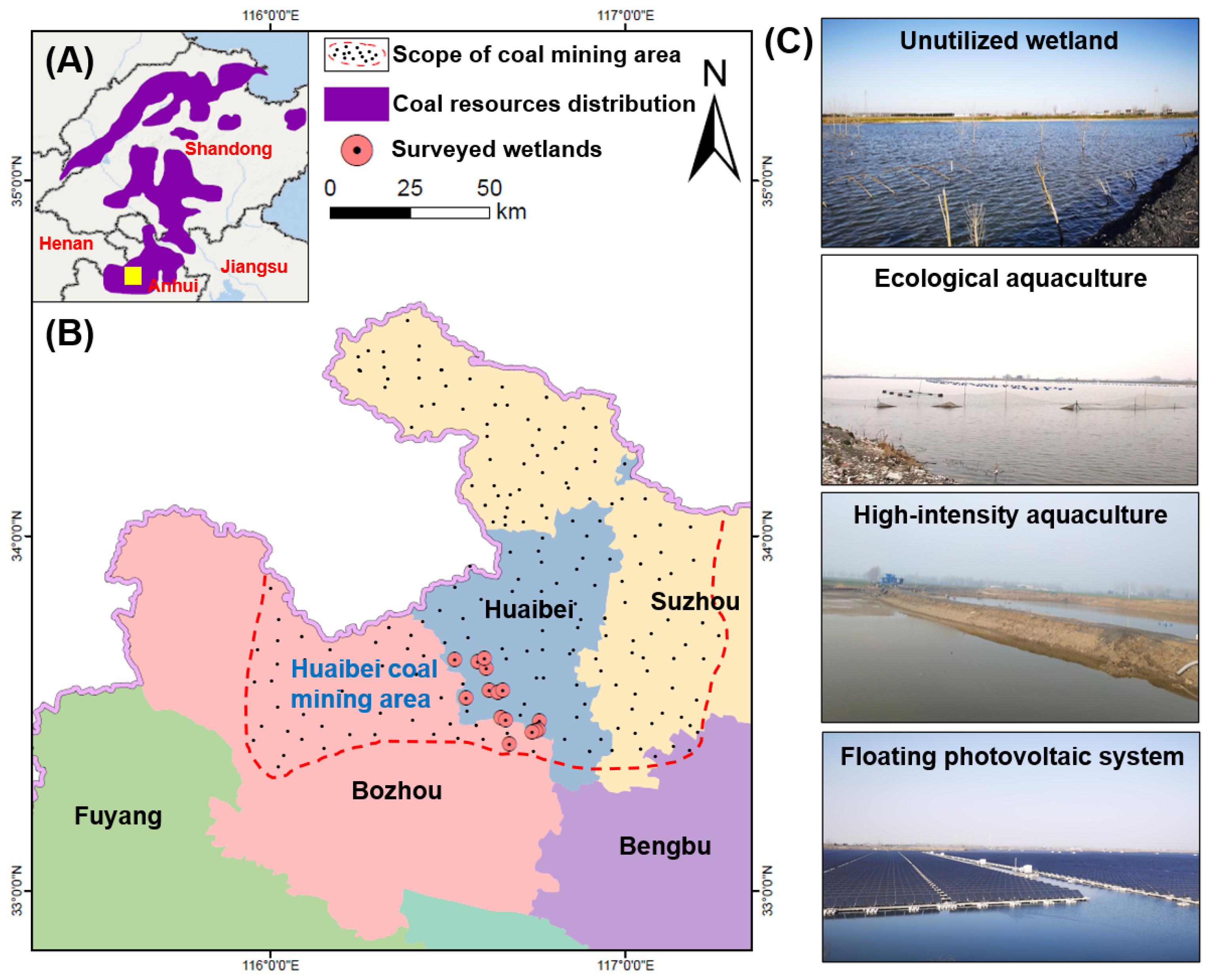
The study was conducted in the Huaibei coal mining area, spanning Suixi and Mengcheng counties in Anhui Province on the North China Plain (33°24′–33°39′ N, 116°31′–116°45′ E; Table A1, Figure 1). This region lies within the East Asian–Australasian Flyway, a major migratory corridor for birds. It features a warm-temperate and semi-humid climate, strongly influenced by the East Asian monsoon. The landscape is dominated by plains and hills interlaced with extensive farmland, making it one of China’s principal grain-production zones [20]. The study area, Huaibei, is located in a major coal basin of China [21], where mining-induced subsidence has created extensive wetland habitats for waterbird communities [20,23].
In recent years, with the expansion of subsidence wetlands in the Huaibei coal mining area, the intensity of human utilization has grown substantially. Between 2017 and 2025, the primary development forms for subsidence wetlands in this region included ecological aquaculture, intensive aquaculture, and the installation of FPV systems [24,26]. In this study, we classified the subsidence wetlands into four human management regimes based on their primary land use: (1) ecological aquaculture wetland (EA) is defined as utilizing pre-existing water bodies within subsidence wetlands for fish and shrimp farming, integrating aquaculture with constructed wetland features, and without extensive modification of the wetland structure; (2) high-intensity aquaculture wetland (HA) is an aquaculture model conducted within subsidence wetlands, characterized by continuous artificial feeding and frequent use of mechanical devices (e.g., aerators) for water oxygenation, aimed at maintaining high biomass-density production, involving large-scale transformation of subsidence wetlands into aquaculture ponds, deepening banks and dredging sediments, followed by intensive management practices [7]; (3) FPV system wetland (FPVs) refers to a form of water surface utilization where photovoltaic power generation components are installed above subsidence wetland via floating and anchoring systems, primarily for clean energy generation [27]; (4) unutilized wetland (UW) is defined as the subsidence wetlands that have not been subjected to any human use or development. In 2017, all surveyed subsidence wetlands were unutilized except for two under ecological aquaculture. By 2025, the distribution was as follows: five wetlands had FPV systems installed, three were used for high-intensity aquaculture, six for ecological aquaculture, and only one remained unutilized (Table A1). Over the course of the research, the surface size of all 15 subsidence wetlands remained virtually unchanged.

2.2. Waterbird Surveys

Annual surveys were carried out across the 15 subsidence wetlands to document the wintering waterbird communities in Suixi and Mengcheng counties in the Huaibei coal mining area from 2017 to 2025, with fieldwork carried out during January and February each year. This approach capitalized on the documented seasonal stability of waterbird communities in these subsidence wetlands during winter (December to February of the following year) [20], providing a reliable basis for comparison across years. Waterbird observation points were established along the boundary of each subsidence wetland, with one to four points per wetland depending on its size, to ensure comprehensive coverage of the waterbird communities [15,20]. Specifically, in wetlands with installed FPV systems or dense vegetation where waterbirds are highly elusive and difficult to observe, we walked around the periphery to ensure all individuals were recorded. Waterbird counts were conducted during morning (8:00–10:30) and afternoon (14:00–17:00) on days with clear weather and calm conditions, by an experienced observer using binoculars (8× magnification, Swarovski) and spotting scope (20–60× magnification, Swarovski) (Swarovski Optik KG, Absam, Tyrol, Austria) [15]. An identical transect route was maintained for every survey within each wetland, and the route characteristics were consistent across all subsidence wetlands. Each waterbird survey at a subsidence wetland lasted between 20 and 40 min. Waterbird species that forage aerially, including gulls and terns, were recorded because their dependence on wetland food resources, whereas individuals that only overflew without using the wetlands were excluded. Additionally, waterbirds observed in the terrestrial habitats (farmlands and trees) surrounding the subsidence wetlands were also recorded, because many waterbirds (such as crakes and egrets) actively forage in subsidence wetlands but frequently use the adjacent terrestrial habitats for resting and wandering. Specifically, we recorded individuals in farmlands within 20 m and trees within 50 m of the subsidence wetland edge. Waterbirds were categorized into two ecological groups based on their primary foraging mode: swimming birds and wading birds [29]. Both ecological groups exhibit strong wetland dependence, wading birds use shallow water zones, whereas swimming birds occupy deeper water zones. The density of each waterbird species was calculated based on the area of the respective subsidence wetland. The primary aim of this study was to assess the effects of structural factors on wintering waterbird communities, not to estimate absolute abundance within each subsidence wetland. Accordingly, analyses utilized raw count data without correcting for detectability.

2.3. Statistical Analysis

For each subsidence wetland on a yearly basis, we assessed four waterbird metrics: species richness, individual density, Shannon-Wiener diversity, and Pielou evenness index [30,31]. For each species, we also calculated the dominance index (Y) across all subsidence wetlands, with species classified as dominant when Y ≥ 0.02 [32]. Additionally, beta diversity was used to compare community dissimilarities among the 15 subsidence wetlands. Beta diversity was assessed using abundance-based Bray–Curtis dissimilarity metrics with the betapart package in R (Version 4.4.2) [33]. The Bray–Curtis metric is robust to occasional missing sites or surveys (i.e., variation in the number or frequency of sampled wetlands), with lower values indicating smaller differences in waterbird composition. Prior to analysis, Shapiro–Wilk tests confirmed that all response variables (species richness, individual density, Shannon-Wiener diversity, and the Pielou evenness index) followed normal distributions. Generalized Linear Mixed Models (GLMMs) used to analyze the effects of four wetland management regimes (ecological aquaculture, high-intensity aquaculture, FPV systems and unutilized wetland) on each of these waterbird community metrics. To address the non-independence of repeated annual surveys at the same site, wetland identity was included as a random intercept, effectively accounting for site-specific baseline differences. To separate management effects from broader temporal trends, year was included as a fixed effect, with management regime as an additional fixed effect.
Non-metric multidimensional scaling (NMDS) and permutational multivariate analysis of variance (PERMANOVA) were employed via the vegan package in R (version 4.4.2) to compare waterbirds composition among the four subsidence wetland types [15,33,34]. NMDS was applied to examine differences in species and group composition of waterbird communities across the four wetland types. Based on waterbird individual density, a species community similarity matrix was constructed for the four subsidence wetland types based on the Bray–Curtis distance [33]. Stress values below 0.20 indicate a reliable ordination solution. Standard ellipses representing 95% confidence intervals were used to illustrate compositional variation within each wetland type [15]. Significant differences among the four subsidence wetland types were tested using PERMANOVA, employing a Bray–Curtis distance matrix based on waterbird individual density data [34]. To ensure that observed differences in community composition were not confounded by variations in within-group heterogeneity, we conducted a PERMDISP test (free number of permutations: 999) to evaluate the homogeneity of multivariate dispersions before performing the PERMANOVA. The results of the PERMDISP analysis showed no significant differences in dispersion among management types (F = 1.40, p = 0.256), thereby confirming that the assumption of homogeneity was met. All permutation tests were performed with the strata argument applied to restrict permutations within individual wetlands, thereby accounting for the lack of independence due to repeated measures taken at the same sites. Statistical analyses were conducted in R (RStudio version 2024.12.1, R 4.4.2; R Core Team, Vienna, Austria, 2024). Results are presented as means ± standard error (SE).

3. Results

3.1. Waterbird Community

The areas of the 15 sampled subsidence wetlands ranged from 9.4 to 231 hectares (mean ± SE: 81.6 ± 16.7 hectares) (Table A1). In this study, a total of 22,712 waterbird individuals belonging to 45 species, 12 families, and nine orders were recorded across the 15 subsidence wetlands during the 2017 to 2025 wintering season (Table A2). This included 8470 waterbirds of 36 species (41 counts) in unutilized wetlands; 12,544 individuals of 40 species (58 counts) in ecological aquaculture wetlands; 1460 individuals of 21 species (25 counts) in high-intensity aquaculture wetlands; and 238 individuals of 11 species (11 counts) in FPV system wetlands. Over 86% of the recorded waterbirds were long-distance migratory species along the East Asian–Australasian Flyway. Swimming birds constituted the vast majority, accounting for 55.6% of all waterbirds (25 of 45 species) and 95.0% of all individuals (21,576 of 22,712 individuals), and all 13 numerically dominant species were swimming birds. Among all waterbirds recorded, the most dominant species were the Common Coot (Fulica atra, Y = 0.40, 10,094 individuals), Eastern Spot-billed Duck (Anas zonorhyncha, Y = 0.04, 1410 individuals) and Little Grebe (Tachybaptus ruficollis, Y = 0.04, 988 individuals), and the combined number of these three species accounts for 55.0% of all waterbirds. The dominant species differed across the four wetland types, in ecological aquaculture and unutilized wetlands, the most common species were the Common Coot, Mallard (Anas platyrhynchos), Green-winged Teal (Anas crecca), and Eastern Spot-billed Duck, whereas in high-intensity aquaculture and FPV system wetlands, the most dominant species were the Common Coot, Little Grebe, and Common Moorhen (Gallinula chloropus), these three waterbirds were highly human-tolerant.
Following the International Union for Conservation of Nature (IUCN) Red List classifications, a total of 922 individuals belonging to six species among the recorded waterbirds were classified as globally threatened: Baer’s Pochard (Aythya baeri, 80 individuals) is listed as Critically Endangered, Swan Goose (Anser cygnoid, 72 individuals) as Endangered; Common Pochard (Aythya ferina, 518 individuals) as Vulnerable; Dunlin (Calidris alpina, 37 individuals), Northern Lapwing (Vanellus vanellus, 199 individuals), and Ferruginous Duck (Aythya nyroca, 16 individuals) as Near Threatened. In our study, the period following the installation of FPV systems in subsidence wetlands coincided with no records of threatened waterbird species. In the high-intensity aquaculture wetlands, only the Common Pochard (38 individuals) and Northern Lapwing (2 individuals) were recorded (Table A2).

3.2. Diversity and Composition of Bird Communities

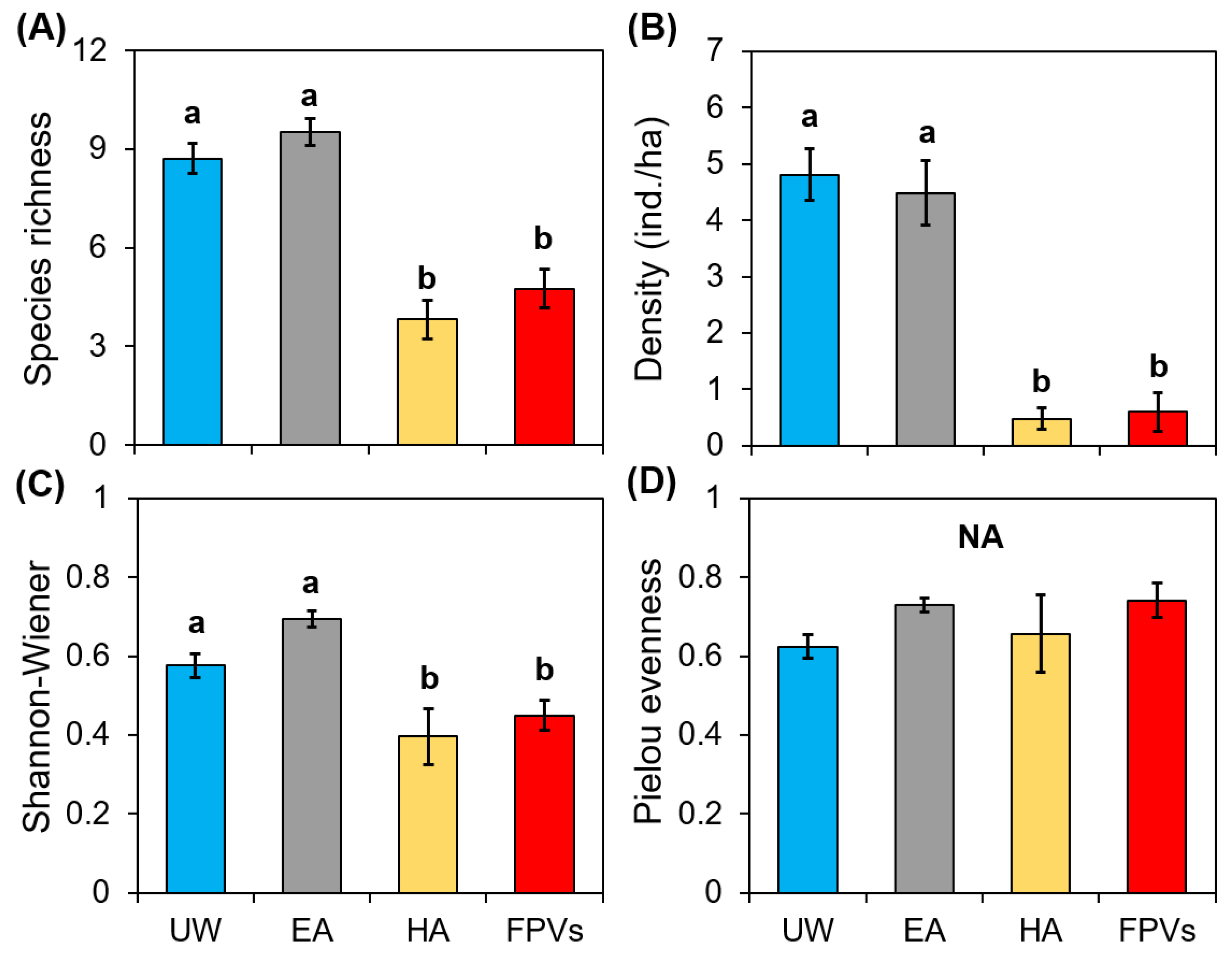
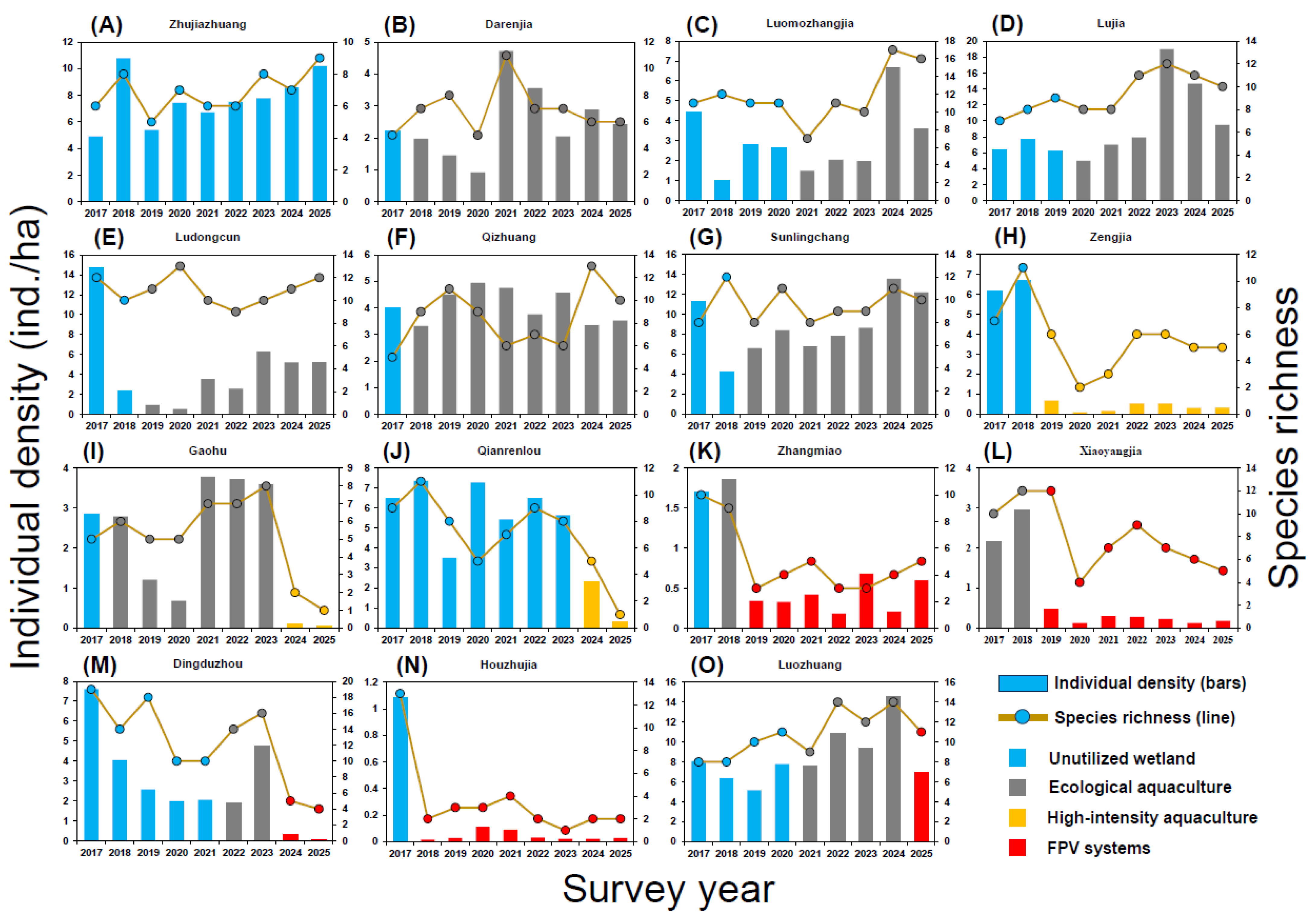
The results of the GLMMs indicated that wetland management regime had a significant effect on all measured waterbird community metrics (p < 0.05 for all; Figure A1), the survey year only showed a significant effect on individual density (F = 13.33, p < 0.01; Figure A1). Species richness, individual density and Shannon-Wiener diversity index were significantly higher in ecological aquaculture and unutilized wetlands than in FPV systems and high-intensity aquaculture (p < 0.05 for all; Figure 2A–C), while Pielou evenness index did not differ significantly among the four wetland types (F3,131 = 1.41, p = 0.24, Figure 2D). And there were no significant differences in these four indices between ecological aquaculture and unutilized wetlands, or between high-intensity aquaculture and FPV system wetlands (Figure 2).
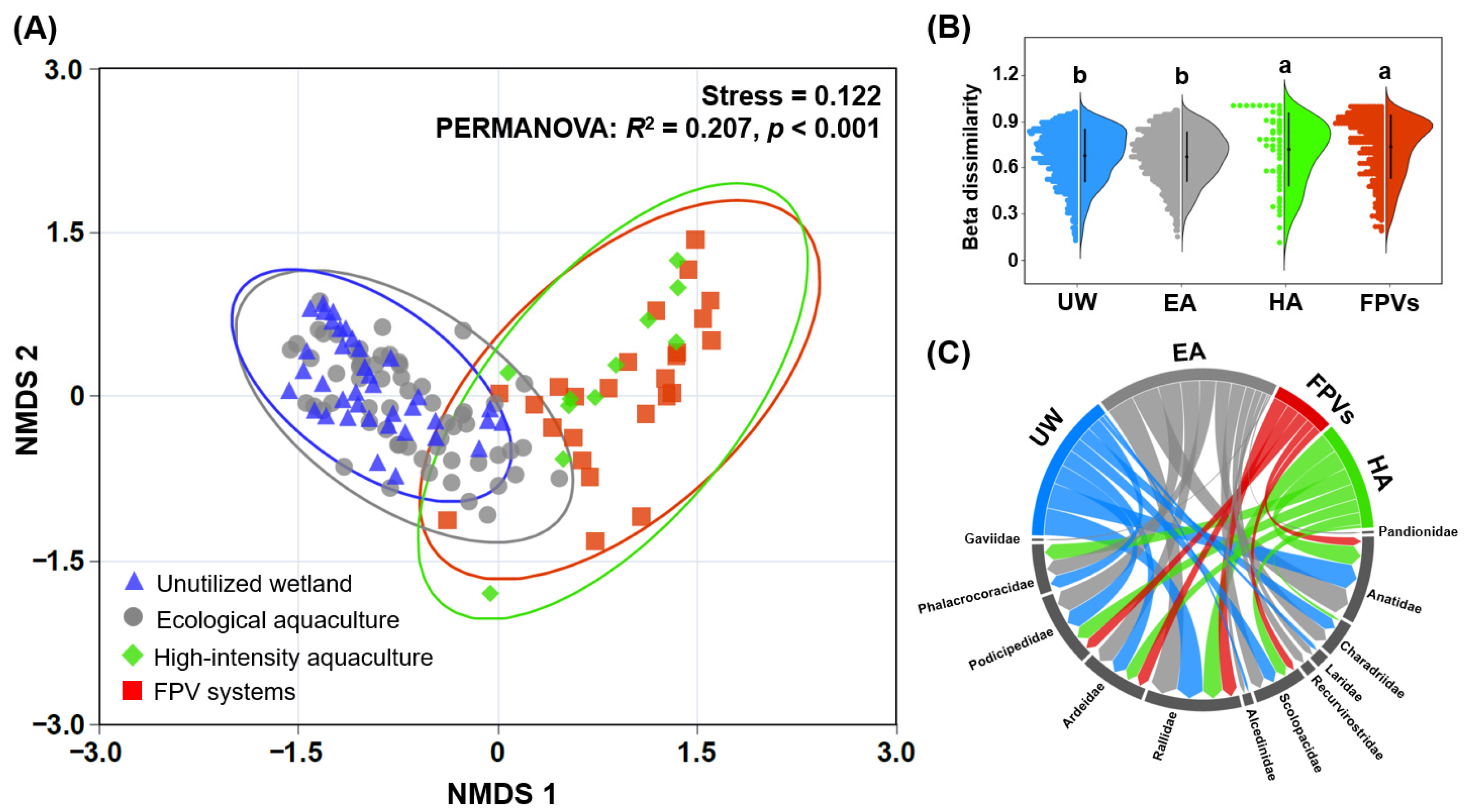
NMDS analysis revealed that waterbird community structures differed significantly among the ecological aquaculture, high-intensity aquaculture, FPV systems and unutilized wetlands (stress = 0.122, Figure 3A). Samples from high-intensity aquaculture and FPV systems showed greater separation in the NMDS plot. In contrast, samples from ecological aquaculture and unutilized wetlands exhibited moderate overlap but remained statistically distinct (Table 1). This was also supported by PERMANOVA, which confirmed that community composition differed significantly across wetland types (R2 = 0.207, p < 0.001, Figure 3A), except between high-intensity aquaculture and FPV systems, where no significant difference was detected (R2 = 0.03, p = 0.37, Table 1). Furthermore, beta diversity was significantly higher in high-intensity aquaculture and FPV systems than in ecological aquaculture and unutilized wetlands (F3,2808 = 12.93, p < 0.001, Figure 3B), indicating greater within-type compositional variation in the former. In terms of species and family distributions, the majority of waterbirds (all recorded species and 93% of individuals) showed a preference for ecological aquaculture and unutilized wetlands. In contrast, many families were not recorded across surveys in high-intensity aquaculture (58% of families) and FPV systems (42% of families) (Figure 3C). Collectively, these results indicate that high-intensity aquaculture and FPV systems were associated with substantial alterations in waterbird community composition and a reduction in their diversity.

4. Discussion

Our nine-year study deepens the understanding of waterbird community use of subsidence wetlands and its implications for population trends. Annual surveys across 15 subsidence wetlands revealed substantial wintering waterbird communities (45 species in total and a peak density of 19 individuals per hectare), demonstrating that these novel habitats may provide important alternative stopover and wintering sites along the East Asian–Australasian Flyway. However, increasing human utilization leads to a decline in habitat quality and may exert sustained pressure on wildlife populations [2,12]. Our research indicates that high-intensity aquaculture and FPV systems were associated with significantly lower species richness, individual density, and Shannon–Wiener diversity relative to unutilized wetlands, whereas ecological aquaculture hosted a greater number of waterbird species than the other subsidence wetland types. These findings support our hypothesis and highlight the necessity of assessing the impacts of human activities on the biodiversity of subsidence wetlands. Community composition differed among the four management regimes, with high-intensity aquaculture and FPV systems exhibiting elevated beta dissimilarity, indicating that waterbird assemblages were more heterogeneous. In particular, almost all threatened waterbird species were absent from survey records in subsidence wetlands with high-intensity aquaculture and FPV systems. Our results demonstrate that intensive human development was associated with lower waterbird biodiversity in subsidence wetlands, while ecological aquaculture and unutilized wetlands may provide functional alternatives to natural wetlands in this context.
Artificial wetlands are globally widespread, and their capacity to support waterbirds remains controversial despite growing recognition of their value as alternative habitats in the face of natural wetland loss [2,7,17]. Our research has revealed that subsidence wetlands support a large number of overwintering waterbird communities, including 13% of species and 4.1% of individuals classified as threatened waterbirds, such as the Common Pochard and Baer’s Pochard. Given the severe destruction and disappearance of natural wetlands both in China [5,17,35] and worldwide [1], these findings indicate that subsidence wetlands have become crucial wintering and stopover habitats for waterbird communities. These habitats may help support the conservation of threatened species and could play a role in buffering against the loss of natural habitats [2,20,23]. This pattern may reflect two key factors. Firstly, most waterbirds recorded in this study are habitat generalists, which exhibit a high degree of adaptability and tend to benefit more from the conditions provided by subsidence wetlands, such as the Common Coot and Grey Heron (Ardea cinerea) [20,26]. Secondly, some carnivorous waterbirds (fish- or shrimp-eating) are able to access reliable sources of animal food or additional foraging opportunities from artificial wetlands, especially those associated with aquaculture production wetlands, which availability of food resources helps sustain their populations, such as herons and Little Grebe [15,36].
Our observational data showed that declines in waterbird species richness, individual density, and Shannon-Wiener diversity were associated with the establishment of FPV systems (since 2018) and high-intensity aquaculture (since 2019) in subsidence wetlands, which is consistent with previous studies [23,24,26]. These changes may stem from habitat loss and landscape alteration caused by human management disturbances and the presence of photovoltaic modules, both of which may increase survival pressures on waterbirds [20,23,26]. High-intensity aquaculture and FPV systems are widespread in the artificial wetlands of the middle and lower reaches of the Yangtze River [24]. These modifications alter aquatic biodiversity and shrink the area of open water, and thus may have decreased the degradation of foraging environments and restricted movement ranges for waterbirds [14,24,37,38]. In addition, we also found that ecological aquaculture wetlands supported the highest waterbird species richness and Shannon–Wiener diversity, although not significantly greater than in unutilized wetlands. This pattern may be because ecological aquaculture wetlands might provide more animal food (such as economic benthos and fish) [2,14,24]. As a result, ecological aquaculture wetlands may provide additional opportunities for wintering waterbirds [14,19,36]. Furthermore, the Pielou evenness index was higher in high-intensity aquaculture and FPV systems than in other wetland types. This may result from the adverse habitat conditions in these systems suppressing populations of otherwise abundant waterbird species (e.g., from families Scolopacidae and Anatidae), thereby increasing abundance-based evenness [20,24]. These findings demonstrate that properly managed subsidence wetlands can provide essential supplementary wintering, foraging, and resting habitats for waterbird communities, particularly for migratory species along the East Asian–Australasian Flyway [10,14,23].
Human disturbance can influence the structure of waterbird communities in artificial wetlands [14,15]. Our findings indicate that the intensity of human disturbance was strongly associated with differences in waterbird community composition within these subsidence wetlands. Among these waterbirds, herbivorous guilds (e.g., Common Coot and Common Moorhen) exhibit pronounced adaptability to human-altered environments; they are more resilient and tend to benefit from the conditions provided by artificial wetlands. Conversely, carnivorous guilds (e.g., ducks and waders) generally show a preference for larger wetlands with minimal human disturbance. Human management practices homogenize habitat structure, which may impede the adaptation and survival of more specialized waterbird groups [2,20]. We also documented markedly lower occurrence of waterbirds in FPV system wetlands, with threatened species detected even less frequently in these habitats, a pattern that may reflect their limited adaptive capacity [26]. This may be because ecological characteristics and landscape structural changes exert a greater influence on waterbird distribution than direct human activity alone [24,39,40]. Such differential species responses ultimately drive community reassembly [2,20,24]. While large subsidence wetlands attract substantial waterbird communities and some species display a degree of disturbance tolerance, if poorly managed, these wetlands may ultimately function as ecological traps for many attracted waterbirds. Therefore, understanding how human management activities affect waterbirds is essential for mitigating future negative impacts and improving habitat quality.
The advantages of subsidence wetlands include providing compensatory habitat for waterbirds, supporting aquaculture development, thereby benefiting human society [27,35]. Our nine-year study of wintering waterbird communities provides a substantial long-term dataset; however, several limitations warrant consideration. First, there is some uncertainty in conducting only a single survey of wintering waterbird communities each year. Increasing survey frequency during breeding and migration seasons would help clarify year-round waterbird utilization patterns [40,41]. Second, we did not measure mechanistic covariates such as water depth, food availability, vegetation structure, water quality, disturbance intensity, as well as wetland age [2,20,42]. Since waterbird utilization of wetlands is determined by multiple ecological factors [2,12,24], incorporating surveys of these habitat variables would help clarify the specific ecological and environmental drivers in subsidence wetlands. Third, the region of the study is situated within Suixi and Mengcheng counties in the Huaibei coal mining area, and the potential effects of unmeasured temporal change in varying meteorological variables (e.g., precipitation, hydrology, solar radiation, and temperature), regional population dynamics and disturbance context, as well as broader landscape contexts (e.g., plains vs. mountains) on waterbird communities remains uncertain [42,43]. Finally, there are methodological limitations in that the detectability and the effective sampling domain differed systematically between open-water and FPV/vegetated contexts. These differences constitute a key alternative explanation for the recorded variation in species observations, which underscores the need for caution in interpreting the observed associations. Accurately evaluating the wide range of environmental and human-induced factors, as well as their respective impacts on waterbird communities is essential for predicting future ecological and environmental outcomes.

5. Conclusions

Extensive underground coal mining has generated extensive artificial wetlands throughout the Huaibei coal mining area, transforming former terrestrial ecosystems (e.g., farmland or villages) into aquatic habitats that effectively compensate for natural wetland loss. This study provides empirical evidence that these novel wetlands serve as important complementary habitats for wintering waterbird communities, especially for those species that are long-distance migrants within the East Asian–Australasian Flyway, including numerous threatened species. However, intensive human development and resource exploitation may be associated with a reduction in the suitability and accessibility of subsidence wetlands for wintering waterbirds, and species with limited adaptive capacity may face particular difficulties in coping with the altered and often poorly understood environmental conditions. Notably, ecological aquaculture might create more beneficial habitats for wintering waterbirds, highlighting that ecological management which preserves natural wetland characteristics may be essential for biodiversity benefits. Future research should integrate broader habitat variables, conduct year-round monitoring, and expand geographical coverage to better elucidate the dependence of waterbirds on these expanding artificial ecosystems.

Author Contributions

Conceptualization: S.Y. and B.T.; methodology, S.Y., T.L. and N.L.; formal analysis, S.Y., K.C., Y.W. and B.T.; investigation, S.Y.; resources, S.Y. and B.T.; data curation, S.Y. and B.T.; writing—original draft, S.Y., K.C., Y.W., W.S., J.L. and B.T.; writing—review and editing, S.Y., K.C., Y.W., W.S., J.L., L.J., H.C., Y.X., Y.L. and B.T.; project administration, B.T. and Y.L.; B.T. and Y.L. contributed equally to this work. Every author made intellectual contributions throughout the research design and manuscript preparation phases, leveraging their individual areas of expertise. All authors have read and agreed to the published version of the manuscript.

Funding

This research was funded by the Young Scientists Fund of Ecological and Environmental Science and Research Institute of Zhejiang Province (grant number 2025QN08).

Institutional Review Board Statement

Not applicable.

Data Availability Statement

The original contributions presented in this study are included in the article. Further inquiries can be directed to the corresponding authors.

Acknowledgments

We express our sincere gratitude to Leilei Ren and Xinyuan Yang for help with facilitating fieldwork and insightful suggestions during the study. We thank Dongfan Xu for producing Figure 1A.

Conflicts of Interest

Yuanyuan Wang is employed by Zhejiang Province Environmental Engineening Co., Ltd. The remaining authors declare that the research was conducted in the absence of any commercial or financial relationships that could be construed as a potential conflict of interest.

Abbreviations

The following abbreviations are used in this manuscript:
UWunutilized wetland
EAecological aquaculture
HAhigh-intensity aquaculture
FPVsfloating photovoltaic system

Appendix A

Table A1. Locations and details of the 15 subsidence wetlands included in this study. FPV system: floating photovoltaic system.
CountySite NameLatitude (N)Longitude (E)Area (ha)Human Management Regime
MengchengZhujiazhuang33°27′17.86″116°44′7.35″9.4Unutilized wetland
Qianrenlou33°27′31.48″116°44′48.07″14High-intensity aquaculture at 2024
Qizhuang33°24′53.21″116°42′7.09″91.1Ecological aquaculture at 2018
Houzhujia33°27′37.60″116°45′13.59″187FPV systems at November 2017
SuixiZhangmiao33°29′9.95″116°45′26.10″152FPV systems at May 2017
Xiaoyangjia33°37′21.00″116°36′25.55″231.1FPV systems at August 2018
Sunchangling33°32′43.83″116°38′58.06″37.9Ecological aquaculture at 2019
Luozhuang33°38′58.58″116°31′10.89″37.4FPV systems at May 2024
Ludongcun33°32′43.92″116°36′44.47″51.2Ecological aquaculture at 2019
Lujia33°38′31.65″116°35′0.39″29Ecological aquaculture 2020
Luomozhangjia33°29′22.88″116°39′43.22″101Ecological aquaculture at 2019
Gaohu33°39′8.09″116°36′7.71″32.2High-intensity aquaculture at 2024
Dingduzhou33°33′7.36″116°33′49.53″130FPV systems at August 2023
Darenjia33°32′26.06″116°38′12.60″37.1Ecological aquaculture at 2018
Zengjia33°29′47.49″116°38′55.26″77High-intensity aquaculture at 2019
Table A2. Proportion of individuals and McNaughton’s dominance index (Y) of each waterbird species in this study. The bold values indicate the most dominant waterbirds. CR: Critically Endangered, EN: Endangered, VU: Vulnerable, NT: Near Threatened.
OrderFamilyScience NameEnglish NameProportion of Individuals FrequencyMcNaughton’s Dominance Index (Y)IUCN
GaviiformesGaviidaeGavia arcticaBlack-throated Diver<1%1<1LC
AccipitriformesPandionidaePandion haliaetusOsprey<1%1<1LC
AnseriformesAnatidaeAnas creccaGreen-winged Teal8%570.03LC
Anas platyrhynchosMallard6%720.03LC
Anas zonorhynchaEastern Spot-billed Duck6%800.04LC
Anser albifronsGreater White-fronted Goose<1%1<1LC
Anser cygnoidSwan Goose<1%2<1EN
Anser fabalisBean Goose5%10<1LC
Aythya baeriBaer’s Pochard<1%3<1CR
Aythya ferinaCommon Pochard2%28<1VU
Aythya fuligulaTufted Duck2%38<1LC
Aythya nyrocaFerruginous Duck<1%4<1NT
Mareca falcataFalcated Duck5%340.01LC
Mareca penelopeEurasian Wigeon<1%7<1LC
Mareca streperaGadwall1%27<1LC
Mergellus albellusSmew<1%6<1LC
Mergus merganserCommon Merganser<1%5<1LC
Cygnus columbianusTundra Swan<1%2<1LC
Sibirionetta formosaBaikal Teal<1%3<1LC
Spatula clypeataNorthern Shoveler<1%3<1LC
Anas acutaNorthern Pintail<1%5<1LC
Tadorna tadornaCommon Shelduck<1%2<1LC
CharadriiformesCharadriidaeVanellus vanellusNorthern Lapwing<1%21<1NT
LaridaeChroicocephalus ridibundusBlack-headed Gull<1%3<1LC
RecurvirostridaeHimantopus himantopusBlack-winged Stilt<1%2<1LC
Recurvirostra avosettaPied Avocet<1%1<1LC
ScolopacidaeCalidris alpinaDunlin<1%2<1NT
Gallinago gallinagoCommon Snipe<1%14<1LC
Tringa erythropusSpotted Redshank<1%13<1LC
Tringa nebulariaCommon Greenshank<1%28<1LC
Tringa ochropusGreen Sandpiper<1%4<1LC
CoraciiformesAlcedinidaeAlcedo atthisCommon Kingfisher<1%2<1LC
Ceryle rudisPied Kingfisher<1%2<1LC
GruiformesRallidaeFulica atraCommon Coot44%1210.40LC
Gallinula chloropusCommon Moorhen4%1040.03LC
PelecaniformesArdeidaeNycticorax nycticoraxBlack-crowned Night Heron<1%5<1LC
Ardea albaGreat Egret<1%31<1LC
Ardea cinereaGrey Heron1%55<1LC
Ardea intermediaIntermediate Egret<1%1<1LC
Botaurus stellarisEurasian Bittern<1%5<1LC
Egretta garzettaLittle Egret<1%68<1LC
Ixobrychus sinensisYellow Bittern<1%1<1LC
PodicipediformesPodicipedidaePodiceps cristatusGreat Crested Grebe3%600.01LC
Tachybaptus ruficollisLittle Grebe4%1100.04LC
SuliformesPhalacrocoracidaePhalacrocorax carboGreat Cormorant2%22<1LC
Figure A1. The species richness (line) and individual density (bars) of wintering waterbirds in 15 subsidence wetlands of the Huaibei mining area, and their annual fluctuations.
Diversity 18 00146 g0a1

References

  1. Díaz, S.; Settele, J.; Brondizio, E.S.; Ngo, H.T.; Zayas, C.N. Pervasive human-driven decline of life on Earth points to the need for transformative change. Science 2019, 366, eaax3100. [Google Scholar] [CrossRef]
  2. Chen, C.; Liu, J.; Ma, Z. Effects of aquaculture on the maintenance of waterbird populations. Conserv. Biol. 2022, 36, e13913. [Google Scholar] [CrossRef] [PubMed]
  3. Newbold, T.; Hudson, L.N.; Hill, S.L.; Contu, S.; Lysenko, I.; Senior, R.A.; Börger, L.; Bennett, D.J.; Choimes, A.; Collen, B.; et al. Global effects of land use on local terrestrial biodiversity. Nature 2015, 520, 45–50. [Google Scholar] [CrossRef] [PubMed]
  4. Wood, K.A.; Jupe, L.L.; Aguiar, F.C.; Collins, A.M.; Davidson, S.J.; Freeman, W.; Kirkpatrick, L.; Magalhes, L.D.; Mckinley, E.; Nuno, A. A global systematic review of the cultural ecosystem services provided by wetlands. Ecosyst. Serv. 2024, 10, 1673. [Google Scholar] [CrossRef]
  5. Niu, Z.; Zhang, H.; Wang, X.; Yao, W.; Zhou, D.; Zhao, K.; Gong, P. Mapping wetland changes in China between 1978 and 2008. Chin. Sci. Bull. 2012, 57, 1400–1411. [Google Scholar] [CrossRef]
  6. Davidson, N.C. How much wetland has the world lost? Long-term and recent trends in global wetland area. Mar. Freshwater Res. 2014, 65, 934–941. [Google Scholar] [CrossRef]
  7. Ren, C.; Wang, Z.; Zhang, Y.; Zhang, B.; Chen, L.; Xi, Y.; Xiao, X.; Doughty, R.B.; Liu, M.; Jia, M.; et al. Rapid expansion of coastal aquaculture ponds in China from Landsat observations during 1984–2016. Int. J. Appl. Earth Obs. 2019, 82, 101902. [Google Scholar] [CrossRef]
  8. Wang, W.; Fraser, J.D.; Chen, J. Wintering waterbirds in the middle and lower Yangtze River floodplain: Changes in abundance and distribution. Bird Conserv. Int. 2017, 27, 167–186. [Google Scholar] [CrossRef]
  9. Chen, S.; Zhang, Y.; Xu, C.; Cao, L.; Huang, Z.; Li, C.; Chen, B.; Lu, C.; Xu, W.; Song, Y.; et al. Neighbourhood threats: Landscape context and anthropogenic changes can trigger waterbird population collapse. Landscape Ecol. 2022, 37, 3141–3158. [Google Scholar] [CrossRef]
  10. Wang, X.D.; Kuang, F.L.; Tan, K.; Ma, Z. Population trends, threats, and conservation recommendations for waterbirds in China. Avian Res. 2018, 9, 14. [Google Scholar] [CrossRef]
  11. Rajpar, M.N.; Ahmad, S.; Zakaria, M.; Ahmad, A.; Guo, X.; Nabi, G.; Wanghe, K. Artificial wetlands as alternative habitat for a wide range of waterbird species. Ecol. Indic. 2022, 138, 108855. [Google Scholar] [CrossRef]
  12. Zheng, Y.; Chen, Y.; Song, Y.; Wang, G.; Zhang, Y.; Chen, X.; Li, C.; de Boer, W.F. How waterbird communities respond to seasonal and environmental factors in rice fields adjacent to a Ramsar wetland. Agr. Ecosyst. Environ. 2025, 393, 109778. [Google Scholar] [CrossRef]
  13. Giosa, E.; Mammides, C.; Zotos, S. The importance of artificial wetlands for birds: A case study from Cyprus. PLoS ONE 2018, 13, e0197286. [Google Scholar] [CrossRef] [PubMed]
  14. Wang, X.; Chen, J.; Zhou, L. Effects of human activities on the diversity of waterbirds wintering in a shallow lake of the Middle and Lower Yangtze River Floodplain, China. Diversity 2020, 12, 302. [Google Scholar] [CrossRef]
  15. Fan, J.; Wang, X.; Wu, W.; Chen, W.; Ma, Q.; Ma, Z. Function of restored wetlands for waterbird conservation in the Yellow Sea coast. Sci. Total Environ. 2021, 756, 144061. [Google Scholar] [CrossRef]
  16. Sebastián-González, E.; Green, A.J. Reduction of avian diversity in created versus natural and restored wetlands. Ecography 2016, 39, 1176–1184. [Google Scholar] [CrossRef]
  17. Chen, Y.; Zhang, J.; Zhang, Y.; Deng, X.; Ao, P.; Gu, D.; Zhang, B.; Damba, I.; Navaandorj, I.; Zhao, Q.; et al. Spatiotemporal diversity patterns and homogenization signs: Ecological responses and conservation strategies for waterbird communities in the Yangtze River floodplain. Biol. Conserv. 2025, 308, 111244. [Google Scholar] [CrossRef]
  18. Navedo, J.G.; Fernández, G. Use of semi-intensive shrimp farms as alternative foraging areas by migratory shorebird populations in tropical areas. Bird Conserv. Int. 2019, 29, 263–276. [Google Scholar] [CrossRef]
  19. Wang, X.; Li, X.; Ren, X.; Jackson, M.V.; Fuller, R.A.; Melville, D.S.; Ma, Z. Effects of anthropogenic landscapes on population maintenance of waterbirds. Conserv Biol. 2022, 36, e13808. [Google Scholar] [CrossRef]
  20. Li, C.; Yang, S.; Zha, D.; Zhang, Y.; de Boer, W.F. Waterbird communities in subsidence wetlands created by underground coal mining in China: Effects of multi-scale environmental and anthropogenic variables. Environ. Conserv. 2018, 46, 67–75. [Google Scholar] [CrossRef]
  21. Hu, Z.; Yang, G.; Xiao, W.; Li, J.; Yang, Y.; Yu, Y. Farmland damage and its impact on the overlapped areas of cropland and coal resources in the eastern plains of China. Resour. Conserv. Recy. 2014, 86, 1–8. [Google Scholar] [CrossRef]
  22. Hou, Q.; Luo, P.; Zhou, S. A catchment-based resilient spatial planning framework for coal mining subsidence and hydrological risks. World Archit. 2025, 3, 104–107. [Google Scholar] [CrossRef]
  23. Liu, K.; Zhou, L. Effects of utilization models of coal mining subsidence wetlands on the diversity of wintering waterbirds. Chin. J. Ecol. 2025, 1–12. Available online: https://link.cnki.net/urlid/21.1148.Q.20251009.1054.002 (accessed on 29 September 2025).
  24. Yang, S.; Zhang, Y.; Tian, D.; Liu, Z.; Ma, Z. Water-surface photovoltaic systems have affected water physical and chemical properties and biodiversity. Commun. Earth Environ. 2024, 5, 632. [Google Scholar] [CrossRef]
  25. Xie, K.; Zhang, Y.; Yi, Q.; Yan, J. Optimal resource utilization and ecological restoration of aquatic zones in the coal mining subsidence areas of the Huaibei Plain in Anhui Province, China. Desalin. Water Treat. 2013, 51, 4019–4027. [Google Scholar] [CrossRef]
  26. Yang, S.; Lin, T.; Liu, N.; Cao, K.; Zhang, Y. Anthropogenic wetland transformation: Impacts of floating photovoltaic systems on waterbird diversity in subsidence area. Ecosyst. Health Sustain. 2025, 11, 403. [Google Scholar] [CrossRef]
  27. Pouran, H.M. From collapsed coal mines to floating solar farms, why China’s new power stations matter. Energy Policy 2018, 123, 414–420. [Google Scholar] [CrossRef]
  28. Lewin, I.; Spyra, A.; Krodkiewska, M.; Strzelec, M. The importance of the mining subsidence reservoirs located along the trans-regional highway in the conservation of the biodiversity of freshwater molluscs in industrial areas (Upper Silesia, Poland). Water Air Soil Pollut. 2015, 226, 189. [Google Scholar] [CrossRef]
  29. Ma, Z.; Chen, S. Seabirds and Waterbirds in China; Hunan Science and Technology Press: Changsha, China, 2018. [Google Scholar]
  30. Pielou, E.C. The measurement of diversity in different types of biological collections. J. Theor. Biol. 1966, 13, 131–144. [Google Scholar] [CrossRef]
  31. Ludwig, J.A.; Reynolds, J.F. Statistical ecology: A primer in method and computing. J. Appl. Ecol. 1988, 26, 1099–1100. [Google Scholar] [CrossRef]
  32. Tsirtsis, G.; Karydis, M. Evaluation of phytoplankton community indices for detecting eutrophic trends in the marine environment. Environ. Monit. Assess. 1988, 50, 255–269. [Google Scholar] [CrossRef] [PubMed]
  33. Baselga, A.; Orme, C.D.L. Betapart: An R package for the study of beta diversity. Methods Ecol. Evol. 2012, 3, 808–812. [Google Scholar] [CrossRef]
  34. Anderson, M.J. A new method for non-parametric multivariate analysis of variance. Austral. Ecol. 2001, 26, 32–46. [Google Scholar] [CrossRef]
  35. Wang, G.; Zhao, J.; Li, W.; Song, S.; Zhang, Y.; Li, C. Responses of breeding waterbird communities to environmental changes in subsidence wetlands in the North China Plain. Avian Res. 2023, 14, 100110. [Google Scholar] [CrossRef]
  36. Sung, Y.; Tse, I.W.L.; Yu, Y. Population trends of the Blackfaced Spoonbill Platalea minor: Analysis of data from international synchronized censuses. Bird Conserv. Int. 2018, 28, 157–167. [Google Scholar] [CrossRef]
  37. Kloskowski, J. Fish stocking creates an ecological trap for an avian predator via effects on prey availability. Oikos 2012, 121, 1567–1576. [Google Scholar] [CrossRef]
  38. Zhang, L.; Wang, X.; Zhang, J.; Ouyang, Z.; Chan, S.; Crosby, M.; Watkins, D.; Martinez, J.; Su, L.; Yu, Y. Formulating a list of sites of waterbird conservation significance to contribute to China’s Ecological Protection Red Line. Bird. Conserv. Int. 2017, 27, 153–166. [Google Scholar] [CrossRef]
  39. Yuan, Y.; Zeng, G.; Liang, J.; Li, X.; Li, Z.; Zhang, C.; Huang, L.; Lai, X.; Lu, L.; Wu, H.; et al. Effects of landscape structure, habitat and human disturbance on birds: A case study in East Dongting Lake wetland. Eco. Eng. 2014, 67, 67–75. [Google Scholar] [CrossRef]
  40. Song, X.; Liu, T.; Wang, G.; Zhang, Y.; Li, C.; Willem, F.D. Floating photovoltaic systems homogenize the waterbird communities across subsidence wetlands in the North China Plain. J. Environ. Manag. 2024, 349, 119417. [Google Scholar] [CrossRef]
  41. Liu, Q.; Gan, L.; Wu, H.; Liang, L.; Yan, D.; Wang, X.; Li, C.; Sun, T. Water level fluctuations control wetland hydrological connectivity in driving the integrity of wetlands. J. Hydrol. 2025, 657, 133095. [Google Scholar] [CrossRef]
  42. Zhu, Z.; Song, Z.; Xu, S.; Wang, S.; Chen, X.; Wang, Y.; Zhu, Z. The development of fishery-photovoltaic complementary industry and the studies on its environmental, ecological and economic effects in China: A review. Energy Nexus 2024, 15, 100316. [Google Scholar] [CrossRef]
  43. Lacoul, P.; Freedman, B. Physical and chemical limnology of 34 lentic waterbodies along a tropical-to-alpine altitudinal gradient in Nepal. Internat. Rev. Hydrobiol. 2005, 90, 254–276. [Google Scholar] [CrossRef]
Figure 1. Study area and the distribution of subsidence wetlands surveyed for wintering waterbird communities within Huaibei and Bozhou cities. (A) Distribution of coal resources in the North China Plain. (B) Locations of the 15 subsidence wetlands in the Huaibei coal mining area. (C) Photographs of subsidence wetlands under four management regimes. The yellow square in (A) indicates the study area.
Diversity 18 00146 g001
Figure 2. Comparison of waterbird community indices across the four types of subsidence wetlands. (A) Species richness. (B) Individual density. (C) Shannon-Wiener diversity index. (D) Pielou evenness index. Different letters (a, b) show significant differences among the four types of subsidence wetlands (p < 0.05), bars sharing the same letter are not significantly different, NA: not significant. UW: unutilized wetland, EA: ecological aquaculture, HA: high-intensity aquaculture, FPVs: floating photovoltaic system. Values represent means ± SE.
Diversity 18 00146 g002
Figure 3. Effects of the four subsidence wetland types on waterbird communities. (A) Nonmetric multidimensional scaling (NMDS) plot depicting the waterbirds across the four subsidence wetland types. In the plot, the ellipses indicate the 95% confidence intervals, while the light points depict the raw data. (B) Violin plot showing the beta dissimilarity index of waterbird communities among the four subsidence wetland types. Different letters (a, b) denote significant differences among the four types of subsidence wetlands sampled (p < 0.05), bars sharing the same letter are not significantly different. (C) Subsidence wetland preference of waterbird families across the four subsidence wetland types (abundance-based, data were standardized using log transformation). UW: unutilized wetland, EA: ecological aquaculture, HA: high-intensity aquaculture, FPVs: floating photovoltaic system.
Diversity 18 00146 g003
Table 1. Permutational multivariate analysis of variance (PERMANOVA) of waterbird communities among the ecological aquaculture, high-intensity aquaculture, FPV systems and unutilized wetland.
Area TypeR2p
Unutilized wetland—High-intensity aquaculture0.130.001
Unutilized wetland—Ecological aquaculture0.020.019
Unutilized wetland—FPV systems0.100.001
High-intensity aquaculture—Ecological aquaculture0.130.001
High-intensity aquaculture—FPV systems0.030.365
Ecological aquaculture—FPV systems0.110.001
Disclaimer/Publisher’s Note: The statements, opinions and data contained in all publications are solely those of the individual author(s) and contributor(s) and not of MDPI and/or the editor(s). MDPI and/or the editor(s) disclaim responsibility for any injury to people or property resulting from any ideas, methods, instructions or products referred to in the content.