
Article

Diversity of Upstream-Migrating Fish Passing Xayaburi Hydroelectric Power Plant in Northern Laos

by
Wayne Robinson
1,
Rohit Pothula
2,
Rattee Tanatitivarapong
2,
Thanasak Poomchaivej
3,
Suthathip Khongthon
2,
Lee J. Baumgartner
1,*,
Michael Raeder
3 and
Nattavit Thanakunvoraset
3
1
Gulbali Institute, Charles Sturt University, Albury, NSW 2640, Australia
2
Xayaburi Hydropower Company Limited, Vientiane 01000, Laos
3
CK Power Company Limited, Bangkok 10400, Thailand
*
Author to whom correspondence should be addressed.
Diversity 2026, 18(2), 97; https://doi.org/10.3390/d18020097
Submission received: 17 December 2025 / Revised: 15 January 2026 / Accepted: 21 January 2026 / Published: 5 February 2026
(This article belongs to the Special Issue Aquatic Biodiversity and Habitat Restoration)

Abstract

The Mekong River is one of the most fish-species-rich rivers on Earth, yet most of our knowledge on fish diversity and migrations comes from fishery catch data, and fishery-independent, standard effort surveys are needed. Specifically, migratory fish data sets are heavily biased by the influence of fisher gear types and by fisher location, with most major Mekong fisheries, and consequently fishing effort, being in southern Laos, Cambodia and Vietnam. Fish using the Xayaburi Hydroelectric Power Plant (XHPP) fish pass have been monitored since commencing operations in 2019. This programme offers a unique, eventual long-term data set, with standard effort, aimed at migrating fish species, and capable of providing data on the scarcely studied fish migration patterns of northern Laos. Species that migrate from floodplain feeding and spawning habitats to the main channel were dominant in the dry season, but used the fish pass throughout the year. On the other hand, known long-distance migratory species were infrequently collected in the fish pass, but showed very strong affiliations with the flood season from May to July. We demonstrate that fish passage mitigation in tropical southeast Asia can, and should be, designed for use by a multitude of species, including resident species that are not classified as migratory. If changes in connectivity from future downstream barriers (i.e., scheduled hydropower dams) occur, then the monitoring program at XHPP will be able to detect the impact on migratory fish populations. We identify several species whose presence and relative abundance have potential to serve as indicators for future downstream connectivity issues.
Key Contribution: We document the diversity of fish using an upstream migration fish passage facility over a 48-month period at Xayaburi Hydroelectric Power Plant in northern Laos. As we use standard effort and a fixed location, the data serve as a baseline for an ongoing long-term data set, which will prove invaluable in monitoring diversity of migrating fish populations, as climate change and water resource developments affect Mekong River hydrology in this region.

1. Introduction

1.1. Global Freshwater Biodiversity Is Under Threat

Freshwater habitats make up less than 2% of the Earth’s surface and support 31% of vertebrate species, but more than half our freshwater ecosystems have been lost or seriously altered [1]. With many freshwater habitats under threat [2,3], there is an urgent need to increase understanding of the biodiversity of the world’s freshwater and estuarine/marine ecosystems before they are further damaged [4]. Notably, large tropical river systems currently support the majority of the world’s aquatic vertebrate species [5], but are under threat because of forestry, agriculture, and water resource development [6]. Consider the Amazon, Congo, and Mekong basins which hold roughly one-third of the world’s more than 16,000 freshwater fish species [7], most of which are not found elsewhere [8]. These three rivers have undergone only modest development pressure to date, mainly because their vast catchments have limited infrastructure [8]. However, threats are intensifying as the exploitation of freshwater resources grows to meet human demand [9].

1.2. Southeast Asia Freshwater Fish Biodiversity

Southeast Asia is a global hotspot of biodiversity and endemism, yet its biodiversity is also one of the most threatened [10]. The region’s largest river, the Mekong, has a very high number of fish species [11,12,13,14], yet there has been a lack of consistent data collection, including baseline data, related to biodiversity [12]. The state of the region’s freshwater fish biodiversity is so poorly known that when degradation of the world’s rivers was documented by Feio et al. [15], fish assemblages in the Mekong were not even considered for the analysis. The threats from hydropower dams to freshwater fishery yields in the Mekong, particularly for migratory fish species, are well documented, e.g., [12,13,16], but much less attention has been given to the threat of water resource development to overall fish biodiversity in the Mekong [12].

1.3. Fish Diversity in the Mekong River

The Mekong River flows 4600 km from Eastern Tibet, through China, Myanmar, Lao PDR (Laos), Thailand, Cambodia, and Vietnam [13,17], and the entire catchment hosts almost 1400 fish species [18]. In the Lower Mekong Basin (LMB), between the Laos–Chinese border and South China Sea in Vietnam, there are somewhere between 600 and 800 freshwater fish species [8,16,19]. At regional scales, species richness (within individual reaches) is generally related to altitude and upstream catchment area [20]. For example, species richness decreases with altitude from about 480 species in the Mekong Delta in Vietnam [13,18] to an estimated 210 species in the Mekong River and tributaries between Vientiane and the China border [18]. These estimates are generally based on historical records, include collections from multiple sites and habitats, include tributaries and small streams, and use fishery-dependent data accumulated over several decades [11,19]. Fishery-independent, standard-effort, long-term monitoring of fish diversity does not exist in the LMB.

1.4. Migratory Fish Diversity in the Mekong River

Fish species that were classified as having migratory life history traits by Ziv et al. [13] make up 40% of species in the fisheries in reaches from Kratie (Cambodia) to Vientiane in central Laos (>1000 km). In the 800 km northern Laos reach from Vientiane to the China border, only 32% of fish species are classified as migratory [13]. The proportion decreases to 16% then 8% in the first two reaches above the Laos border.

1.5. Fish Migration Systems in the Mekong River

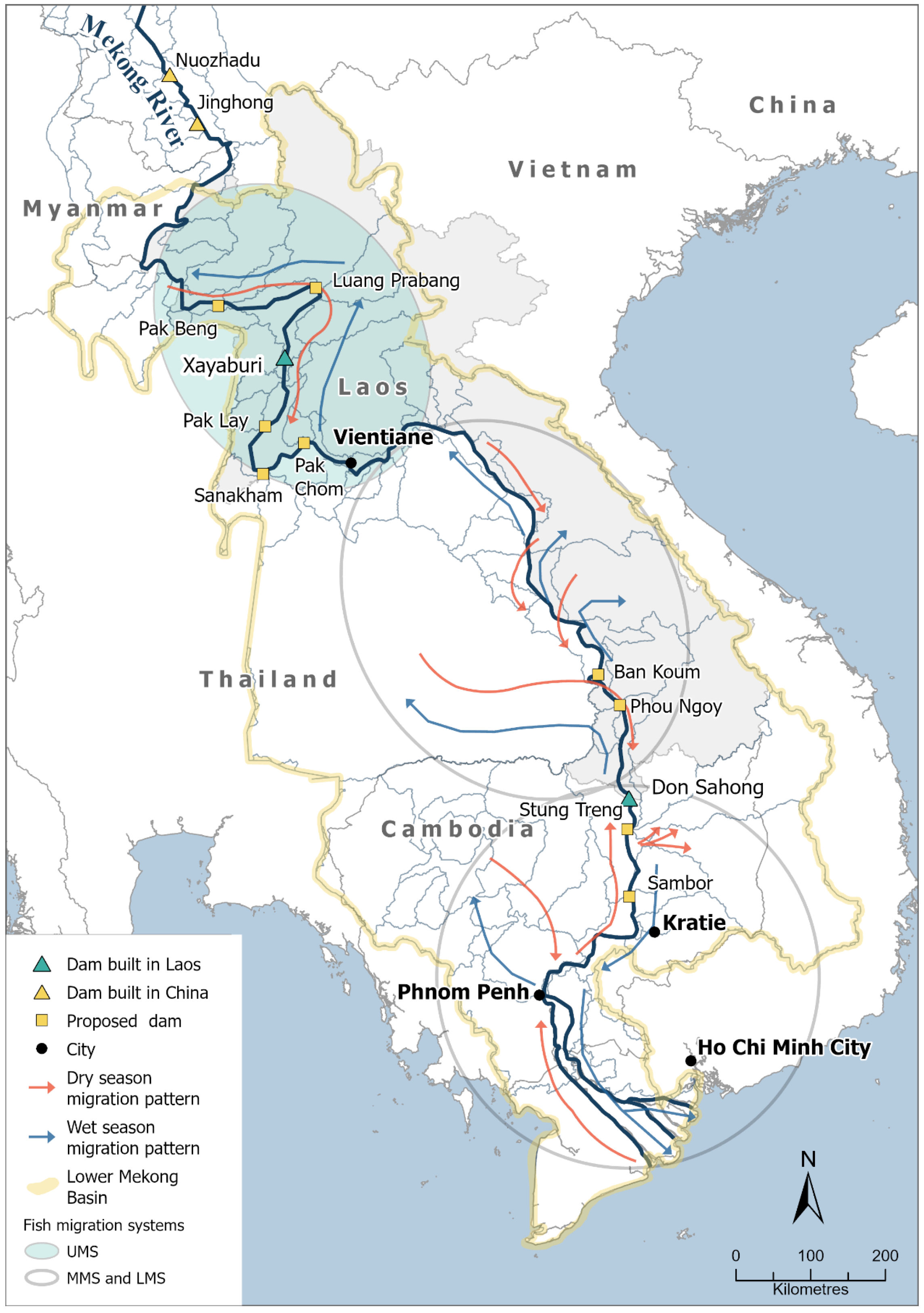
Local knowledge, fishery-dependent data and literature reviews have generated substantial knowledge and generic models for describing migration patterns, especially in central and southern Laos, Cambodia and Vietnam, e.g., [21,22,23,24,25]. In general, upstream migrations in the LMB occur at the start of the annual flood (also known as the “wet-season”), when fish move between either annually inundated floodplains to dry-season refuges in rivers, or into spawning areas within the river system (usually upstream) from their dry-season refuges, e.g., [25,26]. Geographically, fish migration patterns of the LMB fall within three broad “systems” (Figure 1) that generally coincide with three main bioregions of the LMB (upper, middle and lower) [25,27]. Annual migrations from floodplain to river refuge are very common in the middle and lower regions, whilst large-scale upstream migrations at the start of the flood are common in all three regions [27]. The upper migration system (UMS), the 800 km reach in northern Laos from Vientiane to the China border, includes an elevation increase from 200 m to 500 m, with many deep river valleys and few floodplain habitats [27]. The UMS generally has a lower number of species occurring and/or migrating than downstream regions (see Section 1.3 and Section 1.4 above) [13,18,27] and these are poorly studied compared to the lower and middle systems where the fishery effort is greater [19,22].

1.6. Barriers to Fish Migration

Upstream-migrating fish approaching a barrier may be prevented from accessing critical upstream spawning habitat, e.g., [16,29,30], feeding grounds, or suitable habitats, and suffer reduced larval survival or fish dispersal [12,31,32]. Whilst most barriers are on small streams and rivers, the development of mainstem Lower Mekong River hydropower stations and associated larger barriers has recently begun, e.g., [12,13,16,33,34,35,36,37,38].

1.7. Hydropower and Migratory Fish in the Mekong

There are 11 hydropower stations with associated dams proposed on the mainstem of the Mekong River from Pak Beng (northern Laos) to Sambor (Cambodia) [16] (Figure 1). Two dams, Don Sahong (southern Laos) and Xayaburi (northern Laos), are already operating, with a third HPD at Luang Prabang (northern Laos) under construction, due for commissioning in 2030.

1.8. Cumulative Effects of Hydropower Dams

The influence of individual barriers can be amplified when there are several barriers in succession along a river reach [39]. A proposed cascade of six Mekong mainstem hydropower dams downstream from Pak Beng to Pak Chom (Figure 1) in Laos is expected to have significant cumulative effects on flow regime, water quality, sedimentation, fishery catch and fish migrations [16,38,40]. XHPP is the only HPP currently operating in the Laos cascade, and it was fitted with an upstream fish migration ladder and lock system to mitigate barrier impacts [41]. Quantifying future impacts of the Laos cascade on fish migrations may be problematic as there is currently no monitoring of fish migrations in this reach.

1.9. Non-Migratory Species Also Migrate

Fish movements occur for a variety of purposes, such as feeding, reproduction, dispersal, and refuge from severe conditions [42]. To that end, all fish species migrate to some extent during their life, but the impacts of lost connectivity on non-migratory species and fish diversity in general are not well studied in tropical systems. Fish migrations occurring entirely within freshwater (i.e., potamodromy) have received far less scientific attention worldwide than diadromous migrations (between saltwater and freshwater). However, potamodromous migration is the most widespread migratory strategy among freshwater fish taxa in general [43], and even more so in large tropical river basins, including the Mekong [42,44]. In general, the use of fish passage infrastructure by non-migratory tropical species is poorly documented anywhere outside of South America.

1.10. Current Research

Technical fish passage structures such as ladders or locks (referred to here as fish passes) are built to mitigate impacts on, but also offer an opportunity to collect data on, fish migrations. Whilst biodiversity data collected within fish passes will be biased towards fish that are moving in an upstream direction, they are fishery-independent and offer a sampling strategy that can use standard effort through time. Fishery-dependent methods are inherently confounded by differences in fishing effort or gear types used through time and space [45].
In this paper we use data from a well-structured fishery-independent monitoring programme to advance knowledge on migratory and other fish species using the upstream fish passage facility at Xayaburi Hydroelectric Power Plant (XHPP) in northern Laos. We document fish species and assemblages of fish using the fish pass at XHPP in its first four years of operation with the aim to:
  • Document the diversity of fish species using the upstream fish pass at XHPP.
  • Identify patterns in the monthly assemblages of fish migrating upstream in the fish pass, and discuss these in relation to patterns in water level, water temperature, and Mekong River discharge.
  • Provide baseline monitoring of upstream-migrating fish diversity and fish assemblages before the Laos hydropower cascade comes online.
  • Suggest potential metrics and potential indicator species for monitoring the effects of changes in downstream river connectivity as the Laos hydropower cascade comes online.

2. Materials and Methods

2.1. Study Site

The XHPP is a run-of-river dam located on the Mekong River in northern Laos (Figure 1 and Figure 2). The climate and hydrology in the LMB are dominated by the monsoon season that lasts from June to November, with heavy rainfall. The dry season from December to May is cooler with low rainfall.

2.1.1. The Upstream Fish Passage System at XHPP

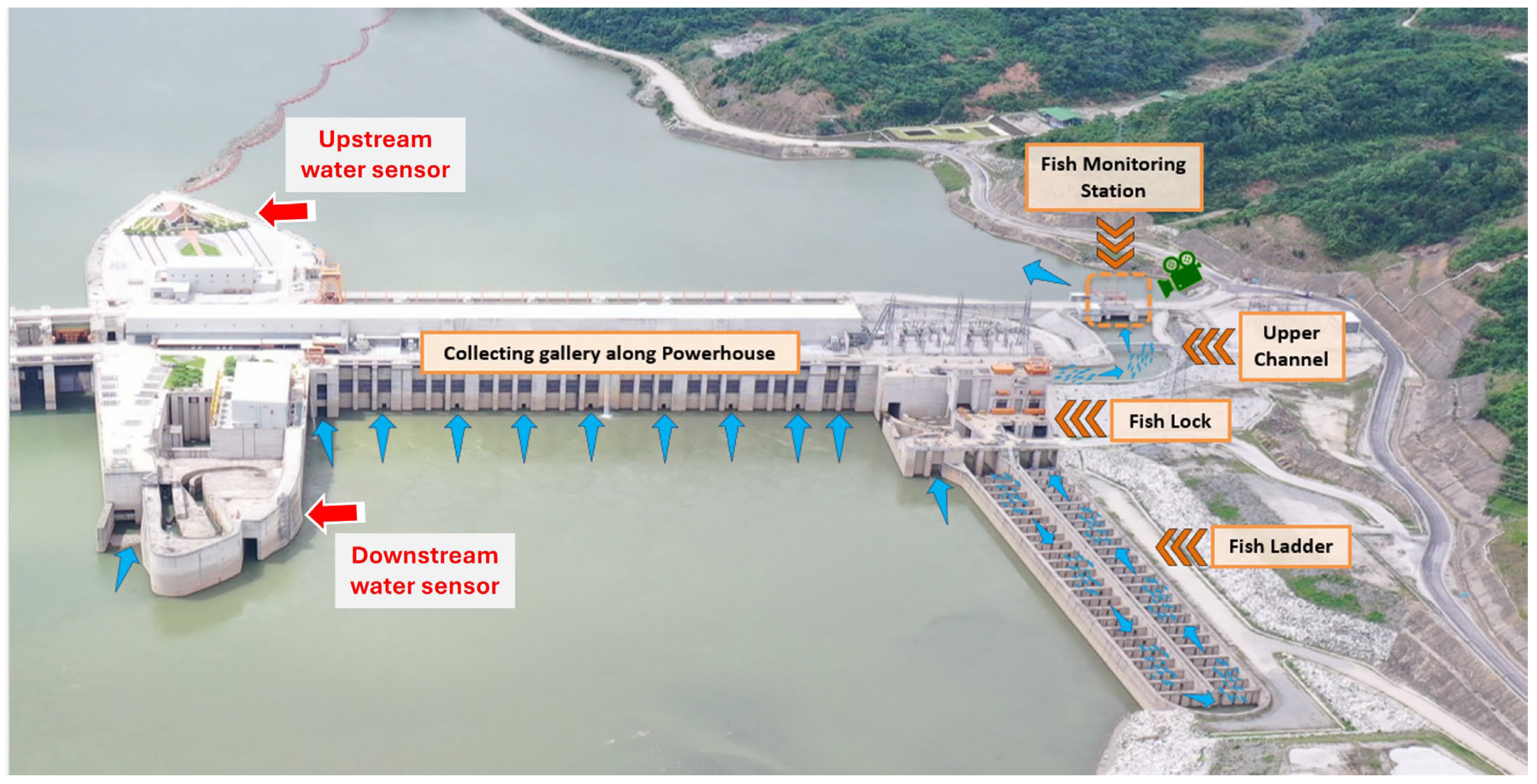
The upstream fish passage system at XHPP (Figure 2) is fully described by Raeder and Thanakunvoraset [41] and comprises the following:
  • A collecting gallery that has 25 entrances and collects fish attracted by a generated flow at the powerhouse tailrace, spillway fish entrance, and right junction pool.
  • A 460 m long, 18 m wide vertical slot fish ladder, with 48 baffles and an average slope of 1.2%. Each baffle has four slots ranging from 0.5 m to 1.0 m in width and is designed with shallow and deeper water sections that operate at flow velocities of 0.8–1.2 m/s [41].
  • Two vertical 30 m fish locks that lift fish in batches to the upper channel after ascending the fish ladder.
  • Upper channel to provide a passage from the fish locks to the upstream reservoir, via a fish-monitoring station.

2.1.2. Fish Lock Operation

After ascending the fish ladder, fish are attracted by a continuous attraction flow at the entrances to one of two fish locks. When one lock is operating, the other is attracting fish. A crowder guides fish into the lock chamber, which transports them to the upper channel where they can pass into the reservoir above the powerhouse. The system operates alternately with two locks, ensuring continuous attraction and regular transportation of fish.

2.1.3. Fish Trapping and Sampling

After entering the upper channel, fish may be directed into a trap in the fish-monitoring station. Fish trapping occurred approximately four times weekly from 1 January 2020 to 31 December 2023, including morning, afternoon and night collections on random days. When the fish trap is in operation, the main migration channel is closed, directing all fish to pass through the trapping facility. Each trap operation is associated with a single lock operation, and is considered a census of that operation. The frequency of fish lock operations varies throughout the year, with the time between operations adjusted to the number of fish arriving. Consequently, the proportion of lock operations (and therefore the proportion of the fish population using the fish passage system) sampled by the fish trap varies temporally. We report only on fish that successfully ascend the fish ladder and lock system. The fish monitoring station is not designed to report on fish that entered the system but did not ascend.
We carried out fish handling in line with international standards under Charles Sturt University animal ethics permit A22074. All fish collected in each trap were anaesthetised for handling using AQUI-S® (AQUI-S New Zealand Ltd, Lower Hutt, New Zealand. Active ingredient 10% eugenol) at up to 60 mg/L. After identification to species level, total abundance and biomass were recorded for each species. Fish were recovered in aerated tanks and released unharmed in the upper channel.

2.2. Biomass, Abundance and Species Richness

To account for differences in relative effort between months (more locks operating in busier months), monthly totals for abundance and biomass for each species were extrapolated by weighting the trap totals according to the proportion of locks that were sampled for that month. Monthly species richness is the raw monthly aggregate, unweighted. Monthly, annual and cumulative species richness are presented graphically.

2.3. Metrics for Monitoring Diversity

We evaluated the sensitivity of the mean monthly number of all species and the mean monthly proportion of species that were migratory as potential simple IBI-style [46] metrics for monitoring change in fish diversity using the fish pass. We fit a mixed linear model using year as a random variable and month as a fixed variable, and employed the margin of error (half confidence interval calculated using restricted maximum likelihood) as a guide to the effect size and sensitivity to change for each of these metrics for monitoring changes in diversity. We assessed the assumption of normality using visual inspection of the residuals.

2.4. Environmental Data Collection

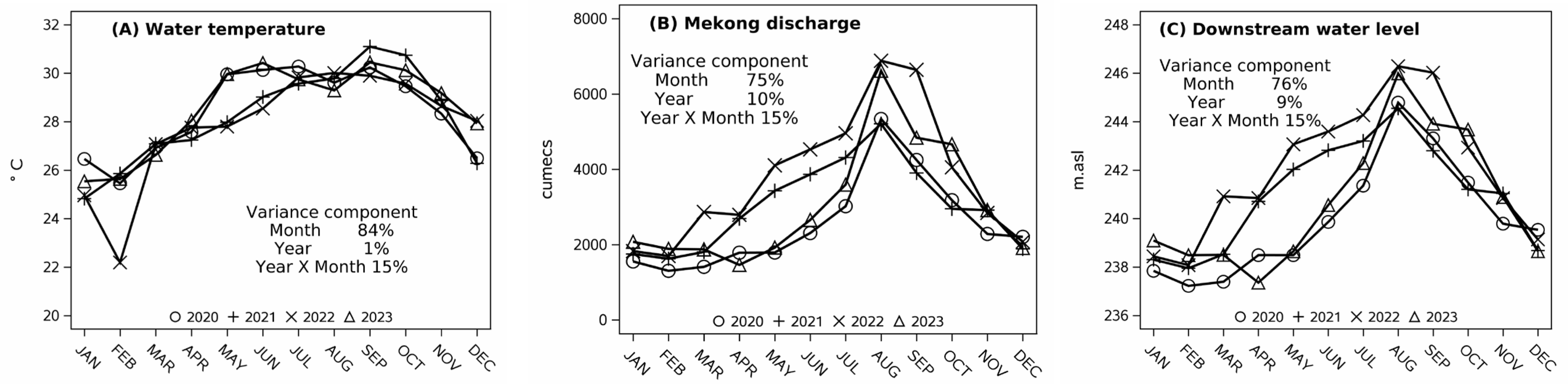
Mekong water temperature (°C), discharge (m3/s, Cumecs) and downstream water levels (metres above sea level, m.asl) were recorded using water level gauges located above and below the powerhouse (Figure 2). The upper gauge includes water temperature, and discharge is calculated from water level differences after incorporating operation data. All gauges are owned and operated by Xayaburi Power Company Limited (XPCL) with real-time data sharing with Electricity Generating Authority of Thailand (EGAT) and annual signal testing conducted by an independent third party. Measuremnents were made in real time and recorded as hourly averages; we converted data to monthly averages to align with the fish trap catch data. We assessed correlations between the three variables and presented the seasonal trends graphically. To evaluate whether monthly trends in environmental variability were consistent between years, we performed a variance component analysis and evaluated the main temporal sources of variation for each environmental variable. That is, if monthly patterns in environmental variables were consistent between years, we inferred that any consistent monthly patterns in fish assemblages across different years could be interpreted in relation to the environmental variable patterns.

2.5. Species Assemblages

We used three methods to aid in describing fish assemblage composition, and seasonal and inter-annual patterns in the composition of fish using the fish pass.
Firstly, we used a simple two-category approach, classifying each species collected as migratory or not, according to the list made by Ziv et al. [13]. In that list, 877 potamodromous (live in freshwater for entire life cycle) fish species in the Upper or Lower Mekong River were assessed, and 103 species were subsequently classified as long-distance migratory species, occurring in the Mekong River main channel north of Kratie (Cambodia). The Ziv list is the only contemporary list of migratory species that is broken into subbasins, allowing for region-specific taxa lists, including for the reach from Vientiane to the China border. The proportion of all species, total biomass, and total abundance in the XHPP fish pass contributed by migratory species (from the Ziv list) was calculated for each month. For these metrics, the complete species list provided by Ziv et al. [13] was used to identify migratory species, whether or not the species was expected to occur in the northern Laos reach. To compare seasonal differences in the metrics, we performed a two-factor ANOVA and tested for differences between months (fixed) or the four sampling years (random). We verified the assumptions of the analysis by inspecting the residual plots and used comparisons of least squares means and the calendar-year plots to interpret seasonal or inter-annual differences. We performed a variance component analysis to determine whether the main source of variation for each metric was between months, years, or their interaction.
Secondly, we applied 10 environmental guilds based on migration and habitat as the defining criteria (Table 1). These guilds are widely used, e.g., [47,48], but there are several variations in use, e.g., [47,49,50]. We used the recent reclassification, applied to 1393 Mekong species [18], which we label as ‘Migratory Guilds’. We complement these with three broad categories specifically for migratory species as initially described by Welcomme [51]. We use graphs to describe inter-month and inter-annual trends in the guild composition of fish species assemblages ascending the fish pass at XHPP. We created a month-by-month profile of occurrence, grouped by migratory guild, across the 4 years for each species that had occurred in at least 6 of the 48 months and had contributed at least 5 kg of biomass during the study. The criteria reduced the likelihood of producing spurious figures. The profile was formed by visualising the relative abundances for each species over all the months it occurred in. Three levels of abundance are used in the profile. High abundance is for any month where the abundance is ≥90th percentile. Low abundance months are <75th percentile and moderate abundances are in between. All results are displayed graphically.
Thirdly, to assess species assemblage variation through time, we used a multivariate analysis that included the presence and absence of all species for each of the 48 months of the study. The Jaccard similarity coefficient was calculated for each pairwise comparison and a PERMANOVA [52,53] was used to test the overall assemblage similarity between calendar months (fixed and repeatable) and years (random, non-repeatable). This also included a variance component analysis to partition the variation in similarity between fish assemblages into monthly, annual or interaction effects. Using presence or absence data with Jaccard similarity allows direct interpretation (proportion of shared species) and removes the influence of common or very rare species. That is, ever-present or ever-absent species cannot contribute to differences in assemblages between samples. Seasonal differences in assemblage composition were calculated from the Jaccard distance between the monthly centroids [52]. The monthly centroids were plotted using non-metric multidimensional scaling (NMDS) [54] and principal axis correlations [55] to identify individual fish species that had a significant (p < 0.05) Pearson correlation with the NMDS ordination space. This identified species that were significant contributors to monthly changes in species assemblages.
Table 1. Migratory guilds of Mekong fish described by [29] and applied to our species using the classification described by [18]. Welcomme categories were originally defined in the paper by Welcomme [51] and updated in papers by Poulsen et al. [27] and Welcomme [56].
Welcomme CategoryMigratory GuildSimple Description of Characteristics
White FishLong-distance main channel migrators and tributary residentLong-distance main channel migrants spawning in the main channel, and may migrate to deep pools in the main channel during the dry season
White FishShort-distance main channel migrators, main channel and tributary spawnerSpawn in the main channel, tributaries or margins, may migrate to main channel deep pools during dry season
Grey fishFloodplain spawnerMigrate from floodplain feeding and spawning habitat to deep pools in the main channel during the dry season
Black fishFloodplain resident Limited migrations between floodplains, pools, river margins, swamps, and inundated floodplains
Eurytopic generalistLimited non-critical migrations in mainstream, may migrate to floodplain. Well represented in most rivers.
Rhithron residentResident in rapids torrents, rocky areas and pools in the rhithron. Limited migrations.
Estuarine-resident amphidromousLimited migrations within the estuary
Marine migrantEnters estuaries opportunistically
AnadromousAdults live in the sea, migrate into freshwater to spawn
CatadromousAdults live in freshwater, migrate to saltwater to spawn
Non-native

2.6. Statistical Analysis and Potential Indicator Species

All univariate calculations, graphs and analyses were performed using SAS® Stat Version 14.1 [57], and multivariate analyses were performed using e-primer version 7.0.24 [52,58]. Multivariate significance levels are all based on 10,000 permutations. We interpreted the multivariate analysis and species’ month-by-month profiles of occurrence, in conjunction with a literature review of species’ known migration strategies, to identify species that may serve as useful indicators of changes to the fishery, or to downstream connectivity, in the coming years.

3. Results

There were a total of 13,460 lock operations (ranging from 52 to 495 operations per month) during the study period. Of the total lock operations, 752 lock operations were trapped (ranging from 8 to 24 traps per month). The fish pass was out of operational range for 12 days in August and September 2022 because of high and dangerous Mekong discharge and downstream water levels.

3.1. Environmental Variables

The monthly average Mekong River discharge and downstream water level were very highly correlated (r = 0.98, n = 48, p < 0.0001); both were also significantly correlated with water temperature (rdischarge = 0.60, rwater level = 0.65, n = 48, p < 0.0001). All three environmental variables showed consistent patterns across the four study years, with monthly variation accounting for at least 75% of total variability for all variables (Figure 3). Water levels and discharge rose from May to August every year, dropped from September to November every year, and remained low from December to February every year (Figure 3). March and April were not as consistent and water levels either remained low or were rising.

3.2. Species Richness

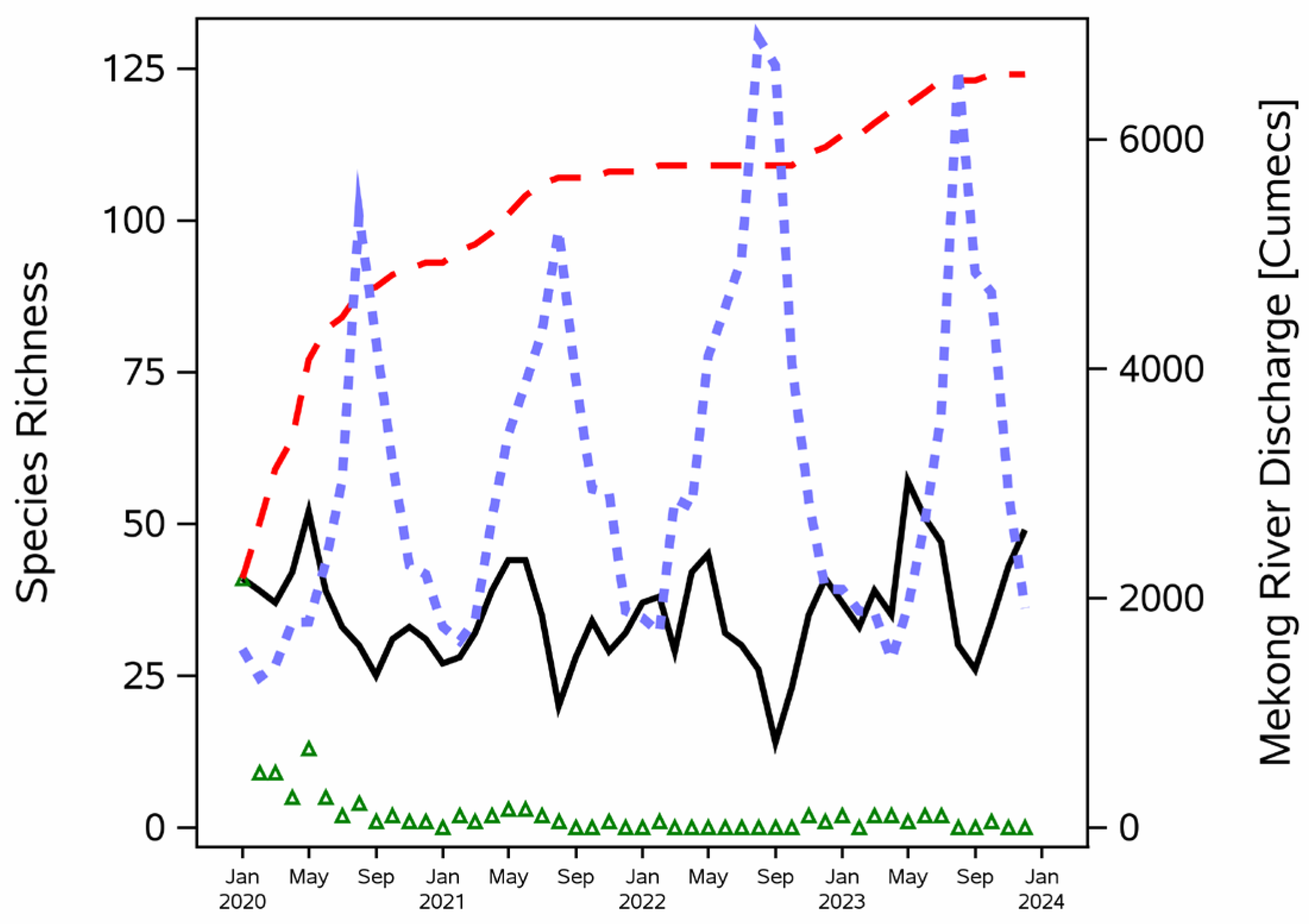
One hundred and twenty-four fish species were collected migrating upstream through the XHPP fish pass facility from 2020 to 2023 from the 752 trap operations. Yearly species richness ranged between 79 species (2021) and 97 species (2023), with an average of 88 species per year. The number of species varied between months in a similar pattern each year, peaking in May (average 50 species) and June (average 42 species) (Figure 4), and had an overall average of 35.3 [margin of error 13.6; median, 34.5; range 14 (September 2022) to 57 (May 2023)]. The total number of species was affected by taxonomic resolution in the first 3 years, where individuals of Hypsibarbus lagleri, H. malcomi, and Paralaubuca barroni and P. typus were not uniquely identified. Monthly peaks in species richness were always before the flow peak and lows were always at, or just after, the flow peak (Figure 4). Previously undetected species could be added in any month, but were more likely to be added between April and August (Figure 4).

3.3. Migratory Species

In total, 49 of the 103 migratory species listed by Ziv et al. [13] were collected while migrating at the XHPP fish trap during the study period. Twenty-five of these migratory species were not predicted for this reach by Ziv et al. [13]. Hemibagrus filamentus, Puntioplites falcifer, and Sikukia gudgeri were the most detected, each occurring in 46 of the 48 months sampled.
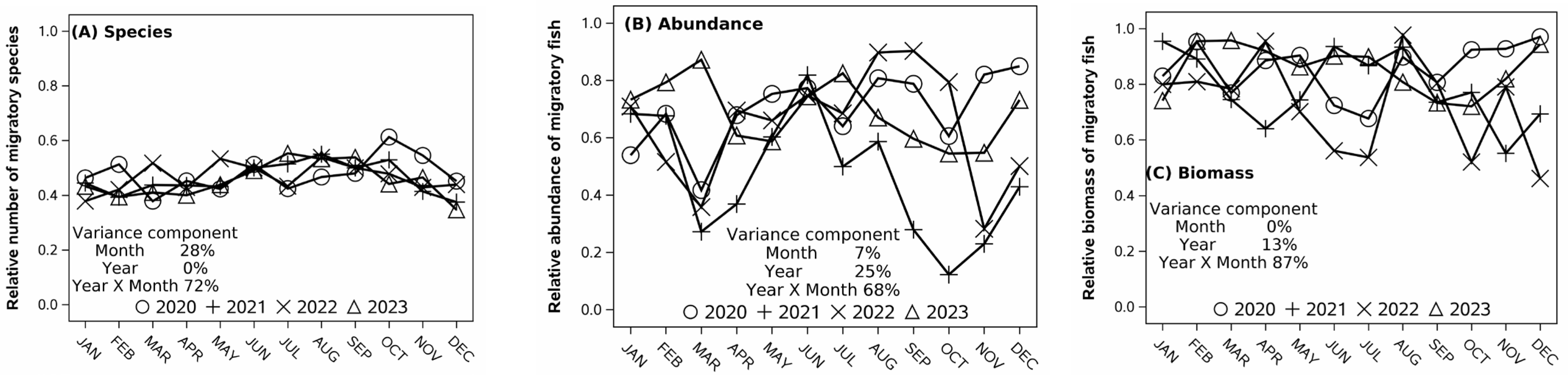
Most of the variance in the monthly metrics quantifying the proportion of migratory fish contribution to the total number of species, total abundance or total biomass was from the year × month interaction (Figure 5). That is, unlike the environmental data, the peaks of the arrival of migratory fish species, their abundance, and their biomass were not in the same month each year. Despite the significant year × month interaction, there was still a significant difference between the months overall (F = 2.52, df = 11,33, p < 0.02), with August (0.52), September (0.50) and October (0.51) having a significantly higher relative number of migratory species (p < 0.05) than any of the five months between December (0.40) and April (0.43). The margin of error on the monthly relative number of migratory species was +/−0.102.
The relative abundance of fish using the fish ladder that were migratory ranged between 0.12 in October 2021 and 0.90 in September 2022 (Figure 5). The monthly relative abundance of migratory fish was highly variable across the four years; there was no significant overall difference between months (F = 1.38, df = 11, 33, p = 0.22). Nevertheless, using pairwise comparisons, June (0.77) and August (0.74) had significantly (p < 0.05) higher average relative abundance (across the 4 years) of migratory fish on average than March (0.48) or November (0.47). There was a significant difference in the relative abundance of migratory fish between the four years (F = 5.46, df = 3, 33, p < 0.005). The annual average relative abundance of migratory fish in 2021 (0.46) was significantly lower than all other years (p < 0.05), which ranged between 0.65 in 2022 and 0.70 in 2020.
The relative biomass of fish using the fish ladder that are listed as migratory by Ziv et al. [13] ranged between 0.46 in December 2022 and 0.98 in July 2022 (Figure 5). The month-to-month variations were quite different across the 4 years (Figure 5), and consequently, the monthly averages were not different from each other (F = 0.77, df = 11, 33, p = 0.66). The annual average of the relative abundance of biomass of migratory species using the fish ladder was significantly different between the 4 years (F = 2.86, df = 3, 33, p = 0.05). Migratory species contribution to biomass was significantly (p < 0.05) lower (0.73) in 2022 than in 2020 (0.86) or 2023 (0.86). The average relative abundance of biomass from migratory species in 2021 (0.79) was not different to any of the other years.

3.4. Migratory Guild Composition—Overall Species

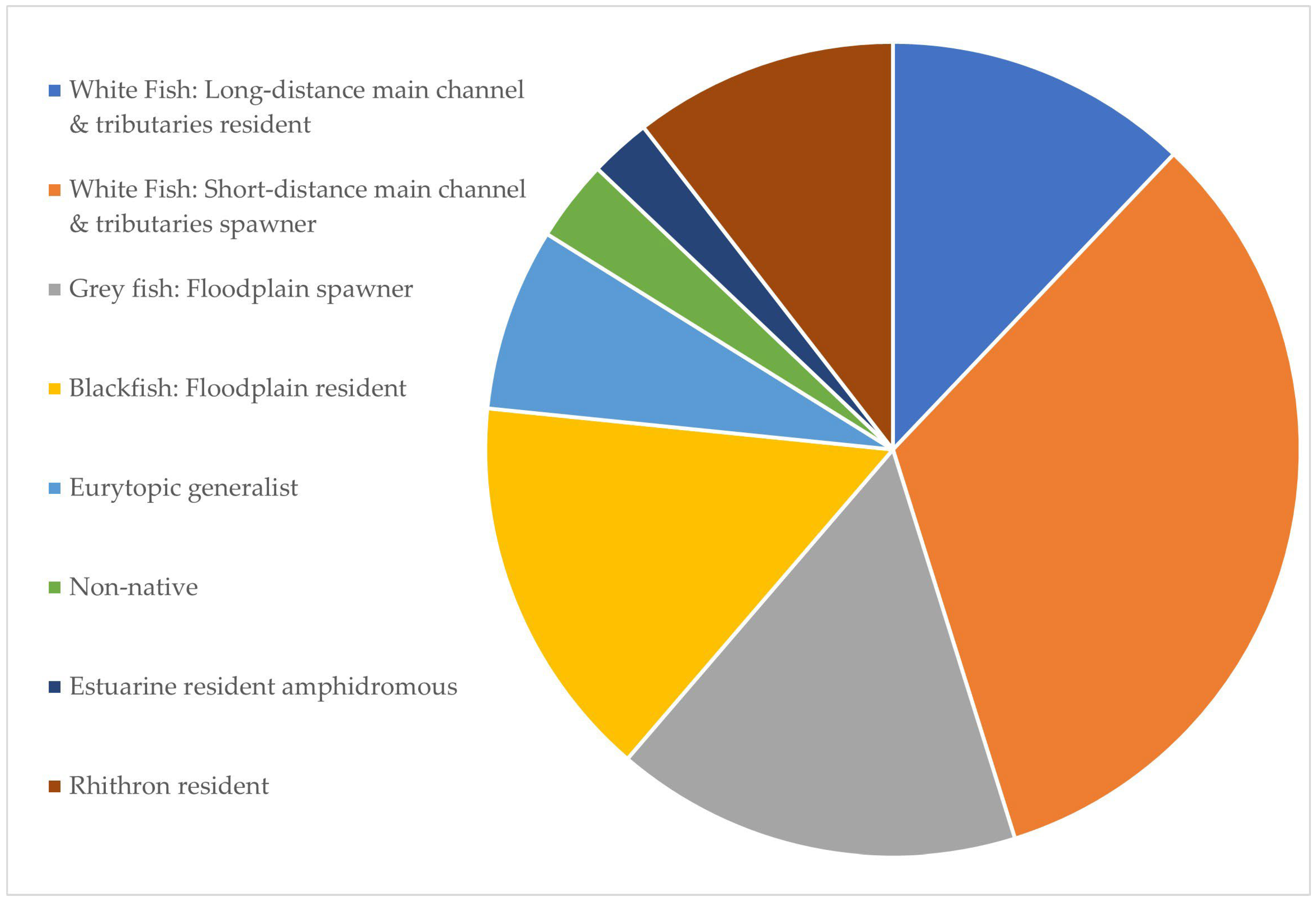
Thirty-three percent of the 124 species collected at the XHPP fish-monitoring station are classified as white fish type 1, “short-distance main channel migrators, main channel and tributary spawner”. Grey fish (floodplain spawners) made up 16% of species, whilst black fish (floodplain resident) (15%), Rithron (11%) and white fish type 2, “long-distance main channel migrators and tributary residents” (12%), were the next most represented guilds (Figure 6). Non-native (3.2%), estuarine-resident amphidromous (2.4%), and Eurotypic generalists (7.3%) were the least represented guilds (Figure 6).

3.5. Migratory Guild Composition—Temporal Variations in Relative Abundance and Biomass

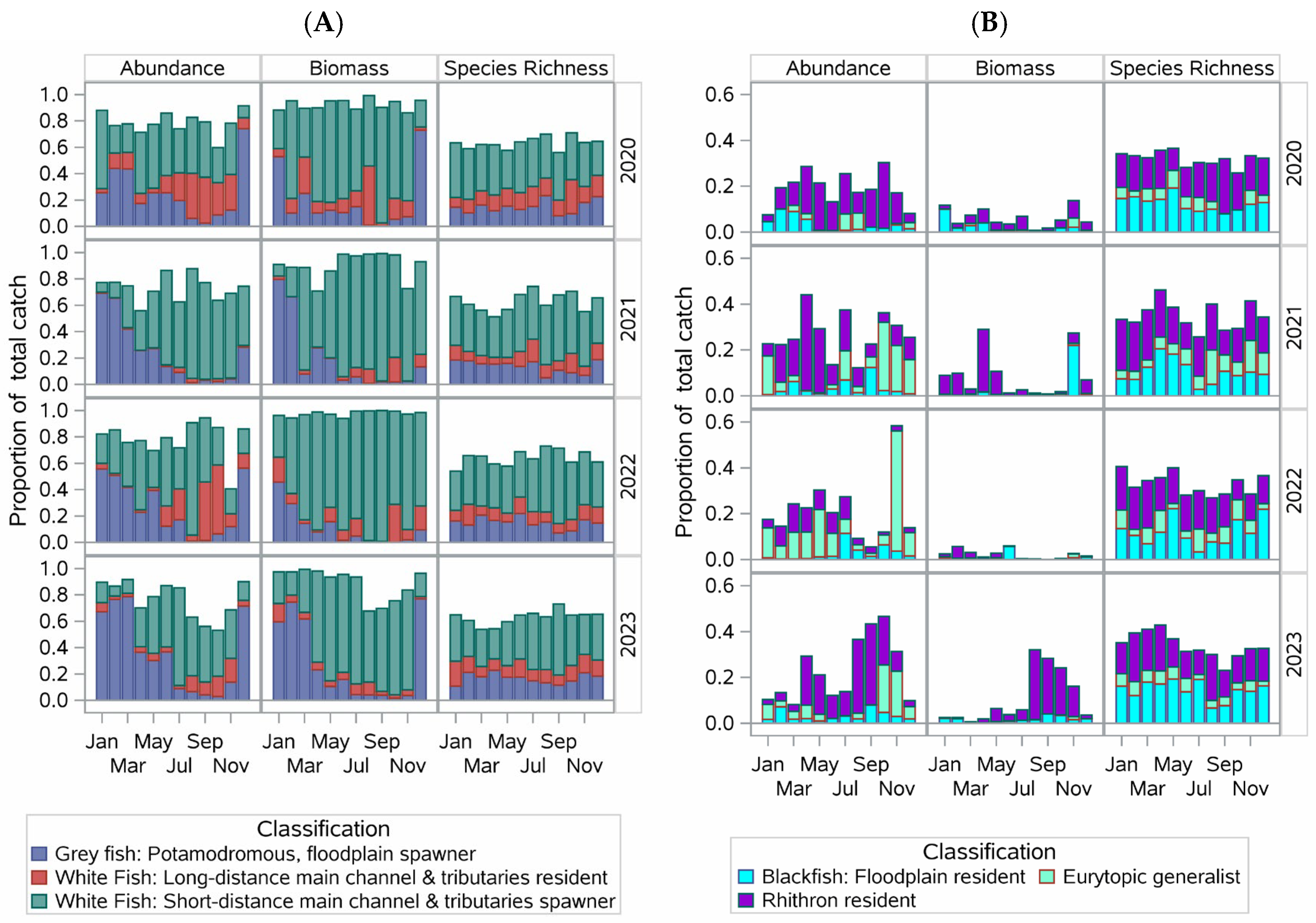
Three migratory guilds dominated the assemblages of fish using the fish pass at XHPP between 2020 and 2023. The white fish (long- and short-distance main channel migrators) and grey fish (floodplain spawners) made up an average of 77% of abundance, 92% of biomass and 63% of species across the 48 months of the study (Figure 7). The relative contributions of these three guilds varied considerably throughout the year, with grey fish dominating abundance and biomass in December to March each year, and short-distance migrators dominating the remainder of the year (Figure 7). The relative contributions of these three guilds to species richness remained relatively constant (Figure 7).

3.5.1. White Fish: Short-Distance Main Channel Spawners

These white fish were the biggest contributors to abundance and biomass of fish collected using the fish pass at XHPP between January 2020 and December 2023. All other groups had a relatively smaller abundance (<0.1%) in at least one month of the study, but this guild was ever-present and contributed at least 7% of abundance and 9% of biomass in every month of the study. This group regularly contributed more than 50% of abundance and 70% biomass between April and November in every year (Figure 7). Their relative abundance and biomass also consistently reduced in December or February each year (Figure 7). Their overall pattern of relative contribution was consistent between years, although the peak and decline in abundance in 2020 was less marked than in other years (Figure 7). Across the 4 years, these species made up 31% to 36% of species between November and May, and 37% to 49% of species between June and October.

3.5.2. White Fish: Long-Distance Main Channel Residents

Overall, 11% of species were from this group and this relative contribution was consistent in all months each year. These fish contributed up to 45% of the abundance in some months and tended to be relatively more abundant in August to November (Figure 7). Notably in 2021, there were few of these species collected in any month. Their contribution to relative biomass was usually less than 10% in any month, but they contributed more than 52% of total biomass in March and August of 2020. They contributed very little to total abundance or biomass in 2021 or 2023 (Figure 7).

3.5.3. Grey Fish: Potamodromous Floodplain Spawners

Grey fish always had higher contributions to total abundance and biomass in the dry season, December to March, with consistent peaks over 40% and up to 80% of totals respectively in January and February each year (Figure 6). On the other hand, they were rare in July to October, contributing <5% every year. Grey fish species were consistently between 15% and 18% of all species in all months, except September and October when they dropped to 9% and 11%, respectively (Figure 7).

3.5.4. Rhithron Residents

These typically small fish contributed more to abundance than biomass and tended to be approximately equal in occurrence in every year (Figure 7). There was relatively greater contribution in August to November 2023 (Figure 7). They contributed up to 40% of total abundance in May 2021, and 30% of total biomass in August 2023.

3.5.5. Eurotypic Generalist and Floodplain-Resident Species

Both these groups had consistently low relative contributions to biomass and abundance (Figure 7). Eurotypic generalists tended to be present most of the year outside the three wettest months (July to September), and had more relative presence from October to December in the latter three years of the study (Figure 7). Their contribution to total biomass was never more than 4% (Figure 7). Black fish (floodplain residents) rarely contributed more than 5% of abundance or biomass but were sporadic in occurrence and made up 12% of abundance in September 2021 and 21% of biomass in November 2021 (Figure 7).

3.6. Species Profiles of Occurrence

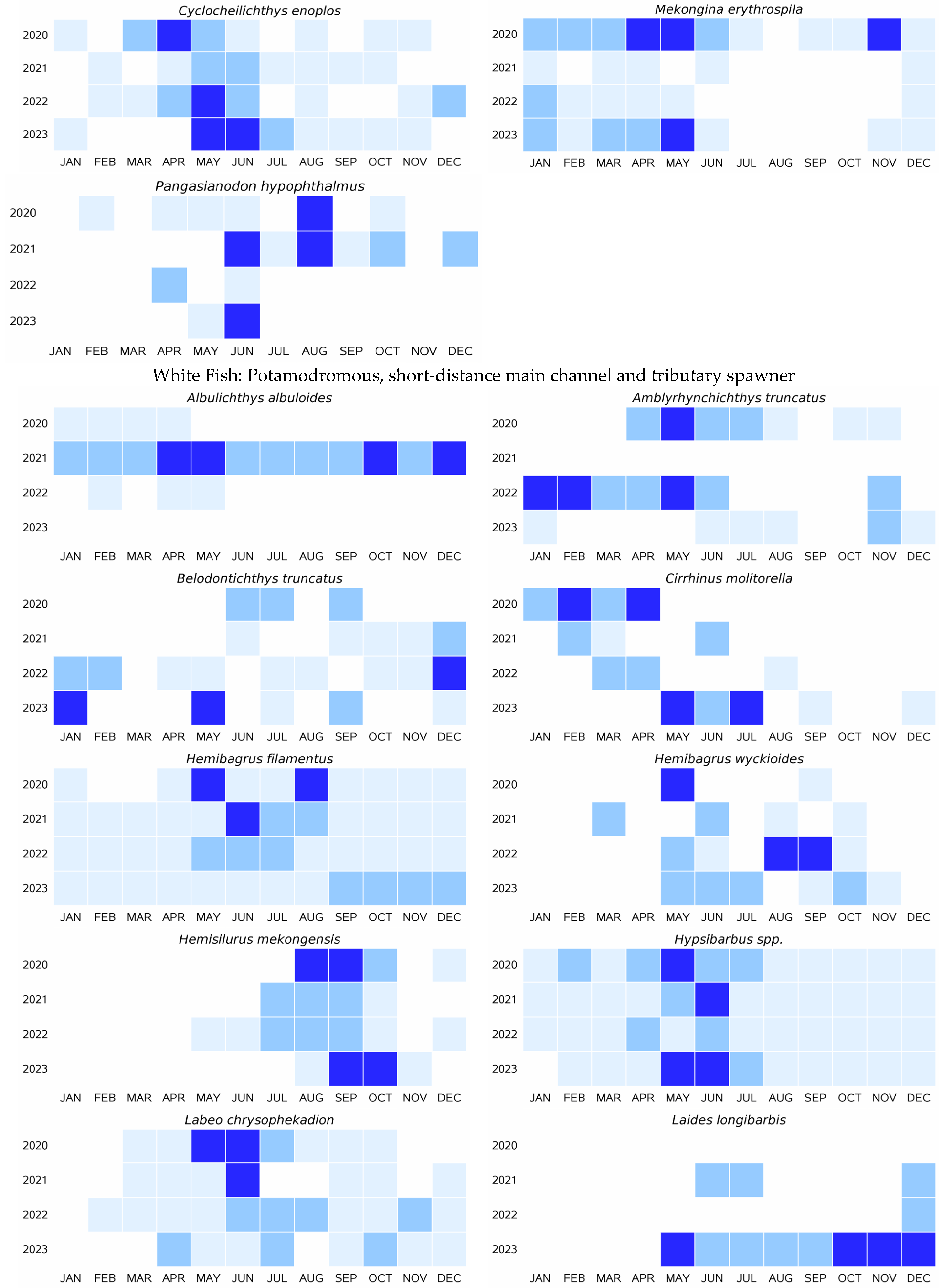
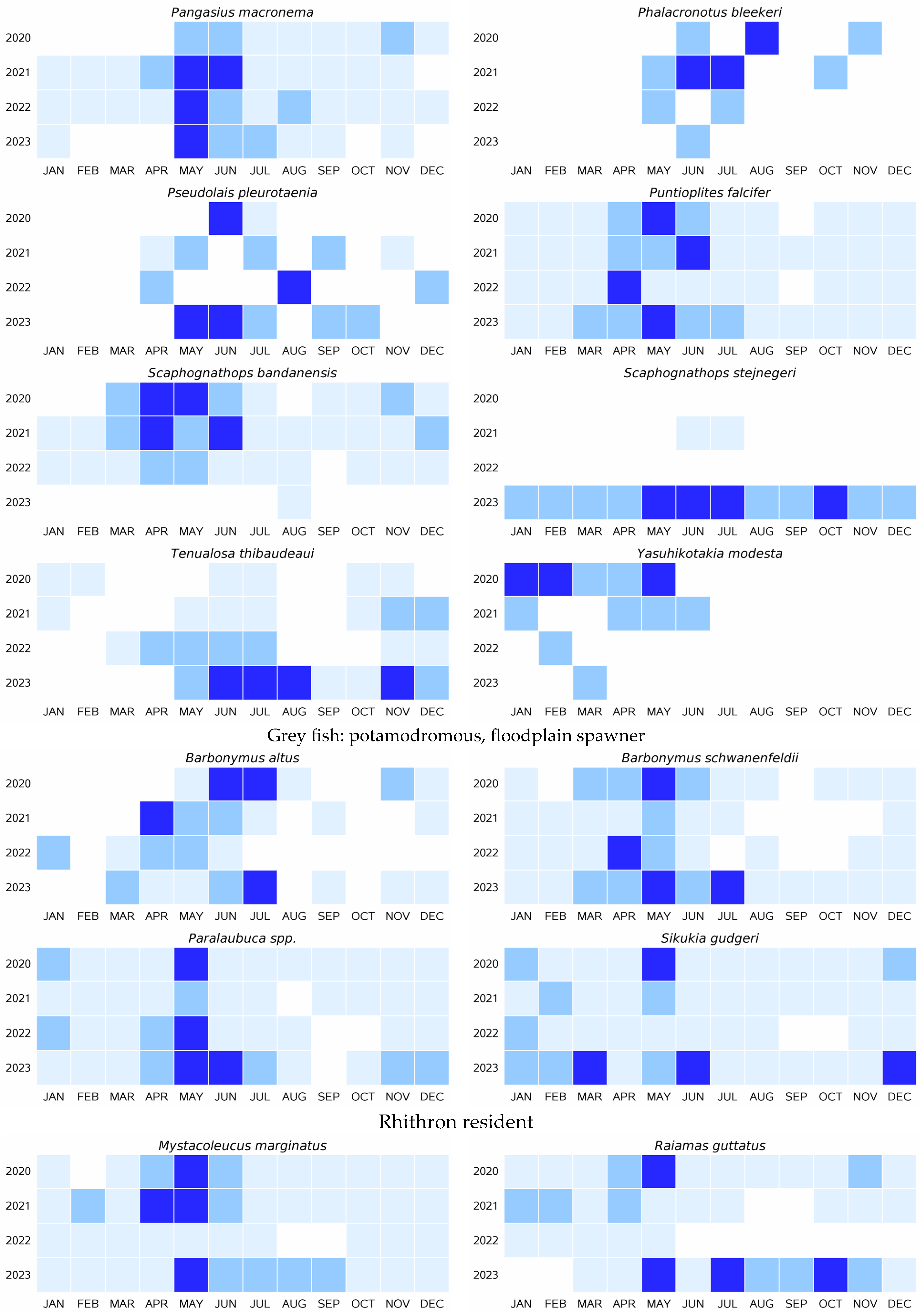
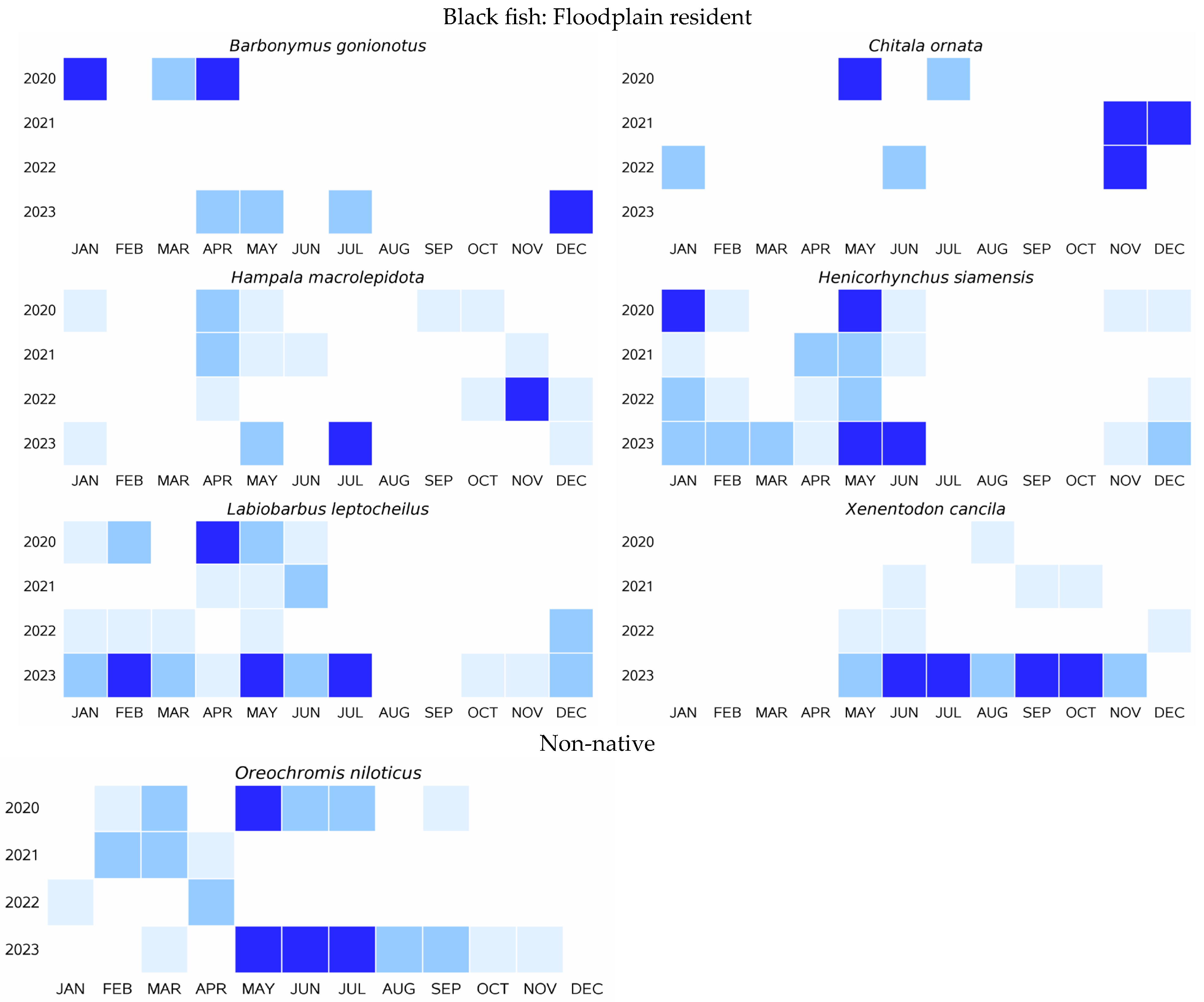
The 4-year profile of occurrence for the 36 species that were collected using the upstream passage at XHPP in at least 6 different months reveals high inter-annual variability (Figure 8). Several species did not turn up in some years (e.g., Barbonymus gonionatus, Chitala ornata, Scaphognathops stejnegeri), others turned up in higher abundances at different months in different years (e.g., Cirrhinus molitorella, Henicorhyncus siamenis), and others were very consistent in seasonal abundance peaks (e.g., Barbonymus schwanfeldii, Hypsibarbus spp.).

3.7. Species Profiles of Occurrence by Migratory Guild

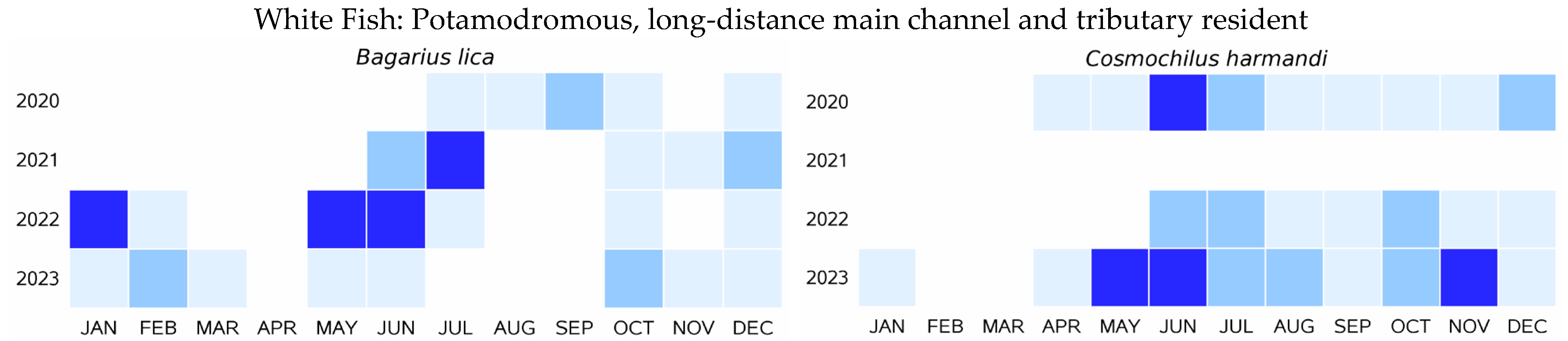
Consistency in patterns of species occurrences was observed within several guild classifications. Notably, the five white fish species classified as “potamodromous, long-distance main channel and tributary resident” all showed strong seasonal peaks and tended to occur between May and July (Figure 8). On the other hand, all these species had some years where they only occurred in low numbers (Figure 8). Three of these species (Bagarius lica, Mekongina erythrospila, Pangasiandon hypopthalmus) characteristically stopped occurring for several months shortly after their peak in migration (Figure 8). B. lica, Cosmochilus harmandi and P. hypopthalmus were also characterised by their absence or very low occurrences in the dry season, December to March (Figure 8).
Potamodromous, short-distance main channel and tributary spawner species had the most species represented of any guild, and consequently the greatest variation in year-to-year abundances (Figure 8). Multiple species (e.g., Albulichthys albuloides, Amblyrhynchichthys truncatus, Laides longibarbis, Scaphognathops bandanensis, S. stejnegeri) could be collected in almost every month in a calendar year, and not be collected at all the following or previous year (Figure 8). On the other hand, Hemibagrus filamentus, Hypsibarbus spp., and Puntioplites falcifer were collected in almost every month of the 4-year programme (Figure 8). Several other species, including Hemibagrus wyckioides, Hemisilurus mekongensis, Phalacronotus bleekeri, and Yasuhikotakia modesta, occurred every year but within a short time frame. For example Y. modesta only ever occurred between January and June, whilst H. wickyoides and H. mekongensis were mostly collected in May to November, and P. bleekeri from May to August (Figure 8). Cirrhinus molitorella also had a narrow time frame to use the fish passage each year, but its timing varied from year to year. This species was only collected from January to April in 2020, and predominantly only in May to July in 2023 (Figure 8).
The common grey fish species (floodplain spawner guild) were most abundant in the fish pass in the early wet season, typically between April and June (Figure 8). Three of these species (Barbonymus scwanenfeldii, Sikukia gudgeri, Paralaubuca spp.) tended to occur year-round in the fish passage system at XHPP (Figure 8); nonetheless, all three common species dropped off in abundance after the wet season, typically August to October, in most years (Figure 8).
The two rhithron species that were common in the fish ladder were collected in all months in at least three of the four years (Figure 8). They both also had peaks in abundance in April and or May in most years.
Floodplain-resident species were collected in the fish lock trap infrequently over the 4 years (Figure 8). Barbonymus gonionotus and Chitala ornata were more likely to be collected in November to January, and never collected in August to October or February (Figure 8). Hampala macrolepidota, Henocorhynchus siamensis, and Labiobarbus leptocheilus were generally more frequent in the first 6 months of each year, with the latter two species also having peak abundances around May and June (Figure 8).
Oreochromis niloticus (Nile tilapia) was the only regularly caught non-native species. It was caught in most years from February to July, and showed inter-annual variations in relative abundance, with peaks in 2020 and 2023 (Figure 8). Other non-native species that were collected included Cirrhinus cirrhosis (2 months), Cirrhinus mrigala (1), Cyprinus carpio (2), and Laubuka laubuca (8).

3.8. Multivariate Patterns in Species Assemblages

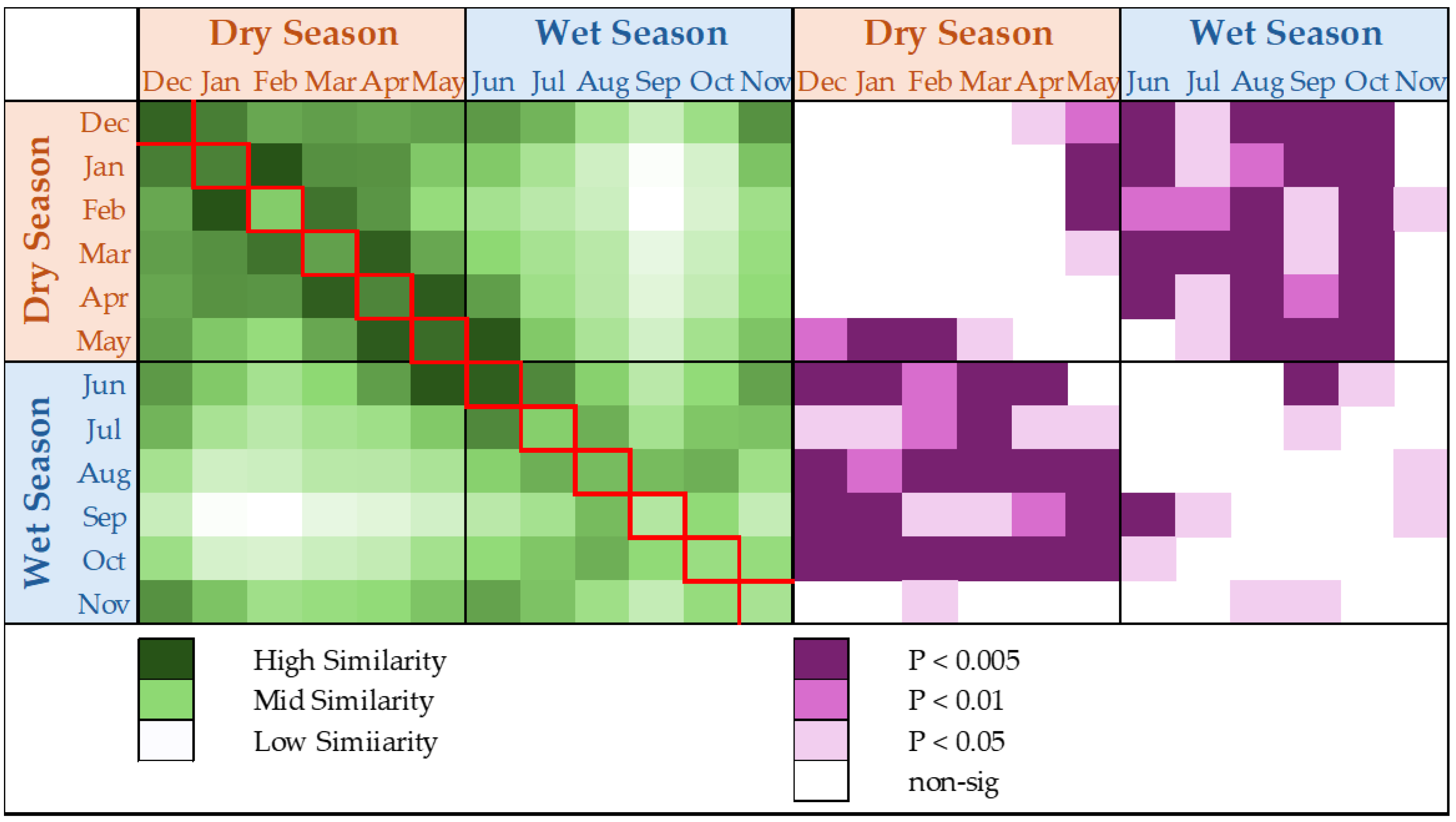
There was a significant difference in the composition of the fish assemblages using the fish pass at XHPP between years (Pseudo-F = 4.2, p < 0.0001) and between calendar months (Pseudo-F = 2.0, p < 0.0001). All 4 years had significantly different species compositions from each other (p < 0.001). There was a distinct pattern of differences between wet and dry-season assemblages (Figure 9), with the wet-season assemblages starting in May and finishing in October. Additionally, 16% of total variation in species assemblage similarity was from month-to-month changes, 20% was from year-to year changes, and 64% was attributed to the month × year interaction.
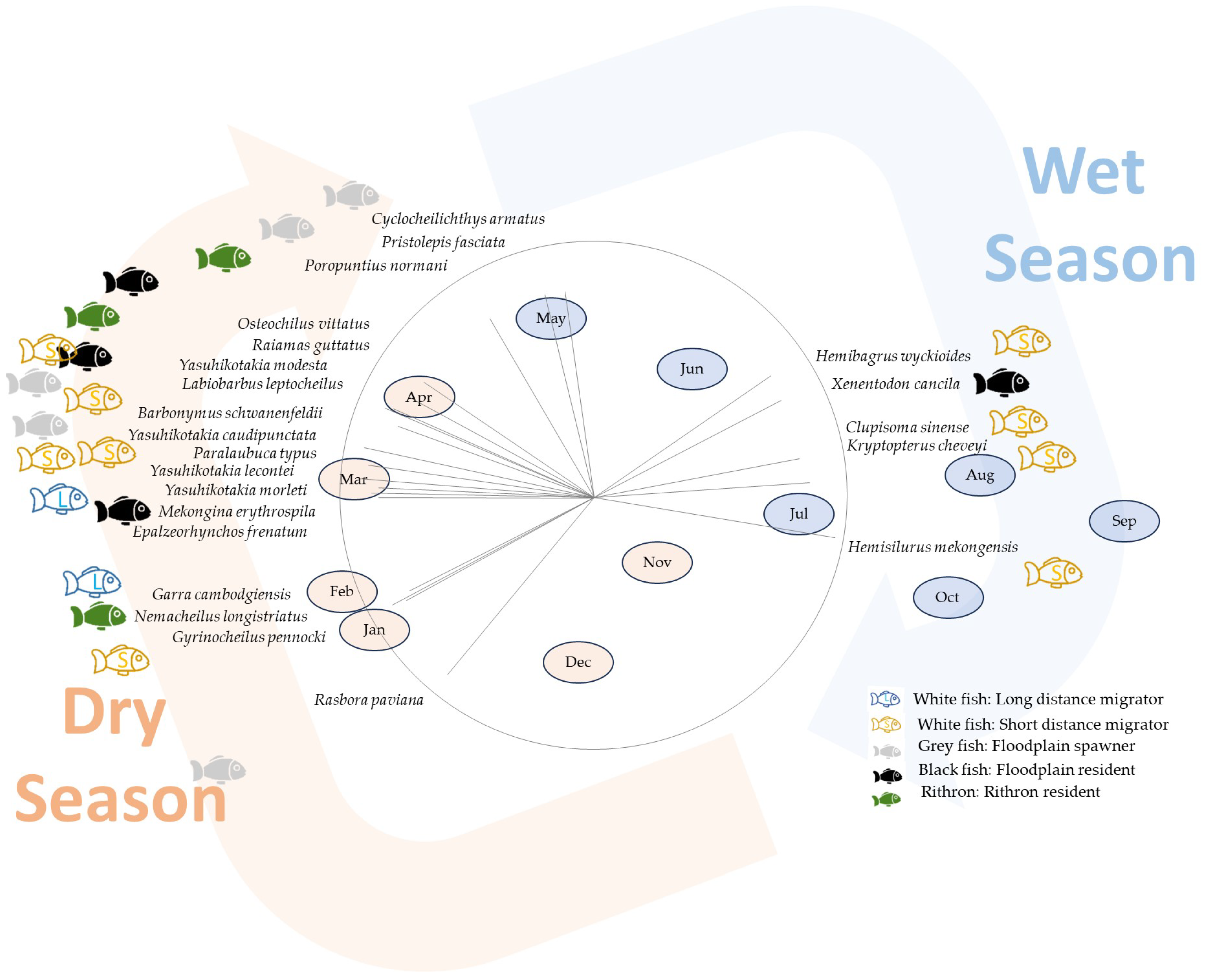
Ordination of the calendar month 4-year centroids displayed an intuitive pattern that cycled from wet to dry assemblages and back (Figure 10). Species whose presence was associated with the wet-season months of July to October included Hemibagrus wyckioides, Xenentodon cancila, Clupisoma sinense, Kryptopterus cheveyi and Hemisilurus mekongensis (Figure 10). Fish assemblages collected in the fish pass from December to February were associated with Rasbora paviana, Gyrinocheilus pennocki, Nemacheilus longistriatus, and Garra cambodgiensis (Figure 10).
Several grey fish species (floodplain spawners) and rithron species used the fish pass facility only between December and May and several white fish only used the fish ladder in the wet or dry seasons (Figure 10). Xenentodon cancila, a black fish that can live in rivers or floodplains, used the fish ladder in June or July, whilst three other black fish species only used the ladder between February and April (Figure 10).

4. Discussion

With 124 species passing the XHPP upstream in the first four years of operation, this demonstrates that the mainstem reach of the Mekong River where XHPP is located is species-diverse, with an annual average of 88 species passing in an upstream direction. Unlike other available species lists that pool annual fishery data [11,19,20], we demonstrate that the types and relative abundance and biomass of species using the fish pass follow highly seasonal patterns with some inter-annual variations.

4.1. Overall Species Richness

Short-term monitoring programmes in single reaches will always return fewer species than regional or long-term surveys. Given that the current study is only one sampling point in a single reach and requires fish to ascend both a ladder and a lock, the return of 124 species in 4 years is quite remarkable. This is a remarkable 59% of the estimated 210 species for the Mekong River reach from Vientiane to the China border. The 210 species estimate is based on multiple sites, over 800 km of main channel river, including tributaries, and several decades of data collection [18]. Undoubtedly, fewer than 210 species occur in any single point in the river in this northern reach at any point in time. As a contemporary comparison with a fishery survey program using a very intense sampling effort, consider that the Cambodian Mekong River has at least 411 species [59]. But a one-year fish abundance monitoring program using daily fishery catches at 32 widespread monitoring sites, including main channel and major tributaries, returned only 125 species, just 30% of the estimated total species [60]. Clearly, the fishery-independent, standard-effort surveys at the XHPP fish pass are a useful resource for fish diversity assessments in northern Laos.
Unquestionably, the number of fish that occur in the river will limit how many species have a chance to use the fish passage. At the moment, there are few fish passes (ladders or locks) constructed on mega-diverse river systems anywhere in the world, as they are generally large rivers and often not yet developed. To our knowledge the fish pass at XHPP passes higher species richness than any other permanently operating fish pass globally. The Mekong catchment has several species-rich fish pass structures, e.g., [26,61,62], but most are on tributaries or offer lateral connectivity to wetlands. An experimental fish ladder with a height differential of only 1.5 m between the Mekong main channel and the Pak Peung wetland in central Laos passed 73 species, but used three different baffle designs to achieve that total number of species [63]. A permanent cone fish ladder at the same site passed only 29 fish species up a 4.1 m head differential over a 16-month period [64]. The most downstream fish pass on the Nam Kam River, Thailand, a major tributary entering the Mekong River near central Laos, supported the upstream migration of 83 species over a 60-day operating period in 2013 [26,61]. Fish passages in other tropical or sub-tropical regions pass far fewer species than the fish pass at XHPP. A fish elevator system in the neotropical Parana River in Argentina and Paraguay passed 53 species [65].
The current programme cannot say how many fish species are in the reach, wishing to migrate upstream past XHPP, but do not successfully use the fish pass. The only accessible species lists for the reach are from historical fishery records (that is, they are biased by gear and effort, accumulated over multiple locations and multiple decades), and do not represent the current conditions. Pre-commissioning surveys were carried out on the baseline fishery characteristics of the reach where the Xayaburi hydropower dam now sits. However those surveys also used fishery methodology and are not publicly available; thus, their scientific rigour cannot be evaluated [66].

4.2. How Many Migratory Fish Species Are in This Reach?

Half of the migratory species that we observed migrating at XHPP were listed as migratory by Ziv et al. [13], but not all were listed for the 800 km mainstem reach from Chiang Saen to Vientiane. This is clear evidence of how poorly studied the fish species and assemblages of northern Laos are, compared to lower reaches of the LMB. That list of species, and their migratory status, was compiled from more than 70 historic species lists and an extensive review of grey and published literature from 1936 to 2010 [13]. Contemporary studies using fishery data also have difficulty in estimating the number and type of species in the Xayaburi reach. The MRC Fish Abundance and Diversity Monitoring (FADM) programme [11,19] uses fishery-dependent data (i.e., fish caught) which, whilst not directly comparable for species composition, does offer a cumulative species richness comparison. Two single FADM sites within the Mekong mainstem upstream of XHPP at Luang Prabang and Chiang Khan collectively returned about 50 species annually between 2007 and 2018 [19,20]. The Luang Prabang site returned a cumulative total of about 120 species over 9 sampling years, whilst Chiang Khan returned about 138 species over 7 years [19]. The accumulated species list from XHPP fish pass sits at 124 after 4 years and, as with the FADM sites, has not yet reached an asymptote, with more species expected to be detected in all these sites in the future [19].

4.3. The Importance of Migratory Species in the Fishery Is Lower in This Reach

In the study reach, migratory fish make up only about 32% of the fish species list according to Ziv et al. [13], and 30% of the biomass of the fishery according to [67,68]. In the current study, migratory fish contributed an overall average of about 46% of species richness using either classification system of Ziv et al. [13] and 73% of abundance and 86% of biomass of fish in the XHPP fish pass. These proportions of migratory fish species in our samples are higher than in previous studies as expected, because our sampling method is biased towards migratory and rheophilic species [69,70].
Nonetheless, we clearly demonstrate that fish passes can also be used by non-migratory species, as less than half the species using the XHPP fish pass are classified as migratory. All fish species move at some stage of the life cycle whether to find food, avoid predators, exchange gametes, or locate suitable habitat environmental conditions [71]. In other words, even without reproductive motivation, upstream movements occur for dispersal or seeking better habitats for feeding and growth [70]. In the fish pass of the Lajeado Dam in Brazil, 25% of species were non-migratory [72]. Some species, or individual fish, whether migratory or not, may spend long periods of time in the fish pass, possibly because of habitat use, exhaustion, their rheophilic nature, or predation [70,72]. Although we do not know the relative representation of the species assemblage in the river below the XHPP dam, we clearly demonstrate that a fish passage system designed for local migratory species can also provide habitat and passage for a diverse range of local non-migratory fish species.
Species classified as long-distance migrators do not make up a lot of the biomass in the XHPP fish pass. At XHPP, the common long-distance migrator guild species were medium-sized cyprinids Cyclocheilichthys enoplos, Mekongina erythrospila, and Cosmochilus harmandi (Figure 8). In southern Laos and Cambodia, the long-distance migrator guild is often represented by many large pangasid catfish species [73,74]. The greatest biomass of pangasidae species at XHPP comprised the much smaller Pangasius macronema (classified as a short-distance migrator) and the more sporadic Pangasianodon hypophthalmus (long-distance migrator). Other catfish species common at XHPP fish trap were from the family bagridae and the short-distance migrator guild, including two large-bodied species, Hemibagrus filamentus and H. wyckioides.
The overall biomass in the fish pass system at XHPP is dominated by “White fish” which includes the channel-resident, short-distance migratory and long-distance migratory species. These fish consistently made up more than 80% of total biomass in the wet season. Including “Grey fish” species (dry-season residents, flood plain spawners) takes the contribution to total biomass to well over 90% in most months in most years (Figure 7). Thus, whilst non-migratory species generally made up more than half the species present, they contributed less than 8% of total biomass during the study.

4.4. Environmental Variability and Overall Migration Patterns

We use monthly averages for all results, and this may result in some fine details being lost as monthly data are summaries that smooth peaks. For example, the maximum flows or peaks in fish abundance would have higher peaks and lower troughs if considered on a daily scale. Similarly, the monthly averages or totals for our three environmental variables smooth the patterns but maintain the overall trend, simplifying interpretation. The variance component analyses confirmed that monthly trends in environmental variables were very consistent between years, consequently allowing us to relate fish migration by month with confidence. We demonstrated strong inter-annual consistency in patterns for many species, and this streamlined interpretations considerably. The relationship of overall monthly species richness with the environmental variables is consistent with the high proportion of species whose migrations are triggered by rising water levels in the LMB [21]. That is, more species migrate at the commencement of the wet-season flood than at other times [19,21,45]. There was a drop-off in the number of species collected when the Mekong flow was at its highest. This may be an indication of fewer species migrating upstream (having already finished their run or already dispersed), or fewer species able to migrate upstream or ascend the fish ladder under higher discharge conditions.
The multivariate patterns we observed delineated a clear and consistent change in species assemblages in April and November each year (Figure 9). This is consistent with the start and end of the monsoon season, which occur slightly earlier in northern than in southern Laos and the rest of the LMB. We note that the similarity of species assemblages was almost always not different between any of the months from November to April, indicating very stable dry-season assemblages with the same species regularly occurring. On the other hand, there were occasional differences in assemblages between wet-season months, and within the same month, similarities tended to be lower in wet-season than dry-season months (diagonal line in Figure 9). In other words, the wet-season fish assemblages were more variable in composition between years, and this was also conveyed in the profiles of occurrence, where some wet-season species did not occur every year.
The peak in migration abundance differed for many species and was even different between years for some species. The difference between individual species is expected [26] as they may be coming from quite different locations or source populations downstream. Some fish may be short-distance migrators coming from within the reach just below XHPP, some may be coming from dry-season habitats or tributaries, and some may be coming from other LMB migration systems [27,28]. Fish from the same species may migrate at different speeds or for different durations in different years. For example, Robinson et al. [36] documented five Hypsibarbus malcomi taking 15 months to migrate from Vientiane to XHPP (354 km). Since that study, two more H. malcomi, and one H. lagleri have been recorded making the same journey, but all in under 120 days (arriving in July 2024), and a single Puntioplites falcifer made the journey in just 52 days between 27 March and 18 May 2024 (WR unpublished data). Schooling species such as P. falcifer and Pangasius macronema [25] can be expected to arrive in clumps. Clumped arrivals were clearly evident for both these species, arriving at the XHPP fish pass in May and June each year.
Inter-annual variation in abundance (and biomass) is considerable for some species as seen in the species occurrence profiles. For example, whilst long-distance migrators only ever made up about 11% of the number of species detected, they could make up 50% of biomass in some months in our study. But in 2021, their absence was conspicuous. These short-term variations highlight the value of longer-term data sets and the potential pitfalls of looking at single-year snapshots of fish assemblages, especially when migratory species are involved. We by no means suggest that 4 years is a long-term data set, but merely the initial stages of a long-term data set that uses standard effort.
Inter-annual and inter-species variations should be expected because not all species respond to the same hydrological factors [45] and short-lived species are likely to occur more intermittently in the river compared to long-lived species [45]. In southern Laos, inter-annual variation in Mekong River catch at Khone Falls is the norm, and clearly associated with hydrological changes and/or fisher effort (gear type) changes [45]. By using standard effort, the ongoing surveys at the XHPP fish pass will provide much-needed, and fishery-independent, long-term data on temporal variations in northern Laos fish migrations and fish biodiversity in general.

4.5. Monitoring Change in Fish Migration Patterns of Local Fish Assemblages

Two major advantages of using the XHPP fish ladder for monitoring migration assemblages are that it is (1) standard-effort and (2) fishery-independent. Therefore, any changes detected in the future are likely to be from environmental factors, and not from differences in fisher effort. There could be three downstream hydropower dams (Pak Lay, Pak Chom, Sanakham) in service between XHPP and Vientiane within the next 30 years [33]. With at least 10 more years of data before the next of these downstream dams comes online, the XHPP fish passage monitoring programme is well placed to detect changes in regional fish assemblages, if they are disrupted by the new dams.
The number of species, the abundance and biomass passing the XHPP are prohibitively highly variable and therefore insensitive to changes in connectivity. For example, even though the number of species arriving per month was similar between years, the margin of error in the estimate of +/−13.6 species precludes monitoring the number of species arriving per month as a sensitive indicator of change. In other words, even in May, there would need to be more than 25% (margin of error ÷ mean) change in species richness before concern was raised, and up to 55% change in other months—all of which had lower average species richness.
In the short term, we note that the proportion of species that are migratory is very consistent between months and between years (Figure 5) with a low margin of error (0.102, a constant 25% of the mean across most months). Thus, we suggest this metric has utility for monitoring, and a change in the monthly proportion of migratory species greater than our estimated margin of error (0.102) should trigger potential concerns with downstream connectivity.

4.6. Potential Indicator Species of Connectivity

The populations of some of the migratory species collected during this study extend downstream to the lower or middle Mekong migration systems, and individuals of these may have come from far below Vientiane during this study. These include Cosmochilus harmandi, Pangasius conchophilus and Pseudolais pleurotaenia) [18], and all of these had inconsistent occurrence patterns between years. On the other hand, many of the species collected that had consistent patterns between years may have separate northern populations and may not have travelled long distances to get to XHPP. Consequently, we consider the known distribution and migratory status of four migratory species that had consistent seasonal patterns from our study, to evaluate whether they could be potential indicator species of future changes in the fishery or river connectivity below XHPP.

4.6.1. Hemibagrus Wyckioides—White Fish, Short-Distance Migrator

Hemibagrus wyckioides is widely distributed in all four LMB countries [75] and well-studied in southern Laos, Cambodia, and Vietnam [76]. It is the largest species of bagrid catfish in the Mekong region and whilst reported to reach 93 cm and 80 kg [76] in southern Laos, the biomass measure seems unlikely in a wild fish. At XHPP, multiple H. wyckioides specimens between 100 and 120 cm have been collected in the fish trap or whilst electrofishing since 2019; none weighed more than 12 kg (RT unpublished data). Roberts [76] suggested that H. wyckioides was not migratory, whilst Baird et al. [73] thought it may migrate at the start of the wet season, but only over short distances. More recently, the species has been shown to migrate over long distances [77,78] and the previous non-migratory status may be because it is often observed stationary at the bottom of large rivers [79,80] as it is a sit-and-wait predator.
The movement activities of H. wyckioides may be more complex than previously thought. In an early telemetry study in a major tributary in Thailand, one H. wyckioides moved upstream for 52 km over 3 days at 15.3 km/day [81], and more recently, an individual travelled at least 58 km upstream from Don Sahong in southern Laos, and out of the study area in just three days, during the height of the flood season [78]. Given these clear short-term bursts, and given that H. wyckioides individuals tended to move farther in the dry season than in the wet season [78], it is probably not just a short-distance migrator. H. wyckioides may be vulnerable to low-flow conditions [82] and have a higher susceptibility to barriers than previously thought [78], and given its consistent seasonal arrivals at XHPP (Figure 8 and Figure 10), it profiles very well as a potential indicator species for the connectivity risks associated with the Laos hydropower cascade. However, the fish at XHPP may be locally sourced; further research on the origin and duration of its migrations in northern Laos is needed before the potential connectivity impacts can be better evaluated.

4.6.2. Puntioplites Falcifer—White Fish, Short-Distance Migrator

Puntioplites falcifer is an endemic and common species, occurring in the Mekong mainstem throughout the LMB, where it inhabits deep holes in the riverbed [25]. P. falcifer prefers large rivers, is vulnerable to low-flow conditions [82], and avoids standing water, but nevertheless spends the dry season in deep pools in the Mekong mainstream and larger tributaries [25,50]. P. falcifer is very sensitive to changes in water level [21], and these probably trigger migrations [25] from its dry-season refuge pools into the nearest large tributary. It may migrate in the Mekong mainstem to spawn after the first heavy rains of the monsoon season [25], but can also spawn in floodplain habitats [50]. In lower reaches, the larvae and juveniles spend the first few months feeding in floodplain habitats, but equivalent nursery habitats in the upper reach are not well known. When the river level falls, adults and juveniles move back to the mainstem of the Mekong River, where they stay in deep pools until the next flood season [25]. P. falcifer is a social species that migrates in large schools, and our samples confirm this as they show a very clear and consistent peak in relative abundance for this species between April and June in every year of the study. Monitoring the timing and magnitude of P. falcifer migrations at XHPP may be a useful indicator of changes to river connectivity. However, as it is ubiquitous, research into whether the collected fish are predominantly from local or more distant populations is needed first. To that end, the species has been added to the long-term Vientiane to Xayaburi fish passage monitoring programme using passive integrated transponder (PIT) system technology [36]. One individual was detected migrating 354 km from Vientiane to XHPP in 52 days between March and May in 2024 (WR unpublished data).

4.6.3. Paralaubuca Typus and P. Barroni—Grey Fish: Potamodromous, Floodplain Spawner

Paralaubuca typus is abundant throughout the LMB, occurring from the Mekong Delta in Vietnam to Chiang Saen in northern Lao. It made up 33% of the catch abundance around Khone Falls between 1996 and 1999 [83]. P. typus is highly migratory with a huge annual dry-season, non-spawning upstream migration between November and February [25]. It spawns at the beginning of the flood season in the mainstream and in floodplain habitats [50].There are several populations and there appears to be a distinct population located in the upper Mekong above Pak Chom [25] (upstream of Vientiane; see Figure 1). In northern Laos, it migrates upstream during dry [77] and early wet seasons, returning downstream in the late flood to early dry season [25]. Spawning migrations may be triggered by thresholds or changes in discharge, water level or current [21]. P. typus upstream migrations occur at around 14 to 17 km/day and adults may migrate downstream in July, or about 2 months after the upstream migration [84]. P. typus and P. barroni were common in the XHPP fish trap, occurring in 41 of the 48 months of the study, with consistent abundance peaks in April to June. Their occurrence profile was that of schooling species and dry-season main channel deep-pool refuge user as described by Poulsen et al. [25]. Even though they are small fish [45], they are highly migratory, with extremely high importance in subsistence fisheries [45], offering a potential indicator species for change in fisheries from hydropower development [77]. The trap at XHPP offers a fishery-independent and migration-biased method for monitoring these species’ annual migrations and general occurrence in the northern Laos fishery. The relative abundance of these species may serve as a potential indicator for downstream connectivity.

4.6.4. Pangasius Macronema—White Fish, Short-Distance Migrator

The widely distributed small catfish, Pangasius macronema, has three main populations, and the population from the Chinese border in northern Laos extends all the way down to Thakek in central Laos [25]. There is likely to be migration-related interspersing in the three populations, as fish from below Khone Falls probably migrate at least as far as Vientiane [77]. Within Vietnam, genetic differentiation of P. macronema between separate populations is low, indicating strong migration dispersal of genes [85]. In the Mekong lower migration system, P. macronema migrates upstream between April and July [76,77,86], triggered by changes in one or more of discharge, water level or current [21]. These are mainstem spawning migrations [25] after which the larvae float downstream when the river is still high at the end of the wet season [86]. Adults also migrate downstream after the flood, and in the dry season the species retreats to large tributaries and deep-pool refuges in the mainstem [25]. The same patterns occur in the Mekong middle migration system where it migrates in May and June [25,26], and we observed the same patterns in the current study in the upper migration system at XHPP, where May and June were the peak migration months every year.
After spawning, the adults spread out through the area during the remaining high-water-level months [25]. This was explicit at XHPP, where P. macronema was the sixth most collected, occurring in every calendar month in at least two different years (Figure 8). P. macronema has a very high yield, economic value [85], widespread distribution [25], long-distance migratory habits [50,87], and is persistent in annual catches [73]. We suggest that P. macronema may be an important indicator species for connectivity in the Mekong. Monitoring the relative use of the XHPP fish passage system by P. macronema appeals as an ideal long-term instrument to evaluate downstream connectivity between Vientiane and XHPP.

4.6.5. Summary of Potential Indicator Species

Population attributes for the four potential indicator species are summarised in Table 2. All four species are described in the literature as having local populations in the reach between Vientiane and the China border. Nevertheless, three of the species are certainly long-distance migrators and at least some of the individuals arriving at XHPP are likely to have come from the lower and middle Mekong migration systems. Complementary research, such as otolith microchemistry, genetics, and tracking individual fish migrations, is required to aid in interpreting their effectiveness as indicator species.

4.7. Caveats and Future Research

The current research has the caveat that we do not know the fish assemblage composition and behaviour in the reach below XHPP. Future research will partially address this by comparing the species composition of fish in the fish pass fish trap with catches by fishermen and by an electrofishing boat in the reach below the powerhouse (data collection in progress). Differences in species assemblages between the trap and downstream catch are expected, but the cause of the differences will not be easy to elucidate as all methods have their own biases. Put simply, it is plausible that there are some species moving upstream and unable to pass XHPP, but it is also likely that some species occurring below the fish pass do not even attempt to pass. Comparing catch alone does not confirm whether the fish ladder and lock system is selective for or against some species. Consequently, in the current paper we only present the list of species that have successfully passed.
We also note that we surveyed approximately 5% of lock operations, and whilst this gives optimum estimates of biomass and abundance, rare species with very low abundances may have passed undetected (that is, an individual fish has a 95% chance of going through a lock operation that is not trapped).

5. Conclusions

This manuscript documents baseline temporal variability in the species assemblages of fish using the upstream fish pass at Xayaburi Hydroelectric Power Plant (XHPP) during its first 4 years of operation. Our results clearly show that efficient fish passage in tropical southeast Asia can, and should be, designed for use by a multitude of species types, including those not necessarily classified as migratory.
The detection of significant trends in highly variable ecosystems requires long-term data sets [88], and the fish passage monitoring at XHPP will eventually offer that data set. Monitoring the fish using the pass offers unique data with standard effort, and provides a wealth of data on the relatively poorly studied fish migration patterns of northern Laos. Unlike reporting for contemporary fishery surveys in the Lower Mekong Basin, where data are pooled across multiple gear types, sampling locations, and time frames (data are pooled for annual reporting), our data allowed detailed investigation of seasonal variations and the relationships of environmental variables with individual species patterns. Consequently, we identified which species are ever-present in the reach, and which species are dominant in different months or seasons of the year. For example, grey fish species that migrate from floodplain feeding and spawning habitats to deep pools in the main channel during the dry season have dominant biomass in December to February as expected, but some grey fish species still move upstream through the fish pass throughout the year. On the other hand, there were few long-distance migratory white fish species present in the fish pass, but those that occurred showed very strong affiliations with the flood season months of May to July.
A future benefit of the long-term standard-effort sampling in the current reach is that if changes in connectivity occur from future downstream barriers (e.g., scheduled hydropower dams), then the monitoring programme will be able to detect the actual influence on migratory fish populations. To that end we have identified a simple metric, the proportion of species that are migratory, and several individual migratory species whose presence and relative abundance have potential to serve as indicators for future downstream connectivity issues.

Supplementary Materials

The following supporting information can be downloaded at https://www.mdpi.com/article/10.3390/d18020097/s1. Table S1: List of species collected at Xayaburi Hydroelectric Power Plant fish monitoring trap between January 2020 and December 2023.

Author Contributions

Conceptualisation, M.R. and T.P.; methodology, W.R. and R.P.; formal analysis, W.R.; investigation, R.T., S.K., N.T. and R.P.; resources, L.J.B., M.R., T.P. and W.R.; writing, original draft preparation, W.R. and L.J.B. All authors have read and agreed to the published version of the manuscript.

Funding

This monitoring programme was funded by Xayaburi Power Company Limited and CK Power Public Company Limited. Additional funding for the holistic monitoring program was provided by Australian Centre for Agricultural Research (ACIAR) (FIS/133) and Department of Foreign Affairs and Trade (DFAT).

Institutional Review Board Statement

The research was conducted according to requirements of Charles Sturt University animal ethics permits A19040 (issued 1 May 2019) and A22074 (issued 29 April 2022).

Data Availability Statement

The species list and associated data is provided in Supplementary Material Table S1.

Acknowledgments

Numerous other scientists and fish researchers have been involved in collecting and curating the fish trap data at XHPP and we are grateful to all of them, in particular Jedniti Supachokepanich, Panyaphone Singhanouvong, Sonephahat Phommavong and Roochira Sukhsangchan. Deanna Duffy created Figure 1.

Conflicts of Interest

Authors M.R., T.P., and N.T. were employed by the CK Power Public Company Limited. Authors R.T., S.K., and R.P. were employed by the Xayaburi Power Company Limited. The remaining authors declare that the research was conducted in the absence of any commercial or financial relationships that could be construed as a potential conflict of interest.

References

  1. Kopf, R.K.; Finlayson, C.M.; Humphries, P.; Sims, N.C.; Hladyz, S. Anthropocene Baselines: Assessing Change and Managing Biodiversity in Human-Dominated Aquatic Ecosystems. BioScience 2015, 65, 798–811. [Google Scholar] [CrossRef]
  2. Cooke, S.J.; Piczak, M.L.; Nyboer, E.A.; Michalski, F.; Bennett, A.; Koning, A.A.; Hughes, K.A.; Chen, Y.; Wu, J.; Cowx, I.G. Managing exploitation of freshwater species and aggregates to protect and restore freshwater biodiversity. Environ. Rev. 2023, 32, 414–437. [Google Scholar] [CrossRef]
  3. Sills, J.; Harrison, I.; Abell, R.; Darwall, W.; Thieme, M.L.; Tickner, D.; Timboe, I. The freshwater biodiversity crisis. Science 2018, 362, 1369. [Google Scholar] [CrossRef] [PubMed]
  4. Arthington, A.H. Grand Challenges to Support the Freshwater Biodiversity Emergency Recovery Plan. Front. Environ. Sci. 2021, 9, 664313. [Google Scholar] [CrossRef]
  5. Tisseuil, C.; Cornu, J.F.; Beauchard, O.; Brosse, S.; Darwall, W.; Holland, R.; Hugueny, B.; Tedesco, P.A.; Oberdorff, T. Global diversity patterns and cross-taxa convergence in freshwater systems. J. Anim. Ecol. 2013, 82, 365–376. [Google Scholar] [CrossRef]
  6. Vörösmarty, C.J.; McIntyre, P.B.; Gessner, M.O.; Dudgeon, D.; Prusevich, A.; Green, P.; Glidden, S.; Bunn, S.E.; Sullivan, C.A.; Liermann, C.R.; et al. Global threats to human water security and river biodiversity. Nature 2010, 467, 555–561. [Google Scholar] [CrossRef]
  7. Miqueleiz, I.; Abell, R.; Revenga, C.; Petry, P.; Thieme, M.; Weis, S.; Fluet-Chouinard, E.; Durso, A.M.; Boucher, T.M.; Bogues, B.B.; et al. Ecoregional distributions of the world’s freshwater vertebrate species. Sci. Data 2025, 12, 1286. [Google Scholar] [CrossRef]
  8. Winemiller, K.O.; McIntyre, P.B.; Castello, L.; Fluet-Chouinard, E.; Giarrizzo, T.; Nam, S.; Baird, I.; Darwall, W.; Lujan, N.; Harrison, I. Balancing hydropower and biodiversity in the Amazon, Congo, and Mekong. Science 2016, 351, 128–129. [Google Scholar] [CrossRef]
  9. Reid, A.J.; Carlson, A.K.; Creed, I.F.; Eliason, E.J.; Gell, P.A.; Johnson, P.T.; Kidd, K.A.; MacCormack, T.J.; Olden, J.D.; Ormerod, S.J. Emerging threats and persistent conservation challenges for freshwater biodiversity. Biol. Rev. Camb. Philos. Soc. 2019, 94, 849–873. [Google Scholar] [CrossRef]
  10. Hughes, A.C. Understanding the drivers of Southeast Asian biodiversity loss. Ecosphere 2017, 8, e01624. [Google Scholar] [CrossRef]
  11. Mekong River Commission (MRC). Fish Abundance and Diversity Monitoring Regional Report 2018–2022; MRC Secretariat: Vientiane, Laos, 2023. [Google Scholar] [CrossRef]
  12. Baird, I.G.; Hogan, Z.S. Hydropower Dam development and fish biodiversity in the Mekong River Basin: A review. Water 2023, 15, 1352. [Google Scholar] [CrossRef]
  13. Ziv, G.; Baran, E.; Nam, S.; Rodríguez-Iturbe, I.; Levin, S.A. Trading-off fish biodiversity, food security, and hydropower in the Mekong River Basin. Proc. Natl. Acad. Sci. USA 2012, 109, 5609–5614. [Google Scholar] [CrossRef] [PubMed]
  14. Baran, E.; Chum, N.; Fukushima, M.; Hand, T.; Hortle, K.; Jutagate, T.; Kang, B. Fish Biodiversity Research in the Mekong Basin. In The Biodiversity Observation Network in the Asia-Pacific Region: Toward Further Development of Monitoring; Springer: Tokyo, Japan, 2012; pp. 149–164. [Google Scholar]
  15. Feio, M.J.; Hughes, R.M.; Serra, S.R.Q.; Nichols, S.J.; Kefford, B.J.; Lintermans, M.; Robinson, W.; Odume, O.N.; Callisto, M.; Macedo, D.R.; et al. Fish and macroinvertebrate assemblages reveal extensive degradation of the world’s rivers. Glob. Change Biol. 2023, 29, 355–374. [Google Scholar] [CrossRef] [PubMed]
  16. Yoshida, Y.; Lee, H.S.; Trung, B.H.; Tran, H.-D.; Lall, M.K.; Kakar, K.; Xuan, T.D. Impacts of Mainstream Hydropower Dams on Fisheries and Agriculture in Lower Mekong Basin. Sustainability 2020, 12, 2408. [Google Scholar] [CrossRef]
  17. Orr, S.; Pittock, J.; Chapagain, A.; Dumaresq, D. Dams on the Mekong River: Lost fish protein and the implications for land and water resources. Glob. Environ. Change 2012, 22, 925–932. [Google Scholar] [CrossRef]
  18. Cowx, I.G.; Vu, A.V.; Hogan, Z.; Mallen-Cooper, M.; Baumgartner, L.J.; Lai, T.Q.; Grill, G.; Sayer, C.A. Understanding the threats to fish migration: Applying the global swimways concept to the lower Mekong. Rev. Fish. Sci. Aquac. 2024, 33, 257–285. [Google Scholar] [CrossRef]
  19. Mekong River Commission (MRC). Status and Trends of Fish Abundance and Diversity in the Lower Mekong Basin During 2007–2018; Mekong River Commission Secretariat: Vientiane, Laos, 2021. [Google Scholar]
  20. Nuon, V.; Lek, S.; Ngor, P.B.; So, N.; Grenouillet, G. Fish Community Responses to Human-Induced Stresses in the Lower Mekong Basin. Water 2020, 12, 3522. [Google Scholar] [CrossRef]
  21. Baran, E. Fish Migration Triggers in the Lower Mekong Basin and Other Tropical Freshwater Systems; Mekong River Commission: Phnom Penh, Cambodia, 2006; p. 55. [Google Scholar]
  22. Poulsen, A.F.; Valbo-Jorgensen, J.; Chan, S.; Chhuon, K.C.; Viravong, S.; Bouakhamvongsa, K.; Suntornratana, U.; Yoorong, N.; Nguyen, T.T.; Tran, Q.B. Fish Migrations and Spawning Habits in the Mekong Mainstream—A Survey Using Local Knowledge; Mekong River Commission: Vientiane, Laos, 2000; pp. 1–135. [Google Scholar]
  23. Poulsen, A.F. Fish migrations and hydrology—How the fish see it. Catch Cult. 2001, 6, 1–2. [Google Scholar]
  24. Poulsen, A.F. How local fishers can contribute to fisheries research. Catch Cult. 2000, 5, 4–5, 11. [Google Scholar]
  25. Poulsen, A.F.; Hortle, K.G.; Valbo-Jorgensen, J.; Chan, S.; Chhuon, C.K.; Viravong, S.; Bouakhamvongsa, K.; Suntornratana, U.; Yoorong, N.; Nguyen, T.T.; et al. Distribution and ecology of some important riverine fish species of the Mekong River Basin. In MRC Technical Paper No. 10; Mekong River Commission: Vientiane, Laos, 2004; ISSN 1683-1489. [Google Scholar]
  26. Hanpongkittikul, A.; Cowx, I.G.; Ngoichansri, S.; Sirimongkonthaworn, R.; Sricharoendham, B.; Thalerngkietleela, T.; Phiwkham, P.; Sukumasavin, N.; Kamonrat, W.; Kensom, S.; et al. Managing water gate operation and fish passage facilities in irrigated systems of the Nam Kam River, Thailand. River Res. Appl. 2024, 40, 1231–1241. [Google Scholar] [CrossRef]
  27. Poulsen, A.F.; Poeu, O.; Viravong, S.; Suntornratana, U.; Than Thung, N. Fish Migrations of the Lower Mekong River Basin: Implications for Development, Planning and Environmental Management; Mekong River Commission: Phnom Penh, Cambodia, 2002; 62p. [Google Scholar]
  28. Poulsen, A.F.; Ouch, P.; Viravong, S.; Suntornratana, U.; Nguyen, T.T. Deep pools as dry season fish habitats in the Mekong River basin. MRC Tech. Pap. 2002, 4, 24. [Google Scholar]
  29. Halls, A.S.; Kshatriya, M. Modelling the Cumulative Barrier and Passage Effects of Mainstream Hydropower Dams on Migratory Fish Populations in the Lower Mekong Basin; Mekong River Commission: Vientiane, Laos, 2009. [Google Scholar]
  30. Gehrke, P.C.; Gilligan, D.M.; Barwick, M. Changes in fish communities of the Shoalhaven River 20 years after construction of Tallowa Dam, Australia. River Res. Appl. 2002, 18, 265–286. [Google Scholar] [CrossRef]
  31. Hall, C.J.; Jordaan, A.; Frisk, M.G. The historic influence of dams on diadromous fish habitat with a focus on river herring and hydrologic longitudinal connectivity. Landsc. Ecol. 2011, 26, 95–107. [Google Scholar] [CrossRef]
  32. Agostinho, A.A.; Marques, E.E.; Agostinho, C.S.; de Almeida, D.A.; de Oliveira, R.J.; de Melo, J.R.B. Fish ladder of Lajeado Dam: Migrations on one-way routes? Neotrop. Ichthyol. 2007, 5, 121–130. [Google Scholar] [CrossRef]
  33. Campbell, I.; Barlow, C. Hydropower Development and the Loss of Fisheries in the Mekong River Basin. Front. Environ. Sci. 2020, 8, 566509. [Google Scholar] [CrossRef]
  34. Hecht, J.S.; Lacombe, G.; Arias, M.E.; Dang, T.D.; Piman, T. Hydropower dams of the Mekong River basin: A review of their hydrological impacts. J. Hydrol. 2019, 568, 285–300. [Google Scholar] [CrossRef]
  35. Mekong River Commission Secretariat (MRCS). Piloting a Joint Environmental Monitoring Programme on Two Mekong Mainstream Dams ‘Don Sahong Hydropower Project and Xayaburi Hydropower Project’: An Inception Report; MRC Secretariat: Vientiane, Laos, 2020; p. 164. [Google Scholar]
  36. Robinson, W.; Baumgartner, L.J.; Homsombath, K.; Ning, N.; Phommachanh, K.; Phommavong, T.; Poomchaivej, T.; Pomorin, K.; Simmanivong, D.; Singhanouvong, D. PIT tagging systems are suitable for assessing cumulative impacts of Mekong River hydropower plants on (upstream) fish migrations in Lao PDR. Fish. Res. 2024, 274, 106995. [Google Scholar] [CrossRef]
  37. Soukhaphon, A.; Baird, I.G.; Hogan, Z.S. The impacts of hydropower dams in the Mekong River Basin: A review. Water 2021, 13, 265. [Google Scholar] [CrossRef]
  38. Trung, L.D.; Duc, N.A.; Nguyen, L.T.; Thai, T.H.; Khan, A.; Rautenstrauch, K.; Schmidt, C. Assessing cumulative impacts of the proposed Lower Mekong Basin hydropower cascade on the Mekong River floodplains and Delta—Overview of integrated modeling methods and results. J. Hydrol. 2020, 581, 122511. [Google Scholar] [CrossRef]
  39. Rourke, M.L.; Robinson, W.; Baumgartner, L.J.; Doyle, J.; Mallen-Cooper, M.; Thiem, J.D.; Broadhurst, M.K. Multiple fishways mostly maintain upstream teleost movement in a south-eastern Australian river. Front. Fish Sci. 2025, 3, 1571172. [Google Scholar] [CrossRef]
  40. Mekong River Commission (MRC). The MRC Hydropower Mitigation Guidelines. Guidelines for Hydropower Environmental Impact Mitigation and Risk Anagement in the Lower Mekong Mainstream and Tributaries; Mekong River Commission: Vientiane, Laos, 2020. [Google Scholar]
  41. Raeder, M.; Thanakunvoraset, N. The Xayaburi fishpass system—Design concept and development. In Proceedings of the International Conference on Engineering and Ecohydrology for Fish Passage, Amherst, MA, USA, 11 December 2018. [Google Scholar]
  42. Flecker, A.; McIntyre, P.B.; Moore, J.W.; Anderson, J.T.; Taylor, B.; Hall, R. Migratory fishes as material and process subsidies in riverine ecosystems. Am. Fish. Soc. Symp. 2010, 73, 559–592. [Google Scholar]
  43. Thurow, R. Life Histories of Potamodromous Fishes. In An Introduction to Fish Migration; Morais, P., Morais, P., Daverat, F., Eds.; CRC Press: Boca Raton, FL, USA, 2016; pp. 29–54. [Google Scholar]
  44. Herrera-R, G.A.; Heilpern, S.A.; Couto, T.B.A.; Victoria-Lacy, L.; Duponchelle, F.; Correa, S.B.; Farah-Pérez, A.; López-Casas, S.; Cañas-Alva, C.M.; Doria, C.R.C.; et al. A synthesis of the diversity of freshwater fish migrations in the Amazon basin. Fish Fish. 2024, 25, 114–133. [Google Scholar] [CrossRef]
  45. Baran, E.; Baird, I.G.; Cans, G. Fisheries Bioecology at the Khone Falls (Mekong River, Southern Laos); WorldFish Center: Penang, Malaysia, 2005; p. 84. [Google Scholar]
  46. Harris, J.H. The use of fish in ecological assessments. Aust. J. Ecol. 1995, 20, 65–80. [Google Scholar] [CrossRef]
  47. Mekong River Commission (MRC). Preliminary Design Guidance for Proposed Mainstream Dams in the Lower Mekong River Basin; Mekong River Commission: Vientiane, Laos, 2023. [Google Scholar]
  48. Lai, Q.T.; Cowx, I.G.; Huy, H.D.; So, N. Fish assemblages and first sale prices from local markets in the Lower Mekong River Basin. Fish. Manag. Ecol. 2025, 32, e12734. [Google Scholar] [CrossRef]
  49. Welcomme, R.L.; Winemiller, K.O.; Cowx, I.G. Fish environmental guilds as a tool for assessment of ecological condition of rivers. River Res. Appl. 2006, 22, 377–396. [Google Scholar] [CrossRef]
  50. Halls, A. Estimation of Annual Yield of Fish by Guild in the Lower Mekong Basin: Report for the NIES/the WorldFish Center Project: Scenario-Based Assessment of the Potential Effects of Alternative Dam Construction Schemes on Freshwater Fish Diversity in the Lower Mekong Basin; The WorldFish Center: Penang, Malaysia, 2010. [Google Scholar]
  51. Welcomme, R.L. River Fisheries; FAO, Ed.; FAO: Rome, Italy, 1985; Volume 262, p. 330. [Google Scholar]
  52. Anderson, M.J.; Gorley, R.N.; Clarke, K.R. PERMANOVA+ for PRIMER: Guide to Software and Statistical Methods; PRIMER-E: Plymouth, UK, 2008. [Google Scholar]
  53. Anderson, M.J. A new method for non-parametric multivariate analysis of variance. Austral Ecol. 2001, 26, 32–46. [Google Scholar]
  54. Kruskal, J.B. Multidimensional scaling by optimizing goodness of fit to a nonmetric hypothesis. Psychometrika 1964, 29, 1–27. [Google Scholar] [CrossRef]
  55. Faith, D.P.; Norris, R.H. Correlation of environmental variables with patterns of distribution and abundance of common and rare freshwater macroinvertebrates. Biol. Conserv. 1989, 50, 77–98. [Google Scholar] [CrossRef]
  56. Welcomme, R.L. Inland Fisheries Ecology and Management; Fishing News Books: Oxford, UK, 2001; pp. 1–358. [Google Scholar]
  57. SAS Institute. SAS/STAT®14.1; SAS Institute: Cary, NC, USA, 2015. [Google Scholar]
  58. Clarke, K.R.; Gorley, R.N. PRIMER v6: User Manual/Tutorial; PRIMER-E: Plymouth, UK, 2006; p. 91. [Google Scholar]
  59. So, N.K.; Utsugi, K.; Shibukawa, P.; Thach, S.; Chhuoy, S.; Kim, D.; Chin, P.N.; Chheng, P. Fishes of Cambodian Freshwater Bodies; Fisheries Administration: Phnom Penh, Cambodia, 2018; 197p. [Google Scholar]
  60. Pin, K.; Nut, S.; Hogan, Z.S.; Chandra, S.; Saray, S.; Touch, B.; Chheng, P.; Ngor, P.B. Cambodian Freshwater Fish Assemblage Structure and Distribution Patterns: Using a Large-Scale Monitoring Network to Understand the Dynamics and Management Implications of Species Clusters in a Global Biodiversity Hotspot. Water 2020, 12, 2506. [Google Scholar] [CrossRef]
  61. Hanpongkittikul, A.; Ngoichansri, S.; Sirimongkonthaworn, R.; Sricharoendham, B.; Thalerngkietleela, T.; Phiwkham, P.; Sukumasavin, N.; Kamonrat, W.; Kensom, S.; Reekanong, Y.; et al. Efficiency of Fish Passages Facilities on Nam Kam River, Thailand. In Proceedings of the International Conference on Engineering and Ecohydrology for Fish Passage, Groningen, The Netherlands, 23 June 2015. [Google Scholar]
  62. Sun, J.; Yu, F.; Zhang, Q.; Luo, S.; Zhou, W.; Zhang, H.; Tan, J.; Shi, X.; Shen, Y.; Shi, J. Evaluation of a Nature-like Bypass for Non-Salmonids in the Sesan River. Water 2023, 15, 421. [Google Scholar] [CrossRef]
  63. Baumgartner, L.J.; Boys, C.A.; Marsden, T.; McPherson, J.; Ning, N.; Phonekhampheng, O.; Robinson, W.A.; Singhanouvong, D.; Stuart, I.G.; Thorncraft, G. Comparing fishway designs for application in a large tropical river system. Ecol. Eng. 2018, 120, 36–43. [Google Scholar] [CrossRef]
  64. Baumgartner, L.J.; Boys, C.; Marsden, T.; McPherson, J.; Ning, N.; Phonekhampheng, O.; Robinson, W.; Singhanouvong, D.; Stuart, I.G.; Thorncraft, G. A cone fishway facilitates lateral migrations of tropical river-floodplain fish communities. Water 2020, 12, 513. [Google Scholar] [CrossRef]
  65. Oldani, N.O.; Baigun, C.R.M. Performance of a fishway system in a major South American dam on the Parana River (Argentina-Paraguay). River Res. Appl. 2002, 18, 171–183. [Google Scholar] [CrossRef]
  66. Mekong River Commission (MRC). Review of the Design Change Made for Xayaburi Hydropower Project: A Technical Reference Paper; Mekong River Commission: Vientiane, Laos, 2017; p. 67. [Google Scholar]
  67. Hortle, K.G. Consumption and Yield of Fish and Other Aquatic Animals from the Lower Mekong Basin; Mekong River Commission: Vientiane, Laos, 2007; 87p. [Google Scholar]
  68. Barlow, C.; Baran, E.; Halls, A.S.; Kshatriya, M. How much of the Mekong fish catch is at risk from mainstream dam development? Catch Cult. 2008, 14, 16–21. [Google Scholar]
  69. Agostinho, C.; Agostinho, A.; Pelicice, F.; Almeida, D.; Marques, E. Selectivity of fish ladders: A bottleneck in Neotropical fish movement. Neotrop. Ichthyol. 2007, 5, 205–213. [Google Scholar] [CrossRef]
  70. Agostinho, C.; Pereira, C.; Oliveira, R.; Freitas, I.; Marques, E. Movements through a fish ladder: Temporal patterns and motivations to move upstream. Neotrop. Ichthyol. 2007, 5, 161–167. [Google Scholar] [CrossRef]
  71. Cooke, S.J.; Bergman, J.N.; Twardek, W.M.; Piczak, M.L.; Casselberry, G.A.; Lutek, K.; Dahlmo, L.S.; Birnie-Gauvin, K.; Griffin, L.P.; Brownscombe, J.W.; et al. The movement ecology of fishes. J. Fish Biol. 2022, 101, 756–779. [Google Scholar] [CrossRef]
  72. Agostinho, A.; Agostinho, C.; Pelicice, F.; Marques, E. Fish ladders: Safe fish passage or hotspot for predation? Neotrop. Ichthyol. 2012, 10, 687–696. [Google Scholar] [CrossRef]
  73. Baird, I.G.; Flaherty, M.S.; Phylavanh, B. Mekong River Pangasiidae Catfish Migrations and the Khone Falls Wing Trap Fishery in Southern Laos. Nat. Hist. Bull. Siam Soc. 2004, 52, 81–109. [Google Scholar]
  74. Roberts, T.R.; Vidthayanon, C. Systematic revision of the Asian catfish family Pangasiidae, with biological observations and descriptions of three new species. Proc. Acad. Nat. Sci. Phila. 1991, 143, 97–143. [Google Scholar]
  75. Shinsuke, M.; Bounsong, V. Growth and morphological development of laboratory-reared larval and juvenile Hemibagrus filamentus (Siluriformes: Bagridae). Ichthyol. Res. 2011, 58, 245–254. [Google Scholar] [CrossRef]
  76. Roberts, T.R. Artisanal fisheries and fish ecology below the great waterfalls of the Mekong River in southern Laos. Nat. Hist. Bull. Siam Soc. 1993, 42, 67–77. [Google Scholar]
  77. Baird, I.G. THE DON SAHONG DAM: Potential Impacts on Regional Fish Migrations, Livelihoods, and Human Health. Crit. Asian Stud. 2011, 43, 211–235. [Google Scholar]
  78. Eschenroeder, J.C.; Lee, D.; Ounboundisane, S.; Chea, S.; Seat, L.; Robinson, W.A.; Thorncraft, G.A.; Pomorin, K.; Ning, N.; Thiem, J.D.; et al. Mekong Migrations: Insights Into Fish Movement in the Lower Mekong From a Large-Scale Acoustic Telemetry Study. Fish. Manag. Ecol. 2025, 32, 330–348. [Google Scholar] [CrossRef]
  79. Rainboth, W.J. Fishes of the Cambodian Mekong; Food & Agriculture Org.: Rome, Italy, 1996. [Google Scholar]
  80. Sripatrprasite, P.; Lin, C.K. Effect of a fish ladder on migratory fish species at the Pak Mun Dam in Thailand. Thai Fish. Gaz. 2003, 56, 329–336. [Google Scholar]
  81. Naughton, G.P.; Hogan, Z.S.; Campbell, T.; Graf, P.J.; Farwell, C.; Sukumasavin, N. Acoustic Telemetry Monitors Movements of Wild Adult Catfishes in the Mekong River, Thailand and Laos. Water 2021, 13, 641. [Google Scholar] [CrossRef]
  82. NT2PC. Environmental Assessment and Management Plan: Nam Theun 2 Hydroelectric Project; Nam Theun 2 Power Company: Vientiane, Laos, 2005; p. 239. [Google Scholar]
  83. Baird, I.G.; Flaherty, M.S.; Phylavanh, B. Rhythms of the river: Lunar phases and migrations of small carps (Cyprinidae) in the Mekong River. Nat. Hist. Bull. Siam Soc. 2003, 51, 5–36. [Google Scholar]
  84. Heng, K.; Ngor, P.B.; Deap, L. The dry season migration pattern of five Mekong fish species: Trey Chhpin (Barbodes gonionotus), Trey Kaek (Morulius chrysophekadion), Trey Sloeuk Russey (Paralaubuca typus), Trey Klang Hay (Belodontichthys dinema), and Trey Po (Pangasius larnaudiei). Cambodia Fish. Tech. Pap. Ser. 2001, 3, 73–87. [Google Scholar]
  85. Le Nguyen, M.T.; Duong, Y. Genetic diversity of the migratory Mekong endemic catfish species Pangasius macronema populating along the Hau and Tien Rivers. VNUHCM J. Sci. Technol. Dev. 2002, 25, 2314–2321. [Google Scholar] [CrossRef]
  86. Meynell, P.-J.; Metzger, M.J.; Stuart, N. Assessing the Impacts of Changing Connectivity of Hydropower Dams on the Distribution of Fish Species in the 3S Rivers, a Tributary of the Lower Mekong. Water 2024, 16, 1505. [Google Scholar] [CrossRef]
  87. Baird, I.G. The Don Sahong Dam. Crit. Asian Stud. 2011, 43, 211–235. [Google Scholar] [CrossRef]
  88. Robinson, W.; Koehn, J.; Lintermans, M. Contemporary Trends in the Spatial Extent of Common Riverine Fish Species in Australia’s Murray–Darling Basin. Fishes 2024, 9, 221. [Google Scholar] [CrossRef]
Figure 1. Three main fish migration systems of the Lower Mekong Basin [27,28]. The current study is at the Xayaburi Dam in the Upper Migration System (UMS). The Laos Cascade includes six proposed hydropower dams from Pak Beng to Pak Chom. The grey shaded are is Laos.
Diversity 18 00097 g001
Figure 2. Upstream fish passage routes at the Xayaburi Hydroelectric Power Plant (blue arrows). Upstream-migrating fish are attracted to the fish-passage-collecting gallery via multiple entrances. After ascending the fish ladder and fish lock, fish in the upper channel may be directed to a trap in the fish-monitoring station for identification and counting before release. (Photograph supplied by Xayaburi Power Company Limited.)
Diversity 18 00097 g002
Figure 3. The monthly average of three environmental variables monitored for the Mekong River at Xayaburi Hydroelectric Power Plant between January 2020 and December 2023.
Diversity 18 00097 g003
Figure 4. Number of fish species passing upstream via the Xayaburi Hydroelectric Power Plant fish ladder and lock system between January 2020 and December 2023. The black line is the monthly number of species, the red line is the cumulative number of species, and green triangles are the number of new species. The dashed purple line is the monthly average discharge in the Mekong River below the power plant (right-hand axis).
Diversity 18 00097 g004
Figure 5. Relative number of species, abundance and biomass of fish using the upstream fish passage at XHPP that were classified as migratory (using Ziv et al.’s [13] classification) between January 2020 and December 2023. The legend for the symbols is in the lower section of the graph.
Diversity 18 00097 g005
Figure 6. Relative representation of migratory guilds of fish species using the upstream fish pass at Xayaburi Hydroelectric Power Plant between January 2020 and December 2023. Guild classifications are those used by Cowx et al. [18] (Supplementary Table S1).
Diversity 18 00097 g006
Figure 7. Relative abundance, biomass and species richness of migratory fish guilds collected passing upstream at the Xayaburi Hydroelectric Power Plant between January 2020 and December 2023. (A) Migratory species, and (B) generalist, floodplain, and rhithron species.
Diversity 18 00097 g007
Figure 8. Profiles of month-by-month occurrence of fish species collected in at least 6 different months in the upstream fish pass at the Xayaburi Hydroelectric Power Plant between January 2020 and December 2023. High-abundance months are the darkest squares and months where the species abundance is greater than the 90th percentile for that species overall. Low-abundance months are the lightest squares and abundance is <75th percentile. Moderate abundances are moderate in colour and absences have no colour. Due to taxonomic uncertainty in the first 3 years, Hypsibarbus spp. includes H. lagleri and H. malcomi, and Paralaubuca spp. includes P. barroni and P. typus.
Diversity 18 00097 g008aDiversity 18 00097 g008bDiversity 18 00097 g008cDiversity 18 00097 g008d
Figure 9. Comparison of Jaccard similarity of assemblages of fish using the XHPP fish pass between months over the years 2020 to 2023. The left-hand heatmap shows level of similarity in fish assemblages between months. The right-hand graph shows PERMANOVA results testing for significant differences in species assemblage composition between months. Diagonal squares show variations in assemblages within the same month between years.
Diversity 18 00097 g009
Figure 10. Non-metric multidimensional scaling representation of seasonal changes in fish assemblages using the upstream pass at XHPP between January 2020 and December 2023 (stress = 0.04). Months are 4-year centroids; distances are based on the Jaccard similarity coefficient. Fish species significantly associated with the ordination space (p < 0.05) are located in relation to their occurrence. Large circles indicate the maximum possible correlation of species to the space, and lines indicate the magnitude of each species correlation with the space. Colours generally indicate wet (blue) and dry (brown) season months. The legend shows the migration affinity type for each species. White fish are main channel residents and main channel or tributary spawners, grey fish are floodplain spawners, and black fish are floodplain residents. Rithron species are resident in rapids or rocky areas.
Diversity 18 00097 g010
Table 2. Desirable attributes (✓ = species has that attribute) of four Mekong River fish species collected at XHPP fish pass that are considered potential indicator species for monitoring potential changes in river connectivity in the reach between Vientiane and Xayaburi. We use our expert opinion to suggest complementary methods to aid in evaluating the source of individuals at XHPP and length of their migrations.
AttributePangasius
macronema
Paralaubuca
spp.
Puntioplites
falcifer
Hemibagrus wyckioides
Known as long-distance migrators
May also be locally sourced
Known dispersion between migration systems
Occur regularly at XHPP
Have distinct migration peaks in abundance
Suggested useful complementary monitoringGenetic analysesGenetic and otolith microchemistryLong-distance telemetryShort- and long-distance telemetry
Disclaimer/Publisher’s Note: The statements, opinions and data contained in all publications are solely those of the individual author(s) and contributor(s) and not of MDPI and/or the editor(s). MDPI and/or the editor(s) disclaim responsibility for any injury to people or property resulting from any ideas, methods, instructions or products referred to in the content.