

Article

Shifts in Composition, Origin, and Distribution of Invasive Alien Plants in Guangxi, China, over 50 Years

1
Key Laboratory of Beibu Gulf Environment Change and Resources Utilization of Ministry of Education, Nanning Normal University, Nanning 530100, China
2
Guangxi Key Laboratory of Earth Surface Processes and Intelligent Simulation, Nanning Normal University, Nanning 530100, China
*
Authors to whom correspondence should be addressed.
Diversity 2026, 18(1), 44; https://doi.org/10.3390/d18010044
Submission received: 7 December 2025 / Revised: 13 January 2026 / Accepted: 13 January 2026 / Published: 14 January 2026
(This article belongs to the Special Issue Ecology, Distribution, Impacts, and Management of Invasive Plants)

Abstract

Invasions by alien plants are major global drivers of ecosystem changes and loss of biodiversity. Guangxi is an ecological barrier in southern China that is increasingly being affected by invasive alien plant species. We comprehensively reviewed the literature, compiling and analyzing the long-term changes in species composition, native range, life forms, municipal-scale patterns, and correlates of invasive alien plant richness in Guangxi at three time points (1973, 2010, and 2023). Over the 50-year period, the number of invasive alien plant species markedly increased from 31 species in 1973 to 84 in 2010 and 158 in 2023; the number of families, genera, and species increased 2.05-, 3.75-, and 5.10-fold, respectively. Species native to North America consistently dominated the invasive flora, followed by those native to Africa. The number of species native to South America and Asia increased in the records from 2010 to 2023. Annual herbaceous plants accounted for the largest proportion of invasive species throughout the study period and showed the largest absolute increase in species number. However, no substantial temporal shifts in the overall life-form composition were detected. At the municipal scale, the invasive alien plant richness exhibited pronounced spatial heterogeneity. The invasive alien plant richness was highest in Guilin and Baise in 1973, in Guilin in 2023, followed by Nanning and Baise. Correlation analyses based on 2023 data revealed a significant positive association between invasive alien plant richness and tourism intensity, whereas relationships between population size, gross domestic product, and climatic variables were weak or nonsignificant. Overall, our results document the continued expansion and the spatial differentiation of invasive alien plants in Guangxi over the 50-year period of 1973–2023. These patterns primarily reflect the accumulation in the number of recorded invasive species under a consistent classification framework and should be interpreted with caution given the potential variation in survey effort among periods and cities. The results provide a descriptive baseline for the provincial-scale monitoring, risk assessment, and management of invasive alien plants.

1. Introduction

Biological invasions by alien species are key drivers of global change and biodiversity loss, with approximately one-fifth of the land area on Earth currently at risk of invasion by alien species [1,2,3]. Increased global trade and transportation connectivity have encouraged the spread of alien biological species, posing serious threats to biodiversity, the economy, and public health worldwide [4,5]. In a review of multinational case studies, Shackleton et al. [6] found that approximately 80% of the 66 invasive species analyzed were plants. These plant species damage the local ecosystem structures and functions to varying degrees. Numerous countries and regions started the long-term monitoring of invasive alien plants in the mid-2010s, establishing invasive species databases and risk assessment systems that provide foundational data for effective management and policy formulation [7,8,9]. Spatially explicit invasion risk models and integrative frameworks have been developed that link biodiversity data with management decision-making [10,11]. Although invasive plant richness has increased on regional, national, and global scales [12,13], regionally focused studies that combine long-term temporal dynamics with fine-scale spatial heterogeneity remain comparatively limited. In China, most of the studies have focused on national inventories or provincial summaries. Systematic assessments tracking the historical accumulation of invasive alien plants and their spatial differentiation at the city level are scarce. These assessments would provide essential baseline information for understanding region-specific invasion patterns as well as supporting future invasion risk assessments and management efforts.
A checklist of alien plants must first be established for monitoring their ecological impacts and conducting risk assessments [14,15]. Researchers from the Czech Republic [16] and Germany [17] conducted national-scale surveys and catalogue studies on alien species, enabling the creation of national-level lists of alien species. Similarly, researchers worldwide have developed inventories of alien species across diverse biological taxa [18,19,20]. For instance, Italian researchers have documented 1741 alien species in Italy, of which 236 are classified as invasive [21,22,23]. Sohrabi et al. [24] conducted the first comprehensive assessment of alien plants in Iran and recorded 311 alien plant species, including 167 naturalized and 13 invasive species. Collectively, these studies illustrate that alien plants have become widely distributed, with notable differences in species composition among regions. However, checklist-based approaches are inherently sensitive to survey efforts, taxonomic revisions, and evolving definitions of alien, naturalized, and invasive species, which may affect the comparability of inventories over time [7,25]. Despite these limitations, regularly updated and critically evaluated checklists are indispensable baseline resources for invasion ecology, providing baseline information for detecting accumulation patterns, spatial heterogeneity, and emerging invasion risks [12,18]. Therefore, dynamic species inventories must be maintained to enable effective invasion management, particularly given the continuous discovery of new invasive species and the need for sustained monitoring.
China is one of the countries that has been most severely affected by invasive alien species. From 1973 to 2022, the cumulative economic losses attributed to these species in China reached approximately RMB 21,118.95 billion, positioning China as the second most severely affected country after the United States [9]. China has established a relatively comprehensive data system and research framework for cataloging and monitoring invasive alien plants. The initial efforts primarily focused on compiling inventories of invasive species and gathering nationwide distribution data. Efforts have since expanded to areas such as invasion pathway identification, spatial distribution pattern analysis, and risk assessment [26,27]. Zhang et al. [28] and Lin et al. [29] classified and analyzed alien, naturalized, and invasive plants in China. Hao and Ma [30] updated the checklist of invasive plants in China, identifying 403 invasive species; their taxonomic composition, geographical distribution, and levels of invasion were analyzed. Hao and Ma emphasized the importance of nationwide surveys in invasive plant research. Compared with national-scale inventories, provincial-level studies provide finer-resolution assessments of invasion patterns and more accurately reflect regional heterogeneity in introduction pathways, survey intensities, and management priorities. However, provincial-level studies are also more sensitive to temporal inconsistencies in survey efforts and taxonomic treatment [31]. In this study, we selected three time points (1973, 2010, and 2023) corresponding to key stages in the development of botanical surveys and invasive plant research in Guangxi rather than attempting continuous or effort-adjusted temporal reconstruction of invasive alien plant species. This approach reflects the structure of the available historical data. Our aim was to ensure internal consistency and comparability among periods while avoiding the overinterpretation of the apparent temporal trends derived from uneven sampling intensity [12]. Many provinces and municipalities in China have been thoroughly investigating and dynamically monitoring invasive species [32,33]. These regional inventories provide essential baseline information for localized management and highlight the need for a cautious interpretation of temporal dynamics when continuous monitoring data are unavailable.
Guangxi provides favorable conditions for the establishment and spread of alien plant species owing to its climatic setting and diverse geomorphological and habitat types. Guangxi hosts a wide diversity of alien plants [34,35,36,37,38,39]. Researchers have created preliminary regional inventories through literature analyses, specimen verification, and field surveys [40]. However, most of these studies have been confined to regional surveys and single-period species lists, and continuous spatiotemporal analyses are lacking. This lack of information has hindered effective assessments of invasive species dynamics and predictions of their trends. We used data on invasive alien plants in Guangxi from 1973, 2010, and 2023 to evaluate the changes in the patterns of species composition, origin, life forms, and spatial distribution of invasive alien plants over the 50-year period. The objectives of this study were to (1) characterize changes in species composition, native ranges, and life-form characteristics over different periods; (2) compare temporal shifts in the spatial distribution of invasive alien plants among 14 prefecture-level cities in Guangxi. In addition, we conducted exploratory city-level analyses to evaluate the relationship between invasive plant richness and selected socioeconomic, climatic, and spatial variables, providing a preliminary assessment of the potential correlates of plant invasion patterns.

2. Materials and Methods

2.1. Study Area

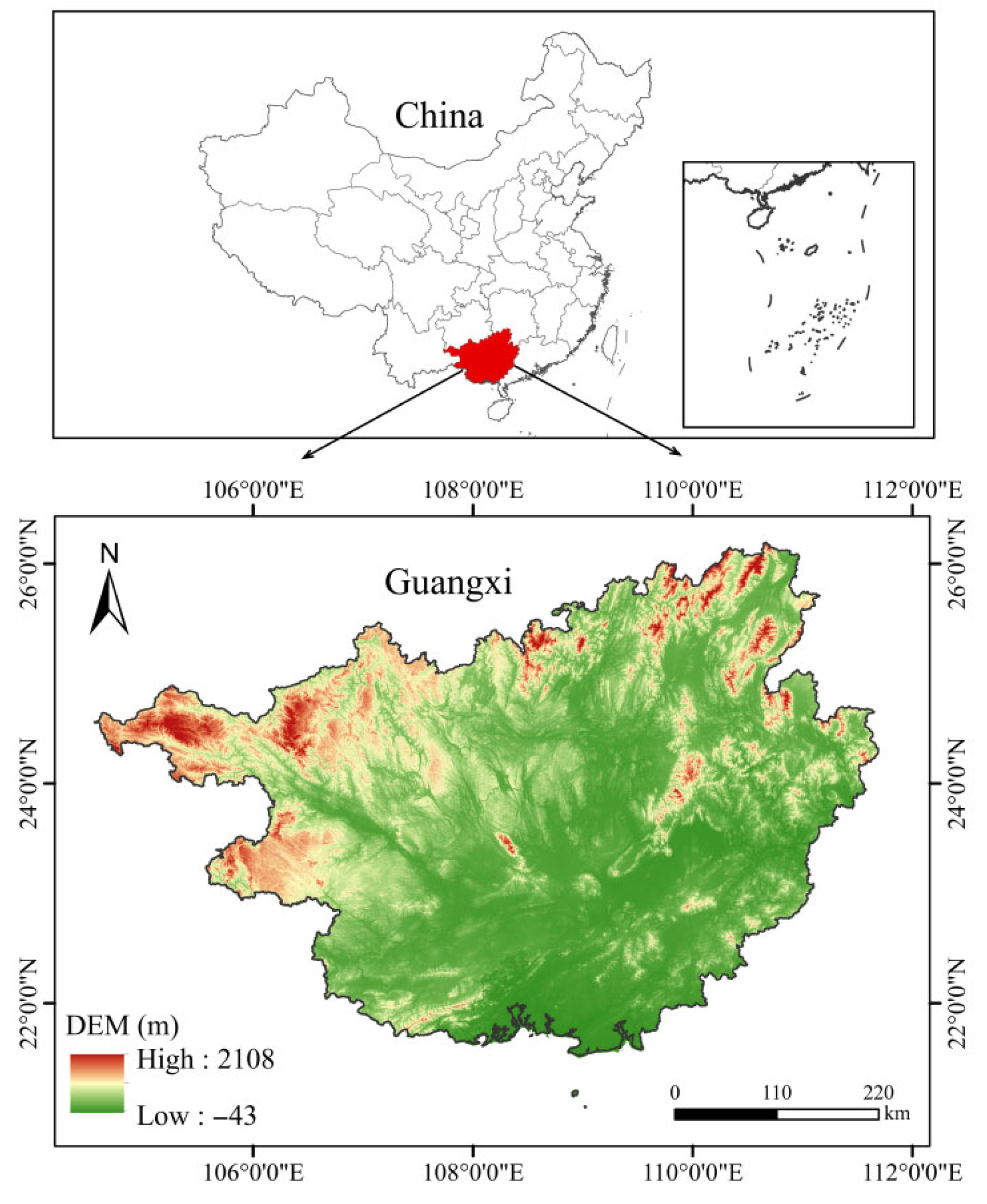
The Guangxi Zhuang Autonomous Region is located in southern China along the Beibu Gulf and borders Vietnam, forming an important coastal border (Figure 1). Guangxi encompasses a total land area of approximately 237,600 km. Guangxi has well-developed land and sea transportation networks that facilitate frequent exchanges with neighboring regions and countries [41]. This region is characterized by a subtropical monsoon climate with warm temperatures and abundant precipitation [42]. The annual precipitation generally ranges from approximately 1200 to 1800 mm, and the mean annual temperature ranges from 16 to 22 °C. Administratively, Guangxi is divided into 14 prefecture-level cities that serve as the basic spatial units for the city-level analyses in this study.

2.2. Data Collection and Analysis

In this study, we analyzed the information on invasive alien plant species in Guangxi using 1973, 2010, and 2023 as temporal benchmarks. Guangxi is one of the earliest regions in China in which foundational baseline botanical surveys were conducted at the provincial level. The identification of invasive alien plant species as well as the determination of their native ranges and life forms were based on the Alien Invasive Flora of China [43] and the related literature [29,30], which define invasive alien plants as non-native species introduced outside their natural range that have escaped cultivation, become naturalized, establish self-sustaining wild populations, and are associated with documented negative impacts on native ecosystems, biodiversity, or socioeconomic systems during their spread. Li [44,45,46] compiled and published the Flora of Guangxi in three volumes, documenting 5590 species of vascular plants across 280 families and 1571 genera in Guangxi. We recorded the Chinese names, distribution ranges, and additional information about the plants. The Flora of Guangxi was the most comprehensive and reliable reference for baseline botanical information in Guangxi at the time [47]. In this study, we collected information on alien plants recorded in a checklist up to 1973, including their population distribution sites and scales. We used the National Specimen Resource Sharing Platform of China [48] and the Chinese Virtual Herbarium [49] to retrieve the specimen numbers and distribution records of alien plants in Guangxi before 1973. We consulted expert plant taxonomists and ecologists familiar with the flora in Guangxi to supplement the historical distribution information during this period. Expert input was used to refine the occurrence and distribution records. Data on invasive alien plants in 2010 were primarily derived from two authoritative references [37,38] that document studies of invasive alien plants in Guangxi. These data were supplemented with data collated from the Flora of Guangxi [50] to refine the records of invasive plants and their distribution during that time. The 2023 list of invasive alien plants was compiled based on Research on Invasive Alien Plants in Guangxi [51], along with the recent literature on invasive alien plants in Guangxi [35,52,53,54,55]. We ensured the temporal comparability of the data by reassessing species inclusion during the three years using the same invasion criteria regardless of differences in the original data source or survey purpose. We compiled a checklist of invasive alien plants in Guangxi for 1973, 2010, and 2023 based on the literature (Supplementary Materials). We analyzed the species composition, life forms, origins, and richness distribution in detail across 14 prefecture-level cities in Guangxi: Nanning, Liuzhou, Guilin, Wuzhou, Beihai, Fangchenggang, Qinzhou, Guigang, Yulin, Baise, Hezhou, Hechi, Laibin, and Chongzuo.
We analyzed the relationships between invasive alien plant species richness and six selected socioeconomic, climatic, and spatial variables across 14 prefecture-level cities in Guangxi in 2023. The explanatory variables included land area, population, gross domestic product (GDP), total tourists, annual precipitation, and minimum temperature. Socioeconomic variables were calculated as ten-year averages to reduce short-term fluctuations and were obtained from the Guangxi Statistical Yearbook [56,57,58,59,60,61,62,63,64,65]. The climate data were sourced from the China Meteorological Data Service Center [66]. Simple linear regression analyses were conducted to explore potential associations among the variables; these analyses were intended as preliminary evaluations of correlates rather than causal assessments. Data visualization was performed using the ggplot2 package (version 3.5.2) in R (version 4.4.1).

3. Results

3.1. Species Composition of Invasive Alien Plant Species

In 1973, 31 invasive alien plant species belonging to 29 genera and 19 families were documented in Guangxi (Table 1, Supplementary Materials). By 2010, the documented checklist expanded to 84 species across 67 genera and 28 families, increases of 47.4%, 131.0%, and 171.0% in families, genera, and species, respectively. The newly recorded taxa were primarily part of the Asteraceae (18 species) and Poaceae (7 species) families, with several other families, including Euphorbiaceae, Solanaceae, Amaranthaceae, Fabaceae, and Apiaceae, comprising 1–3 additional species each. Asteraceae comprised the largest number of taxa at this time, representing nearly one-third of the total number of species recorded. The number of recorded species in Erigeron increased the most from 1973 to 2010, with four recorded species, followed by Euphorbia, Opuntia, and Solanum with two species each. The number of species in Trifolium, Ricinus, and Peperomia increased by one each from 1973 to 2010. From 2010 to 2023, the number of documented invasive alien plant species increased to 158 within 109 genera and 39 families. The recorded numbers of families, genera, and species were 39.3%, 62.7%, and 88.1% higher, respectively, in 2023 than in 2010. Among the 74 new plant taxa, Asteraceae and Fabaceae contained the largest number of recorded species (13 species each), followed by Poaceae (6 species), Amaranthaceae and Convolvulaceae (5 species each), and Solanaceae (4 species). The numbers of newly recorded Cyperaceae, Malvaceae, and Euphorbiaceae species ranged from one to three. Amaranthus, Mimosa, and Ipomoea were the most frequently recorded genera, with four species each, followed by Euphorbia, Bidens, Cyperus, and Paspalum, with three species each. Overall, the concurrent increases in the numbers of families, genera, and species indicated that the recorded invasive alien plants included an increasingly broad range of plant families and genera over time, suggesting an expansion in the documented taxonomic breadth of the invasive flora in the province.

3.2. Native Range of Invasive Alien Plant Species

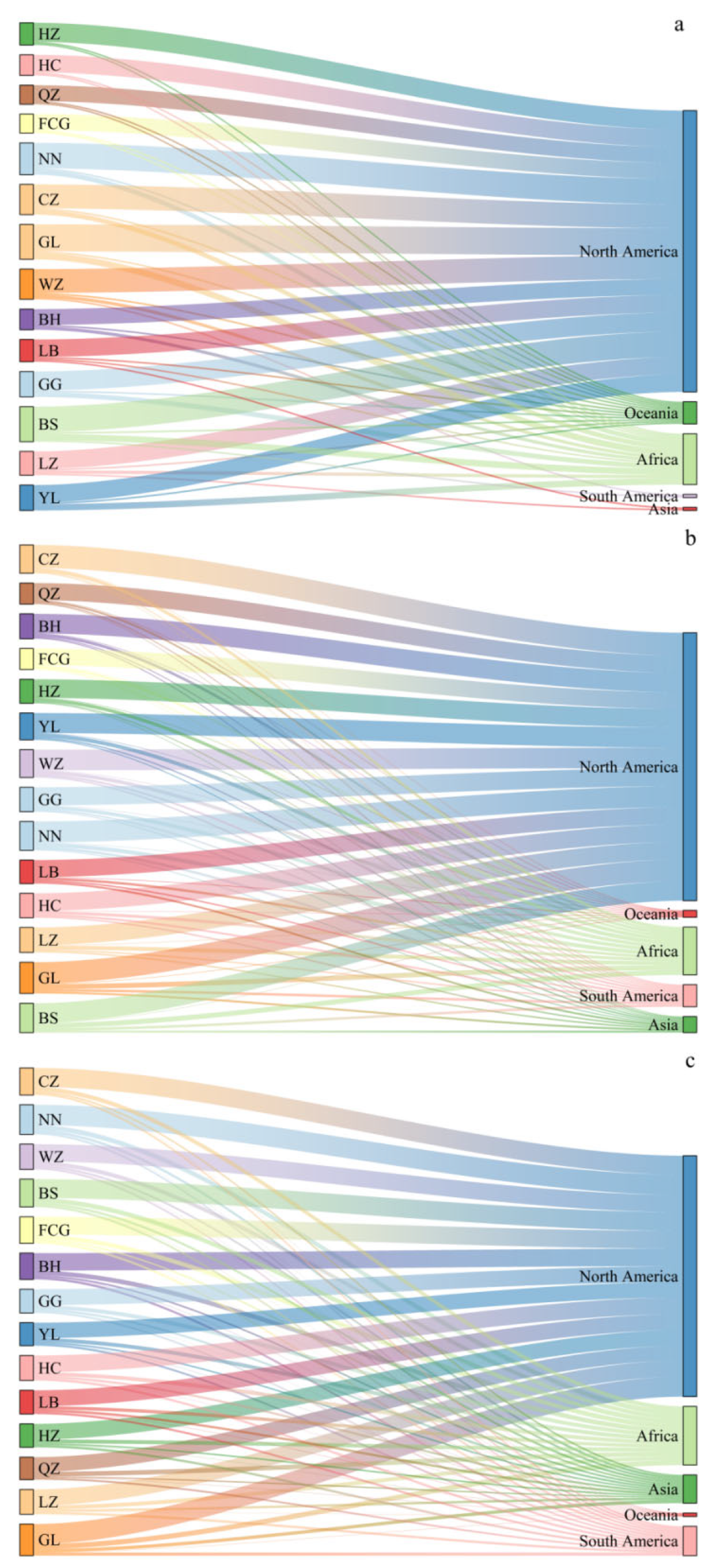
The native ranges of invasive plants in Guangxi were categorized into five continental regions. Species native to North America accounted for the largest recorded number, followed by Africa, Asia, and South America. Oceania consistently accounted for the lowest number of invasive alien plant species (Figure 2). The number of invasive plant species with native ranges in North America increased from 22 in 1973 to 59 in 2010 and 102 in 2023. Species native to Africa increased from 6 to 27 from 1973 to 2023, whereas the numbers of those native to Asia and South America increased from 1 in 1973 to 14 in 2023. The number of species native to Oceania remained constant across all three time points. In 1973, the most frequently recorded native range of the invasive plants in all prefecture-level cities was North America, accounting on average for more than 75% of these invasive species. Guilin, Baise, and Nanning reported the highest numbers of plants native to North America, with 17, 16, and 16 species, respectively. Most cities recorded a limited number of alien plants native to Africa or Oceania. Species native to Asia and South America were only recorded in Liuzhou, Laibin, and Wuzhou. In 2010, North America remained the dominant native range of the invasive plan species in all cities, accounting for more than 65% of the total number recorded. Simultaneously, additional species native to Africa, South America, and Asia were recorded, particularly in Guilin and Baise, where the number of species native to Africa reached 10. By 2023, most of the recorded species were native to North America in all cities. However, the relative proportions of North American species among all recorded species were lower in 2023 than those recorded in 1973 and 2010, reflecting differences in the composition of the checklist records over the period. Many species were recorded in Nanning (80), Guilin (79), and Chongzuo (75). The number of species native to Africa ranked second in 2023, with their numbers trending upward in several cities, including Guilin (20 species), Nanning (19 species), Fangchenggang (18 species), Beihai (18 species), Qinzhou (18 species), and Baise (18 species). The number of species native to South America exceeded nine in Guilin, Liuzhou, Beihai, and other regions. Species native to Asia were most prevalent in Guilin (13) and Nanning (10); other cities generally reported more than five species.

3.3. Life Forms of Invasive Alien Plants

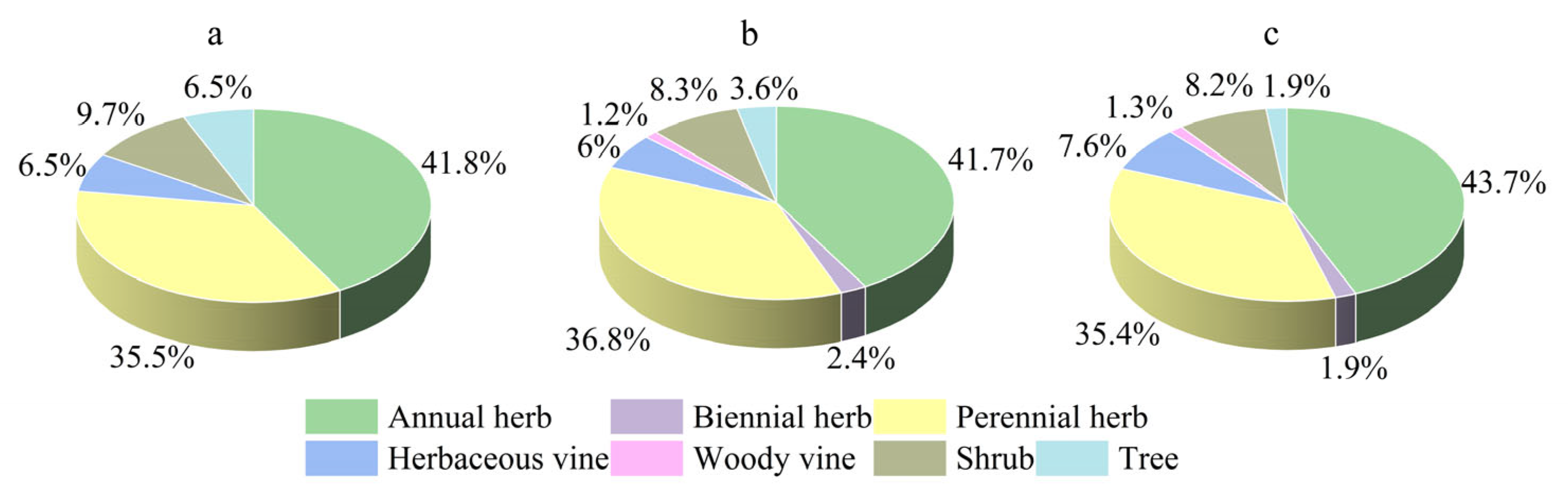
The invasive plants in Guangxi were categorized into seven life forms (Figure 3). Annual herbaceous species were the most prevalent, accounting for more than 40% of the total number of invasive species at all three time points, increasing from 13 species in 1973 to 35 in 2010 and then to 69 in 2023. Perennial herbaceous plants ranked second, expanding from 11 species in 1973 to 56 in 2023, and consistently accounted for approximately 35% of the total. The number of herbaceous vines increased from two species in 1973 to 12 in 2023, and their proportion increased from 6.5% to 7.6%. Shrubs grew from three species in 1973 to 13 in 2023, representing 9.7% and 8.2% of invasive plants, respectively. Biennial herbaceous plants and woody vines remained relatively scarce, with proportions below 4% in all three years, at three and two species, respectively, in 2023. The number of invasive alien tree species increased from two in 1973 to three in 2023. Between 1973 and 2010, the 53 newly recorded invasive species were predominantly annual and perennial herbaceous plants, accounting for 41.5% and 37.7%, respectively. A total of 74 invasive plant species were newly recorded between 2010 and 2023, of which 34 and 25 were annual herbs and perennial herbs, respectively, constituting 45.9% and 33.8% of the total newly recorded invasive plants, respectively. The chi-square test indicated that differences in life form composition among the three time points were not significant (χ2 = 3.49, df = 12, p = 0.991), suggesting that the observed changes in life-form proportions over time did not deviate from random expectations.

3.4. Distribution of and Factors Influencing Invasive Alien Plant Species Richness

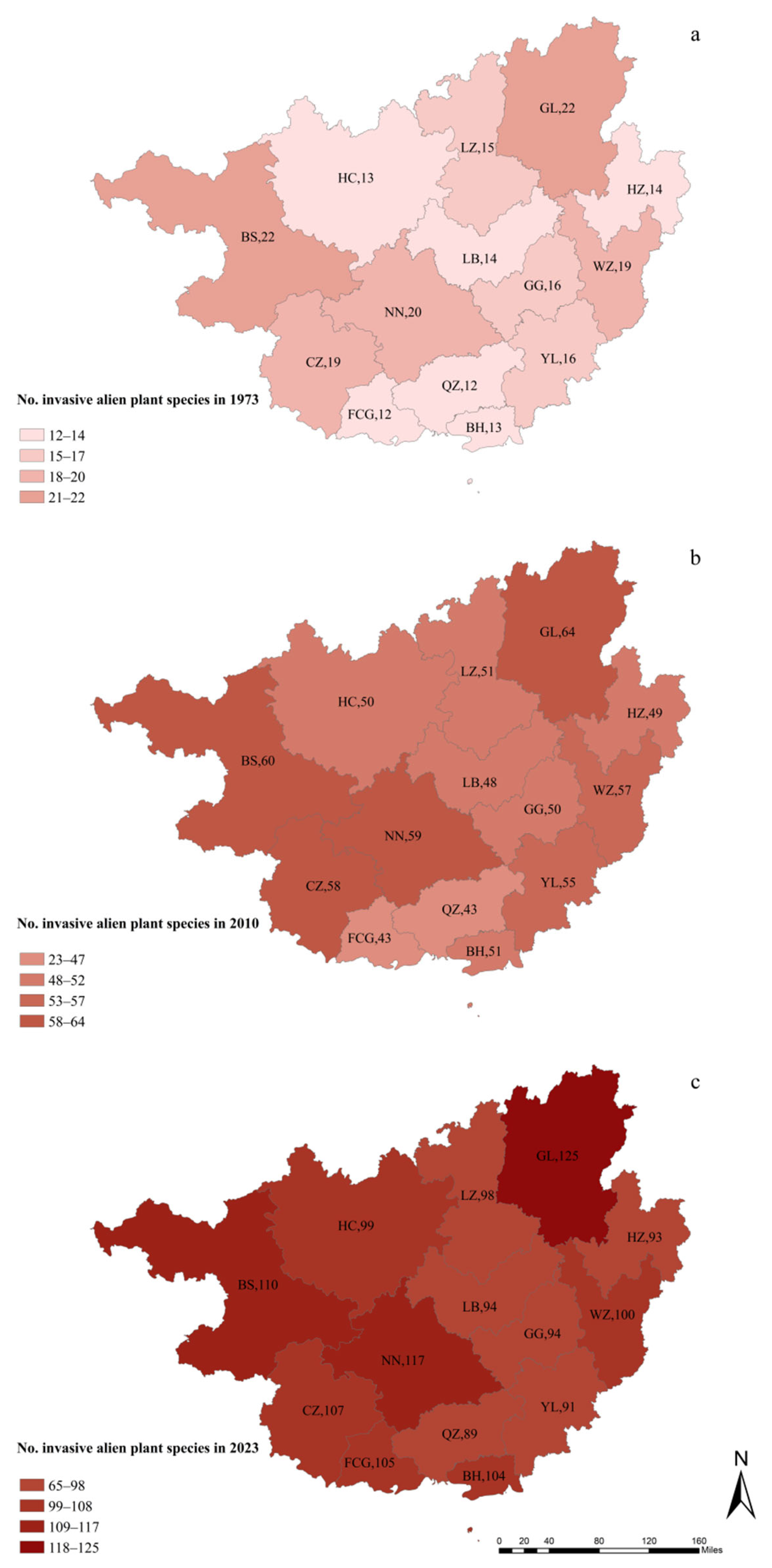
The spatiotemporal characteristics of the distribution of the invasive plant species richness in 14 prefecture-level cities in Guangxi were distinct (Figure 4). In 1973, the largest numbers of species were recorded in Guilin and Baise (22 species each). The numbers were lowest in Fangchenggang and Qinzhou at 12 species each. By 2010, species counts had generally increased in all cities. Guilin experienced the most substantial increase to 64 species and was the area with the highest concentration of invasive species. This was followed by Baise with 60 species and Nanning with 59 species. Compared with 1973, Beihai and Hechi had the fastest growth rates of invasive species numbers, which increased 2.9- and 2-fold, respectively. The growth rates in other cities approached two-fold. By 2023, the number of invasive alien plants markedly increased throughout the region, with the highest species count of 125 in Guilin, followed by Nanning at 117 and Baise at 110. Seven cities contained more than 100 invasive alien plant species. Relative to 2010, the number of species recorded in Fangchenggang and Nanning increased 1.4- and 2-fold, respectively.
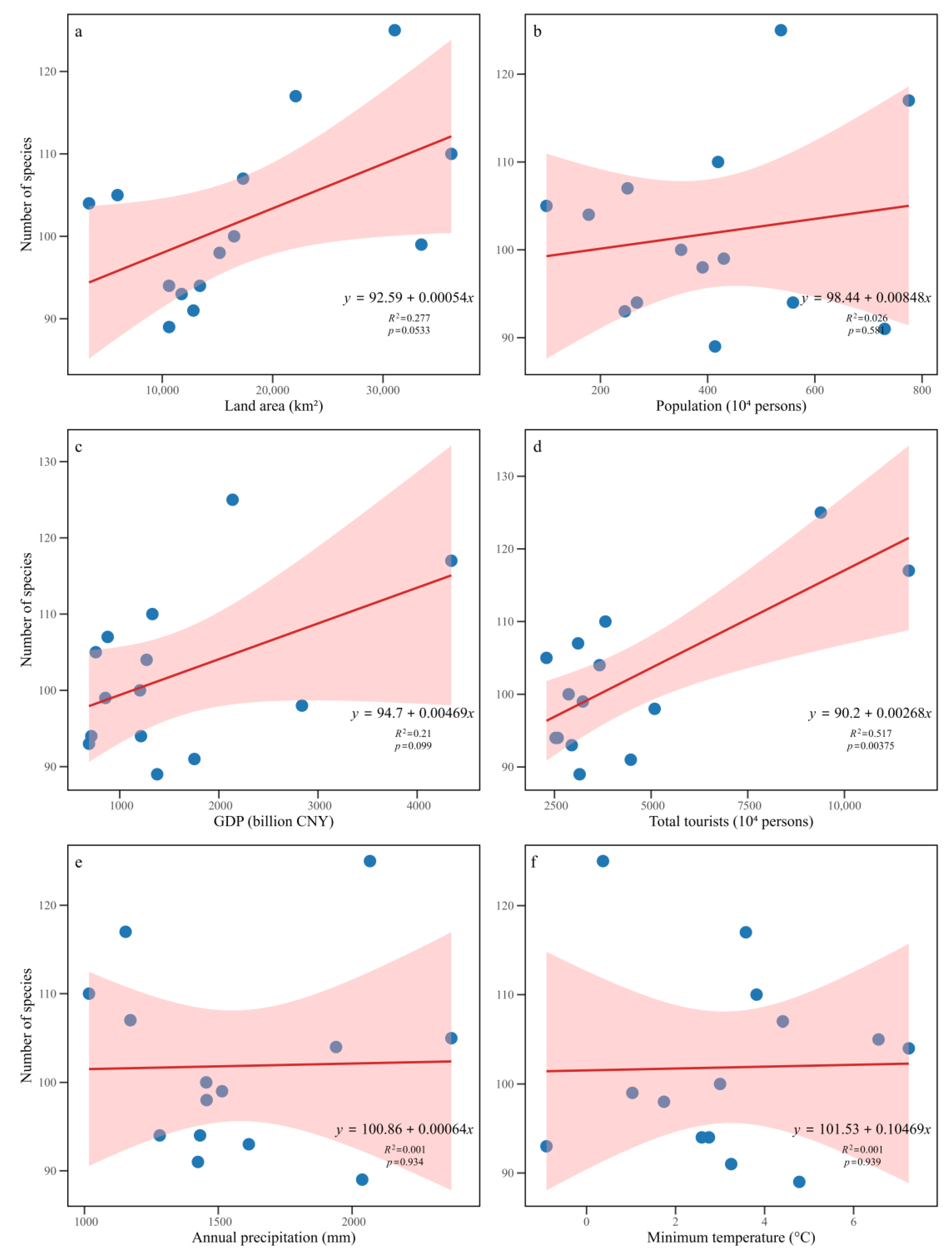
Invasive alien plant species richness positively associated with land area (Figure 5a), although this relationship was not significant. Species richness weakly and insignificantly related to population size (Figure 5b) and GDP (Figure 5c). A significant positive relationship was observed between invasive alien plant species richness and the total number of tourists (Figure 5d). In contrast, no clear associations were detected between species richness and the mean annual precipitation (Figure 5e) or mean annual minimum temperature (Figure 5f). Overall, the distribution of recorded invasive alien plant species richness was uneven across Guangxi cities, with differing strengths of statistical associations with the selected variables.

4. Discussion

We found that the number of families, genera, and species of invasive alien plants in Guangxi consistently increased over the 50-year period of 1973 to 2023. The growth rate in the number of species recorded was higher after 2010 than during the preceding period. The invasive alien plants were predominantly represented by the Asteraceae, Poaceae, and Fabaceae families in Guangxi, which is consistent with the composition of invasive species found in most regions in China and globally [67,68,69,70]. The dominance of these families has frequently been attributed to their biological characteristics, such as their high reproductive output, tolerance of a broad range of ecological conditions, and diverse dispersal pathways. These characteristics are common among many invasive taxa within the Asteraceae, Poaceae, and Fabaceae, potentially contributing to their widespread representation in invasive flora. For example, wind-dispersed diaspores and, in some cases, allelopathic interactions are common among the Asteraceae. These traits may facilitate the rapid establishment and spread of alien species [71]. The rapid spread of Chromolaena odorata in the karst regions of Guangxi is a key example of invasive species causing the degradation of local plant communities [72]. Similarly, many invasive species in the Poaceae family are annual herbs with small seeds and multiple dispersal pathways, and have unintentionally been transported via trade and logistics. Poaceae species have been widely reported in invasion studies [73]. The number of invasive legume species sharply increased from 2010 to 2023, with 13 new species recorded, which may be closely related to the geographical role of Guangxi as a hub for China–ASEAN agricultural trade. Leguminous plants are often introduced as forage or as horticultural species. However, leguminous plants can easily escape cultivation without proper management and become invasive species [74]. Leucaena leucocephala has expanded across multiple regions of Guangxi. Within the scope of the checklist-based synthesis, the increased numbers of families and genera primarily indicate a broadening of the taxonomic representation of recorded invasive alien plants over time. However, such patterns could have been influenced by intensified survey efforts, increased taxonomic resolution, expanded data availability, and evolving invasion definitions, rather than representing direct evidence of the underlying ecological dynamics or invasion processes.
The invasive alien plant species in Guangxi were primarily native to North America, Africa, and Asia, with those from North America consistently maintaining dominance over time in all the prefecture-level cities. This finding is consistent with those of Xu et al. [75], who reported that invasive plants in China are predominantly native to North America. The long-term prevalence of North American species in Guangxi may be associated with their high reproductive capacity, adaptability to ecological conditions, and physiological plasticity, as well as their release from natural enemies in introduced regions [76]. Some North American plants were intentionally introduced for ornamental, greening, or forage purposes but subsequently escaped cultivation and naturalized because of inadequate oversight, eventually becoming invasive species that are difficult to control [77]. The numbers of recorded invasive plant species from Africa, Asia, and South America have more rapidly increased in more recent checklists, particularly in cities that are more open and where logistics are more common, such as Guilin, Nanning, and Baise. These increases may partly be due to the expansion of survey coverage, improved reporting, and updates in classification practices rather than the underlying invasion dynamics. This pattern may reflect the combined effects of land use changes, intensified human activities, and broader environmental changes, which are important background factors that facilitate biological invasions [1]. Although Guangxi is located in the transition between subtropical and tropical zones and exhibits climatic conditions similar to those of parts of South America, species native to South America still account for a relatively small proportion of the invasive flora. This finding suggests that, although climatic similarity is an important prerequisite for successful invasion, dispersal pathways and human-mediated introduction are important factors in species invasion [78]. Our quantitative analyses further showed that the city-level invasive alien plant species richness was strongly associated with tourism intensity and weakly related to GDP, population size, and climatic variables. This finding suggests that different socioeconomic factors are associated with the invasion patterns of alien plant species in Guangxi. The invasive plant species richness was particularly high in cities such as Nanning and Guilin. Nanning is the capital city of Guangxi and functions as a major transportation and economic hub. Guilin is an international tourist destination. High tourism intensity may increase propagule movement through frequent human movements and disturbances, facilitating the establishment of alien plant species [79]. Overall, the observed native ranges and spatial heterogeneity of invasive alien plant species in Guangxi reflected the combined influence of introduction history and human activity. However, except for tourism-related effects, which were supported by statistical analyses, the roles of the other socioeconomic and climatic factors discussed here should be interpreted as hypotheses that require further quantitative testing. Zoned control strategies must be formulated that consider geographical, economic, and social characteristics in the context of global changes. Overall, the observed composition of native ranges of the invasive alien plant species primarily reflects the composition of the available records compiled under a consistent classification framework. Therefore, interpretations regarding invasion dynamics or causal mechanisms should be treated with caution, particularly when based on discrete historical checklists rather than continuous or effort-adjusted data.
The life forms of plants represent broadly defined functional strategies reflecting how plants adapt to environmental conditions, resource availability, and disturbance regimes. Plant life forms have been widely used as functional proxies in floristic and invasion studies [80,81]. In this study, the life forms were classified following the system adopted by the Alien Invasive Flora of China [43], which is mainly consistent with commonly used functional groupings in invasion ecology and allows comparisons with previous regional and national assessments. Our results show that annual herbaceous species consistently accounted for the largest proportion of invasive alien plant species in all three years. This pattern is consistent with the findings in the invasion ecology literature, suggesting that annual herbs, characterized by short life cycles, high reproductive output, and rapid population turnover, are particularly successful under frequent disturbances and human-mediated dispersal conditions [82]. Although the absolute numbers of perennial herbaceous plants, climbers, and shrubs increased over time, the chi-square test indicated that the temporal differences in the overall plant life form composition were not significant (χ2 = 3.49, df = 12, p = 0.991). This finding suggests that the observed changes in life form proportions did not deviate from random expectations and that the functional structure of invasive alien plants in Guangxi remained relatively stable despite the continuous accumulation of species. Therefore, increases in specific life forms primarily reflect a general increase in invasive plant species richness rather than a directional shift in functional strategies. Within this relatively stable structural framework, annual and perennial herbaceous plants dominated the invasive flora throughout the study period. This dominance is consistent with previous findings that herbaceous species are more easily transported, intentionally or unintentionally, through horticulture, forage introduction, and trade, often showing high establishment success [83]. The gradual increase in the numbers of herbaceous and woody climbers may be associated with plant traits, such as the ability to exploit vertical space and light resources, a trait considered advantageous in the subtropical, humid environments in southern China [84,85]. Although invasive shrubs and trees constituted a smaller proportion of the total flora, their steady increase in numbers, particularly of shrub species, indicates an expanding pool of woody invaders that may exert longer-term influences on community structure and ecosystem processes once established [86]. Overall, these patterns suggest that, although the richness of invasive alien plant species has substantially increased over time, the life-form composition has remained consistent, reflecting persistent introduction pathways and disturbance regimes rather than a fundamental reorganization of functional strategies.
We found that the municipal-scale temporal trends of invasive alien plant species in Guangxi have been distinct. However, the municipal-scale comparisons are highly uncertain owing to the spatiotemporally uneven survey efforts and historical differences in data availability among cities. In 1973, Guilin, Nanning, and Baise were ranked the top three cities in terms of number of invasive plant species, with 22 host species. These patterns represent the documented distribution of invasive species at that time and may reflect differences in introduction history, urban development, survey coverage, and data availability among cities. Guilin is a renowned tourist destination, and Nanning is the political and economic center of Guangxi. Both cities have a high population density with relatively intense horticultural activities. Such characteristics increase propagule dispersal and contribute to a higher risk of invasion by alien plant species [87]. Although Baise is located on the western border of Guangxi, its proximity to Yunnan, Guizhou, and Vietnam as well as the early agricultural development in Baise may have facilitated cross-regional species exchanges [40]. Qinzhou and Fangchenggang had relatively underdeveloped transportation infrastructure and lower levels of urbanization in their early stages, potentially limiting the pathways through which invasive species could be introduced [38]. After 2010, the number of invasive alien plant species markedly increased across Guangxi, with particularly rapid increases in Beihai and Hechi. These differences indicate spatial heterogeneity in the recorded species richness of invasive alien plants among prefecture-level cities. Beihai was one of the earliest open port cities in China and has thus experienced frequent international cargo transportation and high tourist flow, which may have increased the likelihood of alien species being introduced [88]. Similarly, the karst-dominated environment is ecologically fragile, and infrastructure development may have reduced the natural barriers to the spread of invasive species [89,90]. Although the growth rate of invasive plant species richness in other prefecture-level cities was slightly lower, the number of invasive alien plant species doubled, indicating that exotic plant invasion has become a pervasive ecological threat throughout Guangxi. Although the number of invasive plant species in various cities continued to trend upward until 2023, the available data did not allow for a robust assessment of whether the rate of increase has decelerated compared with that in the previous period. The changes in these growth rates may have been partly due to differences in survey efforts, data availability, and reporting intensities among periods and cities. Therefore, inferences regarding ecosystem self-regulation under long-term disturbance should be interpreted with caution.
The spatial distributions of the invasive plant species were closely associated with socioeconomic activities. The core socioeconomic activities occur in Guangxi, Nanning, and Guilin, which had the highest GDP, population density, and most efficient transportation systems; the invasive alien plant species richness was consistently higher in these cities. This spatial distribution is supported by the dense road networks, well-developed tourism infrastructure, and advanced horticultural industries, which may increase the opportunities for alien plant species introduction and propagule dispersal [91,92]. However, according to the correlation analyses, population size and GDP were weakly and insignificantly related with invasive alien plant species richness, indicating that economic scale alone does not necessarily explain the spatial variation in invasion levels. The dispersal frequency of invasive species strongly correlates with indicators of human activity intensity such as regional port density, logistic flow, and urban green space coverage. Tourist numbers were significantly and positively related with invasive alien plant richness in a prior study, in line with our results, suggesting that tourism-related activities play an important role in facilitating species introduction [93]. Given this relationship, although Fangchenggang and Qinzhou are situated in open border areas, their relatively low recorded numbers of invasive plant species may have been associated with lower tourism intensity, fewer human disturbances, and comparatively limited survey coverage. Regression analyses of the 2023 data further showed that invasive alien plant species richness was unevenly associated with socioeconomic variables. Species richness exhibited a marginally positive relationship with land area but no significant relationship with population size or GDP. In contrast, a significant positive association was observed between species richness and total tourist numbers, highlighting tourism-related human activity as a correlate of invasive plant species richness through increased propagule movement [94]. No climatic variable was significantly related with species richness, suggesting that anthropogenic factors play a stronger role than climate at the municipal scale in Guangxi in increasing invasive plant species richness. Finally, the spatial differences in recorded invasive alien plant richness may have also been influenced by differences in survey effort among cities. Therefore, the reported municipal-scale patterns should be interpreted with caution as they likely reflect invasion processes and differences in data availability rather than purely ecological mechanisms [7].
We recommend the establishment of an early-warning and monitoring system for invasive alien plants in Guangxi, specifically targeting high-risk families such as Asteraceae, Poaceae, and Fabaceae, as well as species native to North America. Control efforts must prioritize the early eradication of annual herbs and highly dispersive species, including Chromolaena odorata and Leucaena leucocephala. Mechanical removal and targeted biological control should be concentrated in tourism hubs, such as Nanning and Guilin, as well as along major trade corridors. Strengthened border inspections and stricter agricultural trade regulations are necessary to intercept the introduction of leguminous and ornamental species. Management should adopt a zoning strategy that intensifies eradication efforts in ecologically fragile karst areas, such as Hechi, and rapidly developing zones. Additionally, survey coverage should be expanded in historically under-monitored regions, including Qinzhou and Fangchenggang, to correct sampling biases and better characterize invasion patterns. Regional collaboration is essential to regulate cross-border trade and enhance public education aimed at reducing tourism-mediated introductions, as socioeconomic drivers outweigh climatic factors in shaping invasion patterns in Guangxi.

5. Conclusions

Over the 50-year period of 1973 to 2023, the recorded number of invasive alien plant species in Guangxi substantially increased according to checklist records compiled under a unified invasion classification framework. Species native to North America were persistently dominant, with their numbers increasing over time, followed by Africa and Asia, reflecting the increasingly diverse composition of the native ranges of invasive alien plant species. Annual and perennial herbaceous plants were consistently the largest life form at all three time points, whereas the proportional structure of life forms remained statistically stable despite the continuous increase in the number of species. This pattern indicated that the overall functional composition of the invasive flora has remained broadly consistent. At the municipal scale, the invasive alien plant species richness was unevenly distributed across Guangxi; however, higher numbers of invasive species were consistently recorded in Guilin, Nanning, and Baise. Among the socioeconomic and environmental variables examined, tourism intensity was significantly positively associated with invasive alien plant species richness, whereas population size, GDP, and climatic variables exhibited weak or nonsignificant relationships with invasive alien plant species richness. These findings offer critical data support describing regional invasion dynamics and provide a scientific basis for formulating, optimizing, and implementing strategies for the management and long-term monitoring of invasive alien plants in Guangxi, south China.

Supplementary Materials

The following supporting information can be downloaded at: https://www.mdpi.com/article/10.3390/d18010044/s1, List of invasive alien plant species in Guangxi for 1973, 2010, and 2023.

Author Contributions

Conceptualization, Z.Z. and G.H.; methodology, J.K., C.H. and G.H.; software, J.K., A.W. and C.X.; validation, C.H. and Y.Q.; formal analysis, J.K., A.W. and Z.Z.; investigation, J.K., Z.Z. and G.H.; resources, Z.Z. and G.H.; data curation, J.K. and G.H.; writing—original draft preparation, J.K., Z.Z. and G.H.; writing—review and editing, J.K., C.H., Y.Q., C.X., A.W., Z.Z. and G.H.; visualization, J.K. and C.X.; supervision, Z.Z. and G.H.; project administration, Z.Z. and G.H.; funding acquisition, Z.Z. and G.H. All authors have read and agreed to the published version of the manuscript.

Funding

This study was funded by the Guangxi Natural Science Foundation (2021GXNSFFA196005, 2025JJA130183), Special Funding for Guangxi Bagui Young Top Scholars (to Z.Z.), and the National Natural Science Foundation of China (31960275).

Institutional Review Board Statement

Not applicable.

Data Availability Statement

The data supporting the findings of this study are available in the article and Supplementary Materials.

Acknowledgments

The authors thank the editors and anonymous reviewers for their constructive comments and suggestions, which helped improve the quality of this manuscript.

Conflicts of Interest

The authors declare no conflicts of interest.

References

  1. Pyšek, P.; Hulme, P.E.; Simberloff, D.; Bacher, S.; Blackburn, T.M.; Carlton, J.T.; Dawson, W.; Essl, F.; Foxcroft, L.C.; Genovesi, P.; et al. Scientists’ warning on invasive alien species. Biol. Rev. 2020, 95, 1511–1534. [Google Scholar] [CrossRef]
  2. Li, Y.; Yu, F.H. Managing the risk of biological invasions. iScience 2023, 26, 108221. [Google Scholar] [CrossRef]
  3. Roy, H.E.; Pauchard, A.; Stoett, P.J.; Renard Truong, T.; Meyerson, L.A.; Bacher, S.; Galil, B.S.; Hulme, P.E.; Ikeda, T.; Kavileveettil, S.; et al. Curbing the major and growing threats from invasive alien species is urgent and achievable. Nat. Ecol. Evol. 2024, 8, 1216–1223. [Google Scholar] [CrossRef]
  4. Sage, R.F. Global change biology: A primer. Glob. Change Biol. 2020, 26, 3–30. [Google Scholar] [CrossRef]
  5. Seebens, H.; Bacher, S.; Blackburn, T.M.; Capinha, C.; Dawson, W.; Dullinger, S.; Genovesi, P.; Hulme, P.E.; Van Kleunen, M.; Kühn, I.; et al. Projecting the continental accumulation of alien species through to 2050. Glob. Change Biol. 2021, 27, 970–982. [Google Scholar] [CrossRef]
  6. Shackleton, R.T.; Shackleton, C.M.; Kull, C.A. The role of invasive alien species in shaping local livelihoods and human well-being: A review. J. Environ. Manag. 2019, 229, 145–157. [Google Scholar] [CrossRef]
  7. Pyšek, P.; Richardson, D.M.; Rejmánek, M.; Webster, G.L.; Williamson, M.; Kirschner, J. Alien plants in checklists and floras: Towards better communication between taxonomists and ecologists. Taxon 2004, 53, 131–143. [Google Scholar] [CrossRef]
  8. Van Kleunen, M.; Dawson, W.; Essl, F.; Pergl, J.; Winter, M.; Weber, E.; Kreft, H.; Weigelt, P.; Kartesz, J.; Nishino, M.; et al. Global exchange and accumulation of non-native plants. Nature 2015, 525, 100–103. [Google Scholar] [CrossRef]
  9. Li, Y.; Zhang, J.; Zhang, J.; Du, J.; Yang, R.; Niu, M.; Li, Y. The high economic cost of biological invasions in China. J. Environ. Manag. 2025, 389, 126224. [Google Scholar] [CrossRef]
  10. Bertolino, S.; Sciandra, C.; Bosso, L.; Russo, D.; Lurz, P.W.; Di Febbraro, M. Spatially explicit models as tools for implementing effective management strategies for invasive alien mammals. Mammal. Rev. 2020, 50, 187–199. [Google Scholar] [CrossRef]
  11. Di Febbraro, M.; Bosso, L.; Fasola, M.; Santicchia, F.; Aloise, G.; Lioy, S.; Tricarico, E.; Ruggieri, S.; Bovero, S.; Mori, E.; et al. Different facets of the same niche: Integrating citizen science and scientific survey data to predict biological invasion risk under multiple global change drivers. Glob. Change Biol. 2023, 29, 5509–5523. [Google Scholar] [CrossRef]
  12. Seebens, H.; Blackburn, T.M.; Dyer, E.E.; Genovesi, P.; Hulme, P.E.; Jeschke, J.M.; Pagad, S.; Pyšek, P.; Winter, M.; Arianoutsou, M.; et al. No saturation in the accumulation of alien species worldwide. Nat. Commun. 2017, 8, 14435. [Google Scholar] [CrossRef] [PubMed]
  13. Dawson, W.; Moser, D.; Van Kleunen, M.; Kreft, H.; Pergl, J.; Pyšek, P.; Weigelt, P.; Winter, M.; Lenzner, B.; Blackburn, T.M.; et al. Global hotspots and correlates of alien species richness across taxonomic groups. Nat. Ecol. Evol. 2017, 1, 0186. [Google Scholar] [CrossRef]
  14. Randall, J.M.; Morse, L.E.; Benton, N.; Hiebert, R.; Lu, S.; Killeffer, T. The invasive species assessment protocol: A tool for creating regional and national lists of invasive nonnative plants that negatively impact biodiversity. Invasive Plant Sci. Manag. 2008, 1, 36–49. [Google Scholar] [CrossRef]
  15. Groom, Q.J.; Desmet, P.; Vanderhoeven, S.; Adriaens, T. The importance of open data for invasive alien species research, policy and management. Manag. Biol. Invasions 2015, 6, 119–125. [Google Scholar] [CrossRef]
  16. Pyšek, P.; Sádlo, J.; Mandák, B. Catalogue of alien plants of the Czech Republic. Preslia 2002, 74, 97–186. [Google Scholar] [CrossRef]
  17. Gollasch, S.; Nehring, S. National checklist for aquatic alien species in Germany. Aquat. Invasions 2006, 1, 245–269. [Google Scholar] [CrossRef]
  18. Pagad, S.; Genovesi, P.; Carnevali, L.; Schigel, D.; McGeoch, M.A. Introducing the global register of introduced and invasive species. Sci. Data 2018, 5, 170202. [Google Scholar] [CrossRef]
  19. Spampinato, G.; Laface, V.L.A.; Posillipo, G.; Cano Ortiz, A.; Quinto Canas, R.; Musarella, C.M. Alien flora in Calabria (Southern Italy): An updated checklist. Biol. Invasions 2022, 24, 2323–2334. [Google Scholar] [CrossRef]
  20. Jehangir, S.; Khan, S.M.; Ejaz, U.; Zahid, N.; Rashid, N.; Noshad, Q.; Din, Z.U.; Shoukat, A. Alien flora of Pakistan: Taxonomic composition, invasion status, geographic origin, introduction pathways, and ecological patterns. Biol. Invasions 2024, 26, 2435–2451. [Google Scholar] [CrossRef]
  21. Stinca, A.; Chianese, G.; D’Auria, G.; Del Guacchio, E.; Fascetti, S.; Perrino, E.V.; Rosati, L.; Salerno, G.; Santangelo, A. New alien vascular species for the flora of southern Italy. Webbia 2017, 72, 295–301. [Google Scholar] [CrossRef]
  22. Galasso, G.; Conti, F.; Peruzzi, L.; Ardenghi, N.M.G.; Banfi, E.; Celesti-Grapow, L.; Albano, A.; Alessandrini, A.; Bacchetta, G.; Ballelli, S.; et al. An updated checklist of the vascular flora alien to Italy. Plant Biosyst. 2018, 152, 556–592. [Google Scholar] [CrossRef]
  23. Rosati, L.; Fascetti, S.; Romano, V.A.; Potenza, G.; Lapenna, M.R.; Capano, A.; Nicoletti, P.; Farris, E.; De Lange, P.J.; Vico, E.D.; et al. New chorological data for the Italian vascular flora. Diversity 2020, 12, 22. [Google Scholar] [CrossRef]
  24. Sohrabi, S.; Naqinezhad, A.; Kortz, A.; Hejda, M.; Gherekhloo, J.; Zand, E.; Pergl, J.; Brundu, G.; Pyšek, P. Alien flora of Iran: Species status, introduction dynamics, habitats and pathways. Biol. Invasions 2023, 25, 1359–1371. [Google Scholar] [CrossRef]
  25. Essl, F.; Hulme, P.E.; Jeschke, J.M.; Keller, R.; Pyšek, P.; Richardson, D.M.; Saul, W.C.; Bacher, B.; Dullinger, S.; Estévez, R.A.; et al. Scientific and normative foundations for the valuation of alien-species impacts: Thirteen core principles. BioScience 2016, 67, 166–178. [Google Scholar] [CrossRef]
  26. Xu, H.; Qiang, S.; Genovesi, P.; Ding, H.; Wu, J.; Meng, L.; Han, Z.; Miao, J.; Hu, B.; Guo, J.; et al. An inventory of invasive alien species in China. NeoBiota 2012, 15, 1–26. [Google Scholar] [CrossRef]
  27. Chen, J.; Ma, F.; Zhang, Y.; Wang, C.; Xu, H. Spatial distribution patterns of invasive alien species in China. Glob. Ecol. Conserv. 2021, 26, e01432. [Google Scholar] [CrossRef]
  28. Zhang, A.; Hu, X.; Yao, S.; Yu, M.; Ying, Z. Alien, naturalized and invasive plants in China. Plants 2021, 10, 2241. [Google Scholar] [CrossRef]
  29. Lin, Q.W.; Xiao, C.; Ma, J.S. A dataset on catalogue of alien plants in China. Biodivers. Sci. 2022, 30, 110–117. [Google Scholar] [CrossRef]
  30. Hao, Q.; Ma, J.S. Invasive alien plants in China: An update. Plant Divers. 2022, 45, 117–121. [Google Scholar] [CrossRef]
  31. Pyšek, P.; Richardson, D.M.; Pergl, J.; Jarošík, V.; Sixtová, Z.; Weber, E. Geographical and taxonomic biases in invasion ecology. Trends Ecol. Evol. 2008, 23, 237–244. [Google Scholar] [CrossRef]
  32. Duan, T.T.; He, W.L.; Yang, J.Q.; Lin, Z.Y.; Lai, G.Z.; Lu, B.C.; Wu, D.; Li, J. Analysis of the alien invasive plants in Zhanjiang City, Guangdong Province, China. J. Biosaf. 2022, 31, 245–251. [Google Scholar] [CrossRef]
  33. Song, J.L.; Wang, H.; Liu, H.M.; Zhang, F.X.; Zhang, H.F.; Yang, D.L.; Zhao, J.N. Invasive plants and their risk assessment in Qingyuan District, Baoding City. J. Agric. Resour. Environ. 2023, 40, 314–323. [Google Scholar] [CrossRef]
  34. Yang, Y.; Bian, Z.; Ren, W.; Wu, J.; Liu, J.; Shrestha, N. Spatial patterns and hotspots of plant invasion in China. Glob. Ecol. Conserv. 2023, 43, e02424. [Google Scholar] [CrossRef]
  35. Tang, S.C.; Li, X.Q.; Wei, C.Q.; Pan, Y.M.; Lü, S.H. Current status and research progress of alien invasive plants in Guangxi. J. Guangxi Acad. Sci. 2023, 39, 146–155. [Google Scholar] [CrossRef]
  36. Zhou, L.; Wang, X.; Wang, Z.; Zhang, X.; Chen, C.; Liu, H. The challenge of soil loss control and vegetation restoration in the karst area of southwestern China. Int. Soil Water Conserv. Res. 2020, 8, 26–34. [Google Scholar] [CrossRef]
  37. Xie, Y.Z.; Wang, Y.B.; Tan, W.F. Invasive Plants in Guangxi Province. J. Trop. Subtrop. Bot. 2007, 15, 160–167. [Google Scholar] [CrossRef]
  38. Tang, S.C.; Lü, S.H.; He, C.X.; Li, X.K.; Pan, Y.M.; Pu, G.Z. The alien invasive plants in Guangxi. Guihaia 2008, 28, 775–779; 815. [Google Scholar] [CrossRef]
  39. Li, X.Q.; Wei, C.Q.; Pan, Y.M.; Tang, S.C. Three new records of naturalized plants in Guangxi and analyses on their invasiveness. Guihaia 2017, 37, 806–810. [Google Scholar] [CrossRef]
  40. Li, X.Q.; Tang, S.C.; Wei, C.Q.; Pan, Y.M.; Wang, Y.B. Alien invasive plants in the Sino-Vietnamese border area, Guangxi. J. Biosaf. 2019, 28, 147–155. [Google Scholar] [CrossRef]
  41. Hulme, P.E. Unwelcome exchange: International trade as a direct and indirect driver of biological invasions worldwide. One Earth 2021, 4, 666–679. [Google Scholar] [CrossRef]
  42. Su, J.; Liu, M.; Yang, Q.; Liu, X.; Wu, Z.; Wen, Y. Spatiotemporal Evolution and Driving Factors of Karst Rocky Desertification in Guangxi, China, Under Climate Change and Human Activities. Remote Sens. 2025, 17, 2294. [Google Scholar] [CrossRef]
  43. Ma, J.S. Alien Invasive Flora of China (Volumes 1–5); Shanghai Jiao Tong University Press: Shanghai, China, 2021. [Google Scholar]
  44. Li, S.G. Flora of Guangxi (Volume 1); Guangxi Science and Technology Press: Nanning, China, 1970. [Google Scholar]
  45. Li, S.G. Flora of Guangxi (Volume 2); Guangxi Science and Technology Press: Nanning, China, 1971. [Google Scholar]
  46. Li, S.G. Flora of Guangxi (Volume 3); Guangxi Science and Technology Press: Nanning, China, 1973. [Google Scholar]
  47. Mao, Z.Z. List of Plants in Guangxi. Guihaia 1997, 17, 187–192. [Google Scholar]
  48. National Specimen Resource Sharing Platform of China. Available online: https://www.nsii.org.cn/ (accessed on 1 May 2025).
  49. Chinese Virtual Herbarium. Available online: https://www.cvh.ac.cn/ (accessed on 1 May 2025).
  50. Qin, H.N.; Liu, Y. A Checklist of Vascular Plants of Guangxi; Science Press: Beijing, China, 2010. [Google Scholar]
  51. Tang, S.C.; Wei, C.Q.; Lü, S.H.; Pan, Y.M.; Li, X.Q.; Pu, G.Z. Research on Invasive Alien Plants in Guangxi; Guangxi Science and Technology Press: Nanning, China, 2019. [Google Scholar]
  52. Yu, Y.H.; Tao, L.L.; Zhang, L.G.; Lin, J.Y. Newly Recorded Naturalized Plants and Analysis on Their Invasiveness in Guangxi. Guangxi For. Sci. 2020, 48, 148–151. [Google Scholar] [CrossRef]
  53. Lin, J.Y.; Pan, L.H.; Liu, D.F.; Wei, J.; Li, X. Desmanthus Willd. A Newly Recorded Genera of Invasive Plants in Guangxi, China. J. Fujian For. Sci. Technol. 2021, 48, 79–82. [Google Scholar] [CrossRef]
  54. Ning, H.; Ye, X.X.; Ye, Z.M.; Fu, H.W.; Huang, H.B. Investigation on invasive alien plants in Bobai County of Guangxi. J. Agric. Res. Appl. 2022, 35, 53–59. [Google Scholar] [CrossRef]
  55. Wu, W.L.; Tang, Z.L.; Huang, H.B.; He, Y.H.; Chen, H.Y. Investigation on alien plants in Fangchenggang, Guangxi. Guangxi For. Sci. 2022, 51, 394–403. [Google Scholar] [CrossRef]
  56. Guangxi Zhuang Autonomous Region Bureau of Statistics. Guangxi Statistical Yearbook; China Statistics Press: Beijing, China, 2015. [Google Scholar]
  57. Guangxi Zhuang Autonomous Region Bureau of Statistics. Guangxi Statistical Yearbook; China Statistics Press: Beijing, China, 2016. [Google Scholar]
  58. Guangxi Zhuang Autonomous Region Bureau of Statistics. Guangxi Statistical Yearbook; China Statistics Press: Beijing, China, 2017. [Google Scholar]
  59. Guangxi Zhuang Autonomous Region Bureau of Statistics. Guangxi Statistical Yearbook; China Statistics Press: Beijing, China, 2018. [Google Scholar]
  60. Guangxi Zhuang Autonomous Region Bureau of Statistics. Guangxi Statistical Yearbook; China Statistics Press: Beijing, China, 2019. [Google Scholar]
  61. Guangxi Zhuang Autonomous Region Bureau of Statistics. Guangxi Statistical Yearbook; China Statistics Press: Beijing, China, 2020. [Google Scholar]
  62. Guangxi Zhuang Autonomous Region Bureau of Statistics. Guangxi Statistical Yearbook; China Statistics Press: Beijing, China, 2021. [Google Scholar]
  63. Guangxi Zhuang Autonomous Region Bureau of Statistics. Guangxi Statistical Yearbook; China Statistics Press: Beijing, China, 2022. [Google Scholar]
  64. Guangxi Zhuang Autonomous Region Bureau of Statistics. Guangxi Statistical Yearbook; China Statistics Press: Beijing, China, 2023. [Google Scholar]
  65. Guangxi Zhuang Autonomous Region Bureau of Statistics. Guangxi Statistical Yearbook; China Statistics Press: Beijing, China, 2024. [Google Scholar]
  66. China Meteorological Data Service Center. Available online: https://data.cma.cn/ (accessed on 23 December 2025).
  67. Wu, S.H.; Sun, H.T.; Teng, Y.C.; Rejmánek, M.; Chaw, S.M.; Yang, T.Y.A.; Hsieh, C.F. Patterns of plant invasions in China: Taxonomic, biogeographic, climatic approaches and anthropogenic effects. Biol. Invasions 2010, 12, 2179–2206. [Google Scholar] [CrossRef]
  68. Song, X.J.; Zhang, W.G.; Chen, X.Y.; Liu, R.L.; Yao, X.; Ma, J.H.; Wang, J.N.; Shi, Y.; Ran, J.J.; An, Y.X.; et al. The composition and distribution status of alien plant species in Shaanxi Province, China. Chin. J. Ecol. 2021, 40, 3800–3809. [Google Scholar] [CrossRef]
  69. Wei, Z.L.; Zhu, J.Y.; Pan, C.H.; Wang, Y.Y.; Hu, Q.Q.; Zhou, Y.; Jin, S.H. Investigation and risk assessment of alien invasive plants in Ningbo, Zhejiang Province. J. Zhejiang AF Univ. 2021, 38, 552–559. [Google Scholar] [CrossRef]
  70. Omer, A.; Kordofani, M.; Gibreel, H.H.; Pyšek, P.; Van Kleunen, M. The alien flora of Sudan and South Sudan: Taxonomic and biogeographical composition. Biol. Invasions 2021, 23, 2033–2045. [Google Scholar] [CrossRef]
  71. Chen, J.; Zhang, Y.; Liu, W.; Wang, C.; Ma, F.; Xu, H. Distribution patterns and determinants of invasive alien plants in China. Plants 2023, 12, 2341. [Google Scholar] [CrossRef] [PubMed]
  72. Zhu, J.F.; Liu, X.Y.; Li, J.S.; Li, F.F.; Zhao, C.Y. Effects of different invasion degrees of Chromolaena odorataon physical and chemical properties of soil in karst areas. Acta Ecol. Sin. 2021, 41, 9630–9636. [Google Scholar] [CrossRef]
  73. Xavier, R.O.; Christianini, A.V.; Pegler, G.; Leite, M.B.; Silva-Matos, D.M. Distinctive seed dispersal and seed bank patterns of invasive African grasses favour their invasion in a neotropical savanna. Oecologia 2021, 196, 155–169. [Google Scholar] [CrossRef]
  74. Yan, X.L.; Liu, Q.R.; Tao, H.Y.; Zeng, X.F.; Zhang, Y.; Chen, L.; Liu, Y.; Ma, H.Y.; Qi, S.Y.; Ma, J.S. The categorization and analysis on the geographic distribution patterns of Chinese alien invasive plants. Biodivers. Sci. 2014, 22, 667–676. [Google Scholar] [CrossRef]
  75. Xu, H.G.; Qiang, S.; Han, Z.M.; Guo, J.Y.; Huang, Z.G.; Sun, H.Y.; He, S.P.; Ding, H.; Wu, H.R.; Wan, F.H. The distribution and introduction pathway of alien invasive species in China. Biodivers. Sci. 2004, 12, 626–638. [Google Scholar] [CrossRef]
  76. Van Kleunen, M.; Dawson, W.; Maurel, N. Characteristics of successful alien plants. Mol. Ecol. 2015, 24, 1954–1968. [Google Scholar] [CrossRef]
  77. Cui, X.; Liu, Q.R.; Wu, C.R.; He, Y.F.; Ma, J.S. The alien invasive plants in Beijing-Tianjin-Hebei. Biodivers. Sci. 2022, 30, 151–160. [Google Scholar] [CrossRef]
  78. Horvitz, N.; Wang, R.; Wan, F.H.; Nathan, R. Pervasive human-mediated large-scale invasion: Analysis of spread patterns and their underlying mechanisms in 17 of China’s worst invasive plants. J. Ecol. 2017, 105, 85–94. [Google Scholar] [CrossRef]
  79. Hulme, P.E. Networks of risk: International tourists as a biosecurity pathway into national parks. Biol. Invasions 2024, 26, 4317–4330. [Google Scholar] [CrossRef]
  80. Ahrens, C.W.; Andrew, M.E.; Mazanec, R.A.; Ruthrof, K.X.; Challis, A.; Hardy, G.; Byrne, M.; Tissue, D.T.; Rymer, P.D. Plant functional traits differ in adaptability and are predicted to be differentially affected by climate change. Ecol. Evol. 2020, 10, 232–248. [Google Scholar] [CrossRef] [PubMed]
  81. Dos Santos, P.; Brilhante, Â.M.; Messerschmid, T.F.; Serrano, H.C.; Kadereit, G.; Branquinho, C.; De Vos, J.M. Plant growth forms dictate adaptations to the local climate. Front. Plant Sci. 2022, 13, 1023595. [Google Scholar] [CrossRef] [PubMed]
  82. Bradley, B.A.; Blumenthal, D.M.; Wilcove, D.S.; Ziska, L.H. Predicting plant invasions in an era of global change. Trends Ecol. Evol. 2010, 25, 310–318. [Google Scholar] [CrossRef] [PubMed]
  83. Kalisz, S.; Kivlin, S.N.; Bialic-Murphy, L. Allelopathy is pervasive in invasive plants. Biol. Invasions 2021, 23, 367–371. [Google Scholar] [CrossRef]
  84. Gallagher, R.V.; Leishman, M.R.; Miller, J.T.; Hui, C.; Richardson, D.M.; Suda, J.; Trávníček, P. Invasiveness in introduced Australian acacias: The role of species traits and genome size. Divers. Distrib. 2011, 17, 884–897. [Google Scholar] [CrossRef]
  85. Van Kleunen, M.; Weber, E.; Fischer, M. A meta-analysis of trait differences between invasive and non-invasive plant species. Ecol. Lett. 2010, 13, 235–245. [Google Scholar] [CrossRef]
  86. Richardson, D.M.; Rejmánek, M. Trees and shrubs as invasive alien species-a global review. Divers. Distrib. 2011, 17, 788–809. [Google Scholar] [CrossRef]
  87. Boscutti, F.; Lami, F.; Pellegrini, E.; Buccheri, M.; Busato, F.; Martini, F.; Sibella, R.; Sigura, M.; Marini, L. Urban sprawl facilitates invasions of exotic plants across multiple spatial scales. Biol. Invasions 2022, 24, 1497–1510. [Google Scholar] [CrossRef]
  88. Santana Marques, P.; Resende Manna, L.; Clara Frauendorf, T.; Zandonà, E.; Mazzoni, R.; El-Sabaawi, R. Urbanization can increase the invasive potential of alien species. J. Anim. Ecol. 2020, 89, 2345–2355. [Google Scholar] [CrossRef]
  89. Xia, T.; Wang, Y.; He, Y.; Wu, C.; Shen, K.; Tan, Q.; Kang, L.; Guo, Y.; Wu, B.; Han, X. An invasive plant experiences greater benefits of root morphology from enhancing nutrient competition associated with arbuscular mycorrhizae in karst soil than a native plant. PLoS ONE 2020, 15, e0234410. [Google Scholar] [CrossRef]
  90. Lü, S.H.; Li, X.Q.; Bai, K.D.; Pan, Y.M.; Tang, S.C.; Deng, L.L.; Zeng, D.J. Microtopographic differentiation characteristics of soil physicochemical properties and leaf traits of Litsea glutinosa in karst rocky desertification mountain of southwestern Guangxi. J. Plant Resour. Environ. 2022, 31, 11–17. [Google Scholar] [CrossRef]
  91. Seebens, H.; Essl, F.; Dawson, W.; Fuentes, N.; Moser, D.; Pergl, J.; Pyšek, P.; Van Kleunen, M.; Weber, E.; Winter, M.; et al. Global trade will accelerate plant invasions in emerging economies under climate change. Glob. Change Biol. 2015, 21, 4128–4140. [Google Scholar] [CrossRef]
  92. Essl, F.; Dullinger, S.; Rabitsch, W.; Hulme, P.E.; Pyšek, P.; Wilson, J.R.; Richardson, D.M. Historical legacies accumulate to shape future biodiversity in an era of rapid global change. Divers. Distrib. 2015, 21, 534–547. [Google Scholar] [CrossRef]
  93. Chen, S.; Chen, Z.; Huang, W.; Shao, C.; Mao, L.; Slik, J.W.F. Explaining the geographic pattern of plant invasion in 67 nature reserves in China. Front. Ecol. Evol. 2021, 9, 655313. [Google Scholar] [CrossRef]
  94. Hulme, P.E. Trade, transport and trouble: Managing invasive species pathways in an era of globalization. J. Appl. Ecol. 2009, 46, 10–18. [Google Scholar] [CrossRef]
Figure 1. Location of Guangxi Zhuang Autonomous Region in China. DEM, digital elevation model.
Diversity 18 00044 g001
Figure 2. Changes in the native range of invasive alien plants in Guangxi, China, over a 50-year period in 1973 (a), 2010 (b), and 2023 (c). BH—Beihai, BS—Baise, CZ—Chongzuo, FCG—Fangchenggang, GG—Guigang, GL—Guilin, HC—Hechi, HZ—Hezhou, LB—Laibin, LZ—Liuzhou, NN—Nanning, QZ—Qinzhou, WZ—Wuzhou, YL—Yulin.
Diversity 18 00044 g002
Figure 3. Changes in the life form composition of invasive alien plants in Guangxi, China, over a 50-year period in 1973 (a), 2010 (b), and 2023 (c).
Diversity 18 00044 g003
Figure 4. Changes in spatial distribution of invasive alien plant species in prefecture-level cities in Guangxi, China, in 1973 (a), 2010 (b), and 2023 (c). BH—Beihai, BS—Baise, CZ—Chongzuo, FCG—Fangchenggang, GG—Guigang, GL—Guilin, HC—Hechi, HZ—Hezhou, LB—Laibin, LZ—Liuzhou, NN—Nanning, QZ—Qinzhou, WZ—Wuzhou, YL—Yulin.
Diversity 18 00044 g004
Figure 5. Relationship between invasive alien plant species richness (2023) and decadal averages of socioeconomic, climatic, and spatial variables. (a) land area; (b) population; (c) gross domestic product (GDP); (d) total tourists; (e) annual precipitation; (f) minimum temperature.
Diversity 18 00044 g005
Table 1. Changes in the number of families, genera, and species of invasive alien plants in Guangxi, China, over a 50-year period in 1973, 2010, and 2023.
YearFamilyGenusSpecies
1973192931
2010286784
202339109158
Disclaimer/Publisher’s Note: The statements, opinions and data contained in all publications are solely those of the individual author(s) and contributor(s) and not of MDPI and/or the editor(s). MDPI and/or the editor(s) disclaim responsibility for any injury to people or property resulting from any ideas, methods, instructions or products referred to in the content.