Article

The Effect of Sampling Bias on Evaluating the Diversity and Distribution Patterns of Iranian Spiders (Arachnida: Araneae)


by
Alireza Zamani
1,
Varpu Vahtera
1,
Ilari E. Sääksjärvi
1 and
Leonardo S. Carvalho
2,*
1
Zoological Museum, Biodiversity Unit, Faculty of Science, University of Turku, FI-20014 Turku, Finland
2
Campus Amílcar Ferreira Sobral, Universidade Federal do Piauí, BR 343, KM 3.5, Bairro Meladão, CEP, Floriano 64808-660, PI, Brazil
*
Author to whom correspondence should be addressed.
Diversity 2023, 15(1), 22; https://doi.org/10.3390/d15010022
Submission received: 1 November 2022 / Revised: 12 December 2022 / Accepted: 19 December 2022 / Published: 23 December 2022
(This article belongs to the Section Animal Diversity)

Abstract

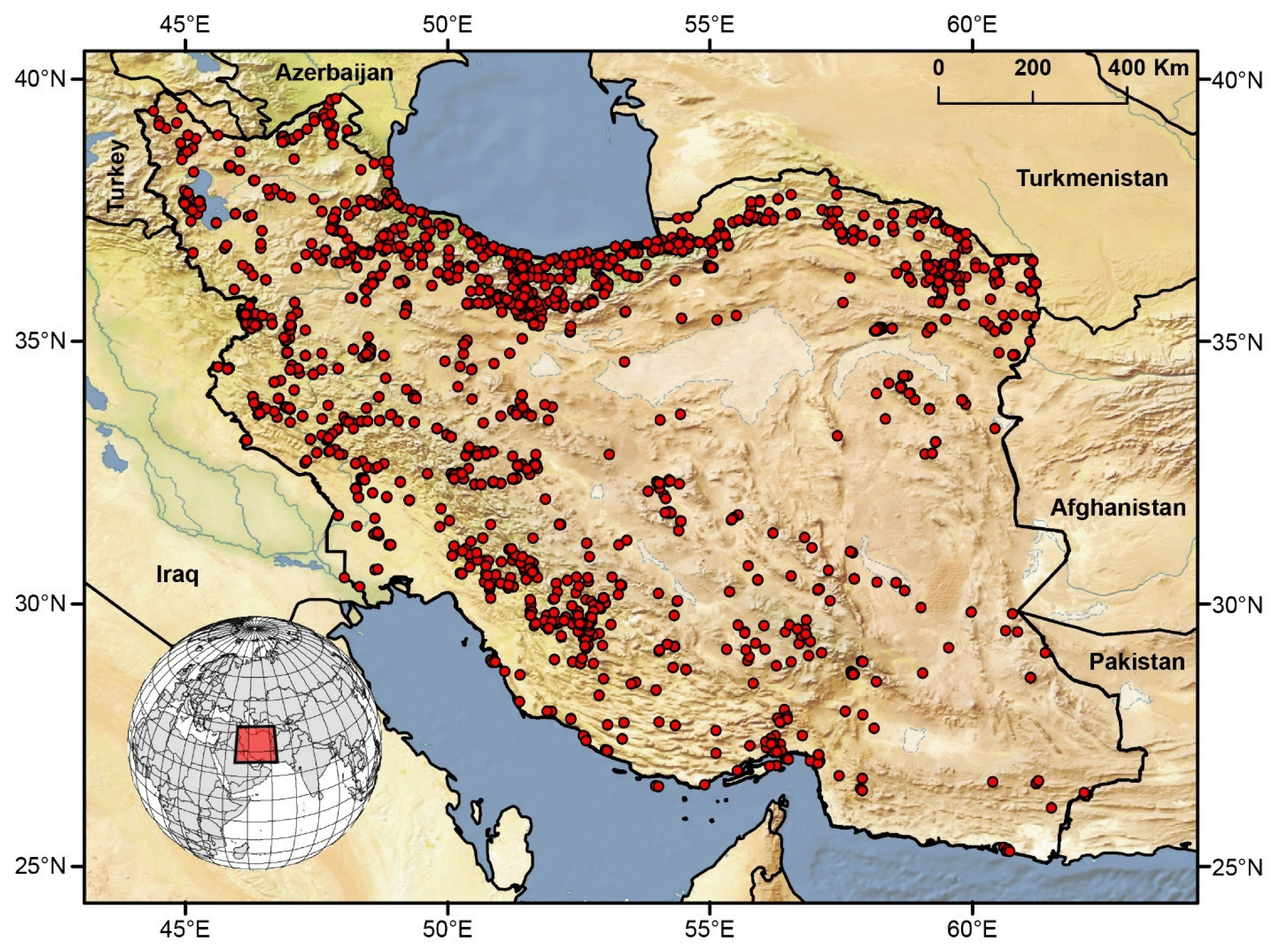
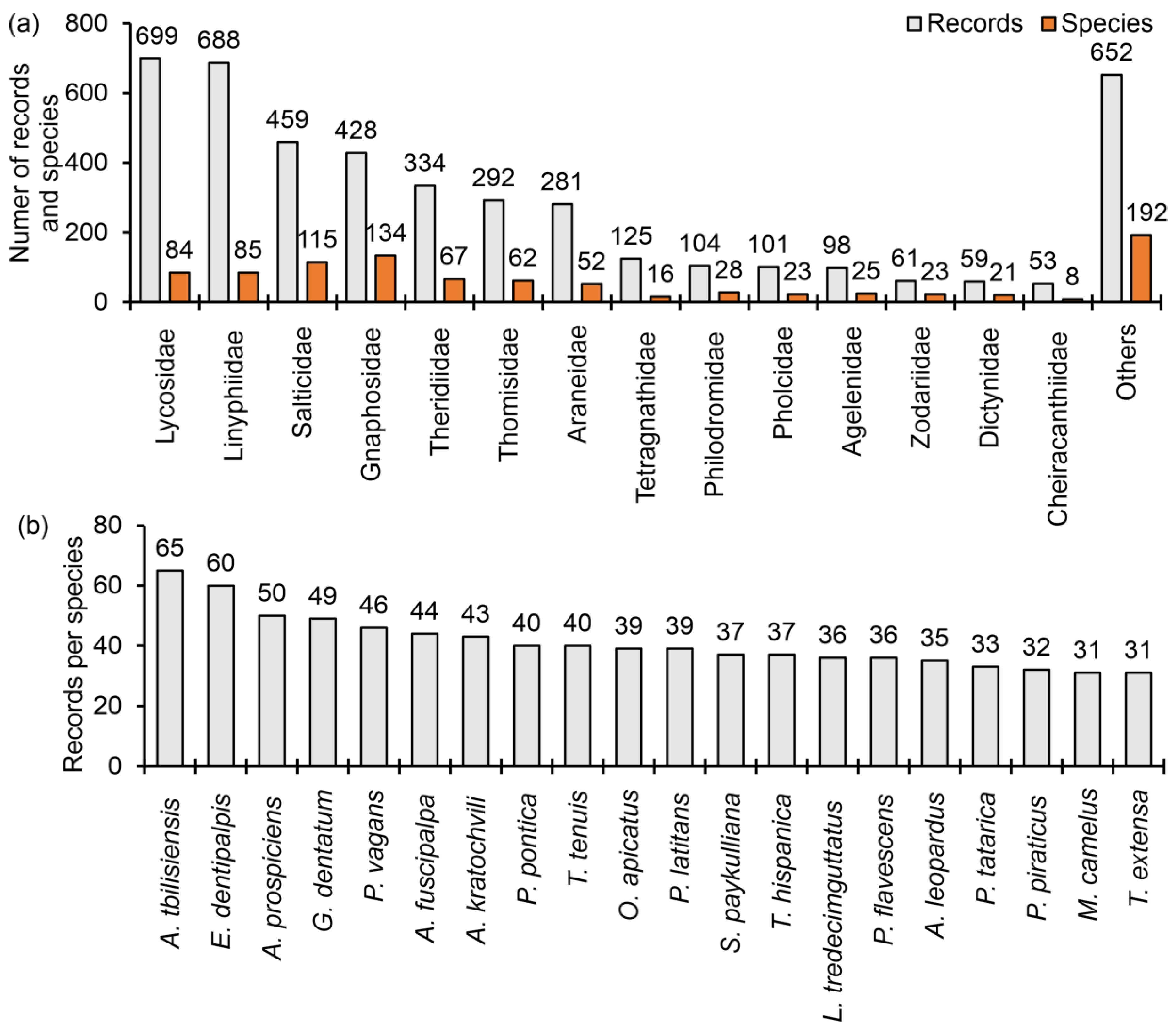
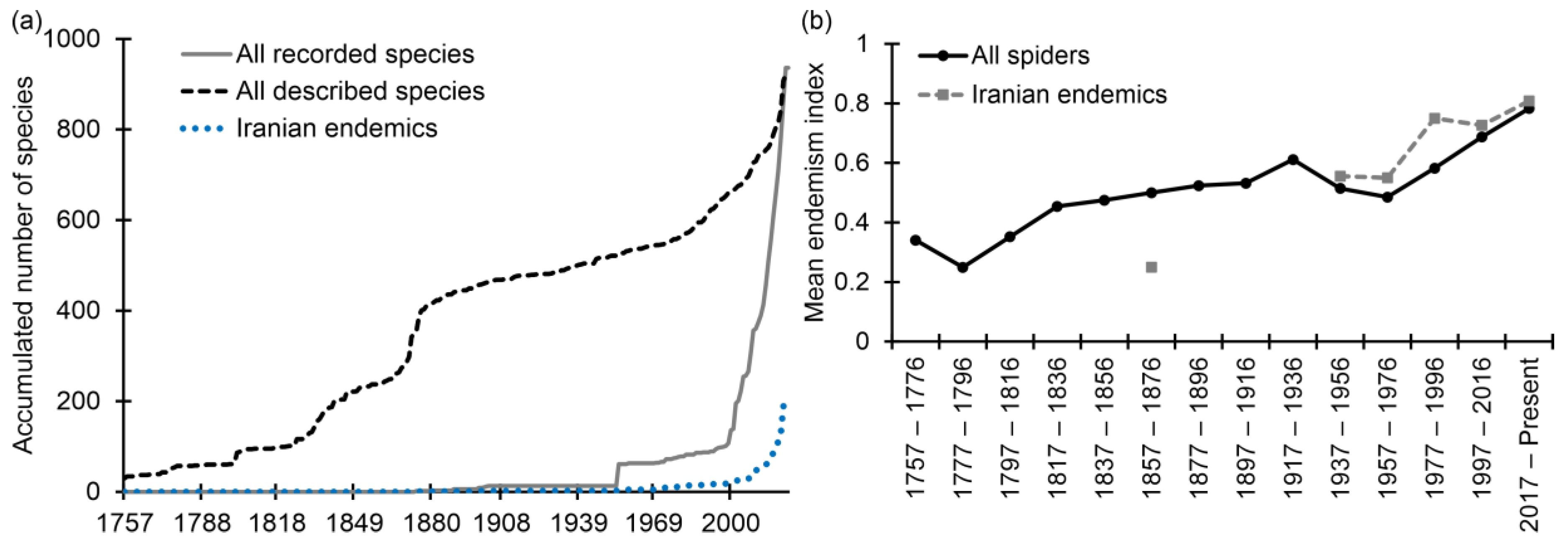
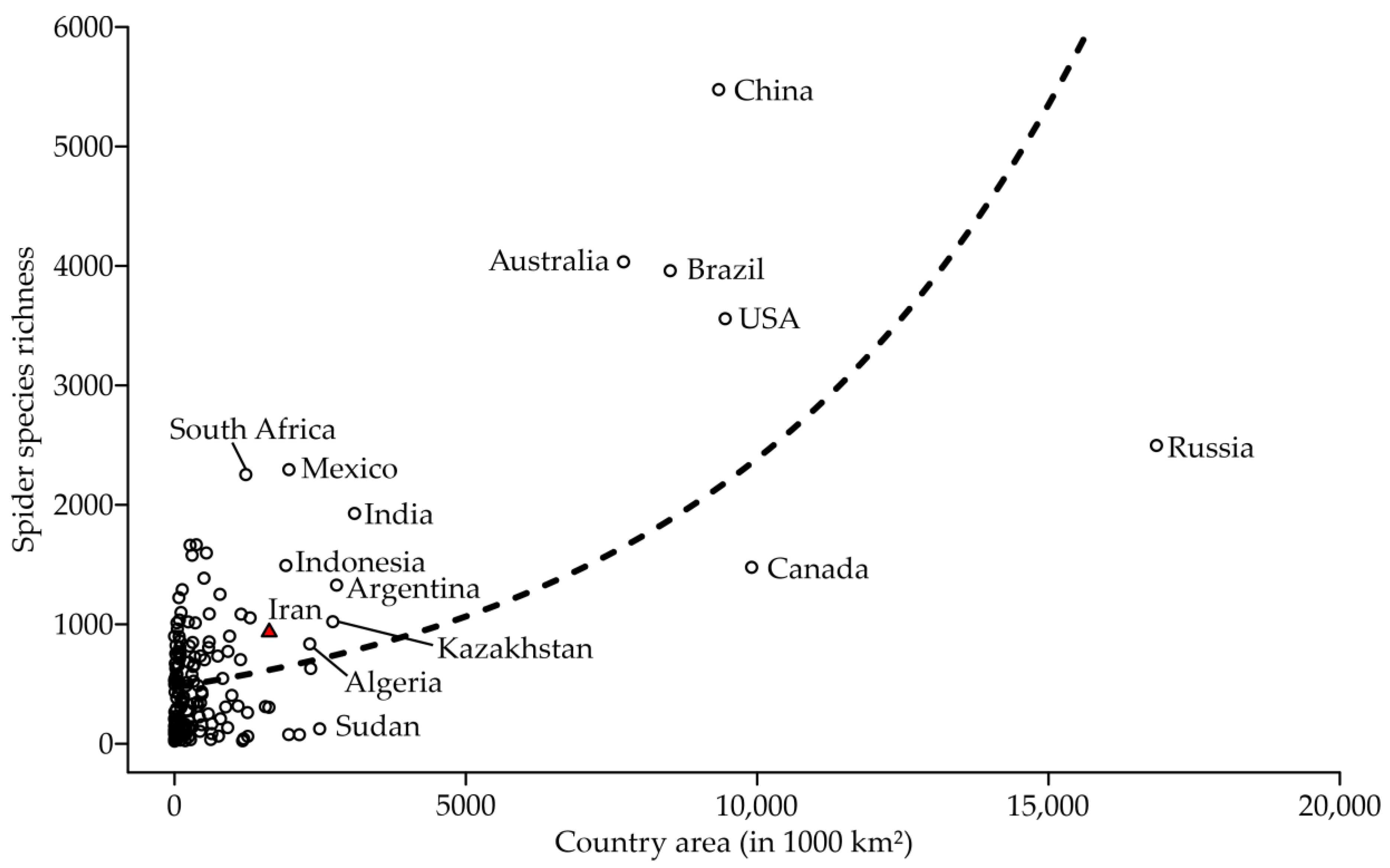
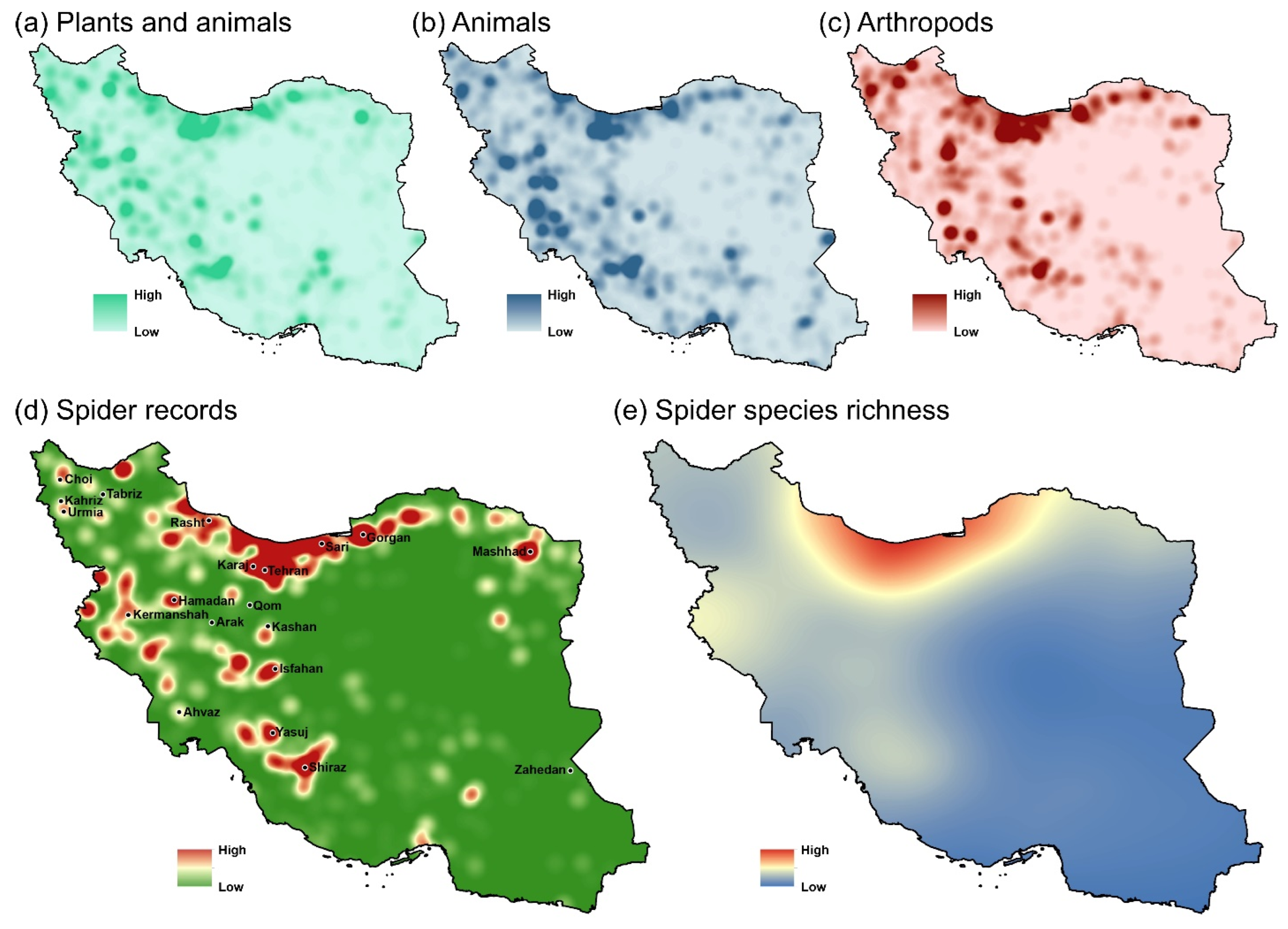
Although spiders constitute a highly diversified group of animals, the knowledge regarding their geographic distribution (i.e., the so-called Wallacean shortfall) and diversity patterns is incipient on a global scale; while attempts to explore such patterns have been made for the highly diversified Neotropical fauna, several Old World regions are historically neglected. Aiming to close this gap, the present study provides the most comprehensive review of spatial variation in the diversity patterns of the spider fauna of Iran. We also examined the effects of sampling biases on the results. We gathered a database with 4434 non-duplicate records of 935 species of spiders from Iran, 215 of which are currently considered endemic to the country. We showed that, despite a significant improvement in state-of-the-art taxonomic research regarding this fauna in the past 20 years, the Iranian spider fauna suffers from a highly uneven distribution of records throughout the country and its ecoregions. Additionally, highly sampled areas are typically near large cities. We also found a high correlation between the number of records and species of spiders and the number of records of plants and other animals in Iran, suggesting that the biodiversity shortfalls herein described for spiders are corroborated by other taxa. The biases reported herein are likely to be observed for other countries, as the area alone explained only 33.24% of the spider species richness among 171 compared countries. We hope that the present study stimulates further sampling and research aiming to explore this fauna and the underlying biological processes related to its patterns of diversity and distribution.
Keywords: biodiversity shortfalls; fauna; Middle East; species richness biodiversity shortfalls; fauna; Middle East; species richness