
Article

How Trophic Conditions Affect Development of Fire Salamander (Salamandra salamandra) Larvae: Two Extreme Cases

by
Paola Cogliati
1,
Benedetta Barzaghi
1,2,
Andrea Melotto
3,
Gentile Francesco Ficetola
1 and
Raoul Manenti
1,2,*
1
Department of Environmental Science and Policy, Università Degli Studi di Milano, 20133 Milano, Italy
2
Laboratorio di Biologia Sotterranea, Parco Regionale del Monte Barro, Località Eremo, 23851 Galbiate, Italy
3
Centre of Excellence for Invasion Biology, Department of Botany and Zoology, Stellenbosch University, Stellenbosch 7602, South Africa
*
Author to whom correspondence should be addressed.
Diversity 2022, 14(6), 487; https://doi.org/10.3390/d14060487
Submission received: 13 May 2022 / Revised: 3 June 2022 / Accepted: 8 June 2022 / Published: 15 June 2022
(This article belongs to the Special Issue Diversity in 2022)

Abstract

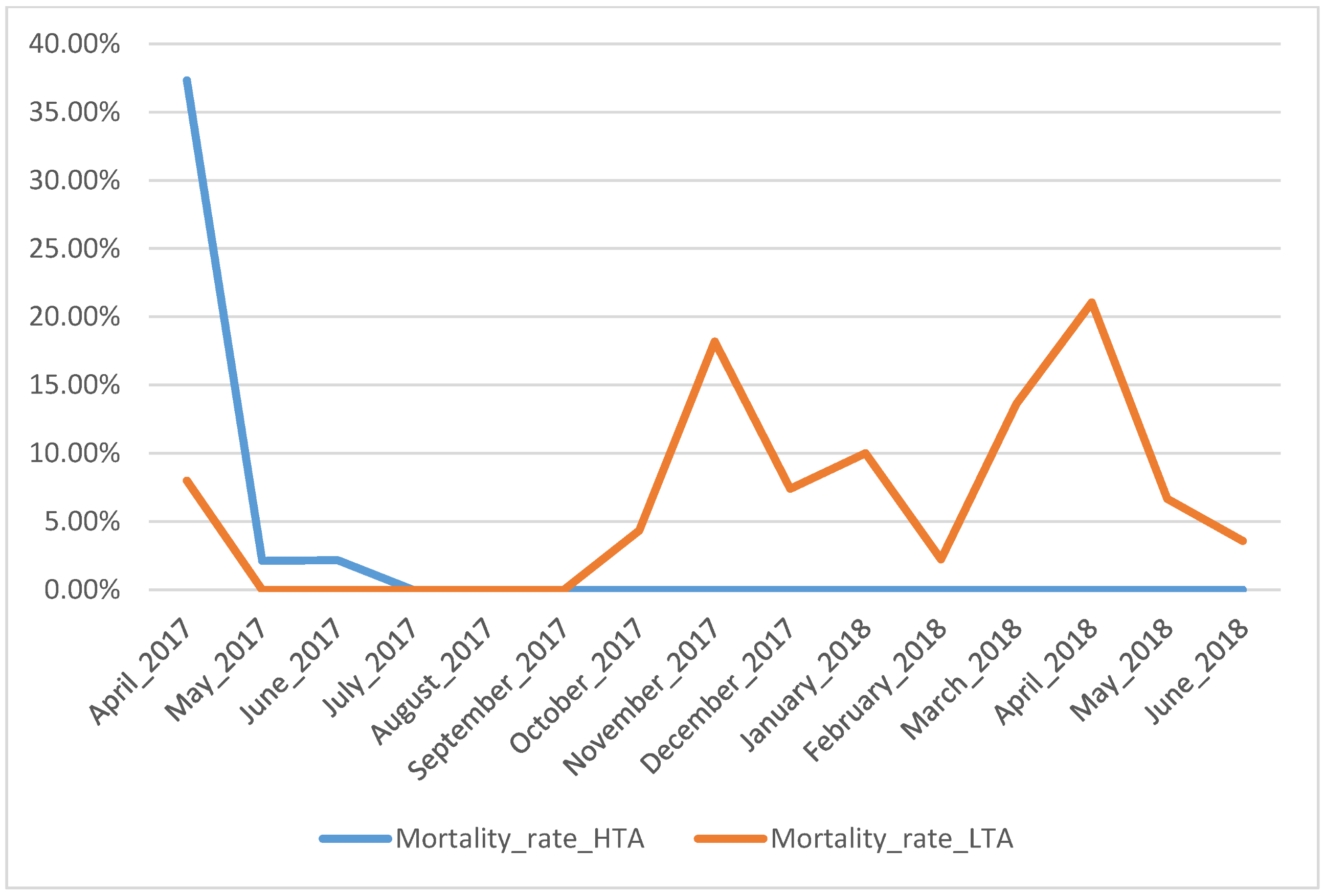
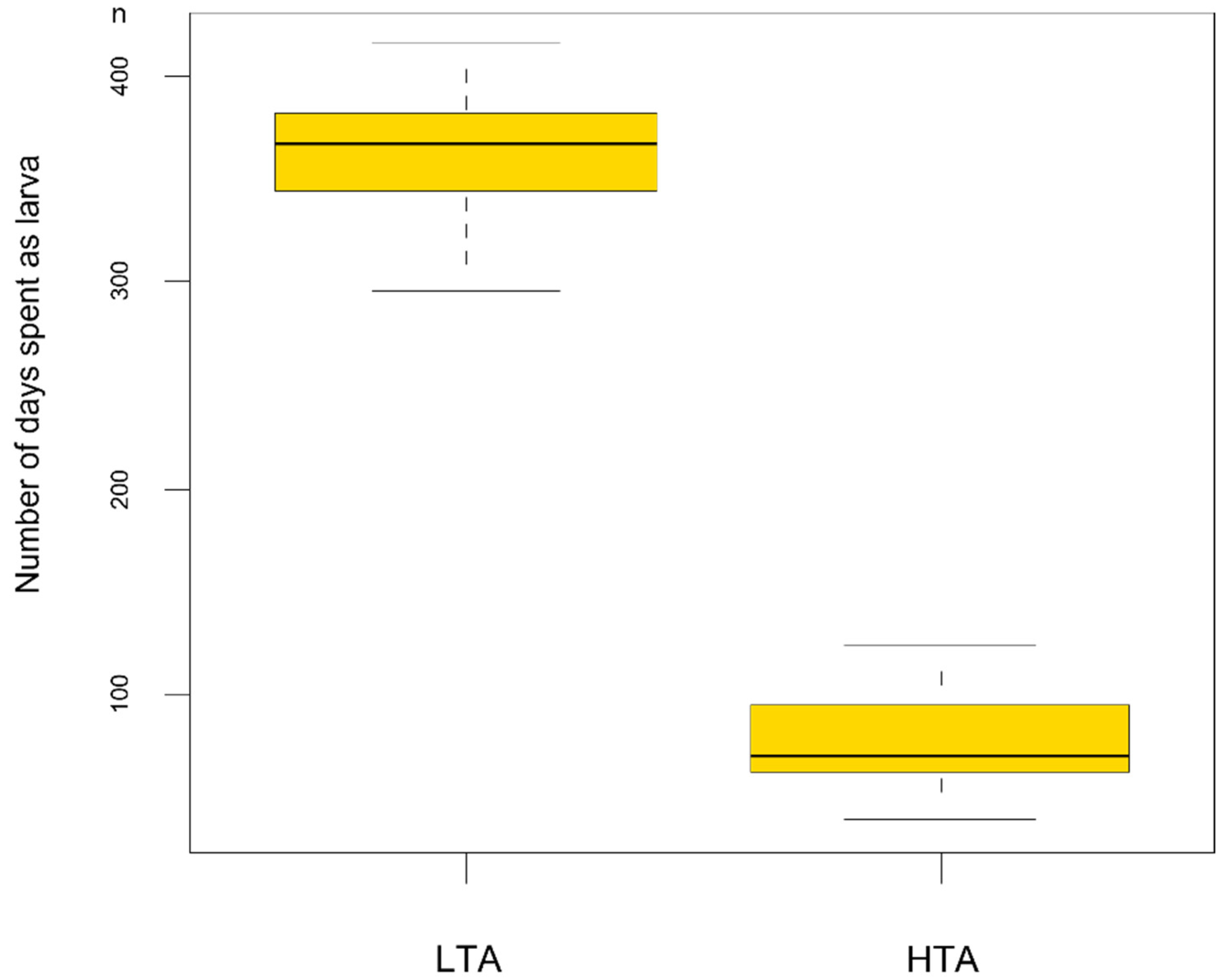
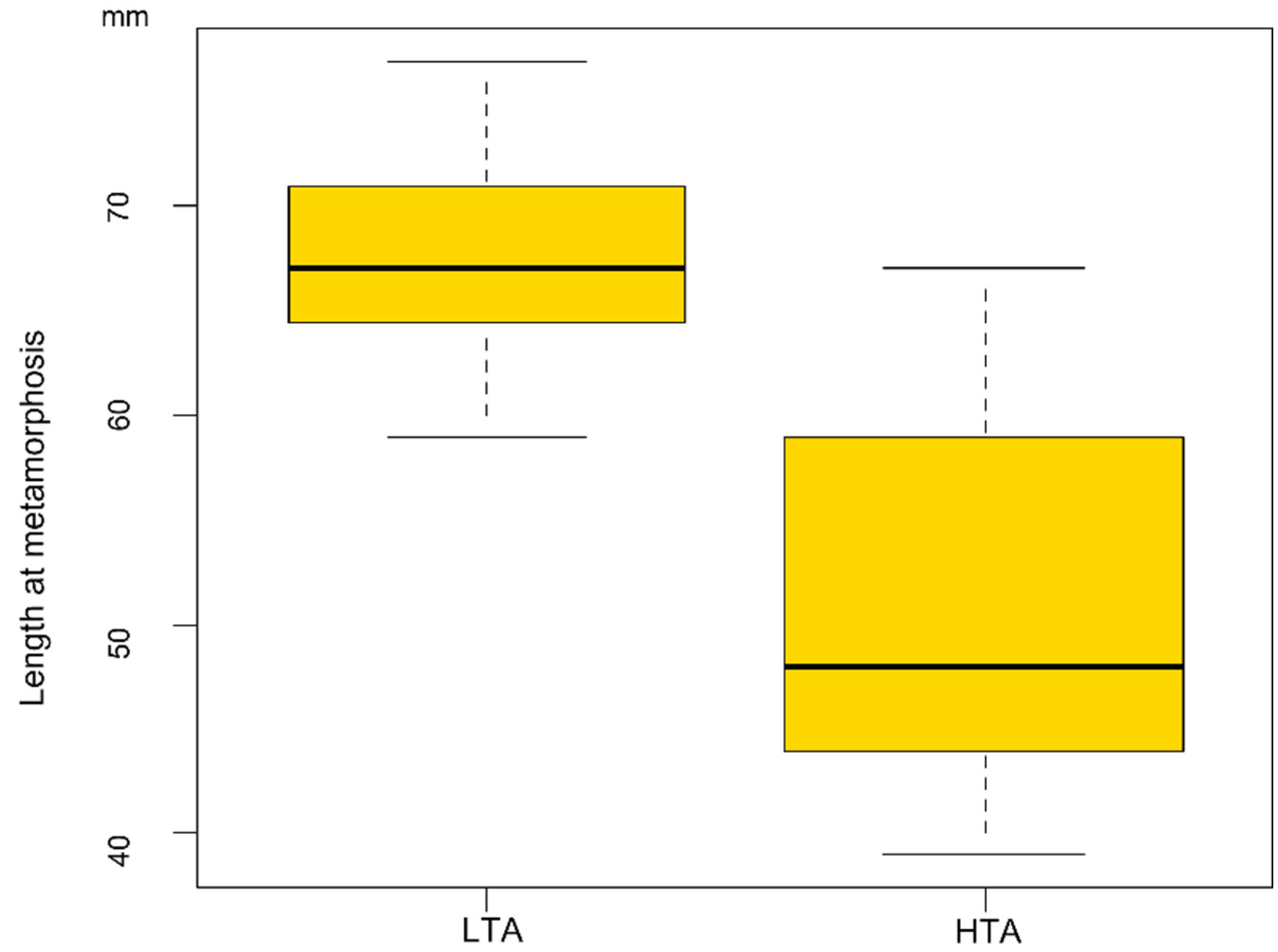
Reduced trophic resources can pose relevant constraints to the development of freshwater animals with complex life cycles. For amphibians, food deprived environments, such as high-altitude ponds and springs and groundwaters are frequently used for breeding. The aim of this study is to outline trophic conditions leading to extreme cases of delayed larval development and increased size at metamorphosis of a European widespread amphibian, the fire salamander (Salamandra salamandra). We collected 150 fire salamander larvae, split them in two groups, one with high and one with low trophic resource availability. We then observed the effects of nutritional conditions on larval development recording time to metamorphosis and average day growth. Moreover, in the field, we surveyed larvae growth and size at metamorphosis in two artificial subterranean sites with low prey availability. Trophic conditions strongly affected larval development and under low food treatment time to metamorphosis reached up to 416 days. In the subterranean environments we observed a similar pattern, with larvae requiring more than one year to attain metamorphosis but reaching unexpected large sizes. Environmental trophic conditions experienced during early stages can induce strong delay in metamorphosis of the fire salamander; this plasticity makes fire salamander larvae optimal models for comparative studies and cross-environment experiments.
Keywords: salamander; trophic; amphibians; tadpole; growth; stream; freshwater; method; carryover; Salamandra salamander; trophic; amphibians; tadpole; growth; stream; freshwater; method; carryover; Salamandra