
Article

Why Did Brown Hare Lepus europaeus Disappear from Some Areas in Central Poland?
1
Department of Forest Ecology, Forest Research Institute, Braci Leśnej 3, Sękocin Stary, 05-090 Raszyn, Poland
2
Department of Forest Zoology and Wildlife Management, Institute of Forest Sciences, Warsaw University of Life Sciences WULS-SGGW, Nowoursynowska 159, 02-776 Warsaw, Poland
*
Author to whom correspondence should be addressed.
Diversity 2022, 14(6), 465; https://doi.org/10.3390/d14060465
Submission received: 3 April 2022 / Revised: 6 June 2022 / Accepted: 7 June 2022 / Published: 10 June 2022
(This article belongs to the Collection Feature Papers in Animal Diversity)

Abstract

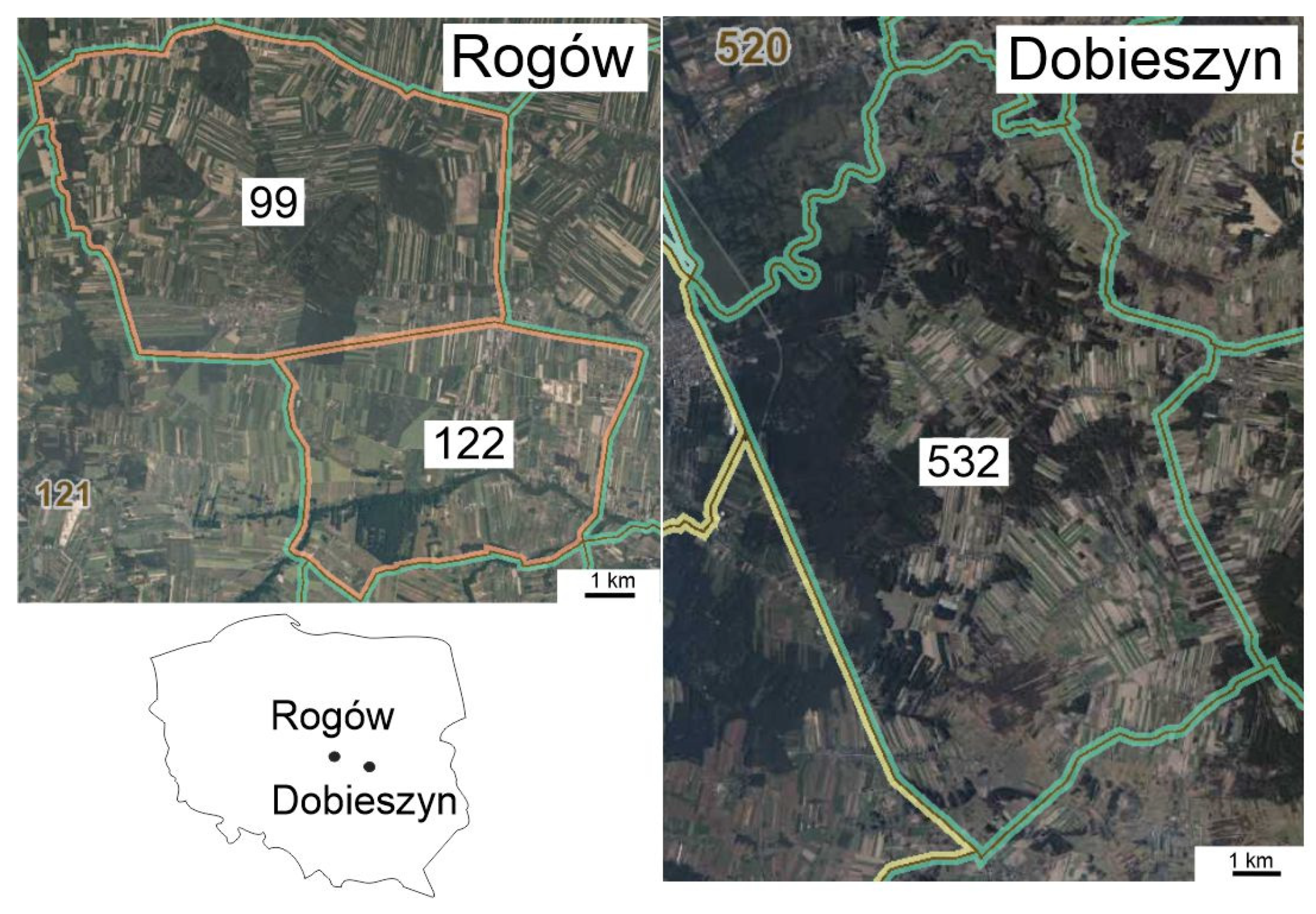
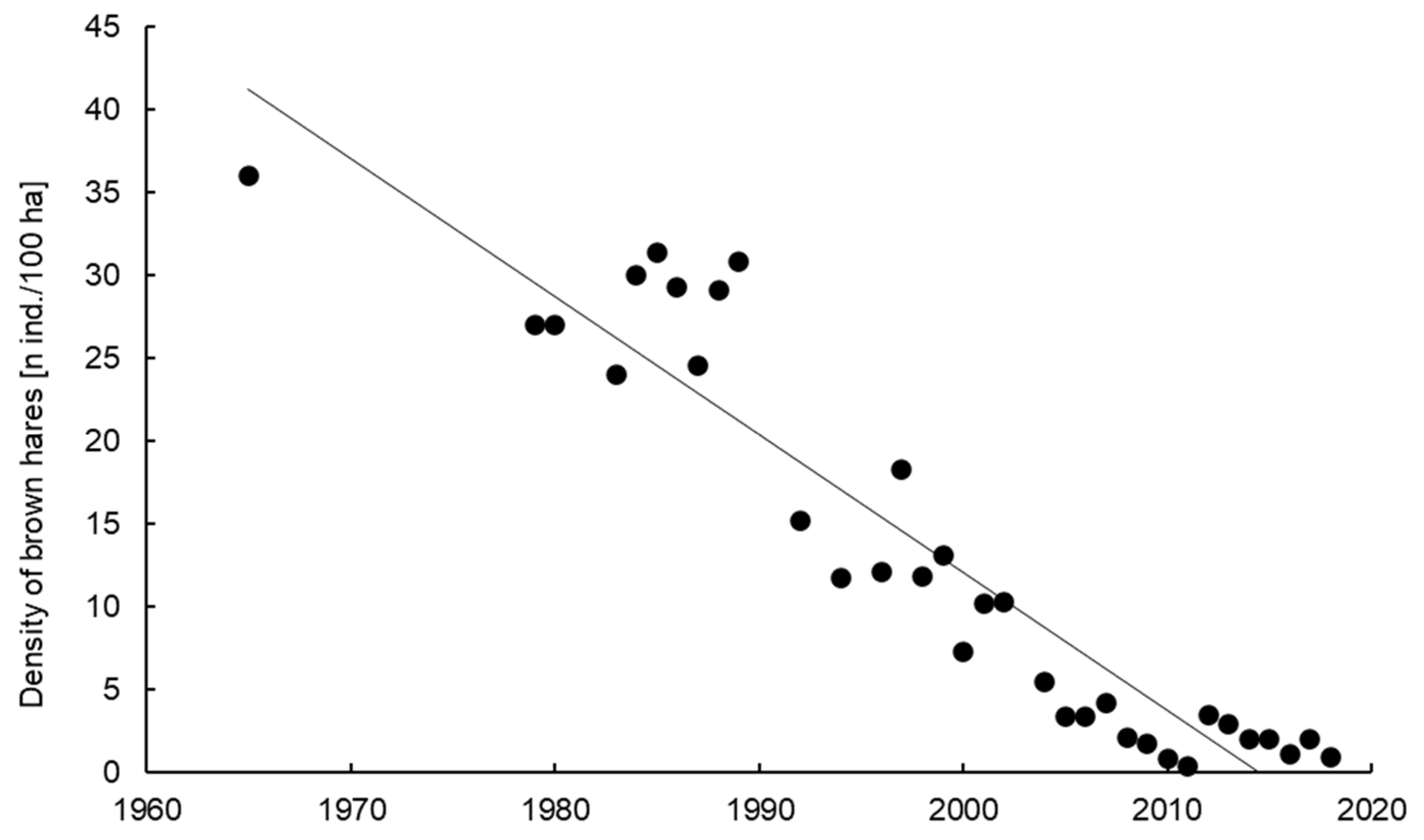
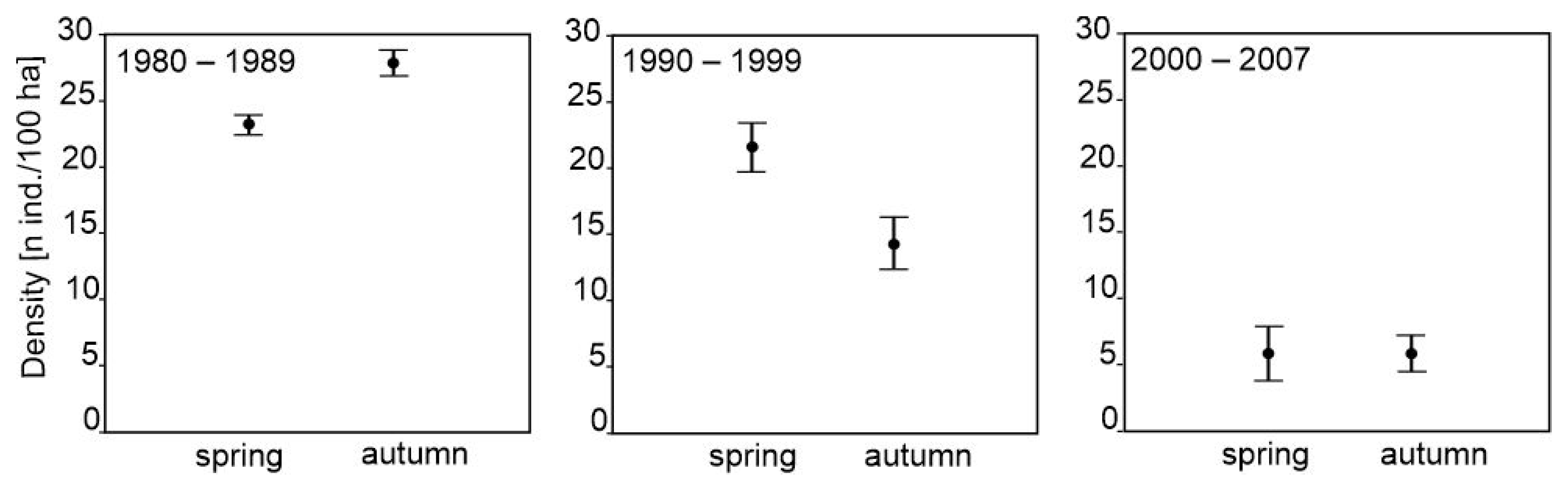
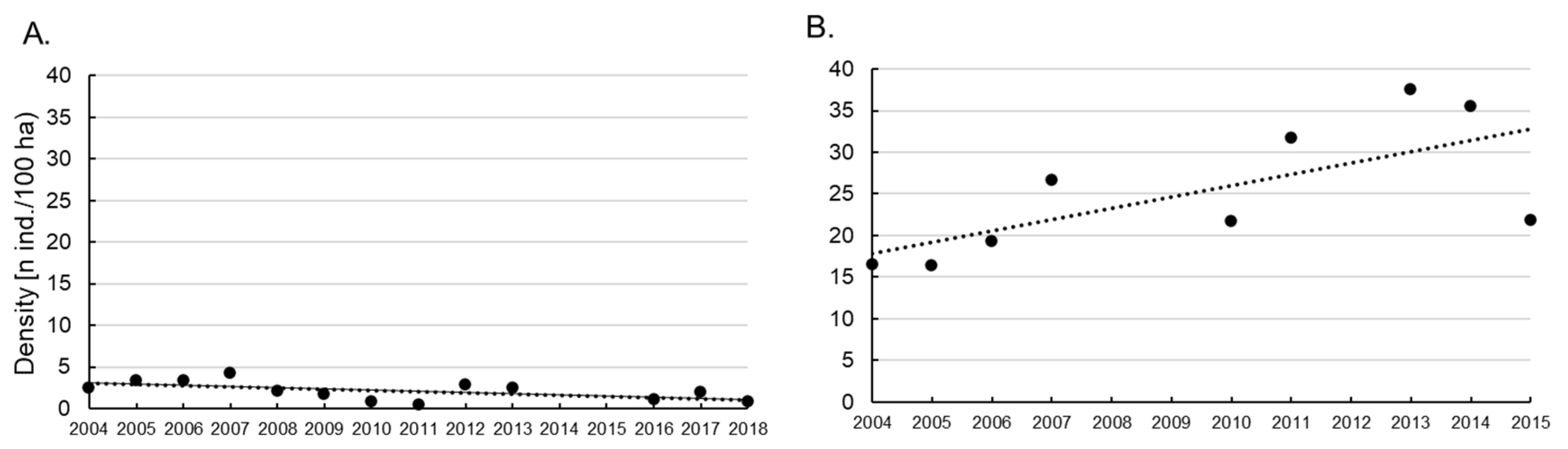
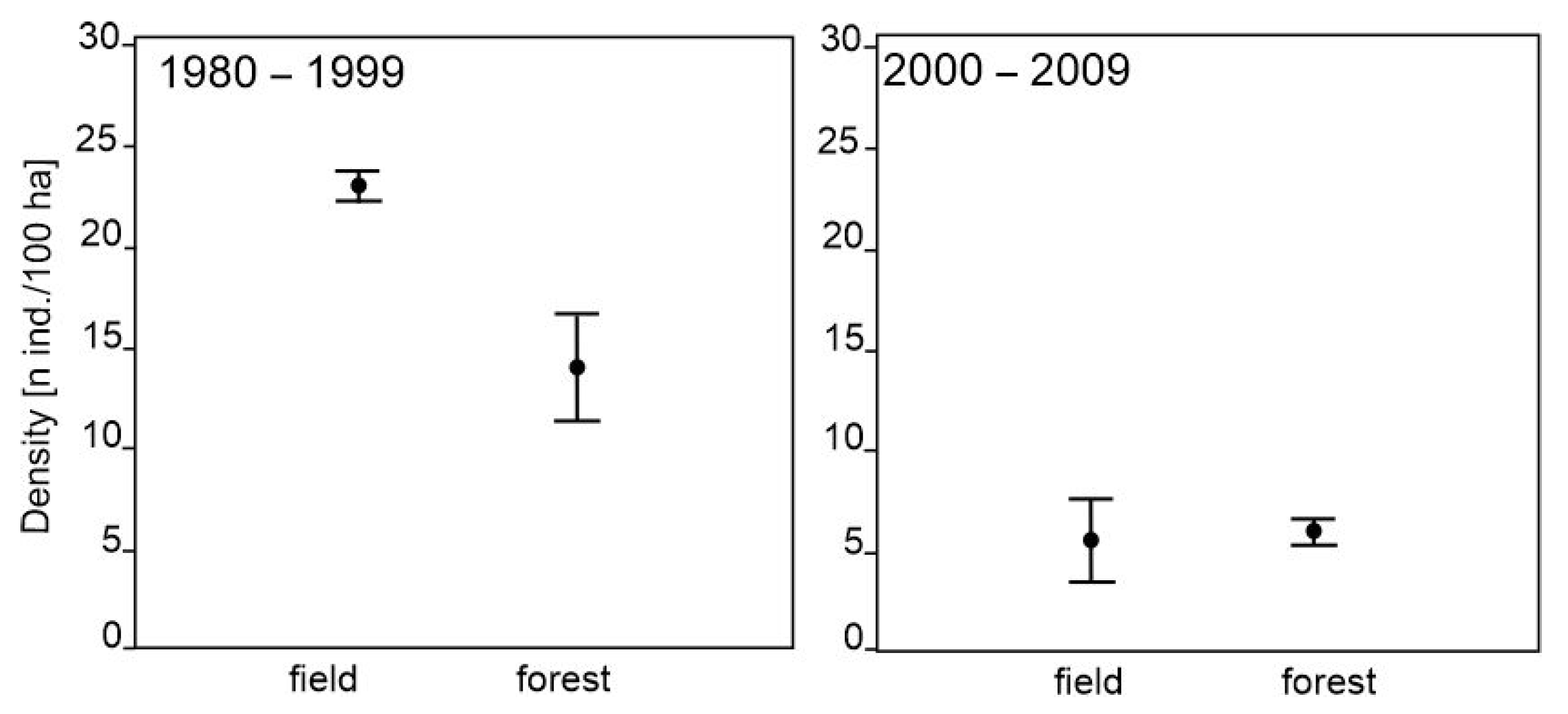
Brown hares originated in the open steppe grasslands of Eurasia and have adapted very successfully to a mixed, arable agriculture environment. In the last decades of the 20th century, a decline in brown hare populations has been observed in many European countries. In this study, we documented a long-term (1965–2018) decline in the hare population in a field and forest mosaic in central Poland (from over 30 ind./100 ha in the mid-1960s to 1–2 ind./100 ha in the past decade). We showed that the recent autumn densities were the same as compared to the preceding spring densities (suggesting a low recruitment rate) and that the recent densities recorded in the fields were no longer higher than in the forests (probably due to a decrease in the habitat quality of arable lands). We also showed that the share of hares in a red fox diet was now very low (0.1% vs. 13% in the past). We compared the recent (2004–2018) population estimates to another area that was located 70 km east (with a similar habitat structure, a community of predators and climate conditions, but with less intense agriculture), where the hare population was increasing. We suggested that the farming practices were the most important factor for the hare population decrease in our study area.
Keywords: long-term population decrease; farming practices; intensification of agriculture; red fox predation; recruitment rate; density estimation; density in open and wooded areas; field and forest mosaic long-term population decrease; farming practices; intensification of agriculture; red fox predation; recruitment rate; density estimation; density in open and wooded areas; field and forest mosaic