
Article

Annual Cycle of the Synechococcus spp. and Picoeukaryotic Growth and Loss Rates in a Subtropical Coastal Ecosystem

1
Institute of Marine Environment and Ecology, National Taiwan Ocean University, Keelung 202-24, Taiwan
2
Center of Excellence for the Oceans, National Taiwan Ocean University, Keelung 202-24, Taiwan
3
A.O. Kovalevsky Institute of Biology of the Southern Seas, Russian Academy of Sciences, 299011 Sevastopol, Russia
*
Author to whom correspondence should be addressed.
Diversity 2022, 14(1), 49; https://doi.org/10.3390/d14010049
Submission received: 30 December 2021 / Revised: 7 January 2022 / Accepted: 11 January 2022 / Published: 12 January 2022
(This article belongs to the Special Issue Planktonic Food Web: Feeding, Growth, and Trophic Interactions)

Abstract

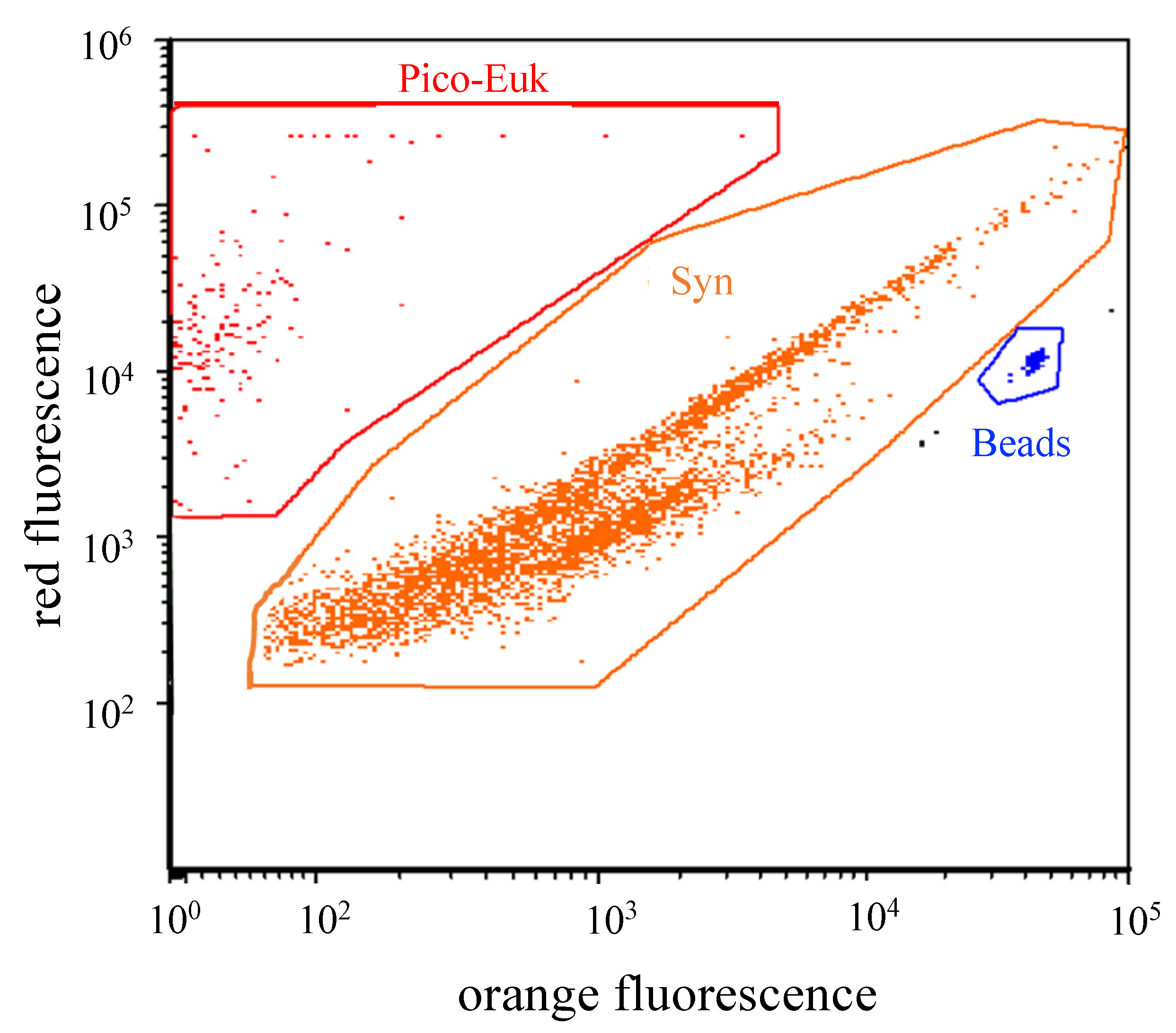
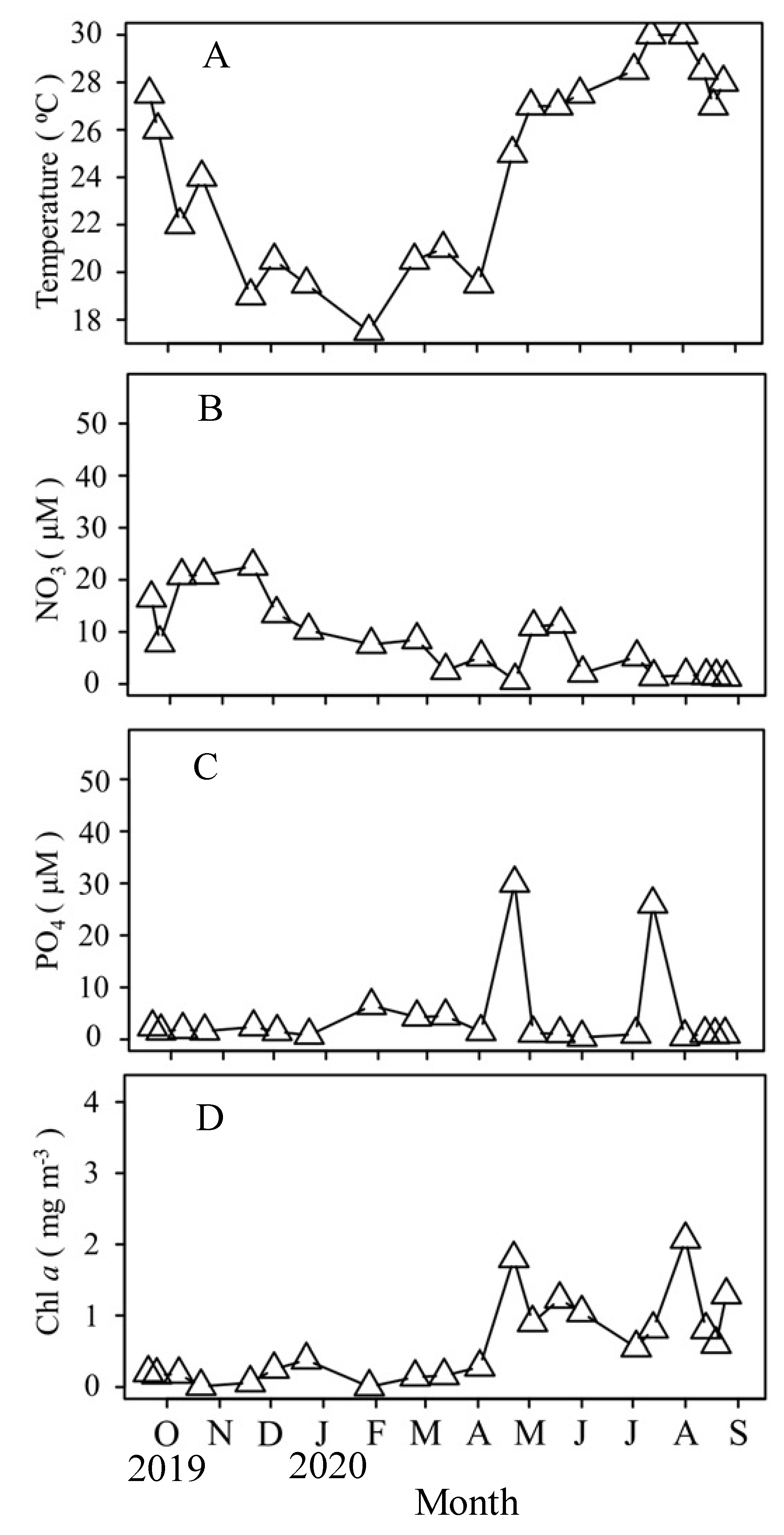
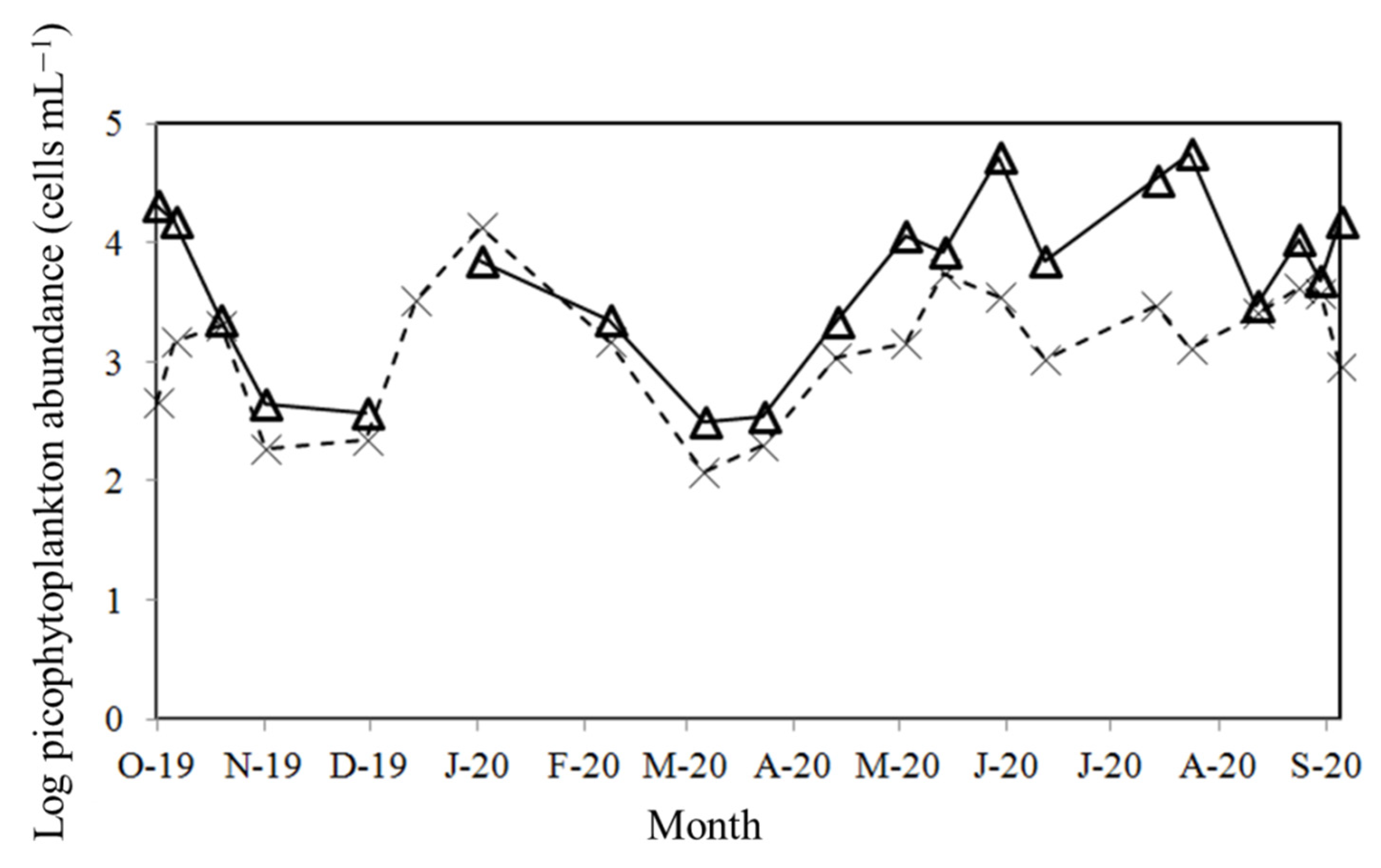
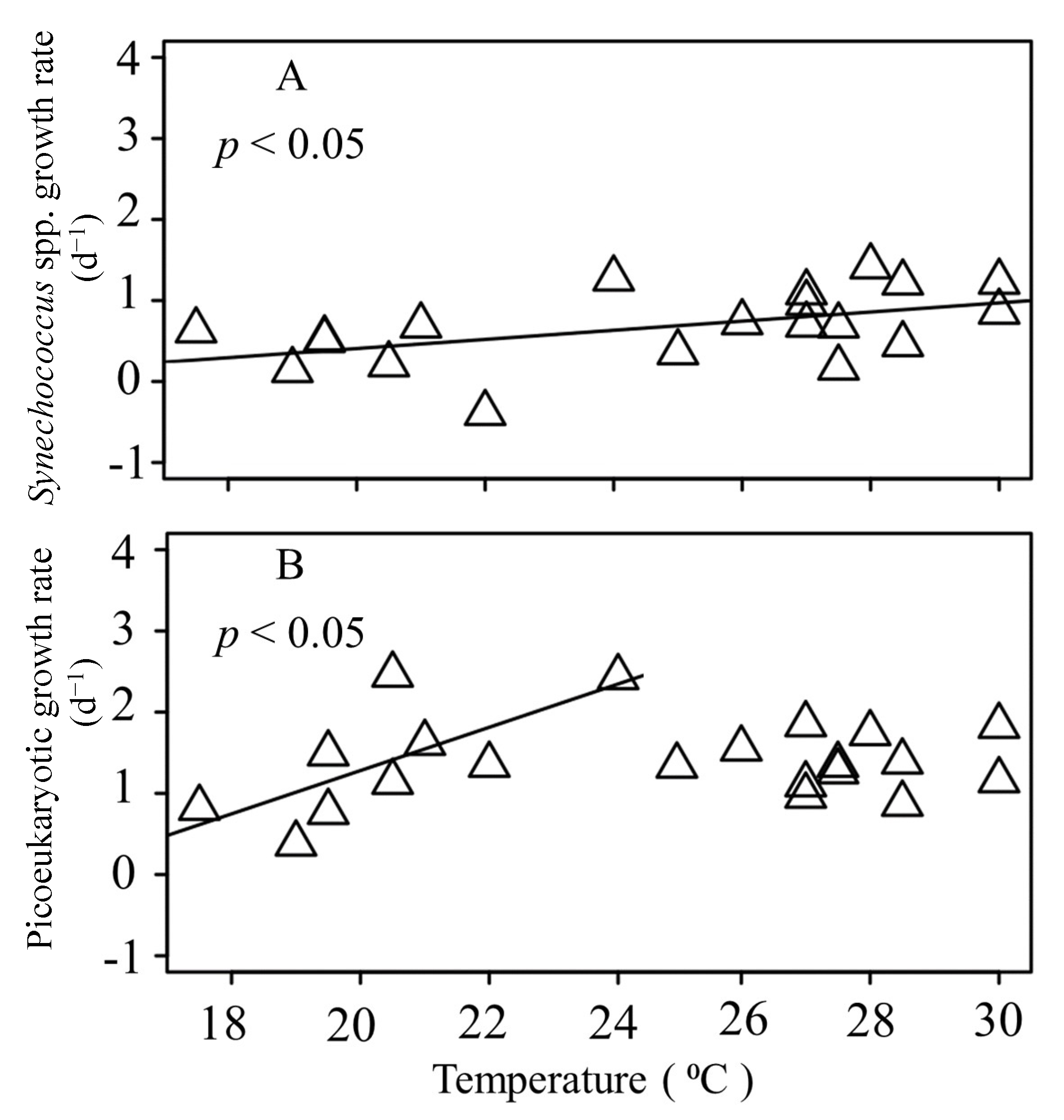
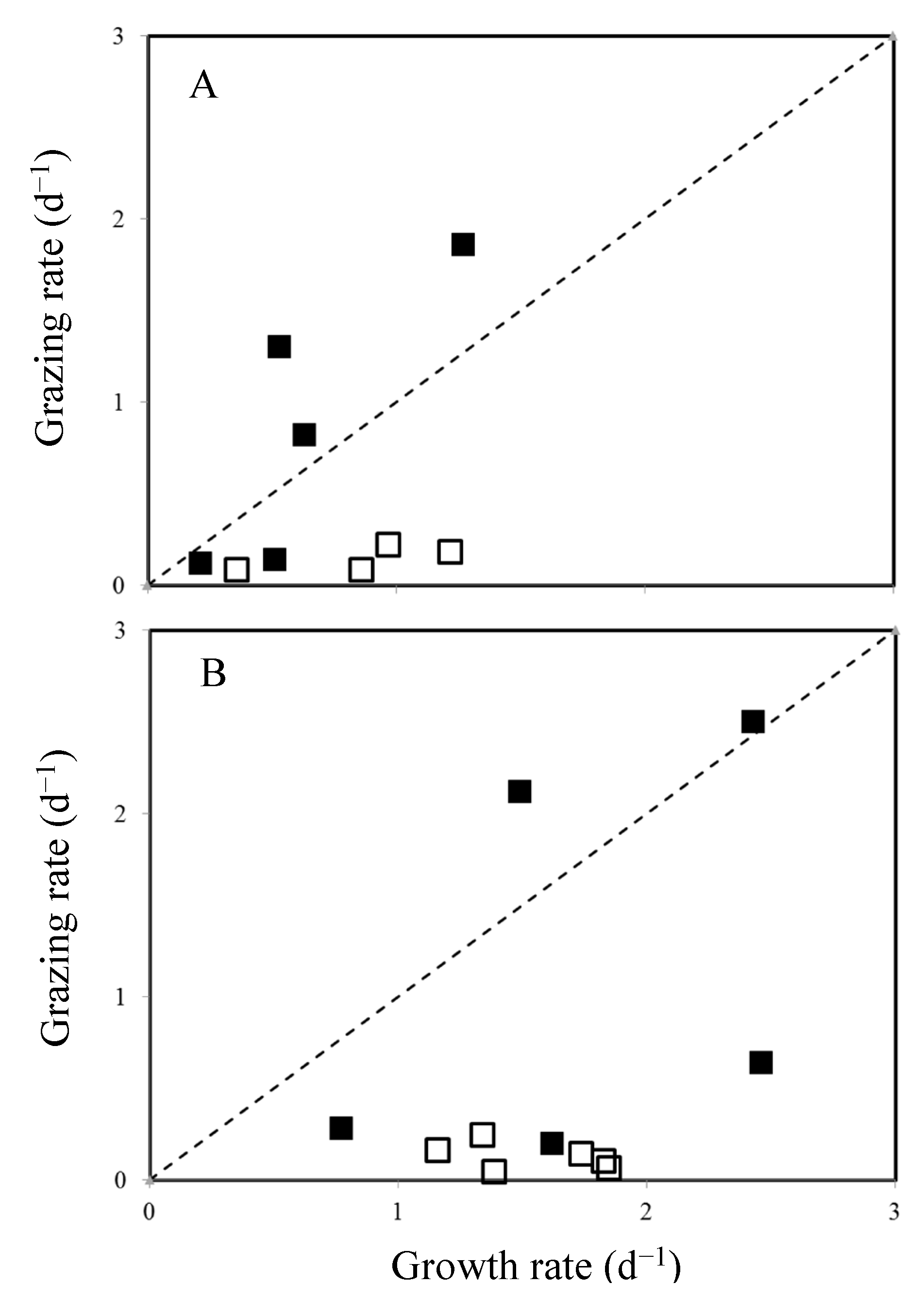
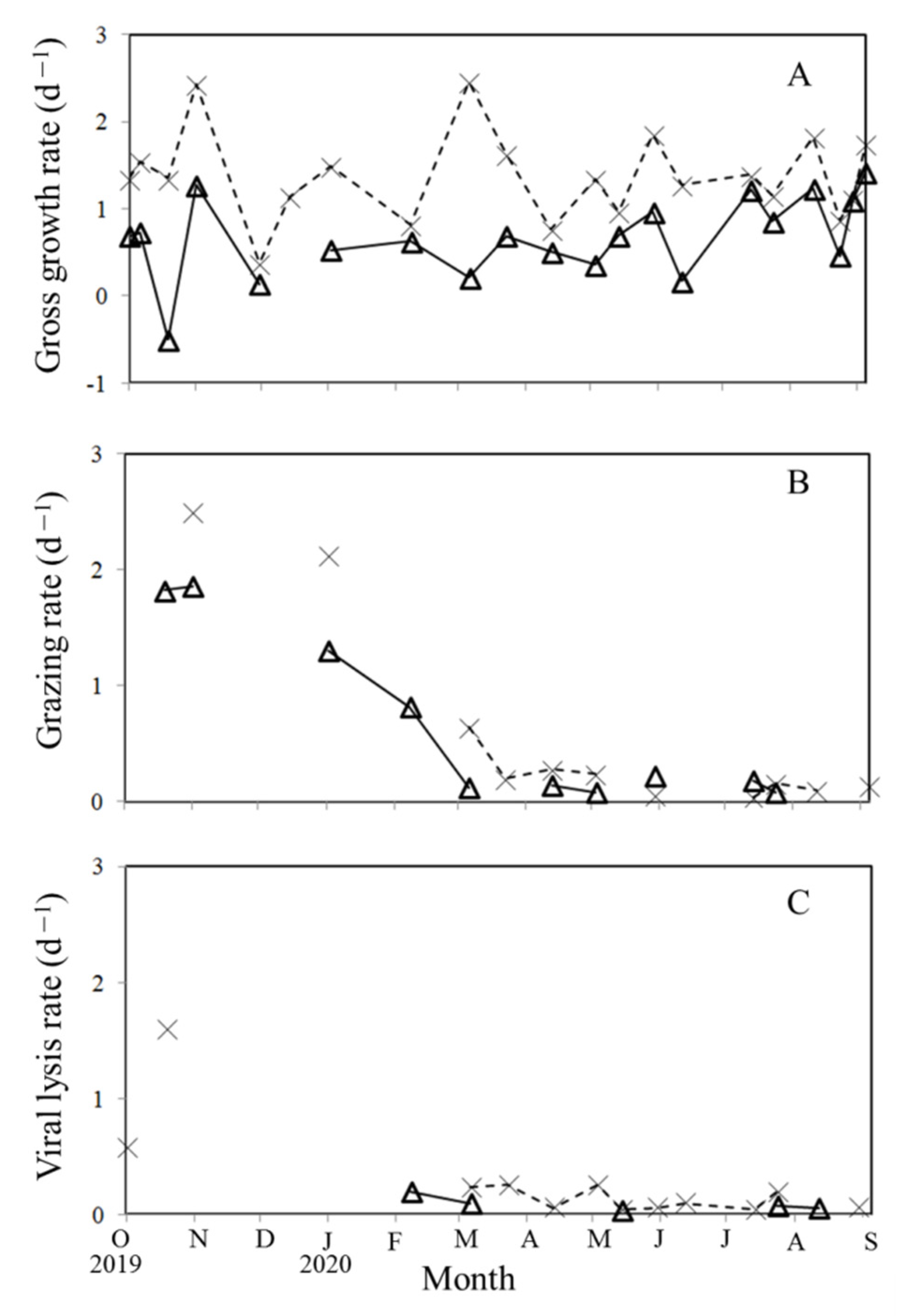
Seasonal variations in the picophytoplankton community structure (Synechococcus spp. and picoeukaryotes) were studied by flow cytometry in the coastal ecosystem of the subtropical western Pacific from October 2019 to September 2020. Synechococcus spp. was dominant in abundance during the study period, with its density ranging from 0.05 to 5.6 × 10⁴ cells mL−1; its maximum occurred in July 2020. Picoeukaryotes were less abundant, with their density ranging from 0.2 to 13.6 × 10³ cells mL−1. Their highest abundance was recorded in January 2020. The growth rates of Synechococcus spp. and picoeukaryotes ranged from −0.39 to 1.42 d−1 and 0.38 to 2.46 d−1, respectively, throughout the study period. Overall, the growth rate of the picoeukaryotes was significantly higher than that of Synechococcus spp. It is interesting to note that the grazing mortality of Synechococcus spp. and picoeukaryotes during the warmer period (April to September) was relatively low. Based on this study, we suggest that mixotrophic nanoflagellates lowered their feeding activity that obtained nutrients from prey and instead used additional nutrients during the incubation experiments. Our study demonstrated that a shift in the picophytoplankton community composition and grazing activity of predacious nanoflagellates in cold and warm periods can impact on the seasonal dynamics of the microbial food web.
Keywords: picophytoplankton; Synechococcus spp.; picoeukaryotes; growth rate; annual cycle picophytoplankton; Synechococcus spp.; picoeukaryotes; growth rate; annual cycle