1. Introduction
Isoxazolines are a class of five-membered heterocyclic rings containing both nitrogen and oxygen in a 1,2-relationship, with broad applications in functional materials [
1]. Isoxazolines can be efficiently obtained through a 1,3-dipolar cycloaddition reaction between a nitrile oxide (1,3-dipole) and an alkene (dipolarophile), exhibiting a high level of regioselectivity that predominantly affords 3,5-disubstituted derivatives. Among them, 3,5-disubstituted derivatives are particularly interesting due to the possibility of incorporating long alkyl chains and polar aromatic groups, which can impart unique properties such as molecular self-organization and liquid-crystalline behavior [
2,
3]
Cyclic carbonate (1,3-dioxolan-2-one)-containing liquid-crystalline molecules have been shown to form ordered two-dimensional ion-conductive pathways with lithium bis(trifluoromethylsulfonyl)imide, enabling efficient lithium-ion transport [
4]. In particular, ternary mixtures comprising cyclic carbonate-based mesogens, lithium bis(trifluoromethylsulfonyl)imide, and low-molecular-weight carbonates (e.g., ethylene carbonate or propylene carbonate) have been reported to generate liquid-crystalline electrolytes with enhanced lithium-ion conductivity [
5]. Notably, hydrolysis of cyclic carbonates affords the corresponding mesomorphic diols, which have been employed to assemble hydrogen-bonded nanostructures that confine protic salts, producing ordered materials with greatly enhanced proton conductivity for potential fuel cell electrolyte applications [
6].
Both scaffolds, the isoxazoline ring and the 1,3-dioxolan-2-one unit (as well as its diol derivatives), also display significant pharmaceutical relevance. Isoxazolines are widely used as antiparasitic agents in veterinary [
7] and, more recently, human medicine [
8], with representative examples including lotilaner, sarolaner, and afoxolaner. Likewise, diol-containing motifs are present in clinically relevant drugs such as the antivirals penciclovir and ganciclovir (1,3-diols) [
9], ribavirin (bearing vicinal diol functionalities in the ribofuranose moiety) [
10], and the immunomodulatory agents ponesimod (1,2-diol) [
11] and fingolimod (1,3-diol) [
12].
In light of these advances, we sought to combine molecular architectures bearing both an isoxazoline core and a 1,3-dioxolan-2-one unit in order to explore their potential as self-organized ion-conductive materials. In this work, we present a synthetic sequence integrating ether formation, esterification, oxime formation, and 1,3-dipolar cycloaddition to access a functionalized 3,5-disubstituted isoxazoline bearing a 1,3-dioxolan-2-one ring, whose liquid-crystalline properties were also evaluated.
2. Results and Discussion
2.1. Synthesis
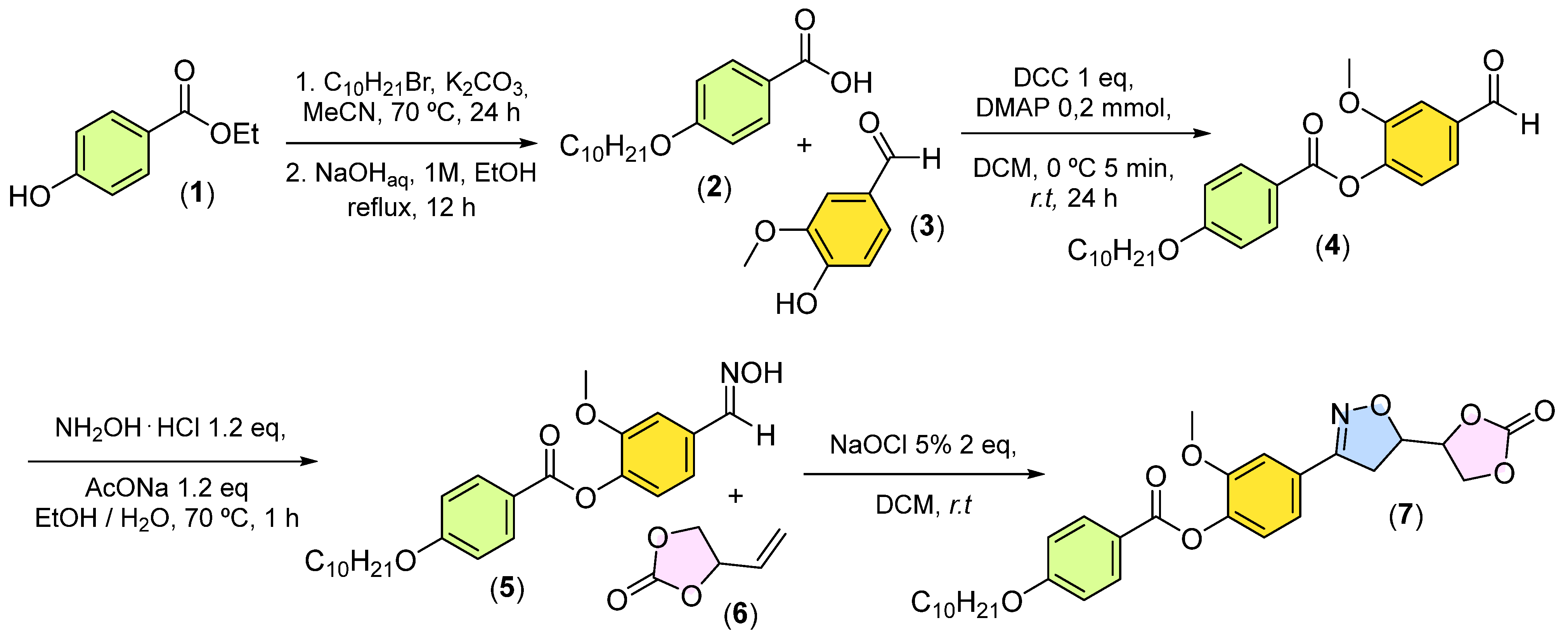
4-Decyloxybenzoic acid 2 was synthesized via Williamson etherification of ethyl 4-hydroxybenzoate 1 with 1-bromodecane, followed by alkaline hydrolysis of the resulting ester. Compound 2 was subsequently reacted with 4-hydroxy-3-methoxybenzaldehyde (vanillin, 3) via Steglich esterification, using dicyclohexylcarbodiimide (DCC) and 4-dimethylaminopyridine (DMAP) in dichloromethane, affording ester 4 in 70% yield. Ester 4 was treated with hydroxylamine hydrochloride in an ethanol/water mixture in the presence of sodium acetate, leading to the corresponding oxime 5 in quantitative yield. An alternative synthetic approach was initially explored, in which the oxime was first prepared directly from vanillin prior to ester formation; although oxime formation proceeded successfully, the subsequent esterification step resulted in a complex mixture of products that proved difficult to purify, leading us to adopt the route described above.
The oxime
5 was then converted in situ into the corresponding nitrile oxide and subjected to a 1,3-dipolar cycloaddition with 4-vinyl-1,3-dioxolan-2-one
6 as the dipolarophile, producing the target 3,5-disubstituted isoxazoline
7 in moderate yield (60%) and high purity level. All reactions proceeded with moderate to high yields, and the intermediates were used in subsequent steps after recrystallization when necessary. The complete synthetic sequence and reaction conditions are presented in
Scheme 1. The final compound
7 was purified by washing with hot acetonitrile.
Compound
7 was synthesized through a five-step linear sequence involving phenol alkylation, esterification via Steglich conditions (DCC/DMAP), oxime formation, and a final 1,3-dipolar cycloaddition. The synthetic route proved robust, and both intermediates and the final product were readily purified. Beyond its synthetic utility, this strategy may also be relevant for the design of bioactive molecules. Isoxazolines are widely employed as antiparasitic agents in veterinary medicine [
7]. Moreover, incorporation of a cyclic carbonate moiety may enhance molecular polarity and conformational rigidity, features often associated with improved performance in bioactive compounds [
13].
2.2. Characterization
The target compound was fully characterized by
1H and
13C NMR spectroscopy (1D and 2D experiments) and Fourier transform infrared (FTIR) spectroscopy. The complete spectroscopic data are provided in the
Supporting Information, while selected features and relevant signal assignments are discussed in the main text.
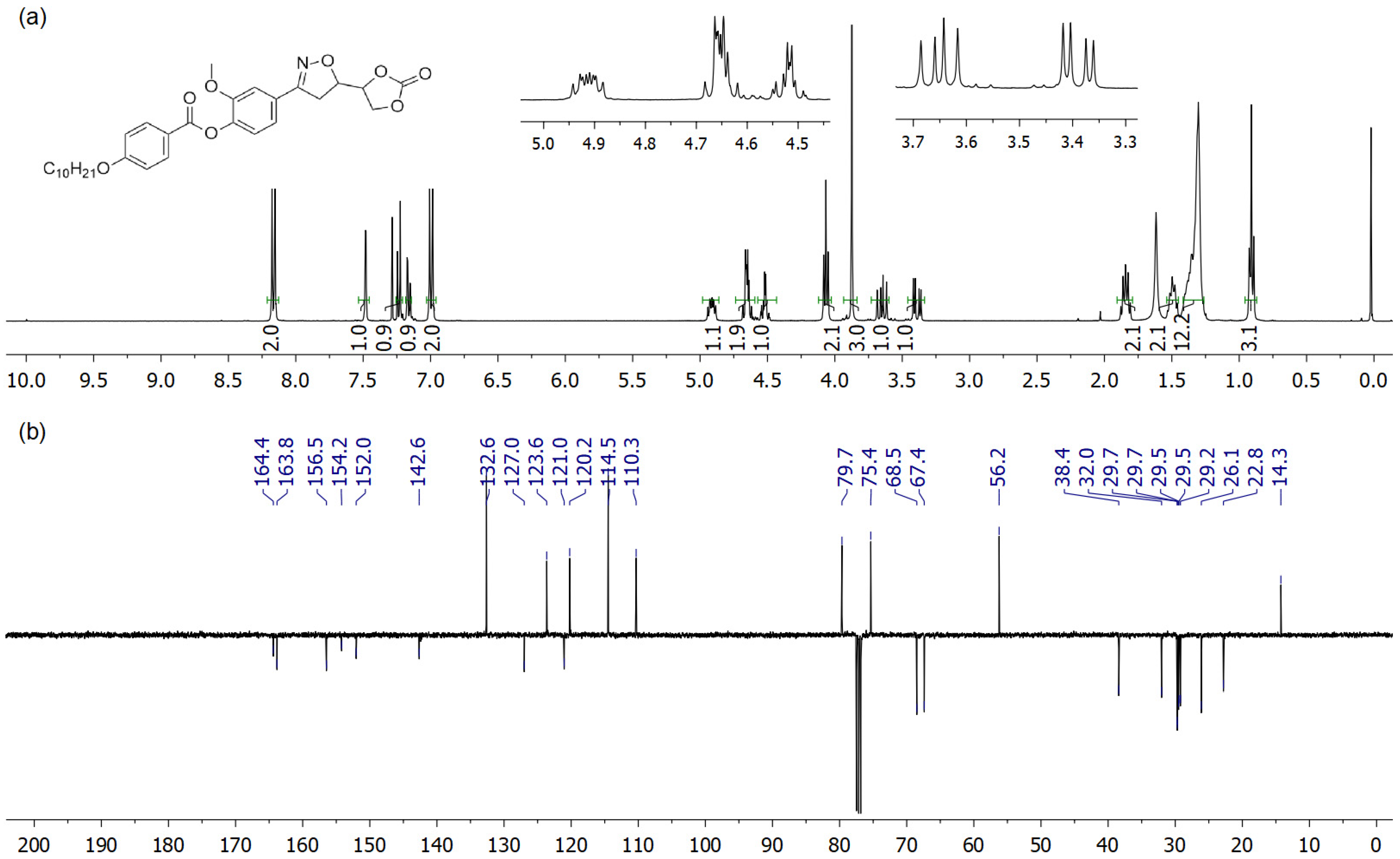
The 1H NMR spectra of compounds 4, 5, and 7 show several conserved resonances, including those attributed to the alkyl chain and the methoxy group. The aromatic proton signals of the ring more distant from the aldehyde group in 5 are only slightly affected throughout the successive synthetic steps.
In addition to the alkyl, methoxy, and aromatic signals, compound
7 displays characteristic resonances of the isoxazoline ring and the cyclic carbonate moiety. The isoxazoline fragment gives rise to three signals at 3.39 (dd,
J = 17.2, 5.6 Hz, 1H), 3.65 (dd,
J = 17.2, 10.5 Hz, 1H), and 4.91 (m, 1H). The
1H–
1H COSY spectrum (
Figure S9) confirms the coupling between these resonances. The signals at 3.39 and 3.65 ppm correspond to diastereotopic methylene protons adjacent to the stereogenic center at C-5 and appear as doublets of doublets due to geminal coupling (
2J = 17.2 Hz) and vicinal couplings with the proton at C-5 (
3J = 5.6 Hz for
trans and 10.5 Hz for
cis coupling, respectively). In isoxazolines, the vicinal coupling constant is strongly influenced by the constrained dihedral angle of the five-membered ring; consequently, the cis coupling constant may exceed the trans value, a behavior previously reported for 3,5-disubstituted isoxazolines [
14,
15].
The compound
7 also exhibited additional signals attributed to the 1,3-dioxolan-2-one fragment. These signals displayed complex multiplicity and appeared as multiplets at δ 4.57–4.47 (1H) and δ 4.69–4.61 (2H). The
1H–
13C HSQC experiment (
Figure S10) confirmed that the two methylene hydrogens of the cyclic carbonate produced signals with distinct chemical shifts (δ 4.57–4.47 and δ 4.69–4.61), as indicated by the red cross-peaks, showing that both hydrogens are attached to the same carbon, which gave a signal at δ 67.4 ppm in the APT experiment (
Figure 1b). The methine (CH) hydrogen of the cyclic carbonate ring resonated at δ 4.69–4.61 ppm, exhibiting significant overlap with one of the methylene hydrogens of the same ring. This assignment is fully consistent with the blue cross-peak, confirming that this hydrogen is attached to the carbon resonating at δ 75.4 ppm.
The APT spectrum (
Figure 1b) showed the terminal methyl carbon of the aliphatic chain at δ 14.3 ppm and the methylene carbons between δ 22.8 and 32.0 ppm, with the oxygenated methylene at δ 68.5 ppm. The methoxy carbon appeared at δ 56.2 ppm. Methylene carbons of the isoxazoline and cyclic carbonate rings were observed at δ 38.4 and 67.4 ppm, respectively, while the corresponding methine carbons resonated at δ 79.7 and 75.4 ppm. In the aromatic and carbonyl region, eight signals were detected, corresponding to five substituted aromatic carbons, two carbonyl carbons (ester and cyclic carbonate), and one iminic carbon of the isoxazoline ring. Five aromatic CH carbons were also observed: the two most intense at δ 132.6 and 114.5 ppm were assigned to the ring between the ester and the alkoxy chain, and the three less intense signals were attributed to the CH carbons of the asymmetrically substituted ring.
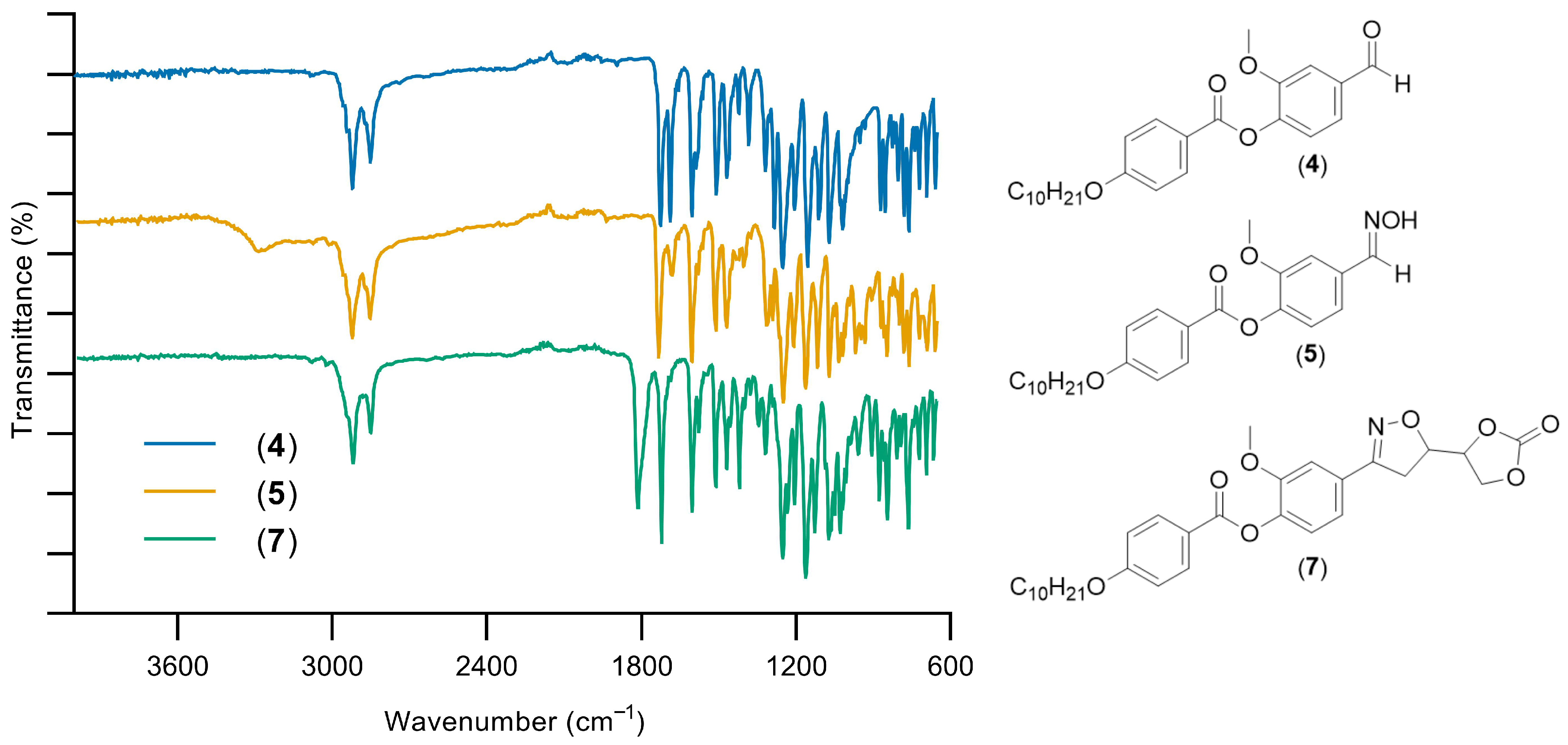
FTIR analysis allowed for the monitoring of the chemical transformations through changes in the carbonyl absorption region. Intermediate
4 exhibits two intense carbonyl bands, assigned to the ester group at 1723 cm
−1 and to the aromatic aldehyde at 1686 cm
−1. Upon oxime formation
5, the characteristic aldehyde carbonyl band disappears, while the ester carbonyl absorption remains unchanged. In the subsequent step, the introduction of a cyclic carbonate
7 moiety results in the appearance of a new carbonyl band at 1811 cm
−1, characteristic of a five-membered strained cyclic carbonate. In addition to these diagnostic absorptions, the FTIR spectra of compounds
4,
5, and
7 show bands attributed to aliphatic sp
3 C–H stretching vibrations (2800–2900 cm
−1) and C–O stretching modes (1100–1200 cm
−1). These changes are shown in
Figure 2.
2.3. NMR Studies
The material was isolated as an off-white solid, obtained as the acetonitrile-insoluble fraction in 50% yield. This isolation behavior already suggests a well-defined and possibly homogeneous phase. Given that (7) contains two stereogenic centers, the (3 + 2) cycloaddition would, in principle, afford two pairs of diastereoisomers. However, the 1H and 13C NMR spectra of the isolated solid display a single, well-resolved set of resonances. This observation is consistent with the formation of a single stereoisomer, which is likely selectively enriched during recrystallization from hot acetonitrile.
To further substantiate this assignment, two-dimensional NMR experiments were performed. HMBC and HSQC spectra consistently support the presence of a single diastereoisomer. In particular, the 13C NMR spectrum exhibits only singlet resonances across the entire spectral range, with no detectable signal duplication. The absence of additional cross-peaks or correlations reinforces the conclusion that no other stereoisomeric species are present within the detection limits of the technique.
To exclude the possibility of accidental signal overlap in the
1H and
13C NMR spectra, chiral shift reagent (CSR) experiments were carried out using Eu(hfc)
3 in both DMSO-d
6 and CDCl
3, applying a stepwise increase in reagent concentration. Particular attention was given to the signals of the two methylene groups bearing diastereotopic protons, located at C5 of the isoxazoline and C4 of the 1,3-dioxol-2-one moiety. In both solvent systems, no additional splitting or signal differentiation was observed upon addition of the chiral reagent.
Figures S19–S23 summarize these experiments. The overlaid spectra clearly show that the original signals remain spectrally intact, with no emergence of new resonances in the regions of interest. This behavior provides strong evidence against the presence of unresolved diastereoisomeric mixtures.
Nevertheless, a detailed analysis of the vicinal methine protons (C4–H and C5–H) reveals a limitation. Due to their close chemical shift proximity in the two heterocycles, their multiplicity patterns become highly complex and partially overlapped. As a result, unambiguous signal assignment and reliable extraction of coupling constants are not feasible under the present experimental conditions.
Consequently, although the data strongly support the presence of a single diastereoisomer, the relative stereochemistry (syn vs. anti) could not be definitively established. This aspect remains unresolved and will require additional studies (potentially involving alternative spectroscopic methods or crystallographic analysis) to fully elucidate the relative configuration of 7.
2.4. Mesomorphic Behavior Analysis
The mesogenic properties of compounds
2,
5, and
7 were determined by Differential Scanning Calorimetry (DSC) and Polarized Optical Microscopy (POM). The precursor compound
2 exhibits well-defined mesomorphic behavior, displaying the phase transition sequence Cr → SmC at 94 °C, SmC → N at 117 °C, and N → Iso at 143 °C, as previously reported in the literature [
16]. The oxime intermediate
5 undergoes a direct crystal-to-isotropic phase transition in the range of 87–89 °C. POM analysis revealed the presence of a monotropic mesophase, observed exclusively upon cooling, with an extremely narrow temperature range located below the melting point, which renders its unequivocal characterization challenging.
The target compound
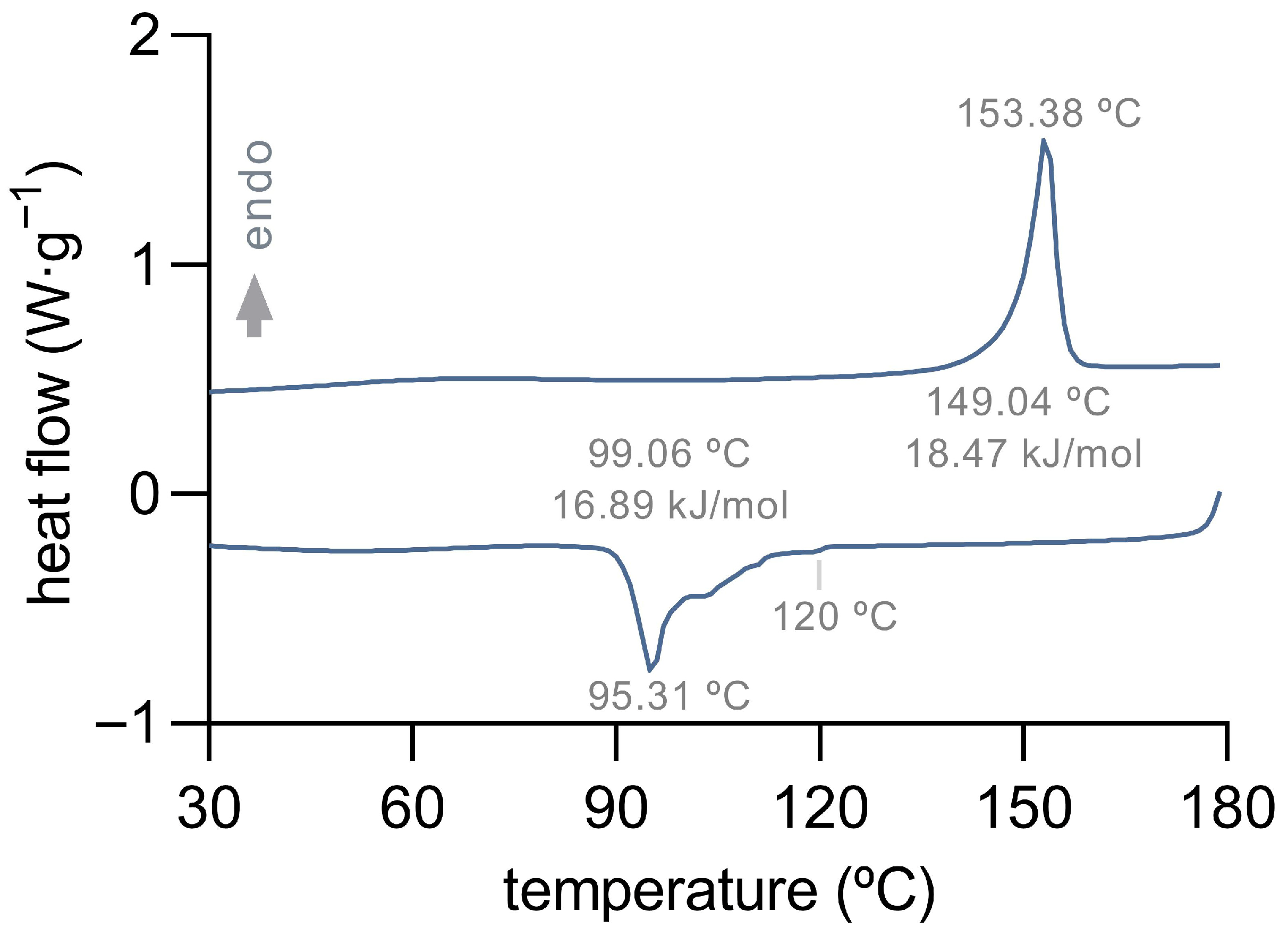
7 was investigated in greater detail with respect to its liquid-crystalline behavior. The thermal profile obtained by DSC (
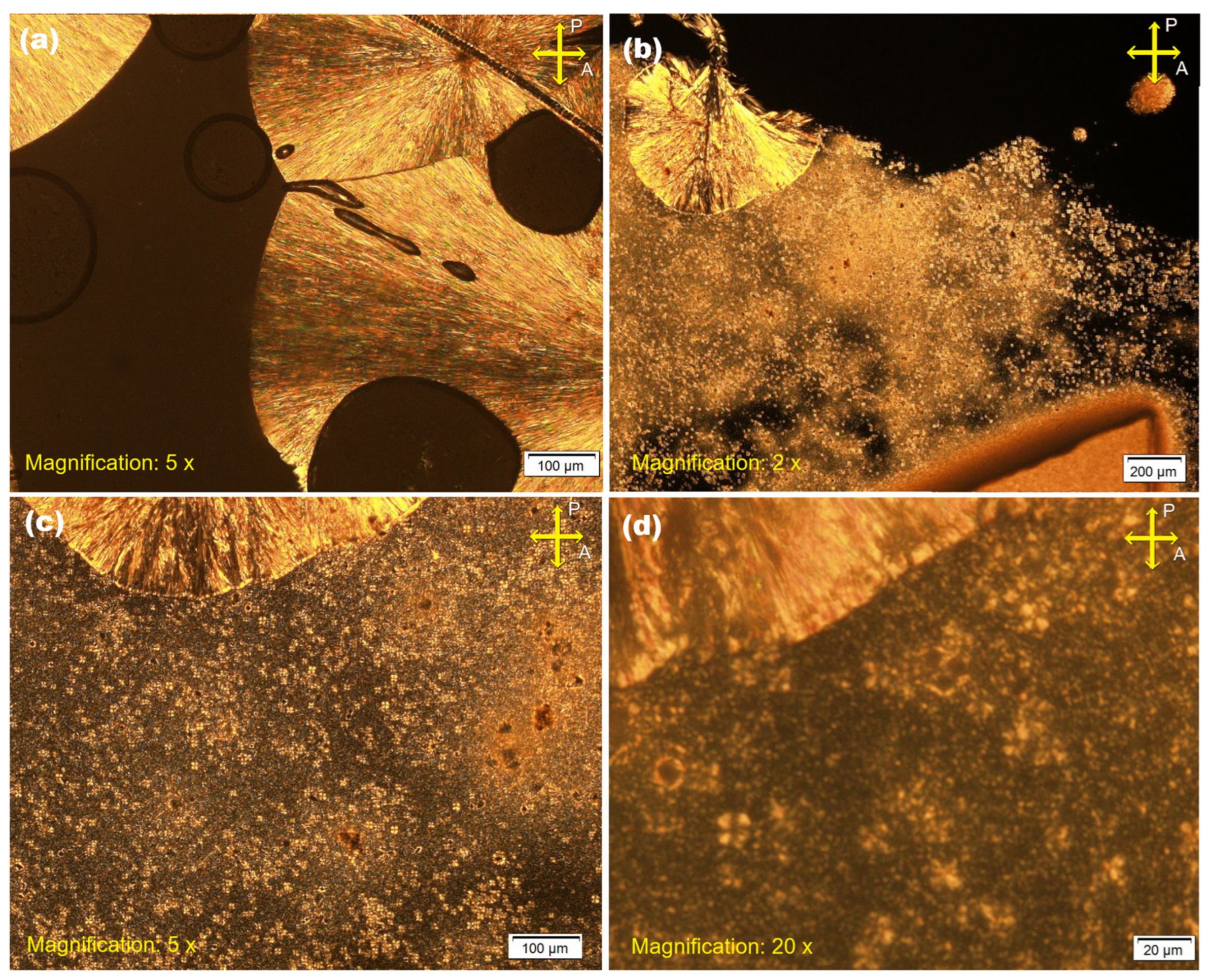
Figure 3) and the textures recorded by POM during cooling (
Figure 4) indicate that, upon heating, a direct Cr → Iso transition occurs at 153 °C, with no detectable intermediate mesophase. However, during cooling, the formation of a mesophase (M) is observed at 120 °C, whose textural features are consistent with the presence of a smectic phase. The undefined texture for the mesophase observed is presented in
Figure 4b–d with variable magnification. The mesophase coexists with the process of crystallization, as noted by the large radial texture of the crystal phase. Higher magnification (
Figure 4d) reveals the presence of poorly defined focal-conic defects, supporting the identification of the smectic nature for that mesophase. At 93 °C, crystallization of the sample was observed by POM, with the formation of a radial texture (
Figure 4a). For compound
7, the following transition temperatures were assigned from POM observations: upon heating, Cr 153 °C I; upon cooling, I 120 °C M 97 °C Cr.
DSC and POM analyses reveal that the phase transitions observed during cooling systematically occur at lower temperatures than those detected upon heating, indicating thermal hysteresis and characteristic monotropic mesophase behavior. In liquid-crystal thermodynamics, enantiotropic phases are thermodynamically stable and reversible upon both heating and cooling, whereas monotropic phases manifest exclusively during cooling, generally arising from supercooling of the isotropic melt and delayed crystallization. Under such conditions, the transient mesophase competes kinetically with crystalline domain nucleation and growth, emerging at temperatures below the melting point determined in the initial heating cycle. This behavior reflects a non-equilibrium process between the crystalline state and the mesophase, wherein the anisotropic intermolecular interactions of compound 7 are insufficiently strong to sustain stable and efficient molecular packing within the liquid-crystalline phase.
DFT calculations suggest that the substitution pattern on the vanillin-derived ring, as well as the formation of the 1,3-dioxolan-2-one ring, exerts a significant impact on disfavoring mesophase formation in compound
7. These structural features, characterized by the presence of a methoxy group laterally attached to the rigid anisotropic (rod-shaped) core and by incorporation of the 1,3-dioxolan-2-one ring, promote local packing constraints and/or intermolecular interactions that favor crystallization over mesophase formation. Preliminary studies on Schiff base-derived mesogens incorporating the vanillin unit have demonstrated that lateral substitution with a methoxy group disfavors mesophase formation, despite the pharmacological properties observed for these compounds [
17]. These observations based on both effects suggest that both the presence and the position of the methoxy substituent on the vanillin ring, as well as the perpendicular orientation of the 1,3-dioxolan-2-one ring in the most stable conformation of compound
7, play a critical role in modulating the mesomorphic behavior and texture morphology of the final compound.
3. Materials and Methods
3.1. Chemicals and Equipment
All reagents were used as received without further purification. NMR spectra were recorded on a Bruker Ascend 400 NMR spectrometer (Bruker BioSpin, Rheinstetten, Germany) operating at 400 MHz for 1H and 100 MHz for 13C nuclei, using CDCl3 as the solvent. Chemical shifts (δ) were reported in ppm relative to TMS, and the signals are described as s = singlet, d = doublet, t = triplet, etc. FTIR spectra were acquired on an Agilent Cary 360 spectrometer (Agilent Technologies, Santa Clara, CA, USA) in ATR mode with a resolution of 2 cm−1. The melting points, mesophase transition temperatures, and textures of the samples were determined using a Mettler Toledo FP82HT hot stage coupled with an FP90 central processor (Mettler Toledo, Greifensee, Switzerland), as well as a DSC 2910 calorimeter from TA Instruments (New Castle, DE, USA).
3.2. Synthesis of 4-n-decyloxybenzoic Acid 2
Ethyl 4-hydroxybenzoate 1 (1.0 mmol) was dissolved in acetonitrile in a round-bottom flask, followed by the addition of K2CO3 (1.0 mmol) and 1-bromodecane (1.1 mmol). The reaction mixture was refluxed for 48 h and monitored by TLC. After complete consumption of the starting material, the reaction mixture was cooled to room temperature, and the pH was adjusted to 2 with 1 M HCl. The resulting solid was collected by filtration. The isolated material was then suspended in an aqueous 1 M NaOH/ethanol mixture and heated under reflux. The reaction progress was monitored by TLC, and upon complete consumption of the ester, ethanol was removed under reduced pressure. The pH was adjusted to 2 with 1 M HCl, and the resulting solid was collected by filtration, washed with water, and dried under reduced pressure to afford compound 2.
4-n-Decyloxybenzoic acid 2: white solid, recrystallized in ethanol. Phase transitions (°C): Cr 94 SmC 117 N 143 I. Yield: 85%. 1H NMR (300 MHz, CDCl3): 0.88 (t, 3J = 6.8 Hz, 3H); 1.45–1.24 (m, 12H); 1.82 (m, 2H); 4.02 (t, 3J = 6.6 Hz, 2H); 6.93 (d, 3J = 8.7 Hz, 2H); 8.02 (d, 3J = 8.7 Hz, 2H); 10.60 (br s, 1H). 13C NMR (75 MHz, CDCl3): 14.1 (CH3); 22.7 (CH2); 26.0 (CH2); 29.3 (CH2); 29.4 (CH2); 29.6 (CH2); 29.7 (CH2); 31.9 (CH2); 68.9 (CH2); 114.9 (CH); 124.5 (CH); 132.6 (C); 163.8 (C); 171.0 (C).
3.3. Synthesis of Vanillin Ester 4
4-n-Decyloxybenzoic acid 2 (1.0 mmol) was dissolved in DCM, and 4-hydroxy-3-methoxybenzaldehyde 3 (1.0 mmol) was added under stirring. The reaction mixture was cooled in an ice bath, and DMAP (0.20 mmol) was added. Subsequently, DCC (1.0 mmol) was slowly added portionwise under continuous stirring. The reaction mixture was then allowed to warm to room temperature and stirred for 24 h. Reaction progress was monitored by thin-layer chromatography (TLC) using hexane/ethyl acetate (7:3, v/v) as the mobile phase. After completion, the reaction mixture was filtered to remove dicyclohexylurea, and the filtrate was concentrated under reduced pressure. The crude product was purified by recrystallization from ethanol, affording the desired ester.
4-Formyl-2-methoxyphenyl 4-n-decyloxy)benzoate 4: white solid, recrystallized in ethanol m.p.: 50–53 °C. Yield: 70%. 1H NMR (400 MHz, CDCl3): 0.90 (t, 3H, 3J = 7 Hz); 1.43–1.23 (m, 12H); 1.56–1.43 (m, 2H); 1.90–1.78 (m, 2H); 3.91 (s, 3H); 4.06 (t, 3J = 6.6 Hz, 2H); 7.00 (d, 3J = 8.9 Hz, 2H); 7.36 (d, 3J = 7.8 Hz, 2H); 7.58–7.50 (m, 2H); 8.16 (d, 3J = 8.9 Hz, 2H); 9.99 (s, 1H). 13C NMR (100 MHz, CDCl3): 14.2 (CH3), 22.8 (CH2), 26.1 (CH2), 29.2 (CH2), 29.4 (CH2), 29.5 (CH2), 29.6 (CH2), 29.7 (CH2), 32.0 (CH2), 56.3 (CH3), 68.5 (CH2), 111.0 (CH), 114.5 (CH), 120.9 (C), 123.7 (CH), 125.0 (CH), 132.7 (CH), 135.3 (C), 145.6 (C), 152.5 (C), 163.9 (C), 164.1 (C), 191.3 (CH). FTIR (ATR, cm−1): 2920, 2849, 1723, 1686, 1602, 1507, 1252, 1153, 760.
3.4. Synthesis of Oxime 5
The vanillin ester 4 (1.0 mmol) was dissolved in ethanol (2 mL) in a round-bottom flask, and hydroxylamine hydrochloride (1.2 mmol) was added at room temperature under stirring. Subsequently, a solution of sodium acetate (1.2 mmol) in water (1 mL) was added. The reaction mixture was heated to 70 °C for 1 h, and the reaction progress was monitored by TLC using hexane/ethyl acetate (7:3, v/v) as the mobile phase. After completion, the solvent was removed under reduced pressure, and the precipitated solid was collected by filtration to afford the corresponding oxime 5.
(E/Z)-4-[(hydroxyimino)methyl]-2-methoxyphenyl 4-n-decyloxybenzoate 5: white solid, m.p.: 87–89 °C. Yield: 98%. 1H NMR (400 MHz, CDCl3): 0.91 (t, 3J = 6.6 Hz, 3H); 1.43–1.24 (m, 12H); 1.58–1.44 (m, 2H); 1.91–1.77 (m, 2H); 3.87 (s, 3H); 4.06 (t, 3J = 6.7 Hz, 2H); 6.99 (d, 3J = 8.8 Hz, 2H); 7.14 (d, 3J = 8.2 Hz, 1H); 7.19 (d, 3J = 8.0 Hz, 2H); 7.33 (s, 1H); 8.20–8.13 (m, 3H). 13C NMR (100 MHz, CDCl3): 14.3 (CH3), 22.8 (CH2), 26.1 (CH2), 29.2 (CH2), 29.4 (CH2), 29.5 (CH2), 29.7 (CH2), 32.0 (CH2), 56.1 (CH3), 68.5 (CH2), 109.8 (CH), 114.4 (CH), 120.9 (CH), 121.3 (C), 123.5 (CH), 130.9 (C), 132.6 (CH), 141.8 (C), 149.8 (CH), 151.9 (C), 163.7 (C), 164.5 (C). FTIR (ATR, cm−1): 2924, 2851, 1731, 1602, 1248, 1162.
3.5. Synthesis of Isoxazoline 7
The oxime 5 (1.0 mmol) was dissolved in dichloromethane (DCM, 4 mL) in a round-bottom flask and cooled in an ice bath. Subsequently, 4-vinyl-1,3-dioxolan-2-one 6 was added under stirring. The reaction flask was fitted with an addition funnel charged with an aqueous NaOCl solution (~5 wt%, ~0.7 M, ~3 mL), which was slowly added dropwise to the reaction mixture. The reaction was then allowed to warm to room temperature and stirred for 24 h. After completion, the reaction mixture was transferred to a separatory funnel and washed three times with brine. The organic phase was collected to afford the crude product, which was purified by washing with hot acetonitrile, yielding a solid that was collected by filtration and analyzed.
2-methoxy-4-[5-(2-oxo-1,3-dioxolan-4-yl)-4,5-dihydroisoxazol-3-yl]phenyl 4-n-decyloxybenzoate 7: white solid, m.p.: 153 °C. Yield: 60%. 1H NMR (400 MHz, CDCl3). 0.90 (t, 3J = 6.8 Hz, 3H); 1.44–1.22 (m, 12H); 1.57–1.44 (m, 2H); 1.91–1.79 (m, 2H); 3.39 (dd, 2J = 17.2, 3Jtrans = 5.6 Hz, 1H); 3.65 (dd, 2J = 17.2, 3Jcis = 10.4 Hz, 1H); 3.87 (s, 3H); 4.07 (t, 3J = 6.5 Hz, 2H); 4.57–4.47 (m, 1H); 4.69–4.61 (m, 2H); 4.91 (m, 1H); 7.00 (d, 3J = 8.9 Hz, 2H); 7.16 (dd, 3J = 8.2, 4J = 1.9 Hz, 1H); 7.24 (d, 3J = 8.2 Hz, 1H); 7.48 (d, 4J = 1.8 Hz, 1H); 8.17 (d, 3J = 8.9 Hz, 2H). 13C NMR (100 MHz, CDCl3): 14.3 (CH3); 22.8 (CH2); 26.1 (CH2); 29.2 (CH2); 29.5 (2 CH2); 29.7 (2 CH2), 32.0 (CH2), 38.4 (CH2), 56.2 (CH3), 67.4 (CH2), 68.5 (CH2), 75.4 (CH); 79.7 (CH), 110.3 (CH), 114.5 (CH), 120.2 (CH), 121.0 (C), 123.6 (CH), 127.0 (C), 132.6 (CH), 142.6 (C), 152.0 (C), 154.2 (C), 156.5 (C), 163.8 (C), 164.4 (C). FTIR (ATR, cm−1): 2916, 2845, 1811, 1723, 1602, 1250, 1161.




 ,
, 



 Display in JSmol Viewer