Phenolic Compounds of Grape Pomace Skin Released During SHIME Colonic Fermentation Shape the Transcriptomic Profile of Tight Junctions, Improving the Barrier Properties in Caco-2 Cells
 , , , , ,
  ,
,  , , , , ,
Abstract
1. Introduction
2. Results
Release of Phenolic Compounds from the Grape Pomace Skin by In Vitro Gastrointestinal Digestion
3. Discussion
4. Materials and Methods
4.1. Reagents and Standards
4.2. Pomace Sample
4.3. Phenolic Compound Extraction
4.4. Gastrointestinal In Vitro Digestion
4.5. Colonic Fermentation in TWINSHIME®
4.6. Short-Chain Fatty Acid Extraction and Determination by Gas Chromatography
4.7. Total Phenolic Content (TPC)
4.8. Identification and Quantification of Phenolic Compounds
4.9. Caco-2 Cell Differentiation and Treatment with Ferments
4.10. RNA Isolation
4.11. RNA Sequencing and Bioinformatic Analysis
4.12. Statistical Analysis
5. Conclusions
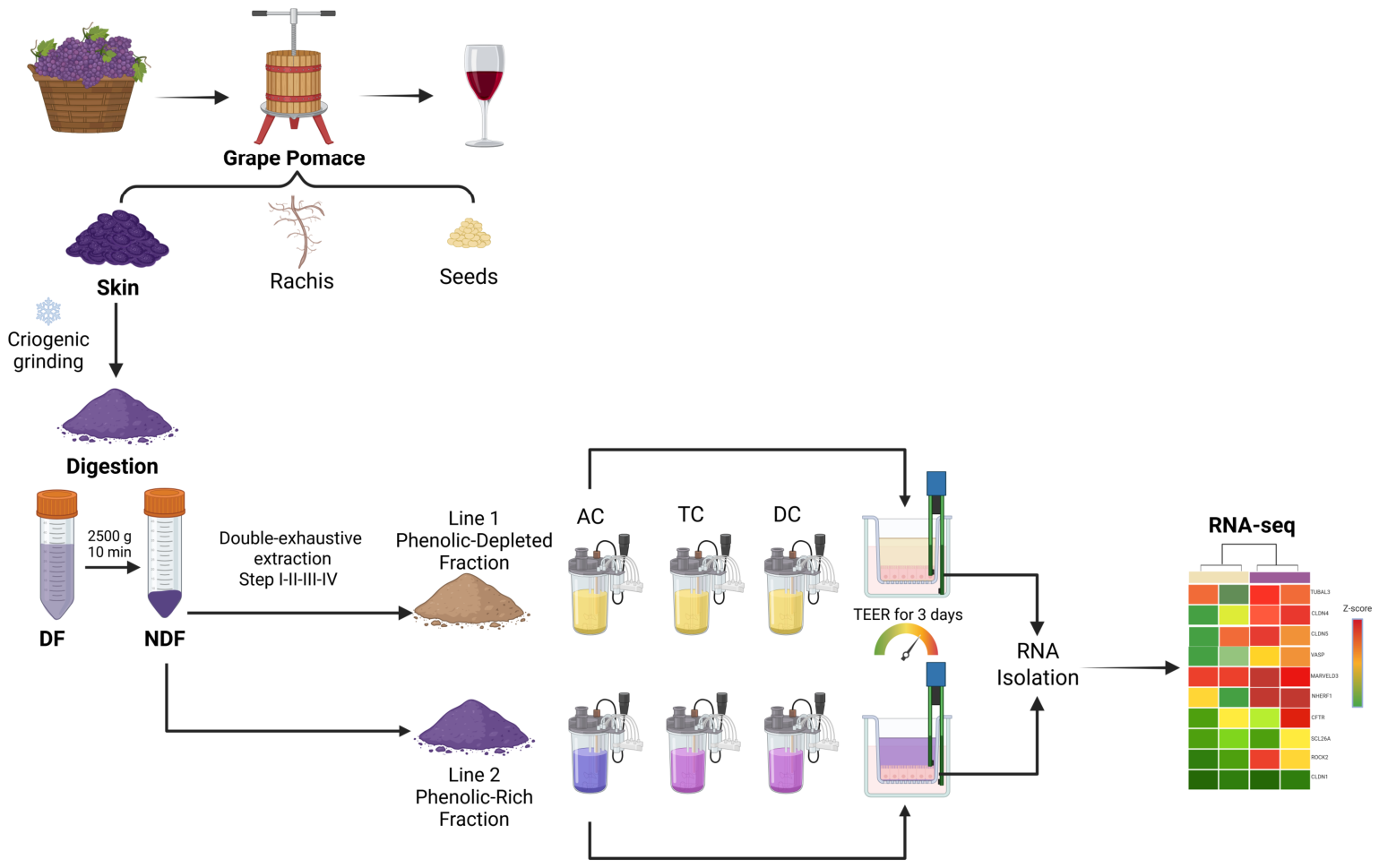
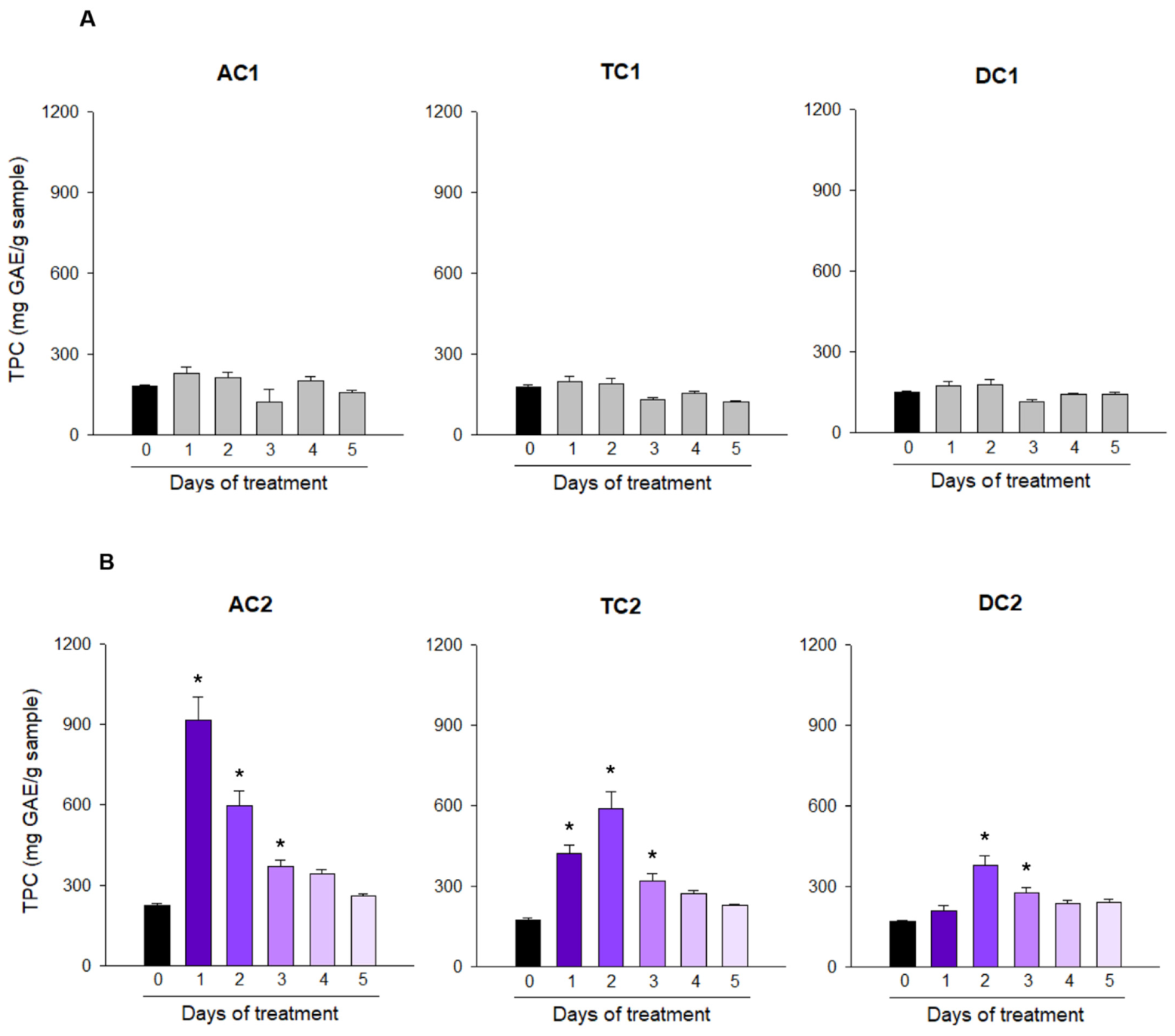
- Digestion and colonic fermentation facilitate the release of certain phenolic compounds, highlighting the colonic release of catechins.
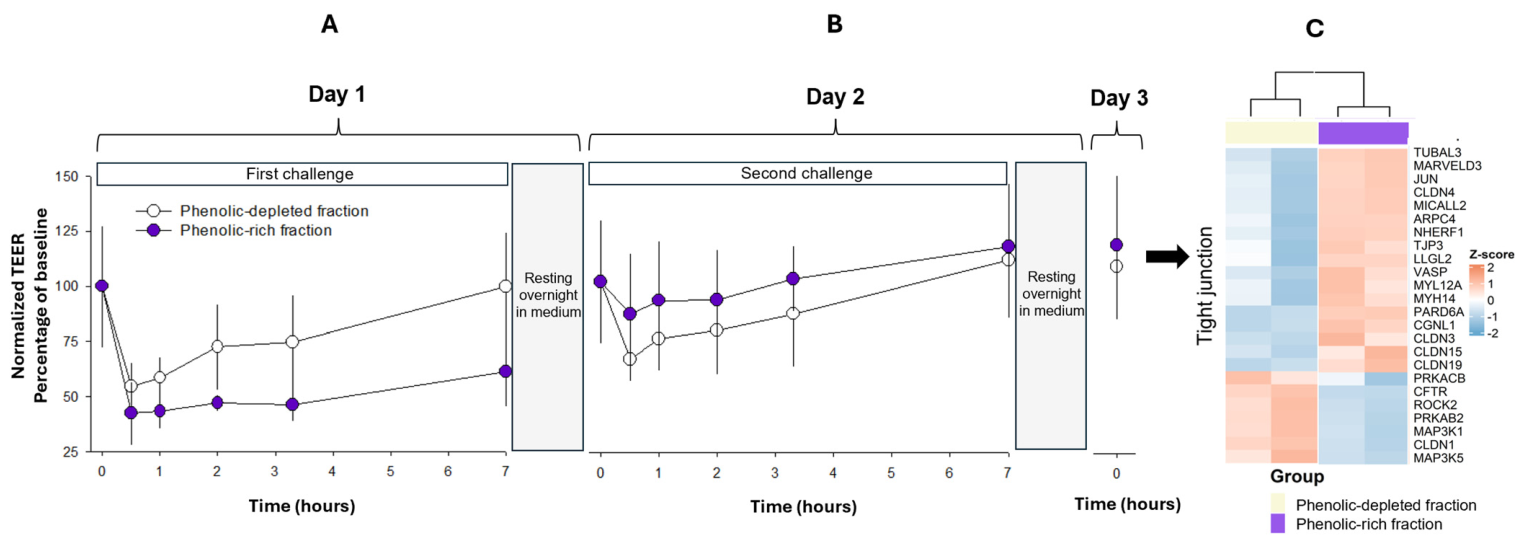
- Differentiated Caco-2 cells survive repeated exposure to colonic ferments.
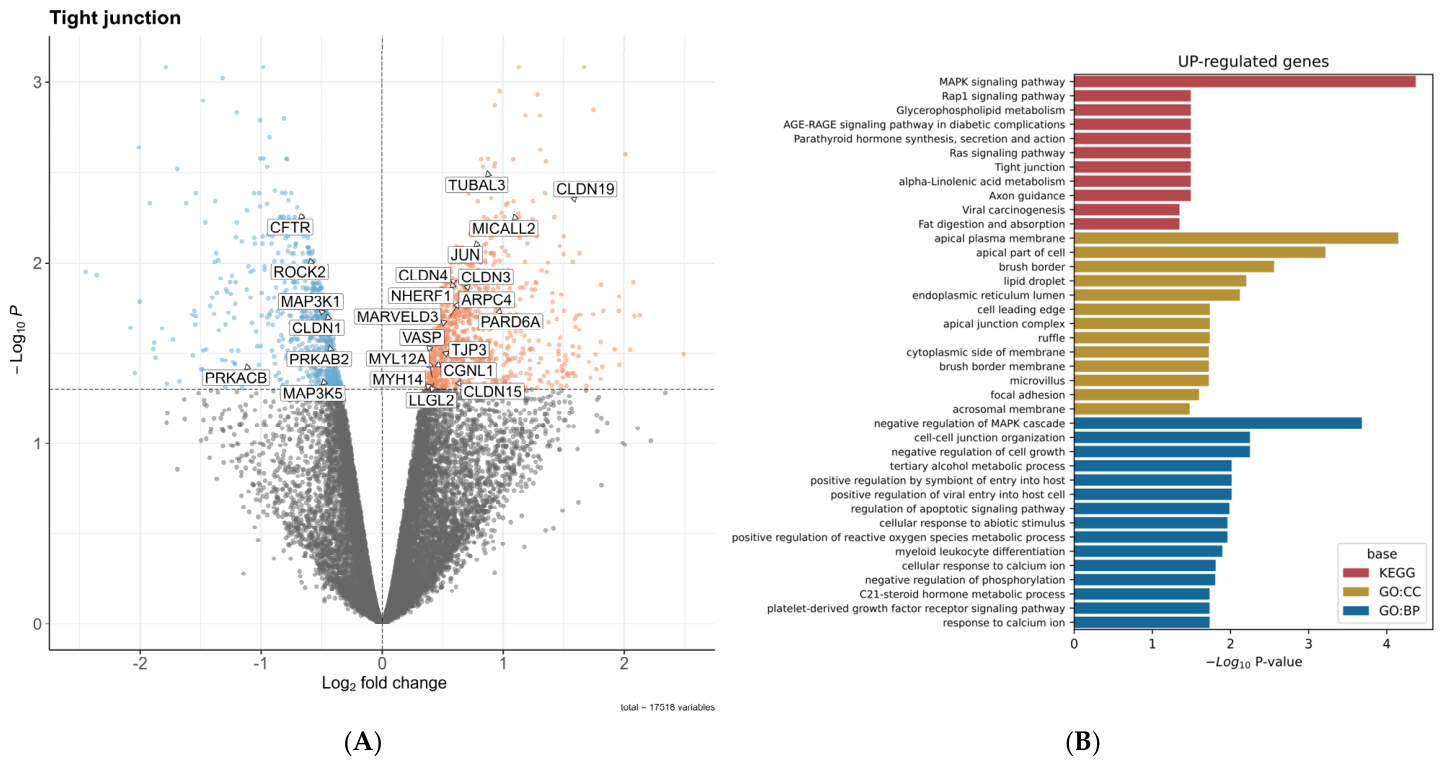
- The exposure to phenolic-rich colonic ferments modifies the transcriptomic profile of differentiated Caco-2 cells, which is critical for cell-to-cell communication and the function of the apical domain.
Supplementary Materials
Author Contributions
Funding
Institutional Review Board Statement
Informed Consent Statement
Data Availability Statement
Acknowledgments
Conflicts of Interest
References
- Liu, X.; Le Bourvellec, C.; Renard, C. Interactions between cell wall polysaccharides and polyphenols: Effect of molecular internal structure. Compr. Rev. Food Sci. Food Saf. 2020, 19, 3574–3617. [Google Scholar] [CrossRef]
- McNeil, M.; Darvill, A.G.; Fry, S.C.; Albersheim, P. Structure and function of the primary cell walls of plants. Annu. Rev. Biochem. 1984, 53, 625–663. [Google Scholar] [CrossRef]
- de Torres, C.; Diaz-Maroto, M.C.; Hermosin-Gutierrez, I.; Perez-Coello, M.S. Effect of freeze-drying and oven-drying on volatiles and phenolics composition of grape skin. Anal. Chim. Acta 2010, 660, 177–182. [Google Scholar] [CrossRef]
- Tourino, S.; Fuguet, E.; Jauregui, O.; Saura-Calixto, F.; Cascante, M.; Torres, J.L. High-resolution liquid chromatography/electrospray ionization time-of-flight mass spectrometry combined with liquid chromatography/electrospray ionization tandem mass spectrometry to identify polyphenols from grape antioxidant dietary fiber. Rapid Commun. Mass Spectrom. 2008, 22, 3489–3500. [Google Scholar] [CrossRef]
- Saura-Calixto, F. Dietary fiber as a carrier of dietary antioxidants: An essential physiological function. J. Agric. Food Chem. 2011, 59, 43–49. [Google Scholar] [CrossRef]
- Bhanja, T.; Kumari, A.; Banerjee, R. Enrichment of phenolics and free radical scavenging property of wheat koji prepared with two filamentous fungi. Bioresour. Technol. 2009, 100, 2861–2866. [Google Scholar] [CrossRef]
- Kelly, S.M.; O’Callaghan, J.; Kinsella, M.; van Sinderen, D. Characterisation of a Hydroxycinnamic Acid Esterase from the Bifidobacterium longum subsp. longum Taxon. Front. Microbiol. 2018, 9, 2690. [Google Scholar] [CrossRef]
- Saura-Calixto, F.; Pérez-Jiménez, J.; Touriño, S.; Serrano, J.; Fuguet, E.; Torres, J.L.; Goñi, I. Proanthocyanidin metabolites associated with dietary fibre from in vitro colonic fermentation and proanthocyanidin metabolites in human plasma. Mol. Nutr. Food Res. 2010, 54, 939–946. [Google Scholar] [CrossRef] [PubMed]
- Mou, J.; Xu, L.; Luo, Y.; Tao, Q.; Wang, Z.; Chen, M.; Zheng, H. Assessing the Efficacy of Functional Food as Treatment for Irritable Bowel Syndrome with Constipation: A Systematic Review and Network Meta-Analysis. Nutr. Rev. 2025, nuaf204. [Google Scholar] [CrossRef] [PubMed]
- Liu, R.H. Whole grain phytochemicals and health. J. Cereal Sci. 2007, 46, 207–219. [Google Scholar] [CrossRef]
- Vitaglione, P.; Napolitano, A.; Fogliano, V. Cereal dietary fibre: A natural functional ingredient to deliver phenolic compounds into the gut. Trends Food Sci. Technol. 2008, 19, 451–463. [Google Scholar] [CrossRef]
- Fava, F.; Rizzetto, L.; Tuohy, K.M. Gut microbiota and health: Connecting actors across the metabolic system. Proc. Nutr. Soc. 2019, 78, 177–188. [Google Scholar] [CrossRef] [PubMed]
- Maurer, L.H.; Cazarin, C.B.B.; Quatrin, A.; Minuzzi, N.M.; Costa, E.L.; Morari, J.; Velloso, L.A.; Leal, R.F.; Rodrigues, E.; Bochi, V.C.; et al. Grape peel powder promotes intestinal barrier homeostasis in acute TNBS-colitis: A major role for dietary fiber and fiber-bound polyphenols. Food Res. Int. 2019, 123, 425–439. [Google Scholar] [CrossRef]
- Bibi, S.; de Sousa Moraes, L.F.; Lebow, N.; Zhu, M.J. Dietary Green Pea Protects against DSS-Induced Colitis in Mice Challenged with High-Fat Diet. Nutrients 2017, 9, 509. [Google Scholar] [CrossRef] [PubMed]
- Yin, W.; Liu, M.; Jin, Z.; Hao, Z.; Liu, C.; Liu, J.; Liu, H.; Zheng, M.; Cai, D. Ameliorative effects of insoluble dietary fiber and its bound polyphenols from adzuki bean seed coat on acute murine colitis induced by DSS: The inflammatory response, intestinal barrier and gut microbiota. Int. J. Biol. Macromol. 2025, 286, 138343. [Google Scholar] [CrossRef]
- Zhao, B.; Bi, J.; Wang, H.; Wang, M.; Ji, W. Effect of cell wall polysaccharides on the peelability in table grape berries. Front. Plant Sci. 2025, 16, 1605812. [Google Scholar] [CrossRef]
- Blanquer-Rosselló, M.D.; Hernández-López, R.; Roca, P.; Oliver, J.; Valle, A. Resveratrol induces mitochondrial respiration and apoptosis in SW620 colon cancer cells. Biochim. Biophys. Acta Gen. Subj. 2017, 1861, 431–440. [Google Scholar] [CrossRef]
- Moreno-Chamba, B.; Salazar-Bermeo, J.; Narváez-Asensio, M.; Navarro-Simarro, P.; Saura, D.; Neacsu, M.; Martí, N.; Valero, M.; Martínez-Madrid, M.C. Polyphenolic extracts from Diospyros kaki and Vitis vinifera by-products stimulate cytoprotective effects in bacteria-cell host interactions by mediation of transcription factor Nrf2. Phytomedicine 2024, 134, 156020. [Google Scholar] [CrossRef]
- Garbetta, A.; Nicassio, L.; D’Antuono, I.; Cardinali, A.; Linsalata, V.; Attolico, G.; Minervini, F. Influence of in vitro digestion process on polyphenolic profile of skin grape (cv. Italia) and on antioxidant activity in basal or stressed conditions of human intestinal cell line (HT-29). Food Res. Int. 2018, 106, 878–884. [Google Scholar] [CrossRef]
- Mangiapelo, L.; Frangiamone, M.; Vila-Donat, P.; Pasca, D.; Ianni, F.; Cossignani, L.; Manyes, L. Grape pomace as a novel functional ingredient: Mitigating ochratoxin A bioaccessibility and unraveling cytoprotective mechanisms in vitro. Curr. Res. Food Sci. 2024, 9, 100800. [Google Scholar] [CrossRef]
- Wang, G.; Ren, X.; Liu, J.; Wang, W.; Zhang, C.; Yuan, C.; Li, J. Functional properties of insoluble dietary fibers extracted from different grape pomaces during simulated digestion and in vitro fermentation. Food Funct. 2025, 16, 4702–4718. [Google Scholar] [CrossRef]
- Alvarez-Hernandez, X.; Nichols, G.M.; Glass, J. Caco-2 cell line: A system for studying intestinal iron transport across epithelial cell monolayers. Biochim. Biophys. Acta 1991, 1070, 205–208. [Google Scholar] [CrossRef]
- Igartuburu, J.M.; Pando, E.; Rodríguez Luis, F.; Gil-Serrano, A. A hemicellulose B fraction from grape skin (Vitis vinifera, Palomino variety). J. Nat. Prod. 2001, 64, 1174–1178. [Google Scholar] [CrossRef]
- Arnous, A.; Meyer, A.S. Quantitative prediction of cell wall polysaccharide composition in grape (Vitis vinifera L.) and apple (Malus domestica) skins from acid hydrolysis monosaccharide profiles. J. Agric. Food Chem. 2009, 57, 3611–3619. [Google Scholar] [CrossRef] [PubMed]
- Bunzel, M.; Ralph, J.; Steinhart, H. Phenolic compounds as cross-links of plant derived polysaccharides. Czech J. Food Sci. 2004, 22, S64–S67. [Google Scholar] [CrossRef]
- Buanafina, M.M.D.O.; Fescemyer, H.W. Modification of esterified cell wall phenolics increases vulnerability of tall fescue to herbivory by the fall armyworm. Planta 2012, 236, 513–523. [Google Scholar] [CrossRef]
- Spinei, M.; Oroian, M. The Potential of Grape Pomace Varieties as a Dietary Source of Pectic Substances. Foods 2021, 10, 867. [Google Scholar] [CrossRef]
- Llobera, A.; Cañellas, J. Dietary fibre content and antioxidant activity of Manto Negro red grape (Vitis vinifera): Pomace and stem. Food Chem. 2007, 101, 659–666. [Google Scholar] [CrossRef]
- Deng, Q.; Penner, M.H.; Zhao, Y. Chemical composition of dietary fiber and polyphenols of five different varieties of wine grape pomace skins. Food Res. Int. 2011, 44, 2712–2720. [Google Scholar] [CrossRef]
- Valenzuela-Bustamante, P.; Cornejo, P.; Nolan, N.; Concepcion-Alvarez, A.; Bridi, R.; Rincon-Cervera, M.A.; Porras, O.; de Camargo, A.C.; Arias-Santé, M.F. Valorization of Carmenere Grape Pomace: Extraction, Microencapsulation, and Evaluation of the Bioactivity of Polyphenols in Caco-2 Cells. Int. J. Mol. Sci. 2025, 26, 7994. [Google Scholar] [CrossRef] [PubMed]
- Tu, Q.; Wu, X.; Niu, Y.; Dong, R.; Zhang, Z.; Feng, X.; Zhang, W.; Yuan, C. Effects of varying proportions of grape skins, seeds, and stems added pre-fermentation on tannin and anthocyanin evolution in Marselan wine. Food Chem. 2025, 493, 145628, Erratum in Food Chem. 2025, 495, 146733. [Google Scholar] [CrossRef] [PubMed]
- Zhang, X.; Zhang, M.; Dong, L.; Jia, X.; Liu, L.; Ma, Y.; Huang, F.; Zhang, R. Phytochemical Profile, Bioactivity, and Prebiotic Potential of Bound Phenolics Released from Rice Bran Dietary Fiber during in Vitro Gastrointestinal Digestion and Colonic Fermentation. J. Agric. Food Chem. 2019, 67, 12796–12805. [Google Scholar] [CrossRef]
- Zeng, Z.; Zhu, Y.; Li, Y.; Chang, X.; Lin, J.; Chen, L.; Lyu, Q.; Chen, X.; Ding, W. Examination of the Bioavailability and Bioconversion of Wheat Bran-Bound Ferulic Acid: Insights into Gastrointestinal Processing and Colonic Metabolites. J. Agric. Food Chem. 2025, 73, 1331–1344. [Google Scholar] [CrossRef]
- Su, J.; Fu, X.; Huang, Q.; Liu, G.; Li, C. Phytochemical profile, bioactivity and prebiotic potential of bound polyphenols released from Rosa roxburghii fruit pomace dietary fiber during in vitro digestion and fermentation. Food Funct. 2022, 13, 8880–8891. [Google Scholar] [CrossRef] [PubMed]
- Ordonez-Diaz, J.L.; Moreno-Ortega, A.; Roldan-Guerra, F.J.; Ortiz-Somovilla, V.; Moreno-Rojas, J.M.; Pereira-Caro, G. In Vitro Gastrointestinal Digestion and Colonic Catabolism of Mango (Mangifera indica L.) Pulp Polyphenols. Foods 2020, 9, 1836. [Google Scholar] [CrossRef]
- Chen, X.; Xu, H.; Xu, Y.; Wu, J.; Zou, B.; Li, L.; Yu, Y.; Hu, T. The interaction between soluble dietary fiber and bound phenolic from litchi pomace, and its effect on gut microbiota and inflammation. Food Chem. 2025, 491, 145322. [Google Scholar] [CrossRef]
- Hadidi, M.; Linan-Atero, R.; Tarahi, M.; Christodoulou, M.C.; Aghababaei, F. The Potential Health Benefits of Gallic Acid: Therapeutic and Food Applications. Antioxidants 2024, 13, 1001. [Google Scholar] [CrossRef]
- Wojtunik-Kulesza, K.; Oniszczuk, A.; Oniszczuk, T.; Combrzynski, M.; Nowakowska, D.; Matwijczuk, A. Influence of In Vitro Digestion on Composition, Bioaccessibility and Antioxidant Activity of Food Polyphenols—A Non-Systematic Review. Nutrients 2020, 12, 1401. [Google Scholar] [CrossRef]
- Li, Y.; Chen, X.; Wang, G.; Xu, L.; Liu, Y.; Yuan, C.; Li, J. The release patterns and potential prebiotic characteristics of soluble and insoluble dietary fiber-bound polyphenols from pinot noir grape pomace in vitro digestion and fermentation. Food Chem. X 2025, 29, 102694. [Google Scholar] [CrossRef]
- Demirkol, M.; Tarakci, Z. Utilization of Fruit Juice Processing Wastes as Prebiotic Ingredients in Probiotic Yogurt: Effects on Microbial Short Chain Fatty Acid Production. Food Sci. Nutr. 2025, 13, e70612. [Google Scholar] [CrossRef] [PubMed]
- Feng, R.; Wang, Q.; Yu, T.; Hu, H.; Wu, G.; Duan, X.; Jiang, R.; Xu, Y.; Huang, Y. Quercetin ameliorates bone loss in OVX rats by modulating the intestinal flora-SCFAs-inflammatory signaling axis. Int. Immunopharmacol. 2024, 136, 112341. [Google Scholar] [CrossRef] [PubMed]
- Shil, A.; Olusanya, O.; Ghufoor, Z.; Forson, B.; Marks, J.; Chichger, H. Artificial Sweeteners Disrupt Tight Junctions and Barrier Function in the Intestinal Epithelium through Activation of the Sweet Taste Receptor, T1R3. Nutrients 2020, 12, 1862. [Google Scholar] [CrossRef] [PubMed]
- Sangfuang, N.; Xie, Y.; McCoubrey, L.E.; Taub, M.; Favaron, A.; Mai, Y.; Gaisford, S.; Basit, A.W. Investigating the bidirectional interactions between senotherapeutic agents and human gut microbiota. Eur. J. Pharm. Sci. 2025, 209, 107098. [Google Scholar] [CrossRef]
- Gwiazdowska, D.; Jus, K.; Jasnowska-Malecka, J.; Kluczynska, K. The impact of polyphenols on Bifidobacterium growth. Acta Biochim. Pol. 2015, 62, 895–901. [Google Scholar] [CrossRef]
- Unno, T.; Sakuma, M.; Mitsuhashi, S. Effect of dietary supplementation of (-)-epigallocatechin gallate on gut microbiota and biomarkers of colonic fermentation in rats. J. Nutr. Sci. Vitaminol. 2014, 60, 213–219. [Google Scholar] [CrossRef]
- Wu, Z.; Shen, J.; Xu, Q.; Xiang, Q.; Chen, Y.; Lv, L.; Zheng, B.; Wang, Q.; Wang, S.; Li, L. Epigallocatechin-3-Gallate Improves Intestinal Gut Microbiota Homeostasis and Ameliorates Clostridioides difficile Infection. Nutrients 2022, 14, 3756. [Google Scholar] [CrossRef]
- Tzounis, X.; Vulevic, J.; Kuhnle, G.G.; George, T.; Leonczak, J.; Gibson, G.R.; Kwik-Uribe, C.; Spencer, J.P.E. Flavanol monomer-induced changes to the human faecal microflora. Br. J. Nutr. 2008, 99, 782–792. [Google Scholar] [CrossRef]
- Zhang, T.; Liu, Z.; Wang, H.; Zhang, H.; Li, H.; Lu, W.; Zhu, J. Multi-omics analysis reveals genes and metabolites involved in Bifidobacterium pseudocatenulatum biofilm formation. Front. Microbiol. 2023, 14, 1287680. [Google Scholar] [CrossRef]
- de la Viuda, V.; Buceta, J.; Grobas, I. Physical communication pathways in bacteria: An extra layer to quorum sensing. Biophys. Rev. 2025, 17, 667–685. [Google Scholar] [CrossRef] [PubMed]
- Ren, Y.; Zhou, X.; Cai, B.; Sun, Y.; Ge, J.; Ping, W. Effects of fermented polyphenols from Lonicera caerulea on Streptococcus mutans pathogenicity: Exopolysaccharide structure and quorum sensing regulation. Int. J. Biol. Macromol. 2025, 318, 145265. [Google Scholar] [CrossRef]
- Dingeo, G.; Brito, A.; Samouda, H.; Iddir, M.; La Frano, M.R.; Bohn, T. Phytochemicals as modifiers of gut microbial communities. Food Funct. 2020, 11, 8444–8471. [Google Scholar] [CrossRef]
- Haines, R.J.; Beard, R.S., Jr.; Chen, L.; Eitnier, R.A.; Wu, M.H. Interleukin-1beta Mediates beta-Catenin-Driven Downregulation of Claudin-3 and Barrier Dysfunction in Caco2 Cells. Dig. Dis. Sci. 2016, 61, 2252–2261. [Google Scholar] [CrossRef]
- Tokuhara, Y.; Morinishi, T.; Matsunaga, T.; Sakai, M.; Sakai, T.; Ohsaki, H.; Kadota, K.; Kushida, Y.; Haba, R.; Hirakawa, E. Nuclear expression of claudin-3 in human colorectal adenocarcinoma cell lines and tissues. Oncol. Lett. 2018, 15, 99–108. [Google Scholar] [CrossRef] [PubMed]
- Wang, X.; Li, L.; Zhang, G. Impact of deoxynivalenol and kaempferol on expression of tight junction proteins at different stages of Caco-2 cell proliferation and differentiation. RSC Adv. 2019, 9, 34607–34616. [Google Scholar] [CrossRef]
- Suzuki, T.; Tanabe, S.; Hara, H. Kaempferol enhances intestinal barrier function through the cytoskeletal association and expression of tight junction proteins in Caco-2 cells. J. Nutr. 2011, 141, 87–94. [Google Scholar] [CrossRef]
- Mayangsari, Y.; Sugimachi, N.; Xu, W.; Mano, C.; Tanaka, Y.; Ueda, O.; Sakuta, T.; Suzuki, Y.; Yamamoto, Y.; Suzuki, T. 3,5,7,3′,4′-Pentamethoxyflavone Enhances the Barrier Function through Transcriptional Regulation of the Tight Junction in Human Intestinal Caco-2 Cells. J. Agric. Food Chem. 2021, 69, 10174–10183. [Google Scholar] [CrossRef]
- Charoenphandhu, N.; Nakkrasae, L.I.; Kraidith, K.; Teerapornpuntakit, J.; Thongchote, K.; Thongon, N.; Krishnamra, N. Two-step stimulation of intestinal Ca(2+) absorption during lactation by long-term prolactin exposure and suckling-induced prolactin surge. Am. J. Physiol. Endocrinol. Metab. 2009, 297, E609–E619. [Google Scholar] [CrossRef]
- Hashimoto, Y.; Yagi, K.; Kondoh, M. Roles of the first-generation claudin binder, Clostridium perfringens enterotoxin, in the diagnosis and claudin-targeted treatment of epithelium-derived cancers. Pflug. Arch. 2017, 469, 45–53. [Google Scholar]
- Tsukita, S.; Tanaka, H.; Tamura, A. The Claudins: From Tight Junctions to Biological Systems. Trends Biochem. Sci. 2019, 44, 141–152. [Google Scholar] [CrossRef]
- Yang, R.; Hui, Q.; Jiang, Q.; Liu, S.; Zhang, H.; Wu, J.; Lin, F.; O, K.; Yang, C. Effect of Manitoba-Grown Red-Osier Dogwood Extracts on Recovering Caco-2 Cells from H(2)O(2)-Induced Oxidative Damage. Antioxidants 2019, 8, 250. [Google Scholar] [CrossRef] [PubMed]
- Wang, S.; Hong, Y.; Li, Y.; Zhang, Z.; Han, J.; Yang, Z.; Yang, Y.; Ma, Z.; Wang, Q. Ferulic Acid Inhibits Arsenic-Induced Colon Injury by Improving Intestinal Barrier Function. Environ. Toxicol. 2024, 39, 4821–4831. [Google Scholar]
- Park, H.Y.; Kunitake, Y.; Hirasaki, N.; Tanaka, M.; Matsui, T. Theaflavins enhance intestinal barrier of Caco-2 Cell monolayers through the expression of AMP-activated protein kinase-mediated Occludin, Claudin-1, and ZO-1. Biosci. Biotechnol. Biochem. 2015, 79, 130–137. [Google Scholar]
- Steed, E.; Rodrigues, N.T.; Balda, M.S.; Matter, K. Identification of MarvelD3 as a tight junction-associated transmembrane protein of the occludin family. BMC Cell Biol. 2009, 10, 95. [Google Scholar] [CrossRef]
- Cording, J.; Berg, J.; Kading, N.; Bellmann, C.; Tscheik, C.; Westphal, J.K.; Milatz, S.; Günzel, D.; Wolburg, H.; Piontek, J.; et al. In tight junctions, claudins regulate the interactions between occludin, tricellulin and marvelD3, which, inversely, modulate claudin oligomerization. J. Cell Sci. 2013, 126, 554–564. [Google Scholar]
- Hartmann, C.; Schwietzer, Y.A.; Otani, T.; Furuse, M.; Ebnet, K. Physiological functions of junctional adhesion molecules (JAMs) in tight junctions. Biochim. Biophys. Acta Biomembr. 2020, 1862, 183299. [Google Scholar]
- Guillemot, L.; Schneider, Y.; Brun, P.; Castagliuolo, I.; Pizzuti, D.; Martines, D.; Jond, L.; Bongiovanni, M.; Citi, S. Cingulin is dispensable for epithelial barrier function and tight junction structure, and plays a role in the control of claudin-2 expression and response to duodenal mucosa injury. J. Cell Sci. 2012, 125, 5005–5014. [Google Scholar]
- Yu-Kemp, H.C.; Szymanski, R.A.; Cortes, D.B.; Gadda, N.C.; Lillich, M.L.; Maddox, A.S.; Peifer, M. Micron-scale supramolecular myosin arrays help mediate cytoskeletal assembly at mature adherens junctions. J. Cell. Biol. 2022, 221, e202103074. [Google Scholar] [CrossRef] [PubMed]
- Lamprecht, G.; Seidler, U. The emerging role of PDZ adapter proteins for regulation of intestinal ion transport. Am. J. Physiol. Gastrointest. Liver Physiol. 2006, 291, G766–G777. [Google Scholar] [PubMed]
- Seidler, U.; Singh, A.K.; Cinar, A.; Chen, M.; Hillesheim, J.; Hogema, B.; Riederer, B. The role of the NHERF family of PDZ scaffolding proteins in the regulation of salt and water transport. Ann. N. Y Acad. Sci. 2009, 1165, 249–260. [Google Scholar] [CrossRef] [PubMed]
- Lee, J.H.; Richter, W.; Namkung, W.; Kim, K.H.; Kim, E.; Conti, M.; Lee, M.G. Dynamic regulation of cystic fibrosis transmembrane conductance regulator by competitive interactions of molecular adaptors. J. Biol. Chem. 2007, 282, 10414–10422. [Google Scholar] [CrossRef]
- Liu, Y.; Tan, Q.; Riederer, B.; di Stefano, G.; Romermann, D.; Qian, J.; Reiner, J.; Seidler, U. Deciphering ion transporters, kinases and PDZ-adaptor molecules that mediate guanylate cyclase C agonist-dependent intestinal fluid loss in vivo. Biochem. Pharmacol. 2020, 178, 114040. [Google Scholar] [CrossRef]
- Yin, L.; Vijaygopal, P.; MacGregor, G.G.; Menon, R.; Ranganathan, P.; Prabhakaran, S.; Zhang, L.; Zhang, M.; Binder, H.J.; Okunieff, P.; et al. Glucose stimulates calcium-activated chloride secretion in small intestinal cells. Am. J. Physiol. Cell Physiol. 2014, 306, C687–C696. [Google Scholar] [CrossRef]
- Zaklos-Szyda, M.; Pietrzyk, N.; Kowalska-Baron, A.; Nowak, A.; Chalaskiewicz, K.; Ratajewski, M.; Budryn, G.; Koziołkiewicz, M. Phenolics-Rich Extracts of Dietary Plants as Regulators of Fructose Uptake in Caco-2 Cells via GLUT5 Involvement. Molecules 2021, 26, 4745. [Google Scholar] [CrossRef]
- Higuchi, K.; Kunieda, M.; Sugiyama, K.; Tomabechi, R.; Kishimoto, H.; Inoue, K. Monocarboxylate Transporter 13 (MCT13/SLC16A13) Functions as a Novel Plasma Membrane Oligopeptide Transporter. Nutrients 2023, 15, 3527. [Google Scholar] [CrossRef]
- Brodkorb, A.; Egger, L.; Alminger, M.; Alvito, P.; Assunção, R.; Ballance, S.; Bohn, T.; Bourlieu-Lacanal, C.; Boutrou, R.; Carrière, F.; et al. INFOGEST static in vitro simulation of gastrointestinal food digestion. Nat. Protoc. 2019, 14, 991–1014. [Google Scholar] [CrossRef]
- Firrman, J.; Liu, L.; Van den Abbeele, P.; Tanes, C.; Bittinger, K.; Tomasula, P. Applying Advanced In Vitro Culturing Technology to Study the Human Gut Microbiota. J. Vis. Exp. 2019, e59054. [Google Scholar] [CrossRef]
- Zamora-Ros, R.; Knaze, V.; Rothwell, J.A.; Hémon, B.; Moskal, A.; Overvad, K.; Tjønneland, A.; Kyrø, C.; Fagherazzi, G.; Boutron-Ruault, M.-C.; et al. Dietary polyphenol intake in Europe: The European Prospective Investigation into Cancer and Nutrition (EPIC) study. Eur. J. Nutr. 2016, 55, 1359–1375. [Google Scholar] [CrossRef]
- Bridi, R.; Atala, E.; Pizarro, P.N.; Montenegro, G. Honeybee Pollen Load: Phenolic Composition and Antimicrobial Activity and Antioxidant Capacity. J. Nat. Prod. 2019, 82, 559–565. [Google Scholar] [CrossRef] [PubMed]
- Núñez-Pizarro, P.; Montenegro, G.; Núñez, G.; Andia, M.E.; Espinosa-Bustos, C.; Costa de Camargo, A.; Oyarzún, J.E.; Bridi, R. Comparative Study of Phenolic Content and Antioxidant and Hepatoprotective Activities of Unifloral Quillay Tree (Quillaja saponaria Molina) and Multifloral Honeys from Chile. Plants 2024, 13, 3187. [Google Scholar] [CrossRef]
- Dobin, A.; Davis, C.A.; Schlesinger, F.; Drenkow, J.; Zaleski, C.; Jha, S.; Batut, P.; Chaisson, M.; Gingeras, T.R. STAR: Ultrafast universal RNA-seq aligner. Bioinformatics 2013, 29, 15–21. [Google Scholar] [CrossRef] [PubMed]
- Law, C.W.; Alhamdoosh, M.; Su, S.; Dong, X.; Tian, L.; Smyth, G.K.; Ritchie, M.E. RNA-seq analysis is easy as 1-2-3 with limma, Glimma and edgeR. F1000Research 2016, 5, ISCB-Comm. [Google Scholar] [CrossRef] [PubMed]
- Ritchie, M.E.; Phipson, B.; Wu, D.; Hu, Y.; Law, C.W.; Shi, W.; Smyth, G.K. Limma powers differential expression analyses for RNA-sequencing and microarray studies. Nucleic Acids Res. 2015, 43, e47. [Google Scholar] [CrossRef] [PubMed]
- Love, M.I.; Huber, W.; Anders, S. Moderated estimation of fold change and dispersion for RNA-seq data with DESeq2. Genome Biol. 2014, 15, 550. [Google Scholar] [CrossRef] [PubMed]
- Yu, G.; Wang, L.G.; Han, Y.; He, Q.Y. Clusterprofiler: An R package for comparing biological themes among gene clusters. OMICS J. Integr. Biol. 2012, 16, 284–287. [Google Scholar] [CrossRef]



| Skin Grape Pomace | ||||||
|---|---|---|---|---|---|---|
| Undigested | Gastric Digestion | Intestinal Digestion | Colon Fermentation | |||
| Digestible | Non-Digestible | Digestible | Non-Digestible | |||
| Phenolic Acids: | ||||||
| Abscisic acid | nd | nd | nd | nd | 50 ± 3 | nd |
| Caffeic acid | nd | nd | nd | nd | d | nd |
| p-Coumaric acid | nd | nd | nd | nd | d | nd |
| Syringic acid | 325 ± 28 | nd | d | 32 ± 2 | 471 ± 11 | nd |
| Sinapic acid | 1062 ± 67 | nd | nd | nd | 152 ± 10 | nd |
| trans-Cinnamic acid | nd | nd | nd | nd | d | nd |
| trans-ferulic | nd | nd | nd | nd | nd | d |
| Gallic acid | d | nd | nd | nd | nd | nd |
| Flavones: | ||||||
| Apigenin | nd | nd | nd | nd | d | nd |
| Flavonols: | ||||||
| Galangin | nd | nd | nd | nd | d | nd |
| Kaempferol | nd | d | 267 ± 3 | nd | 116 ± 1 | nd |
| Isoquercitrin | nd | nd | nd | nd | nd | nd |
| Quercetin | nd | nd | nd | nd | 51 ± 1 | nd |
| Rutin trihydrate | nd | nd | nd | nd | d | 45 ± 4 |
| Flavan-3-ols: | ||||||
| Catechin | nd | nd | nd | nd | nd | 188 ± 2 |
| Epicatechin | nd | d | nd | nd | nd | 6 ± 0.4 |
| Epigallocatechin gallate | nd | nd | nd | nd | 21 ± 0.4 | nd |
| Epicatechin gallate | nd | nd | nd | nd | d | nd |
| Procyanidin B2 | nd | nd | nd | nd | nd | nd |
| Flavanones: | ||||||
| Pinocembrin | nd | nd | nd | nd | d | nd |
| Taxifolin | nd | nd | 131 ± 1 | nd | nd | nd |
Disclaimer/Publisher’s Note: The statements, opinions and data contained in all publications are solely those of the individual author(s) and contributor(s) and not of MDPI and/or the editor(s). MDPI and/or the editor(s) disclaim responsibility for any injury to people or property resulting from any ideas, methods, instructions or products referred to in the content. |
© 2026 by the authors. Licensee MDPI, Basel, Switzerland. This article is an open access article distributed under the terms and conditions of the Creative Commons Attribution (CC BY) license.
Share and Cite
Hidalgo, M.; Vera, F.; Concepción-Alvarez, A.; Rubio, V.; Railef, B.; Meneses-Pacheco, J.; Moreno, M.; Oyarzún, M.; Camargo, A.C.d.; Bridi, R.; et al. Phenolic Compounds of Grape Pomace Skin Released During SHIME Colonic Fermentation Shape the Transcriptomic Profile of Tight Junctions, Improving the Barrier Properties in Caco-2 Cells. Int. J. Mol. Sci. 2026, 27, 4123. https://doi.org/10.3390/ijms27094123
Hidalgo M, Vera F, Concepción-Alvarez A, Rubio V, Railef B, Meneses-Pacheco J, Moreno M, Oyarzún M, Camargo ACd, Bridi R, et al. Phenolic Compounds of Grape Pomace Skin Released During SHIME Colonic Fermentation Shape the Transcriptomic Profile of Tight Junctions, Improving the Barrier Properties in Caco-2 Cells. International Journal of Molecular Sciences. 2026; 27(9):4123. https://doi.org/10.3390/ijms27094123
Chicago/Turabian StyleHidalgo, Miltha, Francisca Vera, Alina Concepción-Alvarez, Vanessa Rubio, Bárbara Railef, Jorge Meneses-Pacheco, Macarena Moreno, Martina Oyarzún, Adriano Costa de Camargo, Raquel Bridi, and et al. 2026. "Phenolic Compounds of Grape Pomace Skin Released During SHIME Colonic Fermentation Shape the Transcriptomic Profile of Tight Junctions, Improving the Barrier Properties in Caco-2 Cells" International Journal of Molecular Sciences 27, no. 9: 4123. https://doi.org/10.3390/ijms27094123
APA StyleHidalgo, M., Vera, F., Concepción-Alvarez, A., Rubio, V., Railef, B., Meneses-Pacheco, J., Moreno, M., Oyarzún, M., Camargo, A. C. d., Bridi, R., Fuenzalida, K., Gonzales, E., Pacheco, I., Añazco, C., Pulgar, R., & Porras, O. (2026). Phenolic Compounds of Grape Pomace Skin Released During SHIME Colonic Fermentation Shape the Transcriptomic Profile of Tight Junctions, Improving the Barrier Properties in Caco-2 Cells. International Journal of Molecular Sciences, 27(9), 4123. https://doi.org/10.3390/ijms27094123