Endocannabinoid System-Related Inflammation and Progression of Autosomal Dominant Polycystic Kidney Disease

 , , ,
, , ,
Abstract
1. Introduction
2. Results
2.1. The Biochemical and Blood Morphology Parameters
2.2. Endocannabinoid, TNF-α and Interleukin-6 Concentrations
2.3. Spearman’s Correlations
2.4. Multiple Linear Regression: Effect of 2-AG and IL-6 on AEA Concentration in the ADPKD Group
3. Discussion
- Autosomal Dominant Polycystic Kidney Disease as a Systemic Disorder
- Association Between the Endocannabinoid System and Inflammation in Polycystic Kidney Disease
- Role of the Endocannabinoid System in the Pathophysiology of Autosomal Dominant Polycystic Kidney Disease
Study Limitations
4. Materials and Methods
4.1. Characteristics of the Study and Control Groups
4.2. Data Collection
4.2.1. Study Procedures
4.2.2. Statistical Analysis
5. Conclusions
Supplementary Materials
Author Contributions
Funding
Institutional Review Board Statement
Informed Consent Statement
Data Availability Statement
Conflicts of Interest
Abbreviations
| CKD | Chronic kidney disease |
| ADPKD | Autosomal dominant polycystic kidney disease |
| AEA | Anandamide |
| 2-AG | 2-arachidonoylglycerol |
| TNF-α | Tumor necrosis factor α |
| IL-6 | Interleukin 6 |
| EDTA | Ethylenediaminetetraacetic acid |
| NAPE-PLD | N-acyl-phosphaditylethanolamine-specific phospholipase |
| DAGLs | Diacylglycerol lipases |
| FAAH | Fatty acid amide hydrolase |
| MAGL | Monoacylglycerol lipase |
| CB1 | Cannabinoid receptor 1 |
| CB2 | Cannabinoid receptor 2 |
| PKD | Polycystic kidney disease |
| TNFR1 | Tumor Necrosis Factor Receptor 1 |
| TNFR2 | Tumor Necrosis Factor Receptor 2 |
| HGB | Hemoglobin |
| RBC | Red blood cell |
| GVHD | Graft versus host disease |
| ECS | Endocannabinoid system |
| AKI | Acute kidney injury |
| RCF | Relative centrifugal force |
| ADHD | Attention-deficit hyperactivity disorder |
| PTSD | Post-traumatic stress disorder |
| OMIM | Online Mendelian Inheritance in Man |
References
- Simankowicz, P.; Stępniewska, J. The Role of Endocannabinoids in Physiological Processes and Disease Pathology: A Comprehensive Review. J. Clin. Med. 2025, 14, 2851. [Google Scholar] [CrossRef]
- Biernacki, M.; Skrzydlewska, E. Metabolism of endocannabinoids. Postep. Hig. Med. Dosw. 2016, 70, 830–843. [Google Scholar] [CrossRef]
- Cuddihey, H.; MacNaughton, W.K.; Sharkey, K.A. Role of the Endocannabinoid System in the Regulation of Intestinal Homeostasis. Cell. Mol. Gastroenterol. Hepatol. 2022, 14, 947–963. [Google Scholar] [CrossRef]
- Howlett, A.C.; Abood, M.E. CB1 and CB2 Receptor Pharmacology. Adv. Pharmacol. 2017, 80, 169–206. [Google Scholar] [PubMed]
- Simard, M.; Archambault, A.S.; Lavoie, J.P.C.; Dumais, E.; Di Marzo, V.; Flamand, N. Biosynthesis and metabolism of endocannabinoids and their congeners from the monoacylglycerol and N-acyl-ethanolamine families. Biochem. Pharmacol. 2022, 205, 115261. [Google Scholar] [CrossRef]
- Kaplan, B.L.F.; Dhanabalan, U.V.A. Professional needs regarding cannabis: Learning about the endocannabinoid system and cannabinoid pharmacology. Curr. Opin. Toxicol. 2026, 45, 100552. [Google Scholar] [CrossRef]
- Fu, J.; Bottegoni, G.; Sasso, O.; Bertorelli, R.; Rocchia, W.; Masetti, M.; Guijarro, A.; Lodola, A.; Armirotti, A.; Garau, G.; et al. A catalytically silent FAAH-1 variant drives anandamide transport in neurons. Nat. Neurosci. 2011, 15, 64–69, Correction in Nat. Neurosci. 2013, 16, 1907. [Google Scholar] [CrossRef] [PubMed]
- Vinci, M.; Greco, D.; Treccarichi, S.; Musumeci, A.; Gloria, A.; Federico, C.; Saccone, S.; Calì, F.; Sirrs, S. Investigating the role of a novel hemizygous FAAH2 variant in neurological and metabolic disorders. Gene 2025, 966, 149703. [Google Scholar] [CrossRef] [PubMed]
- Lu, A.T.; Ogdie, M.N.; Järvelin, M.R.; Moilanen, I.K.; Loo, S.K.; McCracken, J.T.; McGough, J.J.; Yang, M.H.; Peltonen, L.; Nelson, S.F.; et al. Association of the cannabinoid receptor gene (CNR1) with ADHD and post-traumatic stress disorder. Am. J. Med. Genet. B Neuropsychiatr. Genet. 2008, 147B, 1488–1494. [Google Scholar] [CrossRef]
- Vasincu, A.; Rusu, R.N.; Ababei, D.C.; Neamțu, M.; Arcan, O.D.; Macadan, I.; Chiriac, S.B.; Bild, W.; Bild, V. Exploring the Therapeutic Potential of Cannabinoid Receptor Antagonists in Inflammation, Diabetes Mellitus, and Obesity. Biomedicines 2023, 11, 1667. [Google Scholar] [CrossRef]
- Stasiulewicz, A.; Znajdek, K.; Monika Grudzień, M.; Pawiński, T.; Sulkowska, J. A Guide to Targeting the Endocannabinoid System in Drug Design. Int. J. Mol. Sci. 2020, 21, 2778. [Google Scholar] [CrossRef] [PubMed]
- Izzo, A.A.; Piscitelli, F.; Capasso, R.; Aviello, G.; Romano, B.; Borrelli, F.; Petrosino, S.; Di Marzo, V. Peripheral endocannabinoid dysregulation in obesity: Relation to intestinal motility and energy processing induced by food deprivation and re-feeding. Br. J. Pharmacol. 2009, 158, 451–461. [Google Scholar] [CrossRef] [PubMed]
- Barutta, F.; Bruno, G.; Mastrocola, R.; Bellini, S.; Gruden, G. The role of cannabinoid signaling in acute and chronic kidney diseases. Kidney Int. 2018, 94, 252–258. [Google Scholar] [CrossRef]
- Francois, H.; Lecru, L. The role of cannabinoid receptor in renal diseases. Curr. Med. Chem. 2018, 25, 793–801. [Google Scholar] [CrossRef]
- Roediger, R.; Dieterich, D.; Chanumolu, P.; Deshpande, P. Polycystic Kidney/Liver Disease. Clin. Liver Dis. 2022, 26, 229–243. [Google Scholar] [CrossRef]
- Veldhuisen, B.; Spruit, L.; Dauwerse, H.G.; Breuning, M.H.; Peters, D.J. Genes homologous to the autosomal dominant polycystic kidney disease genes (PKD1 and PKD2). Eur. J. Hum. Genet. 1999, 7, 860–872. [Google Scholar] [CrossRef]
- Gordon, C.E.; Garimella, P.S.; Perrone, R.D.; Miskulin, D.C. Autosomal Dominant Polycystic Kidney Disease: Core Curriculum 2025. Am. J. Kidney Dis. 2025, 86, 525–542. [Google Scholar] [CrossRef]
- Yang, H.; Sieben, C.J.; Schauer, R.S.; Harris, P.C. Genetic Spectrum of Polycystic Kidney and Liver Diseases and the Resulting Phenotypes. Adv. Kidney Dis. Health 2023, 30, 397–406. [Google Scholar] [CrossRef] [PubMed]
- Formica, C.; Peters, D.J.M. Molecular pathways involved in injury-repair and ADPKD progression. Cell Signal. 2020, 72, 109648. [Google Scholar] [CrossRef]
- Ta, M.H.T.; Harris, D.C.H.; Rangan, G.K. Role of interstitial inflammation in the pathogenesis of polycystic kidney disease. Nephrology 2013, 18, 317–330. [Google Scholar] [CrossRef]
- Ibrahim, S. Increased apoptosis and proliferative capacity are early events in cyst formation in autosomal-dominant, polycystic kidney disease. Sci. World J. 2007, 7, 1757–1767. [Google Scholar] [CrossRef] [PubMed]
- Zheng, D.; Wolfe, M.; Cowley, B.D., Jr.; Wallace, D.P.; Yamaguchi, T.; Grantham, J.J. Urinary excretion of monocyte chemoattractant protein-1 in autosomal dominant polycystic kidney disease. J. Am. Soc. Nephrol. 2003, 14, 2588–2595. [Google Scholar] [CrossRef]
- Song, C.J.; Zimmerman, K.A.; Henke, S.J.; Yoder, B.K. Inflammation and Fibrosis in Polycystic Kidney Disease. Results Probl. Cell Differ. 2017, 60, 323–344. [Google Scholar]
- Zeier, M.; Fehrenbach, P.; Geberth, S.; Möhring, K.; Waldherr, R.; Ritz, E. Renal histology in polycystic kidney disease with incipient and advanced renal failure. Kidney Int. 1992, 42, 1259–1265. [Google Scholar] [CrossRef] [PubMed]
- Zimmerman, K.A.; Gonzalez, N.M.; Chumley, P.; Chacana, T.; Harrington, L.E.; Yoder, B.K.; Mrug, M. Urinary T cells correlate with rate of renal function loss in autosomal dominant polycystic kidney disease. Physiol. Rep. 2019, 7, e13951. [Google Scholar] [CrossRef] [PubMed]
- Reiterová, J.; Tesař, V. Autosomal Dominant Polycystic Kidney Disease: From Pathophysiology of Cystogenesis to Advances in the Treatment. Int. J. Mol. Sci. 2022, 23, 3317. [Google Scholar] [CrossRef]
- Suarez, G.M.L.; Titan, S.; Dahl, N.K. Autosomal Dominant Polycystic Kidney Disease. Adv. Kidney Dis. Health 2024, 31, 496–503. [Google Scholar] [CrossRef]
- Karihaloo, A.; Koraishy, F.; Huen, S.C.; Lee, Y.; Merrick, D.; Caplan, M.J.; Somlo, S.; Cantley, L.G. Macrophages promote cyst growth in polycystic kidney disease. J. Am. Soc. Nephrol. 2011, 22, 1809–1814. [Google Scholar] [CrossRef]
- Śleboda-Taront, D.; Stępniewska, J.; Dołęgowska, B.; Marchelek Dołęgowska, K.; Marchelek-Myśliwiec, M. The Effect of Kidney Transplantation and Immunosuppressive Therapy on Adipose Tissue Content and Adipocytokine Plasma Concentration-Preliminary Study. Curr. Issues Mol. Biol. 2025, 47, 255. [Google Scholar] [CrossRef]
- Susilo, H.; Thaha, M.; Pikir, B.S.; Alsagaff, M.Y.; Suryantoro, S.D.; Wungu, C.D.K.; Pratama, N.R.; Pakpahan, C.; Oceandy, D. The Role of Plasma Interleukin-6 Levels on Atherosclerotic Cardiovascular Disease and Cardiovascular Mortality Risk Scores in Javanese Patients with Chronic Kidney Disease. J. Pers. Med. 2022, 12, 1122. [Google Scholar] [CrossRef]
- Kamińska, J.; Stopiński, M.; Mucha, K.; Jędrzejczak, A.; Gołębiowski, M.; Niewczas, M.A.; Pączek, L.; Foroncewicz, B. IL 6 but not TNF is linked to coronary artery calcification in patients with chronic kidney disease. Cytokine 2019, 120, 9–14. [Google Scholar] [CrossRef]
- Permyakova, A.; Rothner, A.; Knapp, S.; Nemirovski, A.; Ben-Zvi, D.; Tam, J. Renal Endocannabinoid Dysregulation in Obesity-Induced Chronic Kidney Disease in Humans. Int. J. Mol. Sci. 2023, 24, 13636. [Google Scholar] [CrossRef]
- Chebib, F.T.; Hanna, C.; Harris, P.C.; Torres, V.E.; Dahl, N.K. Autosomal Dominant Polycystic Kidney Disease: A Review. JAMA 2025, 333, 1708–1719. [Google Scholar] [CrossRef]
- Małyszko, J.; Durlik, M.; Stompór, T.; Nowicki, M.; Ciechanowski, K.; Więcek, A.; Rutkowski, P.; Rutkowski, B. Vitamin D—cardio- and nephroprotection. Forum Nefrol. 2012, 5, 259–264. [Google Scholar]
- Ushio, Y.; Kataoka, H.; Sato, M.; Manabe, S.; Watanabe, S.; Akihisa, T.; Makabe, S.; Yoshida, R.; Tsuchiya, K.; Nitta, K.; et al. Association between anemia and renal prognosis in autosomal dominant polycystic kidney disease: A retrospective study. Clin. Exp. Nephrol. 2020, 24, 500–508. [Google Scholar] [CrossRef]
- Torres, V.E.; Ahn, C.; Barten, T.R.M.; Brosnahan, G.; Cadnapaphornchai, M.A.; Chapman, A.B.; Cornec-Le Gall, E.; Drenth, J.P.H.; Gansevoort, R.T.; Harris, P.C.; et al. KDIGO 2025 clinical practice guideline for the evaluation, management, and treatment of autosomal dominant polycystic kidney disease (ADPKD): Executive summary. Kidney Int. 2025, 107, 234–254. [Google Scholar] [CrossRef] [PubMed]
- Horváth, B.; Mukhopadhyay, P.; Haskó, G.; Pacher, P. The endocannabinoid system and plant-derived cannabinoids in diabetes and diabetic complications. Am. J. Pathol. 2012, 180, 432–442. [Google Scholar] [CrossRef] [PubMed]
- Jenkin, K.A.; McAinch, A.J.; Grinfeld, E.; Hryciw, D.H. Role for cannabinoid receptors in human proximal tubular hypertrophy. Cell Physiol. Biochem. 2010, 26, 879–886. [Google Scholar] [CrossRef]
- Lecru, L.; Desterke, C.; Delyle, S.G.; Chatziantoniou, C.; Vandermeersch, S.; Devocelle, A.; Vernochet, A.; Ivanovski, N.; Ledent, C.; Ferlicot, S.; et al. Cannabinoid receptor 1 is a major mediator of renal fibrosis. Kidney Int. 2015, 88, 72–84, Corrigendum in Kidney Int. 2017, 92, 1018. [Google Scholar] [CrossRef]
- Tam, J. The emerging role of the endocannabinoid system in the pathogenesis and treatment of kidney diseases. Basic. Clin. Physiol. Pharmacol. 2016, 27, 267–276. [Google Scholar] [CrossRef] [PubMed]
- Klawitter, J.; Sempio, C.; Jackson, M.J.; Smith, P.H.; Hopp, K.; Chonchol, M.; Gitomer, B.Y.; Christians, U.; Klawitter, J. Endocannabinoid System in Polycystic Kidney Disease. Am. J. Nephrol. 2022, 53, 264–272. [Google Scholar] [CrossRef] [PubMed]
- Li, X.; Magenheimer, B.S.; Xia, S.; Johnson, T.; Wallace, D.P.; Calvet, J.P.; Li, R. A tumor necrosis factor-alpha-mediated pathway promoting autosomal dominant polycystic kidney disease. Nat. Med. 2008, 14, 863–868. [Google Scholar] [CrossRef]
- Stenvinkel, P.; Chertow, G.M.; Devarajan, P.; Levin, A.; Andreoli, S.P.; Bangalore, S.; Warady, B.A. Chronic Inflammation in Chronic Kidney Disease Progression: Role of Nrf2. Kidney Int. Rep. 2021, 6, 1775–1787. [Google Scholar] [CrossRef]
- Arjune, S.; Lettenmeier, K.; Todorova, P.; Späth, M.R.; Majjouti, M.; Mahabir, E.; Grundmann, F.; Müller, R.U. Inflammatory Cytokine Levels in Patients with Autosomal Dominant Polycystic Kidney Disease. Kidney360 2024, 5, 1289–1298. [Google Scholar] [CrossRef] [PubMed]
- Berg, B.B.; Linhares, A.F.S.; Martins, D.M.; Rachid, M.A.; Assis Cau, S.B.; Souza, G.G.; Carvalho, J.C.S.; Sorgi, C.A.; Romero, T.R.L.; Pinho, V.; et al. Anandamide reduces the migration of lymphocytes to the intestine by CB2 activation and reduces TNF-α in the target organs, protecting mice from graft-versus-host disease. Eur. J. Pharmacol. 2023, 956, 175932. [Google Scholar] [CrossRef]
- Borgonetti, V.; Benatti, C.; Governa, P.; Isoldi, G.; Pellati, F.; Alboni, S.; Tascedda, F.; Montopoli, M.; Galeotti, N.; Manetti, F.; et al. Non-psychotropic Cannabis sativa L. phytocomplex modulates microglial inflammatory response through CB2 receptors-, endocannabinoids-, and NF-κB-mediated signaling. Phytother. Res. 2022, 36, 2246–2263. [Google Scholar] [CrossRef]
- Lupu, D.; Scârneciu, C.C.; Țînț, D.; Tudoran, C. Cirrhotic Cardiomyopathy: Bridging Hepatic and Cardiac Pathophysiology in the Modern Era. J. Clin. Med. 2025, 14, 5993. [Google Scholar] [CrossRef]
- Bátkai, S.; Járai, Z.; Wagner, J.A.; Goparaju, S.K.; Varga, K.; Liu, J.; Wang, L.; Mirshahi, F.; Khanolkar, A.D.; Makriyannis, A.; et al. Endocannabinoids acting at vascular CB1 receptors mediate the vasodilated state in advanced liver cirrhosis. Nat. Med. 2001, 7, 827–832. [Google Scholar] [CrossRef]
- Lafreniere, J.D.; Kelly, M.E.M. Potential for endocannabinoid system modulation in ocular pain and inflammation: Filling the gaps in current pharmacological options. Neuronal Signal. 2018, 2, NS20170144. [Google Scholar] [CrossRef]
- Xu, H.; Cheng, C.L.; Chen, M.; Manivannan, A.; Cabay, L.; Pertwee, R.G.; Coutts, A.; Forrester, J.V. Anti-inflammatory property of the cannabinoid receptor-2-selective agonist JWH-133 in a rodent model of autoimmune uveoretinitis. J. Leukoc. Biol. 2007, 82, 532–541. [Google Scholar] [CrossRef] [PubMed]
- Park, F.; Potukuchi, P.K.; Moradi, H.; Kovesdy, C.P. Cannabinoids and the kidney: Effects in health and disease. Am. J. Physiol. Ren. Physiol. 2017, 313, F1124–F1132. [Google Scholar] [CrossRef] [PubMed]
- Arceri, L.; Nguyen, T.K.; Gibson, S.; Baker, S.; Wingert, R.A. Cannabinoid signaling in kidney diseases. Cells 2023, 12, 1419. [Google Scholar] [CrossRef]
- Mukhopadhyay, P.; Baggelaar, M.; Erdelyi, K.; Cao, Z.; Cinar, R.; Fezza, F.; Ignatowska-Janlowska, B.; Wilkerson, J.; Gils, N.; Hansen, T.; et al. The novel, orally available and peripherally restricted selective cannabinoid CB2 receptor agonist LEI-101 prevents cisplatin-induced nephrotoxicity. Br. J. Pharmacol. 2016, 173, 446–458. [Google Scholar] [CrossRef] [PubMed]
- Mukhopadhyay, P.; Rajesh, M.; Pan, H.; Patel, V.; Mukhopadhyay, B.; Bátkai, S.; Gao, B.; Haskó, G.; Pacher, P. Cannabinoid-2 receptor limits inflammation, oxidative/nitrosative stress, and cell death in nephropathy. Free Radic. Biol. Med. 2010, 48, 457–467. [Google Scholar] [CrossRef]
- Mukhopadhyay, P.; Pan, H.; Rajesh, M.; Bátkai, S.; Patel, V.; Harvey-White, J.; Mukhopadhyay, B.; Haskó, G.; Gao, B.; Mackie, K.; et al. CB1 cannabinoid receptors promote oxidative/nitrosative stress, inflammation and cell death in a murine nephropathy model. Br. J. Pharmacol. 2010, 160, 657–668. [Google Scholar] [CrossRef]
- Chua, J.T.; Argueta, D.A.; DiPatrizio, N.V.; Kovesdy, C.P.; Vaziri, N.D.; Kalantar-Zadeh, K.; Moradi, H. Endocannabinoid System and the Kidneys: From Renal Physiology to Injury and Disease. Cannabis Cannabinoid Res. 2019, 4, 10–20. [Google Scholar] [CrossRef]
- Rom, S.; Persidsky, Y. Cannabinoid receptor 2: Potential role in immunomodulation and neuroinflammation. J. Neuroimmune Pharmacol. 2013, 8, 608–620. [Google Scholar] [CrossRef]
- Hashiesh, H.M.; Sheikh, A.; Nagoor Meeran, M.F.; Saraswathiamma, D.; Jha, N.K.; Sadek, B.; Adeghate, E.; Tariq, S.; Marzooqi, S.A.; Ojha, S. β-Caryophyllene, a Dietary Phytocannabinoid, Alleviates Diabetic Cardiomyopathy in Mice by Inhibiting Oxidative Stress and Inflammation Activating Cannabinoid Type-2 Receptors. ACS Pharmacol. Transl. Sci. 2023, 6, 1129–1142. [Google Scholar] [CrossRef] [PubMed]
- Janiak, P.; Poirier, B.; Bidouard, J.P.; Cadrouvele, C.; Pierre, F.; Gouraud, L.; Barbosa, I.; Dedio, J.; Maffrand, J.P.; Le Fur, G.; et al. Blockade of cannabinoid CB1 receptors improves renal function, metabolic profile, and increased survival of obese Zucker rats. Kidney Int. 2007, 72, 1345–1357. [Google Scholar] [CrossRef]
- Moradi, H.; Park, C.; Streja, E.; Argueta, D.A.; DiPatrizio, N.V.; You, A.S.; Rhee, C.M.; Vaziri, N.D.; Kalantar-Zadeh, K.; Piomelli, D. Circulating Endocannabinoids and Mortality in Hemodialysis Patients. Am. J. Nephrol. 2020, 51, 86–95. [Google Scholar] [CrossRef]
- Di, X.; Martinez-Tellez, B.; Krekels, E.H.J.; Jurado-Fasoli, L.; Osuna-Prieto, F.J.; Ortiz-Alvarez, L.; Hankemeier Th Rensen, P.C.N.; Ruiz, J.R.; Kohler, I. Higher Plasma Levels of Endocannabinoids and Analogues Correlate with a Worse Cardiometabolic Profile in Young Adults. J. Clin. Endocrinol. Metab. 2024, 109, 1351–1360. [Google Scholar] [CrossRef]
- Rorabaugh, B.R.; Guindon, J.; Morgan, D.J. Role of Cannabinoid Signaling in Cardiovascular Function and Ischemic Injury. J. Pharmacol. Exp. Ther. 2023, 387, 265–276. [Google Scholar] [CrossRef] [PubMed]
- Slavic, S.; Lauer, D.; Sommerfeld, M.; Kemnitz, U.R.; Grzesiak, A.; Trappiel, M.; Thöne-Reineke, C.; Baulmann, J.; Paulis, L.; Kappert, K.; et al. Cannabinoid receptor 1 inhibition improves cardiac function and remodelling after myocardial infarction and in experimental metabolic syndrome. J. Mol. Med. 2013, 91, 811–823. [Google Scholar] [CrossRef]
- Hoyer-Allo, K.J.R.; Späth, M.R.; Hanssen, R.; Johnsen, M.; Brodesser, S.; Kaufmann, K.; Kiefer, K.; Koehler, F.C.; Göbel, H.; Kubacki, T.; et al. Modulation of Endocannabinoids by Caloric Restriction Is Conserved in Mice but Is Not Required for Protection from Acute Kidney Injury. Int. J. Mol. Sci. 2021, 22, 5485. [Google Scholar] [CrossRef] [PubMed]
- Jourdan, T.; Szanda, G.; Rosenberg, A.Z.; Tam, J.; Earley, B.J.; Godlewski, G.; Cinar, R.; Liu, Z.; Liu, J.; Ju, C.; et al. Overactive cannabinoid 1 receptor in podocytes drives type 2 diabetic nephropathy. Proc. Natl. Acad. Sci. USA 2014, 111, E5420–E5428. [Google Scholar] [CrossRef]
- Barutta, F.; Piscitelli, F.; Pinach, S.; Bruno, G.; Gambino, R.; Rastaldi, M.P.; Salvidio, G.; Di Marzo, V.; Perin, P.C.; Gruden, G. Protective role of cannabinoid receptor type 2 in a mouse model of diabetic nephropathy. Diabetes 2011, 60, 2386–2396. [Google Scholar] [CrossRef]
- Jenkin, K.A.; McAinch, A.J.; Zhang, Y.; Kelly, D.J.; Hryciw, D.H. Elevated cannabinoid receptor 1 and G protein-coupled receptor 55 expression in proximal tubule cells and whole kidney exposed to diabetic conditions. Clin. Exp. Pharmacol. Physiol. 2015, 42, 256–262. [Google Scholar] [CrossRef] [PubMed]



| Parameter | Study Group (SG) (n = 60, M/F = 29/31) | Control Group (C) (n = 45, M/F = 19/26) | p | ||||||
|---|---|---|---|---|---|---|---|---|---|
| Mean ± SD | Me LQ, UQ | Min | Max | Mean ± SD | Me LQ, UQ | Min | Max | ||
| Age [years] | 47.43 ± 12.55 | 47.00 36.00 56.50 | 26.00 | 73.00 | 46.67 ± 9.15 | 44.00 39.00 54.00 | 32.00 | 64.00 | 0.850 |
| Creatinine [mg/dL] | 1.28 ± 0.75 | 1.02 0.83 1.30 | 0.68 | 4.05 | 0.82 ± 0.12 | 0.82 0.74 0.87 | 0.62 | 1.14 | 0.000 |
| eGFR [ml/min/1.73] | 66.84 ± 26.87 | 71.76 48.25 83.88 | 13.82 | 118.56 | 86.62 ± 11.13 | 88.36 76.63 96.46 | 65.75 | 104.60 | 0.000 |
| Urea [mg/dL] | 42.97 ± 22.54 | 36.00 28.00 52.00 | 14.00 | 135.00 | 28.23 ± 8.60 | 27.50 23.00 32.00 | 12.00 | 51.00 | 0.000 |
| Uric acid [mg/dL] | 6.54 ± 2.09 | 6.30 4.95 7.55 | 3.10 | 13.40 | 5.50 ± 1.41 | 5.60 4.50 6.70 | 2.70 | 7.70 | 0.018 |
| RBC [T/L] | 4.59 ± 0.48 | 4.60 4.30 4.96 | 3.46 | 5.67 | 4.84 ± 0.49 | 4.81 4.53 5.15 | 3.86 | 6.00 | 0.018 |
| HGB [mmol/L] | 8.42 ± 0.94 | 8.45 7.80 9.20 | 6.20 | 10.30 | 8.85 ± 0.93 | 8.90 8.30 9.60 | 6.60 | 10.60 | 0.027 |
| Iron [µg/dL] | 102.45 ± 40.62 | 100.50 76.00 121.00 | 0,98 | 233.00 | 117.88 ± 46.72 | 115.50 85.00 151.00 | 23.00 | 229.00 | 0.084 |
| PTH [pg/mL] | 72.11 ± 64.39 | 48.30 38.30 69.30 | 16.40 | 319.00 | 60.04 ± 24.39 | 55.20 41.40 74.30 | 24.70 | 126.10 | 0.418 |
| Calcium ionized [mmol/L] | 1.21 ± 0.06 | 1.22 1.17 1.25 | 1.10 | 1.38 | 1.20 ± 0.073 | 1.21 1.18 1.24 | 1.01 | 1.33 | 0.740 |
| Phosphorus [mmol/L] | 1.08 ± 0.14 | 1.09 0.97 1.17 | 0.80 | 1.55 | 1.06 ± 0.13 | 1.07 0.98 1.15 | 0.74 | 1.33 | 0.706 |
| Vitamin D3 [ng/mL] | 20.33 ± 8.92 | 19.60 13.95 24.95 | 3.00 | 49.70 | 15.02 ± 6.18 | 15.45 10.10 18.50 | 3.80 | 28.70 | 0.003 |
| Ferritin [ng/mL] | 115.53 ± 105.94 | 85.60 46.02 143.45 | 6.76 | 560.76 | 106.70 ± 110.34 | 73.55 22.64 148.34 | 2.65 | 443.02 | 0.291 |
| Transferrin [g/L] | 2.51 ± 0.39 | 2.53 2.28 2.76 | 1.56 | 3.24 | 2.74 ± 0.33 | 2.67 2.52 2.88 | 2.18 | 3.63 | 0.008 |
| Length of the right kidney [mm] | 164.11 ± 30.80 | 160.00 140.00 190.00 | 100.00 | 220.00 | 109.86 ± 7.25 | 110.00 106.00 114.00 | 96.00 | 130.00 | 0.000 |
| Length of the left kidney [mm] | 172.29 ± 31.06 | 170.00 155.00 200.00 | 120.00 | 240.00 | 110.12 ± 22.92 | 115.00 110.00 120.00 | 95.00 | 130.00 | 0.000 |
| Parameter | Study Group (SG) (n = 60, M/F = 29/31) | Control Group (C) (n = 45, M/F = 19/26) | p | ||||||
|---|---|---|---|---|---|---|---|---|---|
| Mean ± SD | Me LQ, UQ | Min | Max | Mean ± SD | Me LQ, UQ | Min | Max | ||
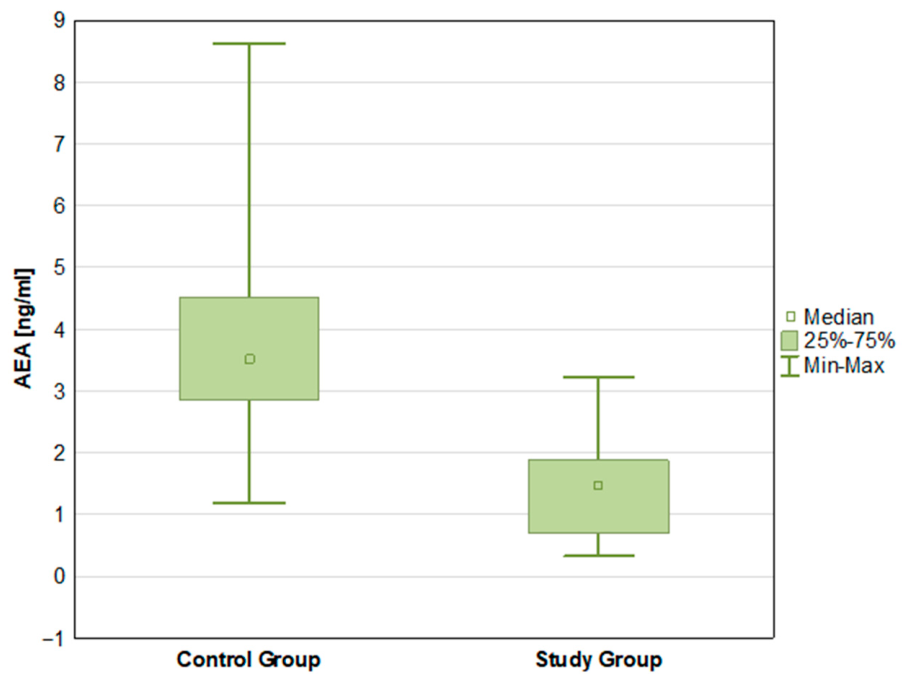
| AEA [ng/mL] | 1.46 ± 0.77 | 1.47 0.70 1.88 | 0.32 | 3.22 | 3.79 ± 1.64 | 3.51 2.86 4.51 | 1.19 | 8.62 | 0.000 |
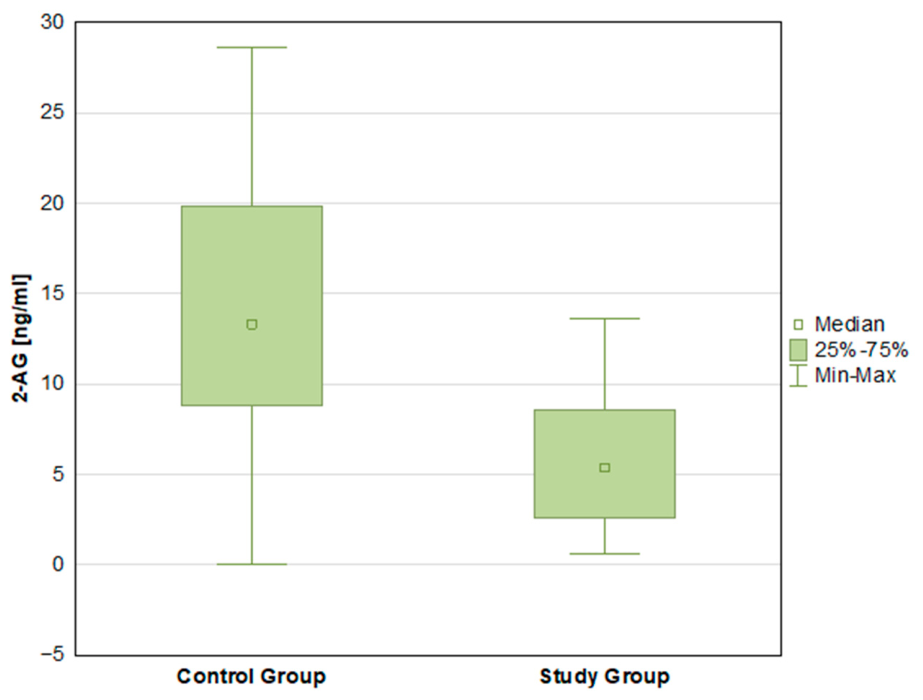
| 2-AG [ng/mL] | 5.72 ± 3.38 | 5.36 2.61 8.55 | 0.63 | 13.60 | 14.29 ± 6.95 | 13.34 8.82 19.88 | 0.00 | 28.61 | 0.000 |
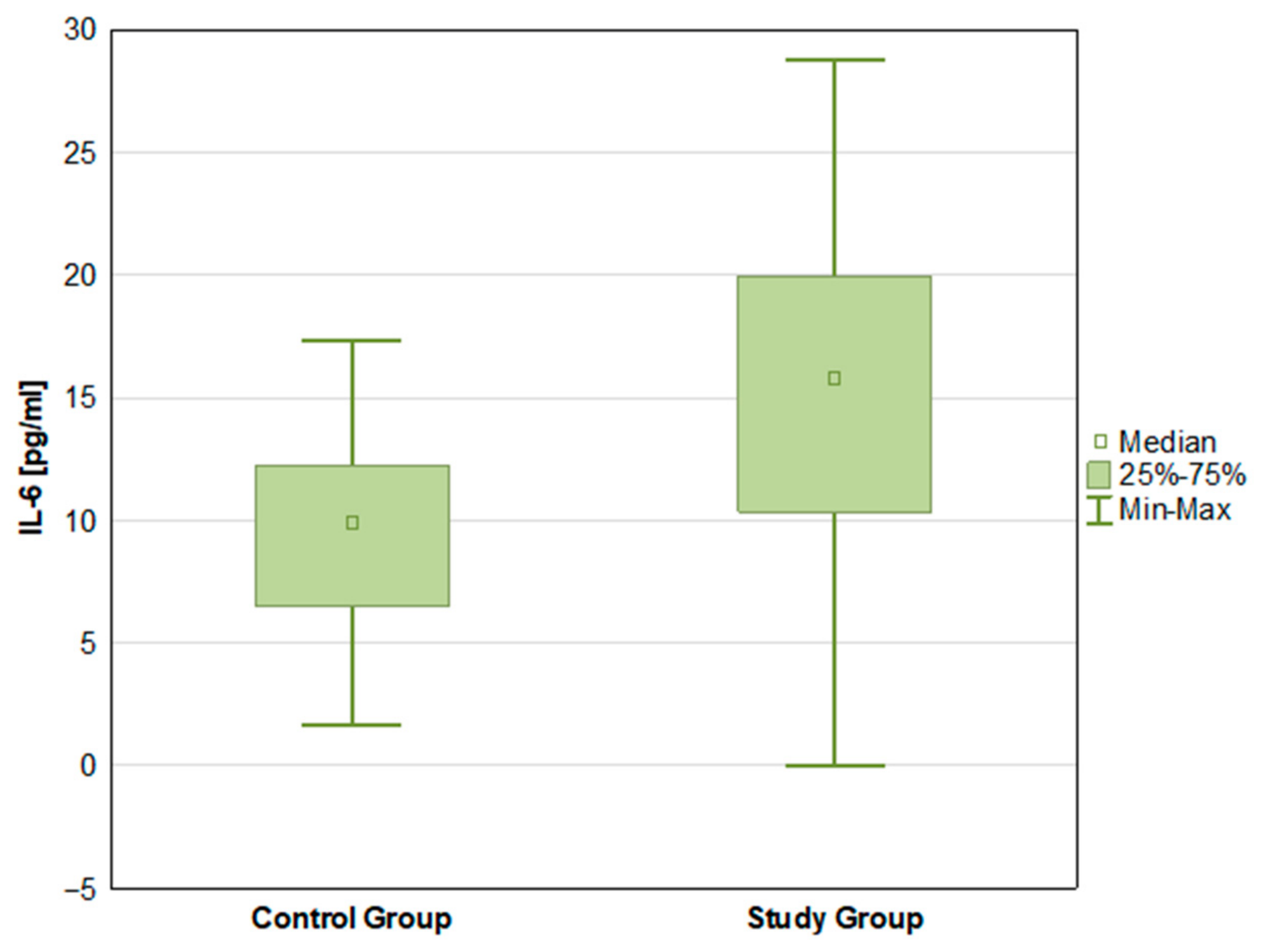
| IL-6 [pg/mL] | 15.15 ± 6.93 | 15.80 10.33 19.97 | 0.00 | 28.79 | 9.65 ± 3.77 | 9.88 6.50 12.25 | 1.67 | 17.33 | 0.000 |
| TNF-α [pg/mL] | 120.08 ± 290.14 | 34.57 25.29 54.66 | 12.42 | 1786.00 | 90.71 ± 187.19 | 33.86 24.57 61.00 | 10.29 | 973.14 | 0.872 |
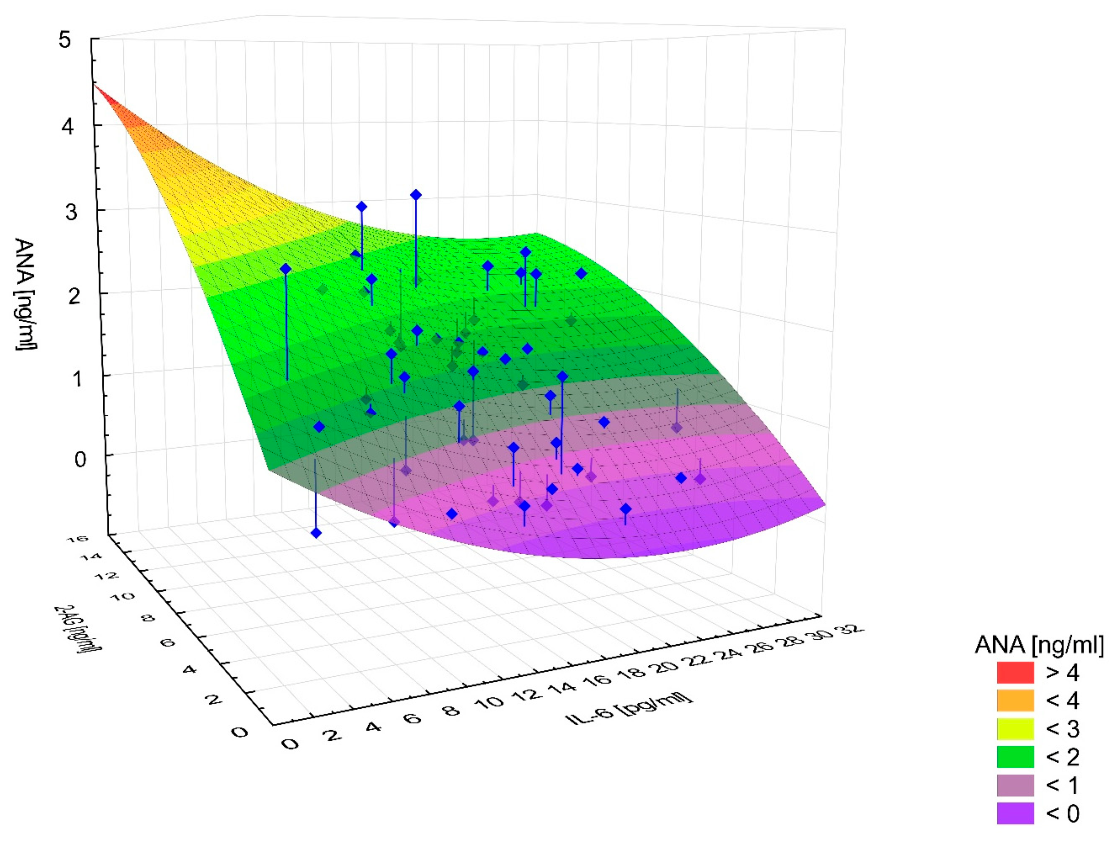
| Dependent Variable | Independent Variable | β | p | R2 | p |
|---|---|---|---|---|---|
| ANA | 2-AG | +0.868 | <0.001 | 0.67 | <0.001 |
| IL-6 | −0.327 | 0.0003 |
| Set (Name, Category Number, Company) | Material | Standard Curve Range | Sensitivity of the Method |
|---|---|---|---|
| Human IL-6 ELISA Kit, Cat. No. E0090Hu, BT LAB (Bioassay Technology Laboratory, Shanghai, China) | Plasma EDTA | 2–600 ng/L | 1.03 ng/L |
| Human TNF-α ELISA Kit, Cat. No. E0082Hu, BT LAB (Bioassay Technology Laboratory) | Plasma EDTA | 3–900 ng/L | 1.52 ng/L |
| Human Anandamide (AEA) ELISA Kit, Cat. No. E3875Hu, BT LAB (Bioassay Technology Laboratory) | Plasma EDTA | 0.05–20 ng/mL | 0.022 ng/mL |
| Human 2-Arachidonoylglycerol (2-AG) ELISA Kit, Cat. No. BT-E3875Hu, BT LAB (Bioassay Technology Laboratory) | Plasma EDTA | 0.05–20 ng/mL | 0.022 ng/mL |
Disclaimer/Publisher’s Note: The statements, opinions and data contained in all publications are solely those of the individual author(s) and contributor(s) and not of MDPI and/or the editor(s). MDPI and/or the editor(s) disclaim responsibility for any injury to people or property resulting from any ideas, methods, instructions or products referred to in the content. |
© 2026 by the authors. Licensee MDPI, Basel, Switzerland. This article is an open access article distributed under the terms and conditions of the Creative Commons Attribution (CC BY) license.
Share and Cite
Simankowicz, P.; Dołęgowska, B.; Marchelek-Myśliwiec, M.; Dołęgowska, K.; Różański, J.; Stępniewska, J. Endocannabinoid System-Related Inflammation and Progression of Autosomal Dominant Polycystic Kidney Disease. Int. J. Mol. Sci. 2026, 27, 4087. https://doi.org/10.3390/ijms27094087
Simankowicz P, Dołęgowska B, Marchelek-Myśliwiec M, Dołęgowska K, Różański J, Stępniewska J. Endocannabinoid System-Related Inflammation and Progression of Autosomal Dominant Polycystic Kidney Disease. International Journal of Molecular Sciences. 2026; 27(9):4087. https://doi.org/10.3390/ijms27094087
Chicago/Turabian StyleSimankowicz, Paulina, Barbara Dołęgowska, Małgorzata Marchelek-Myśliwiec, Katarzyna Dołęgowska, Jacek Różański, and Joanna Stępniewska. 2026. "Endocannabinoid System-Related Inflammation and Progression of Autosomal Dominant Polycystic Kidney Disease" International Journal of Molecular Sciences 27, no. 9: 4087. https://doi.org/10.3390/ijms27094087
APA StyleSimankowicz, P., Dołęgowska, B., Marchelek-Myśliwiec, M., Dołęgowska, K., Różański, J., & Stępniewska, J. (2026). Endocannabinoid System-Related Inflammation and Progression of Autosomal Dominant Polycystic Kidney Disease. International Journal of Molecular Sciences, 27(9), 4087. https://doi.org/10.3390/ijms27094087