TRP-Dependent Calcium Regulation in HCEC-12 Cells: Involvement of Ascorbic Acid and Cannabinoid Receptor Signaling




Abstract
1. Introduction
2. Results
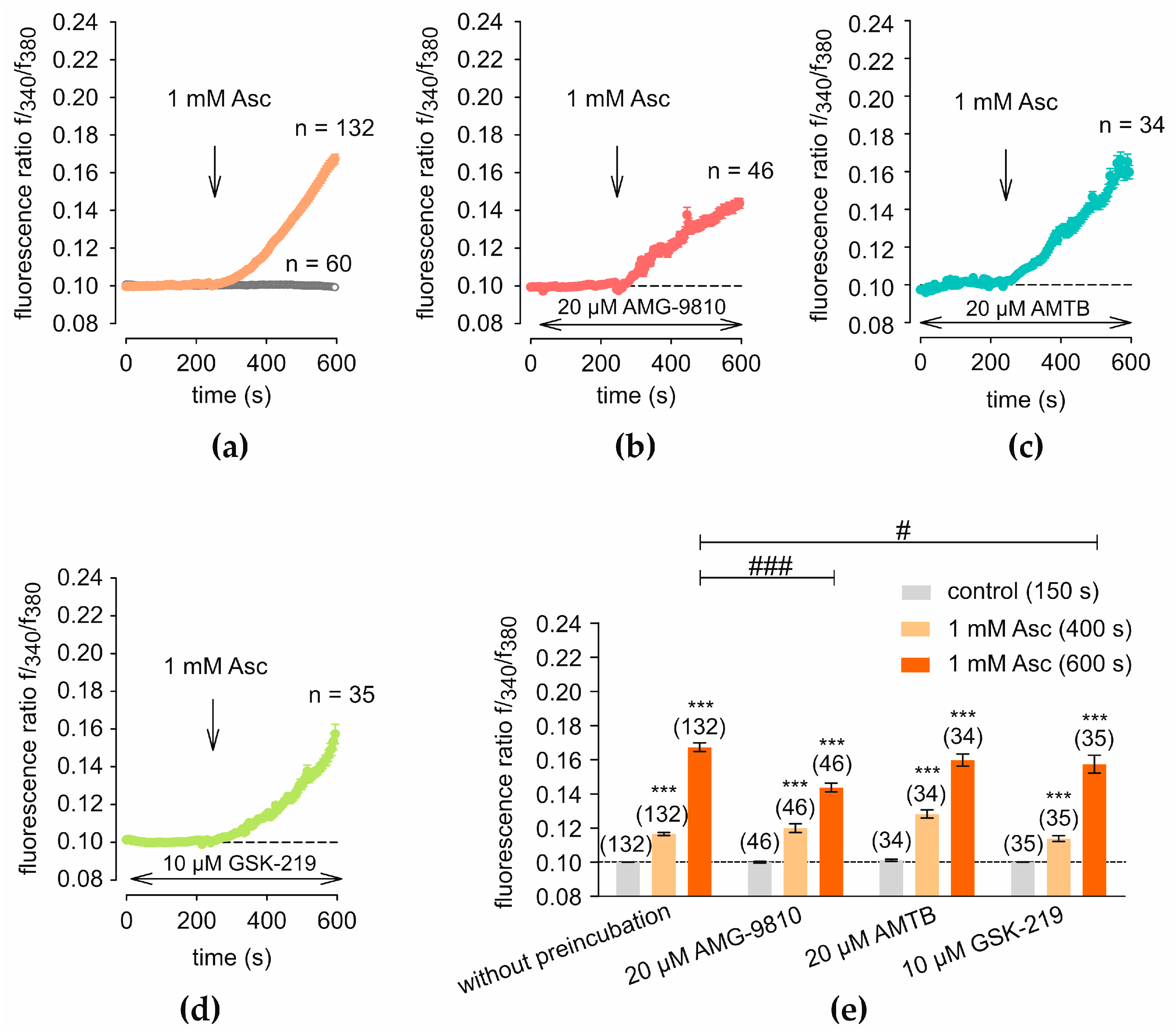
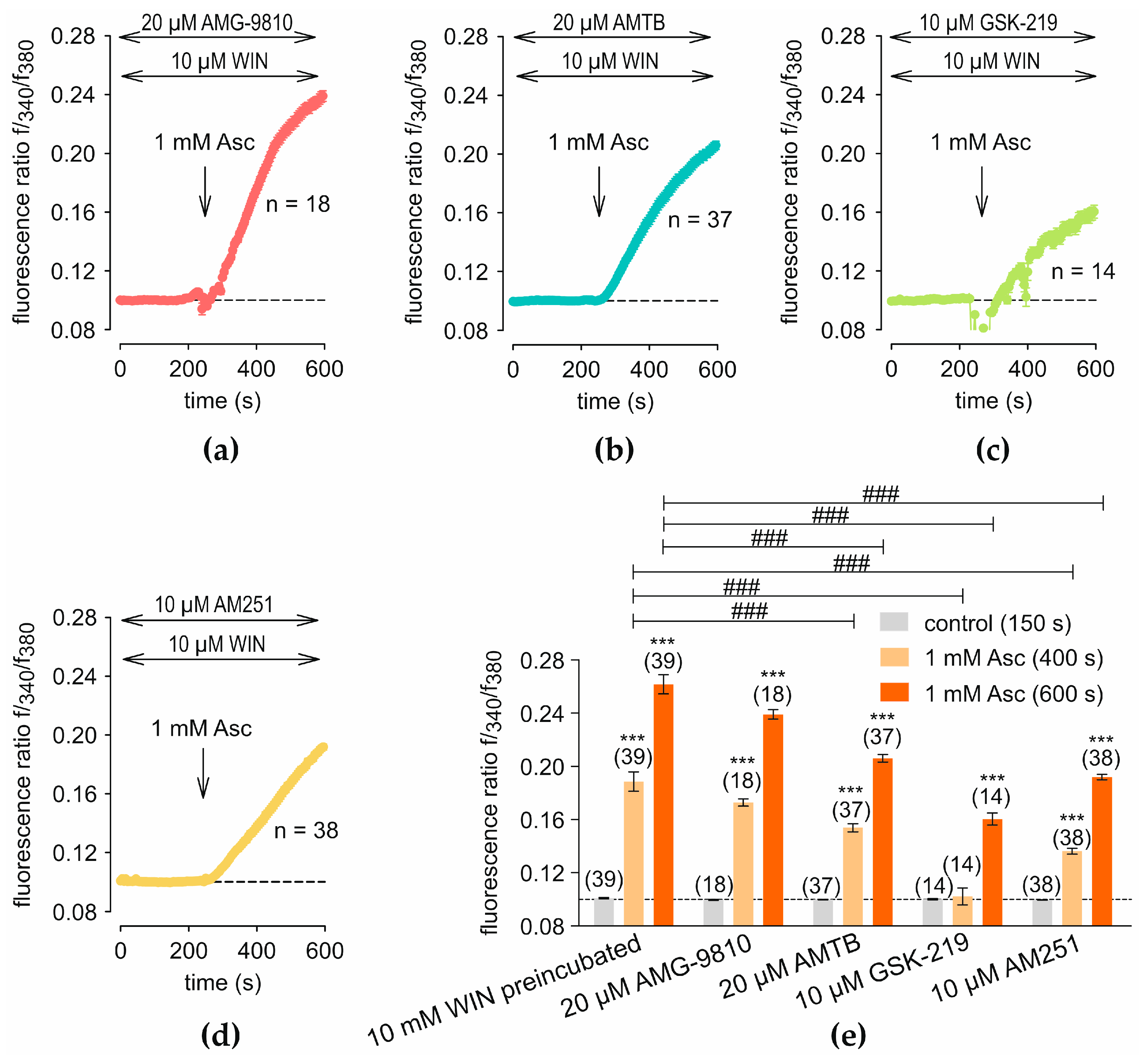
2.1. TRPV1 and TRPV4 Channel Blockers Partially Suppressed the Asc-Induced [Ca2+]i Increase
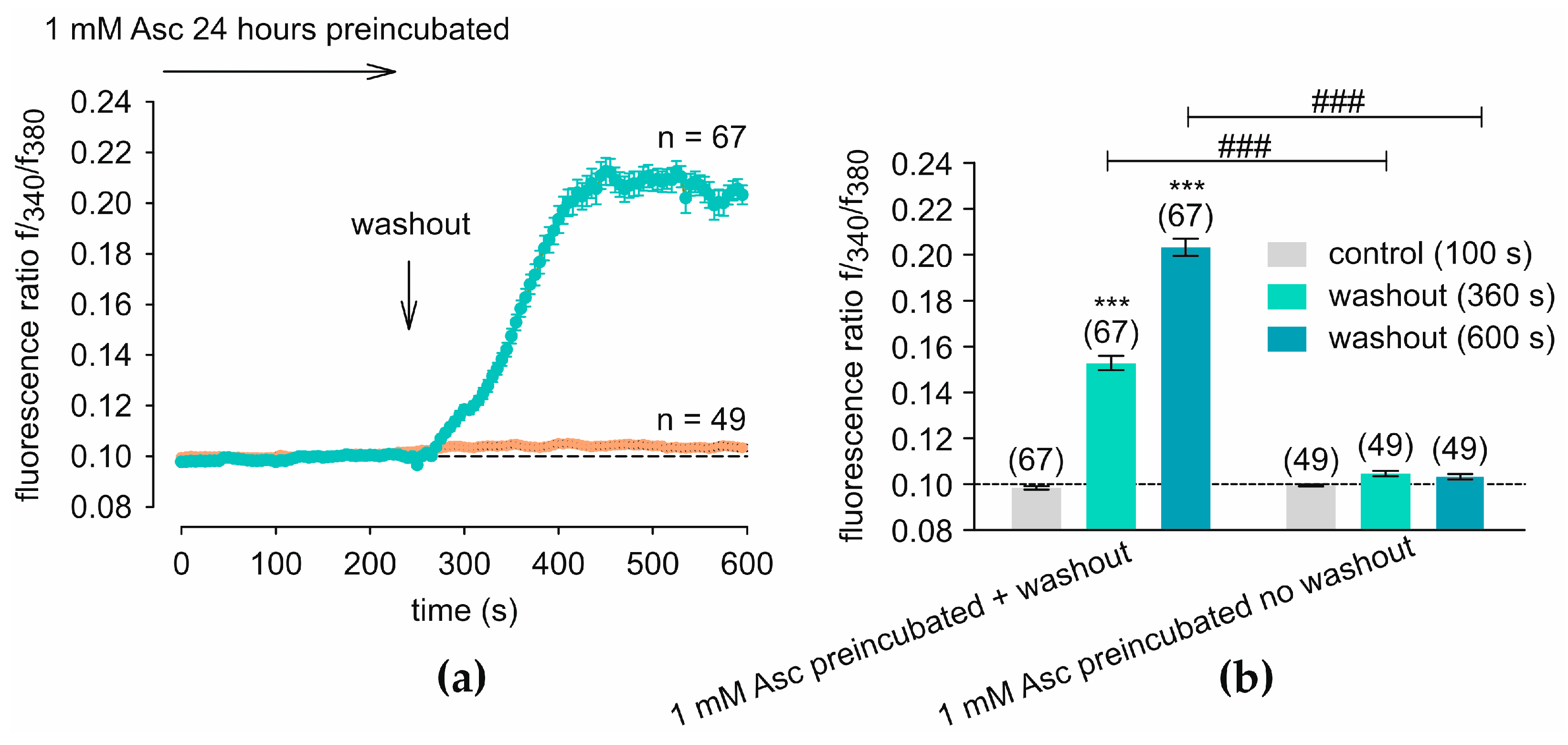
2.2. Washout Following 24-Hour Preincubation of 1 mM Asc in HCEC-12 Induces [Ca2+]i Increases
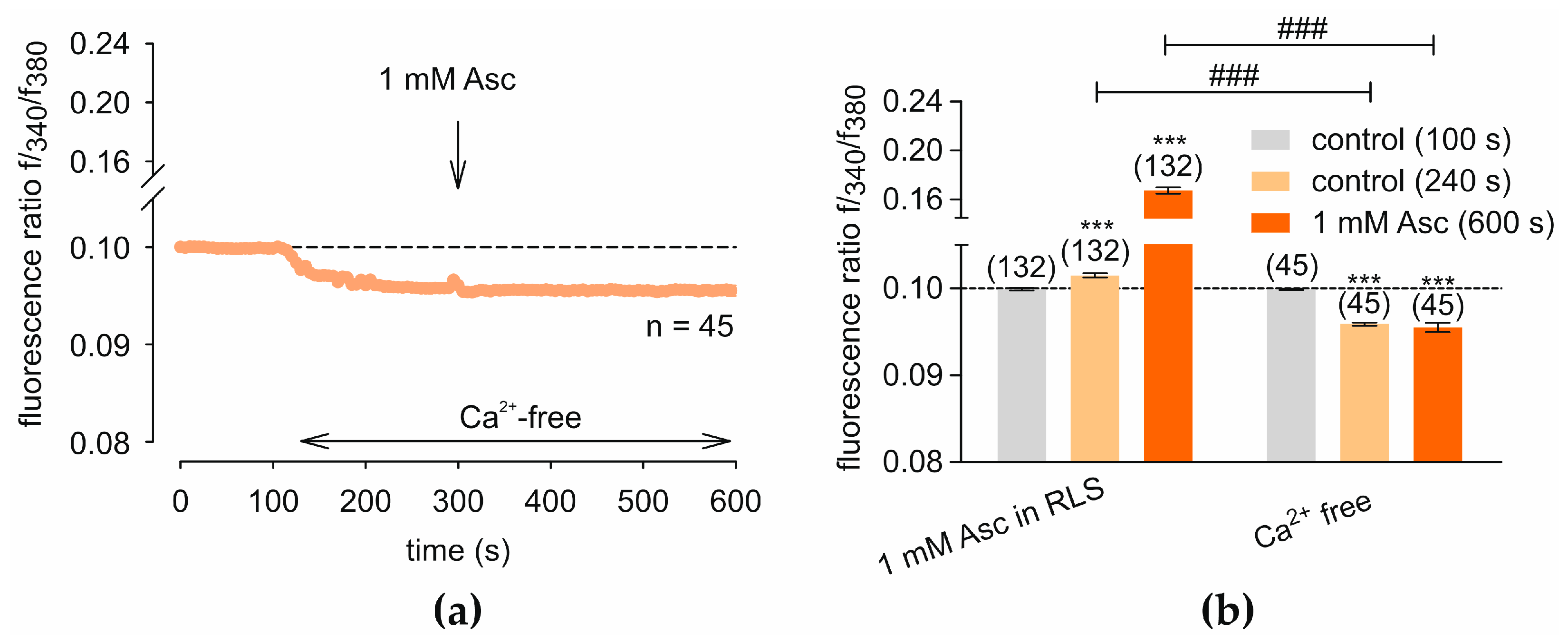
2.3. Asc-Induced [Ca2+]i Increase Is Suppressed in Ca2+-Free Solution
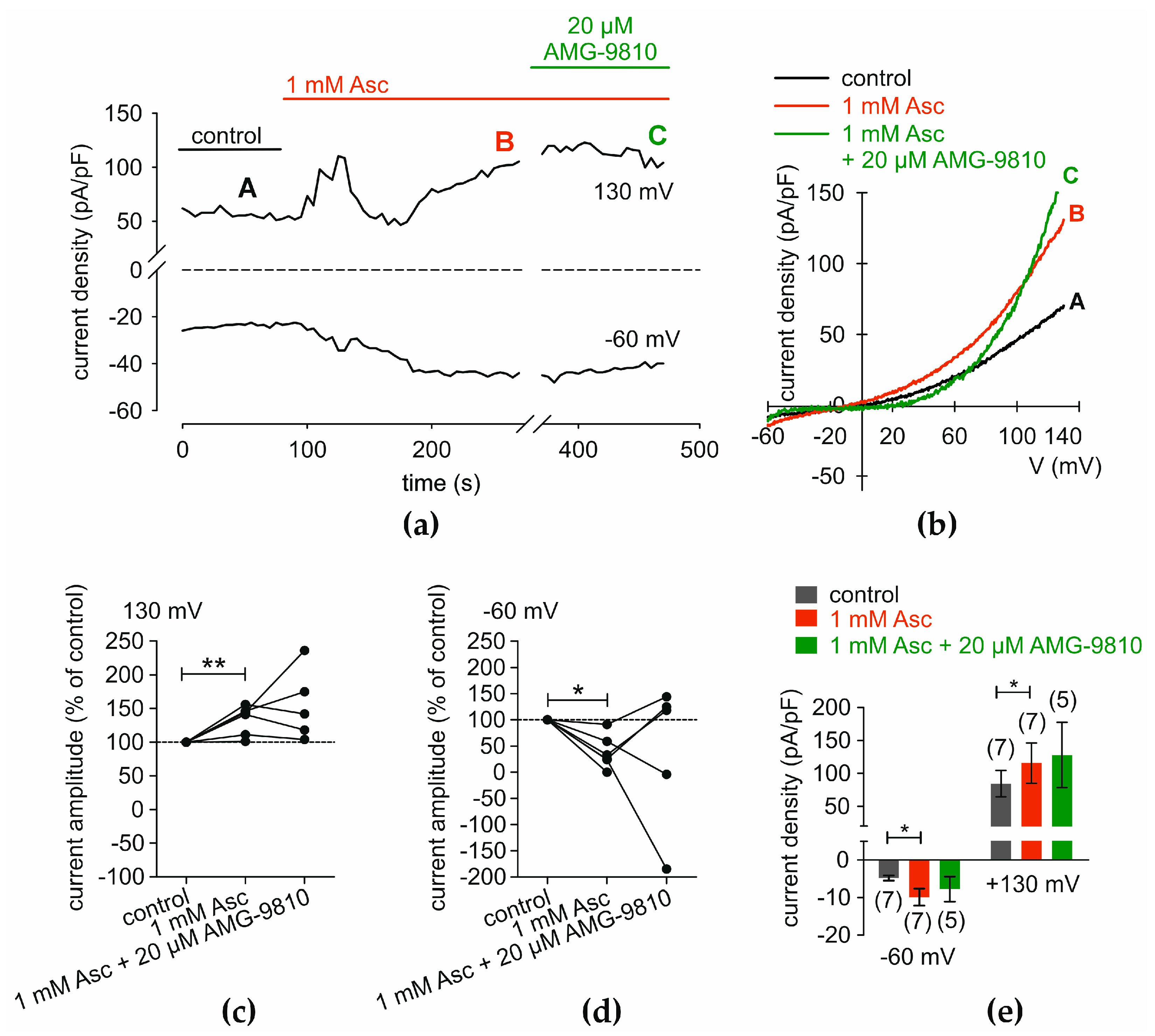
2.4. Asc Increases Whole-Cell Currents in HCEC-12
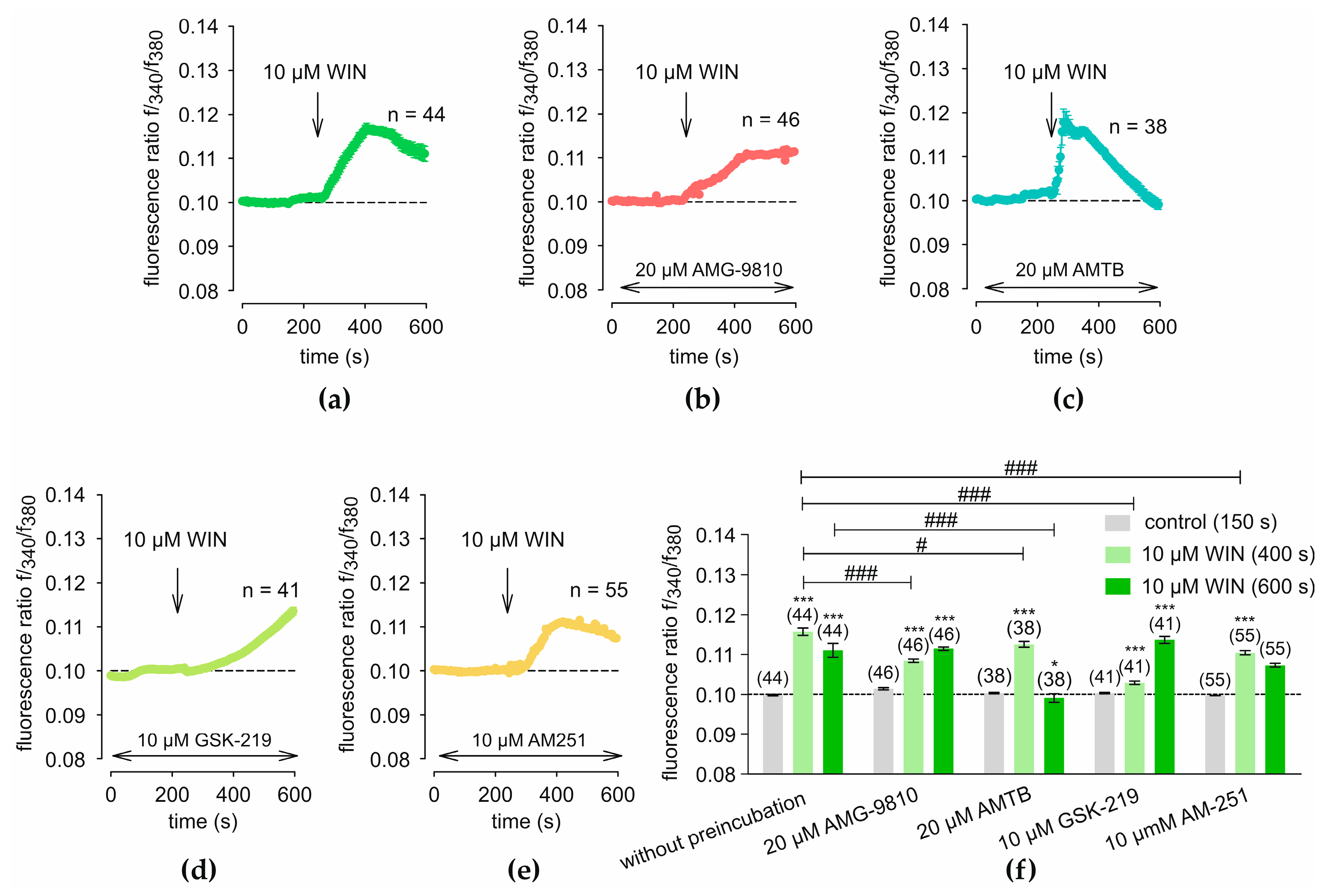
2.5. CB1 Agonist WIN Induces [Ca2+]i Transients, Which Were Partially Blocked by TRPV1, TRPM8, TRPV4 Blockers and CB1 Antagonist
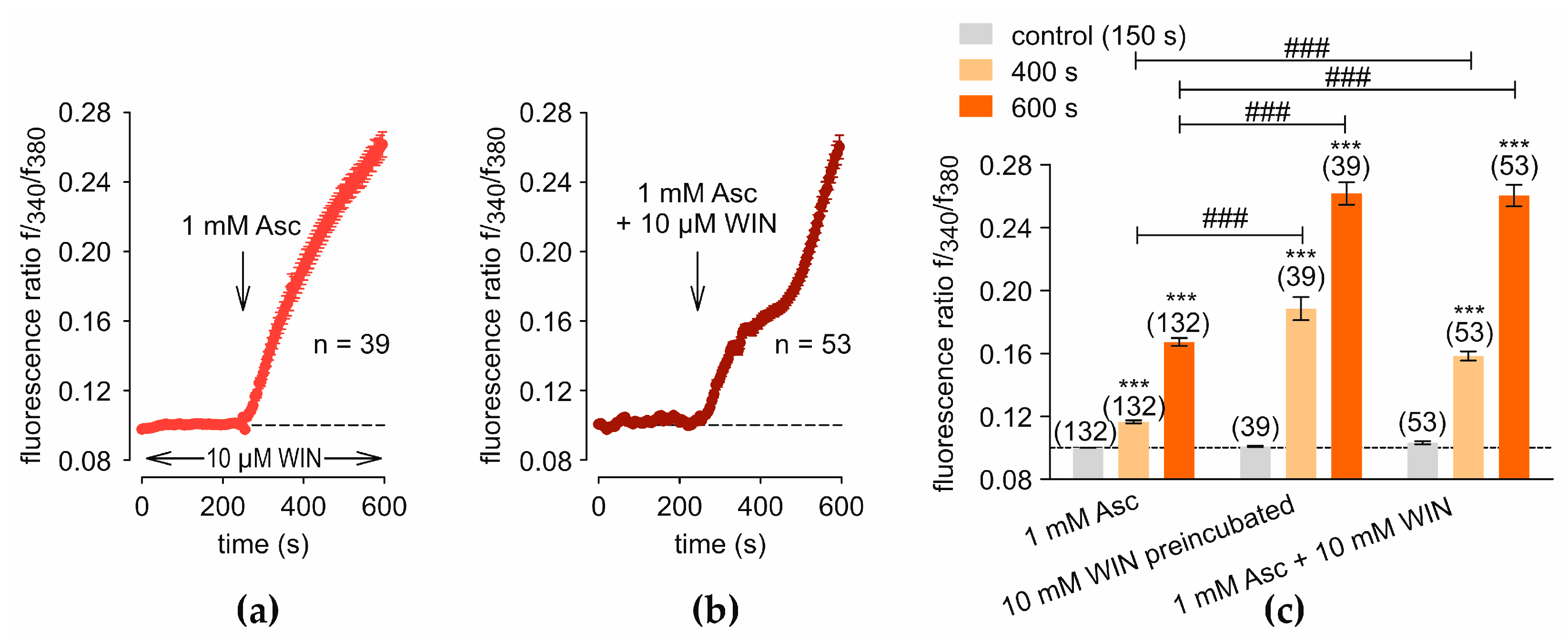
2.6. Asc and WIN Induce Significant Increases in [Ca2+]i Partially Suppressed by TRPM8, TRPV4, and CB1 Antagonists
3. Discussion
3.1. Role of Asc on [Ca2+]i
3.2. Mechanism of Asc Induced TRP Channel Activation and [Ca2+]i Increases
3.3. CB-Mediated Modulation of [Ca2+]i
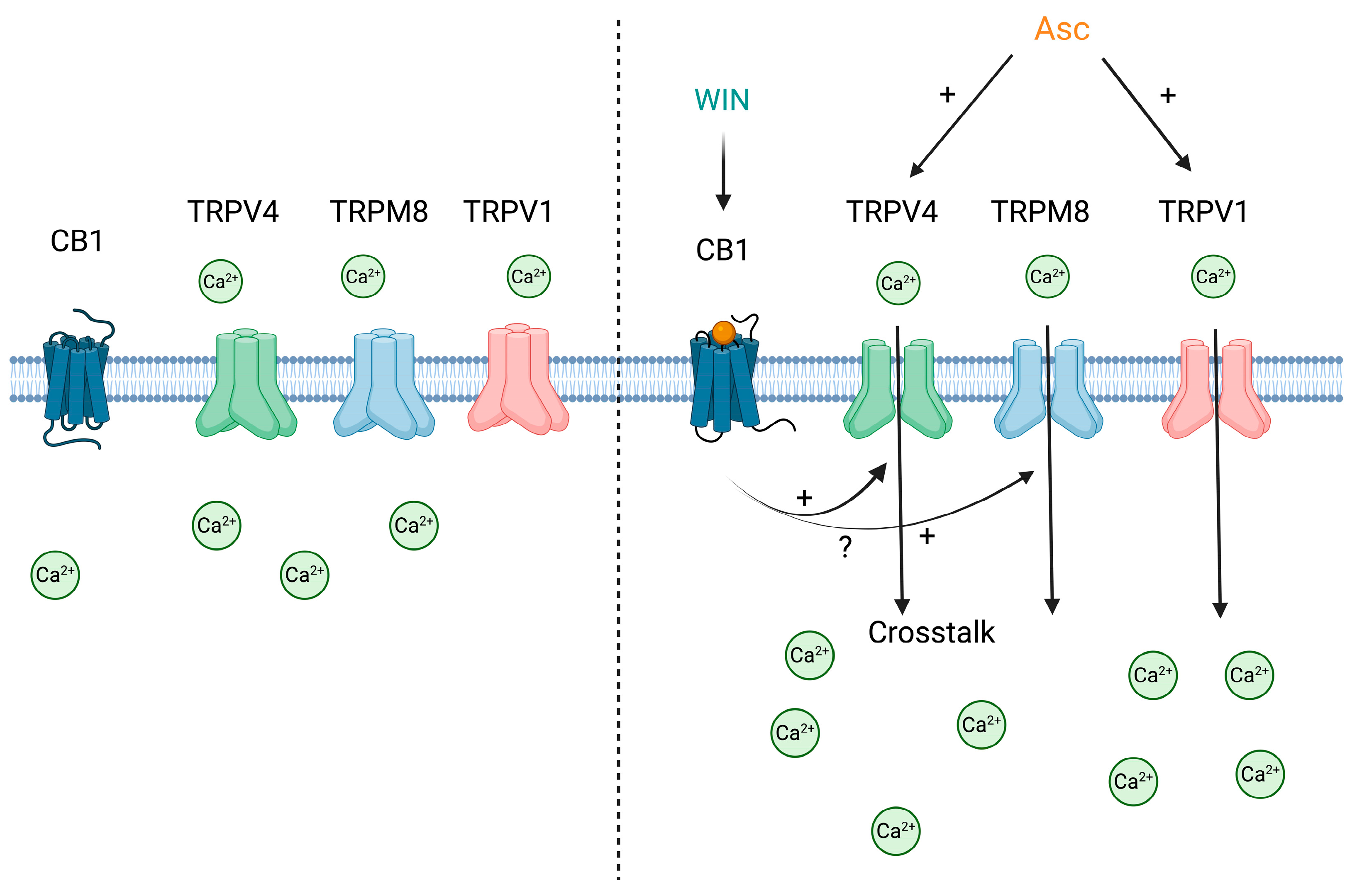
3.4. WIN Enhances Asc-Induced Ca2+ Responses Involving TRPM8 and TRPV4
3.5. Clinical Relevance
3.6. Limitations
4. Materials and Methods
4.1. Cell Culture
4.2. Fluorescence Calcium Imaging
4.3. Planar Patch-Clamping
4.4. Data Analyses and Statistics
5. Conclusions
Supplementary Materials
Author Contributions
Funding
Institutional Review Board Statement
Informed Consent Statement
Data Availability Statement
Acknowledgments
Conflicts of Interest
Abbreviations
| HCE | Human corneal endothelium |
| [Ca2+]i | Intracellular Ca2+ |
| TRPs | Transient receptor potential channels |
| CB1 | Cannabinoid receptor 1 |
| CB | Cannabinoid receptor |
| Asc | L-Ascorbic acid |
| WIN | WIN 55,212-2 |
| AMG | AMG-9810 |
| AMTB | N-(3-aminopropyl)-2-[(3-methylphenyl) methoxy] -N-(2-thienylmethyl) benzamide hydrochloride |
| GSK219 | GSK2193874 |
| HCECs | Human corneal endothelial cells |
| GLUT1 | Glucose transporter 1 |
| TRPA | Transient receptor potential channel ankyrin subfamily |
| TRPC | Transient receptor potential channel canonical subfamily |
| TRPM | Transient receptor potential channel melastatin subfamily |
| TRPML | Transient receptor potential channel mucolipin subfamily |
| TRPN | Transient receptor potential channel NO-mechano-potential subfamily |
| TRPP | Transient receptor potential channel polycystin subfamily |
| TRPV | Transient receptor potential channel vanilloid subfamily |
| GPCRs | G protein-coupled receptors |
| MAPK | Mitogen-activated protein kinases |
| ERK 1/2 | Extracellular Signal-regulated Kinase 1/2 |
| CB2 | Cannabinoid receptor 2 |
| f340/f380 | Fura-2/AM f340/f380 ratio |
| SEM | Standard error |
| CREB | cAMP response element-binding protein |
| CaMK I, II, IV | Ca2+/calmodulin-dependent protein kinase I, II, IV |
| CPZ | Capsazepine |
| FECD | Fuchs endothelial dystrophy |
| RLS | Ringer-Like-Solution |
| DMSO | Dimethyl sulfoxide |
References
- Schünke, M.; Schulte, E.; Schuhmacher, U. Prometheus LernAtlas—Kopf, Hals und Neuroanatomie, 5th ed.; Georg Thieme: Stuttgart, Germany, 2018. [Google Scholar]
- Doughty, M.J. Concerning the Symmetry of the “hexagonal” Cells of the Corneal Endothelium. Exp. Eye Res. 1992, 55, 145–154. [Google Scholar] [CrossRef]
- Engelmann, K.; Bednarz, J.; Böhnke, M. Endothelial cell transplantation and growth behavior of the human corneal endothelium. Ophthalmol. Z. Dtsch. Ophthalmol. Ges. 1999, 96, 555–562. [Google Scholar] [CrossRef]
- Hoppenreijs, V.P.; Pels, E.; Vrensen, G.F.; Treffers, W.F. Corneal Endothelium and Growth Factors. Surv. Ophthalmol. 1996, 41, 155–164. [Google Scholar] [CrossRef]
- Joyce, N.C. Proliferative Capacity of the Corneal Endothelium. Prog. Retin. Eye Res. 2003, 22, 359–389. [Google Scholar] [CrossRef]
- Maurice, D.M. The Structure and Transparency of the Cornea. J. Physiol. 1957, 136, 263–286.1. [Google Scholar] [CrossRef]
- Bourne, W.M. Clinical Estimation of Corneal Endothelial Pump Function. Trans. Am. Ophthalmol. Soc. 1998, 96, 229–239; discussion 239-242. [Google Scholar]
- Bryant, M.R.; McDonnell, P.J. A Triphasic Analysis of Corneal Swelling and Hydration Control. J. Biomech. Eng. 1998, 120, 370–381. [Google Scholar] [CrossRef]
- Bourne, W.M. Biology of the Corneal Endothelium in Health and Disease. Eye 2003, 17, 912–918. [Google Scholar] [CrossRef]
- Laule, A.; Cable, M.K.; Hoffman, C.E.; Hanna, C. Endothelial Cell Population Changes of Human Cornea during Life. Arch. Ophthalmol. Chic. Ill 1960 1978, 96, 2031–2035. [Google Scholar] [CrossRef]
- Price, M.O.; Mehta, J.S.; Jurkunas, U.V.; Price, F.W. Corneal Endothelial Dysfunction: Evolving Understanding and Treatment Options. Prog. Retin. Eye Res. 2021, 82, 100904. [Google Scholar] [CrossRef]
- Hsueh, Y.-J.; Meir, Y.-J.J.; Lai, J.-Y.; Huang, C.-C.; Lu, T.-T.; Ma, D.H.-K.; Cheng, C.-M.; Wu, W.-C.; Chen, H.-C. Ascorbic Acid Ameliorates Corneal Endothelial Dysfunction and Enhances Cell Proliferation via the Noncanonical GLUT1-ERK Axis. Biomed. Pharmacother. Biomed. Pharmacother. 2021, 144, 112306. [Google Scholar] [CrossRef]
- Murad, S.; Grove, D.; Lindberg, K.A.; Reynolds, G.; Sivarajah, A.; Pinnell, S.R. Regulation of Collagen Synthesis by Ascorbic Acid. Proc. Natl. Acad. Sci. USA 1981, 78, 2879–2882. [Google Scholar] [CrossRef]
- Nishikimi, M. Oxidation of Ascorbic Acid with Superoxide Anion Generated by the Xanthine-Xanthine Oxidase System. Biochem. Biophys. Res. Commun. 1975, 63, 463–468. [Google Scholar] [CrossRef]
- Chen, J.; Lan, J.; Liu, D.; Backman, L.J.; Zhang, W.; Zhou, Q.; Danielson, P. Ascorbic Acid Promotes the Stemness of Corneal Epithelial Stem/Progenitor Cells and Accelerates Epithelial Wound Healing in the Cornea. Stem Cells Transl. Med. 2017, 6, 1356–1365. [Google Scholar] [CrossRef]
- Ringvold, A.; Anderssen, E.; Kjønniksen, I. Distribution of Ascorbate in the Anterior Bovine Eye. Investig. Ophthalmol. Vis. Sci. 2000, 41, 20–23. [Google Scholar]
- Hsueh, Y.-J.; Meir, Y.-J.J.; Yeh, L.-K.; Wang, T.-K.; Huang, C.-C.; Lu, T.-T.; Cheng, C.-M.; Wu, W.-C.; Chen, H.-C. Topical Ascorbic Acid Ameliorates Oxidative Stress-Induced Corneal Endothelial Damage via Suppression of Apoptosis and Autophagic Flux Blockage. Cells 2020, 9, 943. [Google Scholar] [CrossRef]
- Singla, S.; Majumdar, D.K.; Goyal, S.; Khilnani, G. Evidence of Carrier Mediated Transport of Ascorbic Acid through Mammalian Cornea. Saudi Pharm. J. 2011, 19, 165–170. [Google Scholar] [CrossRef]
- Talluri, R.S.; Katragadda, S.; Pal, D.; Mitra, A.K. Mechanism of L-Ascorbic Acid Uptake by Rabbit Corneal Epithelial Cells: Evidence for the Involvement of Sodium-Dependent Vitamin C Transporter 2. Curr. Eye Res. 2006, 31, 481–489. [Google Scholar] [CrossRef]
- DiMattio, J. Ascorbic Acid Entry into Cornea of Rat and Guinea Pig. Cornea 1992, 11, 53–65. [Google Scholar] [CrossRef]
- Bode, A.M.; Vanderpool, S.S.; Carlson, E.C.; Meyer, D.A.; Rose, R.C. Ascorbic Acid Uptake and Metabolism by Corneal Endothelium. Investig. Ophthalmol. Vis. Sci. 1991, 32, 2266–2271. [Google Scholar]
- Oronowicz, J.; Reinhard, J.; Reinach, P.S.; Ludwiczak, S.; Luo, H.; Omar Ba Salem, M.H.; Kraemer, M.M.; Biebermann, H.; Kakkassery, V.; Mergler, S. Ascorbate-Induced Oxidative Stress Mediates TRP Channel Activation and Cytotoxicity in Human Etoposide-Sensitive and -Resistant Retinoblastoma Cells. Lab. Investig. J. Tech. Methods Pathol. 2021, 101, 70–88, Correction in Lab. Investig. J. Tech. Methods Pathol. 2021, 101, 1112. [Google Scholar] [CrossRef]
- Berridge, M.J.; Bootman, M.D.; Roderick, H.L. Calcium Signalling: Dynamics, Homeostasis and Remodelling. Nat. Rev. Mol. Cell Biol. 2003, 4, 517–529. [Google Scholar] [CrossRef]
- Clapham, D.E. TRP Channels as Cellular Sensors. Nature 2003, 426, 517–524. [Google Scholar] [CrossRef]
- Zamponi, G.W.; Striessnig, J.; Koschak, A.; Dolphin, A.C. The Physiology, Pathology, and Pharmacology of Voltage-Gated Calcium Channels and Their Future Therapeutic Potential. Pharmacol. Rev. 2015, 67, 821–870. [Google Scholar] [CrossRef]
- Vandecaetsbeek, I.; Vangheluwe, P.; Raeymaekers, L.; Wuytack, F.; Vanoevelen, J. The Ca2+ Pumps of the Endoplasmic Reticulum and Golgi Apparatus. Cold Spring Harb. Perspect. Biol. 2011, 3, a004184. [Google Scholar] [CrossRef]
- Strehler, E.E. Plasma Membrane Ca2+ Pumps and Na+/Ca2+ Exchangers. Semin. Cell Biol. 1990, 1, 283–295. [Google Scholar]
- Venkatachalam, K.; Montell, C. TRP Channels. Annu. Rev. Biochem. 2007, 76, 387–417. [Google Scholar] [CrossRef]
- Veldhuis, N.A.; Poole, D.P.; Grace, M.; McIntyre, P.; Bunnett, N.W. The G Protein-Coupled Receptor-Transient Receptor Potential Channel Axis: Molecular Insights for Targeting Disorders of Sensation and Inflammation. Pharmacol. Rev. 2015, 67, 36–73. [Google Scholar] [CrossRef]
- Song, M.Y.; Yuan, J.X.-J. Introduction to TRP Channels: Structure, Function, and Regulation. Adv. Exp. Med. Biol. 2010, 661, 99–108. [Google Scholar] [CrossRef]
- Zhang, F.; Yang, H.; Wang, Z.; Mergler, S.; Liu, H.; Kawakita, T.; Tachado, S.D.; Pan, Z.; Capó-Aponte, J.E.; Pleyer, U.; et al. Transient Receptor Potential Vanilloid 1 Activation Induces Inflammatory Cytokine Release in Corneal Epithelium through MAPK Signaling. J. Cell. Physiol. 2007, 213, 730–739. [Google Scholar] [CrossRef]
- Mergler, S.; Valtink, M.; Coulson-Thomas, V.J.; Lindemann, D.; Reinach, P.S.; Engelmann, K.; Pleyer, U. TRPV Channels Mediate Temperature-Sensing in Human Corneal Endothelial Cells. Exp. Eye Res. 2010, 90, 758–770. [Google Scholar] [CrossRef]
- Mergler, S.; Valtink, M.; Taetz, K.; Sahlmüller, M.; Fels, G.; Reinach, P.S.; Engelmann, K.; Pleyer, U. Characterization of Transient Receptor Potential Vanilloid Channel 4 (TRPV4) in Human Corneal Endothelial Cells. Exp. Eye Res. 2011, 93, 710–719. [Google Scholar] [CrossRef] [PubMed]
- Mergler, S.; Mertens, C.; Valtink, M.; Reinach, P.S.; Székely, V.C.; Slavi, N.; Garreis, F.; Abdelmessih, S.; Türker, E.; Fels, G.; et al. Functional Significance of Thermosensitive Transient Receptor Potential Melastatin Channel 8 (TRPM8) Expression in Immortalized Human Corneal Endothelial Cells. Exp. Eye Res. 2013, 116, 337–349. [Google Scholar] [CrossRef] [PubMed]
- Wei, Y.; Jin, Z.; Zhang, H.; Piao, S.; Lu, J.; Bai, L. The Transient Receptor Potential Channel, Vanilloid 5, Induces Chondrocyte Apoptosis via Ca2+ CaMKII-Dependent MAPK and Akt/ mTOR Pathways in a Rat Osteoarthritis Model. Cell. Physiol. Biochem. Int. J. Exp. Cell. Physiol. Biochem. Pharmacol. 2018, 51, 2309–2323. [Google Scholar] [CrossRef] [PubMed]
- Diego, L.M.; Viviana, A. Cannabinoid Receptor CB1 Activation In Vivo Leads to Corneal Wound Healing After Chemical Injury, via Specific Receptor Vanilloid TRPV1 Desensitization. Ophthalmol. Res. Rep. 2018, 3, 100027–100049. [Google Scholar]
- Yang, Y.; Yang, H.; Wang, Z.; Varadaraj, K.; Kumari, S.S.; Mergler, S.; Okada, Y.; Saika, S.; Kingsley, P.J.; Marnett, L.J.; et al. Cannabinoid Receptor 1 Suppresses Transient Receptor Potential Vanilloid 1-Induced Inflammatory Responses to Corneal Injury. Cell. Signal. 2013, 25, 501–511. [Google Scholar] [CrossRef]
- Luo, H. Characterization of Functional Expression of Cannabinoid Receptor 1 and Transient Receptor Potential Vanilloid 1 Channel in Human Corneal Endothelial Cells; Charité-Universitätsmedizin Berlin: Berlin, Germany, 2023. [Google Scholar]
- Zou, S.; Kumar, U. Cannabinoid Receptors and the Endocannabinoid System: Signaling and Function in the Central Nervous System. Int. J. Mol. Sci. 2018, 19, 833. [Google Scholar] [CrossRef]
- Straiker, A.J.; Maguire, G.; Mackie, K.; Lindsey, J. Localization of Cannabinoid CB1 Receptors in the Human Anterior Eye and Retina. Investig. Ophthalmol. Vis. Sci. 1999, 40, 2442–2448. [Google Scholar]
- Conti, F.; Lazzara, F.; Thermos, K.; Zingale, E.; Spyridakos, D.; Romano, G.L.; Di Martino, S.; Micale, V.; Kuchar, M.; Spadaro, A.; et al. Retinal Pharmacodynamic and Pharmacokinetic Profile of Cannabidiol in an in Vivo Model of Retinal Excitotoxicity. Eur. J. Pharmacol. 2025, 991, 177323. [Google Scholar] [CrossRef]
- Tran, B.N.; Maass, M.; Musial, G.; Stern, M.E.; Gehlsen, U.; Steven, P. Topical Application of Cannabinoid-Ligands Ameliorates Experimental Dry-Eye Disease. Ocul. Surf. 2022, 23, 131–139. [Google Scholar] [CrossRef]
- Nascimento Menezes, P.M.; Valença Pereira, E.C.; Gomes da Cruz Silva, M.E.; da Silva, B.A.O.; de Souza Duarte Filho, L.A.M.; de Lima Araújo, T.C.; Bezerra Lima, K.S.; Silva, F.S.; Rolim, L.A. Cannabis and Cannabinoids on Treatment of Inflammation: A Patent Review. Recent Pat. Biotechnol. 2019, 13, 256–267. [Google Scholar] [CrossRef]
- Iannotti, F.A.; Hill, C.L.; Leo, A.; Alhusaini, A.; Soubrane, C.; Mazzarella, E.; Russo, E.; Whalley, B.J.; Di Marzo, V.; Stephens, G.J. Nonpsychotropic Plant Cannabinoids, Cannabidivarin (CBDV) and Cannabidiol (CBD), Activate and Desensitize Transient Receptor Potential Vanilloid 1 (TRPV1) Channels in Vitro: Potential for the Treatment of Neuronal Hyperexcitability. ACS Chem. Neurosci. 2014, 5, 1131–1141. [Google Scholar] [CrossRef]
- Molina-Holgado, E.; Vela, J.M.; Arévalo-Martín, A.; Almazán, G.; Molina-Holgado, F.; Borrell, J.; Guaza, C. Cannabinoids Promote Oligodendrocyte Progenitor Survival: Involvement of Cannabinoid Receptors and Phosphatidylinositol-3 Kinase/Akt Signaling. J. Neurosci. Off. J. Soc. Neurosci. 2002, 22, 9742–9753. [Google Scholar] [CrossRef] [PubMed]
- Molina-Holgado, F.; Pinteaux, E.; Heenan, L.; Moore, J.D.; Rothwell, N.J.; Gibson, R.M. Neuroprotective Effects of the Synthetic Cannabinoid HU-210 in Primary Cortical Neurons Are Mediated by Phosphatidylinositol 3-Kinase/AKT Signaling. Mol. Cell. Neurosci. 2005, 28, 189–194. [Google Scholar] [CrossRef] [PubMed]
- Wolf, F.; Dietrich-Ntoukas, T.; Reinach, P.S.; Pleyer, U.; Mergler, S. Nerve Growth Factor Modulates Regulatory Cell Volume Behavior via Stimulating TRPV1, TRPM8 Channels and Inducing Ca2+ Signaling in Human Conjunctival Epithelial Cells. Cells 2025, 14, 719. [Google Scholar] [CrossRef]
- Cheung, M.; Bao, W.; Behm, D.J.; Brooks, C.A.; Bury, M.J.; Dowdell, S.E.; Eidam, H.S.; Fox, R.M.; Goodman, K.B.; Holt, D.A.; et al. Discovery of GSK2193874: An Orally Active, Potent, and Selective Blocker of Transient Receptor Potential Vanilloid 4. ACS Med. Chem. Lett. 2017, 8, 549–554. [Google Scholar] [CrossRef]
- Mergler, S.; Derckx, R.; Reinach, P.S.; Garreis, F.; Böhm, A.; Schmelzer, L.; Skosyrski, S.; Ramesh, N.; Abdelmessih, S.; Polat, O.K.; et al. Calcium Regulation by Temperature-Sensitive Transient Receptor Potential Channels in Human Uveal Melanoma Cells. Cell. Signal. 2014, 26, 56–69. [Google Scholar] [CrossRef]
- Kim, K.S.; Yoo, H.Y.; Park, K.S.; Kim, J.K.; Zhang, Y.-H.; Kim, S.J. Differential Effects of Acute Hypoxia on the Activation of TRPV1 by Capsaicin and Acidic pH. J. Physiol. Sci. 2012, 62, 93–103. [Google Scholar] [CrossRef] [PubMed]
- Pinto, M.C.X.; Kihara, A.H.; Goulart, V.A.M.; Tonelli, F.M.P.; Gomes, K.N.; Ulrich, H.; Resende, R.R. Calcium Signaling and Cell Proliferation. Cell. Signal. 2015, 27, 2139–2149. [Google Scholar] [CrossRef]
- Monteith, G.R.; McAndrew, D.; Faddy, H.M.; Roberts-Thomson, S.J. Calcium and Cancer: Targeting Ca2+ Transport. Nat. Rev. Cancer 2007, 7, 519–530. [Google Scholar] [CrossRef]
- Kabore, A.F.; Johnston, J.B.; Gibson, S.B. Changes in the Apoptotic and Survival Signaling in Cancer Cells and Their Potential Therapeutic Implications. Curr. Cancer Drug Targets 2004, 4, 147–163. [Google Scholar] [CrossRef] [PubMed]
- Orrenius, S.; Zhivotovsky, B.; Nicotera, P. Regulation of Cell Death: The Calcium-Apoptosis Link. Nat. Rev. Mol. Cell Biol. 2003, 4, 552–565. [Google Scholar] [CrossRef] [PubMed]
- Mohapatra, D.P.; Nau, C. Regulation of Ca2+-Dependent Desensitization in the Vanilloid Receptor TRPV1 by Calcineurin and cAMP-Dependent Protein Kinase. J. Biol. Chem. 2005, 280, 13424–13432. [Google Scholar] [CrossRef]
- Liu, B.; Zhang, C.; Qin, F. Functional Recovery from Desensitization of Vanilloid Receptor TRPV1 Requires Resynthesis of Phosphatidylinositol 4,5-Bisphosphate. J. Neurosci. 2005, 25, 4835–4843. [Google Scholar] [CrossRef]
- Sanz-Salvador, L.; Andrés-Borderia, A.; Ferrer-Montiel, A.; Planells-Cases, R. Agonist- and Ca2+-Dependent Desensitization of TRPV1 Channel Targets the Receptor to Lysosomes for Degradation. J. Biol. Chem. 2012, 287, 19462–19471. [Google Scholar] [CrossRef]
- Carafoli, E.; Genazzani, A.; Guerini, D. Calcium Controls the Transcription of Its Own Transporters and Channels in Developing Neurons. Biochem. Biophys. Res. Commun. 1999, 266, 624–632. [Google Scholar] [CrossRef]
- Wiegert, J.S.; Bading, H. Activity-Dependent Calcium Signaling and ERK-MAP Kinases in Neurons: A Link to Structural Plasticity of the Nucleus and Gene Transcription Regulation. Cell Calcium 2011, 49, 296–305. [Google Scholar] [CrossRef]
- Wayman, G.A.; Lee, Y.-S.; Tokumitsu, H.; Silva, A.; Soderling, T.R. Calmodulin-Kinases: Modulators of Neuronal Development and Plasticity. Neuron 2008, 59, 914–931, Erratum in Neuron 2009, 64, 590. [Google Scholar] [CrossRef]
- Levenson, J.M.; Sweatt, J.D. Epigenetic Mechanisms in Memory Formation. Nat. Rev. Neurosci. 2005, 6, 108–118. [Google Scholar] [CrossRef] [PubMed]
- Borrelli, E.; Nestler, E.J.; Allis, C.D.; Sassone-Corsi, P. Decoding the Epigenetic Language of Neuronal Plasticity. Neuron 2008, 60, 961–974. [Google Scholar] [CrossRef]
- Vera, J.C.; Rivas, C.I.; Velásquez, F.V.; Zhang, R.H.; Concha, I.I.; Golde, D.W. Resolution of the Facilitated Transport of Dehydroascorbic Acid from Its Intracellular Accumulation as Ascorbic Acid. J. Biol. Chem. 1995, 270, 23706–23712. [Google Scholar] [CrossRef]
- Savini, I.; Rossi, A.; Pierro, C.; Avigliano, L.; Catani, M.V. SVCT1 and SVCT2: Key Proteins for Vitamin C Uptake. Amino Acids 2008, 34, 347–355. [Google Scholar] [CrossRef]
- Song, Y.; Buettner, G.R. Thermodynamic and Kinetic Considerations for the Reaction of Semiquinone Radicals to Form Superoxide and Hydrogen Peroxide. Free Radic. Biol. Med. 2010, 49, 919–962. [Google Scholar] [CrossRef]
- Williams, N.H.; Yandell, J.K. Outer-Sphere Electron-Transfer Reactions of Ascorbate Anions. Aust. J. Chem. 1982, 35, 1133–1144. [Google Scholar] [CrossRef]
- Clément, M.V.; Ramalingam, J.; Long, L.H.; Halliwell, B. The in Vitro Cytotoxicity of Ascorbate Depends on the Culture Medium Used to Perform the Assay and Involves Hydrogen Peroxide. Antioxid. Redox Signal. 2001, 3, 157–163. [Google Scholar] [CrossRef]
- Chen, Q.; Espey, M.G.; Krishna, M.C.; Mitchell, J.B.; Corpe, C.P.; Buettner, G.R.; Shacter, E.; Levine, M. Pharmacologic Ascorbic Acid Concentrations Selectively Kill Cancer Cells: Action as a pro-Drug to Deliver Hydrogen Peroxide to Tissues. Proc. Natl. Acad. Sci. USA 2005, 102, 13604–13609. [Google Scholar] [CrossRef]
- Nicholas, S.; Yuan, S.Y.; Brookes, S.J.H.; Spencer, N.J.; Zagorodnyuk, V.P. Hydrogen Peroxide Preferentially Activates Capsaicin-Sensitive High Threshold Afferents via TRPA1 Channels in the Guinea Pig Bladder. Br. J. Pharmacol. 2017, 174, 126–138. [Google Scholar] [CrossRef]
- DelloStritto, D.J.; Connell, P.J.; Dick, G.M.; Fancher, I.S.; Klarich, B.; Fahmy, J.N.; Kang, P.T.; Chen, Y.-R.; Damron, D.S.; Thodeti, C.K.; et al. Differential Regulation of TRPV1 Channels by H2O2: Implications for Diabetic Microvascular Dysfunction. Basic Res. Cardiol. 2016, 111, 21. [Google Scholar] [CrossRef] [PubMed]
- Mergler, S.; Pleyer, U.; Reinach, P.; Bednarz, J.; Dannowski, H.; Engelmann, K.; Hartmann, C.; Yousif, T. EGF Suppresses Hydrogen Peroxide Induced Ca2+ Influx by Inhibiting L-Type Channel Activity in Cultured Human Corneal Endothelial Cells. Exp. Eye Res. 2005, 80, 285–293. [Google Scholar] [CrossRef] [PubMed]
- Behrendt, H.-J.; Germann, T.; Gillen, C.; Hatt, H.; Jostock, R. Characterization of the Mouse Cold-Menthol Receptor TRPM8 and Vanilloid Receptor Type-1 VR1 Using a Fluorometric Imaging Plate Reader (FLIPR) Assay. Br. J. Pharmacol. 2004, 141, 737–745. [Google Scholar] [CrossRef] [PubMed]
- Yang, H.; Wang, Z.; Capó-Aponte, J.E.; Zhang, F.; Pan, Z.; Reinach, P.S. Epidermal Growth Factor Receptor Transactivation by the Cannabinoid Receptor (CB1) and Transient Receptor Potential Vanilloid 1 (TRPV1) Induces Differential Responses in Corneal Epithelial Cells. Exp. Eye Res. 2010, 91, 462–471. [Google Scholar] [CrossRef]
- Mergler, S.; Cheng, Y.; Skosyrski, S.; Garreis, F.; Pietrzak, P.; Kociok, N.; Dwarakanath, A.; Reinach, P.S.; Kakkassery, V. Altered Calcium Regulation by Thermosensitive Transient Receptor Potential Channels in Etoposide-Resistant WERI-Rb1 Retinoblastoma Cells. Exp. Eye Res. 2012, 94, 157–173. [Google Scholar] [CrossRef]
- Ozaita, A.; Puighermanal, E.; Maldonado, R. Regulation of PI3K/Akt/GSK-3 Pathway by Cannabinoids in the Brain. J. Neurochem. 2007, 102, 1105–1114. [Google Scholar] [CrossRef] [PubMed]
- Ong Tone, S.; Kocaba, V.; Böhm, M.; Wylegala, A.; White, T.L.; Jurkunas, U.V. Fuchs Endothelial Corneal Dystrophy: The Vicious Cycle of Fuchs Pathogenesis. Prog. Retin. Eye Res. 2021, 80, 100863. [Google Scholar] [CrossRef]
- Zhang, J.; McGhee, C.N.J.; Patel, D.V. The Molecular Basis of Fuchs’ Endothelial Corneal Dystrophy. Mol. Diagn. Ther. 2019, 23, 97–112. [Google Scholar] [CrossRef] [PubMed]
- Hamill, C.E.; Schmedt, T.; Jurkunas, U. Fuchs Endothelial Cornea Dystrophy: A Review of the Genetics behind Disease Development. Semin. Ophthalmol. 2013, 28, 281–286. [Google Scholar] [CrossRef] [PubMed]
- Jurkunas, U.V.; Bitar, M.S.; Rawe, I.; Harris, D.L.; Colby, K.; Joyce, N.C. Increased Clusterin Expression in Fuchs’ Endothelial Dystrophy. Investig. Ophthalmol. Vis. Sci. 2008, 49, 2946–2955. [Google Scholar] [CrossRef]
- Okumura, N.; Hashimoto, K.; Kitahara, M.; Okuda, H.; Ueda, E.; Watanabe, K.; Nakahara, M.; Sato, T.; Kinoshita, S.; Tourtas, T.; et al. Activation of TGF-β Signaling Induces Cell Death via the Unfolded Protein Response in Fuchs Endothelial Corneal Dystrophy. Sci. Rep. 2017, 7, 6801. [Google Scholar] [CrossRef]
- Thompson, R.W.; Price, M.O.; Bowers, P.J.; Price, F.W. Long-Term Graft Survival after Penetrating Keratoplasty. Ophthalmology 2003, 110, 1396–1402. [Google Scholar] [CrossRef]
- Gimenes, I.; Pintor, A.V.B.P.; da Silva Sardinha, M.; Marañón-Vásquez, G.A. Cold Storage Media versus Optisol-GS in the Preservation of Corneal Quality for Keratoplasty: A Systematic Review. Appl. Sci. 2022, 12, 7079. [Google Scholar] [CrossRef]
- Mergler, S.; Pleyer, U. [Physiology of the human corneal endothelium--new insights from electrophysiological investigations]. Klin. Monatsbl. Augenheilkd. 2011, 228, 520–524. [Google Scholar] [CrossRef]
- Lee, C.-Y.; Chen, H.-T.; Hsueh, Y.-J.; Chen, H.-C.; Huang, C.-C.; Meir, Y.-J.J.; Cheng, C.-M.; Wu, W.-C. Perioperative Topical Ascorbic Acid for the Prevention of Phacoemulsification-Related Corneal Endothelial Damage: Two Case Reports and Review of Literature. World J. Clin. Cases 2019, 7, 642–649. [Google Scholar] [CrossRef]
- Iribarne, M.; Torbidoni, V.; Julián, K.; Prestifilippo, J.P.; Sinha, D.; Rettori, V.; Berra, A.; Suburo, A.M. Cannabinoid Receptors in Conjunctival Epithelium: Identification and Functional Properties. Investig. Ophthalmol. Vis. Sci. 2008, 49, 4535–4544. [Google Scholar] [CrossRef]
- Thathapudi, N.C.; Groleau, M.; Degué, D.S.; Aghajanzadeh Kiyaseh, M.; Kujawa, P.; Soulhi, F.; Akla, N.; Griffith, M.; Robert, M.-C. Novel Micellar CB2 Receptor Agonist with Anti-Inflammatory Action for Treating Corneal Alkali Burns in a Mouse Model. Front. Pharmacol. 2023, 14, 1270699. [Google Scholar] [CrossRef]
- Grynkiewicz, G.; Poenie, M.; Tsien, R.Y. A New Generation of Ca2+ Indicators with Greatly Improved Fluorescence Properties. J. Biol. Chem. 1985, 260, 3440–3450. [Google Scholar] [CrossRef] [PubMed]
- Barreto-Chang, O.L.; Dolmetsch, R.E. Calcium Imaging of Cortical Neurons Using Fura-2 AM. J. Vis. Exp. 2009, e1067. [Google Scholar] [CrossRef] [PubMed]
- Mergler, S.; Dannowski, H.; Bednarz, J.; Engelmann, K.; Hartmann, C.; Pleyer, U. Calcium Influx Induced by Activation of Receptor Tyrosine Kinases in SV40-Transfected Human Corneal Endothelial Cells. Exp. Eye Res. 2003, 77, 485–495. [Google Scholar] [CrossRef]
- Brüggemann, A.; Stoelzle, S.; George, M.; Behrends, J.C.; Fertig, N. Microchip Technology for Automated and Parallel Patch-Clamp Recording. Small 2006, 2, 840–846. [Google Scholar] [CrossRef] [PubMed]



Disclaimer/Publisher’s Note: The statements, opinions and data contained in all publications are solely those of the individual author(s) and contributor(s) and not of MDPI and/or the editor(s). MDPI and/or the editor(s) disclaim responsibility for any injury to people or property resulting from any ideas, methods, instructions or products referred to in the content. |
© 2026 by the authors. Licensee MDPI, Basel, Switzerland. This article is an open access article distributed under the terms and conditions of the Creative Commons Attribution (CC BY) license.
Share and Cite
Homsi, L.; Bhamare, A.A.; Pleyer, U.; Mergler, S. TRP-Dependent Calcium Regulation in HCEC-12 Cells: Involvement of Ascorbic Acid and Cannabinoid Receptor Signaling. Int. J. Mol. Sci. 2026, 27, 3902. https://doi.org/10.3390/ijms27093902
Homsi L, Bhamare AA, Pleyer U, Mergler S. TRP-Dependent Calcium Regulation in HCEC-12 Cells: Involvement of Ascorbic Acid and Cannabinoid Receptor Signaling. International Journal of Molecular Sciences. 2026; 27(9):3902. https://doi.org/10.3390/ijms27093902
Chicago/Turabian StyleHomsi, Louay, Anisha Atul Bhamare, Uwe Pleyer, and Stefan Mergler. 2026. "TRP-Dependent Calcium Regulation in HCEC-12 Cells: Involvement of Ascorbic Acid and Cannabinoid Receptor Signaling" International Journal of Molecular Sciences 27, no. 9: 3902. https://doi.org/10.3390/ijms27093902
APA StyleHomsi, L., Bhamare, A. A., Pleyer, U., & Mergler, S. (2026). TRP-Dependent Calcium Regulation in HCEC-12 Cells: Involvement of Ascorbic Acid and Cannabinoid Receptor Signaling. International Journal of Molecular Sciences, 27(9), 3902. https://doi.org/10.3390/ijms27093902