1. Introduction
In patients presenting with suspected acute coronary syndromes (ACS), the immediate clinical questions are straightforward: is an acute coronary event occurring, what is the short-term risk, and who requires urgent invasive or intensive management? Contemporary algorithms from the European Society of Cardiology (ESC) and the American College of Cardiology (ACC)/American Heart Association (AHA) place high-sensitivity cardiac troponin (hs-cTn) at the center of diagnosis, alongside electrocardiography, clinical assessment, and validated risk scores such as the Global Registry of Acute Coronary Events (GRACE) and Thrombolysis In Myocardial Infarction (TIMI) scores [
1,
2,
3]. This framework is highly effective for detecting myocardial injury and directing early treatment, but hs-cTn is fundamentally a marker of necrosis and offers little information about upstream plaque activity, platelet activation, or inflammatory tone [
1,
4].
Brain-derived neurotrophic factor (BDNF) has attracted interest as a candidate biomarker because it is involved in several biological pathways relevant to ACS, including endothelial signaling, platelet biology, inflammation, and neurohumoral regulation. It is produced by megakaryocytes, stored in platelets, and expressed in vascular tissue, and available data link it to plaque inflammation and instability [
5,
6]. At the same time, circulating BDNF is highly susceptible to methodological variability, and its diagnostic performance in ACS has been inconsistent. Although some studies have reported higher BDNF concentrations in ST-segment elevation myocardial infarction (STEMI) and associations with plaque macrophage infiltration, its value for the diagnosis of ACS remains limited [
5,
7]. Beyond plaque-related activity, emerging data suggest that BDNF may also reflect other layers of ACS biology, including impaired reperfusion, microvascular dysfunction, and the neuropsychiatric response to myocardial injury [
8,
9]. That broader scope is exactly why BDNF is unlikely to become a simple diagnostic biomarker, but may still prove useful for biological phenotyping and risk contextualization after ACS.
The clinically relevant question, therefore, is not whether BDNF should replace established biomarkers, but whether it can refine biological phenotyping and risk assessment in selected patients with ACS. At present, the evidence supports biological plausibility rather than clinical readiness. BDNF should not be viewed as a routine diagnostic test, but as a candidate marker whose value, if confirmed, is more likely to lie in prognosis and contextual characterization of the acute event than in binary diagnosis [
5,
7,
10].
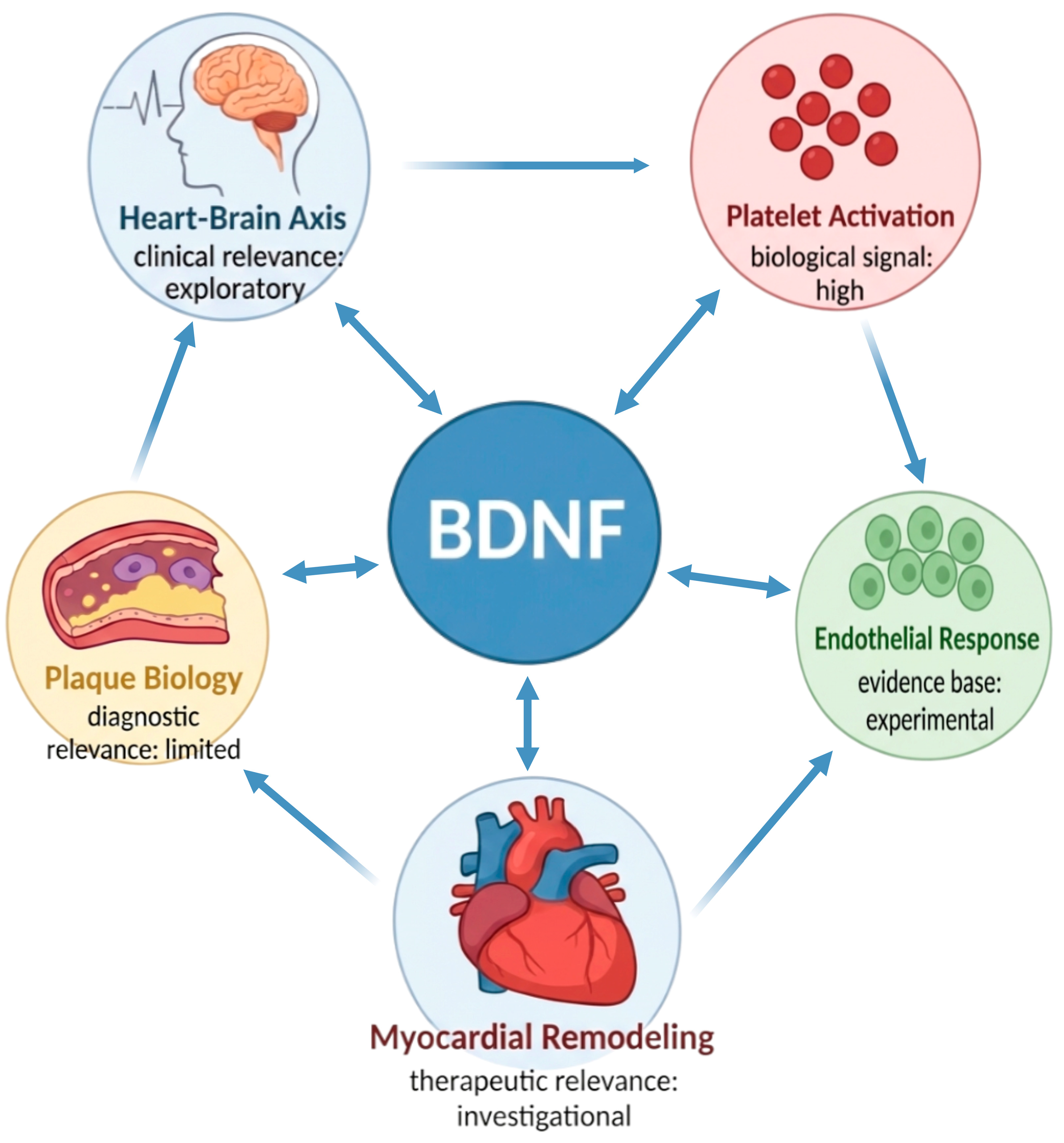
Figure 1 provides a conceptual overview of the principal biological domains through which BDNF may be relevant to ACS, including plaque biology, platelet activation, endothelial response, myocardial remodeling, and heart-brain signaling.
2. Methods
This review was conceived as a focused, clinically oriented narrative review rather than a systematic review or meta-analysis. This approach was selected because the literature on BDNF in acute coronary syndromes (ACS) is biologically and methodologically heterogeneous, spanning mechanistic, translational, imaging-correlative, biomarker, and observational clinical studies. The aim was not to address a single narrowly defined question, but to provide a clinically relevant synthesis of the evidence regarding the biological plausibility of BDNF in ACS, its potential diagnostic and prognostic relevance, and its possible translational implications.
A targeted literature search was conducted in PubMed and Scopus from database inception through 2 March 2026. Search terms combined controlled vocabulary, where applicable, with free-text terms related to BDNF and ACS, including “BDNF”, “brain-derived neurotrophic factor”, “acute coronary syndrome”, “ACS”, “myocardial infarction”, “ST-segment elevation myocardial infarction”, “STEMI”, “non-ST-segment elevation myocardial infarction”, and “NSTEMI”. Reference lists of relevant original articles, review papers, and key mechanistic studies were also screened manually to identify additional publications of clinical or biological relevance. Only full-text articles published in English were considered. Conference abstracts, editorials, and letters were not used as primary sources of evidence. This approach may have introduced language and publication bias, which should be considered when interpreting the scope of the review. A detailed description of the full search strategy is presented in
Supplementary Table S1.
The review was guided by predefined thematic domains addressing: (1) the biological rationale linking BDNF to ACS pathobiology; (2) the potential diagnostic significance of BDNF in ACS; (3) its role in risk stratification and prognosis after ACS; and (4) its possible translational and therapeutic relevance. Studies were selected on the basis of relevance to these domains, direct applicability to ACS biology or clinical phenotyping, and sufficient methodological detail to permit meaningful interpretation.
Priority in the synthesis was given to human studies directly addressing ACS, myocardial infarction, plaque phenotype, reperfusion or microvascular dysfunction, clinical outcomes, and related cardiovascular phenotypes relevant to acute coronary injury. Experimental and translational studies were included when they offered mechanistic insight directly relevant to cardiovascular injury, platelet biology, endothelial function, inflammation, myocardial remodeling, or heart–brain signaling. When clinical and experimental evidence addressed the same question, greater interpretive weight was given to clinical studies, particularly prospective cohorts and studies with clear phenotypic characterization, imaging or outcome correlation, standardized sampling, and clinically relevant endpoints. Studies conducted in non-cardiovascular settings were considered only when they clarified mechanisms central to the interpretation of BDNF signaling in ACS.
Because the field includes biologically non-equivalent BDNF-related measures, studies were not treated as interchangeable solely because they referred to BDNF. Separate consideration was given to total circulating BDNF, mature BDNF, proBDNF, BDNF methylation, and BDNF genotype, as these reflect related but distinct biological processes and should not be interpreted as a single analyte across studies. Because these BDNF-related measures are biologically related but analytically non-equivalent, they should not be interpreted interchangeably; their principal characteristics and reporting requirements are summarized in
Table 1.
As this was a narrative rather than a systematic review, formal study-level quality scoring and quantitative risk-of-bias assessment were not performed. Instead, the literature was appraised using a domain-based narrative approach, with particular attention to study design, cohort composition, ACS phenotype, biological matrix, timing of sampling, assay methodology, sample handling, endpoint definition, and susceptibility to confounding. Particular emphasis was placed on methodological and analytical issues especially relevant to BDNF research in ACS, including serum-versus-plasma differences, platelet-derived confounding, pre-analytical variability, and the frequent failure to distinguish mature BDNF from proBDNF.
The final synthesis was organized within predefined interpretive domains, including BDNF biology and mechanisms of action, pathophysiological relevance to ACS, diagnostic performance, plaque and reperfusion phenotypes, prognosis and risk stratification, heart–brain interactions, and translational implications. Within each domain, emphasis was placed on biological plausibility, consistency of findings, methodological sources of heterogeneity, and the distinction between observations that may inform future clinical phenotyping and those that remain hypothesis-generating. The purpose of this review was not to provide an exhaustive catalogue of all published associations, but to offer a clinically grounded and methodologically explicit interpretation of the literature most relevant to BDNF in ACS.
3. Biology and Mechanisms of BDNF Action
BDNF is synthesized as a precursor protein rather than secreted directly in its final active form. The precursor form, proBDNF, can undergo intracellular and extracellular proteolytic cleavage to generate mature BDNF. This processing step is biologically important because proBDNF and mature BDNF are not interchangeable analytes: proBDNF preferentially activates p75 neurotrophin receptor (p75NTR)/sortilin-related signaling, whereas mature BDNF primarily signals through tropomyosin receptor kinase B (TrkB) [
11,
12]. Although BDNF is classically considered a neurotrophin, it is also expressed in several non-neural compartments relevant to ACS, including endothelial cells, immune cells, vascular smooth muscle cells, megakaryocytes, and platelets [
12,
13]. For this reason, both proteolytic processing and tissue source are central to the interpretation of circulating BDNF in cardiovascular disease [
11,
12,
13].
Referring to BDNF as a single, biologically uniform entity is therefore an oversimplification that obscures important mechanistic differences. At least two biologically distinct forms must be considered: proBDNF and mature BDNF. These isoforms exert divergent effects through different receptor systems. ProBDNF preferentially binds the p75 neurotrophin receptor (p75NTR)/sortilin receptor complex and activates proapoptotic and proinflammatory signaling pathways, whereas mature BDNF signals primarily through tropomyosin receptor kinase B (TrkB), promoting prosurvival, trophic, and anti-inflammatory responses [
11,
12,
14,
15]. Experimental data therefore indicate that the biological effects of BDNF are not unidirectional, but depend on ligand form, receptor repertoire, tissue context, and the local balance between proteolytic processing and receptor expression.
In cellular and animal models, BDNF participates in several pathways relevant to vascular and inflammatory biology. Experimental data indicate that BDNF supports endothelial cell survival within the cardiac microvasculature and contributes to microvascular integrity [
12,
16]. BDNF also promotes embryonic stem cell differentiation into endothelial cells through a pathway involving microRNA-214, enhancer of zeste homolog 2 (EZH2), and endothelial nitric oxide synthase (eNOS) [
17]. In cellular models, BDNF stimulates migration of young coronary endothelial cells via full-length TrkB/phosphoinositide 3-kinase (PI3K)/Akt signaling, whereas in senescent endothelial cells its effects appear to be mediated by the truncated TrkB-T1 receptor [
12]. Additional experimental work has shown that BDNF can protect endothelial cells against NLR family pyrin domain containing 3 (NLRP3) inflammasome-induced pyroptosis and modulate glucose metabolism through the Kruppel-like factor 2 (KLF2)/hexokinase 1 (HK1) pathway [
18]. BDNF is also closely linked to platelet biology. Megakaryocytes express the BDNF gene, and circulating platelets represent one of the principal extra-neural storage sites for the protein, with concentrations reported to be 100- to 1000-fold higher than in neurons [
5,
13]. Platelet release of BDNF occurs predominantly after protease-activated receptor 1 (PAR1) activation and largely involves the pool stored in alpha granules, although release is incomplete and platelets themselves express a truncated TrkB receptor lacking the tyrosine kinase domain [
13]. In experimental settings, BDNF enhances platelet aggregation through Rac1, protein kinase C, and PI3K signaling and stimulates secretion of angiogenic and inflammatory mediators [
13]. Interpretation of circulating BDNF is further complicated by major pre-analytical variability. Serum concentrations are substantially higher than plasma concentrations, largely because coagulation triggers platelet degranulation and BDNF release [
19,
20,
21]. Measured levels are influenced by clotting time, centrifugation protocol, anticoagulant type, storage temperature, long-term storage, and freeze–thaw cycles [
19,
20,
22]. Serum and plasma BDNF concentrations do not correlate closely, suggesting that they reflect different biological pools, while currently available immunoassays vary in their ability to distinguish mature BDNF from proBDNF [
19,
21,
23,
24]. Taken together, these data establish biological plausibility for a role of BDNF in vascular, inflammatory, and platelet-related pathways relevant to ACS. However, most of this evidence is mechanistic, and it should not be interpreted as direct proof of clinical usefulness in diagnosis or risk stratification.
4. BDNF in the Pathogenesis of ACS
BDNF is highly expressed within atherosclerotic lesions, particularly in macrophages and coronary artery smooth muscle cells, and appears to be involved in several processes central to ACS pathobiology, including plaque destabilization, inflammation, oxidative stress, and vascular repair [
5,
6]. Its expression is increased in both the intima and adventitia of atherosclerotic coronary arteries, with prominent localization in macrophages and smooth muscle cells. In vitro, stimulation of coronary artery smooth muscle cells with BDNF increases NADPH oxidase activity and reactive oxygen species generation, providing a mechanistic link between BDNF, oxidative stress, and plaque vulnerability [
6].
BDNF levels correlate with macrophage infiltration and with the absence of healed plaques, supporting a role in plaque inflammation and destabilization. Higher circulating BDNF concentrations have been reported in patients with STEMI and in those with macrophage-rich plaques, whereas lower levels are observed in the presence of healed plaques, further suggesting an association between BDNF and acute plaque events [
5]. A small but interesting extension of this concept is that BDNF may also relate to what happens after plaque disruption, namely downstream perfusion and microvascular integrity. In a recent retrospective single-center study of 100 patients with STEMI treated with percutaneous coronary intervention (PCI), patients were categorized according to post-procedural TIMI flow, with the no-reflow/slow-flow group compared against patients with normal reperfusion. In that cohort, higher circulating BDNF levels were independently associated with the no-reflow phenotype after multivariable adjustment and were accompanied by worse TIMI flow grade and lower left ventricular ejection fraction. The study also identified other expected severity-related correlates, including diabetes, higher Killip class, lower estimated glomerular filtration rate, multivessel disease, higher thrombus burden, and higher BNP. However, because the study was retrospective, single-center, and did not provide long-term follow-up data, the findings should be interpreted as hypothesis-generating rather than practice-informing [
8]. By contrast, a cross-sectional angiographic study of 125 patients with suspected coronary artery disease reported that serum mature BDNF levels were significantly lower in patients with coronary slow flow than in those with normal coronary flow. Blood samples were obtained before angiography, and lower mature BDNF was independently associated with the coronary slow flow phenotype and inversely related to mean TIMI frame count. This study is important because it assessed serum mature BDNF rather than total circulating BDNF, which may partly explain why its direction of association differed from studies focused on total BDNF in STEMI. At the same time, its single-center cross-sectional design and lack of longitudinal outcomes limit mechanistic and clinical inference [
25]. Taken together, these findings suggest that BDNF-related signaling may span a biologically plausible bridge between plaque instability and downstream perfusion disturbance, although the current evidence is still observational, methodologically heterogeneous, and too limited for firm mechanistic conclusions.
The precursor form, proBDNF, is upregulated in proinflammatory monocytes/macrophages after acute myocardial infarction and contributes to maintenance of a proinflammatory phenotype. At the same time, experimental evidence indicates that neutralization of proBDNF aggravates cardiac dysfunction and enlarges infarct size, at least in part through upregulation of matrix metalloproteinase-9, underscoring the complex and context-dependent role of this pathway in post-infarction remodeling and resolution of inflammation [
14].
Genetic variation further modifies BDNF biology. The Val66Met polymorphism influences BDNF secretion and function, and available data suggest that it may affect post-infarction remodeling and macrophage phenotype, although its precise clinical significance in ACS remains uncertain. Taken together, these findings support the view that BDNF sits at the crossroads of plaque biology, inflammation, oxidative stress, and reparative adaptation in ACS, with its effects shaped by isoform, cellular context, and genetic background [
5,
6,
14].
5. BDNF as a Diagnostic Biomarker
From the perspective of the acute cardiac care clinician, BDNF does not currently address a diagnostic gap that hs-cTn has already filled with exceptional accuracy and extensive clinical validation. Contemporary ACS guidelines from the ESC and the ACC/AHA do not assign BDNF any role in rule-in or rule-out strategies or routine biomarker-based triage [
1,
26,
27,
28]. Hs-cTn assays, particularly when applied in 0/1 h or 0/2 h algorithms, achieve sensitivities approaching 100%, negative predictive values exceeding 99%, and area under the curve values of at least 0.92 for the diagnosis of non-ST-segment elevation myocardial infarction (NSTEMI) [
1,
29,
30]. By contrast, there are no accepted decision thresholds for BDNF, no standardized biological matrix for testing, and no validated sampling windows that would support routine use in frontline clinical decision-making [
5].
This does not mean that the signal carried by BDNF is irrelevant. Much of the apparent inconsistency in the literature is better explained by differences in biological matrix, sampling time, and ACS phenotype than by genuine biological contradiction. Some early clinical studies reported lower serum BDNF levels in patients with coronary artery disease (CAD) than in controls; in one such study, serum BDNF concentrations were 30.69 ± 5.45 ng/mL in CAD compared with 46.58 ± 7.95 ng/mL in controls [
10,
31]. By contrast, other investigators reported higher serum BDNF concentrations in acute myocardial infarction than in stable angina (1730 vs. 877 pg/mL), with correlations to soluble P-selectin suggesting an association with platelet activation [
32]. These observations are not mutually exclusive. They underscore that BDNF behaves differently in plasma and serum because of platelet degranulation during coagulation, and that both sampling time and ACS phenotype materially influence the observed signal [
19,
20,
21].
The most clinically relevant diagnostic observation is that BDNF may reflect plaque biology more closely than myocardial necrosis itself. In the study by Montone and colleagues, which included 126 patients with ACS, serum BDNF levels were higher in STEMI than in NSTEMI [
5]. In the subgroup that underwent optical coherence tomography (n = 53), BDNF independently predicted macrophage infiltration, with an odds ratio (OR) of 2.856 (95% confidence interval (CI) 1.151–7.090;
p = 0.024), and was associated with the absence of healed plaque morphology (OR 0.438, 95% CI 0.185–0.992;
p = 0.050) [
5]. This is arguably the setting in which BDNF is biologically most informative: not as a competitor to troponin, but as a potential laboratory correlate of a fresh, inflamed, thrombosis-prone plaque phenotype. However, these signals derive from relatively small cohorts, limited imaging subgroups, and surrogate correlates of plaque activity rather than from studies designed to support clinical implementation [
5,
6].
Crucially, biological informativeness should not be conflated with clinical utility. Even if BDNF captures aspects of plaque activity or platelet-inflammatory signaling, no study to date has demonstrated that it meaningfully improves diagnostic discrimination, calibration, or reclassification beyond hs-cTn-based algorithms, electrocardiography, and standard clinical assessment. There are no validated data showing incremental area under the curve (AUC), net reclassification improvement (NRI), or decision-analytic benefit sufficient to support incorporation of BDNF into routine ACS diagnostic pathways [
1,
5,
26,
27,
28,
29,
30].
There are also signals suggesting that BDNF may reflect the severity of the acute presentation. In a single-center study of 78 patients with acute myocardial infarction, higher BDNF concentrations were associated with acute heart failure (HF) and higher Killip class, and the combination of BDNF with cancer antigen 125 (CA 125) improved discrimination of patients with HF complications, with a sensitivity of 91.02% and a specificity of 81.63% [
33]. BDNF concentrations also correlated positively with Killip class (r = 0.745,
p < 0.001) [
33]. These findings are of interest, but they remain far removed from practical implementation in ACS diagnosis, as they relate to a specific complication rather than to standardized diagnostic decision-making. Notably, plasma BDNF concentrations are generally lower in patients with HF and correlate inversely with B-type natriuretic peptide levels and New York Heart Association functional class, indicating that the relationship between BDNF and cardiac dysfunction is complex and may differ substantially between acute and chronic settings [
34,
35].
The available data suggest that BDNF may capture biologically relevant features of ACS, but they do not support its use as a diagnostic biomarker. Much of the heterogeneity across studies can be attributed to differences in biological matrix, timing of sampling, assay methodology, and clinical phenotype [
5,
19,
20,
29]. More importantly, no convincing evidence has shown that BDNF adds clinically actionable diagnostic value beyond hs-cTn, electrocardiography, and standard clinical assessment. Its more plausible role lies in contextual phenotyping of ACS rather than in binary acute diagnosis. Associations with no-reflow after PCI or with coronary slow flow do not make BDNF a diagnostic biomarker for ACS; if anything, they reinforce the view that BDNF may be more relevant to biological subphenotyping than to frontline diagnostic decision-making [
8,
25]. A concise overview of representative human studies evaluating BDNF-related measures across ACS and related coronary phenotypes is provided in
Table 2.
6. BDNF in Risk Prediction and Prognosis in ACS
If BDNF holds greater promise in any domain of ACS care, it is in prognosis rather than diagnosis. The strongest data come from epigenetic studies. In patients with ACS, increased methylation of the BDNF gene has been associated with a higher risk of adverse long-term cardiovascular outcomes even after adjustment for major clinical covariates. In a prospective study of 969 patients with ACS followed for 5–12 years, higher BDNF methylation was independently associated with an increased risk of major adverse cardiac events (MACE), with a hazard ratio (HR) of 1.45 (95% CI 1.17–1.78) [
36]. Higher BDNF methylation was also associated with elevated interleukin-6 levels, suggesting a link between epigenetic regulation and inflammatory burden [
36]. Subsequent work showed that the adverse prognostic effect of increased BDNF methylation is amplified in the presence of comorbid depression and may be attenuated by escitalopram treatment in depressed patients with ACS [
36,
37]. Another useful way to read this literature is that BDNF-related risk may be strongly context dependent rather than autonomous. In particular, the prognostic effect of higher BDNF methylation appears to be modified by inflammatory burden. In one study, greater average BDNF methylation predicted worse long-term cardiovascular outcomes mainly in patients with higher IL-18 levels, suggesting that BDNF-related vulnerability may become clinically visible especially in a proinflammatory biological background rather than in isolation [
38].
The genetic dimension is similarly relevant. The Val66Met polymorphism (rs6265), a functional variant within the BDNF gene, has been linked to susceptibility to unstable angina, angiographic disease burden, and long-term outcomes [
39,
40,
41,
42]. In a Chinese cohort of 1417 patients, the Met/Met genotype was associated with a lower risk of unstable angina (OR 0.53,
p = 0.005) and lower high-sensitivity C-reactive protein levels compared with Val carriers [
42]. By contrast, data from the CATHGEN cohort of 5510 White patients suggested that the Val/Val genotype was associated with more extensive coronary artery disease (OR 1.17 for a greater number of diseased vessels, 95% CI 1.06–1.30,
p = 0.002), lower left ventricular ejection fraction, and a higher risk of death or myocardial infarction (HR 1.12, 95% CI 1.01–1.24,
p = 0.034) compared with Met carriers [
40]. Experimental evidence from knock-in mice further showed that the Met/Met genotype is associated with a depressive-like phenotype, a hypercoagulable state, platelet hyperreactivity, and increased susceptibility to arterial thrombosis, while in humans Met homozygosity has been linked to a higher risk of acute myocardial infarction [
39,
43].
Of particular interest in ACS is the interaction between BDNF biology and the patient’s psychosocial profile. In a study of 611 patients with ACS followed for 5–12 years, the Val66Met polymorphism modified the association between vulnerable personality traits and adverse long-term cardiac outcomes, with significant gene-environment interactions observed [
41]. Specifically, the associations between vulnerable personality type, as well as the individual dimensions of agreeableness and neuroticism, and MACE were statistically significant only in the presence of the Met allele [
41]. In addition, among patients with ACS and comorbid depression, carriers of the Met allele had higher remission rates with escitalopram treatment, raising the possibility that BDNF genotype may predict antidepressant response in this setting [
44]. One useful refinement of the prognostic literature is that BDNF-related risk appears to be strongly context dependent rather than autonomous. In a prospective ACS cohort, higher average BDNF methylation predicted worse long-term outcomes mainly in patients with higher IL-18 levels, including composite MACE, myocardial infarction, and repeat PCI, whereas the association was much weaker in those with lower inflammatory burden [
38]. This suggests that BDNF-related vulnerability may become clinically relevant particularly in a proinflammatory context rather than as an isolated biomarker signal. Although not a long-term outcome study, the reported association of higher pre-PCI BDNF with no-reflow, lower TIMI flow grade, and lower left ventricular ejection fraction in STEMI also suggests that BDNF may track early severity-related phenotypes relevant to short-term prognosis [
8].
These findings should be interpreted cautiously. Much of the prognostic literature derives from single-center or regional cohorts; clinical endpoints are not uniform across studies; and some analyses combine patients with stable coronary disease, ACS, and chronic coronary syndromes under broad cardiovascular categories [
7]. The direction of association has also not been entirely consistent across populations. In community-based cohorts, higher serum BDNF levels have been associated with a lower risk of future cardiovascular events and mortality. In the Framingham Heart Study, higher serum BDNF was inversely associated with cardiovascular disease risk (HR per one-standard-deviation increase 0.88, 95% CI 0.80–0.97,
p = 0.01) and mortality (HR 0.87, 95% CI 0.80–0.93,
p = 0.0002) [
45]. Similarly, in patients with angina pectoris, low plasma BDNF was an independent predictor of 4-year major coronary events (adjusted HR 1.25, 95% CI 1.10–1.41,
p < 0.01) and mortality (adjusted HR 1.29, 95% CI 1.11–1.47,
p < 0.01) [
46]. Such findings should not be directly extrapolated to the acute phase of ACS, in which BDNF may reflect platelet activation and acute inflammatory signaling rather than chronic protective mechanisms [
5,
7,
32].
Taken together, current evidence suggests that BDNF-related measures may provide adjunctive prognostic information in ACS and may help refine biological risk phenotyping, particularly when interpreted alongside epigenetic, genetic, inflammatory, and psychosocial variables. What remains unproven is whether they improve discrimination, calibration, or reclassification beyond established biomarkers and validated risk models. At present, BDNF should therefore be regarded as a potentially informative adjunctive signal rather than as a proven tool for incremental prognostic modeling [
36,
41,
45].
7. BDNF in the Heart-Brain Axis and Psychosocial Modifiers of Prognosis
Experimental studies suggest that BDNF participates in bidirectional signaling between myocardial injury and the central nervous system. In conditional knockout models, myocardial infarction was associated with an increase in circulating BDNF accompanied by upregulation of BDNF expression in the brain, but not in the heart, whereas ablation of afferent cardiac nerves or disruption of neuronal BDNF signaling blunted this response and worsened cardiac dysfunction [
47]. Neuronal BDNF deficiency also aggravated post-infarction remodeling, resulting in more severe systolic dysfunction, greater cardiac enlargement, and increased cardiomyocyte death, while peripheral BDNF administration partially restored the phenotype [
47]. Additional experimental work suggests that the temporal profile of BDNF may also be relevant, with early post-infarction increases followed by later declines during adverse remodeling, in parallel with worsening left ventricular dysfunction, adrenergic denervation, and impaired angiogenesis [
48]. Taken together, these findings support the concept that BDNF may form part of a broader neurocardiac adaptive response to myocardial injury [
47,
48,
49].
There is also relevant preclinical evidence linking post-infarction neuroinflammation and altered central BDNF signaling to depression-like behavior. In ovariectomized female rats after myocardial infarction, depression-like behavior was associated with increased proinflammatory cytokine activity in the plasma, paraventricular nucleus, and prefrontal cortex, together with reduced mature BDNF expression in the prefrontal cortex; pentoxifylline attenuated both the behavioral abnormalities and the decrease in central mature BDNF. Complementary work in male rats showed that anti-inflammatory treatment with minocycline attenuated post-infarction depression-like behavior and reduced central and peripheral inflammatory activation, supporting neuroinflammation as a plausible intermediate pathway between myocardial injury and mood-related behavioral changes. Taken together, these animal data suggest that myocardial injury may promote neuroinflammation, disrupt central BDNF-related signaling, and contribute to depressive symptoms. However, this evidence remains preclinical and should not be extrapolated directly to psychiatric diagnosis in patients with ACS [
50,
51].
Human data are more limited and should be interpreted primarily in a prognostic rather than psychiatric diagnostic framework. Observational studies in ACS cohorts have linked BDNF methylation and BDNF-related genetic variation with depression vulnerability, selected distress-related phenotypes, antidepressant response, and long-term cardiovascular outcomes [
36,
37,
44,
52]. Higher BDNF methylation has been associated with both depressive disorder early after ACS and persistence of depressive symptoms during follow-up, while its adverse prognostic effect appears to intersect with inflammatory activity and long-term cardiovascular risk [
36,
37]. Similarly, the Val66Met polymorphism has been linked to depression vulnerability and to differential response to escitalopram in patients with ACS [
36,
44]. From the perspective of ACS phenotyping, the main relevance of this literature is therefore not diagnostic, but prognostic: it suggests that, in a subset of patients, psychosocial phenotype may modify cardiovascular risk through mechanisms that are at least partly biologically mediated [
36,
53,
54].
At the same time, this literature requires considerable interpretive restraint. Most human data are observational and highly vulnerable to confounding by somatic comorbidity, smoking, platelet-related effects, antidepressant treatment, sex, and age. In patients with coronary heart disease, apparent associations between lower BDNF and depressive symptoms weakened after adjustment for these factors, while heart failure itself remained associated with lower BDNF levels [
55]. BDNF should therefore not be interpreted as a specific marker of depression in ACS, but rather as a biologically mixed signal that may contribute to integrated psychocardiologic and prognostic phenotyping. For now, this axis remains biologically compelling but exploratory, and its direct relevance to routine ACS management is still uncertain [
36,
37,
55].
8. Translational and Therapeutic Perspectives
If BDNF is to acquire translational relevance in ACS, it is unlikely to do so as an isolated biomarker. A more realistic translational scenario would be an integrated framework combining BDNF-related measures with markers of myocardial injury, inflammatory burden, plaque phenotype, vascular or microvascular dysfunction, and psychosocial assessment [
5,
9,
38]. This may be especially relevant across the transition from the acute ACS phase to early recovery, where reperfusion quality, remodeling, anxiety, depression, and rehabilitation participation begin to interact in ways that are not captured by hs-cTn alone. The rationale for such approaches is well established in cardiovascular medicine, where combinations of biomarkers have consistently outperformed single-marker strategies in risk stratification [
3,
56]. For BDNF, however, meaningful translation will require substantially greater methodological rigor than is currently available. Future studies will need serial rather than single time-point sampling, a clearly defined biological matrix, rigorous pre-analytical standardization, and separate quantification of mature BDNF and proBDNF [
19,
20,
22]. At present, plasma appears methodologically preferable to serum when the aim is to minimize platelet-derived confounding, although this should be viewed as a working analytical preference rather than a definitively established standard [
19,
20,
22]. Integration with imaging, genotyping, epigenetic profiling, and established clinical risk models will also be necessary to determine whether BDNF adds information beyond existing biomarkers and conventional phenotyping [
5,
26,
36,
57].
In experimental models, several signals suggest that modulation of the BDNF-TrkB axis may influence post-infarction remodeling and myocardial recovery. Preclinical studies have shown that TrkB agonists such as LM22A-4 and 7,8-dihydroxyflavone can attenuate adverse post-infarction changes, including left ventricular dysfunction, adrenergic denervation, and impaired angiogenesis [
48,
58]. Additional experimental work from rat post-infarction models indicates that exercise training modulates the BDNF-TrkB pathway, preventing reductions in mature BDNF, phosphorylated calcium/calmodulin-dependent protein kinase II (CaMKII), and phosphorylated Akt in the myocardium, while β-adrenergic signaling may also influence myocardial BDNF content. These data derive from controlled animal experiments rather than human ACS studies and should therefore be interpreted as preclinical mechanistic evidence, not as clinical proof of efficacy [
48,
49,
59,
60]. These observations are biologically and translationally interesting, but they derive from controlled preclinical settings with defined timing, dosing, and model-specific conditions. These interventions have not been validated in clinical ACS care, and they do not yet support clinical targeting of the BDNF axis in ACS [
48,
49,
58,
59,
60].
The current clinical reality remains considerably more limited. There are no standardized assays suitable for routine implementation, no validated decision thresholds, no consensus regarding the optimal biological matrix or sampling window, and no prospective interventional trials showing that BDNF-guided strategies improve outcomes in ACS. Moreover, the field remains constrained by substantial analytical heterogeneity, variable cohort design, and an incomplete separation of mechanistic, prognostic, and therapeutic questions [
14,
15,
19,
20,
22,
26,
39,
41,
44,
61]. At present, BDNF is best regarded as a biologically plausible research marker that may help refine future multimodal phenotyping strategies, rather than as a tool ready for clinical decision-making. A concise summary of the current diagnostic, prognostic, and translational relevance of BDNF in ACS is provided in
Table 3. At present, these observations should be regarded as hypothesis-generating rather than practice-informing. No BDNF-based strategy is currently ready for clinical implementation in ACS.
9. Limitations
This review has several limitations. First, it is a narrative rather than a systematic review, and some degree of selection bias is therefore unavoidable. Although the aim was to provide a clinically focused and mechanistically integrated appraisal of the field, the literature was not synthesized within a formal quantitative framework. Second, the available evidence on BDNF in ACS is highly heterogeneous at both the biological and methodological levels. Studies differ substantially with respect to biological matrix, timing of sampling, pre-analytical handling, storage conditions, assay platform, and the extent to which mature BDNF and proBDNF are distinguished. These differences are not minor technical details; they materially influence measured values and likely account for a substantial part of the apparent inconsistency across studies. Third, much of the clinical literature derives from relatively small, observational, and often single-center cohorts with heterogeneous populations and endpoints. In many reports, patients with STEMI, NSTEMI, stable coronary disease, and broader cardiovascular phenotypes are analyzed within overlapping frameworks, which limits both comparability and generalizability. In addition, adjustment for important confounders, including inflammatory burden, psychiatric comorbidity, medication use, and renal or metabolic status, is not uniform across studies. Finally, an important part of the biological rationale for BDNF comes from experimental and translational work, which provides mechanistic plausibility but cannot be directly extrapolated to clinical decision-making in ACS. Another problem is that studies grouped under the label of BDNF research often do not examine the same biological or clinical construct. Some assess total circulating BDNF, others mature BDNF, others methylation or genotype, and they do so across very different phenotypes ranging from ACS and STEMI to post-infarction rehabilitation, chronic coronary disease, HF, no-reflow, or coronary slow flow. This makes cross-study comparison harder than it may appear at first glance and creates an easy path toward overinterpretation, especially in the psychosocial literature. The single most important limitation of the field remains the absence of analytical standardization sufficient to allow meaningful comparison across studies or translation into practice. Until this problem is addressed, the interpretation of BDNF in ACS will remain constrained by methodological uncertainty, and its clinical applicability will remain largely investigational.
10. Conclusions
At present, BDNF is not a biomarker ready for routine diagnostic use in ACS. It does not compete with hs-cTn, lacks standardized analytical conditions and decision thresholds, and remains highly sensitive to biological matrix, timing of sampling, and clinical context. Its more plausible relevance lies in capturing the biological context of ACS rather than in supporting binary diagnosis.
The strongest rationale for continued investigation lies in prognosis and biological phenotyping. Current data suggest that BDNF-related measures may help identify patients with greater thrombo-inflammatory activity, reperfusion or microvascular vulnerability, or a more adverse heart–brain response to myocardial injury, but this potential remains investigational. BDNF is not another troponin; it is a compartment- and phase-dependent signal whose clinical relevance will depend on analytical standardization and prospective validation against established biomarkers and risk models.
Among BDNF-related analytes, no form is currently ready for clinical use. If one analyte is prioritized for future translational research, analytically well-characterized mature BDNF probably has the clearest near-term potential, because it maps more directly onto biologically interpretable TrkB-related signaling and already has some early human phenotype-level data in coronary disease. By contrast, proBDNF is mechanistically compelling, particularly in inflammatory and monocyte/macrophage biology, but remains further from clinical implementation because human ACS data are still sparse and assay standardization is limited.
Author Contributions
Conceptualization, M.P. and L.S.; methodology, M.P., A.M. and L.S.; resources, L.S.; writing—original draft preparation, M.P., R.L., K.C., M.M., I.N., J.U. and L.S.; writing—review and editing, M.P., R.L., K.C., Ş.Ç., M.M., I.N., J.U., J.K., A.M. and L.S.; visualization, L.S.; supervision, A.M., J.K. and L.S.; project administration, M.P. All authors have read and agreed to the published version of the manuscript.
Funding
This research received no external funding.
Institutional Review Board Statement
Not applicable.
Informed Consent Statement
Not applicable.
Data Availability Statement
No new data were created in this study. Data sharing is not applicable to this article. This article is a narrative review based on previously published literature identified through searches of PubMed and Scopus and manual screening of reference lists. All sources supporting the conclusions of this review are cited in the reference list.
Conflicts of Interest
The authors declare no conflicts of interest.
Abbreviations
The following abbreviations are used in this manuscript:
| ACC | American College of Cardiology |
| ACS | Acute Coronary Syndromes |
| AHA | American Heart Association |
| AUC | Area Under the Curve |
| BDNF | Brain-Derived Neurotrophic Factor |
| CA 125 | Cancer Antigen 125 |
| CAD | Coronary Artery Disease |
| CaMKII | Calcium/Calmodulin-Dependent Protein Kinase II |
| CI | Confidence Interval |
| CpG | Cytosine-Phosphate-Guanine |
| DNA | Deoxyribonucleic Acid |
| eNOS | Endothelial Nitric Oxide Synthase |
| ESC | European Society of Cardiology |
| EZH2 | Enhancer of Zeste Homolog 2 |
| GRACE | Global Registry of Acute Coronary Events |
| HF | Heart Failure |
| HK1 | Hexokinase 1 |
| HR | Hazard Ratio |
| hs-cTn | High-Sensitivity Cardiac Troponin |
| IL-18 | Interleukin-18 |
| IL-6 | Interleukin-6 |
| KLF2 | Kruppel-Like Factor 2 |
| MACE | Major Adverse Cardiac Events |
| NADPH | Nicotinamide Adenine Dinucleotide Phosphate |
| NLRP3 | NLR Family Pyrin Domain Containing 3 |
| NRI | Net Reclassification Improvement |
| NSTEMI | Non-ST-Segment Elevation Myocardial Infarction |
| OCT | Optical Coherence Tomography |
| OR | Odds Ratio |
| p75NTR | p75 Neurotrophin Receptor |
| PAR1 | Protease-Activated Receptor 1 |
| PCI | Percutaneous Coronary Intervention |
| PI3K | Phosphoinositide 3-Kinase |
| proBDNF | Precursor Brain-Derived Neurotrophic Factor |
| STEMI | ST-Segment Elevation Myocardial Infarction |
| TIMI | Thrombolysis In Myocardial Infarction |
| TrkB | Tropomyosin Receptor Kinase B |
| Val66Met | Valine-to-Methionine Substitution at Codon 66 of BDNF |
References
- Bergmark, B.A.; Mathenge, N.; Merlini, P.A.; Lawrence-Wright, M.B.; Giugliano, R.P. Acute coronary syndromes. Lancet 2022, 399, 1347–1358. [Google Scholar] [CrossRef]
- Glaeser, J.; Lopez-Ayala, P.; Kellner, C.; Boeddinghaus, J.; Nestelberger, T.; Koechlin, L.; Sörensen, N.A.; Haller, P.M.; Bima, P.; Crisanti, L.; et al. Comparison of the European Society of Cardiology 0/1-Hour and High-Sensitivity Troponin in the Evaluation of Patients With Suspected Acute Coronary Syndrome 0/2-or-0/3-Hour Algorithms for Rapid Myocardial Infarction Diagnosis: A Prospective Multicenter Study. J. Am. Coll. Cardiol. 2026. [Google Scholar] [CrossRef]
- Sabatine, M.S.; Braunwald, E. Thrombolysis In Myocardial Infarction (TIMI) Study Group: JACC Focus Seminar 2/8. J. Am. Coll. Cardiol. 2021, 77, 2822–2845. [Google Scholar] [CrossRef]
- Mair, J. The Pathophysiology of Cardiac Troponin Release and the Various Circulating Cardiac Troponin Forms-Potential Clinical Implications. J. Clin. Med. 2025, 14, 4241. [Google Scholar] [CrossRef]
- Montone, R.A.; Camilli, M.; Del Buono, M.G.; Russo, M.; Rinaldi, R.; Canonico, F.; Pedicino, D.; Severino, A.; D’Amario, D.; Trani, C.; et al. Brain-derived neurotrophic factor in patients with acute coronary syndrome. Transl. Res. 2021, 231, 39–54. [Google Scholar] [CrossRef]
- Ejiri, J.; Inoue, N.; Kobayashi, S.; Shiraki, R.; Otsui, K.; Honjo, T.; Takahashi, M.; Ohashi, Y.; Ichikawa, S.; Terashima, M.; et al. Possible role of brain-derived neurotrophic factor in the pathogenesis of coronary artery disease. Circulation 2005, 112, 2114–2120. [Google Scholar] [CrossRef] [PubMed]
- Halloway, S.; Jung, M.; Yeh, A.Y.; Liu, J.; McAdams, E.; Barley, M.; Dorsey, S.G.; Pressler, S.J. An Integrative Review of Brain-Derived Neurotrophic Factor and Serious Cardiovascular Conditions. Nurs. Res. 2020, 69, 376–390. [Google Scholar] [CrossRef] [PubMed]
- Zhang, Y.; Liu, S.; Yang, S.; Yao, Y.; Zhao, C.; Pei, Z.; Zhang, S. BDNF Regulation of Myocardial Infarction. Int. Heart J. 2025, 66, 763–770. [Google Scholar] [CrossRef]
- Kafol, J.; Jug, B.; Božič Mijovski, M.; Tršan, J.; Košuta, D.; Novaković, M. Interplay of anxiety, depression, vascular function, and biomarkers in post-myocardial infarction patients. Front. Physiol. 2025, 16, 1594889. [Google Scholar] [CrossRef]
- Monisha, K.G.; Prabu, P.; Chokkalingam, M.; Murugesan, R.; Milenkovic, D.; Ahmed, S.S.S.J. Clinical utility of brain-derived neurotrophic factor as a biomarker with left ventricular echocardiographic indices for potential diagnosis of coronary artery disease. Sci. Rep. 2020, 10, 16359. [Google Scholar] [CrossRef] [PubMed]
- Chen, R.; Chen, W.; Li, P.; Zhao, Y.; Zeng, Q.; Chen, W.; Cao, D. Function and application of brain derived neurotrophic factor precursors (Review). Int. J. Mol. Med. 2025, 56, 105. [Google Scholar] [CrossRef]
- Kermani, P.; Hempstead, B. BDNF Actions in the Cardiovascular System: Roles in Development, Adulthood and Response to Injury. Front. Physiol. 2019, 10, 455. [Google Scholar] [CrossRef] [PubMed]
- Boukhatem, I.; Fleury, S.; Welman, M.; Le Blanc, J.; Thys, C.; Freson, K.; Best, M.G.; Würdinger, T.; Allen, B.G.; Lordkipanidzé, M. The brain-derived neurotrophic factor prompts platelet aggregation and secretion. Blood Adv. 2021, 5, 3568–3580. [Google Scholar] [CrossRef] [PubMed]
- Li, J.N.; Luo, R.Y.; Luo, C.; Hu, Z.L.; Zha, A.H.; Shen, W.Y.; Li, Q.; Li, H.; Fu, D.; Dai, R.P. Brain-Derived Neurotrophic Factor Precursor Contributes to a Proinflammatory Program in Monocytes/Macrophages After Acute Myocardial Infarction. J. Am. Heart Assoc. 2023, 12, e028198. [Google Scholar] [CrossRef] [PubMed]
- Shen, W.Y.; Luo, C.; Reinaldo Hurtado, P.; Hurtado-Perez, E.; Luo, R.Y.; Hu, Z.L.; Li, H.; Xu, J.M.; Zhou, X.F.; Dai, R.P. The regulatory role of ProBDNF in monocyte function: Implications in Stanford type-A aortic dissection disease. FASEB J. 2020, 34, 2541–2553. [Google Scholar] [CrossRef]
- Kermani, P.; Rafii, D.; Jin, D.K.; Whitlock, P.; Schaffer, W.; Chiang, A.; Vincent, L.; Friedrich, M.; Shido, K.; Hackett, N.R.; et al. Neurotrophins promote revascularization by local recruitment of TrkB+ endothelial cells and systemic mobilization of hematopoietic progenitors. J. Clin. Investig. 2005, 115, 653–663. [Google Scholar] [CrossRef]
- Descamps, B.; Saif, J.; Benest, A.V.; Biglino, G.; Bates, D.O.; Chamorro-Jorganes, A.; Emanueli, C. BDNF (Brain-Derived Neurotrophic Factor) Promotes Embryonic Stem Cells Differentiation to Endothelial Cells Via a Molecular Pathway, Including MicroRNA-214, EZH2 (Enhancer of Zeste Homolog 2), and eNOS (Endothelial Nitric Oxide Synthase). Arterioscler. Thromb. Vasc. Biol. 2018, 38, 2117–2125. [Google Scholar] [CrossRef]
- Jin, H.; Zhu, Y.; Wang, X.D.; Luo, E.F.; Li, Y.P.; Wang, B.L.; Chen, Y.F. BDNF corrects NLRP3 inflammasome-induced pyroptosis and glucose metabolism reprogramming through KLF2/HK1 pathway in vascular endothelial cells. Cell Signal. 2021, 78, 109843. [Google Scholar] [CrossRef]
- Gejl, A.K.; Enevold, C.; Bugge, A.; Andersen, M.S.; Nielsen, C.H.; Andersen, L.B. Associations between serum and plasma brain-derived neurotrophic factor and influence of storage time and centrifugation strategy. Sci. Rep. 2019, 9, 9655. [Google Scholar] [CrossRef]
- Tsuchimine, S.; Sugawara, N.; Ishioka, M.; Yasui-Furukori, N. Preanalysis storage conditions influence the measurement of brain-derived neurotrophic factor levels in peripheral blood. Neuropsychobiology 2014, 69, 83–88. [Google Scholar] [CrossRef]
- Gravesteijn, E.; Mensink, R.P.; Smeets, E.T.H.C.; Plat, J. Dietary Macronutrients Do Not Differently Influence Postprandial Serum and Plasma Brain-Derived Neurotrophic Factor Concentrations: A Randomized, Double-Blind, Controlled Cross-Over Trial. Front. Neurosci. 2021, 15, 774915. [Google Scholar] [CrossRef] [PubMed]
- Wessels, J.M.; Agarwal, R.K.; Somani, A.; Verschoor, C.P.; Agarwal, S.K.; Foster, W.G. Factors affecting stability of plasma brain-derived neurotrophic factor. Sci. Rep. 2020, 10, 20232. [Google Scholar] [CrossRef] [PubMed]
- Ehrhardt, M.; Schreiber, S.; Duderstadt, Y.; Braun-Dullaeus, R.; Borucki, K.; Brigadski, T.; Müller, N.G.; Leßmann, V.; Müller, P. Circadian rhythm of brain-derived neurotrophic factor in serum and plasma. Exp. Physiol. 2024, 109, 1755–1767. [Google Scholar] [CrossRef]
- Bus, B.A.; Molendijk, M.L.; Penninx, B.J.; Buitelaar, J.K.; Kenis, G.; Prickaerts, J.; Elzinga, B.M.; Voshaar, R.C. Determinants of serum brain-derived neurotrophic factor. Psychoneuroendocrinology 2011, 36, 228–239. [Google Scholar] [CrossRef]
- Zhang, H.; Geater, A.F.; Chongsuvivatwong, V.; Zhu, G.; Meng, Y.; Duan, W.; Pu, L. Relationship between serum mature brain-derived neurotrophic factor level and coronary slow flow phenomenon: A cross-sectional study. Sci. Rep. 2025, 15, 14990. [Google Scholar] [CrossRef]
- Rao, S.V.; O’Donoghue, M.L.; Ruel, M.; Rab, T.; Tamis-Holland, J.E.; Alexander, J.H.; Baber, U.; Baker, H.; Cohen, M.G.; Cruz-Ruiz, M.; et al. 2025 ACC/AHA/ACEP/NAEMSP/SCAI Guideline for the Management of Patients With Acute Coronary Syndromes: A Report of the American College of Cardiology/American Heart Association Joint Committee on Clinical Practice Guidelines. Circulation 2025, 151, e771–e862, Erratum in Circulation 2025, 151, e402. [Google Scholar] [CrossRef]
- Gulati, M.; Levy, P.D.; Mukherjee, D.; Amsterdam, E.; Bhatt, D.L.; Birtcher, K.K.; Blankstein, R.; Boyd, J.; Bullock-Palmer, R.P.; Conejo, T.; et al. 2021 AHA/ACC/ASE/CHEST/SAEM/SCCT/SCMR Guideline for the Evaluation and Diagnosis of Chest Pain: A Report of the American College of Cardiology/American Heart Association Joint Committee on Clinical Practice Guidelines. Circulation 2021, 144, e368–e454, Erratum in Circulation 2023, 148, e281. [Google Scholar] [PubMed]
- Bhatt, D.L.; Lopes, R.D.; Harrington, R.A. Diagnosis and Treatment of Acute Coronary Syndromes: A Review. JAMA 2022, 327, 662–675, Erratum in JAMA 2022, 327, 1710. [Google Scholar] [CrossRef]
- Yildirim, M.; Salbach, C.; Mueller-Hennessen, M.; Frey, N.; Giannitsis, E. Diagnostic and Prognostic Evaluation of Novel Biomarkers Compared to ESC 0/1 h and 0/3 h Algorithms in Patients with Suspected Non-ST-Elevation Myocardial Infarction. J. Clin. Med. 2025, 14, 2957. [Google Scholar] [CrossRef]
- Wu, J.; Hua, Y.; Ge, Y.; Chen, K.; Chen, S.; Yang, J.; Yuan, H. Clinical performance validation and four diagnostic strategy assessments of high-sensitivity troponin I assays. Sci. Rep. 2025, 15, 14442. [Google Scholar] [CrossRef]
- Sustar, A.; Perkovic, M.N.; Erjavec, G.N.; Strac, D.S.; Pivac, N. Association between reduced brain-derived neurotrophic factor concentration & coronary heart disease. Indian. J. Med. Res. 2019, 150, 43–49. [Google Scholar]
- Lorgis, L.; Amoureux, S.; de Maistre, E.; Sicard, P.; Bejot, Y.; Zeller, M.; Vergely, C.; Sequeira-Le Grand, A.; Lagrost, A.C.; Berchoud, J.; et al. Serum brain-derived neurotrophic factor and platelet activation evaluated by soluble P-selectin and soluble CD-40-ligand in patients with acute myocardial infarction. Fundam. Clin. Pharmacol. 2010, 24, 525–530. [Google Scholar] [CrossRef]
- Wu, H.; Cao, G.; Wang, Y.; Tian, H.; Du, R. Increased Serum CA125 and Brain-Derived Neurotrophic Factor (BDNF) Levels on Acute Myocardial Infarction: A Predictor for Acute Heart Failure. Med. Sci. Monit. 2019, 25, 913–919. [Google Scholar] [CrossRef] [PubMed]
- Takashio, S.; Sugiyama, S.; Yamamuro, M.; Takahama, H.; Hayashi, T.; Sugano, Y.; Izumiya, Y.; Hokimoto, S.; Minamino, N.; Yasuda, S.; et al. Significance of low plasma levels of brain-derived neurotrophic factor in patients with heart failure. Am. J. Cardiol. 2015, 116, 243–249. [Google Scholar] [CrossRef]
- Bahls, M.; Könemann, S.; Markus, M.R.P.; Wenzel, K.; Friedrich, N.; Nauck, M.; Völzke, H.; Steveling, A.; Janowitz, D.; Grabe, H.J.; et al. Brain-derived neurotrophic factor is related with adverse cardiac remodeling and high NTproBNP. Sci. Rep. 2019, 9, 15421. [Google Scholar] [CrossRef]
- Kim, J.M.; Stewart, R.; Kim, J.W.; Kang, H.J.; Lee, J.Y.; Kim, S.Y.; Kim, S.W.; Shin, I.S.; Hong, Y.J.; Ahn, Y.; et al. Modifying effects of depression on the association between BDNF methylation and prognosis of acute coronary syndrome. Brain Behav. Immun. 2019, 81, 422–429. [Google Scholar] [CrossRef]
- Kim, J.M.; Stewart, R.; Kang, H.J.; Bae, K.Y.; Kim, S.W.; Shin, I.S.; Hong, Y.J.; Ahn, Y.; Jeong, M.H.; Yoon, J.S. BDNF methylation and depressive disorder in acute coronary syndrome: The K-DEPACS and EsDEPACS studies. Psychoneuroendocrinology 2015, 62, 159–165. [Google Scholar] [CrossRef] [PubMed]
- Choi, W.; Kang, H.J.; Kim, J.W.; Kim, H.K.; Kang, H.C.; Kim, S.W.; Kim, J.C.; Ahn, Y.; Jeong, M.H.; Kim, J.M. Modifying Effect of the Interleukin-18 Level on the Association between BDNF Methylation and Long-Term Cardiovascular Outcomes in Patients with Acute Coronary Syndrome. Int. J. Mol. Sci. 2022, 23, 15270. [Google Scholar] [CrossRef] [PubMed]
- Amadio, P.; Colombo, G.I.; Tarantino, E.; Gianellini, S.; Ieraci, A.; Brioschi, M.; Banfi, C.; Werba, J.P.; Parolari, A.; Lee, F.S.; et al. BDNFVal66met polymorphism: A potential bridge between depression and thrombosis. Eur. Heart J. 2017, 38, 1426–1435. [Google Scholar] [CrossRef]
- Jiang, R.; Babyak, M.A.; Brummett, B.H.; Hauser, E.R.; Shah, S.H.; Becker, R.C.; Siegler, I.C.; Singh, A.; Haynes, C.; Chryst-Ladd, M.; et al. Brain-derived neurotrophic factor rs6265 (Val66Met) polymorphism is associated with disease severity and incidence of cardiovascular events in a patient cohort. Am. Heart J. 2017, 190, 40–45. [Google Scholar] [CrossRef]
- Kim, J.M.; Stewart, R.; Kim, S.Y.; Kim, J.W.; Kang, H.J.; Lee, J.Y.; Kim, S.W.; Shin, I.S.; Kim, M.C.; Hong, Y.J.; et al. Interaction between BDNF val66met polymorphism and personality on long-term cardiac outcomes in patients with acute coronary syndrome. PLoS ONE 2019, 14, e0226802. [Google Scholar] [CrossRef]
- Jiang, H.; Wang, R.; Liu, Y.; Zhang, Y.; Chen, Z.Y. BDNF Val66Met polymorphism is associated with unstable angina. Clin. Chim. Acta 2009, 400, 3–7. [Google Scholar] [CrossRef] [PubMed]
- Sandrini, L.; Amadio, P.; Ieraci, A.; Malara, A.; Werba, J.P.; Soprano, P.M.; Balduini, A.; Zarà, M.; Bonomi, A.; Veglia, F.; et al. The α2-adrenergic receptor pathway modulating depression influences the risk of arterial thrombosis associated with BDNFVal66Met polymorphism. Biomed. Pharmacother. 2022, 146, 112557. [Google Scholar] [CrossRef]
- Kang, H.J.; Bae, K.Y.; Kim, S.W.; Shin, I.S.; Hong, Y.J.; Ahn, Y.; Jeong, M.H.; Yoon, J.S.; Kim, J.M. BDNF val66met polymorphism and depressive disorders in patients with acute coronary syndrome. J. Affect. Disord. 2016, 194, 1–8. [Google Scholar] [CrossRef]
- Kaess, B.M.; Preis, S.R.; Lieb, W.; Beiser, A.S.; Yang, Q.; Chen, T.C.; Hengstenberg, C.; Erdmann, J.; Schunkert, H.; Seshadri, S.; et al. Circulating brain-derived neurotrophic factor concentrations and the risk of cardiovascular disease in the community. J. Am. Heart Assoc. 2015, 4, e001544, Erratum in J. Am. Heart Assoc. 2016, 5, e002098. [Google Scholar] [CrossRef]
- Jiang, H.; Liu, Y.; Zhang, Y.; Chen, Z.Y. Association of plasma brain-derived neurotrophic factor and cardiovascular risk factors and prognosis in angina pectoris. Biochem. Biophys. Res. Commun. 2011, 415, 99–103. [Google Scholar] [CrossRef]
- Okada, S.; Yokoyama, M.; Toko, H.; Tateno, K.; Moriya, J.; Shimizu, I.; Nojima, A.; Ito, T.; Yoshida, Y.; Kobayashi, Y.; et al. Brain-derived neurotrophic factor protects against cardiac dysfunction after myocardial infarction via a central nervous system-mediated pathway. Arterioscler. Thromb. Vasc. Biol. 2012, 32, 1902–1909. [Google Scholar] [CrossRef]
- Cannavo, A.; Jun, S.; Rengo, G.; Marzano, F.; Agrimi, J.; Liccardo, D.; Elia, A.; Keceli, G.; Altobelli, G.G.; Marcucci, L.; et al. β3AR-Dependent Brain-Derived Neurotrophic Factor (BDNF) Generation Limits Chronic Postischemic Heart Failure. Circ. Res. 2023, 132, 867–881. [Google Scholar] [CrossRef]
- Lee, H.W.; Ahmad, M.; Weldrick, J.J.; Wang, H.W.; Burgon, P.G.; Leenen, F.H.H. Effects of exercise training and TrkB blockade on cardiac function and BDNF-TrkB signaling postmyocardial infarction in rats. Am. J. Physiol. Heart Circ. Physiol. 2018, 315, H1821–H1834. [Google Scholar] [CrossRef]
- Najjar, F.; Ahmad, M.; Lagace, D.; Leenen, F.H.H. Role of Myocardial Infarction-Induced Neuroinflammation for Depression-Like Behavior and Heart Failure in Ovariectomized Female Rats. Neuroscience 2019, 415, 201–214. [Google Scholar] [CrossRef]
- Wang, H.-W.; Ahmad, M.; Jadayel, R.; Najjar, F.; Lagace, D.; Leenen, F.H.H. Inhibition of inflammation by minocycline improves heart failure and depression-like behaviour in rats after myocardial infarction. PLoS ONE 2019, 14, E0217437. [Google Scholar] [CrossRef] [PubMed]
- Kang, H.J.; Bae, K.Y.; Kim, S.W.; Shin, I.S.; Hong, Y.J.; Ahn, Y.; Jeong, M.H.; Yoon, J.S.; Kim, J.M. BDNF Methylation and Suicidal Ideation in Patients with Acute Coronary Syndrome. Psychiatry Investig. 2018, 15, 1094–1097. [Google Scholar] [CrossRef]
- Huang, F.; Duan, J.; Liu, W.; Yang, C.; Yang, L. BDNF mediates the heart-brain axis: Implications for cardiovascular diseases and mental disorders. Eur. Arch. Psychiatry Clin. Neurosci. 2026, 276, 135–149. [Google Scholar] [CrossRef]
- Medved, S.; Salinas, J.; Kojis, D.; Weinstein, G.; Vasan, R.S.; Beiser, A.; Seshadri, S. The association between levels of brain-derived neurotrophic factor and comorbid depression in patients with cardiovascular disease: The Framingham Heart Study. Psychiatry Clin. Neurosci. 2024, 78, 438–445. [Google Scholar] [CrossRef]
- Tschorn, M.; Kuhlmann, S.L.; Rieckmann, N.; Beer, K.; Grosse, L.; Arolt, V.; Waltenberger, J.; Haverkamp, W.; Müller-Nordhorn, J.; Hellweg, R.; et al. Brain-derived neurotrophic factor, depressive symptoms and somatic comorbidity in patients with coronary heart disease. Acta Neuropsychiatr. 2021, 33, 22–30. [Google Scholar] [CrossRef] [PubMed]
- Sabatine, M.S.; Morrow, D.A.; de Lemos, J.A.; Gibson, C.M.; Murphy, S.A.; Rifai, N.; McCabe, C.; Antman, E.M.; Cannon, C.P.; Braunwald, E. Multimarker approach to risk stratification in non-ST elevation acute coronary syndromes: Simultaneous assessment of troponin I, C-reactive protein, and B-type natriuretic peptide. Circulation 2002, 105, 1760–1763. [Google Scholar] [CrossRef]
- Scirica, B.M.; Sabatine, M.S.; Jarolim, P.; Murphy, S.A.; de Lemos, J.L.; Braunwald, E.; Morrow, D.A. Assessment of multiple cardiac biomarkers in non-ST-segment elevation acute coronary syndromes: Observations from the MERLIN-TIMI 36 trial. Eur. Heart J. 2011, 32, 697–705. [Google Scholar] [CrossRef]
- Zhao, J.; Du, J.; Pan, Y.; Chen, T.; Zhao, L.; Zhu, Y.; Chen, Y.; Zheng, Y.; Liu, Y.; Sun, L.; et al. Activation of cardiac TrkB receptor by its small molecular agonist 7,8-dihydroxyflavone inhibits doxorubicin-induced cardiotoxicity via enhancing mitochondrial oxidative phosphorylation. Free Radic. Biol. Med. 2019, 130, 557–567. [Google Scholar] [CrossRef]
- Lee, H.W.; Ahmad, M.; Wang, H.W.; Leenen, F.H. Effects of exercise training on brain-derived neurotrophic factor in skeletal muscle and heart of rats post myocardial infarction. Exp. Physiol. 2017, 102, 314–328. [Google Scholar] [CrossRef]
- Wang, B.L.; Jin, H.; Han, X.Q.; Xia, Y.; Liu, N.F. Involvement of brain-derived neurotrophic factor in exercise induced cardioprotection of post-myocardial infarction rats. Int. J. Mol. Med. 2018, 42, 2867–2880. [Google Scholar] [CrossRef] [PubMed]
- Tsukada, Y.; Nishiyama, Y.; Kishimoto, M.; Nago, T.; Harada, H.; Niiyama, H.; Katoh, A.; Matsuse, H.; Kai, H. Low serum brain-derived neurotrophic factor may predict poor response to cardiac rehabilitation in patients with cardiovascular disease. PLoS ONE 2024, 19, e0298223. [Google Scholar] [CrossRef] [PubMed]
| Disclaimer/Publisher’s Note: The statements, opinions and data contained in all publications are solely those of the individual author(s) and contributor(s) and not of MDPI and/or the editor(s). MDPI and/or the editor(s) disclaim responsibility for any injury to people or property resulting from any ideas, methods, instructions or products referred to in the content. |




 ,
,