Trace Elements and Depressive Symptoms in Coronary Artery Disease: A Systematic Review of Sparse and Predominantly Indirect Evidence
 , , , , , and
Abstract
1. Introduction
2. Materials and Methods
2.1. Protocol and Registration
2.2. Eligibility Criteria
2.3. Information Sources
2.4. Search Strategy
2.5. Study Selection
2.6. Data Extraction
2.7. Risk of Bias
2.8. Data Synthesis Plan
- Tier 1 (direct evidence): studies including patients with confirmed coronary artery disease and coexisting depression or depressive symptoms, with direct biochemical assessment of trace element concentrations;
- Tier 2 (partially direct evidence): studies conducted in coronary artery disease or cardiometabolic populations with incomplete alignment to the primary PICO criteria, including those in which depressive outcomes were secondary or where interventions involved combined supplementation;
- Tier 3 (indirect evidence): studies conducted in non-coronary populations or using indirect exposure measures, such as dietary-based indices, providing supportive but non-specific evidence.
3. Results
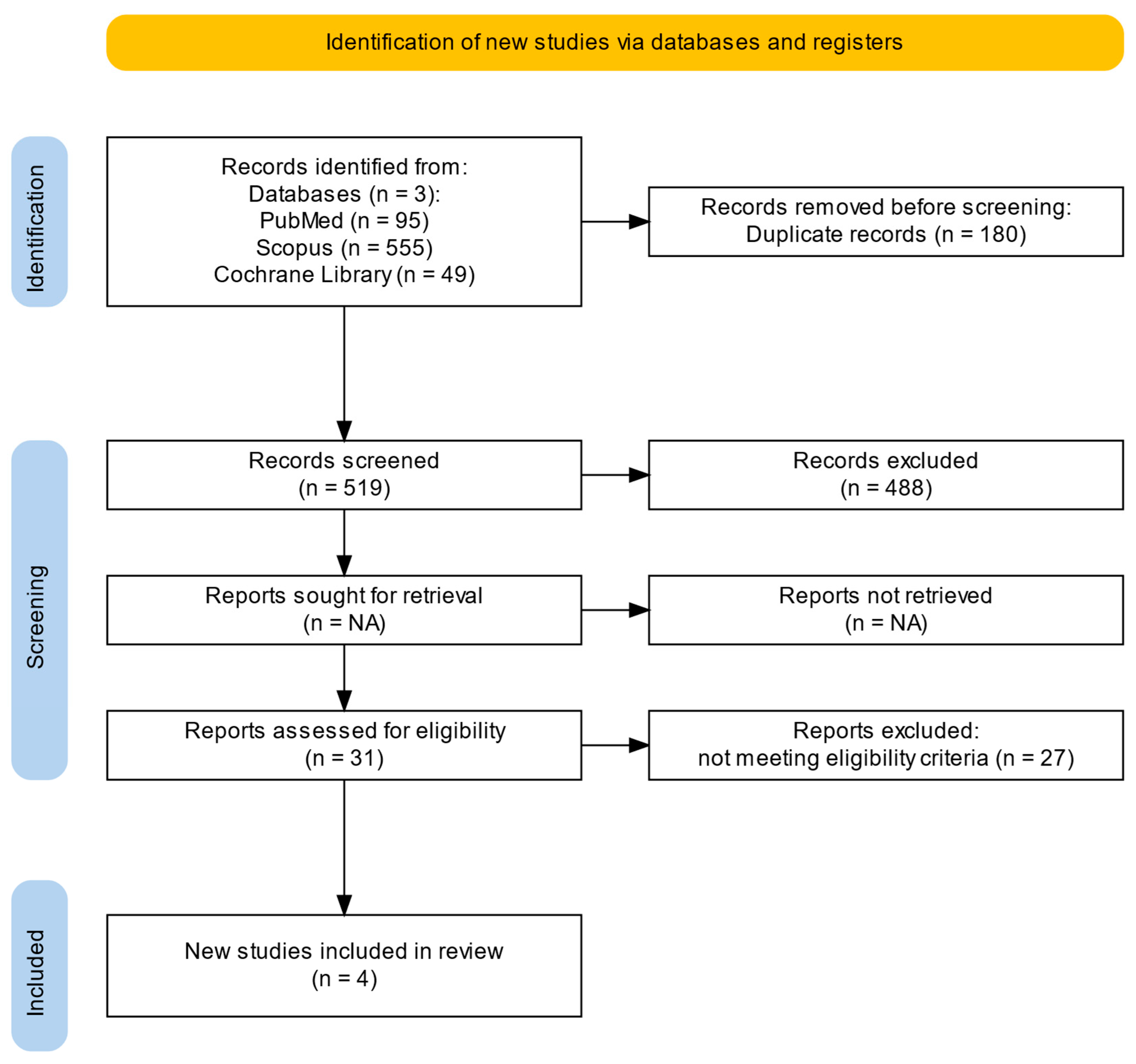
3.1. Study Selection
3.2. Study Characteristics

| Author (Year), Country | Study Design | Population Characteristics (Number, Clinical Phenotype, Age) | Depression Assessment Tool | Trace Elements, Biological Matrix, and Assessment Method | Key Findings (Direction and Effect Size) | Evidence Tier | PICO Alignment | Statistical Adjustments |
|---|---|---|---|---|---|---|---|---|
| Mousa et al. (2022), Iraq [39] | Cross-sectional | N = 120 (UA/ATS) + 58 controls Age not specified | BDI-II (Moderate/Severe) | Zn, Mg, Cu serum (biochemical measurement) | Significant ↓ in Zn and Mg and ↑ in Cu in depressed UA patients (p < 0.001). | T2 | Partial | Primary group comparisons adjusted for age, sex, and smoking status after log-transformation of trace element concentrations; additional multivariable regression and PLS path analyses incorporated cardiometabolic and inflammatory covariates. |
| Hamedifard et al. (2020), Iran * [40] | RCT (12-week) | N = 60 (CAD + T2DM); age: 45–95 | BDI score | Mg + Zn serum (biochemical measurement) | Co-supplementation (250 mg MgO + ZnSO4) significantly ↓ BDI scores vs. placebo (−4.5 vs. −0.5, p < 0.04). | T2 | Partial | ANCOVA adjusted for baseline BDI, BAI, and metabolic parameters |
| Yosaee et al. (2020), Iran [41] | RCT (12-week) | N = 140 (overweight/obese adults with mild–moderate depression **); mean age: 38.35 ± 6.70 years | BDI-II score (inclusion criterion: ≥10) | Zn serum (biochemical measurement) | Zinc supplementation (30 mg/day) was associated with a significant ↓ in BDI-II scores (p < 0.05). | T3 | Indirect | ANCOVA adjusted for baseline BDI-II score and baseline serum zinc and vitamin D levels |
| Mahajan et al. (2024), India [38] | Cross-sectional (APCAPS cohort) | N = 5984 (Urbanizing community) Mean age: not reported | PHQ-9 (depression defined ≥5) | Fe, Mg, Se, Zn (Dietary Inflammatory Index ***; FFQ-based proxy measure) | Higher pro-inflammatory diet (DII) linked to ↑ odds of cardio-metabolic + mental comorbid. | T3 | Indirect | Age, sex, education, tobacco use, alcohol intake, physical activity, BMI, and total energy intake (methods: Statistical analysis) |
3.3. Findings—Observational Studies
3.4. Findings—Interventional Studies
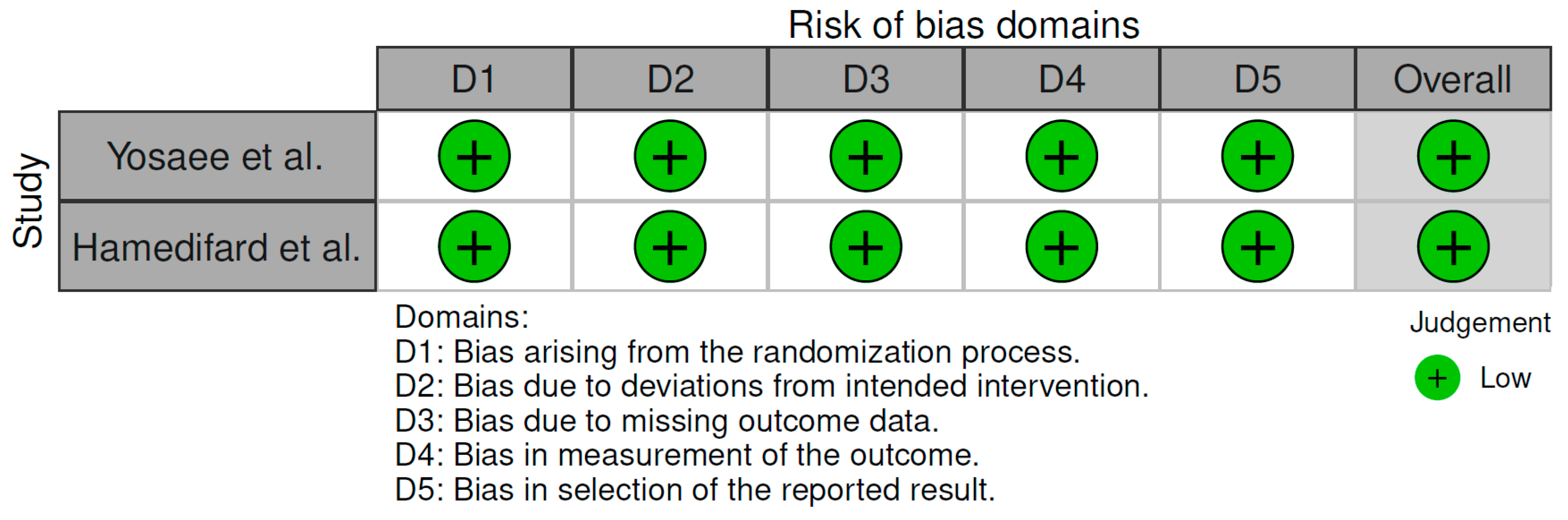
3.5. Risk of Bias
4. Discussion
4.1. Principal Findings
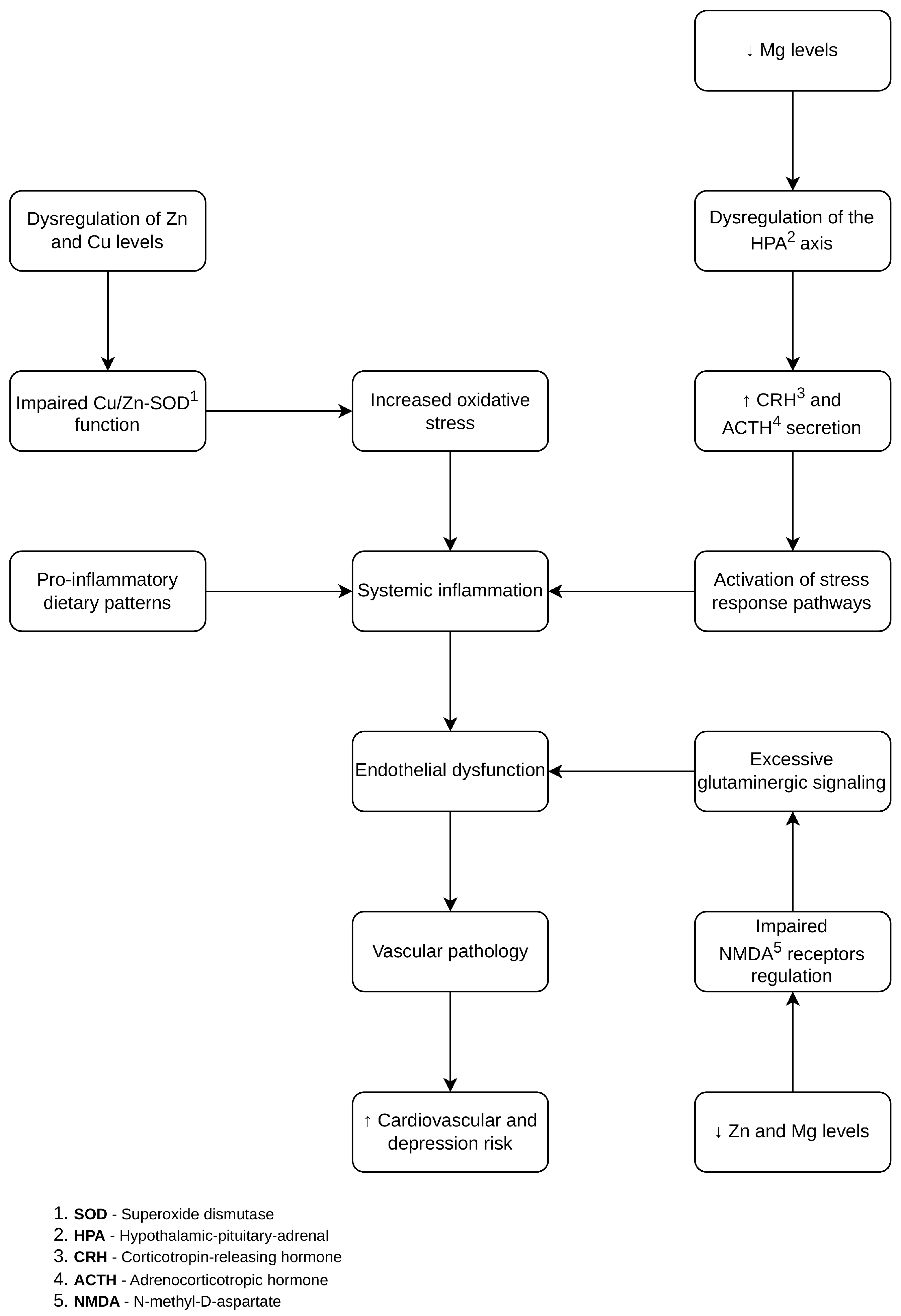
4.2. Biological Plausibility
4.3. Methodological and Conceptual Barriers Limiting Available Evidence
4.4. Comparison with Related Evidence
4.5. Clinical Implications
4.6. Limitations
4.7. Research Recommendations
5. Conclusions
Author Contributions
Funding
Institutional Review Board Statement
Informed Consent Statement
Data Availability Statement
Conflicts of Interest
Abbreviations
| ANCOVA | Analysis of covariance |
| APCAPS | Andhra Pradesh Children and Parents’ Study |
| ATS | Atherosclerosis |
| BAI | Beck Anxiety Inventory |
| BDI | Beck Depression Inventory |
| BDI-II | Beck Depression Inventory–II |
| BMI | Body Mass Index |
| CAD | Coronary Artery Disease |
| Cu | Copper |
| DII | Dietary Inflammatory Index |
| DSM | Diagnostic and Statistical Manual of Mental Disorders |
| ESC | European Society of Cardiology |
| Fe | Iron |
| FFQ | Food Frequency Questionnaire |
| HPA | Hypothalamic–Pituitary–Adrenal |
| ICD | International Classification of Diseases |
| IL-6 | Interleukin-6 |
| Mg | Magnesium |
| MgATP2− | Magnesium–Adenosine Triphosphate Complex |
| MgO | Magnesium Oxide |
| MI | Myocardial Infarction |
| MOR | Mu-Opioid Receptor |
| NF-κB | Nuclear Factor Kappa B |
| NLRP3 | NOD-like receptor family pyrin domain containing 3 |
| NMDAR | N-Methyl-D-Aspartate Receptor |
| NOS | Newcastle–Ottawa Scale |
| NSTEMI | Non-ST-Elevation Myocardial Infarction |
| Nrf2 | Nuclear Factor Erythroid 2-Related Factor 2 |
| PHQ-9 | Patient Health Questionnaire-9 |
| PICO | Population, Intervention/Exposure, Comparator, Outcome |
| PLS | Partial Least Squares |
| PRISMA | Preferred Reporting Items for Systematic Reviews and Meta-Analyses |
| PROSPERO | International Prospective Register of Systematic Reviews |
| RCT | Randomized Controlled Trial |
| RoB 2 | Risk of Bias 2 |
| ROS | Reactive Oxygen Species |
| SOD | Superoxide Dismutase |
| STEMI | ST-Elevation Myocardial Infarction |
| T2DM | Type 2 Diabetes Mellitus |
| TLR4 | Toll-Like Receptor 4 |
| TNF-α | Tumor Necrosis Factor alpha |
| UA | Unstable Angina |
| Zn | Zinc |
| ZnSO4 | Zinc Sulfate |
References
- Bottardi, A.; Prado, G.F.A.; Lunardi, M.; Fezzi, S.; Pesarini, G.; Tavella, D.; Scarsini, R.; Ribichini, F. Clinical updates in coronary artery disease: A comprehensive review. J. Clin. Med. 2024, 13, 4600. [Google Scholar] [CrossRef] [PubMed]
- Vrints, C.; Andreotti, F.; Koskinas, K.C.; Rossello, X.; Adamo, M.; Ainslie, J.; Banning, A.P.; Budaj, A.; Buechel, R.R.; Chiariello, G.A.; et al. 2024 ESC Guidelines for the Management of Chronic Coronary Syndromes. Eur. Heart J. 2024, 45, 3415–3537. [Google Scholar] [CrossRef]
- Apostolos, A.; Konstantinou, K.; Ktenopoulos, N.; Vlachakis, P.K.; Skalidis, I.; Chrysostomidis, G.; Panoulas, V.; Tsioufis, K. Depression and coronary artery disease—Where we stand? J. Clin. Med. 2025, 14, 4281. [Google Scholar] [CrossRef]
- Zhu, B. Molecular Mechanisms Underlying Atherosclerosis and Current Advances in Targeted Therapeutics. Int. J. Mol. Sci. 2026, 27, 634. [Google Scholar] [CrossRef]
- Valaitienė, J.; Laučytė-Cibulskienė, A. Oxidative Stress and Its Biomarkers in Cardiovascular Diseases. Artery Res. 2024, 30, 18. [Google Scholar] [CrossRef]
- Han, Y.; Xu, H.; Yao, X.; Li, Z.; Zhu, C.; Li, X.; Chen, B.; Sun, H. Molecular mechanisms and therapeutic progress in atherosclerosis: Bridging immune inflammation and precision medicine. Front. Immunol. 2026, 16, 1737662. [Google Scholar] [CrossRef]
- Gan, Y.; Gong, Y.; Tong, X.; Sun, H.; Cong, Y.; Dong, X.; Yin, X.; Deng, J.; Li, L.; Cao, S.; et al. Depression and the risk of coronary heart disease: A meta-analysis of prospective cohort studies. BMC Psychiatry 2014, 14, 371. [Google Scholar] [CrossRef] [PubMed]
- Meijer, A.; Conradi, H.J.; Bos, E.H.; Thombs, B.D.; van Melle, J.P.; de Jonge, P. Prognostic association of depression following myocardial infarction with mortality and cardiovascular events: A meta-analysis of 25 years of research. Gen. Hosp. Psychiatry 2011, 33, 203–216. [Google Scholar] [CrossRef] [PubMed]
- Khawaja, I.S.; Westermeyer, J.J.; Gajwani, P.; Feinstein, R.E. Depression and coronary artery disease: The association, mechanisms, and therapeutic implications. Psychiatry 2009, 6, 38–51. [Google Scholar]
- Halaris, A. Inflammation, heart disease, and depression. Curr. Psychiatry Rep. 2013, 15, 400. [Google Scholar] [CrossRef]
- Fioranelli, M.; Bottaccioli, A.G.; Bottaccioli, F.; Bianchi, M.; Rovesti, M.; Roccia, M.G. Stress and inflammation in coronary artery disease: A review psychoneuroendocrineimmunology-based. Front. Immunol. 2018, 9, 2031. [Google Scholar] [CrossRef]
- Liu, M.; Mo, D.G.; Bai, J.X.; Han, Q.F.; Yao, H.C. Three-Dimensional Perspectives on Inflammatory Regulation in Coronary Atherosclerosis: Integrated Mechanisms of Endothelial Priming, Lipid Metabolism, and Cytokine Synergy. Rev. Cardiovasc. Med. 2026, 27, 42822. [Google Scholar] [CrossRef]
- Mushenkova, N.V.; Bezsonov, E.E.; Orekhova, V.A.; Popkova, T.V.; Starodubova, A.V.; Orekhov, A.N. Recognition of Oxidized Lipids by Macrophages and Its Role in Atherosclerosis Development. Biomedicines 2021, 9, 915. [Google Scholar] [CrossRef] [PubMed]
- Tsioufis, P.; Theofilis, P.; Tsioufis, K.; Tousoulis, D. The Impact of Cytokines in Coronary Atherosclerotic Plaque: Current Therapeutic Approaches. Int. J. Mol. Sci. 2022, 23, 15937. [Google Scholar] [CrossRef]
- Fries, G.R.; Saldana, V.A.; Finnstein, J.; Rein, T. Molecular pathways of major depressive disorder converge on the synapse. Mol. Psychiatry 2023, 28, 284–297. [Google Scholar] [CrossRef]
- Kowalczyk, M.; Aebisher, D.; Szpara, J.; Czech, S.; Bartusik-Aebisher, D.; Henrykowska, G. Molecular Mechanisms of Emerging Antidepressant Strategies: From Ketamine to Neuromodulation. Int. J. Mol. Sci. 2025, 27, 344. [Google Scholar] [CrossRef]
- Chen, Q.M. Nrf2 at the heart of oxidative stress and cardiac protection. Physiol. Genomics 2018, 50, 77–97. [Google Scholar] [CrossRef]
- Huang, Z.; Wu, M.; Zeng, L.; Wang, D. The Beneficial Role of Nrf2 in the Endothelial Dysfunction of Atherosclerosis. Cardiol. Res. Pract. 2022, 2022, 4287711. [Google Scholar] [CrossRef] [PubMed]
- Sani, G.; Margoni, S.; Brugnami, A.; Ferrara, O.M.; Bernardi, E.; Simonetti, A.; Monti, L.; Mazza, M.; Janiri, D.; Moccia, L.; et al. The Nrf2 Pathway in Depressive Disorders: A Systematic Review of Animal and Human Studies. Antioxidants 2023, 12, 817. [Google Scholar] [CrossRef] [PubMed]
- Zuo, C.; Cao, H.; Song, Y.; Gu, Z.; Huang, Y.; Yang, Y.; Miao, J.; Zhu, L.; Chen, J.; Jiang, Y.; et al. Nrf2: An All-Rounder in Depression. Redox Biol. 2022, 58, 102522. [Google Scholar] [CrossRef]
- Sadaf, S.; Zhang, X.; Lei, L.; Shen, J.; Jamal, I.; Modugu, G.; Dutta, P. Macrophage efferocytosis is controlled by epigenetic modifications mediated by RBPJ. bioRxiv 2025. [Google Scholar] [CrossRef] [PubMed]
- Yurdagul, A., Jr.; Doran, A.C.; Cai, B.; Fredman, G.; Tabas, I. Mechanisms and consequences of defective efferocytosis in atherosclerosis. Front. Cardiovasc. Med. 2018, 5, 86. [Google Scholar] [CrossRef]
- O’Rourke, S.A.; Dunne, A.; Monaghan, M.G. The role of macrophages in the infarcted myocardium: Orchestrators of ECM remodeling. Front. Cardiovasc. Med. 2019, 6, 101. [Google Scholar] [CrossRef]
- O’Neill, L.A.J.; Pearce, E.J. Immunometabolism governs dendritic cell and macrophage function. J. Exp. Med. 2016, 213, 15–23. [Google Scholar] [CrossRef]
- Wołonciej, M.; Milewska, E.; Roszkowska-Jakimiec, W. Trace elements as an activator of antioxidant enzymes. Postepy Hig. Med. Dosw. 2016, 70, 1483–1498. [Google Scholar] [CrossRef] [PubMed]
- Yang, F.; Smith, M.J.; Siow, R.C.M.; Aarsland, D.; Maret, W.; Mann, G.E. Interactions between Zinc and NRF2 in Vascular Redox Signalling. Biochem. Soc. Trans. 2024, 52, 269–278. [Google Scholar] [CrossRef]
- Yang, F.; Smith, M.J.; Griffiths, A.; Morrell, A.; Chapple, S.J.; Siow, R.C.M.; Stewart, T.; Maret, W.; Mann, G.E. Vascular protection afforded by zinc supplementation in human coronary artery smooth muscle cells mediated by Nrf2 signaling under hypoxia/reoxygenation. Redox Biol. 2023, 64, 102777. [Google Scholar] [CrossRef] [PubMed]
- Hara, T.; Yoshigai, E.; Ohashi, T.; Fukada, T. Zinc in Cardiovascular Functions and Diseases: Epidemiology and Molecular Mechanisms for Therapeutic Development. Int. J. Mol. Sci. 2023, 24, 7152. [Google Scholar] [CrossRef]
- Maier, J.A.M.; Locatelli, L.; Fedele, G.; Cazzaniga, A.; Mazur, A. Magnesium and the Brain: A Focus on Neuroinflammation and Neurodegeneration. Int. J. Mol. Sci. 2023, 24, 223. [Google Scholar] [CrossRef]
- Krishnan, V.; Nestler, E. The molecular neurobiology of depression. Nature 2008, 455, 894–902. [Google Scholar] [CrossRef]
- Duman, R.S.; Aghajanian, G.K.; Sanacora, G.; Krystal, J.H. Synaptic plasticity and depression: New insights from stress and rapid-acting antidepressants. Nat. Med. 2016, 22, 238–249. [Google Scholar] [CrossRef]
- Page, M.J.; McKenzie, J.E.; Bossuyt, P.M.; Boutron, I.; Hoffmann, T.C.; Mulrow, C.D.; Shamseer, L.; Tetzlaff, J.M.; Akl, E.A.; Brennan, S.E.; et al. The PRISMA 2020 statement: An updated guideline for reporting systematic reviews. BMJ 2021, 372, 71. [Google Scholar] [CrossRef]
- Haddaway, N.R.; Page, M.J.; Pritchard, C.C.; McGuinness, L.A. PRISMA2020: An R package and Shiny app for producing PRISMA 2020-compliant flow diagrams, with interactivity for optimised digital transparency and Open Synthesis. Campbell Syst. Rev. 2022, 18, e1230. [Google Scholar] [CrossRef]
- Blanchard, L.; Ray, S.; Law, C.; Vega-Sala, M.J.; Bidonde, J.; Bridge, G.; Egan, M.; Petticrew, M.; Rutter, H.; Knai, C. The effectiveness, cost-effectiveness and policy processes of regulatory, voluntary and partnership policies to improve food environments: An evidence synthesis. Public Health Res. 2024, 12, 1–173. [Google Scholar] [CrossRef]
- Carra, M.C.; Romandini, P.; Romandini, M. Risk of bias evaluation of cross-sectional studies: Adaptation of the Newcastle–Ottawa Scale. J. Periodontal Res. 2025, early view. [Google Scholar] [CrossRef] [PubMed]
- Sterne, J.A.C.; Savović, J.; Page, M.J.; Elbers, R.G.; Blencowe, N.S.; Boutron, I.; Cates, C.J.; Cheng, H.Y.; Corbett, M.S.; Eldridge, S.M.; et al. RoB 2: A revised tool for assessing risk of bias in randomised trials. BMJ 2019, 366, 14898. [Google Scholar] [CrossRef] [PubMed]
- Nejadghaderi, S.A.; Balibegloo, M.; Rezaei, N. The Cochrane risk of bias assessment tool 2 (RoB 2) versus the original RoB: A perspective on the pros and cons. Health Sci. Rep. 2024, 7, e2165. [Google Scholar] [CrossRef] [PubMed]
- Mahajan, H.; Lieber, J.; Carson Mallinson, P.A.; Bhogadi, S.; Banjara, S.K.; Kinra, S.; Kulkarni, B. The higher dietary inflammation is associated with a higher burden of multimorbidity of cardio-metabolic and mental health disorders in an urbanizing community of southern India: A cross-sectional analysis for the APCAPS cohort. Hum. Nutr. Metab. 2024, 36, 200254. [Google Scholar] [CrossRef]
- Mousa, R.F.; Smesam, H.N.; Qazmooz, H.A.; Al-Hakeim, H.K.; Maes, M. A pathway phenotype linking metabolic, immune, oxidative, and opioid pathways with comorbid depression, atherosclerosis, and unstable angina. CNS Spectr. 2022, 27, 676–690. [Google Scholar] [CrossRef]
- Hamedifard, Z.; Farrokhian, A.; Reiner, Ž.; Bahmani, F.; Asemi, Z.; Ghotbi, M.; Taghizadeh, M. The effects of combined magnesium and zinc supplementation on metabolic status in patients with type 2 diabetes mellitus and coronary heart disease. Lipids Health Dis. 2020, 19, 112. [Google Scholar] [CrossRef]
- Yosaee, S.; Soltani, S.; Esteghamati, A.; Motevalian, S.A.; Tehrani-Doost, M.; Clark, C.C.T.; Jazayeri, S. Effects of zinc, vitamin D, and their co-supplementation on mood, serum cortisol, and brain-derived neurotrophic factor in patients with obesity and mild to moderate depressive symptoms: A phase II, 12-wk, 2 × 2 factorial design, double-blind, randomized, placebo-controlled trial. Nutrition 2020, 71, 110601. [Google Scholar] [PubMed]
- Kinra, S.; Radha Krishna, K.V.; Kuper, H.; Rameshwar Sarma, K.V.; Prabhakaran, P.; Gupta, V.; Walia, G.K.; Bhogadi, S.; Kulkarni, B.; Kumar, A.; et al. Cohort profile: Andhra Pradesh children and parents study (APCAPS). Int. J. Epidemiol. 2014, 43, 1417–1424. [Google Scholar] [CrossRef] [PubMed]
- McGuinness, L.A.; Higgins, J.P.T. Risk-of-bias VISualization (robvis): An R package and Shiny web app for visualizing risk-of-bias assessments. Res. Synth. Methods 2020, 12, 55–61. [Google Scholar] [CrossRef]
- Ruz, M.; Carrasco, F.; Rojas, P.; Codoceo, J.; Inostroza, J.; Basfi-Fer, K.; Valencia, A.; Vásquez, K.; Galgani, J.; Pérez, A.; et al. Zinc as a potential coadjuvant in therapy for type 2 diabetes. Food Nutr. Bull. 2013, 34, 215–221. [Google Scholar] [CrossRef]
- Cornelissen, A.; Guo, L.; Sakamoto, A.; Virmani, R.; Finn, A.V. New insights into the role of iron in inflammation and atherosclerosis. EBioMedicine 2019, 47, 598–606. [Google Scholar] [CrossRef] [PubMed]
- Cai, J.; Zhang, M.; Liu, Y.; Li, H.; Shang, L.; Xu, T.; Chen, Z.; Wang, F.; Qiao, T.; Li, K. Iron accumulation in macrophages promotes the formation of foam cells and development of atherosclerosis. Cell Biosci. 2020, 10, 137. [Google Scholar] [CrossRef]
- Wang, Z.; Dang, Y.; Li, Y.; Zhang, Y.; Zhou, S.; Zhang, Z.; Wang, Y. Recent advances in the interaction of ferroptosis and immune-mediated inflammation in cardiovascular disease: Mechanisms and therapeutic potential. Front. Immunol. 2025, 16, 1691705. [Google Scholar] [CrossRef]
- Sanghani, H.; Khubchandani, A.; Sendhav, S. Study of trace elements (serum copper and zinc) in patients of coronary artery diseases. Int. J. Clin. Biochem. Res. 2018, 5, 31–34. [Google Scholar]
- Ni, M.; You, Y.; Chen, J.; Zhang, L. Copper in depressive disorder: A systematic review and meta-analysis of observational studies. Psychiatry Res. 2018, 267, 506–515. [Google Scholar] [CrossRef]
- Squitti, R.; Bonvicini, C.; Fostinelli, S.; Rongioletti, M.; Severino, A.; Geviti, A.; Fiorenza, A.; Bellini, S.; Martinelli, A.; Tura, G.B.; et al. The serum trace metal signature distinguishes patients with psychiatric disorders from healthy controls. Biometals 2025, 38, 1601–1613. [Google Scholar] [CrossRef]
- Doligalska-Dolina, A.; Dolina, M.; Zoń, A.; Główczewska-Siedlecka, E.; Osińska, K.; Margossian, G.A.; Margossian, C.L.; Napiórkowska-Baran, K. Effects of micronutrients and heavy metals on endothelial function and cardiovascular risk in the face of environmental changes. Curr. Issues Mol. Biol. 2025, 48, 41. [Google Scholar] [CrossRef]
- Weglicki, W.B.; Mak, I.T.; Chmielinska, J.J.; Tejero-Taldo, M.I.; Komarov, A.M.; Kramer, J.H. The Role of Magnesium Deficiency in Cardiovascular and Intestinal Inflammation. Magnes. Res. 2010, 23, 199–206. [Google Scholar] [CrossRef]
- Maier, J.A.; Malpuech-Brugère, C.; Zimowska, W.; Rayssiguier, Y.; Mazur, A. Low Magnesium Promotes Endothelial Cell Dysfunction: Implications for Atherosclerosis, Inflammation and Thrombosis. Biochim. Biophys. Acta 2004, 1689, 13–21. [Google Scholar] [CrossRef] [PubMed]
- Pickering, G.; Mazur, A.; Trousselard, M.; Bienkowski, P.; Yaltsewa, N.; Amessou, M.; Noah, L.; Pouteau, E. Magnesium status and stress: The vicious circle concept revisited. Nutrients 2020, 12, 3672. [Google Scholar] [CrossRef]
- Rooney, M.R.; Alonso, A.; Folsom, A.R.; Michos, E.D.; Rebholz, C.M.; Misialek, J.R.; Chen, L.Y.; Dudley, S.; Lutsey, P.L. Serum magnesium and the incidence of coronary artery disease over a median 27 years of follow-up in the Atherosclerosis Risk in Communities (ARIC) Study and a meta-analysis. Am. J. Clin. Nutr. 2020, 111, 52–60. [Google Scholar] [CrossRef]
- Chen, C.; Zhang, S.; Sheng, M.; Shao, W. NLRP3 Inflammasome: A New Target for the Treatment of CVD and Depression Comorbidity. Mediators Inflamm. 2025, 2025, 4330574. [Google Scholar] [CrossRef]
- Fan, Y.; Zhang, X.; Yang, L.; Wang, J.; Hu, Y.; Bian, A.; Liu, J.; Ma, J. Zinc Inhibits High Glucose-Induced NLRP3 Inflammasome Activation in Human Peritoneal Mesothelial Cells. Mol. Med. Rep. 2017, 16, 5195–5202. [Google Scholar] [CrossRef]
- Lin, J.Q.; Tian, H.; Zhao, X.G.; Lin, S.; Li, D.Y.; Liu, Y.Y.; Xu, C.; Mei, X.F. Zinc Provides Neuroprotection by Regulating NLRP3 Inflammasome through Autophagy and Ubiquitination in a Spinal Contusion Injury Model. CNS Neurosci. Ther. 2021, 27, 413–425. [Google Scholar] [CrossRef]
- Wang, L.; Yan, Z.; Yalavarthi, S.; Abdul-Rashid, Y.; Parker, K.; Nowlin, K.; Li, E.; Mack, J.; Wei, J.; Vu, H.; et al. Macrophage-Targeted Magnesium Ion-Nourisher for NLRP3 Inflammasome Inhibition to Enhance Liver Inflammatory Disease Treatment. Adv. Sci. 2026, 13, e13798. [Google Scholar] [CrossRef] [PubMed]
- Baj, J.; Bargieł, J.; Cabaj, J.; Skierkowski, B.; Hunek, G.; Portincasa, P.; Flieger, J.; Smoleń, A. Trace elements levels in major depressive disorder—Evaluation of potential threats and possible therapeutic approaches. Int. J. Mol. Sci. 2023, 24, 15071. [Google Scholar] [CrossRef] [PubMed]
- Shad, K.F.; Luqman, N.; Simpson, A.M.; Lal, S. Peripheral biomarker for vascular disorders. Biomark. Insights 2018, 13, 1177271918812467. [Google Scholar] [CrossRef]
- Jiang, C.; Yin, H.; Liu, A.; Liu, Q.; Ma, H.; Geng, Q. Dietary inflammatory index and depression risk in patients with chronic diseases and comorbidity. J. Affect. Disord. 2022, 301, 307–314. [Google Scholar] [CrossRef]
- Shivappa, N.; Godos, J.; Hébert, J.R.; Wirth, M.D.; Piuri, G.; Speciani, A.F.; Grosso, G. Dietary inflammatory index and cardiovascular risk and mortality—A meta-analysis. Nutrients 2018, 10, 200. [Google Scholar] [CrossRef]
- Erridge, C. The Capacity of Foodstuffs to Induce Innate Immune Activation of Human Monocytes In Vitro Is Dependent on Food Content of Stimulants of Toll-like Receptors 2 and 4. Br. J. Nutr. 2011, 105, 15–23. [Google Scholar] [CrossRef]
- Lu, Y.C.; Yeh, W.C.; Ohashi, P.S. LPS/TLR4 Signal Transduction Pathway. Cytokine 2008, 42, 145–151. [Google Scholar] [CrossRef] [PubMed]
- Liuzzi, J.P.; Lichten, L.A.; Rivera, S.; Blanchard, R.K.; Aydemir, T.B.; Knutson, M.D.; Cousins, R.J. Interleukin-6 Regulates the Zinc Transporter ZIP14 in Liver and Pancreas. Proc. Natl. Acad. Sci. USA 2005, 102, 6843–6848. [Google Scholar] [CrossRef] [PubMed]
- Cope, E.C.; Levenson, C.W. Role of zinc in the development and treatment of mood disorders. Curr. Opin. Clin. Nutr. Metab. Care 2010, 13, 685–689. [Google Scholar] [CrossRef] [PubMed]
- de Baaij, J.H.F.; Hoenderop, J.G.J.; Bindels, R.J.M. Magnesium in man: Implications for health and disease. Physiol. Rev. 2015, 95, 1–46. [Google Scholar] [CrossRef]
- Geiger, H.; Wanner, C. Magnesium in disease. Clin. Kidney J. 2012, 5, i25–i38. [Google Scholar] [CrossRef]
- Muñoz-Bravo, C.; Soler-Iborte, E.; Lozano-Lorca, M.; Kouiti, M.; González-Palacios Torres, C.; Barrios-Rodriguez, R.; Jimenez-Moleon, J.J. Serum copper levels and risk of major adverse cardiovascular events: A systematic review and meta-analysis. Front. Cardiovasc. Med. 2023, 10, 1217748. [Google Scholar] [CrossRef]
- Bueno, H.; Deaton, C.; Farrero, M.; Forsyth, F.; Braunschweig, F.; Buccheri, S.; Dragan, S.; Gevaert, S.; Held, C.; Kurpas, D.; et al. 2025 ESC Clinical Consensus Statement on Mental Health and Cardiovascular Disease: Developed under the Auspices of the ESC Clinical Practice Guidelines Committee. Eur. Heart J. 2025, 46, 4156–4225. [Google Scholar] [CrossRef] [PubMed]


| PubMed | ||
| (“Trace Elements”[Mesh] OR trace element*[tiab] OR “Micronutrients”[Mesh] OR micronutrient*[tiab] OR zinc[Mesh] OR zinc[tiab] OR selenium[Mesh] OR selenium[tiab] OR magnesium[Mesh] OR magnesium[tiab] OR copper[Mesh] OR copper[tiab] OR iron[Mesh] OR iron[tiab] OR manganese[Mesh] OR manganese[tiab] OR chromium[Mesh] OR chromium[tiab] OR cobalt[Mesh] OR cobalt[tiab] OR cadmium[Mesh] OR cadmium[tiab] OR mercury[Mesh] OR mercury[tiab] OR arsenic[Mesh] OR arsenic[tiab] OR nickel[Mesh] OR nickel[tiab] OR vanadium[Mesh] OR vanadium[tiab] OR iodine[Mesh] OR iodine[tiab] OR boron[Mesh] OR boron[tiab] OR molybdenum[Mesh] OR molybdenum[tiab] OR fluoride[Mesh] OR fluoride[tiab] OR lead [Mesh] OR lead [Substance Name]) AND (“Coronary Artery Disease”[Mesh] OR coronary artery disease[tiab] OR “Acute Coronary Syndrome”[Mesh] OR acute coronary syndrome[tiab] OR “Myocardial Infarction”[Mesh] OR myocardial infarction[tiab] OR STEMI[tiab] OR “ST Elevation Myocardial Infarction”[MeSH] OR NSTEMI[tiab] OR “Non-ST Elevation Myocardial Infarction”[MeSH] OR unstable angina[tiab] OR “Angina, Unstable”[Mesh] OR atherosclerosis[tiab] OR “Atherosclerosis”[Mesh] OR myocardial ischemia[tiab] OR “Myocardial Ischemia”[Mesh] OR CAD[tiab] OR CHD[tiab] OR chronic coronary syndrome[tiab]) AND (“Depression”[Mesh] OR depression[tiab] OR “Depressive Disorder”[Mesh] OR depressive disorder[tiab] OR “Mood Disorders”[Mesh] OR mood disorder*[tiab]) | ||
| Scopus | ||
| (TITLE-ABS-KEY(“Trace Elements”) OR TITLE-ABS-KEY(“trace element*”) OR TITLE-ABS-KEY(micronutrient*) OR TITLE-ABS-KEY(zinc) OR TITLE-ABS-KEY(selenium) OR TITLE-ABS-KEY(magnesium) OR TITLE-ABS-KEY(copper) OR TITLE-ABS-KEY(iron) OR TITLE-ABS-KEY(manganese) OR TITLE-ABS-KEY(chromium) OR TITLE-ABS-KEY(cobalt) OR TITLE-ABS-KEY(cadmium) OR TITLE-ABS-KEY(mercury) OR TITLE-ABS-KEY(arsenic) OR TITLE-ABS-KEY(nickel) OR TITLE-ABS-KEY(vanadium) OR TITLE-ABS-KEY(iodine) OR TITLE-ABS-KEY(boron) OR TITLE-ABS-KEY(molybdenum) OR TITLE-ABS-KEY(fluoride) OR (CASREGNUMBER(7439-92-1) OR CHEMNAME(lead))) AND (TITLE-ABS-KEY(“Coronary Artery Disease”) OR TITLE-ABS-KEY(“Acute Coronary Syndrome”) OR TITLE-ABS-KEY(“Myocardial Infarction”) OR TITLE-ABS-KEY(“ST Elevation Myocardial Infarction”) OR TITLE-ABS-KEY(“Non-ST Elevation Myocardial Infarction”) OR TITLE-ABS-KEY(“Angina, Unstable”) OR TITLE-ABS-KEY(“Atherosclerosis”) OR TITLE-ABS-KEY(“Myocardial Ischemia”) OR TITLE-ABS-KEY(“coronary artery disease”) OR TITLE-ABS-KEY(“acute coronary syndrome”) OR TITLE-ABS-KEY(“myocardial infarction”) OR TITLE-ABS-KEY(STEMI) OR TITLE-ABS-KEY(NSTEMI) OR TITLE-ABS-KEY(“unstable angina”) OR TITLE-ABS-KEY(atherosclerosis) OR TITLE-ABS-KEY(“myocardial ischemia”) OR TITLE-ABS-KEY(CAD) OR TITLE-ABS-KEY(CHD) OR TITLE-ABS-KEY(“chronic coronary syndrome”) OR TITLE-ABS-KEY(“coronary disease”)) AND (TITLE-ABS-KEY(“Depression”) OR TITLE-ABS-KEY(“Depressive Disorder”) OR TITLE-ABS-KEY(“Mood Disorders”) OR TITLE-ABS-KEY(depression) OR TITLE-ABS-KEY(“depressive disorder”) OR TITLE-ABS-KEY(“mood disorder*”)) | ||
| Cochrane Library | ||
| Search ID | Search strategy | Results |
| #1 | MeSH descriptor: [Trace Elements] explode all trees | 619 |
| #2 | (trace element*):ti,ab,kw | 1350 |
| #3 | MeSH descriptor: [Micronutrients] explode all trees | 7147 |
| #4 | (micronutrient*):ti,ab,kw | 4232 |
| #5 | MeSH descriptor: [Zinc] explode all trees | 2048 |
| #6 | (zinc):ti,ab,kw | 7654 |
| #7 | MeSH descriptor: [Selenium] explode all trees | 949 |
| #8 | (selenium):ti,ab,kw | 2524 |
| #9 | MeSH descriptor: [Magnesium] explode all trees | 1543 |
| #10 | (magnesium):ti,ab,kw | 10,652 |
| #11 | MeSH descriptor: [Copper] explode all trees | 621 |
| #12 | (copper):ti,ab,kw | 2633 |
| #13 | MeSH descriptor: [Iron] explode all trees | 3267 |
| #14 | (iron):ti,ab,kw | 13,828 |
| #15 | MeSH descriptor: [Manganese] explode all trees | 92 |
| #16 | (manganese):ti,ab,kw | 456 |
| #17 | MeSH descriptor: [Chromium] explode all trees | 433 |
| #18 | (chromium):ti,ab,kw | 1534 |
| #19 | MeSH descriptor: [Cobalt] explode all trees | 337 |
| #20 | (cobalt):ti,ab,kw | 1186 |
| #21 | MeSH descriptor: [Cadmium] explode all trees | 78 |
| #22 | (cadmium):ti,ab,kw | 204 |
| #23 | MeSH descriptor: [Mercury] explode all trees | 96 |
| #24 | (mercury):ti,ab,kw | 1503 |
| #25 | MeSH descriptor: [Arsenic] explode all trees | 92 |
| #26 | (arsenic):ti,ab,kw | 514 |
| #27 | MeSH descriptor: [Nickel] explode all trees | 427 |
| #28 | (nickel):ti,ab,kw | 950 |
| #29 | MeSH descriptor: [Vanadium] explode all trees | 16 |
| #30 | (vanadium):ti,ab,kw | 71 |
| #31 | MeSH descriptor: [Iodine] explode all trees | 1732 |
| #32 | (iodine):ti,ab,kw | 6298 |
| #33 | MeSH descriptor: [Boron] explode all trees | 31 |
| #34 | (boron):ti,ab,kw | 289 |
| #35 | MeSH descriptor: [Molybdenum] explode all trees | 35 |
| #36 | (molybdenum):ti,ab,kw | 170 |
| #37 | MeSH descriptor: [Lead] explode all trees | 191 |
| #38 | MeSH descriptor: [Fluorides] explode all trees | 3449 |
| #39 | (fluoride):ti,ab,kw | 6401 |
| #40 | MeSH descriptor: [Coronary Artery Disease] explode all trees | 9686 |
| #41 | (coronary artery disease):ti,ab,kw | 28,756 |
| #42 | MeSH descriptor: [Acute Coronary Syndrome] explode all trees | 3166 |
| #43 | (acute coronary syndrome):ti,ab,kw | 8940 |
| #44 | MeSH descriptor: [Myocardial Infarction] explode all trees | 15,779 |
| #45 | (myocardial infarction):ti,ab,kw | 39,051 |
| #46 | (STEMI):ti,ab,kw | 4590 |
| #47 | MeSH descriptor: [ST Elevation Myocardial Infarction] explode all trees | 1216 |
| #48 | (ST elevation myocardial infarction):ti,ab,kw | 7965 |
| #49 | (NSTEMI):ti,ab,kw | 911 |
| #50 | MeSH descriptor: [Non-ST Elevated Myocardial Infarction] explode all trees | 208 |
| #51 | (Non-ST elevation myocardial infarction):ti,ab,kw | 2156 |
| #52 | (unstable angina):ti,ab,kw | 5066 |
| #53 | MeSH descriptor: [Angina, Unstable] explode all trees | 1430 |
| #54 | (atherosclerosis):ti,ab,kw | 12,154 |
| #55 | MeSH descriptor: [Atherosclerosis] explode all trees | 3917 |
| #56 | ("myocardial ischemia"):ti,ab,kw | 7572 |
| #57 | MeSH descriptor: [Myocardial Ischemia] explode all trees | 39,120 |
| #58 | (CAD):ti,ab,kw | 7066 |
| #59 | (CHD):ti,ab,kw | 4070 |
| #60 | (chronic coronary syndrome):ti,ab,kw | 1276 |
| #61 | (coronary disease):ti,ab,kw | 43,954 |
| #62 | MeSH descriptor: [Depression] explode all trees | 19,843 |
| #63 | (depression):ti,ab,kw | 117,711 |
| #64 | MeSH descriptor: [Depressive Disorder] explode all trees | 17,302 |
| #65 | (depressive disorder):ti,ab,kw | 27,686 |
| #66 | MeSH descriptor: [Mood Disorders] explode all trees | 21,048 |
| #67 | (mood disorder*):ti,ab,kw | 14,246 |
| #68 | #1 OR #2 OR #3 OR #4 OR #5 OR #6 OR #7 OR #8 OR #9 OR #10 OR #11 OR #12 OR #13 OR #14 OR #15 OR #16 OR #17 OR #18 OR #19 OR #20 OR #21 OR #22 OR #23 OR #24 OR #25 OR #26 OR #27 OR #28 OR #29 OR #30 OR #31 OR #32 OR #33 OR #34 OR #35 OR #36 OR #37 OR #38 OR #39 | 58,471 |
| #69 | #40 OR #41 OR #42 OR #43 OR #44 OR #45 OR #46 OR #47 OR #48 OR #49 OR #50 OR #51 OR #52 OR #53 OR #54 OR #55 OR #56 OR #57 OR #58 OR #59 OR #60 OR #61 | 90,459 |
| #70 | #62 OR #63 OR #64 OR #65 OR #66 OR #67 | 128,535 |
| #71 | #68 AND #69 AND #70 | 49 |
| Element | No. of Studies | Evidence Tiers | Direction of Association/Effect | CAD-Specific Evidence | Confidence Level | Main Limitation |
|---|---|---|---|---|---|---|
| Zinc | 3 | T2–T3 | Suggested association with lower depressive symptoms | No | Low to very low (indirect, non-CAD-specific) | Predominantly indirect populations; supplementation studies outside CAD |
| Magnesium | 2 | T2 | Suggested association with lower depressive symptoms | Partial | Low (partially indirect; combined interventions) | Combined supplementation; depressive outcomes often secondary |
| Copper | 1 | T2 | Suggested association with greater depressive symptom severity | Limited | Low (single, indirect study) | Cross-sectional design; indirect CAD–depression linkage |
| Iron/Selenium (via DII) | 1 | T3 | Indirect association (dietary pattern) | No | Very low (proxy exposure; indirect) | Indirect exposure (dietary proxy); no biochemical measurement |
| Ref. | Selection | Comparability | Outcome | Total | ||||
|---|---|---|---|---|---|---|---|---|
| Representativeness of the Sample | Sample Size | Non- Respondents | Ascertainment of Exposure | Based on Design and Analysis | Assessment of Outcome | Statistical Test | ||
| Mousa et al. (2022) [39] | ++ | ++ | + | + | 6 points (Satisfactory studies) | |||
| Mahajan et al. (2024) [38] | + | ++ | ++ | + | + | 7 points (Good studies) | ||
Disclaimer/Publisher’s Note: The statements, opinions and data contained in all publications are solely those of the individual author(s) and contributor(s) and not of MDPI and/or the editor(s). MDPI and/or the editor(s) disclaim responsibility for any injury to people or property resulting from any ideas, methods, instructions or products referred to in the content. |
© 2026 by the authors. Licensee MDPI, Basel, Switzerland. This article is an open access article distributed under the terms and conditions of the Creative Commons Attribution (CC BY) license.
Share and Cite
Baran, J.M.; Waszak, Z.; Jarzębska, J.; Grusiecki, D.; Śmigielska, M.; Kochman, W.; Dziedzic, E.A. Trace Elements and Depressive Symptoms in Coronary Artery Disease: A Systematic Review of Sparse and Predominantly Indirect Evidence. Int. J. Mol. Sci. 2026, 27, 3805. https://doi.org/10.3390/ijms27093805
Baran JM, Waszak Z, Jarzębska J, Grusiecki D, Śmigielska M, Kochman W, Dziedzic EA. Trace Elements and Depressive Symptoms in Coronary Artery Disease: A Systematic Review of Sparse and Predominantly Indirect Evidence. International Journal of Molecular Sciences. 2026; 27(9):3805. https://doi.org/10.3390/ijms27093805
Chicago/Turabian StyleBaran, Jakub Marek, Zuzanna Waszak, Joanna Jarzębska, Damian Grusiecki, Maja Śmigielska, Wacław Kochman, and Ewelina A. Dziedzic. 2026. "Trace Elements and Depressive Symptoms in Coronary Artery Disease: A Systematic Review of Sparse and Predominantly Indirect Evidence" International Journal of Molecular Sciences 27, no. 9: 3805. https://doi.org/10.3390/ijms27093805
APA StyleBaran, J. M., Waszak, Z., Jarzębska, J., Grusiecki, D., Śmigielska, M., Kochman, W., & Dziedzic, E. A. (2026). Trace Elements and Depressive Symptoms in Coronary Artery Disease: A Systematic Review of Sparse and Predominantly Indirect Evidence. International Journal of Molecular Sciences, 27(9), 3805. https://doi.org/10.3390/ijms27093805