Effects of Daily Saskatoon Berry Supplementation on Cardiometabolic Health, Gut Microbiota, and Short-Chain Fatty Acids in Healthy Adults

Abstract
1. Introduction
2. Results
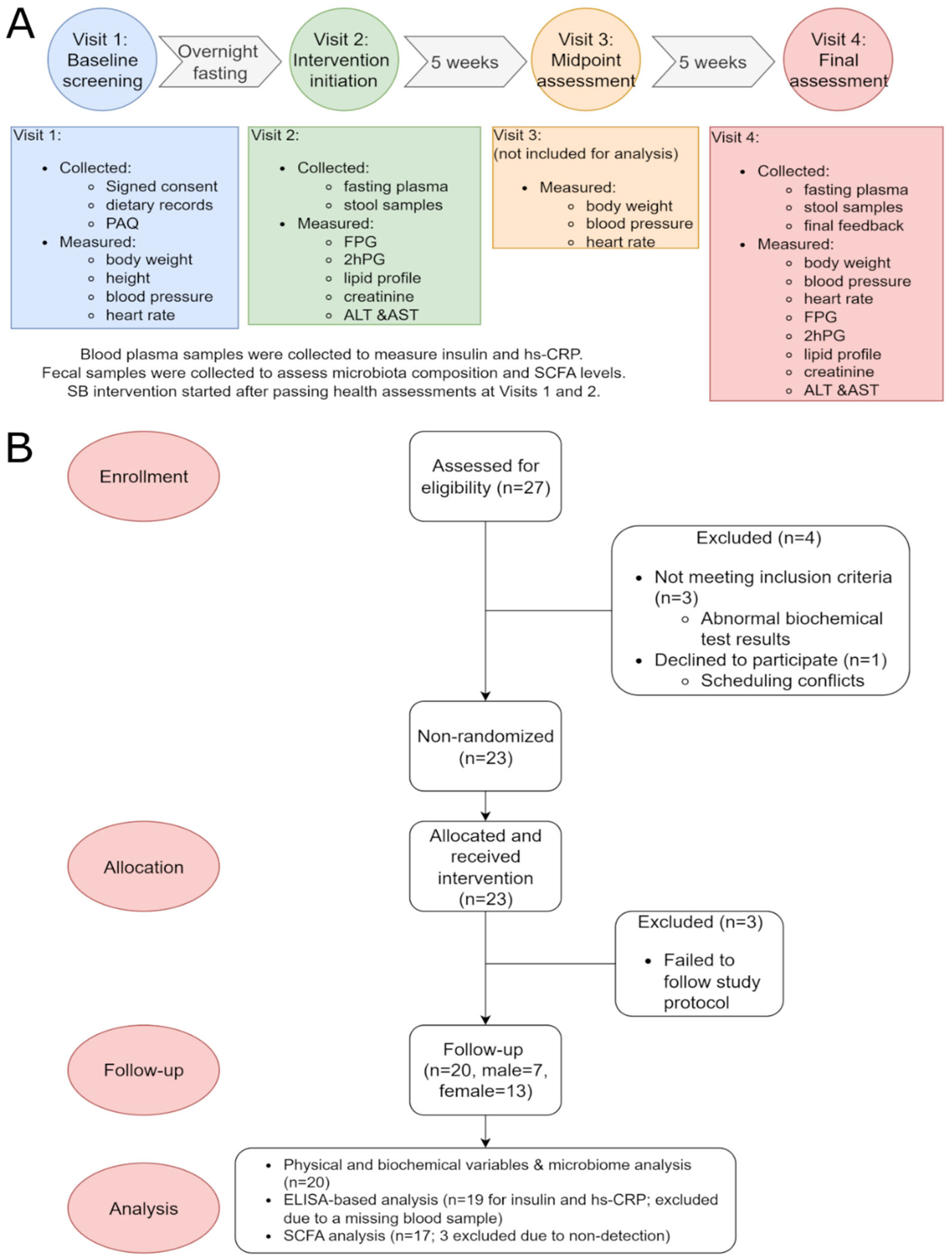
2.1. Participants
2.2. Nutritional Profile of 40 g of SB
2.3. Changes in Clinical, Lifestyle and Dietary Variables Following the Intervention
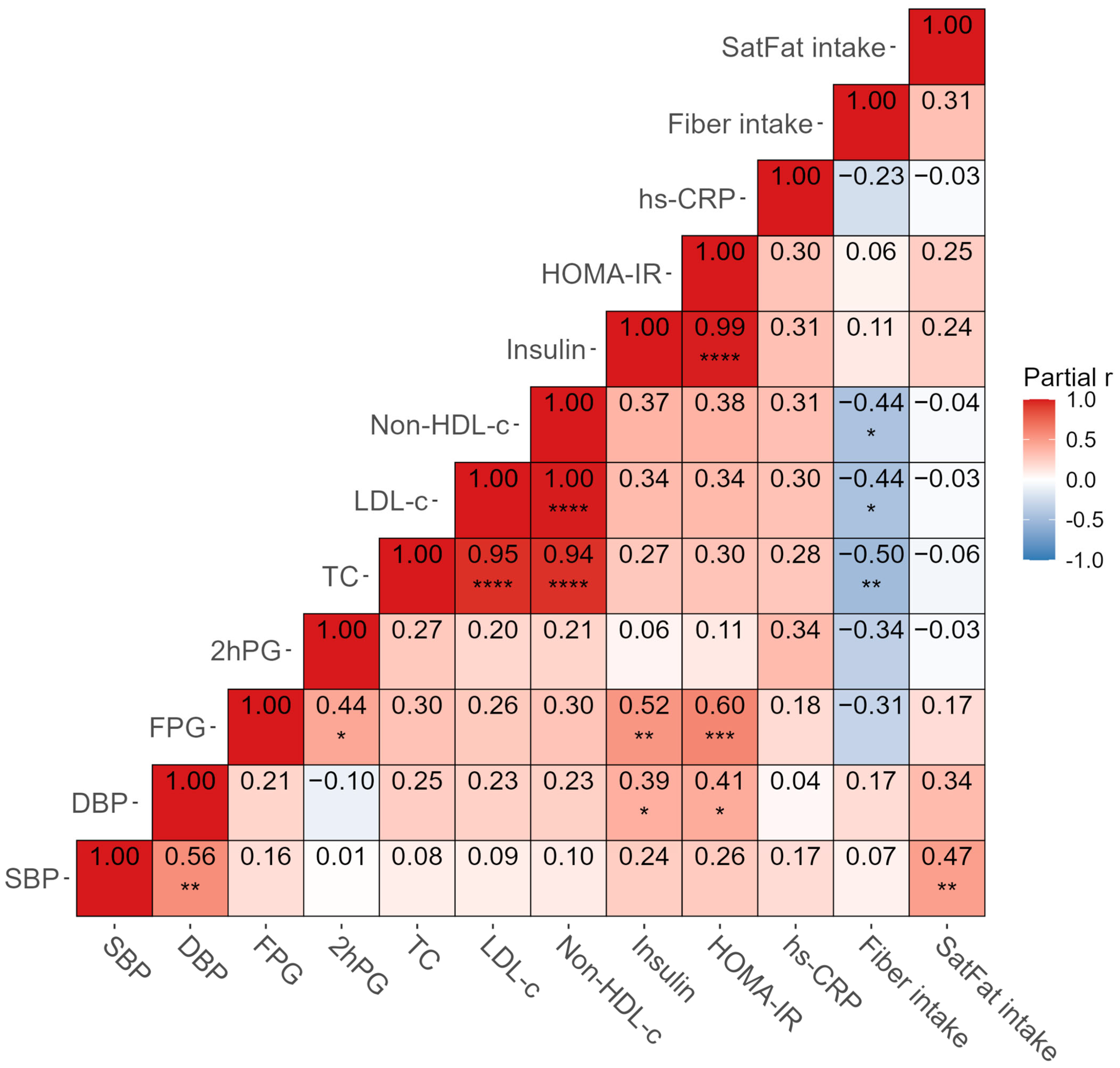
2.4. Correlations Among Metabolism-Related Clinical, Biochemical and Nutritional Variables
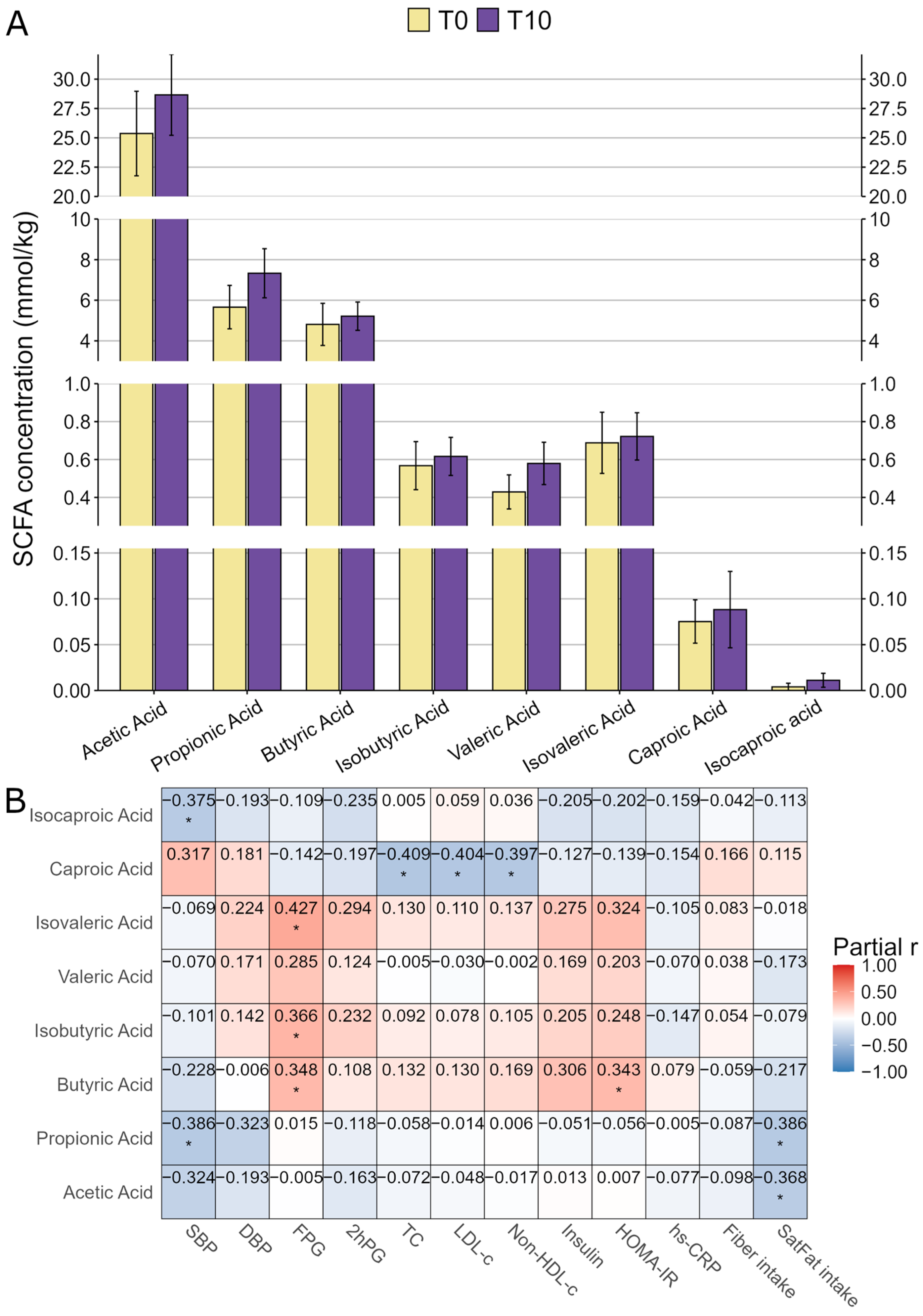
2.5. Effect of SB Intake on Fecal SCFAs and Correlations Among SCFA Concentrations, Clinical, and Dietary Variables
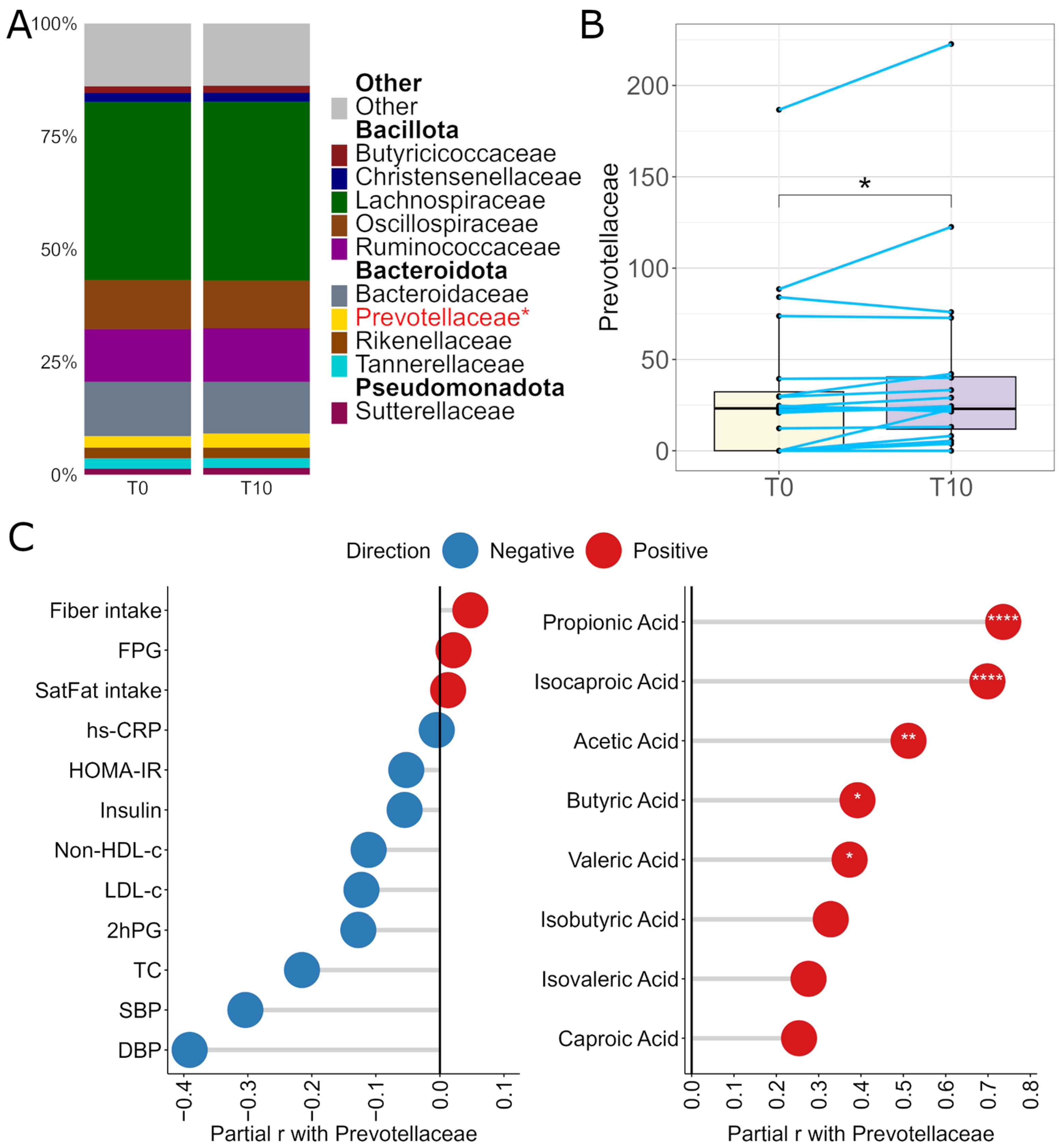
2.6. Impact of SB Intervention on Gut Microbiota and Its Associations with SCFAs, Clinical Outcomes, and Dietary Intake
2.7. Participants’ Feedback on Dietary Intervention
3. Discussion
3.1. Conclusions
3.2. Implications and Future Directions
4. Methods
4.1. Study Design and Subjects
4.2. Ethics Approval and Trial Registration
4.3. Dietary Supplement
4.4. Dietary Regimen
4.5. Office Visits and Data Collection
4.6. Biochemical Analysis
4.7. Food Intake, Physical Activity Assessment, and Feedback Collection
4.8. DNA Extraction and 16S rRNA Sequencing for Fecal Samples
4.9. Amplicon Sequence Variants (ASV) Generation
4.10. Quantification of SCFAs
4.11. Gut Microbiota Profiling and Statistical Analysis
Supplementary Materials
Author Contributions
Funding
Institutional Review Board Statement
Informed Consent Statement
Data Availability Statement
Acknowledgments
Conflicts of Interest
References
- Acharya, S.N.; Chu, C.B.; Hermesh, R. Effects of population, environment and their interaction on Saskatoon berry (Amelanchier alnifolia Nutt.) seed germination. Can. J. Plant Sci. 1989, 69, 277–284. [Google Scholar] [CrossRef]
- Noad, A. Residents Learn About the History of Pemmican. Penticton Herald. Available online: https://www.pentictonherald.ca/spare_news/article_91f47b31-d4bc-531f-b370-f78737aa218f.html (accessed on 6 March 2026).
- Mazza, G. Compositional and functional properties of Saskatoon berry and blueberry. Int. J. Fruit Sci. 2008, 5, 101. [Google Scholar] [CrossRef]
- Zhao, R.; Khafipour, E.; Sepehri, S.; Huang, F.; Beta, T.; Shen, G.X. Impact of Saskatoon berry powder on insulin resistance and relationship with intestinal microbiota in high fat–high sucrose diet-induced obese mice. J. Nutr. Biochem. 2019, 69, 130. [Google Scholar] [CrossRef]
- Huang, F.; Zhao, R.; Xia, M.; Shen, G.X. Impact of cyanidin-3-glucoside on gut microbiota and relationship with metabolism and inflammation in high fat–high sucrose diet-induced insulin resistant mice. Microorganisms 2020, 8, 1238. [Google Scholar] [CrossRef] [PubMed]
- Zhao, R.; Shen, G.X. Impact of anthocyanin component and metabolite of Saskatoon berry on gut microbiome and relationship with fecal short-chain fatty acids in diet-induced insulin resistant mice. J. Nutr. Biochem. 2023, 111, 109201. [Google Scholar] [CrossRef] [PubMed]
- Zhao, R.; Xiang, B.; Dolinsky, V.W.; Xia, M.; Shen, G.X. Saskatoon berry powder reduces hepatic steatosis and insulin resistance in high fat-high sucrose diet-induced obese mice. J. Nutr. Biochem. 2021, 95, 108778. [Google Scholar] [CrossRef] [PubMed]
- du Preez, R.; Wanyonyi, S.; Mouatt, P.; Panchal, S.K.; Brown, L. Saskatoon Berry Amelanchier alnifolia regulates glucose metabolism and improves cardiovascular and liver signs of diet-induced metabolic syndrome in rats. Nutrients 2020, 12, 931. [Google Scholar] [CrossRef]
- Liu, J.; Song, J.; Huang, K.; Michel, D.; Fang, J. HPLC-MS/MS analysis of anthocyanins in human plasma and urine using protein precipitation and dilute-and-shoot sample preparation methods, respectively. Biomed. Chromatogr. 2018, 32, e4177. [Google Scholar] [CrossRef]
- Government of Canada. Dietary Reference Intakes Tables: Reference Values for Macronutrients. Available online: https://www.canada.ca/en/health-canada/services/food-nutrition/healthy-eating/dietary-reference-intakes/tables/reference-values-macronutrients.html (accessed on 26 January 2026).
- Canadian Society for Exercise Physiology. Pre-screening for Physical Activity. Available online: https://csep.ca/2021/01/20/pre-screening-for-physical-activity/ (accessed on 1 March 2026).
- Bader, U.l.; Ain, H.; Tufail, T.; Javed, M.; Tufail, T.; Arshad, M.U.; Hussain, M.; Gull Khan, S.; Bashir, S.; Al Jbawi, E.; et al. Phytochemical profile and pro-healthy properties of berries. Int. J. Food Prop. 2022, 25, 1714. [Google Scholar] [CrossRef]
- Pap, N.; Fidelis, M.; Azevedo, L.; Carmo, M.A.; Wang, D.; Mocan, A.; Pereira, E.P.R.; Xavier-Santos, D.; Sant’Ana, A.S.; Yang, B.; et al. Berry polyphenols and human health: Evidence of antioxidant, anti-inflammatory, microbiota modulation, and cell-protecting effects. Curr. Opin. Food Sci. 2021, 42, 167. [Google Scholar] [CrossRef]
- Vahapoglu, B.; Erskine, E.; Subasi, G.; Capanoglu, E. Recent studies on berry bioactives and their health-promoting roles. Molecules 2022, 27, 108. [Google Scholar] [CrossRef] [PubMed]
- Nathan, D.M.; Davidson, M.B.; DeFronzo, R.A.; Heine, R.J.; Henry, R.R.; Pratley, R.; Zinman, B.; American Diabetes Association. Impaired fasting glucose and impaired glucose tolerance: Implications for care. Diabetes Care 2007, 30, 753. [Google Scholar] [CrossRef] [PubMed]
- Waddell, I.S.; Orfila, C. Dietary fiber in the prevention of obesity and obesity-related chronic diseases: From epidemiological evidence to potential molecular mechanisms. Crit. Rev. Food Sci. Nutr. 2022, 63, 8752. [Google Scholar] [CrossRef] [PubMed]
- Xiao, D.; Zhu, L.; Edirisinghe, I.; Fareed, J.; Brailovsky, Y.; Burton-Freeman, B. Attenuation of postmeal metabolic indices with red raspberries in individuals at risk for diabetes: A randomized controlled trial. Obesity 2019, 27, 542. [Google Scholar] [CrossRef]
- Ye, X.; Chen, W.; Huang, X.F.; Yan, F.J.; Deng, S.G.; Zheng, X.D.; Shan, P.F. Anti-diabetic effect of anthocyanin cyanidin-3-O-glucoside: Data from insulin resistant hepatocyte and diabetic mouse. Nutr. Diabetes 2024, 14, 7. [Google Scholar] [CrossRef]
- Zhao, L.; Zhang, F.; Ding, X.; Wu, G.; Lam, Y.Y.; Wang, X.; Fu, H.; Xue, X.; Lu, C.; Ma, J.; et al. Gut bacteria selectively promoted by dietary fibers alleviate type 2 diabetes. Science 2018, 359, 1151. [Google Scholar] [CrossRef]
- Hagström, H.; Hagfors, L.N.; Hedelin, R.; Brunström, M.; Lindmark, K. Low carbohydrate high fat-diet in real life; A descriptive analysis of cardiovascular risk factors. Int. J. Cardiol. Cardiovasc. Risk Prev. 2025, 25, 200384. [Google Scholar] [CrossRef]
- Wang, L.; Manson, J.E.; Forman, J.P.; Gaziano, J.M.; Buring, J.E.; Sesso, H.D. Dietary fatty acids and the risk of hypertension in middle-aged and older women. Hypertension 2010, 56, 598. [Google Scholar] [CrossRef]
- Minari, T.P.; de Rosso, V.V.; Manzano, C.F.; Humsi, M.J.; Yugar, L.B.T.; Sedenho-Prado, L.G.; de Azevedo Rubio, T.; Tácito, L.H.B.; Pires, A.C.; Vilela-Martin, J.F.; et al. Correlation of the Mediterranean–Dietary Approaches to Stop Hypertension diet vs. ultra-processed diet with health outcomes in type 2 diabetes and hypertension: New insights from a 12-month interventional study. J. Hypertens. 2025, 43, 1622. [Google Scholar] [CrossRef]
- Hooper, L.; Martin, N.; Abdelhamid, A.; Davey Smith, G. Reduction in saturated fat intake for cardiovascular disease. Cochrane Database Syst. Rev. 2015, 5, CD011737. [Google Scholar] [CrossRef]
- Banait, T.; Wanjari, A.; Danade, V.; Banait, S.; Jain, J. Role of high-sensitivity C-reactive protein (Hs-CRP) in non-communicable diseases: A review. Cureus 2022, 14, e30225. [Google Scholar] [CrossRef]
- Johns Hopkins Medicine. Assessing Cardiovascular Risk with C-Reactive Protein. Available online: https://www.hopkinsmedicine.org/health/treatment-tests-and-therapies/assessing-cardiovascular-risk-with-c-reactive-protein (accessed on 15 February 2026).
- Wang, Y.; Zhang, Y.; Wang, X.; Liu, Y.; Xia, M. Supplementation with cyanidin-3-O-ß-glucoside protects against hypercholesterolemia-mediated endothelial dysfunction and attenuates atherosclerosis in apolipoprotein E–deficient mice. J. Nutr. 2012, 142, 1033. [Google Scholar] [CrossRef]
- Hosseinian, F.S.; Beta, T. Saskatoon and wild blueberries have higher anthocyanin contents than other Manitoba berries. J. Agric. Food Chem. 2007, 55, 10832. [Google Scholar] [CrossRef] [PubMed]
- Pedret, A.; Companys, J.; Calderón-Pérez, L.; Llauradó, E.; Pla-Pagà, L.; Salamanca, P.; Sandoval-Ramírez, B.A.; Catalán, Ú.; Fernández-Castillejo, S.; Yuste, S.; et al. A red-fleshed apple rich in anthocyanins improves endothelial function, reduces inflammation, and modulates the immune system in hypercholesterolemic subjects: The AppleCOR study. Food Funct. 2024, 15, 5825. [Google Scholar] [CrossRef] [PubMed]
- Pedret, A.; Llauradó, E.; Calderón-Pérez, L.; Companys, J.; Pla-Pagà, L.; Salamanca, P.; Sandoval-Ramírez, B.A.; Besora-Moreno, M.; Catalán, Ú.; Fernández-Castillejo, S.; et al. Effect of consumption of anthocyanin-rich products on NMR lipoprotein subclasses and biomarkers in hypercholesterolemic subjects: A randomized controlled trial (the AppleCOR study). Food Funct. 2025, 16, 2279. [Google Scholar] [CrossRef] [PubMed]
- Onali, T.; Slabá, H.; Jian, C.; Koivumäki, T.; Päivärinta, E.; Marttinen, M.; Määttänen, M.; Salonen, A.; Pajari, A.-M. Berry supplementation in healthy volunteers modulates gut microbiota, increases fecal polyphenol metabolites and reduces viability of colon cancer cells exposed to fecal water—A randomized controlled trial. J. Nutr. Biochem. 2025, 141, 109906. [Google Scholar] [CrossRef]
- Meiners, F.; Kreikemeyer, B.; Newels, P.; Zude, I.; Walter, M.; Hartmann, A.; Palmer, D.; Fuellen, G.; Barrantes, I. Strawberry dietary intervention influences diversity and increases abundances of SCFA-producing bacteria in healthy elderly people. Microbiol. Spectr. 2025, 13, e01913. [Google Scholar] [CrossRef]
- Huang, P.; Hu, J.; Yang, K.; Tian, B. Digestion characteristics of Changyanning formula and its regulatory effect on fecal microbiota and metabolites during in vitro fermentation. Fitoterapia 2025, 187, 106949. [Google Scholar] [CrossRef]
- Wu, Y.; Xu, H.; Tu, X.; Gao, Z. The role of short-chain fatty acids of gut microbiota origin in hypertension. Front. Microbiol. 2021, 12, 730809. [Google Scholar] [CrossRef]
- Kunselman, A.R. A brief overview of pilot studies and their sample size justification. Fertil. Steril. 2024, 121, 899–901, Erratum in Fertil. Steril. 2024, 122, 1169. [Google Scholar] [CrossRef]
- Zhao, R.; Le, K.; Li, W.; Ren, S.; Moghadasian, M.H.; Beta, T.; Shen, G.X. Effects of Saskatoon berry powder on monocyte adhesion to vascular wall of leptin receptor-deficient diabetic mice. J. Nutr. Biochem. 2014, 25, 851. [Google Scholar] [CrossRef] [PubMed]
- Matthews, D.R.; Hosker, J.P.; Rudenski, A.S.; Naylor, B.A.; Treacher, D.F.; Turner, R.C. Homeostasis model assessment: Insulin resistance and β-cell function from fasting plasma glucose and insulin concentrations in man. Diabetologia 1985, 28, 412. [Google Scholar] [CrossRef] [PubMed]
- Walters, W.; Hyde, E.R.; Berg-Lyons, D.; Ackermann, G.; Humphrey, G.; Parada, A.; Gilbert, J.A.; Jansson, J.K.; Caporaso, J.G.; Fuhrman, J.A.; et al. Improved bacterial 16S rRNA gene (V4 and V4-5) and fungal internal transcribed spacer marker gene primers for microbial community surveys. mSystems 2015, 1, e00009-15. [Google Scholar] [CrossRef] [PubMed]
- Bolyen, E.; Rideout, J.R.; Dillon, M.R.; Bokulich, N.A.; Abnet, C.C.; Al-Ghalith, G.A.; Alexander, H.; Alm, E.J.; Arumugam, M.; Asnicar, F.; et al. Reproducible, interactive, scalable and extensible microbiome data science using QIIME 2. Nat. Biotechnol. 2019, 37, 852–857, Correction in Nat. Biotechnol. 2019, 37, 1091. [Google Scholar] [CrossRef]
- Martin, M. Cutadapt removes adapter sequences from high-throughput sequencing reads. EMBnet. J. 2011, 17, 10–12. [Google Scholar] [CrossRef]
- Callahan, B.J.; McMurdie, P.J.; Rosen, M.J.; Han, A.W.; Johnson, A.J.; Holmes, S.P. DADA2: High-resolution sample inference from Illumina amplicon data. Nat. Methods 2016, 13, 581–583. [Google Scholar] [CrossRef]
- Robeson, M.S., 2nd; O’Rourke, D.R.; Kaehler, B.D.; Ziemski, M.; Dillon, M.R.; Foster, J.T.; Bokulich, N.A. RESCRIPt: Reproducible sequence taxonomy reference database management. PLoS Comput. Biol. 2021, 17, e1009581. [Google Scholar] [CrossRef]
- Quast, C.; Pruesse, E.; Yilmaz, P.; Gerken, J.; Schweer, T.; Yarza, P.; Peplies, J.; Glöckner, F.O. The SILVA ribosomal RNA gene database project: Improved data processing and web-based tools. Nucleic Acids Res. 2012, 41, 590. [Google Scholar] [CrossRef]
- Zheng, X.; Qiu, Y.; Zhong, W.; Baxter, S.; Su, M.; Li, Q.; Xie, G.; Ore, B.M.; Qiao, S.; Spencer, M.D.; et al. A targeted metabolomic protocol for short-chain fatty acids and branched-chain amino acids. Metabolomics 2013, 9, 818. [Google Scholar] [CrossRef]
- McMurdie, P.J.; Holmes, S. phyloseq: An R package for reproducible interactive analysis and graphics of microbiome census data. PLoS ONE 2013, 8, e61217. [Google Scholar] [CrossRef]



| Nutrients | Contents in 40 g Dried SB | % of Recommended Daily Allowance |
|---|---|---|
| Calorie | 133 | 0.7 |
| Fat (g) | 0.67 | 1.7 |
| Protein (g) | 1.5 | 1.0 |
| Carbohydrate | 31.7 | 12.7 |
| Fiber (g) | 11.7 | 47.0 |
| Sugar (g) | 20.0 | 12.0 |
| Cholesterol (mg) | 1.7 | 0.6 |
| Sodium (mg) | 25 | 3.0 |
| Potassium (mg) | 375 | 11.0 |
| Calcium (mg) | 83.3 | 8.3 |
| Iron (mg) | 2.08 | 11.7 |
| Magnesium (mg) | 50.0 | 11.7 |
| Manganese (mg) | 0.83 | 36.7 |
| Vitamin C (mg) | 4.2 | 4.6 |
| Vitamin E (mg) | 0.33 | 1.7 |
| Total anthocyanins (CGE mg) | 0.16 | NA |
| Cyanidin-3-galactoside (mg) | 0.11 | NA |
| Cyanidin-3-glucoside (mg) | 0.028 | NA |
| Variables | T0 | T10 | Change (%) | p(FDR) |
|---|---|---|---|---|
| BMI (kg/M2) | 23.20 ± 3.40 | 22.91 ± 3.43 | −1.23 | 0.223 |
| SBP (mmHg) | 117.8 ± 11.35 | 111.5 ± 12.12 | −5.35 | 0.029 * |
| DBP (mm/Hg) | 71.00 ± 6.73 | 68.85 ± 6.84 | −3.03 | 0.274 |
| Heart rate (beats/min) | 70.75 ± 9.39 | 74.00 ± 10.85 | 4.59 | 0.089 |
| FPG (mM/L) | 5.12 ± 0.47 | 4.90 ± 0.42 | −4.24 | 0.020 * |
| 2hPG (mM/L) | 5.10 ± 1.47 | 4.92 ± 1.19 | −3.53 | 0.423 |
| Creatinine (μM/L) | 72.80 ± 18.06 | 73.35 ± 17.90 | 0.76 | 0.677 |
| AST (unit/L) | 23.55 ± 13.10 | 20.90 ± 8.25 | −11.25 | 0.153 |
| ALT (unit/L) | 22.60 ± 14.36 | 19.00 ± 11.25 | −15.93 | 0.162 |
| Total cholesterol (mM/L) | 4.77 ± 0.92 | 4.56 ± 0.86 | −4.31 | 0.017 * |
| Triglycerides (mM/L) | 0.78 ± 0.23 | 0.69 ± 0.15 | −12.11 | 0.063 |
| HDL-c (mM/L) | 1.70 ± 0.35 | 1.65 ± 0.35 | −3.11 | 0.299 |
| LDL-c (mM/L) | 2.72 ± 0.92 | 2.60 ± 0.85 | −4.70 | 0.031 * |
| Non-HDL-c (mM/L) | 3.07 ± 0.98 | 2.92 ± 0.87 | −4.65 | 0.034 * |
| Insulin (mU/L) | 5.52 ± 4.65 | 4.99 ± 4.37 | −9.58 | 0.269 |
| HOMA-IR | 1.29 ± 1.17 | 1.12 ± 1.06 | −13.30 | 0.144 |
| hs-CRP (μg/mL) | 3.81 ± 4.05 | 1.94 ± 2.22 | −49.07 | 0.024 * |
| Physical Activity Index | 1.70 ± 0.47 | 1.75 ± 0.44 | 2.94 | 0.577 |
| Alcohol (service/day) | 0.50 ± 1.32 | 0.45 ± 1.23 | −10.00 | 0.330 |
| Nutrients/Day | T0 | T10 | Change (%) | p(FDR) |
|---|---|---|---|---|
| Calories (kcal) | 1840 ± 689.8 | 1815 ± 519.1 | −1.37 | 0.871 |
| Proteins (g) | 93.10 ± 35.56 | 82.87 ± 26.22 | −10.99 | 0.162 |
| Carbohydrates (g) | 208.3 ± 104.9 | 234.0 ± 75.53 | +12.36 | 0.294 |
| Total Fiber (g) | 17.99 ± 13.06 | 24.70 ± 10.00 | +37.29 | 0.021 * |
| Sugar (g) | 60.14 ± 55.82 | 85.17 ± 32.89 | +41.61 | 0.046 * |
| Total fat (g) | 70.18 ± 29.50 | 64.45 ± 34.92 | −8.16 | 0.422 |
| Saturated fat (g) | 23.91 ± 12.02 | 19.95 ± 13.10 | −16.55 | 0.202 |
| Cholesterol (mg) | 436.8 ± 319.0 | 337.0 ± 371.0 | −22.86 | 0.082 |
| Vit C (mg) | 47.73± 58.28 | 82.22 ± 95.90 | +72.26 | 0.028 * |
| Vit E (mg) | 3.46 ± 2.11 | 3.07 ± 2.66 | −11.28 | 0.439 |
| Calcium (mg) | 557.5 ± 341.4 | 526.2 ± 252.1 | −5.62 | 0.707 |
| Iron (mg) | 12.59 ± 8.25 | 13.47 ± 8.69 | +7.03 | 0.546 |
| Magnesium (mg) | 155.8 ± 87.02 | 168.4 ± 63.08 | +8.09 | 0.458 |
| Potassium (g) | 2057 ± 1001 | 2377 ± 930.2 | +15.54 | 0.172 |
| Sodium (mg) | 2581 ± 998.5 | 2844 ± 1291 | +10.20 | 0.400 |
| Caffeine (mg) | 208.3 ± 481.0 | 177.1 ± 364.7 | −15.00 | 0.302 |
| Questions | Answers |
|---|---|
| Did you find it easy to eat one package of the berries every day? | Yes: 81%; no: 19% |
| What time of the day did you usually eat the berries? | Morning 37%; afternoon 50%; evening 13% |
| How did you eat the berries? (e.g., in cereal, as a snack, etc.) | Snack: 81%; cereal: 13%; others: 6% |
| How many days did you miss taking the berries? | 0 days: 56%; 1–2 days:38%; 3–4 days 6% |
| Did you like the texture of the berries? | Liked: 87%; disliked: 13% |
| Did you like the taste of the berries? | Liked: 94%; disliked: 7% |
| Did you observe any changes with your health during the study period? | Yes: 60% (weight loss, bowel habit, less sugar craving); no: 40% |
| Did you notice any changes in bowel habits during your intake of dried berries? | Increased: 62%; no change: 40% |
| If there were a follow-up study on Saskatoon berries, would you consider participating again or recommend it to your friends or relatives? | Yes: 94%; no: 6% |
Disclaimer/Publisher’s Note: The statements, opinions and data contained in all publications are solely those of the individual author(s) and contributor(s) and not of MDPI and/or the editor(s). MDPI and/or the editor(s) disclaim responsibility for any injury to people or property resulting from any ideas, methods, instructions or products referred to in the content. |
© 2026 by the authors. Licensee MDPI, Basel, Switzerland. This article is an open access article distributed under the terms and conditions of the Creative Commons Attribution (CC BY) license.
Share and Cite
Lee, E.; Hui, A.; Lee, H.; Sun, J.; Shen, G.X. Effects of Daily Saskatoon Berry Supplementation on Cardiometabolic Health, Gut Microbiota, and Short-Chain Fatty Acids in Healthy Adults. Int. J. Mol. Sci. 2026, 27, 3644. https://doi.org/10.3390/ijms27083644
Lee E, Hui A, Lee H, Sun J, Shen GX. Effects of Daily Saskatoon Berry Supplementation on Cardiometabolic Health, Gut Microbiota, and Short-Chain Fatty Acids in Healthy Adults. International Journal of Molecular Sciences. 2026; 27(8):3644. https://doi.org/10.3390/ijms27083644
Chicago/Turabian StyleLee, Eunseo, Amy Hui, Harvey Lee, Jiaan Sun, and Garry X. Shen. 2026. "Effects of Daily Saskatoon Berry Supplementation on Cardiometabolic Health, Gut Microbiota, and Short-Chain Fatty Acids in Healthy Adults" International Journal of Molecular Sciences 27, no. 8: 3644. https://doi.org/10.3390/ijms27083644
APA StyleLee, E., Hui, A., Lee, H., Sun, J., & Shen, G. X. (2026). Effects of Daily Saskatoon Berry Supplementation on Cardiometabolic Health, Gut Microbiota, and Short-Chain Fatty Acids in Healthy Adults. International Journal of Molecular Sciences, 27(8), 3644. https://doi.org/10.3390/ijms27083644