Article

Synthesis of New Asymmetrical Chalcones and Evaluation of Their Use in Combination with Curcumin Against Rhodesain of T. brucei rhodesiense


1
Department of Chemical, Biological, Pharmaceutical and Environmental Sciences, University of Messina, Viale Ferdinando Stagno d’Alcontres 31, 98166 Messina, Italy
2
Department of Environmental, Biological and Pharmaceutical Sciences and Technologies DiSTABiF, University of Campania Luigi Vanvitelli, Via Vivaldi 43, 81100 Caserta, Italy
3
Institute of Pharmacy and Biochemistry, University of Mainz, Staudingerweg 5, 55128 Mainz, Germany
*
Author to whom correspondence should be addressed.
These authors contributed equally to this work.
Int. J. Mol. Sci. 2026, 27(7), 3320; https://doi.org/10.3390/ijms27073320
Submission received: 23 February 2026 / Revised: 26 March 2026 / Accepted: 2 April 2026 / Published: 7 April 2026
(This article belongs to the Special Issue New Progress in Peptidic Protease Inhibitors)

Abstract

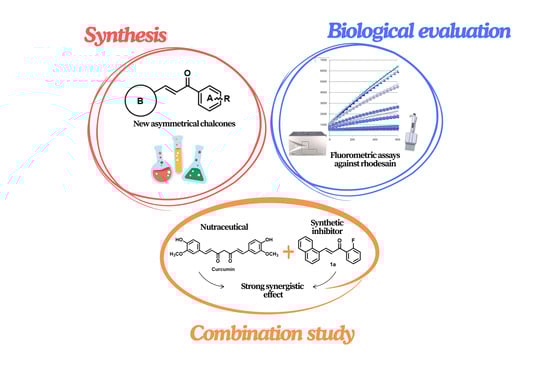
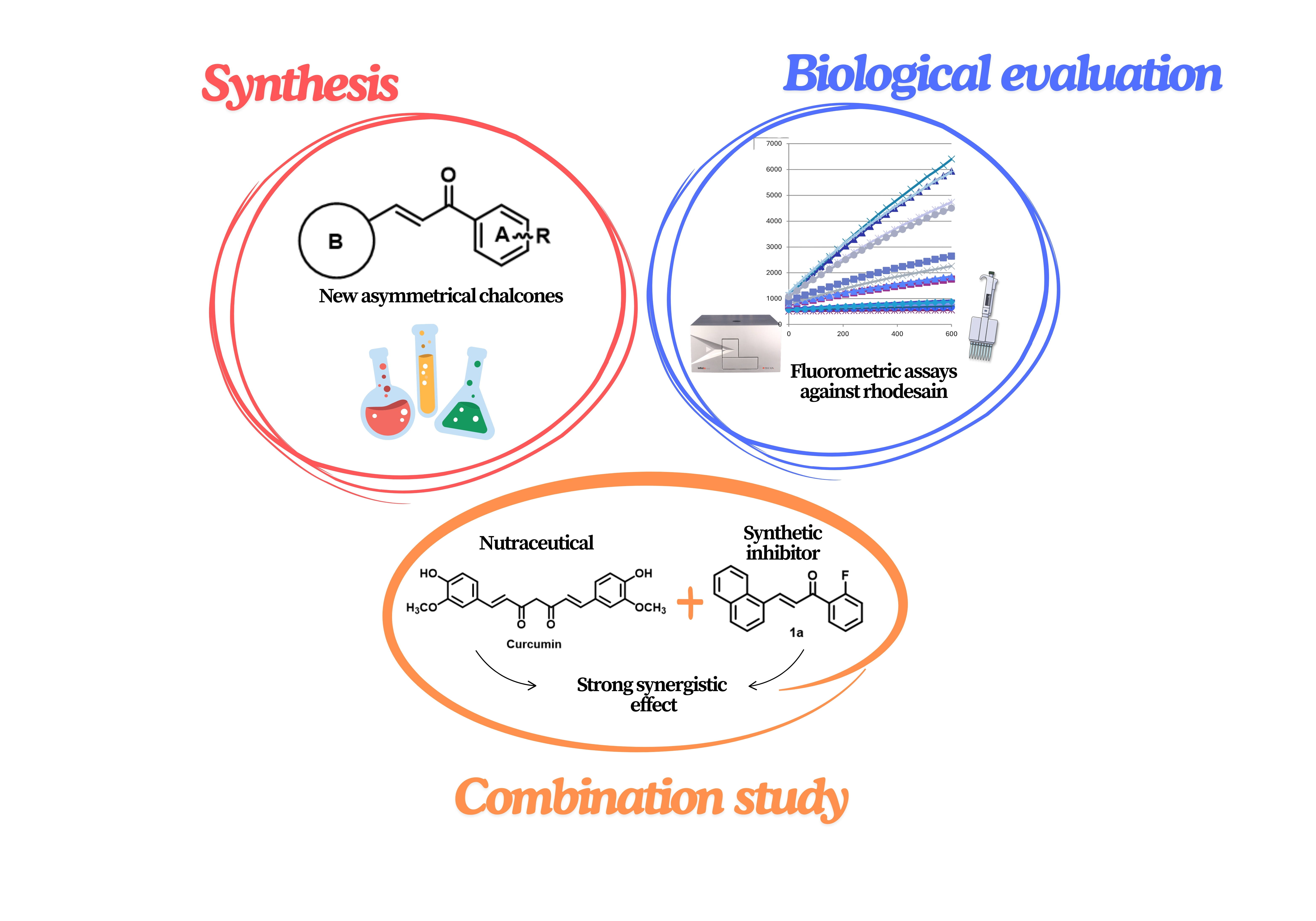
Rhodesain is a cysteine protease that plays a key role in the life cycle of Trypanosoma brucei rhodesiense, an endemic parasite in sub-Saharan Africa and responsible for Human African Trypanosomiasis (HAT), a disease that can be fatal if not treated promptly. Due to the limitations associated with current HAT pharmacological therapy, the search for new targets for the development of antitrypanosomal agents is urgently needed; in this context, rhodesain represents a promising therapeutic target. In this study, new chalcones were synthesized and tested against rhodesain. Given their affinity for the trypanosomal cysteine protease (Ki values in the micromolar range), chalcone 1a was selected to evaluate its effect in combination with the nutraceutical curcumin. The Combination Index (CI) was calculated using Chou and Talalay’s method. The analysis of the CI calculated at different fa values of enzyme inhibition for the combination curcumin + 1a showed promising results. For all fa values, the CI is less than one, indicating a synergistic effect when chalcone 1a is combined with curcumin. In particular, at the most significant fa value (0.90), corresponding to 90% of enzyme inhibition, the CI value is 0.1781, indicating a strong synergism between the synthetic drug and the nutraceutical. The combined use of curcumin and chalcone 1a led to an enhancement of rhodesain inhibitory activity, resulting in a strong synergistic effect and supporting further investigation of this combination.

Graphical Abstract

1. Introduction

Human African Trypanosomiasis (HAT), also known as sleeping sickness, is classified as a Neglected Tropical Disease (NTD) [1]. It is an endemic disease prevalent in sub-Saharan Africa where socioeconomic and living conditions favor its persistence. The infection is caused by protozoa belonging to the genus Trypanosoma, which is transmitted to humans via the bite of a tsetse fly (genus Glossina). The subspecies T. brucei gambiense is responsible for the chronic form of the disease and is widely distributed in western and central Africa; while T. brucei rhodesiense causes the acute form, which occurs mainly in eastern and southern Africa [2].
The clinical features of HAT depend on both the infecting Trypanosoma subspecies and the disease stage. It is often misdiagnosed both in non-endemic areas, where the disease is poorly recognized, and in endemic regions, where it lacks specific symptoms and is commonly confused with malaria [3,4]. Trypanosomiasis progresses through two stages; during the haemolymphatic stage, the parasites disseminate via the bloodstream and lymphatic system, producing non-specific symptoms such as fever and generalized weakness. When the parasites cross the blood–brain barrier, the disease advances to the neurological stage, characterized by sleep–wake cycle disturbances and progressive neuropsychiatric impairment, which may ultimately lead to coma and death if left untreated [5].
Only a limited number of drugs are available for the treatment of this infection, and their selection depends on several factors, including the stage of the disease, as well as the patient’s age, body weight, and the infecting species. In the early stage, pentamidine and suramin are commonly used, whereas the second stage is treated with melarsoprol, eflornithine, or nifurtimox. Notably, nifurtimox is recommended in combination with eflornithine (NECT) for managing the second stage of the gambiense form [6]. In 2019, the European Medicines Agency approved fexinidazole, a 5-nitroimidazole derivative, for the treatment of gambiense human African trypanosomiasis. This drug represents a significant advancement, as it is the first orally administered therapy for this condition [7]. More recently, an open-label study was undertaken to assess the efficacy and safety of fexinidazole in the treatment of the rhodesiense form. The World Health Organisation (WHO) has broadened the therapeutic indication for fexinidazole to encompass the trypanosomiasis caused by T. brucei rhodesiense. However, owing to the limited availability of clinical data, current recommendations are supported by very low certainty evidence. Furthermore, according to the treatment eligibility criteria, pediatric patients and women in the first trimester of pregnancy are excluded from receiving fexinidazole [8].
Another candidate oral drug is acoziborole (SCYX-7158), an oxaborole-6-carboxamide, which is currently undergoing clinical evaluation. Owing to its long half-life, it can be administered as a single-dose regimen, which may significantly improve treatment adherence. Acoziborole may be considered an excellent therapeutic alternative for the management of both the first and the second stages of trypanosomiasis [9,10].
The limited number of drugs available for treating sleeping sickness, coupled with issues such as toxicity, challenging routes of administration, and emerging drug resistance, highlights the urgent need to discover novel antitrypanosomal targets. In this context, rhodesain, a cysteine protease of T. brucei rhodesiense, emerges as a particularly promising target; also known as cathepsin L-like protease, it belongs to clan CA, family C1. The enzyme consists of a single polypeptide chain of 215 amino acids, organized into two distinct domains, known as the left (L) and right (R) domains. Its catalytic triad, Cys25, His162, and Asn182, is located within a cleft formed between these domains [11].
Rhodesain is essential for multiple biological processes of the parasite, including the evasion of the host immune response and degradation of both intracellularly transported host proteins and parasite-derived proteins. Furthermore, this enzyme plays a critical role in the neurological stage of trypanosomiasis by enabling the parasite to cross the blood–brain barrier [12,13,14,15]. Consequently, rhodesain represents a promising target for the development of novel inhibitors for HAT treatment.
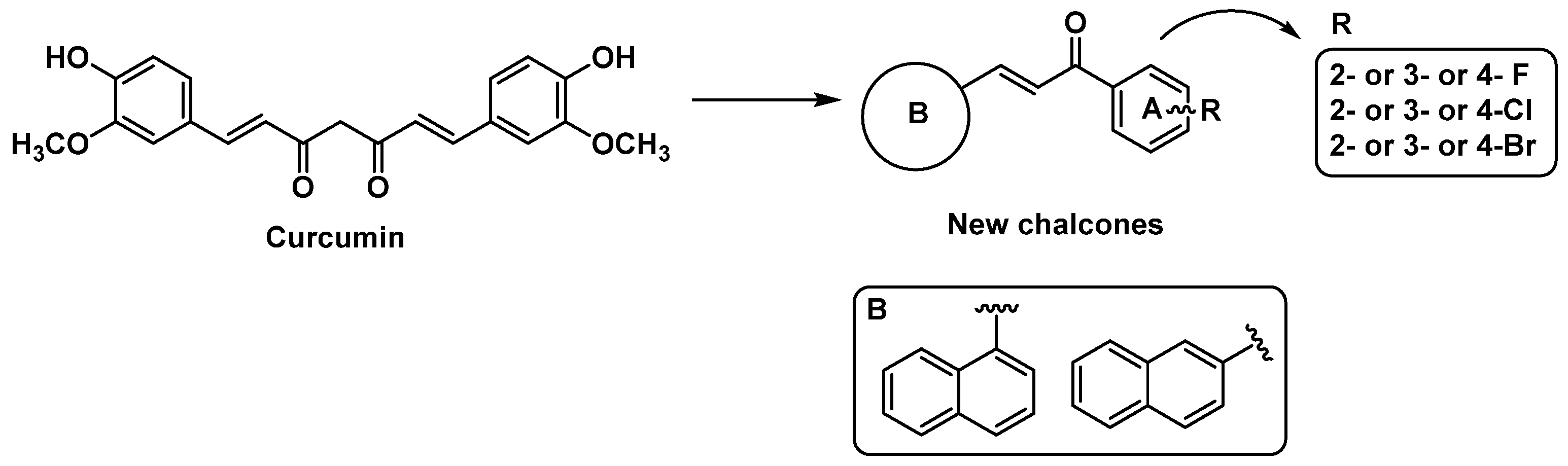
In this context, curcumin is a natural polyphenolic compound derived from the rhizome of Curcuma longa. It is well known in the literature for its multiple pharmacological activities, as antioxidant, anti-inflammatory, anticancer, neuroprotective, antibacterial and antiparasitic activities [16,17,18,19,20,21,22,23]. It has also been demonstrated to act as a non-competitive inhibitor of rhodesain [24], providing a biologically relevant scaffold for future inhibitor development. As reported in the literature, several naturally occurring compounds have historically served as valuable starting points for the rational design of new bioactive molecules [25,26,27,28,29,30,31]. On this basis, our research group has carried out the synthesis and biological evaluation of a new series of asymmetric chalcones derived from this core structure (Figure 1). Chalcones are structurally similar to curcumin; they possess a carbonyl system in which the diketone has been replaced with an α,β unsaturated system, and the C7 bridge is shortened to improve chemical and metabolic stability [32]. Structure–activity relationship (SAR) studies were conducted on rings A and B to assess how the position and electron-withdrawing properties of substituents influence the inhibitory activity.
In recent years, growing attention has been directed towards the combined use of nutraceuticals and synthetic inhibitors as a promising strategy to enhance the therapeutic efficacy, while minimizing adverse effects and the emergence of resistance for the treatment of various pathologies: inflammation, infectious diseases and cancer [23,33,34,35,36,37].
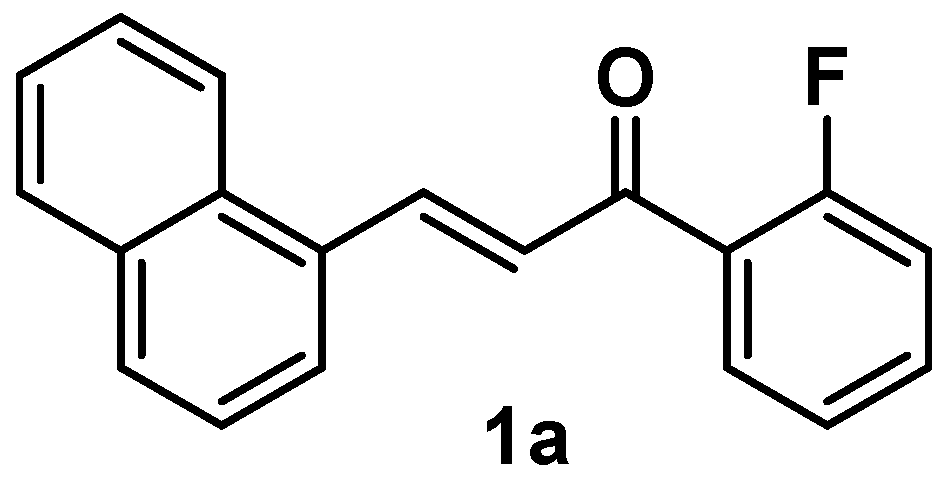
Recently, our research group demonstrated the ability of curcumin to improve the pharmacological profiles of synthetic inhibitors if used in combination [24,38,39]. Thus, considering the highest binding affinity (Ki) among all the synthesized compounds as a parameter (see Table 1), it appears that 1a was a good starting point for the experiments, i.e., for the combination study with curcumin (Figure 2).
In this paper, we now report the synthesis of chalcones 1-2 a-i and the combination study of the synthetic inhibitor 1a with curcumin against rhodesain, using the Chou and Talalay method, to establish if the combination has a synergistic, additive or antagonistic effect [40].

2. Results and Discussion

2.1. Chemistry

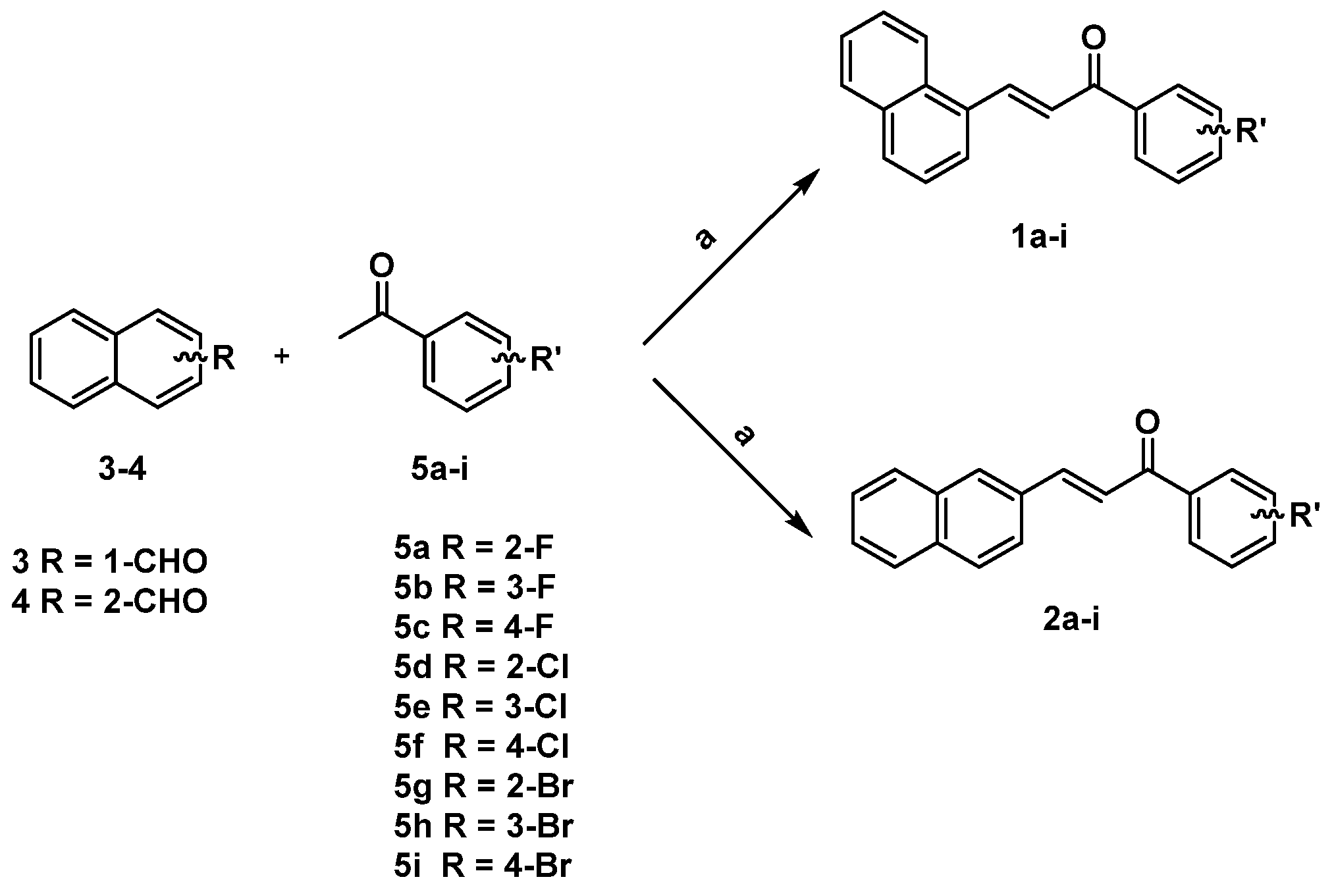
The novel chalcones 1-2 a-i were synthesized, as reported in the literature [41,42,43], using a Claisen Schmidt reaction, between the 1- or 2- naphthaldehyde (3-4) and halogen-substituted acetophenones (5 a-i) in a hydroalcoholic solution of sodium hydroxide (Scheme 1). The final compounds were obtained in high purity by recrystallization from ethanol or purified by column chromatography, yielding chalcones 1-2 a-i in good overall yields.

2.2. Biological Evaluation

All compounds 1-2 a-i were tested against rhodesain with fluorometric assays with the specific fluorogenic substrate, Carbobenzyloxy-Phe-Arg 7-amido-4-methylcoumarin hydrochloride (Cbz-Phe-Arg-AMC). A preliminary screening was performed at fixed inhibitor concentration (100 µM) and only compounds that inhibited at least 70% of enzyme activity were further tested at seven different concentrations to determine their dissociation constants (Ki) of each compound, using Equation (1) (see Section 3).
The inhibitory activity of the synthesized compounds (Table 1) was evaluated for series 1, containing a 1-naphthyl moiety, and series 2, containing a 2-naphthyl scaffold. Among all tested compounds, 1a, bearing a 2-fluoro substituent on the 1-naphthyl scaffold, emerged as the most active rhodesain inhibitor, with a Ki value of 2.00 ± 0.19 µM. Within series 1, fluorine substitution at the ortho or meta positions was generally favorable, as illustrated by 3-F (1b), which retained a significant potency (Ki = 2.61 ± 0.02 µM), whereas the para-fluoro analogue (1c) showed only a moderate inhibition (58% at 100 µM), indicating that para substitution reduces the binding affinity. Chloro and bromo substitutions on the 1-naphthyl scaffold were less effective. The 2-Cl (1d), 3-Cl (1e), and 4-Cl (1f) derivatives displayed moderate inhibition ranging from 35% to 50%, while 2-Br (1g) displayed a reduced potency (Ki = 7.16 ± 1.20 µM), and 3-Br (1h) and 4-Br (1i) achieved only 60% and 40% inhibition, respectively. These observations suggest that steric and electronic effects of the halogen substituents significantly influence the binding, and that the small size of fluorine at the ortho position allows optimal interactions within the enzyme active site.
The 2-naphthyl series (series 2) exhibited notable shifts in activity compared with 1-naphthyl analogues. Fluoro derivatives again displayed a position-dependent potency, with 3-F (2b) being the most active in this series (Ki = 2.52 ± 1.82 µM), while 2-F (2a) and 4-F (2c) were only moderately active (showing 56% inhibition). Interestingly, meta- and para-chloro substituted derivatives in the 2-naphthyl series exhibited an improved activity compared with the corresponding 1-naphthyl compounds. For instance, 3-Cl (2e) and 4-Cl (2f) exhibited Ki values of 2.93 ± 0.55 µM and 2.54 ± 0.31 µM, respectively, suggesting that the 2-naphthyl orientation better accommodates within the enzyme binding pocket for these substituents. Similarly, 3-Br (2h) showed an improved potency (Ki = 2.95 ± 1.11 µM) compared with its 1-naphthyl analogue (1h), whereas 2-Br (2g) and 4-Br (2i) were only moderately active, underscoring the importance of both substitution position and steric factors.
Comparing the two series, it is evident that the 1-naphthyl scaffold bearing an ortho-fluoro group, represented by 1a, provides the optimal orientation and interactions for maximal rhodesain inhibition. The SAR analysis indicates that the naphthyl position and halogen substitution pattern collectively determine the binding efficiency, with the 2-naphthyl orientation enhancing the potency for certain meta- and para-substituted chloro and bromo derivatives, although none surpass the activity of 1a. Overall, these findings highlight the critical role of both scaffold orientation and halogen placement in guiding the design of potent rhodesain inhibitors, positioning 1a as the benchmark compound for further optimization within this series.
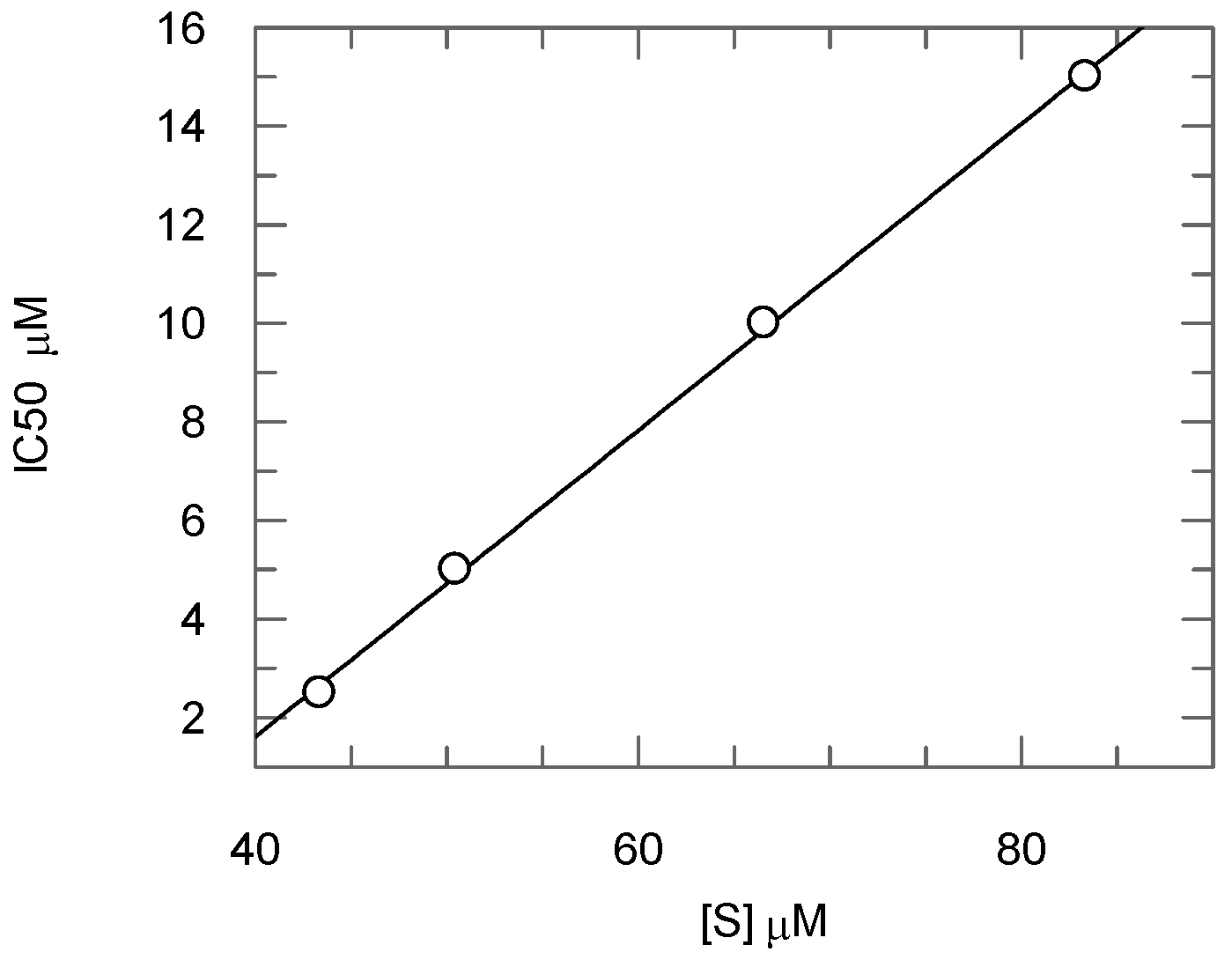
To further investigate if the inhibition is competitive for this class of chalcones, with respect to the substrate, we determined for 1a the IC50 in dependence of four substrate concentrations (2.5, 5, 10, and 15 μM). From this assay (Figure 3), we found linearly increasing IC50 values with increasing substrate concentration, demonstrating that chalcone 1a binds to the active site differently from curcumin, which we previously demonstrated to act as a non-competitive inhibitor [24].
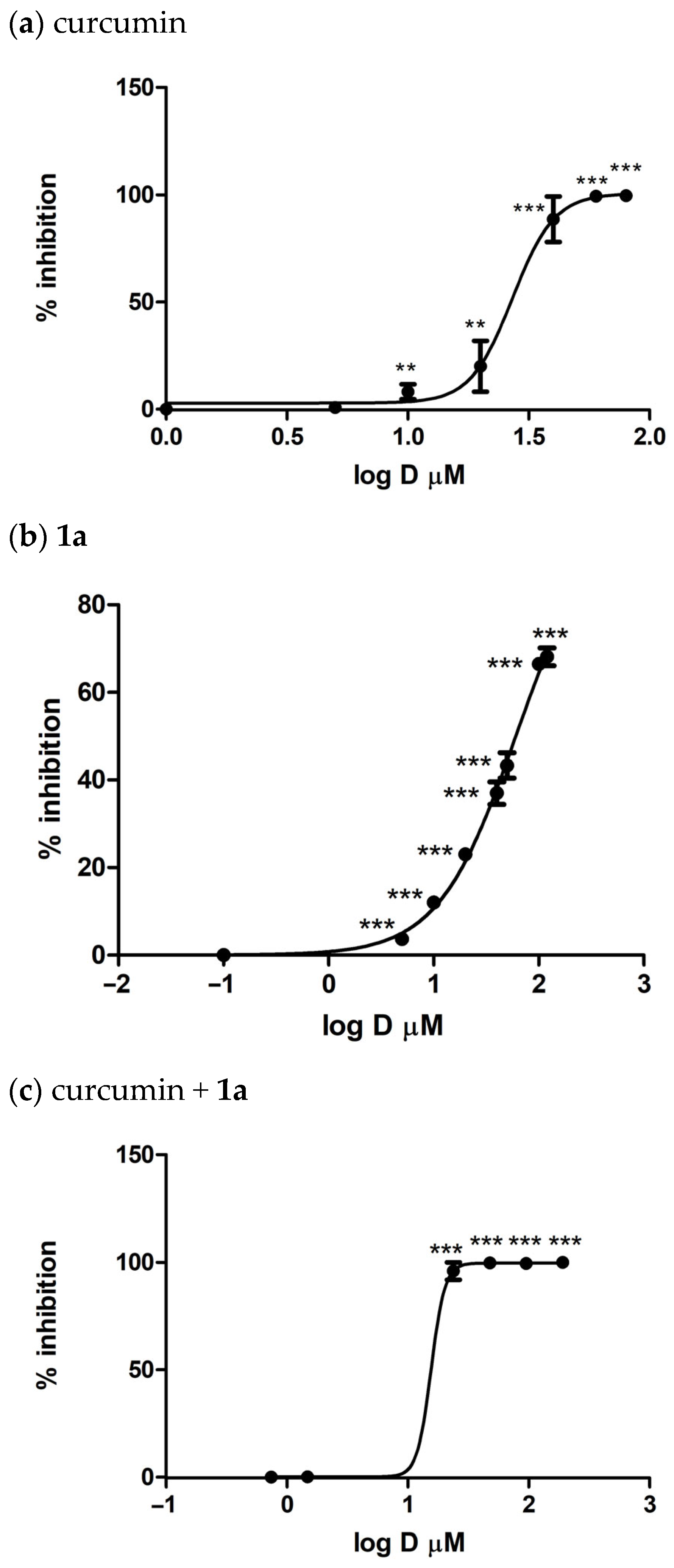
The experimental protocol for evaluating the combination of the two inhibitors, i.e., curcumin and 1a, against rhodesain initially involved a preliminary screening at fixed concentrations of each inhibitor (100 μM and 10 μM) to determine the range of activity of the two inhibitors. Subsequently, Tian dilution assays of curcumin and 1a were performed at seven different concentrations, separately for each inhibitor, in duplicate. The concentrations were selected to cover the range from the minimum enzyme-inhibiting dose to the maximum inhibitory concentration. Curcumin was tested at concentrations ranging from 80 μM to 1 μM, whereas 1a was tested in a range from 100 μM to 5 μM. Figure 4 shows the dose–response curves of each compound, from which the IC50 values were calculated: 25.77 ± 0.19 μM for curcumin and 69.55 ± 0.24 μM for 1a.
After independently determining the IC50 values of curcumin and 1a, six concentrations (1/128 × IC50, 1/64 × IC50, 1/4 × IC50, 1/2 × IC50, IC50, and 2 × IC50) were selected, as reported in Table 2, to evaluate the effect of their combination. From the resulting dose–response curves (Figure 4c), the IC50 value of the combination was then calculated, resulting in 11.18 ± 0.85 μM.
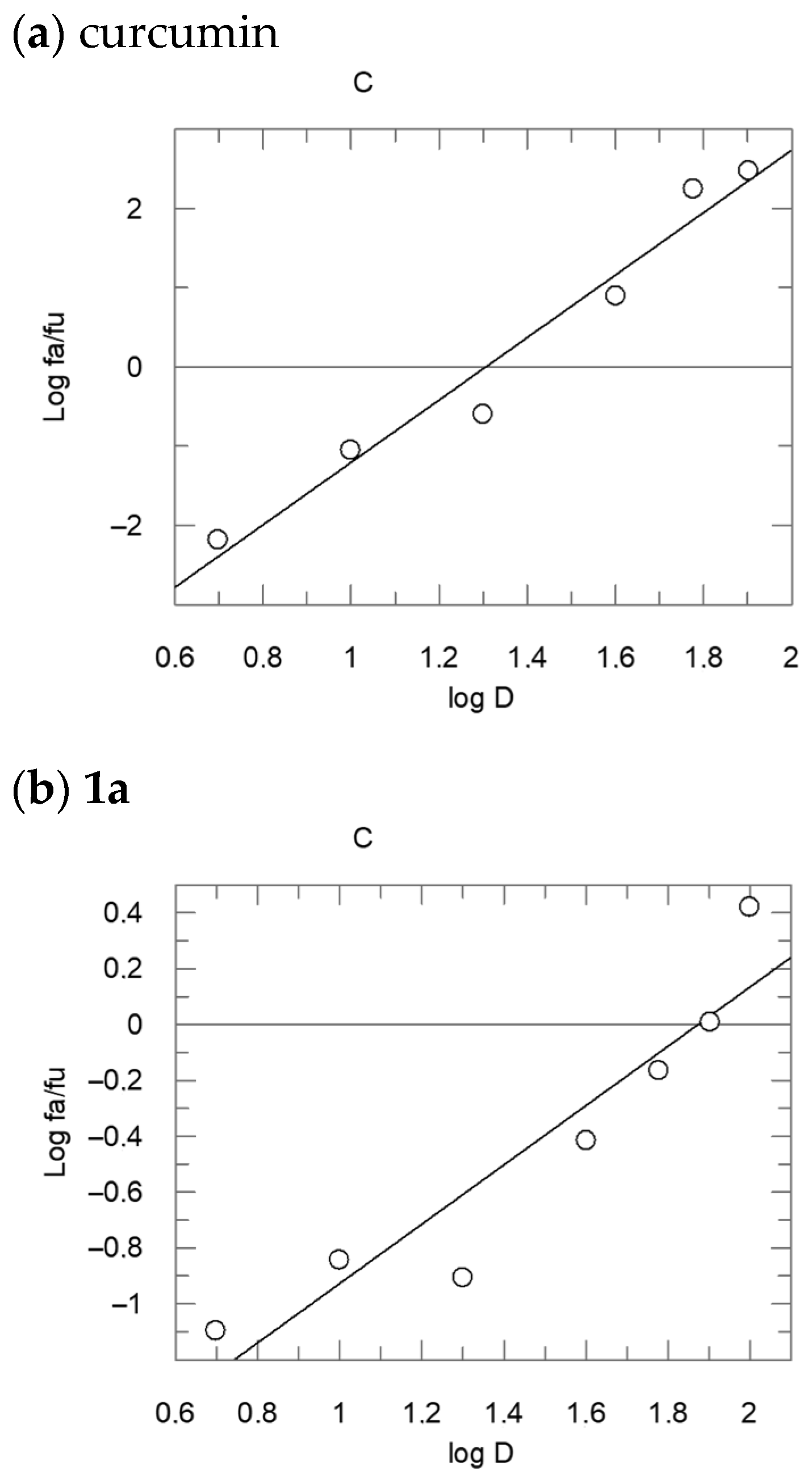
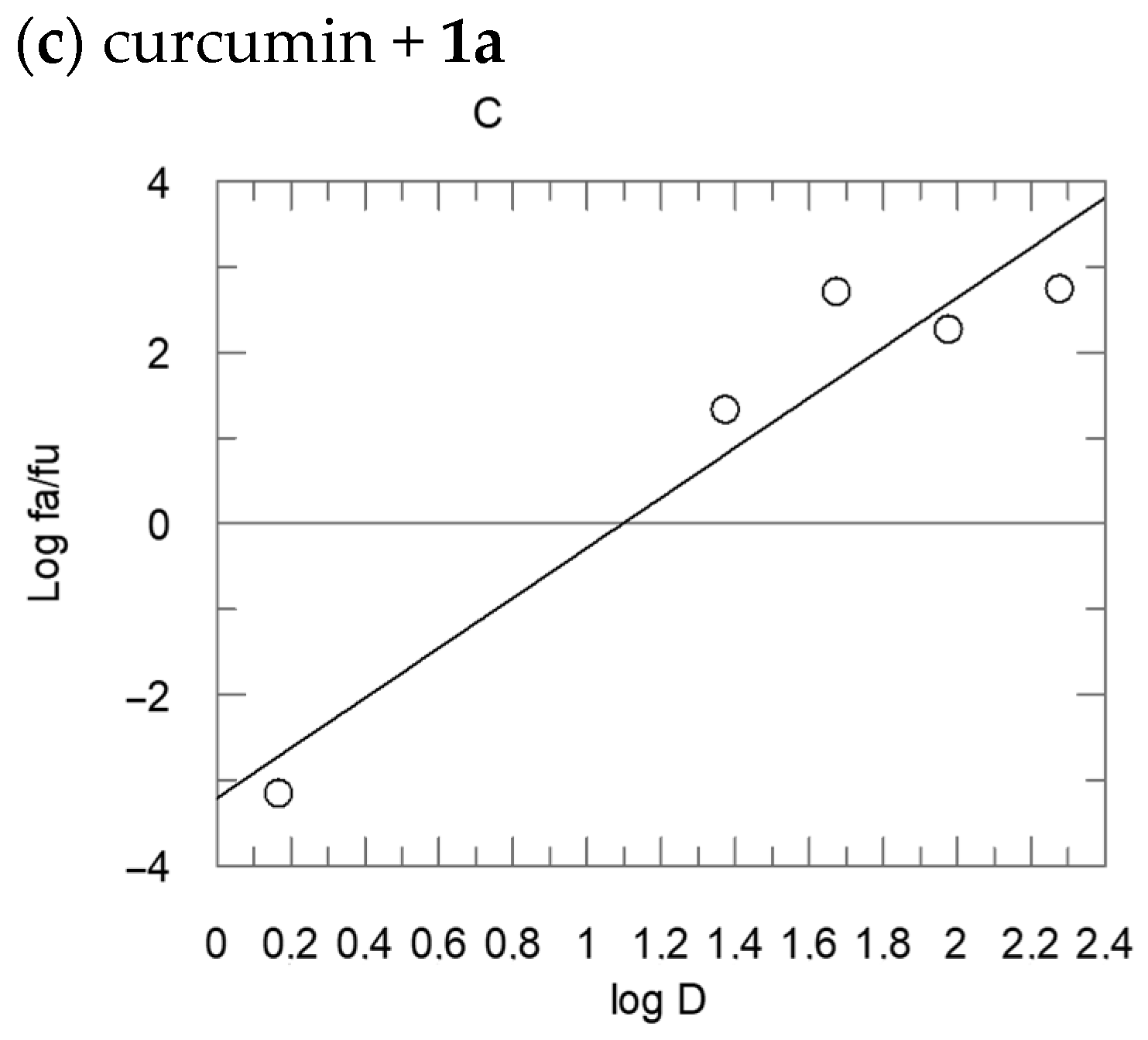
Each dose–response curve was subsequently converted into a Median Effect Plot, where log(fa/fu) was plotted against log(D) (Figure 5). Unlike the conventional dose–response curve, in which the maximum effect corresponds to 100, this diagram is normalized to 1, as fa + fu = 1. In this context, f a is the fraction of inhibited enzyme, while f u is the fraction that remains active at each dose (D).
Using Grafit software (Version 5.0.1.3; Erithacus Software Limited, East Grinstead, West Sussex, UK), the slope of the straight line, “m” values, of the Median Effect Plots were determined: for curcumin, m1 = 3.9427; for 1a, m2 = 1.0620; and for the curcumin–1a combination, m1,2 = 2.9247 (molar ratio of 0.37:1). The obtained m values were applied to the Median Effect Equation (Equation (2), see Section 3) to determine the doses of each inhibitor required to achieve a specific percentage of rhodesain inhibition [40,44].
The m value reflects the shape and steepness of the dose–response curve, providing insight into the cooperativity of an inhibitor’s effect. A higher m value, as observed for curcumin, indicates a steeper dose–response curve, suggesting that small increases in concentration lead to large increases in enzyme inhibition, which is consistent with highly potent binding. In contrast, the lower m value for 1a reflects a shallower curve, characteristic of a more gradual dose-dependent effect. The intermediate m value for the combination indicates an integrated response of both inhibitors, producing a dose–response profile that is less steep than curcumin alone but steeper than 1a alone, consistent with partial cooperativity. To evaluate the interaction between the two inhibitors on rhodesain activity, the Chou and Talalay method was applied. The combination index (CI) was calculated to classify the nature of their interaction as synergistic, additive, or antagonistic. Considering that curcumin is a non-competitive inhibitor [24] and that 1a acts as a competitive inhibitor of rhodesain, the equation for mutually non-exclusive drugs, which act independently (Equation (3), Section 3), was used to calculate CI. A CI value greater than 1 indicates antagonism, a value equal to 1 indicates an additive effect, and a value less than 1 indicates synergism [45].
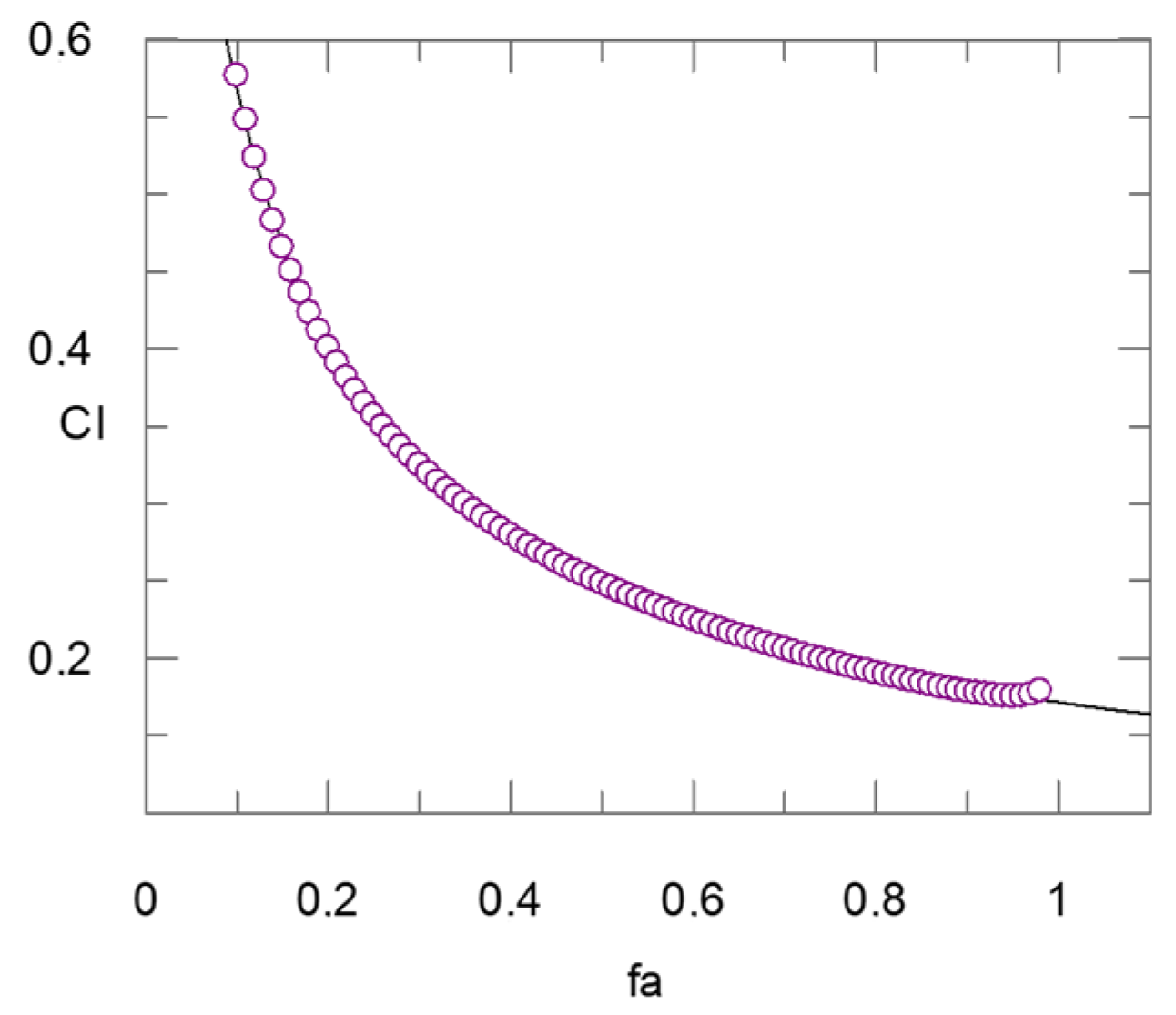
The CI values obtained for the curcumin–1a combination were consistently below 1 across the entire range of affected fraction (fa = 0.1–0.90), indicating a robust synergism. Notably, CI values decreased progressively with increasing fa, reaching values below 0.3 at fa ≥ 0.3 and falling below 0.2 at fa ≥ 0.8, suggesting a particularly strong synergistic effect at higher levels of enzyme inhibition (Figure 6, Table 3). This trend indicates that while the combination exhibits measurable synergism at low inhibition levels, the effect is greatly amplified as rhodesain inhibition increases, highlighting a dose-dependent enhancement of activity.
Mechanistically, the synergistic effect likely arises from the complementary modes of inhibition: curcumin binds to an allosteric site, altering the enzyme conformation, while 1a competes with the substrate at the active site. This dual targeting may enhance enzyme inactivation, as curcumin-induced conformational changes could facilitate substrate displacement by 1a, amplifying the overall inhibitory effect.
Such synergistic interactions suggest that the combination of curcumin and 1a could achieve effective rhodesain inhibition at lower individual doses, which may reduce potential off-target effects and improve the therapeutic index. These findings provide a strong rationale for further preclinical evaluation of this combination as a strategy to target rhodesain-dependent pathways.
Finally, selectivity assays were carried out (Table 4) by testing inhibitors against human cathepsin L. Fluorometric assays were carried out using Cbz-Phe-Arg-AMC (5 mM) as fluorogenic substrate. A preliminary screening was performed at a fixed inhibitor concentration (100 µM), and only compounds that inhibited at least 70% of enzyme activity were further tested at seven different concentrations to determine the dissociation constants (Ki) of each compound. The results of this investigation clearly pointed out that the combination is more selective than curcumin or chalcone 1a alone, thus confirming the utility to be used in combination.

2.3. Molecular Modeling Studies

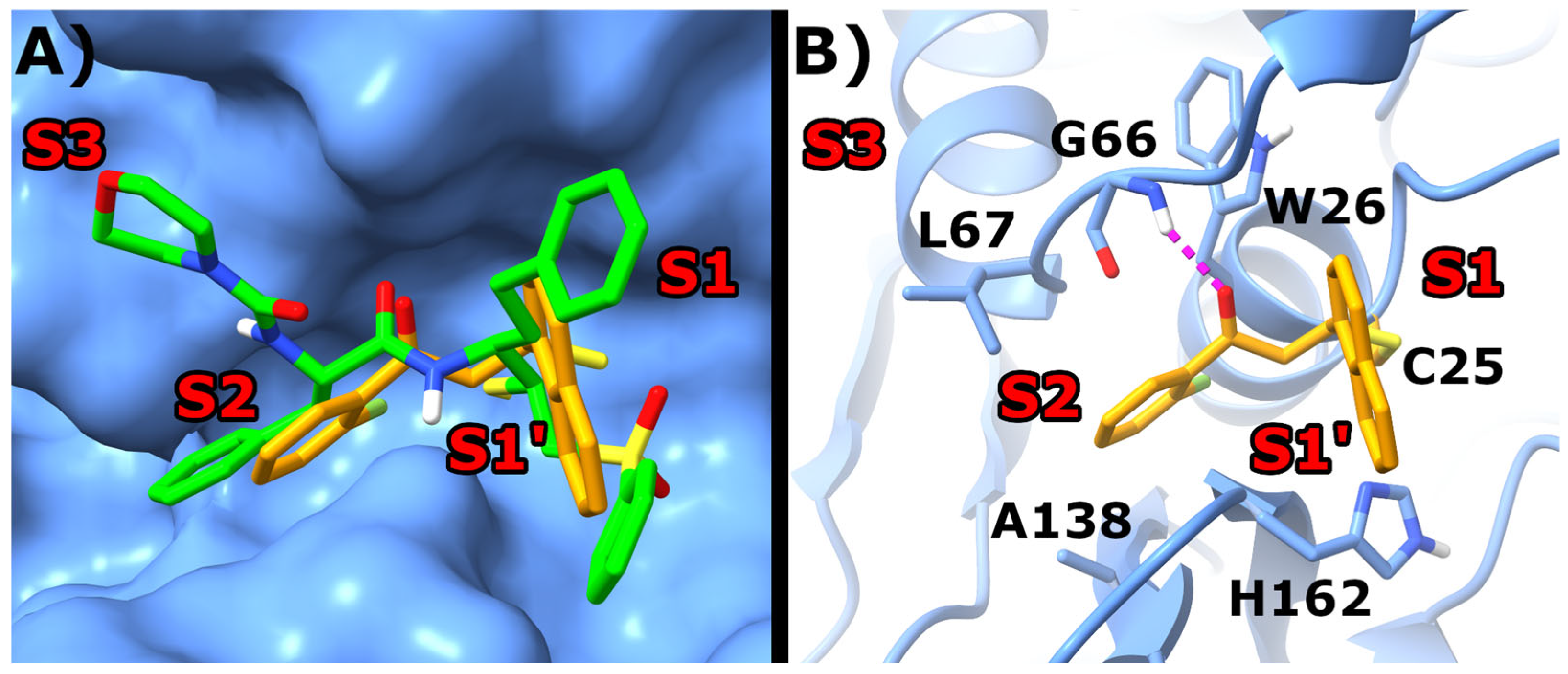
Molecular docking simulations were undertaken to establish a theoretical model elucidating the binding modes of the novel chalcone derivatives within the rhodesain binding site. These calculations were based on the X-ray crystal structure of rhodesain bound to the K11002 inhibitor (PDB code: 2P86) [11]. Given that the investigated compounds form covalent adducts with the catalytic C25 residue, we applied a covalent docking protocol utilizing the “flexible side-chain method” implemented in AutoDock4 (AD4) [46]. This technique modifies the interacting amino acid by attaching the ligand directly to its side chain and subsequently treating the resulting complex as flexible throughout the entire docking process. Compound 1a was chosen for detailed analysis as it exhibited the highest affinity for rhodesain among this series of derivatives. Specifically, the covalent docking of 1a simulated the 1,4-conjugate addition between the C25 thiol group and the β-carbon of the chalcone’s α,β-unsaturated carbonyl moiety (Figure 7). To further refine the predicted binding geometries, the lowest energy conformation predicted by AD4 was subjected to an additional minimization round. The refined conformation reveals that compound 1a binds within the enzyme’s active site by closely mirroring the crystallographic pose of the reference inhibitor K11002 (Figure 7A). However, unlike the co-crystal ligand, 1a is unable to reach the S3 cavity due to a lack of structural extension in that region of the molecule.
On the other hand, the 1-naphthyl moiety (shared by compounds 1a-i) is placed between the S1 and S1′ subpockets, occupying an electron-rich region defined by residues such as W26 and H162, respectively (Figure 7B). This orientation facilitates the formation of a hydrogen bond by optimally directing the carbonyl group toward the G66 backbone NH, which, in turn, helps anchor the phenyl ring within the S2 cavity. Here, the ligand penetrates deep into the gorge, primarily driven by a variety of hydrophobic contacts with nearby residues lining this specific subpocket, such as L67 and A138. When analyzing the reported structure-activity relationship (SAR) data for compounds 1a-i as well as 2a-i, the effect of the phenyl substitution pattern cannot be easily rationalized through the analysis of the static picture obtained from docking studies. In particular, we postulate that these substituents might affect the reactivity of the newly described chalcones as well as the energetic stability of the final ligand-protein covalent adduct. In this view, in the 1 derivatives, 1a by featuring the ortho-F electron-withdrawing substituent should enhance the ligand’s reactivity by enhancing the electrophilic nature of the Michael’s acceptor β-carbon atom while assuring the steric and electrostatic complementarity in the final complex. On the other hand, the bromine analogue 1g should have a more pronounced effect on the complex stability, while the chlorine ones 1d-f have a mixed effect that results in lower inhibition potencies.

3. Materials and Methods

3.1. Chemistry

All reagents and solvents were obtained from commercial suppliers and were used without further purification. Elemental analyses were carried out on a C. Erba Model 1106 Elemental Analyser for C, H and N (Cornaredo, Milan, Italy), and the obtained results are within ±0.4% of the theoretical values. Merck silica gel 60 F254 plates (Merck, Darmstadt, Germany) were used for analytical TLC; flash column chromatography was performed on Merck silica gel (200–400 mesh). 1H and 13C and NMR spectra were recorded on a Varian 500 MHz spectrometer equipped with a ONE_NMR probe and operating at 499.74 and 125.73 MHz for 1H and 13C and NMR spectra, respectively. We used the residual signal of the deuterated solvent as an internal standard. Splitting patterns are described as singlet (s), doublet (d), doublet of doublet (dd), triplet (t), quartet (q), multiplet (m), or broad singlet (bs). 1H and 13C NMR chemical shifts (δ) are expressed in ppm, and coupling constants (J) are given in Hz (See the Supplementary Data, Figure S1–S32).

3.2. Synthesis of Compounds 1-2 a-i

(E)-1-(2-fluorophenyl)-3-(naphtalen-5-yl)prop-2-en-1-one (1a)
Into a 50 mL flask containing a hydroalcoholic solution (8 mL H2O + 6.6 mL EtOH) of sodium hydroxide (64.02 mg, 1.60 mmol), previously placed in an ice bath at a temperature of 0 °C, the 1-naphthaldehyde 3 (43.48 µL, 0.32 mmol) and the 2-fluoroacetophenone 5a (38.90 µL, 0.32 mmol) were charged. The reaction mixture was then stirred at room temperature and monitored using TLC with petroleum ether/diethyl ether 9:1 as the solvent system. After the reagents disappeared, the solvent was evaporated in vacuo, and then the aqueous phase was extracted with DCM, washed with a saturated NaCl solution, dried over Na2SO4, filtered and concentrated in vacuo. The residue was purified by silica gel column chromatography using petroleum ether/diethyl ether 9:1 to obtain the pure product 1a (58 mg, 65%); Consistency: yellow powder; Rf = 0.43 (petroleum ether/diethyl ether 9:1). 1H NMR (500 MHz, CDCl3) = δ: 7.17–7.22 (m, 1H), 7.29 (t, J = 7.5 Hz, 1H), 7.47–7.62 (m, 5H), 7.88–7.91 (m, 3H), 7.92 (d, J = 8.4 Hz, 1H), 8.24 (d, J = 8.4 Hz, 1H), 8.62 (d, J = 15.8 Hz, 1H) ppm; 13C NMR (125.73 MHz, CDCl3) = δ: 116.58 (d, J = 23.2 Hz), 123.40, 124.55, 125.34, 125.46, 126.27, 126.98, 128.03, 128.08, 128.77, 130.94, 131.08, 131.77, 132.05, 133.72, 134.03 (d, J = 8.8 Hz), 141.62, 161.32 (d, J = 253.2 Hz), 188.88 ppm. Elemental analysis: calcd for C19H13FO: C, 82.59; H, 4.74; found: C 82.21, H 4.99.
(E)-1-(3-fluorophenyl)-3-(naphtalen-5-yl)prop-2-en-1-one (1b)
Into a 50 mL flask containing a hydroalcoholic solution of sodium hydroxide (64.02 mg, 1.60 mmol), according to the same procedure described for 1a, 1-naphthaldehyde 3 (43.48 µL, 0.32 mmol) and the 3-fluoroacetophenone 5b (39.27 µL, 0.32 mmol) were charged a–nd a precipitate was obtained. It was purified by silica gel column chromatography using petroleum ether/diethyl ether 9:1 to obtain the pure product 1b (51.6 mg, 57%); Consistency: yellow powder; Rf = 0.52 (petroleum ether/diethyl ether 9:1). 1H NMR (500 MHz, CDCl3) = δ: 7.31 (t, J = 8.0 Hz, 1H), 7.48–7.58 (m, 4H), 7.58–7.63 (m, 1H), 7.77 (d, J = 9.4 Hz, 1H), 7.85–7.88 (m, 1H), 7.88–7.93 (m, 2H), 7.95 (d, J = 8.3 Hz, 1H), 8.26 (d, J = 8.3 Hz, 1H), 8.70 (d, J = 15.4 Hz, 1H) ppm; 13C NMR (125.73 MHz, CDCl3) = δ: 115.35 (d, J = 22.4 Hz), 119.86 (d, J = 21.5 Hz), 123.39, 124.03, 124.22, 125.18, 125.42, 126.36, 127.07, 128.79, 130.31 (d, J = 7.7 Hz), 131.07, 131.75, 132.10, 133.74, 140.32, 142.45, 162.91 (d, J = 248.0 Hz), 188.86 ppm. Elemental analysis: calcd for C19H13FO: C, 82.59; H, 4.74; found: C 82.88, H 5.06.
(E)-1-(4-fluorophenyl)-3-(naphtalen-5-yl)prop-2-en-1-one (1c)
Into a 50 mL flask containing a hydroalcoholic solution of sodium hydroxide (64.02 mg, 1.60 mmol), according to the same procedure described for 1a, 1-naphthaldehyde 3 (43.48 µL, 0.32 mmol) and the 4-fluoroacetophenone 5c (38.86 µL, 0.32 mmol) were charged and a precipitate was obtained. It was purified by silica gel column chromatography using petroleum ether/diethyl ether 9:1 to obtain the pure product 1c (54.1 mg, 62%); Consistency: yellow powder; Rf = 0.49 (petroleum ether/diethyl ether 9:1). 1H NMR (500 MHz, CDCl3) = δ: 7.20 (t, J = 8.5 Hz, 2H), 7.50–7.57 (m, 2H), 7.58–7.64 (m, 2H), 7.90 (d, J = 7.3 Hz, 2H), 7.94 (d, J = 8.3 Hz, 1H), 8.08–8.16 (m, 2H), 8.26 (d, J = 8.3 Hz, 1H), 8.68 (d, J = 15.4 Hz, 1H) ppm; 13C NMR (125.73 MHz, CDCl3) = δ: 115.79 (d, J = 21.9 Hz), 123.44, 124.17, 125.10, 125.41, 126.34, 127.02, 128.77, 130.91, 131.16 (d, J = 9.2 Hz), 131.75, 132.25, 133.73, 134.48, 141.96, 165.65 (d, J = 254.6 Hz), 188.57 ppm. Elemental analysis: calcd for C19H13FO: C, 82.59; H, 4.74; found: C 82.27, H 4.47.
(E)-1-(2-chlorophenyl)-3-(naphtalen-5-yl)prop-2-en-1-one (1d)
Into a 50 mL flask containing a hydroalcoholic solution of sodium hydroxide (64.02 mg, 1.60 mmol), according to the same procedure described for 1a, 1-naphthaldehyde 3 (43.48 µL, 0.32 mmol) and the 2-chloroacetophenone 5d (37.38 µL, 0.32 mmol) were charged and a crude residue was obtained. It was purified by silica gel column chromatography using petroleum ether/diethyl ether 9:1 to obtain the pure product 1d (60.5 mg, 64%). Consistency: yellow powder; Rf = 0.59 (petroleum ether/diethyl ether 9:1). 1H NMR (500 MHz, CDCl3) = δ: 7.25 (d, J = 15.8 Hz, 1H), 7.41 (t, J = 7.5 Hz, 1H), 7.45 (t, J = 7.9 Hz, 1H), 7.48–7.59 (m, 5H), 7.86 (d, J = 7.1 Hz, 1H), 7.88 (d, J = 7.8 Hz, 1H), 7.92 (d, J = 8.2 Hz, 1H), 8.10 (d, J = 8.2 Hz, 1H), 8.37 (d, J = 15.8 Hz, 1H) ppm; 13C NMR (125.73 MHz, CDCl3) = δ: 123.13, 125.41, 125.44, 126.27, 126.92, 127.01, 128.54, 128.78, 129.50, 130.33, 131.10, 131.37, 131.53, 131.55, 131.68, 133.67, 139.17, 142.87, 193.51 ppm. Elemental analysis: calcd for C19H13ClO: C, 77.95; H, 4.48; found: C 78.22, H 4.74.
(E)-1-(3-chlorophenyl)-3-(naphtalen-5-yl)prop-2-en-1-one (1e)
Into a 50 mL flask containing a hydroalcoholic solution of sodium hydroxide (64.02 mg, 1.60 mmol), according to the same procedure described for 1a, 1-naphthaldehyde 3 (43.48 µL, 0.32 mmol) and the 3-chloroacetophenone 5e (41.56 µL, 0.32 mmol) were charged and a precipitate was obtained. It was purified by silica gel column chromatography using petroleum ether/diethyl ether 9:1 to obtain the pure product 1e (57.7 mg, 62%); Consistency: yellow powder; Rf = 0.50 (petroleum ether/diethyl ether 9:1). 1H NMR (500 MHz, CDCl3) = δ: 7.47 (t, J = 7.6 Hz, 1H), 7.52–7.63 (m, 5H), 7.91 (t, J = 7.6 Hz, 2H), 7.95 (d, J = 8.4 Hz, 2H), 8.05 (s, 1H), 8.25 (d, J = 8.4 Hz, 1H), 8.70 (d, J = 15.4 Hz, 1H) ppm; 13C NMR (125.73 MHz, CDCl3) = δ: 123.40, 123.93, 125.23, 125.44, 126.38, 126.63, 127.11, 128.67, 128.82, 130.01, 131.14, 131.76, 132.05, 132.80, 133.75,135.00, 139.76, 142.56, 188.87 ppm. Elemental analysis: calcd for C19H13ClO: C, 77.95; H, 4.48; found: C 77.83, H 4.69.
(E)-1-(4-chlorophenyl)-3-(naphtalen-5-yl)prop-2-en-1-one (1f)
Into a 50 mL flask containing a hydroalcoholic solution of sodium hydroxide (64.02 mg, 1.60 mmol), according to the same procedure described for 1a, 1-naphthaldehyde 3 (43.48 µL, 0.32 mmol) and the 4-chloroacetophenone 5f (41.52 µL, 0.32 mmol) were charged and a precipitate was obtained. It was purified by silica gel column chromatography using petroleum ether/diethyl ether 9:1 to get the pure product 1f (52 mg, 55%); Consistency: yellow powder; Rf = 0.57 (petroleum ether/diethyl ether 9:1). 1H NMR (500 MHz, CDCl3) = δ: 7.45–7.64 (m, 6H), 7.90 (d, J = 6.9 Hz, 2H), 7.93 (d, J = 8.2 Hz, 1H), 8.02 (d, J = 6.9 Hz, 2H), 8.24 (d, J = 8.2 Hz, 1H), 8.68 (d, J = 15.4 Hz, 1H) ppm; 13C NMR (125.73 MHz, CDCl3) = δ: 123.42, 124.07, 125.15, 125.43, 126.37, 127.07, 128.80, 129.00, 129.99, 131.02, 131.76, 132.18, 133.75, 136.48, 139.32, 142.25, 188.95 ppm. Elemental analysis: calcd for C19H13ClO: C, 77.95; H, 4.48; found: C 77.59, H 4.10.
(E)-1-(2-bromophenyl)-3-(naphtalen-5-yl)prop-2-en-1-one (1g)
Into a 50 mL flask containing a hydroalcoholic solution of sodium hydroxide (64.02 mg, 1.60 mmol), according to the same procedure described for 1a, 1-naphthaldehyde 3 (43.48 µL, 0.32 mmol) and the 2-bromoacetophenone 5g (43.17 µL, 0.32 mmol) were charged and a crude residue was obtained. It was purified by silica gel column chromatography using petroleum ether/diethyl ether 85:15 to obtain the pure product 1g (75.6 mg, 70%); Consistency: yellow oil; Rf = 0.40 (petroleum ether/diethyl ether 85:15). 1H NMR (500 MHz, CDCl3) = δ: 7.22 (d, J = 15.8 Hz, 1H), 7.37 (t, J = 6.4 Hz, 1H), 7.45 (t, J = 7.0 Hz, 1H), 7.49–7.58 (m, 4H), 7.69 (d, J = 8.0 Hz, 1H), 7.87 (t, J = 8.2 Hz, 2H), 7.92 (d, J = 8.2 Hz, 1H), 8.08 (d, J = 8.2 Hz, 1H), 8.34 (d, J = 15.8 Hz, 1H) ppm; 13C NMR (125.73 MHz, CDCl3) = δ: 119.67, 123.23, 125.56, 125.59, 126.42, 127.17, 127.58, 128.49, 128.76, 128.93, 129.45, 131.29, 131.64, 131.76, 133.60, 133.78, 141.33, 143.36, 194.55 ppm. Elemental analysis: calcd for C19H13BrO: C, 67.67; H, 3.89; found: C 67.49, H 4.08.
(E)-1-(3-bromophenyl)-3-(naphtalen-5-yl)prop-2-en-1-one (1h)
Into a 50 mL flask containing a hydroalcoholic solution of sodium hydroxide (64.02 mg, 1.60 mmol), according to the same procedure described for 1a, 1-naphthaldehyde 3 (43.48 µL, 0.32 mmol) and the 3-bromoacetophenone 5h (42.34 µL, 0.32 mmol) were charged and a crude residue was obtained. It was purified by silica gel column chromatography using petroleum ether/diethyl ether 9:1 to obtain the pure product 1h (84 mg, 78%). Consistency: yellow powder; Rf = 0.52 (petroleum ether/diethyl ether 9:1). 1H NMR (500 MHz, CDCl3) = δ: 7.40 (t, J = 7.8 Hz, 1H), 7.51–7.62 (m, 4H), 7.72 (d, J = 7.8 Hz, 1H), 7.90 (t, J = 6.9 Hz, 2H), 7.94 (d, J = 8.3 Hz, 1H), 7.99 (d, J = 7.8 Hz, 1H), 8.20 (s, 1H), 8.25 (d, J = 8.3 Hz, 1H), 8.69 (d, J = 15.4 Hz, 1H) ppm; 13C NMR (125.73 MHz, CDCl3) = δ: 123.02, 123.38, 123.88, 125.22, 125.43, 126.36, 127.05, 127.09, 128.81, 130.24, 131.12, 131.58, 131.75, 132.02, 133.73, 135.68, 139.96, 142.53, 188.72 ppm. Elemental analysis: calcd for C19H13BrO: C, 67.67; H, 3.89; found: C 67.28, H 3.52.
(E)-1-(4-bromophenyl)-3-(naphtalen-5-yl)prop-2-en-1-one (1i)
Into a 50 mL flask containing a hydroalcoholic solution of sodium hydroxide (64.02 mg, 1.60 mmol), according to the same procedure described for 1a, 1-naphthaldehyde 3 (43.48 µL, 0.32 mmol) and the 4-bromoacetophenone 5i (63.65 mg, 0.32 mmol) were charged and a crude residue was obtained. It was purified by silica gel column chromatography using petroleum ether/diethyl ether 9:1 to obtain the pure product 1i (64 mg, 60%). Consistency: yellow powder; Rf = 0.48 (petroleum ether/diethyl ether 9:1). The NMR data (1H and 13C NMR) are in agreement with those reported in the literature [47]. Elemental analysis: calcd for C19H13BrO: C, 67.67; H, 3.89; found: C 67.58, H 3.95.
(E)-1-(2-fluorophenyl)-3-(naphtalen-6-yl)prop-2-en-1-one (2a)
Into a 50 mL flask containing a hydroalcoholic solution of sodium hydroxide (64.02 mg, 1.60 mmol), according to the same procedure described for 1a, 2-naphthaldehyde 4 (50 mg, 0.32 mmol) and the 2-fluoroacetophenone 5a (38.90 µL, 0.32 mmol) were charged and a precipitate was obtained. It was purified by silica gel column chromatography using petroleum ether/diethyl ether 9:1 to obtain the pure product 2a (52.5 mg, 59%); Consistency: pale yellow powder; Rf = 0.42 (petroleum ether/diethyl ether 9:1). 1H NMR (500 MHz, CDCl3) = δ: 7.07–7.11 (m, 1H), 7.17 (t, J = 6.7 Hz, 1H), 7.39–7.46 (m, 4H), 7.66 (d, J = 7.3 Hz, 1H), 7.73–7.78 (m, 4H), 7.81 (d, J = 15.8 Hz, 1H), 7.90 (s, 1H) ppm; 13C NMR (125.73 MHz, CDCl3) = δ: 116.55 (d, J = 23.1 Hz), 123.72, 124.54, 125.71, 125.76, 126.75, 127.43, 127.80, 128.66, 128.73, 130.88, 130.98, 133.21, 133.31, 133.88 (d, J = 8.8 Hz), 134.45, 144.97, 161.22 (d, J = 253.1 Hz), 189.01 ppm. Elemental analysis: calcd for C19H13FO: C, 82.59; H, 4.74; found: C 82.90, H 5.00.
(E)-1-(3-fluorophenyl)-3-(naphtalen-6-yl)prop-2-en-1-one (2b)
Into a 50 mL flask containing a hydroalcoholic solution of sodium hydroxide (64.02 mg, 1.60 mmol), according to the same procedure described for 1a, 2-naphthaldehyde 4 (50 mg, 0.32 mmol) and the 3-fluoroacetophenone 5b (39.27 µL, 0.32 mmol) were charged. The compound 2b precipitated (55 mg, 62%), so it was filtered using a Büchner funnel under vacuum and washed with H2O without any further purification procedures. Consistency: yellow powder; Rf = 0.38 (petroleum ether/diethyl ether 9:1). 1H NMR (500 MHz, CDCl3) = δ: 7.30 (t, J = 8.2 Hz, 1H), 7.49–7.56 (m, 3H), 7.59 (d, J = 15.6 Hz, 1H), 7.74 (d, J = 9.5 Hz, 1H), 7.80 (d, J = 8.6 Hz, 1H), 7.83–7.93 (m, 4H), 8.00 (d, J = 15.6 Hz, 1H), 8.04 (s, 1H) ppm; 13C NMR (125.73 MHz, CDCl3) = δ: 115.30 (d, J = 22.4 Hz), 119.75 (d, J = 21.4 Hz), 121.60, 123.58, 124.18, 126.83, 127.51, 127.81, 128.68, 128.80, 130.27 (d, J = 7.7 Hz), 130.90, 132.13, 133.33, 134.48, 140.43, 145.65, 162.89 (d, J = 248.0 Hz), 189.07 ppm. Elemental analysis: calcd for C19H13FO: C, 82.59; H, 4.74; found: C 82.33, H 4.38.
(E)-1-(4-fluorophenyl)-3-(naphtalen-6-yl)prop-2-en-1-one (2c)
Into a 50 mL flask containing a hydroalcoholic solution of sodium hydroxide (64.02 mg, 1.60 mmol), according to the same procedure described for 1a, 2-naphthaldehyde 4 (50 mg, 0.32 mmol) and the 4-fluoroacetophenone 5c (38.86 µL, 0.32 mmol) were charged and a precipitate was obtained. It was purified by silica gel column chromatography using petroleum ether/diethyl ether 9:1 to get the pure product 2c (47.5 mg, 54%); Consistency: pale yellow powder; Rf = 0.43 (petroleum ether/diethyl ether 9:1). 1H NMR (500 MHz, CDCl3) = δ: 7.19 (t, J = 8.6 Hz, 2H), 7.46–7.57 (m, 2H), 7.61 (d, J = 15.6 Hz, 1H), 7.78 (d, J = 8.6 Hz, 1H), 7.82–7.90 (m, 3H), 7.98 (d, J = 15.5 Hz, 1H), 8.03 (s, 1H), 8.06–8.13 (m, 2H) ppm; 13C NMR (125.73 MHz, CDCl3) = δ: 115.74 (d, J = 21.8 Hz), 121.65, 123.60, 126.80, 127.44, 127.80, 128.65, 128.75, 130.73, 131.09 (d, J = 9.2 Hz), 132.24, 133.34, 134.41, 134.58, 145.10, 165.59 (d, J = 254.4 Hz), 188.74 ppm. Elemental analysis: calcd for C19H13FO: C, 82.59; H, 4.74; found: C 82.91, H 4.47.
(E)-1-(2-chlorophenyl)-3-(naphtalen-6-yl)prop-2-en-1-one (2d)
Into a 50 mL flask containing a hydroalcoholic solution of sodium hydroxide (64.02 mg, 1.60 mmol), according to the same procedure described for 1a, 2-naphthaldehyde 4 (50 mg, 0.32 mmol) and the 2-chloroacetophenone 5d (37.38 µL, 0.32 mmol) were charged. The compound 2d precipitated (53.6 mg, 57%), and it was filtered using a Büchner funnel under vacuum and washed with H2O without any further purification procedures. Consistency: white powder; Rf = 0.38 (petroleum ether/diethyl ether 9:1). 1H NMR (500 MHz, CDCl3) = δ: 7.29 (s, 1H), 7.42 (t, J = 7.4 Hz, 1H), 7.48 (t, J = 6.6 Hz, 1H), 7.50–7.61 (m, 4H), 7.66 (d, J = 16.1 Hz, 1H), 7.76 (d, J = 8.5 Hz, 1H), 7.88 (t, J = 7.1 Hz, 3H), 7.99 (s, 1H) ppm; 13C NMR (125.73 MHz, CDCl3) = δ: 123.58, 126.43, 126.81, 126.85, 127.56, 127.81, 128.65, 128.81, 129.35, 130.30, 130.92, 131.32, 131.36, 131.93, 133.25, 134.49, 139.18, 146.40, 193.82 ppm. Elemental analysis: calcd for C19H13ClO: C, 77.95; H, 4.48; found: C 77.58, H 4.72.
(E)-1-(3-chlorophenyl)-3-(naphtalen-6-yl)prop-2-en-1-one (2e)
Into a 50 mL flask containing a hydroalcoholic solution of sodium hydroxide (64.02 mg, 1.60 mmol), according to the same procedure described for 1a, 2-naphthaldehyde 4 (50 mg, 0.32 mmol) and the 3-chloroacetophenone 5e (41.56 µL, 0.32 mmol) were charged. The compound 2e precipitated (60 mg, 64%), so it was filtered using a Büchner funnel under vacuum and washed with H2O without any further purification procedures. Consistency: yellow powder; Rf = 0.40 (petroleum ether/diethyl ether 9:1). 1H NMR (500 MHz, CDCl3) = δ: 7.47 (t, J = 6.9 Hz, 1H), 7.51–7.61 (m, 4H), 7.80 (d, J = 6.5 Hz, 1H), 7.83–7.91 (m, 3H), 7.93 (d, J = 7.7 Hz, 1H), 7.99 (d, J = 15.7 Hz, 1H), 8.03 (s, 1H), 8.05 (s, 1H) ppm; 13C NMR (125.73 MHz, CDCl3) = δ: 121.69, 123.76, 126.72, 127.00, 127.70, 127.98, 128.74, 128.85, 128.97, 130.12, 131.11, 132.27, 132.83, 133.49, 134.66, 135.11, 140.04, 145.93, 189.24 ppm. Elemental analysis: calcd for C19H13ClO: C, 77.95; H, 4.48; found: C 77.72, H 4.19.
(E)-1-(4-chlorophenyl)-3-(naphtalen-6-yl)prop-2-en-1-one (2f)
Into a 50 mL flask containing a hydroalcoholic solution of sodium hydroxide (64.02 mg, 1.60 mmol), according to the same procedure described for 1a, 2-naphthaldehyde 4 (50 mg, 0.32 mmol) and the 4-chloroacetophenone 5f (41.52 µL, 0.32 mmol) were charged. The compound 2f precipitated (50.6 mg, 54%), so it was filtered using a Büchner funnel under vacuum and washed with H2O without any further purification procedures. Consistency: pale yellow powder; Rf = 0.47 (petroleum ether/diethyl ether 9:1). 1H NMR (500 MHz, CDCl3) = δ: 7.50 (d, J = 8.2 Hz, 2H), 7.52–7.56 (m, 2H), 7.59 (d, J = 15.0 Hz, 1H), 7.79 (d, J = 8.6 Hz, 1H), 7.83–7.92 (m, 3H), 7.97 (d, J = 15.0 Hz, 1H), 8.00 (s, 1H), 8.03 (d, J = 12.1 Hz, 2H) ppm; 13C NMR (125.73 MHz, CDCl3) = δ: 121.57, 123.58, 126.82, 127.49, 127.80, 128.66, 128.78, 128.94, 129.91, 130.83, 132.18, 133.33, 134.45, 136.57, 139.20, 145.42, 189.11 ppm. Elemental analysis: calcd for C19H13ClO: C, 77.95; H, 4.48; found: C 77.78, H 4.69.
(E)-1-(2-bromophenyl)-3-(naphtalen-6-yl)prop-2-en-1-one (2g)
Into a 50 mL flask containing a hydroalcoholic solution of sodium hydroxide (64.02 mg, 1.60 mmol), according to the same procedure described for 1a, 2-naphthaldehyde 4 (50 mg, 0.32 mmol) and the 2-bromoacetophenone 5g (43.17 µL, 0.32 mmol) were charged and a precipitate was obtained. It was purified by silica gel column chromatography using petroleum ether/diethyl ether 9:1 to obtain the pure product 2g (93.8 mg, 87%); Consistency: pale yellow powder; Rf = 0.35 (petroleum ether/diethyl ether 9:1). 1H NMR (500 MHz, CDCl3) = δ: 7.22 (d, J = 16.1 Hz, 1H), 7.35 (t, J = 6.8 Hz, 1H), 7.43 (t, J = 7.4 Hz, 1H), 7.45–7.55 (m, 3H), 7.60 (d, J = 16.1 Hz, 1H), 7.67 (d, J = 8.0 Hz, 1H), 7.71 (d, J = 8.6 Hz, 1H), 7.81–7.87 (m, 3H), 7.93 (s, 1H) ppm; 13C NMR (125.73 MHz, CDCl3) = δ: 119.62, 123.65, 126.35, 126.92, 127.47, 127.68, 127.91, 128.75, 128.92, 129.28, 131.04, 131.45, 131.99, 133.32, 133.54, 134.59, 141.30, 146.82, 194.75 ppm. Elemental analysis: calcd for C19H13BrO: C, 67.67; H, 3.89; found: C 67.98, H 4.12.
(E)-1-(3-bromophenyl)-3-(naphtalen-6-yl)prop-2-en-1-one (2h)
Into a 50 mL flask containing a hydroalcoholic solution of sodium hydroxide (64.02 mg, 1.60 mmol), according to the same procedure described for 1a, 2-naphthaldehyde 4 (50 mg, 0.32 mmol) and the 3-bromoacetophenone 5h (42.34 µL, 0.32 mmol) were charged. The compound 2h precipitated (82 mg, 76%), so it was filtered using a Büchner funnel under vacuum and washed with H2O without any further purification procedures. Consistency: pale yellow powder; Rf = 0.47 (petroleum ether/diethyl ether 9:1). 1H NMR (500 MHz, CDCl3) = δ: 7.41 (t, J = 7.8 Hz, 1H), 7.51–7.56 (m, 2H), 7.57 (d, J = 15.4 Hz, 1H), 7.73 (d, J = 8.0 Hz, 1H), 7.80 (d, J = 8.6 Hz, 1H), 7.84–7.92 (m, 3H), 7.96–8.02 (m, 2H), 8.05 (s, 1H), 8.18 (s, 1H) ppm; 13C NMR (125.73 MHz, CDCl3) = δ: 121.47, 122.98, 123.60, 126.84, 127.00, 127.54, 127.81, 128.69, 128.80, 130.21, 130.96, 131.50, 132.10, 133.32, 134.50, 135.58, 140.08, 145.78, 188.95 ppm. Elemental analysis: calcd for C19H13BrO: C, 67.67; H, 3.89; found: C 67.35, H 3.56.
(E)-1-(4-bromophenyl)-3-(naphtalen-6-yl)prop-2-en-1-one (2i)
Into a 50 mL flask containing a hydroalcoholic solution of sodium hydroxide (64.02 mg, 1.60 mmol), according to the same procedure described for 1a, 2-naphthaldehyde 4 (50 mg, 0.32 mmol) and the 4-bromoacetophenone 5i (63.65 mg, 0.32 mmol) were charged. The compound 2i precipitated (85 mg, 80%), so it was filtered using a Büchner funnel under vacuum and washed with H2O without any further purification procedures. Consistency: pale yellow powder; Rf = 0.42 (petroleum ether/diethyl ether 9:1). The NMR data (1H and 13C NMR) are in agreement with those reported in the literature [47]. Elemental analysis: calcd for C19H13BrO: C, 67.67; H, 3.89; found: C 67.54, H 4.12.

3.3. Rhodesain Inhibition Assays

Initial screening of rhodesain inhibition was conducted using fixed concentrations of inhibitors, 100 µM and 10 µM, with an equivalent volume of DMSO used as a negative control, and an equivalent volume of E-64 as a positive control. The enzyme was produced recombinantly according to the procedure described in [48]. Hydrolysis of the substrate Cbz-Phe-Arg-AMC (10 µM) was monitored in real time over 10 min at room temperature by measuring the release of the fluorescent product. The Km values used to correct Kiapp values were 0.9 μM. The assay buffer contains: 50 mM sodium acetate, pH = 5.5, 5 mM EDTA, 200 mM NaCl, and 0.005% Brij, a nonionic polyoxyethylene surfactant, to avoid aggregation and wrong positive results. Enzyme buffer contains 5 mM Dithiothreitol (DTT) rather than Brij. Compounds (1-2 a-i) showing at least 70% inhibition at 100 μM and curcumin were tested in independent experiments in duplicate in 96-well plates (BRAND®, Wertheim, Germany) in a total volume of 200 µL at seven different concentrations. The concentrations used for the combination study are: (i) for curcumin 1 µM, 5 μM, 10 μM, 20 μM, 40 μM, 60 μM and 80 μM; (ii) for 1a 5 µM, 10 μM, 20 μM, 40 μM, 60 μM, 80 μM and 100 μM.
AMC fluorescence generated during substrate hydrolysis was measured at room temperature using an Infinite 200 PRO microplate reader (Tecan, Männedorf, Switzerland) with excitation and emission filters of 380 nm and 460 nm, respectively. IC50 and Ki values, reported as mean ± SD, were calculated by fitting the progress curves to the four-parameter dose–response model using the software GraphPad Prism 5.0.3 (GraphPad software Inc., San Diego, CA, USA).
y = y m a x y m i n 1 + I I C 50 S + y m i n
where, y [∆F/min] denotes the substrate hydrolysis rate, ymax represents the maximum response observed in the absence of inhibitor ([I] = 0 µM), ymin corresponds to the minimum response measured at the highest inhibitor concentration, and s is the Hill coefficient.

3.4. Enzyme Assays Towards hCatL

Similarly to rhodesain, the activity towards hCatL was evaluated as reported in the literature, by using Cbz-Phe-Arg-AMC as substrate (5 μM for cathepsin L) [49]. The biological evaluation towards hCatL was performed using the same buffers, reader, fluorogenic substrate, and positive and negative controls as described above for rhodesain, and the preliminary screening was performed at 100 μM. In this case, too, each independent assay was performed twice and in duplicate. The Km values used to correct Kiapp values were 6.5 μM.

3.5. Calculation of the Combination Index

The Combination Index for curcumin with 1a was determined using six data points: 1/128 × IC50 F1+F2, 1/64 × IC50 F1+F2, 1/4 × IC50 F1+F2, 1/2 × IC50 F1+F2, IC50 F1+F2, and 2 × IC50 F1+F2, where F1 = curcumin while F2 = 1a (Table 2). After determining the IC50 value of the combination plus the standard deviation, the Median Effect Plot was obtained from the dose–response curves. The Median Effect Plot is obtained by plotting log(fa/fu) versus log(D) on the x-axis, to calculate the “m” value, which corresponds to the Hill coefficient and describes the sigmoidal nature (S-shaped curve) of the dose–response graph. More in detail, fa corresponds to the affected fraction, the inhibited fraction of the enzyme, fu corresponds to the unaffected fraction, the uninhibited fraction of the enzyme; the amount given by fa and fu is equal to 1.
After calculating the three distinct values of m using Grafit software (version 5.0; Erithacus Software Limited, East Grinstead, West Sussex, UK), the corresponding single doses required to achieve the defined levels of enzyme inhibition were determined using the Median Effect Equation [44,46].
D = IC50 [fa/fu]1/m
The CI was calculated for mutually non-exclusive drugs, which act independently, using the Chou and Talalay method, with the following equation:
CI = [(D)1/(IC50)1] + [(D)2/(IC50)2] + [(D)1(D)2]/[(IC50)1(IC50)2]
(IC50)1 and (IC50)2 represent the concentrations of curcumin and 1a required to achieve 50% inhibition of rhodesain, respectively, whereas D1 and D2 denote the doses of curcumin and 1a producing a defined percentage of inhibition, calculated using the Median Effect Equation as previously described. The IC50 values were determined from dose–response curves, while D1 and D2 were derived from the Median Effect Equation. The Combination Index (CI) for rhodesain inhibition ranging from 10% to 100% was calculated using Grafit software.

3.6. Statistical Analyses

Data were statistically analyzed using one-way ANOVA followed by Dunnett’s multiple comparison test, with p-values < 0.05 considered statistically significant. Comparisons were made with respect to the percentage of rhodesain inhibition by curcumin, 1a, as well as the combinations curcumin + 1a. Analyses were conducted using GraphPad Prism 5.0.3, and results are presented as the mean ± standard deviation (SD).

3.7. Docking Studies

Molecular docking calculations were conducted using AutoDock4 (v 4.2.6) [50]. To model the formation of the covalent adduct between the ligand and the protein, the “flexible side chain method” was used [46]. During the preparation phase, the ligand was modeled within the Maestro suite to incorporate two additional atoms (a sulfur and a carbon atom) to facilitate the alignement with the C25 residue of the protein. The X-ray crystal structure of rhodesain (PDB code: 2P86) underwent preliminary adjustments for docking purposes by using the integrated into the Schrödinger suite [51]. The subsequent alignment of the ligand with the reactive cysteine was performed using scripts provided on the AutoDock website. Protein grid maps were generated with AutoGrid4, employing ligand atom types as probes. The dimensions of the enzyme grid box were set at 60 Å × 60 Å × 60 Å with a 0.375 Å spacing and centered on the coordinates of the native co-crystallized ligand. Docking simulations were executed using the Lamarckian genetic algorithm (LGA), allowing flexibility for the modified cysteine-ligand moiety. A total of 100 LGA runs were performed, with all other parameters maintained at their default settings. The resulting conformations were clustered based on a root mean square deviation (RMSD) criterion, with solutions differing by less than 2.0 Å being considered part of the same cluster. The clusters were ranked according to their lowest predicted free energy of binding. Finally, the predicted binding poses were refined through an energy minimization protocol consisting of 5000 steps of the steepest descent algorithm, followed by 5000 steps using the conjugate gradient method. Structural visualization and analysis were carried out using UCSF Chimera X version software 1.19 [52].

4. Conclusions

In conclusion, in our paper, we carried out a structure–activity relationship analysis of the synthesized chalcone derivatives 1-2 a-i. This study highlights the critical influence of both scaffold orientation and halogen substitution on rhodesain inhibition. Among all compounds, 1a, bearing a 1-naphthyl scaffold with an ortho-fluoro substituent, emerged as the most potent inhibitor (Ki = 2.00 ± 0.19 µM), establishing an optimal orientation and electronic environment for active site binding. In the 1-naphthyl series, ortho- and meta-fluoro substitutions were generally favorable, whereas para-fluoro and larger halogen substituents reduced potency, emphasizing the importance of steric and electronic factors. The 2-naphthyl series displayed an enhanced activity for certain meta- and para-chloro and bromo derivatives compared with their 1-naphthyl analogues, indicating that the 2-naphthyl orientation can better accommodate specific substituents in the binding pocket. Nevertheless, none of the 2-naphthyl derivatives surpassed the activity of 1a. These results collectively demonstrate that both naphthyl positioning and halogen placement are key determinants of rhodesain inhibitory activity and identify 1a as the benchmark compound for future optimization efforts within this series. Furthermore, covalent molecular docking studies supported these SAR observations by illustrating the binding mode of 1a. The in silico model showed a 1,4-conjugate addition with the catalytic Cys25, with the 1-naphthyl moiety occupying the S1/S1′ region and the phenyl ring anchored in the S2 cavity via a hydrogen bond with Gly66. Beyond this foundational binding model, the superior potency of 1a can be chemically rationalized by the presence of the electron-withdrawing ortho-fluoro substituent, which likely enhances the Michael acceptor’s electrophilicity and the overall stability of the covalent adduct.
In addition, in this study, the inhibitory effects of curcumin and compound 1a against rhodesain were evaluated individually and in combination using the Chou–Talalay method. The slope values “m” derived from Median Effect Plots were m1 = 3.9427 for curcumin, m2 = 1.0620 for 1a, and m1,2 = 2.9247 for the curcumin–1a combination at a molar ratio of 0.37:1. These m values reflect the steepness of the dose–response curves, with curcumin showing a highly cooperative response, 1a a gradual inhibition profile, and the combination an intermediate behavior indicative of partial cooperativity. Application of the Median Effect Equation allowed calculation of the doses required for specific fractions of rhodesain inhibition and provided the basis for Combination Index (CI) analysis. The CI values were consistently below 1 across the entire range of fractional inhibition (fa = 0.1–0.9), with values decreasing below 0.3 at fa ≥ 0.3 and below 0.2 at fa ≥ 0.8, demonstrating strong synergistic interactions, particularly at higher levels of enzyme inhibition. Mechanistically, this synergy is likely due to the complementary modes of action of the two inhibitors: curcumin binds allosterically, altering the enzyme conformation, while 1a competes at the active site, resulting in an enhanced enzyme inactivation. Collectively, these results indicate that the combination curcumin–1a inhibits rhodesain in a potent synergistic mode, achieving high efficacy at lower individual doses, which may reduce potential off-target effects and improve the therapeutic index as demonstrated by the improved selectivity of the combination with respect to 1a or curcumin used alone.
This study provides a quantitative foundation for further preclinical evaluation of this combination as a promising strategy for rhodesain-targeted interventions.

Supplementary Materials

The following supporting information can be downloaded at: https://www.mdpi.com/article/10.3390/ijms27073320/s1.

Author Contributions

C.D.C. and J.S.: synthesis; B.N., S.P., T.S., F.D.L., S.C. and M.Z.: validation, R.E. and C.D.C.: biological assays; writing—original draft, validation; R.E.: review and editing, supervision. All authors have read and agreed to the published version of the manuscript.

Funding

This research was funded by PRIN_2022PNRR_P2022KCW3L_002, Scientific responsible: Roberta Ettari.

Institutional Review Board Statement

Not applicable.

Informed Consent Statement

Not applicable.

Data Availability Statement

The original contributions presented in the study are included in the article, further inquiries can be directed to the corresponding author.

Conflicts of Interest

The authors declare no conflicts of interest.

Abbreviations

The following abbreviations are used in this manuscript:
CICombination Index
NTDsNeglected tropical diseases
WHOWorld Health Organisation
HATHuman African trypanosomiasis
BBBBlood–brain barrier
NECTNifurtimox-eflornithine combination
EMAEuropean Medicines Agency
CbzBenzyloxycarbonyl
AMCAminomethylcumarin

References

  1. Available online: https://www.who.int/news-room/fact-sheets/detail/trypanosomiasis-human-african-(sleeping-sickness) (accessed on 1 April 2026).
  2. Büscher, P.; Cecchi, G.; Jamonneau, V.; Priotto, G. Human African Trypanosomiasis. Lancet 2017, 390, 2397–2409. [Google Scholar] [CrossRef] [PubMed]
  3. Franco, J.R.; Cecchi, G.; Priotto, G.; Paone, M.; Kadima Ebeja, A.; Simarro, P.P.; Diarra, A.; Sankara, D.; Zhao, W.; Dagne, D.A. Human African Trypanosomiasis Cases Diagnosed in Non-Endemic Countries (2011–2020). PLoS Neglected Trop. Dis. 2022, 16, e0010885. [Google Scholar] [CrossRef]
  4. Abdul Rahim, F.A.; Mahmud, M.A.F.; Abdul Mutalip, M.H.; Yoep, N.; Aminuddin, M.A.H.; Mohd Ngesom, A.M. A Scoping Review of Community Knowledge in Malaria Prevention and Control Programmes. PLoS ONE 2025, 20, e0328703. [Google Scholar] [CrossRef] [PubMed]
  5. Lejon, V.; Lindner, A.K.; Franco, J.R. Human African Trypanosomiasis. Lancet 2025, 405, 937–950. [Google Scholar] [CrossRef]
  6. Priotto, G.; Kasparian, S.; Mutombo, W.; Ngouama, D.; Ghorashian, S.; Arnold, U.; Ghabri, S.; Baudin, E.; Buard, V.; Kazadi-Kyanza, S.; et al. Nifurtimox-Eflornithine Combination Therapy for Second-Stage African Trypanosoma brucei gambiense Trypanosomiasis: A Multicentre, Randomised, Phase III, Non-Inferiority Trial. Lancet 2009, 374, 55–64. [Google Scholar] [CrossRef]
  7. Deeks, E.D. Fexinidazole: First Global Approval. Drugs 2019, 79, 215–220. [Google Scholar] [CrossRef]
  8. Matovu, E.; Nyirenda, W.; Eriatu, A.; Alves, D.; Perdrieu, C.; Lemerani, M.; Wamboga, C.; Lejon, V.; Seixas, J.; Signorell, A.; et al. Fexinidazole as a New Oral Treatment for Human African Trypanosomiasis Due to Trypanosoma brucei rhodesiense: A Prospective, Open-Label, Single-Arm, Phase 2–3, Non-Randomised Study. Lancet Glob. Health 2025, 13, e910–e919. [Google Scholar] [CrossRef]
  9. Zoltner, M.; Horn, D.; Field, M.C. Pass the Boron: Benzoxaboroles as Antiparasite Drugs. Trends Parasitol. 2024, 40, 820–828. [Google Scholar] [CrossRef] [PubMed]
  10. Lutje, V.; Probyn, K.; Seixas, J.; Bergman, H.; Villanueva, G. Chemotherapy for Second-Stage Human African Trypanosomiasis: Drugs in Use. Cochrane Database Syst. Rev. 2021, 12, CD015374. [Google Scholar]
  11. Kerr, I.D.; Wu, P.; Marion-Tsukamaki, R.; Mackey, Z.B.; Brinen, L.S. Crystal Structures of TbCatB and Rhodesain, Potential Chemotherapeutic Targets and Major Cysteine Proteases of Trypanosoma brucei. PLoS Neglected Trop. Dis. 2010, 4, e701. [Google Scholar] [CrossRef]
  12. Previti, S.; Di Chio, C.; Ettari, R.; Zappalà, M. Dual Inhibition of Parasitic Targets: A Valuable Strategy to Treat Malaria and Neglected Tropical Diseases. Curr. Med. Chem. 2021, 29, 2952–2978. [Google Scholar] [CrossRef]
  13. Saha, A.; Pushpa; Moitra, S.; Basak, D.; Brahma, S.; Mondal, D.; Molla, S.H.; Samadder, A.; Nandi, S. Targeting Cysteine Proteases and Their Inhibitors to Combat Trypanosomiasis. Curr. Med. Chem. 2023, 31, 2135–2169. [Google Scholar] [CrossRef]
  14. Judice, W.A.; Ferraz, L.S.; de Mello Lopes, R.; dos Santos Vianna, L.; da Silva Siqueira, F.; Di Iorio, J.F.; Dalzoto, L.D.A.M.; Trujilho, M.N.R.; dos Reis Santos, T.; Machado, M.F.; et al. Cysteine Proteases as Potential Targets for Anti-Trypanosomatid Drug Discovery. Bioorg. Med. Chem. 2021, 46, 116365. [Google Scholar] [CrossRef] [PubMed]
  15. Nikolskaia, O.V.; Lima, A.P.C.D.A.; Kim, Y.V.; Lonsdale-Eccles, J.D.; Fukuma, T.; Scharfstein, J.; Grab, D.J. Blood-Brain Barrier Traversal by African Trypanosomes Requires Calcium Signaling Induced by Parasite Cysteine Protease. J. Clin. Investig. 2006, 116, 2739–2747. [Google Scholar] [CrossRef] [PubMed]
  16. Ma, K.; Shen, Y.; Hu, J.; Li, J.; Zhang, X. Curcumin as a Therapeutic Agent in Liver Cancer: A Systematic Review of Preclinical Models and Mechanisms. Eur. J. Med. Res. 2025, 30, 640. [Google Scholar] [CrossRef]
  17. Islam, M.R.; Rauf, A.; Akter, S.; Akter, H.; Al-Imran, M.I.K.; Fakir, M.N.H.; Thufa, G.K.; Islam, M.T.; Hemeg, H.A.; Abdulmonem, W.A.; et al. Neuroprotective Potential of Curcumin in Neurodegenerative Diseases: Clinical Insights Into Cellular and Molecular Signaling Pathways. J. Biochem. Mol. Toxicol. 2025, 39, e70369. [Google Scholar] [CrossRef] [PubMed]
  18. Mohajeri, M.; Momenai, R.; Karami-Mohajeri, S.; Ohadi, M.; Raeisi Estabragh, M.A. Curcumin as a Natural Therapeutic Agent: A Rapid Review of Potential Uses and Mechanisms of Action. Iran. J. Pharm. Res. 2025, 24, e156983. [Google Scholar] [CrossRef]
  19. Shahcheraghi, S.H.; Zangui, M.; Lotfi, M.; Ghayour-Mobarhan, M.; Ghorbani, A.; Jaliani, H.Z.; Sadeghnia, H.R.; Sahebkar, A. Therapeutic Potential of Curcumin in the Treatment of Glioblastoma Multiforme. Curr. Pharm. Des. 2019, 25, 333–342. [Google Scholar] [CrossRef]
  20. Kotha, R.R.; Luthria, D.L. Curcumin: Biological, Pharmaceutical, Nutraceutical, and Analytical Aspects. Molecules 2019, 24, 2930. [Google Scholar] [CrossRef]
  21. Younis, H.M.; Mohamed, A.A. A Review on Curcumin: Pharmacological Promises and Biomedical Activities. Arch. Pharm. 2025, 358, e70129. [Google Scholar] [CrossRef]
  22. Viegas, F.P.D.; Gontijo, V.S.; de Freitas Silva, M.; Ortiz, C.J.C.; dos Reis Rosa Franco, G.; Ernesto, J.T.; Damasio, C.M.; Silva, I.M.F.; Campos, T.G.; Viegas, C. Curcumin, Resveratrol and Cannabidiol as Natural Key Prototypes in Drug Design for Neuroprotective Agents. Curr. Neuropharmacol. 2021, 20, 1297–1328. [Google Scholar] [CrossRef] [PubMed]
  23. Di Chio, C.; Previti, S.; De Luca, F.; Bogacz, M.; Zimmer, C.; Wagner, A.; Schirmeister, T.; Zappalà, M.; Ettari, R. Drug Combination Studies of the Dipeptide Nitrile CD24 with Curcumin: A New Strategy to Synergistically Inhibit Rhodesain of Trypanosoma brucei rhodesiense. Int. J. Mol. Sci. 2022, 23, 14470. [Google Scholar] [CrossRef]
  24. Ettari, R.; Previti, S.; Di Chio, C.; Maiorana, S.; Allegra, A.; Schirmeister, T.; Zappala, M. Drug Synergism: Studies of Combination of RK-52 and Curcumin against Rhodesain of Trypanosoma brucei rhodesiense. ACS Med. Chem. Lett. 2020, 11, 806–810. [Google Scholar] [CrossRef] [PubMed]
  25. Degotte, G.; Pendeville, H.; Di Chio, C.; Ettari, R.; Pirotte, B.; Frédérich, M.; Francotte, P. Dimeric Polyphenols to Pave the Way for New Antimalarial Drugs. RSC Med. Chem. 2023, 14, 715–733. [Google Scholar] [CrossRef] [PubMed]
  26. Moreira, J.; Saraiva, L.; Pinto, M.M.; Cidade, H. Bioactive Diarylpentanoids: Insights into the Biological Effects beyond Antitumor Activity and Structure–Activity Relationships. Molecules 2022, 27, 6340. [Google Scholar] [CrossRef]
  27. Hassan, A.H.E.; Kim, H.J.; Jung, S.J.; Jang, S.Y.; El-Sayed, S.M.; Lee, K.T.; Lee, Y.S. Design, Synthesis, and Evaluation of New Anti-Inflammatory Natural Products Amide Derivatives Endowed with Anti-Blood Cancer Activity towards Development of Potential Multifunctional Agents against Hematological Cancers. Eur. J. Med. Chem. 2023, 258, 115566. [Google Scholar] [CrossRef]
  28. Leonte, D.; Ungureanu, D.; Zaharia, V. Flavones and Related Compounds: Synthesis and Biological Activity. Molecules 2023, 28, 6528. [Google Scholar] [CrossRef]
  29. Liang, H.; Liu, H.; Kuang, Y.; Chen, L.; Ye, M.; Lai, L. Discovery of Targeted Covalent Natural Products against PLK1 by Herb-Based Screening. J. Chem. Inf. Model. 2020, 60, 4350–4358. [Google Scholar] [CrossRef]
  30. Liu, W.; Zhai, Y.; Heng, X.; Che, F.Y.; Chen, W.; Sun, D.; Zhai, G. Oral Bioavailability of Curcumin: Problems and Advancements. J. Drug Target. 2016, 24, 694–702. [Google Scholar] [CrossRef]
  31. Liu, S.Y.; Liu, J.; He, L.; Liu, L.; Cheng, B.; Zhou, F.L.; Cao, D.L.; He, Y.C. A Comprehensive Review on the Benefits and Problems of Curcumin with Respect to Human Health. Molecules 2022, 27, 4400. [Google Scholar] [CrossRef]
  32. Oliveira, A.; Sousa, E.; Vasconcelos, M.; Pinto, M. Curcumin: A Natural Lead for Potential New Drug Candidates. Curr. Med. Chem. 2015, 22, 4196–4232. [Google Scholar] [CrossRef]
  33. Reytor-González, C.; Jiménez-Flores, E.; González, N.; Simancas-Racines, D. Redefining Chemoresistance: Natural Bioactives as Molecular Modulators at the Cancer–Tumor Microenvironment Interface. Int. J. Mol. Sci. 2025, 26, 8037. [Google Scholar] [CrossRef]
  34. Kim, Y.; Lim, S.Y.; Kim, H.O.; Ha, S.J.; Park, J.A.; Won, Y.W.; Chae, S.; Lim, K.S. Combination Strategies with HSP90 Inhibitors in Cancer Therapy: Mechanisms, Challenges, and Future Perspectives. Pharmaceuticals 2025, 18, 1083. [Google Scholar] [CrossRef]
  35. Porcaro, G.; Calcagno, M.; Tinelli, A. Medicinal Mushrooms, Probiotics and Combination of Natural Compounds in the Management of HPV: A Comparative Look at Viral Clearance and Lesion Resolution. Viruses 2025, 17, 942. [Google Scholar] [CrossRef] [PubMed]
  36. Soto-Sánchez, J.; Garza-Treviño, G. Combination Therapy and Phytochemical-Loaded Nanosytems for the Treatment of Neglected Tropical Diseases. Pharmaceutics 2024, 16, 1239. [Google Scholar] [CrossRef] [PubMed]
  37. Candelario-Jalil, E.; Akundi, R.S.; Bhatia, H.S.; Lieb, K.; Appel, K.; Muñoz, E.; Hüll, M.; Fiebich, B.L. Ascorbic Acid Enhances the Inhibitory Effect of Aspirin on Neuronal Cyclooxygenase-2-Mediated Prostaglandin E2 Production. J. Neuroimmunol. 2006, 174, 39–51. [Google Scholar] [CrossRef]
  38. Di Chio, C.; Previti, S.; De Luca, F.; Allegra, A.; Zappalà, M.; Ettari, R. Drug Combination Studies of PS-1 and Quercetin against Rhodesain of Trypanosoma brucei rhodesiense. Nat. Prod. Res. 2022, 36, 4282–4286. [Google Scholar] [CrossRef]
  39. Di Chio, C.; Previti, S.; Totaro, N.; De Luca, F.; Allegra, A.; Schirmeister, T.; Zappalà, M.; Ettari, R. Dipeptide Nitrile CD34 with Curcumin: A New Improved Combination Strategy to Synergistically Inhibit Rhodesain of Trypanosoma brucei rhodesiense. Int. J. Mol. Sci. 2023, 24, 8477. [Google Scholar] [CrossRef] [PubMed]
  40. Chou, T.C. Drug Combination Studies and Their Synergy Quantification Using the Chou-Talalay Method. Cancer Res. 2010, 70, 440–446. [Google Scholar] [CrossRef]
  41. Lekkala, R.; Lekkala, R.; Cheong, F.W.; Hassan, N.I.; Lau, Y.L. Recent Developments in Synthesis and Antimalarial Activities of Chalcone Hybrids. Bioorg. Med. Chem. 2026, 133, 118512. [Google Scholar] [CrossRef]
  42. Elkanzi, N.A.A.; Hrichi, H.; Alolayan, R.A.; Derafa, W.; Zahou, F.M.; Bakr, R.B. Synthesis of Chalcones Derivatives and Their Biological Activities: A Review. ACS Omega 2022, 7, 27769–27786. [Google Scholar] [CrossRef] [PubMed]
  43. Xue, S.; Li, Z.; Ze, X.; Wu, X.; He, C.; Shuai, W.; Marlow, M.; Chen, J.; Scurr, D.; Zhu, Z.; et al. Design, Synthesis, and Biological Evaluation of Novel Hybrids Containing Dihydrochalcone as Tyrosinase Inhibitors to Treat Skin Hyperpigmentation. J. Med. Chem. 2023, 66, 5099–5117. [Google Scholar] [CrossRef]
  44. Chou, T.C. Preclinical versus clinical drug combination studies. Leuk. Lymphoma 2008, 49, 2059–2080. [Google Scholar] [CrossRef] [PubMed]
  45. Chou, T.C. Theoretical Basis, Experimental Design, and Computerized Simulation of Synergism and Antagonism in Drug Combination Studies. Pharmacol. Rev. 2006, 58, 621–681, Erratum in Pharmacol. Rev. 2007, 59, 124.. [Google Scholar] [CrossRef]
  46. Bianco, G.; Forli, S.; Goodsell, D.S.; Olson, A.J. Covalent docking using AutoDock: Two-point attractor and flexible side chain methods. Protein Sci. 2016, 25, 295–301. [Google Scholar] [CrossRef] [PubMed]
  47. Chiaradia, L.D.; Mascarello, A.; Purificação, M.; Vernal, J.; Cordeiro, M.N.; Zenteno, M.E.; Villarino, A.; Nunes, R.J.; Yunes, R.A.; Terenzi, H. Synthetic chalcones as efficient inhibitors of Mycobacterium tuberculosis protein tyrosine phosphatase PtpA. Bioorg. Med. Chem. Lett. 2008, 18, 6227–6230. [Google Scholar] [CrossRef]
  48. Schirmeister, T.; Kesselring, J.; Jung, S.; Schneider, T.H.; Weickert, A.; Becker, J.; Lee, W.; Bamberger, D.; Wich, P.R.; Distler, U.; et al. Quantum Chemical-Based Protocol for the Rational Design of Covalent Inhibitors. J. Am. Chem. Soc. 2016, 138, 8332–8335. [Google Scholar] [CrossRef]
  49. Ettari, R.; Previti, S.; Cosconati, S.; Kesselring, J.; Schirmeister, T.; Grasso, S.; Zappalà, M. Synthesis and biological evaluation of novel peptidomimetics as rhodesain inhibitors. J. Enzym. Inhib. Med. Chem. 2016, 31, 1184–1191. [Google Scholar] [CrossRef]
  50. Morris, G.M.; Huey, R.; Lindstrom, W.; Sanner, M.F.; Belew, R.K.; Goodsell, D.S.; Olson, A.J. AutoDock4 and AutoDockTools4: Automated docking with selective receptor flexibility. J. Comput. Chem. 2009, 30, 2785–2791. [Google Scholar] [CrossRef]
  51. Sastry, G.M.; Adzhigirey, M.; Day, T.; Annabhimoju, R.; Sherman, W. Protein and ligand preparation: Parameters, protocols, and influence on virtual screening enrichments. J. Comput. Aided Mol. Des. 2013, 27, 221–234. [Google Scholar] [CrossRef]
  52. Pettersen, E.F.; Goddard, T.D.; Huang, C.C.; Meng, E.C.; Couch, G.S.; Croll, T.I.; Morris, J.H.; Ferrin, T.E. UCSF ChimeraX:Structure visualization for researchers, educators, and developers. Protein Sci. 2021, 30, 70–82. [Google Scholar] [CrossRef] [PubMed]
Figure 1. Development of new chalcones starting from curcumin.
Ijms 27 03320 g001
Figure 2. Structure of chalcone 1a.
Ijms 27 03320 g002
Scheme 1. Reagents and condition: (a) EtOH/H2O, NaOH, 0 °C then r.t.
Ijms 27 03320 sch001
Figure 3. IC50 values of inhibition of rhodesain activity in dependence of the substrate concentration (2.5, 5, 10, and 15 μM) for 1a.
Ijms 27 03320 g003
Figure 4. Dose response curves against rhodesain of curcumin (a), 1a (b), curcumin + 1a (c). Each experiment was performed in duplicate with ** p < 0.01, *** p < 0.001 vs. no inhibitor.
Ijms 27 03320 g004
Figure 5. Median Effect Plot for curcumin (a), 1a (b), curcumin + 1a (c). D is the dose, fa the affected fraction, and fu the unaffected fraction by rhodesain.
Ijms 27 03320 g005aIjms 27 03320 g005b
Figure 6. Graphical presentation of the combination index (CI) versus affected fraction (fa), i.e., the reduction effect of rhodesain activity obtained from a mixture of curcumin-1a (molar ratio 0.37:1).
Ijms 27 03320 g006
Figure 7. (A) Superposition between K11002 (green sticks) and 1a (orange sticks). Rhodesain is depicted as a blue surface. Enzyme subpockets are labeled in red. (B) Predicted binding mode of 1a (orange sticks) in rhodesain (blue sticks and ribbons) catalytic site. H-bond interactions are depicted as magenta dashed lines. Enzyme subpockets are labeled in red.
Ijms 27 03320 g007
Table 1. Ki values of compounds 1-2 a-i against rhodesain.
Comp.RKi (µM) or
% Inhibition at 100 µM
1a2-F2.00 ± 0.19
1b3-F2.61 ± 0.02
1c4-F58%
1d2-Cl35%
1e3-Cl50%
1f4-Cl44%
1g2-Br7.16 ± 1.20
1h3-Br60%
1i4-Br40%
2a2-F56%
2b3-F2.52 ± 1.82
2c4-F56%
2d2-Cl58%
2e3-Cl2.93 ± 0.55
2f4-Cl2.54 ± 0.31
2g2-Br52%
2h3-Br2.95 ± 1.11
2i4-Br45%
Table 2. Six selected doses for the combination assay of curcumin and 1a.
1/128 × IC501/64 × IC501/4 × IC501/2 × IC50IC502 × IC50
Curcumin0.20 μM0.40 μM6.44 μM12.88 μM25.77 μM51.54 μM
1a0.54 μM1.08 μM17.39 μM34.77 μM69.55 μM139.1 μM
Curcumin +
1a
0.20 +
0.54 μM
0.40 +
1.08 μM
6.44 +
17.39 μM
12.88 +
34.77 μM
25.77 +
69.55 μM
51.54 +
139.1 μM
Table 3. Combination Index (CI) values of curcumin-1a in combination for the reduction in rhodesain activity.
Affected Fraction (fa)% Rhodesain
Inhibition
CIDiagnosis CI
0.110%0.5764Synergism
0.220%0.4006Synergism
0.330%0.3247Synergism
0.440%0.2794Strong synergism
0.550%0.2481Strong synergism
0.660%0.2245Strong synergism
0.770%0.2057Strong synergism
0.880%0.1902Strong synergism
0.990%0.1781Strong synergism
Table 4. Biological activity against human cathepsin L.
CompoundsKi mM
1a20.0 ± 0.54
Curcumin2.80 ± 0.16
Curcumin + 1a (0.37:1)41.03 ± 2.36
Disclaimer/Publisher’s Note: The statements, opinions and data contained in all publications are solely those of the individual author(s) and contributor(s) and not of MDPI and/or the editor(s). MDPI and/or the editor(s) disclaim responsibility for any injury to people or property resulting from any ideas, methods, instructions or products referred to in the content.