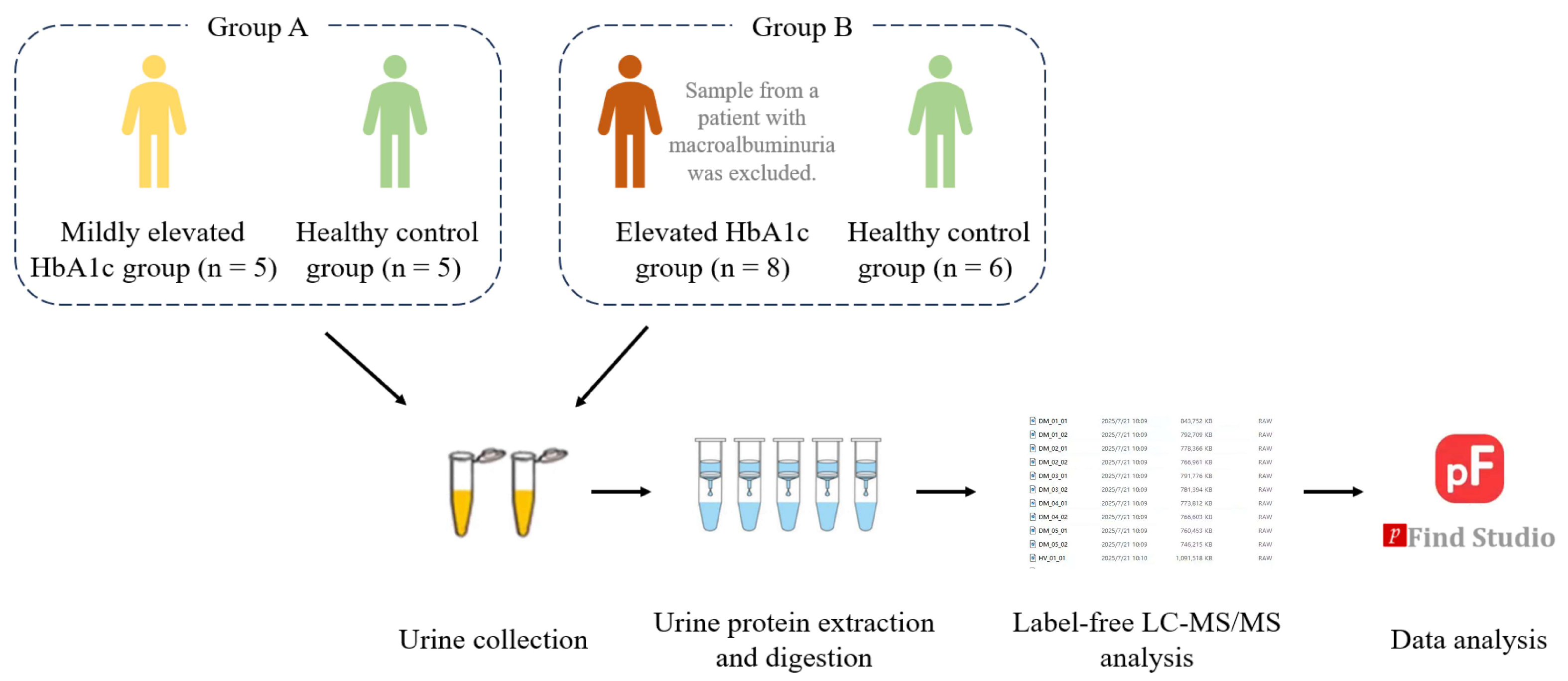
Analysis of Urinary Proteome Modifications in Patients with Different Glycated Hemoglobin A1c Levels


Abstract
1. Introduction
2. Results
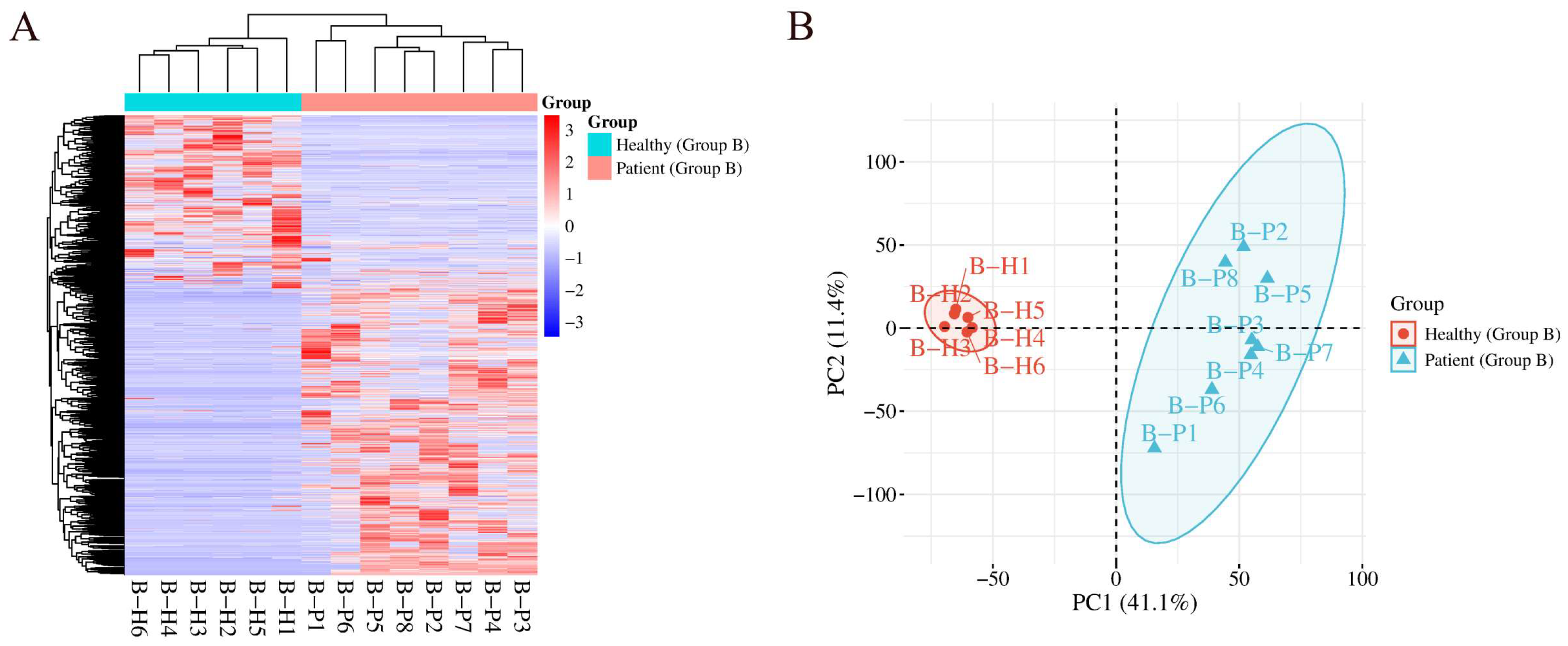
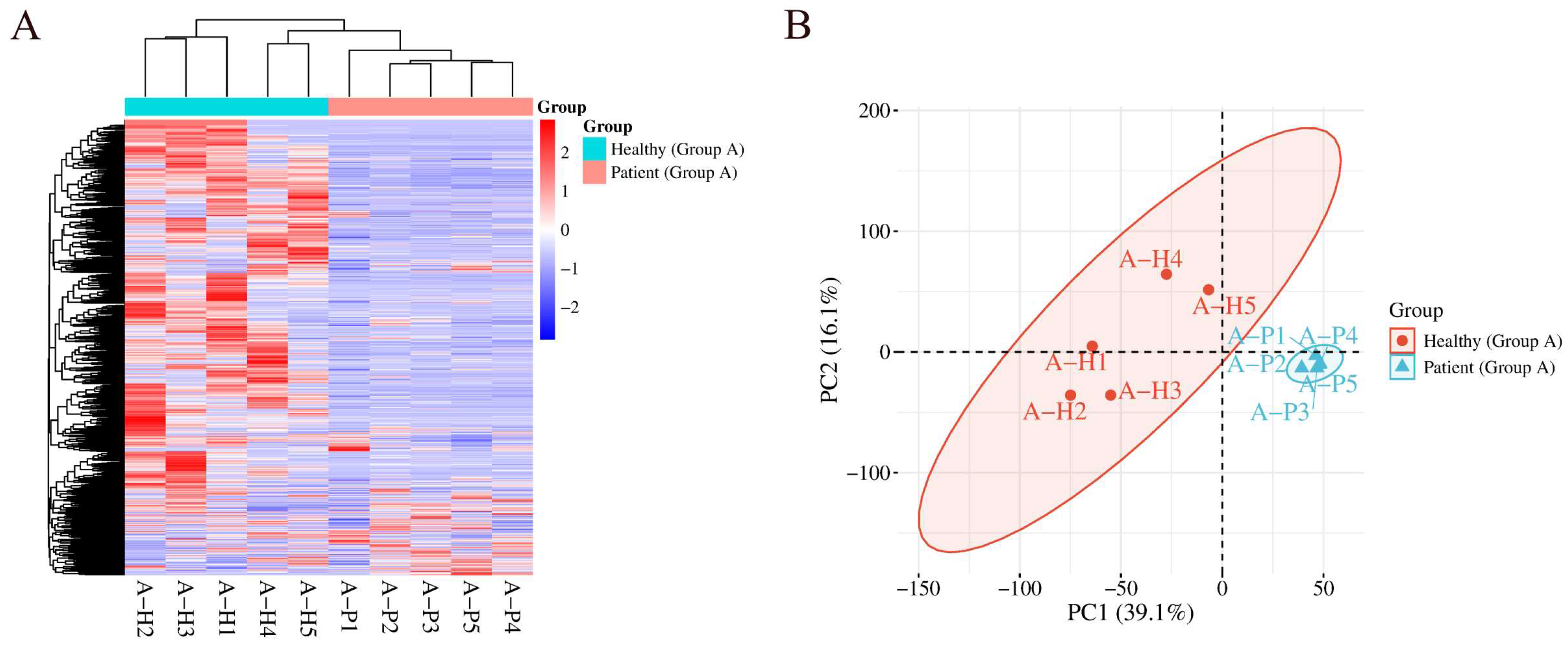
2.1. Identification of Differentially Modified Peptides
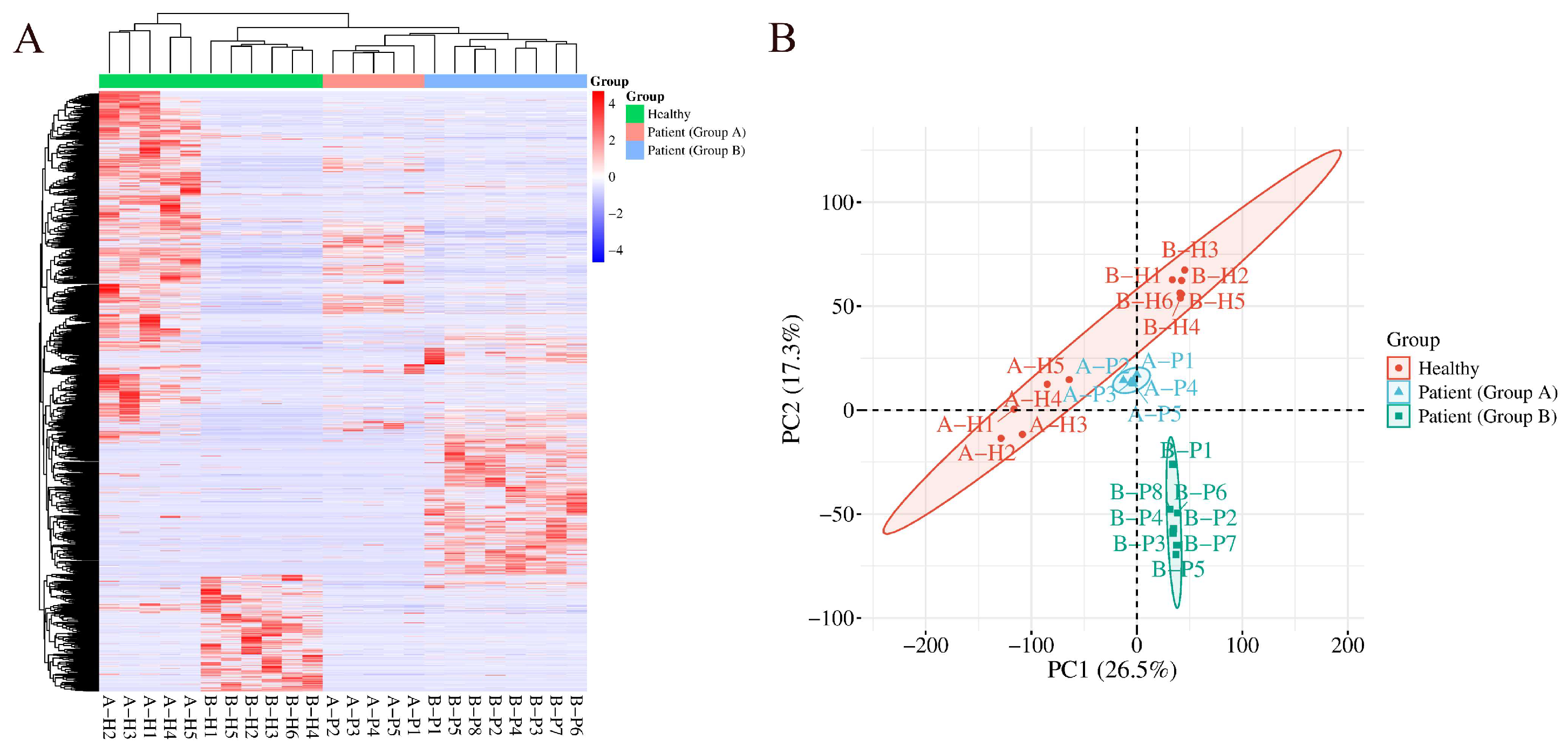
2.2. Analysis of Differentially Modified Peptides Commonly Identified by Both Groups
2.3. Analysis of Differential Modifications
3. Discussion
4. Materials and Methods
4.1. Urine Sample Information and Mass Spectrometry Detection Parameters
4.2. Database Searching and Data Processing
4.3. Data Analysis
5. Conclusions
Supplementary Materials
Author Contributions
Funding
Institutional Review Board Statement
Informed Consent Statement
Data Availability Statement
Conflicts of Interest
References
- Sun, H.; Saeedi, P.; Karuranga, S.; Pinkepank, M.; Ogurtsova, K.; Duncan, B.B.; Stein, C.; Basit, A.; Chan, J.C.; Mbanya, J.C.; et al. IDF Diabetes Atlas: Global, regional and country-level diabetes prevalence estimates for 2021 and projections for 2045. Diabetes Res. Clin. Pract. 2022, 183, 109119, Erratum in Diabetes Res. Clin. Pract. 2023, 204, 110945. https://doi.org/10.1016/j.diabres.2023.110945.. [Google Scholar] [CrossRef] [PubMed]
- Baena-Díez, J.M.; Peñafiel, J.; Subirana, I.; Ramos, R.; Elosua, R.; Marín-Ibañez, A.; Guembe, M.J.; Rigo, F.; Tormo-Díaz, M.J.; Moreno-Iribas, C.; et al. Risk of Cause-Specific Death in Individuals With Diabetes: A Competing Risks Analysis. Diabetes Care 2016, 39, 1987–1995. [Google Scholar] [CrossRef] [PubMed]
- Lyons, T.J.; Basu, A. Biomarkers in diabetes: Hemoglobin A1c, vascular and tissue markers. Transl. Res. 2012, 159, 303–312. [Google Scholar] [CrossRef] [PubMed]
- International Expert Committee. International Expert Committee report on the role of the A1C assay in the diagnosis of diabetes. Diabetes Care 2009, 32, 1327–1334. [Google Scholar] [CrossRef] [PubMed]
- Gao, Y. Urine—An untapped goldmine for biomarker discovery? Sci. China Life Sci. 2013, 56, 1145–1146. [Google Scholar] [CrossRef]
- American Diabetes Association. Diagnosis and Classification of Diabetes Mellitus. Diabetes Care 2010, 33, S62–S69. [Google Scholar] [CrossRef]
- Manzoni, C.; Kia, D.A.; Vandrovcova, J.; Hardy, J.; Wood, N.W.; Lewis, P.A.; Ferrari, R. Genome, transcriptome and proteome: The rise of omics data and their integration in biomedical sciences. Brief. Bioinform. 2018, 19, 286–302. [Google Scholar] [CrossRef] [PubMed]
- Vaishnav, M.S.; Kumari, N.; Srikanta, S.; Krishnaswamy, P.R.; Balaram, P.; Bhat, N. Differential Spectrum of Albumin Glycation, Oxidation, and Truncation in Type 2 and Type 1 Diabetes: Clinical and Biological Implications. Metab. Syndr. Relat. Disord. 2023, 21, 397–409. [Google Scholar] [CrossRef] [PubMed]
- Sevier, C.S.; Kaiser, C.A. Formation and transfer of disulphide bonds in living cells. Nat. Rev. Mol. Cell Biol. 2002, 3, 836–847. [Google Scholar] [CrossRef] [PubMed]
- Toldo, S.; Boccellino, M.; Rinaldi, B.; Seropian, I.M.; Mezzaroma, E.; Severino, A.; Quagliuolo, L.; Van Tassell, B.W.; Marfella, R.; Paolisso, G.; et al. Altered Oxido-Reductive State in the Diabetic Heart: Loss of Cardioprotection due to Protein Disulfide Isomerase. Mol. Med. 2011, 17, 1012–1021. [Google Scholar] [CrossRef] [PubMed]
- Vogt, W. Oxidation of methionyl residues in proteins: Tools, targets, and reversal. Free. Radic. Biol. Med. 1995, 18, 93–105. [Google Scholar] [CrossRef] [PubMed]
- Suzuki, S.; Kodera, Y.; Saito, T.; Fujimoto, K.; Momozono, A.; Hayashi, A.; Kamata, Y.; Shichiri, M. Methionine sulfoxides in serum proteins as potential clinical biomarkers of oxidative stress. Sci. Rep. 2016, 6, 38299. [Google Scholar] [CrossRef] [PubMed]
- Momozono, A.; Kodera, Y.; Sasaki, S.; Nakagawa, Y.; Konno, R.; Shichiri, M. Oxidised Met(147) of human serum albumin is a biomarker of oxidative stress, reflecting glycaemic fluctuations and hypoglycaemia in diabetes. Sci. Rep. 2020, 10, 268. [Google Scholar] [CrossRef] [PubMed]
- Hirao, Y.; Saito, S.; Fujinaka, H.; Miyazaki, S.; Xu, B.; Quadery, A.F.; Elguoshy, A.; Yamamoto, K.; Yamamoto, T. Proteome Profiling of Diabetic Mellitus Patient Urine for Discovery of Biomarkers by Comprehensive MS-Based Proteomics. Proteomes 2018, 6, 9. [Google Scholar] [CrossRef] [PubMed]
- Ye, S.; Zhai, L.; Hu, H.; Tan, M.; Du, S. BoxCar increases the depth and reproducibility of diabetic urinary proteome analysis. Proteom. Clin. Appl. 2021, 15, 2000092. [Google Scholar] [CrossRef] [PubMed]
- Yu, Y.; Sikorski, P.; Smith, M.; Bowman-Gholston, C.; Cacciabeve, N.; Nelson, K.E.; Pieper, R. Comprehensive Metaproteomic Analyses of Urine in the Presence and Absence of Neutrophil-Associated Inflammation in the Urinary Tract. Theranostics 2017, 7, 238–252. [Google Scholar] [CrossRef] [PubMed]
- Chi, H.; Liu, C.; Yang, H.; Zeng, W.-F.; Wu, L.; Zhou, W.-J.; Wang, R.-M.; Niu, X.-N.; Ding, Y.-H.; Zhang, Y.; et al. Comprehensive identification of peptides in tandem mass spectra using an efficient open search engine. Nat. Biotechnol. 2018, 36, 1059–1061. [Google Scholar] [CrossRef] [PubMed]
- Guangcan, S.; Yong, C.; Zhenlin, C.; Chao, L.; Shangtong, L.; Hao, C.; Meng-Qiu, D. How to use open-pFind in deep proteomics data analysis?—A protocol for rigorous identification and quantitation of peptides and proteins from mass spectrometry data. Biophys. Rep. 2021, 7, 207–226. [Google Scholar] [CrossRef] [PubMed]




| UniProt ID | Protein Name | Peptide | Modification | FC (Groups A and B) |
|---|---|---|---|---|
| P01834 | Immunoglobulin kappa constant | SGTASVVCLLNNFYPR | 14,sulfo+amino[Y] | 0 |
| P02768 | Albumin | MPCAEDYLSVVLNQLCVLHEK | 1,Oxidation[M]; 16,Carbamidomethyl[C] | 0 |
| P02790 | Hemopexin | EWFWDLATGTMK | 11,Oxidation[M] | 0 |
| Q9HCU0 | Endosialin | HLVSTEFEWLPFGSVAAVQCQAGR | 20,Carbamidomethyl[C] | 0 |
| O60494 | Cubilin | NLNCVWIIIAPVNK | 4,Carbamidomethyl[C] | 0 |
| P02760 | Protein AMBP | VVAQGVGIPEDSIFTMADR | 10,Cation_Ca[II][E] | 0 |
| Q96NY8 | Nectin-4 | LPCFYR | 3,Carbamidomethyl[C] | 0 |
| Q14982 | Opioid-binding protein/cell adhesion molecule | GILSCEASAVPMAEFQWFK | 5,Carbamidomethyl[C] | 0 |
| P02768 | Albumin | HPYFYAPELLFFAK | 0,C+12[AnyN-term] | 0 |
| P01876 | Immunoglobulin heavy constant alpha 1 | VFPLSLCSTQPDGNVVIACLVQGFFPQEPLSVTWSESGQGVTAR | 7,Carbamidomethyl[C]; 19,Carbamidomethyl[C] | 0 |
| P02768 | Albumin | MPCAEDYLSVVLNQLCVLHEK | 16,Carbamidomethyl[C] | 0 |
| P12109 | Collagen alpha-1(VI) chain | DTTPLNVLCSPGIQVVSVGIK | 9,Carbamidomethyl[C] | 0 |
| Q14624 | Inter-alpha-trypsin inhibitor heavy chain H4 | ERRLDYQEGPPGVEISCWSVEL | 17,Carbamidomethyl[C] | ∞ |
| Q14624 | Inter-alpha-trypsin inhibitor heavy chain H4 | HRQGPVNLLSDPEQGVEVTGQYER | 0,Carbamyl[AnyN-term] | ∞ |
| P01876 | Immunoglobulin heavy constant alpha 1 | VAAEDWK | 0,Carbamyl[AnyN-term] | ∞ |
| P01877 | Immunoglobulin heavy constant alpha 2 |
| Group | Modification | Number | Group | Modification | Number |
|---|---|---|---|---|---|
| Group A | Carbamidomethyl[C] | 1206 | Group B | Carbamidomethyl[C] | 3084 |
| Oxidation[M] | 452 | Carbamyl[AnyN-term] | 1352 | ||
| Carbamyl[AnyN-term] | 241 | Deamidated[N] | 500 | ||
| Deamidated[N] | 154 | AEBS[Y] | 359 | ||
| GG[C](Dicarbamidomethyl[C]) | 137 | Oxidation[M] | 339 | ||
| Gln->pyro-Glu[AnyN-termQ] | 81 | GG[C](Dicarbamidomethyl[C]) | 239 | ||
| Pyro-carbamidomethyl[AnyN-termC] | 26 | Gln->pyro-Glu[AnyN-termQ] | 158 | ||
| Propionamide_2H(3)[C] | 23 | Oxidation[Y] | 157 | ||
| Dehydrated[D] | 21 | C+12[AnyN-term] | 65 | ||
| Cation_Ca[II][E] | 15 | AEBS[K] | 59 | ||
| Trp->Kynurenin[W] | 15 | Pyro-carbamidomethyl[AnyN-termC] | 58 |
| Group A | Group B | |||
|---|---|---|---|---|
| Mildly Elevated HbA1c Group (n = 5) [14] | Healthy Individual Group (n = 5) [14] | Elevated HbA1c Group (n = 8) [15] | Healthy Individual Group (n = 6) [16] | |
| Age (Average ± standard deviation) | 68 ± 3 | 56 ± 4 | 51 ± 16 | 76 ± 4 |
| HbA1c% | 6.4 ± 0.7 | ND a | 8.6 ± 1.6 | ND a |
| Male | 5 | 5 | 8 | 2 |
| Female | 0 | 0 | 0 | 4 |
| Reduction and alkylation methods | DTT/IAA | DTT/IAA | DTT/IAA | |
| Type of protease | Trypsin | Trypsin | Trypsin | |
| Ultra-high-performance liquid chromatograph | nanoflow liquid chromatography system (nLC1000, Thermo Fisher Scientific, Inc., Bremen, Germany) | EASY-nLC 1000 ultrahigh-pressure system (Thermo Scientific) | Ultimate 3000 nano LC (Thermo Scientific) | |
| High-resolution mass spectrometer | QExactive plus (Thermo Fisher Scientific, Inc., Bremen, Germany) | Q Exactive HF-X (Thermo Scientific) | Q Exactive (Thermo Scientific) | |
| Trap column | 2 cm × 75 µm Acclaim Pepmap 100 column | \ | C18 PepMap100, 300 µm × 5 mm, 5 µm, 100 Å (Thermo Scientific) | |
| Analytical column | 12.5 cm × 75 µm NTCC-360 | home-made 20 cm capillary column (75 µm internal diameter) with packing C18 resins (1.8 μm particle size, 100 Å pore size, Dikma Technologies, Lake Forest, CA, USA) | 75 µm × 10 cm, 5 µm BetaBasic C18, 150 Å (New Objective, Woburn, MA, USA) | |
| Mobile phase A | 0.1% formic acid | 0.1% formic acid in 2% acetonitrile | 0.1% formic acid | |
| Mobile phase B | 0.1% formic acid in acetonitrile | 0.1% formic acid in 90% acetonitrile | 0.1% formic acid in acetonitrile | |
| Flow rate | 300 nL/min | 300 nL/min | 300 nL/min | |
| Gradient elution time | 120 min | 65 min | 130 min | |
| Gradient elution program | linear gradient of 2% phase B to 35% phase B | 0~12 min, 5~10% phase B | 0 min, 0% phase B | |
| 12~50 min, 10~26% phase B | 0~110 min, from 100% phase A to 35% phase B | |||
| 50~60 min, 26~45% phase B | 110~125 min, a steeper gradient to 80% phase B | |||
| 60~61 min, 45~80% phase B | 125~130 min, phase A | |||
| 61~65 min, 80% phase B | ||||
| The spray voltage | 2.0 kV | 2.0 kV | 2.1 kV | |
| MS1 resolution | Not mentioned | 60,000 | 70,000 | |
| MS2 resolution | Not mentioned | 15,000 | 17,500 | |
| Sample | Age (Year) | HbA1c% | FCP a (nmol/L) | 2HCP b (nmol/L) | eGFR c (mL/min−1 [1.73 m−2]) | Serum Creatinine (μmol/L) | Urine ACR d (μg/mg) |
|---|---|---|---|---|---|---|---|
| B-P1 | 67 | 10 | 0.97 | 2.92 | 102.63 | 83 | 291 |
| B-P2 | 59 | 8.2 | 0.7 | 2.11 | 115.17 | 62 | 12.35 |
| B-P3 | 51 | 6.8 | 0.89 | 2.73 | 99.83 | 72 | 140 |
| B-P4 | 71 | 10.8 | 0.88 | 3.49 | 93.34 | 72 | 105 |
| B-P5 | 34 | 8.7 | 0.78 | 2 | 113.85 | 69 | 18.1 |
| B-P6 | 31 | 6.7 | 1.37 | 3.76 | 131.24 | 62 | 73.52 |
| B-P7 | 56 | 7.3 | 1.02 | 3.48 | 108.29 | 66 | 63.63 |
| B-P8 | 35 | 9.9 | 1.85 | 3.43 | 117.09 | 64 | 8.07 |
| Sample | Gender | Age (Year) |
|---|---|---|
| B-H1 | Female | 78 |
| B-H2 | Female | 70 |
| B-H3 | Female | 74 |
| B-H4 | Female | 79 |
| B-H5 | Male | 75 |
| B-H6 | Male | 81 |
Disclaimer/Publisher’s Note: The statements, opinions and data contained in all publications are solely those of the individual author(s) and contributor(s) and not of MDPI and/or the editor(s). MDPI and/or the editor(s) disclaim responsibility for any injury to people or property resulting from any ideas, methods, instructions or products referred to in the content. |
© 2026 by the authors. Licensee MDPI, Basel, Switzerland. This article is an open access article distributed under the terms and conditions of the Creative Commons Attribution (CC BY) license.
Share and Cite
Chen, Y.; Gao, Y. Analysis of Urinary Proteome Modifications in Patients with Different Glycated Hemoglobin A1c Levels. Int. J. Mol. Sci. 2026, 27, 3100. https://doi.org/10.3390/ijms27073100
Chen Y, Gao Y. Analysis of Urinary Proteome Modifications in Patients with Different Glycated Hemoglobin A1c Levels. International Journal of Molecular Sciences. 2026; 27(7):3100. https://doi.org/10.3390/ijms27073100
Chicago/Turabian StyleChen, Yuzhen, and Youhe Gao. 2026. "Analysis of Urinary Proteome Modifications in Patients with Different Glycated Hemoglobin A1c Levels" International Journal of Molecular Sciences 27, no. 7: 3100. https://doi.org/10.3390/ijms27073100
APA StyleChen, Y., & Gao, Y. (2026). Analysis of Urinary Proteome Modifications in Patients with Different Glycated Hemoglobin A1c Levels. International Journal of Molecular Sciences, 27(7), 3100. https://doi.org/10.3390/ijms27073100