GSK-J4 Suppresses Tumorigenesis by Targeting the PERK-c-Myc Pathway Through Endoplasmic Reticulum Stress Activation in Tuberous Sclerosis Complex


Abstract
1. Introduction
2. Results
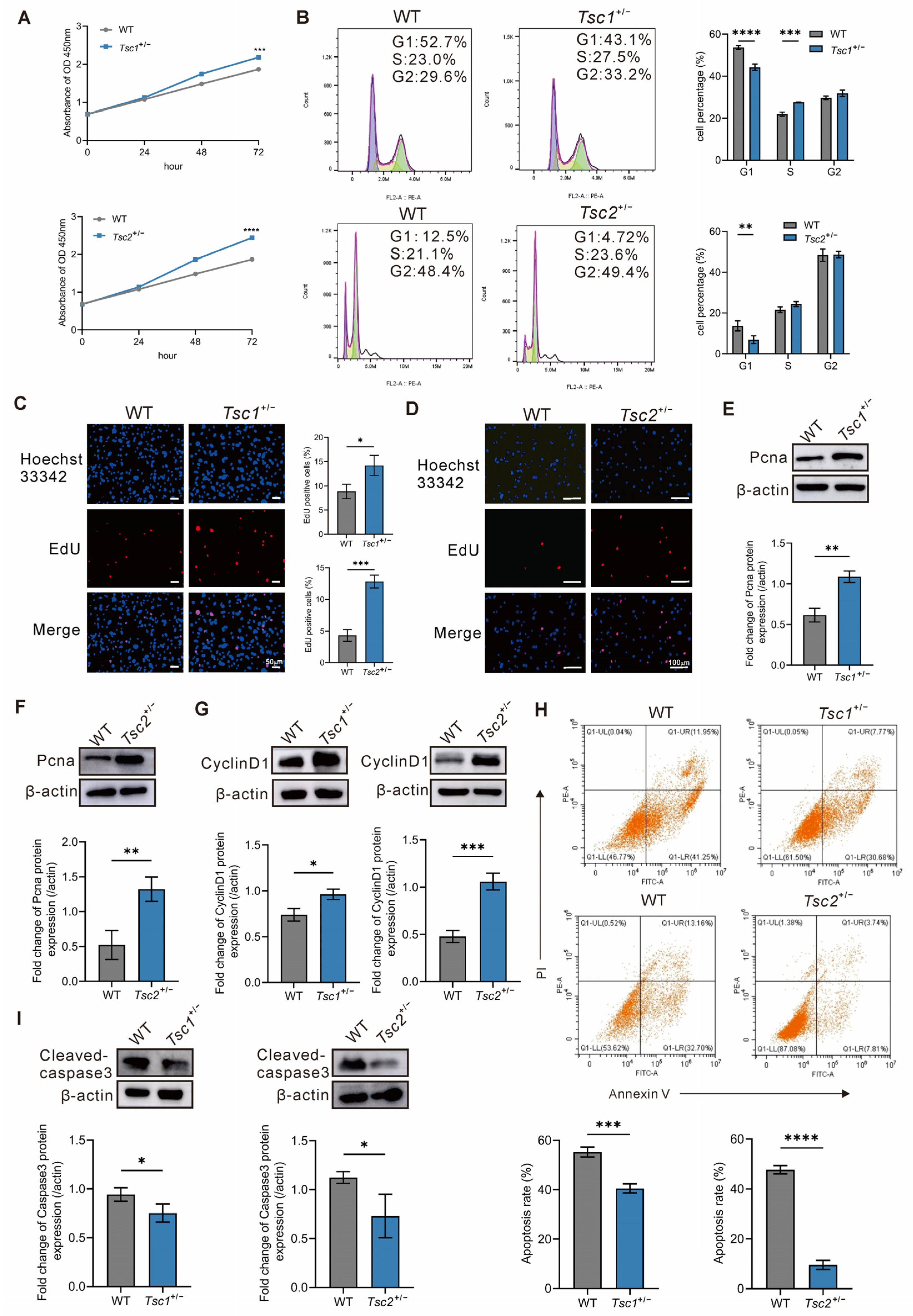
2.1. Genetic Deficiencies in Either Tsc1 or Tsc2 Promote Proliferation and Inhibit Apoptosis
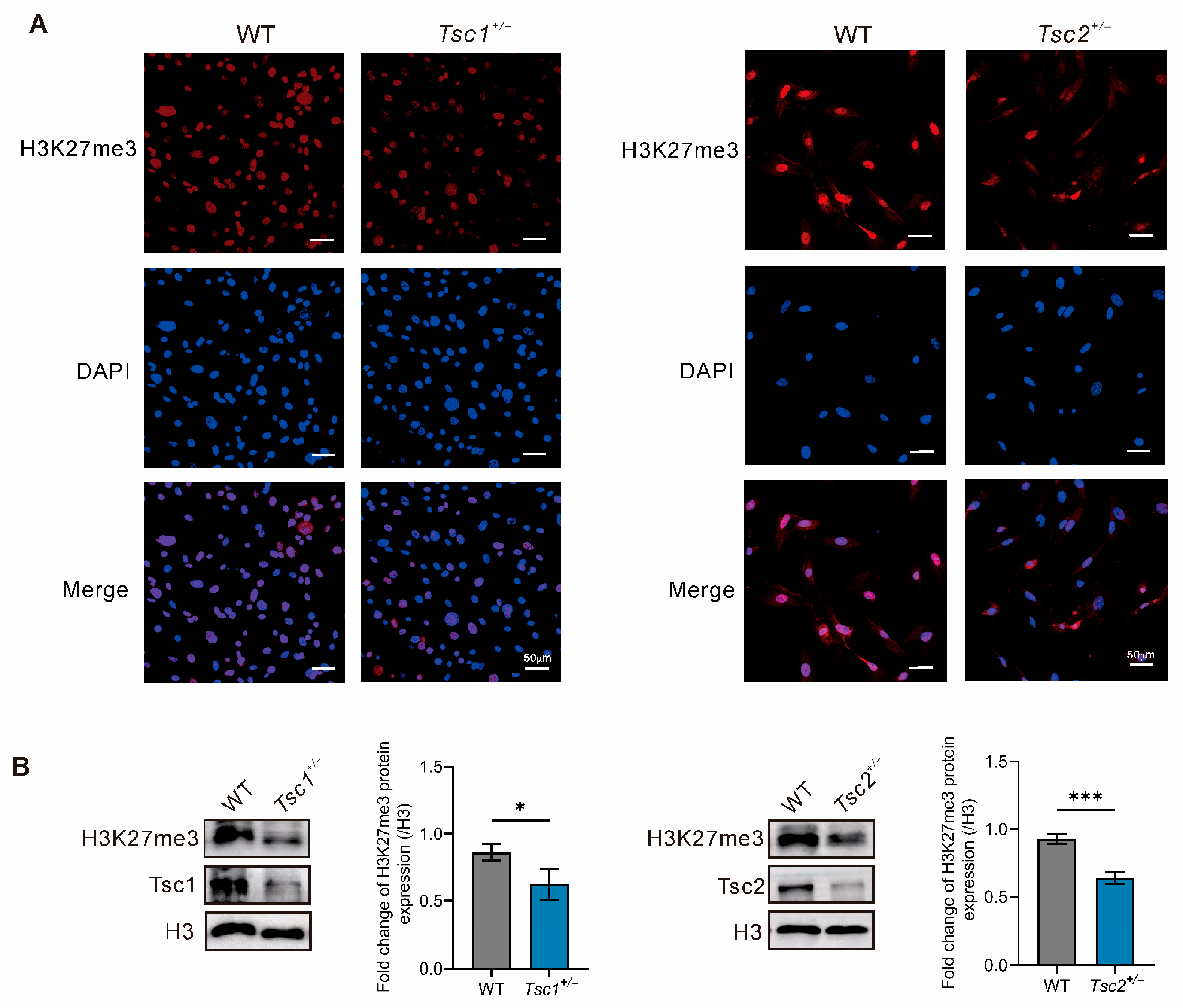
2.2. Genetic Deficiencies in Either Tsc1 or Tsc2 Induce Lower Level of H3K27me3
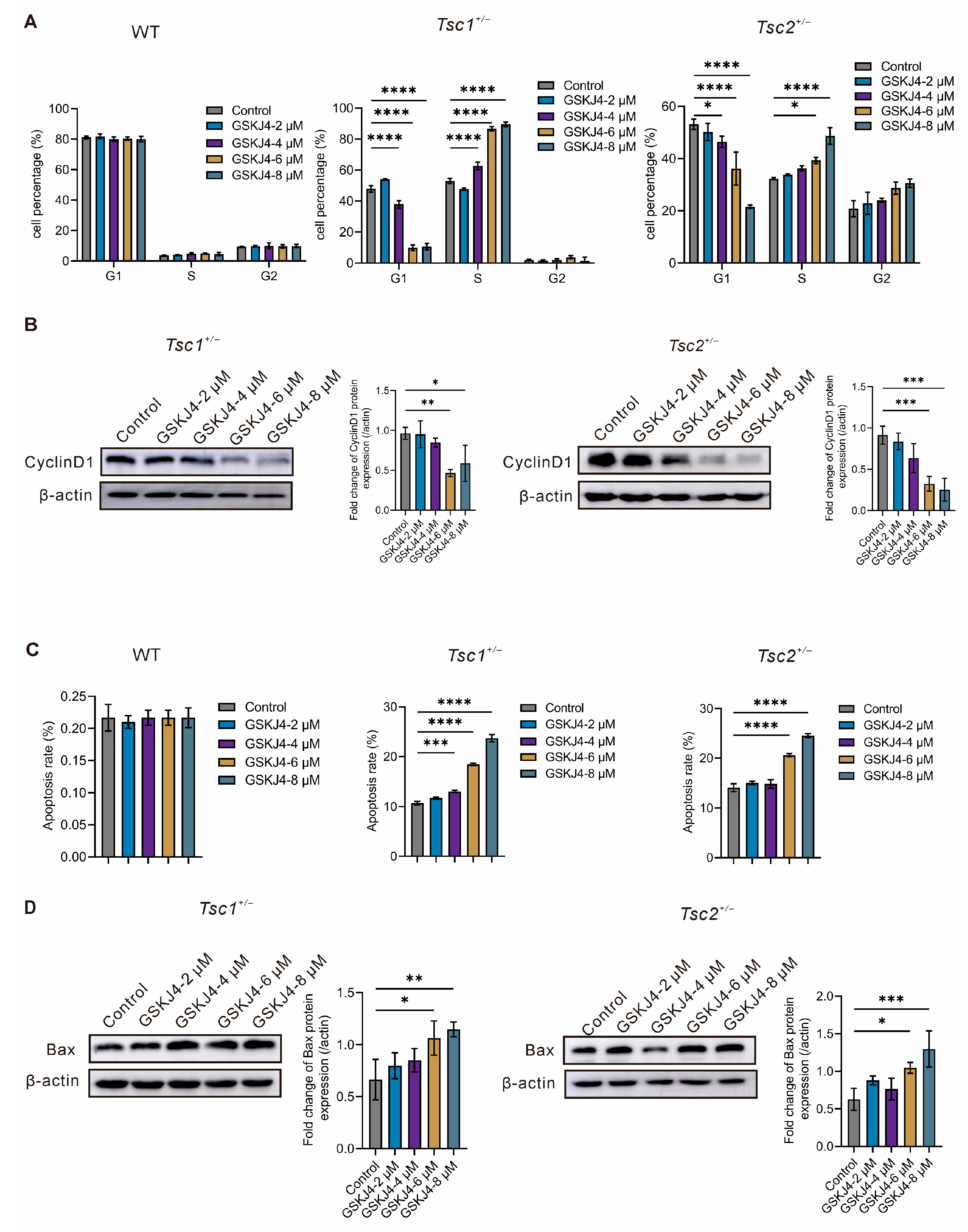
2.3. GSK-J4 Induces Cell Cycle Arrest and Apoptosis in Primary Tsc1+/− and Tsc2+/− MEFs
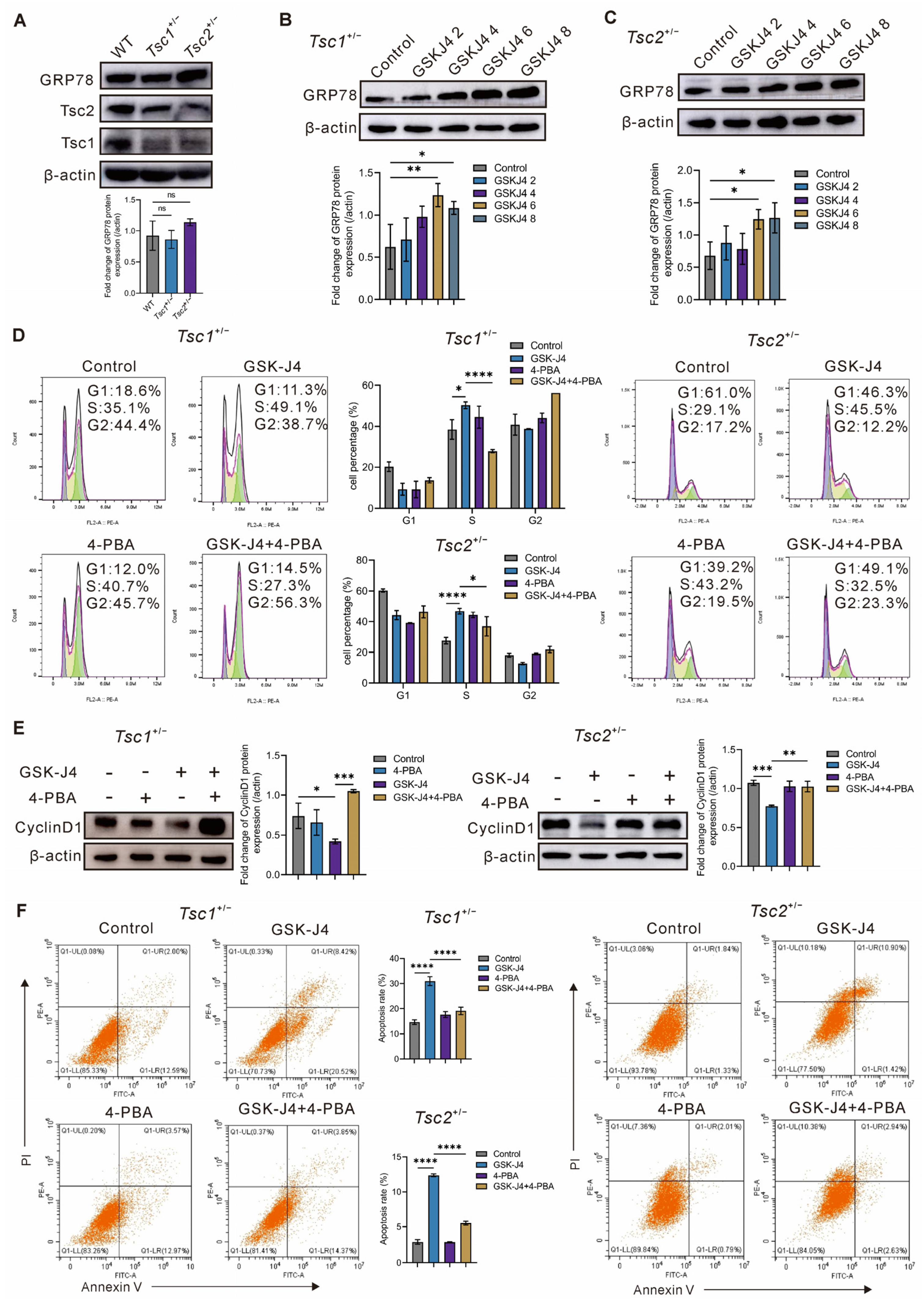
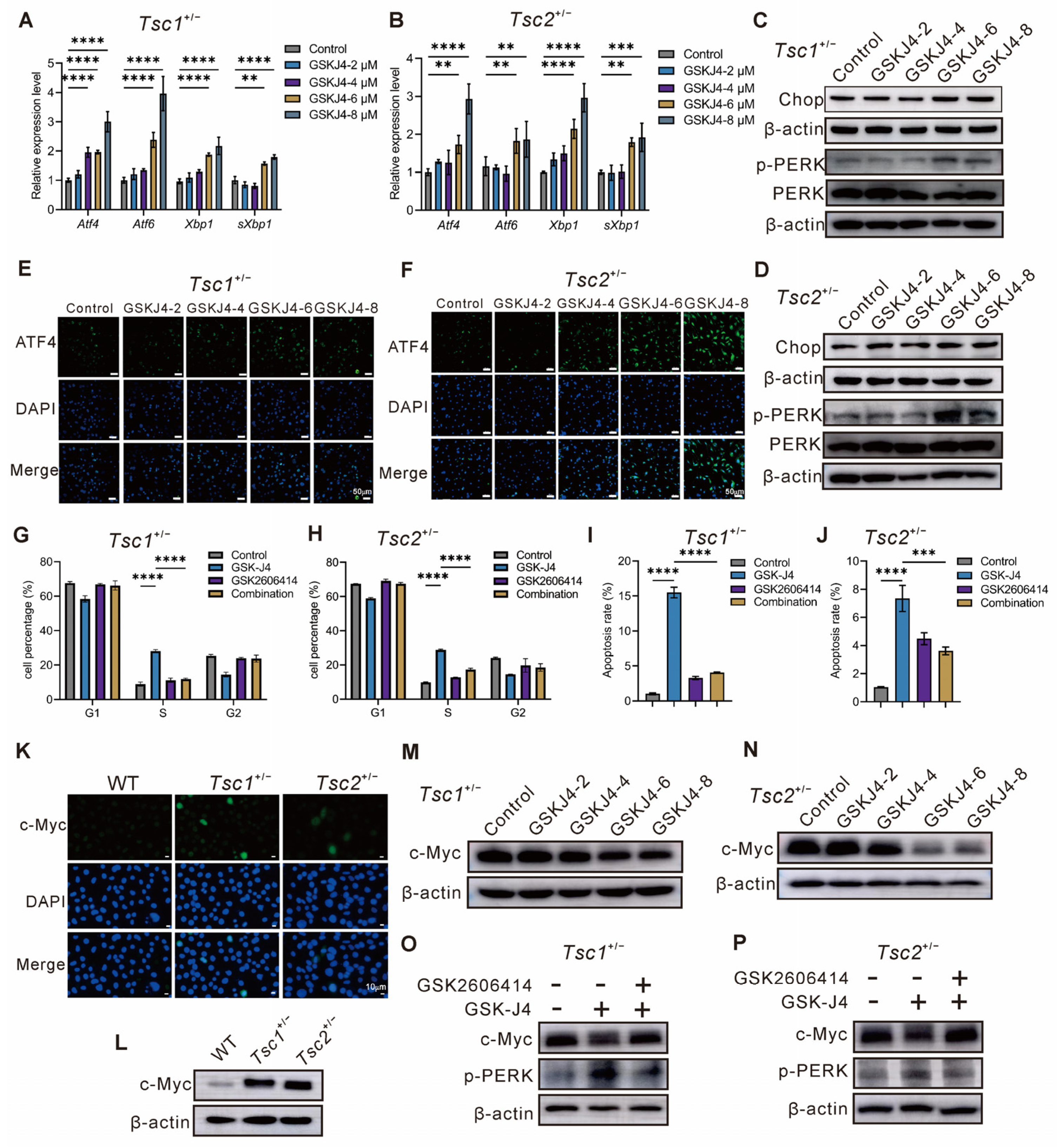
2.4. GSK-J4 Induces ER Stress in Primary Tsc1+/− and Tsc2+/− MEFs
2.5. GSK-J4 Activates the PERK Pathway to Inhibit c-Myc Expression
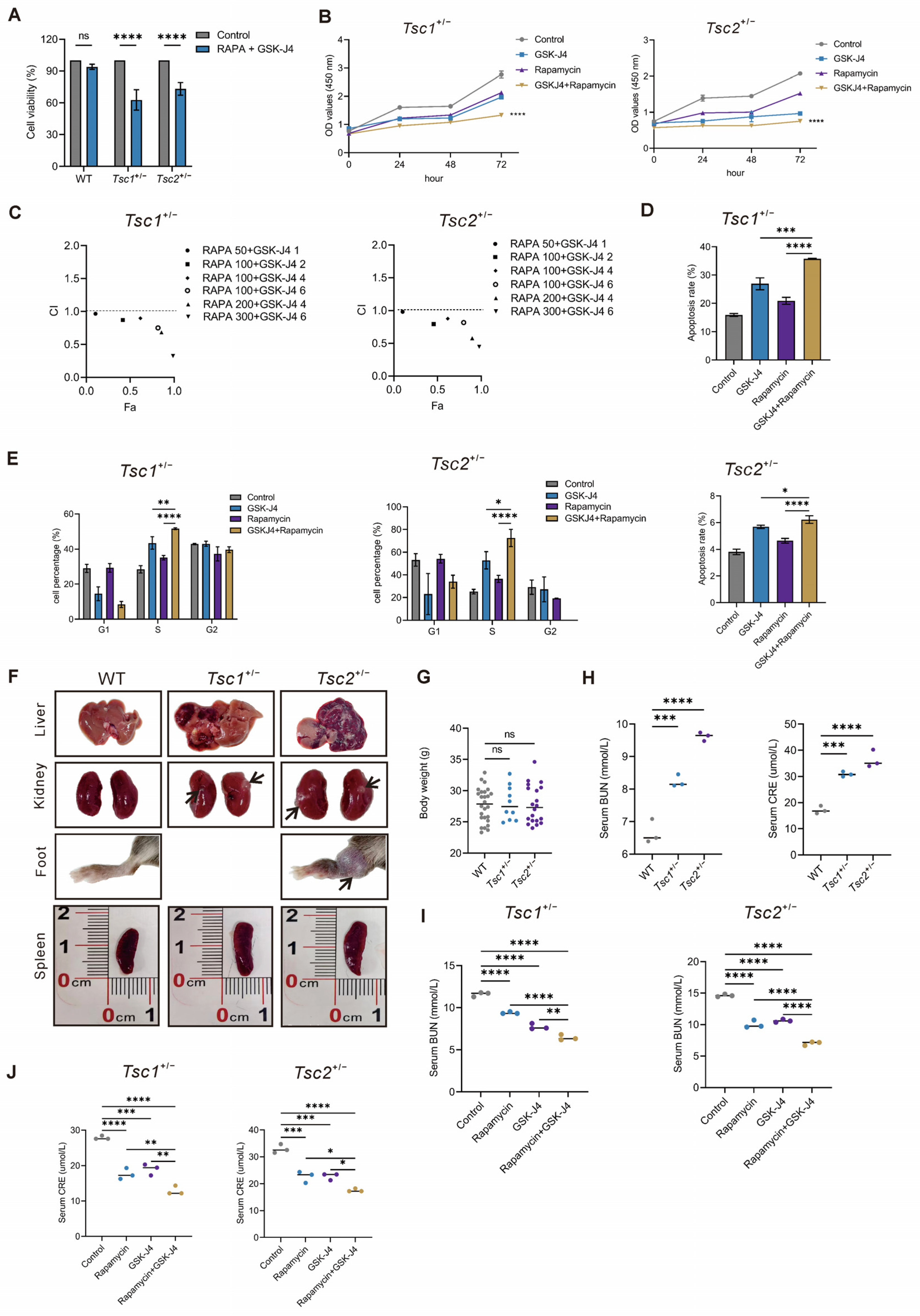
2.6. GSK-J4 Synergizes with Rapamycin to Ameliorate Tsc-Deficiency Phenotypes
3. Discussion
4. Materials and Methods
4.1. Cell Cultures
4.2. Euthanasia of Mice by Cervical Dislocation
4.3. Isolation of Primary MEFs
4.4. CCK-8 Assay
4.5. EdU Incorporation Assay
4.6. Cell Cycle Analysis
4.7. Apoptosis Assay
4.8. RNA Extraction and Real-Time Quantitative PCR (RT-qPCR)
- Atf4-Forward: 5′-CCTGAACAGCGAAGTGTTGG-3′;
- Atf4-Reverse: 5′-TGGAGAACCCATGAGGTTTCAA-3′;
- Atf6-Forward: 5′-AGCGCCCAAGACTCAAACC-3′;
- Atf6-Reverse: 5′-CTGTATGCTGATAATCGACTGCT-3′;
- Xbp1-Forward: 5′-GACAGAGAGTCAAACTAACGTGG-3′;
- Xbp1-Reverse: 5′-GTCCAGCAGGCAAGAAGGT-3′;
- sXbp1-Forward: 5′-AAACAGAGTAGCAGCTCAGACTGC-3′;
- sXbp1-Reverse: 5′-TCCTTCTGGGTAGACCTCTGGGAG-3′;
- Myc-Forward: 5′-TTCATCTGCGATCCTGACGAC-3′;
- Myc-Reverse: 5′-CACTGAGGGGTCAATGCACTC-3′.
4.9. Western Blotting Analysis
4.10. Immunofluorescence Staining and Confocal Imaging
4.11. Measurement of Blood Urea Nitrogen (BUN) and Creatinine (CRE) Levels
4.12. In Vivo Animal Models
4.13. Statistical Analysis
5. Conclusions
Supplementary Materials
Author Contributions
Funding
Institutional Review Board Statement
Informed Consent Statement
Data Availability Statement
Acknowledgments
Conflicts of Interest
Abbreviations
| TSC | tuberous sclerosis complex |
| MEFs | mouse embryonic fibroblasts |
| ERS | endoplasmic reticulum stress |
| MDS | myelodysplastic syndromes |
| AML | acute myeloid leukemia |
| FBS | fetal bovine serum |
| DPBS | Dulbecco’s phosphate-buffered saline |
| EDTA | Ethylenediaminetetraacetic acid |
| PFA | paraformaldehyde |
| DAPI | 4′,6-Diamidino-2-Phenylindole |
| BUN | blood urea nitrogen |
| DMEM | Dulbecco’s Modified Eagle Medium |
| CRE | blood creatinine |
| UPR | unfolded protein response |
| TGCT | testicular germ cell tumor |
| 4-PBA | 4-phenylbutyric acid |
| mTORC1 | mammalian target of rapamycin complex 1 |
| PRC2 | Polycomb Repressive Complex 2 |
| IL-1β | interleukin-1β |
References
- Niu, W.; Siciliano, B.; Wen, Z. Modeling tuberous sclerosis complex with human induced pluripotent stem cells. World J. Pediatr. WJP 2024, 20, 208–218. [Google Scholar] [CrossRef] [Scilit]
- Kingswood, J.C.; Bissler, J.J.; Budde, K.; Hulbert, J.; Guay-Woodford, L.; Sampson, J.R.; Sauter, M.; Cox, J.; Patel, U.; Elmslie, F.; et al. Review of the Tuberous Sclerosis Renal Guidelines from the 2012 Consensus Conference: Current Data and Future Study. Nephron 2016, 134, 51–58. [Google Scholar] [CrossRef] [Scilit] [PubMed]
- Jóźwiak, S.; Nabbout, R.; Curatolo, P. Management of subependymal giant cell astrocytoma (SEGA) associated with tuberous sclerosis complex (TSC): Clinical recommendations. Eur. J. Paediatr. Neurol. 2013, 17, 348–352. [Google Scholar] [CrossRef] [Scilit] [PubMed]
- Murugan, A.K. mTOR: Role in cancer, metastasis and drug resistance. Semin. Cancer Biol. 2019, 59, 92–111. [Google Scholar] [CrossRef] [Scilit] [PubMed]
- Jansen, A.C.; Vanclooster, S.; de Vries, P.J.; Fladrowski, C.; d’Augères, G.B.; Carter, T.; Belousova, E.; Benedik, M.P.; Cottin, V.; Curatolo, P.; et al. Burden of Illness and Quality of Life in Tuberous Sclerosis Complex: Findings From the TOSCA Study. Front. Neurol. 2020, 11, 904. [Google Scholar] [CrossRef] [Scilit]
- Sadowski, K.; Kotulska, K.; Jóźwiak, S. Management of side effects of mTOR inhibitors in tuberous sclerosis patients. Pharmacol. Rep. 2016, 68, 536–542. [Google Scholar] [CrossRef] [Scilit]
- MacKeigan, J.P.; Krueger, D.A. Differentiating the mTOR inhibitors everolimus and sirolimus in the treatment of tuberous sclerosis complex. Neuro Oncol. 2015, 17, 1550–1559. [Google Scholar] [CrossRef] [Scilit]
- Bissler, J.J.; Kingswood, J.C.; Radzikowska, E.; Zonnenberg, B.A.; Frost, M.; Belousova, E.; Sauter, M.; Nonomura, N.; Brakemeier, S.; de Vries, P.J.; et al. Everolimus for angiomyolipoma associated with tuberous sclerosis complex or sporadic lymphangioleiomyomatosis (EXIST-2): A multicentre, randomised, double-blind, placebo-controlled trial. Lancet 2013, 381, 817–824. [Google Scholar] [CrossRef] [Scilit]
- Krebs, M.; Brunmair, B.; Brehm, A.; Artwohl, M.; Szendroedi, J.; Nowotny, P.; Roth, E.; Fürnsinn, C.; Promintzer, M.; Anderwald, C.; et al. The Mammalian target of rapamycin pathway regulates nutrient-sensitive glucose uptake in man. Diabetes 2007, 56, 1600–1607. [Google Scholar] [CrossRef] [Scilit]
- Hussain, S.; Tulsyan, S.; Dar, S.A.; Sisodiya, S.; Abiha, U.; Kumar, R.; Mishra, B.N.; Haque, S. Role of epigenetics in carcinogenesis: Recent advancements in anticancer therapy. Semin. Cancer Biol. 2022, 83, 441–451. [Google Scholar] [CrossRef] [Scilit]
- Lee, J.E.; Kim, M.Y. Cancer epigenetics: Past, present and future. Semin. Cancer Biol. 2022, 83, 4–14. [Google Scholar] [CrossRef] [Scilit]
- Wang, D.; Zhang, Y.; Li, Q.; Li, Y.; Li, W.; Zhang, A.; Xu, J.; Meng, J.; Tang, L.; Lyu, S. Epigenetics: Mechanisms, potential roles, and therapeutic strategies in cancer progression. Genes Dis. 2024, 11, 101020. [Google Scholar] [CrossRef] [Scilit]
- Guo, Y.; Zhao, S.; Wang, G.G. Polycomb Gene Silencing Mechanisms: PRC2 Chromatin Targeting, H3K27me3 ‘Readout’, and Phase Separation-Based Compaction. Trends Genet. 2021, 37, 547–565. [Google Scholar] [CrossRef] [Scilit] [PubMed]
- Swigut, T.; Wysocka, J. H3K27 demethylases, at long last. Cell 2007, 131, 29–32. [Google Scholar] [CrossRef] [Scilit] [PubMed]
- Kim, T.K.; Lee, J.S.; Phi, J.H.; Choi, S.A.; Kim, J.W.; Park, C.K.; Yun, H.; Park, Y.S.; Park, S.H.; Kim, S.K. Radiation-Induced Meningiomas Have an Aggressive Clinical Course: Genetic Signature Is Limited to NF2 Alterations, and Epigenetic Signature Is H3K27me3 Loss. J. Korean Med. Sci. 2025, 40, e62. [Google Scholar] [CrossRef] [Scilit] [PubMed]
- Jeong, Y.; Jang, H.; Kim, S.B.; Yu, M.; Kim, R.E.; Choi, W.S.; Jeon, Y.; Lim, J.Y. Dual targeting of EZH2 and PD-L1 in Burkitt’s lymphoma enhances immune activation and induces apoptotic pathway. Front. Immunol. 2025, 16, 1578665. [Google Scholar] [CrossRef] [Scilit]
- Shen, H.; Laird, P.W. Interplay between the cancer genome and epigenome. Cell 2013, 153, 38–55. [Google Scholar] [CrossRef] [Scilit]
- Sadeghi, L.; Wright, A.P.H. GSK-J4 Inhibition of KDM6B Histone Demethylase Blocks Adhesion of Mantle Cell Lymphoma Cells to Stromal Cells by Modulating NF-κB Signaling. Cells 2023, 12, 2010. [Google Scholar] [CrossRef] [Scilit]
- Zhang, Y.; Wu, W.; Xu, C.; Yang, H.; Huang, G. Antitumoral Potential of the Histone Demethylase Inhibitor GSK-J4 in Retinoblastoma. Investig. Ophthalmol. Vis. Sci. 2024, 65, 34. [Google Scholar] [CrossRef] [Scilit]
- Zhao, Z.; Zhang, Y.; Gao, D.; Zhang, Y.; Han, W.; Xu, X.; Song, Q.; Zhao, C.; Yang, J. Inhibition of Histone H3 Lysine-27 Demethylase Activity Relieves Rheumatoid Arthritis Symptoms via Repression of IL6 Transcription in Macrophages. Front. Immunol. 2022, 13, 818070. [Google Scholar] [CrossRef] [Scilit]
- Hung, P.H.; Hsu, Y.C.; Chen, T.H.; Ho, C.; Lin, C.L. The Histone Demethylase Inhibitor GSK-J4 Is a Therapeutic Target for the Kidney Fibrosis of Diabetic Kidney Disease via DKK1 Modulation. Int. J. Mol. Sci. 2022, 23, 9407. [Google Scholar] [CrossRef] [Scilit] [PubMed]
- Lu, X.; Liu, Y.; Xu, L.; Liang, H.; Zhou, X.; Lei, H.; Sha, L. Role of Jumonji domain-containing protein D3 and its inhibitor GSK-J4 in Hashimoto’s thyroiditis. Open Med. 2023, 18, 20230659. [Google Scholar] [CrossRef] [Scilit] [PubMed]
- Ma, S.; Xu, L.; Chen, L.; Sun, X.; Hu, F.; Gong, Y.; Yang, R.; Li, J.; Wang, Q.; Huang, S.; et al. Novel pharmacological inhibition of JMJD3 improves necrotizing enterocolitis by attenuating the inflammatory response and ameliorating intestinal injury. Biochem. Pharmacol. 2022, 203, 115165. [Google Scholar] [CrossRef] [Scilit] [PubMed]
- Cui, W.; Li, J.; Ron, D.; Sha, B. The structure of the PERK kinase domain suggests the mechanism for its activation. Acta Crystallogr. D Biol. Crystallogr. 2011, 67, 423–428. [Google Scholar] [CrossRef] [Scilit]
- Bissler, J.J.; McCormack, F.X.; Young, L.R.; Elwing, J.M.; Chuck, G.; Leonard, J.M.; Schmithorst, V.J.; Laor, T.; Brody, A.S.; Bean, J.; et al. Sirolimus for angiomyolipoma in tuberous sclerosis complex or lymphangioleiomyomatosis. N. Engl. J. Med. 2008, 358, 140–151. [Google Scholar] [CrossRef] [Scilit]
- Arredondo, K.H.; Jülich, K.; Roach, E.S. Tuberous sclerosis complex: Diagnostic features, surveillance, and therapeutic strategies. Semin. Pediatr. Neurol. 2024, 51, 101155. [Google Scholar] [CrossRef] [Scilit]
- Lesma, E.; Sirchia, S.M.; Ancona, S.; Carelli, S.; Bosari, S.; Ghelma, F.; Montanari, E.; Di Giulio, A.M.; Gorio, A. The methylation of the TSC2 promoter underlies the abnormal growth of TSC2 angiomyolipoma-derived smooth muscle cells. Am. J. Pathol. 2009, 174, 2150–2159. [Google Scholar] [CrossRef] [Scilit]
- Fuso, A.; Iyer, A.M.; van Scheppingen, J.; Maccarrone, M.; Scholl, T.; Hainfellner, J.A.; Feucht, M.; Jansen, F.E.; Spliet, W.G.; Krsek, P.; et al. Promoter-Specific Hypomethylation Correlates with IL-1β Overexpression in Tuberous Sclerosis Complex (TSC). J. Mol. Neurosci. MN 2016, 59, 464–470. [Google Scholar] [CrossRef] [Scilit]
- Basu, T.; O’Riordan, K.J.; Schoenike, B.A.; Khan, N.N.; Wallace, E.P.; Rodriguez, G.; Maganti, R.K.; Roopra, A. Histone deacetylase inhibitors restore normal hippocampal synaptic plasticity and seizure threshold in a mouse model of Tuberous Sclerosis Complex. Sci. Rep. 2019, 9, 5266. [Google Scholar] [CrossRef] [Scilit]
- Bongaarts, A.; de Jong, J.M.; Broekaart, D.W.M.; van Scheppingen, J.; Anink, J.J.; Mijnsbergen, C.; Jansen, F.E.; Spliet, W.G.M.; den Dunnen, W.F.A.; Gruber, V.E.; et al. Dysregulation of the MMP/TIMP Proteolytic System in Subependymal Giant Cell Astrocytomas in Patients with Tuberous Sclerosis Complex: Modulation of MMP by MicroRNA-320d in Vitro. J. Neuropathol. Exp. Neurol. 2020, 79, 777–790. [Google Scholar] [CrossRef] [Scilit]
- Kim, H.; Lebeau, B.; Papadopoli, D.; Jovanovic, P.; Russo, M.; Avizonis, D.; Morita, M.; Afzali, F.; Ursini-Siegel, J.; Postovit, L.M.; et al. MTOR modulation induces selective perturbations in histone methylation which influence the anti-proliferative effects of mTOR inhibitors. iScience 2024, 27, 109188. [Google Scholar] [CrossRef] [Scilit]
- Zhang, X.; Li, L.; Li, Y.; Dong, C.; Shi, J.; Guo, X.; Sui, A. The role of trimethylation on histone H3 lysine 27 (H3K27me3) in temozolomide resistance of glioma. Brain Res. 2025, 1846, 149252. [Google Scholar] [CrossRef] [Scilit] [PubMed]
- Yan, N.; Xu, L.; Wu, X.; Zhang, L.; Fei, X.; Cao, Y.; Zhang, F. GSKJ4, an H3K27me3 demethylase inhibitor, effectively suppresses the breast cancer stem cells. Exp. Cell Res. 2017, 359, 405–414. [Google Scholar] [CrossRef] [Scilit] [PubMed]
- Treis, D.; Lundberg, K.I.; Bell, N.; Polychronopoulos, P.A.; Tümmler, C.; Åkerlund, E.; Aliverti, S.; Lilienthal, I.; Pepich, A.; Seashore-Ludlow, B.; et al. Targeted inhibition of WIP1 and histone H3K27 demethylase activity synergistically suppresses neuroblastoma growth. Cell Death Dis. 2025, 16, 318. [Google Scholar] [CrossRef] [Scilit] [PubMed]
- Song, Y.; Zhao, Q.L.; Ogawa, R.; Mizukami, T.; Li, Y.M.; Cui, Z.G.; Saitoh, J.I.; Noguchi, K. Exploring the therapeutic potential of 4,4′-dimethoxychalcone: Inducing apoptosis in cancer cells via ER stress and autophagy disruption. Cell. Signal. 2025, 132, 111854. [Google Scholar] [CrossRef] [Scilit]
- Suwannalert, P.; Panpinyaporn, P.; Wantanachaisaeng, P.; Teeppaibul, T.; Worawichitchaikun, T.; Koomsang, T.; Naktubtim, C.; Payuhakrit, W. 17-AAG Induces Endoplasmic Reticulum Stress-mediated Apoptosis in Breast Cancer Cells, Possibly Through PERK/eIF2α Up-regulation. In Vivo 2024, 38, 2228–2238. [Google Scholar] [CrossRef] [Scilit]
- Omura, T.; Asari, M.; Yamamoto, J.; Oka, K.; Hoshina, C.; Maseda, C.; Awaya, T.; Tasaki, Y.; Shiono, H.; Yonezawa, A.; et al. Sodium tauroursodeoxycholate prevents paraquat-induced cell death by suppressing endoplasmic reticulum stress responses in human lung epithelial A549 cells. Biochem. Biophys. Res. Commun. 2013, 432, 689–694. [Google Scholar] [CrossRef] [Scilit]
- Ji, G.R.; Yu, N.C.; Xue, X.; Li, Z.G. PERK-mediated Autophagy in Osteosarcoma Cells Resists ER Stress-induced Cell Apoptosis. Int. J. Biol. Sci. 2015, 11, 803–812. [Google Scholar] [CrossRef] [Scilit]
- Wang, M.; Kaufman, R.J. Protein misfolding in the endoplasmic reticulum as a conduit to human disease. Nature 2016, 529, 326–335. [Google Scholar] [CrossRef] [Scilit]
- Zhang, D.; Liu, Y.; Zhu, Y.; Zhang, Q.; Guan, H.; Liu, S.; Chen, S.; Mei, C.; Chen, C.; Liao, Z.; et al. A non-canonical cGAS-STING-PERK pathway facilitates the translational program critical for senescence and organ fibrosis. Nat. Cell Biol. 2022, 24, 766–782. [Google Scholar] [CrossRef] [Scilit]
- Dang, C.V.; O’Donnell, K.A.; Zeller, K.I.; Nguyen, T.; Osthus, R.C.; Li, F. The c-Myc target gene network. Semin. Cancer Biol. 2006, 16, 253–264. [Google Scholar] [CrossRef] [Scilit]
- Shokry, D.; Khan, M.W.; Powell, C.; Johnson, S.; Rennels, B.C.; Boyd, R.I.; Sun, Z.; Fazal, Z.; Freemantle, S.J.; Parker, M.H.; et al. Refractory testicular germ cell tumors are highly sensitive to the targeting of polycomb pathway demethylases KDM6A and KDM6B. Cell Commun. Signal. CCS 2024, 22, 528. [Google Scholar] [CrossRef] [Scilit] [PubMed]
- Mathur, R.; Sehgal, L.; Havranek, O.; Köhrer, S.; Khashab, T.; Jain, N.; Burger, J.A.; Neelapu, S.S.; Davis, R.E.; Samaniego, F. Inhibition of demethylase KDM6B sensitizes diffuse large B-cell lymphoma to chemotherapeutic drugs. Haematologica 2017, 102, 373–380. [Google Scholar] [CrossRef] [Scilit] [PubMed]
- Zheng, C.; Zhang, B.; Li, Y.; Liu, K.; Wei, W.; Liang, S.; Guo, H.; Ma, K.; Liu, Y.; Wang, J.; et al. Donafenib and GSK-J4 Synergistically Induce Ferroptosis in Liver Cancer by Upregulating HMOX1 Expression. Adv. Sci. 2023, 10, e2206798. [Google Scholar] [CrossRef] [PubMed]
- Liu, S.; Wu, M.; Hua, Q.; Lu, D.; Tian, Y.; Yu, H.; Cheng, L.; Chen, Y.; Cao, J.; Hu, X.; et al. Two old drugs, NVP-AEW541 and GSK-J4, repurposed against the Toxoplasma gondii RH strain. Parasites Vectors 2020, 13, 242. [Google Scholar] [CrossRef] [Scilit]
- Li, Y.; Zhang, M.; Sheng, M.; Zhang, P.; Chen, Z.; Xing, W.; Bai, J.; Cheng, T.; Yang, F.C.; Zhou, Y. Therapeutic potential of GSK-J4, a histone demethylase KDM6B/JMJD3 inhibitor, for acute myeloid leukemia. J. Cancer Res. Clin. Oncol. 2018, 144, 1065–1077. [Google Scholar] [CrossRef] [Scilit]
- Ntziachristos, P.; Tsirigos, A.; Welstead, G.G.; Trimarchi, T.; Bakogianni, S.; Xu, L.; Loizou, E.; Holmfeldt, L.; Strikoudis, A.; King, B.; et al. Contrasting roles of histone 3 lysine 27 demethylases in acute lymphoblastic leukaemia. Nature 2014, 514, 513–517. [Google Scholar] [CrossRef] [Scilit]
- Watarai, H.; Okada, M.; Kuramoto, K.; Takeda, H.; Sakaki, H.; Suzuki, S.; Seino, S.; Oizumi, H.; Sadahiro, M.; Kitanaka, C. Impact of H3K27 Demethylase Inhibitor GSKJ4 on NSCLC Cells Alone and in Combination with Metformin. Anticancer Res. 2016, 36, 6083–6092. [Google Scholar] [CrossRef] [Scilit]
- Harachi, M.; Masui, K.; Honda, H.; Muragaki, Y.; Kawamata, T.; Cavenee, W.K.; Mischel, P.S.; Shibata, N. Dual Regulation of Histone Methylation by mTOR Complexes Controls Glioblastoma Tumor Cell Growth via EZH2 and SAM. Mol. Cancer Res. MCR 2020, 18, 1142–1152. [Google Scholar] [CrossRef] [Scilit]
- Kruidenier, L.; Chung, C.W.; Cheng, Z.; Liddle, J.; Che, K.; Joberty, G.; Bantscheff, M.; Bountra, C.; Bridges, A.; Diallo, H.; et al. A selective jumonji H3K27 demethylase inhibitor modulates the proinflammatory macrophage response. Nature 2012, 488, 404–408. [Google Scholar] [CrossRef] [Scilit]


Disclaimer/Publisher’s Note: The statements, opinions and data contained in all publications are solely those of the individual author(s) and contributor(s) and not of MDPI and/or the editor(s). MDPI and/or the editor(s) disclaim responsibility for any injury to people or property resulting from any ideas, methods, instructions or products referred to in the content. |
© 2026 by the authors. Licensee MDPI, Basel, Switzerland. This article is an open access article distributed under the terms and conditions of the Creative Commons Attribution (CC BY) license.
Share and Cite
Lei, X.; Lang, T.; Li, P.; Wu, C. GSK-J4 Suppresses Tumorigenesis by Targeting the PERK-c-Myc Pathway Through Endoplasmic Reticulum Stress Activation in Tuberous Sclerosis Complex. Int. J. Mol. Sci. 2026, 27, 3067. https://doi.org/10.3390/ijms27073067
Lei X, Lang T, Li P, Wu C. GSK-J4 Suppresses Tumorigenesis by Targeting the PERK-c-Myc Pathway Through Endoplasmic Reticulum Stress Activation in Tuberous Sclerosis Complex. International Journal of Molecular Sciences. 2026; 27(7):3067. https://doi.org/10.3390/ijms27073067
Chicago/Turabian StyleLei, Xin, Tao Lang, Ping Li, and Changxin Wu. 2026. "GSK-J4 Suppresses Tumorigenesis by Targeting the PERK-c-Myc Pathway Through Endoplasmic Reticulum Stress Activation in Tuberous Sclerosis Complex" International Journal of Molecular Sciences 27, no. 7: 3067. https://doi.org/10.3390/ijms27073067
APA StyleLei, X., Lang, T., Li, P., & Wu, C. (2026). GSK-J4 Suppresses Tumorigenesis by Targeting the PERK-c-Myc Pathway Through Endoplasmic Reticulum Stress Activation in Tuberous Sclerosis Complex. International Journal of Molecular Sciences, 27(7), 3067. https://doi.org/10.3390/ijms27073067