Article

Antinociceptive Effect and Hyperalgesia of Fentanyl and Its Analogues

1
School of Pharmacy, China Pharmaceutical University, Nanjing 210009, China
2
Office of China National Narcotics Control Commission, China Pharmaceutical University Joint Laboratory on Key Technologies of Narcotics Control, Beijing 100193, China
3
Key Laboratory of Drug Monitoring and Control, Drug Intelligence and Forensic Center, Ministry of Public Security, Beijing 100193, China
4
National Narcotics Laboratory Beijing Regional Center, Beijing 100164, China
5
School of Investigation, People’s Public Security University of China, Beijing 100038, China
*
Authors to whom correspondence should be addressed.
Int. J. Mol. Sci. 2026, 27(7), 3028; https://doi.org/10.3390/ijms27073028
Submission received: 26 February 2026 / Revised: 24 March 2026 / Accepted: 25 March 2026 / Published: 26 March 2026

Abstract

Fentanyl is a potent analgesic widely used in clinical practice. Fentanyl and its analogues are seriously abused and are emerging in the illegal drug market, leading to numerous intoxication cases. However, assessment of the potency of the pharmacological effect of these novel fentanyl analogues remains limited and inconsistent across studies. The development of novel analgesics has largely relied on the assessment of mu opioid receptor (MOR) binding affinity, with insufficient verification through the assessment of antinociceptive effects. This study evaluated the antinociceptive effects of 25 fentanyl analogues to investigate the relationship between chemical structure and antinociceptive effect. In this study, hot plate tests were conducted in mice to generate time–effect and dose–effect curves for the evaluation of the antinociceptive effect of fentanyl and its analogues. The results demonstrated that the antinociceptive effects of fentanyl analogues were dose- and time-dependent. The potency of the antinociceptive effect observed in this study generally aligned with the corresponding MOR binding affinities reported in the literature, although several analogues exhibited discrepancies. Structural modifications in different regions of the fentanyl scaffold affect the antinociceptive potency to different degrees, and the duration of action also varied across fentanyl analogues. Furthermore, opioid-induced hyperalgesia (OIH) was observed following administration of several fentanyl analogues, raising potential concerns regarding their abuse liability and development for analgesic purposes. Taken together, this study systematically evaluated and compared the antinociceptive effects of fentanyl analogues. The findings clarify the relationship between chemical structure and the antinociceptive effect, providing valuable insights for drug regulation and the development of novel analgesics.

1. Introduction

Fentanyl and its analogues have increasingly been associated with numerous cases of intoxication and overdose fatalities. They are considered the leading cause of drug-related overdose deaths among adults aged 18–45 in North America [1]. As a class of new psychoactive substances (NPS), fentanyl and its analogues can be readily synthesized, facilitating their illicit production [1]. Structural modifications are often introduced to the fentanyl scaffold to circumvent drug controls. To date, fourteen fentanyl analogues have been placed under Schedule I and/or Schedule IV of the Single Convention on Narcotic Drugs of 1961. Over 80 fentanyl analogues have been reported to the United Nations Office on Drugs and Crime (UNODC), and more than 1400 fentanyl analogues have been described in the literature [2]. In response to this public health challenge, China has placed the entire class of fentanyl analogues under control in 2019.
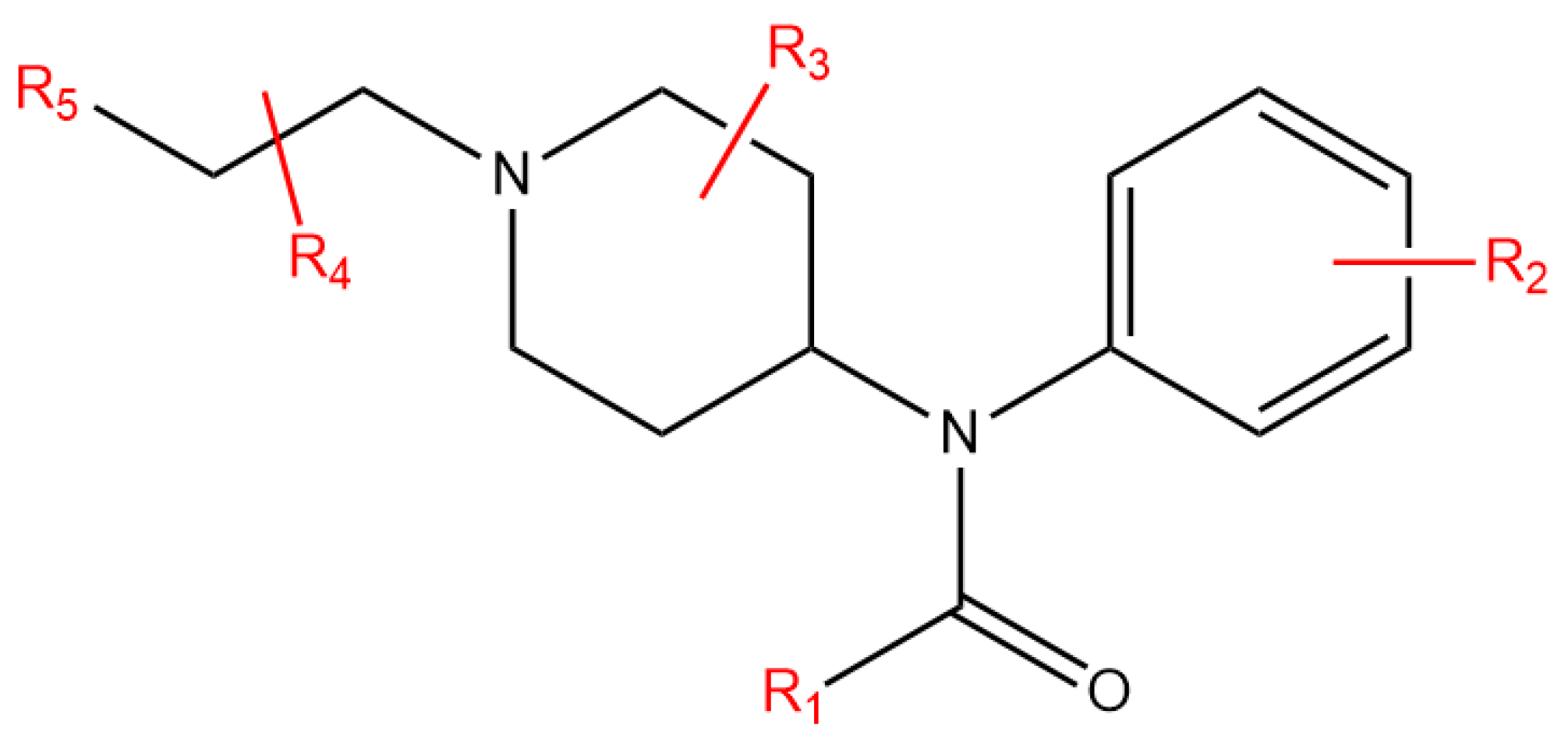
Fentanyl is a potent analgesic widely used in clinical practice. Its antinociceptive potency is reported to be 50–100 times greater than that of morphine. Three fentanyl analogues—alfentanil, remifentanil, and sufentanil—have also been approved for medical use. Carfentanil is an ultra-potent analogue and has been approved for the anaesthetization of large animals [3]. Numerous fentanyl analogues have been derived from fentanyl and investigated for potential pharmaceutical applications, though they have not been commercialized (Figure 1). The side effects of fentanyl and its analogues, including respiratory depression and addiction liability, have raised significant public concerns regarding their misuse and abuse. In recent years, as fundamental research on analgesia has advanced, renewed interest has emerged in modifying the fentanyl scaffold to develop safer and more effective analgesics. Different pharmacological effects may be attributed to biassed signalling pathways of the mu opioid receptor (MOR) [4,5]. The relationship between the chemical structure and the antinociceptive and side effects of fentanyl and its analogues is under investigation. However, current data remain largely limited to MOR binding affinity. Importantly, the binding affinity does not always correlate with the in vivo potency of various pharmacological effects. Furthermore, studies evaluating the antinociceptive effect of fentanyl analogues have employed diverse animal models and experimental protocols, limiting direct comparability across findings. Therefore, further research on the antinociceptive effect of fentanyl analogues is warranted to clarify the relationship between chemical structure and antinociceptive effect.
The antinociceptive effect can be evaluated via various animal models. Among these, the hot plate test, tail withdrawal test, acetic acid-induced writhing test and formalin-induced paw test are the most widely used methods [6]. The hot plate test is a typical rodent model involving supraspinal sensory processing [7]. Fentanyl and its analogues are small lipophilic molecules that are capable of rapidly crossing the blood–brain barrier (BBB) to exert effects on the central nervous system (CNS). Therefore, we employed the hot plate test to evaluate the antinociceptive effect of 25 fentanyl analogues (Table 1). Additionally, data from four other fentanyl analogues—previously evaluated and published in earlier studies from our laboratory or currently under review in other publications—were included in the analysis. The aim of this study was to provide comparative information on in vivo antinociceptive potency and structure–effect trends of fentanyl analogues.

2. Results

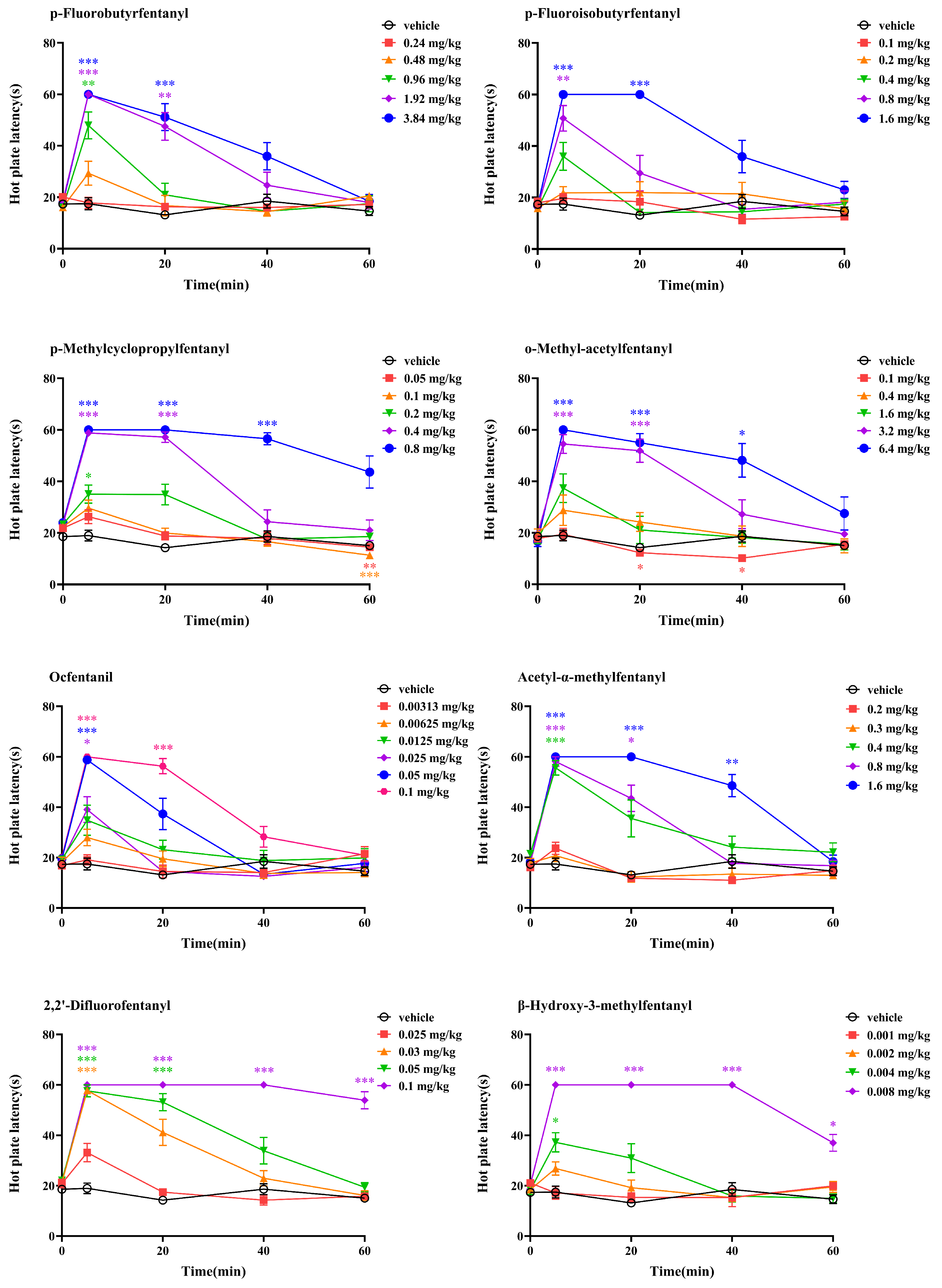
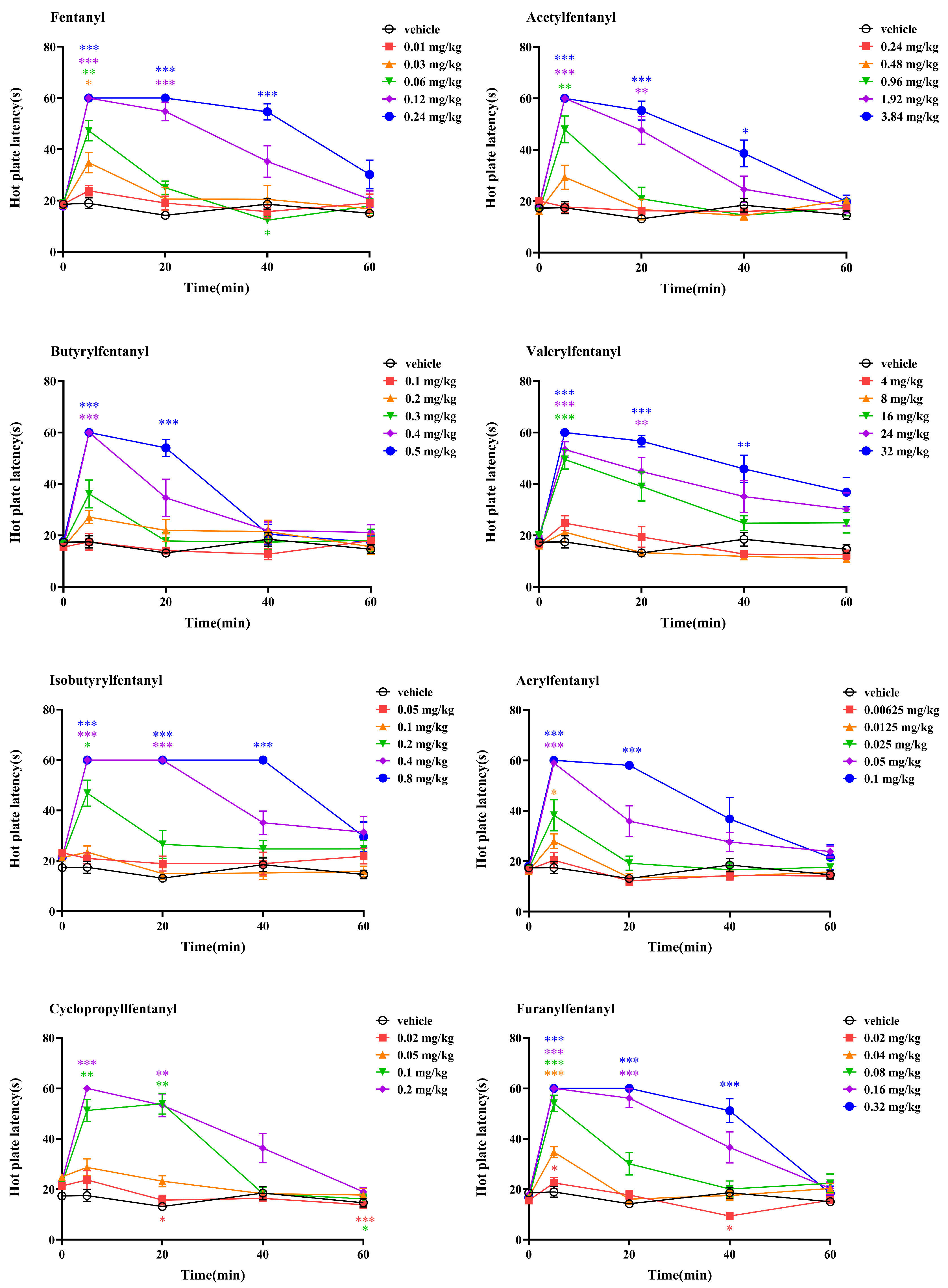
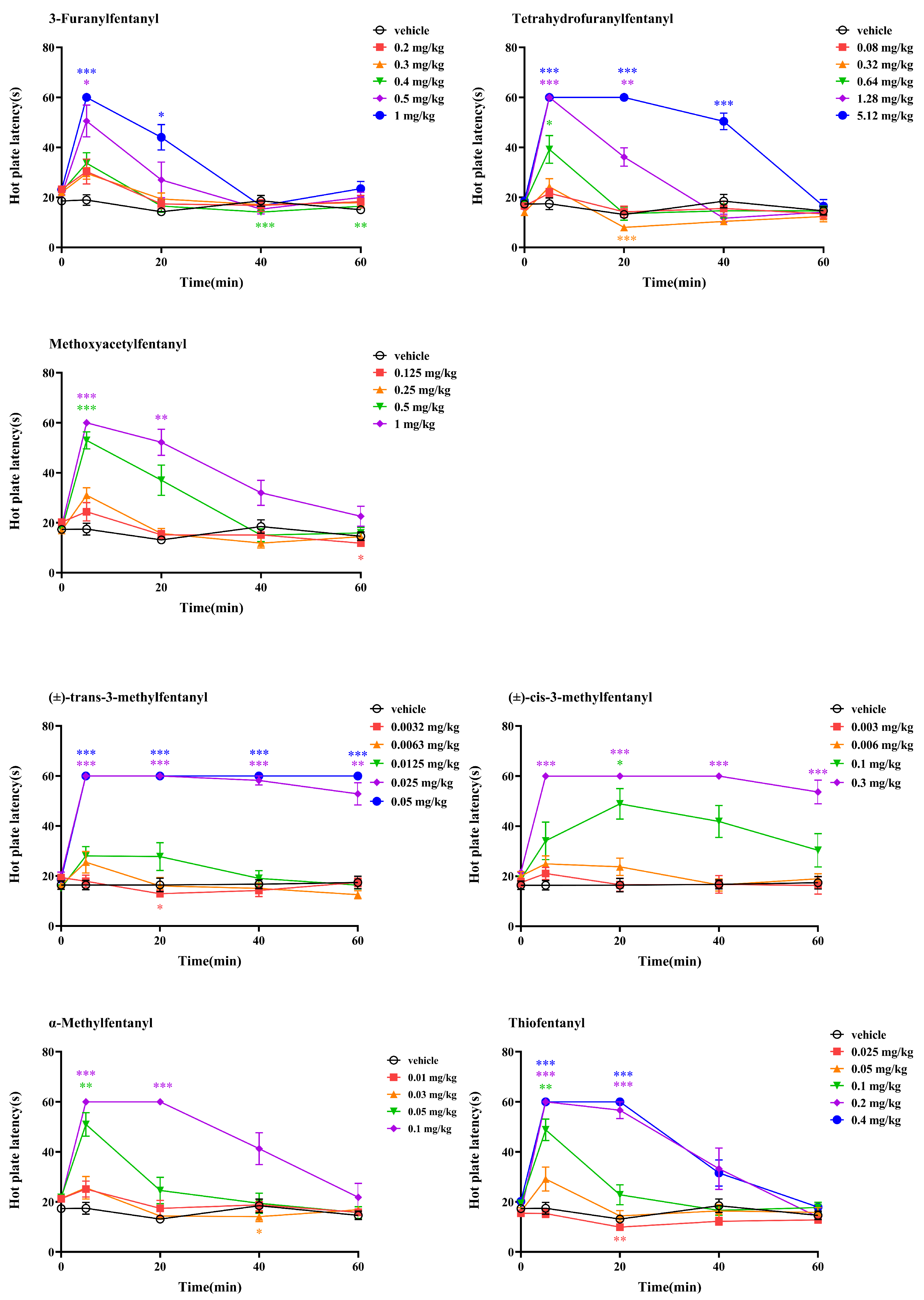
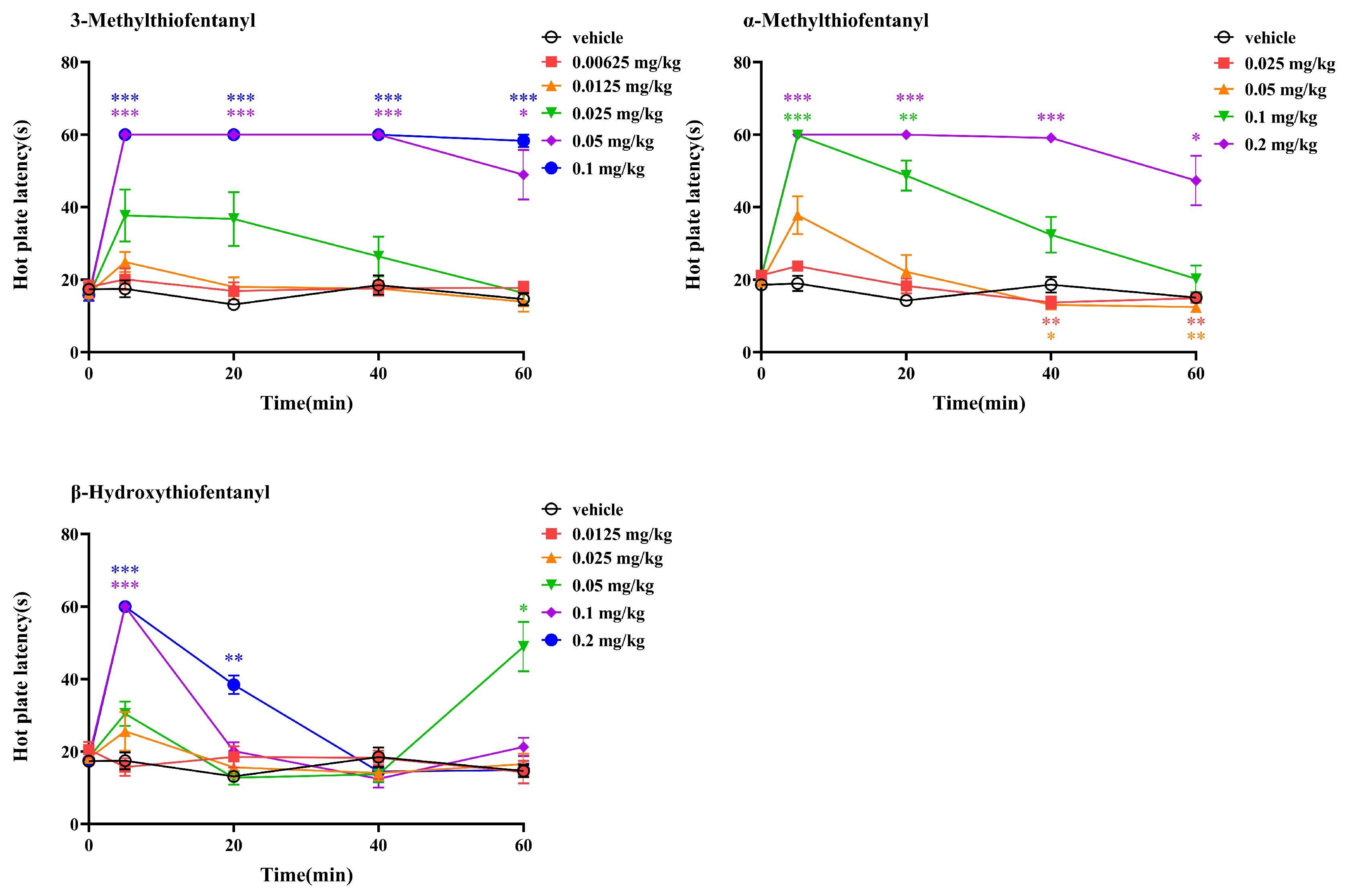
The antinociceptive effect of 25 fentanyl analogues was evaluated via the hot plate test, with fentanyl as the reference. The results are shown in Figure 2 and Figure 3. All fentanyl analogues elicited the maximum antinociceptive effect 5 min after administration (Figure 2). Two-way ANOVA revealed that fentanyl analogues produced an antinociceptive effect in a dose- and time-dependent manner. F and P values are presented in Table 2.
Like fentanyl, the antinociceptive effect of most fentanyl analogues was still significant 20 min after administration at the dose at which hot plate latency first reached 60 s. However, for butyrylfentanyl, acrylfentanyl, ocfentanil and β-hydroxythiofentanyl, the antinociceptive effect lasted less than 20 min. For valerylfentanyl and o-methyl-acetylfentanyl, the antinociceptive effect lasted for at least 40 min. For (±)-trans-3-methylfentanyl, (±)-cis-3-methylfentanyl, β-hydroxy-3-methylfentanyl and 3-methylthiofentanyl, the antinociceptive effect lasted for at least 60 min. Furthermore, the pain threshold decreased below the baseline for several fentanyl analogues after administration at small doses. The pain threshold decreased 20 min and 60 min after administration of 0.02 mg/kg, and 60 min after administration of 0.1 mg/kg for Cyclopropylfentanyl, 40 min after administration of 0.02 mg/kg for furanylfentanyl, 40 to 60 min after administration of 0.4 mg/kg for 3-furanylfentanyl, 20 min after administration of 0.32 mg/kg for tetrahydrofuranylfentanyl, 60 min after administration of 0.125 mg/kg for methoxyacetylfentanyl, 20 min after administration of 0.0032 mg/kg for (±)-trans-3-methylfentanyl, 40 min after administration of 0.03 mg/kg for α-Methylfentanyl, 20 min after administration of 0.025 mg/kg for thiofentanyl, 60 min after administration of 0.05 and 0.1 mg/kg for p-Methylcyclopropylfentanyl, 20 to 40 min after administration of 0.1 mg/kg for o-Methyl-acetylfentanyl, and 40 to 60 min after administration of 0.025 and 0.05 mg/kg for α-Methylthiofentanyl. This phenomenon was also observed with fentanyl. The pain threshold decreased 40 min after administration of 0.06 mg/kg of fentanyl. In addition, the hot plate latency rebounded significantly 60 min after administration of 0.05 mg/kg for β-Hydroxythiofentanyl, which was uncommon.
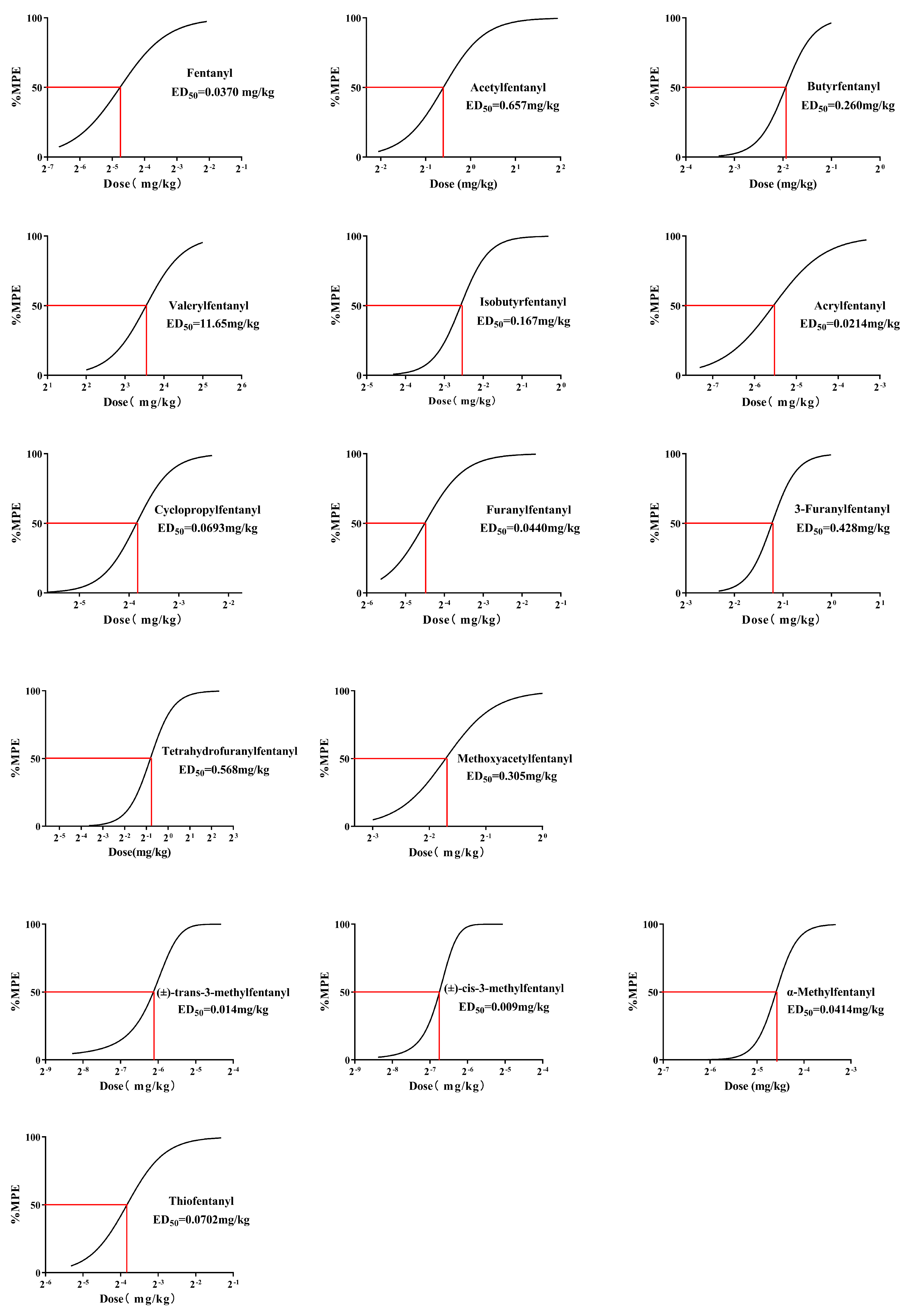
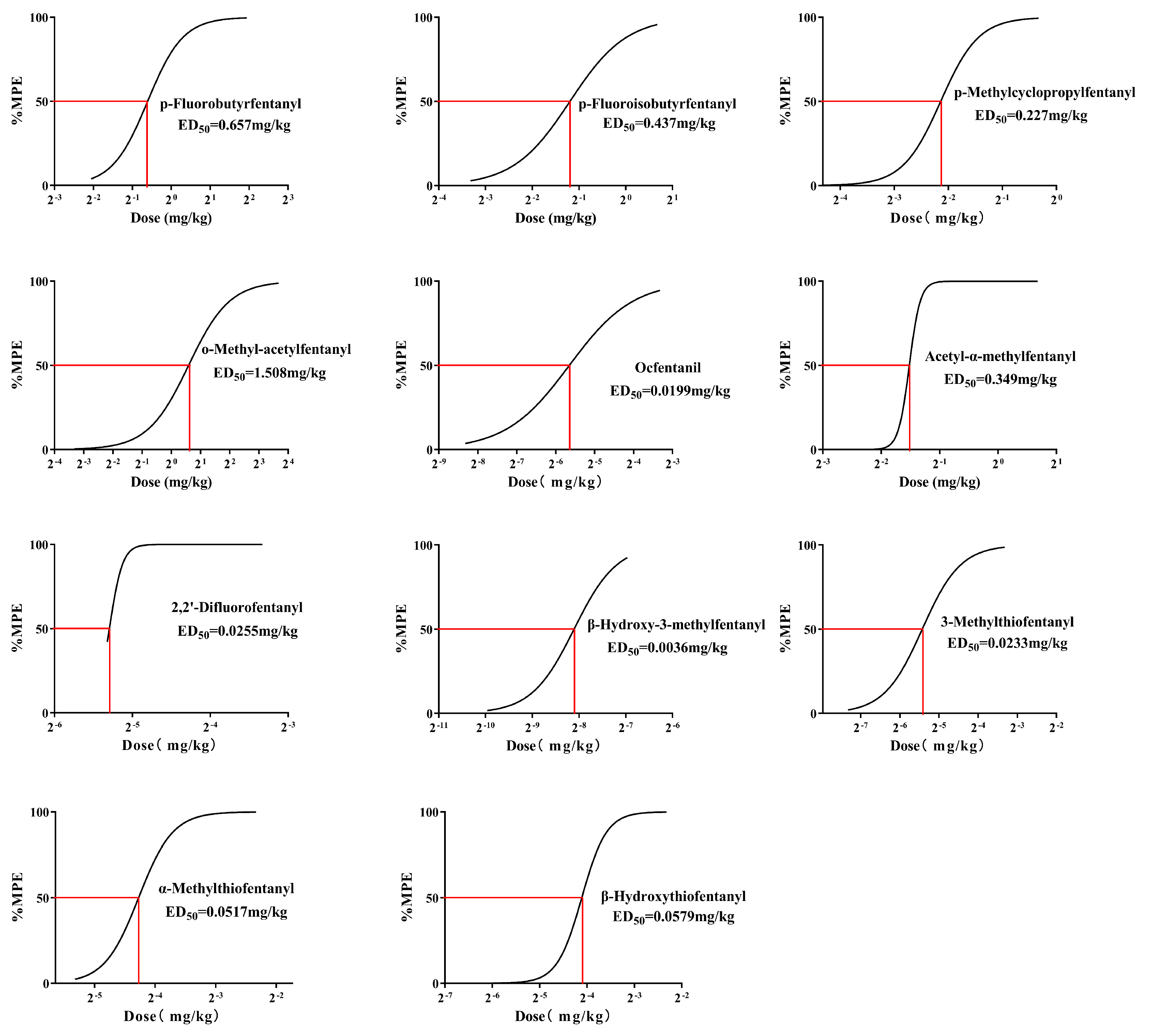
The ED50 values of the hot plate test were achieved by analysing the relationship between the dose and the maximum antinociceptive response 5 min after administration. The curves between dose and %MPE were S-shaped (Figure 3). ED50 values varied among differently modified fentanyl analogues.

3. Discussion

Fentanyl is a potent synthetic analgesic used clinically. Considerable efforts have been devoted to studying the relationship between the structure and pharmacological effect of the fentanyl scaffold to develop potent and safer analgesics. However, data on fentanyl analogues vary considerably across studies, limiting direct comparability. Moreover, previous research has shown that the antinociceptive effects of fentanyl analogues do not always correlate with their MOR binding affinity [11]. To better elucidate the relationship between structure and antinociceptive effect, this study evaluated the antinociceptive effect of 25 fentanyl analogues under a consistent experimental protocol. Data from the literature regarding MOR binding affinity and antinociceptive effect of fentanyl analogues, together with the data obtained in this study, are summarized in Table 3. Accordingly, there were three main findings. First, the potency of the antinociceptive effect generally correlated with MOR binding affinity. Second, the relationship between chemical structure and pharmacological effect was further clarified through standardized evaluation. Third, opioid-induced hyperalgesia (OIH) was frequently observed among fentanyl analogues even after acute administration.
Data obtained in the hot plate test are generally consistent with those reported in previous studies and are summarized in Table 3, except for carfentanil. However, the potency of the antinociceptive effect showed limited correlation between the hot plate test and the tail withdrawal test. For example, isobutyrfentanyl exhibited an antinociceptive potency that was 0.2-fold lower than fentanyl in the hot plate test, whereas it demonstrated comparable potency to fentanyl in the tail withdrawal test. Discrepancies were also observed for acrylfentanyl, p-fluorofentanyl, and β-hydroxythiofentanyl. Notably, data from the hot plate test remain relatively scarce in the literature compared to those from the tail withdrawal test. Moreover, results from the tail withdrawal test vary across studies, likely due to differences in experimental protocols and animal species used. The hot plate test involves supraspinal sensory processing, whereas the tail withdrawal test primarily measures a simple rodent withdrawal reflex [7]. The mechanism of the antinociceptive effect of opioids involves their effects on brain regions, the spinal cord and the peripheral nervous system [28,29]. Pain is defined as an unpleasant sensory or emotional state, with the CNS playing a complex and integral role in its modulation [11]. The observed discrepancies between the two models may result from the differences in CNS engagement and the BBB permeability of the tested fentanyl analogues. Stress, learning, sedation, and several other factors may also contribute to the discrepancies.
Like other opioids, fentanyl preferentially binds to MOR to produce pharmacological effects such as antinociceptive effects and respiratory depression. Previous studies have shown that, for several fentanyl analogues, antinociceptive potency does not consistently correlate with MOR binding affinity [11,27]. In contrast, our findings indicate that the antinociceptive potency of the fentanyl analogues evaluated in this study generally aligns with their reported MOR binding affinity. Nevertheless, certain analogues deviate from this trend. The potency of cyclopropylfentanyl in MOR binding affinity varied among different studies. For instance, cyclopropylfentanyl exhibited an antinociceptive effect that was 0.5-fold lower than that of fentanyl in the hot plate test, despite previous reports indicating comparable potency and efficacy in both MOR binding and antinociceptive activity [16]. Discrepancies in the potency of cyclopropylfentanyl across studies may be attributed to variations in experimental protocols and animal species used. Furanylfentanyl demonstrates antinociceptive potency similar to that of fentanyl, consistent with prior findings, even though it displayed higher MOR binding affinity [27]. Acrylfentanyl was found to be 1.7 times more potent than fentanyl in antinociceptive effects, while its MOR binding affinity was reported to be comparable to fentanyl in two independent studies (Table 3). Several factors may contribute to the inconsistency between the potency of the antinociceptive effect and MOR binding affinity. MOR binding kinetics can be further studied in combination with binding affinity. Furthermore, MOR binding affinities were often assessed in vitro. The pharmacological effect in vivo is more complex. BBB permeability is an important factor since opioids mainly produce antinociceptive effects by binding to MOR in CNS, and P-glycoprotein also plays a vital role in BBB permeability [30]. The pharmacokinetic parameters of fentanyl analogues also matter since they influence the drug distribution and concentration in the brain [31].
The relationship between the chemical structure and pharmacological effect of fentanyl analogues has been extensively studied [11]. Structural modifications in different regions of the fentanyl scaffold structure can lead to significant variations in pharmacological potency. Among analogues modified at the N-propionyl group, ethyl substitution on the propionyl moiety yields the greatest antinociceptive potency. Both longer and shorter alkyl chains resulted in reduced antinociceptive potency. The decreased potency of methoxyacetylfentanyl suggested that insertion of an oxygen atom into the propionyl moiety diminishes the potency of fentanyl. Acrylfentanyl exhibited greater antinociceptive potency than fentanyl. Furanylfentanyl demonstrates comparable potency. 3-Furanylfentanyl and tetrahydrofuranylfentanyl showed reduced antinociceptive potency. For analogues modified on the piperidine ring of the fentanyl scaffold, the high potency of 3-methylfentanyl and carfentanil indicated that 3-methyl and 4-carbomethoxy substitution significantly enhanced the antinociceptive effect. Regarding modifications on the aniline ring, fluorine substitution at the ortho position increases antinociceptive potency relative to fentanyl, while para-substitution reduces it. Results for p-Fluorobutyrfentanyl and p-Fluoroisobutyrfentanyl further verify this hypothesis. However, methyl substitution at either the ortho or para position of the aniline ring led to decreased potency. In analogues modified on the phenethyl moiety, α-Methylfentanyl displayed potency similar to that of fentanyl. The potency of thiofentanyl decreased. Results of isobutyryl-carfentanyl and acetyl-α-methylfentanyl confirmed that isopropyl and methyl substitution on the propionyl moiety were associated with lower potency. 2′-fluorine substitution on the aniline ring decreased the potency. Modification involving multiple regions of the fentanyl scaffold generally aligned with the finding observed for substitution in one region for most fentanyl analogues. However, notable exceptions exist: the high potency of ocfentanil demonstrated that methyoxymethyl substitution on the propionyl region and ortho-methyl substitution on the aniline region can synergistically enhance the antinociceptive effect. Furthermore, β-hydroxy substitution on the phenethyl region increased the potency of 3-methylfentanyl but had minimal impact on thiofentanyl. Such enhancement by β-hydroxy substitution has been previously reported in the literature [11]. Overall, the majority of fentanyl analogues exhibit higher antinociceptive potency compared to morphine.
Furthermore, we observed that the duration of the antinociceptive effect varied among fentanyl analogues with different structural modifications. For fentanyl and most of its analogues, the antinociceptive effect persisted for 20 min after administration. For (±)-trans-3-methylfentanyl, (±)-cis-3-methylfentanyl, β-hydroxy-3-methylfentanyl, and 3-methylthiofentanyl, the antinociceptive effect lasted at least 60 min after administration. The insertion of the 3-methyl group into the fentanyl scaffold appeared to prolong the duration of the antinociceptive effect. This is consistent with findings for lofentanil, a derivative of carfentanil featuring a 3-methyl substitution, which has been reported to have a significantly prolonged duration of action in the literature [11]. 3-Methylfentanyl has been reported to induce wash-resistant inhibition of MOR [32]. Conversely, butyrylfentanyl, acrylfentanyl, ocfentanil and β-hydroxythiofentanyl produced antinociceptive effects that lasted less than 20 min after administration. The short duration of ocfentanil has been previously documented, and our results are in agreement with prior reports [27]. Overall, the duration of antinociceptive effects may be influenced by multiple factors, including MOR binding properties and pharmacokinetic parameters [33,34].
In this study, we found an interesting phenomenon called opioid-induced hyperalgesia (OIH). Our study demonstrated that acute administration of fentanyl and 11 fentanyl analogues, cyclopropylfentanyl, furanylfentanyl, 3-furanylfentanyl, tetrahydrofuranylfentanyl, methoxyacetylfentanyl, (±)-trans-3-methylfentanyl, α-methylfentanyl, thiofentanyl, p-methylcyclopropylfentanyl, o-methyl-acetylfentanyl and α-methylthiofentanyl, induced OIH in the hot plate test. OIH is commonly encountered in opioid administration when used clinically, including agents such as fentanyl, remifentanil, and morphine. It poses a significant clinical challenge [35,36,37,38]. OIH often occurs after prolonged use of opioids and at doses exceeding those required for analgesia [39,40,41]. Waxman et al. [42] demonstrated that both an acute bolus fentanyl dose (0.25 mg/kg, s.c.) and continuous infusion of fentanyl (cumulative daily dose: 10 mg/kg) can induce OIH in mice. OIH is also studied at subanalgesic and analgesic doses [43]. The underlying mechanism contributing to OIH has not been fully clarified. The literature suggests that the mechanism of OIH may not depend on MOR, but rather exhibit greater correlation with NMDA receptors [42]. However, recent research has indicated a close relationship between MOR and the mechanisms underlying OIH, and both the brain and spinal system were involved [44]. OIH is also studied via the biassed pathway of MOR, as with other side effects [43]. Pain is defined as an unpleasant sensory or emotional state [11]. Koob et al. posited potential connections between pain (hyperalgesia) and negative emotional states (hyperkatifeia), which were both unpleasant states after opioid use [39,45]. Research has shown that prolonged opioid usage shifts the central process of pain from sensory to emotional and cognitive brain areas and may produce a tendency towards pain catastrophizing characterized by exaggerating, focusing on, and feeling helpless about the pain experience [46]. Strong evidence suggests that neuroadaptation of the stress system associated with addiction may overlap with substrates of emotional aspects of pain processing in areas such as the amygdala [39,47]. Previous studies have indicated that OIH reflects an unstable state of the body and can enhance the negative reinforcing effect of opioids, thereby contributing to relapse [39,46,48]. The addictive property of fentanyl and other opioids is a clinical concern. It is crucial to consider OIH when studying the addictive properties of fentanyl analogues and developing novel analgesics. In addition, the evaluation of OIH induced by continuous administration of fentanyl and its analogues could be conducted in conjunction with the negative reinforcing effect and relapse. Notably, although the negative control group did not show hot plate latency below baseline, the possibility of habituation and learning to lick the hind paw should also be taken into consideration. Stress sensitization and motor or sedation rebound may also contribute to this. More studies should be conducted to confirm the phenomenon of OIH. The MOR mediation can be further confirmed by the naloxone reversal test.
Our study has certain limitations. Only female mice were used in the experiment. Sex and gender play important roles in analgesic effects. In pain and opioid analgesia, the difference between males and females is complex and controversial [49]. Clinical studies have shown that the pain threshold of females is lower than that of males. Women are more sensitive to pain and have a lower pain tolerance. Preclinical studies have shown that although there have been various studies on the difference in pain sensitivity between males and females, the results have varied across studies [49]. Some studies have shown a notable sex difference in pain sensitivity, whereas other studies have not. Furthermore, sex differences in response to opioid analgesics have been studied. In clinical studies, women were reported to be more sensitive to opioid analgesics and to consume lower amounts of opioids than men for acute pain relief [50,51]. The pharmacokinetics of opioids also differ between males and females [52]. Gonadal hormones influence both pain sensitivity and the analgesic effect of opioids. Testosterone was reported to increase the pain threshold, and estrogen fluctuations were reported to increase pain intensity and perception [53]. Oestrogen was reported to modulate opioid analgesia negatively, while progestin was reported to promote opioid analgesia and increase the expression of opioid receptors [54]. The influence of sex and gender on fentanyl analgesia and antinociception can be further investigated as an interesting aspect.

4. Materials and Methods

4.1. Drugs

Fentanyl hydrochloride, acetylfentanyl, butyrfentanyl, valerylfentanyl, isobutyrfentanyl, acrylfentanyl, p-fluorobutyrfentanyl, p-fluoroisobutyrfentanyl, cyclopropylfentanyl, p-methylcyclopropylfentanyl, furanylfentanyl, 3-furanylfentanyl, tetrahydrofuranylfentanyl hydrochloride, α-methylfentanyl oxalate, acetyl-α-methylfentanyl, β-hydroxy-3-methylfentanyl, o-methyl acetylfentanyl, methoxyacetylfentanyl hydrochloride, 2,2′-difluorofentanyl, ocfentanil, thiofentanyl hydrochloride, 3-methylthiofentanyl hydrochloride, α-methylthiofentanyl and β-hydroxythiofentanyl hydrochloride were supplied by the Drug Intelligence and Forensic Centre of the Ministry of Public Security (Beijing, China). All drugs were dissolved in either sterile saline or citrate buffer solution, which have been described in previous studies [9]. The final solution for all drugs used for administration was prepared with 0.9% saline.

4.2. Subjects

Female ICR mice weighing 18–22 g and aged 6–8 weeks were obtained from Beijing Sipeifu Biotechnology Co., Ltd. (Beijing, China). Subjects were housed in a temperature- and humidity-controlled environment (temperature: 25 ± 2 °C, humidity: 60 ± 10%) and maintained on a 12/12 h light/dark cycle. Food and water were available ad libitum.
Animals were acclimated for at least 7 days before any experimental manipulation. To minimize stress during behavioural testing, animals were handled daily for 3 days prior to the start of experiments and habituated to the testing room for 30 min before each test. Animals showing signs of severe distress (e.g., weight loss > 15%, inability to ambulate, hunched posture, persistent piloerection) were immediately euthanized. Upon completion of the experiment, animals were euthanized by carbon dioxide inhalation.

4.3. Hot Plate Test

The test was conducted using a hot plate analgesia metre (Beijing Zhongshidichuang Science and Technology Development Co., Ltd., Beijing, China). Female mice were used because the genitals of male mice may be scalded by the hot plate. Procedures were conducted as previously described [9]. Mice were placed on the plate, which was preheated to 55 ± 0.5 °C, and the time latency to the first sign of licking the hind paw was measured. Control latency was measured twice before drug treatment to select qualified mice with a latency between 5 s and 30 s, and mice that were too sensitive (latency < 5 s) or insensitive (latency > 30 s) were eliminated. A total of about 2500 mice were used, and about one-third of the mice were eliminated. The pain threshold was defined as the time latency from the mice being placed on the hot plate to the first sign of licking the hind paw.
Separated groups of qualified mice (n = 7–11 for each administration dose, s.c.) were treated with fentanyl or its analogues. Several doses of one drug were prepared and coded with randomly assigned numbers by one researcher. The test was conducted by another researcher. Latencies of each dose group of mice were measured 5 min, 20 min, 40 min, and 60 min after treatment. A maximum exposure time was set at 60 s (cut-off time) to avoid tissue damage.

4.4. Data Analysis

Data are presented as mean ± standard error of the mean (SEM). GraphPad Prism 8.0 (Graphpad Software, Inc., San Diego, CA, USA) was used for statistical analysis. Data were analysed by two-way analysis of variance (ANOVA). Following two-way ANOVA, post hoc analysis was conducted using Bonferroni’s multiple comparisons test, and a value of p < 0.05 was considered statistically significant.
The antinociceptive effect was quantified with the formula of the maximum possible effect (%MPE) calculated as [(latency after treatment − control latency)/(cut-off time − control latency) × 100%]. The analysis of the relationship between dose and the maximum antinociceptive response 5 min after administration was conducted, and the median effective dose (ED50) values of antinociception and 95% confidence interval (95% CI) were determined by nonlinear regression analysis.

5. Conclusions

Fentanyl is a potent synthetic analgesic. Fentanyl and its analogues have increasingly appeared in the illegal drug market and in intoxication cases, while simultaneously being investigated for the development of potent and safe analgesics. This study systematically evaluated and compared the antinociceptive effect of fentanyl analogues. The findings highlight the structure–effect relationship and provide valuable insights for drug regulation and the development of novel analgesic agents.

Author Contributions

Y.C., K.L., B.D. and P.X. conceived the experiment. Y.C., K.L., D.X., Y.X. (Yawen Xu) and S.Z. conducted all the experiments. Y.C., Y.Q., X.L. and Y.X. (Yizhao Xu) analysed the results. Y.C., M.X., W.Q., P.X. and B.D. wrote the manuscript, and all authors reviewed the manuscript. All authors have read and agreed to the published version of the manuscript.

Funding

This work was supported by the National Natural Science Foundation of China (82130056), the Regional Collaborative Innovation Programme of Xinjiang Uygur Autonomous Region (2025E01009), and the Beijing Natural Science Foundation (2244068).

Institutional Review Board Statement

The animal use protocol listed has been reviewed and approved by the Welfare and Ethics Committee for Laboratory Animals, Key Laboratory of Drug Monitoring and Control. Approval No. KLDMC-WECLA-202406-07 (Approval Date: 1 August 2024).

Informed Consent Statement

Not applicable.

Data Availability Statement

The original contributions presented in this study are included in the article. Further inquiries can be directed to the corresponding author.

Conflicts of Interest

The authors declare no conflict of interest.

References

  1. Patocka, J.; Wu, W.; Oleksak, P.; Jelinkova, R.; Nepovimova, E.; Spicanova, L.; Springerova, P.; Alomar, S.; Long, M.; Kuca, K. Fentanyl and its derivatives: Pain-killers or man-killers? Heliyon 2024, 10, e28795. [Google Scholar] [CrossRef] [Scilit]
  2. Misailidi, N.; Papoutsis, I.; Nikolaou, P.; Dona, A.; Spiliopoulou, C.; Athanaselis, S. Fentanyls continue to replace heroin in the drug arena: The cases of ocfentanil and carfentanil. Forensic Toxicol. 2018, 36, 12–32. [Google Scholar] [CrossRef] [Scilit]
  3. George, A.V.; Lu, J.J.; Pisano, M.V.; Metz, J.; Erickson, T.B. Carfentanil—An ultra potent opioid. Am. J. Emerg. Med. 2010, 28, 530–532. [Google Scholar] [CrossRef] [Scilit] [PubMed]
  4. Zhuang, Y.; Wang, Y.; He, B.; He, X.; Zhou, X.E.; Guo, S.; Rao, Q.; Yang, J.; Liu, J.; Zhou, Q.; et al. Molecular recognition of morphine and fentanyl by the human μ-opioid receptor. Cell 2022, 185, 4361–4375.e19. [Google Scholar] [CrossRef] [Scilit]
  5. Vasudevan, L.; Vandeputte, M.; Deventer, M.; Wouters, E.; Cannaert, A.; Stove, C.P. Assessment of structure-activity relationships and biased agonism at the Mu opioid receptor of novel synthetic opioids using a novel, stable bio-assay platform. Biochem. Pharmacol. 2020, 177, 113910. [Google Scholar] [CrossRef] [Scilit] [PubMed]
  6. Barabadi, H.; Mobaraki, K.; Ashouri, F.; Noqani, H.; Jounaki, K.; Mostafavi, E. Nanobiotechnological approaches in antinociceptive therapy: Animal-based evidence for analgesic nanotherapeutics of bioengineered silver and gold nanomaterials. Adv. Colloid Interface Sci. 2023, 316, 102917. [Google Scholar] [CrossRef] [Scilit] [PubMed]
  7. Chrubasik, J.; Chrubasik, S.; Martin, E. Non-opioid peptides for analgesia. Acta Neurobiol. Exp. 1993, 53, 289–296. [Google Scholar]
  8. Xu, D.; Zeng, X.; Shi, X.; Chen, Y.; Wang, D.; Yan, F.; Xu, P. Comparative Study of Analgesic Therapeutic Index and Addiction Potential of o- and p-Fluorofentanyl. J. Appl. Toxicol. JAT 2026. [Google Scholar] [CrossRef] [Scilit]
  9. Xu, D.; Kuai, L.; Chen, Y.; Zeng, X.; Wang, D.; Di, B.; Xu, P. Isobutyryl-carfentanyl has strong acute toxicity and analgesic effects with high addiction potential. Psychopharmacology 2025, 242, 205–214. [Google Scholar] [CrossRef] [Scilit]
  10. Wei, J.; Lai, M.; Li, F.; Chen, Y.; Li, X.; Qiu, Y.; Shen, H.; Xu, P.; Di, B. Assessment of abuse potential of carfentanil. Addict. Biol. 2023, 28, e13265. [Google Scholar] [CrossRef] [Scilit]
  11. Vardanyan, R.S.; Hruby, V.J. Fentanyl-related compounds and derivatives: Current status and future prospects for pharmaceutical applications. Future Med. Chem. 2014, 6, 385–412. [Google Scholar] [CrossRef] [Scilit] [PubMed]
  12. Andurkar, S.V.; Reniguntala, M.S.; Gulati, A.; DeRuiter, J. Synthesis and antinociceptive properties of N-phenyl-N-(1-(2-(thiophen-2-yl)ethyl)azepane-4-yl)propionamide in the mouse tail-flick and hot-plate tests. Bioorg. Med. Chem. Lett. 2014, 24, 644–648. [Google Scholar] [CrossRef] [Scilit] [PubMed]
  13. Varshneya, N.B.; Walentiny, D.M.; Moisa, L.T.; Walker, T.D.; Akinfiresoye, L.R.; Beardsley, P.M. Opioid-like antinociceptive and locomotor effects of emerging fentanyl-related substances. Neuropharmacology 2019, 151, 171–179. [Google Scholar] [CrossRef] [Scilit]
  14. Walker, E.A.; Chambers, C.; Korber, M.G.; Tella, S.R.; Prioleau, C.; Fang, L. Antinociceptive and Discriminative Stimulus Effects of Six Novel Psychoactive Opioid Substances in Male Rats. J. Pharmacol. Exp. Ther. 2021, 379, 1–11, Correction in J. Pharmacol. Exp. Ther. 2022, 380, 142. [Google Scholar] [CrossRef] [Scilit] [PubMed]
  15. Obeng, S.; Urquhart, K.R.; Fukuda, S.; Pallares, V.L.C.; McMahon, L.R.; Fantegrossi, W.E.; Hiranita, T. In vitro and in vivo pharmacological characterization of fentanyl analogs. Neuropharmacology 2025, 279, 110603. [Google Scholar] [CrossRef] [Scilit]
  16. Xie, B.; Le Rouzic, V.P.; Goldberg, A.; Tsai, M.M.; Chen, L.; Zhang, T.; Sinha, A.; Pan, Y.X.; Baumann, M.H.; Shi, L. Binding preference at the μ-opioid receptor underlies distinct pharmacology of cyclopropyl versus valeryl analogs of fentanyl. Neuropharmacology 2023, 227, 109442. [Google Scholar] [CrossRef] [Scilit]
  17. EMCDDA. Report on the Risk Assessment of N-phenyl-N-[1-(2-phenylethyl)piperidin-4-yl]-furan-2-carboxamide (furanylfentanyl) in the Framework of the Council Decision on New Psychoactive Substances. Available online: www.emcdda.europa.eu/publications/joint-reports/furanylfentanyl (accessed on 1 October 2025).
  18. Varshneya, N.B.; Walentiny, D.M.; Moisa, L.T.; Walker, T.D.; Akinfiresoye, L.R.; Beardsley, P.M. Fentanyl-related substances elicit antinociception and hyperlocomotion in mice via opioid receptors. Pharmacol. Biochem. Behav. 2021, 208, 173242. [Google Scholar] [CrossRef] [Scilit]
  19. Van Bever, W.F.; Niemegeers, C.J.; Janssen, P.A. Synthetic analgesics. Synthesis and pharmacology of the diastereoisomers of N-(3-methyl-1-(2-phenylethyl)-4-piperidyl)-N-phenylpropanamide and N-(3-methyl-1-(1-methyl-2-phenylethyl)-4-piperidyl)-N-phenylpropanamide. J. Med. Chem. 1974, 17, 1047–1051. [Google Scholar] [CrossRef] [Scilit]
  20. Bi-Yi, C.; Wen-Qiao, J.; Jie, C.; Xin-Jian, C.; You-Cheng, Z.; Zhi-Qiang, C. Analgesic activity and selectivity of isothiocyanate derivatives of fentanyl analogs for opioid receptors. Life Sci. 1999, 65, 1589–1595. [Google Scholar] [CrossRef] [Scilit]
  21. Wilde, M.; Pichini, S.; Pacifici, R.; Tagliabracci, A.; Busardò, F.P.; Auwärter, V.; Solimini, R. Metabolic Pathways and Potencies of New Fentanyl Analogs. Front. Pharmacol. 2019, 10, 238. [Google Scholar] [CrossRef] [Scilit]
  22. Bi-Yi, C.; Wen-Qiao, J.; Zhi-Qiang, C. 3-Methylfentanyl—A potent selective mu opioid receptor agonist. Clin. Neurosci. 1997, 5, 68–72. [Google Scholar]
  23. Eshleman, A.J.; Nagarajan, S.; Wolfrum, K.M.; Reed, J.F.; Nilsen, A.; Torralva, R.; Janowsky, A. Affinity, potency, efficacy, selectivity, and molecular modeling of substituted fentanyls at opioid receptors. Biochem. Pharmacol. 2020, 182, 114293. [Google Scholar] [CrossRef] [Scilit]
  24. Hassanien, S.H.; Bassman, J.R.; Perrien Naccarato, C.M.; Twarozynski, J.J.; Traynor, J.R.; Iula, D.M.; Anand, J.P. In vitro pharmacology of fentanyl analogs at the human mu opioid receptor and their spectroscopic analysis. Drug Test. Anal. 2020, 12, 1212–1221. [Google Scholar] [CrossRef] [Scilit] [PubMed]
  25. Varshneya, N.B.; Hassanien, S.H.; Holt, M.C.; Stevens, D.L.; Layle, N.K.; Bassman, J.R.; Iula, D.M.; Beardsley, P.M. Fentanyl analog structure-activity relationships demonstrate determinants of diverging potencies for antinociception and respiratory depression. Pharmacol. Biochem. Behav. 2023, 226, 173572. [Google Scholar] [CrossRef] [Scilit] [PubMed]
  26. Bergh, M.S.; Bogen, I.L.; Garibay, N.; Baumann, M.H. Pharmacokinetics and pharmacodynamics of cyclopropylfentanyl in male rats. Psychopharmacology 2021, 238, 3629–3641. [Google Scholar] [CrossRef] [Scilit] [PubMed]
  27. Bilel, S.; Azevedo Neto, J.; Arfè, R.; Tirri, M.; Gaudio, R.M.; Fantinati, A.; Bernardi, T.; Boccuto, F.; Marchetti, B.; Corli, G.; et al. In vitro and in vivo pharmaco-dynamic study of the novel fentanyl derivatives: Acrylfentanyl, Ocfentanyl and Furanylfentanyl. Neuropharmacology 2022, 209, 109020. [Google Scholar] [CrossRef] [Scilit]
  28. Grond, S.; Sablotzki, A. Clinical pharmacology of tramadol. Clin. Pharmacokinet. 2004, 43, 879–923. [Google Scholar] [CrossRef] [Scilit]
  29. Zöllner, C.; Stein, C. Opioids. In Analgesia; Handbook of experimental pharmacology; Springer: Berlin/Heidelberg, Germany, 2007; pp. 31–63. [Google Scholar]
  30. Yu, C.; Yuan, M.; Yang, H.; Zhuang, X.; Li, H. P-Glycoprotein on Blood-Brain Barrier Plays a Vital Role in Fentanyl Brain Exposure and Respiratory Toxicity in Rats. Toxicol. Sci. Off. J. Soc. Toxicol. 2018, 164, 353–362. [Google Scholar] [CrossRef] [Scilit]
  31. Canfield, J.R.; Sprague, J.E. In vivo pharmacokinetic, pharmacodynamic and brain concentration comparison of fentanyl and para-fluorofentanyl in rats. Arch. Toxicol. 2025, 99, 287–297. [Google Scholar] [CrossRef] [Scilit]
  32. Xu, H.; Kim, C.H.; Zhu, Y.C.; Weber, R.J.; Jacobson, A.E.; Rice, K.C.; Rothman, R.B. (+)-cis-3-methylfentanyl and its analogs bind pseudoirreversibly to the mu opioid binding site: Evidence for pseudoallosteric modulation. Neuropharmacology 1991, 30, 455–462. [Google Scholar] [CrossRef] [Scilit]
  33. Zhang, S.; Xu, Y.; Zeng, X.; Ran, J.; Chen, Y.; Kuai, L.; Li, K.; Xu, P.; Yan, F.; Wang, D. QSAR-based physiologically based pharmacokinetic (PBPK) modeling for 34 fentanyl analogs: Model validation, human pharmacokinetic prediction and abuse risk insights. Front. Pharmacol. 2025, 16, 1692293. [Google Scholar] [CrossRef] [Scilit]
  34. Stahl, E.L.; Swanson, M.A.; Dang, V.Q.; Cameron, M.D.; Kennedy, N.M.; Bannister, T.D.; Bohn, L.M. GTP release-selective agonists prolong opioid analgesic efficacy. Nature 2025, 650, 500–508. [Google Scholar] [CrossRef] [Scilit] [PubMed]
  35. Sanna, M.D.; Ghelardini, C.; Galeotti, N. Activation of JNK pathway in spinal astrocytes contributes to acute ultra-low-dose morphine thermal hyperalgesia. Pain 2015, 156, 1265–1275. [Google Scholar] [CrossRef] [Scilit] [PubMed]
  36. Li, X.; Chen, Y.; Li, F.; Qiu, Y.; Shen, H.; Wang, Y.; Xu, P. Comparative Research on Analgesic Effects of Fentanyl and Furanyfentanyl. Chin. J. Drug Abus. Prev. Treat. 2020, 26, 198–202+207. [Google Scholar]
  37. Dello Russo, C.; Di Franco, V.; Tabolacci, E.; Cappoli, N.; Navarra, P.; Sollazzi, L.; Rapido, F.; Aceto, P. Remifentanil-induced hyperalgesia in healthy volunteers: A systematic review and meta-analysis of randomized controlled trials. Pain 2024, 165, 972–982. [Google Scholar] [CrossRef] [Scilit]
  38. Liu, X.; Cai, H.; Peng, L.; Ma, H.; Yan, Y.; Li, W.; Zhao, J. Microglial Nrf2/HO-1 signaling gates remifentanil-induced hyperalgesia via suppressing TRPV4-mediated M1 polarization. Free Radic. Biol. Med. 2024, 214, 87–100. [Google Scholar] [CrossRef] [Scilit]
  39. Shurman, J.; Koob, G.F.; Gutstein, H.B. Opioids, pain, the brain, and hyperkatifeia: A framework for the rational use of opioids for pain. Pain Med. 2010, 11, 1092–1098. [Google Scholar] [CrossRef] [Scilit]
  40. Chen, D.; Zhang, M.; Zhang, Q.; Wu, S.; Yu, B.; Zhang, X.; Hu, X.; Zhang, S.; Yang, Z.; Kuang, J.; et al. The blockade of neuropeptide FF receptor 1 and 2 differentially contributed to the modulating effects on fentanyl-induced analgesia and hyperalgesia in mice. Eur. J. Pharmacol. 2024, 969, 176457. [Google Scholar] [CrossRef] [Scilit]
  41. Kopruszinski, C.M.; Swiokla, J.; Lee, Y.S.; Navratilova, E.; VanderVeen, L.; Yang, M.; Liu, Y.; Miyazaki, T.; Schmidt, W.K.; Zalevsky, J.; et al. Preclinical Assessment of the Analgesic Pharmacology of NKTR-181 in Rodents. Cell. Mol. Neurobiol. 2021, 41, 949–960. [Google Scholar] [CrossRef] [Scilit]
  42. Waxman, A.R.; Arout, C.; Caldwell, M.; Dahan, A.; Kest, B. Acute and chronic fentanyl administration causes hyperalgesia independently of opioid receptor activity in mice. Neurosci. Lett. 2009, 462, 68–72. [Google Scholar] [CrossRef] [Scilit]
  43. Araldi, D.; Bonet, I.J.M.; Green, P.G.; Levine, J.D. Contribution of G-Protein α-Subunits to Analgesia, Hyperalgesia, and Hyperalgesic Priming Induced by Subanalgesic and Analgesic Doses of Fentanyl and Morphine. J. Neurosci. Off. J. Soc. Neurosci. 2022, 42, 1196–1210. [Google Scholar] [CrossRef] [Scilit] [PubMed]
  44. Yin, G.; Duan, K.; Dong, D.; Du, F.; Guo, C.; Zhang, C.; Liu, X.; Sun, Y.; Huang, T.; Cui, G.; et al. Central control of opioid-induced mechanical hypersensitivity and tolerance in mice. Neuron 2024, 112, 3897–3923. [Google Scholar] [CrossRef] [Scilit] [PubMed]
  45. Koob, G.F.; Schulkin, J. Addiction and stress: An allostatic view. Neurosci. Biobehav. Rev. 2019, 106, 245–262. [Google Scholar] [CrossRef] [Scilit] [PubMed]
  46. Bommersbach, T.; Ross, D.A.; De Aquino, J.P. Perpetual Hunger: The Neurobiological Consequences of Long-Term Opioid Use. Biol. Psychiatry 2020, 87, e1–e3. [Google Scholar] [CrossRef] [Scilit]
  47. Koob, G.F. A role for brain stress systems in addiction. Neuron 2008, 59, 11–34. [Google Scholar] [CrossRef] [Scilit]
  48. Comer, S.D.; Cahill, C.M. Fentanyl: Receptor pharmacology, abuse potential, and implications for treatment. Neurosci. Biobehav. Rev. 2019, 106, 49–57. [Google Scholar] [CrossRef] [Scilit]
  49. Mogil, J.S. Sex differences in pain and pain inhibition: Multiple explanations of a controversial phenomenon. Nat. Rev. Neurosci. 2012, 13, 859–866. [Google Scholar] [CrossRef] [Scilit]
  50. Niesters, M.; Dahan, A.; Kest, B.; Zacny, J.; Stijnen, T.; Aarts, L.; Sarton, E. Do sex differences exist in opioid analgesia? A systematic review and meta-analysis of human experimental and clinical studies. Pain 2010, 151, 61–68. [Google Scholar] [CrossRef] [Scilit]
  51. Pisanu, C.; Franconi, F.; Gessa, G.L.; Mameli, S.; Pisanu, G.M.; Campesi, I.; Leggio, L.; Agabio, R. Sex differences in the response to opioids for pain relief: A systematic review and meta-analysis. Pharmacol. Res. 2019, 148, 104447. [Google Scholar] [CrossRef] [Scilit]
  52. Franconi, F.; Campesi, I. Pharmacogenomics, pharmacokinetics and pharmacodynamics: Interaction with biological differences between men and women. Br. J. Pharmacol. 2014, 171, 580–594. [Google Scholar] [CrossRef] [Scilit]
  53. Athnaiel, O.; Cantillo, S.; Paredes, S.; Knezevic, N.N. The Role of Sex Hormones in Pain-Related Conditions. Int. J. Mol. Sci. 2023, 24, 1886. [Google Scholar] [CrossRef] [Scilit]
  54. Xu, Q.; Jin, L.; Wang, L.; Tang, Y.; Wu, H.; Chen, Q.; Sun, L. The role of gonadal hormones in regulating opioid antinociception. Ann. Med. 2024, 56, 2329259. [Google Scholar] [CrossRef] [Scilit]
Figure 1. Modifications to the chemical structure of fentanyl scaffold.
Ijms 27 03028 g001
Figure 2. Time–effect curves for the antinociceptive effect of fentanyl analogues. All data are presented as mean ± SEM for n = 7–11 mice per group. Two-way ANOVA, Bonferroni post hoc test, * p < 0.05, ** p < 0.01, *** p < 0.001, compared with the control latency for each group.
Ijms 27 03028 g002aIjms 27 03028 g002bIjms 27 03028 g002cIjms 27 03028 g002d
Figure 3. Dose–effect curves for the antinociceptive effect and ED50 values of fentanyl analogues. The percent maximum possible effect (%MPE) was calculated from the pain threshold measured 5 min after drug administration. All the data are presented as mean ± SEM for n = 7–11 mice per group.
Ijms 27 03028 g003aIjms 27 03028 g003b
Table 1. Different modifications to fentanyl scaffold structure of fentanyl analogues.
NameR1R2R3R4R5
1FentanylethylHHHphenyl
Modification on R1
2AcetylfentanylmethylHHHphenyl
3ButyrfentanylpropylHHHphenyl
4ValerylfentanylbutylHHHphenyl
5IsobutyrfentanylisopropylHHHphenyl
6AcrylfentanylethyleneHHHphenyl
7CyclopropylfentanylcyclopropylHHHphenyl
8Furanylfentanyl2-furanylHHHphenyl
93-Furanylfentanyl3-furanylHHHphenyl
10Tetrahydrofuranylfentanyl2-tetrahydrofuranylHHHphenyl
11MethoxyacetylfentanylmethyoxymethylHHHphenyl
Modification on R2
12p-Fluorofentanyl *ethylp-fluoroHHphenyl
13o-Fluorofentanyl *ethylo-fluoroHHphenyl
Modification on R3
14(±)-trans-3-MethylfentanylethylHtrans-3-methylHphenyl
15(±)-cis-3-MethylfentanylethylHcis-3-methylHphenyl
16Carfentanil *ethylH4-carbomethoxyHphenyl
Modification on R4
17α-MethylfentanylethylHHα-methylphenyl
Modification on R5
18ThiofentanylethylHHH2-thiophene
Modifications on more than one region
19p-Fluorobutyrfentanylpropylp-fluoroHHphenyl
20p-Fluoroisobutyrfentanylisopropylp-fluoroHHphenyl
21p-Methylcyclopropylfentanylcyclopropylp-methylHHphenyl
22o-Methyl-acetylfentanylmethylo-methylHHphenyl
23Ocfentanilmethyoxymethylo-methylHHphenyl
24Isobutyryl-carfentanyl *isopropylH4-carbomethoxyHphenyl
25Acetyl-α-methylfentanylmethylHHα-methylphenyl
262,2′-Difluorofentanylethylo-fluoroHHo-fluorophenyl
27β-Hydroxy-3-methylfentanylethylH3-methylβ-hydroxyphenyl
283-MethylthiofentanylethylH3-methylH2-thiophene
29α-MethylthiofentanylethylHHα-methyl2-thiophene
30β-HydroxythiofentanylethylHHβ-hydroxy2-thiophene
* meant the data of the drug in our lab has been published [8,9,10].
Table 2. F and p values of time–effect curves for the antinociceptive effect of fentanyl analogues.
DoseTimeDose × Time Interaction
FpFpFp
1FentanylF(5, 56) = 32.89p < 0.0001F(3.451, 193.3) = 63.54p < 0.0001F(20, 224) = 20.00p < 0.0001
2AcetylfentanylF(5, 44) = 28.46p < 0.0001F(3.116, 137.1) = 65.50p < 0.0001F(20, 176) = 13.87p < 0.0001
3ButyrfentanylF(5, 45) = 16.04p < 0.0001F(3.330, 149.8) = 54.97p < 0.0001F(20, 180) = 11.43p < 0.0001
4ValerylfentanylF(5, 57) = 27.70p < 0.0001F(3.281, 187.0) = 45.43p < 0.0001F(20, 228) = 6.897p < 0.0001
5IsobutyrfentanylF(5, 44) = 52.64p < 0.0001F(3.013, 132.6) = 41.69p < 0.0001F(20, 176) = 14.52p < 0.0001
6AcrylfentanylF(5, 42) = 32.74p < 0.0001F(2.992, 125.7) = 49.88p < 0.0001F(20, 168) = 9.576p < 0.0001
7CyclopropylfentanylF(4, 37) = 37.31p < 0.0001F(2.766, 102.3) = 51.75p < 0.0001F(16, 148) = 14.85p < 0.0001
8FuranylfentanylF(5, 55) = 57.81p < 0.0001F(3.043, 165.8) = 124.4p < 0.0001F(20, 218) = 21.96p < 0.0001
93-FuranylfentanylF(5, 51) = 14.27p < 0.0001F(2.822, 143.9) = 62.99p < 0.0001F(20, 204) = 8.086p < 0.0001
10TetrahydrofuranylfentanylF(5, 52) = 53.90p < 0.0001F(3.606, 187.5) = 125.0p < 0.0001F(20, 208) = 30.88p < 0.0001
11MethoxyacetylfentanylF(4, 40) = 28.86p < 0.0001F(2.862, 114.5) = 48.32p < 0.0001F(16, 160) = 10.29p < 0.0001
12(±)-trans-3-MethylfentanylF(5, 46) = 118.5p < 0.0001F(3.036, 138.9) = 55.21p < 0.0001F(20, 183) = 18.31p < 0.0001
13(±)-cis-3-MethylfentanylF(4, 35) = 42.69p < 0.0001F(3.167, 110.8) = 18.06p < 0.0001F(16, 140) = 7.621p < 0.0001
14α-MethylfentanylF(4, 35) = 31.23p < 0.0001F(3.418, 119.6) = 35.56p < 0.0001F(16, 140) = 12.16p < 0.0001
15ThiofentanylF(5, 46) = 39.20p < 0.0001F(2.650, 121.9) = 100.9p < 0.0001F(20, 184) = 22.05p < 0.0001
16p-FluorobutyrfentanylF(5, 45) = 22.93p < 0.0001F(3.085, 138.8) = 64.13p < 0.0001F(20, 180) = 13.08p < 0.0001
17p-FluoroisobutyrfentanylF(5, 42) = 23.28p < 0.0001F(3.492, 146.7) = 42.99p < 0.0001F(20, 168) = 10.34p < 0.0001
18p-MethylcyclopropylfentanylF(5, 54) = 71.30p < 0.0001F(2.956, 159.6) = 70.99p < 0.0001F(20, 216) = 16.70p < 0.0001
19o-Methyl-acetylfentanylF(5, 45) = 28.06p < 0.0001F(2.824, 126.4) = 46.20p < 0.0001F(20, 179) = 9.726p < 0.0001
20OcfentanilF(6, 53) = 18.79p < 0.0001F(3.415, 181.0) = 69.20p < 0.0001F(24, 212) = 10.47p < 0.0001
21Acetyl-α-methylfentanylF(5, 44) = 45.61p < 0.0001F(3.161, 139.1) = 95.32p < 0.0001F(20, 176) = 19.66p < 0.0001
222,2′-DifluorofentanylF(4, 45) = 84.39p < 0.0001F(3.052, 137.3) = 114.4p < 0.0001F(16, 180) = 25.81p < 0.0001
23β-Hydroxy-3-methylfentanylF(4, 32) = 84.03p < 0.0001F(3.252, 104.1) = 24.91p < 0.0001F(16, 128) = 17.01p < 0.0001
243-MethylthiofentanylF(5, 44) = 58.37p < 0.0001F(2.803, 120.5) = 67.56p < 0.0001F(20, 172) = 17.00p < 0.0001
25α-MethylthiofentanylF(4, 45) = 68.45p < 0.0001F(3.141, 141.3) = 58.62p < 0.0001F(16, 180) = 17.16p < 0.0001
26β-HydroxythiofentanylF(5, 44) = 13.56p < 0.0001F(2.976, 130.9) = 52.69p < 0.0001F(20, 176) = 20.21p < 0.0001
Table 3. Results compared with data published in the literature.
Data Obtained in Our LabData Published in the Literature
Hot Plate TestHot Plate TestTail Withdrawal TestMOR Binding Affinity
NameED50 (mg/kg)Potency Ratio to MorphinePotency Ratio to FentanylED50 (mg/kg)Potency Ratio to FentanylED50 (mg/kg)Potency Ratio to FentanylKi (nM)Potency Ratio to Fentanyl
Morphine *4.0461.00.0111.9 k0.0037.82 o0.010.252 l0.5
1Fentanyl0.037109.41.00.044 n/0.026 k1.00.015 a/0.08 b/0.0091 c/0.139 d1.00.135 l/1.6 m1.0
Modification on R1
2Acetylfentanyl0.6576.20.06 0.28 c0.034.28 l/64 m0.032/0.025
3Butyrfentanyl0.2615.60.14 0.089 c0.10.405 l/35 m0.33/0.05
4Valerylfentanyl11.650.30.003 6.43 b0.0122.16 l0.063
5Isobutyrfentanyl0.16724.20.2 0.0768 b1.040.291 l/6.6 m0.46/0.24
6Acrylfentanyl0.0214189.11.7 0.158 d0.90.133 l/2.1 m1.0/0.8
7Cyclopropylfentanyl0.069358.40.50.048 p 0.04 e0.750.088 l/2.4 m1.5/0.67
8Furanylfentanyl0.04492.00.8 0.02 f10.0279 l/1.3 m4.8/1.2
93-Furanylfentanyl0.4289.50.09 0.51 g0.160.442 l0.31
10Tetrahydrofuranylfentanyl0.5687.10.07 2.41 d0.060.95 l/31 m0.14/0.052
11Methoxyacetylfentanyl0.30513.30.12 17 m0.094
Modification on R2
12p-Fluorofentanyl *0.08846.00.4 0.06 o1.34.2 m0.38
13o-Fluorofentanyl *0.014289.02.6 0.03 o2.70.4 m4
Modification on R3
14(±)-trans-3-Methylfentanyl0.014289.02.60.021 i 0.0094 h 1.1 m1.45
15(±)-cis-3-Methylfentanyl0.0098412.93.8 0.0018 h 0.32 m5
16Carfentanil *0.00261618.414.80.00041 i 0.024 i
Modification on R4
17α-Methylfentanyl0.041497.70.9 0.0085 h
Modification on R5
18Thiofentanyl0.070257.60.5
Modifications on more than one region
19p-Fluorobutyrfentanyl0.6576.20.06 0.908 b0.088
20p-Fluoroisobutyrfentanyl0.4379.30.08 1.61 d0.08624 m0.067
21p-Methylcyclopropylfentanyl0.22717.80.2
22o-Methyl-acetylfentanyl1.5082.70.02 43 m0.037
23Ocfentanil0.0199203.31.90.0077 j2.5 1.0 q
24Isobutyryl-carfentanyl *0.003191268.311.6
25Acetyl-α-methylfentanyl0.34911.60.11
262,2′-Difluorofentanyl0.0255158.71.5 0.02 o4
27β-Hydroxy-3-methylfentanyl0.00361123.910.30.0015 k17.3 0.18 i
283-Methylthiofentanyl0.0233173.61.6
29α-Methylthiofentanyl0.051778.30.7
30β-Hydroxythiofentanyl0.057969.90.6 1.72 d0.0816.2 m0.26
* indicates that data for the drug in our lab have been published [8,9,10]; references mentioned in Table 3: a [12], b [13], c [14], d [15], e [16], f [17], g [18], h [19], i [20], j [21], k [22], l [23], m [24], n [9], o [25], p [26], q [27].
Disclaimer/Publisher’s Note: The statements, opinions and data contained in all publications are solely those of the individual author(s) and contributor(s) and not of MDPI and/or the editor(s). MDPI and/or the editor(s) disclaim responsibility for any injury to people or property resulting from any ideas, methods, instructions or products referred to in the content.