Osteocalcin Beyond Bone: Molecular Mechanisms, Endocrine Networks, and Translational Perspectives Across Metabolism, Neurobiology, and Chronic Disease

 , , , , , ,
  ,
,  ,
, 
Abstract
1. Introduction
2. OCN Characteristics
2.1. Molecular Structure and Isoforms
2.2. Biosynthesis and Carboxylation
2.3. Circulating Forms and Clinical Measurement
2.4. Endocrine Activity
2.5. Assays and Analytical Considerations
3. OCN and Bone Metabolism
3.1. Role in Bone Turnover and Mineralization
3.2. Bone Material Quality and Glycation
3.3. Metabolic Syndrome: OCN at the Crossroads of Bone and Energy Metabolism
3.4. Clamp-Validated Human Evidence for ucOCN
4. OCN in Skeletal Physiology
4.1. Vitamin K2 and Osteocalcin: Mechanisms and Clinical Relevance
4.2. OCN and Osteoporosis
5. Systemic Endocrine Actions of OCN
5.1. Endocrine Physiology of ucOCN
5.2. Mechanistic Basis: Osteocalcin Receptors and Signaling (Bone-to-Organ Messaging)
5.2.1. GPRC6A: Central Metabolic and Reproductive Signaling
5.2.2. GPR158: Neuromodulatory and Synaptic Pathways
5.2.3. GPR37 Signaling
5.2.4. Additional Mechanistic Layers of ucOCN Signaling
5.3. Systemic Actions of OCN
5.3.1. Glucose Homeostasis and Adiposity
5.3.2. Gut–Pancreas Incretin Axis: ucOCN and GLP-1 Secretion
5.3.3. Bone–Muscle Axis: Skeletal Muscle and Exercise Adaptation
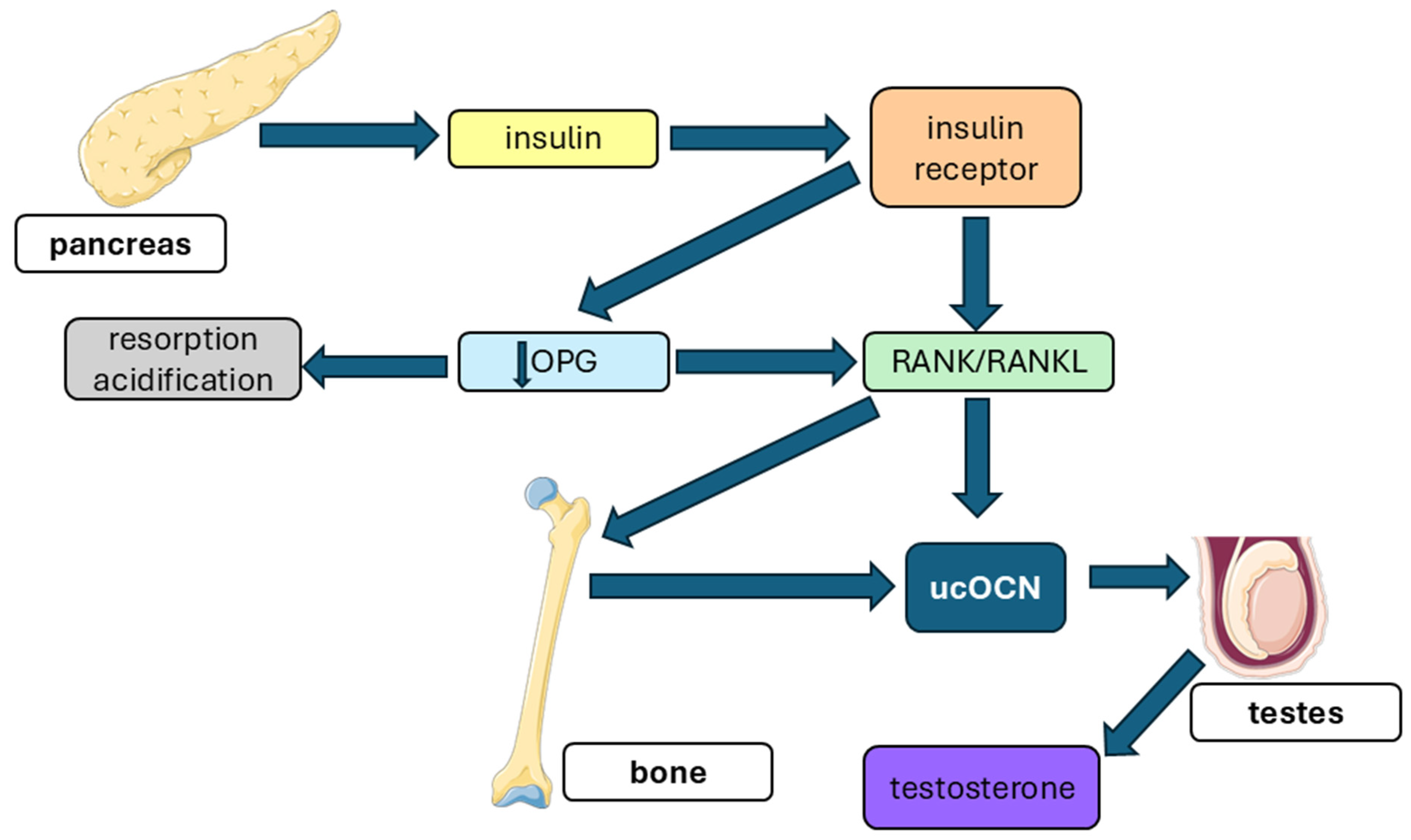
5.3.4. Bone–Testis Axis: Leydig Cell Steroidogenesis via GPRC6A
5.3.5. Neurogenesis and Cognition—OCN as a Neuromodulator
5.3.6. Acute Stress Response—ucOCN as a Rapid Endocrine Signal
5.4. OCN at the Liver–Gut Interface: Mechanistic Protection from Non Alcoholic Fatty Liver Disease (NAFLD)
5.5. OCN and Chronic Kidney Disease–Mineral and Bone Disorder (CKD-MBD)
5.5.1. Functional Vitamin K Deficiency in Dialysis: OCN Readout
5.5.2. Pediatric CKD and Vitamin-K–Dependent Biomarkers
5.5.3. Interpretation of OCN in CKD–MBD
6. OCN and Atherosclerosis: Mediator or Marker of Vascular Risk
6.1. Mediator vs. Marker: Bench, Artery, and Human Context
6.2. Human Evidence: EPC Biology, Lesional Signatures, and Calcification
6.3. Practical Interpretation: Assays, Compartments, Endpoints
6.4. Oxidative–Immune–ECM Context, Epidemiology, and Integrative Interpretation
6.5. Diet, Vitamin K2, and Vascular Implications
6.6. Synthesis and Methodological Considerations
6.7. Practical Framework for Vascular OCN Trials
7. OCN at the Bone–Tumor Interface
7.1. Epidemiological Context and Compartment-Aware Framework
7.2. OCN as a Tumour Mediator: Receptors and Pathways
7.3. Biomarker Axis: Early Tracking of Bone Metastatic Risk
7.4. Compartment-Aware Study Design: Endocrine vs. Osteogenic Readouts
7.5. Interpreting ucOCN: Carboxylation and Calcification Signals
7.6. Synthesis and Translational Outlook
8. Natural Modulators of Osteocalcin: From Diet to Therapeutics
8.1. Dietary Polyphenols as Upstream Modulators
8.2. Vitamins D3 and K2—Synergistic Modulation
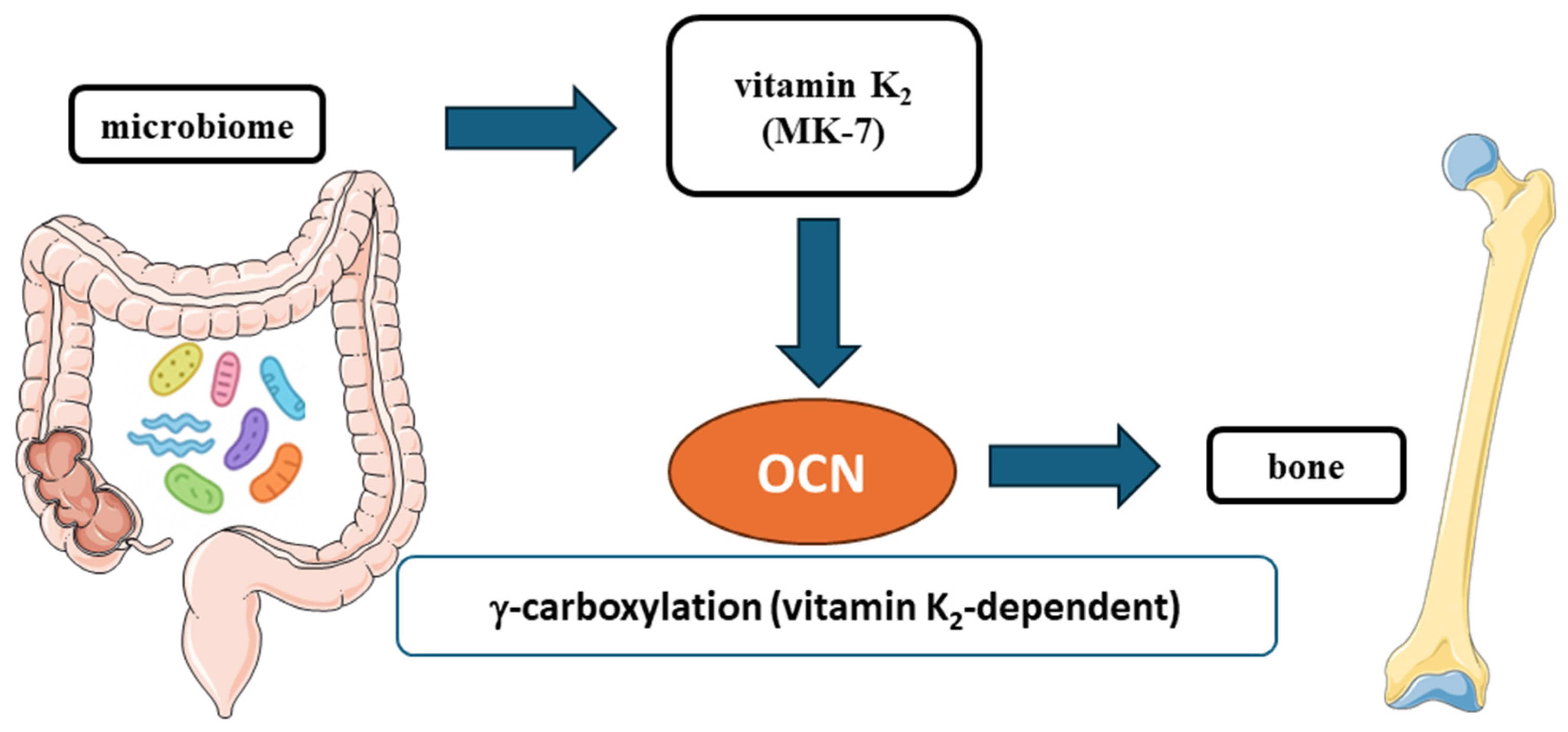
8.3. Dietary and Microbiome-Directed Modulation of the K2–OCN Axis
8.4. Context-Dependent Roles in Oncology
8.5. From “Lipidogram” to Endothelium: HDL Functionality and NO Biology
8.6. Translational Implications and Future Design
8.7. Updated Preclinical Consensus
9. Integrative Conceptual Framework and Translational Implications
10. Limitations
11. Future Directions
12. Summary and Conclusions
Author Contributions
Funding
Institutional Review Board Statement
Informed Consent Statement
Data Availability Statement
Conflicts of Interest
Abbreviations
| Ach | acetylcholine |
| AGEs | advanced glycation end products |
| AGOEs | advanced glycoxidation end products |
| Akt/PKB | protein kinase B |
| ALP | alkaline phosphatase |
| AMPK | AMP-activated protein kinase |
| AS160 | Akt substrate of 160 kDa |
| ASR | acute stress response |
| ATF4 | activating transcription factor 4 |
| ATGL | adipose triglyceride lipase |
| β-cell | pancreatic beta cell |
| β-CTX-I | beta–C-terminal telopeptide of type I collagen |
| BALP | bone-specific alkaline phosphatase |
| BCL6 | B cell lymphoma 6 protein |
| BDNF | brain-derived neurotrophic factor |
| BF% | percent body fat |
| BGLAP | bone gamma-carboxyglutamate protein |
| BLA | basolateral amygdala |
| BM | bone metastasis |
| BMD | bone mineral density |
| BMI | body mass index |
| BMS | bone–muscle signaling |
| BMR | basal metabolic rate |
| CAC | coronary artery calcification |
| cAMP | cyclic adenosine monophosphate |
| cfPWV | carotid–femoral pulse wave velocity |
| cOCN | carboxylated osteocalcin |
| CD36 | fatty acid translocase |
| CHOP | C/EBP homologous protein |
| CIMT | carotid intima–media thickness |
| CKD | chronic kidney disease |
| CKD MBD | chronic kidney disease–mineral and bone disorder |
| CML | carboxymethyl-lysine |
| CREB | cAMP-response element binding protein |
| CRISPR | clustered regularly interspaced short palindromic repeats |
| csOCN | chemically synthesized osteocalcin |
| CTX-I | C-terminal telopeptide of type I collagen |
| CYP11A1 | cytochrome P450 family 11 subfamily A member 1 |
| CYP17A1 | cytochrome P450 family 17 subfamily A member 1 |
| ΔΨ | mitochondrial membrane potential |
| DI | disposition index |
| dp-ucMGP | dephospho undercarboxylated matrix Gla protein |
| DMT1 | divalent metal transporter 1 |
| DNA | deoxyribonucleic acid |
| eGFR | estimated glomerular filtration rate |
| ECLIA | electrochemiluminescence immunoassay |
| EGFR | epidermal growth factor receptor |
| EIA | enzyme immunoassay |
| ELISA | enzyme-linked immunosorbent assay |
| EMT | epithelial–mesenchymal transition |
| ER | endoplasmic reticulum |
| ERK | extracellular signal-regulated kinase |
| EPCs | endothelial progenitor cells |
| EPIC-NL | European Prospective Investigation into Cancer and Nutrition, Netherlands cohort |
| EPIDOS | Epidemiology of Osteoporosis Study |
| ESCEO | European Society for Clinical and Economic Aspects of Osteoporosis |
| FA | fatty acids |
| FMD | flow-mediated dilation |
| FOXO1 | forkhead box protein O1 |
| GABA | gamma aminobutyric acid |
| GGCX | γ-glutamyl carboxylase |
| GH | growth hormone |
| GLP-1 | glucagon-like peptide 1 |
| GLP-1R | glucagon-like peptide 1 receptor |
| GLUT4 | glucose transporter type 4 |
| Gla | γ-carboxyglutamic acid |
| Glu-OC | glutamic acid osteocalcin epitope |
| GPR | osteocalcin receptors (G protein-coupled receptors) |
| GPR37 | G protein-coupled receptor 37 |
| GPR158 | G protein-coupled receptor 158 |
| GPRC6A | G protein-coupled receptor, class C, group 6 member A |
| GFR | glomerular filtration rate |
| GPX4 | glutathione peroxidase 4 |
| HbA1c | glycated hemoglobin |
| HDL-C | high-density lipoprotein cholesterol |
| HEC | hyperinsulinemic–euglycemic clamp |
| HIF-1α | hypoxia inducible factor 1 alpha |
| HOMA IR | homeostatic model assessment of insulin resistance |
| HPG axis | hypothalamic–pituitary–gonadal axis |
| HPA axis | hypothalamic–pituitary–adrenal axis |
| HR | heart rate |
| hsCRP | high-sensitivity C-reactive protein |
| HSD3B | 3β hydroxysteroid dehydrogenase |
| HSL | hormone-sensitive lipase |
| IGF-1 | Insulin-Like Growth Factor 1 |
| IHC | immunohistochemistry |
| IL-6 | interleukin 6 |
| IRβ | insulin receptor β subunit |
| IRS 1 | insulin receptor substrate 1 |
| JNK | c Jun N-terminal kinase |
| L-cells | GLP-1-secreting enteroendocrine L-cells of the intestine |
| LC–MS | liquid chromatography–mass spectrometry |
| LDL-C | low-density lipoprotein cholesterol |
| LH | luteinizing hormone |
| LOX | lysyl oxidase |
| Lp(a) | lipoprotein(a) |
| LTP | long-term potentiation |
| MC2R | melanocortin 2 receptor |
| MEK | MAPK/ERK kinase (MAP2K; MAPKK) |
| MGP | matrix Gla protein |
| MK-n | menaquinones containing n isoprenoid units |
| MK 4/MK 7 | menaquinone 4/menaquinone 7 (vitamin K2 forms) |
| MMPs | matrix metalloproteinases |
| mTOR/mTORC1 | mechanistic target of rapamycin (complex 1) |
| NADPH | nicotinamide adenine dinucleotide phosphate () |
| NAFLD | non-alcoholic fatty liver disease |
| NF-κB | nuclear factor kappa-light-chain-enhancer of activated B cells |
| NLF | non-linear fitting |
| N-MID | N terminal/mid region osteocalcin fragment |
| NO | nitric oxide |
| NQO1 | NAD(P)H quinone dehydrogenase 1 |
| Nrf2 | nuclear factor erythroid 2-related factor 2 |
| OCN | osteocalcin |
| OCN+ EPCs | osteocalcin-positive endothelial progenitor cells |
| OGTT | oral glucose tolerance test |
| OPN | osteopontin |
| OXPHOS | oxidative phosphorylation |
| PARPi | poly(ADP ribose) polymerase inhibitor |
| PGE2 | prostaglandin E2 |
| PHD1 | prolyl hydroxylase domain-containing protein 1 |
| PI3K | phosphoinositide 3 kinase |
| PINP | procollagen type I N-terminal propeptide |
| PKA | protein kinase A |
| PLCβ | phospholipase C beta |
| PMN | pre-metastatic niche |
| PNPLA2 | patatin-like phospholipase domain-containing protein 2 |
| PPF | paired pulse facilitation |
| PPP | pentose phosphate pathway |
| PWV | pulse wave velocity |
| Rab GTPases | Ras-related small GTP-binding proteins |
| Rap1 | Ras-related protein 1 |
| RCT | randomized controlled trial |
| ROS | reactive oxygen species |
| PXR | pregnane X receptor |
| RUNX2 | runt-related transcription factor 2 |
| SCFAs | short-chain fatty acids |
| SCD1 | stearoyl CoA desaturase 1 |
| SMAD3 | mothers against decapentaplegic homolog 3 |
| SNAP25 | synaptosomal-associated protein 25 kDa |
| SREBP1c | sterol regulatory element binding protein 1c |
| StAR | steroidogenic acute regulatory protein |
| SX | steroid and xenobiotic receptor |
| T1DM | type 1 diabetes mellitus |
| T2DM | type 2 diabetes mellitus |
| TBC1D4 | domain family member 4 |
| TBS | trabecular bone score |
| TC | total cholesterol |
| TGF-β | transforming growth factor-β |
| TIMP-1 | tissue inhibitor of metalloproteinases-1 |
| TNBC | triple negative breast cancer |
| TNF α | tumor necrosis factor alpha |
| TRACP 5b | tartrate-resistant acid phosphatase 5b |
| TSST | Trier Social Stress Test |
| ucOCN | undercarboxylated osteocalcin |
| UPR | unfolded protein response |
| vEPCs | vascular endothelial progenitor cells |
| VEGF | vascular endothelial growth factor |
| VFT domain | Venus flytrap domain (of GPRC6A receptor) |
| VKDP | vitamin K-dependent proteins |
| VKOR | vitamin K epoxide reductase |
| VSMC | vascular smooth muscle cell |
| XBP1 | X-box binding protein 1 |
References
- Karsenty, G.; Ferron, M. The Contribution of Bone to Whole-Organism Physiology. Nature 2012, 481, 314–320. [Google Scholar] [CrossRef] [PubMed]
- Lee, N.K.; Sowa, H.; Hinoi, E.; Ferron, M.; Ahn, J.D.; Confavreux, C.; Dacquin, R.; Mee, P.J.; McKee, M.D.; Jung, D.Y.; et al. Endocrine Regulation of Energy Metabolism by the Skeleton. Cell 2007, 130, 456–469. [Google Scholar] [CrossRef]
- Oury, F.; Khrimian, L.; Denny, C.A.; Gardin, A.; Chamouni, A.; Goeden, N.; Huang, Y.Y.; Lee, H.; Srinivas, P.; Gao, X.-B.; et al. Maternal and Offspring Pools of Osteocalcin Influence Brain Development and Functions. Cell 2013, 155, 228–241. [Google Scholar] [CrossRef]
- Mera, P.; Laue, K.; Ferron, M.; Confavreux, C.; Wei, J.; Galán-Díez, M.; Lacampagne, A.; Mitchell, S.J.; Mattison, J.A.; Chen, Y.; et al. Osteocalcin Signaling in Myofibers Is Necessary and Sufficient for Optimum Adaptation to Exercise. Cell Metab. 2016, 23, 1078–1092, Correction in Cell Metab. 2016, 25, 218. https://doi.org/10.1016/j.cmet.2016.05.004. [Google Scholar] [CrossRef]
- Bhattoa, H.P.; Vasikaran, S.; Trifonidi, I.; Kapoula, G.; Lombardi, G.; Jørgensen, N.R.; Pikner, R.; Miura, M.; Chapurlat, R.; Hiligsmann, M.; et al. Update on the Role of Bone Turnover Markers in the Diagnosis and Management of Osteoporosis: A Consensus Paper from ESCEO/IOF/IFCC. Osteoporos. Int. 2025, 36, 579–608. [Google Scholar] [CrossRef]
- Luukinen, H.; Käkönen, S.-M.; Pettersson, K.; Koski, K.; Laippala, P.; Lövgren, T.; Kivelä, S.-L.; Väänänen, H.K. Strong Prediction of Fractures among Older Adults by the Ratio of Carboxylated to Total Serum Osteocalcin. J. Bone Miner. Res. 2000, 15, 2473–2478. [Google Scholar] [CrossRef]
- Smith, C.; Lewis, J.R.; Sim, M.; Lim, W.H.; Lim, E.M.; Blekkenhorst, L.C.; Brennan-Speranza, T.C.; Adams, L.; Byrnes, E.; Duque, G.; et al. Higher Undercarboxylated to Total Osteocalcin Ratio Is Associated with Reduced Physical Function and Increased 15-Year Falls-Related Hospitalizations: The Perth Longitudinal Study of Aging Women. J. Bone Miner. Res. 2021, 36, 523–530. [Google Scholar] [CrossRef] [PubMed]
- Jeong, M.-K.; Lim, Y.-A.; Kwak, Y.-S. Stability of Specimens for N-mid Osteocalcin and Intact Osteocalcin Assays and Correlation of Results between the Two Assays. J. Lab. Med. Qual. Assur. 2000, 22, 243–250. [Google Scholar]
- Sim, M.; Strydom, A.; Blekkenhorst, L.C.; Bondonno, N.P.; McCormick, R.; Lim, W.H.; Zhu, K.; Byrnes, E.; Hodgson, J.M.; Lewis, J.R.; et al. Dietary Vitamin K1 Intake Is Associated with Lower Long-Term Fracture-Related Hospitalization Risk: The Perth Longitudinal Study of Ageing Women. Food Funct. 2022, 13, 10642–10650. [Google Scholar] [CrossRef]
- Gundberg, C.M.; Markowitz, M.E.; Mizruchi, M.; Rosen, J.F. Osteocalcin in Human Serum: A Circadian Rhythm. J. Clin. Endocrinol. Metab. 1985, 60, 736–739. [Google Scholar] [CrossRef]
- Pi, M.; Wu, Y.; Quarles, L.D. GPRC6A Mediates Responses to Osteocalcin in β-cells in vitro and Pancreas in vivo. J. Bone Miner. Res. 2011, 26, 1680–1683. [Google Scholar] [CrossRef]
- Khrimian, L.; Obri, A.; Ramos-Brossier, M.; Rousseaud, A.; Moriceau, S.; Nicot, A.-S.; Mera, P.; Kosmidis, S.; Karnavas, T.; Saudou, F.; et al. Gpr158 Mediates Osteocalcin’s Regulation of Cognition. J. Exp. Med. 2017, 214, 2859–2873. [Google Scholar] [CrossRef] [PubMed]
- Qian, Z.; Li, H.; Yang, H.; Yang, Q.; Lu, Z.; Wang, L.; Chen, Y.; Li, X. Osteocalcin Attenuates Oligodendrocyte Differentiation and Myelination via GPR37 Signaling in the Mouse Brain. Sci. Adv. 2021, 7, eabi5811. [Google Scholar] [CrossRef]
- Vasikaran, S.D.; Miura, M.; Pikner, R.; Bhattoa, H.P.; Cavalier, E. Practical Considerations for the Clinical Application of Bone Turnover Markers in Osteoporosis. Calcif. Tissue Int. 2021, 112, 148–157. [Google Scholar] [CrossRef]
- Schini, M.; Vilaca, T.; Gossiel, F.; Salam, S.; Eastell, R. Bone Turnover Markers: Basic Biology to Clinical Applications. Endocr. Rev. 2023, 44, 417–473. [Google Scholar] [CrossRef]
- Liu, X.; Zhao, S.; Xu, Y.; Zhang, B.; Huang, J.; Liu, F.; Yang, N.; Lu, W.; Shi, D.; Xie, D.; et al. A Novel High-Throughput and Sensitive Electrochemiluminescence Immunoassay System. Bioengineering 2024, 11, 885. [Google Scholar] [CrossRef]
- Lacombe, J.; Al Rifai, O.; Loter, L.; Moran, T.; Turcotte, A.-F.; Grenier-Larouche, T.; Tchernof, A.; Biertho, L.; Carpentier, A.C.; Prud’homme, D.; et al. Measurement of bioactive osteocalcin in humans using a novel immunoassay reveals association with glucose metabolism and β-cell function. Am. J. Physiol.-Endocrinol. Metab. 2020, 318, E381–E391. [Google Scholar] [CrossRef] [PubMed]
- Takara Bio Inc. Undercarboxylated Osteocalcin (Glu-OC) EIA Kit Manual (Cat. #MK118); Takara Bio Inc.: Otsu, Japan, 2020; Available online: https://www.takarabio.com/documents/User%20Manual/MK118/MK118_e.v1607Da.pdf?srsltid=AfmBOorQvNZgicEWEVVQRbyBmelSKxSXPuf1avZ07ewbVB8cJHrqztGb (accessed on 8 December 2025).
- Vergnaud, P.; Garnero, P.; Meunier, P.J.; Bréart, G.; Kamihagi, K.; Delmas, P.D. Undercarboxylated osteocalcin measured with a specific immunoassay predicts hip fracture in elderly women: The EPIDOS Study. J. Clin. Endocrinol. Metab. 1997, 82, 719–724. [Google Scholar] [CrossRef] [PubMed]
- Vasikaran, S.; Eastell, R.; Bruyère, O.; Foldes, A.J.; Garnero, P.; Griesmacher, A.; McClung, M.; Morris, H.A.; Silverman, S.; Trenti, T.; et al. Markers of Bone Turnover for the Prediction of Fracture Risk and Monitoring of Osteoporosis Treatment: A Need for International Reference Standards. Osteoporos. Int. 2011, 22, 391–420. [Google Scholar] [CrossRef]
- Yu, X.; Li, J.; Jiang, P.; Yu, Z.; Yang, J.; Long, J.; Wu, C.; Li, Z.; Zhao, X.; Su, Z.; et al. Osteocalcin Promotes Mineralization in Bone Microenvironment via Regulating Hydroxyapatite Formation and Integration. Int. J. Biol. Macromol. 2025, 328, 147546. [Google Scholar] [CrossRef]
- Wang, Y.; Zhou, H.; Wang, H.; Ma, J.; Chen, X.; Yang, H.; Zheng, H.; Wang, A. Serum Osteocalcin as a Novel Biomarker for Differentiating Growth Hormone Deficiency from Idiopathic Short Stature. Front. Endocrinol. 2026, 17, 1745971. [Google Scholar] [CrossRef]
- Brescia, V.; Lovero, R.; Fontana, A.; Zerlotin, R.; Colucci, S.C.; Grano, M.; Cazzolla, A.P.; Di Serio, F.; Crincoli, V.; Faienza, M.F. Reference Intervals (RIs) of the Bone Turnover Markers (BTMs) in Children and Adolescents: A Proposal for Effective Use. Biomedicines 2025, 13, 34. [Google Scholar] [CrossRef]
- Nowicki, J.K.; Jakubowska Pietkiewicz, E. Serum Osteocalcin in Pediatric Osteogenesis Imperfecta: Impact of Disease Type and Bisphosphonate Therapy. Int. J. Mol. Sci. 2025, 26, 7953. [Google Scholar] [CrossRef]
- Rodríguez-Narciso, S.; Martínez-Portilla, R.J.; Guzmán-Guzmán, I.P.; Careaga-Cárdenas, G.; Rubio-Navarro, B.J.; Barba-Gallardo, L.F.; Delgadillo-Castañeda, R.; Villafan-Bernal, J.R. Osteocalcin Serum Concentrations and Markers of Energetic Metabolism in Pediatric Patients: Systematic Review and Meta Analysis. Front. Pediatr. 2023, 10, 1075738. [Google Scholar] [CrossRef]
- Berggren, S.; Dahlgren, J.; Andersson, O.; Bergman, S.; Roswall, J. Osteocalcin in Infancy and Early Childhood and Its Correlation with Later Growth and Body Composition: A Longitudinal Birth Cohort Study. Clin. Endocrinol. 2025, 102, 427–437. [Google Scholar] [CrossRef]
- Finkenstedt, G.; Gasser, R.W.; Höfle, G.; Watfah, C.; Fridrich, L. Effects of Growth Hormone (GH) Replacement on Bone Metabolism and Mineral Density in Adult Onset of GH Deficiency: Results of a Double-blind Placebo-controlled Study with Open Follow-up. Eur. J. Endocrinol. 1997, 136, 282–289. [Google Scholar] [CrossRef][Green Version]
- Fontcuberta-Rigo, M.; Nakamura, M.; Puigbò, P. Phylobone: A Comprehensive Database of Bone Extracellular Matrix Proteins in Human and Model Organisms. Bone Res. 2023, 11, 44. [Google Scholar] [CrossRef] [PubMed]
- Boskey, A.; Gadaleta, S.; Gundberg, C.; Doty, S.; Ducy, P.; Karsenty, G. Fourier Transform Infrared Microspectroscopic Analysis of Bones of Osteocalcin-Deficient Mice Provides Insight into the Function of Osteocalcin. Bone 1998, 23, 437–440. [Google Scholar] [CrossRef] [PubMed]
- Price, P.A.; Williamson, M.K. Warfarin Causes Rapid Calcification of the Elastic Lamellae in Rat Arteries and Heart Valves. Arterioscler. Thromb. Vasc. Biol. 1998, 18, 1400–1407. [Google Scholar] [CrossRef] [PubMed]
- Chenu, C.; Colucci, S.; Grano, M.; Zigrino, E.; Barattolo, R.; Zambonin, G.; Baldini, N.; Vergnaud, P.; Delmas, P.D.; Zallone, A.Z. Osteocalcin Induces Chemotaxis Secretion of Matrix Proteins Calcium-Mediated Intracellular Signaling in Human Osteoclast-Like Cells. J. Cell Biol. 1994, 127, 1149–1158. [Google Scholar] [CrossRef]
- Ducy, P.; Desbois, C.; Boyce, B.; Pinero, G.; Story, B.; Dunstan, C.; Smith, E.; Bonadio, J.; Goldstein, S.; Gundberg, C.; et al. Increased bone formation in osteocalcin-deficient mice. Nature 1996, 382, 448–452. [Google Scholar] [CrossRef] [PubMed]
- Tommassini, S.; Dowd, T.L. Update and Reassessment of Data on the Role of Osteocalcin in Bone Properties and Glucose Homeostasis in OC-/- Mice. Int. J. Mol. Sci. 2026, 27, 170. [Google Scholar] [CrossRef] [PubMed]
- Roach, H.I. Why Does Bone Matrix Contain Non-collagenous Proteins? The Possible Roles of Osteocalcin, Osteonectin, Osteopontin and Bone Sialoprotein in Bone Mineralisation and Resorption. Cell Biol. Int. 1994, 18, 617–628. [Google Scholar] [CrossRef] [PubMed]
- Diegel, C.R.; Hann, S.; Ayturk, U.M.; Hu, J.C.W.; Lim, K.-E.; Droscha, C.J.; Madaj, Z.B.; Foxa, G.E.; Izaguirre, I.; Core, V.V.A.T.; et al. An Osteocalcin-deficient Mouse Strain without Endocrine Abnormalities. PLoS Genet. 2020, 16, e1008361. [Google Scholar] [CrossRef]
- Xu, Z.; Yang, C.; Wu, F.; Tan, X.; Guo, Y.; Zhang, H.; Wang, H.; Sui, X.; Xu, Z.; Zhao, M.; et al. Triple-gene Deletion for Osteocalcin Significantly Impairs the Alignment of Hydroxyapatite Crystals and Collagen in Mice. Front. Physiol. 2023, 14, 1136561. [Google Scholar] [CrossRef]
- Tsao, Y.-T.; Huang, Y.-J.; Wu, H.-H.; Liu, Y.-A.; Liu, Y.-S.; Lee, O.K. Osteocalcin Mediates Biomineralization during Osteogenic Maturation in Human Mesenchymal Stromal Cells. Int. J. Mol. Sci. 2017, 18, 159. [Google Scholar] [CrossRef]
- Du, Z.; Zhao, Y.; Zhang, K.; Qin, Q.; Luo, C.; Wu, J.; Zhang, H.; Liu, S.; Xu, Z.; Zheng, J.; et al. Undercarboxylated OCN Inhibits Chondrocyte Hypertrophy and Osteoarthritis Development through GPRC6A/HIF-1α Cascade. Int. J. Biol. Sci. 2025, 21, 4353–4373. [Google Scholar] [CrossRef]
- Fantner, G.E.; Hassenkam, T.; Kindt, J.H.; Weaver, J.C.; Birkedal, H.; Pechenik, L.; Cutroni, J.A.; Cidade, G.A.G.; Stucky, G.D.; Morse, D.E.; et al. Sacrificial bonds and hidden length dissipate energy as mineralized fibrils separate during bone fracture. Nat. Mater. 2005, 4, 612–616. [Google Scholar] [CrossRef]
- Gao, Q.; Jiang, Y.; Zhou, D.; Li, G.; Han, Y.; Yang, J.; Xu, K.; Jing, Y.; Bai, L.; Geng, Z.; et al. Advanced glycation end products mediate biomineralization disorder in diabetic bone disease. Cell Rep. Med. 2024, 5, 101694. [Google Scholar] [CrossRef]
- Sroga, G.E.; Vashishth, D. In vivo glycation—Interplay between oxidant and carbonyl stress in bone. JBMR Plus 2024, 8, ziae110. [Google Scholar] [CrossRef]
- Wang, B.; Vashishth, D. Advanced glycation and glycoxidation end products in bone. Bone 2023, 176, 116880. [Google Scholar] [CrossRef]
- Shirinezhad, A.; Azarboo, A.; Mafhoumi, A.; Islampanah, M.; Mohammadi, S.; Ghaseminejad-Raeini, A.; Hoveidaei, A.H. Urinary pentosidine as a potential biomarker of impaired bone health: A systematic review and meta-analysis. J. Diabetes Metab. Disord. 2024, 24, 6. [Google Scholar] [CrossRef]
- Waqas, K.; Chen, J.; Trajanoska, K.; Ikram, M.A.; Uitterlinden, A.G.; Rivadeneira, F.; Zillikens, M.C. Skin Autofluorescence, a Noninvasive Biomarker for Advanced Glycation End-products, Is Associated with Sarcopenia. J. Clin. Endocrinol. Metab. 2022, 107, e793–e803. [Google Scholar] [CrossRef]
- Vaidya, R.; Conlon, L.; Duclos, O.; Behzad, R.; Aaronson, J.; Karim, L. Effect of High Glucose and Carboxymethyl-Lysine on Osteocyte Gene Expression. Am. J. Mol. Biol. 2025, 15, 150–169. [Google Scholar] [CrossRef]
- Rossi, M.; Battafarano, G.; Pepe, J.; Minisola, S.; Del Fattore, A. The Endocrine Function of Osteocalcin Regulated by Bone Resorption: A Lesson from Reduced and Increased Bone Mass Diseases. Int. J. Mol. Sci. 2019, 20, 4502. [Google Scholar] [CrossRef]
- Zhang, Z.; Li, Y.; Li, J.; Yuan, Y.; Liu, K.; Shi, X. The effect of vitamin K2 supplementation on bone turnover biochemical markers in postmenopausal osteoporosis patients: A systematic review and meta-analysis. Front. Endocrinol. 2025, 16, 1703116. [Google Scholar] [CrossRef] [PubMed]
- Alberti, K.G.; Eckel, R.H.; Grundy, S.M.; Zimmet, P.Z.; Cleeman, J.I.; Donato, K.A.; Fruchart, J.C.; James, W.P.; Loria, C.M.; Smith, S.C., Jr.; et al. Harmonizing the metabolic syndrome: A joint interim statement of the International Diabetes Federation Task Force on Epidemiology and Prevention; National Heart, Lung, and Blood Institute; American Heart Association; World Heart Federation; International Atherosclerosis Society; and International Association for the Study of Obesity. Circulation 2009, 120, 1640–1645. [Google Scholar] [CrossRef] [PubMed]
- Lopes, H.F.; Corrêa-Giannella, M.L.; Consolim-Colombo, F.M.; Egan, B.M. Visceral adiposity syndrome: A new perspective on the metabolic syndrome. Diabetol. Metab. Syndr. 2016, 8, 40. [Google Scholar] [CrossRef]
- Ferron, M.; Wei, J.; Yoshizawa, T.; Del Fattore, A.; DePinho, R.A.; Teti, A.; Ducy, P.; Karsenty, G. Insulin signaling in osteoblasts integrates bone remodeling and energy metabolism. Cell 2010, 142, 296–308. [Google Scholar] [CrossRef]
- Otani, T.; Mizokami, A.; Kawakubo-Yasukochi, T.; Takeuchi, H.; Inai, T.; Hirata, M. Osteocalcin triggers adiponectin release and improves insulin sensitivity in adipocytes. Adv. Biol. Regul. 2020, 78, 100752. [Google Scholar] [CrossRef] [PubMed]
- Ferron, M.; Lacombe, J. Regulation of Energy Metabolism by the Skeleton: Osteocalcin and Beyond. Arch. Biochem. Biophys. 2014, 561, 137–146. [Google Scholar] [CrossRef] [PubMed]
- Kocak, T.; Acar Tek, N. Osteocalcin: A new phenomenon for type 2 diabetes and obesity. Eur. J. Environ. Public Health 2023, 7, e0135. [Google Scholar] [CrossRef] [PubMed]
- Liu, X.; Yeap, B.B.; Brock, K.E.; Levinger, I.; Golledge, J.; Flicker, L.; Brennan-Speranza, T.C. Associations of Osteocalcin Forms with Metabolic Syndrome and Its Individual Components in Older Men: The Health In Men Study. J. Clin. Endocrinol. Metab. 2021, 106, e3506–e3518. [Google Scholar] [CrossRef]
- Yeap, B.B.; Alfonso, H.; Chubb, S.A.; Handelsman, D.J.; Hankey, G.J.; Norman, P.E.; Flicker, L. Reference ranges and determinants of testosterone, dihydrotestosterone, and estradiol levels measured using liquid chromatography-tandem mass spectrometry in a population-based cohort of older men. J. Clin. Endocrinol. Metab. 2012, 97, 4030–4039. [Google Scholar] [CrossRef]
- Kanazawa, I.; Yamaguchi, T.; Tada, Y.; Yamauchi, M.; Yano, S.; Sugimoto, T. Serum Osteocalcin Level Is Positively Associated with Insulin Sensitivity and Secretion in Patients with Type 2 Diabetes. Bone 2011, 48, 720–725. [Google Scholar] [CrossRef]
- Liu, X.; Liu, Y.; Mathers, J.; Cameron, M.; Levinger, I.; Yeap, B.B.; Lewis, J.R.; Brock, K.E.; Brennan-Speranza, T.C. Osteocalcin and Measures of Adiposity: A Systematic Review and Meta-analysis of Observational Studies. Arch. Osteoporos. 2020, 15, 145. [Google Scholar] [CrossRef]
- Mizokami, A.; Yasutake, Y.; Higashi, S.; Kawakubo-Yasukochi, T.; Chishaki, S.; Takahashi, I.; Takeuchi, H.; Hirata, M. Oral administration of osteocalcin improves glucose utilization by stimulating glucagon-like peptide-1 secretion. Bone 2014, 69, 68–79. [Google Scholar] [CrossRef] [PubMed]
- Sangaleti, C.T.; Katayama, K.Y.; De Angelis, K.; Lemos de Moraes, T.; Araújo, A.A.; Lopes, H.F.; Camacho, C.; Bortolotto, L.A.; Michelini, L.C.; Irigoyen, M.C.; et al. The Cholinergic Drug Galantamine Alleviates Oxidative Stress Alongside Anti-inflammatory and Cardio-Metabolic Effects in Subjects with the Metabolic Syndrome in a Randomized Trial. Front. Immunol. 2021, 12, 613979. [Google Scholar] [CrossRef]
- Ye, X.; Yu, R.; Jiang, F.; Hou, X.; Wei, L.; Bao, Y.; Jia, W. Osteocalcin and Risks of Incident Diabetes and Diabetic Kidney Disease: A 4.6-Year Prospective Cohort Study. Diabetes Care 2022, 45, 830–836. [Google Scholar] [CrossRef]
- Riquelme-Gallego, B.; García-Molina, L.; Cano-Ibáñez, N.; Sánchez-Delgado, G.; Andújar-Vera, F.; García-Fontana, C.; González-Salvatierra, S.; García-Recio, E.; Martínez-Ruiz, V.; Bueno-Cavanillas, A.; et al. Circulating Undercarboxylated Osteocalcin as Estimator of Cardiovascular and Type 2 Diabetes Risk in Metabolic Syndrome Patients. Sci. Rep. 2020, 10, 1840. [Google Scholar] [CrossRef]
- Ohlsson, C.; Sjögren, K. Effects of the gut microbiota on bone mass. Trends Endocrinol. Metab. 2015, 26, 69–74. [Google Scholar] [CrossRef]
- Behera, J.; Ison, J.; Tyagi, S.C.; Tyagi, N. The role of gut microbiota in bone homeostasis. Bone 2020, 135, 115317. [Google Scholar] [CrossRef]
- Ren, L.; Peng, C.; Hu, X.; Han, Y.; Huang, H. Microbial Production of Vitamin K2: Current Status and Future Prospects. Biotechnol. Adv. 2020, 39, 107453. [Google Scholar] [CrossRef] [PubMed]
- Tsugawa, N.; Shiraki, M.; Vitamin, K. Nutrition and Bone Health. Nutrients 2020, 12, 1909. [Google Scholar] [CrossRef] [PubMed]
- Wen, L.; Chen, J.; Duan, L.; Li, S. Vitamin K-Dependent Proteins Involved in Bone and Cardiovascular Health. Mol. Med. Rep. 2018, 18, 3–15. [Google Scholar] [CrossRef] [PubMed]
- Shearer, M.J.; Newman, P. Metabolism and Cell Biology of Vitamin K. Thromb. Haemost. 2008, 100, 530–547. [Google Scholar] [CrossRef]
- Aaseth, J.O.; Finnes, T.E.; Askim, M.; Alexander, J. Vitamin K and Bone–Vascular Axis: Updated Review. Nutrients 2024, 16, 2420. [Google Scholar] [CrossRef]
- Alonso, N.; Meinitzer, A.; Fritz-Petrin, E.; Enko, D.; Herrmann, M. Role of Vitamin K in Bone and Muscle Metabolism. Calcif. Tissue Int. 2023, 112, 178–196. [Google Scholar] [CrossRef]
- Al-Suhaimi, E.A.; Al-Jafary, M.A. Endocrine Roles of Vitamin K-Dependent Osteocalcin in the Relation Between Bone Metabolism and Metabolic Disorders. Rev. Endocr. Metab. Disord. 2020, 21, 117–125. [Google Scholar] [CrossRef]
- Xiao, H.; Chen, J.; Duan, L.; Li, S. Role of emerging vitamin K-dependent proteins: Growth arrest-specific protein 6, Gla-rich protein and periostin (Review). Int. J. Mol. Med. 2021, 47, 2. [Google Scholar] [CrossRef]
- Inaba, N.; Sato, T.; Yamashita, T. Low-Dose Daily Intake of Vitamin K2 (Menaquinone-7) Improves Osteocalcin γ-Carboxylation: A Double-Blind, Randomized Controlled Trial. J. Nutr. Sci. Vitaminol. 2015, 61, 471–480. [Google Scholar] [CrossRef]
- Knapen, M.H.; Drummen, N.E.; Smit, E.; Vermeer, C.; Theuwissen, E. Three-year low-dose menaquinone-7 supplementation helps decrease bone loss in healthy postmenopausal women. Osteoporos. Int. 2013, 24, 2499–2507. [Google Scholar] [CrossRef]
- Theuwissen, E.; Cranenburg, E.C.; Knapen, M.H.; Magdeleyns, E.J.; Teunissen, K.J.; Schurgers, L.J.; Smit, E.; Vermeer, C. Low-dose menaquinone-7 supplementation improved extra-hepatic vitamin K status, but had no effect on thrombin generation in healthy subjects. Br. J. Nutr. 2012, 108, 1652–1657. [Google Scholar] [CrossRef]
- Iwamoto, J.; Takeda, T.; Ichimura, S. Treatment with Vitamin D3 and/or Vitamin K2 for Postmenopausal Osteoporosis. Keio J. Med. 2003, 52, 147–150. [Google Scholar] [CrossRef] [PubMed][Green Version]
- Ma, M.L.; Ma, Z.J.; He, Y.L.; Sun, H.; Yang, B.; Ruan, B.J.; Zhan, W.D.; Li, S.X.; Dong, H.; Wang, Y.X. Efficacy of vitamin K2 in the prevention and treatment of postmenopausal osteoporosis: A systematic review and meta-analysis of randomized controlled trials. Front. Public Health 2022, 10, 979649. [Google Scholar] [CrossRef] [PubMed]
- Knapen, M.H.J.; Schurgers, L.J.; Vermeer, C. Vitamin K2 supplementation improves osteocalcin carboxylation in healthy premenopausal women: A randomized controlled trial. Thromb. Haemost. 2015, 113, 1135–1144. [Google Scholar] [CrossRef] [PubMed]
- Ahmad, S.S.; Karim, S.H.; Ibrahim, M.; Alkreathy, H.M.; Alsieni, M.; Khan, M.A. Effect of Vitamin K on Bone Mineral Density and Fracture Risk in Adults: Systematic Review and Meta-Analysis. Biomedicines 2022, 10, 1048. [Google Scholar] [CrossRef]
- Diaz-Franco, M.C.; Franco-Diaz de Leon, R.; Villafan-Bernal, J.R. Osteocalcin-GPRC6A: An update of its clinical and biological multi-organic interactions (Review). Mol. Med. Rep. 2018, 19, 15–22. [Google Scholar] [CrossRef]
- Agarwal, R.; Ye, R.; Smith, M.D.; Smith, J.C.; Quarles, L.D.; Pi, M. Osteocalcin binds to a GPRC6A Venus fly trap allosteric site to positively modulate GPRC6A signaling. FASEB Bioadv. 2024, 6, 365–376. [Google Scholar] [CrossRef]
- Martiniakova, M.; Biro, R.; Kovacova, V.; Babikova, M.; Zemanova, N.; Mondockova, V.; Omelka, R. Current knowledge of bone-derived factor osteocalcin: Its role in the management and treatment of diabetes mellitus, osteoporosis, osteopetrosis and inflammatory joint diseases. J. Mol. Med. 2024, 102, 435–452. [Google Scholar] [CrossRef]
- Kang, N.; Huang, J.; Han, X.; Li, Z.; Yuan, Y.; Guo, X.; Yang, N. The role of osteocalcin in regulating the acute stress response. Front. Pharmacol. 2025, 16, 1646558. [Google Scholar] [CrossRef] [PubMed]
- Oury, F.; Sumara, G.; Sumara, O.; Ferron, M.; Chang, H.; Smith, C.E.; Hermo, L.; Suarez, S.; Roth, B.L.; Ducy, P.; et al. Endocrine Regulation of Male Fertility by the Skeleton. Cell 2011, 144, 796–809. [Google Scholar] [CrossRef] [PubMed]
- Zhang, M.; Dong, K.; Du, Q.; Xu, J.; Bai, X.; Chen, L.; Yang, J. Chemically synthesized osteocalcin alleviates NAFLD via the AMPK–FOXO1/BCL6–CD36 pathway. J. Transl. Med. 2024, 22, 782. [Google Scholar] [CrossRef]
- Pi, M.; Kapoor, K.; Ye, R.; Nishimoto, S.K.; Smith, J.C.; Baudry, J.; Quarles, L.D. Evidence for osteocalcin binding and activation of GPRC6A in β-cells. Endocrinology 2016, 157, 1866–1880. [Google Scholar] [CrossRef]
- Channuwong, P.; Speight, V.; Yuan, Y.; Yao, S.; Yoshimura, M.; Bauermann, F.V.; Ranjan, A.; Adisakwattana, S.; Cheng, H. Hyperglycemia from Diabetes Potentiates Uncarboxylated Osteocalcin-Stimulated Insulin Secretion in Rat INS-1 Pancreatic β-Cells. Nutrients 2024, 16, 2384. [Google Scholar] [CrossRef]
- Otani, T.; Mizokami, A.; Hayashi, Y.; Gao, J.; Mori, Y.; Nakamura, S.; Takeuchi, H.; Hirata, M. Signaling pathway for adiponectin expression in adipocytes by osteocalcin. Cell. Signal. 2015, 27, 532–544. [Google Scholar] [CrossRef]
- Komori, T. Functions of Osteocalcin in Bone, Pancreas, Testis, and Muscle. Int. J. Mol. Sci. 2020, 21, 7513. [Google Scholar] [CrossRef] [PubMed]
- Manolagas, S.C. Osteocalcin promotes bone mineralization but is not a hormone. PLoS Genet. 2020, 16, e1008714. [Google Scholar] [CrossRef]
- Hulett, N.A.; Scalzo, R.L.; Reusch, J.E.B. Glucose uptake by skeletal muscle within the contexts of type 2 diabetes and exercise: An integrated approach. Nutrients 2022, 14, 647. [Google Scholar] [CrossRef] [PubMed]
- Wang, H.; Zheng, A.; Arias, E.B.; Kwak, S.E.; Pan, X.; Duan, D.; Cartee, G.D. AS160/TBC1D4 expression—But not phosphorylation at Ser588/Thr642/Ser704—Is essential for elevated insulin-stimulated glucose uptake by skeletal muscle from female rats after acute exercise. FASEB J. 2023, 37, e23021. [Google Scholar] [CrossRef]
- Liu, D.-M.; Guo, X.-Z.; Tong, H.-J.; Tao, B.; Sun, L.-H.; Zhao, H.-Y.; Ning, G.; Liu, J.-M. Association between osteocalcin and glucose metabolism: A meta-analysis. Osteoporos. Int. 2015, 26, 2823–2833, Erratum in Osteoporos. Int. 2015, 26, 2835–2836. [Google Scholar] [CrossRef]
- Kunutsor, S.K.; Apekey, T.A.; Laukkanen, J.A. Association of serum total osteocalcin with type 2 diabetes and intermediate metabolic phenotypes: Systematic review and meta-analysis. Eur. J. Epidemiol. 2015, 30, 599–614. [Google Scholar] [CrossRef] [PubMed]
- Zwakenberg, S.R.; Gundberg, C.M.; Spijkerman, A.M.W.; van der A, D.L.; van der Schouw, Y.T.; Beulens, J.W.J. Osteocalcin is not associated with the risk of type 2 diabetes: Findings from the EPIC-NL study. PLoS ONE 2015, 10, e0138693. [Google Scholar] [CrossRef] [PubMed]
- Rønn, S.H.; Harsløf, T.; Pedersen, S.B.; Langdahl, B.L. Vitamin K2 (menaquinone-7) increases plasma adiponectin but does not affect insulin sensitivity in postmenopausal women: RCT. Eur. J. Clin. Nutr. 2021, 75, 1661–1667. [Google Scholar] [CrossRef]
- Zhang, X.; Krishnamoorthy, S.; Tang, C.T.-L.; Hsu, W.W.-Q.; Li, G.H.-Y.; Sing, C.-W.; Tan, K.C.-B.; Cheung, B.M.-Y.; Wong, I.C.-K.; Kung, A.W.-C.; et al. Association of BMD and bone turnover markers with the risk of diabetes: Hong Kong Osteoporosis Study and Mendelian randomization. J. Bone Miner. Res. 2023, 38, 1782–1790. [Google Scholar] [CrossRef]
- Ma, W.; Zhou, X.; Huang, X.; Xiong, Y. Causal relationship between BMI, type 2 diabetes and bone mineral density: Mendelian randomization. PLoS ONE 2023, 18, e0290530. [Google Scholar] [CrossRef] [PubMed]
- Ferron, M.; McKee, M.D.; Levine, R.L.; Ducy, P.; Karsenty, G. Intermittent injections of osteocalcin improve glucose metabolism and prevent type 2 diabetes in mice. Bone 2012, 50, 568–575. [Google Scholar] [CrossRef]
- Al Rifai, O.; Chow, J.; Lacombe, J.; Julien, C.; Faubert, D.; Susan-Resiga, D.; Essalmani, R.; Creemers, J.W.; Seidah, N.G.; Ferron, M. Proprotein convertase furin regulates osteocalcin bone endocrine function. J. Clin. Investig. 2017, 127, 4104–4117. [Google Scholar] [CrossRef]
- Smith, C.; Lin, X.; Parker, L.; Yeap, B.B.; Hayes, A.; Levinger, I. The role of bone in energy metabolism: A focus on osteocalcin. Bone 2024, 188, 117238. [Google Scholar] [CrossRef]
- Kanazawa, I. Osteocalcin as a hormone regulating glucose metabolism. World J. Diabetes 2015, 6, 1345–1354. [Google Scholar] [CrossRef]
- Li, J.; Lou, S.; Bian, X. Osteocalcin and GPR158: Linking bone and brain function. Front. Cell Dev. Biol. 2025, 13, 1564751. [Google Scholar] [CrossRef] [PubMed]
- Bian, X.; Wang, Y.; Zhang, W.; Ye, C.; Li, J. GPR37 and its Neuroprotective Mechanisms: Bridging Osteocalcin Signaling and Brain Function. Front. Cell Dev. Biol. 2024, 12, 1510666. [Google Scholar] [CrossRef] [PubMed]
- Ma, Q.; Tian, J.L.; Lou, Y.; Guo, R.; Ma, X.R.; Wu, J.B.; Yang, J.; Tang, B.J.; Li, S.; Qiu, M.; et al. Oligodendrocytes drive neuroinflammation and neurodegeneration in Parkinson’s disease via the prosaposin-GPR37-IL-6 axis. Cell Rep. 2025, 44, 115266. [Google Scholar] [CrossRef]
- Huang, Y.; Mo, H.; Yang, J.; Gao, L.; Tao, T.; Shu, Q.; Guo, W.; Zhao, Y.; Lyu, J.; Xu, G.; et al. Mechano-regulation of GLP-1 production by Piezo1 in intestinal L cells. eLife 2024, 13, RP97854. [Google Scholar] [CrossRef]
- Sodum, N.; Mattila, O.; Sharma, R.; Kamakura, R.; Lehto, V.-P.; Walkowiak, J.; Herzig, K.-H.; Raza, G.S. Nutrient Combinations Sensed by L-Cell Receptors Potentiate GLP-1 Secretion. Int. J. Mol. Sci. 2024, 25, 1087. [Google Scholar] [CrossRef]
- Biancolin, A.D.; Jeong, H.; Mak, K.W.Y.; Yuan, Z.; Brubaker, P.L. Disrupted and Elevated Circadian Secretion of Glucagon-Like Peptide-1 in a Murine Model of Type 2 Diabetes. Endocrinology 2022, 163, bqac118. [Google Scholar] [CrossRef]
- Levinger, I.; Lin, X.; Zhang, X.; Brennan-Speranza, T.C.; Volpato, B.; Hayes, A.; Jerums, G.; Seeman, E.; McConell, G. The effects of muscle contraction and recombinant osteocalcin on insulin sensitivity ex vivo. Osteoporos. Int. 2016, 27, 653–663. [Google Scholar] [CrossRef]
- Muñoz-Cánoves, P.; Scheele, C.; Pedersen, B.K.; Serrano, A.L. Interleukin-6 myokine signaling in skeletal muscle: A double-edged sword? FEBS J. 2013, 280, 4131–4148. [Google Scholar] [CrossRef]
- Sperling, M.; Pelczyńska, M.; Bogdański, P.; Formanowicz, D.; Czyżewska, K. Association of Serum Omentin-1 Concentration with the Content of Adipose Tissue and Glucose Tolerance in Subjects with Central Obesity. Biomedicines 2023, 11, 331. [Google Scholar] [CrossRef] [PubMed]
- Hawkins, M.N.; Raven, P.B.; Snell, P.G.; Stray-Gundersen, J.; Levine, B.D. Maximal oxygen uptake as a parametric measure of cardiorespiratory capacity. Med. Sci. Sports Exerc. 2007, 39, 103–107. [Google Scholar]
- Oury, F.; Ferron, M.; Huizhen, W.; Confavreux, C.; Xu, L.; Lacombe, J.; Srinivas, P.; Chamouni, A.; Lugani, F.; Lejeune, H.; et al. Osteocalcin regulates murine and human fertility through a pancreas–bone–testis axis. J. Clin. Investig. 2013, 123, 2421–2433, Erratum in J. Clin. Investig. 2015, 125, 2180. [Google Scholar] [CrossRef]
- Gao, Y.; Hsu, V.; Kil, A.; Arias, M.; Chen, H.; Trigo, E.; Mackay, A.; Xiang, A.H.; Buchanan, T.A.; Watanabe, R.M. Effect of Osteocalcin on Insulin Sensitivity, Insulin Secretion, and Beta-Cell Compensation in Mexican Americans. J. Clin. Endocrinol. Metab. 2025, 111, e937–e942. [Google Scholar] [CrossRef] [PubMed]
- Kumar, B.S.B.; Mallick, S.; Manjunathachar, H.V.; Shashank, C.; Sharma, A.; Nagoorvali, D.; Soren, S.; Jadhav, V.G.; Pandita, S. In vitro Effects of Uncarboxylated Osteocalcin on Buffalo Leydig Cell Steroidogenesis. Vet. Res. Commun. 2024, 48, 1423–1433. [Google Scholar] [CrossRef] [PubMed]
- Yang, G.; Liu, H.; Yin, Z.; Zhao, L.; Chen, Y.; Li, Y.; Cheng, L.; Ma, J.; Yu, J.; Zhang, Y.; et al. ucOCN Promotes Testosterone Synthesis via the PKA–MAPK/ERK–CREB Signaling Pathway in Porcine Leydig Cells. Cells 2025, 14, 1937. [Google Scholar] [CrossRef]
- Yaghobinejad, M.; Toolee, H.; Solhjoo, S.; Seifali, E.; Parvari, S.; Akanji, O.D.; Rastegar, T. Osteocalcin Improves Testicular Morphology but Does Not Ameliorate Testosterone Synthesis Signaling in Azoospermic Mice. Clin. Exp. Reprod. Med. 2024, 51, 344–352. [Google Scholar] [CrossRef]
- Zhao, Y.; Zhao, J.; Chen, W.; Li, X.; Xu, P.; Qin, P.; Bai, S. Effect of Inhibiting Gprc6a Gene on Testosterone Production in Fluoridated Leydig Cells. Acad. J. Chin. PLA Med. Sch. 2024, 45, 1048–1053. [Google Scholar]
- Jawich, K.; De Toni, L.; Al-Fahoum, S.; Alhalabi, M.; Di Nisio, A.; Rocca, M.S.; Ferlin, A.; Foresta, C. Undercarboxylated Osteocalcin/GPRC6A: A Bone–Testis Crosstalk. Endocr. Abstr. 2023, 90, EP910. [Google Scholar] [CrossRef]
- Jawich, K.; Rocca, M.S.; Al-Fahoum, S.; Alhalabi, M.; Di Nisio, A.; Foresta, C.; Ferlin, A.; De Toni, L. RS2247911 Polymorphism of GPRC6A Gene and Serum Undercarboxylated-Osteocalcin Are Associated with Testis Function. J. Endocrinol. Investig. 2022, 45, 1673–1682. [Google Scholar] [CrossRef]
- Carlomagno, F.; Hasenmajer, V.; Spaziani, M.; Tenuta, M.; Sesti, F.; Tarantino, C.; Pozza, C.; Isidori, A.M.; Gianfrilli, D. Total osteocalcin levels are independently associated with worse testicular function and a higher degree of hypothalamic–pituitary–gonadal axis activation in Klinefelter syndrome. J. Endocrinol. Investig. 2024, 47, 3049–3056. [Google Scholar] [CrossRef]
- Prosperi, O.; Hanusch, B.; Naber, S.; Lücke, T.; Sinningen, K. Osteocalcin in human breast milk over the course of lactation. Front. Endocrinol. 2025, 16, 1715553. [Google Scholar] [CrossRef] [PubMed]
- Glatigny, M.; Moriceau, S.; Rivagorda, M.; Ramos-Brossier, M.; Nascimbeni, A.C.; Lante, F.; Shanley, M.R.; Boudarene, N.; Rousseaud, A.; Friedman, A.K.; et al. Autophagy Is Required for Memory Formation and Reverses Age-Related Memory Decline. Curr. Biol. 2019, 29, 435–448.e8. [Google Scholar] [CrossRef]
- Wu, J.; Dou, Y.; Liu, W.; Zhao, Y.; Liu, X. Osteocalcin improves outcome after acute ischemic stroke. Aging 2020, 12, 387–396. [Google Scholar] [CrossRef] [PubMed]
- Freus, N.K.; Wank, I.; Häfele, M.; Kalinichenko, L.S.; Müller, C.P.; Strobelt, S.; Ludwig, A.; Hess, A.; Kreitz, S. Pharmacological and resting-state fMRI reveal osteocalcin’s effects on mouse brain regions with high Gpr37 and Gpr158 expression. Sci. Rep. 2025, 15, 10116. [Google Scholar] [CrossRef] [PubMed]
- Lin, J.; Li, Q.; Lei, X.; Zhao, H. The emerging roles of GPR158 in the regulation of the endocrine system. Front. Cell Dev. Biol. 2022, 10, 1034348. [Google Scholar] [CrossRef]
- da Silva, E.P.; Feltran, G.d.S.; dos Santos, S.A.A.; de Oliveira, R.C.; Assis, R.I.; Junior, L.A.J.; Andia, D.C.; Zambuzzi, W.F.; Latini, A.; da Silva, R.A.F. Hyperglycemic Microenvironment Compromises the Homeostasis of Communication Between the Bone–Brain Axis by the Epigenetic Repression of the Osteocalcin Receptor Gpr158 in the Hippocampus. Brain Res. 2023, 1803, 148234. [Google Scholar] [CrossRef] [PubMed]
- Berger, J.M.; Singh, P.; Khrimian, L.; Morgan, D.A.; Chowdhury, S.; Arteaga-Solis, E.; Horvath, T.L.; Domingos, A.I.; Marsland, A.L.; Yadav, V.K.; et al. Mediation of the Acute Stress Response by the Skeleton. Cell Metab. 2019, 30, 890–902.e8. [Google Scholar] [CrossRef]
- Greenhill, C. Bone: Osteocalcin linked to stress response. Nat. Rev. Endocrinol. 2019, 15, 627. [Google Scholar] [CrossRef]
- Yadav, V.K.; Berger, J.M.; Singh, P.; Nagarajan, P.; Karsenty, G. Embryonic osteocalcin signaling determines lifelong adrenal steroidogenesis and homeostasis in the mouse. J. Clin. Investig. 2022, 132, e153752. [Google Scholar] [CrossRef]
- Dumontet, T.; Hammer, G.D. Bones and Adrenal Organogenesis: How Embryonic Osteocalcin Influences Lifelong Adrenal Function. J. Clin. Investig. 2022, 132, e157200. [Google Scholar] [CrossRef]
- Allen, A.P.; Kennedy, P.J.; Dockray, S.; Cryan, J.F.; Dinan, T.G.; Clarke, G. The Trier Social Stress Test: Principles and practice. Neurobiol. Stress 2017, 6, 113–126. [Google Scholar] [CrossRef]
- Man, I.S.; Shao, R.; Hou, W.; Li, S.X.; Liu, F.Y.; Lee, M.; Wing, Y.K.; Yau, S.-Y.; Lee, T.M. Multi-systemic evaluation of biological and emotional responses to the TSST: Meta-analysis and systematic review. Front. Neuroendocrinol. 2023, 68, 101050. [Google Scholar] [CrossRef]
- Sequeira, I.K.; Longmire, A.S.; McKay, N.J. Trier Social Stress Test Elevates Blood Pressure, Heart Rate, and Anxiety, But a Singing Test or Unsolvable Anagrams Only Elevates Heart Rate, among Healthy Young Adults. Psych 2021, 3, 171–183. [Google Scholar] [CrossRef]
- Zhao, Z.; Yan, K.; Guan, Q.; Guo, Q.; Zhao, C. Mechanism and physical activities in bone–skeletal muscle crosstalk. Front. Endocrinol. 2024, 14, 1287972. [Google Scholar] [CrossRef]
- Kirk, B.; Lombardi, G.; Duque, G. Bone and muscle crosstalk in ageing and disease. Nat. Rev. Endocrinol. 2025, 21, 375–390. [Google Scholar] [CrossRef]
- Rivagorda, M.; Romeo-Guitart, D.; Blanchet, V.; Mailliet, F.; Boitez, V.; Barry, N.; Milunov, D.; Siopi, E.; Goudin, N.; Moriceau, S.; et al. A primary cilia-autophagy axis in hippocampal neurons is essential to maintain cognitive resilience. Nat. Aging 2025, 5, 450–467. [Google Scholar] [CrossRef] [PubMed]
- Determe, W.; Hauge, S.C.; Demeuse, J.; Massonnet, P.; Grifnée, E.; Huyghebaert, L.; Dubrowski, T.; Schoumacher, M.; Peeters, S.; Le Goff, C.; et al. Osteocalcin: A bone protein with multiple endocrine functions. Clin. Chim. Acta 2024, 567, 120067. [Google Scholar] [CrossRef]
- Du, J.; Zhang, M.; Xu, Y.; Bao, Y.; Lu, J.; Zhang, X.; Xiong, Q.; Jia, W. Osteocalcin improves nonalcoholic fatty liver disease in mice through activation of Nrf2 and inhibition of JNK. Endocrine 2016, 53, 701–709. [Google Scholar] [CrossRef]
- Zhang, M.; Nie, X.; Yuan, Y.; Wang, Y.; Ma, X.; Yin, J.; Bao, Y. Osteocalcin Alleviates Nonalcoholic Fatty Liver Disease in Mice through GPRC6A. Int. J. Endocrinol. 2021, 2021, 9178616. [Google Scholar] [CrossRef] [PubMed] [PubMed Central]
- Drapkina, O.M.; Elkina, A.Y.; Sheptulina, A.F.; Kiselev, A.R. Non-Alcoholic Fatty Liver Disease and Bone Tissue Metabolism: Current Findings and Future Perspectives. Int. J. Mol. Sci. 2023, 24, 8445. [Google Scholar] [CrossRef] [PubMed]
- Wang, D.; Zhang, M.; Xu, J.; Yang, J. Uncarboxylated osteocalcin decreases SCD1 by activating AMPK to alleviate hepatocyte lipid accumulation. Molecules 2023, 28, 3121. [Google Scholar] [CrossRef] [PubMed]
- Xia, M.; Rong, S.; Zhu, X.; Yan, H.; Chang, X.; Sun, X.; Zeng, H.; Li, X.; Zhang, L.; Chen, L.; et al. Osteocalcin Non-Alcoholic Fatty Liver Disease: Lessons from Two Population-Based Cohorts Animal Models. J. Bone Miner. Res. 2021, 36, 712–728. [Google Scholar] [CrossRef]
- Mizokami, A.; Yasutake, Y.; Gao, J.; Matsuda, M.; Takahashi, I.; Takeuchi, H.; Hirata, M. Osteocalcin induces release of glucagon-like peptide-1 and thereby stimulates insulin secretion in mice. PLoS ONE 2013, 8, e57375. [Google Scholar] [CrossRef]
- Nissen, A.; Marstrand, S.; Jeppesen, K.S.; Bremholm, L.; Hornum, M.; Andersen, U.B.; Holst, J.J.; Rosenkilde, M.M.; Hartmann, B. A Pilot Study Showing Acute Inhibitory Effect of GLP-1 on the Bone Resorption Marker CTX in Humans. JBMR Plus 2019, 3, e10209. [Google Scholar] [CrossRef]
- Mizokami, A.; Mukai, S.; Gao, J.; Kawakubo-Yasukochi, T.; Otani, T.; Takeuchi, H.; Jimi, E.; Hirata, M. GLP-1 signaling is required for improvement of glucose tolerance by osteocalcin. J. Endocrinol. 2020, 244, 285–296. [Google Scholar] [CrossRef]
- Zhou, J.; Zheng, Q.; Chen, Z. The Nrf2 pathway in liver diseases. Front. Cell Dev. Biol. 2022, 10, 826204. [Google Scholar] [CrossRef] [PubMed]
- KDIGO. Clinical Practice Guideline Update for the Diagnosis, Evaluation, Prevention, and Treatment of CKD–MBD. Kidney Int. Suppl. 2017, 7, 1–59. Available online: https://kdigo.org/guidelines/ckd-mbd/ (accessed on 7 January 2026).
- National Kidney Foundation. Evaluation and Treatment of CKD–MBD (KDOQI Quick Reference Guide). 2017. Available online: https://www.kidney.org/sites/default/files/02-10-390B_LBA_KDOQI_BoneGuide.pdf (accessed on 7 January 2026).
- Cozzolino, M.; Bover, J. New Perspectives on CKD–MBD. Clin. Kidney J. 2025, 18, i1–i2. [Google Scholar] [CrossRef]
- Ketteler, M. Chronic Kidney Disease–Mineral and Bone Disorder: Perspective after KDIGO 2017 Update. Kidney News 2018, 12, 14–18. Available online: https://www.kidneynews.org/downloadpdf/view/journals/kidney-news/12/1/article-p14_8.pdf (accessed on 7 January 2026).
- Chiang, C. The Use of Bone Turnover Markers in CKD–MBD. Nephrology 2017, 22, 11–13. [Google Scholar] [CrossRef] [PubMed]
- Elliott, M.J.; Booth, S.L.; Hopman, W.M.; Holden, R.M. Biomarkers of Subclinical Vitamin K Deficiency in ESKD. Can. J. Kidney Health Dis. 2014, 1, 13. [Google Scholar] [CrossRef] [PubMed]
- Lentz, K.A.; Vahlgren, J.; Hansen, D.; Plebani, M.; Fusaro, M.; Rasmussen, L.M.; Jakobsen, J.; Sloth, J.J.; Post Hansen, H.; Andersen, J.R. Treatment of Vitamin K Deficiency in Hemodialysis Patients—A Pilot Study Comparing Menaquinone-7 Tablets and a Vitamin K Rich Diet. Int. J. Nephrol. Renovasc. Dis. 2022, 15, 267–276. [Google Scholar] [CrossRef]
- Levy-Schousboe, K.; Marckmann, P.; Frimodt-Møller, M.; Peters, C.D.; Kjærgaard, K.D.; Jensen, J.D.; Strandhave, C.; Sandstrøm, H.; Hitz, M.F.; Langdahl, B.; et al. Vitamin K supplementation and bone mineral density in dialysis: Results of the double-blind, randomized, placebo-controlled RenaKvit trial. Nephrol. Dial. Transplant. 2023, 38, 2131–2142. [Google Scholar] [CrossRef]
- Andrian, T.; Stefan, A.; Nistor, I.; Covic, A. Vitamin K Supplementation in Dialysis: Systematic Review and Meta-analysis of RCTs. Clin. Kidney J. 2023, 16, 2738–2749. [Google Scholar] [CrossRef]
- Naiyarakseree, N.; Phannajit, J.; Naiyarakseree, W.; Mahatanan, N.; Asavapujanamanee, P.; Lekhyananda, S.; Vanichakarn, S.; Avihingsanon, Y.; Praditpornsilpa, K.; Eiam-Ong, S.; et al. Effect of Menaquinone-7 Supplementation on Arterial Stiffness in Chronic Hemodialysis Patients: A Multicenter Randomized Controlled Trial. Nutrients 2023, 15, 2422. [Google Scholar] [CrossRef] [PubMed]
- Sawires, H.; Abdallah, S.; Ramadan, M.; Abdel-Halim, R.; Ramadan, Y. Osteocalcin as a predictor of bone fracture in children with chronic kidney diseases. J. Nephrol. 2025, 38, 2961–2968. [Google Scholar] [CrossRef] [PubMed]
- Twardawa, M.; Formanowicz, P.; Formanowicz, D. The Interplay Between Carotid Intima–Media Thickness and Selected Serum Biomarkers in Various Stages of Chronic Kidney Disease. Biomedicines 2025, 13, 335. [Google Scholar] [CrossRef] [PubMed]
- Tacey, A.; Qaradakhi, T.; Brennan-Speranza, T.; Hayes, A.; Zulli, A.; Levinger, I. Potential Role for Osteocalcin in the Development of Atherosclerosis and Blood Vessel Disease. Nutrients 2018, 10, 1426. [Google Scholar] [CrossRef]
- Tacey, A.; Millar, S.; Qaradakhi, T.; Smith, C.; Hayes, A.; Anderson, S.; Zulli, A.; O’Sullivan, S.; Levinger, I. Undercarboxylated Osteocalcin Has No Adverse Effect on Endothelial Function in Rabbit Aorta or Human Vascular Cells. J. Cell. Physiol. 2021, 236, 2840–2849. [Google Scholar] [CrossRef]
- Shahrour, H.E.; Al Fahom, S.; Al-Massarani, G.; AlSaadi, A.R.; Magni, P. Osteocalcin-Expressing Endothelial Progenitor Cells and Serum Osteocalcin Forms Are Independent Biomarkers of Coronary Atherosclerotic Disease Severity in Male and Female Patients. J. Endocrinol. Investig. 2022, 45, 1173–1180. [Google Scholar] [CrossRef]
- Toya, T.; Ozcan, I.; Corban, M.T.; Sara, J.D.; Marietta, E.V.; Ahmad, A.; Horwath, I.E.; Loeffler, D.L.; Murray, J.A.; Lerman, L.O.; et al. Compositional Change of Gut Microbiome and Osteocalcin-Expressing Endothelial Progenitor Cells in Patients with Coronary Artery Disease. PLoS ONE 2021, 16, e0249187. [Google Scholar] [CrossRef]
- Guo, X.; Hou, C.; Liu, F.; Zhou, R.; Tian, G.; Liu, J.-M.; Li, R. Genetic Insights into Circulating Osteocalcin for Cardiovascular Diseases and the Role of Vascular Calcification. Nutr. Metab. Cardiovasc. Dis. 2025, 35, 103870. [Google Scholar] [CrossRef]
- Rybarczyk, A.; Formanowicz, D.; Formanowicz, P. The Role of Macrophage Dynamics in Atherosclerosis Analyzed Using a Petri Net-Based Model. Appl. Sci. 2024, 14, 3219. [Google Scholar] [CrossRef]
- Formanowicz, D.; Gutowska, K.; Formanowicz, P. Theoretical Studies on the Engagement of Interleukin 18 in the Immuno-Inflammatory Processes Underlying Atherosclerosis. Int. J. Mol. Sci. 2018, 19, 3476. [Google Scholar] [CrossRef]
- Rybarczyk, A.; Formanowicz, D.; Radom, M.; Formanowicz, P. Cholesterol Metabolism Pathways Disturbances in Atherosclerosis—Analyses Using Stochastic Petri Net-Based Model. Appl. Sci. 2023, 13, 6149. [Google Scholar] [CrossRef]
- Timmis, A.; Aboyans, V.; Vardas, P.; Townsend, N.; Torbica, A.; Kavousi, M.; Boriani, G.; Huculeci, R.; Kazakiewicz, D.; Scherr, D.; et al. European Society of Cardiology: The 2023 Atlas of Cardiovascular Disease Statistics. Eur. Hear. J. 2024, 45, 4019–4062. [Google Scholar] [CrossRef]
- Eurostat—Statistics Explained. Cardiovascular Diseases Statistics. Data Extracted July 2025. Available online: https://ec.europa.eu/eurostat/statistics-explained/index.php?oldid=681927 (accessed on 8 January 2026).
- Dattani, S.; Samborska, V.; Ritchie, H.; Roser, M. Cardiovascular Diseases. Our World in Data. 2023. Available online: https://ourworldindata.org/cardiovascular-diseases (accessed on 8 January 2026).
- Our World in Data. Death Rate from Cardiovascular Diseases, 1950–2023 (Age-Standardized; WHO Mortality Database). 2025. Available online: https://ourworldindata.org/grapher/cardiovascular-disease-death-rate-who-mdb (accessed on 8 January 2026).
- World Health Organization. WHO Mortality Database—Documentation and Data Portal (1950–Present). 2025. Available online: https://www.who.int/data/data-collection-tools/who-mortality-database (accessed on 8 January 2026).
- World Health Organization. Cardiovascular Diseases (CVDs); Fact Sheet; WHO: Geneva, Switzerland, 2025; Available online: https://www.who.int/news-room/fact-sheets/detail/cardiovascular-diseases-(cvds) (accessed on 8 January 2026).
- Global Burden of Cardiovascular Diseases and Risks 2023 Collaborators. Global, Regional, and National Burden of Cardiovascular Diseases and Risk Factors in 204 Countries and Territories. J. Am. Coll. Cardiol. 2025, 86, 2167–2243. [CrossRef]
- Qaradakhi, T.; Gadanec, L.K.; Tacey, A.B.; Hare, D.L.; Buxton, B.F.; Apostolopoulos, V.; Levinger, I.; Zulli, A. The Effect of Recombinant Undercarboxylated Osteocalcin on Endothelial Dysfunction. Calcif. Tissue Int. 2019, 105, 546–556. [Google Scholar] [CrossRef] [PubMed]
- Millar, S.A.; Patel, H.; Anderson, S.I.; England, T.J.; O’Sullivan, S.E. Osteocalcin, Vascular Calcification, and Atherosclerosis: A Systematic Review and Meta-Analysis. Front. Endocrinol. 2017, 8, 183. [Google Scholar] [CrossRef]
- Ozcan, I.; Kanaji, Y.; Rajotia, A.; Toya, T.; Akhiyat, N.; Morse, D.; Lerman, L.O.; Lerman, A. Fraction of Osteocalcin Endothelial Progenitor Cells and Cardiovascular Risk. Circ. Res. 2022, 131, e90–e93. [Google Scholar] [CrossRef]
- Kwiatkowska, I.; Olszak, J.; Formanowicz, D. Dietary and Lifestyle Patterns and Their Associations with Cardiovascular and Inflammatory Biomarkers in Vegans, Vegetarians, Pescatarians, and Omnivores: A Cross-Sectional Study. Nutrients 2025, 17, 3634. [Google Scholar] [CrossRef] [PubMed]
- Kwiatkowska, I.; Olszak, J.; Formanowicz, P.; Formanowicz, D. Dietary Habits and Lifestyle, Including Cardiovascular Risk among Vegetarians and Omnivores during the COVID-19 Pandemic in the Polish Population. Nutrients 2023, 15, 442. [Google Scholar] [CrossRef] [PubMed]
- Opydo-Szymaczek, J.; Wendland, N.; Formanowicz, D.; Blacha, A.; Jarząbek-Bielecka, G.; Radomyska, P.; Kruszyńska, D.; Mizgier, M. A Pilot Study of the Role of Salivary Biomarkers in the Diagnosis of PCOS in Adolescents Across Different Body Weight Categories. J. Clin. Med. 2025, 14, 6159. [Google Scholar] [CrossRef]
- Zhang, T.; O’Connor, C.; Sheridan, H.; Barlow, J.W. Vitamin K2 in Health and Disease: A Clinical Perspective. Foods 2024, 13, 1646. [Google Scholar] [CrossRef]
- Walther, B.; Chollet, M. Menaquinones, Bacteria, and Foods: Vitamin K2 in the Diet. In Vitamin K2—Vital for Health and Wellbeing; InTech: London, UK, 2017. [Google Scholar] [CrossRef]
- NIH/Office of Dietary Office of Dietary Supplements (ODS); National Institutes of Health. Vitamin K—Health Professional Fact Sheet. Available online: https://ods.od.nih.gov/factsheets/vitaminK-HealthProfessional/ (accessed on 13 March 2026).
- International Agency for Research on Cancer (IARC). Global Cancer Burden Growing, Amidst Mounting Need for Services (Press Release No. 345). 1 February 2024. Available online: https://www.iarc.who.int/wp-content/uploads/2024/02/pr345_E.pdf (accessed on 9 January 2026).
- European Commission; Joint Research Centre (JRC). The Latest EU Cancer Data: What Is New? 17 December 2025 (ECIS Update). Available online: https://joint-research-centre.ec.europa.eu/jrc-news-and-updates/latest-eu-cancer-data-what-new-2025-12-17_en (accessed on 9 January 2026).
- International Agency for Research on Cancer (IARC). GLOBOCAN 2022: Poland—Fact Sheet. Available online: https://gco.iarc.who.int/media/globocan/factsheets/populations/616-poland-fact-sheet.pdf (accessed on 9 January 2026).
- Didkowska, J.A.; Barańska, K.; Miklewska, M.J.; Wojciechowska, U. Cancer Incidence and Mortality in Poland in 2023. Nowotw. J. Oncol. 2024, 74, 75–93. [Google Scholar] [CrossRef]
- Ye, R.; Pi, M.; Cox, J.V.; Nishimoto, S.K.; Quarles, L.D. CRISPR/Cas9 targeting of GPRC6A suppresses prostate cancer tumorigenesis in a human xenograft model. J. Exp. Clin. Cancer Res. 2017, 36, 56. [Google Scholar] [CrossRef] [PubMed]
- Ye, R.; Pi, M.; Nooh, M.M.; Bahout, S.W.; Quarles, L.D. Human GPRC6A mediates induced MAPKs and mTORC1 signaling in prostate cancer cells. Mol. Pharmacol. 2019, 95, 563–572. [Google Scholar] [CrossRef]
- Xu, J.; Ma, L.; Wang, D.; Yang, J. Undercarboxylated osteocalcin promotes proliferation and metastasis of MDA-MB-231 cells via TGF-β/SMAD3 signaling pathway. BMC Mol. Cell Biol. 2022, 23, 46. [Google Scholar] [CrossRef]
- Lee, K.H.; Lee, K.J.; Kim, T.Y.; Hutomo, F.; Sun, H.J.; Cheon, G.J.; Park, S.I.; Cho, S.W.; Im, S.A. Circulating osteocalcin-positive cells as a novel diagnostic biomarker for bone metastasis in breast cancer patients. J. Bone Miner. Res. 2020, 35, 1838–1849. [Google Scholar] [CrossRef]
- Jackett, K.N.; Browne, A.T.; Aber, E.R.; Clements, M.; Kaplan, R.N. How the bone microenvironment shapes the pre-metastatic niche and metastasis. Nat. Cancer 2024, 5, 1800–1814. [Google Scholar] [CrossRef]
- Zhang, W.; Bado, I.L.; Hu, J.; Wan, Y.-W.; Wu, L.; Wang, H.; Gao, Y.; Jeong, H.-H.; Xu, Z.; Hao, X.; et al. The bone microenvironment invigorates metastatic seeds for further dissemination. Cell 2021, 184, 2471–2486.e20. [Google Scholar] [CrossRef]
- Martiniakova, M.; Mondockova, V.; Biro, R.; Kovacova, V.; Babikova, M.; Zemanova, N.; Ciernikova, S.; Omelka, R. The link between bone-derived factors (osteocalcin, FGF23, sclerostin, lipocalin-2) and tumor bone metastasis. Front. Endocrinol. 2023, 14, 1113547. [Google Scholar] [CrossRef]
- Ghosh, S.; Mahajan, A.A.; Dey, A.; Rajendran, R.L.; Chowdhury, A.; Sen, S.; Paul, S.; Majhi, S.; Hong, C.M.; Gangadaran, P.; et al. Exosomes in bone cancer: Unveiling their vital role in diagnosis, prognosis, and therapeutic advancements. J. Cancer 2024, 15, 4128–4142. [Google Scholar] [CrossRef] [PubMed]
- Dabaliz, A.; Mahmoud, H.; Al-Mutawa, R.; Mohammad, K.S. Sending the signal to bone: How tumor-derived EVs orchestrate pre-metastatic niche formation and skeletal colonization. Biomedicines 2025, 13, 1640. [Google Scholar] [CrossRef] [PubMed]
- Li, T.; Wang, Y.; Tu, W.-P. Vitamin K supplementation and vascular calcification: A systematic review and meta-analysis of randomized controlled trials. Front. Nutr. 2023, 10, 1115069. [Google Scholar] [CrossRef]
- Lauridsen, J.A.; Leth-Møller, K.B.; Møllehave, L.T.; Kårhus, L.L.; Dantoft, T.M.; Kofoed, K.F.; Linneberg, A. Investigating the associations between uncarboxylated matrix Gla protein as a proxy for vitamin K status and cardiovascular disease risk factors in a general adult population. Eur. J. Nutr. 2025, 64, 17. [Google Scholar] [CrossRef]
- Agustina, H.; Asyifa, I.; Aziz, A.; Hernowo, B.S. The role of osteocalcin and alkaline phosphatase immunohistochemistry in osteosarcoma diagnosis. Pathol. Res. Int. 2018, 2018, 6346409. [Google Scholar] [CrossRef]
- Zhang, X.; Jiang, P.; Wang, C. The role of prostate-specific antigen in the osteoblastic bone metastasis of prostate cancer: A literature review. Front. Oncol. 2023, 13, 1127637. [Google Scholar] [CrossRef]
- Fan, H.; Xu, Z.; Yao, K.; Zheng, B.; Zhang, Y.; Wang, X.; Zhang, T.; Li, X.; Hu, H.; Yue, B.; et al. Osteoclast–cancer cell metabolic cross-talk confers PARP inhibitor resistance in bone-metastatic breast cancer. Cancer Res. 2024, 84, 449–467. [Google Scholar] [CrossRef]
- Rauf, A.; Ahmad, Z.; Formanowicz, D.; Ribaudo, G.; Alomar, T.S. Editorial: Antioxidant Potential of Polyphenolic and Flavonoid Compounds. Front. Chem. 2024, 12, 1463755. [Google Scholar] [CrossRef]
- Rauf, A.; Rashid, U.; Shah, Z.A.; Khalil, A.A.; Shah, M.; Tufail, T.; Rehman, G.; Rahman, A.; Naz, S.; Alsahammari, A.; et al. Anti-inflammatory and anti-diabetic properties of an indanone derivative isolated from Fernandoa adenophylla in vitro and in silico studies. Sci. Rep. 2024, 14, 59703. [Google Scholar] [CrossRef] [PubMed]
- de Vries, F.; Bittner, R.; Maresz, K.; Machuron, F.; Gåserød, O.; Jeanne, J.-F.; Schurgers, L.J. Effects of One-Year Menaquinone-7 Supplementation on Vascular Stiffness and Blood Pressure in Post-Menopausal Women (post-hoc analysis of NCT02404519). Nutrients 2025, 17, 815. [Google Scholar] [CrossRef]
- Hidayat, K.; Zhu, Y.; Rizzoli, R.; Wei, H.; Shi, B.M.; Qin, L.Q. Probiotic Supplementation and Bone Health Parameters in Adults: A Systematic Review and Meta-Analysis. Osteoporos. Int. 2026, 37, 41–56. [Google Scholar] [CrossRef]
- Leñini, C.; Rodriguez Ayala, F.; Goñi, A.J.; Rateni, L.; Nakamura, A.; Grau, R.R. Probiotic properties of Bacillus subtilis DG101 isolated from the traditional Japanese fermented food nattō. Front. Microbiol. 2023, 14, 1253480. [Google Scholar] [CrossRef]
- Endo, Y.; Fujita, M.; Ikewaki, K. HDL Functions—Current Status and Future Perspectives. Biomolecules 2023, 13, 105. [Google Scholar] [CrossRef] [PubMed]
- Villadangos, L.; Serrador, J.M. Subcellular Localization Guides eNOS Function. Int. J. Mol. Sci. 2024, 25, 13402. [Google Scholar] [CrossRef] [PubMed]
- Feng, Y.; Li, C.; Chen, J.; Xiao, X.; Mao, Q.; Zhao, H.; Wang, J.; Liu, B. Endothelial dysfunction in atherosclerosis: From classical pathways to emerging mechanisms. Vessel Plus 2025, 9, 8. [Google Scholar] [CrossRef]






| Characteristic | cOCN | ucOCN |
|---|---|---|
| Gla residues | 3 | <3 |
| Calcium binding | High | Low |
| Localization | Bone matrix | Circulation |
| Receptors | — | GPRC6A, GPR158, GPR37 |
| Function | Structural role | Endocrine regulation |
| Feature | BioLegend ucOCN ELISA (Capture 8H4/Detection 4B6) | Takara Glu-OC EIA (MK118) |
|---|---|---|
| Primary target | Full-length ucOCN | Undercarboxylated OCN epitope (Glu-OC); may detect OCN fragments |
| Antibody strategy | Sandwich ELISA; capture C-terminal OCN (8H4), detection mid-region ucOCN 12–28 (4B6) | Competitive/indirect EIA against Glu-OC epitope |
| Analytical range | 0.037–1.8 ng/mL (polynomial fit from standards) | 0.25–8.0 ng/mL (kit manual) |
| Limit of detection (LoD) | Approximately 0.015 ng/mL | 0.25 ng/mL |
| Intra-/inter-assay CV | 3.6%/7.6% | 4.6%/5.7% |
| Sample volume | <15 µL (effective; diluted input 50 µL per well) | 100 µL per determination |
| Matrix compatibility | Serum; plasma (EDTA, heparin, citrate); good linearity with dilution | Serum/plasma |
| Specificity/cross-reactivity | Low cross-reactivity with cOCN and partially carboxylated OCN; recognizes pro-ucOCN (limited) | Epitope may bind OCN fragments, potentially overestimating ucOCN. |
| Functional validation | Vitamin K1 treatment decreases (2×) ucOCN secretion; warfarin in humans increases (4×) ucOCN | Historical fracture-risk studies (EPIDOS) and observational data; no clamp validation reported |
| Clinical correlations | Stronger, clamp-validated associations with insulin sensitivity, glucose metabolism, and β-cell function compared with tOCN | Associations with insulin sensitivity are often weaker or inconsistent versus direct ucOCN ELISA |
| Key limitation | Cross-reacts with pro-ucOCN (relevant in cell culture supernatants) | Fragment detection may inflate values and obscure metabolic associations |
| OCN-Derived Markers | Clinical Role | Advantages | Limitations | Availability | References |
|---|---|---|---|---|---|
| ucOCN/tOCN ratio | Fracture risk prediction in older adults | Strong independent predictor of fractures; reflects vitamin K status and bone quality. | Limited use in routine practice; requires specialized assays; mainly research-based | Mostly research settings | [6,7] |
| N-MID OCN fragment | Bone turnover monitoring | High stability; standardized assays; widely used in clinical labs; useful for therapy monitoring | Does not directly predict fracture risk; it is influenced by renal function and circadian variation. | Routine clinical practice | [5,8] |
| OC22 peptide | Emerging therapeutic target in bone mineralization | Specific bioactive domain; regulates hydroxyapatite formation; potential drug target | Not yet validated in clinical assays; limited to experimental models | Preclinical research only | [21] |
| Population | Mean OCN Level | Reference Range | Clinical Significance | References |
|---|---|---|---|---|
| Pediatric patients with short stature (GH-related disorders) | OCN is typically <1.03 ng/mL in GHD (cut-off 1.026 ng/mL for differentiating GHD from ISS) | Not standardized | Reflects reduced bone turnover; high diagnostic value for differentiating GHD vs. ISS | [22] |
| Healthy pediatric population—reference intervals | 80.56 ng/mL (age-dependent) | 17.81 ng/mL–191.92 ng/mL | Provides validated pediatric reference intervals across childhood and adolescence | [23] |
| Healthy pediatric population—normative data | Age-dependent values vary across childhood | Age-specific pediatric ranges reported | Provides normative osteocalcin concentrations for healthy children, enabling comparison with disease states | [24] |
| Pediatric populations (systematic review and meta-analysis) | Reported tOCN, ucOCN, and cOCN values vary by metabolic status (healthy vs. T1DM vs. T2DM) | Ranges differ across included studies | Identifies osteocalcin–metabolic correlations (glycemia, HbA1c, weight, waist circumference) in >3000 children | [25] |
| Infancy and early childhood (0–8 years) | Higher levels in infancy; decline with age | Varies by developmental stage | Early OCN levels correlate with later anthropometry and fat-free mass | [26] |
| Healthy Adults | 9–42 ng/mL | 3.7–31.7 ng/mL | Marker of bone formation; used in osteoporosis monitoring | [8] |
| Adults with GH Deficiency | Approximately 18 ng/mL | 3.7–31.7 ng/mL | Indicates low bone turnover; rises after GH therapy | [27] |
| Adults after GH Replacement | up to 62–66 ng/mL | — | Helpful in monitoring anabolic response to GH | [27] |
| Population | Key Findings | References |
|---|---|---|
| Men aged ≥65 years living independently | Lower ucOCN was associated with increased WC, TG, fasting glucose, and blood pressure, and decreased HDL-C. | [54] |
| Older adult men (longitudinal cohort) | Higher ucOCN is linked to a lower incidence of diabetes. | [55,61] |
| Patients T2DM | ucOCN inversely correlated with plasma glucose levels and total fat mass | [56] |
| Adults with MetS | Lower ucOCN is associated with increased cardiometabolic risk. | [62] |
| Condition | OCN Trend | Clinical Relevance | References |
|---|---|---|---|
| Childhood (dynamic bone growth) | Increased | High bone turnover during growth | [5,15,70] |
| Postmenopausal women | Increased | Increased bone turnover; osteoporosis risk | [5,47,70] |
| Bone fractures | Increased | Accelerated bone remodeling | [5,15,70] |
| Osteomalacia | Increased | Defective mineralization; compensatory turnover | [15,70] |
| Tumor metastases to bone | Increased | Increased bone resorption and formation | [15,70] |
| Potassium deficiency | Decreased | Possible impaired bone metabolism | [70] |
| Hypoparathyroidism | Decreased | Low bone turnover | [5,15,70] |
| Hypothyroidism | Decreased | Reduced metabolic activity; low bone turnover | [5,15,70] |
| Long-term corticosteroid therapy | Decreased | Suppressed bone formation; osteoporosis risk | [5,15,70] |
| Liver failure | Decreased | Impaired protein synthesis; low OCN production | [15,67] |
| Population | Vitamin K2 Form | Dose/Duration | Effect | Reference |
|---|---|---|---|---|
| Healthy postmenopausal women (n = 244) | MK-7 | 180 µg/day, 3 years | Slowed loss of lumbar spine and femoral neck BMD; improvement in bone strength indices; ucOCN reduced by approximately 51%; cOCN increased by approximately 21% | [73] |
| Healthy adults (men and women), dose–response trial (n = 42) | MK-7 | 10–360 µg/day, 12 weeks | Dose-dependent improvement of extra-hepatic vitamin K status; consistent reduction in ucOC; improved ucOC/cOC ratio | [74] |
| Postmenopausal women (n = 381) | MK-4 | 45 mg/day, 12 months | Reduction in ucOCN; no significant effect on BMD | [75] |
| Postmenopausal women (Meta-analysis of 16 RCTs, n = 6425) | MK-4/ MK-7 | 45 mg MK-4; 180–375 µg MK-7; 6–36 months | Increased lumbar spine BMD; decreased ucOC; improved ucOC/cOC ratio; reduced fracture risk | [76] |
| Healthy postmenopausal women (n = 244)—vascular endpoints | MK-7 | 180 µg/day, 3 years | Significant improvement in arterial stiffness (cfPWV, stiffness index β); dp-ucMGP reduced by 50%, indicating improved vitamin K status | [77] |
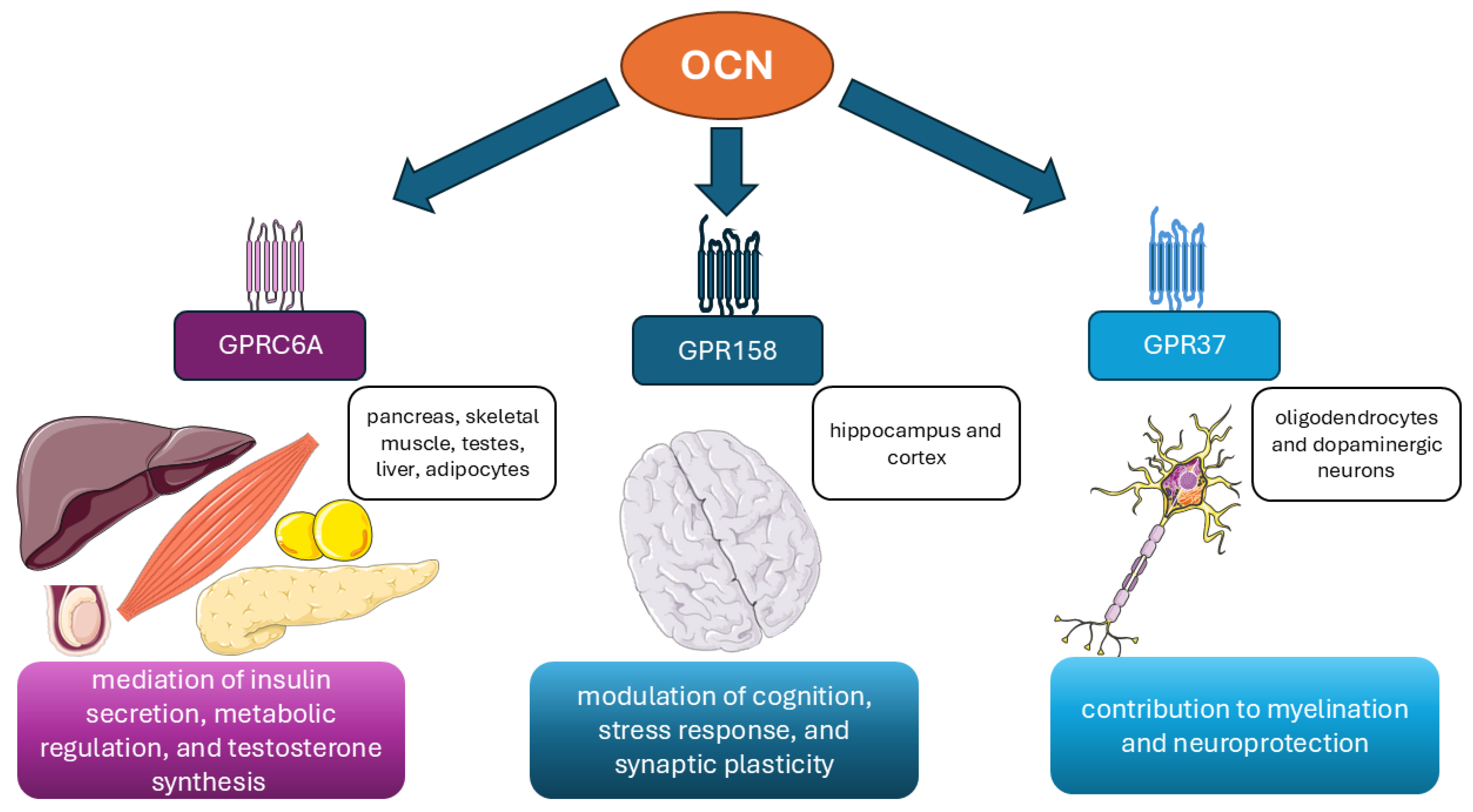
| Receptor/Model | Expression/Target | Core Pathway (s) | Physiological Output/Endpoint | References |
|---|---|---|---|---|
| GPRC6A | Pancreatic β cells | PI3K/Akt/mTOR | Increased insulin secretion; increased β-cell mass | [11] |
| GPRC6A | Skeletal muscle | AS160 phosphorylation | Increased GLUT4 translocation; increased glucose uptake | [4] |
| GPRC6A | Adipocytes | Rap1–CREB signaling | Increased adiponectin; increased thermogenesis | [51] |
| GPRC6A | Hepatocytes | Nrf2 activation; reduced JNK activity; AMPK–FOXO1/BCL6/CD36 regulation | Reduced hepatic steatosis; reduced ER stress | [11,82,85,86] |
| GPRC6A | Parasympathetic neurons | Cholinergic modulation | ASR with reduced vagal tone and reduced acetylcholine synthesis | [83] |
| GPRC6A | Leydig cells | cAMP–PKA–MEK/ERK–CREB | Increased testosterone biosynthesis | [84] |
| GPR158 | Hippocampal neurons | CREB/BDNF signaling | Improved memory; reduced anxiety; enhanced LTP and PPF | [12] |
| GPR37 | Oligodendrocytes | Context-dependent intracellular signaling | Increased myelination; neuroprotection | [13] |
| Clinical (T2DM) | Human metabolic studies | Improvement of glycemic indices without receptor-specific mechanistic resolution | Decreased glycemia; decreased HOMA-IR | [85] |
| Postmenopausal women (review-based evidence) | Human adipose-metabolic axis | Adipokine modulation without significant alteration of insulin-signaling pathways | Increased adiponectin; no change in HOMA-IR | [78] |
| Signaling Pathway | Functional Effects | References |
|---|---|---|
| PI3K–Akt–mTOR pathway | Supports β-cell proliferation, insulin granule formation, and muscle glucose uptake via FOXO1 exclusion and mTORC1-dependent nutrient sensing. | [90] |
| PLCβ–IP3–Ca2+ signaling | Catalyzes rapid Ca2+ release, enhancing insulin exocytosis and activating Ca2+-dependent steroidogenic enzymes in Leydig cells. | [91] |
| Ras–MEK–ERK cascade | Promotes mitochondrial biogenesis, OXPHOS gene expression, and cell survival under metabolic stress. | [92] |
| cAMP–PKA axis | Phosphorylates StAR, CYP11A1, CYP17A1, and regulates hepatic redox tone and lipid handling. | [93] |
| AMPK activation | Increases fatty-acid oxidation and autophagy while suppressing lipogenesis (via decreased SCD1), stabilizing hepatocyte and myocyte energy balance. | [94] |
| Vesicular trafficking and GLUT4 translocation | ucOCN enhances insulin-stimulated glucose disposal by phosphorylating AS160/TBC1D4, relieving Rab GTPase inhibition, increasing GLUT4 vesicle docking and membrane translocation, and improving mitochondrial coupling during exercise. | [95] |
| Redox regulation and ER-stress attenuation | ucOCN activates Nrf2 to induce HO-1, NQO1, and glutathione synthesis enzymes, while suppressing JNK signaling and reducing UPR activation (decreased CHOP, decreased XBP1 splicing, decreased ATF4), protecting cells from oxidative, lipotoxic, and inflammatory stress. | [96,97,98] |
| Pathway/Mechanism | Functional Effect | Relevance to OCN Biology | References |
|---|---|---|---|
| CREB/BDNF signaling | Enhanced LTP, improved memory performance, and reduced anxiety-related behavior | OCN activates GPR158-dependent pathways that converge on CREB phosphorylation, promoting BDNF expression and supporting its neurocognitive effects. | [99] |
| IRS–PI3K–Akt coupling | Support of astrocytic aerobic glycolysis and improved neurometabolic integration | OCN enhances insulin sensitivity and modulates PI3K–Akt signaling, facilitating neuroenergetic efficiency in the brain. | [100] |
| Upregulation of TPH2 and TH | Increased synthesis of serotonin, dopamine, and noradrenaline | OCN stimulates monoaminergic neurons, increasing TH and TPH2 expression and thereby improving mood, cognition, and stress resilience. | [101] |
| Pathway/Mechanism | Functional Effect | Relevance to OCN Biology | References |
|---|---|---|---|
| ucOCN–GPR37 signaling in oligodendrocytes | Support of myelin integrity and oligodendrocyte maturation | ucOCN binding to GPR37 promotes oligodendrocyte lineage differentiation and contributes to white-matter stability. | [102] |
| ucOCN–GPR37 activation in dopaminergic circuits | Protection of dopaminergic neurons; maintenance of nigrostriatal function | GPR37 activation enhances dopaminergic resilience and reduces vulnerability to metabolic and oxidative stress. | [102] |
| GPR37 intracellular signaling (ERK/Akt, Ca2+) | Increased stress tolerance; reduced apoptosis; neuroprotection | GPR37-dependent modulation of kinase pathways supports OCN-related neuroprotection. | [103] |
| GPR37 regulation of neuroinflammation (IL-6 axis) | Reduced neuroinflammatory signaling; protection against degeneration | Oligodendrocyte GPR37 signaling interfaces with IL-6 to regulate neuroinflammation. | [104] |
| Endpoint | Model | OCN Metric | Main Finding | Interpretation | References |
|---|---|---|---|---|---|
| Insulin secretion | Pancreatic β-cells (rodent, in vitro) | ucOCN | Increased insulin release via PI3K/Akt/mTOR; hyperglycemia potentiates ucOCN-induced Ca2+ influx | ucOCN functions as a β-cell secretagogue; response is glucose-dependent | [86,87] |
| Insulin sensitivity | Ocn−/− and Esp−/− mice | ucOCN | Reduced sensitivity in Ocn−/−; increased sensitivity in Esp−/− | Bone-derived ucOCN improves insulin action (genetic evidence) | [24] |
| Adiponectin | Postmenopausal women (RCT) | ucOCN (decreased ~70% after MK-7) | Increased adiponectin; no change in HOMA-IR | MK-7 alters adipokine profile without improving insulin resistance in healthy women. | [96] |
| Glycemia and HOMA-IR | T2DM patients (RCT, 3 months) | ucOCN/cOCN ratio | Reduced fasting glucose and reduced HOMA-IR under vitamin D3 + K2 | D3 + K2 improves glycaemia and insulin resistance in short-term trials | [75] |
| BF% | Observational meta-analyses | ucOCN/tOCN | Inverse association with BF%, BMI, fasting glucose, and HbA1c | Higher ucOCN/tOCN linked to lower adiposity and improved glycemic markers (small effect, high heterogeneity) | [93,94] |
| Muscle glucose uptake | Mouse myofibers | ucOCN and insulin | Increased GLUT4 translocation and glucose uptake | ucOCN amplifies insulin-stimulated glucose uptake via AS160(TBC1D4) | [91] |
| Incident T2DM risk | EPIC-NL prospective cohort | tOCN/ucOCN | No association with T2DM incidence | Large-scale human data indicate context-dependent OCN–glucose associations | [95] |
| Bone density–glucose axis | Mendelian randomization + cohorts | Genetically elevated BMD | Increased T2DM risk and increased 2 h OGTT glucose | Genetic evidence suggests bone–glucose crosstalk beyond OCN alone | [97,98] |
| Whole-body glucose/insulin regulation | Bglap/Bglap2 dKO (CRISPR) mice | OCN gene deletion | No endocrine abnormalities in OCN-deficient mice | Modern genetic models challenge classical endocrine functions of OCN (possible compensation effects) | [99,100] |
| Mice Phenotype (Genotype) | β-Cell Mass | Insulin Secretion | Insulin Sensitivity | Glucose Tolerance (OGTT) | T2DM Risk | References |
|---|---|---|---|---|---|---|
| Ocn−/− (OCN gene KO) | Decreased | Decreased | Decreased | Impaired | Increased | [2,50,93] |
| Esp−/− (ESP gene KO; OST-PTP deficiency) | Increased | Increased | Increased | Enhanced | Decreased | [2,93] |
| Bglap/Bglap2 dKO (CRISPR-generated) | Similar to WT | Similar to WT | Similar to WT | No impairment (vs. WT) | Similar to WT | [34,96,109] |
| Mechanism/Intervention | Physiological Effect | Evidence Type | References |
|---|---|---|---|
| ucOCN → GPRC6A (β-cells) → PI3K/Akt/mTOR | Increased insulin secretion; increased β-cell proliferation | Genetic and mechanistic | [11,86] |
| ucOCN → adipocytes → Rap1–ERK/CREB | Increased adiponectin; increased thermogenic/energy-expenditure programming | Preclinical (cells/mice) | [24,90] |
| ucOCN ↔ fasting glucose/adiposity | Decreased glucose; decreased BMI/BF% (observational correlations) | Observational meta-analyses | [93,94] |
| MK-7 (375 µg/day for 12 months) | Decreased ucOCN (~70%); increased adiponectin; no change in HOMA-IR | RCT (healthy women) | [96] |
| Vitamin D3 and K2, (T2DM, 3 months) | Decreased glycemia; decreased HOMA-IR; increased ucOCN/cOCN ratio | RCT (T2DM) | [74] |
| ucOCN and insulin (skeletal muscle) | Increased GLUT4 translocation and glucose uptake; AS160(TBC1D4) convergence | Physiology/preclinical | [91,92] |
| Genetically elevated BMD | Increased T2DM risk and increased 2 h OGTT glucose | Mendelian randomization/cohort | [97,98] |
| Mechanism | Effect | Evidence Type | Reference |
|---|---|---|---|
| ucOCN → Piezo1 mechanosensitive channel | Increased GLP-1 release under luminal stretch | Experimental | [106] |
| ucOCN and nutrient combinations (amino acids + FA) | Potentiated GLP-1 release | Preclinical | [107] |
| ucOCN → GPRC6A on L-cells | Increased GLP-1 secretion | Preclinical (cell/mouse) | [108] |
| Mechanism | Effect | Evidence | References |
|---|---|---|---|
| ucOCN → GPRC6A → AS160 | Increased GLUT4 translocation | Mouse myofibers | [4] |
| ucOCN and contraction | Increased glucose uptake | Ex vivo human muscle | [109] |
| ucOCN → IL-6 | Increased muscle hypertrophy and regeneration | Mouse | [111] |
| Genotype/Model | Reproductive Organ Weight | Sperm Count | Leydig Cell Maturation | Serum LH | Conclusion |
|---|---|---|---|---|---|
| Ocn−/− | Decreased | Decreased | Decreased | Increased | Loss of bone-derived OCN impairs Leydig cell maturation and testosterone secretion despite high LH, consistent with HPG-axis dysregulation. |
| Esp−/− | Increased | Increased | Increased | No change | Removal of the osteoblastic brake on insulin signaling increases ucOCN and improves reproductive parameters. |
| Leydig-specific Gprc6a cKO | Decreased | Decreased | Decreased | Increased | Receptor-level phenocopy of Ocn−/−; GPRC6A is required for ucOCN-mediated Leydig-cell function. |
| Mechanism/Pathway | Effect | Clinical Context/Model | References |
|---|---|---|---|
| OCN → GPR158 → CREB–BDNF | Increased neurogenesis; increased memory; reduced anxiety-like behavior | Hippocampus (CA3), mice | [12] |
| OCN → IRS→PI3K–Akt coupling | Neurometabolic support (astrocytic aerobic glycolysis) for plasticity | Hippocampus/astrocytes, mice | [12] |
| OCN → increased tryptophan hydroxylase 2; increased tyrosine hydroxylase | Increased serotonin, increased dopamine, increased noradrenaline | Depression models, mice | [3] |
| OCN → decreased Gad1/Gad2 | Reduced GABAergic tone | Depression/stress models, mice | [3] |
| OCN → increased BDNF signaling | Increased synaptic plasticity | Alzheimer’s/aging (preclinical) | [12] |
| OCN → increased autophagy in hippocampus | Reversal of age-related memory decline | Alzheimer’s (preclinical) | [122] |
| OCN → GPR37 signaling in oligodendrocytes/dopaminergic neurons | Myelin- and dopamine-related pathways; context-dependent motor outcomes | Parkinson’s disease (preclinical) | [13] |
| OCN → decreased PHD1 → increased PPP | Reduced pyroptosis; increased neuronal survival | Ischemic stroke | [123] |
| Maternal OCN → placental transfer | Reduced neuronal apoptosis; normal brain development | Prenatal neurogenesis | [3] |
| Mechanism (Emerging) | Effect | Disease/Model | References |
|---|---|---|---|
| Network-level modulation in regions with high GPR37/GPR158 expression (pharmacology, together with resting-state fMRI) | Regional activity shifts consistent with OCN-responsive circuits | Mouse brain (preclinical) | [124] |
| UPR suppression (HSPA5/XBP1/CHOP) | Increased neuronal survival under ER stress | Neurodegeneration models (preclinical) | [125] |
| Epigenetic repression of GPR158 under hyperglycemia | Decreased GPR158 expression; bone–brain decoupling | Diabetes, ageing (preclinical) | [126] |
| Endpoint (ASR Feature) | Model/Subjects | OCN Metric | Key Finding | Mechanistic Note | References |
|---|---|---|---|---|---|
| Rapid surge of bioactive OCN | Mice, rats, humans (public speaking/psychosocial stress) | ucOCN (bioactive form) | Minute-scale increase: approximately 50–150% in rodents; rise in humans during public speaking | Stress triggers osteoblast glutamate uptake, thereby reducing OCN inactivation and increasing its release. Bioactive OCN is required for the acute stress response (ASR) | [127,128] |
| Autonomic rebalancing (reduced vagal tone; sympathetic response unmasked) | Rodents; adrenalectomized animals | ucOCN (bioactive form) | OCN inhibits ACh synthesis and release in post-ganglionic parasympathetic neurons; ASR persists without adrenal glands | OCN acts directly on parasympathetic neurons to decrease vagal output | [127,128] |
| Adrenal/HPA interaction (developmental capacity) | Rodents; primates | Total OCN and/or ucOCN (study-dependent measurement) | OCN promotes adrenal growth and steroidogenesis; loss of signaling blunts corticosterone response during ASR | Embryonic OCN establishes lifelong adrenal capacity (SF-1/MC2R/CYP11B1/2 regulation) | [129] |
| Anti-inflammatory modulation | Preclinical macrophage and immune models; rodent stress studies | OCN not directly quantified | OCN restrains pro-inflammatory signaling and modulates phagocytic activity | Context-dependent NF-κB attenuation | [136] |
| Exercise as a physiological stressor (muscle–bone–muscle axis) | Adults; rodent–human translation | Total OCN or ucOCN (depending on protocol) | Acute aerobic exercise increases circulating OCN. Muscle-derived IL-6 stimulates osteoblasts to release OCN, forming a feed-forward loop that enhances exercise capacity | Muscle-derived IL-6 stimulates osteoblast-dependent OCN release; OCN improves muscle fuel utilization. | [134,135] |
| Human stress paradigm (TSST) | Healthy adults (TSST) | OCN not measured in these studies | TSST reliably increases BP, HR, anxiety, and HPA output, producing minute-scale endocrine responses | Standardized social-evaluation stressor with robust multisystem effects | [131,132,133] |
| Adrenal insufficiency—preserved ASR via OCN | Patients with adrenal insufficiency, adrenalectomized rodents | Total OCN or ucOCN (model-dependent measurement) | Despite impaired adrenal function, ASR remains intact and is associated with increased circulating OCN | OCN provides adrenal-independent endocrine mediation of the ASR | [127,128] |
| Amygdala-to-bone signaling in ASR | Mice (BLA manipulation) | ucOCN release (experimentally measured) | Chemogenetic inhibition of the BLA alters OCN release and modifies ASR outcomes | A brain-to-bone glutamatergic pathway regulates osteoblast-derived OCN release | [127,128] |
| Biomarker and translational outlook | Narrative reviews | OCN not systematically quantified | OCN proposed as a biomarker of stress resilience and as a potential therapeutic target in stress-related metabolic and neuropsychiatric states | Integrates autonomic, adrenal, and immune axes; clinical translation under development | [136,137] |
| Strategy/Form | Core Mechanism(s) in the NAFLD Axis | Evidence | References |
|---|---|---|---|
| ucOCN (native hormone) | ucOCN engages GPRC6A-dependent hepatic signaling, activating Nrf2 and suppressing JNK to buffer oxidative and ER stress, while AMPK-driven repression of SCD1 curbs de novo lipogenesis | Mouse NAFLD models; hepatocyte studies | [138,139,141] |
| csOCN (synthetic peptide) | AMPK activates FOXO1/BCL6 transcriptional program that represses CD36; while direct csOCN-CD36 docking and colocalization further limit hepatocellular FA uptake | Translational preclinical (oral dosing in NAFLD mice) | [140] |
| Enterohepatic incretin arm | ucOCN induces GLP-1 from L-cells; GLP-1R signaling is required for OCN’s metabolic benefits; Piezo1 in L-cells strengthens GLP-1 release under mechanical cues | In vivo mouse; L-cell paradigms | [143,144,145] |
| Human clinical signal | Lower serum OCN shows an inverse association with the severity of steatosis/fibrosis; higher NAFLD incidence and lower remission (sex-specific) | Two cohorts and animal models | [142] |
| Marker | Kidney Dependence/Clearance | Primary Clinical Use in CKD-MBD | Strengths | Limitations in CKD | Suggested Monitoring | References |
|---|---|---|---|---|---|---|
| PTH (intact) | Not primarily renally cleared | Turnover status (high vs. low), guide ROD phenotype, and therapy | Widely available; KDIGO-endorsed | Episodic variability; assay heterogeneity | G3: every 6–12 months; G4: every6–12 months; G5/G5D: every 3–6 months; ↑frequency with therapy changes | [147,148] |
| BALP (bone-specific ALP) | Renally independent | Bone formation; differentiate high vs. adynamic turnover | Correlates with bone biopsy; automation available | Confounding by cholestasis (total ALP); ensure bone-specific assay | Same cadence as PTH; adjust to treatment | [14,151] |
| Intact PINP | Minimal renal effect (intact/trimeric assay) | Bone formation monitoring and therapy response | Preferred vs. total PINP in CKD; standardized | Availability varies; cost | Baseline, then every 3–6 months under antiresorptives/anabolics | [5,14,151] |
| TRACP-5b | Renally independent | Bone resorption; complement to BALP and PTH | Not affected by GFR | Limited automation in some labs | Baseline and every 6–12 months; tighter under therapy | [14,151] |
| β-CTX-I | Renally cleared; accumulation with reduced clearance | Resorption (general population) | Well-established outside CKD | Unreliable in advanced CKD; avoid for turnover in G4–G5D | Not recommended beyond G3 | [5,14,151] |
| OCN (total/N-MID) | Renally cleared (intact & fragments) | Adjunct turnover marker with PTH and BALP | N-MID: preanalytical stability | Clearance confounding; circadian variation | Baseline and every 6–12 months if used; always interpret with PTH/BALP | [8,14] |
| ucOC/%ucOC | Reflects vitamin K status (carboxylation), not renal clearance | Functional K status; pediatric fracture signal | Sensitive to K; responsive to MK-7 | Assay heterogeneity; endpoints inconsistent | Baseline and after diet/supplement trials (6–12 weeks) | [152,153,154,157] |
| dp-ucMGP | VKDP biomarker | Complementary K-status readout | Strongly responsive to K; calcification biology | Endpoint uncertainty; assay variability | Baseline and post-intervention (6–12 weeks) | [153,156] |
| Step/Process | Effect/Outcome | References |
|---|---|---|
| ucOCN binds to the IRβ receptor | Activates IRS-1 and initiates PI3K/Akt signaling | [159] |
| IRS-1 → PI3K → AKT | Core intracellular cascade | [163] |
| Endothelial cells: AKT → eNOS | Improved endothelial function and vasodilation | [159] |
| Smooth muscle: AKT → decreased NF-κB and mTOR signaling | Reduced ER stress, apoptosis, and autophagy | [159] |
| NO acts on vascular smooth muscle | Maintains vasodilation and vascular tone | [159] |
| Overall effect | Enhanced vascular homeostasis and metabolic profile | [163] |
| Dietary Pattern | Vitamin K2 Intake | % ucOCN Status | Lipid Profile | Inflammatory Markers | Homocysteine | Lp (a) | Vascular Implication | References |
|---|---|---|---|---|---|---|---|---|
| Vegan | Very low (MK-7 scarce) | Higher %ucOCN (due to low K2 intake) | Lower TC, lower LDL-C, and lower HDL-C compared with other dietary patterns | Low IL-6; moderate TNF-α | Increased (if vitamin B12 is insufficient) | Individually variable (genetically determined); may increase with a poor lifestyle | Potential calcification risk if K2 deficiency persists | [180,181,182] |
| Vegetarian | Low (higher than vegan) | Moderately increased %ucOCN | Lower TC and higher HDL-C compared with vegans | Moderate IL-6 | Slightly increased | Individually variable (genetically determined) | Similar pattern to vegan, less pronounced | [180,181] |
| Pescatarian | Moderate (fish + fermented foods) | Near-normal %ucOCN | Favorable lipid profile; HDL-C highest among all dietary patterns | Moderate IL-6 | Within normal range | Typically lower than in vegans (genetically determined) | Protective against calcification | [181,182] |
| Omnivore | Adequate MK-4 (animal foods) + MK-7 (fermented foods) | Within the expected physiological range | Higher TC and higher LDL-C compared with pescatarians; HDL-C moderate | Highest IL-6; increased hsCRP | Within normal range | Genetically determined; little to no dietary influence | Higher baseline atherogenic risk | [181,182] |
| Endpoint | Model | OCN Metric | Main Finding | Interpretation | References |
|---|---|---|---|---|---|
| Endothelial function | Rabbit aorta; HAEC cells (ex vivo and in vitro studies) | ucOCN 10–30 ng/mL | No adverse effect | ucOCN neutral at physiological levels | [160] |
| Coronary artery disease severity | Angiographic cohort (human; n = 59) | OCN+ EPCs; tOC/ucOCN/cOC | Mixed correlation | OCN+ EPCs may reflect calcific shift | [161] |
| Vascular calcification risk | Genetic association study (human cohort) | Circulating OCN | Associated with calcification markers | OCN may mark vascular risk | [163] |
| NO bioavailability | Endothelial cells (in vitro) | ucOCN → IRβ → PI3K → Akt → eNOS | Increased NO production | ucOCN improves endothelial tone | [159] |
| ER stress and apoptosis | VSMC culture (in vitro) | ucOCN → AKT → decreased NF-κB/mTOR | Reduced ER stress and reduced apoptosis | ucOCN protective under stress | [159] |
| Axis | Compartment/Readout | Core Mechanism/Exemplar | Clinical Implication | References |
|---|---|---|---|---|
| Mediator | Circulating ucOCN; receptor context (GPRC6A; TGF-β/SMAD3) | Prostate cancer: ucOCN activates GPRC6A, engaging ERK, Akt, and mTOR signaling. TNBC: ucOCN signals through the TGF-β/SMAD3 axis, promoting EMT and osteolytic programs. | Receptor-based or pathway-based stratification for targeted therapy | [187,188,189] |
| Marker | OCN+ EPCs; lesional OCN (IHC) | Osteogenic drift in the bone microenvironment; PMN conditioning | Bone metastasis risk stratification; early disease monitoring | [190,191,192,193] |
| Tumour Type | Compartment/Receptor | Core Pathway (s) | Proximal Phenotype (s) | References |
|---|---|---|---|---|
| Prostate cancer | GPRC6A on tumor cells | ERK/Akt/mTOR | Increased proliferation; increased mTORC1 readouts; xenograft growth | [187,188] |
| TNBC | TGF-β/SMAD3 axis | TGF β/SMAD3 (EMT, osteolytic signaling) | Increased EMT; increased MMPs; increased VEGF; bone-tropic signaling | [189] |
| Readout | Setting/Method | Signal/Utility | Clinical Note | References |
|---|---|---|---|---|
| OCN+ circulating EPCs | Breast cancer; flow cytometry/translational cohorts | Increased OCN+ EPCs with bone involvement; useful for early risk discrimination | Candidate biomarker for early bone-metastasis monitoring; requires prospective validation | [190] |
| Lesional OCN (IHC) | Bone microenvironment; spatial profiling | Osteogenic drift within the PMN; bone-tropic priming | Valuable contextual marker within multiparametric biomarker panels | [191,192,193] |
| EV signaling | Bone cancer/metastasis | Tumor-derived EVs orchestrate PMN formation and skeletal colonization | Mechanistic framework for niche-aware OCN-based biomarkers | [194,195] |
| Dimension | Endocrine Arm (ucOCN) | Osteogenic Arm (cOCN/Lesional OCN) | Imaging/Endpoints | Notes |
|---|---|---|---|---|
| Baseline phenotype | Bioactive ucOCN assay; document vitamin K status | cOCN+ EPCs; lesional OCN (IHC if available) | BM presence; BM-PFS | Assay specification; sampling windows |
| On-therapy dynamics | Fixed-window ucOCN repeats | Matched-time cOCN repeats | Serial BM-PFS; symptoms | Harmonize compartments and timepoints |
| Mechanistic layer | Receptors/pathways (GPRC6A; TGF-β/SMAD3) | EV panels, if available | Integrate with outcomes | Orthogonal pathway validation |
| Tumor Type | OCN-Centric Mechanism | Translational Hook | References |
|---|---|---|---|
| Prostate cancer | OCN/ucOCN activates GPRC6A and downstream ERK, Akt, and mTOR pathways | Receptor-based stratification; GPRC6A-axis modulators integrated with AR-directed therapy | [187,188,199] |
| TNBC | ucOCN signals through the TGF-β/SMAD3 axis (EMT, osteolysis) | SMAD3 modulation; monitoring OCN+ EPCs in bone-tropic settings | [189] |
| Breast cancer (BM risk) | OCN+ circulating EPCs as an early BM risk marker | Early bone-targeted strategies require prospective validation | [190] |
| TNBC (adjacent biology) | Osteoclast-derived glutamine drives GPX4/ATF4-linked PARPi resistance. | PARP-inhibitor and microenvironment-aware co-therapy | [200] |
| Prostate (osteoblastic lesions) | PSA–osteoblast crosstalk in sclerotic microenvironments | Integrating niche-modifying strategies with AR-targeted therapy | [199] |
| Modulator/Source | Dominant Mechanism (s) | Expected Effect on OCN/Bone | References |
|---|---|---|---|
| Vitamin K2 (MK-7) from fermented | Cofactor for GGCX → γ-carboxylation | Decreased ucOCN; increased cOCN; supports mineral binding and bone quality | [69,73] |
| Vitamin D3 (diet/sunlight) | Increases BGLAP transcription; promotes osteoblast maturation | Increased OCN synthesis; synergy with K2 for functional activation | [66,76] |
| Polyphenol-rich diet (Mediterranean pattern) | Antioxidant and anti-inflammatory milieu; endothelial support | Indirect support of osteoblast function and vascular health | [69,201] |
| Microbiome (Bacillus, Bifidobacterium) | Menaquinone (MK-n) synthesis | Endogenous K2 supports OCN carboxylation potential | [65] |
| Vitamin K insufficiency | Reduced cofactor availability for GGCX | Increased ucOCN; associated with fracture risk | [19,67] |
| Physical activity/exercise | OCN–muscle crosstalk; metabolic adaptations | Systemic metabolic benefits; OCN engagement | [4] |
| Probiotic/Approach | Primary Rationale | Expected Readouts | References |
|---|---|---|---|
| Bacillus (e.g., B. subtilis) | Spore-forming genus; menaquinone (MK-n) biosynthesis; GI survival; alignment with fermented MK-7 food sources | Reduced dp-ucMGP; increased OCN carboxylation potential (cOCN); maintenance of BMD with dietary synergy | [54,189] |
| LactoBacillus/LacticaseiBacillus | Gut–bone immunometabolic modulation (barrier integrity, SCFA production, cytokine tone) | Modestly increased lumbar-spine BMD over 6–12 months; variable effects at the hip; heterogeneous BTMs | [188] |
| Bifidobacterium | SCFA output; epithelial-barrier reinforcement; synergy with fiber and polyphenols | Maintenance of BMD; improved milieu for activation of VKDPs | [55,56] |
Disclaimer/Publisher’s Note: The statements, opinions and data contained in all publications are solely those of the individual author(s) and contributor(s) and not of MDPI and/or the editor(s). MDPI and/or the editor(s) disclaim responsibility for any injury to people or property resulting from any ideas, methods, instructions or products referred to in the content. |
© 2026 by the authors. Licensee MDPI, Basel, Switzerland. This article is an open access article distributed under the terms and conditions of the Creative Commons Attribution (CC BY) license.
Share and Cite
Derwich, W.; Feć, K.; Gawda, A.; Kopa, K.; Kopeć, J.; Nowak, I.; Seńcio, N.; Rauf, A.; Ahmad, Z.; Świątek-Pawelczak, A.; et al. Osteocalcin Beyond Bone: Molecular Mechanisms, Endocrine Networks, and Translational Perspectives Across Metabolism, Neurobiology, and Chronic Disease. Int. J. Mol. Sci. 2026, 27, 2992. https://doi.org/10.3390/ijms27072992
Derwich W, Feć K, Gawda A, Kopa K, Kopeć J, Nowak I, Seńcio N, Rauf A, Ahmad Z, Świątek-Pawelczak A, et al. Osteocalcin Beyond Bone: Molecular Mechanisms, Endocrine Networks, and Translational Perspectives Across Metabolism, Neurobiology, and Chronic Disease. International Journal of Molecular Sciences. 2026; 27(7):2992. https://doi.org/10.3390/ijms27072992
Chicago/Turabian StyleDerwich, Wiktor, Karolina Feć, Aleksander Gawda, Kamil Kopa, Jan Kopeć, Igor Nowak, Natalia Seńcio, Abdur Rauf, Zubair Ahmad, Alicja Świątek-Pawelczak, and et al. 2026. "Osteocalcin Beyond Bone: Molecular Mechanisms, Endocrine Networks, and Translational Perspectives Across Metabolism, Neurobiology, and Chronic Disease" International Journal of Molecular Sciences 27, no. 7: 2992. https://doi.org/10.3390/ijms27072992
APA StyleDerwich, W., Feć, K., Gawda, A., Kopa, K., Kopeć, J., Nowak, I., Seńcio, N., Rauf, A., Ahmad, Z., Świątek-Pawelczak, A., & Formanowicz, D. (2026). Osteocalcin Beyond Bone: Molecular Mechanisms, Endocrine Networks, and Translational Perspectives Across Metabolism, Neurobiology, and Chronic Disease. International Journal of Molecular Sciences, 27(7), 2992. https://doi.org/10.3390/ijms27072992