Longitudinal Whole-Exome Sequencing of Cell-Free DNA Reveals Molecular Evolution and Heterogeneous Clinical Outcomes in PD-L1 Stratified Advanced NSCLC Adenocarcinoma Patients Treated with Atezolizumab

 , ,
, ,  , , ,
, , ,  , , and
Abstract
1. Introduction
2. Case Presentation
2.1. First Case
2.2. Second Case
2.3. Third Case
2.4. Fourth Case
3. Discussion
4. Conclusions
Supplementary Materials
Author Contributions
Funding
Institutional Review Board Statement
Informed Consent Statement
Data Availability Statement
Acknowledgments
Conflicts of Interest
Abbreviations
| ICI | Immune Checkpoint Inhibitor |
| PD-L1 | Programmed Death-Ligand 1 |
| NSCLC | Non-Small Cell Lung Cancer |
| cfDNA | Cell-free DNA |
| WES | Whole-Exome Sequencing |
| LC | Lung Cancer |
| AOUS | Azienda Ospedaliero-Universitaria Senese |
| FFPE | Formalin-Fixed Paraffin-Embedded |
| ICI software | Illumina Connected Insights software |
| MAF | Minor Allele Frequency |
| VAF | Variant Allele Frequency |
| DDR | DNA Damage Repair |
| TMB | Tumor Mutational Burden |
References
- Sung, H.; Ferlay, J.; Siegel, R.L.; Laversanne, M.; Soerjomataram, I.; Jemal, A.; Bray, F. Global Cancer Statistics 2020: GLOBOCAN Estimates of Incidence and Mortality Worldwide for 36 Cancers in 185 Countries. CA Cancer J. Clin. 2021, 71, 209–249. [Google Scholar] [CrossRef]
- Siegel, R.L.; Miller, K.D.; Jemal, A. Cancer statistics, 2020. CA Cancer J. Clin. 2020, 70, 7–30. [Google Scholar] [CrossRef]
- Wen, J.; Fu, J.H.; Zhang, W.; Guo, M. Lung carcinoma signaling pathways activated by smoking. Chin. J. Cancer 2011, 30, 551–558. [Google Scholar] [CrossRef]
- Semenova, E.A.; Nagel, R.; Berns, A. Origins, genetic landscape, and emerging therapies of small cell lung cancer. Genes Dev. 2015, 29, 1447–1462. [Google Scholar] [CrossRef]
- Calvayrac, O.; Pradines, A.; Pons, E.; Mazières, J.; Guibert, N. Molecular biomarkers for lung adenocarcinoma. Eur. Respir. J. 2017, 49, 1601734. [Google Scholar] [CrossRef]
- Shackelford, R.E.; Vora, M.; Mayhall, K.; Cotelingam, J. ALK-rearrangements and testing methods in non-small cell lung cancer: A review. Genes Cancer 2014, 5, 1–14. [Google Scholar] [CrossRef] [PubMed]
- Yan, N.; Guo, S.; Zhang, H.; Zhang, Z.; Shen, S.; Li, X. BRAF-Mutated Non-Small Cell Lung Cancer: Current Treatment Status and Future Perspective. Front. Oncol. 2022, 12, 863043. [Google Scholar] [CrossRef] [PubMed]
- Morris, T.A.; Khoo, C.; Solomon, B.J. Targeting ROS1 Rearrangements in Non-small Cell Lung Cancer: Crizotinib and Newer Generation Tyrosine Kinase Inhibitors. Drugs 2019, 79, 1277–1286. [Google Scholar] [CrossRef]
- Li, N.; Hou, X.; Huang, S.; Tai, R.; Lei, L.; Li, S.; Abuliz, A.; Wang, G.; Yang, S. Biomarkers related to immune checkpoint inhibitors therapy. Biomed. Pharmacother. 2022, 147, 112470. [Google Scholar] [CrossRef] [PubMed]
- Isla, D.; Lozano, M.D.; Paz-Ares, L.; Salas, C.; de Castro, J.; Conde, E.; Felip, E.; Gómez-Román, J.; Garrido, P.; Enguita, A.B. New update to the guidelines on testing predictive biomarkers in non-small-cell lung cancer: A National Consensus of the Spanish Society of Pathology and the Spanish Society of Medical Oncology. Clin. Transl. Oncol. 2023, 25, 1252–1267, Erratum in Clin. Transl. Oncol. 2023, 25, 1488. [Google Scholar] [CrossRef] [PubMed]
- Lim, M.; Kim, C.J.; Sunkara, V.; Kim, M.-H.; Cho, Y.-K. Liquid Biopsy in Lung Cancer: Clinical Applications of Circulating Biomarkers (CTCs and ctDNA). Micromachines 2018, 9, 100. [Google Scholar] [CrossRef]
- Luo, W.; Rao, M.; Qu, J.; Luo, D. Applications of liquid biopsy in lung cancer diagnosis, prognosis prediction, and disease monitoring. Am. J. Transl. Res. 2018, 10, 3911–3923. [Google Scholar]
- Miyanaga, A.; Masuda, M.; Yamada, T. Biomarkers of Lung Cancer: Liquid Biopsy Comes of Age. In Biomarkers in Cancer Therapy: Liquid Biopsy Comes of Age; Springer: Berlin/Heidelberg, Germany, 2019; pp. 105–113. [Google Scholar]
- Diaz, L.A., Jr.; Bardelli, A. Liquid biopsies: Genotyping circulating tumor DNA. J. Clin. Oncol. 2014, 32, 579–586. [Google Scholar] [CrossRef]
- Serio, V.B.; Rosati, D.; Maffeo, D.; Rina, A.; Ghisalberti, M.; Bellan, C.; Spiga, O.; Mari, F.; Palmieri, M.; Frullanti, E. The Personalized Inherited Signature Predisposing to Non-Small-Cell Lung Cancer in Non-Smokers. Cancers 2024, 16, 2887. [Google Scholar] [CrossRef]
- Phan, L.M.; Rezaeian, A.H. ATM: Main Features, Signaling Pathways, and Its Diverse Roles in DNA Damage Response, Tumor Suppression, and Cancer Development. Genes 2021, 12, 845. [Google Scholar] [CrossRef]
- Friedman, C.F.; Hainsworth, J.D.; Kurzrock, R.; Spigel, D.R.; Burris, H.A.; Sweeney, C.J.; Meric-Bernstam, F.; Wang, Y.; Levy, J.; Grindheim, J.; et al. Atezolizumab Treatment of Tumors with High Tumor Mutational Burden from MyPathway, a Multicenter, Open-Label, Phase IIa Multiple Basket Study. Cancer Discov. 2022, 12, 654–669. [Google Scholar] [CrossRef]
- Peng, W.; Chen, J.Q.; Liu, C.; Malu, S.; Creasy, C.; Tetzlaff, M.T.; Xu, C.; McKenzie, J.A.; Zhang, C.; Liang, X.; et al. Loss of PTEN Promotes Resistance to T Cell–Mediated Immunotherapy. Cancer Discov. 2016, 6, 202–216. [Google Scholar] [CrossRef]
- Vidotto, T.; Melo, C.M.; Castelli, E.; Koti, M.; Dos Reis, R.B.; Squire, J.A. Emerging role of PTEN loss in evasion of the immune response to tumours. Br. J. Cancer 2020, 122, 1732–1743. [Google Scholar] [CrossRef] [PubMed]
- Sahin, T.K.; Berghoff, A.S.; Ilhan-Mutlu, A.; Preusser, M.; Kiesel, B. The role of PTEN in the tumor microenvironment and its implications for immunotherapy. Nat. Rev. Clin. Oncol. 2021, 18, 535–536. [Google Scholar]
- Anastasaki, C.; Orozco, P.; Gutmann, D.H. RAS and beyond: The many faces of the neurofibromatosis type 1 protein. Dis. Model. Mech. 2022, 15, dmm049362. [Google Scholar] [CrossRef] [PubMed]
- Ratner, N.; Miller, S.J. A RASopathy gene commonly mutated in cancer: The neurofibromatosis type 1 tumour suppressor. Nat. Rev. Cancer 2015, 15, 290–301. [Google Scholar] [CrossRef] [PubMed]
- Huntzicker, E.G.; Hötzel, K.; Choy, L.; Che, L.; Ross, J.; Pau, G.; Sharma, N.; Siebel, C.W.; Chen, X.; French, D.M. Differential effects of targeting Notch receptors in a mouse model of liver cancer. Hepatology 2014, 61, 942–952. [Google Scholar] [CrossRef]
- Xing, L.; Xu, L.; Zhang, Y.; Che, Y.; Wang, M.; Shao, Y.; Qiu, D.; Yu, H.; Zhao, F.; Zhang, J. Recent Insight on Regulations of FBXW7 and Its Role in Immunotherapy. Front. Oncol. 2022, 12, 925041. [Google Scholar] [CrossRef] [PubMed]
- Zhong, L.; Zhang, Y.; Li, M.; Song, Y.; Liu, D.; Yang, X.; Yang, D.; Qu, H.; Lai, L.; Wang, Q.; et al. E3 ligase FBXW7 restricts M2-like tumor-associated macrophage polarization by targeting c-Myc. Aging 2020, 12, 24394–24423. [Google Scholar] [CrossRef]
- O’Donnell, J.S.; Teng, M.W.L.; Smyth, M.J. Cancer immunoediting and resistance to T cell-based immunotherapy. Nat. Rev. Clin. Oncol. 2019, 16, 151–167. [Google Scholar] [CrossRef]
- Lastwika, K.J.; Wilson, W.; Li, Q.K.; Norris, J.; Xu, H.; Ghazarian, S.R.; Kitagawa, H.; Kawabata, S.; Taube, J.M.; Yao, S.; et al. Control of PD-L1 Expression by Oncogenic Activation of the AKT–mTOR Pathway in Non–Small Cell Lung Cancer. Cancer Res. 2016, 76, 227–238. [Google Scholar] [CrossRef]
- Caforio, M.; de Billy, E.; De Angelis, B.; Iacovelli, S.; Quintarelli, C.; Paganelli, V.; Folgiero, V. PI3K/Akt Pathway: The Indestructible Role of a Vintage Target as a Support to the Most Recent Immunotherapeutic Approaches. Cancers 2021, 13, 4040. [Google Scholar] [CrossRef] [PubMed]
- Cartwright, D.; Kidd, A.C.; Ansel, S.; Ascierto, M.L.; Spiliopoulou, P. Oncogenic Signalling Pathways in Cancer Immunotherapy: Leader or Follower in This Delicate Dance? Int. J. Mol. Sci. 2025, 26, 4393. [Google Scholar] [CrossRef]
- Collins, N.B.; Al Abosy, R.; Miller, B.C.; Bi, K.; Zhao, Q.; Quigley, M.; Ishizuka, J.J.; Yates, K.B.; Pope, H.W.; Manguso, R.T.; et al. PI3K activation allows immune evasion by promoting an inhibitory myeloid tumor microenvironment. J. Immunother. Cancer 2022, 10, e003402. [Google Scholar] [CrossRef]
- Leone, R.D.; Powell, J.D. Metabolism of immune cells in cancer. Nat. Rev. Cancer 2020, 20, 516–531. [Google Scholar] [CrossRef]
- Samstein, R.M.; Lee, C.H.; Shoushtari, A.N.; Hellmann, M.D.; Shen, R.; Janjigian, Y.Y.; Barron, D.A.; Zehir, A.; Jordan, E.J.; Omuro, A.; et al. Tumor mutational load predicts survival after immunotherapy. Nat. Genet. 2019, 51, 202–206. [Google Scholar] [CrossRef] [PubMed]
- Schuck, P.F.; Malgarin, F.; Cararo, J.H.; Cardoso, F.; Streck, E.L.; Ferreira, G.C. Phenylketonuria Pathophysiology: On the Role of Metabolic Alterations. Aging Dis. 2015, 6, 390–399. [Google Scholar] [CrossRef]
- Vaupel, P.; Multhoff, G. Overcoming the Hostile Tumor Microenvironment: Obstacles to Successful Immunotherapy. Front. Oncol. 2021, 11, 683. [Google Scholar]
- Stover, D.G.; Parsons, H.A.; Ha, G.; Freeman, S.S.; Barry, W.T.; Guo, H.; Choudhury, A.D.; Gydush, G.; Reed, S.C.; Rhoades, J.; et al. Association of Cell-Free DNA Tumor Fraction and Somatic Copy Number Alterations with Survival in Metastatic Triple-Negative Breast Cancer. JAMA Oncol. 2018, 4, e173501. [Google Scholar] [CrossRef]
- McGranahan, N.; Furness, A.J.S.; Rosenthal, R.; Ramskov, S.; Lyngaa, R.; Saini, S.K.; Jamal-Hanjani, M.; Wilson, G.A.; Birkbak, N.J.; Hiley, C.T.; et al. Clonal neoantigens elicit T cell immunoreactivity and sensitivity to immune checkpoint blockade. Science 2016, 351, 1463–1469. [Google Scholar] [CrossRef]
- Vitale, I.; Shema, E.; Loi, S.; Galluzzi, L. Intratumoral heterogeneity in cancer progression and response to immunotherapy. Nat. Med. 2021, 27, 212–224. [Google Scholar] [CrossRef]
- Welcker, M.; Clurman, B.E. FBW7 ubiquitin ligase: A tumour suppressor at the crossroads of cell division, growth and differentiation. Nat. Rev. Cancer 2008, 8, 83–93. [Google Scholar] [CrossRef] [PubMed]
- Davis, R.J.; Welcker, M.; Clurman, B.E. Tumor Suppression by the Fbw7 Ubiquitin Ligase: Mechanisms and Opportunities. Cancer Cell 2014, 26, 455–464. [Google Scholar] [CrossRef] [PubMed]
- Yeh, C.H.; Bellon, M.; Nicot, C. The Fbxw7 Tumor Suppressor: Mechanisms and Opportunities for Therapeutics. Annu. Rev. Cancer Biol. 2018, 2, 263–281. [Google Scholar]
- Mao, J.H.; Kim, I.J.; Wu, D.; Climent, J.; Kang, H.C.; DelRosario, R.; Balmain, A. Fbxw7 targets mTOR for degradation and cooperates with PTEN in tumor suppression. Science 2008, 321, 1499–1502. [Google Scholar] [CrossRef]
- Gandara, D.R.; Paul, S.M.; Kowanetz, M.; Schleifman, E.; Zou, W.; Li, Y.; Rittmeyer, A.; Fehrenbacher, L.; Otto, G.; Malboeuf, C.; et al. Blood-based tumor mutational burden as a predictor of clinical benefit in non-small-cell lung cancer patients treated with atezolizumab. Nat. Med. 2018, 24, 1441–1448. [Google Scholar] [CrossRef] [PubMed]





| Patient ID | Age at Diagnosis | Sex | Smoking Status | Histology and Stage | PD-L1 Expression | Initial Systemic Therapy | Response | Alive | Available LB Timepoints | Tissue Molecular Analysis |
|---|---|---|---|---|---|---|---|---|---|---|
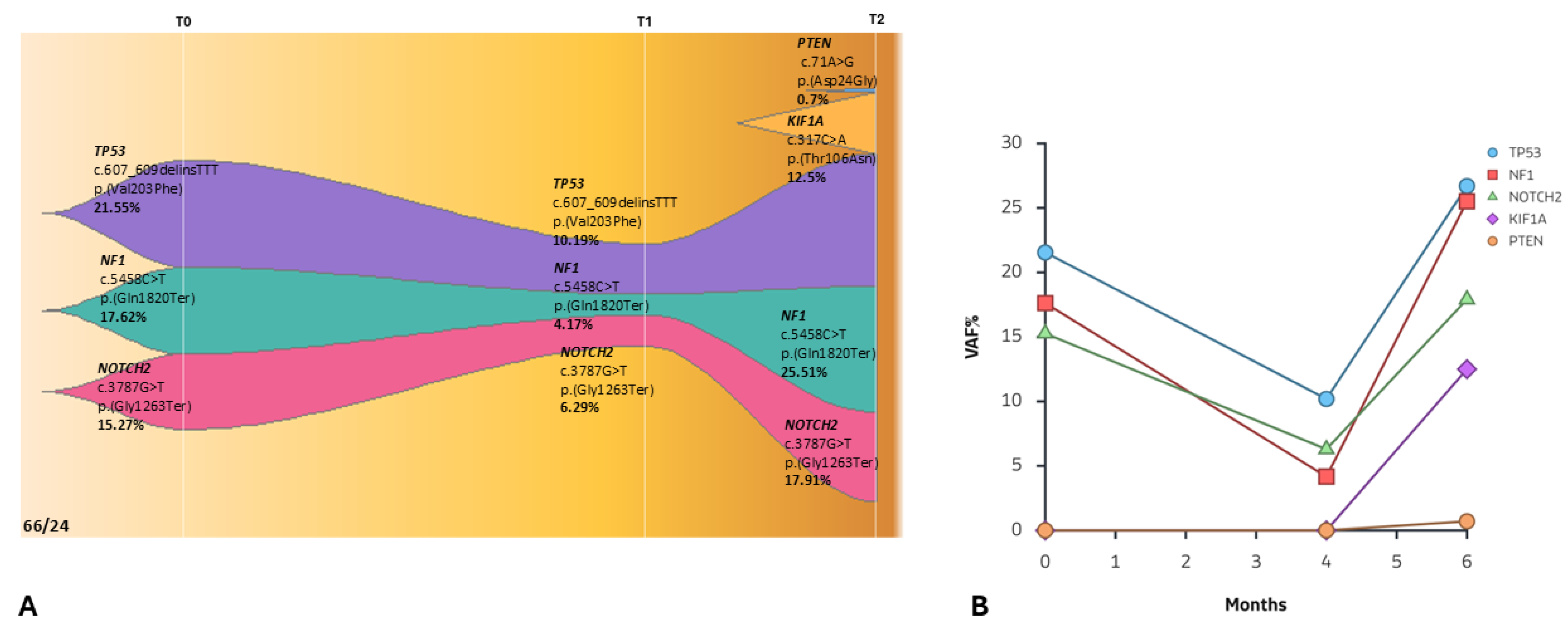
| 66/24 | 55 | F | Current Smoker | Metastatic Adenocarcinoma | 60% | Atezolizumab monotherapy | Response and resistance | No | T0, T1, T2 | ALK negative; EGFR negative |
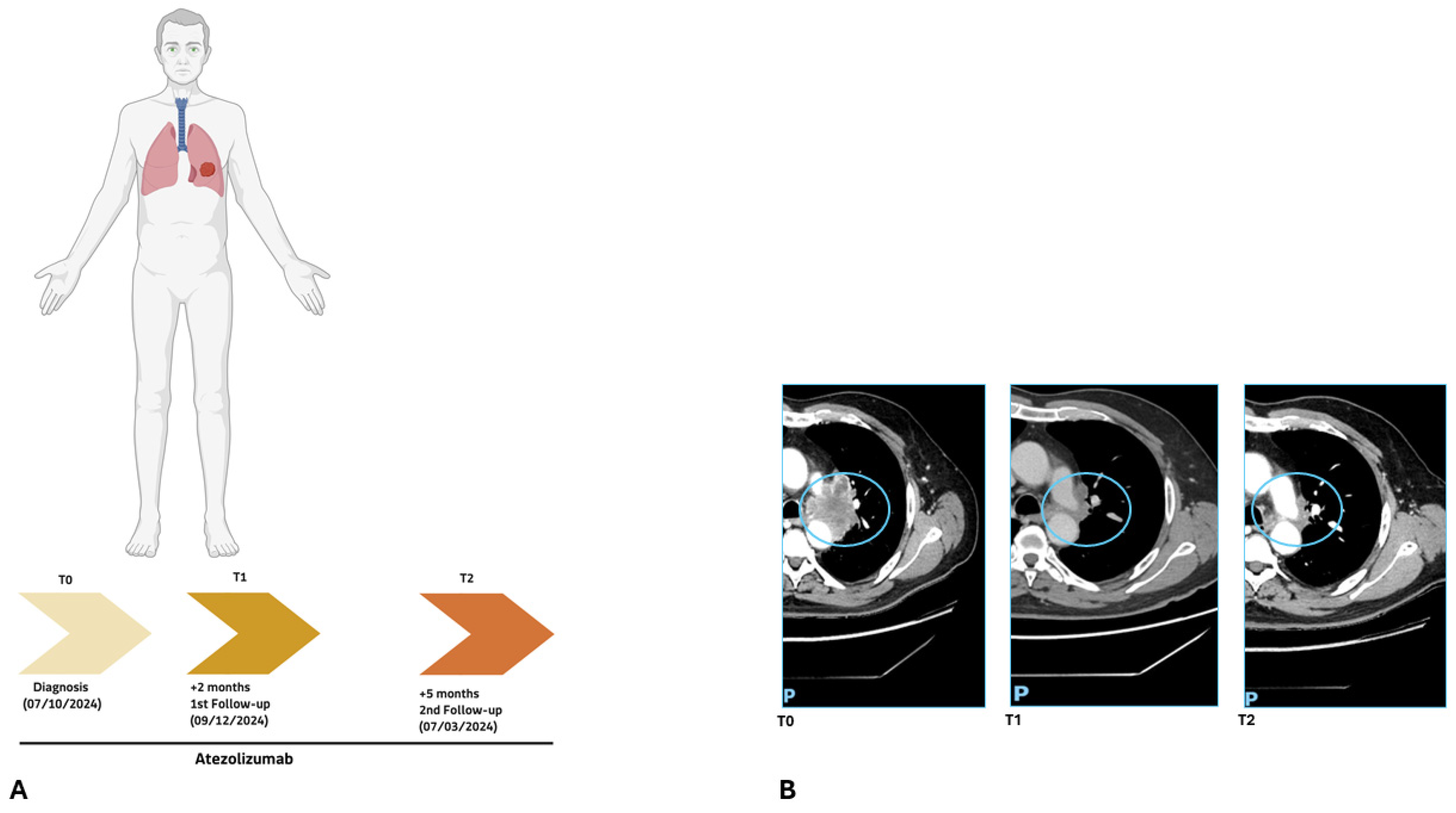
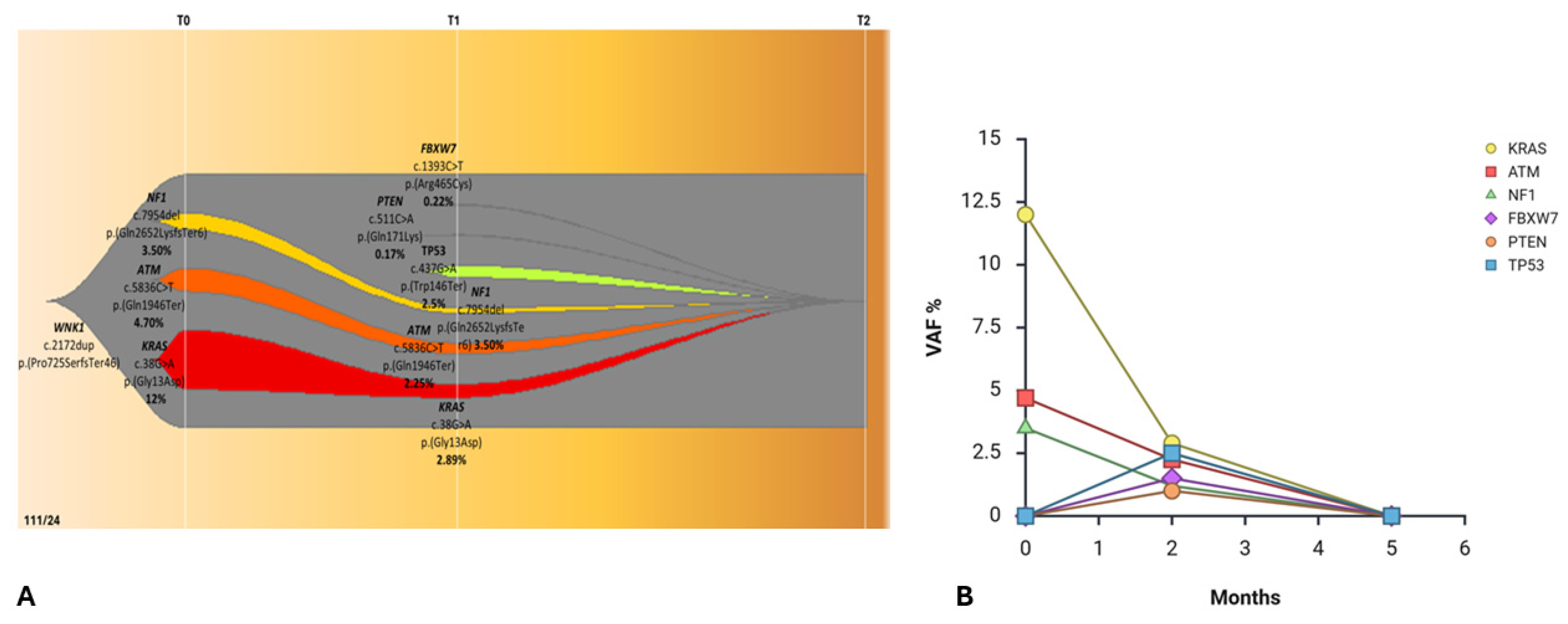
| 111/24 | 68 | M | Current Smoker | Metastatic Adenocarcinoma | 90% | Atezolizumab monotherapy | Responder | Yes | T0, T1, T2 | KRAS (p.Gly13Asp) 48% |
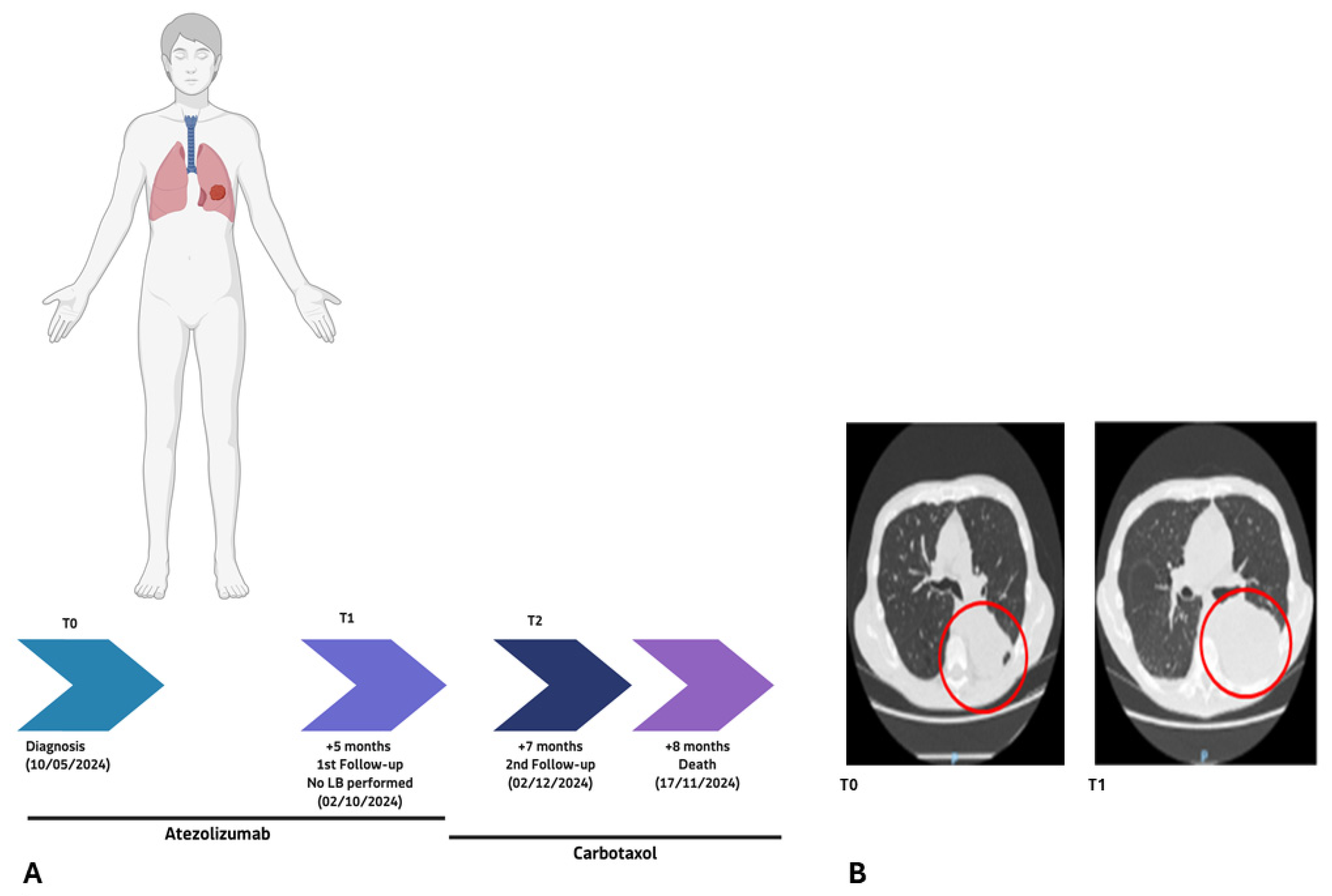
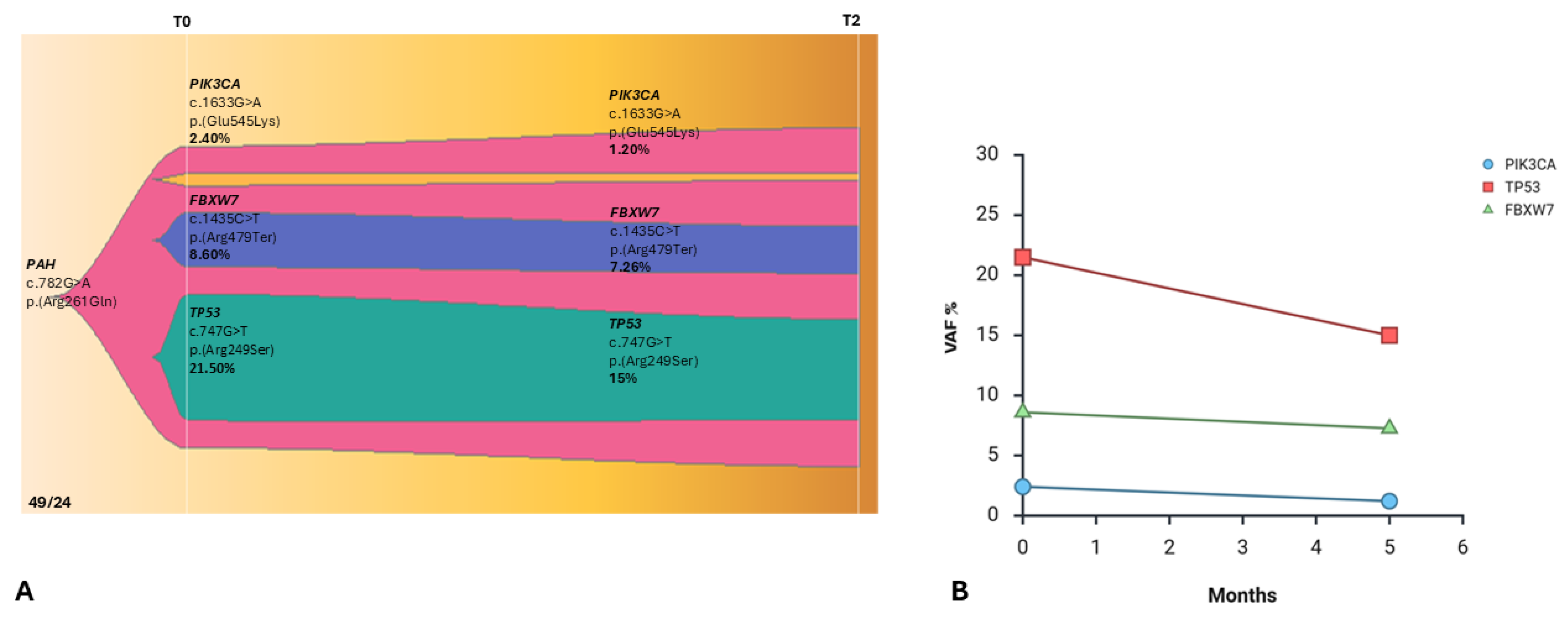
| 49/24 | 72 | M | Current Smoker | Metastatic Adenocarcinoma | 90% | Atezolizumab monotherapy, switched to carbotaxol | Non-responder | No | T0, T2 | NA |
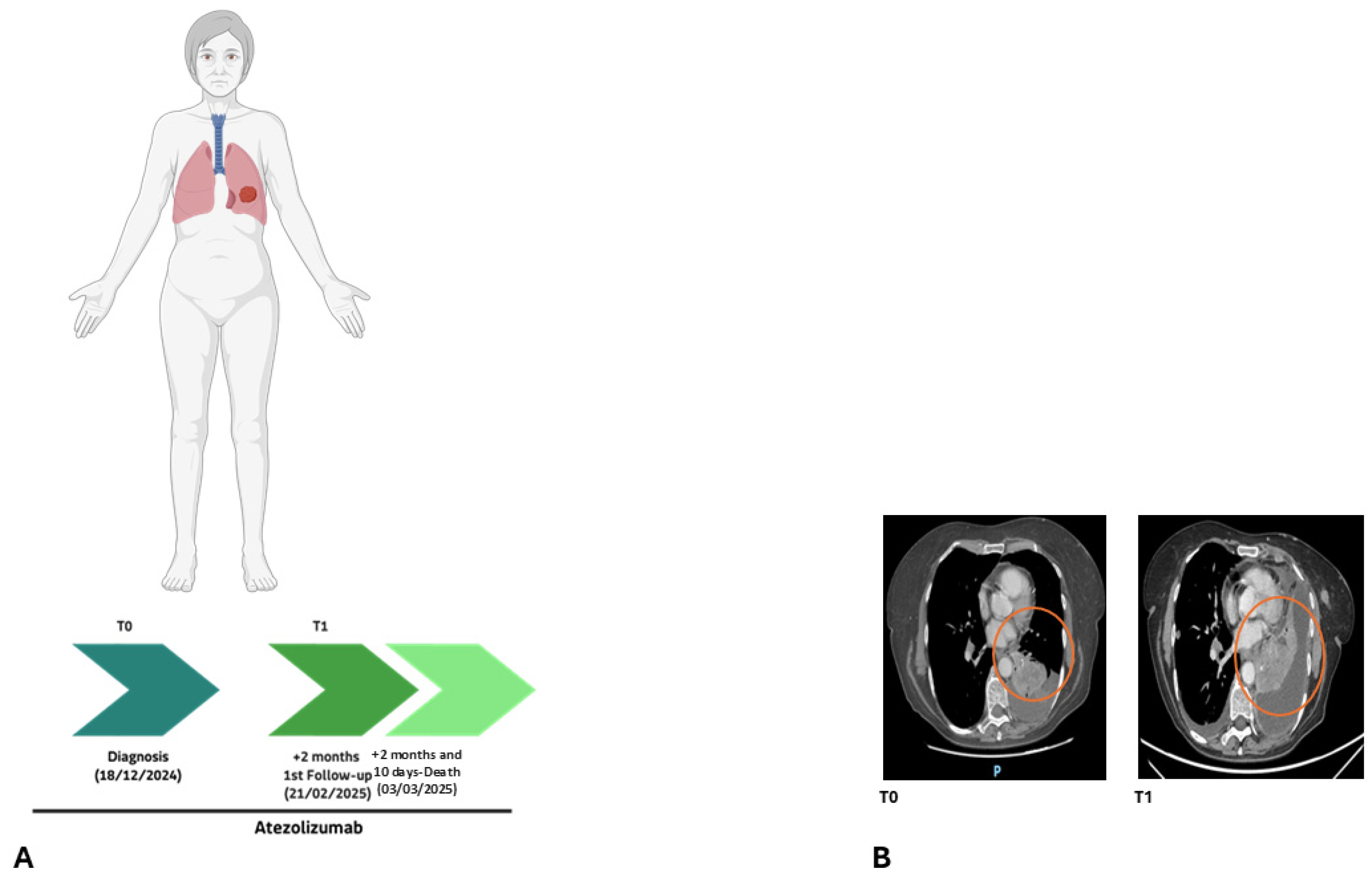
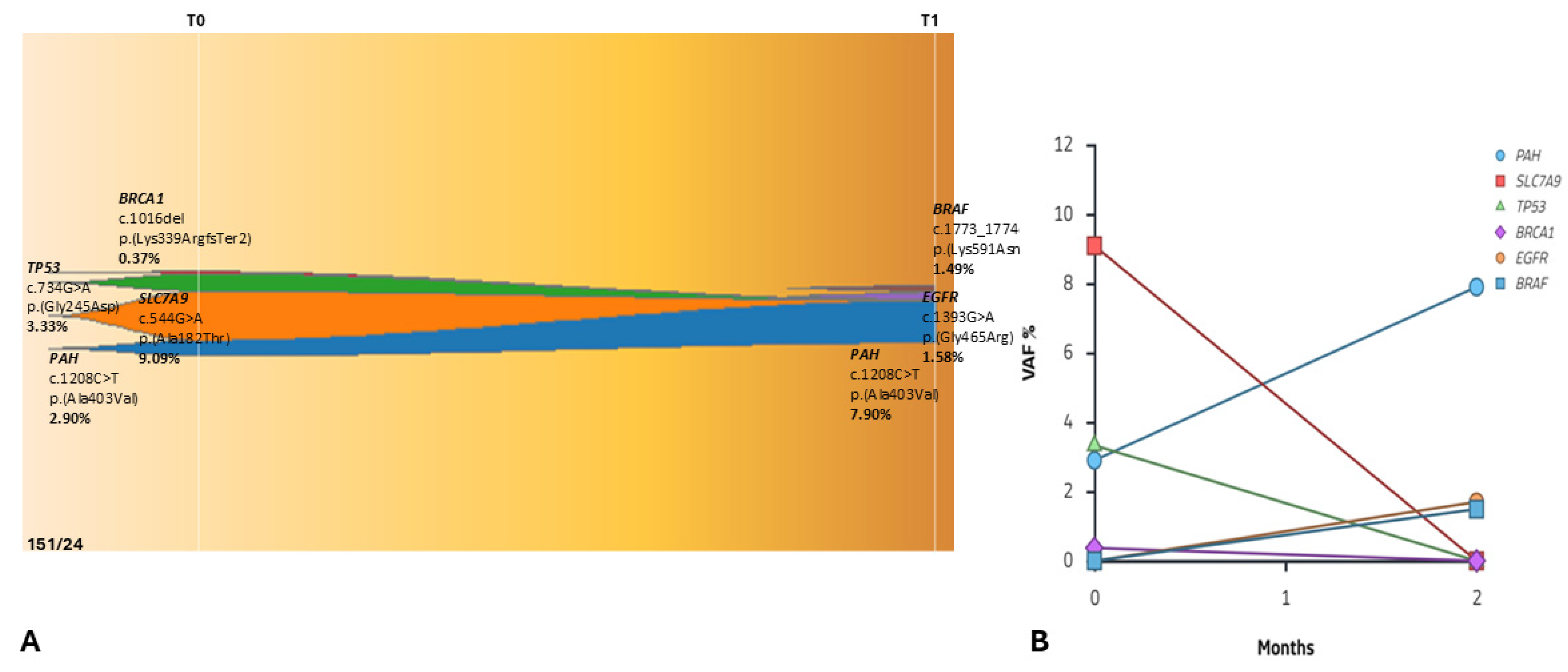
| 151/24 | 69 | F | Former Smoker | Metastatic Adenocarcinoma | 90% | Atezolizumab monotherapy (later discontinued), switched to carbo + pemetrexed | Non-responder | No | T0, T1 | ERBB2 (p.Ile655Val) 24% |
Disclaimer/Publisher’s Note: The statements, opinions and data contained in all publications are solely those of the individual author(s) and contributor(s) and not of MDPI and/or the editor(s). MDPI and/or the editor(s) disclaim responsibility for any injury to people or property resulting from any ideas, methods, instructions or products referred to in the content. |
© 2026 by the authors. Licensee MDPI, Basel, Switzerland. This article is an open access article distributed under the terms and conditions of the Creative Commons Attribution (CC BY) license.
Share and Cite
Serio, V.B.; Regoli, T.; Maffeo, D.; Martellucci, I.; Rosati, D.; Ghisalberti, M.; Balistreri, A.; Santamaria, G.; Vono, N.; Mari, F.; et al. Longitudinal Whole-Exome Sequencing of Cell-Free DNA Reveals Molecular Evolution and Heterogeneous Clinical Outcomes in PD-L1 Stratified Advanced NSCLC Adenocarcinoma Patients Treated with Atezolizumab. Int. J. Mol. Sci. 2026, 27, 2947. https://doi.org/10.3390/ijms27072947
Serio VB, Regoli T, Maffeo D, Martellucci I, Rosati D, Ghisalberti M, Balistreri A, Santamaria G, Vono N, Mari F, et al. Longitudinal Whole-Exome Sequencing of Cell-Free DNA Reveals Molecular Evolution and Heterogeneous Clinical Outcomes in PD-L1 Stratified Advanced NSCLC Adenocarcinoma Patients Treated with Atezolizumab. International Journal of Molecular Sciences. 2026; 27(7):2947. https://doi.org/10.3390/ijms27072947
Chicago/Turabian StyleSerio, Viola Bianca, Tommaso Regoli, Debora Maffeo, Ignazio Martellucci, Diletta Rosati, Marco Ghisalberti, Alberto Balistreri, Gianluca Santamaria, Niccolò Vono, Francesca Mari, and et al. 2026. "Longitudinal Whole-Exome Sequencing of Cell-Free DNA Reveals Molecular Evolution and Heterogeneous Clinical Outcomes in PD-L1 Stratified Advanced NSCLC Adenocarcinoma Patients Treated with Atezolizumab" International Journal of Molecular Sciences 27, no. 7: 2947. https://doi.org/10.3390/ijms27072947
APA StyleSerio, V. B., Regoli, T., Maffeo, D., Martellucci, I., Rosati, D., Ghisalberti, M., Balistreri, A., Santamaria, G., Vono, N., Mari, F., Colombo, F., Frullanti, E., & Palmieri, M. (2026). Longitudinal Whole-Exome Sequencing of Cell-Free DNA Reveals Molecular Evolution and Heterogeneous Clinical Outcomes in PD-L1 Stratified Advanced NSCLC Adenocarcinoma Patients Treated with Atezolizumab. International Journal of Molecular Sciences, 27(7), 2947. https://doi.org/10.3390/ijms27072947