Terpenoid Phytosomes as Advanced Delivery Systems: Molecular Interactions, Pharmacological Potential, and Scalable Manufacturing Approaches

 ,
,  and
and
Abstract
1. Introduction

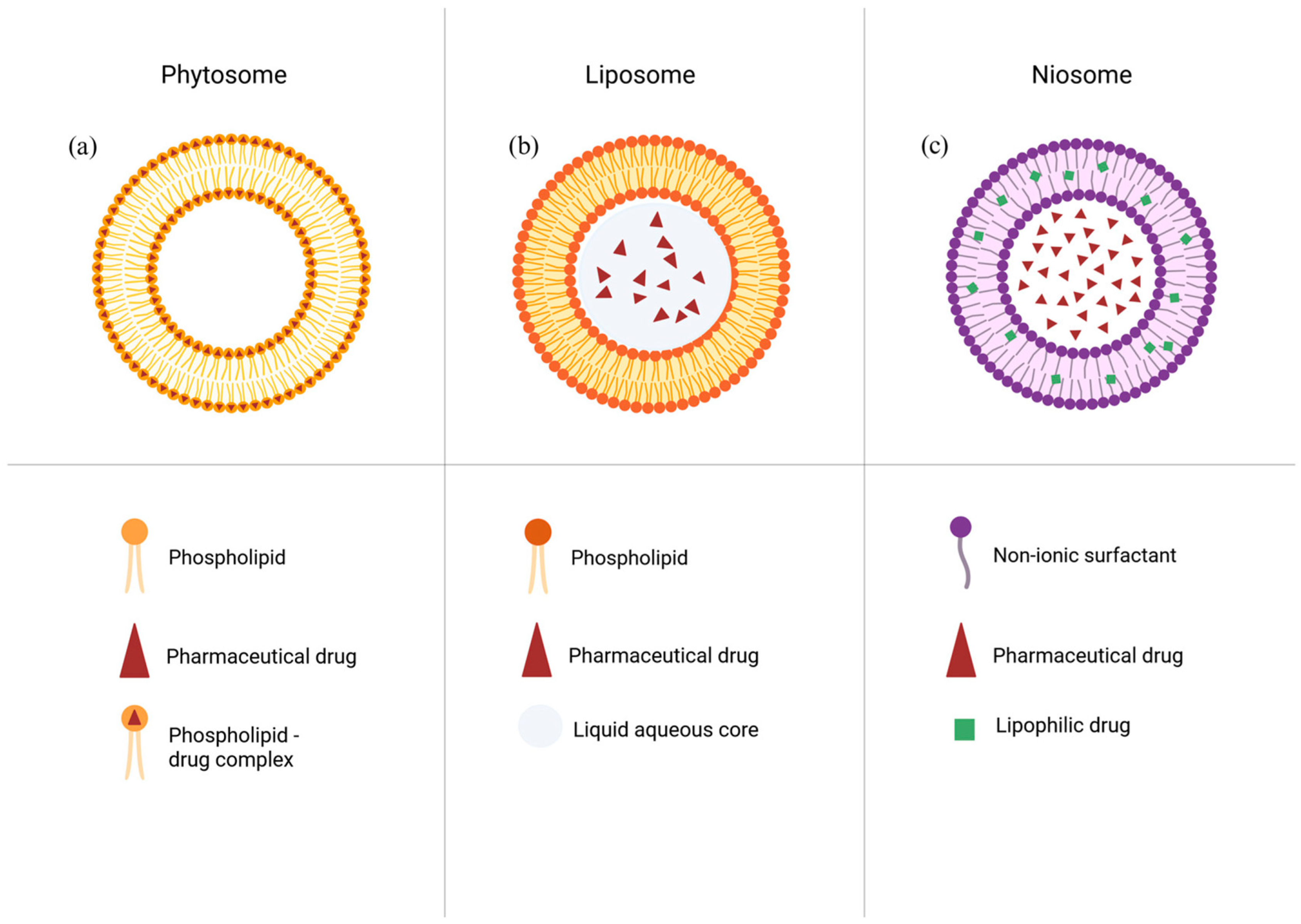
| System Type | Structure | Suitability for Terpenoids | Reference |
|---|---|---|---|
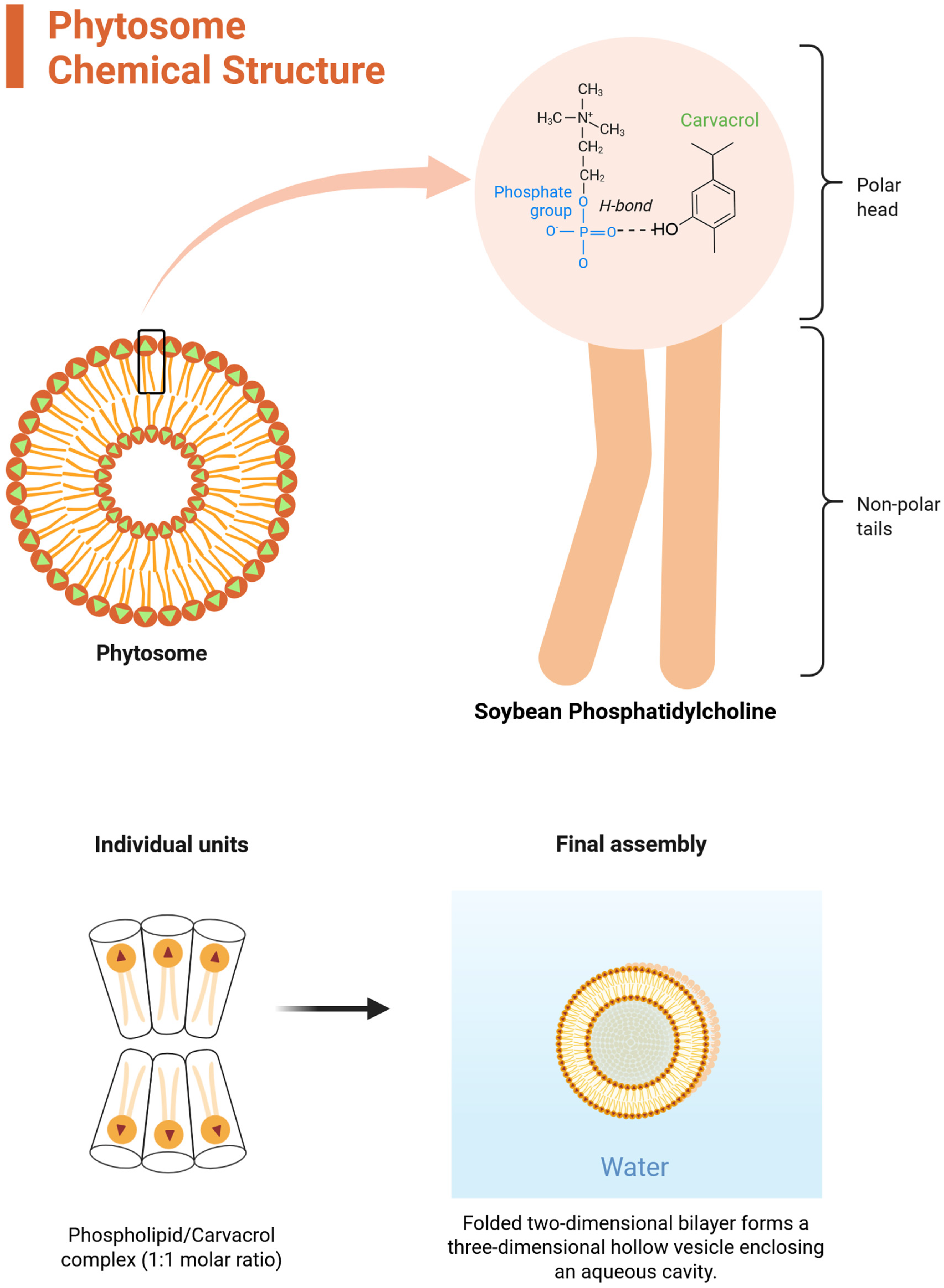
| Phytosome | The terpenoid is associated with the phospholipid headgroup through non-covalent interactions, primarily hydrogen bonding. | Great for polar terpenoids (e.g., boswellic acids). | [18] |
| Liposome | The terpenoid is physically trapped inside the lipid bilayer or the water core. | Bypassing presystemic metabolism. | [19] |
| Niosome | Similar to a liposome but made of non-ionic surfactants instead of phospholipids. | Increasing stability and reducing costs. | [20] |
2. Terpenoids as Bioactive Molecules: Structural and Physicochemical Determinants Relevant to Phytosome Formation
3. Current Advancements in Terpenoid Phytosomes for Enhanced Delivery
3.1. Diterpenoid Lactones
| No. | Compound Name | Class | Physical and Chemical Constants | Functional Group | Structural Formula | Reference |
|---|---|---|---|---|---|---|
| 1 | Andrographolide | Diterpenoid lactone | C20H30O5 m.p. 230–231 °C [α]D − 126° | Lactone ring, hydroxyl groups |  | [31,32] |
| 2 | Arglabin | Sesquiterpene lactone | C15H18O3 m.p. 100–102 °C [α]D + 45.6° | Exocyclic methylene, lactone carbonyl |  | [33] |
| 3 | α-boswellic acid | Triterpenoid | C30H48O3 m.p. 268–270 °C [α]D + 80° | Carboxyl, hydroxyl groups |  | [34,35] |
| 4 | β-boswellic acid | Triterpenoid | C30H48O3 m.p. 234–236 °C [α]D + 105° | Carboxyl, hydroxyl groups |  | [34,35,36] |
| 5 | 11-keto-β-boswellic acid | Triterpenoid | C30H46O4 m.p. 196–198 °C [α]D + 78.5° | Carboxyl, hydroxyl groups |  | [34,37,38] |
| 6 | Carvacrol | Monoterpenoid | C10H14O m.p. 1 °C b.p. 237.7 °C | Phenolic OH |  | [39,40] |
| 7 | Ursolic acid | Triterpenoid | C30H48O3 m.p. 284 °C [α]D +67.5° | Carboxyl, hydroxyl groups |  | [41,42] |
3.2. Pentacyclic Triterpenoids
3.2.1. Boswellic Acids
3.2.2. Ursolic Acid
3.3. Monoterpenoid
| Phytosome | Composition | Preparation Method | Particle Size/PDI/Zeta | Pharmacological Activities | Reference |
|---|---|---|---|---|---|
| Andrographolide (AG) phytosomal nanovesicles (AG-PTMs) | AG:Soybean l-α-phosphatidylcholine (95%) 1:2.7 | Thin-film hydration | 243.70 ± 7.30 nm, 0.31, no data on zeta potential | Anti-inflammatory, antiviral | [55] |
| Boswellic acids (BA)-loaded Casperome® | BA:Soy lecithin 1:1 | Proprietary | Proprietary | Anti-inflammatory on the colon, anti-arthritic, antidiarrheal activity | [56,57] |
| Carvacrol (CAR)-loaded phytosomes (CLNPs) | CAR: LIPOID S100 (soybean phosphatidylcholine) 1:2 | Thin-film hydration | 110.1 ± 20.8, 0.23 ± 0.04, −15.9 ± 3.99 mV | Wound healing, antioxidant activity, | [53] |
| Ursolic acid (UA) polymer-functionalized phytosomal vesicles (UA-PLL-HA. P) | Cholesterol (Chl): phosphatidylcholine (PC): UA 2:1:0.5 + poly L and hyaluronic acid (HA) | Ethanol injection method followed by centrifugation and sonification | 102.0 ± 3.0 nm, 0.254 ± 0.028, −8.5 ± 1.1 mV | Stimulus-responsive antitumor activity | [16,51] |
4. Physicochemical Characterization of Terpenoid Phytosomes
5. Manufacturing Technologies for Terpenoid Phytosomes: Process Design, Scalability, and Regulatory Implications
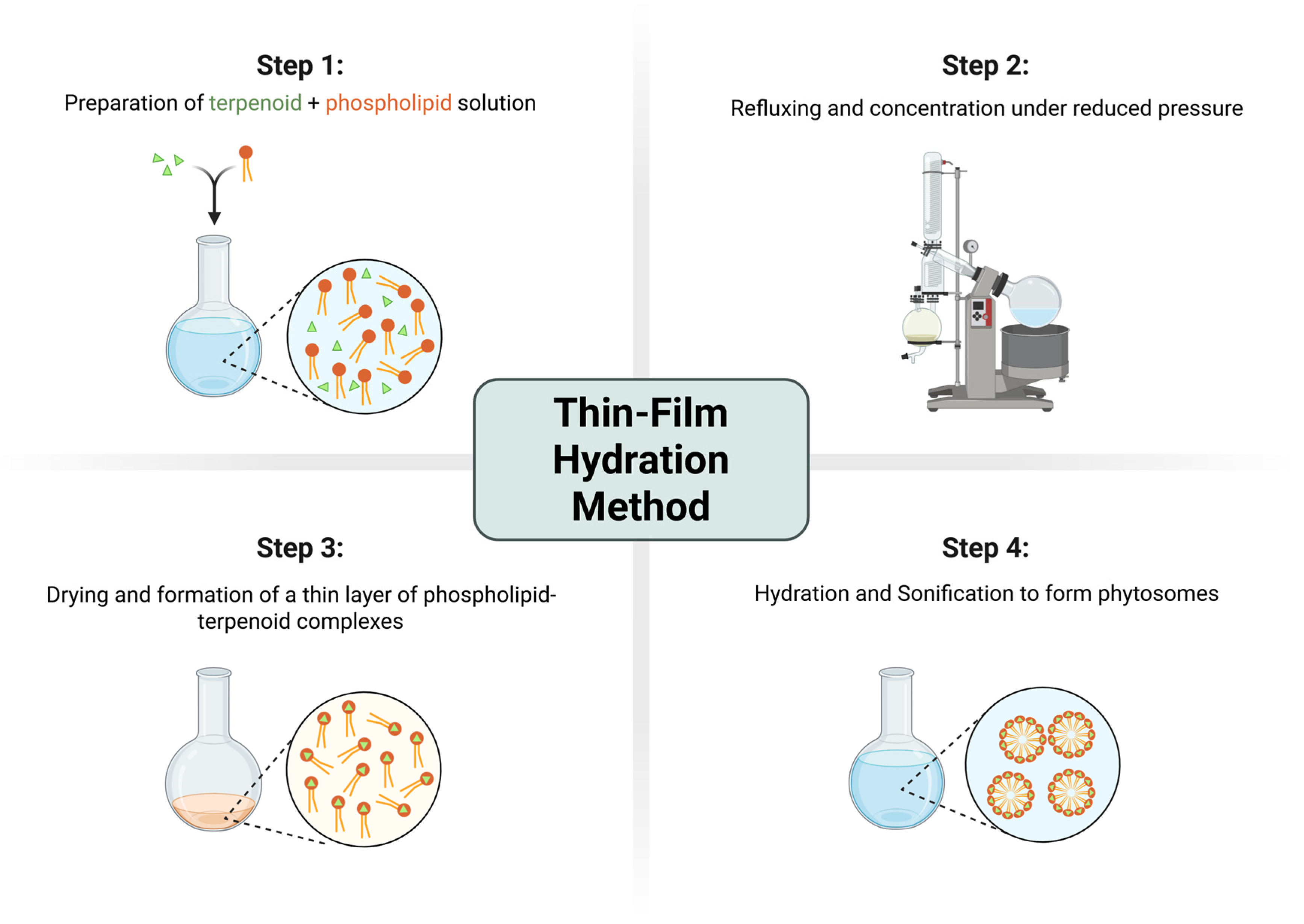
5.1. Thin-Film Hydration
| Manufacturing Approach | Core Process Principle | Advantages | Limitations | Scalability Perspective | References |
|---|---|---|---|---|---|
| Thin-film (rotary evaporation) | Co-dissolution of terpenoid and phospholipid followed by controlled solvent removal | The process provides a larger surface area and sufficient time for layer formation, preventing particles from clumping | The process is long, requiring overnight magnetic stirring and another overnight refrigeration step | Highly scalable, yet time-intensive and equipment-demanding | [30,45,58,70] |
| Co-solvency | Terpenoids are dissolved in a blend of water-miscible solvents | It is less complex than thin-film hydration and avoids the need for specialized equipment like a rotary evaporator to form a dry film | It generally results in larger particle sizes than the thin-film hydration method | Highly scalable due to simplicity | [53,58,71] |
| Salting out | Rapid precipitation of phytosome complex in a non-solvent phase | Good particle size control and high saturation and molar percent of lipids | Largest particles and least uniform at low lipid levels | Moderate. Purity can be compromised due to residual salt presents | [53,72,73] |
5.2. Co-Solvency
5.3. Salting Out
6. Discussion
7. Conclusions
Author Contributions
Funding
Institutional Review Board Statement
Informed Consent Statement
Data Availability Statement
Conflicts of Interest
References
- Brahmkshatriya, P.P.; Brahmkshatriya, P.S. Terpenes: Chemistry, Biological Role, and Therapeutic Applications. In Natural Products Phytochemistry, Botany and Metabolism of Alkaloids, Phenolics and Terpenes; Springer: Berlin/Heidelberg, Germany, 2013; pp. 2665–2691. [Google Scholar] [CrossRef]
- Pouton, C.W.; Porter, C.J.H. Formulation of Lipid-Based Delivery Systems for Oral Administration: Materials, Methods and Strategies. Adv. Drug Deliv. Rev. 2008, 60, 625–637. [Google Scholar] [CrossRef] [PubMed]
- Bombardelli, E.; Curri, S.B.; Della Loggia, R.; Del Negro, P.; Tubaro, A.; Gariboldi, P. Complexes between Phospholipids and Vegetal Derivatives of Biological Interest. Fitoterapia 1989, 60, 1–9. [Google Scholar]
- Benedini, L.A.; Messina, P.V. Smart Vesicle Therapeutics: Engineering Precision at the Nanoscale. Pharmaceutics 2025, 17, 1588. [Google Scholar] [CrossRef]
- Tikhonova, E.V.; Adekenov, S.M.; Samenov, N.A.; Gil’manov, M.K. Production of Lipoglycoprotein Micelles with Arglabine Antitumor Preparation. Chem. Nat. Compd. 2001, 37, 69–71. [Google Scholar] [CrossRef]
- Tikhonova, E.V.; Adekenov, S.M.; Samenov, N.A.; Gil’manov, M.K. Method for Producing a Liposomal Anticancer Agent. Kazakhstan Preliminary Patent 10870, Application No. 990677.1, filed 10 June 1999, published 15 November 2001. Available online: https://gosreestr.kazpatent.kz/Invention/Details?docNumber=132280 (accessed on 19 March 2026).
- Gabizon, A.A.; Gabizon-Peretz, S.; Modaresahmadi, S.; La-Beck, N.M. Thirty Years from FDA Approval of Pegylated Liposomal Doxorubicin (Doxil/Caelyx): An Updated Analysis and Future Perspective. BMJ Oncol. 2025, 4, e000573. [Google Scholar] [CrossRef]
- Nematollahi, M.H.; Pardakhty, A.; Torkzadeh-Mahanai, M.; Mehrabani, M.; Asadikaram, G. Changes in Physical and Chemical Properties of Niosome Membrane Induced by Cholesterol: A Promising Approach for Niosome Bilayer Intervention. RSC Adv. 2017, 7, 49463–49472. [Google Scholar] [CrossRef]
- Bautista-Solano, A.A.; Dávila-Ortiz, G.; Perea-Flores, M.d.J.; Martínez-Ayala, A.L. A Comprehensive Review of Niosomes: Composition, Structure, Formation, Characterization, and Applications in Bioactive Molecule Delivery Systems. Molecules 2025, 30, 3467. [Google Scholar] [CrossRef]
- Aparajay, P.; Dev, A. Functionalized Niosomes as a Smart Delivery Device in Cancer and Fungal Infection. Eur. J. Pharm. Sci. 2022, 168, 106052. [Google Scholar] [CrossRef] [PubMed]
- Cevc, G.; Blume, G. Lipid Vesicles Penetrate into Intact Skin Owing to the Transdermal Osmotic Gradients and Hydration Force. Biochim. Biophys. Acta-Biomembr. 1992, 1104, 226–232. [Google Scholar] [CrossRef]
- Touitou, E.; Dayan, N.; Bergelson, L.; Godin, B.; Eliaz, M. Ethosomes—Novel Vesicular Carriers for Enhanced Delivery: Characterization and Skin Penetration Properties. J. Control. Release 2000, 65, 403–418. [Google Scholar] [CrossRef] [PubMed]
- Spicer, P. Cubosome Processing: Industrial Nanoparticle Technology Development. Chem. Eng. Res. Des. 2005, 83, 1283–1286. [Google Scholar] [CrossRef]
- Pattni, B.S.; Chupin, V.V.; Torchilin, V.P. New Developments in Liposomal Drug Delivery. Chem. Rev. 2015, 115, 10938–10966. [Google Scholar] [CrossRef]
- Sharmila, A.; Bhadra, P.; Kishore, C.; Selvaraj, C.I.; Kavalakatt, J.; Bishayee, A. Nanoformulated Terpenoids in Cancer: A Review of Therapeutic Applications, Mechanisms, and Challenges. Cancers 2025, 17, 3013. [Google Scholar] [CrossRef]
- Toma, L.; Deleanu, M.; Sanda, G.M.; Barbălată, T.; Niculescu, L.Ş.; Sima, A.V.; Stancu, C.S. Bioactive Compounds Formulated in Phytosomes Administered as Complementary Therapy for Metabolic Disorders. Int. J. Mol. Sci. 2024, 25, 4162. [Google Scholar] [CrossRef] [PubMed]
- Ortega-Pérez, L.G.; Ayala-Ruiz, L.A.; Magaña-Rodríguez, O.R.; Piñón-Simental, J.S.; Aguilera-Méndez, A.; Godínez-Hernández, D.; Rios-Chavez, P. Development and Evaluation of Phytosomes Containing Callistemon Citrinus Leaf Extract: A Preclinical Approach for the Treatment of Obesity in a Rodent Model. Pharmaceutics 2023, 15, 2178. [Google Scholar] [CrossRef] [PubMed]
- Hüsch, J.; Bohnet, J.; Fricker, G.; Skarke, C.; Artaria, C.; Appendino, G.; Schubert-Zsilavecz, M.; Abdel-Tawab, M. Enhanced Absorption of Boswellic Acids by a Lecithin Delivery Form (Phytosome®) of Boswellia Extract. Fitoterapia 2013, 84, 89–98. [Google Scholar] [CrossRef]
- Wu, S.; Lu, J. Liposome-Enabled Nanomaterials for Muscle Regeneration. Small Methods 2025, 9, e2402154. [Google Scholar] [CrossRef] [PubMed]
- Bartelds, R.; Nematollahi, M.H.; Pols, T.; Stuart, M.C.A.; Pardakhty, A.; Asadikaram, G.; Poolman, B. Niosomes, an Alternative for Liposomal Delivery. PLoS ONE 2018, 13, e0194179. [Google Scholar] [CrossRef]
- Huang, Y.; Xie, F.J.; Cao, X.; Li, M.Y. Research Progress in Biosynthesis and Regulation of Plant Terpenoids. Biotechnol. Biotechnol. Equip. 2021, 35, 1800–1809. [Google Scholar] [CrossRef]
- Atriya, A.; Majee, C.; Mazumder, R.; Choudhary, A.N.; Salahuddin; Mazumder, A.; Dahiya, A.; Priya, N. Insight into the Various Approaches for the Enhancement of Bioavailability and Pharmacological Potency of Terpenoids: A Review. Curr. Pharm. Biotechnol. 2023, 24, 1228–1244. [Google Scholar] [CrossRef]
- Guo, J.; Huang, M.; Hou, S.; Yuan, J.; Chang, X.; Gao, S.; Zhang, Z.; Wu, Z.; Li, J. Therapeutic Potential of Terpenoids in Cancer Treatment: Targeting Mitochondrial Pathways. Cancer Rep. 2024, 7, e70006. [Google Scholar] [CrossRef]
- Barani, M.; Sangiovanni, E.; Angarano, M.; Rajizadeh, M.A.; Mehrabani, M.; Piazza, S.; Gangadharappa, H.V.; Pardakhty, A.; Mehrbani, M.; Dell’agli, M.; et al. Phytosomes as Innovative Delivery Systems for Phytochemicals: A Comprehensive Review of Literature. Int. J. Nanomed. 2021, 16, 6983–7022. [Google Scholar] [CrossRef] [PubMed]
- Albash, R.; Al-Mahallawi, A.M.; Hassan, M.; Alaa-Eldin, A.A. Development and Optimization of Terpene-Enriched Vesicles (Terpesomes) for Effective Ocular Delivery of Fenticonazole Nitrate: In Vitro Characterization and in Vivo Assessment. Int. J. Nanomed. 2021, 16, 609–621, Erratum in Int. J. Nanomed. 2022, 17, 3509–3510. https://doi.org/10.2147/IJN.S383607. [Google Scholar] [CrossRef]
- Wu, H.; Wang, B.; Li, X.; Lu, C.; Zeng, Q.; Lu, L.; Chen, M.; Wu, Y. Development of Ampelopsis Radix Ethanolic Extract Loaded Phytosomes for Improved Efficacy in Colorectal Cancer: In Vitro and In Vivo Assessment Study. J. Oleo Sci. 2024, 73, 1213–1220. [Google Scholar] [CrossRef] [PubMed]
- Mazumder, A.; Dwivedi, A.; Du Preez, J.L.; Du Plessis, J. In Vitro Wound Healing and Cytotoxic Effects of Sinigrin-Phytosome Complex. Int. J. Pharm. 2016, 498, 283–293. [Google Scholar] [CrossRef]
- Lu, M.; Qiu, Q.; Luo, X.; Liu, X.; Sun, J.; Wang, C.; Lin, X.; Deng, Y.; Song, Y. Phyto-Phospholipid Complexes (Phytosomes): A Novel Strategy to Improve the Bioavailability of Active Constituents. Asian J. Pharm. Sci. 2019, 14, 265–274. [Google Scholar] [CrossRef]
- Roy, S.; Ghosh, A.; Majie, A.; Karmakar, V.; Das, S.; Dinda, S.C.; Bose, A.; Gorain, B. Terpenoids as Potential Phytoconstituent in the Treatment of Diabetes: From Preclinical to Clinical Advancement. Phytomedicine 2024, 129, 155638. [Google Scholar] [CrossRef]
- Neamatallah, T.; Malebari, A.M.; Alamoudi, A.J.; Nazreen, S.; Alam, M.M.; Bin-Melaih, H.H.; Abuzinadah, O.A.; Badr-Eldin, S.M.; Alhassani, G.; Makki, L.; et al. Andrographolide Nanophytosomes Exhibit Enhanced Cellular Delivery and Pro-Apoptotic Activities in HepG2 Liver Cancer Cells. Drug Deliv. 2023, 30, 2174209. [Google Scholar] [CrossRef] [PubMed]
- Gorter, K. Le Principe Amer de l’Andrographis Paniculata Nees. Recl. Trav. Chim. Pays-Bas Belg. 1911, 30, 151–160. [Google Scholar]
- Rajani, M.; Shrivastava, N.; Ravishankara, M.N. A Rapid Method for Isolation of Andrographolide from Andrographis Paniculata Nees (Kalmegh). Pharm. Biol. 2000, 38, 204–209. [Google Scholar] [CrossRef]
- Adekenov, S.M. Chemical Modification of Arglabin and Biological Activity of Its New Derivatives. Fitoterapia 2016, 110, 196–205. [Google Scholar] [CrossRef]
- Subbaraju, G.V.; Sridhar, P.; Ramakrishna, S.; Sreemannarayana, A.; Vanisree, M.; Kanna Babu, S. Isolation and HPLC Estimation of Six Boswellic Acids from Boswellia Serrata Extract. Asian J. Chem. 2004, 16, 1824–1832. [Google Scholar]
- Culioli, G.; Mathe, C.; Archier, P.; Vieillescazes, C. A Lupane Triterpene from Frankincense (Boswellia Sp., Burseraceae). Phytochemistry 2003, 62, 537–541. [Google Scholar] [CrossRef]
- Beton, J.L.; Halsall, T.G.; Jones, E.R.H. The Chemistry of Triterpenes and Related Compounds. Part Xxviii.* β-Boswellic Acid. J. Chem. Soc. 1956, 2862–2879. [Google Scholar] [CrossRef]
- Pardhy, R.S.; Bhattacharyya, S.C. Beta-Boswellic Acid, Acetyl-Beta-Boswellic Acid, Acetyl-11-Keto-Beta-Boswellic Acid & 11-Keto-Beta-Boswellic Acid, Four Pentacyclic Triterpene Acids from the Resin of Boswellia Serrata Roxb. Indian J. Chem. Sect. B Org. Chem. Incl. Med. Chem. 1978, 16, 176–178. [Google Scholar]
- Iram, F.; Khan, S.A.; Husain, A. Phytochemistry and Potential Therapeutic Actions of Boswellic Acids: A Mini-Review. Asian Pac. J. Trop. Biomed. 2017, 7, 513–523. [Google Scholar] [CrossRef]
- Kekulé, A. Ueber Die Constitution Des Carvacrols. Ber. Dtsch. Chem. Ges. 1872, 5, 908–910. [Google Scholar] [CrossRef]
- Suntres, Z.E.; Coccimiglio, J.; Alipour, M. The Bioactivity and Toxicological Actions of Carvacrol. Crit. Rev. Food Sci. Nutr. 2015, 55, 304–318. [Google Scholar] [CrossRef]
- J.S.H. Wax-like Coating of the Apple. J. Frankl. Inst. 1932, 214, 632. [Google Scholar] [CrossRef]
- Woźniak, Ł.; Skąpska, S.; Marszałek, K. Ursolic Acid—A Pentacyclic Triterpenoid with a Wide Spectrum of Pharmacological Activities. Molecules 2015, 20, 20614–20641. [Google Scholar] [CrossRef] [PubMed]
- Riva, A.; Allegrini, P.; Franceschi, F.; Togni, S.; Giacomelli, L.; Eggenhoffner, R. Casperome® in the Management of Musculoskeletal Disorders: A Review. Eur. Rev. Med. Pharmacol. Sci. 2017, 5258–5263. [Google Scholar]
- Pellegrini, L.; Milano, E.; Franceschi, F.; Belcaro, G.; Gizzi, G.; Feragalli, B.; Dugall, M.; Luzzi, R.; Togni, S.; Eggenhoffner, R.; et al. Managing Ulcerative Colitis in Remission Phase: Usefulness of Casperome®, an Innovative Lecithin-Based Delivery System of Boswellia Serrata Extract. Eur. Rev. Med. Pharmacol. Sci. 2016, 20, 2695–2700. [Google Scholar] [PubMed]
- Sharma, A.; Gupta, N.K.; Dixit, V.K. Complexation with Phosphatidyl Choline as a Strategy for Absorption Enhancement of Boswellic Acid. Drug Deliv. 2010, 17, 587–595. [Google Scholar] [CrossRef] [PubMed]
- Gomaa, A.A.; Mohamed, H.S.; Abd-ellatief, R.B.; Gomaa, M.A. Boswellic Acids/Boswellia Serrata Extract as a Potential COVID-19 Therapeutic Agent in the Elderly. Inflammopharmacology 2021, 29, 1033–1048. [Google Scholar] [CrossRef]
- Belcaro, G.; Gizzi, G.; Pellegrini, L.; Corsi, M.; Dugall, M.; Cacchio, M.; Feragalli, B.; Togni, S.; Riva, A.; Eggenhoffner, R.; et al. Supplementation with a Lecithin-Based Delivery Form of Boswellia Serrata Extract (Casperome®) Controls Symptoms of Mild Irritable Bowel Syndrome. Eur. Rev. Med. Pharmacol. Sci. 2017, 21, 2249–2254. [Google Scholar]
- Sgaramella, L.I.; Pasculli, A.; Moschetta, M.; Puntillo, F.; Dicillo, P.; Clemente, L.; Maruccia, M.; Mastropasqua, M.G.; Piombino, M.; Resta, N.; et al. Randomized Controlled Trial of Bromelain and Alpha-Lipoic Acid in Breast Conservative Surgery. Sci. Rep. 2025, 15, 4899. [Google Scholar] [CrossRef]
- Di Giacomo, P.; Forte, G.; Capogna, I.; Casagrande, M.; Di Paolo, C. The Role of Nutraceuticals in the Management of Temporomandibular Disorders. J. Complement. Integr. Med. 2024, 21, 540–547. [Google Scholar] [CrossRef] [PubMed]
- Franceschi, F.; Togni, S.; Belcaro, G.; Dugall, M.; Luzzi, R. A Novel Lecithin Based Delivery Form of Boswellic Acids (Casperome®) for the Management of Osteo-Muscular Pain: A Registry Study in Young Rugby Players. Eur. Rev. Med. Pharmacol. Sci. 2016, 20, 4156–4161. [Google Scholar]
- Poudel, K.; Gautam, M.; Maharjan, S.; Jeong, J.; Choi, H. Dual Stimuli-Responsive Ursolic Acid-Embedded Nanophytoliposome for Targeted Antitumor Therapy. Int. J. Pharm. 2020, 582, 119330. [Google Scholar] [CrossRef]
- Biswas, S.; Mukherjee, P.K.; Harwansh, R.K.; Bannerjee, S.; Bhattacharjee, P. Enhanced Bioavailability and Hepatoprotectivity of Optimized Ursolic Acid–Phospholipid Complex. Drug Dev. Ind. Pharm. 2019, 45, 946–958. [Google Scholar] [CrossRef]
- Tafish, A.M.; El-Sherbiny, M.; Al-Karmalawy, A.A.; Soliman, O.A.E.A.; Saleh, N.M. Carvacrol-Loaded Phytosomes for Enhanced Wound Healing: Molecular Docking, Formulation, DoE-Aided Optimization, and in Vitro/in Vivo Evaluation. Int. J. Nanomed. 2023, 18, 5749–5780. [Google Scholar] [CrossRef]
- Khalil, W.A.; Elkhamy, S.A.; Hegazy, M.M.; Hassan, M.A.E.; Tafish, A.M.; Abdelnour, S.A.; El-Harairy, M.A. Beneficial Effects of Carvacrol Loaded Phytosomes on Enhancing Cryotolerance of Buffalo Semen Following Cryopreservation. Sci. Rep. 2025, 15, 25366. [Google Scholar] [CrossRef]
- Ren, Z.; Chen, Z.; Xie, Y.; Coghi, P. Andrographolide and Its Derivatives: A Comprehensive Review of Anti-Infective Properties and Clinical Potential. Molecules 2025, 30, 4273. [Google Scholar] [CrossRef]
- Giacosa, A.; Riva, A.; Petrangolini, G.; Allegrini, P.; Fazia, T.; Bernardinelli, L.; Peroni, G.; Rondanelli, M. Positive Effects of a Lecithin-Based Delivery Form of Boswellia Serrata Extract in Acute Diarrhea of Adult Subjects. Nutrients 2022, 14, 1858. [Google Scholar] [CrossRef]
- Ferrara, T.; De Vincentiis, G.; Di Pierro, F. Functional Study on Boswellia Phytosome as Complementary Intervention in Asthmatic Patients. Eur. Rev. Med. Pharmacol. Sci. 2015, 19, 3757–3762. [Google Scholar]
- Kapse, M.V.; Mulla, J.A.S. Unlocking the Potential of Phytosomes: A Review of Formulation Techniques, Evaluation Methods, and Emerging Applications. Acta Mater. Medica 2024, 3, 509–520. [Google Scholar] [CrossRef]
- Talebi, M.; Shahbazi, K.; Dakkali, M.S.; Akbari, M.; Almasi Ghale, R.; Hashemi, S.; Sashourpour, M.; Mojab, F.; Aminzadeh, S. Phytosomes: A Promising Nanocarrier System for Enhanced Bioavailability and Therapeutic Efficacy of Herbal Products. Phytomed. Plus 2025, 5, 100779. [Google Scholar] [CrossRef]
- Pilato, S.; Carradori, S.; Melfi, F.; Di Giacomo, S.; Ciavarella, S.; Ciulla, M.; Fontana, A.; Di Profio, P.; Aschi, M.; Moffa, S.; et al. Phenolic Terpenes in Liposomal Bilayers: Unraveling Physicochemical Interactions and Membrane Perturbation via Biophysical and Computational Approaches. J. Colloid Interface Sci. 2025, 700, 138358. [Google Scholar] [CrossRef] [PubMed]
- Socaciu, C.; Fetea, F.; Socaciu, M.A. Synthesis and Characterization of PEGylated Liposomes and Nanostructured Lipid Carriers with Entrapped Bioactive Triterpenoids: Comparative Fingerprints and Quantification by UHPLC-QTOF-ESI(+)-MS, ATR-FTIR Spectroscopy, and HPLC-DAD. Pharmaceuticals 2024, 18, 33. [Google Scholar] [CrossRef]
- Ragheb, R.; Nobbmann, U. Multiple Scattering Effects on Intercept, Size, Polydispersity Index, and Intensity for Parallel (VV) and Perpendicular (VH) Polarization Detection in Photon Correlation Spectroscopy. Sci. Rep. 2020, 10, 21768. [Google Scholar] [CrossRef]
- Clogston, J.D.; Patri, A.K. Zeta Potential Measurement. Methods Mol. Biol. 2011, 697, 63–70. [Google Scholar] [CrossRef] [PubMed]
- Elendran, S.; Shiva Kumar, V.; Sundralingam, U.; Tow, W.-K.; Palanisamy, U.D. Enhancing the Bioavailability of the Ellagitannin, Geraniin: Formulation, Characterization, and in Vivo Evaluation. Int. J. Pharm. 2024, 660, 124333. [Google Scholar] [CrossRef] [PubMed]
- Ďúranová, H.; Kšiňan, S.; Kuželová, L.; Šimora, V.; Ďurišová, Ľ.; Olexíková, L.; Ernst, D.; Kolenčík, M. Nanoparticle-Plant Interactions: Physico-Chemical Characteristics, Application Strategies, and Transmission Electron Microscopy-Based Ultrastructural Insights, with a Focus on Stereological Research. Chemosphere 2024, 363, 142772. [Google Scholar] [CrossRef]
- Zambrano, P.; Manrique-Moreno, M.; Petit, K.; Colina, J.R.; Jemiola-Rzeminska, M.; Suwalsky, M.; Strzalka, K. Differential Scanning Calorimetry in Drug-Membrane Interactions. Biochem. Biophys. Res. Commun. 2024, 709, 149806. [Google Scholar] [CrossRef]
- Tsarenko, E.; Schubert, U.S.; Nischang, I. Nanoparticle Formulation Composition Analysis by Liquid Chromatography on Reversed-Phase Monolithic Silica. Anal. Chem. 2023, 95, 565–569. [Google Scholar] [CrossRef]
- Vu, H.T.H.; Hook, S.M.; Siqueira, S.D.; Müllertz, A.; Rades, T.; McDowell, A. Are Phytosomes a Superior Nanodelivery System for the Antioxidant Rutin? Int. J. Pharm. 2018, 548, 82–91. [Google Scholar] [CrossRef]
- Semalty, A.; Semalty, M.; Rawat, M.S.M.; Franceschi, F. Supramolecular Phospholipids-Polyphenolics Interactions: The PHYTOSOME® Strategy to Improve the Bioavailability of Phytochemicals. Fitoterapia 2010, 81, 306–314. [Google Scholar] [CrossRef]
- Deleanu, M.; Toma, L.; Sanda, G.M.; Barbălată, T.; Niculescu, L.Ş.; Sima, A.V.; Deleanu, C.; Săcărescu, L.; Suciu, A.; Alexandru, G.; et al. Formulation of Phytosomes with Extracts of Ginger Rhizomes and Rosehips with Improved Bioavailability, Antioxidant and Anti-Inflammatory Effects In Vivo. Pharmaceutics 2023, 15, 1066. [Google Scholar] [CrossRef]
- Xu, F.; Xu, S.; Yang, L.; Qu, A.; Li, D.; Yu, M.; Wu, Y.; Zheng, S.; Ruan, X.; Wang, Q. Preparing a Phytosome for Promoting Delivery Efficiency and Biological Activities of Methyl Jasmonate-Treated Dendropanax Morbifera Adventitious Root Extract (DMARE). Biomolecules 2024, 14, 1273. [Google Scholar] [CrossRef]
- Dewi, M.K.; Muhaimin, M.; Joni, I.M.; Hermanto, F.; Chaerunisaa, A.Y. Fabrication of Phytosome with Enhanced Activity of Sonneratia Alba: Formulation Modeling and in Vivo Antimalarial Study. Int. J. Nanomed. 2024, 19, 9411–9435. [Google Scholar] [CrossRef] [PubMed]
- Islam, N.; Irfan, M.; Hussain, T.; Mushtaq, M.; Khan, I.U.; Yousaf, A.M.; Ghori, M.U.; Shahzad, Y. Piperine Phytosomes for Bioavailability Enhancement of Domperidone. J. Liposome Res. 2022, 32, 172–180. [Google Scholar] [CrossRef] [PubMed]
- El-Menshawe, S.F.; Ali, A.A.; Rabeh, M.A.; Khalil, N.M. Nanosized Soy Phytosome-Based Thermogel as Topical Anti-Obesity Formulation: An Approach for Acceptable Level of Evidence of an Effective Novel Herbal Weight Loss Product. Int. J. Nanomed. 2018, 13, 307–318. [Google Scholar] [CrossRef] [PubMed]
- Hüsch, J.; Gerbeth, K.; Fricker, G.; Setzer, C.; Zirkel, J.; Rebmann, H.; Schubert-Zsilavecz, M.; Abdel-Tawab, M. Effect of Phospholipid-Based Formulations of Boswellia Serrata Extract on the Solubility, Permeability, and Absorption of the Individual Boswellic Acid Constituents Present. J. Nat. Prod. 2012, 75, 1675–1682. [Google Scholar] [CrossRef]
- Abdihaji, M.; Chegeni, M.M.; Hadizadeh, A.; Farrokhzad, N.; Kheradmand, Z.; Fakhrfatemi, P.; Faress, F.; Moeinabadi-Bidgoli, K.; Noorbazargan, H.; Mostafavi, E. Polyvinyl Alcohol (PVA)-Based Nanoniosome for Enhanced in Vitro Delivery and Anticancer Activity of Thymol. Int. J. Nanomed. 2023, 18, 3459–3488. [Google Scholar] [CrossRef] [PubMed]
- Dutt, Y.; Pandey, R.P.; Dutt, M.; Gupta, A.; Vibhuti, A.; Raj, V.S.; Chang, C.M.; Priyadarshini, A. Liposomes and Phytosomes: Nanocarrier Systems and Their Applications for the Delivery of Phytoconstituents. Coord. Chem. Rev. 2023, 491, 215251. [Google Scholar] [CrossRef]
- Mehmood, H. Phytosome as a Novel Carrier for Delivery of Phytochemicals: A Comprehensive Review. Middle East J. Appl. Sci. Technol. 2023, 6, 21–51. [Google Scholar] [CrossRef]
- Kaps, A.; Gwiazdoń, P.; Chodurek, E. Nanoformulations for Delivery of Pentacyclic Triterpenoids in Anticancer Therapies. Molecules 2021, 26, 1764. [Google Scholar] [CrossRef]


| Parameter | Analytical Technique | Key Observations | References |
|---|---|---|---|
| Particle Size and Distribution | Dynamic Light Scattering (DLS) | Ideal PDI < 0.3 for stable systems | [62] |
| Surface Charge | Electrophoretic Mobility (Zeta Potential) | High absolute values (>±30 mV) indicate good stability | [63] |
| Surface Morphology | TEM | Direct visual confirmation of the spherical shape | [65] |
| Chemical Interaction | ATR-FTIR Spectroscopy | Shift or disappearance of –OH or C=O stretching vibrations, indicating hydrogen bonding | [61] |
| Thermodynamic State | DSC (Differential Scanning Calorimetry) | Loss of the drug’s endothermic melting peak, confirming its molecular dispersion in the lipid matrix | [66] |
| Crystallinity | Powder XRD (X-ray Diffraction) | Transition from sharp crystalline peaks to a broad “halo” pattern (amorphous form) | [64] |
| Complexation Efficiency | HPLC | Measurement of the Drug Entrapment Efficiency (EE%) and Loading Capacity (LC%) | [67] |
| Molecular Environment | 1H-NMR | Analysis of chemical shifts to pinpoint specific atomic interactions between terpenoid and PC | [68] |
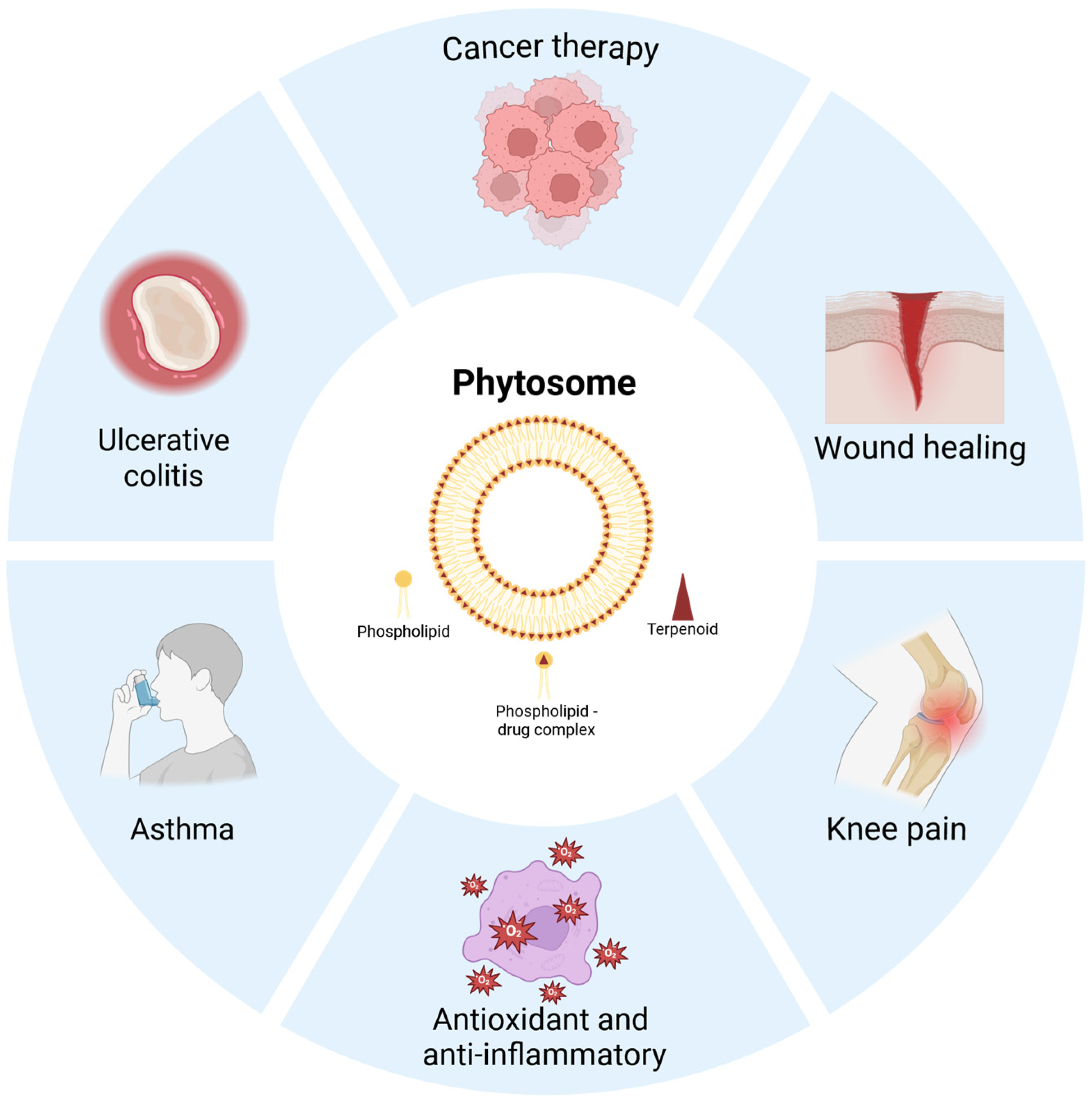
| Therapeutic Area | Model | Key Outcome | Reference |
|---|---|---|---|
| Inflammation | Clinical trial | ↓ TNF-α, 5-Lipoxygenase | [44,45,48,50,56,57,75] |
| Cancer | In vitro, in vivo | ↑ apoptosis | [51] |
| Wound healing | In vivo | Accelerated closure | [53] |
| Gastrointestinal disorders (ulcerative colitis, irritable bowel syndrome) | Clinical trial | Pain relief | [47] |
| Muscoskeletal disorders (knee pain) | Clinical trial | ↓ inflammatory biomarkers (CRP) and ↓ cartilage damage markers (COMP) | [50] |
| Asthma | Clinical trial | Reduces the need for inhalation therapy ICS + LABA | [57] |
Disclaimer/Publisher’s Note: The statements, opinions and data contained in all publications are solely those of the individual author(s) and contributor(s) and not of MDPI and/or the editor(s). MDPI and/or the editor(s) disclaim responsibility for any injury to people or property resulting from any ideas, methods, instructions or products referred to in the content. |
© 2026 by the authors. Licensee MDPI, Basel, Switzerland. This article is an open access article distributed under the terms and conditions of the Creative Commons Attribution (CC BY) license.
Share and Cite
Sergazy, S.; Aliakpar, S.; Adekenova, G.; Itzhanova, K.; Taglialatela-Scafati, O.; Adekenov, S. Terpenoid Phytosomes as Advanced Delivery Systems: Molecular Interactions, Pharmacological Potential, and Scalable Manufacturing Approaches. Int. J. Mol. Sci. 2026, 27, 2868. https://doi.org/10.3390/ijms27062868
Sergazy S, Aliakpar S, Adekenova G, Itzhanova K, Taglialatela-Scafati O, Adekenov S. Terpenoid Phytosomes as Advanced Delivery Systems: Molecular Interactions, Pharmacological Potential, and Scalable Manufacturing Approaches. International Journal of Molecular Sciences. 2026; 27(6):2868. https://doi.org/10.3390/ijms27062868
Chicago/Turabian StyleSergazy, Shynggys, Shyngys Aliakpar, Gulimzhan Adekenova, Khorlan Itzhanova, Orazio Taglialatela-Scafati, and Sergazy Adekenov. 2026. "Terpenoid Phytosomes as Advanced Delivery Systems: Molecular Interactions, Pharmacological Potential, and Scalable Manufacturing Approaches" International Journal of Molecular Sciences 27, no. 6: 2868. https://doi.org/10.3390/ijms27062868
APA StyleSergazy, S., Aliakpar, S., Adekenova, G., Itzhanova, K., Taglialatela-Scafati, O., & Adekenov, S. (2026). Terpenoid Phytosomes as Advanced Delivery Systems: Molecular Interactions, Pharmacological Potential, and Scalable Manufacturing Approaches. International Journal of Molecular Sciences, 27(6), 2868. https://doi.org/10.3390/ijms27062868