Susceptibility of the Oral Commensal Bacterium Streptococcus sanguinis to ZnO Nanoparticles

 , ,
, ,
Abstract
1. Introduction
2. Results
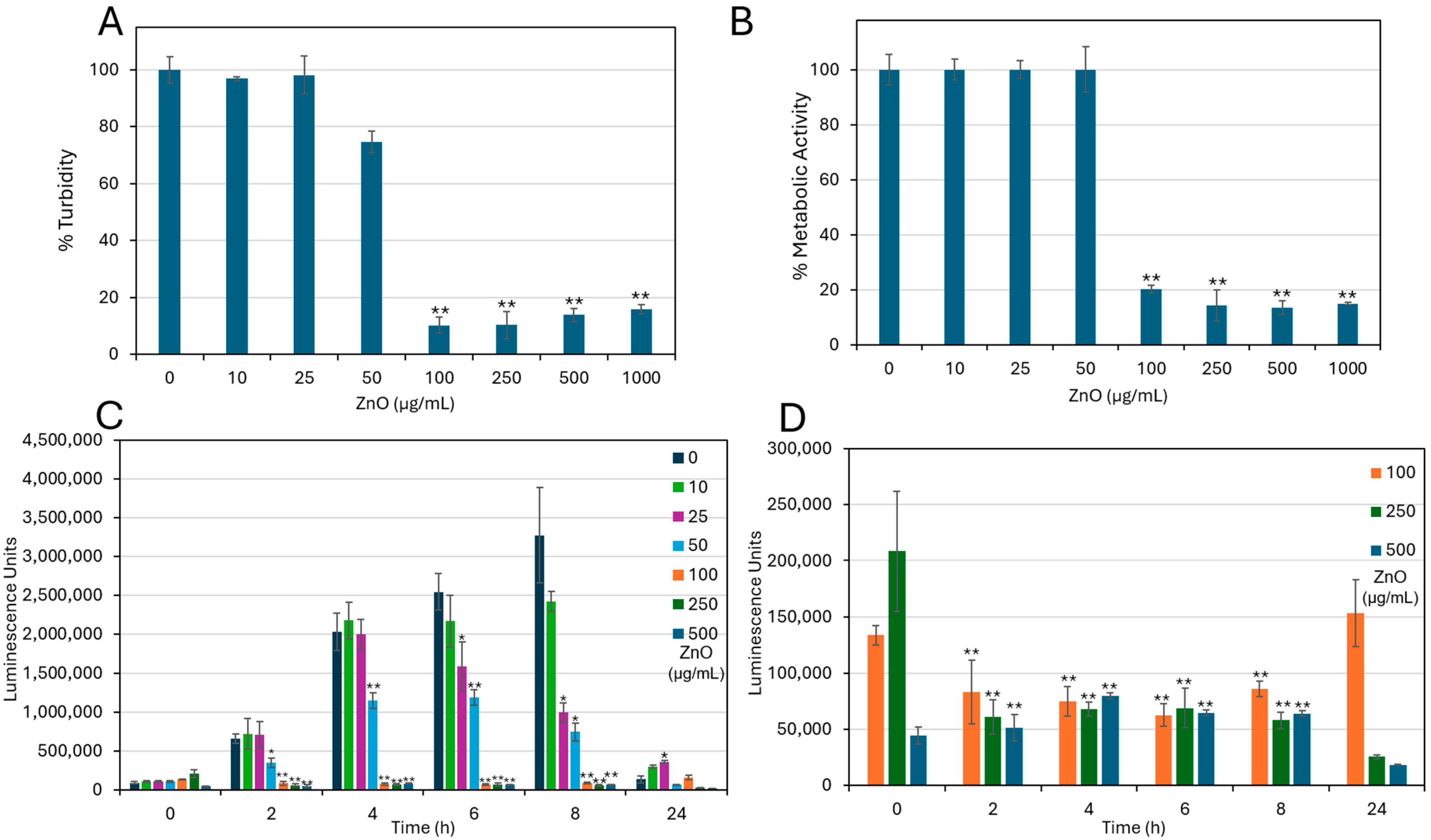
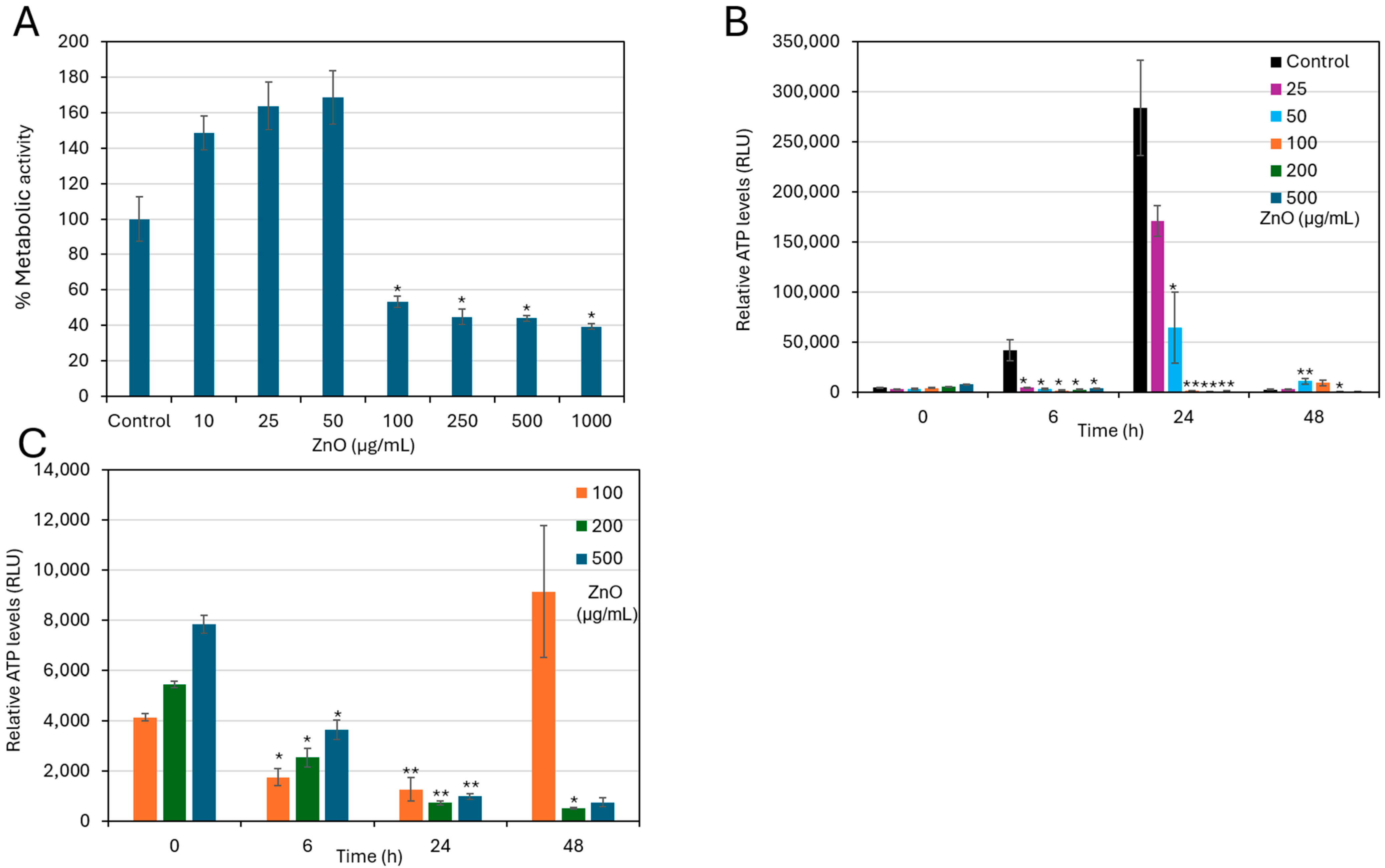
2.1. ZnO NPs Inhibit Bacterial Growth and Metabolic Activity
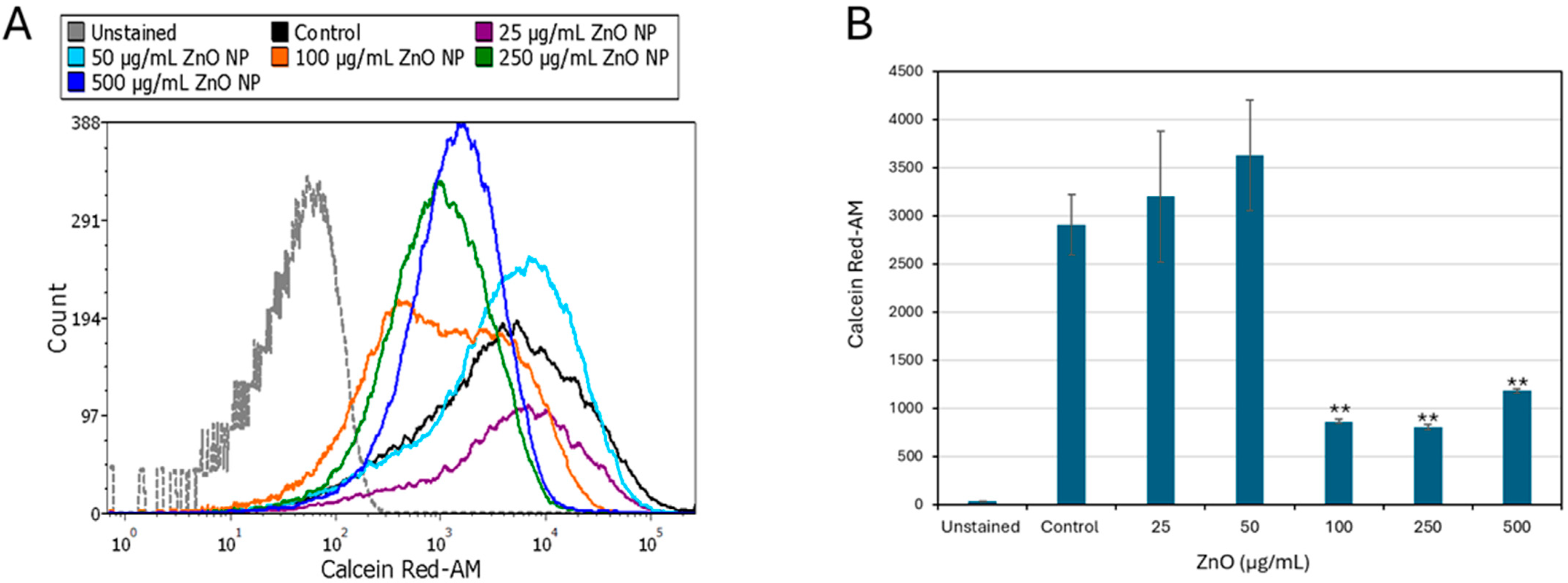
2.2. Antimetabolic Effect of ZnO NPs
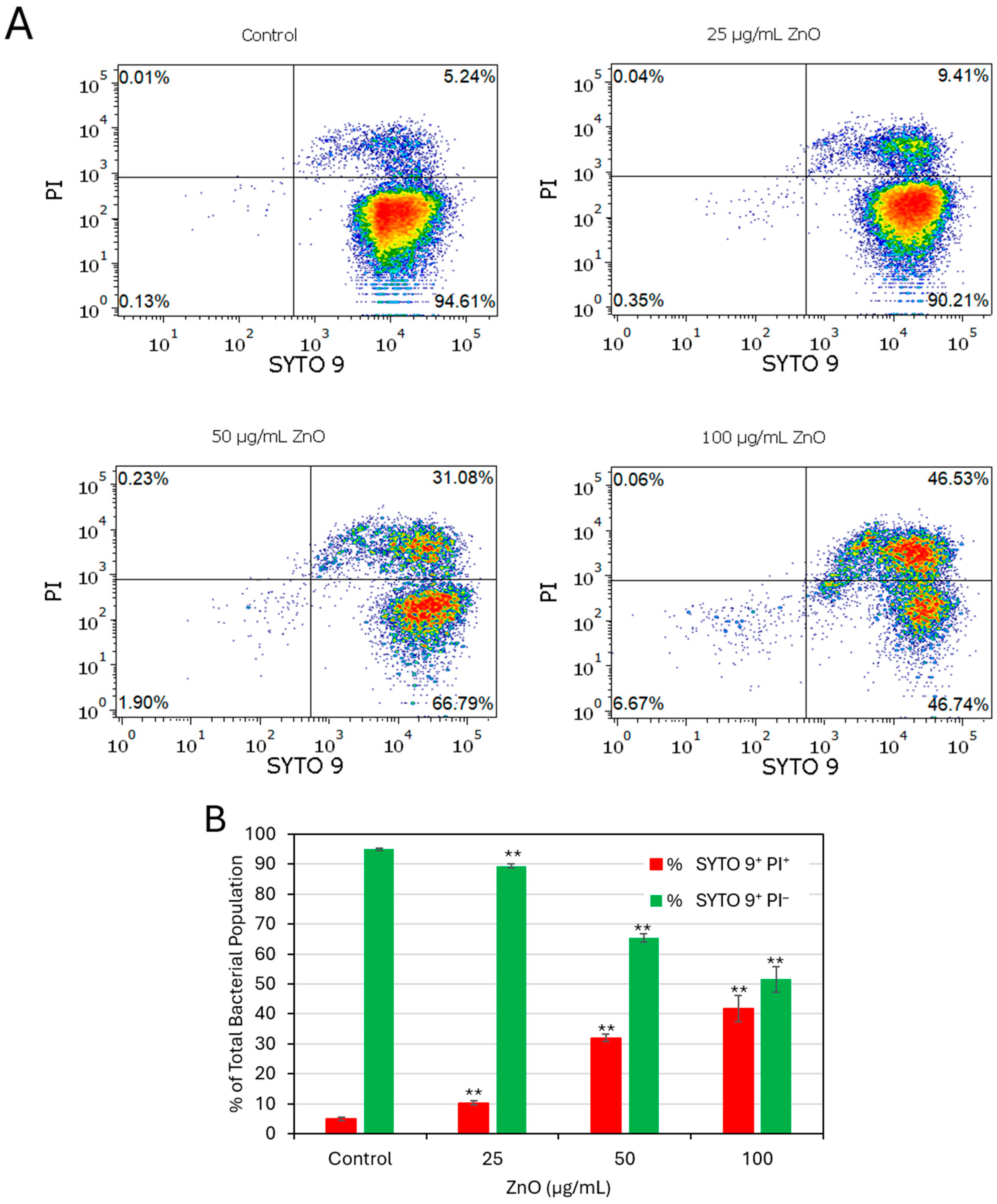
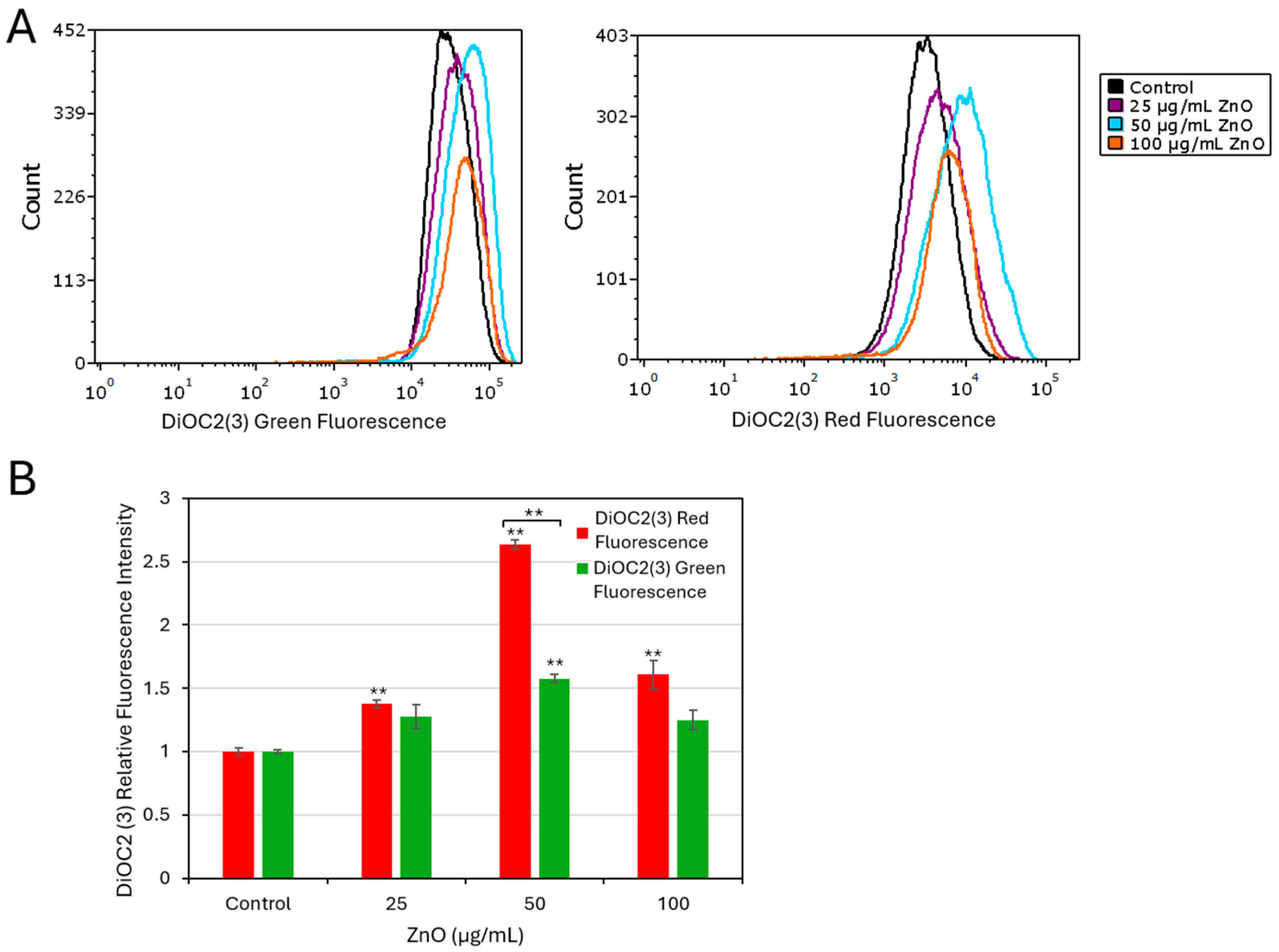
2.3. Membrane Hyperpolarization and Loss of Membrane Integrity Are Late Events
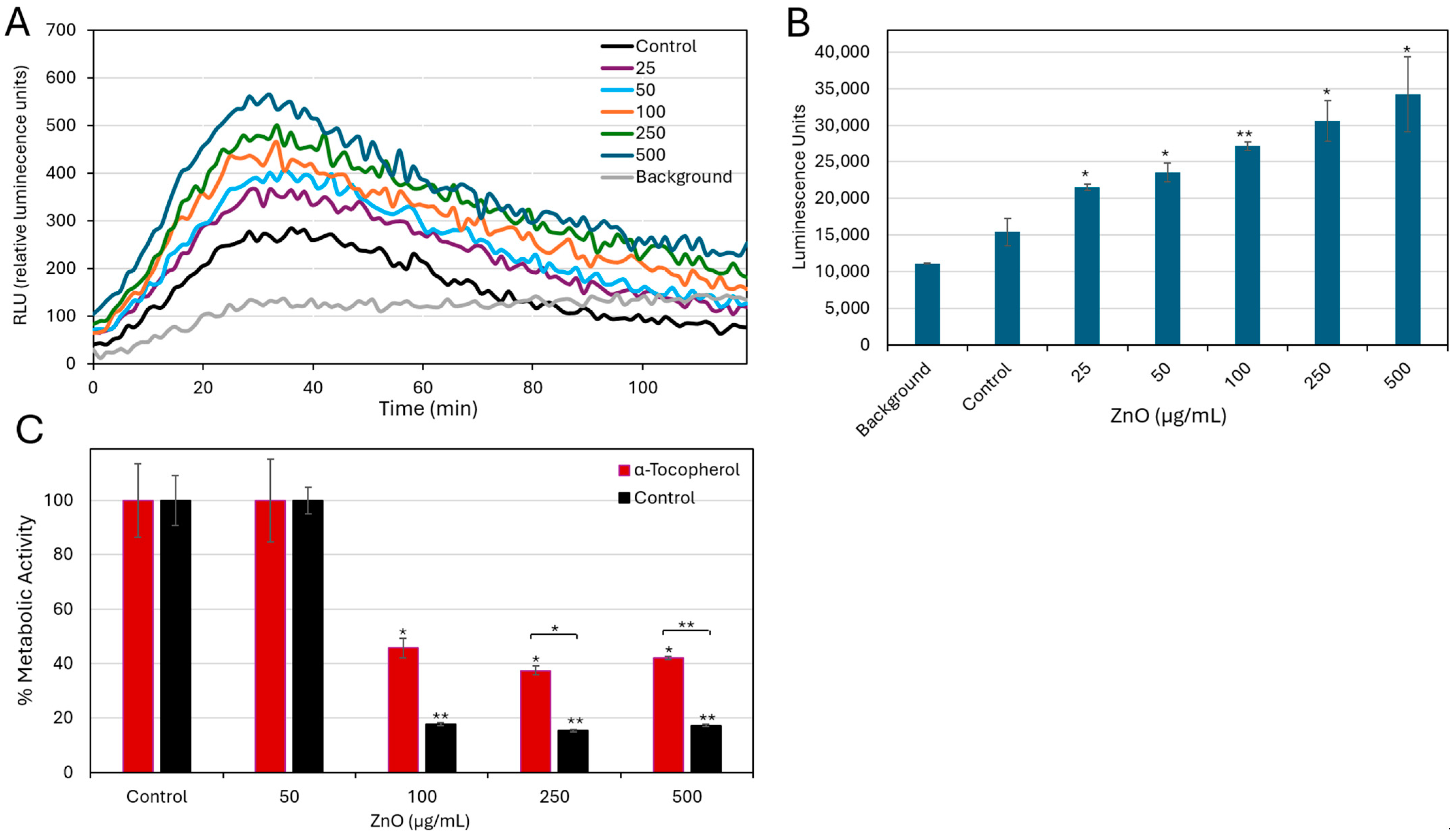
2.4. Effect of ZnO NPs on ROS Generation in S. sanguinis and the Influence of Alpha-Tocopherol on Bacterial Growth
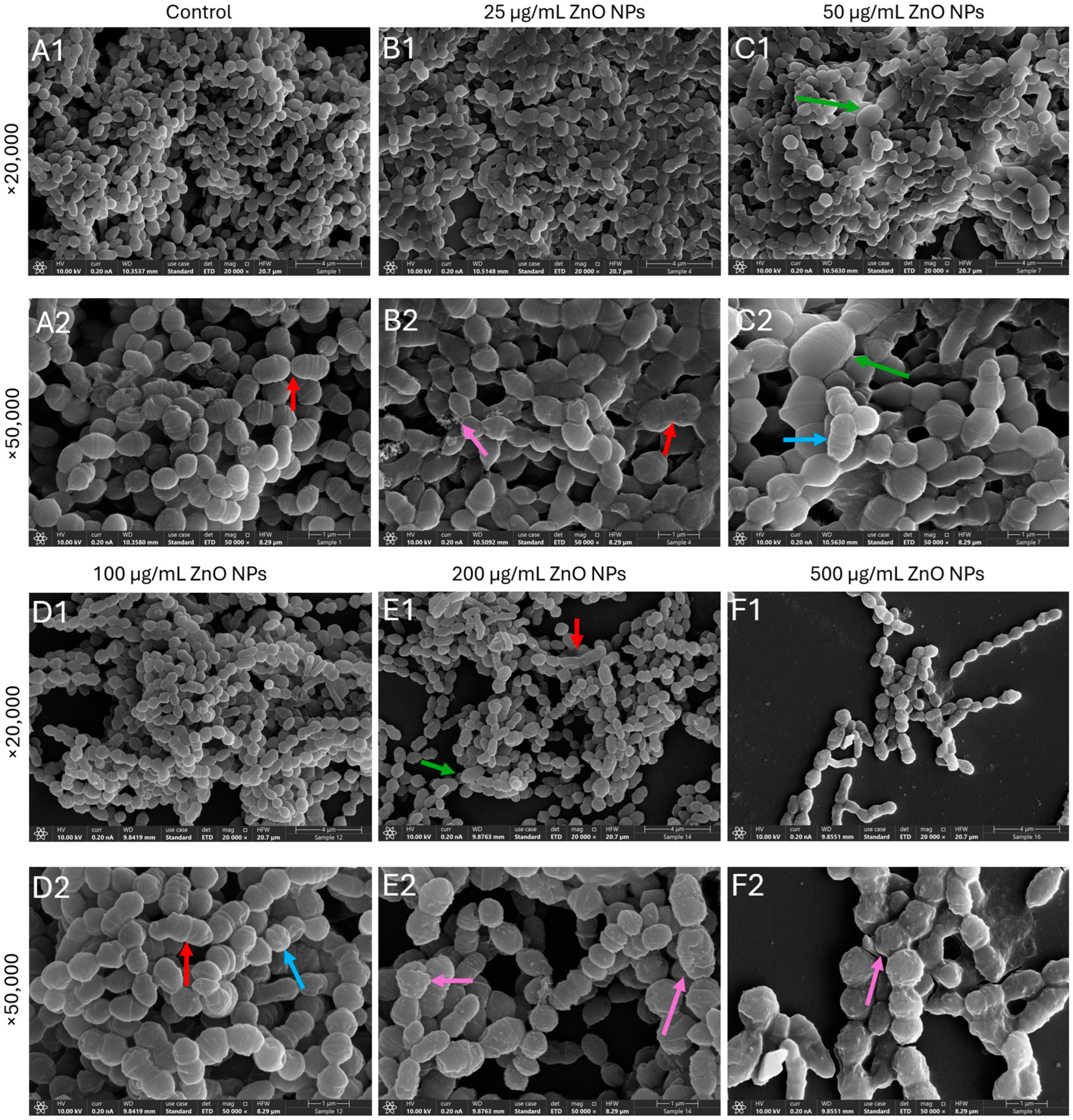
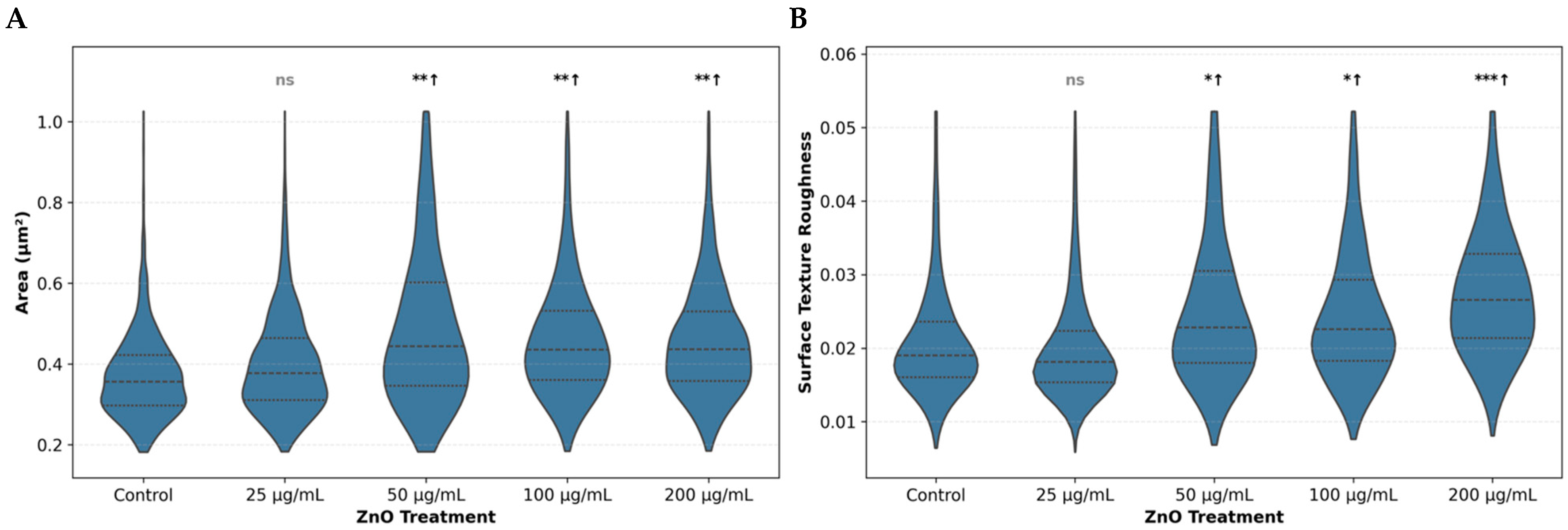
2.5. Prolonged Exposure to ZnO NPs Leads to Morphological Changes in the Bacteria
2.6. ZnO NPs Had an Antimetabolic Effect on Preformed, Mature Biofilms
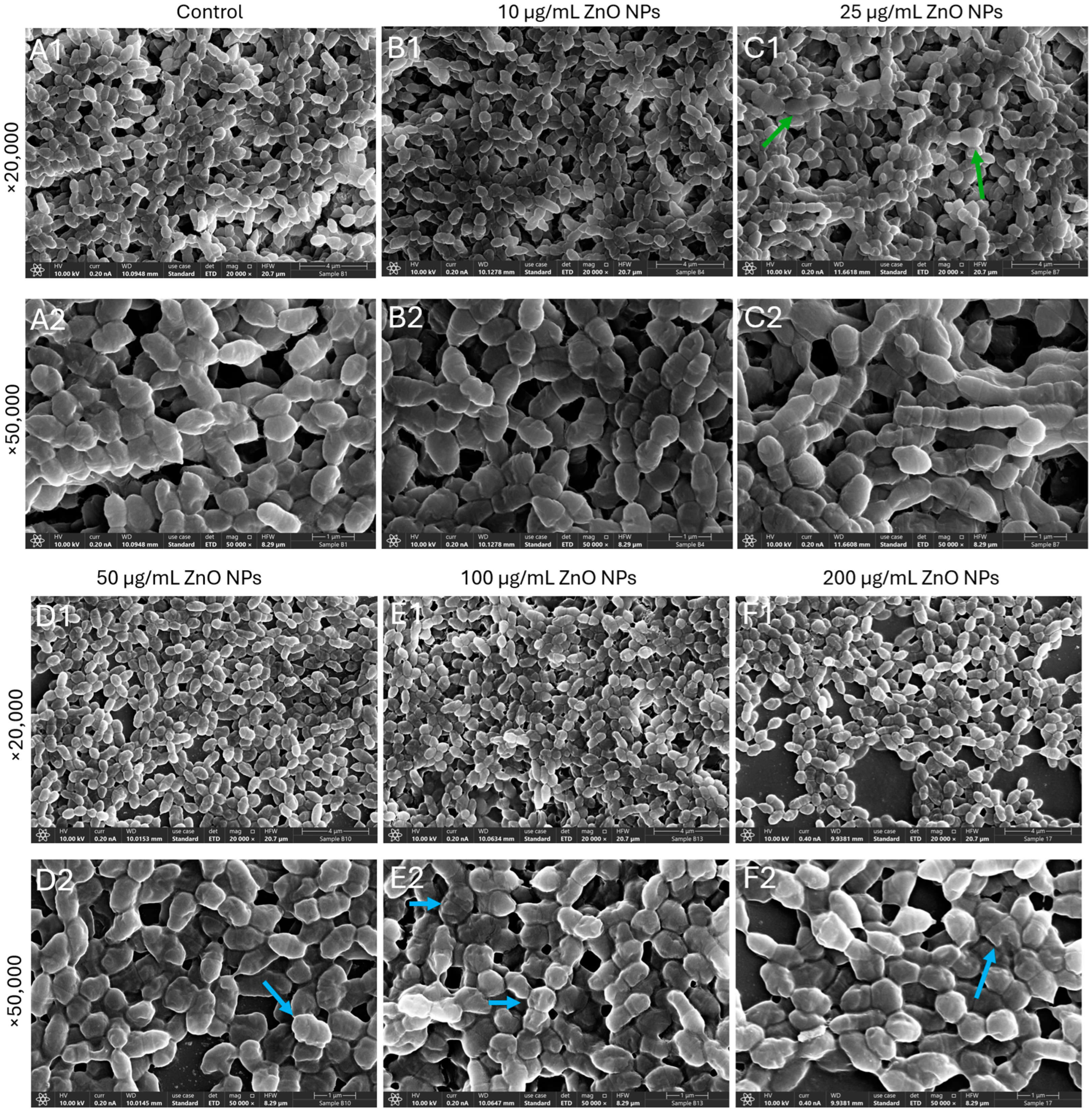
2.7. HR-SEM Imaging of Established S. sanguinis Biofilms Treated with ZnO NPs
3. Discussion
4. Materials and Methods
4.1. Materials
4.2. Bacterial Cultivation of Streptococcus sanguinis
4.3. Planktonic Culture of S. sanguinis and MTT Metabolic Assay
4.4. Determination of Intracellular ATP Content Using BacTiter-Glo Microbial Cell Viability Assay
4.5. ATP Content and MTT Metabolic Activity of Preformed Biofilms
4.6. Assessment of Metabolic Activity by Flow Cytometry Using Calcein Red-AM
4.7. SYTO 9/PI Live/Dead Staining
4.8. Membrane Potential Determination by Flow Cytometry
4.9. Reactive Oxygen Species (ROS) Production
4.10. ROS Scavenging Assay with α-Tocopherol
4.11. Morphological Imaging by High-Resolution Scanning Electron Microscopy (HR-SEM)
4.12. Computational Analysis of Bacterial Morphology
4.12.1. Computational Bacterial Segmentation and Morphological Analysis
4.12.2. Background Filtering
4.12.3. Surface Texture Analysis
4.12.4. Statistical Analysis of Computational Parameters
4.13. Statistical Analysis of the Biological Experiments
5. Conclusions
Supplementary Materials
Author Contributions
Funding
Institutional Review Board Statement
Informed Consent Statement
Data Availability Statement
Acknowledgments
Conflicts of Interest
Abbreviations
| ATP | Intracellular adenosine triphosphate |
| AUC | Area under the curve |
| EPS | Extracellular polysaccharide substance |
| DiOC2(3) | 3,3′-diethyloxacarbocyanine iodide |
| FSC-A | Forward-scatter measurements |
| HRP | Horseradish peroxidase |
| HR-SEM | High-resolution scanning electron microscopy |
| MTT | 3-(4,5-dimethylthiazol-2-yl)-2,5-diphenyltetrazolium bromide |
| PI | Propidium iodide |
| RLU | Relative luminescence units |
| ROS | Reactive oxygen species |
| S. mutans | Streptococcus mutans |
| S. sanguinis | Streptococcus sanguinis |
| TEM | Transmission electron microscopy |
| ZnO NPs | Zinc oxide nanoparticles |
References
- Cui, Z.; Wang, P.; Gao, W. Microbial dysbiosis in periodontitis and peri-implantitis: Pathogenesis, immune responses, and therapeutic. Front. Cell. Infect. Microbiol. 2025, 15, 1517154. [Google Scholar] [CrossRef]
- Di Stefano, M.; Polizzi, A.; Santonocito, S.; Romano, A.; Lombardi, T.; Isola, G. Impact of oral microbiome in periodontal health and periodontitis: A critical review on prevention and treatment. Int. J. Mol. Sci. 2022, 23, 5142. [Google Scholar] [CrossRef] [PubMed]
- Al-Tai, T.H.H.; Al-Qassab, Y.; Al-Hadithi, H.S.; Al-Alwany, A.A. A review article the role of Streptococcus sanguinis in normal human health and patients. J. Biotechnol. Res. Cent. 2025, 19, 26–33. [Google Scholar] [CrossRef]
- Nobbs, A.; Kreth, J. Genetics of sanguinis-Group Streptococci in Health and Disease. Microbiol. Spectr. 2019, 7. [Google Scholar] [CrossRef]
- Baty, J.J.; Stoner, S.N.; Scoffield, J.A. Oral commensal Streptococci: Gatekeepers of the oral cavity. J. Bacteriol. 2022, 204, e0025722. [Google Scholar] [CrossRef] [PubMed]
- Bloch, S.; Hager-Mair, F.F.; Andrukhov, O.; Schäffer, C. Oral streptococci: Modulators of health and disease. Front. Cell. Infect. Microbiol. 2024, 14, 1357631. [Google Scholar] [CrossRef] [PubMed]
- Lozano, C.P.; Díaz-Garrido, N.; Kreth, J.; Giacaman, R.A. Streptococcus mutans and Streptococcus sanguinis expression of competition-related genes, under sucrose. Caries Res. 2019, 53, 194–203. [Google Scholar] [CrossRef] [PubMed]
- Helliwell, E.; Choi, D.; Merritt, J.; Kreth, J. Environmental influences on Streptococcus sanguinis membrane vesicle biogenesis. ISME J. 2023, 17, 1430–1444. [Google Scholar] [CrossRef]
- Zhu, B.; Macleod, L.C.; Kitten, T.; Xu, P. Streptococcus sanguinis biofilm formation & interaction with oral pathogens. Future Microbiol. 2018, 13, 915–932. [Google Scholar] [CrossRef] [PubMed]
- Yin, I.X.; Udduttulla, A.; Xu, V.W.; Chen, K.J.; Zhang, M.Y.; Chu, C.H. Use of antimicrobial nanoparticles for the management of dental diseases. Nanomaterials 2025, 15, 209. [Google Scholar] [CrossRef]
- Álvarez-Chimal, R.; García-Pérez, V.I.; Álvarez-Pérez, M.A.; Arenas-Alatorre, J. Green synthesis of ZnO nanoparticles using a Dysphania ambrosioides extract. Structural characterization and antibacterial properties. Mater. Sci. Eng. C Mater. Biol. Appl. 2021, 118, 111540. [Google Scholar] [CrossRef]
- Lallo da Silva, B.; Caetano, B.L.; Chiari-Andréo, B.G.; Pietro, R.; Chiavacci, L.A. Increased antibacterial activity of ZnO nanoparticles: Influence of size and surface modification. Colloids Surf. B Biointerfaces 2019, 177, 440–447. [Google Scholar] [CrossRef] [PubMed]
- Jones, N.; Ray, B.; Ranjit, K.T.; Manna, A.C. Antibacterial activity of ZnO nanoparticle suspensions on a broad spectrum of microorganisms. FEMS Microbiol. Lett. 2008, 279, 71–76. [Google Scholar] [CrossRef] [PubMed]
- Alqaffaf, D.; Atoom, A.M.; Abu Huwaij, R.; Abusalah, M.; Alzubi, B.T.; Al-Kaabneh, A.; Abusalah, M.; Sughayer, M.A. Analysis of the antimicrobial activity of zinc oxide nanoparticles against drug-resistant bacteria and their applications in the disinfection process. PLoS ONE 2026, 21, e0340470. [Google Scholar] [CrossRef] [PubMed]
- Gudkov, S.V.; Burmistrov, D.E.; Serov, D.A.; Rebezov, M.B.; Semenova, A.A.; Lisitsyn, A.B. A mini review of antibacterial properties of ZnO nanoparticles. Front. Phys. 2021, 9, 641481. [Google Scholar] [CrossRef]
- Lahiri, D.; Ray, R.R.; Sarkar, T.; Upadhye, V.J.; Ghosh, S.; Pandit, S.; Pati, S.; Edinur, H.A.; Abdul Kari, Z.; Nag, M.; et al. Anti-biofilm efficacy of green-synthesized ZnO nanoparticles on oral biofilm: In vitro and in silico study. Front. Microbiol. 2022, 13, 939390. [Google Scholar] [CrossRef]
- Riahi, S.; Moussa, N.B.; Lajnef, M.; Jebari, N.; Dabek, A.; Chtourou, R.; Guisbiers, G.; Vimont, S.; Herth, E. Bactericidal activity of ZnO nanoparticles against multidrug-resistant bacteria. J. Mol. Liq. 2023, 387, 122596. [Google Scholar] [CrossRef]
- Tiwari, V.; Mishra, N.; Gadani, K.; Solanki, P.S.; Shah, N.A.; Tiwari, M. Mechanism of anti-bacterial activity of zinc oxide nanoparticle against carbapenem-resistant Acinetobacter baumannii. Front. Microbiol. 2018, 9, 1218. [Google Scholar] [CrossRef]
- Vitasovic, T.; Caniglia, G.; Eghtesadi, N.; Ceccato, M.; Bo Jesen, E.D.; Gosewinkel, U.; Neusser, G.; Rupp, U.; Walther, P.; Kranz, C.; et al. Antibacterial action of Zn2+ ions driven by the in vivo formed ZnO nanoparticles. ACS Appl. Mater. Interfaces 2024, 16, 30847–30859. [Google Scholar] [CrossRef]
- Zhang, L.; Jiang, Y.; Ding, Y.; Povey, M.; York, D. Investigation into the antibacterial behaviour of suspensions of ZnO nanoparticles (ZnO nanofluids). J. Nanoparticle Res. 2007, 9, 479–489. [Google Scholar] [CrossRef]
- Emram, R.; Sionov, R.V.; Gutkin, V.; Wilensky, A.; Steinberg, D.; Assad, R. Mechanism of action of Zinc oxide nanoparticles as an antibacterial agent against Streptococcus mutans. Biomolecules 2025, 15, 1660. [Google Scholar] [CrossRef]
- Álvarez-Chimal, R.; García-Pérez, V.I.; Álvarez-Pérez, M.A.; Tavera-Hernández, R.; Reyes-Carmona, L.; Martínez-Hernández, M.; Arenas-Alatorre, J.Á. Influence of the particle size on the antibacterial activity of green synthesized zinc oxide nanoparticles using Dysphania ambrosioides extract, supported by molecular docking analysis. Arab. J. Chem. 2022, 15, 103804. [Google Scholar] [CrossRef]
- Sionov, R.V.; Assi, S.; Gershkovitz, M.; Sagiv, J.Y.; Polyansky, L.; Mishalian, I.; Fridlender, Z.G.; Granot, Z. Isolation and characterization of neutrophils with anti-tumor properties. J. Vis. Exp. 2015, 100, e52933. [Google Scholar] [CrossRef] [PubMed]
- Liebler, D.C.; Kling, D.S.; Reed, D.J. Antioxidant protection of phospholipid bilayers by alpha-tocopherol. Control of alpha-tocopherol status and lipid peroxidation by ascorbic acid and glutathione. J. Biol. Chem. 1986, 261, 12114–12119. [Google Scholar] [CrossRef]
- Beavers, W.N.; Monteith, A.J.; Amarnath, V.; Mernaugh, R.L.; Roberts, L.J., 2nd; Chazin, W.J.; Davies, S.S.; Skaar, E.P. Arachidonic acid kills Staphylococcus aureus through a lipid peroxidation mechanism. mBio 2019, 10, e01333-19. [Google Scholar] [CrossRef]
- Setiadi, D.H.; Chass, G.A.; Torday, L.L.; Varro, A.; Papp, J.G. Vitamin E models. Shortened sidechain models of α, β, γ and δ tocopherol and tocotrienol—A density functional study. J. Mol. Struct. THEOCHEM 2003, 637, 11–26. [Google Scholar] [CrossRef]
- Maslovska, O.; Komplikevych, S.; Hnatush, S. Oxidative stress and protection against it in bacteria. Stud. Biol. 2023, 17, 153–172. [Google Scholar] [CrossRef]
- Dutta, R.K.; Nenavathu, B.P.; Gangishetty, M.K.; Reddy, A.V. Studies on antibacterial activity of ZnO nanoparticles by ROS induced lipid peroxidation. Colloids Surf. B Biointerfaces 2012, 94, 143–150. [Google Scholar] [CrossRef]
- Liu, H.Y.; Prentice, E.L.; Webber, M.A. Mechanisms of antimicrobial resistance in biofilms. npj Antimicrob. Resist. 2024, 2, 27. [Google Scholar] [CrossRef]
- Kreth, J.; Giacaman, R.A.; Raghavan, R.; Merritt, J. The road less traveled—Defining molecular commensalism with Streptococcus sanguinis. Mol. Oral Microbiol. 2017, 32, 181–196. [Google Scholar] [CrossRef]
- Pezzotti, G.; Ofuji, S.; Imamura, H.; Adachi, T.; Yamamoto, T.; Kanamura, N.; Ohgitani, E.; Marin, E.; Zhu, W.; Mazda, O.; et al. In situ Raman analysis of biofilm exopolysaccharides formed in Streptococcus mutans and Streptococcus sanguinis commensal cultures. Int. J. Mol. Sci. 2023, 24, 6694. [Google Scholar] [CrossRef]
- Xiao, J.; Klein, M.I.; Falsetta, M.L.; Lu, B.; Delahunty, C.M.; Yates, J.R., 3rd; Heydorn, A.; Koo, H. The exopolysaccharide matrix modulates the interaction between 3D architecture and virulence of a mixed-species oral biofilm. PLoS Pathog. 2012, 8, e1002623. [Google Scholar] [CrossRef] [PubMed]
- Dang, H.; Lovell, C.R. Microbial surface colonization and biofilm development in marine environments. Microbiol. Mol. Biol. Rev. 2016, 80, 91–138. [Google Scholar] [CrossRef]
- Popescu, T.; Matei, C.O.; Vlaicu, I.D.; Tivig, I.; Kuncser, A.C.; Stefan, M.; Ghica, D.; Miclea, L.C.; Savopol, T.; Culita, D.C.; et al. Influence of surfactant-tailored Mn-doped ZnO nanoparticles on ROS production and DNA damage induced in murine fibroblast cells. Sci. Rep. 2020, 10, 18062. [Google Scholar] [CrossRef] [PubMed]
- Benarroch, J.M.; Asally, M. The microbiologist’s guide to membrane potential dynamics. Trends Microbiol. 2020, 28, 304–314. [Google Scholar] [CrossRef] [PubMed]
- Whittle, E.E.; Orababa, O.; Osgerby, A.; Siasat, P.; Element, S.J.; Blair, J.M.A.; Overton, T.W. Efflux pumps mediate changes to fundamental bacterial physiology via membrane potential. mBio 2024, 15, e0237024. [Google Scholar] [CrossRef]
- Bryant, S.L.; Eixenberger, J.E.; Rossland, S.; Apsley, H.; Hoffmann, C.; Shrestha, N.; McHugh, M.; Punnoose, A.; Fologea, D. ZnO nanoparticles modulate the ionic transport and voltage regulation of lysenin nanochannels. J. Nanobiotechnol. 2017, 15, 90. [Google Scholar] [CrossRef]
- Miranda-Astudillo, H.; Zarco-Zavala, M.; García-Trejo, J.J.; González-Halphen, D. Regulation of bacterial ATP synthase activity: A gear-shifting or a pawl-ratchet mechanism? FEBS J. 2021, 288, 3159–3163. [Google Scholar] [CrossRef]
- Stautz, J.; Hellmich, Y.; Fuss, M.F.; Silberberg, J.M.; Devlin, J.R.; Stockbridge, R.B.; Hänelt, I. Molecular mechanisms for bacterial potassium homeostasis. J. Mol. Biol. 2021, 433, 166968. [Google Scholar] [CrossRef]
- Ma, X.; Wang, X.; Ye, S.; Liu, J.; Yuan, H.; Wang, N. Biofilm and pathogenic factor analysis of Gardnerella vaginalis associated with bacterial vaginosis in Northeast China. Front. Microbiol. 2022, 13, 1033040. [Google Scholar] [CrossRef]
- Shany-Kdoshim, S.; Polak, D.; Houri-Haddad, Y.; Feuerstein, O. Killing mechanism of bacteria within multi-species biofilm by blue light. J. Oral Microbiol. 2019, 11, 1628577. [Google Scholar] [CrossRef] [PubMed]
- Sionov, R.V.; Siag, A.; Mersini, E.T.; Kogan, N.M.; Alkhazov, T.; Koman, I.; Rowlo, P.; Gutkin, V.; Gross, M.; Steinberg, D. The incorporation of CBD into biodegradable DL-Lactide/Glycolide copolymers creates a persistent antibacterial environment: An in vitro study on Streptococcus mutans and Staphylococcus aureus. Pharmaceutics 2025, 17, 463. [Google Scholar] [CrossRef]
- Chamlagain, M.; Hu, J.; Sionov, R.V.; Steinberg, D. Anti-bacterial and anti-biofilm activities of arachidonic acid against the cariogenic bacterium Streptococcus mutans. Front. Microbiol. 2024, 15, 1333274. [Google Scholar] [CrossRef]
- Sionov, R.V.; Korem, M.; Polacheck, I.; Steinberg, D. Cannabidiol (CBD) acts as an antioxidant on Gardnerella vaginalis, resulting in reduced metabolic activity, loss of survivability, and elimination of biofilms. Antibiotics 2025, 14, 136. [Google Scholar] [CrossRef]
- Wolfson, G.; Sionov, R.V.; Smoum, R.; Korem, M.; Polacheck, I.; Steinberg, D. Anti-bacterial and anti-biofilm activities of anandamide against the cariogenic Streptococcus mutans. Int. J. Mol. Sci. 2023, 24, 6177. [Google Scholar] [CrossRef] [PubMed]
- Melkam, A.; Sionov, R.V.; Shalish, M.; Steinberg, D. Enhanced anti-bacterial activity of arachidonic acid against the cariogenic bacterium Streptococcus mutans in combination with triclosan and fluoride. Antibiotics 2024, 13, 540. [Google Scholar] [CrossRef] [PubMed]
- Stringer, C.; Wang, T.; Michaelos, M.; Pachitariu, M. Cellpose: A generalist algorithm for cellular segmentation. Nat. Methods 2021, 18, 100–106. [Google Scholar] [CrossRef] [PubMed]
- Romano, J.; Kromrey, J.D.; Coraggio, J.; Skowronek, J. Appropriate statistics for ordinal level data: Should we really be using t-test and Cohen’sd for evaluating group differences on the NSSE and other surveys. In Proceedings of the Annual Meeting of the Florida Association of Institutional Research; Florida Association for Institutional Research: St. Petersburg, FL, USA, 2006; pp. 1–3. [Google Scholar]



Disclaimer/Publisher’s Note: The statements, opinions and data contained in all publications are solely those of the individual author(s) and contributor(s) and not of MDPI and/or the editor(s). MDPI and/or the editor(s) disclaim responsibility for any injury to people or property resulting from any ideas, methods, instructions or products referred to in the content. |
© 2026 by the authors. Licensee MDPI, Basel, Switzerland. This article is an open access article distributed under the terms and conditions of the Creative Commons Attribution (CC BY) license.
Share and Cite
Emram, R.; Sionov, R.V.; Aharoni, A.; Gingichashvili, S.; Cohen, N.E.; Gutkin, V.; Amitay, M.; Wilensky, A.; Steinberg, D.; Assad, R. Susceptibility of the Oral Commensal Bacterium Streptococcus sanguinis to ZnO Nanoparticles. Int. J. Mol. Sci. 2026, 27, 2782. https://doi.org/10.3390/ijms27062782
Emram R, Sionov RV, Aharoni A, Gingichashvili S, Cohen NE, Gutkin V, Amitay M, Wilensky A, Steinberg D, Assad R. Susceptibility of the Oral Commensal Bacterium Streptococcus sanguinis to ZnO Nanoparticles. International Journal of Molecular Sciences. 2026; 27(6):2782. https://doi.org/10.3390/ijms27062782
Chicago/Turabian StyleEmram, Raphaelle, Ronit Vogt Sionov, Adi Aharoni, Sarah Gingichashvili, Noa E. Cohen, Vitaly Gutkin, Moshe Amitay, Asaf Wilensky, Doron Steinberg, and Rawi Assad. 2026. "Susceptibility of the Oral Commensal Bacterium Streptococcus sanguinis to ZnO Nanoparticles" International Journal of Molecular Sciences 27, no. 6: 2782. https://doi.org/10.3390/ijms27062782
APA StyleEmram, R., Sionov, R. V., Aharoni, A., Gingichashvili, S., Cohen, N. E., Gutkin, V., Amitay, M., Wilensky, A., Steinberg, D., & Assad, R. (2026). Susceptibility of the Oral Commensal Bacterium Streptococcus sanguinis to ZnO Nanoparticles. International Journal of Molecular Sciences, 27(6), 2782. https://doi.org/10.3390/ijms27062782