CD127+ Natural Killer Cells Represent a Distinct, Interleukin-15-Independent and Thymus-Independent Subset in Mice

 ,
,  , ,
, ,  , and
, and 
Abstract
1. Introduction
2. Results
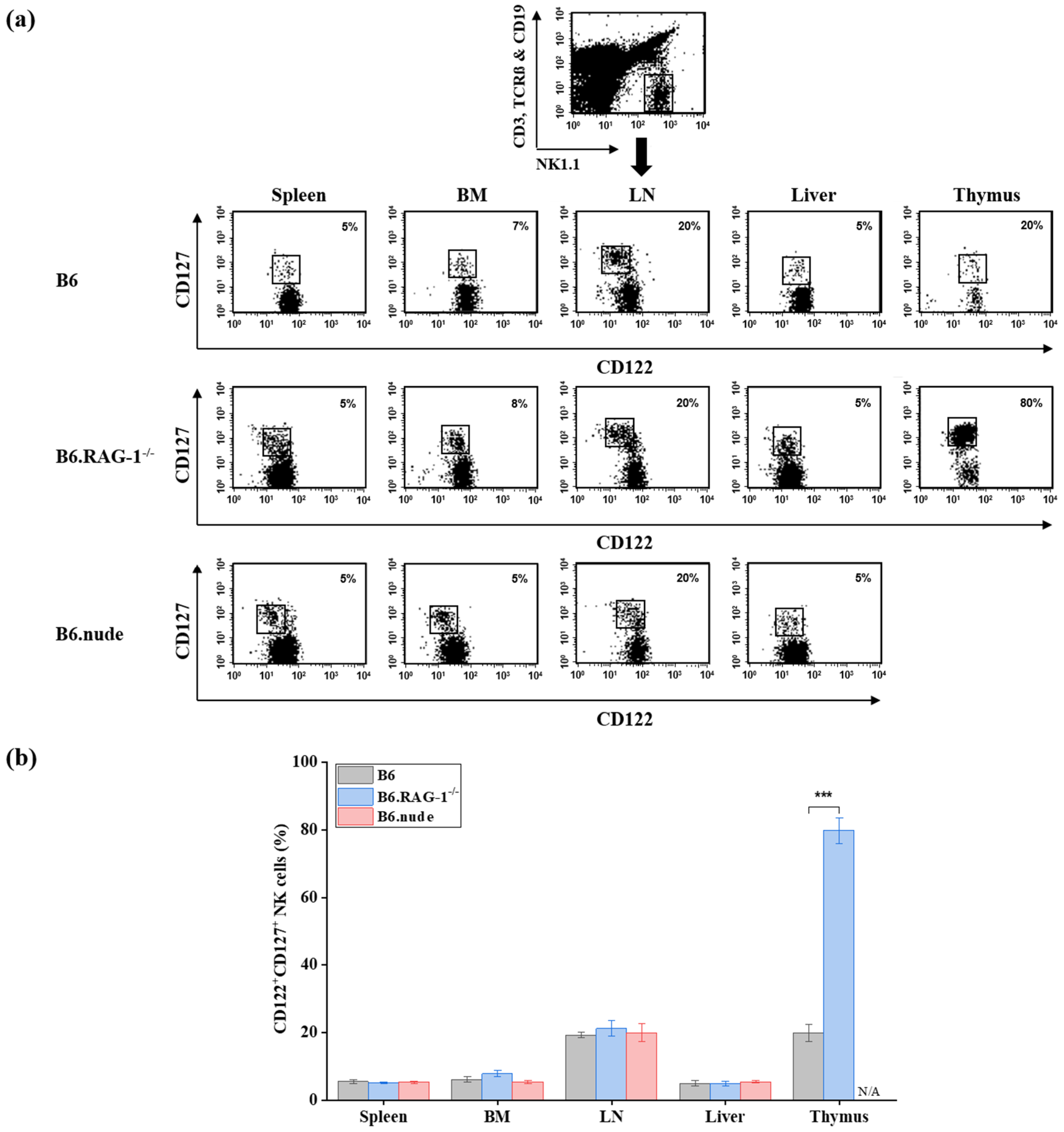
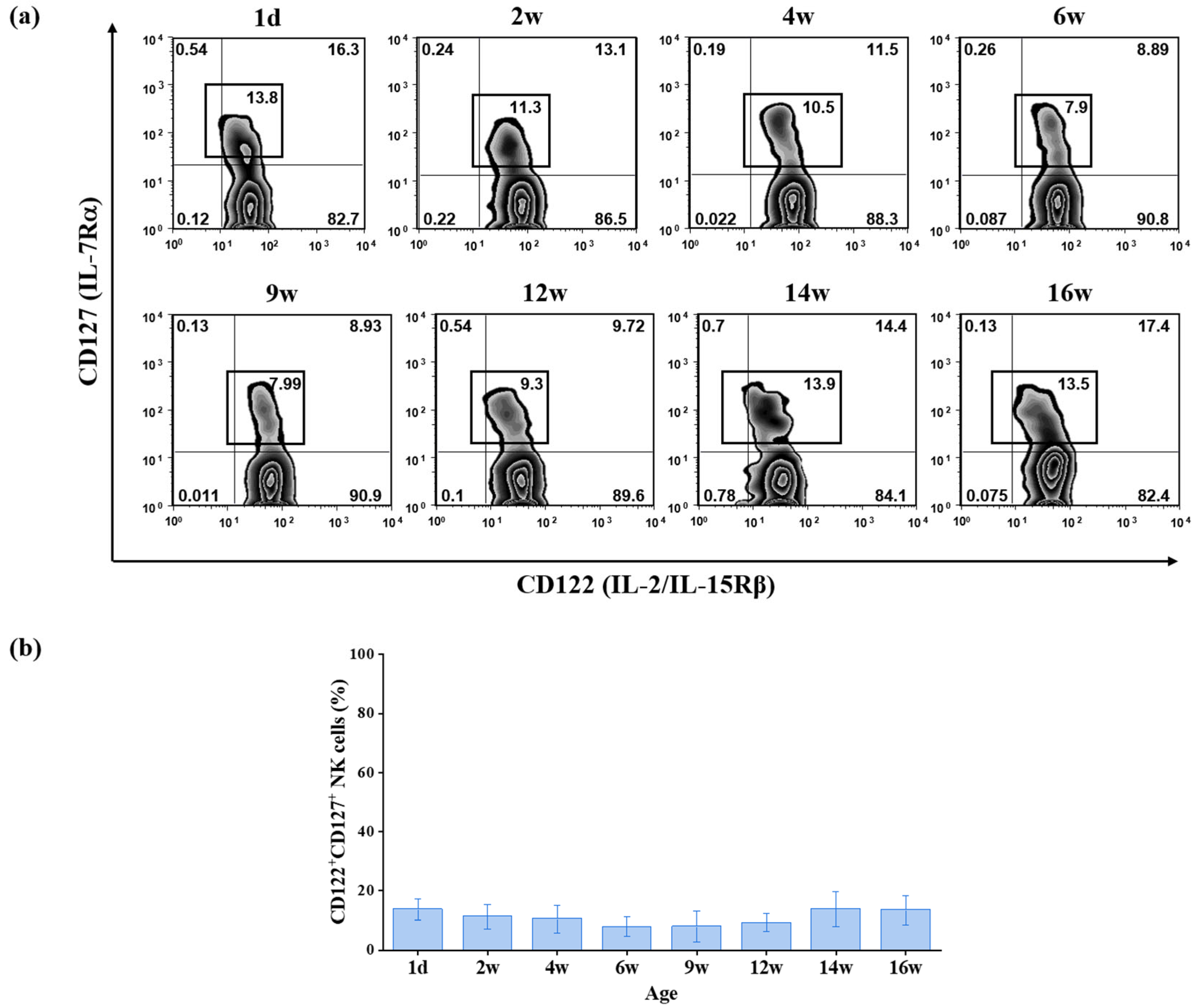
2.1. Tissue Distribution and Age-Related Stability of CD127+ NK Cells in Mice
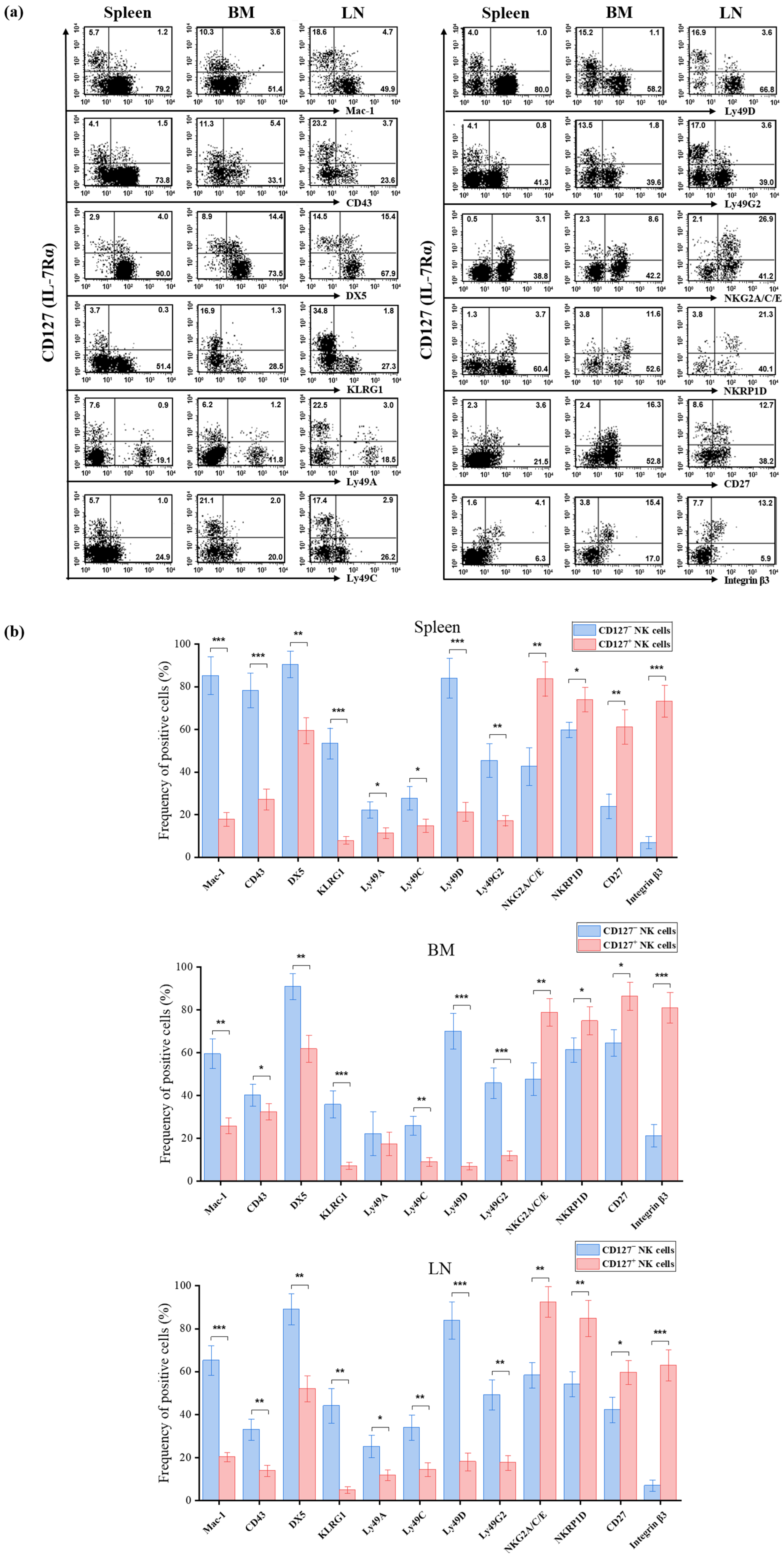
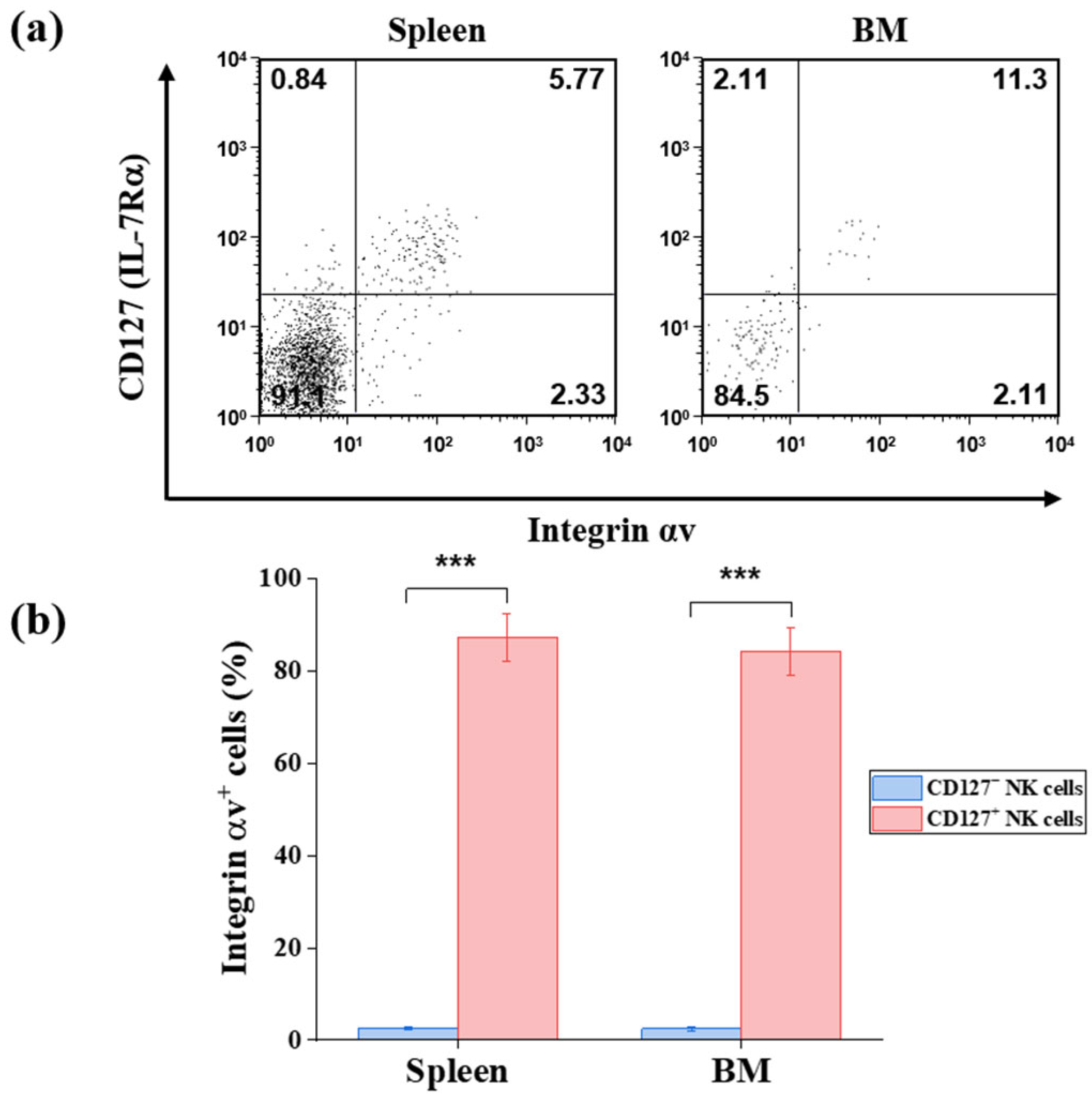
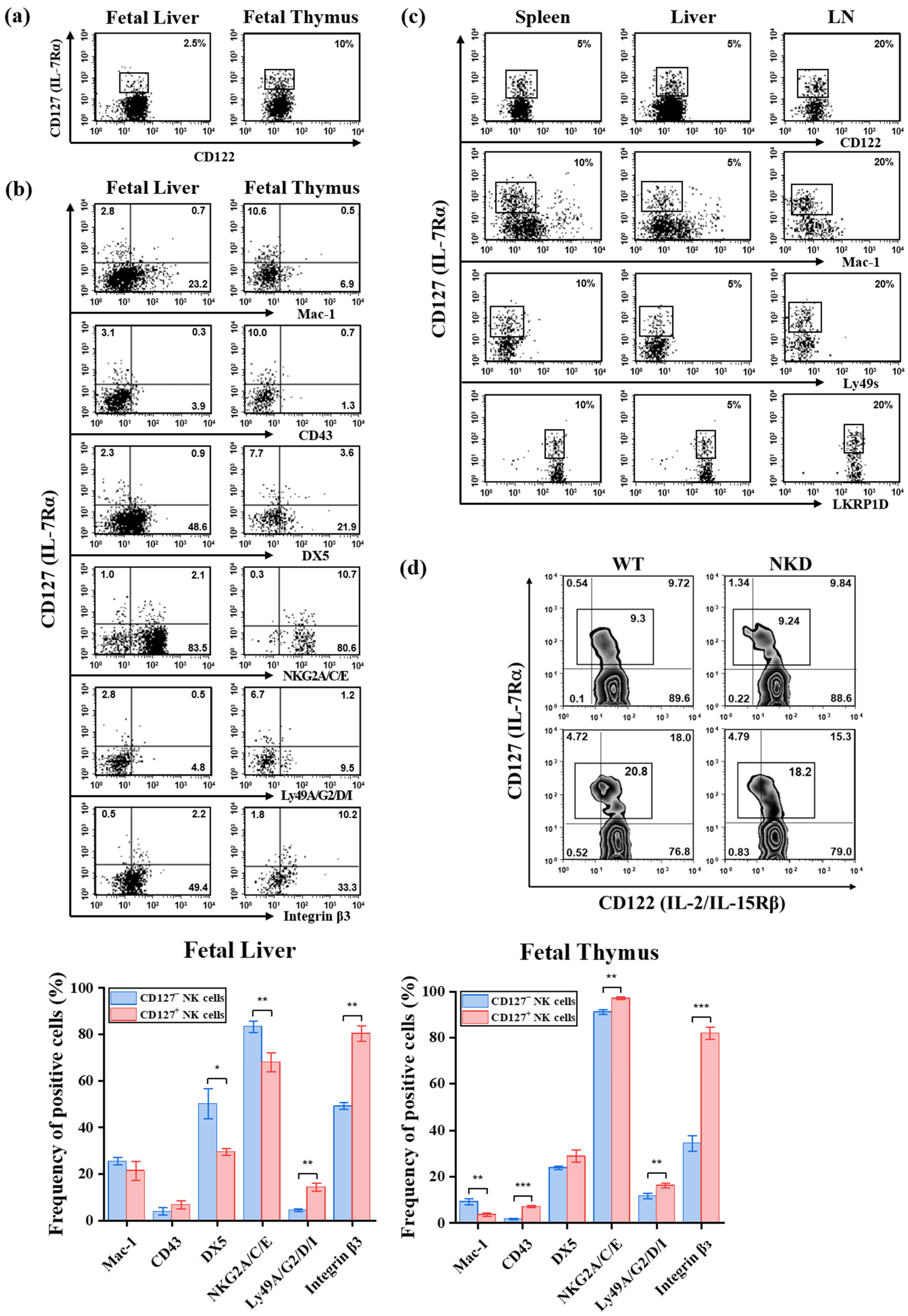
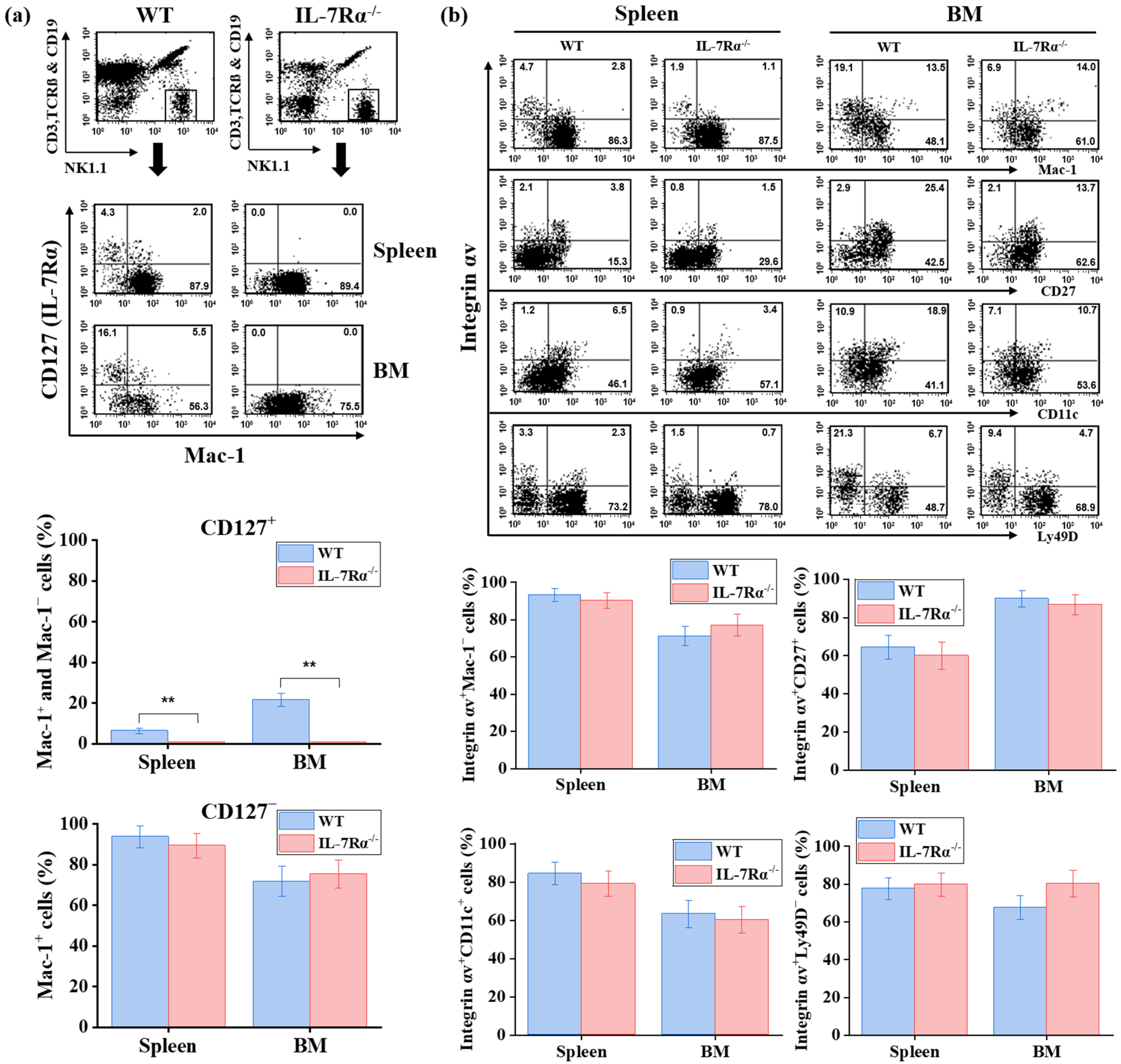
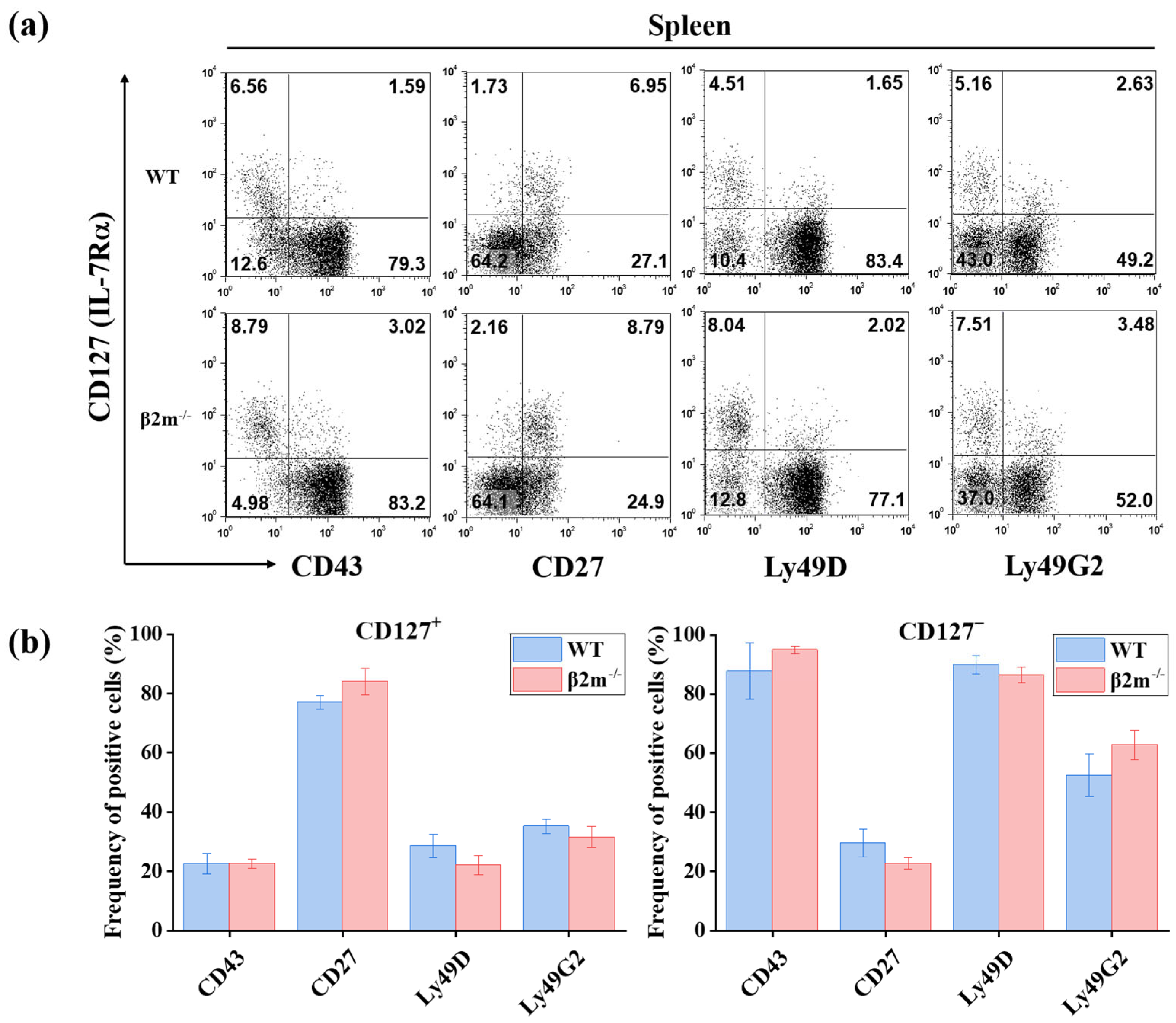
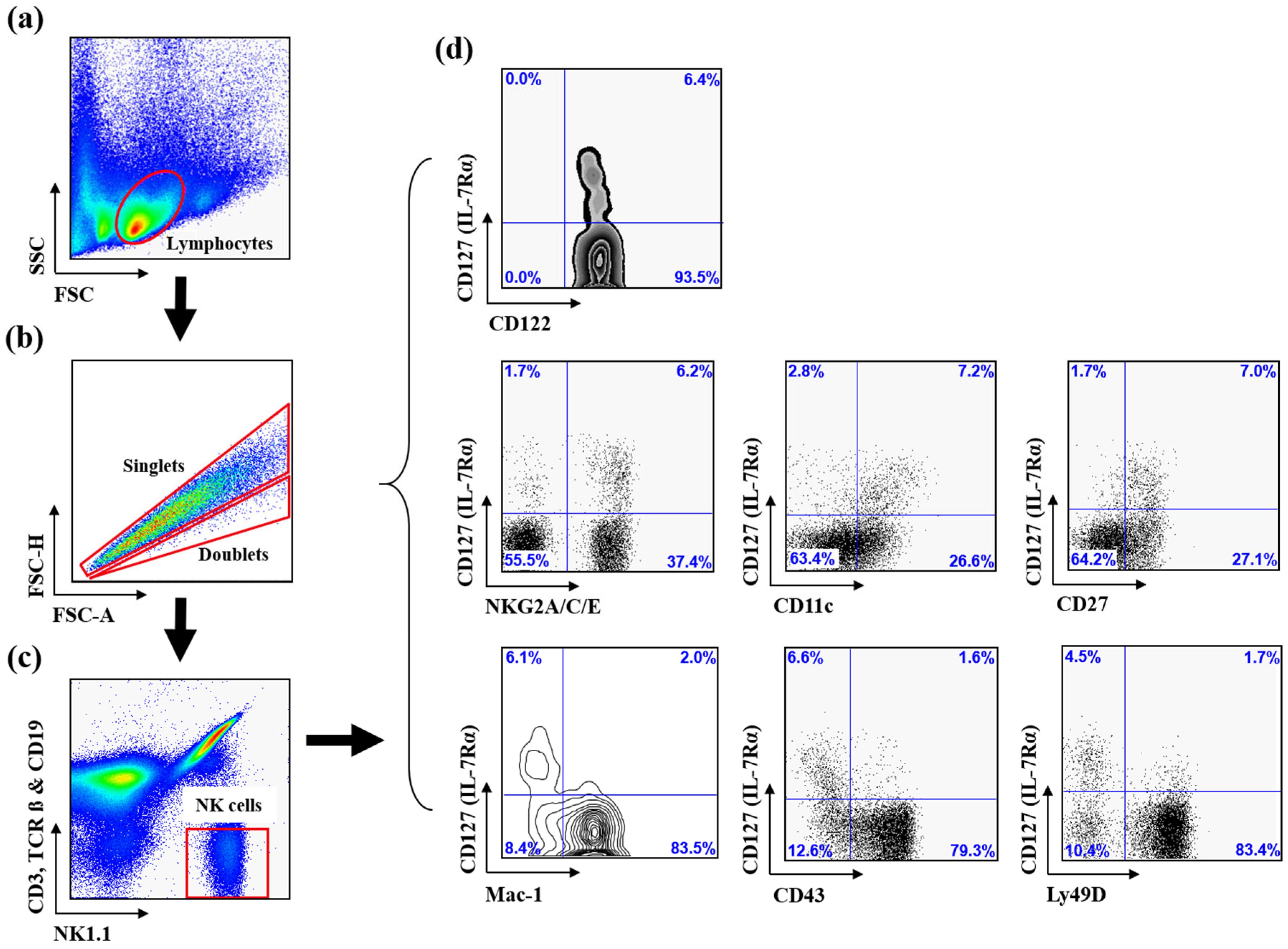
2.2. Phenotypic Characterization of CD127+ NK Cells in Mice
2.3. Murine CD127+ NK Cells Do Not Represent Immature NK Cells at Early Developmental Stages
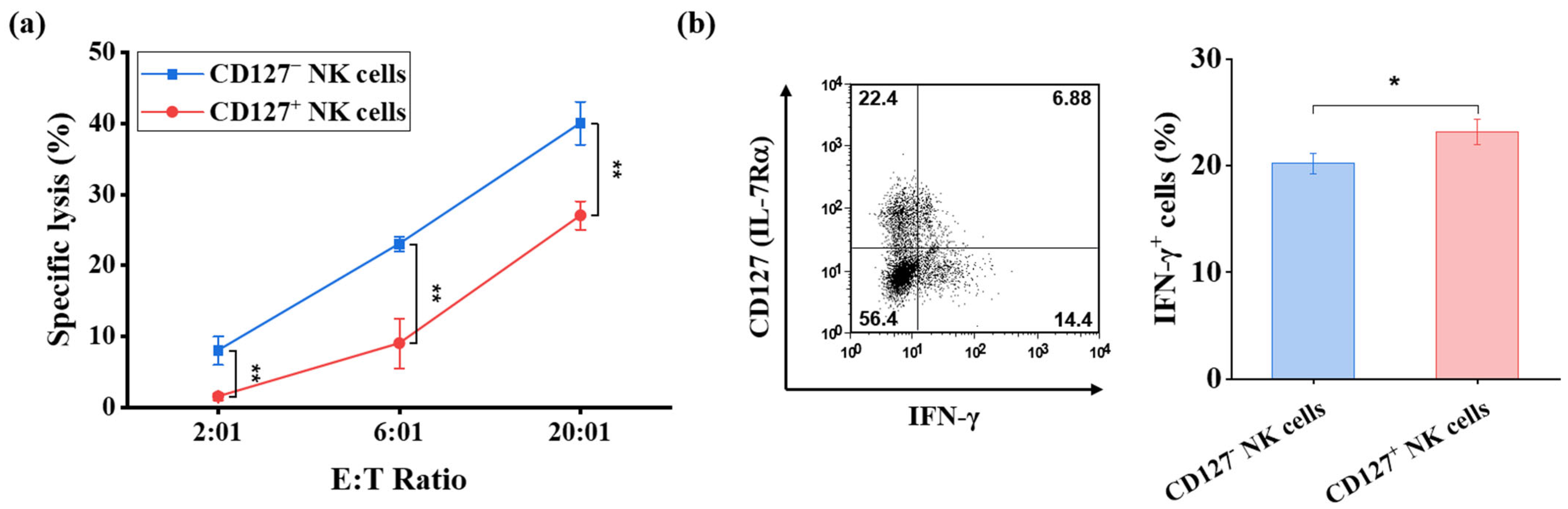
2.4. Murine CD127+ NK Cells Represent a Functionally Distinct NK Cell Subset
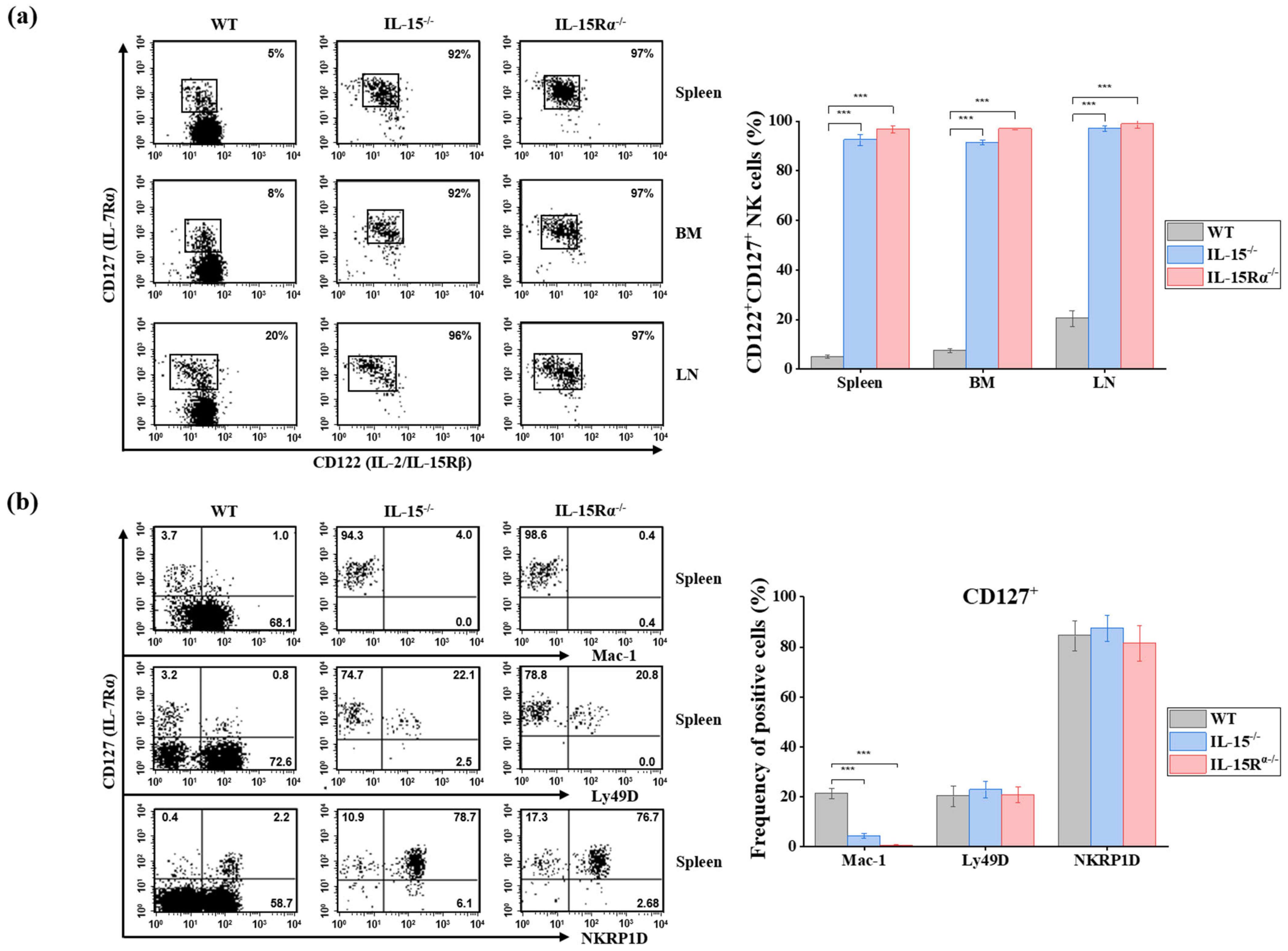
2.5. Murine CD127+ NK Cell Development Is Independent of IL-15 and IL-15Rα Signaling, in Contrast to CD127− NK Cells
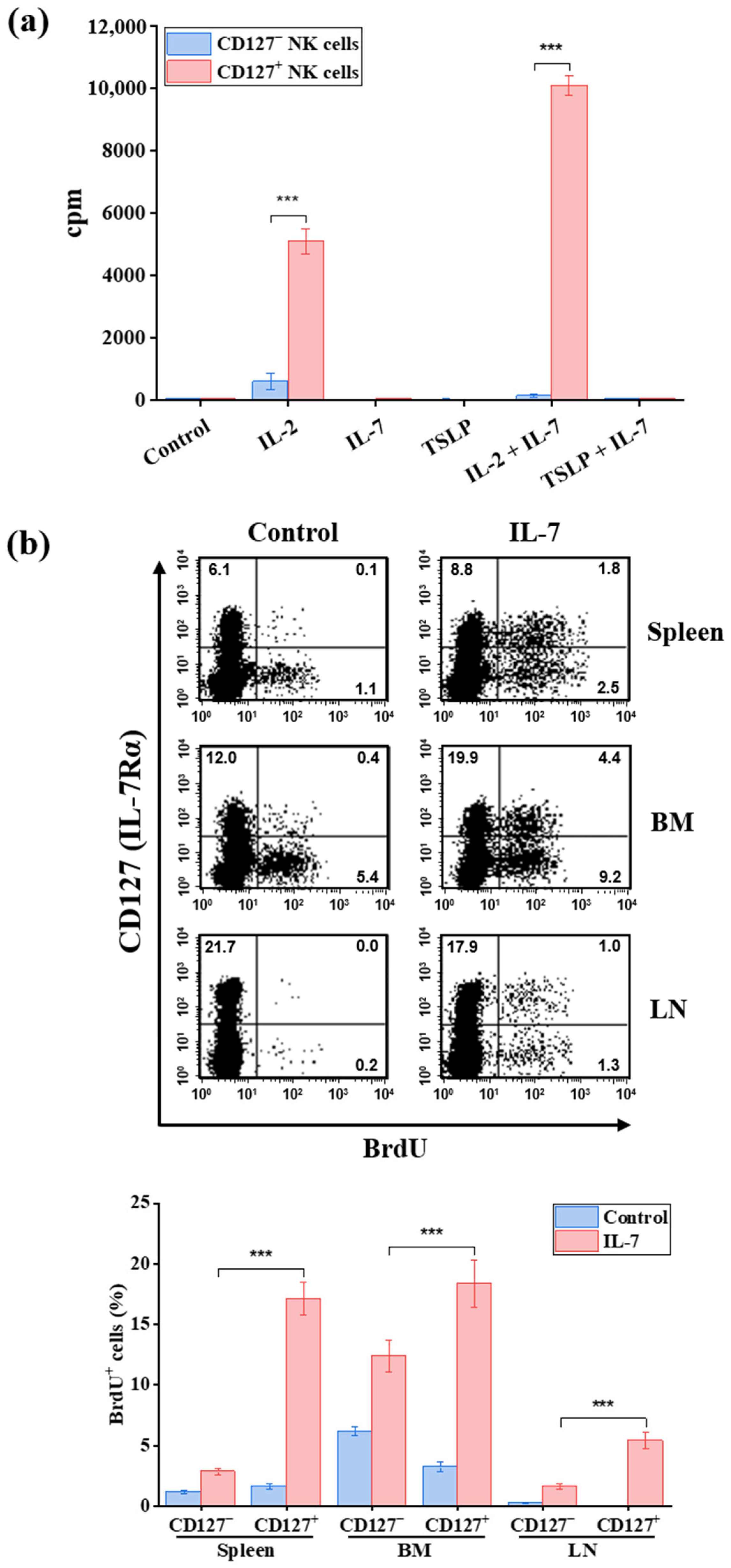
2.6. IL-7 Specifically Selectively Promotes Proliferation of Murine CD127+ NK Cells In Vitro and In Vivo
3. Discussion
4. Materials and Methods
4.1. Mice
4.2. Antibodies and Reagents
4.3. Cell Preparation and Flow Cytometry
4.4. Induction of IFN-γ Production and Intracellular IFN-γ Staining
4.5. Purification of CD127+ and CD127− NK Cell Subsets
4.6. In Vitro Proliferation Assays
4.7. Cytotoxicity Assay
4.8. Detection of Proliferating Cells In Vivo After IL-7 Treatment
4.9. Statistical Analysis
5. Conclusions
Author Contributions
Funding
Institutional Review Board Statement
Informed Consent Statement
Data Availability Statement
Conflicts of Interest
Abbreviations
| ATF2 | Activating transcription factor 2 |
| Bach2 | BTB and CNC homology 1, basic leucine zipper transcription factor 2 |
| Bcl-2 | B-cell lymphoma-2 |
| Bim | Bcl-2-interacting mediator of cell death |
| β2m | β2-microglobulin |
| bZIP | Basic leucine zipper |
| CLP | Common lymphoid progenitors |
| Eomes | Eomesodermin |
| Foxn1 | Forkhead box N1. |
| GATA-3 | GATA binding protein 3 |
| HSC | Hematopoietic stem cell |
| IL-7 | Interleukin-7 |
| IL-15 | Interleukin-15 |
| IFN-γ | Interferon-γ |
| JAK3 | Janus kinase 3 |
| KLRG1 | Killer cell lectin-like receptor subfamily G member 1 |
| mAb | Monoclonal antibody |
| Mac-1 | Macrophage-1 antigen) |
| MACS | Magnetic activated cell sorting |
| Mcl-1 | Myeloid cell leukemia 1 |
| NK cells | Natural killer cells |
| NKD | NK cell-deficient |
| NKG2 | NK group 2 family of receptors |
| NKRP1D | Natural killer cell receptor P1D |
| NKP | NK progenitor |
| Noxa | Phorbol-12-myristate-13-acetate-induced protein 1 (PMAIP1) |
| T-bet | T-box expressed in T cells |
| T/NKP | T/NK progenitors |
| TCRβ | T-cell receptor β, |
| TSLP | thymic stromal lymphopoietin |
| Zeb2 | Zeb2, zinc finger E-box-binding homeobox 2 |
| γc | The common γ chain (CD132) |
References
- Cerwenka, A.; Lanier, L.L. Natural killer cells, viruses and cancer. Nat. Rev. Immunol. 2001, 1, 41–49. [Google Scholar] [CrossRef] [PubMed]
- Moretta, L.; Bottino, C.; Pende, D.; Mingari, M.C.; Biassoni, R.; Moretta, A. Human natural killer cells: Their origin, receptors and function. Eur. J. Immunol. 2002, 32, 1205–1211. [Google Scholar] [CrossRef] [PubMed]
- Vojdani, A.; Koksoy, S.; Vojdani, E.; Engelman, M.; Benzvi, C.; Lerner, A. Natural killer cells and cytotoxic T cells: Complementary partners against microorganisms and cancer. Microorganisms 2024, 12, 230. [Google Scholar] [CrossRef]
- Chen, S.; Zhu, H.; Jounaidi, Y. Comprehensive snapshots of natural killer cells functions, signaling, molecular mechanisms and clinical utilization. Signal Transduct. Target. Ther. 2024, 9, 302. [Google Scholar] [CrossRef]
- Bryceson, Y.T.; Long, E.O. Line of attack: NK cell specificity and integration of signals. Curr. Opin. Immunol. 2008, 20, 344–352. [Google Scholar] [CrossRef]
- Cooper, M.A.; Colonna, M.; Yokoyama, W.M. Hidden talents of natural killers: NK cells in innate and adaptive immunity. EMBO Rep. 2009, 10, 1103–1110. [Google Scholar] [CrossRef]
- Raulet, D.H. Development and tolerance of natural killer cells. Curr. Opin. Immunol. 1999, 11, 129–134. [Google Scholar] [CrossRef] [PubMed]
- Kim, S.; Iizuka, K.; Kang, H.S.P.; Dokun, A.; French, A.R.; Greco, S.; Yokoyama, W.M. In vivo developmental stages in murine natural killer cell maturation. Nat. Immunol. 2002, 3, 523–528. [Google Scholar] [CrossRef]
- Yokoyama, W.M.; Kim, S.; French, A.R. The dynamic life of natural killer cells. Annu. Rev. Immunol. 2004, 22, 405–429. [Google Scholar] [CrossRef]
- Perussia, B.; Chen, Y.; Loza, M.J. Peripheral NK cell phenotypes: Multiple changing of faces of an adapting, developing cell. Mol. Immunol. 2005, 42, 385–395. [Google Scholar] [CrossRef]
- Vosshenrich, C.A.; Samson-Villéger, S.I.; Di Santo, J.P. Distinguishing features of developing natural killer cells. Curr. Opin. Immunol. 2005, 17, 151–158. [Google Scholar] [CrossRef]
- Di Santo, J.P. Natural killer cell developmental pathways: A question of balance. Annu. Rev. Immunol. 2006, 24, 257–286. [Google Scholar] [CrossRef]
- Luetke-Eversloh, M.; Killig, M.; Romagnani, C. Signatures of human NK cell development and terminal differentiation. Front. Immunol. 2013, 4, 499. [Google Scholar] [CrossRef] [PubMed]
- Yu, J.; Freud, A.G.; Caligiuri, M.A. Location and cellular stages of natural killer cell development. Trends Immunol. 2013, 34, 573–582. [Google Scholar] [CrossRef]
- Rosmaraki, E.E.; Douagi, I.; Roth, C.; Colucci, F.; Cumano, A.; Di Santo, J.P. Identification of committed NK cell progenitors in adult murine bone marrow. Eur. J. Immunol. 2001, 31, 1900–1909. [Google Scholar] [CrossRef]
- Kondo, M.; Weissman, I.L.; Akashi, K. Identification of clonogenic common lymphoid progenitors in mouse bone marrow. Cell 1997, 91, 661–672. [Google Scholar] [CrossRef]
- Ikawa, T.; Kawamoto, H.; Fujimoto, S.; Katsura, Y. Commitment of common T/Natural killer (NK) progenitors to unipotent T and NK progenitors in the murine fetal thymus revealed by a single progenitor assay. J. Exp. Med. 1999, 190, 1617–1626. [Google Scholar] [CrossRef] [PubMed]
- Douagi, I.; Colucci, F.; Di Santo, J.P.; Cumano, A. Identification of the earliest prethymic bipotent T/NK progenitor in murine fetal liver. Blood 2002, 99, 463–471. [Google Scholar] [CrossRef] [PubMed]
- Yang, P.; Chen, X.; Wen, H.; Yu, M.; Yu, H.; Wang, L.; Gong, L.; Zhao, L. In vitro differentiation of common lymphoid progenitor cells into B cell using stromal cell free culture system. BMC Immunol. 2025, 26, 12. [Google Scholar] [CrossRef] [PubMed]
- Wang, X.; Zhao, X.Y. Transcription factors associated with IL-15 cytokine signaling during NK cell development. Front. Immunol. 2021, 12, 610789. [Google Scholar] [CrossRef]
- Ikawa, T.; Fujimoto, S.; Kawamoto, H.; Katsura, Y.; Yokota, Y. Commitment to natural killer cells requires the helix-loop-helix inhibitor Id2. Proc. Natl. Acad. Sci. USA 2001, 98, 5164–5169. [Google Scholar] [CrossRef] [PubMed]
- Waldmann, T.A.; Tagaya, Y. The multifaceted regulation of interleukin-15 expression and the role of this cytokine in NK cell differentiation and host response to intracellular pathogens. Annu. Rev. Immunol. 1999, 17, 19–49. [Google Scholar] [CrossRef] [PubMed]
- Cao, X.; Shores, E.W.; Hu-Li, J.; Anver, M.R.; Kelsall, B.L.; Russell, S.M.; Drago, J.; Noguchi, M.; Grinberg, A.; Bloom, E.T. Defective lymphoid development in mice lacking expression of the common cytokine receptor gamma chain. Immunity 1995, 2, 223–238. [Google Scholar] [CrossRef]
- DiSanto, J.P.; Müller, W.; Guy-Grand, D.; Fischer, A.; Rajewsky, K. Lymphoid development in mice with a targeted deletion of the interleukin 2 receptor gamma chain. Proc. Natl. Acad. Sci. USA 1995, 92, 377–381. [Google Scholar] [CrossRef]
- Suzuki, H.; Duncan, G.S.; Takimoto, H.; Mak, T.W. Abnormal development of intestinal intraepithelial lymphocytes and peripheral natural killer cells in mice lacking the IL-2 receptor beta chain. J. Exp. Med. 1997, 185, 499–505. [Google Scholar] [CrossRef]
- Lodolce, J.P.; Boone, D.L.; Chai, S.; Swain, R.E.; Dassopoulos, T.; Trettin, S.; Ma, A. IL-15 receptor maintains lymphoid homeostasis by supporting lymphocyte homing and proliferation. Immunity 1998, 9, 669–676. [Google Scholar] [CrossRef]
- Colucci, F.; Soudais, C.; Rosmaraki, E.; Vanes, L.; Tybulewicz, V.L.; Di Santo, J.P. Dissecting NK cell development using a novel alymphoid mouse model: Investigating the role of the c-abl proto-oncogene in murine NK cell differentiation. J. Immunol. 1999, 162, 2761–2765. [Google Scholar] [CrossRef]
- Kennedy, M.K.; Glaccum, M.; Brown, S.N.; Butz, E.A.; Viney, J.L.; Embers, M.; Matsuki, N.; Charrier, K.; Sedger, L.; Willis, C.R.; et al. Reversible defects in natural killer and memory CD8 T cell lineages in interleukin 15-deficient mice. J. Exp. Med. 2000, 191, 771–780. [Google Scholar] [CrossRef]
- Liu, C.C.; Perussia, B.; Young, J.D. The emerging role of IL-15 in NK-cell development. Immunol. Today 2000, 21, 113–116. [Google Scholar] [CrossRef] [PubMed]
- Koka, R.; Burkett, P.R.; Chien, M.; Chai, S.; Chan, F.; Lodolce, J.P.; Boone, D.L.; Ma, A. Interleukin (IL)-15Rα-deficient natural killer cells survive in normal but not IL-15Rα-deficient mice. J. Exp. Med. 2003, 197, 977–984. [Google Scholar] [CrossRef] [PubMed]
- Marr, B.; Jo, D.; Jang, M.; Lee, S.H. Cytokines in focus: IL-2 and IL-15 in NK adoptive cell cancer immunotherapy. Immune Netw. 2025, 25, e17. [Google Scholar] [CrossRef] [PubMed]
- Carotta, S.; Pang, S.H.; Nutt, S.L.; Belz, G.T. Identification of the earliest NK-cell precursor in the mouse BM. Blood 2011, 117, 5449–5452. [Google Scholar] [CrossRef]
- Fathman, J.W.; Bhattacharya, D.; Inlay, M.A.; Seita, J.; Karsunky, H.; Weissman, I.L. Identification of the earliest natural killer cell-committed progenitor in murine bone marrow. Blood 2011, 118, 5439–5447. [Google Scholar] [CrossRef] [PubMed]
- Goh, W.; Huntington, N.D. Regulation of murine natural killer cell development. Front. Immunol. 2017, 8, 130. [Google Scholar] [CrossRef]
- Bi, J.; Wang, X. Molecular regulation of NK cell maturation. Front. Immunol. 2020, 11, 1945. [Google Scholar] [CrossRef]
- Wang, D.; Malarkannan, S. Transcriptional regulation of natural killer cell development and functions. Cancers 2020, 12, 1591. [Google Scholar] [CrossRef] [PubMed]
- Luther, C.; Warner, K.; Takei, F. Unique progenitors in mouse lymph node develop into CD127+ NK cells: Thymus-dependent and thymus-independent pathways. Blood 2011, 117, 4012–4021. [Google Scholar] [CrossRef] [PubMed]
- van Helden, M.J.; Goossens, S.; Daussy, C.; Mathieu, A.L.; Faure, F.; Marçais, A.; Vandamme, N.; Farla, N.; Mayol, K.; Viel, S.; et al. Terminal NK cell maturation is controlled by concerted actions of T-bet and Zeb2 and is essential for melanoma rejection. J. Exp. Med. 2015, 212, 2015–2025. [Google Scholar] [CrossRef] [PubMed]
- Ding, Y.; Lavaert, M.; Grassmann, S.; Band, V.I.; Chi, L.; Das, A.; Das, S.; Harly, C.; Shissler, S.C.; Malin, J.; et al. Distinct developmental pathways generate functionally distinct populations of natural killer cells. Nat. Immunol. 2024, 25, 1183–1192, Correction in Nat. Immunol. 2024, 25, 1507. [Google Scholar] [CrossRef] [PubMed]
- He, J.; Chen, D.; Xiong, W.; Hou, X.; Quan, Y.; Yang, M.; Dong, Z. Eomesodermin spatiotemporally orchestrates the early and late stages of NK cell development by targeting KLF2 and T-bet, respectively. Cell. Mol. Immunol. 2024, 21, 662–673. [Google Scholar] [CrossRef]
- Liang, Z.; Anderson, H.D.; Locher, V.; O’Leary, C.; Riesenfeld, S.J.; Jabri, B.; McDonald, B.D.; Bendelac, A. Eomes expression identifies the early bone marrow precursor to classical NK cells. Nat. Immunol. 2024, 25, 1172–1182. [Google Scholar] [CrossRef]
- Li, S.; Bern, M.D.; Miao, B.; Fan, C.; Xing, X.; Inoue, T.; Piersma, S.J.; Wang, T.; Colonna, M.; Kurosaki, T.; et al. The transcription factor Bach2 negatively regulates murine natural killer cell maturation and function. eLife 2022, 11, e77294. [Google Scholar] [CrossRef]
- Schuster, I.S.; Andoniou, C.E.; Degli-Esposti, M.A. Tissue-resident memory NK cells: Homing in on local effectors and regulators. Immunol. Rev. 2024, 323, 54–60. [Google Scholar] [CrossRef] [PubMed]
- Jacobs, R.; Stoll, M.; Stratmann, G.; Leo, R.; Link, H.; Schmidt, R.E. CD16- CD56+ natural killer cells after bone marrow transplantation. Blood 1992, 79, 3239–3244. [Google Scholar] [CrossRef] [PubMed][Green Version]
- Frey, M.; Packianathan, N.B.; Fehniger, T.A.; Ross, M.E.; Wang, W.C.; Stewart, C.C.; Caligiuri, M.A.; Evans, S.S. Differential expression and function of L-selectin on CD56bright and CD56dim natural killer cell subsets. J. Immunol. 1998, 161, 400–408. [Google Scholar] [CrossRef]
- Cooper, M.A.; Fehniger, T.A.; Caligiuri, M.A. The biology of human natural killer-cell subsets. Trends Immunol. 2001, 22, 633–640. [Google Scholar] [CrossRef]
- Hayakawa, Y.; Huntington, N.D.; Nutt, S.L.; Smyth, M.J. Functional subsets of mouse natural killer cells. Immunol. Rev. 2006, 214, 47–55. [Google Scholar] [CrossRef] [PubMed]
- Hayakawa, Y.; Smyth, M.J. CD27 dissects mature NK cells into two subsets with distinct responsiveness and migratory capacity. J. Immunol. 2006, 176, 1517–1524. [Google Scholar] [CrossRef]
- Silva, A.; Andrews, D.M.; Brooks, A.G.; Smyth, M.J.; Hayakawa, Y. Application of CD27 as a marker for distinguishing human NK cell subsets. Int. Immunol. 2008, 20, 625–630. [Google Scholar] [CrossRef]
- Gao, M.; Yang, Y.; Li, D.; Ming, B.; Chen, H.; Sun, Y.; Xiao, Y.; Lai, L.; Zou, H.; Xu, Y.; et al. CD27 natural killer cell subsets play different roles during the pre-onset stage of experimental autoimmune encephalomyelitis. Innate Immun. 2016, 22, 395–404. [Google Scholar] [CrossRef]
- Vosshenrich, C.A.; García-Ojeda, M.E.; Samson-Villéger, S.I.; Pasqualetto, V.; Enault, L.; Richard-Le Goff, O.; Corcuff, E.; Guy-Grand, D.; Rocha, B.; Cumano, A.; et al. A thymic pathway of mouse natural killer cell development characterized by expression of GATA-3 and CD127. Nat. Immunol. 2006, 7, 1217–1224, Erratum in Nat. Immunol. 2006, 7, 1343. [Google Scholar] [PubMed]
- Vivier, E.; Artis, D.; Colonna, M.; Diefenbach, A.; Di Santo, J.P.; Eberl, G.; Koyasu, S.; Locksley, R.M.; McKenzie, A.N.J.; Mebius, R.E.; et al. Innate Lymphoid Cells: 10 Years On. Cell 2018, 174, 1054–1066. [Google Scholar] [CrossRef] [PubMed]
- Seillet, C.; Brossay, L.; Vivier, E. Natural killers or ILC1s? That is the question. Curr. Opin. Immunol. 2021, 68, 48–53. [Google Scholar] [CrossRef]
- Joseph, A.M.; Yasmin, H.; Kishore, U. Innate Lymphoid Cells. Adv. Exp. Med. Biol. 2025, 1476, 31–46. [Google Scholar] [PubMed]
- Kuo, I.C.; Brassard, J.; Zandstra, P.W.; McNagny, K.M. Innate lymphoid cells in the spotlight: From biomarkers to blueprint for innovative immunotherapy. Front. Immunol. 2025, 16, 1655730. [Google Scholar] [CrossRef] [PubMed]
- Das, A.; Ding, Y.; Harly, C.; Bhandoola, A. The development of innate lymphoid cells. Nat. Immunol. 2026, 27, 401–412. [Google Scholar] [CrossRef] [PubMed]
- Fernandez, N.C.; Treiner, E.; Vance, R.E.; Jamieson, A.M.; Lemieux, S.; Raulet, D.H. A subset of natural killer cells achieves self-tolerance without expressing inhibitory receptors specific for self-MHC molecules. Blood 2005, 105, 4416–4423. [Google Scholar] [CrossRef] [PubMed]
- Kim, S.; Poursine-Laurent, J.; Truscott, S.M.; Lybarger, L.; Song, Y.J.; Yang, L.; French, A.R.; Sunwoo, J.B.; Lemieux, S.; Hansen, T.H.; et al. Licensing of natural killer cells by host major histocompatibility complex class I molecules. Nature 2005, 436, 709–713. [Google Scholar] [CrossRef] [PubMed]
- Anfossi, N.; André, P.; Guia, S.; Falk, C.S.; Roetynck, S.; Stewart, C.A.; Breso, V.; Frassati, C.; Reviron, D.; Middleton, D.; et al. Human NK cell education by inhibitory receptors for MHC class I. Immunity 2006, 25, 331–342. [Google Scholar] [CrossRef] [PubMed]
- Cooley, S.; Xiao, F.; Pitt, M.; Gleason, M.; McCullar, V.; Bergemann, T.L.; McQueen, K.L.; Guethlein, L.A.; Parham, P.; Miller, J.S. A subpopulation of human peripheral blood NK cells that lacks inhibitory receptors for self-MHC is developmentally immature. Blood 2007, 110, 578–586. [Google Scholar] [CrossRef] [PubMed]
- Chakir, H.; Camilucci, A.A.; Filion, L.G.; Webb, J.R. Differentiation of murine NK cells into distinct subsets based on variable expression of the IL-12R beta 2 subunit. J. Immunol. 2000, 165, 4985–4993. [Google Scholar] [CrossRef] [PubMed]
- Chan, C.W.; Crafton, E.; Fan, H.N.; Flook, J.; Yoshimura, K.; Skarica, M.; Brockstedt, D.; Dubensky, T.W.; Stins, M.F.; Lanier, L.L.; et al. Interferon-producing killer dendritic cells provide a link between innate and adaptive immunity. Nat. Med. 2006, 12, 207–213. [Google Scholar] [CrossRef] [PubMed]
- Di Santo, J.P.; Vosshenrich, C.A. Bone marrow versus thymic pathways of natural killer cell development. Immunol. Rev. 2006, 214, 35–46. [Google Scholar] [CrossRef] [PubMed]
- Taieb, J.; Chaput, N.; Ménard, C.; Apetoh, L.; Ullrich, E.; Bonmort, M.; Péquignot, M.; Casares, N.; Terme, M.; Flament, C.; et al. A novel dendritic cell subset involved in tumor immunosurveillance. Nat. Med. 2006, 12, 214–219. [Google Scholar] [CrossRef] [PubMed]
- Vosshenrich, C.A.; Lesjean-Pottier, S.; Hasan, M.; Richard-Le Goff, O.R.; Corcuff, E.; Mandelboim, O.; Di Santo, J.P. CD11cloB220+ interferon-producing killer dendritic cells are activated natural killer cells. J. Exp. Med. 2007, 204, 2569–2578. [Google Scholar] [CrossRef] [PubMed]
- Blasius, A.L.; Barchet, W.; Cella, M.; Colonna, M. Development and function of murine B220+CD11c+NK1.1+ cells identify them as a subset of NK cells. J. Exp. Med. 2007, 204, 2561–2568. [Google Scholar] [CrossRef]
- Caminschi, I.; Ahmet, F.; Heger, K.; Brady, J.; Nutt, S.L.; Vremec, D.; Pietersz, S.; Lahoud, M.H.; Schofield, L.; Hansen, D.S.; et al. Putative IKDCs are functionally and developmentally similar to natural killer cells, but not to dendritic cells. J. Exp. Med. 2007, 204, 2579–2590. [Google Scholar] [CrossRef] [PubMed]
- Huntington, N.D.; Vosshenrich, C.A.; Di Santo, J.P. Developmental pathways that generate natural-killer-cell diversity in mice and humans. Nat. Rev. Immunol. 2007, 7, 703–714. [Google Scholar] [CrossRef] [PubMed]
- Fehniger, T.A.; Cooper, M.A.; Nuovo, G.J.; Cella, M.; Facchetti, F.; Colonna, M.; Caligiuri, M.A. CD56 bright natural killer cells are present in human lymph nodes and are activated by T cell-derived IL-2: A potential new link between adaptive and innate immunity. Blood 2003, 101, 3052–3057. [Google Scholar] [CrossRef]
- Freud, A.G.; Becknell, B.; Roychowdhury, S.; Mao, H.C.; Ferketich, A.K.; Nuovo, G.J.; Hughes, T.L.; Marburger, T.B.; Sung, J.; Baiocchi, R.A.; et al. A human D34(+) subset resides in lymph nodes and differentiates into CD56bright natural killer cells. Immunity 2005, 22, 295–304. [Google Scholar] [CrossRef] [PubMed]
- Cooper, M.A.; Bush, J.E.; Fehniger, T.A.; VanDeusen, J.B.; Waite, R.E.; Liu, Y.; Aguila, H.L.; Caligiuri, M.A. In vivo evidence for a dependence on interleukin 15 for survival of natural killer cells. Blood 2002, 100, 3633–3638. [Google Scholar] [CrossRef]
- Prlic, M.; Blazar, B.R.; Farrar, M.A.; Jameson, S.C. In vivo survival and homeostatic proliferation of natural killer cells. J. Exp. Med. 2003, 197, 967–976. [Google Scholar] [CrossRef]
- Li, J.; Huston, G.; Swain, S.L. IL-7 promotes the transition of CD4 effectors to persistent memory cells. J. Exp. Med. 2003, 198, 1807–1815. [Google Scholar] [CrossRef] [PubMed]
- Grabstein, K.H.; Waldschmidt, T.J.; Finkelman, F.D.; Hess, B.W.; Alpert, A.R.; Boiani, N.E.; Namen, A.E.; Morrissey, P.J. Inhibition of murine B and T lymphopoiesis in vivo by an anti-interleukin 7 monoclonal antibody. J. Exp. Med. 1993, 178, 257–264. [Google Scholar] [CrossRef] [PubMed]
- He, Y.W.; Malek, T.R. Interleukin-7 receptor alpha is essential for the development of gamma delta + T cells, but not natural killer cells. J. Exp. Med. 1996, 184, 289–293. [Google Scholar] [CrossRef]
- Moore, T.A.; von Freeden-Jeffry, U.; Murray, R.; Zlotnik, A. Inhibition of gamma Delta T cell development and early thymocyte maturation in IL-7 -/- mice. J. Immunol. 1996, 157, 2366–2373. [Google Scholar] [CrossRef] [PubMed]
- Peschon, J.J.; Morrissey, P.J.; Grabstein, K.H.; Ramsdell, F.J.; Maraskovsky, E.; Gliniak, B.C.; Park, L.S.; Ziegler, S.F.; Williams, D.E.; Ware, C.B.; et al. Early lymphocyte expansion is severely impaired in interleukin 7 receptor-deficient mice. J. Exp. Med. 1994, 180, 1955–1960. [Google Scholar] [CrossRef] [PubMed]
- von Freeden-Jeffry, U.; Vieira, P.; Lucian, L.A.; McNeil, T.; Burdach, S.E.; Murray, R. Lymphopenia in interleukin (IL)-7 gene-deleted mice identifies IL-7 as a nonredundant cytokine. J. Exp. Med. 1995, 181, 1519–1526. [Google Scholar] [CrossRef] [PubMed]
- Wu, Y.; Tian, Z.; Wei, H. Developmental and functional control of natural killer cells by cytokines. Front. Immunol. 2017, 8, 930. [Google Scholar] [CrossRef] [PubMed]
- Kim, S.; Iizuka, K.; Aguila, H.L.; Weissman, I.L.; Yokoyama, W.M. In vivo natural killer cell activities revealed by natural killer cell-deficient mice. Proc. Natl. Acad. Sci. USA 2000, 97, 2731–2736. [Google Scholar] [CrossRef]
- French, A.R.; Kim, S.; Fehniger, T.A.; Pratt, J.R.; Yang, L.; Song, Y.J.; Caligiuri, M.A.; Yokoyama, W.M. Chronic lymphocytosis of functionally immature natural killer cells. J. Allergy Clin. Immunol. 2007, 120, 924–931. [Google Scholar] [CrossRef] [PubMed]
- Kim, S.; Song, Y.J.; Higuchi, D.A.; Kang, H.P.; Pratt, J.R.; Yang, L.; Hong, C.M.; Poursine-Laurent, J.; Iizuka, K.; French, A.R.; et al. Arrested natural killer cell development associated with transgene insertion into the Atf2 locus. Blood 2006, 107, 1024–1030. [Google Scholar] [CrossRef] [PubMed][Green Version]
- Idris, A.H.; Smith, H.R.; Mason, L.H.; Ortaldo, J.R.; Scalzo, A.A.; Yokoyama, W.M. The natural killer gene complex genetic locus Chok encodes Ly-49D, a target recognition receptor that activates natural killing. Proc. Natl. Acad. Sci. USA 1999, 96, 6330–6335. [Google Scholar] [CrossRef] [PubMed]
- Mason, L.H.; Ortaldo, J.R.; Young, H.A.; Kumar, V.; Bennett, M.; Anderson, S.K. Cloning and functional characteristics of murine large granular lymphocyte-1: A member of the Ly-49 gene family (Ly-49G2). J. Exp. Med. 1995, 182, 293–303. [Google Scholar] [CrossRef] [PubMed]
- Smith, H.R.; Chuang, H.H.; Wang, L.L.; Salcedo, M.; Heusel, J.W.; Yokoyama, W.M. Nonstochastic coexpression of activation receptors on murine natural killer cells. J. Exp. Med. 2000, 191, 1341–1354. [Google Scholar] [CrossRef] [PubMed]
- Iizuka, K.; Naidenko, O.V.; Plougastel, B.F.; Fremont, D.H.; Yokoyama, W.M. Genetically linked C-type lectin-related ligands for the NKRP1 family of natural killer cell receptors. Nat. Immunol. 2003, 4, 801–807. [Google Scholar] [CrossRef] [PubMed]
- Takahashi, M.; Ogasawara, K.; Takeda, K.; Hashimoto, W.; Sakihara, H.; Kumagai, K.; Anzai, R.; Satoh, M.; Seki, S. LPS induces NK1.1+ alpha beta T cells with potent cytotoxicity in the liver of mice via production of IL-12 from Kupffer cells. J. Immunol. 1996, 156, 2436–2442. [Google Scholar] [CrossRef]




Disclaimer/Publisher’s Note: The statements, opinions and data contained in all publications are solely those of the individual author(s) and contributor(s) and not of MDPI and/or the editor(s). MDPI and/or the editor(s) disclaim responsibility for any injury to people or property resulting from any ideas, methods, instructions or products referred to in the content. |
© 2026 by the authors. Licensee MDPI, Basel, Switzerland. This article is an open access article distributed under the terms and conditions of the Creative Commons Attribution (CC BY) license.
Share and Cite
Kim, Y.; Hwang, S.-Y.; Kwon, Y.-J.; Kim, J.-E.; Rajbongshi, L.; Lee, S.-R.; Joo, S.; Park, S.; Oh, S.-O.; Kim, B.-S.; et al. CD127+ Natural Killer Cells Represent a Distinct, Interleukin-15-Independent and Thymus-Independent Subset in Mice. Int. J. Mol. Sci. 2026, 27, 2667. https://doi.org/10.3390/ijms27062667
Kim Y, Hwang S-Y, Kwon Y-J, Kim J-E, Rajbongshi L, Lee S-R, Joo S, Park S, Oh S-O, Kim B-S, et al. CD127+ Natural Killer Cells Represent a Distinct, Interleukin-15-Independent and Thymus-Independent Subset in Mice. International Journal of Molecular Sciences. 2026; 27(6):2667. https://doi.org/10.3390/ijms27062667
Chicago/Turabian StyleKim, Yuna, Seon-Yeong Hwang, Young-Jin Kwon, Ji-Eun Kim, Lata Rajbongshi, Su-Rin Lee, Seongwon Joo, Seongheum Park, Sae-Ock Oh, Byoung-Soo Kim, and et al. 2026. "CD127+ Natural Killer Cells Represent a Distinct, Interleukin-15-Independent and Thymus-Independent Subset in Mice" International Journal of Molecular Sciences 27, no. 6: 2667. https://doi.org/10.3390/ijms27062667
APA StyleKim, Y., Hwang, S.-Y., Kwon, Y.-J., Kim, J.-E., Rajbongshi, L., Lee, S.-R., Joo, S., Park, S., Oh, S.-O., Kim, B.-S., Lee, D., & Yoon, S. (2026). CD127+ Natural Killer Cells Represent a Distinct, Interleukin-15-Independent and Thymus-Independent Subset in Mice. International Journal of Molecular Sciences, 27(6), 2667. https://doi.org/10.3390/ijms27062667