Restoring Mitochondrial Homeostasis: Therapeutic Strategies for Metabolic Dysfunction-Associated Fatty Liver Disease
 ,
, 
Abstract
1. Introduction
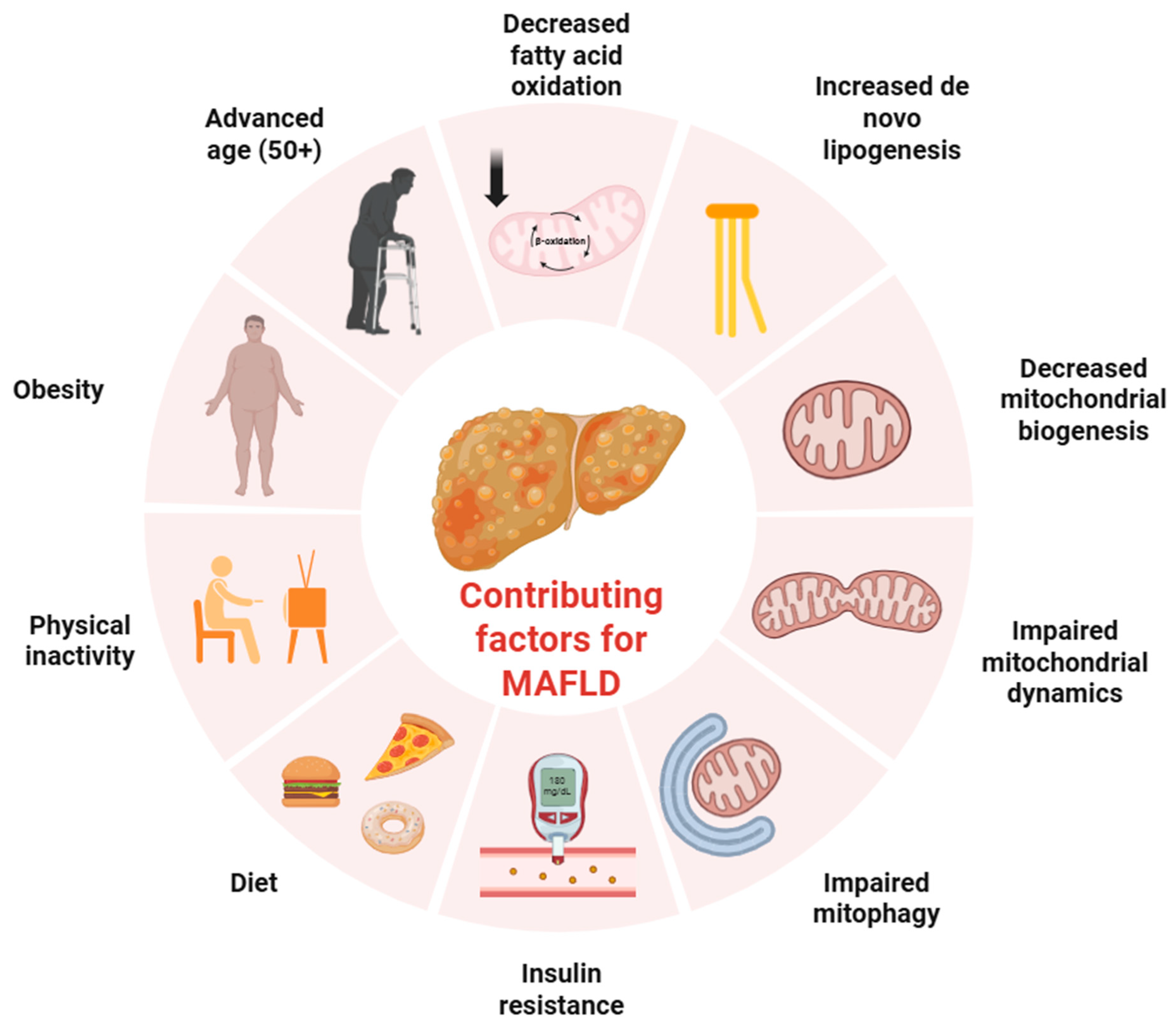
2. MAFLD Pathogenesis
2.1. Epidemiology and Histological Features
2.2. Lipid Transport
2.3. De Novo Lipogenesis
2.4. Lipotoxicity
2.5. Phosphatidylethanolamines
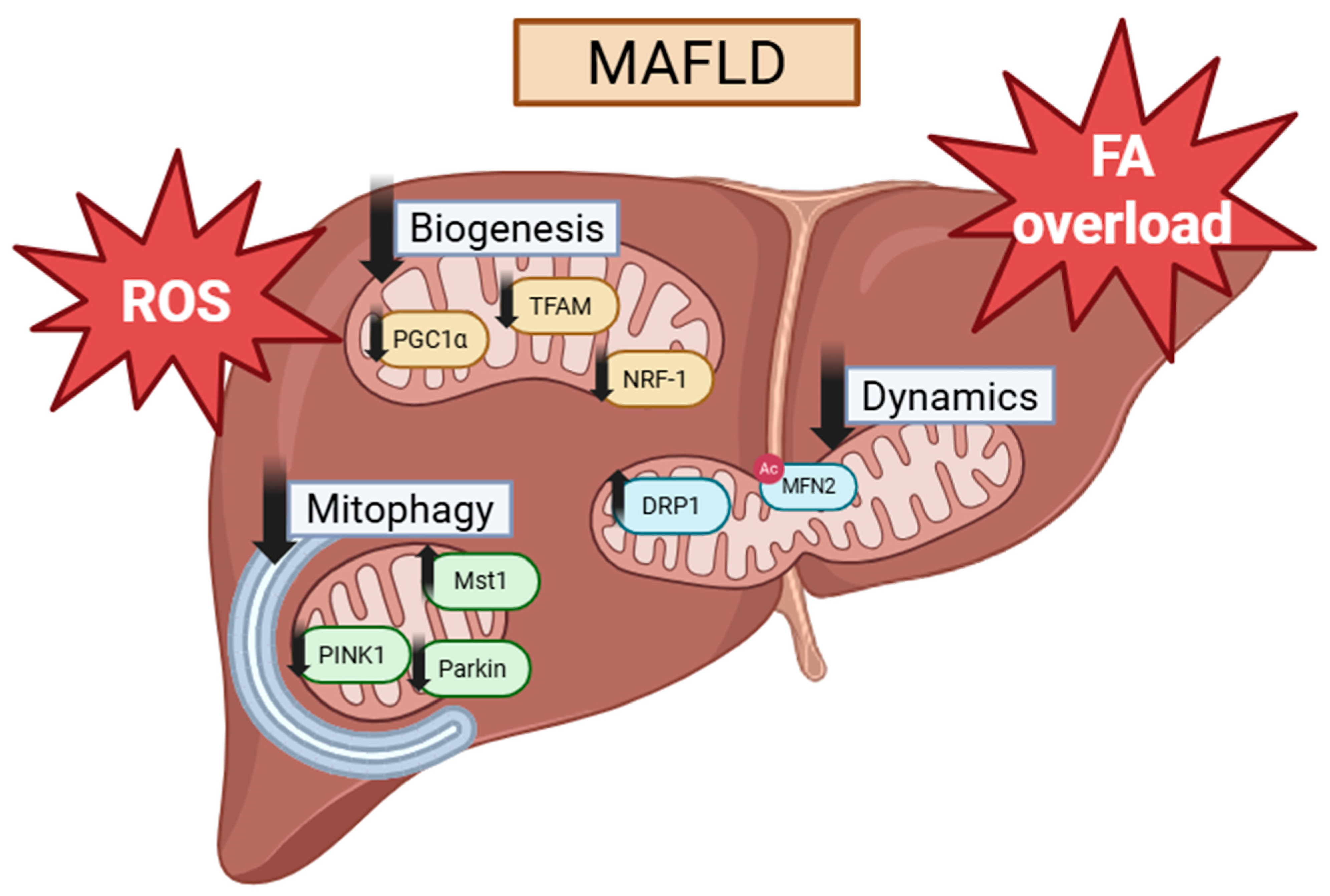
3. Mitochondrial Dysfunction in MAFLD
3.1. Mitochondrial Biogenesis
3.2. Mitochondrial Dynamics
3.3. Mitophagy
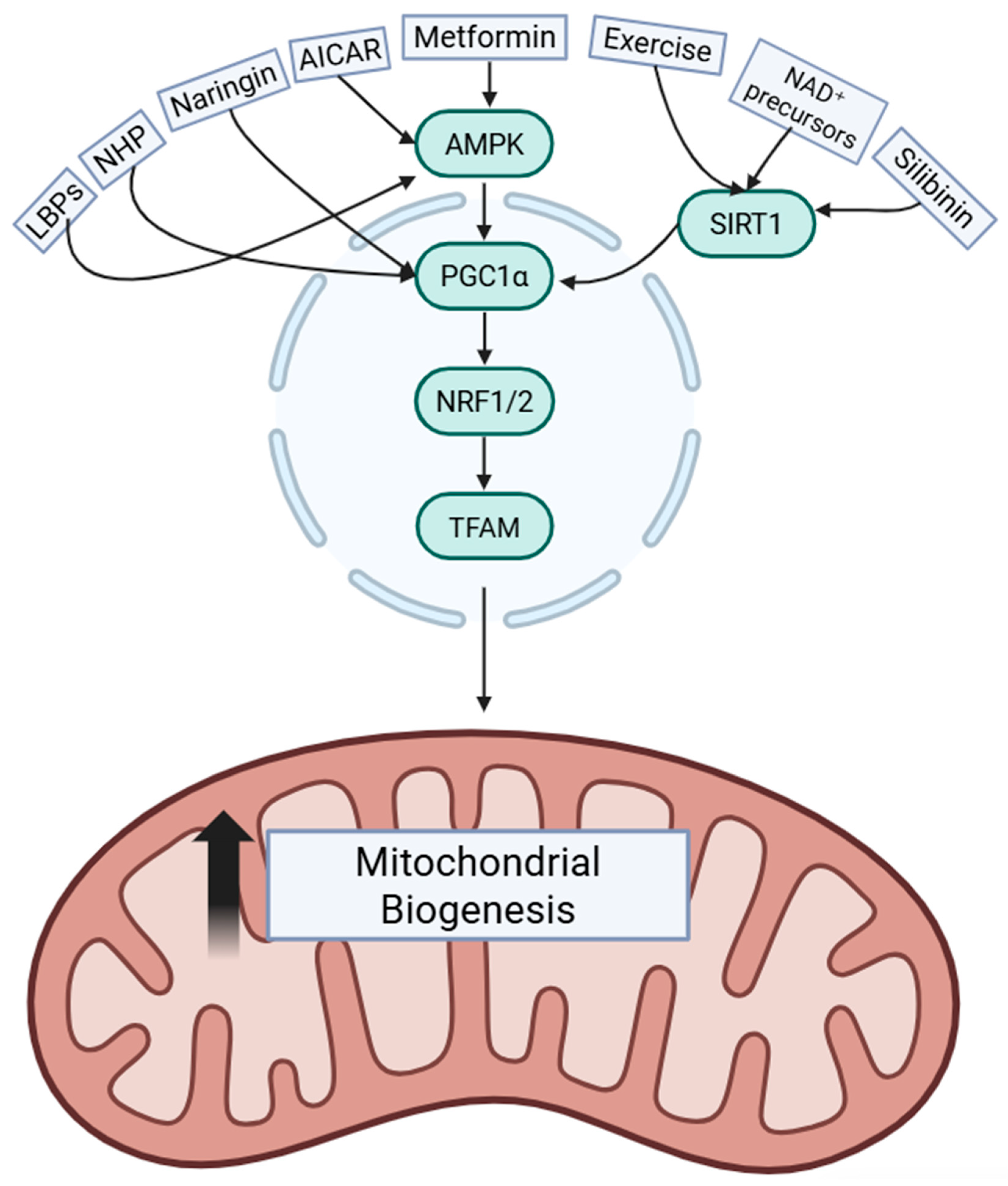
4. Induction of Mitochondrial Biogenesis to Combat MAFLD
4.1. Lycium barbarum Polysaccharides (LBPs)
4.2. Neohesperidin
4.3. Naringin
4.4. AICAR
4.5. Metformin
4.6. Pseudolaric Acid B
4.7. SIRT1 Inducers
4.8. Phosphatidylethanolamine Metabolism Modulators
5. Conclusions
Author Contributions
Funding
Data Availability Statement
Conflicts of Interest
References
- Chew, N.W.S.; Ng, C.H.; Tan, D.J.H.; Kong, G.; Lin, C.; Chin, Y.H.; Lim, W.H.; Huang, D.Q.; Quek, J.; Fu, C.E.; et al. The Global Burden of Metabolic Disease: Data from 2000 to 2019. Cell Metab. 2023, 35, 414–428.e3. [Google Scholar] [CrossRef] [Scilit]
- Teng, M.L.; Ng, C.H.; Huang, D.Q.; Chan, K.E.; Tan, D.J.; Lim, W.H.; Yang, J.D.; Tan, E.; Muthiah, M.D. Global Incidence and Prevalence of Nonalcoholic Fatty Liver Disease. Clin. Mol. Hepatol. 2023, 29, S32–S42. [Google Scholar] [CrossRef] [Scilit]
- Dumitrascu, D.L.; Neuman, M.G. Non-Alcoholic Fatty Liver Disease: An Update on Diagnosis. Clujul Med. 2018, 91, 147–150. [Google Scholar] [CrossRef] [Scilit]
- Nassir, F.; Ibdah, J.A. Role of Mitochondria in Nonalcoholic Fatty Liver Disease. Int. J. Mol. Sci. 2014, 15, 8713–8742. [Google Scholar] [CrossRef] [Scilit]
- Chalasani, N.; Younossi, Z.; Lavine, J.E.; Diehl, A.M.; Brunt, E.M.; Cusi, K.; Charlton, M.; Sanyal, A.J. The Diagnosis and Management of Non-Alcoholic Fatty Liver Disease: Practice Guideline by the American Association for the Study of Liver Diseases, American College of Gastroenterology, and the American Gastroenterological Association. Hepatology 2012, 55, 2005–2023. [Google Scholar] [CrossRef] [Scilit] [PubMed]
- Kleiner, D.E.; Makhlouf, H.R. Histology of NAFLD and NASH in Adults and Children. Clin. Liver Dis. 2016, 20, 293–312. [Google Scholar] [CrossRef] [Scilit] [PubMed]
- Byrne, C.D.; Targher, G. NAFLD: A Multisystem Disease. J. Hepatol. 2015, 62, S47–S64. [Google Scholar] [CrossRef] [Scilit]
- Kakiyama, G.; Rodriguez-Agudo, D.; Pandak, W.M. Mitochondrial Cholesterol Metabolites in a Bile Acid Synthetic Pathway Drive Nonalcoholic Fatty Liver Disease: A Revised “Two-Hit” Hypothesis. Cells 2023, 12, 1434. [Google Scholar] [CrossRef] [Scilit] [PubMed]
- Tilg, H.; Moschen, A.R. Evolution of Inflammation in Nonalcoholic Fatty Liver Disease: The Multiple Parallel Hits Hypothesis. Hepatology 2010, 52, 1836–1846. [Google Scholar] [CrossRef] [Scilit]
- Buzzetti, E.; Pinzani, M.; Tsochatzis, E.A. The Multiple-Hit Pathogenesis of Non-Alcoholic Fatty Liver Disease (NAFLD). Metabolism 2016, 65, 1038–1048. [Google Scholar] [CrossRef] [Scilit]
- Moore, M.P.; Cunningham, R.P.; Meers, G.M.; Johnson, S.A.; Wheeler, A.A.; Ganga, R.R.; Spencer, N.M.; Pitt, J.B.; Diaz-Arias, A.; Swi, A.I.A.; et al. Compromised Hepatic Mitochondrial Fatty Acid Oxidation and Reduced Markers of Mitochondrial Turnover in Human NAFLD. Hepatology 2022, 76, 1452–1465. [Google Scholar] [CrossRef] [Scilit]
- Kohjima, M.; Enjoji, M.; Higuchi, N.; Kato, M.; Kotoh, K.; Yoshimoto, T.; Fujino, T.; Yada, M.; Yada, R.; Harada, N.; et al. Re-Evaluation of Fatty Acid Metabolism-Related Gene Expression in Nonalcoholic Fatty Liver Disease. Int. J. Mol. Med. 2007, 20, 351–358. [Google Scholar] [CrossRef] [Scilit]
- Aharoni-Simon, M.; Hann-Obercyger, M.; Pen, S.; Madar, Z.; Tirosh, O. Fatty Liver Is Associated with Impaired Activity of PPARγ-Coactivator 1α (PGC1α) and Mitochondrial Biogenesis in Mice. Lab. Investig. 2011, 91, 1018–1028. [Google Scholar] [CrossRef] [Scilit] [PubMed]
- Di Ciaula, A.; Passarella, S.; Shanmugam, H.; Noviello, M.; Bonfrate, L.; Wang, D.Q.-H.; Portincasa, P. Nonalcoholic Fatty Liver Disease (NAFLD). Mitochondria as Players and Targets of Therapies? Int. J. Mol. Sci. 2021, 22, 5375. [Google Scholar] [CrossRef] [Scilit] [PubMed]
- Mao, Y.; Du, J.; Li, B.; Wang, J.; Xuan, S.; Yang, S.; Tang, Z.; Wang, M. Global Burden of NAFLD 1990–2021 and Projections to 2035: Results from the Global Burden of Disease Study 2021. PLoS ONE 2025, 20, e0330504. [Google Scholar] [CrossRef] [Scilit]
- Hallsworth, K.; Hollingsworth, K.G.; Thoma, C.; Jakovljevic, D.; MacGowan, G.A.; Anstee, Q.M.; Taylor, R.; Day, C.P.; Trenell, M.I. Cardiac Structure and Function Are Altered in Adults with Non-Alcoholic Fatty Liver Disease. J. Hepatol. 2013, 58, 757–762. [Google Scholar] [CrossRef] [Scilit]
- Hagström, H.; Nasr, P.; Ekstedt, M.; Hammar, U.; Stål, P.; Askling, J.; Hultcrantz, R.; Kechagias, S. Cardiovascular Risk Factors in Non-alcoholic Fatty Liver Disease. Liver Int. 2019, 39, 197–204. [Google Scholar] [CrossRef] [Scilit]
- Targher, G.; Bertolini, L.; Rodella, S.; Zoppini, G.; Lippi, G.; Day, C.; Muggeo, M. Non-Alcoholic Fatty Liver Disease Is Independently Associated with an Increased Prevalence of Chronic Kidney Disease and Proliferative/Laser-Treated Retinopathy in Type 2 Diabetic Patients. Diabetologia 2008, 51, 444–450. [Google Scholar] [CrossRef] [Scilit]
- Targher, G.; Byrne, C.D. Non-Alcoholic Fatty Liver Disease: An Emerging Driving Force in Chronic Kidney Disease. Nat. Rev. Nephrol. 2017, 13, 297–310. [Google Scholar] [CrossRef] [Scilit]
- Bonora, E.; Targher, G. Increased Risk of Cardiovascular Disease and Chronic Kidney Disease in NAFLD. Nat. Rev. Gastroenterol. Hepatol. 2012, 9, 372–381. [Google Scholar] [CrossRef] [Scilit] [PubMed]
- Estes, C.; Chan, H.L.Y.; Chien, R.N.; Chuang, W.-L.; Fung, J.; Goh, G.B.-B.; Hu, T.H.; Huang, J.-F.; Jang, B.K.; Jun, D.W.; et al. Modelling NAFLD Disease Burden in Four Asian Regions—2019–2030. Aliment. Pharmacol. Ther. 2020, 51, 801–811. [Google Scholar] [CrossRef] [Scilit] [PubMed]
- Kosmalski, M.; Śliwińska, A.; Drzewoski, J. Non-Alcoholic Fatty Liver Disease or Type 2 Diabetes Mellitus—The Chicken or the Egg Dilemma. Biomedicines 2023, 11, 1097. [Google Scholar] [CrossRef] [Scilit]
- Brunt, E.M.; Tiniakos, D.G. Histopathology of Nonalcoholic Fatty Liver Disease. World J. Gastroenterol. 2010, 16, 5286–5296. [Google Scholar] [CrossRef] [Scilit] [PubMed]
- Dufour, J.-F.; Scherer, R.; Balp, M.-M.; McKenna, S.J.; Janssens, N.; Lopez, P.; Pedrosa, M. The Global Epidemiology of Nonalcoholic Steatohepatitis (NASH) and Associated Risk Factors–A Targeted Literature Review. Endocr. Metab. Sci. 2021, 3, 100089. [Google Scholar] [CrossRef] [Scilit]
- Sanyal, A.J.; Harrison, S.A.; Ratziu, V.; Abdelmalek, M.F.; Diehl, A.M.; Caldwell, S.; Shiffman, M.L.; Aguilar Schall, R.; Jia, C.; McColgan, B.; et al. The Natural History of Advanced Fibrosis Due to Nonalcoholic Steatohepatitis: Data From the Simtuzumab Trials. Hepatology 2019, 70, 1913–1927. [Google Scholar] [CrossRef] [Scilit] [PubMed]
- Brown, G.T.; Kleiner, D.E. Histopathology of Nonalcoholic Fatty Liver Disease and Nonalcoholic Steatohepatitis. Metabolism 2016, 65, 1080–1086. [Google Scholar] [CrossRef] [Scilit]
- Enzan, H.; Toi, M.; Hayashi, Y.; Hamauzu, T.; Kuroda, N.; Hiroi, M. Zone 3 Predominance of Histopathological Features in Nonalcoholic Steatohepatitis. In Proceedings of the NASH and Nutritional Therapy; Okita, K., Ed.; Springer: Tokyo, Japan, 2005; pp. 50–57. [Google Scholar]
- Angulo, P.; Kleiner, D.E.; Dam-Larsen, S.; Adams, L.A.; Bjornsson, E.S.; Charatcharoenwitthaya, P.; Mills, P.R.; Keach, J.C.; Lafferty, H.D.; Stahler, A.; et al. Liver Fibrosis, but No Other Histologic Features, Is Associated With Long-Term Outcomes of Patients With Nonalcoholic Fatty Liver Disease. Gastroenterology 2015, 149, 389–397.e10. [Google Scholar] [CrossRef] [Scilit]
- Donnelly, K.L.; Smith, C.I.; Schwarzenberg, S.J.; Jessurun, J.; Boldt, M.D.; Parks, E.J. Sources of Fatty Acids Stored in Liver and Secreted via Lipoproteins in Patients with Nonalcoholic Fatty Liver Disease. J. Clin. Investig. 2005, 115, 1343–1351. [Google Scholar] [CrossRef]
- Ibrahim, S.H.; Kohli, R.; Gores, G.J. Mechanisms of Lipotoxicity in NAFLD and Clinical Implications. J. Pediatr. Gastroenterol. Nutr. 2011, 53, 131–140. [Google Scholar] [CrossRef] [Scilit]
- Feingold, K.R. Introduction to Lipids and Lipoproteins. In Endotext [Internet]; MDText.com, Inc.: Portland, OR, USA, 2024. [Google Scholar]
- Hirsch, D.; Stahl, A.; Lodish, H.F. A Family of Fatty Acid Transporters Conserved from Mycobacterium to Man. Proc. Natl. Acad. Sci. USA 1998, 95, 8625–8629. [Google Scholar] [CrossRef] [Scilit]
- Auinger, A.; Valenti, L.; Pfeuffer, M.; Helwig, U.; Herrmann, J.; Fracanzani, A.L.; Dongiovanni, P.; Fargion, S.; Schrezenmeir, J.; Rubin, D. A Promoter Polymorphism in the Liver-Specific Fatty Acid Transport Protein 5 Is Associated with Features of the Metabolic Syndrome and Steatosis. Horm. Metab. Res. 2010, 42, 854–859. [Google Scholar] [CrossRef] [Scilit]
- Doege, H.; Grimm, D.; Falcon, A.; Tsang, B.; Storm, T.A.; Xu, H.; Ortegon, A.M.; Kazantzis, M.; Kay, M.A.; Stahl, A. Silencing of Hepatic Fatty Acid Transporter Protein 5 in Vivo Reverses Diet-Induced Non-Alcoholic Fatty Liver Disease and Improves Hyperglycemia*. J. Biol. Chem. 2008, 283, 22186–22192. [Google Scholar] [CrossRef] [Scilit] [PubMed]
- Krammer, J.; Digel, M.; Ehehalt, F.; Stremmel, W.; Füllekrug, J.; Ehehalt, R. Overexpression of CD36 and Acyl-CoA Synthetases FATP2, FATP4 and ACSL1 Increases Fatty Acid Uptake in Human Hepatoma Cells. Int. J. Med. Sci. 2011, 8, 599–614. [Google Scholar] [CrossRef] [Scilit] [PubMed]
- Falcon, A.; Doege, H.; Fluitt, A.; Tsang, B.; Watson, N.; Kay, M.A.; Stahl, A. FATP2 Is a Hepatic Fatty Acid Transporter and Peroxisomal Very Long-Chain Acyl-CoA Synthetase. Am. J. Physiol.-Endocrinol. Metab. 2010, 299, E384–E393. [Google Scholar] [CrossRef] [Scilit]
- Lambert, J.E.; Ramos–Roman, M.A.; Browning, J.D.; Parks, E.J. Increased De Novo Lipogenesis Is a Distinct Characteristic of Individuals With Nonalcoholic Fatty Liver Disease. Gastroenterology 2014, 146, 726–735. [Google Scholar] [CrossRef] [Scilit]
- Tong, L. Acetyl-Coenzyme A Carboxylase: Crucial Metabolic Enzyme and Attractive Target for Drug Discovery. CMLS Cell. Mol. Life Sci. 2005, 62, 1784–1803. [Google Scholar] [CrossRef] [Scilit]
- Bloch, K. Enzymic Synthesis of Monounsaturated Fatty Acids. Acc. Chem. Res. 1969, 2, 193–202. [Google Scholar] [CrossRef] [Scilit]
- Nakamura, M.T.; Cho, H.P.; Xu, J.; Tang, Z.; Clarke, S.D. Metabolism and Functions of Highly Unsaturated Fatty Acids: An Update. Lipids 2001, 36, 961–964. [Google Scholar] [CrossRef] [Scilit] [PubMed]
- Horton, J.D.; Shah, N.A.; Warrington, J.A.; Anderson, N.N.; Park, S.W.; Brown, M.S.; Goldstein, J.L. Combined Analysis of Oligonucleotide Microarray Data from Transgenic and Knockout Mice Identifies Direct SREBP Target Genes. Proc. Natl. Acad. Sci. USA 2003, 100, 12027–12032. [Google Scholar] [CrossRef] [Scilit]
- Bertolio, R.; Napoletano, F.; Mano, M.; Maurer-Stroh, S.; Fantuz, M.; Zannini, A.; Bicciato, S.; Sorrentino, G.; Del Sal, G. Sterol Regulatory Element Binding Protein 1 Couples Mechanical Cues and Lipid Metabolism. Nat. Commun. 2019, 10, 1326. [Google Scholar] [CrossRef] [Scilit]
- Shimomura, I.; Bashmakov, Y.; Horton, J.D. Increased Levels of Nuclear SREBP-1c Associated with Fatty Livers in Two Mouse Models of Diabetes Mellitus*. J. Biol. Chem. 1999, 274, 30028–30032. [Google Scholar] [CrossRef] [Scilit] [PubMed]
- Knebel, B.; Haas, J.; Hartwig, S.; Jacob, S.; Köllmer, C.; Nitzgen, U.; Muller–Wieland, D.; Kotzka, J. Liver-Specific Expression of Transcriptionally Active SREBP-1c Is Associated with Fatty Liver and Increased Visceral Fat Mass. PLoS ONE 2012, 7, e31812. [Google Scholar] [CrossRef] [Scilit]
- Repa, J.J.; Liang, G.; Ou, J.; Bashmakov, Y.; Lobaccaro, J.-M.A.; Shimomura, I.; Shan, B.; Brown, M.S.; Goldstein, J.L.; Mangelsdorf, D.J. Regulation of Mouse Sterol Regulatory Element-Binding Protein-1c Gene (SREBP-1c) by Oxysterol Receptors, LXRα and LXRβ. Genes Dev. 2000, 14, 2819–2830. [Google Scholar] [CrossRef] [Scilit] [PubMed]
- Higuchi, N.; Kato, M.; Shundo, Y.; Tajiri, H.; Tanaka, M.; Yamashita, N.; Kohjima, M.; Kotoh, K.; Nakamuta, M.; Takayanagi, R.; et al. Liver X Receptor in Cooperation with SREBP-1c Is a Major Lipid Synthesis Regulator in Nonalcoholic Fatty Liver Disease. Hepatol. Res. 2008, 38, 1122–1129. [Google Scholar] [CrossRef] [Scilit] [PubMed]
- Lu, Q.; Tian, X.; Wu, H.; Huang, J.; Li, M.; Mei, Z.; Zhou, L.; Xie, H.; Zheng, S. Metabolic Changes of Hepatocytes in NAFLD. Front. Physiol. 2021, 12, 710420. [Google Scholar] [CrossRef] [Scilit]
- Dentin, R.; Benhamed, F.; Hainault, I.; Fauveau, V.; Foufelle, F.; Dyck, J.R.B.; Girard, J.; Postic, C. Liver-Specific Inhibition of ChREBP Improves Hepatic Steatosis and Insulin Resistance in ob/ob Mice. Diabetes 2006, 55, 2159–2170. [Google Scholar] [CrossRef] [Scilit]
- Benhamed, F.; Denechaud, P.-D.; Lemoine, M.; Robichon, C.; Moldes, M.; Bertrand-Michel, J.; Ratziu, V.; Serfaty, L.; Housset, C.; Capeau, J.; et al. The Lipogenic Transcription Factor ChREBP Dissociates Hepatic Steatosis from Insulin Resistance in Mice and Humans. J. Clin. Investig. 2012, 122, 2176–2194. [Google Scholar] [CrossRef] [Scilit]
- Feng, R.; Luo, C.; Li, C.; Du, S.; Okekunle, A.P.; Li, Y.; Chen, Y.; Zi, T.; Niu, Y. Free Fatty Acids Profile among Lean, Overweight and Obese Non-Alcoholic Fatty Liver Disease Patients: A Case–Control Study. Lipids Health Dis. 2017, 16, 165. [Google Scholar] [CrossRef] [Scilit]
- Nehra, V.; Angulo, P.; Buchman, A.L.; Lindor, K.D. Nutritional and Metabolic Considerations in the Etiology of Nonalcoholic Steatohepatitis. Dig. Dis. Sci. 2001, 46, 2347–2352. [Google Scholar] [CrossRef] [Scilit]
- Hliwa, A.; Ramos-Molina, B.; Laski, D.; Mika, A.; Sledzinski, T. The Role of Fatty Acids in Non-Alcoholic Fatty Liver Disease Progression: An Update. Int. J. Mol. Sci. 2021, 22, 6900. [Google Scholar] [CrossRef] [Scilit]
- Mei, S.; Ni, H.-M.; Manley, S.; Bockus, A.; Kassel, K.M.; Luyendyk, J.P.; Copple, B.L.; Ding, W.-X. Differential Roles of Unsaturated and Saturated Fatty Acids on Autophagy and Apoptosis in Hepatocytes. J. Pharmacol. Exp. Ther. 2011, 339, 487–498. [Google Scholar] [CrossRef] [Scilit] [PubMed]
- Luukkonen, P.K.; Sädevirta, S.; Zhou, Y.; Kayser, B.; Ali, A.; Ahonen, L.; Lallukka, S.; Pelloux, V.; Gaggini, M.; Jian, C.; et al. Saturated Fat Is More Metabolically Harmful for the Human Liver Than Unsaturated Fat or Simple Sugars. Diabetes Care 2018, 41, 1732–1739. [Google Scholar] [CrossRef] [Scilit]
- Nolan, C.J.; Larter, C.Z. Lipotoxicity: Why Do Saturated Fatty Acids Cause and Monounsaturates Protect against It? J. Gastroenterol. Hepatol. 2009, 24, 703–706. [Google Scholar] [CrossRef] [Scilit]
- Alnahdi, A.; John, A.; Raza, H. Augmentation of Glucotoxicity, Oxidative Stress, Apoptosis and Mitochondrial Dysfunction in HepG2 Cells by Palmitic Acid. Nutrients 2019, 11, 1979. [Google Scholar] [CrossRef] [Scilit]
- Moliterni, C.; Vari, F.; Schifano, E.; Tacconi, S.; Stanca, E.; Friuli, M.; Longo, S.; Conte, M.; Salvioli, S.; Gnocchi, D.; et al. Lipotoxicity of Palmitic Acid Is Associated with DGAT1 Downregulation and Abolished by PPARα Activation in Liver Cells. J. Lipid Res. 2024, 65, 100692. [Google Scholar] [CrossRef] [Scilit]
- Spigoni, V.; Fantuzzi, F.; Fontana, A.; Cito, M.; Derlindati, E.; Zavaroni, I.; Cnop, M.; Bonadonna, R.C.; Dei Cas, A. Stearic Acid at Physiologic Concentrations Induces in Vitro Lipotoxicity in Circulating Angiogenic Cells. Atherosclerosis 2017, 265, 162–171. [Google Scholar] [CrossRef] [Scilit]
- Lu, H.; Hao, L.; Li, S.; Lin, S.; Lv, L.; Chen, Y.; Cui, H.; Zi, T.; Chu, X.; Na, L.; et al. Elevated Circulating Stearic Acid Leads to a Major Lipotoxic Effect on Mouse Pancreatic Beta Cells in Hyperlipidaemia via a miR-34a-5p-Mediated PERK/P53-Dependent Pathway. Diabetologia 2016, 59, 1247–1257. [Google Scholar] [CrossRef] [Scilit]
- Wu, K.-T.; Kuo, P.-L.; Su, S.-B.; Chen, Y.-Y.; Yeh, M.-L.; Huang, C.-I.; Yang, J.-F.; Lin, C.-I.; Hsieh, M.-H.; Hsieh, M.-Y.; et al. Nonalcoholic Fatty Liver Disease Severity Is Associated with the Ratios of Total Cholesterol and Triglycerides to High-Density Lipoprotein Cholesterol. J. Clin. Lipidol. 2016, 10, 420–425.e1. [Google Scholar] [CrossRef] [Scilit] [PubMed]
- Ioannou, G.N.; Subramanian, S.; Chait, A.; Haigh, W.G.; Yeh, M.M.; Farrell, G.C.; Lee, S.P.; Savard, C. Cholesterol Crystallization within Hepatocyte Lipid Droplets and Its Role in Murine NASH[S]. J. Lipid Res. 2017, 58, 1067–1079. [Google Scholar] [CrossRef] [Scilit] [PubMed]
- Yu, X.-H.; Fu, Y.-C.; Zhang, D.-W.; Yin, K.; Tang, C.-K. Foam Cells in Atherosclerosis. Clin. Chim. Acta 2013, 424, 245–252. [Google Scholar] [CrossRef] [Scilit]
- Balboa, E.; Castro, J.; Pinochet, M.-J.; Cancino, G.I.; Matías, N.; Sáez, P.J.; Martínez, A.; Álvarez, A.R.; Garcia-Ruiz, C.; Fernandez-Checa, J.C.; et al. MLN64 Induces Mitochondrial Dysfunction Associated with Increased Mitochondrial Cholesterol Content. Redox Biol. 2017, 12, 274–284. [Google Scholar] [CrossRef] [Scilit] [PubMed]
- Zhao, Y.-F.; Wang, L.; Lee, S.; Sun, Q.; Tuo, Y.; Wang, Y.; Pei, J.; Chen, C. Cholesterol Induces Mitochondrial Dysfunction and Apoptosis in Mouse Pancreatic Beta-Cell Line MIN6 Cells. Endocrine 2010, 37, 76–82. [Google Scholar] [CrossRef] [Scilit]
- Jundi, B.; Ahmed, H.; Reece, J.; Geraghty, P. The Relationship of Cholesterol Responses to Mitochondrial Dysfunction and Lung Inflammation in Chronic Obstructive Pulmonary Disease. Medicina 2023, 59, 253. [Google Scholar] [CrossRef] [Scilit]
- Ribas, V.; García-Ruiz, C.; Fernández-Checa, J.C. Glutathione and Mitochondria. Front. Pharmacol. 2014, 5, 151. [Google Scholar] [CrossRef] [Scilit]
- Calzada, E.; Onguka, O.; Claypool, S.M. Phosphatidylethanolamine Metabolism in Health and Disease. In International Review of Cell and Molecular Biology; Academic Press: Cambridge, MA, USA, 2016; Volume 321, pp. 29–88. [Google Scholar]
- St Germain, M.; Iraji, R.; Bakovic, M. Phosphatidylethanolamine Homeostasis under Conditions of Impaired CDP-Ethanolamine Pathway or Phosphatidylserine Decarboxylation. Front. Nutr. 2023, 9, 1094273. [Google Scholar] [CrossRef] [Scilit]
- Tasseva, G.; Bai, H.D.; Davidescu, M.; Haromy, A.; Michelakis, E.; Vance, J.E. Phosphatidylethanolamine Deficiency in Mammalian Mitochondria Impairs Oxidative Phosphorylation and Alters Mitochondrial Morphology*. J. Biol. Chem. 2013, 288, 4158–4173. [Google Scholar] [CrossRef] [Scilit]
- Sam, P.N.; Calzada, E.; Acoba, M.G.; Zhao, T.; Watanabe, Y.; Nejatfard, A.; Trinidad, J.C.; Shutt, T.E.; Neal, S.E.; Claypool, S.M. Impaired Phosphatidylethanolamine Metabolism Activates a Reversible Stress Response That Detects and Resolves Mutant Mitochondrial Precursors. iScience 2021, 24, 102196. [Google Scholar] [CrossRef] [Scilit]
- Friedman, J.R.; Kannan, M.; Toulmay, A.; Jan, C.H.; Weissman, J.S.; Prinz, W.A.; Nunnari, J. Lipid Homeostasis Is Maintained by Dual Targeting of the Mitochondrial PE Biosynthesis Enzyme to the ER. Dev. Cell 2018, 44, 261–270.e6. [Google Scholar] [CrossRef] [Scilit]
- Shama, S.; Jang, H.; Wang, X.; Zhang, Y.; Shahin, N.N.; Motawi, T.K.; Kim, S.; Gawrieh, S.; Liu, W. Phosphatidylethanolamines Are Associated with Nonalcoholic Fatty Liver Disease (NAFLD) in Obese Adults and Induce Liver Cell Metabolic Perturbations and Hepatic Stellate Cell Activation. Int. J. Mol. Sci. 2023, 24, 1034. [Google Scholar] [CrossRef] [Scilit] [PubMed]
- Mancini, M.C.; McCall, C.P.; Noland, R.C.; Dantas, W.S.; Heden, T.D. Targeting Mitochondrial Phosphatidylethanolamine Alters Mitochondrial Metabolism and Proliferation in Hepatocellular Carcinoma. Oncogenesis 2025, 15, 3. [Google Scholar] [CrossRef] [Scilit] [PubMed]
- Holdaway, C.M.; Leonard, K.-A.; Nelson, R.; van der Veen, J.; Das, C.; Watts, R.; Clugston, R.D.; Lehner, R.; Jacobs, R.L. Alterations in Phosphatidylethanolamine Metabolism Impacts Hepatocellular Lipid Storage, Energy Homeostasis, and Proliferation. Biochim. Biophys. Acta (BBA)-Mol. Cell Biol. Lipids 2025, 1870, 159608. [Google Scholar] [CrossRef] [Scilit]
- Chen, W.; Zhao, H.; Li, Y. Mitochondrial Dynamics in Health and Disease: Mechanisms and Potential Targets. Sig Transduct. Target. Ther. 2023, 8, 333. [Google Scholar] [CrossRef] [Scilit]
- Brillo, V.; Chieregato, L.; Leanza, L.; Muccioli, S.; Costa, R. Mitochondrial Dynamics, ROS, and Cell Signaling: A Blended Overview. Life 2021, 11, 332. [Google Scholar] [CrossRef] [Scilit] [PubMed]
- Jornayvaz, F.R.; Shulman, G.I. Regulation of Mitochondrial Biogenesis. Essays Biochem. 2010, 47, 69–84. [Google Scholar] [CrossRef] [Scilit] [PubMed]
- Picca, A.; Lezza, A.M.S. Regulation of Mitochondrial Biogenesis through TFAM-Mitochondrial DNA Interactions: Useful Insights from Aging and Calorie Restriction Studies. Mitochondrion 2015, 25, 67–75. [Google Scholar] [CrossRef] [Scilit]
- Dinkova-Kostova, A.T.; Abramov, A.Y. The Emerging Role of Nrf2 in Mitochondrial Function. Free Radic. Biol. Med. 2015, 88, 179–188. [Google Scholar] [CrossRef] [Scilit]
- Cunningham, J.T.; Rodgers, J.T.; Arlow, D.H.; Vazquez, F.; Mootha, V.K.; Puigserver, P. mTOR Controls Mitochondrial Oxidative Function through a YY1-PGC-1alpha Transcriptional Complex. Nature 2007, 450, 736–740. [Google Scholar] [CrossRef] [Scilit]
- Schieke, S.M.; Phillips, D.; McCoy, J.P.; Aponte, A.M.; Shen, R.-F.; Balaban, R.S.; Finkel, T. The Mammalian Target of Rapamycin (mTOR) Pathway Regulates Mitochondrial Oxygen Consumption and Oxidative Capacity. J. Biol. Chem. 2006, 281, 27643–27652. [Google Scholar] [CrossRef] [Scilit]
- Li, H.; Cai, Z. SIRT3 Regulates Mitochondrial Biogenesis in Aging-Related Diseases. J. Biomed. Res. 2023, 37, 77–88. [Google Scholar] [CrossRef] [Scilit]
- Kong, X.; Wang, R.; Xue, Y.; Liu, X.; Zhang, H.; Chen, Y.; Fang, F.; Chang, Y. Sirtuin 3, a New Target of PGC-1α, Plays an Important Role in the Suppression of ROS and Mitochondrial Biogenesis. PLoS ONE 2010, 5, e11707. [Google Scholar] [CrossRef] [Scilit]
- Kendrick, A.A.; Choudhury, M.; Rahman, S.M.; McCurdy, C.E.; Friederich, M.; Van Hove, J.L.K.; Watson, P.A.; Birdsey, N.; Bao, J.; Gius, D.; et al. Fatty Liver Is Associated with Reduced SIRT3 Activity and Mitochondrial Protein Hyperacetylation. Biochem. J. 2011, 433, 505–514. [Google Scholar] [CrossRef] [Scilit]
- Mooli, R.G.R.; Mukhi, D.; Watt, M.; Edmunds, L.; Xie, B.; Capooci, J.; Reslink, M.; Eze, C.; Mills, A.; Stolz, D.B.; et al. Sustained Mitochondrial Biogenesis Is Essential to Maintain Caloric Restriction-Induced Beige Adipocytes. Metabolism 2020, 107, 154225. [Google Scholar] [CrossRef] [Scilit]
- Kamfar, S.; Alavian, S.M.; Houshmand, M.; Yadegarazari, R.; Seifi Zarei, B.; Khalaj, A.; Shabab, N.; Saidijam, M. Liver Mitochondrial DNA Copy Number and Deletion Levels May Contribute to Nonalcoholic Fatty Liver Disease Susceptibility. Hepat. Mon. 2016, 16, e40774. [Google Scholar] [CrossRef] [Scilit]
- Houshmand, M.; Zeinali, V.; Hosseini, A.; Seifi, A.; Danaei, B.; Kamfar, S. Investigation of FGF21 mRNA Levels and Relative Mitochondrial DNA Copy Number Levels and Their Relation in Nonalcoholic Fatty Liver Disease: A Case-Control Study. Front. Mol. Biosci. 2023, 10, 1203019. [Google Scholar] [CrossRef] [Scilit]
- Jin, M.; Yu, H.; Deng, Q.; Wang, Z.; Liang, H. AMPK Affects the Development of Early-Stage NAFLD by Activating Autophagy and Fatty Acid Oxidation. Sci. Rep. 2025, 16, 1425. [Google Scholar] [CrossRef] [Scilit] [PubMed]
- Yapa, N.M.B.; Lisnyak, V.; Reljic, B.; Ryan, M.T. Mitochondrial Dynamics in Health and Disease. FEBS Lett. 2021, 595, 1184–1204. [Google Scholar] [CrossRef] [Scilit]
- Lei, Y.; Gan, M.; Qiu, Y.; Chen, Q.; Wang, X.; Liao, T.; Zhao, M.; Chen, L.; Zhang, S.; Zhao, Y.; et al. The Role of Mitochondrial Dynamics and Mitophagy in Skeletal Muscle Atrophy: From Molecular Mechanisms to Therapeutic Insights. Cell Mol. Biol. Lett. 2024, 29, 59. [Google Scholar] [CrossRef] [Scilit]
- Padelli, M.; Hamelin, J.; Desterke, C.; Sebagh, M.; Saffroy, R.; Sanchez, C.G.; Coilly, A.; Duclos-Vallée, J.-C.; Samuel, D.; Lemoine, A. Analysis of the Mitochondrial Dynamics in NAFLD: Drp1 as a Marker of Inflammation and Fibrosis. Int. J. Mol. Sci. 2025, 26, 7373. [Google Scholar] [CrossRef] [Scilit] [PubMed]
- Galloway, C.A.; Lee, H.; Brookes, P.S.; Yoon, Y. Decreasing Mitochondrial Fission Alleviates Hepatic Steatosis in a Murine Model of Nonalcoholic Fatty Liver Disease. Am. J. Physiol.-Gastrointest. Liver Physiol. 2014, 307, G632–G641. [Google Scholar] [CrossRef] [Scilit] [PubMed]
- Wang, L.; Ishihara, T.; Ibayashi, Y.; Tatsushima, K.; Setoyama, D.; Hanada, Y.; Takeichi, Y.; Sakamoto, S.; Yokota, S.; Mihara, K.; et al. Disruption of Mitochondrial Fission in the Liver Protects Mice from Diet-Induced Obesity and Metabolic Deterioration. Diabetologia 2015, 58, 2371–2380. [Google Scholar] [CrossRef] [Scilit]
- Bórquez, J.C.; Díaz-Castro, F.; La Fuente, F.P.; Espinoza, K.; Figueroa, A.M.; Martínez-Ruíz, I.; Hernández, V.; López-Soldado, I.; Ventura, R.; Domingo, J.C.; et al. Mitofusin-2 Induced by Exercise Modifies Lipid Droplet-Mitochondria Communication, Promoting Fatty Acid Oxidation in Male Mice with NAFLD. Metabolism 2024, 152, 155765. [Google Scholar] [CrossRef] [Scilit] [PubMed]
- Hu, L.; Tang, D.; Qi, B.; Guo, D.; Wang, Y.; Geng, J.; Zhang, X.; Song, L.; Chang, P.; Chen, W.; et al. Mfn2/Hsc70 Complex Mediates the Formation of Mitochondria-Lipid Droplets Membrane Contact and Regulates Myocardial Lipid Metabolism. Adv. Sci. 2024, 11, 2307749. [Google Scholar] [CrossRef] [Scilit]
- Takeichi, Y.; Miyazawa, T.; Sakamoto, S.; Hanada, Y.; Wang, L.; Gotoh, K.; Uchida, K.; Katsuhara, S.; Sakamoto, R.; Ishihara, T.; et al. Non-Alcoholic Fatty Liver Disease in Mice with Hepatocyte-Specific Deletion of Mitochondrial Fission Factor. Diabetologia 2021, 64, 2092–2107. [Google Scholar] [CrossRef] [Scilit]
- Shami, G.J.; Samarska, I.V.; Koek, G.H.; Li, A.; Palma, E.; Chokshi, S.; Wisse, E.; Braet, F. Giant Mitochondria in Human Liver Disease. Liver Int. 2023, 43, 2365–2378. [Google Scholar] [CrossRef] [Scilit]
- Yamada, T.; Murata, D.; Kleiner, D.E.; Anders, R.; Rosenberg, A.Z.; Kaplan, J.; Hamilton, J.P.; Aghajan, M.; Levi, M.; Wang, N.-Y.; et al. Prevention and Regression of Megamitochondria and Steatosis by Blocking Mitochondrial Fusion in the Liver. iScience 2022, 25, 103996. [Google Scholar] [CrossRef] [Scilit] [PubMed]
- Li, L.; Martin-Levilain, J.; Jiménez-Sánchez, C.; Karaca, M.; Foti, M.; Martinou, J.-C.; Maechler, P. In Vivo Stabilization of OPA1 in Hepatocytes Potentiates Mitochondrial Respiration and Gluconeogenesis in a Prohibitin-Dependent Way. J. Biol. Chem. 2019, 294, 12581–12598. [Google Scholar] [CrossRef] [Scilit]
- Youle, R.J.; Narendra, D.P. Mechanisms of Mitophagy. Nat. Rev. Mol. Cell Biol. 2011, 12, 9–14. [Google Scholar] [CrossRef] [Scilit] [PubMed]
- Yamada, T.; Murata, D.; Adachi, Y.; Itoh, K.; Kameoka, S.; Igarashi, A.; Kato, T.; Araki, Y.; Huganir, R.L.; Dawson, T.M.; et al. Mitochondrial Stasis Reveals P62-Mediated Ubiquitination in Parkin-Independent Mitophagy and Mitigates Nonalcoholic Fatty Liver Disease. Cell Metab. 2018, 28, 588–604.e5. [Google Scholar] [CrossRef] [Scilit]
- Li, W.; Cai, Z.; Schindler, F.; Afjehi-Sadat, L.; Montsch, B.; Heffeter, P.; Heiss, E.H.; Weckwerth, W. Elevated PINK1/Parkin-Dependent Mitophagy and Boosted Mitochondrial Function Mediate Protection of HepG2 Cells from Excess Palmitic Acid by Hesperetin. J. Agric. Food Chem. 2024, 72, 13039–13053. [Google Scholar] [CrossRef] [Scilit]
- Undamatla, R.; Fagunloye, O.G.; Chen, J.; Edmunds, L.R.; Murali, A.; Mills, A.; Xie, B.; Pangburn, M.M.; Sipula, I.; Gibson, G.; et al. Reduced Mitophagy Is an Early Feature of NAFLD and Liver-Specific PARKIN Knockout Hastens the Onset of Steatosis, Inflammation and Fibrosis. Sci. Rep. 2023, 13, 7575. [Google Scholar] [CrossRef] [Scilit]
- Zheng, Y.; Wang, S.; Wu, J.; Wang, Y. Mitochondrial Metabolic Dysfunction and Non-Alcoholic Fatty Liver Disease: New Insights from Pathogenic Mechanisms to Clinically Targeted Therapy. J. Transl. Med. 2023, 21, 510. [Google Scholar] [CrossRef] [Scilit]
- Ramanathan, R.; Ali, A.H.; Ibdah, J.A. Mitochondrial Dysfunction Plays Central Role in Nonalcoholic Fatty Liver Disease. Int. J. Mol. Sci. 2022, 23, 7280. [Google Scholar] [CrossRef] [Scilit]
- Zhao, Y.; Zhou, Y.; Wang, D.; Huang, Z.; Xiao, X.; Zheng, Q.; Li, S.; Long, D.; Feng, L. Mitochondrial Dysfunction in Metabolic Dysfunction Fatty Liver Disease (MAFLD). Int. J. Mol. Sci. 2023, 24, 17514. [Google Scholar] [CrossRef] [Scilit]
- Jin, K.; Shi, Y.; Zhang, H.; Zhangyuan, G.; Wang, F.; Li, S.; Chen, C.; Zhang, J.; Wang, H.; Zhang, W.; et al. A TNFα/Miz1-Positive Feedback Loop Inhibits Mitophagy in Hepatocytes and Propagates Non-Alcoholic Steatohepatitis. J. Hepatol. 2023, 79, 403–416. [Google Scholar] [CrossRef] [Scilit] [PubMed]
- Xu, W.; Zhao, D.; Huang, X.; Zhang, M.; Yin, M.; Liu, L.; Wu, H.; Weng, Z.; Xu, C. The Prognostic Value and Clinical Significance of Mitophagy-Related Genes in Hepatocellular Carcinoma. Front. Genet. 2022, 13, 917584. [Google Scholar] [CrossRef] [Scilit]
- Sakamoto, J.; Kimura, H.; Moriyama, S.; Odaka, H.; Momose, Y.; Sugiyama, Y.; Sawada, H. Activation of Human Peroxisome Proliferator-Activated Receptor (PPAR) Subtypes by Pioglitazone. Biochem. Biophys. Res. Commun. 2000, 278, 704–711. [Google Scholar] [CrossRef] [Scilit]
- Aithal, G.P.; Thomas, J.A.; Kaye, P.V.; Lawson, A.; Ryder, S.D.; Spendlove, I.; Austin, A.S.; Freeman, J.G.; Morgan, L.; Webber, J. Randomized, Placebo-Controlled Trial of Pioglitazone in Nondiabetic Subjects With Nonalcoholic Steatohepatitis. Gastroenterology 2008, 135, 1176–1184. [Google Scholar] [CrossRef] [Scilit] [PubMed]
- Panunzi, S.; Maltese, S.; Verrastro, O.; Labbate, L.; De Gaetano, A.; Pompili, M.; Capristo, E.; Bornstein, S.R.; Mingrone, G. Pioglitazone and Bariatric Surgery Are the Most Effective Treatments for Non-Alcoholic Steatohepatitis: A Hierarchical Network Meta-Analysis. Diabetes Obes. Metab. 2021, 23, 980–990. [Google Scholar] [CrossRef] [Scilit] [PubMed]
- Bołdys, A.; Bułdak, Ł.; Nicze, M.; Okopień, B. Liraglutide Reduces Liver Steatosis and Improves Metabolic Indices in Obese Patients Without Diabetes: A 3-Month Prospective Study. Int. J. Mol. Sci. 2025, 26, 5883. [Google Scholar] [CrossRef] [Scilit] [PubMed]
- Gad, A.I.; Ibrahim, N.F.; Almadani, N.; Mahfouz, R.; Nofal, H.A.; El-Rafey, D.S.; Ali, H.T.; EL-Hawary, A.T.; Sadek, A.M.E.M. Therapeutic Effects of Semaglutide on Nonalcoholic Fatty Liver Disease with Type 2 Diabetes Mellitus and Obesity: An Open-Label Controlled Trial. Diseases 2024, 12, 186. [Google Scholar] [CrossRef] [Scilit]
- Yuan, X.; Gao, Z.; Yang, C.; Duan, K.; Ren, L.; Song, G. Comparing the Effectiveness of Long-Term Use of Daily and Weekly Glucagon-like Peptide-1 Receptor Agonists Treatments in Patients with Nonalcoholic Fatty Liver Disease and Type 2 Diabetes Mellitus: A Network Meta-Analysis. Front. Endocrinol. 2023, 14, 1170881. [Google Scholar] [CrossRef] [Scilit]
- Chapman, R.W.; Lynch, K.D. Obeticholic Acid—A New Therapy in PBC and NASH. Br. Med. Bull. 2020, 133, 95–104. [Google Scholar] [CrossRef] [Scilit]
- Pan, J.; Zhou, W.; Xu, R.; Xing, L.; Ji, G.; Dang, Y. Natural PPARs Agonists for the Treatment of Nonalcoholic Fatty Liver Disease. Biomed. Pharmacother. 2022, 151, 113127. [Google Scholar] [CrossRef] [Scilit]
- Singh, S.; Kumar, A.; Gupta, S.; Agrawal, R. Curative Role of Natural PPARγ Agonist in Non-Alcoholic Fatty Liver Disease (NAFLD). Tissue Barriers 2024, 12, 2289830. [Google Scholar] [CrossRef] [Scilit]
- Lefere, S.; Puengel, T.; Hundertmark, J.; Penners, C.; Frank, A.K.; Guillot, A.; de Muynck, K.; Heymann, F.; Adarbes, V.; Defrêne, E.; et al. Differential Effects of Selective- and Pan-PPAR Agonists on Experimental Steatohepatitis and Hepatic Macrophages☆. J. Hepatol. 2020, 73, 757–770. [Google Scholar] [CrossRef] [Scilit]
- Stielow, M.; Fijałkowski, Ł.; Alaburda, A.; Grześk, G.; Grześk, E.; Nowaczyk, J.; Nowaczyk, A. SGLT2 Inhibitors: From Molecular Mechanisms to Clinical Outcomes in Cardiology and Diabetology. Molecules 2025, 30, 3112. [Google Scholar] [CrossRef] [Scilit] [PubMed]
- Garvey, W.T.; Van Gaal, L.; Leiter, L.A.; Vijapurkar, U.; List, J.; Cuddihy, R.; Ren, J.; Davies, M.J. Effects of Canagliflozin versus Glimepiride on Adipokines and Inflammatory Biomarkers in Type 2 Diabetes. Metabolism 2018, 85, 32–37. [Google Scholar] [CrossRef] [Scilit]
- Mirarchi, L.; Amodeo, S.; Citarrella, R.; Licata, A.; Soresi, M.; Giannitrapani, L. SGLT2 Inhibitors as the Most Promising Influencers on the Outcome of Non-Alcoholic Fatty Liver Disease. Int. J. Mol. Sci. 2022, 23, 3668. [Google Scholar] [CrossRef] [Scilit]
- Vogli, S.; Naska, A.; Marinos, G.; Kasdagli, M.-I.; Orfanos, P. The Effect of Vitamin E Supplementation on Serum Aminotransferases in Non-Alcoholic Fatty Liver Disease (NAFLD): A Systematic Review and Meta-Analysis. Nutrients 2023, 15, 3733. [Google Scholar] [CrossRef] [Scilit] [PubMed]
- Tian, X.; Liang, T.; Liu, Y.; Ding, G.; Zhang, F.; Ma, Z. Extraction, Structural Characterization, and Biological Functions of Lycium barbarum Polysaccharides: A Review. Biomolecules 2019, 9, 389. [Google Scholar] [CrossRef] [Scilit] [PubMed]
- Zhang, Y.; Guo, Y.; Fan, Y.; Tao, X.; Gao, Q.; Yang, J. Lycium barbarum Polysaccharides Promotes Mitochondrial Biogenesis and Energy Balance in a NAFLD Cell Model. Chin. J. Integr. Med. 2022, 28, 975–982. [Google Scholar] [CrossRef] [Scilit] [PubMed]
- Ren, Y.; Wang, K.; Wu, Y.; Li, J.; Ma, J.; Wang, L.; Zhang, C.; Li, J.; Wei, Y.; Yang, Y. Lycium barbarum Polysaccharide Mitigates High-Fat-Diet-Induced Skeletal Muscle Atrophy by Promoting AMPK/PINK1/Parkin-Mediated Mitophagy. Int. J. Biol. Macromol. 2025, 301, 140488. [Google Scholar] [CrossRef] [Scilit] [PubMed]
- Cantó, C.; Auwerx, J. PGC-1α, SIRT1 and AMPK, an Energy Sensing Network That Controls Energy Expenditure. Curr. Opin. Lipidol. 2009, 20, 98. [Google Scholar] [CrossRef] [Scilit]
- Liu, L.; Li, Y.; Chen, G.; Chen, Q. Crosstalk between Mitochondrial Biogenesis and Mitophagy to Maintain Mitochondrial Homeostasis. J. Biomed. Sci. 2023, 30, 86. [Google Scholar] [CrossRef] [Scilit]
- Liu, W.-J.; Jiang, H.-F.; Rehman, F.U.; Zhang, J.-W.; Chang, Y.; Jing, L.; Zhang, J.-Z. Lycium barbarum Polysaccharides Decrease Hyperglycemia-Aggravated Ischemic Brain Injury through Maintaining Mitochondrial Fission and Fusion Balance. Int. J. Biol. Sci. 2017, 13, 901–910. [Google Scholar] [CrossRef] [Scilit]
- Lu, J.F.; Zhu, M.Q.; Zhang, H.; Liu, H.; Xia, B.; Wang, Y.L.; Shi, X.; Peng, L.; Wu, J.W. Neohesperidin Attenuates Obesity by Altering the Composition of the Gut Microbiota in High-Fat Diet-Fed Mice. FASEB J. 2020, 34, 12053–12071. [Google Scholar] [CrossRef] [Scilit]
- Wang, S.; Sheng, H.; Bai, Y.; Weng, Y.; Fan, X.; Lou, L.; Zhang, F. Neohesperidin Enhances PGC-1α-Mediated Mitochondrial Biogenesis and Alleviates Hepatic Steatosis in High Fat Diet Fed Mice. Nutr. Diabetes 2020, 10, 27. [Google Scholar] [CrossRef] [Scilit]
- Pengnet, S.; Sumarithum, P.; Phongnu, N.; Prommaouan, S.; Kantip, N.; Phoungpetchara, I.; Malakul, W. Naringin Attenuates Fructose-Induced NAFLD Progression in Rats through Reducing Endogenous Triglyceride Synthesis and Activating the Nrf2/HO-1 Pathway. Front. Pharmacol. 2022, 13, 1049818. [Google Scholar] [CrossRef] [Scilit]
- Wu, Q.; Yu, P.; Bi, Y.; Li, Z.; Guo, W.; Chen, Y.; Duan, Z. Naringin Regulates Mitochondrial Dynamics to Protect against Acetaminophen-Induced Hepatotoxicity by Activating the AMPK/Nrf2 Signaling Pathway in Vitro. Braz. J. Med. Biol. Res. 2022, 55, e12040. [Google Scholar] [CrossRef] [Scilit]
- Azizollahi, M.; Nasehi, Z.; Derakhshan, M.; Zadhoush, F. Potential Synergistic Effects of Caffeine and Naringin on Mitochondrial Biogenesis and Hepatic Steatosis in Adult Male Rats With NAFLD Induced by a High-Fat Diet. BioMed Res. Int. 2025, 2025, 1565994. [Google Scholar] [CrossRef] [Scilit] [PubMed]
- Višnjić, D.; Lalić, H.; Dembitz, V.; Tomić, B.; Smoljo, T. AICAr, a Widely Used AMPK Activator with Important AMPK-Independent Effects: A Systematic Review. Cells 2021, 10, 1095. [Google Scholar] [CrossRef] [Scilit] [PubMed]
- Kukidome, D.; Nishikawa, T.; Sonoda, K.; Imoto, K.; Fujisawa, K.; Yano, M.; Motoshima, H.; Taguchi, T.; Matsumura, T.; Araki, E. Activation of AMP-Activated Protein Kinase Reduces Hyperglycemia-Induced Mitochondrial Reactive Oxygen Species Production and Promotes Mitochondrial Biogenesis in Human Umbilical Vein Endothelial Cells. Diabetes 2006, 55, 120–127. [Google Scholar] [CrossRef]
- Hinkle, J.S.; Rivera, C.N.; Vaughan, R.A. AICAR Stimulates Mitochondrial Biogenesis and BCAA Catabolic Enzyme Expression in C2C12 Myotubes. Biochimie 2022, 195, 77–85. [Google Scholar] [CrossRef] [Scilit] [PubMed]
- Zineldeen, D.H.; Tahoon, N.M.; Sarhan, N.I. AICAR Ameliorates Non-Alcoholic Fatty Liver Disease via Modulation of the HGF/NF-κB/SNARK Signaling Pathway and Restores Mitochondrial and Endoplasmic Reticular Impairments in High-Fat Diet-Fed Rats. Int. J. Mol. Sci. 2023, 24, 3367. [Google Scholar] [CrossRef] [Scilit] [PubMed]
- Krishnan, U.A.; Viswanathan, P.; Venkataraman, A.C. AMPK Activation by AICAR Reduces Diet Induced Fatty Liver in C57BL/6 Mice. Tissue Cell 2023, 82, 102054. [Google Scholar] [CrossRef] [Scilit]
- Foretz, M.; Guigas, B.; Viollet, B. Metformin: Update on Mechanisms of Action and Repurposing Potential. Nat. Rev. Endocrinol. 2023, 19, 460–476. [Google Scholar] [CrossRef] [Scilit]
- El-Mir, M.Y.; Nogueira, V.; Fontaine, E.; Avéret, N.; Rigoulet, M.; Leverve, X. Dimethylbiguanide Inhibits Cell Respiration via an Indirect Effect Targeted on the Respiratory Chain Complex I. J. Biol. Chem. 2000, 275, 223–228. [Google Scholar] [CrossRef] [Scilit]
- Loubiere, C.; Clavel, S.; Gilleron, J.; Harisseh, R.; Fauconnier, J.; Ben-Sahra, I.; Kaminski, L.; Laurent, K.; Herkenne, S.; Lacas-Gervais, S.; et al. The Energy Disruptor Metformin Targets Mitochondrial Integrity via Modification of Calcium Flux in Cancer Cells. Sci. Rep. 2017, 7, 5040. [Google Scholar] [CrossRef] [Scilit]
- Vial, G.; Detaille, D.; Guigas, B. Role of Mitochondria in the Mechanism(s) of Action of Metformin. Front. Endocrinol. 2019, 10, 00294. [Google Scholar] [CrossRef] [Scilit]
- Aatsinki, S.-M.; Buler, M.; Salomäki, H.; Koulu, M.; Pavek, P.; Hakkola, J. Metformin Induces PGC-1α Expression and Selectively Affects Hepatic PGC-1α Functions. Br. J. Pharmacol. 2014, 171, 2351–2363. [Google Scholar] [CrossRef] [Scilit]
- Karise, I.; Bargut, T.C.; del Sol, M.; Aguila, M.B.; Mandarim-de-Lacerda, C.A. Metformin Enhances Mitochondrial Biogenesis and Thermogenesis in Brown Adipocytes of Mice. Biomed. Pharmacother. 2019, 111, 1156–1165. [Google Scholar] [CrossRef] [Scilit]
- Ma, W.-Q.; Sun, X.-J.; Wang, Y.; Zhu, Y.; Han, X.-Q.; Liu, N.-F. Restoring Mitochondrial Biogenesis with Metformin Attenuates β-GP-Induced Phenotypic Transformation of VSMCs into an Osteogenic Phenotype via Inhibition of PDK4/Oxidative Stress-Mediated Apoptosis. Mol. Cell. Endocrinol. 2019, 479, 39–53. [Google Scholar] [CrossRef] [Scilit]
- Huang, Y.; Wang, X.; Yan, C.; Li, C.; Zhang, L.; Zhang, L.; Liang, E.; Liu, T.; Mao, J. Effect of Metformin on Nonalcoholic Fatty Liver Based on Meta-Analysis and Network Pharmacology. Medicine 2022, 101, e31437. [Google Scholar] [CrossRef] [Scilit]
- Jin, H.; Zhang, L.; He, J.; Wu, M.; Jia, L.; Guo, J. Role of FOXO3a Transcription Factor in the Regulation of Liver Oxidative Injury. Antioxidants 2022, 11, 2478. [Google Scholar] [CrossRef] [Scilit]
- Linden, M.A.; Fletcher, J.A.; Morris, E.M.; Meers, G.M.; Kearney, M.L.; Crissey, J.M.; Laughlin, M.H.; Booth, F.W.; Sowers, J.R.; Ibdah, J.A.; et al. Combining Metformin and Aerobic Exercise Training in the Treatment of Type 2 Diabetes and NAFLD in OLETF Rats. Am. J. Physiol. Endocrinol. Metab. 2014, 306, E300–E310. [Google Scholar] [CrossRef] [Scilit] [PubMed]
- Li, N.; Chen, Q.; Gong, X.; Liu, F.; Zhang, B.; Wang, Q.; Zhang, H.; Han, J. Metformin and Berberine Synergistically Improve NAFLD via the AMPK–SREBP1–FASN Signaling Pathway. Sci. Rep. 2025, 15, 29400. [Google Scholar] [CrossRef] [Scilit]
- Liu, S.; Zhang, X.; Gao, G.; Liu, C.; Chen, H.; Fu, Z.; Xu, J.; Wang, Z.; Zhang, Z.; Xie, Z. Pseudolaric Acid B Alleviates Non-Alcoholic Fatty Liver Disease by Targeting PPARα to Regulate Lipid Metabolism and Promote Mitochondrial Biogenesis. Chin. J. Integr. Med. 2025, 31, 877–888. [Google Scholar] [CrossRef] [Scilit] [PubMed]
- Hu, Z.; Zhang, H.; Wang, Y.; Li, B.; Liu, K.; Ran, J.; Li, L. Exercise Activates Sirt1-Mediated Drp1 Acetylation and Inhibits Hepatocyte Apoptosis to Improve Nonalcoholic Fatty Liver Disease. Lipids Health Dis. 2023, 22, 33. [Google Scholar] [CrossRef] [Scilit] [PubMed]
- Zou, Y.-Y.; Tang, X.; Chen, Z.-L.; Liu, B.; Zheng, L.; Song, M.-Y.; Xiao, Q.; Zhou, Z.-Q.; Peng, X.-Y.; Tang, C.-F. Exercise Intervention Improves Mitochondrial Quality in Non-Alcoholic Fatty Liver Disease Zebrafish. Front. Endocrinol. 2023, 14, 1162485. [Google Scholar] [CrossRef] [Scilit]
- Yang, J.; Zou, Y.; Chen, J.; Cui, C.; Song, J.; Yang, M.; Gao, J.; Hu, H.; Xia, L.; Wang, L.; et al. Didymin Alleviates Metabolic Dysfunction-Associated Fatty Liver Disease (MAFLD) via the Stimulation of Sirt1-Mediated Lipophagy and Mitochondrial Biogenesis. J. Transl. Med. 2023, 21, 921. [Google Scholar] [CrossRef] [Scilit]
- Wang, S.; Wan, T.; Ye, M.; Qiu, Y.; Pei, L.; Jiang, R.; Pang, N.; Huang, Y.; Liang, B.; Ling, W.; et al. Nicotinamide Riboside Attenuates Alcohol Induced Liver Injuries via Activation of SirT1/PGC-1α/Mitochondrial Biosynthesis Pathway. Redox Biol. 2018, 17, 89–98. [Google Scholar] [CrossRef] [Scilit] [PubMed]
- Salomone, F.; Barbagallo, I.; Godos, J.; Lembo, V.; Currenti, W.; Cinà, D.; Avola, R.; D’Orazio, N.; Morisco, F.; Galvano, F.; et al. Silibinin Restores NAD+ Levels and Induces the SIRT1/AMPK Pathway in Non-Alcoholic Fatty Liver. Nutrients 2017, 9, 1086. [Google Scholar] [CrossRef] [Scilit]
- Song, J.; Ren, L.; Ren, Z.; Ren, X.; Qi, Y.; Qin, Y.; Zhang, X.; Ren, Y.; Li, Y. SIRT1-Dependent Mitochondrial Biogenesis Supports Therapeutic Effects of 4-Butyl-Polyhydroxybenzophenone Compounds against NAFLD. Eur. J. Med. Chem. 2023, 260, 115728. [Google Scholar] [CrossRef] [Scilit] [PubMed]
- Singuru, G.; Pulipaka, S.; Shaikh, A.; Balaji Andugulapati, S.; Thennati, R.; Kotamraju, S. Therapeutic Efficacy of Mitochondria-Targeted Esculetin in the Improvement of NAFLD-NASH via Modulating AMPK-SIRT1 Axis. Int. Immunopharmacol. 2023, 124, 111070. [Google Scholar] [CrossRef] [Scilit] [PubMed]



| Compound | Mechanism of Action | Experimental/Clinical Model | References |
|---|---|---|---|
| Lycium barbarum polysaccharides (LBPs) | Increase NRF-1, PGC1α, TFAM; reduce lipid accumulation; activate AMPK-dependent mitophagy (PINK1/Parkin); improve fusion–fission balance by lowering DRP1 and increasing OPA1. | MAFLD hepatocytes; HFD skeletal muscle atrophy; hyperglycemia-aggravated ischemic brain injury. | [123,124,125,126,127,128] |
| Neohesperidin (NHP) | Enhances mitochondrial biogenesis via AMPK-dependent PGC1α activation; increases mtDNA and ATP; boosts β-oxidation gene expression and suppresses lipogenesis. | HFD mice; HepG2 cells. | [129,130] |
| Naringin | Suppresses hepatic lipogenesis; reduces ROS and restores NRF-2/HO-1; improves mitochondrial dynamics; AMPK-dependent antioxidant signaling; supports biogenesis only when combined with caffeine. | HFD rats. | [131,132,133] |
| Caffeine | Enables naringin-driven increases in SIRT1, PGC1α, and TFAM, allowing mitochondrial biogenesis and improved hepatic lipid handling. | HFD rats. | [133] |
| AICAR | Activates AMPK to increase PGC1α, NRF-1, TFAM, mtDNA, and mitochondrial number; shifts mitochondria toward fusion; increases SIRT2 (AMPK-independent); enhances β- and ω-oxidation; reduces NF-κB, HIF-1α, oxidative stress, and inflammation. | HUVECs; C2C12 myotubes; HFD rats; HFHF mice. | [134,135,136,137,138] |
| Metformin | Activates AMPK via complex I inhibition; stimulates SIRT1-PGC1α-NRF-1-TFAM biogenesis; induces mitophagy; reduces ROS and PDK4; improves fatty acid oxidation; context-dependent effects on hepatic mitochondria. | Hepatocytes; BAT; VSMCs; MAFLD patients; HFD/HFHF rodents; OLETF rats. | [139,140,141,142,143,144,145,146,147,148,149] |
| Berberine | Strengthens metformin’s AMPK activation, producing stronger suppression of SREBP1/FASN and greater reduction in hepatic lipogenesis. | HFD mice; OA/PA-loaded HepG2 cells. | [149] |
| Pseudolaric acid B (PAB) | Directly activates PPARα, increasing fatty-acid oxidation genes and mitochondrial biogenesis markers (PGC1α, TFAM), increases ATP, mtDNA, and mitochondrial mass. | HFD mice; FFA-treated hepatocytes. | [150] |
| Exercise | Activates the SIRT1–AMPK–PGC-1α axis, increasing mitochondrial biogenesis through NRF-1 and TFAM; restores mitochondrial morphology by increasing OPA1 and MFN2 and normalizing DRP1; enhances oxidative phosphorylation and respiratory chain gene expression; increases β-oxidation; reduces ROS and inflammation. | High-fat diet rat model; high-fat diet zebrafish model. | [151,152] |
| Didymin | Direct SIRT1 activator that enhances PGC1α, NRF-1, TFAM and promotes lipophagy while improving mitochondrial structure. | PA-treated hepatocytes; HFD mice. | [153] |
| Nicotinamide riboside (NR) | Replenishes NAD+ to restore SIRT1 activity and reactivate the PGC1α-NRF-1-TFAM biogenesis pathway. | Ethanol-induced liver injury. | [154] |
| Silibinin | Preserves NAD+ by inhibiting PARP-mediated depletion, maintaining SIRT1 activity under oxidative stress. | Oxidative stress models. | [155] |
| 4-butyl-polyhydroxybenzophenone derivatives | Enhance SIRT1–PGC1α interaction, increasing mitochondrial biogenesis markers and improving ATP, ROS balance, and membrane potential. | HFD rats. | [156] |
| Mito-Esculetin (Mito-Esc) | Mitochondria-targeted antioxidant that activates AMPK-SIRT1, reduces mitochondrial ROS, stabilizes membrane potential, and lowers lipid accumulation. | HepG2 cells; HFD ApoE−/− mice. | [157] |
| Lyso-PE | Restores mitochondrial PE, thus rescuing morphology and respiration. | Yeast and mouse models of PE deficiency. | [70,71,72,73,74] |
| Ethanolamine/choline supplementation | Supports ER phospholipid synthesis and reduces Psd1 misprocessing. | Yeast and mouse models of PE deficiency. | [70,71,72,73,74] |
Disclaimer/Publisher’s Note: The statements, opinions and data contained in all publications are solely those of the individual author(s) and contributor(s) and not of MDPI and/or the editor(s). MDPI and/or the editor(s) disclaim responsibility for any injury to people or property resulting from any ideas, methods, instructions or products referred to in the content. |
© 2026 by the authors. Licensee MDPI, Basel, Switzerland. This article is an open access article distributed under the terms and conditions of the Creative Commons Attribution (CC BY) license.
Share and Cite
Morgado, J.S.; Machado, I.F.; Rolo, A.P.; Palmeira, C.M. Restoring Mitochondrial Homeostasis: Therapeutic Strategies for Metabolic Dysfunction-Associated Fatty Liver Disease. Int. J. Mol. Sci. 2026, 27, 2599. https://doi.org/10.3390/ijms27062599
Morgado JS, Machado IF, Rolo AP, Palmeira CM. Restoring Mitochondrial Homeostasis: Therapeutic Strategies for Metabolic Dysfunction-Associated Fatty Liver Disease. International Journal of Molecular Sciences. 2026; 27(6):2599. https://doi.org/10.3390/ijms27062599
Chicago/Turabian StyleMorgado, José S., Ivo F. Machado, Anabela P. Rolo, and Carlos M. Palmeira. 2026. "Restoring Mitochondrial Homeostasis: Therapeutic Strategies for Metabolic Dysfunction-Associated Fatty Liver Disease" International Journal of Molecular Sciences 27, no. 6: 2599. https://doi.org/10.3390/ijms27062599
APA StyleMorgado, J. S., Machado, I. F., Rolo, A. P., & Palmeira, C. M. (2026). Restoring Mitochondrial Homeostasis: Therapeutic Strategies for Metabolic Dysfunction-Associated Fatty Liver Disease. International Journal of Molecular Sciences, 27(6), 2599. https://doi.org/10.3390/ijms27062599