Systemic Integrative Mechanisms and Intervention Strategies in Exercise-Induced Skeletal Muscle Damage: Evidence from Animal, Clinical, and Multi-Omics Studies

Abstract
1. Introduction
2. Methods
3. Mechanisms and Cellular Responses Underlying Exercise-Induced Skeletal Muscle Damage
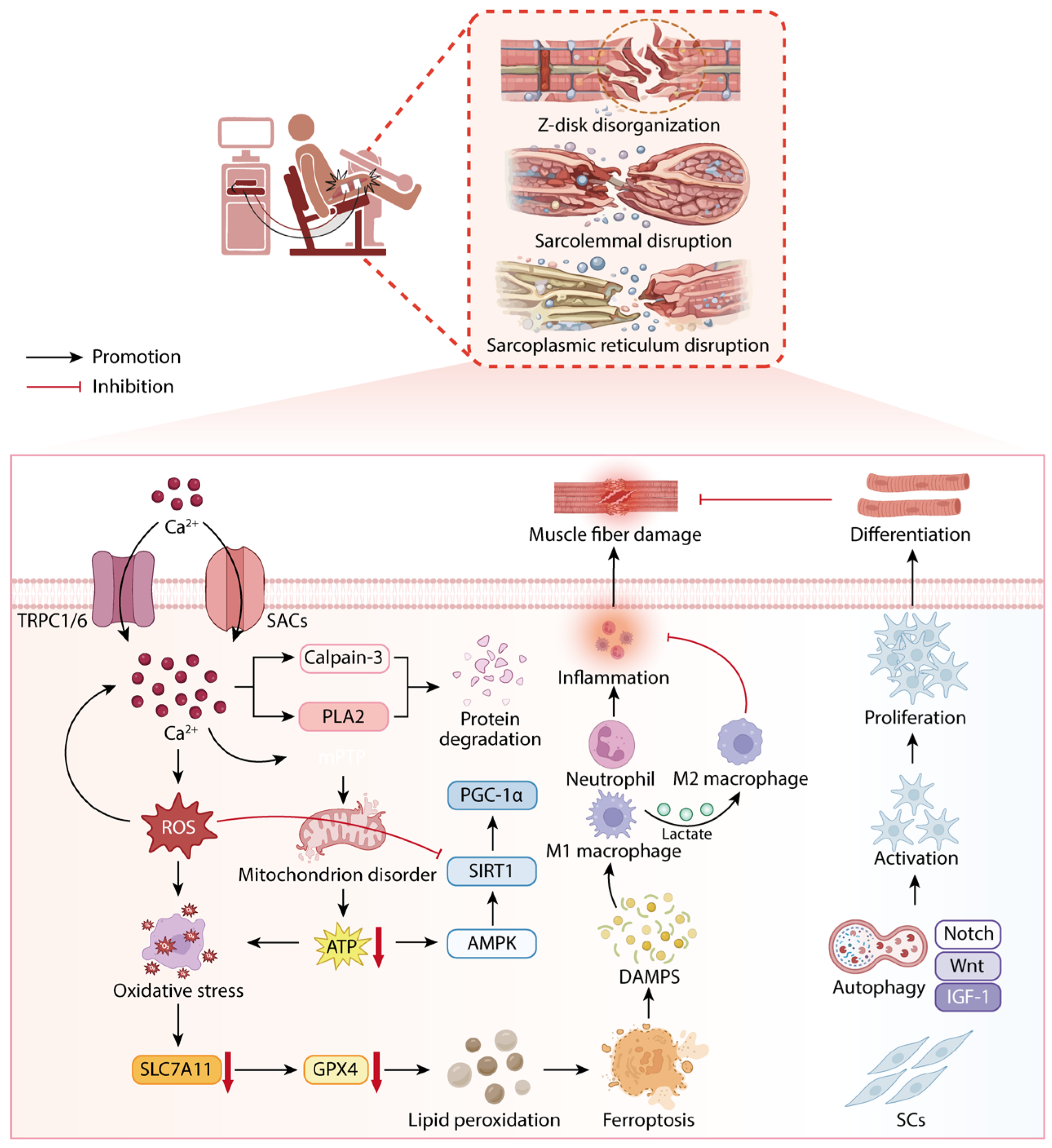
3.1. Initial Structural Disruption and Calcium Homeostasis Dysregulation
3.2. Oxidative Stress and Ferroptosis
3.3. Inflammatory Responses and Immune Cell Polarization
3.4. Energy Metabolic Disturbance and Mitochondrial Dysfunction
3.5. Regenerative Mechanisms and Stem Cell Regulatory Networks
4. Systems Biology Value of Animal Models in EIMD Mechanistic Research
4.1. Commonly Used Model Designs and Experimental Approaches
- (1)
- Eccentric exercise–induced injury models
- (2)
- Transgenic mouse models
- (3)
- Disease–exercise interaction models
- (4)
- Model extensions and limitations
4.2. Key Mechanistic Insights Derived from Animal Models
- (1)
- ALDH2: A mitochondrial quality control regulator and oxidative stress buffer
- (2)
- DDAH1: A signal amplification node for aerobic training-induced protection
- (3)
- Ythdf1: A post-transcriptional “brake” on endurance exercise-induced muscle remodeling
5. Systems-Level Integration of Multi-Omics Data in Elucidating EIMD Mechanisms
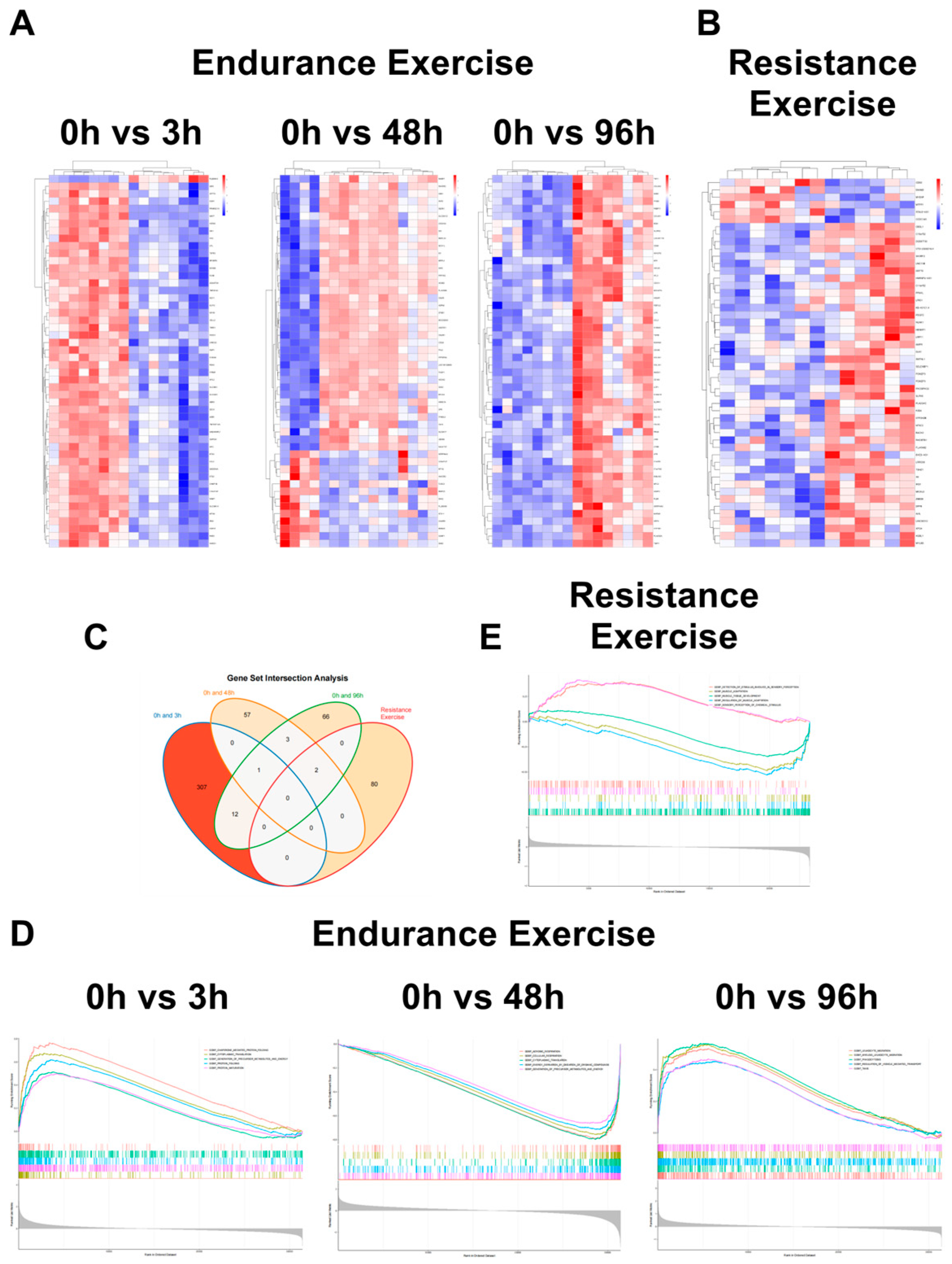
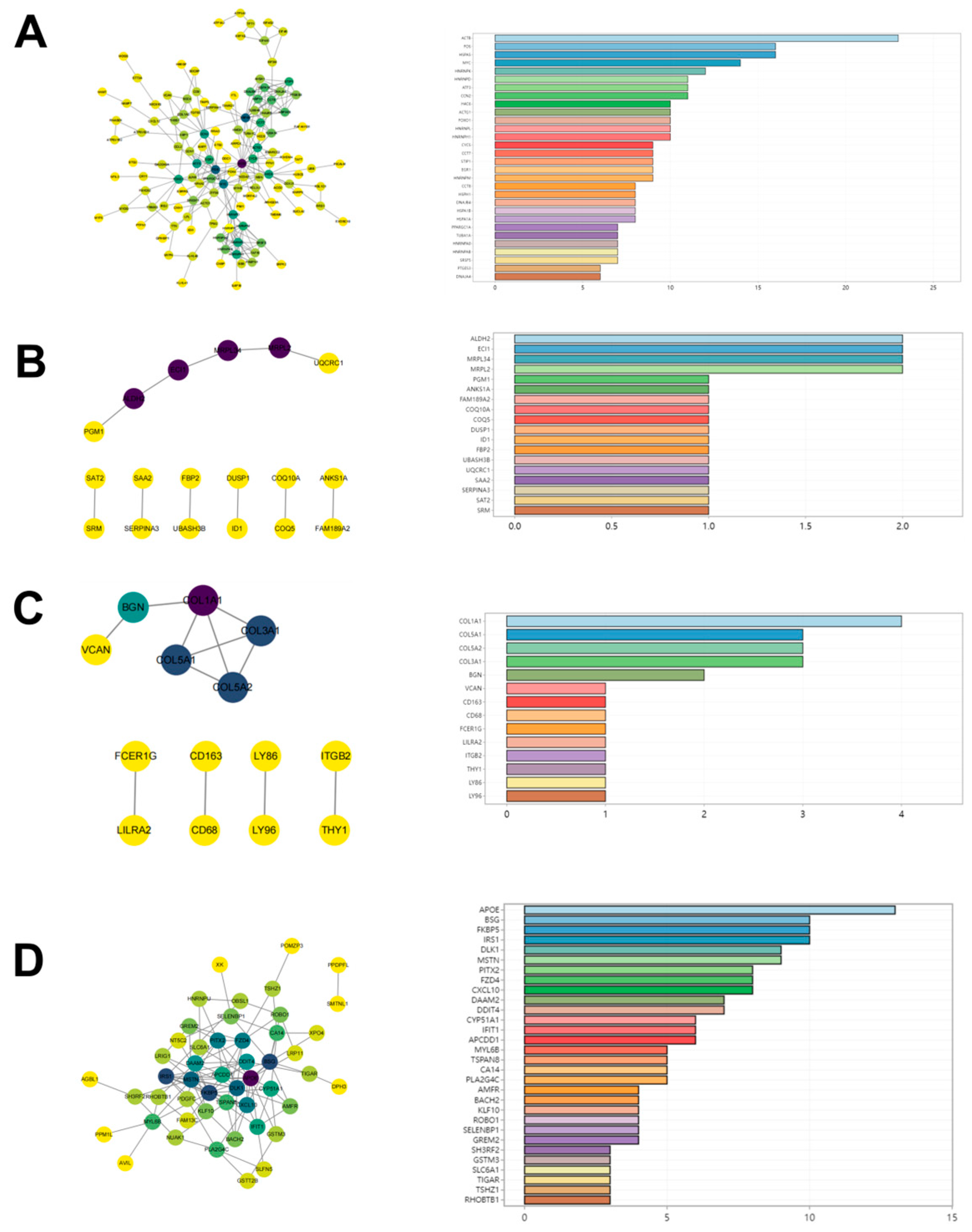
5.1. Genomics and Transcriptomics
5.2. Integration of Proteomics, Metabolomics, and Epigenomics
5.3. Cross-Validation of Multi-Omics Data and Muscle Fiber Ultrastructural Damage
6. Clinical Characteristics, Assessment, and Intervention Strategies of EIMD
6.1. Clinical Manifestations and Functional Assessment
6.2. Advances in Non-Pharmacological, Pharmacological, and Regenerative Interventions
6.3. Advances in Multidimensional Biomarkers and Assessment Technologies

| Intervention | Study Design | Dose/Parameters | Outcome Measures | Key Findings | Time Window | Limitations/Translational Considerations | Reference |
|---|---|---|---|---|---|---|---|
| Fish oil (Omega-3) | RCT | 2–6 g/day EPA + DHA | CK, DOMS, vertical jump (VJ) | The 6 g/day group exhibited the most rapid recovery of vertical jump performance | 48–72 h | Tolerability and safety of high doses require further validation | VanDusseldorp (2020) [133] |
| Curcumin | CS | 180 mg/day curcumin | MVC torque, ROM, muscle soreness, serum CK, plasma IL-8 | Higher MVC torque (3–7 d) and ROM (2–7 d) post-exercise, with reduced muscle soreness and CK activity (3–7 d) | Pre-exercise to 7 d post | Low bioavailability; advanced formulations (e.g., nano-curcumin) recommended | Tanabe (2019) [134] |
| Capsaicin | RCT | 12 mg/day | VJH, PPT, TCM, isokinetic/isometric strength, DOMS | Acute supplementation attenuated DOMS and improved VJH and pressure pain threshold | 48 h | Dose tolerability must be carefully assessed | Rashki, M., et al. (2025) [135] |
| PRO | RCT | 4 × 20 g on exercise day; 20 g/day for 8 subsequent days | Muscle performance, proteasome peptidase activity | Promoted muscle remodeling and preserved function under exercise-induced inflammatory conditions | 2–8 d | Individualized protein requirements should be considered | Draganidis (2017) [136] |
| Vitamin C + E | RCT | Not specified | Peak isometric knee flexor/extensor torque, oxidative stress and inflammatory markers | Reduced oxidative stress and inflammatory responses | 6 weeks | Limited generalizability across populations and protocols | Bailey et al., (2010) [139] |
| Lemon verbena extract (Recoverben®) | RCT | 400 mg/day for 10 days | Muscle strength (isokinetic dynamometry) | Significantly enhanced recovery of muscle strength | Day 10 post-supplementation | Small sample size; requires larger confirmatory trials | Buchwald-Werner, S., et al. (2018) [185] |
| Milk | CS | Post-exercise ingestion | Serum IL-1β, IL-6, IL-10, TNF-α | Differential IL-10 responses; reduced relative IL-1β and IL-10 inflammatory responses within 48 h | Acute post-exercise | Limited population applicability | Fraschetti, E. C., et al. 2022 [146] |
| Blackcurrant nectar | RCT | 32 oz/day | Muscle soreness, blood biomarkers | Significantly reduced muscle damage and inflammation | 8 days | Small sample size | Hutchison, A. T., et al. (2016) [147] |
| Ginseng supplementation | RCT | 20 g/day | Serum CK, IL-6, TNF-α | Significant reductions in IL-6 and CK levels | Immediate—48 h post-exercise; up to 7 d | Small sample size | Jung, H. L., et al. (2011) [142] |
| Spirulina supplementation | CS | 42 mg/kg/day | Serum CK, LDH | Outcomes not clearly reported | 0–72 h | Small sample size | Krokidas, A., et al. (2024) [144] |
| Probiotics | RCT | 6-week intervention | VO2max, exercise performance | No clear effects reported | 6 weeks | Longer intervention periods may be required | Lee, M. C., et al. (2024) [186] |
| Grapes | Not specified | Daily grape consumption | VO2max, work capacity, mood, perceived health, inflammation, pain, arm function | Beneficial effects on post-exercise oxidative stress and inflammation | 6 weeks | Small sample size; dose-response and dietary interactions unclear | O’Connor, P. J., et al. (2013) [148] |
| Coenzyme Q10 | DB | 200 mg/day | Serum CK, LDH, MDA, SOD, GSH-Px | Did not prevent exercise-induced muscle damage or oxidative stress | 4 weeks | Limited statistical power due to small sample size | Okudan, N., et al. (2018) [149] |
| Salidroside | RCT | 300 mg/day | Endurance, strength, recovery indices | Improved endurance performance | 8 weeks | Small sample size | Schwarz, N. A., et al. (2024) [145] |
| Protein supplementation | DB | 25 g whey protein | Serum CK, subjective soreness, fatigue | Reduced muscle damage and soreness | Not specified | Small sample size | Ten Haaf, D. S. M., et al. (2020) [137] |
| Polyphenol-rich berry juice | RCT | Twice daily supplementation | Muscle damage, oxidative stress, inflammatory markers, leg strength | Accelerated recovery and significant improvements in leg strength | Assessed after 6 days of intensive endurance exercise | Small sample size | Valder, S., et al. (2024) [141] |
| Oat protein supplementation | CE | 25 g/day for 7 days | Serum CK, LDH | Significantly reduced muscle damage markers and accelerated recovery | Pre- and post-intervention; 24 h and 48 h post-exercise | Small sample size | Xia, Z., et al. (2018) [138] |
| 810-nm LLLT | RCT | 10, 30, or 50 J (200 mW, 810 nm) | MVC, DOMS, CK, IL-6 | 50 J dose increased MVC and reduced CK | 0–96 h | Standardization of dose and wavelength required | Vanin 2016 [150] |
| CWI | RCT | 10 °C × 10 min | Muscle function, morphology, molecular markers | Attenuated post-exercise satellite cell responses and hypertrophy-related kinase activity | 24–48 h | Long-term use may impair hypertrophy | Roberts 2015 [151] |
| Compression socks | Sim | Worn before and after competition | EIMD indices (not specified) | Effects on EIMD markers remain inconclusive | During and post-competition | Limited efficacy | Bieuzen et al., 2014 [152] |
| CWI | RM | Not specified | Free testosterone, IL-6, TNF-α | Potential attenuation and delay of testosterone and cytokine elevations | Post-resistance exercise | Requires further investigation | Earp, J. E., et al. (2019) [153] |
| Compression garments | RM | Worn for 24 h post-exercise | Ultrasound elastography, pain scores | Reduced muscle stiffness and perceived pain | 24–72 h post-exercise | Relatively small sample size | Heiss, R., et al. (2018) [154] |
| Tight-fit garments | RCT | Worn for 72 h post-marathon | CK, DOMS, sprint time, balance, jump height | Lower CK and DOMS; higher jump performance vs. placebo | 24–48 h | Limited to endurance running | Hill, J. A., et al. (2014) [155] |
| Electroacupuncture | RCT | Not specified | DOMS, muscle damage and oxidative stress markers | Not reported | Not specified | Insufficient methodological detail | Komine, S., et al. (2025) [156] |
| MHVS | CS | Not specified | Muscle damage biomarkers | No significant effects observed | Early post-injury | Small sample size | McLoughlin, T. J., et al. (2004) [157] |
| NM | RCT | Not specified | Pain scores, muscle swelling, ROM | Significantly alleviated DOMS | 24–72 h | Small sample; untrained male participants only | Sozlu, U., et al. (2025) [179] |
| HT | RCT | 45 °C × 90 min/day × 5 days | Peak isokinetic strength, fatigue resistance, VEGF mRNA | Increased VEGF mRNA and Ang-1 protein expression | 1–4 d | Optimization of temperature and frequency needed | Kim (2019) [158] |
| NSAIDs (Ibuprofen) | RCT | 1200 mg/day | Neutrophils, macrophages, CK, myoglobin | No significant effects on inflammation, muscle damage, or soreness | 3–24 h | Not recommended for routine use | Vella (2016) [159] |
| Curcumin | RCT | 50 or 200 mg/day | CRP, muscle strength, body composition, swelling | Significantly reduced pain and DOMS | 7 days | Optimal dose and timing remain unclear | Amalraj et al., (2020) [124] |
| Hydrocodone bitartrate + ibuprofen | RCT | Combination vs. ibuprofen alone | Cognitive tests, motor function, pain | Improved pain and function but impaired cognition | Up to 72 h | Cognitive side effects require caution | Allen et al., (2003) [187] |
| Tadalafil | RCT | 10 mg/day for 3 days pre- and post-EIMD | CK, LDH, IL-6, TAC, TBARS | Reduced CK, LDH, IL-6 and enhanced antioxidant capacity | 0–72 h | Small sample; further trials required | Ceci, R., et al. (2015) [160] |
| Cannabidiol (CBD) oil | RCT | 50 mg/day for 7 days | Serum CK, pain scores, functional tests | Reduced CK, pain, and improved function | 7 days | Small sample; long-term safety unknown | Cochrane-Snyman, K. C., et al. (2021) [161] |
| Histamine receptor antagonists | RCT | Single oral dose ~60 min pre-exercise | Blood flow, inflammation, muscle damage, oxidative stress | Slight reduction in DOMS at 72 h vs. placebo | 0–72 h | Marginal benefits | Ely, M. R., et al. (2017) [162] |
| 17β-Estradiol | RCT | 1 mg | Neutrophils, IL-6, hormones, CK, TAC | Significantly reduced neutrophil infiltration | 4 h post-exercise | Male participants only | MacNeil, L. G., et al. (2011) [163] |
| ARA | RCT | 1.5 g/day for 4 weeks | IL-6, CRP | Transient enhancement of acute inflammatory response | Multiple time points | Small sample size | Markworth, J. F., et al. (2018) [164] |
| MSM | RCT | 3 g/day | Anti-inflammatory gene expression, oxidative stress | Upregulated anti-inflammatory gene expression | 8 weeks | Limited generalizability | McFarlin, B. K., et al. (2025) [165] |
| Diclofenac sodium | RCT | Twice daily for 27 days | CK | Significantly reduced CK levels | 1 week post-treatment | Long-term safety requires evaluation | O’Grady, M., et al. (2000) [166] |
| PEA | RCT | 300–1200 mg/day | Strength recovery, DOMS, CK | No improvement in strength, soreness, or CK | 7 days | Small sample size | Schouten, M., et al. (2024) [167] |
| Yeast β-glucan | DB | 650 mg/day | Inflammatory markers | Significant reductions in inflammatory biomarkers | 4 weeks | Long-term effects unclear | Zabriskie, H. A., et al. (2020) [188] |
| Ginger | RCT | 2 g/day | VAS, limb volume, ROM, strength, CK, PGE2 | Reduced eccentric exercise-induced pain and PGE2 | 24–48 h or 11 days | Optimal dosing unclear | Black, C. D., et al. (2010) [189] |
| EMW | RCT | Daily consumption | Muscle damage biomarkers, functional recovery | Preserved muscle function and reduced CK and CRP | −7 d to +72 h | Athletic applicability requires validation | Borsa, P. A., et al. (2013) [190] |
| Green tea extract | RCT | ~980 mg/day for 4 weeks | Antioxidant capacity, lipid peroxidation, uric acid, GSH-Px | Significantly reduced lipid peroxidation | 4 weeks | Small sample size | Jówko, E., et al. (2015) [140] |
| Greenshell mussel powder | RCT | 400 mg/day for 7 days | CK, CRP, ferritin, VAS, leg strength | Reduced CK and soreness; increased leg strength | 7 days | Limited to untrained healthy males | Lomiwes, D., et al. (2023) [191] |
| Yerba mate | RCT | 1 L/day for 11 days | MVC, MDA, SOD | Reduced MDA and increased SOD | 7 days | Small sample size | Panza, V. P., et al. (2016) [192] |
| Blueberry juice | RCT | Not specified | CK, LDH, CRP, IL-6, TNF-α | Modulated NF-κB-related inflammatory markers | Pre- to post-exercise | Limited representativeness | Lynn, A., et al. (2018) [193] |
| Quercetin | RCT | 1000 mg/day (2–6 weeks) | MVC, VAS, CK, cytokines, IGFs, MDA | Attenuated eccentric exercise-induced muscle damage and inflammation | Pre- and post-exercise | High heterogeneity | O’Fallon, K. S., et al. (2012) [194] |
| Flavanol-rich cocoa beverage | RCT | Not specified | CK, muscle tenderness | Not reported | Acute post-exercise | Insufficient data | Peschek, K., et al. (2013) [195] |
| Jaboticaba | RCT | 250 mg/day × 7 days | Plasma GSH, Mb, DOMS, MVC, MQf, MQm | Increased GSH, reduced DOMS, accelerated recovery of muscle strength and quality | 2–72 h post-exercise | Bioactive compounds remain to be identified | Junior, O., et al. (2025) [143] |
7. Research Advances and Challenges
7.1. Limitations of Existing Treatment Strategies and Intervention Target Gradation
7.2. Future Research Directions
8. Conclusions and Perspectives
Author Contributions
Funding
Institutional Review Board Statement
Informed Consent Statement
Data Availability Statement
Acknowledgments
Conflicts of Interest
References
- Mielgo-Ayuso, J.; Fernández-Lázaro, D. Nutrition and Muscle Recovery. Nutrients 2021, 13, 294. [Google Scholar] [CrossRef]
- Barnes, M.J. Nutrition-Based Strategies to Reduce Exercise-Induced Muscle Damage and Soreness. Nutrients 2023, 15, 2523. [Google Scholar] [CrossRef]
- Aoi, W.; Naito, Y.; Takanami, Y.; Kawai, Y.; Sakuma, K.; Ichikawa, H.; Yoshida, N.; Yoshikawa, T. Oxidative stress and delayed-onset muscle damage after exercise. Free Radic. Biol. Med. 2004, 37, 480–487. [Google Scholar] [CrossRef]
- Armstrong, R.B. Muscle damage and endurance events. Sports Med. 1986, 3, 370–381. [Google Scholar] [CrossRef] [PubMed]
- Naughton, M.; Miller, J.; Slater, G.J. Impact-Induced Muscle Damage and Contact Sports: Etiology, Effects on Neuromuscular Function and Recovery, and the Modulating Effects of Adaptation and Recovery Strategies. Int. J. Sports Physiol. Perform. 2018, 13, 962–969. [Google Scholar] [CrossRef]
- Hody, S.; Croisier, J.-L.; Bury, T.; Rogister, B.; Leprince, P. Eccentric Muscle Contractions: Risks and Benefits. Front. Physiol. 2019, 10, 536. [Google Scholar] [CrossRef]
- Akagi, R.; Tanaka, J.; Shikiba, T.; Takahashi, H. Muscle hardness of the triceps brachii before and after a resistance exercise session: A shear wave ultrasound elastography study. Acta Radiol. 2015, 56, 1487–1493. [Google Scholar] [CrossRef] [PubMed]
- Armstrong, R.B.; Warren, G.L.; Warren, J.A. Mechanisms of exercise-induced muscle fibre injury. Sports Med. 1991, 12, 184–207. [Google Scholar] [CrossRef] [PubMed]
- Faulkner, J.A.; Brooks, S.V.; Opiteck, J.A. Injury to skeletal muscle fibers during contractions: Conditions of occurrence and prevention. Phys. Ther. 1993, 73, 911–921. [Google Scholar] [CrossRef]
- Lieber, R.L.; Friden, J. Muscle damage is not a function of muscle force but active muscle strain. J. Appl. Physiol. 1993, 74, 520–526. [Google Scholar] [CrossRef]
- Crisol, B.M.; Rocha, M.B.; Franco, B.; Morelli, A.P.; Katashima, C.K.; Junior, S.J.; Carneiro, F.S.; Braga, R.R.; Brícola, R.S.; de Azambuja, G.; et al. Excessive exercise elicits poly (ADP-ribose) Polymerase-1 activation and global protein PARylation driving muscle dysfunction and performance impairment. Mol. Metab. 2025, 96, 102135. [Google Scholar] [CrossRef]
- Cheng, A.J.; Jude, B.; Lanner, J.T. Intramuscular mechanisms of overtraining. Redox Biol. 2020, 35, 101480. [Google Scholar] [CrossRef]
- Hayes, E.J.; Stevenson, E.; Sayer, A.A.; Granic, A.; Hurst, C. Recovery from Resistance Exercise in Older Adults: A Systematic Scoping Review. Sports Med.-Open 2023, 9, 51. [Google Scholar] [CrossRef]
- Devantier-Thomas, B.; Deakin, G.B.; Crowther, F.; Schumann, M.; Doma, K. The Impact of Exercise-Induced Muscle Damage on Various Cycling Performance Metrics: A Systematic Review and Meta-Analysis. J. Strength Cond. Res. 2024, 38, 1509–1525. [Google Scholar] [CrossRef]
- Andia, I.; Abate, M. Platelet-rich plasma in the treatment of skeletal muscle injuries. Expert Opin. Biol. Ther. 2015, 15, 987–999. [Google Scholar] [CrossRef] [PubMed]
- Minari, A.L.A.; Oyama, L.M.; Dos Santos, R.V.T. The Secretory Leukocyte Protease Inhibitor mRNA expression is involved with inflammatory control after downhill exercise in the triceps brachii intermediary head in Wistar rats. J. Muscle Res. Cell Motil. 2017, 38, 231–239. [Google Scholar] [CrossRef] [PubMed]
- Owens, D.J.; Twist, C.; Cobley, J.N.; Howatson, G.; Close, G.L. Exercise-induced muscle damage: What is it, what causes it and what are the nutritional solutions? Eur. J. Sport Sci. 2019, 19, 71–85. [Google Scholar] [CrossRef] [PubMed]
- Tang, D.; Hu, J.; Liu, H.; Li, Z.; Shi, Q.; Zhao, G.; Gao, B.; Lou, J.; Yao, C.; Xu, F. Diagnosis and prognosis for exercise-induced muscle injuries: From conventional imaging to emerging point-of-care testing. RSC Adv. 2020, 10, 38847–38860. [Google Scholar] [CrossRef]
- Xu, F.; Zeng, J.; Liu, X.; Lai, J.; Xu, J. Exercise-Induced Muscle Damage and Protein Intake: A Bibliometric and Visual Analysis. Nutrients 2022, 14, 4288. [Google Scholar] [CrossRef]
- Fatouros, I.G.; Jamurtas, A.Z. Insights into the molecular etiology of exercise-induced inflammation: Opportunities for optimizing performance. J. Inflamm. Res. 2016, 9, 175–186. [Google Scholar] [CrossRef]
- Aoi, W.; Naito, Y.; Sakuma, K.; Kuchide, M.; Tokuda, H.; Maoka, T.; Toyokuni, S.; Oka, S.; Yasuhara, M.; Yoshikawa, T. Astaxanthin limits exercise-induced skeletal and cardiac muscle damage in mice. Antioxid. Redox Signal. 2003, 5, 139–144. [Google Scholar] [CrossRef]
- Hiensch, A.E.; Bolam, K.A.; Mijwel, S.; Jeneson, J.A.L.; Huitema, A.D.R.; Kranenburg, O.; van der Wall, E.; Rundqvist, H.; Wengstrom, Y.; May, A.M. Doxorubicin-induced skeletal muscle atrophy: Elucidating the underlying molecular pathways. Acta Physiol. 2020, 229, e13400. [Google Scholar] [CrossRef]
- Abbadessa, G.; Maniscalco, E.; Grasso, L.; Popara, J.; Di Scipio, F.; Franco, F.; Mancardi, D.; Pigozzi, F.; Borrione, P.; Berta, G.N.; et al. Metformin Protects Rat Skeletal Muscle from Physical Exercise-Induced Injury. Biomedicines 2023, 11, 2334. [Google Scholar] [CrossRef]
- Stožer, A.; Vodopivc, P.; Križančić Bombek, L. Pathophysiology of exercise-induced muscle damage and its structural, functional, metabolic, and clinical consequences. Physiol. Res. 2020, 69, 565–598. [Google Scholar] [CrossRef]
- Murach, K.A.; Bagley, J.R. A primer on global molecular responses to exercise in skeletal muscle: Omics in focus. J. Sport Health Sci. 2025, 15, 101029. [Google Scholar] [CrossRef] [PubMed]
- Slavin, M.B.; Khemraj, P.; Hood, D.A. Exercise, mitochondrial dysfunction and inflammasomes in skeletal muscle. Biomed. J. 2024, 47, 100636. [Google Scholar] [CrossRef]
- Chatzinikita, E.; Maridaki, M.; Palikaras, K.; Koutsilieris, M.; Philippou, A. The Role of Mitophagy in Skeletal Muscle Damage and Regeneration. Cells 2023, 12, 716. [Google Scholar] [CrossRef]
- Yang, H.; Li, Y.; Zhu, W.; Feng, X.; Xin, H.; Chen, H.; Zhang, G.; Zuo, M.; Cong, B.; Shi, W. SAT1/ALOX15 Signaling Pathway Is Involved in Ferroptosis After Skeletal Muscle Contusion. Int. J. Mol. Sci. 2024, 25, 11317. [Google Scholar] [CrossRef] [PubMed]
- Yu, L.; Tian, D.; Su, Z.; Zhang, L.; Guo, S.; Zhu, W.; Fang, Y.; Wang, P.; Zhang, N. Gallic acid alleviates exercise-induced muscle damage by inhibiting mitochondrial oxidative stress and ferroptosis. J. Transl. Med. 2025, 23, 30. [Google Scholar] [CrossRef] [PubMed]
- Kaczmarek, A.; Kaczmarek, M.; Ciałowicz, M.; Clemente, F.M.; Wolański, P.; Badicu, G.; Murawska-Ciałowicz, E. The Role of Satellite Cells in Skeletal Muscle Regeneration—The Effect of Exercise and Age. Biology 2021, 10, 1056. [Google Scholar] [CrossRef]
- Qualls, A.E.; Southern, W.M.; Call, J.A. Mitochondria-cytokine crosstalk following skeletal muscle injury and disuse: A mini-review. Am. J. Physiol.-Cell Physiol. 2021, 320, C681–C688. [Google Scholar] [CrossRef]
- Perandini, L.A.; Chimin, P.; da Silva Lutkemeyer, D.; Câmara, N.O.S. Chronic inflammation in skeletal muscle impairs satellite cells function during regeneration: Can physical exercise restore the satellite cell niche? FEBS J. 2018, 285, 1973–1984. [Google Scholar] [CrossRef]
- Schoenfeld, B.J. Does exercise-induced muscle damage play a role in skeletal muscle hypertrophy? J. Strength Cond. Res. 2012, 26, 1441–1453. [Google Scholar] [CrossRef] [PubMed]
- Kirk, E.A.; Castellani, C.A.; Doherty, T.J.; Rice, C.L.; Singh, S.M. Local and systemic transcriptomic responses from acute exercise induced muscle damage of the human knee extensors. Physiol. Genom. 2022, 54, 305–315. [Google Scholar] [CrossRef] [PubMed]
- Huang, X.; Huang, L.; Liu, C. Causal relationship between strenuous exercise and muscle injury: A Mendelian randomization study with dual samples. Eur. J. Appl. Physiol. 2025, 125, 989–999. [Google Scholar] [CrossRef]
- Wang, F.; Wang, X.; Liu, Y.; Zhang, Z. Effects of Exercise-Induced ROS on the Pathophysiological Functions of Skeletal Muscle. Oxidative Med. Cell. Longev. 2021, 2021, 3846122. [Google Scholar] [CrossRef] [PubMed]
- O’connor, E.; Mündel, T.; Barnes, M.J. Nutritional Compounds to Improve Post-Exercise Recovery. Nutrients 2022, 14, 5069. [Google Scholar] [CrossRef]
- Kawanishi, N.; Mizokami, T.; Niihara, H.; Yada, K.; Suzuki, K. Neutrophil Depletion Attenuates Muscle Injury after Exhaustive Exercise. Med. Sci. Sports Exerc. 2016, 48, 1917–1924. [Google Scholar] [CrossRef]
- Wang, C.; Dong, D.; Zhao, N.; Zhao, S.; Hua, J.; Bai, C.; Cui, R.; Zhao, T.; Ji, N.; Li, H.; et al. Hepatocyte-specific C-C motif chemokine ligand 9 signaling promotes liver fibrosis progression in mice. Hepatology 2025. [Google Scholar] [CrossRef]
- Aoi, W.; Naito, Y.; Yoshikawa, T. Role of oxidative stress in impaired insulin signaling associated with exercise-induced muscle damage. Free. Radic. Biol. Med. 2013, 65, 1265–1272. [Google Scholar] [CrossRef]
- Peake, J.M.; Neubauer, O.; Della Gatta, P.A.; Nosaka, K. Muscle damage and inflammation during recovery from exercise. J. Appl. Physiol. 2017, 122, 559–570. [Google Scholar] [CrossRef]
- Huard, J.; Lu, A.; Mu, X.; Guo, P.; Li, Y. Muscle Injuries and Repair: What’s New on the Horizon! Cells Tissues Organs 2016, 202, 227–236. [Google Scholar] [CrossRef]
- Proske, U.; Morgan, D.L. Muscle damage from eccentric exercise: Mechanism, mechanical signs, adaptation and clinical applications. J. Physiol. 2001, 537, 333–345. [Google Scholar] [CrossRef]
- Lieber, R.L.; Woodburn, T.M.; Friden, J. Muscle damage induced by eccentric contractions of 25% strain. J. Appl. Physiol. 1991, 70, 2498–2507. [Google Scholar] [CrossRef]
- Ben Kibler, C.W.; Armstrong, R.B. Initial events in exercise-induced muscular injury. Med. Sci. Sports Exerc. 1990, 22, 429–435. [Google Scholar] [CrossRef]
- Lieber, R.L.; Fridén, J. Mechanisms of muscle injury after eccentric contraction. J. Sci. Med. Sport 1999, 2, 253–265. [Google Scholar] [CrossRef]
- Friden, J.; Lieber, R.L. Structural and mechanical basis of exercise-induced muscle injury. Med. Sci. Sports Exerc. 1992, 24, 521–530. [Google Scholar] [CrossRef]
- Brooks, S.V.; Zerba, E.; Faulkner, J.A. Injury to muscle fibres after single stretches of passive and maximally stimulated muscles in mice. J. Physiol. 1995, 488, 459–469. [Google Scholar] [CrossRef] [PubMed]
- Takekura, H.; Fujinami, N.; Nishizawa, T.; Ogasawara, H.; Kasuga, N. Eccentric exercise-induced morphological changes in the membrane systems involved in excitation—Contraction coupling in rat skeletal muscle. J. Physiol. 2001, 533, 571–583. [Google Scholar] [CrossRef] [PubMed]
- Usher-Smith, J.A.; Fraser, J.A.; Huang, C.L.-H.; Skepper, J.N. Alterations in triad ultrastructure following repetitive stimulation and intracellular changes associated with exercise in amphibian skeletal muscle. J. Muscle Res. Cell Motil. 2007, 28, 19–28. [Google Scholar] [CrossRef] [PubMed][Green Version]
- Takagi, R.; Ogasawara, R.; Takegaki, J.; Tamura, Y.; Tsutaki, A.; Nakazato, K.; Ishii, N. Past injurious exercise attenuates activation of primary calcium-dependent injury pathways in skeletal muscle during subsequent exercise. Physiol. Rep. 2018, 6, e13660. [Google Scholar] [CrossRef]
- Torres-Ruiz, J.; Alcalá-Carmona, B.; Alejandre-Aguilar, R.; Gómez-Martín, D. Inflammatory myopathies and beyond: The dual role of neutrophils in muscle damage and regeneration. Front. Immunol. 2023, 14, 1113214. [Google Scholar] [CrossRef] [PubMed]
- Vandebrouck, C.; Martin, D.; Colson-Van Schoor, M.; Debaix, H.; Gailly, P. Involvement of TRPC in the abnormal calcium influx observed in dystrophic (mdx) mouse skeletal muscle fibers. J. Cell Biol. 2002, 158, 1089–1096. [Google Scholar] [CrossRef] [PubMed]
- Delafenêtre, A.; Chapotte-Baldacci, C.A.; Dorémus, L.; Massouridès, E.; Bernard, M.; Régnacq, M.; Piquereau, J.; Chatelier, A.; Cognard, C.; Pinset, C.; et al. DMD Human iPSC-derived skeletal muscle cells recapitulate selective calcium dysregulation pathways. bioRxiv 2024. bioRxiv:2024.01.20.576393. [Google Scholar] [CrossRef]
- Kozai, D.; Ogawa, N.; Mori, Y. Redox regulation of transient receptor potential channels. Antioxid. Redox Signal. 2014, 21, 971–986. [Google Scholar] [CrossRef] [PubMed]
- Ma, R.; Chaudhari, S.; Li, W. Canonical Transient Receptor Potential 6 Channel: A New Target of Reactive Oxygen Species in Renal Physiology and Pathology. Antioxid. Redox Signal. 2016, 25, 732–748. [Google Scholar] [CrossRef]
- Guo, C.-L. Self-Sustained Regulation or Self-Perpetuating Dysregulation: ROS-dependent HIF-YAP-Notch Signaling as a Double-Edged Sword on Stem Cell Physiology and Tumorigenesis. Front. Cell Dev. Biol. 2022, 10, 862791. [Google Scholar] [CrossRef]
- Aragón-Vela, J.; Fontana, L.; Casuso, R.A.; Plaza-Díaz, J.; Huertas, J.R. Differential inflammatory response of men and women subjected to an acute resistance exercise. Biomed. J. 2021, 44, 338–345. [Google Scholar] [CrossRef] [PubMed]
- Mikami, T.; Yamauchi, H. Preconditioning with whole-body or regional hyperthermia attenuates exercise-induced muscle damage in rodents. Physiol. Res. 2022, 71, 125–134. [Google Scholar] [CrossRef]
- Yang, K.; Xu, J.; Fan, M.; Tu, F.; Wang, X.; Ha, T.; Williams, D.L.; Li, C. Lactate Suppresses Macrophage Pro-Inflammatory Response to LPS Stimulation by Inhibition of YAP and NF-κB Activation via GPR81-Mediated Signaling. Front. Immunol. 2020, 11, 587913. [Google Scholar] [CrossRef]
- Wang, L.; He, H.-W.; Xing, Z.-Q.; Tang, B.; Zhou, X. Lactate induces alternative polarization (M2) of macrophages under lipopolysaccharide stimulation in vitro through G-protein coupled receptor 81. Chin. Med. J. 2020, 133, 1761–1763. [Google Scholar] [CrossRef]
- Choi, E.J.; Jang, Y.Y.; Choi, E.J.; Oh, C.J. The Role of Lactate in Immune Regulation: A Metabolic Rheostat via Transporters, Receptors, and Epigenetic Modifiers. Cells 2025, 14, 1096. [Google Scholar] [CrossRef] [PubMed]
- Wang, X.; Wei, Z.; Gu, M.; Zhu, L.; Hai, C.; Di, A.; Wu, D.; Bai, C.; Su, G.; Liu, X.; et al. Loss of Myostatin Alters Mitochondrial Oxidative Phosphorylation, TCA Cycle Activity, and ATP Production in Skeletal Muscle. Int. J. Mol. Sci. 2022, 23, 15707. [Google Scholar] [CrossRef] [PubMed]
- Liu, X.; Zhang, N.; Sun, B.; Wang, B. Time-specific effects of acute eccentric exercise on myostatin, follistatin and decorin in the circulation and skeletal muscle in rats. Physiol. Res. 2022, 71, 783–790. [Google Scholar] [CrossRef]
- Song, M.; Chen, F.F.; Li, Y.H.; Zhang, L.; Wang, F.; Qin, R.; Wang, Z.; Zhong, M.; Tang, M.; Zhang, W.; et al. Trimetazidine restores the positive adaptation to exercise training by mitigating statin-induced skeletal muscle injury. J. Cachex-Sarcopenia Muscle 2017, 9, 106–118. [Google Scholar] [CrossRef]
- Huey, K.A.; Meador, B.M. Contribution of IL-6 to the Hsp72, Hsp25, and αβ-crystallin responses to inflammation and exercise training in mouse skeletal and cardiac muscle. J. Appl. Physiol. 2008, 105, 1830–1836. [Google Scholar] [CrossRef]
- Abou Sawan, S.; Hodson, N.; Babits, P.; Malowany, J.M.; Kumbhare, D.; Moore, D.R. Satellite cell and myonuclear accretion is related to training-induced skeletal muscle fiber hypertrophy in young males and females. J. Appl. Physiol. 2021, 131, 871–880. [Google Scholar] [CrossRef]
- Abreu, P.; Kowaltowski, A.J. Satellite cell self-renewal in endurance exercise is mediated by inhibition of mitochondrial oxygen consumption. J. Cachexia-Sarcopenia Muscle 2020, 11, 1661–1676. [Google Scholar] [CrossRef]
- Alcazar, C.A.; Hu, C.; Rando, T.A.; Huang, N.F.; Nakayama, K.H. Transplantation of insulin-like growth factor-1 laden scaffolds combined with exercise promotes neuroregeneration and angiogenesis in a preclinical muscle injury model. Biomater. Sci. 2020, 8, 5376–5389. [Google Scholar] [CrossRef] [PubMed]
- Von Maltzahn, J.; Jones, A.E.; Parks, R.J.; Rudnicki, M.A. Pax7 is critical for the normal function of satellite cells in adult skeletal muscle. Proc. Natl. Acad. Sci. USA 2013, 110, 16474–16479. [Google Scholar] [CrossRef]
- Fry, C.S.; Lee, J.D.; Mula, J.; Kirby, T.J.; Jackson, J.R.; Liu, F.; Yang, L.; Mendias, C.L.; Dupont-Versteegden, E.E.; McCarthy, J.J.; et al. Inducible depletion of satellite cells in adult, sedentary mice impairs muscle regenerative capacity without affecting sarcopenia. Nat. Med. 2015, 21, 76–80. [Google Scholar] [CrossRef]
- Campanario, S.; Ramírez-Pardo, I.; Hong, X.; Isern, J.; Muñoz-Cánoves, P. Assessing Autophagy in Muscle Stem Cells. Front. Cell Dev. Biol. 2021, 8, 620409. [Google Scholar] [CrossRef]
- Nichenko, A.S.; Southern, W.M.; Qualls, A.; Spencer, C.C.; Call, J.A. Autophagy Related Ulk1 Is Necessary for the Recovery of Mitochondrial Function After Skeletal Muscle Injury. FASEB J. 2017, 31, 1082–1086. [Google Scholar] [CrossRef]
- Call, J.A.; Wilson, R.J.; Laker, R.C.; Zhang, M.; Kundu, M.; Yan, Z. Ulk1-mediated autophagy plays an essential role in mitochondrial remodeling and functional regeneration of skeletal muscle. Am. J. Physiol.-Cell Physiol. 2017, 312, C724–C732. [Google Scholar] [CrossRef]
- Nichenko, A.S.; Southern, W.M.; Qualls, A.E.; Flemington, A.B.; Mercer, G.H.; Yin, A.; Yin, H.; Call, J.A. Mitochondrial dysfunction and autophagy responses to skeletal muscle stress. bioRxiv 2019. bioRxiv:597476. [Google Scholar] [CrossRef]
- Pilotto, A.M.; Turner, D.C.; Mazzolari, R.; Crea, E.; Brocca, L.; Pellegrino, M.A.; Miotti, D.; Bottinelli, R.; Sharples, A.P.; Porcelli, S. Human skeletal muscle possesses an epigenetic memory of high-intensity interval training. Am. J. Physiol.-Cell Physiol. 2025, 328, C258–C272. [Google Scholar] [CrossRef]
- Dilworth, F.; Blais, A. Epigenetic regulation of satellite cell activation during muscle regeneration. Stem Cell Res. Ther. 2011, 2, 18. [Google Scholar] [CrossRef]
- Relaix, F.; Zammit, P.S. Satellite cells are essential for skeletal muscle regeneration: The cell on the edge returns centre stage. Development 2012, 139, 2845–2856. [Google Scholar] [CrossRef]
- Sharples, A.P.; Turner, D.C. Skeletal muscle memory. Am. J. Physiol.-Cell Physiol. 2023, 324, C1274–C1294. [Google Scholar] [CrossRef]
- Beiter, T.; Nieß, A.M.; Moser, D. Transcriptional memory in skeletal muscle. Don’t forget (to) exercise. J. Cell. Physiol. 2020, 235, 5476–5489. [Google Scholar] [CrossRef] [PubMed]
- Traversa, C. Skeletal Muscle Memory: An Update from the Antidoping Perspective. Drug Test. Anal. 2025, 17, 1063–1070. [Google Scholar] [CrossRef] [PubMed]
- Ge, H.; Wang, Z.; Yang, Z.; Shi, J.; Lu, J.; Wang, Y.; Li, Z.; Du, G.; Shen, Z.; Zhan, H. Exploring the optimal impact force for chronic skeletal muscle injury induced by drop-mass technique in rats. Front. Physiol. 2023, 14, 1241187. [Google Scholar] [CrossRef]
- Fu, C.; Xia, Y.; Meng, F.; Li, F.; Liu, Q.; Zhao, H.; Pan, S. MRI Quantitative Analysis of Eccentric Exercise-induced Skeletal Muscle Injury in Rats. Acad. Radiol. 2020, 27, e72–e79. [Google Scholar] [CrossRef]
- Zhang, Q.; Zheng, J.; Qiu, J.; Wu, X.; Xu, Y.; Shen, W.; Sun, M. ALDH2 restores exhaustive exercise-induced mitochondrial dysfunction in skeletal muscle. Biochem. Biophys. Res. Commun. 2017, 485, 753–760. [Google Scholar] [CrossRef]
- Feng, F.; Luo, K.; Yuan, X.; Lan, T.; Wang, S.; Xu, X.; Lu, Z. Aerobic Exercise Protects against Cardiotoxin-Induced Skeletal Muscle Injury in a DDAH1-Dependent Manner. Antioxidants 2024, 13, 1069. [Google Scholar] [CrossRef] [PubMed]
- Wang, B.Y.-H.; Hsiao, A.W.-T.; Wong, N.; Chen, Y.-F.; Lee, C.-W.; Lee, W.Y.W. Is dexamethasone-induced muscle atrophy an alternative model for naturally aged sarcopenia model? J. Orthop. Transl. 2023, 39, 12–20. [Google Scholar] [CrossRef] [PubMed]
- Khodabukus, A. Tissue-Engineered Skeletal Muscle Models to Study Muscle Function, Plasticity, and Disease. Front. Physiol. 2021, 12, 619710. [Google Scholar] [CrossRef]
- Poteracki, J.M.; Moschouris, K.; Yoseph, B.P.; Zhou, Y.; Soker, S.; Criswell, T.L. Development of a Rat Model of Fasciotomy Treatment for Compartment Syndrome. Tissue Eng. Part C Methods 2022, 28, 51–60. [Google Scholar] [CrossRef]
- Mehmood, H.; Kasher, P.R.; Barrett-Jolley, R.; Walmsley, G.L. Aligning with the 3Rs: Alternative models for research into muscle development and inherited myopathies. BMC Vet. Res. 2024, 20, 477. [Google Scholar] [CrossRef] [PubMed]
- Huang, X.; Xu, C.; Zhang, J.; Wu, W.; Wang, Z.; Pang, Q.; Liu, Z.; Liu, B. Endurance exercise remodels skeletal muscle by suppressing Ythdf1-mediated myostatin expression. Cell Death Dis. 2025, 16, 96. [Google Scholar] [CrossRef]
- Schmitt, A.; Herzog, P.; Röchner, F.; Brändle, A.L.; Fragasso, A.; Munz, B. Skeletal muscle effects of two different 10-week exercise regimens, voluntary wheel running, and forced treadmill running, in mice: A pilot study. Physiol. Rep. 2020, 8, e14609. [Google Scholar] [CrossRef]
- Zhao, Q.; Liu, P.; Zhang, X. Re-examining the mechanism of eccentric exercise-induced skeletal muscle damage from the role of the third filament, titin (Review). Biomed. Rep. 2024, 20, 14. [Google Scholar] [CrossRef]
- Wei, W.; Raun, S.H.; Long, J.Z. Molecular Insights from Multiomics Studies of Physical Activity. Diabetes 2024, 73, 162–168. [Google Scholar] [CrossRef]
- Baumert, P.; Cocks, M.; Strauss, J.A.; Shepherd, S.O.; Drust, B.; Lake, M.J.; Stewart, C.E.; Erskine, R.M. Polygenic mechanisms underpinning the response to exercise-induced muscle damage in humans: In vivo and in vitro evidence. J. Cell. Physiol. 2022, 237, 2862–2876. [Google Scholar] [CrossRef]
- Biswas, N.; Kumar, K.; Bose, S.; Bera, R.; Chakrabarti, S. Analysis of Pan-omics Data in Human Interactome Network (APODHIN). Front. Genet. 2020, 11, 589231. [Google Scholar] [CrossRef] [PubMed]
- Chen, H.; Yu, Y.; Yang, M.; Huang, H.; Ma, S.; Hu, J.; Xi, Z.; Guo, H.; Yao, G.; Yang, L.; et al. YTHDF1 promotes breast cancer progression by facilitating FOXM1 translation in an m6A-dependent manner. Cell Biosci. 2022, 12, 19. [Google Scholar] [CrossRef] [PubMed]
- Li, P.; Shi, Y.; Gao, D.; Xu, H.; Zou, Y.; Wang, Z.; Li, W. ELK1-mediated YTHDF1 drives prostate cancer progression by facilitating the translation of Polo-like kinase 1 in an m6A dependent manner. Int. J. Biol. Sci. 2022, 18, 6145–6162. [Google Scholar] [CrossRef]
- McKellar, D.W.; Walter, L.D.; Song, L.T.; Mantri, M.; Wang, M.F.Z.; De Vlaminck, I.; Cosgrove, B.D. Large-scale integration of single-cell transcriptomic data captures transitional progenitor states in mouse skeletal muscle regeneration. Commun. Biol. 2021, 4, 1280. [Google Scholar] [CrossRef]
- McKellar, D.W.; Walter, L.D.; Song, L.T.; Mantri, M.; Wang, M.F.; De Vlaminck, I.; Cosgrove, B.D. Strength in numbers: Large-scale integration of single-cell transcriptomic data reveals rare, transient muscle progenitor cell states in muscle regeneration. bioRxiv 2020. bioRxiv:2020.12.01.407460. [Google Scholar] [CrossRef]
- Murton, A.J.; Billeter, R.; Stephens, F.B.; Etages, S.G.D.; Graber, F.; Hill, R.J.; Marimuthu, K.; Greenhaff, P.L. Transient transcriptional events in human skeletal muscle at the outset of concentric resistance exercise training. J. Appl. Physiol. 2014, 116, 113–125. [Google Scholar] [CrossRef]
- Neubauer, O.; Sabapathy, S.; Lazarus, R.; Jowett, J.B.M.; Desbrow, B.; Peake, J.M.; Cameron-Smith, D.; Haseler, L.J.; Wagner, K.-H.; Bulmer, A.C. Transcriptome analysis of neutrophils after endurance exercise reveals novel signaling mechanisms in the immune response to physiological stress. J. Appl. Physiol. 2013, 114, 1677–1688. [Google Scholar] [CrossRef]
- Hunt, L.C.; Graca, F.A.; Pagala, V.; Wang, Y.-D.; Li, Y.; Yuan, Z.-F.; Fan, Y.; Labelle, M.; Peng, J.; Demontis, F. Integrated genomic and proteomic analyses identify stimulus-dependent molecular changes associated with distinct modes of skeletal muscle atrophy. Cell Rep. 2021, 37, 109971. [Google Scholar] [CrossRef]
- Burniston, J.G.; Hoffman, E.P. Proteomic responses of skeletal and cardiac muscle to exercise. Expert Rev. Proteom. 2011, 8, 361–377. [Google Scholar] [CrossRef]
- Li, Q.; Lin, J.; Luo, S.; Schmitz-Abe, K.; Agrawal, R.; Meng, M.; Moghadaszadeh, B.; Beggs, A.H.; Liu, X.; Perrella, M.A.; et al. Integrated multi-omics approach reveals the role of SPEG in skeletal muscle biology including its relationship with myospryn complex. bioRxiv 2023. bioRxiv:2023.04.24.538136. [Google Scholar] [CrossRef]
- Ye, X.; Liu, R.; Qiao, Z.; Chai, X.; Wang, Y. Integrative profiling of metabolome and transcriptome of skeletal muscle after acute exercise intervention in mice. Front. Physiol. 2023, 14, 1273342. [Google Scholar] [CrossRef]
- Kim, J.; Coradetti, S.T.; Kim, Y.-M.; Gao, Y.; Yaegashi, J.; Zucker, J.D.; Munoz, N.; Zink, E.M.; Burnum-Johnson, K.E.; Baker, S.E.; et al. Multi-Omics Driven Metabolic Network Reconstruction and Analysis of Lignocellulosic Carbon Utilization in Rhodosporidium toruloides. Front. Bioeng. Biotechnol. 2021, 8, 612832. [Google Scholar] [CrossRef]
- Wanichthanarak, K.; Fahrmann, J.F.; Grapov, D. Genomic, Proteomic, and Metabolomic Data Integration Strategies. Biomark. Insights 2015, 10, BMI-S29511. [Google Scholar] [CrossRef] [PubMed]
- Zhang, N.; Ding, C.; Zuo, Y.; Peng, Y.; Zuo, L. N6-methyladenosine and Neurological Diseases. Mol. Neurobiol. 2022, 59, 1925–1937. [Google Scholar] [CrossRef] [PubMed]
- Farshbaf, A.; Zare, R.; Mohajertehran, F.; Mohtasham, N. New diagnostic molecular markers and biomarkers in odontogenic tumors. Mol. Biol. Rep. 2021, 48, 3617–3628. [Google Scholar] [CrossRef] [PubMed]
- Zheng, X.; Liu, X.; Guo, Y.; Lv, Y.; Lin, C.; Wang, D.; Wang, S.; Liu, Y.; Hu, X. Physical exercise and epigenetic modifications in skeletal muscle, brain, and heart. Epigenetics Chromatin 2025, 18, 12. [Google Scholar] [CrossRef]
- Jacques, M.; Hiam, D.; Craig, J.; Barrès, R.; Eynon, N.; Voisin, S. Epigenetic changes in healthy human skeletal muscle following exercise– a systematic review. Epigenetics 2019, 14, 633–648. [Google Scholar] [CrossRef]
- Lindholm, M.E.; Marabita, F.; Gomez-Cabrero, D.; Rundqvist, H.; Ekström, T.J.; Tegnér, J.; Sundberg, C.J. An integrative analysis reveals coordinated reprogramming of the epigenome and the transcriptome in human skeletal muscle after training. Epigenetics 2014, 9, 1557–1569. [Google Scholar] [CrossRef]
- Gensous, N.; Bacalini, M.G.; Franceschi, C.; Meskers, C.G.M.; Maier, A.B.; Garagnani, P. Age-Related DNA Methylation Changes: Potential Impact on Skeletal Muscle Aging in Humans. Front. Physiol. 2019, 10, 996. [Google Scholar] [CrossRef]
- Sexton, C.L.; Godwin, J.S.; McIntosh, M.C.; Ruple, B.A.; Osburn, S.C.; Hollingsworth, B.R.; Kontos, N.J.; Agostinelli, P.J.; Kavazis, A.N.; Ziegenfuss, T.N.; et al. Skeletal Muscle DNA Methylation and mRNA Responses to a Bout of Higher versus Lower Load Resistance Exercise in Previously Trained Men. Cells 2023, 12, 263. [Google Scholar] [CrossRef] [PubMed]
- Kanzleiter, T.; Jähnert, M.; Schulze, G.; Selbig, J.; Hallahan, N.; Schwenk, R.W.; Schürmann, A. Exercise training alters DNA methylation patterns in genes related to muscle growth and differentiation in mice. Am. J. Physiol. Metab. 2015, 308, E912–E920. [Google Scholar] [CrossRef] [PubMed]
- Maasar, M.-F.; Turner, D.C.; Gorski, P.P.; Seaborne, R.A.; Strauss, J.A.; Shepherd, S.O.; Cocks, M.; Pillon, N.J.; Zierath, J.R.; Hulton, A.T.; et al. The Comparative Methylome and Transcriptome After Change of Direction Compared to Straight Line Running Exercise in Human Skeletal Muscle. Front. Physiol. 2021, 12, 619447. [Google Scholar] [CrossRef]
- Maasar, M.F.; Turner, D.C.; Gorski, P.P.; Seaborne, R.A.; Strauss, J.A.; Shepherd, S.O.; Cocks, M.; Pillon, N.J.; Zierath, J.R.; Hulton, A.T.; et al. The methylome and comparative transcriptome after high intensity sprint exercise in human skeletal muscle. bioRxiv 2020. bioRxiv:2020.09.11.292805. [Google Scholar] [CrossRef]
- Malm, C.; Yu, J.-G. Exercise-induced muscle damage and inflammation: Re-evaluation by proteomics. Histochem. Cell Biol. 2012, 138, 89–99. [Google Scholar] [CrossRef]
- Murach, K.A.; Peterson, C.A. A muscle exercise research revolution powered by -omics at single cell and nucleus resolution. BMC Biol. 2023, 21, 298. [Google Scholar] [CrossRef] [PubMed]
- Alemany, J.A.; Delgado-Díaz, D.C.; Mathews, H.; Davis, J.M.; Kostek, M.C. Comparison of acute responses to isotonic or isokinetic eccentric muscle action: Differential outcomes in skeletal muscle damage and implications for rehabilitation. Int. J. Sports Med. 2014, 35, 1–7. [Google Scholar] [CrossRef]
- Altinoz, E.; Ozmen, T.; Oner, Z.; Elbe, H.; Erdemli, M.E.; Bag, H.G. Effect of crocin on oxidative stress in recovery from single bout of swimming exercise in rats. Gen. Physiol. Biophys. 2016, 35, 87–94. [Google Scholar] [CrossRef]
- Adamczyk, J.G.; Krasowska, I.; Boguszewski, D.; Reaburn, P. The use of thermal imaging to assess the effectiveness of ice massage and cold-water immersion as methods for supporting post-exercise recovery. J. Therm. Biol. 2016, 60, 20–25. [Google Scholar] [CrossRef] [PubMed]
- Amorim, M.Z.; Machado, M.; Hackney, A.C.; de Oliveira, W.; Luz, C.P.N.; Pereira, R. Sex differences in serum CK activity but not in glomerular filtration rate after resistance exercise: Is there a sex dependent renal adaptative response? J. Physiol. Sci. 2014, 64, 31–36. [Google Scholar] [CrossRef] [PubMed]
- Amalraj, A.; Divya, C.; Gopi, S. The Effects of Bioavailable Curcumin (Cureit) on Delayed Onset Muscle Soreness Induced By Eccentric Continuous Exercise: A Randomized, Placebo-Controlled, Double-Blind Clinical Study. J. Med. Food 2020, 23, 545–553. [Google Scholar] [CrossRef] [PubMed]
- Almeida, C.F.; Vainzof, M. Skeletal Muscle Injury by Electroporation: A Model to Study Degeneration/Regeneration Pathways in Muscle. Methods Mol. Biol. 2020, 2063, 157–169. [Google Scholar] [CrossRef]
- Aboodarda, S.J.; George, J.; Mokhtar, A.H.; Thompson, M. Muscle strength and damage following two modes of variable resistance training. J. Sports Sci. Med. 2011, 10, 635–642. [Google Scholar]
- Alvarez, J.T.; Gerez, L.F.; Araromi, O.A.; Hunter, J.G.; Choe, D.K.; Payne, C.J.; Wood, R.J.; Walsh, C.J. Toward Soft Wearable Strain Sensors for Muscle Activity Monitoring. IEEE Trans. Neural Syst. Rehabil. Eng. 2022, 30, 2198–2206. [Google Scholar] [CrossRef]
- Cebrián-Ponce, Á.; Irurtia, A.; Carrasco-Marginet, M.; Saco-Ledo, G.; Girabent-Farrés, M.; Castizo-Olier, J. Electrical Impedance Myography in Health and Physical Exercise: A Systematic Review and Future Perspectives. Front. Physiol. 2021, 12, 740877. [Google Scholar] [CrossRef]
- Fernandes, J.F.T.; Wilson, L.J.; Dingley, A.F.; Hearn, A.N.; Johnson, K.O.; Hicks, K.M.; Twist, C.; Hayes, L.D. Advancing Age Is Not Associated with Greater Exercise-Induced Muscle Damage: A Systematic Review, Meta-Analysis, and Meta-Regression. J. Aging Phys. Act. 2025, 33, 606–624. [Google Scholar] [CrossRef]
- Boulinguiez, A.; Bouragba, D.; Crisol, B.; Bigot, A.; Butler-Browne, G.; Trollet, C. Effects of physical exercise in muscular dystrophies. Med. Sci. 2024, 40, 17–21. [Google Scholar] [CrossRef]
- Kjeldsen, E.W.; Frikke-Schmidt, R. Causal cardiovascular risk factors for dementia: Insights from observational and genetic studies. Cardiovasc. Res. 2025, 121, 537–549. [Google Scholar] [CrossRef]
- Pellarin, M.; Youmbi, C.T.; Lotchuang, J.; Tejpal, T.; Thangathurai, G.; Khan, A.; Cohen, D.; Simunovic, N.; Duong, A.; Ayeni, O.R. From Protocol to Definitive Study—The State of Randomized Controlled Trial Evidence in Sports Medicine Research: A Systematic Review and Survey Study. Clin. J. Sport Med. 2023, 33, e44–e70. [Google Scholar] [CrossRef] [PubMed]
- VanDusseldorp, T.A.; Escobar, K.A.; Johnson, K.E.; Stratton, M.T.; Moriarty, T.; Kerksick, C.M.; Mangine, G.T.; Holmes, A.J.; Lee, M.; Endito, M.R.; et al. Impact of Varying Dosages of Fish Oil on Recovery and Soreness Following Eccentric Exercise. Nutrients 2020, 12, 2246. [Google Scholar] [CrossRef]
- Tanabe, Y.; Chino, K.; Ohnishi, T.; Ozawa, H.; Sagayama, H.; Maeda, S.; Takahashi, H. Effects of oral curcumin ingested before or after eccentric exercise on markers of muscle damage and inflammation. Scand. J. Med. Sci. Sports 2019, 29, 524–534. [Google Scholar] [CrossRef]
- Rashki, M.; Hemmatinafar, M.; Safari, K.; Imanian, B.; Rezaei, R.; Jahromi, M.K.; Suzuki, K. Capsaicin’s Role in Mitigating Muscle Soreness and Enhancing Futsal Players’ Recovery After Exercise-Induced Muscle Damage. Nutrients 2025, 17, 813. [Google Scholar] [CrossRef]
- Draganidis, D.; Chondrogianni, N.; Chatzinikolaou, A.; Terzis, G.; Karagounis, L.G.; Sovatzidis, A.; Avloniti, A.; Lefaki, M.; Protopapa, M.; Deli, C.K.; et al. Protein ingestion preserves proteasome activity during intense aseptic inflammation and facilitates skeletal muscle recovery in humans. Br. J. Nutr. 2017, 118, 189–200. [Google Scholar] [CrossRef]
- Haaf, D.S.M.; Bongers, C.C.W.G.; Hulshof, H.G.; Eijsvogels, T.M.H.; Hopman, M.T.E. The Impact of Protein Supplementation on Exercise-Induced Muscle Damage, Soreness and Fatigue Following Prolonged Walking Exercise in Vital Older Adults: A Randomized Double-Blind Placebo-Controlled Trial. Nutrients 2020, 12, 1806. [Google Scholar] [CrossRef]
- Xia, Z.; Cholewa, J.M.; Dardevet, D.; Huang, T.; Zhao, Y.; Shang, H.; Yang, Y.; Ding, X.; Zhang, C.; Wang, H.; et al. Effects of oat protein supplementation on skeletal muscle damage, inflammation and performance recovery following downhill running in untrained collegiate men. Food Funct. 2018, 9, 4720–4729. [Google Scholar] [CrossRef]
- Bailey, D.M.; Williams, C.; Betts, J.A.; Thompson, D.; Hurst, T.L. Oxidative stress, inflammation and recovery of muscle function after damaging exercise: Effect of 6-week mixed antioxidant supplementation. Eur. J. Appl. Physiol. 2011, 111, 925–936. [Google Scholar] [CrossRef] [PubMed]
- Jówko, E.; Długołęcka, B.; Makaruk, B.; Cieśliński, I. The effect of green tea extract supplementation on exercise-induced oxidative stress parameters in male sprinters. Eur. J. Nutr. 2015, 54, 783–791. [Google Scholar] [CrossRef] [PubMed]
- Valder, S.; Habersatter, E.; Kostov, T.; Quenzer, S.; Herzig, L.; von Bernuth, J.; Matits, L.; Herdegen, V.; Diel, P.; Isenmann, E. The Influence of a Polyphenol-Rich Red Berry Fruit Juice on Recovery Process and Leg Strength Capacity after Six Days of Intensive Endurance Exercise in Recreational Endurance Athletes. Nutrients 2024, 16, 1428. [Google Scholar] [CrossRef]
- Jung, H.L.; Kwak, H.E.; Kim, S.S.; Kim, Y.C.; Lee, C.D.; Byurn, H.K.; Kang, H.Y. Effects of Panax ginseng supplementation on muscle damage and inflammation after uphill treadmill running in humans. Am. J. Chin. Med. 2011, 39, 441–450. [Google Scholar] [CrossRef]
- Junior, O.J.F.R.; Veiga, N.S.; Alvares, T.S. Jaboticaba berry (Myrciaria jaboticaba) consumption improves plasma GSH levels and accelerates muscle recovery following exercise-induced muscle damage: A randomized, placebo-controlled trial. Eur. J. Nutr. 2025, 64, 251. [Google Scholar] [CrossRef] [PubMed]
- Krokidas, A.; Gakis, A.G.; Aktypi, O.; Antonopoulou, S.; Nomikos, T. Effect of Spirulina Nigrita® Supplementation on Indices of Exercise-Induced Muscle Damage after Eccentric Protocol of Upper Limbs in Apparently Healthy Volunteers. Nutrients 2024, 16, 1651. [Google Scholar] [CrossRef]
- Schwarz, N.A.; Stratton, M.T.; Colquhoun, R.J.; Manganti, A.M.; Sherbourne, M.; Mourey, F.; White, C.C.; Day, H.; Dusseault, M.C.; Hudson, G.M.; et al. Salidroside and exercise performance in healthy active young adults—An exploratory, randomized, double-blind, placebo-controlled study. J. Int. Soc. Sports Nutr. 2024, 21, 2433744. [Google Scholar] [CrossRef]
- Fraschetti, E.C.; Skelly, L.E.; Prowting, J.L.; Abdul-Sater, A.A.; Josse, A.R. The Acute Effects of Milk Consumption on Systemic Inflammation after Combined Resistance and Plyometric Exercise in Young Adult Females. Nutrients 2022, 14, 4532. [Google Scholar] [CrossRef]
- Hutchison, A.T.; Flieller, E.B.; Dillon, K.J.; Leverett, B.D. Black Currant Nectar Reduces Muscle Damage and Inflammation Following a Bout of High-Intensity Eccentric Contractions. J. Diet. Suppl. 2016, 13, 1–15. [Google Scholar] [CrossRef]
- O’Connor, P.J.; Caravalho, A.L.; Freese, E.C.; Cureton, K.J. Grape consumption’s effects on fitness, muscle injury, mood, and perceived health. Int. J. Sport Nutr. Exerc. Metab. 2013, 23, 57–64. [Google Scholar] [CrossRef]
- Okudan, N.; Belviranli, M.; Torlak, S. Coenzyme Q10 does not prevent exercise-induced muscle damage and oxidative stress in sedentary men. J. Sports Med. Phys. Fit. 2018, 58, 889–894. [Google Scholar] [CrossRef]
- Vanin, A.A.; De Marchi, T.; Tomazoni, S.S.; Tairova, O.; Casalechi, H.L.; Carvalho, P.D.T.C.D.; Bjordal, J.M.; Leal-Junior, E.C. Pre-Exercise Infrared Low-Level Laser Therapy (810 nm) in Skeletal Muscle Performance and Postexercise Recovery in Humans, What Is the Optimal Dose? A Randomized, Double-Blind, Placebo-Controlled Clinical Trial. Photomed. Laser Surg. 2016, 34, 473–482. [Google Scholar] [CrossRef] [PubMed]
- Roberts, L.A.; Raastad, T.; Markworth, J.F.; Figueiredo, V.C.; Egner, I.M.; Shield, A.; Cameron-Smith, D.; Coombes, J.S.; Peake, J.M. Post-exercise cold water immersion attenuates acute anabolic signalling and long-term adaptations in muscle to strength training. J. Physiol. 2015, 593, 4285–4301. [Google Scholar] [CrossRef] [PubMed]
- Bieuzen, F.; Brisswalter, J.; Easthope, C.; Vercruyssen, F.; Bernard, T.; Hausswirth, C. Effect of wearing compression stockings on recovery after mild exercise-induced muscle damage. Int. J. Sports Physiol. Perform. 2014, 9, 256–264. [Google Scholar] [CrossRef]
- Earp, J.E.; Hatfield, D.L.; Sherman, A.; Lee, E.C.; Kraemer, W.J. Cold-water immersion blunts and delays increases in circulating testosterone and cytokines post-resistance exercise. Eur. J. Appl. Physiol. 2019, 119, 1901–1907. [Google Scholar] [CrossRef]
- Heiss, R.; Kellermann, M.; Swoboda, B.; Grim, C.; Lutter, C.; May, M.S.; Wuest, W.; Uder, M.; Nagel, A.M.; Hotfiel, T. Effect of Compression Garments on the Development of Delayed-Onset Muscle Soreness: A Multimodal Approach Using Contrast-Enhanced Ultrasound and Acoustic Radiation Force Impulse Elastography. J. Orthop. Sports Phys. Ther. 2018, 48, 887–894. [Google Scholar] [CrossRef]
- Hill, J.A.; Howatson, G.; van Someren, K.A.; Walshe, I.; Pedlar, C.R. Influence of compression garments on recovery after marathon running. J. Strength Cond. Res. 2014, 28, 2228–2235. [Google Scholar] [CrossRef] [PubMed]
- Komine, S.; Miura, I.; Hu, T.; Ogata, A.; Tamai, S.; Tokinoya, K.; Oh, S.; Wada, S.; Takekoshi, K.; Ito, G.; et al. Effect of Electroacupuncture on Delayed-Onset Muscle Soreness Induced by Eccentric Exercise in Young Untrained Men: Randomized Controlled Trial. Am. J. Phys. Med. Rehabil. 2025, 104, 693–701. [Google Scholar] [CrossRef] [PubMed]
- McLoughlin, T.J.; Snyder, A.R.; Brolinson, P.G.; Pizza, F.X. Sensory level electrical muscle stimulation: Effect on markers of muscle injury. Br. J. Sports Med. 2004, 38, 725–729. [Google Scholar] [CrossRef]
- Kim, K.; Kuang, S.; Song, Q.; Gavin, T.P.; Roseguini, B.T. Impact of heat therapy on recovery after eccentric exercise in humans. J. Appl. Physiol. 2019, 126, 965–976. [Google Scholar] [CrossRef] [PubMed]
- Vella, L.; Markworth, J.F.; Paulsen, G.; Raastad, T.; Peake, J.M.; Snow, R.J.; Cameron-Smith, D.; Russell, A.P. Ibuprofen Ingestion Does Not Affect Markers of Post-exercise Muscle Inflammation. Front. Physiol. 2016, 7, 86. [Google Scholar] [CrossRef]
- Ceci, R.; Duranti, G.; Sgrò, P.; Sansone, M.; Guidetti, L.; Baldari, C.; Sabatini, S.; Di Luigi, L. Effects of tadalafil administration on plasma markers of exercise-induced muscle damage, IL6 and antioxidant status capacity. Eur. J. Appl. Physiol. 2014, 115, 531–539. [Google Scholar] [CrossRef] [PubMed]
- Cochrane-Snyman, K.C.; Cruz, C.; Morales, J.; Coles, M. The Effects of Cannabidiol Oil on Noninvasive Measures of Muscle Damage in Men. Med. Sci. Sports Exerc. 2021, 53, 1460–1472. [Google Scholar] [CrossRef]
- Ely, M.R.; Romero, S.A.; Sieck, D.C.; Mangum, J.E.; Luttrell, M.J.; Halliwill, J.R. A single dose of histamine-receptor antagonists before downhill running alters markers of muscle damage and delayed-onset muscle soreness. J. Appl. Physiol. 2017, 122, 631–641. [Google Scholar] [CrossRef] [PubMed]
- MacNeil, L.G.; Baker, S.K.; Stevic, I.; Tarnopolsky, M.A. 17β-estradiol attenuates exercise-induced neutrophil infiltration in men. Am. J. Physiol.-Regul. Integr. Comp. Physiol. 2011, 300, R1443–R1451. [Google Scholar] [CrossRef]
- Markworth, J.F.; D’SOuza, R.F.; Aasen, K.M.M.; Mitchell, S.M.; Durainayagam, B.R.; Sinclair, A.J.; Peake, J.M.; Egner, I.M.; Raastad, T.; Cameron-Smith, D.; et al. Arachidonic acid supplementation transiently augments the acute inflammatory response to resistance exercise in trained men. J. Appl. Physiol. 2018, 125, 271–286. [Google Scholar] [CrossRef]
- McFarlin, B.K.; Curtis, J.H.; du Preez, H.N.; McFarlin, M.A. Using the Rise and Fall of Oxidative Stress and Inflammation Post-Exercise to Evaluate the Effect of Methylsulfonylmethane Supplementation on Immune Response mRNA. Nutrients 2025, 17, 1761. [Google Scholar] [CrossRef] [PubMed]
- O’Grady, M.; Hackney, A.C.; Schneider, K.; Bossen, E.; Steinberg, K.; Douglas, J.M.; Murray, W.J.; Watkins, W.D. Diclofenac sodium (Voltaren) reduced exercise-induced injury in human skeletal muscle. Med. Sci. Sports Exerc. 2000, 32, 1191–1196. [Google Scholar] [CrossRef] [PubMed]
- Schouten, M.; Dalle, S.; Costamagna, D.; Ramaekers, M.; Bogaerts, S.; Van Thienen, R.; Peers, K.; Thomis, M.; Koppo, K. Palmitoylethanolamide Does Not Affect Recovery from Exercise-Induced Muscle Damage in Healthy Males. Med. Sci. Sports Exerc. 2024, 56, 2372–2384. [Google Scholar] [CrossRef]
- Martínez-Amat, A.; Boulaiz, H.; Prados, J.; Marchal, J.A.; Puche, P.P.; Caba, O.; Rodríguez-Serrano, F.; Aránega, A. Release of α-actin into serum after skeletal muscle damage. Br. J. Sports Med. 2005, 39, 830–834. [Google Scholar] [CrossRef]
- Martínez Amat, A.; Marchal Corrales, J.A.; Rodríguez Serrano, F.; Boulaiz, H.; Salazar, J.C.P.; Contreras, F.H.; Perez, O.C.; Delgado, E.C.; Martín, I.; Jimenez, A.A. Role of α-actin in muscle damage of injured athletes in comparison with traditional markers. Br. J. Sports Med. 2007, 41, 442–446. [Google Scholar] [CrossRef]
- Stavroulakis, G.A.; George, K.P. Exercise-induced release of troponin. Clin. Cardiol. 2020, 43, 872–881. [Google Scholar] [CrossRef]
- Aakre, K.M.; Omland, T. Physical activity, exercise and cardiac troponins: Clinical implications. Prog. Cardiovasc. Dis. 2019, 62, 108–115. [Google Scholar] [CrossRef]
- O’Hanlon, R.; Wilson, M.; Wage, R.; Smith, G.; Alpendurada, F.D.; Wong, J.; Dahl, A.; Oxborough, D.; Godfrey, R.; Sharma, S.; et al. Troponin release following endurance exercise: Is inflammation the cause? a cardiovascular magnetic resonance study. J. Cardiovasc. Magn. Reson. 2010, 12, 38. [Google Scholar] [CrossRef]
- Majkic-Singh, N. The choice of the diagnostic biomarkers of acute coronary syndromes. Jugosl. Med. Biohemija 2005, 24, 1–13. [Google Scholar] [CrossRef][Green Version]
- Clarkson, P.M.; Hubal, M.J. Exercise-Induced Muscle Damage in Humans. Am. J. Phys. Med. Rehabil. 2002, 81, S52–S69. [Google Scholar] [CrossRef]
- Yamaguchi, S.; Inami, T.; Ishida, H.; Nagata, N.; Murayama, M.; Morito, A.; Yamada, S.; Kohtake, N. Bioimpedance analysis for identifying new indicators of exercise-induced muscle damage. Sci. Rep. 2024, 14, 15299. [Google Scholar] [CrossRef] [PubMed]
- Ličen, U.; Kozinc, Ž. Using Shear-Wave Elastography to Assess Exercise-Induced Muscle Damage: A Review. Sensors 2022, 22, 7574. [Google Scholar] [CrossRef]
- Makaram, N.; Swaminathan, R. Characterization of surface electromyography signals of biceps brachii muscle in fatigue using symbolic motif features. Proc. Inst. Mech. Eng. Part H J. Eng. Med. 2020, 234, 570–577. [Google Scholar] [CrossRef] [PubMed]
- Beausejour, J.P.; Knowles, K.S.; Wilson, A.T.; Mangum, L.C.; Hill, E.C.; Hanney, W.J.; Wells, A.J.; Fukuda, D.H.; Stout, J.; Stock, M.S. Innovations in the Assessment of Skeletal Muscle Health: A Glimpse into the Future. Int. J. Sports Med. 2024, 45, 659–671. [Google Scholar] [CrossRef]
- Sozlu, U.; Basar, S.; Semsi, R.; Akaras, E.; Sepici Dincel, A. Preventive effect of the neurodynamic mobilization technique on delayed onset of muscle soreness: A randomized, single-blinded, placebo-controlled study. BMC Musculoskelet. Disord. 2025, 26, 464. [Google Scholar] [CrossRef] [PubMed]
- Broome, S.C.; Pham, T.; Braakhuis, A.; Narang, R.; Wang, H.; Hickey, A.; Mitchell, C.; Merry, T. MitoQ supplementation augments acute exercise-induced increases in muscle PGC1α mRNA and improves training-induced increases in peak power independent of mitochondrial content and function in untrained middle-aged men. Redox Biol. 2022, 53, 102341. [Google Scholar] [CrossRef]
- Zuo, Q.; Wang, S.-C.; Yu, X.-K.; Chao, W.-W. Response of macrophages in rat skeletal muscle after eccentric exercise. Chin. J. Traumatol. 2018, 21, 88–95. [Google Scholar] [CrossRef]
- Chalchat, E.; Gaston, A.-F.; Charlot, K.; Peñailillo, L.; Valdés, O.; Tardo-Dino, P.-E.; Nosaka, K.; Martin, V.; Garcia-Vicencio, S.; Siracusa, J. Appropriateness of indirect markers of muscle damage following lower limbs eccentric-biased exercises: A systematic review with meta-analysis. PLoS ONE 2022, 17, e0271233. [Google Scholar] [CrossRef]
- Matta, T.T.; Pinto, R.O.; Leitão, B.F.M.; Oliveira, L.F. Non-Uniformity of Elbow Flexors Damage Induced by an Eccentric Protocol in Untrained Men. J. Sports Sci. Med. 2019, 18, 223–228. [Google Scholar]
- Leonardo-Mendonça, R.C.; Ocaña-Wilhelmi, J.; de Haro, T.; de Teresa-Galván, C.; Guerra-Hernández, E.; Rusanova, I.; Fernández-Ortiz, M.; Sayed, R.K.; Escames, G.; Acuña-Castroviejo, D. The benefit of a supplement with the antioxidant melatonin on redox status and muscle damage in resistance-trained athletes. Appl. Physiol. Nutr. Metab. 2017, 42, 700–707. [Google Scholar] [CrossRef] [PubMed]
- Buchwald-Werner, S.; Naka, I.; Wilhelm, M.; Schütz, E.; Schoen, C.; Reule, C. Effects of lemon verbena extract (Recoverben®) supplementation on muscle strength and recovery after exhaustive exercise: A randomized, placebo-controlled trial. J. Int. Soc. Sports Nutr. 2018, 15, 5. [Google Scholar] [CrossRef]
- Lee, M.-C.; Hsu, Y.-J.; Chen, M.-T.; Kuo, Y.-W.; Lin, J.-H.; Hsu, Y.-C.; Huang, Y.-Y.; Li, C.-M.; Tsai, S.-Y.; Hsia, K.-C.; et al. Efficacy of Lactococcus lactis subsp. lactis LY-66 and Lactobacillus plantarum PL-02 in Enhancing Explosive Strength and Endurance: A Randomized, Double-Blinded Clinical Trial. Nutrients 2024, 16, 1921. [Google Scholar] [CrossRef] [PubMed]
- Allen, G.J.; Hartl, T.L.; Duffany, S.; Smith, S.F.; VanHeest, J.L.; Anderson, J.M.; Hoffman, J.R.; Kraemer, W.J.; Maresh, C.M. Cognitive and motor function after administration of hydrocodone bitartrate plus ibuprofen, ibuprofen alone, or placebo in healthy subjects with exercise-induced muscle damage: A randomized, repeated-dose, placebo-controlled study. Psychopharmacology 2003, 166, 228–233. [Google Scholar] [CrossRef] [PubMed]
- Zabriskie, H.A.; Blumkaitis, J.C.; Moon, J.M.; Currier, B.S.; Stefan, R.; Ratliff, K.; Harty, P.S.; Stecker, R.A.; Rudnicka, K.; Jäger, R.; et al. Yeast Beta-Glucan Supplementation Downregulates Markers of Systemic Inflammation after Heated Treadmill Exercise. Nutrients 2020, 12, 1144. [Google Scholar] [CrossRef]
- Black, C.D.; Herring, M.P.; Hurley, D.J.; O’Connor, P.J. Ginger (Zingiber officinale) reduces muscle pain caused by eccentric exercise. J. Pain 2010, 11, 894–903. [Google Scholar] [CrossRef]
- Borsa, P.A.; Kaiser, K.L.; Martin, J.S. Oral consumption of electrokinetically modified water attenuates muscle damage and improves postexercise recovery. J. Appl. Physiol. 2013, 114, 1736–1742, Correction in J. Appl. Physiol. 2014, 117, 941. https://doi.org/10.1152/japplphysiol.zdg-1202-corr.2014. Correction in in J. Appl. Physiol. 2017, 123, 1422. https://doi.org/10.1152/japplphysiol.zdg-2479.corr.2017. [Google Scholar] [CrossRef][Green Version]
- Lomiwes, D.; Barnes, M.; Shaw, O.; Ngametua, N.; Sawyer, G.; Burr, N.; Hedderley, D.; Kanon, A.; Bear, T.; Carroll, A.; et al. The Efficacy of New Zealand Greenshell™ Mussel Powder Supplementation in Supporting Muscle Recovery Following Eccentric Exercise-Induced Muscle Damage in Healthy, Untrained Adult Males. Nutrients 2023, 15, 2316. [Google Scholar] [CrossRef]
- Panza, V.P.; Diefenthaeler, F.; Tamborindeguy, A.C.; Camargo, C.d.Q.; de Moura, B.M.; Brunetta, H.S.; Sakugawa, R.L.; de Oliveira, M.V.; Puel, E.d.O.; Nunes, E.A.; et al. Effects of mate tea consumption on muscle strength and oxidative stress markers after eccentric exercise. Br. J. Nutr. 2016, 115, 1370–1378. [Google Scholar] [CrossRef]
- Lynn, A.; Garner, S.; Nelson, N.; Simper, T.N.; Hall, A.C.; Ranchordas, M.K. Effect of bilberry juice on indices of muscle damage and inflammation in runners completing a half-marathon: A randomised, placebo-controlled trial. J. Int. Soc. Sports Nutr. 2018, 15, 22. [Google Scholar] [CrossRef]
- O’Fallon, K.S.; Kaushik, D.; Michniak-Kohn, B.; Dunne, C.P.; Zambraski, E.J.; Clarkson, P.M. Effects of quercetin supplementation on markers of muscle damage and inflammation after eccentric exercise. Int. J. Sport Nutr. Exerc. Metab. 2012, 22, 430–437. [Google Scholar] [CrossRef]
- Peschek, K.; Pritchett, R.; Bergman, E.; Pritchett, K. The effects of acute post exercise consumption of two cocoa-based beverages with varying flavanol content on indices of muscle recovery following downhill treadmill running. Nutrients 2013, 6, 50–62. [Google Scholar] [CrossRef]
- Abd El-Mottaleb, N.A.; Mahmoud, G.S.; Negm, E.A.; Abdel Maksoud, F.M. Garlic antagonizes skeletal muscle ischemia reperfusion injury through regulating inflammation, apoptosis and desmin expression in adult male rats. Int. J. Physiol. Pathophysiol. Pharmacol. 2019, 11, 126–137. [Google Scholar]
- Łoboda, A.; Dulak, J. Nuclear Factor Erythroid 2-Related Factor 2 and Its Targets in Skeletal Muscle Repair and Regeneration. Antioxid. Redox Signal. 2023, 38, 619–642. [Google Scholar] [CrossRef]
- Wang, Y.; Zhang, Z.; Jiao, W.; Wang, Y.; Wang, X.; Zhao, Y.; Fan, X.; Tian, L.; Li, X.; Mi, J. Ferroptosis and its role in skeletal muscle diseases. Front. Mol. Biosci. 2022, 9, 1051866. [Google Scholar] [CrossRef]
- Dixon, S.J.; Lemberg, K.M.; Lamprecht, M.R.; Skouta, R.; Zaitsev, E.M.; Gleason, C.E.; Patel, D.N.; Bauer, A.J.; Cantley, A.M.; Yang, W.S.; et al. Ferroptosis: An iron-dependent form of nonapoptotic cell death. Cell 2012, 149, 1060–1072. [Google Scholar] [CrossRef]


Disclaimer/Publisher’s Note: The statements, opinions and data contained in all publications are solely those of the individual author(s) and contributor(s) and not of MDPI and/or the editor(s). MDPI and/or the editor(s) disclaim responsibility for any injury to people or property resulting from any ideas, methods, instructions or products referred to in the content. |
© 2026 by the authors. Licensee MDPI, Basel, Switzerland. This article is an open access article distributed under the terms and conditions of the Creative Commons Attribution (CC BY) license.
Share and Cite
Peng, T.; Zhang, Z.; Wei, J.; Ding, N.; Liang, W.; Tang, X. Systemic Integrative Mechanisms and Intervention Strategies in Exercise-Induced Skeletal Muscle Damage: Evidence from Animal, Clinical, and Multi-Omics Studies. Int. J. Mol. Sci. 2026, 27, 2451. https://doi.org/10.3390/ijms27052451
Peng T, Zhang Z, Wei J, Ding N, Liang W, Tang X. Systemic Integrative Mechanisms and Intervention Strategies in Exercise-Induced Skeletal Muscle Damage: Evidence from Animal, Clinical, and Multi-Omics Studies. International Journal of Molecular Sciences. 2026; 27(5):2451. https://doi.org/10.3390/ijms27052451
Chicago/Turabian StylePeng, Tianhang, Zike Zhang, Ju Wei, Ni Ding, Wanyuan Liang, and Xiuqi Tang. 2026. "Systemic Integrative Mechanisms and Intervention Strategies in Exercise-Induced Skeletal Muscle Damage: Evidence from Animal, Clinical, and Multi-Omics Studies" International Journal of Molecular Sciences 27, no. 5: 2451. https://doi.org/10.3390/ijms27052451
APA StylePeng, T., Zhang, Z., Wei, J., Ding, N., Liang, W., & Tang, X. (2026). Systemic Integrative Mechanisms and Intervention Strategies in Exercise-Induced Skeletal Muscle Damage: Evidence from Animal, Clinical, and Multi-Omics Studies. International Journal of Molecular Sciences, 27(5), 2451. https://doi.org/10.3390/ijms27052451