Do Adjunctive Therapies with Natural Products Improve Periodontal Clinical Parameters After Non-Surgical Treatment? A Systematic Review and Meta-Analysis

 , , , , , , ,
  and
and
Abstract
1. Introduction
2. Materials and Methods
2.1. Protocol Registration and Reporting Standards
2.2. Search Strategy
2.3. Eligibility Criteria
2.4. Study Selection
2.5. Data Extraction and Management
2.6. Risk of Bias Assessment
2.7. Quantitative Synthesis and Statistical Analysis
2.8. Assessment of Certainty of the Evidence
3. Results
3.1. Selection of Studies
3.2. General Characteristics of the Included Studies

| (A). Locally delivered summary of the included studies in this systematic review | |||||||
| Author/Year | Study Design | Population/Study Location | Study Groups | Intervention/Exposure | Methods | Main Findings | Conclusion |
| Thippeswamy et al., 2025 [102] | Parallel-group RCT | 20 patients (40 sites) with chronic periodontitis; India | 1. Test: SRP + 8% O. sanctum gel 2. Control: SRP alone | Adjunctive local drug delivery of 8% Ocimum sanctum (Tulsi) gel. | Clinical parameters (PPD, RAL, PI, GI, GBI) and microbiological colony counts (A. a., P. g.) assessed at baseline, 1, and 3 months. | - Clinical: Test group showed significantly greater reduction in PPD (6.40 ± 0.52 to 2.6 ± 0.48 mm) and gain in RAL (8.4 ± 0.52 to 4.6 ± 0.48 mm) - Microbiological: Greater reduction in bacterial counts in test group, but intergroup difference was not significant. | 8% O. sanctum gel is an effective clinical adjunct to SRP, significantly improving clinical parameters, though microbiological superiority was not statistically significant. |
| Dubey et al., 2025 [117] | Split-pocket RCT | 31 patients (75 sites) with chronic periodontitis; India | 1. Group I: SRP + Blank nanofiber (Placebo) 2. Group II: SRP + Ashvakatri-loaded nanofiber (Test) 3. Group III: SRP + Tetracycline-loaded nanofiber (Standard) | Adjunctive placement of a sustained-release nanofiber scaffold loaded with either an herbal extract (Ashvakatri) or tetracycline. | Clinical parameters (PI, GI, PPD, CAL) assessed at baseline, 1, and 2 months. | - Group II and Group III showed significant improvements in PPD and CAL compared to Group I at 1 and 2 months (p < 0.05). - No significant difference was found between the Test and Standard groups. | The Ashvakatri-loaded nanofiber scaffold is as effective as the tetracycline-loaded scaffold and superior to placebo, making it a promising and cost-effective alternative for LDD in periodontitis. |
| Gupta et al., 2025 [93] | RCT | 40 smoker patients with chronic periodontitis; India | 1. Test: SRP + 2% Curcumin gel 2. Control: SRP alone | SRP performed for all. Test group received subgingival curcumin gel application at baseline and 4 weeks in pockets ≥ 5 mm. | Clinical parameters (PPD, CAL, GI) assessed at baseline, 4 weeks, and 8 weeks. | - The SRP + Curcumin group showed significantly greater reductions in PPD and GI, and greater improvement in CAL at 4 and 8 weeks compared to SRP alone. | Subgingival delivery of 2% curcumin gel is a highly effective adjunct to SRP for improving periodontal health in smokers. |
| Petrović et al., 2025 [103] | Randomized prospective study RCT | 60 patients with Stage II, Grade A periodontitis; Serbia | 1. Intervention (n = 30): SRP + Herbal Tincture 2. Control (n = 30): SRP alone | Tinctura paradentoica® (a blend of 7 herbal tinctures & peppermint oil) applied via subgingival irrigation (0.1 mL/pocket) for 5 consecutive days after SRP. | Clinical indices: PI, BOP, and CAL. Microbiological: PCR for P. g., T. f., T. d. Chemical: HPLC analysis of tincture. | - Significant reduction in T. f. and T. d. in intervention group. No change for P. g. - Significantly greater reduction in PI and BOP in intervention group at 1 month. CAL improvement was statistically but not clinically significant. | Adjunctive use of the herbal tincture with SRP provides enhanced short-term reduction in PI, BOP, and specific periodontopathogens, showing potential as a supportive therapy. |
| Scribante et al., 2025 [95] | Randomized, placebo-controlled trial RCT | 40 patients with Down Syndrome and gingival inflammation; Italy | 1. Trial (n = 20): SRP + Postbiotic Gel 2. Control (n = 20): SRP + Placebo Gel | Daily home application of an intensive soothing gel containing postbiotics, lactoferrin, zinc, and natural compounds vs. a placebo gel without active ingredients for 6 months. | Clinical indices: BOP, Plaque Control Record (PCR), MGI, and Mobility (Miller). Compliance & Satisfaction: VAS. | - Primary Outcome: BOP was significantly lower in the Trial group at the 6-month intergroup evaluation. - No other significant intergroup differences. Both groups showed intragroup improvements. | A postbiotic-based gel is a valuable adjunct to SRP for improving periodontal health (specifically reducing BOP) in patients with Down syndrome over 6 months. |
| Sanjay et al., 2025 [118] | Split-Mouth RCT | 30 patients with chronic periodontitis; India | 1. Test Sites: SRP + Curcumin Gel 2. Control Sites: SRP alone | Curcumin gel placed into periodontal pockets after SRP at test sites, sealed with periodontal dressing. Control sites received SRP only. Follow-up at 1 and 3 months. | Clinical indices: PI, GI, PPD. Measurements at baseline, 1 month, and 3 months. | - Significant PI improvement in both groups over time, but no significant difference between groups. - Test sites showed a statistically significant greater improvement in GI and PPD reduction compared to control sites at 1 and 3 months. | Locally delivered curcumin gel is an effective adjunct to SRP, resulting in significant improvements in gingival inflammation and pocket depth reduction over 3 months. |
| Grassi et al., 2025 [119] | Double-blind, RCT | 27 patients (40 periodontal pockets) with stage II–IV periodontitis; Italy | 1. Group A: SRP + placebo gel 2. Group B: SRP + AOEOO gel | Adjunctive subgingival application of AOEOO gel vs. placebo, after full-mouth SRP. | Clinical indices (PPD, CAL, PI, BOP) at baseline, 3, 6 months; microbiological sampling (PCR for 6 pathogens) at baseline and 6 months. | AOEOO group showed significant improvements in all clinical indices at 3 and 6 months vs. placebo. Reduction in total bacterial load (40.6%) and all 6 key pathogens (63.8–98.7%). | AOEOO gel is a safe and effective adjunct to SRP, improving periodontal outcomes and reducing pathogenic bacteria. |
| Pauly et al., 2025 [120] | Split-mouth, RCT | 20 patients with chronic periodontitis; India | 1. Group 1: SRP + placebo gel (single application) 2. Group 2: SRP + 5% pomegranate gel (single application) 3. Group 3: SRP + 5% pomegranate gel (applications at baseline & 3 months) | Locally delivered 5% pomegranate gel vs. placebo, adjunctive to SRP. | Clinical parameters (PPD, RAL, PI, GI, BOP) measured at baseline, 3, and 6 months. | All groups improved, but Group 3 showed greatest reduction in PPD and RAL at 6 months. Pomegranate gel significantly improved clinical outcomes vs. placebo. | 5% pomegranate gel is effective as an adjunct to SRP in chronic periodontitis, with reapplication enhancing results. |
| Gunjal et al., 2024 [121] | Single-blind, parallel-arm RCT | 180 patients (35–55 yrs) with stage II periodontitis; India | 1. Group A: SRP + 1% CHX gel 2. Group B: SRP + 16% MA gel Group C: SRP + placebo gel | Full-mouth SRP + gel application at baseline, 15, and 30 days. | Clinical (PI, GI, PPD) and microbiological (A. a., P. g., T. f.) assessments at baseline and 45 days. | No significant difference between MA and CHX groups for PI, GI, or microbial load. MA showed greater PPD reduction (mean diff 0.18 mm). Both MA and CHX were superior to SRP alone. | MA gel is as effective as CHX gel as an adjunct to SRP in stage II periodontitis, with comparable anti-inflammatory and antimicrobial effects. |
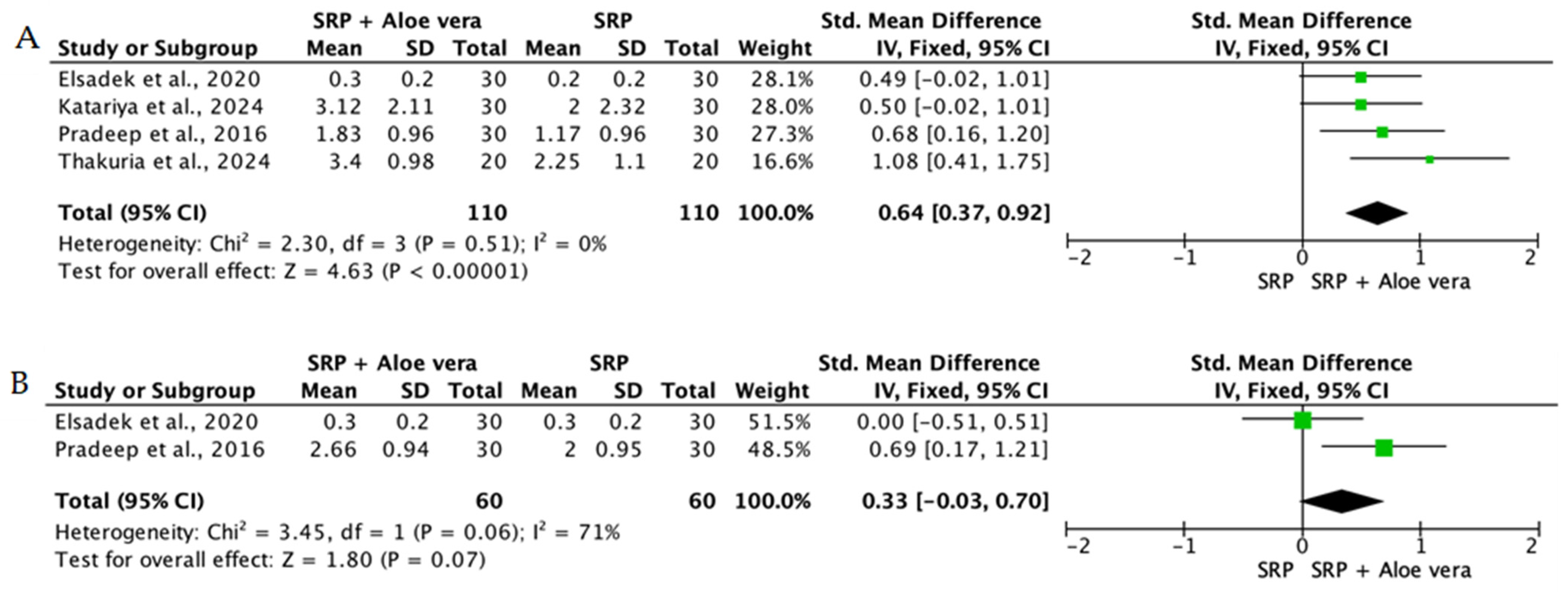
| Thakuria et al., 2024 [122] | Split-mouth design, RCT | 20 patients (18–65 yrs) with chronic periodontitis; India | 1. Group A: SRP + saline 2. Group B: SRP + 100% Aloe vera gel 3. Group C: SRP + tetracycline fibers | SRP + local delivery of gel/fibers/saline. | Clinical (PPD, RAL, PI, mSBI) assessments at baseline, 7 days, and 3 months. | Aloe vera and tetracycline groups showed significant PPD reduction vs. saline. Tetracycline group had greater PI and mSBI reduction vs. saline. No significant difference between Aloe vera and tetracycline groups. | Aloe vera gel is as effective as tetracycline fibers as an adjunct to SRP and may be a cost-effective herbal alternative. |
| Rathod et al., 2024 [123] | Split- mouth, RCT | 12 patients (44 intrabony defects) with Stage III periodontitis; India | 1. Group I: SRP + placebo gel; 2. Group II: SRP + herbal gel (Picrorhiza kurroa + Ficus bengalensis) | Herbal gel applied locally after SRP; follow-up at 3 and 6 months. | Clinical (PI, mSBI, PPD, CAL) and radiographic measurement. | Herbal gel group showed significantly greater bone fill, PPD reduction, and CAL gain vs. placebo at 6 months. | Herbal gel is more effective than SRP alone in improving clinical and radiographic outcomes in Stage III periodontitis. |
| Al-Bayaty et al., 2024 [124] | Single-blind RCT | 12 male patients (240 periodontal pockets); Malaysia | 1. Control (n = 60): SRP alone 2. Chitosan (n = 60): SRP + plain chitosan chip 3. Salvadora persica (n = 60): SRP + Salvadora persica chip 4. BITC (n = 60): SRP + Benzyl Isothiocyanate chip | Biodegradable chips were inserted into periodontal pockets (≥5 mm) twice (at baseline and day 14) as an adjunct to SRP. | PI, BOP, PPD, and CAL were measured at baseline and day 60. | - All groups showed significant improvements. - The Salvadora persica chip group showed the greatest reduction in PPD (1.55 mm) and the highest gain in CAL (1.55 mm) compared to other groups. | Salvadora persica-based biodegradable chips are an effective adjunct to SRP, showing superior results in reducing pocket depth and improving CAL compared to SRP alone or with other chips. |
| Agrawal et al., 2024 [125] | Split-mouth RCT | 30 patients (90 sites); India | 1. Category 1 (n = 30): SRP alone 2. Category 2 (n = 30): SRP + Curcumin gel 3. Category 3 (n = 30): SRP + Tulsi extract gel | Locally administered medication (gel) was placed in the periodontal pocket (5–8 mm) after SRP and covered with periodontal pack. | PPD, CAL, PI, GI, mSBI, and microbiological (BAPNA assay for red-complex bacteria) parameters were assessed at baseline and 30 days. | - All treatments significantly improved all parameters. - Tulsi extract resulted in a significantly greater reduction in BAPNA (indicating better action against red-complex bacteria) than SRP alone. - Curcumin gel showed a slightly greater, but not significant, reduction in PI and GI. | Both Tulsi and Curcumin are effective adjuncts to SRP. Tulsi was more effective in reducing pathogenic bacteria, while Curcumin showed a strong anti-plaque effect. Overall, they have comparable efficacy in improving clinical periodontal markers. |
| Katariya et al., 2024 [126] | Prospective RCT | 60 patients with Generalized Chronic Periodontitis; India. | 1. Group 1: SRP alone (Control, n = 30) 2. Group 2: SRP + Aloe vera Hydrogel (Test, n = 30) | Local Drug Delivery: A single application of Aloe vera Hydrogel microbeads into periodontal pockets after SRP. | Clinical: PI, PPD, and CAL. Timing: Baseline and 3 months. | - Both Groups: Significant improvement in PI, PPD, CAL at 3 months vs. baseline. - Intergroup (Test vs. Control): Test group showed significantly better improvement in PPD and CAL at 3 months. No significant difference in PI. | Aloe vera hydrogel as an adjunct to SRP is more effective than SRP alone in improving clinical parameters (PPD and CAL) in patients with chronic periodontitis. |
| Yousef et al., 2024 [104] | Randomized clinical-controlled RCT | 20 sites in 10 patients with Moderate Chronic Periodontitis; Egypt. | 1. Group I: SRP only (Control, n = 10 sites) 2. Group II: SRP + Frankincense Extract Gel (Test, n = 10 sites) | Local Drug Delivery: Subgingival application of 4% w/v Frankincense Extract Gel after SRP on day 1, 7, and 14. | Clinical: PPD, CAL, BOP. Microbiological: Load of P. g. in GCF via PCR. Timing: Baseline, 1 month, and 3 months. | - Group II: Significantly greater reduction in PPD and gain in CAL at 1 and 3 months vs. control. Significantly greater reduction in BOP at 3 months. - Microbiological: Significant reduction in P. g. load at 1 and 3 months in Group II, but not in the control group. | Subgingival application of Frankincense extract gel is an effective adjunct to SRP, providing significant clinical and microbiological (anti-P. g.) improvements in moderate chronic periodontitis. |
| Aggarwal et al., 2023 [105] | Randomized controlled clinical trial RCT | 30 CP patients with PPD ≥ 5 mm; India | 1. Group 1: SRP only 2. Group 2: SRP + 940 nm Diode Laser 3. Group 3: SRP + Propolis Gel | Laser: 1.5 W, 940 nm, 30 sec/pocket Propolis: Ethanolic extract formulated as a gel, delivered subgingivally. | Clinical parameters (PI, GI, PPD, CAL) assessed at baseline, 1, and 3 months. | - All groups showed significant improvements. SRP + Laser showed the best results in reducing gingival inflammation, PPD, and CAL - Propolis gel also showed encouraging clinical results but was less effective than laser. | Lasers as an adjunct to SRP were highly effective. Propolis gel is a promising natural alternative but requires more long-term studies. |
| Sahu et al., 2023 [106] | Double-Blind RCT | 40 patients with periodontitis (Stage II/III) and PPD 4–6 mm; India | 1. Test Group: SRP + Propolis Nanoparticles (PRO) 2. Control Group: SRP + Saline (Placebo) | Subgingival delivery of propolis nanoparticles (size: 88–103 nm) in liquid solution. Pocket sealed with cyanoacrylate. | Clinical parameters (PI, GI, BOP, PPD, RAL) assessed at baseline, 1, and 3 months. | - The SRP + PRO group showed significantly greater improvement in GI, BOP, PPD, and RAL at 3 months compared to SRP + Placebo. - PI showed improvement at 3 months. | Subgingival delivery of propolis nanoparticles is a highly effective adjunct to SRP, resulting in significant clinical improvements in periodontitis patients. |
| Abdel-Fatah et al., 2023 [57] | Randomized controlled clinical trial RCT | 54 patients (36 with Stage II Grade A periodontitis, 18 healthy); Egypt | 1. Group I: Healthy (Negative Control) 2. Group II: SRP only 3. Group III: SRP + 2% Curcumin Gel | Subgingival delivery of 2% curcumin gel weekly for 4 weeks after full-mouth SRP. | Clinical parameters (PI, GI, PPD, CAL) and salivary Procalcitonin (PCT) levels assessed at baseline and 6 weeks. | - Group III showed significantly greater improvement in PI, PPD, and CAL than Group II - Salivary PCT levels decreased significantly in both periodontitis groups, with no significant difference. | Curcumin gel as an adjunct to SRP is effective and significantly improves clinical parameters. Salivary PCT is a useful inflammatory biomarker for periodontitis. |
| Borgohain et al., 2023 [127] | Split-mouth, RCT | 10 systemically healthy patients with chronic periodontitis; India | Three sites/patient: 1. Group I: SRP alone 2. Group II: SRP + Curcumin gel LDD 3. Group III: SRP + 99% Aloe vera gel LDD | Single application of curcumin or Aloe vera gel into periodontal pockets after SRP. | Clinical parameters (PPD, CAL, PI, GI, mSBI) were recorded at baseline and 30 days. | All groups improved. Aloe vera gel (Group III) showed the most statistically significant improvement in PPD, GI, and mSBI compared to SRP alone. Curcumin also showed benefits. | Both curcumin and Aloe vera gel as LDD adjuncts to SRP are effective, with 99% Aloe vera extract producing particularly significant clinical improvements. |
| Elsadek et al., 2023 [96] | Double-blinded, RCT | 75 patients with Stage III Grade B periodontitis; Saudi Arabia | 1. Group I: SRP + PGA/MB/AV 2. Group II: SRP + Antimicrobial PDT 3. Group III: SRP alone | Group I received subgingival delivery of methylene blue-loaded nanoparticles in Aloe vera gel. Group II received PDT with methylene blue. | Clinical parameters (PI, BOP, PPD, CAL) and levels of T. f. and P. g. were measured at baseline, 3, and 6 months. | Group I PGA/MB/AV showed the most significant PPD reduction and CAL gain, and a significant reduction in T. f. Group II PDT showed the best improvement in BOP. | Methylene blue-loaded nanoparticles in Aloe vera gel as an adjunct to SRP produced superior periodontal healing and microbial reduction compared to PDT or SRP alone in severe periodontitis. |
| Manjunatha et al., 2022 [128] | Double-blinded, placebo-controlled, split-mouth, RCT | 25 patients with Stage II Grade B periodontitis; India | 1. Experimental: SRP + 4% mangosteen gel (LDD) 2. Control: SRP + placebo gel (LDD) | Single subgingival application of 4% mangosteen gel or placebo after full-mouth SRP. | Clinical parameters (PI, GBI, PPD, RAL) and GCF total antioxidant capacity (TAC) were measured at baseline and 3 months. | The experimental group showed significantly greater reduction in PPD and RAL and a significant increase in GCF TAC (from negative to positive values) compared to control. Both groups improved in PI and GBI. | Adjunctive 4% mangosteen gel LDD significantly improves clinical parameters and antioxidant capacity in GCF, supporting its use in managing moderate chronic periodontitis. |
| Verma et al., 2022 [129] | Split-mouth, RCT | 30 patients with generalized chronic periodontitis (90 sites); India | Group 1: SRP + Acmella oleracea gel (1%); Group 2: SRP + Acaia catechu gel (1%); Group 3: SRP only (control) | Local drug delivery of herbal gels after SRP; single application at baseline. | Clinical (GI, PI, GBI, PPD, CAL, RAL) at baseline, 1, 3, 6 months; microbiological (BANA test) at baseline and 6 months. | All groups improved clinically; Group 2 (Acacia catechu) showed better PPD and CAL reduction. Microbiological reduction was nonsignificant. | Both herbal gels improve clinical parameters when combined with SRP; Acacia catechu performed slightly better. |
| Kaipa et al., 2022 [130] | Parallel trial, RCT | 60 patients with chronic periodontitis; India | Group I: SRP + placebo (SRP-P); Group II: SRP + spirulina microspheres (SRP-S) | Subgingival placement of spirulina microspheres (2 mg) after SRP. | Clinical (GI, BOP, PPD, CAL) and biochemical (salivary and serum MDA) at baseline and 90 days. | SRP-S group showed significantly greater improvement in clinical parameters and salivary MDA vs. SRP-P. Serum MDA reduced in both groups. | Spirulina local delivery adjunctive to SRP has potent antioxidant effects and improves periodontal health. |
| Saini et al., 2021 [131] | Split-mouth RCT | 30 patients (90 sites); India | 1. Group I: SRP + Neem Chip 2. Group II: SRP + Turmeric Chip 3. Group III: SRP + Placebo Chip | Indigenous biodegradable chips (4 × 2 mm) containing 5% neem or turmeric extract. | Clinical parameters (PI, GI, PPD, RAL) recorded at baseline, 1 month, and 3 months. | - At 1 month, Groups I & II showed significant improvement in PI, GI, PPD, and RAL compared to Group III. - At 3 months, the intergroup difference was not significant, though improvements were maintained. | Neem and turmeric chips as an adjunct to SRP are more effective than SRP alone in the short term (1 month). Long-term benefits are comparable to SRP alone. |
| Das et al., 2021 [132] | Parallel-group RCT | 72 patients (72 sites); India & Italy | 1. Test Group: SRP + 4% GSE solution 2. Control Group: SRP alone | Intra-pocket delivery of 4% GSE solution, sealed with cyanoacrylate. | Clinical parameters (PI, GI, PPD, RAL) recorded at baseline and 3 months. | - Test group showed statistically significant greater reduction in PPD and gain in RAL at 3 months compared to control. - No significant difference in PI and GI. | A single intra-pocket application of 4% GSE as an adjunct to SRP is beneficial in reducing probing depth and improving attachment levels in periodontal pockets. |
| Sharma et al., 2021 [114] | Split-mouth RCT | 15 patients (30 sites); India | 1. Test Site: SRP + 3% Psidium guajava Gel 2. Control Site: SRP alone | Local delivery of indigenously prepared 3% Psidium guajava in situ gel. | Clinical parameters (PI, GI, BOP, PPD, CAL) and microbiological counts (A. a., P. g.) assessed at baseline, 1, and 3 months. | - Test sites showed significantly greater reduction in PPD, BOP, and gain in CAL at 3 months. - Microbiological analysis showed a significantly greater reduction in A. a. and P. g. counts in test sites. | Adjunctive use of 3% Psidium guajava gel is effective in improving clinical and microbiological parameters in the management of chronic periodontitis. |
| George et al., 2021 [133] | Parallel-group RCT | 15 patients per group; India | 1. Test Group: SRP + Ocimum sanctum Nanofibers 2. Control Group: SRP alone | Local application of electrospun Ocimum sanctum (10% wt) nanofibers in persistent pockets. | Clinical parameters (GI, BOP, PPD, CAL) and GCF IL-1β levels assessed at baseline and 1 month. | - No significant intergroup difference in GI, BOP, PPD, or IL-1β levels. However, the test group showed a statistically significant greater gain in CAL compared to the control. | Ocimum sanctum nanofibers provide an additional benefit in CAL gain when used as an adjuvant to SRP, suggesting a positive anti-inflammatory effect. |
| Pérez-Pacheco et al., 2021 [58] | Split-mouth, Double-blind, Placebo-controlled RCT | 20 patients (80 sites); Brazil | 1. Test Group (N-Curc): SRP + Curcumin-loaded Nanoparticles (50 µg) 2. Control Group: SRP + Empty Nanoparticles | Single local application of 100 µL of nanoencapsulated curcumin or placebo (empty nanoparticles). | Clinical parameters (PPD, CAL, BOP), GCF cytokines (IL-1α, IL-6, TNF-α, IL-10), and subgingival microbiota (40 species) monitored over 180 days. | - Both groups showed significant clinical improvement with no significant differences between them. - N-Curc group showed a trend for lower IL-6 and TNF-α, a specific increase in V. p., and prevented A. a. regrowth. | A single application of nanoencapsulated curcumin provided no significant additive clinical benefit to SRP in systemically healthy, non-smoking patients, despite some positive immunologic and microbiological trends. |
| Taalab et al., 2021 [134] | Parallel randomized controlled clinical trial RCT | 30 patients; - Test: 15 - Control: 15; Egypt | 1. SRP alone 2. SRP + 5% Tea Tree Oil Gel | Single intrapocket application of 5% Tea Tree Oil gel after SRP. | Clinical: PPD, CAL, GI, BOP. Biochemical: GCF levels of MMP-8 (ELISA). Timing: Baseline, 1, 3, and 6 months. | - Both groups improved. Test group showed significantly greater reduction in CAL at 6 months, and GI & BOP at 3 and 6 months. - GCF MMP-8 levels were significantly lower in the test group at 6 months. | A single application of Tea Tree Oil gel adjunctive to SRP is safe and effective, providing better and sustained clinical and biochemical improvement for up to 6 months. |
| Rahalkar et al., 2021 [135] | Split-mouth RCT | 15 patients; - 45 sites total; India | 1. SRP alone (Group 1) 2. SRP + Curcumin Gel (Group 2) 3. SRP + Tulsi Gel (Group 3) | LDD of Curenext® gel (Curcumin) or 10% Tulsi (Ocimum sanctum) extract gel after SRP. | Clinical: PPD, CAL, PI, GI, mSBI. Microbiological: BAPNA assay (for red complex bacteria). Timing: Baseline and 30 days. | - All groups improved. Curcumin group had significantly better PI reduction vs. SRP alone. Tulsi group had significantly better mSBI and BAPNA reduction vs. SRP alone. - Tulsi showed better antimicrobial effect; Curcumin showed better anti-plaque effect. | Both Curcumin and Tulsi are effective LDD agents. Curcumin excels in plaque control, while Tulsi is superior in reducing bleeding and red complex bacteria. |
| Tyagi et al., 2021 [136] | Prospective RCT | 30 patients; - Group 1: 10 - Group 2: 10 - Group 3: 10 India | 1. SRP + Pomegranate Chip 2. SRP + Pomegranate Gel 3. SRP alone (Control) | LDD of a biodegradable chip or a 10% gel, both containing pomegranate (Punica granatum) extract. | Clinical: PI, GI, PPD, and RAL. Timing: Baseline, 21 days, and 45 days. | - All groups improved. The chip group showed significant early PI reduction (21 days). Chip and gel groups showed significant improvement in RAL. - The chip was most effective in improving RAL. | Pomegranate chip and gel are effective adjuncts. The chip provided superior results, especially in improving CALs, compared to the gel and SRP alone. |
| Qamar et al., 2021 [137] | RCT | 150 patients; Saudi Arabia | 1. SRP alone 2. SRP + PDT 3. SRP + Aloe vera Gel | PDT: Indocyanine Green photosensitizer + 810 nm diode laser. Aloe vera: LDD of fresh Aloe vera gel into pockets. | Clinical: PI, BOP, PPD, CAL. Biochemical: GCF levels of IL-6, IL-8, TNF-α (ELISA). Timing: Baseline, 3 months, 6 months. | - Groups 2 and 3 showed significant reduction in inflammatory cytokines (IL-6, IL-8, TNF-α) vs. Group 1. - PDT was most effective in reducing PPD and improving CAL. Aloe vera gel was most effective in reducing BOP. | Both PDT and Aloe vera gel are effective adjuncts. PDT is better for pocket reduction and gain of attachment, while Aloe vera gel is highly effective for reducing gingival inflammation and BOP. |
| Guru et al., 2020 [138] | Pilot RCT | 45 patients; India | 1. Group 1: SRP only (n = 15) 2. Group 2: SRP + 1% CHX gel (n = 15) 3. Group 3: SRP + 2% CUR nanogel (n = 15) | Single subgingival application of the respective gel after full-mouth SRP. | Clinical parameters (PI, GI, PPD, CAL) and microbiological analysis (multiplex PCR for A. a., P. g., T. f.) at baseline, 21, and 45 days. | - Both LDD groups (CHX & CUR) showed significant improvement in all clinical and microbiological parameters vs. SRP alone. - No significant difference in clinical outcomes between CHX and CUR groups. - Both LDD agents showed comparable antibacterial effects. | 2% CUR with a nanocarrier is as effective as 1% chlorhexidine gel as an adjunct to SRP, making it a promising natural LDD agent. |
| Nakao et al., 2020 [97] | Double-blind, Controlled RCT | 23 patients; Japan | 1. Group 1: Placebo ointment (n = 6) 2. Group 2: Propolis ointment (n = 6) 3. Group 3: Curry leaf ointment (n = 5) 4. Group 4: Minocycline ointment (n = 6) | Subgingival administration of ointments 3 times at one-month intervals during supportive therapy. | Microbiological analysis (PCR for total bacteria and 6 pathogens in GCF) and clinical parameters (PPD, CAL, etc.) at baseline and 3 months. | - Propolis group: Significant improvement in PPD and CAL; 3/6 P. g. positive patients became negative. - Minocycline group: Significant PPD improvement, but not CAL. - Curry leaf group: No significant clinical improvement. | Topical propolis significantly improved clinical parameters and reduced P. g., suggesting it is an effective alternative adjunctive treatment. |
| Aljuboori & Mahmood, 2020 [139] | Split-mouth RCT | 14 patients (28 sites); Iraq | 1. Control Site: SRP only 2. Test Site: SRP + 2% Salvia officinalis (Sage) gel | Subgingival application of gel at baseline and 1 week. | Clinical parameters (PI, GI) and immunological analysis (GCF TGF-β1 levels via ELISA) at baseline, 1 week, and 1 month. | - Test group showed significant reduction in GI at 1 week and 1 month. - No significant change in PI in either group. - Test group showed a significant reduction in TGF-β1 levels at 1 month. | Salvia officinalis gel has anti-inflammatory effects in chronic periodontitis, as evidenced by improved gingival health and reduced TGF-β1. |
| Mohammad, 2020 [140] | RCT | 60 patients + 30 healthy controls; Iraq | 1. Group A (Test): SRP + 2% CUR gel (n = 30) 2. Group B (Control): SRP only (n = 30) 3. Group C: Healthy controls (n = 30) | Subgingival application of CUR gel after SRP, covered with Coe-pack for 7 days. | Clinical parameters (PI, GI, BOP, PPD, CAL) and serum analysis (Zinc, Magnesium, Copper, IL-1β, TNF-α) at baseline and 1 month. | - Chronic periodontitis patients had altered micronutrients and elevated cytokines vs. healthy controls. - Group A showed significantly greater improvement in all clinical parameters, reduction in Copper, IL-1β, TNF-α, and increase in Zinc and Magnesium than Group B. | CUR gel as an adjunct to SRP is effective in improving clinical parameters, reducing pro-inflammatory cytokines, and restoring balance of essential micronutrients. |
| Farhood et al., 2020 [141] | Split-mouth RCT | 20 patients (9 male, 11 feminine) with periodontitis. Iraq | 1. Test: SRP + CUR Oral Gel 2. Control: SRP alone | Subgingival application of CUR oral gel (Curenext®) twice, one week apart, as an adjunct to SRP. | Clinical parameters (PI, GI, BOP, PPD, RAL) measured at baseline and 1 month. | - Intra-group: Significant improvement in all clinical parameters (PI, GI, PPD, RAL) in both groups at 1 month. - Inter-group: No significant difference in PI, GI, PPD, RAL between groups. - BOP: Significant reduction only in the test group. | CUR gel is a promising adjunct to SRP, showing a potent effect on clinical parameters, with a significant specific benefit in reducing BOP. |
| Niazi et al., 2020 [142] | Parallel group, randomized controlled clinical trial RCT | 73 patients with chronic periodontitis; Saudi Arabia | Group I (PDT + SRP), Group II (Salvadora Persica gel + SRP), Group III (SRP alone) | PDT with indocyanine green or Salvadora Persica gel applied in pockets, adjunct to SRP. | Clinical (PI, BOP, PPD, CAL) and biochemical (IL-6, TNF-α) parameters at baseline, 3 and 6 months. | Group I (PDT) showed significant PPD reduction and CAL gain. Group II (Salvadora Persica) showed significant BOP reduction. Both reduced IL-6 and TNF-α vs. control. | Both PDT and Salvadora Persica gel reduce periodontal inflammation; PDT improves CAL, while SPR reduces BOP. |
| Elsadek et al., 2020 [98] | Single-blind, parallel, RCT | 87 patients with periodontitis; Saudi Arabia and Egypt | 1: PDT + SRP; 2: Aloe vera gel + SRP; 3: SRP only | PDT (3 sessions with methylene blue + diode laser) vs. topical Aloe vera gel vs. SRP alone. | Clinical (PI, BOP, PPD, CAL) and microbiological (T. f., P. g.) assessments at baseline, 3 months, 6 months. | PDT significantly improved PPD and CAL vs. other groups; Aloe vera significantly reduced BOP; PDT reduced pathogens at 3 months; Aloe vera reduced T. f. (3 months). | Both adjuncts reduced inflammation; Aloe vera improved bleeding; PDT improved attachment and pathogen reduction. |
| Mahendra et al., 2020 [115] | Double-masked, split-mouth, RCT | 26 patients with chronic periodontitis; India | Split-mouth: Test site (SRP + 3% Ginkgo biloba gel) vs. Placebo site (SRP + placebo gel) | 3% Ginkgo biloba gel applied subgingivally after SRP. | Clinical (PPD, CAL, BOP, PI) and microbiological (Herper simplex, Epstein–Barr Virus, Cytomegalo Virus, P. g. via PCR) at baseline and 3 months. | Significant reduction in PPD, CAL, BOP, PI and viral/bacterial load in test sites vs. placebo. | Ginkgo biloba gel as local drug delivery improves periodontal status and reduces viral/bacterial pathogens. |
| Tawfik et al., 2019 [143] | Examiner-masked, RCT | 16 chronic periodontitis patients; Egypt | 1: SRP + Lycopene SLMs gel; 2: SRP only | Lycopene-loaded SLMs gel applied locally into pockets after SRP. | GCF protein carbonyl (oxidative stress marker) and lycopene concentration via HPLC; clinical parameters (PI, MGI, PPD, CAL, IBD) at baseline, 1 to 6 months. | Lycopene SLMs reduced GCF protein carbonyl levels significantly vs. SRP alone; improved PPD and CAL at 6 months; sustained drug release up to 30 days. | Lycopene SLMs as local antioxidant therapy reduces oxidative stress and improves periodontal health. |
| Ivanaga et al., 2019 [116] | Split-mouth RCT | 25 type 2 diabetic patients with residual pockets; Brazil | 1. SRP only 2. SRP + CUR irrigation (CUR) 3. SRP + LED irradiation (LED) 4. SRP + PDT (CUR + LED) | Subgingival irrigation with CUR solution (100 mg/L) and/or LED irradiation (465–485 nm) as an adjunct to a single session of SRP. | Clinical parameters (PPD, CAL, BOP, PI) assessed at baseline, 3, and 6 months. | - Inter-group: No significant differences between the four treatment groups at any time point. - Intra-group: Significant PPD reduction and BOP in all groups at 3 and 6 months. - Significant CAL gain only in the PDT and LED groups at the 3-month. | For diabetic patients, a single session of PDT (CUR + LED) or LED alone as an adjunct to SRP may provide short-term (3-month) benefits in CAL gain. |
| Raghava et al., 2019 [59] | Split-mouth RCT | 10 patients (5M, 5F) with chronic periodontitis; India | 1. Test: SRP + CUR Gel 2. Control: SRP alone | Local subgingival delivery of 2% curcumin gel into the pocket post-SRP, covered with periodontal pack. | PI, GI, PPD, and CAL measured at baseline and 4 weeks. | - Statistically significant reduction in PI and PPD in the test group compared to the control. - CAL improved in the test group, but the result was not statistically significant. - GI decreased in both groups. | CUR gel as a local drug delivery adjunct to SRP showed significant improvement in plaque control and pocket depth reduction, making it an effective alternative. |
| Rayyan et al., 2018 [144] | Double-blind, parallel-group RCT | 5 systemically healthy patients (86 periodontal sites); Saudi Arabia | 1. Control Group: 38 sites (Control gel) 2. GSE Group: 48 sites (2% GSE gel) | Subgingival application of a 2% mucoadhesive GSE gel at baseline and on days 3, 6, and 9. | Clinical parameters (PI, GI, PPD, BOP) measured at baseline, 4 weeks, and 6 months. All patients received SRP one week before baseline. | - PI and GI: Significant reduction in both groups over time. The reduction was significantly greater in the GSE group at 6 months. - PPD: Significant reduction in both groups over time, but no significant difference between groups. - BOP: No significant improvements. | Subgingival application of 2% GSE gel as an adjunct to SRP showed significant improvement in plaque and gingival inflammation but did not provide significant additional benefit in reducing PPD or BOP. |
| Singh et al., 2018 [145] | Split-mouth RCT | 40 patients (120 sites) with chronic periodontitis; India | 1. Group A: SRP + CHX chip 2. Group B: SRP + Turmeric chip 3. Group C: SRP only | Subgingival placement of a biodegradable chip containing either 2.5 mg CHX or 5% Turmeric. | PI, GI, PPD, and RAL recorded at baseline, 1, and 3 months. | - CHX and Turmeric chips were equally effective and both superior to SRP alone in reducing PPD and improving RAL over 3 months. - Group C showed deterioration after 1 month. | Both CHX and turmeric chips are effective adjuncts to SRP. Turmeric chip is a promising, cost-effective alternative to CHX. |
| Andrade et al., 2017 [107] | RCT | 16 individuals with chronic periodontitis; Brazil | 1. Test Group: SRP + 20% Propolis extract irrigation (65 teeth) 2. Control Group: SRP + Saline irrigation (62 teeth) | Subgingival irrigation with 20% hydroalcoholic propolis extract vs. saline, applied after SRP and at 15 days. | Clinical parameters (PPD, PI, GI, OHI) recorded at baseline, 45, 75, and 90 days. | - Both groups showed significant improvement over time. - Test Group showed significantly greater PPD reduction than Control Group at 45 and 90 days. - No significant between-group differences for PI, GI, and OHI. | Subgingival irrigation with 20% propolis extract as an adjunct to SRP was more effective than saline in reducing probing depth for up to 90 days. |
| Mahendra et al., 2017 [99] | Double-masked RCT | 50 patients with chronic periodontitis (PPD ≥ 5 mm); India | 1. Test Group: SRP + 4% Mangostana (MGA) gel (25 pts) 2. Control Group: SRP + Placebo gel (25 pts) | A single subgingival application of 4% Garcinia mangostana pericarp gel or placebo gel after SRP. | Clinical parameters (PPD, CAL, BOP, PI) and red complex microorganisms (via PCR) assessed at baseline and 3 months. | - MGA group showed significantly greater reduction in PPD, CAL, BOP, and T. d. compared to the placebo group (p ≤ 0.05). - P. g. and T. f. were not detected. | 4% Mangostana gel as an adjunct to SRP significantly improved clinical parameters and reduced T. d., offering a new dimension to periodontal therapy. |
| Pradeep et al., 2016 [72] | Single-center, randomized, longitudinal, triple- masked, interventional study RCT | 60 patients with T2DM and chronic periodontitis; India | 1. Group 1 (n = 30): SRP + Placebo Gel 2. Group 2 (n = 30): SRP + Aloe vera Gel | LDD of Aloe vera gel or placebo gel into periodontal pockets after SRP. | Clinical parameters (PI, mSBI, PPD, CAL) recorded at baseline, 3, and 6 months. | - Group 2 showed significantly greater reductions in PI, mSBI, and PPD at 3 months. - Significantly greater CAL gain in Group 2 at all time intervals (baseline to 3 and 6 months). | Locally delivered Aloe vera gel is an effective adjunct to SRP, improving clinical parameters in patients with T2DM and chronic periodontitis. |
| Elavarasu et al., 2016 [146] | Split-mouth RCT | 15 patients with chronic periodontitis (bilateral pockets); India | 1. Group I (Control): SRP only 2. Group II (Test): SRP + 0.2% CURStrip 3. Healthy Group (n = 5 sites) | LDD of a 0.2% CUR-loaded collagen strip vs. SRP alone. | Clinical parameters (PI, GI, SBI, PPD) and SOD levels in GCF measured at baseline and 21 days. | - Both test and control groups showed significant clinical improvement. - SOD levels increased significantly in both groups post-therapy. | A 0.2% CUR strip is an effective adjunct to SRP, significantly improving the SOD in the subgingival environment. |
| Rattanasuwan et al., 2016 [147] | RCT | 48 subjects with chronic periodontitis (PD 5–10 mm); Thailand | 1. Test Group (n = 24): SRP + Green Tea Gel 2. Control Group (n = 24): SRP + Placebo Gel | LDD of a thermosensitive green tea extract gel or placebo gel after SRP. Applied at baseline, 1 week, and 2 weeks. | Clinical parameters (PPD, CAL, GI, BOP, FMPS) recorded at baseline, 1, 3, and 6 months after last application. | - Both groups showed significant improvement in all parameters. - Test group had significantly lower GI at 1 and 3 months and lower BOP at 3 months. - No inter-group difference in PPD, CAL, or FMPS. | Adjunctive green tea gel provides a superior benefit in reducing gingival inflammation and bleeding compared to SRP alone, but not in PPD reduction or CAL gain. |
| Grover et al. 2016 [148] | Double-blind, placebo-RCT | 40 patients with chronic periodontitis; India | Test: 20 patients (SRP + 10% Emblica officinalis gel); Control: 20 (SRP + placebo gel) | Subgingival application of 10% Emblica officinalis sustained-release gel. | Clinical parameters (PPD, CAL, mSBI) at baseline, 2 and 3 months. | Test group showed significantly greater reduction in PPD, mSBI, deep pockets, and greater CAL gain (p < 0.05). | Emblica officinalis gel adjunct to SRP is more effective than SRP alone in reducing inflammation and improving periodontal health. |
| Sreedhar et al., 2015 [149] | Split-mouth RCT | 15 patients with chronic periodontitis (60 sites); India | 1. Q1: SRP alone 2. Q2: SRP + CUR gel (5 min) 3. Q3: SRP + CUR + PDT (single application) 4. Q4: SRP + CUR + PDT (multiple applications) | Application of CUR gel with/without photoactivation (470 nm blue light). PDT was applied on day 0 (Q3) or days 0, 7, and 21 (Q4). | Clinical parameters (PI, SBI, PPD, CAL) and microbial culture for Aa and BPB at baseline and 3 months. | - All treatments improved clinical parameters. - Curcumin PDT (especially multiple applications in Q4) showed the greatest reduction in SBI, PPD, and microbial counts of A. a. and BPB compared to SRP alone or curcumin without light. | Curcumin photodynamic therapy is a valuable adjunct to SRP. Multiple applications of PDT are more beneficial than a single application in reducing clinical and microbiological parameters. |
| Yaghini et al., 2014 [150] | Double-blind RCT | 18 patients (74 sites) with moderate chronic periodontitis; Iran | 1. Test: SRP + Herbal Gel 2. Control: SRP + Placebo Gel | Test Gel: Subgingival delivery of a gel containing 20% Quercus brantii (oak) and 1% Coriandrum sativum (coriander) extract. Applied twice (baseline and 1 week). | Clinical parameters (PPD, CAL, PBI, PI) measured at baseline, 1 month, and 3 months. | - Both groups showed statistically significant intra-group improvements in all clinical indices (PPD, CAL, PBI, PI) at 1 and 3 months. - No statistically significant inter-group differences were found for any parameter at any time point. | The herbal gel containing oak and coriander extracts did not provide a significant clinical advantage over SRP alone as an adjunctive treatment for moderate chronic periodontitis. |
| Cheng et al., 2014 [151] | RCT | 60 patients with moderate to severe periodontitis; China | 1. Test: SRP + EGB Gel 2. Positive Control: SRP + Periocline 3. Negative Control: SRP + Blank Gel | LDD; Test: Subgingival application of EGB sustained-release gel. Control: Minocycline ointment (Periocline) or blank gel. | Detection rates of 4 periodontal pathogens (T. d., T. f., P. i., P. g.) via PCR at baseline, 1 week, 2, and 4 months. Clinical parameters (PI, BOP, PPD, CAL) at baseline, 3, and 6 months. | - EGB significantly reduced detection rates of all 4 pathogens, with effects comparable to Periocline for T. d., T. f., and P. i., but inferior against P. g. short-term. - EGB led to significant improvements in PPD and CAL, comparable to Periocline at 3 months but slightly inferior at 6 months. | EGB significantly inhibits major periodontal pathogens and improves clinical parameters (PPD, CAL). It can be used as an effective adjuvant for periodontitis treatment, offering a herbal alternative to antibiotics. |
| Sanghani et al. 2014 [100] | Double-blind, RCT | 20 patients with chronic periodontitis; India | Test: 20 sites (SRP + propolis); Control: 20 sites (SRP alone) | Subgingival delivery of Indian propolis extract. | Clinical (GI, BOP, PPD, CAL) and microbiological (P. g., P. i., F. n.) at baseline, 15 days, 1 month. | Test sites showed significantly greater reduction in all clinical parameters and lower microbial counts compared to control (p < 0.01). | Propolis as an adjunct to SRP is effective in improving clinical and microbiological parameters in chronic periodontitis. |
| Chava & Vedula 2013 [152] | Split-mouth, single-blind RCT | 30 patients with chronic periodontitis; India. | 1. Test: Site + SRP + Thermo-reversible green tea gel 2. Control: Contralateral site + SRP + Placebo gel | Adjunctive subgingival delivery of a sustained-release green tea catechin gel after Phase I therapy. | Clinical parameters (GI, PPD, CAL) assessed at baseline and 4 weeks. In vitro drug release was also tested. | - Improvement of GI, PPD, and CAL within both groups from baseline to 4 weeks. - The test group showed significantly greater improvement than the control in the delta of all parameters. | Adjunctive local drug therapy with thermo-reversible green tea gel is effective in reducing pocket depth and inflammation in patients with chronic periodontitis over 4 weeks. |
| Gottumukkala et al. 2013 [153] | Single-blind, pilot RCT | 23 patients with chronic periodontitis; India. | 1. CHX: 0.2% CHX irrigation + SRP 2. CUR: 1% CUR irrigation + SRP 3. Control: Saline irrigation + SRP | Subgingival irrigation with assigned solution as an adjunct to SRP, performed at multiple intervals. | Clinical (BOP, redness, PI, PPD) and microbiological (BANA test) parameters evaluated at baseline, 1, 3, and 6 months. | - At 1 month, CUR group showed better results in BOP and PPD reduction. - By 6 months, CHX group showed the best results, with a slight recurrence in the CUR group. | 1% CUR irrigation has a mild to moderate benefit as an adjunct to SRP, with efficacy comparable to CHX at first but less sustained. |
| Mahendra et al. 2013 [154] | Placebo-controlled, RCT | 40 subjects with chronic periodontitis; India | Group A (Exp.): 33 sites (SRP + spirulina gel); Group B (Ctrl.): 31 sites (SRP alone) | Subgingival delivery of spirulina gel vs. placebo after SRP. | Clinical parameters (PPD, CAL) at baseline and 120 days. | Group A showed significantly greater reduction in PPD and gain in CAL compared to Group B (p < 0.05). | Spirulina gel as an adjunct to SRP is effective in improving periodontal parameters with anti-inflammatory and antioxidative benefits. |
| Matesanz et al. 2013 [155] | Placebo-controlled, parallel, RCT | 22 patients with residual/relapsing periodontitis; Spain | Test: 10 patients (SRP + Xan–CHX gel); Control: 12 patients (SRP + placebo gel) | Subgingival application of xanthan-based 1.5% CHX gel vs. placebo. | Clinical (PPD, CAL, BOP) and microbiological evaluation at baseline, 1, 3, 6 months. | Limited clinical improvement in test group (BOP reduction, increased shallow pockets), but no significant intergroup differences. Microbiological impact minimal. | Xan–CHX gel may slightly improve clinical outcomes in residual pockets, but significant added benefit over placebo was not demonstrated. |
| Patel et al. 2012 [156] | Double-blind, split-mouth RCT | 20 patients with chronic periodontitis; India. | 1. Group A: SRP alone 2. Group B: SRP + Topical Ozonated Olive Oil (OZO) 3. Group C: Ozonated Olive Oil Monotherapy 4. Group D: Chlorhexidine Gel Monotherapy | Subgingival application of ozonated olive oil, either as an adjunct to SRP or as a monotherapy. | Clinical (PI, GI, SBI, PPD, CAL) and microbiological (Total bacterial counts & PCR for 8 pathogens) parameters assessed over 8 weeks. Patient-centered outcomes VAS recorded. | - Groups B and C showed significant improvement in all clinical and microbiological parameters over time. - Group B (adjunct) was most effective. Increased dentinal hypersensitivity was reported in Group B. | Ozonated olive oil is an effective adjunct to SRP and as a monotherapy for improving periodontal health. However, its use with SRP may cause increased dentinal hypersensitivity. |
| Coutinho A. 2012 [101] | RCT | 20 patients with chronic periodontitis; India. | 1. Group A: SRP + Propolis Extract Irrigation 2. Group B: SRP + Placebo Irrigation 3. Group C: SRP alone | Subgingival irrigation with a 20% hydroalcoholic propolis extract as an adjunct to SRP, twice a week for 2 weeks. | Clinical parameters (PI, GI, PPD, BOP, CAL) and microbiological samples (total anaerobic counts, P. g. levels) collected at multiple intervals over 8 weeks. | - Group A showed a significant decrease in total anaerobic counts and an increase in sites with low levels of P. g. - A significantly greater reduction in BOP and PPD was also seen in Group A. | Subgingival irrigation with propolis extract as an adjuvant to SRP is more effective than SRP alone or with a placebo, leading to significant clinical and microbiological improvement. |
| Rassameemasmaung et al., 2008 [157] | Single-blind RCT | - n = 31 adults with chronic periodontitis. - Systemically healthy, non-smokers. Thailand. | 1. Test Group (n = 16): SRP + subgingival application of GM gel. 2. Control Group (n = 15): SRP alone. | Intervention: Subgingival application of Garcinia mangostana L. (mangosteen) pericarp gel (GM gel) into periodontal pockets immediately after SRP and again at 1 week. No placebo gel was used for the control group. | Clinical parameters (PPD, CAL, BOP, GI, PI) and microbiological analysis (phase-contrast microscopy) assessed at baseline, 1 month, and 3 months. | - Test Group had significantly greater PPD reduction than control at 3 months (shallow sites) and at 1 & 3 months (deep sites). - Test Group had significantly greater improvements in GI and BOP at the 3-month. - Microbiologically, the test group had a significantly higher percentage of cocci. | Topical application of GM gel as an adjunct to SRP enhances clinical outcomes, particularly in reducing probing depth, gingival inflammation, and bleeding on probing, likely due to its anti-inflammatory and antimicrobial properties. |
| (B). Systemic supplementation summary of the included studies in this systematic review | |||||||
| Author/Year | Study Design | Population/Study Location | Study Groups | Intervention/Exposure | Methods | Main Findings | Conclusion |
| Lucchesi et al., 2025 [61] | Parallel-group RCT | 38 smoking patients with periodontitis; Brazil | 1. Test: Full-mouth ultrasonic debridement (FMUD) + Systemic RSV (500 mg/day) 2. Control: FMUD + Systemic Placebo | Systemic administration of RSV capsules for 180 days as an adjunct to non-surgical therapy. | Clinical parameters, microbiological analysis (PCR for A. a., T. f., P. g.), and immunoinflammatory markers (GCF cytokines via Luminex) assessed at baseline, 3, 6, and 12 months. | - RSV group had significantly lower PPD, CAL, and plaque scores over 12 months. - Lower counts of A. a. in deep sites at 6 months. - Lower levels of IL-1β (at 3 months) and IL-6 (at 3 & 12 months) in the RSV group. | Systemic resveratrol adjunctive to SRP improves clinical outcomes, reduces specific pathogen load, and modulates the immunoinflammatory response in periodontitis patients who smoke. |
| Farahmand et al., 2024 [158] | Double-blind, RCT | 75 patients with chronic periodontitis; Iran | 1. Group A: CoQ10 2. Group B: Omega-3 3. Group C: control | Daily CoQ10 (30 mg) or ω-3 (200 mg) for 2 months + SRP. | Clinical parameters (GI, PPD, CAL, PI, BOP) and salivary TAC measured at baseline and 2 months. | ω-3 group showed significantly greater reduction in GI and BOP vs. CoQ10 and control. All groups improved in PPD and CAL. TAC levels changed significantly in all groups. | ω-3 and CoQ10 supplements may improve periodontal health and antioxidant capacity, with ω-3 showing stronger anti-inflammatory effects. |
| Shirodkar et al., 2024 [159] | Triple-blind, placebo-controlled, RCT | 80 chronic periodontitis patients; India | 1. Test group: hesperidin; 2. Control group: placebo | Hesperidin (500 mg/day) or placebo for 3 weeks + SRP; follow-up at 3 and 6 weeks. | GI, SBI, PPD, CAL, and serum CRP measured. | Hesperidin significantly reduced serum CRP levels but did not significantly improve clinical parameters vs. placebo. | Hesperidin shows systemic anti-inflammatory effects but no significant short-term clinical benefit in periodontitis. |
| Ashrafzadeh et al., 2024 [89] | Parallel Pilot RCT | 41 patients with T2DM and Periodontal Disease; Iran | 1. C: Control (SRP only, n = 12) 2. I1: Omega-3 (n = 10) 3. I2: Cranberry Juice (n = 9) 4. I3: Cranberry Juice + Omega-3 (n = 10) | Oral Consumption (8 weeks): I1: 1 g ω-3 capsule, twice daily. I2: 200 mL Cranberry juice, twice daily. I3: 200 mL Cranberry juice enriched with 1 g ω-3, twice daily. All groups received SRP. | Clinical: PPD, CAL, BOP, and PI Biochemical (Serum/Saliva): TAC, MDA, Uric Acid, hs-CRP, IL-6, TNF-α. Timing: Baseline and after 8 weeks. | - I3 Group: Significant increase in serum and salivary TAC; significant decrease in salivary MDA, serum hs-CRP, and IL-6 vs. control. - I2 & I3 Groups: Significant decrease in serum MDA. - All Groups: Significant decrease in PPD and CAL post-intervention. | Consumption of cranberry juice enriched with ω-3 as an adjunct to non-surgical therapy can reduce systemic inflammation and oxidative stress, and improve periodontal status in diabetic patients with periodontal disease. |
| Laky et al., 2023 [109] | Double-Blind, Placebo-RCT | 42 patients with Stage III/IV periodontitis; Austria | 1. Test Group: SRP + Multinutrient Supplement 2. Control Group: SRP + Placebo | Oral multinutrient supplement (Vitamins C, E, Zinc, Selenium, Alpha-Lipoic-Acid, Cranberry, Grapeseed extract, CoQ10) taken twice daily for 2 months alongside nonsurgical therapy. | clinical parameters (PPD, BOP) assessed at baseline and 8-week reevaluation. | - The supplement group had a significantly greater reduction in PPD and BOP compared to placebo. - All parameters improved in both groups, with most showing greater improvement in the supplement group. | Multinutrient supplementation provided some additional benefit (in PPD and BOP reduction) as an adjunct to nonsurgical periodontal therapy, but the clinical relevance requires further exploration. |
| Nikniaz et al., 2023 [62] | Double-blind, placebo-RCT | 40 patients with chronic periodontitis; Iran | 1. Case Group (n = 20): SRP + RSV 2. Control Group (n = 20): SRP + Placebo (starch) | 480 mg RSV daily (2 capsules) for 4 weeks, adjunct to SRP. | Clinical Parameters: PPD, CAL, PI, BOP. Inflammatory Markers: Salivary IL-8 and IL-1β (measured by ELISA). Timing: Measured at baseline and 4 weeks. | - PI showed a significant decrease in the RSV group vs. control (p = 0.0001). - PPD, CAL, BOP, IL-8, and IL-1β improved in both groups from baseline, but there were no significant differences between the groups. | RSV supplementation was helpful as an anti-inflammatory food supplement along with non-surgical periodontal treatment, with a significant effect on plaque reduction. |
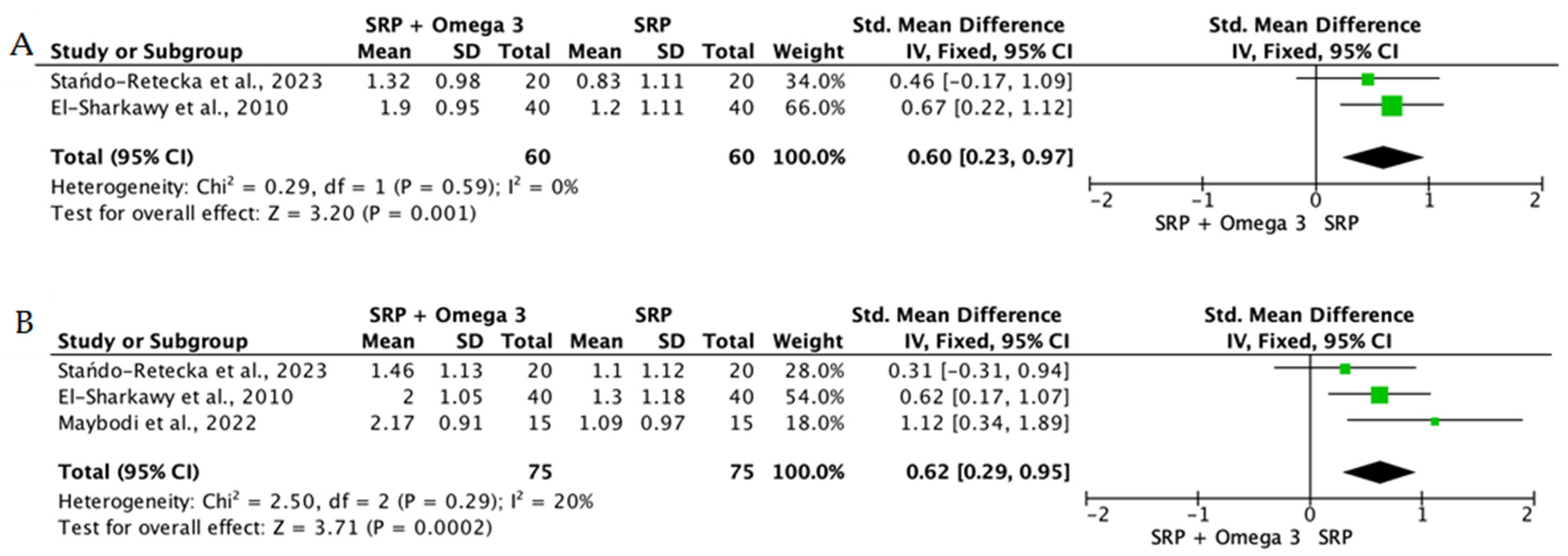
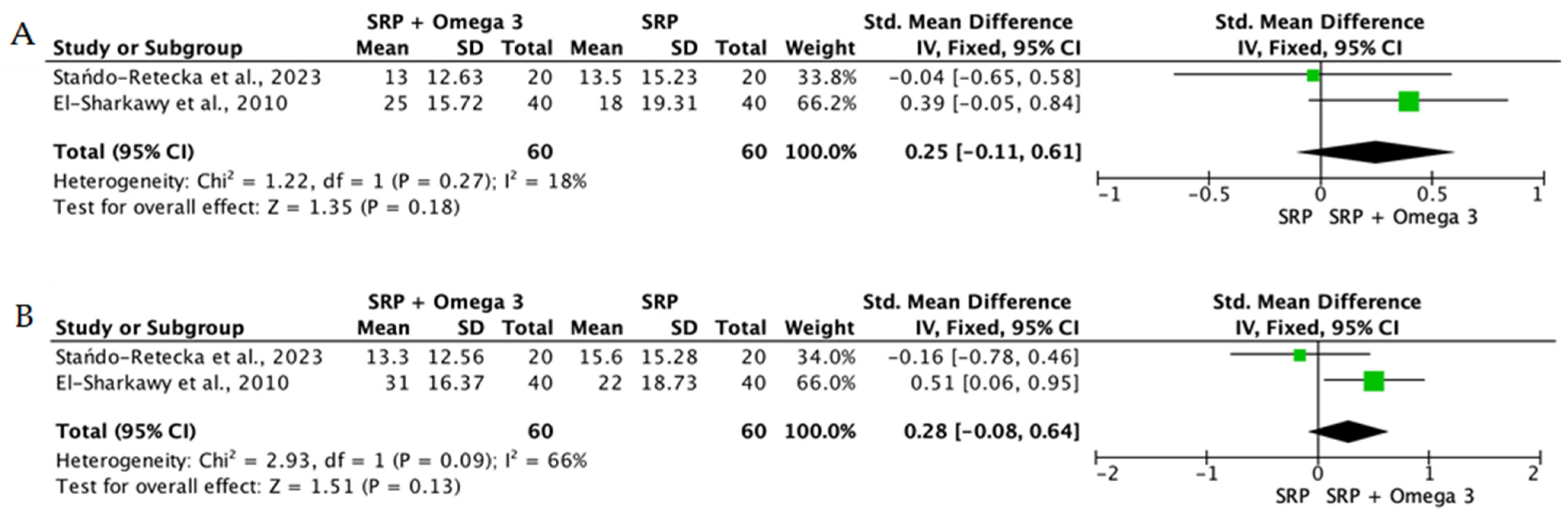
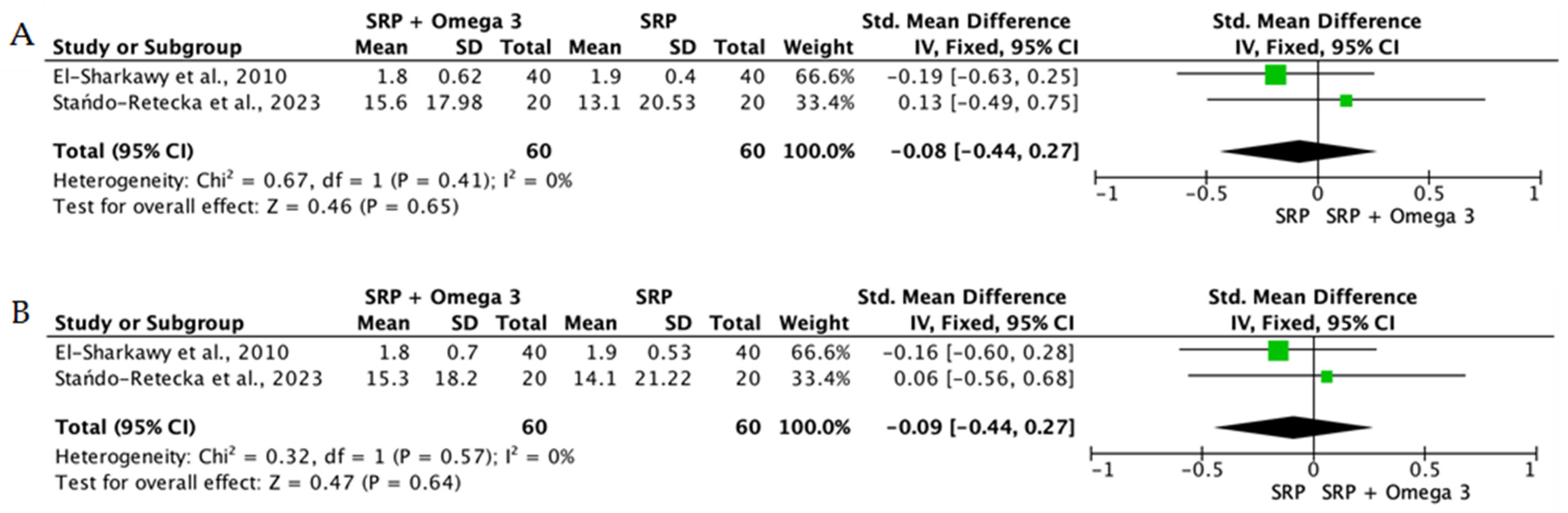
| Stańdo-Retecka et al., 2023 [110] | Parallel-arm RCT | 40 patients with untreated periodontitis stage III/IV; Poland | 1. Test Group (n = 20): SRP + ω-3 PUFA (Fish Oil) 2. Control Group (n = 20): SRP alone | High-dose ω-3 PUFA (2.6 g EPA + 1.8 g DHA daily) as fish oil for 6 months, adjunct to SRP. | Clinical Parameters: PPD, CAL, REC, BOP, FMPS, rate of “closed pockets”. Microbiological: Counts of key periodontal pathogens (using PCR). Serum Analysis: Lipid profile via gas chromatography/mass spectrometry. Timing: Measured at baseline, 3 months, and 6 months. | - Short-term benefits (3 months): Test group had significantly lower BOP, higher CAL gain, and more “closed pockets,” especially in deep pockets (PPD ≥ 6 mm). - Long-term (6 months): Only BOP remained significantly lower in the test group. - Microbiological: Test group had significantly lower counts of all key periodontal pathogens at 6 months. - Serum: Confirmed increased n-3 PUFA and decreased n-6 PUFA levels in the test group. | Adjunctive high-dose ω-3 PUFA intake results in significant short-term clinical and microbiological benefits, and more effective pathogen clearance compared to SRP alone. It is safe and well-tolerated. |
| Nafade et al., 2022 [160] | Parallel-arm, RCT | 60 subjects with mild to moderate chronic periodontitis; India | 1. Test (n = 30): SRP + oolong tea; 2. Control (n = 30): SRP only | Test: SRP + daily intake of 4 g oolong tea for 30 days; Control: SRP only. | Clinical (GI, PI, PPD, CAL, BOP, LSI), biochemical (GPx, TAO, MDA in GCF, saliva, serum), microbiological (CFU of plaque bacteria) at baseline, 1, and 3 months. | Test group showed significant improvement in GI, antioxidant markers (GPx, TAO), reduction in MDA and CFU, maintained at 3 months. Control group improved at 1 month but deteriorated by 3 months. | Oolong tea as adjunct to SRP reduces oxidative stress and inflammation in chronic periodontitis, beneficial for patients with systemic conditions. |
| Maybodi et al., 2022 [112] | Double-blind, placebo RCT | 30 patients with stage II–IV, grade B periodontitis; Iran | 1. Intervention: ω-3 supplementation (1000 mg fish oil soft-gel daily) 2. Control: Placebo (soybean oil capsule) | Both groups received SRP and oral hygiene instructions; supplements taken for 3 months. | Clinical parameters (CAL, PPD, BOP) recorded at baseline and after 3 months. | - Significant reductions in CAL and PPD in ω-3 group vs. control (p = 0.001). - BOP decreased in both, but intergroup difference not significant. | ω-3 supplementation as an adjunct to SRP improved clinical periodontal outcomes, particularly CAL and PPD, supporting its anti-inflammatory potential. |
| Acharya et al., 2021 [113] | Double-blind, RCT | 48 type 2 diabetic patients with chronic periodontitis; India | Test (SRP + GSE), Control (SRP + placebo) | 200 mg GSE orally once daily for 8 weeks. | Clinical (PI, GI, PPD, CAL), metabolic (HbA1c, FBS), and biochemical (MPO, TAC) parameters at baseline, 3 and 6 months. | Significant improvement in TAC and MPO in test group at 3 and 6 months. Significant reduction in FBS at 3 months in test group. Clinical parameters improved in both groups, but only SBI and PI showed intergroup significance at 3 months. | GSE as adjunct to SRP reduces oxidative stress and inflammation, and improves glycemic control in diabetic patients with periodontitis. |
| Aslroosta et al., 2021 [161] | Preliminary RCT (Triple-blind) | 44 patients; - Test: 15 completed - Control: 10 completed; Iran | 1. SRP + Semelli (ANGIPARS) 2. SRP + Placebo | Semelli: 100 mg capsules (from Melilotus officinalis) taken twice daily for 3 months. | Clinical: PPD, CAL, MGI, mSBI, PI. Biochemical: GCF levels of IL-1β, 8-OHdG, LPO. Timing: Baseline and 3 months. | - Both groups improved significantly. Test group showed significantly greater improvement in MGI, mSBI, PPD, and CAL. - Biochemical parameters improved in both groups, but inter-group difference was not significant. | Systemic Semelli may be a beneficial adjunct for treating chronic periodontitis, improving clinical parameters. Larger, longer-term studies are needed. |
| Gholinezhad et al., 2020 [90] | Double-blind placebo-RCT | 42 type 2 diabetic patients with chronic periodontitis; Iran | Intervention (ginger + SRP), Control (placebo + SRP) | 2 g ginger supplement daily for 8 weeks alongside SRP. | Metabolic (HbA1c, FBG, lipid profile), oxidative (MDA, TAC), and periodontal (CAL, PPD, BOP, plaque) parameters at baseline and 8 weeks. | Significant reduction in HbA1c, FBG, MDA, CAL, and PPD in ginger group. HDL increased significantly. No significant changes in other lipids, TAC, plaque, or BOP. | Ginger supplementation with SRP improves glycemic control, antioxidant status, and periodontal parameters in diabetic patients with periodontitis. |
| Sravya et al., 2019 [94] | Single-blind, RCT | 40 smokers with chronic periodontitis; India | 1: SRP + Oxitard capsules; 2: SRP only | Oral Oxitard (herbal antioxidant, 2 capsules twice daily) for 3 months after SRP. | Serum procalcitonin levels (ELISA) and clinical parameters (GI, PPD, CAL) at baseline and 3 months. | Oxitard group showed greater reduction in procalcitonin, GI, PPD, and CAL vs. SRP alone. | Herbal antioxidant Oxitard as adjunct to SRP improves clinical and biochemical markers in smokers with periodontitis. |
| Zare Javid et al., 2019 [92] | Double-blind, placebo-RCT | 42 T2DM patients with chronic periodontitis in Iran | 1: Ginger (2 g/d) + SRP; 2: Placebo + SRP | Oral ginger supplementation (4 × 500 mg tablets daily) for 8 weeks alongside SRP. | Serum inflammatory (IL-6, TNF-α, hs-CRP), antioxidant (SOD, TAC, GPx), and periodontal (PPD, CAL, BOP, PI) measures baseline and 8 weeks. | Ginger significantly reduced IL-6, TNF-α, hs-CRP, PPD, CAL; increased SOD, GPx vs. placebo. | Ginger supplementation with SRP improves inflammatory, antioxidant, and periodontal status in diabetic periodontitis patients. |
| Javid et al., 2019 [91] | Double-blind, placebo-controlled RCT | 43 type 2 diabetic patients with chronic periodontitis; Iran | 1. Intervention: SRP + 480 mg/day RSV 2. Control: SRP + Placebo | Daily oral supplementation of 480 mg RSV for 4 weeks, adjunctive to SRP. | Serum levels of IL-6, TNF-α, TAC, and CAL measured at baseline and 4 weeks. | - Significant reduction in serum IL-6 within the RSV group. - No significant changes in TNF-α or TAC within or between groups. - CAL improved significantly in both groups post-SRP. | RSV supplementation may help reduce IL-6 but did not significantly affect TNF-α, TAC, or CAL beyond the improvements achieved with non-surgical periodontal therapy alone. |
| Taleghani et al., 2018 [162] | RCT | 30 patients with chronic periodontitis; Iran | 1. Control Group: 15 patients (SRP only) 2. Intervention Group: 15 patients (SRP + Green Tea) | Daily consumption of green tea herbal (2 times/day, after brushing) for 6 weeks. | Clinical parameters (PPD, BOP, and PI) measured at baseline and after 6 weeks. All patients received SRP at the start. | PPD and BOP: Significant reduction in both groups. The reduction was significantly greater in the green tea group. - PI: Significant reduction in both groups, but no significant difference between groups. | Daily consumption of green tea as a supplement to SRP can significantly improve probing depth and bleeding indices and can be used as an adjunct to enhance the effects of phase I therapy. |
| Babaei et al., 2018 [163] | Double-blind RCT | 40 patients with chronic periodontitis; Iran | 1. Control Group: 20 patients (Placebo capsule + SRP) 2. Intervention Group: 20 patients (Chicory capsule + SRP) | Oral supplementation with 1 g chicory leaf methanolic extract capsule (2 g daily) for 8 weeks. | Serum oxidative stress markers (TAC, MDA, uric acid), lipid profile (TC, TG, LDL, HDL), and PPD were assessed at baseline and after 8 weeks. All patients received non-surgical periodontal therapy. | - Oxidative Stress: TAC and uric acid increased, MDA decreased significantly in the intervention group. - Lipid Profile: TC, TG, and LDL decreased, while HDL increased in the intervention group. - PPD: Significant greater reduction in the chicory group. | Chicory leaf extract supplementation, as an adjunct to non-surgical periodontal therapy, improves periodontal status, likely through beneficial effects on systemic oxidative stress and lipid profiles. |
| Zare Javid et al., 2017 [164] | Double-blind, Placebo RCT | 43 Type 2 Diabetic patients with chronic periodontitis; Iran | 1. Intervention: SRP + 480 mg/day 2. RSV (21 pts) 3. Control: SRP + Placebo (22 pts) | Oral supplementation with 480 mg/day RSV capsules or placebo for 4 weeks, alongside SRP. | Fasting blood glucose, insulin, HOMA-IR, triglycerides, and PPD were measured at baseline and 4 weeks. | - Intervention group had significantly lower fasting insulin, HOMA-IR, and PPD than the control group post-intervention (p < 0.05). - No significant differences in FBG or triglycerides. | RSV supplementation as an adjunct to SRP may be beneficial for improving insulin resistance and periodontal status in diabetic patients with periodontitis. |
| Chopra et al., 2016 [165] | RCT | 120 subjects with mild-moderate chronic periodontitis; India | 1. Case Group (n = 60): SRP + Green Tea 2. Control Group (n = 60): SRP + Placebo | Oral intake of green tea sachets (2 cups/day for 12 weeks) vs. placebo after full-mouth SRP. | Clinical parameters (GI, PI, PPD, CAL, BOP) and total antioxidant capacity (FRAP assay) in GCF and plasma measured at baseline, 1, and 3 months. | - 8-fold greater increase in GCF antioxidant capacity in case group. - 6–7 fold greater increase in antioxidant capacity. - Significantly greater improvement in all clinical parameters in the case group. | Green tea intake is a promising adjunct to SRP, significantly increasing antioxidant levels and improving clinical outcomes in chronic periodontitis. |
| El-Sharkawy et al., 2016 [70] | Parallel masked and controlled randomized RCT | 50 patients with T2DM and chronic periodontitis; Egypt | 1. Placebo + SRP (n = 26) 2. Propolis + SRP (n = 24) | Oral supplementation of 400 mg propolis capsule once daily for 6 months vs. placebo, adjunctive to SRP. | HbA1c (primary outcome), FPG, serum CML, and periodontal parameters (PPD, CAL, GI, PI, EIBI) measured at baseline, 3, and 6 months. | - Propolis group had significant reductions in HbA1c (−0.96%), FPG, and CML. - Both groups showed improved periodontal health. - Propolis group had greater PPD reduction and CAL gain. | Propolis is a viable adjunct to SRP, improving glycemic control (HbA1c, FPG, CML) and periodontal outcomes in patients with T2DM and periodontitis. |
| Deore et al., 2014 [166] | Double-blind, Placebo RCT | 60 systemically healthy patients with moderate/severe chronic periodontitis; India | 1. Test: SRP + Septilin 2. Control: SRP + Placebo | Septilin: Oral systemic administration (2 capsules twice daily for 3 weeks). A polyherbal immunomodulator containing Balsamodendron mukul, Tinospora cordifolia, etc. | Clinical parameters (PI, GI, SBI, PPD, CAL) and CRP measured at baseline, 3 weeks, and 6 weeks. | - Test group showed significantly greater improvement in GI (at 3 weeks), SBI, and PPD (at 3 and 6 weeks). - No significant inter-group differences in CAL, PI, or CRP, though greater reduction was seen in the test group. | Dietary supplementation with the herbal immunomodulator Septilin may be a promising adjunct to SRP, aiding in improving clinical periodontal outcomes, particularly inflammation and probing depth. |
| Arora et al. 2013 [167] | Double-blind, placebo-RCT | 42 patients with chronic periodontitis; India | Test: 21 (SRP + 8 mg lycopene/day); Control: 21 (SRP + placebo) | Systemic lycopene supplementation (8 mg/day) for 2 months. | Clinical (PI, MGI, BOP, PPD, CAL) and immunological markers (IL-1β, TNF-α, uric acid) at baseline and 2 months. | Test group showed significantly better improvement in PI, MGI, BOP, salivary IL-1β, and uric acid (p < 0.05). PPD, CAL, TNF-α showed non-significant improvement. | Lycopene supplementation adjunct to SRP improves gingival inflammation and antioxidant status, but longer studies are needed. |
| Chapple et al., 2012 [168] | Double-blind, placebo RCT | - n = 61 (60 completed) adults with chronic periodontitis. - Non-smokers, medically healthy, nutritionally replete. United Kingdom. | 1. FV Group (n = 20): Fruit/vegetable juice powder concentrate. 2. FVB Group (n = 20): Fruit/vegetable/berry juice powder concentrate. 3. Placebo Group (n = 20): Microcrystalline cellulose. | Intervention: Daily oral capsules taken for 9 months, starting simultaneously with non-surgical periodontal therapy (scaling and root planing). Product: Juice Plus+® capsules. | Clinical outcomes (PPD, CAL, BOP, and PI) assessed at baseline, 2-, 5-, and 8 months post-therapy. Adherence checked via capsule count, diary, and serum β-carotene levels. Intention-to-treat analysis. | - FV Group had significantly greater PPD reduction vs. placebo at 2 months. - FV Group had significantly lower BOP at 5 months and lower plaque scores at 8 months. - FVB Group showed greater reduction in GCF volume at deep sites at 2 months. - Benefits in the FV group were not sustained at 8 months. | Adjunctive supplementation with fruit/vegetable juice powder concentrate can improve initial clinical outcomes (pocket depth, bleeding, plaque) even in nutritionally replete patients, but effects may not be long-lasting. |
| El-Sharkawy et al., 2010 [169] | Double-masked, parallel-design, RCT | 80 subjects with advanced chronic periodontitis; Egypt | Control: SRP + placebo; ω-3 + ASA: SRP + fish oil (900 mg EPA/DHA) + 81 mg aspirin daily | Daily dietary supplementation for 6 months following SRP. | Clinical parameters (PI, GI, BOP, PPD, CAL) and salivary biomarkers (RANKL, MMP-8) at baseline, 3, and 6 months. | ω-3 + ASA group had significantly greater PPD reduction & CAL gain vs. control. Salivary RANKL and MMP-8 levels reduced significantly more in the test group. Greater shift to healthy pockets (PPD < 4 mm). | Dietary supplementation with omega-3 PUFA and low-dose aspirin is a promising host modulatory therapy that augments clinical and biochemical outcomes of non-surgical periodontal treatment. |
| (C). Rinse/topical adjuncts summary of the included studies in this systematic review | |||||||
| Author/Year | Study Design | Population/Study Location | Study Groups | Intervention/Exposure | Methods | Main Findings | Conclusion |
| Mohammed et al., 2025 [108] | Double-blind RCT | 57 patients with periodontitis; Iraq | 1. Test: RSV mouthwash 2. Positive Control: 0.12% Chlorhexidine (CHX) 3. Negative Control: Placebo | All groups received SRP. Adjunct mouthwash used twice daily for 60 sec for 4 weeks. | Clinical parameters (PI, BOP, PPD, CAL) assessed at baseline, 7, and 30 days. Salivary IL-6 and RANKL measured via ELISA. Patient feedback via VAS questionnaire. | - RSV & CHX were significantly better than placebo in reducing PI, BOP, PPD (but not CAL). - RSV & CHX significantly reduced IL-6 - All groups reduced RANKL, without differences. | RSV-containing mouthwash is an effective alternative to chlorhexidine as an adjunct to SRP for periodontitis. |
| Dzampaeva et al., 2021 [170] | Randomized controlled clinical trial RCT | 60 patients - Group 1: 20 healthy controls - Group 2: 20 periodontitis patients - Group 3: 20 periodontitis patients; Russia | 1. Control (Healthy) 2. SRP alone 3. SRP + Complex Phytoadaptogens (CFA) | CFA Cocktail: 70% alcoholic extract of Glycyrrhiza glabra and 40% extracts of Rhodiola rosea and Acanthopanax senticosus (2:1:1). Dosage was chronotype-based for 28 days. | Clinical: OHI-S, SBI, PI. Microcirculation: Doppler ultrasound (S, D, M velocities, PUI, RI). Timing: Baseline, post-treatment, 6 months. | - Group 3 showed significantly better improvement in OHI-S, SBI, and PI at 6 months vs. Group 2. - Microcirculation parameters (S, D, M, RI) were significantly closer to healthy controls in Group 3 at 6 months. | Chronotherapy with CFA as an adjunct to SRP is effective for long-term remission due to immunomodulatory, anti-inflammatory, antioxidant, and stress-limiting effects. |
| Anusha et al., 2019 [171] | Triple-blinded RCT | 45 female RA patients with chronic periodontitis; India | 1. Group A: SRP + 0.2% Chlorhexidine mouthwash 2. Group B: SRP + Mouthwash (Essential Oils + Curcumin) 3. Group C: SRP alone | Use of assigned mouthwash (10 mL, 1 min, twice daily) for 6 weeks as an adjunct to SRP. | Periodontal (PI, PPD, CAL) and RA activity (ESR, CRP, RF, ACPA) parameters measured at baseline and 6 weeks. | - All groups showed significant improvement in all parameters. - Plaque & RA markers: Highest % reduction in Group B. - PPD and CAL: Highest % reduction in Group A. - All inter-group differences in % reduction was significant. | Mouthwash containing essential oils and curcumin is effective as an adjunct to SRP, significantly reducing the disease activity of both rheumatoid arthritis and chronic periodontitis. |
| Azad et al. 2016 [172] | Double-blind, RCT | 46 patients with moderate chronic periodontitis; Germany | Test: 23 (SRP + essential oil mouthwash); Control: 23 (SRP + placebo) | Essential oil mouthwash (Cymbopogon, Thymus, Rosmarinus) for 14 days post-SRP. | Clinical (PPD, CAL, BOP) and microbiological analysis at baseline, 3 and 6 months. | Test group showed significantly better CAL and BOP reduction, and greater reduction in T. d. and F. n. | Adjunctive essential oil mouthwash improves clinical and microbiological outcomes in moderate chronic periodontitis. |
3.3. Synthesis of Results by Clinical Outcome
3.3.1. Locally Delivery Therapies
3.3.2. Systemic Delivery Therapies
3.3.3. Rinse-Based Interventions
3.4. Clinical Outcomes
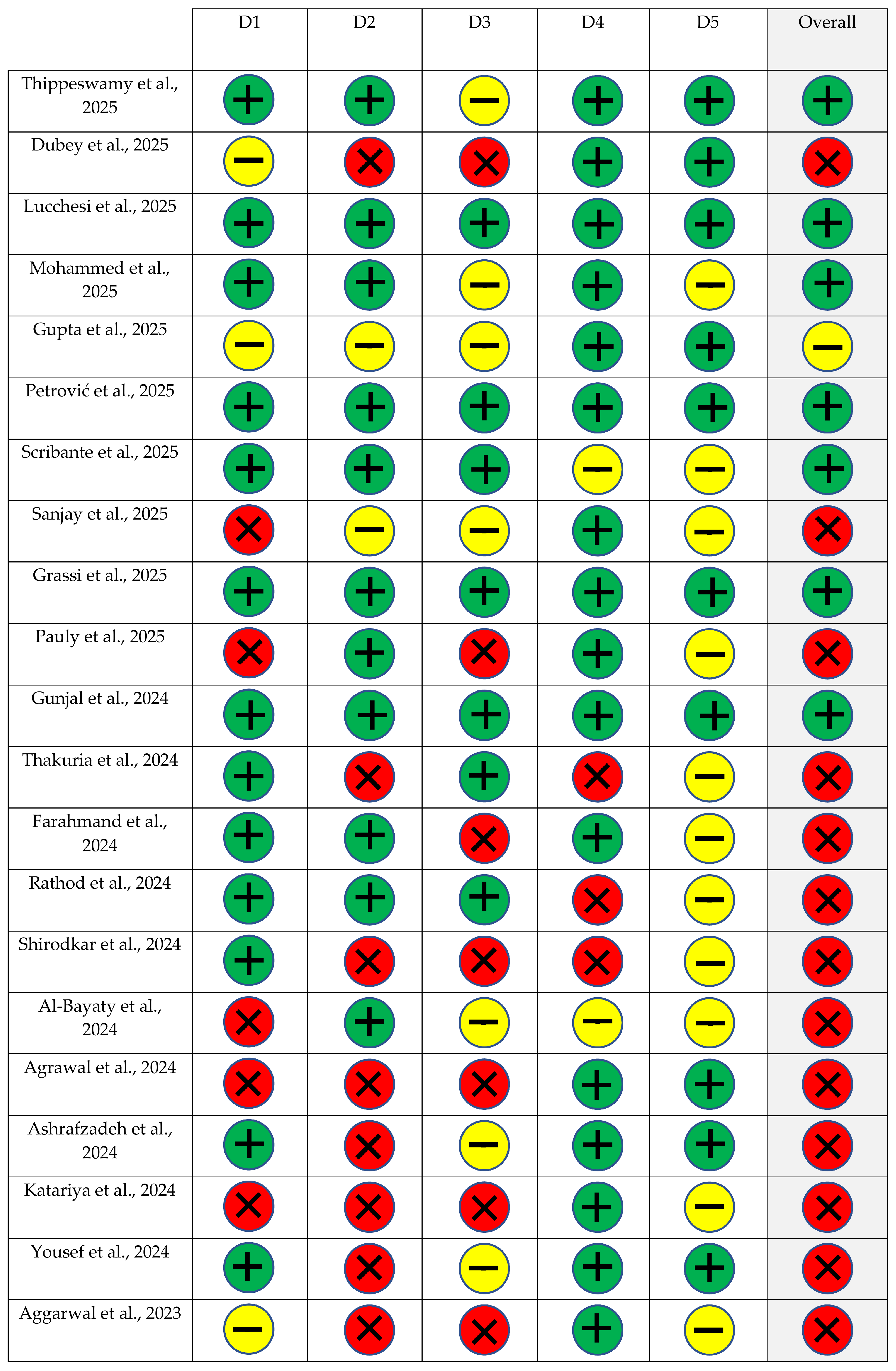
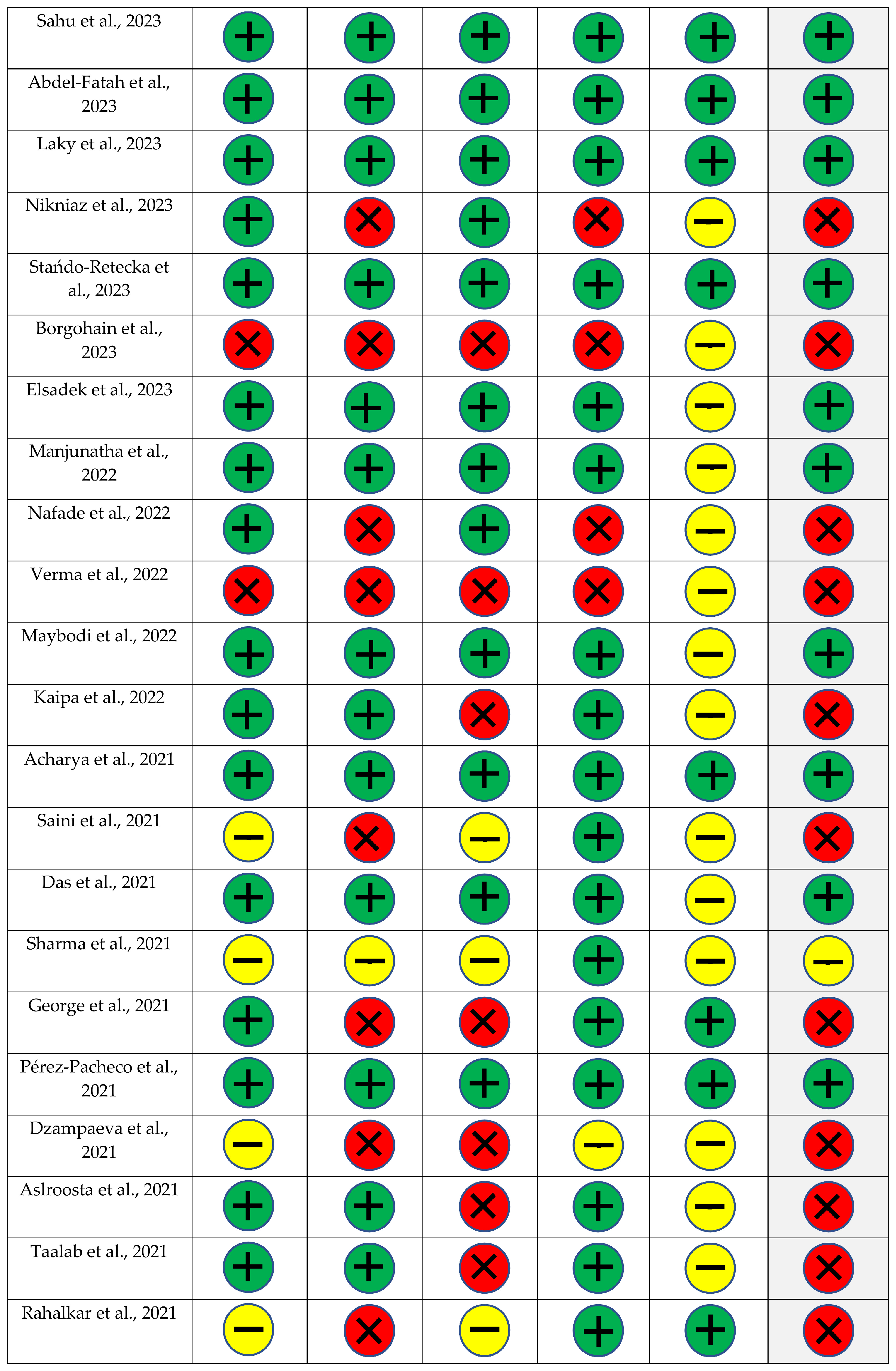
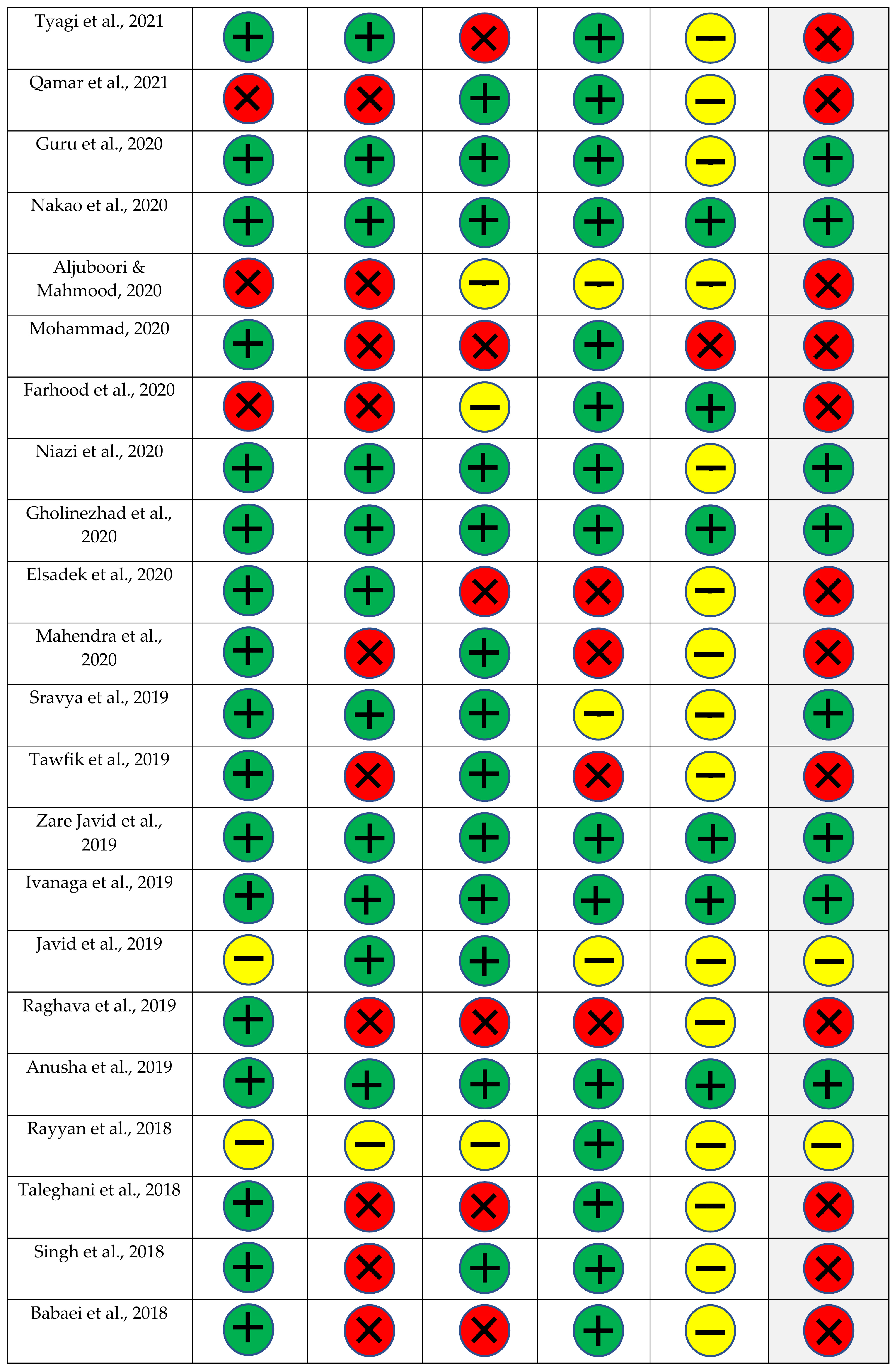
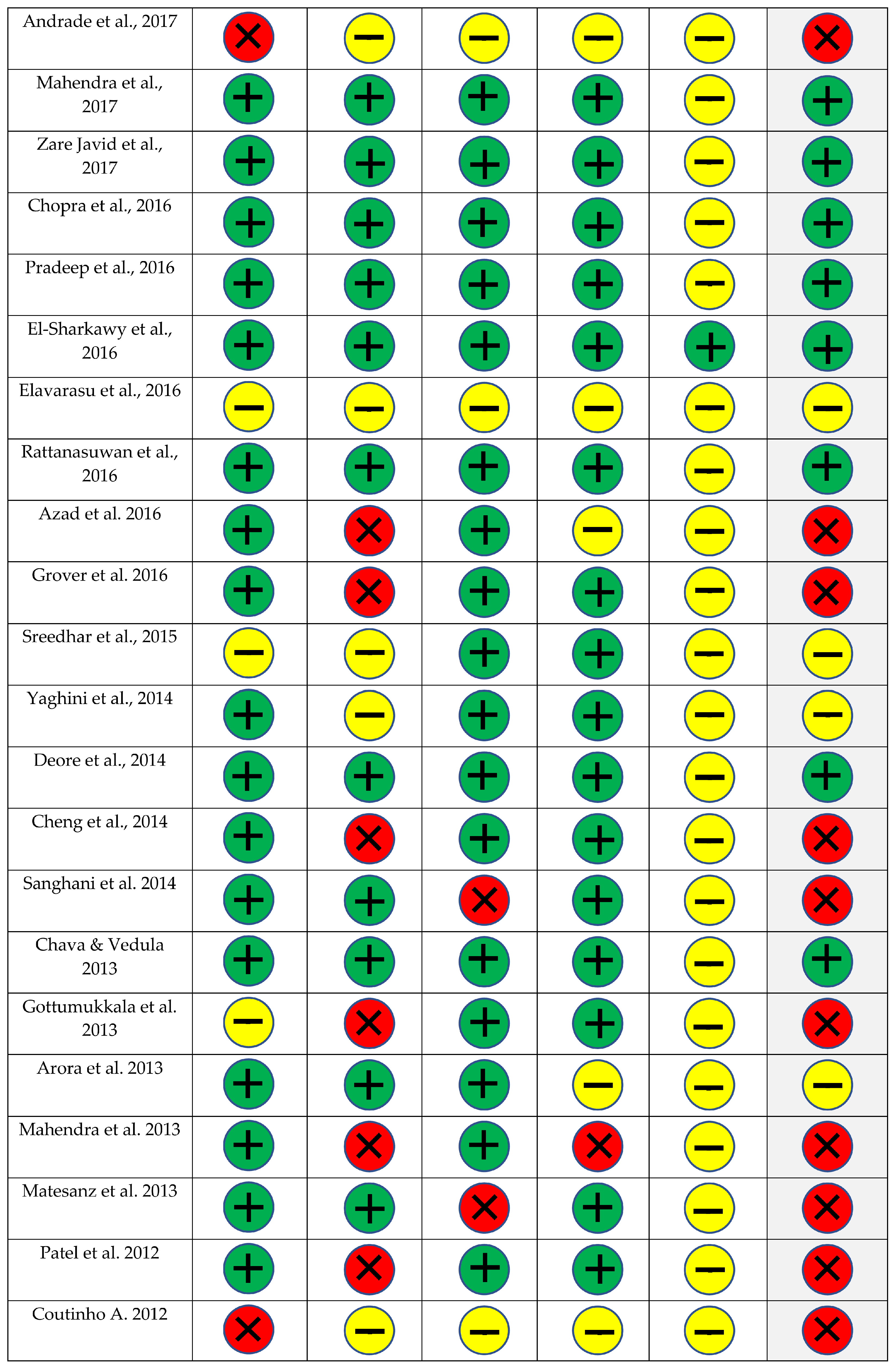
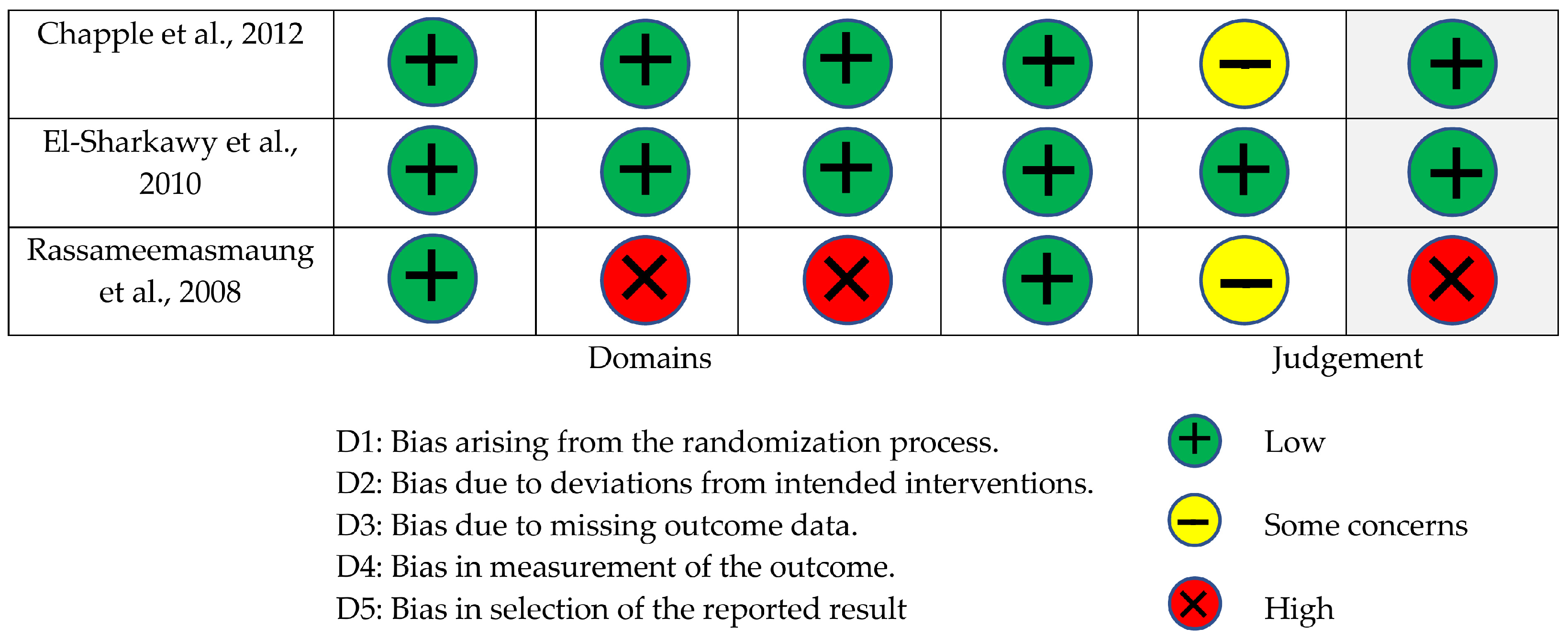
3.5. Risk of Bias Analysis
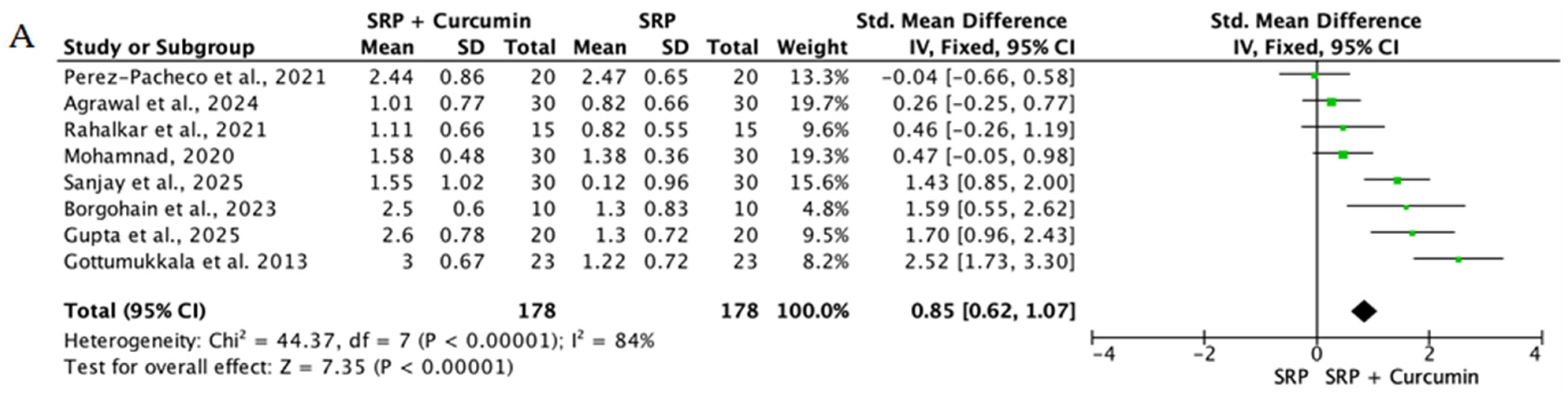
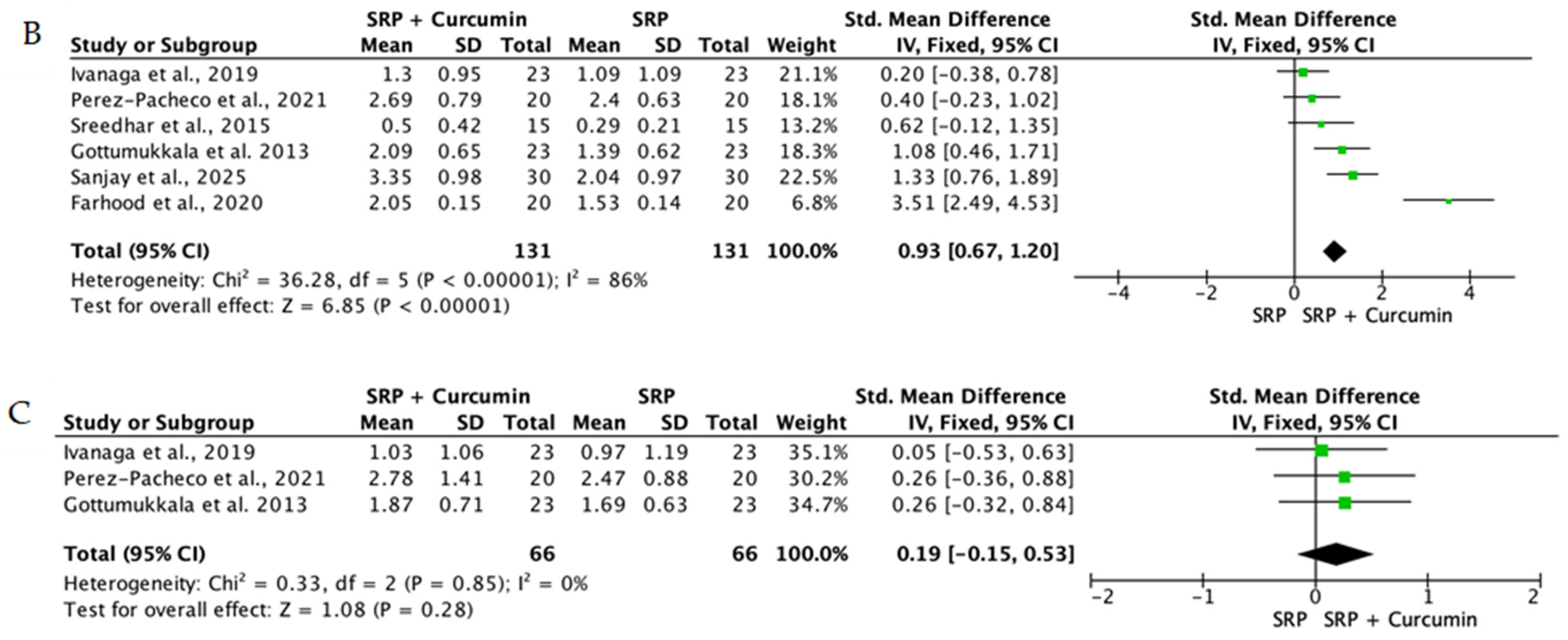
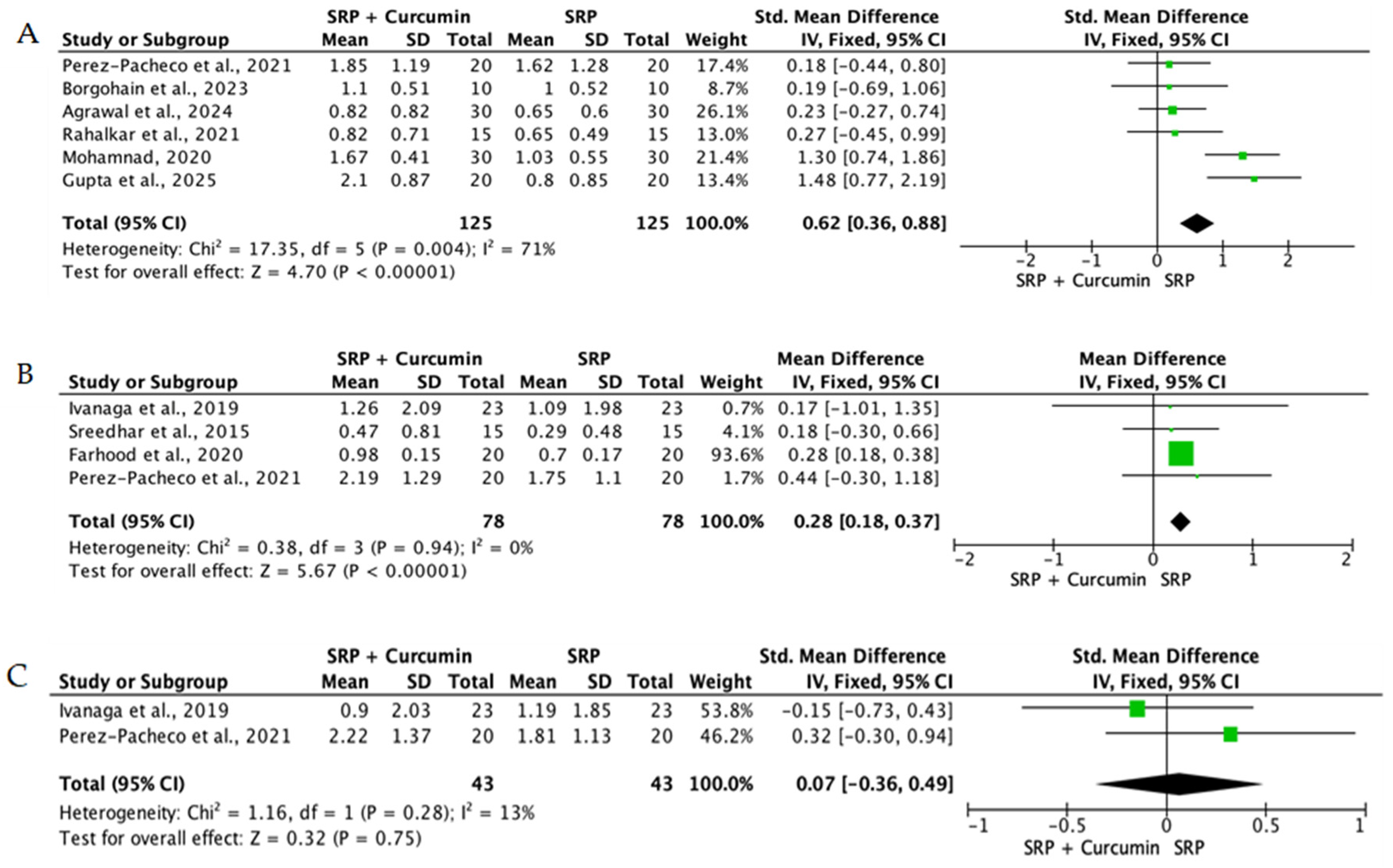
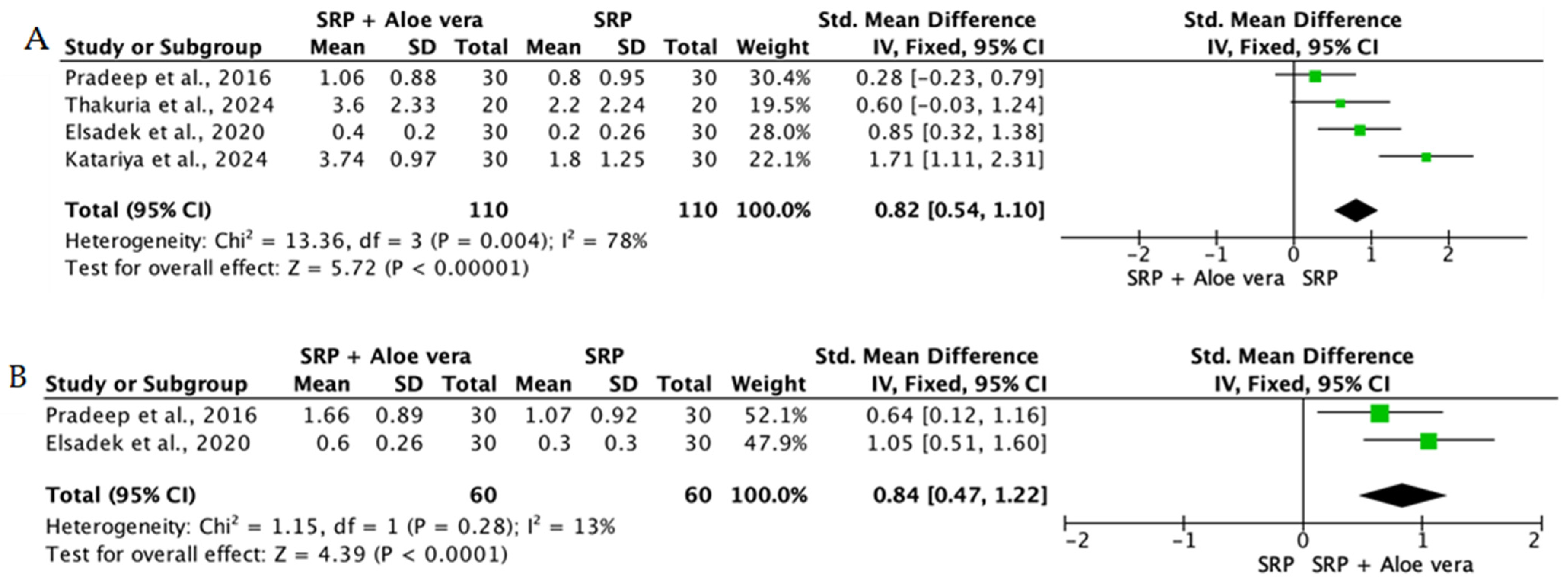
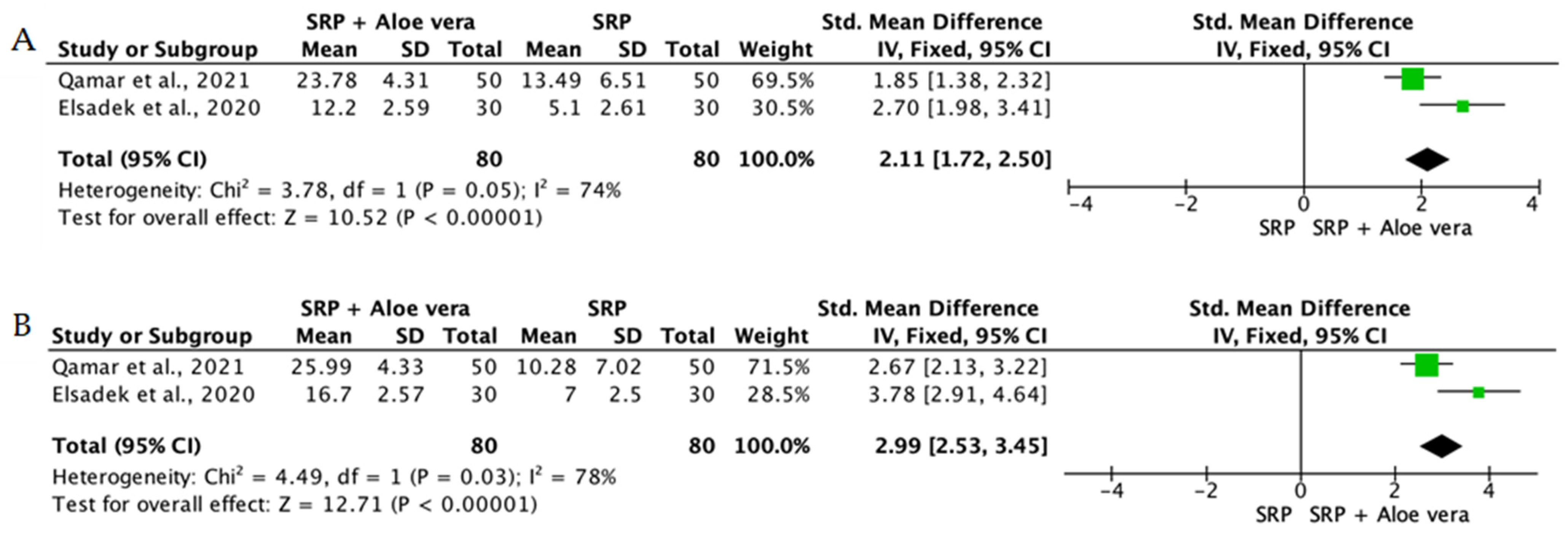
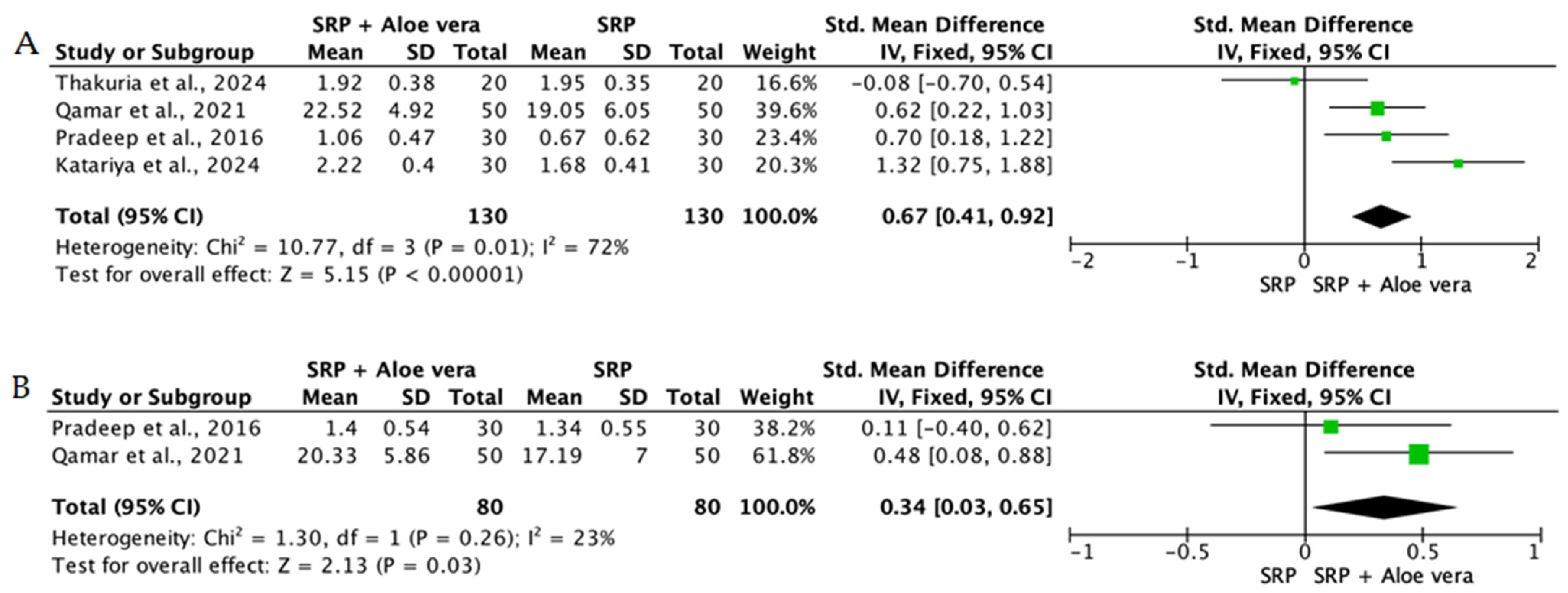
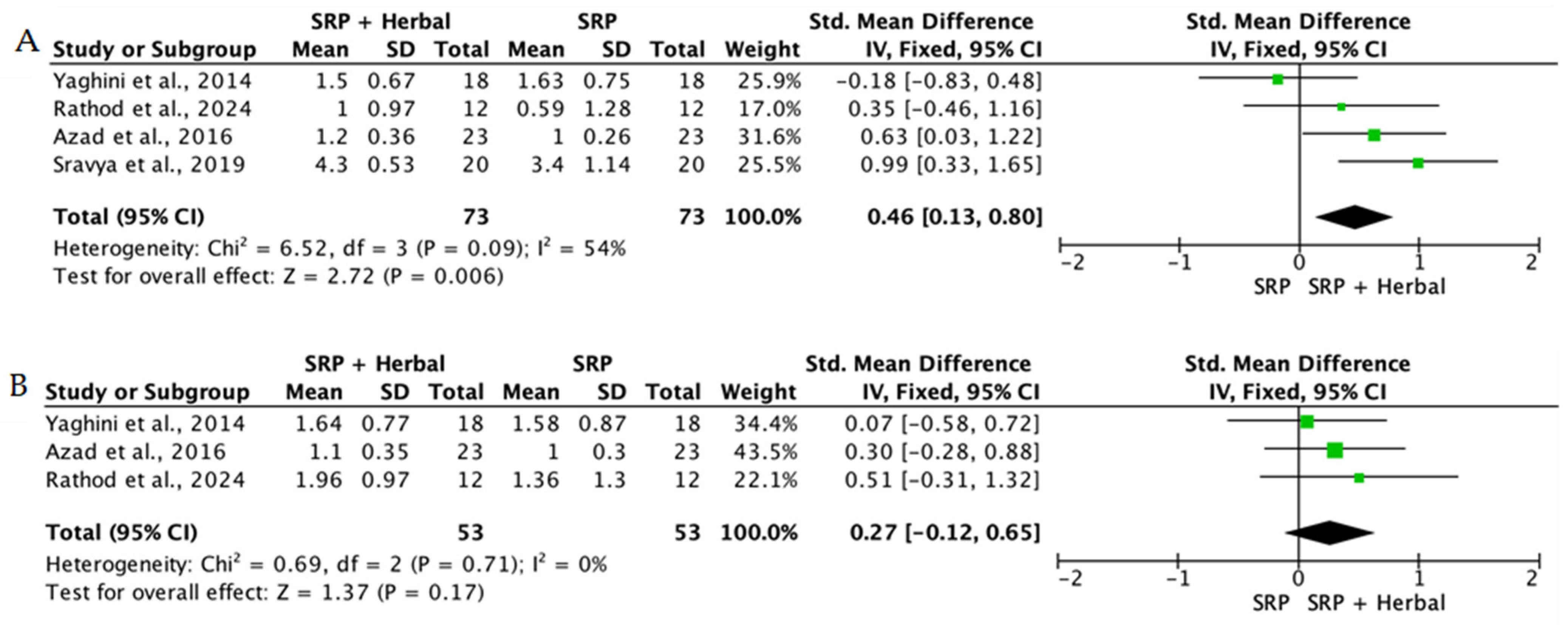
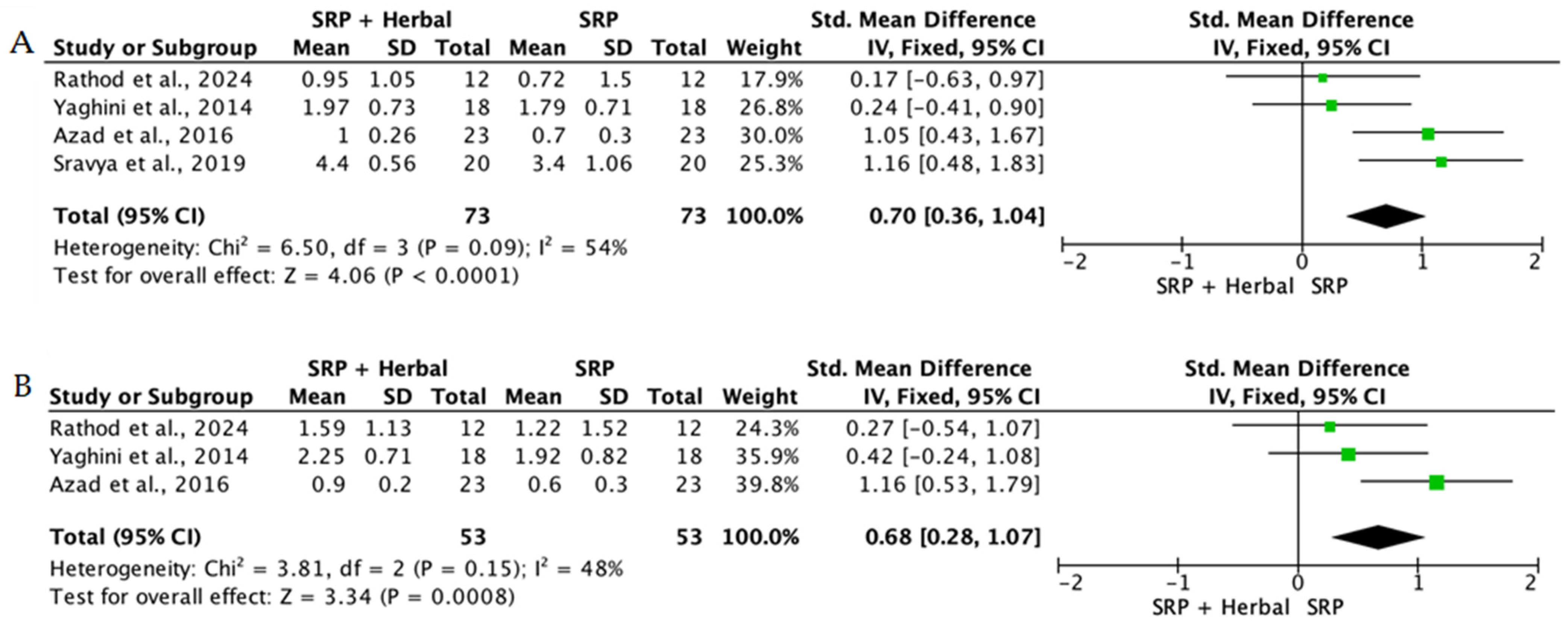
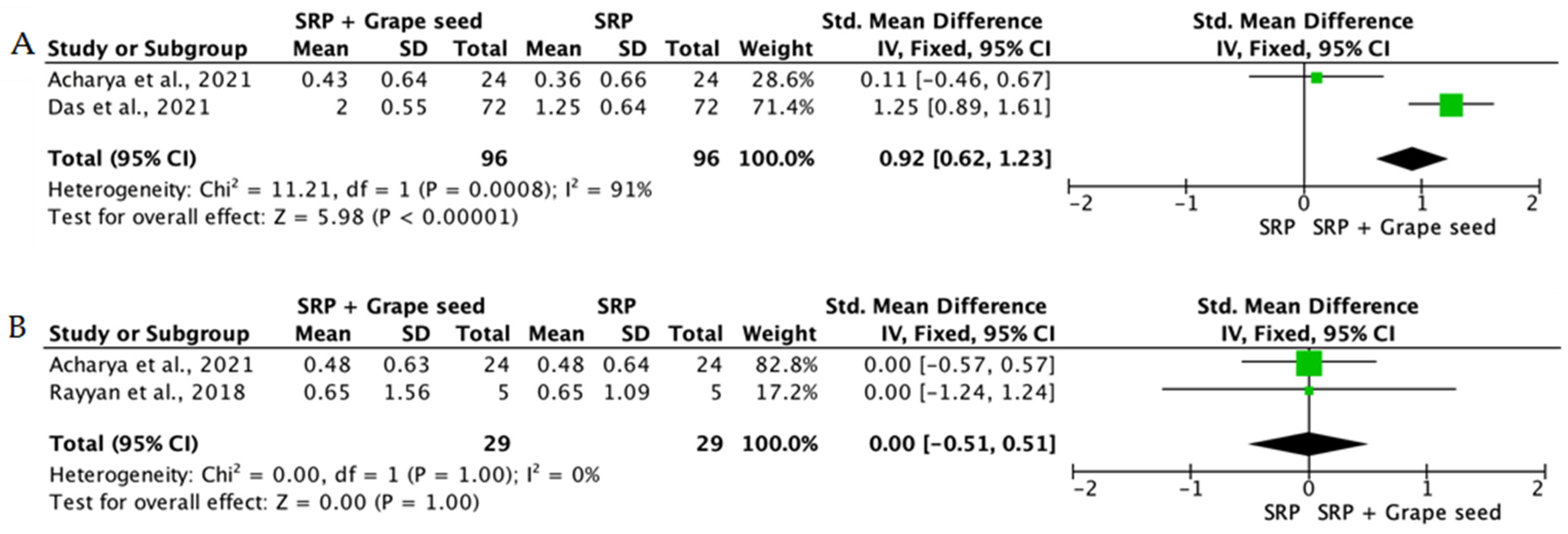
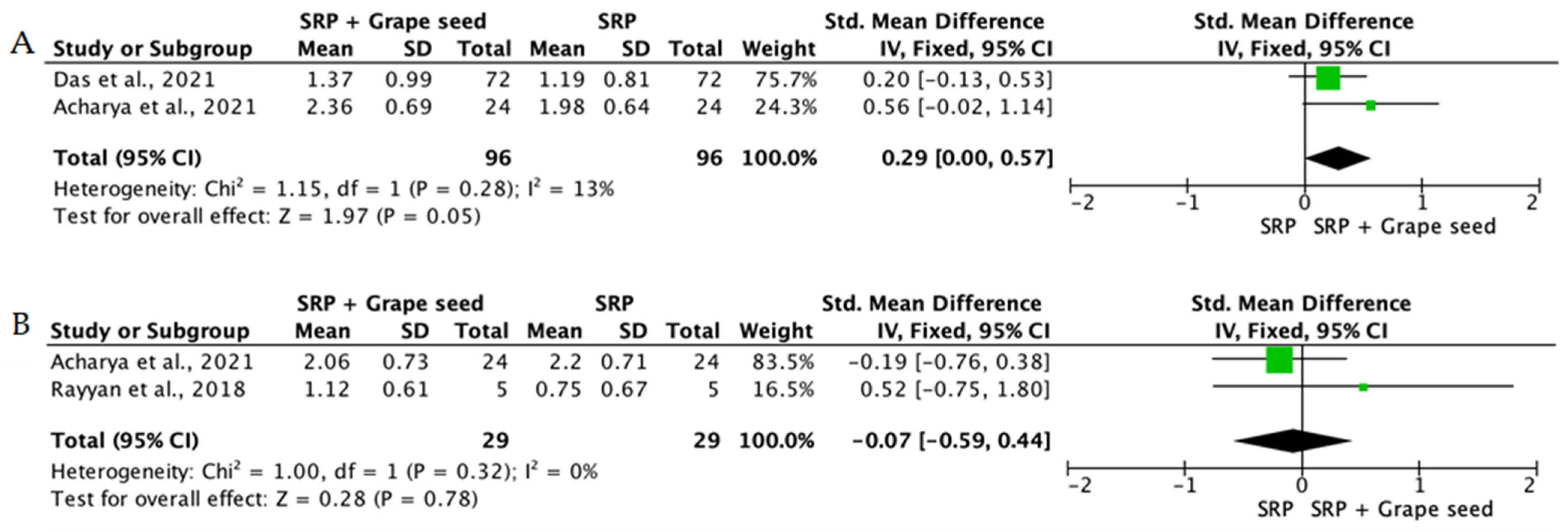
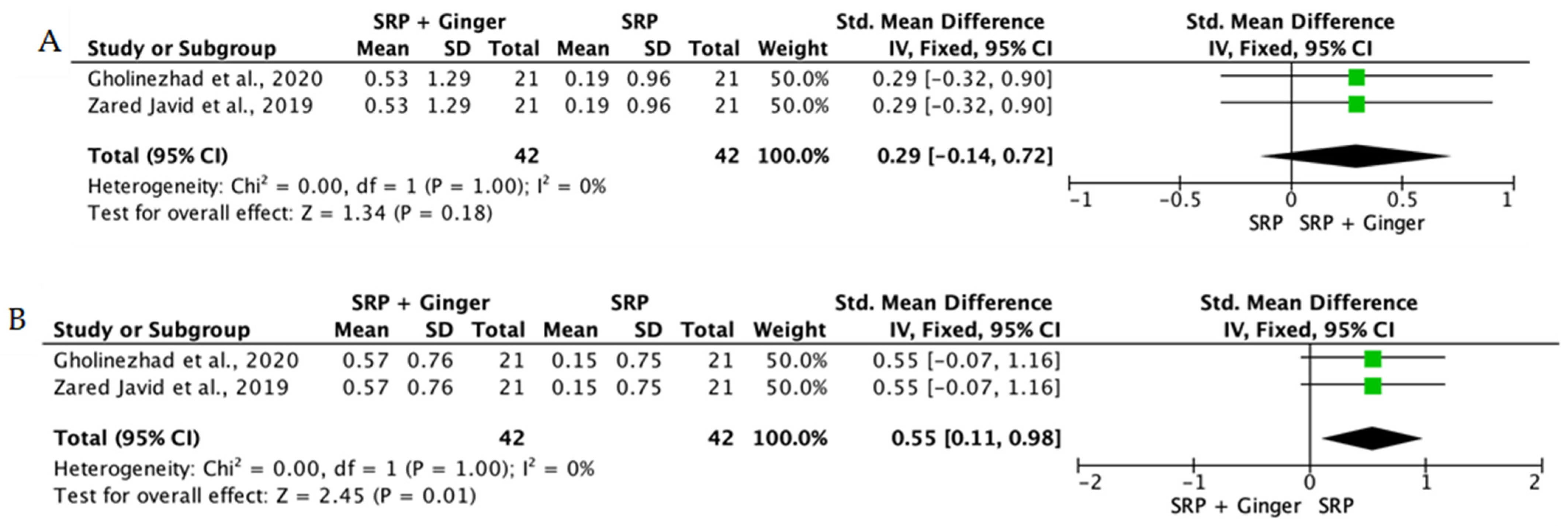
3.6. Main Results and Meta-Analysis
3.7. Certainty of Evidence
4. Discussion
5. Conclusions
Author Contributions
Funding
Institutional Review Board Statement
Informed Consent Statement
Data Availability Statement
Conflicts of Interest
References
- Baima, G.; Arce, M.; Romandini, M.; Van Dyke, T. Inflammatory and Immunological Basis of Periodontal Diseases. J. Periodontal Res. 2025; in press. [Google Scholar] [CrossRef]
- de Molon, R.S.; Vernal, R.; Oliveira, G.E.; Steffens, J.P.; Ervolino, E.; Theodoro, L.H.; van den Beucken, J.; Tetradis, S. Inflammatory bone loss and signaling pathways in periodontitis: Mechanistic insights and emerging therapeutic strategies. Bone Res. 2026, 14, 1. [Google Scholar] [CrossRef]
- Hajishengallis, G. Immunomicrobial pathogenesis of periodontitis: Keystones, pathobionts, and host response. Trends Immunol. 2014, 35, 3–11. [Google Scholar] [CrossRef]
- Hajishengallis, G.; Chavakis, T.; Lambris, J.D. Current understanding of periodontal disease pathogenesis and targets for host-modulation therapy. Periodontol. 2000 2020, 84, 14–34. [Google Scholar] [CrossRef]
- Kinane, D.F.; Stathopoulou, P.G.; Papapanou, P.N. Periodontal diseases. Nat. Rev. Dis. Primers 2017, 3, 17038. [Google Scholar] [CrossRef]
- Van Dyke, T.E.; Baima, G.; Romandini, M. Periodontitis: Microbial Dysbiosis, Non-Resolving Inflammation, or Both? J. Periodontal Res. 2025; in press. [Google Scholar] [CrossRef]
- Van Dyke, T.E.; Sima, C. Understanding resolution of inflammation in periodontal diseases: Is chronic inflammatory periodontitis a failure to resolve? Periodontol. 2000 2020, 82, 205–213. [Google Scholar] [CrossRef]
- Socransky, S.S.; Haffajee, A.D. Microbial mechanisms in the pathogenesis of destructive periodontal diseases: A critical assessment. J. Periodontal Res. 1991, 26, 195–212. [Google Scholar] [CrossRef]
- Socransky, S.S.; Haffajee, A.D.; Cugini, M.A.; Smith, C.; Kent, R.L., Jr. Microbial complexes in subgingival plaque. J. Clin. Periodontol. 1998, 25, 134–144. [Google Scholar] [CrossRef]
- de Molon, R.S.; de Avila, E.D.; Cirelli, J.A.; Steffens, J.P. Periodontal research contributions to basic sciences: From cell communication and host-parasite interactions to inflammation and bone biology. Biocell 2022, 46, 633–638. [Google Scholar] [CrossRef]
- Chen, M.X.; Zhong, Y.J.; Dong, Q.Q.; Wong, H.M.; Wen, Y.F. Global, regional, and national burden of severe periodontitis, 1990–2019: An analysis of the Global Burden of Disease Study 2019. J. Clin. Periodontol. 2021, 48, 1165–1188. [Google Scholar] [CrossRef]
- Kassebaum, N.J.; Bernabe, E.; Dahiya, M.; Bhandari, B.; Murray, C.J.; Marcenes, W. Global burden of severe periodontitis in 1990–2010: A systematic review and meta-regression. J. Dent. Res. 2014, 93, 1045–1053. [Google Scholar] [CrossRef]
- Nascimento, G.G.; Alves-Costa, S.; Romandini, M. Burden of severe periodontitis and edentulism in 2021, with projections up to 2050: The Global Burden of Disease 2021 study. J. Periodontal Res. 2024, 59, 823–867. [Google Scholar] [CrossRef]
- Bartold, P.M.; Van Dyke, T.E. Periodontitis: A host-mediated disruption of microbial homeostasis. Unlearning learned concepts. Periodontol. 2000 2013, 62, 203–217. [Google Scholar] [CrossRef]
- Bartold, P.M.; Van Dyke, T.E. Host modulation: Controlling the inflammation to control the infection. Periodontol. 2000 2017, 75, 317–329. [Google Scholar] [CrossRef]
- de Molon, R.S.; Rodrigues, J.V.S.; Deroide, M.B.; da Silva Barbirato, D.; Garcia, V.G.; Theodoro, L.H. The Efficacy of Topical or Systemic Antibiotics as Adjuvants to Non-Surgical Periodontal Treatment in Diabetic Patients: A Systematic Review and Meta-Analysis of Randomized Clinical Trials. J. Clin. Med. 2024, 13, 4763. [Google Scholar] [CrossRef]
- de Molon, R.S.; Steffens, J.P.; de Avila, E.D.; Teughels, W.; Van Dyke, T.E. Adjunctive Therapies in Periodontitis: Current Concepts and the Future. J. Periodontal Res. 2026; in press. [Google Scholar] [CrossRef]
- Fernandes, N.A.R.; Camilli, A.C.; Maldonado, L.A.G.; Pacheco, C.G.P.; Silva, A.F.; Molon, R.S.; Spolidorio, L.C.; Ribeiro de Assis, L.; Regasini, L.O.; Rossa Junior, C.; et al. Chalcone T4, a novel chalconic compound, inhibits inflammatory bone resorption in vivo and suppresses osteoclastogenesis in vitro. J. Periodontal Res. 2021, 56, 569–578. [Google Scholar] [CrossRef]
- Hajishengallis, G. Periodontitis: From microbial immune subversion to systemic inflammation. Nat. Rev. Immunol. 2015, 15, 30–44. [Google Scholar] [CrossRef]
- Sanz, M.; Herrera, D.; Kebschull, M.; Chapple, I.; Jepsen, S.; Beglundh, T.; Sculean, A.; Tonetti, M.S.; Participants, E.F.P.W.; Methodological, C. Treatment of stage I–III periodontitis-The EFP S3 level clinical practice guideline. J. Clin. Periodontol. 2020, 47, 4–60, Erratum in J. Clin. Periodontol. 2021, 48, 163. https://doi.org/10.1111/jcpe.13403. [Google Scholar] [CrossRef]
- Sanz, M.; Beighton, D.; Curtis, M.A.; Cury, J.A.; Dige, I.; Dommisch, H.; Ellwood, R.; Giacaman, R.A.; Herrera, D.; Herzberg, M.C.; et al. Role of microbial biofilms in the maintenance of oral health and in the development of dental caries and periodontal diseases. Consensus report of group 1 of the Joint EFP/ORCA workshop on the boundaries between caries and periodontal disease. J. Clin. Periodontol. 2017, 44, S5–S11. [Google Scholar] [CrossRef]
- Preshaw, P.M.; Alba, A.L.; Herrera, D.; Jepsen, S.; Konstantinidis, A.; Makrilakis, K.; Taylor, R. Periodontitis and diabetes: A two-way relationship. Diabetologia 2012, 55, 21–31. [Google Scholar] [CrossRef] [PubMed]
- Oliveira, G.E.; da Silva Barbirato, D.; de Menezes, B.S.; Fuly, M.S.; Pelegrine, H.C.L.; Bonilha, D.C.; de Alencar, J.G.P.; Theodoro, L.H.; de Molon, R.S. Exploring the Impact of Biological Agents on Protecting Against Experimental Periodontitis: A Systematic Review of Animal-Based Studies. Biomed. Res. Int. 2024, 2024, 1716735. [Google Scholar] [CrossRef] [PubMed]
- Pavanelli, A.L.R.; de Menezes, B.S.; Pereira, E.B.B.; de Souza Morais, F.A.; Cirelli, J.A.; de Molon, R.S. Pharmacological Therapies for the Management of Inflammatory Bone Resorption in Periodontal Disease: A Review of Preclinical Studies. Biomed. Res. Int. 2022, 2022, 5832009. [Google Scholar] [CrossRef] [PubMed]
- de Oliveira, D.; de Souza, A.L.M.; da Rocha Nogueira Filho, G.; Martins-Pfeifer, C.C.; Stefani, C.M. Efficacy of Adjunctive Local Antimicrobials to Non-Surgical Periodontal Therapy in Pocket Reduction and Glycemic Control of Patients with Type 2 Diabetes: A Network Meta-Analysis. Curr. Diabetes Rev. 2025, 21, 86–102. [Google Scholar] [CrossRef]
- Elkhouli, A.M. The efficacy of host response modulation therapy (omega-3 plus low-dose aspirin) as an adjunctive treatment of chronic periodontitis (clinical and biochemical study). J. Periodontal Res. 2011, 46, 261–268. [Google Scholar] [CrossRef]
- Golub, L.M.; Lee, H.M.; Bacigalupo, J.; Gu, Y. Host modulation therapy in periodontitis, diagnosis and treatment-status update. Front. Dent. Med. 2024, 5, 1423401. [Google Scholar] [CrossRef]
- Novak, M.J.; Dawson, D.R., 3rd; Magnusson, I.; Karpinia, K.; Polson, A.; Polson, A.; Ryan, M.E.; Ciancio, S.; Drisko, C.H.; Kinane, D.; et al. Combining host modulation and topical antimicrobial therapy in the management of moderate to severe periodontitis: A randomized multicenter trial. J. Periodontol. 2008, 79, 33–41. [Google Scholar] [CrossRef]
- Sulijaya, B.; Takahashi, N.; Yamazaki, K. Host modulation therapy using anti-inflammatory and antioxidant agents in periodontitis: A review to a clinical translation. Arch. Oral Biol. 2019, 105, 72–80. [Google Scholar] [CrossRef]
- Alkaya, B.; Haytac, M.C.; Ozcan, M.; Turer, O.U.; Kayhan, H.G.; Demirbilek, F.; Teughels, W. Daily Probiotic Ayran Intake Reduces Gingival Inflammation: An Experimental Gingivitis Study. Oral Health Prev. Dent. 2024, 22, 511–518. [Google Scholar] [CrossRef]
- Lauwens, K.; Saghi, M.; Germonpre, P.J.; Zayed, N.; Boon, N.; Bernaerts, K.; Teughels, W.; Van Holm, W. Can We Combine Mouthrinses with Probiotics? An Evaluation of Their Compatibility and Combined Therapy on Oral Biofilms. J. Periodontal Res. 2025; in press. [Google Scholar] [CrossRef] [PubMed]
- Retamal-Valdes, B.; Teughels, W.; Oliveira, L.M.; da Silva, R.N.; Fritoli, A.; Gomes, P.; Soares, G.M.S.; Temporao, N.; Furquim, C.P.; Duarte, P.M.; et al. Clinical, microbiological, and immunological effects of systemic probiotics in periodontal treatment: Study protocol for a randomized controlled trial. Trials 2021, 22, 283. [Google Scholar] [CrossRef] [PubMed]
- Van Holm, W.; Carvalho, R.; Delanghe, L.; Eilers, T.; Zayed, N.; Mermans, F.; Bernaerts, K.; Boon, N.; Claes, I.; Lebeer, S.; et al. Antimicrobial potential of known and novel probiotics on in vitro periodontitis biofilms. npj Biofilms Microbiomes 2023, 9, 3. [Google Scholar] [CrossRef] [PubMed]
- Van Holm, W.; Lauwens, K.; De Wever, P.; Schuermans, A.; Zayed, N.; Pamuk, F.; Saghi, M.; Fardim, P.; Bernaerts, K.; Boon, N.; et al. Probiotics for oral health: Do they deliver what they promise? Front. Microbiol. 2023, 14, 1219692. [Google Scholar] [CrossRef]
- Van Holm, W.; Zayed, N.; Lauwens, K.; Saghi, M.; Axelsson, J.; Aktan, M.K.; Braem, A.; Simoens, K.; Vanbrabant, L.; Proost, P.; et al. Oral Biofilm Composition, Dissemination to Keratinocytes, and Inflammatory Attenuation Depend on Probiotic and Synbiotic Strain Specificity. Probiotics Antimicrob. Proteins 2024, 17, 3041–3055. [Google Scholar] [CrossRef]
- Gatej, S.M.; Marino, V.; Bright, R.; Fitzsimmons, T.R.; Gully, N.; Zilm, P.; Gibson, R.J.; Edwards, S.; Bartold, P.M. Probiotic Lactobacillus rhamnosus GG prevents alveolar bone loss in a mouse model of experimental periodontitis. J. Clin. Periodontol. 2018, 45, 204–212. [Google Scholar] [CrossRef]
- Invernici, M.M.; Furlaneto, F.A.C.; Salvador, S.L.; Ouwehand, A.C.; Salminen, S.; Mantziari, A.; Vinderola, G.; Ervolino, E.; Santana, S.I.; Silva, P.H.F.; et al. Bifidobacterium animalis subsp lactis HN019 presents antimicrobial potential against periodontopathogens and modulates the immunological response of oral mucosa in periodontitis patients. PLoS ONE 2020, 15, e0238425. [Google Scholar] [CrossRef]
- Harris, J.J.; Rajasekar, A. Efficacy of antimicrobial photodynamic therapy (a-PDT) as an adjunct to scaling and root planing on clinical parameters, oxidative and anti-oxidative profile in the treatment of chronic periodontitis: A randomized controlled clinical trial. Odontology 2025, 114, 130–137. [Google Scholar] [CrossRef]
- Petrilli, P.H.; Rodrigues, J.V.S.; Santos, M.J.P.; Paino-Sant’Ana, A.; Wainwright, M.; Garcia, V.G.; de Molon, R.S.; Casarin, R.C.V.; Theodoro, L.H. Adjunctive methylene blue-based antimicrobial photodynamic therapy in the re-instrumentation of residual periodontal pockets in individuals with down syndrome: A randomized controlled clinical trial. J. Dent. 2025, 162, 106061. [Google Scholar] [CrossRef]
- Theodoro, L.H.; Rodrigues, J.V.S.; Claudio, M.M.; Sant’Ana, A.P.; Mulinari-Santos, G.; Wainwright, M.; Casarin, R.C.V.; de Molon, R.S.; Garcia, V.G. Effect of butyl toluidine blue-mediated photodynamic therapy on periodontal healing in Type 2 diabetic patients. A randomized clinical trial. J. Dent. 2025, 163, 106060. [Google Scholar] [CrossRef]
- Vakaki, C.; Fragkioudakis, I.; Patila, T.; Sakellari, D. Regular home use of dual-light photodynamic therapy as an adjunct to non-surgical periodontal treatment in smokers: A single-center randomized controlled clinical trial. Clin. Oral Investig. 2025, 29, 553. [Google Scholar] [CrossRef] [PubMed]
- Hasturk, H.; Kantarci, A.; Ohira, T.; Arita, M.; Ebrahimi, N.; Chiang, N.; Petasis, N.A.; Levy, B.D.; Serhan, C.N.; Van Dyke, T.E. RvE1 protects from local inflammation and osteoclastmediated bone destruction in periodontitis. FASEB J. 2006, 20, 401–403. [Google Scholar] [CrossRef] [PubMed]
- Sahni, V.; Van Dyke, T.E. Immunomodulation of periodontitis with SPMs. Front. Oral Health 2023, 4, 1288722. [Google Scholar] [CrossRef]
- Siddiqui, Y.D.; Omori, K.; Ito, T.; Yamashiro, K.; Nakamura, S.; Okamoto, K.; Ono, M.; Yamamoto, T.; Van Dyke, T.E.; Takashiba, S. Resolvin D2 Induces Resolution of Periapical Inflammation and Promotes Healing of Periapical Lesions in Rat Periapical Periodontitis. Front. Immunol. 2019, 10, 307. [Google Scholar] [CrossRef]
- Hasturk, H.; Kantarci, A.; Goguet-Surmenian, E.; Blackwood, A.; Andry, C.; Serhan, C.N.; Van Dyke, T.E. Resolvin E1 regulates inflammation at the cellular and tissue level and restores tissue homeostasis in vivo. J. Immunol. 2007, 179, 7021–7029. [Google Scholar] [CrossRef]
- Herrera, B.S.; Ohira, T.; Gao, L.; Omori, K.; Yang, R.; Zhu, M.; Muscara, M.N.; Serhan, C.N.; Van Dyke, T.E.; Gyurko, R. An endogenous regulator of inflammation, resolvin E1, modulates osteoclast differentiation and bone resorption. Br. J. Pharmacol. 2008, 155, 1214–1223. [Google Scholar] [CrossRef]
- Mizraji, G.; Heyman, O.; Van Dyke, T.E.; Wilensky, A. Resolvin D2 Restrains Th1 Immunity and Prevents Alveolar Bone Loss in Murine Periodontitis. Front. Immunol. 2018, 9, 785. [Google Scholar] [CrossRef]
- Feres, M.; Figueiredo, L.C.; Soares, G.M.; Faveri, M. Systemic antibiotics in the treatment of periodontitis. Periodontol. 2000 2015, 67, 131–186. [Google Scholar] [CrossRef]
- Smiley, C.J.; Tracy, S.L.; Abt, E.; Michalowicz, B.S.; John, M.T.; Gunsolley, J.; Cobb, C.M.; Rossmann, J.; Harrel, S.K.; Forrest, J.L.; et al. Systematic review and meta-analysis on the nonsurgical treatment of chronic periodontitis by means of scaling and root planing with or without adjuncts. J. Am. Dent. Assoc. 2015, 146, 508–524.e5. [Google Scholar] [CrossRef]
- Vandekerckhove, B.N.; Quirynen, M.; van Steenberghe, D. The use of locally delivered minocycline in the treatment of chronic periodontitis. A review of the literature. J. Clin. Periodontol. 1998, 25, 964–968; discussion 978–969. [Google Scholar] [CrossRef]
- Anwar, M.A.; Sayed, G.A.; Hal, D.M.; Hafeez, M.; Shatat, A.S.; Salman, A.; Eisa, N.M.; Ramadan, A.; El-Shiekh, R.A.; Hatem, S.; et al. Herbal remedies for oral and dental health: A comprehensive review of their multifaceted mechanisms including antimicrobial, anti-inflammatory, and antioxidant pathways. Inflammopharmacology 2025, 33, 1085–1160. [Google Scholar] [CrossRef]
- Hajishengallis, G.; Lamont, R.J. Breaking bad: Manipulation of the host response by Porphyromonas gingivalis. Eur. J. Immunol. 2014, 44, 328–338. [Google Scholar] [CrossRef] [PubMed]
- Da Ponte Leguizamon, N.; de Molon, R.S.; Coletto-Nunes, G.; Nogueira, A.V.B.; Rocha, S.V.; Neo-Justino, D.M.; Soares-Costa, A.; Cerri, P.S.; Lerner, U.H.; Souza, P.P.C.; et al. Phytocystatin CsinCPI-2 Reduces Osteoclastogenesis and Alveolar Bone Loss. J. Dent. Res. 2022, 101, 216–225. [Google Scholar] [CrossRef] [PubMed]
- de Molon, R.S. Therapeutic Potential of Tanshinones in Osteolytic Diseases: From Molecular and Cellular Pathways to Preclinical Models. Dent. J. 2025, 13, 309. [Google Scholar] [CrossRef] [PubMed]
- Pavanelli, A.L.R.; Vieira, S.M.; Marcantonio, C.C.; Faria, G.; Tetradis, S.; de Souza, P.P.C.; Cirelli, J.A.; de Molon, R.S. Anti-inflammatory and antiresorptive activities of tanshinone-IIA mitigate alveolar bone destruction in mice with experimental periodontitis. J. Periodontol. 2025, 96, 1138–1153. [Google Scholar] [CrossRef]
- Zhu, Y.; Ali, A.; Mulinari Dos Santos, G.; Franciscon, J.P.S.; de Molon, R.S.; Goh, C.; Ervolino, E.; Theodoro, L.H.; Shrestha, A. A Chitosan-based Hydrogel to Modulate Immune Cells and Promote Periodontitis Healing in the High-Fat Diet-induced Periodontitis Rat Model. Acta Biomater. 2025, 200, 452–463. [Google Scholar] [CrossRef]
- Abdel-Fatah, R.; Mowafey, B.; Baiomy, A.; Elmeadawy, S. Efficacy of curcumin gel as an adjunct to scaling and root planing on salivary procalcitonin level in the treatment of patients with chronic periodontitis: A randomized controlled clinical trial. BMC Oral Health 2023, 23, 883. [Google Scholar] [CrossRef]
- Perez-Pacheco, C.G.; Fernandes, N.A.R.; Primo, F.L.; Tedesco, A.C.; Bellile, E.; Retamal-Valdes, B.; Feres, M.; Guimaraes-Stabili, M.R.; Rossa, C., Jr. Local application of curcumin-loaded nanoparticles as an adjunct to scaling and root planing in periodontitis: Randomized, placebo-controlled, double-blind split-mouth clinical trial. Clin. Oral Investig. 2021, 25, 3217–3227. [Google Scholar] [CrossRef]
- Raghava, K.V.; Sistla, K.P.; Narayan, S.J.; Yadalam, U.; Bose, A.; Mitra, K. Efficacy of Curcumin as an Adjunct to Scaling and Root Planing in Chronic Periodontitis Patients: A Randomized Controlled Clinical Trial. J. Contemp. Dent. Pract. 2019, 20, 842–846. [Google Scholar]
- Siddharth, M.; Singh, P.; Gupta, R.; Sinha, A.; Shree, S.; Sharma, K. A Comparative Evaluation of Subgingivally Delivered 2% Curcumin and 0.2% Chlorhexidine Gel Adjunctive to Scaling and Root Planing in Chronic Periodontitis. J. Contemp. Dent. Pract. 2020, 21, 494–499. [Google Scholar]
- Lucchesi, V.H.; Giorgetti, A.P.O.; Correa, M.G.; Pecorari, V.G.A.; Benatti, B.B.; Tenenbaum, H.C.; Cirano, F.R.; Pimentel, S.P.; Casati, M.Z. Impact of systemic resveratrol on non-surgical periodontal treatment of smokers: A 12-month randomized clinical trial. Clin. Oral Investig. 2025, 29, 428. [Google Scholar] [CrossRef] [PubMed]
- Nikniaz, S.; Vaziri, F.; Mansouri, R. Impact of resveratrol supplementation on clinical parameters and inflammatory markers in patients with chronic periodontitis: A randomized clinical trail. BMC Oral Health 2023, 23, 177. [Google Scholar] [CrossRef] [PubMed]
- Kariu, T.; Nakao, R.; Ikeda, T.; Nakashima, K.; Potempa, J.; Imamura, T. Inhibition of gingipains and Porphyromonas gingivalis growth and biofilm formation by prenyl flavonoids. J. Periodontal Res. 2017, 52, 89–96. [Google Scholar] [CrossRef] [PubMed]
- Rudrapal, M.; Khairnar, S.J.; Khan, J.; Dukhyil, A.B.; Ansari, M.A.; Alomary, M.N.; Alshabrmi, F.M.; Palai, S.; Deb, P.K.; Devi, R. Dietary Polyphenols and Their Role in Oxidative Stress-Induced Human Diseases: Insights Into Protective Effects, Antioxidant Potentials and Mechanism(s) of Action. Front. Pharmacol. 2022, 13, 806470. [Google Scholar] [CrossRef]
- Saleh, H.A.; Yousef, M.H.; Abdelnaser, A. The Anti-Inflammatory Properties of Phytochemicals and Their Effects on Epigenetic Mechanisms Involved in TLR4/NF-kappaB-Mediated Inflammation. Front. Immunol. 2021, 12, 606069. [Google Scholar] [CrossRef]
- Yuan, Y.; Hui, X.; Liu, Z.; Sun, J.; Raka, R.N.; Xiao, J.; Zhang, Z.; Wu, H. Investigation of differential Multi-Mode antibacterial mechanisms of essential oils of Satureja montana L. and Leptospermum scoparium J.R.Forst. & G.Forst. Against Porphyromonas gingivalis. BMC Complement. Med. Ther. 2025, 25, 283. [Google Scholar] [CrossRef]
- Al-Khayri, J.M.; Sahana, G.R.; Nagella, P.; Joseph, B.V.; Alessa, F.M.; Al-Mssallem, M.Q. Flavonoids as Potential Anti-Inflammatory Molecules: A Review. Molecules 2022, 27, 2901. [Google Scholar] [CrossRef]
- Hashim, N.T.; Babiker, R.; Chaitanya, N.; Mohammed, R.; Priya, S.P.; Padmanabhan, V.; Ahmed, A.; Dasnadi, S.P.; Islam, M.S.; Gismalla, B.G.; et al. New Insights in Natural Bioactive Compounds for Periodontal Disease: Advanced Molecular Mechanisms and Therapeutic Potential. Molecules 2025, 30, 807. [Google Scholar] [CrossRef]
- Duarte, P.M.; Lazarin, R.; Vilela, N.; Feres, M. Adjunctive antimicrobials and host modulators in nonsurgical periodontal therapy: Focus on patients with diabetes and smokers. Periodontol. 2000, 2025; in press. [Google Scholar] [CrossRef]
- El-Sharkawy, H.M.; Anees, M.M.; Van Dyke, T.E. Propolis Improves Periodontal Status and Glycemic Control in Patients with Type 2 Diabetes Mellitus and Chronic Periodontitis: A Randomized Clinical Trial. J. Periodontol. 2016, 87, 1418–1426. [Google Scholar] [CrossRef]
- Hormdee, D.; Tarawadee, N.; Rinsathorn, W.; Puasiri, S.; Suwannarong, W. The Effect of Subgingival Curcumin Gel with and Without Photodynamic Therapy as Adjunctive Periodontal Treatment in Type 2 Diabetes Mellitus Patients: A Split-Mouth Clinical and Microbiological Study. Int. J. Dent. 2025, 2025, 2575672. [Google Scholar] [CrossRef]
- Pradeep, A.R.; Garg, V.; Raju, A.; Singh, P. Adjunctive Local Delivery of Aloe vera Gel in Patients with Type 2 Diabetes and Chronic Periodontitis: A Randomized, Controlled Clinical Trial. J. Periodontol. 2016, 87, 268–274. [Google Scholar] [CrossRef]
- Furquim Dos Santos Cardoso, V.; Amaral Roppa, R.H.; Antunes, C.; Silva Moraes, A.N.; Santi, L.; Konrath, E.L. Efficacy of medicinal plant extracts as dental and periodontal antibiofilm agents: A systematic review of randomized clinical trials. J. Ethnopharmacol. 2021, 281, 114541. [Google Scholar] [CrossRef]
- Guo, Y.; Li, Z.; Chen, F.; Chai, Y. Polyphenols in Oral Health: Homeostasis Maintenance, Disease Prevention, and Therapeutic Applications. Nutrients 2023, 15, 4384. [Google Scholar] [CrossRef] [PubMed]
- Heuzeroth, G.; Kaufmann, M.E.; Herter-Aeberli, I.; Schlagenauf, U.; Liu, C.C.; Papageorgiou, S.N.; Schmidlin, P.R. Weighing up the potential of “superfoods” compounds of green tea or turmeric as adjuncts in comparison to established therapeutical approaches for periodontal disease. Clin. Oral Investig. 2025, 29, 61. [Google Scholar] [CrossRef] [PubMed]
- Laleman, I.; Teughels, W. Novel natural product-based oral topical rinses and toothpastes to prevent periodontal diseases. Periodontol. 2000 2020, 84, 102–123. [Google Scholar] [CrossRef]
- Melo, J.G.A.; Sousa, J.P.; Firmino, R.T.; Matins, C.C.; Granville-Garcia, A.F.; Nonaka, C.F.W.; Costa, E. Different applications forms of green tea (Camellia sinensis (L.) Kuntze) for the treatment of periodontitis: A systematic review and meta-analysis. J. Periodontal Res. 2021, 56, 443–453. [Google Scholar] [CrossRef]
- Moro, M.G.; Silveira Souto, M.L.; Franco, G.C.N.; Holzhausen, M.; Pannuti, C.M. Efficacy of local phytotherapy in the nonsurgical treatment of periodontal disease: A systematic review. J. Periodontal Res. 2018, 53, 288–297. [Google Scholar] [CrossRef]
- Myneni, S.R.; Brocavich, K.; Wang, H.H. Biological strategies for the prevention of periodontal disease: Probiotics and vaccines. Periodontol. 2000 2020, 84, 161–175. [Google Scholar] [CrossRef]
- Potra Cicalau, G.I.; Vicas, L.G.; Ciavoi, G.; Ghitea, T.C.; Csaba, N.; Cristea, R.A.; Miere Groza, F.; Ganea, M. A Natural Approach to the Prevention and Treatment of Gingivitis and Periodontitis: A Review of Pomegranate’s Bioactive Properties. Life 2024, 14, 1298. [Google Scholar] [CrossRef]
- Ramesh, K.S.V.; Ramalaxmi, K.; Sruthima, N.; Swetha, P.; Anil, B.; PhaniKumar, M.; Nissi, G.; Sahithiprabha, C. Efficacy of mangosteen as local drug delivery for improving periodontal health in adults with periodontitis: A systematic review and meta-analysis of randomized controlled trials. J. Complement. Integr. Med. 2025, 22, 563–573. [Google Scholar] [CrossRef]
- Ramirez-Torres, V.; Torres-Leon, C.; Londono-Hernandez, L.; Gomez-Garcia, R.; Ramirez-Guzman, N. Therapeutic Potential of Latin American Medicinal Plants in Oral Diseases: From Dental Pain to Periodontal Inflammation-A Systematic Review. Int. J. Mol. Sci. 2025, 26, 11502. [Google Scholar] [CrossRef]
- Woelber, J.P.; Reichenbacher, K.; Gross, T.; Vach, K.; Ratka-Kruger, P.; Bartha, V. Dietary and Nutraceutical Interventions as an Adjunct to Non-Surgical Periodontal Therapy—A Systematic Review. Nutrients 2023, 15, 1538. [Google Scholar] [CrossRef] [PubMed]
- Higgins, J.P.T.; Thomas, J.; Chandler, J. Cochrane Handbook for Systematic Reviews of Interventions; Version 6.3 (updated February 2022); Cochrane: London, UK, 2022; Available online: www.training.cochrane.org/handbook (accessed on 22 August 2024).
- Moher, D.; Liberati, A.; Tetzlaff, J.; Altman, D.G.; Group, P. Preferred reporting items for systematic reviews and meta-analyses: The PRISMA statement. Int. J. Surg. 2010, 8, 336–341. [Google Scholar] [CrossRef] [PubMed]
- Page, M.J.; McKenzie, J.E.; Bossuyt, P.M.; Boutron, I.; Hoffmann, T.C.; Mulrow, C.D.; Shamseer, L.; Tetzlaff, J.M.; Akl, E.A.; Brennan, S.E.; et al. The PRISMA 2020 statement: An updated guideline for reporting systematic reviews. BMJ 2021, 372, n71. [Google Scholar] [CrossRef] [PubMed]
- Sterne, J.A.C.; Savovic, J.; Page, M.J.; Elbers, R.G.; Blencowe, N.S.; Boutron, I.; Cates, C.J.; Cheng, H.Y.; Corbett, M.S.; Eldridge, S.M.; et al. RoB 2: A revised tool for assessing risk of bias in randomised trials. BMJ 2019, 366, l4898. [Google Scholar] [CrossRef]
- Guyatt, G.; Oxman, A.D.; Akl, E.A.; Kunz, R.; Vist, G.; Brozek, J.; Norris, S.; Falck-Ytter, Y.; Glasziou, P.; DeBeer, H.; et al. GRADE guidelines: 1. Introduction-GRADE evidence profiles and summary of findings tables. J. Clin. Epidemiol. 2011, 64, 383–394. [Google Scholar] [CrossRef]
- Ashrafzadeh, E.; Babaei, H.; Ravanbakhsh, M.; Zare Javid, A.; Maghsoumi-Norouzabad, L. Beneficial effects of cranberry juice enriched with omega-3 fatty acids in patients with type 2 diabetic and periodontal disease: A randomized pilot clinical trial. J. Adv. Periodontol. Implant. Dent. 2024, 16, 160–172. [Google Scholar] [CrossRef]
- Gholinezhada, H.; Bazyarb, H.; Rashidia, H.; Salehid, P.; Haghighi-zadehe, M.H.; Javidc, A.Z. Using ginger supplement in adjunct with non-surgical periodontal therapy improves metabolic and periodontal parameters in patients with type 2 diabetes mellitus and chronic periodontitis: A double-blind, placebocontrolled trial. J. Herb. Med. 2020, 20, 100315. [Google Scholar] [CrossRef]
- Javid, A.Z.; Hormoznejad, R.; Yousefimanesh, H.A.; Haghighi-Zadeh, M.H.; Zakerkish, M. Impact of resveratrol supplementation on inflammatory, antioxidant, and periodontal markers in type 2 diabetic patients with chronic periodontitis. Diabetes Metab. Syndr. 2019, 13, 2769–2774. [Google Scholar] [CrossRef]
- Zare Javid, A.; Bazyar, H.; Gholinezhad, H.; Rahimlou, M.; Rashidi, H.; Salehi, P.; Haghighi-Zadeh, M.H. The effects of ginger supplementation on inflammatory, antioxidant, and periodontal parameters in type 2 diabetes mellitus patients with chronic periodontitis under non-surgical periodontal therapy. A double-blind, placebo-controlled trial. Diabetes Metab. Syndr. Obes. 2019, 12, 1751–1761. [Google Scholar] [CrossRef]
- Gupta, S.; Jyothi, S.G.; Siddiqui, A.; Dhanai, A.; Yadav, H.; Singh, U. Comparative Assessment of Subgingivally Delivered 2% Curcumin Gel as an Adjunct to Scaling and Root Planing in Smokers with Chronic Periodontitis: A Clinical Study. J. Pharm. Bioallied Sci. 2025, 17, S1683–S1685. [Google Scholar] [CrossRef]
- Sravya, M.V.N.; Koduganti, R.R.; Panthula, V.R.; Surya, P.J.; Gireddy, H.; Dasari, R.; Ambati, M. Efficacy of an herbal antioxidant as an adjunct to nonsurgical periodontal therapy on procalcitonin levels in smokers with chronic periodontitis. J. Indian Soc. Periodontol. 2019, 23, 430–435. [Google Scholar] [CrossRef] [PubMed]
- Scribante, A.; Appendino, P.; Maiorani, C.; Fontanarosa, P.; Pascadopoli, M.; Cammisuli, S.; Azouz, B.; Buttiglieri, S.; Butera, A. Home Efficacy of a Postbiotic-Based Gel Compared with a Gel Without Active Ingredients for the Treatment of Gingival Inflammation in Patients with Down Syndrome: A Randomized Controlled Study. Dent. J. 2025, 13, 62. [Google Scholar] [CrossRef] [PubMed]
- Elsadek, M.F.; Almoajel, A. Clinical and bacterial periodontal parameters with methylene blue-loaded nanoparticles incorporated in a natural plant-based vehicle for the treatment of Stage III Grade B periodontitis. Photodiagn Photodyn. 2023, 42, 103586. [Google Scholar] [CrossRef]
- Nakao, R.; Senpuku, H.; Ohnishi, M.; Takai, H.; Ogata, Y. Effect of topical administration of propolis in chronic periodontitis. Odontology 2020, 108, 704–714. [Google Scholar] [CrossRef]
- Elsadek, M.F.; Ahmed, B.M.; Eskandrani, R.M.; Fahmy, T.S. Clinical and Microbiological Outcomes of Topical Aloe vera Gel vs. Photochemotherapy as an Adjunct to Non-surgical Periodontal Treatment in Periodontitis. Planta Med. Int. Open 2020, 7, e100–e105. [Google Scholar] [CrossRef]
- Mahendra, J.; Mahendra, L.; Svedha, P.; Cherukuri, S.; Romanos, G.E. Clinical and microbiological efficacy of 4% Garcinia mangostana L. pericarp gel as local drug delivery in the treatment of chronic periodontitis: A randomized, controlled clinical trial. J. Investig. Clin. Dent. 2017, 8, 12262. [Google Scholar] [CrossRef]
- Sanghani, N.N.; Shivaprasad, B.M.; Savita, S. Health from the hive: Propolis as an adjuvant in the treatment of chronic periodontitis—A clinicomicrobiologic study. J. Clin. Diagn. Res. 2014, 8, ZC41–ZC44. [Google Scholar] [CrossRef]
- Coutinho, A. Honeybee propolis extract in periodontal treatment: A clinical and microbiological study of propolis in periodontal treatment. Indian J. Dent. Res. 2012, 23, 294. [Google Scholar] [CrossRef]
- Thippeswamy, M.J.; Pawar, D.; Rao, C.; Venkatesh, M.P.; Shivappa, S.G.; Shashikumar, P.; Hareesha, M.S. Evaluation of Ocimum sanctum local drug delivery as an adjunct to scaling and root planing in the treatment of chronic periodontitis: A clinical and microbiological study. Int. J. Nutr. Pharmacol. Neurol. Dis. 2025, 15, 18–25. [Google Scholar] [CrossRef]
- Petrović, M.; Kesic, L.; Miladinovic, B.; Obradovic, R.; Pejcic, A.; Bojovic, M.; Savikin, K.; Zivkovic, J.; Stankovic, I.; Kitic, D. Microbiological and Clinical Short-Term Evaluation of the Efficacy of an Herbal Tincture as an Adjunctive Treatment in the Management of Stage II, Grade A Periodontitis. Pathogens 2025, 14, 861. [Google Scholar] [CrossRef] [PubMed]
- Yousef, D.A.; Eleknawy, E.; Arafa, M.F.; Negm, W.A. The adjunctive effect of frankincense extract gel to nonsurgical treatment of chronic periodontitis: A randomized clinical study. Tanta Dent. J. 2024, 21, 312–318. [Google Scholar] [CrossRef]
- Aggarwal, R.; Bawa, S.S.; Palwankar, P.; Kaur, S.; Choudhary, D.; Kochar, D. To Evaluate the Clinical Efficacy of 940 nm Diode Laser and Propolis Gel (A Natural Product) in Adjunct to Scaling and Root Planing in Treatment of Chronic Periodontitis. J. Pharm. Bioallied Sci. 2023, 15, S1218–S1220. [Google Scholar] [CrossRef] [PubMed]
- Sahu, S.A.; Panda, S.; Das, A.C.; Mishra, L.; Rath, S.; Sokolowski, K.; Kumar, M.; Mohanty, R.; Nayak, R.; Satpathy, A.; et al. Efficacy of Sub-Gingivally Delivered Propolis Nanoparticle in Non-Surgical Management of Periodontal Pocket: A Randomized Clinical Trial. Biomolecules 2023, 13, 1576. [Google Scholar] [CrossRef]
- Andrade, D.P.; Carvalho, I.C.S.; Gadoi, B.H.; Rosa, L.C.L.; Barreto, L.; Pallos, D. Subgingival Irrigation with a Solution of 20% Propolis Extract as an Adjunct to Non-Surgical Periodontal Treatment: A Preliminary Study. J. Int. Acad. Periodontol. 2017, 19, 145–151. [Google Scholar]
- Mohammed, S.A.; Akram, H.M. Evaluating the Efficacy of Resveratrol-Containing Mouthwash as an Adjunct Treatment for Periodontitis: A Randomized Clinical Trial. Eur. J. Dent. 2025, 19, 354–365. [Google Scholar] [CrossRef]
- Laky, B.; Bruckmann, C.; Blumenschein, J.; Durstberger, G.; Haririan, H. Effect of a multinutrient supplement as an adjunct to nonsurgical treatment of periodontitis: A randomized placebo-controlled clinical trial. J. Periodontol. 2024, 95, 101–113. [Google Scholar] [CrossRef]
- Stando-Retecka, M.; Piatek, P.; Namiecinska, M.; Bonikowski, R.; Lewkowicz, P.; Lewkowicz, N. Clinical and microbiological outcomes of subgingival instrumentation supplemented with high-dose omega-3 polyunsaturated fatty acids in periodontal treatment—A randomized clinical trial. BMC Oral Health 2023, 23, 290. [Google Scholar] [CrossRef]
- Zhang, Q.; Xu, S.; Xu, W.; Zhou, Y.; Luan, H.; Wang, D. Resveratrol decreases local inflammatory markers and systemic endotoxin in patients with aggressive periodontitis. Medicine 2022, 101, e29393. [Google Scholar] [CrossRef]
- Maybodi, F.R.; Fakhari, M.; Tavakoli, F. Effects of omega-3 supplementation as an adjunct to non-surgical periodontal therapy on periodontal parameters in periodontitis patients: A randomized clinical trial. BMC Oral Health 2022, 22, 521. [Google Scholar] [CrossRef]
- Acharya, S.; Gujjari, S.K.; Murthy, K.A.S.; Battula, R. Evaluation of Grape Seed Formulation as an Adjunct to Scaling and Root Planing on Oxidative Stress, Inflammatory Status and Glycaemic Control in Type-2 Diabetic Patients with Chronic Periodontitis: A Randomised Controlled Trial. J. Clin. Diagn. Res. 2021, 15, Zc20–Zc25. [Google Scholar] [CrossRef]
- Sharma, H.M.; Deepika, P.C.; Venkatesh, M.P.; Chandan, S.; Shashikumar, P. Efficacy of 3% Psidium guajava Local Drug Delivery in the Treatment of Chronic Periodontitis: A Randomized Controlled Trial. J. Int. Oral Health 2021, 13, 17–23. [Google Scholar] [CrossRef]
- Mahendra, J.; Kumari, B.N.; Mahendra, L.; Yagnik, K. Antimicrobial efficacy of 3% Gingko biloba gel as a local drug delivery agent in the treatment of chronic periodontitis: A cross sectional comparative clinical study. Biomedicine 2020, 40, 324–330. [Google Scholar]
- Ivanaga, C.A.; Miessi, D.M.J.; Nuernberg, M.A.A.; Claudio, M.M.; Garcia, V.G.; Theodoro, L.H. Antimicrobial photodynamic therapy (aPDT) with curcumin and LED, as an enhancement to scaling and root planing in the treatment of residual pockets in diabetic patients: A randomized and controlled split-mouth clinical trial. Photodiagn Photodyn. 2019, 27, 388–395. [Google Scholar] [CrossRef]
- Dubey, P.; Mittal, N.; Mishra, B.; Gautam, A.; Kumar, N.; Rashika, M. Evaluation of nanofiber scaffolds laden Ashvakatri in the management of chronic periodontitis-a randomized, controlled split pocket study. J. Oral Biol. Craniofacial Res. 2025, 15, 1336–1346. [Google Scholar] [CrossRef]
- Sanjay, L.S.; Rukhshana, N.S.; Vibhuti, M.; Amit, V.; Prajapati, N.; Shah, D.; Mehta, M.; Mehta, D. Clinical Study Comparing Herbal Plant Extract as a Supportive Treatment for Chronic Periodontitis. J. Pharm. Bioallied Sci. 2025, 17, S757–S759. [Google Scholar] [CrossRef]
- Grassi, R.; Ciccone, F.; De Falco, D.; Castaldi, M.; Agneta, M.T.; Nardi, G.M.; Petruzzi, M. Clinical and Microbiological Study on Local Application of an Ozonated Olive Oil Gel in the Periodontal Pockets: A Randomized Double-Blind Trial. J. Clin. Med. 2025, 14, 5182. [Google Scholar] [CrossRef]
- Pauly, A.; Kumar, R.V.; Janardhanan, N.; Sadaf, D.; Shaji, A. Punica granatum: An Adjunct in the Non-Surgical Management of Chronic Periodontitis. J. Pharm. Bioallied Sci. 2025, 17, S1356–S1358. [Google Scholar] [CrossRef]
- Gunjal, S.; Hampiholi, V.; Ankola, A.V.; Pateel, D.G.S. Comparison of the effectiveness of Morus alba and chlorhexidine gels as an adjunct to scaling and root planing on stage II periodontitis—A randomized controlled clinical trial. Int. J. Dent. Hyg. 2024, 22, 717–726. [Google Scholar] [CrossRef]
- Thakuria, A.; Agarwal, S.; Madan, E.; Sharma, K.; Fatima, Z. Comparative Evaluation of Subgingivally Delivered Tetracycline Fibers and Aloe vera Gel as an Adjunct to Scaling and Root Planing in Treatment of Chronic Periodontitis: A Randomized Controlled Clinical Trial. J. Pharm. Bioallied Sci. 2024, 16, S3206–S3208. [Google Scholar] [CrossRef]
- Rathod, S.R.; Kaule, S.S.; Bawankar, P.V.; Kolte, A.P. Comparative evaluation of herbal gel as an adjunct to nonsurgical periodontal therapy in Stage III periodontitis: A randomized split-mouth clinical trial. J. Indian Soc. Periodontol. 2024, 28, 638–642. [Google Scholar] [CrossRef] [PubMed]
- Al-Bayaty, F.H.; Kamaruddin, A.A.; Ismail, M.A.; Al-Obaidi, M.M.J. Evaluation of Clinical Efficacy of Biodegradable Chip Containing Salvadora persica (miswak) Extract in Chitosan Base as an Adjunct to Scaling and Root Planing in the Management of Periodontitis. Sultan Qaboos Univ. Med. J. 2024, 24, 360–366. [Google Scholar] [PubMed]
- Agrawal, A.; Sharma, A.R.; Rathod, V.; Bhatnagar, A.; Amol Khale, P.; Tidke, P.; Mehta, D.; Mazumder, D. Assessment of the Efficiency of Tulsi Extract as a Locally Administered Medication Agent and Its Comparison with Curcumin in the Treatment of Periodontal Pockets. Cureus 2024, 16, e54619. [Google Scholar] [CrossRef] [PubMed]
- Katariya, C.; Rajasekar, A. Efficacy of Locally Delivered Aloe vera Hydrogel in Patients with Chronic Periodontitis: A Prospective Clinical Study. Cureus 2024, 16, e59109. [Google Scholar] [CrossRef]
- Borgohain, R.; Fatima, N.; Bagde, H.; Dhanai, A.; Mukherjee, K.; Joshi, P. Efficacy of Cucurmin and Aloevera Extracts Gel as Local Drugs Delivery Agents. J. Pharm. Bioallied Sci. 2023, 15, S981–S983. [Google Scholar] [CrossRef]
- Manjunatha, V.A.; Vemanaradhya, G.G.; Gowda, T.M. Clinical and antioxidant efficacy of 4% mangosteen gel as a local drug delivery in the treatment of chronic periodontitis: A placebo-controlled, split-mouth trial. Dent. Med. Probl. 2022, 59, 111–119. [Google Scholar] [CrossRef]
- Verma, K.; Dhruvakumar, D.; Pande, M. A clinical and microbiological study to assess the efficacy of Acmella oleracea and Acacia catechu herbs as local drug delivery in treatment of chronic generalized periodontitis patients. J. Indian Soc. Periodontol. 2022, 26, 254–261. [Google Scholar] [CrossRef]
- Kaipa, V.R.K.; Asif, S.M.; Assiri, K.I.; Saquib, S.A.; Arem, S.A.; Sree, S.; Yassin, S.M.; Ibrahim, M.; Shariff, M.; Shamsudeen, S.M.; et al. Antioxidant effect of spirulina in chronic periodontitis. Medicine 2022, 101, e31521. [Google Scholar] [CrossRef]
- Saini, K.; Chopra, P.; Bhardwaj, A.; Yadav, M.; Saini, S. Comparative clinical evaluation of two local drug delivery agents (neem chip and turmeric chip) in chronic periodontitis. An experimental study. World J. Dent. 2012, 12, 138–143. [Google Scholar]
- Das, M.; Das, A.C.; Panda, S.; Greco Lucchina, A.; Mohanty, R.; Manfredi, B.; Rovati, M.; Giacomello, M.S.; Colletti, L.; Mortellaro, C.; et al. Clinical efficacy of grape seed extract as an adjuvant to scaling and root planing in treatment of periodontal pockets. J. Biol. Regul. Homeost. Agents 2021, 35, 89–96. [Google Scholar] [CrossRef]
- George, P.M.; Doraisamy, N.; Kaarthikeyan, G. Effectiveness of Electrospun Ocimum sanctum Nanofibers as an Adjunct to Scaling and Root Planning in the Management of Chronic Periodontitis: A Randomized Controlled Clinical Trial. J. Int. Oral Health 2021, 13, 115–121. [Google Scholar]
- Taalab, M.R.; Mahmoud, S.A.; Moslemany, R.M.E.; Abdelaziz, D.M. Intrapocket application of tea tree oil gel in the treatment of stage 2 periodontitis. BMC Oral Health 2021, 21, 239. [Google Scholar] [CrossRef] [PubMed]
- Rahalkar, A.; Kumathalli, K.; Kumar, R. Determination of efficacy of curcumin and Tulsi extracts as local drugs in periodontal pocket reduction: A clinical and microbiological study. J. Indian Soc. Periodontol. 2021, 25, 197–202. [Google Scholar] [CrossRef] [PubMed]
- Tyagi, P.; Dodwad, V.; Kukreja, B.J.; Kukreja, P. A comparison of the efficacy of scaling and root planning with application of pomegranate chip, pomegranate gel, and scaling and root planing in sufferers with adult periodontitis—A prospective study. J. Indian Soc. Periodontol. 2021, 25, 41–46. [Google Scholar] [CrossRef]
- Qamar, Z.; Almohana, S.A.; Khalid Alanazi, A.; Khalid Alanazi, A.; Almohana, A.A.; Zeeshan, T. Clinical Evaluation of the Effects of Topical Indocyanine-green Mediated Photosensitiser vs Aloe vera Gel as Adjunct Therapy to Scaling and Root Planing in Chronic Periodontitis Patients. Oral Health Prev. Dent. 2021, 19, 489–494. [Google Scholar] [CrossRef]
- Guru, S.R.; Reddy, A.K.; Rao, R.J.; Padmanabhan, S.; Guru, R.; Srinivasa, S.T. Comparative evaluation of 2% turmeric extract with nanocarrier and 1% chlorhexidine gel as an adjunct to scaling and root planing in patients with chronic periodontitis: A pilot randomized controlled clinical trial. Indian Soc. Periodontol. 2020, 24, 244–252. [Google Scholar] [CrossRef]
- Aljuboori, I.W.; Mahmood, M.S. The Effects of Salvia officinalis Gel as an Adjunct to Scaling and Root Planning in Patients with Periodontitis (Clinical and Immunological Study). Int. J. Drug Deliv. Technol. 2020, 10, 232–237. [Google Scholar] [CrossRef]
- Mohammad, C.A. Efficacy of Curcumin Gel on Zinc, Magnesium, Copper, IL-1β, and TNF-α in Chronic Periodontitis Patients. Biomed. Res. Int. 2020, 2020, 8850926. [Google Scholar] [CrossRef]
- Farhood, H.T.; Ali, B.G. Clinical and Anti-Inflammatory Effect of Curcumin Oral Gel as Adjuncts in Treatment of Periodontal Pocket. J. Res. Med. Dent. Sci. 2020, 8, 83–90. [Google Scholar]
- Niazi, F.H.; Noushad, M.; Tanvir, S.B.; Ali, S.; Al-Khalifa, K.S.; Qamar, Z.; Al-Sheikh, R. Antimicrobial efficacy of indocyanine green-mediated photodynamic therapy compared with Salvadora persica gel application in the treatment of moderate and deep pockets in periodontitis. Photodiagnosis Photodyn. Ther. 2020, 29, 101665. [Google Scholar] [CrossRef]
- Tawfik, M.S.; Abdel-Ghaffar, K.A.; Gamal, A.Y.; El-Demerdash, F.H.; Gad, H.A. Lycopene solid lipid microparticles with enhanced effect on gingival crevicular fluid protein carbonyl as a biomarker of oxidative stress in patients with chronic periodontitis. J. Liposome Res. 2019, 29, 375–382. [Google Scholar] [CrossRef] [PubMed]
- Rayyan, M.; Terkawi, T.; Abdo, H.; Abdel Azim, D.; Khalaf, A.; AlKhouli, Z.; Meziad, M.; Alshamma’a, M.; Abu Naim, H. Efficacy of grape seed extract gel in the treatment of chronic periodontitis: A randomized clinical study. J. Investig. Clin. Dent. 2018, 9, e12318. [Google Scholar] [CrossRef] [PubMed]
- Singh, A.; Sridhar, R.; Shrihatti, R.; Mandloy, A. Evaluation of Turmeric Chip Compared with Chlorhexidine Chip as a Local Drug Delivery Agent in the Treatment of Chronic Periodontitis: A Split Mouth Randomized Controlled Clinical Trial. J. Altern. Complement. Med. 2018, 24, 76–84. [Google Scholar] [CrossRef] [PubMed]
- Elavarasu, S.; Suthanthiran, T.; Thangavelu, A.; Alex, S.; Palanisamy, V.K.; Kumar, T.S. Evaluation of superoxide dismutase levels in local drug delivery system containing 0.2% curcumin strip as an adjunct to scaling and root planing in chronic periodontitis: A clinical and biochemical study. J. Pharm. Bioallied Sci. 2016, 8, S48–S52. [Google Scholar] [CrossRef]
- Rattanasuwan, K.; Rassameemasmaung, S.; Sangalungkarn, V.; Komoltri, C. Clinical effect of locally delivered gel containing green tea extract as an adjunct to non-surgical periodontal treatment. Odontology 2016, 104, 89–97. [Google Scholar] [CrossRef]
- Grover, S.; Tewari, S.; Sharma, R.K.; Singh, G.; Yadav, A.; Naula, S.C. Effect of Subgingivally Delivered 10% Emblica officinalis Gel as an Adjunct to Scaling and Root Planing in the Treatment of Chronic Periodontitis—A Randomized Placebo-controlled Clinical Trial. Phytother. Res. 2016, 30, 956–962. [Google Scholar] [CrossRef]
- Sreedhar, A.; Sarkar, I.; Rajan, P.; Pai, J.; Malagi, S.; Kamath, V.; Barmappa, R. Comparative evaluation of the efficacy of curcumin gel with and without photo activation as an adjunct to scaling and root planing in the treatment of chronic periodontitis: A split mouth clinical and microbiological study. J. Nat. Sci. Biol. Med. 2015, 6, S102–S109. [Google Scholar] [CrossRef]
- Yaghini, J.; Shahabooei, M.; Aslani, A.; Zadeh, M.R.; Kiani, S.; Naghsh, N. Efficacy of a local-drug delivery gel containing extracts of Quercus brantii and Coriandrum sativum as an adjunct to scaling and root planing in moderate chronic periodontitis patients. J. Res. Pharm. Pract. 2014, 3, 67–71. [Google Scholar] [CrossRef]
- Cheng, Q.; Gao, W.M.; Cao, B.; Liu, Y.M.; Lin, M.; Zhang, L.Q.; Wang, Y.S.; Wang, Z.M. Effects of Ginkgo biloba extract on periodontal pathogens and its clinical efficacy as adjuvant treatment. Chin. J. Integr. Med. 2014, 20, 729–736. [Google Scholar] [CrossRef]
- Chava, V.K.; Vedula, B.D. Thermo-reversible green tea catechin gel for local application in chronic periodontitis: A 4-week clinical trial. J. Periodontol. 2013, 84, 1290–1296. [Google Scholar] [CrossRef]
- Gottumukkala, S.N.; Sudarshan, S.; Mantena, S.R. Comparative evaluation of the efficacy of two controlled release devices: Chlorhexidine chips and indigenous curcumin based collagen as local drug delivery systems. Contemp. Clin. Dent. 2014, 5, 175–181. [Google Scholar] [CrossRef]
- Mahendra, J.; Mahendra, L.; Muthu, J.; John, L.; Romanos, G.E. Clinical effects of subgingivally delivered spirulina gel in chronic periodontitis cases: A placebo controlled clinical trial. J. Clin. Diagn. Res. 2013, 7, 2330–2333. [Google Scholar] [CrossRef] [PubMed]
- Matesanz, P.; Herrera, D.; Echeverría, A.; O’Connor, A.; González, I.; Sanz, M. A randomized clinical trial on the clinical and microbiological efficacy of a xanthan gel with chlorhexidine for subgingival use. Clin. Oral Investig. 2013, 17, 55–66. [Google Scholar] [CrossRef] [PubMed]
- Patel, P.V.; Patel, A.; Kumar, S.; Holmes, J.C. Effect of subgingival application of topical ozonated olive oil in the treatment of chronic periodontitis: A randomized, controlled, double blind, clinical and microbiological study. Minerva Stomatol. 2012, 61, 381–398. [Google Scholar] [PubMed]
- Rassameemasmaung, S.; Sirikulsathean, A.; Amornchat, C.; Maungmingsook, P.; Rojanapanthu, P.; Gritsanaphan, W. Topical application of Garcinia mangostana L. pericarp gel as an adjunct to periodontal treatment. Complement. Ther. Med. 2008, 16, 262–267. [Google Scholar] [CrossRef]
- Farahmand, A.; Talebi, M.; Ramezani, F.; Karami, R.; Jafari Nodoushani, Z.; Alsadat Ayatollahi, N.; Abdulmajid Ayatollahi, S.; Alaee, A. Comparative assessment of Omega-3 and CoQ10 as adjuncts to periodontal therapy and total antioxidant capacity of saliva in patients with chronic periodontitis: A double-blind, randomized clinical trial. Saudi Dent. J. 2024, 36, 1509–1514. [Google Scholar] [CrossRef]
- Shirodkar, S.; Vasani, A.; Sahney, T.; Modi, M.; Pattnaik, S.; Reddy, P.R.T. Effect of Hesperidin as an Adjunct to Scaling and Root Planing on Clinical Parameters and Serum C-Reactive Protein Level in Chronic Periodontitis: A Randomized, Triple-Blind, Placebo-Controlled, Clinical Trial. J. Pharm. Bioallied Sci. 2024, 16, S3421–S3423. [Google Scholar] [CrossRef]
- Nafade, S.; Agnihotri, R.; Kamath, S.U.; Shenoy, P.A.; Khadher, N.A.; Nayak, D.D. The effect of oolong tea as an adjunct to nonsurgical management of chronic periodontitis: A randomized controlled clinical trial. J. Herbmed Pharmacol. 2022, 11, 253–261. [Google Scholar] [CrossRef]
- Aslroosta, H.; Paknejad, M.; Davari, M.; Akbari, S.; Taheri, M.; Abdollahi, M. Semelil as Adjunctive Therapy in Chronic Periodontitis: A Preliminary Randomized Controlled Clinical Study. Iran. J. Pharm. Res. 2021, 20, 339–347. [Google Scholar] [CrossRef]
- Taleghani, F.; Rezvani, G.; Birjandi, M.; Valizadeh, M. Impact of green tea intake on clinical improvement in chronic periodontitis: A randomized clinical trial. J. Stomatol. Oral Maxillofac. Surg. 2018, 119, 365–368. [Google Scholar] [CrossRef]
- Babaei, H.; Forouzandeh, F.; Maghsoumi-Norouzabad, L.; Yousefimanesh, H.A.; Ravanbakhsh, M.; Zare Javid, A. Effects of Chicory Leaf Extract on Serum Oxidative Stress Markers, Lipid Profile and Periodontal Status in Patients with Chronic Periodontitis. J. Am. Coll. Nutr. 2018, 37, 479–486. [Google Scholar] [CrossRef]
- Zare Javid, A.; Hormoznejad, R.; Yousefimanesh, H.A.; Zakerkish, M.; Haghighi-Zadeh, M.H.; Dehghan, P.; Ravanbakhsh, M. The Impact of Resveratrol Supplementation on Blood Glucose, Insulin, Insulin Resistance, Triglyceride, and Periodontal Markers in Type 2 Diabetic Patients with Chronic Periodontitis. Phytother. Res. 2017, 31, 108–114. [Google Scholar] [CrossRef]
- Chopra, A.; Thomas, B.S.; Sivaraman, K.; Prasad, H.K.; Kamath, S.U. Green Tea Intake as an Adjunct to Mechanical Periodontal Therapy for the Management of Mild to Moderate Chronic Periodontitis: A Randomized Controlled Clinical Trial. Oral Health Prev. Dent. 2016, 14, 293–303. [Google Scholar] [CrossRef]
- Deore, G.D.; Gurav, A.N.; Patil, R.; Shete, A.R.; Naiktari, R.S.; Inamdar, S.P. Herbal anti-inflammatory immunomodulators as host modulators in chronic periodontitis patients: A randomised, double-blind, placebo-controlled, clinical trial. J. Periodontal Implant. Sci. 2014, 44, 71–78. [Google Scholar] [CrossRef] [PubMed]
- Arora, N.; Avula, H.; Avula, J.K. The adjunctive use of systemic antioxidant therapy (lycopene) in nonsurgical treatment of chronic periodontitis: A short-term evaluation. Quintessence Int. 2013, 44, 399–409. [Google Scholar] [CrossRef]
- Chapple, I.L.; Milward, M.R.; Ling-Mountford, N.; Weston, P.; Carter, K.; Askey, K.; Dallal, G.E.; De Spirt, S.; Sies, H.; Patel, D.; et al. Adjunctive daily supplementation with encapsulated fruit, vegetable and berry juice powder concentrates and clinical periodontal outcomes: A double-blind RCT. J. Clin. Periodontol. 2012, 39, 62–72. [Google Scholar] [CrossRef] [PubMed]
- El-Sharkawy, H.; Aboelsaad, N.; Eliwa, M.; Darweesh, M.; Alshahat, M.; Kantarci, A.; Hasturk, H.; Van Dyke, T.E. Adjunctive treatment of chronic periodontitis with daily dietary supplementation with omega-3 Fatty acids and low-dose aspirin. J. Periodontol. 2010, 81, 1635–1643. [Google Scholar] [CrossRef]
- Dzampaeva, Z.V.; Datieva, F.S.; Esenova, Z.S.; Takoeva, E.A. Efficacy of Complex Phytoadaptogens as an Adjunct to Non-surgical Treatment of Chronic Periodontitis: A Randomized Clinical Trial. J. Int. Soc. Prev. Community Dent. 2021, 11, 348–356. [Google Scholar] [CrossRef]
- Anusha, D.; Chaly, P.E.; Junaid, M.; Nijesh, J.E.; Shivashankar, K.; Sivasamy, S. Efficacy of a mouthwash containing essential oils and curcumin as an adjunct to nonsurgical periodontal therapy among rheumatoid arthritis patients with chronic periodontitis: A randomized controlled trial. Indian J. Dent. Res. 2019, 30, 506–511. [Google Scholar] [CrossRef]
- Azad, M.F.; Schwiertz, A.; Jentsch, H.F.R. Adjunctive use of essential oils following scaling and root planing—A randomized clinical trial. BMC Complement. Altern. Med. 2016, 16, 171. [Google Scholar] [CrossRef]
- Hashim, N.T.; Babiker, R.; Rahman, M.M.; Mohamed, R.; Priya, S.P.; Chaitanya, N.C.; Islam, M.S.; Gobara, B. Natural Bioactive Compounds in the Management of Periodontal Diseases: A Comprehensive Review. Molecules 2024, 29, 3044. [Google Scholar] [CrossRef]
- Hyderah, K.M.; Khan, S.D.; Alzamanan, M.M.M.; Alaajam, N.A.M.; Al Kayraan, F.S.S.; Al Jally, F.M.M. Efficacy of Chlorhexidine Chips as Local Drug Delivery in Nonsurgical Management of Chronic Periodontitis: A Systematic Review. Cureus 2024, 16, e73059. [Google Scholar] [CrossRef]
- Mittal, P.; Gokhale, S.T.; Manjunath, S.; Al-Qahtani, S.M.; Magbol, M.A.; Nagate, R.R.; Tikare, S.; Chaturvedi, S.; Agarwal, A.; Venkataram, V. Comparative Evaluation of Locally Administered 2% Gel Fabricated from Lemongrass Polymer and 10% Doxycycline Hyclate Gel as an Adjunct to Scaling and Root Planing in the Treatment of Chronic Periodontitis-A Randomized Controlled Trial. Polymers 2022, 14, 2766. [Google Scholar] [CrossRef]
- Ravishankar, P.L.; Kumar, Y.P.; Anila, E.N.; Chakraborty, P.; Malakar, M.; Mahalakshmi, R. Effect of local application of curcumin and ornidazole gel in chronic periodontitis patients. Int. J. Pharm. Investig. 2017, 7, 188–192. [Google Scholar] [CrossRef]
- Saran, N.; Singhal, R.; Mahdi, A.A.; Bhaghchandani, D.; Rastogi, P.; Lal, N.; Pandey, S.; Bhalerao, S. Antioxidant, antibacterial, and systemic efficacy of sesame oil pulling in periodontitis and diabetes management. Quintessence Int. 2025, 56, 198–205. [Google Scholar] [CrossRef]
- Pradeep, A.R.; Happy, D.; Garg, G. Short-term clinical effects of commercially available gel containing Acacia arabica: A randomized controlled clinical trial. Aust. Dent. J. 2010, 55, 65–69. [Google Scholar] [CrossRef]


| Advanced Searches |
| MEDLINE N = 2041 results ((“periodontal diseases”[MeSH Terms] OR “periodontitis”[MeSH Terms] OR “chronic periodontitis”[MeSH Terms] OR “aggressive periodontitis”[MeSH Terms] OR “periodont*”[Title/Abstract]) AND (“therapy”[MeSH Subheading] OR “therapeutics”[MeSH Terms] OR “therap*”[Title/Abstract] OR “treat*”[Title/Abstract] OR “disease management”[Title/Abstract] OR “care”[Title/Abstract] OR “periodontal debridement”[MeSH Terms] OR “subgingival curettage”[MeSH Terms] OR “dental scaling”[MeSH Terms] OR “root planing”[MeSH Terms] OR “scaling and root planing”[Title/Abstract] OR “nonsurgical periodontal treatment”[Title/Abstract] OR “nonsurgical periodontal therapy”[Title/Abstract] OR “non-surgical periodontal treatment”[Title/Abstract] OR “non-surgical periodontal therapy”[Title/Abstract] OR “subgingival instrumentation”[Title/Abstract]) AND (“plant preparations”[MeSH Terms] OR “plant extracts”[MeSH Terms] OR “plant oils”[MeSH Terms] OR “organic chemicals”[MeSH Terms] OR “botany”[MeSH Terms] OR “herbal medicine”[MeSH Terms] OR “teas, herbal”[MeSH Terms] OR “phytotherapy”[MeSH Terms])) AND (randomizedcontrolledtrial[Filter]) |
| Cochrane Central Register of Controlled Trials (CENTRAL): N = 3019 Trials ID Search Hits
|
| EMBASE: N = 4143 results (‘periodontal diseases’/exp OR ‘periodontal diseases’ OR ‘periodontitis’/exp OR ‘periodontitis’ OR ‘chronic periodontitis’/exp OR ‘chronic periodontitis’ OR ‘aggressive periodontitis’/exp OR ‘aggressive periodontitis’ OR ‘periodont*’:ti,ab,kw) AND (‘therapy’/exp OR ‘therapy’ OR ‘therapeutics’/exp OR ‘therapeutics’ OR ‘therap*’:ti,ab,kw OR ‘treat*’:ti,ab,kw OR ‘disease management’:ti,ab,kw OR ‘care’:ti,ab,kw OR ‘periodontal debridement’/exp OR ‘periodontal debridement’ OR ‘subgingival curettage’/exp OR ‘subgingival curettage’ OR ‘dental scaling’/exp OR ‘dental scaling’ OR ‘root planing’/exp OR ‘root planing’ OR ‘scaling and root planing’:ti,ab,kw OR ‘nonsurgical periodontal treatment’:ti,ab,kw OR ‘nonsurgical periodontal therapy’:ti,ab,kw OR ‘non-surgical periodontal treatment’:ti,ab,kw OR ‘non-surgical periodontal therapy’:ti,ab,kw OR ‘subgingival instrumentation’:ti,ab,kw) AND (‘plant preparations’/exp OR ‘plant preparations’ OR ‘plant extracts’/exp OR ‘plant extracts’ OR ‘plant oils’/exp OR ‘plant oils’ OR ‘organic chemicals’/exp OR ‘organic chemicals’ OR ‘botany’/exp OR ‘botany’ OR ‘herbal medicine’/exp OR ‘herbal medicine’ OR ‘teas, herbal’/exp OR ‘teas, herbal’ OR ‘phytotherapy’/exp OR ‘phytotherapy’) AND ‘randomized controlled trial’/de |
| Other sources and protocol registration databases: N = ? results ((“periodontal diseases” OR “chronic periodontitis” OR “aggressive periodontitis” OR “periodont*”) AND (“therap*” OR “treat*” OR “disease management” OR “care” OR “periodontal debridement” OR “subgingival curettage” OR “dental scaling” OR “root planing” OR “scaling and root planing” OR “nonsurgical periodontal treatment” OR “nonsurgical periodontal therapy” OR “non-surgical periodontal treatment” OR “non-surgical periodontal therapy” OR “subgingival instrumentation”) AND (“plant preparations” OR “plant extracts” OR “plant oils” OR “organic chemicals” OR “botany” OR “herbal medicine” OR “teas, herbal” OR “phytotherapy”)) |
| Certainty Assessment | Summary of Results | ||||||||
|---|---|---|---|---|---|---|---|---|---|
| Outcomes | Participants (Studies) | Risk of Bias | Inconsistency | Indirect Evidence | Imprecision | Overall Certainty of Evidence | Intervention | Comparator | Standard Mean Difference (CI95%) |
| PPD (Curcumin [1 month]) | 356 (8 RCTs) | Serious ab | Not serious | Not serious | Not serious | ⨁⨁⨁◯ Moderate ab | 178 | 178 | SMD 0.85 SD (0.62 to 1.07) |
| PPD (Curcumin [3 months]) | 262 (6 RCTs) | Serious ab | Not serious | Not serious | Not serious | ⨁⨁⨁◯ Moderate ab | 131 | 131 | SMD 0.93 SD (0.67 to 1.20) |
| PPD (Curcumin [6 months]) | 132 (3 RCTs) | Not serious | Not serious | Not serious | Not serious | ⨁⨁⨁⨁ High | 66 | 66 | SMD 0.19 SD (−0.15 to 0.53) |
| PPD (Tulsi [1 month]) | 90 (2 RCTs) | Serious ab | Not serious | Not serious | Not serious | ⨁⨁⨁◯ Moderate ab | 45 | 45 | SMD 0.42 SD (−0.00 to 0.84) |
| PPD (Resveratrol [1 month]) | 124 (3 RCTs) | Serious b | Not serious | Not serious | Not serious | ⨁⨁⨁◯ Moderate b | 62 | 62 | SMD 1.12 SD (0.74 to 1.50 |
| PPD (O. sanctum [1 month]) | 50 (2 RCTs) | Serious b | Not serious | Not serious | Serious | ⨁⨁◯◯ Low b | 25 | 25 | SMD 0.15 SD (−0.41 to 0.70) |
| PPD (Omega 3 [1 month]) | 120 (2 RCTs) | Not serious | Not serious | Not serious | Not serious | ⨁⨁⨁⨁ High | 60 | 60 | SMD 0.52 SD (0.15 to 0.88) |
| PPD (Omega 3 [3 months]) | 150 (2 RCTs) | Not serious | Not serious | Not serious | Not serious | ⨁⨁⨁⨁ High | 75 | 75 | SMD 0.64 SD (0.31 to 0.98 |
| PPD (Aloe vera [3 months]) | 220 (4 RCTs) | Serious ab | Not serious | Not serious | Not serious | ⨁⨁⨁◯ Moderate | 110 | 110 | SMD 0.64 SD (0.37 to 0.92 |
| PPD (Aloe vera [6 months]) | 120 (2 RCTs) | Serious b | Serious | Not serious | Not serious | ⨁⨁◯◯ Low b | 60 | 60 | SMD 0.33 SD (−0.03 to 0.70) |
| PPD (Herbal [3 months]) | 146 (4 RCTs) | Serious b | Serious | Not serious | Not serious | ⨁⨁◯◯ Low b | 73 | 73 | SMD 0.46 SD (0.13 to 0.80) |
| PPD (Herbal [6 months]) | 106 (3 RCTs) | Serious b | Not serious | Not serious | Not serious | ⨁⨁⨁◯ Moderate | 53 | 53 | SMD 0.27 SD (−0.12 to 0.65) |
| PDD (Grape seed [3 months]) | 192 (2 RCTs) | Not serious | Not serious | Not serious | Not serious | ⨁⨁⨁⨁ High | 96 | 96 | SMD 0.92 SD (0.62 to 1.23) |
| PPD (Grape seed [6 months]) | 58 (2 RCTs) | Not serious | Not serious | Not serious | Serious | ⨁⨁⨁◯ Moderate | 29 | 29 | SMD 0.00 SD (−0.51 to 0.51 |
| PPD (Ginger [8 weeks]) | 84 (2 RCTs) | Not serious | Not serious | Not serious | Not serious | ⨁⨁⨁⨁ High | 42 | 42 | SMD 0.29 SD (−0.14 to 0.72) |
| Certainty Assessment | Summary of Results | ||||||||
|---|---|---|---|---|---|---|---|---|---|
| Outcomes | Participants (Studies) | Risk of Bias | Inconsistency | Indirect Evidence | Imprecision | Overall Certainty of Evidence | Intervention | Comparator | Standard Mean Difference (CI95%) |
| CAL (Curcumin [1 month]) | 250 (6 RCTs) | Serious ab | Not serious | Not serious | Not serious | ⨁⨁⨁◯ Moderate ab | 125 | 125 | SMD 0.62 SD (0.36 to 0.88) |
| CAL (Curcumin [3 months]) | 156 (4 RCTs) | Serious ab | Not serious | Not serious | Not serious | ⨁⨁⨁◯ Moderate ab | 78 | 78 | SMD 0.28 SD (0.18 to 0.37) |
| CAL (Curcumin [6 months]) | 86 (2 RCTs) | Not serious | Serious | Not serious | Serious | ⨁⨁◯◯ Low | 43 | 43 | SMD 0.07 SD (−0.36 to 0.49) |
| CAL (Tulsi [1 month]) | 90 (2 RCTs) | Serious ab | Not serious | Not serious | Not serious | ⨁⨁⨁◯ Moderate ab | 45 | 45 | SMD 0.55 SD (0.13 to 0.98) |
| CAL (Resveratrol [1 month]) | 124 (3 RCTs) | Serious b | Serious | Not serious | Not serious | ⨁⨁◯◯ Low b | 62 | 62 | SMD 0.23 SD (−0.13 to 0.59) |
| CAL (O. sanctum [1 month]) | 50 (2 RCTs) | Serious b | Not serious | Not serious | Serious | ⨁⨁◯◯ Low b | 25 | 25 | SMD 0.08 SD (−0.048 to 0.63) |
| CAL (Omega 3 [1 month]) | 120 (2 RCTs) | Not serious | Not serious | Not serious | Not serious | ⨁⨁⨁⨁ High | 60 | 60 | SMD 0.60 SD (0.23 to 0.97) |
| CAL (Omega 3 [3 months]) | 150 (2 RCTs) | Not serious | Not serious | Not serious | Not serious | ⨁⨁⨁⨁ High | 75 | 75 | SMD 0.62 SD (0.29 to 0.95) |
| CAL (Aloe vera [3 months]) | 220 (4 RCTs) | Serious ab | Not serious | Not serious | Not serious | ⨁⨁⨁◯ Moderate ab | 110 | 110 | SMD 0.82 SD (0.54 to 1.10) |
| CAL (Aloe vera [6 months]) | 120 (2 RCTs) | Serious b | Not serious | Not serious | Not serious | ⨁⨁⨁◯ Moderate b | 60 | 60 | SMD 0.84 SD (0.47 to 1.22 |
| CAL (Herbal [3 months]) | 146 (4 RCTs) | Serious b | Not serious | Not serious | Not serious | ⨁⨁⨁◯ Moderate b | 73 | 73 | SMD 0.70 SD (0.36 to 1.04 |
| CAL (Herbal [6 months]) | 106 (3 RCTs) | Serious b | Not serious | Not serious | Not serious | ⨁⨁⨁◯ Moderate b | 53 | 53 | SMD 0.68 SD (0.28 to 1.07) |
| CAL (Grape seed [3 months]) | 192 (2 RCTs) | Not serious | Serious | Not serious | Not serious | ⨁⨁⨁◯ Moderate | 96 | 96 | SMD 0.63 SD (0.34 to 0.93) |
| CAL (Ginger [8 weeks]) | 84 (2 RCTs) | Not serious | Not serious | Not serious | Not serious | ⨁⨁⨁⨁ High | 42 | 42 | SMD 0.55 SD (0.11 to 0.98) |
| Certainty Assessment | Summary of Results | ||||||||
|---|---|---|---|---|---|---|---|---|---|
| Outcomes | Participants (Studies) | Risk of Bias | Inconsistency | Indirect Evidence | Imprecision | Overall Certainty of Evidence | Intervention | Comparator | Standard Mean Difference (CI95%) |
| BOP (Resveratrol [1 month]) | 124 (3 RCTs) | Serious b | Not serious | Not serious | Not serious | ⨁⨁⨁◯ Moderate b | 40 | 40 | SMD 0.95 SD (0.48 to 1.41) |
| BOP (O. sanctum [1 month]) | 50 (2 RCTs) | Serious b | Serious | Serious | Serious | ⨁◯◯◯ Very low b | 25 | 25 | SMD 0.02 SD (−0.53 to 0.58) |
| BOP (Omega 3 [1 month]) | 120 (2 RCTs) | Not serious | Not serious | Not serious | Serious | ⨁⨁⨁◯ Moderate | 60 | 60 | SMD 0.25 SD (−0.11 to 0.61) |
| BOP (Omega 3 [3 months]) | 120 (2 RCTs) | Not serious | Serious | Not serious | Serious | ⨁⨁◯◯ Low | 60 | 60 | SMD 0.28 SD (−0.08 to 0.64) |
| BOP (Aloe vera [3 months]) | 160 (2 RCTs) | Serious ab | Not serious | Not serious | Not serious | ⨁⨁⨁◯ Moderate ab | 80 | 80 | SMD 2.11 SD (1.72 to 2.50) |
| BOP (Aloe vera [6 months]) | 160 (2 RCTs) | Serious ab | Not serious | Not serious | Not serious | ⨁⨁⨁◯ Moderate ab | 80 | 80 | SMD 2.99 SD (2.53 to 3.45) |
Disclaimer/Publisher’s Note: The statements, opinions and data contained in all publications are solely those of the individual author(s) and contributor(s) and not of MDPI and/or the editor(s). MDPI and/or the editor(s) disclaim responsibility for any injury to people or property resulting from any ideas, methods, instructions or products referred to in the content. |
© 2026 by the authors. Licensee MDPI, Basel, Switzerland. This article is an open access article distributed under the terms and conditions of the Creative Commons Attribution (CC BY) license.
Share and Cite
de Molon, R.S.; Rodrigues, J.V.S.; de Avila, E.D.; da Silva Barbirato, D.; Franco Moura, J.P.; Monteiro, G.V.; Alves, M.V.; Theodoro, L.H.; Vernal, R.; Teughels, W. Do Adjunctive Therapies with Natural Products Improve Periodontal Clinical Parameters After Non-Surgical Treatment? A Systematic Review and Meta-Analysis. Int. J. Mol. Sci. 2026, 27, 2394. https://doi.org/10.3390/ijms27052394
de Molon RS, Rodrigues JVS, de Avila ED, da Silva Barbirato D, Franco Moura JP, Monteiro GV, Alves MV, Theodoro LH, Vernal R, Teughels W. Do Adjunctive Therapies with Natural Products Improve Periodontal Clinical Parameters After Non-Surgical Treatment? A Systematic Review and Meta-Analysis. International Journal of Molecular Sciences. 2026; 27(5):2394. https://doi.org/10.3390/ijms27052394
Chicago/Turabian Stylede Molon, Rafael Scaf, Joao Victor Soares Rodrigues, Erica Dorigatti de Avila, Davi da Silva Barbirato, Joao Pedro Franco Moura, Gabriele Vanzela Monteiro, Marcos Vinicius Alves, Leticia Helena Theodoro, Rolando Vernal, and Wim Teughels. 2026. "Do Adjunctive Therapies with Natural Products Improve Periodontal Clinical Parameters After Non-Surgical Treatment? A Systematic Review and Meta-Analysis" International Journal of Molecular Sciences 27, no. 5: 2394. https://doi.org/10.3390/ijms27052394
APA Stylede Molon, R. S., Rodrigues, J. V. S., de Avila, E. D., da Silva Barbirato, D., Franco Moura, J. P., Monteiro, G. V., Alves, M. V., Theodoro, L. H., Vernal, R., & Teughels, W. (2026). Do Adjunctive Therapies with Natural Products Improve Periodontal Clinical Parameters After Non-Surgical Treatment? A Systematic Review and Meta-Analysis. International Journal of Molecular Sciences, 27(5), 2394. https://doi.org/10.3390/ijms27052394