AP-2 Transcription Factors as Regulators of Ferroptosis: A Family-Wide Profiling in Diverse Cancer Contexts

 ,
,  , ,
, ,  , and
, and 
Abstract
1. Introduction
2. Results
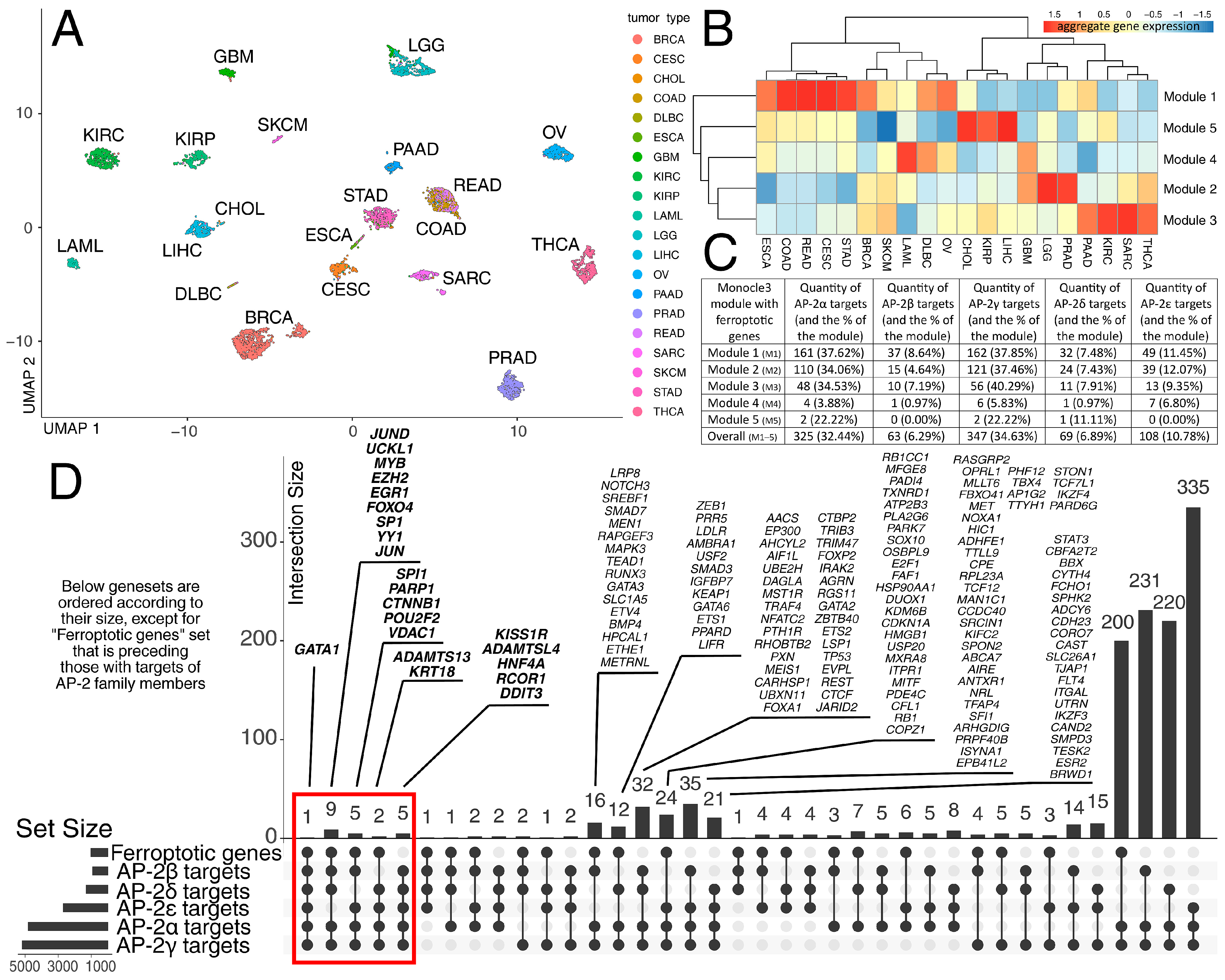
2.1. Pan-Cancer Profiling Reaffirmed the Predominance of AP-2α/γ and Implicated AP-2ε in Ferroptotic Gene Modules, Highlighting Novel AP-2–Linked Ferroptosis Candidates
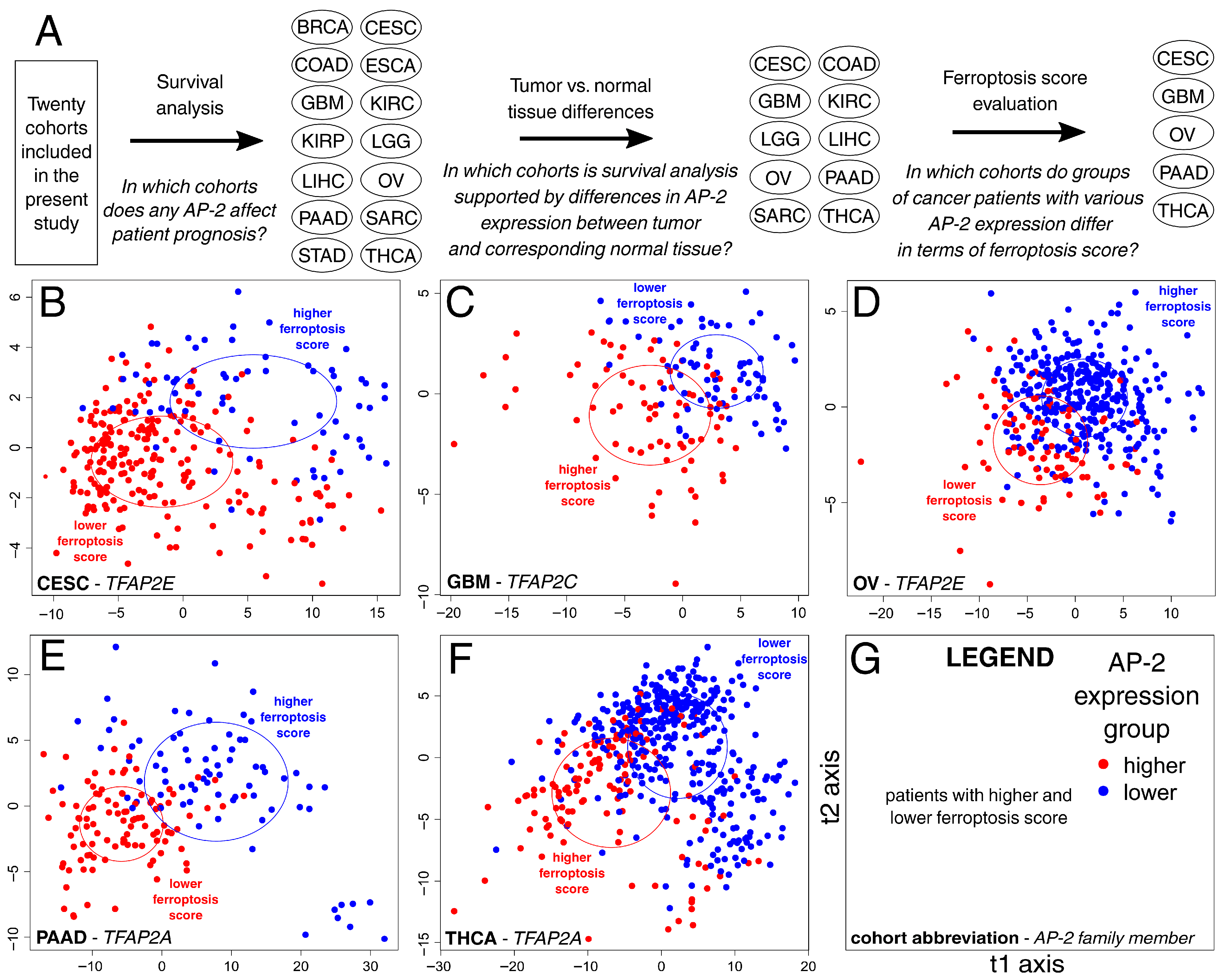
2.2. AP-2 Expression Was Linked to Tumor–Normal Differences and Cancer Patient Prognosis Across Multiple Cohorts, with Consistent Associations Noted in Ten Tumors
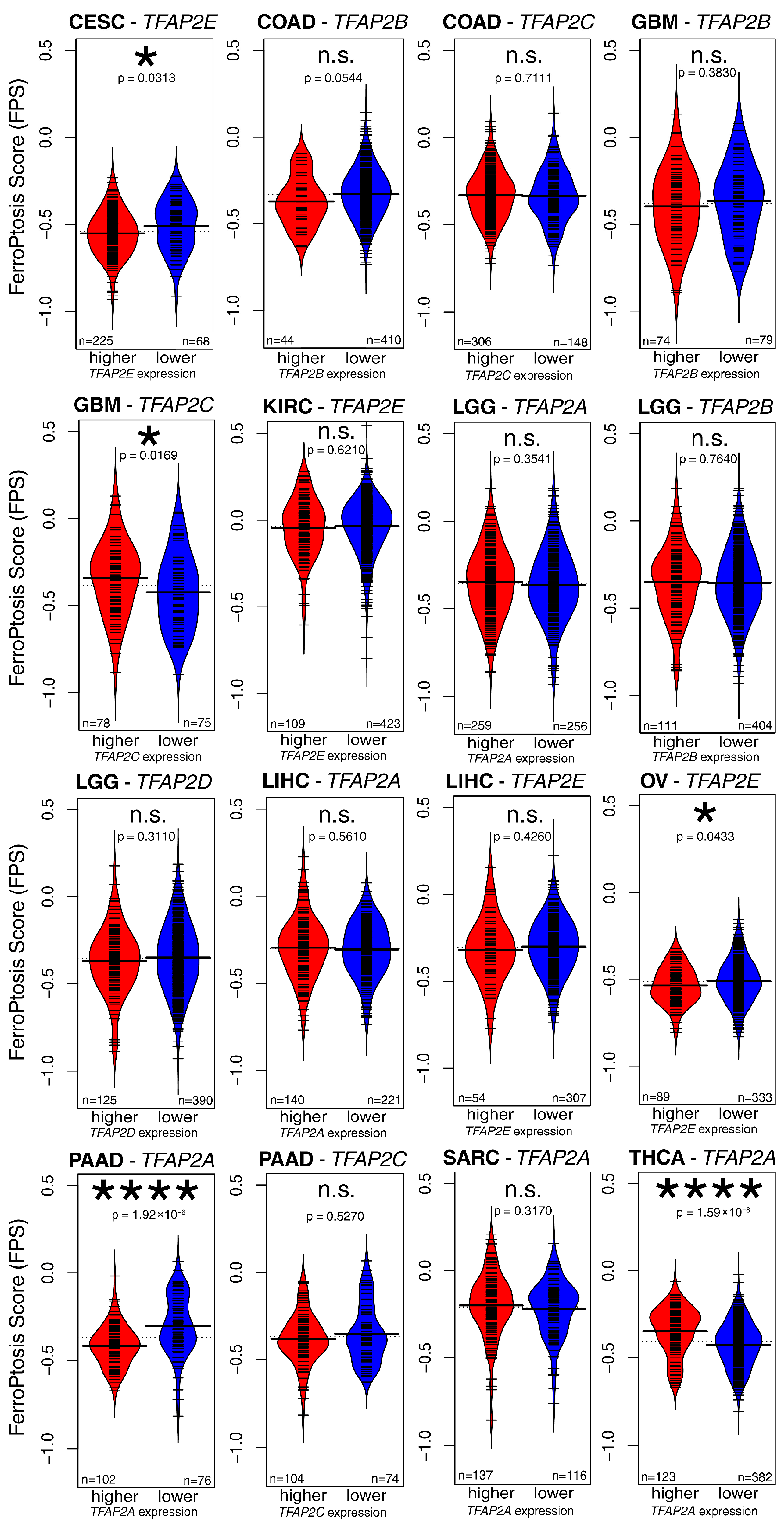
2.3. Consistent AP-2–Related Associations Revealed Ferroptosis Score Differences in Five Tumors
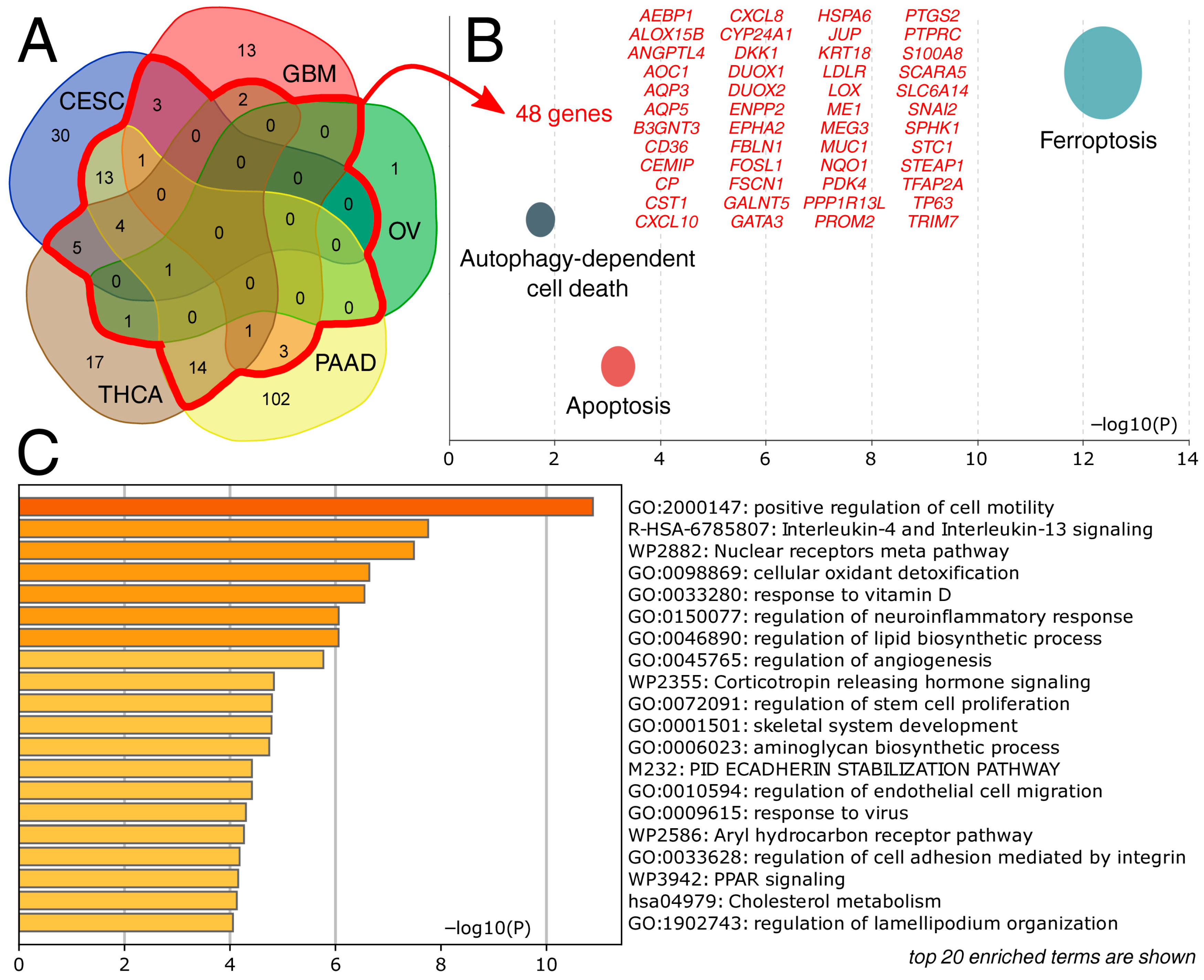
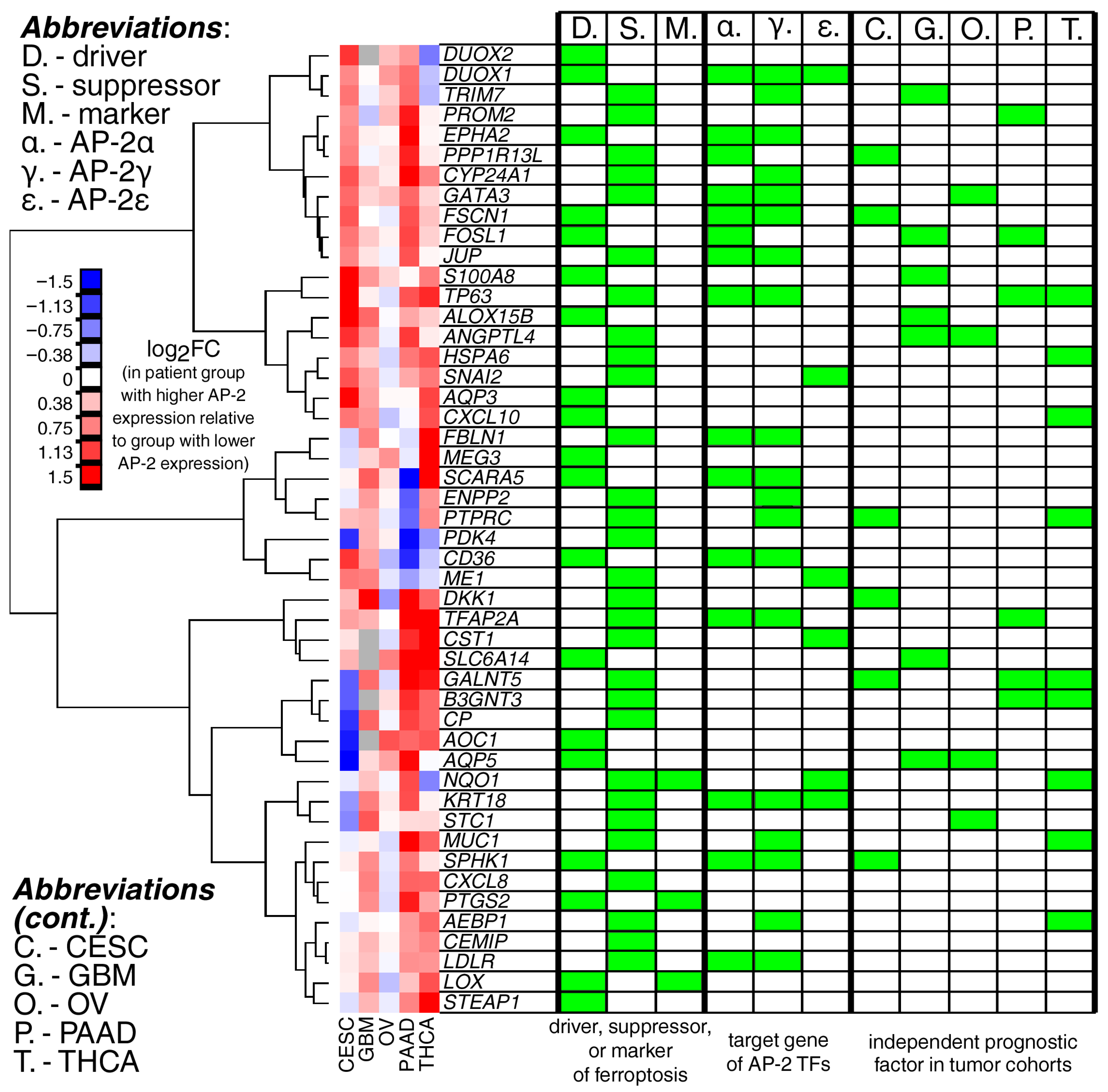
2.4. FPGs-Based Clustering of Cancer Patients Uncovered Cross-Cohort Discriminant Genes Linked to Ferroptosis, Apoptosis, Autophagy, and Diverse Biological Phenomena
2.5. Cross-Cohort Genes Comprised Ferroptosis Drivers or Suppressors, Included Markers and AP-2 Targets, as Well as Showed Tumor-Specific Differential Expression and Prognostic Relevance
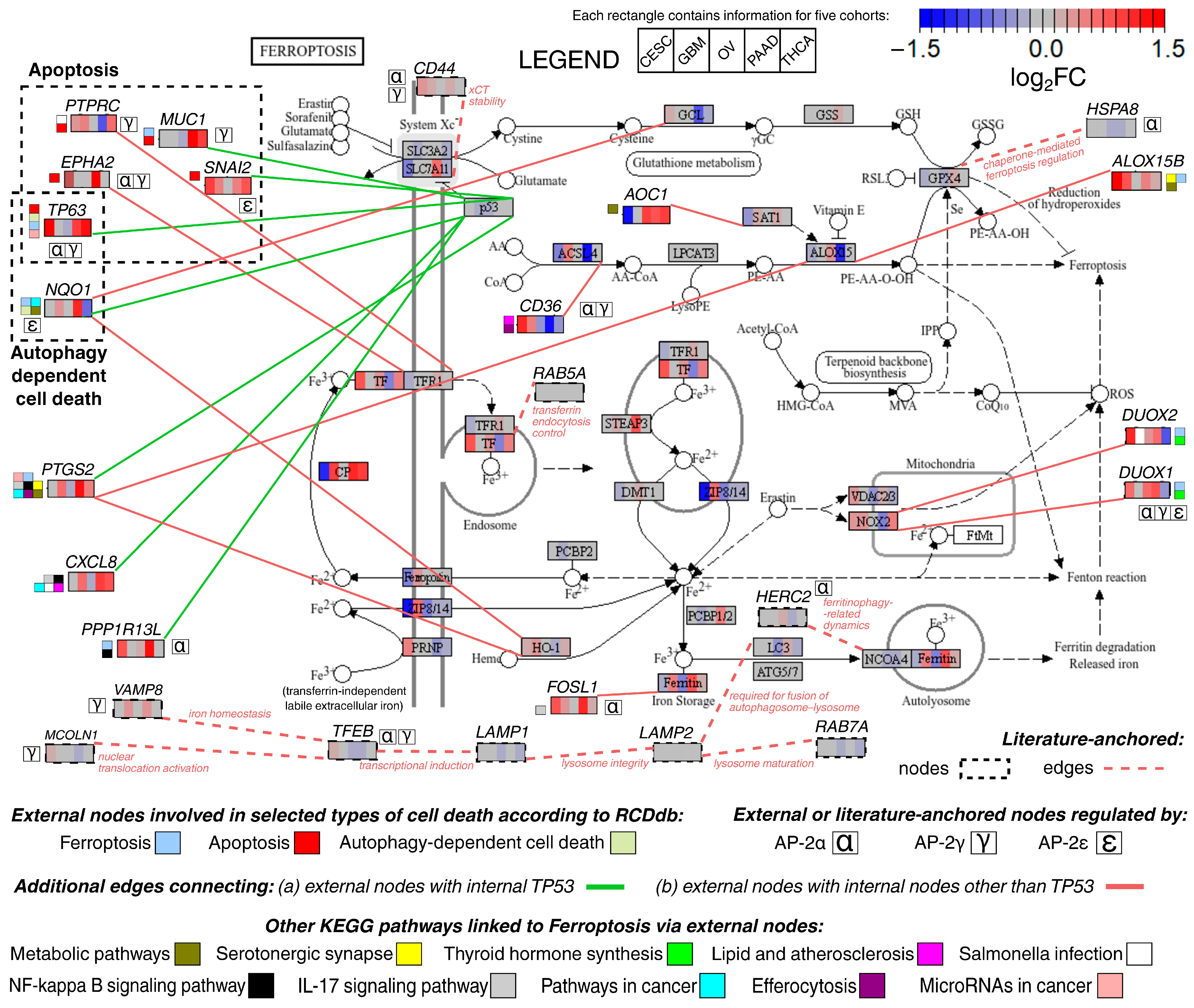
2.6. Integrating Selected Cross-Cohort Genes into the Ferroptosis Pathway Highlighted Complex Non-Canonical Signaling Linked to Apoptosis, Autophagy, and Broader Regulatory Pathways
3. Discussion
4. Materials and Methods
4.1. Tumor Cohort Selection and Transcriptomic Data Acquisition
4.2. Establishment of Ferroptotic Gene Set and Lists of AP-2 Targets
4.3. Evaluation of Ferroptosis Expression Patterns, Detection of Gene Modules, Enrichment of AP-2 Targets, and Intersection Analysis
4.4. Multi-Platform Analysis of AP-2 Expression Differences Between Tumor Versus Normal Tissues and Prognostic Stratification of Cancer Patients
4.5. Calculation of Ferroptosis Scores and Comparison Between Groups of Cancer Patients
4.6. Discriminant Analysis with Detection of Cross-Cohort Ferroptotic Genes and Their Functional Annotation
4.7. Differential Expression Analysis with Downstream Visualization and Prognostic Assessment of Cross-Cohort Genes
4.8. Ferroptosis Pathway Visualization and External Data Integration
5. Conclusions
Supplementary Materials
Author Contributions
Funding
Institutional Review Board Statement
Informed Consent Statement
Data Availability Statement
Conflicts of Interest
References
- Fuchs, Y.; Steller, H. Live to die another way: Modes of programmed cell death and the signals emanating from dying cells. Nat. Rev. Mol. Cell Biol. 2015, 16, 329–344. [Google Scholar] [CrossRef] [Scilit]
- Strasser, A.; Cory, S.; Adams, J.M. Deciphering the rules of programmed cell death to improve therapy of cancer and other diseases. EMBO J. 2011, 30, 3667–3683. [Google Scholar] [CrossRef] [Scilit]
- Goldar, S.; Khaniani, M.S.; Derakhshan, S.M.; Baradaran, B. Molecular mechanisms of apoptosis and roles in cancer development and treatment. Asian Pac. J. Cancer Prev. 2015, 16, 2129–2144. [Google Scholar] [CrossRef] [Scilit]
- Fernandez-Lazaro, D.; Sanz, B.; Seco-Calvo, J. The Mechanisms of Regulated Cell Death: Structural and Functional Proteomic Pathways Induced or Inhibited by a Specific Protein-A Narrative Review. Proteomes 2024, 12, 3. [Google Scholar] [CrossRef] [Scilit] [PubMed]
- Lee, E.; Song, C.H.; Bae, S.J.; Ha, K.T.; Karki, R. Regulated cell death pathways and their roles in homeostasis, infection, inflammation, and tumorigenesis. Exp. Mol. Med. 2023, 55, 1632–1643. [Google Scholar] [CrossRef] [Scilit]
- Pakos-Zebrucka, K.; Koryga, I.; Mnich, K.; Ljujic, M.; Samali, A.; Gorman, A.M. The integrated stress response. EMBO Rep. 2016, 17, 1374–1395. [Google Scholar] [CrossRef] [Scilit]
- Green, D.R.; Galluzzi, L.; Kroemer, G. Cell biology. Metabolic control of cell death. Science 2014, 345, 1250256. [Google Scholar] [CrossRef] [Scilit] [PubMed]
- Lamichhane, P.P.; Samir, P. Cellular Stress: Modulator of Regulated Cell Death. Biology 2023, 12, 1172. [Google Scholar] [CrossRef] [Scilit] [PubMed]
- Ouyang, L.; Shi, Z.; Zhao, S.; Wang, F.T.; Zhou, T.T.; Liu, B.; Bao, J.K. Programmed cell death pathways in cancer: A review of apoptosis, autophagy and programmed necrosis. Cell Prolif. 2012, 45, 487–498. [Google Scholar] [CrossRef] [Scilit]
- Qian, S.; Long, Y.; Tan, G.; Li, X.; Xiang, B.; Tao, Y.; Xie, Z.; Zhang, X. Programmed cell death: Molecular mechanisms, biological functions, diseases, and therapeutic targets. MedComm 2024, 5, e70024. [Google Scholar] [CrossRef] [Scilit]
- Bartoszewska, E.; Florek, K.; Zagorski, K.; Gachowska, M.; Wietrzyk, A.; Hutny, A.; Nowakowska-Toporowska, A.; Kulbacka, J. Methuosis, Alkaliptosis, and Oxeiptosis and Their Significance in Anticancer Therapy. Cells 2024, 13, 2095. [Google Scholar] [CrossRef] [Scilit] [PubMed]
- Liu, J.; Kuang, F.; Kang, R.; Tang, D. Alkaliptosis: A new weapon for cancer therapy. Cancer Gene Ther. 2020, 27, 267–269. [Google Scholar] [CrossRef] [Scilit] [PubMed]
- Wu, Y.; Yu, C.; Luo, M.; Cen, C.; Qiu, J.; Zhang, S.; Hu, K. Ferroptosis in Cancer Treatment: Another Way to Rome. Front. Oncol. 2020, 10, 571127. [Google Scholar] [CrossRef] [Scilit]
- Lei, P.; Bai, T.; Sun, Y. Mechanisms of Ferroptosis and Relations With Regulated Cell Death: A Review. Front. Physiol. 2019, 10, 139. [Google Scholar] [CrossRef] [Scilit]
- Dixon, S.J.; Lemberg, K.M.; Lamprecht, M.R.; Skouta, R.; Zaitsev, E.M.; Gleason, C.E.; Patel, D.N.; Bauer, A.J.; Cantley, A.M.; Yang, W.S.; et al. Ferroptosis: An iron-dependent form of nonapoptotic cell death. Cell 2012, 149, 1060–1072. [Google Scholar] [CrossRef] [Scilit]
- Dixon, S.J.; Olzmann, J.A. The cell biology of ferroptosis. Nat. Rev. Mol. Cell Biol. 2024, 25, 424–442. [Google Scholar] [CrossRef] [Scilit]
- Kong, Y.; Li, J.; Lin, R.; Lu, S.; Rong, L.; Xue, Y.; Fang, Y. Understanding the unique mechanism of ferroptosis: A promising therapeutic target. Front. Cell Dev. Biol. 2023, 11, 1329147. [Google Scholar] [CrossRef] [Scilit]
- Sato, M.; Kusumi, R.; Hamashima, S.; Kobayashi, S.; Sasaki, S.; Komiyama, Y.; Izumikawa, T.; Conrad, M.; Bannai, S.; Sato, H. The ferroptosis inducer erastin irreversibly inhibits system x(c)- and synergizes with cisplatin to increase cisplatin’s cytotoxicity in cancer cells. Sci. Rep. 2018, 8, 968. [Google Scholar] [CrossRef] [Scilit]
- Yang, W.S.; SriRamaratnam, R.; Welsch, M.E.; Shimada, K.; Skouta, R.; Viswanathan, V.S.; Cheah, J.H.; Clemons, P.A.; Shamji, A.F.; Clish, C.B.; et al. Regulation of ferroptotic cancer cell death by GPX4. Cell 2014, 156, 317–331. [Google Scholar] [CrossRef] [Scilit]
- Nakamura, T.; Hipp, C.; Santos Dias Mourao, A.; Borggrafe, J.; Aldrovandi, M.; Henkelmann, B.; Wanninger, J.; Mishima, E.; Lytton, E.; Emler, D.; et al. Phase separation of FSP1 promotes ferroptosis. Nature 2023, 619, 371–377. [Google Scholar] [CrossRef] [Scilit] [PubMed]
- Palma, M.; Chaufan, M.; Breuer, C.B.; Muller, S.; Sabatier, M.; Fraser, C.S.; Szylo, K.J.; Yavari, M.; Carmona, A.; Kaur, M.; et al. Lymph node environment drives FSP1 targetability in metastasizing melanoma. Nature 2026, 649, 477–486. [Google Scholar] [CrossRef] [Scilit] [PubMed]
- Gao, M.; Monian, P.; Pan, Q.; Zhang, W.; Xiang, J.; Jiang, X. Ferroptosis is an autophagic cell death process. Cell Res. 2016, 26, 1021–1032. [Google Scholar] [CrossRef] [Scilit]
- Hou, W.; Xie, Y.; Song, X.; Sun, X.; Lotze, M.T.; Zeh, H.J., 3rd; Kang, R.; Tang, D. Autophagy promotes ferroptosis by degradation of ferritin. Autophagy 2016, 12, 1425–1428. [Google Scholar] [CrossRef] [Scilit]
- Muller, S.; Sindikubwabo, F.; Caneque, T.; Lafon, A.; Versini, A.; Lombard, B.; Loew, D.; Wu, T.D.; Ginestier, C.; Charafe-Jauffret, E.; et al. CD44 regulates epigenetic plasticity by mediating iron endocytosis. Nat. Chem. 2020, 12, 929–938. [Google Scholar] [CrossRef] [Scilit]
- Caneque, T.; Baron, L.; Muller, S.; Carmona, A.; Colombeau, L.; Versini, A.; Solier, S.; Gaillet, C.; Sindikubwabo, F.; Sampaio, J.L.; et al. Activation of lysosomal iron triggers ferroptosis in cancer. Nature 2025, 642, 492–500. [Google Scholar] [CrossRef] [Scilit]
- Mansell, R.P.; Muller, S.; Yang, J.S.; Innes-Gold, S.; Das, S.; Reinhardt, F.; Sigmund, K.J.; Phadnis, V.V.; Wan, Z.; Stark, J.; et al. Ether lipids influence cancer cell fate by modulating iron uptake. Nat. Commun. 2026, 17, 1835. [Google Scholar] [CrossRef] [Scilit]
- Punziano, C.; Trombetti, S.; Cesaro, E.; Grosso, M.; Faraonio, R. Antioxidant Systems as Modulators of Ferroptosis: Focus on Transcription Factors. Antioxidants 2024, 13, 298. [Google Scholar] [CrossRef] [Scilit]
- Daneva, A.; Gao, Z.; Van Durme, M.; Nowack, M.K. Functions and Regulation of Programmed Cell Death in Plant Development. Annu. Rev. Cell Dev. Biol. 2016, 32, 441–468. [Google Scholar] [CrossRef] [Scilit]
- Murray, M.B.; Dixon, S.J. Ferroptosis regulation by Cap’n’collar family transcription factors. J. Biol. Chem. 2024, 300, 107583. [Google Scholar] [CrossRef] [Scilit] [PubMed]
- Nishizawa, H.; Matsumoto, M.; Shindo, T.; Saigusa, D.; Kato, H.; Suzuki, K.; Sato, M.; Ishii, Y.; Shimokawa, H.; Igarashi, K. Ferroptosis is controlled by the coordinated transcriptional regulation of glutathione and labile iron metabolism by the transcription factor BACH1. J. Biol. Chem. 2020, 295, 69–82. [Google Scholar] [CrossRef] [Scilit] [PubMed]
- Jin, C.; Luo, Y.; Liang, Z.; Li, X.; Kolat, D.; Zhao, L.; Xiong, W. Crucial role of the transcription factors family activator protein 2 in cancer: Current clue and views. J. Transl. Med. 2023, 21, 371. [Google Scholar] [CrossRef] [Scilit]
- Huang, H.X.; Yang, G.; Yang, Y.; Yan, J.; Tang, X.Y.; Pan, Q. TFAP2A is a novel regulator that modulates ferroptosis in gallbladder carcinoma cells via the Nrf2 signalling axis. Eur. Rev. Med. Pharmacol. Sci. 2020, 24, 4745–4755. [Google Scholar] [CrossRef]
- Eckert, D.; Buhl, S.; Weber, S.; Jager, R.; Schorle, H. The AP-2 family of transcription factors. Genome Biol. 2005, 6, 246. [Google Scholar] [CrossRef] [Scilit] [PubMed]
- Yu, Y.J.; Kolat, D.; Kaluzinska-Kolat, Z.; Liang, Z.; Peng, B.Q.; Zhu, Y.F.; Liu, K.; Mei, J.X.; Yu, G.; Zhang, W.H.; et al. The AP-2 Family of Transcription Factors-Still Undervalued Regulators in Gastroenterological Disorders. Int. J. Mol. Sci. 2024, 25, 9138. [Google Scholar] [CrossRef] [Scilit]
- Tun, H.W.; Marlow, L.A.; von Roemeling, C.A.; Cooper, S.J.; Kreinest, P.; Wu, K.; Luxon, B.A.; Sinha, M.; Anastasiadis, P.Z.; Copland, J.A. Pathway signature and cellular differentiation in clear cell renal cell carcinoma. PLoS ONE 2010, 5, e10696. [Google Scholar] [CrossRef] [Scilit]
- Fraune, C.; Harms, L.; Buscheck, F.; Hoflmayer, D.; Tsourlakis, M.C.; Clauditz, T.S.; Simon, R.; Moller, K.; Luebke, A.M.; Moller-Koop, C.; et al. Upregulation of the transcription factor TFAP2D is associated with aggressive tumor phenotype in prostate cancer lacking the TMPRSS2:ERG fusion. Mol. Med. 2020, 26, 24. [Google Scholar] [CrossRef] [Scilit]
- Ebert, M.P.; Tanzer, M.; Balluff, B.; Burgermeister, E.; Kretzschmar, A.K.; Hughes, D.J.; Tetzner, R.; Lofton-Day, C.; Rosenberg, R.; Reinacher-Schick, A.C.; et al. TFAP2E-DKK4 and chemoresistance in colorectal cancer. N. Engl. J. Med. 2012, 366, 44–53. [Google Scholar] [CrossRef] [Scilit] [PubMed]
- Ruiz, M.; Troncoso, P.; Bruns, C.; Bar-Eli, M. Activator protein 2alpha transcription factor expression is associated with luminal differentiation and is lost in prostate cancer. Clin. Cancer Res. 2001, 7, 4086–4095. [Google Scholar] [PubMed]
- Cyr, A.R.; Kulak, M.V.; Park, J.M.; Bogachek, M.V.; Spanheimer, P.M.; Woodfield, G.W.; White-Baer, L.S.; O’Malley, Y.Q.; Sugg, S.L.; Olivier, A.K.; et al. TFAP2C governs the luminal epithelial phenotype in mammary development and carcinogenesis. Oncogene 2015, 34, 436–444. [Google Scholar] [CrossRef] [Scilit]
- Shan, G.; Zhang, H.; Bi, G.; Bian, Y.; Liang, J.; Valeria, B.; Zeng, D.; Yao, G.; Zhan, C.; Fan, H. Multi-Omics Analysis of Cancer Cell Lines with High/Low Ferroptosis Scores and Development of a Ferroptosis-Related Model for Multiple Cancer Types. Front. Cell Dev. Biol. 2021, 9, 794475. [Google Scholar] [CrossRef] [Scilit]
- Dong, X.; Xie, Y.; Chen, W.; He, M.; Liu, H.; Wang, B.; Xu, Y.; Zhou, Q.; Zhu, T.; Wang, G.; et al. Pan-gastrointestinal adenocarcinoma analysis uncovers the prognostic and immune correlates of ferroptosis-related genes. Transl. Gastroenterol. Hepatol. 2025, 10, 7. [Google Scholar] [CrossRef] [Scilit]
- Dai, C.; Chen, X.; Li, J.; Comish, P.; Kang, R.; Tang, D. Transcription factors in ferroptotic cell death. Cancer Gene Ther. 2020, 27, 645–656. [Google Scholar] [CrossRef] [Scilit]
- Fu, X.; Zhang, H.; Chen, Z.; Yang, Z.; Shi, D.; Liu, T.; Chen, W.; Yao, F.; Su, X.; Deng, W.; et al. TFAP2B overexpression contributes to tumor growth and progression of thyroid cancer through the COX-2 signaling pathway. Cell Death Dis. 2019, 10, 397. [Google Scholar] [CrossRef] [Scilit]
- Yang, Y.-L.; Zhao, L.-Y. AP-2 Family of Transcription Factors: Critical Regulators of Human Development and Cancer. J. Cancer Treat. Diagn. 2021, 5, 1–4. [Google Scholar] [CrossRef] [Scilit]
- Zhang, Y.Q.; Peng, W.X.; Li, Y.F.; Lu, P.; Liu, H.; Liu, W.G. GATA1 Transcriptionally Upregulates LMCD1, Promoting Ferroptosis in Sepsis-Associated Acute Kidney Injury Through the Hippo/YAP Pathway. Kaohsiung J. Med. Sci. 2025, 41, e70071. [Google Scholar] [CrossRef] [Scilit]
- Bresnick, E.H.; Katsumura, K.R.; Lee, H.Y.; Johnson, K.D.; Perkins, A.S. Master regulatory GATA transcription factors: Mechanistic principles and emerging links to hematologic malignancies. Nucleic Acids Res. 2012, 40, 5819–5831. [Google Scholar] [CrossRef] [Scilit]
- Krendl, C.; Shaposhnikov, D.; Rishko, V.; Ori, C.; Ziegenhain, C.; Sass, S.; Simon, L.; Muller, N.S.; Straub, T.; Brooks, K.E.; et al. GATA2/3-TFAP2A/C transcription factor network couples human pluripotent stem cell differentiation to trophectoderm with repression of pluripotency. Proc. Natl. Acad. Sci. USA 2017, 114, E9579–E9588. [Google Scholar] [CrossRef] [Scilit]
- White, J.R.; Thompson, D.T.; Koch, K.E.; Kiriazov, B.S.; Beck, A.C.; van der Heide, D.M.; Grimm, B.G.; Kulak, M.V.; Weigel, R.J. AP-2alpha-Mediated Activation of E2F and EZH2 Drives Melanoma Metastasis. Cancer Res. 2021, 81, 4455–4470. [Google Scholar] [CrossRef]
- Lai, Y.; Han, X.; Xie, B.; Xu, Y.; Yang, Z.; Wang, D.; Li, W.; Xie, Y.; Song, W.; Zhang, X.; et al. EZH2 suppresses ferroptosis in hepatocellular carcinoma and reduces sorafenib sensitivity through epigenetic regulation of TFR2. Cancer Sci. 2024, 115, 2220–2234. [Google Scholar] [CrossRef] [Scilit]
- Niu, C.; Wen, H.; Wang, S.; Shu, G.; Wang, M.; Yi, H.; Guo, K.; Pan, Q.; Yin, G. Potential prognosis and immunotherapy predictor TFAP2A in pan-cancer. Aging 2024, 16, 1021–1048. [Google Scholar] [CrossRef] [Scilit]
- Wang, X.; Sun, D.; Tai, J.; Chen, S.; Yu, M.; Ren, D.; Wang, L. TFAP2C promotes stemness and chemotherapeutic resistance in colorectal cancer via inactivating hippo signaling pathway. J. Exp. Clin. Cancer Res. 2018, 37, 27. [Google Scholar] [CrossRef] [Scilit]
- Park, S.J.; Kim, S.M.; Hong, Y.S.; Lee, J.L.; Kim, J.E.; Kim, K.P.; Hong, S.M.; Jin, D.H.; Kim, C.W.; Yoon, Y.S.; et al. TFAP2E methylation status and prognosis of patients with radically resected colorectal cancer. Oncology 2015, 88, 122–132. [Google Scholar] [CrossRef] [Scilit]
- Liang, X.; Hu, C.; Han, M.; Liu, C.; Sun, X.; Yu, K.; Gu, H.; Zhang, J. Solasonine Inhibits Pancreatic Cancer Progression With Involvement of Ferroptosis Induction. Front. Oncol. 2022, 12, 834729. [Google Scholar] [CrossRef] [Scilit]
- Shen, J.; He, Y.; Zhou, B.; Qin, H.; Zhang, S.; Huang, Z.; Zhang, X. TFAP2C/FLT3 axis reduces ferroptosis in breast cancer cells by inhibiting mitochondrial autophagy. Int. J. Biochem. Cell Biol. 2024, 177, 106691. [Google Scholar] [CrossRef] [Scilit]
- Tang, D.; Chen, X.; Kang, R.; Kroemer, G. Ferroptosis: Molecular mechanisms and health implications. Cell Res. 2021, 31, 107–125. [Google Scholar] [CrossRef] [Scilit]
- Yang, M.; Luo, H.; Yi, X.; Wei, X.; Jiang, D.S. The epigenetic regulatory mechanisms of ferroptosis and its implications for biological processes and diseases. MedComm 2023, 4, e267. [Google Scholar] [CrossRef] [Scilit]
- Oh, E.T.; Park, H.J. Implications of NQO1 in cancer therapy. BMB Rep. 2015, 48, 609–617. [Google Scholar] [CrossRef] [Scilit]
- Srijiwangsa, P.; Na Bangchang, K. Roles of NAD (P) H-Quinone Oxidoreductase 1 (NQO1) On Cancer Progression and Chemoresistance. J. Clin. Exp. Oncol. 2017, 6, 4. [Google Scholar] [CrossRef]
- Tang, Y.; Hu, H.; Chen, S.; Hao, B.; Xu, X.; Zhu, H.; Zhan, W.; Zhang, T.; Hu, H.; Chen, G. Multi-omics analysis revealed the novel role of NQO1 in microenvironment, prognosis and immunotherapy of hepatocellular carcinoma. Sci. Rep. 2025, 15, 8591. [Google Scholar] [CrossRef] [Scilit]
- Shen, L.; Jiang, S.; Yang, Y.; Yang, H.; Fang, Y.; Tang, M.; Zhu, R.; Xu, J.; Jiang, H. Pan-cancer and single-cell analysis reveal the prognostic value and immune response of NQO1. Front. Cell Dev. Biol. 2023, 11, 1174535. [Google Scholar] [CrossRef] [Scilit]
- Xie, T.; Jaiswal, A.K. AP-2-mediated regulation of human NAD(P)H: Quinone oxidoreductase 1 (NQO1) gene expression. Biochem. Pharmacol. 1996, 51, 771–778. [Google Scholar] [CrossRef] [Scilit]
- Cai, H.; Yang, J.; Luo, F.; Gan, W.; Li, Y.; Zhang, L.; Ke, X.; Wahafu, A.; Dai, D.; Wang, P.; et al. TP63 as a modulator of ferroptosis in TP53 mutations glioblastoma. Cell Death Dis. 2025, 16, 614. [Google Scholar] [CrossRef] [Scilit]
- Jin, Y.; Chen, L.; Li, L.; Huang, G.; Huang, H.; Tang, C. SNAI2 promotes the development of ovarian cancer through regulating ferroptosis. Bioengineered 2022, 13, 6451–6463. [Google Scholar] [CrossRef] [Scilit]
- Kuang, H.; Sun, X.; Liu, Y.; Tang, M.; Wei, Y.; Shi, Y.; Li, R.; Xiao, G.; Kang, J.; Wang, F.; et al. Palmitic acid-induced ferroptosis via CD36 activates ER stress to break calcium-iron balance in colon cancer cells. FEBS J. 2023, 290, 3664–3687. [Google Scholar] [CrossRef] [Scilit]
- Viswanathan, V.S.; Ryan, M.J.; Dhruv, H.D.; Gill, S.; Eichhoff, O.M.; Seashore-Ludlow, B.; Kaffenberger, S.D.; Eaton, J.K.; Shimada, K.; Aguirre, A.J.; et al. Dependency of a therapy-resistant state of cancer cells on a lipid peroxidase pathway. Nature 2017, 547, 453–457. [Google Scholar] [CrossRef] [Scilit]
- Hangauer, M.J.; Viswanathan, V.S.; Ryan, M.J.; Bole, D.; Eaton, J.K.; Matov, A.; Galeas, J.; Dhruv, H.D.; Berens, M.E.; Schreiber, S.L.; et al. Drug-tolerant persister cancer cells are vulnerable to GPX4 inhibition. Nature 2017, 551, 247–250. [Google Scholar] [CrossRef] [Scilit]
- Ishimoto, T.; Nagano, O.; Yae, T.; Tamada, M.; Motohara, T.; Oshima, H.; Oshima, M.; Ikeda, T.; Asaba, R.; Yagi, H.; et al. CD44 variant regulates redox status in cancer cells by stabilizing the xCT subunit of system xc(-) and thereby promotes tumor growth. Cancer Cell 2011, 19, 387–400. [Google Scholar] [CrossRef] [Scilit]
- Piccolo, M.; Ferraro, M.G.; Iazzetti, F.; Santamaria, R.; Irace, C. Insight into Iron, Oxidative Stress and Ferroptosis: Therapy Targets for Approaching Anticancer Strategies. Cancers 2024, 16, 1220. [Google Scholar] [CrossRef] [Scilit]
- Zhang, Z.; Hernandez, K.; Savage, J.; Li, S.; Miller, D.; Agrawal, S.; Ortuno, F.; Staudt, L.M.; Heath, A.; Grossman, R.L. Uniform genomic data analysis in the NCI Genomic Data Commons. Nat. Commun. 2021, 12, 1226. [Google Scholar] [CrossRef] [Scilit]
- Zhou, N.; Yuan, X.; Du, Q.; Zhang, Z.; Shi, X.; Bao, J.; Ning, Y.; Peng, L. FerrDb V2: Update of the manually curated database of ferroptosis regulators and ferroptosis-disease associations. Nucleic Acids Res. 2023, 51, D571–D582. [Google Scholar] [CrossRef] [Scilit]
- Kolat, D.; Kaluzinska, Z.; Orzechowska, M.; Bednarek, A.K.; Pluciennik, E. Functional genomics of AP-2alpha and AP-2gamma in cancers: In silico study. BMC Med. Genom. 2020, 13, 174. [Google Scholar] [CrossRef] [Scilit] [PubMed]
- Kolat, D.; Zhao, L.Y.; Kciuk, M.; Pluciennik, E.; Kaluzinska-Kolat, Z. AP-2delta Is the Most Relevant Target of AP-2 Family-Focused Cancer Therapy and Affects Genome Organization. Cells 2022, 11, 4124. [Google Scholar] [CrossRef] [Scilit]
- Kolat, D.; Gromek, P.; Zhao, L.Y.; Kaluzinska-Kolat, Z.; Kciuk, M.; Kontek, R.; Pluciennik, E. Intratumoral Microbiota Correlates with AP-2 Expression: A Pan-Cancer Map with Cohort-Specific Prognostic and Molecular Footprints. Int. J. Mol. Sci. 2025, 26, 11587. [Google Scholar] [CrossRef] [Scilit]
- Trapnell, C.; Cacchiarelli, D.; Grimsby, J.; Pokharel, P.; Li, S.; Morse, M.; Lennon, N.J.; Livak, K.J.; Mikkelsen, T.S.; Rinn, J.L. The dynamics and regulators of cell fate decisions are revealed by pseudotemporal ordering of single cells. Nat. Biotechnol. 2014, 32, 381–386. [Google Scholar] [CrossRef] [Scilit] [PubMed]
- Park, S.J.; Yoon, B.H.; Kim, S.K.; Kim, S.Y. GENT2: An updated gene expression database for normal and tumor tissues. BMC Med. Genom. 2019, 12, 101. [Google Scholar] [CrossRef] [Scilit]
- Tang, Z.; Kang, B.; Li, C.; Chen, T.; Zhang, Z. GEPIA2: An enhanced web server for large-scale expression profiling and interactive analysis. Nucleic Acids Res. 2019, 47, W556–W560. [Google Scholar] [CrossRef] [Scilit]
- Lee, J.; Choi, C. Oncopression: Gene expression compendium for cancer with matched normal tissues. Bioinformatics 2017, 33, 2068–2070. [Google Scholar] [CrossRef] [Scilit]
- Ogluszka, M.; Orzechowska, M.; Jedroszka, D.; Witas, P.; Bednarek, A.K. Evaluate Cutpoints: Adaptable continuous data distribution system for determining survival in Kaplan-Meier estimator. Comput. Methods Programs Biomed. 2019, 177, 133–139. [Google Scholar] [CrossRef] [Scilit]
- Liu, J.; Lichtenberg, T.; Hoadley, K.A.; Poisson, L.M.; Lazar, A.J.; Cherniack, A.D.; Kovatich, A.J.; Benz, C.C.; Levine, D.A.; Lee, A.V.; et al. An Integrated TCGA Pan-Cancer Clinical Data Resource to Drive High-Quality Survival Outcome Analytics. Cell 2018, 173, 400–416.e411. [Google Scholar] [CrossRef] [Scilit]
- He, Y.; Dong, Y.; Chen, Y.; Zhang, G.; Zhang, H.; Lei, G.; Du, Y.; Chen, X.; Ye, Y.; Liu, H. Multi-omics characterization and therapeutic liability of ferroptosis in melanoma. Signal Transduct. Target. Ther. 2022, 7, 268. [Google Scholar] [CrossRef] [Scilit]
- Wang, X.; Wang, Q.; Zhao, J.; Chen, J.; Wu, R.; Pan, J.; Li, J.; Wang, Z.; Chen, Y.; Guo, W.; et al. RCDdb: A manually curated database and analysis platform for regulated cell death. Comput. Struct. Biotechnol. J. 2024, 23, 3211–3221. [Google Scholar] [CrossRef] [Scilit]
- Zhou, Y.; Zhou, B.; Pache, L.; Chang, M.; Khodabakhshi, A.H.; Tanaseichuk, O.; Benner, C.; Chanda, S.K. Metascape provides a biologist-oriented resource for the analysis of systems-level datasets. Nat. Commun. 2019, 10, 1523. [Google Scholar] [CrossRef] [Scilit]
- Ritchie, M.E.; Phipson, B.; Wu, D.; Hu, Y.; Law, C.W.; Shi, W.; Smyth, G.K. limma powers differential expression analyses for RNA-sequencing and microarray studies. Nucleic Acids Res. 2015, 43, e47. [Google Scholar] [CrossRef] [Scilit]
- Law, C.W.; Chen, Y.; Shi, W.; Smyth, G.K. voom: Precision weights unlock linear model analysis tools for RNA-seq read counts. Genome Biol. 2014, 15, R29. [Google Scholar] [CrossRef] [Scilit]
- Ryan, M.C.; Stucky, M.; Wakefield, C.; Melott, J.M.; Akbani, R.; Weinstein, J.N.; Broom, B.M. Interactive Clustered Heat Map Builder: An easy web-based tool for creating sophisticated clustered heat maps. F1000Research 2019, 8, 1750. [Google Scholar] [CrossRef] [Scilit]
- Ouyang, J.; Qin, G.; Liu, Z.; Jian, X.; Shi, T.; Xie, L. ToPP: Tumor online prognostic analysis platform for prognostic feature selection and clinical patient subgroup selection. iScience 2022, 25, 104190. [Google Scholar] [CrossRef] [Scilit]
- Szklarczyk, D.; Nastou, K.; Koutrouli, M.; Kirsch, R.; Mehryary, F.; Hachilif, R.; Hu, D.; Peluso, M.E.; Huang, Q.; Fang, T.; et al. The STRING database in 2025: Protein networks with directionality of regulation. Nucleic Acids Res. 2025, 53, D730–D737. [Google Scholar] [CrossRef] [Scilit]
- Kanehisa, M.; Furumichi, M.; Sato, Y.; Kawashima, M.; Ishiguro-Watanabe, M. KEGG for taxonomy-based analysis of pathways and genomes. Nucleic Acids Res. 2023, 51, D587–D592. [Google Scholar] [CrossRef] [Scilit]
- Yuan, S.; Chan, H.C.S.; Filipek, S.; Vogel, H. PyMOL and Inkscape Bridge the Data and the Data Visualization. Structure 2016, 24, 2041–2042. [Google Scholar] [CrossRef] [Scilit]



| Tumor Type | TFAP2A | TFAP2B | TFAP2C | TFAP2D | TFAP2E | |||||||||||||||
|---|---|---|---|---|---|---|---|---|---|---|---|---|---|---|---|---|---|---|---|---|
| GT2 | GP2 | O | EC | GT2 | GP2 | O | EC | GT2 | GP2 | O | EC | GT2 | GP2 | O | EC | GT2 | GP2 | O | EC | |
| BRCA | ↑ | n.s. | ↑ | n.s. | ↑ | n.s. | ↓ | UF | ↓ | n.s. | n.s. | n.s. | ↓ | n.s. | ↓ | n.s. | ↓ | n.s. | n.s. | n.s. |
| CESC | ↑ | ↑ | n.d. | n.s. | n.s. | n.s. | n.d. | n.s. | n.s. | n.s. | n.d. | F | ↓ | n.s. | n.d. | n.s. | ↓ | n.s. | n.d. | F |
| CHOL | ↑ | n.s. | n.d. | n.s. | n.s. | n.s. | n.d. | n.s. | n.s. | n.s. | n.d. | n.s. | n.s. | n.s. | n.d. | n.s. | n.s. | n.s. | n.d. | n.s. |
| COAD | ↑ | n.s. | ↑ | n.s. | n.s. | n.s. | ↑ | UF | ↑ | n.s. | ↑ | UF | n.s. | n.s. | ↑ | n.s. | ↓ | n.s. | ↑ | n.s. |
| DLBC | n.s. | n.s. | n.d. | n.s. | n.s. | n.s. | n.d. | n.s. | n.s. | n.s. | n.d. | n.s. | n.s. | n.s. | n.d. | n.s. | n.s. | n.s. | n.d. | n.s. |
| ESCA | n.s. | n.s. | n.d. | F | ↓ | ↓ | n.d. | n.s. | n.s. | n.s. | n.d. | n.s. | n.s. | n.s. | n.d. | n.s. | n.s. | n.s. | n.d. | F |
| GBM | ↑ | ↑ | ↑ | n.s. | n.s. | n.s. | ↑ | UF | n.s. | n.s. | ↑ | UF | ↓ | n.s. | n.s. | n.s. | ↓ | ↓ | ↑ | F |
| KIRC | ↓ | ↓ | ↓ | UF | ↓ | ↓ | ↓ | n.s. | ↓ | n.s. | ↑ | UF | n.s. | n.s. | ↓ | UF | n.s. | n.s. | ↑ | UF |
| KIRP | ↓ | ↓ | ↓ | UF | ↓ | ↓ | ↓ | UF | ↓ | n.s. | ↑ | n.s. | n.s. | n.s. | ↓ | n.s. | n.s. | n.s. | ↑ | n.s. |
| LAML | ↑ | ↓ | n.d. | n.s. | ↑ | n.s. | n.d. | n.s. | ↑ | n.s. | n.d. | n.s. | ↑ | n.s. | n.d. | n.s. | ↑ | ↑ | n.d. | n.s. |
| LGG | ↑ | ↑ | ↑ | UF | n.s. | n.s. | ↑ | UF | n.s. | n.s. | ↑ | n.s. | ↓ | n.s. | n.s. | F | ↓ | ↓ | ↑ | F |
| LIHC | ↑ | ↑ | ↑ | UF | n.s. | n.s. | ↑ | n.s. | ↑ | ↑ | ↑ | n.s. | n.s. | n.s. | n.s. | n.s. | ↑ | n.s. | ↑ | UF |
| OV | ↑ | ↑ | ↑ | n.s. | n.s. | n.s. | ↑ | n.s. | ↑ | ↑ | ↑ | n.s. | n.s. | n.s. | ↑ | n.s. | n.s. | ↓ | ↓ | F |
| PAAD | ↑ | ↑ | ↑ | UF | n.s. | n.s. | ↑ | n.s. | ↑ | n.s. | ↑ | UF | n.s. | n.s. | ↓ | n.s. | n.s. | n.s. | n.s. | n.s. |
| PRAD | ↑ | n.s. | ↑ | n.s. | ↑ | n.s. | ↑ | n.s. | ↑ | n.s. | ↑ | n.s. | n.s. | n.s. | n.s. | n.s. | ↓ | n.s. | n.s. | n.s. |
| READ | ↑ | n.s. | ↑ | n.s. | n.s. | n.s. | ↑ | n.s. | ↑ | n.s. | ↑ | n.s. | n.s. | n.s. | ↑ | n.s. | ↓ | n.s. | ↑ | n.s. |
| SARC | n.s. | n.s. | ↑ | UF | n.s. | n.s. | ↑ | n.s. | n.s. | n.s. | ↑ | n.s. | n.s. | n.s. | ↑ | n.s. | n.s. | n.s. | ↑ | n.s. |
| SKCM | ↑ | n.s. | n.s. | n.s. | ↑ | ↓ | ↓ | n.s. | ↓ | ↓ | ↓ | n.s. | ↑ | n.s. | n.s. | n.s. | n.s. | ↓ | ↓ | n.s. |
| STAD | n.s. | ↑ | ↑ | F | ↓ | n.s. | n.s. | UF | n.s. | n.s. | ↑ | n.s. | ↓ | n.s. | ↓ | n.s. | ↓ | n.s. | n.s. | UF |
| THCA | ↑ | n.s. | ↑ | UF | n.s. | n.s. | n.s. | n.s. | n.s. | n.s. | ↑ | n.s. | n.s. | n.s. | n.s. | n.s. | n.s. | n.s. | n.s. | n.s. |
| TCGA Cohort Abbreviation | Full Disease Name/Description | Number of Samples Included in This Study * |
|---|---|---|
| BRCA | Breast invasive carcinoma | 1095 |
| CESC | Cervical and endocervical cancers | 304 |
| CHOL | Cholangiocarcinoma | 35 |
| COAD | Colon adenocarcinoma | 458 |
| DLBC | Diffuse large B-cell lymphoma | 48 |
| ESCA | Esophageal carcinoma | 184 |
| GBM | Glioblastoma multiforme | 288 |
| KIRC | Kidney renal clear cell carcinoma | 533 |
| KIRP | Kidney renal papillary cell carcinoma | 290 |
| LAML | Acute myeloid leukemia | 151 |
| LGG | Lower-grade glioma | 516 |
| LIHC | Liver hepatocellular carcinoma | 371 |
| OV | Ovarian serous cystadenocarcinoma | 422 |
| PAAD | Pancreatic adenocarcinoma | 178 |
| PRAD | Prostate adenocarcinoma | 497 |
| READ | Rectum adenocarcinoma | 166 |
| SARC | Sarcoma | 259 |
| SKCM | Skin cutaneous melanoma | 103 |
| STAD | Stomach adenocarcinoma | 412 |
| THCA | Thyroid carcinoma | 505 |
Disclaimer/Publisher’s Note: The statements, opinions and data contained in all publications are solely those of the individual author(s) and contributor(s) and not of MDPI and/or the editor(s). MDPI and/or the editor(s) disclaim responsibility for any injury to people or property resulting from any ideas, methods, instructions or products referred to in the content. |
© 2026 by the authors. Licensee MDPI, Basel, Switzerland. This article is an open access article distributed under the terms and conditions of the Creative Commons Attribution (CC BY) license.
Share and Cite
Kołat, D.; Gromek, P.; Kciuk, M.; Zhao, L.-Y.; Kałuzińska-Kołat, Ż.; Kontek, R.; Płuciennik, E. AP-2 Transcription Factors as Regulators of Ferroptosis: A Family-Wide Profiling in Diverse Cancer Contexts. Int. J. Mol. Sci. 2026, 27, 2310. https://doi.org/10.3390/ijms27052310
Kołat D, Gromek P, Kciuk M, Zhao L-Y, Kałuzińska-Kołat Ż, Kontek R, Płuciennik E. AP-2 Transcription Factors as Regulators of Ferroptosis: A Family-Wide Profiling in Diverse Cancer Contexts. International Journal of Molecular Sciences. 2026; 27(5):2310. https://doi.org/10.3390/ijms27052310
Chicago/Turabian StyleKołat, Damian, Piotr Gromek, Mateusz Kciuk, Lin-Yong Zhao, Żaneta Kałuzińska-Kołat, Renata Kontek, and Elżbieta Płuciennik. 2026. "AP-2 Transcription Factors as Regulators of Ferroptosis: A Family-Wide Profiling in Diverse Cancer Contexts" International Journal of Molecular Sciences 27, no. 5: 2310. https://doi.org/10.3390/ijms27052310
APA StyleKołat, D., Gromek, P., Kciuk, M., Zhao, L.-Y., Kałuzińska-Kołat, Ż., Kontek, R., & Płuciennik, E. (2026). AP-2 Transcription Factors as Regulators of Ferroptosis: A Family-Wide Profiling in Diverse Cancer Contexts. International Journal of Molecular Sciences, 27(5), 2310. https://doi.org/10.3390/ijms27052310