Molecular Pathways and Circulating Biomarkers in Cerebral Cavernous Malformations—A Systematic Review

 ,
,  , , , , , , , ,
  and
and
Abstract
1. Introduction
1.1. CCM Genes Germline Mutations
1.2. The “Two-Hit” Mechanism
1.3. The Gain-of-Function Mutations as a Consequence of CCM Complex Loss-of-Function
1.4. Molecular Signaling Pathways Involved in CCM Lesion Formation and Progression
1.5. The Role of Rho/ROCK and ADAMTS in CCM Vascular Lesions
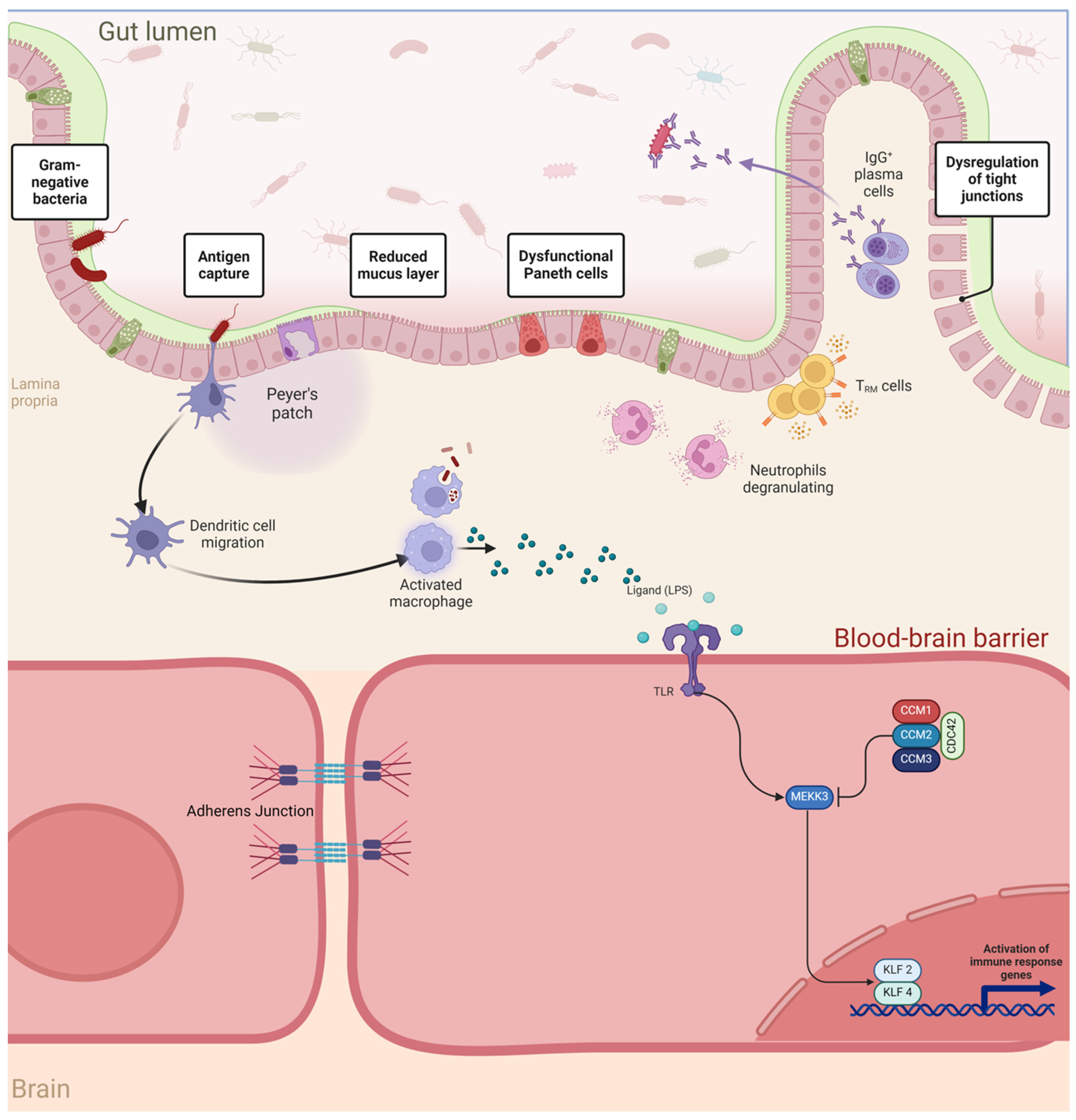
1.6. The Gut–Brain Axis in CCM Disease
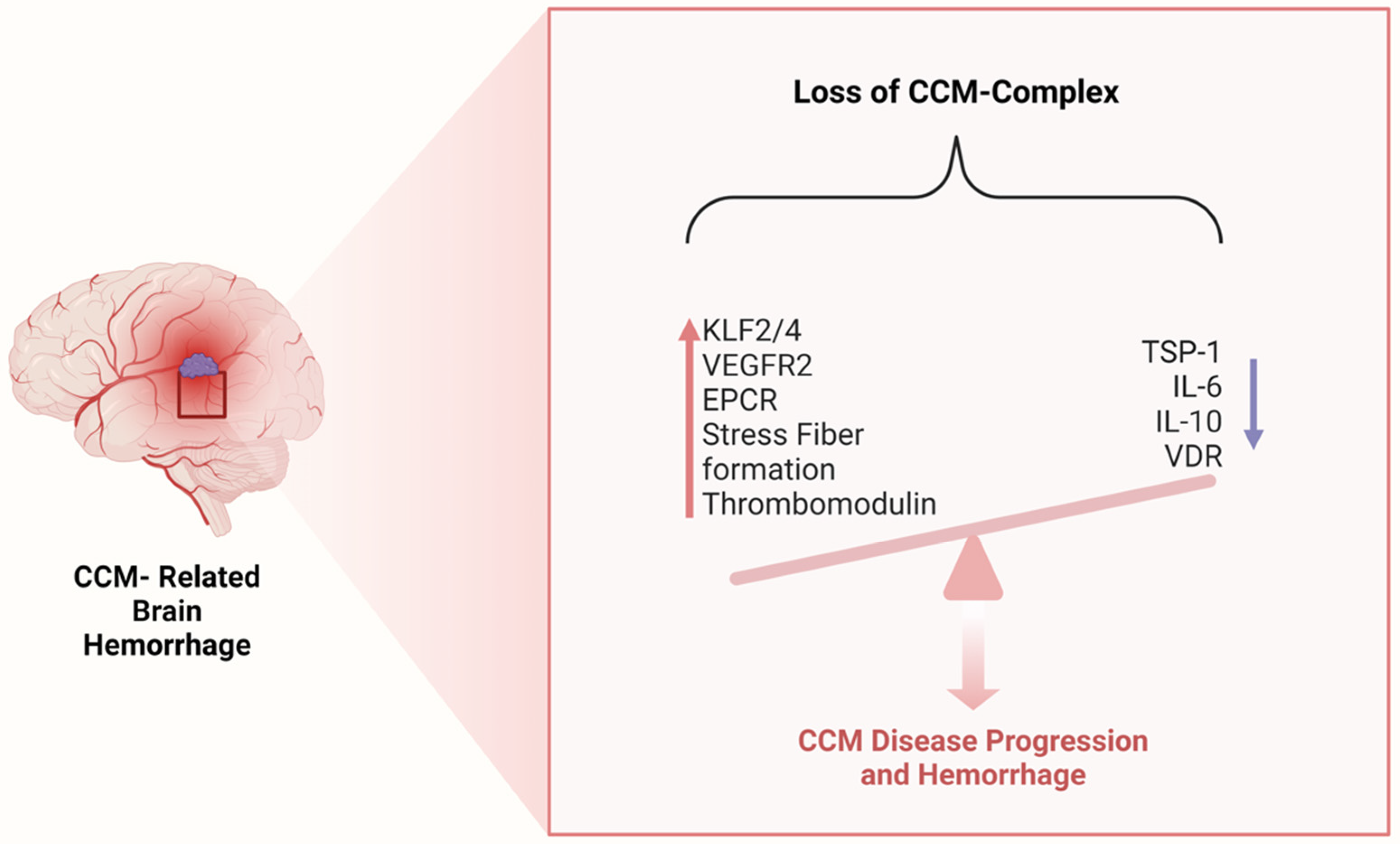
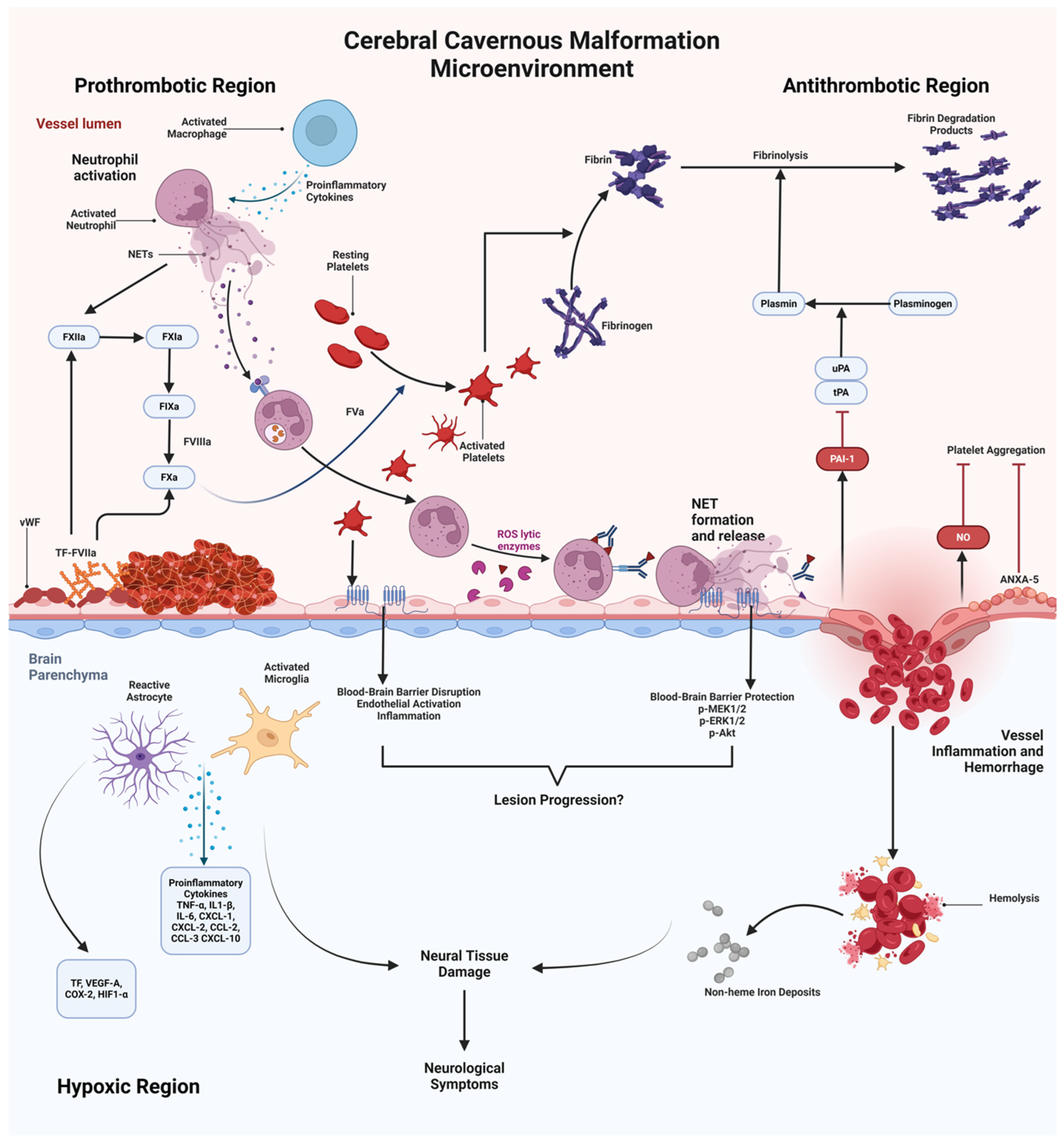
1.7. CCM Disease Progression and Hemorrhage
1.8. The Problem of Symptomatic Hemorrhage
1.9. Plasmatic Molecular Biomarkers and Their Diagnostic and Prognostic Applications in Cerebral Cavernous Malformation Disease
1.10. Biomarkers: Context and Definitions
2. Methods
2.1. Systematic Literature Review
2.2. Data Analysis
3. Results and Discussion
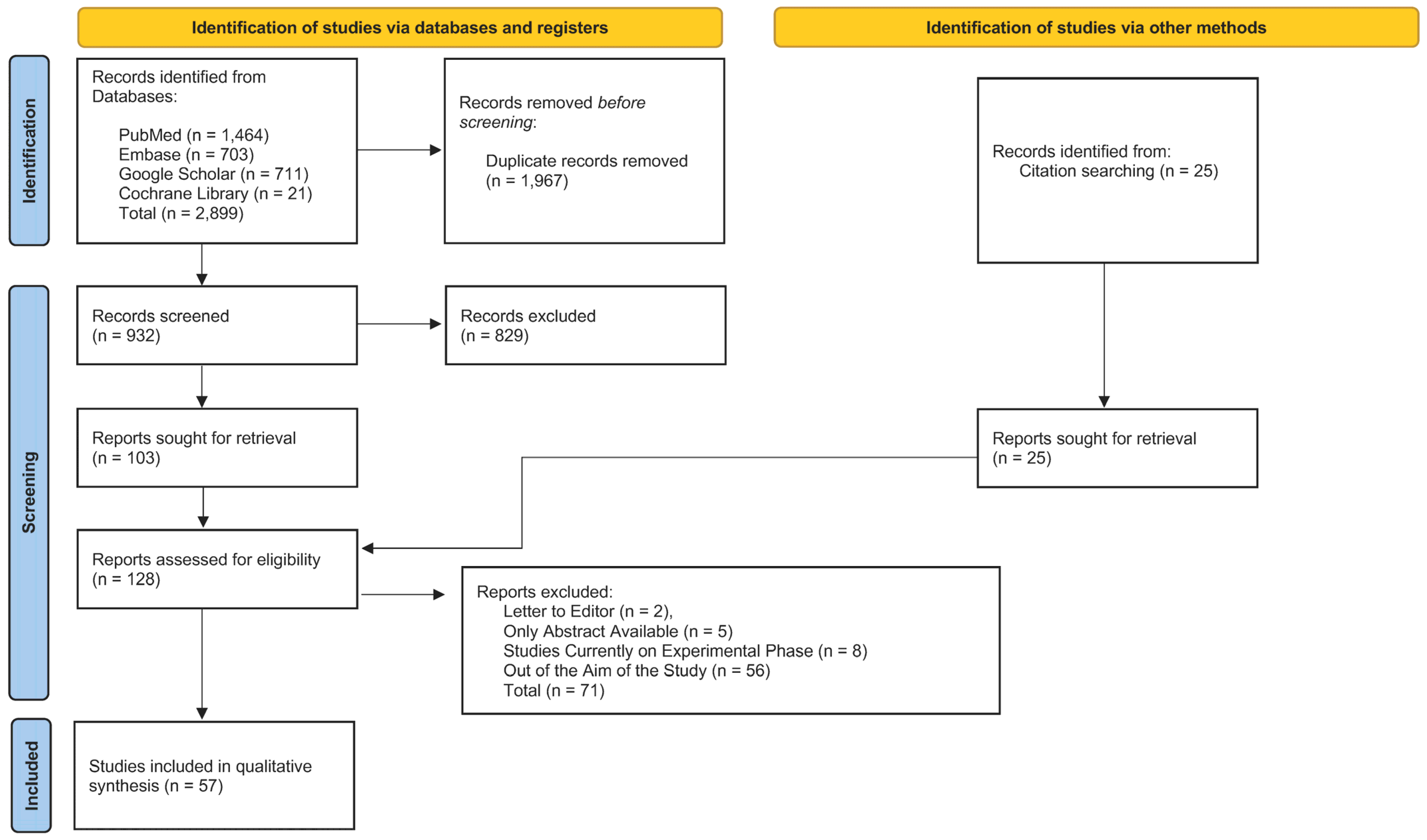
3.1. Literature Review
3.2. Identification and Validation of Circulating Plasma Biomarkers
3.3. The Problem with Symptomatic Hemorrhage
3.4. Gut Microbiome-Related Studies
3.5. Magnetic Resonance Imaging Modalities as In Vivo Biomarkers
4. Conclusions
Supplementary Materials
Author Contributions
Funding
Data Availability Statement
Conflicts of Interest
References
- Snellings, D.A.; Hong, C.C.; Ren, A.A.; Lopez-Ramirez, M.A.; Girard, R.; Srinath, A.; Marchuk, D.A.; Ginsberg, M.H.; Awad, I.A.; Kahn, L.K. Cerebral Cavernous Malformation: From Mechanism to Therapy. Circ. Res. 2021, 129, 195–215, Correction in Circ. Res. 2021, 129, e101. [Google Scholar] [CrossRef] [Scilit] [PubMed]
- Chohan, M.O.; Marchiò, S.; Morrison, L.A.; Sidman, R.L.; Cavenee, W.K.; Dejana, E.; Yonas, H.; Pasqualini, R.; Arap, W. Emerging Pharmacologic Targets in Cerebral Cavernous Malformation and Potential Strategies to Alter the Natural History of a Difficult Disease A Review. JAMA Neurol. 2018, 76, 492–500. [Google Scholar] [CrossRef] [Scilit]
- Retta, S.F.; Glading, A.J. Oxidative stress and inflammation in cerebral cavernous malformation disease pathogenesis: Two sides of the same coin. Int. J. Biochem. Cell Biol. 2016, 81, 254–270. [Google Scholar] [CrossRef] [Scilit] [PubMed]
- Marchi, S.; Trapani, E.; Corricelli, M.; Goitre, L.; Pinton, P.; Retta, S.F. Beyond multiple mechanisms and a unique drug: Defective autophagy as pivotal player in cerebral cavernous malformation pathogenesis and implications for targeted therapies. Rare Dis. 2016, 4, e1142640. [Google Scholar] [CrossRef] [Scilit]
- Cavalcanti, D.D.; Kalani, M.Y.S.; Martirosyan, N.L.; Eales, J.; Spetzler, R.F.; Preul, M.C. Cerebral cavernous malformations: From genes to proteins to disease. J. Neurosurg. 2012, 116, 122–132. [Google Scholar] [CrossRef] [Scilit] [PubMed]
- Riant, F.; Bergametti, F.; Ayrignac, X.; Boulday, G.; Tournier-Lasserve, E. Recent insights into cerebral cavernous malformations: The molecular genetics CCM. FEBS J. 2010, 277, 1070–1075. [Google Scholar] [CrossRef] [Scilit] [PubMed]
- Dubovsky, J.; Zabramski, J.M.; Kurth, J.; Spetzler, R.F.; Rich, S.S.; Orr, H.T.; Weber, J.L. A gene responsible for cavernous malformations of the brain maps to chromosome 7q. Hum. Mol. Genet. 1995, 4, 453–458. Available online: https://academic.oup.com/hmg/article/4/3/453/588879 (accessed on 8 February 2024). [CrossRef] [Scilit]
- Urat, M.; Ünel, G.; Wad, S.A.A.; Arin, K.; Inberg, F.; Ohn, J.; Batjer, H.H.; Kopitnik, T.A.; Morrison, L.; Giannotta, S.L.; et al. A Founder Mutation as a Cause of Cerebral Cavernous Malformation in Hispanic Americans. N. Engl. J. Med. 1996, 334, 946–951. [Google Scholar]
- Akers, A.L.; Johnson, E.; Steinberg, G.K.; Zabramski, J.M.; Marchuk, D.A. Biallelic somatic and germline mutations in cerebral cavernous malformations (CCMs): Evidence for a two-hit mechanism of CCM pathogenesis. Hum. Mol. Genet. 2008, 18, 919–930. [Google Scholar] [CrossRef] [Scilit] [PubMed]
- Fauth, C.; Rostasy, K.; Rath, M.; Gizewski, E.; Lederer, A.G.; Sure, U.; Zschocke, J.; Felbor, U. Highly variable intrafamilial manifestations of a CCM3 mutation ranging from acute childhood cerebral haemorrhage to late-onset meningiomas. Clin. Neurol. Neurosurg. 2015, 128, 41–43. [Google Scholar] [CrossRef] [Scilit]
- Cutsforth-Gregory, J.K.; Lanzino, G.; Link, M.J.; Brown, R.D.; Flemming, K.D. Characterization of radiation-induced cavernous malformations and comparison with a nonradiation cavernous malformation cohort. J. Neurosurg. 2015, 122, 1214–1222. [Google Scholar] [CrossRef] [Scilit] [PubMed]
- Strenger, V.; Sovinz, P.; Lackner, H.; Dornbusch, H.J.; Lingitz, H.; Eder, H.G.; Moser, A.; Urban, C. Intracerebral cavernous hemangioma after cranial irradiation in childhood: Incidence and risk factors. Strahlenther. Onkol. 2008, 184, 276–280. [Google Scholar] [CrossRef] [Scilit] [PubMed]
- Gault, J.; Shenkar, R.; Recksiek, P.; Awad, I.A. Biallelic Somatic and Germ Line CCM1 Truncating Mutations in a Cerebral Cavernous Malformation Lesion. Stroke 2005, 36, 872–874. [Google Scholar] [CrossRef] [Scilit]
- Gault, J.; Awad, I.A.; Recksiek, P.; Shenkar, R.; Breeze, R.; Handler, M.; Kleinschmidt-DeMasters, B. Cerebral Cavernous Malformations. Neurosurgery 2009, 65, 138–145. [Google Scholar] [CrossRef] [Scilit] [PubMed]
- Pagenstecher, A.; Stahl, S.; Sure, U.; Felbor, U. A two-hit mechanism causes cerebral cavernous malformations: Complete inactivation of CCM1, CCM2 or CCM3 in affected endothelial cells. Hum. Mol. Genet. 2009, 18, 911–918. [Google Scholar] [CrossRef] [Scilit]
- Zhu, Y.; Wu, Q.; Fass, M.; Xu, J.F.; You, C.; Müller, O.; Sandalcioglu, I.E.; Jian-Min, Z.; Ulrich, S. In vitro characterization of the angiogenic phenotype and genotype of the endothelia derived from sporadic cerebral cavernous malformations. Neurosurgery 2011, 69, 722–731. [Google Scholar] [CrossRef] [Scilit] [PubMed]
- Pilz, R.A.; Skowronek, D.; Mellinger, L.; Bekeschus, S.; Felbor, U.; Rath, M. Endothelial Differentiation of CCM1 Knockout iPSCs Triggers the Establishment of a Specific Gene Expression Signature. Int. J. Mol. Sci. 2023, 24, 3993. [Google Scholar] [CrossRef] [Scilit] [PubMed]
- Abdelilah-Seyfried, S.; Tournier-Lasserve, E.; Derry, W.B. Blocking Signalopathic Events to Treat Cerebral Cavernous Malformations. Trends Mol. Med. 2020, 26, 874–887. [Google Scholar] [CrossRef] [Scilit]
- Ren, A.A.; Snellings, D.A.; Su, Y.S.; Hong, C.C.; Castro, M.; Tang, A.T.; Detter, M.R.; Hobson, N.; Girard, R.; Romanos, S. PIK3CA and CCM mutations fuel cavernomas through a cancer-like mechanism. Nature 2021, 594, 271–276. [Google Scholar] [CrossRef] [Scilit] [PubMed]
- Plummer, N.W.; Gallione, C.J.; Srinivasan, S.; Zawistowski, J.S.; Louis, D.N.; Marchuk, D.A. Loss of p53 Sensitizes Mice with a Mutation in Ccm1 (KRIT1) to Development of Cerebral Vascular Malformations. Am. J. Pathology. Discov. Basic Transl. Pathobiol. 2004, 165, 1509–1518. [Google Scholar] [CrossRef] [Scilit]
- Boulday, G.; Rudini, N.; Maddaluno, L.; Blécon, A.; Arnould, M.; Gaudric, A.; Chapon, F.; Adams, R.H.; Dejana, E.; Tournier-Lasserve, E. Developmental timing of CCM2 loss influences cerebral cavernous malformations in mice. J. Exp. Med. 2011, 208, 1835–1847. [Google Scholar] [CrossRef] [Scilit] [PubMed]
- Whitehead, K.J.; Chan, A.C.; Navankasattusas, S.; Koh, W.; London, N.R.; Ling, J.; Mayo, A.H.; Drakos, S.G.; Jones, C.A.; Zhu, W.; et al. The Cerebral Cavernous Malformation signaling pathway promotes vascular integrity via Rho GTPases. Nat. Med. 2009, 15, 177–184, Erratum in Nat. Med. 2009, 15, 462. [Google Scholar] [CrossRef] [Scilit] [PubMed]
- Shenkar, R.; Peiper, A.; Pardo, H.; Moore, T.; Lightle, R.; Girard, R.; Hobson, N.; Polster, S.P.; Koskimäki, J.; Zhang, D.; et al. Rho kinase inhibition blunts lesion development and hemorrhage in murine models of aggressive Pdcd10/Ccm3 disease. Stroke 2019, 50, 738–744. [Google Scholar] [CrossRef] [Scilit] [PubMed]
- Hong, T.; Xiao, X.; Ren, J.; Cui, B.; Zong, Y.; Zou, J.; Kou, Z.; Jiang, N.; Meng, G.; Zeng, G.; et al. Somatic MAP3K3 and PIK3CA mutations in sporadic cerebral and spinal cord cavernous malformations. Brain 2021, 144, 2648–2658. [Google Scholar] [CrossRef] [Scilit]
- Zhang, J.; Croft, J.; Le, A. Familial CCM Genes Might Not Be Main Drivers for Pathogenesis of Sporadic CCMs-Genetic Similarity between Cancers and Vascular Malformations. J. Pers. Med. 2023, 13, 673. [Google Scholar] [CrossRef] [Scilit] [PubMed]
- Abdulrauf, S.I.; Kaynar, M.Y.; Awad, I.A. A comparison of the clinical profile of cavernous malformations with and without associated venous malformations. Neurosurgery 1999, 44, 41–46. [Google Scholar] [CrossRef] [Scilit] [PubMed]
- Brinjikji, W.; El-Rida El-Masri, A.; Wald, J.T.; Lanzino, G. Prevalence of Developmental Venous Anomalies Increases with Age. Stroke 2017, 48, 1997–1999. [Google Scholar] [CrossRef] [Scilit] [PubMed]
- Snellings, D.A.; Girard, R.; Lightle, R.; Srinath, A.; Romanos, S.; Li, Y.; Chen, C.; Ren, A.A.; Kahn, M.L.; Awad, I.M.; et al. Developmental venous anomalies are a genetic primer for cerebral cavernous malformations. Nat. Cardiovasc. Res. 2022, 1, 246–252. [Google Scholar] [CrossRef] [Scilit]
- Huo, R.; Yang, Y.; Sun, Y.; Zhou, Q.; Zhao, S.; Mo, Z.; Xu, H.; Wang, J.; Weng, J.; Jiao, W.; et al. Endothelial hyperactivation of mutant MAP3K3 induces cerebral cavernous malformation enhanced by PIK3CA GOF mutation. Angiogenesis 2023, 26, 295–312. [Google Scholar] [CrossRef] [Scilit]
- Weng, J.; Yang, Y.; Song, D.; Huo, R.; Li, H.; Chen, Y.; Nam, Y.; Zhou, Q.; Jiao, Y.; Fu, W.; et al. Somatic MAP3K3 mutation defines a subclass of cerebral cavernous malformation. Am. J. Hum. Genet. 2021, 108, 942–950. [Google Scholar] [CrossRef] [Scilit]
- You, C.; Erol Sandalcioglu, I.; Dammann, P.; Felbor, U.; Sure, U.; Zhu, Y. Loss of CCM3 impairs DLL4-Notch signalling: Implication in endothelial angiogenesis and in inherited cerebral cavernous malformations. J. Cell Mol. Med. 2013, 17, 407–418. [Google Scholar] [CrossRef] [Scilit] [PubMed]
- You, C.; Zhao, K.; Dammann, P.; Keyvani, K.; Kreitschmann-Andermahr, I.; Sure, U.; Zhu, Y. EphB4 forward signalling mediates angiogenesis caused by CCM3/PDCD10-ablation. J. Cell Mol. Med. 2017, 21, 1848–1858. [Google Scholar] [CrossRef] [Scilit] [PubMed]
- Saban, D.; Larisch, J.; Nickel, A.C.; Pierscianek, D.; Dammann, P.; Sure, U.; Zhu, Y. DNA promoter methylation of CCM genes in human cerebral cavernous malformations: Importance of confirming MSP data through sequencing. Eur. J. Med. Genet. 2020, 63, 104090. [Google Scholar] [CrossRef] [Scilit] [PubMed]
- Ren, J.; Huang, Y.; Ren, Y.; Tu, T.; Qiu, B.; Ai, D.; Bai, Z.; Li, F.; Chen, X.; Feng, Z.; et al. Somatic variants of MAP3K3 are sufficient to cause cerebral and spinal cord cavernous malformations. Brain 2023, 146, 3634–3647. [Google Scholar] [CrossRef] [Scilit]
- Zhou, Z.; Tang, A.T.; Wong, W.Y.; Bamezai, S.; Goddard, L.M.; Shenkar, R.; Zhou, S.; Yang, J.; Wright, A.C.; Foley, W.; et al. Cerebral cavernous malformations arise from endothelial gain of MEKK3-KLF2/4 signaling HHS Public Access. Nature 2016, 532, 122–126, Erratum in Nature 2016, 536, 488. [Google Scholar] [CrossRef] [Scilit]
- Zhou, Z.; Rawnsley, D.R.; Zheng, X.; Kahn, M.L. The Cerebral Cavernous Malformation Pathway Controls Cardiac Development via Regulation of Endocardial MEKK3 Signaling and KLF Expression. Dev. Cell 2015, 32, 168–180. [Google Scholar] [CrossRef] [Scilit]
- Ayata, C.; Kim, H.; Morrison, L.; Liao, J.K.; Gutierrez, J.; Lopez-Toledano, M.; Carrazana, E.; Rabinowicz, A.; Issam, A.A. Role of Rho-Associated Kinase in the Pathophysiology of Cerebral Cavernous Malformations. Neurol. Genet. 2024, 10, e200121. [Google Scholar] [CrossRef] [Scilit] [PubMed]
- Vannier, D.R.; Shapeti, A.; Chuffart, F.; Planus, E.; Manet, S.; Rivier, P.; Destaing, O.; Albiges-Rizo, C.; Oosterwyck, H.; Faurobert, E. CCM2-deficient endothelial cells undergo a ROCK-dependent reprogramming into senescence-associated secretory phenotype. Angiogenesis 2021, 24, 843–860. [Google Scholar] [CrossRef] [Scilit] [PubMed]
- Santamaria, S.; De Groot, R. ADAMTS proteases in cardiovascular physiology and disease. Open Biol. 2020, 10, 200333. [Google Scholar] [CrossRef] [Scilit]
- Hong, C.C.; Tang, A.T.; Detter, M.R.; Choi, J.P.; Wang, R.; Yang, X.; Guerrero, A.A.; Hobson, N.; Girard, R.; Lightle, R.; et al. Cerebral cavernous malformations are driven by ADAMTS5 proteolysis of versican. J. Exp. Med. 2020, 217, e20200140. [Google Scholar] [CrossRef] [Scilit]
- Zebda, N.; Dubrovskyi, O.; Birukov, K.G. Focal adhesion kinase regulation of mechanotransduction and its impact on endothelial cell functions. Microvasc. Res. 2011, 83, 71–81. [Google Scholar] [CrossRef] [Scilit]
- Lamalice, L.; Le Boeuf, F.; Huot, J. Endothelial Cell Migration During Angiogenesis. Circ. Res. 2007, 100, 782–794. [Google Scholar] [CrossRef] [Scilit] [PubMed]
- Santos, A.N.; Rauschenbach, L.; Saban, D.; Chen, B.; Darkwah Oppong, M.; Herten, A.; Gull, H.H.; Rieß, C.; Deuschl, C.; Schmidt, B.; et al. Multiple cerebral cavernous malformations: Clinical course of confirmed, assumed and non-familial disease. Eur. J. Neurol. 2022, 29, 1427–1434. [Google Scholar] [CrossRef] [Scilit] [PubMed]
- Shenkar, R.; Shi, C.; Rebeiz, T.; Stockton, R.A.; McDonald, D.A.; Mikati, A.G.; Zhang, L.; Austin, C.; Akers, A.L.; Gallione, C.J.; et al. Exceptional aggressiveness of cerebral cavernous malformation disease associated with PDCD10 mutations. Genet. Med. 2015, 17, 188–196. [Google Scholar] [CrossRef] [Scilit] [PubMed]
- Tang, A.T.; Sullivan, K.R.; Hong, C.C.; Goddard, L.M.; Mahadevan, A.; Ren, A.; Pardo, H.; Peiper, A.; Griffin, E.; Tanes, C.; et al. Distinct cellular roles for PDCD10 define a gut-brain axis in cerebral cavernous malformation. Sci. Transl. Med. 2019, 11, eaaw3521. [Google Scholar] [CrossRef] [Scilit] [PubMed]
- Denier, C.; Labauge, P.; Bergametti, F.; Marchelli, F.; Riant, F.; Arnoult, M.; Maciazek, J.; Vicaut, E.; Brunereau, L.; Tournier-Lasserve, M. Genotype-phenotype correlations in cerebral cavernous malformations patients. Ann. Neurol. 2006, 60, 550–556. [Google Scholar] [CrossRef] [Scilit] [PubMed]
- Fung, T.C.; Olson, C.A.; Hsiao, E.Y. Interactions between the microbiota, immune and nervous systems in health and disease HHS Public Access. Nat. Neurosci. 2017, 20, 145–155. [Google Scholar] [CrossRef] [Scilit]
- Sharon, G.; Garg, N.; Debelius, J.; Knight, R.; Dorrestein, P.C.; Mazmanian, S.K. Cell Metabolism Specialized Metabolites from the Microbiome in Health and Disease. Cell Metab. 2014, 20, 719–730. [Google Scholar] [CrossRef] [Scilit]
- Tang, A.T.; Choi, J.P.; Kotzin, J.J.; Yang, Y.; Hong, C.C.; Hobson, N.; Girard, R.; Zeineddine, H.A.; Lightle, R.; Moore, T.; et al. Endothelial TLR4 and the microbiome drive cerebral cavernous malformations. Nature 2017, 545, 305–310. [Google Scholar] [CrossRef] [Scilit]
- González-Gallardo, E.; Rauschenbach, L.; Santos, A.N.; Riess, C.; Li, Y.; Tippelt, S.; Marina, A.D.; Dohna-Schwake, C.; Sure, U.; Dammann, P. Giant Cavernous Malformation Mimicking an Infiltrative Intracranial Neoplasm in Children–Case Report and Systematic Review of the Literature. World Neurosurg. 2023, 174, 30–41. [Google Scholar] [CrossRef] [Scilit]
- Ozgen, B.; Senocak, E.; Oguz, K.K.; Soylemezoglu, F.; Akalan, N. Radiological features of childhood giant cavernous malformations. Neuroradiology 2010, 53, 283–289. [Google Scholar] [CrossRef] [Scilit]
- Clatterbuck, R.E.; Moriarity, J.L.; Elmaci, I.; Lee, R.R.; Breiter, S.N.; Rigamonti, D. Dynamic nature of cavernous malformations: A prospective magnetic resonance imaging study with volumetric analysis. J. Neurosurg. 2000, 93, 981–986. [Google Scholar] [CrossRef] [Scilit] [PubMed]
- Lopez-Ramirez, M.A.; Pham, A.; Girard, R.; Wyseure, T.; Hale, P.; Yamashita, A.; Koskimäki, J.; Polster, S.; Saadat, L.; Romero, I.A.; et al. Cerebral cavernous malformations form an anticoagulant vascular domain in humans and mice. Blood 2019, 133, 193–204. [Google Scholar] [CrossRef] [Scilit] [PubMed]
- DiStefano, P.V.; Glading, A.J. VEGF signalling enhances lesion burden in KRIT1 deficient mice. J. Cell Mol. Med. 2020, 24, 632–639. [Google Scholar] [CrossRef] [Scilit] [PubMed]
- Globisch, M.A.; Onyeogaziri, F.C.; Jauhiainen, S.; Yau, A.C.Y.; Orsenigo, F.; Conze, L.L.; Arce, M.; Corada, M.; Smith, R.O.; Rorsman, C.; et al. Immunothrombosis and Vascular Heterogeneity in Cerebral Cavernous Malformation. Available online: http://ashpublications.org/blood/article-pdf/140/20/2154/2054622/blood_bld-2021-015350-main.pdf (accessed on 18 October 2024).
- Neubauer, K.; Zieger, B. Endothelial cells and coagulation. Cell Tissue Res. 2022, 387, 391–398. [Google Scholar] [CrossRef] [Scilit] [PubMed]
- Globisch, M.A.; Onyeogaziri, C.; Smith, R.O.; Arce, M.; Magnusson, P.U. Dysregulated Hemostasis and Immunothrombosis in Cerebral Cavernous Malformations. Int. J. Mol. Sci. 2022, 23, 12575. [Google Scholar] [CrossRef] [Scilit]
- Much, C.D.; Sendtner, B.S.; Schwefel, K.; Freund, E.; Bekeschus, S.; Otto, O.; Pagenstecher, A.; Felbor, U.; Rath, M.; Spiegler, S. Inactivation of Cerebral Cavernous Malformation Genes Results in Accumulation of von Willebrand Factor and Redistribution of Weibel-Palade Bodies in Endothelial Cells. Front. Mol. Biosci. 2021, 8, 622547. [Google Scholar] [CrossRef] [Scilit]
- Sforza, D.M.; Putman, C.M.; Cebral, J.R. Hemodynamics of Cerebral Aneurysms. Annu. Rev. Fluid Mech. 2009, 41, 91–107. [Google Scholar] [CrossRef] [Scilit] [PubMed]
- Tang, H.; Wang, Q.; Xu, F.; Zhang, X.; Zeng, Z.; Yan, Y.; Lu, Z.; Xue, G.; Zuo, Q.; Luo, Y.; et al. Underlying mechanism of hemodynamics and intracranial aneurysm. Chin. Neurosurg. J. 2021, 7, 44. [Google Scholar] [CrossRef] [Scilit]
- Li, Y.; Srinath, A.; Alcazar-Felix, R.; Hage, S.; Bindal, A.; Lightle, R.; Shenkar, R.; Shi, C.; Girard, R.; Issam, A.A. Inflammatory Mechanisms in a Neurovascular Disease: Cerebral Cavernous Malformation. Brain Sci. 2023, 13, 1336. [Google Scholar] [CrossRef] [Scilit]
- Girard, R.; Zeineddine, H.A.; Koskimäki, J.; Fam, M.D.; Cao, Y.; Shi, C.; Moore, T.; Lightle, R.; Stadnik, A.; Chaudagar, K.; et al. Plasma Biomarkers of Inflammation and Angiogenesis Predict Cerebral Cavernous Malformation Symptomatic Hemorrhage or Lesional Growth HHS Public Access. Circ. Res. 2018, 122, 1716–1721. [Google Scholar] [CrossRef] [Scilit]
- Girard, R.; Li, Y.; Stadnik, A.; Shenkar, R.; Hobson, N.; Romanos, S.; Sharbel, B.A.; Srinath, A.; Thomas, B.S.; Lightle, R.; et al. A Roadmap for Developing Plasma Diagnostic and Prognostic Biomarkers of Cerebral Cavernous Angioma with Symptomatic Hemorrhage (CASH). Neurosurgery 2021, 88, 686–697. [Google Scholar] [CrossRef] [Scilit]
- Srinath, A.; Xie, B.; Li, Y.; Sone, J.Y.; Romanos, S.; Chen, C.; Sharma, A.; Polster, S.; Dorrestein, P.C.; Weldon, K.C.; et al. Plasma metabolites with mechanistic and clinical links to the neurovascular disease cavernous angioma. Commun. Med. 2023, 3, 35. [Google Scholar] [CrossRef] [Scilit]
- Horne, M.A.; Flemming, K.D.; Su, I.C.; Stapf, C.; Jeon, J.P.; Li, D.; Maxwell, S.S.; White, P.; Christianson, T.J.; Agid, R.; et al. Clinical course of untreated cerebral cavernous malformations: A meta-analysis of individual patient data. Artic. Lancet Neurol. 2016, 15, 166–173. [Google Scholar] [CrossRef] [Scilit]
- Santos, A.N.; Rauschenbach, L.; Gull, H.H.; Olbrich, A.; Lahl, K.; Darkwah Oppong, M.; Dinger, T.F.; Rieß, C.; Chen, B.; Lenkeit, A.; et al. Central nervous system cavernous malformations: Cross-sectional study assessing rebleeding risk after a second haemorrhage. Eur. J. Neurol. 2023, 30, 144–149. [Google Scholar] [CrossRef] [Scilit] [PubMed]
- Lazzaroni, F.; Meessen, J.M.T.A.; Sun, Y.; Lanfranconi, S.; Scola, E.; D’Alessandris, Q.G.; Tassig, L.; Carrieroh, M.R.; Castorii, M.; Marino, S.; et al. Circulating biomarkers in familial cerebral cavernous malformation. EBioMedicine 2024, 99, 104914. [Google Scholar] [CrossRef] [Scilit]
- Page, M.J.; McKenzie, J.E.; Bossuyt, P.M.; Boutron, I.; Hoffmann, T.C.; Mulrow, C.D.; Shamseer, L.; Tetzlaff, J.M.; A Akl, E.; Brennan, S.E.; et al. The PRISMA 2020 statement: An updated guideline for reporting systematic reviews. BMJ 2021, 372, n71. [Google Scholar] [CrossRef] [Scilit] [PubMed]
- Girard, R.; Khanna, O.; Shenkar, R.; Zhang, L.; Wu, M.; Jesselson, M.; Zeineddine, H.A.; Gangal, A.; Fam, M.D.; Gibson, C.C.; et al. Peripheral plasma Vitamin D and non-HDL cholesterol reflect the severity of cerebral cavernous malformation disease. Biomark. Med. 2016, 10, 255–264. [Google Scholar] [CrossRef] [Scilit] [PubMed]
- Gibson, C.C.; Zhu, W.; Davis, C.T.; Bowman-Kirigin, J.A.; Chan, A.C.; Ling, J.; Walker, A.E.; Goitre, L.; Monache, S.D.; Retta, S.F.; et al. Strategy for Identifying Repurposed Drugs for the Treatment of Cerebral Cavernous Malformation HHS Public Access. Circulation 2015, 131, 289–299. [Google Scholar] [CrossRef] [Scilit] [PubMed]
- Venugopal, V.; Sumi, S. Molecular biomarkers and drug targets in brain arteriovenous and cavernous malformations: Where are we? Stroke 2022, 53, 279–289. [Google Scholar] [CrossRef] [Scilit] [PubMed]
- Flemming, K.D.; Kumar, S.; Brown, R.D.; Singh, R.J.; Whitehead, K.; McCreath, L.; Lanzino, G. Cavernous Malformation Hemorrhagic Presentation at Diagnosis Associated with Low 25-Hydroxy-Vitamin D Level. Cerebrovasc. Dis. 2020, 49, 216–222. [Google Scholar] [CrossRef] [Scilit] [PubMed]
- Keep, R.F.; Zhou, N.; Xiang, J.; Andjelkovic, A.V.; Hua, Y.; Xi, G. Vascular disruption and blood-brain barrier dysfunction in intracerebral hemorrhage. Fluids Barriers CNS 2014, 11, 18. [Google Scholar] [CrossRef] [Scilit]
- Luissint, A.C.; Artus, C.; Glacial, F.; Ganeshamoorthy, K.; Couraud, P.O. Tight junctions at the blood brain barrier: Physiological architecture and disease-associated dysregulation. Fluids Barriers CNS 2012, 9, 23. [Google Scholar] [CrossRef] [Scilit]
- Gao, Y.; Zhao, Z.; Yang, L.; Liu, X.; Xing, X.; Zhang, H.; Yun, J.; Ou, X.; Su, X.; Lu, X.; et al. Arsenic exposure assists ccm3 genetic polymorphism in elevating blood pressure. Oncotarget 2017, 9, 4915–4923. Available online: https://www.impactjournals.com/oncotarget (accessed on 25 March 2025). [CrossRef] [Scilit]
- Hsuchou, H.; Kastin, A.J.; Mishra, P.K.; Pan, W. C-reactive protein increases BBB permeability: Implications for obesity and neuroinflammation. Cell Physiol. Biochem. 2012, 30, 1109–1119. [Google Scholar] [CrossRef] [Scilit] [PubMed]
- Chen, Y.; Hao, Q.; Kim, H.; Su, H.; Letarte, M.; Karumanchi, S.A.; Lawton, M.T.; Barbaro, N.M.; Yang, G.-Y.; Young, W.L. Soluble endoglin modulates aberrant cerebral vascular remodeling. Ann. Neurol. 2009, 66, 19–27. [Google Scholar] [CrossRef] [Scilit] [PubMed]
- Mcallister, K.A.; Grogg, K.M.; Johnson, D.W.; Gallionel, C.J.; Baldwin, M.A.; Jackson, C.E.; Helmbold, E.A.; Markel, D.S.; McKinnon, W.C.; Murrel, J.; et al. Endoglin, a TGF-P binding protein of endothelial cells, is the gene for hereditary haemorrhagic telangiectasia type 1. Nat. Genet. 1994, 8, 345–351. Available online: http://www.nature.com/naturegenetics (accessed on 18 March 2025). [CrossRef] [Scilit]
- Lopez-Ramirez, M.A.; Fonseca, G.; Zeineddine, H.A.; Girard, R.; Moore, T.; Pham, A.; Cao, Y.; Shenkar, R.; Kreuk, B.; Lagarrigue, F.; et al. Thrombospondin1 (TSP1) replacement prevents cerebral cavernous malformations. J. Exp. Med. 2017, 214, 3331–3346. [Google Scholar] [CrossRef] [Scilit] [PubMed]
- Chehuen Bicalho, V.; da Fontoura Galvão, G.; Lima Fontes-Dantas, F.; Paulo da Costa Gonçalves, J.; Dutra de Araujo, A.; Carolina França, L.; Leite, P.E.C.; Campolina Vidal, C.; Castro Filho, R.; Alves-Leon, S.V.; et al. Asymptomatic cerebral cavernous angiomas associated with plasma marker signature. J. Clin. Neurosci. 2021, 89, 258–263. [Google Scholar] [CrossRef] [Scilit] [PubMed]
- Kar, S.; Perrelli, A.; Bali, K.K.; Mastrocola, R.; Kar, A.; Khan, B.; Gand, L.; Nayak, A.; Hartmann, C.; Kunz, W.S.; et al. Identification of galectin-3 as a novel potential prognostic/predictive biomarker and therapeutic target for cerebral cavernous malformation disease. Genes Dis. 2024, 11, 67–71. [Google Scholar] [CrossRef] [Scilit] [PubMed]
- Girard, R.; Zeineddine, H.A.; Fam, M.D.; Mayampurath, A.; Cao, Y.; Shi, C.; Shenkar, R.; Polster, S.P.; Jesselson, M.; Duggan, R.; et al. Plasma Biomarkers of Inflammation Reflect Seizures and Hemorrhagic Activity of Cerebral Cavernous Malformations HHS Public Access. Transl. Stroke Res. 2018, 9, 34–43. [Google Scholar] [CrossRef] [Scilit] [PubMed]
- Ng, C.T.; Fong, L.Y.; Sulaiman, M.R.; Moklas, M.A.M.; Yong, Y.K.; Hakim, M.N.; Ahmad, Z. Interferon-Gamma Increases Endothelial Permeability by Causing Activation of p38 MAP Kinase and Actin Cytoskeleton Alteration. J. Interferon Cytokine Res. 2015, 35, 513–522. [Google Scholar] [CrossRef] [Scilit] [PubMed]
- Pawlikowska, L.; Tran, M.N.; Achrol, A.S.; McCulloch, C.E.; Ha, C.; Lind, D.L.; Hashimoto, T.; Zaroff, J.; Lawton, M.T.; Marchuk, D.A.; et al. Polymorphisms in genes involved in inflammatory and angiogenic pathways and the risk of hemorrhagic presentation of brain arteriovenous malformations. Stroke 2004, 35, 2294–2299. [Google Scholar] [CrossRef] [PubMed]
- Jauhiainen, S.; Onyeogaziri, F.; Savander, H.; Lazzaroni, F.; Liu Conze, L.; Laakso, A.; Niemelä, M.; Dejana, E.; Rezai, B.; Magnusson, P. O-048 Proteomics analysis on human cerebral cavernous malformations reveals novel biomarkers for the disease pathology. J. NeuroInterv. Surg. 2022, 14, A30–A31. [Google Scholar] [CrossRef] [Scilit] [PubMed]
- Lampugnani, M.G.; Dejana, E.; Giampietro, C. Vascular endothelial (VE)-cadherin, endothelial adherens junctions, and vascular disease. Cold Spring Harb. Perspect. Biol. 2018, 9, a033720, Erratum in Cold Spring Harb. Perspect. Biol. 2018, 10, a029322. [Google Scholar] [CrossRef] [Scilit] [PubMed]
- Robinson, J.R.; Awad, I.A.; Zhou, P.; Barna, B.P.; Estes, M.L. Expression of basement membrane and endothelial cell adhesion molecules in vascular malformations of the brain: Preliminary observations and working hypothesis. Neurol. Res. 1995, 17, 49–58. [Google Scholar] [CrossRef] [Scilit] [PubMed]
- Jauhiainen, S.; Onyeogaziri, F.C.; Lazzaroni, F.; Conze, L.L.; Laakkonen, J.P.; Laham-Karam, N.; Laakso, A.; Niemelä, M.; Jahromi, B.R.; Magnusson, P.U. Proteomics on human cerebral cavernous malformations reveals novel biomarkers in neurovascular dysfunction for the disease pathology. Biochim. Biophys. Acta Mol. Basis Dis. 2024, 1870, 167139. [Google Scholar] [CrossRef] [Scilit] [PubMed]
- Shenkar, R.; Shi, C.; Austin, C.; Moore, T.; Lightle, R.; Cao, Y.; Zhang, L.; Wu, M.; Zeineddine, H.A.; Girard, R.; et al. RhoA Kinase Inhibition with Fasudil Versus Simvastatin in Murine Models of Cerebral Cavernous Malformations. Stroke 2017, 48, 187–194. [Google Scholar] [CrossRef] [Scilit] [PubMed]
- Bicer, A.; Guclu, B.; Ozkan, A.; Kurtkaya, O.; Koc, Y.; Necmettin Pamir, M.; Kilic, T. Laboratory Study Expression of angiogenesis associated matrix metalloproteinases and extracellular matrix proteins in cerebral vascular malformations. Clin. Neurosci. 2010, 17, 232–236. [Google Scholar] [CrossRef] [Scilit]
- Polster, S.P.; Sharma, A.; Tanes, C.; Tang, A.T.; Mericko, P.; Cao, Y.; Carrión-Penagos, J.; Girard, R.; Koskimäki, J.; Zhang, D.; et al. Permissive microbiome characterizes human subjects with a neurovascular disease cavernous angioma. Nat. Commun. 2020, 11, 2659. [Google Scholar] [CrossRef] [Scilit]
- Bergstrom, K.S.B.; Kissoon-Singh, V.; Gibson, D.L.; Ma, C.; Montero, M.; Sham, H.P.; Ryz, N.; Huang, T.; Velcich, A.; Finlay, B.B.; et al. Muc2 Protects against Lethal Infectious Colitis by Disassociating Pathogenic and Commensal Bacteria from the Colonic Mucosa. PLoS Pathog. 2010, 6, e1000902. [Google Scholar] [CrossRef] [Scilit]
- Chassaing, B.; Srinivasan, G.; Delgado, M.A.; Young, A.N.; Gewirtz, A.T.; Vijay-Kumar, M. Fecal lipocalin 2, a sensitive and broadly dynamic non-invasive biomarker for intestinal inflammation. PLoS ONE 2012, 7, e44328. [Google Scholar] [CrossRef] [Scilit] [PubMed]
- Wüstehube, J.; Bartol, A.; Liebler, S.S.; Brütsch, R.; Zhu, Y.; Felbor, U.; Sure, U.; Augustin, H.G.; Fischer, A. Cerebral cavernous malformation protein CCM1 inhibits sprouting angiogenesis by activating DELTA-NOTCH signaling. Proc. Natl. Acad. Sci. USA 2010, 107, 12640–12645. [Google Scholar] [CrossRef] [Scilit] [PubMed]
- Jones, C.A.; London, N.R.; Chen, H.; Park, K.W.; Sauvaget, D.; Stockton, R.A.; Wythe, J.D.; Larrieu-Lahargue, F.; Mukouyama, Y.-S.; Lindblom, P.; et al. Robo4 stabilizes the vascular network by inhibiting pathologic angiogenesis and endothelial hyperpermeability. Nat. Med. 2008, 14, 448–453, Erratum in Nat. Med. 2008, 14, 585. [Google Scholar] [CrossRef] [Scilit] [PubMed]
- Choquet, H.; Pawlikowska, L.; Nelson, J.; Mcculloch, C.E.; Akers, A.; Baca, B.; Khan, Y.; Hart, B.; Morrison, L.; Kim, H. Polymorphisms in inflammatory and immune response genes associated with cerebral cavernous malformation type 1 severity on behalf of the Brain Vascular Malformation Consortium (BVMC) Study. Cerebrovasc. Dis. 2014, 38, 433–440. [Google Scholar] [CrossRef] [Scilit]
- Wetzel-Strong, S.E.; Weinsheimer, S.; Nelson, J.; Pawlikowska, L.; Clark, D.; Starr, M.D.; Liu, Y.; Kim, H.; Faughnan, M.E.; Nixon, A.B.; et al. Pilot investigation of circulating angiogenic and inflammatory biomarkers associated with vascular malformations. Orphanet J. Rare Dis. 2021, 16, 372. [Google Scholar] [CrossRef] [Scilit] [PubMed]
- Cunha, S.I.; Magnusson, P.U.; Dejana, E.; Lampugnani, M.G. Deregulated TGF-β/BMP signaling in vascular malformations. Circ. Res. 2017, 121, 981–999. [Google Scholar] [CrossRef] [Scilit] [PubMed]
- Jung, K.H.; Chu, K.; Jeong, S.W.; Park, H.K.; Bae, H.J.; Yoon, B.W. Cerebral Cavernous Malformations with Dynamic and Progressive Course Correlation Study with Vascular Endothelial Growth Factor. Arch. Neurol. 2003, 60, 1613–1618. [Google Scholar] [CrossRef] [Scilit]
- Lyne, S.B.; Girard, R.; Koskimäki, J.; Zeineddine, H.A.; Zhang, D.; Cao, Y.; Li, Y.; Stadnik, A.; Moore, T.; Lightle, R.; et al. Biomarkers of cavernous angioma with symptomatic hemorrhage. JCI Insight 2019, 4, e128577. [Google Scholar] [CrossRef] [Scilit] [PubMed]
- Florian, I.A.; Buruiana, A.; Timis, T.L.; Susman, S.; Florian, I.S.; Balasa, A.; Berindan-Neagoe, I. An Insight into the microRNAs Associated with Arteriovenous and Cavernous Malformations of the Brain. Cells 2021, 10, 1373. [Google Scholar] [CrossRef] [Scilit] [PubMed]
- Croft, J.; Grajeda, B.; Aguirre, L.A.; Abou-Fadel, J.S.; Ellis, C.C.; Estevao, I.; Almeida, I.C.; Zhang, J. Circulating Blood Prognostic Biomarker Signatures for Hemorrhagic Cerebral Cavernous Malformations (CCMs). Int. J. Mol. Sci. 2024, 25, 4740. [Google Scholar] [CrossRef] [Scilit] [PubMed]
- Galvao, G.; Trefilio, L.; Salvio, A.; Silva, E.; Alves-Leon, S.; Fontes-Dantas, F.L.; Almeida, I.C.; Zhang, J. Genetic Markers and Predictive Factors Influencing the Aggressive Behavior of Cerebral Cavernous Malformation. medRxiv 2024. [Google Scholar] [CrossRef] [Scilit]
- Kar, S.; Bali, K.K.; Baisantry, A.; Geffers, R.; Hartmann, C.; Samii, A.; Bertalanffy, H. Genome-Wide Sequencing Reveals Small Nucleolar RNAs Downregulated in Cerebral Cavernous Malformations. Cell Mol. Neurobiol. 2018, 38, 1369–1382. [Google Scholar] [CrossRef] [Scilit]
- Kim, H.; Flemming, K.D.; Nelson, J.A.; Lui, A.; Majersik, J.J.; Dela Cruz, M.; Zabramski, J.; Trevizo, O.; Lanzino, G.; Zafar, A.; et al. Baseline Characteristics of Patients with Cavernous Angiomas with Symptomatic Hemorrhage in Multisite Trial Readiness Project. Stroke 2021, 52, 3829–3838. [Google Scholar] [CrossRef] [Scilit] [PubMed]
- Sone, J.Y.; Li, Y.; Hobson, N.; Romanos, S.G.; Srinath, A.; Lyne, S.B.; Shkoukani, A.; Carrion-Penagos, J.; Stadnik, A.; Piedad, K.; et al. Perfusion and permeability as diagnostic biomarkers of cavernous angioma with symptomatic hemorrhage. J. Cereb. Blood Flow Metab. 2021, 41, 2944–2956. [Google Scholar] [CrossRef] [Scilit] [PubMed]
- Girard, R.; Fam, M.D.; Zeineddine, H.A.; Tan, H.; Mikati, A.G.; Shi, C.; Jesselson, M.; Shenkar, R.; Wu, M.; Cao, Y.; et al. Vascular permeability and iron deposition biomarkers in longitudinal follow-up of cerebral cavernous malformations. J. Neurosurg. 2017, 127, 102–110. [Google Scholar] [CrossRef] [Scilit] [PubMed]
- Mikati, A.G.; Khanna, O.; Zhang, L.; Girard, R.; Shenkar, R.; Guo, X.; Shah, A.; Larsson, H.B.W.; Tan, H.; Li, L.; et al. Vascular permeability in cerebral cavernous malformations. J. Cereb. Blood Flow Metab. 2015, 35, 1632–1639. [Google Scholar] [CrossRef] [Scilit] [PubMed]
- Hage, S.; Kinkade, S.; Girard, R.; Flemming, K.D.; Kim, H.; Torbey, M.T.; Huang, J.; Huston, J.; Shu, Y.; Selwyn, R.G.; et al. Cavernous Angioma Symptomatic Hemorrhage (CASH) Trial Readiness II: Imaging Biomarkers and Trial Modeling. medRxiv 2023. [Google Scholar] [CrossRef] [Scilit]
- Zeineddine, H.A.; Girard, R.; Cao, Y.; Hobson, N.; Fam, M.D.; Stadnik, A.; Tan, H.; Shen, J.; Chaudagar, K.; Shenkar, R.; et al. Quantitative susceptibility mapping as a monitoring biomarker in cerebral cavernous malformations with recent hemorrhage. J. Magn. Reson. Imaging 2018, 47, 1133–1138. [Google Scholar] [CrossRef] [Scilit] [PubMed]
- Tan, H.; Zhang, L.; Mikati, A.G.; Girard, R.; Khanna, O.; Fam, M.D.; Liu, Y.; Wang, Y.; Edelman, R.R.; Christoforidis, G.; et al. Quantitative susceptibility mapping in cerebral cavernous malformations: Clinical correlations. Am. J. Neuroradiol. 2016, 37, 1209–1215. [Google Scholar] [CrossRef] [Scilit] [PubMed]
- Mikati, A.G.; Tan, H.; Shenkar, R.; Li, L.; Zhang, L.; Guo, X.; Larsson, H.B.W.; Shu, C.; Liu, T.; Wang, Y.; et al. Dynamic Permeability and Quantitative Susceptibility. Stroke 2014, 45, 598–601. [Google Scholar] [CrossRef] [Scilit] [PubMed]
- Rauschenbach, L.; Santos, A.N.; Gull, H.H.; Rieß, C.; Deuschl, C.; Schmidt, B.; Darkwah Oppong, M.; Gembruch, O.; Özkan, N.; Jabbarli, R.; et al. Functional impact of multiple bleeding events in patients with conservatively treated spinal cavernous malformations. J. Neurosurg. Spine 2022, 38, 405–411. [Google Scholar] [CrossRef] [Scilit] [PubMed]
- Garcia, J.M.; Stillings, S.A.; Leclerc, J.L.; Phillips, H.; Edwards, N.J.; Robicsek, S.A.; Hoh, B.L.; Blackburn, S.; Dore, S. Role of interleukin-10 in acute brain injuries. Front. Neurol. 2017, 8, 244. [Google Scholar] [CrossRef] [Scilit] [PubMed]
- Ip, W.K.E.; Hoshi, N.; Shouval, D.S.; Snapper, S.; Medzhitov, R. Anti-inflammatory effect of IL-10 mediated by metabolic reprogramming of macrophages. Science 2017, 356, 513–519. [Google Scholar] [CrossRef] [Scilit] [PubMed]
- Mosser, D.M.; Edwards, J.P. Exploring the full spectrum of macrophage activation. Nat. Rev. Immunol. 2008, 8, 958–969, Nat. Rev. Immunol. 2010, 10, 460. [Google Scholar] [CrossRef] [Scilit] [PubMed]
- Mineo, C.; Gormley, A.K.; Yuhanna, I.S.; Osborne-Lawrence, S.; Gibson, L.L.; Hahner, L.; Shohet, R.V.; Black, S.; Salmon, J.E.; Samols, D.; et al. FcγRIIB mediates C-reactive protein inhibition of endothelial NO synthase. Circ. Res. 2005, 97, 1124–1131. [Google Scholar] [CrossRef] [Scilit] [PubMed]
- Stein, M.P.; Mold, C.; Du Clos, T.W. C-Reactive Protein Binding to Murine Leukocytes Requires Fcγ Receptors. J. Immunol. 2000, 164, 1514–1520. [Google Scholar] [CrossRef] [Scilit] [PubMed]
- Lévêque, M.; Jeune, K.S.L.; Jouneau, S.; Moulis, S.; Desrues, B.; Belleguic, C.; Brinchault, G.; Le Trionnaire, S.; Gangneux, J.-P.; Dimanche-Boitrel, M.-T.; et al. Soluble CD14 acts as a DAMP in human macrophages: Origin and involvement in inflammatory cytokine/chemokine production. FASEB J. 2017, 31, 1891–1902. [Google Scholar] [CrossRef] [Scilit] [PubMed]
- Lloyd-Jones, K.L.; Kelly, M.M.; Kubes, P. Varying Importance of Soluble and Membrane CD14 in Endothelial Detection of Lipopolysaccharide. J. Immunol. 2008, 181, 1446–1453. [Google Scholar] [CrossRef] [Scilit] [PubMed]
- Abe, T.; Morishige, M.; Ooba, H.; Kamida, T.; Fujiki, M.; Kobayashi, H.; Sakoda, T.; Kimba, Y. The association between high VEGF levels and multiple probable punctuate cavernous malformations. Acta Neurochir. 2009, 151, 855–859. [Google Scholar] [CrossRef] [Scilit] [PubMed]
- Yadav, S.S.; Narayan, G. Role of ROBO4 signalling in developmental and pathological angiogenesis. BioMed Res. Int. 2014, 2014, 683025. [Google Scholar] [CrossRef] [Scilit] [PubMed]
- Sokol, H.; Pigneur, B.; Watterlot, L.; Lakhdari, O.; Bermúdez-Humarán, L.G.; Gratadoux, J.J.; Blugeon, S.; Bridonneau, C.; Furet, J.-P.; Corthier, G. From the Cover: Faecalibacterium prausnitzii is an anti-inflammatory commensal bacterium identified by gut microbiota analysis of Crohn disease patients. Proc. Natl. Acad. Sci. USA 2008, 105, 16731. [Google Scholar] [CrossRef] [Scilit] [PubMed]
- Miquel, S.; Martín, R.; Rossi, O.; Bermú Dez-Humará, L.G.; Chatel, J.M.; Sokol, H.; Thomas, M.; Wells, J.M.; Langella, P. Faecalibacterium prausnitzii and human intestinal health. Curr. Opin. Microbiol. 2013, 16, 255–261. [Google Scholar] [CrossRef] [Scilit]
- O’Callaghan, A.; van Sinderen, D. Bifidobacteria and Their Role as Members of the Human Gut Microbiota. Front. Microbiol. 2016, 7, 925. [Google Scholar] [CrossRef] [Scilit] [PubMed]
- Haran, J.P.; Bhattarai, S.K.; Foley, S.E.; Dutta, P.; Ward, D.V.; Bucci, V.; McCormick, B. Alzheimer’s Disease Microbiome Is Associated with Dysregulation of the Anti-Inflammatory P-Glycoprotein Pathway. mBio 2024, 10, e00632-19. [Google Scholar] [CrossRef] [Scilit]
- Xi, J.; Ding, D.; Zhu, H.; Wang, R.; Su, F.; Wu, W.; Xiao, Z.; Liang, X.; Zhao, Q.; Hong, Z. Disturbed microbial ecology in Alzheimer’s disease: Evidence from the gut microbiota and fecal metabolome. BMC Microbiol. 2021, 21, 226. [Google Scholar] [CrossRef] [Scilit] [PubMed]
- Langkammer, C.; Liu, T.; Khalil, M.; Enzinger, C.; Jehna, M.; Fuchs, S.; Fazekas, F.; Wang, Y.; Ropele, S. Quantitative Susceptibility Mapping in Multiple Sclerosis. Radiology 2013, 267, 551–559. [Google Scholar] [CrossRef] [Scilit]
- Liu, T.; Surapaneni, K.; Lou, M.; Cheng, L.; Spincemaille, P.; Wang, Y. Cerebral Microbleeds: Burden Assessment by Using Quantitative Susceptibility Mapping 1. Radiology 2012, 262, 269–278. [Google Scholar] [CrossRef] [Scilit]
- Fritzsch, D.; Reiss-Zimmermann, M.; Trampel, R.; Turner, R.; Hoffmann, K.T.; Schäfer, A. Seven-tesla magnetic resonance imaging in wilson disease using quantitative susceptibility mapping for measurement of copper accumulation. Investig. Radiol. 2014, 49, 299–306. [Google Scholar] [CrossRef] [Scilit] [PubMed]
- Akers, A.; Al-Shahi Salman, R.; Edin, F.; Awad, I.A.; Dahlem, K.; Flemming, K.; Blaine, H.; Helen, K.; Ignacio, J.-T.; Douglas, K.; et al. CCM CARE GUIDELINES Synopsis of Guidelines for the Clinical Management of Cerebral Cavernous Malformations: Consensus Recommendations Based on Systematic Literature Review by the Angioma Alliance Scientific Advisory Board Clinical Experts Panel. Neurosurgery 2017, 80, 665–680. [Google Scholar] [CrossRef] [Scilit] [PubMed]
- Zhang, Z.G.; Zhang, L.; Jiang, Q.; Zhang, R.; Davies, K.; Powers, C.; Bruggen, N.; Chopp, M. VEGF enhances angiogenesis and promotes blood-brain barrier leakage in the ischemic brain. J. Clin. Investig. 2000, 106, 829–838. [Google Scholar] [CrossRef] [Scilit] [PubMed]
- Prabhakaran, S.; Naidech, A.M. Progress Review Ischemic Brain Injury After Intracerebral Hemorrhage A Critical Review. Stroke 2012, 43, 2258–2263. [Google Scholar] [CrossRef] [Scilit] [PubMed]



| Biomarker | Mechanisms of Disease | Rationale | Reference |
|---|---|---|---|
| 25-OH Vitamin D | Inflammation process, autophagy, immune response | Lower plasmatic levels of Vitamin D have been observed in CCM patients with a more aggressive disease course. Also, peripheral plasma vitamin D has been shown to reflect the severity of CCM disease. | Girard et al. 2016 [69] Gibson et al. 2015 [70] Venugopal et al. 2022 [71] Flemming et al. 2020 [72] |
| CCL2/MCP-1 | Inflammation | Increased CCL2/MCP-1 induces Blood–Brain Barrier permeability and activates the Rho/ROCK pathway. | Retta et al. 2016 [3] Keep et al. 2014 [73] Luissint et al. 2012 [74] |
| C-reactive protein (CRP) | Inflammation process, autophagy, immune response | CCM3 polymorphism is associated with increased CRP plasma levels. CRP increases Blood–Brain-Barrier permeability. | Gao et al. 2018 [75] Hsuchou et al. 2012 [76] López-Ramírez et al. 2019 [53] |
| Endoglin | Inflammation process, autophagy, immune response | Soluble endoglin induces cerebral endothelium remodeling and may promote sporadic AVM formation. Endoglin gene loss is an identified cause of hereditary hemorrhagic telangiectasia. | Chen et al. 2009 [77] McAllister et al. 1994 [78] |
| Thrombomodulin/Thrombospondin 1 (TSP1) | Coagulation domains and Thrombin–endothelial interactions, angiogenesis | KRIT1 gene inactivation causes an upregulation of KLF2/4 factors which in turn inhibits Thrombomodulin/Thrombospondin 1 expression, creating a permissive microenvironment for angiogenic factors. | López-Ramírez et al. 2017 [79] DiStefano et al. 2020 [54] |
| Platelet factor-4 (CXCL-4) | Inflammation, angiogenesis | It has been observed that high blood levels of Platelet factor-4 is associated with inflammatory, and matrix mechano-transduction processes involved in CCM formation in familial cases. | Lazzaroni et al. 2024 [67] |
| Granulocyte–macrophage Colony-stimulating factor (GM-CSF) | Inflammation process, autophagy, immune response | Asymptomatic CCM patients may show elevated plasma levels of GM-CSF compared to symptomatic patients. | Chehuen-Bicalho et al. 2021 [80] |
| Galectin-3 (Gal-3) | Inflammatory response | Studies in cellular and animal models have shown that Gal.3 expression levels are inversely correlated with those of KRIT1, one of the major causative genes for CCM disease, implying a functional relationship. | Kar et al. 2024 [81] |
| Cholic/Glycocholic Acid | Inflammation, angiogenesis | It has been shown that glycocholic acid inhibits VEGF-induced angiogenesis in choroidal endothelial cells and protects against oxidative damage. Also, it has been described that CCM patients may express different plasma concentration in comparison to healthy subjects | Srinath et al. 2023 [64] |
| Arachidonic/Linolenic Acid | Inflammation process, autophagy, immune response | Patients presenting with symptomatic hemorrhage showed greater plasma levels of both metabolites. It is proposed that LPS, in addition to its role in TLR-4 signaling and MAPK/MEKK3/ERK3 upregulation, indices COX-1/COX-2 expression, possibly explaining the increased blood levels seen in those patients. | |
| Seric Bilirubin | Inflammation process, autophagy, immune response | CCM patients with an aggressive course show lower levels of bilirubin, suggesting a possible link between reduced bilirubin antioxidant effect and cumulative activity of CCM disease during a patient’s life. | |
| Interferon gamma (IFN γ) | Endothelial permeability inflammation | Increased plasmatic levels of IFN γ in CCM patients is associated with an aggressive clinical course of disease. IFN γ increases endothelial permeability and induces cytoskeletal derangements. | Girard et al. 2018 [82] Ng et al. 2015 [83] |
| Interleukins: | |||
| IL-1 β | Inflammation, immune response, angiogenesis | Lower plasmatic levels of IL-6 and elevated levels of IL-1 β in CCM patients who experienced clinical lesional activity within the first year following the initial blood sample. | Girard et al. 2018 [62] Girard et al. 2018 [82] Pawlikowska et al. 2004 [84] Jauhiainen et al. 2022 [85] Chehuen-Bicalho et al. 2021 [80] |
| IL-2 | |||
| IL-6 | Increased plasmatic levels of IL-2 and IL-1 β is associated with an aggressive clinical course. | ||
| IL-8 | |||
| IL-10 | IL-27 can promote Th1 differentiation and consequent activation of the inflammatory response. It has been observed that asymptomatic CCM patients tend to show increased plasma levels of IL-27. | ||
| IL-27 | |||
| Leukocyte-EC Adhesion: | |||
| Vascular Cell Adhesion Molecule 1 (VCAM-1) | Inflammation, endothelial permeability | Increased expression of ICAM-1/VCAM-1 on endothelial cells is a biomarker of inflammation. | Lampugnani et al. 2018 [86] Robinson et al. 1995 [87] Jauhiainen et al. 2024 [88] |
| Intercellular Adhesion Molecule 1 (ICAM-1)/Cluster of Differentiation 54 (CD54) | CCM lesions tend to show a lower expression of ICAM-1/VCAM-1. | ||
| Lipoproteins: | |||
| High-Density Lipoprotein (HDL) Non-HDL Cholesterol Low-Density Lipoprotein (LDL) Triglycerides | Inflammation | Simvastatin downregulates Rho/ROCK activity in CCM lesions on mature mice. Lower levels of non-HDL cholesterol are associated with a more aggressive clinical presentation. Simvastatin rescues CCM phenotype in preclinical studies in mice. | Shenkar et al. 2017 [89] Girard et al. 2016 [69] Whitehead et al. 2009 [22] |
| Extracellular Matrix Proteins & Gut Microbiome Proteins: | |||
| MMP-2 MMP-9 | Extracellular matrix remodeling, endothelial permeability | Plasma levels of MMP-2 and MMP-9 were respectively higher and lower in CCM patients with previous seizure activity. Higher expression levels of MMP-2 and MMP-9 may explain cases of CCM with subclinical hemorrhage. | Girard et al. 2018 [62] Bicer et al. 2010 [90] |
| ADAMTS4 | MAPK signaling, PI3K-mTOR signaling, microbiome mechanisms, inflammatory process. | There is evidence of a strong synergy between loss of KRIT1 and ADAMTS4/5 gain in brain endothelial cells during early stages of CCM lesion formation. | Hong et al. 2020 [40] |
| ADAMTS5 | |||
| Toll-like Receptor 4 (TLR-4) | Studies demonstrate that genetic changes associated with altered TLR-4 and CD-14 expression result in coordinate changes in CCM lesion formation in both humans and mice. | Tang et al. 2017 [49] | |
| LPB/LPS | Studies shown that blood-borne GNB and LPS are strong drivers of CCM formation in mice models through activation of TLR-4/MEKK3/KLF2-4 signaling pathways. | Polster et al. 2020 [91] | |
| Mucin-2 Glycoprotein (MUC-2) | MUC-2 is a glycoprotein secreted by goblet cells and is the primary constituent of the colonic mucosal barrier. Loss of PDCD10 on intestinal endothelial cells is associated with disruption of the colonic mucosal barrier. | Tang et al. 2019 [45] Bergstrom et al. 2010 [92] Chassaing et al. 2012 [93] | |
| Fecal Lipocalin-2 (LCN-2) | Fecal Lipocalin-2 is a secreted inflammatory response protein that has been shown to be a sensitive and dynamic marker of colitis in murine models. | ||
| Roundabout 4. (ROBO-4) | Angiogenesis, endothelial permeability | Greater plasma levels of ROBO-4 in CCM subjects who experienced clinical lesional activity within the first year following an initial blood sample. | Girard et al. 2018 [62] Wüstehube et al. 2010 [94] Jones et al. 2008 [95] |
| CCM1 gene is associated with a downregulation of ROBO-4 gene expression. | |||
| ROBO-4 gen inhibits endothelial hyper-permeability and abnormal angiogenesis. | |||
| Soluble cluster of differentiation 14 (sCD14) | Inflammation | Lower plasma levels of sCD14 in CCM subjects who experienced clinical lesional activity within the first year following an initial blood sample. CD14 polymorphisms coding for the anchored membrane are associated with higher CCM lesion burden in familial-CCM cases. CD14 polymorphisms are associated with an increased susceptibility for high CCM lesions burden. | Girard et al. 2018 [62] Tang et al. 2017 [49] Choquet et al. 2014 [96] |
| Transforming Growth Factor Beta Receptor-3 (TGF-βR3) | Angiogenesis, endothelial permeability | TGF-βR3 belongs to one of the three types of TGF-β receptors, which has been implicated in the pathology of CCM. | Wetzel-Strong et al. 2021 [97] |
| Tumor Necrosis Factors: | |||
| TNF-α TNF-RI | Inflammation | Increased TNF-α plasma levels in CCM patients is associated with an aggressive clinical course. Homozygosity for the TNF-α 308 GG genotype is associated with a greater risk of intracerebral hemorrhage in AVMs. | Girard et al. 2018 [62] Pawlikowska et al. 2004 [84] Cunha et al. 2017 [98] Jung et al. 2003 [99] |
| Vascular Endothelial Growth Factor (VEGF) | Angiogenesis, endothelial permeability | Lower plasma levels of VEGF in CCM subjects who experienced clinical lesional activity within the first year following an initial blood sample. VEGF is associated with vasculogenesis and endothelial permeability. Also, VEGF expression has dynamic changes during the clinical course of CCM disease. | |
| Micro-Ribonucleic Acids: | |||
| hsa-miR-363-3p hsa-miR-486-5p hsa-miR15a-5p hsa-miR-25-3p hsa-miR106b-3p hsa-miR-16-2-3p hsa-miR-183-5p hsa-miR-16-5p hsa-miR185-5p hsa-miR-501-3p hsa-miR-181a-5p hsa-miR.532-5p hsa-miR-7641-2-3p_novel | Inflammation, angiogenesis | Micro-Ribonucleic Acids isolated from diverse body fluids, including plasma, have been shown to rescue endothelial phenotype and to inhibit vasculogenesis through downregulation of pro-inflammatory interleukins. | Girard et al. 2021 [63] Lyne et al. 2019 [100] Venugopal et al. 2022 [71] Florian et al. 2021 [101] |
| Coagulation Signaling-Related Factors: | |||
| Plasma Kallikrein (Pka) | Inflammation, immune response, angiogenesis | Implicated in blood coagulation, fibrinolysis, hemostasis, and inflammatory response. Low plasmatic levels of Kallikrein leads to vascular bleeding and has been implicated in hereditary angioedema and hemorrhagic stroke in Hispanic population. | Croft et al. 2024 [102] |
| Serpin Family F Member 1/2 (SERPINF1/2) | Plays critical roles in vascular angiogenesis and has been implicated in retinal vascular leakage and hemorrhagic stroke. | ||
| Peptidoglycan Recognition Protein-2 (PGLYRP2) | Has a role in immunomodulation and innate immunity, and has been associated with hemorrhagic stroke. | ||
| Adenomatous Polyposis Coli Gene (Apc) | Has a critical role in development, negatively regulating Wnt signaling, and may be involved in angiogenesis. | ||
| Retinol Binding Protein 4 (RBP-4) | There is evidence of a strong link between RBP-4 and the severity of diverse cardiovascular disorders, also associated with hemorrhagic stroke. | ||
| Genes Expressing Single-Nucleotide Polymorphisms (SNPs): | |||
| Protein Tyrosine Phosphatase Non-Receptor Type 2 (PTPN2) | Inflammation, immune response, angiogenesis | SNPs in the PTPN2 in combination with other variants have been shown to possibly increase the susceptibility of chronic inflammatory disorders. Also, patients who inherit the PTPN2 rs72872125 genotype have high levels of IL-10 when compared with controls. | Galvao et al. 2024 [103] |
| Vitamin D Receptor (VDR) | Vitamin D3 decreases CCM lesion burden through inhibiting ROCK activity in murine models. Some SNPs in genes involved in Vitamin D signaling have been reported to have association with vitamin D deficiency. | ||
| Low Affinity Immunoglobulin Gamma Fc Region Receptor II-a (FCGR2A) | Mediates changes in endothelial function and inflammatory response, thus being capable of increasing the expression of ICAM-1 and E-Selectin in human umbilical vein endothelial cells. | ||
| Small Nucleolar RNAs (snoRNAs) on CCM Tissue: | |||
| SNORD115-32 | Angiogenesis and vascular homeostasis | Recent studies have provided evidence for snoRNAs’ role in CCM pathogenesis, concluding that the robust down-regulation of SNORD115-32 and SNORD114-22 may be of biological and functional relevance for patients suffering from CCM within the brainstem. | Kar et al. 2018 [104] |
| SNORD114-22 | |||
| SNORD113-3 | |||
| Candidate Imaging Biomarkers: | |||
| Dynamic Contrast-Enhanced Quantitative Perfusion (DCEQP) | Rho/ROCK-mediated vascular hyperpermeability | Allows assessment of brain vascular permeability in CCM subjects. Also, greater permeability in white matter far from lesions has been observed in familial CCM cases than in sporadic cases, suggesting a correlation with a more aggressive CCM disease. Increased permeability would reflect current on-going rate of endothelial leaking. | Kim et al. 2021 [105] Sone et al. 2021 [106] Girard et al. 2017 [107] Mikati et al. 2015 [108] |
| Quantitative Susceptibility Mapping (QSM) | A method developed to measure the magnetic susceptibility of brain tissue, an intrinsic biophysical property of the tissue that is directly proportional to the local iron content. In CCM patients it would reflect the integral or historical accumulation of leaking through iron deposition. | Hage et al. 2023 [109] Zeineddine et al. 2018 [110] Girard et al. 2017 [107] Tan et al. 2016 [111] Mikati et al. 2014 [112] | |
| Gene | Associated Plasma Biomarker | Related Disease Mechanisms | Biomarker’s Utility |
|---|---|---|---|
| IL10RA | IL-10 | Inflammation | Diagnostic |
| CD14 | sCD14 | Inflammation | Diagnostic/Prognostic |
| VEGFA | VEGF | Angiogenesis/Endothelial permeability | Diagnostic/Prognostic |
| FLT1 | VEGF | Angiogenesis/Endothelial permeability | Diagnostic/Prognostic |
| FCGR2B | CRP | Inflammation | Diagnostic |
| CASP1 | IL-1 β | Inflammation | Prognostic |
| IL1R2 | IL-1 β | Inflammation | Prognostic |
| ROBO4 | ROBO4 | Angiogenesis/Endothelial permeability | Prognostic |
Disclaimer/Publisher’s Note: The statements, opinions and data contained in all publications are solely those of the individual author(s) and contributor(s) and not of MDPI and/or the editor(s). MDPI and/or the editor(s) disclaim responsibility for any injury to people or property resulting from any ideas, methods, instructions or products referred to in the content. |
© 2026 by the authors. Licensee MDPI, Basel, Switzerland. This article is an open access article distributed under the terms and conditions of the Creative Commons Attribution (CC BY) license.
Share and Cite
Karadachi, H.H.; González-Gallardo, E.; Rauschenbach, L.; Dinger, T.; Zwanziger, D.; Schmidt, B.; Michel, A.; Engel, A.; Schock, L.; Zhu, Y.; et al. Molecular Pathways and Circulating Biomarkers in Cerebral Cavernous Malformations—A Systematic Review. Int. J. Mol. Sci. 2026, 27, 2277. https://doi.org/10.3390/ijms27052277
Karadachi HH, González-Gallardo E, Rauschenbach L, Dinger T, Zwanziger D, Schmidt B, Michel A, Engel A, Schock L, Zhu Y, et al. Molecular Pathways and Circulating Biomarkers in Cerebral Cavernous Malformations—A Systematic Review. International Journal of Molecular Sciences. 2026; 27(5):2277. https://doi.org/10.3390/ijms27052277
Chicago/Turabian StyleKaradachi, Hanah Hadice, Enrique González-Gallardo, Laurèl Rauschenbach, Thiemo Dinger, Denise Zwanziger, Börge Schmidt, Anna Michel, Adrian Engel, Lisa Schock, Yuan Zhu, and et al. 2026. "Molecular Pathways and Circulating Biomarkers in Cerebral Cavernous Malformations—A Systematic Review" International Journal of Molecular Sciences 27, no. 5: 2277. https://doi.org/10.3390/ijms27052277
APA StyleKaradachi, H. H., González-Gallardo, E., Rauschenbach, L., Dinger, T., Zwanziger, D., Schmidt, B., Michel, A., Engel, A., Schock, L., Zhu, Y., Gembruch, O., Darkwah Oppong, M., Jabbarli, R., Ahmadipour, Y., Sure, U., & Dammann, P. (2026). Molecular Pathways and Circulating Biomarkers in Cerebral Cavernous Malformations—A Systematic Review. International Journal of Molecular Sciences, 27(5), 2277. https://doi.org/10.3390/ijms27052277