Overcoming Chemoresistance in Glioblastoma: Mechanisms, Therapeutic Strategies, and Functional Precision Medicine
 , , , , ,
Abstract
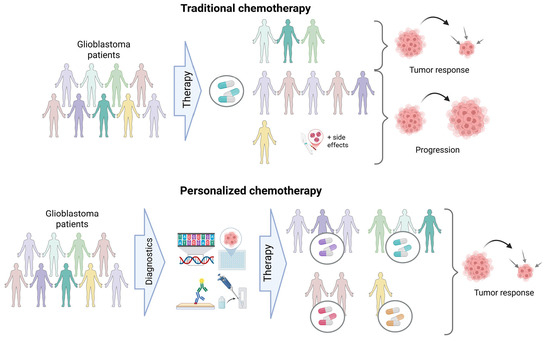
1. Introduction
2. Key Chemotherapy Modalities for GBM
2.1. Cytotoxic Chemotherapy
2.2. Targeted Therapy
2.3. Immunotherapy
3. Major Mechanisms of GBM Resistance to Chemotherapy
3.1. Upregulation of DNA Repair Processes
3.2. Disruption of Apoptotic Signaling
3.3. Pathway Redundancy
3.4. Modulation of Transmembrane Transport Processes
3.5. Oxidative Stress Resistance
3.6. Drug Metabolism
3.7. Blood–Brain Barrier
3.8. The Tumor Microenvironment
3.9. Immune Suppression
3.10. Conclusions
4. GBM Heterogeneity as a Driver of Chemoresistance
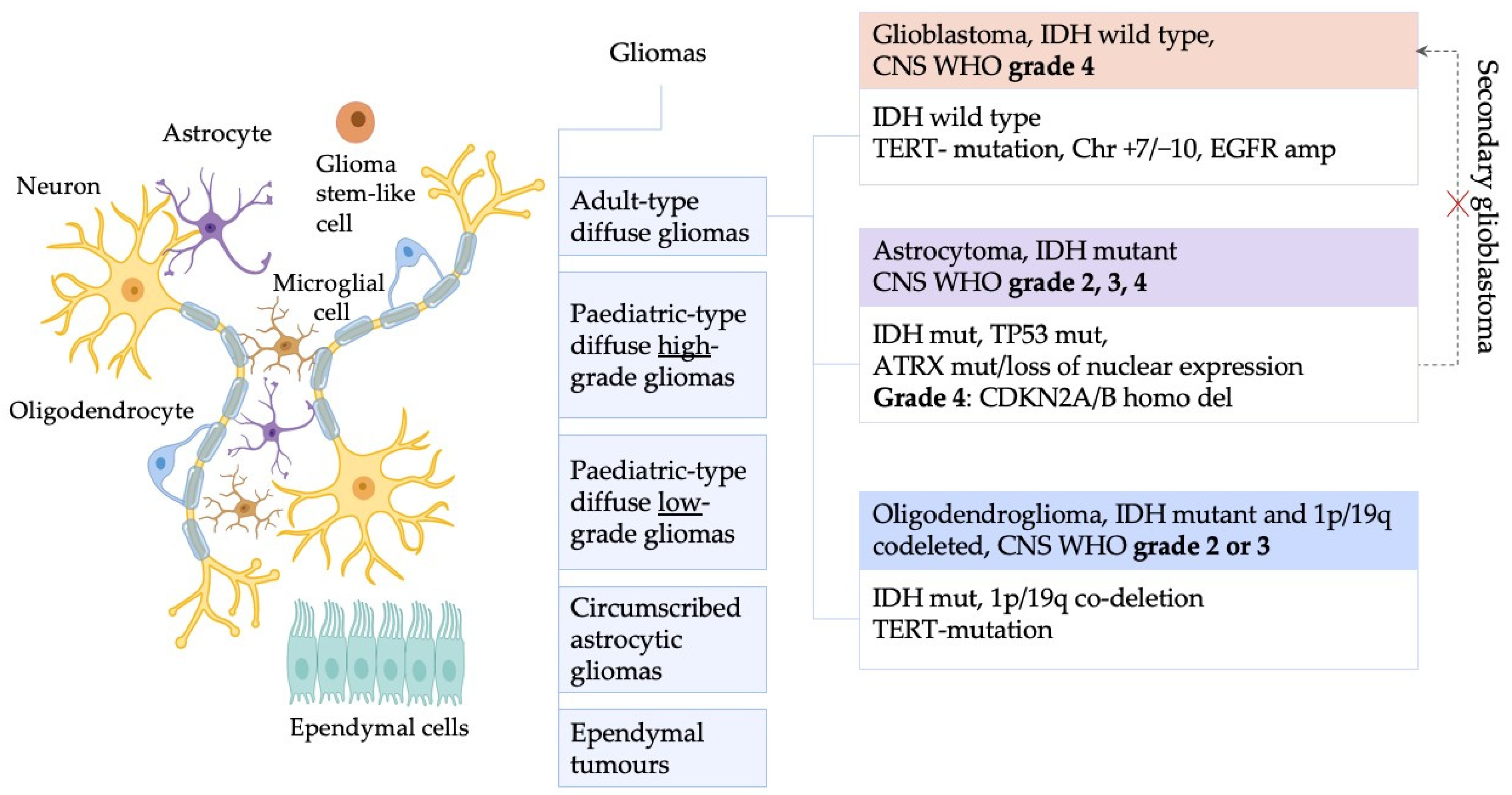
4.1. Complex Genetic Landscape of GBM
4.2. Epigenetic Heterogeneity of GBM
4.3. GBM Transcriptomic Heterogeneity
4.4. Metabolic Heterogeneity
4.5. Intratumoral Heterogeneity in GBM
4.6. Cellular Plasticity of GBM
5. Glioblastoma Stem Cells in GBM Chemoresistance
6. Co-Occurring and Reinforcing Mechanisms in the Clinical Setting
7. Approaches to Overcome Resistance in GBM
7.1. Targeting DNA Repair
7.2. ROS Modulation
7.3. Autophagy Modulation
7.4. Targeting Metabolism
7.5. Overcoming GBM Plasticity
7.6. Targeting Glioblastoma Stem Cells
7.7. Targeting Heterogeneity: Combination Strategies and Multitarget Drugs
7.8. Conclusions and Future Perspectives
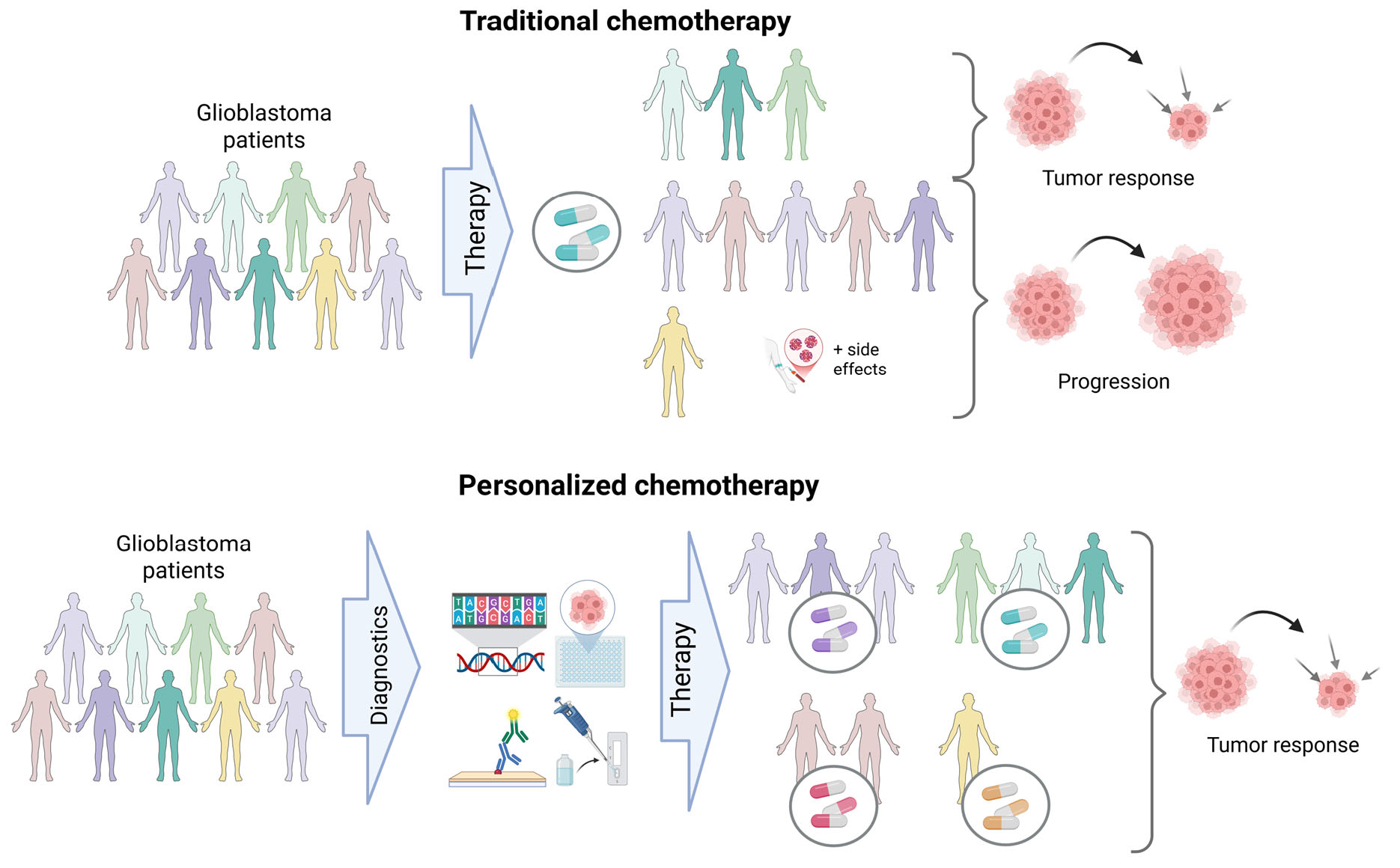
8. Prospects for Personalized Approaches in GBM Therapy
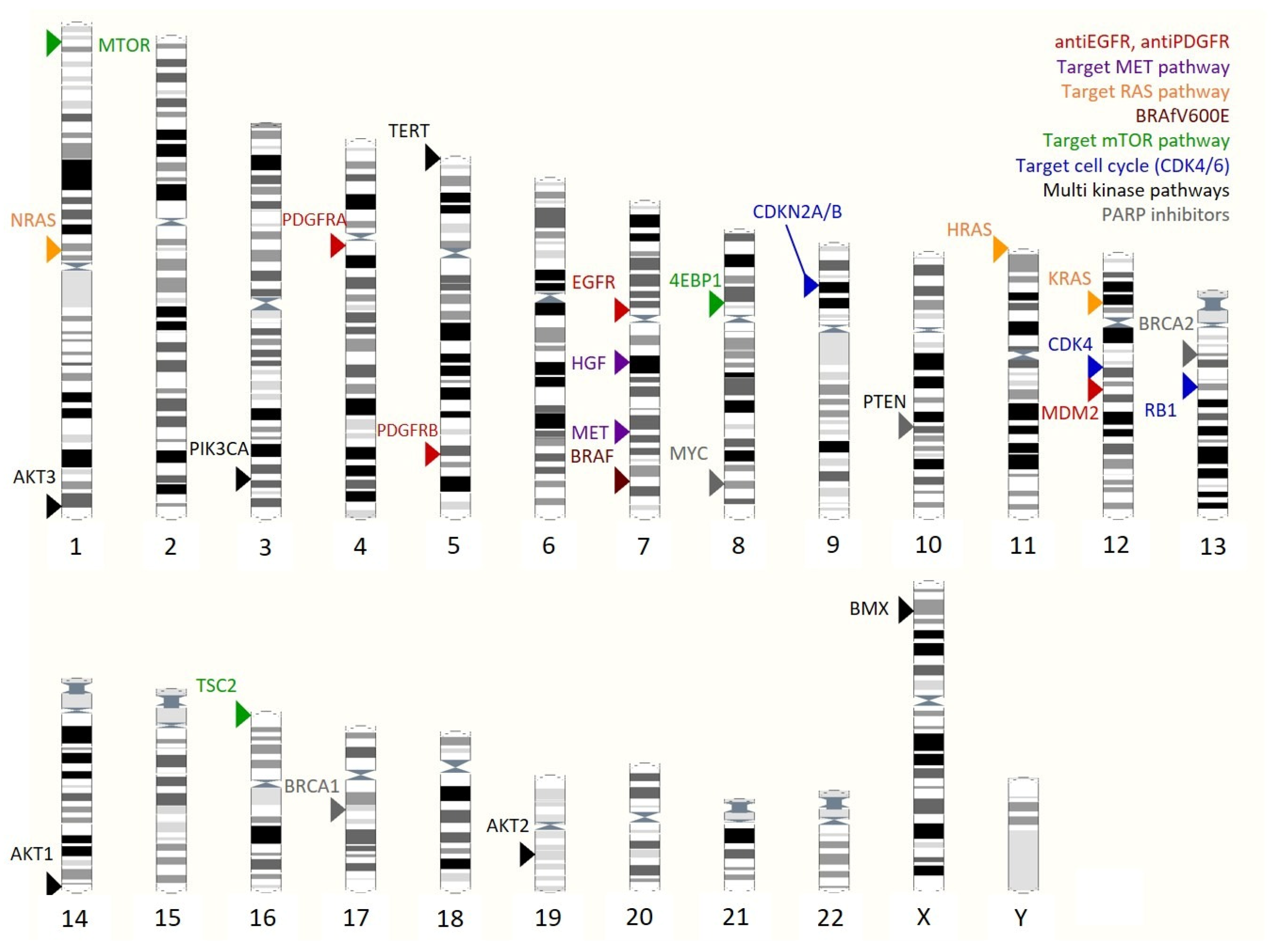
8.1. Genome-Wide Molecular Profiling
8.2. Integrated Analysis of Complex Biomarkers
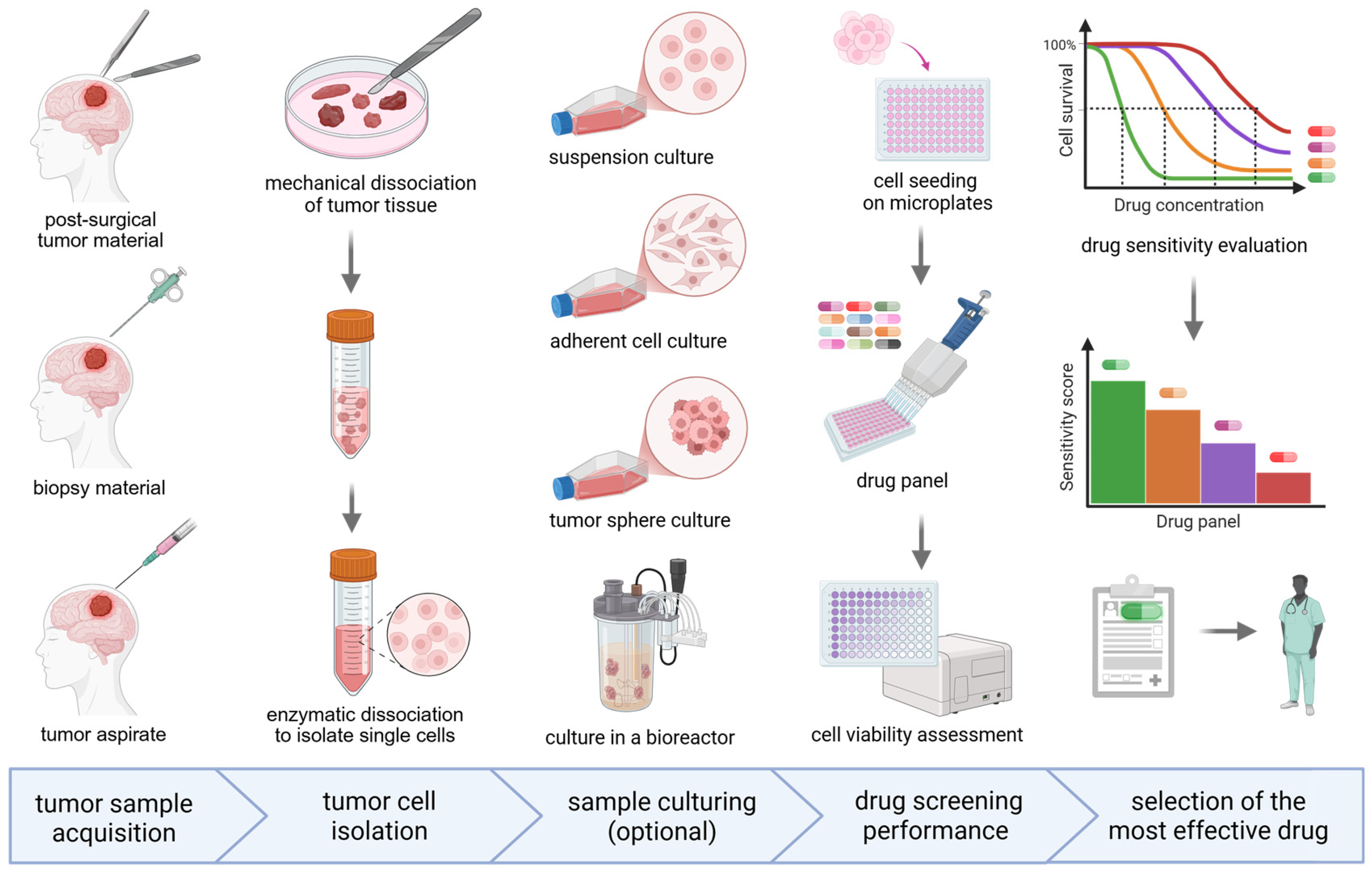
8.3. Functional Drug Sensitivity Testing Approaches
8.4. Culturing Strategies for DST
8.5. Preclinical and Clinical Trials of Drug Sensitivity Profiling in GBM
9. Limitations of Functional Drug Sensitivity Testing
9.1. Preserving GBM Heterogeneity
9.2. Addressing Practical Limitations
10. Integrating Patient-Derived Cell Approaches with Molecular Testing in GBM
11. Conclusions
Author Contributions
Funding
Institutional Review Board Statement
Informed Consent Statement
Data Availability Statement
Conflicts of Interest
References
- Price, M.; Ballard, C.A.P.; Benedetti, J.R.; Kruchko, C.; Barnholtz-Sloan, J.S.; Ostrom, Q.T. CBTRUS Statistical Report: Primary Brain and Other Central Nervous System Tumors Diagnosed in the United States in 2018–2022. Neuro Oncol. 2025, 27, iv1–iv66. [Google Scholar]
- Louis, D.N.; Perry, A.; Wesseling, P.; Brat, D.J.; Cree, I.A.; Figarella-Branger, D.; Hawkins, C.; Ng, H.K.; Pfister, S.M.; Reifenberger, G.; et al. The 2021 WHO Classification of Tumors of the Central Nervous System: A Summary. Neuro Oncol. 2021, 23, 1231–1251. [Google Scholar]
- Weller, M.; Wen, P.Y.; Chang, S.M.; Dirven, L.; Lim, M.; Monje, M.; Reifenberger, G. Glioma. Nat. Rev. Dis. Primers 2024, 10, 33. [Google Scholar] [CrossRef]
- Sanai, N.; Berger, M.S. Glioma Extent of Resection and Its Impact on Patient Outcome. Neurosurgery 2008, 62, 753–766. [Google Scholar] [CrossRef]
- Li, Y.M.; Suki, D.; Hess, K.; Sawaya, R. The Influence of Maximum Safe Resection of Glioblastoma on Survival in 1229 Patients: Can We Do Better than Gross-Total Resection? J. Neurosurg. 2016, 124, 977–988. [Google Scholar]
- Ali, M.Y.; Oliva, C.R.; Noman, A.S.M.; Allen, B.G.; Goswami, P.C.; Zakharia, Y.; Monga, V.; Spitz, D.R.; Buatti, J.M.; Griguer, C.E. Radioresistance in Glioblastoma and the Development of Radiosensitizers. Cancers 2020, 12, 2511. [Google Scholar] [CrossRef]
- Stupp, R.; Hegi, M.E.; Mason, W.P.; van den Bent, M.J.; Taphoorn, M.J.B.; Janzer, R.C.; Ludwin, S.K.; Allgeier, A.; Fisher, B.; Belanger, K.; et al. Effects of Radiotherapy with Concomitant and Adjuvant Temozolomide versus Radiotherapy Alone on Survival in Glioblastoma in a Randomised Phase III Study: 5-Year Analysis of the EORTC-NCIC Trial. Lancet Oncol. 2009, 10, 459–466. [Google Scholar] [CrossRef]
- Stupp, R.; Mason, W.P.; van den Bent, M.J.; Weller, M.; Fisher, B.; Taphoorn, M.J.B.; Belanger, K.; Brandes, A.A.; Marosi, C.; Bogdahn, U.; et al. Radiotherapy plus Concomitant and Adjuvant Temozolomide for Glioblastoma. N. Engl. J. Med. 2005, 352, 987–996. [Google Scholar]
- Zhou, Y.-S.; Wang, W.; Chen, N.; Wang, L.-C.; Huang, J.-B. Research Progress of Anti-Glioma Chemotherapeutic Drugs (Review). Oncol. Rep. 2022, 47, 101. [Google Scholar] [CrossRef]
- Vaz-Salgado, M.A.; Villamayor, M.; Albarrán, V.; Alía, V.; Sotoca, P.; Chamorro, J.; Rosero, D.; Barrill, A.M.; Martín, M.; Fernandez, E.; et al. Recurrent Glioblastoma: A Review of the Treatment Options. Cancers 2023, 15, 4279. [Google Scholar] [CrossRef]
- Leone, A.; Colamaria, A.; Fochi, N.P.; Sacco, M.; Landriscina, M.; Parbonetti, G.; de Notaris, M.; Coppola, G.; De Santis, E.; Giordano, G.; et al. Recurrent Glioblastoma Treatment: State of the Art and Future Perspectives in the Precision Medicine Era. Biomedicines 2022, 10, 1927. [Google Scholar] [CrossRef]
- Friedman, H.S.; Prados, M.D.; Wen, P.Y.; Mikkelsen, T.; Schiff, D.; Abrey, L.E.; Yung, W.K.A.; Paleologos, N.; Nicholas, M.K.; Jensen, R.; et al. Bevacizumab Alone and in Combination with Irinotecan in Recurrent Glioblastoma. J. Clin. Oncol. 2023, 41, 4945–4952. [Google Scholar] [CrossRef]
- Yang, S.-B.; Gao, K.-D.; Jiang, T.; Cheng, S.-J.; Li, W.-B. Bevacizumab Combined with Chemotherapy for Glioblastoma: A Meta-Analysis of Randomized Controlled Trials. Oncotarget 2017, 8, 57337–57344. [Google Scholar] [CrossRef]
- Krex, D.; Klink, B.; Hartmann, C.; von Deimling, A.; Pietsch, T.; Simon, M.; Sabel, M.; Steinbach, J.P.; Heese, O.; Reifenberger, G.; et al. Long-Term Survival with Glioblastoma Multiforme. Brain 2007, 130, 2596–2606. [Google Scholar] [CrossRef]
- Wick, W.; Gorlia, T.; Bendszus, M.; Taphoorn, M.; Sahm, F.; Harting, I.; Brandes, A.A.; Taal, W.; Domont, J.; Idbaih, A.; et al. Lomustine and Bevacizumab in Progressive Glioblastoma. N. Engl. J. Med. 2017, 377, 1954–1963. [Google Scholar] [CrossRef]
- Parasramka, S.; Talari, G.; Rosenfeld, M.; Guo, J.; Villano, J.L. Procarbazine, Lomustine and Vincristine for Recurrent High-Grade Glioma. Cochrane Libr. 2017, 2017, cd011773. [Google Scholar] [CrossRef]
- Xiao, Z.-Z.; Wang, Z.-F.; Lan, T.; Huang, W.-H.; Zhao, Y.-H.; Ma, C.; Li, Z.-Q. Carmustine as a Supplementary Therapeutic Option for Glioblastoma: A Systematic Review and Meta-Analysis. Front. Neurol. 2020, 11, 1036. [Google Scholar] [CrossRef]
- Hart, M.G.; Grant, R.; Garside, R.; Rogers, G.; Somerville, M.; Stein, K. Chemotherapy Wafers for High Grade Glioma. Cochrane Database Syst. Rev. 2011, 2011, CD007294. [Google Scholar]
- Chowdhary, S.A.; Ryken, T.; Newton, H.B. Survival Outcomes and Safety of Carmustine Wafers in the Treatment of High-Grade Gliomas: A Meta-Analysis. J. Neurooncol. 2015, 122, 367–382. [Google Scholar] [CrossRef]
- Xu, T.; Chen, J.; Lu, Y.; Wolff, J.E. Effects of Bevacizumab plus Irinotecan on Response and Survival in Patients with Recurrent Malignant Glioma: A Systematic Review and Survival-Gain Analysis. BMC Cancer 2010, 10, 252. [Google Scholar] [CrossRef]
- Pommier, Y.; Barcelo, J.M.; Rao, V.A.; Sordet, O.; Jobson, A.G.; Thibaut, L.; Miao, Z.-H.; Seiler, J.A.; Zhang, H.; Marchand, C.; et al. Repair of Topoisomerase I-mediated DNA Damage. In Progress in Nucleic Acid Research and Molecular Biology; Elsevier: Amsterdam, The Netherlands, 2006; pp. 179–229. [Google Scholar]
- Raymond, E.; Fabbro, M.; Boige, V.; Rixe, O.; Frenay, M.; Vassal, G.; Faivre, S.; Sicard, E.; Germa, C.; Rodier, J.M.; et al. Multicentre Phase II Study and Pharmacokinetic Analysis of Irinotecan in Chemotherapy-Naïve Patients with Glioblastoma. Ann. Oncol. 2003, 14, 603–614. [Google Scholar] [CrossRef]
- Gil, M.J.; de las Peñas, R.; Reynés, G.; Balañá, C.; Peréz-Segura, P.; García-Velasco, A.; Mesia, C.; Gallego, Ó.; Fernández-Chacón, C.; Martínez-García, M.; et al. Bevacizumab plus Irinotecan in Recurrent Malignant Glioma Shows High Overall Survival in a Multicenter Retrospective Pooled Series of the Spanish Neuro-Oncology Research Group (GEINO). Anticancer Drugs 2012, 23, 659–665. [Google Scholar] [CrossRef]
- Abdel-Rahman, O.; Fouad, M. Irinotecan-Based Regimens for Recurrent Glioblastoma Multiforme: A Systematic Review. Expert Rev. Neurother. 2015, 15, 1255–1270, Erratum in Expert Rev. Neurother. 2015, 16, 103. [Google Scholar] [CrossRef]
- Mesti, T.; Ebert Moltara, M.; Boc, M.; Rebersek, M.; Ocvirk, J. Bevacizumab and Irinotecan in Recurrent Malignant Glioma, a Single Institution Experience. Radiol. Oncol. 2015, 49, 80–85. [Google Scholar] [CrossRef]
- Unger, F.T.; Klasen, H.A.; Tchartchian, G.; de Wilde, R.L.; Witte, I. DNA Damage Induced by Cis- and Carboplatin as Indicator for in Vitro Sensitivity of Ovarian Carcinoma Cells. BMC Cancer 2009, 9, 359. [Google Scholar] [CrossRef]
- Thomas, H.D.; Lind, M.J.; Ford, J.; Bleehen, N.; Calvert, A.H.; Boddy, A.V. Pharmacokinetics of Carboplatin Administered in Combination with the Bradykinin Agonist Cereport (RMP-7) for the Treatment of Brain Tumours. Cancer Chemother. Pharmacol. 2000, 45, 284–290. [Google Scholar] [CrossRef]
- Yung, W.K.; Mechtler, L.; Gleason, M.J. Intravenous Carboplatin for Recurrent Malignant Glioma: A Phase II Study. J. Clin. Oncol. 1991, 9, 860–864. [Google Scholar] [CrossRef]
- Warnick, R.E.; Prados, M.D.; Mack, E.E.; Chandler, K.L.; Doz, F.; Rabbitt, J.E.; Malec, M.K. A Phase II Study of Intravenous Carboplatin for the Treatment of Recurrent Gliomas. J. Neurooncol. 1994, 19, 69–74. [Google Scholar] [CrossRef]
- Field, K.M.; Simes, J.; Nowak, A.K.; Cher, L.; Wheeler, H.; Hovey, E.J.; Brown, C.S.B.; Barnes, E.H.; Sawkins, K.; Livingstone, A.; et al. Randomized Phase 2 Study of Carboplatin and Bevacizumab in Recurrent Glioblastoma. Neuro Oncol. 2015, 17, 1504–1513. [Google Scholar] [CrossRef]
- Wang, J.L.; Barth, R.F.; Cavaliere, R.; Puduvalli, V.K.; Giglio, P.; Lonser, R.R.; Elder, J.B. Phase I Trial of Intracerebral Convection-Enhanced Delivery of Carboplatin for Treatment of Recurrent High-Grade Gliomas. PLoS ONE 2020, 15, e0244383. [Google Scholar]
- Brennan, C.W.; Verhaak, R.G.W.; McKenna, A.; Campos, B.; Noushmehr, H.; Salama, S.R.; Zheng, S.; Chakravarty, D.; Sanborn, J.Z.; Berman, S.H.; et al. The Somatic Genomic Landscape of Glioblastoma. Cell 2013, 155, 462–477. [Google Scholar] [CrossRef] [PubMed]
- Cruz Da Silva, E.; Mercier, M.-C.; Etienne-Selloum, N.; Dontenwill, M.; Choulier, L. A Systematic Review of Glioblastoma-Targeted Therapies in Phases II, III, IV Clinical Trials. Cancers 2021, 13, 1795. [Google Scholar] [CrossRef] [PubMed]
- Ge, M.; Zhu, Y.; Wei, M.; Piao, H.; He, M. Improving the Efficacy of Anti-EGFR Drugs in GBM: Where We Are Going? Biochim. Biophys. Acta Rev. Cancer 2023, 1878, 188996. [Google Scholar] [CrossRef] [PubMed]
- Nahm, J.; Schumann, E.H.; Vu, M.; Sinha, M.; Ware, C.; Hsu, S.; Zhu, J.-J. Biom-44. Improved Overall Survival of Recurrent Glioblastoma (gbm) Patients with eGFR Amplification and eGFR Viii Mutations Treated with Osimertinib: A Retrospective Review. Neuro Oncol. 2023, 25, v14. [Google Scholar] [CrossRef]
- Cardona, A.F.; Jaramillo-Velásquez, D.; Ruiz-Patiño, A.; Polo, C.; Jiménez, E.; Hakim, F.; Gómez, D.; Ramón, J.F.; Cifuentes, H.; Mejía, J.A.; et al. Efficacy of Osimertinib plus Bevacizumab in Glioblastoma Patients with Simultaneous EGFR Amplification and EGFRvIII Mutation. J. Neurooncol. 2021, 154, 353–364. [Google Scholar] [CrossRef]
- Raymond, E.; Brandes, A.A.; Dittrich, C.; Fumoleau, P.; Coudert, B.; Clement, P.M.J.; Frenay, M.; Rampling, R.; Stupp, R.; Kros, J.M.; et al. Phase II Study of Imatinib in Patients with Recurrent Gliomas of Various Histologies: A European Organisation for Research and Treatment of Cancer Brain Tumor Group Study. J. Clin. Oncol. 2008, 26, 4659–4665. [Google Scholar] [CrossRef]
- Dresemann, G. Imatinib and Hydroxyurea in Pretreated Progressive Glioblastoma Multiforme: A Patient Series. Ann. Oncol. 2005, 16, 1702–1708. [Google Scholar] [CrossRef]
- Sautter, L.; Hofheinz, R.; Tuettenberg, J.; Grimm, M.; Vajkoczy, P.; Groden, C.; Schmieder, K.; Hochhaus, A.; Wenz, F.; Giordano, F.A. Open-Label Phase II Evaluation of Imatinib in Primary Inoperable or Incompletely Resected and Recurrent Glioblastoma. Oncology 2020, 98, 16–22. [Google Scholar] [CrossRef]
- Lee, E.Q.; Muzikansky, A.; Duda, D.G.; Gaffey, S.; Dietrich, J.; Nayak, L.; Chukwueke, U.N.; Beroukhim, R.; Doherty, L.; Laub, C.K.; et al. Phase II Trial of Ponatinib in Patients with Bevacizumab-refractory Glioblastoma. Cancer Med. 2019, 8, 5988–5994. [Google Scholar] [CrossRef]
- Schiff, D.; Sarkaria, J. Dasatinib in Recurrent Glioblastoma: Failure as a Teacher. Neuro Oncol. 2015, 17, 910–911. [Google Scholar] [CrossRef]
- Odia, Y.; Sul, J.; Shih, J.H.; Kreisl, T.N.; Butman, J.A.; Iwamoto, F.M.; Fine, H.A. A Phase II Trial of Tandutinib (MLN 518) in Combination with Bevacizumab for Patients with Recurrent Glioblastoma. CNS Oncol. 2016, 5, 59–67. [Google Scholar] [CrossRef]
- Mayr, L.; Neyazi, S.; Schwark, K.; Trissal, M.; Beck, A.; Labelle, J.; Eder, S.K.; Weiler-Wichtl, L.; Marques, J.G.; de Biagi-Junior, C.A.O.; et al. Effective Targeting of PDGFRA-Altered High-Grade Glioma with Avapritinib. Cancer Cell 2025, 43, 740–756.e8. [Google Scholar] [CrossRef] [PubMed]
- Bao, Z.; Li, S.; Wang, L.; Zhang, B.; Zhang, P.; Shi, H.; Qiu, X.; Jiang, T. PTPRZ1-METFUsion GENe (ZM-FUGEN) Trial: Study Protocol for a Multicentric, Randomized, Open-Label Phase II/III Trial. Chin. Neurosurg. J. 2023, 9, 21. [Google Scholar] [CrossRef] [PubMed]
- Beach, C.Z.; Febres-Aldana, C.A.; Marti, J.L.G.; Asiry, S.; Wong, T.; Boockvar, J.A.; D’Amico, R.S.; Somwar, R.; Davare, M.A.; Vojnic, M. Clinical and Preclinical Insights into a Novel MDM2::PDGFRA Fusion in Recurrent Glioblastoma. NPJ Precis. Oncol. 2025, 9, 289. [Google Scholar] [CrossRef] [PubMed]
- Kwak, Y.; Kim, S.-I.; Park, C.-K.; Paek, S.H.; Lee, S.-T.; Park, S.-H. C-MET Overexpression and Amplification in Gliomas. Int. J. Clin. Exp. Pathol. 2015, 8, 14932–14938. [Google Scholar]
- Zuckermann, M.; He, C.; Andrews, J.; Bagchi, A.; Sloan-Henry, R.; Bianski, B.; Xie, J.; Wang, Y.; Twarog, N.; Onar-Thomas, A.; et al. Capmatinib Is an Effective Treatment for MET-Fusion Driven Pediatric High-Grade Glioma and Synergizes with Radiotherapy. Mol. Cancer 2024, 23, 123. [Google Scholar] [CrossRef]
- Falchook, G.S.; Battiste, J.D.; Kalra, A.; Shastry, M.; Finney, L.; Hoekstra, S.J.; Shih, M.G.; Shih, K.C. A Phase Ib Study Evaluating the c-MET Inhibitor INC280 (capmatinib) in Combination with Bevacizumab in Patients with High-Grade Glioma. Neurooncol. Adv. 2025, 7, vdae220. [Google Scholar] [CrossRef]
- Pham, L.; Gann, C.; Schumacher, K.M.; Vlassak, S.; Swanson, T.; Highsmith, K.; Ou, A.; Clarke, N.; Aaroe, A.; Robell, L.; et al. Innv-21. Complete Response to Adjuvant Tepotinib in a Patient with Newly Diagnosed Disseminated Glioblastoma (gbm) Harboring Met Amplification. Neuro Oncol. 2021, 23, vi109. [Google Scholar] [CrossRef]
- Wang, Y.; Suo, J.; Wang, Z.; Ran, K.; Tian, Y.; Han, W.; Liu, Y.; Peng, X. The PTPRZ1-MET/STAT3/ISG20 Axis in Glioma Stem-like Cells Modulates Tumor-Associated Macrophage Polarization. Cell. Signal. 2024, 120, 111191. [Google Scholar] [CrossRef]
- Bao, Z.-S.; Chen, H.-M.; Yang, M.-Y.; Zhang, C.-B.; Yu, K.; Ye, W.-L.; Hu, B.-Q.; Yan, W.; Zhang, W.; Akers, J.; et al. RNA-Seq of 272 Gliomas Revealed a Novel, Recurrent PTPRZ1-MET Fusion Transcript in Secondary Glioblastomas. Genome Res. 2014, 24, 1765–1773. [Google Scholar] [CrossRef]
- Yakubov, R.; Kaloti, R.; Persaud, P.; McCracken, A.; Zadeh, G.; Bunda, S. It’s All Downstream from Here: RTK/Raf/MEK/ERK Pathway Resistance Mechanisms in Glioblastoma. J. Neurooncol. 2025, 172, 327–345. [Google Scholar] [CrossRef] [PubMed]
- Cloughesy, T.F.; Wen, P.Y.; Robins, H.I.; Chang, S.M.; Groves, M.D.; Fink, K.L.; Junck, L.; Schiff, D.; Abrey, L.; Gilbert, M.R.; et al. Phase II Trial of Tipifarnib in Patients with Recurrent Malignant Glioma Either Receiving or Not Receiving Enzyme-Inducing Antiepileptic Drugs: A North American Brain Tumor Consortium Study. J. Clin. Oncol. 2006, 24, 3651–3656. [Google Scholar] [CrossRef] [PubMed]
- Lustig, R.; Mikkelsen, T.; Lesser, G.; Grossman, S.; Ye, X.; Desideri, S.; Fisher, J.; Wright, J.; New Approaches to Brain Tumor Therapy CNS Consortium. Phase II Preradiation R115777 (tipifarnib) in Newly Diagnosed GBM with Residual Enhancing Disease. Neuro Oncol. 2008, 10, 1004–1009. [Google Scholar] [CrossRef] [PubMed]
- Yust-Katz, S.; Liu, D.; Yuan, Y.; Liu, V.; Kang, S.; Groves, M.; Puduvalli, V.; Levin, V.; Conrad, C.; Colman, H.; et al. Phase 1/1b Study of Lonafarnib and Temozolomide in Patients with Recurrent or Temozolomide Refractory Glioblastoma. Cancer 2013, 119, 2747–2753. [Google Scholar] [CrossRef]
- Wen, P.Y.; Stein, A.; van den Bent, M.; De Greve, J.; Wick, A.; de Vos, F.Y.F.L.; von Bubnoff, N.; van Linde, M.E.; Lai, A.; Prager, G.W.; et al. Dabrafenib plus Trametinib in Patients with BRAFV600E-Mutant Low-Grade and High-Grade Glioma (ROAR): A Multicentre, Open-Label, Single-Arm, Phase 2, Basket Trial. Lancet Oncol. 2022, 23, 53–64. [Google Scholar] [CrossRef]
- Kanemaru, Y.; Natsumeda, M.; Okada, M.; Saito, R.; Kobayashi, D.; Eda, T.; Watanabe, J.; Saito, S.; Tsukamoto, Y.; Oishi, M.; et al. Dramatic Response of BRAF V600E-Mutant Epithelioid Glioblastoma to Combination Therapy with BRAF and MEK Inhibitor: Establishment and Xenograft of a Cell Line to Predict Clinical Efficacy. Acta Neuropathol. Commun. 2019, 7, 119. [Google Scholar] [CrossRef]
- Beba Abadal, K.; Walsh, M.A.; Yachnis, A.T.; Tran, D.D.; Ghiaseddin, A.P. Eleven Month Progression–free Survival on Vemurafenib Monotherapy in a Patient with Recurrent and Metastatic BRAF V600E–mutated Glioblastoma WHO Grade 4. JCO Precis. Oncol. 2017, 1, 1–5. [Google Scholar] [CrossRef]
- Lin, Z.; Xu, H.; Yang, R.; Li, Z.; Zheng, H.; Zhang, Z.; Peng, J.; Zhang, X.; Qi, S.; Liu, Y.; et al. Effective Treatment of a BRAF V600E-Mutant Epithelioid Glioblastoma Patient by Vemurafenib: A Case Report. Anticancer Drugs 2022, 33, 100–104. [Google Scholar] [CrossRef]
- Chinnaiyan, P.; Won, M.; Wen, P.Y.; Rojiani, A.M.; Werner-Wasik, M.; Shih, H.A.; Ashby, L.S.; Michael Yu, H.-H.; Stieber, V.W.; Malone, S.C.; et al. A Randomized Phase II Study of Everolimus in Combination with Chemoradiation in Newly Diagnosed Glioblastoma: Results of NRG Oncology RTOG 0913. Neuro Oncol. 2018, 20, 666–673. [Google Scholar] [CrossRef]
- Wick, W.; Gorlia, T.; Bady, P.; Platten, M.; van den Bent, M.J.; Taphoorn, M.J.B.; Steuve, J.; Brandes, A.A.; Hamou, M.-F.; Wick, A.; et al. Phase II Study of Radiotherapy and Temsirolimus versus Radiochemotherapy with Temozolomide in Patients with Newly Diagnosed Glioblastoma without MGMT Promoter Hypermethylation (EORTC 26082). Clin. Cancer Res. 2016, 22, 4797–4806. [Google Scholar] [CrossRef]
- Zureick, A.H.; McFadden, K.A.; Mody, R.; Koschmann, C. Successful Treatment of a TSC2-Mutant Glioblastoma with Everolimus. BMJ Case Rep. 2019, 12, e227734. [Google Scholar] [CrossRef]
- Chkheidze, R.; Raisanen, J.; Gagan, J.; Richardson, T.E.; Pinho, M.C.; Raj, K.; Achilleos, M.; Slepicka, C.; White, C.L.; Evers, B.M.; et al. Alterations in the RB Pathway with Inactivation of RB1 Characterize Glioblastomas with a Primitive Neuronal Component. J. Neuropathol. Exp. Neurol. 2021, 80, 1092–1098. [Google Scholar] [CrossRef]
- Tien, A.-C.; Li, J.; Bao, X.; Derogatis, A.; Kim, S.; Mehta, S.; Sanai, N. A Phase 0 Trial of Ribociclib in Recurrent Glioblastoma Patients Incorporating a Tumor Pharmacodynamic- and Pharmacokinetic-Guided Expansion Cohort. Clin. Cancer Res. 2019, 25, 5777–5786. [Google Scholar] [CrossRef]
- Taylor, J.W.; Parikh, M.; Phillips, J.J.; James, C.D.; Molinaro, A.M.; Butowski, N.A.; Clarke, J.L.; Oberheim-Bush, N.A.; Chang, S.M.; Berger, M.S.; et al. Phase-2 Trial of Palbociclib in Adult Patients with Recurrent RB1-Positive Glioblastoma. J. Neurooncol. 2018, 140, 477–483. [Google Scholar] [CrossRef]
- Miller, T.W.; Traphagen, N.A.; Li, J.; Lewis, L.D.; Lopes, B.; Asthagiri, A.; Loomba, J.; De Jong, J.; Schiff, D.; Patel, S.H.; et al. Tumor Pharmacokinetics and Pharmacodynamics of the CDK4/6 Inhibitor Ribociclib in Patients with Recurrent Glioblastoma. J. Neurooncol. 2019, 144, 563–572. [Google Scholar] [CrossRef]
- Rahman, R.; Trippa, L.; Lee, E.Q.; Arrillaga-Romany, I.; Fell, G.; Touat, M.; McCluskey, C.; Wiley, J.; Gaffey, S.; Drappatz, J.; et al. Inaugural Results of the Individualized Screening Trial of Innovative Glioblastoma Therapy: A Phase II Platform Trial for Newly Diagnosed Glioblastoma Using Bayesian Adaptive Randomization. J. Clin. Oncol. 2023, 41, 5524–5535. [Google Scholar] [CrossRef]
- Goldhoff, P.; Clarke, J.; Smirnov, I.; Berger, M.S.; Prados, M.D.; James, C.D.; Perry, A.; Phillips, J.J. Clinical Stratification of Glioblastoma Based on Alterations in Retinoblastoma Tumor Suppressor Protein (RB1) and Association with the Proneural Subtype. J. Neuropathol. Exp. Neurol. 2012, 71, 83–89. [Google Scholar] [CrossRef]
- Sidorov, M.; Dighe, P.; Woo, R.W.L.; Rodriguez-Brotons, A.; Chen, M.; Ice, R.J.; Vaquero, E.; Jian, D.; Desprez, P.-Y.; Nosrati, M.; et al. Dual Targeting of EGFR and MTOR Pathways Inhibits Glioblastoma Growth by Modulating the Tumor Microenvironment. Cells 2023, 12, 547. [Google Scholar] [CrossRef]
- Guo, T.; Wu, C.; Zhang, J.; Yu, J.; Li, G.; Jiang, H.; Zhang, X.; Yu, R.; Liu, X. Dual Blockade of EGFR and PI3K Signaling Pathways Offers a Therapeutic Strategy for Glioblastoma. Cell Commun. Signal. 2023, 21, 363. [Google Scholar] [CrossRef]
- Du, X.; Chen, C.; Zeng, Y.; Lin, Z. Overcoming the Blood-Brain Barrier: Targeted Delivery Strategies for Gliomas. Front. Pharmacol. 2025, 16, 1705234. [Google Scholar] [CrossRef]
- Bikfalvi, A.; da Costa, C.A.; Avril, T.; Barnier, J.-V.; Bauchet, L.; Brisson, L.; Cartron, P.F.; Castel, H.; Chevet, E.; Chneiweiss, H.; et al. Challenges in Glioblastoma Research: Focus on the Tumor Microenvironment. Trends Cancer 2023, 9, 9–27. [Google Scholar] [CrossRef]
- Moreno-Sanchez, P.M.; Rezaeipour, M.; Inderberg, E.M.; Platten, M.; Golebiewska, A. Immunosuppressive Mechanisms and Therapeutic Interventions Shaping Glioblastoma Immunity. Nat. Cancer 2026, 7, 29–42. [Google Scholar] [CrossRef]
- Chongsathidkiet, P.; Jackson, C.; Koyama, S.; Loebel, F.; Cui, X.; Farber, S.H.; Woroniecka, K.; Elsamadicy, A.A.; Dechant, C.A.; Kemeny, H.R.; et al. Sequestration of T Cells in Bone Marrow in the Setting of Glioblastoma and Other Intracranial Tumors. Nat. Med. 2018, 24, 1459–1468, Correction in Nat. Med. 2019, 25, 529. [Google Scholar] [CrossRef]
- Pombo Antunes, A.R.; Scheyltjens, I.; Lodi, F.; Messiaen, J.; Antoranz, A.; Duerinck, J.; Kancheva, D.; Martens, L.; De Vlaminck, K.; Van Hove, H.; et al. Single-Cell Profiling of Myeloid Cells in Glioblastoma across Species and Disease Stage Reveals Macrophage Competition and Specialization. Nat. Neurosci. 2021, 24, 595–610. [Google Scholar] [CrossRef]
- Mohme, M.; Schliffke, S.; Maire, C.L.; Rünger, A.; Glau, L.; Mende, K.C.; Matschke, J.; Gehbauer, C.; Akyüz, N.; Zapf, S.; et al. Immunophenotyping of Newly Diagnosed and Recurrent Glioblastoma Defines Distinct Immune Exhaustion Profiles in Peripheral and Tumor-Infiltrating Lymphocytes. Clin. Cancer Res. 2018, 24, 4187–4200. [Google Scholar] [CrossRef]
- Ravi, V.M.; Neidert, N.; Will, P.; Joseph, K.; Maier, J.P.; Kückelhaus, J.; Vollmer, L.; Goeldner, J.M.; Behringer, S.P.; Scherer, F.; et al. T-Cell Dysfunction in the Glioblastoma Microenvironment Is Mediated by Myeloid Cells Releasing Interleukin-10. Nat. Commun. 2022, 13, 925. [Google Scholar] [CrossRef]
- Ling, A.L.; Gantchev, J.; Prabhu, M.C.; Basu, S.; Ahn, R.; D’Souza, A.; Masud, N.; Ball, A.; Nikas, O.; Villa, G.R.; et al. Serial Multiomics Uncovers Anti-Glioblastoma Responses Not Evident by Routine Clinical Analyses. Sci. Transl. Med. 2025, 17, eadv2881. [Google Scholar] [CrossRef]
- Housman, G.; Byler, S.; Heerboth, S.; Lapinska, K.; Longacre, M.; Snyder, N.; Sarkar, S. Drug Resistance in Cancer: An Overview. Cancers 2014, 6, 1769–1792. [Google Scholar] [CrossRef]
- Singh, N.; Miner, A.; Hennis, L.; Mittal, S. Mechanisms of Temozolomide Resistance in Glioblastoma—A Comprehensive Review. Cancer Drug Resist. 2021, 4, 17–43. [Google Scholar]
- Li, H.; Wu, Y.; Chen, Y.; Lv, J.; Qu, C.; Mei, T.; Zheng, Y.; Ye, C.; Li, F.; Ge, S.; et al. Overcoming Temozolomide Resistance in Glioma: Recent Advances and Mechanistic Insights. Acta Neuropathol. Commun. 2025, 13, 126. [Google Scholar] [CrossRef]
- Chen, J.; Potlapalli, R.; Quan, H.; Chen, L.; Xie, Y.; Pouriyeh, S.; Sakib, N.; Liu, L.; Xie, Y. Exploring DNA Damage and Repair Mechanisms: A Review with Computational Insights. BioTech 2024, 13, 3. [Google Scholar] [CrossRef] [PubMed]
- Sim, H.-W.; Galanis, E.; Khasraw, M. PARP Inhibitors in Glioma: A Review of Therapeutic Opportunities. Cancers 2022, 14, 1003. [Google Scholar] [CrossRef] [PubMed]
- Agnihotri, S.; Gajadhar, A.S.; Ternamian, C.; Gorlia, T.; Diefes, K.L.; Mischel, P.S.; Kelly, J.; McGown, G.; Thorncroft, M.; Carlson, B.L.; et al. Alkylpurine-DNA-N-Glycosylase Confers Resistance to Temozolomide in Xenograft Models of Glioblastoma Multiforme and Is Associated with Poor Survival in Patients. J. Clin. Investig. 2012, 122, 253–266. [Google Scholar] [PubMed]
- Murnyák, B.; Kouhsari, M.C.; Hershkovitch, R.; Kálmán, B.; Marko-Varga, G.; Klekner, Á.; Hortobágyi, T. PARP1 Expression and Its Correlation with Survival Is Tumour Molecular Subtype Dependent in Glioblastoma. Oncotarget 2017, 8, 46348–46362. [Google Scholar] [CrossRef]
- Galia, A.; Calogero, A.E.; Condorelli, R.; Fraggetta, F.; La Corte, A.; Ridolfo, F.; Bosco, P.; Castiglione, R.; Salemi, M. PARP-1 Protein Expression in Glioblastoma Multiforme. Eur. J. Histochem. 2012, 56, 9. [Google Scholar] [CrossRef]
- Pećina-Šlaus, N.; Kafka, A.; Salamon, I.; Bukovac, A. Mismatch Repair Pathway, Genome Stability and Cancer. Front. Mol. Biosci. 2020, 7, 122. [Google Scholar] [CrossRef]
- Lu, A. Research Progress of Drug Resistance Mechanisms to Temozolomide in Glioblastoma: A Narrative Review. Glioma 2022, 5, 81–86. [Google Scholar] [CrossRef]
- Liu, L.; Markowitz, S.; Gerson, S.L. Mismatch Repair Mutations Override Alkyltransferase in Conferring Resistance to Temozolomide but Not to 1,3-bis(2-Chloroethyl)nitrosourea. Cancer Res. 1996, 56, 5375–5379. [Google Scholar]
- McFaline-Figueroa, J.L.; Braun, C.J.; Stanciu, M.; Nagel, Z.D.; Mazzucato, P.; Sangaraju, D.; Cerniauskas, E.; Barford, K.; Vargas, A.; Chen, Y.; et al. Minor Changes in Expression of the Mismatch Repair Protein MSH2 Exert a Major Impact on Glioblastoma Response to Temozolomide. Cancer Res. 2015, 75, 3127–3138. [Google Scholar] [CrossRef]
- Das, B.B.; Huang, S.-Y.N.; Murai, J.; Rehman, I.; Amé, J.-C.; Sengupta, S.; Das, S.K.; Majumdar, P.; Zhang, H.; Biard, D.; et al. PARP1-TDP1 Coupling for the Repair of Topoisomerase I-Induced DNA Damage. Nucleic Acids Res. 2014, 42, 4435–4449. [Google Scholar]
- Wang, W.; Rodriguez-Silva, M.; Acanda de la Rocha, A.M.; Wolf, A.L.; Lai, Y.; Liu, Y.; Reinhold, W.C.; Pommier, Y.; Chambers, J.W.; Tse-Dinh, Y.-C. Tyrosyl-DNA Phosphodiesterase 1 and Topoisomerase I Activities as Predictive Indicators for Glioblastoma Susceptibility to Genotoxic Agents. Cancers 2019, 11, 1416. [Google Scholar] [CrossRef] [PubMed]
- Kumar, S.; Sherman, M.Y. Resistance to TOP-1 Inhibitors: Good Old Drugs Still Can Surprise Us. Int. J. Mol. Sci. 2023, 24, 7233. [Google Scholar] [CrossRef] [PubMed]
- McNeil, E.M.; Melton, D.W. DNA Repair Endonuclease ERCC1-XPF as a Novel Therapeutic Target to Overcome Chemoresistance in Cancer Therapy. Nucleic Acids Res. 2012, 40, 9990–10004. [Google Scholar] [CrossRef] [PubMed]
- Kirschner, K.; Melton, D.W. Multiple Roles of the ERCC1-XPF Endonuclease in DNA Repair and Resistance to Anticancer Drugs. Anticancer Res. 2010, 30, 3223–3232. [Google Scholar]
- Tutt, A.; Tovey, H.; Cheang, M.C.U.; Kernaghan, S.; Kilburn, L.; Gazinska, P.; Owen, J.; Abraham, J.; Barrett, S.; Barrett-Lee, P.; et al. Carboplatin in BRCA1/2-Mutated and Triple-Negative Breast Cancer BRCAness Subgroups: The TNT Trial. Nat. Med. 2018, 24, 628–637. [Google Scholar]
- Koessinger, A.L.; Cloix, C.; Koessinger, D.; Heiland, D.H.; Bock, F.J.; Strathdee, K.; Kinch, K.; Martínez-Escardó, L.; Paul, N.R.; Nixon, C.; et al. Increased Apoptotic Sensitivity of Glioblastoma Enables Therapeutic Targeting by BH3-Mimetics. Cell Death Differ. 2022, 29, 2089–2104. [Google Scholar] [CrossRef]
- Qiu, B.; Wang, Y.; Tao, J.; Wang, Y. Expression and Correlation of Bcl-2 with Pathological Grades in Human Glioma Stem Cells. Oncol. Rep. 2012, 28, 155–160. [Google Scholar] [CrossRef]
- Zhang, Y.; Dube, C.; Gibert, M.; Cruickshanks, N.; Wang, B.; Coughlan, M.; Yang, Y.; Setiady, I.; Deveau, C.; Saoud, K.; et al. The p53 Pathway in Glioblastoma. Cancers 2018, 10, 297. [Google Scholar] [CrossRef]
- Nag, S.; Qin, J.; Srivenugopal, K.S.; Wang, M.; Zhang, R. The MDM2-p53 Pathway Revisited. J. Biomed. Res. 2013, 27, 254–271. [Google Scholar] [CrossRef]
- Valdés-Rives, S.A.; Casique-Aguirre, D.; Germán-Castelán, L.; Velasco-Velázquez, M.A.; González-Arenas, A. Apoptotic Signaling Pathways in Glioblastoma and Therapeutic Implications. Biomed Res. Int. 2017, 2017, 7403747. [Google Scholar]
- Ham, S.W.; Jeon, H.-Y.; Jin, X.; Kim, E.-J.; Kim, J.-K.; Shin, Y.J.; Lee, Y.; Kim, S.H.; Lee, S.Y.; Seo, S.; et al. TP53 Gain-of-Function Mutation Promotes Inflammation in Glioblastoma. Cell Death Differ. 2019, 26, 409–425. [Google Scholar] [CrossRef]
- Suvà, M.L.; Tirosh, I. Single-Cell RNA Sequencing in Cancer: Lessons Learned and Emerging Challenges. Mol. Cell 2019, 75, 7–12. [Google Scholar] [CrossRef]
- Phon, B.W.S.; Chelliah, S.S.; Osman, D.E.-R.; Bhuvanendran, S.; Radhakrishnan, A.K.; Kamarudin, M.N.A. Revisiting ABC Transporters and Their Clinical Significance in Glioblastoma. Pharmaceuticals 2025, 18, 102. [Google Scholar] [CrossRef] [PubMed]
- Goldwirt, L.; Beccaria, K.; Carpentier, A.; Farinotti, R.; Fernandez, C. Irinotecan and Temozolomide Brain Distribution: A Focus on ABCB1. Cancer Chemother. Pharmacol. 2014, 74, 185–193. [Google Scholar] [CrossRef] [PubMed]
- Liu, Y.; Guo, Q.; Zhang, H.; Li, G.-H.; Feng, S.; Yu, X.-Z.; Kong, L.-S.; Zhao, L.; Jin, F. Effect of siRNA-Livin on Drug Resistance to Chemotherapy in Glioma U251 Cells and CD133+ Stem Cells. Exp. Ther. Med. 2015, 10, 1317–1323. [Google Scholar] [CrossRef] [PubMed][Green Version]
- Emery, I.F.; Gopalan, A.; Wood, S.; Chow, K.-H.; Battelli, C.; George, J.; Blaszyk, H.; Florman, J.; Yun, K. Expression and Function of ABCG2 and XIAP in Glioblastomas. J. Neurooncol. 2017, 133, 47–57. [Google Scholar] [CrossRef]
- Nakai, E.; Park, K.; Yawata, T.; Chihara, T.; Kumazawa, A.; Nakabayashi, H.; Shimizu, K. Enhanced MDR1 Expression and Chemoresistance of Cancer Stem Cells Derived from Glioblastoma. Cancer Investig. 2009, 27, 901–908. [Google Scholar] [CrossRef]
- Sharma, N.K.; Bahot, A.; Sekar, G.; Bansode, M.; Khunteta, K.; Sonar, P.V.; Hebale, A.; Salokhe, V.; Sinha, B.K. Understanding Cancer’s Defense against Topoisomerase-Active Drugs: A Comprehensive Review. Cancers 2024, 16, 680. [Google Scholar] [CrossRef]
- Lo Dico, A.; Salvatore, D.; Martelli, C.; Ronchi, D.; Diceglie, C.; Lucignani, G.; Ottobrini, L. Intracellular Redox-Balance Involvement in Temozolomide Resistance-Related Molecular Mechanisms in Glioblastoma. Cells 2019, 8, 1315. [Google Scholar] [CrossRef]
- Olivier, C.; Oliver, L.; Lalier, L.; Vallette, F.M. Drug Resistance in Glioblastoma: The Two Faces of Oxidative Stress. Front. Mol. Biosci. 2020, 7, 620677. [Google Scholar] [CrossRef]
- Rocha, C.R.R.; Kajitani, G.S.; Quinet, A.; Fortunato, R.S.; Menck, C.F.M. NRF2 and Glutathione Are Key Resistance Mediators to Temozolomide in Glioma and Melanoma Cells. Oncotarget 2016, 7, 48081–48092. [Google Scholar] [CrossRef] [PubMed]
- Chmelyuk, N.; Kordyukova, M.; Sorokina, M.; Sinyavskiy, S.; Meshcheryakova, V.; Belousov, V.; Abakumova, T. Inhibition of Thioredoxin-Reductase by Auranofin as a pro-Oxidant Anticancer Strategy for Glioblastoma: In Vitro and in Vivo Studies. Int. J. Mol. Sci. 2025, 26, 2084. [Google Scholar] [CrossRef] [PubMed]
- Zhu, Z.; Du, S.; Du, Y.; Ren, J.; Ying, G.; Yan, Z. Glutathione Reductase Mediates Drug Resistance in Glioblastoma Cells by Regulating Redox Homeostasis. J. Neurochem. 2018, 144, 93–104. [Google Scholar] [CrossRef] [PubMed]
- Polewski, M.D.; Reveron-Thornton, R.F.; Cherryholmes, G.A.; Marinov, G.K.; Cassady, K.; Aboody, K.S. Increased Expression of System Xc- in Glioblastoma Confers an Altered Metabolic State and Temozolomide Resistance. Mol. Cancer Res. 2016, 14, 1229–1242. [Google Scholar] [CrossRef]
- Chen, L.; Li, X.; Liu, L.; Yu, B.; Xue, Y.; Liu, Y. Erastin Sensitizes Glioblastoma Cells to Temozolomide by Restraining xCT and Cystathionine-γ-Lyase Function. Oncol. Rep. 2015, 33, 1465–1474. [Google Scholar] [CrossRef]
- Singer, E.; Judkins, J.; Salomonis, N.; Matlaf, L.; Soteropoulos, P.; McAllister, S.; Soroceanu, L. Reactive Oxygen Species-Mediated Therapeutic Response and Resistance in Glioblastoma. Cell Death Dis. 2015, 6, e1601. [Google Scholar] [CrossRef]
- Xu, G.; Zhang, W.; Ma, M.K.; McLeod, H.L. Human Carboxylesterase 2 Is Commonly Expressed in Tumor Tissue and Is Correlated with Activation of Irinotecan. Clin. Cancer Res. 2002, 8, 2605–2611. [Google Scholar]
- Yu, Q.; Li, Z.; Nie, X.; Wang, L.; Gong, C.; Liu, B.; Liao, X.; Zhao, B.; Li, Q.; Zhang, M.; et al. Predictive Value of UGT1A1 Polymorphisms in Irinotecan-Induced Toxicity and Therapeutic Efficacy in Colorectal Cancer Patients. J. Cancer Treat. Diagn. 2020, 4, 39–46. [Google Scholar] [CrossRef]
- Sarkaria, J.N.; Hu, L.S.; Parney, I.F.; Pafundi, D.H.; Brinkmann, D.H.; Laack, N.N.; Giannini, C.; Burns, T.C.; Kizilbash, S.H.; Laramy, J.K.; et al. Is the Blood-Brain Barrier Really Disrupted in All Glioblastomas? A Critical Assessment of Existing Clinical Data. Neuro Oncol. 2018, 20, 184–191. [Google Scholar]
- Ter Linden, E.; Abels, E.R.; van Solinge, T.S.; Neefjes, J.; Broekman, M.L.D. Overcoming Barriers in Glioblastoma-Advances in Drug Delivery Strategies. Cells 2024, 13, 998. [Google Scholar] [CrossRef]
- Sharma, P.; Aaroe, A.; Liang, J.; Puduvalli, V.K. Tumor Microenvironment in Glioblastoma: Current and Emerging Concepts. Neurooncol. Adv. 2023, 5, vdad009. [Google Scholar] [PubMed]
- Da Ros, M.; De Gregorio, V.; Iorio, A.L.; Giunti, L.; Guidi, M.; de Martino, M.; Genitori, L.; Sardi, I. Glioblastoma Chemoresistance: The Double Play by Microenvironment and Blood-Brain Barrier. Int. J. Mol. Sci. 2018, 19, 2879. [Google Scholar] [CrossRef] [PubMed]
- Huang, X.; He, Z.; Jiang, X.; Hou, M.; Tang, Z.; Zhen, X.; Liang, Y.; Ma, J. Folic Acid Represses Hypoxia-Induced Inflammation in THP-1 Cells through Inhibition of the PI3K/Akt/HIF-1α Pathway. PLoS ONE 2016, 11, e0151553. [Google Scholar] [CrossRef] [PubMed]
- Wang, Q.; Hu, B.; Hu, X.; Kim, H.; Squatrito, M.; Scarpace, L.; deCarvalho, A.C.; Lyu, S.; Li, P.; Li, Y.; et al. Tumor Evolution of Glioma-Intrinsic Gene Expression Subtypes Associates with Immunological Changes in the Microenvironment. Cancer Cell 2017, 32, 42–56.e6. [Google Scholar] [CrossRef]
- Bhat, K.P.L.; Balasubramaniyan, V.; Vaillant, B.; Ezhilarasan, R.; Hummelink, K.; Hollingsworth, F.; Wani, K.; Heathcock, L.; James, J.D.; Goodman, L.D.; et al. Mesenchymal Differentiation Mediated by NF-κB Promotes Radiation Resistance in Glioblastoma. Cancer Cell 2013, 24, 331–346. [Google Scholar] [CrossRef]
- Neftel, C.; Laffy, J.; Filbin, M.G.; Hara, T.; Shore, M.E.; Rahme, G.J.; Richman, A.R.; Silverbush, D.; Shaw, M.L.; Hebert, C.M.; et al. An Integrative Model of Cellular States, Plasticity, and Genetics for Glioblastoma. Cell 2019, 178, 835–849.e21. [Google Scholar] [CrossRef]
- Hara, T.; Chanoch-Myers, R.; Mathewson, N.D.; Myskiw, C.; Atta, L.; Bussema, L.; Eichhorn, S.W.; Greenwald, A.C.; Kinker, G.S.; Rodman, C.; et al. Interactions between Cancer Cells and Immune Cells Drive Transitions to Mesenchymal-like States in Glioblastoma. Cancer Cell 2021, 39, 779–792.e11. [Google Scholar] [CrossRef]
- Poon, C.C.; Sarkar, S.; Yong, V.W.; Kelly, J.J.P. Glioblastoma-Associated Microglia and Macrophages: Targets for Therapies to Improve Prognosis. Brain 2017, 140, 1548–1560. [Google Scholar] [CrossRef]
- Cvitković, J.; Tan, W.-L.; Jiang, T.; Zhao, Z. Glioma Tumor Microenvironment and Immunotherapy: Past, Present, and Future. Biomark. Res. 2025, 13, 150. [Google Scholar] [CrossRef]
- Read, R.D.; Tapp, Z.M.; Rajappa, P.; Hambardzumyan, D. Glioblastoma Microenvironment-from Biology to Therapy. Genes Dev. 2024, 38, 360–379. [Google Scholar]
- Alves, A.L.V.; Gomes, I.N.F.; Carloni, A.C.; Rosa, M.N.; da Silva, L.S.; Evangelista, A.F.; Reis, R.M.; Silva, V.A.O. Role of Glioblastoma Stem Cells in Cancer Therapeutic Resistance: A Perspective on Antineoplastic Agents from Natural Sources and Chemical Derivatives. Stem Cell Res. Ther. 2021, 12, 206. [Google Scholar] [CrossRef] [PubMed]
- Nduom, E.K.; Weller, M.; Heimberger, A.B. Immunosuppressive Mechanisms in Glioblastoma. Neuro Oncol. 2015, 17, vii9–vii14. [Google Scholar] [CrossRef] [PubMed]
- Majc, B.; Novak, M.; Kopitar-Jerala, N.; Jewett, A.; Breznik, B. Immunotherapy of Glioblastoma: Current Strategies and Challenges in Tumor Model Development. Cells 2021, 10, 265. [Google Scholar] [CrossRef] [PubMed]
- Detchou, D.; Barrie, U. Interleukin 6 and Cancer Resistance in Glioblastoma Multiforme. Neurosurg. Rev. 2024, 47, 541. [Google Scholar] [CrossRef]
- Authier, A.; Farrand, K.J.; Broadley, K.W.R.; Ancelet, L.R.; Hunn, M.K.; Stone, S.; McConnell, M.J.; Hermans, I.F. Enhanced Immunosuppression by Therapy-Exposed Glioblastoma Multiforme Tumor Cells. Int. J. Cancer 2015, 136, 2566–2578. [Google Scholar] [CrossRef]
- Brown, N.F.; Carter, T.J.; Ottaviani, D.; Mulholland, P. Harnessing the Immune System in Glioblastoma. Br. J. Cancer 2018, 119, 1171–1181. [Google Scholar] [CrossRef]
- Wang, X.-X.; Cao, H.; Zhai, Y.; Deng, S.-Z.; Chao, M.; Hu, Y.; Mou, Y.; Guo, S.; Zhao, W.; Li, C.; et al. Immune Gene Signatures and Immunotypes in Immune Microenvironment Are Associated with Glioma Prognose. Front. Immunol. 2022, 13, 823910. [Google Scholar] [CrossRef]
- Stepanenko, A.A.; Sosnovtseva, A.O.; Valikhov, M.P.; Chernysheva, A.A.; Abramova, O.V.; Pavlov, K.A.; Chekhonin, V.P. Systemic and Local Immunosuppression in Glioblastoma and Its Prognostic Significance. Front. Immunol. 2024, 15, 1326753. [Google Scholar] [CrossRef]
- Weller, M.; van den Bent, M.; Tonn, J.C.; Stupp, R.; Preusser, M.; Cohen-Jonathan-Moyal, E.; Henriksson, R.; Le Rhun, E.; Balana, C.; Chinot, O.; et al. European Association for Neuro-Oncology (EANO) Guideline on the Diagnosis and Treatment of Adult Astrocytic and Oligodendroglial Gliomas. Lancet Oncol. 2017, 18, e315–e329, Correction in Lancet Oncol. 2017, 18, e642. [Google Scholar] [CrossRef]
- Eisenbarth, D.; Wang, Y.A. Glioblastoma Heterogeneity at Single Cell Resolution. Oncogene 2023, 42, 2155–2165. [Google Scholar] [CrossRef]
- Sigismund, S.; Avanzato, D.; Lanzetti, L. Emerging Functions of the EGFR in Cancer. Mol. Oncol. 2018, 12, 3–20. [Google Scholar] [CrossRef]
- An, Z.; Aksoy, O.; Zheng, T.; Fan, Q.-W.; Weiss, W.A. Epidermal Growth Factor Receptor and EGFRvIII in Glioblastoma: Signaling Pathways and Targeted Therapies. Oncogene 2018, 37, 1561–1575. [Google Scholar] [CrossRef] [PubMed]
- Francis, J.M.; Zhang, C.-Z.; Maire, C.L.; Jung, J.; Manzo, V.E.; Adalsteinsson, V.A.; Homer, H.; Haidar, S.; Blumenstiel, B.; Pedamallu, C.S.; et al. EGFR Variant Heterogeneity in Glioblastoma Resolved through Single-Nucleus Sequencing. Cancer Discov. 2014, 4, 956–971. [Google Scholar] [CrossRef] [PubMed]
- Hall, A.W.; Battenhouse, A.M.; Shivram, H.; Morris, A.R.; Cowperthwaite, M.C.; Shpak, M.; Iyer, V.R. Bivalent Chromatin Domains in Glioblastoma Reveal a Subtype-Specific Signature of Glioma Stem Cells. Cancer Res. 2018, 78, 2463–2474. [Google Scholar] [CrossRef]
- Sturm, D.; Witt, H.; Hovestadt, V.; Khuong-Quang, D.-A.; Jones, D.T.W.; Konermann, C.; Pfaff, E.; Tönjes, M.; Sill, M.; Bender, S.; et al. Hotspot Mutations in H3F3A and IDH1 Define Distinct Epigenetic and Biological Subgroups of Glioblastoma. Cancer Cell 2012, 22, 425–437. [Google Scholar] [CrossRef] [PubMed]
- Vitale, I.; Shema, E.; Loi, S.; Galluzzi, L. Intratumoral Heterogeneity in Cancer Progression and Response to Immunotherapy. Nat. Med. 2021, 27, 212–224. [Google Scholar] [CrossRef]
- Ramos, A.; Sadeghi, S.; Tabatabaeian, H. Battling Chemoresistance in Cancer: Root Causes and Strategies to Uproot Them. Int. J. Mol. Sci. 2021, 22, 9451. [Google Scholar] [CrossRef]
- Feldheim, J.; Kessler, A.F.; Monoranu, C.M.; Ernestus, R.-I.; Löhr, M.; Hagemann, C. Changes of O6-Methylguanine DNA Methyltransferase (MGMT) Promoter Methylation in Glioblastoma Relapse-A Meta-Analysis Type Literature Review. Cancers 2019, 11, 1837. [Google Scholar]
- Dymova, M.A.; Kuligina, E.V.; Richter, V.A. Molecular Mechanisms of Drug Resistance in Glioblastoma. Int. J. Mol. Sci. 2021, 22, 6385. [Google Scholar] [CrossRef]
- Verhaak, R.G.W.; Hoadley, K.A.; Purdom, E.; Wang, V.; Qi, Y.; Wilkerson, M.D.; Miller, C.R.; Ding, L.; Golub, T.; Mesirov, J.P.; et al. Integrated Genomic Analysis Identifies Clinically Relevant Subtypes of Glioblastoma Characterized by Abnormalities in PDGFRA, IDH1, EGFR, and NF1. Cancer Cell 2010, 17, 98–110. [Google Scholar] [CrossRef]
- Mikheeva, S.A.; Mikheev, A.M.; Petit, A.; Beyer, R.; Oxford, R.G.; Khorasani, L.; Maxwell, J.-P.; Glackin, C.A.; Wakimoto, H.; González-Herrero, I.; et al. TWIST1 Promotes Invasion through Mesenchymal Change in Human Glioblastoma. Mol. Cancer 2010, 9, 194. [Google Scholar] [CrossRef]
- Kim, H.J.; Park, J.W.; Lee, J.H. Genetic Architectures and Cell-of-Origin in Glioblastoma. Front. Oncol. 2020, 10, 615400. [Google Scholar]
- Zhang, M.; Kleber, S.; Röhrich, M.; Timke, C.; Han, N.; Tuettenberg, J.; Martin-Villalba, A.; Debus, J.; Peschke, P.; Wirkner, U.; et al. Blockade of TGF-β Signaling by the TGFβR-I Kinase Inhibitor LY2109761 Enhances Radiation Response and Prolongs Survival in Glioblastoma. Cancer Res. 2011, 71, 7155–7167. [Google Scholar] [PubMed]
- Behnan, J.; Finocchiaro, G.; Hanna, G. The Landscape of the Mesenchymal Signature in Brain Tumours. Brain 2019, 142, 847–866. [Google Scholar] [CrossRef] [PubMed]
- Varn, F.S.; Johnson, K.C.; Martinek, J.; Huse, J.T.; Nasrallah, M.P.; Wesseling, P.; Cooper, L.A.D.; Malta, T.M.; Wade, T.E.; Sabedot, T.S.; et al. Glioma Progression Is Shaped by Genetic Evolution and Microenvironment Interactions. Cell 2022, 185, 2184–2199.e16. [Google Scholar] [CrossRef] [PubMed]
- Lam, K.H.B.; Leon, A.J.; Hui, W.; Lee, S.C.-E.; Batruch, I.; Faust, K.; Klekner, A.; Hutóczki, G.; Koritzinsky, M.; Richer, M.; et al. Topographic Mapping of the Glioblastoma Proteome Reveals a Triple-Axis Model of Intra-Tumoral Heterogeneity. Nat. Commun. 2022, 13, 116. [Google Scholar]
- Garofano, L.; Migliozzi, S.; Oh, Y.T.; D’Angelo, F.; Najac, R.D.; Ko, A.; Frangaj, B.; Caruso, F.P.; Yu, K.; Yuan, J.; et al. Pathway-Based Classification of Glioblastoma Uncovers a Mitochondrial Subtype with Therapeutic Vulnerabilities. Nat. Cancer 2021, 2, 141–156. [Google Scholar]
- Tsyben, A.; Dannhorn, A.; Hamm, G.; Pitoulias, M.; Couturier, D.-L.; Sawle, A.; Briggs, M.; Wright, A.J.; Brodie, C.; Mendil, L.; et al. Cell-Intrinsic Metabolic Phenotypes Identified in Patients with Glioblastoma, Using Mass Spectrometry Imaging of 13C-Labelled Glucose Metabolism. Nat. Metab. 2025, 7, 928–939. [Google Scholar]
- Sottoriva, A.; Spiteri, I.; Piccirillo, S.G.M.; Touloumis, A.; Collins, V.P.; Marioni, J.C.; Curtis, C.; Watts, C.; Tavaré, S. Intratumor Heterogeneity in Human Glioblastoma Reflects Cancer Evolutionary Dynamics. Proc. Natl. Acad. Sci. USA 2013, 110, 4009–4014. [Google Scholar]
- Patel, A.P.; Tirosh, I.; Trombetta, J.J.; Shalek, A.K.; Gillespie, S.M.; Wakimoto, H.; Cahill, D.P.; Nahed, B.V.; Curry, W.T.; Martuza, R.L.; et al. Single-Cell RNA-Seq Highlights Intratumoral Heterogeneity in Primary Glioblastoma. Science 2014, 344, 1396–1401. [Google Scholar]
- Mao, P.; Joshi, K.; Li, J.; Kim, S.-H.; Li, P.; Santana-Santos, L.; Luthra, S.; Chandran, U.R.; Benos, P.V.; Smith, L.; et al. Mesenchymal Glioma Stem Cells Are Maintained by Activated Glycolytic Metabolism Involving Aldehyde Dehydrogenase 1A3. Proc. Natl. Acad. Sci. USA 2013, 110, 8644–8649. [Google Scholar] [CrossRef]
- Osuka, S.; Van Meir, E.G. Overcoming Therapeutic Resistance in Glioblastoma: The Way Forward. J. Clin. Investig. 2017, 127, 415–426. [Google Scholar] [CrossRef] [PubMed]
- Al-Holou, W.N.; Wang, H.; Ravikumar, V.; Shankar, S.; Oneka, M.; Fehmi, Z.; Verhaak, R.G.; Kim, H.; Pratt, D.; Camelo-Piragua, S.; et al. Subclonal Evolution and Expansion of Spatially Distinct THY1-Positive Cells Is Associated with Recurrence in Glioblastoma. Neoplasia 2023, 36, 100872. [Google Scholar] [CrossRef] [PubMed]
- Suter, R.K.; Jermakowicz, A.M.; Veeramachaneni, R.; D’Antuono, M.; Zhang, L.; Chowdary, R.; Kaeppeli, S.; Sharp, M.; Palwai, P.; Stathias, V.; et al. Drug and Single-Cell Gene Expression Integration Identifies Sensitive and Resistant Glioblastoma Cell Populations. Nat. Commun. 2026, 17, 99. [Google Scholar] [CrossRef] [PubMed]
- Wang, L.; Jung, J.; Babikir, H.; Shamardani, K.; Jain, S.; Feng, X.; Gupta, N.; Rosi, S.; Chang, S.; Raleigh, D.; et al. A Single-Cell Atlas of Glioblastoma Evolution under Therapy Reveals Cell-Intrinsic and Cell-Extrinsic Therapeutic Targets. Nat. Cancer 2022, 3, 1534–1552. [Google Scholar] [CrossRef]
- Nam, Y.; Koo, H.; Yang, Y.; Shin, S.; Zhu, Z.; Kim, D.; Cho, H.J.; Mu, Q.; Choi, S.W.; Sa, J.K.; et al. Pharmacogenomic Profiling Reveals Molecular Features of Chemotherapy Resistance in IDH Wild-Type Primary Glioblastoma. Genome Med. 2023, 15, 16. [Google Scholar] [CrossRef]
- Tanaka, S.; Luk, S.; Kiyokawa, J.; Onozato, M.L.; Iafrate, A.J.; Shah, K.; Martuza, R.L.; Rabkin, S.D.; Batchelor, T.T.; Cahill, D.P.; et al. Genetically Distinct Glioma Stem-like Cell Xenografts Established from Paired Glioblastoma Samples Harvested before and after Molecularly Targeted Therapy. Sci. Rep. 2019, 9, 139. [Google Scholar] [CrossRef]
- Nathanson, D.A.; Gini, B.; Mottahedeh, J.; Visnyei, K.; Koga, T.; Gomez, G.; Eskin, A.; Hwang, K.; Wang, J.; Masui, K.; et al. Targeted Therapy Resistance Mediated by Dynamic Regulation of Extrachromosomal Mutant EGFR DNA. Science 2014, 343, 72–76. [Google Scholar] [CrossRef]
- De Silva, M.I.; Stringer, B.W.; Bardy, C. Neuronal and Tumourigenic Boundaries of Glioblastoma Plasticity. Trends Cancer 2023, 9, 223–236. [Google Scholar]
- Akhavan, D.; Pourzia, A.L.; Nourian, A.A.; Williams, K.J.; Nathanson, D.; Babic, I.; Villa, G.R.; Tanaka, K.; Nael, A.; Yang, H.; et al. De-Repression of PDGFRβ Transcription Promotes Acquired Resistance to EGFR Tyrosine Kinase Inhibitors in Glioblastoma Patients. Cancer Discov. 2013, 3, 534–547. [Google Scholar] [CrossRef]
- Hegi, M.E.; Diserens, A.-C.; Bady, P.; Kamoshima, Y.; Kouwenhoven, M.C.M.; Delorenzi, M.; Lambiv, W.L.; Hamou, M.-F.; Matter, M.S.; Koch, A.; et al. Pathway Analysis of Glioblastoma Tissue after Preoperative Treatment with the EGFR Tyrosine Kinase Inhibitor Gefitinib—A Phase II Trial. Mol. Cancer Ther. 2011, 10, 1102–1112. [Google Scholar] [CrossRef] [PubMed]
- Rabah, N.; Ait Mohand, F.-E.; Kravchenko-Balasha, N. Understanding Glioblastoma Signaling, Heterogeneity, Invasiveness, and Drug Delivery Barriers. Int. J. Mol. Sci. 2023, 24, 14256. [Google Scholar] [CrossRef] [PubMed]
- Ayob, A.Z.; Ramasamy, T.S. Cancer Stem Cells as Key Drivers of Tumour Progression. J. Biomed. Sci. 2018, 25, 20. [Google Scholar] [CrossRef] [PubMed]
- Singh, S.K.; Hawkins, C.; Clarke, I.D.; Squire, J.A.; Bayani, J.; Hide, T.; Henkelman, R.M.; Cusimano, M.D.; Dirks, P.B. Identification of Human Brain Tumour Initiating Cells. Nature 2004, 432, 396–401. [Google Scholar] [CrossRef]
- Tang, X.; Zuo, C.; Fang, P.; Liu, G.; Qiu, Y.; Huang, Y.; Tang, R. Targeting Glioblastoma Stem Cells: A Review on Biomarkers, Signal Pathways and Targeted Therapy. Front. Oncol. 2021, 11, 701291. [Google Scholar] [CrossRef]
- Eckerdt, F.; Platanias, L.C. Emerging Role of Glioma Stem Cells in Mechanisms of Therapy Resistance. Cancers 2023, 15, 3458. [Google Scholar] [CrossRef]
- Altmann, C.; Keller, S.; Schmidt, M.H.H. The Role of SVZ Stem Cells in Glioblastoma. Cancers 2019, 11, 448. [Google Scholar] [CrossRef]
- Schmid, R.S.; Simon, J.M.; Vitucci, M.; McNeill, R.S.; Bash, R.E.; Werneke, A.M.; Huey, L.; White, K.K.; Ewend, M.G.; Wu, J.; et al. Core Pathway Mutations Induce de-Differentiation of Murine Astrocytes into Glioblastoma Stem Cells That Are Sensitive to Radiation but Resistant to Temozolomide. Neuro Oncol. 2016, 18, 962–973. [Google Scholar]
- Ah-Pine, F.; Khettab, M.; Bedoui, Y.; Slama, Y.; Daniel, M.; Doray, B.; Gasque, P. On the Origin and Development of Glioblastoma: Multifaceted Role of Perivascular Mesenchymal Stromal Cells. Acta Neuropathol. Commun. 2023, 11, 104. [Google Scholar] [CrossRef]
- Chen, J.; Li, Y.; Yu, T.-S.; McKay, R.M.; Burns, D.K.; Kernie, S.G.; Parada, L.F. A Restricted Cell Population Propagates Glioblastoma Growth after Chemotherapy. Nature 2012, 488, 522–526. [Google Scholar] [CrossRef]
- Pistollato, F.; Abbadi, S.; Rampazzo, E.; Persano, L.; Della Puppa, A.; Frasson, C.; Sarto, E.; Scienza, R.; D’avella, D.; Basso, G. Intratumoral Hypoxic Gradient Drives Stem Cells Distribution and MGMT Expression in Glioblastoma. Stem Cells 2010, 28, 851–862. [Google Scholar] [CrossRef] [PubMed]
- Vlashi, E.; Lagadec, C.; Vergnes, L.; Matsutani, T.; Masui, K.; Poulou, M.; Popescu, R.; Della Donna, L.; Evers, P.; Dekmezian, C.; et al. Metabolic State of Glioma Stem Cells and Nontumorigenic Cells. Proc. Natl. Acad. Sci. USA 2011, 108, 16062–16067. [Google Scholar] [CrossRef] [PubMed]
- Bao, S.; Wu, Q.; McLendon, R.E.; Hao, Y.; Shi, Q.; Hjelmeland, A.B.; Dewhirst, M.W.; Bigner, D.D.; Rich, J.N. Glioma Stem Cells Promote Radioresistance by Preferential Activation of the DNA Damage Response. Nature 2006, 444, 756–760. [Google Scholar] [CrossRef] [PubMed]
- Hambardzumyan, D.; Bergers, G. Glioblastoma: Defining Tumor Niches. Trends Cancer 2015, 1, 252–265. [Google Scholar] [CrossRef]
- Brooks, M.D.; Sengupta, R.; Snyder, S.C.; Rubin, J.B. Hitting Them Where They Live: Targeting the Glioblastoma Perivascular Stem Cell Niche. Curr. Pathobiol. Rep. 2013, 1, 101–110. [Google Scholar] [CrossRef]
- Cheng, L.; Huang, Z.; Zhou, W.; Wu, Q.; Donnola, S.; Liu, J.K.; Fang, X.; Sloan, A.E.; Mao, Y.; Lathia, J.D.; et al. Glioblastoma Stem Cells Generate Vascular Pericytes to Support Vessel Function and Tumor Growth. Cell 2013, 153, 139–152. [Google Scholar] [CrossRef]
- Orzan, F.; De Bacco, F.; Crisafulli, G.; Pellegatta, S.; Mussolin, B.; Siravegna, G.; D’Ambrosio, A.; Comoglio, P.M.; Finocchiaro, G.; Boccaccio, C. Genetic Evolution of Glioblastoma Stem-like Cells from Primary to Recurrent Tumor. Stem Cells 2017, 35, 2218–2228. [Google Scholar] [CrossRef]
- Wang, J.; Cazzato, E.; Ladewig, E.; Frattini, V.; Rosenbloom, D.I.S.; Zairis, S.; Abate, F.; Liu, Z.; Elliott, O.; Shin, Y.-J.; et al. Clonal Evolution of Glioblastoma under Therapy. Nat. Genet. 2016, 48, 768–776. [Google Scholar] [CrossRef]
- Safa, A.R.; Saadatzadeh, M.R.; Cohen-Gadol, A.A.; Pollok, K.E.; Bijangi-Vishehsaraei, K. Glioblastoma Stem Cells (GSCs) Epigenetic Plasticity and Interconversion between Differentiated Non-GSCs and GSCs. Genes Dis. 2015, 2, 152–163. [Google Scholar] [CrossRef]
- Carén, H.; Stricker, S.H.; Bulstrode, H.; Gagrica, S.; Johnstone, E.; Bartlett, T.E.; Feber, A.; Wilson, G.; Teschendorff, A.E.; Bertone, P.; et al. Glioblastoma Stem Cells Respond to Differentiation Cues but Fail to Undergo Commitment and Terminal Cell-Cycle Arrest. Stem Cell Rep. 2015, 5, 829–842. [Google Scholar] [CrossRef]
- Auffinger, B.; Tobias, A.L.; Han, Y.; Lee, G.; Guo, D.; Dey, M.; Lesniak, M.S.; Ahmed, A.U. Conversion of Differentiated Cancer Cells into Cancer Stem-like Cells in a Glioblastoma Model after Primary Chemotherapy. Cell Death Differ. 2014, 21, 1119–1131. [Google Scholar] [CrossRef]
- Wang, P.; Liao, B.; Gong, S.; Guo, H.; Zhao, L.; Liu, J.; Wu, N. Temozolomide Promotes Glioblastoma Stemness Expression through Senescence-Associated Reprogramming via HIF1α/HIF2α Regulation. Cell Death Dis. 2025, 16, 317. [Google Scholar] [CrossRef]
- Friedmann-Morvinski, D.; Verma, I.M. Dedifferentiation and Reprogramming: Origins of Cancer Stem Cells. EMBO Rep. 2014, 15, 244–253. [Google Scholar] [PubMed]
- Cordner, R.; Black, K.L.; Wheeler, C.J. Exploitation of Adaptive Evolution in Glioma Treatment. CNS Oncol. 2013, 2, 171–179. [Google Scholar] [CrossRef] [PubMed]
- Bou-Gharios, J.; Noël, G.; Burckel, H. The Neglected Burden of Chronic Hypoxia on the Resistance of Glioblastoma Multiforme to First-Line Therapies. BMC Biol. 2024, 22, 278. [Google Scholar] [CrossRef] [PubMed]
- Fu, M.; Xue, B.; Miao, X.; Gao, Z. Overcoming Immunotherapy Resistance in Glioblastoma: Challenges and Emerging Strategies. Front. Pharmacol. 2025, 16, 1584688. [Google Scholar] [CrossRef]
- Fan, C.-H.; Liu, W.-L.; Cao, H.; Wen, C.; Chen, L.; Jiang, G. O6-Methylguanine DNA Methyltransferase as a Promising Target for the Treatment of Temozolomide-Resistant Gliomas. Cell Death Dis. 2013, 4, e876. [Google Scholar] [CrossRef]
- Taspinar, M.; Ilgaz, S.; Ozdemir, M.; Ozkan, T.; Oztuna, D.; Canpinar, H.; Rey, J.A.; Sunguroğlu, A.; Castresana, J.S.; Ugur, H.C. Effect of Lomeguatrib–temozolomide Combination on MGMT Promoter Methylation and Expression in Primary Glioblastoma Tumor Cells. Tumour Biol. 2013, 34, 1935–1947. [Google Scholar] [CrossRef]
- Blumenthal, D.T.; Rankin, C.; Stelzer, K.J.; Spence, A.M.; Sloan, A.E.; Moore, D.F., Jr.; Padula, G.D.A.; Schulman, S.B.; Wade, M.L.; Rushing, E.J. A Phase III Study of Radiation Therapy (RT) and O6-Benzylguanine + BCNU versus RT and BCNU Alone and Methylation Status in Newly Diagnosed Glioblastoma and Gliosarcoma: Southwest Oncology Group (SWOG) Study S0001. Int. J. Clin. Oncol. 2015, 20, 650–658. [Google Scholar] [CrossRef]
- Quinn, J.A.; Jiang, S.X.; Reardon, D.A.; Desjardins, A.; Vredenburgh, J.J.; Rich, J.N.; Gururangan, S.; Friedman, A.H.; Bigner, D.D.; Sampson, J.H.; et al. Phase II Trial of Temozolomide plus O6-Benzylguanine in Adults with Recurrent, Temozolomide-Resistant Malignant Glioma. J. Clin. Oncol. 2009, 27, 1262–1267. [Google Scholar]
- Vlachostergios, P.J.; Hatzidaki, E.; Papandreou, C.N. MGMT Repletion after Treatment of Glioblastoma Cells with Temozolomide and O6-Benzylguanine Implicates NFκB and Mutant p53. Neurol. Res. 2013, 35, 879–882. [Google Scholar] [CrossRef]
- Wu, Q.; Berglund, A.E.; Macaulay, R.J.; Etame, A.B. Epigenetic Activation of TUSC3 Sensitizes Glioblastoma to Temozolomide Independent of MGMT Promoter Methylation Status. Int. J. Mol. Sci. 2023, 24, 15179. [Google Scholar] [CrossRef] [PubMed]
- Kato, T.; Natsume, A.; Toda, H.; Iwamizu, H.; Sugita, T.; Hachisu, R.; Watanabe, R.; Yuki, K.; Motomura, K.; Bankiewicz, K.; et al. Efficient Delivery of Liposome-Mediated MGMT-siRNA Reinforces the Cytotoxity of Temozolomide in GBM-Initiating Cells. Gene Ther. 2010, 17, 1363–1371. [Google Scholar] [CrossRef]
- Lecoultre, M.; Woo, P.Y.M.; Leung, G.; Chow, S.W.J.; Ho, J.; Hong, J.H.; Chiang, C.L.; Leung, D.K.C.; Lam, T.-C.; EL Helali, A. The TAC-GReD Trial: The Combination of Talazoparib and Carboplatin in DNA Damage Repair Deficient Recurrent High-Grade Glioma. J. Clin. Oncol. 2024, 42, 2047. [Google Scholar] [CrossRef]
- Majd, N.; Yap, T.A.; Yung, W.K.A.; de Groot, J. The Promise of poly(ADP-Ribose) Polymerase (PARP) Inhibitors in Gliomas. J. Immunother. Precis. Oncol. 2020, 3, 157–164. [Google Scholar] [CrossRef] [PubMed]
- Sim, H.-W.; McDonald, K.L.; Lwin, Z.; Barnes, E.H.; Rosenthal, M.; Foote, M.C.; Koh, E.-S.; Back, M.; Wheeler, H.; Sulman, E.P.; et al. A Randomized Phase II Trial of Veliparib, Radiotherapy, and Temozolomide in Patients with unmethylatedMGMTglioblastoma: The VERTU Study. Neuro Oncol. 2021, 23, 1736–1749. [Google Scholar] [CrossRef]
- Robins, H.I.; Zhang, P.; Gilbert, M.R.; Chakravarti, A.; de Groot, J.F.; Grimm, S.A.; Wang, F.; Lieberman, F.S.; Krauze, A.; Trotti, A.M.; et al. A Randomized Phase I/II Study of ABT-888 in Combination with Temozolomide in Recurrent Temozolomide Resistant Glioblastoma: An NRG Oncology RTOG Group Study. J. Neurooncol. 2016, 126, 309–316. [Google Scholar] [CrossRef]
- Sarkaria, J.N.; Ballman, K.V.; Kizilbash, S.H.; Sulman, E.P.; Giannini, C.; Friday, B.B.; Butowski, N.A.; Mohile, N.A.; Piccioni, D.E.; Battiste, J.D.; et al. Efficacy of Adding Veliparib to Temozolomide for Patients with MGMT-Methylated Glioblastoma: A Randomized Clinical Trial. JAMA Oncol. 2024, 10, 1637–1644. [Google Scholar]
- Majuelos-Melguizo, J.; Rodríguez-Vargas, J.M.; Martínez-López, N.; Delgado-Bellido, D.; García-Díaz, Á.; Yuste, V.J.; García-Macía, M.; López, L.M.; Singh, R.; Oliver, F.J. Glioblastoma Cells Counteract PARP Inhibition through pro-Survival Induction of Lipid Droplets Synthesis and Utilization. Cancers 2022, 14, 726. [Google Scholar] [CrossRef]
- Yang, Y.-C.; Zhu, Y.; Sun, S.-J.; Zhao, C.-J.; Bai, Y.; Wang, J.; Ma, L.-T. ROS Regulation in Gliomas: Implications for Treatment Strategies. Front. Immunol. 2023, 14, 1259797. [Google Scholar] [CrossRef]
- Castro, M.; Carson, G.; McConnell, M.; Herst, P. High Dose Ascorbate Causes Both Genotoxic and Metabolic Stress in Glioma Cells. Antioxidants 2017, 6, 58. [Google Scholar] [CrossRef] [PubMed]
- Schoenfeld, J.D.; Sibenaller, Z.A.; Mapuskar, K.A.; Wagner, B.A.; Cramer-Morales, K.L.; Furqan, M.; Sandhu, S.; Carlisle, T.L.; Smith, M.C.; Abu Hejleh, T.; et al. O2− and H2O2-Mediated Disruption of Fe Metabolism Causes the Differential Susceptibility of NSCLC and GBM Cancer Cells to Pharmacological Ascorbate. Cancer Cell 2017, 31, 487–500.e8. [Google Scholar] [CrossRef] [PubMed]
- Petronek, M.S.; Monga, V.; Bodeker, K.L.; Kwofie, M.; Lee, C.-Y.; Mapuskar, K.A.; Stolwijk, J.M.; Zaher, A.; Wagner, B.A.; Smith, M.C.; et al. Magnetic Resonance Imaging of Iron Metabolism with T2* Mapping Predicts an Enhanced Clinical Response to Pharmacologic Ascorbate in Patients with GBM. Clin. Cancer Res. 2024, 30, 283–293. [Google Scholar] [CrossRef] [PubMed]
- Allen, B.G.; Bodeker, K.L.; Smith, M.C.; Monga, V.; Sandhu, S.; Hohl, R.; Carlisle, T.; Brown, H.; Hollenbeck, N.; Vollstedt, S.; et al. First-in-Human Phase I Clinical Trial of Pharmacologic Ascorbate Combined with Radiation and Temozolomide for Newly Diagnosed Glioblastoma. Clin. Cancer Res. 2019, 25, 6590–6597. [Google Scholar] [CrossRef]
- Renner, O.; Burkard, M.; Michels, H.; Vollbracht, C.; Sinnberg, T.; Venturelli, S. Parenteral High-dose Ascorbate—A Possible Approach for the Treatment of Glioblastoma (Review). Int. J. Oncol. 2021, 58, 35. [Google Scholar] [CrossRef]
- Petronek, M.S.; Bodeker, K.L.; Lee, C.Y.; Teferi, N.; Eschbacher, K.L.; Jones, K.A.; Loeffler, B.T.; Smith, B.J.; Buatti, J.M.; Magnotta, V.A.; et al. Iron-Based Biomarkers for Personalizing Pharmacological Ascorbate Therapy in Glioblastoma: Insights from a Phase 2 Clinical Trial. J. Neurooncol. 2024, 166, 493–501. [Google Scholar] [CrossRef]
- Varghese, M.V.; Manju, A.; Abhilash, M.; Paul, M.V.S.; Abhilash, S.; Nair, R.H. Oxidative Stress Induced by the Chemotherapeutic Agent Arsenic Trioxide. 3 Biotech 2014, 4, 425–430. [Google Scholar] [CrossRef]
- Grimm, S.A.; Marymont, M.; Chandler, J.P.; Muro, K.; Newman, S.B.; Levy, R.M.; Jovanovic, B.; McCarthy, K.; Raizer, J.J. Phase I Study of Arsenic Trioxide and Temozolomide in Combination with Radiation Therapy in Patients with Malignant Gliomas. J. Neurooncol. 2012, 110, 237–243. [Google Scholar] [CrossRef]
- Kumthekar, P.; Grimm, S.; Chandler, J.; Mehta, M.; Marymont, M.; Levy, R.; Muro, K.; Helenowski, I.; McCarthy, K.; Fountas, L.; et al. A Phase II Trial of Arsenic Trioxide and Temozolomide in Combination with Radiation Therapy for Patients with Malignant Gliomas. J. Neurooncol. 2017, 133, 589–594. [Google Scholar] [CrossRef]
- Gibbs, I.C.; Harsh, G.; Tupper, L.; Recht, L.; Knox, S.J. Phase I Trial of Arsenic Trioxide and Fractionated Stereotactic Radiation for Recurrent Malignant Glioma. Int. J. Radiat. Oncol. Biol. Phys. 2005, 63, S158. [Google Scholar] [CrossRef]
- Ryu, S.; Ye, X.; Olson, J.J.; Mikkelsen, T.; Bangiyev, L.; Lesser, G.J.; Batchelor, T.; Nabors, B.; Desideri, S.; Walbert, T.; et al. Phase I and Pharmacodynamic Study of Arsenic Trioxide plus Radiotherapy in Patients with Newly Diagnosed Glioblastoma. Neurooncol. Adv. 2024, 6, vdae089. [Google Scholar] [CrossRef] [PubMed]
- Robe, P.A.; Martin, D.H.; Nguyen-Khac, M.T.; Artesi, M.; Deprez, M.; Albert, A.; Vanbelle, S.; Califice, S.; Bredel, M.; Bours, V. Early Termination of ISRCTN45828668, a Phase 1/2 Prospective, Randomized Study of Sulfasalazine for the Treatment of Progressing Malignant Gliomas in Adults. BMC Cancer 2009, 9, 372. [Google Scholar] [CrossRef] [PubMed]
- Mashayekhi, S.; Majedi, H.; Dehpour, A.R.; Dehghan, S.; Jafarian, M.; Hadjighassem, M.; Hosseindoost, S. Ferroptosis as a Therapeutic Target in Glioblastoma: Mechanisms and Emerging Strategies. Mol. Ther. Nucleic Acids 2025, 36, 102649. [Google Scholar] [CrossRef] [PubMed]
- Dixon, S.J.; Lemberg, K.M.; Lamprecht, M.R.; Skouta, R.; Zaitsev, E.M.; Gleason, C.E.; Patel, D.N.; Bauer, A.J.; Cantley, A.M.; Yang, W.S.; et al. Ferroptosis: An Iron-Dependent Form of Nonapoptotic Cell Death. Cell 2012, 149, 1060–1072. [Google Scholar] [CrossRef]
- Takeuchi, S.; Wada, K.; Nagatani, K.; Otani, N.; Osada, H.; Nawashiro, H. Sulfasalazine and Temozolomide with Radiation Therapy for Newly Diagnosed Glioblastoma. Neurol. India 2014, 62, 42–47. [Google Scholar] [CrossRef]
- Jamali, F.; Lan, K.; Daniel, P.; Petrecca, K.; Sabri, S.; Abdulkarim, B. Synergistic Dual Targeting of Thioredoxin and Glutathione Systems Irrespective of p53 in Glioblastoma Stem Cells. Antioxidants 2024, 13, 1201. [Google Scholar] [CrossRef]
- Kast, R.E.; Karpel-Massler, G.; Halatsch, M.-E. CUSP9* Treatment Protocol for Recurrent Glioblastoma: Aprepitant, Artesunate, Auranofin, Captopril, Celecoxib, Disulfiram, Itraconazole, Ritonavir, Sertraline Augmenting Continuous Low Dose Temozolomide. Oncotarget 2014, 5, 8052–8082. [Google Scholar] [CrossRef]
- Singh, S.; Mohapatra, I.; Barik, D.; Zheng, H.; Kim, S.; Sharma, M.; Chen, C.C.; Singh, G. Harnessing Ferroptosis to Transform Glioblastoma Therapy and Surmount Treatment Resistance. Cell Death Discov. 2025, 11, 448. [Google Scholar] [CrossRef]
- Yan, Y.; Xu, Z.; Dai, S.; Qian, L.; Sun, L.; Gong, Z. Targeting Autophagy to Sensitive Glioma to Temozolomide Treatment. J. Exp. Clin. Cancer Res. 2016, 35, 23. [Google Scholar] [CrossRef]
- Golden, E.B.; Cho, H.-Y.; Jahanian, A.; Hofman, F.M.; Louie, S.G.; Schönthal, A.H.; Chen, T.C. Chloroquine Enhances Temozolomide Cytotoxicity in Malignant Gliomas by Blocking Autophagy. Neurosurg. Focus 2014, 37, E12. [Google Scholar] [CrossRef]
- Jutten, B.; Keulers, T.G.; Peeters, H.J.M.; Schaaf, M.B.E.; Savelkouls, K.G.M.; Compter, I.; Clarijs, R.; Schijns, O.E.M.G.; Ackermans, L.; Teernstra, O.P.M.; et al. EGFRvIII Expression Triggers a Metabolic Dependency and Therapeutic Vulnerability Sensitive to Autophagy Inhibition. Autophagy 2018, 14, 283–295. [Google Scholar] [CrossRef]
- Sotelo, J.; Briceño, E.; López-González, M.A. Adding Chloroquine to Conventional Treatment for Glioblastoma Multiforme: A Randomized, Double-Blind, Placebo-Controlled Trial. Ann. Intern. Med. 2006, 144, 337–343. [Google Scholar]
- Rosenfeld, M.R.; Ye, X.; Supko, J.G.; Desideri, S.; Grossman, S.A.; Brem, S.; Mikkelson, T.; Wang, D.; Chang, Y.C.; Hu, J.; et al. A Phase I/II Trial of Hydroxychloroquine in Conjunction with Radiation Therapy and Concurrent and Adjuvant Temozolomide in Patients with Newly Diagnosed Glioblastoma Multiforme. Autophagy 2014, 10, 1359–1368. [Google Scholar] [CrossRef]
- Shi, F.; Guo, H.; Zhang, R.; Liu, H.; Wu, L.; Wu, Q.; Liu, J.; Liu, T.; Zhang, Q. The PI3K Inhibitor GDC-0941 Enhances Radiosensitization and Reduces Chemoresistance to Temozolomide in GBM Cell Lines. Neuroscience 2017, 346, 298–308. [Google Scholar] [CrossRef] [PubMed]
- Mecca, C.; Giambanco, I.; Bruscoli, S.; Bereshchenko, O.; Fioretti, B.; Riccardi, C.; Donato, R.; Arcuri, C. PP242 Counteracts Glioblastoma Cell Proliferation, Migration, Invasiveness and Stemness Properties by Inhibiting mTORC2/AKT. Front. Cell. Neurosci. 2018, 12, 99. [Google Scholar] [CrossRef] [PubMed]
- Buccarelli, M.; Marconi, M.; Pacioni, S.; De Pascalis, I.; D’Alessandris, Q.G.; Martini, M.; Ascione, B.; Malorni, W.; Larocca, L.M.; Pallini, R.; et al. Inhibition of Autophagy Increases Susceptibility of Glioblastoma Stem Cells to Temozolomide by Igniting Ferroptosis. Cell Death Dis. 2018, 9, 841. [Google Scholar] [CrossRef] [PubMed]
- Kriel, J.; Müller-Nedebock, K.; Maarman, G.; Mbizana, S.; Ojuka, E.; Klumperman, B.; Loos, B. Coordinated Autophagy Modulation Overcomes Glioblastoma Chemoresistance through Disruption of Mitochondrial Bioenergetics. Sci. Rep. 2018, 8, 10348. [Google Scholar] [CrossRef]
- Sesen, J.; Dahan, P.; Scotland, S.J.; Saland, E.; Dang, V.-T.; Lemarié, A.; Tyler, B.M.; Brem, H.; Toulas, C.; Cohen-Jonathan Moyal, E.; et al. Metformin Inhibits Growth of Human Glioblastoma Cells and Enhances Therapeutic Response. PLoS ONE 2015, 10, e0123721. [Google Scholar]
- Yu, Z.; Zhao, G.; Li, P.; Li, Y.; Zhou, G.; Chen, Y.; Xie, G. Temozolomide in Combination with Metformin Act Synergistically to Inhibit Proliferation and Expansion of Glioma Stem-like Cells. Oncol. Lett. 2016, 11, 2792–2800. [Google Scholar] [CrossRef]
- Lee, J.E.; Lim, J.H.; Hong, Y.K.; Yang, S.H. High-Dose Metformin plus Temozolomide Shows Increased Anti-Tumor Effects in Glioblastoma in Vitro and in Vivo Compared with Monotherapy. Cancer Res. Treat. 2018, 50, 1331–1342. [Google Scholar] [CrossRef]
- Lo Dico, A.; Valtorta, S.; Ottobrini, L.; Moresco, R.M. Role of Metformin and AKT Axis Modulation in the Reversion of Hypoxia Induced TMZ-Resistance in Glioma Cells. Front. Oncol. 2019, 9, 463. [Google Scholar] [CrossRef] [PubMed]
- Bittencurt Thomaz de Assis, E.; Ferreira, M.Y.; Sales de Oliveira, J.; Mitre, L.P.; Correa da Silva, E.M.; Salim Coelho, L.L.; Moreno, D.A.; Polverini, A.D. Metformin as an Adjunct Treatment to Temozolomide for High-Grade Gliomas: A Systematic Review and Meta-Analysis. World Neurosurg. 2025, 197, 123842. [Google Scholar] [CrossRef] [PubMed]
- D’Aprile, S.; Denaro, S.; Gervasi, A.; Vicario, N.; Parenti, R. Targeting Metabolic Reprogramming in Glioblastoma as a New Strategy to Overcome Therapy Resistance. Front. Cell Dev. Biol. 2025, 13, 1535073. [Google Scholar] [CrossRef] [PubMed]
- Michelakis, E.D.; Sutendra, G.; Dromparis, P.; Webster, L.; Haromy, A.; Niven, E.; Maguire, C.; Gammer, T.-L.; Mackey, J.R.; Fulton, D.; et al. Metabolic Modulation of Glioblastoma with Dichloroacetate. Sci. Transl. Med. 2010, 2, 31ra34. [Google Scholar] [CrossRef]
- Miki, K.; Yagi, M.; Noguchi, N.; Do, Y.; Otsuji, R.; Kuga, D.; Kang, D.; Yoshimoto, K.; Uchiumi, T. Induction of Glioblastoma Cell Ferroptosis Using Combined Treatment with Chloramphenicol and 2-Deoxy-D-Glucose. Sci. Rep. 2023, 13, 10497. [Google Scholar] [CrossRef]
- Shah, S.S.; Rodriguez, G.A.; Musick, A.; Walters, W.M.; de Cordoba, N.; Barbarite, E.; Marlow, M.M.; Marples, B.; Prince, J.S.; Komotar, R.J.; et al. Targeting Glioblastoma Stem Cells with 2-Deoxy-D-Glucose (2-DG) Potentiates Radiation-Induced Unfolded Protein Response (UPR). Cancers 2019, 11, 159. [Google Scholar]
- Lu, L.; Zhang, Y.; Yang, Y.; Jin, M.; Ma, A.; Wang, X.; Zhao, Q.; Zhang, X.; Zheng, J.; Zheng, X. Lipid Metabolism: The Potential Therapeutic Targets in Glioblastoma. Cell Death Discov. 2025, 11, 107. [Google Scholar] [CrossRef]
- Cabodevilla, A.G.; Sánchez-Caballero, L.; Nintou, E.; Boiadjieva, V.G.; Picatoste, F.; Gubern, A.; Claro, E. Cell Survival during Complete Nutrient Deprivation Depends on Lipid Droplet-Fueled β-Oxidation of Fatty Acids. J. Biol. Chem. 2013, 288, 27777–27788. [Google Scholar]
- Lewis, C.A.; Brault, C.; Peck, B.; Bensaad, K.; Griffiths, B.; Mitter, R.; Chakravarty, P.; East, P.; Dankworth, B.; Alibhai, D.; et al. SREBP Maintains Lipid Biosynthesis and Viability of Cancer Cells under Lipid- and Oxygen-Deprived Conditions and Defines a Gene Signature Associated with Poor Survival in Glioblastoma Multiforme. Oncogene 2015, 34, 5128–5140. [Google Scholar] [CrossRef]
- Menendez, J.A.; Lupu, R. Fatty Acid Synthase and the Lipogenic Phenotype in Cancer Pathogenesis. Nat. Rev. Cancer 2007, 7, 763–777. [Google Scholar] [CrossRef]
- Kelly, W.; Diaz Duque, A.E.; Michalek, J.; Konkel, B.; Caflisch, L.; Chen, Y.; Pathuri, S.C.; Madhusudanannair-Kunnuparampil, V.; Floyd, J.; Brenner, A. Phase II Investigation of TVB-2640 (denifanstat) with Bevacizumab in Patients with First Relapse High-Grade Astrocytoma. Clin. Cancer Res. 2023, 29, 2419–2425. [Google Scholar] [CrossRef] [PubMed]
- Villa, G.R.; Hulce, J.J.; Zanca, C.; Bi, J.; Ikegami, S.; Cahill, G.L.; Gu, Y.; Lum, K.M.; Masui, K.; Yang, H.; et al. An LXR-Cholesterol Axis Creates a Metabolic Co-Dependency for Brain Cancers. Cancer Cell 2016, 30, 683–693. [Google Scholar] [PubMed]
- Wang, X.; Huang, Z.; Wu, Q.; Prager, B.C.; Mack, S.C.; Yang, K.; Kim, L.J.Y.; Gimple, R.C.; Shi, Y.; Lai, S.; et al. MYC-Regulated Mevalonate Metabolism Maintains Brain Tumor-Initiating Cells. Cancer Res. 2017, 77, 4947–4960. [Google Scholar] [PubMed]
- Yanae, M.; Tsubaki, M.; Satou, T.; Itoh, T.; Imano, M.; Yamazoe, Y.; Nishida, S. Statin-Induced Apoptosis via the Suppression of ERK1/2 and Akt Activation by Inhibition of the Geranylgeranyl-Pyrophosphate Biosynthesis in Glioblastoma. J. Exp. Clin. Cancer Res. 2011, 30, 74. [Google Scholar]
- Shojaei, S.; Koleini, N.; Samiei, E.; Aghaei, M.; Cole, L.K.; Alizadeh, J.; Islam, M.I.; Vosoughi, A.-R.; Albokashy, M.; Butterfield, Y.; et al. Simvastatin Increases Temozolomide-Induced Cell Death by Targeting the Fusion of Autophagosomes and Lysosomes. FEBS J. 2020, 287, 1005–1034. [Google Scholar]
- Qiao, X.; Wang, Z.; Chen, Y.; Peng, N.; Zhang, H.; Niu, C.; Cheng, C. Combined Metformin and Simvastatin Therapy Inhibits SREBP2 Maturation and Alters Energy Metabolism in Glioma. Cell Death Dis. 2024, 15, 809. [Google Scholar] [CrossRef]
- Happold, C.; Gorlia, T.; Nabors, L.B.; Erridge, S.C.; Reardon, D.A.; Hicking, C.; Picard, M.; Stupp, R.; Weller, M. EORTC Brain Tumor Group and on behalf of the CENTRIC and CORE Clinical Trial Groups Do Statins, ACE Inhibitors or Sartans Improve Outcome in Primary Glioblastoma? J. Neurooncol. 2018, 138, 163–171. [Google Scholar]
- Seliger, C.; Schaertl, J.; Gerken, M.; Luber, C.; Proescholdt, M.; Riemenschneider, M.J.; Leitzmann, M.F.; Hau, P.; Klinkhammer-Schalke, M. Use of Statins or NSAIDs and Survival of Patients with High-Grade Glioma. PLoS ONE 2018, 13, e0207858. [Google Scholar]
- Bhat, K.; Saki, M.; Cheng, F.; He, L.; Zhang, L.; Ioannidis, A.; Nathanson, D.; Tsang, J.; Bensinger, S.J.; Nghiemphu, P.L.; et al. Dopamine Receptor Antagonists, Radiation, and Cholesterol Biosynthesis in Mouse Models of Glioblastoma. J. Natl. Cancer Inst. 2021, 113, 1094–1104. [Google Scholar]
- Li, X.; Zhang, W.; Fang, Y.; Sun, T.; Chen, J.; Tian, R. Large-Scale CRISPRi Screens Link Metabolic Stress to Glioblastoma Chemoresistance. J. Transl. Med. 2025, 23, 289. [Google Scholar] [CrossRef]
- Singh, D.; Banerji, A.K.; Dwarakanath, B.S.; Tripathi, R.P.; Gupta, J.P.; Mathew, T.L.; Ravindranath, T.; Jain, V. Optimizing Cancer Radiotherapy with 2-Deoxy-D-Glucose Dose Escalation Studies in Patients with Glioblastoma Multiforme. Strahlenther. Onkol. 2005, 181, 507–514. [Google Scholar] [CrossRef] [PubMed]
- Duraj, T.; García-Romero, N.; Carrión-Navarro, J.; Madurga, R.; Ortiz de Mendivil, A.; Prat-Acin, R.; Garcia-Cañamaque, L.; Ayuso-Sacido, A. Beyond the Warburg Effect: Oxidative and Glycolytic Phenotypes Coexist within the Metabolic Heterogeneity of Glioblastoma. Cells 2021, 10, 202. [Google Scholar] [CrossRef] [PubMed]
- Korsakova, L.; Krasko, J.A.; Stankevicius, E. Metabolic-Targeted Combination Therapy with Dichloroacetate and Metformin Suppresses Glioblastoma Cell Line Growth in Vitro and in Vivo. In Vivo 2021, 35, 341–348. [Google Scholar] [CrossRef] [PubMed]
- Natsume, A.; Ito, M.; Katsushima, K.; Ohka, F.; Hatanaka, A.; Shinjo, K.; Sato, S.; Takahashi, S.; Ishikawa, Y.; Takeuchi, I.; et al. Chromatin Regulator PRC2 Is a Key Regulator of Epigenetic Plasticity in Glioblastoma. Cancer Res. 2013, 73, 4559–4570. [Google Scholar] [CrossRef]
- Meng, W.; Wang, B.; Mao, W.; Wang, J.; Zhao, Y.; Li, Q.; Zhang, C.; Tang, Y.; Ma, J. Enhanced Efficacy of Histone Deacetylase Inhibitor Combined with Bromodomain Inhibitor in Glioblastoma. J. Exp. Clin. Cancer Res. 2018, 37, 241. [Google Scholar] [CrossRef]
- Amirmahani, F.; Kumar, S.; Muthukrishnan, S.D. Epigenetic Mechanisms of Plasticity and Resistance in Glioblastoma: Therapeutic Targets and Implications. Front. Epigenet. Epigenom. 2025, 3, 1519449. [Google Scholar] [CrossRef]
- Chen, R.; Zhang, M.; Zhou, Y.; Guo, W.; Yi, M.; Zhang, Z.; Ding, Y.; Wang, Y. The Application of Histone Deacetylases Inhibitors in Glioblastoma. J. Exp. Clin. Cancer Res. 2020, 39, 138. [Google Scholar] [CrossRef]
- Zhang, Y.; Wang, H.; Zhan, Z.; Gan, L.; Bai, O. Mechanisms of HDACs in Cancer Development. Front. Immunol. 2025, 16, 1529239. [Google Scholar] [CrossRef]
- Meleiro, M.; Henrique, R. Epigenetic Alterations in Glioblastoma Multiforme as Novel Therapeutic Targets: A Scoping Review. Int. J. Mol. Sci. 2025, 26, 5634. [Google Scholar] [CrossRef]
- Carro, M.S.; Lim, W.K.; Alvarez, M.J.; Bollo, R.J.; Zhao, X.; Snyder, E.Y.; Sulman, E.P.; Anne, S.L.; Doetsch, F.; Colman, H.; et al. The Transcriptional Network for Mesenchymal Transformation of Brain Tumours. Nature 2010, 463, 318–325. [Google Scholar] [CrossRef]
- Moon, B.-S.; Cai, M.; Lee, G.; Zhao, T.; Song, X.; Giannotta, S.L.; Attenello, F.J.; Yu, M.; Lu, W. Epigenetic Modulator Inhibition Overcomes Temozolomide Chemoresistance and Antagonizes Tumor Recurrence of Glioblastoma. J. Clin. Investig. 2020, 130, 5782–5799, Corrigendum to J. Clin. Investig. 2025, 135, e196746. [Google Scholar] [CrossRef]
- Tang, J.; Amin, M.A.; Campian, J.L. Glioblastoma Stem Cells at the Nexus of Tumor Heterogeneity, Immune Evasion, and Therapeutic Resistance. Cells 2025, 14, 562. [Google Scholar] [CrossRef] [PubMed]
- Iwamoto, F.M.; Lamborn, K.R.; Robins, H.I.; Mehta, M.P.; Chang, S.M.; Butowski, N.A.; Deangelis, L.M.; Abrey, L.E.; Zhang, W.-T.; Prados, M.D.; et al. Phase II Trial of Pazopanib (GW786034), an Oral Multi-Targeted Angiogenesis Inhibitor, for Adults with Recurrent Glioblastoma (North American Brain Tumor Consortium Study 06-02). Neuro Oncol. 2010, 12, 855–861. [Google Scholar] [CrossRef] [PubMed]
- Kreisl, T.N.; Smith, P.; Sul, J.; Salgado, C.; Iwamoto, F.M.; Shih, J.H.; Fine, H.A. Continuous Daily Sunitinib for Recurrent Glioblastoma. J. Neurooncol. 2013, 111, 41–48. [Google Scholar] [CrossRef] [PubMed]
- Zustovich, F.; Landi, L.; Lombardi, G.; Porta, C.; Galli, L.; Fontana, A.; Amoroso, D.; Galli, C.; Andreuccetti, M.; Falcone, A.; et al. Sorafenib plus Daily Low-Dose Temozolomide for Relapsed Glioblastoma: A Phase II Study. Anticancer Res. 2013, 33, 3487–3494. [Google Scholar]
- Lombardi, G.; De Salvo, G.L.; Brandes, A.A.; Eoli, M.; Rudà, R.; Faedi, M.; Lolli, I.; Pace, A.; Daniele, B.; Pasqualetti, F.; et al. Regorafenib Compared with Lomustine in Patients with Relapsed Glioblastoma (REGOMA): A Multicentre, Open-Label, Randomised, Controlled, Phase 2 Trial. Lancet Oncol. 2019, 20, 110–119. [Google Scholar] [CrossRef]
- Lombardi, G.; Del Bianco, P.; Brandes, A.A.; Eoli, M.; Rudà, R.; Ibrahim, T.; Lolli, I.; Rizzato, S.; Daniele, B.; Pace, A.; et al. Patient-Reported Outcomes in a Phase II Randomised Study of Regorafenib Compared with Lomustine in Patients with Relapsed Glioblastoma (the REGOMA Trial). Eur. J. Cancer 2021, 155, 179–190. [Google Scholar] [CrossRef]
- Sener, U.; Ruff, M.W.; Campian, J.L. Immunotherapy in Glioblastoma: Current Approaches and Future Perspectives. Int. J. Mol. Sci. 2022, 23, 7046. [Google Scholar] [CrossRef]
- Riyas Mohamed, F.R.; Yaqinuddin, A. Epigenetic Reprogramming and Antitumor Immune Responses in Gliomas: A Systematic Review. Med. Oncol. 2025, 42, 213. [Google Scholar] [CrossRef]
- Tsimberidou, A.M.; Fountzilas, E.; Nikanjam, M.; Kurzrock, R. Review of Precision Cancer Medicine: Evolution of the Treatment Paradigm. Cancer Treat. Rev. 2020, 86, 102019. [Google Scholar] [CrossRef]
- Zustovich, F.; Landi, L.; Lombardi, G.; Galli, L.; Porta, C.; Amoroso, D.; Fontana, A.; Andreuccetti, M.; Galli, C.; Falcone, A.; et al. Sorafenib plus Daily Low Dose Temozolomide for Relapsed Glioblastoma: A Phase II Study. J. Clin. Oncol. 2011, 29, 2080. [Google Scholar] [CrossRef]
- Gállego Pérez-Larraya, J.; Delattre, J.-Y. Management of Elderly Patients with Gliomas. Oncologist 2014, 19, 1258–1267. [Google Scholar] [PubMed]
- Chernov, A.; Chutko, A.; Alaverdian, D.; Kashuro, V.; Galimova, E. Chemotherapy Sensitivity of Primary Glioblastoma Cells and Immunohistochemical Markers to Predict of Survival of Patients with of Glioblastoma. Clin. Transl. Oncol. 2025. [Google Scholar] [CrossRef]
- López-López, S.; Castro-Robles, B.; García-Flores, N.; Díaz-Guerra, M.J.M.; Arias-Salazar, L.; Sandoval, H.; García-Pérez, D.; Klein-Zampaña, C.J.; Barbella-Aponte, R.A.; Segura, T.; et al. Proinflammatory Macrophage Secretome Enhances Temozolomide Sensitivity in Glioblastoma via pSTAT3-Mediated Downregulation of DNA Repair Enzymes. Sci. Rep. 2025, 15, 38875. [Google Scholar] [CrossRef]
- Lazaridis, L.; Schmidt, T.; Oster, C.; Blau, T.; Pierscianek, D.; Siveke, J.T.; Bauer, S.; Schildhaus, H.-U.; Sure, U.; Keyvani, K.; et al. Precision Neuro-Oncology: A Pilot Analysis of Personalized Treatment in Recurrent Glioma. J. Cancer Res. Clin. Oncol. 2023, 149, 3513–3526. [Google Scholar]
- Tsimberidou, A.-M.; Hong, D.S.; Ye, Y.; Cartwright, C.; Wheler, J.J.; Falchook, G.S.; Naing, A.; Fu, S.; Piha-Paul, S.; Janku, F.; et al. Initiative for Molecular Profiling and Advanced Cancer Therapy (IMPACT): An MD Anderson Precision Medicine Study. JCO Precis. Oncol. 2017, 1, 1–18. [Google Scholar] [CrossRef]
- Wick, W.; Lanz, L.-M.; Wick, A.; Harting, I.; Dettmer, S.; Suwala, A.K.; Ketter, R.; Tabatabai, G.; Seliger, C.; Glas, M.; et al. Molecularly Matched Targeted Therapies plus Radiotherapy in Glioblastoma: The Phase 1/2a N2M2 Umbrella Trial. Nat. Med. 2025, 31, 3534–3541. [Google Scholar] [CrossRef]
- Flaherty, K.T.; Gray, R.J.; Chen, A.P.; Li, S.; McShane, L.M.; Patton, D.; Hamilton, S.R.; Williams, P.M.; Iafrate, A.J.; Sklar, J.; et al. Molecular Landscape and Actionable Alterations in a Genomically Guided Cancer Clinical Trial: National Cancer Institute Molecular Analysis for Therapy Choice (NCI-MATCH). J. Clin. Oncol. 2020, 38, 3883–3894. [Google Scholar] [CrossRef]
- Hill, S.J.; Decker, B.; Roberts, E.A.; Horowitz, N.S.; Muto, M.G.; Worley, M.J., Jr.; Feltmate, C.M.; Nucci, M.R.; Swisher, E.M.; Nguyen, H.; et al. Prediction of DNA Repair Inhibitor Response in Short-Term Patient-Derived Ovarian Cancer Organoids. Cancer Discov. 2018, 8, 1404–1421. [Google Scholar] [CrossRef]
- Shuford, S.; Lipinski, L.; Abad, A.; Smith, A.M.; Rayner, M.; O’Donnell, L.; Stuart, J.; Mechtler, L.L.; Fabiano, A.J.; Edenfield, J.; et al. Prospective Prediction of Clinical Drug Response in High-Grade Gliomas Using an Ex Vivo 3D Cell Culture Assay. Neurooncol. Adv. 2021, 3, vdab065. [Google Scholar]
- Wick, W.; Platten, M.; Meisner, C.; Felsberg, J.; Tabatabai, G.; Simon, M.; Nikkhah, G.; Papsdorf, K.; Steinbach, J.P.; Sabel, M.; et al. Temozolomide Chemotherapy Alone versus Radiotherapy Alone for Malignant Astrocytoma in the Elderly: The NOA-08 Randomised, Phase 3 Trial. Lancet Oncol. 2012, 13, 707–715. [Google Scholar] [CrossRef] [PubMed]
- Spohn, S.K.B.; Draulans, C.; Kishan, A.U.; Spratt, D.; Ross, A.; Maurer, T.; Tilki, D.; Berlin, A.; Blanchard, P.; Collins, S.; et al. Genomic Classifiers in Personalized Prostate Cancer Radiation Therapy Approaches: A Systematic Review and Future Perspectives Based on International Consensus. Int. J. Radiat. Oncol. Biol. Phys. 2023, 116, 503–520. [Google Scholar] [CrossRef] [PubMed]
- Janes, J.L.; Boyer, M.J.; Bennett, J.P.; Thomas, V.M.; De Hoedt, A.M.; Edwards, D.K.V.; Singla, P.K.; Abran, J.M.; Aboushwareb, T.; Salama, J.K.; et al. The 17-Gene Genomic Prostate Score Test Is Prognostic for Outcomes after Primary External Beam Radiation Therapy in Men with Clinically Localized Prostate Cancer. Int. J. Radiat. Oncol. Biol. Phys. 2023, 115, 120–131. [Google Scholar] [CrossRef] [PubMed]
- Turova, P.; Kushnarev, V.; Baranov, O.; Butusova, A.; Menshikova, S.; Yong, S.T.; Nadiryan, A.; Antysheva, Z.; Khorkova, S.; Guryleva, M.V.; et al. The Breast Cancer Classifier Refines Molecular Breast Cancer Classification to Delineate the HER2-Low Subtype. NPJ Breast Cancer 2025, 11, 19. [Google Scholar] [CrossRef]
- Zhang, Y.; Wang, S.; Chen, X.; Zhang, G.; Wang, Y.; Liu, X. A 23-Gene Multi-Omics Signature Predicts Prognosis and Treatment Response in Non-Small Cell Lung Cancer. Discov. Oncol. 2025, 16, 1391. [Google Scholar]
- Ranganathan, S.; Dee, E.C.; Debnath, N.; Patel, T.A.; Jain, B.; Murthy, V. Access and Barriers to Genomic Classifiers for Breast Cancer and Prostate Cancer in India. Int. J. Cancer 2024, 154, 1335–1339. [Google Scholar] [CrossRef]
- Cai, H.-Q.; Liu, A.-S.; Zhang, M.-J.; Liu, H.-J.; Meng, X.-L.; Qian, H.-P.; Wan, J.-H. Identifying Predictive Gene Expression and Signature Related to Temozolomide Sensitivity of Glioblastomas. Front. Oncol. 2020, 10, 669. [Google Scholar] [CrossRef]
- Hu, J.; Yang, J.; Hu, N.; Shi, Z.; Hu, T.; Mi, B.; Wang, H.; Chen, W. Identification and Verification of Key Genes Associated with Temozolomide Resistance in Glioblastoma Based on Comprehensive Bioinformatics Analysis. Iran. J. Biotechnol. 2024, 22, e3892. [Google Scholar]
- Capper, D.; Jones, D.T.W.; Sill, M.; Hovestadt, V.; Schrimpf, D.; Sturm, D.; Koelsche, C.; Sahm, F.; Chavez, L.; Reuss, D.E.; et al. DNA Methylation-Based Classification of Central Nervous System Tumours. Nature 2018, 555, 469–474. [Google Scholar] [CrossRef]
- Kopper, O.; de Witte, C.J.; Lõhmussaar, K.; Valle-Inclan, J.E.; Hami, N.; Kester, L.; Balgobind, A.V.; Korving, J.; Proost, N.; Begthel, H.; et al. An Organoid Platform for Ovarian Cancer Captures Intra- and Interpatient Heterogeneity. Nat. Med. 2019, 25, 838–849. [Google Scholar] [CrossRef]
- Kornauth, C.; Pemovska, T.; Vladimer, G.I.; Bayer, G.; Bergmann, M.; Eder, S.; Eichner, R.; Erl, M.; Esterbauer, H.; Exner, R.; et al. Functional Precision Medicine Provides Clinical Benefit in Advanced Aggressive Hematologic Cancers and Identifies Exceptional Responders. Cancer Discov. 2022, 12, 372–387. [Google Scholar] [CrossRef] [PubMed]
- Morand du Puch, C.B.; Vanderstraete, M.; Giraud, S.; Lautrette, C.; Christou, N.; Mathonnet, M. Benefits of Functional Assays in Personalized Cancer Medicine: More than Just a Proof-of-Concept. Theranostics 2021, 11, 9538–9556. [Google Scholar] [CrossRef] [PubMed]
- Iwadate, Y.; Fujimoto, S.; Namba, H.; Yamaura, A. Promising Survival for Patients with Glioblastoma Multiforme Treated with Individualised Chemotherapy Based on in Vitro Drug Sensitivity Testing. Br. J. Cancer 2003, 89, 1896–1900. [Google Scholar] [CrossRef] [PubMed]
- Ranjan, T.; Sengupta, S.; Glantz, M.J.; Green, R.M.; Yu, A.; Aregawi, D.; Chaudhary, R.; Chen, R.; Zuccarello, M.; Lu-Emerson, C.; et al. Cancer Stem Cell Assay-Guided Chemotherapy Improves Survival of Patients with Recurrent Glioblastoma in a Randomized Trial. Cell Rep. Med. 2023, 4, 101025. [Google Scholar] [CrossRef]
- Letai, A.; Bhola, P.; Welm, A.L. Functional Precision Oncology: Testing Tumors with Drugs to Identify Vulnerabilities and Novel Combinations. Cancer Cell 2022, 40, 26–35. [Google Scholar]
- Joo, K.M.; Kim, J.; Jin, J.; Kim, M.; Seol, H.J.; Muradov, J.; Yang, H.; Choi, Y.-L.; Park, W.-Y.; Kong, D.-S.; et al. Patient-Specific Orthotopic Glioblastoma Xenograft Models Recapitulate the Histopathology and Biology of Human Glioblastomas in Situ. Cell Rep. 2013, 3, 260–273. [Google Scholar] [CrossRef]
- Loong, H.H.-F.; Wong, A.M.; Chan, D.T.-M.; Cheung, M.S.-H.; Chow, C.; Ding, X.; Chan, A.K.-Y.; Johnston, P.A.; Lau, J.Y.-W.; Poon, W.S.; et al. Patient-Derived Tumor Organoid Predicts Drugs Response in Glioblastoma: A Step Forward in Personalized Cancer Therapy? J. Clin. Neurosci. 2020, 78, 400–402. [Google Scholar] [CrossRef]
- Lee, J.; Kotliarova, S.; Kotliarov, Y.; Li, A.; Su, Q.; Donin, N.M.; Pastorino, S.; Purow, B.W.; Christopher, N.; Zhang, W.; et al. Tumor Stem Cells Derived from Glioblastomas Cultured in bFGF and EGF More Closely Mirror the Phenotype and Genotype of Primary Tumors than Do Serum-Cultured Cell Lines. Cancer Cell 2006, 9, 391–403. [Google Scholar]
- Ganser, K.; Eckert, F.; Riedel, A.; Stransky, N.; Paulsen, F.; Noell, S.; Krueger, M.; Schittenhelm, J.; Beck-Wödl, S.; Zips, D.; et al. Patient-Individual Phenotypes of Glioblastoma Stem Cells Are Conserved in Culture and Associate with Radioresistance, Brain Infiltration and Patient Prognosis. Int. J. Cancer 2022, 150, 1722–1733. [Google Scholar]
- Kumar, R.; Gont, A.; Perkins, T.J.; Hanson, J.E.L.; Lorimer, I.A.J. Induction of Senescence in Primary Glioblastoma Cells by Serum and TGFβ. Sci. Rep. 2017, 7, 2156. [Google Scholar] [CrossRef]
- Kelly, S.E.; Di Benedetto, A.; Greco, A.; Howard, C.M.; Sollars, V.E.; Primerano, D.A.; Valluri, J.V.; Claudio, P.P. Rapid Selection and Proliferation of CD133+ Cells from Cancer Cell Lines: Chemotherapeutic Implications. PLoS ONE 2010, 5, e10035. [Google Scholar]
- Lathia, J.D.; Gallagher, J.; Heddleston, J.M.; Wang, J.; Eyler, C.E.; Macswords, J.; Wu, Q.; Vasanji, A.; McLendon, R.E.; Hjelmeland, A.B.; et al. Integrin Alpha 6 Regulates Glioblastoma Stem Cells. Cell Stem Cell 2010, 6, 421–432. [Google Scholar] [CrossRef] [PubMed]
- Rashidi, R.; Hadjighassem, M.; Negahdari, B. Unraveling the Complexity of Glioblastoma Microenvironment: A Comparative Study of 3D and 2D Cultures in Response to Combination Drug Therapy. Brain Res. 2025, 1864, 149783. [Google Scholar] [CrossRef] [PubMed]
- Kapałczyńska, M.; Kolenda, T.; Przybyła, W.; Zajączkowska, M.; Teresiak, A.; Filas, V.; Ibbs, M.; Bliźniak, R.; Łuczewski, Ł.; Lamperska, K. 2D and 3D Cell Cultures—A Comparison of Different Types of Cancer Cell Cultures. Arch. Med. Sci. 2018, 14, 910–919. [Google Scholar] [PubMed]
- Jo, H.; Lee, S.; Kim, M.-H.; Park, S.; Lee, S.-Y. Recapitulating Glioma Stem Cell Niches Using 3D Spheroid Models for Glioblastoma Research. Biosensors 2024, 14, 539. [Google Scholar] [CrossRef]
- Liu, R.; Zhang, Y.; Chen, P.; Lin, H.; Ye, G.; Wang, Z.; Ge, C.; Zhu, B.; Ren, D. Genomic and Phenotypic Analyses of Pseudomonas Psychrotolerans PRS08-11306 Reveal a Turnerbactin Biosynthesis Gene Cluster That Contributes to Nitrogen Fixation. J. Biotechnol. 2017, 253, 10–13. [Google Scholar] [CrossRef]
- Fernandez-Rozadilla, C.; Simões, A.R.; Lleonart, M.E.; Carnero, A.; Carracedo, Á. Tumor Profiling at the Service of Cancer Therapy. Front. Oncol. 2020, 10, 595613. [Google Scholar] [CrossRef]
- Thomas, G.; Rahman, R. Evolution of Preclinical Models for Glioblastoma Modelling and Drug Screening. Curr. Oncol. Rep. 2025, 27, 601–624. [Google Scholar] [CrossRef]
- Mann, B.; Artz, N.; Darawsheh, R.; Kram, D.E.; Hingtgen, S.; Satterlee, A.B. Opportunities and Challenges for Patient-Derived Models of Brain Tumors in Functional Precision Medicine. NPJ Precis. Oncol. 2025, 9, 47. [Google Scholar]
- Verduin, M.; Hoosemans, L.; Vanmechelen, M.; van Heumen, M.; Piepers, J.A.F.; Astuti, G.; Ackermans, L.; Schijns, O.E.M.G.; Kampen, K.R.; Tjan-Heijnen, V.C.G.; et al. Patient-Derived Glioblastoma Organoids Reflect Tumor Heterogeneity and Treatment Sensitivity. Neurooncol. Adv. 2023, 5, vdad152. [Google Scholar]
- Jacob, F.; Salinas, R.D.; Zhang, D.Y.; Nguyen, P.T.T.; Schnoll, J.G.; Wong, S.Z.H.; Thokala, R.; Sheikh, S.; Saxena, D.; Prokop, S.; et al. A Patient-Derived Glioblastoma Organoid Model and Biobank Recapitulates Inter- and Intra-Tumoral Heterogeneity. Cell 2020, 180, 188–204.e22. [Google Scholar] [CrossRef] [PubMed]
- Jacob, F.; Ming, G.-L.; Song, H. Generation and Biobanking of Patient-Derived Glioblastoma Organoids and Their Application in CAR T Cell Testing. Nat. Protoc. 2020, 15, 4000–4033. [Google Scholar] [CrossRef] [PubMed]
- Golebiewska, A.; Hau, A.-C.; Oudin, A.; Stieber, D.; Yabo, Y.A.; Baus, V.; Barthelemy, V.; Klein, E.; Bougnaud, S.; Keunen, O.; et al. Patient-Derived Organoids and Orthotopic Xenografts of Primary and Recurrent Gliomas Represent Relevant Patient Avatars for Precision Oncology. Acta Neuropathol. 2020, 140, 919–949. [Google Scholar] [CrossRef] [PubMed]
- Wang, X.; Sun, Y.; Zhang, D.Y.; Ming, G.-L.; Song, H. Glioblastoma Modeling with 3D Organoids: Progress and Challenges. Oxf. Open Neurosci. 2023, 2, kvad008. [Google Scholar] [CrossRef]
- Powley, I.R.; Patel, M.; Miles, G.; Pringle, H.; Howells, L.; Thomas, A.; Kettleborough, C.; Bryans, J.; Hammonds, T.; MacFarlane, M.; et al. Patient-Derived Explants (PDEs) as a Powerful Preclinical Platform for Anti-Cancer Drug and Biomarker Discovery. Br. J. Cancer 2020, 122, 735–744. [Google Scholar] [CrossRef]
- Soubéran, A.; Tchoghandjian, A. Practical Review on Preclinical Human 3D Glioblastoma Models: Advances and Challenges for Clinical Translation. Cancers 2020, 12, 2347. [Google Scholar] [CrossRef]
- Mann, B.; Zhang, X.; Bell, N.; Adefolaju, A.; Thang, M.; Dasari, R.; Kanchi, K.; Valdivia, A.; Yang, Y.; Buckley, A.; et al. A Living Ex Vivo Platform for Functional, Personalized Brain Cancer Diagnosis. Cell Rep. Med. 2023, 4, 101042. [Google Scholar] [CrossRef]
- Ravi, V.M.; Joseph, K.; Wurm, J.; Behringer, S.; Garrelfs, N.; d’Errico, P.; Naseri, Y.; Franco, P.; Meyer-Luehmann, M.; Sankowski, R.; et al. Human Organotypic Brain Slice Culture: A Novel Framework for Environmental Research in Neuro-Oncology. Life Sci. Alliance 2019, 2, e201900305. [Google Scholar] [CrossRef]
- Skaga, E.; Kulesskiy, E.; Fayzullin, A.; Sandberg, C.J.; Potdar, S.; Kyttälä, A.; Langmoen, I.A.; Laakso, A.; Gaál-Paavola, E.; Perola, M.; et al. Intertumoral Heterogeneity in Patient-Specific Drug Sensitivities in Treatment-Naïve Glioblastoma. BMC Cancer 2019, 19, 628. [Google Scholar]
- Skaga, E.; Kulesskiy, E.; Brynjulvsen, M.; Sandberg, C.J.; Potdar, S.; Langmoen, I.A.; Laakso, A.; Gaál-Paavola, E.; Perola, M.; Wennerberg, K.; et al. Feasibility Study of Using High-Throughput Drug Sensitivity Testing to Target Recurrent Glioblastoma Stem Cells for Individualized Treatment. Clin. Transl. Med. 2019, 8, 33. [Google Scholar]
- Posthoorn-Verheul, C.; Fabro, F.; Ntafoulis, I.; den Hollander, C.; Verploegh, I.S.C.; Balvers, R.; Kers, T.V.; Hoogeveen, J.; van der Burg, J.; Eussen, B.; et al. Optimized Culturing Yields High Success Rates and Preserves Molecular Heterogeneity, Enabling Personalized Screening for High-Grade Gliomas. NPJ Precis. Oncol. 2025, 9, 156. [Google Scholar] [PubMed]
- Howard, C.M.; Valluri, J.; Alberico, A.; Julien, T.; Mazagri, R.; Marsh, R.; Alastair, H.; Cortese, A.; Griswold, M.; Wang, W.; et al. Analysis of Chemopredictive Assay for Targeting Cancer Stem Cells in Glioblastoma Patients. Transl. Oncol. 2017, 10, 241–254. [Google Scholar] [CrossRef] [PubMed]
- Skaga, E.; Kulesskiy, E.; Potdar, S.; Panagopoulos, I.; Micci, F.; Langmoen, I.A.; Sandberg, C.J.; Vik-Mo, E.O. Functional Temozolomide Sensitivity Testing of Patient-Specific Glioblastoma Stem Cell Cultures Is Predictive of Clinical Outcome. Transl. Oncol. 2022, 26, 101535. [Google Scholar] [CrossRef] [PubMed]
- Ntafoulis, I.; Kleijn, A.; Ju, J.; Jimenez-Cowell, K.; Fabro, F.; Klein, M.; Chi Yen, R.T.; Balvers, R.K.; Li, Y.; Stubbs, A.P.; et al. Ex Vivo Drug Sensitivity Screening Predicts Response to Temozolomide in Glioblastoma Patients and Identifies Candidate Biomarkers. Br. J. Cancer 2023, 129, 1327–1338. [Google Scholar] [CrossRef]
- Ledford, A.; Rodriguez, A.; Lipinski, L.; Abad, A.; Fenstermaker, R.; Edenfield, J.; Kanos, C.; Redjal, N.; Mansouri, A.; Zacharia, B.; et al. Functional Prediction of Response to Therapy prior to Therapeutic Intervention Is Associated with Improved Survival in Patients with High-Grade Glioma. Sci. Rep. 2024, 14, 19474. [Google Scholar] [CrossRef]
- Yadav, B.; Pemovska, T.; Szwajda, A.; Kulesskiy, E.; Kontro, M.; Karjalainen, R.; Majumder, M.M.; Malani, D.; Murumägi, A.; Knowles, J.; et al. Quantitative Scoring of Differential Drug Sensitivity for Individually Optimized Anticancer Therapies. Sci. Rep. 2014, 4, 5193. [Google Scholar] [CrossRef]
- Iwadate, Y.; Matsutani, T.; Hasegawa, Y.; Shinozaki, N.; Oide, T.; Tanizawa, T.; Nakatani, Y.; Saeki, N.; Fujimoto, S. Selection of Chemotherapy for Glioblastoma Expressing O(6)-Methylguanine-DNA Methyltransferase. Exp. Ther. Med. 2010, 1, 53–57. [Google Scholar] [CrossRef]
- Ranjan, T.; Howard, C.M.; Yu, A.; Xu, L.; Aziz, K.; Jho, D.; Leonardo, J.; Hameed, M.A.; Karlovits, S.M.; Wegner, R.E.; et al. Cancer Stem Cell Chemotherapeutics Assay for Prospective Treatment of Recurrent Glioblastoma and Progressive Anaplastic Glioma: A Single-Institution Case Series. Transl. Oncol. 2020, 13, 100755. [Google Scholar] [CrossRef]
- Ranjan, T.; Yu, A.; Elhamdani, S.; Howard, C.M.; Lirette, S.T.; Denning, K.L.; Valluri, J.; Claudio, P.P. Treatment of Unmethylated MGMT-Promoter Recurrent Glioblastoma with Cancer Stem Cell Assay-Guided Chemotherapy and the Impact on Patients’ Healthcare Costs. Neurooncol. Adv. 2023, 5, vdad055. [Google Scholar] [CrossRef]
- Berghoff, A.S.; Mair, M.J.; Spiró, Z.; Abdel Malak, C.; El-Heliebi, A.; Eckert, F.; Furtner, J.; König, F.; Leibetseder, A.; Nowosielski, M.; et al. Personalized Targeted Glioblastoma Therapies by Ex Vivo Drug Screening: Study Protocol of the Advanced Brain Tumor TheRApy Clinical Trial (ATTRACT). Neurooncol. Adv. 2025, 7, vdaf056. [Google Scholar]
- Pastrana, E.; Silva-Vargas, V.; Doetsch, F. Eyes Wide Open: A Critical Review of Sphere-Formation as an Assay for Stem Cells. Cell Stem Cell 2011, 8, 486–498. [Google Scholar] [CrossRef]
- Lan, X.; Jörg, D.J.; Cavalli, F.M.G.; Richards, L.M.; Nguyen, L.V.; Vanner, R.J.; Guilhamon, P.; Lee, L.; Kushida, M.M.; Pellacani, D.; et al. Fate Mapping of Human Glioblastoma Reveals an Invariant Stem Cell Hierarchy. Nature 2017, 549, 227–232. [Google Scholar] [CrossRef] [PubMed]
- Brastianos, P.K.; Nayyar, N.; Rosebrock, D.; Leshchiner, I.; Gill, C.M.; Livitz, D.; Bertalan, M.S.; D’Andrea, M.; Hoang, K.; Aquilanti, E.; et al. Resolving the Phylogenetic Origin of Glioblastoma via Multifocal Genomic Analysis of Pre-Treatment and Treatment-Resistant Autopsy Specimens. NPJ Precis. Oncol. 2017, 1, 33. [Google Scholar] [CrossRef] [PubMed]
- Tripathy, A.; Ji, S.; Serhan, H.; Raghunathan, R.C.; Syed, S.; Ravijumar, V.; Shankar, S.; Huang, D.-L.; Alomary, Y.; Haydin, Y.; et al. Precision Oncology for High-Grade Gliomas: A Tumor Organoid Model for Adjuvant Treatment Selection. Bioengineering 2025, 12, 1121. [Google Scholar] [CrossRef] [PubMed]
- Spiró, Z.; El-Heliebi, A.; Mair, M.J.; Pieber, T.R.; Prietl, B.; Spiegl-Kreinecker, S.; Stanzer, S.; Wöhrer, A.; Preusser, M.; Berghoff, A.S. Ex Vivo Drug Screening on Patient-Derived Tumor Material to Advance Functional Precision in Oncology: An Overview on Current Approaches and Unresolved Challenges. Cancer Treat. Rev. 2026, 143, 103072. [Google Scholar] [CrossRef]
- Kitaeva, K.V.; Rutland, C.S.; Rizvanov, A.A.; Solovyeva, V.V. Cell Culture Based in Vitro Test Systems for Anticancer Drug Screening. Front. Bioeng. Biotechnol. 2020, 8, 322. [Google Scholar] [CrossRef]
- Ulukaya, E.; Karakas, D.; Dimas, K. Tumor Chemosensitivity Assays Are Helpful for Personalized Cytotoxic Treatments in Cancer Patients. Medicina 2021, 57, 636. [Google Scholar] [CrossRef]
- Wöllner, A.; Paul, A.; Arquilla, M.; Cao, J.; Lotsch, C.; Jungwirth, G.; Jassowicz, L.; von Deimling, A.; Unterberg, A.W.; Krieg, S.M.; et al. Use of Tissue Specimens from Stereotactic Biopsies for Patient-Derived GBM Organoid-Based Drug Testing. Cells 2025, 14, 701. [Google Scholar]
- Acanda De La Rocha, A.M.; Berlow, N.E.; Fader, M.; Coats, E.R.; Saghira, C.; Espinal, P.S.; Galano, J.; Khatib, Z.; Abdella, H.; Maher, O.M.; et al. Feasibility of Functional Precision Medicine for Guiding Treatment of Relapsed or Refractory Pediatric Cancers. Nat. Med. 2024, 30, 990–1000. [Google Scholar] [CrossRef]
- Shuford, S.; Wilhelm, C.; Rayner, M.; Elrod, A.; Millard, M.; Mattingly, C.; Lotstein, A.; Smith, A.M.; Guo, Q.J.; O’Donnell, L.; et al. Prospective Validation of an Ex Vivo, Patient-Derived 3D Spheroid Model for Response Predictions in Newly Diagnosed Ovarian Cancer. Sci. Rep. 2019, 9, 11153. [Google Scholar] [CrossRef]
- Gagg, H.; Williams, S.T.; Conroy, S.; Myers, K.N.; McGarrity-Cottrell, C.; Jones, C.; Helleday, T.; Rantala, J.; Rominiyi, O.; Danson, S.J.; et al. Ex-Vivo Drug Screening of Surgically Resected Glioma Stem Cells to Replace Murine Avatars and Provide Personalise Cancer Therapy for Glioblastoma Patients. F1000Research 2023, 12, 954. [Google Scholar] [CrossRef]
- Zeng, W.; Tang, Z.; Li, Y.; Yin, G.; Liu, Z.; Gao, J.; Chen, Y.; Chen, F. Patient-Derived Xenografts of Different Grade Gliomas Retain the Heterogeneous Histological and Genetic Features of Human Gliomas. Cancer Cell Int. 2020, 20, 1. [Google Scholar] [CrossRef]
- Wick, W.; Weller, M.; van den Bent, M.; Sanson, M.; Weiler, M.; von Deimling, A.; Plass, C.; Hegi, M.; Platten, M.; Reifenberger, G. MGMT Testing—The Challenges for Biomarker-Based Glioma Treatment. Nat. Rev. Neurol. 2014, 10, 372–385. [Google Scholar] [CrossRef]
- Meyer, M.; Reimand, J.; Lan, X.; Head, R.; Zhu, X.; Kushida, M.; Bayani, J.; Pressey, J.C.; Lionel, A.C.; Clarke, I.D.; et al. Single Cell-Derived Clonal Analysis of Human Glioblastoma Links Functional and Genomic Heterogeneity. Proc. Natl. Acad. Sci. USA 2015, 112, 851–856. [Google Scholar] [CrossRef]
- Gao, Y.; Vallentgoed, W.R.; French, P.J. Finding the Right Way to Target EGFR in Glioblastomas; Lessons from Lung Adenocarcinomas. Cancers 2018, 10, 489. [Google Scholar] [CrossRef]
- Letai, A. Functional Precision Cancer Medicine-Moving beyond Pure Genomics. Nat. Med. 2017, 23, 1028–1035. [Google Scholar]



| Reference | Patient Cohort | Sample Type | Success * Rate | Culture Medium | Culture/Sample Model | Drug Panel | Drug Screen Performance | Sensitivity Criteria | Heterogeneity Evidence | Clinical Correlation and Predictive Power |
|---|---|---|---|---|---|---|---|---|---|---|
| Skaga et al., 2019 [330] | 12 ND GBM | Biopsy + UA | 12/12 (100%) | Stem cell ** | Tumorspheres + adherent | 461 cmp | 384-well; 3000 cells/well; 72 h exposure; CTG | DSS ≥ 10 | High intertumoral drug-response heterogeneity | Not provided |
| Skaga et al., 2019 [331] | 10 R GBM | Biopsy + UA | 7/10 (70%) | Stem cell | Tumorspheres + adherent | 525 cmp incl. TMZ | 384-well; 3000 cells/well; 72 h exposure; CTG For TMZ: 96-well; 5000 cells/well; 10 d exposure; XTT | DSS ≥ 10 | High intertumoral drug-response heterogeneity | Not provided |
| Skaga et al., 2022 [334] | 51 ND/R GBM | Biopsy + UA | (51/51) 100% | Stem cell | Tumorspheres + adherent | TMZ | 96-well; 5000 cells/well; 10 d exposure; XTT | DSS ≥ 10 | Difference between ND and R GBM in TMZ sensitivity | DST-pr responders: OS 14 vs. 10.5 mo; MGMT-methylated subgroup had longer OS |
| Howard et al., 2017 [333] | 41 ND GBM | Biopsy | (41/41) 100% | FBS- containing | CSCs: 3D in a bioreactor BTCs: adherent | 13 cmp incl. TMZ + 2 comb. | 96-well; 1000 cells/well; 1 h exposure; WST8 48 h later | CSC-test: ≥40% CSC kill; Bulk test: ≥55% BTC kill | Not provided | CSC test: DST-pr responders PFS 20 vs. 3 mo; Bulk test: DST-pr responders PFS 13 vs. 4 mo; PDX-validated effectiveness |
| Shuford et al., 2021 [291] | 55 HGG, (incl. 29 ND GBM) | Resection/ biopsy | 58/61 (95%) | FBS- containing | Spheroids | 13 cmp incl. TMZ | 384-well; 24 h spheroid formation; 72 h exposure; CTG3D | IC50 ≤ 25th quantile | Not provided | DST-pr accuracy was 85% for ND GBM DST-pr responders: OS 11.6 vs. to 5.9 mo |
| Ledford et al., 2024 [336] | 59 ND HGG, (incl. 52 GBM) | Resection/ biopsy | 86/99 (87%) | FBS- containing | Spheroids | TMZ | 384-well; 24 h spheroid formation; 72 h exposure; CTG3D | IC50 quantiles | Not provided | DST-pr responders: OS 16.8 vs. 11.7 mo; PFS 9.1 vs. 4.4 mo; No correlation with MGMT status |
| Nam et al., 2023 [167] | 69 ND GBM | Resection | Not provided | Stem cell | Suspension | TMZ | 384-well; 500 cells/well; 6 d exposure; ATPL1 | GR50 z-score ≤ 0; AUC z-score ≤ 0 | High intertumoral molecular and drug-response heterogeneity | DST-pr responders: OS ~21 vs. ~10 mo; PFS ~13 vs. 5 mo; |
| Ntafoulis et al., 2023 [335] | 66 ND GBM | Resection | 66/66 (100%) | Stem cell | Adherent | TMZ | 96-well; 1000 cells/well, 6 d exposure; CTG2.0 | <50% viability at 100 μM TMZ | High intertumoral molecular heterogeneity | DST-pr responders: OS 27.8 vs. 15.9 vs. 12.3 mo; MGMT-methylated subgroup had better outcome |
| Verheul et al., 2025 [332] | 31 ND/R GBM | Biopsy + UA | 22/23 (96%) | Stem cell | Adherent | 21 cmp incl. TMZ | 384-well; 500 cells/well; 5 d exposure; CTG2.0 | Not provided | High intertumoral morphologic, transcriptomic, drug-response heterogeneity | Not provided |
| Reference | Clinical Trial ID and Name | Patient Cohort | Clinical Workflow | Culture Medium | Culture/Sample Model | Drug Panel | Drug Screen Performance | Drug Sensitivity Criteria | Clinical Outcome (DST-Guided) |
|---|---|---|---|---|---|---|---|---|---|
| Iwadate et al., 2003 [304] | N/A | 31 ND GBM | Resection → DST → DST-pr therapy + RT or RT for DST-pr NR | FCS-containing | Single cell suspension | 30 cmp | 8 h exposure; FC 72 h later | ≥20% reduction in G0/G1 | OS 20.5 mo; No CR; 26% PR; 65% SD |
| Iwadate et al., 2010 [338] | N/A | 74 ND GBM | Resection → DST → DST-pr therapy + RT or PCV for DST-pr NR | FCS-containing | Single cell suspension | 25 cmp | 8 h exposure; FC 72 h later | ≥20% reduction in G0/G1 | OS 19.4 mo PFS 9.2 mo |
| Ranjan et al., 2020 [339] | NCT03632135 | 14 HGG (12 R GBM) | Resection → DST → DST-pr therapy | FBS-containing | CSCs: 3D in a bioreactor BTCs: adherent | 9 cmp + 5 comb. | 96-well; 1000 cells/well; 1 h exposure; MTT 24 h later | ≥40% CSC kill; ≥55% BTC kill | OS 13.3 (DST-treated) vs 9.0 mo (historical data); 43% CR; 43% PR; 14% PD |
| Ranjan et al., 2023 [340] | NCT03632135 | 40 R GBM | Biopsy → DST → DST-pr HR therapy (n = 29) or LR therapy (n = 11) | FBS-containing | CSCs: 3D in a bioreactor BTCs: adherent | 9 cmp + 5 comb. | 96-well; 1000 cells/well; 1 h exposure; WST8 48 h later | ≥40% CSC kill; ≥55% BTC kill | OS 22.4 mo (DST-pr HR therapy) vs 12.5 mo (DST-pr LR therapy) |
| Ranjan et al., 2023 [305] | NCT03632135 | 78 R GBM | Resection/biopsy → DST → randomization → DST-pr therapy (n = 43) or physician choice (n = 35) | FBS-containing | CSCs: 3D in a bioreactor BTCs: adherent | 9 cmp + 5 comb. | 96-well; 1000 cells/well; 1 h exposure; WST8 48 h later | ≥40% CSC kill; ≥55% BTC kill | OS 12.5 mo, PFS 6.5 mo (DST-guiding group) vs. OS 9 mo, PFS 3.3 mo (physician-choice group); |
| Schuford et al., 2021 [291] | NCT03561207 | 7 R HGG (6 GBM) | Resection/biopsy → DST → DST-pr therapy | FBS-containing | Spheroids | 6 cmp incl. TMZ | 384-well; 24 h spheroid formation; 72 h exposure; CTG3D | IC50 ≤ 25th quantile | PFS 7.9 mo |
| Berghoff et al., 2025 [341] | NCT06512311 | 240 ND GBM (planned) | Resection → randomization → RT + TMZ → DST → DST-pr therapy (n = 120) or no additional treatment (control group, n = 120) | Not mentioned | Not mentioned | 28 cmp | 384 well; 500 cells/well; 7 d exposure; CTG3D | Will be calculated based on AUC | Expected results: OS 17 mo (DST-guided group) vs 12 mo (control group) |
Disclaimer/Publisher’s Note: The statements, opinions and data contained in all publications are solely those of the individual author(s) and contributor(s) and not of MDPI and/or the editor(s). MDPI and/or the editor(s) disclaim responsibility for any injury to people or property resulting from any ideas, methods, instructions or products referred to in the content. |
© 2026 by the authors. Licensee MDPI, Basel, Switzerland. This article is an open access article distributed under the terms and conditions of the Creative Commons Attribution (CC BY) license.
Share and Cite
Kordyukova, M.Y.; Bulgakov, T.K.; Sorokina, M.A.; Kudryashova, O.M.; Abakumova, T.O.; Meshcheryakova, V.I.; Grigoriev, I.V.; Senko, I.V.; Shevchenko, E.K.; Belousov, V.V. Overcoming Chemoresistance in Glioblastoma: Mechanisms, Therapeutic Strategies, and Functional Precision Medicine. Int. J. Mol. Sci. 2026, 27, 2207. https://doi.org/10.3390/ijms27052207
Kordyukova MY, Bulgakov TK, Sorokina MA, Kudryashova OM, Abakumova TO, Meshcheryakova VI, Grigoriev IV, Senko IV, Shevchenko EK, Belousov VV. Overcoming Chemoresistance in Glioblastoma: Mechanisms, Therapeutic Strategies, and Functional Precision Medicine. International Journal of Molecular Sciences. 2026; 27(5):2207. https://doi.org/10.3390/ijms27052207
Chicago/Turabian StyleKordyukova, Maria Y., Timofey K. Bulgakov, Maria A. Sorokina, Olga M. Kudryashova, Tatiana O. Abakumova, Valeriya I. Meshcheryakova, Ilya V. Grigoriev, Ilya V. Senko, Evgeny K. Shevchenko, and Vsevolod V. Belousov. 2026. "Overcoming Chemoresistance in Glioblastoma: Mechanisms, Therapeutic Strategies, and Functional Precision Medicine" International Journal of Molecular Sciences 27, no. 5: 2207. https://doi.org/10.3390/ijms27052207
APA StyleKordyukova, M. Y., Bulgakov, T. K., Sorokina, M. A., Kudryashova, O. M., Abakumova, T. O., Meshcheryakova, V. I., Grigoriev, I. V., Senko, I. V., Shevchenko, E. K., & Belousov, V. V. (2026). Overcoming Chemoresistance in Glioblastoma: Mechanisms, Therapeutic Strategies, and Functional Precision Medicine. International Journal of Molecular Sciences, 27(5), 2207. https://doi.org/10.3390/ijms27052207