Structure and Function of Ocular Proteoglycans: Essential Proteins for Vision


Abstract

1. Introduction
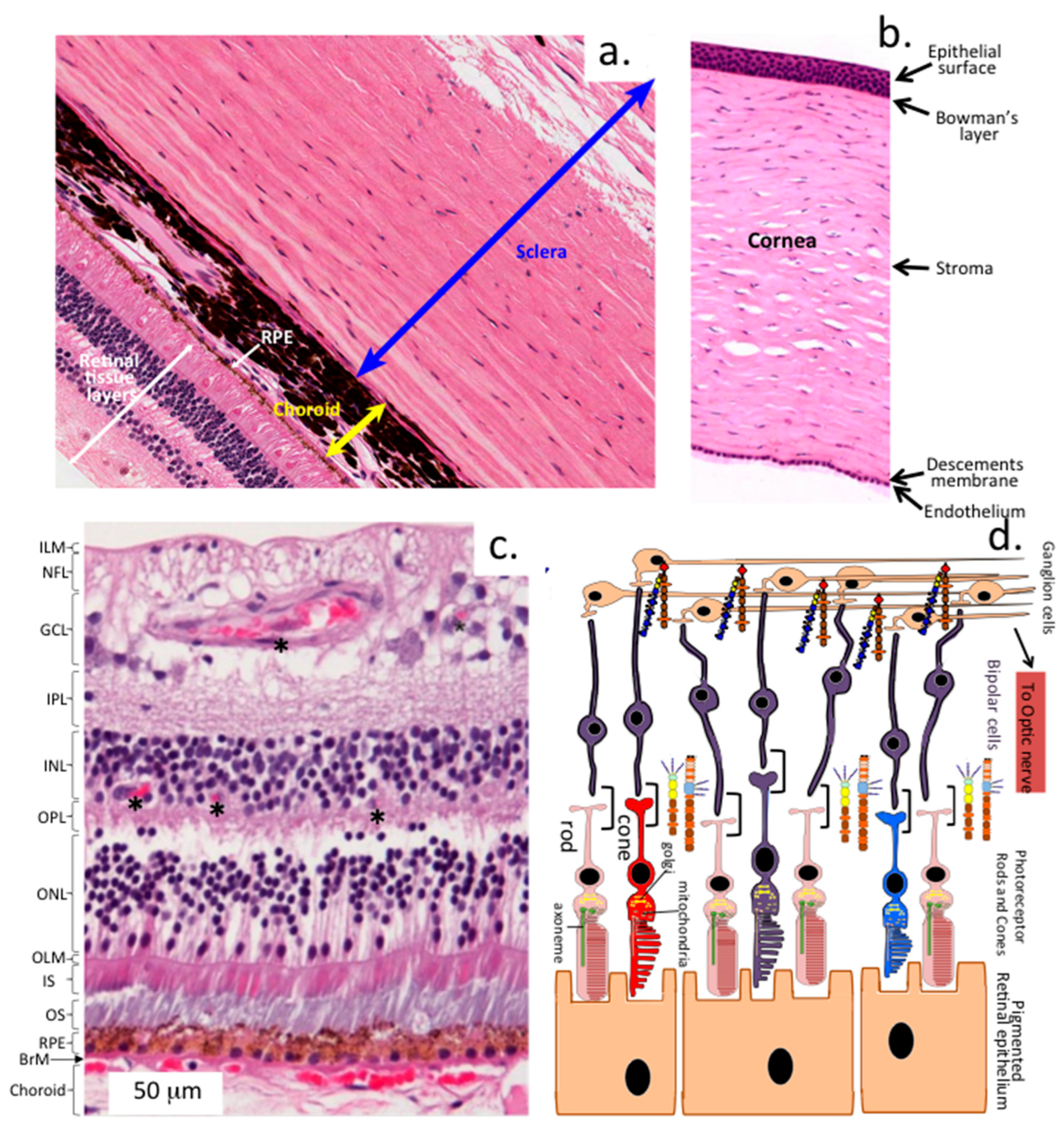
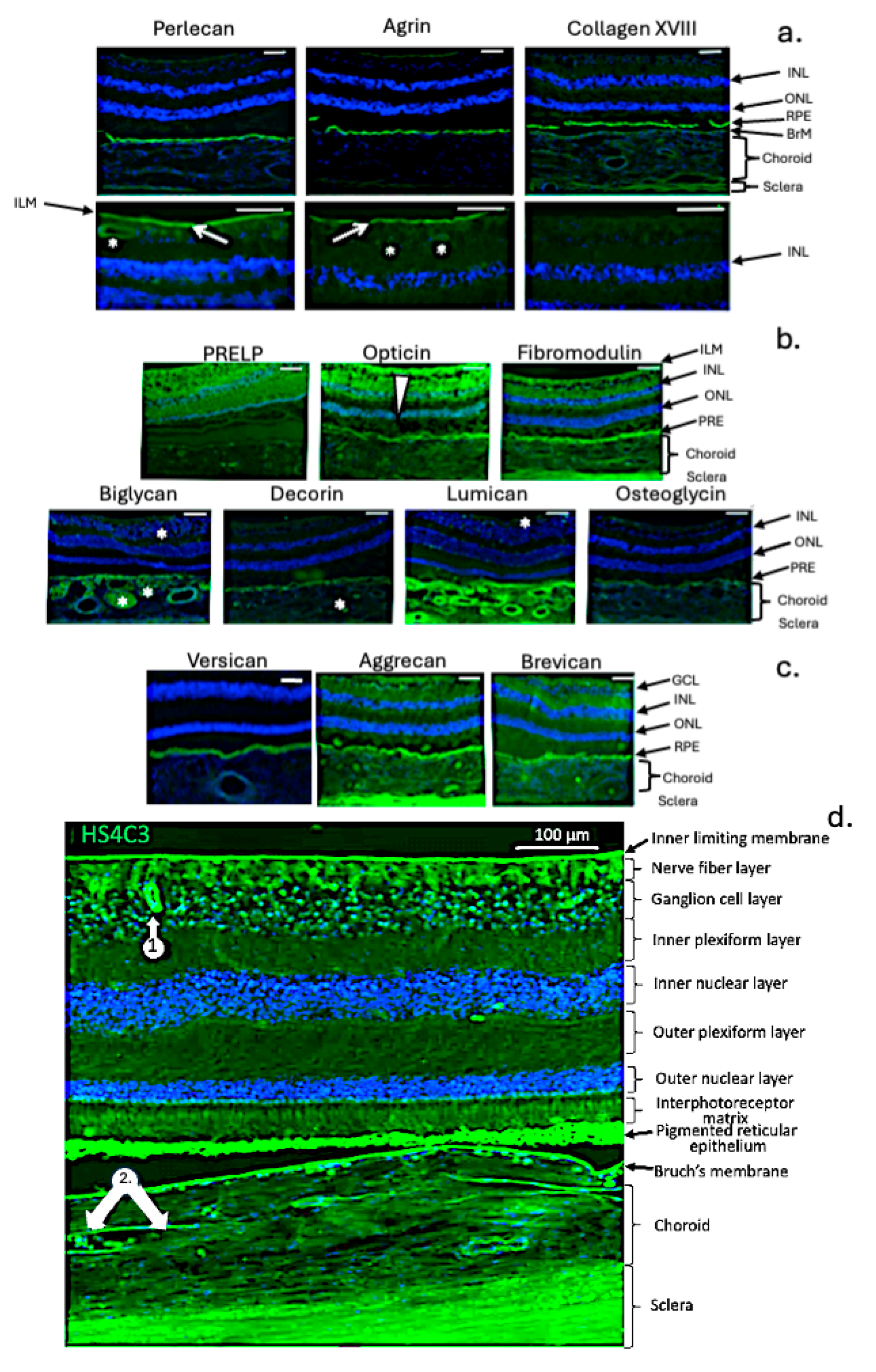
2. The Sclera
The Choroid and Bruch’s Membrane

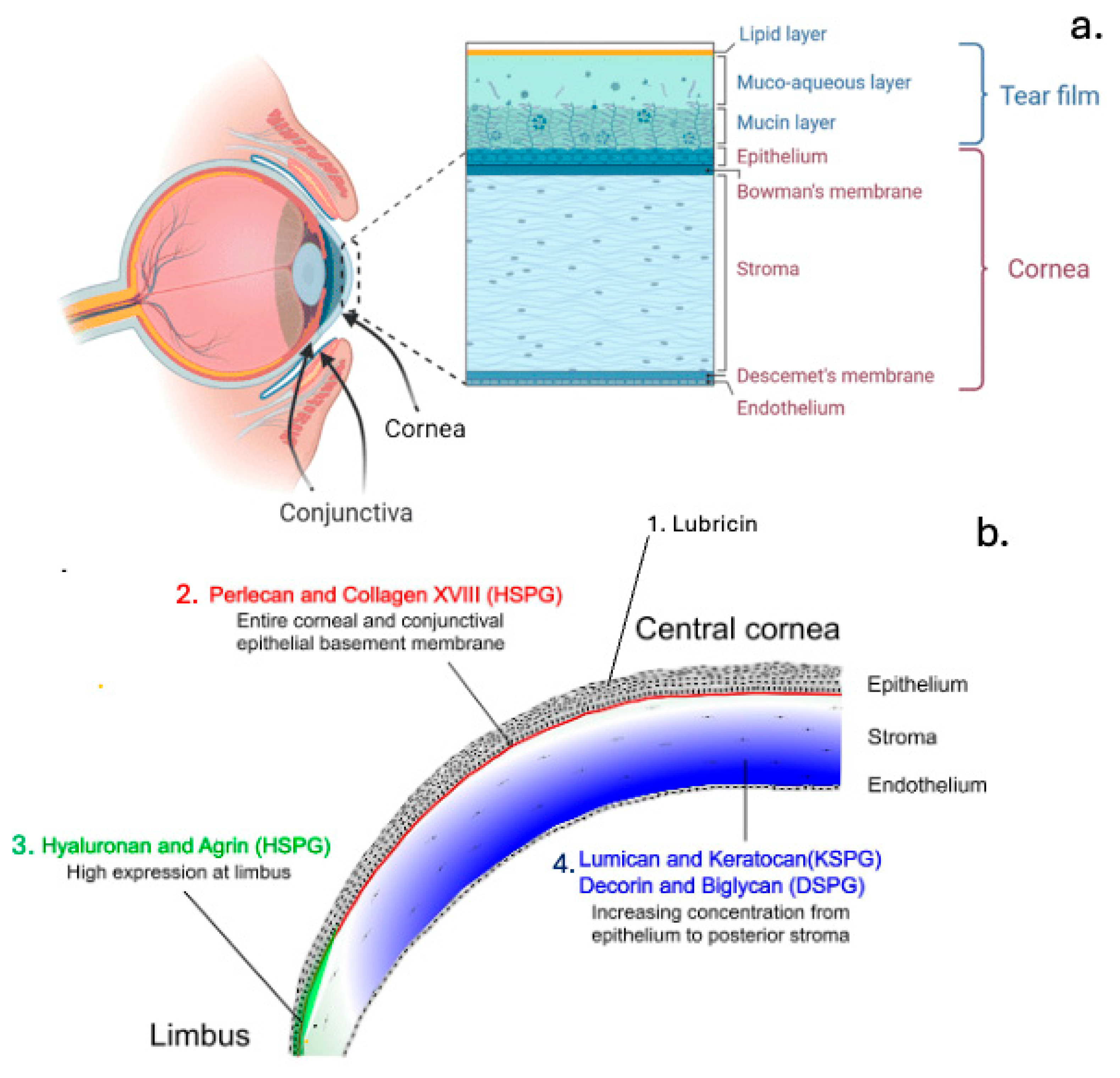
3. The Cornea
4. Biomechanical Roles of Ocular PGs
4.1. Sclera
4.2. Cornea

4.3. Biomechanical Studies Reveal Functional Changes in Corneal and Scleral Tissues in Disease
5. The Iris and Lens
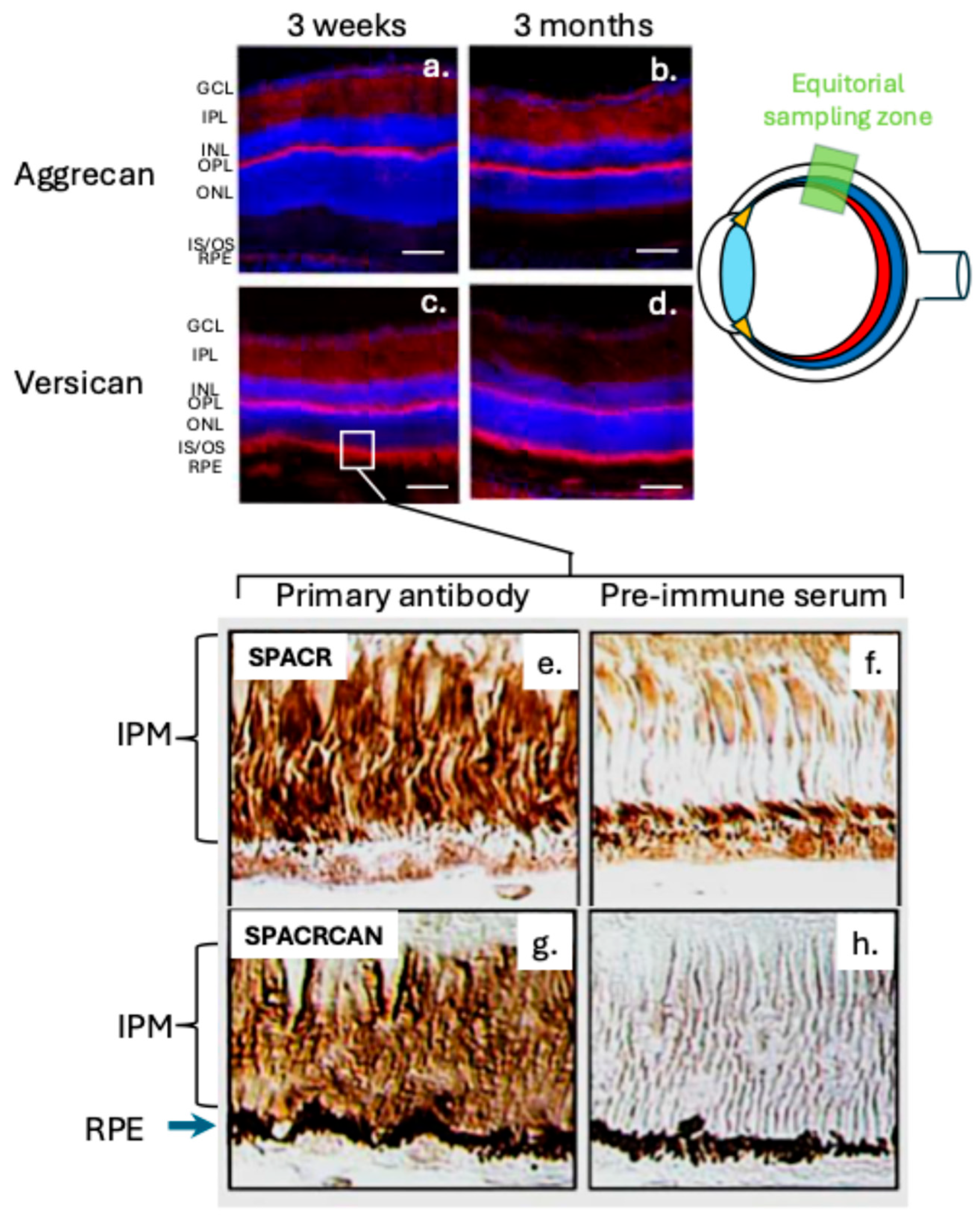
6. The Retina


6.1. The Macula
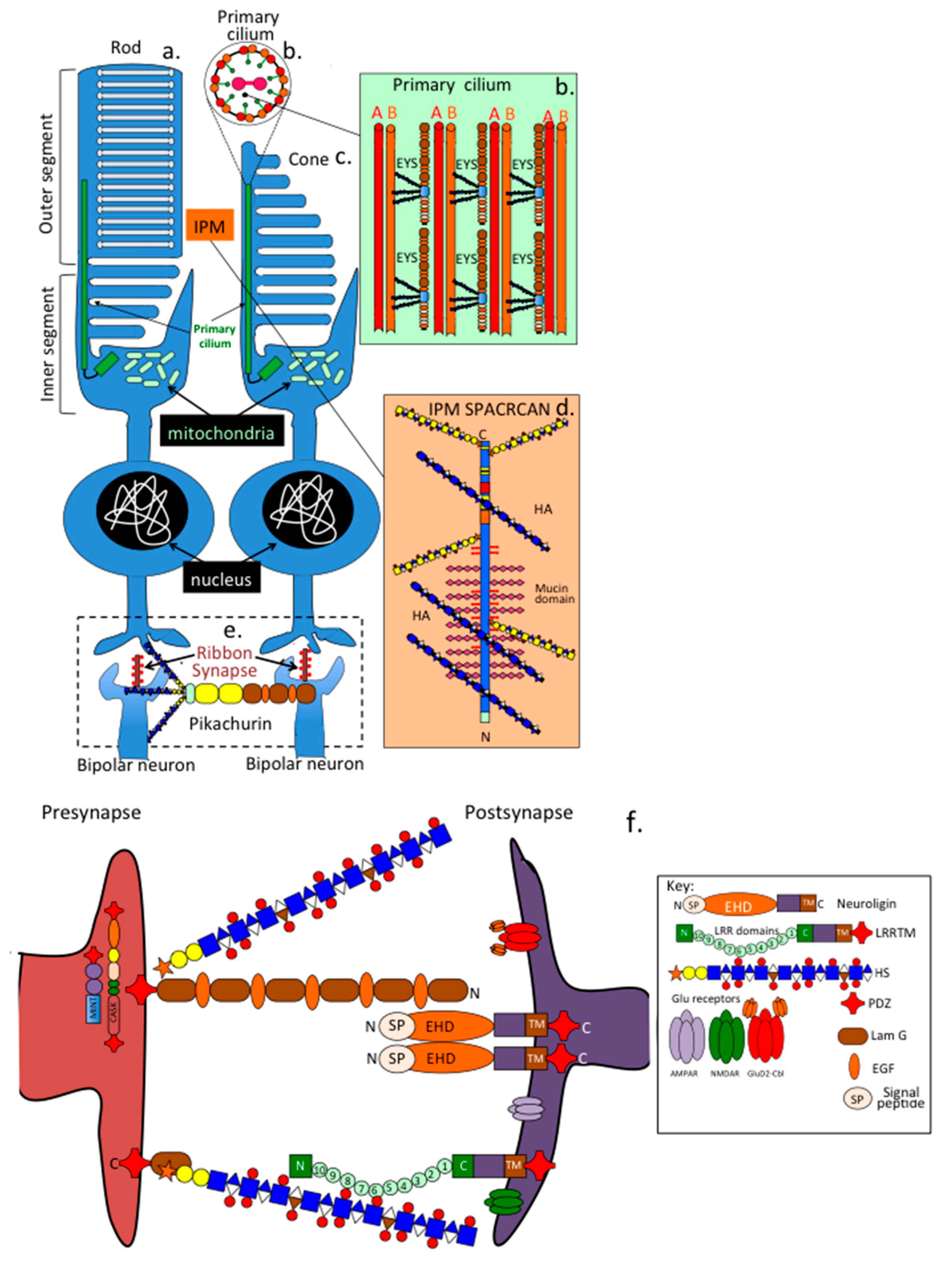
6.2. The Photoreceptor
6.2.1. Synaptic HSPGs
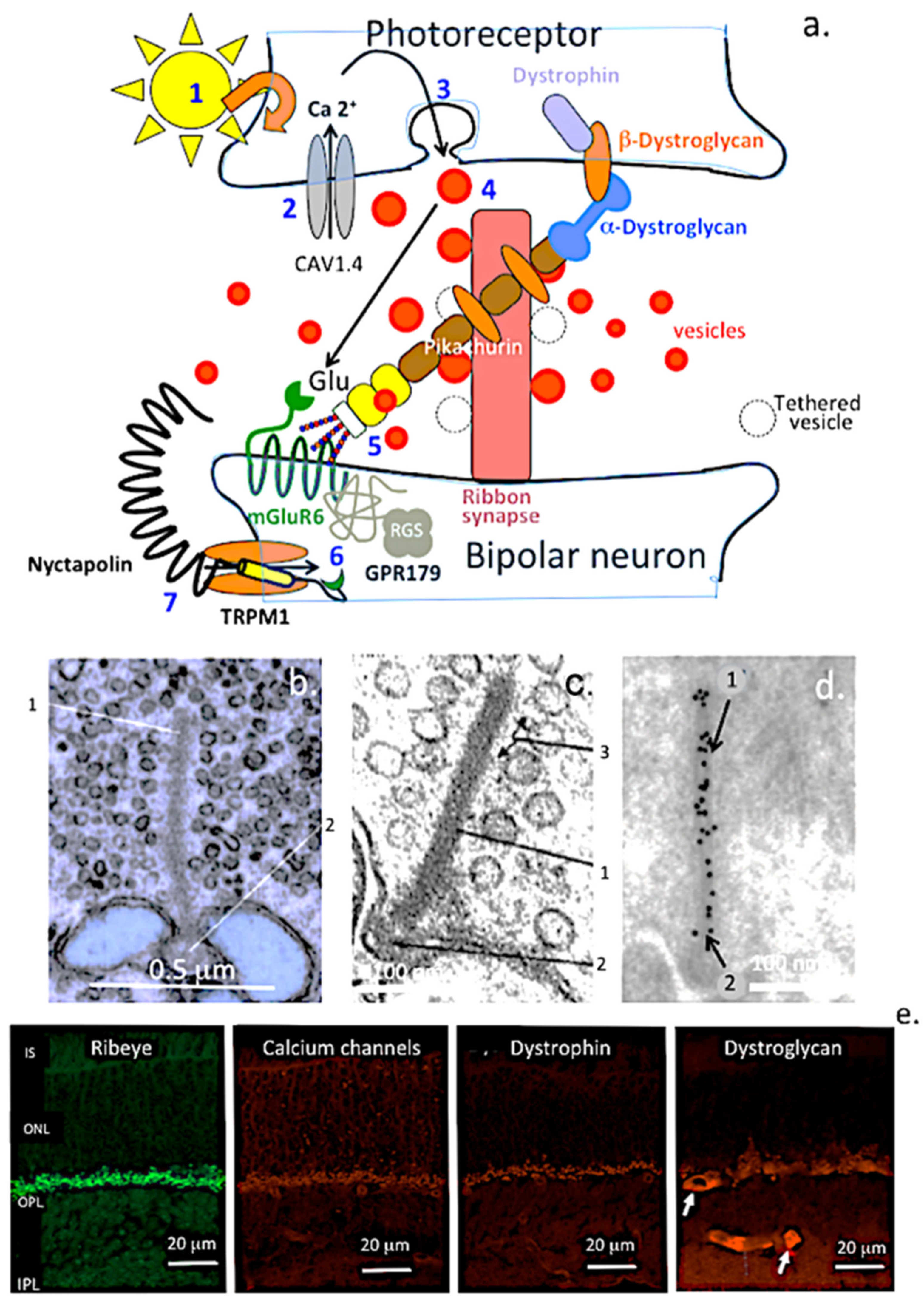
6.2.2. The Bipolar Neuron Ribbon Synapse
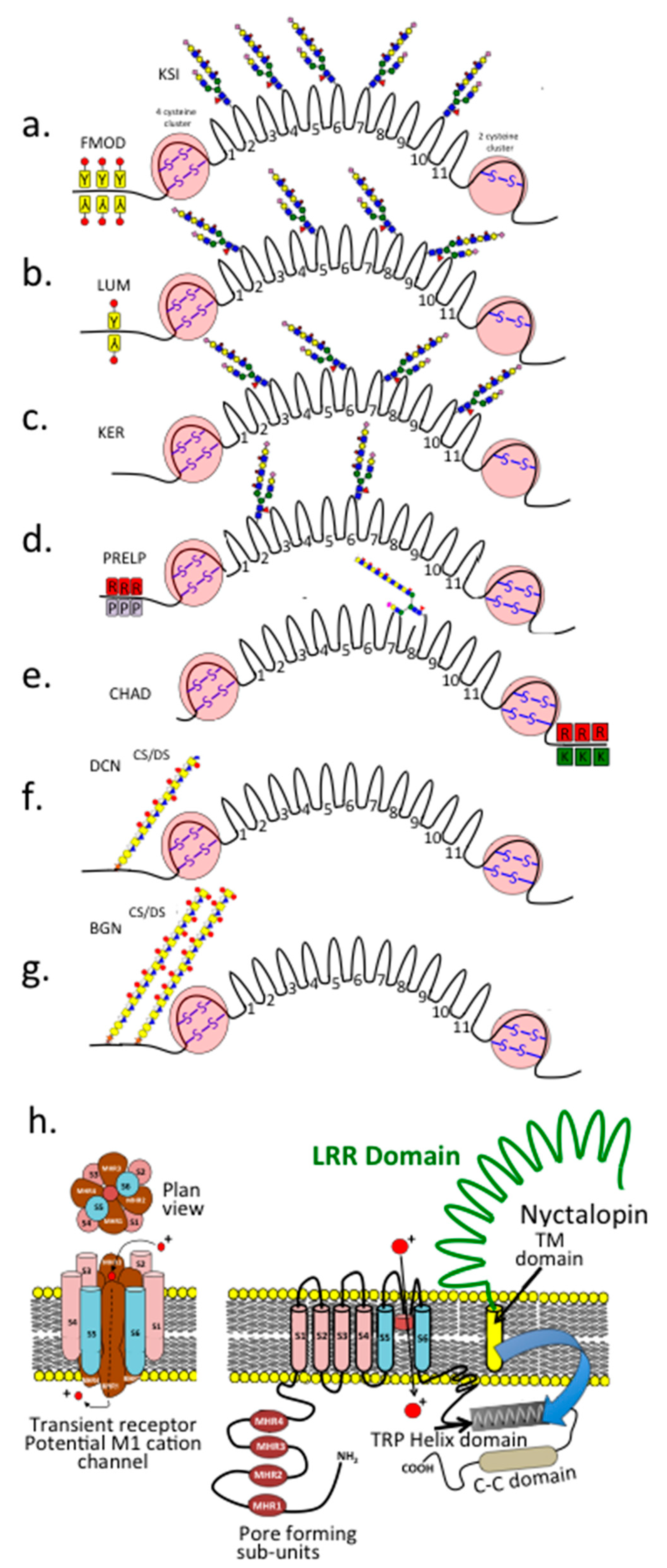
6.2.3. TRPM1 and the Bipolar Ribbon Synapse

7. Ocular HSPGs in Health and Disease
7.1. Role of Heparan Sulfate in Age-Related Macular Degeneration
HS Links the Complement Activation System and AMD
7.2. Functional Roles for HSPGs in the RPE and Bruch’s Membrane
7.3. Roles for Collagen XVIII in Ocular Tissues
7.4. Roles for Perlecan and Agrin in BrM and the RPE
7.5. Roles for HSPGs in Neuro-Retinal Cells
7.6. Aqueous Humour
8. The Structure of Ocular PGs
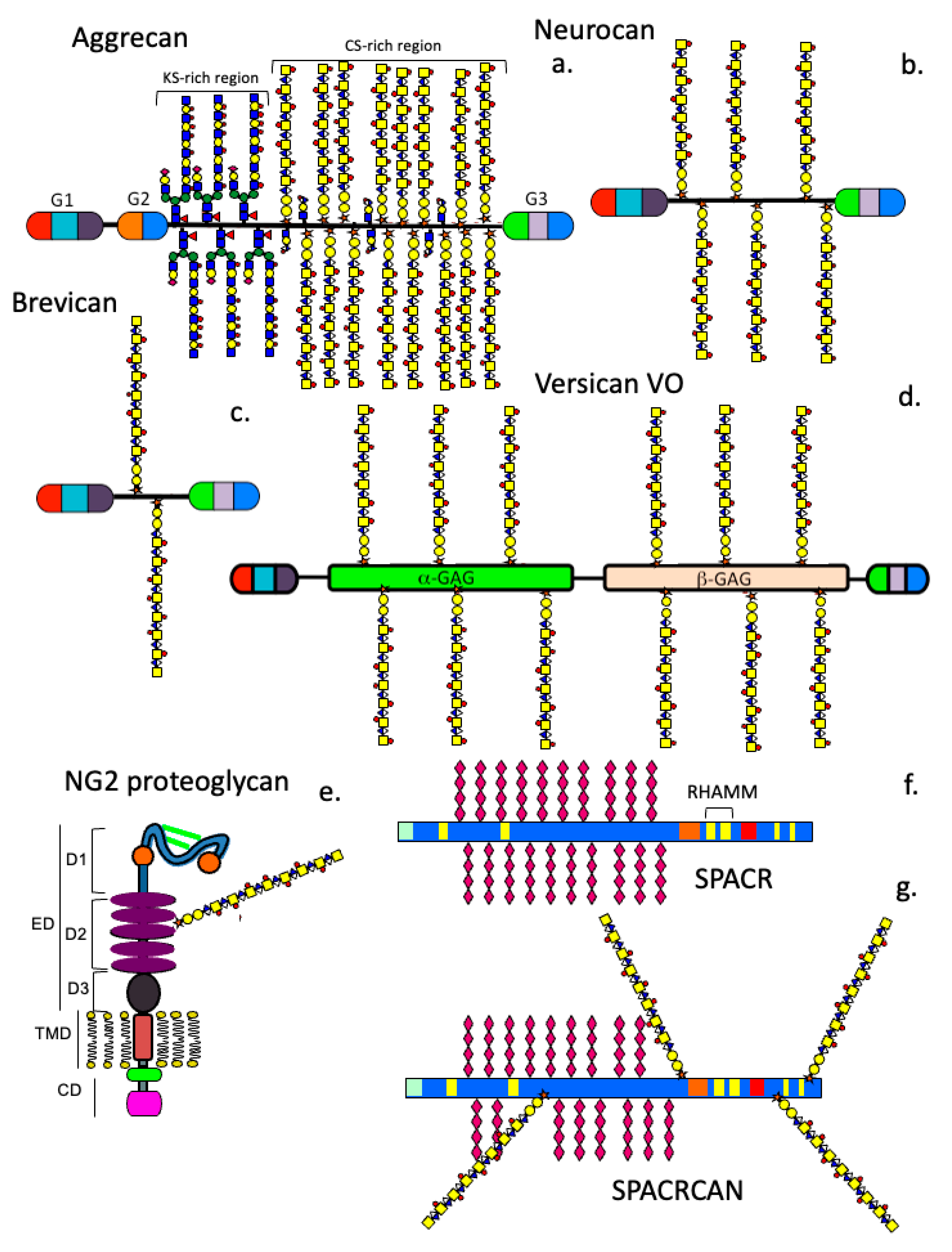
8.1. The Lectican PGs
HNK-1 Content of Brain Aggrecan
8.2. NG2 Proteoglycan
8.3. SPACRCAN (IMPG2) in the Eye
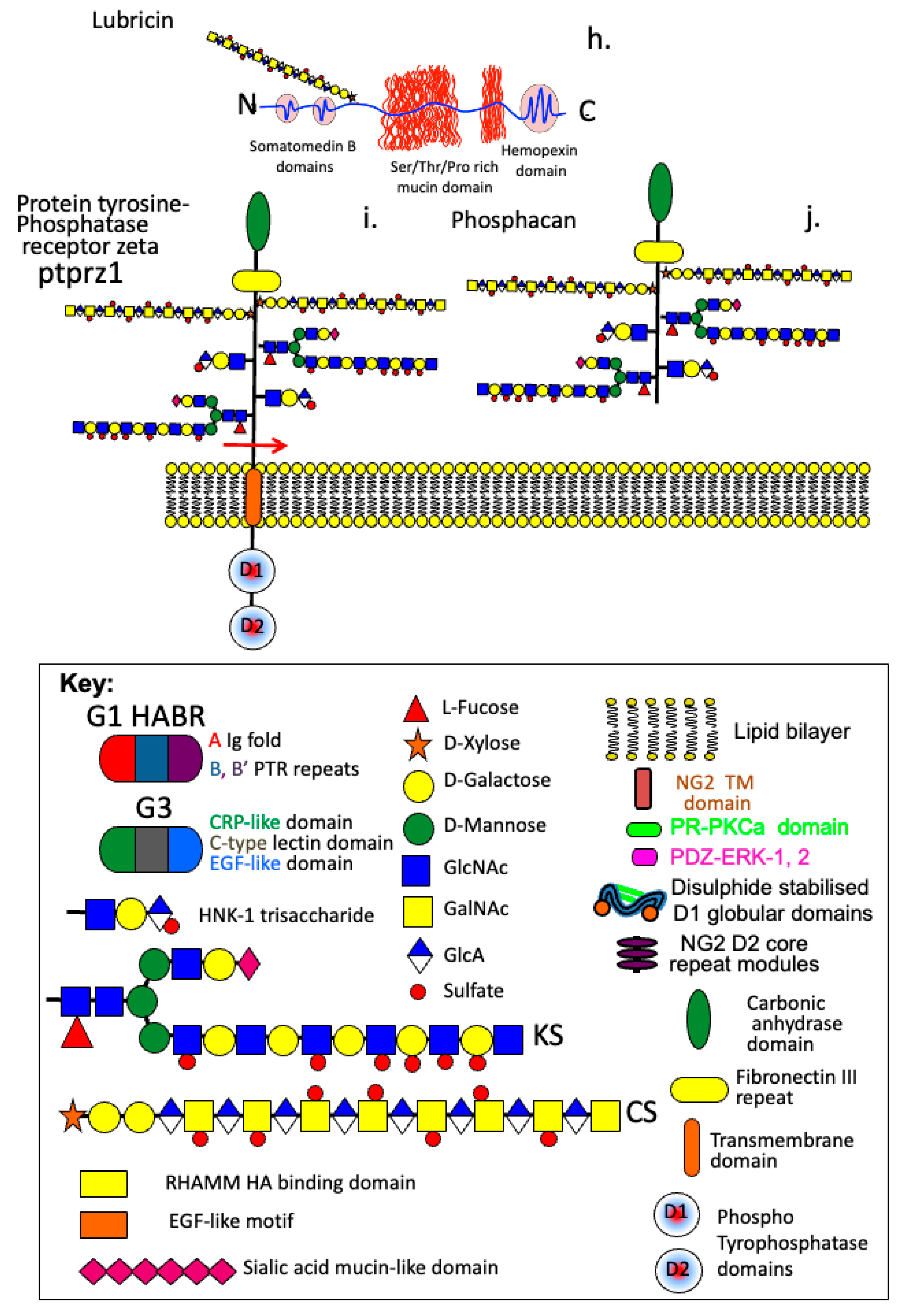
8.4. Lubricin
8.5. Phosphacan
8.6. SLRPs
9. Diverse Functions of HSPGs in Ocular Tissues
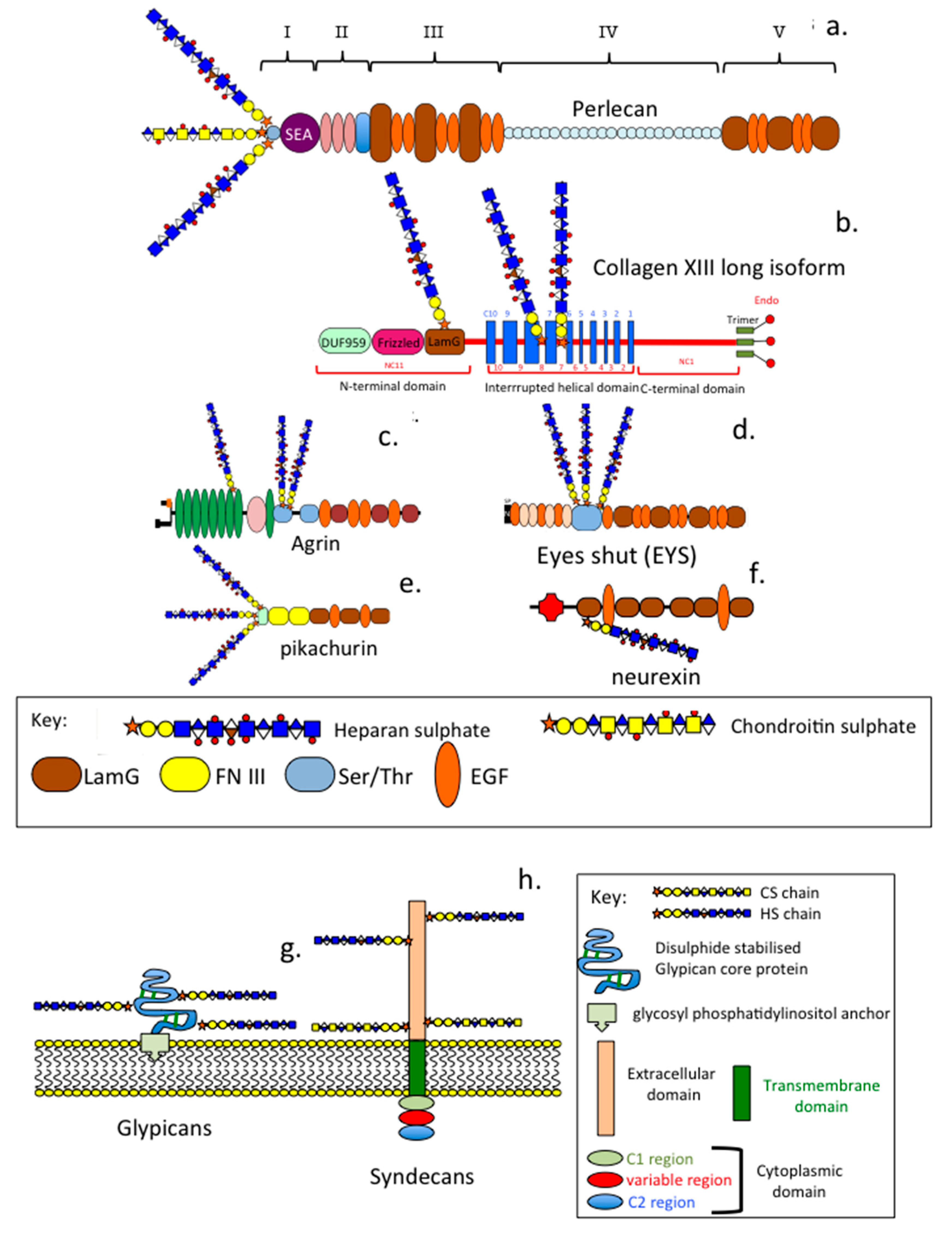
9.1. Perlecan
9.2. Collagen XVIII
9.3. Agrin
9.4. Synaptic HSPGs
10. Cell-Surface HSPGs
10.1. Syndecans
10.2. Glypicans
11. Conclusions
Funding
Data Availability Statement
Conflicts of Interest
References
- Kaplan, H. Anatomy and function of the eye. Chem. Immunol. Allergy 2007, 92, 4–10. [Google Scholar] [CrossRef] [PubMed]
- Kels, B.; Grzybowski, A.; Grant-Kels, J.M. Human ocular anatomy. Clin. Dermatol. 2015, 33, 140–146. [Google Scholar] [CrossRef] [PubMed]
- Watson, P.; Young, R.D. Scleral structure, organisation and disease. A review. Exp. Eye Res. 2004, 78, 609–623. [Google Scholar] [CrossRef] [PubMed]
- Boote, C.; Sigal, I.A.; Grytz, R.; Hua, Y.; Nguyen, T.D.; Girard, M.J.A. Scleral structure and biomechanics. Prog. Retin. Eye Res. 2020, 74, 100773. [Google Scholar] [CrossRef]
- Kakizaki, H.; Takahashi, Y.; Nakano, T.; Asamoto, K.; Ikeda, H.; Ichinose, A.; Iwaki, M.; Selva, D.; Leibovitch, I. Anatomy of Tenons capsule. Clin. Exp. Ophthalmol. 2012, 40, 611–616. [Google Scholar] [CrossRef]
- Wang, B.; Hua, Y.; Brazile, B.L.; Yang, B.; Sigal, I.A. Collagen fiber interweaving is central to sclera stiffness. Acta Biomater. 2020, 113, 429–437. [Google Scholar] [CrossRef]
- Keenan, T.; Clark, S.J.; Unwin, R.D.; Ridge, L.A.; Day, A.J.; Bishop, P.N. Mapping the differential distribution of proteoglycan core proteins in the adult human retina, choroid, and sclera. Investig. Ophthalmol. Vis. Sci. 2012, 53, 7528–7538. [Google Scholar] [CrossRef]
- Douglas, T.; Heinemann, S.; Bierbaum, S.; Scharnweber, D.; Worch, H. Fibrillogenesis of collagen types I, II, and III with small leucine-rich proteoglycans decorin and biglycan. Biomacromolecules 2006, 7, 2388–2393. [Google Scholar] [CrossRef]
- Johnson, J.; Young, T.L.; Rada, J.A. Small leucine rich repeat proteoglycans (SLRPs) in the human sclera: Identification of abundant levels of PRELP. Mol. Vis. 2006, 12, 1057–1066. [Google Scholar]
- Omenn, G. The human eye proteome project. Proteomics 2013, 13, 2375–2376. [Google Scholar] [CrossRef]
- Omenn, G. The proteomes of the human eye, a highly compartmentalized organ. Proteomics 2017, 17, 1600340. [Google Scholar] [CrossRef] [PubMed]
- Rada, J.; Achen, V.R.; Perry, C.A.; Fox, P.W. Proteoglycans in the human sclera. Evidence for the presence of aggrecan. Investig. Ophthalmol. Vis. Sci. 1997, 38, 1740–1751. [Google Scholar]
- Rada, J.; Achen, V.R.; Penugonda, S.; Schmidt, R.W.; Mount, B.A. Proteoglycan composition in the human sclera during growth and aging. Investig. Ophthalmol. Vis. Sci. 2000, 41, 1639–1648. [Google Scholar]
- Rada, J.; Thoft, R.A.; Hassell, J.R. Increased aggrecan (cartilage proteoglycan) production in the sclera of myopic chicks. Dev. Biol. 1991, 147, 303–312. [Google Scholar] [CrossRef]
- Chakravarti, S.; Paul, J.; Roberts, L.; Chervoneva, I.; Oldberg, A.; Birk, D.E. Ocular and scleral alterations in gene-targeted lumican-fibromodulin double-null mice. Investig. Ophthalmol. Vis. Sci. 2003, 44, 2422–2432. [Google Scholar] [CrossRef]
- Harper, A.; Summers, J.A. The Dynamic Sclera: Extracellular Matrix Remodeling in Normal Ocular Growth and Myopia Development. Exp. Eye Res. 2015, 133, 100–111. [Google Scholar] [CrossRef]
- Zhang, W.; Kaser-Eichberger, A.; Fan, W.; Platzl, C.; Schrödl, F.; Heindl, L.M. The structure and function of the human choroid. Ann. Anat. 2024, 254, 152239. [Google Scholar] [CrossRef]
- Nickla, D.; Wallman, J. The multifunctional choroid. Prog. Retin. Eye Res. 2010, 29, 144–168. [Google Scholar] [CrossRef]
- Ong, J.; Selvam, A.; Driban, M.; Zarnegar, A.; Morgado Mendes Antunes Da Silva, S.I.; Joy, J.; Rossi, E.A.; Vande Geest, J.P.; Sahel, J.A.; Chhablani, J. Characterizing Bruch’s membrane: State-of-the-art imaging, computational segmentation, and biologic models in retinal disease and health. Prog. Retin. Eye Res. 2025, 106, 101358. [Google Scholar] [CrossRef]
- Murali, A.; Krishnakumar, S.; Subramanian, A.; Parameswaran, S. Bruch’s membrane pathology: A mechanistic perspective. Eur. J. Ophthalmol. 2020, 30, 1195–1206. [Google Scholar] [CrossRef]
- Fields, M.; Del Priore, L.V.; Adelman, R.A.; Rizzolo, L.J. Interactions of the choroid, Bruch’s membrane, retinal pigment epithelium, and neurosensory retina collaborate to form the outer blood-retinal-barrier. Prog. Retin. Eye Res. 2020, 76, 100803. [Google Scholar] [CrossRef]
- Booij, J.; Baas, D.C.; Beisekeeva, J.; Gorgels, T.G.; Bergen, A.A. The dynamic nature of Bruch’s membrane. Prog. Retin. Eye Res. 2010, 29, 1–18. [Google Scholar] [CrossRef] [PubMed]
- Risseeuw, S.; Pilgrim, M.G.; Bertazzo, S.; Brown, C.N.; Csincsik, L.; Fearn, S.; Thompson, R.B.; Bergen, A.A.; Ten Brink, J.B.; Kortvely, E.; et al. Bruch’s Membrane Calcification in Pseudoxanthoma Elasticum: Comparing Histopathology and Clinical Imaging. Ophthalmol. Sci. 2023, 4, 100416. [Google Scholar] [CrossRef]
- Bille, J.F. (Ed.) High Resolution Imaging in Microscopy and Ophthalmology: New Frontiers in Biomedical Optics; Springer: Cham, Switzerland, 2019. [Google Scholar]
- DelMonte, D.; Kim, T. Anatomy and physiology of the cornea. J. Cataract. Refract. Surg. 2011, 37, 588–598. [Google Scholar] [CrossRef] [PubMed]
- Gesteira, T.; Verma, S.; Coulson-Thomas, V.J. Small leucine rich proteoglycans: Biology, function and their therapeutic potential in the ocular surface. Ocul. Surf. 2023, 29, 521–536. [Google Scholar] [CrossRef] [PubMed]
- Robert, L.; Legeais, J.M.; Robert, A.M.; Renard, G. Corneal collagens. Pathol. Biol. 2001, 49, 353–363. [Google Scholar] [CrossRef]
- Samsom, M.; Morrison, S.; Masala, N.; Sullivan, B.D.; Sullivan, D.A.; Sheardown, H.; Schmidt, T.A. Characterization of full-length recombinant human Proteoglycan 4 as an ocular surface boundary lubricant. Exp. Eye Res. 2014, 127, 14–19. [Google Scholar] [CrossRef]
- Regmi, S.; Samsom, M.L.; Heynen, M.L.; Jay, G.D.; Sullivan, B.D.; Srinivasan, S.; Caffery, B.; Jones, L.; Schmidt, T.A. Degradation of proteoglycan 4/lubricin by cathepsin S: Potential mechanism for diminished ocular surface lubrication in Sjögren’s syndrome. Exp. Eye Res. 2017, 161, 1–9. [Google Scholar] [CrossRef]
- Menon, N.; Goyal, R.; Lema, C.; Woods, P.S.; Tanguay, A.P.; Morin, A.A.; Das, N.; Jay, G.D.; Krawetz, R.J.; Dufour, A.; et al. Proteoglycan 4 (PRG4) expression and function in dry eye associated inflammation. Exp. Eye Res. 2021, 208, 108628. [Google Scholar] [CrossRef]
- Puri, S.; Coulson-Thomas, Y.M.; Gesteira, T.F.; Coulson-Thomas, V.J. Distribution and Function of Glycosaminoglycans and Proteoglycans in the Development, Homeostasis and Pathology of the Ocular Surface. Front. Cell Dev. Biol. 2020, 8, 731. [Google Scholar] [CrossRef]
- Martínez-Carrasco, R.; Sharma, A. Ocular surface glycocalyx in health and disease. Front. Cell Dev. Biol. 2025, 13, 1561324. [Google Scholar] [CrossRef] [PubMed]
- Ablamowicz, A.; Nichols, J.J. Ocular Surface Membrane-Associated Mucins. Ocul. Surf. 2016, 14, 331–341. [Google Scholar] [CrossRef] [PubMed]
- Meek, K.; Knupp, C. Corneal structure and transparency. Prog. Retin. Eye Res. 2015, 49, 1–16. [Google Scholar] [CrossRef] [PubMed]
- Wang, Y.; Cao, H. Corneal and scleral biomechanics in ophthalmic diseases: An updated review. Med. Nov. Technol. Devices 2022, 15, 100140. [Google Scholar] [CrossRef]
- Sun, Y.; Sha, Y.; Yang, J.; Fu, H.; Hou, X.; Li, Z.; Xie, Y.; Wang, G. Collagen is crucial target protein for scleral remodeling and biomechanical change in myopia progression and control. Heliyon 2024, 10, e35313. [Google Scholar] [CrossRef]
- Stepp, M.; Menko, A.S. Clearing the light path: Proteoglycans and their important roles in the lens and cornea. Proteoglycan Res. 2024, 2, e20. [Google Scholar] [CrossRef]
- Frikeche, J.; Maiti, G.; Chakravarti, S. Small leucine-rich repeat proteoglycans in corneal inflammation and wound healing. Exp. Eye Res. 2016, 151, 142–149. [Google Scholar] [CrossRef]
- Komninou, M.; Seiler, T.G.; Enzmann, V. Corneal biomechanics and diagnostics: A review. Int. Ophthalmol. 2024, 44, 132. [Google Scholar] [CrossRef]
- Hayes, S.; Morgan, S.R.; Meek, K.M. Keratoconus: Cross-linking the window of the eye. Ther. Adv. Rare Dis. 2021, 2, 26330040211003573. [Google Scholar] [CrossRef]
- McCall, A.; Kraft, S.; Edelhauser, H.F.; Kidder, G.W.; Lundquist, R.R.; Bradshaw, H.E.; Dedeic, Z.; Dionne, M.J.; Clement, E.M.; Conrad, G.W. Mechanisms of corneal tissue cross-linking in response to treatment with topical riboflavin and long-wavelength ultraviolet radiation (UVA). Investig. Ophthalmol. Vis. Sci. 2010, 51, 129–138. [Google Scholar] [CrossRef]
- Naranjo, A.; Manche, E.E. A comprehensive review on corneal crosslinking. Taiwan J. Ophthalmol. 2024, 14, 44–49. [Google Scholar] [CrossRef] [PubMed]
- Vastardis, I.; Pajic-Eggspuehler, B.; Nichorlis, C.; Mueller, J.; Pajic, B. Recent Innovations in Collagen Corneal Cross-linking; a Mini Review. Open Ophthalmol. J. 2017, 11, 217–224. [Google Scholar] [CrossRef] [PubMed]
- Masland, R. The neuronal organization of the retina. Neuron 2012, 76, 266–280. [Google Scholar] [CrossRef] [PubMed]
- Hoon, M.; Okawa, H.; Della Santina, L.; Wong, R.O. Functional architecture of the retina: Development and disease. Prog. Retin. Eye Res. 2014, 42, 44–84. [Google Scholar] [CrossRef]
- Matsuyama, A.; Kalargyrou, A.A.; Smith, A.J.; Ali, R.R.; Pearson, R.A. A comprehensive atlas of Aggrecan, Versican, Neurocan and Phosphacan expression across time in wildtype retina and in retinal degeneration. Sci. Rep. 2022, 12, 7282. [Google Scholar] [CrossRef]
- Chen, Q.; Lee, J.W.; Nishiyama, K.; Shadrach, K.G.; Rayborn, M.E.; Hollyfield, J.G. SPACRCAN in the interphotoreceptor matrix of the mouse retina: Molecular, developmental and promoter analysis. Exp. Eye Res. 2003, 76, 1–14. [Google Scholar] [CrossRef]
- Acharya, S.; Foletta, V.C.; Lee, J.W.; Rayborn, M.E.; Rodriguez, I.R.; Young, W.S., 3rd; Hollyfield, J.G. SPACRCAN, a novel human interphotoreceptor matrix hyaluronan-binding proteoglycan synthesized by photoreceptors and pinealocytes. J. Biol. Chem. 2000, 275, 6945–6955. [Google Scholar] [CrossRef]
- Trost, A.; Bruckner, D.; Rivera, F.J.; Reitsamer, H.A. Pericytes in the Retina. In Pericyte Biology in Different Organs; Birbrair, A., Ed.; Advances in Experimental Medicine and Biology; Springer: Cham, Switzerland, 2019; Volume 1122. [Google Scholar] [CrossRef]
- Yabuno, K.; Morise, J.; Kizuka, Y.; Hashii, N.; Kawasaki, N.; Takahashi, S.; Miyata, S.; Izumikawa, T.; Kitagawa, H.; Takematsu, H.; et al. A Sulfated Glycosaminoglycan Linkage Region is a Novel Type of Human Natural Killer-1 (HNK-1) Epitope Expressed on Aggrecan in Perineuronal Nets. PLoS ONE 2015, 10, e0144560. [Google Scholar] [CrossRef]
- Low, S.; Connor, T.B.; Kassem, I.S.; Costakos, D.M.; Chaurasia, S.S. Small Leucine-Rich Proteoglycans (SLRPs) in the Retina. Int. J. Mol. Sci. 2021, 22, 7293. [Google Scholar] [CrossRef]
- Dellett, M.; Hu, W.; Papadaki, V.; Ohnuma, S. Small leucine rich proteoglycan family regulates multiple signalling pathways in neural development and maintenance. Dev. Growth Differ. 2012, 54, 327–340. [Google Scholar] [CrossRef]
- Schwartz, E. Phototransduction in vertebrate rods. Annu. Rev. Neurosci. 1985, 8, 339–367. [Google Scholar] [CrossRef]
- Kolb, H. Photoreceptors. In Webvision: The Organization of the Retina and Visual System; Kolb, H., Fernandez, E., Jones, B., Nelson, R., Eds.; University of Utah Health Sciences Center: Salt Lake City, UT, USA, 1995. [Google Scholar]
- Fain, G.; Sampath, A.P. Light responses of mammalian cones. Pflugers Arch. 2021, 473, 1555–1568. [Google Scholar] [CrossRef]
- Regus-Leidig, H.; Brandstätter, J.H. Structure and function of a complex sensory synapse. Acta Physiol. 2012, 204, 479–486. [Google Scholar] [CrossRef]
- Mannu, G. Retinal phototransduction. Neurosciences 2014, 19, 275–280. [Google Scholar] [PubMed]
- Dieck, S.T.; Brandstätter, J.H. Ribbon synapses of the retina. Cell Tissue Res. 2006, 326, 339–346. [Google Scholar] [CrossRef] [PubMed]
- Hofmann, K.; Lamb, T.D. Rhodopsin, light-sensor of vision. Prog. Retin. Eye Res. 2023, 93, 101116. [Google Scholar] [CrossRef] [PubMed]
- Imamoto, Y.; Shichida, Y. Cone visual pigments. Biochim. Biophys. Acta 2014, 1837, 664–673. [Google Scholar] [CrossRef]
- Hiscott, P.; Sheridan, C.; Magee, R.M.; Grierson, I. Matrix and the retinal pigment epithelium in proliferative retinal disease. Prog. Retin. Eye Res. 1999, 18, 167–190. [Google Scholar] [CrossRef]
- Patil, D.; Pantalone, S.; Cao, Y.; Laboute, T.; Novick, S.J.; Singh, S.; Savino, S.; Faravelli, S.; Magnani, F.; Griffin, P.R.; et al. Structure of the photoreceptor synaptic assembly of the extracellular matrix protein pikachurin with the orphan receptor GPR179. Sci. Signal 2023, 16, eadd9539. [Google Scholar] [CrossRef]
- de Wit, J.; Sylwestrak, E.; O’Sullivan, M.L.; Otto, S.; Tiglio, K.; Savas, J.N.; Yates, J.R., 3rd; Comoletti, D.; Taylor, P.; Ghosh, A. LRRTM2 interacts with Neurexin1 and regulates excitatory synapse formation. Neuron 2009, 64, 799–806. [Google Scholar] [CrossRef]
- Ko, J.; Fuccillo, M.V.; Malenka, R.C.; Südhof, T.C. LRRTM2 functions as a neurexin ligand in promoting excitatory synapse formation. Neuron 2009, 64, 791–798, Erratum in Neuron 2025, 113, 2543–2545. https://doi.org/10.1016/j.neuron.2025.07.005. [Google Scholar] [CrossRef]
- Leone, P.; Comoletti, D.; Ferracci, G.; Conrod, S.; Garcia, S.U.; Taylor, P.; Bourne, Y.; Marchot, P. Structural insights into the exquisite selectivity of neurexin/neuroligin synaptic interactions. EMBO J. 2010, 29, 2461–2471. [Google Scholar] [CrossRef]
- Rudenko, G. Neurexins—Versatile molecular platforms in the synaptic cleft. Curr. Opin. Struct. Biol. 2019, 54, 112–121. [Google Scholar] [CrossRef]
- Yamagata, A.; Goto-Ito, S.; Sato, Y.; Shiroshima, T.; Maeda, A.; Watanabe, M.; Saitoh, T.; Maenaka, K.; Terada, T.; Yoshida, T.; et al. Structural insights into modulation and selectivity of transsynaptic neurexin-LRRTM interaction. Nat. Commun. 2018, 9, 3964. [Google Scholar] [CrossRef] [PubMed]
- Zhang, P.; Lu, H.; Peixoto, R.T.; Pines, M.K.; Ge, Y.; Oku, S.; Siddiqui, T.J.; Xie, Y.; Wu, W.; Archer-Hartmann, S.; et al. Heparan Sulfate Organizes Neuronal Synapses through Neurexin Partnerships. Cell 2018, 174, 1450–1464.e23. [Google Scholar] [CrossRef] [PubMed]
- Frederick, C.E.; Zenisek, D. Ribbon Synapses and Retinal Disease: Review. Int. J. Mol. Sci. 2023, 24, 5090. [Google Scholar] [CrossRef] [PubMed]
- Moser, T.; Grabner, C.P.; Schmitz, F. Sensory Processing at Ribbon Synapses in the Retina and the Cochlea. Physiol. Rev. 2020, 100, 103–144. [Google Scholar] [CrossRef]
- Thoreson, W.; Zenisek, D. Presynaptic Proteins and Their Roles in Visual Processing by the Retina. Annu. Rev. Vis. Sci. 2024, 10, 347–375. [Google Scholar] [CrossRef]
- Schmitz, F.; Konigstorfer, A.; Sudhof, T.C. RIBEYE, a component of synaptic ribbons: A protein’s journey through evolution provides insight into synaptic ribbon function. Neuron 2000, 28, 857–872. [Google Scholar] [CrossRef]
- Usukura, J.; Yamada, E. Freeze-etching technique with simple rapid freezing of fresh biological specimen. J. Electron. Microsc. 1980, 29, 376–382. [Google Scholar]
- van Genderen, M.; Bijveld, M.M.; Claassen, Y.B.; Florijn, R.J.; Pearring, J.N.; Meire, F.M.; McCall, M.A.; Riemslag, F.C.; Gregg, R.G.; Bergen, A.A.; et al. Mutations in TRPM1 are a common cause of complete congenital stationary night blindness. Am. J. Hum. Genet. 2009, 85, 730–736. [Google Scholar] [CrossRef] [PubMed]
- Bech-Hansen, N.; Naylor, M.J.; Maybaum, T.A.; Sparkes, R.L.; Koop, B.; Birch, D.G.; Bergen, A.A.; Prinsen, C.F.; Polomeno, R.C.; Gal, A.; et al. Mutations in NYX, encoding the leucine-rich proteoglycan nyctalopin, cause X-linked complete congenital stationary night blindness. Nat. Genet. 2000, 26, 319–323, Erratum in Nat. Genet. 2000, 27, 125. https://doi.org/10.1038/81619. [Google Scholar] [CrossRef] [PubMed]
- Pusch, C.M.; Zeitz, C.; Brandau, O.; Pesch, K.; Achatz, H.; Feil, S.; Scharfe, C.; Maurer, J.; Jacobi, F.K.; Pinckers, A.; et al. The complete form of X-linked congenital stationary night blindness is caused by mutations in a gene encoding a leucine-rich repeat protein. Nat. Genet. 2000, 26, 324–327. [Google Scholar] [CrossRef] [PubMed]
- Irie, S.; Furukawa, T. TRPM1. Handb. Exp. Pharmacol. 2014, 222, 387–402. [Google Scholar] [CrossRef]
- Cao, Y.; Posokhova, E.; Martemyanov, K.A. TRPM1 forms complexes with nyctalopin in vivo and accumulates in postsynaptic compartment of ON-bipolar neurons in mGluR6-dependent manner. J. Neurosci. 2011, 31, 11521–11526. [Google Scholar] [CrossRef]
- Morgans, C. Presynaptic proteins of ribbon synapses in the retina. Microsc. Res. Tech. 2000, 50, 141–150. [Google Scholar] [CrossRef]
- LoGiudice, L.; Matthews, G. The role of ribbons at sensory synapses. Neuroscientist 2009, 15, 380–391. [Google Scholar] [CrossRef]
- Held, K.; Gruss, F.; Aloi, V.D.; Janssens, A.; Ulens, C.; Voets, T.; Vriens, J. Mutations in the voltage-sensing domain affect the alternative ion permeation pathway in the TRPM3 channel. J. Physiol. 2018, 596, 2413–2432. [Google Scholar] [CrossRef]
- Jiang, L. Subunit interaction in channel assembly and functional regulation of transient receptor potential melastatin (TRPM) channels. Biochem. Soc. Trans. 2007, 35, 86–88. [Google Scholar] [CrossRef]
- Matthews, G.F.P. The diverse roles of ribbon synapses in sensory neurotransmission. Nat. Rev. Neurosci. 2010, 11, 812–822. [Google Scholar] [CrossRef]
- Heidelberger, R.T.W.; Witkovsky, P. Synaptic transmission at retinal ribbon synapses. Prog. Retin. Eye Res. 2005, 24, 682–720. [Google Scholar] [CrossRef] [PubMed]
- Lagnado, L.S.F. Ribbon Synapses and Visual Processing in the Retina. Annu. Rev. Vis. Sci. 2015, 1, 235–262. [Google Scholar] [CrossRef]
- Lenzi, D.; von Gersdorff, H. Structure suggests function: The case for synaptic ribbons as exocytotic nanomachines. Bioessays 2001, 23, 831–840. [Google Scholar] [CrossRef]
- Perrimon, N.; Bernfield, M. Specificities of heparan sulphate proteoglycans in developmental processes. Nature 2000, 404, 725–728. [Google Scholar] [CrossRef]
- Bishop, J.; Schuksz, M.; Esko, J.D. Heparan sulphate proteoglycans fine-tune mammalian physiology. Nature 2007, 446, 1030–1037. [Google Scholar] [CrossRef]
- Madonna, R.; De Caterina, R. Potential roles of vessel wall heparan sulfate proteoglycans in atherosclerosis. Vasc. Pharmacol. 2014, 60, 49–51. [Google Scholar] [CrossRef]
- Thota, L.; Chignalia, A.Z. The role of the glypican and syndecan families of heparan sulfate proteoglycans in cardiovascular function and disease. Am. J. Physiol. Cell Physiol. 2022, 323, C1052–C1060. [Google Scholar] [CrossRef]
- Clark, S.; Keenan, T.D.; Fielder, H.L.; Collinson, L.J.; Holley, R.J.; Merry, C.L.; van Kuppevelt, T.H.; Day, A.J.; Bishop, P.N. Mapping the differential distribution of glycosaminoglycans in the adult human retina, choroid, and sclera. Investig. Ophthalmol. Vis. Sci. 2011, 52, 6511–6521. [Google Scholar] [CrossRef]
- Witmer, A.; van den Born, J.; Vrensen, G.F.; Schlingemann, R.O. Vascular localization of heparan sulfateproteoglycans in retinas of patients with diabetes mellitus and in VEGF-induced retinopathy using domain-specific antibodies. Curr. Eye Res. 2001, 22, 190–197. [Google Scholar] [CrossRef] [PubMed]
- Wishart, T.; Lovicu, F.J. An Atlas of Heparan Sulfate Proteoglycans in the Postnatal Rat Lens. Investig. Ophthalmol. Vis. Sci. 2021, 62, 5. [Google Scholar] [CrossRef] [PubMed]
- Guymer, R.; Campbell, T.G. Age-related macular degeneration. Lancet 2023, 401, 1459–1472. [Google Scholar] [CrossRef] [PubMed]
- Spaide, R. Choroidal Neovascularization. Retina 2017, 37, 609–610. [Google Scholar] [CrossRef] [PubMed]
- Sheth, J.; Stewart, M.W.; Narayanan, R.; Anantharaman, G.; Chandran, K.; Lai, T.Y.Y.; Chakravarthy, U.; Das, T. Macular neovascularization. Surv. Ophthalmol. 2025, 70, 653–675. [Google Scholar] [CrossRef] [PubMed]
- D’Amore, P. Mechanisms of retinal and choroidal neovascularization. Investig. Ophthalmol. Vis. Sci. 1994, 35, 3974–3979. [Google Scholar]
- Armento, A.; Ueffing, M.; Clark, S.J. The complement system in age-related macular degeneration. Cell Mol. Life Sci. 2021, 78, 4487–4505. [Google Scholar] [CrossRef]
- Machalińska, A.; Kawa, M.P.; Marlicz, W.; Machaliński, B. Complement system activation and endothelial dysfunction in patients with age-related macular degeneration (AMD): Possible relationship between AMD and atherosclerosis. Acta Ophthalmol. 2012, 90, 695–703. [Google Scholar] [CrossRef]
- Tang, S.; Yang, J.; Xiao, B.; Wang, Y.; Lei, Y.; Lai, D.; Qiu, Q. Aberrant Lipid Metabolism and Complement Activation in Age-Related Macular Degeneration. Investig. Ophthalmol. Vis. Sci. 2024, 65, 20. [Google Scholar] [CrossRef]
- Klein, R.; Zeiss, C.; Chew, E.Y.; Tsai, J.Y.; Sackler, R.S.; Haynes, C.; Henning, A.K.; SanGiovanni, J.P.; Mane, S.M.; Mayne, S.T.; et al. Complement factor H polymorphism in age-related macular degeneration. Science 2005, 308, 385–389. [Google Scholar] [CrossRef]
- Kumaramanickavel, G. Age-Related Macular Degeneration: Genetics and Biology. Asia Pac. J. Ophthalmol. 2016, 5, 229–235. [Google Scholar] [CrossRef]
- Toomey, C.; Johnson, L.V.; Bowes Rickman, C. Complement factor H in AMD: Bridging genetic associations and pathobiology. Prog. Retin. Eye Res. 2018, 62, 38–57. [Google Scholar] [CrossRef]
- Clark, S.; Schmidt, C.Q.; White, A.M.; Hakobyan, S.; Morgan, B.P.; Bishop, P.N. Identification of factor H-like protein 1 as the predominant complement regulator in Bruch’s membrane: Implications for age-related macular degeneration. J. Immunol. 2014, 193, 4962–4970. [Google Scholar] [CrossRef]
- Langford-Smith, A.; Keenan, T.D.; Clark, S.J.; Bishop, P.N.; Day, A.J. The role of complement in age-related macular degeneration: Heparan sulphate, a ZIP code for complement factor H? J. Innate Immun. 2014, 6, 407–416. [Google Scholar] [CrossRef] [PubMed]
- Clark, S.; Perveen, R.; Hakobyan, S.; Morgan, B.P.; Sim, R.B.; Bishop, P.N.; Day, A.J. Impaired binding of the age-related macular degeneration-associated complement factor H 402H allotype to Bruch’s membrane in human retina. J. Biol. Chem. 2010, 285, 30192–30202. [Google Scholar] [CrossRef] [PubMed]
- Keenan, T.; Pickford, C.E.; Holley, R.J.; Clark, S.J.; Lin, W.; Dowsey, A.W.; Merry, C.L.; Day, A.J.; Bishop, P.N. Age-dependent changes in heparan sulfate in human Bruch’s membrane: Implications for age-related macular degeneration. Investig. Ophthalmol. Vis. Sci. 2014, 55, 5370–5379. [Google Scholar] [CrossRef] [PubMed]
- Gómez Toledo, A.; Sorrentino, J.T.; Sandoval, D.R.; Malmström, J.; Lewis, N.E.; Esko, J.D. A Systems View of the Heparan Sulfate Interactome. J. Histochem. Cytochem. 2021, 69, 105–119. [Google Scholar] [CrossRef]
- Alotaibi, F.; Alsadun, M.M.R.; Alsaiari, S.A.; Ramakrishnan, K.; Yates, E.A.; Fernig, D.G. Interactions of proteins with heparan sulfate. Essays Biochem. 2024, 68, 479–489. [Google Scholar] [CrossRef]
- Ori, A.; Wilkinson, M.C.; Fernig, D.G. A systems biology approach for the investigation of the heparin/heparan sulfate interactome. J. Biol. Chem. 2011, 286, 19892–19904. [Google Scholar] [CrossRef]
- Fukai, N.; Eklund, L.; Marneros, A.G.; Oh, S.P.; Keene, D.R.; Tamarkin, L.; Niemelä, M.; Ilves, M.; Li, E.; Pihlajaniemi, T.; et al. Lack of collagen XVIII/endostatin results in eye abnormalities. EMBO J. 2002, 21, 1535–1544. [Google Scholar] [CrossRef]
- Marneros, A.; Keene, D.R.; Hansen, U.; Fukai, N.; Moulton, K.; Goletz, P.L.; Moiseyev, G.; Pawlyk, B.S.; Halfter, W.; Dong, S.; et al. Collagen XVIII/endostatin is essential for vision and retinal pigment epithelial function. EMBO J. 2004, 23, 89–99. [Google Scholar] [CrossRef]
- Bhutto, I.; Kim, S.Y.; McLeod, D.S.; Merges, C.; Fukai, N.; Olsen, B.R.; Lutty, G.A. Localization of collagen XVIII and the endostatin portion of collagen XVIII in aged human control eyes and eyes with age-related macular degeneration. Investig. Ophthalmol. Vis. Sci. 2004, 45, 1544–1552. [Google Scholar] [CrossRef]
- Kröger, S.; Horton, S.E.; Honig, L.S. The developing avian retina expresses agrin isoforms during synaptogenesis. J. Neurobiol. 1996, 29, 165–182. [Google Scholar] [CrossRef]
- Kröger, S. Differential distribution of agrin isoforms in the developing and adult avian retina. Mol. Cell Neurosci. 1997, 10, 149–161. [Google Scholar] [CrossRef] [PubMed]
- Hering, H.; Kröger, S. Synapse formation and agrin expression in stratospheroid cultures from embryonic chick retina. Dev. Biol. 1999, 214, 412–428. [Google Scholar] [CrossRef] [PubMed]
- Koulen, P.; Honig, L.S.; Fletcher, E.L.; Kröger, S. Expression, distribution and ultrastructural localization of the synapse-organizing molecule agrin in the mature avian retina. Eur. J. Neurosci. 1999, 11, 4188–4196. [Google Scholar] [CrossRef] [PubMed]
- Li, X.; Xu, Y.; Si, J.X.; Gu, F.; Ma, Y.Y. Role of Agrin in tissue repair and regeneration: From mechanisms to therapeutic opportunities. Int. J. Mol. Med. 2024, 54, 98. [Google Scholar] [CrossRef]
- Jury, E.; Kabouridis, P.S. New role for Agrin in T cells and its potential importance in immune system regulation. Arthritis Res. Ther. 2010, 12, 205. [Google Scholar] [CrossRef]
- Melrose, J. Dystroglycan-HSPG interactions provide synaptic plasticity and specificity. Glycobiology 2024, 34, cwae051. [Google Scholar] [CrossRef]
- Orlandi, C.; Omori, Y.; Wang, Y.; Cao, Y.; Ueno, A.; Roux, M.J.; Condomitti, G.; de Wit, J.; Kanagawa, M.; Furukawa, T.; et al. Transsynaptic Binding of Orphan Receptor GPR179 to Dystroglycan-Pikachurin Complex Is Essential for the Synaptic Organization of Photoreceptors. Cell Rep. 2018, 25, 130–145.e5. [Google Scholar] [CrossRef]
- Sato, S.; Omori, Y.; Katoh, K.; Kondo, M.; Kanagawa, M.; Miyata, K.; Funabiki, K.; Koyasu, T.; Kajimura, N.; Miyoshi, T.; et al. Pikachurin, a dystroglycan ligand, is essential for photoreceptor ribbon synapse formation. Nat. Neurosci. 2008, 11, 923–931. [Google Scholar] [CrossRef]
- Omori, Y.; Araki, F.; Chaya, T.; Kajimura, N.; Irie, S.; Terada, K.; Muranishi, Y.; Tsujii, T.; Ueno, S.; Koyasu, T.; et al. Presynaptic dystroglycan-pikachurin complex regulates the proper synaptic connection between retinal photoreceptor and bipolar cells. J. Neurosci. 2012, 32, 6126–6137. [Google Scholar] [CrossRef]
- Alfano, G.; Kruczek, P.M.; Shah, A.Z.; Kramarz, B.; Jeffery, G.; Zelhof, A.C.; Bhattacharya, S.S. EYS Is a Protein Associated with the Ciliary Axoneme in Rods and Cones. PLoS ONE 2016, 11, e0166397. [Google Scholar] [CrossRef]
- Schmidt, J. Activity-driven sharpening of the retinotectal projection: The search for retrograde synaptic signaling pathways. J. Neurobiol. 2004, 59, 114–133. [Google Scholar] [CrossRef]
- Barker, A.; Koch, S.M.; Reed, J.; Barres, B.A.; Ullian, E.M. Developmental control of synaptic receptivity. J. Neurosci. 2008, 28, 8150–8160. [Google Scholar] [CrossRef]
- Tian, Y.; Li, T.; Sun, M.; Wan, D.; Li, Q.; Li, P.; Zhang, Z.C.; Han, J.; Xie, W. Neurexin regulates visual function via mediating retinoid transport to promote rhodopsin maturation. Neuron 2013, 77, 311–322. [Google Scholar] [CrossRef] [PubMed]
- Bishop, P.; Crossman, M.V.; McLeod, D.; Ayad, S. Extraction and characterisation of the tissue forms of collagen types II and IX from bovine vitreous. Biochem. J. 1994, 299, 497–505.16. [Google Scholar] [CrossRef] [PubMed]
- Yada, T.; Suzuki, S.; Kobayashi, K.; Kobayashi, M.; Hoshino, T.; Horie, K.; Kimata, K. Occurrence in chick embryo vitreous humour of a type IX collagen proteoglycan with an extraordinarily large chondroitin sulphate chain and short α1 polypeptide. J. Biol. Chem. 1990, 265, 6992–6999. [Google Scholar] [CrossRef] [PubMed]
- Reardon, A.; Le Goff, M.; Briggs, M.D.; McLeod, D.; Sheehan, J.K.; Thornton, D.J.; Bishop, P.N. Identification in vitreous and molecular cloning of opticin, a novel member of the family of leucine-rich repeat proteins of the extracellular matrix. J. Biol. Chem. 2000, 275, 2123–2129. [Google Scholar] [CrossRef]
- Kiani, C.; Chen, L.; Wu, Y.J.; Yee, A.J.; Yang, B.B. Structure and function of aggrecan. Cell Res. 2002, 12, 19–32. [Google Scholar] [CrossRef]
- Schwartz, N.; Domowicz, M.; Krueger, R.C., Jr.; Li, H.; Mangoura, D. Brain aggrecan. Perspect. Dev. Neurobiol. 1996, 3, 291–306. [Google Scholar]
- Koch, C.; Lee, C.M.; Apte, S.S. Aggrecan in Cardiovascular Development and Disease. J. Histochem. Cytochem. 2020, 68, 777–795. [Google Scholar] [CrossRef]
- Hayes, A.; Melrose, J. Aggrecan, the Primary Weight-Bearing Cartilage Proteoglycan, Has Context-Dependent, Cell-Directive Properties in Embryonic Development and Neurogenesis: Aggrecan Glycan Side Chain Modifications Convey Interactive Biodiversity. Biomolecules 2020, 10, 1244. [Google Scholar] [CrossRef]
- Avram, S.; Shaposhnikov, S.; Buiu, C.; Mernea, M. Chondroitin sulfate proteoglycans: Structure-function relationship with implication in neural development and brain disorders. Biomed. Res. Int. 2014, 2014, 642798. [Google Scholar] [CrossRef] [PubMed]
- Aspberg, A. The different roles of aggrecan interaction domains. J. Histochem. Cytochem. 2012, 60, 987–996. [Google Scholar] [CrossRef] [PubMed]
- Watanabe, H. Aggrecan and versican: Two brothers close or apart. Am. J. Physiol. Cell Physiol. 2022, 322, C967–C976. [Google Scholar] [CrossRef]
- Hauser, N.; Paulsson, M.; Heinegârd, D.; Mörgelin, M. Interaction of cartilage matrix protein with aggrecan. Increased covalent cross-linking with tissue maturation. J. Biol. Chem. 1996, 271, 32247–32252. [Google Scholar] [CrossRef] [PubMed]
- Chen, F.; Herndon, M.E.; Patel, N.; Hecht, J.T.; Tuan, R.S.; Lawler, J. Interaction of cartilage oligomeric matrix protein/thrombospondin 5 with aggrecan. J. Biol. Chem. 2007, 282, 24591–24598. [Google Scholar] [CrossRef]
- Melin Fürst, C.; Mörgelin, M.; Vadstrup, K.; Heinegård, D.; Aspberg, A.; Blom, A.M. The C-type lectin of the aggrecan G3 domain activates complement. PLoS ONE 2013, 8, e61407. [Google Scholar] [CrossRef]
- Islam, S.; Watanabe, H. Versican: A Dynamic Regulator of the Extracellular Matrix. J. Histochem. Cytochem. 2020, 88, 763–775. [Google Scholar] [CrossRef]
- Papadas, A.; Arauz, G.; Cicala, A.; Wiesner, J.; Asimakopoulos, F. Versican and Versican-matrikines in Cancer Progression, Inflammation, and Immunity. J. Histochem. Cytochem. 2020, 68, 871–885. [Google Scholar] [CrossRef] [PubMed]
- Schmitt, M. Versican vs versikine: Tolerance vs attack. Blood 2016, 128, 612–613. [Google Scholar] [CrossRef]
- Sytnyk, V.; Leshchyns’ka, I.; Schachner, M. Neural glycomics: The sweet side of nervous system functions. Cell Mol. Life Sci. 2021, 78, 93–116. [Google Scholar] [CrossRef]
- Voshol, H.; van Zuylen, C.W.; Orberger, G.; Vliegenthart, J.F.; Schachner, M. Structure of the HNK-1 carbohydrate epitope on bovine peripheral myelin glycoprotein P0. J. Biol. Chem. 1996, 271, 22957–22960. [Google Scholar] [CrossRef] [PubMed]
- Morise, J.; Takematsu, H.; Oka, S. The role of human natural killer-1 (HNK-1) carbohydrate in neuronal plasticity and disease. Biochim. Biophys. Acta Gen. Subj. 2017, 1861, 2455–2461. [Google Scholar] [CrossRef]
- Yamamoto, S.; Oka, S.; Inoue, M.; Shimuta, M.; Manabe, T.; Takahashi, H.; Miyamoto, M.; Asano, M.; Sakagami, J.; Sudo, K.; et al. Mice deficient in nervous system-specific carbohydrate epitope HNK-1 exhibit impaired synaptic plasticity and spatial learning. J. Biol. Chem. 2002, 277, 27227–27231. [Google Scholar] [CrossRef] [PubMed]
- Sakry, D.; Trotter, J. The role of the NG2 proteoglycan in OPC and CNS network function. Brain Res. 2016, 1638, 161–166. [Google Scholar] [CrossRef]
- Stallcup, W. The NG2 Proteoglycan in Pericyte Biology. Adv. Exp. Med. Biol. 2018, 1109, 5–19. [Google Scholar] [CrossRef]
- Meyer, E.; Scheller, A. Pathology-induced NG2 proteoglycan expression in microglia. Neural Regen. Res. 2023, 18, 801–802. [Google Scholar] [PubMed]
- Huang, W.; Bai, X.; Meyer, E.; Scheller, A. Acute brain injuries trigger microglia as an additional source of the proteoglycan NG2. Acta Neuropathol. Commun. 2020, 8, 146. [Google Scholar] [CrossRef]
- Chen, Q.; Cai, S.; Shadrach, K.G.; Prestwich, G.D.; Hollyfield, J.G. Spacrcan binding to hyaluronan and other glycosaminoglycans. Molecular and biochemical studies. J. Biol. Chem. 2004, 279, 23142–23150. [Google Scholar] [CrossRef]
- Das, N.; Schmidt, T.A.; Krawetz, R.J.; Dufour, A. Proteoglycan 4: From Mere Lubricant to Regulator of Tissue Homeostasis and Inflammation: Does proteoglycan 4 have the ability to buffer the inflammatory response? Bioessays 2019, 41, e1800166. [Google Scholar] [CrossRef]
- Melrose, J. Emergence of proteoglycan-4, (lubricin) as a multifunctional, cell instructive, anti-inflammatory boundary lubricant. Bioessays 2023, 45, e2300090. [Google Scholar] [CrossRef]
- Roggio, F.; Petrigna, L.; Trovato, B.; Di Rosa, M.; Musumeci, G. The Role of Lubricin, Irisin and Exercise in the Prevention and Treatment of Osteoarthritis. Int. J. Mol. Sci. 2023, 24, 5126. [Google Scholar] [CrossRef]
- Piccard, H.; Van den Steen, P.E.; Opdenakker, G. Hemopexin domains as multifunctional liganding modules in matrix metalloproteinases and other proteins. J. Leukoc. Biol. 2007, 81, 870–892. [Google Scholar] [CrossRef] [PubMed]
- Menon, N.; Suhail, Y.; Goyal, R.; Du, W.; Tanguay, A.P.; Jay, G.D.; Ghosh, M.; Kshitiz Schmidt, T.A. Recombinant Human Proteoglycan 4 (rhPRG4) Downregulates TNFα-Stimulated NFκB Activity and FAT10 Expression in Human Corneal Epithelial Cells. Int. J. Mol. Sci. 2022, 23, 12711. [Google Scholar] [CrossRef] [PubMed]
- Mudigonda, S.; Shah, S.; Das, N.; Corpuz, J.M.; Ninkovic, N.; Al-Jezani, N.; Underhill, T.M.; Salo, P.T.; Mitha, A.P.; Lyons, F.G.; et al. Proteoglycan 4 is present within the dura mater and produced by mesenchymal progenitor cells. Cell Tissue Res. 2022, 389, 483–499. [Google Scholar] [CrossRef]
- Maurel, P.; Rauch, U.; Flad, M.; Margolis, R.K.; Margolis, R.U. Phosphacan, a chondroitin sulfate proteoglycan of brain that interacts with neurons and neural cell-adhesion molecules, is an extracellular variant of a receptor-type protein tyrosine phosphatase. Proc. Natl. Acad. Sci. USA 1994, 91, 2512–2516. [Google Scholar] [CrossRef]
- Faissner, A.; Heck, N.; Dobbertin, A.; Garwood, J. DSD-1-Proteoglycan/Phosphacan and receptor protein tyrosine phosphatase-beta isoforms during development and regeneration of neural tissues. Adv. Exp. Med. Biol. 2006, 557, 25–53. [Google Scholar] [CrossRef]
- Peles, E.; Schlessinger, J.; Grumet, M. Multi-ligand interactions with receptor-like protein tyrosine phosphatase beta: Implications for intercellular signaling. Trends Biochem. Sci. 1998, 23, 121–124. [Google Scholar] [CrossRef]
- Merline, R.; Schaefer, R.M.; Schaefer, L. The matricellular functions of small leucine-rich proteoglycans (SLRPs). J. Cell Commun. Signal 2009, 3, 323–335. [Google Scholar] [CrossRef]
- Matsushima, N.; Miyashita, H.; Batkhishig, D.; Kretsinger, R.H. Structural Insights into Protein-Ligand Interactions of Small Leucine Rich Repeat Proteoglycans with a Large Number of Binding Partners: An Overview. J. Cell Signal 2023, 4, 104–124. [Google Scholar] [CrossRef]
- Tillgren, V.; Mörgelin, M.; Önnerfjord, P.; Kalamajski, S.; Aspberg, A. The Tyrosine Sulfate Domain of Fibromodulin Binds Collagen and Enhances Fibril Formation. J. Biol. Chem. 2016, 291, 23744–23755. [Google Scholar] [CrossRef]
- Smith, M.; Melrose, J. Lumican, a Multifunctional Cell Instructive Biomarker Proteoglycan Has Novel Roles as a Marker of the Hypercoagulative State of Long Covid Disease. Int. J. Mol. Sci. 2024, 25, 2825. [Google Scholar] [CrossRef]
- Stasiak, M.; Boncela, J.; Perreau, C.; Karamanou, K.; Chatron-Colliet, A.; Proult, I.; Przygodzka, P.; Chakravarti, S.; Maquart, F.X.; Kowalska, M.A.; et al. Lumican Inhibits SNAIL-Induced Melanoma Cell Migration Specifically by Blocking MMP-14 Activity. PLoS ONE 2016, 11, e0150226. [Google Scholar] [CrossRef] [PubMed]
- Pietraszek, K.; Chatron-Colliet, A.; Brézillon, S.; Perreau, C.; Jakubiak-Augustyn, A.; Krotkiewski, H.; Maquart, F.X.; Wegrowski, Y. Lumican: A new inhibitor of matrix metalloproteinase-14 activity. FEBS Lett. 2014, 588, 4319–4324. [Google Scholar] [CrossRef] [PubMed]
- Zeltz, C.; Brézillon, S.; Perreau, C.; Ramont, L.; Maquart, F.X.; Wegrowski, Y. Lumcorin: A leucine-rich repeat 9-derived peptide from human lumican inhibiting melanoma cell migration. FEBS Lett. 2009, 583, 3027–3032. [Google Scholar] [CrossRef] [PubMed]
- Pietraszek, K.; Brézillon, S.; Perreau, C.; Malicka-Błaszkiewicz, M.; Maquart, F.X.; Wegrowski, Y. Lumican-derived peptides inhibit melanoma cell growth and migration. PLoS ONE 2013, 8, e76232. [Google Scholar] [CrossRef]
- Kao, W.; Zhang, J.; Venkatakrishnan, J.; Chang, S.H.; Yuan, Y.; Yamanaka, O.; Xia, Y.; Gesteira, T.F.; Verma, S.; Coulson-Thomas, V.J.; et al. Lumican/Lumikine Promotes Healing of Corneal Epithelium Debridement by Upregulation of EGFR Ligand Expression via Noncanonical Smad-Independent TGFβ/TBRs Signaling. Cells 2024, 13, 1599. [Google Scholar] [CrossRef]
- Gesteira, T.; Coulson-Thomas, V.J.; Yuan, Y.; Zhang, J.; Nader, H.B.; Kao, W.W. Lumican Peptides: Rational Design Targeting ALK5/TGFBRI. Sci. Rep. 2017, 7, 42057. [Google Scholar] [CrossRef]
- Haglund, L.; Tillgren, V.; Önnerfjord, P.; Heinegård, D. The C-terminal peptide of chondroadherin modulates cellular activity by selectively binding to heparan sulfate chains. J. Biol. Chem. 2013, 288, 995–1008. [Google Scholar] [CrossRef]
- Bengtsson, E.; Mörgelin, M.; Sasaki, T.; Timpl, R.; Heinegård, D.; Aspberg, A. The leucine-rich repeat protein PRELP binds perlecan and collagens and may function as a basement membrane anchor. J. Biol. Chem. 2002, 277, 15061–15068. [Google Scholar] [CrossRef]
- Kosuge, H.; Nakakido, M.; de Vega, S.; Ohnuma, S.I.; Tsumoto, K. PRELP functions via multiple interactions with intrinsically weak affinity relying on ECM anchoring and remodeling. Sci. Rep. 2025, 15, 24634. [Google Scholar] [CrossRef] [PubMed]
- Rucci, N.; Rufo, A.; Alamanou, M.; Capulli, M.; Del Fattore, A.; Ahrman, E.; Capece, D.; Iansante, V.; Zazzeroni, F.; Alesse, E.; et al. The glycosaminoglycan-binding domain of PRELP acts as a cell type-specific NF-kappaB inhibitor that impairs osteoclastogenesis. J. Cell Biol. 2009, 187, 669–683. [Google Scholar] [CrossRef]
- Sarrazin, S.; Lamanna, W.C.; Esko, J.D. Heparan sulfate proteoglycans. Cold Spring Harb. Perspect. Biol. 2011, 3, a004952. [Google Scholar] [CrossRef] [PubMed]
- Kirn-Safran, C.; Farach-Carson, M.C.; Carson, D.D. Multifunctionality of extracellular and cell surface heparan sulfate proteoglycans. Cell Mol. Life Sci. 2009, 66, 3421–3434. [Google Scholar] [CrossRef] [PubMed]
- Kolset, S.; Tveit, H. Serglycin–structure and biology. Cell Mol. Life Sci. 2008, 65, 1073–1085. [Google Scholar] [CrossRef]
- Hayes, A.; Farrugia, B.L.; Biose, I.J.; Bix, G.J.; Melrose, J. Perlecan, A Multi-Functional, Cell-Instructive, Matrix-Stabilizing Proteoglycan With Roles in Tissue Development Has Relevance to Connective Tissue Repair and Regeneration. Front. Cell Dev. Biol. 2022, 10, 856261. [Google Scholar] [CrossRef]
- Guilak, F.; Hayes, A.J.; Melrose, J. Perlecan in Pericellular Mechanosensory Cell-Matrix Communication, Extracellular Matrix Stabilisation and Mechanoregulation of Load-Bearing Connective Tissues. Int. J. Mol. Sci. 2021, 22, 2716. [Google Scholar] [CrossRef]
- Melrose, J. Perlecan, a modular instructive proteoglycan with diverse functional properties. Int. J. Biochem. Cell Biol. 2020, 128, 105849. [Google Scholar] [CrossRef]
- Whitelock, J.; Melrose, J.; Iozzo, R.V. Diverse cell signaling events modulated by perlecan. Biochemistry 2008, 47, 11174–11183. [Google Scholar] [CrossRef]
- Pillarisetti, S. Lipoprotein modulation of subendothelial heparan sulfate proteoglycans (perlecan) and atherogenicity. Trends Cardiovasc. Med. 2000, 10, 60–65. [Google Scholar] [CrossRef]
- Yamashita, Y.; Nakada, S.; Yoshihara, T.; Nara, T.; Furuya, N.; Miida, T.; Hattori, N.; Arikawa-Hirasawa, E. Perlecan, a heparan sulfate proteoglycan, regulates systemic metabolism with dynamic changes in adipose tissue and skeletal muscle. Sci. Rep. 2018, 8, 7766. [Google Scholar] [CrossRef]
- Kelly, U.; Yu, L.; Kumar, P.; Ding, J.D.; Jiang, H.; Hageman, G.S.; Arshavsky, V.Y.; Frank, M.M.; Hauser, M.A.; Rickman, C.B. Heparan sulfate, including that in Bruch’s membrane, inhibits the complement alternative pathway: Implications for age-related macular degeneration. J. Immunol. 2010, 185, 5486–5494. [Google Scholar] [CrossRef]
- Hammadi, S.; Tzoumas, N.; Ferrara, M.; Meschede, I.P.; Lo, K.; Harris, C.; Lako, M.; Steel, D.H. Bruch’s Membrane: A Key Consideration with Complement-Based Therapies for Age-Related Macular Degeneration. J. Clin. Med. 2023, 12, 2870. [Google Scholar] [CrossRef] [PubMed]
- Muragaki, Y.; Timmons, S.; Griffith, C.M.; Oh, S.P.; Fadel, B.; Quertermous, T.; Olsen, B.R. Mouse Col18a1 is expressed in a tissue-specific manner as three alternative variants and is localized in basement membrane zones. Proc. Natl. Acad. Sci. USA 1995, 92, 8763–8767. [Google Scholar] [CrossRef] [PubMed]
- Smith, M.; Hilgenberg, L.G. Agrin in the CNS: A protein in search of a function? Neuroreport 2002, 13, 1485–1495. [Google Scholar] [CrossRef]
- Daniels, M. The role of agrin in synaptic development, plasticity and signaling in the central nervous system. Neurochem. Int. 2012, 61, 848–853. [Google Scholar] [CrossRef]
- Ngo, S.; Noakes, P.G.; Phillips, W.D. Neural agrin: A synaptic stabiliser. Int. J. Biochem. Cell Biol. 2007, 39, 863–867. [Google Scholar] [CrossRef] [PubMed]
- Kröger, S.; Schröder, J.E. Agrin in the developing CNS: New roles for a synapse organizer. News Physiol. Sci. 2002, 17, 207–212. [Google Scholar] [CrossRef]
- Bassat, E.; Mutlak, Y.E.; Genzelinakh, A.; Shadrin, I.Y.; Baruch Umansky, K.; Yifa, O.; Kain, D.; Rajchman, D.; Leach, J.; Riabov Bassat, D.; et al. The extracellular matrix protein agrin promotes heart regeneration in mice. Nature 2017, 547, 179–184. [Google Scholar] [CrossRef]
- Melrose, J. CNS/PNS proteoglycans functionalize neuronal and astrocyte niche microenvironments optimizing cellular activity by preserving membrane polarization dynamics, ionic microenvironments, ion fluxes, neuronal activation, and network neurotransductive capacity. J. Neurosci. Res. 2024, 102, e25361. [Google Scholar] [CrossRef]
- Noborn, F.; Sterky, F.H. Role of neurexin heparan sulfate in the molecular assembly of synapses—Expanding the neurexin code? FEBS J. 2023, 290, 252–265. [Google Scholar] [CrossRef] [PubMed]
- Farrugia, B.; Melrose, J. The Glycosaminoglycan Side Chains and Modular Core Proteins of Heparan Sulphate Proteoglycans and the Varied Ways They Provide Tissue Protection by Regulating Physiological Processes and Cellular Behaviour. Int. J. Mol. Sci. 2023, 24, 14101. [Google Scholar] [CrossRef] [PubMed]
- Inatani, M.; Honjo, M.; Oohira, A.; Kido, N.; Otori, Y.; Tano, Y.; Honda, Y.; Tanihara, H. Spatiotemporal expression patterns of N-syndecan, a transmembrane heparan sulfate proteoglycan, in developing retina. Investig. Ophthalmol. Vis. Sci. 2002, 43, 1616–1621. [Google Scholar]
- Edwards, T.; Hammarlund, M. Syndecan promotes axon regeneration by stabilizing growth cone migration. Cell Rep. 2014, 8, 272–283. [Google Scholar] [CrossRef]
- Couchman, J.; Gopal, S.; Lim, H.C.; Nørgaard, S.; Multhaupt, H.A. Fell-Muir Lecture: Syndecans: From peripheral coreceptors to mainstream regulators of cell behaviour. Int. J. Exp. Pathol. 2015, 96, 1–10. [Google Scholar] [CrossRef]
- Carey, D. Syndecans: Multifunctional cell-surface co-receptors. Biochem. J. 1997, 327, 1–16. [Google Scholar] [CrossRef]
- Xian, X.; Gopal, S.; Couchman, J.R. Syndecans as receptors and organizers of the extracellular matrix. Cell Tissue Res. 2010, 339, 31–46. [Google Scholar] [CrossRef]
- Salmivirta, M.; Jalkanen, M. Syndecan family of cell surface proteoglycans: Developmentally regulated receptors for extracellular effector molecules. Experientia 1995, 51, 863–872. [Google Scholar] [CrossRef]
- Gondelaud, F.; Ricard-Blum, S. Structures and interactions of syndecans. FEBS J. 2019, 286, 2994–3007. [Google Scholar] [CrossRef]
- Manon-Jensen, T.; Multhaupt, H.A.; Couchman, J.R. Mapping of matrix metalloproteinase cleavage sites on syndecan-1 and syndecan-4 ectodomains. FEBS J. 2013, 280, 2320–2331. [Google Scholar] [CrossRef]
- Lander, A.; Stipp, C.S.; Ivins, J.K. The glypican family of heparan sulfate proteoglycans: Major cell-surface proteoglycans of the developing nervous system. Perspect. Dev. Neurobiol. 1996, 3, 347–358. [Google Scholar]
- Filmus, J.; Capurro, M. The role of glypicans in Hedgehog signaling. Matrix Biol. 2014, 35, 248–252. [Google Scholar] [CrossRef]
- Ayers, K.; Mteirek, R.; Cervantes, A.; Lavenant-Staccini, L.; Therond, P.P.; Gallet, A. Dally and Notum regulate the switch between low and high level Hedgehog pathway signalling. Development 2012, 139, 3168–3179. [Google Scholar] [CrossRef]
- Capurro, M.; Xu, P.; Shi, W.; Li, F.; Jia, A.; Filmus, J. Glypican-3 inhibits Hedgehog signaling during development by competing with Patched for Hedgehog binding. Dev. Cell 2008, 14, 700–711. [Google Scholar] [CrossRef]
- Dejima, K.; Kanai, M.I.; Akiyama, T.; Levings, D.C.; Nakato, H. Novel contact-dependent bone morphogenetic protein (BMP) signaling mediated by heparan sulfate proteoglycans. J. Biol. Chem. 2011, 286, 17103–17111. [Google Scholar] [CrossRef]
- Capurro, M.; Shi, W.; Izumikawa, T.; Kitagawa, H.; Filmus, J. Processing by convertases is required for glypican-3-induced inhibition of Hedgehog signaling. J. Biol. Chem. 2015, 290, 7576–7585. [Google Scholar] [CrossRef]
- Kawahara, R.; Granato, D.C.; Yokoo, S.; Domingues, R.R.; Trindade, D.M.; Paes Leme, A.F. Mass spectrometry-based proteomics revealed Glypican-1 as a novel ADAM17 substrate. J. Proteom. 2017, 151, 53–65. [Google Scholar] [CrossRef]


Disclaimer/Publisher’s Note: The statements, opinions and data contained in all publications are solely those of the individual author(s) and contributor(s) and not of MDPI and/or the editor(s). MDPI and/or the editor(s) disclaim responsibility for any injury to people or property resulting from any ideas, methods, instructions or products referred to in the content. |
© 2026 by the author. Licensee MDPI, Basel, Switzerland. This article is an open access article distributed under the terms and conditions of the Creative Commons Attribution (CC BY) license.
Share and Cite
Melrose, J. Structure and Function of Ocular Proteoglycans: Essential Proteins for Vision. Int. J. Mol. Sci. 2026, 27, 1943. https://doi.org/10.3390/ijms27041943
Melrose J. Structure and Function of Ocular Proteoglycans: Essential Proteins for Vision. International Journal of Molecular Sciences. 2026; 27(4):1943. https://doi.org/10.3390/ijms27041943
Chicago/Turabian StyleMelrose, James. 2026. "Structure and Function of Ocular Proteoglycans: Essential Proteins for Vision" International Journal of Molecular Sciences 27, no. 4: 1943. https://doi.org/10.3390/ijms27041943
APA StyleMelrose, J. (2026). Structure and Function of Ocular Proteoglycans: Essential Proteins for Vision. International Journal of Molecular Sciences, 27(4), 1943. https://doi.org/10.3390/ijms27041943