


Molecular Modeling and Gene Ontology Implicate SLC35F4 and SLC35F5 as Golgi-Associated Importers of Flavin-Adenine-Dinucleotide


Abstract
1. Introduction
2. Results
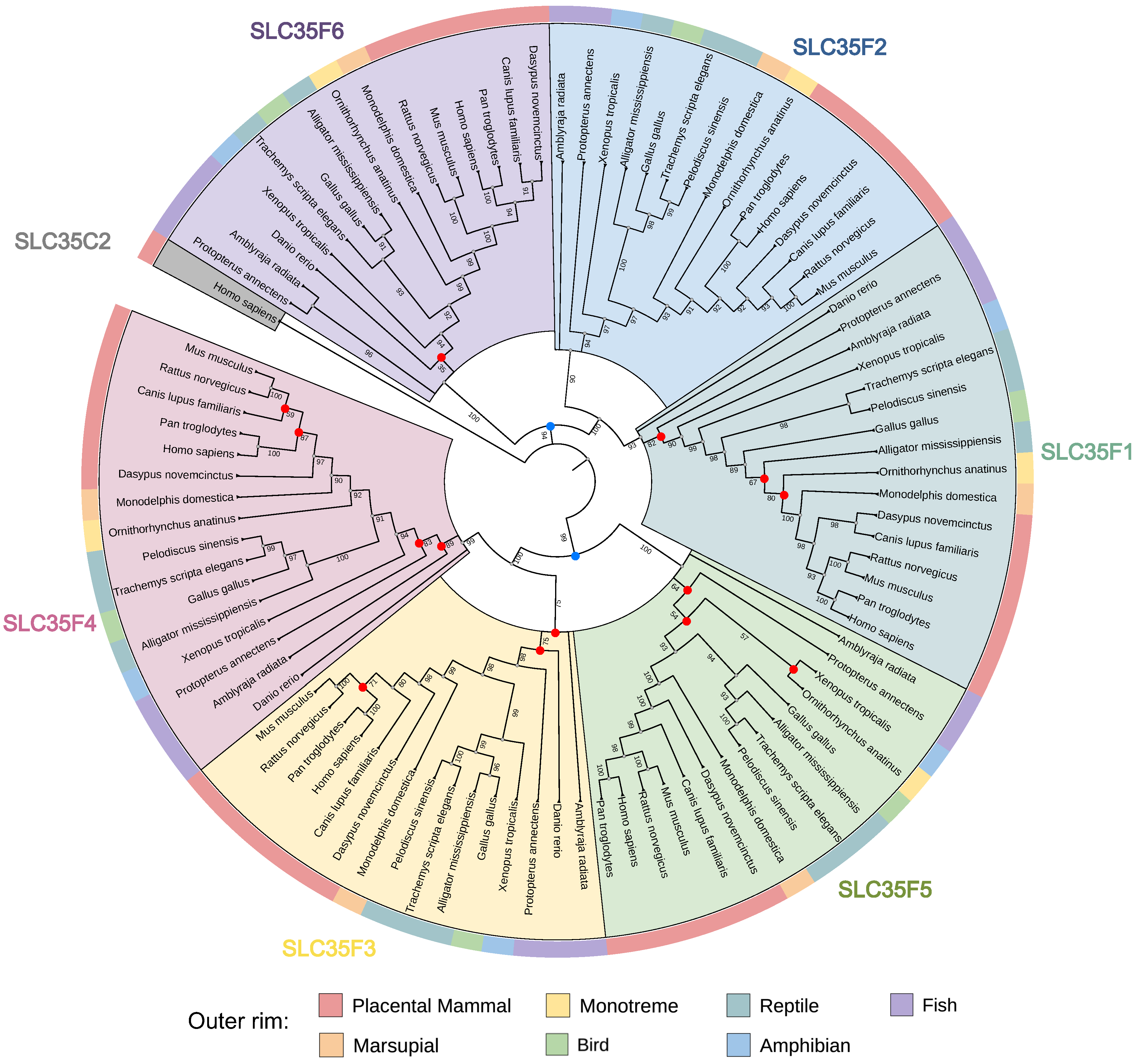
2.1. Phylogenetic Analysis of the SLC35F Family Reveals Two Divergent Evolutionary Lineages
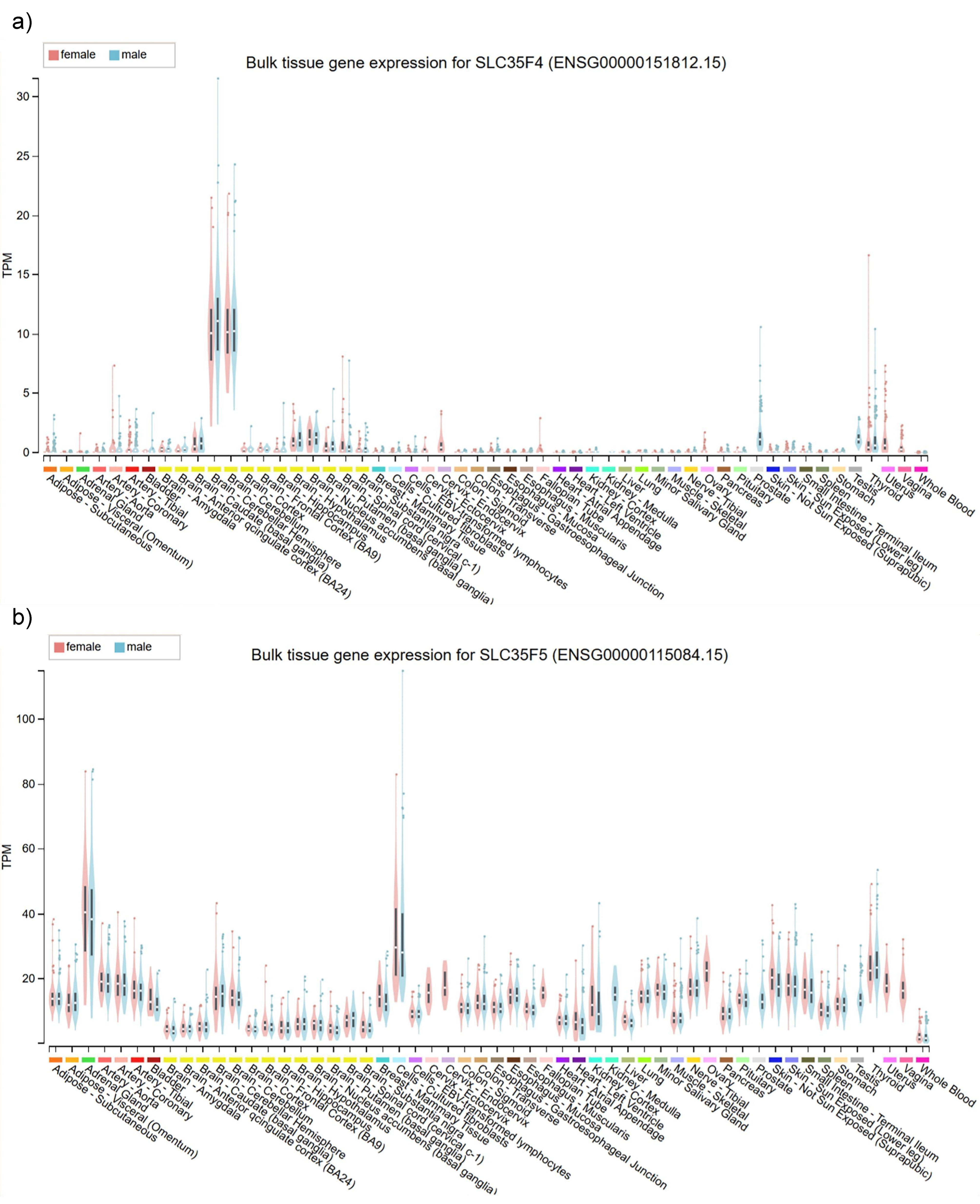
2.2. SLC35F4 and SLC35F5 Are Golgi-Localized Transmembrane Proteins with Distinct Tissue-Specific Expression Profiles
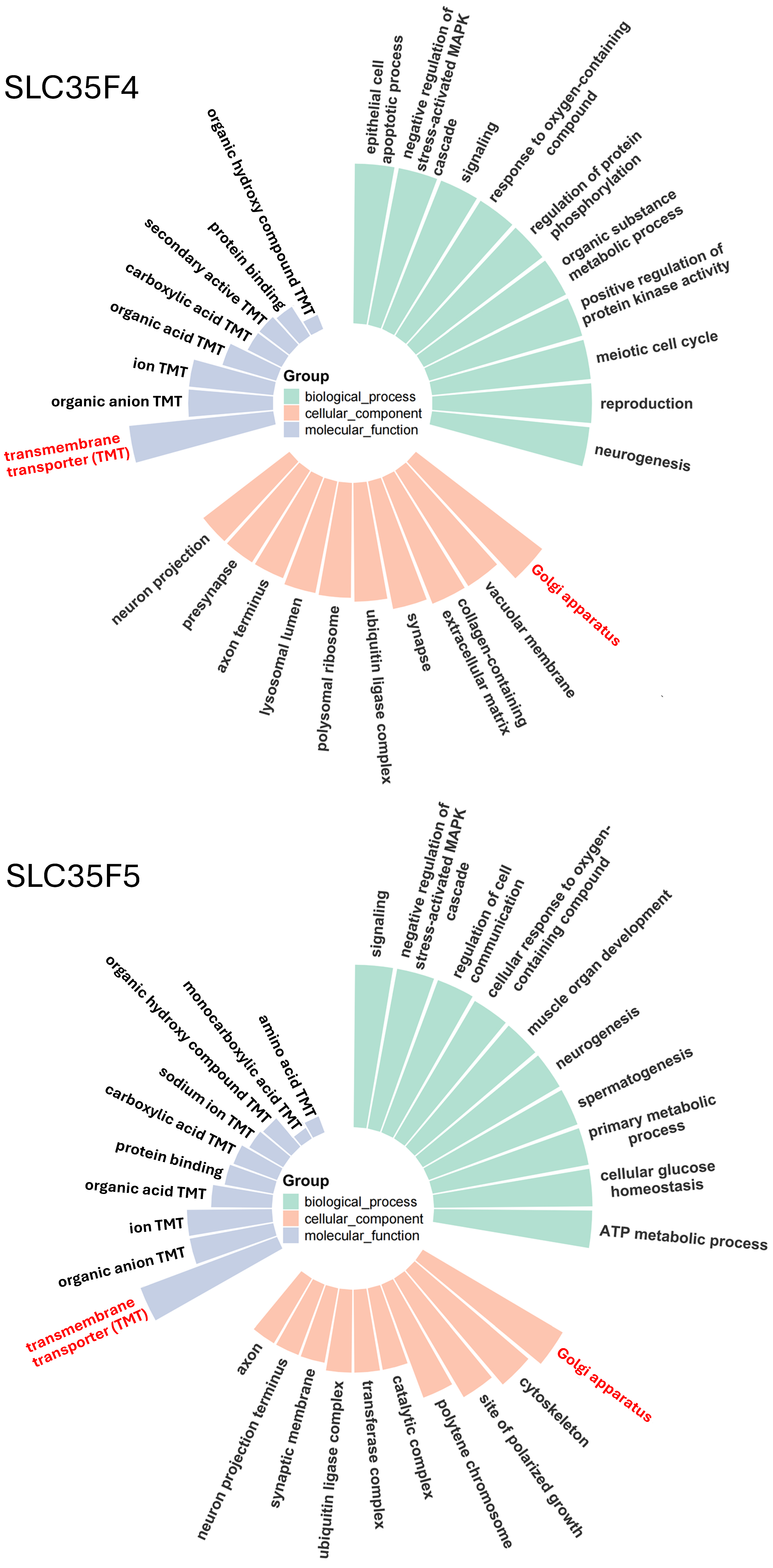
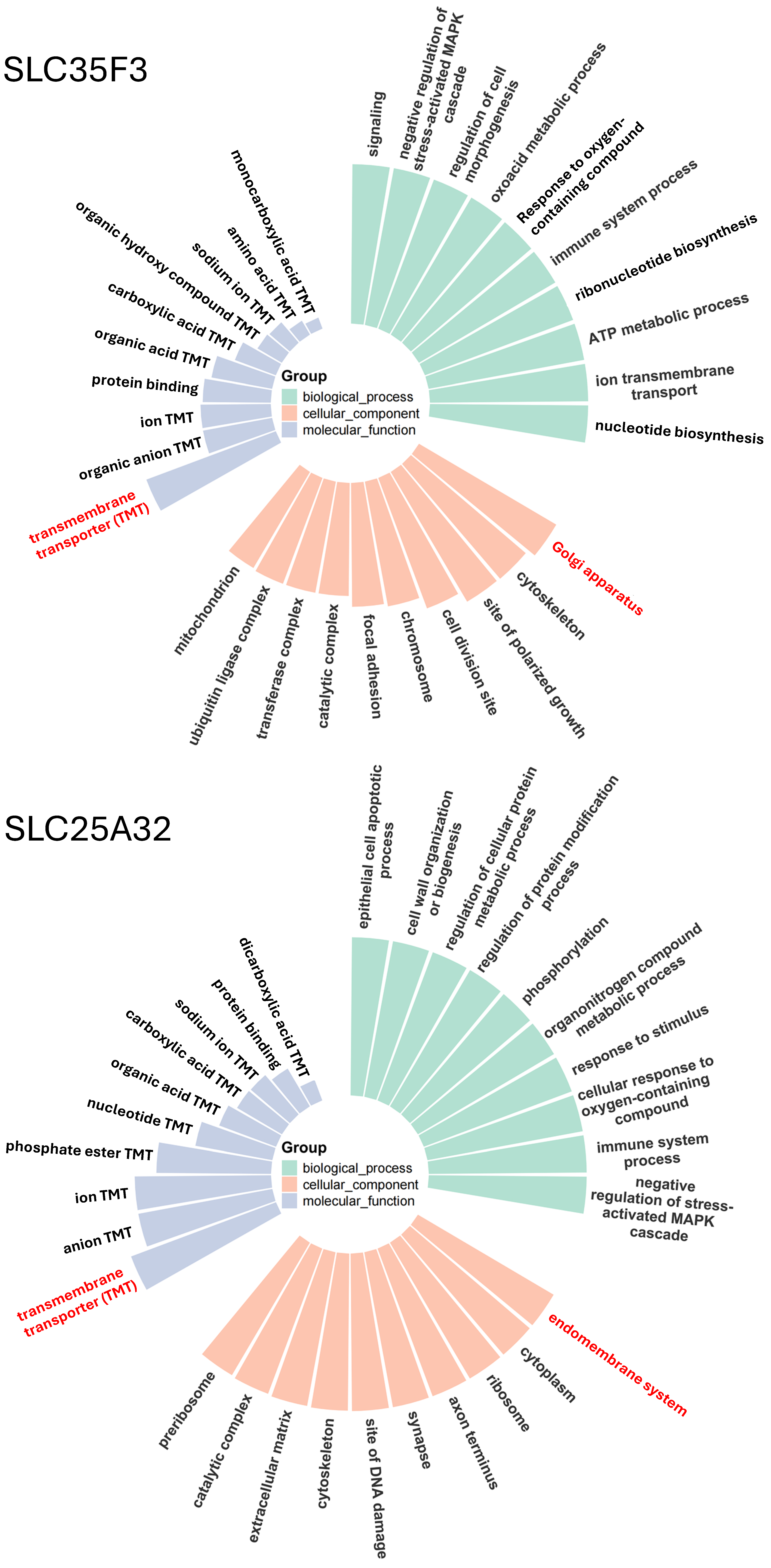
2.3. Gene Ontology Analysis Predicts Functions of SLC35F4 and SLC35F5 in Golgi-Localized Cofactor Transport Required for Post-Translational Modification
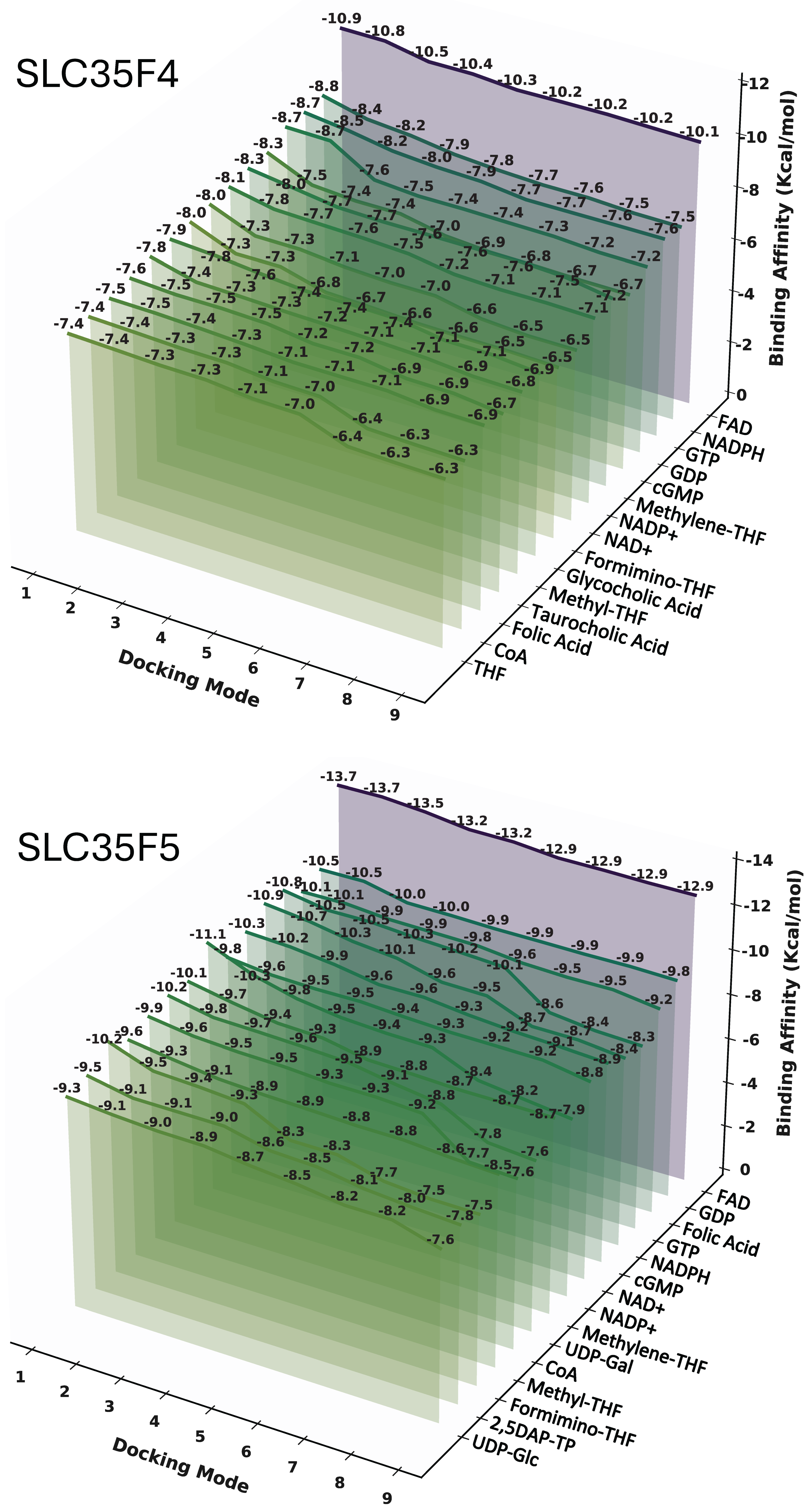
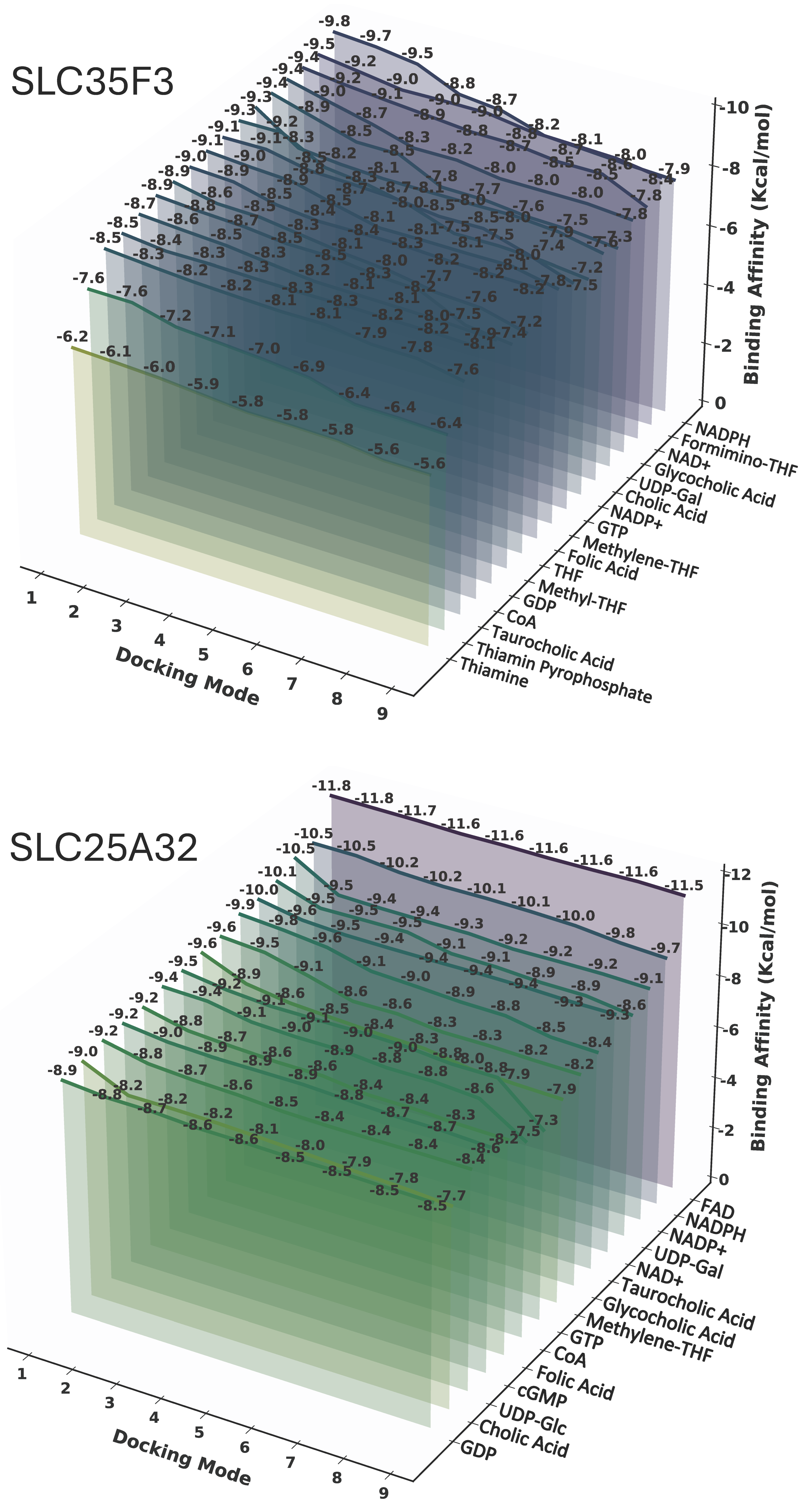
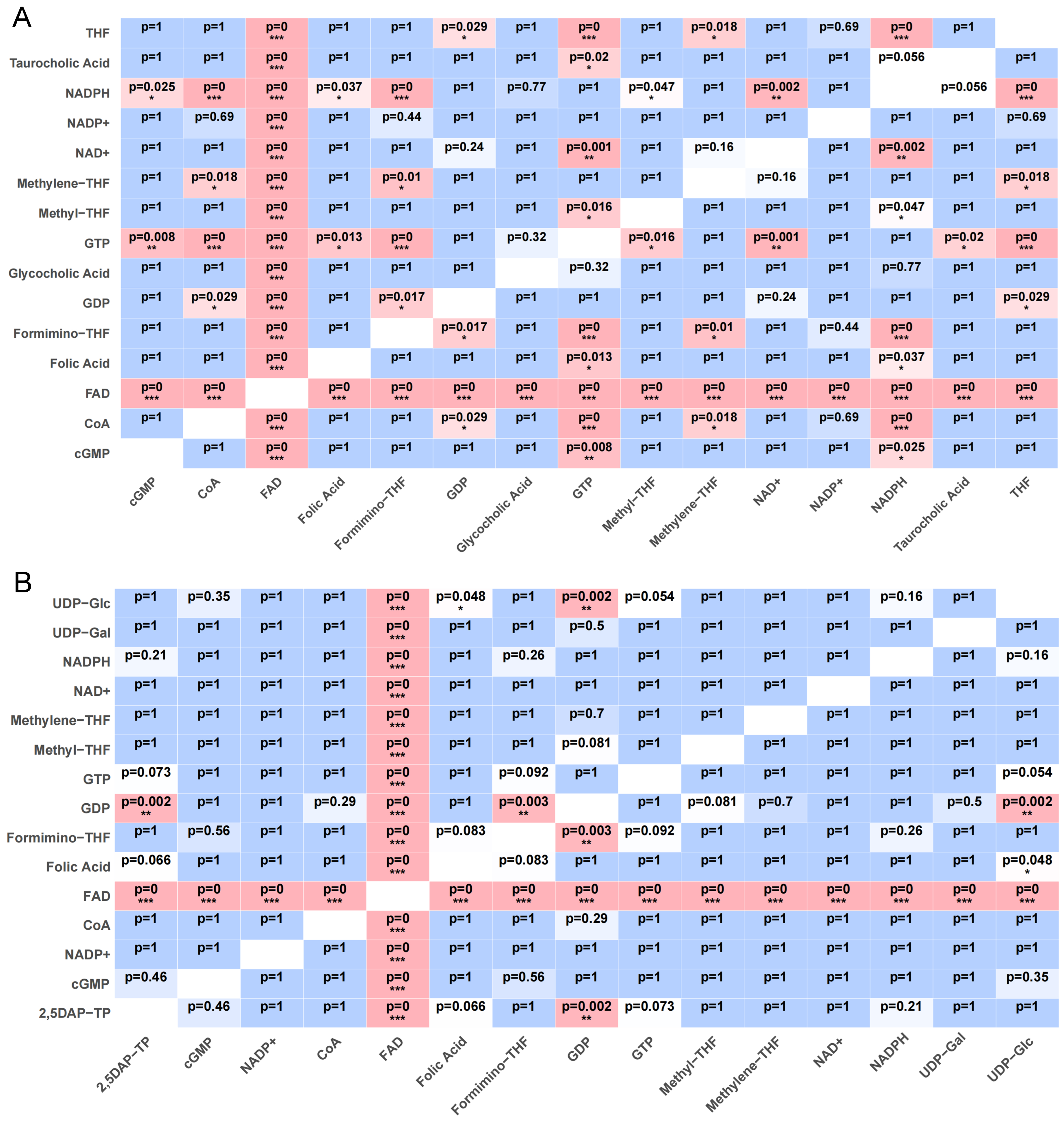
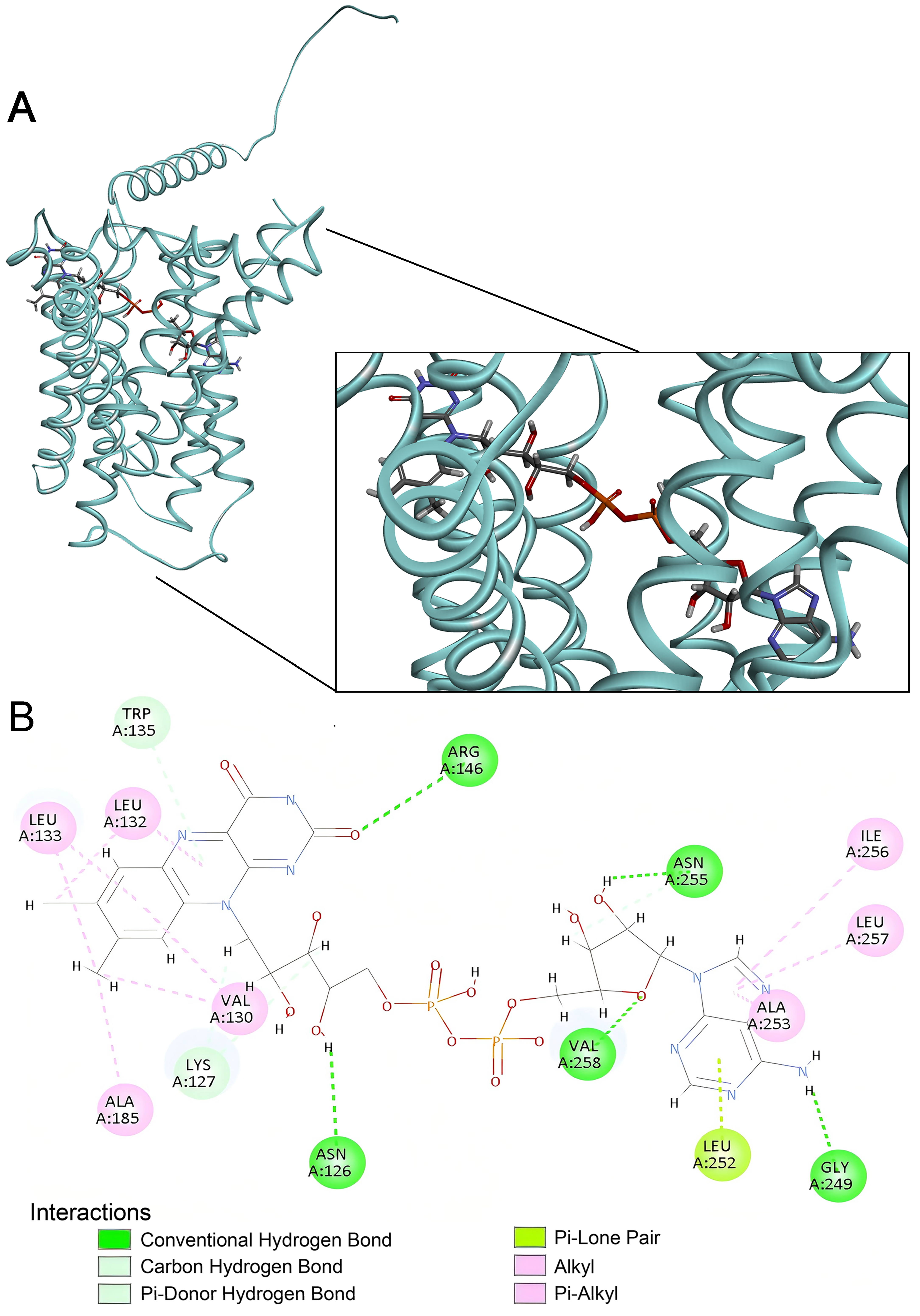
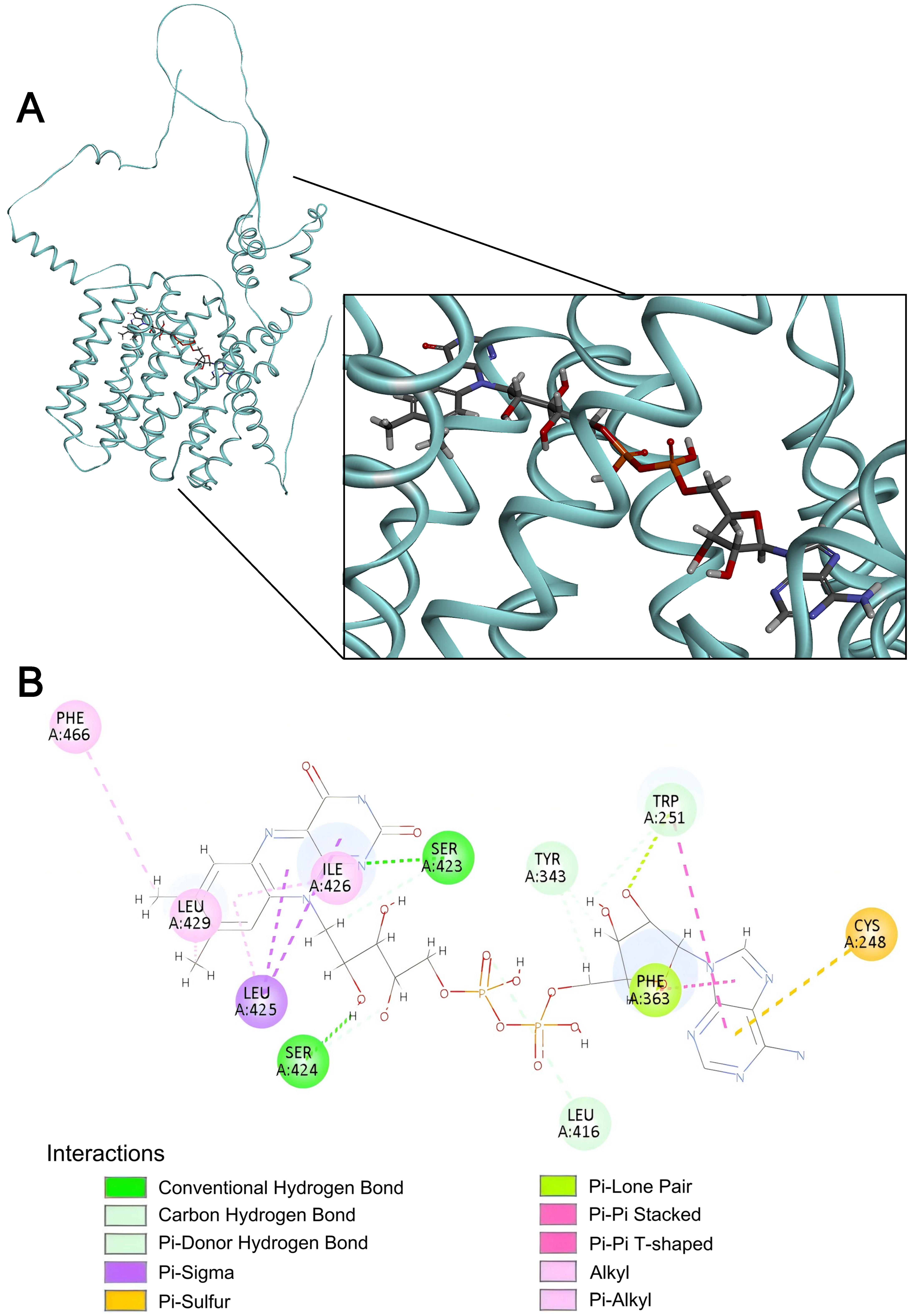
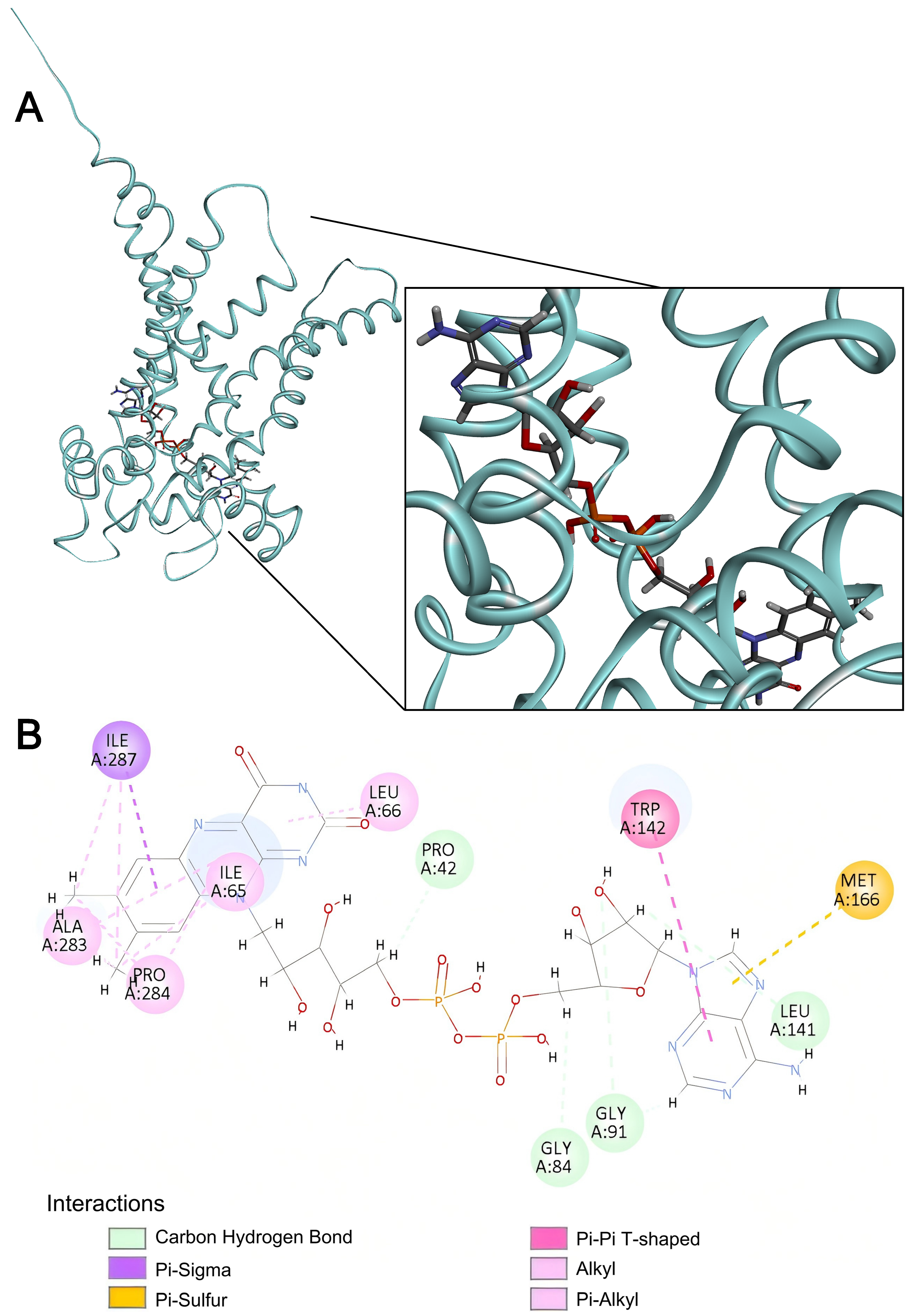
2.4. Structural Basis of FAD Binding by SLC35F4, SLC35F5, and the Canonical FAD Transporter SLC25A32
3. Discussion
4. Materials and Methods
4.1. Tissue-Wide RNA Expression Analysis of SLC35F4 and SLC35F5
4.2. Transmembrane Topology and Subcellular Localization Prediction
4.3. Phylogenetic Analysis of the SLC35F Subfamily
4.4. Synteny Analysis
4.5. Gene Ontology (GO) Term Prediction
4.6. Ligand Docking and Pairwise Statistical Analysis
4.7. Docking Visualization and Interaction Mapping
5. Conclusions
Supplementary Materials
Author Contributions
Funding
Institutional Review Board Statement
Informed Consent Statement
Data Availability Statement
Acknowledgments
Conflicts of Interest
Abbreviations
| SLC | Solute Carrier |
| ER | Endoplasmic Reticulum |
| PAPS | Phosphoadenosine phosphosulfate |
| PTM | Post-translational Modifications |
| GO | Gene Ontology |
| TPP | Thiamine Pyrophosphate |
| FAD | Flavin Adenine Dinucleotide |
| THF | Tetrahydrofolate |
| UDP-Glc | Uridine Diphosphate Glucose |
| UDP-Gal | Uridine Diphosphate Galactose |
| 2,5 DAP-TP | 2,5-Diamino-6-(5′-triphosphoryl-3′,4′-trihydroxy-2′-oxopentyl)-amino-4-oxopyrimidine |
| Ero1 | ER Oxidase 1 |
| PDI | Protein Disulfide Isomerase |
References
- Pizzagalli, M.D.; Bensimon, A.; Superti-Furga, G. A guide to plasma membrane solute carrier proteins. FEBS J. 2021, 288, 2784–2835. [Google Scholar] [CrossRef]
- Liu, X. SLC Family Transporters. Adv. Exp. Med. Biol. 2019, 1141, 101–202. [Google Scholar] [PubMed]
- Huang, S.; Czech, M.P. The GLUT4 glucose transporter. Cell Metab. 2007, 5, 237–252. [Google Scholar] [CrossRef]
- Yiew, N.K.H.; Finck, B.N. The mitochondrial pyruvate carrier at the crossroads of intermediary metabolism. Am. J. Physiol. Endocrinol. Metab. 2022, 323, E33–E52. [Google Scholar] [CrossRef]
- Martínez-Reyes, I.; Chandel, N.S. Mitochondrial TCA cycle metabolites control physiology and disease. Nat. Commun. 2020, 11, 102. [Google Scholar] [CrossRef]
- Cimadamore-Werthein, C.; Jaiquel Baron, S.; King, M.S.; Springett, R.; Kunji, E.R. Human mitochondrial ADP/ATP carrier SLC25A4 operates with a ping-pong kinetic mechanism. EMBO Rep. 2023, 24, e57127. [Google Scholar] [CrossRef]
- Zhang, Y.; Newstead, S.; Sarkies, P. Predicting substrates for orphan solute carrier proteins using multi-omics datasets. BMC Genom. 2025, 26, 130. [Google Scholar] [CrossRef]
- Hadley, B.; Litfin, T.; Day, C.J.; Haselhorst, T.; Zhou, Y.; Tiralongo, J. Nucleotide Sugar Transporter SLC35 Family Structure and Function. Comput. Struct. Biotechnol. J. 2019, 17, 1123–1134. [Google Scholar] [CrossRef]
- Ury, B.; Potelle, S.; Caligiore, F.; Whorton, M.R.; Bommer, G.T. The promiscuous binding pocket of SLC35A1 ensures redundant transport of CDP-ribitol to the Golgi. J. Biol. Chem. 2021, 296, 100789. [Google Scholar] [CrossRef] [PubMed]
- Fang, R.; Jiang, Q.; Guan, Y.; Gao, P.; Zhang, R.; Zhao, Z.; Jiang, Z. Golgi apparatus-synthesized sulfated glycosaminoglycans mediate polymerization and activation of the cGAMP sensor STING. Immunity 2021, 54, 962–975.e8. [Google Scholar] [CrossRef] [PubMed]
- Van den Bossche, F.; Tevel, V.; Gilis, F.; Gaussin, J.F.; Boonen, M.; Jadot, M. Residence of the Nucleotide Sugar Transporter Family Members SLC35F1 and SLC35F6 in the Endosomal/Lysosomal Pathway. Int. J. Mol. Sci. 2024, 25, 6718. [Google Scholar] [CrossRef] [PubMed]
- Kamiyama, S.; Sone, H. Solute Carrier Family 35 (SLC35)—An Overview and Recent Progress. Biologics 2024, 4, 242–279. [Google Scholar] [CrossRef]
- Zhang, K.; Huentelman, M.J.; Rao, F.; Sun, E.I.; Corneveaux, J.J.; Schork, A.J.; Wei, Z.; Waalen, J.; Miramontes-Gonzalez, J.P.; Hightower, C.M.; et al. Genetic implication of a novel thiamine transporter in human hypertension. J. Am. Coll. Cardiol. 2014, 63, 1542–1555. [Google Scholar] [CrossRef]
- Schiff, M.; Veauville-Merllié, A.; Su, C.H.; Tzagoloff, A.; Rak, M.; Ogier de Baulny, H.; Boutron, A.; Smedts-Walters, H.; Romero, N.B.; Rigal, O.; et al. SLC25A32 Mutations and Riboflavin-Responsive Exercise Intolerance. N. Engl. J. Med. 2016, 374, 795–797. [Google Scholar] [CrossRef]
- Peng, M.Z.; Shao, Y.X.; Li, X.Z.; Zhang, K.D.; Cai, Y.N.; Lin, Y.T.; Jiang, M.Y.; Liu, Z.C.; Su, X.Y.; Zhang, W.; et al. Mitochondrial FAD shortage in SLC25A32 deficiency affects folate-mediated one-carbon metabolism. Cell. Mol. Life Sci. 2022, 79, 375. [Google Scholar] [CrossRef]
- Zuckerkandl, E.; Pauling, L. Molecular Disease, Evolution, and Genic Heterogeneity; Academic Press: Cambridge, MA, USA, 1962; pp. 189–225. [Google Scholar]
- Zuckerkandl, E.; Pauling, L. Molecules as documents of evolutionary history. J. Theor. Biol. 1965, 8, 357–366. [Google Scholar] [CrossRef]
- Eck, R.V.; Dayhoff, M.O. Evolution of the structure of ferredoxin based on living relics of primitive amino Acid sequences. Science 1966, 152, 363–366. [Google Scholar] [CrossRef]
- Dayhoff, M.O. Computer analysis of protein evolution. Sci. Am. 1969, 221, 86–95. [Google Scholar] [CrossRef] [PubMed]
- Hunt, L.T.; Dayhoff, M.O. The occurrence in proteins of the tripeptides Asn-X-Ser and Asn-X-Thr and of bound carbohydrate. Biochem. Biophys. Res. Commun. 1970, 39, 757–765. [Google Scholar] [CrossRef] [PubMed]
- Dayhoff, M.O.; Orcutt, B.C. Methods for identifying proteins by using partial sequences. Proc. Natl. Acad. Sci. USA 1979, 76, 2170–2174. [Google Scholar] [CrossRef]
- Buel, G.R.; Walters, K.J. Can AlphaFold2 predict the impact of missense mutations on structure? Nat. Struct. Mol. Biol. 2022, 29, 1–2. [Google Scholar] [CrossRef] [PubMed]
- Cheng, J.; Novati, G.; Pan, J.; Bycroft, C.; Žemgulytė, A.; Applebaum, T.; Pritzel, A.; Wong, L.H.; Zielinski, M.; Sargeant, T.; et al. Accurate proteome-wide missense variant effect prediction with AlphaMissense. Science 2023, 381, eadg7492. [Google Scholar] [CrossRef] [PubMed]
- Durairaj, J.; Waterhouse, A.M.; Mets, T.; Brodiazhenko, T.; Abdullah, M.; Studer, G.; Tauriello, G.; Akdel, M.; Andreeva, A.; Bateman, A.; et al. Uncovering new families and folds in the natural protein universe. Nature 2023, 622, 646–653. [Google Scholar] [CrossRef]
- Barrio-Hernandez, I.; Yeo, J.; Jänes, J.; Mirdita, M.; Gilchrist, C.L.M.; Wein, T.; Varadi, M.; Velankar, S.; Beltrao, P.; Steinegger, M. Clustering predicted structures at the scale of the known protein universe. Nature 2023, 622, 637–645. [Google Scholar] [CrossRef]
- Hirschberg, C.B.; Robbins, P.W.; Abeijon, C. Transporters of nucleotide sugars, ATP, and nucleotide sulfate in the endoplasmic reticulum and Golgi apparatus. Annu. Rev. Biochem. 1998, 67, 49–69. [Google Scholar] [CrossRef] [PubMed]
- Parker, J.L.; Newstead, S. Gateway to the Golgi: Molecular mechanisms of nucleotide sugar transporters. Curr. Opin. Struct. Biol. 2019, 57, 127–134. [Google Scholar] [CrossRef]
- Barile, M.; Giancaspero, T.A.; Leone, P.; Galluccio, M.; Indiveri, C. Riboflavin transport and metabolism in humans. J. Inherit. Metab. Dis. 2016, 39, 545–557. [Google Scholar] [CrossRef]
- Tu, B.P.; Ho-Schleyer, S.C.; Travers, K.J.; Weissman, J.S. Biochemical basis of oxidative protein folding in the endoplasmic reticulum. Science 2000, 290, 1571–1574. [Google Scholar] [CrossRef]
- Jessop, C.E.; Bulleid, N.J. Glutathione directly reduces an oxidoreductase in the endoplasmic reticulum of mammalian cells. J. Biol. Chem. 2004, 279, 55341–55347. [Google Scholar] [CrossRef]
- Joosten, V.; van Berkel, W.J. Flavoenzymes. Curr. Opin. Chem. Biol. 2007, 11, 195–202. [Google Scholar] [CrossRef]
- Hudson, D.A.; Gannon, S.A.; Thorpe, C. Oxidative protein folding: From thiol-disulfide exchange reactions to the redox poise of the endoplasmic reticulum. Free Radic. Biol. Med. 2015, 80, 171–182. [Google Scholar] [CrossRef]
- Robinson, P.J.; Pringle, M.A.; Fleming, B.; Bulleid, N.J. Distinct role of ERp57 and ERdj5 as a disulfide isomerase and reductase during ER protein folding. J. Cell Sci. 2023, 136, jcs260656. [Google Scholar] [CrossRef]
- Coppock, D.L.; Thorpe, C. Multidomain flavin-dependent sulfhydryl oxidases. Antioxid. Redox Signal. 2006, 8, 300–311. [Google Scholar] [CrossRef]
- Sevier, C.S. Erv2 and quiescin sulfhydryl oxidases: Erv-domain enzymes associated with the secretory pathway. Antioxid. Redox Signal. 2012, 16, 800–808. [Google Scholar] [CrossRef]
- Reznik, N.; Fass, D. Disulfide bond formation and redox regulation in the Golgi apparatus. FEBS Lett. 2022, 596, 2859–2872. [Google Scholar] [CrossRef] [PubMed]
- Yang, Y.; Peng, H.; Meng, D.; Fa, Z.; Yao, C.; Lin, X.; Schick, J.; Jin, X. Stress Management: How the Endoplasmic Reticulum Mitigates Protein Misfolding and Oxidative Stress by the Dual Role of Glutathione Peroxidase 8. Biomolecules 2025, 15, 847. [Google Scholar] [CrossRef]
- Lake, D.F.; Faigel, D.O. The emerging role of QSOX1 in cancer. Antioxid. Redox Signal. 2014, 21, 485–496. [Google Scholar] [CrossRef] [PubMed]
- Knutsvik, G.; Collett, K.; Arnes, J.; Akslen, L.A.; Stefansson, I.M. QSOX1 expression is associated with aggressive tumor features and reduced survival in breast carcinomas. Mod. Pathol. 2016, 29, 1485–1491. [Google Scholar] [CrossRef] [PubMed]
- Tang, Z.; Li, C.; Kang, B.; Gao, G.; Li, C.; Zhang, Z. GEPIA: A web server for cancer and normal gene expression profiling and interactive analyses. Nucleic Acids Res. 2017, 45, W98–W102. [Google Scholar] [CrossRef]
- Nishimura, M.; Suzuki, S.; Satoh, T.; Naito, S. Tissue-specific mRNA expression profiles of human solute carrier 35 transporters. Drug Metab. Pharmacokinet. 2009, 24, 91–99. [Google Scholar] [CrossRef]
- Lackey, E.P.; Heck, D.H.; Sillitoe, R.V. Recent advances in understanding the mechanisms of cerebellar granule cell development and function and their contribution to behavior. F1000Research 2018, 7, 1142. [Google Scholar] [CrossRef]
- Lopera, F.; Marino, C.; Chandrahas, A.S.; O’Hare, M.; Villalba-Moreno, N.D.; Aguillon, D.; Baena, A.; Sanchez, J.S.; Vila-Castelar, C.; Ramirez Gomez, L.; et al. Resilience to autosomal dominant Alzheimer’s disease in a Reelin-COLBOS heterozygous man. Nat. Med. 2023, 29, 1243–1252. [Google Scholar] [CrossRef]
- Tomczak, K.; Czerwińska, P.; Wiznerowicz, M. The Cancer Genome Atlas (TCGA): An immeasurable source of knowledge. Contemp. Oncol. 2015, 19, A68–A77. [Google Scholar] [CrossRef]
- Weibel, E.R.; Palade, G.E. New cytoplasmic components in arterial endothelia. J. Cell Biol. 1964, 23, 101–112. [Google Scholar] [CrossRef] [PubMed]
- Helle, K.B.; Metz-Boutigue, M.H.; Cerra, M.C.; Angelone, T. Chromogranins: From discovery to current times. Pflugers Arch. 2018, 470, 143–154. [Google Scholar] [CrossRef] [PubMed]
- Huang, T.T., Jr.; Hardy, D.; Yanagimachi, H.; Teuscher, C.; Tung, K.; Wild, G.; Yanagimachi, R. pH and protease control of acrosomal content stasis and release during the guinea pig sperm acrosome reaction. Biol. Reprod. 1985, 32, 451–462. [Google Scholar] [CrossRef]
- Hardy, D.M.; Oda, M.N.; Friend, D.S.; Huang, T.T., Jr. A mechanism for differential release of acrosomal enzymes during the acrosome reaction. Biochem. J. 1991, 275, 759–766. [Google Scholar] [CrossRef]
- Baba, T.; Hoff, H.B., 3rd; Nemoto, H.; Lee, H.; Orth, J.; Arai, Y.; Gerton, G.L. Acrogranin, an acrosomal cysteine-rich glycoprotein, is the precursor of the growth-modulating peptides, granulins, and epithelins, and is expressed in somatic as well as male germ cells. Mol. Reprod. Dev. 1993, 34, 233–243. [Google Scholar] [CrossRef] [PubMed]
- Bierring, F. Electron microscopic observations on the mucus production in human and rat intestinal goblet cells. Acta Pathol. Microbiol. Scand. 1962, 54, 241–252. [Google Scholar] [CrossRef]
- Afzelius, B.A. The ultrastructure of the cortical granules and their products in the sea urchin egg as studied with the electron microscope. Exp. Cell Res. 1956, 10, 257–285. [Google Scholar] [CrossRef]
- Valentijn, K.M.; Sadler, J.E.; Valentijn, J.A.; Voorberg, J.; Eikenboom, J. Functional architecture of Weibel-Palade bodies. Blood 2011, 117, 5033–5043. [Google Scholar] [CrossRef] [PubMed]
- Barbosa, J.A.; Gill, B.M.; Takiyyuddin, M.A.; O’Connor, D.T. Chromogranin A: Posttranslational modifications in secretory granules. Endocrinology 1991, 128, 174–190. [Google Scholar] [CrossRef]
- Bi, M.; Hickox, J.R.; Winfrey, V.P.; Olson, G.E.; Hardy, D.M. Processing, localization and binding activity of zonadhesin suggest a function in sperm adhesion to the zona pellucida during exocytosis of the acrosome. Biochem. J. 2003, 375, 477–488. [Google Scholar] [CrossRef]
- Olson, G.E.; Winfrey, V.P.; Bi, M.; Hardy, D.M.; NagDas, S.K. Zonadhesin assembly into the hamster sperm acrosomal matrix occurs by distinct targeting strategies during spermiogenesis and maturation in the epididymis. Biol. Reprod. 2004, 71, 1128–1134. [Google Scholar] [CrossRef]
- Tardif, S.; Wilson, M.D.; Wagner, R.; Hunt, P.; Gertsenstein, M.; Nagy, A.; Lobe, C.; Koop, B.F.; Hardy, D.M. Zonadhesin is essential for species specificity of sperm adhesion to the egg zona pellucida. J. Biol. Chem. 2010, 285, 24863–24870. [Google Scholar] [CrossRef] [PubMed]
- Gum, J.R., Jr.; Hicks, J.W.; Toribara, N.W.; Siddiki, B.; Kim, Y.S. Molecular cloning of human intestinal mucin (MUC2) cDNA. Identification of the amino terminus and overall sequence similarity to prepro-von Willebrand factor. J. Biol. Chem. 1994, 269, 2440–2446. [Google Scholar] [CrossRef]
- DeSilva, U.; D’Arcangelo, G.; Braden, V.V.; Chen, J.; Miao, G.G.; Curran, T.; Green, E.D. The human reelin gene: Isolation, sequencing, and mapping on chromosome 7. Genome Res. 1997, 7, 157–164. [Google Scholar] [CrossRef]
- Yasui, N.; Kitago, Y.; Beppu, A.; Kohno, T.; Morishita, S.; Gomi, H.; Nagae, M.; Hattori, M.; Takagi, J. Functional importance of covalent homodimer of reelin protein linked via its central region. J. Biol. Chem. 2011, 286, 35247–35256. [Google Scholar] [CrossRef]
- Frappaolo, A.; Karimpour-Ghahnavieh, A.; Sechi, S.; Giansanti, M.G. The Close Relationship between the Golgi Trafficking Machinery and Protein Glycosylation. Cells 2020, 9, 2652. [Google Scholar] [CrossRef] [PubMed]
- Chen, M.; Xu, L.; Wu, Y.; Soba, P.; Hu, C. The organization and function of the Golgi apparatus in dendrite development and neurological disorders. Genes Dis. 2023, 10, 2425–2442. [Google Scholar] [CrossRef]
- Huang, S.; Wang, Y. Golgi structure formation, function, and post-translational modifications in mammalian cells. F1000Research 2017, 6, 2050. [Google Scholar] [CrossRef] [PubMed]
- Berninsone, P.M.; Hirschberg, C.B. Nucleotide sugar transporters of the Golgi apparatus. Curr. Opin. Struct. Biol. 2000, 10, 542–547. [Google Scholar] [CrossRef]
- Song, Z. Roles of the nucleotide sugar transporters (SLC35 family) in health and disease. Mol. Aspects Med. 2013, 34, 590–600. [Google Scholar] [CrossRef]
- Ilani, T.; Reznik, N.; Yeshaya, N.; Feldman, T.; Vilela, P.; Lansky, Z.; Javitt, G.; Shemesh, M.; Brenner, O.; Elkis, Y.; et al. The disulfide catalyst QSOX1 maintains the colon mucosal barrier by regulating Golgi glycosyltransferases. EMBO J. 2023, 42, e111869. [Google Scholar] [CrossRef]
- Kang, C.; Wu, H.L.; Xu, M.L.; Yan, X.F.; Liu, Y.J.; Yu, R.Q. Simultaneously quantifying intracellular FAD and FMN using a novel strategy of intrinsic fluorescence four-way calibration. Talanta 2019, 197, 105–112. [Google Scholar] [CrossRef]
- Tzur, A.; Kafri, R.; LeBleu, V.S.; Lahav, G.; Kirschner, M.W. Cell growth and size homeostasis in proliferating animal cells. Science 2009, 325, 167–171. [Google Scholar] [CrossRef]
- Zhao, L.; Kroenke, C.D.; Song, J.; Piwnica-Worms, D.; Ackerman, J.J.; Neil, J.J. Intracellular water-specific MR of microbead-adherent cells: The HeLa cell intracellular water exchange lifetime. NMR Biomed. 2008, 21, 159–164. [Google Scholar] [CrossRef] [PubMed]
- Hühner, J.; Ingles-Prieto, Á.; Neusüß, C.; Lämmerhofer, M.; Janovjak, H. Quantification of riboflavin, flavin mononucleotide, and flavin adenine dinucleotide in mammalian model cells by CE with LED-induced fluorescence detection. Electrophoresis 2015, 36, 518–525. [Google Scholar] [CrossRef]
- Redeker, K.M.; Brockmöller, J. Several orphan solute carriers functionally identified as organic cation transporters: Substrates specificity compared with known cation transporters. J. Biol. Chem. 2024, 300, 107629. [Google Scholar] [CrossRef] [PubMed]
- Burtnyak, L.; Yuan, Y.; Stojek, E.; Pan, X.; Gunaratne, L.; Silveira d’Almeida, G.; Fergus, C.; Martinelli, M.; Reed, C.J.; Fernandez, J.; et al. The oncogene SLC35F2 is a high-specificity transporter for the micronutrients queuine and queuosine. Proc. Natl. Acad. Sci. USA 2025, 122, e2425364122. [Google Scholar] [CrossRef]
- Ferrada, E.; Superti-Furga, G. A structure and evolutionary-based classification of solute carriers. iScience 2022, 25, 105096. [Google Scholar] [CrossRef]
- Roberts, E.K.; Tardif, S.; Wright, E.A.; Platt, R.N., 2nd; Bradley, R.D.; Hardy, D.M. Rapid divergence of a gamete recognition gene promoted macroevolution of Eutheria. Genome Biol. 2022, 23, 155. [Google Scholar] [CrossRef]
- Roberts, E.K.; Wright, E.A.; Worsham, A.E.; Hardy, D.M.; Bradley, R.D. Gamete Recognition Gene Divergence Yields a Robust Eutherian Phylogeny across Taxonomic Levels. Diversity 2023, 15, 1145. [Google Scholar] [CrossRef]
- GTEx Consortium. The GTEx Consortium atlas of genetic regulatory effects across human tissues. Science 2020, 369, 1318–1330. [Google Scholar] [CrossRef] [PubMed]
- Bernsel, A.; Viklund, H.; Hennerdal, A.; Elofsson, A. TOPCONS: Consensus prediction of membrane protein topology. Nucleic Acids Res. 2009, 37, W465–W468. [Google Scholar] [CrossRef] [PubMed]
- Tsirigos, K.D.; Peters, C.; Shu, N.; Käll, L.; Elofsson, A. The TOPCONS web server for consensus prediction of membrane protein topology and signal peptides. Nucleic Acids Res. 2015, 43, W401–W407. [Google Scholar] [CrossRef]
- Thumuluri, V.; Almagro Armenteros, J.J.; Johansen, A.R.; Nielsen, H.; Winther, O. DeepLoc 2.0: Multi-label subcellular localization prediction using protein language models. Nucleic Acids Res. 2022, 50, W228–W234. [Google Scholar] [CrossRef]
- Edgar, R.C. MUSCLE: Multiple sequence alignment with high accuracy and high throughput. Nucleic Acids Res. 2004, 32, 1792–1797. [Google Scholar] [CrossRef]
- Minh, B.Q.; Schmidt, H.A.; Chernomor, O.; Schrempf, D.; Woodhams, M.D.; von Haeseler, A.; Lanfear, R. IQ-TREE 2: New models and efficient methods for phylogenetic inference in the genomic era. Erratum Mol. Biol. Evol. 2020, 37, 1530–1534. [Google Scholar] [CrossRef]
- Letunic, I.; Bork, P. Interactive Tree of Life (iTOL) v6: Recent updates to the phylogenetic tree display and annotation tool. Nucleic Acids Res. 2024, 52, W78–W82. [Google Scholar] [CrossRef]
- Nguyen, N.T.T.; Vincens, P.; Dufayard, J.F.; Roest Crollius, H.; Louis, A. Genomicus in 2022: Comparative tools for thousands of genomes and reconstructed ancestors. Nucleic Acids Res 2022, 50, D1025–D1031. [Google Scholar] [CrossRef] [PubMed]
- Boadu, F.; Cao, H.; Cheng, J. Combining protein sequences and structures with transformers and equivariant graph neural networks to predict protein function. Bioinformatics 2023, 39, i318–i325. [Google Scholar] [CrossRef] [PubMed]
- Jumper, J.; Evans, R.; Pritzel, A.; Green, T.; Figurnov, M.; Ronneberger, O.; Tunyasuvunakool, K.; Bates, R.; Žídek, A.; Potapenko, A.; et al. Highly accurate protein structure prediction with AlphaFold. Nature 2021, 596, 583–589. [Google Scholar] [CrossRef] [PubMed]
- Abramson, J.; Adler, J.; Dunger, J.; Evans, R.; Green, T.; Pritzel, A.; Ronneberger, O.; Willmore, L.; Ballard, A.J.; Bambrick, J.; et al. Accurate structure prediction of biomolecular interactions with AlphaFold 3. Nature 2024, 630, 493–500. [Google Scholar] [CrossRef]
- Trott, O.; Olson, A.J. AutoDock Vina: Improving the speed and accuracy of docking with a new scoring function, efficient optimization, and multithreading. J. Comput. Chem. 2010, 31, 455–461. [Google Scholar] [CrossRef]
- Forli, S.; Huey, R.; Pique, M.E.; Sanner, M.F.; Goodsell, D.S.; Olson, A.J. Computational protein-ligand docking and virtual drug screening with the AutoDock suite. Nat. Protoc. 2016, 11, 905–919. [Google Scholar] [CrossRef]

| Transporter | Subcellular Compartment | Predicted Probability | Threshold |
|---|---|---|---|
| SLC35F4 | Golgi apparatus | 0.7088 | 0.6494 |
| Cell membrane | 0.4742 | 0.5646 | |
| Lysosome/Vacuole | 0.4302 | 0.5848 | |
| Endoplasmic reticulum | 0.3601 | 0.6090 | |
| Peroxisome | 0.1715 | 0.7364 | |
| Cytoplasm | 0.1148 | 0.4761 | |
| Nucleus | 0.1114 | 0.5014 | |
| Mitochondrion | 0.0865 | 0.6220 | |
| Extracellular | 0.0799 | 0.6173 | |
| Plastid | 0.0278 | 0.6395 | |
| SLC35F5 | Golgi apparatus | 0.7691 | 0.6494 |
| Cell membrane | 0.4655 | 0.5646 | |
| Lysosome/Vacuole | 0.3943 | 0.5848 | |
| Endoplasmic reticulum | 0.3426 | 0.6090 | |
| Peroxisome | 0.1690 | 0.7364 | |
| Cytoplasm | 0.1174 | 0.4761 | |
| Nucleus | 0.0930 | 0.5014 | |
| Mitochondrion | 0.0858 | 0.6220 | |
| Extracellular | 0.0654 | 0.6173 | |
| Plastid | 0.0223 | 0.6395 |
| Interaction | SLC35F5 | SLC35F4 | SLC25A32 |
|---|---|---|---|
| Conventional hydrogen bond | Yes | Yes | No |
| Carbon hydrogen bond | Yes | Yes | Yes |
| π–π stacking (parallel) | Yes | No | No |
| π–π T-shaped | Yes | No | Yes |
| π–σ interaction | Yes | No | Yes |
| π–alkyl interaction | Yes | Yes | Yes |
| Alkyl (hydrophobic) interaction | Yes | Yes | Yes |
| π–sulfur interaction | Yes | No | Yes |
| π–lone pair interaction | Yes | Yes | No |
| π–Donor Hydrogen Bond | Yes | Yes | No |
Disclaimer/Publisher’s Note: The statements, opinions and data contained in all publications are solely those of the individual author(s) and contributor(s) and not of MDPI and/or the editor(s). MDPI and/or the editor(s) disclaim responsibility for any injury to people or property resulting from any ideas, methods, instructions or products referred to in the content. |
© 2026 by the authors. Licensee MDPI, Basel, Switzerland. This article is an open access article distributed under the terms and conditions of the Creative Commons Attribution (CC BY) license.
Share and Cite
Niu, Z.; Jiang, D.; Hardy, D.M. Molecular Modeling and Gene Ontology Implicate SLC35F4 and SLC35F5 as Golgi-Associated Importers of Flavin-Adenine-Dinucleotide. Int. J. Mol. Sci. 2026, 27, 512. https://doi.org/10.3390/ijms27010512
Niu Z, Jiang D, Hardy DM. Molecular Modeling and Gene Ontology Implicate SLC35F4 and SLC35F5 as Golgi-Associated Importers of Flavin-Adenine-Dinucleotide. International Journal of Molecular Sciences. 2026; 27(1):512. https://doi.org/10.3390/ijms27010512
Chicago/Turabian StyleNiu, Zheyun, Dongming Jiang, and Daniel M. Hardy. 2026. "Molecular Modeling and Gene Ontology Implicate SLC35F4 and SLC35F5 as Golgi-Associated Importers of Flavin-Adenine-Dinucleotide" International Journal of Molecular Sciences 27, no. 1: 512. https://doi.org/10.3390/ijms27010512
APA StyleNiu, Z., Jiang, D., & Hardy, D. M. (2026). Molecular Modeling and Gene Ontology Implicate SLC35F4 and SLC35F5 as Golgi-Associated Importers of Flavin-Adenine-Dinucleotide. International Journal of Molecular Sciences, 27(1), 512. https://doi.org/10.3390/ijms27010512

