The Use of Spirulina Powder to Enrich Honey with Antioxidants and Highly Digestible Protein


Abstract
1. Introduction
2. Results and Discussion
2.1. Color of Spirulina-Enriched Honey
2.2. Physicochemical Parameters and Antioxidant Activity of Enriched Honeys
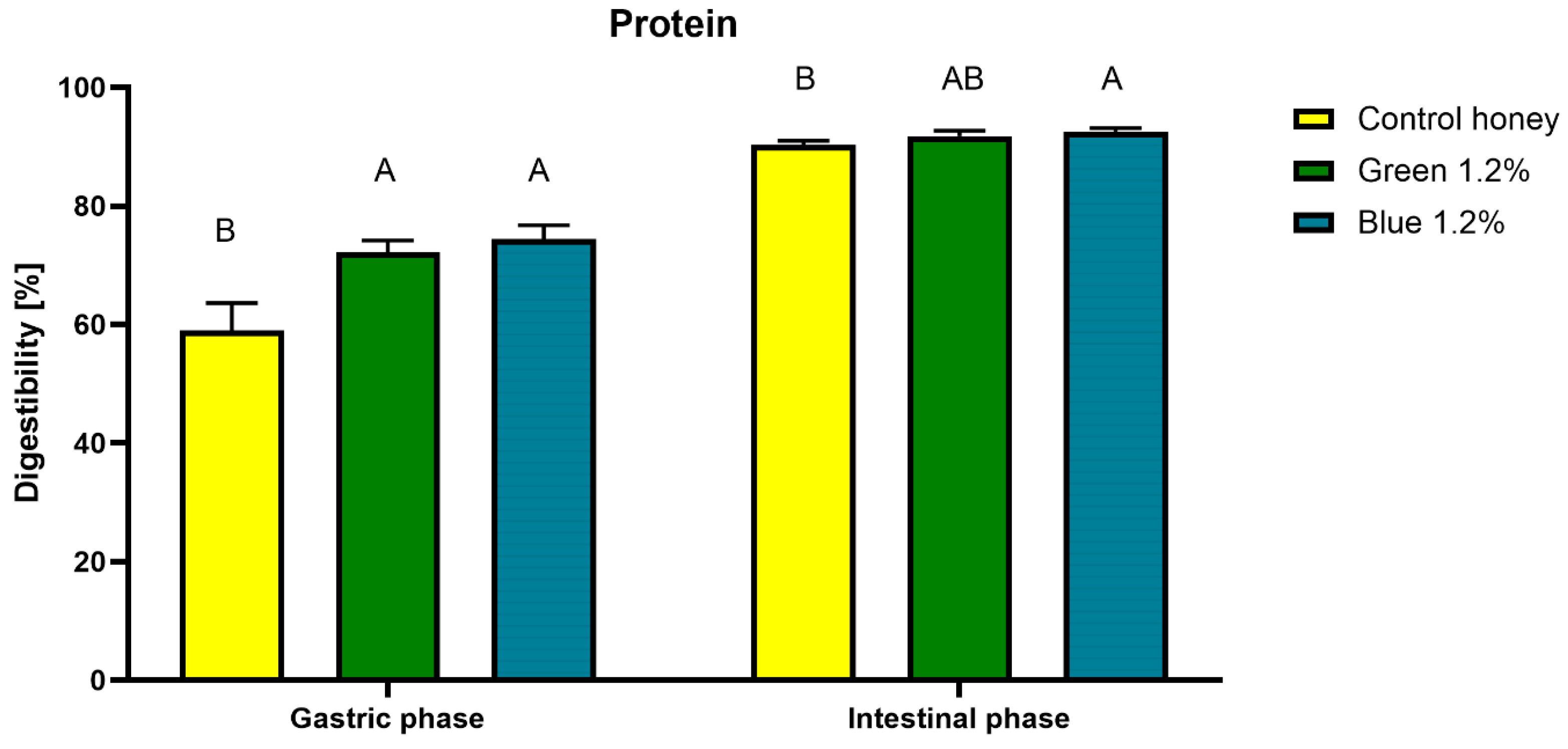
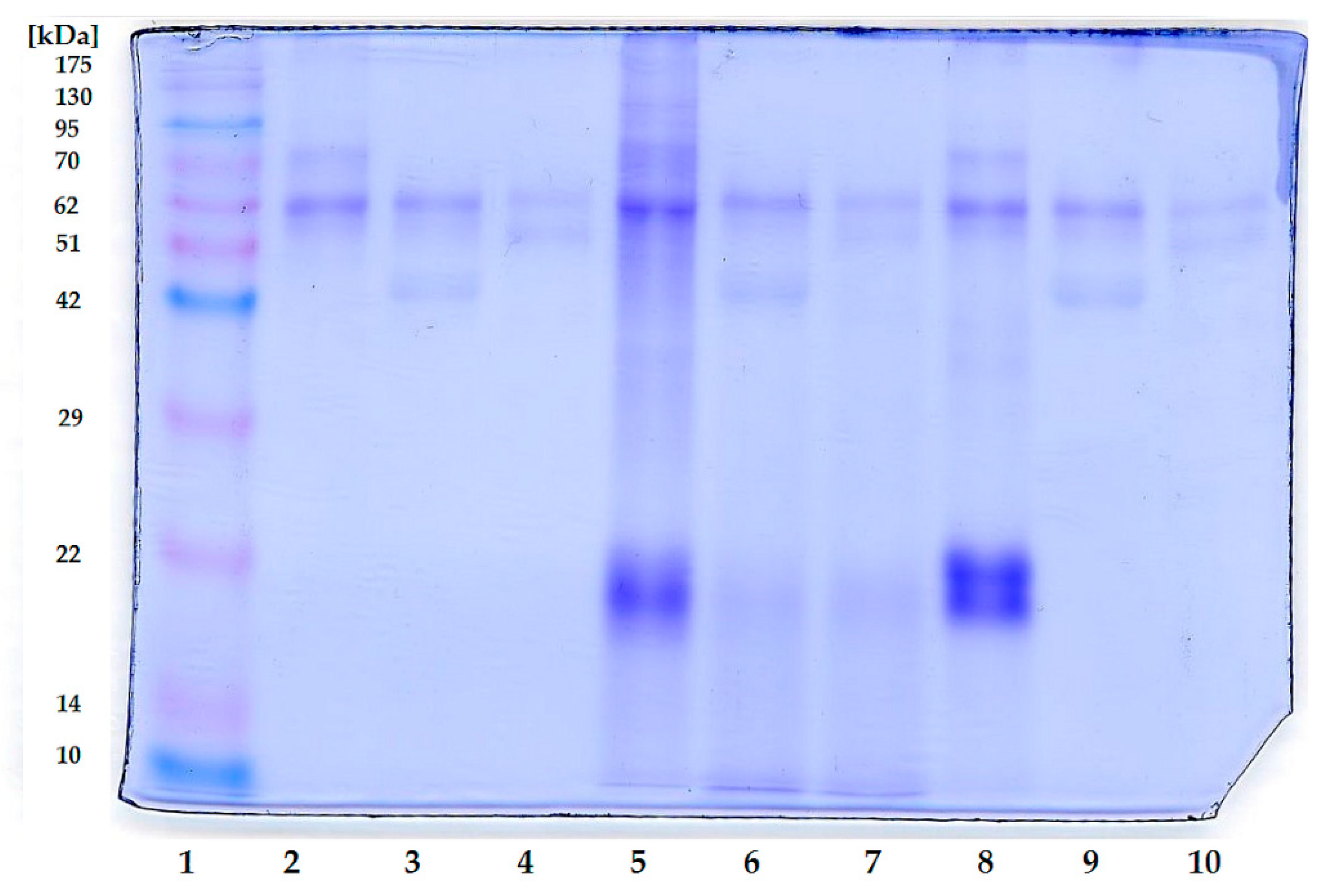
2.3. Protein Content
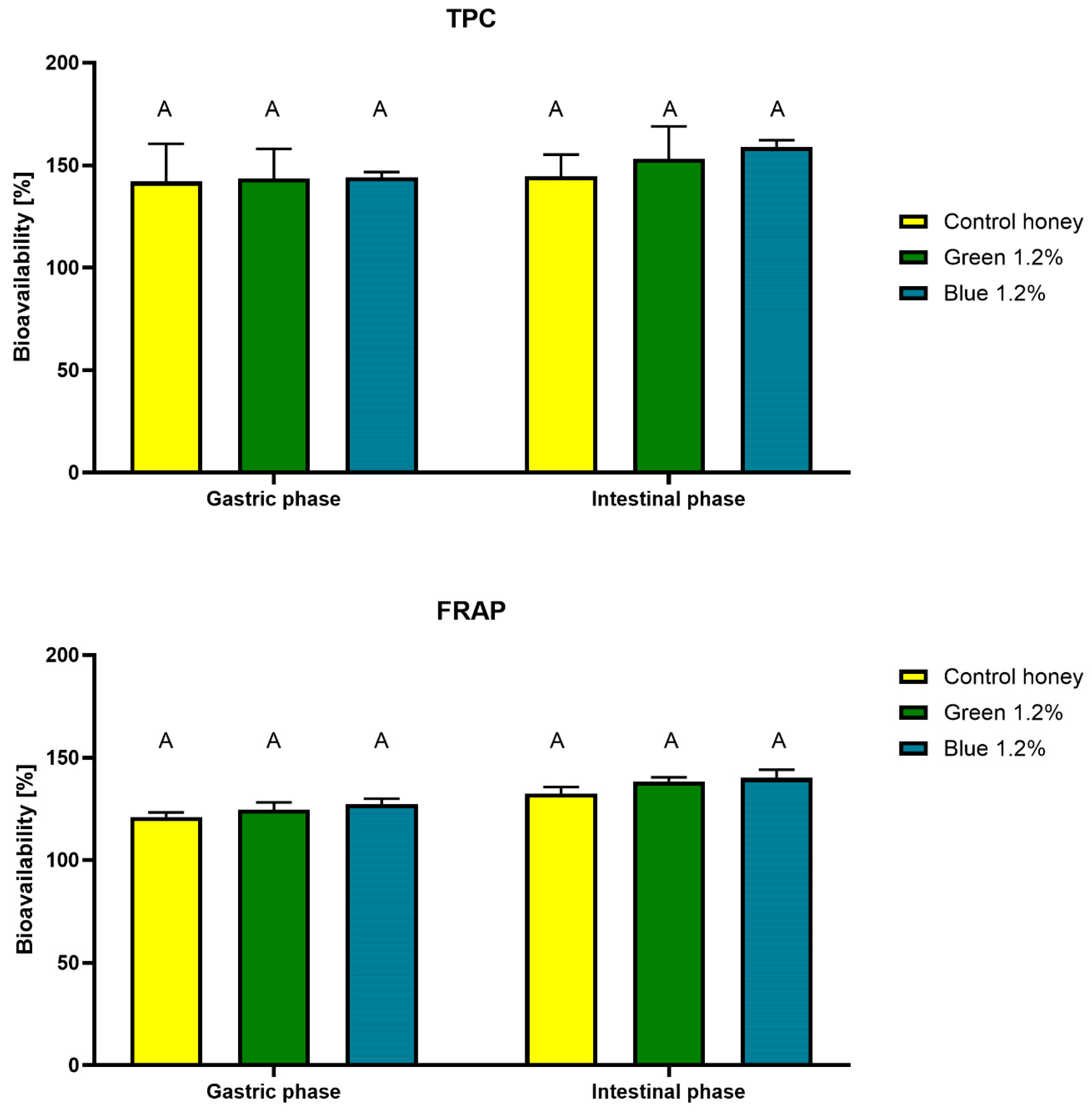
2.4. Bioaccessibility of Bioactive Components
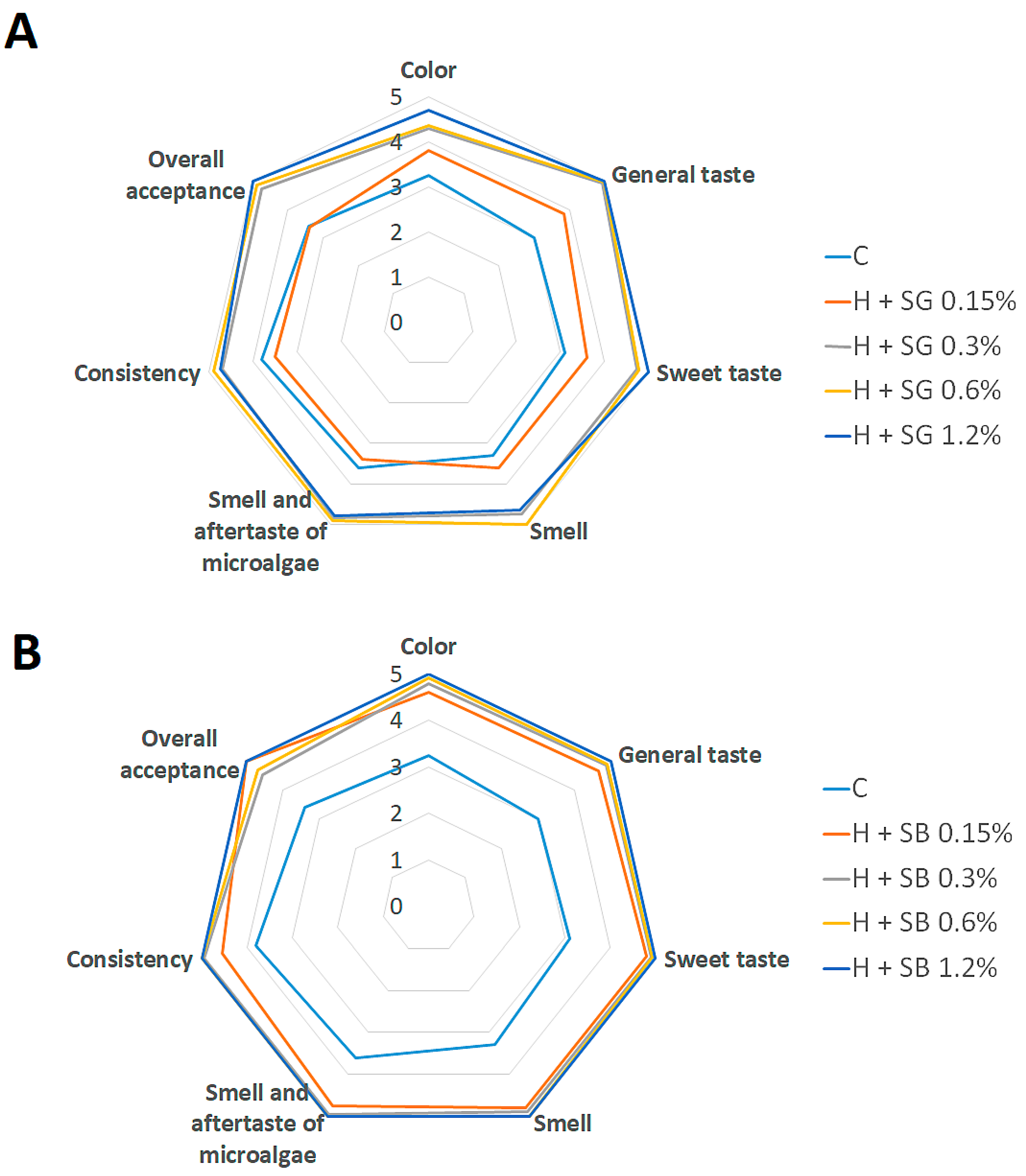
2.5. Organoleptic Assessment
3. Materials and Methods
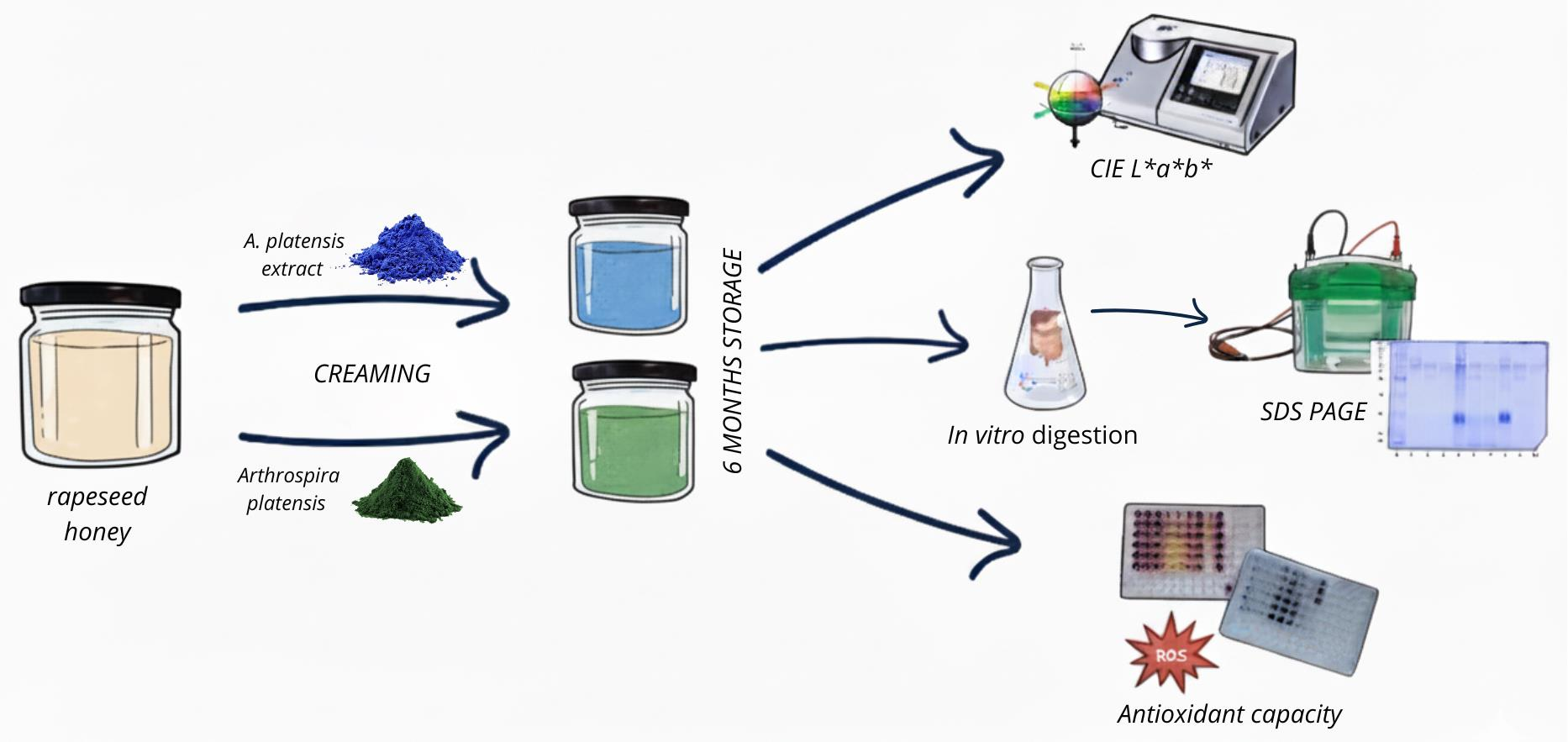
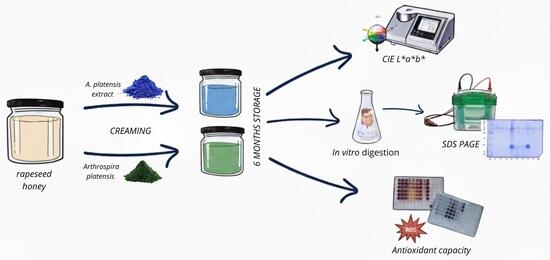
3.1. Preparation of Experimental Samples
3.2. Physicochemical Parameters
3.3. Color Analysis
3.4. Total Phenolic Content and Antioxidant Capacity
3.5. Soluble Protein
3.6. In Vitro Digestion of the Fortified Honeys
- Intestinal phase (stage II): to the gastric digests obtained in stage I, 12.5 mL of a bile and pancreatin mixture was added. Samples were incubated at 37 °C for 2 h with intermittent shaking. Subsequently, 2 mL of intestinal fractions were collected.
- The undigested (U), gastric (G), and intestinal (I) fractions were analyzed for polyphenolic compounds, and antioxidant capacity, as well as protein content, using the methods described previously in Section 3.4 and Section 3.5. The bioaccessibility index (BI, %) was calculated according to the following Formula (1):whereBI [%]—bioaccessibility index of bioactive compounds;Cdigested—concentration of the bioactive compound in the digested phase (gastric/intestinal);Cundigested—concentration of the bioactive compound in the undigested phase.Soluble protein digestibility was calculated using the same formula as 100%−BI.
3.7. Protein Profiling by SDS-PAGE
3.8. Organoleptic Evaluation
3.9. Statistical Analysis
4. Conclusions
Author Contributions
Funding
Institutional Review Board Statement
Informed Consent Statement
Data Availability Statement
Conflicts of Interest
Abbreviations
| EFSA | European Food Safety Authority |
| FDA | Food and Drug Administration |
| WHO | World Health Organization |
| GLA | Gamma-Linolenic Acid |
| SG | Spirulina Green |
| SB | Spirulina Blue |
| SCE | Specular Component Excluded |
| DPPH | 2,2-Diphenyl-1-Picrylhydrazyl |
| FRAP | Ferric Reducing–Antioxidant Power |
| U | Undigested |
| G | Gastric |
| I | Intestinal |
| BI | Bioaccessibility Index |
| TE | Trolox Equivalent |
| TPC | Total Phenolic Content |
| ROS | Reactive Oxygen Species |
| ABTS | 2,2′-Azinobis(3-Ethylbenzothiazoline-6-Sulfonic Acid) |
| CUPRAC | Cupric Reducing Antioxidant Capacity |
| MRJPs | Major Royal Jelly Proteins |
References
- Fekete, M.; Lehoczki, A.; Kryczyk-Poprawa, A.; Zábó, V.; Varga, J.T.; Bálint, M.; Fazekas-Pongor, V.; Csípő, T.; Rząsa-Duran, E.; Varga, P. Functional Foods in Modern Nutrition Science: Mechanisms, Evidence, and Public Health Implications. Nutrients 2025, 17, 2153. [Google Scholar] [CrossRef]
- Damián, M.R.; Cortes-Perez, N.G.; Quintana, E.T.; Ortiz-Moreno, A.; Noguez, C.G.; Cruceño-Casarrubias, C.E.; Pardo, M.E.S.; Bermúdez-Humarán, L.G. Functional Foods, Nutraceuticals and Probiotics: A Focus on Human Health. Microorganisms 2022, 10, 1065. [Google Scholar] [CrossRef]
- Functional Foods Market Overview. Available online: https://www.thebusinessresearchcompany.com/report/functional-foods-global-market-report (accessed on 17 October 2025).
- Da Silva, P.M.; Gauche, C.; Gonzaga, L.V.; Costa, A.C.O.; Fett, R. Honey: Chemical composition, stability and authenticity. Food Chem. 2016, 196, 309–323. [Google Scholar] [CrossRef] [PubMed]
- Dżugan, M.; Sowa, P.; Kwaśniewska, M.; Wesołowska, M.; Czernicka, M. Physicochemical Parameters and Antioxidant Activity of Bee Honey Enriched With Herbs. Plant Foods Hum. Nutr. 2017, 72, 74–81. [Google Scholar] [CrossRef] [PubMed]
- Machado De-Melo, A.A.; Almeida-Muradian, L.B.D.; Sancho, M.T.; Pascual-Maté, A. Composition and properties of Apis mellifera honey: A review. J. Apic. Res. 2018, 57, 5–37. [Google Scholar] [CrossRef]
- Azeredo, L.D.C.; Azeredo, M.A.A.; De Souza, S.R.; Dutra, V.M.L. Protein contents and physicochemical properties in honey samples of Apis mellifera of different floral origins. Food Chem. 2003, 80, 249–254. [Google Scholar] [CrossRef]
- Miłek, M.; Mołoń, M.; Kielar, P.; Sidor, E.; Bocian, A.; Marciniak-Lukasiak, K.; Pasternakiewicz, A.; Dżugan, M. The Comparison of Honey Enriched with Laboratory Fermented Pollen vs. Natural Bee Bread in Terms of Nutritional and Antioxidant Properties, Protein In Vitro Bioaccessibility, and Its Genoprotective Effect in Yeast Cells. Molecules 2023, 28, 5851. [Google Scholar] [CrossRef]
- Dżugan, M.; Tomczyk, M.; Sowa, P.; Grabek-Lejko, D. Antioxidant activity as biomarker of honey variety. Molecules 2018, 23, 2069. [Google Scholar] [CrossRef] [PubMed]
- Derewiaka, D.; Majewska, E.; Pruszkowska, P. The Effects of Bee Additives on the Physico-Chemical and Antioxidant Properties of Rapeseed Honey. Appl. Sci. 2024, 14, 1292. [Google Scholar] [CrossRef]
- Kędzierska-Matysek, M.; Florek, M.; Wolanciuk, A.; Skałecki, P. Effect of freezing and room temperatures storage for 18 months on quality of raw rapeseed honey (Brassica napus). J. Food Sci. Technol. 2016, 53, 3349–3355. [Google Scholar] [CrossRef]
- Sidor, E.; Tomczyk, M.; Miłek, M.; Dżugan, M. the Effect of Storage Time on the Antioxidant Activity and Polyphenolic Profile of Frozen and Lyophilized Drone Brood Fixed in Honey. Zywn. Nauk. Technol. Jakosc/Food. Sci. Technol. Qual. 2022, 29, 45–56. [Google Scholar] [CrossRef]
- Ji, P.; Liu, X.; Yang, C.; Wu, F.; Sun, J.; Cao, W.; Zhao, H. Natural crystallization properties of honey and seed crystals-induced crystallization process for honey performance enhancing. Food Chem. 2023, 405, 134972. [Google Scholar] [CrossRef] [PubMed]
- Güldaş, M.; Gurbuz, O.; Cakmak, I.; Yildiz, E.; Sen, H. Effects of honey enrichment with Spirulina platensis on phenolics, bioaccessibility, antioxidant capacity and fatty acids. LWT 2022, 153, 112461. [Google Scholar] [CrossRef]
- Czernicka, M.A.; Sowa-Borowiec, P.; Dudek, T.; Cichoński, J.; Puchalski, C.; Chrzanowski, G. Antioxidant Capacity of Honey Enriched by Wildflowers. Appl. Sci. 2024, 14. [Google Scholar] [CrossRef]
- Pinchart, P.-E.; Marter, P.; Brinkmann, H.; Quilichini, Y.; Mysara, M.; Petersen, J.; Pasqualini, V.; Mastroleo, F. The genus Limnospira contains only two species, both unable to produce microcystins: L. maxima and L. platensis. iScience 2024, 27, 110845, Erratum in iScience 2025, 28, 112129. https://doi.org/10.1016/j.isci.2025.112129. [Google Scholar] [CrossRef] [PubMed] [PubMed Central]
- Lupatini, A.L.; Colla, L.M.; Canan, C.; Colla, E. Potential application of microalga Spirulina platensis as a protein source. J. Sci. Food Agric. 2017, 97, 724–732. [Google Scholar] [CrossRef]
- Jung, F.; Krüger-Genge, A.; Waldeck, P.; Küpper, J.H. Spirulina platensis, a super food? J. Cell. Biotechnol. 2019, 5, 43–54. [Google Scholar] [CrossRef]
- Raczyk, M.; Polanowska, K.; Kruszewski, B.; Grygier, A.; Michałowska, D. Effect of Spirulina (Arthrospira platensis) Supplementation on Physical and Chemical Properties of Semolina (Triticum durum) Based Fresh Pasta. Molecules 2022, 27, 355. [Google Scholar] [CrossRef]
- Uzlasir, T.; Kadiroglu, P.; Sasmaz, H.K.; Ilgaz, C.; Selli, S.; Kelebek, H. Production of a fermented Arthrospira platensis beverage using Lactobacillus spp.: A comprehensive analysis of its angiotensin-converting enzyme activity, bioactive compounds, and bioaccessibility. Food Biosci. 2025, 71, 106997. [Google Scholar] [CrossRef]
- Boyanova, P.; Gradinarska, D.; Dobreva, V.; Panayotov, P.; Momchilova, M.; Zsivanovits, G. Effect of Spirulina platensis on the quality and antioxidants characteristics of ice cream. BIO Web Conf. 2022, 45, 01009. [Google Scholar] [CrossRef]
- da Silva Vaz, B.; Moreira, J.B.; de Morais, M.G.; Costa, J.A.V. Microalgae as a new source of bioactive compounds in food supplements. Curr. Opin. Food Sci. 2016, 7, 73–77. [Google Scholar] [CrossRef]
- Chaouachi, M.; Vincent, S.; Groussard, C. A Review of the Health-Promoting Properties of Spirulina with a Focus on athletes’ Performance and Recovery. J. Diet. Suppl. 2024, 21, 210–241. [Google Scholar] [CrossRef]
- Ghaeni, M.; Roomiani, L. Review for Application and Medicine Effects of Spirulina, Spirulina platensis Microalgae. J. Adv. Agric. Technol. 2016, 3, 114–117. [Google Scholar] [CrossRef]
- Wu, Q.; Liu, L.; Miron, A.; Klímová, B.; Wan, D.; Kuča, K. The antioxidant, immunomodulatory, and anti-inflammatory activities of Spirulina: An overview. Arch. Toxicol. 2016, 90, 1817–1840. [Google Scholar] [CrossRef] [PubMed]
- Furmaniak, M.A.; Misztak, A.E.; Franczuk, M.D.; Wilmotte, A.; Waleron, M.; Waleron, K.F. Edible cyanobacterial genus Arthrospira: Actual state of the art in cultivation methods, genetics, and application in medicine. Front. Microbiol. 2017, 8, 02541. [Google Scholar] [CrossRef]
- Podgórska-Kryszczuk, I. Spirulina—An Invaluable Source of Macro- and Micronutrients with Broad Biological Activity and Application Potential. Molecules 2024, 29, 5387. [Google Scholar] [CrossRef]
- Gubanenko, G.; Naimushina, L.; Zykova, I. Spirulina as a protein ingredient in a sports nutrition drink. Adv. Health Sci. Res. 2019, 17, 162–166. [Google Scholar] [CrossRef]
- Colla, L.M.; Reinehr, C.O.; Reichert, C.; Costa, J.A.V. Production of Biomass and Nutrients from Spirulina platensis Cultivated in Different Temperatures and Nitrogen Concentrations. J. Appl. Phycol. 2007, 19, 703–708. [Google Scholar] [CrossRef]
- Štajner, D.; Popović, B.M.; Čanadanović-Brunet, J.; Dilas, S.; Ćetković, G. Nutritive composition and free radical scavenger activity of honey enriched with of Rosa spp. LWT Food Sci. Technol. 2014, 55, 408–413. [Google Scholar] [CrossRef]
- Fernandes, R.; Campos, J.; Serra, M.; Fidalgo, J.; Almeida, H.; Casas, A.; Toubarro, D.; Barros, A.I.R.N.A. Exploring the Benefits of Phycocyanin: From Spirulina Cultivation to Its Widespread Applications. Pharmaceuticals 2023, 16, 592. [Google Scholar] [CrossRef] [PubMed]
- Jasińska, B.; Tomaka, K.; Uram-Dudek, A.; Paradowska, K. Fizykochemiczna analiza miodów z rejonu Podkarpacia. Postępy Fitoter. 2020, 21, 219–227. (In Polish) [Google Scholar] [CrossRef]
- Citi, V.; Torre, S.; Flori, L.; Usai, L.; Aktay, N.; Dunford, N.T.; Lutzu, G.A.; Nieri, P. Nutraceutical Features of the Phycobiliprotein C-Phycocyanin: Evidence from Arthrospira platensis (Spirulina). Nutrients 2024, 16, 1752. [Google Scholar] [CrossRef]
- Bonsignore, G.; Martinotti, S.; Ranzato, E. Honey Bioactive Molecules: There Is a World Beyond the Sugars. BioTech 2024, 13, 47. [Google Scholar] [CrossRef]
- Dima, C.; Assadpour, E.; Dima, S.; Jafari, S.M. Bioavailability and bioaccessibility of food bioactive compounds; overview and assessment by in vitro methods. Compr. Rev. Food Sci. Food Saf. 2020, 19, 2862–2884. [Google Scholar] [CrossRef]
- Fernández-García, E.; Carvajal-Lérida, I.; Pérez-Gálvez, A. In vitro bioaccessibility assessment as a prediction tool of nutritional efficiency. Nutr. Res. 2009, 29, 751–760. [Google Scholar] [CrossRef] [PubMed]
- Seraglio, S.K.T.; Valese, A.C.; Daguer, H.; Bergamo, G.; Azevedo, M.S.; Nehring, P.; Gonzaga, L.V.; Fett, R.; Costa, A.C.O. Effect of in vitro gastrointestinal digestion on the bioaccessibility of phenolic compounds, minerals, and antioxidant capacity of Mimosa scabrella Bentham honeydew honeys. Food Res. Int. 2017, 99, 670–678. [Google Scholar] [CrossRef] [PubMed]
- Alevia, M.; Rasines, S.; Cantero, L.; Teresa Sancho, M.; Fernández-Muiño, M.A.; Osés, S.M. Chemical extraction and gastrointestinal digestion of honey: Influence on its antioxidant, antimicrobial and anti-inflammatory activities. Foods 2021, 10, 1412. [Google Scholar] [CrossRef]
- Peláez-Acero, A.; Garrido-Islas, D.B.; Campos-Montiel, R.G.; González-Montiel, L.; Medina-Pérez, G.; Luna-Rodríguez, L.; González-Lemus, U.; Cenobio-Galindo, A.d.J. The Application of Ultrasound in Honey: Antioxidant Activity, Inhibitory Effect on α-amylase and α-glucosidase, and In Vitro Digestibility Assessment. Molecules 2022, 27, 5825. [Google Scholar] [CrossRef]
- Lewkowski, O.; Mureșan, C.I.; Dobritzsch, D.; Fuszard, M.; Erler, S. The Effect of Diet on the Composition and Stability of Proteins Secreted by Honey Bees in Honey. Insects 2019, 10, 282. [Google Scholar] [CrossRef] [PubMed]
- Mureșan, C.I.; Cornea-Cipcigan, M.; Suharoschi, R.; Erler, S.; Mărgăoan, R. Honey botanical origin and honey-specific protein pattern: Characterization of some European honeys. LWT 2022, 154, 112883. [Google Scholar] [CrossRef]
- Rajakumar, M.S.; Muthukumar, K. Influence of pre-soaking conditions on ultrasonic extraction of Spirulina platensis proteins and its recovery using aqueous biphasic system. Sep. Sci. Technol. 2018, 53, 2034–2043. [Google Scholar] [CrossRef]
- Dżugan, M.; Miłek, M.; Sidor, E.; Buczkowicz, J.; Hęclik, J.; Bocian, A. The Application of SDS-PAGE Protein and HPTLC Amino Acid Profiling for Verification of Declared Variety and Geographical Origin of Honey. Food Anal. Methods 2023, 16, 1157–1171. [Google Scholar] [CrossRef]
- Yucetepe, A.; Saroglu, O.; Daskaya-Dikmen, C.; Bildik, F.; Ozcelik, B. Optimisation of ultrasound-assisted extraction of protein from Spirulina platensis using RSM. Czech J. Food Sci. 2018, 36, 98–108. [Google Scholar] [CrossRef]
- Baker, M.T.; Lu, P.; Parrella, J.A.; Leggette, H.R. Consumer Acceptance toward Functional Foods: A Scoping Review. Int. J. Environ. Res. Public. Health 2022, 19, 1217. [Google Scholar] [CrossRef] [PubMed]
- Tomczyk, M.; Miłek, M.; Sidor, E.; Kapusta, I.; Litwińczuk, W.; Puchalski, C.; Dżugan, M. The Effect of Adding the Leaves and Fruits of Morus alba to Rape Honey on Its Antioxidant Properties, Polyphenolic Profile, and Amylase Activity. Molecules 2020, 25, 84. [Google Scholar] [CrossRef]
- Miłek, M.; Grabek-Lejko, D.; Stȩpień, K.; Sidor, E.; Mołoń, M.; Dżugan, M. The enrichment of honey with Aronia melanocarpa fruits enhances its in vitro and in vivo antioxidant potential and intensifies its antibacterial and antiviral properties. Food Funct. 2021, 12, 8920–8931. [Google Scholar] [CrossRef] [PubMed]
- Dżugan, M.; Miłek, M.; Kielar, P.; Stępień, K.; Sidor, E.; Bocian, A. SDS-PAGE Protein and HPTLC Polyphenols Profiling as a Promising Tool for Authentication of Goldenrod Honey. Foods 2022, 11, 2390. [Google Scholar] [CrossRef] [PubMed]
- Dżugan, M.; Sidor, E.; Miłek, M.; Tomczyk, M. The Possibility of Using Bee Drone Brood to Design Novel Dietary Supplements for Apitherapy. Appl. Sci. 2023, 13, 4687. [Google Scholar] [CrossRef]
- Habryka, C.; Socha, R.; Juszczak, L. The Effect of Enriching Honey with Propolis on the Antioxidant Activity, Sensory Characteristics, and Quality Parameters. Molecules 2020, 25, 1176. [Google Scholar] [CrossRef]




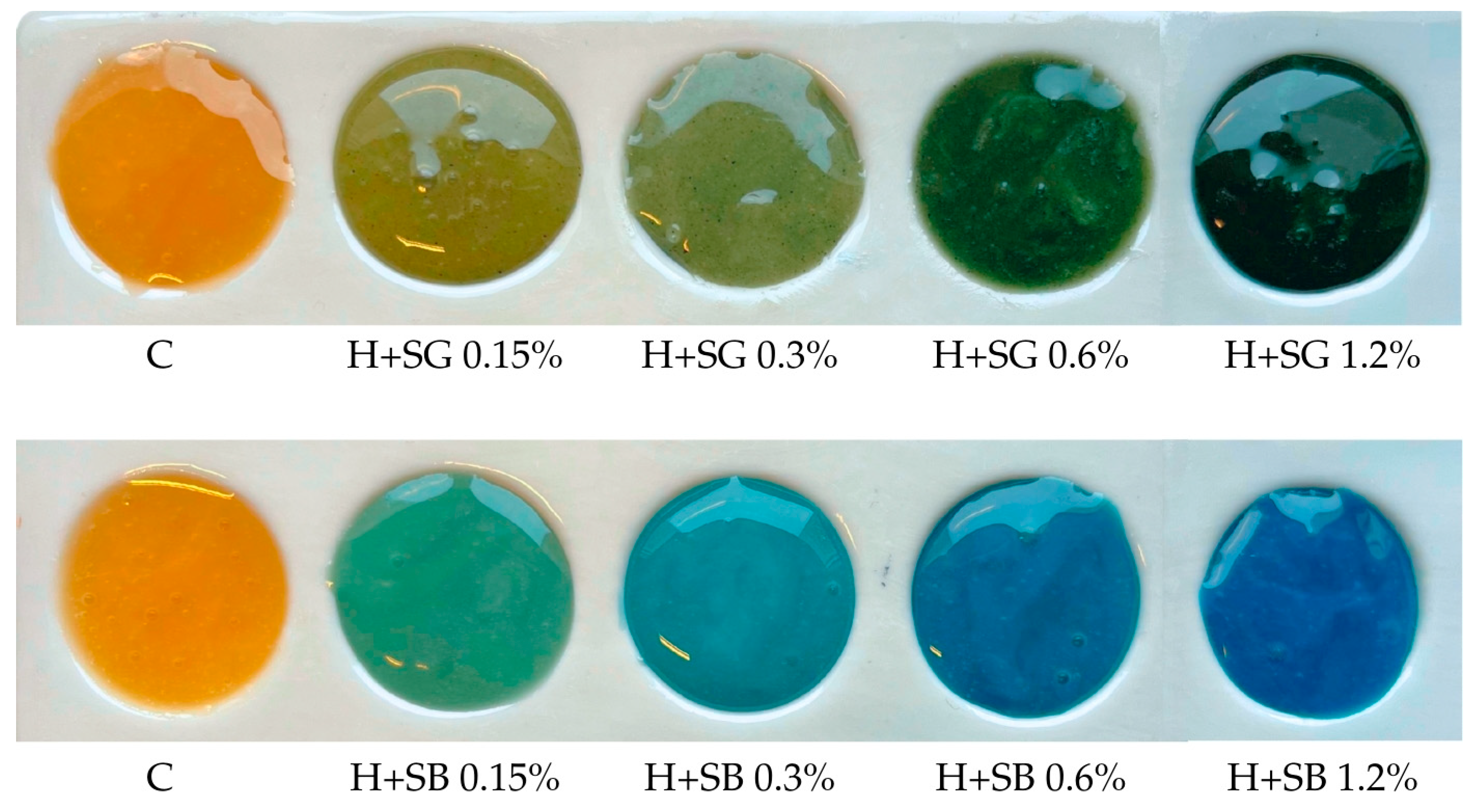
| L* | a* | b* | |
|---|---|---|---|
| C | 56.06 ± 0.02 A | 8.14 ± 0.01 A | 35.23 ± 0.08 A |
| H + SG 0.15% | 43.52 ± 0.02 C | −1.98 ± 0.01 B | 20.68 ± 0.03 B |
| H + SG 0.3% | 40.35 ± 0.06 E | −4.63 ± 0.02 D | 14.54 ± 0.04 C |
| H + SG 0.6% | 21.71 ± 0.04 H | −4.87 ± 0.04 E | 9.79 ± 0.13 D |
| H + SG 1.2% | 13.62 ± 0.05 I | −2.85 ± 0.02 C | 5.02 ± 0.07 F |
| H + SB 0.15% | 46.57 ± 0.09 B | −15.02 ± 0.04 F | 7.39 ± 0.03 E |
| H + SB 0.3% | 40.59 ± 0.01 D | −18.92 ± 0.02 I | −3.23 ± 0.02 G |
| H + SB 0.6% | 30.59 ± 0.06 F | −17.76 ± 0.04 H | −9.27 ± 0.01 H |
| H + SB 1.2% | 26.53 ± 0.06 G | −15.33 ± 0.04 G | −15.18 ± 0.02 I |
| Honey Analysis after 1 Month of Storage | |||||||||
| Parameter | Control | +green spirulina | +blue Spirulina | ||||||
| The content of spirulina additive | |||||||||
| 0.15% | 0.3% | 0.6% | 1.2% | 0.15% | 0.3% | 0.6% | 1.2% | ||
| Physicochemical parameters | |||||||||
| pH | 4.26 ± 0.01 A | 4.35 ± 0.1 B | 4.44 ± 0.01 C | 4.58 ± 0.01 D | 4.95 ± 0.02 E | 4.44 ± 0.01 C | 4.60 ± 0.01 D | 4.94 ± 0.02 E | 5.27 ± 0.03 F |
| Free acidity [mval/kg] | 15.05 ± 0.07 A | 14.35 ± 0.21 B | 12.15 ± 0.21 C | 10.20 ± 0.14 D | 8.60 ± 0.14 E | 12.85 ± 0.07 F | 10.3 ± 0.14 D | 9.75 ± 0.07 G | 8.65 ± 0.07 E |
| Conductivity [mS/cm] | 157.10 ± 0.02 A | 172.83 ± 0.25 B | 187.94 ± 0.21 C | 203.11 ± 0.08 D | 240.09 ± 0.02 E | 175.03 ± 0.07 F | 190.15 ± 0.15 G | 215.02 ± 0.02 H | 262.20 ± 0.18 I |
| Moisture [%] | 17.3 ± 0.1 A | 17.1 ± 0.2 AB | 16.9 ± 0.1 BC | 16.7 ± 0.1 CD | 16.4 ± 0.1 AB | 17.1 ± 0.2 BC | 16.9 ± 0.1 CD | 16.7 ± 0.1 D | 16.4 ± 0.2 D |
| Antioxidant activity | |||||||||
| DPPH [μmol TE/100 g] | 3.37 ± 0.24 A | 3.93 ± 0.73 A | 4.82 ± 0.35 B | 6.17 ± 0.43 C | 8.58 ± 0.24 E | 5.62 ± 0.26 C | 6.19 ± 0.47 C | 9.06 ± 0.30 D | 10.73 ± 0.60 D |
| FRAP [μmol TE/100 g] | 19.21 ± 0.23 A | 20.70 ± 0.27 B | 21.45 ± 0.38 C | 22.31 ± 0.62 D | 25.20 ± 0.13 E | 24.71 ± 0.14 E | 26.35 ± 0.07 F | 31.09 ± 0.15 G | 39.47 ± 0.07 H |
| TPC [mg GAE/100 g] | 7.99 ± 0.26 A | 8.30 ± 0.19 B | 8.50 ± 0.19 BC | 8.69 ± 0.14 C | 9.55 ± 0.12 D | 9.78 ± 0.13 DE | 10.04 ± 0.07 E | 10.51 ± 0.08 F | 11.79 ± 0.17 G |
| Honey analysis after 3 months of storage | |||||||||
| Parameter | Control | +green spirulina | +blue spirulina | ||||||
| The content of spirulina additive | |||||||||
| 0.15% | 0.3% | 0.6% | 1.2% | 0.15% | 0.3% | 0.6% | 1.2% | ||
| Physicochemical parameters | |||||||||
| pH | 4.31 ± 0.02 A | 4.36 ± 0.01 B | 4.48 ± 0.01 C | 4.59 ± 0.02 D | 4.95 ± 0.01 E | 4.45 ± 0.01 F | 4.62 ± 0.01 G | 4.97 ± 0.01 E | 5.29 ± 0.01 H |
| Free acidity [mval/kg] | 15.10 ± 0.14 A | 13.3 ± 0.14 B | 11.90 ± 0.14 C | 10.15 ± 0.07 D | 8.55 ± 0.07 E | 12.85 ± 0.07 F | 10.25 ± 0.07 D | 9.65 ± 0.07 G | 8.60 ± 0.14 E |
| Conductivity [mS/cm] | 156.67 ± 0.59 A | 171.93 ± 0.06 B | 187.87 ± 0.06 C | 222.96 ± 0.03 D | 240.01 ± 0.03 E | 174.98 ± 0.03 F | 190.01 ± 0.03 G | 224.99 ± 0.02 H | 262.10 ± 0.06 I |
| Moisture [%] | 17.2 ± 0.1 A | 17.0 ± 0.1 AB | 16.9 ± 0.1 BC | 16.5 ± 0.1 DE | 16.4 ± 0.1 AB | 17.0 ± 0.1 BC | 16.8 ± 0.1 CD | 16.6 ± 0.1 DE | 16.3 ± 0.2 E |
| Antioxidant activity | |||||||||
| DPPH [μmol TE/100 g] | 4.00 ± 0.10 A | 4.77 ± 0.77 AB | 5.60 ± 0.28 BC | 7.83 ± 0.71 D | 9.34 ± 0.56 E | 6.38 ± 0.11 CF | 6.87 ± 0.58 F | 9.70 ± 0.14 E | 11.34 ± 0.66 E |
| FRAP [μmol TE/100 g] | 19.69 ± 0.95 A | 21.69 ± 0.38 B | 21.98 ± 0.67 BC | 22.91 ± 0.78 C | 26.20 ± 0.45 DE | 25.32 ± 0.31 E | 27.09 ± 0.55 D | 32.04 ± 0.58 F | 40.75 ± 0.40 G |
| TPC [mg GAE/100 g] | 8.29 ± 0.10 A | 8.47 ± 0.24 B | 8.66 ± 0.09 B | 8.99 ± 0.15 B | 9.90 ± 0.18 C | 9.93 ± 0.23 C | 10.22 ± 0.12 C | 11.06 ± 0.15 D | 12.28 ± 0.18 E |
| Honey analysis after 6 months of storage | |||||||||
| Parameter | Control | +green spirulina | +blue spirulina | ||||||
| The content of spirulina additive | |||||||||
| 0.15% | 0.3% | 0.6% | 1.2% | 0.15% | 0.3% | 0.6% | 1.2% | ||
| Physicochemical parameters | |||||||||
| pH | 4.33 ± 0.02 A | 4.44 ± 0.01 B | 4.56 ± 0.01 C | 4.92 ± 0.01 D | 4.96 ± 0.03 D | 4.53 ± 0.02 C | 4.70 ± 0.02 E | 5.15 ± 0.01 F | 5.32 ± 0.03 G |
| Free acidity [mval/kg] | 14.54 ± 0.02 A | 13.37 ± 0.04 B | 11.69 ± 0.04 C | 9.77 ± 0.01 D | 8.40 ± 0.04 E | 11.25 ± 0.03 F | 10.27 ± 0.05 G | 8.64 ± 0.01 H | 8.57 ± 0.03 EH |
| Conductivity [mS/cm] | 156.67 ± 0.15 A | 172.57 ± 0.21 B | 187.77 ± 0.15 C | 231.70 ± 0.26 D | 245.53 ± 0.43 E | 173.97 ± 0.65 B | 190.73 ± 0.25 C | 234.33 ± 1.29 D | 276.13 ± 0.41 E |
| Moisture [%] | 17.15 ± 0.07 A | 17.00 ± 0.14 AB | 16.85 ± 0.07 BC | 16.45 ± 0.07 DE | 16.35 ± 0.07 DE | 16.95 ± 0.07 AB | 16.75 ± 0.07 BC | 16.60 ± 0.14 CD | 16.25 ± 0.21 E |
| Antioxidant activity | |||||||||
| DPPH [μmol TE/100 g] | 3.95 ± 0.37 A | 4.60 ± 0.27 AB | 5.67 ± 0.17 B | 8.19 ± 1.50 D | 10.56 ± 0.50 E | 6.86 ± 0.42 C | 7.57 ± 0.66 CD | 10.64 ± 0.36 E | 12.74 ± 0.50 F |
| FRAP [μmol TE/100 g] | 20.34 ± 0.58 A | 21.47 ± 0.37 B | 22.31 ± 0.13 C | 24.59 ± 0.77 D | 28.25 ± 0.65 E | 25.73 ± 0.32 D | 27.18 ± 0.31 E | 35.02 ± 0.42 F | 44.71 ± 0.41 G |
| TPC [mg GAE/100 g] | 8.24 ± 0.19 A | 8.74 ± 0.08 B | 9.05 ± 0.08 B | 9.44 ± 0.43 C | 11.14 ± 0.20 D | 10.19 ± 0.11 E | 10.49 ± 0.07 E | 12.00 ± 0.06 F | 14.50 ± 0.20 G |
| Stage | Control H | H + 1.2% SG | H + 1.2% SB |
| TPC [mg GAE/100 g] | |||
| Before digestion | 20.24 ± 2.54 b,B | 25.47 ± 2.77 ab,B | 28.52 ± 0.45 a,C |
| Gastric phase | 28.43 ± 0.39 c,A | 36.30 ± 0.19 b,A | 41.08 ± 0.70 a,B |
| Intestinal phase | 29.09 ± 1.41 c,A | 38.69 ± 0.49 b,A | 45.32 ± 0.23 a,A |
| FRAP [µmol TE/100 g] | |||
| Before digestion | 38.27 ± 0.34 c,C | 47.59 ± 1.17 b,C | 59.32 ± 0.68 a,C |
| Gastric phase | 46.33 ± 0.52 c,B | 59.28 ± 0.24 b,B | 75.45 ± 0.71 a,B |
| Intestinal phase | 50.64 ± 1.05 c,A | 65.79 ± 0.79 b,A | 83.03 ± 1.65 a,A |
| Protein [mg/100 g] | |||
| Before digestion | 199.88 ± 8.90 c,A | 299.92 ± 2.79 b,A | 453.81 ± 16.53 a,A |
| Gastric phase | 81.56 ± 5.53 b,B | 83.28 ± 5.85 b,B | 115.96 ± 7.16 a,B |
| Intestinal phase | 19.40 ± 0.92 b,C | 26.44 ± 2.84 b,C | 33.95 ± 2.70 a,C |
Disclaimer/Publisher’s Note: The statements, opinions and data contained in all publications are solely those of the individual author(s) and contributor(s) and not of MDPI and/or the editor(s). MDPI and/or the editor(s) disclaim responsibility for any injury to people or property resulting from any ideas, methods, instructions or products referred to in the content. |
© 2026 by the authors. Licensee MDPI, Basel, Switzerland. This article is an open access article distributed under the terms and conditions of the Creative Commons Attribution (CC BY) license.
Share and Cite
Dżugan, M.; Trybulec, K.; Sidor, E.; Miłek, M.; Tomczyk, M. The Use of Spirulina Powder to Enrich Honey with Antioxidants and Highly Digestible Protein. Int. J. Mol. Sci. 2026, 27, 1941. https://doi.org/10.3390/ijms27041941
Dżugan M, Trybulec K, Sidor E, Miłek M, Tomczyk M. The Use of Spirulina Powder to Enrich Honey with Antioxidants and Highly Digestible Protein. International Journal of Molecular Sciences. 2026; 27(4):1941. https://doi.org/10.3390/ijms27041941
Chicago/Turabian StyleDżugan, Małgorzata, Karolina Trybulec, Ewelina Sidor, Michał Miłek, and Monika Tomczyk. 2026. "The Use of Spirulina Powder to Enrich Honey with Antioxidants and Highly Digestible Protein" International Journal of Molecular Sciences 27, no. 4: 1941. https://doi.org/10.3390/ijms27041941
APA StyleDżugan, M., Trybulec, K., Sidor, E., Miłek, M., & Tomczyk, M. (2026). The Use of Spirulina Powder to Enrich Honey with Antioxidants and Highly Digestible Protein. International Journal of Molecular Sciences, 27(4), 1941. https://doi.org/10.3390/ijms27041941