1. Introduction
With the steadily increasing global burden of chronic diseases and the diminishing effectiveness of conventional pharmacotherapies due to limited efficacy and drug resistance, the identification of safe and effective natural bioactive compounds with multitarget regulatory capacity has become a major focus in drug discovery and functional food research.
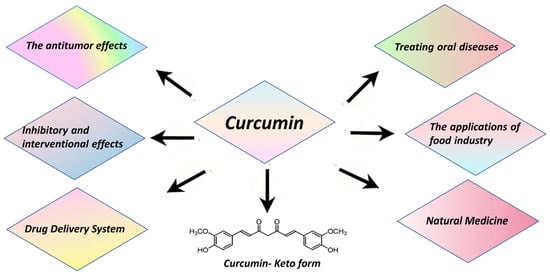
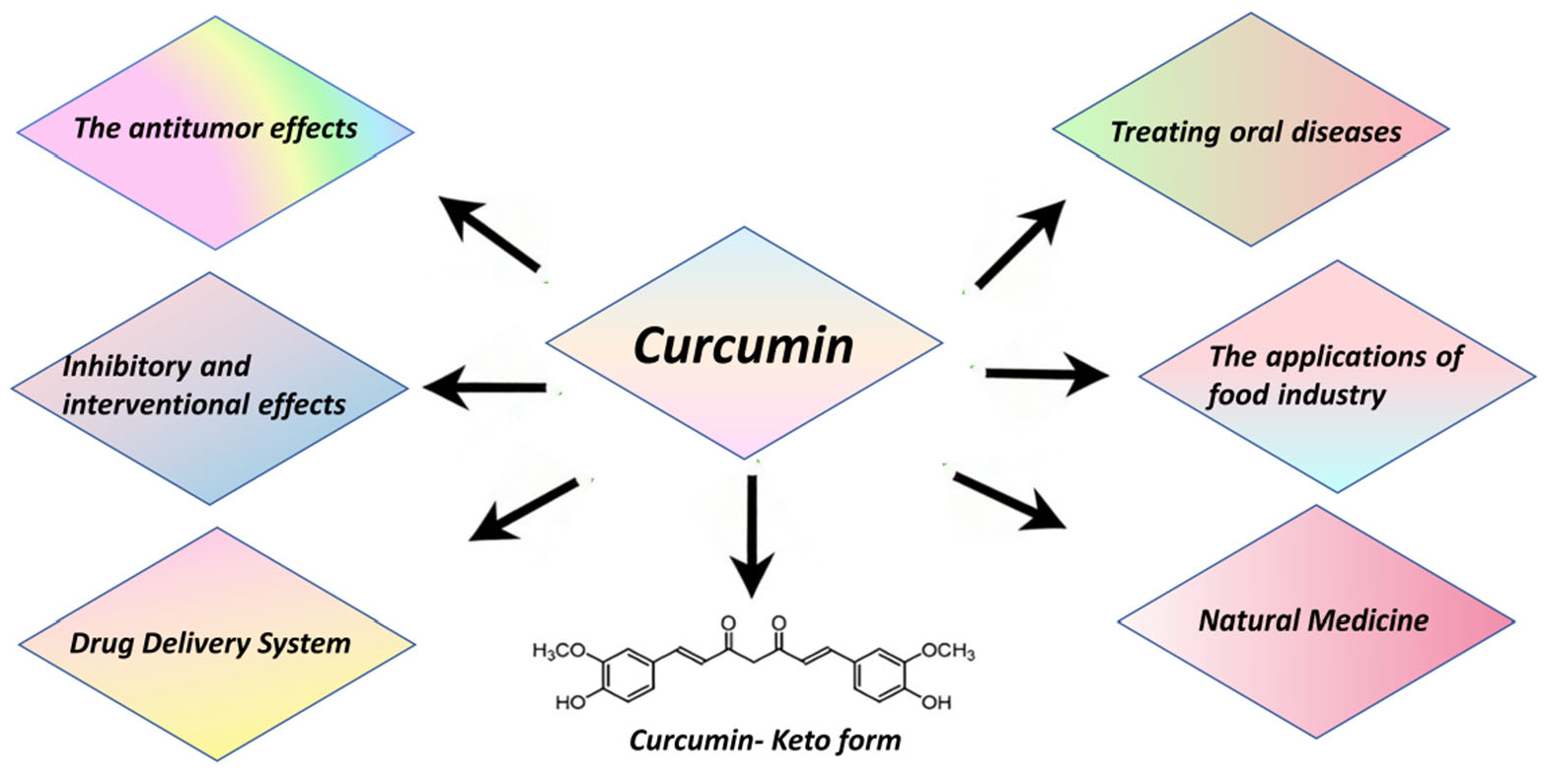
Curcumin (CUR) is a naturally occurring polyphenolic compound derived from plants of the Curcuma genus and has garnered substantial attention over recent decades because of its distinctive molecular structure and pleiotropic pharmacological activities. Curcumin (diferuloylmethane), the principal bioactive constituent of
Curcuma longa L., is an orange–yellow crystalline powder with a molecular formula of C
21H
20O
6 and a molecular weight of 368.37 g/mol. Structurally, curcumin exhibits a highly symmetrical configuration characterized by an active methylene group, conjugated double bonds, and keto–enol tautomerism. It is practically insoluble in water but readily soluble in organic solvents such as dimethyl sulfoxide (DMSO), ethanol, and acetone. Curcumin remains relatively stable under acidic conditions but undergoes rapid degradation in neutral or alkaline aqueous environments, with light exposure, oxidative stress, and elevated temperatures further accelerating its decomposition [
1].
These physicochemical properties markedly restrict the in vivo stability and bioavailability of curcumin, leading to a progressive shift in research from native curcumin toward structural modification, derivative synthesis, and the development of advanced delivery systems. As a representative member of the diarylheptanoid family of natural products, curcumin possesses a characteristic scaffold consisting of two substituted aromatic rings connected by a seven-carbon linker. This structural framework, together with its synthetic derivatives, has been extensively investigated, providing a robust chemical basis for structure–activity relationship analyses and the optimization of biological functions [
2]. In addition, several well-characterized structural analogues, including demethoxycurcumin and bisdemethoxycurcumin, have been identified. Although these compounds differ in aromatic ring substitution patterns, they share a conserved diarylheptanoid core structure.
Extensive basic and preclinical studies have demonstrated that curcumin modulates multiple keys signaling pathways, including PI3K/Akt, NF-κB, JAK/STAT, MAPK/ERK, mTOR, and Wnt/β-catenin, thereby regulating diverse biological processes such as cell proliferation, apoptosis, oxidative stress, inflammatory responses, and energy metabolism. Consequently, curcumin exhibits a considerable therapeutic potential across a broad spectrum of diseases, including cancer, metabolic disorders, inflammatory conditions, and neurological diseases. More recent evidence further indicates that curcumin and its related compounds exert pronounced anticancer activities and multilayered biological effects in diverse tumor models, thereby providing an expanded foundation for mechanistic exploration and translational development [
3].
Nevertheless, curcumin is constrained by several pharmacokinetic limitations in vivo, including poor aqueous solubility, rapid metabolism, and limited stability, which collectively impede its clinical translation. To overcome these challenges, a wide range of delivery strategies—such as nanocarriers, targeted delivery systems, and stimuli-responsive drug delivery platforms—have been actively developed in recent years. In parallel, curcumin has demonstrated substantial application potential in food science and functional materials due to its antioxidant, antimicrobial, and ultraviolet-shielding properties.
Based on this background, the central hypothesis of the present review is that curcumin does not exert its biological effects through a single target or pathway; rather, it functions as a multitarget, network-regulatory molecule whose pharmacological efficacy and translational potential depend on the coordinated modulation of multiple signaling pathways across diverse disease settings, together with appropriately designed delivery strategies. Accordingly, the primary objective of this review is to systematically integrate mechanistic evidence for curcumin across different disease contexts. Secondary objectives include comparative analyses among disease types, a structured overview of delivery system strategies, and an evaluation of translational prospects.
2. Methodology
2.1. Search Strategy and Information Sources
Relevant publications were identified through comprehensive searches of SciFinder, PubMed, Web of Science, and the reference library curated by our research team. The following search terms and their combinations were applied: “curcumin”, “cancer”, “inflammation”, “depression”, “metabolic disorders”, “drug delivery”, and “therapeutic mechanisms”.
2.2. Study Selection, Data Collection, and Inclusion/Exclusion Criteria
Only peer-reviewed articles published in English or Chinese were included. All publications were independently verified by at least two investigators. Patents, books, and conference abstracts were excluded. Studies investigating only the general pharmacological effects of curcumin unrelated to cancer, inflammation, depression, or metabolic disorders were also excluded.
2.3. The Inclusion Criteria
Studies evaluating curcumin’s pharmacological effects in cancer, inflammation, depression, or metabolic disorders.
Studies assessing curcumin’s regulation of key signaling pathways, including PI3K/Akt, NF-κB, JAK/STAT, MAPK/ERK, mTOR, and Wnt/β-catenin.
Studies reporting the development or application of advanced drug delivery systems, including nanocarriers, microspheres, and solid dispersions, to enhance bioavailability, in vivo stability, and therapeutic efficacy.
2.4. The Exclusion Criteria
Patents, books, and conference abstracts.
Studies focusing solely on the general pharmacological effects of curcumin unrelated to cancer, inflammation, depression, or metabolic disorders.
2.5. Data Analysis
Data extraction and verification were independently performed by at least two investigators. Relevant data were systematically collected and organized to provide a comprehensive overview of curcumin research in the selected areas.
3. The Antitumor Effects of Curcumin
Curcumin has been extensively validated for its potent anti-tumor activity, demonstrating efficacy in both solid tumors and hematologic malignancies [
4,
5]. The underlying mechanisms of its anti-tumor effects primarily involve the induction of cell cycle arrest and apoptosis, the inhibition of tumor angiogenesis, and downregulation of key pro-inflammatory signaling pathways, including NF-κB, STAT3, and PI3K/Akt. Additionally, curcumin modulates gene expression by influencing epigenetic factors, such as histone deacetylases (HDACs) and DNA methyltransferases (DNMTs) [
4]. Beyond these core mechanisms, curcumin further amplifies its anti-tumor effects through multi-target actions, including the generation of reactive oxygen species (ROS), regulation of microRNA (miRNA) expression, and modulation of tumor metabolic pathways [
6]. Numerous in vitro and in vivo studies have demonstrated that curcumin not only enhances the sensitivity of tumor cells to chemotherapy but also mitigates the adverse effects of traditional treatments [
7]. Due to its low toxicity and multi-target profile, curcumin is widely regarded as a promising plant-derived candidate for clinical development [
5,
8].
3.1. Papillary Thyroid Carcinoma
According to the latest data from the Chinese Cancer Center, 466,100 new cases of thyroid cancer were diagnosed in China in 2022, making it the third most common cancer, after lung and colorectal cancers [
9]. Among these, papillary thyroid carcinoma (PTC) is the most prevalent endocrine malignancy, accounting for approximately 85% of follicular-derived differentiated thyroid cancers.
At the molecular level, the PI3K/AKT signaling pathway plays a crucial role in regulating cell growth, proliferation, metabolism, and survival. Aberrant activation of this pathway can lead to excessive cell proliferation and evasion of apoptosis, thereby enhancing tumor cell invasiveness and promoting the expression of oncogenes [
10,
11,
12]. Like most cancers, PTC cells exhibit abnormal activation of this pathway [
13,
14].
Experimental studies have shown that curcumin significantly inhibits the proliferation of PTC cells and their cancer stem-like cells while inducing apoptosis. The underlying mechanisms primarily involve the regulation of multiple signaling pathways, including inhibition of the PI3K/AKT [
15,
16] and JAK/STAT3 pathways [
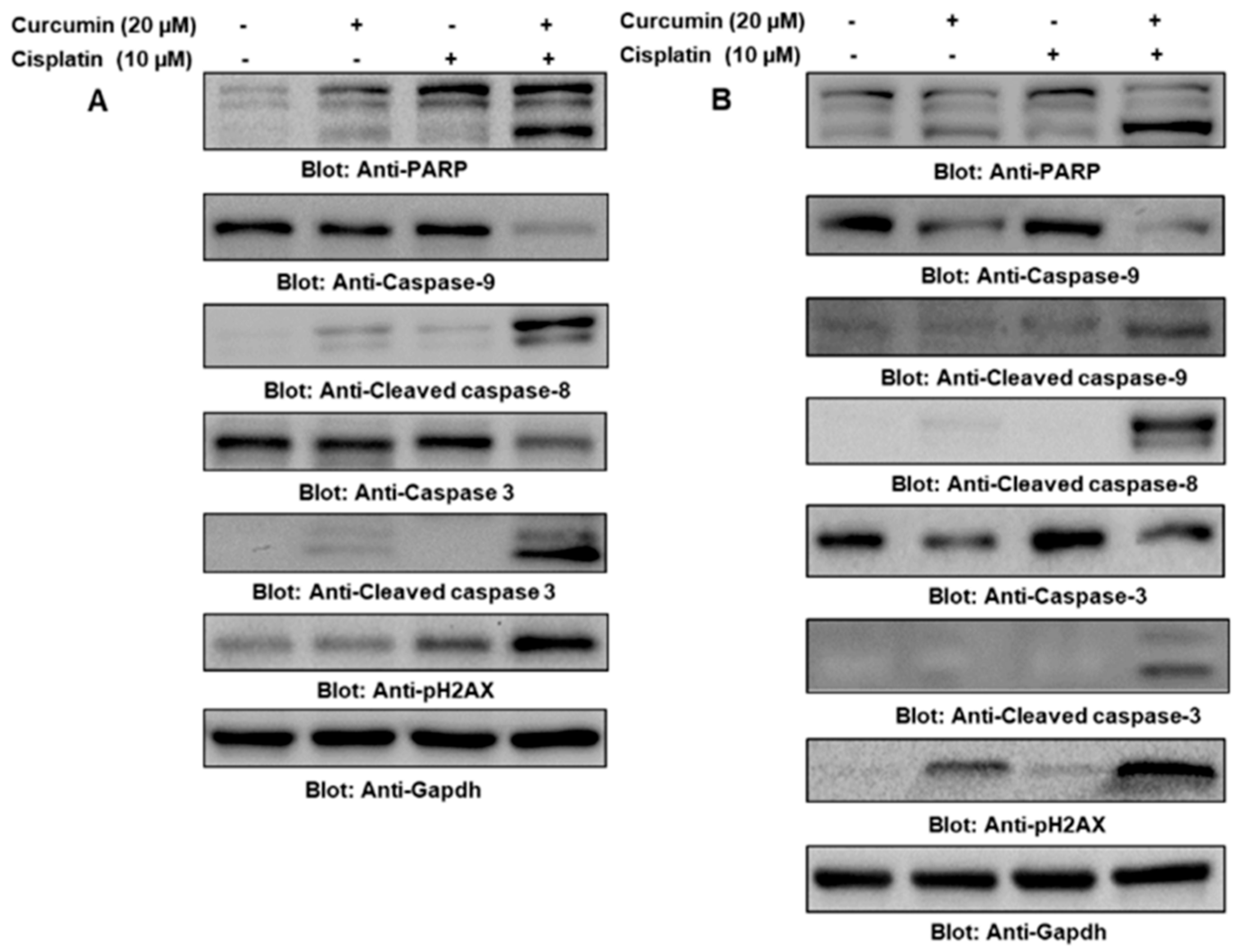
17], with apoptosis mediated by mitochondrial-associated proteins. Western blot analysis revealed that curcumin treatment downregulates BCL-2 expression and upregulates BAX and cleaved-caspase-3 levels, indicating that curcumin exerts its anti-tumor effects through the mitochondrial-dependent apoptotic pathway (
Figure 1). Li et al. [
18] further reported that curcumin inhibits proliferation and induces apoptosis by modulating lncRNA LINC00691 and targeting the AKT pathway. Xu et al. [
19] found that curcumin suppresses the phosphorylation of PI3K and AKT, significantly inhibiting proliferation, metastasis, and invasion in FTC133 (a human thyroid follicular carcinoma cell line). Zhang et al. [
20] also observed that curcumin treatment led to a sustained decrease in cell viability and significantly inhibited colony formation in FTC133 cells after 14 days. Notably, when combined with sorafenib, curcumin exerted a more pronounced inhibitory effect on cell viability by synergistically modulating the PI3K/AKT and ERK (extracellular signal-regulated kinase) signaling pathways. In conclusion, the available evidence suggests that curcumin can effectively inhibit proliferation and induce apoptosis in PTC cells through multi-level regulation of the PI3K/AKT and JAK/STAT3 pathways. Furthermore, curcumin demonstrates significant synergistic effects in combination therapy, providing novel insights for the comprehensive treatment of thyroid cancer.
3.2. Lung Cancer
The development of lung cancer is influenced by multiple factors, including smoking, chronic obstructive pulmonary disease (COPD), chronic pulmonary inflammation, and occupational exposures [
21]. Recent studies have highlighted the strong association between tumor initiation, progression, and prognosis with inflammatory responses. Prolonged chronic inflammation can contribute to the onset of various cancers, including lung, gastric, liver, colorectal, and prostate cancers [
22]. In the lung, chronic inflammation induces continuous cycles of cell death and repair, leading to abnormal cell proliferation and uncontrolled growth, thereby significantly increasing the risk of carcinogenesis. Additionally, bacterial infections have been closely linked to higher mortality rates in lung cancer patients [
23,
24].
Curcumin has been shown to inhibit the progression of non-small cell lung cancer (NSCLC) through multiple mechanisms. Jin et al. [
25] demonstrated that curcumin upregulates miRNA-192-5p, thereby inhibiting the PI3K/AKT signaling pathway, resulting in suppressed cell proliferation and induced apoptosis in lung cancer cells. Increasing attention has also been given to the role of glycolysis in tumorigenesis. Curcumin has been shown to block glycolysis and suppress cell proliferation in endometrial cancer by downregulating pyruvate dehydrogenase kinase 2 (PDK2) [
26]. In a kidney injury model, curcumin modulates aerobic glycolysis by regulating miR-489 and lactate dehydrogenase A (LDHA) expression [
27], suggesting that glycolysis regulation may play a pivotal role in curcumin’s anti-tumor effects. Building on these findings, researchers have focused on glycolysis as a critical target for tumor metabolism intervention, aiming to elucidate its involvement in lung cancer initiation and progression. Mo et al. [
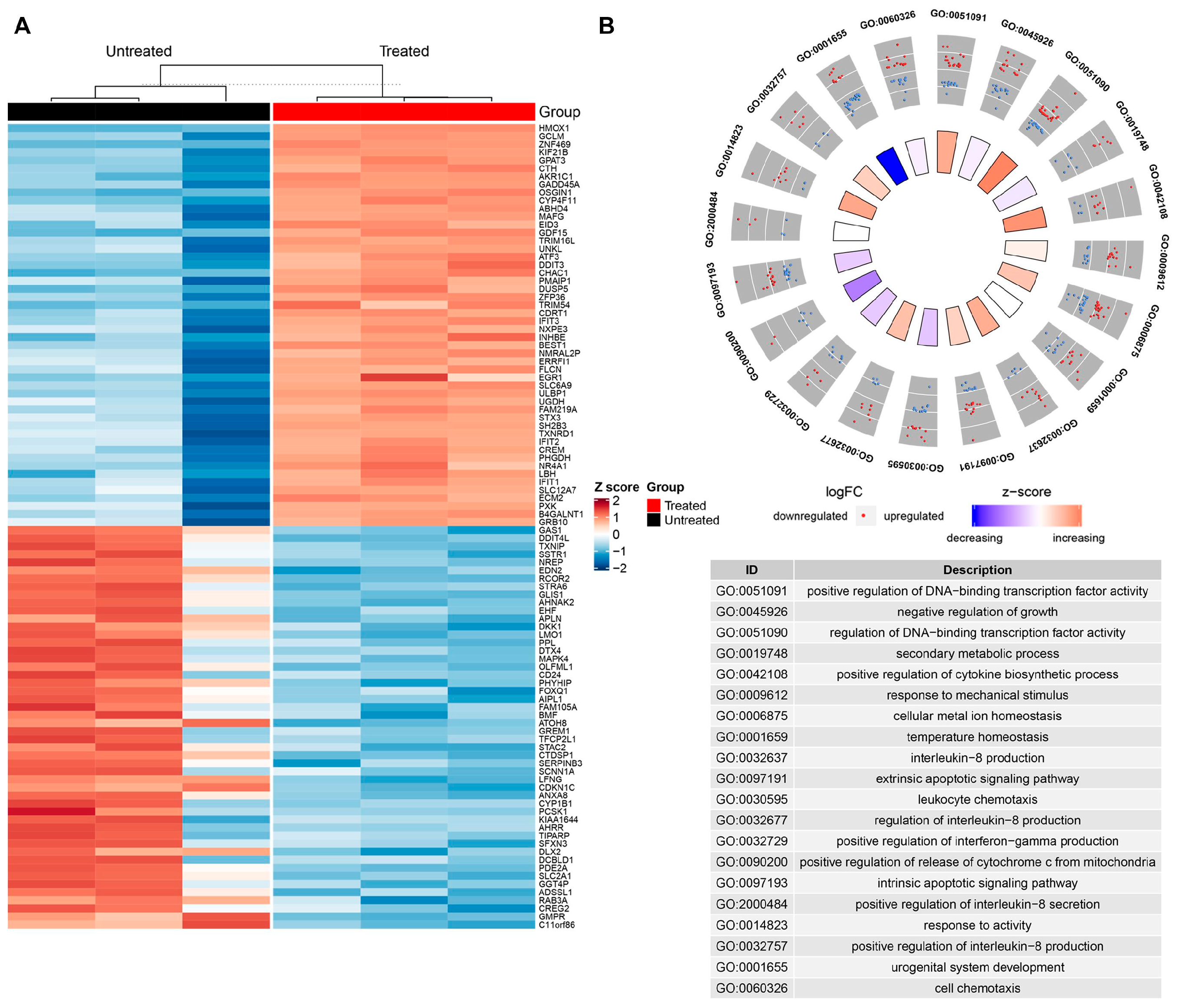
28] reported that curcumin significantly alters the transcriptomic expression profile in small cell lung cancer (H446) cells, with differentially expressed genes primarily enriched in glycolysis and cell cycle pathways (
Figure 2). These findings suggest that curcumin inhibits glycolytic activity in lung cancer cells by downregulating glycolysis-related genes, thereby suppressing cell proliferation and inducing apoptosis. This body of research seeks to identify novel therapeutic targets for curcumin in lung cancer treatment, offering valuable insights for future investigations.
3.3. Breast Cancer
Curcumin exerts potent anti-tumor effects in breast cancer by modulating various cell survival pathways. It upregulates pro-apoptotic proteins, such as p53 and Bax, while downregulating anti-apoptotic proteins, including Bcl-2 and Surviving, thereby inducing mitochondrial-mediated apoptosis [
7,
29]. Additionally, curcumin inhibits key proliferative signaling pathways, including NF-κB, Wnt/β-catenin, and Notch, which suppresses cancer cell migration and invasion [
8]. In multidrug-resistant breast cancer cells, curcumin reverses drug resistance and enhances sensitivity to chemotherapy agents, such as paclitaxel and doxorubicin. This effect is likely mediated through the downregulation of the Akt pathway and inhibition of ABC transporter proteins [
29].
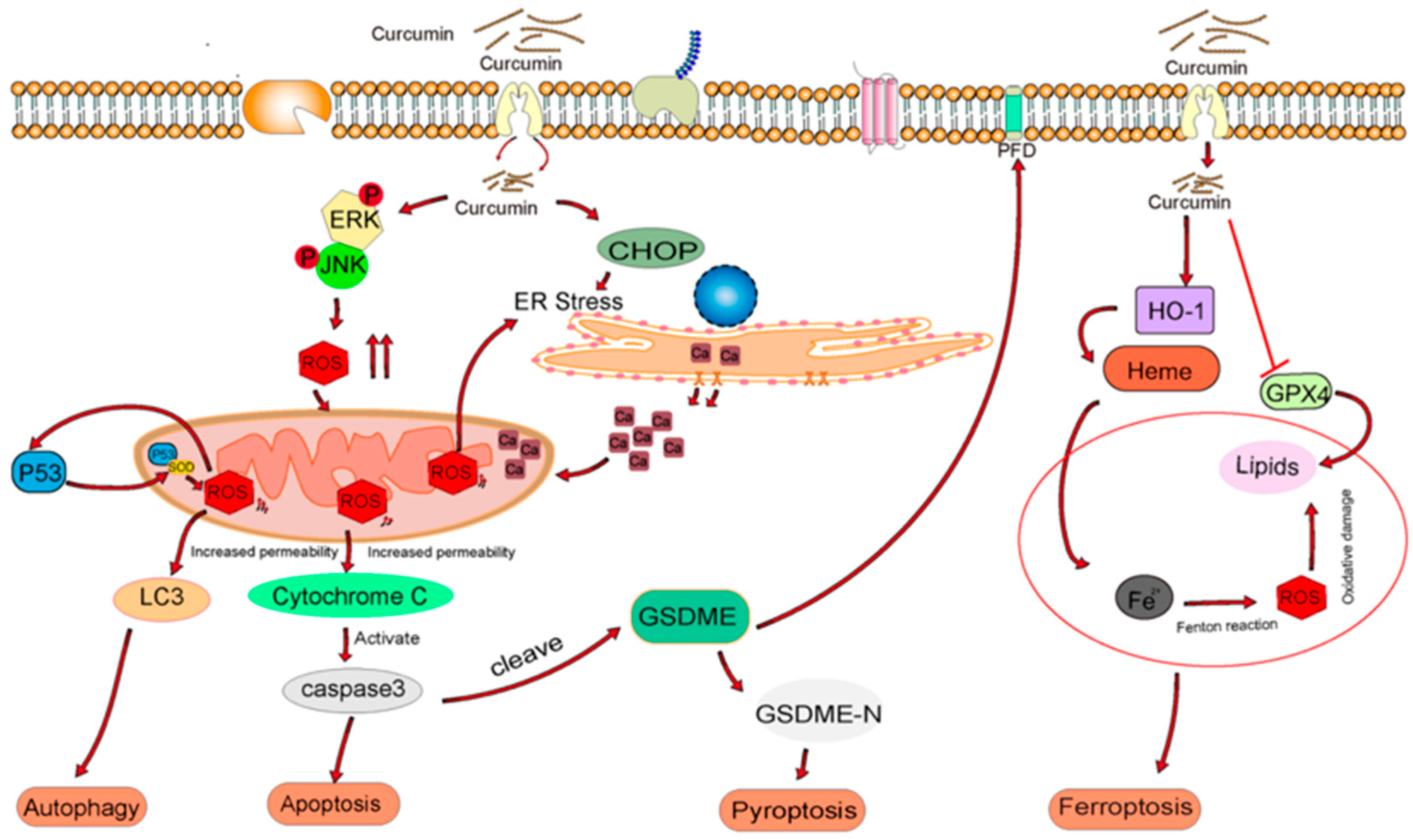
From the perspective of oxidative stress, curcumin exerts its antitumor effects by targeting mitochondrial function, inducing excessive accumulation of reactive oxygen species (ROS), and disrupting cellular redox homeostasis. In a dose-dependent and model-specific manner, these effects cooperatively activate multiple programmed cell death pathways (
Figure 3) [
7]. Specifically, curcumin amplifies ROS signaling through ERK/JNK phosphorylation and endoplasmic reticulum stress (ER stress)/CHOP pathways, leading to mitochondrial membrane potential collapse, cytochrome c release, and subsequent activation of caspase-3-dependent apoptosis. Concurrently, ROS-mediated activation of p53 promotes the conversion of LC3-I to LC3-II, thereby initiating autophagy, with apoptosis and autophagy functioning in a coordinated and interdependent manner.
In parallel, curcumin-induced ROS upregulates heme oxygenase-1 (HO-1), thereby catalyzing heme degradation and releasing ferrous ions (Fe2+) while simultaneously suppressing glutathione peroxidase 4 (GPX4), which compromises the detoxification of lipid peroxides. The resulting Fe2+-driven Fenton reaction generates excessive lipid ROS, leading to lipid peroxidation and oxidative damage that ultimately trigger ferroptosis. Moreover, elevated ROS levels can activate caspase-3, induce cleavage of gasdermin E (GSDME) to generate its N-terminal fragment (GSDME-N), and initiate pyroptosis, accompanied by the release of inflammatory mediators that promote antitumor immune activation.
Through this oxidative stress-dependent hierarchical and parallel regulatory network, curcumin selectively activates distinct forms of programmed cell death in a dose- and model-dependent manner. Low to moderate doses predominantly induce apoptosis and autophagy, which are effective against most apoptosis-sensitive cancer cells; moderate to high doses preferentially trigger ferroptosis, demonstrating efficacy against apoptosis-resistant tumors; whereas high doses primarily induce pyroptosis, achieving a dual antitumor effect through direct cancer cell elimination and immune activation. Key molecular mediators—including ERK/JNK, ER stress/CHOP, LC3, GPX4, GSDME, and HO-1—operate within an integrated framework, forming both upstream–downstream hierarchical regulation and parallel cooperation among pathways, ultimately generating a robust antitumor response. This integrated mechanism provides a strong theoretical basis for the clinical application of curcumin in breast cancer therapy (
Figure 3) [
7].
In addition, accumulating evidence indicates that curcumin and its derivatives can inhibit the activities of topoisomerase I and II [
30], enzymes that play essential roles in DNA replication and the maintenance of DNA topology [
31]. By interfering with topoisomerase function, curcumin disrupts DNA topological rearrangements, leading to the progressive accumulation of DNA damage and ultimately tumor cell death [
32]. This mechanism acts synergistically with oxidative stress-dependent pathways, including apoptosis, autophagy, ferroptosis, and pyroptosis, thereby further enhancing the antitumor efficacy of curcumin in breast cancer.
3.4. Liver Cancer
Liver cancer is one of the most prevalent and aggressive malignancies worldwide, with a high mortality rate primarily attributed to challenges in early diagnosis, metastasis, recurrence, and the development of drug resistance. In recent years, natural plant extracts, including curcumin, have emerged as promising candidates for the development of anti-liver cancer therapies. Several studies have demonstrated that curcumin induces apoptosis in liver cancer cells by modulating the expression of apoptosis-related proteins. Bai et al. [
33] reported that curcumin downregulates BCLAF1 (BCL-2-associated transcription factor), inhibits the activation of the PI3K/AKT/GSK-3β pathway, and induces mitochondrial apoptosis in hepatocellular carcinoma (HCC) cells. These findings highlight the potential of curcumin as an anti-tumor agent for the treatment of HCC. Furthermore, curcumin upregulates the expression of the tumor suppressor gene p53, thereby promoting p53-dependent apoptosis and further inhibiting tumor growth.
The inhibitory effects of curcumin on liver cancer are also closely linked to its regulation of multiple pro-cancer signaling pathways. Li et al. [
34] observed that curcumin treatment significantly downregulates SPAG5 expression, thereby inhibiting cell migration and promoting apoptosis. Further investigations revealed that SPAG5 inhibition results in a decrease in β-catenin levels. In-depth studies demonstrated that in SPAG5-overexpressing cell lines, curcumin reduces cyclin D1 expression. However, when SPAG5 expression was silenced, the inhibitory effect of curcumin on cyclin D1 was significantly diminished. These results suggest that SPAG5 may serve as an upstream regulator of the Wnt/β-catenin pathway, presenting a novel therapeutic target for liver cancer. Given curcumin’s ability to block the Wnt pathway via SPAG5 inhibition, it holds promise as a natural candidate for the early intervention and treatment of liver cancer.
The high invasiveness of liver cancer is a major factor contributing to its poor prognosis. Curcumin inhibits liver cancer cell migration and invasion by regulating the expression of matrix metalloproteinases (MMPs) and epithelial–mesenchymal transition (EMT)-related proteins. For example, in the Huh7 cell model, curcumin significantly reduces cell invasion, with the underlying mechanism involving the downregulation of MMP-2/MMP-9 expression and inhibition of the EMT process.
Taken together, the BCLAF1–PI3K/AKT/GSK-3β, SPAG5–Wnt/β-catenin/cyclin D1, and MMP-2/MMP-9/epithelial–mesenchymal transition (EMT) signaling pathways appear to be coordinately regulated in hepatocellular carcinoma (HCC). Through modulation of these pathways, curcumin can simultaneously influence apoptosis, cell-cycle progression, and migratory and invasive behaviors, thereby forming a multilayered and cross-coupled signaling network in HCC. For instance, Wnt/β-catenin signaling not only regulates cyclin D1 expression but may also functionally interact with the PI3K/AKT pathway, collectively governing HCC cell proliferation and migration. It should be noted that most of the available evidence is derived from in vitro HCC cell lines or a limited number of animal models. Differences in genetic background may result in heterogeneous responses, and some studies lack gain- or loss-of-function and rescue experiments required to rigorously establish causal relationships. Therefore, future investigations should systematically assess the network-level regulatory roles of these pathways across diverse experimental models. Elucidation of this signaling network will be critical for optimizing curcumin delivery strategies and enhancing its translational potential in HCC therapy.
To address curcumin’s poor solubility and low bioavailability, Hitesh Chopra et al. [
35] developed various curcumin nanocarriers, including liposomes, nanogels, and solid lipid nanoparticles, and employed different strategies to enhance its solubility, stability, and targeting ability. Studies have shown that these nanocarriers significantly improve curcumin’s bioavailability. For instance, curcumin encapsulated in liposomes accumulates in tumor tissues at higher levels compared to free curcumin, and certain nanocarriers can release the drug in response to the acidic pH or elevated temperature of the tumor microenvironment. In specific experiments, nano-curcumin combined with hyperthermia exhibited excellent performance in the Huh7 liver cancer cell model, leading to a 2.3-fold increase in tumor cell apoptosis compared to the monotherapy group. In animal studies, the survival time of tumor-bearing mice was extended by 42%, providing a new and effective strategy for the clinical translation of curcumin.
3.5. Hematologic Malignancies
Curcumin has demonstrated significant pharmacological activity in hematologic malignancies, including acute myeloid leukemia (AML), multiple myeloma, and lymphoma. Its primary mechanisms of action involve inducing tumor cell apoptosis and promoting differentiation through the inhibition of key signaling pathways, such as JAK2/STAT3 and PI3K/Akt/mTOR. Additionally, curcumin downregulates cyclin expression, thereby inhibiting cell cycle progression [
5,
8].
Moreover, curcumin enhances the sensitivity of leukemia cells to chemotherapeutic agents, including doxorubicin, by modulating non-coding RNA pathways, such as miR-21/PTEN and miR-20a/WT1 [
36]. When delivered via nanoparticle systems, curcumin’s targeting ability is significantly enhanced in drug-resistant leukemia cells, effectively overcoming chemotherapy resistance and slowing disease progression [
29]. These findings underscore curcumin’s potential as an adjunctive therapy in hematologic malignancies and provide valuable insights for developing novel combination treatment strategies.
3.6. Antitumor Effects of Curcumin in Other Cancer Types
In addition to the cancer types discussed above, an expanding body of evidence has demonstrated the antitumor activity of curcumin in other refractory malignancies, including glioblastoma, head and neck cancer, nasopharyngeal carcinoma, pancreatic cancer, and osteosarcoma. Recent studies show that curcumin exerts broad-spectrum antitumor effects by targeting multiple key signaling pathways—such as PI3K/Akt, NF-κB, p53-associated DNA damage repair pathways, Nrf2/GPX4, and inflammation-related signaling axes—thereby inhibiting tumor cell proliferation, promoting apoptosis, and modulating tumor-associated inflammation and the tumor microenvironment (
Table 1). Collectively, these findings further support the potential of curcumin as a multitarget antitumor natural compound with therapeutic relevance across a wide range of solid tumors.
4. Inhibitory and Interventional Effects of Curcumin
4.1. Inhibition of Liver Injury
Isoniazid and rifampin are first-line anti-tuberculosis drugs recommended by the World Health Organization (WHO) [
42]. When used in combination, these drugs synergistically eliminate both intracellular and extracellular Mycobacterium tuberculosis, thereby reducing the risk of drug resistance. However, their combined use increases the likelihood of liver toxicity. Curcumin, a natural polyphenolic compound with low toxicity [
43], has been widely utilized in the treatment of jaundice and various liver dysfunctions [
44]. Numerous studies have demonstrated that curcumin exerts protective effects against a range of liver diseases, including carbon tetrachloride-induced liver injury, chronic alcoholic liver injury, liver fibrosis, and non-alcoholic fatty liver disease (NAFLD) [
45]. Furthermore, curcumin has been shown to effectively mitigate liver injury induced by anti-tuberculosis drugs, such as isoniazid and rifampin, commonly referred to as anti-tuberculosis drug-induced liver injury (ATLI).
Clinically, common liver function biomarkers include alanine aminotransferase (ALT), aspartate aminotransferase (AST), total bilirubin (TBIL), and total bile acids (TBAs). ALT and AST levels reflect hepatocellular damage, whereas TBIL and TBA primarily assess the liver’s secretory, excretory, and detoxification functions [
46]. Serum TBA levels offer a comprehensive indication of hepatocellular injury and overall liver function. Alkaline phosphatase (AKP) levels rise rapidly in response to liver injury and play a critical role in protein dephosphorylation and metabolic regulation. Malondialdehyde (MDA), a lipid peroxidation product in hepatocytes, directly reflects the oxidative stress levels [
47]. Additionally, activated hepatic macrophages secrete large amounts of tumor necrosis factor-alpha (TNF-α), initiating a cascade of pro-inflammatory cytokines that contribute to inflammation and liver damage [
48,
49].
Experimental data indicate that following curcumin treatment, serum levels of AST, ALT, MDA, AKP, TBIL, and TBA were significantly reduced in mice with anti-tuberculosis drug-induced liver injury. These results suggest that curcumin effectively mitigates liver injury caused by anti-tuberculosis drugs. Moreover, levels of inflammatory cytokines, including TNF-α, IL-1β, and IL-6, were significantly reduced, and liver tissue inflammation and necrosis were notably alleviated compared to the model group. These findings support the conclusion that curcumin alleviates anti-tuberculosis drug-induced liver injury in mice through its anti-inflammatory effects [
47,
48,
49].
4.2. Improving Non-Alcoholic Fatty Liver Disease
Non-alcoholic fatty liver disease (NAFLD) is a hepatic metabolic disorder characterized by vesicular steatosis in hepatocytes, with inflammation and fibrosis serving as critical markers of disease progression. The development of NAFLD is strongly associated with insulin resistance (IR), obesity, type 2 diabetes, and other components of metabolic syndrome [
50]. Epidemiological studies indicate that the prevalence of NAFLD in China has reached 29.88%, highlighting its growing burden as a public health concern [
51].
Curcumin exerts anti-inflammatory and antioxidant effects by modulating multiple signaling pathways, positioning it as a promising therapeutic candidate for NAFLD [
52]. Specifically, curcumin reduces hepatic fat accumulation through mechanisms such as alleviating IR and suppressing oxidative stress [
53]. Moreover, curcumin influences the composition of the gut microbiota and its metabolic products, impacting the “gut–liver axis” interaction, and reduces liver inflammation and steatosis by inhibiting the TLR4/NF-κB signaling pathway [
54].
Recent advances in treatment strategies have introduced multi-targeted approaches, combining “drug + lifestyle” interventions for NAFLD [
55]. Some studies suggest that curcumin (CUR) combined with aerobic exercise (AE) exerts synergistic effects by modulating multi-organ interactions from both pharmacological and energy metabolism perspectives. These effects include enhancing autophagy [
56], regulating gut microbiota homeostasis [
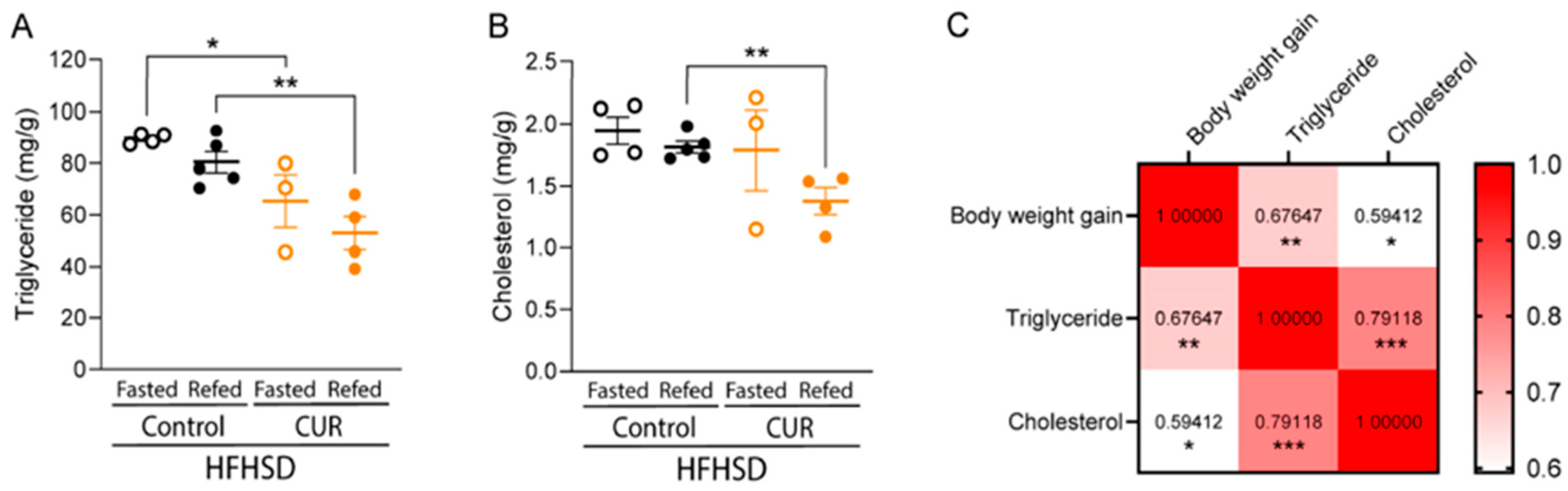
57], and improving NAFLD through various mechanisms. Additionally, experimental results indicate that different intervention strategies significantly influence health indices (
Figure 4) [
58,
59], liver inflammation signaling pathways, protein expression, and blood lipid levels in NAFLD mice. These findings further support the potential of curcumin combined with resistance exercise to more effectively alleviate NAFLD through synergistic mechanisms, offering novel strategies for clinical multi-modal treatments.
4.3. Alleviate Symptoms of Inflammatory Bowel Disease
Inflammatory bowel disease (IBD) encompasses a group of chronic inflammatory disorders of the gastrointestinal tract, including ulcerative colitis (UC) and Crohn’s disease (CD) [
60]. In recent years, the incidence of IBD has steadily increased, significantly impairing the quality of life of affected individuals. Curcumin has demonstrated substantial potential in alleviating the symptoms of these diseases. Numerous studies have shown that curcumin modulates various cellular pathways, inhibiting the release of key inflammatory mediators, such as NF-κB, IL-1, and TNF-α, thereby alleviating IBD symptoms. However, free curcumin is rapidly degraded in the gastrointestinal tract, resulting in a short retention time and limited accumulation in the colon. Consequently, targeted delivery via carrier encapsulation has become a primary focus of research.
In animal models, Yadav et al. [
61] encapsulated curcumin in first-generation solid lipid nanoparticles (SLNs) and tested their efficacy in a dextran sulfate sodium (DSS)-induced rat colitis model. They found that the SLN formulation exhibited superior therapeutic effects compared to free curcumin, significantly reducing inflammation. Beloqui et al. [
62] compared three curcumin delivery systems (self-nanoemulsifying drug delivery system, nanostructured lipid carriers, and lipid-core-shell fish protein nanocapsules) both in vitro and in vivo. Their results showed that the nanocapsules significantly enhanced curcumin permeability in Caco-2 monolayer cells. Both the self-nanoemulsifying system and the nanostructured lipid carriers effectively reduced TNF-α secretion from macrophages, and in vivo, only the nanostructured lipid carriers significantly decreased neutrophil infiltration and TNF-α secretion. These findings emphasize the importance of prolonging the residence time of the carrier in the intestine to enhance curcumin’s anti-inflammatory efficacy.
Additionally, Mutalik et al. [
63] developed curcumin-loaded chitosan microspheres coated with acrylic resin S-100 using an emulsion crosslinking method, achieving sustained release for up to 12 h compared to free curcumin. Sareen et al. [
64] reported that curcumin-loaded microspheres significantly reduced colonic tissue damage and lesion severity in an acetic acid-induced mouse colitis model. Blanco-García et al. [
65] employed a microparticle system for targeted curcumin delivery to the intestine, which significantly inhibited the activity of inflammatory mediators, such as TNF-α, IL-1β, NOS2, and COX-2, in macrophages stimulated by lipopolysaccharide (LPS). Overall, curcumin exerts multi-target, multi-pathway pharmacological effects in IBD intervention. Enhancing its stability and targeting capability through nanoparticle and microsphere delivery systems represents a key strategy to improve its clinical efficacy.
4.4. Delaying the Progression of Hypertension
Hypertension, a prevalent chronic condition, significantly contributes to atherosclerosis, organ dysfunction, and increases the risk of cardiovascular events, including myocardial infarction, stroke, and chronic kidney disease. Often referred to as a “silent killer”, it represents an escalating public health threat. Consequently, the effective prevention and treatment of hypertension have become critical priorities [
66,
67,
68,
69,
70]. Curcumin has garnered considerable attention due to its multi-targeted intervention properties in managing hypertension. Its mechanisms of action include vasodilation regulation, suppression of oxidative stress and inflammation, and modulation of renal function.
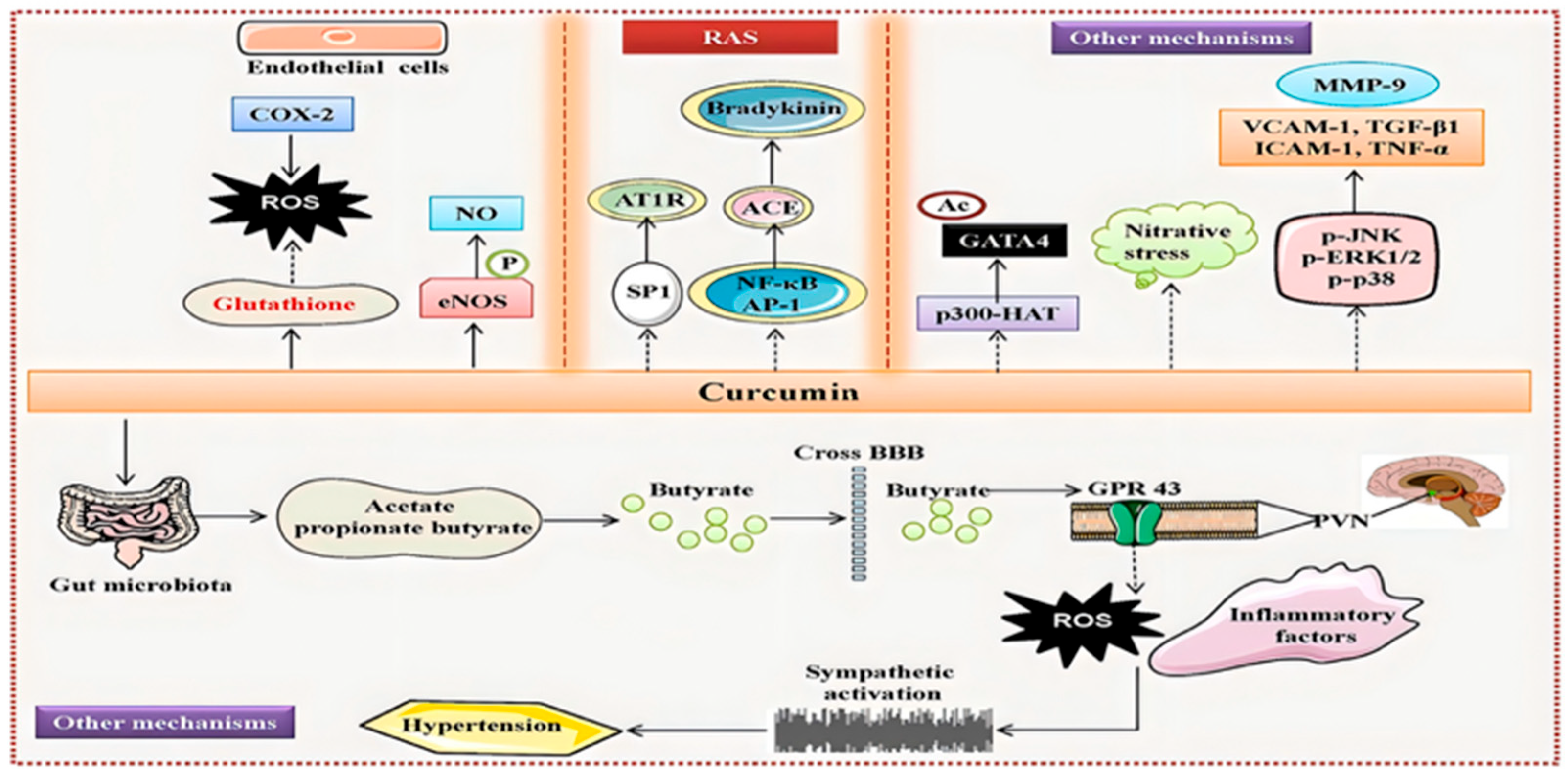
As illustrated in
Figure 5, curcumin exerts antihypertensive effects via multiple core pathways, with the restoration of vascular endothelial function representing a central mechanism [
71,
72]. In endothelial cells, curcumin activates endothelial nitric oxide synthase (eNOS), enhancing nitric oxide (NO) bioavailability and promoting vasodilation. Concurrently, it modulates transient receptor potential vanilloid 4 (TRPV4) channels [
73], facilitating Ca
2+ influx to trigger endothelium-dependent vasodilation, thereby improving vascular elasticity and mitigating blood pressure elevation. At the level of oxidative stress and inflammatory regulation, curcumin directly scavenges reactive oxygen species (ROS) and strengthens cellular defense by upregulating antioxidants, including glutathione. Inhibition of the NF-κB signaling pathway further suppresses the release of pro-inflammatory mediators, reducing vascular wall inflammation and slowing hypertension progression. Moreover, curcumin decreases GATA4 acetylation via p300-HAT inhibition, modulates gut microbiota metabolism to generate short-chain fatty acids, and suppresses renin–angiotensin system (RAS) activation. Collectively, these multi-dimensional mechanisms—encompassing endothelial function, central sympathetic activity, and hormonal regulation—enable curcumin to comprehensively counteract the pathophysiological progression of hypertension.
Curcumin also plays a pivotal role in optimizing neurohumoral regulation. It modulates renal dopamine receptor activity, improving sodium reabsorption in the renal tubules and mitigating the overactivation of the renin–angiotensin system (RAS), thereby reducing blood volume load. Moreover, curcumin inhibits angiotensin-converting enzyme (ACE), blocking the formation of angiotensin II and consequently reducing peripheral vascular resistance [
74]. With ongoing advancements in formulation processes, curcumin is expected to become an essential adjunct in the comprehensive treatment of hypertension. Its natural, safe, and multi-target intervention properties provide a promising approach for the prevention and management of global cardiovascular diseases.
4.5. Anti-Osteoporosis
Osteoporosis is a systemic metabolic bone disorder characterized by reduced bone mass, microstructural damage to bone tissue, increased bone fragility, and a heightened risk of fractures. As the global population ages, the decline in physiological function disrupts the balance of bone metabolism, accelerating bone loss and significantly increasing the risk of osteoporosis. This condition can lead to pathological fractures, particularly at the proximal humerus. Postoperative complications following open reduction and internal fixation (ORIF) for proximal humeral fractures include nonunion, malunion, osteonecrosis, infection, joint stiffness, and fixation failure. In cases of nonunion or fixation failure, revision surgery or joint replacement may be necessary. Joint stiffness, if unresponsive to physical therapy, may require further intervention, and symptomatic osteonecrosis may necessitate surgical treatment [
75]. Thus, the development of safe and effective preventive and therapeutic strategies for osteoporosis is urgently needed.
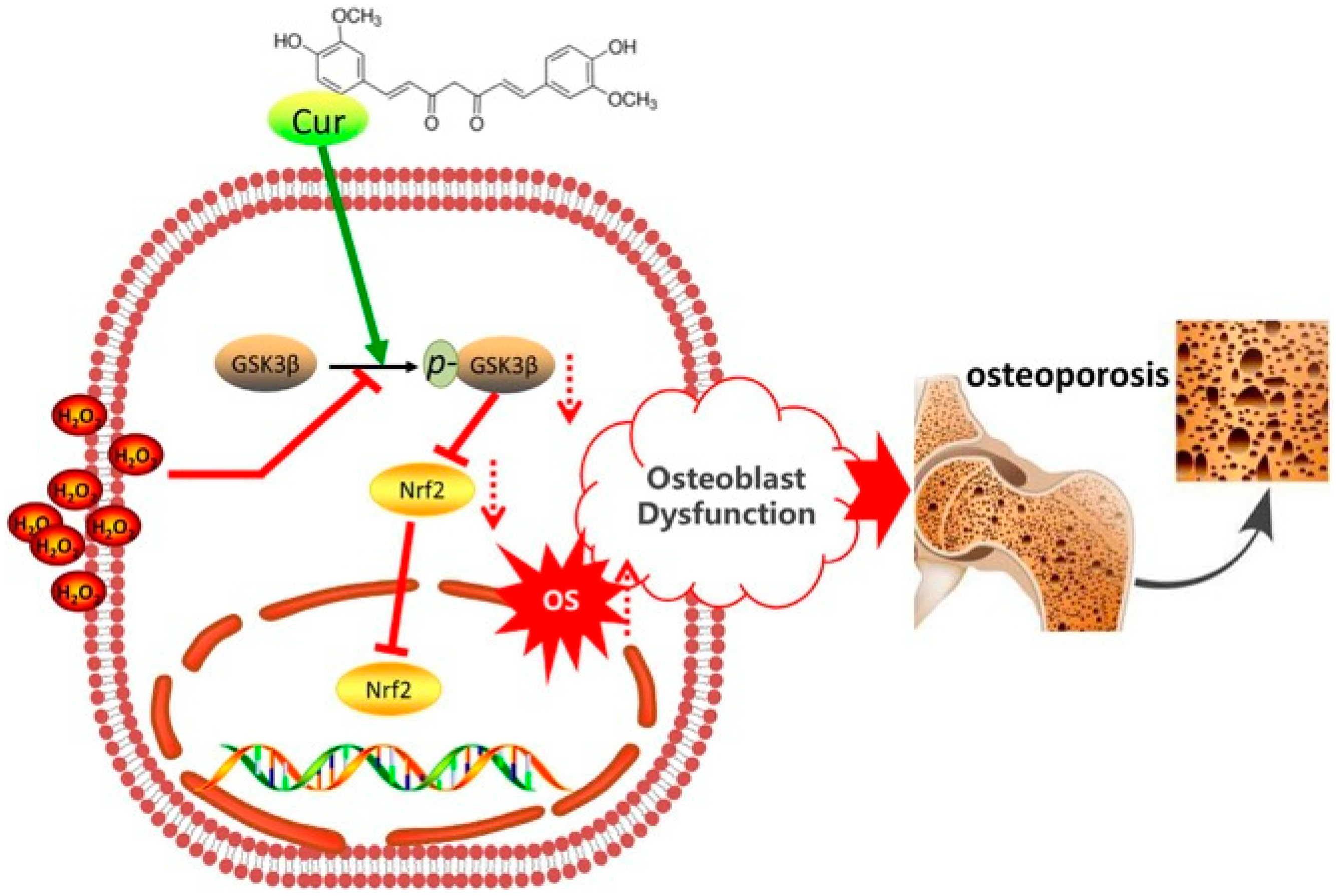
Recent studies have highlighted the multifaceted mechanisms of curcumin in the prevention and treatment of osteoporosis. Curcumin has been shown to inhibit apoptosis and adipogenic differentiation of bone marrow mesenchymal stem cells (BMSCs) while promoting their proliferation and osteogenic differentiation, thereby enhancing bone formation potential. Additionally, curcumin promotes osteoblast proliferation and differentiation, increases osteoblast activity, and reduces apoptosis (
Figure 6) [
76]. Furthermore, curcumin suppresses osteoclast activity, induces osteoclast apoptosis, and inhibits osteoclastogenesis, differentiation, and bone resorption, thus restoring the balance of bone metabolism, improving trabecular bone microstructure, reducing bone loss, and enhancing bone strength [
77].
Animal studies have further validated the anti-osteoporotic effects of curcumin. In rat models, curcumin has been shown to improve the strength and stability of bone-implant integration in osteoporotic rats. This effect may be mediated through curcumin’s regulation of bone remodeling, which prevents bone loss, thereby increasing surrounding bone mass and enhancing the strength and stability of implant–bone integration [
78]. In conclusion, curcumin shows substantial promise as a therapeutic agent for osteoporosis. As research progresses and technology advances, curcumin may offer new treatment options and hope for patients suffering from this debilitating condition.
4.6. Antidepressant Effect
Major depressive disorder (MDD) is characterized by a persistent depressive mood, loss of interest or pleasure in previously enjoyable activities, recurrent thoughts of death, and accompanying physical and cognitive symptoms. The quality of life of individuals affected by MDD is often diminished due to the disorder itself, its related complications, social factors, and functional impairments [
79]. According to the World Health Organization, approximately 280 million people worldwide suffer from depression, with nearly 100 million affected in China. The lifetime prevalence of depressive disorders among adults is approximately 6.8%, yet the overall treatment rate remains below 1% [
80]. In recent years, research into the active components of traditional Chinese medicine has revealed that a growing number of natural products, including ginsenosides, berberine, baicalin, and curcumin, exhibit potential antidepressant effects. Among these, curcumin has garnered significant attention due to its multi-target mechanisms.
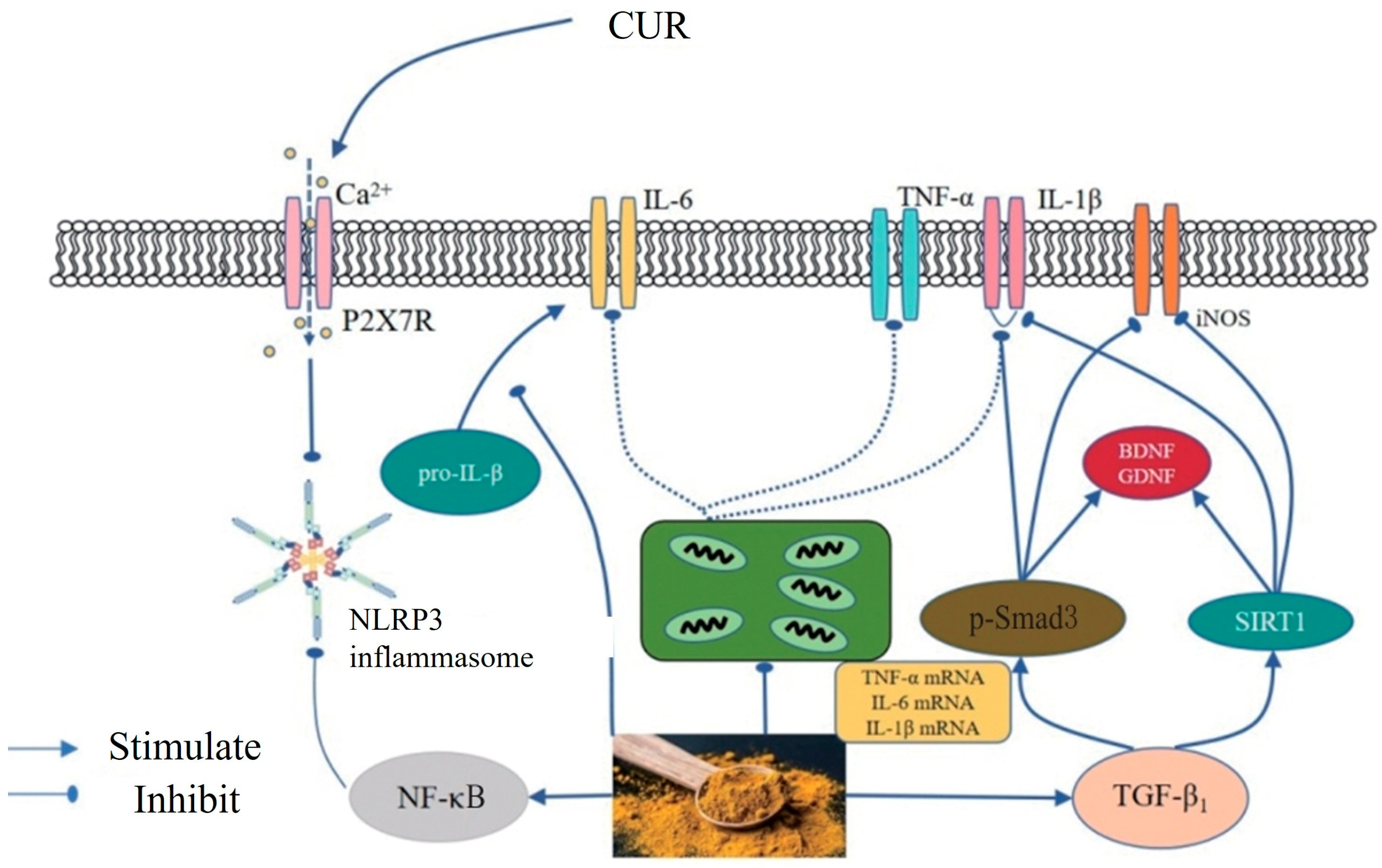
Current research suggests that the antidepressant effects of curcumin involve several mechanisms, including the regulation of neurotransmitter balance, modulation of the hypothalamic–pituitary–adrenal (HPA) axis function, upregulation of brain-derived neurotrophic factor (BDNF) expression, inhibition of neuroinflammation and oxidative stress (
Figure 7) [
81], and modulation of gut microbiota homeostasis [
82].
Regarding neurotransmitters, depression onset is closely associated with insufficient levels of serotonin (5-HT) and norepinephrine (NE) in the synaptic cleft [
83]. Impairment of monoaminergic neurotransmission typically manifests as anhedonia, psychomotor retardation, and disturbances in somatic functions, including sleep and appetite, and is widely regarded as a key neurobiological basis of depression-related behavioral and emotional dysfunction [
84]. Elevated levels of monoamine oxidase A (MAOA) can accelerate the breakdown of 5-HT, NE, and dopamine (DA), leading to decreased neuronal excitability, which is considered one of the key mechanisms underlying depression [
85]. Experimental data from Abd-Rabo et al. [
86] demonstrated that curcumin upregulates the expression of tryptophan hydroxylase 2 and 5-HT1A/2A receptor mRNA while downregulating MAOA mRNA expression, thereby increasing 5-HT levels in the brains of ovariectomized rats and exerting significant antidepressant effects.
In the regulation of neurotrophic factors, curcumin enhances the expression of BDNF in the hippocampus via the activation of the MAPK/ERK (mitogen-activated protein kinase/extracellular signal-regulated kinase) pathway, which improves synaptic plasticity and alleviates depressive symptoms [
87]. The mechanistic target of rapamycin (mTOR), a critical protein downstream of ERK, plays a pivotal role in neuronal development and synaptic function maintenance, and is also an important target for antidepressant drugs [
88]. Previous studies have shown that under stress conditions, BDNF levels significantly decrease, and mTOR signaling is impaired, leading to hippocampal synaptic dysfunction and depressive-like behaviors [
89,
90]. Furthermore, elevated corticosterone (CORT) levels can damage hippocampal neurons and are commonly used in animal models of depression [
91]. In cell and animal models, curcumin significantly alleviated CORT-induced damage in SH-SY5Y cells, enhancing cell survival rates, and exerted protective effects by modulating the expression of hippocampal BDNF, PSD-95, and SYN proteins. Additionally, behavioral tests such as the tail suspension test and forced swimming test in mice further validated curcumin’s efficacy in improving depressive-like behaviors [
92,
93,
94].
Mechanistic validation experiments have provided further support for these findings. Zhang et al. [
84] demonstrated that the administration of a specific MAPK/ERK pathway inhibitor significantly reduced curcumin-induced BDNF expression, indicating that curcumin’s antidepressant effects depend on the activation of the ERK downstream pathway. Moreover, when the mTOR signaling pathway was preemptively blocked by rapamycin, curcumin’s antidepressant effects were notably diminished, including reduced cell survival, decreased immobility time in mice, and altered neuronal morphology. These results suggest that curcumin’s antidepressant activity largely relies on the activation of the MAPK/ERK/mTOR-BDNF axis. In conclusion, curcumin shows promising potential in antidepressant research through its multi-target, multi-pathway synergistic effects. Its ability to regulate neurotransmitters, improve HPA axis function, promote neuroplasticity, and inhibit inflammation and oxidative stress offers a novel strategy for the prevention and treatment of depression.
5. The Role of Curcumin in Treating Oral Diseases
Oral and dental diseases not only affect the oral and maxillofacial regions but also significantly impact overall health. The prevalence of oral diseases is consistent across various age groups and leads to a range of adverse health consequences, including body image issues, insomnia, social isolation, pain, discomfort, fear, anxiety, and functional limitations. Severe periodontal disease is closely associated with the onset of diabetes and cardiovascular events, and, to a lesser extent, with cerebrovascular diseases and chronic obstructive pulmonary disease [
95]. However, the prevailing trend of “emphasizing treatment over prevention” remains widespread, with many patients seeking medical care only when pain or swelling occurs, which delays diagnosis and exacerbates both physical and economic burdens.
Traditional treatment methods, such as mechanical debridement and chemical disinfection, while effective to some extent, have limitations regarding treatment scope and durability. In contrast, curcumin, with its multi-target regulatory mechanisms, demonstrates unique advantages in the prevention and treatment of oral diseases. In recent years, curcumin-mediated photodynamic therapy (PDT) has emerged as a promising research frontier, particularly demonstrating potential in antibacterial and antifungal applications. PDT is a locally applied, spatially and temporally controllable treatment strategy. Its underlying mechanism involves cellular uptake of a photosensitizer followed by activation under light irradiation at a specific wavelength, leading to the generation of reactive oxygen species (ROS), such as singlet oxygen, which subsequently induce oxidative damage to target cells. Curcumin exhibits strong absorption in the blue light range (approximately 420–460 nm) and can function as a natural photosensitizer, efficiently generating ROS. This property enables curcumin to exert potent phototoxic effects against a broad spectrum of pathogenic microorganisms—including Candida albicans, methicillin-resistant Staphylococcus aureus (MRSA), and Escherichia coli—as well as their associated biofilms. From an application standpoint, the formulation of curcumin into microemulsions or nanocarrier-based delivery systems significantly enhances its solubility and stability, improves cellular uptake efficiency, and ultimately increases the therapeutic efficacy of PDT [
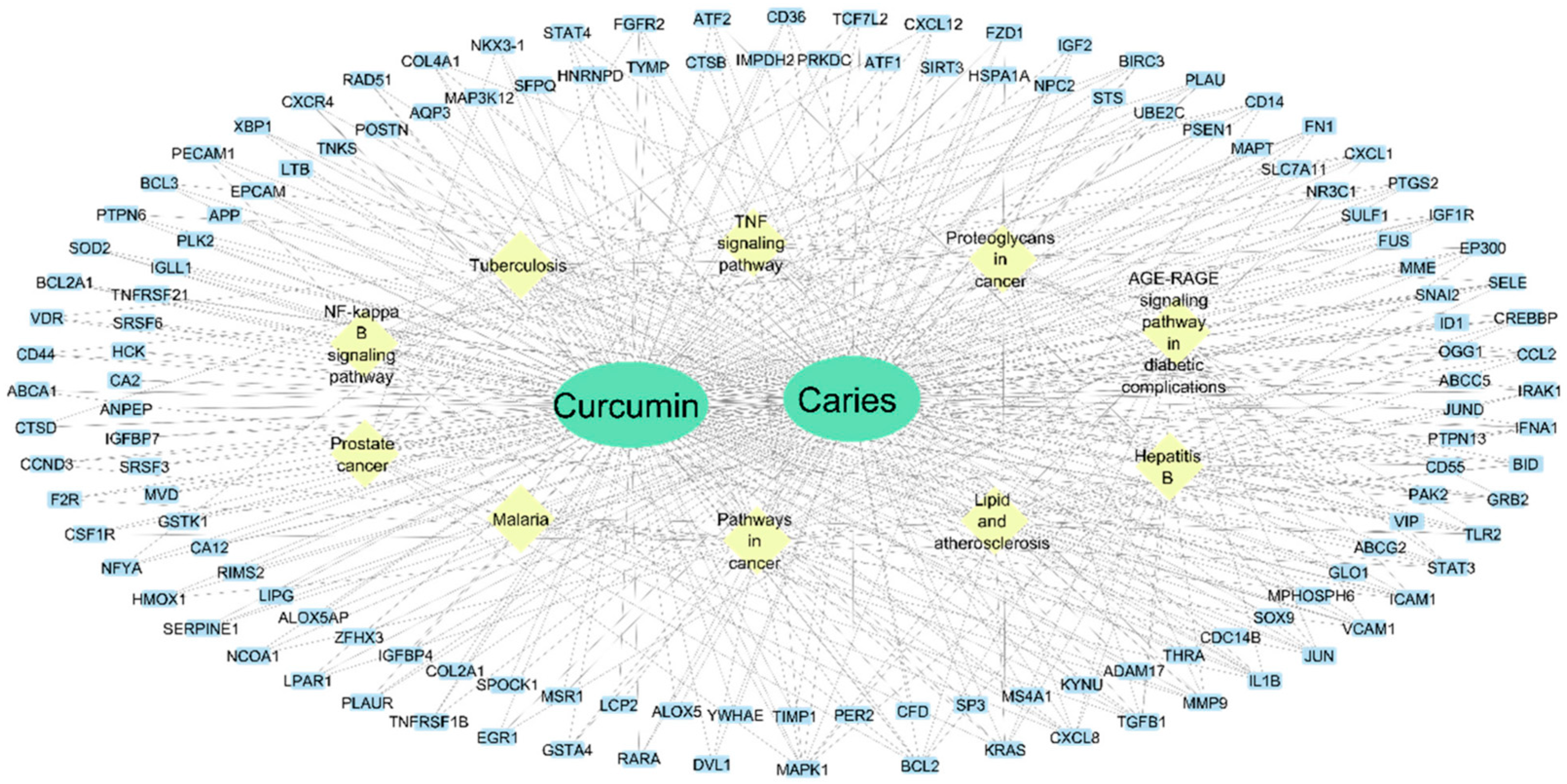
96]. Network pharmacology and molecular docking studies indicate that curcumin targets multiple core molecules involved in infection, inflammation, and tissue repair, forming an interconnected protein–protein interaction (PPI) network. Key nodes, such as MAPK1, BCL2, KRAS, CXCL8, TGFB1, MMP9, and IL1B, exhibit high centrality, suggesting that these genes/proteins may underpin curcumin’s antibacterial, anti-inflammatory, and reparative effects in oral pathological conditions (
Figure 8) [
97,
98]. Based on this PPI and pathway evidence, using curcumin as a PDT photosensitizer for localized oral treatment not only enhances its phototoxic effects on pathogenic microorganisms but also amplifies therapeutic benefits by modulating host inflammation and repair pathways. Studies have shown that when used as a photosensitizer for oral infectious diseases, curcumin’s effective concentration is significantly lower than when used alone, achieving a concentration-dependent synergistic enhancement that improves both treatment precision and safety [
99]. This characteristic not only broadens the clinical applications of curcumin but also advances the treatment paradigm for oral infectious diseases.
Furthermore, curcumin nanoparticles, due to their antibacterial, anti-inflammatory, and antioxidant properties, can enhance the performance of dental materials and oral care products. Incorporating these versatile nanoparticles into dental materials and oral care products is expected to significantly reduce the risk of infection, control biofilm formation, and improve oral health comprehensively [
100]. The mechanisms of action include inhibiting bacterial biofilm formation, alleviating local inflammatory responses, promoting tissue repair, and inducing apoptosis in tumor cells, thus providing a multi-dimensional intervention for oral diseases. In conclusion, the application of curcumin not only supplements existing clinical methods but also offers new avenues for developing precise, low-side-effect treatment strategies. As research in this area continues to progress, curcumin is expected to play a broader role in the field of oral medicine, contributing to new breakthroughs in the prevention and treatment of oral diseases.
6. Applications of Curcumin in Food Systems Driven by Physicochemical Properties
Curcumin’s applications in food systems are not solely based on its functional properties but also on its unique molecular structure and physicochemical characteristics. Its conjugated polyphenolic structure imparts light absorption, photosensitivity, and antioxidant capabilities, while its hydrophobicity and multiple functional groups enable diverse non-covalent interactions with food matrices and polymeric materials. These features underpin curcumin’s functionality in food preservation, processing, detection, and packaging. Recent advances in nanotechnology, protein-stabilized emulsions, and smart packaging have further diversified its applications and enhanced their value.
6.1. Food Preservation, Processing, and Inspection
Curcumin’s use in food systems primarily stems from its photosensitive molecular properties and related photochemical reactivity. The highly conjugated π-electron system of curcumin allows it to transition from the ground state to the excited state under visible light excitation and mediate type I and II photodynamic reactions via energy or electron transfer, producing singlet oxygen (
1O
2) and other reactive oxygen species (ROS) [
101]. These reactive species can disrupt microbial cell membranes and essential biomolecules, thereby exerting antimicrobial effects and providing a clear molecular basis for curcumin’s application in food preservation and rapid detection.
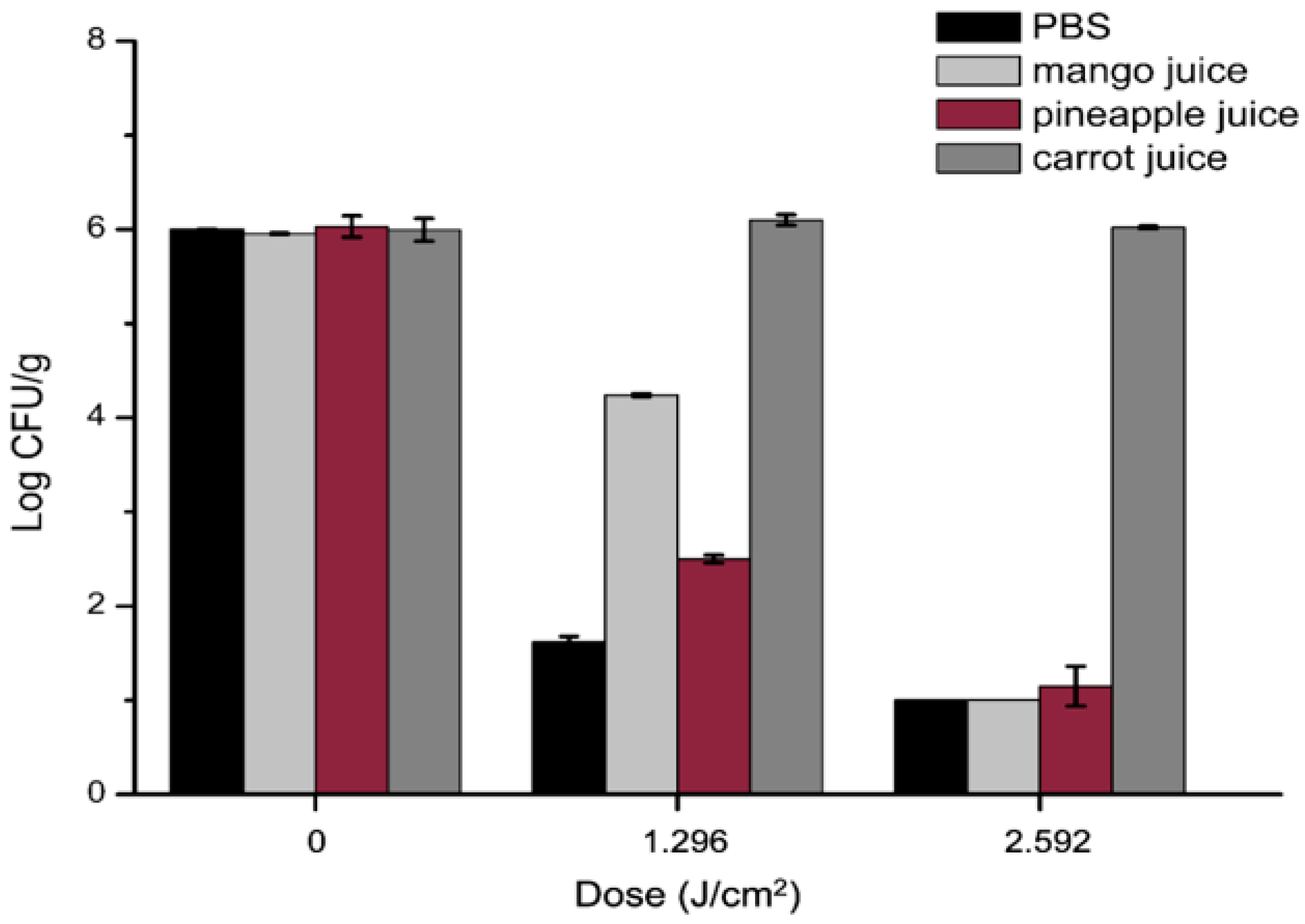
Based on this mechanism, curcumin, as a natural food-grade photosensitizer, has attracted increasing attention in photodynamic and sonophotodynamic food preservation. Yuan et al. [
102] systematically evaluated the efficacy of curcumin-mediated photodynamic treatment (aPDT) in inactivating common foodborne bacteria and its applicability in juice matrices. The results demonstrated that under optimal curcumin concentrations and light dosages, aPDT substantially reduced the colony count of Staphylococcus aureus in juices, with reductions of several log CFU/mL in matrices such as pineapple and mango juices. Furthermore, the treatment’s effects on juice color and sensory properties were modifiable through parameter optimization (
Figure 9). Yang et al. [
103] applied curcumin-mediated acousto-photodynamic combined treatment to effectively inhibit colony growth and significantly enhance the storage quality of passion fruit juice. These findings present new avenues for research in liquid food preservation.
Recent studies further indicate that nano-formulated curcumin and its smart carrier systems exhibit enhanced efficiency in food preservation. For instance, nano-curcumin incorporated into active or intelligent packaging systems provides pH-responsive antimicrobial and antioxidant protection, thereby extending the shelf life of fruits, vegetables, and liquid foods [
104]. In addition, protein-stabilized emulsions—such as whey protein isolate (WPI), soy protein isolate (SPI), and pea protein isolate (PPI) emulsions—substantially improve the solubility and antioxidant capacity of curcumin in functional foods, consequently enhancing its bioavailability [
105]. These advanced strategies not only reinforce conventional photodynamic antimicrobial and preservative functions but also offer intelligent and controllable solutions for food preservation.
In the development of functional foods, curcumin’s biological activity in modulating immune responses and suppressing inflammatory factors may contribute to the prevention of various chronic diseases. Notable products have already emerged, such as the “Curcumin Energy” beverage from Japan and the “Liver Ting Curcumin Capsules” from China. However, due to curcumin’s poor water solubility and low bioavailability, its widespread application remains limited. To address this, researchers have developed various solubilization techniques. For instance, to overcome these challenges, solubilization strategies—including polyvinylpyrrolidone (PVP) solid dispersions and emulsion-based delivery systems—have been developed, significantly improving absorption efficiency and expanding its potential in functional food formulations [
106].
In food processing, curcumin functions as a natural colorant and flavoring agent, providing an alternative to synthetic dyes and meeting the increasing demand for “clean label” products. Additionally, curcumin exerts preservative effects by inhibiting bacterial division [
107]. For example, the inclusion of 0.1% curcumin in sausages reduces the proliferation of harmful microorganisms such as Listeria monocytogenes [
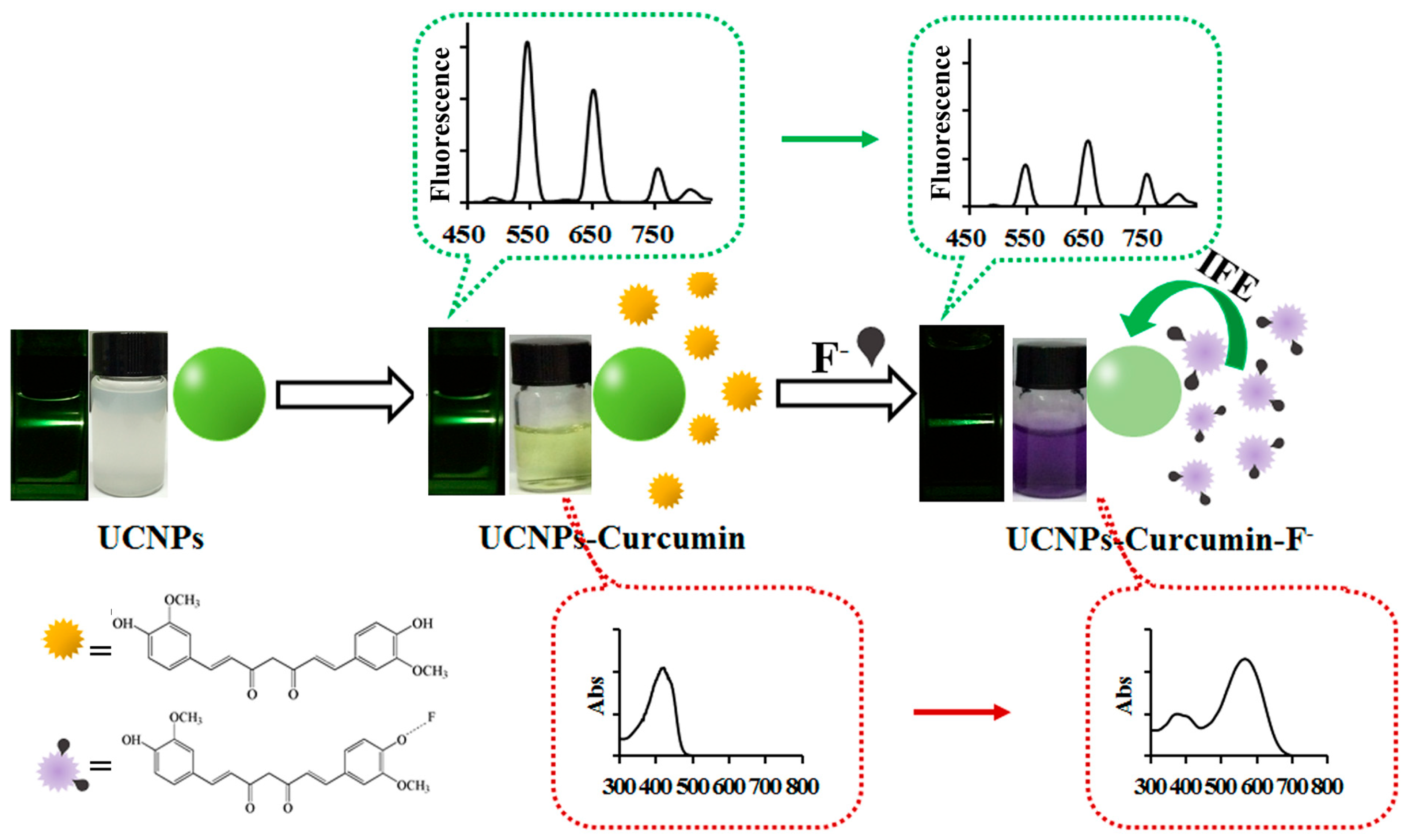
108]. Furthermore, curcumin has demonstrated unique potential in food detection. Curcumin exhibits a characteristic absorption peak in the 280–450 nm range, which overlaps with the spectra of luminescent nanomaterials, such as carbon quantum dots. This interaction results in the quenching of the nanomaterials’ fluorescence intensity, while curcumin’s fluorescence either enhances or remains unchanged. Based on this property, researchers have developed curcumin-based nanosensors (
Figure 10), offering rapid detection, high sensitivity, low cost, and ease of operation. These nanosensors provide a novel technological approach for food safety screening [
109].
6.2. Food Packaging Film
In recent years, curcumin has attracted considerable attention in research on active food packaging films due to its antioxidant activity, ultraviolet (UV)-shielding capability, and ability to modulate the microstructure of film materials. These properties contribute to the stabilization of active ingredients (e.g., vitamins and polyphenols), delay food oxidation and photodegradation, and improve the mechanical strength and barrier performance of packaging materials, thereby extending the shelf life of fruits, vegetables, and functional foods. At the molecular level, curcumin can form hydrogen bonds and hydrophobic interactions with polymer matrices, enhancing photostability, mechanical integrity, and barrier properties, ultimately prolonging the shelf life of packaged products.
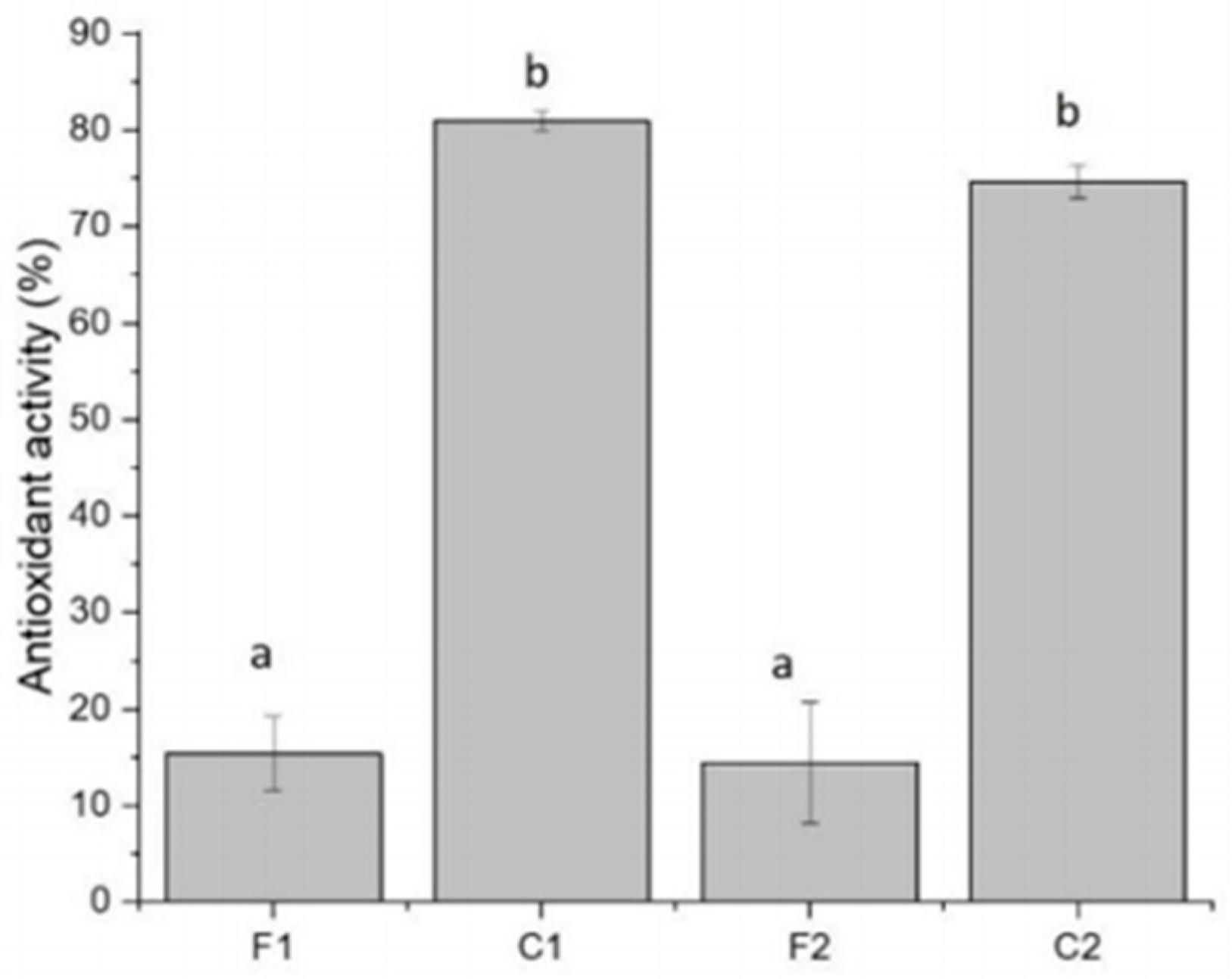
First, from a mechanistic antioxidant perspective, the antioxidant efficacy of curcumin is substantially enhanced when incorporated into carrier-based or composite delivery systems. Due to its pronounced hydrophobicity, curcumin preferentially partitions into hydrophobic domains within polymer matrices or carrier architectures, thereby improving molecular stability and augmenting free radical scavenging capacity. Accumulating evidence demonstrates that relative to curcumin-free control films, curcumin-loaded biopolymer packaging films exhibit markedly elevated antioxidant activity in radical scavenging assays, including DPPH (
Figure 11) [
110]. This enhanced antioxidant functionality not only attenuates oxidative degradation of the packaging materials themselves but also effectively delays oxidative spoilage of fruits, vegetables, and aquatic products during practical application, thereby establishing a hierarchical antioxidant protection system extending from packaging matrices to packaged foods. Further studies confirm that curcumin significantly enhances the antioxidant capacity of active packaging films, as evidenced by increased DPPH and ABTS free radical scavenging activities and effective inhibition of lipid oxidation [
111,
112]. For instance, incorporating curcumin into chitosan/tobacco moth protein (CS/TMP) or gelatin-based composite films significantly delayed the oxidative degradation of blueberries and shrimp products, thereby reducing nutrient loss and extending shelf life.
Second, curcumin demonstrates excellent UV protection properties. The conjugated double bond structure in its molecular composition efficiently absorbs UV light, thereby preventing the degradation of sensitive compounds such as anthocyanins and vitamins caused by UV exposure [
110,
111,
112,
113]. In a bilayer intelligent packaging system, curcumin was incorporated into the protective layer, significantly enhancing the film’s barrier capacity against UV-B and UV-A radiation. This effectively preserved the photostability of pH-sensitive dyes (e.g., anthocyanins) in the indicator layer. Consequently, the functional lifespan of the packaging film was extended, and the accuracy and stability of freshness indicators in intelligent packaging were ensured.
In addition, curcumin significantly improves the mechanical strength and water vapor barrier properties of the packaging material by enhancing its microstructure. Its molecules form hydrogen bonds and hydrophobic interactions with film-forming components such as chitosan, gelatin, and proteins, promoting the orderly arrangement of molecules and the densification of the network structure, thereby constructing a more uniform and compact composite film. Experimental results show that curcumin-containing packaging films excel in tensile strength, elongation at break, and water vapor barrier properties. For example, adding 0.3% curcumin to CS/TMP composite films reduced water vapor permeability by 37.04% and increased elongation at break by 27.39% [
111,
113]. This structural reinforcement not only reduces the risk of moisture migration and mechanical fatigue but also broadens the application potential of packaging films in high humidity and refrigerated environments.
Recent studies have further expanded the application of curcumin in smart and edible packaging systems, including: (i) nano-curcumin/nanoclay composite films that provide pH-responsive sensing and antimicrobial functions for shrimp and other highly perishable fruits and vegetables [
114]; (ii) protein-stabilized emulsions and edible coatings that enhance antioxidant and UV-shielding performance, thereby extending the shelf life of fresh produce [
105,
115]; and (iii) zein–curcumin smart films that markedly improve antioxidant capacity and exhibit reversible pH responsiveness, making them suitable for diverse food packaging applications [
116].
In conclusion, through a combination of antioxidant, UV protection, and structural reinforcement mechanisms, curcumin enhances the shelf life of food and improves the functional performance of packaging materials. These properties underscore its significant potential for future applications in food preservation and intelligent packaging.
7. Curcumin Nanodelivery Systems and Translational Applications
Based on its aforementioned physicochemical properties and applications in food systems, curcumin exhibits promising functional potential. However, its clinical application in biomedicine remains limited due to poor water solubility, low bioavailability, and rapid in vivo metabolism [
1]. Recent advancements in nanotechnology have introduced new strategies to overcome these limitations. By developing nanodelivery systems, curcumin’s stability, targeting capability, and therapeutic efficacy in vivo can be significantly improved [
32,
61].
7.1. Overview of Nanodelivery Systems
To overcome curcumin’s pharmacokinetic limitations, various nanodelivery platforms have been developed, including liposomes, solid lipid nanoparticles (SLNs), nanogels, polymeric nanoparticles, and microspheres [
32,
61,
62,
63,
64]. These systems significantly enhance curcumin’s solubility and stability, reduce degradation and oxidative loss, extend circulation time, and increase targeted accumulation, thereby improving bioavailability. Additionally, nanocarriers can enable controlled and stimuli-responsive drug release, delivering curcumin precisely to acidic or enzymatically active environments to further enhance the therapeutic effects. Nanocarriers can also be combined with chemotherapeutic drugs or other natural compounds to achieve synergistic therapy and superior efficacy. Different types of carriers have distinct characteristics, as shown in
Table 2.
7.2. Translational Applications and Challenges
Although nanodelivery strategies have demonstrated significant efficacy in vitro and in animal models—such as enhancing curcumin accumulation and apoptosis induction in liver cancer models using liposomes and SLNs [
32], and suppressing inflammation in IBD animal models with SLNs and other lipid carriers [
61,
62]—their clinical translation faces multiple challenges.
First, pharmacokinetics and dose optimization require thorough evaluation, including extended circulation half-life, tissue distribution, and the safety of metabolic products (curcumin’s rapid metabolism and low oral absorption have been confirmed in multiple studies) [
1]. Second, nanocarriers may induce immune responses or accumulate in organs, necessitating long-term toxicological data, as most current reports are limited to short-term animal studies [
32,
61]. Third, scale-up production and quality control remain bottlenecks, as complex manufacturing processes can affect the stability and consistency of nanomedicine from batch to batch. Additionally, clinical trial design must integrate nanocarriers with standard therapies to verify efficacy and tolerability. Finally, individualized dosing strategies are crucial, as carrier distribution may vary among patients, requiring precise targeting to maximize therapeutic outcomes.
Overall, nanodelivery provides a feasible technological pathway for curcumin’s clinical application; however, challenges remain in safety assessment, process standardization, and clinical-grade validation. A multidisciplinary approach integrating pharmacology, pharmacokinetics, toxicology, and formulation engineering is essential to systematically advance curcumin from basic research to clinical application [
1,
32,
61,
62,
63,
64].
8. Conclusions and Perspective
Curcumin, a natural polyphenolic compound with a well-defined structure, a high safety profile, and a broad target range, demonstrates significant potential in both basic research and applied development. This review highlights that curcumin exerts multifaceted pharmacological effects through the modulation of key signaling pathways, including PI3K/Akt, NF-κB, JAK/STAT, MAPK/ERK, mTOR, and Wnt/β-catenin. These actions influence various cellular processes such as apoptosis, inflammation, metabolic homeostasis, and neuroregulation. Consequently, curcumin proves effective in a variety of disease models, including cancer, inflammation, depression, fibrosis, hypertension, and liver diseases. Moreover, its applications continue to expand across multiple disciplines, including food science, packaging materials, and functional nanoplatforms, driving the ongoing momentum of its translational research.
However, the clinical translation of curcumin is hindered by challenges such as its poor water solubility, rapid metabolism, and instability in vivo. While numerous optimization strategies, including nanoparticles, liposomes, solid dispersions, microspheres, and smart-responsive carriers, have been developed, the precise coupling between the mechanism of action, delivery system, and target disease remains a critical area for further refinement. Additionally, natural extraction methods face challenges related to low efficiency and high resource dependency [
117], emphasizing the need for the integration of synthetic biology to establish green, efficient, and sustainable production pathways. Furthermore, current research on curcumin’s mechanisms is predominantly confined to individual signaling pathways, with the lack of a comprehensive pharmacological framework for multi-pathway synergistic regulation. Clinical validation is also insufficient, as large-scale, double-blind, multi-center studies are lacking, thus hindering the full recognition of its therapeutic potential.
Looking ahead, curcumin research must shift from focusing on “multiple breakthroughs” to adopting a strategy of “systematic integration”. Mechanistic studies should prioritize the integration of omics technologies, network pharmacology, and systems biology to construct a multi-target regulatory map that overcomes the limitations of linear mechanistic models. In drug delivery system design, developing intelligent platforms that combine targeting, controlled release, and synergistic effects should be a priority to enhance curcumin’s tissue enrichment and therapeutic persistence in complex pathological environments. Concurrently, green synthesis technologies should become central to addressing resource dependency and scalability challenges. Ongoing progress in process development and technological iteration is accelerating, laying the groundwork for the functional expansion and industrial application of curcumin [
118,
119,
120,
121,
122,
123]. Additionally, the clinical translation of curcumin should be expedited through large-scale, multi-center, standardized clinical studies to establish verifiable, reproducible evidence-based medical support.
Of particular importance is the untapped potential of curcumin beyond its known pharmacological effects. Its role in emerging fields such as neuropsychiatric disease modulation, tumor immune microenvironment remodeling, and gut microbiota homeostasis regulation remains underexplored. Future research should prioritize the integration of artificial intelligence-assisted drug design, data-driven efficacy prediction, and materials science, positioning curcumin as a core strategic element in interdisciplinary platforms. This will facilitate its application in precision medicine, nutritional interventions, and functional materials development, enabling a systematic transition from basic mechanistic research to industrial implementation.
Author Contributions
Y.H.: Conceptualization, Writing—original draft. L.L. (Lu Liu): Conceptualization, Writing—original draft. S.W.: Conceptualization, Investigation. K.W.: Conceptualization, Investigation. L.L. (Li Li): Approval of Final Version. Q.S.: Writing—review and editing, Approval of Final Version. All authors have read and agreed to the published version of the manuscript.
Funding
This work was financially supported by the Basic Research Project of Yunnan Province (Grant No. 202501AT070335), the TCM Joint Project of Yunnan Province (Grant No. 202301AZ070001-033), the Open Subject of Yunnan Key Laboratory of Dai and Yi Medicines (Grant No. 2024JS2406), the Innovative and Entrepreneurial Training Program for Undergraduates of 2024 (Grant Nos. 40570102816 and 40570102817), and the National Natural Science Foundation of China (Grant No. 82460988).
Institutional Review Board Statement
Not applicable.
Informed Consent Statement
Not applicable.
Data Availability Statement
No new data were created or analyzed in this study.
Acknowledgments
This work was financially supported by the Basic Research Project of Yunnan Province (No. 202501AT070335 (Q.S.)), the TCM Joint Project of Yunnan Province (No. 202301AZ070001-033 (Q.S.)), the Open Subject of Yunnan Key Laboratory of Dai and Yi Medicines (No. 2024JS2406 (Q.S.)), the Innovative and Entrepreneurial Training Program for Undergraduates of 2024 (Nos. 40570102816 and 40570102817 (L.L.), and the National Natural Science Foundation of China (No. 82460988 (L.L.)).
Conflicts of Interest
The authors declare no conflicts of interest.
Abbreviations
| 5-HT | 5-Hydroxytryptamine (Serotonin) |
| ABC | ATP-Binding Cassette |
| ABTS | 2,2′-Azino-bis(3-ethylbenzothiazoline-6-sulfonic acid) |
| ACE | Angiotensin-Converting Enzyme |
| AE | Aerobic Exercise |
| aPDT | Antimicrobial Photodynamic Treatment |
| Akt | Protein Kinase B |
| AKP | Alkaline Phosphatase |
| ALT | Alanine Aminotransferase |
| AML | Acute Myeloid Leukemia |
| AST | Aspartate Aminotransferase |
| ATLI | Anti-Tuberculosis Drug-Induced Liver Injury |
| BAX | Bcl-2-Associated X Protein |
| BBB | Blood–Brain Barrier |
| BCL-2 | B-Cell Lymphoma 2 |
| BCLAF1 | BCL-2-Associated Transcription Factor 1 |
| BDNF | Brain-Derived Neurotrophic Factor |
| BMSCs | Bone Marrow Mesenchymal Stem Cells |
| β-catenin | Beta-Catenin |
| CD | Crohn’s Disease |
| CHOP | C/EBP Homologous Protein |
| COPD | Chronic Obstructive Pulmonary Disease |
| CORT | Corticosterone |
| COX-2 | Cyclooxygenase-2 |
| CS/TMP | Chitosan/Tenebrio molitor Protein |
| CUR | Curcumin |
| DA | Dopamine |
| DMSO | Dimethyl Sulfoxide |
| DNMTs | DNA Methyltransferases |
| DPPH | 2,2-Diphenyl-1-picrylhydrazyl |
| DSS | Dextran Sulfate Sodium |
| eNOS | Endothelial Nitric Oxide Synthase |
| EMT | Epithelial–Mesenchymal Transition |
| ER | Endoplasmic Reticulum |
| ERK | Extracellular Signal-Regulated Kinase |
| Fe2+ | Ferrous Ion |
| FTC | Follicular Thyroid Carcinoma |
| GDNF | Glial Cell Line-Derived Neurotrophic Factor |
| GPR43 | G Protein-Coupled Receptor 43 |
| GPX4 | Glutathione Peroxidase 4 |
| GSDME | Gasdermin E |
| GSDME-N | Gasdermin E N-Terminal Fragment |
| GSK3β | Glycogen Synthase Kinase-3β |
| H2O2 | Hydrogen Peroxide |
| HCC | Hepatocellular Carcinoma |
| HDACs | Histone Deacetylases |
| HO-1 | Heme Oxygenase 1 |
| HPA Axis | Hypothalamic–Pituitary–Adrenal Axis |
| IBD | Inflammatory Bowel Disease |
| IKKβ | Inhibitor of Nuclear Factor Kappa-B Kinase Subunit Beta |
| IL | Interleukin |
| IL-1β | Interleukin-1β |
| IL-6 | Interleukin-6 |
| iNOS | Inducible Nitric Oxide Synthase |
| IR | Insulin Resistance |
| JAK | Janus Kinase |
| JAK/STAT | Janus Kinase/Signal Transducer and Activator of Transcription |
| JNK | c-Jun N-Terminal Kinase |
| LC3 | Microtubule-Associated Protein 1 Light Chain 3 |
| LDHA | Lactate Dehydrogenase A |
| lncRNA | Long Non-Coding RNA |
| LPS | Lipopolysaccharide |
| MAOA | Monoamine Oxidase A |
| MAPK | Mitogen-Activated Protein Kinase |
| MAPK/ERK | Mitogen-Activated Protein Kinase/Extracellular Signal-Regulated Kinas |
| MDA | Malondialdehyde |
| MDD | Major Depressive Disorder |
| miRNA/miR | MicroRNA |
| MMP | Matrix Metalloproteinase |
| MMP-9 | Matrix Metalloproteinase 9 |
| MRSA | Methicillin-Resistant Staphylococcus aureus |
| mTOR | Mechanistic (or Mammalian) Target of Rapamycin |
| NAFLD | Non-Alcoholic Fatty Liver Disease |
| NE | Norepinephrine |
| NF-κB | Nuclear Factor Kappa-Light-Chain-Enhancer of Activated B Cells |
| NLRP3 | NOD-, LRR- and Pyrin Domain-Containing Protein 3 |
| NO | Nitric Oxide |
| NOS2 | Nitric Oxide Synthase 2 (Inducible NOS) |
| Nrf2 | Nuclear Factor Erythroid 2–Related Factor 2 |
| NSCLC | Non-Small Cell Lung Cancer |
| ORIF | Open Reduction and Internal Fixation |
| OS | Oxidative Stress |
| OSCC | Oral Squamous Cell Carcinoma |
| p-GSK3β | Phosphorylated Glycogen Synthase Kinase-3β |
| PARP | Poly(ADP-Ribose) Polymerase |
| PDT | Photodynamic Therapy |
| PDK2 | Pyruvate Dehydrogenase Kinase 2 |
| PI3K | Phosphoinositide 3-Kinase |
| PI3K/Akt | Phosphoinositide 3-Kinase/Protein Kinase B |
| PPI | Pea Protein Isolate |
| PPI | Protein–Protein Interaction |
| PSD-95 | Postsynaptic Density Protein 95 |
| P2X7R | Purinergic Receptor P2X7 |
| PTC | Papillary Thyroid Carcinoma |
| PTEN | Phosphatase and Tensin Homolog |
| PVP | Polyvinylpyrrolidone |
| RAS | Renin–Angiotensin System |
| ROS | Reactive Oxygen Species |
| SCFAs | Short-Chain Fatty Acids |
| Ser9 | Serine 9 |
| Shh | Sonic Hedgehog |
| SIRT1 | Sirtuin 1 |
| SLNs | Solid Lipid Nanoparticles |
| SPAG5 | Sperm-Associated Antigen 5 |
| SPI | Soy Protein Isolate |
| STAT | Signal Transducer and Activator of Transcription |
| STAT3 | Signal Transducer and Activator of Transcription 3 |
| SYN | Synaptophysin |
| TBAs | Total Bile Acids |
| TBIL | Total Bilirubin |
| TC | Total Cholesterol |
| TGs | Triglycerides |
| TGF-β1 | Transforming Growth Factor-β1 |
| TLR | Toll-Like Receptor |
| TLR4 | Toll-Like Receptor 4 |
| TRPV4 | Transient Receptor Potential Vanilloid 4 |
| TNF-α | Tumor Necrosis Factor-α |
| UC | Ulcerative Colitis |
| UCNPs | Upconversion Nanoparticles |
| UV | Ultraviolet |
| UV-A | Ultraviolet A |
| UV-B | Ultraviolet B |
| VCAM-1 | Vascular Cell Adhesion Molecule 1 |
| WHO | World Health Organization |
| Wnt | Wingless/Integrated |
| Wnt/β-catenin | Wnt Signaling Pathway/Beta-Catenin |
| WPI | Whey Protein Isolate |
| WT1 | Wilms Tumor 1 |
References
- Kaur, K.; Al-Khazaleh, A.K.; Bhuyan, D.J.; Li, F.; Li, C.G. A Review of Recent Curcumin Analogues and Their Antioxidant, Anti-Inflammatory, and Anticancer Activities. Antioxidants 2024, 13, 1092. [Google Scholar] [CrossRef]
- Sudarshan, K.; Perumal, G.; Aidhen, I.S.; Doble, M. Synthesis of Unsymmetrical Linear Diarylheptanoids and their Enantiomers and Antiproliferative Activity Studies. Eur. J. Org. Chem. 2018, 2018, 6379–6387. [Google Scholar] [CrossRef]
- Sudarshan, K.; Yarlagadda, S.; Sengupta, S. Recent Advances in the Synthesis of Diarylheptanoids. Chem. Asian J. 2024, 19, e202400380. [Google Scholar] [CrossRef] [PubMed]
- Hu, P.; Li, K.; Peng, X.-X.; Kan, Y.; Yao, T.-J.; Wang, Z.-Y.; Li, Z.; Liu, H.-Y.; Cai, D. Curcumin derived from medicinal homologous foods: Its main signals in immunoregulation of oxidative stress, inflammation, and apoptosis. Front. Immunol. 2023, 14, 1233652. [Google Scholar] [CrossRef]
- Do, X.-H.; Hoang, M.H.T.; Vu, A.-T.; Nguyen, L.-T.; Bui, D.T.T.; Dinh, D.-T.; Nguyen, X.-H.; Than, U.T.T.; Mai, H.T.; To, T.T.; et al. Differential Cytotoxicity of Curcumin-Loaded Micelles on Human Tumor and Stromal Cells. Int. J. Mol. Sci. 2022, 23, 12362. [Google Scholar] [CrossRef] [PubMed]
- Hou, D.; Liao, H.; Hao, S.; Liu, R.; Huang, H.; Duan, C. Curcumin simultaneously improves mitochondrial dynamics and myocardial cell bioenergy after sepsis via the SIRT1-DRP1/PGC-1α pathway. Heliyon 2024, 10, e28501. [Google Scholar] [CrossRef]
- Hu, Y.; Cheng, L.; Du, S.; Wang, K.; Liu, S. Antioxidant curcumin induces oxidative stress to kill tumor cells (Review). Oncol. Lett. 2024, 27, 67. [Google Scholar] [CrossRef]
- Zahedi, M.; Izadi, H.S.; Arghidash, F.; Gumpricht, E.; Banach, M.; Sahebkar, A. The effect of curcumin on hypoxia in the tumour microenvironment as a regulatory factor in cancer. Arch. Med. Sci. 2023, 19, 1616–1629. [Google Scholar] [CrossRef]
- Han, B.; Zheng, R.; Zeng, H.; Wang, S.; Sun, K.; Chen, R.; Li, L.; Wei, W.; He, J. Cancer incidence and mortality in China. J. Natl. Cancer Cent. 2024, 4, 47–53. [Google Scholar] [CrossRef]
- Alves, C.L.; Ditzel, H. Drugging the PI3K/AKT/mTOR pathway in ER+ breast cancer. Int. J. Mol. Sci. 2023, 24, 4522. [Google Scholar] [CrossRef]
- Nepstad, I.; Hatfield, K.J.; Gronningsaeter, I.S.; Reikvam, H. The PI3K-Akt-mTOR signaling pathway in human acute myeloid leukemia (AML) cells. Int. J. Mol. Sci. 2020, 21, 2907. [Google Scholar] [CrossRef]
- Navaei, Z.N.; Khalili-Tanha, G.; Zangouei, A.S.; Abbaszadegan, M.R.; Moghbeli, M. PI3K/AKT signaling pathway as a critical regulator of cisplatin response in tumor cells. Oncol. Res. 2022, 29, 235–250. [Google Scholar] [CrossRef] [PubMed]
- Xiao, X.; Chen, M.; Sang, Y.; Xue, J.; Jiang, K.; Chen, Y.; Zhang, L.; Yu, S.; Lv, W.; Li, Y.; et al. Methylation-mediated silencing of ATF3 promotes thyroid cancer progressio n by regulating prognostic genes in the MAPK and PI3K/AKT pathways. Thyroid 2023, 33, 1441–1454. [Google Scholar] [CrossRef] [PubMed]
- Chen, L.; Zhuo, D.; Yuan, H. Circ100395 impedes malignancy and glycolysis in papillary thyroid cancer: Involvement of PI3K/AKT/mTOR signaling pathway. Immunol. Lett. 2022, 246, 10–17. [Google Scholar] [CrossRef] [PubMed]
- Liang, Y.; Kong, D.; Zhang, Y.; Li, S.; Li, Y.; Dong, L.; Zhang, N.; Ma, J. Curcumin inhibits the viability, migration and invasion of papillary thyroid cancer cells by regulating the miR-301a-3p/STAT3 axis. Exp. Ther. Med. 2021, 22, 875. [Google Scholar] [CrossRef]
- Liu, Z.; Wang, J. Curcumin Inhibits Proliferation and Induces Apoptosis in Papillary Thyroid Carcinoma Cells via the PI3K/AKT Signaling Pathway. Spec. Wild Econ. Anim. Plant Res. 2024, 46, 76–80. [Google Scholar] [CrossRef]
- Khan, A.Q.; Ahmed, E.I.; Elareer, N.; Fathima, H.; Prabhu, K.S.; Siveen, K.S.; Kulinski, M.; Azizi, F.; Dermime, S.; Ahmad, A.; et al. Curcumin-mediated apoptotic cell death in papillary thyroid cancer and cancer stem-like cells through targeting of the JAK/STAT3 signaling pathway. Int. J. Mol. Sci. 2020, 21, 438. [Google Scholar] [CrossRef]
- Li, Z.; Gao, Y.; Li, L.; Xie, S. Curcumin inhibits papillary thyroid cancer cell proliferation by regulating lncRNA LINC00691. Anal. Cell. Pathol. 2022, 2022, 5946670. [Google Scholar] [CrossRef]
- Xu, X.; Qin, J.; Liu, W. Curcumin inhibits the invasion of thyroid cancer cells via down-regulation of PI3K/Akt signaling pathway. Gene 2014, 546, 226–232. [Google Scholar] [CrossRef]
- Zhang, J.; Yu, J.; Xie, R.; Chen, W.; Lv, Y. Combinatorial anticancer effects of curcumin and sorafenib towards thyroid cancer cells via PI3K/Akt and ERK pathways. Nat. Prod. Res. 2016, 30, 1858–1861. [Google Scholar] [CrossRef]
- Leiter, A.; Veluswamy, R.R.; Wisnivesky, J.P. The global burden of lung cancer: Current status and future trends. Nat. Rev. Clin. Oncol. 2023, 20, 624–639. [Google Scholar] [CrossRef]
- Hibino, S.; Kawazoe, T.; Kasahara, H.; Itoh, S.; Ishimoto, T.; Sakata-Yanagimoto, M.; Taniguchi, K. Inflammation-induced tumorigenesis and metastasis. Int. J. Mol. Sci. 2021, 22, 5421. [Google Scholar] [CrossRef]
- Budisan, L.; Zanoaga, O.; Braicu, C.; Prilog, R.; Covaliu, B.; Esanu, V.; SKorban, S.; Berindan-Neagoe, I. Links between infections, lung cancer, and the immune system. Int. J. Mol. Sci. 2021, 22, 9394. [Google Scholar] [CrossRef] [PubMed]
- Tsay, J.-C.J.; Wu, B.G.; Sulaiman, I.; Gershner, K.; Schluger, R.; Li, Y.; Yie, T.A.; Meyn, P.; Olsen, E.; Perez, L.; et al. Lower airway dysbiosis affects lung cancer progression. Cancer Discov. 2021, 11, 293–307. [Google Scholar] [CrossRef] [PubMed]
- DeBerardinis, R.J.; Sayed, N.; Ditsworth, D.; Thompson, C.B. Brick by brick: Metabolism and tumor cell growth. Curr. Opin. Genet. Dev. 2008, 18, 54–61. [Google Scholar] [CrossRef] [PubMed]
- Ganapathy-Kanniappan, S.; Geschwind, J.-F.H. Tumor glycolysis as a target for cancer therapy: Progress and prospects. Mol. Cancer 2013, 12, 152. [Google Scholar] [CrossRef]
- Sun, X.; Peng, Y.; Zhao, J.; Xie, Z.; Lei, X.; Tang, G. Discovery and development of tumor glycolysis rate-limiting enzyme inhibitors. Bioorg. Chem. 2021, 112, 104891. [Google Scholar] [CrossRef]
- Mo, F.; Xiao, Y.; Zeng, H.; Fan, D.; Song, J.; Liu, X.; Luo, M.; Ma, X. Curcumin-induced global profiling of transcriptomes in small cell lung cancer cells. Front. Cell Dev. Biol. 2021, 8, 588299. [Google Scholar] [CrossRef]
- Mishra, B.; Yadav, A.S.; Malhotra, D.; Mitra, T.; Sinsinwar, S.; Radharani, N.N.V.; Sahoo, S.R.; Patnaik, S.; Kundu, G.C. Chitosan Nanoparticle-Mediated Delivery of Curcumin Suppresses Tumor Growth in Breast Cancer. Nanomaterials 2024, 14, 1294. [Google Scholar] [CrossRef]
- Lopez-lazaro, M.; Willmore, E.; Jobson, A.; Gilory, K.L.; Curtis, H.; Padget, K.; Austin, C.A. Curcumin induces high levels of topoisomerase I- and II-DNA complexes in K562 leukemia cells. J. Nat. Prod. 2007, 70, 1884–1888. [Google Scholar] [CrossRef]
- D’yakonov, V.; Dzhemileva, L.; Dzhemilev, U. Chapter 2—Advances in the Chemistry of Natural and Semisynthetic Topoisomerase I/II Inhibitors. In Studies in Natural Products Chemistry; Elsevier: Amsterdam, The Netherlands, 2017; Volume 54, pp. 21–86. [Google Scholar] [CrossRef]
- Gordon, O.N.; Luis, P.B.; Ashley, R.E.; Osheroff, N.; Schneider, C. Oxidative Transformation of Demethoxy- and Bisdemethoxycurcumin: Products, Mechanism of Formation, and Poisoning of Human Topoisomerase IIα. Chem. Res. Toxicol. 2015, 28, 989–996. [Google Scholar] [CrossRef]
- Bai, C.; Zhao, J.; Su, J.; Chen, J.; Cui, X.; Sun, M.; Zhang, X. Curcumin induces mitochondrial apoptosis in human hepatoma cells through BCLAF1-mediated modulation of PI3K/AKT/GSK-3β signaling. Life Sci. 2022, 306, 120804. [Google Scholar] [CrossRef]
- Li, H.; Qin, Y.; Huang, Y.; Wang, J.; Ren, B. SPAG5, the upstream protein of Wnt and the target of curcumin, inhibits hepatocellular carcinoma. Oncol. Rep. 2023, 50, 172. [Google Scholar] [CrossRef] [PubMed]
- Chopra, H.; Dey, P.S.; Das, D.; Bhattacharya, T.; Shah, M.; Mubin, S.; Maishu, S.P.; Akter, R.; Rahman, M.H.; Karhika, C.; et al. Curcumin Nanoparticles as Promising Therapeutic Agents for Drug Targets. Molecules 2021, 26, 4998. [Google Scholar] [CrossRef] [PubMed]
- Su, J.; Liu, X.; Zhao, X.; Ma, H.; Jiang, Y.; Wang, X.; Wang, P.; Zhao, M.; Hu, X. Curcumin Inhibits the Growth of Hepatocellular Carcinoma via the MARCH1-mediated Modulation of JAK2/STAT3 Signaling. Recent Pat. Anti Cancer Drug Discov. 2025, 20, 145–157. [Google Scholar] [CrossRef] [PubMed]
- Nowacka, A.; Ziółkowska, E.; Smuczyński, W.; Bozilow, D.; Sniegocki, M. Potential of Curcumin and Its Analogs in Glioblastoma Therapy. Antioxidants 2025, 14, 351. [Google Scholar] [CrossRef]
- Veselá, K.; Tatar, A.; Kejík, Z.; Abramenko, N.; Kaplpanek, R.; Babula, P.; Kucnirova, K.; Hajduch, J.; Martasek, P.; Jakubek, M. Ruthenium-enhanced curcumin derivatives target tumor growth and cancer-related inflammation in head and neck cancer models. Front. Oncol. 2025, 15, 1708944. [Google Scholar] [CrossRef]
- Luo, H.; Huang, M.-F.; Xu, A.; Wang, D.; Gingold, J.A.; Tu, J.; Wang, R.; Huo, Z.; Chiang, Y.-T.; Tsai, K.-L.; et al. Mutant p53 confers chemoresistance by activating KMT5B-mediated DNA repair pathway in nasopharyngeal carcinoma. Cancer Lett. 2025, 625, 217736. [Google Scholar] [CrossRef]
- Cao, J.; Hang, K.; Zhang, H.; Xia, Q.; Zhang, X.; Men, J.; Tian, J.; Xia, Z.; Liao, D.; Li, K. Mechanistic insights curcumin’s anti-inflammatory in pancreatic cancer: Experimental and computational evidence implicating IL1B interference via IL10RA upregulation and NLRP3/TLR3 downregulation. Front. Cell Dev. Biol. 2025, 13, 1601908. [Google Scholar] [CrossRef]
- Yuan, C.; Fan, R.; Zhu, K.; Wang, Y.; Xie, W.; Liang, Y. Curcumin induces ferroptosis and apoptosis in osteosarcoma cells by regulating Nrf2/GPX4 signaling pathway. Exp. Biol. Med. 2024, 248, 2183–2197. [Google Scholar] [CrossRef]
- Mirzayev, F.; Viney, K.; Linh, N.N.; Gonzalez-Angulo, L.; Gegia, M.; Jaramilo, E.; Zignol, M.; Kasaeva, T. World Health Organization recommendations on the treatment of drug-resistant tuberculosis, 2020 update. Eur. Respir. J. 2021, 57, 2003300. [Google Scholar] [CrossRef]
- Hussain, Y.; Islam, L.; Khan, H.; Filosa, R.; Aschner, M.; Javed, S. Curcumin-cisplatin chemotherapy: A novel strategy in promoting chemotherapy efficacy and reducing side effects. Phytother. Res. 2021, 35, 6514–6529. [Google Scholar] [CrossRef] [PubMed]
- Obrzut, O.; Gostyńska-Stawna, A.; Kustrzyńska, K.; Stawny, M.; Krajka-Kuźniak, V. Curcumin: A Natural Warrior Against Inflammatory Liver Diseases. Nutrients 2025, 17, 1373. [Google Scholar] [CrossRef] [PubMed]
- Farzaei, M.H.; Zobeiri, M.; Parvizi, F.; El-Senduny, F.F.; Marmouzi, I.; Coy-Barrera, E.; Naseri, R.; Nabavi, S.M.; Rahimi, R.; Abdollahi, M. Curcumin in Liver Diseases: A Systematic Review of the Cellular Mechanisms of Oxidative Stress and Clinical Perspective. Nutrients 2018, 10, 855. [Google Scholar] [CrossRef] [PubMed]
- Shi, Q.; Hong, H.; Senior, J.; Tong, W. Biomarkers for drug-induced liver injury. Expert Rev. Gastroenterol. Hepatol. 2010, 4, 225–234. [Google Scholar] [CrossRef]
- Cordiano, R.; Di Gioacchino, M.; Mangifesta, R.; Panzera, C.; Gangemi, S.; Minciullo, P.L. Malondialdehyde as a potential oxidative stress marker for allergy-oriented diseases: An update. Molecules 2023, 28, 5979. [Google Scholar] [CrossRef]
- Tiegs, G.; Wolter, M.; Wendel, A. Tumor necrosis factor is a terminal mediator in galactosamine/endotoxin-induced hepatitisin mice. Biochem. Pharmacol. 1989, 38, 627–631. [Google Scholar] [CrossRef]
- Tan, L.; Xu, P.; Li, L. Predictive Value of Serum IL-6 and TNF-α Levels for the Severity of Drug-Induced Liver Injury. Contemp. Chin. Med. 2021, 28, 71–74. [Google Scholar] [CrossRef]
- Wang, S.; Yin, J.; Liu, Z.; Liu, X.; Tian, G.; Xin, X.; Qin, Y.; Feng, X. Metabolic disorders, inter-organ crosstalk, and inflammation in the progression of metabolic dysfunction-associated steatotic liver disease. Life Sci. 2024, 359, 123211. [Google Scholar] [CrossRef]
- Gu, Y.; Guo, C.; Liu, Z.; Zhang, Y.; Han, X.; Zhang, X.; Zhao, S.; Wang, H.; Zhang, T. The trend in incidence of non-alcoholic fatty liver disease and its impact on cirrhosis and liver cancer: An analysis from global burden of disease. Public Health 2025, 242, 79–86. [Google Scholar] [CrossRef]
- Handu, D.; Stote, K.; Piemonte, T. Evaluating bioactive-substance-based interventions for adults with MASLD: Results from a systematic scoping review. Nutrients 2025, 17, 453. [Google Scholar] [CrossRef]
- Shan, X.; Xu, X.; Wang, L.; Lu, Y.; Chen, X.; Li, F.; Du, M.; Xing, H.; Pan, S. Dietary curcumin supplementation attenuates hepatic damage and function abnormality in a chronic corticosterone-induced stress model in broilers. J. Steroid Biochem. Mol. Biol. 2024, 243, 106579. [Google Scholar] [CrossRef]
- Hong, T.; Jiang, X.; Zou, J.; Yang, J.; Zhang, H.; Mai, H.; Ling, W.; Feng, D. Hepatoprotective effect of curcumin against bisphenol A-induced hepatic steatosis via modulating gut microbiota dysbiosis and related gut-liver axis activation in CD-1 mice. J. Nutr. Biochem. 2022, 109, 109103. [Google Scholar] [CrossRef]
- Rong, L.; Zou, J.; Ran, W.; Qi, X.; Chen, Y.; Cui, H.; Guo, J. Advancements in the treatment of non-alcoholic fatty liver disease (NAFLD). Front. Endocrinol. 2023, 13, 1087260. [Google Scholar] [CrossRef] [PubMed]
- Hu, G.; Qin, F.; Cao, J.; Ji, Z.; Zhou, Q.; Zhou, H. Improvement of Liver Function in Rats with Non-Alcoholic Fatty Liver Disease by Curcumin Combined with Aerobic Exercise. Food Sci. 2025, 46, 178–187. [Google Scholar] [CrossRef]
- Yang, J.; Zou, J.; Mai, H.; Hong, T.; Liu, H.; Feng, D. Curcumin protects against high-fat diet-induced nonalcoholic simple fatty liver by inhibiting intestinal and hepatic NPC1L1 expression via down-regulation of SREBP-2/HNF1α pathway in hamsters. J. Nutr. Biochem. 2023, 119, 109403. [Google Scholar] [CrossRef] [PubMed]
- Lamichhane, G.; Lee, D.-Y.; Franks, R.; Olawale, F.; Jin, J.-B.; Egan, J.M.; Kim, Y. Curcumin-Rich Diet Mitigates Non-Alcoholic Fatty Liver Disease (NAFLD) by Attenuating Fat Accumulation and Improving Insulin Sensitivity in Aged Female Mice under Nutritional Stress. Biology 2024, 13, 472. [Google Scholar] [CrossRef]
- Liu, R.; Li, X.; Wu, F.; Lei, S. Effects of Curcumin Combined with Resistance Exercise Intervention on Improving Non-Alcoholic Fatty Liver Disease and Its Impact on Gut Microbiota. Food Ferment. Ind. 2025, 1, 042801. [Google Scholar] [CrossRef]
- Chang, J.T. Pathophysiology of inflammatory bowel diseases. N. Engl. J. Med. 2020, 383, 2652–2664. [Google Scholar] [CrossRef]
- Yadav, V.R.; Suresh, S.; Devi, K.; Yadav, S. Novel formulation of solid lipid microparticles of curcumin for anti-angiogenic and anti-inflammatory activity for optimization of therapy of inflammatory bowel disease. J. Pharm. Pharmacol. 2009, 61, 311–321. [Google Scholar] [CrossRef]
- Beloqui, A.; Memvanga, P.B.; Coco, R.; Reimondez-Troitiño, S.; Alhouayek, M.; Muccioli, G.G.; Alonso, M.J.; Csaba, N.; de la Fuente, M.; Préat, V. M A comparative study of curcumin-loaded lipid-based nanocarriers in the treatment of inflammatory bowel disease. Colloids Surf. B 2016, 143, 327–335. [Google Scholar] [CrossRef] [PubMed]
- Mutalik, S.; Suthar, N.A.; Managuli, R.S.; Shetty, P.K.; Avadhani, K.; Kalthur, G.; Kulkarni, R.V.; Thomas, R. Development and performance evaluation of novel nanoparticles of a grafted copolymer loaded with curcumin. Int. J. Biol. Macromol. 2016, 86, 709–720. [Google Scholar] [CrossRef] [PubMed]
- Sareen, R.; Jain, N.; Rajkumari, A.; Dhar, K.L. pH triggered delivery of curcumin from Eudragit-coated chitosan microspheres for inflammatory bowel disease: Characterization and pharmacodynamic evaluation. Drug Deliv. 2014, 23, 55–62. [Google Scholar] [CrossRef] [PubMed]
- Blanco-García, E.; Otero-Espinar, F.J.; Blanco-Méndez, J.; Leiro-Vidal, J.M.; Luzardo-Álvarez, A. Development and characterization of anti-inflammatory activity of curcumin-loaded biodegradable microspheres with potential use in intestinal inflammatory disorders. Int. J. Pharm. 2017, 518, 86–104. [Google Scholar] [CrossRef]
- Lauder, L.; Mahfoud, F.; Azizi, M.; Bhatt, D.L.; Ewen, S.; Kario, K.; Parati, G.; Rossignol, P.; Schlaich, M.P.; Teo, K.K.; et al. Hypertension management in patients with cardiovascular comorbidities. Eur. Heart J. 2023, 44, 2066–2077. [Google Scholar] [CrossRef]
- Burnier, M.; Damianaki, A. Hypertension as cardiovascular risk factor in chronic kidney disease. Circ. Res. 2023, 132, 1050–1063. [Google Scholar] [CrossRef]
- Poznyak, A.V.; Sadykhov, N.K.; Kartuesov, A.G.; Borisov, E.E.; Melnichenko, A.A.; Grechko, A.V.; Orekhov, A.N. Hypertension as a risk factor for atherosclerosis: Cardiovascular risk assessment. Front. Cardiovasc. Med. 2022, 9, 959285. [Google Scholar] [CrossRef]
- Valenzuela, P.; Carrera-Bastos, P.; Gálvez, B.G.; Ruiz-Hurtado, G.; Ordovas, J.M.; Ruilope, L.M.; Lucia, A. Lifestyle interventions for the prevention and treatment of hypertension. Nat. Rev. Cardiol. 2021, 18, 251–275. [Google Scholar] [CrossRef]
- Lee, S.; Jo, C.; Choi, H.-Y.; Lee, K. Effect of co-administration of curcumin with amlodipine in hypertension. Nutrients 2021, 13, 2797. [Google Scholar] [CrossRef]
- Li, K.-X.; Wang, Z.-C.; Machuki, J.O.; Li, M.-Z.; Wu, Y.-J.; Niu, M.-K.; Yu, K.-Y.; Lu, Q.-B.; Sun, H.-J. Benefits of Curcumin in the Vasculature: A Therapeutic Candidate for Vascular Remodeling in Arterial Hypertension and Pulmonary Arterial Hypertension? Front. Physiol. 2022, 13, 848867. [Google Scholar] [CrossRef]
- Lan, C.; Chen, X.; Zhang, Y.; Wang, W.; Wang, W.E.; Liu, Y.; Cai, Y.; Ren, H.; Zheng, S.; Zhou, L.; et al. Curcumin prevents strokes in stroke-prone spontaneously hypertensive rats by improving vascular endothelial function. BMC Cardiovasc. Disord. 2018, 18, 43. [Google Scholar] [CrossRef] [PubMed]
- Liu, L.; Guo, M.; Lv, X.; Wang, Z.; Yang, J.; Li, Y.; Yu, F.; Wen, X.; Feng, L.; Zhou, T. Role of transient receptor potential vanilloid 4 in vascular function. Front. Mol. Biosci. 2021, 8, 677661. [Google Scholar] [CrossRef] [PubMed]
- Ishaq, M.; Khan, M.F.; Verma, G.; Rathi, A.; Adil, M.; Faizan, M.; Najmi, A.K.; Akhtar, M.; Al kamaly, O.; Alshawwa, S.Z.; et al. Curcumin Nanoemulsion: Unveiling Cardioprotective Effects via ACE Inhibition and Antioxidant Properties in Hypertensive Rats. Medicina 2023, 59, 1748. [Google Scholar] [CrossRef] [PubMed]
- Younis, Z.; Hamid, M.A.; Amin, J.; Khan, M.M.; Gurukiran, G.; Sapra, R.; Singh, R.; Wani, K.F.; Younus, Z. Proximal Humerus Fractures: A Review of Anatomy, Classification, Management Strategies, and Complications. Cureus 2024, 16, e73075. [Google Scholar] [CrossRef]
- Li, X.; Chen, Y.; Mao, Y.; Dai, P.; Sun, X.; Zhang, X.; Cheng, H.; Wang, Y.; Banda, I.; Wu, G.; et al. Curcumin Protects Osteoblasts From Oxidative Stress-Induced Dysfunction via GSK3β-Nrf2 Signaling Pathway. Front. Bioeng. Biotechnol. 2020, 8, 625. [Google Scholar] [CrossRef]
- Huang, Z.; Feng, Z. Research progress of curcumin in the treatment of osteoporosis. Rheum. Arthritis 2023, 12, 76–80. [Google Scholar] [CrossRef]
- Liu, H.; Wang, X.; Cao, G.; Liu, L.; Cui, L.; Wang, D.; Li, J. Effects of curcumin on NF-κB/IL-6 signalling pathway in denuded osteoporotic rats. Pharmacol. Clin. Chin. Mater. Medica 2017, 33, 78–81. [Google Scholar] [CrossRef]
- Marx, W.; Penninx, B.W.J.H.; Solmi, M.; Furukawa, T.A.; Firth, J.; Carvalho, A.F.; Berk, M. Major depressive disorder. Nat. Rev. Dis. Primers 2023, 9, 44. [Google Scholar] [CrossRef]
- Hao, D.; Shen, D.; Fu, F.; Su, D.; Li, Q.; Zhang, X.; Chen, J.; Li, T.; Li, G. Research Progress on Antidepressant Effects of Flavonoids Based on Microbiota-Gut-Brain Axis. Food Sci. 2024, 45, 368–377. [Google Scholar] [CrossRef]
- Zhou, J.; Xi, Y.; Fu, H.; Zhou, C. Research Progress on the Mechanism of Curcumin’s Antidepressant Effects. Chin. Pharm. 2025, 36, 1147–1152. [Google Scholar] [CrossRef]
- Nauyen, H.D.; Kim, M.-S. The protective effects of curcumin on depression: Genes, transcription factors, and mi-croRNAs involved. J. Affect. Disord. 2022, 319, 526–537. [Google Scholar] [CrossRef] [PubMed]
- Cui, L.; Li, S.; Wang, S.; Wu, X.; Liu, Y.; Yu, W.; Wang, Y.; Tang, Y.; Xia, M.; Li, B. Major depressive disorder: Hypothesis, mechanism, prevention and treatment. Signal Transduct. Target. Ther. 2024, 9, 30. [Google Scholar] [CrossRef] [PubMed]
- Hodgson, C.G.; Bonifay, W.; Yang, W.; Herman, K.C. Establishing the measurement precision of the patient health questionnaire in an adolescent sample. J. Affect. Disord. 2023, 342, 76–84. [Google Scholar] [CrossRef] [PubMed]
- Yao, J.; Yang, Y.; Ai, Q.; Lin, M.; Sun, Y.; Long, J.; Yang, S.; Chen, N. Research Progress on Neurotransmitter Function and the Pathogenesis of Depression. Chin. J. Pharmacol. 2023, 39, 1217–1221. [Google Scholar]
- Abd-RAabo, M.M.; Georgy, G.S.; Saied, N.M.; Hassan, W.A. Involvement of the serotonergic system and neuroplasticity in the antidepressant effect of curcumin in ovariectomized rats: Comparison with oestradiol and fluoxetine. Phytother. Res. 2019, 33, 387–396. [Google Scholar] [CrossRef]
- Zhang, L.; Xu, T.; Wang, S.; Yu, L.; Liu, D.; Zhan, R.; Yu, S.Y. Curcumin produces antidepressant effects via activating MAPK/ERK-dependent brain-derived neurotrophic factor expression in the amygdala of mice. Behav. Brain Res. 2012, 235, 67–72. [Google Scholar] [CrossRef]
- Pazini, F.L.; Rosa, J.M.; Camargo, A.; Fraga, D.B.; Moretti, M.; Siteneski, A.; Rodrigues, A.L.S. mTORC1-de-pendent signaling pathway underlies the rapid effect of creatine and ketamine in the novelty-suppressed feeding test. Chem. Biol. Interact. 2020, 332, 109281. [Google Scholar] [CrossRef]
- Wang, Y.; Wang, J.; Ma, H.; Chen, C. Research on the Antidepressant Effects of Curcumin. Chin. J. Clin. Pharmacol. 2022, 38, 1461–1465. [Google Scholar] [CrossRef]
- Lian, J.; Zhang, Z.; Liang, L.; Huang, Y.; Qu, S.; Huang, Y. Changes in Hippocampal Synaptic Plasticity and Related Mechanisms in Depression. Med. Rev. 2019, 25, 2541–2547. [Google Scholar]
- Barauna, S.C.; Delwing-Dal Magro, D.; Brueckheimer, M.B.; Maia, T.P.; Sala, G.A.B.N.; Döhler, A.W.; Harger, M.C.; Melo, D.F.M.; Gasper, A.L.; Alberton, M.D.; et al. Antioxidant and antidepressant-like effects of Eugenia ca-tharinensis D. Legrand in an animal model of depression indued bycorticosterone. Metab. Brain Dis. 2018, 33, 1985–1994. [Google Scholar] [CrossRef]
- Zhao, R.; Master, B.Q.; Master, B.M.; Cai, Y. Improving activity of Lycium barbarum. Polysaccharide on depressive mice induced by reserpine. Iran. J. Pharm. Res. 2019, 18, 1556–1565. [Google Scholar] [CrossRef]
- Liao, D.; Lv, C.; Cao, L.; Yao, D.; Wu, Y.; Long, M.; Liu, N.; Jiang, P. Curcumin attenuates chronic unpredictable mild stress-induced depressive-like behaviors via resto-ring changes in oxidative stress and the activation of Nrf2 signaling pathway in rats. Oxidative Med. Cell. Longev. 2020, 2020, e9268083. [Google Scholar] [CrossRef] [PubMed]
- Zhang, Y.; Li, L.; Zhang, J. Curcumin in antidepressant treatments: An overview of potential mechanisms, pre-clinical/clinicaltrials and ongoing challenges. Basic Clin. Pharmacol. Toxicol. 2020, 127, 243–253. [Google Scholar] [CrossRef] [PubMed]
- Jain, N.; Dutt, U.; Radenkov, I.; Jain, S. WHO’s global oral health status report 2022: Actions, discussion and implementation. Oral Dis. 2024, 30, 73–79. [Google Scholar] [CrossRef] [PubMed]
- Rocha, M.P.; Ruela, A.L.M.; Rosa, L.P.; Santos, G.P.O.; Rosa, F.C.S. Antimicrobial photodynamic therapy in dentistry using an oil-in-water microemulsion with curcumin as a mouthwash. Photodiagn. Photodyn. Ther. 2020, 32, 101962. [Google Scholar] [CrossRef]
- Guzmán-Flores, J.M.; Pérez-Reyes, Á.; Vázquez-Jiménez, S.I.; Isiordia-Espinoza, M.A.; Martínez-Esquivias, F. A Docking and Network Pharmacology Study on the Molecular Mechanisms of Curcumin in Dental Caries and Streptococcus mutans. Dent. J. 2024, 12, 153. [Google Scholar] [CrossRef]
- Dai, Y.; Lin, Z.; Yin, R.; Zhang, Y.; Lin, S. Exploring the mechanism of curcumin photodynamic technology based on network pharmacology. Light Text. Ind. Fujian 2025, 1, 36–43. [Google Scholar] [CrossRef]
- Zhou, Z.; Ren, B.; Zhou, X. Progress of curcumin-mediated photodynamic therapy for oral infectious diseases. Oral Dis. Control 2022, 30, 588–593. [Google Scholar] [CrossRef]
- Yin, I.X.; Udduttulla, A.; Xu, V.W.; Chen, K.J.; Zhang, M.Y.; Chu, C.H. Use of Antimicrobial Nanoparticles for the Management of Dental Diseases. Nanomaterials 2025, 15, 209. [Google Scholar] [CrossRef]
- Pshenichnyuk, S.A.; Asfandiarov, N.L.; Markova, A.V.; Komolov, A.S.; Timoshnikov, V.A.; Polyakov, N.E. Elementary processes triggered in curcumin molecule by gas-phase resonance electron attachment and by photoexcitation in solution. J. Chem. Phys. 2023, 159, 214305. [Google Scholar] [CrossRef]
- Yuan, Y.; Liu, Q.; Huang, Y.; Qi, M.; Yan, H.; Li, W.; Zhuang, H. Antibacterial efficacy and mechanisms of curcumin-based photodynamic treatment against staphylococcus aureus and its application in juices. Molecules 2022, 27, 7136. [Google Scholar] [CrossRef] [PubMed]
- Yang, Y.; Zhang, J.; Lin, S.; Hu, J. Effects of Curcumin-Mediated Combined Acoustic-Photodynamic Treatment on the Storage Quality of Passion Fruit Juice. J. Light Ind. 2025, 40, 19–27. [Google Scholar] [CrossRef]
- Dube, E. Nanoformulated Curcumin for Food Preservation: A Natural Antimicrobial in Active and Smart Packaging Systems. Appl. Biosci. 2025, 4, 46. [Google Scholar] [CrossRef]
- Raj, N.; Suman, S.; Rai, D.C.; Meena, S.; Duary, R.K.; Meena, K.K.; Mishra, S. Curcumin encapsulation via protein-stabilized emulsions: Comparative formulation and characterization using whey, soy, and pea proteins. Sustain. Food Technol. 2026, 4, 547–560. [Google Scholar] [CrossRef]
- Rezende, S.C.; Ferreira, O.; Santamaria-Echart, A.; Dias, M.M.; Barreiro, M.F. Evaluating the potential of natural polymers for water-dispersible curcumin-based solid dispersion colourant systems for food applications. J. Food Eng. 2024, 371, 111986. [Google Scholar] [CrossRef]
- Liu, Y.; Ma, M.; Yuan, Y. The potential of curcumin-based co-delivery systems for applications in the food industry: Food preservation, freshness monitoring, and functional food. Food Res. Int. 2023, 171, 113070. [Google Scholar] [CrossRef]
- Han, L.; Han, X.; Jia, J. Application of Natural Curcumin in Food. Food Eng. 2025, 1, 17–19+39. [Google Scholar]
- Liu, Y.; Ouyang, Q.; Li, H.; Zhang, Z.; Chen, Q. Development of an inner filter effects-based upconversion nanoparticles-curcumin nanosystem for the sensitive sensing of fluoride ion. ACS Appl. Mater. Interfaces 2017, 9, 18314–18321. [Google Scholar] [CrossRef]
- Amani, F.; Rezaei, A.; Akbari, H.; Dima, C.; Jafari, S.M. Active Packaging Films Made by Complex Coacervation of Tragacanth Gum and Gelatin Loaded with Curcumin; Characterization and Antioxidant Activity. Foods 2022, 11, 3168. [Google Scholar] [CrossRef]
- Liu, M.; Zou, X.; Wu, X.; Li, X.; Chen, H.; Pan, F.; Zhang, Y.; Fang, X.; Tian, W.; Peng, W. Preparation of chitosan/Tenebrio molitor larvae protein/curcumin active packaging film and its application in blueberry preservation. Int. J. Biol. Macromol. 2024, 275, 133675. [Google Scholar] [CrossRef]
- Zhang, Q.; Zhang, J.; Ping, Q.; Sui, Z.; Cao, X.; Xiao, T. A novel curcumin-based bilayer indicator film for freshness evaluation of shrimp with excellent mechanical properties and moisture resistance. Prog. Org. Coat. 2024, 186, 108040. [Google Scholar] [CrossRef]
- Zhao, K.; Hao, Y.; Gan, J.; Ye, H.; Shen, X. Development of quinoa protein emulsion gels to deliver curcumin: Influence of oil type. J. Food Eng. 2025, 384, 112260. [Google Scholar] [CrossRef]
- Li, S.; Wei, N.; Wei, J.; Fang, C.; Feng, T.; Liu, F.; Liu, X.; Wu, B. Curcumin and silver nanoparticles loaded antibacterial multifunctional pectin/gelatin films for food packaging applications. Int. J. Biol. Macromol. 2024, 266, 131248. [Google Scholar] [CrossRef]
- Botalo, A.; Inprasit, T.; Ummartyotin, S.; Chainok, K.; Vatthanakul, S.; Pisitask, P. Smart and UV-Resistant Edible Coating and Films Based on Alginate, Whey Protein, and Curcumin. Polymers 2024, 16, 447. [Google Scholar] [CrossRef] [PubMed]
- Demirtas, B.; Keser, B.; Tural, S.; Gül, L.B.; Yilmaz, I.; Parlak, M.E.; Dündar, A.N.; D’Elia, M.; Rastrelli, L.; Saricaoglu, F.T. Zein–Curcumin Composite Edible Films for Intelligent Packaging: A Natural pH-Sensing Indicator to Monitor Sea Bream Freshness. Foods 2025, 14, 3846. [Google Scholar] [CrossRef] [PubMed]
- Deng, X.; Ratnayake, J.; Ali, A. Curcumin-Loaded Drug Delivery Systems for Acute and Chronic Wound Management: A Review. Bioengineering 2025, 12, 860. [Google Scholar] [CrossRef] [PubMed]
- Liu, X.; Liang, Q.; Jiang, W.; Zhou, J.; Liu, C.; Deng, L.; Feng, H.; Yue, R. Curcumin and its novel formulations for diabetes mellitus and its complications: A review. Food Funct. 2025, 16, 6965–6999. [Google Scholar] [CrossRef]
- Huang, X.; Feng, L.; Lu, X.; Yang, F.; Liu, S.; Wei, X.; Huang, J.; Wang, Y.; Huang, D.; Huang, T. Development and optimization of a self micro-emulsifying drug delivery system (SMEDDS) for co-administration of sorafenib and curcumin. Drug Deliv. Transl. Res. 2025, 15, 1609–1625. [Google Scholar] [CrossRef]
- Kan, G.; Chen, L.; Zhang, W.; Bian, Q.; Wang, X.; Zhong, J. Recent advances in the development and application of curcumin-loaded micro/nanocarriers in food research. Adv. Colloid Interface Sci. 2025, 335, 1014–1031. [Google Scholar] [CrossRef]
- Sun, Q.; Lv, M.; Li, Y. Nanotechnology-based drug delivery systems for curcumin and its derivatives in the treatment of cardiovascular diseases. J. Funct. Foods 2024, 122, 106476. [Google Scholar] [CrossRef]
- Ashaolu, T.J.; Karaca, A.C.; Rashidinejad, A.; Jafari, S.M. Recent advancements in curcumin extraction, chemical/bio-synthesis, purification, and food applications. Crit. Rev. Food Sci. Nutr. 2025, 65, 2714–2730. [Google Scholar] [CrossRef] [PubMed]
- Beshah, T.D.; Saad, M.A.F.; Gazar, S.; Farag, M.A. Curcuminoids: A multi-faceted review of green extraction methods and solubilization approaches to maximize their food and pharmaceutical applications. Adv. Sample Prep. 2025, 13, 100159. [Google Scholar] [CrossRef]
| Disclaimer/Publisher’s Note: The statements, opinions and data contained in all publications are solely those of the individual author(s) and contributor(s) and not of MDPI and/or the editor(s). MDPI and/or the editor(s) disclaim responsibility for any injury to people or property resulting from any ideas, methods, instructions or products referred to in the content. |




 ,
,