Phytomelatonin in Ornamental Horticulture: A Comprehensive Review of Growth Promotion, Stress Tolerance, and Post-Harvest Quality


Abstract
1. Introduction
2. Phytomelatonin: Biosynthesis, Signaling, and Molecular Mechanisms
2.1. Biosynthesis and Metabolic Pathways
- Tryptophan Decarboxylase (TDC): Converts tryptophan into tryptamine, or tryptophan hydroxylase (TPH) and TDC convert 5-hydroxytryptophan into serotonin [40].
- Tryptophan 5-hydroxylase (T5H): Facilitates the conversion of tryptophan into 5-hydroxytryptophan.
- Serotonin N-acetyltransferase (SNAT): Transfers an acetyl group to convert serotonin into N-acetylserotonin, which is often considered a critical, rate-limiting step [41].
- O-methyltransferases: The final methylation step is catalyzed by Acetylserotonin Methyltransferase (ASMT) or, uniquely in plant systems, Caffeic Acid O-methyltransferase (COMT). COMT can also methylate other substrates like caffeic acid and quercetin [41].
2.2. Physiological Functions and Signaling Networks
2.2.1. Molecular Identity, Distribution, and Transport
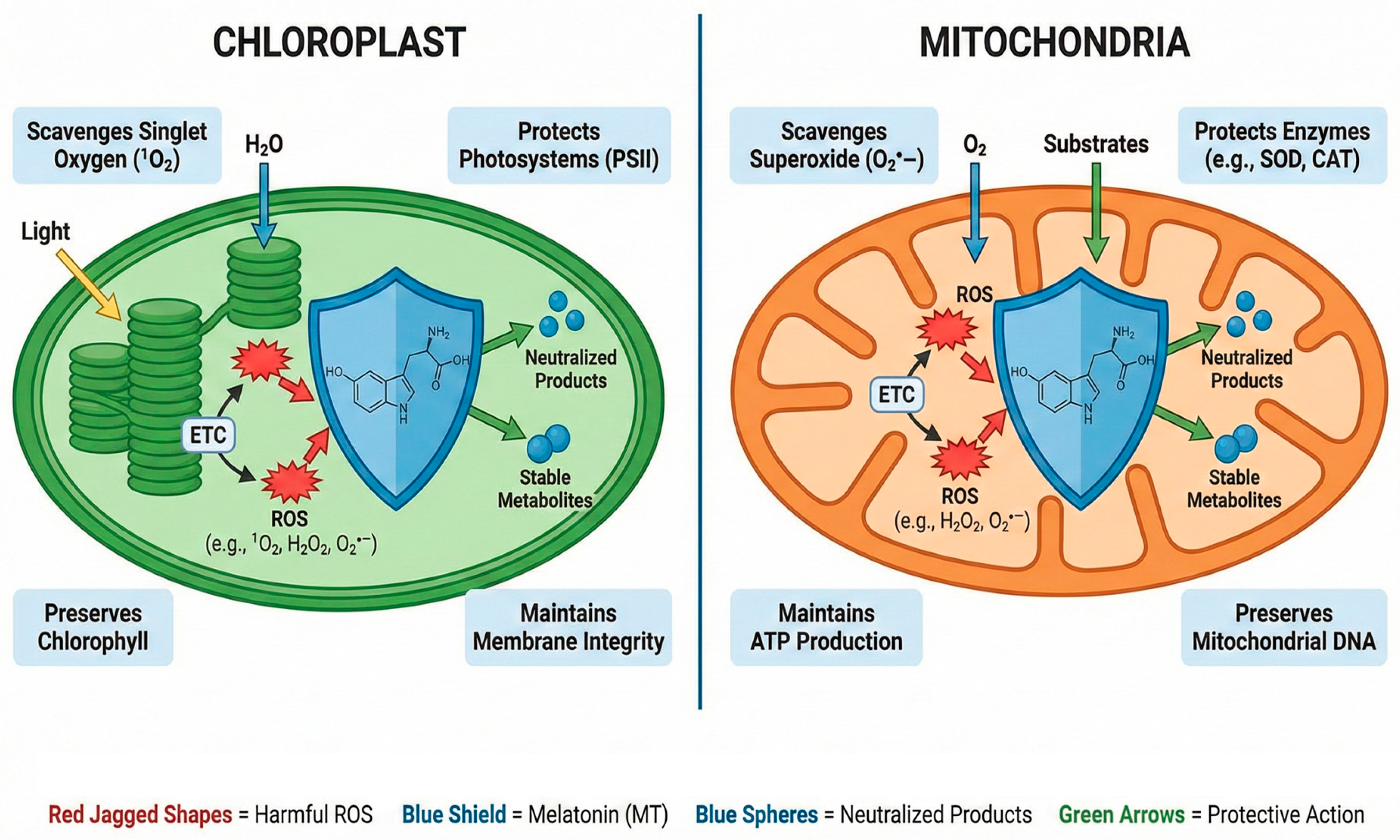
2.2.2. Antioxidant Mechanisms: ROS Scavenging and Redox Modulation
2.2.3. Receptor-Mediated Signaling and Transduction Cascades
2.2.4. Hormonal Crosstalk: Integration with Phytohormone Networks
Auxins (IAA/IBA): The Rhizogenic Axis
Cytokinins (CKs): Anti-Senescence and Thermotolerance
Abscisic Acid (ABA): Drought Management
Ethylene: Post-Harvest Longevity and Senescence Control
Gibberellins (GAs): Growth and Development
2.2.5. Comparative Advantages of Melatonin over Traditional Biostimulants
3. Melatonin in Propagation and Development of Ornamental Plants

| Plant Species | Concentration Applied | Observed Effects on Rooting | Reference |
|---|---|---|---|
| Prunus cerasus × P. canescens (Cherry Rootstock) | 0.5–1.0 mM | Foundational Study: Low doses (1 µM) increased root length (2.5×) and fresh weight (4×). High doses (5–10 µM) were inhibitory. | [83] |
| Punica granatum (Ornamental Pomegranate) | 1.16 mg L−1 (equivalent to ≈5 µM) | Substitution Effect: The optimal concentration of MEL successfully substituted for IBA, achieving 100% rooting and high root counts (15.2 roots/plant). MEL also regulated the effects of H2O2 and GA3 on root morphology. | [84] |
| Stevia rebaudiana | 5 µM, 20 µM, and 500 µM | Complex effects: 5 and 20 µM promoted germination only after 24 h dark pre-incubation. 500 µM was inhibitory to germination but most favorable for subsequent root development, promoting CAT and POD activity. | [85] |
| Chrysanthemum morifolium | 100 mM | Stress Rooting: Improved root architecture and viability under drought stress, preserving root biomass. | [86] |
| Mimosa pudica L. | 100 µM | Shoot Organogenesis Promotion: 70% explant response for shoot multiplication. Synergism: Response increased to 75–80% when combined with Ca2+ (5 mM). MEL action linked to Ca2+ channel activity. | [60] |
| Lupinus albus L. | 0.001 to 100 µM | IAA-like Activity: MT induced the appearance of both lateral and adventitious root primordia from pericycle cells. It modified the number, length, and distribution pattern of roots, demonstrating a physiological effect similar to IAA as a root promoter. | [87] |
3.1. Rhizogenesis (Rooting): Synergism in Woody Ornamentals
3.2. Vegetative Growth
4. Abiotic Stress Tolerance: Melatonin-Mediated Preservation of Esthetic Quality
4.1. Osmotic Stress: Salinity and Drought
Gene Regulation
4.2. Temperature Extremes: Mitigating Thermal Injury
4.3. Heavy Metals and Waterlogging
5. Melatonin in Flowering and Secondary Metabolism
5.1. Regulation of Floral Transition
5.2. Pigmentation and Visual Quality
5.3. Scent and Secondary Volatile Metabolites
6. Post-Harvest Physiology and Vase Life
6.1. Anti-Senescence
6.2. Water Relations and Structural Integrity
6.3. Disease Resistance
7. Practical Applications and Limitations
7.1. Efficacy of Application Methods
7.2. Dose-Dependency: The Hormetic Effect
- The Optimal Window (Promotive Phase):
- The Inhibitory Window (Toxic Phase):
8. Future Perspectives
8.1. Genetic Engineering: The Next Frontier
8.2. Commercial Formulations and Scalability
9. Conclusions
Author Contributions
Funding
Data Availability Statement
Conflicts of Interest
References
- Faust, J.E.; Dole, J.M. (Eds.) Cut foliage. In Cut Flowers and Foliages; CAB International: Wallingford, UK, 2021; pp. 150–190. [Google Scholar]
- Ahmad, Y.; Haakim, Z.; Iqbal, J.; Abbasi, B.A.; Mahmood, T.; Kazi, M. Technological innovations for abiotic stress resistance in horticultural crops. In OMICs-Based Techniques for Global Food Security; John Wiley & Sons Inc.: Hoboken, NJ, USA, 2024; pp. 233–244. [Google Scholar]
- Hassan, M.U.; Mahmood, A.; Awan, M.I.; Maqbool, R.; Aamer, M.; Alhaithloul, H.A.S.; Huang, G.; Skalicky, M.; Brestic, M.; Pandey, S.; et al. Melatonin-Induced Protection Against Plant Abiotic Stress: Mechanisms and Prospects. Front. Plant Sci. 2022, 13, 902694. [Google Scholar] [CrossRef] [PubMed]
- Rahim, H.U.; Ali, W.; Uddin, M.; Ahmad, S.; Khan, K.; Bibi, H.; Alatalo, J.M. Abiotic stresses in soils, their effects on plants, and mitigation strategies: A literature review. Chem. Ecol. 2025, 41, 552–585. [Google Scholar] [CrossRef]
- Altaf, M.T.; Liaqat, W.; Iqbal, J.; Jan, M.F.; Sheraz, M.; Jamil, A.; Maqbool, A.; Khan, E.H.; Barutçular, C.; Baloch, F.S. Abiotic Stress Elicitors: Mechanisms and Responses to Drought, Salinity, and Temperature. In Elicitors for Sustainable Crop Production; Mohamed, H.I., Ed.; Springer: Singapore, 2026. [Google Scholar]
- Dos Reis, S.P.; Lima, A.M.; de Souza, C.R.B. Recent advances in plant tolerance to drought and salt stress. In Plant Acclimation to Environmental Stress; Springer: New York, NY, USA, 2012; pp. 1–37. [Google Scholar]
- Tombesi, S.; Frioni, T.; Poni, S.; Palliotti, A. Effect of water stress “memory” on plant behavior during subsequent drought stress. Environ. Exp. Bot. 2018, 150, 106–114. [Google Scholar] [CrossRef]
- Porcel, R.; Aroca, R.; Ruiz-Lozano, J.M. Salinity stress alleviation using arbuscular mycorrhizal fungi. A review. Agron. Sustain. Dev. 2012, 32, 181–200. [Google Scholar] [CrossRef]
- Ferrante, A.; Trivellini, A.; Scuderi, D.; Romano, D.; Vernieri, P. Post-production physiology and handling of ornamental potted plants. Postharvest Biol. Technol. 2015, 100, 99–108. [Google Scholar] [CrossRef]
- Bidabadi, S.S.; VanderWeide, J.; Sabbatini, P. Exogenous melatonin improves glutathione content, redox state and increases essential oil production in two Salvia species under drought stress. Sci. Rep. 2020, 10, 6883. [Google Scholar] [CrossRef]
- Rafi, Z.N.; Kazemi, F.; Tehranifar, A. Morpho-physiological and biochemical responses of four ornamental herbaceous species to water stress. Acta Physiol. Plant. 2019, 41, 7. [Google Scholar] [CrossRef]
- Sadak, M.S.; Abdalla, A.M.; Abd Elhamid, E.M.; Ezzo, M.I. Role of melatonin in improving growth, yield quantity and quality of Moringa oleifera L. plant under drought stress. Bull. Natl. Res. Cent. 2020, 44, 18. [Google Scholar] [CrossRef]
- Munné-Bosch, S.; Jubany-Marí, T.; Alegre, L. Drought-induced senescence is characterized by a loss of antioxidant defences in chloroplasts. Plant Cell Environ. 2001, 24, 1319–1327. [Google Scholar] [CrossRef]
- Shabala, S.; Cuin, T.A. Potassium transport and plant salt tolerance. Physiol. Plant. 2008, 133, 651–669. [Google Scholar] [CrossRef]
- Lim, P.O.; Kim, H.J.; Nam, H.G. Leaf senescence. Annu. Rev. Plant Biol. 2007, 58, 115–136. [Google Scholar] [CrossRef] [PubMed]
- Iqbal, N.; Khan, N.A.; Ferrante, A.; Trivellini, A.; Francini, A.; Khan, M.I.R. Ethylene role in plant growth, development and senescence: Interaction with other phytohormones. Front. Plant Sci. 2017, 8, 475. [Google Scholar] [CrossRef] [PubMed]
- Scariot, V.; Paradiso, R.; Rogers, H.; De Pascale, S. Ethylene control in cut flowers: Classical and innovative approaches. Postharvest Biol. Technol. 2014, 97, 83–92. [Google Scholar] [CrossRef]
- Ahammed, G.J.; Li, X. Melatonin: A vital protectant for crops against heat stress: Mechanisms and prospects. Agronomy 2022, 12, 1116. [Google Scholar] [CrossRef]
- Arabia, A.; Muñoz, P.; Pallarés, N.; Munné-Bosch, S. Experimental approaches in studying active biomolecules modulating fruit ripening: Melatonin as a case study. Plant Physiol. 2023, 192, 1747–1767. [Google Scholar] [CrossRef]
- Arnao, M.B.; Cano, A.; Hernández-Ruiz, J. Phytomelatonin: An unexpected molecule with amazing performances in plants. J. Exp. Bot. 2022, 73, 5779–5800. [Google Scholar] [CrossRef]
- Chen, Q.; Arnao, M.B. Phytomelatonin: An emerging new hormone in plants. J. Exp. Bot. 2022, 73, 5773–5778. [Google Scholar] [CrossRef]
- Pardo-Hernández, M.; López-Delacalle, M.; Martí-Guillén, J.; Martínez-Lorente, S.; Rivero, R. ROS and NO Phytomelatonin-Induced Signaling Mechanisms under Metal Toxicity in Plants: A Review. Antioxidants 2021, 10, 775. [Google Scholar] [CrossRef]
- Arnao, M.B.; Hernández-Ruiz, J. Melatonin and its relationship to plant hormones. Ann. Bot. 2018, 121, 195–207. [Google Scholar]
- Xu, W.; Cai, S.Y.; Zhang, Y.; Wang, Y.; Ahammed, G.J.; Xia, X.; Shi, K.; Zhou, Y.; Yu, J.; Reiter, R.J.; et al. Melatonin enhances thermotolerance by promoting cellular protein protection in tomato plants. J. Pineal Res. 2019, 61, e12474. [Google Scholar]
- Zhang, N.; Zhang, H.J.; Zhao, B.; Sun, Q.Q.; Cao, Y.Y.; Li, R.; Wu, X.X.; Weeda, S.; Li, L.; Ren, S.; et al. RNA-seq approach to discriminate gene expression profiles in response to melatonin in cucumber. J. Pineal Res. 2016, 56, 39–50. [Google Scholar] [CrossRef] [PubMed]
- Wang, P.; Sun, X.; Li, C.; Wei, Z.; Liang, D.; Ma, F. Long-term exogenous application of melatonin delays drought-induced leaf senescence in apple. J. Pineal Res. 2012, 54, 292–302. [Google Scholar] [CrossRef]
- Wang, X.; Cao, M.; Li, H.; Liu, Y.; Fan, S.; Zhang, N.; Guo, Y. Strategies and prospects for melatonin to alleviate abiotic stress in horticultural plants. Hortic. Plant J. 2024, 10, 601–614. [Google Scholar] [CrossRef]
- SeyedHajizadeh, H.; FarajiChelanolya, A.; Zahedi, S.M.; Moghadam, A.; Mahdavinia, G.; Kaya, O. Nanochitosan-encapsulated melatonin delays petal senescence in cut gerbera flowers. BMC Plant Biol. 2024, 24, 1024. [Google Scholar]
- Zulfiqar, F.; Moosa, A.; Ferrante, A.; Nafees, M.; Darras, A.; Nazir, M.M.; Abid, I.; Soliman, T.M.A. Foliar melatonin mitigates salt-induced oxidative stress in Gerbera jamesonii. S. Afr. J. Bot. 2023, 161, 678–684. [Google Scholar] [CrossRef]
- Socaciu, A.I.; Ionuţ, R.; Socaciu, M.A.; Ungur, A.P.; Bârsan, M.; Chiorean, A.; Râjnoveanu, A.G. Melatonin, an ubiquitous metabolic regulator: Functions, mechanisms and effects on circadian disruption and degenerative diseases. Rev. Endocr. Metab. Disord. 2020, 21, 465–478. [Google Scholar] [CrossRef]
- Lerner, A.B.; Case, J.D.; Takahashi, Y.; Lee, T.H.; Mori, W. Isolation of melatonin, the pineal gland factor that lightens melanocytes. J. Am. Chem. Soc. 1958, 80, 2587. [Google Scholar] [CrossRef]
- Hattori, A.; Migitaka, H.; Iigo, M.; Itoh, M.; Yamamoto, K.; Ohtani-Kaneko, R.; Reiter, R.J. Identification of melatonin in plants and its effects on plasma melatonin levels and binding to melatonin receptors in vertebrates. Biochem. Mol. Biol. Int. 1995, 35, 627–634. [Google Scholar]
- Kolář, J.; Macháčková, I.; Eder, J.; Prinsen, E.; Van Dongen, W.; Van Onckelen, H.; Illnerová, H. Melatonin: Occurrence and daily rhythm in Chenopodium rubrum. Phytochemistry 1995, 44, 1407–1413. [Google Scholar] [CrossRef]
- Yang, X.; Chen, J.; Ma, Y.; Huang, M.; Qiu, T.; Bian, H.; Wang, J. Function, mechanism, and application of plant melatonin: An update with a focus on the cereal crop, barley (Hordeum vulgare L.). Antioxidants 2022, 11, 634. [Google Scholar] [CrossRef] [PubMed]
- Sharma, P.; Thakur, N.; Mann, N.A.; Umar, A. Melatonin as plant growth regulator in sustainable agriculture. Sci. Hortic. 2024, 323, 112421. [Google Scholar]
- Muhammad, I.; Yang, L.; Ahmad, S.; Mosaad, I.S.M.; Al-Ghamdi, A.A.; Abbasi, A.M.; Zhou, X.B. Melatonin application alleviates stress-induced photosynthetic inhibition and oxidative damage by regulating antioxidant defense system of maize: A meta-analysis. Antioxidants 2022, 11, 512. [Google Scholar] [CrossRef]
- Ma, W.; Xu, L.; Gao, S.; Lyu, X.; Cao, X.; Yao, Y. Melatonin alters the secondary metabolite profile of grape berry skin by promoting VvMYB14-mediated ethylene biosynthesis. Hortic. Res. 2021, 8, 43. [Google Scholar]
- Blask, D.E. Melatonin uptake and growth prevention in rat hepatoma 7288CTC in response to dietary melatonin. Carcinogenesis 2004, 25, 951–960. [Google Scholar] [CrossRef]
- Back, K.; Tan, D.X.; Reiter, R.J. Melatonin biosynthesis in plants: Multiple pathways catalyze tryptophan to melatonin in the cytoplasm or chloroplasts. J. Pineal Res. 2016, 61, 426–437. [Google Scholar] [CrossRef] [PubMed]
- Tan, D.X.; Hardeland, R.; Manchester, L.C.; Korkmaz, A.; Ma, S.; Rosales-Corral, S.; Reiter, R.J. Functional roles of melatonin in plants, and perspectives in nutritional and agricultural science. J. Exp. Bot. 2016, 63, 577–597. [Google Scholar]
- Moustafa-Farag, M.; Elkelish, A.; Dafea, M.; Khan, M.; Arnao, M.B.; Abdelhamid, M.T.; Ai, S. Role of melatonin in plant tolerance to soil stressors: Salinity, pH and heavy metals. Molecules 2020, 25, 5359. [Google Scholar] [CrossRef] [PubMed]
- Byeon, Y.; Back, K. An increase in melatonin in transgenic rice causes pleiotropic phenotypes, including enhanced seedling growth, delayed flowering, and low grain yield. J. Pineal Res. 2014, 56, 408–414. [Google Scholar] [CrossRef] [PubMed]
- Zhang, J.; Shi, Y.; Zhang, X.; Du, H.; Xu, B.; Huang, B. Melatonin suppression of heat-induced leaf senescence involves changes in abscisic acid and cytokinin biosynthesis and signaling pathways in perennial ryegrass (Lolium perenne L.). Environ. Exp. Bot. 2017, 138, 36–45. [Google Scholar]
- Arnao, M.B. Phytomelatonin: Discovery, content, and role in plants. Adv. Bot. 2014, 2014, 815769. [Google Scholar] [CrossRef]
- Okazaki, M.; Ezura, H. Profiling of melatonin in the model tomato (Solanum lycopersicum L.) cultivar Micro-Tom. J. Pineal Res. 2009, 46, 338–343. [Google Scholar] [CrossRef] [PubMed]
- Vantassel, D.L.; Li, J.A.; Oneill, S.D. Melatonin-identification of a potential dark signal in plants. Plant Physiol. 1993, 102, 117. [Google Scholar]
- Van Tassel, D.L.; Roberts, N.; Lewy, A.; O’Neill, S.D. Melatonin in plant organs. J. Pineal Res. 1995, 18, 28–31. [Google Scholar] [CrossRef]
- Luboshitzky, R.; Shen-Orr, Z.; Nave, R.; Lavi, S.; Lavie, P. Melatonin administration alters semen quality in healthy men. J. Androl. 1998, 19, 50–55. [Google Scholar] [CrossRef]
- Underwood, H. The pineal and melatonin: Regulators of circadian function in lower vertebrates. Experientia 1989, 45, 914–922. [Google Scholar] [CrossRef]
- Tiwari, R.K.; Lal, M.K.; Kumar, R.; Chourasia, K.N.; Naga, K.C.; Kumar, D.; Das, S.K.; Zinta, G. Mechanistic insights on melatonin-mediated drought stress mitigation in plants. Physiol. Plant. 2021, 172, 1212–1226. [Google Scholar] [CrossRef]
- Naveen Kumar, K.J.; Srikantaiah, V.; Udayashankar, A.C. Melatonin: A master regulator of ROS and RNS homeostasis in plants under abiotic stress. In Reactive Oxygen, Nitrogen and Sulfur Species in Plants: Production, Metabolism, Signaling and Defense Mechanisms; Wiley: Hoboken, NJ, USA, 2020; pp. 707–725. [Google Scholar]
- Debnath, B.; Islam, W.; Li, M.; Sun, Y.; Lu, X.; Mitra, S.; Hussain, M.; Liu, S.; Qiu, D. Melatonin mediates enhancement of stress tolerance in plants. Int. J. Mol. Sci. 2019, 20, 1040. [Google Scholar] [CrossRef]
- Sun, Q.; Zhang, N.; Wang, J.; Zhang, H.; Li, D.; Shi, J.; Guo, Y.D. Melatonin promotes ripening and improves quality of tomato fruit during postharvest life. J. Exp. Bot. 2015, 66, 657–668. [Google Scholar] [CrossRef]
- Ahmad, S.; Wang, F.; Ahmad, A.; Ercisli, S.; Chen, J.; Guan, Y.; Peng, D. Suggesting a prospect for melatonin-mediated orchid flowering under extreme conditions. Sci. Hortic. 2023, 321, 112340. [Google Scholar] [CrossRef]
- Wei, J.; Li, D.X.; Zhang, J.R.; Shan, C.; Rengel, Z.; Song, Z.B.; Chen, Q. Phytomelatonin receptor PMTR1-mediated signaling regulates stomatal closure in Arabidopsis thaliana. J. Pineal Res. 2018, 65, e12500. [Google Scholar] [CrossRef] [PubMed]
- Lee, H.Y.; Back, K. The phytomelatonin receptor (PMRT1) Arabidopsis Cand2 is not a bona fide G protein–coupled melatonin receptor. Melatonin Res. 2020, 3, 177–186. [Google Scholar] [CrossRef]
- Lee, H.Y.; Back, K. Melatonin is required for H2O2- and NO-mediated defense signaling through MAPKKK3 and OXI1 in Arabidopsis thaliana. J. Pineal Res. 2017, 62, e12379. [Google Scholar] [CrossRef]
- Ma, X.; Zhang, J.; Burgess, P.; Rossi, S.; Huang, B. Interactive effects of melatonin and cytokinin on alleviating drought-induced leaf senescence in creeping bentgrass (Agrostis stolonifera). Environ. Exp. Bot. 2018, 145, 1–11. [Google Scholar] [CrossRef]
- Chen, Z.; Gu, Q.; Yu, X.; Huang, L.; Xu, S.; Wang, R.; Shen, W. Hydrogen peroxide acts downstream of melatonin to induce lateral root formation. Ann. Bot. 2018, 121, 1127–1136. [Google Scholar] [CrossRef] [PubMed]
- Giridhar, A.R.P.; Ravishankar, G.A. Indoleamines and calcium channels influence morphogenesis in in vitro cultures of Mimosa pudica L. Plant Signal. Behav. 2009, 4, 1136–1141. [Google Scholar]
- Park, S.; Back, K. Melatonin promotes seminal root elongation and root growth in transgenic rice after germination. J. Pineal Res. 2012, 53, 385–389. [Google Scholar] [CrossRef]
- Tan, X.L.; Fan, Z.Q.; Kuang, J.F.; Lu, W.J.; Reiter, R.J.; Lakshmanan, P.; Shan, W. Melatonin delays leaf senescence of Chinese flowering cabbage by suppressing ABFs-mediated abscisic acid biosynthesis and chlorophyll degradation. J. Pineal Res. 2019, 67, e12570. [Google Scholar] [CrossRef]
- Trivellini, A.; Franzoni, G.; Ferrante, A.; Mensuali, A. Melatonin improves the postharvest life of cut ruscus foliage after a long storage condition. Postharvest Biol. Technol. 2025, 222, 113419. [Google Scholar] [CrossRef]
- Park, S.; Le, T.N.N.; Byeon, Y.; Kim, Y.S.; Back, K. Transient induction of melatonin biosynthesis in rice (Oryza sativa L.) during the reproductive stage. J. Pineal Res. 2013, 55, 40–45. [Google Scholar] [CrossRef]
- Hernández-Ruiz, J.; Cano, A.; Arnao, M.B. Melatonin: A growth-stimulating compound present in lupin tissues. Planta 2004, 220, 140–144. [Google Scholar] [CrossRef]
- Murch, S.J.; KrishnaRaj, S.; Saxena, P.K. Tryptophan is a precursor for melatonin and serotonin biosynthesis in in vitro regenerated St. John’s wort (Hypericum perforatum L. cv. Anthos) plants. Plant Cell Rep. 2001, 20, 451–455. [Google Scholar] [CrossRef]
- Brzobohatý, B.; Moore, I.; Kristoffersen, P.; Bako, L.; Campos, N.; Schell, J.; Palme, K. Release of active cytokinin by a beta-glucosidase localized to the maize root meristem. Science 1993, 262, 1051–1054. [Google Scholar] [CrossRef]
- Li, X.; Wei, J.P.; Scott, E.R.; Liu, J.W.; Guo, S.; Li, Y.; Han, W.Y. Exogenous melatonin alleviates cold stress by promoting antioxidant defense and redox homeostasis in Camellia sinensis L. Molecules 2018, 23, 165. [Google Scholar] [CrossRef]
- Imran, M.; Latif Khan, A.; Shahzad, R.; Aaqil Khan, M.; Bilal, S.; Khan, A.; Kang, S.M.; Lee, I.J. Exogenous melatonin induces drought stress tolerance by promoting plant growth and antioxidant defence system of soybean plants. AoB Plants 2021, 13, plab026. [Google Scholar] [CrossRef] [PubMed]
- Arnao, M.B.; Hernández-Ruiz, J. Functions of melatonin in plants: A review. J. Pineal Res. 2015, 59, 133–150. [Google Scholar] [CrossRef]
- Arnao, M.B.; Hernández-Ruiz, J. Melatonin as a regulatory hub of plant hormone levels and action in stress situations. Plant Biol. 2021, 23, 7–19. [Google Scholar] [CrossRef] [PubMed]
- Liu, J.; Yang, J.; Zhang, H.; Cong, L.; Zhai, R.; Yang, C.; Wang, Z.; Ma, F.; Xu, L. Melatonin inhibits ethylene synthesis via nitric oxide to alleviate fruit senescence in pear. J. Agric. Food Chem. 2022, 67, 2279–2286. [Google Scholar] [CrossRef] [PubMed]
- Nguyen, T.; Ha, S. Melatonin: An Eco-Friendly Preservative for Improving Post-Harvest Quality and Longevity of Cut Flowers. Horticulturae 2025, 11, 574. [Google Scholar] [CrossRef]
- Lezoul, N.E.H.; Serrano, M.; Ruiz-Aracil, M.C.; Belkadi, M.; Castillo, S.; Valero, D.; Guillén, F. Melatonin as a new postharvest treatment for increasing cut carnation (Dianthus caryophyllus L.) vase life. Postharvest Biol. Technol. 2022, 184, 111759. [Google Scholar] [CrossRef]
- Mazrou, R.M.; Hassan, S.; Yang, M.; Hassan, F.A.S. Melatonin Preserves the Postharvest Quality of Cut Roses through Enhancing the Antioxidant System. Plants 2022, 11, 2713. [Google Scholar] [CrossRef]
- Xiao, S.; Liu, L.; Wang, H.; Li, D.; Bai, Z.; Zhang, Y.; Sun, H.; Zhang, K.; Li, C. Exogenous melatonin accelerates seed germination in cotton (Gossypium hirsutum L.). PLoS ONE 2019, 14, e0216575. [Google Scholar] [CrossRef]
- Posmyk, M.M.; Kuran, H.; Marciniak, K.; Janas, K.M. Presowing seed treatment with melatonin protects red cabbage seedlings against toxic copper ion concentrations. J. Pineal Res. 2009, 45, 24–31. [Google Scholar] [CrossRef]
- Bai, Y.; Xiao, S.; Zhang, Z.; Zhang, Y.; Sun, H.; Zhang, K.; Liu, L. Melatonin improves the germination rate of cotton seeds under drought stress by opening pores in the seed coat. PeerJ 2020, 8, e9450. [Google Scholar] [CrossRef]
- Li, X.; Sun, Q.; Shen, Q.; Zhao, C.; Chen, F.; Liu, Y.; Kang, X. Exogenous melatonin promoted seed hypocotyl germination of Paeonia ostia ‘Fengdan’ characterized by regulating hormones and starches. PeerJ 2024, 12, e18038. [Google Scholar] [CrossRef]
- Li, J.; Liu, J.; Zhu, T.; Zhao, C.; Li, L.; Chen, M. The role of melatonin in salt stress responses. Int. J. Mol. Sci. 2019, 20, 1735. [Google Scholar] [CrossRef]
- Kushiro, T.; Okamoto, M.; Nakabayashi, K.; Yamagishi, K.; Kitamura, S.; Asami, T.; Hirai, N.; Koshiba, T.; Kamiya, Y.; Nambara, E. The Arabidopsis cytochrome P450 CYP707A encodes ABA 8′-hydroxylases: Key enzymes in ABA catabolism. EMBO J. 2004, 23, 1647–1656. [Google Scholar] [CrossRef] [PubMed]
- Peng, J.; Harberd, N.P. The role of GA-mediated signaling in the control of seed germination. Curr. Opin. Plant Biol. 2002, 5, 376–381. [Google Scholar] [CrossRef] [PubMed]
- Sarropoulou, V.; Dimassi-Theriou, K.; Therios, I.; Koukourikou-Petridou, M. Melatonin enhances root regeneration, photosynthetic efficiency, and survival of in vitro grown shoots of the cherry rootstock PHL-C (Prunus avium × P. cerasus). Plant Physiol. Biochem. 2012, 61, 162–168. [Google Scholar] [CrossRef]
- Sarrou, E.; Therios, I.; Dimassi-Theriou, K. Melatonin and other factors that promote rooting and sprouting of shoot cuttings in Punica granatum cv. Wonderful. Turk. J. Bot. 2014, 38, 293–301. [Google Scholar] [CrossRef]
- Simlat, M.; Ptak, A.; Skrzypek, E.; Warchoł, M.; Morańska, E.; Piórkowska, E. Melatonin significantly influences seed germination and seedling growth of Stevia rebaudiana Bertoni. PeerJ 2018, 6, e5009. [Google Scholar] [CrossRef]
- Luo, Y.; Hu, T.; Huo, Y.; Wang, L.; Zhang, L.; Yan, R. Effects of Exogenous Melatonin on Chrysanthemum Physiological Characteristics and Photosynthesis under Drought Stress. Horticulturae 2023, 9, 106. [Google Scholar] [CrossRef]
- Arnao, M.B.; Hernández-Ruiz, J. Growth activity, rooting capacity, and tropism: Three auxinic precepts fulfilled by melatonin. Acta Physiol. Plant. 2007, 29, 291–296. [Google Scholar] [CrossRef]
- Shi, H.; Chen, Y.; Tan, D.X.; Reiter, R.J.; Chan, Z.; He, C. Melatonin induces nitric oxide and the potential mechanisms relate to innate immunity against bacterial pathogen infection in Arabidopsis. J. Pineal Res. 2015, 59, 102–108. [Google Scholar] [CrossRef] [PubMed]
- Alinaghi Langari, B.; Saffari, V.R.; Maghsoudi Moud, A.A.; Saadati, S. Studying the effect of different melatonin concentrations on plant pigments of marigold (Calendula officinalis L.) in greenhouse conditions. Soil Sustain. Dev. 2025, 1, e227605. [Google Scholar]
- Allam, O.M.; Kandeel, A.M.; Hassan, S.E.; Abdelhamid, A.N. Effects of melatonin and bacterial bio-stimulants on Calendula officinalis under salinity stress. J. Saudi Soc. Agric. Sci. 2025, 24, 1. [Google Scholar] [CrossRef]
- Zulfiqar, F.; Moosa, A.; Alshehri, D.; Younis, T.; Sadique, M.A.; Alghanem, S.M.S.; Rehman, T.; Usama, H.M.; Chen, J.; Şimşek, Ö.; et al. Trehalose and melatonin interactions alleviate cadmium-incited oxidative stress via activating defense related genes and improve ornamental pepper growth. Plant Growth Regul. 2024, 104, 1549–1562. [Google Scholar] [CrossRef]
- Xing, X.; Ding, Y.; Jin, J.; Song, A.; Chen, S.; Chen, F.; Jiang, J. Physiological and transcripts analyses reveal the mechanism by which melatonin alleviates heat stress in chrysanthemum seedlings. Front. Plant Sci. 2021, 12, 673236. [Google Scholar] [CrossRef]
- Chen, K.; Hu, Q.; Ma, X.; Zhang, X.; Qian, R.; Zheng, J. The effect of exogenous melatonin on waterlogging stress in Clematis. Front. Plant Sci. 2024, 15, 1385165. [Google Scholar] [CrossRef]
- Elmongy, M.S.; Abd El-Baset, M.M. Melatonin Application Induced Physiological and Molecular Changes in Carnation (Dianthus caryophyllus L.) under Heat Stress. Horticulturae 2024, 10, 122. [Google Scholar] [CrossRef]
- Zulfiqar, F.; Nafees, M.; Moosa, A.; Ferrante, A.; Darras, A. Melatonin induces proline, secondary metabolites, sugars, and antioxidant activity to regulate oxidative stress and ROS scavenging in salt-stressed sword lily. Heliyon 2024, 10, e30559. [Google Scholar] [CrossRef] [PubMed]
- Song, C.; Manzoor, M.A.; Ren, Y.; Guo, J.; Zhang, P.; Zhang, Y. Exogenous melatonin alleviates sodium chloride stress and increases vegetative growth in Lonicera japonica seedlings via gene regulation. BMC Plant Biol. 2024, 24, 790. [Google Scholar] [CrossRef] [PubMed]
- Zulfiqar, F.; Moosa, A.; Ali, H.M.; Hancock, J.T.; Yong, J.W.H. Synergistic interplay between melatonin and hydrogen sulfide enhances cadmium-induced oxidative stress resistance in stock (Matthiola incana L.). Plant Signal. Behav. 2024, 19, 2331357. [Google Scholar] [CrossRef] [PubMed]
- Zulfiqar, F.; Moosa, A.; Ali, H.M.; Ferrante, A.; Nazir, M.M.; Makhzoum, A.; Soliman, T.M. Preharvest melatonin application mitigates arsenic-induced oxidative stress and improves vase life of tuberose (Polianthes tuberosa L.) cut flowers. S. Afr. J. Bot. 2023, 163, 330–337. [Google Scholar] [CrossRef]
- Eisa, E.A.; Honfi, P.; Tilly-Mándy, A.; Mirmazloum, I. Exogenous melatonin application induced morphophysiological and biochemical regulations conferring salt tolerance in Ranunculus asiaticus L. Horticulturae 2023, 9, 228. [Google Scholar] [CrossRef]
- Eisa, E.A.; Honfi, P.; Tilly-Mándy, A.; Gururani, M.A. Exogenous application of melatonin alleviates drought stress in Ranunculus asiaticus by improving its morphophysiological and biochemical attributes. Horticulturae 2023, 9, 262. [Google Scholar] [CrossRef]
- Fu, L.; Jiang, J.; Wang, K.; Zhang, Z. Concentration-dependent effects of exogenous phytomelatonin on flowering and physiological changes in azaleas (Rhododendron maculiferum). Ornam. Plant Res. 2025, 5, e043. [Google Scholar] [CrossRef]
- Zhang, J.; Huang, S.X. Physiological and transcriptome analyses provide new insights into the mechanism mediating the enhanced tolerance of melatonin-treated rhododendron plants to heat stress. J. Integr. Agric. 2023, 22, 2397–2411. [Google Scholar] [CrossRef]
- Di, H.; Liang, Y.; Gong, Y.; Jin, S.; Xu, Y. The Effect of Exogenous Melatonin on the Photosynthetic Characteristics of Rhododendron simsii Under Cadmium Stress. Plants 2025, 14, 125. [Google Scholar] [CrossRef]
- Coêlho, E.D.S.; Ribeiro, J.E.D.S.; Silva, E.F.D.; Lima, J.V.L.; Gomes, I.J.; Oliveira, P.H.D.A.; Silva, A.G.C.D.; Fernandes, B.C.C.; Rodrigues, A.P.; Silveira, L.M.D.; et al. Melatonin Improves Drought Tolerance in Zinnia elegans Through Osmotic Adjustment and Stomatal Regulation. Agronomy 2025, 15, 2571. [Google Scholar] [CrossRef]
- Sheikhalipour, M.; Mohammadi, S.A.; Esmaielpour, B.; Zareei, E.; Kulak, M.; Ali, S.; Nouraein, M.; Bahrami, M.K.; Gohari, G.; Fotopoulos, V. Exogenous melatonin increases salt tolerance in bitter melon by regulating ionic balance, antioxidant system and secondary metabolism-related genes. BMC Plant Biol. 2022, 22, 03728. [Google Scholar] [CrossRef] [PubMed]
- Hossain, M.S.; Li, J.; Sikdar, A.; Hasanuzzaman, M.; Uzizerimana, F.; Muhammad, I.; Yuan, Y.; Zhang, C.; Wang, C.; Feng, B. Exogenous Melatonin Modulates the Physiological and Biochemical Mechanisms of Drought Tolerance in Tartary Buckwheat (Fagopyrum tataricum (L.) Gaertn). Molecules 2020, 25, 2828. [Google Scholar] [CrossRef] [PubMed]
- Forte, L.D.S.; Garita, S.A.; Bernardo, V.F.; Ruscitti, M.F.; Arango, M.C.; Viña, S.Z. The potential of melatonin in the mitigation of adverse effects of salt stress in basil (Ocimum basilicum L.) plants. BMC Plant Biol. 2025, 25, 391. [Google Scholar] [CrossRef]
- Li, C.; Wang, P.; Wei, Z.; Liang, D.; Liu, C.; Yin, L.; Jia, D.; Fu, M.; Ma, F. The mitigation effects of exogenous melatonin on salinity-induced stress in Malus hupehensis. J. Pineal Res. 2012, 53, 298–306. [Google Scholar] [CrossRef] [PubMed]
- Shi, H.; Ishitani, M.; Kim, C.; Zhu, J.K. The Arabidopsis thaliana salt tolerance gene SOS1 encodes a putative Na+/H+ antiporter. Proc. Natl. Acad. Sci. USA 2000, 97, 6896–6901. [Google Scholar] [CrossRef]
- Shi, H.; Quintero, F.J.; Pardo, J.M.; Zhu, J.K. The putative plasma membrane Na+/H+ antiporter SOS1 controls long-distance Na+ transport in plants. Plant Cell 2002, 14, 465–477. [Google Scholar] [CrossRef] [PubMed]
- Tian, Z.; He, J.; Wang, Z.; Zhang, Z.; Quinet, M.; Meng, Y. Exogenous melatonin enhances drought tolerance and germination in common buckwheat seeds through the coordinated effects of antioxidant and osmotic regulation. BMC Plant Biol. 2025, 25, 318, Erratum in BMC Plant Biol. 2025, 25, 897. [Google Scholar]
- Ren, J.; Ye, J.; Yin, L.; Li, G.; Deng, X.; Wang, S. Exogenous melatonin improves salt tolerance by mitigating osmotic, ion, and oxidative stresses in maize seedlings. Agronomy 2020, 10, 663. [Google Scholar] [CrossRef]
- Siddiqui, M.H.; Alamri, S.; Al-Khaishany, M.Y.; Khan, M.N.; Al-Amri, A.; Ali, H.M.; Alsahli, A.A. Exogenous melatonin counteracts NaCl-induced damage by regulating the antioxidant system, proline and carbohydrates metabolism in tomato seedlings. Int. J. Mol. Sci. 2019, 20, 353. [Google Scholar] [CrossRef]
- Hu, W.; Tie, W.; Ou, W.; Yan, Y.; Kong, H.; Zuo, J.; Ding, X.; Ding, Z.; Liu, Y.; Wu, C.; et al. Crosstalk between calcium and melatonin affects postharvest physiological deterioration and quality loss in cassava. Postharvest Biol. Technol. 2018, 140, 42–50. [Google Scholar] [CrossRef]
- Yin, Z.; Lu, J.; Meng, S.; Liu, Y.; Mostafa, I.; Qi, M.; Li, T. Exogenous melatonin improves salt tolerance in tomato by regulating photosynthetic electron flux and the ascorbate–glutathione cycle. J. Plant Interact. 2019, 14, 453–463. [Google Scholar] [CrossRef]
- Meng, J.F.; Xu, T.F.; Wang, Z.Z.; Fang, Y.L.; Xi, Z.M.; Zhang, Z.W. The ameliorative effects of exogenous melatonin on grape cuttings under water-deficient stress: Antioxidant metabolites, leaf anatomy, and chloroplast morphology. J. Pineal Res. 2014, 57, 200–212. [Google Scholar] [CrossRef]
- Liu, J.; Wang, W.; Wang, L.; Sun, Y. Exogenous melatonin improves seedling health index and drought tolerance in tomato. Plant Growth Regul. 2015, 76, 295–303. [Google Scholar] [CrossRef]
- Ibrahim, M.F.M.; Elbar, O.H.A.; Farag, R.; Hikal, M.; El-Kelish, A.; El-Yazied, A.A.; Alkahtani, J.; Abd El-Gawad, H.G. Melatonin counteracts drought-induced oxidative damage and stimulates growth, productivity, and fruit quality properties of tomato plants. Plants 2020, 9, 1276. [Google Scholar] [CrossRef]
- Tiwari, R.K.; Lal, M.K.; Naga, K.C.; Kumar, R.; Chourasia, K.N.; Subhash, S.; Sharma, S. Emerging roles of melatonin in mitigating abiotic and biotic stresses of horticultural crops. Sci. Hortic. 2020, 272, 109592. [Google Scholar] [CrossRef]
- Liu, D.D.; Sun, X.S.; Liu, L.; Shi, H.D.; Chen, S.Y.; Zhao, D.K. Overexpression of the melatonin synthesis-related gene SlCOMT1 improves the resistance of tomato to salt stress. Molecules 2019, 24, 1514. [Google Scholar] [PubMed]
- Sun, S.; Wen, D.; Yang, W.; Meng, Q.; Shi, Q.; Gong, B. Overexpression of caffeic acid O-methyltransferase 1 (COMT1) increases melatonin level and salt stress tolerance in tomato plant. J. Plant Growth Regul. 2020, 39, 1221–1235. [Google Scholar] [CrossRef]
- Wang, L.; Feng, C.; Zheng, X.; Guo, Y.; Zhou, F.; Shan, D.; Liu, X.; Kong, J. Plant mitochondria synthesize melatonin and enhance the tolerance of plants to drought stress. J. Pineal Res. 2017, 63, e12429. [Google Scholar] [CrossRef]
- Xie, Z.; Wang, J.; Wang, W.; Wang, Y.; Xu, J.; Li, Z.; Zhao, X.; Fu, B. Integrated analysis of the transcriptome and metabolome revealed the molecular mechanisms underlying the enhanced salt tolerance of rice due to the application of exogenous melatonin. Front. Plant Sci. 2021, 11, 618680. [Google Scholar] [CrossRef]
- Sharma, A.; Wang, J.; Xu, D.; Tao, S.; Chong, S.; Yan, D.; Li, Z.; Yuan, H.; Zheng, B. Melatonin regulates the functional components of photosynthesis, antioxidant system, gene expression, and metabolic pathways to induce drought resistance in grafted Carya cathayensis plants. Sci. Total Environ. 2020, 713, 136675. [Google Scholar] [CrossRef]
- Li, J.; Liu, Y.; Zhang, M.; Xu, H.; Ning, K.; Wang, B.; Chen, M. Melatonin increases growth and salt tolerance of Limonium bicolor by improving photosynthetic and antioxidant capacity. BMC Plant Biol. 2022, 22, 16. [Google Scholar] [CrossRef]
- Li, C.; Ding, Z.; Cai, Z.; Ruan, Y.; Lü, P.; Liu, Y. Exogenous Melatonin Boosts Heat Tolerance in Rosa hybrida via RhCOMT1 Modulation. Plants 2025, 14, 29. [Google Scholar] [CrossRef] [PubMed]
- Li, Z.; Huang, C.; Han, L. Differential regulations of antioxidant metabolism and cold-responsive genes in three Bermudagrass genotypes under chilling and freezing stress. Int. J. Mol. Sci. 2023, 24, 14070. [Google Scholar] [CrossRef] [PubMed]
- Han, Q.; Huang, B.; Ding, C.; Zhang, Z.; Chen, Y.; Hu, C.; Zhou, L.; Huang, Y.; Liao, J.; Yuan, S.; et al. Effects of melatonin on anti-oxidative systems and photosystem II in cold-stressed rice seedlings. Front. Plant Sci. 2017, 8, 785. [Google Scholar]
- Ayyaz, A.; Shahzadi, A.K.; Fatima, S.; Yasin, G.; Zafar, Z.U.; Athar, H.R.; Farooq, M.A. Uncovering the role of melatonin in plant stress tolerance. Theor. Exp. Plant Physiol. 2022, 34, 335–346. [Google Scholar] [CrossRef]
- Tan, D.X.; Hardeland, R.; Manchester, L.C.; Paredes, S.D.; Korkmaz, A.; Sainz, R.M.; Mayo, J.C.; Fuentes-Broto, L.; Reiter, R.J. The changing biological roles of melatonin during evolution: From an antioxidant to signals of darkness, sexual selection, and fitness. Biol. Rev. 2013, 85, 607–623. [Google Scholar]
- Arnao, M.B.; Hernández-Ruiz, J. Melatonin in flowering, fruit set and fruit ripening. Plant Reprod. 2020, 33, 77–87. [Google Scholar] [CrossRef]
- Kolář, J.; Johnson, C.H.; Macháčková, I. Exogenously applied melatonin (N-acetyl-5-methoxytryptamine) affects flowering of the short-day plant Chenopodium rubrum. Physiol. Plant. 2003, 118, 605–612. [Google Scholar]
- Wolf, K.; Kolář, J.; Witters, E.; van Dongen, W.; van Onckelen, H.; Macháčková, I. Daily profile of melatonin levels in Chenopodium rubrum L. depends on photoperiod. J. Plant Physiol. 2001, 158, 1491–1493. [Google Scholar] [CrossRef]
- Zhang, Z.; Hu, Q.; Liu, Y.; Cheng, P.; Cheng, H.; Liu, W.; Chen, F. Strigolactone represses the synthesis of melatonin, thereby inducing floral transition in Arabidopsis thaliana in an FLC-dependent manner. J. Pineal Res. 2019, 67, e12582. [Google Scholar] [PubMed]
- Shi, H.; Wei, Y.; Wang, Q.; Reiter, R.J.; He, C. Melatonin mediates the stabilization of DELLA proteins to repress the floral transition in Arabidopsis. J. Pineal Res. 2016, 60, 373–379. [Google Scholar]
- Lozano-Juste, J.; León, J. Nitric oxide regulates DELLA content and PIF activity to promote photomorphogenesis in Arabidopsis. Plant Physiol. 2011, 156, 1410–1423. [Google Scholar] [CrossRef]
- He, Y.; Tang, R.H.; Hao, Y.; Stevens, R.D.; Cook, C.W.; Ahn, S.M.; Jing, L.; Yang, Z.; Chen, L.; Guo, F.; et al. Nitric oxide represses the Arabidopsis floral transition. Science 2004, 305, 1968–1971. [Google Scholar] [CrossRef] [PubMed]
- Yan, S.; Zhao, L.; Zhao, D.; Xu, G.; Wang, Y.; Zhou, Z.; Cheng, C. Transcriptomic and metabolomic analyses reveal phenolic metabolism regulated by melatonin in pear peel. Chem. Biol. Technol. Agric. 2025, 12, 45. [Google Scholar] [CrossRef]
- Zhu, J.; Huang, Z.; Guo, M.; Xiao, Y.; Li, Y.; Zhang, X.; Xia, H.; Liang, D.; Lv, X.; Wang, J.; et al. Exogenous melatonin promotes anthocyanin accumulation and coloration in Chinese plum peels. BMC Plant Biol. 2025, 25, 1184. [Google Scholar] [CrossRef]
- Altaf, M.M.; Ashraf, S.; Khalofah, A.; Khan, M.Q.N.; Anwar, M. Melatonin foliar application promoted anthocyanin accumulation boosted reactive oxygen scavenging by upregulating the key enzymes activities and genes expression of anthocyanin biosynthesis pathway in green and purple mustard under vanadium stress. Sci. Hortic. 2024, 331, 113112. [Google Scholar] [CrossRef]
- Bychkov, I.A.; Kudryakova, N.V.; Andreeva, A.A.; Pojidaeva, E.S.; Kusnetsov, V.V. Melatonin modifies the expression of genes for nuclear- and plastid-encoded chloroplast proteins in detached Arabidopsis leaves exposed to photooxidative stress. Plant Physiol. Biochem. 2019, 144, 404–412. [Google Scholar] [CrossRef] [PubMed]
- Mohammadi, M.; Eghlima, G.; Aghamir, F.; Nezamdoost, D.; Bagnazari, M.; Bidabadi, S.S. Melatonin alleviates drought stress and increases lutein and zeaxanthin industrial pigments in African marigold by some physiological regulations. Ind. Crops Prod. 2024, 222, 120089. [Google Scholar] [CrossRef]
- Sathee, L.; Malini, M.K.; Kumar, P.; Kumar, S. Terpenoid production through the mevalonate and methylerythritol phosphate pathways and regulation of environmental stress tolerance. In Biology and Biotechnology of Environmental Stress Tolerance in Plants; Apple Academic Press: Palm Bay, FL, USA, 2023; pp. 67–100. [Google Scholar]
- Abbas, F.; Zhou, Y.; He, J.; Ke, Y.; Qin, W.; Yu, R.; Fan, Y. Metabolite and transcriptome profiling analysis revealed that melatonin positively regulates floral scent production in Hedychium coronarium. Front. Plant Sci. 2021, 12, 808899. [Google Scholar] [CrossRef]
- Hosseini, N.; Jabbarzadeh, Z.; Amiri, J. Eco-friendly extension of postharvest longevity in Alstroemeria cut flowers using melatonin and putrescine treatments. Heliyon 2025, 11, e37411. [Google Scholar] [CrossRef]
- Esgandian, N.M.; Jabbarzadeh, Z.; Darvishzadeh, R. Integrative effects of melatonin and putrescine on vase life and physiological traits in cut alstroemeria ‘Amatista’. BMC Plant Biol. 2025, 25, 1495. [Google Scholar] [CrossRef]
- Xiang, D.; Nguyen, C.D.; Felter, L.; Clark, D.; Huo, H. Effects of preharvest LED light, melatonin and AVG treatments on postharvest snapdragon quality and vase life. J. Floric. Landsc. 2020, 6, 14–19. [Google Scholar] [CrossRef]
- Wang, B.; Huang, A.; Liu, L.; Li, Y.; Zhang, H.; Wang, L. Effects of an exogenous melatonin treatment on the physiological indexes and storage duration of cut chrysanthemum flowers. Hortic. Sci. Technol. 2024, 42, 533–548. [Google Scholar] [CrossRef]
- Zhao, D.; Wang, R.; Meng, J.; Li, Z.; Wu, Y.; Tao, J. Ameliorative effects of melatonin on dark-induced leaf senescence in gardenia (Gardenia jasminoides Ellis): Leaf morphology, anatomy, physiology and transcriptome. Sci. Rep. 2017, 7, 10423. [Google Scholar] [CrossRef] [PubMed]
- Hamedan, H.J.; Ghazan, M.A.; Shabui, M.; Noroozi, M.; Nazarideljou, M.J. Protective role of foliar-applied melatonin against gray mold (Botrytis cinerea) in gerbera cut flower: A biochemical and pathological insight. Physiol. Mol. Plant Pathol. 2025, 135, 102864. [Google Scholar] [CrossRef]
- Katoch, M.; Kapoor, P.; Gupta, H.; Vashishta, N.; Verma, V.; Bhardwaj, R.; Acharya, A.; Bhargava, B. Foliar application of melatonin-capped copper nanoparticles improves stem strength and postharvest quality by regulating lignin biosynthesis genes and physicochemical profiles in Gerbera jamesonii L. Postharvest Biol. Technol. 2025, 222, 113415. [Google Scholar] [CrossRef]
- Lone, H.Y.; Aftab, M.; Tantray, W.W.; Wani, A.A.; Zargar, M.A.; Tahir, I. Melatonin regulates oxidative stress to delay senescence in Hemerocallis fulva L. Ornam. Hortic. 2025, 31, e312832. [Google Scholar]
- Wang, Y.; Liu, X.; Sun, M.; Zhu, W.; Zheng, Y.; Zhu, S.; Yu, X. Melatonin enhances vase life and alters physiological responses in peony (Paeonia lactiflora Pall.) cut flowers. Postharvest Biol. Technol. 2024, 212, 112896. [Google Scholar] [CrossRef]
- Wu, M.; Zhang, P.; Sun, Y.; Shang, W.; Shi, L.; Yu, S.; Wang, Z. Melatonin treatment delays the senescence of cut flowers of ‘Diguan’ tree peony by affecting water balance and physiological properties. Horticulturae 2025, 11, 181. [Google Scholar] [CrossRef]
- Yang, P.; Zhang, X.; Li, K.; Bai, Y.; Wang, P.; Yin, C.; Song, X. Exogenous melatonin affects the opening process of cut ‘Bartzella’ Itoh peony flowers. Ind. Crops Prod. 2025, 229, 120932. [Google Scholar] [CrossRef]
- Xiang, D.; Nguyen, C.D.; Opgenorth, J.; Clark, D.; Huo, H. Effects of melatonin and AVG on plant growth of three Pilea species in darkness. Hortic. J. 2020, 89, 609–618. [Google Scholar] [CrossRef]
- Cao, S.; Shao, J.; Shi, L.; Xu, L.; Shen, Z.; Chen, W.; Yang, Z. Melatonin increases chilling tolerance in postharvest peach fruit by alleviating oxidative damage. Sci. Rep. 2018, 8, 806. [Google Scholar] [CrossRef]
- Shi, H.; Reiter, R.J.; Tan, D.X.; Chan, Z. INDOLE-3-ACETIC ACID INDUCIBLE 17 positively modulates natural leaf senescence through melatonin-mediated pathway in Arabidopsis. J. Pineal Res. 2015, 58, 26–33. [Google Scholar]
- Li, H.; Guo, Y.; Lan, Z.; Zhang, Z.; Ahammed, G.J.; Chang, J.; Zhang, X. Melatonin antagonizes ABA action to promote seed germination by regulating Ca2+ efflux and H2O2 accumulation. Plant Sci. 2021, 303, 110761. [Google Scholar] [CrossRef]
- He, M.; Geng, G.; Mei, S.; Wang, G.; Yu, L.; Xu, Y.; Wang, Y. Melatonin modulates the tolerance of plants to water stress: Morphological response of the molecular mechanism. Funct. Plant Biol. 2024, 51, 3. [Google Scholar] [CrossRef]
- Han, M.H.; Yang, N.; Wan, Q.W.; Teng, R.M.; Duan, A.Q.; Wang, Y.H.; Zhuang, J. Exogenous melatonin positively regulates lignin biosynthesis in Camellia sinensis. Int. J. Biol. Macromol. 2021, 179, 485–499. [Google Scholar] [CrossRef]
- Qian, Y.; Tan, D.X.; Reiter, R.J.; Shi, H. Comparative Metabolomic Analysis Highlights the Involvement of Sugars and Glycerol in Melatonin-Mediated Innate Immunity Against Bacterial Pathogen in Arabidopsis. Sci. Rep. 2015, 5, 15815. [Google Scholar] [CrossRef] [PubMed]
- Shi, H.; Chen, K.; Wei, Y.; He, C. Fundamental issues of melatonin-mediated stress signaling in plants. Front. Plant Sci. 2016, 7, 1124. [Google Scholar] [CrossRef] [PubMed]
- Zhao, H.; Xu, L.; Su, T.; Jiang, Y.; Hu, L.; Ma, F. Melatonin regulates carbohydrate metabolism and defenses against Pseudomonas syringae pv. tomato DC 3000 infection in Arabidopsis thaliana. J. Pineal Res. 2015, 59, 109–119. [Google Scholar] [CrossRef]
- Cao, Q.; Li, G.; Cui, Z.; Yang, F.; Jiang, X.; Diallo, L.; Kong, F. Seed priming with melatonin improves seed germination of waxy maize under chilling stress by promoting the antioxidant system and starch metabolism. Sci. Rep. 2019, 9, 15044. [Google Scholar] [CrossRef] [PubMed]
- Simlat, M.; Szewczyk, A.; Ptak, A. Melatonin promotes seed germination under salinity and enhances the biosynthesis of steviol glycosides in Stevia rebaudiana Bertoni leaves. PLoS ONE 2020, 15, e0230755. [Google Scholar]
- Wang, Q.; An, B.; Shi, H.; Luo, H.; He, C. High concentrations of melatonin regulate leaf development by suppressing cell proliferation and endoreduplication in Arabidopsis. Int. J. Mol. Sci. 2017, 18, 991. [Google Scholar] [CrossRef]
- Arnao, M.B.; Hernández-Ruiz, J. Regulatory role of melatonin in the redox network of plants and plant hormone relationship in stress. In Hormones and Plant Response; Springer International Publishing: Cham, Switzerland, 2021; pp. 235–272. [Google Scholar]
- Sangwan, P.; Barala, P.; Hooda, V. Enhancing melatonin photostability and controlled release using pH-responsive mesoporous silica nanoparticles for agricultural applications. Biocatal. Agric. Biotechnol. 2025, 64, 103497. [Google Scholar] [CrossRef]
- Byeon, Y.; Lee, H.J.; Lee, H.Y.; Back, K. Cloning and functional characterization of the Arabidopsis N-acetylserotonin O-methyltransferase responsible for melatonin synthesis. J. Pineal Res. 2016, 60, 65–73. [Google Scholar] [CrossRef] [PubMed]
- Fu, J.; Zhang, S.; Jiang, H.; Zhang, X.; Gao, H.; Yang, P.; Hu, T. Melatonin-induced cold and drought tolerance is regulated by brassinosteroids and hydrogen peroxide signaling in perennial ryegrass. Environ. Exp. Bot. 2022, 196, 104815. [Google Scholar] [CrossRef]
- Maharaj, D.S.; Anoopkumar-Dukie, S.; Glass, B.D.; Antunes, E.M.; Lack, B.; Walker, R.B.; Daya, S. Identification of UV degradants of melatonin and their ability to scavenge free radicals. J. Pineal Res. 2002, 32, 257–261. [Google Scholar] [CrossRef]
- Madigan, A.P.; Egidi, E.; Bedon, F.; Franks, A.E.; Plummer, K.M. Bacterial and fungal communities are differentially modified by melatonin in agricultural soils under abiotic stress. Front. Microbiol. 2019, 10, 2616. [Google Scholar] [CrossRef]
- Okatan, V.; Colak, A.M.; Kahramanoğlu, İ.; Güçlü, S.F.; Wan, C. Effects of melatonin dose on fruit yield, quality and antioxidants of strawberry cultivars grown in different crop systems. Agriculture 2022, 13, 71. [Google Scholar] [CrossRef]
- Wang, K.; Xing, Q.; Ahammed, G.J.; Zhou, J. Functions and prospects of melatonin in plant growth, yield and quality. J. Exp. Bot. 2022, 73, 5928–5946. [Google Scholar] [CrossRef] [PubMed]
- Dou, J.; Zhang, Y.; Zhang, Q.; Song, S.; Li, X.; Zhang, D. Effects of exogenous melatonin on growth and photosynthetic characteristics of tomato seedlings under saline–alkali stress. Sci. Rep. 2025, 15, 192. [Google Scholar] [CrossRef]
- Zargar, T.B.; Dar, Z.A.; Dar, M.S.; Singh, L.; Singh, P.K.; Choudhary, V.K. Genotype-dependent resilience mediated by melatonin in sweet corn. BMC Plant Biol. 2025, 25, 86. [Google Scholar] [CrossRef]
- Oliveira, J.L.; Campos, E.V.; Gonçalves, D.S.; Oliveira, H.C.; Stolf-Moreira, R.; de Lima, R.; Fraceto, L.F. Zein nanoparticles as eco-friendly carrier systems for botanical repellents aiming sustainable agriculture. J. Agric. Food Chem. 2018, 66, 1330–1340. [Google Scholar] [CrossRef]
- Ma, Q.; Wang, Z.; Zhang, P.; Wang, W.; Feng, X.; Zhang, H. Poly(lactide-co-glycolide)-monomethoxy-poly(ethylene glycol) nanoparticles loaded with melatonin protect adipose-derived stem cells transplanted in infarcted heart tissue. Stem Cells 2018, 36, 640–651. [Google Scholar] [CrossRef]
- Vega-Vásquez, P.; Mosier, N.S.; Irudayaraj, J. Nanoscale drug delivery systems: From medicine to agriculture. Front. Bioeng. Biotechnol. 2020, 8, 79. [Google Scholar] [CrossRef]
- Giraldo-Acosta, M.; Cano, A.; Hernández-Ruiz, J.; Arnao, M.B. Protective (safener) effect of melatonin on Vigna radiata L. seedlings in the presence of the fungicide copper oxychloride. J. Plant Growth Regul. 2022, 42, 4918–4934. [Google Scholar] [CrossRef]
- Muhammad, I.; Ullah, F.; Ahmad, S.; AlMunqedhi, B.M.; Al Farraj, D.A.; Elshikh, M.S.; Shen, W. A meta-analysis of photosynthetic efficiency and stress mitigation by melatonin in enhancing wheat tolerance. BMC Plant Biol. 2024, 24, 427. [Google Scholar] [CrossRef]
- Ahmad, S.; Wang, G.Y.; Muhammad, I.; Zeeshan, M.; Zhou, X.B. Melatonin and KNO3 application improves growth and physiological and biochemical characteristics of maize seedlings under waterlogging stress. Biology 2022, 11, 99. [Google Scholar] [CrossRef]
- Xiao, R.; Guo, Y.; Zhang, M.; Liu, H.; Zhang, Y.; Wang, X.; Wang, C. Melatonin attenuates urea-induced yield improvement through remodeling the transcriptome and rhizosphere microbial community structure in soybean. Front. Microbiol. 2022, 13, 903467. [Google Scholar] [CrossRef]

| Plant Species | Stress/Growth Condition | Concentration Applied | Method of Application | Observed Effects | Author(s) |
|---|---|---|---|---|---|
| Calendula officinalis | Normal Growth | 100–150 µM | Foliar Spray | Increased chlorophyll a/b & carotenoids; improved photosynthetic efficiency. | [89] |
| Calendula officinalis | Salt Stress (42–128 mM) | 100 µM (+bacteria) | Combined (Foliar/Soil) | Enhanced NPK uptake; reduced Na+/Cl−; improved membrane stability. | [90] |
| Capsicum annuum | Cadmium (Cd) Stress | 50 µM (±Trehalose) | Foliar Spray | Synergistic reduction in ROS; upregulation of defense genes. | [91] |
| Chrysanthemum | Heat Stress | 200 µM | Foliar Spray | Reduced oxidative injury; regulated heat-shock gene networks. | [92] |
| Chrysanthemum morifolium | Drought Stress | 100 µM | Foliar Spray | Improved photosynthesis; lower MDA; higher antioxidant enzymes. | [86] |
| Clematis spp. | Waterlogging Stress | 50–200 µmol·L−1 | Root Drench/Spray | Reduced H2O2; boosted APX, POD, SOD; modulated defense TFs. | [93] |
| Cymbidium spp. | Abiotic Stress | Endogenous Study | N/A (Genetic Analysis) | Identification of SNAT, COMT, TDC genes; upregulation of endogenous MT. | [54] |
| Dianthus caryophyllus | Heat Stress | 5–10 mM | In vitro Media | Upregulated HSP genes; increased biomass & chlorophyll. | [94] |
| (Gerbera jamosonii L. cv. Yunnanhong) | Salt Stress (150 mM) | 0.2 mM | Foliar Spray | Enhanced K+ uptake; improved growth & pigments. | [29] |
| Gladiolus grandiflores (sword lily) | Salt Stress (5 dS/m) | 0.6 mM | Foliar Spray | Higher antioxidants (3×); reduced MDA & H2O2. | [95] |
| Lonicera japonica | Salt Stress (150 mM) | 60 µM | Root Drench/Spray | Upregulated PAL & CHS; activated transcription factors. | [96] |
| Matthiola incana | Cadmium Stress | 100 µM (±H2S) | Foliar Spray | Synergistic effect with H2S; improved photosynthesis. | [97] |
| Polianthes tuberosa L. | Arsenic Stress (50 μM) | 100 µM | Foliar Spray | Improved growth; reduced ROS; higher antioxidants. | [98] |
| Prunus avium × P. cerasus | Propagation (Rooting) | 0.05–10 µM | In vitro Media | 0.5–1 µM promoted rooting; high doses (5–10 µM) inhibited it. | [83] |
| Ranunculus asiaticus | Salinity stress (4.5–5.5 dS·m−1) | 200 µM | Foliar spray | ↑ Chlorophyll, carotenoids, RWC, proline, and POD; ↓ Na+ content and electrolyte leakage; delayed flowering. | [99] |
| Ranunculus asiaticus | Drought Stress & Normal | 200 µM | Foliar spray | Enhanced growth (biomass/leaf area); 21-day earlier flowering; ↑ proline and POD; ↓ electrolyte leakage. | [100] |
| Rhododendron maculiferum | Flowering Regulation | 300 µmol·L−1 | Foliar Spray | Accelerated flowering (32 days earlier); increased GA3/IAA; lower ABA. | [101] |
| Rhododendron | Heat stress (35–40 °C) | 200 µM | Foliar Spray | ↑ Electron transport rate; ↑ Rubisco activity and ATP content; regulated expression of RhRbsA. | [102] |
| Rhododendron simsii | Cadmium (Cd) Stress | 200 µM | Foliar Spray | ↑ Net photosynthetic rate (Pn) and Fv/Fm; protection of PSI and PSII (donor and receptor sides); ↑ SOD and POD; ↓ MDA. | [103] |
| Zinnia elegans | Drought (20% FC) | 1.0 mM | Foliar Spray | Increased CO2 assimilation & stomatal conductance; improved RWC. | [104] |
| Plant Species | Condition/Pathogen | Concentration Applied | Method of Application | Observed Effects | Author(s) |
|---|---|---|---|---|---|
| Alstroemeria ‘Amatista’ | Vase Life/Senescence | 100–200 µM | Vase Solution | Extended vase life (13→21 days); higher anthocyanin, PAL, PPO. | [145] |
| Alstroemeria ‘Amatista’ | Vase Life/Senescence | 50 µM (+Putrescine) | Pre-harvest Spray | Extended vase life (16→23 days); downregulated CHL & ACO genes. | [146] |
| Snapdragon (Antirrhinum majus L.) | Postharvest Quality | 200 µmol·L−1 | Vase Solution | Increased stem/floret size; improved flowering under WRB light. | [147] |
| Chrysanthemum | Postharvest Senescence | 5 µM | Vase Solution | Improved water balance; reduced LOX activity; longer vase life. | [148] |
| Dianthus caryophyllus | Postharvest Senescence | 0.1 mM | Vase Solution | Extended vase life by 10 days; better membrane stability. | [74] |
| Gardenia jasminoides | Dark-induced Senescence | 1.0 mM | Post-harvest Dip | Delayed yellowing; regulated hormone metabolism. | [149] |
| Gerbera jamesonii | Gray Mold (Botrytis) | 200 µM | Foliar Spray (Pre) | Reduced disease severity; increased lignin & PAL. | [150] |
| Gerbera jamesonii | Postharvest Senescence | 0.1–0.5 mM | Nano-formulation (Dip) | Extended vase life; higher CAT activity; reduced oxidative stress. | [28] |
| Gerbera jamesonii | Postharvest Senescence | 20 mM (MT-CuNPs) | Foliar app. | Extended vase life (6 days); increased xylem thickness. | [151] |
| Hemerocallis fulva | Postharvest Senescence | 120 µM | Vase Solution | Lower bacterial growth; vase life 7→12 days. | [152] |
| Paeonia lactiflora | Postharvest Senescence | 50 µmol·L−1 | Vase Solution | Larger flowers; lower MDA; higher SOD & CAT. | [153] |
| Paeonia suffruticosa | Postharvest Senescence | 0.4 mg·L−1 | Vase Solution | Prolonged vase life; better water balance & protein content. | [154] |
| Peony ‘Bartzella’ | Flower Opening | 100 µM | Vase Solution | Delayed early opening; modulated ethylene-dependent senescence. | [155] |
| Pilea spp. P. cadierei, P. involucrata, and P. mollis | Dark-induced Senescence | 50–150 µmol·L−1 | Foliar Spray (Pre-storage) | Better storage quality; increased pigments & leaf area. | [156] |
Disclaimer/Publisher’s Note: The statements, opinions and data contained in all publications are solely those of the individual author(s) and contributor(s) and not of MDPI and/or the editor(s). MDPI and/or the editor(s) disclaim responsibility for any injury to people or property resulting from any ideas, methods, instructions or products referred to in the content. |
© 2026 by the authors. Licensee MDPI, Basel, Switzerland. This article is an open access article distributed under the terms and conditions of the Creative Commons Attribution (CC BY) license.
Share and Cite
Eisa, E.A.; Tilly-Mándy, A.; Honfi, P. Phytomelatonin in Ornamental Horticulture: A Comprehensive Review of Growth Promotion, Stress Tolerance, and Post-Harvest Quality. Int. J. Mol. Sci. 2026, 27, 1645. https://doi.org/10.3390/ijms27041645
Eisa EA, Tilly-Mándy A, Honfi P. Phytomelatonin in Ornamental Horticulture: A Comprehensive Review of Growth Promotion, Stress Tolerance, and Post-Harvest Quality. International Journal of Molecular Sciences. 2026; 27(4):1645. https://doi.org/10.3390/ijms27041645
Chicago/Turabian StyleEisa, Eman Abdelhakim, Andrea Tilly-Mándy, and Péter Honfi. 2026. "Phytomelatonin in Ornamental Horticulture: A Comprehensive Review of Growth Promotion, Stress Tolerance, and Post-Harvest Quality" International Journal of Molecular Sciences 27, no. 4: 1645. https://doi.org/10.3390/ijms27041645
APA StyleEisa, E. A., Tilly-Mándy, A., & Honfi, P. (2026). Phytomelatonin in Ornamental Horticulture: A Comprehensive Review of Growth Promotion, Stress Tolerance, and Post-Harvest Quality. International Journal of Molecular Sciences, 27(4), 1645. https://doi.org/10.3390/ijms27041645