Review

The Role of TNF-α in Ischemic Stroke

1
Department of Medical Biology and Biochemistry, Faculty of Medicine, Collegium Medicum in Bydgoszcz, Nicolaus Copernicus University in Toruń, Karłowicza 24, 85-092 Bydgoszcz, Poland
2
Department of Organic Chemistry, Faculty of Chemistry, Nicolaus Copernicus University in Toruń, Gagarina 7, 87-100 Toruń, Poland
3
Department of Surgical Oncology, Oncology Center, Faculty of Health Sciences, Collegium Medicum in Bydgoszcz, Nicolaus Copernicus University in Toruń, Romanowskiej Street 2, 85-796 Bydgoszcz, Poland
4
Student Scientific Club of Biochemistry and Bioorganic Chemistry, Department of Medical Biology and Biochemistry, Faculty of Medicine, Collegium Medicum in Bydgoszcz, Nicolaus Copernicus University in Toruń, Karłowicza 24, 85-092 Bydgoszcz, Poland
5
Laboratory of Laser Molecular Spectroscopy, Institute of Applied Radiation Chemistry, Faculty of Chemistry, Lodz University of Technology, Wroblewskiego 15, 93-590 Lodz, Poland
6
Institute of Biology, Pomeranian University in Słupsk, 76-200 Słupsk, Poland
*
Author to whom correspondence should be addressed.
These authors contributed equally to this work.
Int. J. Mol. Sci. 2026, 27(3), 1424; https://doi.org/10.3390/ijms27031424
Submission received: 23 December 2025 / Revised: 23 January 2026 / Accepted: 29 January 2026 / Published: 30 January 2026
(This article belongs to the Special Issue Inflammatory Biomarkers in Ischemic Stroke)

Abstract

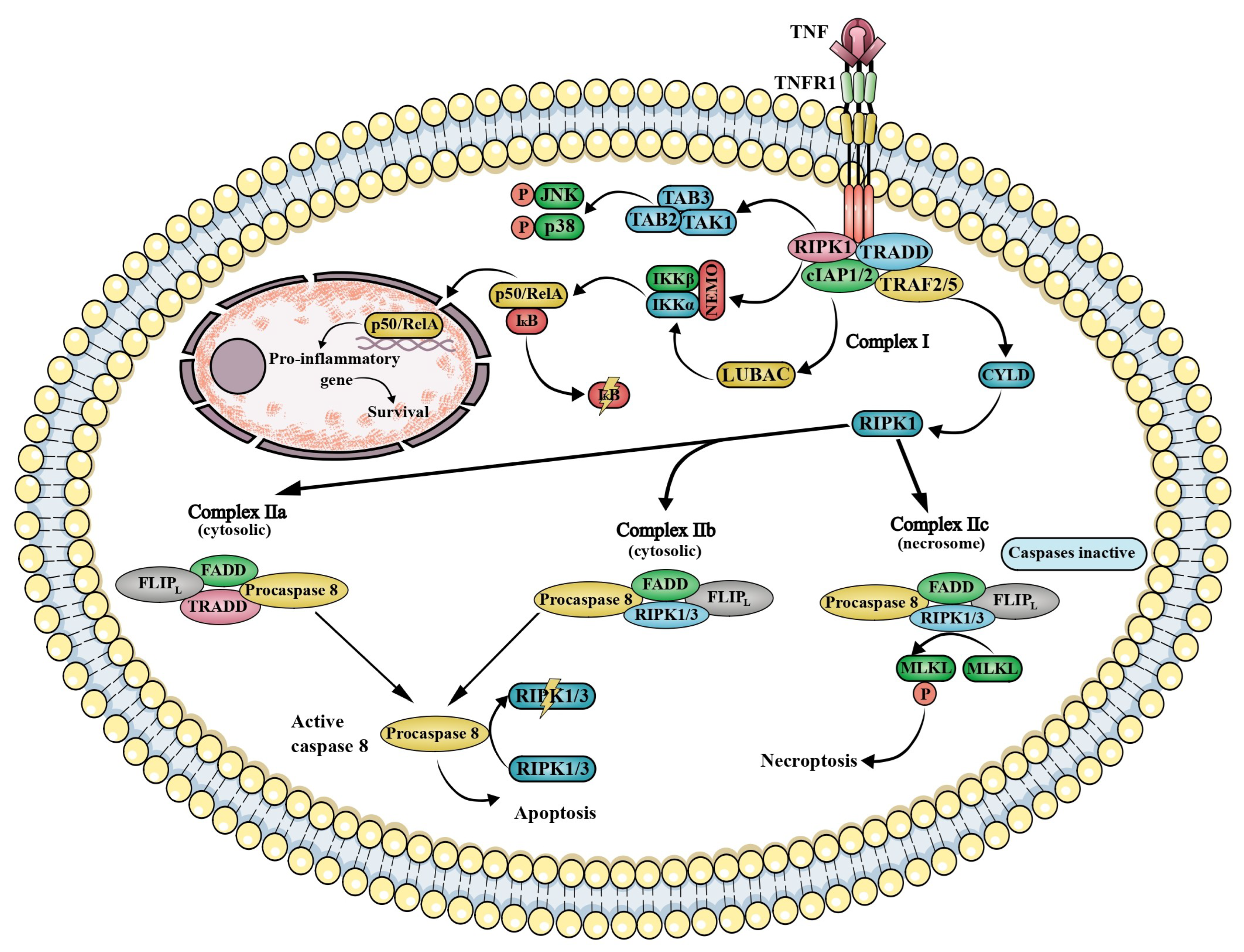
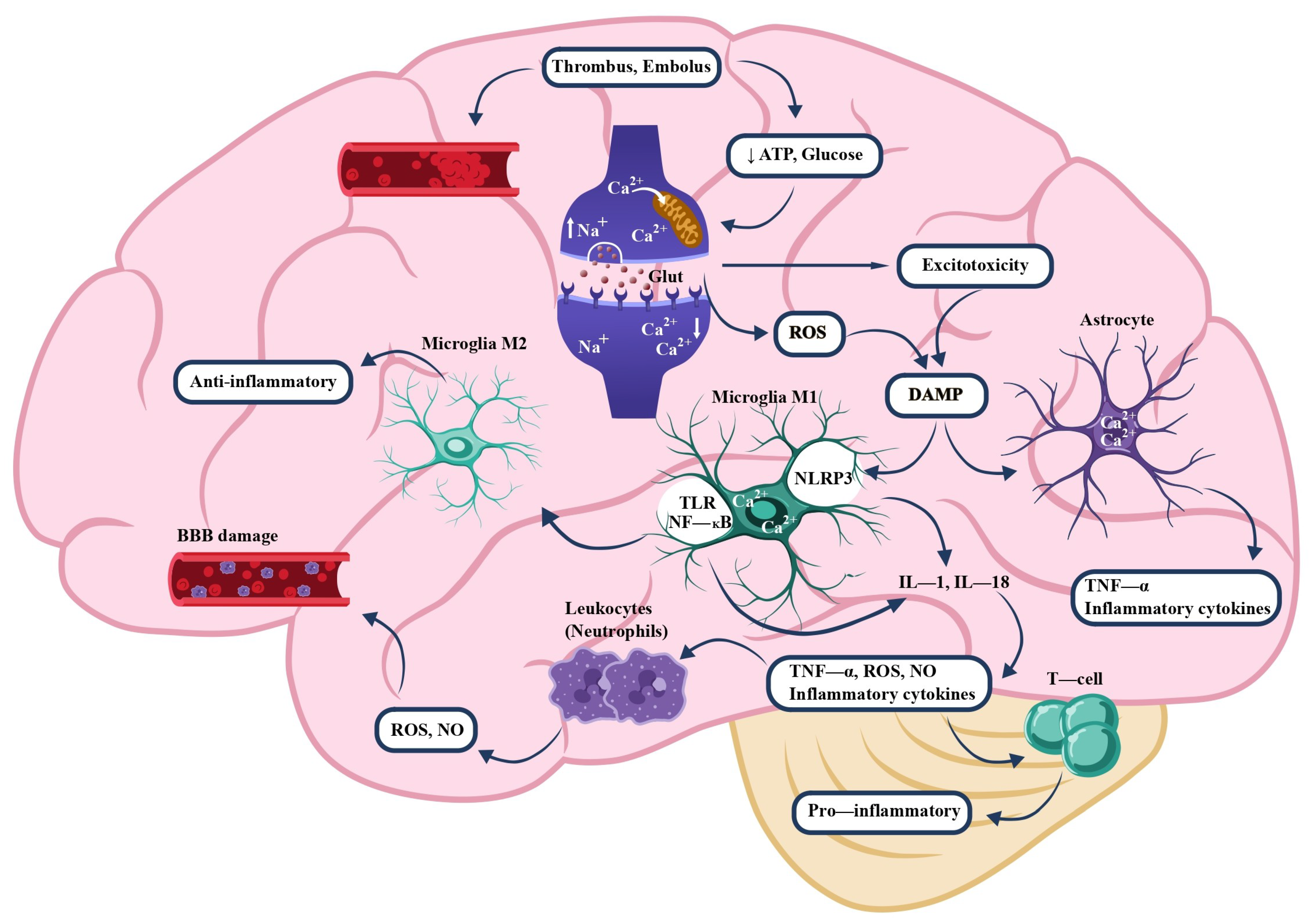
Ischemic stroke accounts for approximately 80–85% of all stroke cases and triggers a complex cascade of metabolic, immunological, and neurodegenerative processes. Among the key mediators involved, TNF-α occupies a central position due to its distinctly dual and phase-dependent actions. Importantly, the biological effects of TNF-α are not static but evolve dynamically over time following ischemic insult. During the acute phase of ischemia, a rapid increase in TNF-α levels, primarily originating from activated microglia, leads to the predominant activation of the TNFR1 receptor. This results in enhanced apoptosis and necroptosis, disruption of the blood–brain barrier, increased leukocyte recruitment, and the progression of secondary neuronal injury. In later phases, the role of TNF-α shifts, with signaling through TNFR2 becoming more prominent, thereby supporting reparative mechanisms, including neurogenesis, angiogenesis, and synaptic remodeling. The dual nature of TNF-α means that both its excessive activation and complete inhibition may produce detrimental effects. Notably, the therapeutic relevance of TNF-α critically depends on the timing of intervention relative to stroke onset. A comprehensive analysis of current evidence underscores the central, temporally and contextually dependent role of TNF-α in the pathophysiology of ischemic stroke. It also indicates that future therapeutic strategies should aim to selectively suppress the harmful TNFR1-mediated signaling while preserving or enhancing TNFR2-dependent neuroprotective pathways. Such time-sensitive and receptor-selective modulation holds promise for limiting acute ischemic injury and promoting endogenous repair processes, representing a compelling direction for the development of next-generation neuroprotective therapies.
Keywords: TNF-α; ischemic stroke; pathomechanism; pharmacological strategies TNF-α; ischemic stroke; pathomechanism; pharmacological strategies