Hereditary Endometrial Cancer: Lynch Syndrome, Mismatch Repair Deficiency, and Emerging Genetic Predispositions—A Comprehensive Review with Clinical and Laboratory Guidelines

 , , , , , , , , ,
  and
and
Abstract
1. Introduction
2. Hereditary Endometrial Cancer—General Characteristics
2.1. Frequency of Hereditary Cases of Endometrial Cancer
2.2. Indications for Suspecting a Hereditary Nature of the Disease (Age, Family History, Histological Features)
- diagnosis at a young age, particularly before 50 years;
- a history of endometrial cancer, colorectal cancer, or other Lynch syndrome–associated malignancies in first- or second-degree relatives;
- characteristic histopathological features, such as microsatellite instability (MSI-H) or loss of MMR protein expression;
3. Lynch Syndrome—Main Hereditary Predisposition
3.1. Cancer Spectrum and Risk Profile in Lynch Syndrome
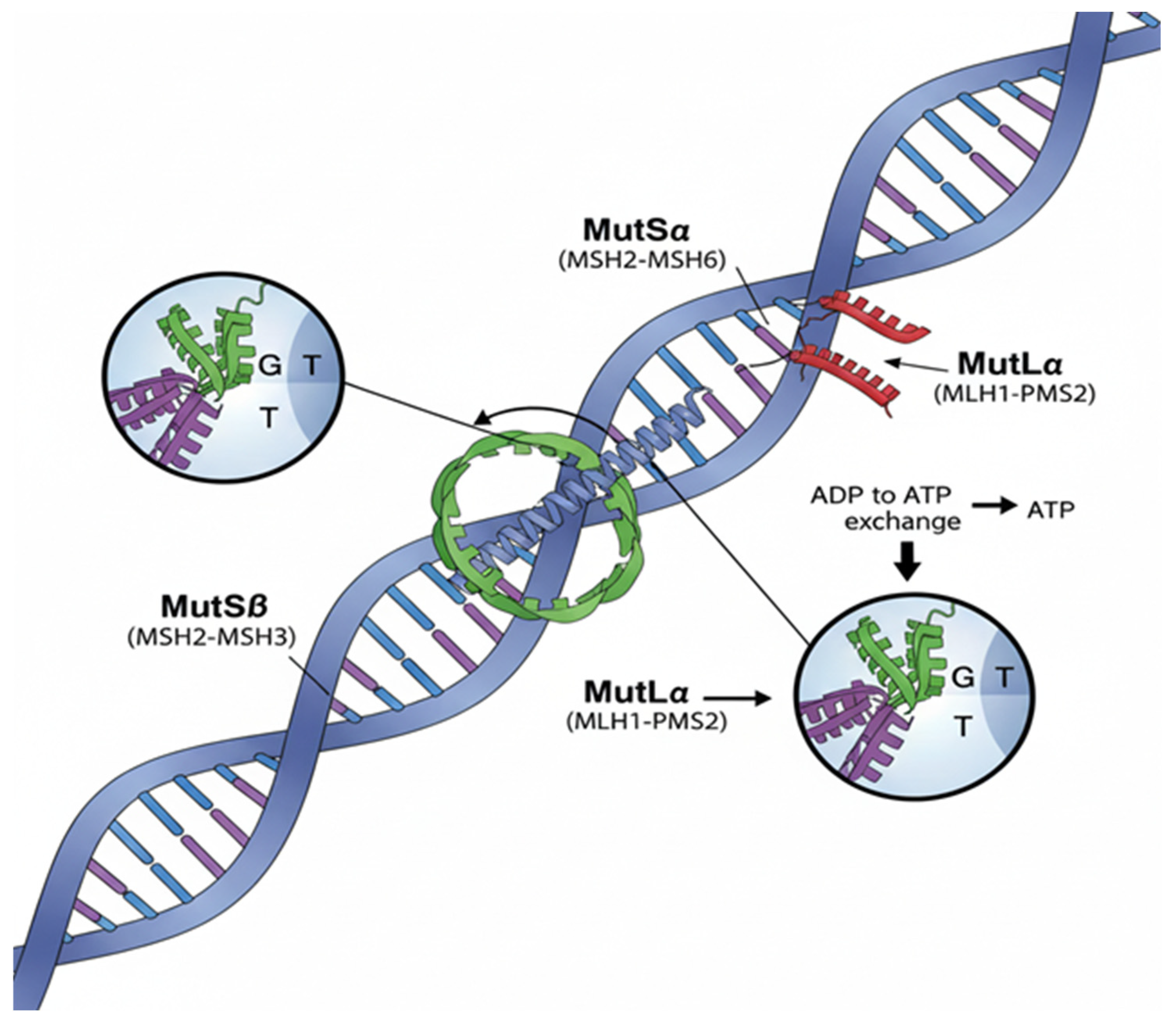
3.2. Genetic and Molecular Basis of Lynch Syndrome
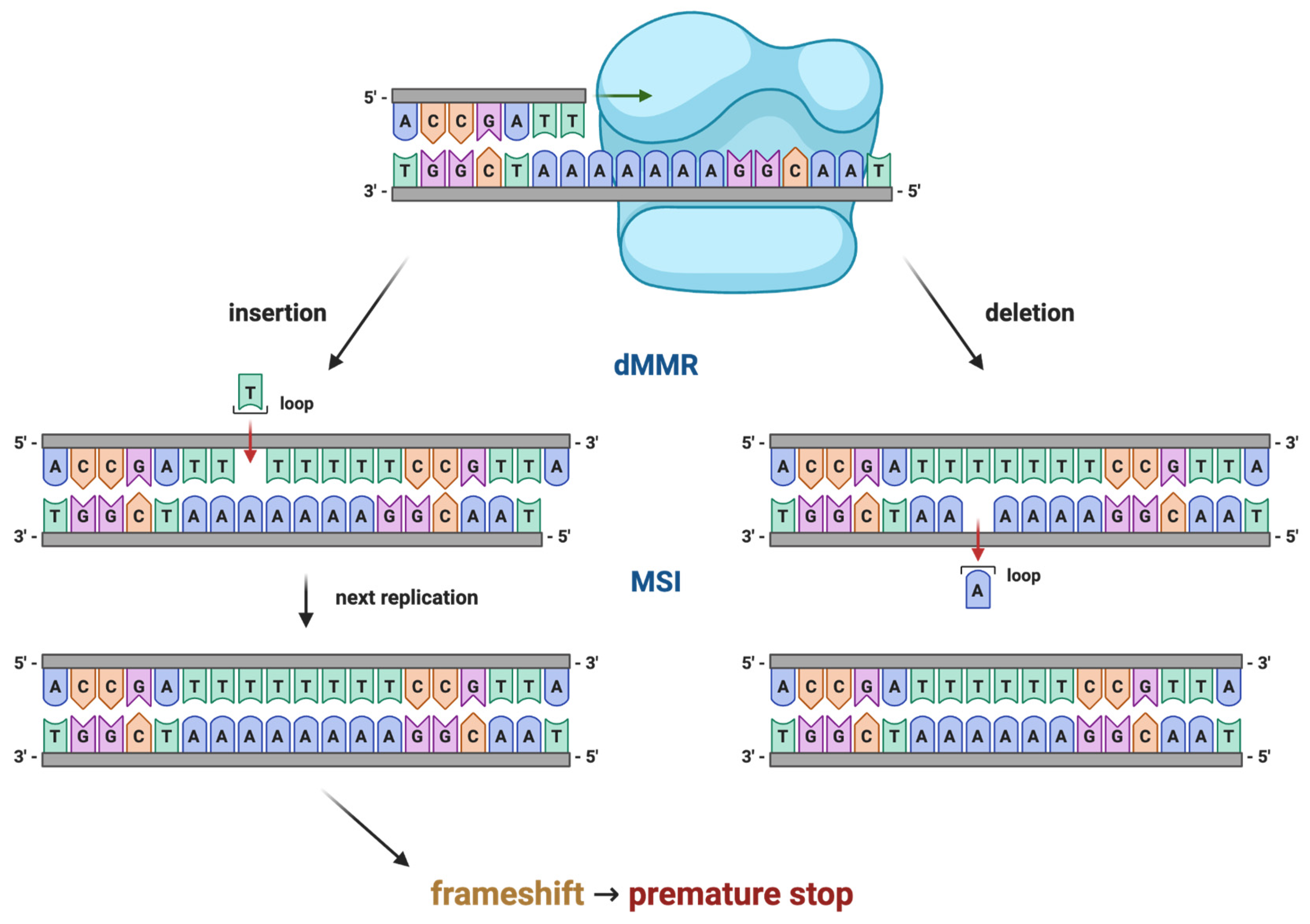
3.3. Causes of Mismatch Repair Deficiency in Endometrial Cancer
3.4. Clinical Characteristics of Endometrial Cancer in Lynch Syndrome
4. Other Hereditary Syndromes Related to Endometrial Cancer
4.1. Cowden Syndrome (PTEN Mutations)
4.1.1. Endometrial Cancer in Cowden Syndrome
4.1.2. Diagnostic Criteria
- the presence of at least three major criteria;
- a combination of two major criteria and at least three minor criteria.
- two or more major criteria;
- one major criterion and at least two minor criteria;
- a total of at least three minor criteria.
4.2. Li-Fraumeni Syndrome (TP53 Mutations)
4.3. Hereditary Ovarian and Breast Cancer Syndromes (e.g., BRCA1/2)
4.4. Rare Germline Mutations with Potential Significance
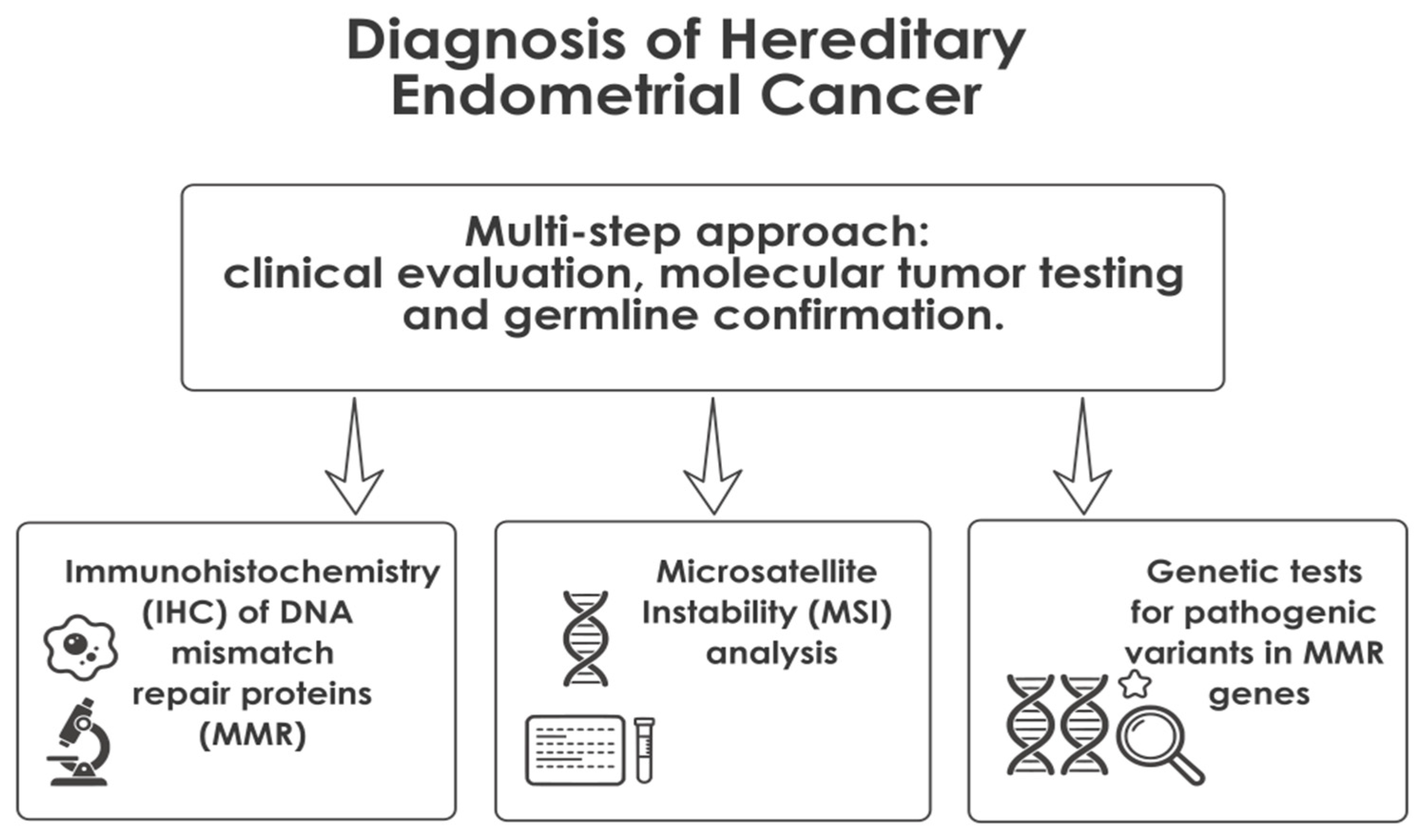
5. Diagnostics of Hereditary Endometrial Cancer
- (i)
- immunohistochemical (IHC) assessment of MMR protein expression,
- (ii)
- microsatellite instability (MSI) testing, and
- (iii)
5.1. MMR Protein Immunohistochemistry as a Screening Tool

| IHC Pattern | Underlying Molecular Mechanism | Clinical/Genetic Interpretation | Recent Insights (2023–2025) | Key References |
|---|---|---|---|---|
| Loss of MLH1/PMS2 | MLH1 inactivation (promoter methylation or germline variant) causing secondary PMS2 loss | Usually sporadic EC (MLH1 methylation); unmethylated cases suggest Lynch syndrome (MLH1 | MLH1-methylated EC represents an epigenetically distinct subtype with poorer prognosis and reduced ICI response compared with LS-associated dMMR | [111,112,115,120,121,122] |
| Loss of MSH2/MSH6 | MSH2 loss destabilizes MSH6 (MutSα complex); may involve EPCAM deletion | Typical of Lynch syndrome (MSH2); EPCAM deletions cause MSH2 silencing | Highly immune-inflamed phenotype with strong IFN-γ signaling and favorable ICI response | [117,123] |
| Isolated loss of MSH6 | Germline or somatic MSH6 mutation; preserved MSH2 | Lynch syndrome (MSH6); later onset, endometrioid histology, lower MSI | Hypermutated but immune-active EC with good PD-1 inhibitor outcomes | [113,114,124] |
| Isolated loss of PMS2 | PMS2 mutation with intact MLH1; technical detection challenges | Lynch syndrome (PMS2); low penetrance, diagnostic complexity | Lower TMB and intermediate immune activation; improved detection via pseudogene-aware assays | [41,115,116] |
| Intact MMR expression | Proficient MMR (pMMR/MSI-stable) | Sporadic EC; usually not eligible for ICI monotherapy | Subset shows POLE mutations or high TMB, conferring immunogenic potent | [120,125] |
5.2. MSI Testing
5.3. Genetic Testing
5.4. Diagnostic Criteria
5.4.1. Diagnostic Guidelines
5.4.2. Indications for Referral to a Genetic Counselling Centre
- Fulfilment of the Amsterdam II criteria [139]
- Fulfilment of the revised Bethesda guidelines [20]
- Diagnosis of endometrial cancer before the age of 50 years
- Known Lynch syndrome in the family [6]
- Estimated Lynch syndrome risk ≥ 5% based on predictive models such as MMRpro, PREMM, or related algorithms [145]
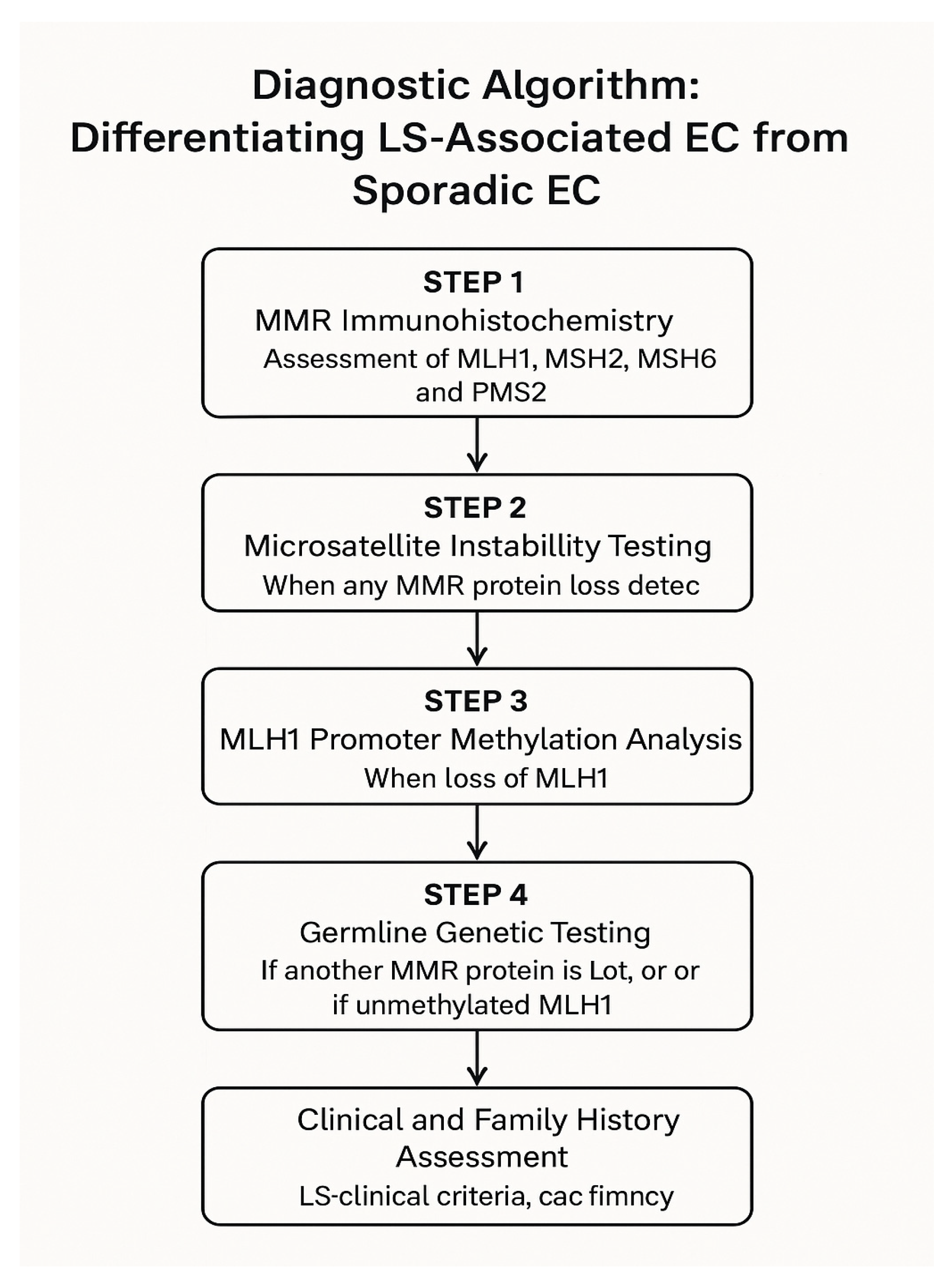
5.5. Diagnostic Algorithm
- Step 1: MMR Immunohistochemistry
- Step 2: MSI Testing
- Step 3: Germline Genetic Testing (if Lynch syndrome suspected)
- MLH1/PMS2 loss with no MLH1 promoter methylation
- MSH2/MSH6/PMS2 loss by IHC
- Strong family history (Amsterdam II/Revised Bethesda criteria)
- Step 4: Clinical and Family Assessment
- Early onset endometrial cancer (<50 years)
- Synchronous or metachronous Lynch syndrome-related cancers
- Family history of colorectal, ovarian, gastric, or urinary tract cancers.
5.6. Diagnostic Challenges
5.6.1. Clinical and Molecular Limitations
5.6.2. Lynch-like Cases and Discordant Results
5.6.3. Organizational and Systemic Barriers
6. The Significance of Hereditary Predispositions for Treatment
6.1. Immunotherapy for MSI-H/dMMR—Effectiveness of Immune Checkpoint Inhibitors
6.2. Surgical Treatment Strategies
6.2.1. Gynaecological Surgery
6.2.2. Colorectal and Small Bowel Surgery
| Study/Drug | Population | ORR (Overall Response Rate) | PFS (Progression-Free Survival) | OS (Overall Survival) | Durability/Notes | Based on |
|---|---|---|---|---|---|---|
| KEYNOTE-158/Pembrolizumab | Advanced or recurrent endometrial cancer; MSI-H/dMMR; post-chemotherapy | ≈48–50% | Median 13.1 months | Median not reached (>40 months’ follow-up) | Many responses ongoing ≥ 36 months | [11,129,164] |
| Phase II/Nivolumab | Endometrial or ovarian cancer; dMMR/MSI-H | 58.8% | PFS24 = 64.7% | Not reached (follow-up ongoing) | Disease control rate > 70% | [155,165] |
| NIVEC (Neoadjuvant Nivolumab) | Resectable MSI-H/dMMR endometrial cancer; pre-surgery | Clinical CR 80% | - | - | Early neoadjuvant data; organ-sparing potential in select cases | [156,166] |
| GARNET/Dostarlimab (monotherapy) | Recurrent/advanced endometrial cancer; dMMR/MSI-H | ≈45.5% | NR (not primary endpoint) | Not mature | ≈85% of responses ongoing at 24 months; median DOR not reached | [42,167] |
| RUBY/Dostarlimab + Carboplatin-Paclitaxel vs. Chemo | Advanced or recurrent endometrial cancer; MSI-H/dMMR subgroup | >70% (combination arm; study not powered for ORR) | Significant benefit vs. chemo alone (HR for PFS markedly <1) | OS benefit emerging; data maturing | Largest benefit seen in MSI-H/dMMR subgroup | [116,167] |
| MSI-H Subtype Subanalysis/Pembrolizumab | MSI-H endometrial cancer: MLH1-methylated vs. Lynch-like vs. Lynch syndrome | MLH1-methylated ≈75%; LS/LLS up to ≈100% (small cohorts) | - | - | Heterogeneity within MSI-H; LS/LLS show highest ORR | [168] |
6.2.3. Gastric Cancer
6.2.4. Thyroid Cancer
6.2.5. Metastatic Disease
6.3. Monitoring and Secondary Cancer Screening (Colon, Ovary)
6.3.1. Colorectal Cancer
6.3.2. Ovarian Cancer
- Practice and recommendations:
6.4. Importance for Family Members—Genetic Counselling, Cascade Testing
7. Future Directions and Challenges
7.1. Integrating Genetic Testing into Standard Clinical Practice
7.2. Costs and Accessibility of Testing Within the Healthcare System
7.3. Education of Patients and Physicians About Hereditary Cancer Forms
7.4. Development of “Hereditary Panels” and Multi-Gene Testing
7.5. Emerging Biomarkers for Screening, Diagnosis, and Prognosis
8. Conclusions
Author Contributions
Funding
Data Availability Statement
Conflicts of Interest
Abbreviations
| CNV | Copy number variation |
| CS | Cowden syndrome |
| EPCAM | Epithelial cell adhesion molecule |
| HBOC | Hereditary Breast and Ovarian Cancer syndrome |
| ICIs | Immune checkpoint inhibitors |
| IHC | Immunohistochemistry |
| LFS | Li-Fraumeni syndrome |
| LUS | Lower uterine segment |
| MLH1 | MutL homologue 1 |
| MLPA | Multiplex ligation-dependent probe amplification |
| MMR | mismatch repair |
| MSH2 | MutS homologue 2 |
| MSH6 | MutS homologue 6 |
| MSI | Microsatellite instability |
| MSI-H | Microsatellite instability high |
| MSI-L | Microsatellite instability low |
| MSS | Microsatellite stable |
| NCCN | National Comprehensive Cancer Network |
| ORR | Overall response rate |
| OS | Overall survival |
| PFS | Progression-free survival |
| PHTS | PTEN hamartoma tumour syndrome |
| PLSD | Prospective Lynch Syndrome Database |
| PMS2 | Postmeiotic segregation increased 2 |
| PTEN | Phosphatase and tensin homolog |
| RRH/BSO | Risk-reducing hysterectomy with bilateral salpingo-oophorectomy |
| TMB | Tumour mutational burden |
| TVUS | Transvaginal ultrasound |
| VUS | Variants of uncertain significance |
References
- Mahdy, H.; Vadakekut, E.S.; Crotzer, D. Endometrial cancer. In StatPearls [Internet]; StatPearls Publishing: Treasure Island, FL, USA, 2025. Available online: https://www.ncbi.nlm.nih.gov/books/NBK525981/ (accessed on 15 November 2025).
- Dörk, T.; Hillemanns, P.; Tempfer, C.; Breu, J.; Fleisch, M.C. Genetic susceptibility to endometrial cancer: Risk factors and clinical management. Cancers 2020, 12, 2407. [Google Scholar] [CrossRef]
- Ryan, N.A.J.; Glaire, M.A.; Blake, D.; Cabrera-Dandy, M.; Evans, D.G.R.; Crosbie, E.J. The proportion of endometrial cancers associated with Lynch syndrome: A systematic review and meta-analysis. Genet. Med. 2019, 21, 2167–2180. [Google Scholar] [CrossRef]
- Garutti, M.; Foffano, L.; Mazzeo, R.; Michelotti, A.; Da Ros, L.; Viel, A.; Miolo, G.; Zambelli, A.; Puglisi, F. Hereditary cancer syndromes: A comprehensive review with a visual tool. Genes 2023, 14, 1025. [Google Scholar] [CrossRef] [PubMed]
- Imyanitov, E.N.; Kuligina, E.S.; Sokolenko, A.P.; Suspitsin, E.N.; Yanus, G.A.; Iyevleva, A.G.; Ivantsov, A.O.; Aleksakhina, S.N.; Shklyar, V.V.; Gaponov, S.V. Hereditary cancer syndromes. World J. Clin. Oncol. 2023, 14, 40–68. [Google Scholar] [CrossRef]
- Hodan, R.; Gupta, S.; Weiss, J.M.; Axell, L.; Burke, C.A.; Chen, L.M.; Chung, D.C.; Clayback, K.M.; Felder, S.; Foda, Z. Genetic/familial high-risk assessment: Colorectal, endometrial, and gastric, version 3.2024, NCCN Clinical Practice Guidelines in Oncology. J. Natl. Compr. Cancer Netw. 2024, 22, 695–711. [Google Scholar] [CrossRef] [PubMed]
- Zhang, Y.D.; Hurson, A.N.; Zhang, H.; Choudhury, P.P.; Easton, D.F.; Milne, R.L.; Amin Al Olama, A.; Schumacher, F.R.; Wang, Y.; Lindström, S. Assessment of polygenic architecture and risk prediction based on common variants across fourteen cancers. Nat. Commun. 2020, 11, 3353. [Google Scholar] [CrossRef] [PubMed]
- Liu, Y.L.; Weigelt, B. A tale of two pathways: Immune checkpoint inhibitors in mismatch repair–deficient and microsatellite instability–high endometrial cancers. Cancer 2024, 130, 1733–1746. [Google Scholar] [CrossRef] [PubMed]
- Kandoth, C.; McLellan, M.D.; Vandin, F.; Ye, K.; Niu, B.; Lu, C.; Wang, T.; Zhao, J.; McMichael, J.F.; Wyczalkowski, M.A. Mutational landscape and significance across 12 major cancer types. Nature 2013, 502, 333–339. [Google Scholar] [CrossRef]
- Le, D.T.; Uram, J.N.; Wang, H.; Bartlett, B.R.; Kemberling, H.; Eyring, A.D.; Skora, A.D.; Luber, B.S.; Azad, N.S.; Laheru, D. PD-1 blockade in tumors with mismatch-repair deficiency. N. Engl. J. Med. 2015, 372, 2509–2520. [Google Scholar] [CrossRef]
- O’Malley, D.M.; Bariani, G.M.; Cassier, P.A.; Marabelle, A.; Hansen, A.R.; De Jesus Acosta, A.; Miller, W.H., Jr.; Safra, T.; Italiano, A.; Mileshkin, L.; et al. Pembrolizumab in patients with microsatellite instability–high advanced endometrial cancer: KEYNOTE-158. J. Clin. Oncol. 2022, 40, 752–761. [Google Scholar] [CrossRef]
- Berek, J.S.; Matias-Guiu, X.; Creutzberg, C.; Fotopoulou, C.; Gaffney, D.; Kehoe, S.; Lindemann, K.; Mutch, D.; Concin, N. FIGO staging of endometrial cancer: 2023. Int. J. Gynaecol. Obstet. 2023, 162, 383–394, Correction in Int. J. Gynaecol. Obstet. 2024, 166, 103–104. [Google Scholar] [CrossRef]
- Concin, N.; Matias-Guiu, X.; Cibula, D.; Colombo, N.; Creutzberg, C.L.; Ledermann, J.; Mirza, M.R.; Vergote, I.; Abu-Rustum, N.R.; Bosse, T.; et al. ESGO–ESTRO–ESP guidelines for the management of patients with endometrial carcinoma: Update 2025. Lancet Oncol. 2025, 26, e423–e435, Correction in Lancet Oncol. 2025, 26, e522. [Google Scholar] [CrossRef] [PubMed]
- Bonadona, V.; Bonaiti, B.; Olschwang, S.; Grandjouan, S.; Huiart, L.; Longy, M.; Frenay, M.; Gauthier-Villars, M.; Stoppa-Lyonnet, D.; Buecher, B.; et al. Cancer risks associated with germline mutations in MLH1, MSH2 and MSH6 genes in Lynch syndrome. JAMA 2011, 305, 2304–2310. [Google Scholar] [CrossRef]
- Hampel, H.; Frankel, W.; Panescu, J.; Lockman, J.; Sotamaa, K.; Fix, D.; Comeras, I.; Terdiman, J.; Pukkala, E.; Neal, J.; et al. Screening for Lynch syndrome among endometrial cancer patients. Cancer Res. 2006, 66, 7810–7817. [Google Scholar] [CrossRef]
- Win, A.K.; Jenkins, M.A.; Dowty, J.G.; Antoniou, A.C.; Lee, A.; Giles, G.G.; Buchanan, D.D.; Clendenning, M.; Rosty, C.; Ahnen, D.J.; et al. Prevalence and penetrance of major genes and polygenes for colorectal cancer. Cancer Epidemiol. Biomarkers Prev. 2017, 26, 404–412. [Google Scholar] [CrossRef]
- Dominguez-Valentin, M.; Sampson, J.R.; Seppälä, T.T.; ten Broeke, S.W.; Plazzer, J.P.; Nakken, S.; Engel, C.; Aretz, S.; Jenkins, M.A.; Sunde, L.; et al. Cancer risks by gene, age, and gender in carriers of pathogenic mismatch repair variants. Genet. Med. 2020, 22, 15–25, Erratum in Genet. Med. 2020, 22, 1569. [Google Scholar] [CrossRef]
- Resnick, K.E.; Hampel, H.; Fishel, R.; Cohn, D.E. Current and emerging trends in Lynch syndrome identification in women with endometrial cancer. Gynecol. Oncol. 2009, 114, 128–134. [Google Scholar] [CrossRef] [PubMed]
- Kwon, J.S.; Scott, J.L.; Gilks, C.B.; Daniels, M.S.; Sun, C.C.; Lu, K.H. Testing women with endometrial cancer to detect Lynch syndrome. J. Clin. Oncol. 2011, 29, 2247–2252. [Google Scholar] [CrossRef] [PubMed]
- Umar, A.; Boland, C.R.; Terdiman, J.P.; Syngal, S.; de la Chapelle, A.; Rüschoff, J.; Fishel, R.; Lindor, N.M.; Burgart, L.J.; Hamelin, R.; et al. Revised Bethesda guidelines for hereditary nonpolyposis colorectal cancer and microsatellite instability. J. Natl. Cancer Inst. 2004, 96, 261–268. [Google Scholar] [CrossRef]
- Bhattacharya, P.; Leslie, S.W.; McHugh, T.W. Lynch syndrome (hereditary nonpolyposis colorectal cancer). In StatPearls [Internet]; StatPearls Publishing: Treasure Island, FL, USA, 2025. Available online: https://www.ncbi.nlm.nih.gov/books/ (accessed on 15 November 2025).
- Watson, P.; Lynch, H.T. Cancer risk in mismatch repair gene mutation carriers. Fam. Cancer 2001, 1, 57–60. [Google Scholar] [CrossRef]
- Modi, B.P. The Lynch syndrome—A tip of an iceberg: A review of articles. Int. J. Res. Med. Sci. 2025, 13, 1362–1368. [Google Scholar] [CrossRef]
- Aarnio, M. Clinicopathological features and management of cancers in Lynch syndrome. Pathol. Res. Int. 2012, 2012, 350309. [Google Scholar] [CrossRef] [PubMed]
- Meyer, L.A.; Broaddus, R.R.; Lu, K.H. Endometrial cancer and Lynch syndrome: Clinical and pathologic considerations. Cancer Control 2009, 16, 14–22. [Google Scholar] [CrossRef] [PubMed]
- Loong, L.; Huntley, C.; Pethick, J.; McRonald, F.; Santaniello, F.; Shand, B.; Evans, D.G.R.; Crosbie, E.J.; Ryan, N.A.J.; Wallace, A.J.; et al. Lynch syndrome diagnostic testing pathways in endometrial cancers: A nationwide English registry-based study. J. Med. Genet. 2024, 61, 1080–1088. [Google Scholar] [CrossRef] [PubMed]
- Ramsoekh, D.; Wagner, A.; van Leerdam, M.E.; Dooijes, D.; Tops, C.M.; Steyerberg, E.W.; Kuipers, E.J. Cancer risk in MLH1, MSH2 and MSH6 mutation carriers: Different risk profiles may influence clinical management. Hered. Cancer Clin. Pract. 2009, 7, 17. [Google Scholar] [CrossRef]
- Bonadio, R.C.; Crespo, J.R.; Estevez-Diz, M.P. Ovarian cancer risk assessment in the era of next-generation sequencing. Ann. Transl. Med. 2020, 8, 1704. [Google Scholar] [CrossRef]
- Idos, G.; Valle, L. Lynch syndrome. In GeneReviews® [Internet]; University of Washington: Seattle, WA, USA, 2004; Updated 15 August 2023. Available online: https://www.ncbi.nlm.nih.gov/books/NBK1211/ (accessed on 16 November 2025).
- Leoz, M.L.; Sánchez, A.; Carballal, S.; Ruano, L.; Ocaña, T.; Pellisé, M.; Castells, A.; Balaguer, F.; Alenda, C.; Soto, J.L.; et al. Hereditary gastric and pancreatic cancer predisposition syndromes. Gastroenterol. Hepatol. (Engl. Ed.) 2016, 39, 481–493. [Google Scholar] [CrossRef]
- Kanaya, N.; van Schaik, T.A.; Aoki, H.; Sato, Y.; Taniguchi, F.; Shigeyasu, K.; Nomura, H.; Okamoto, A.; Kobayashi, H.; Kikkawa, F.; et al. High risk of multiple gastric cancers in Japanese individuals with Lynch syndrome. Ann. Gastroenterol. Surg. 2024, 8, 1008–1016. [Google Scholar] [CrossRef]
- Mills, A.M.; Liou, S.; Ford, J.M.; Berek, J.S.; Pai, R.K.; Longacre, T.A. Lynch syndrome screening should be considered for all patients with newly diagnosed endometrial cancer. Am. J. Surg. Pathol. 2014, 38, 1501–1509. [Google Scholar] [CrossRef]
- Banno, K.; Kisu, I.; Yanokura, M.; Umene, K.; Nogami, Y.; Tsuji, K.; Kobayashi, Y.; Yamagami, W.; Aoki, D. Hereditary endometrial cancer: Lynch syndrome. Curr. Obstet. Gynecol. Rep. 2013, 2, 11–18. [Google Scholar] [CrossRef]
- Ryan, N.A.J.; McMahon, R.F.T.; Ramchander, N.C.; Seif, M.W.; Evans, D.G.R.; Crosbie, E.J. Lynch syndrome for the gynaecologist. Obstet. Gynaecol. 2021, 23, 9–20. [Google Scholar] [CrossRef]
- Li, Z.; Pearlman, A.H.; Hsieh, P. DNA mismatch repair and the DNA damage response. DNA Repair. 2016, 38, 94–101. [Google Scholar] [CrossRef]
- Bonneville, R.; Krook, M.A.; Kautto, E.A.; Miya, J.; Wing, M.R.; Chen, H.Z.; Reeser, J.W.; Yu, L.; Roychowdhury, S. Landscape of microsatellite instability across 39 cancer types. JCO Precis. Oncol. 2017, 1, 1–15. [Google Scholar] [CrossRef]
- Thibodeau, S.N.; Bren, G.; Schaid, D. Microsatellite instability in cancer of the proximal colon. Science 1993, 260, 816–819. [Google Scholar] [CrossRef]
- Ionov, Y.; Peinado, M.A.; Malkhosyan, S.; Shibata, D.; Perucho, M. Ubiquitous somatic mutations in simple repeated sequences reveal a new mechanism for colonic carcinogenesis. Nature 1993, 363, 558–561. [Google Scholar] [CrossRef] [PubMed]
- Knudson, A.G. Mutation and cancer: Statistical study of retinoblastoma. Proc. Natl. Acad. Sci. USA 1971, 68, 820–823. [Google Scholar] [CrossRef] [PubMed]
- Møller, P. The prospective Lynch syndrome database: Background, design, and main results. Hered. Cancer Clin. Pract. 2022, 20, 37. [Google Scholar] [CrossRef] [PubMed]
- Raffone, A.; Travaglino, A.; Cerbone, M.; Gencarelli, A.; Mollo, A.; Insabato, L.; Zullo, F. Diagnostic accuracy of immunohistochemistry for mismatch repair proteins as a surrogate of MSI testing in endometrial cancer. Pathol. Oncol. Res. 2020, 26, 1417–1427. [Google Scholar] [CrossRef]
- Mirza, M.R.; Chase, D.M.; Slomovitz, B.M.; dePont Christensen, R.; Novák, Z.; Black, D.; Gilbert, L.; Sharma, S.; Valabrega, G.; Landrum, L.M.; et al. Dostarlimab for primary advanced or recurrent endometrial cancer. N. Engl. J. Med. 2023, 388, 2145–2158. [Google Scholar] [CrossRef]
- Valle, L.; Hernández-Illán, E.; Bellido, F.; Aiza, G.; Castillejo, A.; Navarro, M.; Pineda, M.; Alenda, C.; Alonso, M.; Barroso, E.; et al. New insights into POLE and POLD1 germline mutations in familial colorectal cancer. Hum. Mol. Genet. 2014, 23, 3506–3512. [Google Scholar] [CrossRef]
- Hsieh, P.; Yamane, K. DNA mismatch repair: Molecular mechanism, cancer, and ageing. Mech. Ageing Dev. 2008, 129, 391–407. [Google Scholar] [CrossRef]
- Fishel, R. Mismatch repair. J. Biol. Chem. 2015, 290, 26395–26403. [Google Scholar] [CrossRef]
- Zheng, W.; Long, J.; Gao, Y.T.; Li, C.; Zheng, Y.; Xiang, Y.B.; Wen, W.; Wu, C.; Lu, W.; Shi, J.; et al. Genome-wide association study identifies a new breast cancer susceptibility locus at 6q25.1. Nat. Genet. 2009, 41, 324–328. [Google Scholar] [CrossRef] [PubMed]
- Rumilla, K.; Schowalter, K.V.; Lindor, N.M.; Thomas, B.C.; Mensink, K.A.; Gallinger, S.; de la Chapelle, A.; Hampel, H.; Young, E.; Conrad, P.A.; et al. Frequency of EPCAM deletions in MSH2-associated Lynch syndrome. J. Mol. Diagn. 2011, 13, 93–99. [Google Scholar] [CrossRef]
- Nagasaka, T.; Rhees, J.; Kloor, M.; Gebert, J.; Naomoto, Y.; Boland, C.R.; Vilar, E.; Duval, A.; Lindor, N.; de la Chapelle, A.; et al. Somatic hypermethylation of MSH2 is a frequent event in Lynch syndrome colorectal cancers. Cancer Res. 2010, 70, 3098–3108. [Google Scholar] [CrossRef]
- Hitchins, M.P.; Wong, J.J.; Suthers, G.; Suter, C.M.; Martin, D.I.; Hawkins, N.J.; Ward, R.L. Inheritance of a cancer-associated MLH1 germ-line epimutation. N. Engl. J. Med. 2007, 356, 697–705. [Google Scholar] [CrossRef] [PubMed]
- Joo, J.E.; Mahmood, K.; Walker, R.; Georgeson, P.; Candiloro, I.; Clendenning, M.; Jenkins, M.A.; Win, A.K.; Young, J.P.; Buchanan, D.D.; et al. Identifying primary and secondary MLH1 epimutation carriers displaying low-level constitutional MLH1 methylation using droplet digital PCR and genome-wide DNA methylation profiling of colorectal cancers. Clin. Epigenetics 2023, 15, 95. [Google Scholar] [CrossRef] [PubMed]
- Hitchins, M.P.; Dámaso, E.; Alvarez, R.; Zhou, L.; Hu, Y.; Diniz, M.A.; Mahmud, N.; Young, J.; Pineda, M.; Win, A.K.; et al. Constitutional MLH1 methylation is a major contributor to mismatch repair–deficient, MLH1-methylated colorectal cancer in patients aged 55 years and younger. J. Natl. Compr. Cancer Netw. 2023, 21, 743–752.e11. [Google Scholar] [CrossRef]
- Bateman, A.C. DNA mismatch repair proteins: Scientific update and practical guide. J. Clin. Pathol. 2021, 74, 264–268. [Google Scholar] [CrossRef]
- Olave, M.C.; Graham, R.P. Mismatch repair deficiency: The what, how and why it is important. Genes. Chromosomes Cancer 2022, 61, 314–321. [Google Scholar] [CrossRef]
- Peltomäki, P. Update on Lynch syndrome genomics. Fam. Cancer 2016, 15, 385–393. [Google Scholar] [CrossRef] [PubMed]
- Viguera, E. Replication slippage involves DNA polymerase pausing and dissociation. EMBO J. 2001, 20, 2587–2595. [Google Scholar] [CrossRef]
- Abildgaard, A.B.; Nielsen, S.V.; Bernstein, I.; Stein, A.; Lindorff-Larsen, K.; Hartmann-Petersen, R. Lynch syndrome: Molecular mechanisms and variant classification. Br. J. Cancer 2023, 128, 726–734. [Google Scholar] [CrossRef]
- Favier, A.; Varinot, J.; Uzan, C.; Duval, A.; Brocheriou, I.; Canlorbe, G. Immunohistochemistry markers in mismatch repair–deficient endometrial cancer: A systematic review. Cancers 2022, 14, 3783. [Google Scholar] [CrossRef]
- Toboni, M.D.; Wu, S.; Farrell, A.; Xiu, J.; Ribeiro, J.R.; Oberley, M.J.; Chambers, D.; Lu, K.; Evans, M.; Son, J.; et al. Differential outcomes and immune checkpoint inhibitor response among endometrial cancer patients with MLH1 hypermethylation versus MLH1 “Lynch-like” mismatch repair gene mutation. Gynecol. Oncol. 2023, 177, 132–141. [Google Scholar] [CrossRef]
- Chow, R.D.; Michaels, T.; Bellone, S.; Hartwich, T.M.P.; Bonazzoli, E.; Iwasaki, A.; Santin, A.D.; Pecorelli, S.; Palmieri, G.; Ravaggi, A.; et al. Distinct mechanisms of mismatch-repair deficiency delineate two modes of response to anti–PD-1 immunotherapy in endometrial carcinoma. Cancer Discov. 2023, 13, 312–331. [Google Scholar] [CrossRef]
- Buza, N.; Ziai, J.; Hui, P. Mismatch repair deficiency testing in clinical practice. Expert. Rev. Mol. Diagn. 2016, 16, 591–604. [Google Scholar] [CrossRef] [PubMed]
- Zhao, S.; Chen, L.; Zang, Y.; Liu, W.; Liu, S.; Teng, F.; Sun, X.; Wu, J.; Li, X.; Wang, H.; et al. Endometrial cancer in Lynch syndrome. Int. J. Cancer 2022, 150, 7–17. [Google Scholar] [CrossRef]
- Rossi, L.; le Frere-Belda, M.A.; Laurent-Puig, P.; Buecher, B.; de Pauw, A.; Stoppa-Lyonnet, D.; Tosi, M.; Dubois, A.; Drouin, P.; Foulkes, W.D.; et al. Clinicopathologic characteristics of endometrial cancer in Lynch syndrome. Int. J. Gynecol. Cancer 2017, 27, 953–960. [Google Scholar] [CrossRef] [PubMed]
- Pakish, J.B.; Zhang, Q.; Chen, Z.; Liang, H.; Chisholm, G.B.; Yuan, Y.; Hartmann, L.C.; Lu, K.H.; Fader, A.N.; Powell, M.A.; et al. Immune microenvironment in microsatellite-instable endometrial cancers: Hereditary or sporadic origin matters. Clin. Cancer Res. 2017, 23, 4473–4481. [Google Scholar] [CrossRef]
- Arai, H.; Akagi, K.; Nakagawa, A.; Onai, Y.; Utsu, Y.; Masuda, S.; Saito, K.; Okamoto, Y.; Tanaka, K.; Yamashita, H.; et al. Clinical and genetic diagnosis of Cowden syndrome: A case report of a rare PTEN germline variant and diverse clinical presentation. Medicine 2023, 102, e32572. [Google Scholar] [CrossRef]
- Gustafson, S.; Zbuk, K.M.; Scacheri, C.; Eng, C. Cowden syndrome. Semin. Oncol. 2007, 34, 428–434. [Google Scholar] [CrossRef]
- Peller, S.; Yona, R.; Kopilova, Y.; Prokocimer, M.; Goldfinger, N.; Uysal, A.; Dagan, A.; Figer, A.; Mor, E.; Izhar, U.; et al. Molecular alterations in the TP53 gene of peripheral blood cells of patients with chronic myeloid leukemia. Genes Chromosomes Cancer 1998, 21, 2–7. [Google Scholar] [CrossRef]
- Rossi, M.S.; Sejo, J.P.; Kirchner, A.; Tsoukas, M. Cowden syndrome: A case series highlighting cutaneous and systemic diversity. Cureus 2024, 16, e67241. [Google Scholar] [CrossRef]
- Yehia, L.; Eng, C. PTEN hamartoma tumor syndrome. In GeneReviews® [Internet]; University of Washington: Seattle, WA, USA, 2001; Updated 8 June 2023. Available online: https://www.ncbi.nlm.nih.gov/books/NBK1488/ (accessed on 10 October 2025).
- Takayama, T.; Muguruma, N.; Igarashi, M.; Ohsumi, S.; Oka, S.; Kakuta, F.; Horiguchi, Y.; Kuroda, T.; Yoshida, K.; Tanaka, T.; et al. Clinical guidelines for diagnosis and management of Cowden syndrome/PTEN hamartoma tumor syndrome in children and adults: Secondary publication. J. Anus Rectum Colon. 2023, 7, 2023–2028. [Google Scholar] [CrossRef]
- Ha, J.W. Autosomal dominant inherited Cowden’s disease in a family. Clin. Endosc. 2013, 46, 85. [Google Scholar] [CrossRef]
- Fackenthal, J.D.; Marsh, D.J.; Richardson, A.L.; Cummings, S.A.; Eng, C.; Robinson, B.G.; King, R.J.; Hopper, J.L.; Pichert, G.; White, K.; et al. Male breast cancer in Cowden syndrome patients with germline PTEN mutations. J. Med. Genet. 2001, 38, 159–164. [Google Scholar] [CrossRef]
- ElNaggar, A.C.; Spunt, S.L.; Smith, W.; Depas, M.; Santoso, J.T. Endometrial cancer in a 15-year-old girl: A complication of Cowden syndrome. Gynecol. Oncol. Case Rep. 2013, 3, 18–19. [Google Scholar] [CrossRef] [PubMed]
- Tan, M.H.; Mester, J.L.; Ngeow, J.; Rybicki, L.A.; Orloff, M.S.; Eng, C. Lifetime cancer risks in individuals with germline PTEN mutations. Clin. Cancer Res. 2012, 18, 400–407. [Google Scholar] [CrossRef] [PubMed]
- Baker, W.D.; Soisson, A.P.; Dodson, M.K. Endometrial cancer in a 14-year-old girl with Cowden syndrome: A case report. J. Obstet. Gynaecol. Res. 2013, 39, 876–878. [Google Scholar] [CrossRef]
- Manning-Geist, B.L.; Gatius, S.; Liu, Y.; Gil, M.; Paula, A.D.C.; Tuset, N.; Abu-Rustum, N.R.; Aghajanian, C.; Weigelt, B.; Matias-Guiu, X. Diagnosis and management of an endometrial cancer patient with Cowden syndrome. Gynecol. Oncol. 2021, 163, 14–21. [Google Scholar] [CrossRef]
- Daly, M.B.; Pal, T.; Berry, M.P.; Buys, S.S.; Dickson, P.; Domchek, S.M.; Garber, J.E.; Kwon, J.S.; Stadler, Z.K.; Lindor, N.M.; et al. Genetic/familial high-risk assessment: Breast, ovarian, and pancreatic, version 2.2021. J. Natl. Compr. Cancer Netw. 2021, 19, 77–102. [Google Scholar] [CrossRef]
- Sorrell, A.D.; Espenschied, C.R.; Culver, J.O.; Weitzel, J.N. Tumor protein p53 (TP53) testing and Li-Fraumeni syndrome. Mol. Diagn. Ther. 2013, 17, 31–47. [Google Scholar] [CrossRef] [PubMed]
- Guha, T.; Malkin, D. Inherited TP53 mutations and the Li–Fraumeni syndrome. Cold Spring Harb. Perspect. Med. 2017, 7, a026187. [Google Scholar] [CrossRef] [PubMed]
- Gonzalez, K.D.; Noltner, K.A.; Buzin, C.H.; Gu, D.; Wen-Fong, C.Y.; Nguyen, V.Q.; Scheuer, L.; Li, F.P.; Strong, L.C.; Ballinger, M.L.; et al. Beyond Li-Fraumeni syndrome: Clinical characteristics of families with p53 germline mutations. J. Clin. Oncol. 2009, 27, 1250–1256. [Google Scholar] [CrossRef]
- Upton, B.; Chu, Q.; Li, B.D.L. Li-Fraumeni syndrome: The genetics and treatment considerations for the sarcoma and associated neoplasms. Surg. Oncol. Clin. N. Am. 2009, 18, 145–156. [Google Scholar] [CrossRef]
- Schneider, K.; Zelley, K.; Nichols, K.E.; Schwartz Levine, A.; Garber, J. Li-Fraumeni syndrome. In GeneReviews® [Internet]; University of Washington: Seattle, WA, USA, 1999; Updated 18 January 2024. Available online: https://www.ncbi.nlm.nih.gov/books/NBK1311/ (accessed on 12 October 2025).
- Irshaid, L.; Clark, M.; Fadare, O.; Finberg, K.E.; Parkash, V. Endometrial carcinoma as the presenting malignancy in a teenager with a pathogenic TP53 germline mutation: A case report and literature review. Int. J. Gynecol. Pathol. 2022, 41, 258–267. [Google Scholar] [CrossRef]
- Ye, Q.L.; Qi, Y.; Liu, J.J.; Hu, Y.X.; Lv, Y.; Lin, B. First case of endometrial cancer after yolk sac tumor in a patient with Li-Fraumeni syndrome. BMC Womens Health 2023, 23, 329. [Google Scholar] [CrossRef]
- Neto, N.; Cunha, T.M. Do hereditary syndrome-related gynecologic cancers have any specific features? Insights Imaging 2015, 6, 545–552. [Google Scholar] [CrossRef]
- Casaubon, J.T.; Kashyap, S.; Regan, J.P. BRCA1 and BRCA2 mutations. In StatPearls [Internet]; StatPearls Publishing: Treasure Island, FL, USA, 2025. Available online: https://www.ncbi.nlm.nih.gov/books/ (accessed on 2 November 2025).
- Miki, Y.; Swensen, J.; Shattuck-Eidens, D.; Futreal, P.A.; Harshman, K.; Tavtigian, S.; Liu, Q.; Cochran, C.; Bennett, L.M.; Ding, W.; et al. A strong candidate for the breast and ovarian cancer susceptibility gene BRCA1. Science 1994, 266, 66–71. [Google Scholar] [CrossRef]
- Zhang, H.; Tombline, G.; Weber, B.L. BRCA1, BRCA2, and DNA damage response: Collision or collusion? Cell 1998, 92, 433–436. [Google Scholar] [CrossRef]
- Bertwistle, D.; Swift, S.; Marston, N.J.; Jackson, L.E.; Crossland, S.; Crompton, M.R.; Ponder, B.A. Nuclear location and cell cycle regulation of the BRCA2 protein. Cancer Res. 1997, 57, 5485–5488. [Google Scholar] [PubMed]
- National Comprehensive Cancer Network. Genetic/Familial High-Risk Assessment: Breast, Ovarian, Pancreatic, and Prostate (NCCN Guidelines®, ID 1545). Version 2.2026. Available online: https://www.nccn.org/guidelines/guidelines-detail?category=2&id=1545 (accessed on 23 October 2025).
- Zakerinasab, F.; Behfar, Q.; Parsaee, R.; Hossein Zadeh, R.; Foroughi, E.; Amirbeik, A.; Mirzaie, M.; Ghaffari, P.; Najafi, S.; Farzaneh, P.; et al. BRCA1/2 mutations and risk of uterine cancer: A systematic review and meta-analysis. BMC Genom. Data 2024, 25, 13. [Google Scholar] [CrossRef]
- de Jonge, M.M.; de Kroon, C.D.; Jenner, D.J.; Oosting, J.; de Hullu, J.A.; Mourits, M.J.E.; Hollema, H.; van der Wurff, A.A.; Bulten, J.; van Altena, A.M.; et al. Endometrial cancer risk in women with germline BRCA1 or BRCA2 mutations: Multicenter cohort study. J. Natl. Cancer Inst. 2021, 113, 1203–1211. [Google Scholar] [CrossRef]
- Laitman, Y.; Michaelson-Cohen, R.; Levi, E.; Chen-Shtoyerman, R.; Reish, O.; Josefsberg Ben-Yehoshua, S.; Kupershmidt, I.; Shalmon, B.; Kedar, I.; Greenberg, E.; et al. Uterine cancer in Jewish Israeli BRCA1/2 mutation carriers. Cancer 2019, 125, 698–703. [Google Scholar] [CrossRef]
- Shu, C.A.; Pike, M.C.; Jotwani, A.R.; Friebel, T.M.; Soslow, R.A.; Levine, D.A.; Narod, S.A.; Risch, H.A.; Karlan, B.Y.; Kauff, N.D.; et al. Uterine cancer after risk-reducing salpingo-oophorectomy without hysterectomy in women with BRCA mutations. JAMA Oncol. 2016, 2, 1434–1440. [Google Scholar] [CrossRef]
- Casey, M.J.; Bewtra, C.; Lynch, H.T.; Snyder, C.L.; Stacey, M. Endometrial cancers in mutation carriers from hereditary breast ovarian cancer syndrome kindreds. Int. J. Gynecol. Cancer 2015, 25, 650–656. [Google Scholar] [CrossRef] [PubMed]
- Lee, Y.C.; Milne, R.L.; Lheureux, S.; Friedlander, M.; McLachlan, S.A.; Martin, K.L.; Winqvist, R.; Ghatage, P.; Sun, P.; Goldgar, D.E.; et al. Risk of uterine cancer for BRCA1 and BRCA2 mutation carriers. Eur. J. Cancer 2017, 84, 114–120. [Google Scholar] [CrossRef]
- Kitson, S.J.; Bafligil, C.; Ryan, N.A.J.; Lalloo, F.; Woodward, E.R.; Clayton, R.D.; Evans, D.G.; Crosbie, E.J. BRCA1 and BRCA2 pathogenic variant carriers and endometrial cancer risk: A cohort study. Eur. J. Cancer 2020, 136, 169–175. [Google Scholar] [CrossRef]
- Reitsma, W.; Mourits, M.J.E.; de Bock, G.H.; Hollema, H. Endometrium is not the primary site of origin of pelvic high-grade serous carcinoma in BRCA1 or BRCA2 mutation carriers. Mod. Pathol. 2013, 26, 572–578. [Google Scholar] [CrossRef] [PubMed]
- Saule, C.; Mouret-Fourme, E.; Briaux, A.; Becette, V.; Rouzier, R.; Houdayer, C.; Rousselin, A.; Revillon, Y.; Bressac-de Paillerets, B. Risk of serous endometrial carcinoma in women with pathogenic BRCA1/2 variant after risk-reducing salpingo-oophorectomy. J. Natl. Cancer Inst. 2018, 110, 213–215. [Google Scholar] [CrossRef]
- Pla-Juher, H.; Pardo, M.; Izquierdo, Á.J.; Darder, E.; Carbó, A.; Munté, E.; Balmaña, J.; Matias-Guiu, X.; Feliubadaló, L.; del Valle, J. Risk of endometrial cancer after RRSO in BRCA1/2 carriers: A multicentre cohort study. Clin. Transl. Oncol. 2024, 26, 1033–1037. [Google Scholar] [CrossRef]
- de Jonge, M.M.; Mooyaart, A.L.; Vreeswijk, M.P.G.; de Kroon, C.D.; van Wezel, T.; van Asperen, C.J.; de Hullu, J.A.; Mourits, M.J.E.; Hollema, H.; Bulten, J.; et al. Linking uterine serous carcinoma to BRCA1/2-associated cancer syndrome: A meta-analysis and case report. Eur. J. Cancer 2017, 72, 215. [Google Scholar]
- Lsayed, F.A.; Kets, C.M.; Ruano, D.; van den Akker, B.; Mensenkamp, A.R.; Schrumpf, M.; Nielsen, M.; Wijnen, J.T.; Tops, C.M.; Ligtenberg, M.J.; et al. Germline variants in POLE are associated with early onset mismatch repair deficient colorectal cancer. Eur. J. Hum. Genet. 2015, 23, 1080–1084. [Google Scholar] [CrossRef]
- Mur, P.; Viana-Errasti, J.; García-Mulero, S.; Magraner-Pardo, L.; Muñoz, I.G.; Pons, T.; Lázaro, C.; Pérez-Carbonell, L.; Balaguer, F.; Castells, A.; et al. Recommendations for the classification of germline variants in the exonuclease domain of POLE and POLD1. Genome Med. 2023, 15, 85. [Google Scholar] [CrossRef]
- Bellido, F.; Pineda, M.; Aiza, G.; Valdés-Mas, R.; Navarro, M.; Puente, D.A.; Blanco, I.; Martínez-Fernández, M.; López-García, C.; Rodríguez-Santiago, B.; et al. POLE and POLD1 mutations in 529 kindred with familial colorectal cancer and/or polyposis. Genet. Med. 2016, 18, 325–332. [Google Scholar] [CrossRef] [PubMed]
- Berrino, E.; Filippi, R.; Visintin, C.; Peirone, S.; Fenocchio, E.; Farinea, G.; Brusco, A.; Cascione, L.; Verderio, P.; Sassi, F.; et al. Collision of germline POLE and PMS2 variants in a young patient treated with immune checkpoint inhibitors. NPJ Precis. Oncol. 2022, 6, 15. [Google Scholar] [CrossRef] [PubMed]
- Rocque, M.J.; Leipart, V.; Singh, A.K.; Mur, P.; Olsen, M.F.; Engebretsen, L.F.; Maliniak, M.; Tveit, K.M.; Pedersen-Bjergaard, J.; Døssing, H.; et al. Characterization of POLE c.1373A>T p.(Tyr458Phe), causing high cancer risk. Mol. Genet. Genom. 2023, 298, 555–566. [Google Scholar] [CrossRef]
- Arachchi, H.; Wojcik, M.H.; Weisburd, B.; Jacobsen, J.O.B.; Valkanas, E.; Baxter, S.; Roy, S.; Lam, H.Y.K.; Ng, P.C.; Chong, J.X.; et al. Matchbox: An open-source tool for patient matching via the Matchmaker Exchange. Hum. Mutat. 2018, 39, 1827–1834. [Google Scholar] [CrossRef] [PubMed]
- Ma, X.; Dong, L.; Liu, X.; Ou, K.; Yang, L.; Zhang, Y.; Chen, Y.; Li, J.; Wang, H.; Zhao, L.; et al. POLE/POLD1 mutation and tumor immunotherapy. J. Exp. Clin. Cancer Res. 2022, 41, 216. [Google Scholar] [CrossRef]
- Ring, K.L.; Bruegl, A.S.; Allen, B.A.; Elkin, E.P.; Singh, N.; Hartman, A.R.; Kuo, F.; Lim, J.; Oliva, E.; Jazaeri, A.A.; et al. Germline multi-gene hereditary cancer panel testing in an unselected endometrial cancer cohort. Mod. Pathol. 2016, 29, 1381–1389. [Google Scholar] [CrossRef]
- Anca-Stanciu, M.B.; Manu, A.; Olinca, M.V.; Coroleucă, C.; Comandașu, D.E.; Coroleuca, C.A.; Mogoș, D.; Mărginean, C.O.; Niculescu, A.M.; Popescu, M.F.; et al. Comprehensive review of endometrial cancer: New molecular and FIGO classification and recent treatment changes. J. Clin. Med. 2025, 14, 1385. [Google Scholar] [CrossRef] [PubMed]
- Adar, T.; Rodgers, L.H.; Shannon, K.M.; Yoshida, M.; Ma, T.; Mattia, A.; Douglas, C.M.; Harlan, L.C.; Copeland, G.; Kemmer, K.; et al. Universal screening of both endometrial and colon cancers increases the detection of Lynch syndrome. Cancer 2018, 124, 3145–3153. [Google Scholar] [CrossRef] [PubMed]
- Stewart, A. Genetic testing strategies in newly diagnosed endometrial cancer patients aimed at reducing morbidity or mortality from Lynch syndrome in the index case or her relatives. PLoS Curr. 2013, 16, ecurrents.eogt.b59a6e84f27c536e50db4e46aa26309c. [Google Scholar] [CrossRef]
- Crosbie, E.J.; Ryan, N.A.J.; Arends, M.J.; Bosse, T.; Burn, J.; Cornes, J.M.; Evans, D.G.; Ghaem-Maghami, S.; Gravina, A.; Hilario, E.; et al. The Manchester International Consensus Group recommendations for the management of gynecological cancers in Lynch syndrome. Genet. Med. 2019, 21, 2390–2400. [Google Scholar] [CrossRef]
- Mills, A.M.; Longacre, T.A. Lynch syndrome. Surg. Pathol. Clin. 2016, 9, 201–214. [Google Scholar] [CrossRef] [PubMed]
- Haraldsdottir, S.; Hampel, H.; Tomsic, J.; Frankel, W.L.; Pearlman, R.; de la Chapelle, A.; Chapman, J.S.; Pineda-Alvarez, D.E.; Green, R.C.; Pritchard, C.C.; et al. Colon and endometrial cancers with mismatch repair deficiency can arise from somatic, rather than germline, mutations. Gastroenterology 2014, 147, 1308–1316.e1. [Google Scholar] [CrossRef]
- Stelloo, E.; Jansen, A.M.L.; Osse, E.M.; Nout, R.A.; Creutzberg, C.L.; Ruano, D.; Smit, V.; Pijnenborg, J.M.; De Bruyn, M.; van de Vijver, K.K.; et al. Practical guidance for mismatch repair-deficiency testing in endometrial cancer. Ann. Oncol. 2017, 28, 96–102. [Google Scholar] [CrossRef]
- Panyavaranant, P.; Pohthipornthawat, N.; Manchana, T. Simplifying mismatch repair deficiency screening in endometrial adenocarcinoma: Immunohistochemistry with two-antibody panel (PMS2 and MSH6). Asian Pac. J. Cancer Prev. 2024, 25, 3667–3671. [Google Scholar] [CrossRef]
- Hall, G.; Clarkson, A.; Shi, A.; Langford, E.; Leung, H.; Eckstein, R.P.; Marroquin, C.E.; Leming, M.T.; Pillai, R.; Gutiérrez, S.; et al. Immunohistochemistry for PMS2 and MSH6 alone can replace a four antibody panel for mismatch repair deficiency screening in colorectal adenocarcinoma. Pathology 2010, 42, 409–413. [Google Scholar] [CrossRef]
- Aiyer, K.T.S.; Doeleman, T.; Ryan, N.A.; Nielsen, M.; Crosbie, E.J.; Smit, V.T.H.B.M.; Ligtenberg, M.J.; Vasen, H.F.; Leenen, C.H.; Vriend, L.E.; et al. Validity of a two-antibody testing algorithm for mismatch repair deficiency testing in cancer: A systematic literature review and meta-analysis. Mod. Pathol. 2022, 35, 1775–1783. [Google Scholar] [CrossRef]
- Turashvili, G.; Hanley, K. Practical updates and diagnostic challenges in endometrial carcinoma. Arch. Pathol. Lab. Med. 2024, 148, 78–98. [Google Scholar] [CrossRef]
- Addante, F.; d’Amati, A.; Santoro, A.; Angelico, G.; Inzani, F.; Arciuolo, D.; Ricciardi, E.; Montironi, R.; Maiorana, A.; Tonini, G.; et al. Mismatch repair deficiency as a predictive and prognostic biomarker in endometrial cancer: A review on immunohistochemistry staining patterns and clinical implications. Int. J. Mol. Sci. 2024, 25, 1056. [Google Scholar] [CrossRef]
- Dillon, J.L.; Gonzalez, J.L.; DeMars, L.; Bloch, K.J.; Tafe, L.J. Universal screening for Lynch syndrome in endometrial cancers: Frequency of germline mutations and identification of patients with Lynch-like syndrome. Hum. Pathol. 2017, 70, 121–128. [Google Scholar] [CrossRef]
- Ji, W.; Miao, A.; Liang, K.; Liu, J.; Qi, Y.; Zhou, Y.; Chen, X.; Zhang, H.; Li, X.; Wang, Y.; et al. Substrate binding and inhibition mechanism of norepinephrine transporter. Nature 2024, 633, 473–479. [Google Scholar] [CrossRef]
- Reitsam, N.G.; Märkl, B.; Dintner, S.; Waidhauser, J.; Vlasenko, D.; Grosser, B. Concurrent loss of MLH1, PMS2 and MSH6 immunoexpression in digestive system cancers indicating a widespread dysregulation in DNA repair processes. Front. Oncol. 2022, 12, 1019798. [Google Scholar] [CrossRef] [PubMed]
- Hampel, H.; de la Chapelle, A. The search for unaffected individuals with Lynch syndrome: Do the ends justify the means? Cancer Prev. Res. 2011, 4, 1–5. [Google Scholar] [CrossRef]
- Santoro, A.; Angelico, G.; Inzani, F.; Arciuolo, D.; d’Amati, A.; Addante, F.; Montironi, R.; Maiorana, A.; Cormio, G.; Lorusso, D.; et al. The emerging and challenging role of PD-L1 in patients with gynecological cancers: An updating review with clinico-pathological considerations. Gynecol. Oncol. 2024, 184, 57–66. [Google Scholar] [CrossRef] [PubMed]
- Joder, C.; Gmür, A.; Solass, W.; Christe, L.; Rabaglio, M.; Fluri, M.; Tschan, M.P.; Perren, A.; Herrmann, C.; Früh, M.; et al. Real-world data on institutional implementation of screening for mismatch repair deficiency and Lynch syndrome in endometrial cancer patients. Cancers 2024, 16, 671. [Google Scholar] [CrossRef] [PubMed]
- Ryan, N.; Lennie, K.; Naskretski, A.; Anderson, C.; Mihaita, L.; Abeysuriya, S.; Crosbie, E.J.; Evans, D.G.; Woodward, E.; Lalloo, F.; et al. Mismatch in testing: A retrospective analysis of mismatch repair testing in endometrial cancer and Lynch syndrome diagnosis in multiple specialist centres in the UK and Ireland. BMJ Oncol. 2025, 4, e000688. [Google Scholar] [CrossRef] [PubMed]
- Chung, Y.; Nam, S.K.; Chang, H.E.; Lee, C.; Kang, G.H.; Lee, H.S.; Kim, J.W.; Park, S.Y.; Choi, C.H.; Bae, D.S.; et al. Evaluation of an eight marker-panel including long mononucleotide repeat markers to detect microsatellite instability in colorectal, gastric, and endometrial cancers. BMC Cancer 2023, 23, 1100. [Google Scholar] [CrossRef]
- O’Malley, D.M.; Bariani, G.M.; Cassier, P.A.; Marabelle, A.; Hansen, A.R.; De Jesus Acosta, A.; Piha-Paul, S.A.; Italiano, A.; Blay, J.Y.; Strosberg, J.R.; et al. Pembrolizumab in microsatellite instability-high/mismatch repair deficient (MSI-H/dMMR) and non–MSI-H/non–dMMR advanced endometrial cancer: Phase 2 KEYNOTE-158 study results. Gynecol. Oncol. 2025, 193, 130–135. [Google Scholar] [CrossRef] [PubMed]
- Soares, B.L.; Brant, A.C.; Gomes, R.; Pastor, T.; Schneider, N.B.; Ribeiro-dos-Santos, Â.; Melo-Lima, R.; Borges, F.; Caldas, J.; Moreira, A.L.; et al. Screening for germline mutations in mismatch repair genes in patients with Lynch syndrome by next generation sequencing. Fam. Cancer 2018, 17, 387–394. [Google Scholar] [CrossRef] [PubMed]
- Guo, Y.; Yan, G.; Zhang, P.; Liu, Y.; Zhao, C.; Zeng, X. The clinical utility of next generation sequencing in endometrial cancer: Focusing on molecular subtyping and Lynch syndrome. Front. Genet. 2024, 15, 1440971. [Google Scholar] [CrossRef] [PubMed]
- Plotkin, A.; Olkhov-Mitsel, E.; Nofech-Mozes, S. MLH1 methylation testing as an integral component of universal endometrial cancer screening—A critical appraisal. Cancers 2023, 15, 5188. [Google Scholar] [CrossRef]
- Kral, J.; Jelinkova, S.; Zemankova, P.; Vocka, M.; Borecka, M.; Cerna, L.; Novakova, M.; Musilova, I.; Honsova, E.; Kucerova, V.; et al. Germline multigene panel testing of patients with endometrial cancer. Oncol. Lett. 2023, 25, 216. [Google Scholar] [CrossRef]
- American College of Obstetricians and Gynecologists. Committee Opinion No. 793: Hereditary cancer syndromes and risk assessment. Obstet. Gynecol. 2019, 134, e143–e149. Available online: https://www.acog.org/clinical/clinical-guidance/committee-opinion/articles/2019/09/hereditary-cancer-syndromes-and-risk-assessment (accessed on 2 October 2025). [CrossRef]
- Munté, E.; Feliubadaló, L.; del Valle, J.; González, S.; Ramos-Muntada, M.; Balmaña, J.; Blanco, I.; Castells, A.; Rodríguez-Moranta, F.; Bessa, X.; et al. Open-source bioinformatic pipeline to improve PMS2 genetic testing using short-read NGS data. J. Mol. Diagn. 2024, 26, 727–738. [Google Scholar] [CrossRef]
- Horti-Oravecz, K.; Bozsik, A.; Pócza, T.; Vereczkey, I.; Strausz, T.; Tóth, E.; Fekete, G.; Balogh, I.; Kovács, E.; Molnár, B.; et al. Whole genome sequencing completes the molecular genetic testing workflow of patients with Lynch syndrome. NPJ Genom. Med. 2025, 10, 5. [Google Scholar] [CrossRef]
- Di Carlo, E.; Sorrentino, C. State of the art CRISPR-based strategies for cancer diagnostics and treatment. Biomark. Res. 2024, 12, 156. [Google Scholar] [CrossRef]
- Vasen, H.F.A.; Mecklin, J.P.; Meera Khan, P.; Lynch, H.T. The International Collaborative Group on Hereditary Non-Polyposis Colorectal Cancer (ICG-HNPCC). Dis. Colon. Rectum 1991, 34, 424–425. [Google Scholar] [CrossRef] [PubMed]
- Vasen, H.; Watson, P.; Mecklin, J.; Lynch, H. New clinical criteria for hereditary nonpolyposis colorectal cancer (HNPCC, Lynch syndrome) proposed by the International Collaborative Group on HNPCC. Gastroenterology 1999, 116, 1453–1456. [Google Scholar] [CrossRef] [PubMed]
- Moreira, L.; Balaguer, F.; Lindor, N.; de la Chapelle, A.; Hampel, H.; Aaltonen, L.A.; Järvinen, H.; Pylvänäinen, K.; Ponz de León, M.; Eeles, R.; et al. Identification of Lynch syndrome among patients with colorectal cancer. JAMA 2012, 308, 1555–1565. [Google Scholar] [CrossRef] [PubMed]
- Barnetson, R.A.; Tenesa, A.; Farrington, S.M.; Nicholl, I.D.; Cetnarskyj, R.; Porteous, M.E.; Lockett, M.; Dunlop, M.G.; Tomlinson, I.; Houlston, R.S.; et al. Identification and survival of carriers of mutations in DNA mismatch-repair genes in colon cancer. N. Engl. J. Med. 2006, 354, 2751–2763. [Google Scholar] [CrossRef] [PubMed]
- Trujillo-Rojas, M.A.; Ayala-Madrigal, M.L.; Gutiérrez-Angulo, M.; González-Mercado, A.; Moreno-Ortiz, J.M. Diagnosis of patients with Lynch syndrome lacking the Amsterdam II or Bethesda criteria. Hered. Cancer Clin. Pract. 2023, 21, 21. [Google Scholar] [CrossRef] [PubMed]
- Fanale, D.; Corsini, L.R.; Brando, C.; Dimino, A.; Filorizzo, C.; Magrin, L.; Bivona, L.; Di Marco, F.; Caruso, S.; Cognetti, F.; et al. Impact of different selection approaches for identifying Lynch syndrome-related colorectal cancer patients: Unity is strength. Front. Oncol. 2022, 12, 827822. [Google Scholar] [CrossRef]
- Gallon, R.; Gawthorpe, P.; Phelps, R.L.; Hayes, C.; Borthwick, G.M.; Santibanez-Koref, M.; Taylor, J.C.; Thomas, H.J.; Barrow, S.; Dunlop, M.G.; et al. How should we test for Lynch syndrome? A review of current guidelines and future strategies. Cancers 2021, 13, 406. [Google Scholar] [CrossRef]
- Kastrinos, F.; Ojha, R.P.; Leenen, C.; Alvero, C.; Mercado, R.C.; Balmaña, J.; Syngal, S.; Hampel, H.; Capanu, M.; Stadler, Z.K.; et al. Comparison of prediction models for Lynch syndrome among individuals with colorectal cancer. J. Natl. Cancer Inst. 2016, 108, djv308. [Google Scholar] [CrossRef]
- Einarsson, H.; Runarsdottir, J.R.; Tryggvason, T.; Snaebjornsson, P.; Smaradottir, A.; Stefansdottir, V.; Bjornsson, S.; Magnusson, O.T.; Jonasdottir, A.; Hrafnkelsson, J.; et al. Universal tumor screening in a population with MSH6- and PMS2-associated Lynch syndrome. Genet. Med. 2022, 24, 999–1007. [Google Scholar] [CrossRef] [PubMed]
- Hampel, H.; Pearlman, R.; Beightol, M.; Zhao, W.; Jones, D.; Frankel, W.L.; de la Chapelle, A.; Panescu, V.; Zhang, L.; Guo, Y.; et al. Assessment of tumor sequencing as a replacement for Lynch syndrome screening and current molecular tests for patients with colorectal cancer. JAMA Oncol. 2018, 4, 806–813, Erratum in JAMA Oncol. 2018, 4, 891. [Google Scholar] [CrossRef]
- Stinton, C.; Jordan, M.; Fraser, H.; Auguste, P.; Court, R.; Al-Khudairy, L.; Wong, C.; Daniels, R.; Green, J.; Kennedy, S.; et al. Testing strategies for Lynch syndrome in people with endometrial cancer: Systematic reviews and economic evaluation. Health Technol. Assess. 2021, 25, 1–216. [Google Scholar] [CrossRef] [PubMed]
- Le, D.T.; Durham, J.N.; Smith, K.N.; Wang, H.; Bartlett, B.R.; Aulakh, L.K.; Lu, S.; Kemberling, H.; Wilt, C.; Luber, B.S.; et al. Mismatch repair deficiency predicts response of solid tumors to PD-1 blockade. Science 2017, 357, 409–413. [Google Scholar] [CrossRef]
- Cancer Genome Atlas Research Network; Kandoth, C.; Schultz, N.; Cherniack, A.D.; Akbani, R.; Liu, Y.; Shen, H.; Robertson, A.G.; Pashtan, I.; Shen, R.; et al. Integrated genomic characterization of endometrial carcinoma. Nature 2013, 497, 67–73, Erratum in Nature 2013, 500, 242. [Google Scholar] [CrossRef] [PubMed]
- Leclerc, J.; Vermaut, C.; Buisine, M.P. Diagnosis of Lynch syndrome and strategies to distinguish Lynch-related tumors from sporadic MSI/dMMR tumors. Cancers 2021, 13, 467. [Google Scholar] [CrossRef]
- Tafe, L.J. Targeted next-generation sequencing for hereditary cancer syndromes. J. Mol. Diagn. 2015, 17, 472–482. [Google Scholar] [CrossRef]
- Passero, L.E.; Roberts, M.C.; Hampel, H.; Syngal, S.; McFarland, R.; Johnson, S.; Green, J.; Kastrinos, F.; Vashist, Y.; Spurdle, A.; et al. Challenges and opportunities for Lynch syndrome cascade testing in the United States. Fam. Cancer 2024, 23, 147–154. [Google Scholar] [CrossRef]
- Georgiou, D.; Monje-Garcia, L.; Miles, T.; Monahan, K.; Ryan, N.A.J. A focused clinical review of Lynch syndrome. Cancer Manag. Res. 2023, 15, 67–85. [Google Scholar] [CrossRef]
- Friedman, C.F.; Manning-Geist, B.L.; Zhou, Q.; Soumerai, T.; Holland, A.; da Cruz Paula, A.; Waguespack, S.; Cohen, J.; Lee, S.; Lin, C.; et al. Nivolumab for mismatch-repair-deficient or hypermutated gynecologic cancers: A phase 2 trial with biomarker analyses. Nat. Med. 2024, 30, 1330–1338. [Google Scholar] [CrossRef] [PubMed]
- Lee, Y.J.; Lee, Y.Y.; Park, J.Y.; Cho, H.W.; Lim, M.C.; Kim, M.K.; Kim, J.Y.; Kim, S.; Song, Y.S.; Chung, H.H.; et al. A phase II study of induction PD-1 blockade (nivolumab) in patients with surgically completely resectable mismatch repair deficient endometrial cancer (NIVEC). J. Gynecol. Oncol. 2025, 36, e35. [Google Scholar] [CrossRef]
- Marcus, L.; Fashoyin-Aje, L.A.; Donoghue, M.; Yuan, M.; Rodriguez, L.; Gallagher, P.S.; Kim, S.B.; Collins, H.; Walker, J.; Chen, S.; et al. FDA approval summary: Pembrolizumab for the treatment of tumor mutational burden–high solid tumors. Clin. Cancer Res. 2021, 27, 4685–4689. [Google Scholar] [CrossRef]
- Ayers, M.; Lunceford, J.; Nebozhyn, M.; Murphy, E.; Loboda, A.; Kaufman, D.R.; Albright, A.; Cheng, J.D.; Kang, S.P.; Shankaran, V.; et al. IFN-γ–related mRNA profile predicts clinical response to PD-1 blockade. J. Clin. Investig. 2017, 127, 2930–2940. [Google Scholar] [CrossRef]
- Shin, D.S.; Zaretsky, J.M.; Escuin-Ordinas, H.; Garcia-Diaz, A.; Hu-Lieskovan, S.; Kalbasi, A.; Grasso, C.S.; Hugo, W.; Lo, R.S.; Sandoval, J.; et al. Primary resistance to PD-1 blockade mediated by JAK1/2 mutations. Cancer Discov. 2017, 7, 188–201. [Google Scholar] [CrossRef]
- Schmeler, K.M.; Lynch, H.T.; Chen, L.M.; Munsell, M.F.; Soliman, P.T.; Clark, M.B.; Daniels, M.; Boyd, J.; Boyd, L.; Kim, R.; et al. Prophylactic surgery to reduce the risk of gynecologic cancers in the Lynch syndrome. N. Engl. J. Med. 2006, 354, 261–269. [Google Scholar] [CrossRef]
- Celentano, V.; Luglio, G.; Antonelli, G.; Tarquini, R.; Bucci, L. Prophylactic surgery in Lynch syndrome. Tech. Coloproctol. 2011, 15, 129–134. [Google Scholar] [CrossRef] [PubMed]
- Goudarzi, Y.; Monirvaghefi, K.; Aghaei, S.; Amiri, S.S.; Rezaei, M.; Dehghanitafti, A.; Mohammadian, M.; Rahmani, M.; Sadeghi, H.; Khosravi, B.; et al. Effect of genetic profiling on surgical decisions at hereditary colorectal cancer syndromes. Heliyon 2024, 10, e34375. [Google Scholar] [CrossRef] [PubMed]
- Horisberger, K.; Mann, C.; Lang, H. Current surgical concepts in Lynch syndrome and familial adenomatous polyposis. Viszeralmedizin 2023, 39, 1–9. [Google Scholar] [CrossRef]
- U.S. National Library of Medicine. A Clinical Trial of Pembrolizumab (MK-3475) Evaluating Predictive Biomarkers in Subjects with Advanced Solid Tumors (KEYNOTE-158). Identifier: NCT02628067. Available online: https://clinicaltrials.gov (accessed on 17 October 2025).
- U.S. National Library of Medicine. Study of Induction PD-1 Blockade in Subjects with Locally Advanced Mismatch Repair Deficient Rectal Adenocarcinoma. Identifier: NCT04165772. Available online: https://clinicaltrials.gov (accessed on 17 October 2025).
- U.S. National Library of Medicine. Phase II Study of Talazoparib with Androgen Deprivation Therapy and Abiraterone in Castration-Sensitive Prostate Cancer. Identifier: NCT04734730. Available online: https://clinicaltrials.gov (accessed on 18 October 2025).
- U.S. National Library of Medicine. Phase 3 Randomized Double-Blind Multicenter Study of Dostarlimab Plus Carboplatin-Paclitaxel Versus Placebo Plus Carboplatin-Paclitaxel in Patients with Recurrent or Primary Advanced Endometrial Cancer. Identifier: NCT03981796. Available online: https://clinicaltrials.gov (accessed on 20 October 2025).
- Ozawa, R.; Nishikawa, T.; Yoshida, H.; Shiraishi, K.; Shimoi, T.; Kato, T.; Yonemori, K. Unveiling pembrolizumab effectiveness in diverse subtypes of MSI-high endometrial cancers. J. Gynecol. Oncol. 2024, 35, e103. [Google Scholar] [CrossRef]
- Seppälä, T.T.; Latchford, A.; Negoi, I.; Sampaio Soares, A.; Jimenez-Rodriguez, R.; Sánchez-Guillén, L.; Malvezzi, M.; Leong, R.; Aretz, S.; Tenesa, A.; et al. European guidelines from the EHTG and ESCP for Lynch syndrome: An updated third edition of the Mallorca guidelines. Br. J. Surg. 2021, 108, 484–498. [Google Scholar] [CrossRef]
- Capasso, I.; Santoro, A.; Lucci Cordisco, E.; Perrone, E.; Tronconi, F.; Catena, U.; Marini, M.; Rossi, F.; De Stefano, V.; Bianchi, P.; et al. Lynch syndrome and gynecologic tumors: Incidence, prophylaxis, and management of patients with cancer. Cancers 2023, 15, 1400. [Google Scholar] [CrossRef]
- Chow, F.C.; Chok, K.S. Colorectal liver metastases: An update on multidisciplinary approach. World J. Hepatol. 2019, 11, 150–172. [Google Scholar] [CrossRef]
- André, T.; Shiu, K.K.; Kim, T.W.; Jensen, B.V.; Jensen, L.H.; Punt, C.; Fakih, M.; Yeh, K.H.; Xu, R.; Hermans, C.; et al. Pembrolizumab in microsatellite-instability–high advanced colorectal cancer. N. Engl. J. Med. 2020, 383, 2207–2218. [Google Scholar] [CrossRef] [PubMed]
- Perrod, G.; Rahmi, G.; Cellier, C. Colorectal cancer screening in Lynch syndrome: Indication, techniques and future perspectives. Dig. Endosc. 2021, 33, 520–528. [Google Scholar] [CrossRef] [PubMed]
- Newton, K.; Green, K.; Lalloo, F.; Evans, D.G.; Hill, J. Colonoscopy screening compliance and outcomes in patients with Lynch syndrome. Colorectal Dis. 2015, 17, 38–46. [Google Scholar] [CrossRef]
- Kastrinos, F.; Ingram, M.A.; Silver, E.R.; Oh, A.; Laszkowska, M.; Rustgi, A.K.; Hur, C. Gene-specific variation in colorectal cancer surveillance strategies for Lynch syndrome. Gastroenterology 2021, 161, 453–462.e15. [Google Scholar] [CrossRef]
- Monahan, K.J.; Bradshaw, N.; Dolwani, S.; Desouza, B.; Dunlop, M.G.; East, J.E.; Leong, R.; Tenesa, A.; Hill, J.; Green, K.; et al. Guidelines for the management of hereditary colorectal cancer from the British Society of Gastroenterology, Association of Coloproctology of Great Britain and Ireland and United Kingdom Cancer Genetics Group. Gut 2020, 69, 411–444. [Google Scholar] [CrossRef]
- American College of Obstetricians and Gynecologists; Society of Gynecologic Oncology. Practice bulletin no. 147. Obstet. Gynecol. 2014, 124, 1042–1054, Erratum in Obstet. Gynecol. 2022, 139, 696. [Google Scholar] [CrossRef]
- Stjepanovic, N.; Moreira, L.; Carneiro, F.; Balaguer, F.; Cervantes, A.; Balmaña, J.; Martinelli, E. Hereditary gastrointestinal cancers: ESMO clinical practice guidelines for diagnosis, treatment and follow-up. Ann. Oncol. 2019, 30, 1558–1571. [Google Scholar] [CrossRef]
- Syngal, S.; Brand, R.E.; Church, J.M.; Giardiello, F.M.; Hampel, H.L.; Burt, R.W. ACG clinical guideline: Genetic testing and management of hereditary gastrointestinal cancer syndromes. Am. J. Gastroenterol. 2015, 110, 223–262. [Google Scholar] [CrossRef]
- Biller, L.H.; Ng, K. The scope of colorectal cancer screening in Lynch syndrome: Is there an optimal interval? J. Natl. Cancer Inst. 2023, 115, 775–777. [Google Scholar] [CrossRef] [PubMed]
- Underkofler, K.A.; Ring, K.L. Updates in gynecologic care for individuals with Lynch syndrome. Front. Oncol. 2023, 13, 1127683. [Google Scholar] [CrossRef]
- Sideris, M.; Menon, U.; Manchanda, R. Screening and prevention of ovarian cancer. Med. J. Aust. 2024, 220, 264–274. [Google Scholar] [CrossRef]
- Nakamura, K.; Banno, K.; Yanokura, M.; Iida, M.; Adachi, M.; Masuda, K.; Aoki, D.; Susumu, N.; Kobayashi, Y.; Kato, H.; et al. Features of ovarian cancer in Lynch syndrome. Mol. Clin. Oncol. 2014, 2, 909–916. [Google Scholar] [CrossRef]
- Lim, N.; Hickey, M.; Young, G.P.; Macrae, F.A.; Kelly, C. Screening and risk-reducing surgery for endometrial or ovarian cancers in Lynch syndrome: A systematic review. Int. J. Gynecol. Cancer 2022, 32, 646–655. [Google Scholar] [CrossRef]
- Liu, Y.L.; Breen, K.; Catchings, A.; Ranganathan, M.; Latham, A.; Goldfrank, D.J.; Rodriguez, M.; Zhai, L.; Pineda, M.; Wu, Y.; et al. Risk-reducing bilateral salpingo-oophorectomy for ovarian cancer: A review and clinical guide for hereditary predisposition genes. JCO Oncol. Pract. 2022, 18, 201–209. [Google Scholar] [CrossRef] [PubMed]
- Etchegary, H.; Dicks, E.; Watkins, K.; Alani, S.; Dawson, L. Decisions about prophylactic gynecologic surgery: A qualitative study of the experience of female Lynch syndrome mutation carriers. Hered. Cancer Clin. Pract. 2015, 13, 10. [Google Scholar] [CrossRef]
- National Institute for Health and Care Excellence (NICE). Ovarian Cancer: Identifying and Managing Familial and Genetic Risk; NICE: London, UK, 2024; Available online: https://www.nice.org.uk/guidance/ng103 (accessed on 21 September 2025).
- Crispens, M. Endometrial and ovarian cancer in Lynch syndrome. Clin. Colon. Rectal Surg. 2012, 25, 97–102. [Google Scholar] [CrossRef]
- PDQ Cancer Genetics Editorial Board. Cancer Genetics Risk Assessment and Counseling (PDQ®): Health Professional Version; National Cancer Institute: Bethesda, MD, USA, 2002. [Google Scholar]
- Vincent, G.E.; Gupta, C.C.; Sprajcer, M.; Vandelanotte, C.; Duncan, M.J.; Tucker, P.; King, R.; Vandelanotte, J.; Rogers, N.; Taylor, B.; et al. Are prolonged sitting and sleep restriction a dual curse for the modern workforce? a randomised controlled trial protocol. BMJ Open 2020, 10, e040613. [Google Scholar] [CrossRef]
- Yoshida, H. Bridging the gap between guidelines and practice in Lynch syndrome screening for endometrial cancer. BMJ Oncol. 2025, 4, e000821. [Google Scholar] [CrossRef] [PubMed]
- Hampel, H.; Frankel, W.L.; Martin, E.; Arnold, M.; Khanduja, K.; Kuebler, P.; Clendenning, M.; Scott, K.; Chen, C.; de la Chapelle, A.; et al. Feasibility of screening for Lynch syndrome among patients with colorectal cancer. J. Clin. Oncol. 2008, 26, 5783–5788. [Google Scholar] [CrossRef] [PubMed]
- Hampel, H. Genetic Counseling and Cascade Genetic Testing in Lynch Syndrome. Fam. Cancer 2016, 15, 423–427. [Google Scholar] [CrossRef]
- Ryan, N.A.J.; McMahon, R.; Tobi, S.; Snowsill, T.; Esquibel, S.; Wallace, A.J.; Bunstone, S.; Squirrell, E.; Evans, D.G.; Crosbie, E.J.; et al. The proportion of endometrial tumours associated with Lynch syndrome (PETALS): A prospective cross-sectional study. PLoS Med. 2020, 17, e1003263. [Google Scholar] [CrossRef] [PubMed]
- Ryan, N.A.J.; Davison, N.J.; Payne, K.; Cole, A.; Evans, D.G.; Crosbie, E.J. A micro-costing study of screening for Lynch syndrome–associated pathogenic variants in an unselected endometrial cancer population: Cheap as NGS chips? Front. Oncol. 2019, 9, 61. [Google Scholar] [CrossRef]
- Katapodi, M.C.; Viassolo, V.; Caiata-Zufferey, M.; Nikolaidis, C.; Bührer-Landolt, R.; Buerki, N.; Opitz, I.; Braun, S.; Huber, E.; Maurer, J.; et al. Cancer predisposition cascade screening for hereditary breast/ovarian cancer and Lynch syndromes in Switzerland: Study protocol. JMIR Res. Protoc. 2017, 6, e184. [Google Scholar] [CrossRef]
- Snowsill, T.M.; Ryan, N.A.J.; Crosbie, E.J. Cost-effectiveness of the Manchester approach to identifying Lynch syndrome in women with endometrial cancer. J. Clin. Med. 2020, 9, 1664. [Google Scholar] [CrossRef] [PubMed]
- Goverde, A.; Spaander, M.C.W.; van Doorn, H.C.; Dubbink, H.J.; van den Ouweland, A.M.W.; Tops, C.M.; Vasen, H.F.; Nagengast, F.M.; Kleibeuker, J.H.; Kuipers, E.J.; et al. Cost-effectiveness of routine screening for Lynch syndrome in endometrial cancer patients up to 70 years of age. Gynecol. Oncol. 2016, 143, 453–459. [Google Scholar] [CrossRef] [PubMed]
- Tan, Y.; Spurdle, A.; Obermair, A. Knowledge, attitudes and referral patterns of Lynch syndrome: A survey of clinicians in Australia. J. Pers. Med. 2014, 4, 218–244. [Google Scholar] [CrossRef]
- Zhong, L.; Rodriguez, Y.; Espinel, W.; Ozanne, E.M.; Kaphingst, K.A. Investigating genetic counselors’ communication with Lynch syndrome patients about cascade testing: Barriers, facilitators, and strategies. J. Genet. Couns. 2025, 34, e1937. [Google Scholar] [CrossRef]
- Espenschied, C.R.; LaDuca, H.; Li, S.; McFarland, R.; Gau, C.L.; Hampel, H. Multigene panel testing provides a new perspective on Lynch syndrome. J. Clin. Oncol. 2017, 35, 2568–2575. [Google Scholar] [CrossRef]
- Hitchins, M.P.; Alvarez, R.; Zhou, L.; Aguirre, F.; Dámaso, E.; Pineda, M.; Navarro, M.; Torres, R.; Ruiz, A.; López, M.; et al. MLH1-methylated endometrial cancer under 60 years of age as the “sentinel” cancer in female carriers of high-risk constitutional MLH1 epimutation. Gynecol. Oncol. 2023, 171, 129–140. [Google Scholar] [CrossRef]



| Gene/Syndrome | Estimated Cumulative Endometrial Cancer Risk by ~70 Years (Examples from PLSD/Cohorts) | Source (Clinical Study) |
|---|---|---|
| MLH1 | ~35–40% | PLSD [3] |
| MSH2 | ~40–50% | PLSD [3] |
| MSH6 | ~20–44% (increasing with age) | PLSD—particularly high relative endometrial cancer share [3] |
| PMS2 | ~13–26% (lower penetrance) | PLSD [3] |
| PTEN (Cowden) | ~19–28% (in various cohorts) | Clinical cohort studies [41] |
| POLE/POLD1 (germline) | Limited data; moderate risk (small cohorts) | Molecular/clinical studies [42,43] |
| Complex | Subunit Composition | Main Function | Type of Recognized Errors | Role in DNA Repair |
|---|---|---|---|---|
| MutSα | MSH2 + MSH6 | Mismatch detector | Mispaired bases, small insertions/deletions (1–2 nt) | Recognition of mismatches, initiation of the repair process |
| MutSβ | MSH2 + MSH3 | Alternative detector | Larger insertions/deletions (up to dozens of nucleotides) | Recognition of complex structural DNA errors |
| MutLα | MLH1 + PMS2 | Repair effector | Acts after binding to MutSα/MutSβ | Endonuclease activity, nicking the error-containing strand, coordination of further repair steps |
| Entire MMR pathway | Cooperation of MutSα/MutSβ and MutLα | Removal of DNA fragment containing the error | All types of mismatches detected by MutSα/MutSβ | Recruitment of exonucleases, helicases, DNA polymerase δ, and ligase → synthesis of the correct strand and gap sealing |
| Feature | Lynch Syndrome Cancer | Sporadic Endometrial Cancer |
|---|---|---|
| Median Age at Diagnosis | ~49 years (10–15 years earlier) | ~60 years |
| Age by Gene Mutation | MLH1/MSH2: 39–49; MSH6: 50–60; PMS2: later onset | Not applicable |
| Tumour Location | LUS: 14–30% | LUS: 3–5% |
| Histology | Endometrioid: 70–90%–endometrioid: more frequent (serous, clear cell) | Endometrioid: 80–90%-endometrioid: rare |
| Tumour Grade | Higher frequency of G3 | Less frequent G3 |
| BMI | Often lower; obesity less pronounced | Usually higher; obesity is common risk factor |
| Second Primary tumour Risk | 11–33% (colorectal, ovarian, urinary tract) | ~5% |
| Tumour-Infiltrating Lymphocytes | Increased, higher PD-1+/CD8+ | Lower, less immunogenic |
| Minor Criteria | Major Criteria |
|---|---|
| Autism spectrum disorder Colorectal cancer Oesophageal glycogenic acanthosis (≥3) Lipoma (≥3) Intellectual disability (IQ ≤ 75) Renal cell carcinoma Testicular lipomatosis Thyroid cancer (papillary carcinoma or follicular variant of papillary) Thyroid structural lesions (adenoma, adenomatous goiter, etc.) Vascular anomalies (e.g., multiple developmental venous anomalies) | Breast cancer Endometrial cancer Follicular carcinoma of the thyroid gland Gastrointestinal hamartomas (≥3, including ganglioneuromas, excluding hyperplastic polyps) Adult-onset Lhermitte–Duclos disease Macrocephaly (>97th percentile: 58 cm women, 60 cm men) Macular pigmentation of the glans penis Multiple mucocutaneous lesions: • Multiple trichilemmomas (≥3, at least one biopsy-proven) • Acral keratoses (≥3, palmoplantar keratotic pits and/or acral hyperkeratotic papules) • Mucocutaneous neuromas (≥3) • Oral papillomas (≥3, particularly on gingiva and tongue) Additional requirement: at least one of macrocephaly, adult-onset Lhermitte–Duclos disease, or gastrointestinal malrotation |
| Amsterdam II Criteria | Bethesda Guidelines Revised |
|---|---|
Three or more relatives with Lynch syndrome-associated cancer (colorectal, endometrial, small bowel, ureter or renal pelvis):
| colorectal cancer diagnosed in a patient before the age of 50. |
| Presence of synchronous or metachronous colorectal cancer or other Lynch syndrome-related tumours, regardless of age. | |
| Colorectal cancer with microsatellite instability-high histology. | |
| Colorectal cancer diagnosed in a patient with one or more first-degree relatives with Lynch syndrome-related cancer, with one of the tumours diagnosed before the age of 50. | |
| Familial adenomatous polyposis must be excluded in any colorectal cases. | Colorectal cancer diagnosed in a patient with two or more first- or second-degree relatives with Lynch syndrome-related cancers regardless of age. |
| All tumours must be verified by pathological examination. |
| Feature | Lynch Syndrome-Associated Endometrial Cancer (Lynch Syndrome-Endometrial Cancer) | Sporadic Endometrial Cancer |
|---|---|---|
| Aetiology | Germline mutation in MMR genes (MLH1, MSH2, MSH6, PMS2) | Somatic MLH1 promoter hypermethylation or other mutations |
| Molecular mechanism | Hereditary MMR deficiency → MSI-H | Epigenetic silencing of MLH1 promoter → MSI-H subset |
| Most commonly affected genes | MSH2, MSH6 (less often MLH1, PMS2) | MLH1 (promoter hypermethylation) |
| MSI status | Always MSI-H | MSI-H in ~20–30% (usually MLH1 methylated) |
| IHC pattern | Loss of one or more MMR proteins (e.g., MSH2/MSH6) | Loss of MLH1/PMS2 due to promoter methylation |
| Histologic type | Mostly endometrioid (G1-G2), occasionally mixed or serous | Mostly endometrioid (G1-G2) |
| Tumour location | Lower uterine segment or isthmus | Typically, corpus/fundus |
| Age at diagnosis | Younger (mean 46–50 years) | Older (mean 60–65 years) |
| Family history | Positive (colorectal, ovarian, gastric, urinary tract cancers) | Usually negative |
| Associated cancers | High risk of colorectal, ovarian, gastric, urinary tract cancers | No increased risk of other cancers |
| Clinical course | May be more aggressive but often detected earlier | Typical course depending on stage and grade |
| Genetic testing | Indicated (MMR germline mutation testing) | MSI/IHC testing only if MMR deficiency suspected |
| Therapeutic implications | Responsive to PD-1 inhibitors (pembrolizumab, dostarlimab) | Immunotherapy effective only in MSI-H/MMR-D subset |
| IHC Result | Interpretation | Next Step |
|---|---|---|
| All proteins retained | MMR-proficient → Sporadic endometrial cancer | No further testing unless strong clinical suspicion |
| Loss of MLH1 + PMS2 | Suggests MLH1 promoter hypermethylation | Test for MLH1 promoter methylation |
| Loss of MSH2 + MSH6 | Suggests Lynch syndrome (MSH2 mutation) | Germline testing |
| Isolated MSH6 loss | Suggests Lynch syndrome (MSH6 mutation) | Germline testing |
| Isolated PMS2 loss | Suggests Lynch syndrome (PMS2 mutation) | Germline testing |
| MSI Result | Interpretation |
|---|---|
| MSI-H | Typical for Lynch syndrome or sporadic endometrial cancer with MLH1 methylation |
| MSI-L/MSS (Stable) | MMR-proficient → Sporadic endometrial cancer |
| Recommendation: |
|---|
| Colonoscopy every 1–2 years, usually starting at 20–25 years of age (Later initiation and longer intervals (e.g., every 2–3 years) may be considered for MSH6/PMS2 carriers with low family penetrance, after individual risk assessment) |
| Ovarian screening (TVUS + CA-125). Evidence for effectiveness is limited; may be offered as an informational option, but RRH/BSO after completion of reproductive plans remains the only strategy clearly reducing the risk of ovarian and endometrial cancer |
| Individualization of the plan. Consider gene, age, family history, and patient preferences; management in experienced centres enhances the safety and effectiveness of surveillance. |
| Cancer | High-Risk Genes (MLH1, MSH2) | Moderate-Risk Genes (MSH6, PMS2) |
|---|---|---|
| Colorectal cancer | Colonoscopy from 20 to 25 years of age, every 1–2 years | Colonoscopy from 30 to 35 years of age, every 2–3 years |
| Ovarian cancer | No evidence for effective screening. TVUS + CA-125 may be considered from 30 to 35 years until RRH/BSO | Similarly, no proven screening efficacy; optional surveillance. |
Disclaimer/Publisher’s Note: The statements, opinions and data contained in all publications are solely those of the individual author(s) and contributor(s) and not of MDPI and/or the editor(s). MDPI and/or the editor(s) disclaim responsibility for any injury to people or property resulting from any ideas, methods, instructions or products referred to in the content. |
© 2026 by the authors. Licensee MDPI, Basel, Switzerland. This article is an open access article distributed under the terms and conditions of the Creative Commons Attribution (CC BY) license.
Share and Cite
Kluk, A.; Gryczka, H.; Braszka, M.; Ałtyn, R.; Markiewicz, H.; Ślężak, J.K.; Dwojak, E.; Czerniak, J.; Zieliński, P.; Płachno, B.J.; et al. Hereditary Endometrial Cancer: Lynch Syndrome, Mismatch Repair Deficiency, and Emerging Genetic Predispositions—A Comprehensive Review with Clinical and Laboratory Guidelines. Int. J. Mol. Sci. 2026, 27, 1304. https://doi.org/10.3390/ijms27031304
Kluk A, Gryczka H, Braszka M, Ałtyn R, Markiewicz H, Ślężak JK, Dwojak E, Czerniak J, Zieliński P, Płachno BJ, et al. Hereditary Endometrial Cancer: Lynch Syndrome, Mismatch Repair Deficiency, and Emerging Genetic Predispositions—A Comprehensive Review with Clinical and Laboratory Guidelines. International Journal of Molecular Sciences. 2026; 27(3):1304. https://doi.org/10.3390/ijms27031304
Chicago/Turabian StyleKluk, Andrzej, Hanna Gryczka, Małgorzata Braszka, Rafał Ałtyn, Hanna Markiewicz, Jan K. Ślężak, Ewa Dwojak, Joanna Czerniak, Paweł Zieliński, Bartosz J. Płachno, and et al. 2026. "Hereditary Endometrial Cancer: Lynch Syndrome, Mismatch Repair Deficiency, and Emerging Genetic Predispositions—A Comprehensive Review with Clinical and Laboratory Guidelines" International Journal of Molecular Sciences 27, no. 3: 1304. https://doi.org/10.3390/ijms27031304
APA StyleKluk, A., Gryczka, H., Braszka, M., Ałtyn, R., Markiewicz, H., Ślężak, J. K., Dwojak, E., Czerniak, J., Zieliński, P., Płachno, B. J., & Dobosz, P. (2026). Hereditary Endometrial Cancer: Lynch Syndrome, Mismatch Repair Deficiency, and Emerging Genetic Predispositions—A Comprehensive Review with Clinical and Laboratory Guidelines. International Journal of Molecular Sciences, 27(3), 1304. https://doi.org/10.3390/ijms27031304