Water Proton Spin Relaxivities and Absolute Fluorescent Quantum Yields of Triply and Quadruply Mixed Lanthanide Oxide Nanoparticles

 ,
,  , , ,
, , ,  , , ,
, , , 
Abstract
1. Introduction
2. Results
2.1. Particle Diameter, Hydrodynamic Diameter, Colloidal Stability, and Crystallinity of the PAA/PDA-MMLO Nanoparticles
2.2. Surface-Grafting of PAA and PDA
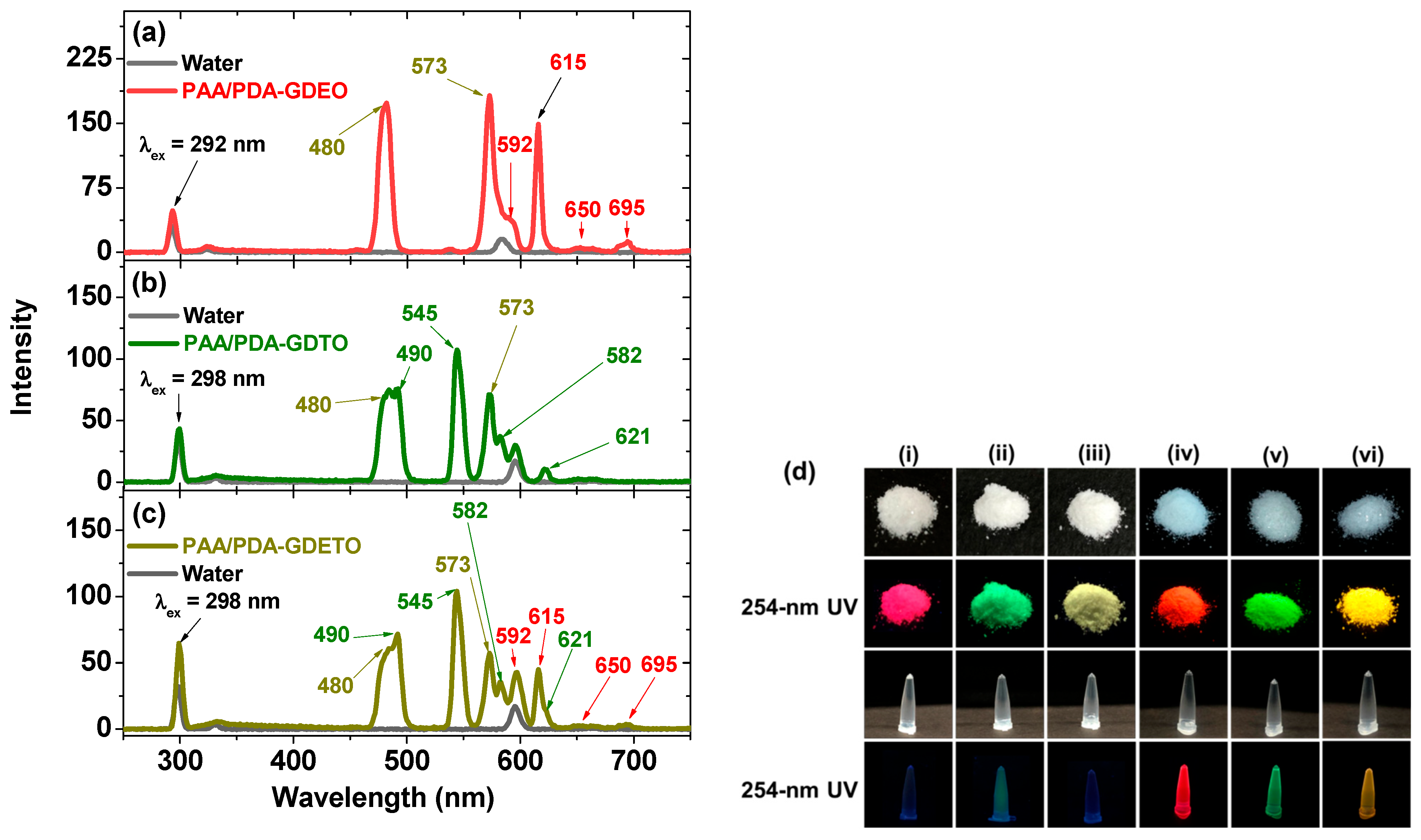
2.3. Fluorescent Properties
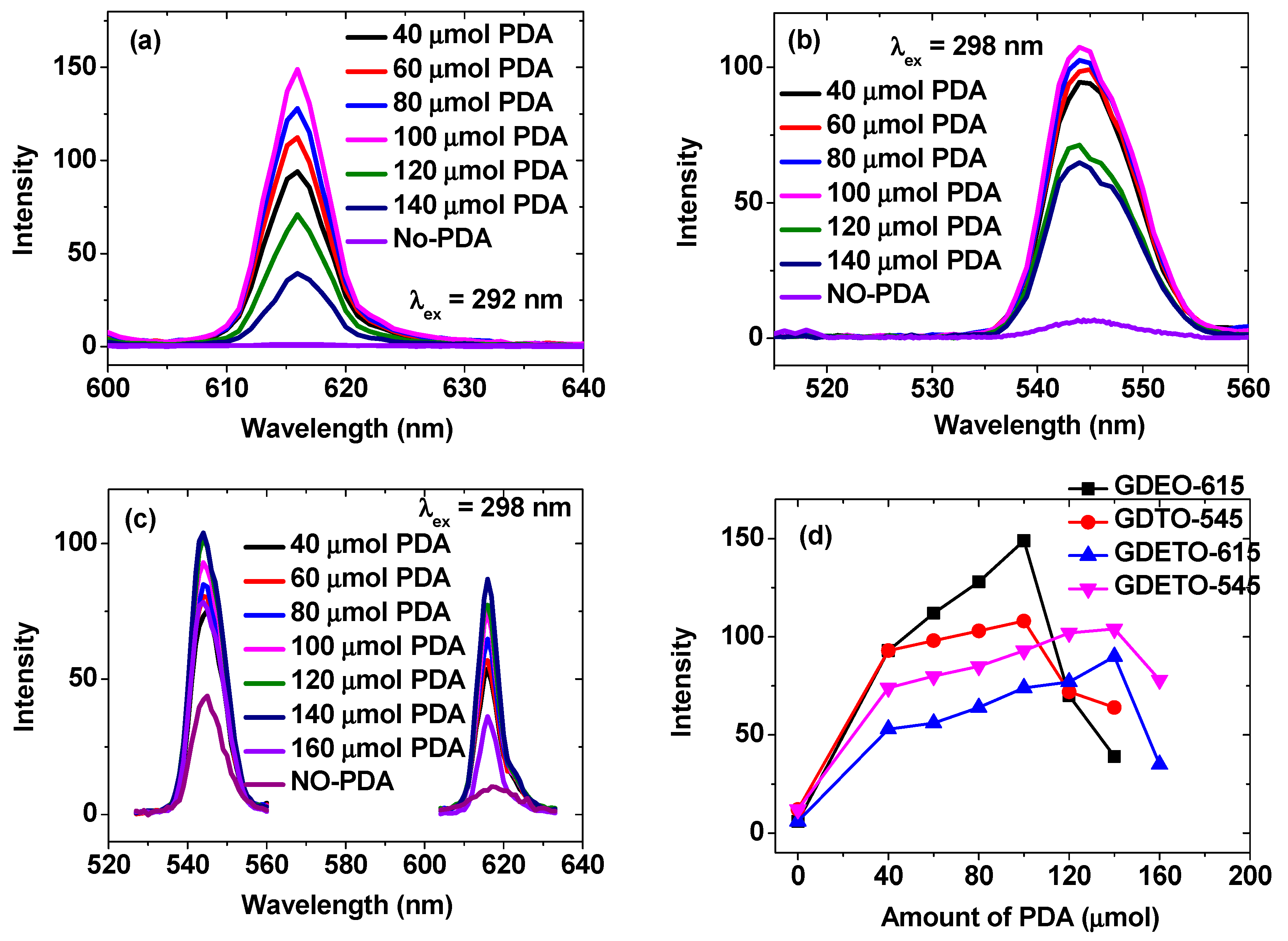
2.3.1. Optimal PDA Amount and PL Spectra
2.3.2. QY and τ
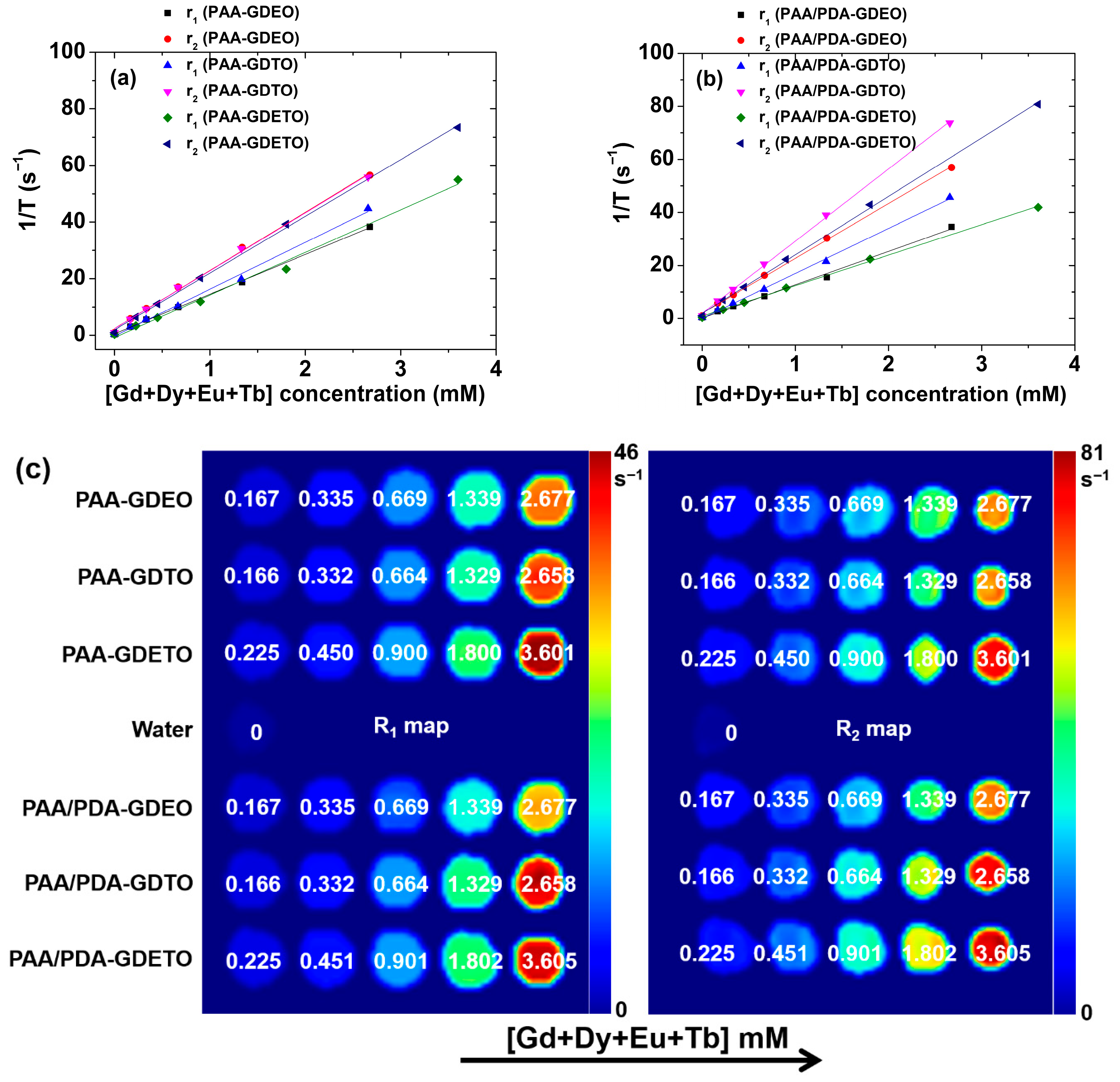
2.4. Longitudinal (r1) and Transverse (r2) Water Proton Spin Relaxivities
3. Discussion
4. Materials and Methods
4.1. Chemicals
4.2. Synthesis
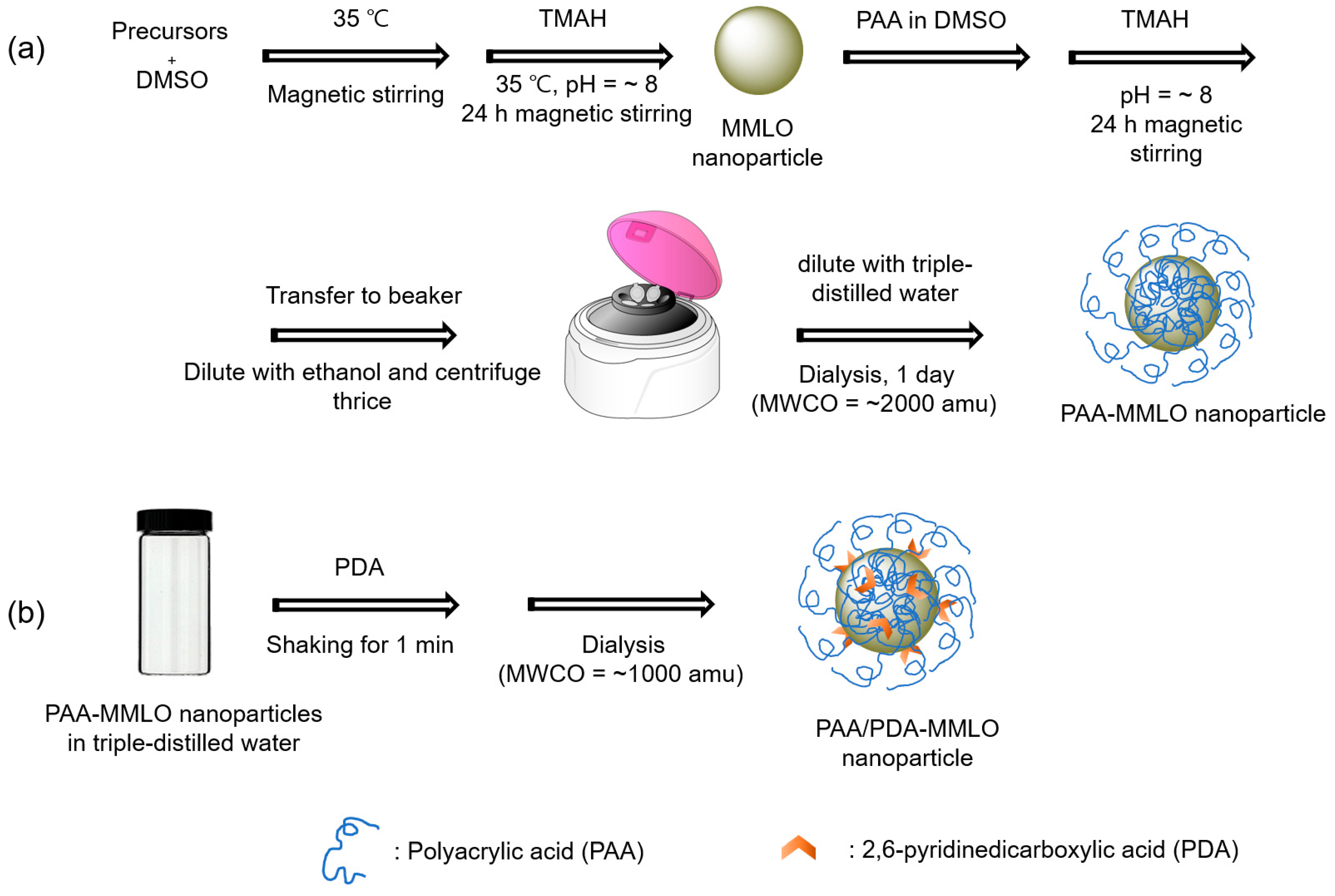
4.2.1. Synthesis of PAA-MMLO Nanoparticles
4.2.2. Synthesis of PAA/PDA-MMLO Nanoparticles
4.3. Analysis of the PAA/PDA-MMLO Nanoparticles
4.4. Acquisition of the PL Spectra, Absolute Fluorescent QYs, and τs
4.5. Measurements of Water Proton Spin Relaxivities and Map Images
5. Conclusions
- (1)
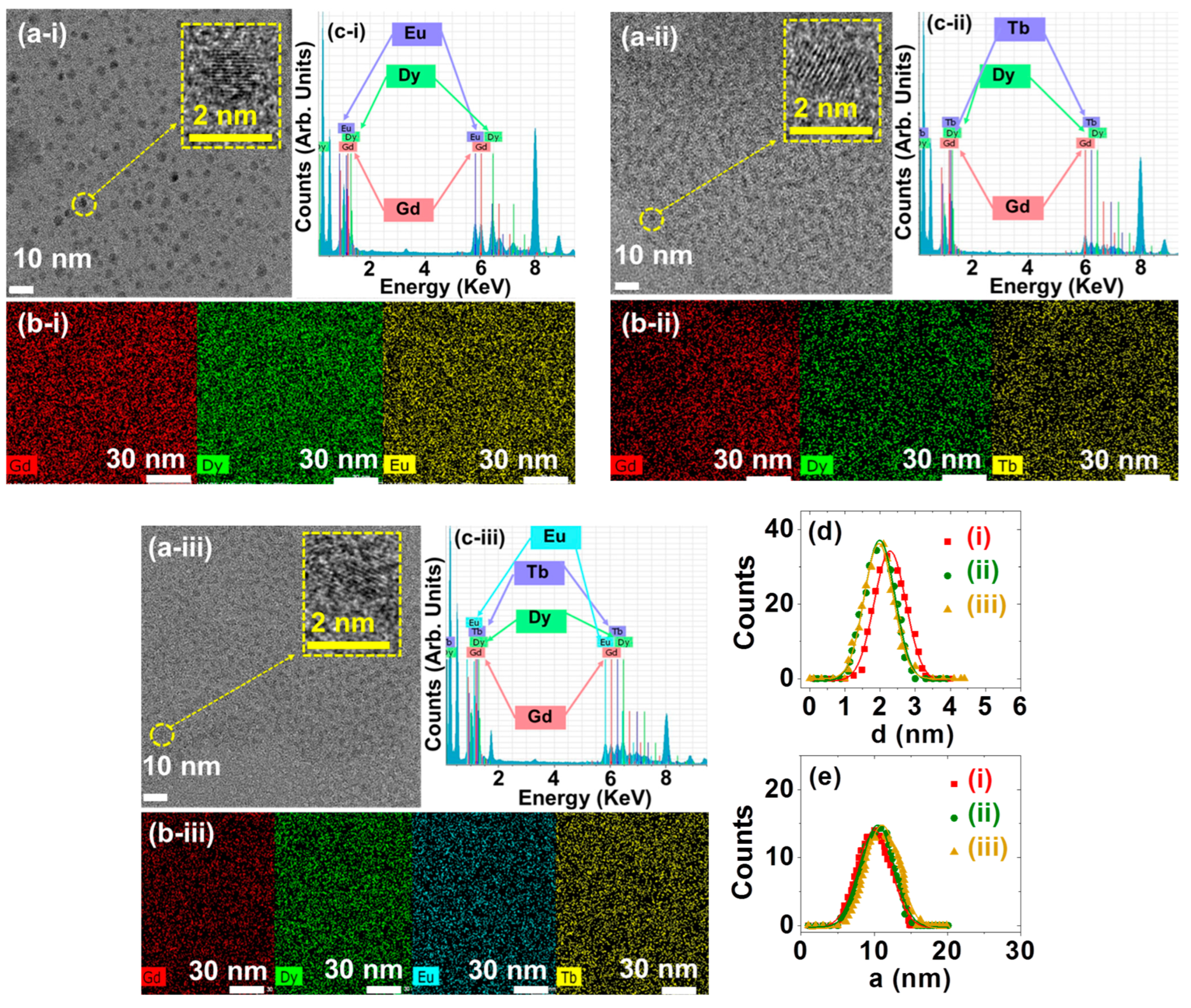
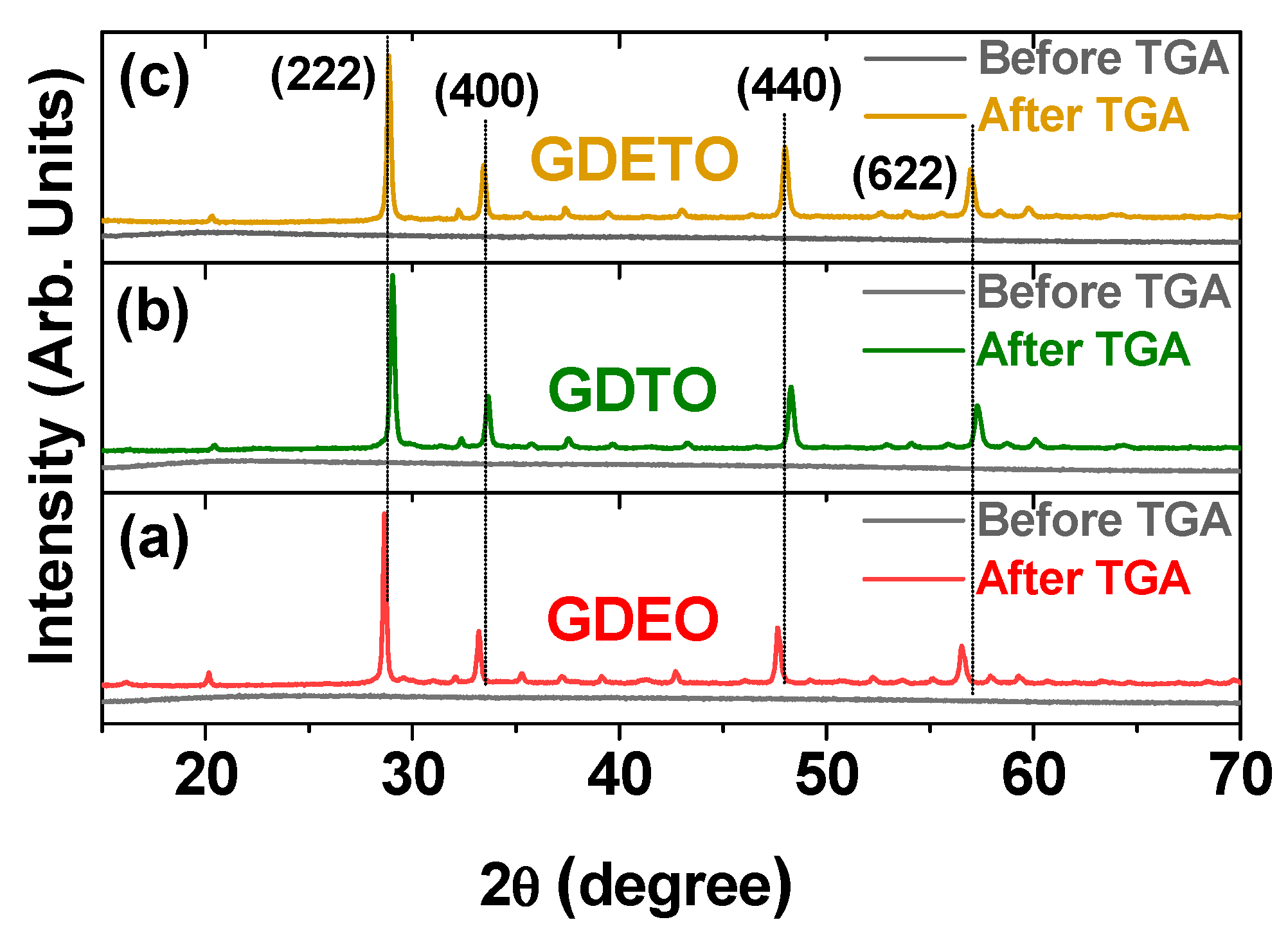
- The PAA-MMLO and PAA/PDA-MMLO nanoparticles were nearly monodispersed and ultrasmall, with an average particle diameter of ~2 nm. They exhibited excellent colloidal stability without precipitation after synthesis for over 1 year.
- (2)
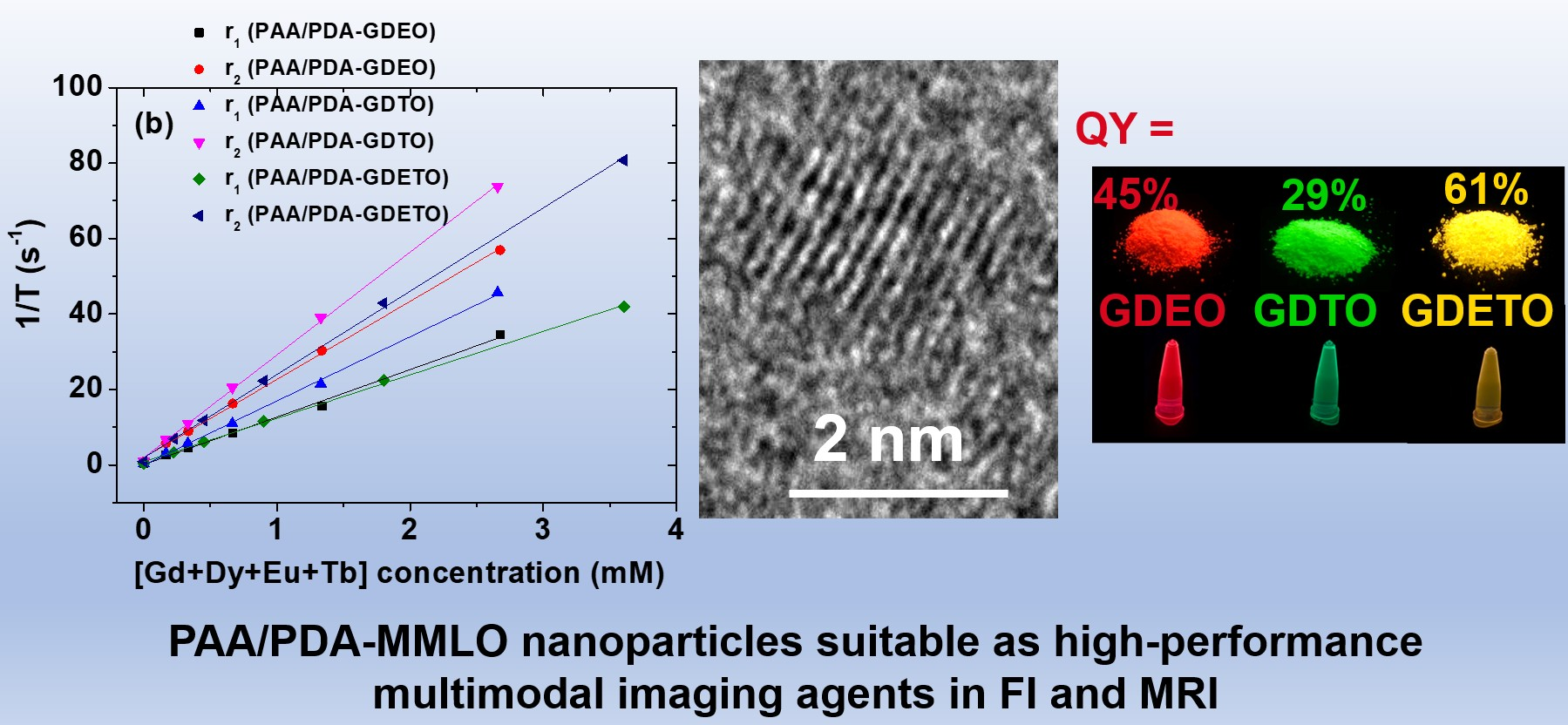
- The PAA-MMLO nanoparticles exhibited r1 and r2 values of 14.0–16.6 and 20.1–20.5 s−1mM−1, respectively, whereas the PAA/PDA-MMLO nanoparticles exhibited r1 and r2 values of 11.5–17.0 and 20.7–27.2 s−1mM−1, respectively. These r1 and r2 values are 4–5 and 6–7 times, respectively, higher than those of commercial molecular contrast agents.
- (3)
- The PAA-MMLO nanoparticles had QY and τ values of 1–2% and 0.1–0.4 ms, respectively, whereas the PAA/PDA-MMLO nanoparticles had significantly higher QY and τ values of 29–61% and 1.6–2.2 ms, respectively, underscoring the significant role of PDA in improving the photophysical properties of lanthanides via energy transfer and thus enhancing their potential for biomedical applications.
- (4)
- These findings confirm the potential utility of PAA-MMLO nanoparticles as T1 and/or T2 MRI contrast agents, as well as PAA/DPA-MMLO nanoparticles as both FI agents and T1 and/or T2 MRI contrast agents.
Author Contributions
Funding
Institutional Review Board Statement
Informed Consent Statement
Data Availability Statement
Acknowledgments
Conflicts of Interest
References
- Astruc, D. Introduction: Nanoparticles in Catalysis. Chem. Rev. 2020, 120, 461–463. [Google Scholar] [CrossRef]
- Frey, N.A.; Peng, S.; Cheng, K.; Sun, S. Magnetic Nanoparticles: Synthesis, Functionalization, and Applications in Bioimaging and Magnetic Energy Storage. Chem. Soc. Rev. 2009, 38, 2532–2542. [Google Scholar] [CrossRef]
- Gupta, S.K.; Zuniga, J.P.; Abdou, M.; Thomas, M.P.; De Alwis Goonatilleke, M.; Guiton, B.S.; Mao, Y. Lanthanide-Doped Lanthanum Hafnate Nanoparticles as Multicolor Phosphors for Warm White Lighting and Scintillators. Chem. Eng. J. 2020, 379, 122314. [Google Scholar] [CrossRef]
- Milinčić, D.D.; Popović, D.A.; Lević, S.M.; Kostić, A.Ž.; Tešić, Ž.L.; Nedović, V.A.; Pešić, M.B. Application of polyphenol-loaded nanoparticles in food industry. Nanomaterials 2019, 9, 1629. [Google Scholar] [CrossRef]
- Tartaj, P.; Morales, M.P.; Gonzales-Carreno, T.; Veintemillas-Verdaguer, S.; Serna, C.J. Advances in magnetic nanoparticles for biotechnology applications. J. Magn. Magn. Mater. 2005, 290, 28–34. [Google Scholar] [CrossRef]
- Wilczewska, A.Z.; Niemirowicz, K.; Markiewicz, K.H.; Car, H. Nanoparticles as drug delivery systems. Pharmacol. Rep. 2012, 64, 1020–1037. [Google Scholar] [CrossRef] [PubMed]
- Wu, K.; Su, D.; Liu, J.; Saha, R.; Wang, J.-P. Magnetic nanoparticles in nanomedicine: A review of recent advances. Nanotechnology 2019, 30, 502003. [Google Scholar] [CrossRef] [PubMed]
- Seaborg, G.T. Overview of the Actinide and Lanthanide (the f) Elements. Radiochim. Acta 1993, 61, 115–122. [Google Scholar] [CrossRef]
- Gillen, R.; Clark, S.J.; Robertson, J. Nature of the electronic band gap in lanthanide oxides. Phys. Rev. B 2013, 87, 125116. [Google Scholar] [CrossRef]
- Cotton, S. Lanthanide and Actinide Chemistry; John Wiley & Sons: Chichester, UK, 2013. [Google Scholar]
- Rahmani, A.A.; Jia, Q.; Bahti, H.H.; Fauzia, R.P.; Wyantuti, S. Recent Advances in lanthanide-based nanoparticle contrast agents for magnetic resonance imaging: Synthesis, characterization, and applications. OpenNano 2025, 21, 100226. [Google Scholar] [CrossRef]
- Bünzli, J.-C.G. Lanthanide luminescence for biomedical analyses and imaging. Chem. Rev. 2010, 110, 2729–2755. [Google Scholar] [CrossRef]
- Kang, D.; Jeon, E.; Kim, S.; Lee, J. Lanthanide-Doped Upconversion Nanomaterials: Recent Advances and Applications. BioChip J. 2020, 14, 124–135. [Google Scholar] [CrossRef]
- Mondal, S.; Nguyen, V.T.; Park, S.; Choi, J.; Vo, T.M.T.; Shin, J.H.; Kang, Y.-H.; Oh, J. Rare earth element doped hydroxyapatite luminescent bioceramics contrast agent for enhanced biomedical imaging and therapeutic applications. Ceram. Int. 2020, 46, 29249–29260. [Google Scholar] [CrossRef]
- Dong, H.; Du, S.-R.; Zheng, X.-Y.; Lyu, G.-M.; Sun, L.-D.; Li, L.-D.; Zhang, P.-Z.; Zhang, C.; Yan, C.-H. Lanthanide Nanoparticles: From Design toward Bioimaging and Therapy. Chem. Rev. 2015, 115, 10725–10815. [Google Scholar] [CrossRef]
- Mekuria, S.L.; Addisu, K.D.; Chou, H.-Y.; Hailemeskel, B.Z.; Tasi, H.-C. Potential fluorescence and magnetic resonance imaging modality using mixed lanthanide oxide nanoparticles. Colloids Surf. B Biointerfaces 2018, 167, 54–62. [Google Scholar] [CrossRef] [PubMed]
- Caravan, P.; Ellison, J.J.; McMurry, T.J.; Lauffer, R.B. Gadolinium (III) chelates as MRI contrast agents: Structure, dynamics, and applications. Chem. Rev. 1999, 99, 2293–2352. [Google Scholar] [CrossRef]
- Caravan, P. Strategies for increasing the sensitivity of gadolinium-based MRI contrast agents. Chem. Soc. Rev. 2006, 35, 512–523. [Google Scholar] [CrossRef] [PubMed]
- Le Fur, M.; Caravan, P. The biological fate of gadolinium-based MRI contrast agents: A call to action for bioinorganic chemists. Metallomics 2019, 11, 240–254. [Google Scholar] [CrossRef]
- Yue, H.; Park, J.A.; Ho, S.L.; Ahmad, M.Y.; Cha, H.; Liu, S.; Tegafaw, T.; Marasini, S.; Ghazanfari, A.; Kim, S.; et al. New Class of Efficient T2 Magnetic Resonance Imaging Contrast Agent: Carbon-Coated Paramagnetic Dysprosium Oxide Nanoparticles. Pharmaceuticals 2020, 13, 312. [Google Scholar] [CrossRef]
- Kim, H.-K.; Baek, A.R.; Choi, G.; Lee, J.-j.; Yang, J.-u.; Jung, H.; Lee, T.; Kim, D.; Kim, M.; Cho, A.; et al. Highly brain-permeable apoferritin nanocage with high dysprosium loading capacity as a new T2 contrast agent for ultra-high field magnetic resonance imaging. Biomaterials 2020, 243, 119939. [Google Scholar] [CrossRef]
- Li, C.; Wang, Y.; Nong, H.; Hu, X.; Wu, Y.; Zhang, Y.; Liang, C.; Chen, K.; Li, S. Manganese and dysprosium codoped carbon quantum dots as a potential fluorescent/T1/T2/CT quadri-modal imaging nanoprobe. Nanotechnology 2021, 33, 025101. [Google Scholar] [CrossRef] [PubMed]
- Caro, C.; Paez-Muñoz, J.M.; Beltrán, A.M.; Leal, M.P.; García-Martín, M.L. PEGylated Terbium-Based Nanorods as Multimodal Bioimaging Contrast Agents. ACS Appl. Nano Mater. 2021, 4, 4199–4207. [Google Scholar] [CrossRef]
- Marasini, S.; Yue, H.; Ho, S.L.; Park, J.A.; Kim, S.; Jung, K.-H.; Cha, H.; Liu, S.; Tegafaw, T.; Ahmad, M.Y.; et al. Synthesis, Characterizations, and 9.4 Tesla T2 MR Images of Polyacrylic Acid-Coated Terbium(III) and Holmium(III) Oxide Nanoparticles. Nanomaterials 2021, 11, 1355. [Google Scholar] [CrossRef]
- Starck, M.; Fradgley, J.D.; Pal, R.; Zwier, J.M.; Lamarque, L.; Parker, D. Synthesis and Evaluation of Europium Complexes That Switch on Luminescence in Lysosomes of Living Cells. Chem. Eur. J. 2021, 27, 766–777. [Google Scholar] [CrossRef] [PubMed]
- Fang, F.; Zhao, D.; Zhang, Y.; Li, M.; Ye, J.; Zhang, J. Europium-Doped Nanoparticles for Cellular Luminescence Lifetime Imaging via Multiple Manipulations of Aggregation State. ACS Appl. Bio Mater. 2020, 3, 5103–5110. [Google Scholar] [CrossRef]
- Das, G.K.; Zhang, Y.; D’Silva, L.; Padmanabhan, P.; Heng, B.C.; Loo, J.S.C.; Selvan, S.T.; Bhakoo, K.K.; Tan, T.T.Y. Single-Phase Dy2O3:Tb3+ Nanocrystals as Dual-Modal Contrast Agent for High Field Magnetic Resonance and Optical Imaging. Chem. Mater. 2011, 23, 2439–2446. [Google Scholar] [CrossRef]
- Law, G.L.; Wong, K.L.; Man, C.W.Y.; Wong, W.T.; Tsao, S.W.; Lam, M.H.W.; Lam, P.K.S. Emissive terbium probe for multiphoton in vitro cell imaging. J. Am. Chem. Soc. 2008, 130, 3714–3715. [Google Scholar] [CrossRef]
- Thibon, A.; Pierre, V.C. Principles of Responsive Lanthanide-Based Luminescent Probes for Cellular Imaging. Anal. Bioanal. Chem. 2009, 394, 107–120. [Google Scholar] [CrossRef]
- Tegafaw, T.; Xu, W.; Ahmad, M.W.; Baeck, J.S.; Chang, Y.; Bae, J.E.; Chae, K.S.; Kim, T.J.; Lee, G.H. Dual-mode T1 and T2 magnetic resonance imaging contrast agent based on ultrasmall mixed gadolinium-dysprosium oxide nanoparticles: Synthesis, characterization, and in vivo application. Nanotechnology 2015, 26, 365102. [Google Scholar] [CrossRef]
- Addisu, K.D.; Hsu, W.-H.; Hailemeskel, B.Z.; Andrgie, A.T.; Chou, H.-Y.; Yuh, C.-H.; Lai, J.-Y.; Tsai, H.-C. Mixed Lanthanide Oxide Nanoparticles Coated with Alginate-Polydopamine as Multifunctional Nanovehicles for Dual Modality: Targeted Imaging and Chemotherapy. ACS Biomater. Sci. Eng. 2019, 5, 5453–5469. [Google Scholar] [CrossRef]
- Yim, E.S.; Zhao, B.; Myung, D.; Kourtis, L.C.; Frank, C.W.; Carter, D.; Smith, R.L.; Goodman, S.B. Biocompatibility of poly(ethylene glycol)/poly(acrylic acid) interpenetrating polymer network hydrogel particles in RAW 264.7 macrophage and MG-63 osteoblast cell lines. J. Biomed. Mater. Res. Part A 2009, 91, 894–902. [Google Scholar] [CrossRef] [PubMed]
- Arkaban, H.; Barani, M.; Akbarizadeh, M.R.; Chauhan, N.P.S.; Jadoun, S.; Soltani, M.D.; Zarrintaj, P. Polyacrylic Acid Nanoplatforms: Antimicrobial, Tissue Engineering, and Cancer Theranostic Applications. Polymers 2022, 14, 1259. [Google Scholar] [CrossRef] [PubMed]
- Pearson, R.G. Hard and soft acids and bases, HSAB, part I: Fundamental principles. J. Chem. Educ. 1968, 45, 581–587. [Google Scholar] [CrossRef]
- Pearson, R.G. Hard and soft acids and bases, HSAB, part II: Underlying theories. J. Chem. Educ. 1968, 45, 643–648. [Google Scholar] [CrossRef]
- Adusumalli, V.N.K.B.; Lis, S.; Park, Y.I. CO32– ion-induced Cu2+ ion determination using DPA capped-LaF3:Eu3+ nanocrystals. J. Mater. Chem. C 2022, 10, 17494–17501. [Google Scholar] [CrossRef]
- Li, Q.-F.; Yue, D.; Lu, W.; Zhang, X.; Li, C.; Wang, Z. Hybrid luminescence materials assembled by [Ln(DPA)3]3− and mesoporous host through ion-pairing interactions with high quantum efficiencies and long lifetimes. Sci. Rep. 2015, 5, 8385. [Google Scholar] [CrossRef]
- Tegafaw, T.; Liu, Y.; Ho, S.L.; Liu, S.; Ahmad, M.Y.; Saidi, A.K.A.A.; Zhao, D.; Ahn, D.; Nam, H.; Chae, W.-S.; et al. High-Quantum-Yield Ultrasmall Ln2O3 (Ln = Eu, Tb, or Dy) Nanoparticle Colloids in Aqueous Media Obtained via Photosensitization. Langmuir 2023, 39, 15338–15342. [Google Scholar] [CrossRef]
- Clavier, A.; Seijo, M.; Carnal, F.; Stoll, S. Surface charging behavior of nanoparticles by considering site distribution and density, dielectric constant and pH changes—A Monte Carlo approach. Phys. Chem. Chem. Phys. 2015, 17, 4346–4353. [Google Scholar] [CrossRef]
- Pillai, P.P.; Kowalczyk, B.; Pudlo, W.J.; Grzybowski, B.A. Electrostatic Titrations Reveal Surface Compositions of Mixed, On-Nanoparticle Monolayers Comprising Positively and Negatively Charged Ligands. J. Phys. Chem. C 2016, 120, 4139–4144. [Google Scholar] [CrossRef]
- Söderlind, F.; Pedersen, H.; Petoral, R.M.; Käll, P.-O.; Uvdal, K. Synthesis and characterisation of Gd2O3 nanocrystals functionalised by organic acids. J. Colloid Interface Sci. 2005, 288, 140–148. [Google Scholar] [CrossRef]
- Yue, H.; Marasini, S.; Ahmad, M.Y.; Ho, S.L.; Cha, H.; Liu, S.; Jang, Y.J.; Tegafaw, T.; Ghazanfari, A.; Miao, X.; et al. Carbon-coated ultrasmall gadolinium oxide (Gd2O3@C) nanoparticles: Application to magnetic resonance imaging and fluorescence properties. Colloids Surf. A Physicochem. Eng. Asp. 2020, 586, 124261. [Google Scholar] [CrossRef]
- Shinde, K.P.; Tien, V.M.; Huang, L.; Park, H.-R.; Yu, S.-C.; Chung, K.C.; Kim, D.-H. Magnetocaloric effect in Tb2O3 and Dy2O3 nanoparticles at cryogenic temperatures. J. Appl. Phys. 2020, 127, 054903. [Google Scholar] [CrossRef]
- Mohamed, H.E.A.; Hkiri, K.; Khenfouch, M.; Dhlamini, S.; Henini, M.; Maaza, M. Optical properties of biosynthesized nanoscaled Eu2O3 for red luminescence applications. J. Opt. Soc. Am. A 2020, 37, C73–C79. [Google Scholar] [CrossRef] [PubMed]
- Deacon, G.B.; Phillips, R.J. Relationships between the carbon-oxygen stretching frequencies of carboxylato complexes and the type of carboxylate coordination. Coord. Chem. Rev. 1980, 33, 227–250. [Google Scholar] [CrossRef]
- Benoit, D.N.; Zhu, H.; Lilierose, M.H.; Verm, R.A.; Ali, N.; Morrison, A.N.; Fortner, J.D.; Avendano, C.; Colvin, V.L. Measuring the grafting density of nanoparticles in solution by analytical ultracentrifugation and total organic carbon analysis. Anal. Chem. 2012, 84, 9238–9245. [Google Scholar] [CrossRef]
- Corbierre, M.K.; Cameron, N.S.; Lennox, R.B. Polymer-stabilized gold nanoparticles with high grafting densities. Langmuir 2004, 20, 2867–2873. [Google Scholar] [CrossRef] [PubMed]
- Weast, R.C. CRC Handbook of Chemistry and Physics, 64th ed.; CRC Press, Inc.: Boca Raton, FL, USA, 1984. [Google Scholar]
- Petoud, S.; Cohen, S.M.; Bünzli, J.-C.G.; Raymond, K.N. Stable Lanthanide Luminescence Agents Highly Emissive in Aqueous Solution: Multidentate 2-Hydroxyisophthalamide Complexes of Sm3+, Eu3+, Tb3+, Dy3+. J. Am. Chem. Soc. 2003, 125, 13324–13325. [Google Scholar] [CrossRef]
- Luo, X.; He, X.; Shi, J.; Cui, C.; Xu, Y. A Series of New Eu/Tb Mixed MOFs with Tunable Color Luminescence. Z. Anorg. Allg. Chem. 2017, 644, 43–49. [Google Scholar] [CrossRef]
- Datta, R.; Heaster, T.M.; Sharick, J.T.; Gillette, A.A.; Skala, M.C. Fluorescence lifetime imaging microscopy: Fundamentals and advances in instrumentation, analysis, and applications. J. Biomed. Opt. 2020, 25, 071203. [Google Scholar] [CrossRef]
- Liu, S.; Yue, H.; Ho, S.L.; Kim, S.; Park, J.A.; Tegafaw, T.; Ahmad, M.Y.; Kim, S.; Saidi, A.K.A.A.; Zhao, D.; et al. Enhanced Tumor Imaging Using Glucosamine-Conjugated Polyacrylic Acid-Coated Ultrasmall Gadolinium Oxide Nanoparticles in Magnetic Resonance Imaging. Int. J. Mol. Sci. 2022, 23, 1792. [Google Scholar] [CrossRef]
- Jang, Y.J.; Liu, S.; Yue, H.; Park, J.A.; Cha, H.; Ho, S.L.; Marasini, S.; Ghazanfari, A.; Ahmad, M.Y.; Miao, X.; et al. Hydrophilic biocompatible poly(acrylic acid-co-maleic acid) polymer as a surface-coating ligand of ultrasmall Gd2O3 nanoparticles to obtain a high r1 value and T1 MR images. Diagnostics 2021, 11, 2. [Google Scholar] [CrossRef]
- Marasini, S.; Yue, H.; Ho, S.L.; Cha, H.; Park, J.A.; Jung, K.H.; Ghazanfari, A.; Ahmad, M.Y.; Liu, S.; Chae, K.S.; et al. A Novel Paramagnetic Nanoparticle T2 Magnetic Resonance Imaging Contrast Agent with High Colloidal Stability: Polyacrylic Acid-Coated Ultrafine Dysprosium Oxide Nanoparticles. Bull. Korean Chem. Soc. 2020, 41, 829–836. [Google Scholar] [CrossRef]
- Xu, W.; Park, J.Y.; Kattel, K.; Bony, B.A.; Heo, W.C.; Jin, S.; Park, J.W.; Chang, Y.; Do, J.Y.; Chae, K.S.; et al. A T1, T2 magnetic resonance imaging (MRI)-fluorescent imaging (FI) by using ultrasmall mixed gadolinium–europium oxide nanoparticles. New J. Chem. 2012, 36, 2361–2367. [Google Scholar] [CrossRef]
- Rahman, A.T.M.A.; Majewski, P.; Vasilev, K. Gd2O3 nanoparticles: Size-dependent nuclear magnetic resonance. Contrast Media Mol. Imaging 2013, 8, 92–95. [Google Scholar] [CrossRef]
- Park, J.Y.; Baek, M.J.; Choi, E.S.; Woo, S.; Kim, J.H.; Kim, T.J.; Jung, J.C.; Chae, K.S.; Chang, Y.; Lee, G.H. Paramagnetic Ultrasmall Gadolinium Oxide Nanoparticles as Advanced T1 MRI Contrast Agent: Account for Large Longitudinal Relaxivity, Optimal Particle Diameter, and In Vivo T1 MR Images. ACS Nano 2009, 3, 3663–3669. [Google Scholar] [CrossRef] [PubMed]
- Cui, D.; Lu, X.; Yan, C.; Liu, X.; Hou, M.; Xia, Q.; Xu, Y.; Liu, R. Gastrin-releasing peptide receptor-targeted gadolinium oxide-based multifunctional nanoparticles for dual magnetic resonance/fluorescent molecular imaging of prostate cancer. Int. J. Nanomed. 2017, 12, 6787–6797. [Google Scholar] [CrossRef] [PubMed]
- Wu, L.; Lu, X.; Lu, Y.; Shi, M.; Guo, S.; Feng, J.; Yang, S.; Xiong, W.; Xu, Y.; Yan, C.; et al. Kilogram-Scale Synthesis of Extremely Small Gadolinium Oxide Nanoparticles as a T1-Weighted Contrast Agent for Magnetic Resonance Imaging. Small 2024, 20, 2308547. [Google Scholar] [CrossRef]
- Zheng, C.; Tian, X.; Cai, J.; Huang, L.; Wang, S.; Yang, F.; Ma, Y.; Xie, F.; Li, L. In vivo immunotoxicity of Gd2O3: Eu3+ nanoparticles and the associated molecular mechanism. J. Biochem. Mol. Toxicol. 2020, 34, e22562. [Google Scholar] [CrossRef]






| Ln3+ | Ground State Configuration | Fluorescent Color | Application Field | Ref. |
|---|---|---|---|---|
| Gd3+ | 8S7/2 | Colorless | T1 MRI | [17,18,19] |
| Dy3+ | 6H15/2 | Pale Yellow | T2 MRI, FI | [20,21,22] |
| Eu3+ | 7F0 | Red | FI | [12,25,26] |
| Tb3+ | 7F6 | Green | T2 MRI, FI | [23,24,25,26,27,28,29] |
| Sample | Gd:Dy:Eu:Tb Mole Ratio from ICP-AES | davg (nm) | PDI | aavg (nm) | PDI | ξavg (mV) | Surface-Grafting Result | |||
|---|---|---|---|---|---|---|---|---|---|---|
| Without PDA | With PDA | Q (P) (wt. %) | σ (nm−2) | NNP | ||||||
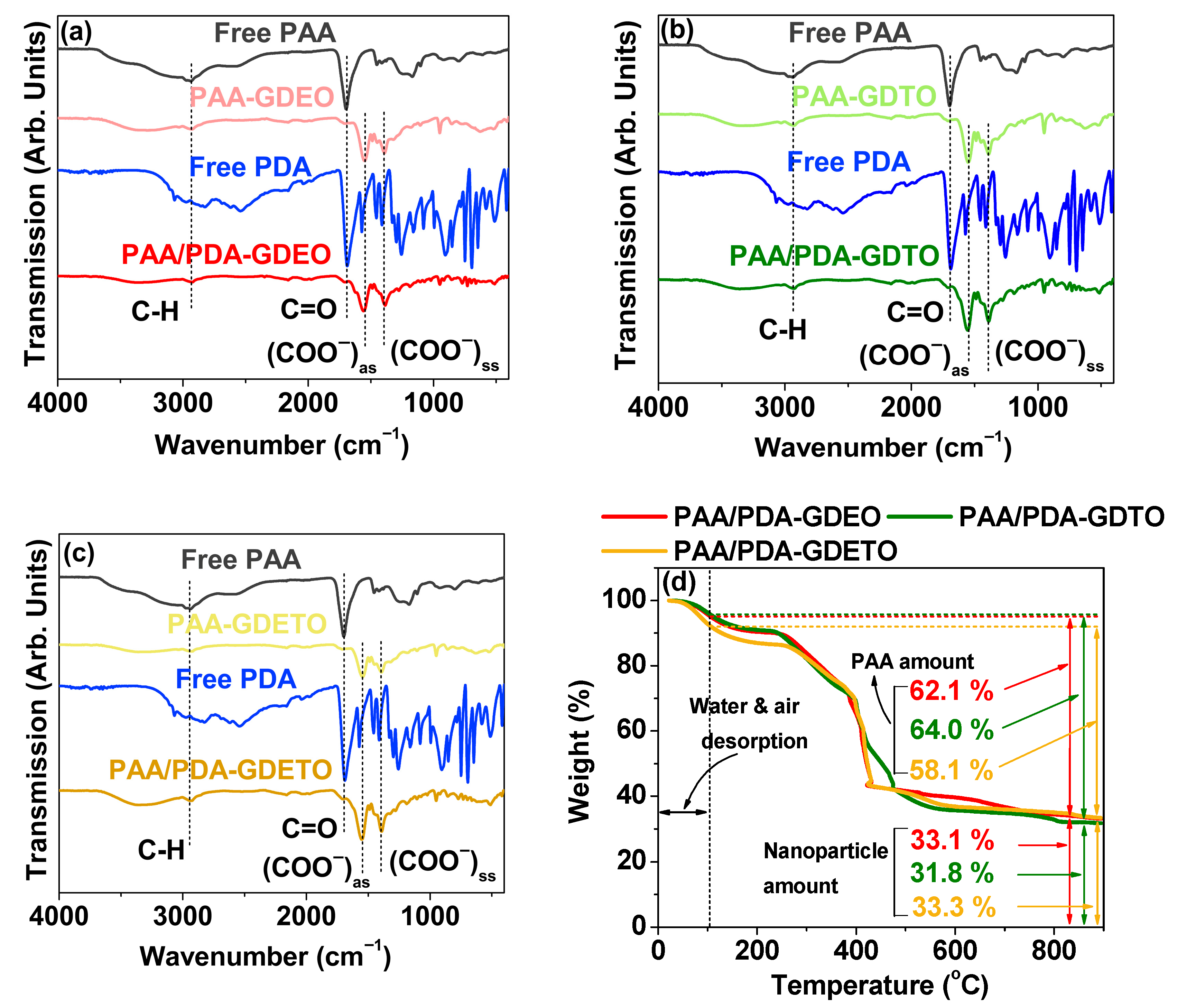
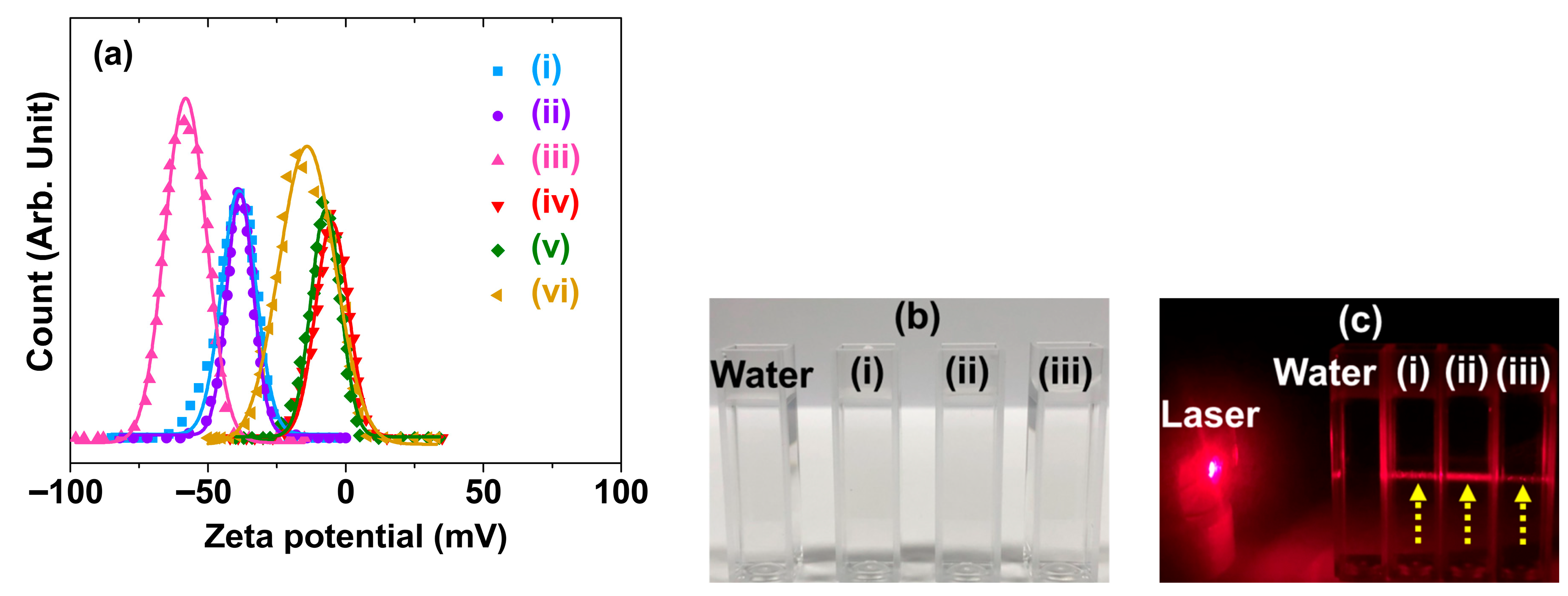
| GDEO | 1.0(Gd):0.92(Dy):0.96(Eu) | 2.3 | 0.05 | 10.1 | 0.06 | −38.8 | −4.9 | 33.1 (62.1) | 1.7 | 27.6 |
| GDTO | 1.0(Gd):0.93(Dy):0.93(Tb) | 2.0 | 0.07 | 10.5 | 0.06 | −38.3 | −7.2 | 31.8 (64.0) | 1.6 | 19.9 |
| GDETO | 1.0(Gd):0.94(Dy):0.93(Eu):0.93(Tb) | 2.0 | 0.07 | 11.1 | 0.05 | −58.1 | −14.0 | 33.3 (58.9) | 1.4 | 17.3 |
| Nanoparticle | C–H Stretch | C=O Stretch | COO− Antisymmetric Stretch | COO− Symmetric Stretch |
|---|---|---|---|---|
| PAA | 2936 | 1698 | - | - |
| PDA | - | 1688 | - | - |
| PAA-GDEO | 2935 | 1710 | 1549 | 1392 |
| PAA-GDTO | 1708 | 1549 | 1389 | |
| PAA-GDETO | 1709 | 1547 | 1394 | |
| PAA/PDA-GDEO | 2935 | 1706 | 1556 | 1389 |
| PAA/PDA-GDTO | 2935 | 1706 | 1554 | 1388 |
| PAA/PDA-GDETO | 2936 | 1701 | 1554 | 1390 |
| Sample | Fluorescent Color | λex (nm) | λem (nm) | τ (ms) | QY (%) |
|---|---|---|---|---|---|
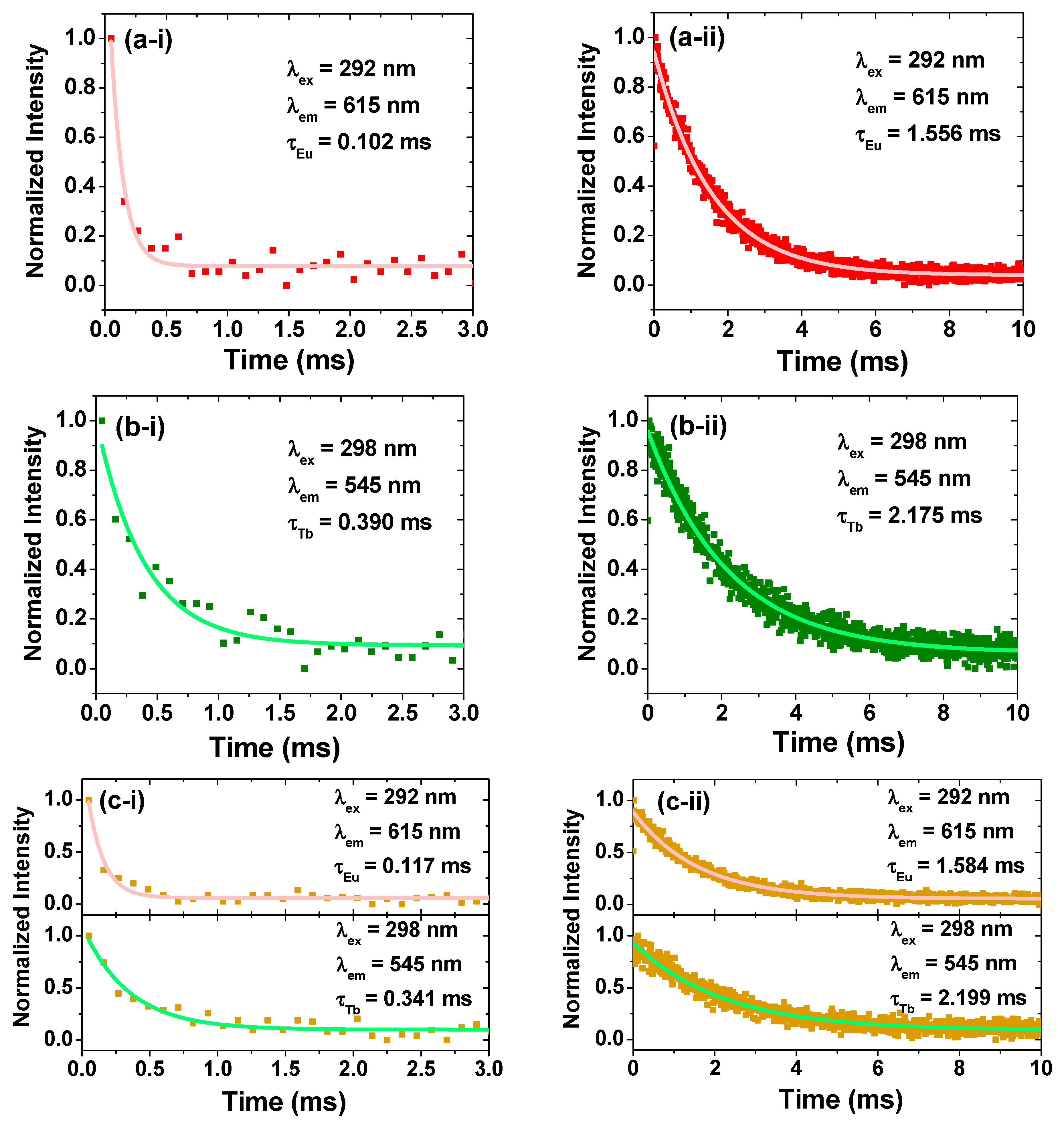
| PAA-GDEO | Pale red | 292 | 615 | 0.102 | 1 |
| PAA-GDTO | Pale green | 298 | 545 | 0.390 | 1 |
| PAA-GDETO | Pale yellow | 298 | 615 | 0.117 | 2 |
| 545 | 0.341 | ||||
| PAA/PDA-GDEO | Strong red | 292 | 615 | 1.556 | 45 |
| PAA/PDA-GDTO | Strong green | 298 | 545 | 2.175 | 29 |
| PAA/PDA-GDETO | Strong yellow | 298 | 615 | 1.589 | 61 |
| 545 | 2.199 |
| Nanoparticle (Ln Used in the Plot as Concentration) | Ligand | r1 (s−1 mM−1) | r2 (s−1 mM−1) | r2/r1 | Applied Field (T) | Ref. |
|---|---|---|---|---|---|---|
| GDEO (Gd + Dy + Eu) | PAA | 14.03 | 20.54 | 1.46 | 3.0 | This study |
| PAA + PDA | 12.59 | 20.70 | 1.64 | |||
| GDTO (Gd + Dy + Tb) | PAA | 16.55 | 20.46 | 1.24 | 3.0 | This study |
| PAA + PDA | 16.98 | 27.23 | 1.60 | |||
| GDET (Gd + Dy + Eu + Tb) | PAA | 15.04 | 20.06 | 1.33 | 3.0 | This study |
| PAA + PDA | 11.51 | 22.06 | 1.92 | |||
| Gd2O3 (Gd) | PAA | 14.31 | 24.09 | 1.68 | 1.5 | [52] |
| PAA + GlcN | 10.18 | 18.38 | 1.80 | |||
| PAA | 19.32 | 34.23 | 1.77 | 3.0 | ||
| PAA + GlcN | 12.60 | 24.46 | 1.92 | |||
| Gd2O3 (Gd) | PAAMA | 40.60 | 63.40 | 1.56 | 3.0 | [53] |
| Gd2O3 (Gd) | Carbon | 16.26 | 24.12 | 1.48 | 1.5 | [42] |
| Tb2O3 (Tb) | PAA | 0.10 | 3.19 | 31.90 | 3.0 | [24] |
| 0.30 | 16.40 | 54.67 | 9.4 | |||
| Dy2O3 (Dy) | PAA | 0.16 | 2.01 | 12.56 | 3.0 | [54] |
| 0.55 | 11.31 | 20.56 | 9.4 | |||
| Dy2O3 (Dy) | Carbon | 0.10 | 5.70 | 57.00 | 3.0 | [20] |
| GDO (Gd) | D-glucuronic acid | 12.60 | 83.60 | 6.60 | 1.5 | [30] |
| GDO (Dy) | 11.60 | 76.80 | 6.60 | |||
| GDO (Gd + Dy) | 6.00 | 40.00 | 6.70 | |||
| Gd0.74Eu1.26O3 | Lactobionic acid | 11.90 | 38.70 | 3.25 | 1.5 | [55] |
Disclaimer/Publisher’s Note: The statements, opinions and data contained in all publications are solely those of the individual author(s) and contributor(s) and not of MDPI and/or the editor(s). MDPI and/or the editor(s) disclaim responsibility for any injury to people or property resulting from any ideas, methods, instructions or products referred to in the content. |
© 2026 by the authors. Licensee MDPI, Basel, Switzerland. This article is an open access article distributed under the terms and conditions of the Creative Commons Attribution (CC BY) license.
Share and Cite
Saidi, A.K.A.A.; Tegafaw, T.; Zhao, D.; Liu, Y.; Mulugeta, E.; Chen, X.; Lin, Z.; Lee, H.; Baek, A.; Kim, J.; et al. Water Proton Spin Relaxivities and Absolute Fluorescent Quantum Yields of Triply and Quadruply Mixed Lanthanide Oxide Nanoparticles. Int. J. Mol. Sci. 2026, 27, 959. https://doi.org/10.3390/ijms27020959
Saidi AKAA, Tegafaw T, Zhao D, Liu Y, Mulugeta E, Chen X, Lin Z, Lee H, Baek A, Kim J, et al. Water Proton Spin Relaxivities and Absolute Fluorescent Quantum Yields of Triply and Quadruply Mixed Lanthanide Oxide Nanoparticles. International Journal of Molecular Sciences. 2026; 27(2):959. https://doi.org/10.3390/ijms27020959
Chicago/Turabian StyleSaidi, Abdullah Khamis Ali Al, Tirusew Tegafaw, Dejun Zhao, Ying Liu, Endale Mulugeta, Xiaoran Chen, Ziyi Lin, Hansol Lee, Ahrum Baek, Jihyun Kim, and et al. 2026. "Water Proton Spin Relaxivities and Absolute Fluorescent Quantum Yields of Triply and Quadruply Mixed Lanthanide Oxide Nanoparticles" International Journal of Molecular Sciences 27, no. 2: 959. https://doi.org/10.3390/ijms27020959
APA StyleSaidi, A. K. A. A., Tegafaw, T., Zhao, D., Liu, Y., Mulugeta, E., Chen, X., Lin, Z., Lee, H., Baek, A., Kim, J., Chang, Y., & Lee, G. H. (2026). Water Proton Spin Relaxivities and Absolute Fluorescent Quantum Yields of Triply and Quadruply Mixed Lanthanide Oxide Nanoparticles. International Journal of Molecular Sciences, 27(2), 959. https://doi.org/10.3390/ijms27020959