Changes in Blood Cells and Complements During Relapse Prevention Therapies for Aquaporin-4 Antibody-Positive Neuromyelitis Optica Spectrum Disorder

 , , , , , , and
Abstract
1. Introduction
2. Results
2.1. Demographics of the Study Participants
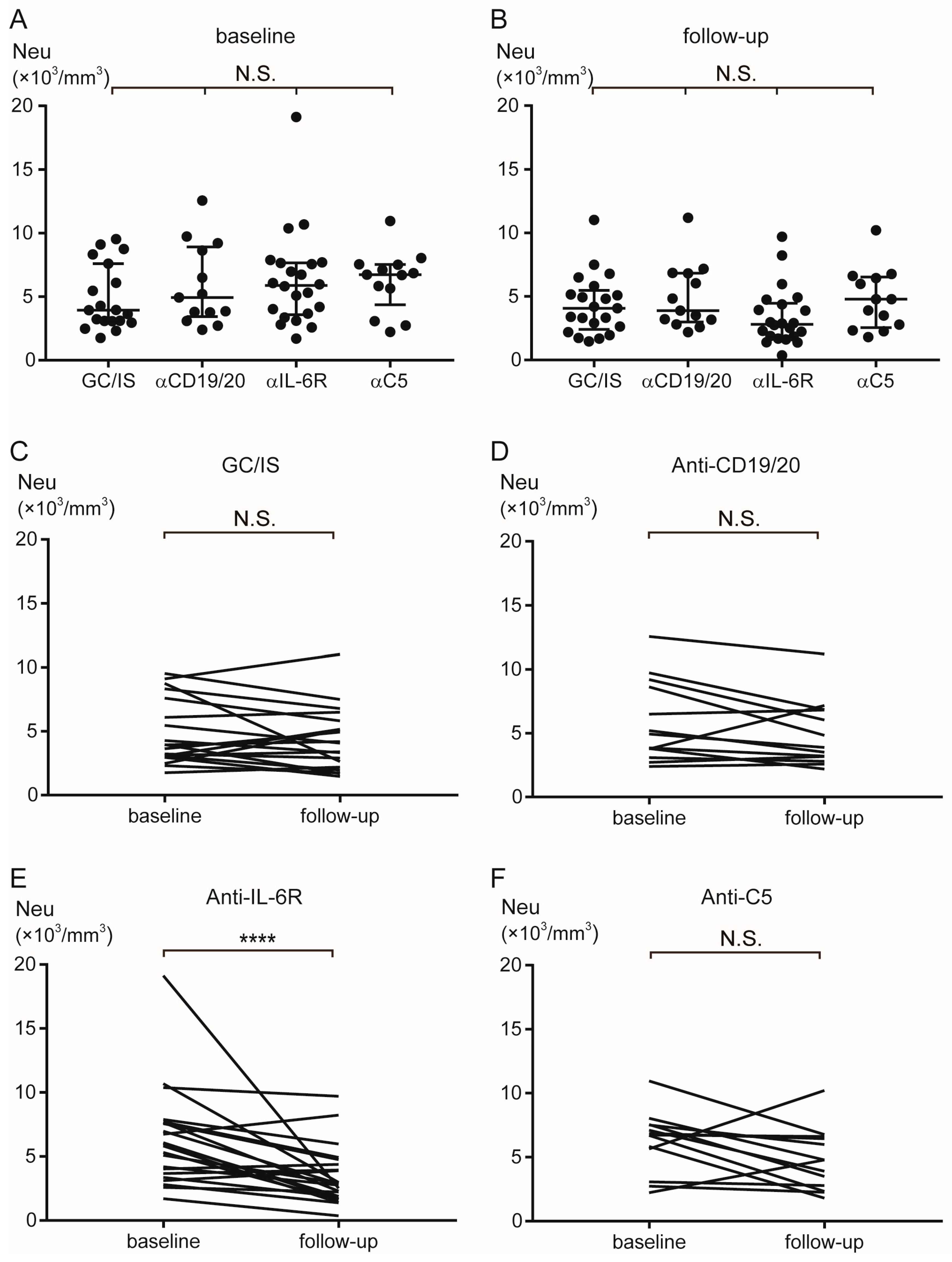
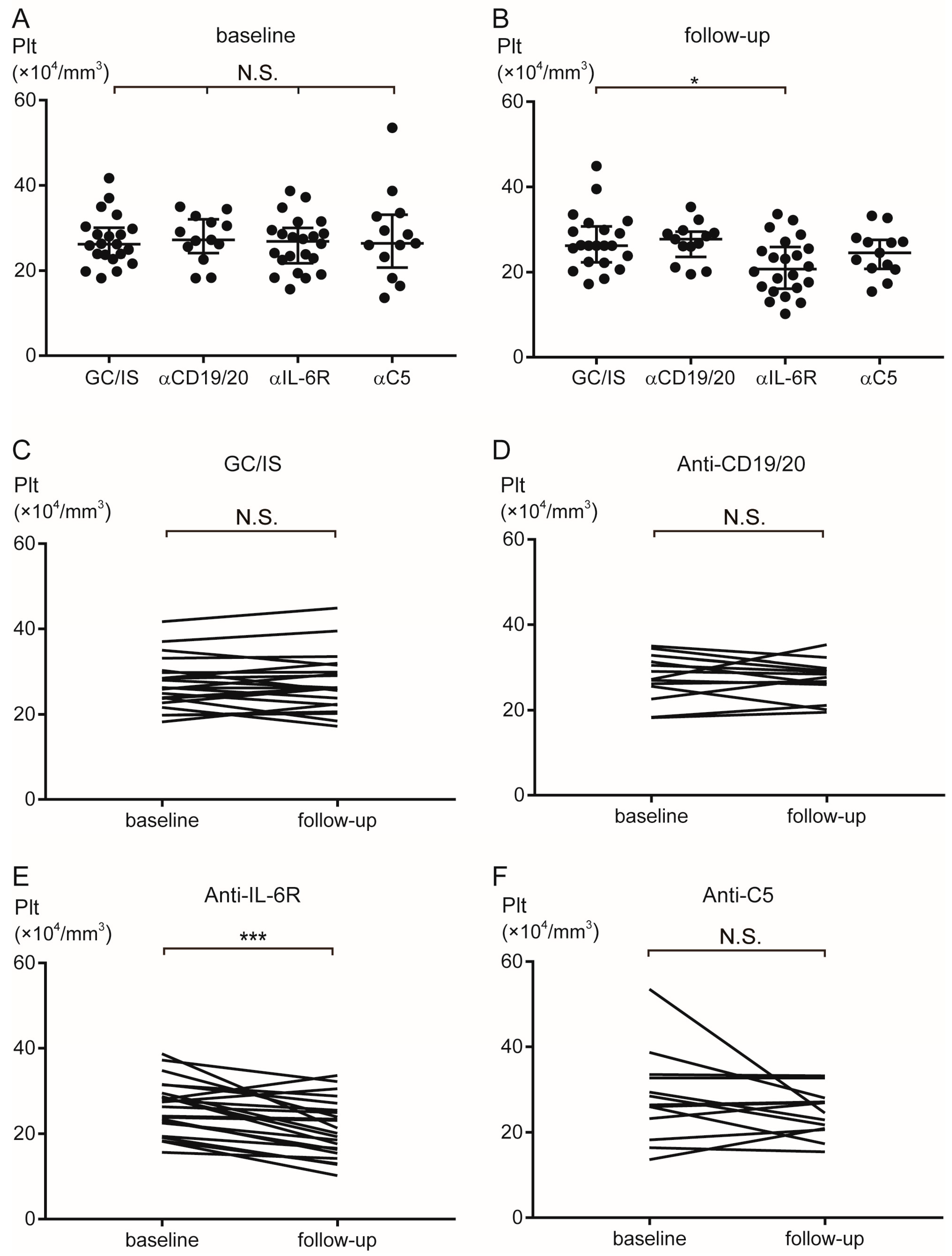
2.2. Decrease in Neutrophil and Platelet Counts During Anti-IL-6R Therapy and Increase in Erythrocyte Counts During Anti-CD19/20 Therapy
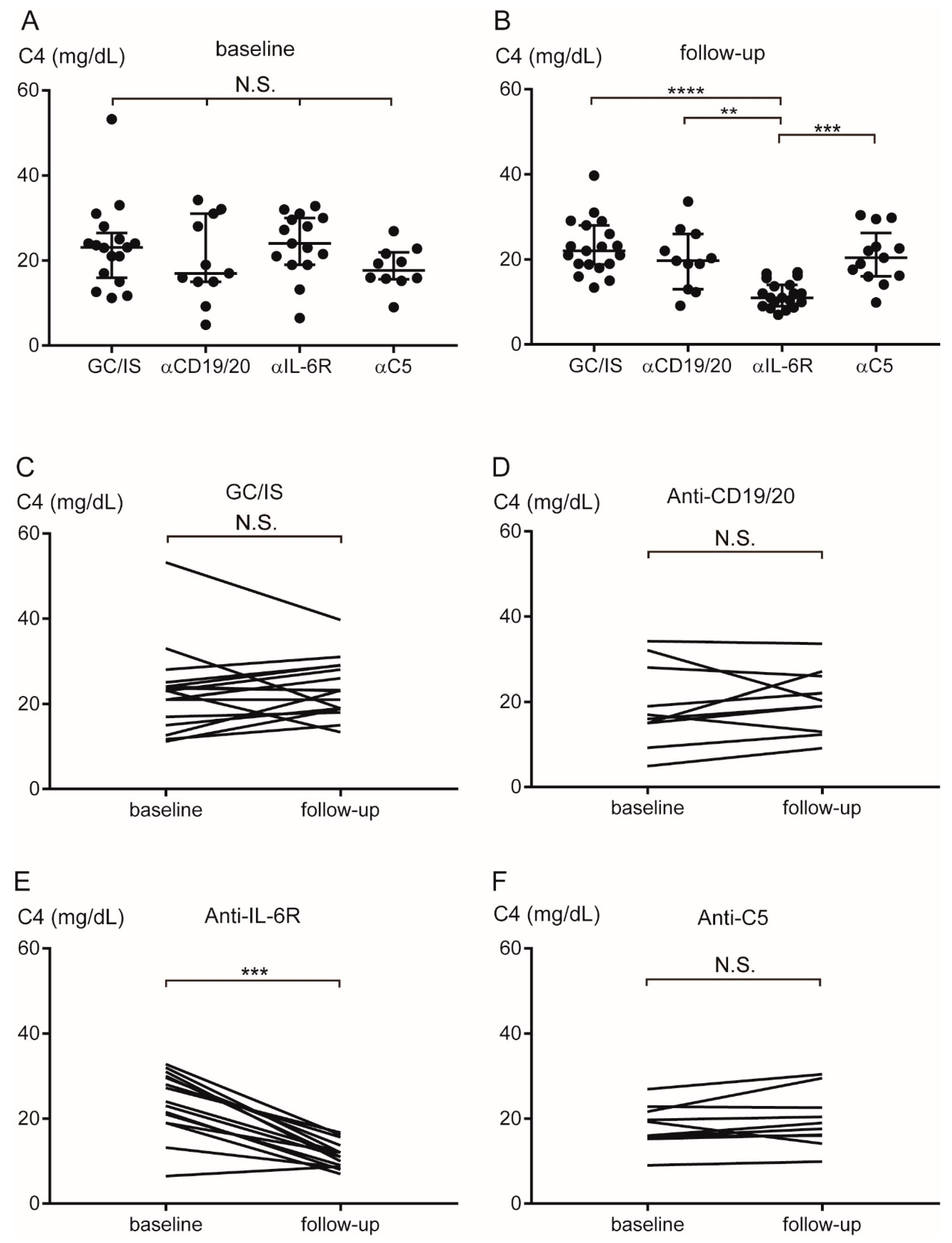
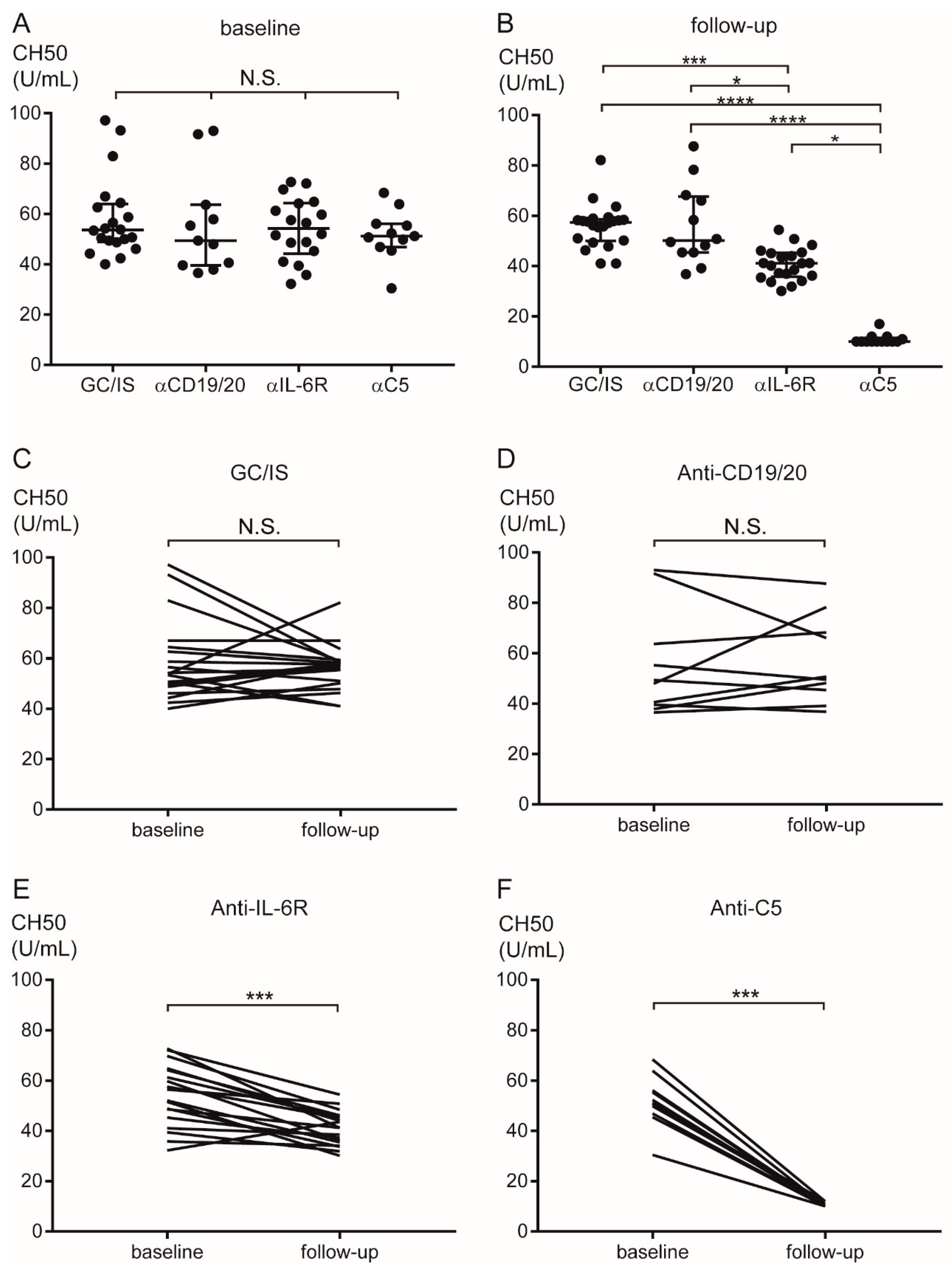
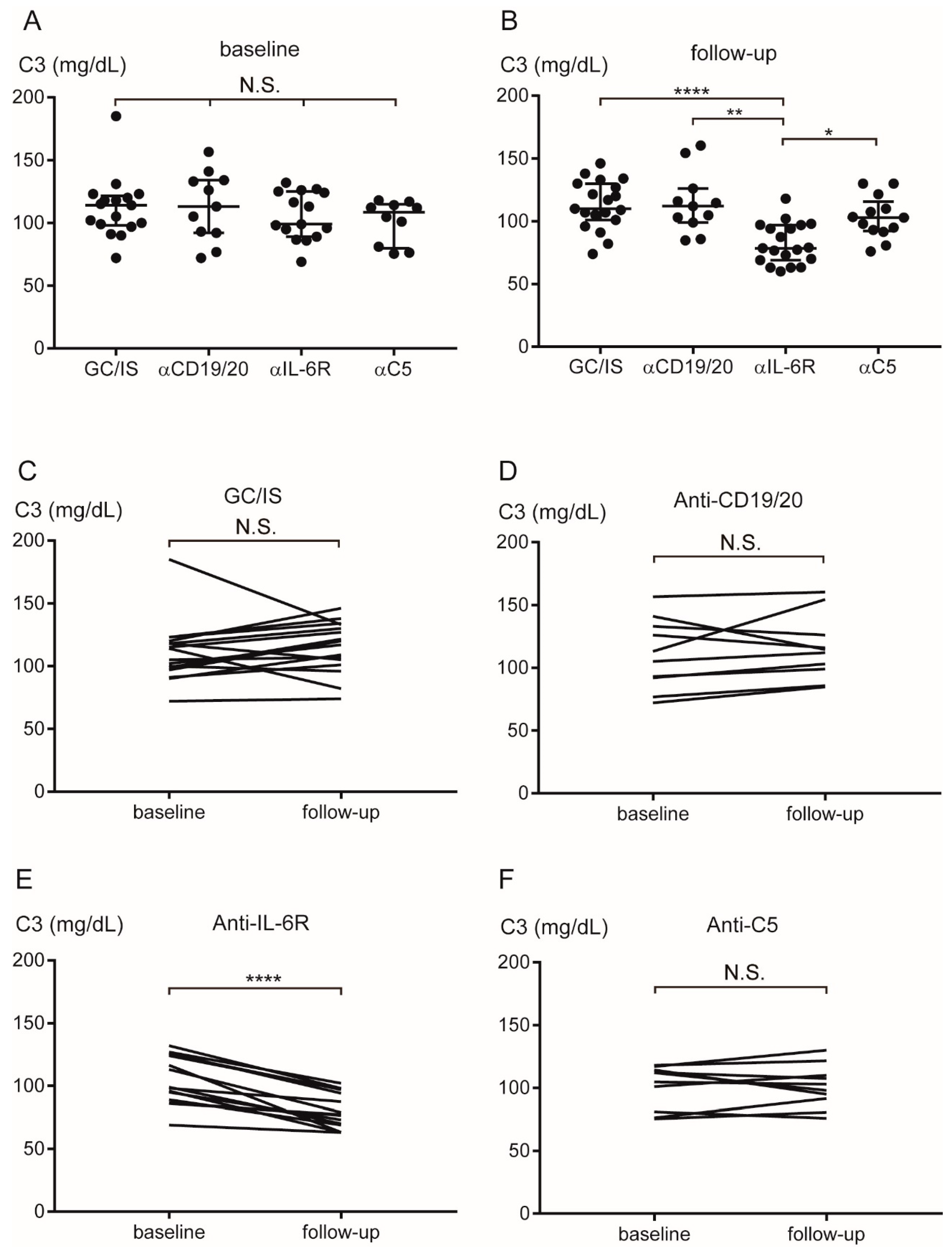
2.3. Decrease in CH50 During Anti-C5 and Anti-IL-6R Therapy and in C3 and C4 During Anti-IL-6R Therapy
3. Discussion
4. Patients and Methods
4.1. Selection of Patients
4.2. Standard Protocol Approval, Registration, and Patient Consent
4.3. Analyses of Blood Cell Counts and Serum Complement Parameters
4.4. Statistical Analysis
5. Conclusions
Author Contributions
Funding
Institutional Review Board Statement
Informed Consent Statement
Data Availability Statement
Acknowledgments
Conflicts of Interest
References
- Wingerchuk, D.M.; Lucchinetti, C.F. Neuromyelitis Optica Spectrum Disorder. N. Engl. J. Med. 2022, 387, 631–639. [Google Scholar] [CrossRef] [PubMed]
- Misu, T.; Fujihara, K.; Kakita, A.; Konno, H.; Nakamura, M.; Watanabe, S.; Takahashi, T.; Nakashima, I.; Takahashi, H.; Itoyama, Y. Loss of aquaporin 4 in lesions of neuromyelitis optica: Distinction from multiple sclerosis. Brain 2007, 130, 1224–1234. [Google Scholar] [CrossRef] [PubMed]
- Hinson, S.R.; Pittock, S.J.; Lucchinetti, C.F.; Roemer, S.F.; Fryer, J.P.; Kryzer, T.J.; Lennon, V.A. Pathogenic potential of IgG binding to water channel extracellular domain in neuromyelitis optica. Neurology 2007, 69, 2221–2231. [Google Scholar] [CrossRef] [PubMed]
- Kinoshita, M.; Nakatsuji, Y.; Kimura, T.; Moriya, M.; Takata, K.; Okuno, T.; Kumanogoh, A.; Kajiyama, K.; Yoshikawa, H.; Sakoda, S. Anti-aquaporin-4 antibody induces astrocytic cytotoxicity in the absence of CNS antigen-specific T cells. Biochem. Biophys. Res. Commun. 2010, 394, 205–210. [Google Scholar] [CrossRef]
- Verkman, A.S.; Phuan, P.W.; Asavapanumas, N.; Tradtrantip, L. Biology of AQP4 and anti-AQP4 antibody: Therapeutic implications for NMO. Brain Pathol. 2013, 23, 684–695. [Google Scholar] [CrossRef]
- Papadopoulos, M.C.; Bennett, J.L.; Verkman, A.S. Treatment of neuromyelitis optica: State-of-the-art and emerging therapies. Nat. Rev. Neurol. 2014, 10, 493–506. [Google Scholar] [CrossRef]
- Chihara, N.; Aranami, T.; Sato, W.; Miyazaki, Y.; Miyake, S.; Okamoto, T.; Ogawa, M.; Toda, T.; Yamamura, T. Interleukin 6 signaling promotes anti-aquaporin 4 autoantibody production from plasmablasts in neuromyelitis optica. Proc. Natl. Acad. Sci. USA 2011, 108, 3701–3706. [Google Scholar] [CrossRef]
- Bennett, J.L.; O’Connor, K.C.; Bar-Or, A.; Zamvil, S.S.; Hemmer, B.; Tedder, T.F.; von Budingen, H.C.; Stuve, O.; Yeaman, M.R.; Smith, T.J.; et al. B lymphocytes in neuromyelitis optica. Neurol. Neuroimmunol. Neuroinflamm. 2015, 2, e104. [Google Scholar] [CrossRef]
- Wilson, R.; Makuch, M.; Kienzler, A.K.; Varley, J.; Taylor, J.; Woodhall, M.; Palace, J.; Leite, M.I.; Waters, P.; Irani, S.R. Condition-dependent generation of aquaporin-4 antibodies from circulating B cells in neuromyelitis optica. Brain 2018, 141, 1063–1074. [Google Scholar] [CrossRef]
- Li, X.; Zhao, C. Interleukin-6 in neuroimmunological disorders: Pathophysiology and therapeutic advances with satralizumab. Autoimmun. Rev. 2025, 24, 103826. [Google Scholar] [CrossRef]
- Kuroda, H.; Fujihara, K.; Takano, R.; Takai, Y.; Takahashi, T.; Misu, T.; Nakashima, I.; Sato, S.; Itoyama, Y.; Aoki, M. Increase of complement fragment C5a in cerebrospinal fluid during exacerbation of neuromyelitis optica. J. Neuroimmunol. 2013, 254, 178–182. [Google Scholar] [CrossRef]
- Uzawa, A.; Mori, M.; Sawai, S.; Masuda, S.; Muto, M.; Uchida, T.; Ito, S.; Nomura, F.; Kuwabara, S. Cerebrospinal fluid interleukin-6 and glial fibrillary acidic protein levels are increased during initial neuromyelitis optica attacks. Clin. Chim. Acta 2013, 421, 181–183. [Google Scholar] [CrossRef]
- Kaneko, K.; Sato, D.K.; Nakashima, I.; Ogawa, R.; Akaishi, T.; Takai, Y.; Nishiyama, S.; Takahashi, T.; Misu, T.; Kuroda, H.; et al. CSF cytokine profile in MOG-IgG+ neurological disease is similar to AQP4-IgG+ NMOSD but distinct from MS: A cross-sectional study and potential therapeutic implications. J. Neurol. Neurosurg. Psychiatry 2018, 89, 927–936, Correction in J. Neurol. Neurosurg. Psychiatry 2019, 90, e4. [Google Scholar] [CrossRef] [PubMed]
- Piatek, P.; Domowicz, M.; Lewkowicz, N.; Przygodzka, P.; Matysiak, M.; Dzitko, K.; Lewkowicz, P. C5a-Preactivated Neutrophils Are Critical for Autoimmune-Induced Astrocyte Dysregulation in Neuromyelitis Optica Spectrum Disorder. Front. Immunol. 2018, 9, 1694. [Google Scholar] [CrossRef] [PubMed]
- Lucchinetti, C.F.; Mandler, R.N.; McGavern, D.; Bruck, W.; Gleich, G.; Ransohoff, R.M.; Trebst, C.; Weinshenker, B.; Wingerchuk, D.; Parisi, J.E.; et al. A role for humoral mechanisms in the pathogenesis of Devic’s neuromyelitis optica. Brain 2002, 125, 1450–1461. [Google Scholar] [CrossRef] [PubMed]
- Nakajima, A.; Yanagimura, F.; Saji, E.; Shimizu, H.; Toyoshima, Y.; Yanagawa, K.; Arakawa, M.; Hokari, M.; Yokoseki, A.; Wakasugi, T.; et al. Stage-dependent immunity orchestrates AQP4 antibody-guided NMOSD pathology: A role for netting neutrophils with resident memory T cells in situ. Acta Neuropathol. 2024, 147, 76. [Google Scholar] [CrossRef]
- Furlan, R.; Schaedelin, S.; Frederiksen, J.L.; Watanabe, M.; Piehl, F.; Fink, K.; Iacobaeus, E.; Evertsson, B.; Khademi, M.; Gastaldi, M.; et al. Granulocyte and astrocyte markers distinguish MOG-antibody disease and neuromyelitis optica from multiple sclerosis. Brain 2025, 2025, awaf345. [Google Scholar] [CrossRef]
- Xu, Y.; Wang, Q.; Ren, H.T.; Qiao, L.; Zhang, Y.; Fei, Y.Y.; Zhao, Y.; Cui, L.Y. Comparison of efficacy and tolerability of azathioprine, mycophenolate mofetil, and cyclophosphamide among patients with neuromyelitis optica spectrum disorder: A prospective cohort study. J. Neurol. Sci. 2016, 370, 224–228. [Google Scholar] [CrossRef]
- Kleiter, I.; Gold, R. Present and Future Therapies in Neuromyelitis Optica Spectrum Disorders. Neurotherapeutics 2016, 13, 70–83. [Google Scholar] [CrossRef]
- Yamamura, T.; Kleiter, I.; Fujihara, K.; Palace, J.; Greenberg, B.; Zakrzewska-Pniewska, B.; Patti, F.; Tsai, C.P.; Saiz, A.; Yamazaki, H.; et al. Trial of Satralizumab in Neuromyelitis Optica Spectrum Disorder. N. Engl. J. Med. 2019, 381, 2114–2124. [Google Scholar] [CrossRef]
- Pittock, S.J.; Barnett, M.; Bennett, J.L.; Berthele, A.; de Seze, J.; Levy, M.; Nakashima, I.; Oreja-Guevara, C.; Palace, J.; Paul, F.; et al. Ravulizumab in Aquaporin-4-Positive Neuromyelitis Optica Spectrum Disorder. Ann. Neurol. 2023, 93, 1053–1068. [Google Scholar] [CrossRef]
- Cree, B.A.C.; Kim, H.J.; Weinshenker, B.G.; Pittock, S.J.; Wingerchuk, D.M.; Fujihara, K.; Paul, F.; Cutter, G.R.; Marignier, R.; Green, A.J.; et al. Safety and efficacy of inebilizumab for the treatment of neuromyelitis optica spectrum disorder: End-of-study results from the open-label period of the N-MOmentum trial. Lancet Neurol. 2024, 23, 588–602. [Google Scholar] [CrossRef] [PubMed]
- Nakashima, I.; Nakahara, J.; Yasunaga, H.; Yamashita, M.; Nishijima, N.; Satomura, A.; Nio, M.; Fujihara, K. Real-world management of patients with neuromyelitis optica spectrum disorder using satralizumab: Results from a Japanese claims database. Mult. Scler. Relat. Disord. 2024, 84, 105502. [Google Scholar] [CrossRef] [PubMed]
- Bennett, J.L.; Fujihara, K.; Saiz, A.; Traboulsee, A.L.; Greenberg, B.M.; Weinshenker, B.G.; Patti, F.; Kleiter, I.; Palace, J.; De Seze, J.; et al. Long-Term Efficacy and Safety of Satralizumab in Patients with Neuromyelitis Optica Spectrum Disorder from the SAkuraMoon Open-Label Extension Study. Neurol. Neuroimmunol. Neuroinflamm. 2025, 12, e200450. [Google Scholar] [CrossRef] [PubMed]
- Yamamura, T.; Isobe, N.; Kawachi, I.; Nohara, C.; Miyazaki, Y.; Tomita, M.; Kamei, Y.; Yamashita, K.; Nakahara, J.; Nakashima, I.; et al. Safety and Effectiveness of Satralizumab in Japanese Patients with Neuromyelitis Optica Spectrum Disorder: A 30-Month Interim Analysis of Post-marketing Surveillance. Neurol. Ther. 2025, 14, 2429–2451. [Google Scholar] [CrossRef]
- Pittock, S.J.; Zekeridou, A.; Weinshenker, B.G. Hope for patients with neuromyelitis optica spectrum disorders-from mechanisms to trials. Nat. Rev. Neurol. 2021, 17, 759–773. [Google Scholar] [CrossRef]
- Willrich, M.A.V.; Andreguetto, B.D.; Sridharan, M.; Fervenza, F.C.; Tostrud, L.J.; Ladwig, P.M.; Rivard, A.M.; Hetrick, M.D.; Olson, R.N.; Bryant, S.C.; et al. The impact of eculizumab on routine complement assays. J. Immunol. Methods 2018, 460, 63–71. [Google Scholar] [CrossRef]
- Ortiz, S.; Pittock, S.J.; Berthele, A.; Levy, M.; Nakashima, I.; Oreja-Guevara, C.; Allen, K.; Mashhoon, Y.; Parks, B.; Kim, H.J. Immediate and sustained terminal complement inhibition with ravulizumab in patients with anti-aquaporin-4 antibody-positive neuromyelitis optica spectrum disorder. Front. Neurol. 2024, 15, 1332890. [Google Scholar] [CrossRef]
- Kaser, A.; Brandacher, G.; Steurer, W.; Kaser, S.; Offner, F.A.; Zoller, H.; Theurl, I.; Widder, W.; Molnar, C.; Ludwiczek, O.; et al. Interleukin-6 stimulates thrombopoiesis through thrombopoietin: Role in inflammatory thrombocytosis. Blood 2001, 98, 2720–2725. [Google Scholar] [CrossRef]
- Geddis, A.E. Megakaryopoiesis. Semin. Hematol. 2010, 47, 212–219. [Google Scholar] [CrossRef]
- Ramadori, G.; Van Damme, J.; Rieder, H.; Meyer zum Buschenfelde, K.H. Interleukin 6, the third mediator of acute-phase reaction, modulates hepatic protein synthesis in human and mouse. Comparison with interleukin 1 beta and tumor necrosis factor-alpha. Eur. J. Immunol. 1988, 18, 1259–1264. [Google Scholar] [CrossRef] [PubMed]
- Wright, H.L.; Cross, A.L.; Edwards, S.W.; Moots, R.J. Effects of IL-6 and IL-6 blockade on neutrophil function in vitro and in vivo. Rheumatology 2014, 53, 1321–1331. [Google Scholar] [CrossRef] [PubMed]
- Smolen, J.S.; Aletaha, D.; Redlich, K. The pathogenesis of rheumatoid arthritis: New insights from old clinical data? Nat. Rev. Rheumatol. 2012, 8, 235–243. [Google Scholar] [CrossRef] [PubMed]
- Romano, C.; Del Mastro, A.; Sellitto, A.; Solaro, E.; Esposito, S.; Cuomo, G. Tocilizumab reduces complement C3 and C4 serum levels in rheumatoid arthritis patients. Clin. Rheumatol. 2018, 37, 1695–1700. [Google Scholar] [CrossRef]
- Ferraz-Amaro, I.; Santos-Concepcion, S.; Castro-Hernandez, J.; Hernandez-Hernandez, M.V.; Tejera Segura, B.; Luna, C.; Delgado-Frias, E.; Diaz-Gonzalez, F. Tocilizumab modulates the activity of the classical and alternative complement pathways in rheumatoid arthritis patients. Front. Immunol. 2025, 16, 1486588. [Google Scholar] [CrossRef]
- Jiang, H.X.; Siegel, J.N.; Gewurz, H. Binding and complement activation by C-reactive protein via the collagen-like region of C1q and inhibition of these reactions by monoclonal antibodies to C-reactive protein and C1q. J. Immunol. 1991, 146, 2324–2330. [Google Scholar] [CrossRef]
- Uslu, A.U.; Kucuk, A.; Sahin, A.; Ugan, Y.; Yilmaz, R.; Gungor, T.; Bagcaci, S.; Kucuksen, S. Two new inflammatory markers associated with Disease Activity Score-28 in patients with rheumatoid arthritis: Neutrophil-lymphocyte ratio and platelet-lymphocyte ratio. Int. J. Rheum. Dis. 2015, 18, 731–735. [Google Scholar] [CrossRef]
- Sargin, G.; Senturk, T.; Yavasoglu, I.; Kose, R. Relationship between neutrophil-lymphocyte, platelet-lymphocyte ratio and disease activity in rheumatoid arthritis treated with rituximab. Int. J. Rheum. Dis. 2018, 21, 2122–2127. [Google Scholar] [CrossRef]
- Meng, Y.; Cai, X.L.; Cong, S.; Sun, J.; Hu, Y.W.; Gu, Y.Q.; Ma, X.M.; Luo, L. Role of Platelet/Lymphocyte, Neutrophil/Lymphocyte, and Interleukin-37/Interleukin-17 Ratios in the Occurrence and Treatment of Rheumatoid Arthritis. Immunol. Investig. 2024, 53, 464–474. [Google Scholar] [CrossRef]
- Akaishi, T.; Misu, T.; Fujihara, K.; Nakaya, K.; Nakaya, N.; Nakamura, T.; Kogure, M.; Hatanaka, R.; Itabashi, F.; Kanno, I.; et al. White blood cell count profiles in anti-aquaporin-4 antibody seropositive neuromyelitis optica spectrum disorder and anti-myelin oligodendrocyte glycoprotein antibody-associated disease. Sci. Rep. 2023, 13, 6481. [Google Scholar] [CrossRef]
- Sun, Q.; Ma, X.; Zhang, L.; Tian, D. The neutrophil-to-lymphocyte ratio and platelet-to-lymphocyte ratio in patients with neuromyelitis optica spectrum disorders and multiple sclerosis. Front. Neurol. 2025, 16, 1598885. [Google Scholar] [CrossRef] [PubMed]
- Hertwig, L.; Pache, F.; Romero-Suarez, S.; Sturner, K.H.; Borisow, N.; Behrens, J.; Bellmann-Strobl, J.; Seeger, B.; Asselborn, N.; Ruprecht, K.; et al. Distinct functionality of neutrophils in multiple sclerosis and neuromyelitis optica. Mult. Scler. 2016, 22, 160–173. [Google Scholar] [CrossRef] [PubMed]
- Schroeder-Castagno, M.; Del Rio-Serrato, A.; Wilhelm, A.; Romero-Suarez, S.; Schindler, P.; Alvarez-Gonzalez, C.; Duchow, A.S.; Bellmann-Strobl, J.; Ruprecht, K.; Hastermann, M.; et al. Impaired response of blood neutrophils to cell-death stimulus differentiates AQP4-IgG-seropositive NMOSD from MOGAD. J. Neuroinflamm. 2022, 19, 239. [Google Scholar] [CrossRef] [PubMed]
- Matsuoka, T.; Araki, M.; Lin, Y.; Okamoto, T.; Gold, R.; Chihara, N.; Sato, W.; Kimura, A.; Tachimori, H.; Miyamoto, K.; et al. Long-term Effects of IL-6 Receptor Blockade Therapy on Regulatory Lymphocytes and Neutrophils in Neuromyelitis Optica Spectrum Disorder. Neurol. Neuroimmunol. Neuroinflamm. 2024, 11, e200173. [Google Scholar] [CrossRef]
- Prescribing Information for Satralizumab. 2020. Available online: https://www.accessdata.fda.gov/drugsatfda_docs/label/2020/761149s000lbl.pdf (accessed on 9 January 2025).
- Traboulsee, A.; Greenberg, B.M.; Bennett, J.L.; Szczechowski, L.; Fox, E.; Shkrobot, S.; Yamamura, T.; Terada, Y.; Kawata, Y.; Wright, P.; et al. Safety and efficacy of satralizumab monotherapy in neuromyelitis optica spectrum disorder: A randomised, double-blind, multicentre, placebo-controlled phase 3 trial. Lancet Neurol. 2020, 19, 402–412. [Google Scholar] [CrossRef]
- Greenberg, B.M.; Fujihara, K.; Weinshenker, B.; Patti, F.; Kleiter, I.; Bennett, J.L.; Palace, J.; Blondeau, K.; Burdeska, A.; Ngwa, I.; et al. Analysis of infection rates in neuromyelitis optica spectrum disorder: Comparing satralizumab treatment in SAkuraMoon, post-marketing, and US-based health claims data. Mult. Scler. Relat. Disord. 2025, 99, 106444. [Google Scholar] [CrossRef]
- Ogata, A.; Kato, Y.; Higa, S.; Yoshizaki, K. IL-6 inhibitor for the treatment of rheumatoid arthritis: A comprehensive review. Mod. Rheumatol. 2019, 29, 258–267. [Google Scholar] [CrossRef]
- Balasubramanian, S.K.; Sadaps, M.; Thota, S.; Aly, M.; Przychodzen, B.P.; Hirsch, C.M.; Visconte, V.; Radivoyevitch, T.; Maciejewski, J.P. Rational management approach to pure red cell aplasia. Haematologica 2018, 103, 221–230. [Google Scholar] [CrossRef]
- Serris, A.; Amoura, Z.; Canoui-Poitrine, F.; Terrier, B.; Hachulla, E.; Costedoat-Chalumeau, N.; Papo, T.; Lambotte, O.; Saadoun, D.; Hie, M.; et al. Efficacy and safety of rituximab for systemic lupus erythematosus-associated immune cytopenias: A multicenter retrospective cohort study of 71 adults. Am. J. Hematol. 2018, 93, 424–429. [Google Scholar] [CrossRef]




| GC/IS Group (n = 22) | Anti-CD19/20 Group (n = 13) | Anti-IL-6R Group (n = 22) | Anti-C5 Group (n = 13) | |
|---|---|---|---|---|
| Female sex (%) | 82 | 77 | 91 | 92 |
| Age, years, median (range) | 54.5 (26–80) | 60 (20–74) | 57 (35–69) | 52 (20–73) |
| AQP4 antibody-positive, % | 100 | 100 | 100 | 100 |
| Disease duration, years, median (range) | 6.9 (0.6–32.8) | 5.4 (0.5–32.8) | 8.8 (0.4–22.7) | 5.3 (0.7–21.6) |
| Baseline EDSS, median (range) | 3.0 (1.0–8.0) | 3.0 (1.0–7.0) | 3.0 (1.0–7.0) | 3.0 (2.0–7.0) |
| Autoimmune complication | CS 1, RA 1, SjS 4 | SjS 1 | GD 2, RA 1, SjS 3, SLE 1 | GD 1, RA 2, SAR 1, SjS 4 |
| Comorbidities potentially affecting blood counts | IDA 1, ITP 1 | DVT 1, HPA 1, IDA 1, ITP 1, MT 1 | DVT 1, MT 2 | DVT 1, MT 1 |
| Treatment just before biologics | N.A. | GC + IS 6, GC 7 | GC + IS 9, GC 10, IS 3 | GC + IS 1, GC 12 |
| Interval between the first injection of biologics and follow-up, months, median (range) | N.A. | 7 (6–48) | 7.5 (6–46) | 8 (6–55) |
| Dose of oral PSL, mg/day, median (range) | ||||
| Baseline | 7.5 (0–50) | 10 (0–20) | 10 (0–40) | 10 (0–60) |
| Follow-up | 5 (0–15) | 5 (0–15) | 4 (0–15) | 5 (0–8) |
| Concomitant IS, number | ||||
| Baseline | AZA 1, TAC 7 | AZA 3, TAC 3 | AZA 3, TAC 6 | AZA 1, TAC 0 |
| Follow-up | AZA 4, TAC 13 | AZA 3, TAC 2 | AZA 1, TAC 4 | AZA 1, TAC 0 |
| Neutrophil (/mm3) | Lymphocyte (/mm3) | Erythrocyte (×104/mm3) | Platelet (×104/mm3) | |
|---|---|---|---|---|
| GC/IS group | ||||
| Baseline | 3785 (1760–9530) | 1615 (830–2810) | 452 (401–521) | 27.1 (18.2–37) |
| Follow-up | 3740 (1470–7500) | 1780 (620–3270) | 439 (366–544) | 26.2 (17.2–39.5) |
| Anti-CD19/20 group | ||||
| Baseline | 4940 (2400–12,560) | 1570 (540–2370) | 413 (370–476) | 27.2 (18.2–35) |
| Follow-up | 3880 (2190–11,190) | 1500 (670–3220) | 457 *** (395–506) | 27.7 (19.5–35.3) |
| Anti-IL-6R group | ||||
| Baseline | 5890 (1700–19,130) | 1115 (370–2920) | 448 (358–562) | 26.9 (15.6–38.7) |
| Follow-up | 2810 **** (360–9690) | 1190 (360–2540) | 450 (359–515) | 20.7 *** (10.2–33.6) |
| Anti-C5 group | ||||
| Baseline | 6740 (2220–10,940) | 1070 (540–4130) | 392 (292–487) | 26.4 (13.6–53.5) |
| Follow-up | 4780 (1810–10,200) | 1210 (510–2750) | 441 (286–486) | 24.5 (15.4–33.2) |
| C3 (mg/dL) | C4 (mg/dL) | CH50 (U/mL) | |
|---|---|---|---|
| GC/IS group | |||
| Baseline | 114 (72–185) | 23.1 (11.2–53.2) | 53.6 (40–97.2) |
| Follow-up | 110 (74–146) | 22 (13.4–39.7) | 57.4 (41–82.1) |
| Anti-CD19/20 group | |||
| Baseline | 113 (72–156.5) | 17 (4.9–34.2) | 49.4 (36.5–93) |
| Follow-up | 112 (84.8–160.3) | 19.7 (9.1–33.6) | 50.2 (36.8–87.6) |
| Anti-IL-6R group | |||
| Baseline | 99 (69–132) | 24 (6.5–32.8) | 54.2 (32.2–72.7) |
| Follow-up | 78.5 **** (60–118) | 11 *** (7–17) | 41.1 *** (30.1–54.4) |
| Anti-C5 group | |||
| Baseline | 108.4 (75.5–118) | 17.7 (9–26.9) | 51.2 (30.4–68.4) |
| Follow-up | 102.8 (76–130) | 20.4 (9.9–30.4) | 10 *** (10–17) |
Disclaimer/Publisher’s Note: The statements, opinions and data contained in all publications are solely those of the individual author(s) and contributor(s) and not of MDPI and/or the editor(s). MDPI and/or the editor(s) disclaim responsibility for any injury to people or property resulting from any ideas, methods, instructions or products referred to in the content. |
© 2026 by the authors. Licensee MDPI, Basel, Switzerland. This article is an open access article distributed under the terms and conditions of the Creative Commons Attribution (CC BY) license.
Share and Cite
Kuroda, H.; Fujihara, K.; Kaneko, K.; Takai, Y.; Matsumoto, Y.; Otomo, M.; Yamazaki, N.; Umezawa, S.; Yamamoto, N.; Sakamoto, N.; et al. Changes in Blood Cells and Complements During Relapse Prevention Therapies for Aquaporin-4 Antibody-Positive Neuromyelitis Optica Spectrum Disorder. Int. J. Mol. Sci. 2026, 27, 951. https://doi.org/10.3390/ijms27020951
Kuroda H, Fujihara K, Kaneko K, Takai Y, Matsumoto Y, Otomo M, Yamazaki N, Umezawa S, Yamamoto N, Sakamoto N, et al. Changes in Blood Cells and Complements During Relapse Prevention Therapies for Aquaporin-4 Antibody-Positive Neuromyelitis Optica Spectrum Disorder. International Journal of Molecular Sciences. 2026; 27(2):951. https://doi.org/10.3390/ijms27020951
Chicago/Turabian StyleKuroda, Hiroshi, Kazuo Fujihara, Kimihiko Kaneko, Yoshiki Takai, Yuki Matsumoto, Mizuki Otomo, Naoya Yamazaki, Shu Umezawa, Naoki Yamamoto, Naohiro Sakamoto, and et al. 2026. "Changes in Blood Cells and Complements During Relapse Prevention Therapies for Aquaporin-4 Antibody-Positive Neuromyelitis Optica Spectrum Disorder" International Journal of Molecular Sciences 27, no. 2: 951. https://doi.org/10.3390/ijms27020951
APA StyleKuroda, H., Fujihara, K., Kaneko, K., Takai, Y., Matsumoto, Y., Otomo, M., Yamazaki, N., Umezawa, S., Yamamoto, N., Sakamoto, N., Namatame, C., Ono, H., Nishiyama, S., Takahashi, T., Misu, T., & Aoki, M. (2026). Changes in Blood Cells and Complements During Relapse Prevention Therapies for Aquaporin-4 Antibody-Positive Neuromyelitis Optica Spectrum Disorder. International Journal of Molecular Sciences, 27(2), 951. https://doi.org/10.3390/ijms27020951