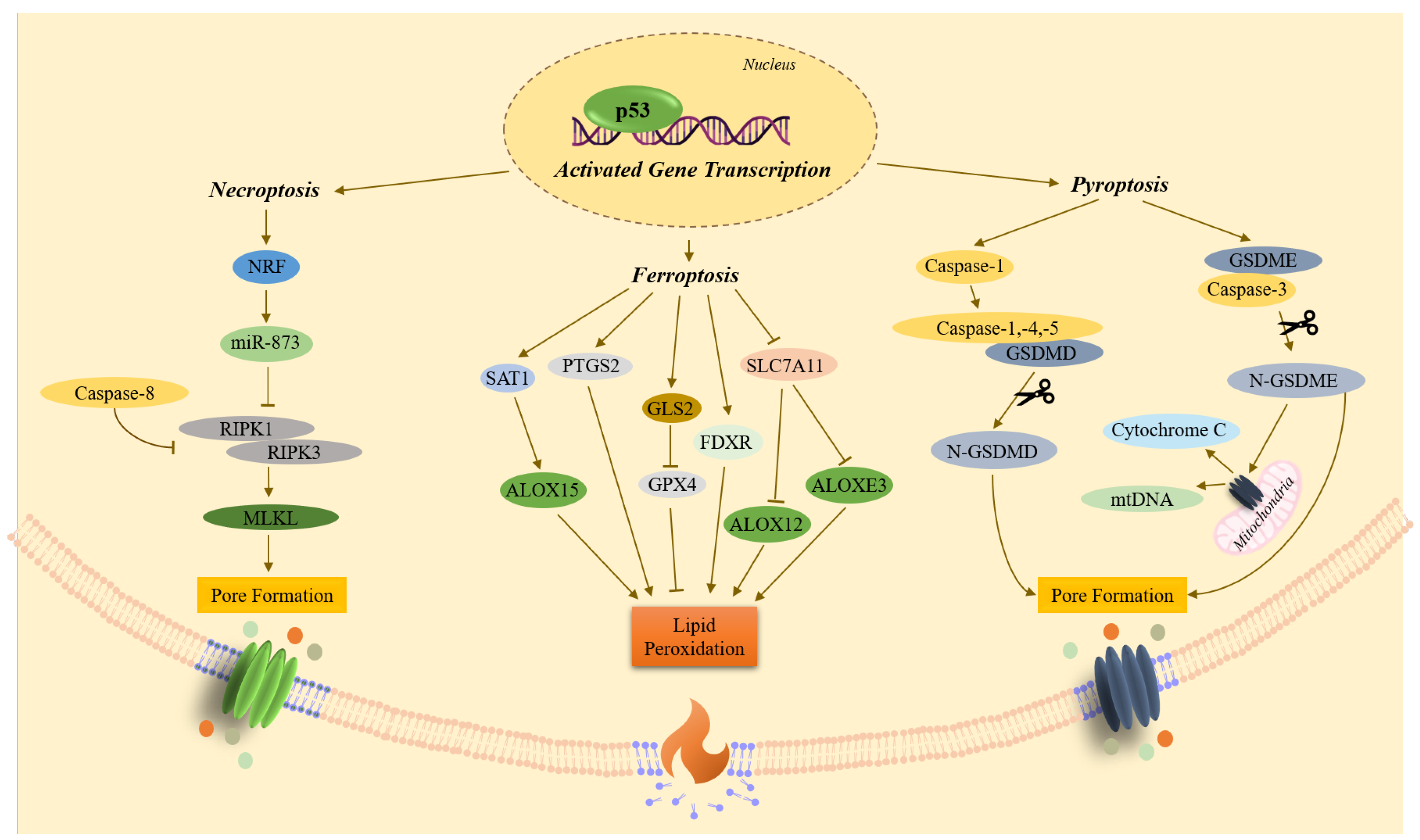
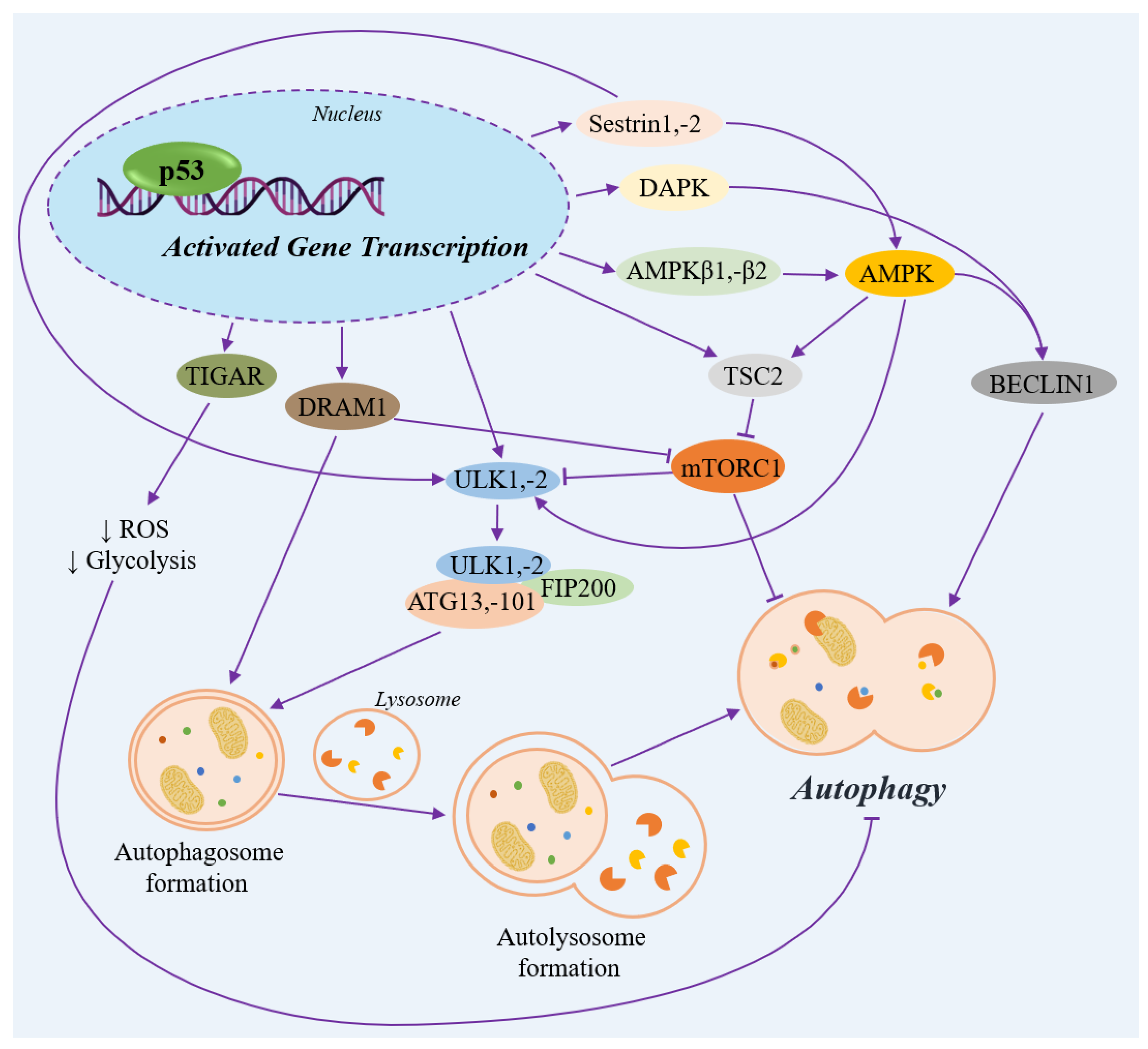
Ambiguous Role of p53 in Transcription-Dependent Tumor Cell Death
 , , ,
, , , Abstract
Share and Cite
Romanova, A.A.; Grigoreva, T.A.; Zenina, A.D.; Smirnaya, A.D.; Margolina, K.Y.; Sagaidak, A.; Tribulovich, V.G. Ambiguous Role of p53 in Transcription-Dependent Tumor Cell Death. Int. J. Mol. Sci. 2026, 27, 769. https://doi.org/10.3390/ijms27020769
Romanova AA, Grigoreva TA, Zenina AD, Smirnaya AD, Margolina KY, Sagaidak A, Tribulovich VG. Ambiguous Role of p53 in Transcription-Dependent Tumor Cell Death. International Journal of Molecular Sciences. 2026; 27(2):769. https://doi.org/10.3390/ijms27020769
Chicago/Turabian StyleRomanova, Angelina A., Tatyana A. Grigoreva, Anastasia D. Zenina, Anna D. Smirnaya, Kira Y. Margolina, Aleksandra Sagaidak, and Vyacheslav G. Tribulovich. 2026. "Ambiguous Role of p53 in Transcription-Dependent Tumor Cell Death" International Journal of Molecular Sciences 27, no. 2: 769. https://doi.org/10.3390/ijms27020769
APA StyleRomanova, A. A., Grigoreva, T. A., Zenina, A. D., Smirnaya, A. D., Margolina, K. Y., Sagaidak, A., & Tribulovich, V. G. (2026). Ambiguous Role of p53 in Transcription-Dependent Tumor Cell Death. International Journal of Molecular Sciences, 27(2), 769. https://doi.org/10.3390/ijms27020769